A student practice worksheet styled as a 'system repair log' where students correct spelling glitches in sentences with middle-school themes like streaming, gaming, and sports.
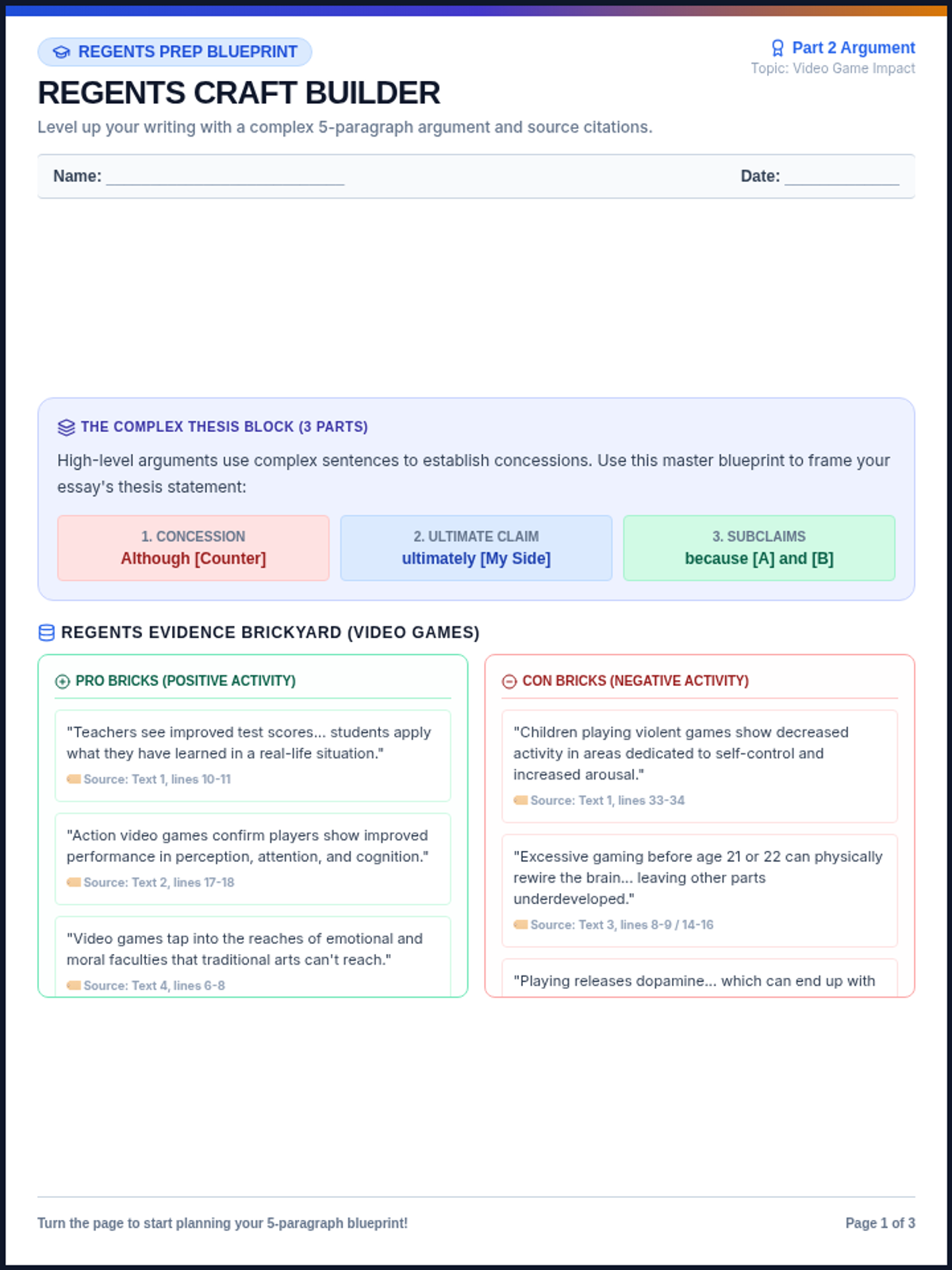
A Regents-aligned 5-paragraph essay builder featuring a complex thesis organizer (Although/Ultimately/Because), source citations, and a modified standards rubric for high school preparation.
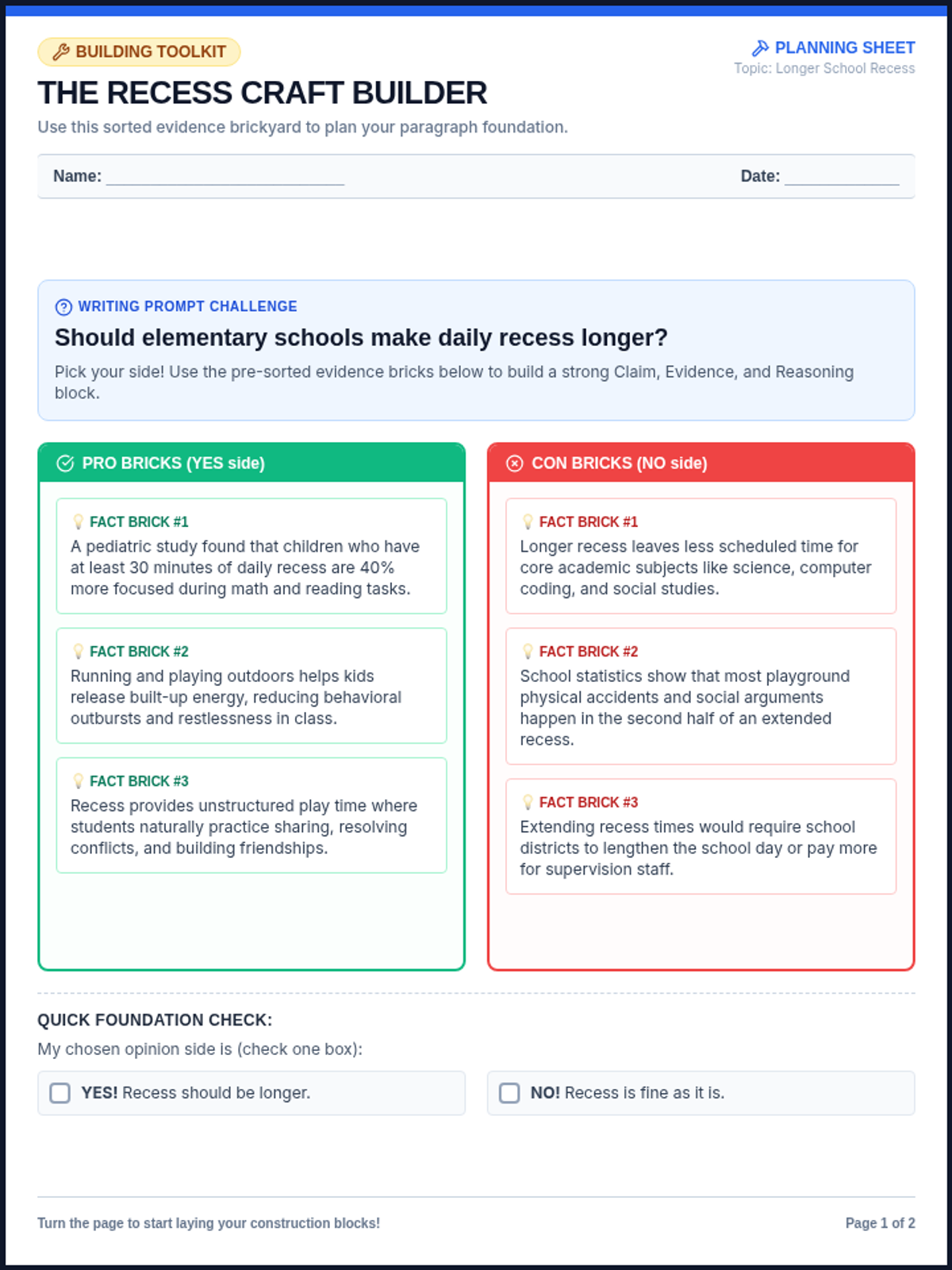
A secondary writing template and graphic organizer pack focusing on a high-interest topic (Should recess be longer?) to provide extra practice with pre-sorted pros and cons and structured writing frames.
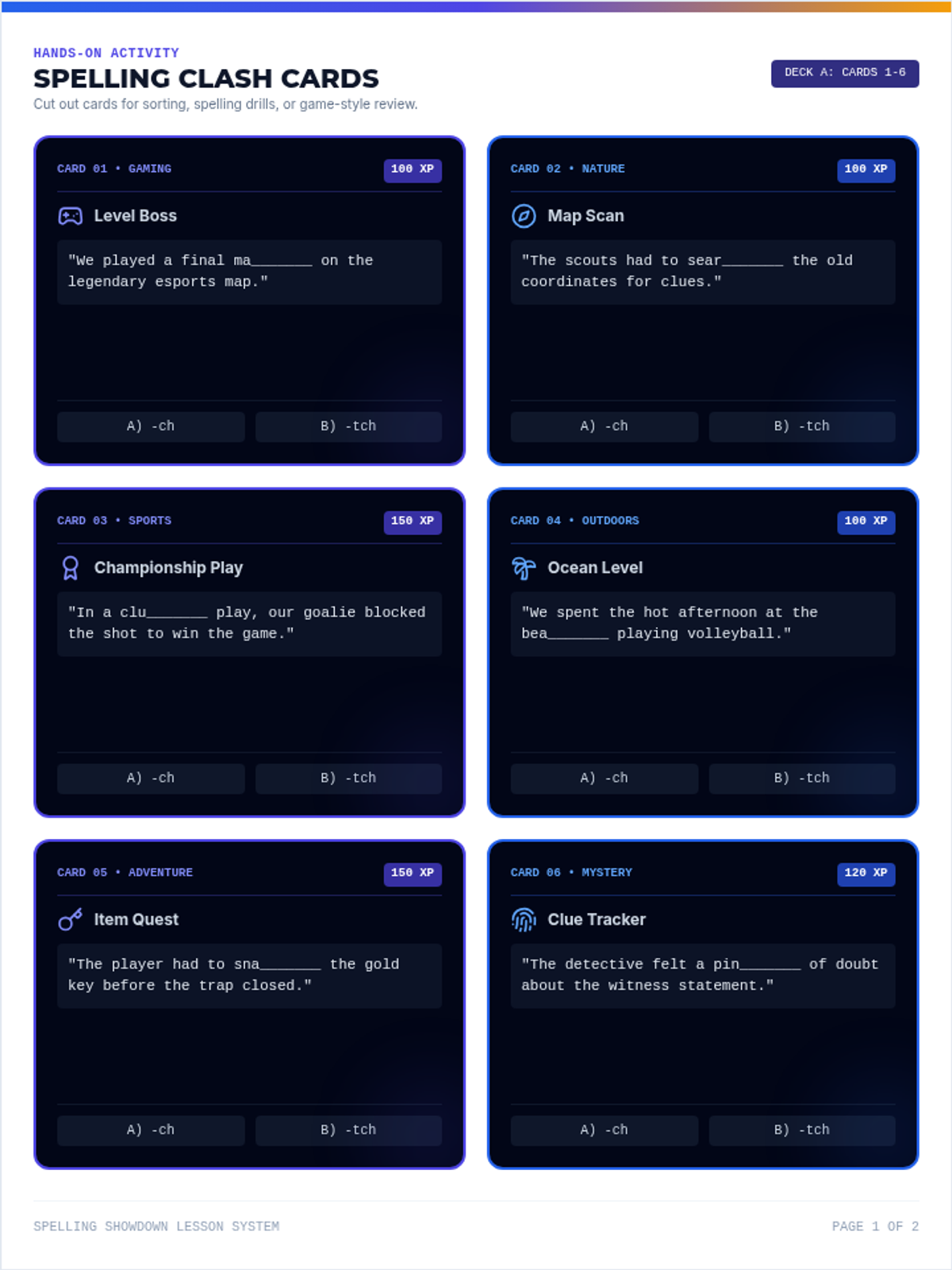
Printable, gaming-themed task cards for cooperative sorting, spelling, and self-checking, designed to look like digital item cards.
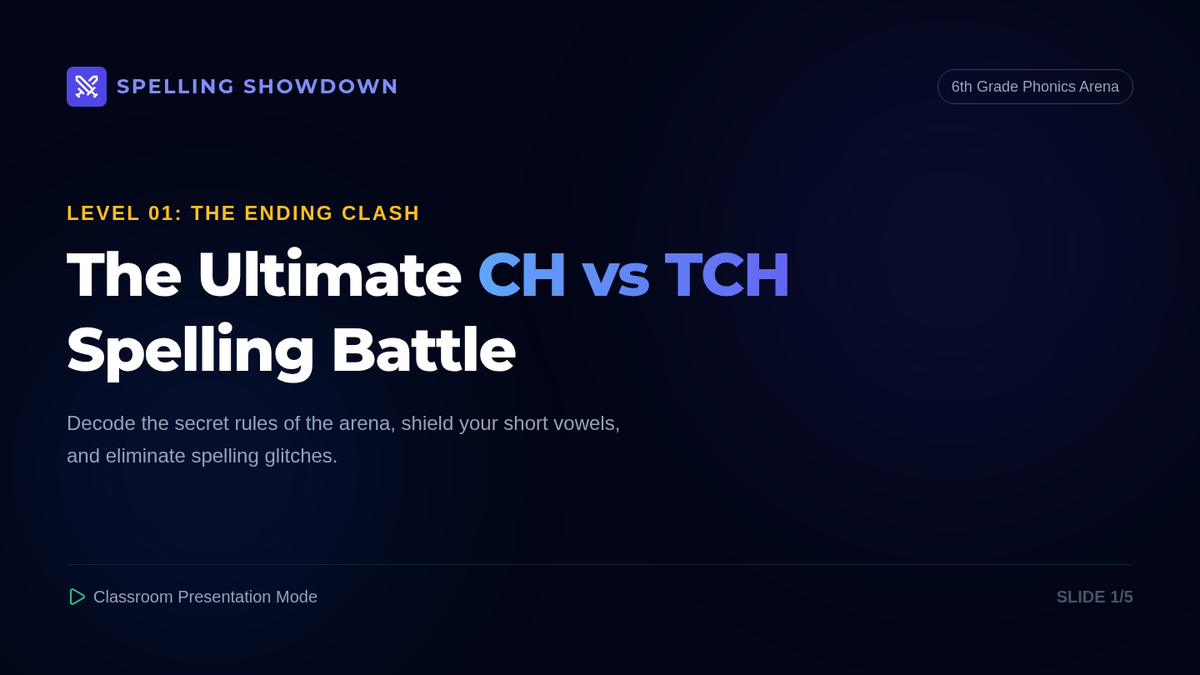
A visually stunning slide deck for presenting the spelling rules of -ch vs -tch with esports-themed graphic organizers and interactive challenges.
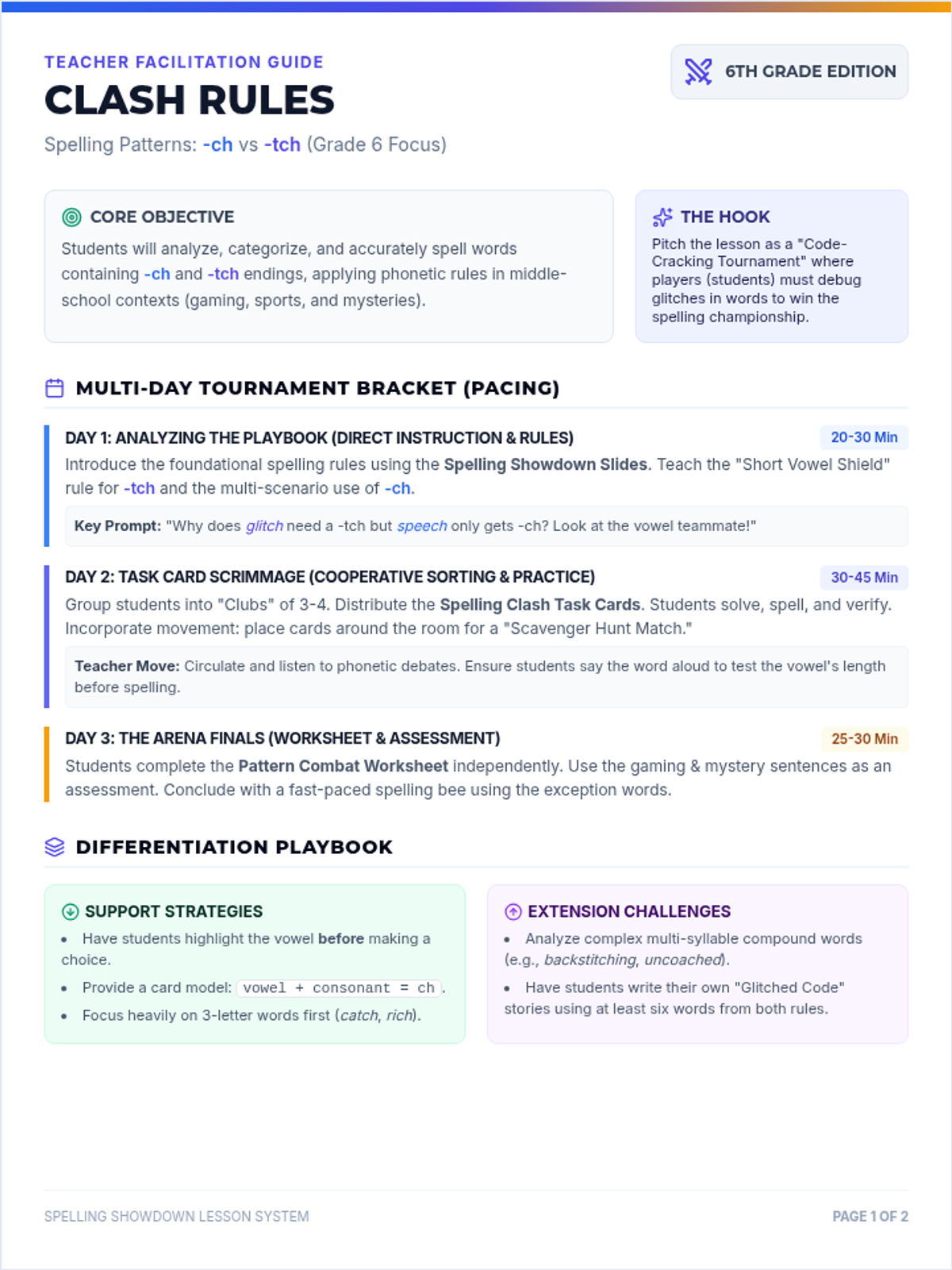
A multi-day lesson plan and teacher facilitation guide detailing pacing, rules, word lists, and common misconceptions for the spelling showdown.
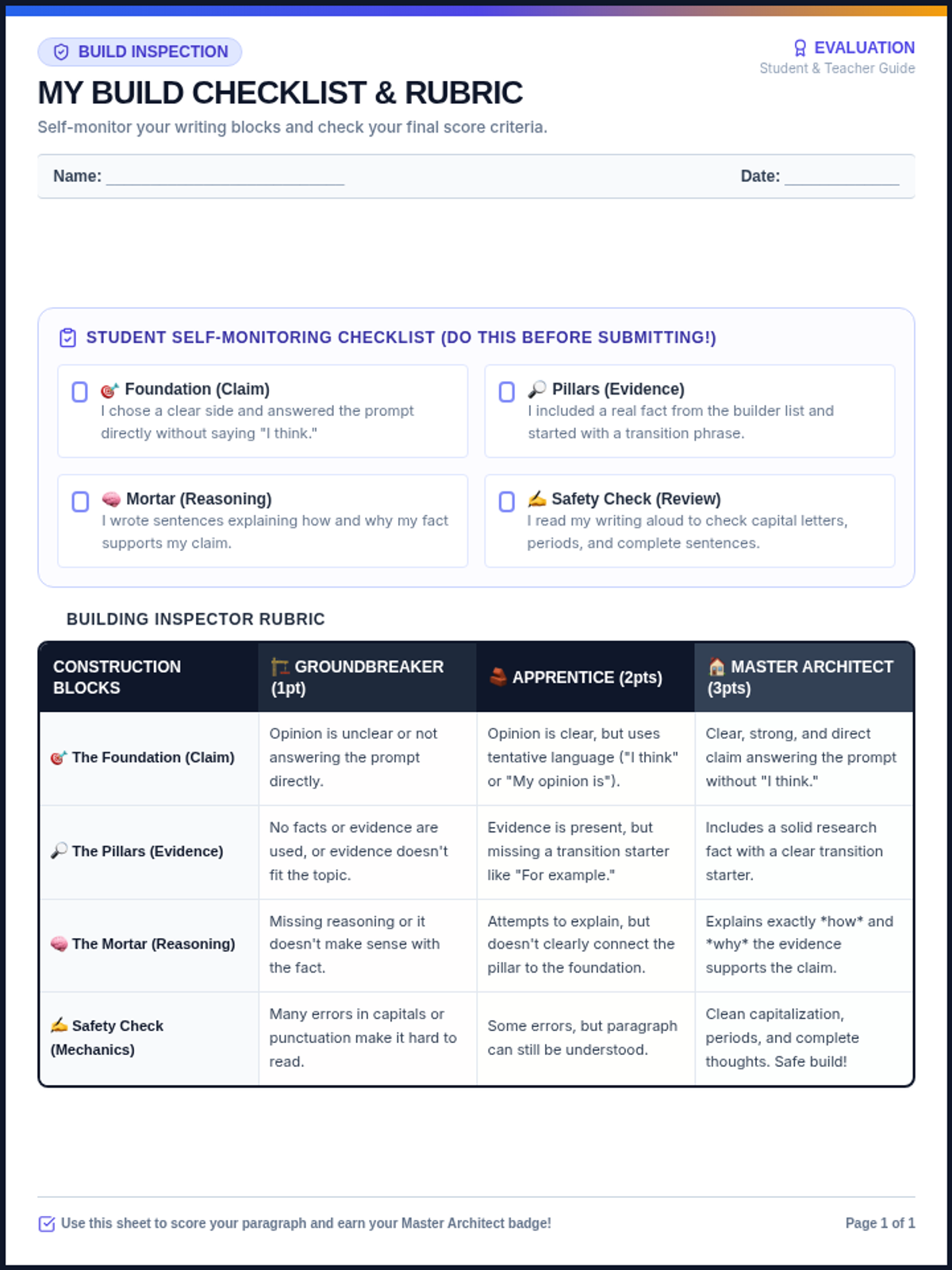
A student-facing self-monitoring checklist and a standards-aligned, visual modified rubric utilizing construction levels (Groundbreaker, Apprentice, Master Architect) for simplified, encouraging scoring.
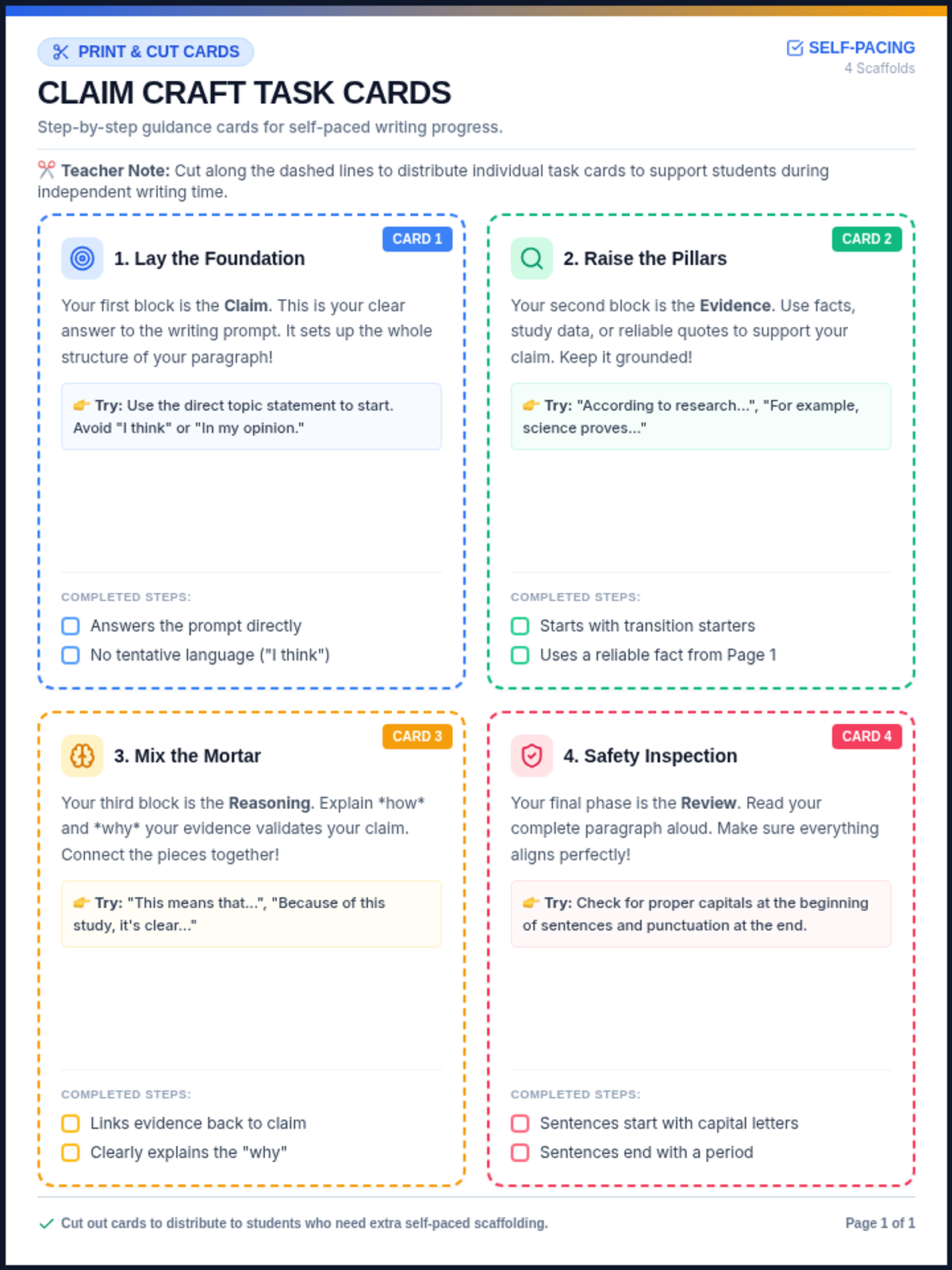
Four printable, step-by-step task cards with visual icons, sequential instructions, and progress checklists to help students self-pace through the paragraph construction process.
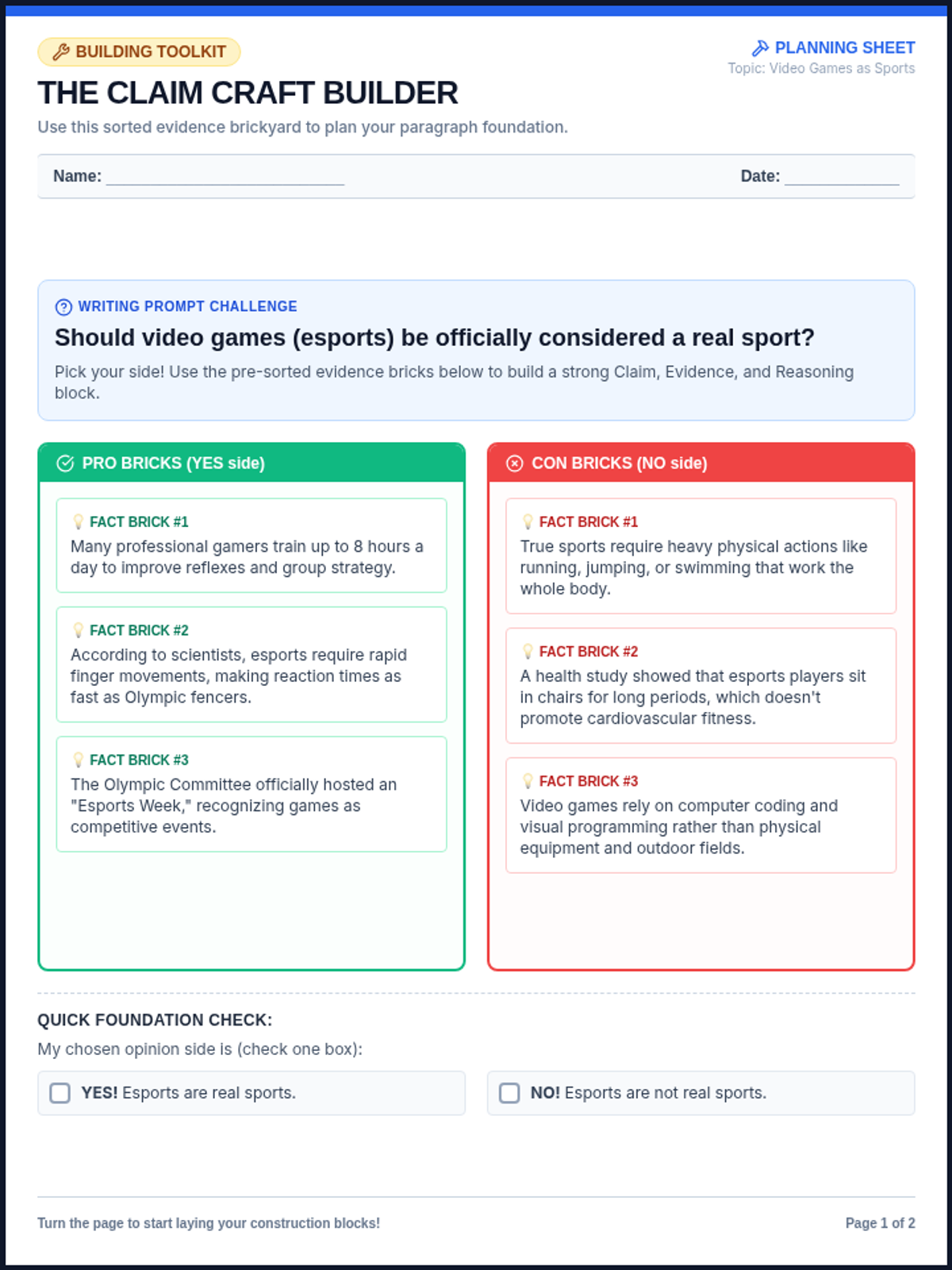
Highly structured writing templates and graphic organizers. Features a pre-sorted pros and cons list on a high-interest topic (Video Games as Sports) and scaffolded writing frames with sentence starters.
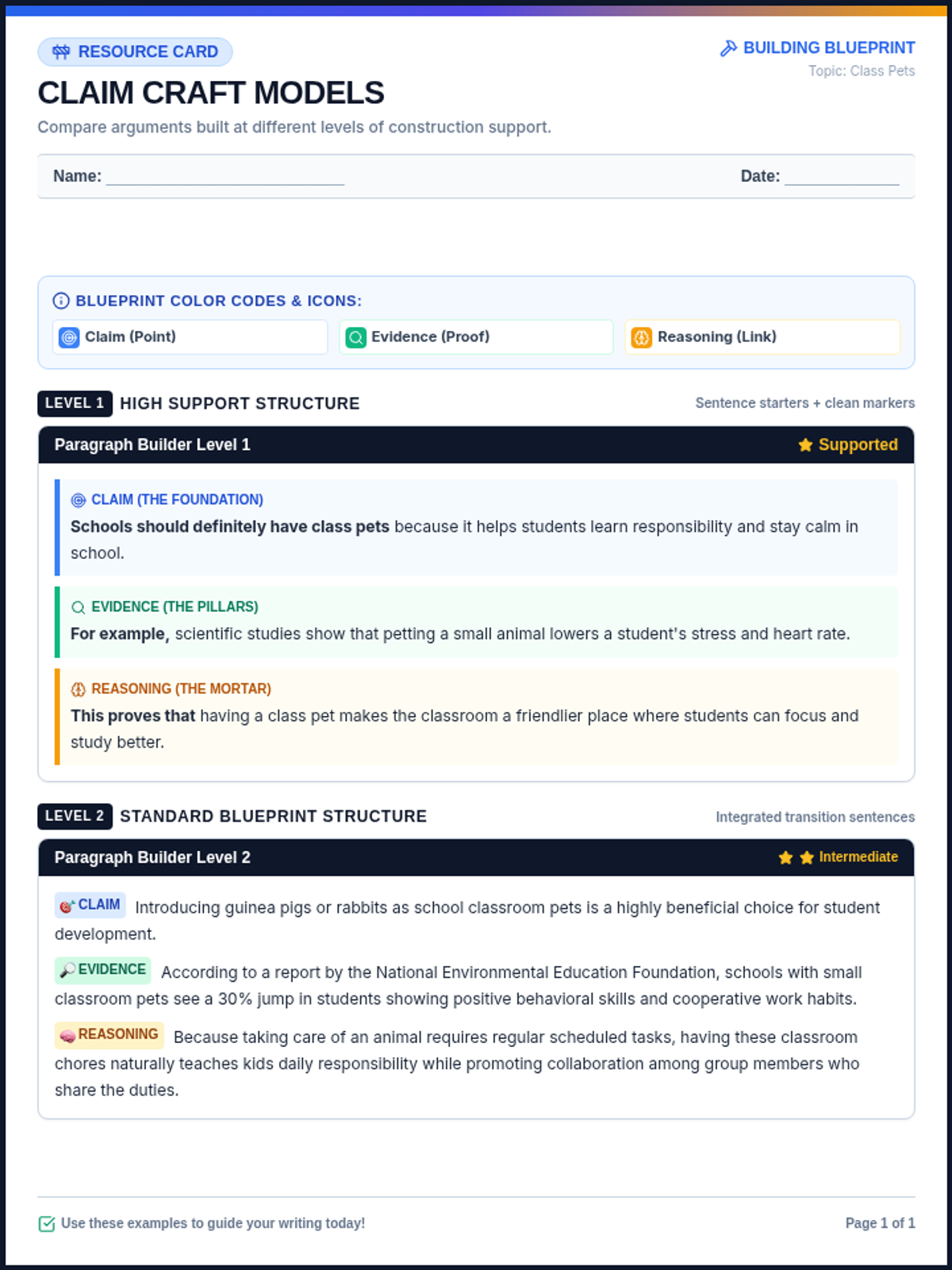
Leveled model argumentative texts demonstrating the Claim-Evidence-Reasoning (CER) framework on a high-interest topic (Class Pets) across multiple comprehension levels with clear visual scaffolding.
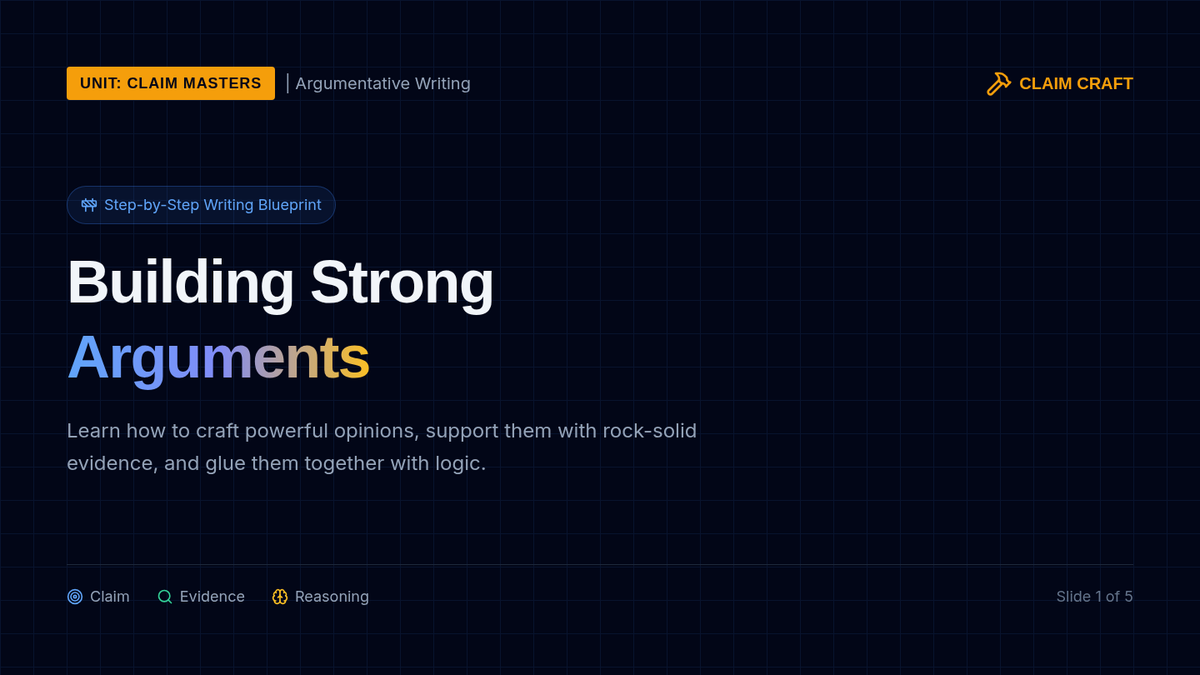
An instructional slide presentation breaking down claims, evidence, and reasoning (CER) step-by-step using a visual construction and building theme. Features bold typography, high-contrast visual cues, and visual icons for accessibility.
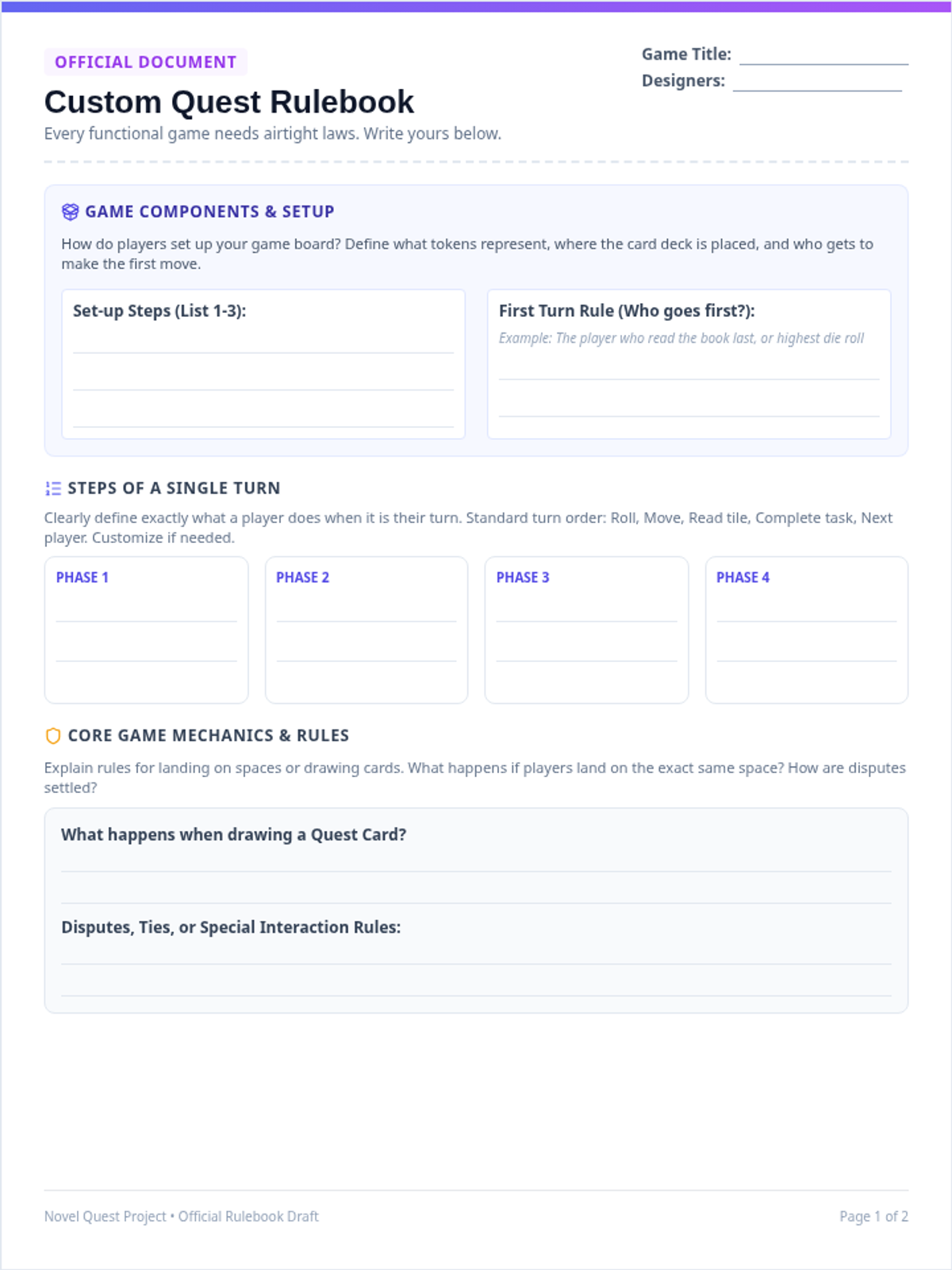
A 2-page print layout containing a custom Rulebook Draft template on page 1 and a structured Playtest Feedback Log on page 2.
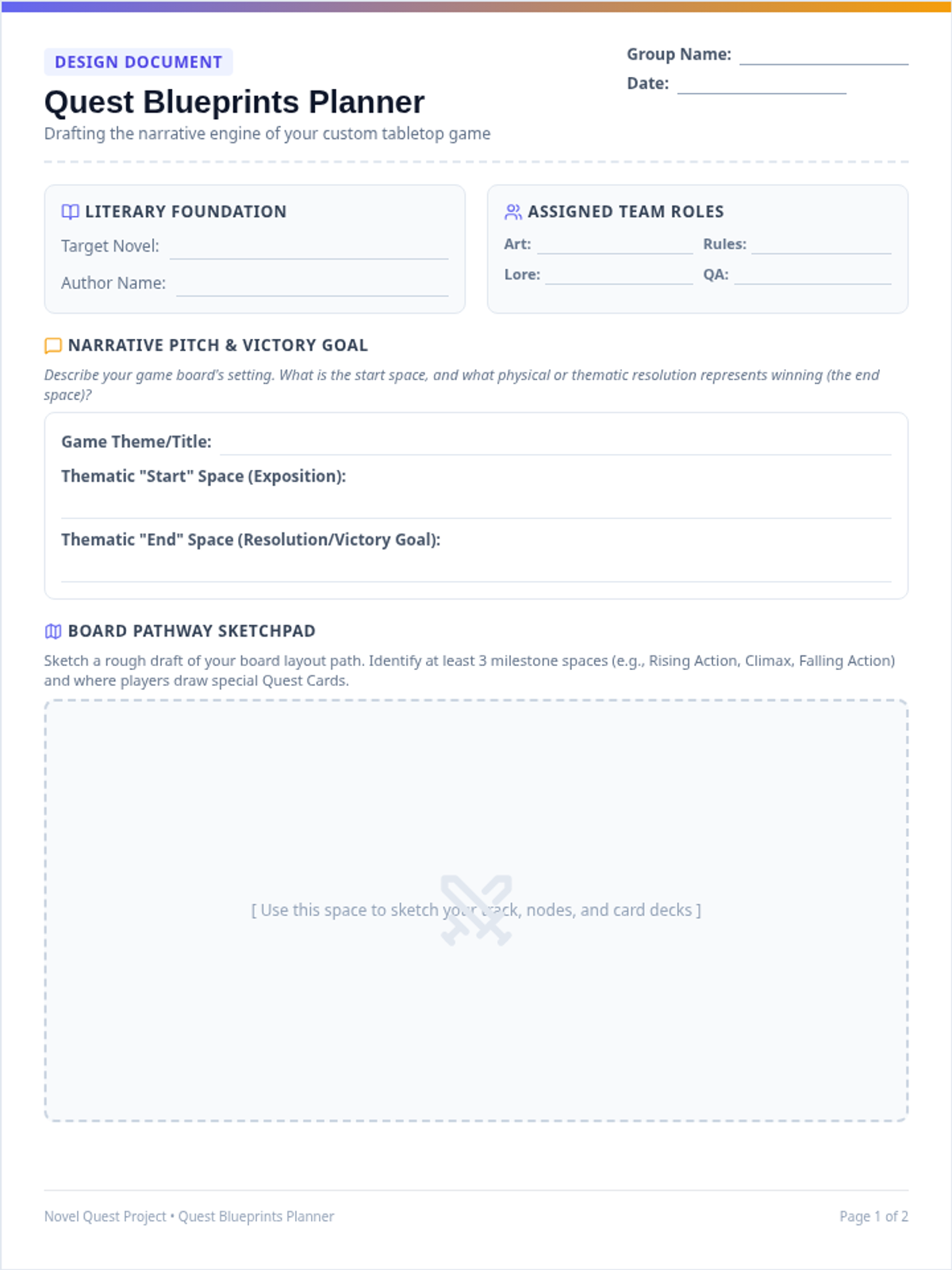
A 2-page printable planning booklet for students to design their board game theme, assign roles, outline mechanics, and draft specialized board squares based on the novel.
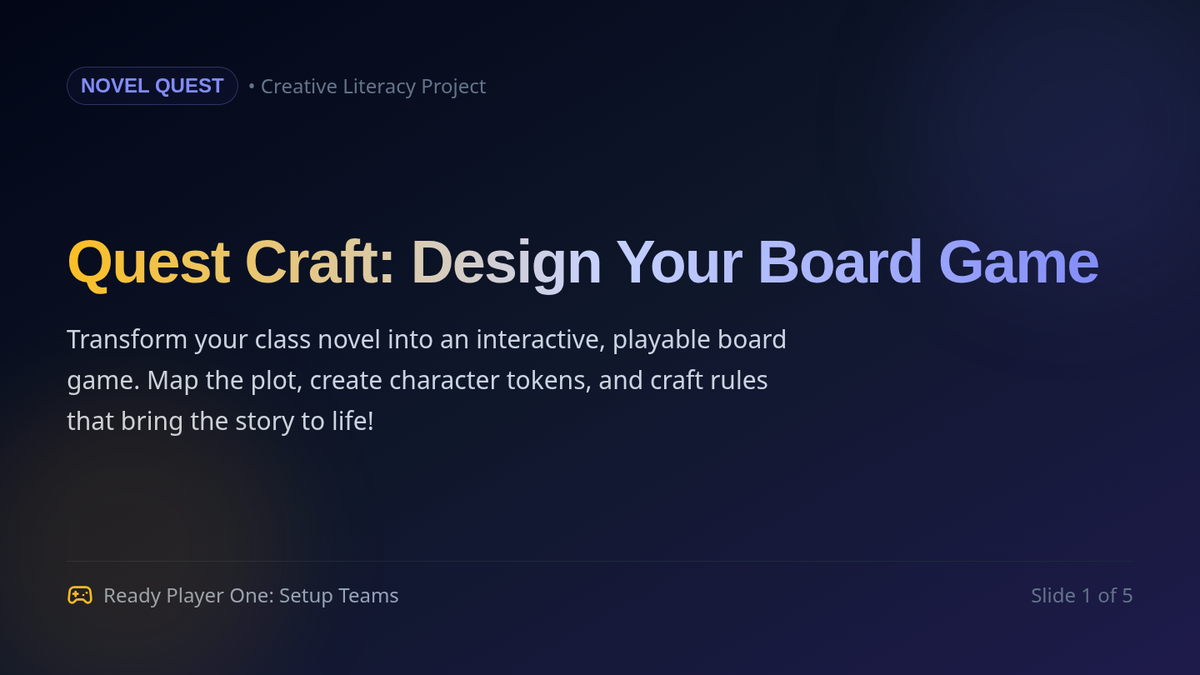
A 5-slide introductory presentation to guide teams through connecting story elements (plot, character, setting) to interactive board game mechanics, roles, and playtesting rules.
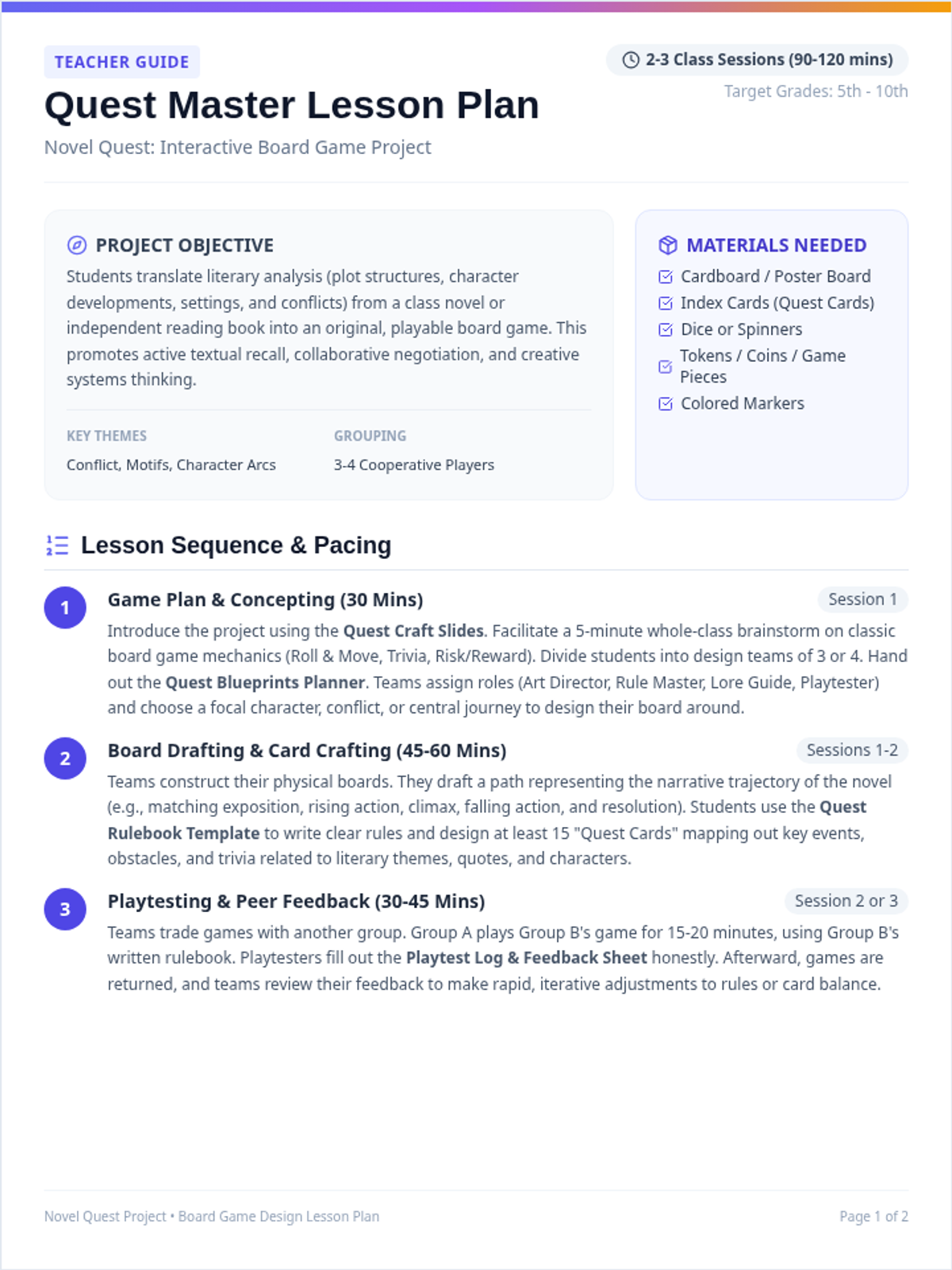
An instructional lesson plan and rubric for teachers to facilitate the Novel Quest board game design project. Includes pacing, group setup, materials, and a classroom assessment rubric.
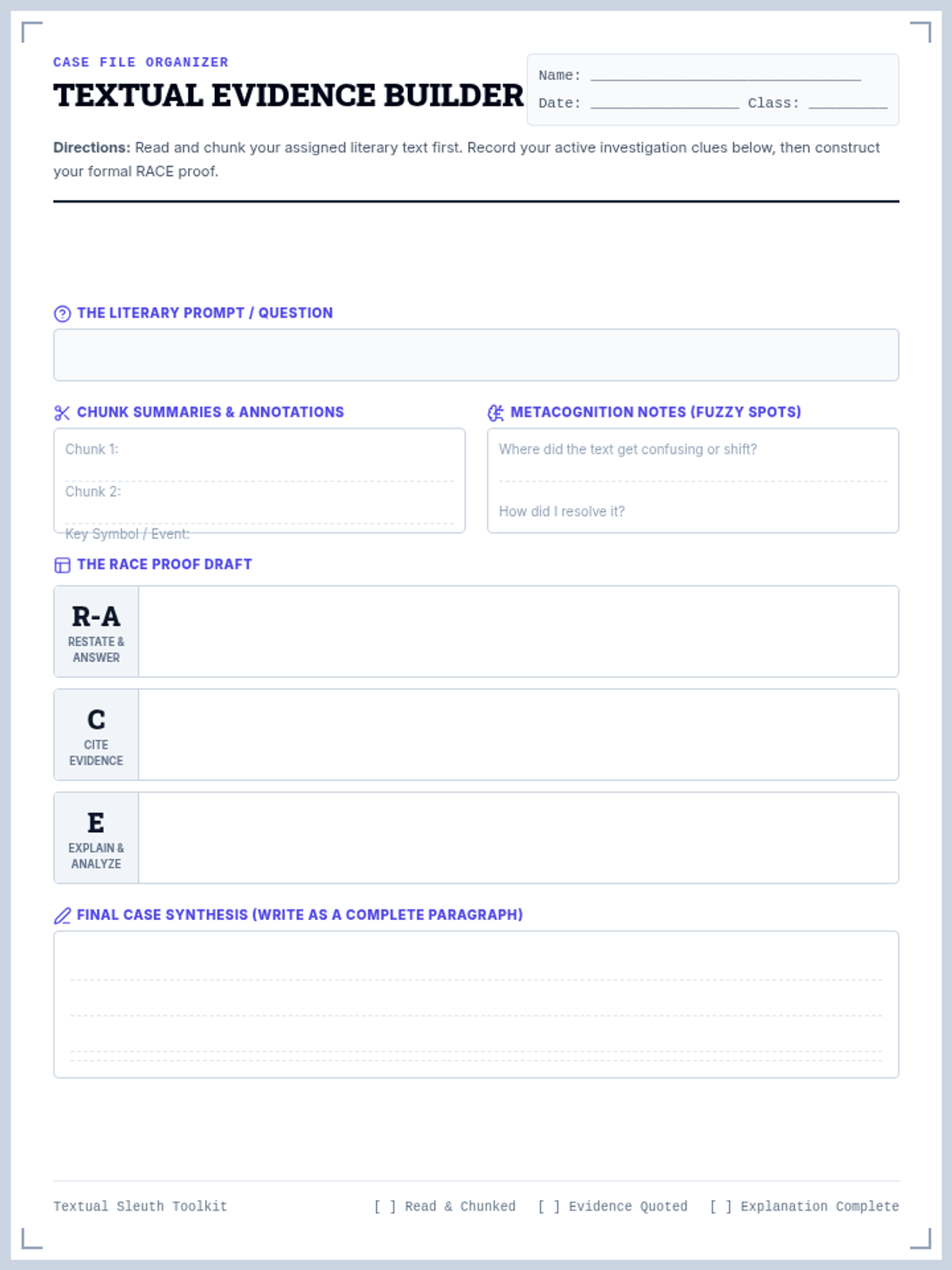
A cohesive printable student graphic organizer worksheet mapping the active reading chunk notes directly to a RACE paragraph-building workspace.
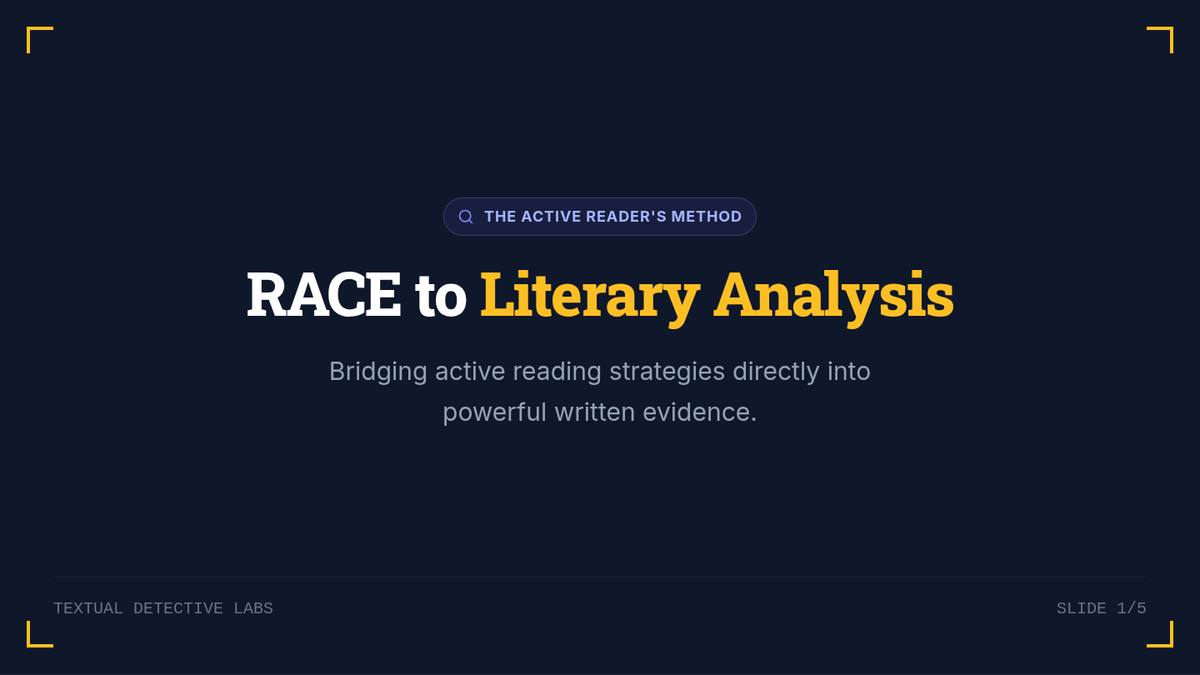
A step-by-step presentation deck introducing the active reading tools (Metacognition, Chunking, Annotating) and showing how they directly populate the RACE literary analysis framework.
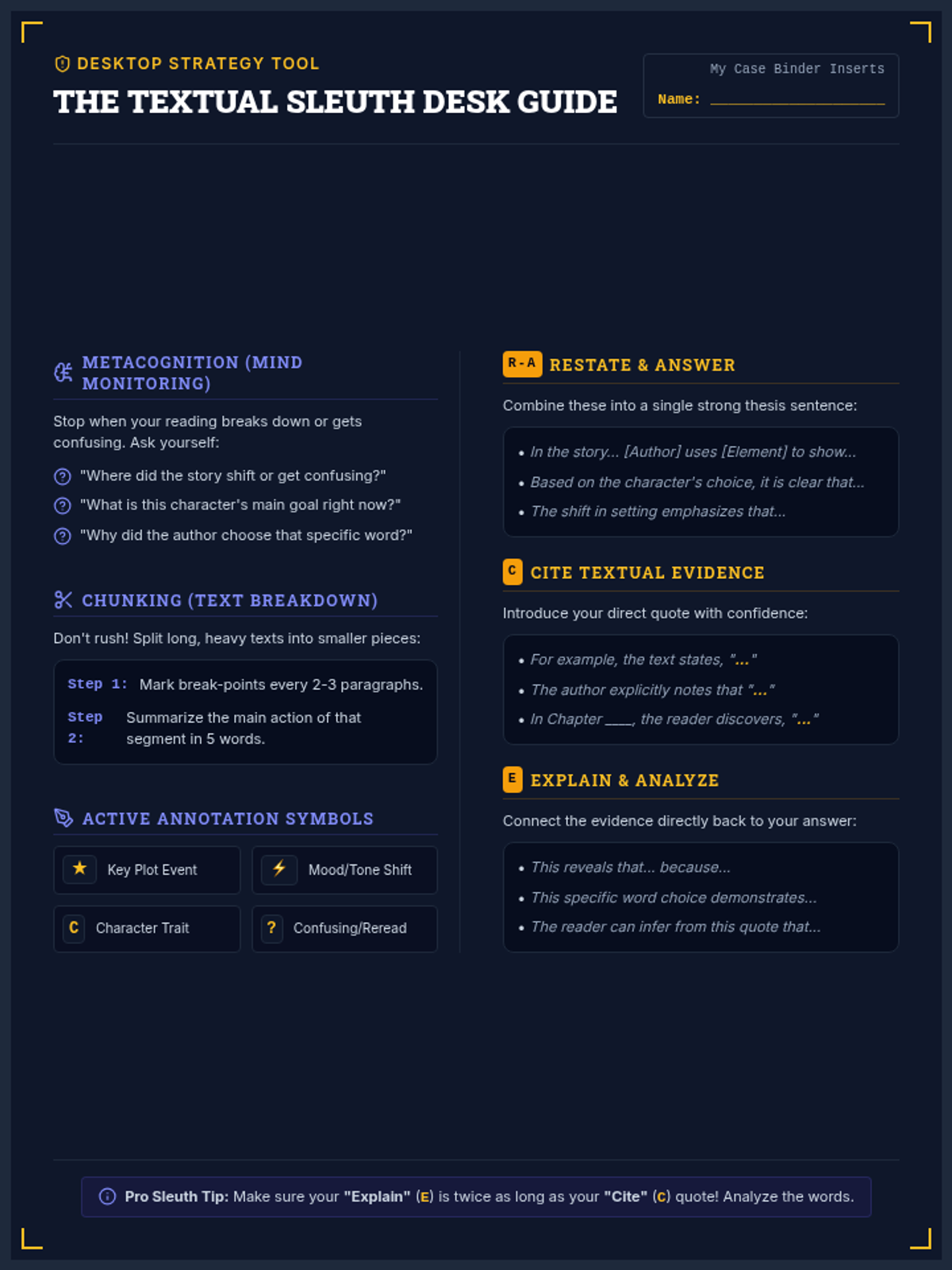
A desk-sized individual student reference guide and binder insert with handy annotation symbols, metacognitive monitoring questions, and specific RACE sentence starters.
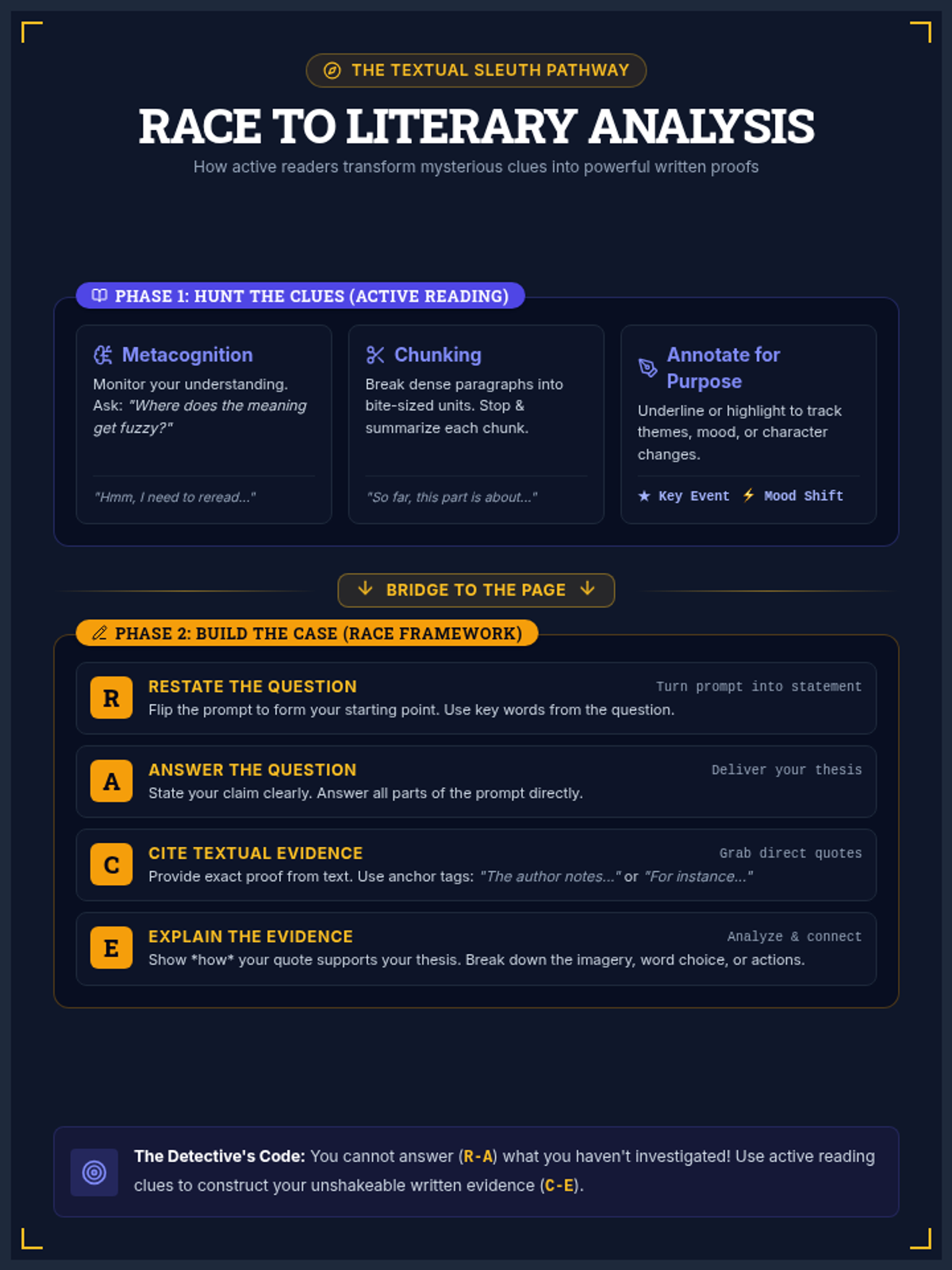
A high-visibility printable classroom anchor chart mapping the complete textual analysis workflow: bridging Active Reading strategies (Metacognition, Chunking, Annotating) directly into the RACE writing framework.
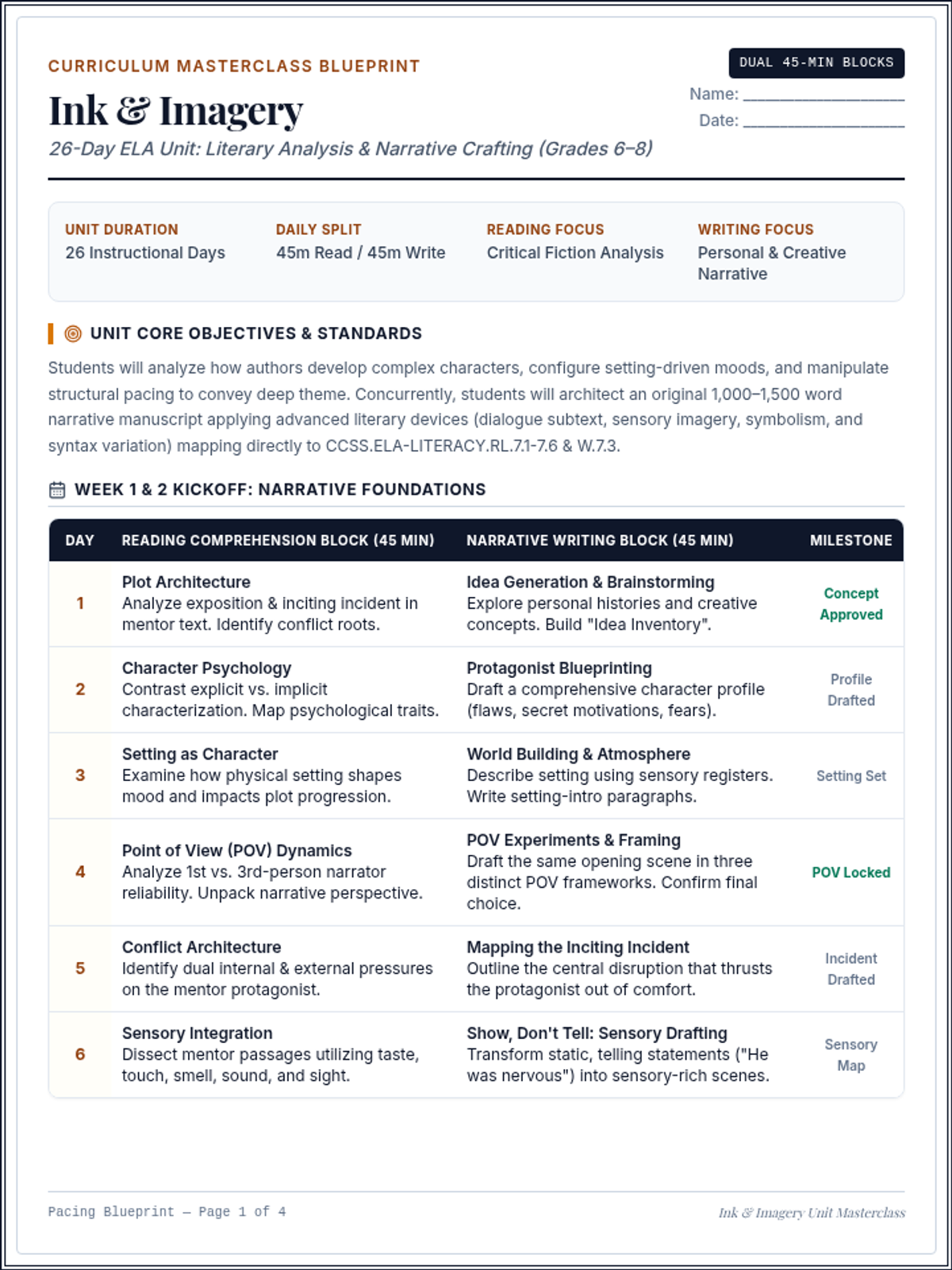
A comprehensive, beautifully designed 4-page master pacing guide detailing a 26-day literary analysis and narrative writing unit. Features distinct 45-minute daily blocks for reading and writing, complete with mini-lesson topics, student tasks, and milestone targets.
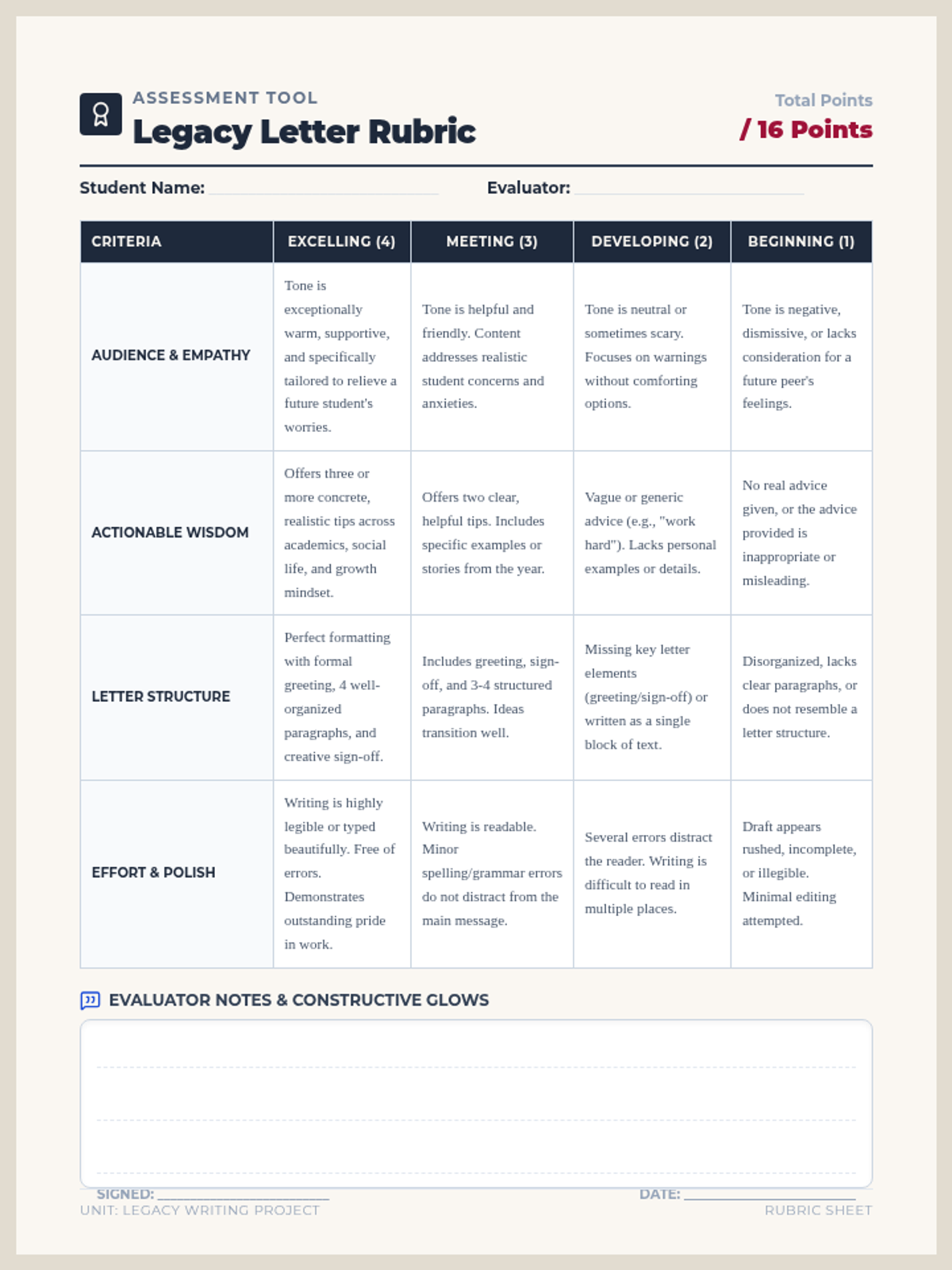
An easy-to-use 1-page analytical rubric and feedback checklist scoring students on empathy, tone, content depth, structure, and polish.
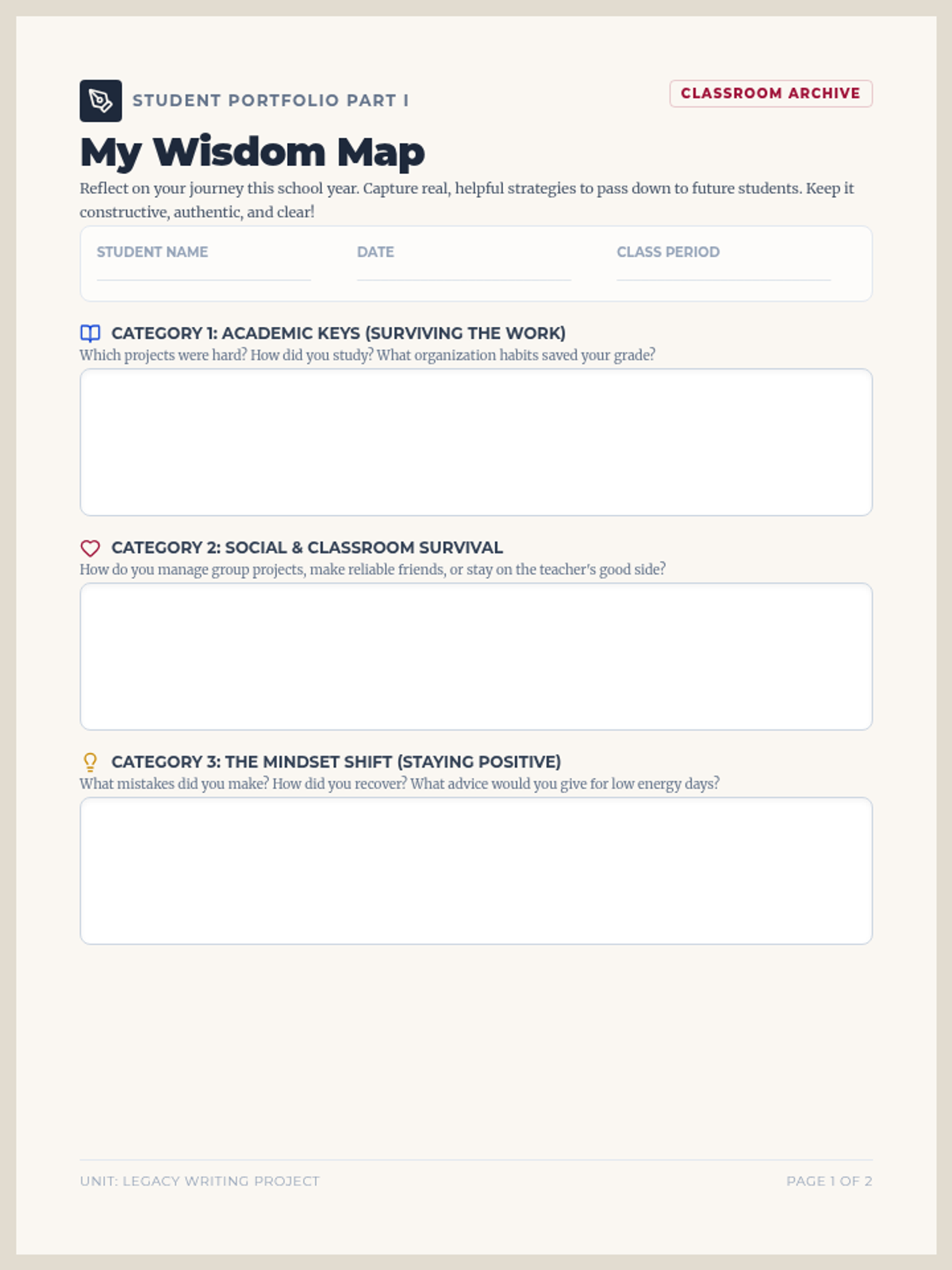
A structured 2-page brainstorming and drafting journal for students to map out memories, categorize critical advice, and organize their final letter draft.
A beautifully themed 6-slide presentation deck designed for whole-class instruction, guiding students through brainstorming, understanding their audience, and structuring their advice.
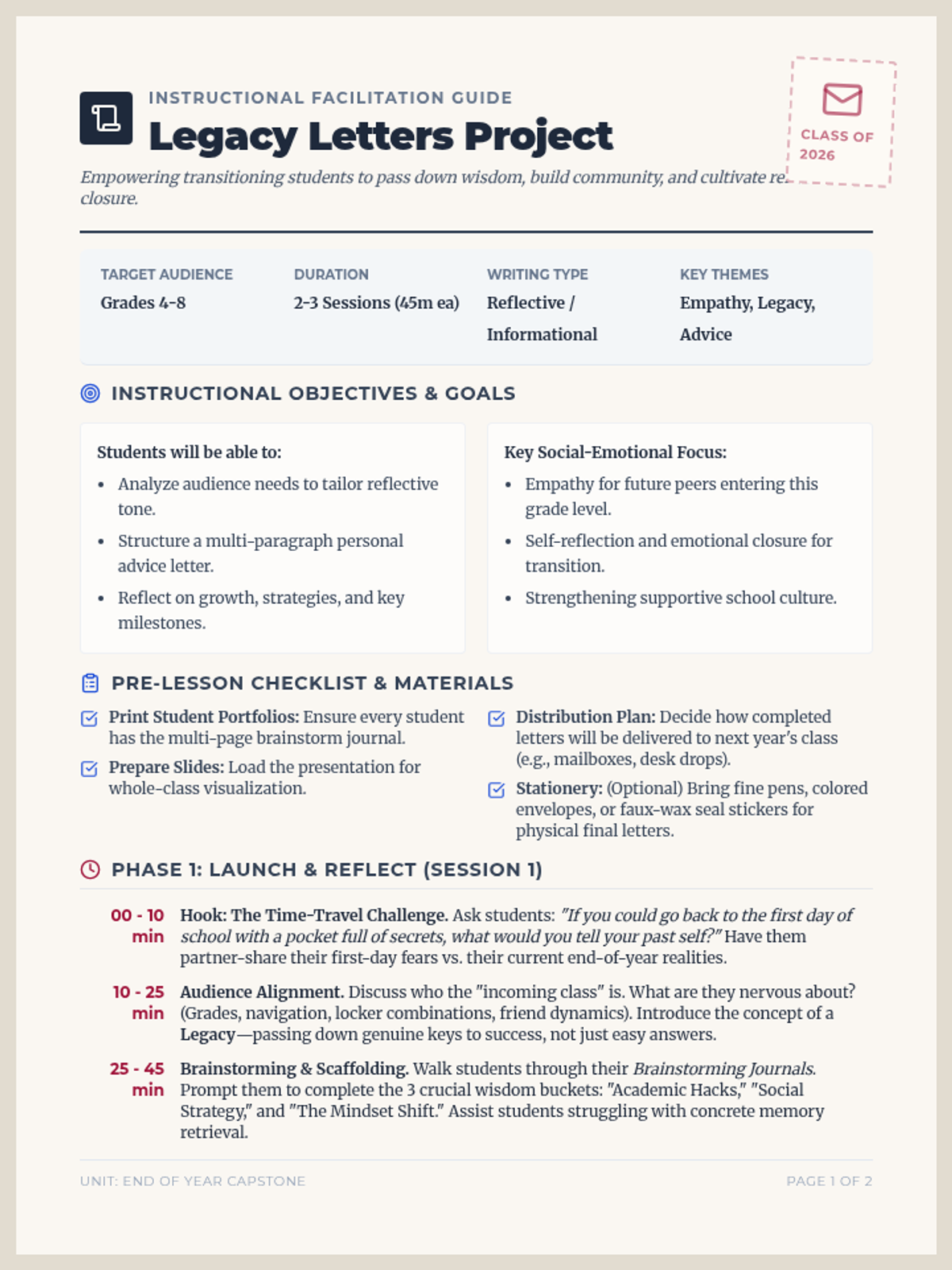
A comprehensive, 2-page teacher guide and lesson plan outlining the step-by-step facilitation, discussion prompts, pacing, and differentiation strategies for the Legacy Letters writing project.
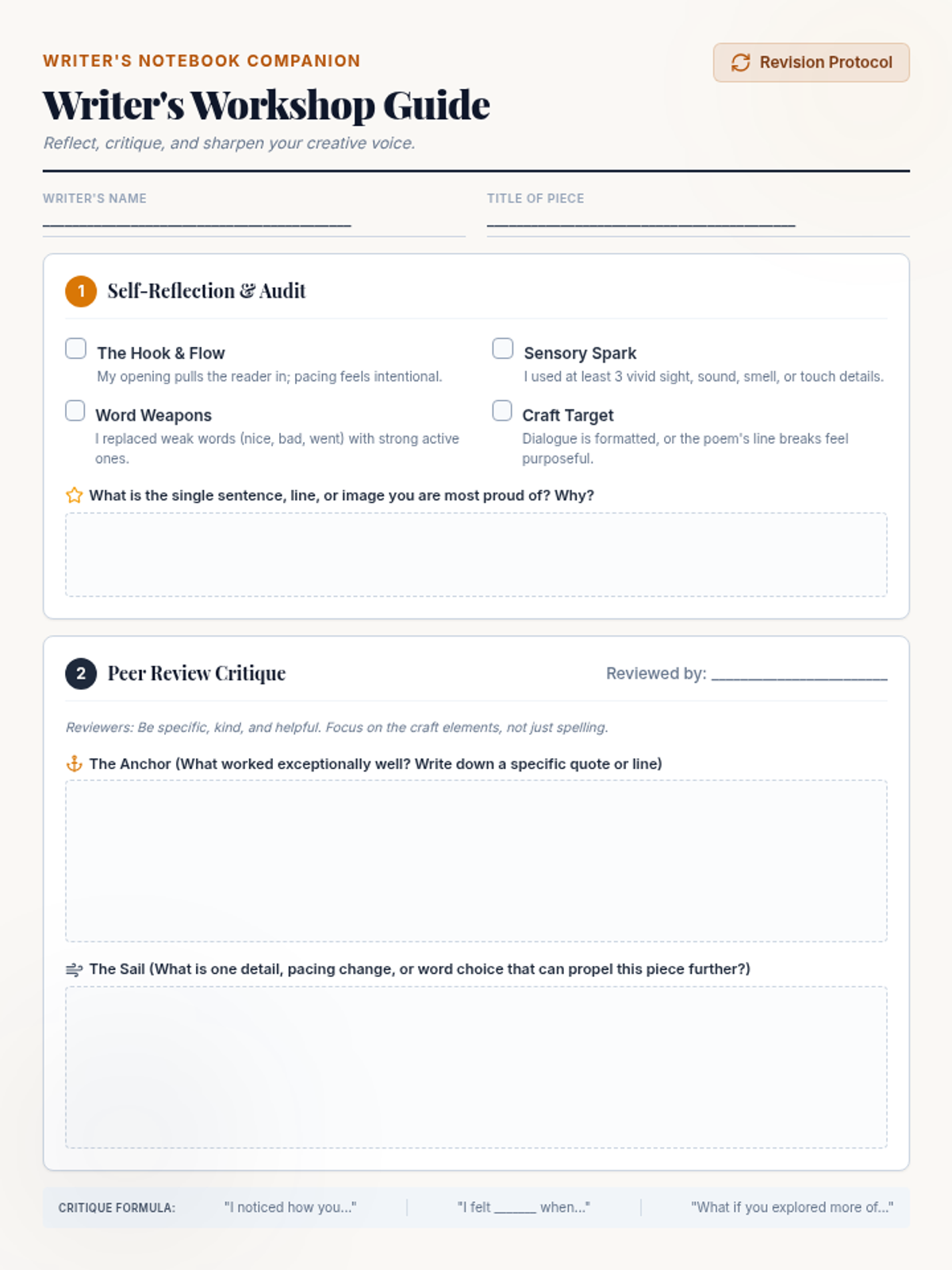
A beautifully designed, student-facing workshop tool featuring a creative self-reflection checklist and structured peer feedback prompts.