A visual presentation introducing students to particle theory and the behavior of particles in solids, liquids, and gases. Uses clear visual models and kinesthetic prompts for the classroom activity.
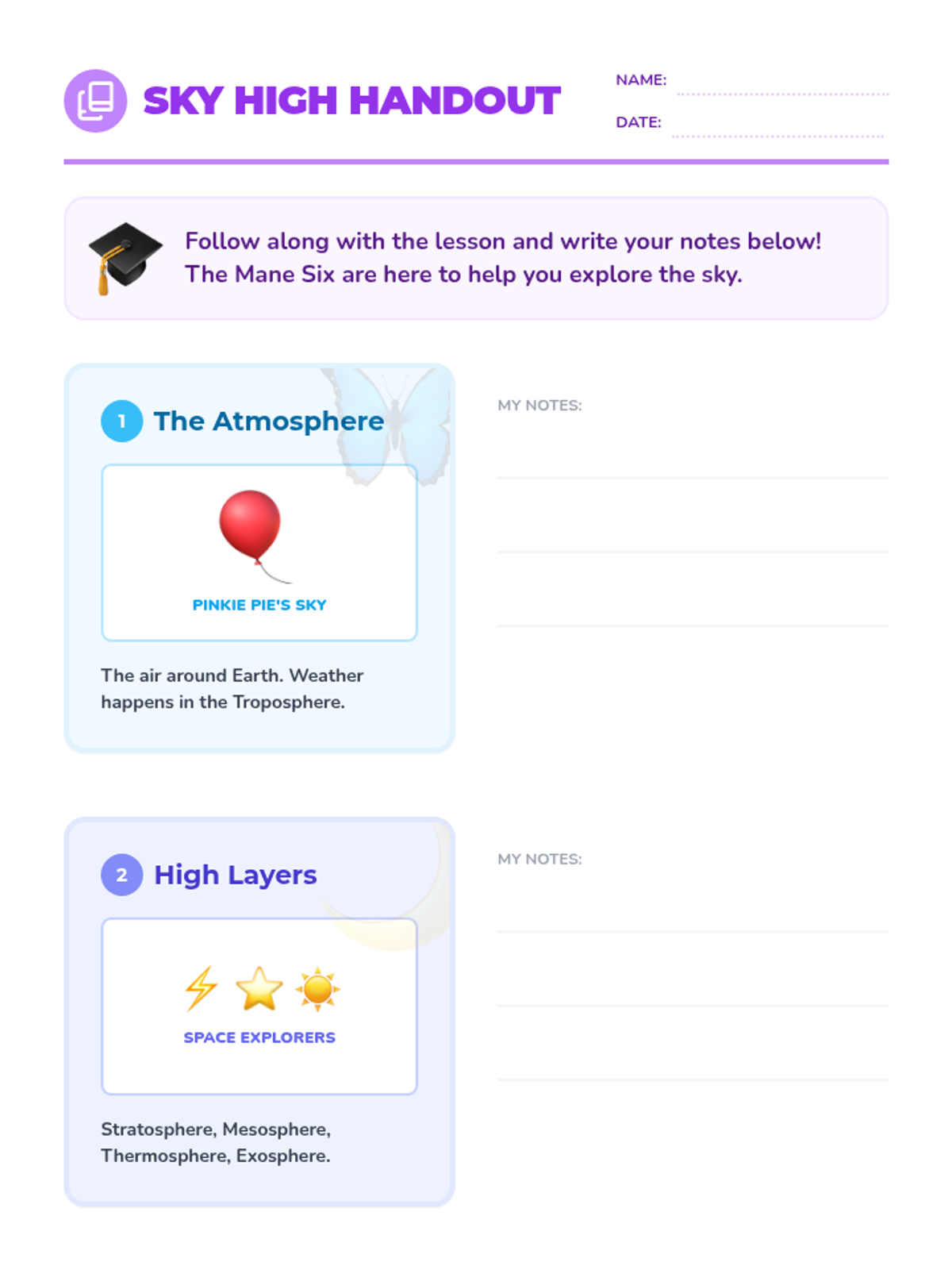
A printable handout document that summarizes the Sky High Slides content. Features 0.5-inch margins, space for student note-taking, and visual summaries of key concepts. Revised with student identification fields and enhanced MLP-themed visuals.
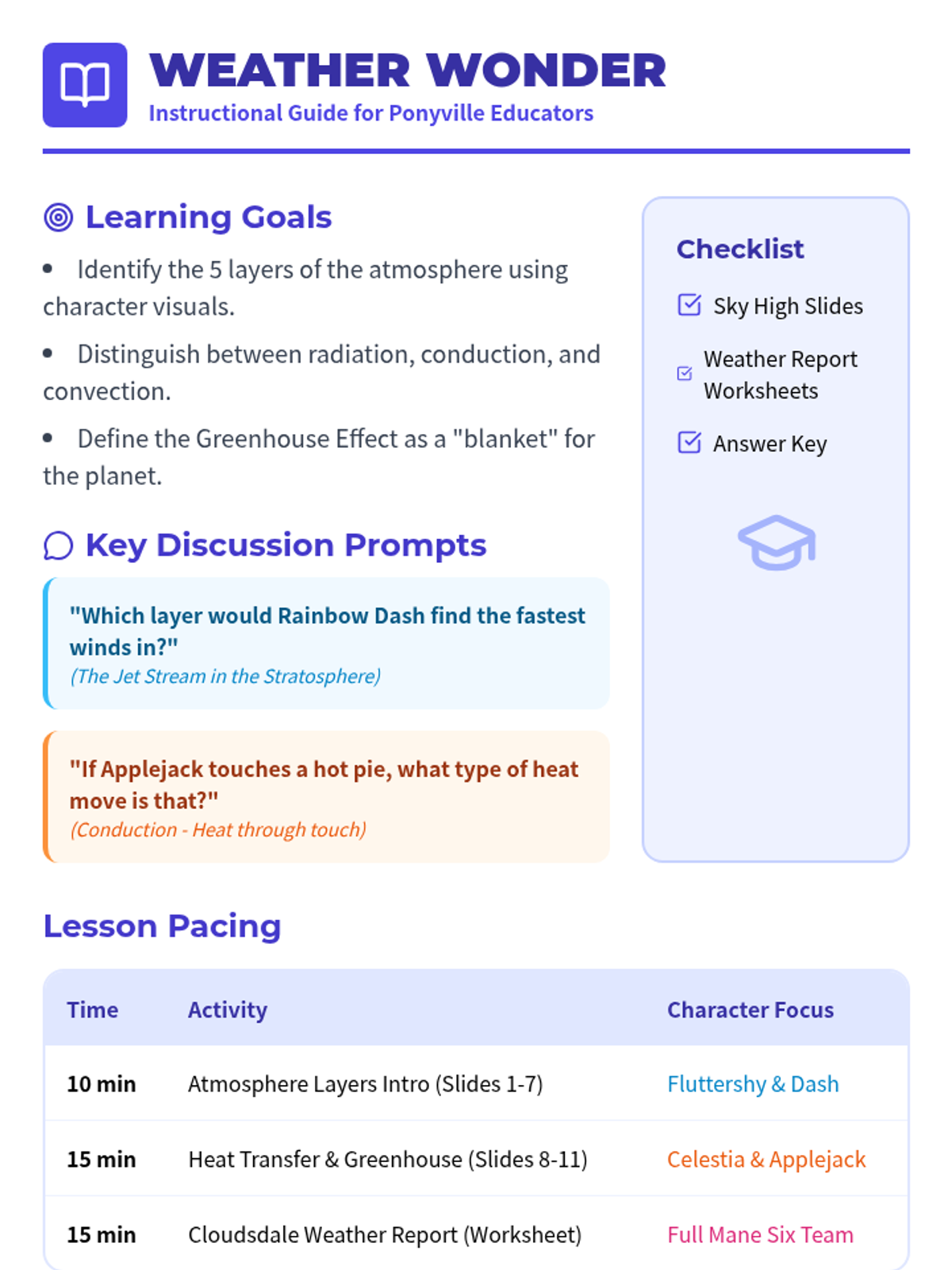
US Letter-ready teacher guide for the "Sky High Discovery" lesson. Features refined layout with 0.5-inch margins, optimized page breaks, and high-contrast instructional notes.
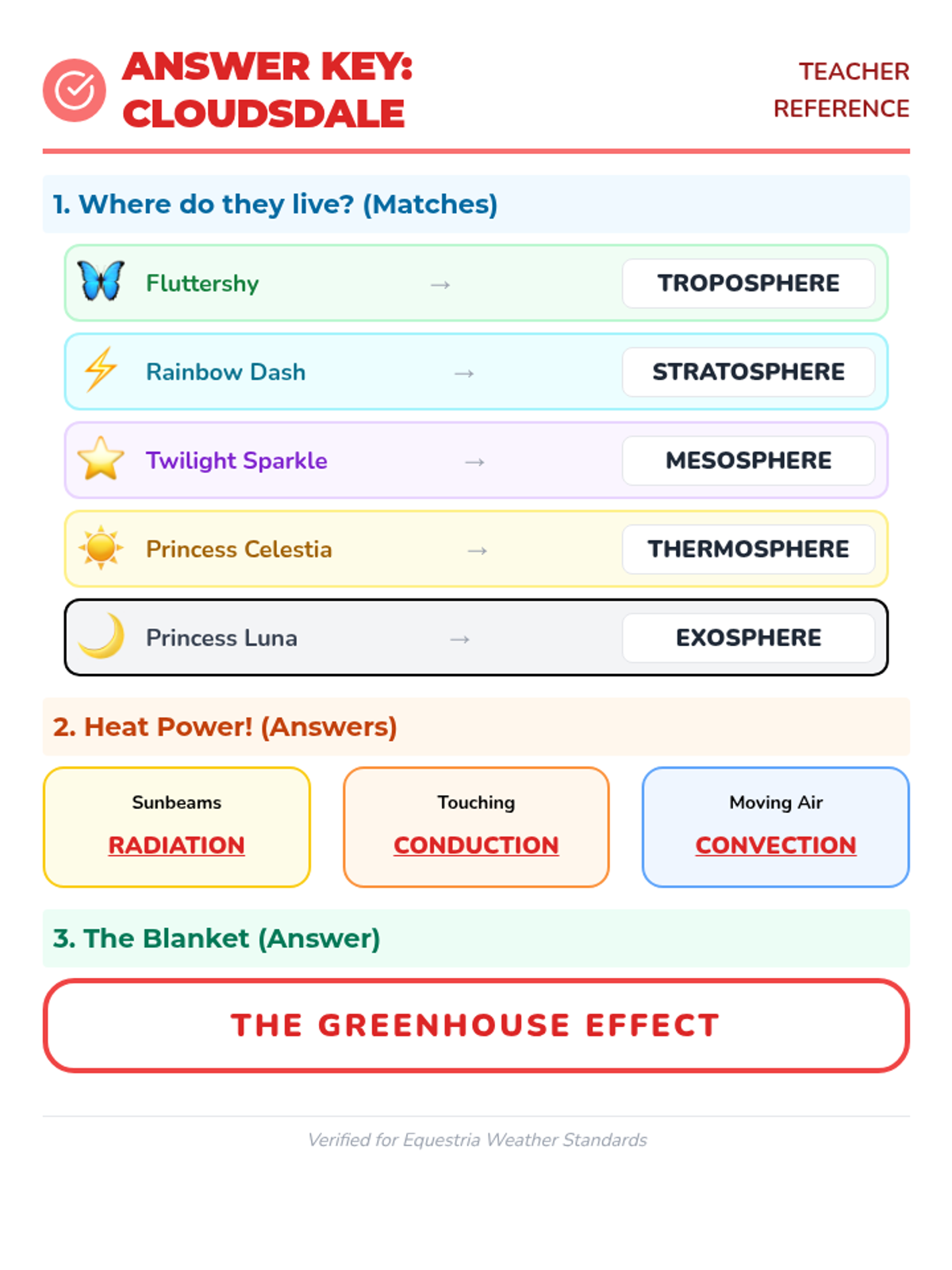
US Letter-sized answer key for the Cloudsdale Weather Report Worksheet. Features clear mappings for atmosphere layers and heat transfer types, optimized for one-page printing with standard margins. Spacing condensed to ensure single-page fit.
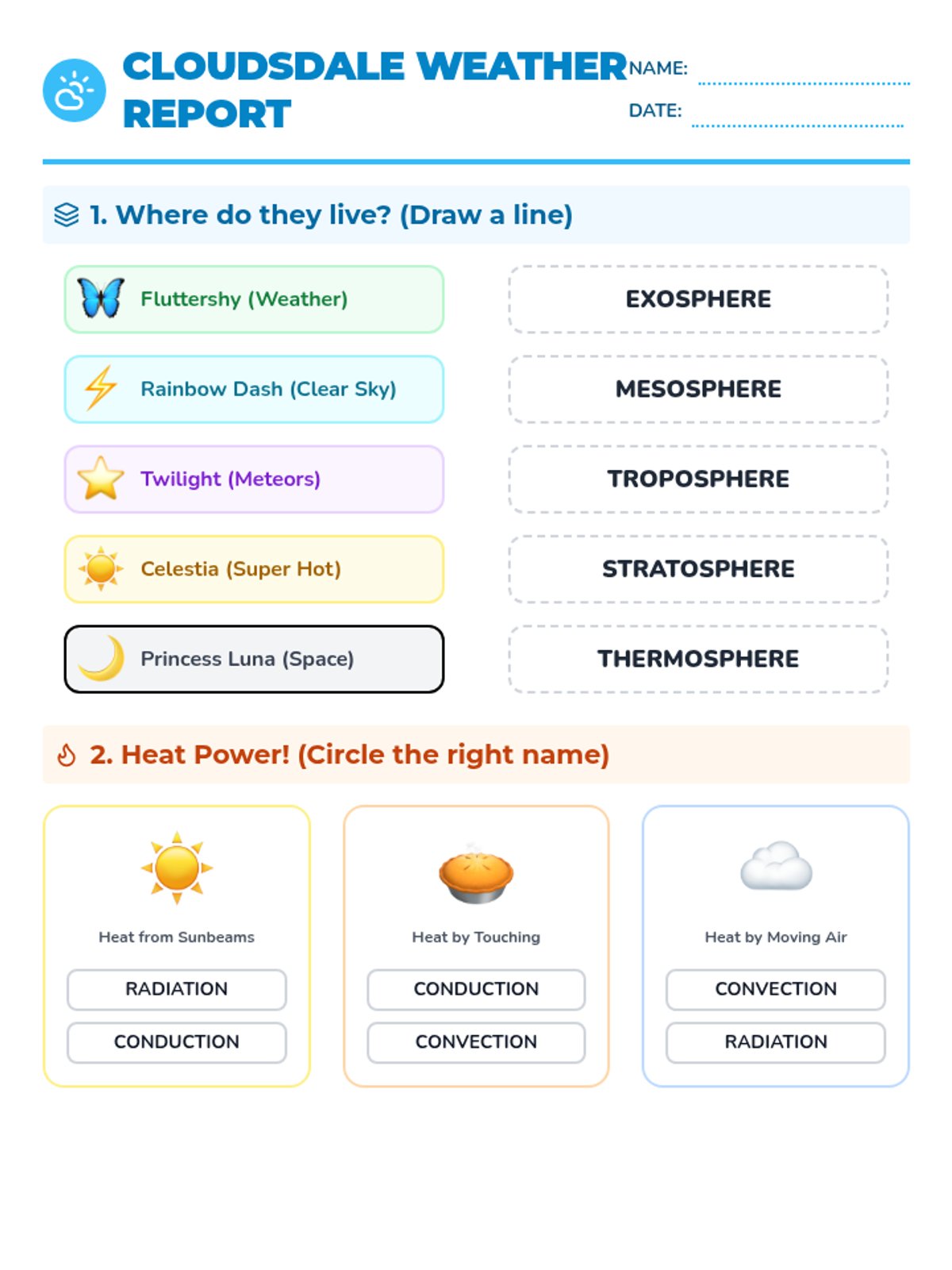
A US Letter-ready, visual-heavy worksheet for students to identify layers of the atmosphere and types of heat transfer. Features MLP characters as visual cues, 0.5-inch margins, and optimized page breaks. Revised for maximum print usability.
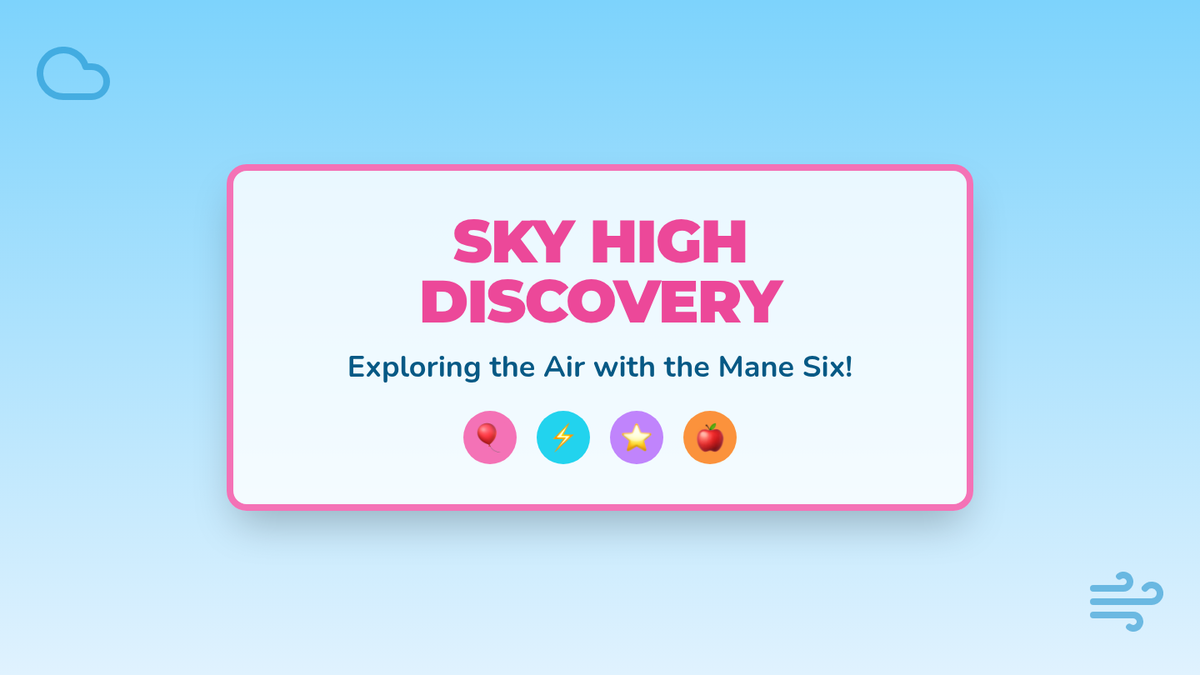
A visual-heavy slide presentation introducing the layers of the atmosphere and heat transfer methods using My Little Pony characters and simple symbols. Includes slides on the Troposphere, Stratosphere, Mesosphere, Thermosphere, Exosphere, Radiation, Conduction, Convection, and the Greenhouse Effect.
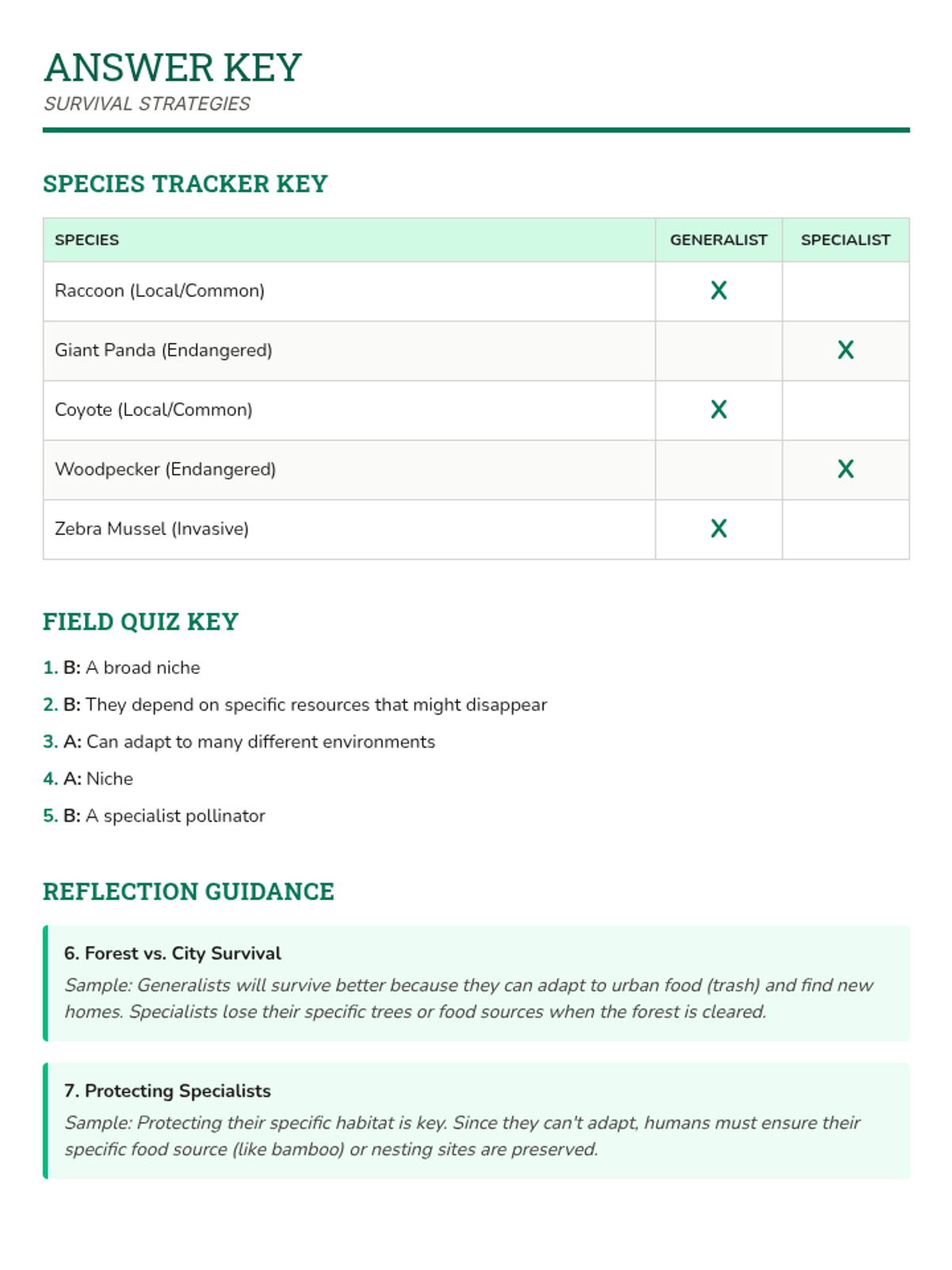
Revised teacher answer key for the Survival Strategies worksheet. Compact design to fit on a single page with improved visual alignment.
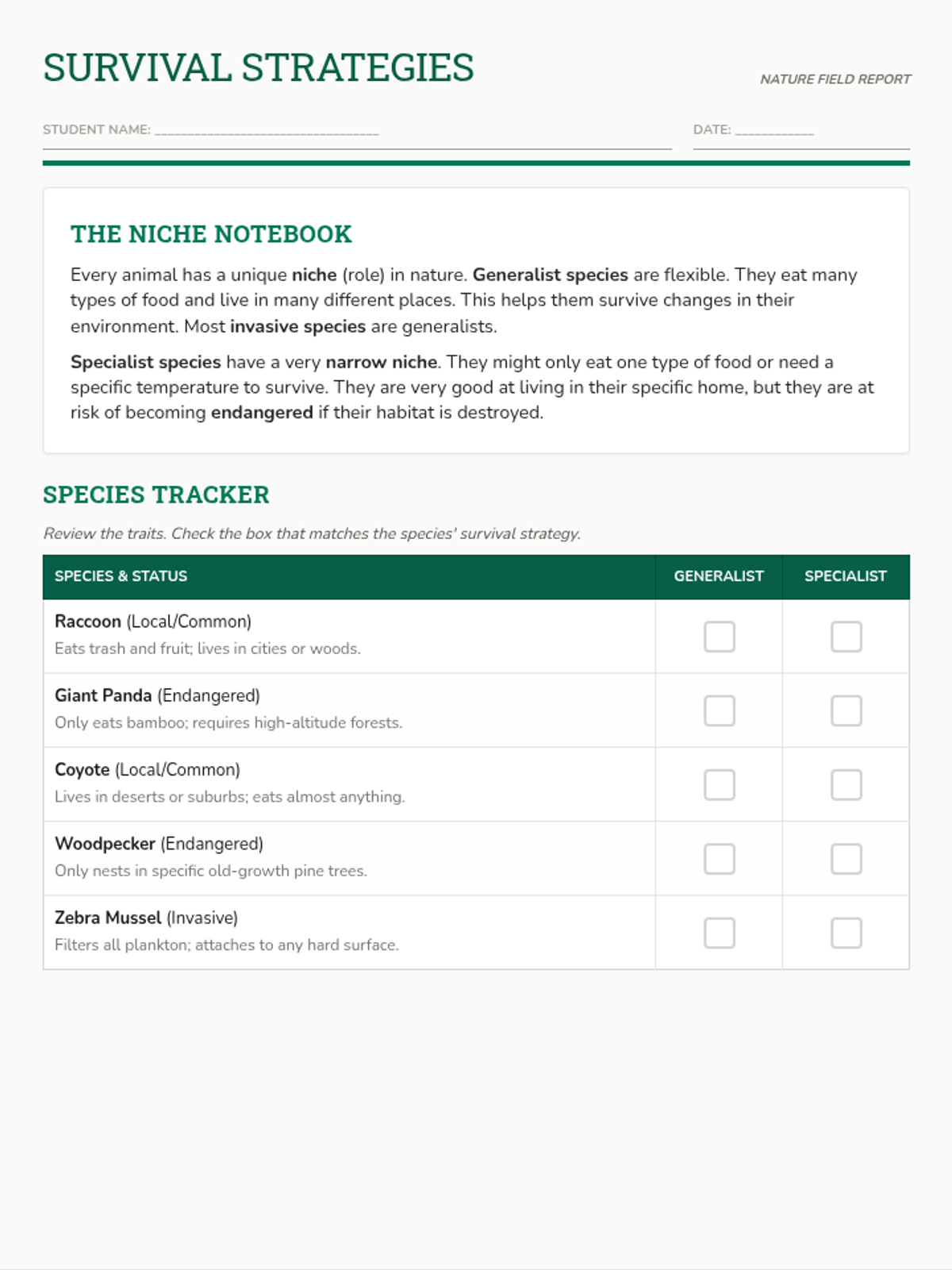
Final version of the Survival Strategies worksheet. Compact, two-page layout optimized for print with reading, tracker, quiz, and reflection.
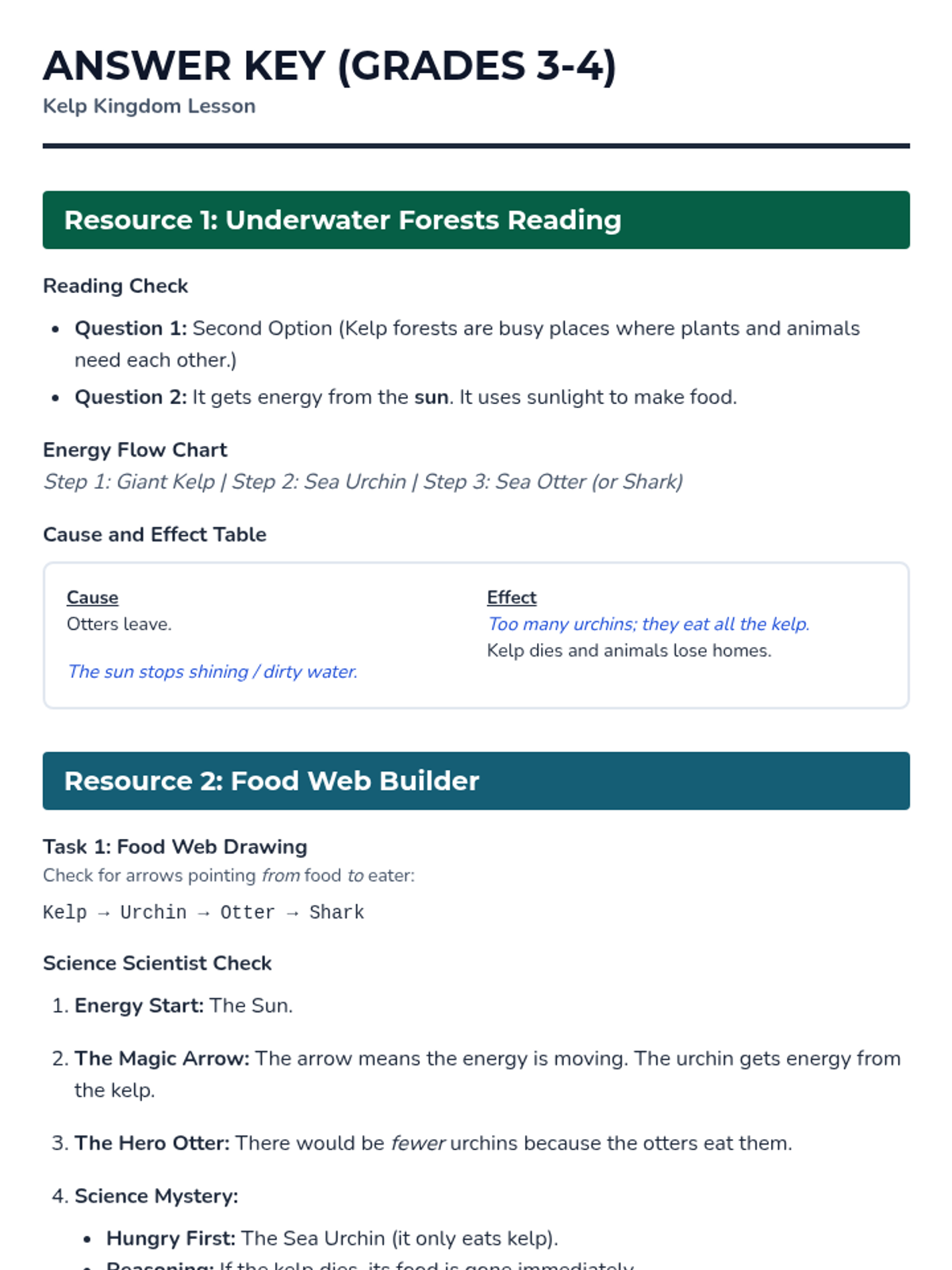
A simplified answer key and grading rubric for the grades 3-4 kelp forest lesson materials.
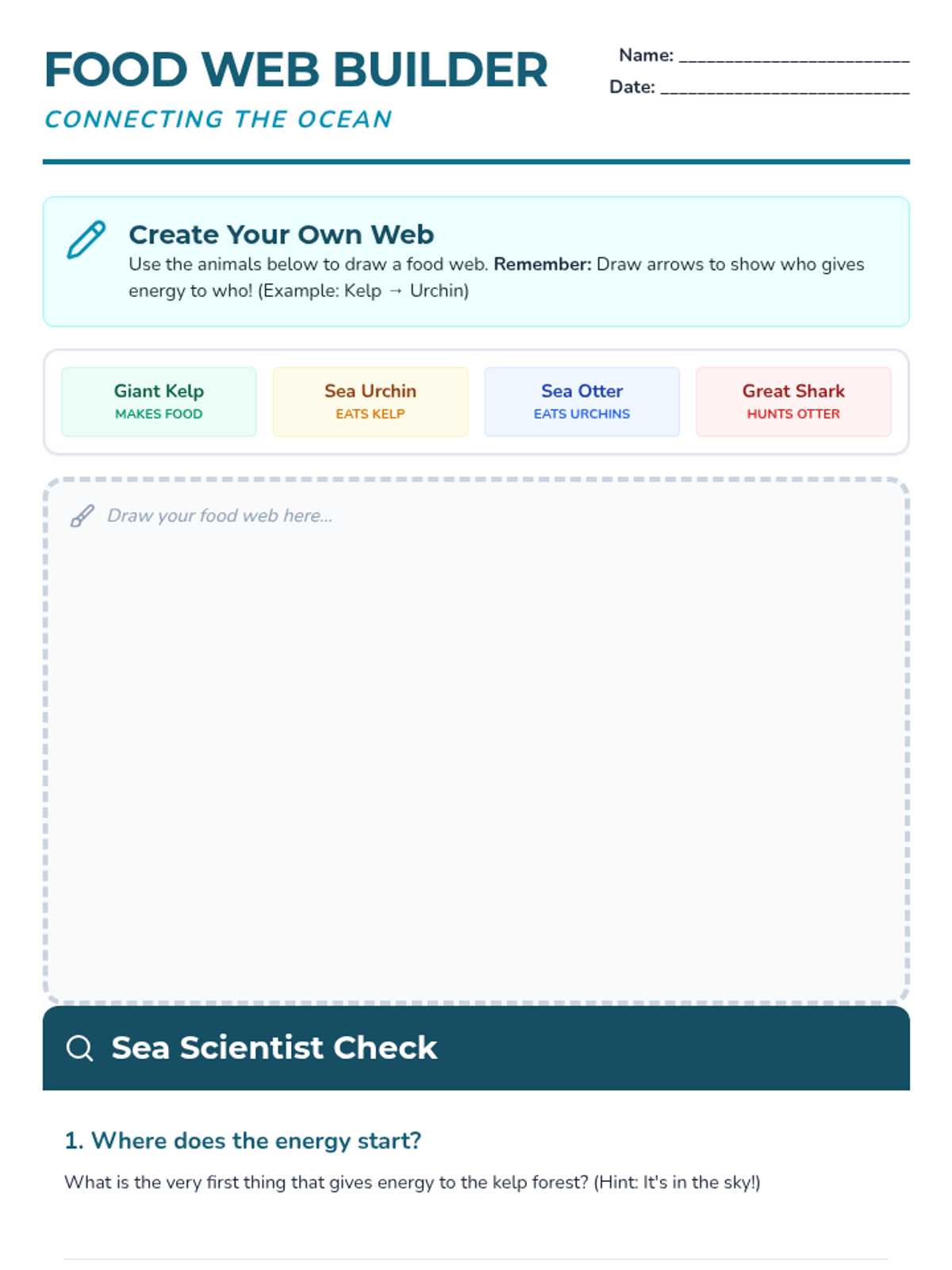
A simplified food web activity for grades 3-4. Students map out energy flow between kelp, urchins, otters, and sharks, and answer analysis questions about producers, consumers, and ecosystem balance.
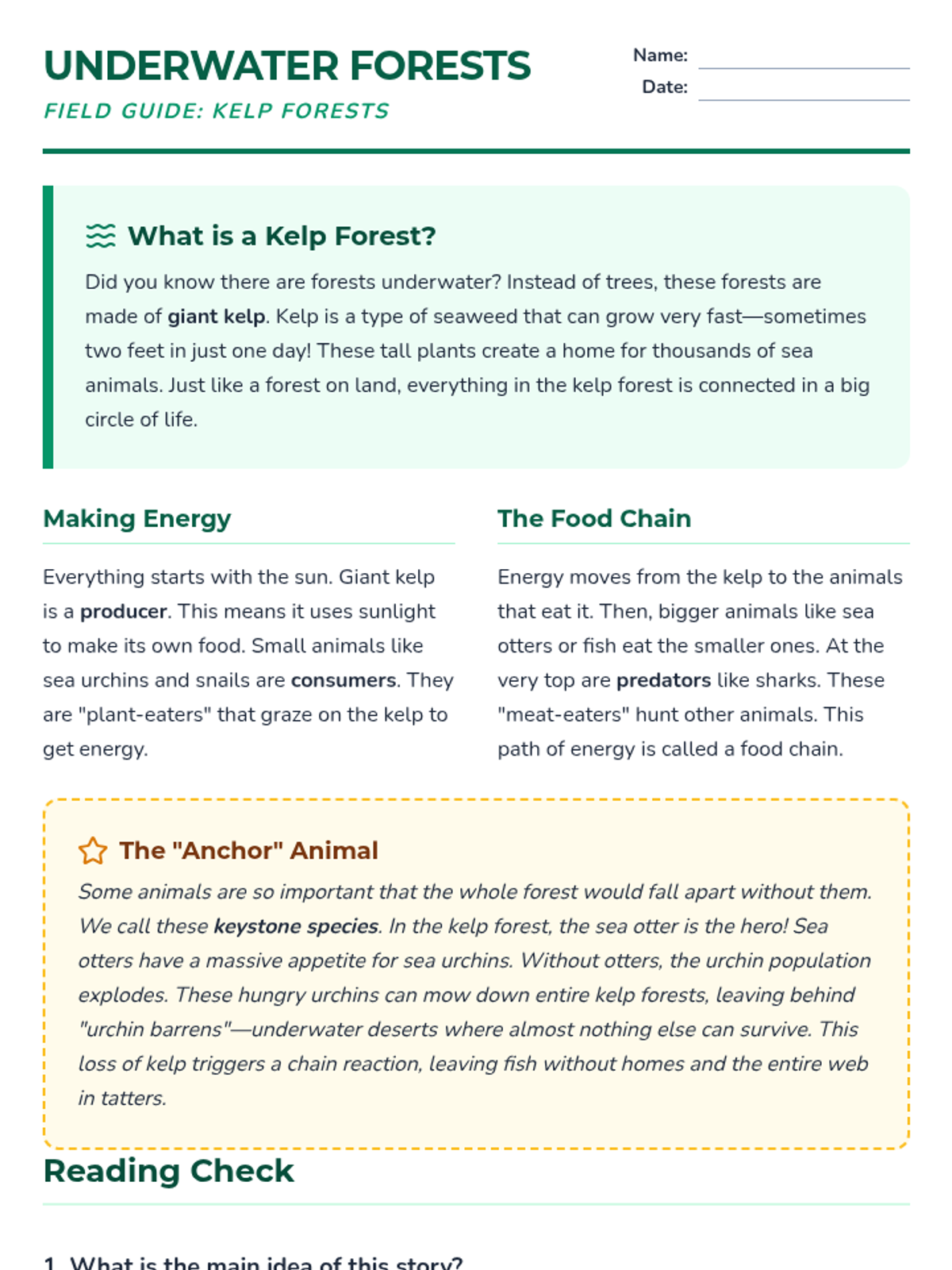
A simplified reading passage for grades 3-4 about kelp forest ecology. Explains producers, consumers, and food chains using student-friendly language, with a focus on the sea otter as a keystone species.