A slide deck for graduate students exploring the recording studio as a primary compositional tool, moving from Musique Concrète to multi-track recording and the ontological shift from score to recording.
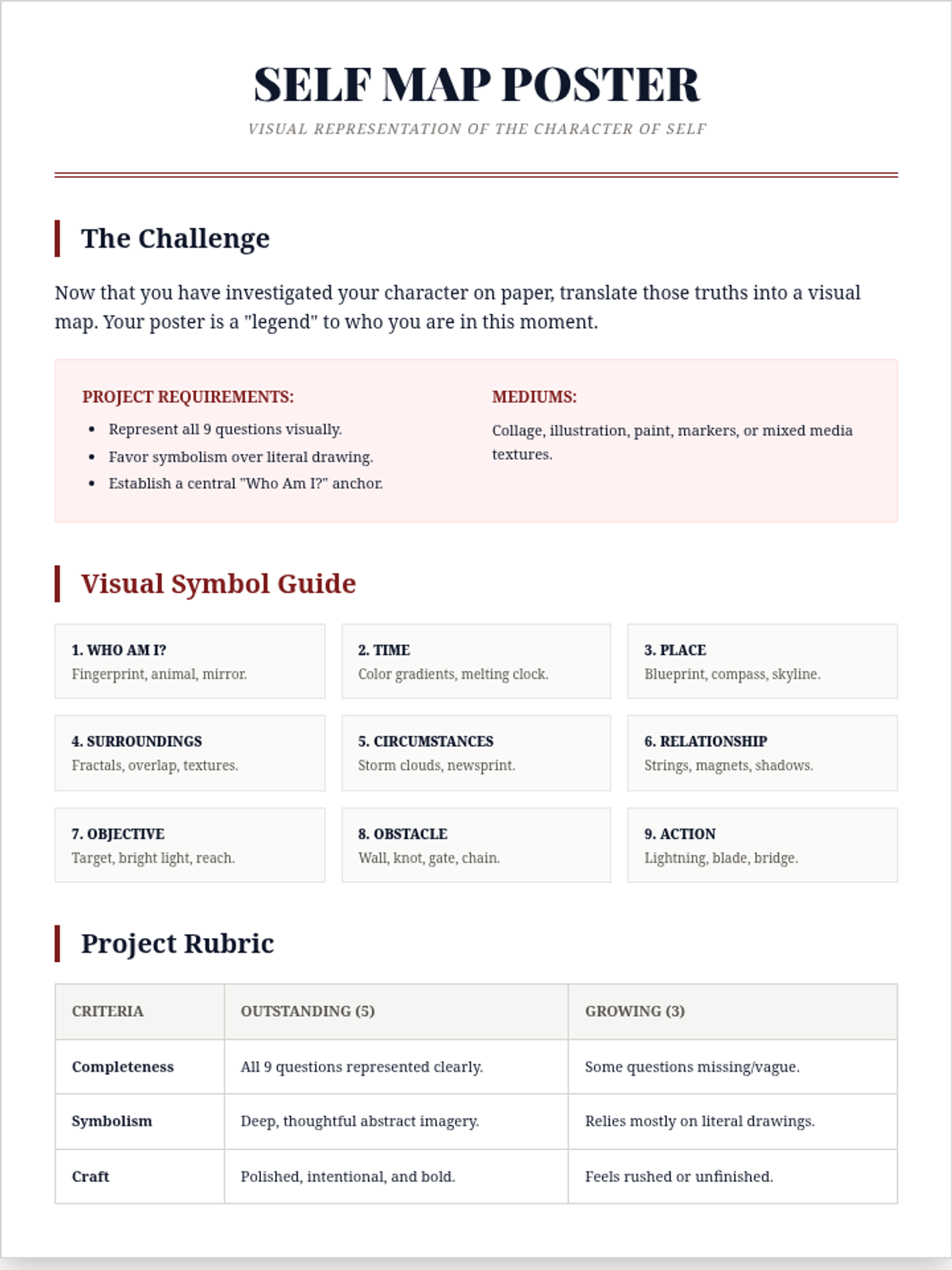
A project guide and rubric for Day 2, instructing students on how to translate their Hagen investigation into a visual character map poster using symbolism and creative layout.
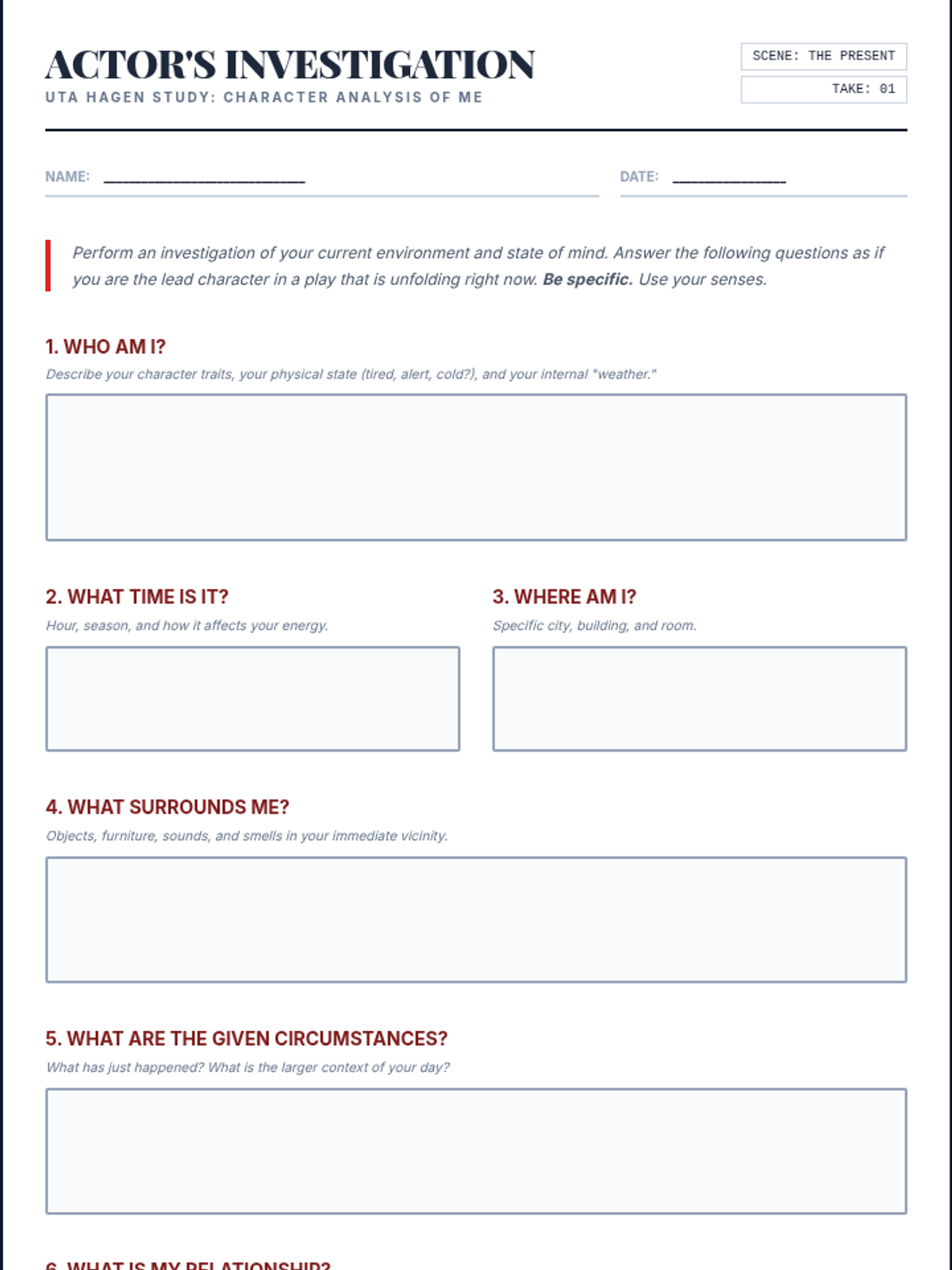
A structured character study worksheet based on Uta Hagen's 9 Questions, prompting students to analyze themselves as characters in their own lives with ample space for reflective writing.
A visual presentation introducing Uta Hagen and her 9 questions for the actor, designed to guide students through the Day 1 introduction of their self-study project.
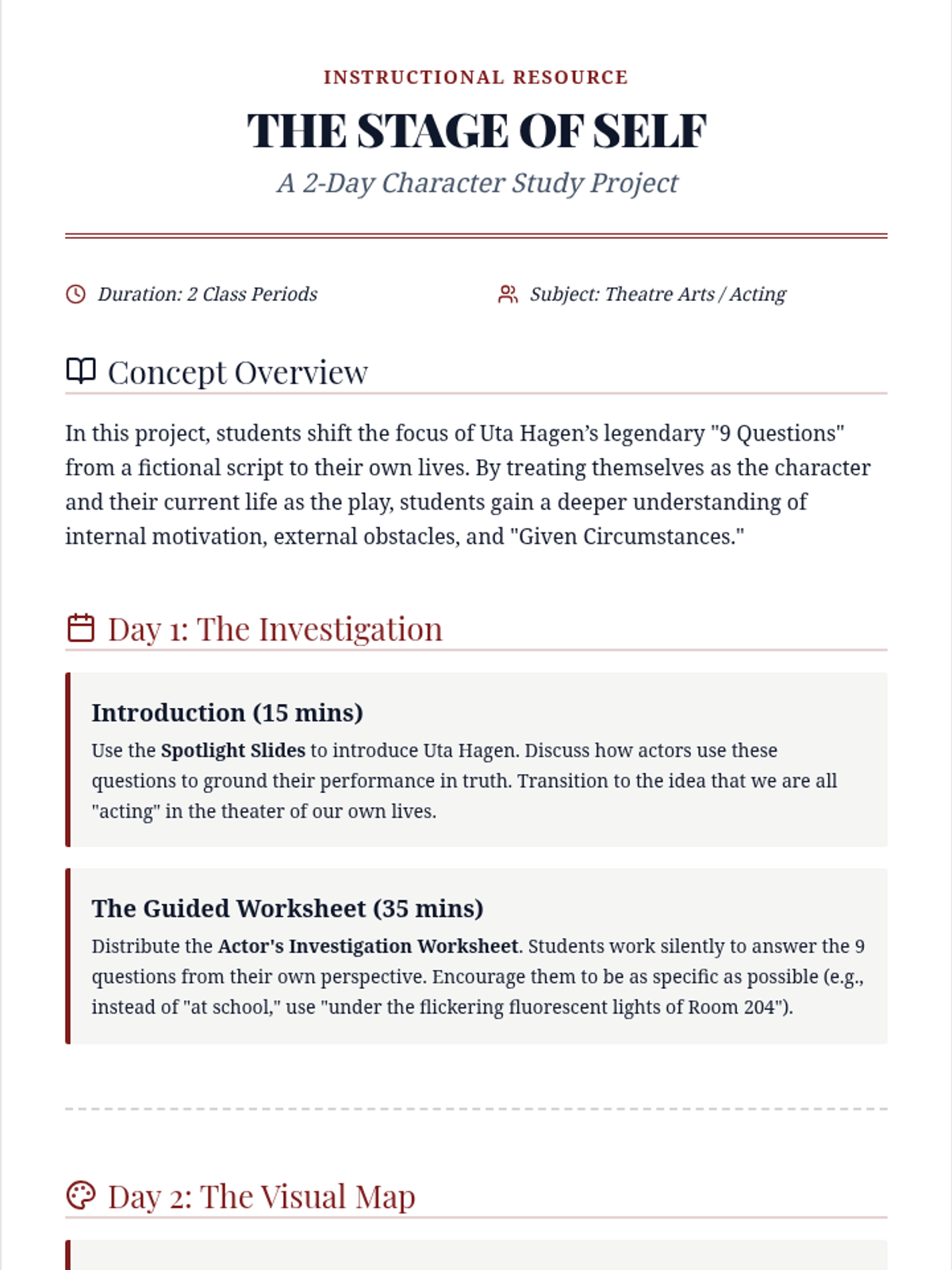
A comprehensive teacher's guide for a 2-day drama project, outlining lesson plans, teaching tips, and instructional strategies for using Uta Hagen's 9 Questions in a self-study character project.
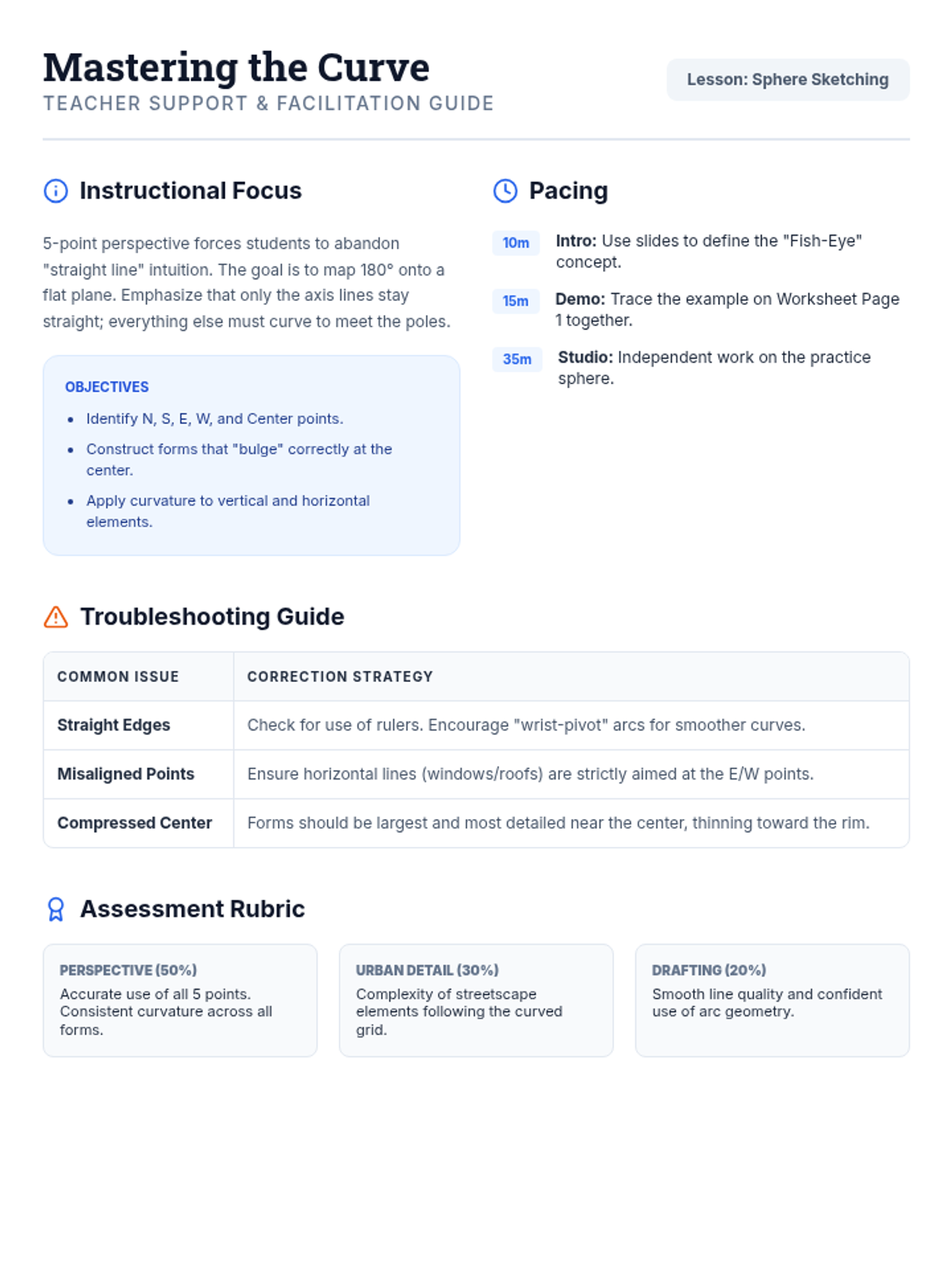
Teacher-facing guide for facilitating the 5-point perspective lesson. Includes instructional objectives, a detailed pacing guide, common student mistakes with suggested fixes, and a clear assessment rubric for evaluating curvilinear sketches.
Visual presentation slides covering the core concepts of 5-point perspective. Includes clear diagrams of the five vanishing points, explanations of the "fish-eye" effect, and specific rules for drawing urban architectural features like skyscrapers and streets on a curved grid.
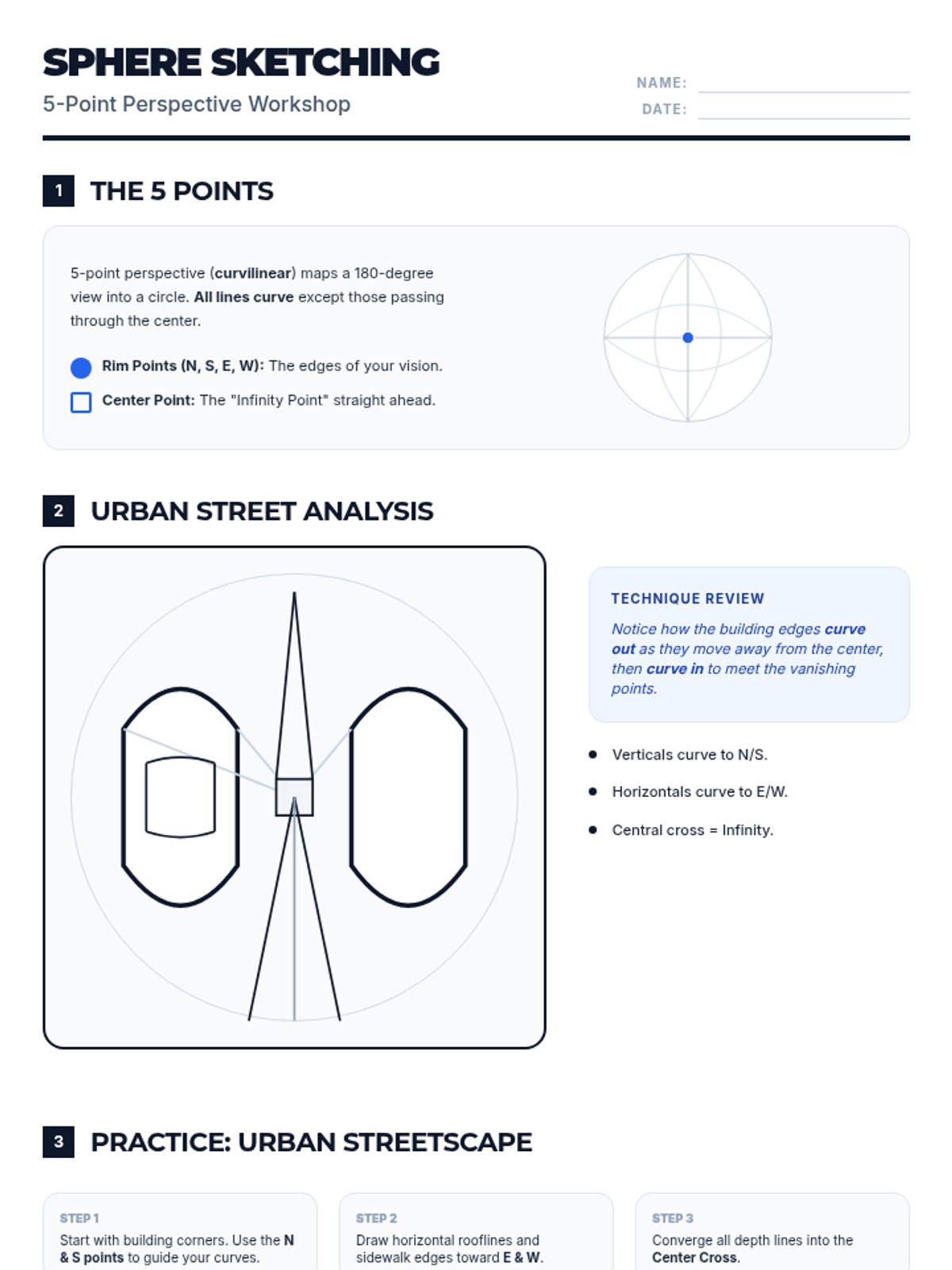
A comprehensive 2-page worksheet for mastering 5-point perspective. Includes a detailed visual guide on curvilinear points, a worked urban city street example for analysis, and a full-page practice area with a pre-formatted spherical grid for student sketching.
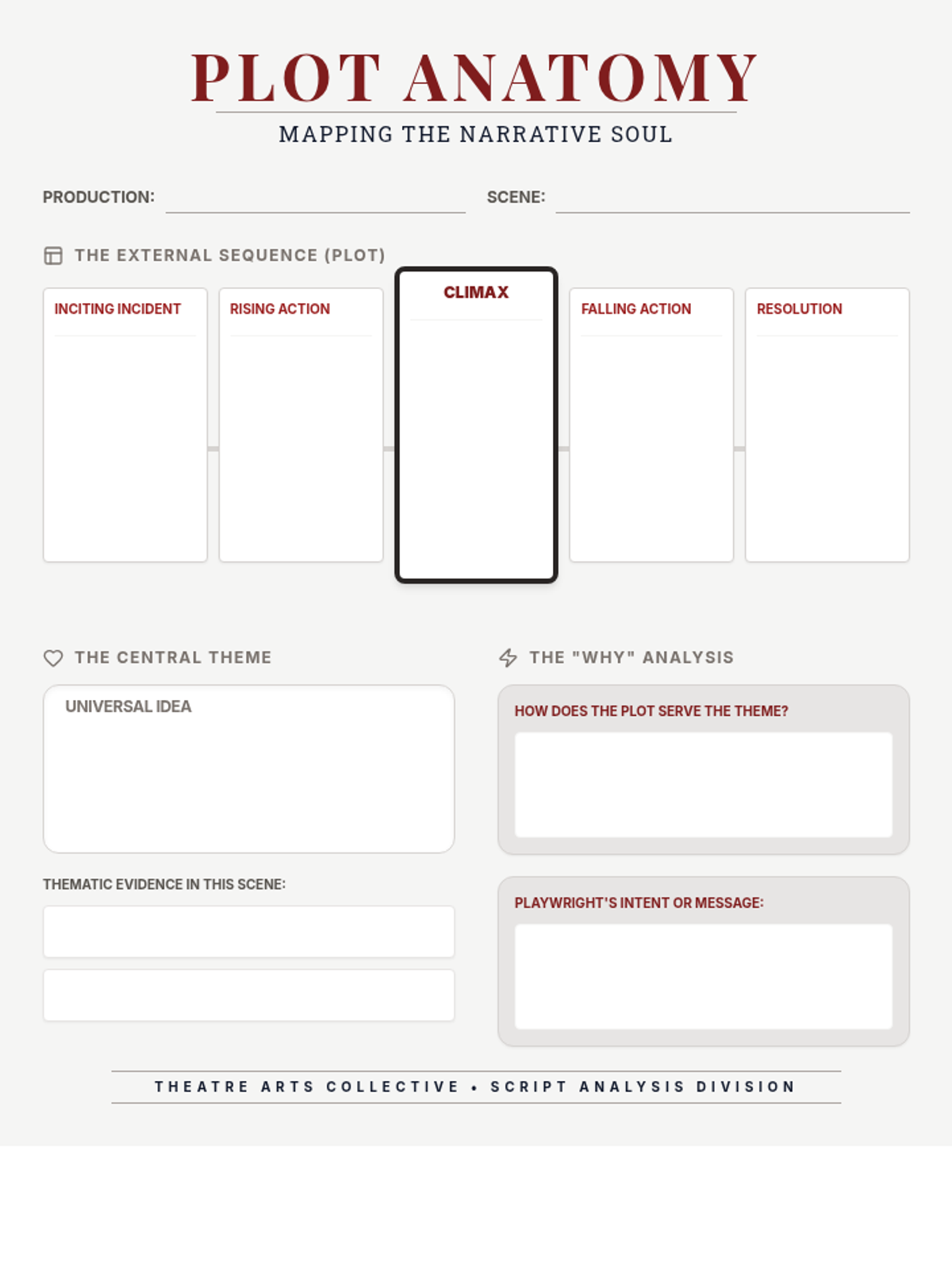
A graphic organizer for theatre students to bridge the gap between plot (what happens) and theme (what it means). Features a narrative arc skeleton and dedicated space for thematic evidence and 'why' analysis.
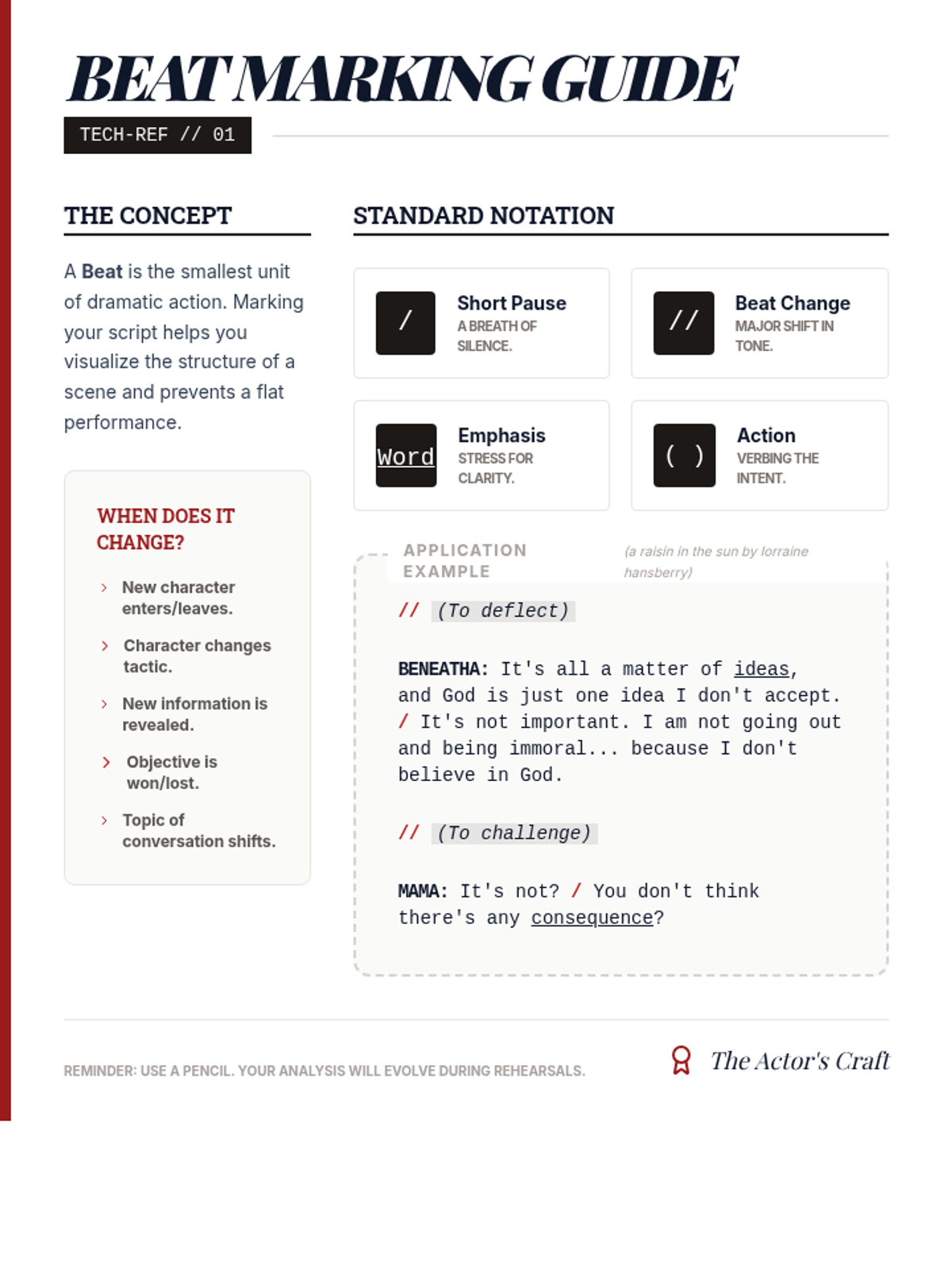
A technical reference sheet for theatre students explaining script notation symbols and the concept of 'beats'. Includes standard symbols for pauses, emphasis, and tactical shifts with a practical example.
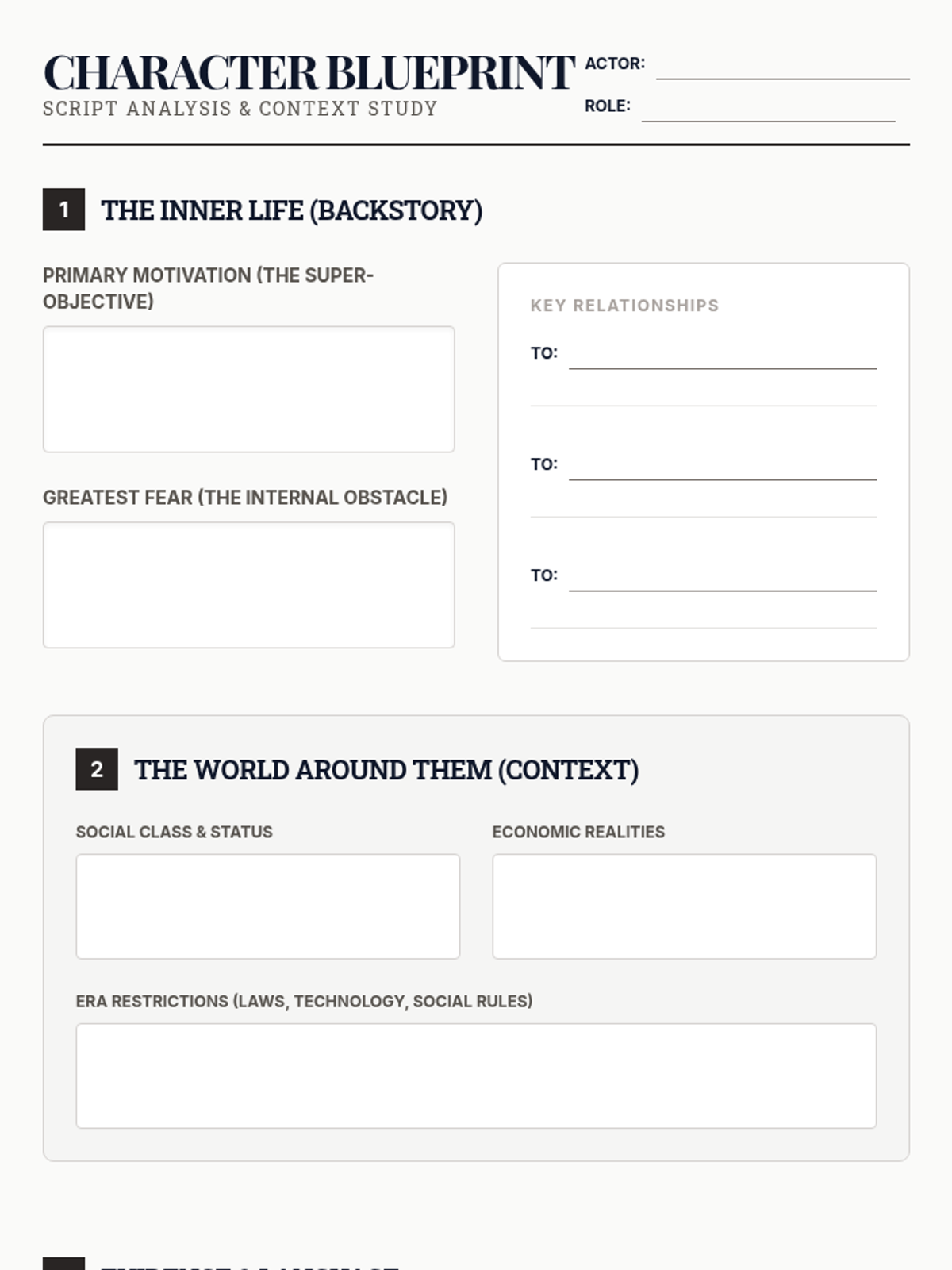
A character analysis worksheet for theatre students to develop deep backstories, explore historical context, and cite script evidence for their roles during the table work phase.
A visual guide for theatre students introducing the concepts of table work, plot versus theme, historical context, and the technical skill of beat marking. Includes vocabulary definitions and discussion prompts for script analysis.
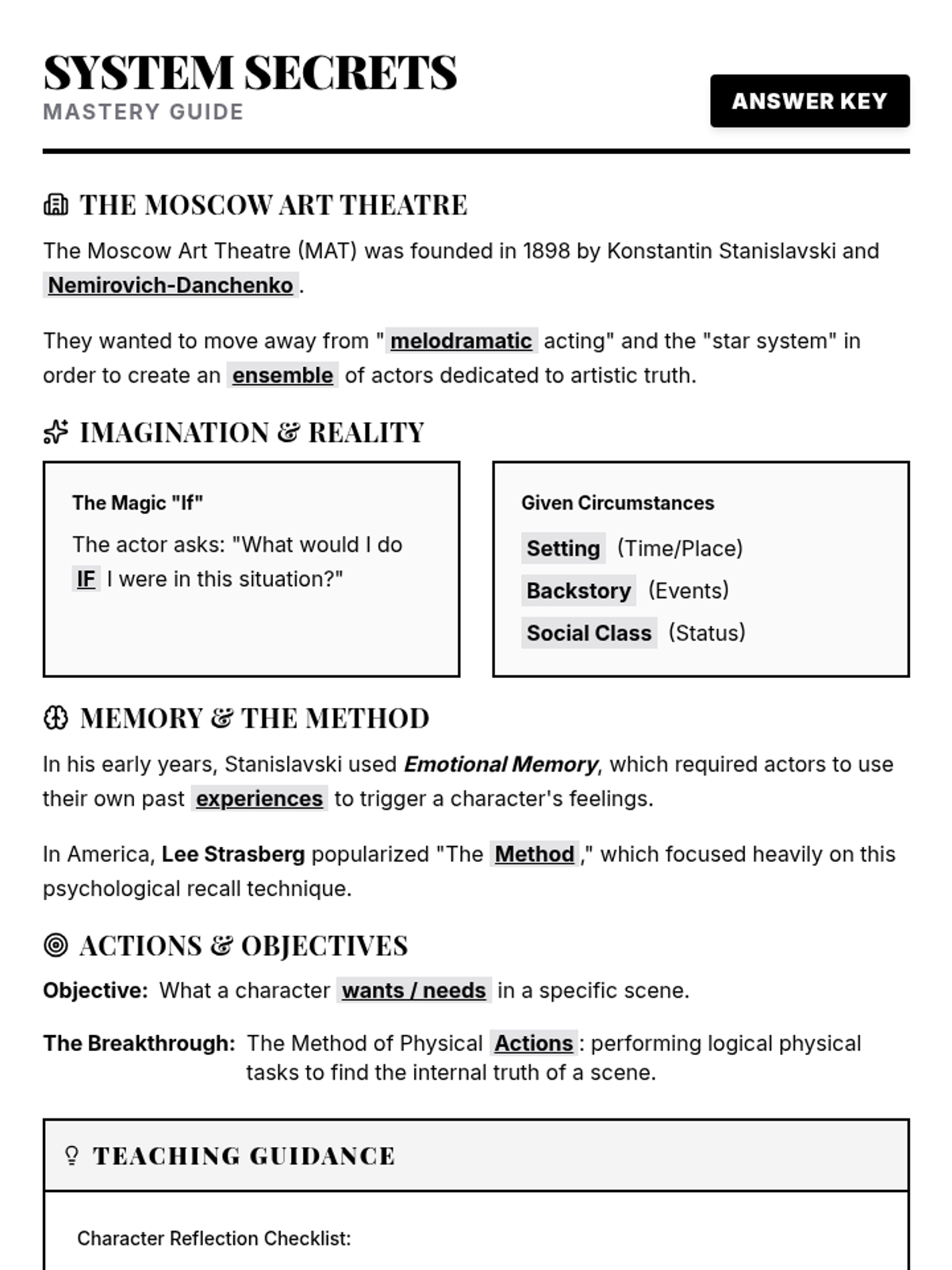
A high-contrast, black and white optimized version of the Stanislavski answer key, matching the student worksheet for consistency.
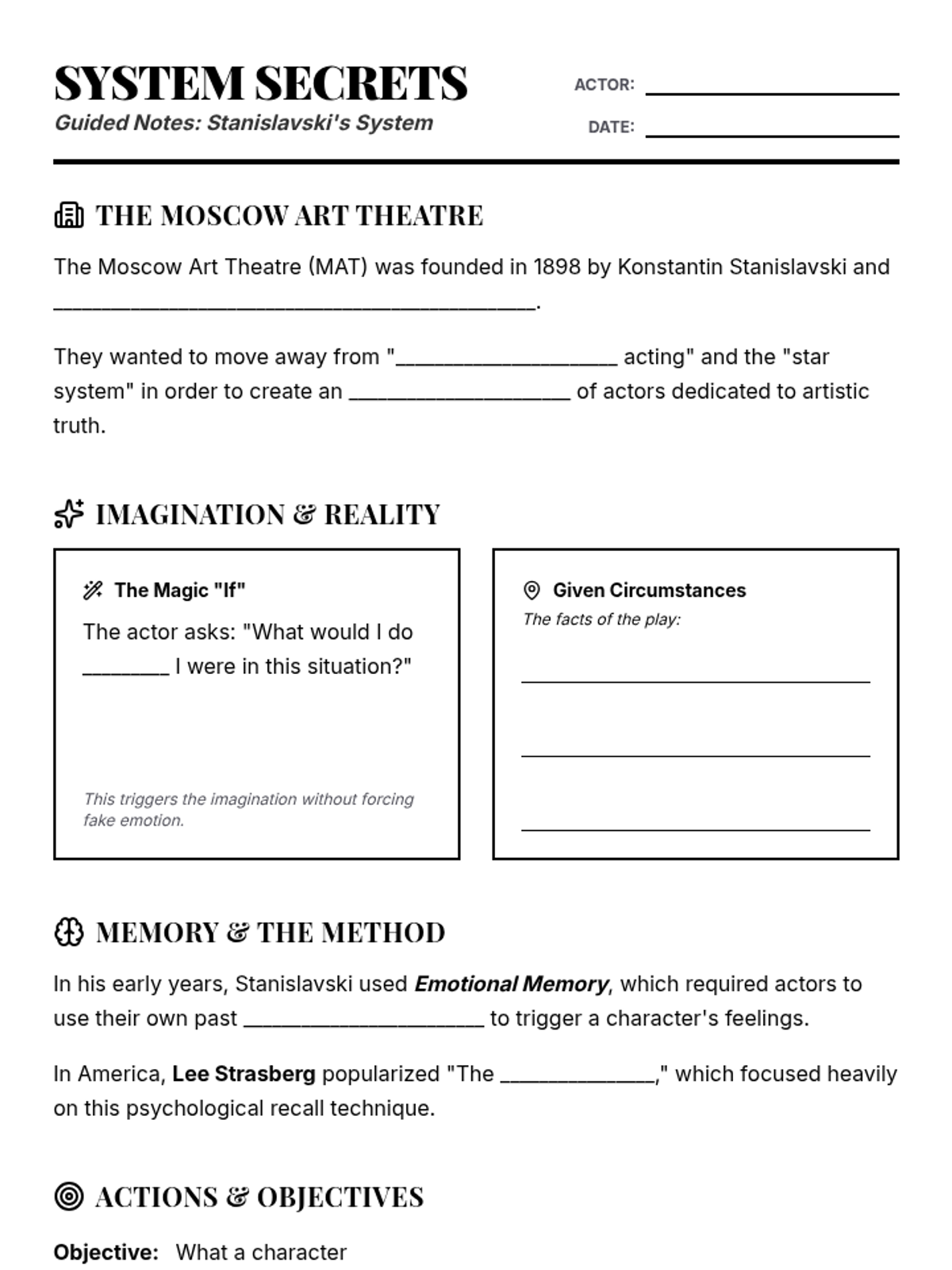
A high-contrast, black and white optimized version of the Stanislavski guided notes worksheet, ideal for printing and student use.
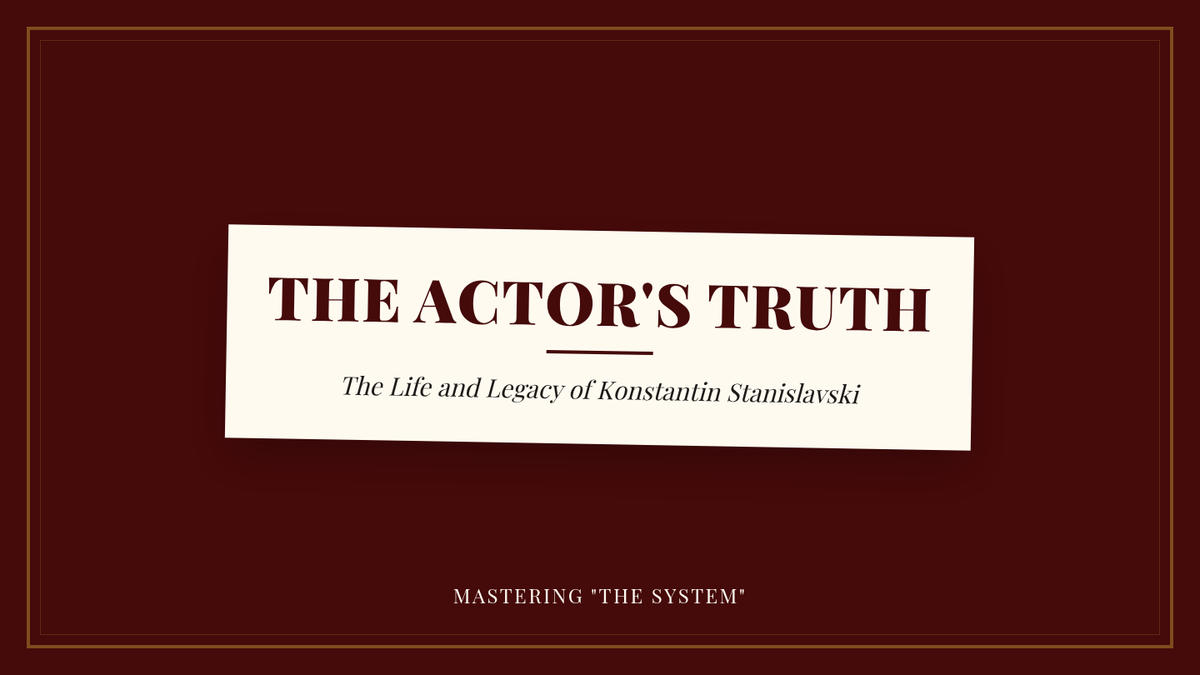
A visually striking slideshow covering the Moscow Art Theatre, the Magic If, Given Circumstances, and the evolution from Emotional Memory to Physical Actions in Stanislavski's System.
An introductory slide deck for stock photography, using student exemplars to teach concepts of marketability, technical composition, and lighting within a school environment. Updated with clarified mission instructions for collaboration, classroom selection, and specific academic marketing goals.
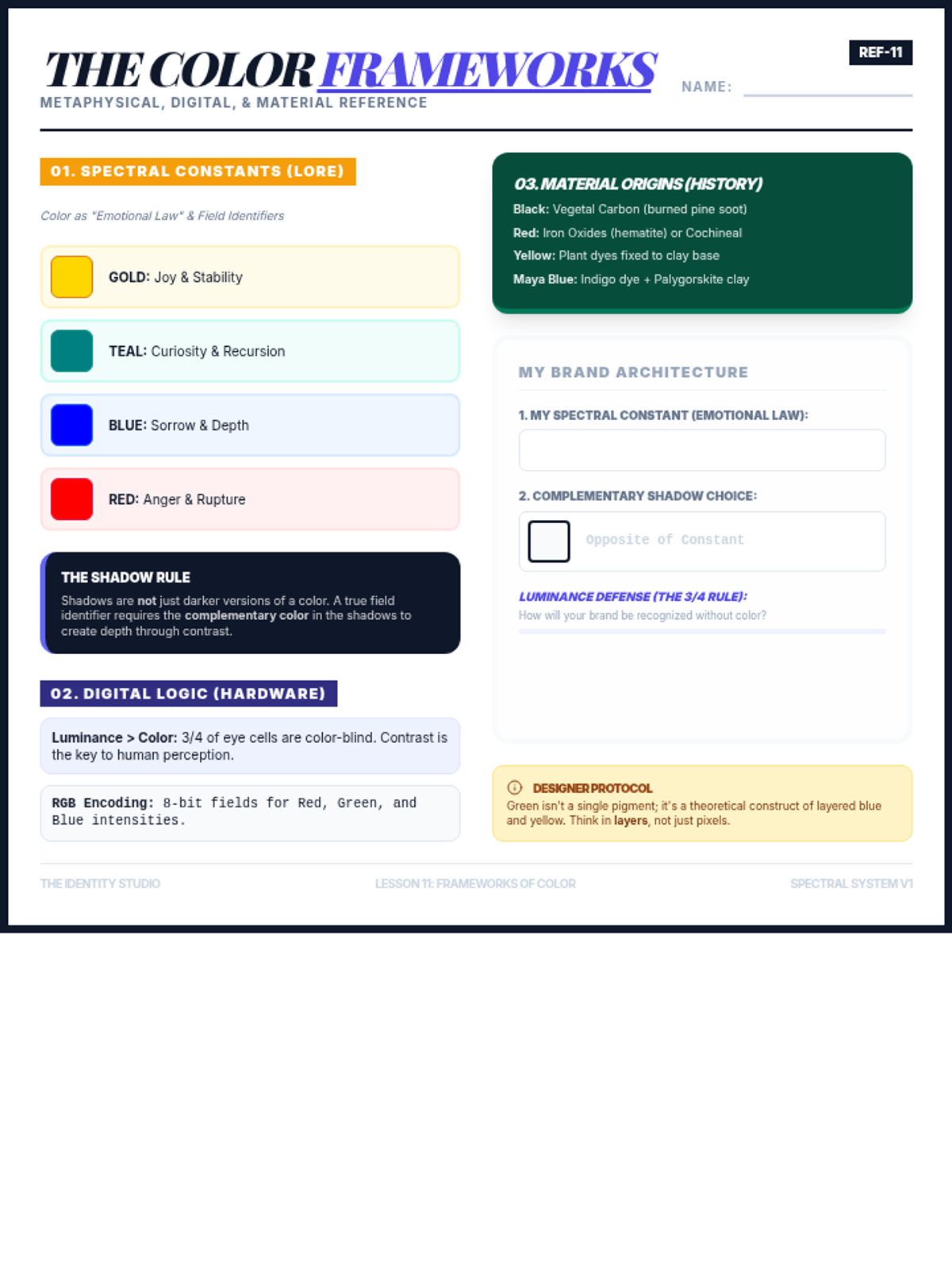
Enhanced slide deck for Lesson 11, integrating the metaphysical Spectral Constants, digital hardware mapping (Luminance/RGB), and historical pigment chemistry. Includes the 'Complementary Shadow' rule and the 'Luminance Test'.
A final one-page student cheat sheet for Lesson 11, integrating the metaphysical Spectral Constants, digital hardware mapping (Luminance/RGB), and historical pigment chemistry.