A slide deck explaining the Nuclear Overhauser Effect (NOE), the physical principles of through-space magnetic interactions, and its application in stereochemical assignment via NOESY/ROESY.
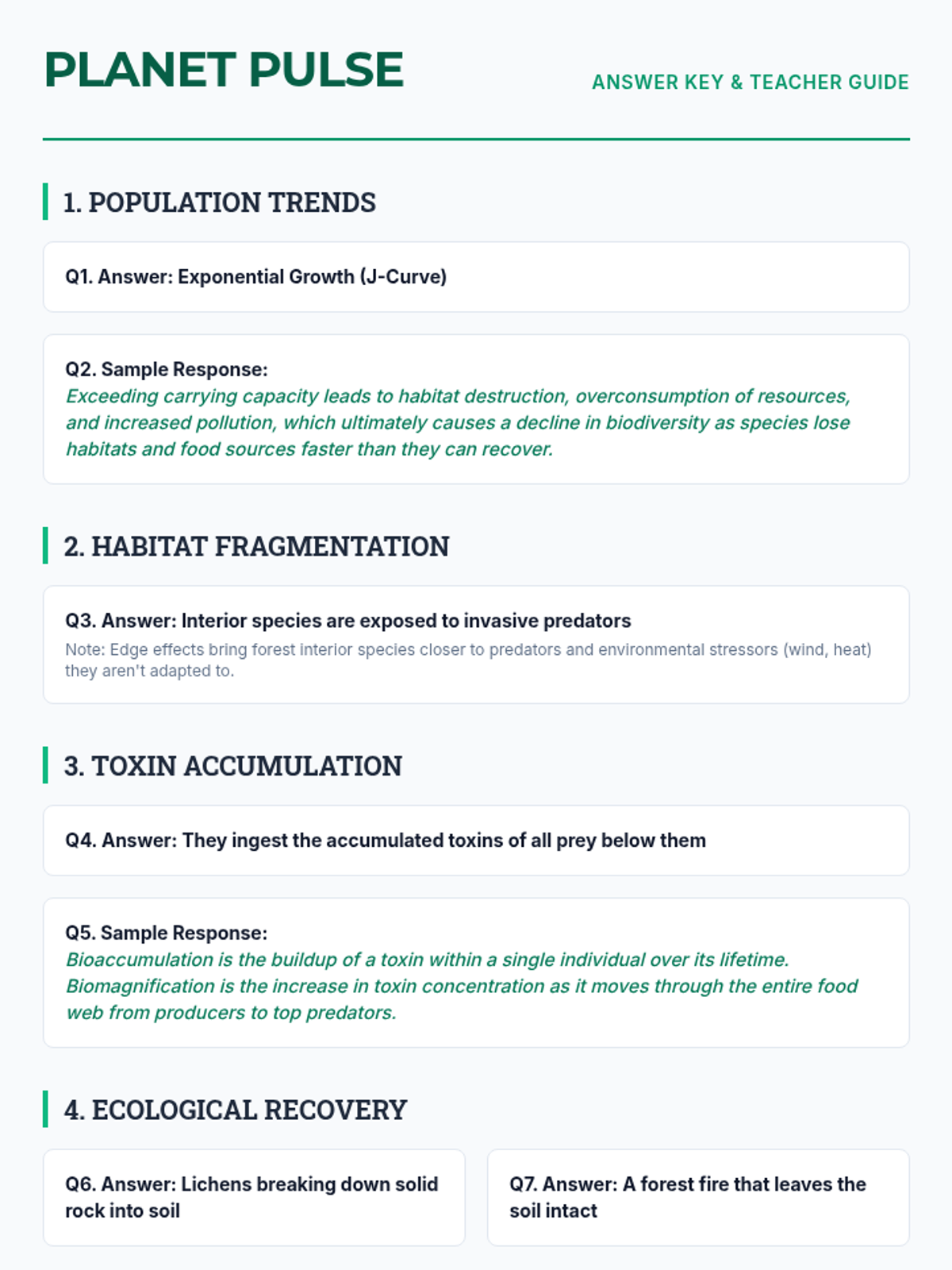
The teacher guide and answer key for the Planet Pulse Worksheet, providing correct answers, rationales for multiple-choice questions, sample open-ended responses, and instructional tips.
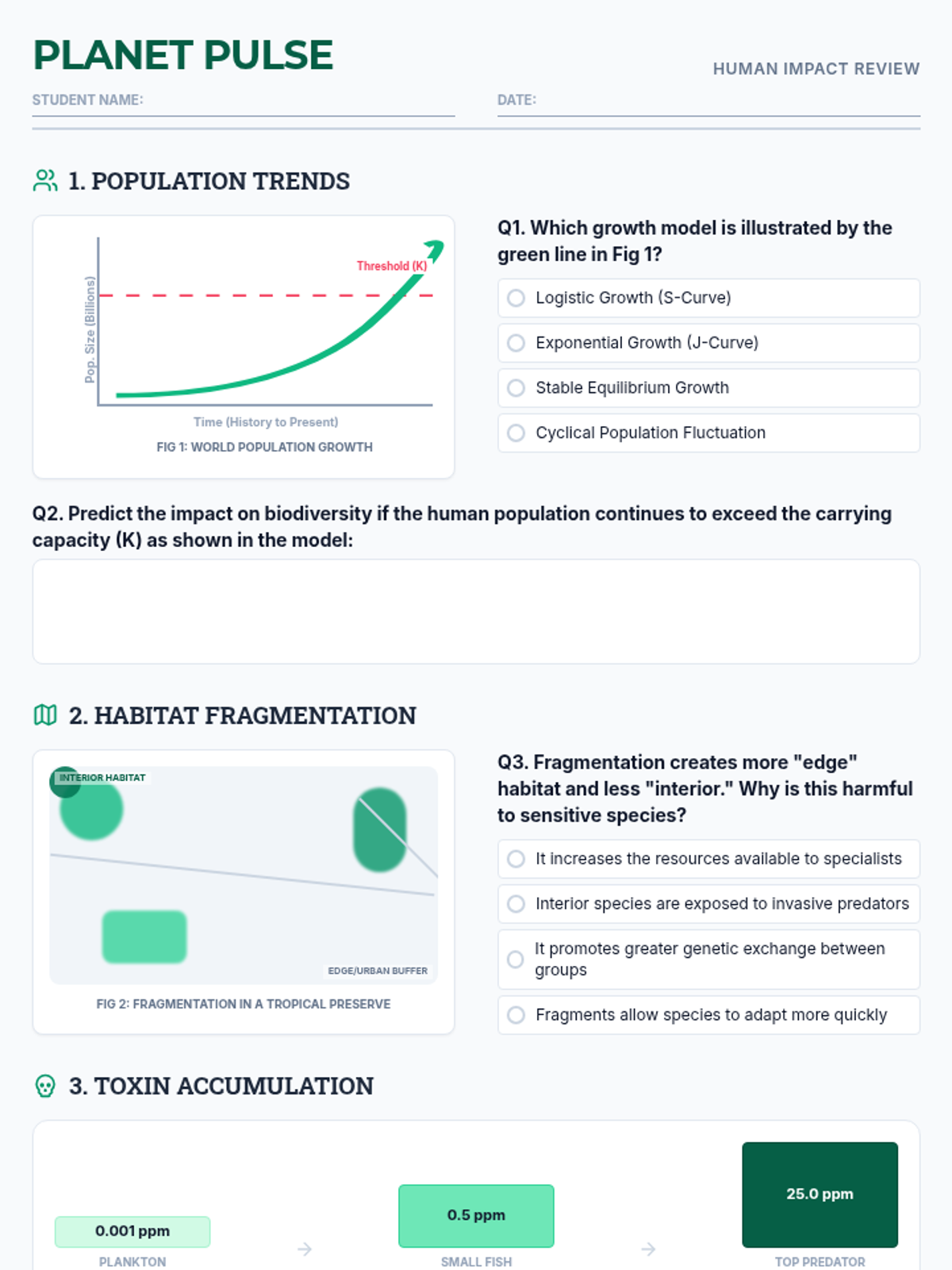
A comprehensive review worksheet for high school biology or environmental science, covering human population trends, biodiversity loss, biomagnification, ecological succession, and waste management. Includes data interpretation tasks, map analysis, and multiple-choice questions.
Comprehensive review slides for macromolecule instruction. Includes structural diagrams for all four major groups, detailed enzyme-substrate interaction models, and a 6-question knowledge check with separate key.
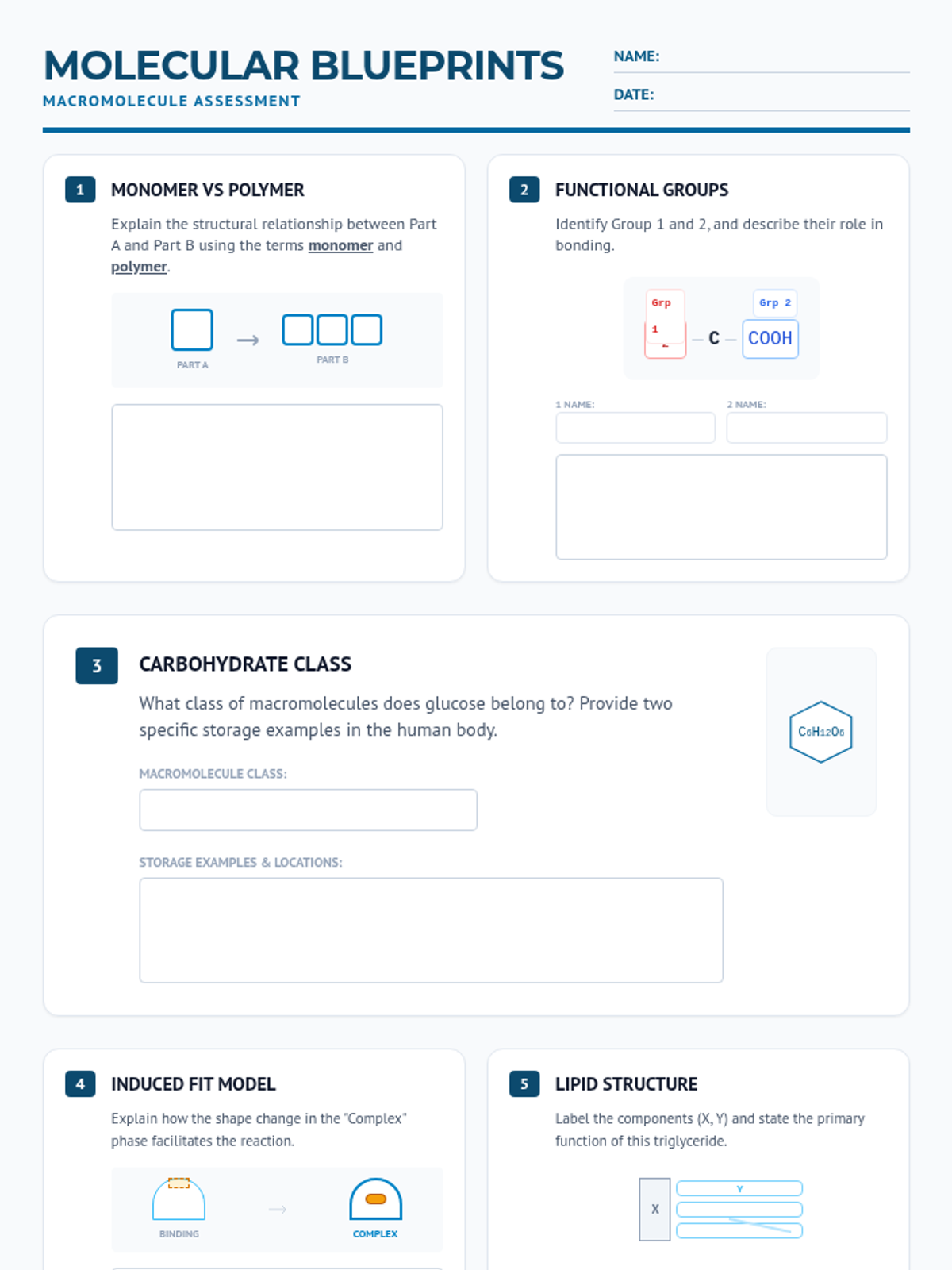
A highly condensed, 1-page short-response quiz focusing on macromolecule structures, functional groups, and enzyme interactions. Includes refined visual diagrams for efficient student assessment.
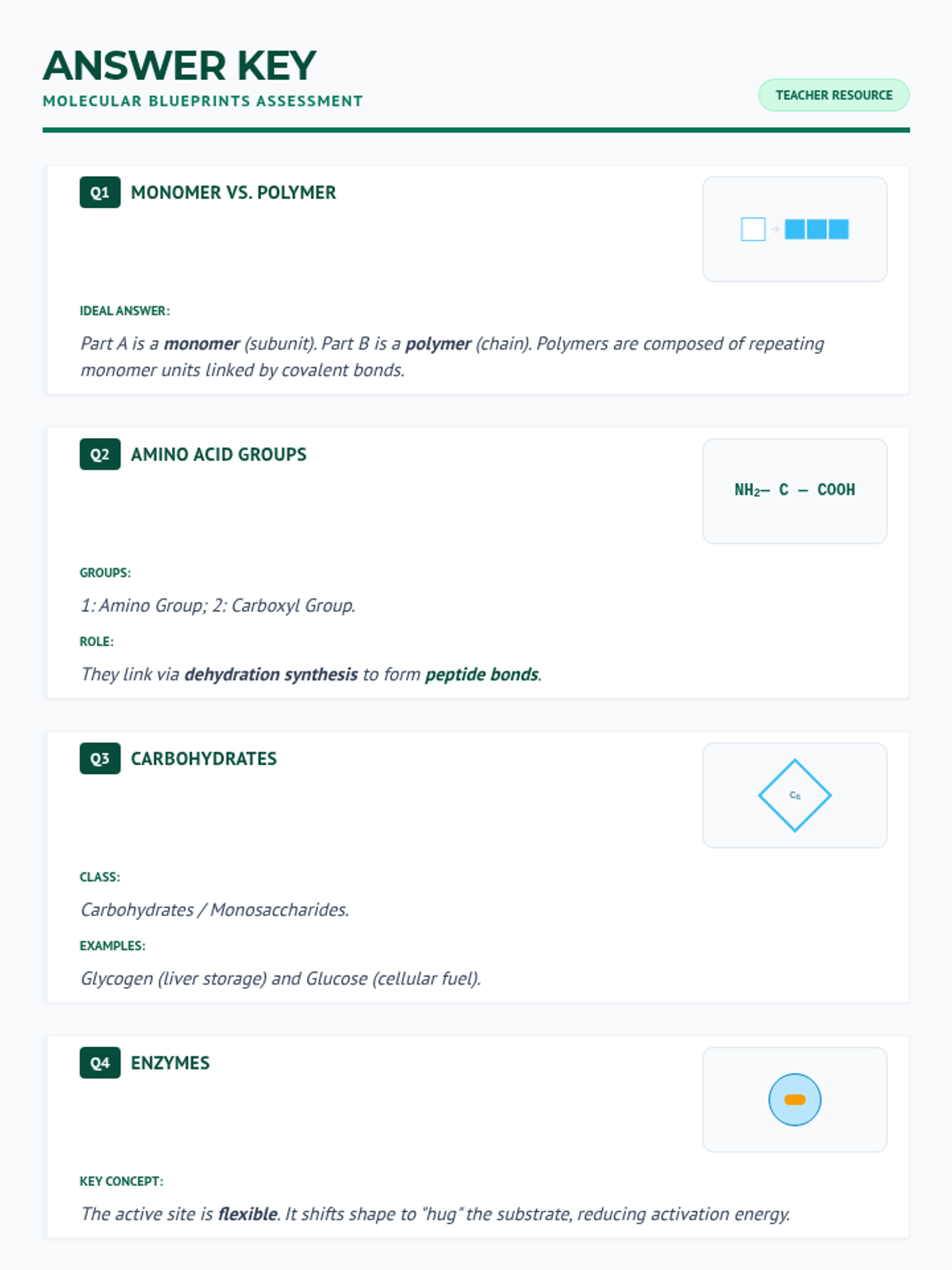
Detailed answer key for the Molecular Blueprints Quiz. Features enhanced thumbnails, clear grading criteria, and specific scientific terminology for accurate assessment of student work.
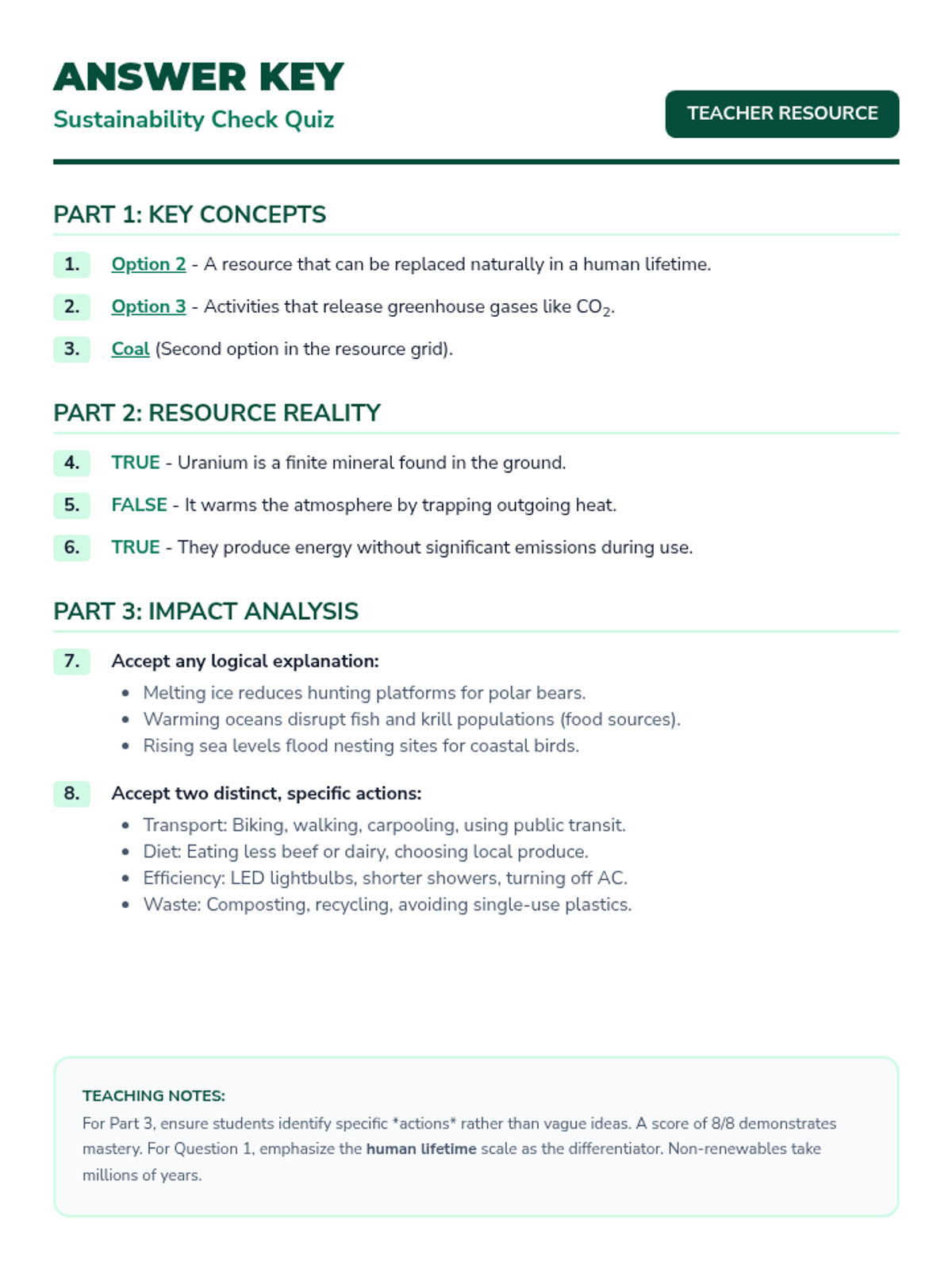
A detailed teacher's answer key for the Sustainability Check Quiz. Updated with fixed chemical notation and improved page layout to fit on a single page.
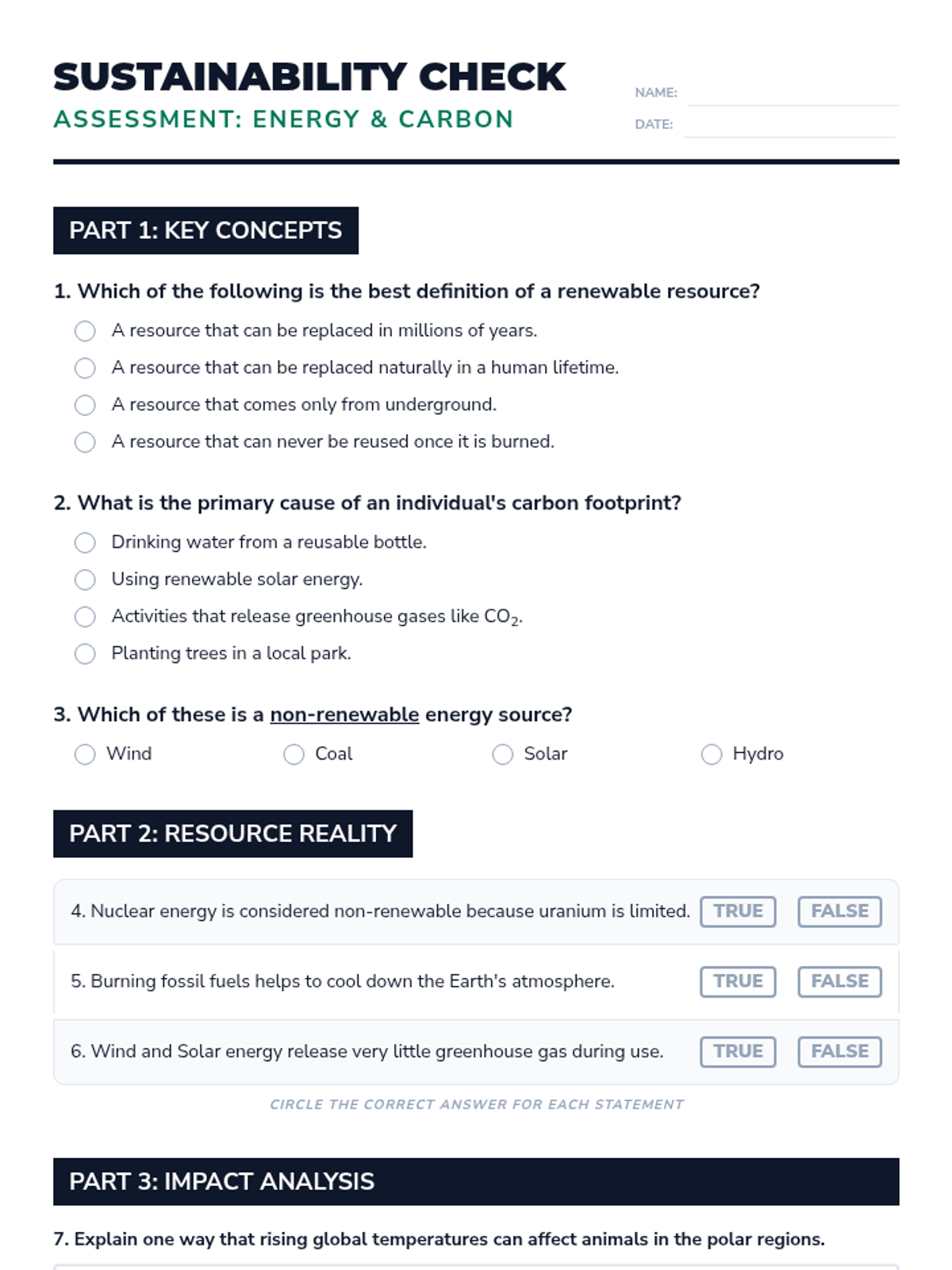
A comprehensive assessment covering renewable and non-renewable energy concepts and the impact of carbon footprints. Updated with corrected chemical notation, standardized True/False formatting, and larger student work areas.
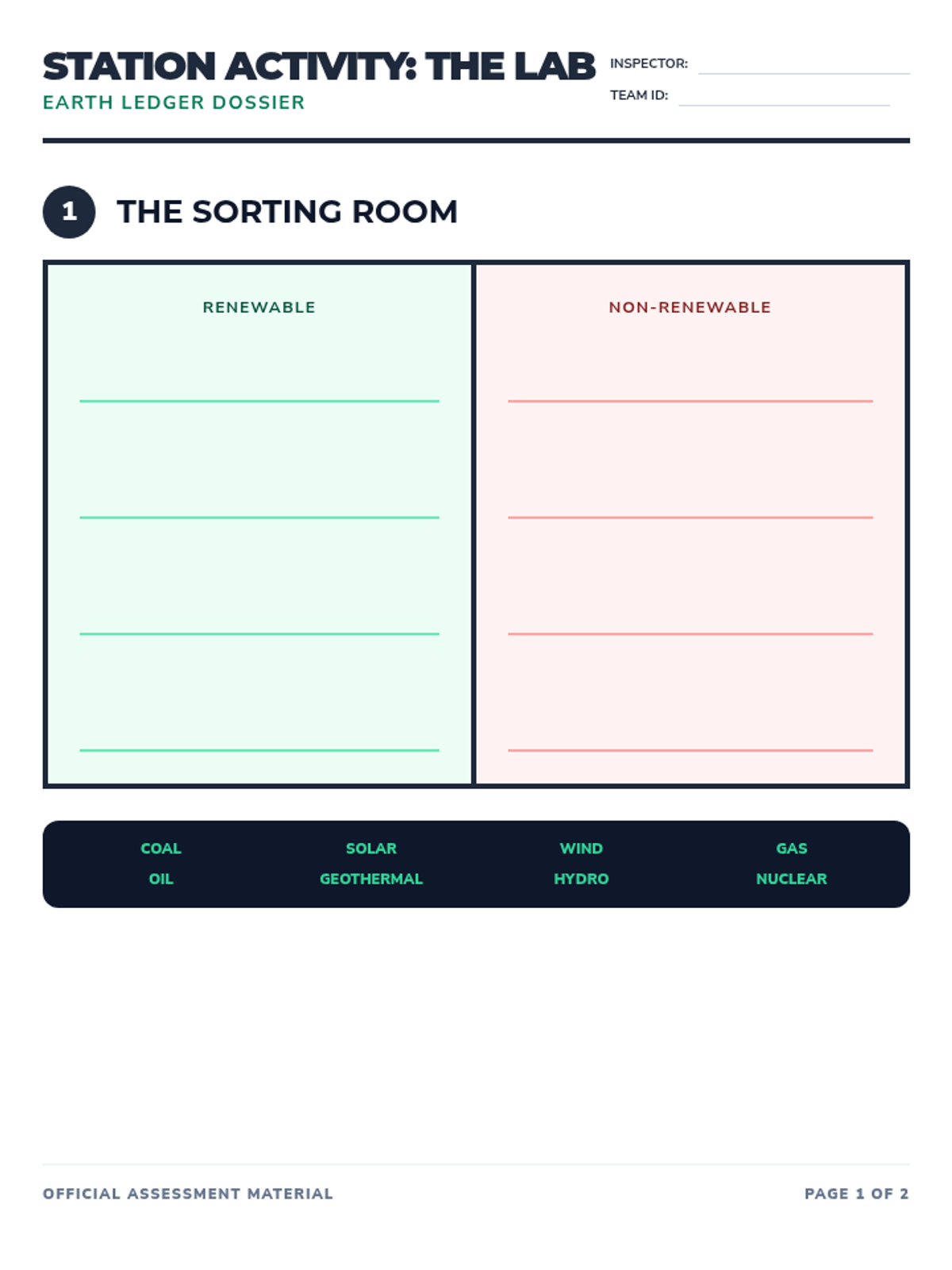
A four-station activity worksheet focusing on resource sorting, data analysis, carbon footprint calculation, and critical thinking about renewable energy. Updated with a provided data chart, improved layout, and clearer print lines.
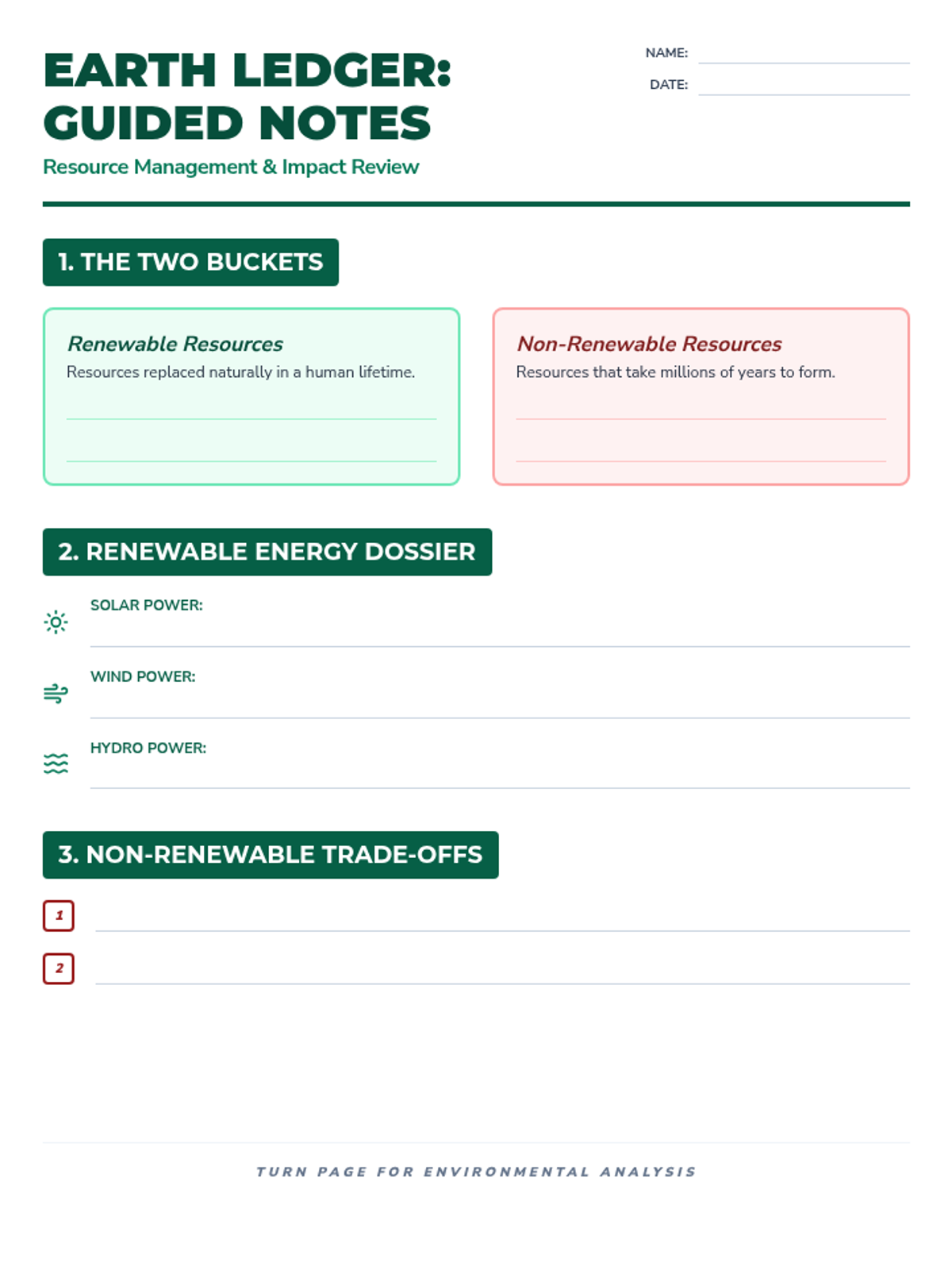
A set of guided notes designed to accompany the Earth Ledger slides, featuring cloze sentences, drawing spaces, and reflection areas to support student engagement. Updated with fixed CO2 notation and improved page layouts.
A visual presentation for a review lesson on energy resources and carbon footprints, featuring high-contrast slides with clear explanations and icons. Updated with improved contrast, larger content, and fixed chemical notation.
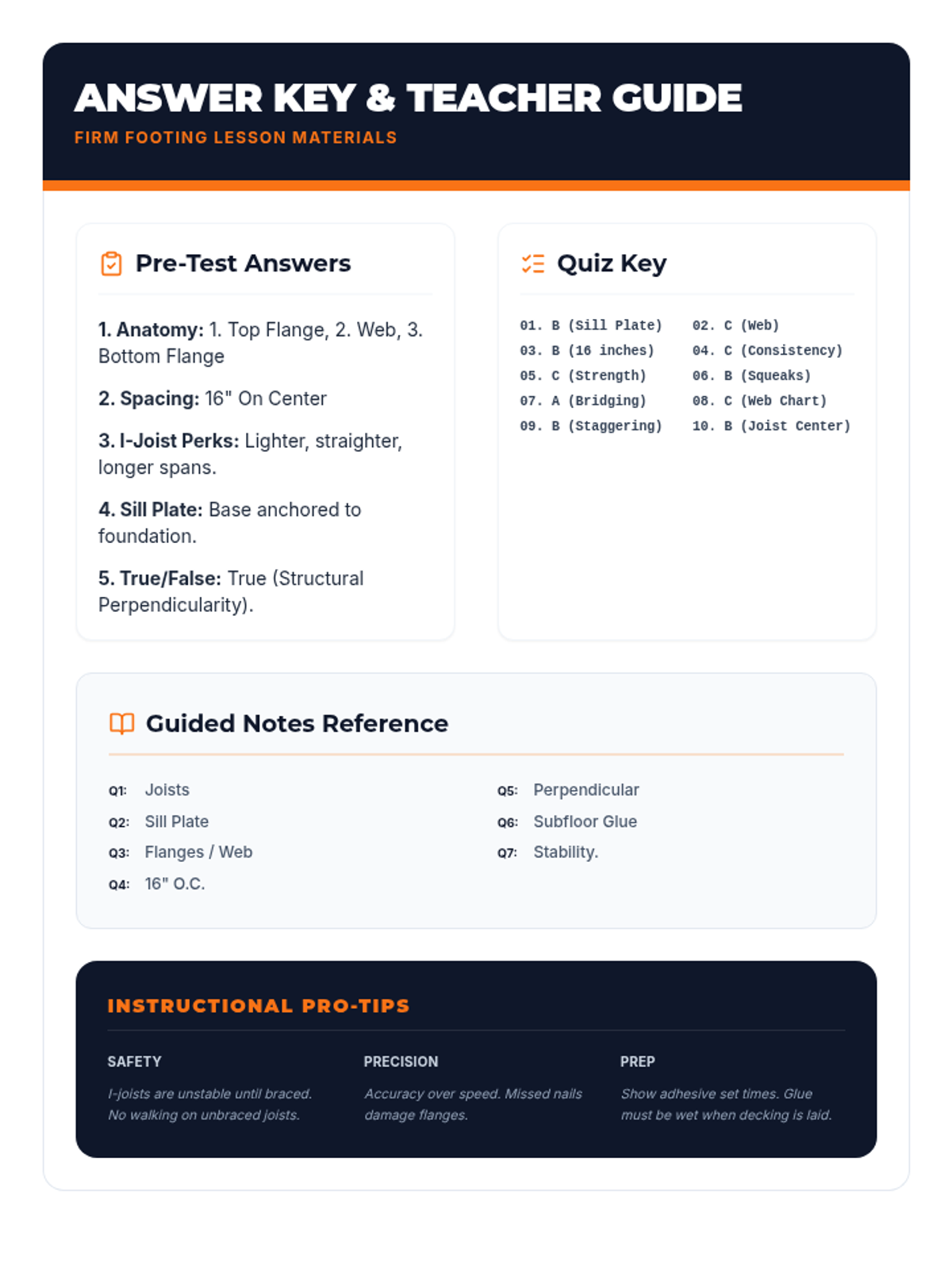
A refined answer key and teacher resource guide with corrected column widths and improved typography to prevent awkward line wraps. includes key instructional tips for safe shop practice.
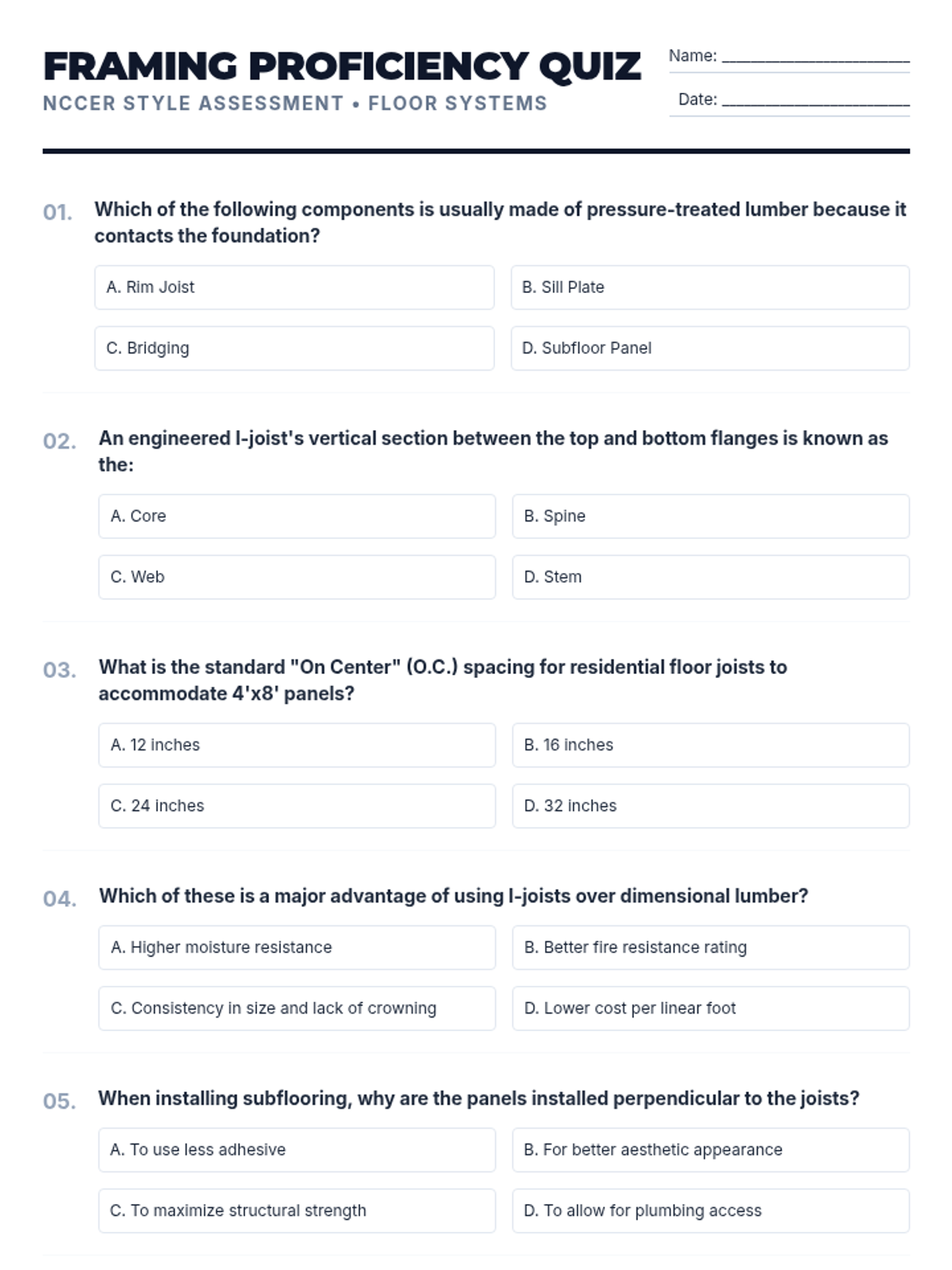
A revised proficiency quiz with explicit 'break-inside: avoid' styling on every question to prevent awkward page breaks. Features NCCER-aligned content and identical answer styling.
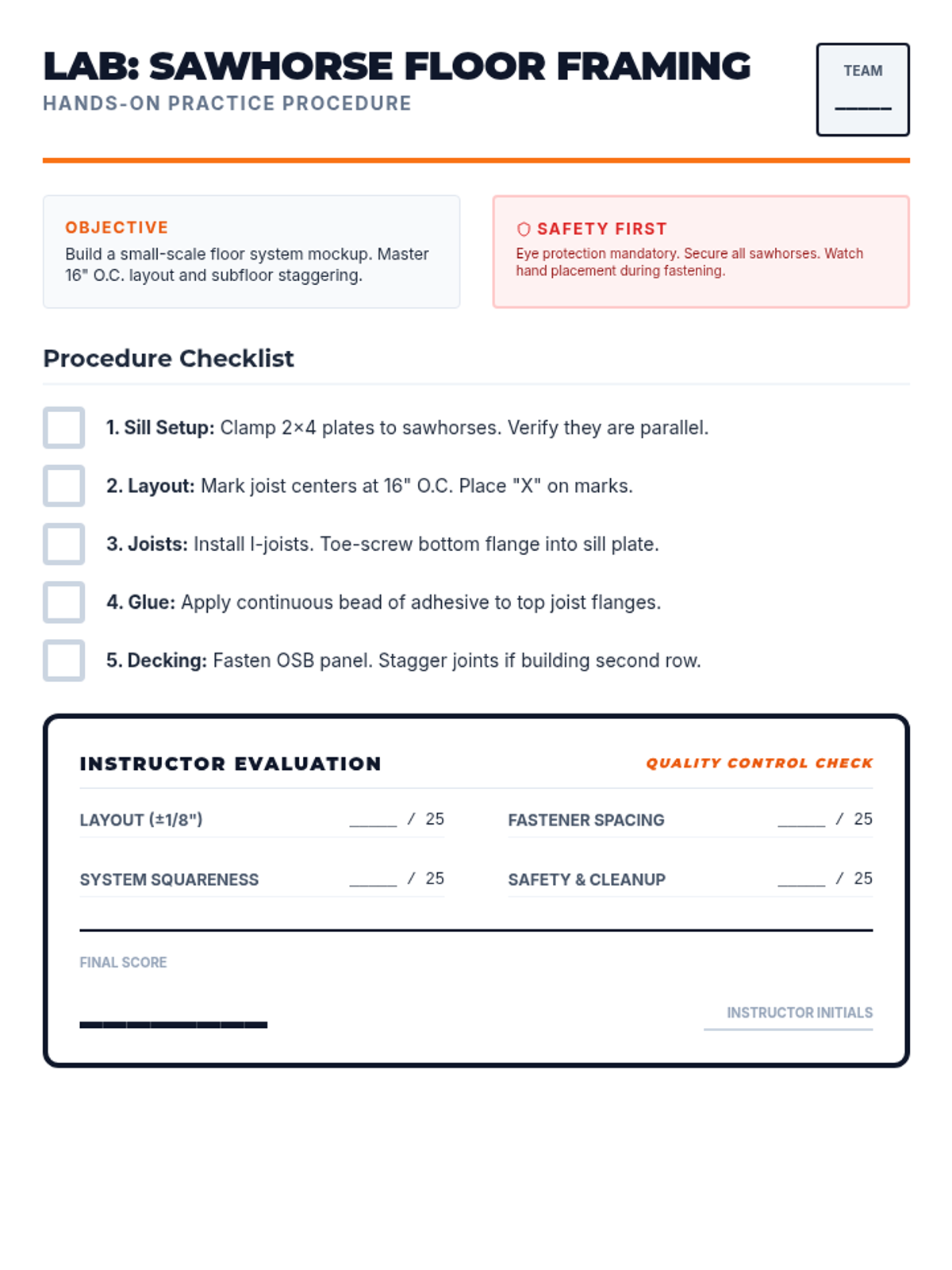
A revised shop lab sheet with enlarged checkboxes, a high-contrast light grading section, and optimized layout to ensure all content fits on a single page.
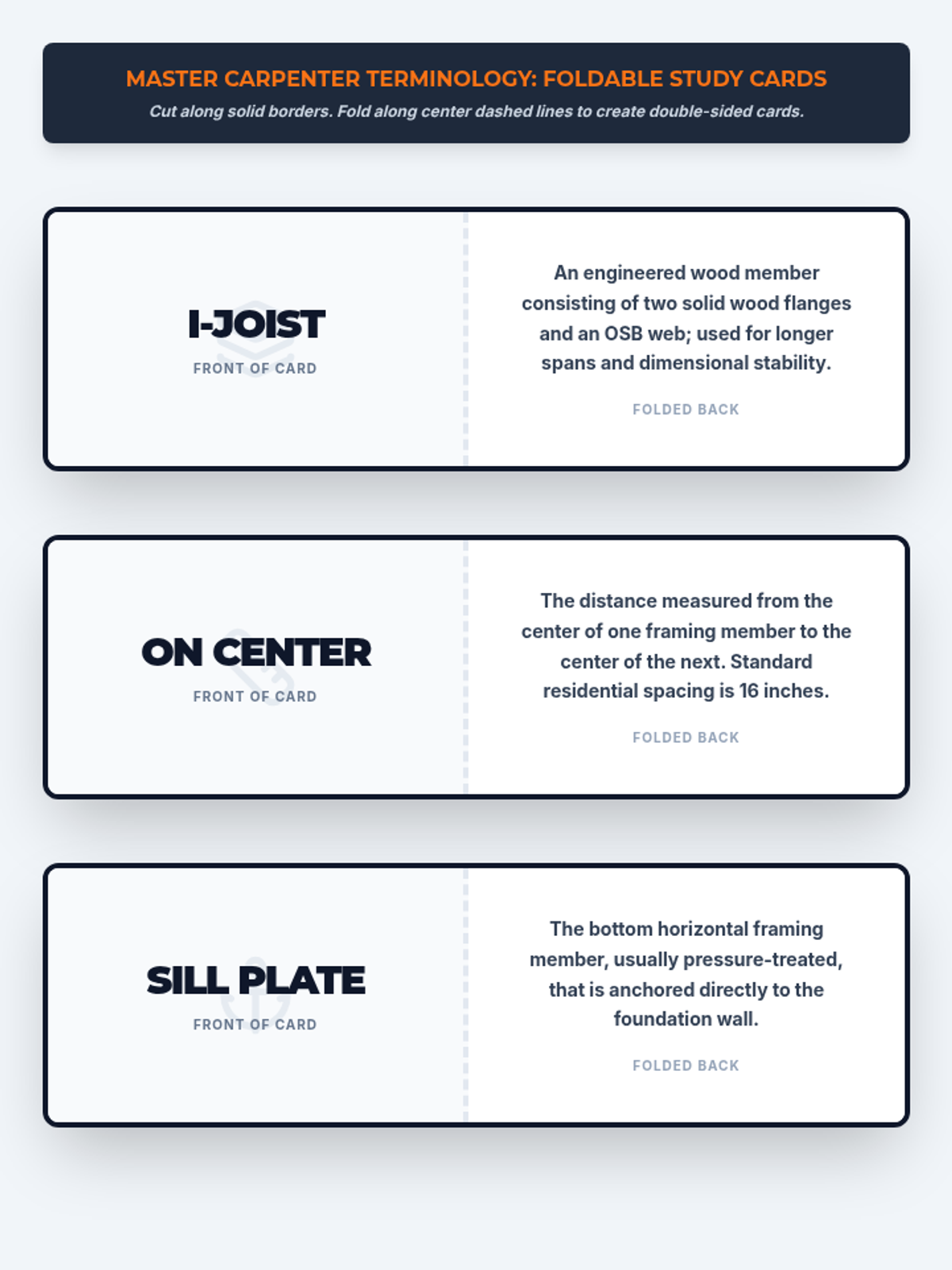
Revised flashcards with improved page breaks, higher icon contrast, and a dashed center line for easier cutting or folding. Includes key floor framing terminology.
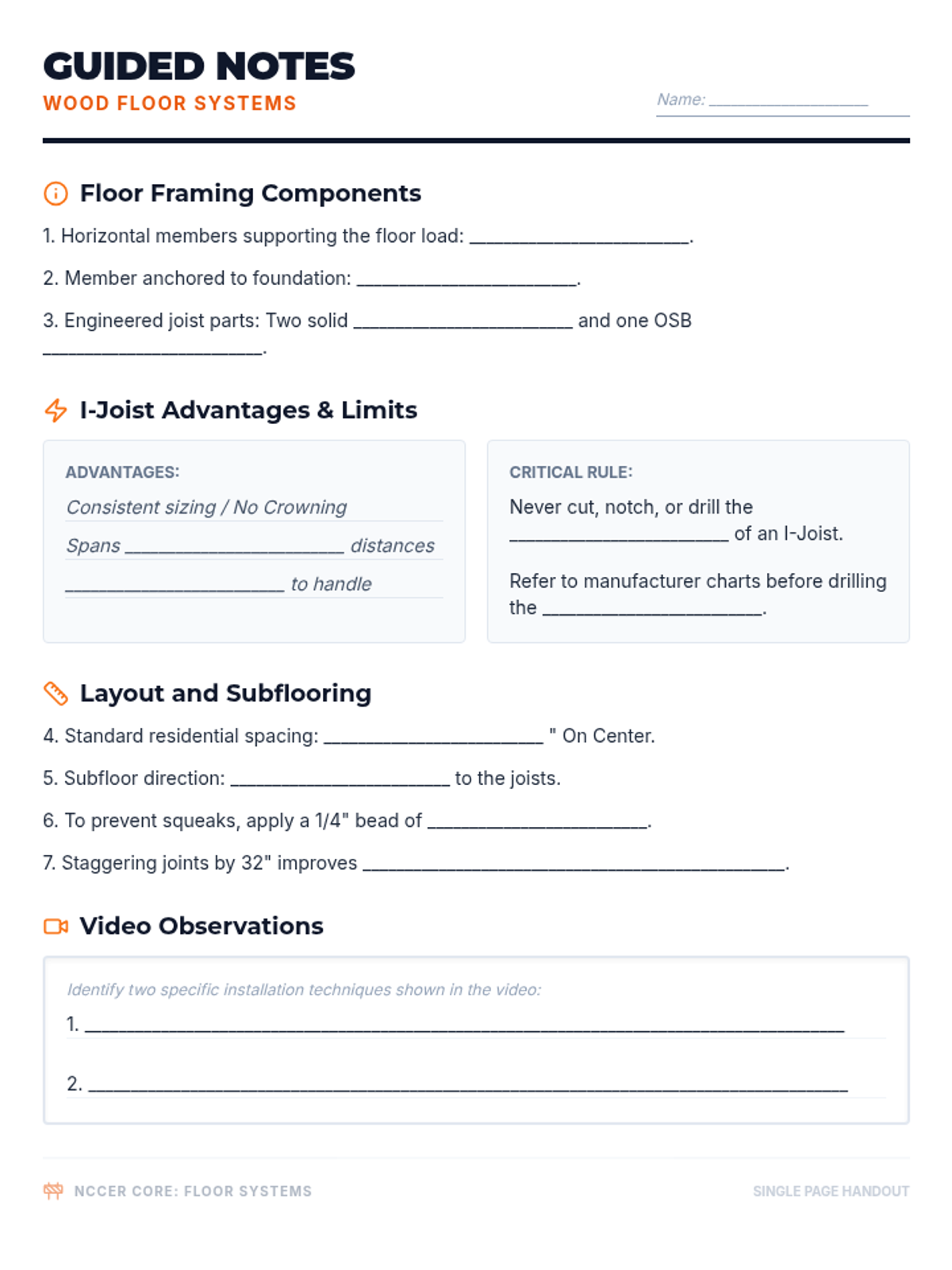
A streamlined, single-page guided notes handout with optimized spacing, a larger video observation work area, and clear section breaks to avoid page overflow.
A polished 6-slide presentation with explicit height controls to prevent overflow, a detailed load-path diagram, and key installation rules for I-joist floor systems.
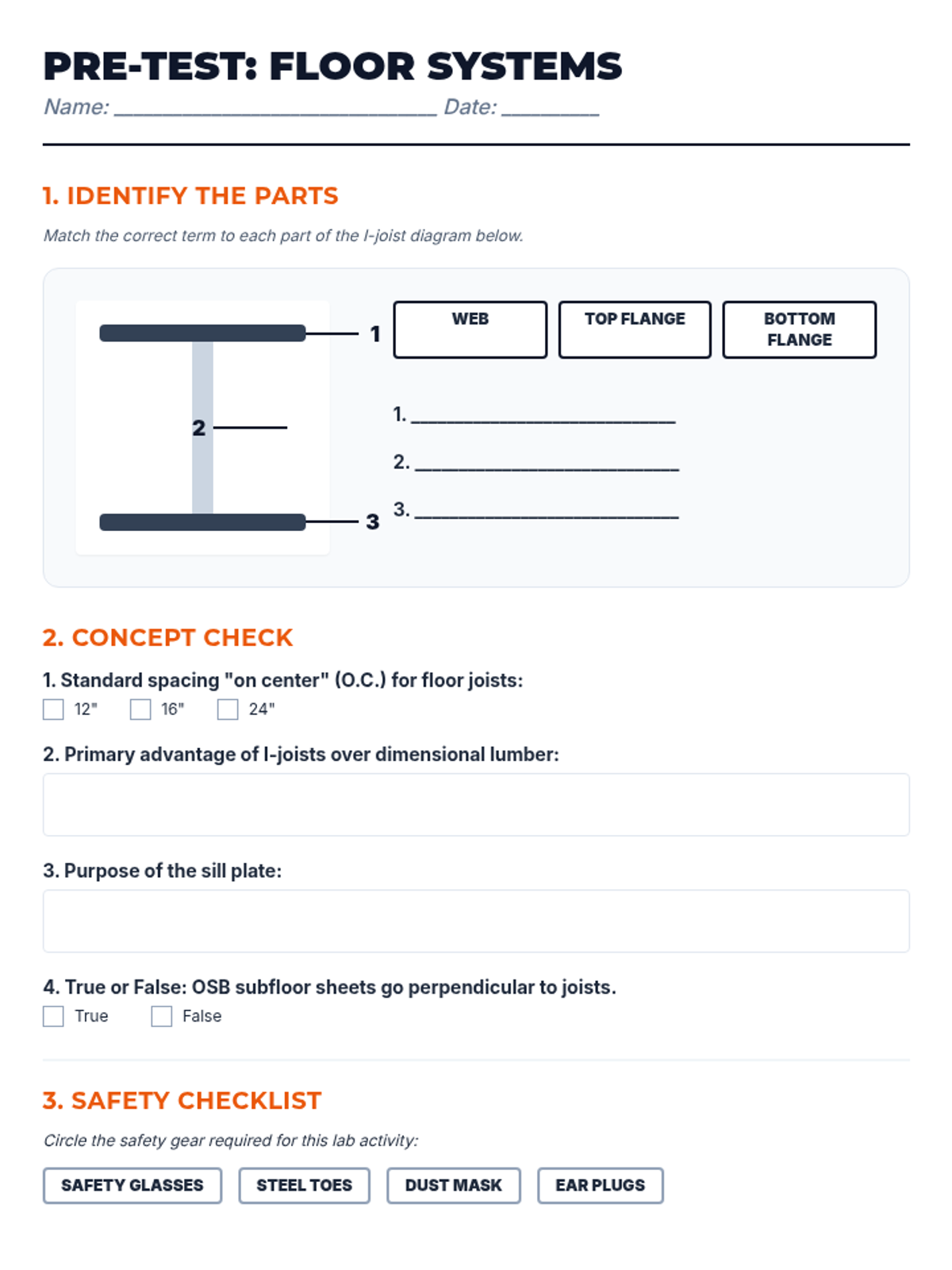
A revised pre-test document with improved layout, better spacing for labeling, and white work areas for maximum pencil contrast. Includes safety and conceptual check questions.
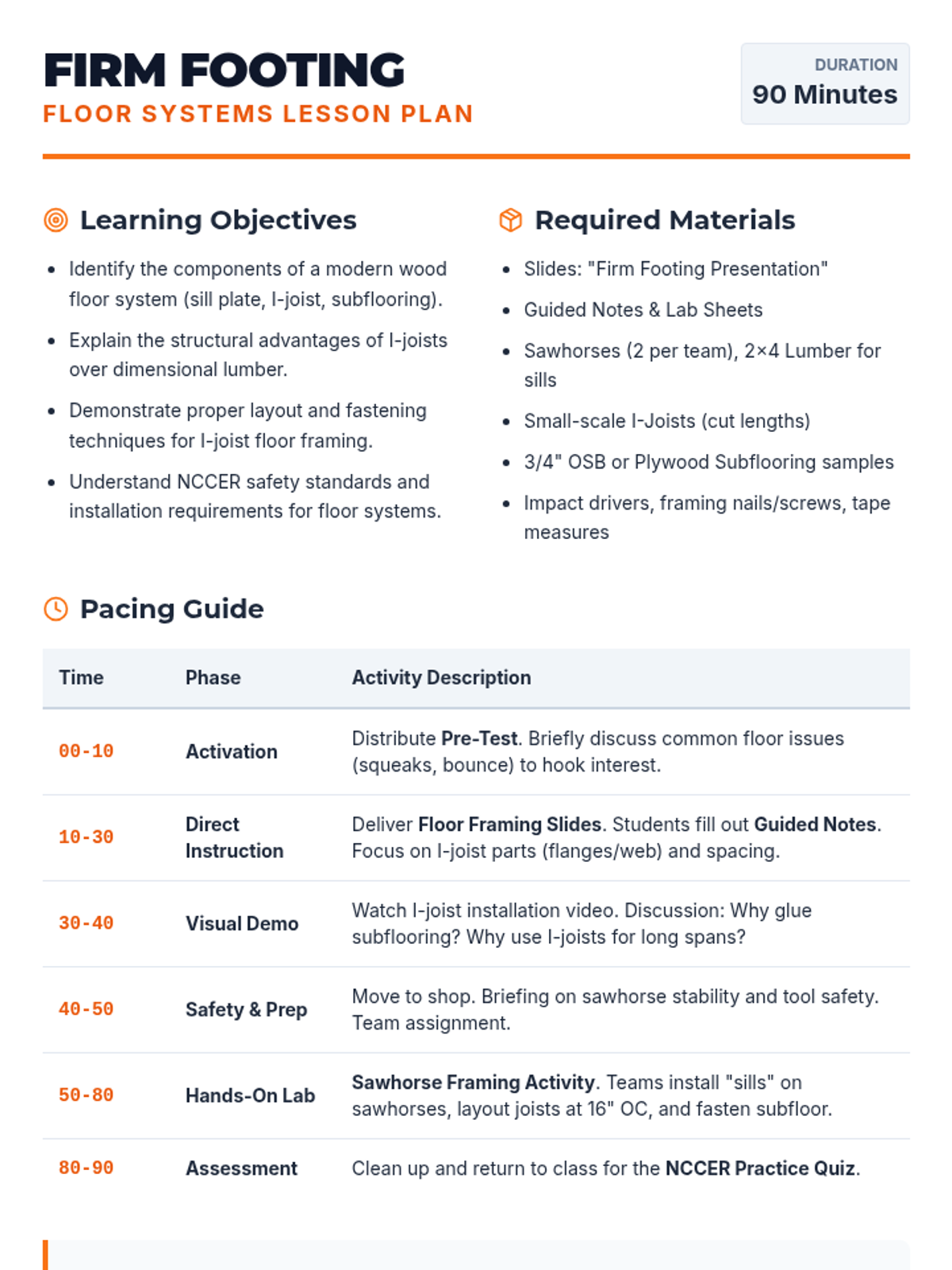
A detailed lesson plan for a 90-minute session on floor framing systems, featuring a pacing guide, learning objectives, and required materials.
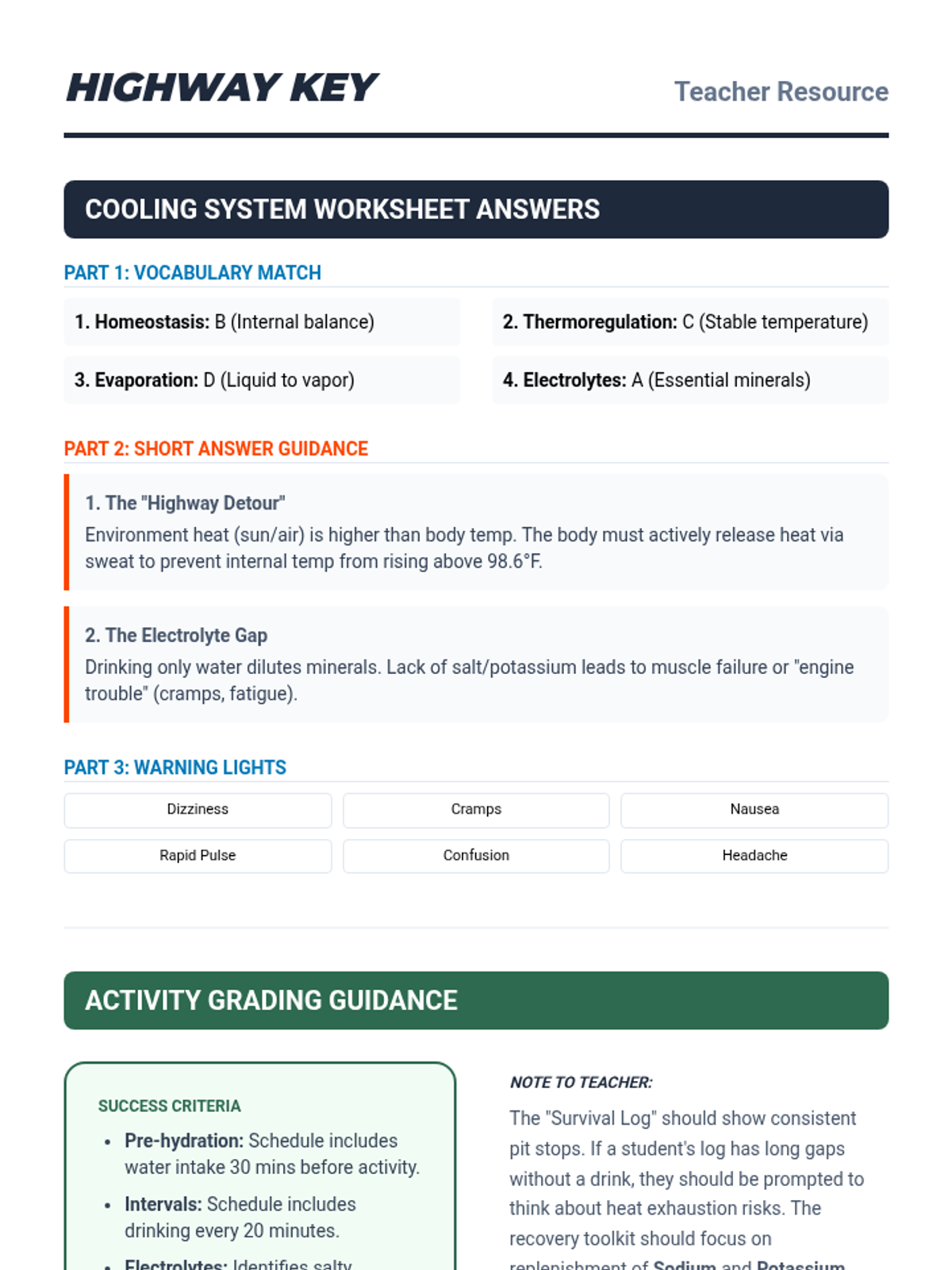
An answer key and grading guide for the Hydration Highway materials. It provides suggested answers for vocabulary matching, short-response biology questions, and criteria for the hydration activity.
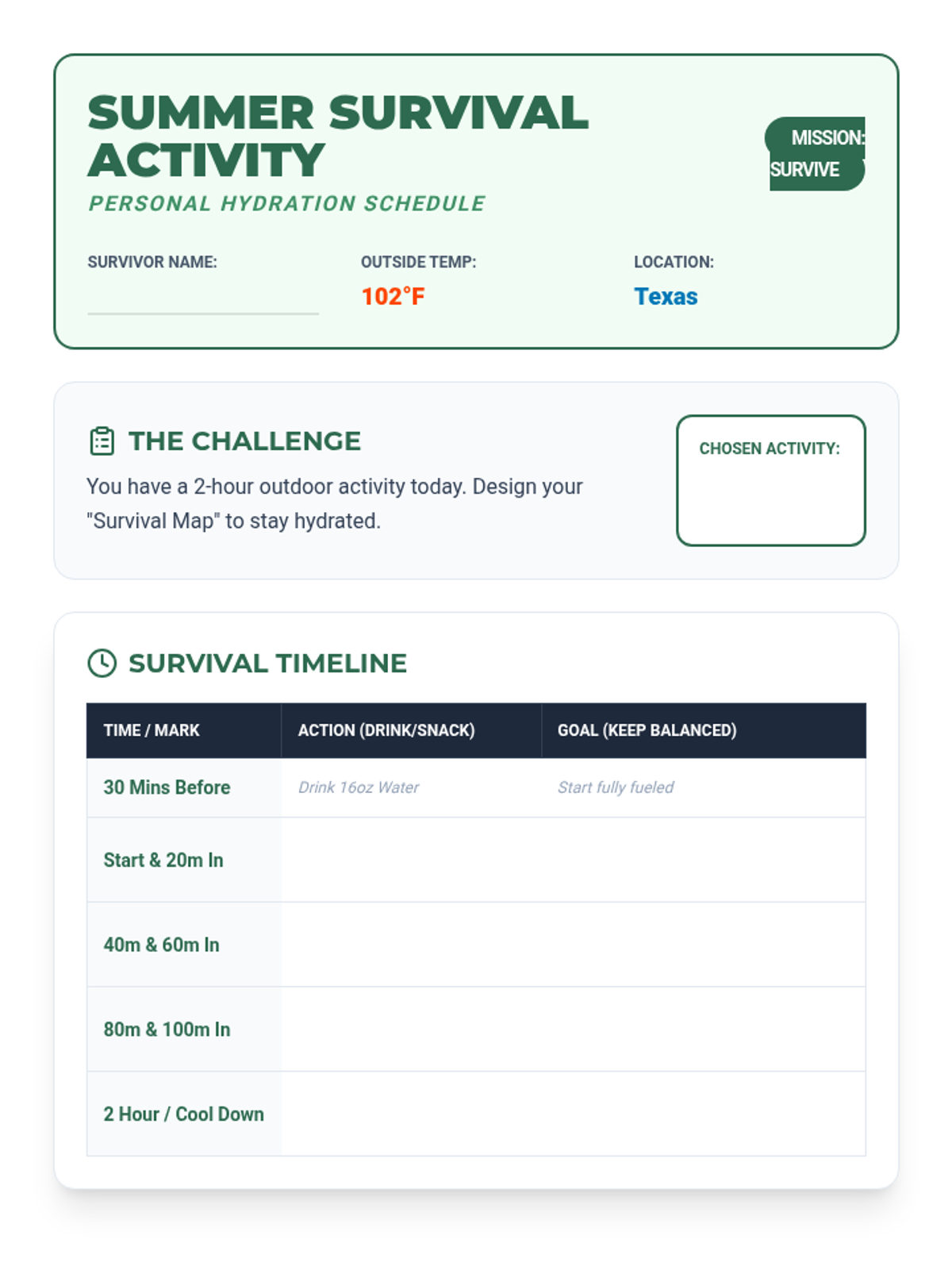
A practical activity where students design a personalized hydration schedule for a 2-hour outdoor summer activity. Includes a timeline log and a 'Recovery Toolkit' for choosing electrolyte-rich snacks.
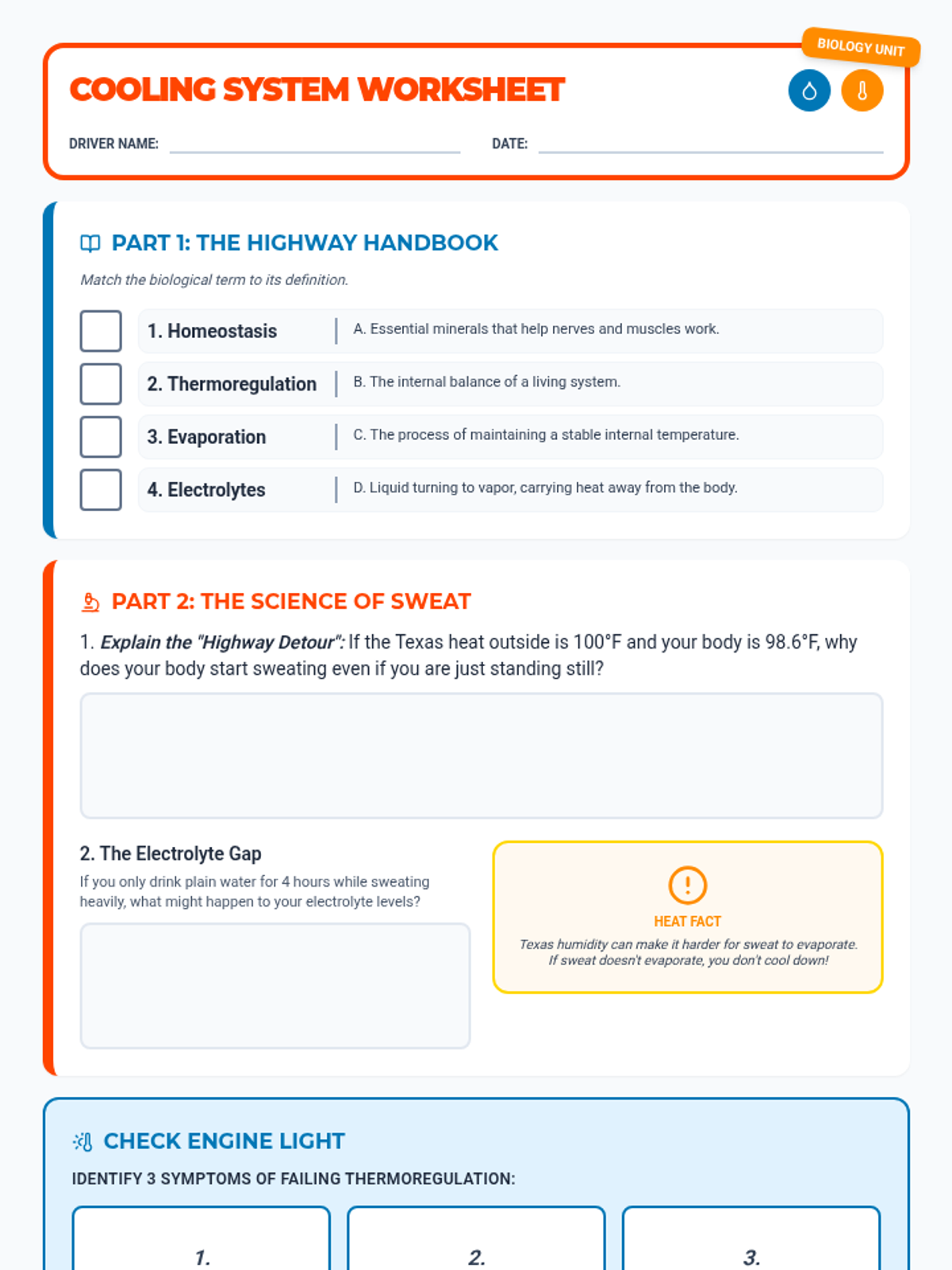
A biology-focused worksheet where students define key terms like homeostasis and electrolytes. It includes short-answer questions about the mechanics of sweating and the effects of extreme heat on the body.
Visual slide deck explaining thermoregulation, the biology of sweating, and the importance of electrolytes. Features a 'Highway' theme with bold graphics and clear definitions of homeostasis.
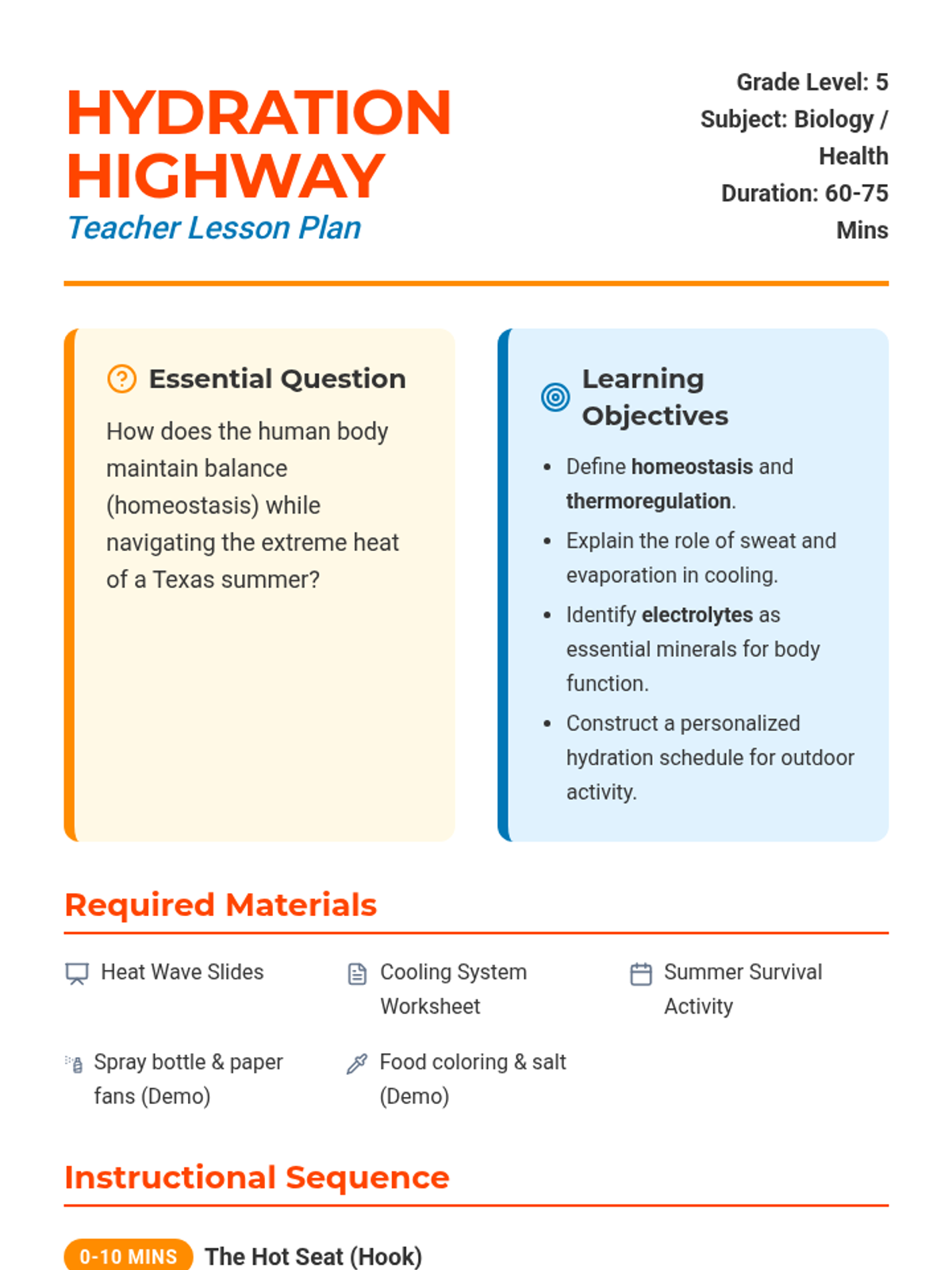
A comprehensive lesson plan for teachers covering thermoregulation, sweating, and electrolytes. Includes a timed sequence, learning objectives, and tips for managing the Texas heat discussion.
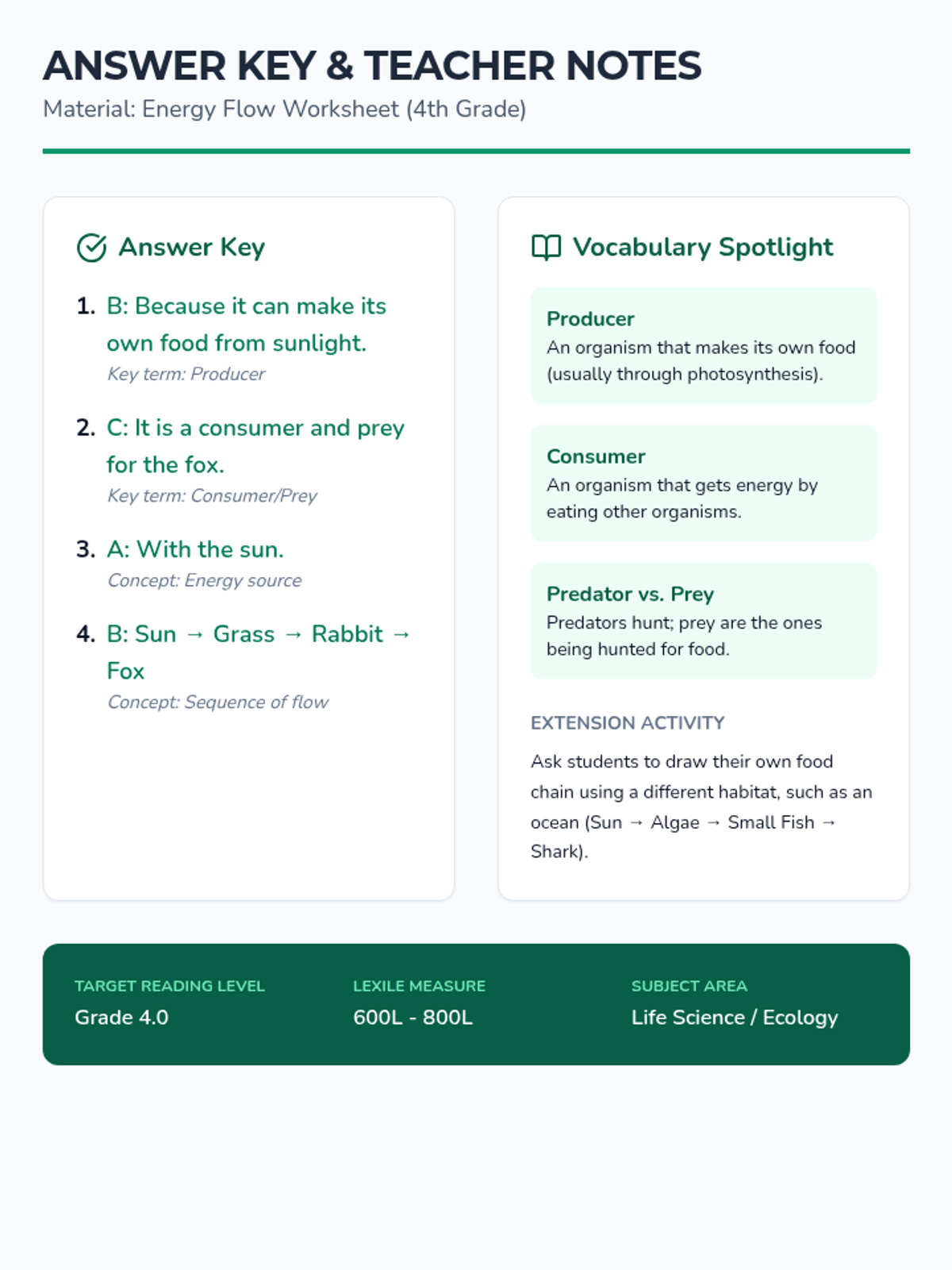
Teacher guide and answer key for the 4th-grade Energy Flow worksheet, including key vocabulary definitions and extension ideas.
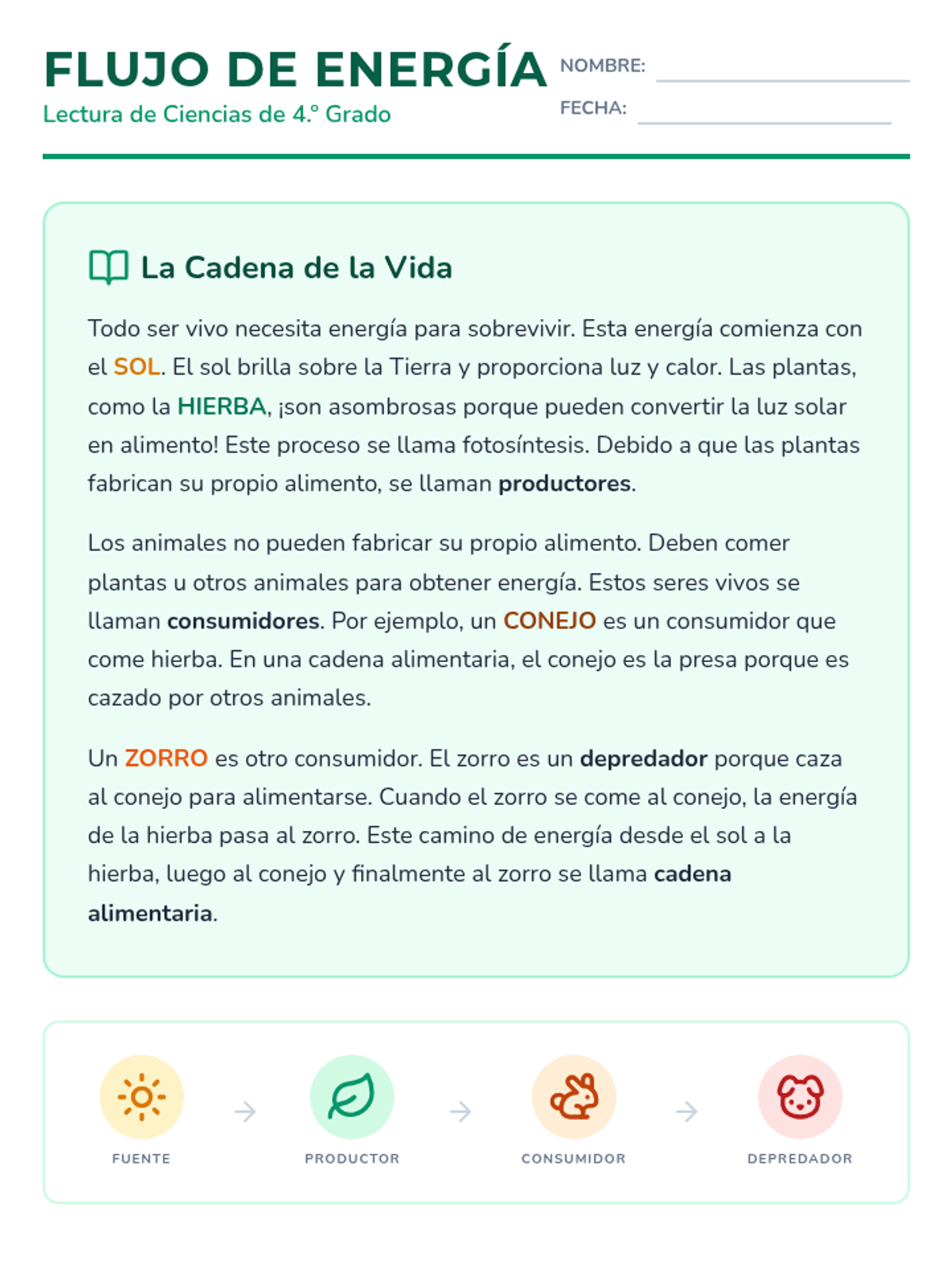
A 4th-grade level reading comprehension worksheet about food chains, condensed onto two pages with improved iconography for better flow.
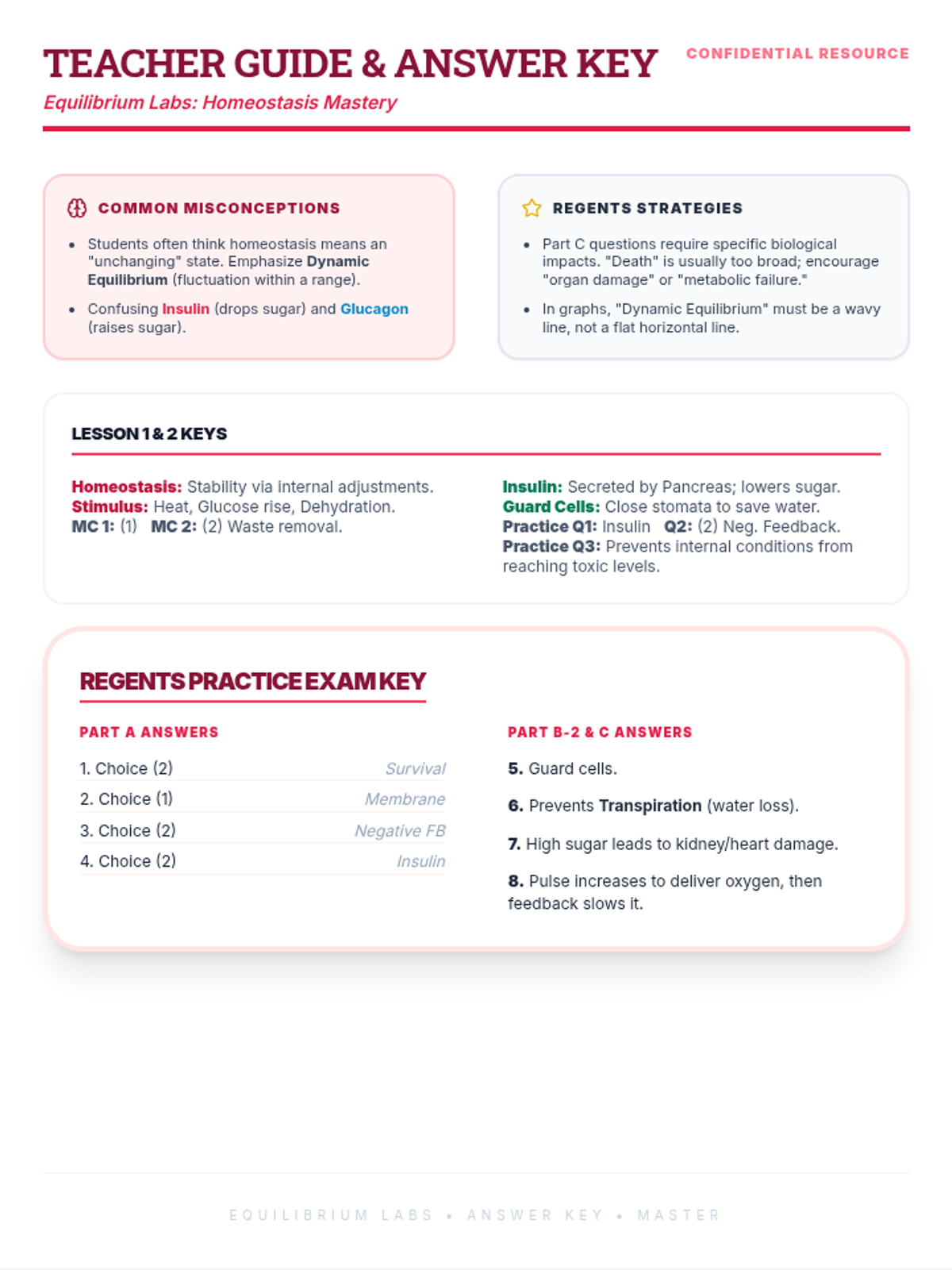
Comprehensive answer key and teacher guide for all materials in the Equilibrium Labs sequence. Includes teaching tips, common misconceptions, and Regents exam strategies.
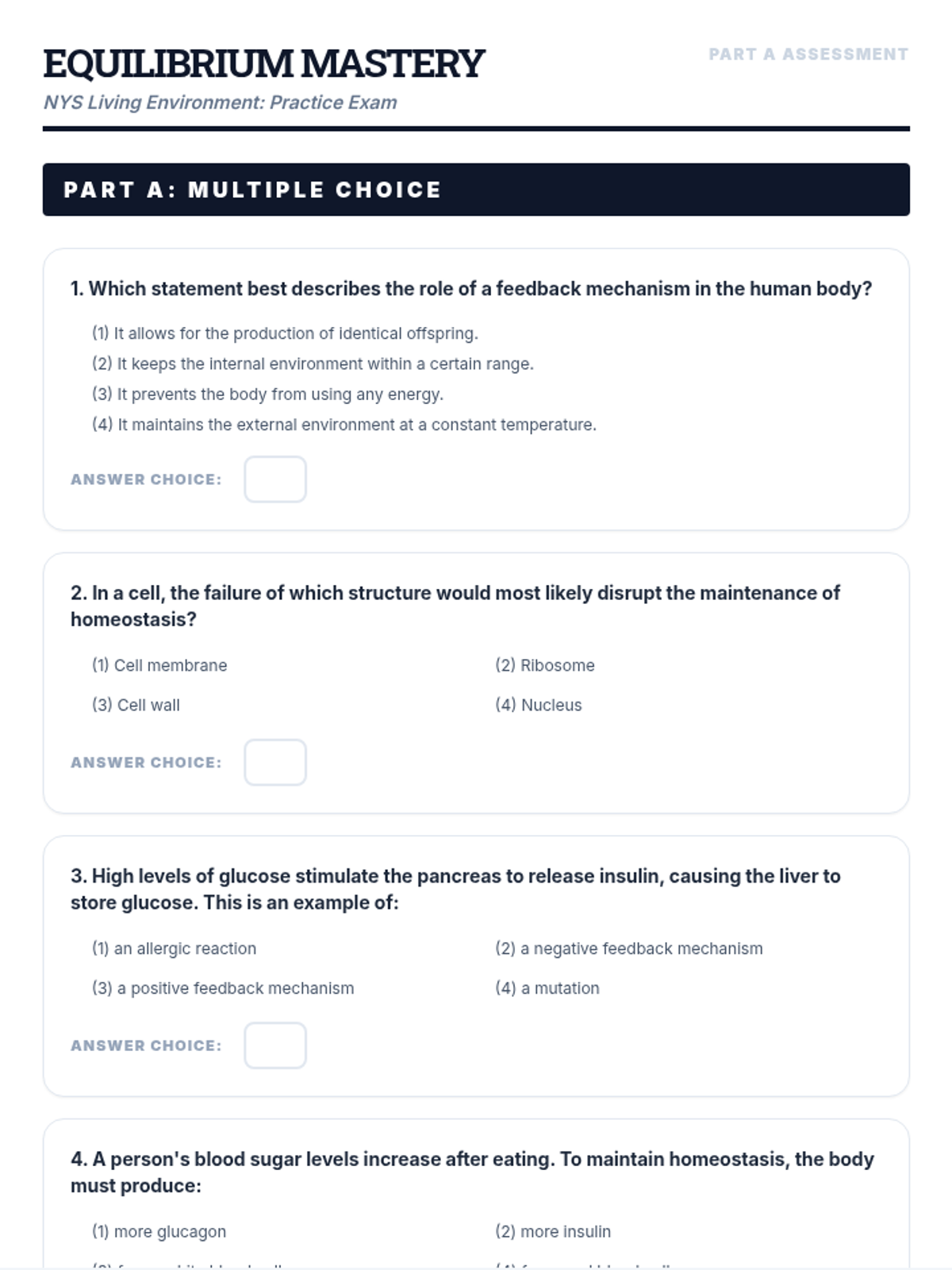
A comprehensive practice exam featuring Part A (Multiple Choice) and Part B/C (Constructed Response) questions modeled after authentic NYS Regents Biology exam questions on homeostasis and homeostasis feedback.
Visual presentation for Lesson 2, covering negative feedback loops, the insulin/glucagon cycle, and the role of guard cells in plant homeostasis.
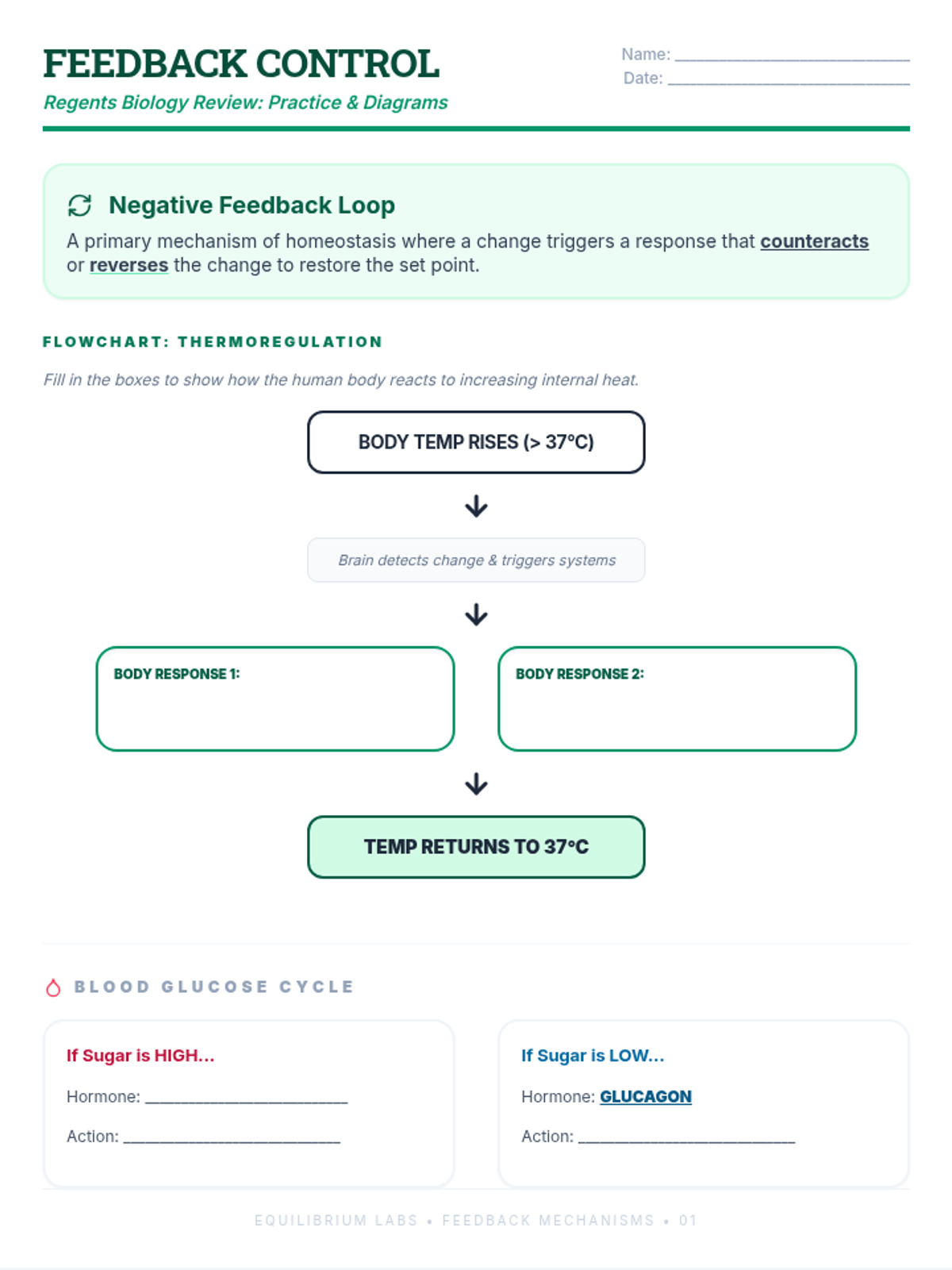
Practice worksheet for Lesson 2 focusing on negative feedback loops, thermoregulation, blood glucose control, and plant guard cells. Includes Regents-style multiple choice and short answer questions.
Visual presentation for Lesson 1, introducing the concepts of homeostasis, dynamic equilibrium, and failure of balance with high-impact visuals.
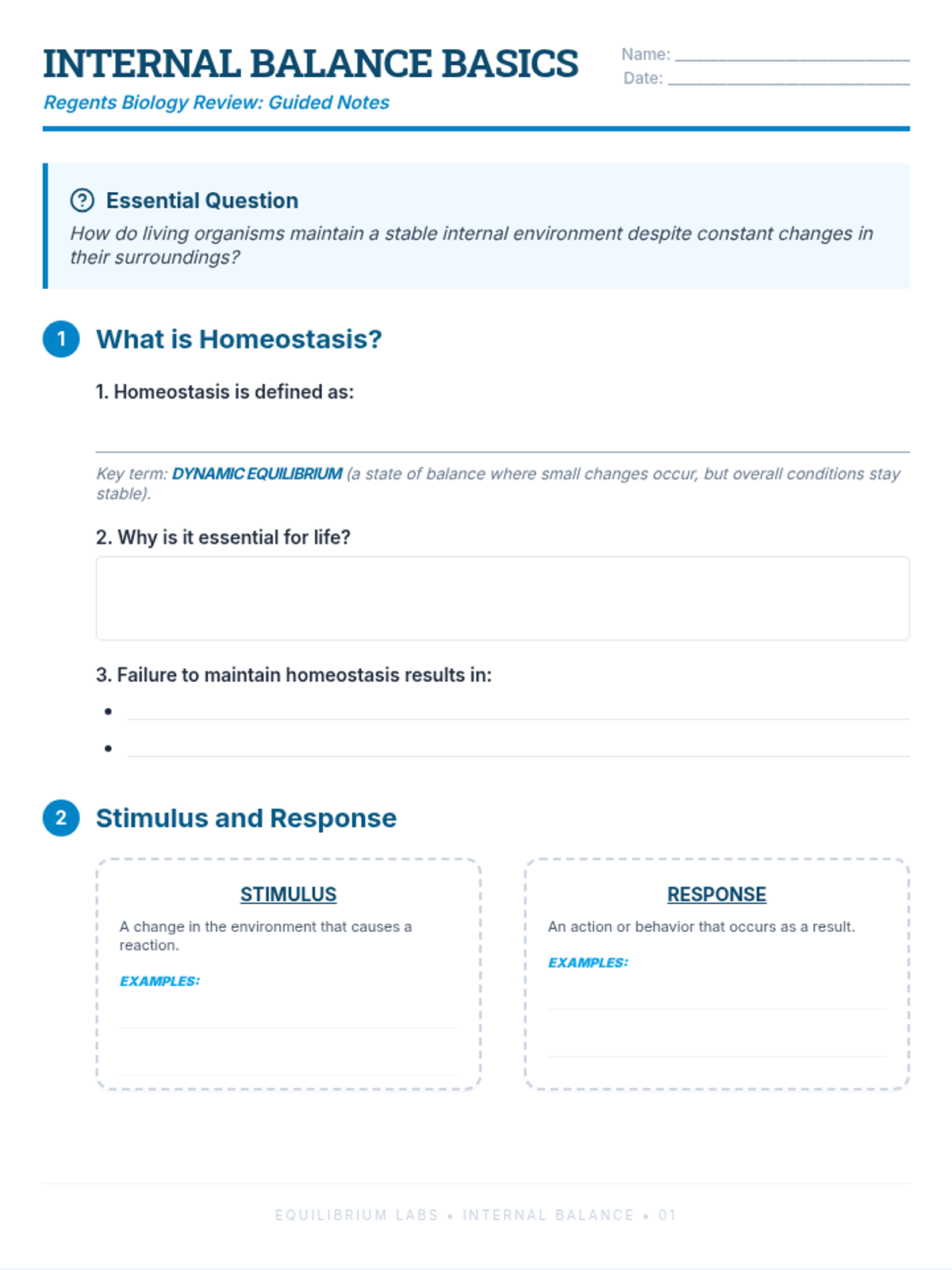
Guided notes for Lesson 1, covering the definitions of homeostasis, dynamic equilibrium, and basic stimulus-response mechanisms. Includes Regents-style practice questions.
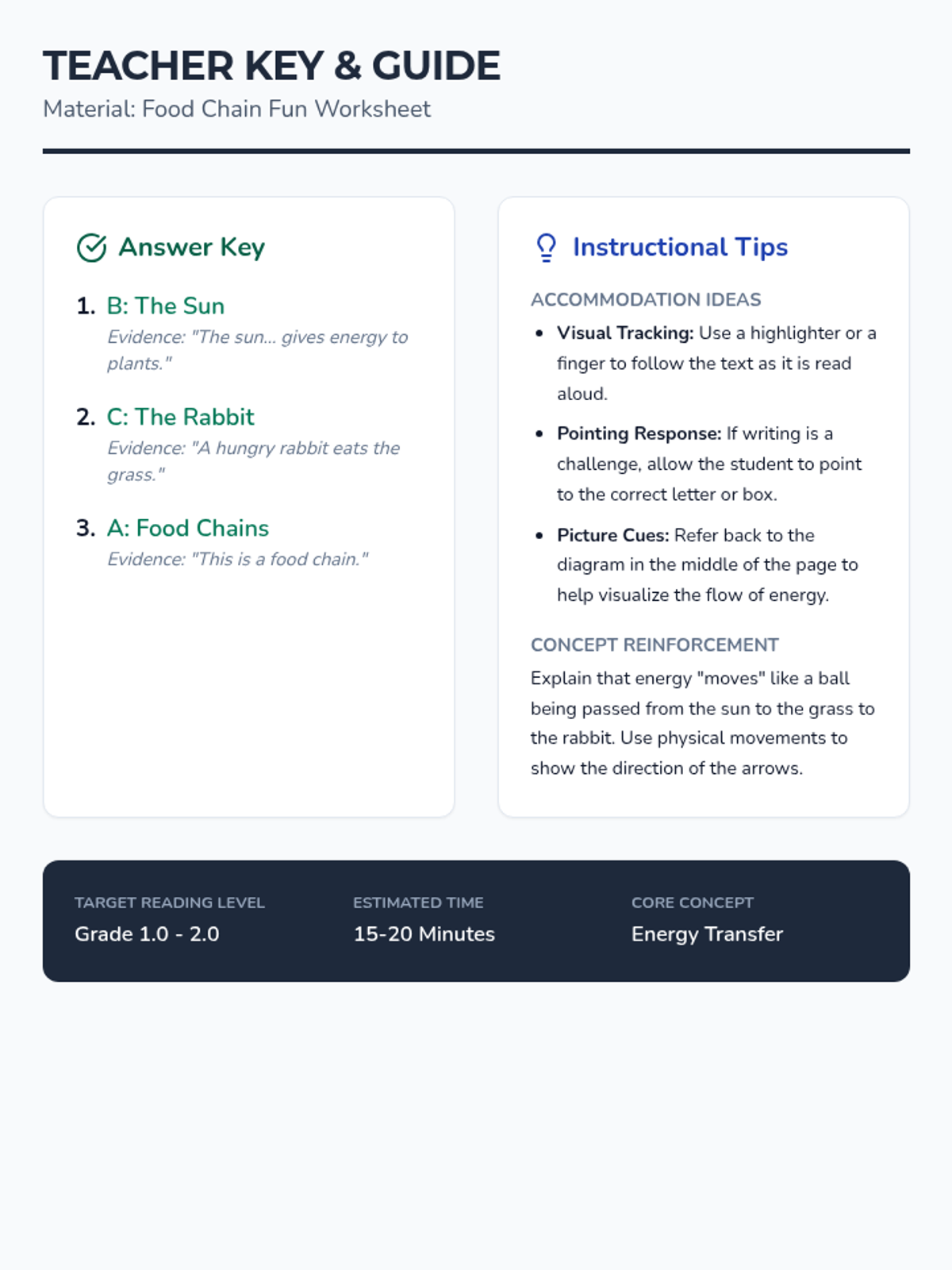
A teacher guide and answer key for the Food Chain Fun worksheet, including accommodation strategies and alignment notes.
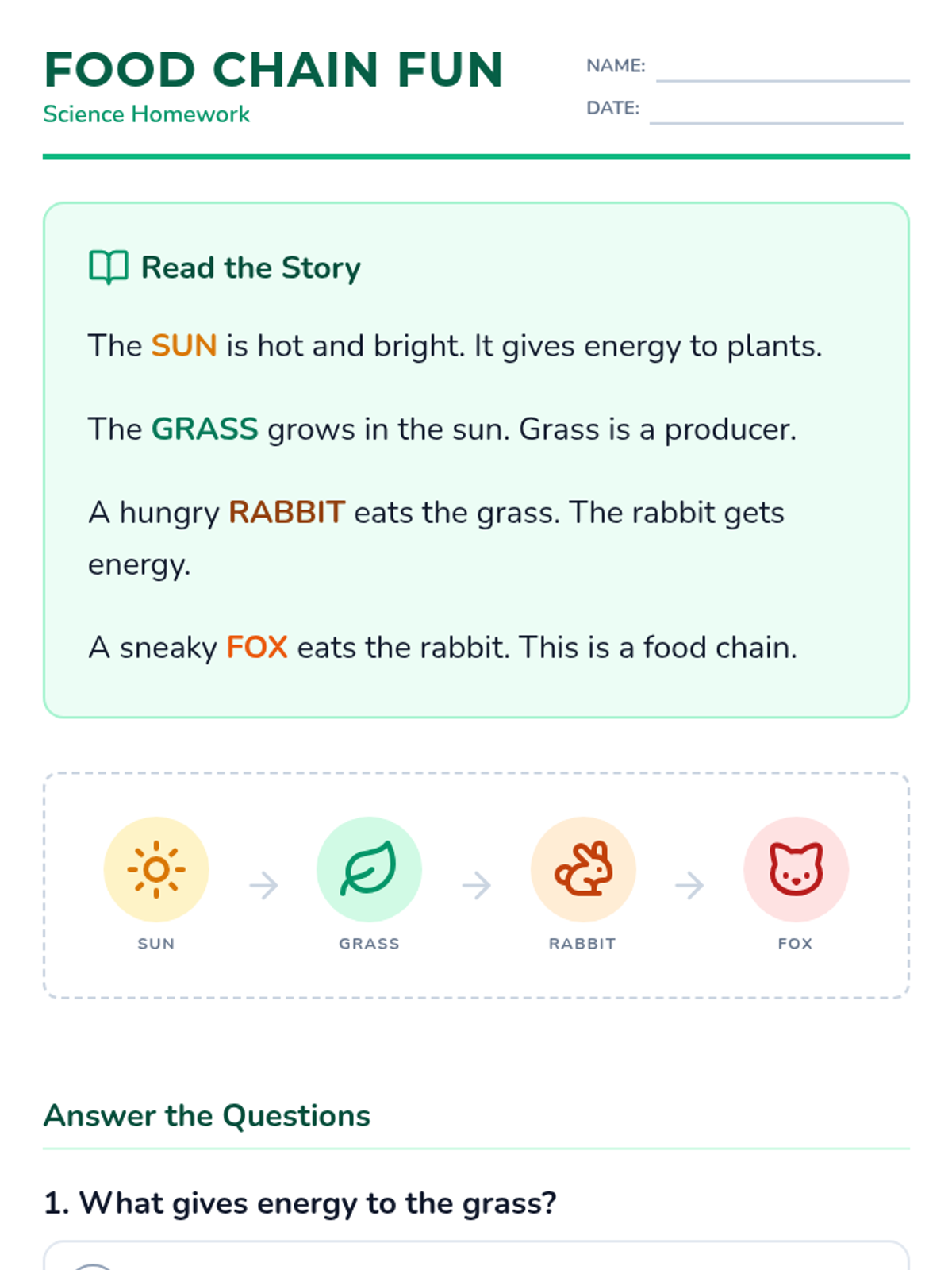
A simplified reading comprehension worksheet about food chains, featuring large text, visual supports, and multiple-choice questions for students with disabilities. Corrected page breaks and updated icons for better visual representation.
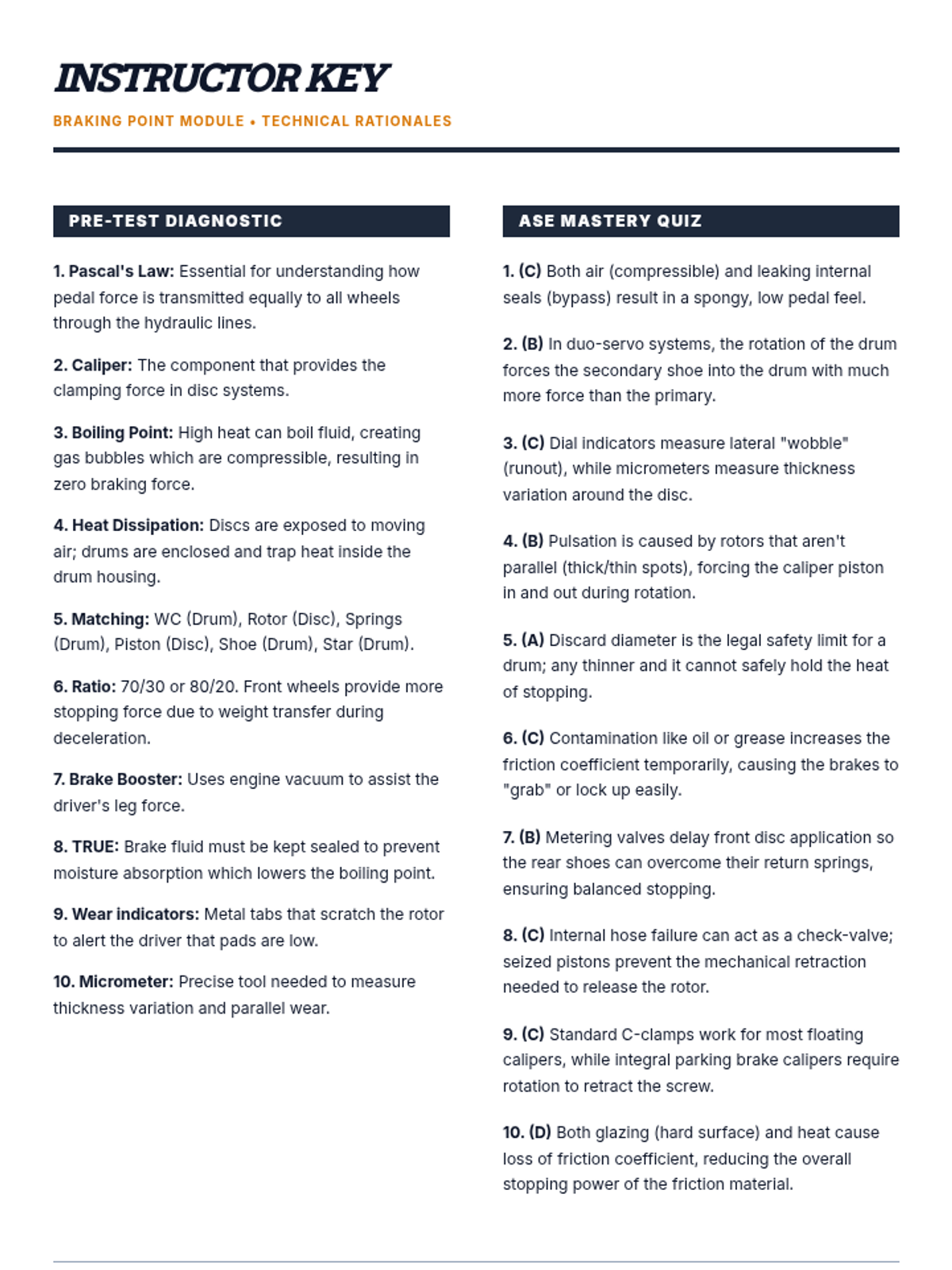
Comprehensive instructor answer key for the Braking Point pre-test and ASE mastery quiz, including technical rationales for each answer choice.
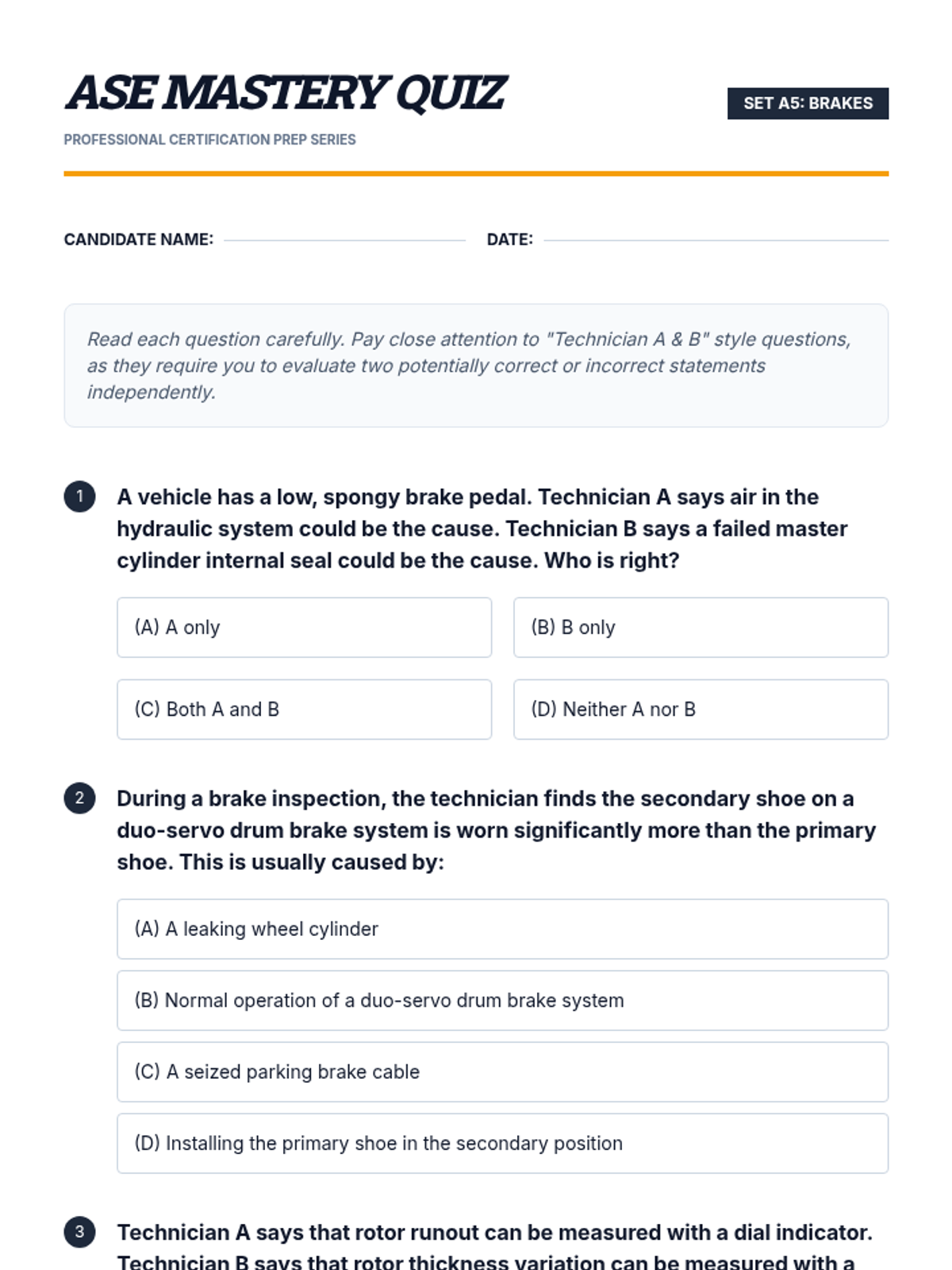
A revised 10-question ASE-style practice quiz for brakes, featuring improved layout with page break prevention and clear Technician A & B scenarios.
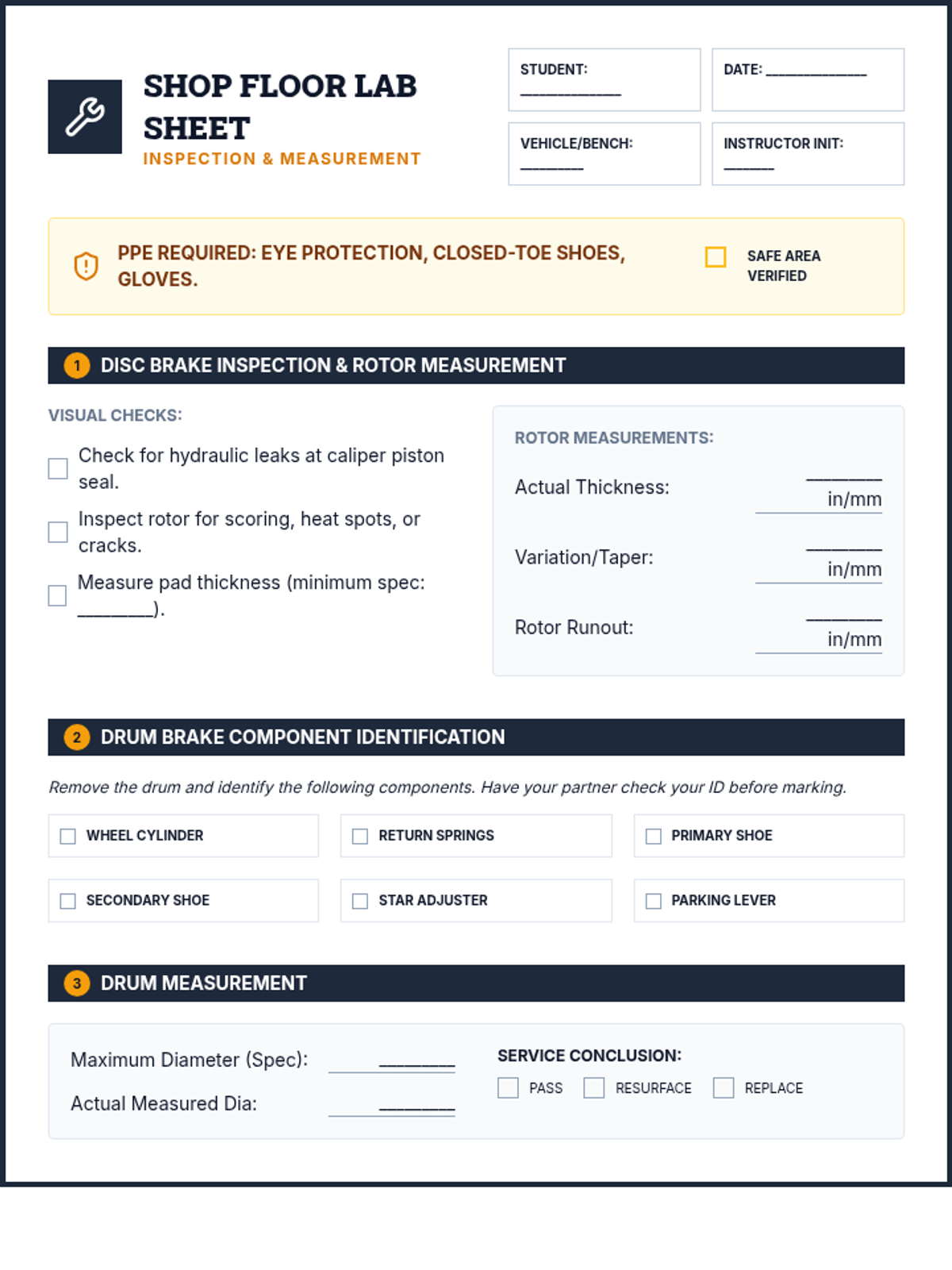
Professional shop lab sheet for hands-on practice, including safety checklists, inspection points, and measurement recording for disc and drum brakes.
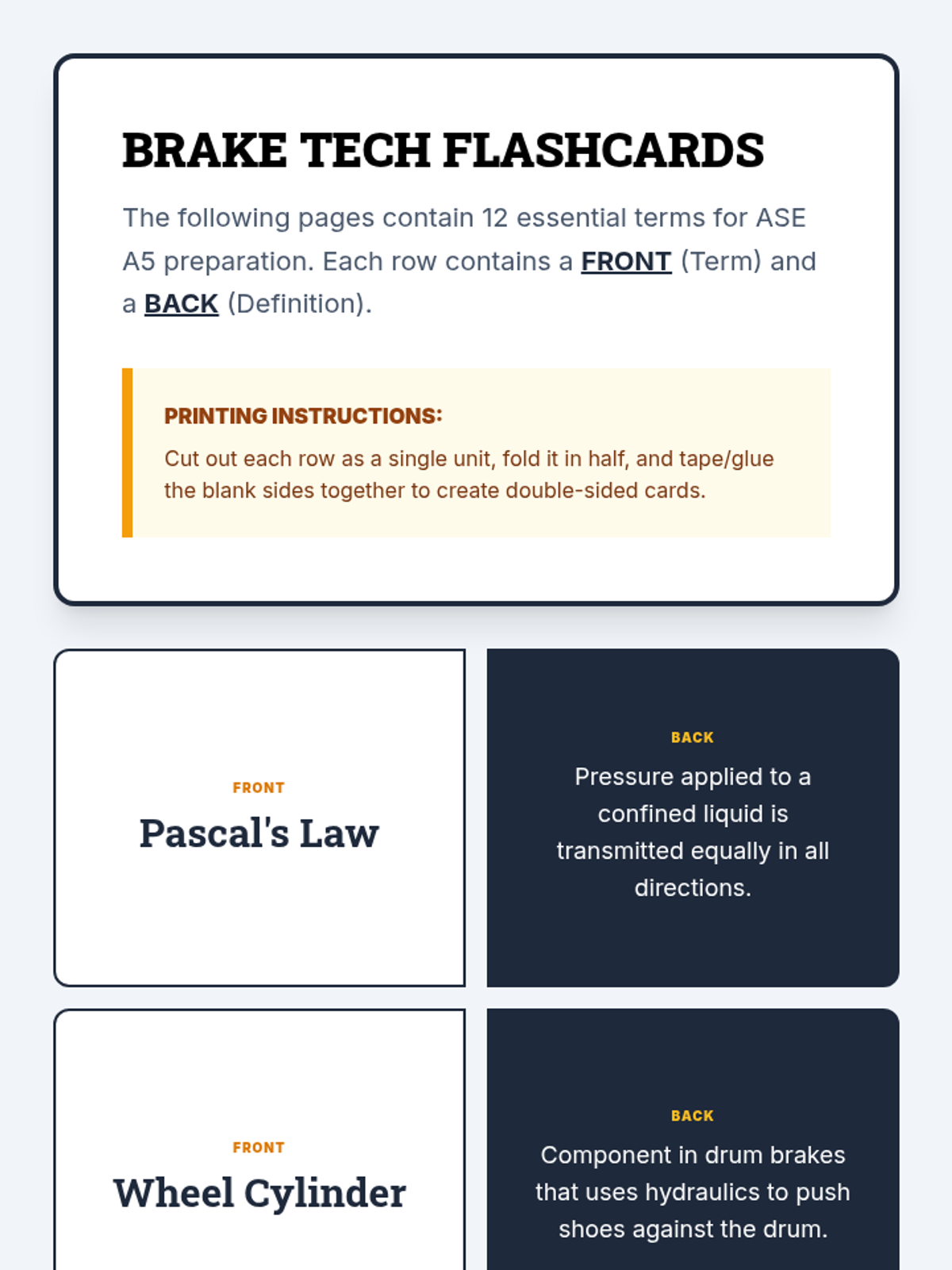
An expanded set of 12 flashcards with a professional folding-style layout for easy double-sided use, covering essential ASE A5 terminology.
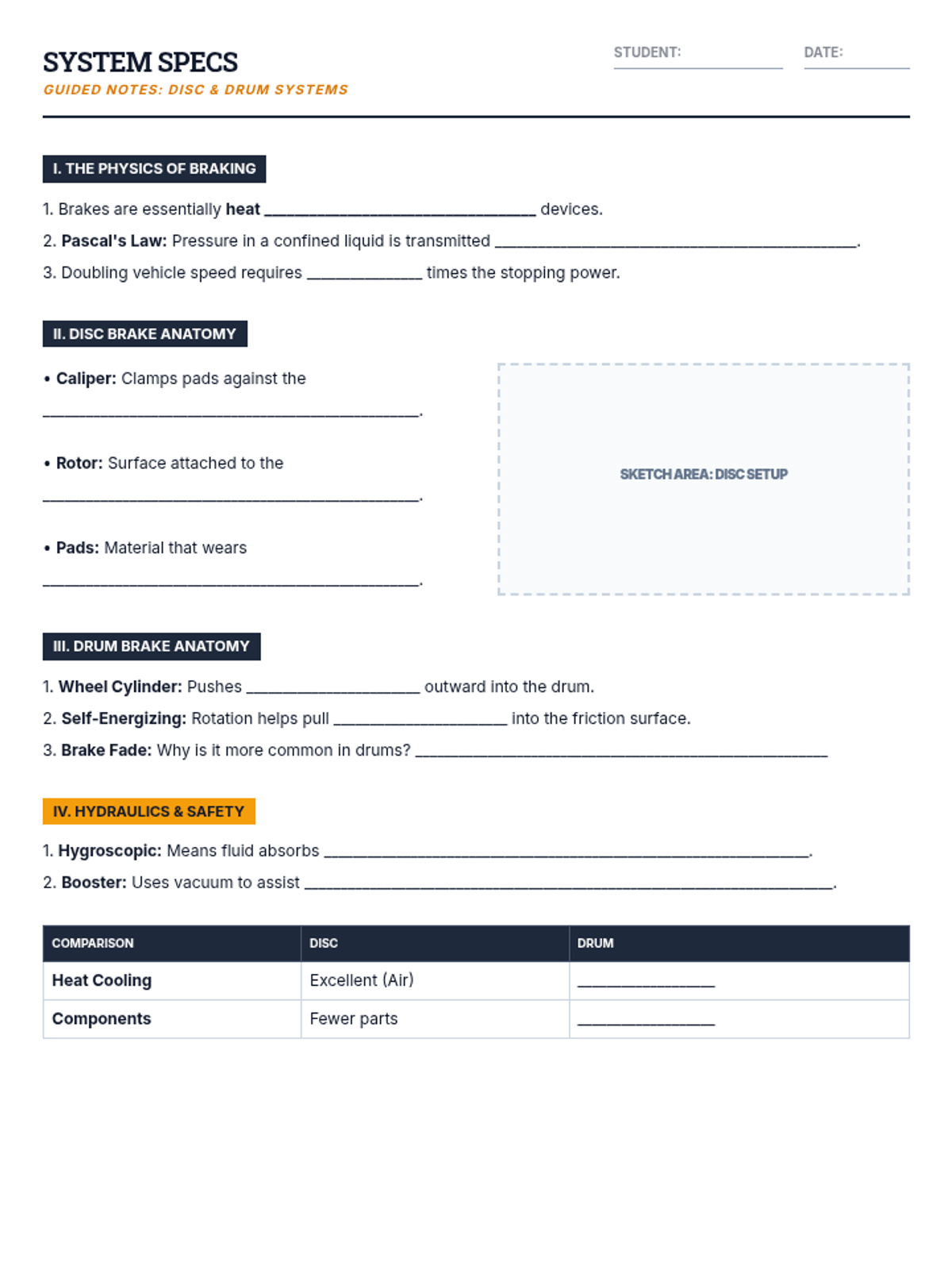
Polished guided notes for automotive students with expanded fill-in-the-blank areas, hydraulic safety sections, and a clean professional layout for classroom use.
Polished instructional slides for automotive brake systems, expanded to 6 slides with detailed anatomy breakdowns, hydraulic safety principles, and ASE-style logic.
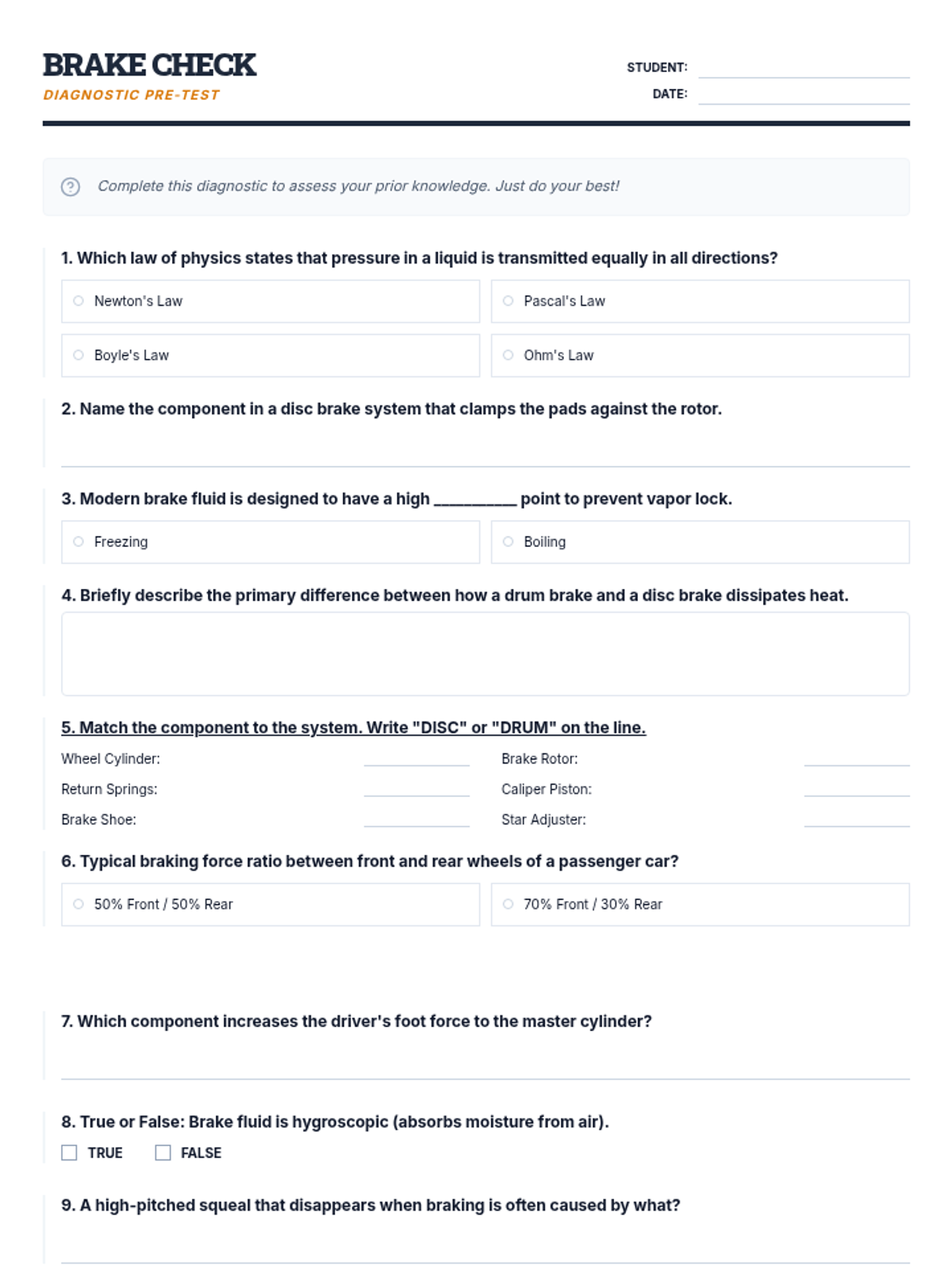
An expanded diagnostic pre-test for automotive students with 12 questions covering principles, components, and safety to assess baseline knowledge.
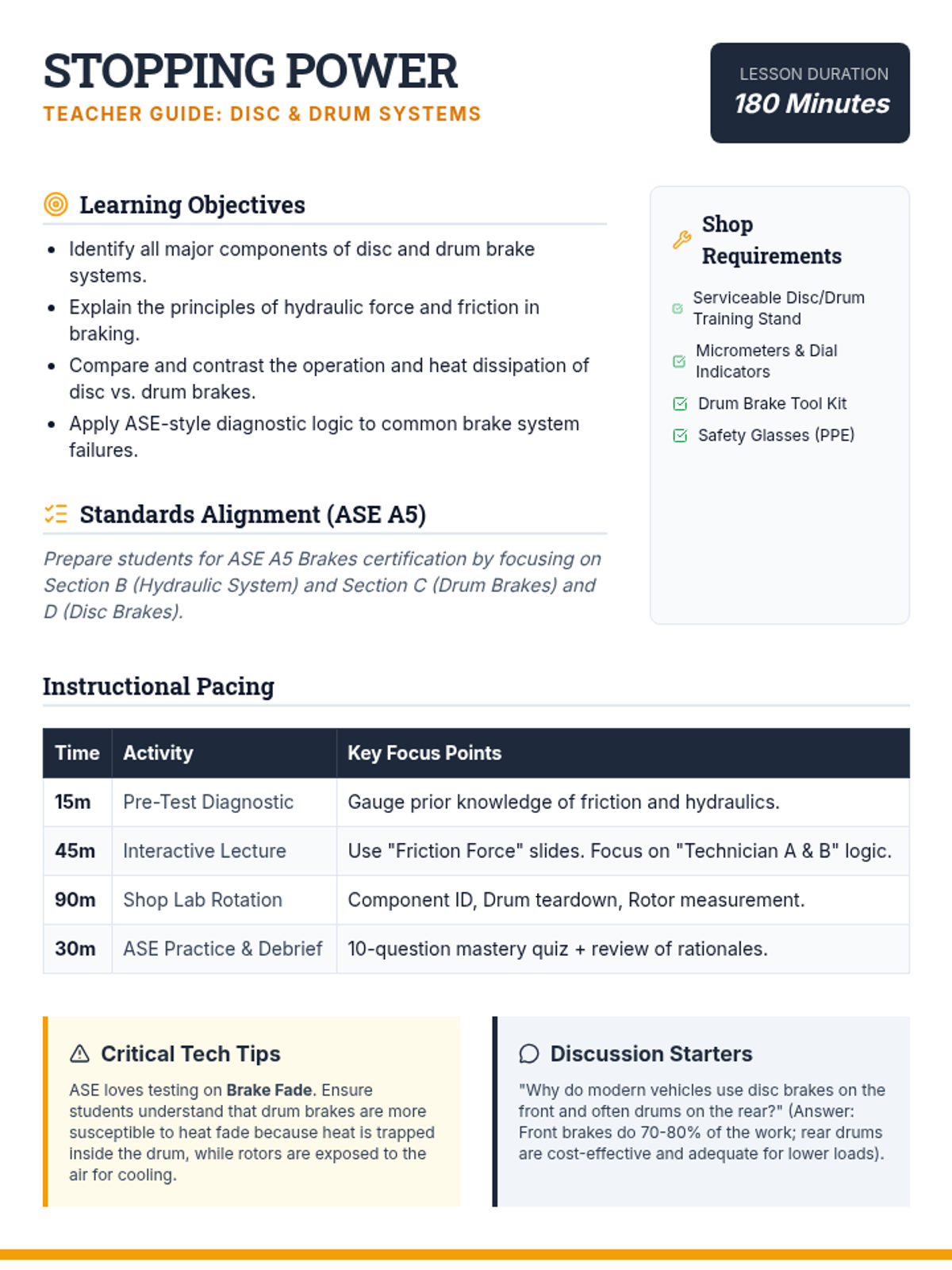
Teacher's guide and lesson plan for automotive brake systems, detailing learning objectives, shop requirements, and instructional pacing aligned with ASE standards.
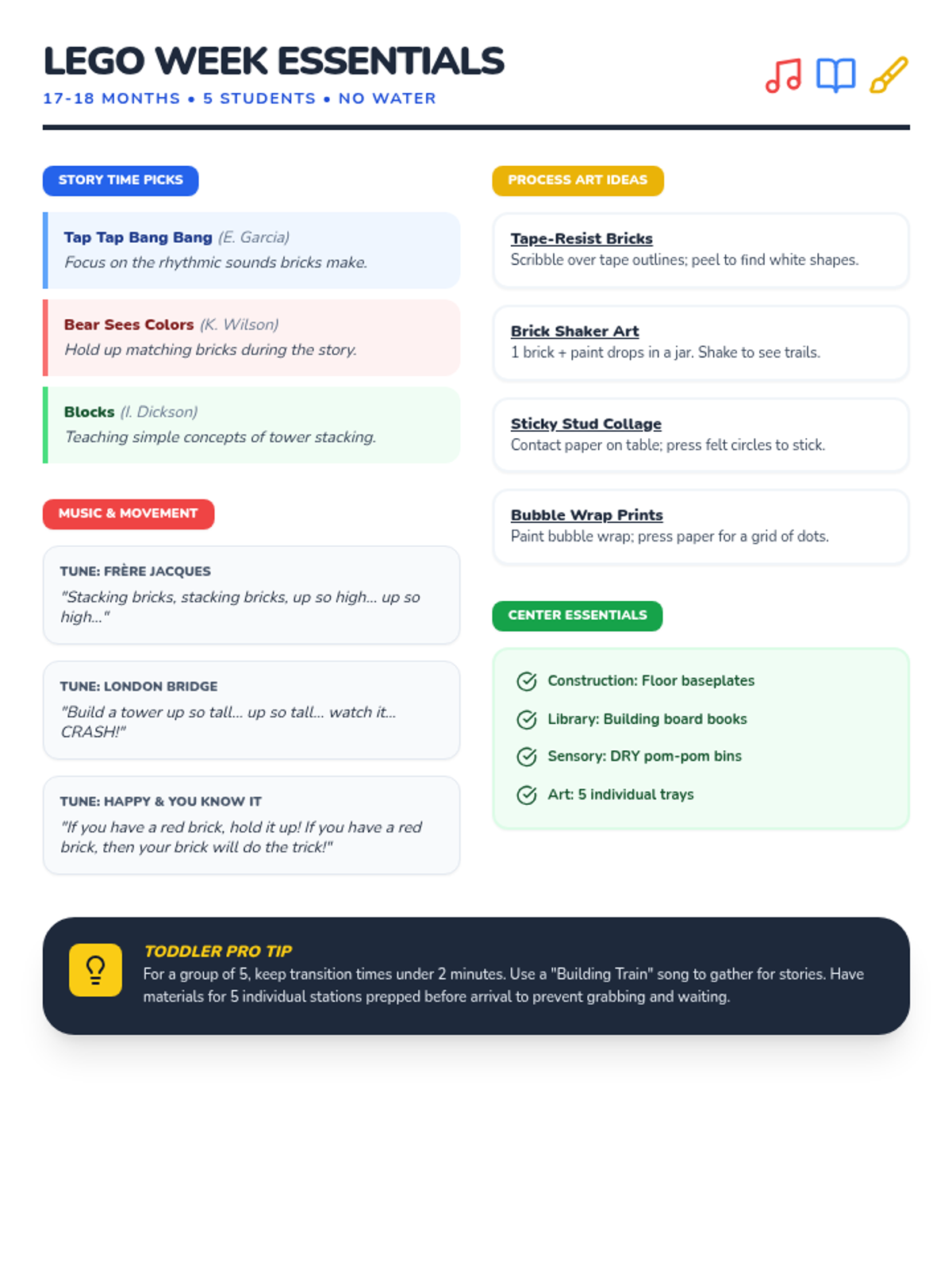
A one-page 'Essentials' guide for Lego Week, breaking down Story Time, Music, Art, and Learning Centers for 17-18 month olds.
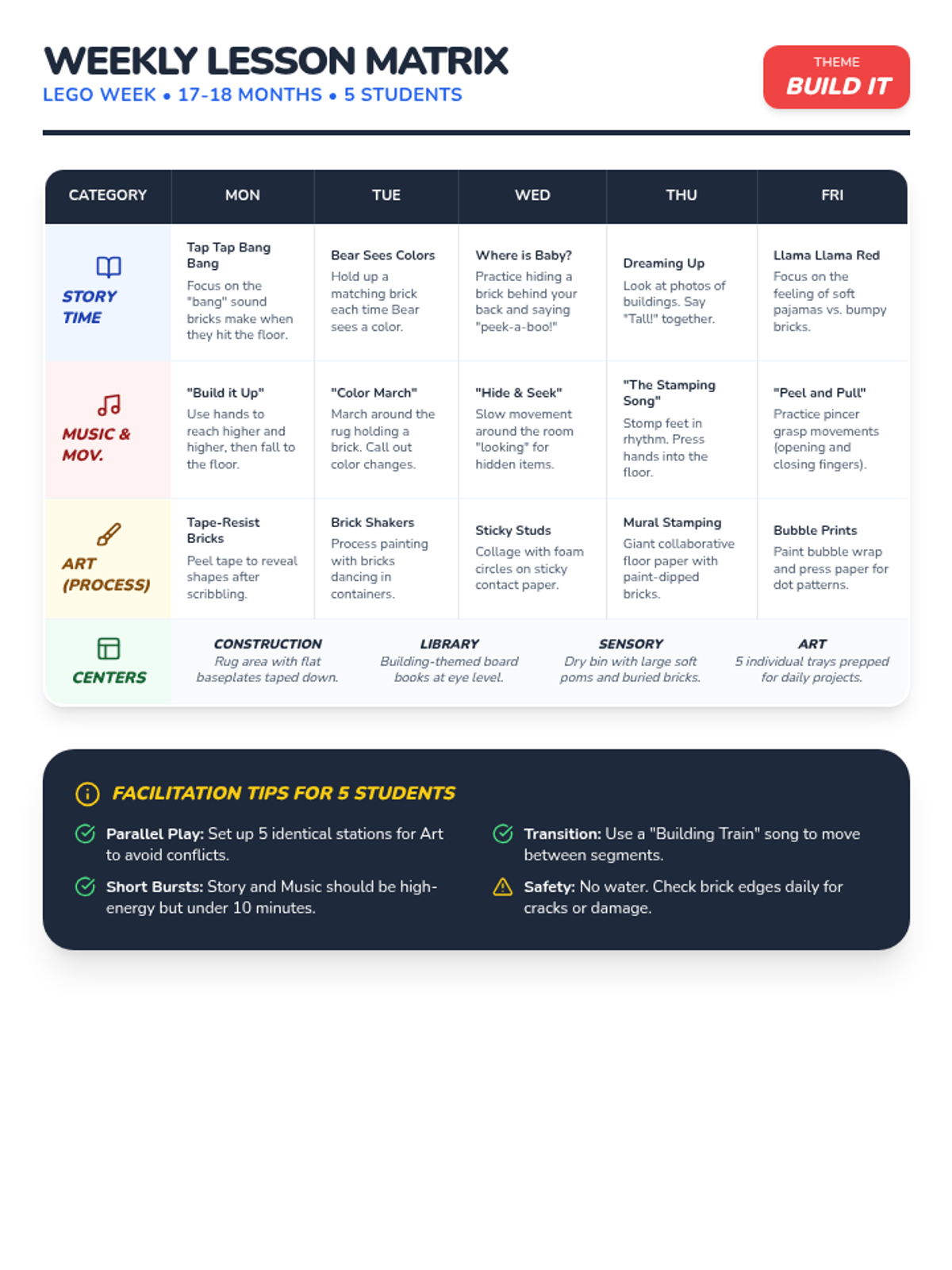
A one-page weekly lesson matrix that breaks down the Lego theme curriculum into Story Time, Music & Movement, Art, and Learning Centers for 17-18 month old toddlers.
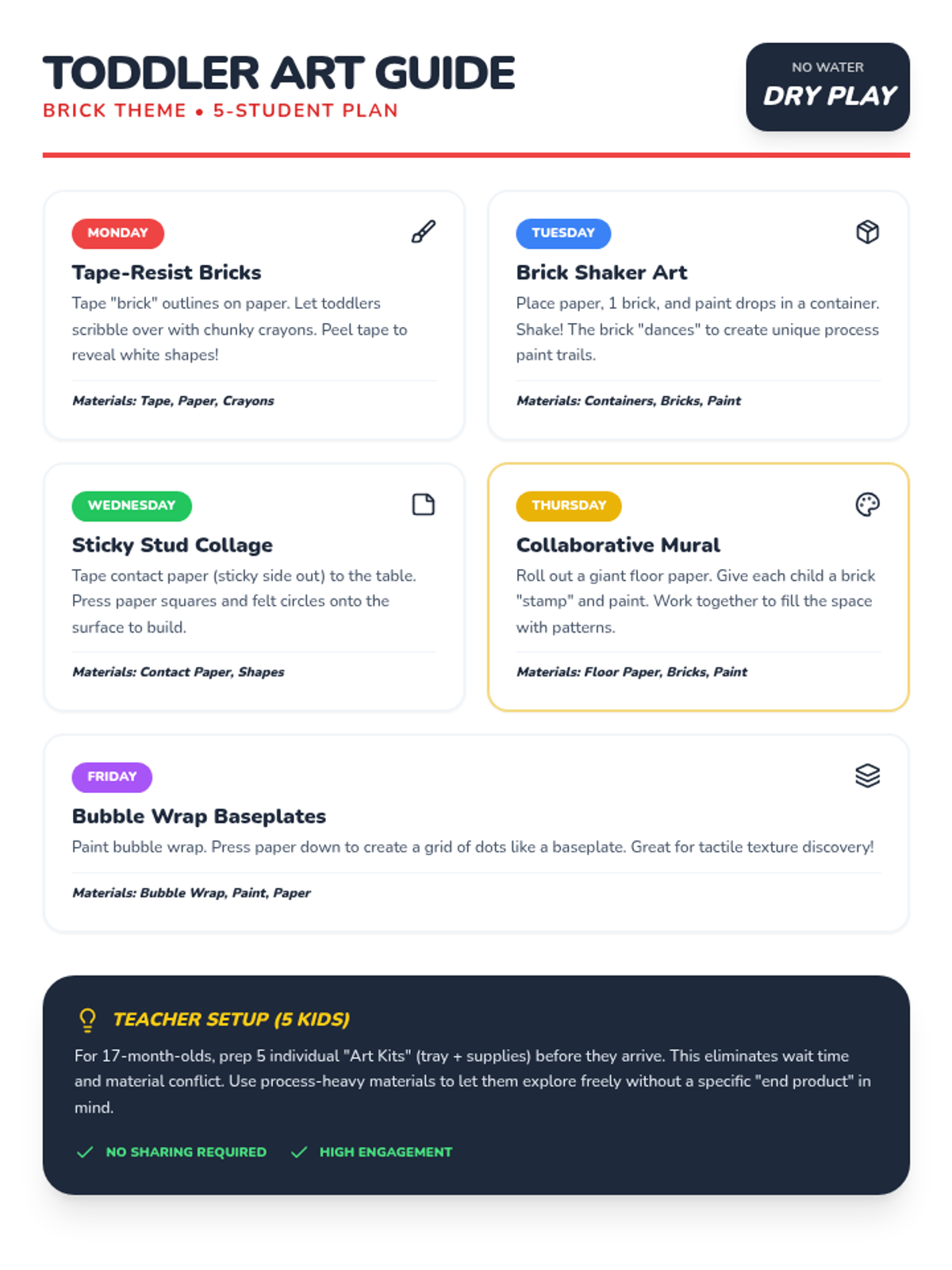
A guide featuring 5 process-art activities for toddlers (one for each day), specifically designed for a group of 5 students with minimal prep and cleanup.
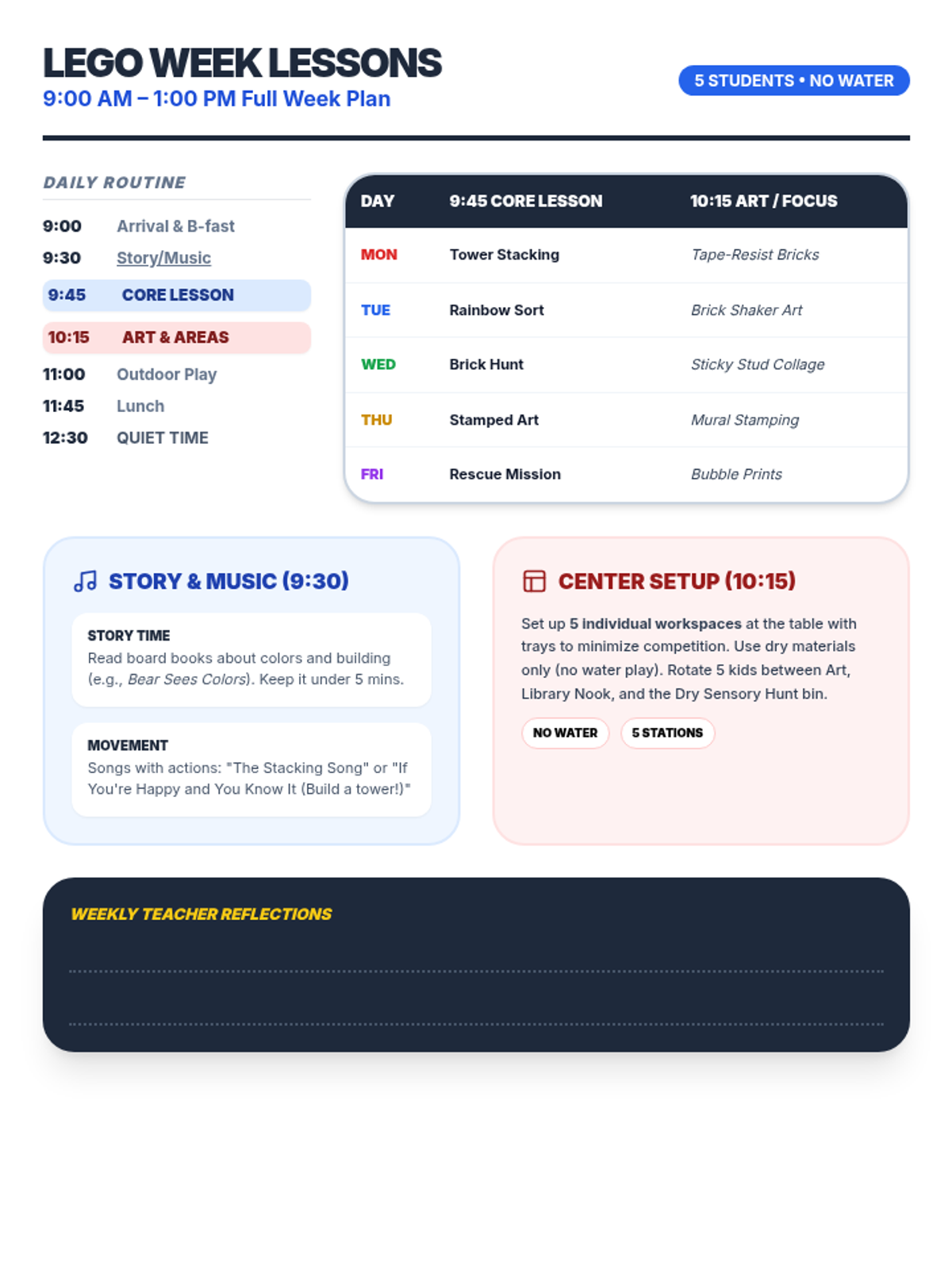
A detailed full-week 9am-1pm lesson plan for a toddler classroom (5 students), featuring daily core lessons and specific process-art projects for each day. No water play.
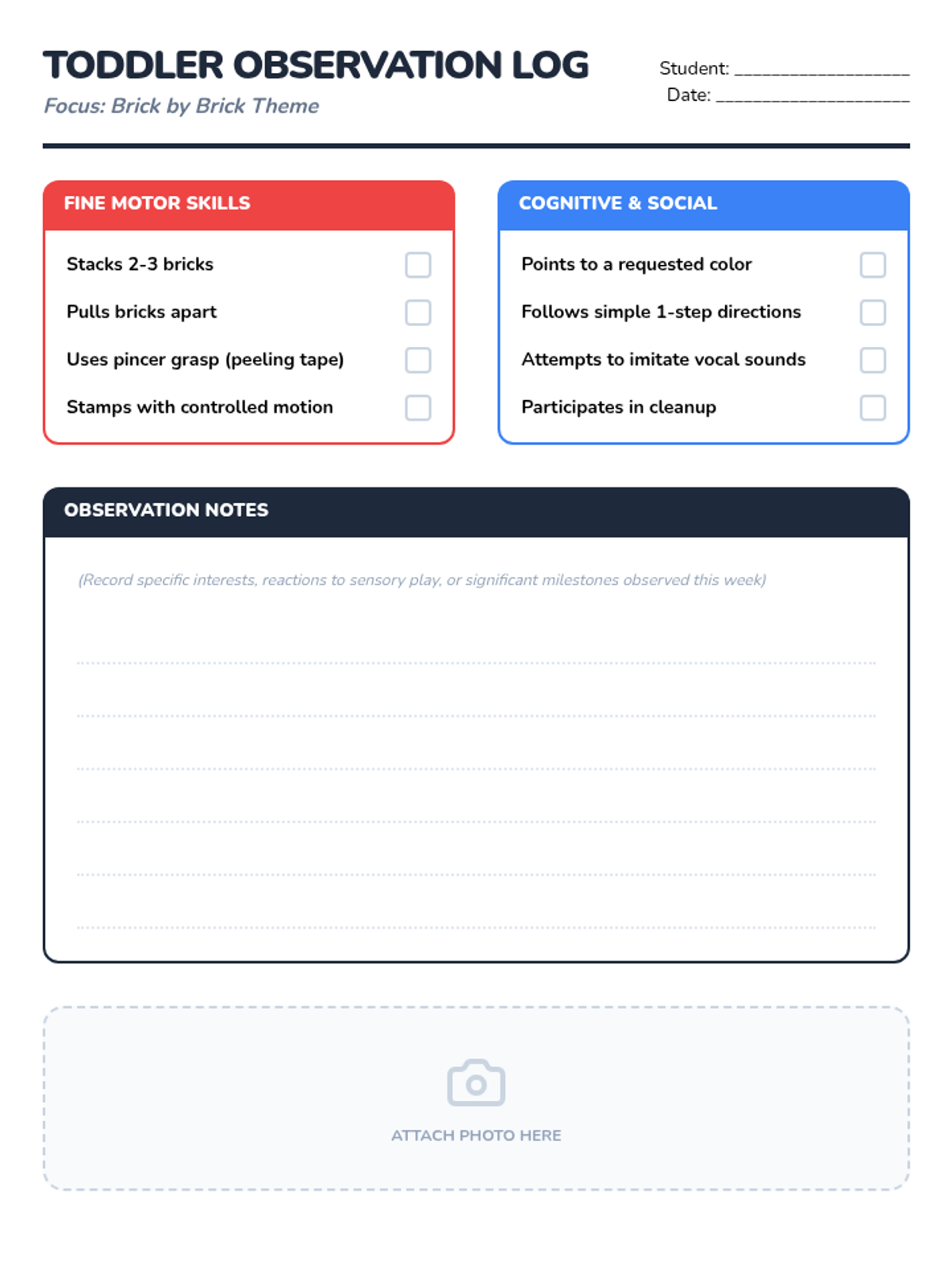
A printable observation log for toddler teachers to track individual student milestones and developmental progress during Lego week.
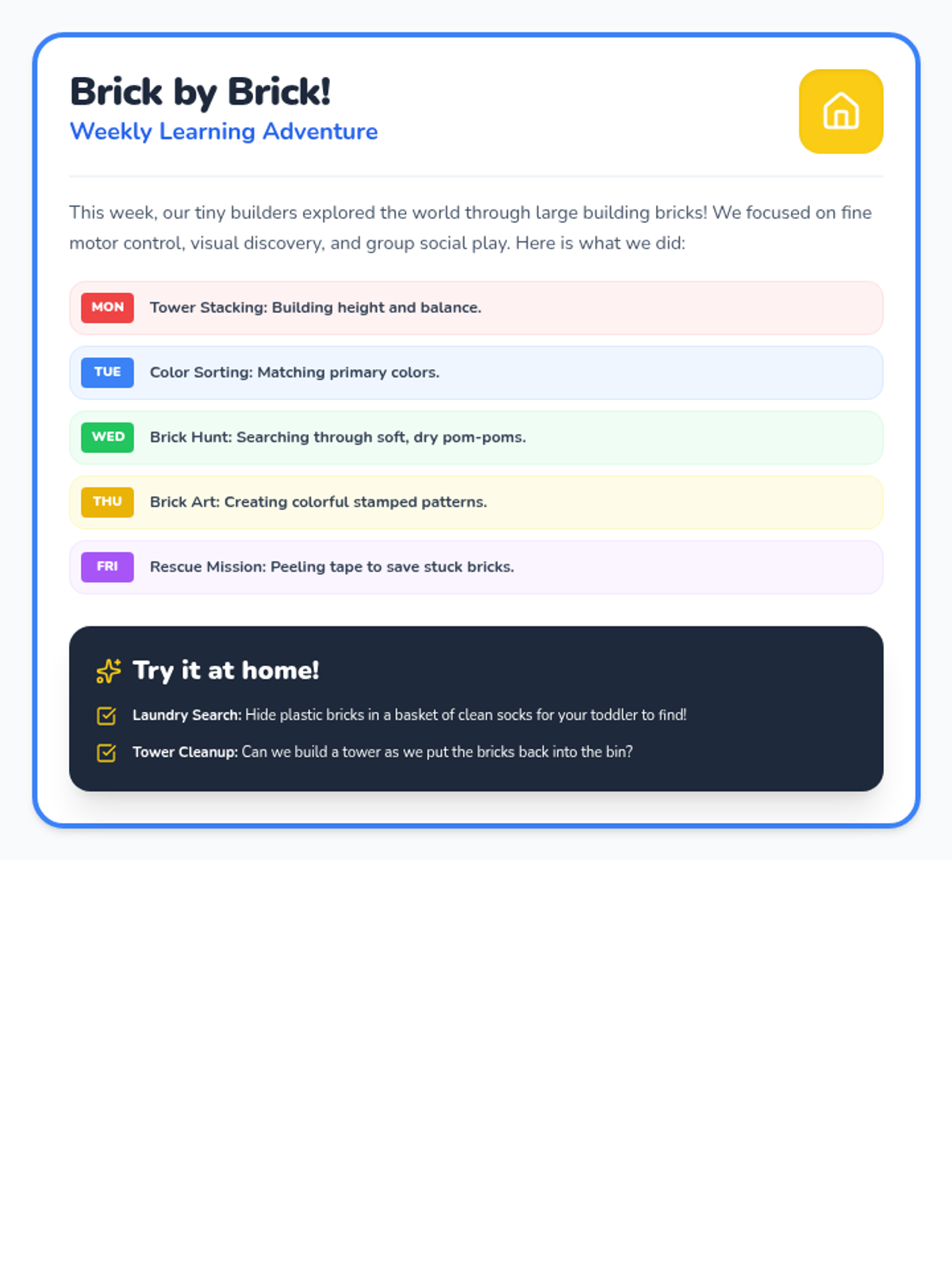
A parent communication handout summarizing the week's Lego-themed activities, now featuring dry sensory exploration and extending learning to home routines.
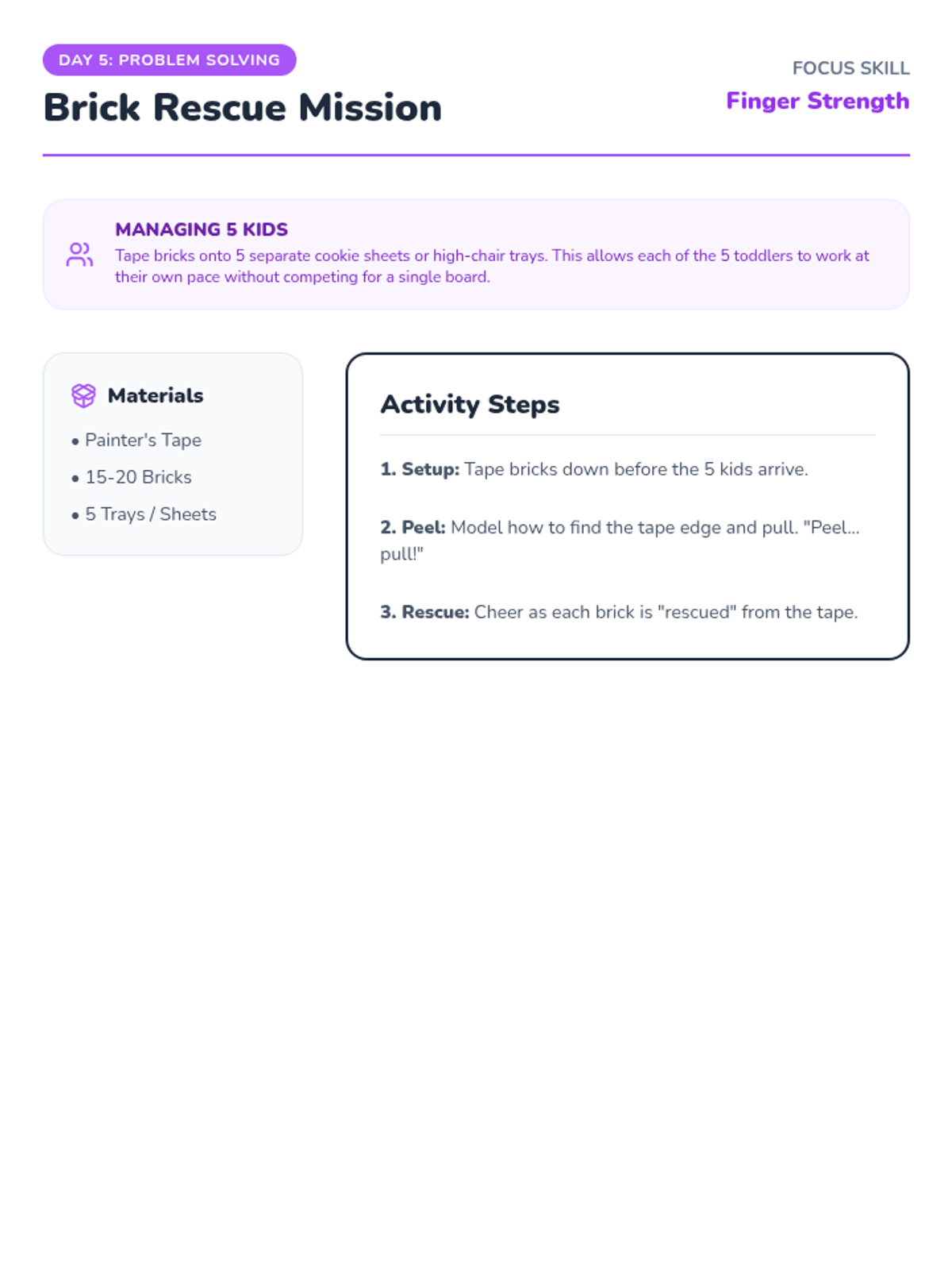
A teacher facilitation card for Day 5 of Lego week, detailing a problem-solving activity. Modified for 5 kids. No water play.
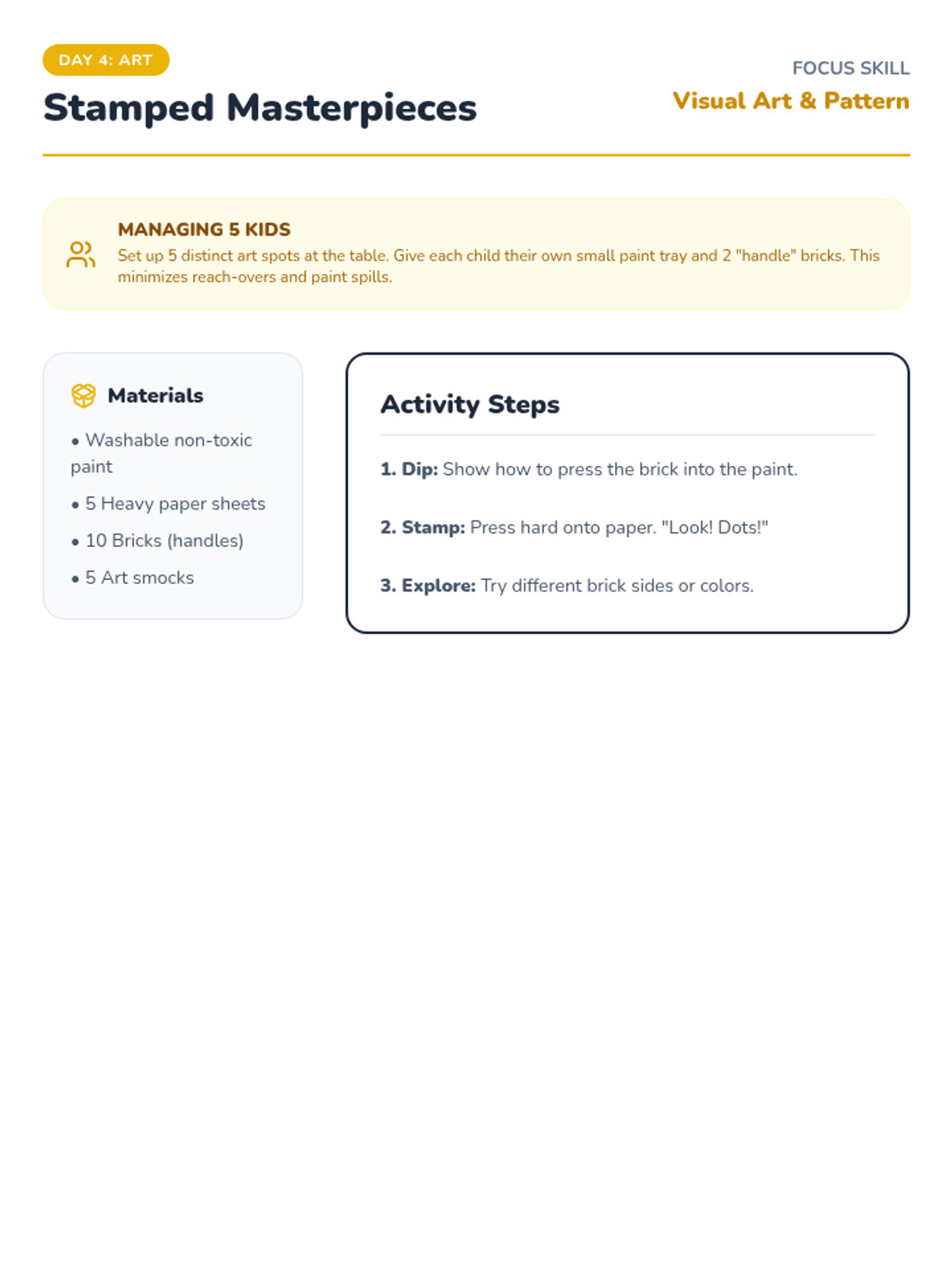
A teacher facilitation card for Day 4 of Lego week, providing instructions for a brick-stamping art activity. Modified for 5 kids. No water play.
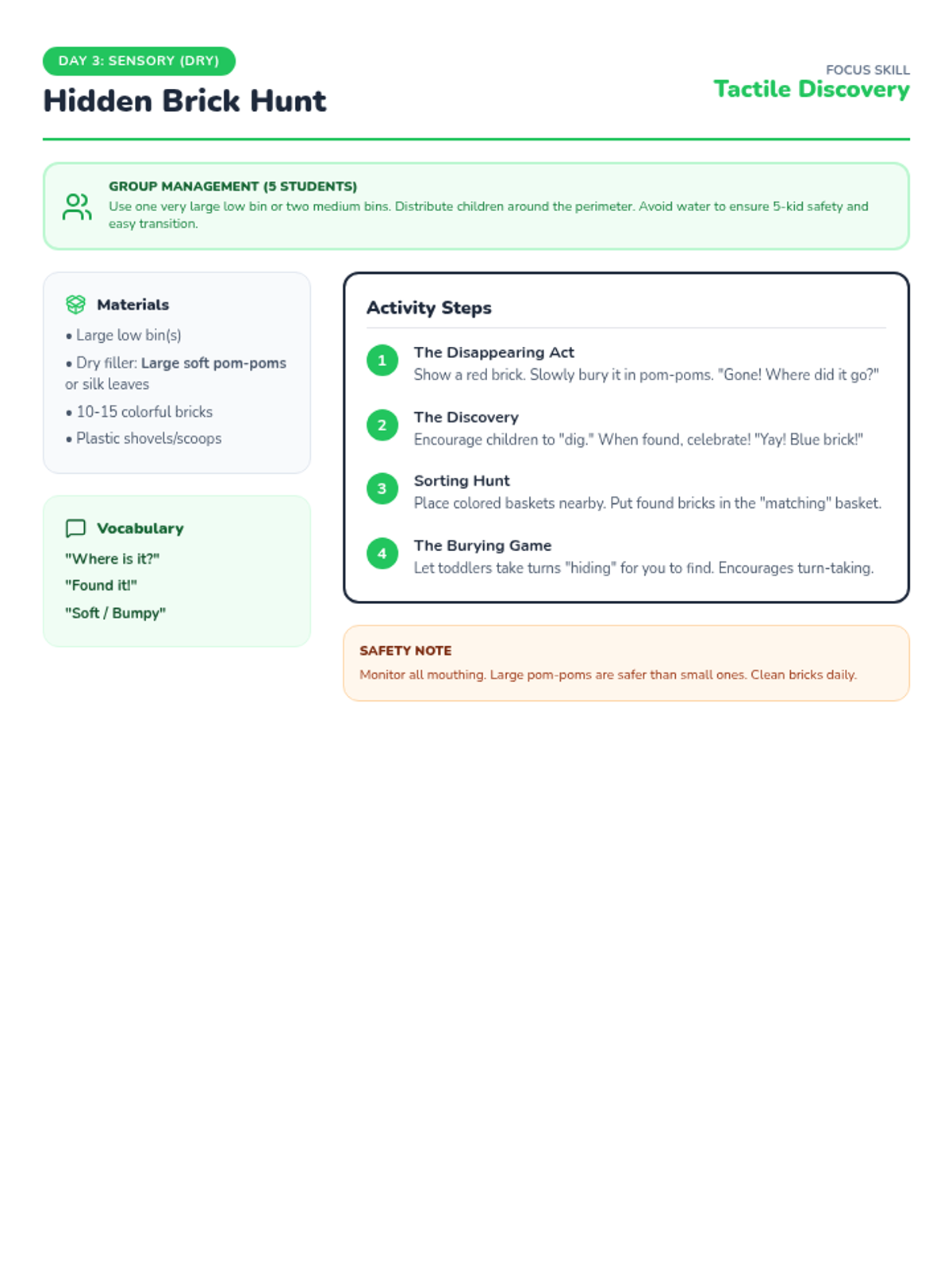
A teacher facilitation card for Day 3 of Lego week, outlining a dry sensory hunt activity using pom-poms and bricks, designed for a group of 5 toddlers.