Introductory slides for the first lesson, covering the concepts of neuroplasticity, cortical thickness (Lazar study), and amygdala down-regulation in the context of meditation.
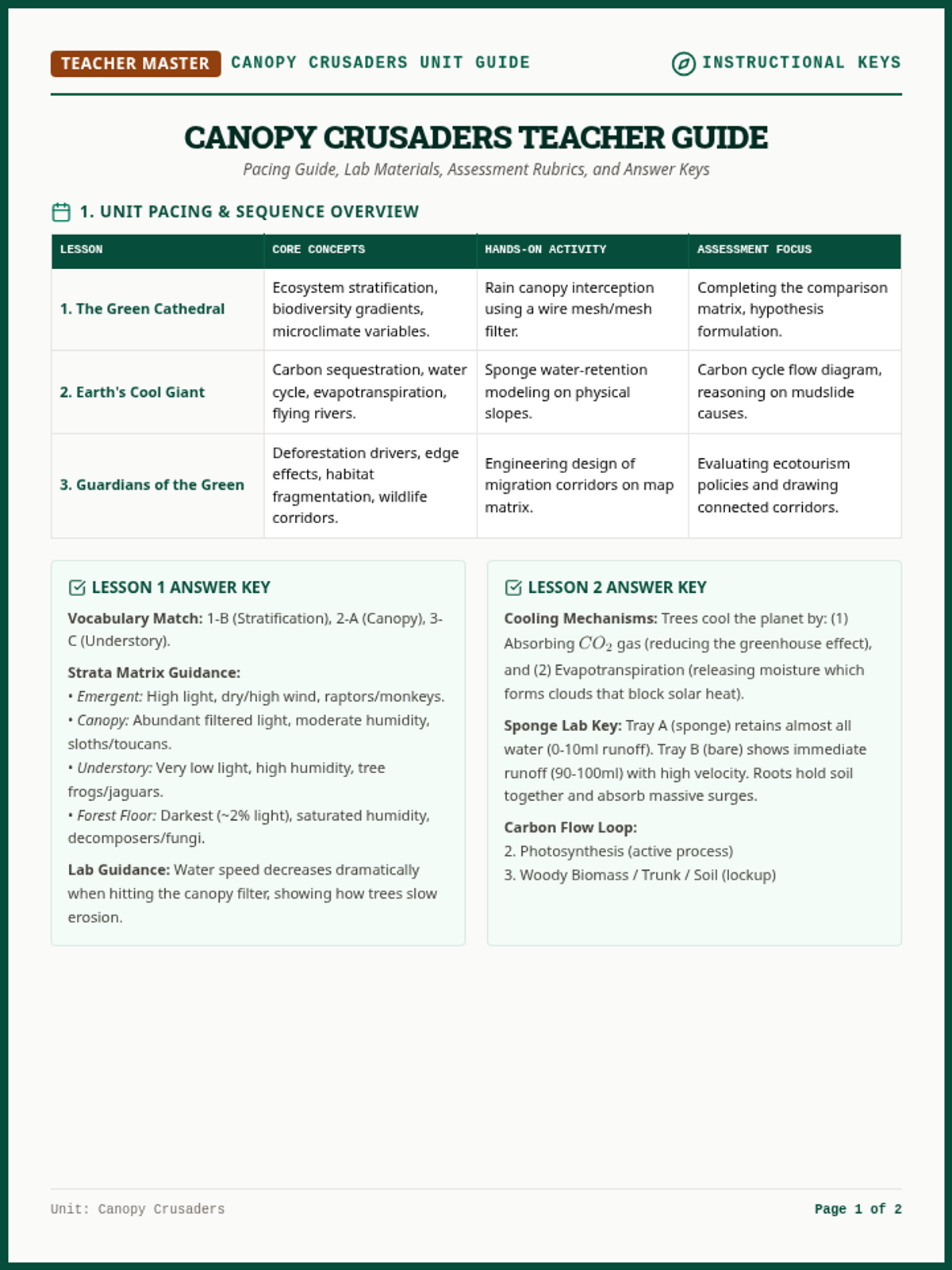
A comprehensive teacher-facing unit guide, providing unit-wide planning advice, hands-on lab setup instructions, grading rubrics, and detailed answer keys for all student worksheets.
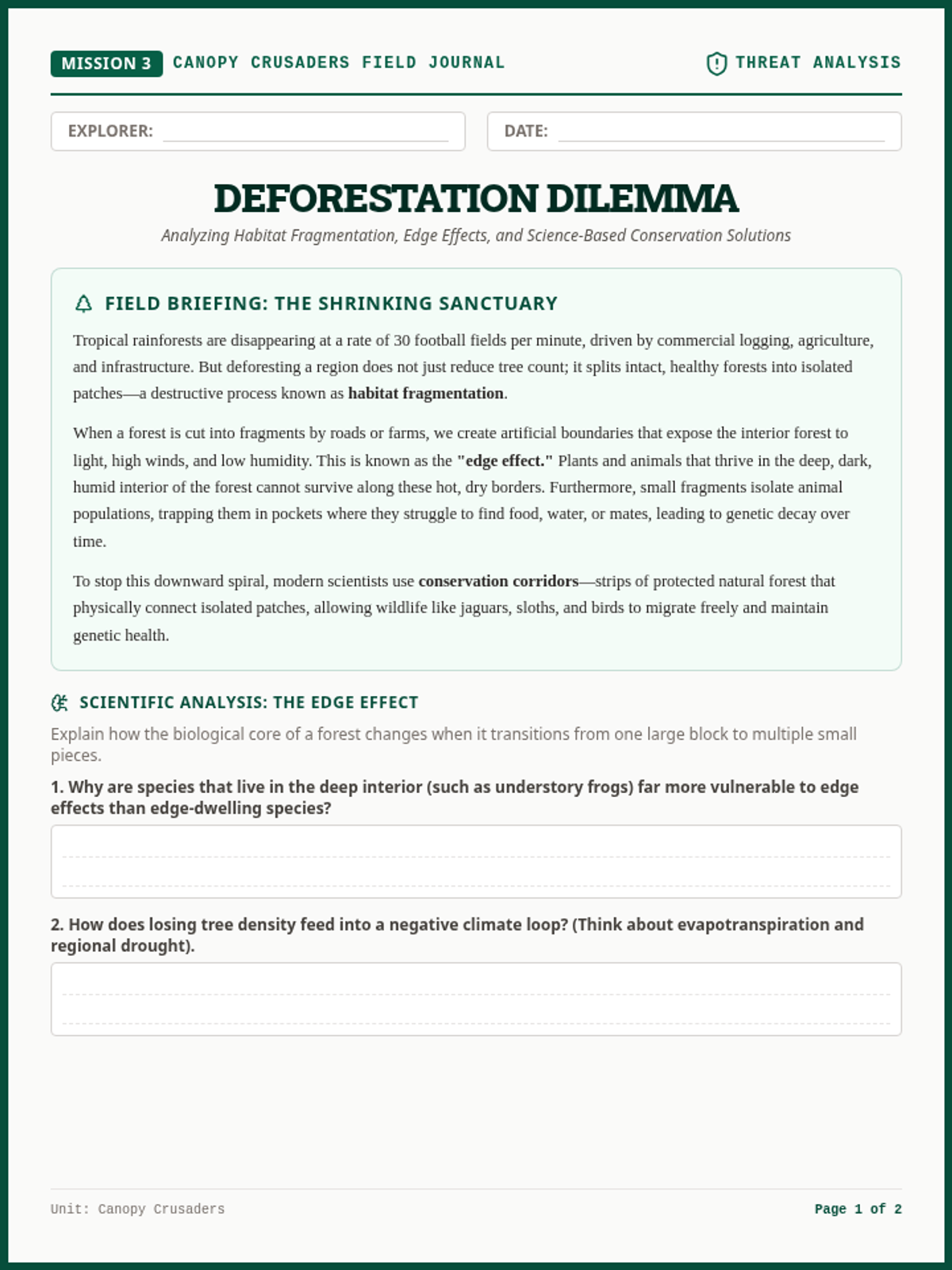
A two-page student activity packet for Lesson 3, focusing on the impacts of deforestation, habitat fragmentation, and edge effects. Includes a case study on ecosystem breakdown, a creative corridor-design science challenge, and a conservation policy evaluation matrix.
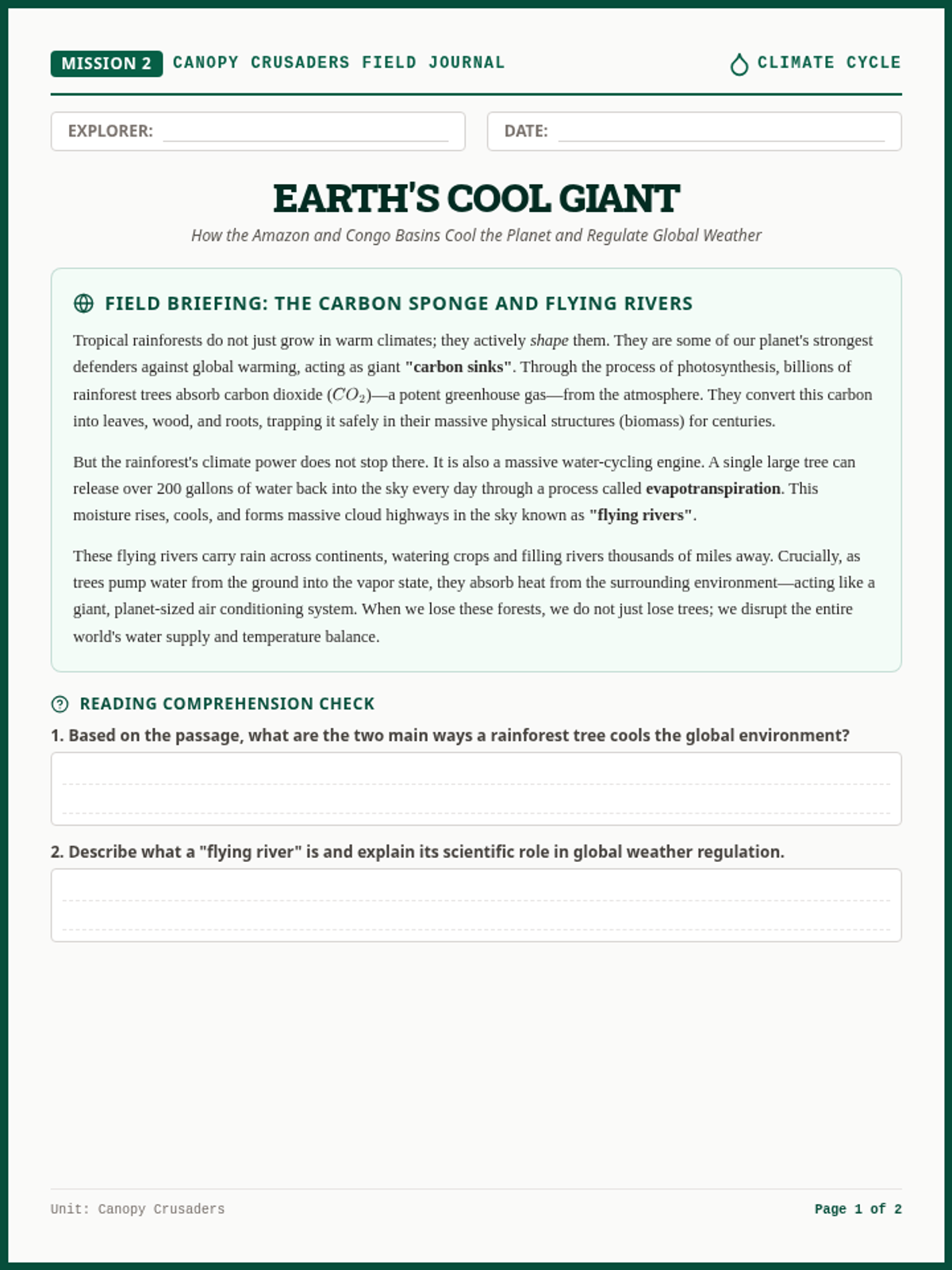
A two-page student activity packet for Lesson 2, focusing on the rainforest's role in global climate. Features a reading passage on carbon sequestration and evapotranspiration, a carbon cycle flow chart, and a hands-on lab simulating water retention using kitchen sponges.
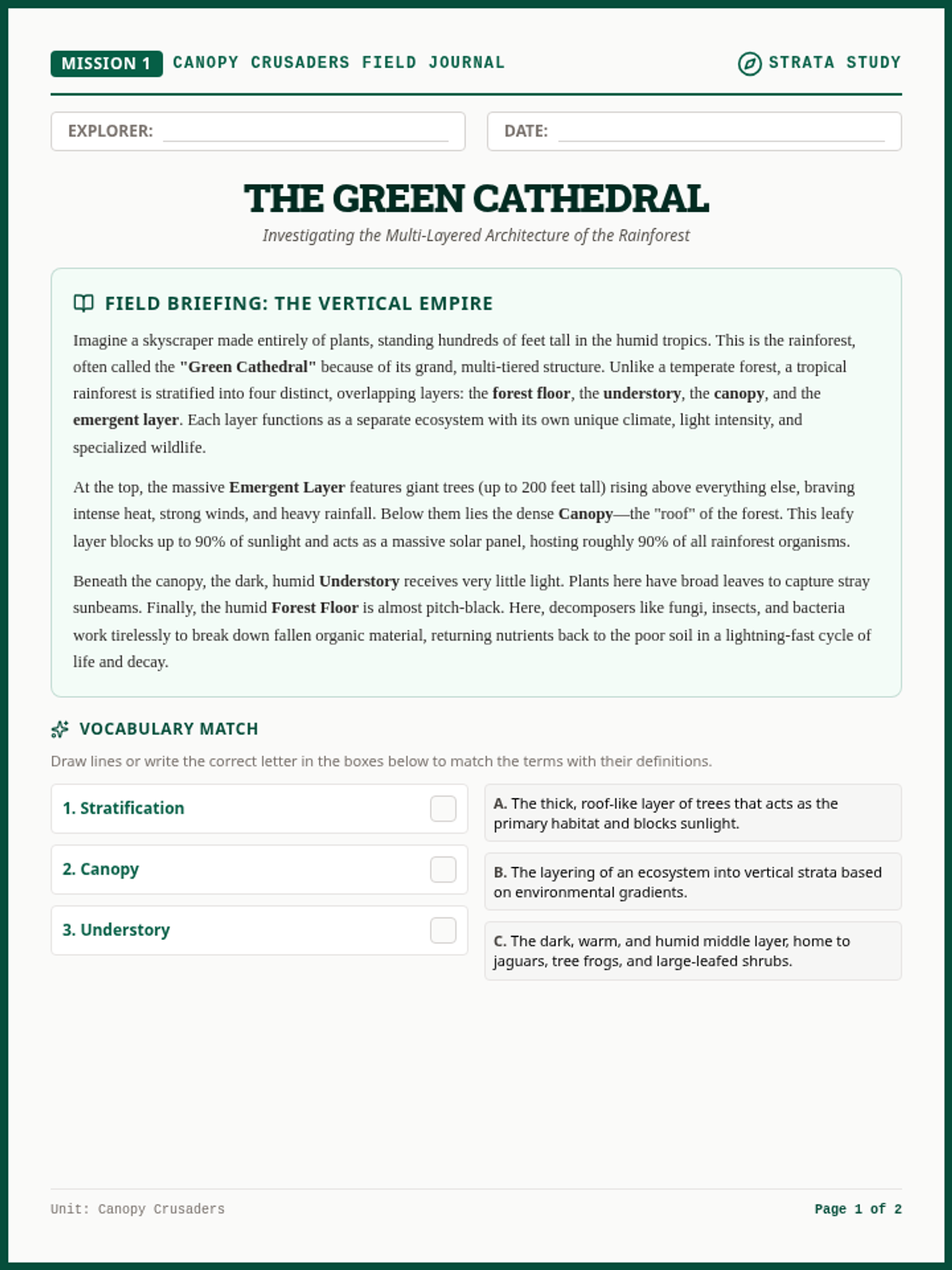
A two-page student activity packet for Lesson 1, featuring a detailed reading passage on the four structural layers of the rainforest, key vocabulary matching, a graphic organizer comparing strata, and a hands-on modeling lab on moisture gradients.
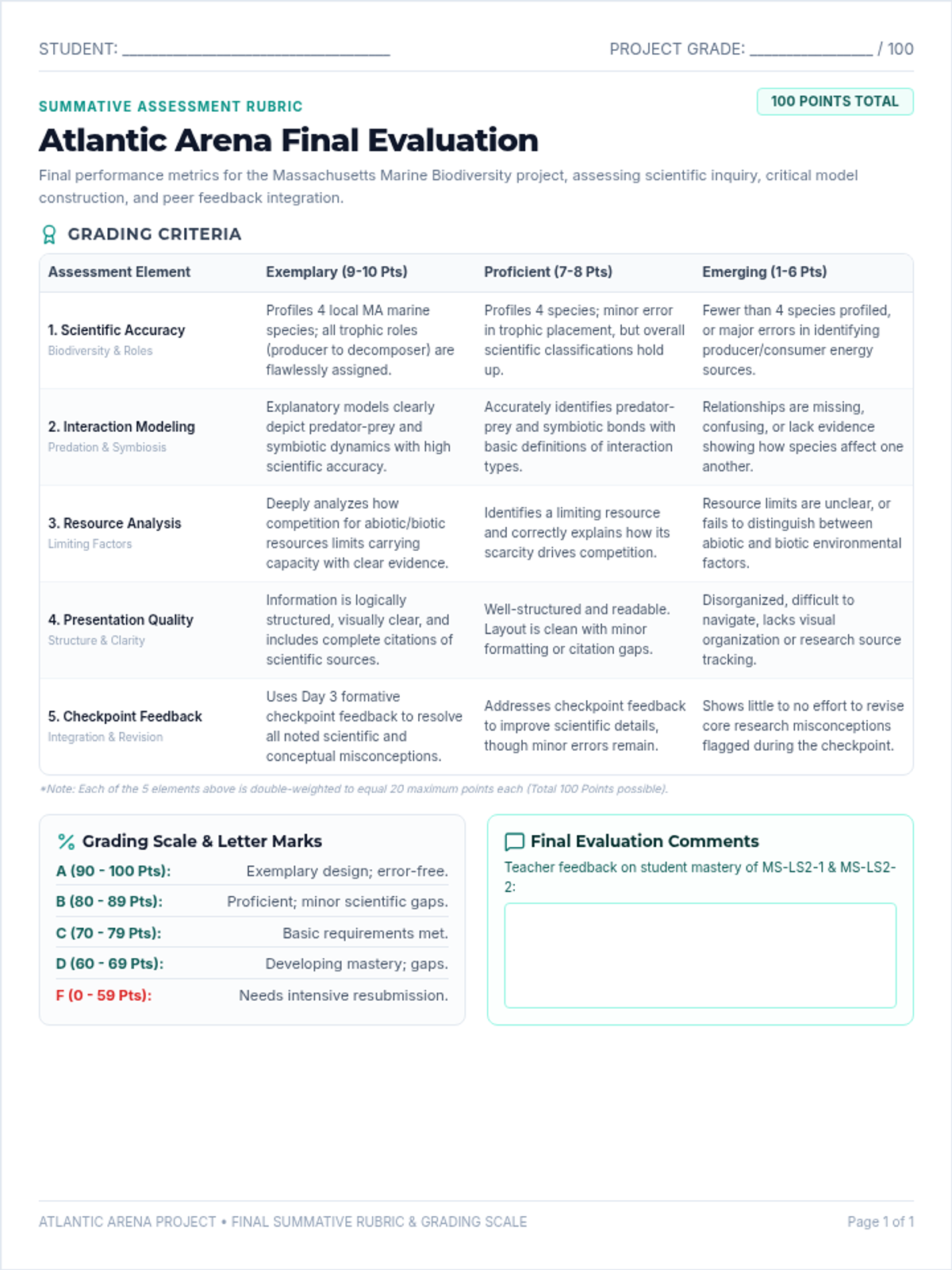
A professional 1-page final project rubric and 100-point grading scale for the Atlantic Arena project, detailing expectations for scientific accuracy, interaction models, resource competition, and incorporation of checkpoint feedback.
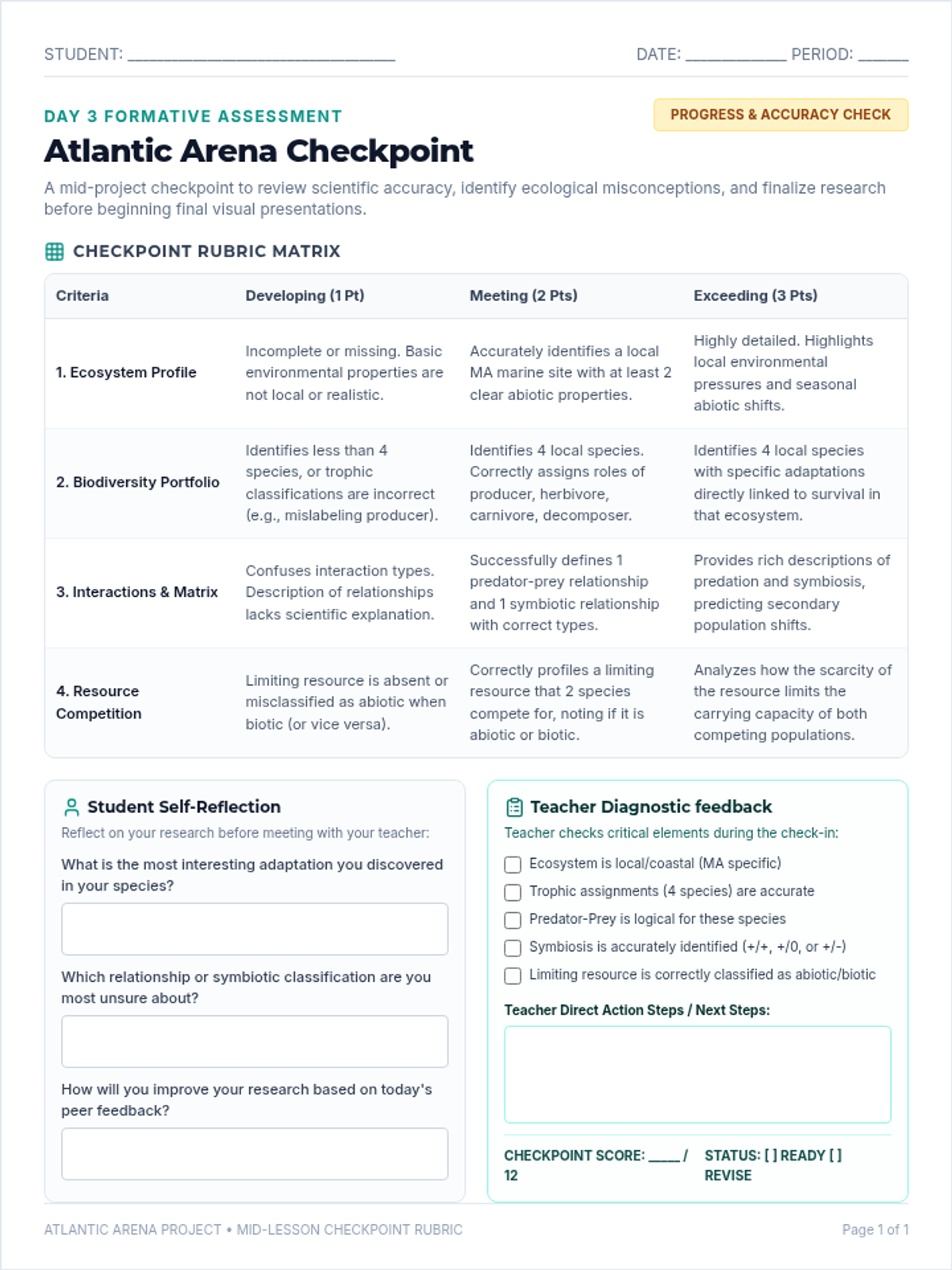
A 1-page student self-assessment and teacher formative checkpoint rubric used on Day 3 of the project to check accuracy of ecological data, classify symbiotic relationships, and correct standard misconceptions.
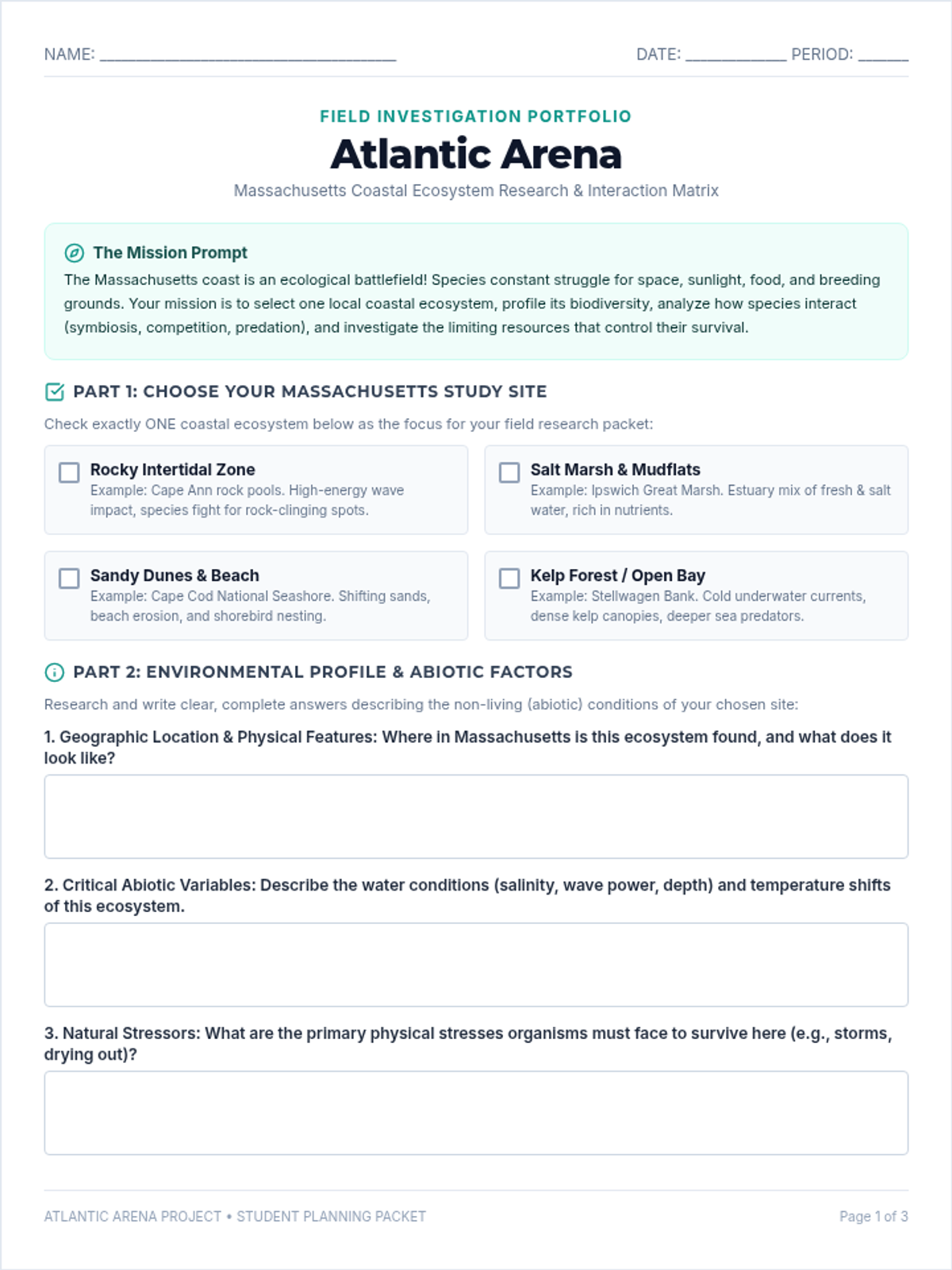
A comprehensive 3-page student-facing research and planning workbook. It guides students through selecting a local Massachusetts ecosystem, researching 4 distinct species across trophic levels, and mapping symbiotic and competitive relationships.
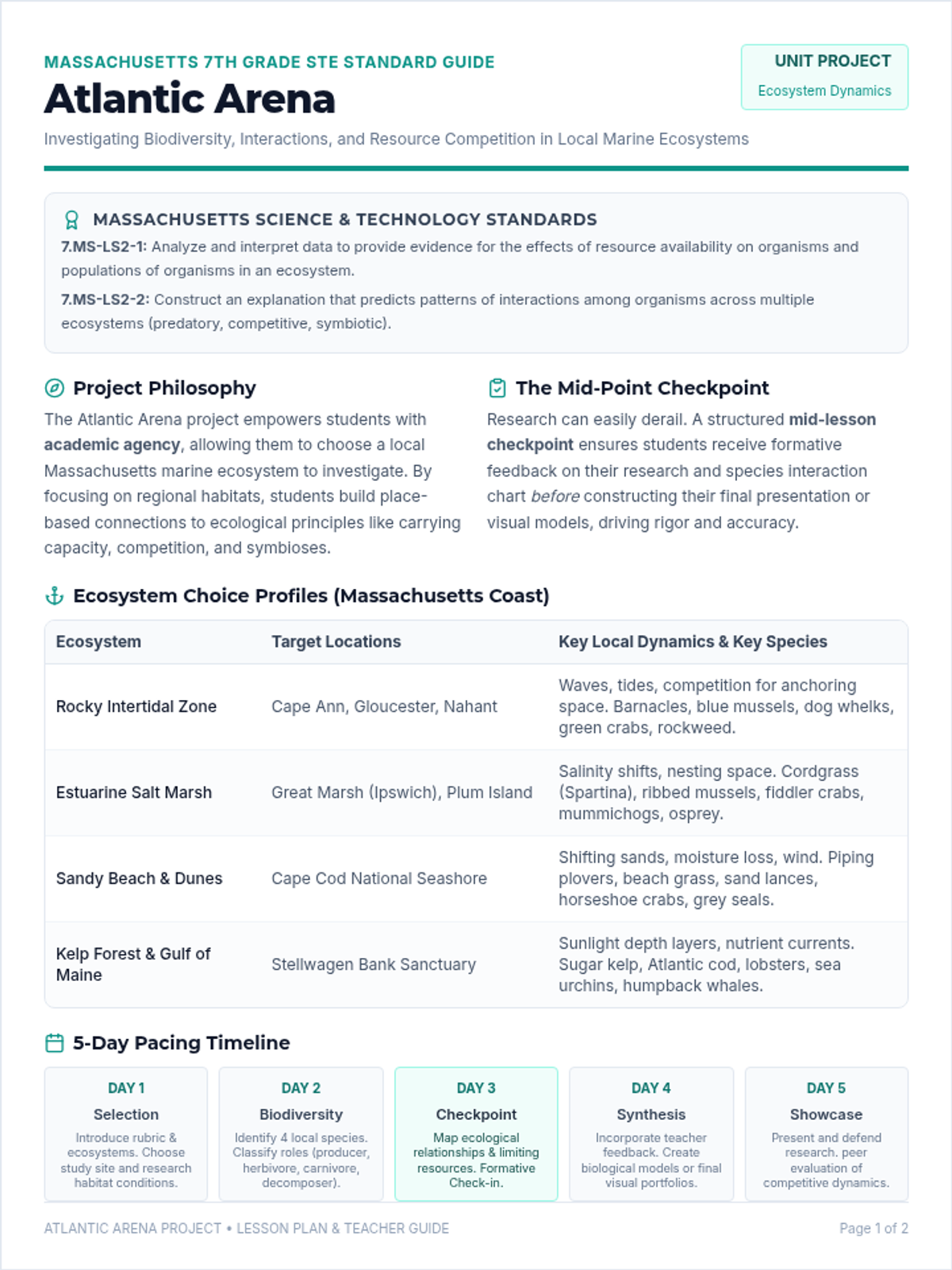
A professional 2-page teacher facilitation guide for the Atlantic Arena project, detailing alignment with Massachusetts 7th-grade science standards, descriptions of local ecosystems, a 5-day implementation timeline, and instructions for managing the mid-project checkpoint.
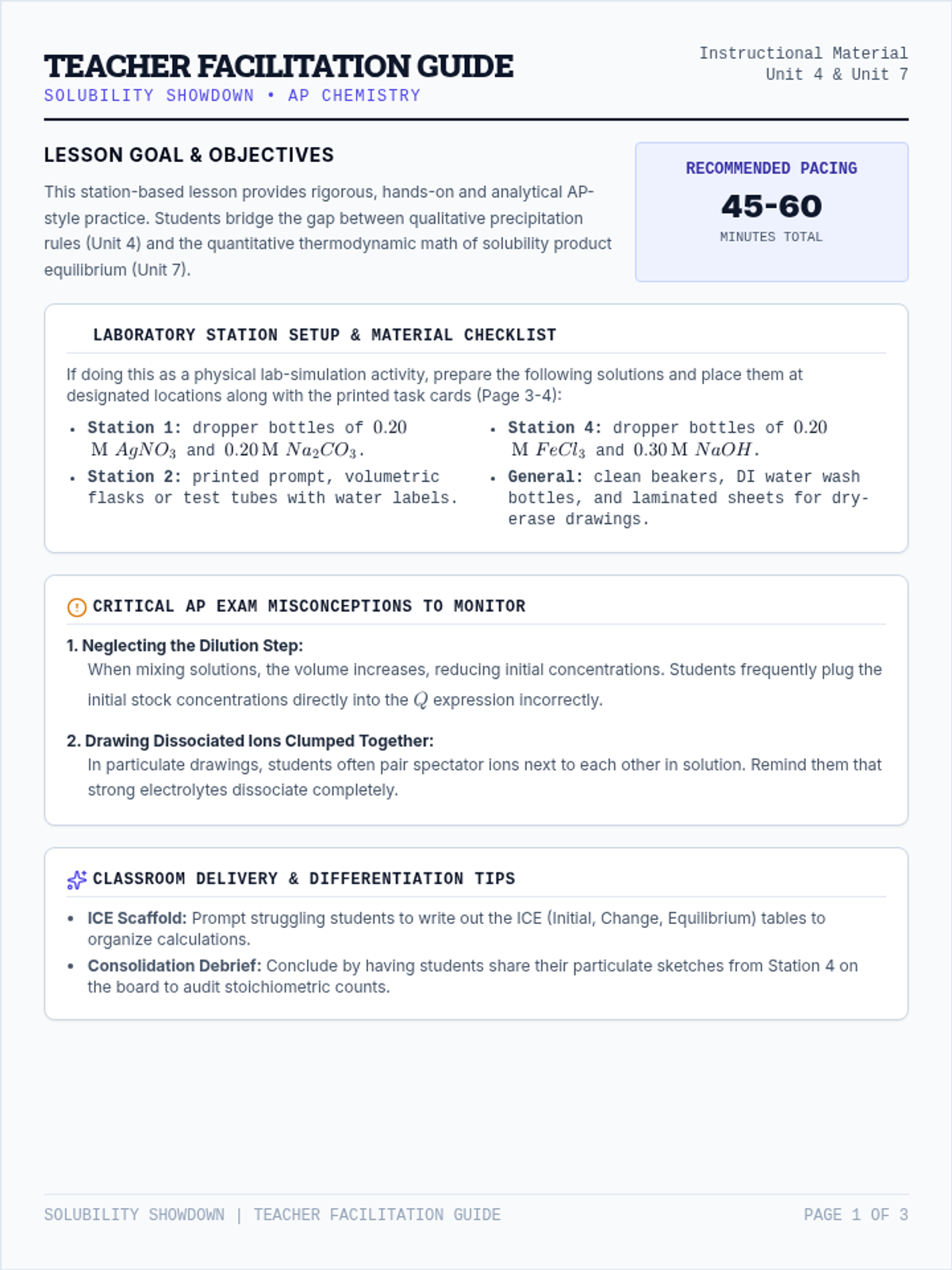
A comprehensive 3-page teacher facilitation guide, materials preparation checklist, common student misconceptions log, and detailed analytical answer key split across multiple pages to avoid overflow.
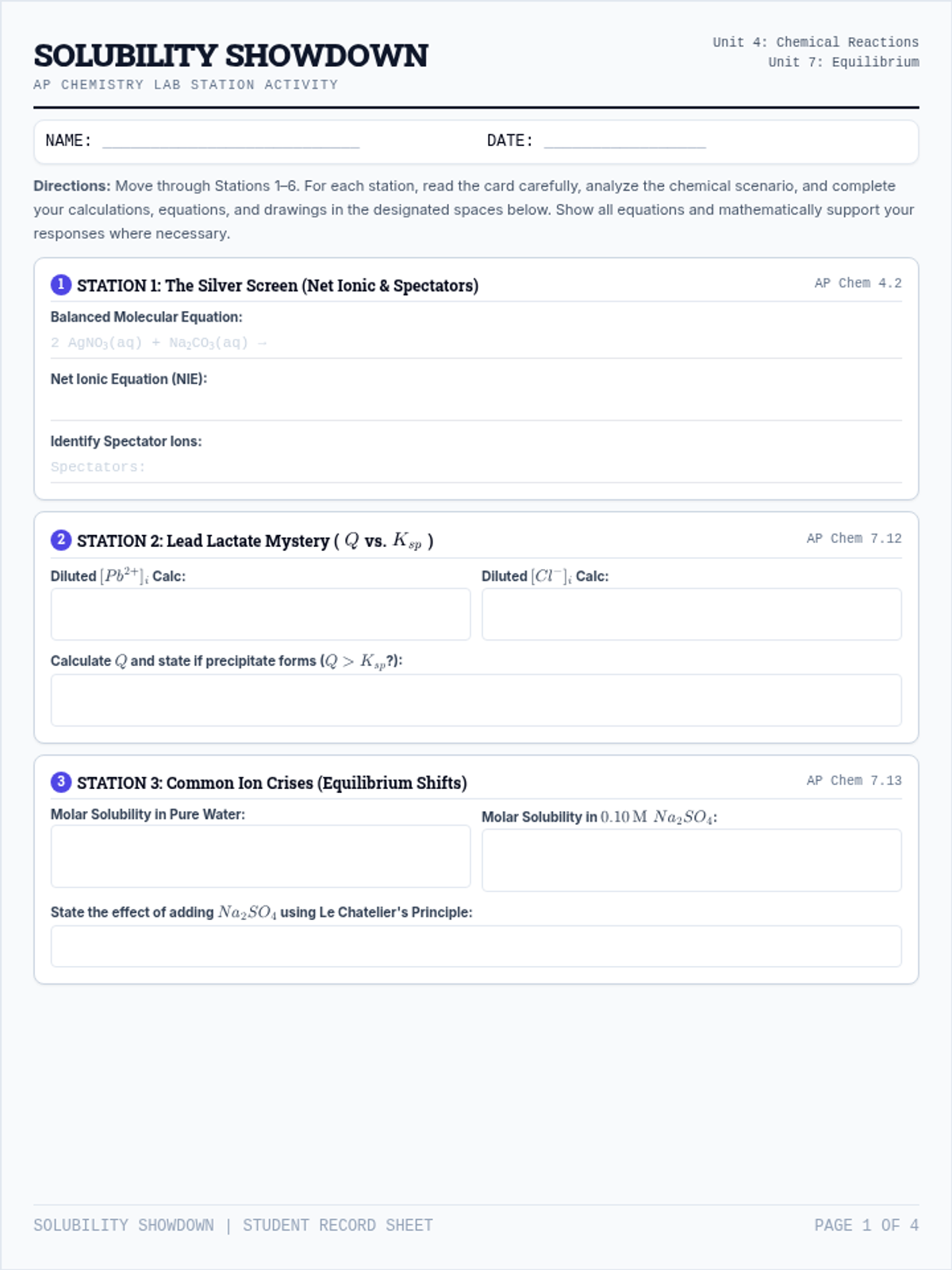
A high-rigor student-facing station activity worksheet and printable task cards. Integrates AP Chemistry Net Ionic writing, particulate drawings, Q vs Ksp math, common ion effect, pH dissolution, and gravimetric stoichiometry.
A premium AP Chemistry presentation deck introducing solubility rules, net ionic equations, particulate diagrams, and Ksp connections. Features a professional dark analytical-lab theme optimized for classrooms.
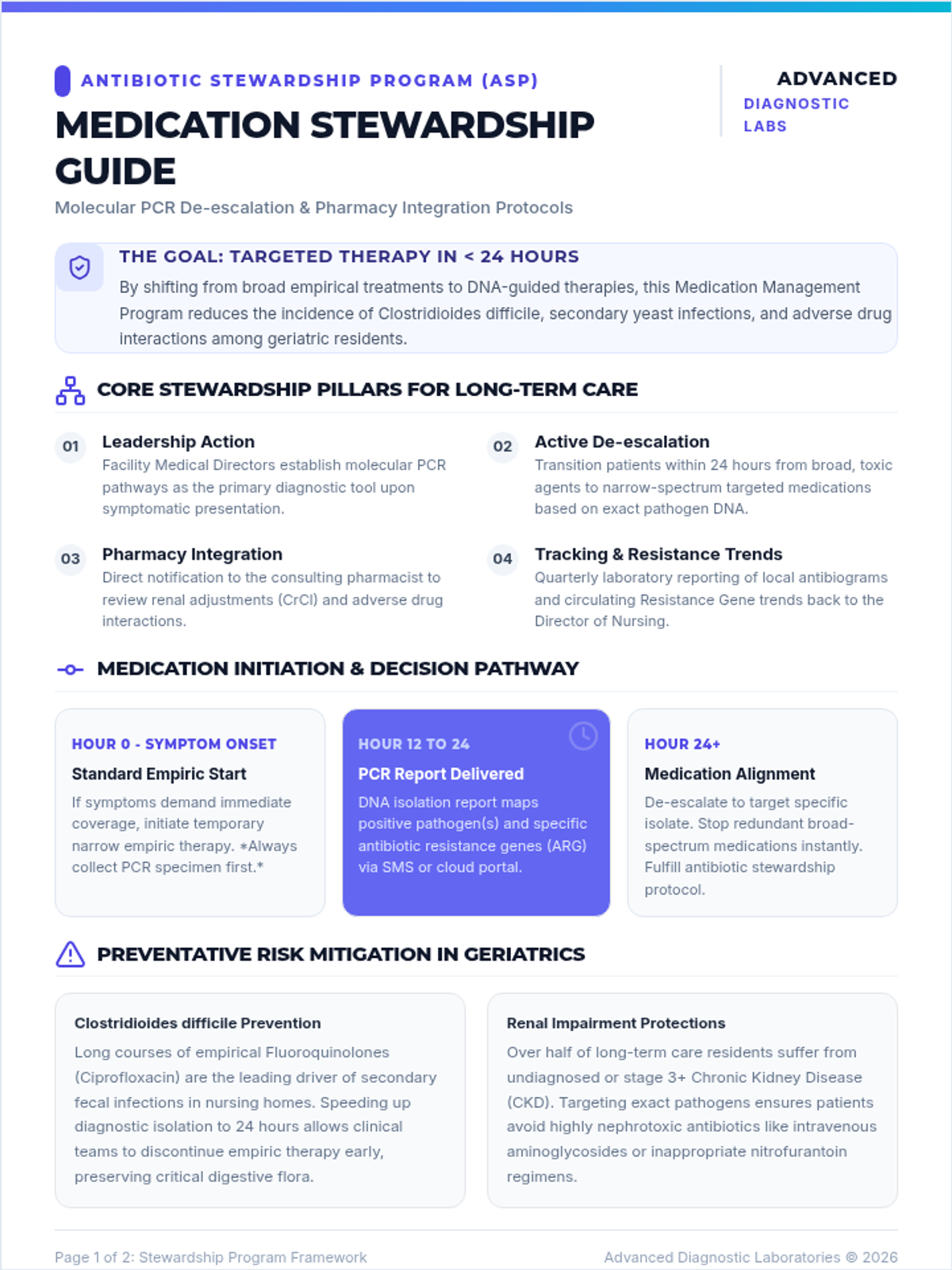
A high-impact 2-page clinical guide outlining the Molecular-Guided Antibiotic Stewardship Program (ASP), designed for medical directors and nursing staff to manage UTI treatments and de-escalation protocols.
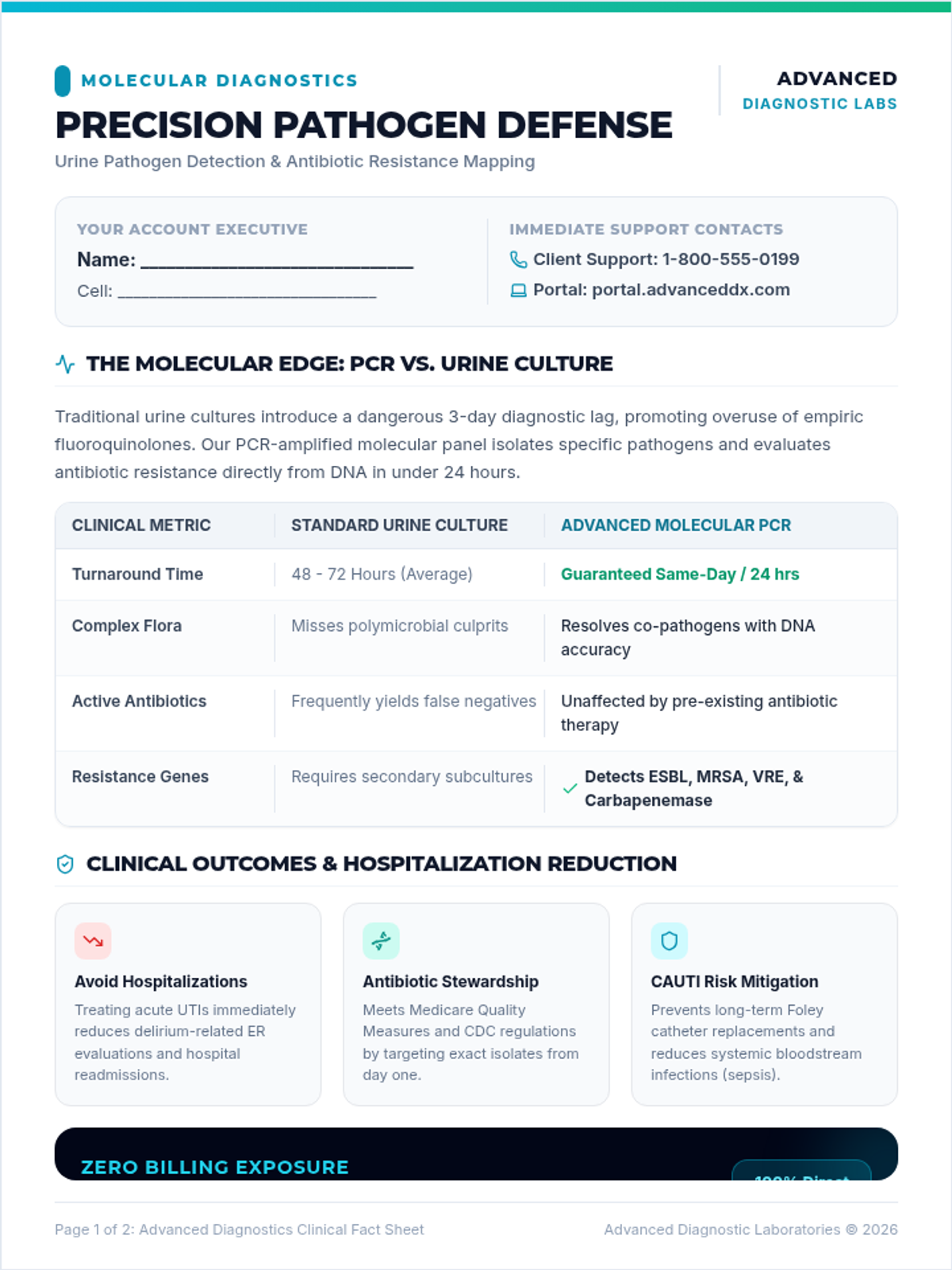
A high-end 2-page clinical leave-behind handout for nursing home directors and medical officers, summarizing molecular PCR capabilities, comparative technology advantages, and step-by-step staff implementation protocols.
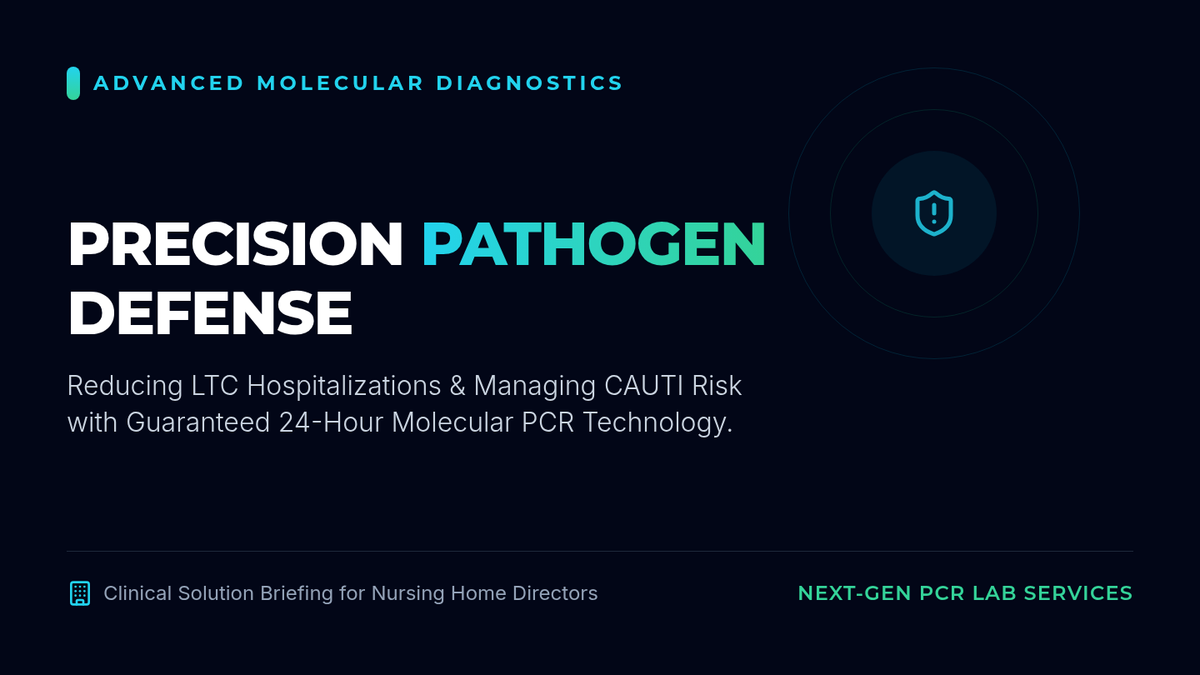
An elite, high-impact clinical sales presentation tailored for nursing home and long-term care directors, demonstrating how molecular PCR diagnostics reduce hospitalizations, optimize CAUTI protocols, and deliver same-day results.
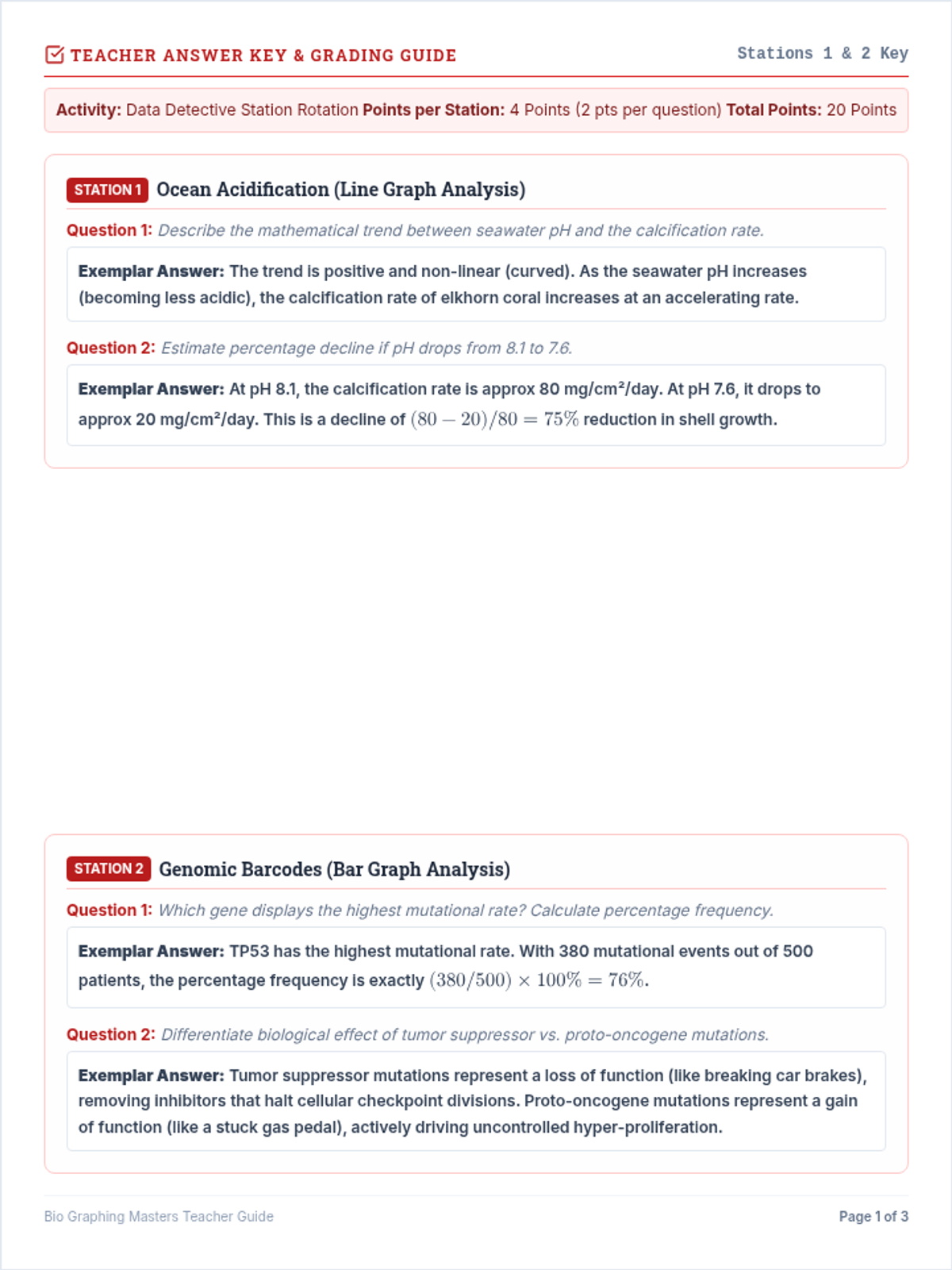
The complete teacher answer key and grading guide for the Bio Graphing Stations rotation activity. Contains exemplar student answers and specific point breakdowns for grading.
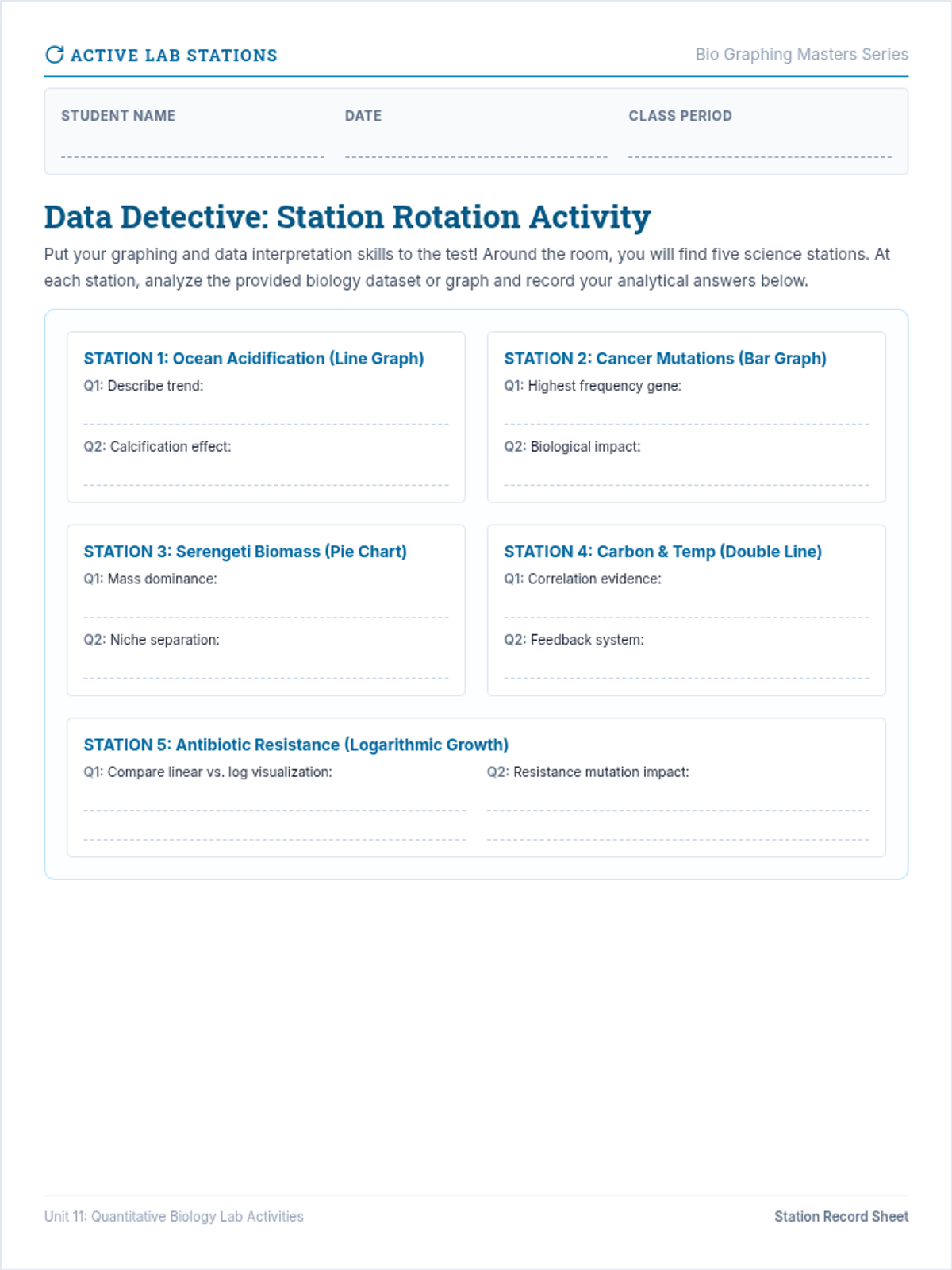
A comprehensive six-page science station rotation activity featuring five unique biology dataset cards (acid oceans, genomic barcodes, Serengeti biomass, greenhouse traps, and antibiotic battles) and a front-page student recording sheet.
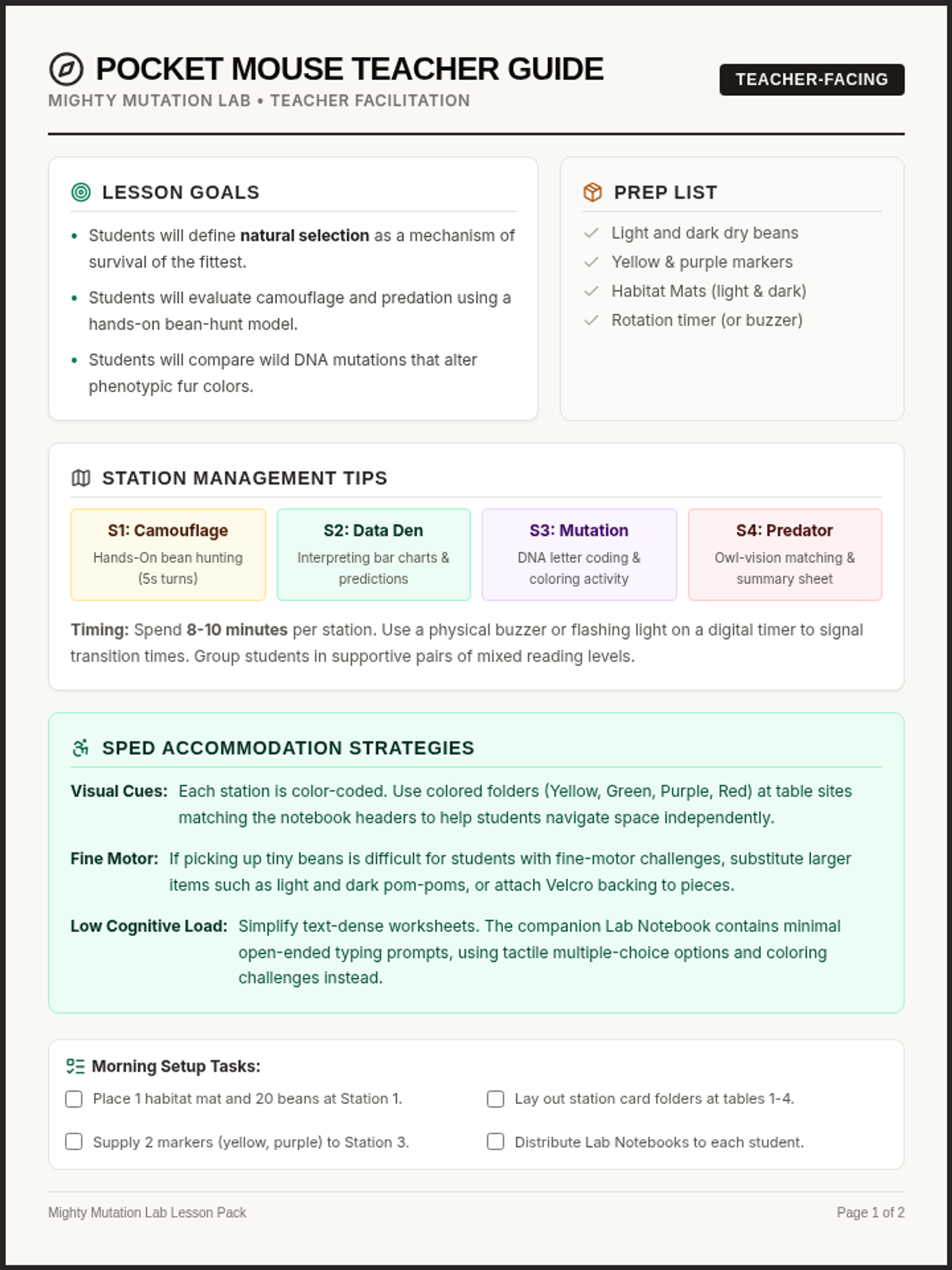
A comprehensive Teacher Guide containing lesson objectives, high school special education differentiation tips, station setup instructions, and a complete answer key for the Student Lab Notebook.
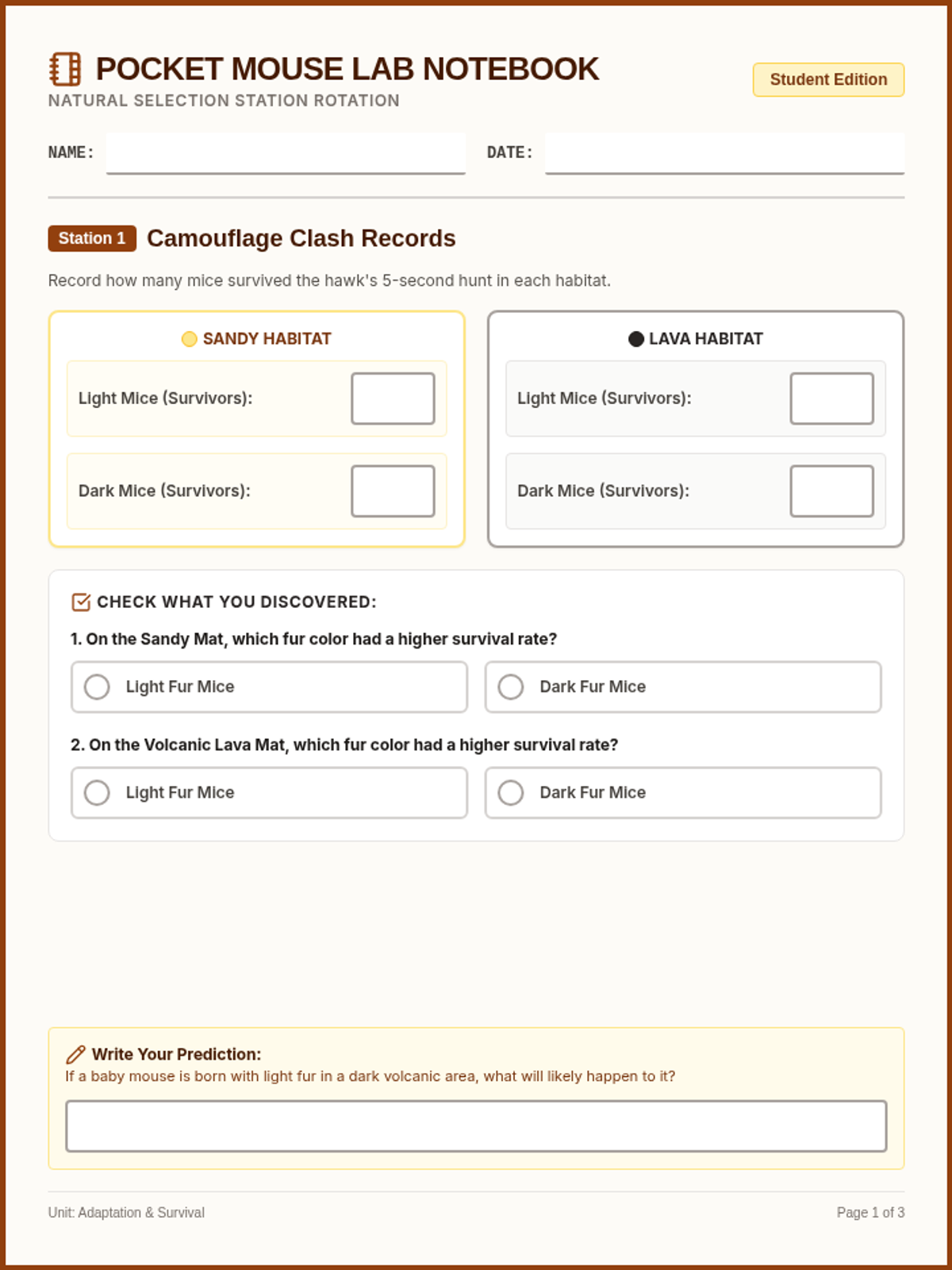
A guided, scaffolded, and highly visual printable Student Lab Notebook for the Rock Pocket Mouse Station Rotation Lab. Designed with plenty of clean writing space, clear directions, and simplified vocabulary supports.