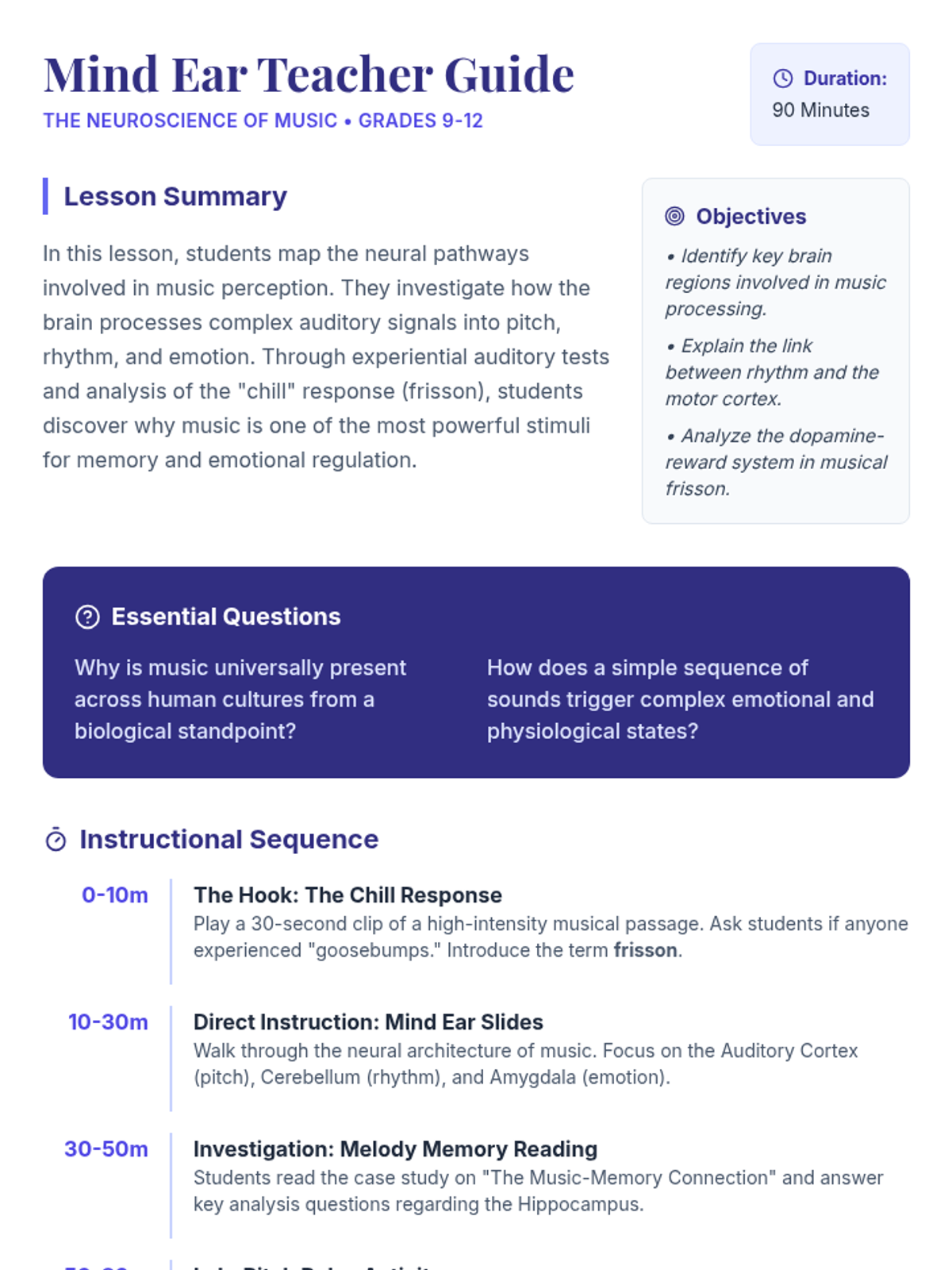
A comprehensive teacher guide for high school students exploring the neuroscience of music, including learning objectives, a 90-minute pacing guide, and a materials checklist.
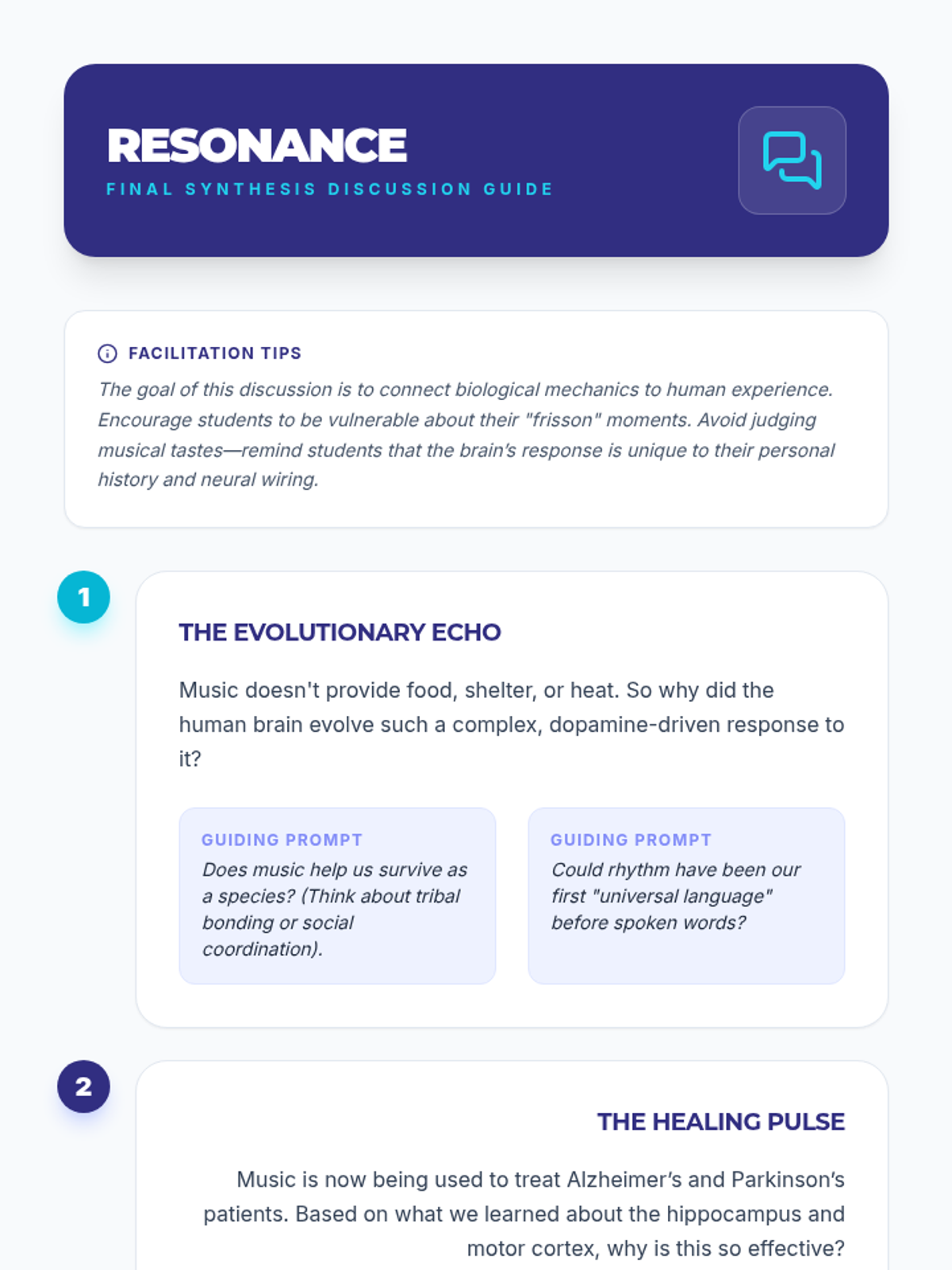
A teacher resource with guided questions and facilitation tips for a class discussion on the evolution, medical application, and ethics of music and neuroscience.
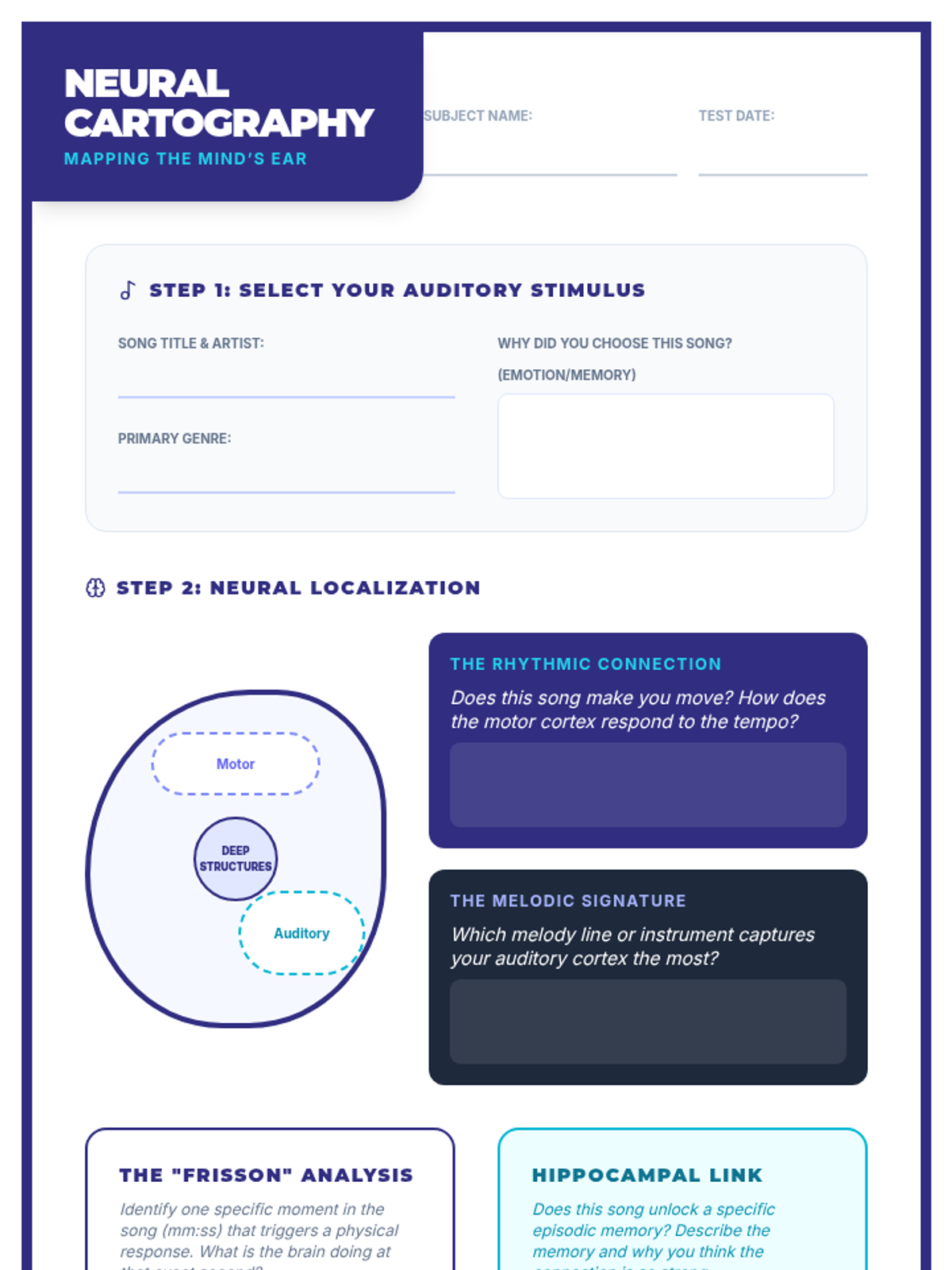
A hands-on activity where students choose a personal song and map its rhythmic, melodic, and emotional components to specific brain regions.
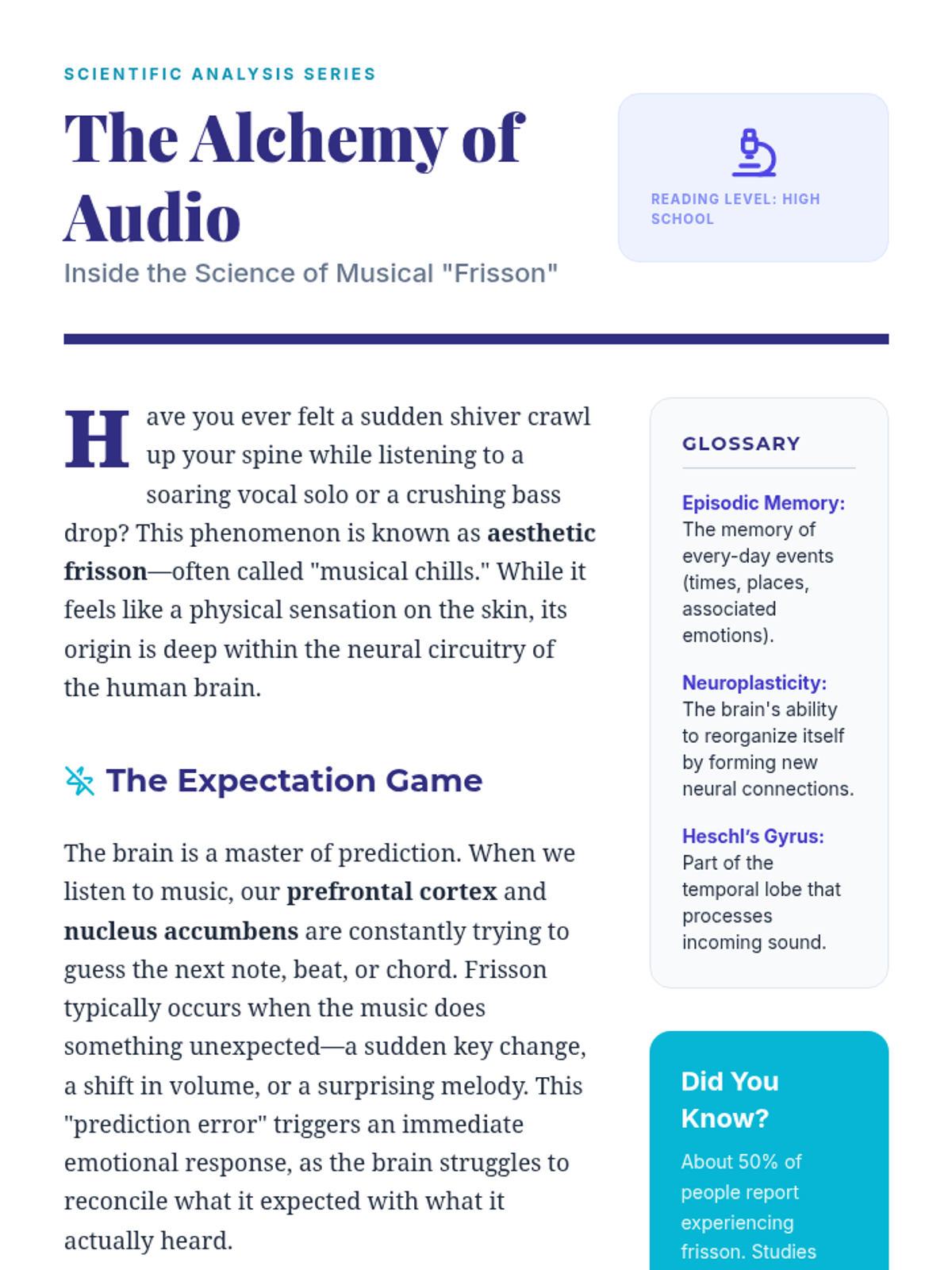
An engaging reading passage for high school students exploring the neurochemistry of "frisson" (musical chills), dopamine release, and the role of the nucleus accumbens.
An 8-slide presentation exploring the brain's reaction to music, from auditory processing to the emotional and physical impact of rhythm and melody.
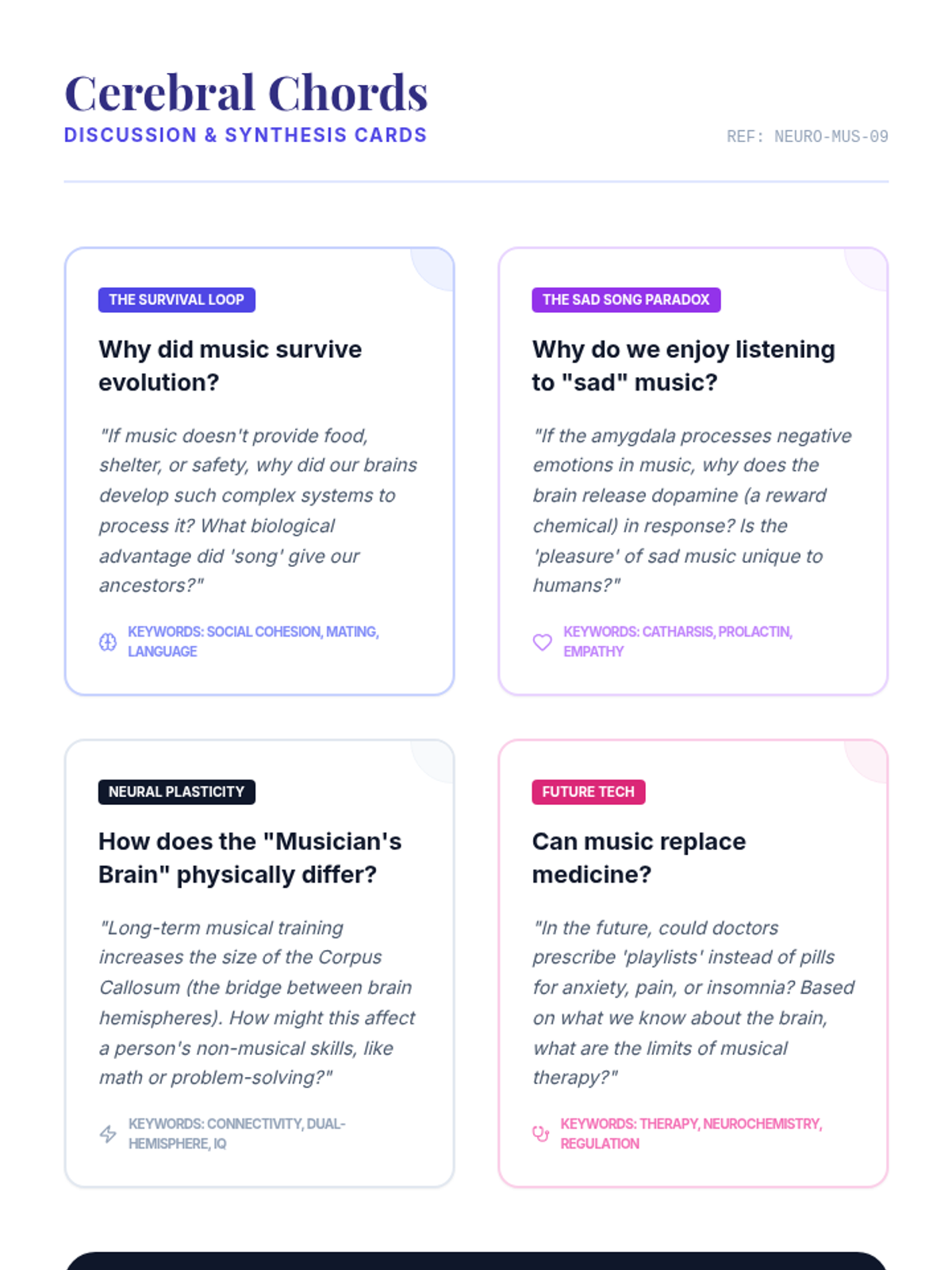
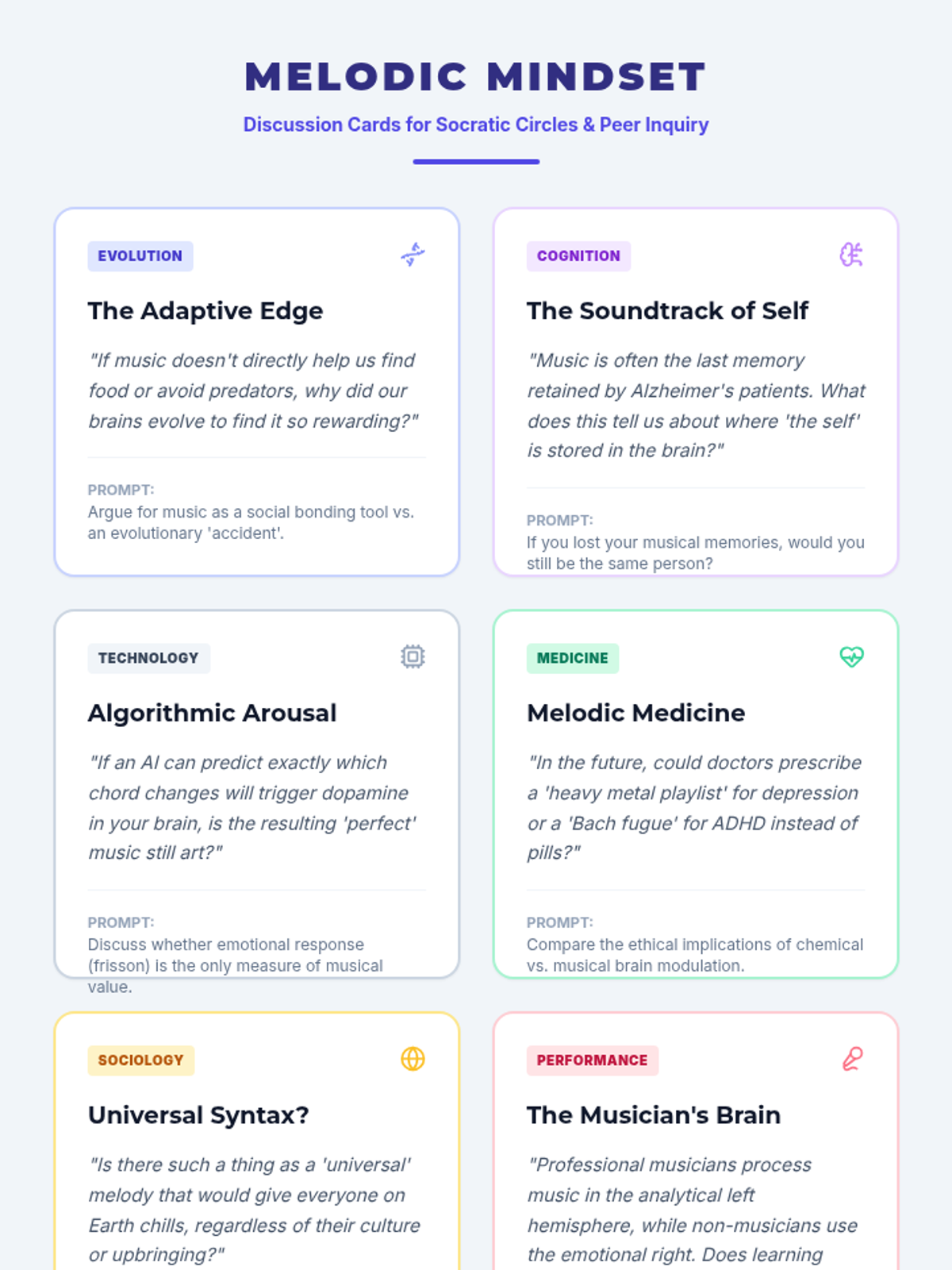
A set of structured discussion cards and a facilitation guide to help students synthesize the neuroscience of music during a Socratic seminar.
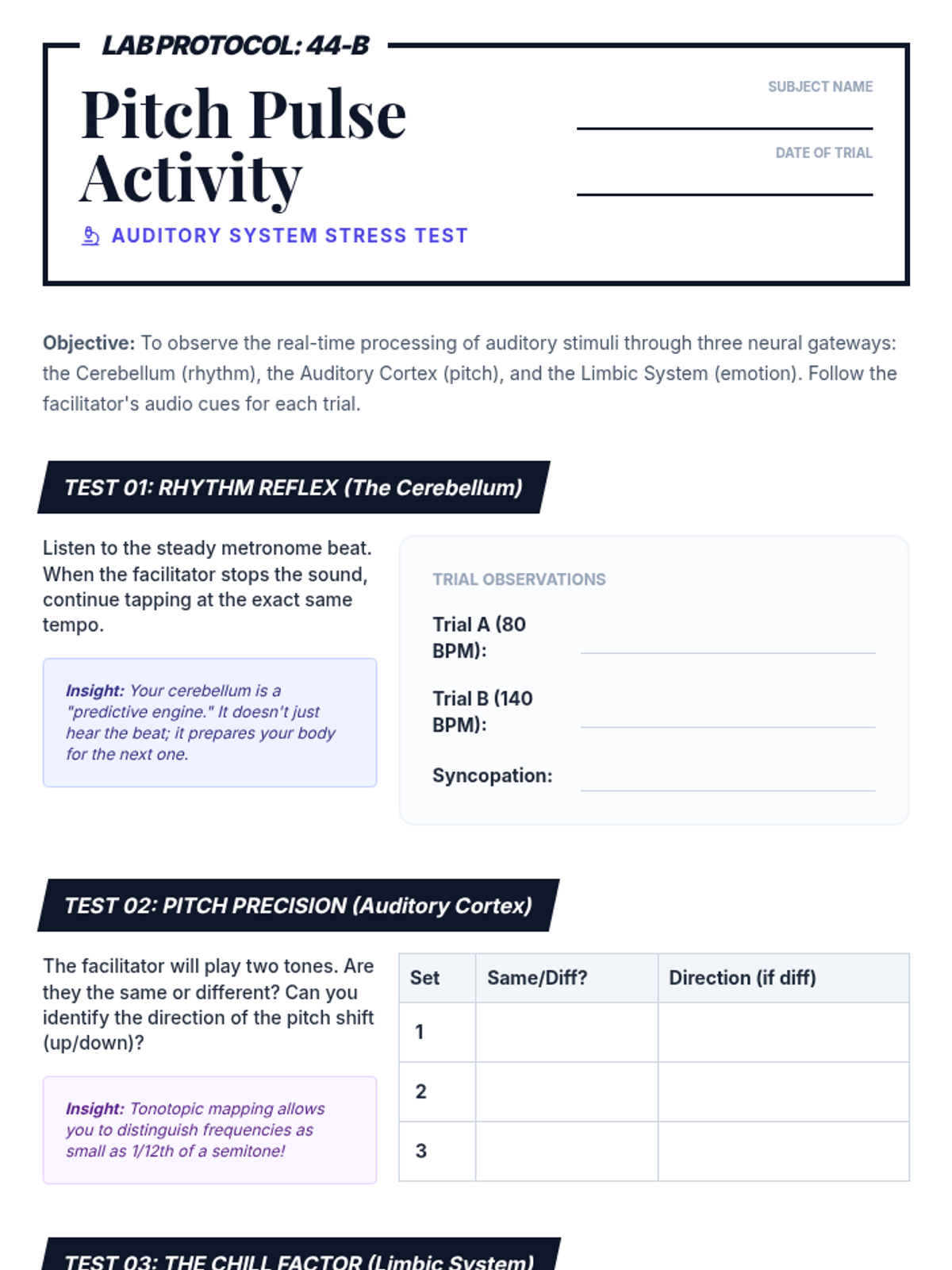
A hands-on auditory lab sheet for students to test their rhythm synchronization, pitch discrimination, and emotional frisson responses during the lesson.
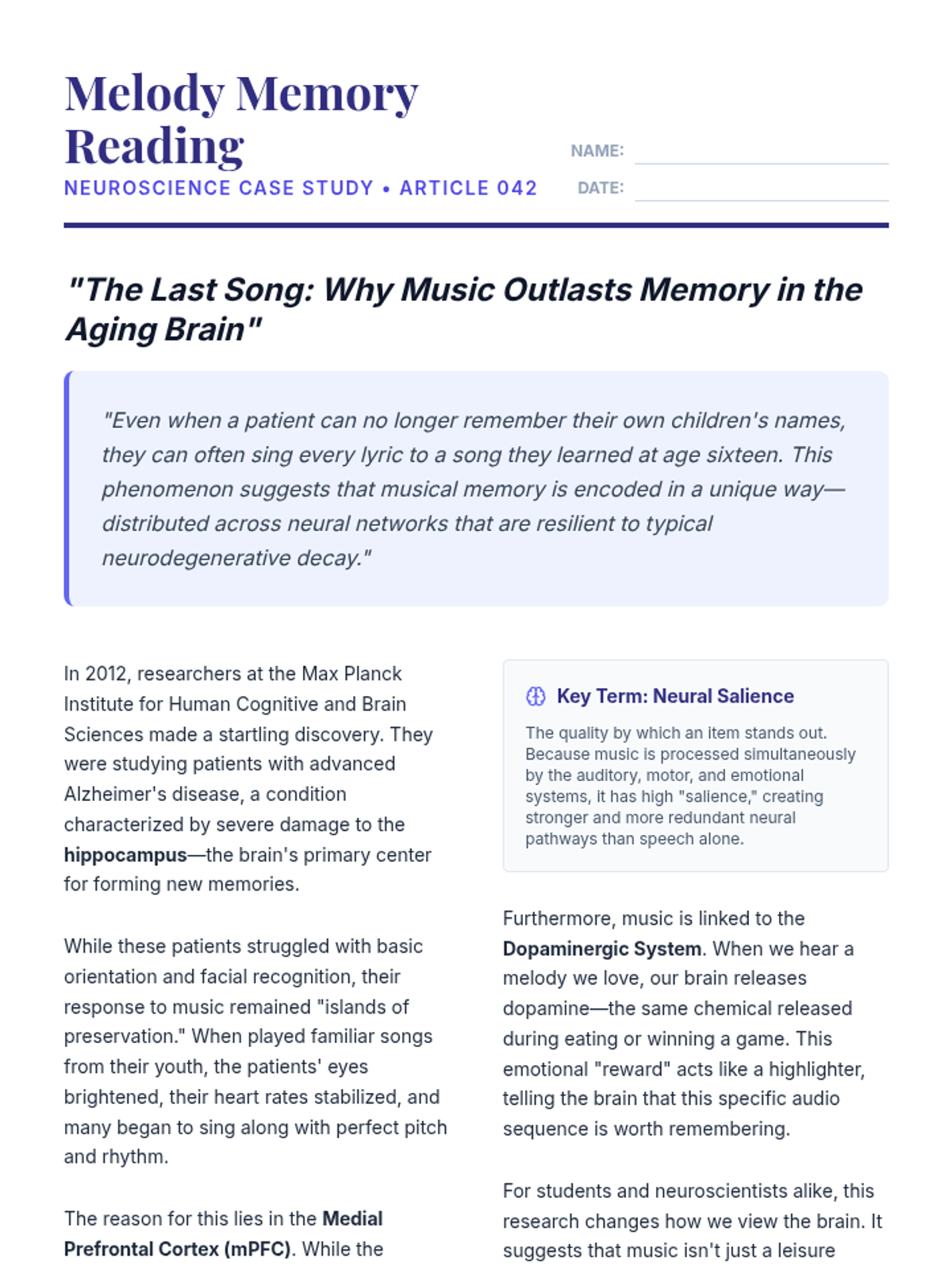
A reading passage and case study for students exploring why musical memory survives neurodegenerative diseases like Alzheimer's, featuring analysis questions.
A visually engaging slide deck for high school students exploring the neural pathways of music, from the auditory cortex to the emotional limbicsystem.
A comprehensive teacher's guide for a 90-minute lesson on the neuroscience of music, including learning objectives, a detailed pacing guide, common misconceptions, and differentiation strategies.
A set of six creative discussion cards for 'The Musical Brain' lesson, featuring thought-provoking prompts on evolution, technology, medicine, and culture, designed for high school Socratic seminars.