Slide deck for Lesson 3 on the Nephron, specifically focusing on the transport mechanisms of the Proximal Convoluted Tubule, coupling of Na+ and glucose transport, and the concept of transport maximum.
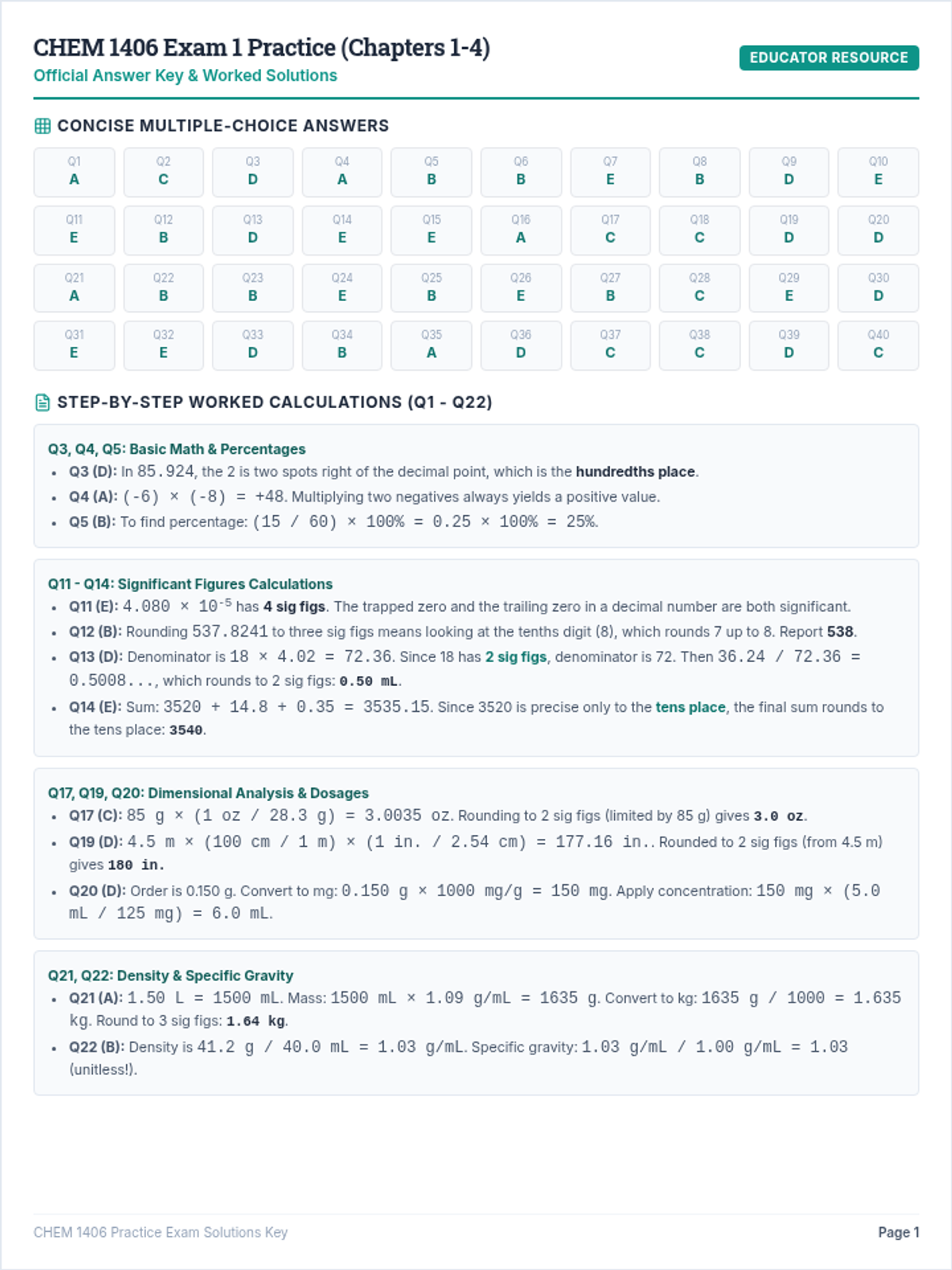
A comprehensive answer key and step-by-step worked solutions document for the Foundations Practice Exam (Version B), providing detailed explanations for all calculation-based questions to support educator grading and student self-correction.
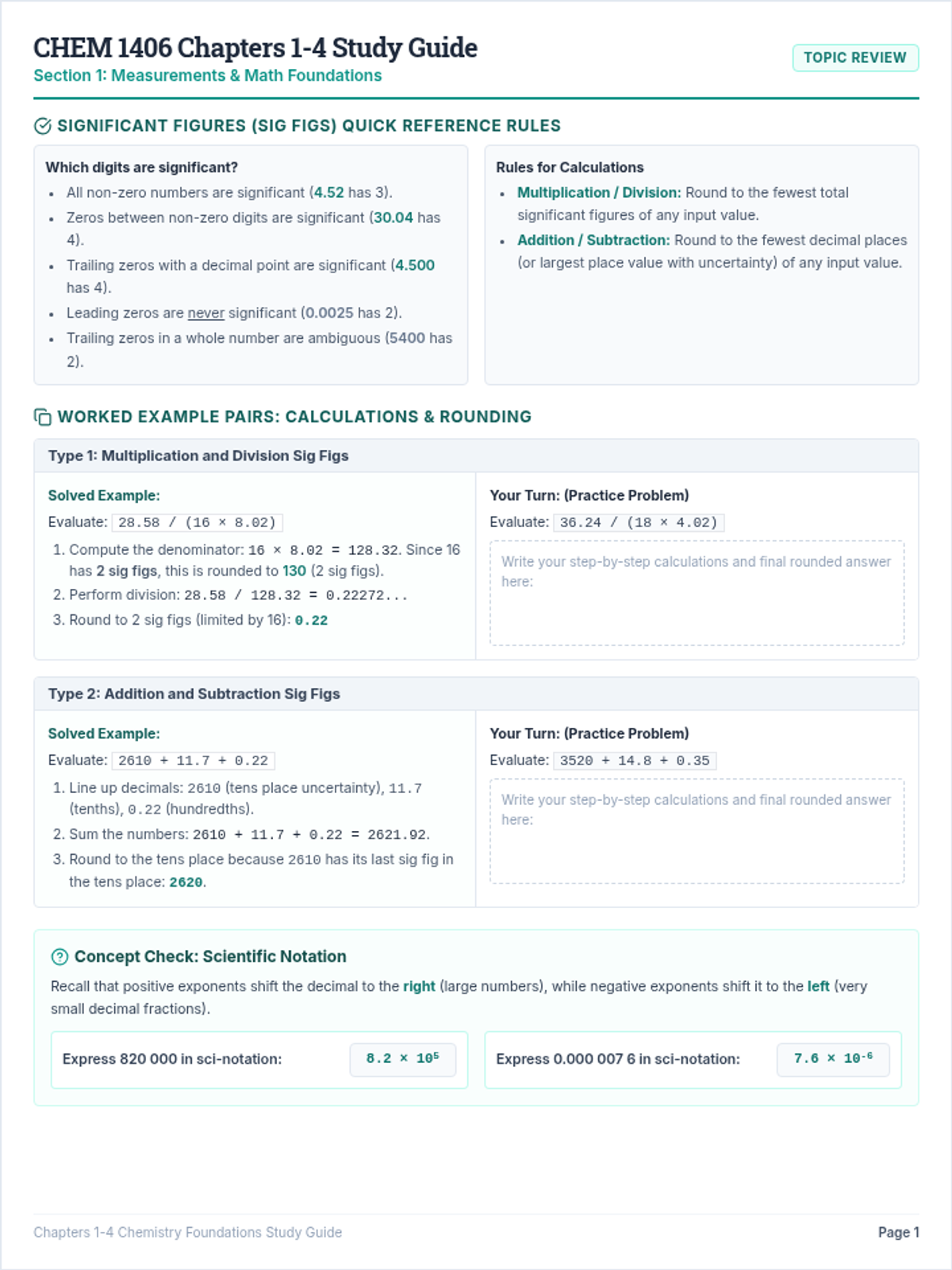
A highly structured student study guide featuring a metric organizer, rule summaries for sig figs and naming, and interactive worked example pairs mapping directly to Chapter 1-4 chemistry calculation types.
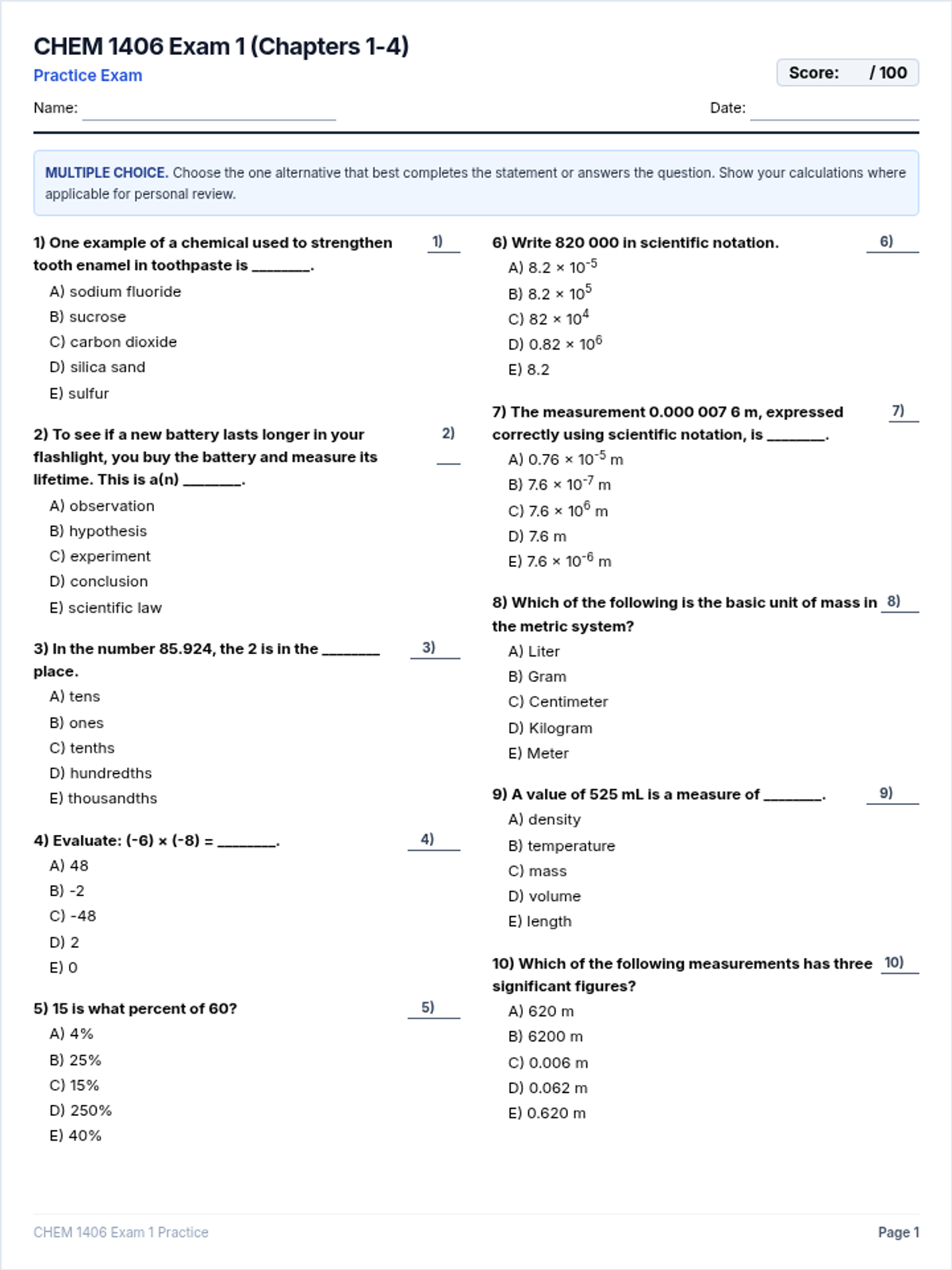
A parallel 40-question multiple-choice practice exam covering Chapters 1-4 of introductory chemistry (measurements, matter, energy, and atomic structure) with new numerical values and contexts that map perfectly to the original exam's answer key.
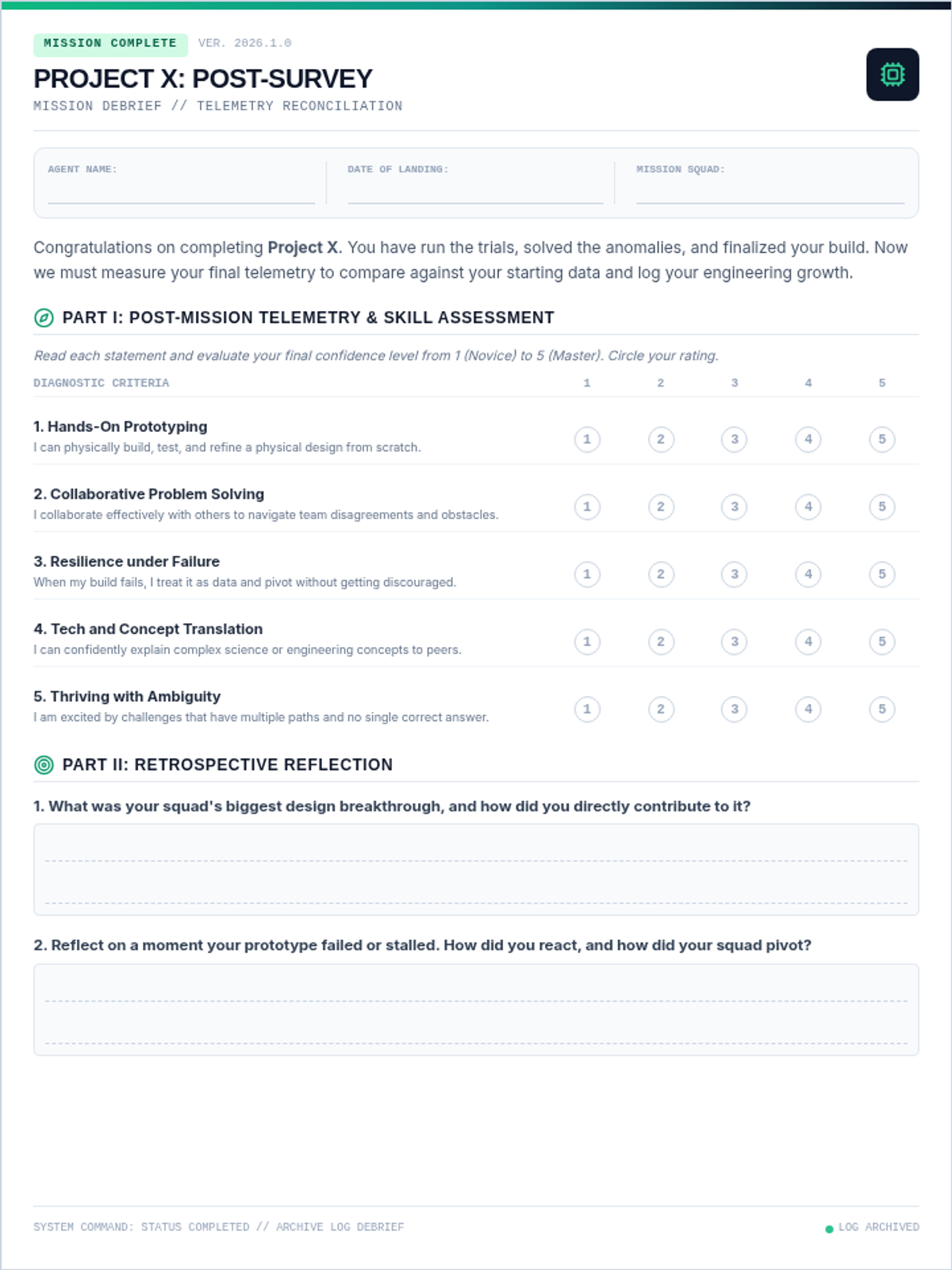
A high-tech post-mission debrief survey for students to evaluate their skill acquisition, teamwork dynamics, and problem-solving resilience after completing Project X 2026. Designed for direct pre/post comparison.
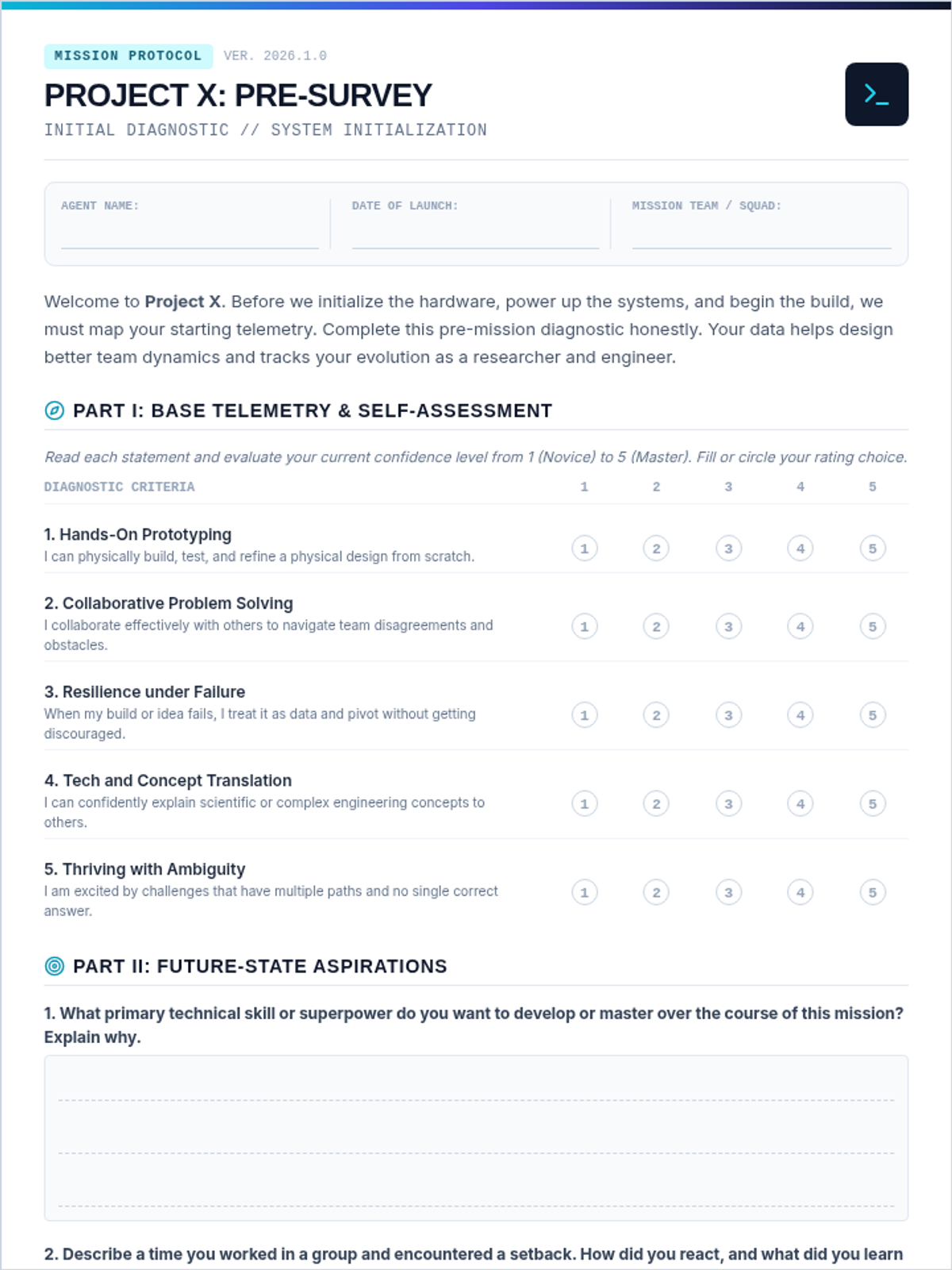
A high-tech pre-mission diagnostic survey for students to evaluate their starting confidence, technical skills, and collaboration readiness prior to beginning Project X 2026. Includes quantitative self-assessment scales and structured qualitative prompts.
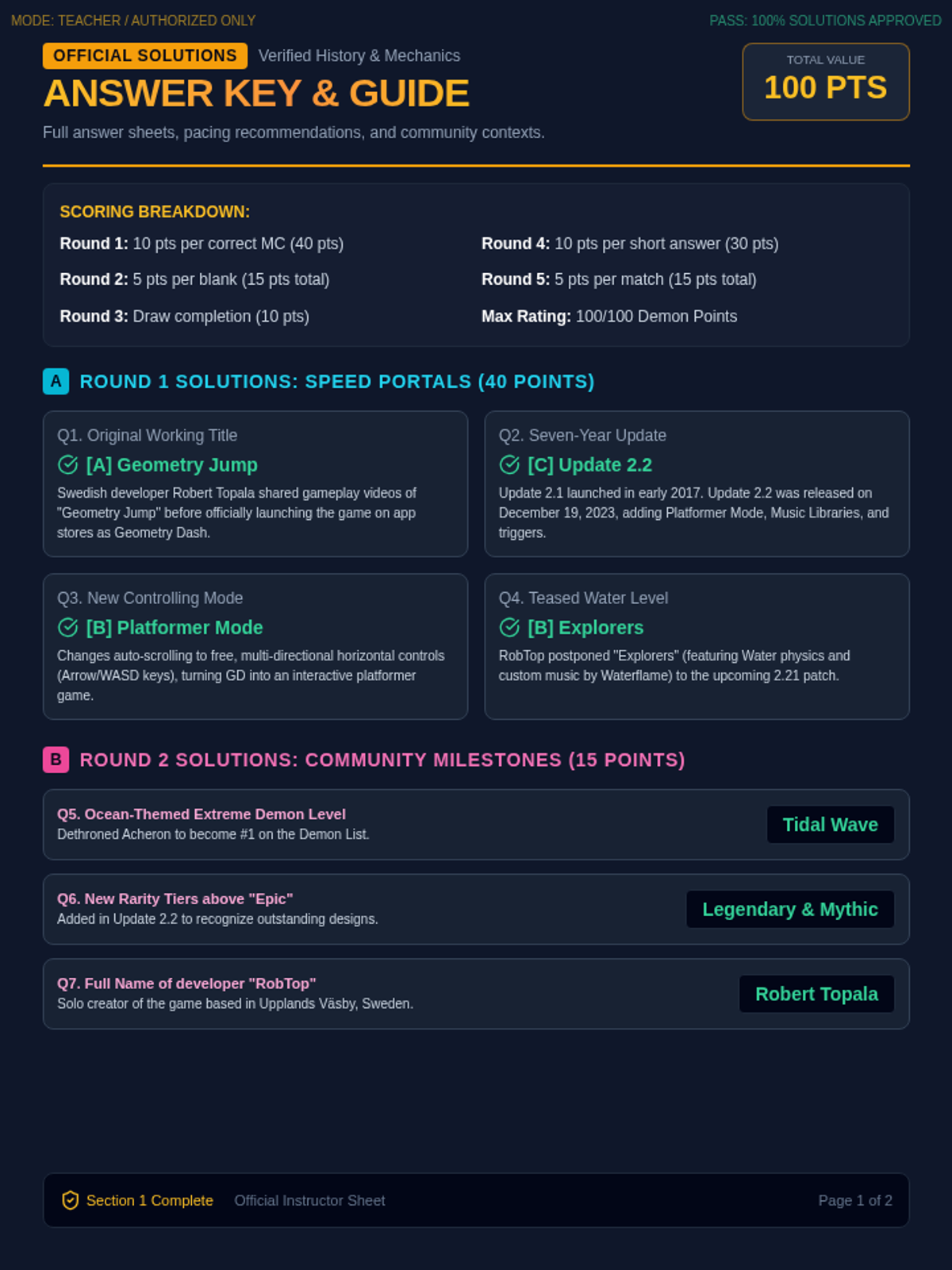
A detailed 2-page teacher answer key and grading guide for the Dash Masters Quiz. Provides clear solutions, historical background for each trivia point, and rubrics for the icon creator section.
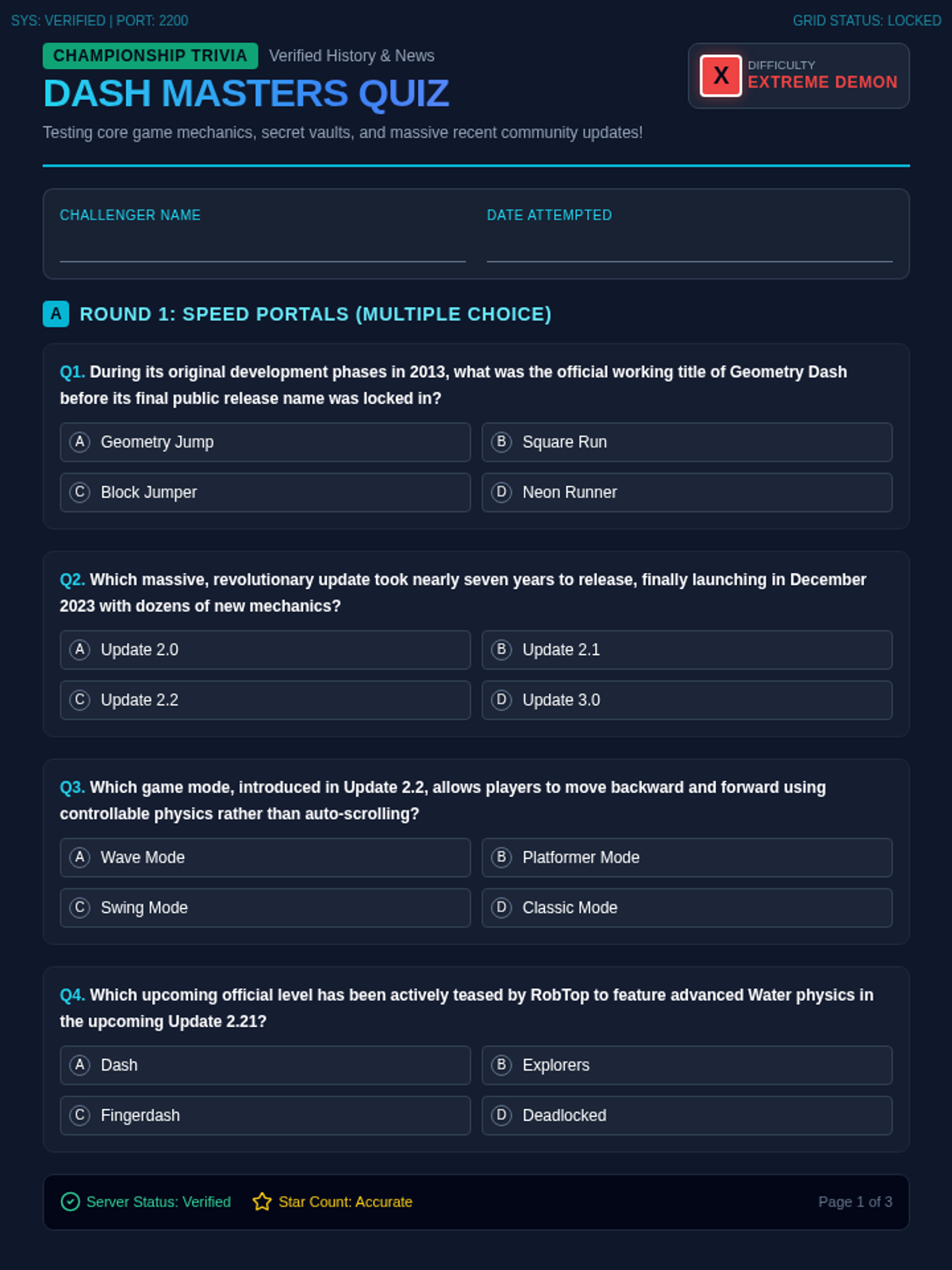
A revised 3-page printable Geometry Dash quiz highlighting highly accurate, well-known recent community news (Update 2.2, Tidal Wave, Legendary/Mythic ratings, Explorers teasers) and classic game trivia.
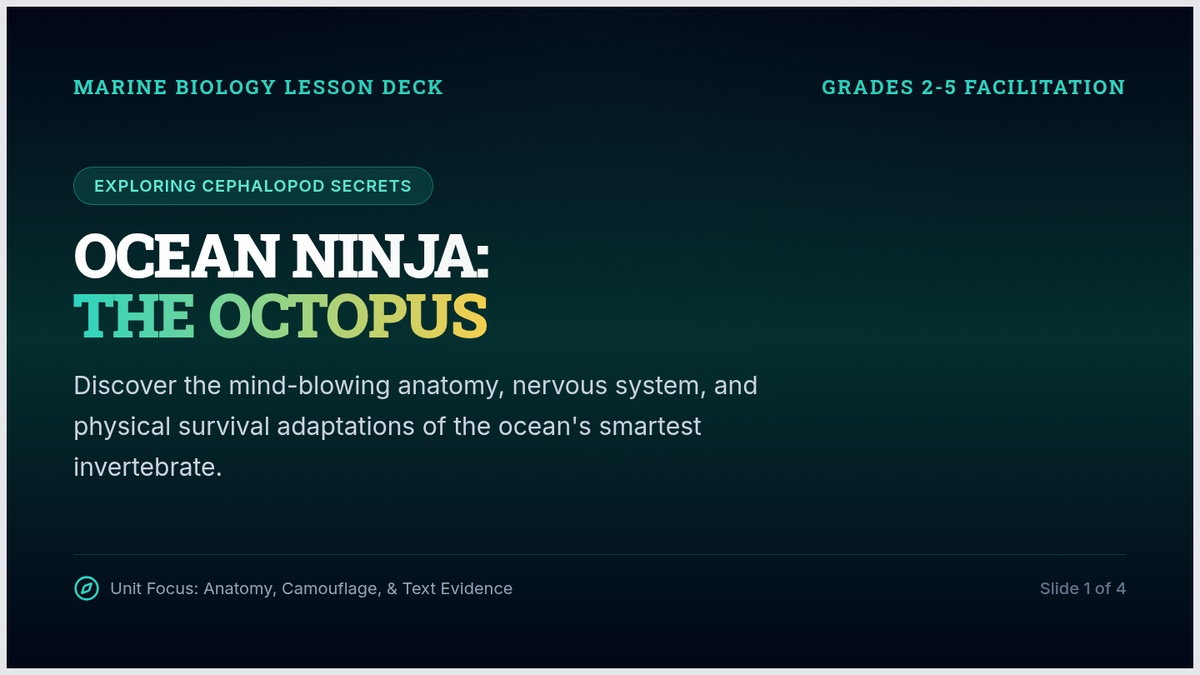
A highly engaging, deep-sea themed slide deck for classroom instruction, introducing students to the octopus's nine brains, camouflage abilities, and jet propulsion defense mechanism.
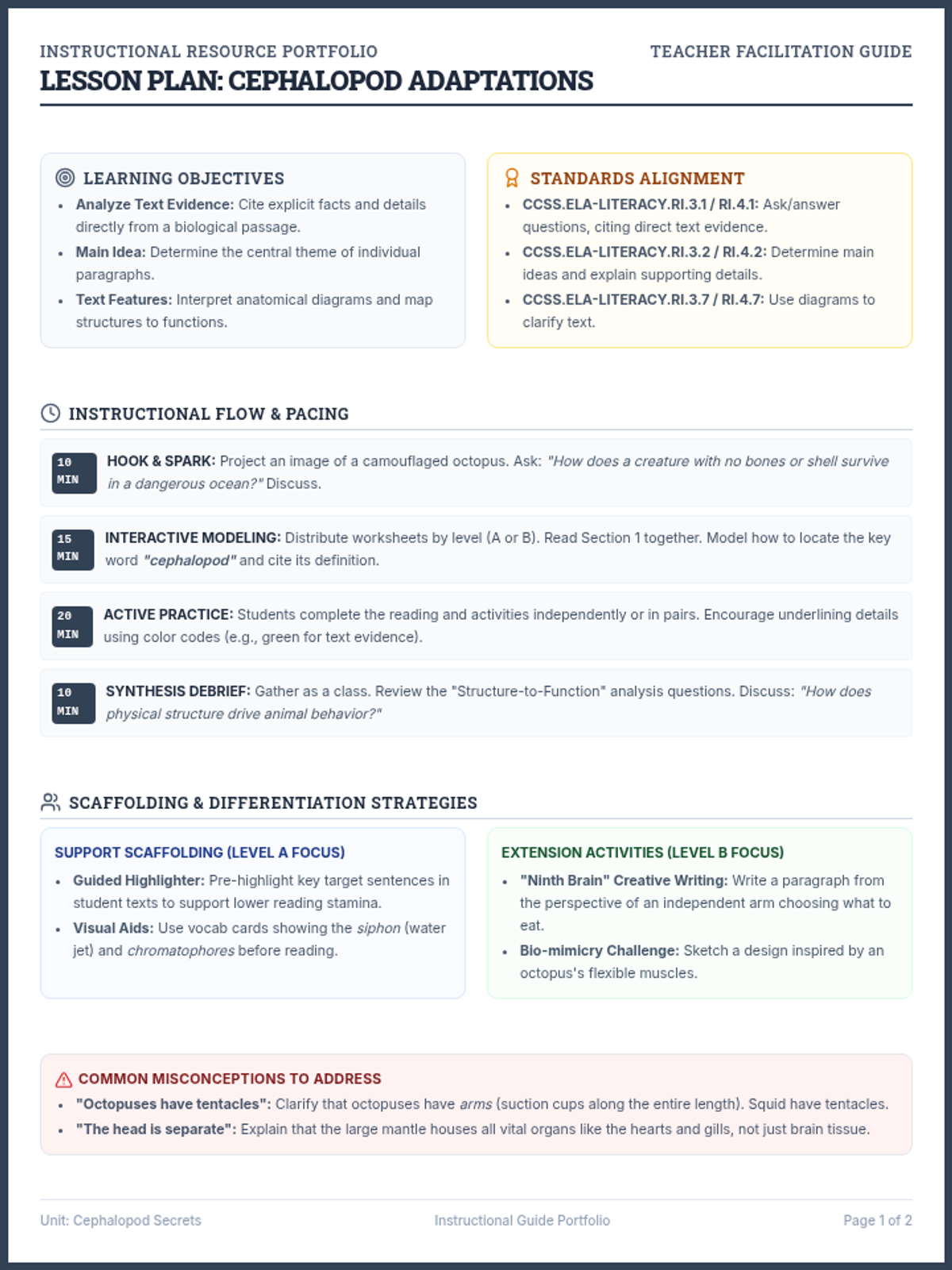
A professional lesson guide and answer key for teachers, including pacing suggestions, scaffolding techniques, and complete answer keys for both Level A and Level B student worksheets.
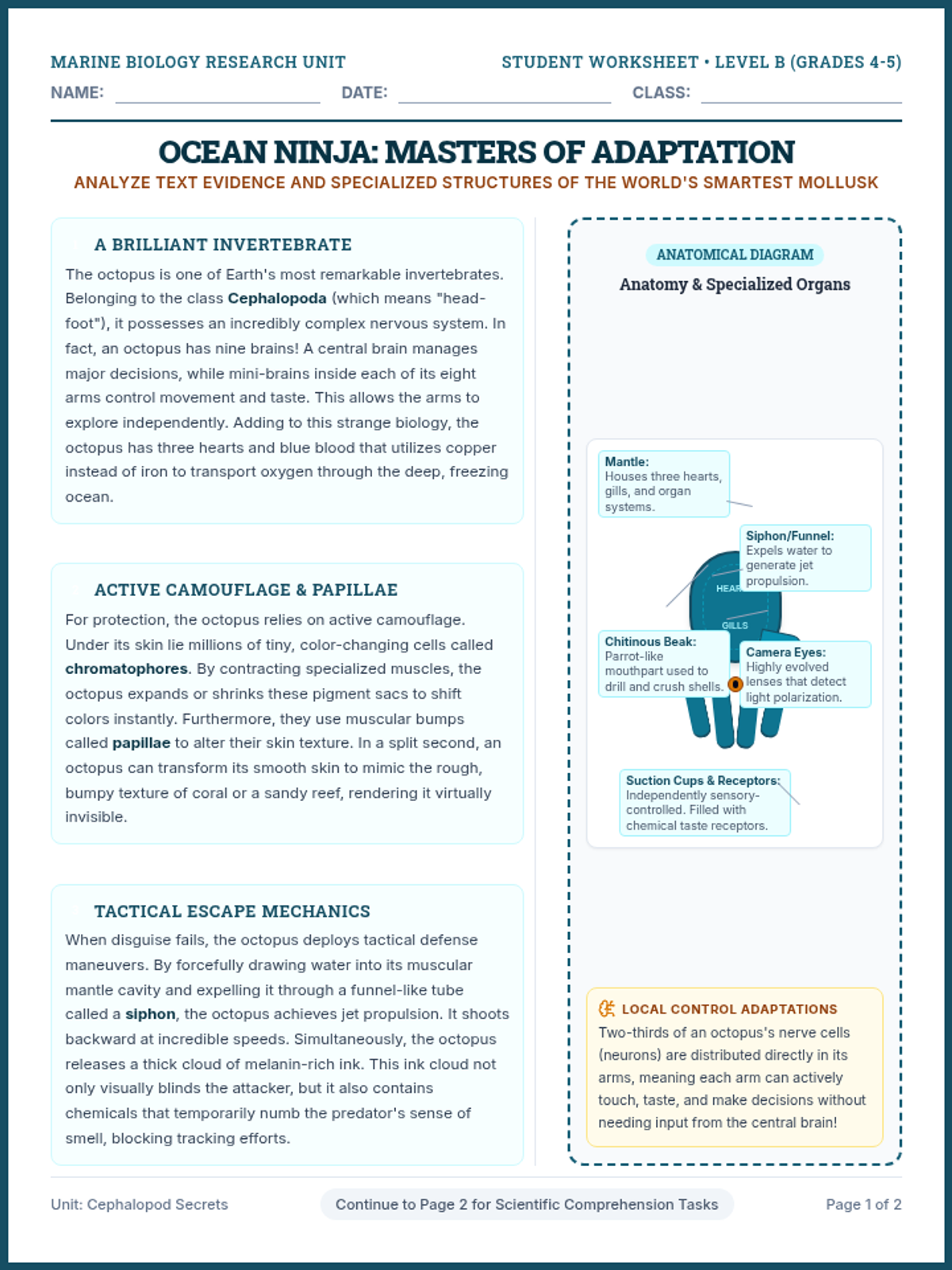
A Grade 4-5 reading passage with a specialized anatomical diagram, text-evidence matching, a main idea and supporting detail graphic organizer, and lined analysis questions.
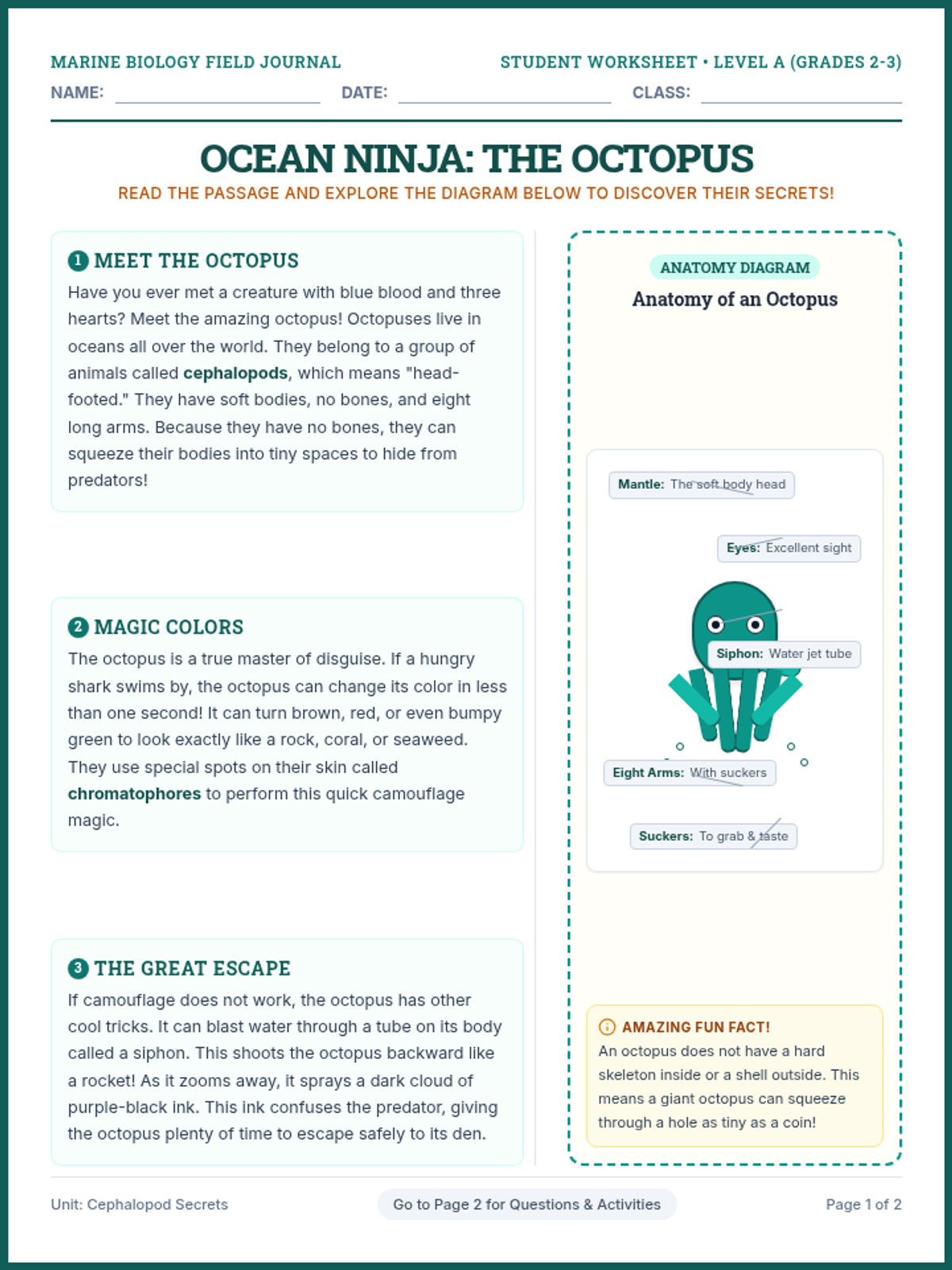
A Grade 2-3 reading passage with an integrated octopus anatomy diagram, text evidence comprehension questions, a main idea graphic organizer, and spacious short-answer writing lines.
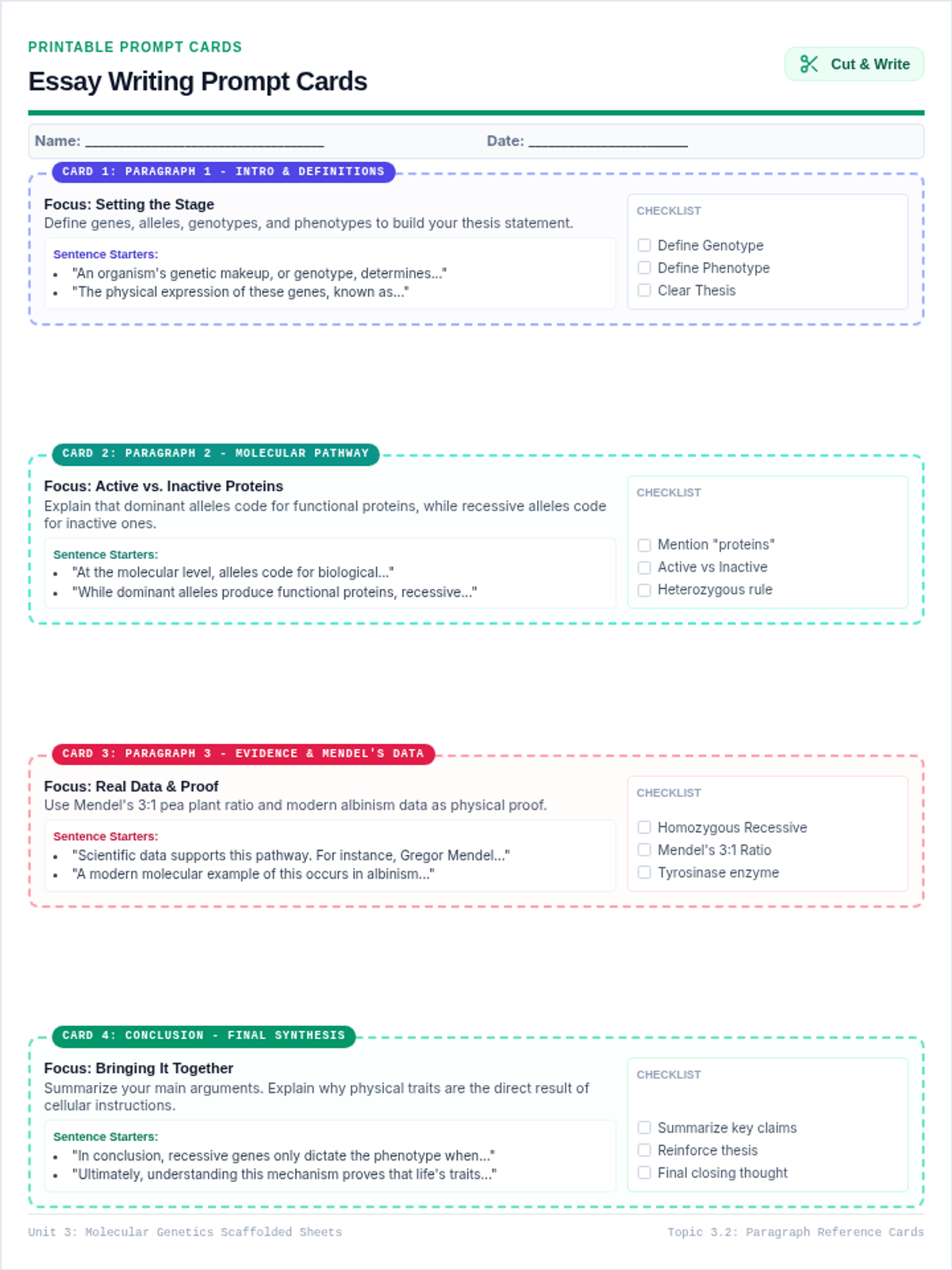
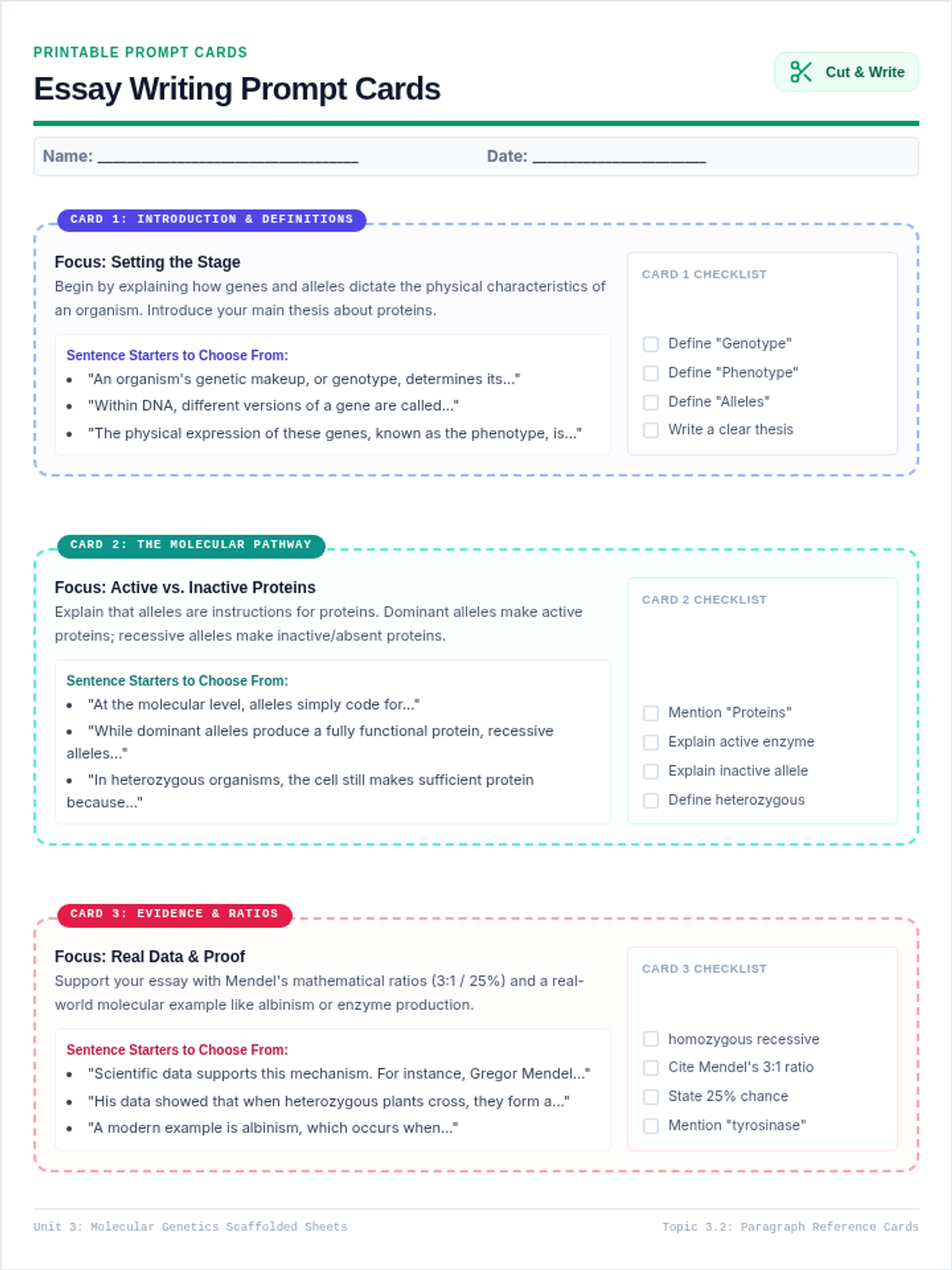
A step-by-step drafting guide with printable prompt cards, offering structured sentence starters and checkers for each paragraph of the genetic essay.
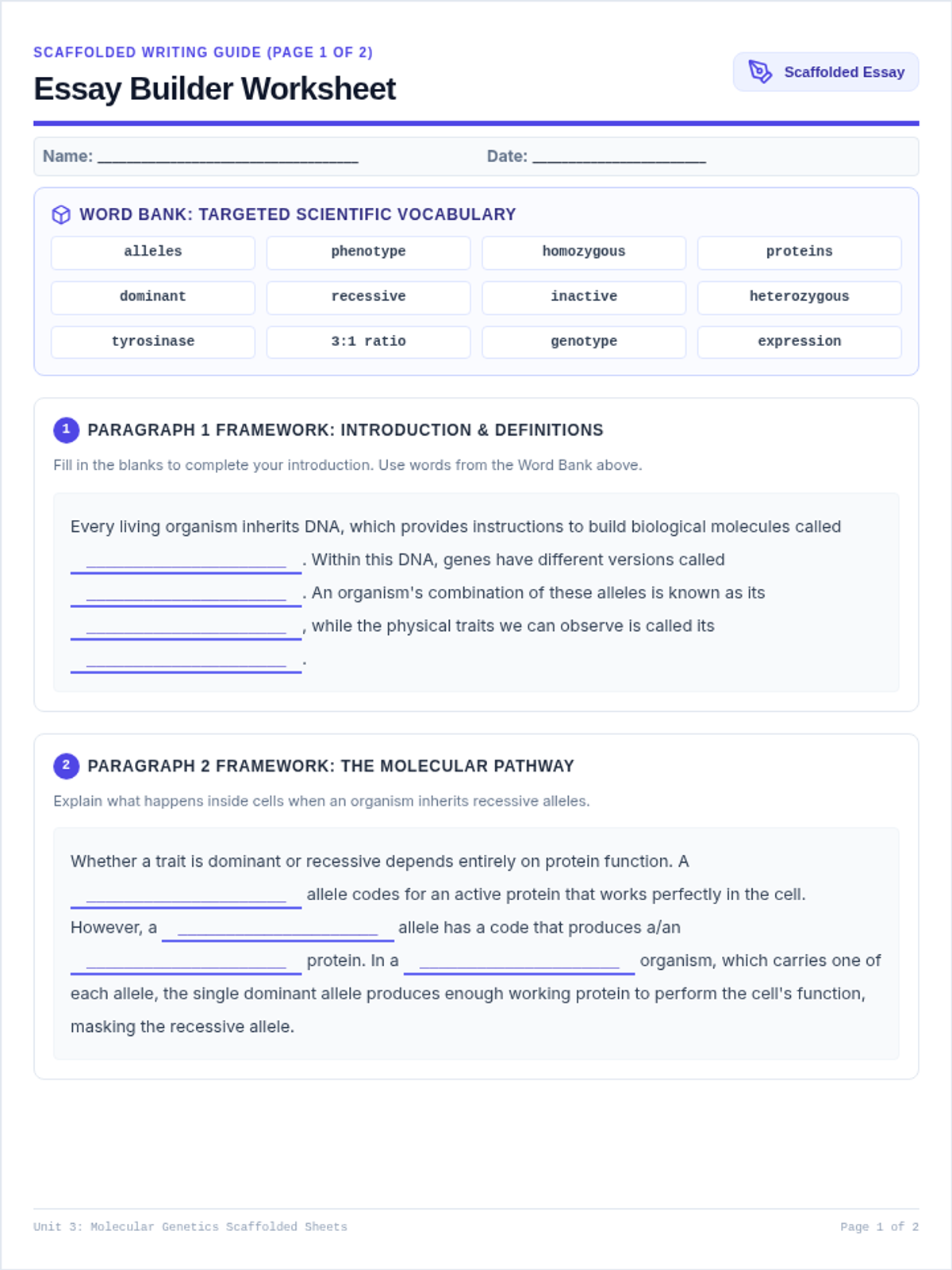
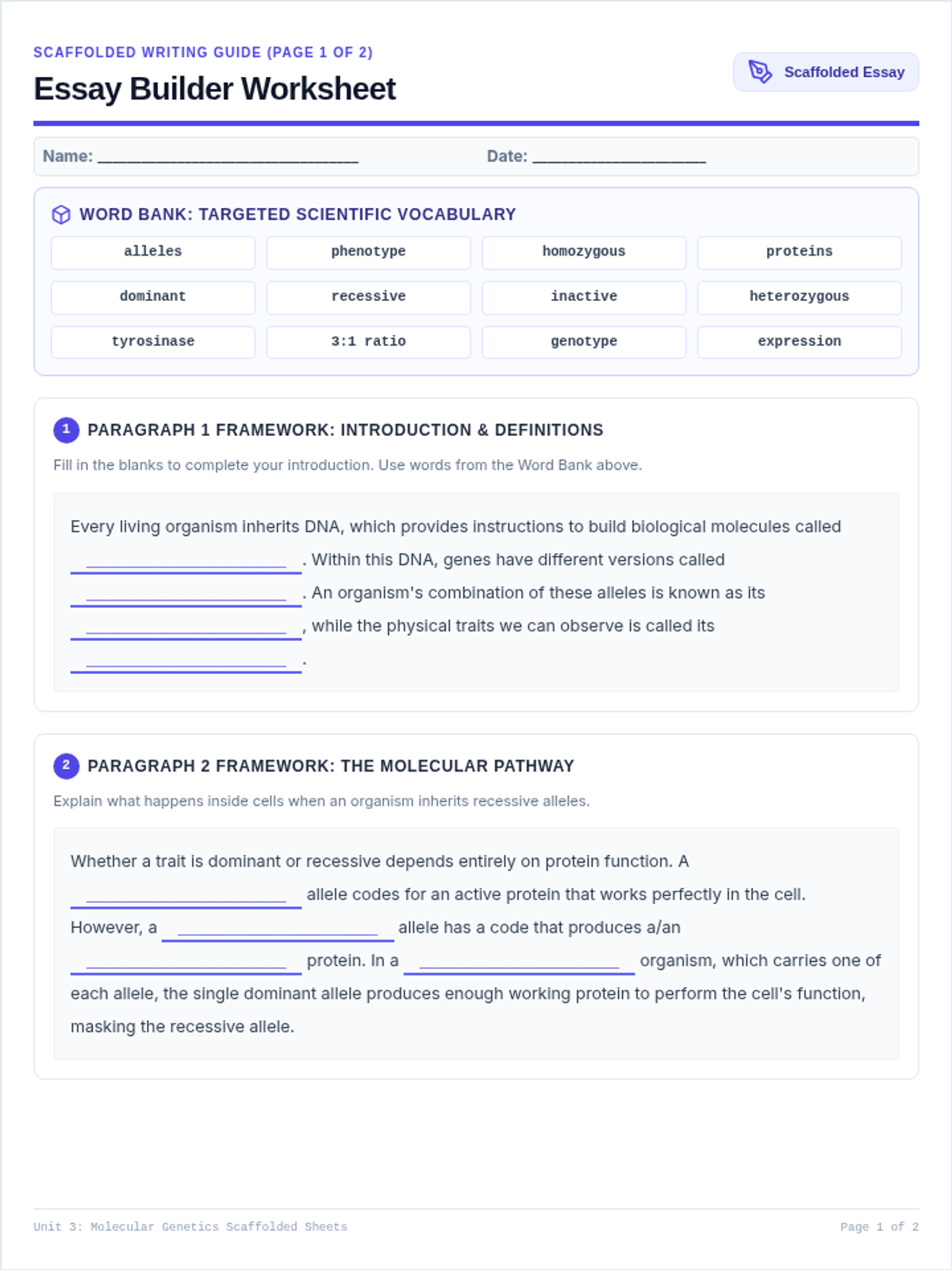
A highly structured scaffolded essay writing worksheet containing a targeted genetics word bank, sentence frames, and clear fill-in-the-blank organizers for Paragraph 1, Paragraph 2, Paragraph 3, and the final Conclusion.
A scaffolded essay writing worksheet containing a targeted genetics word bank, sentence frames, and fill-in-the-blank organizers for all three paragraphs.
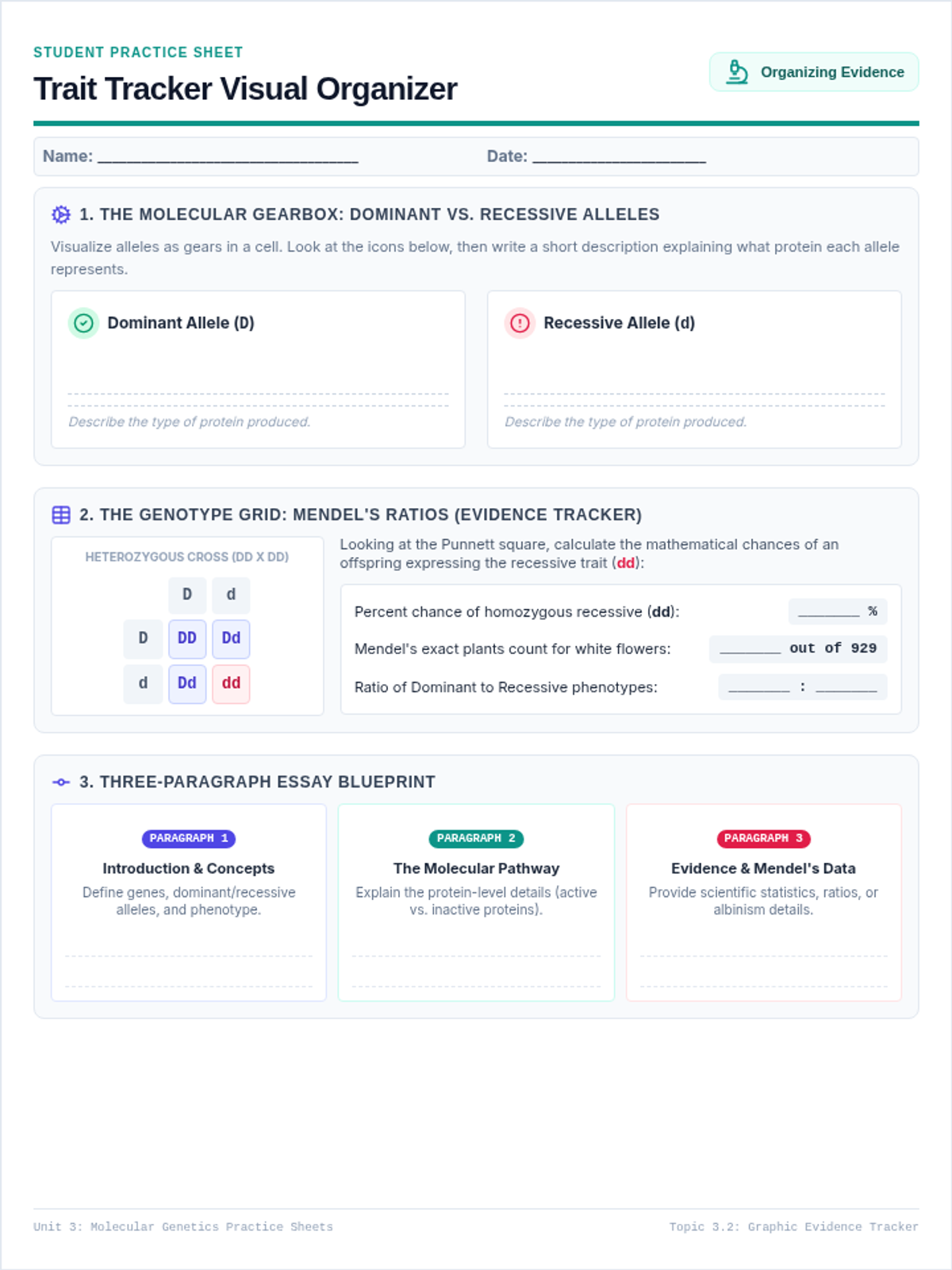
A student graphic organizer featuring visual prompts, icons, and diagrams to help students trace and organize genetic concepts before writing their essay.
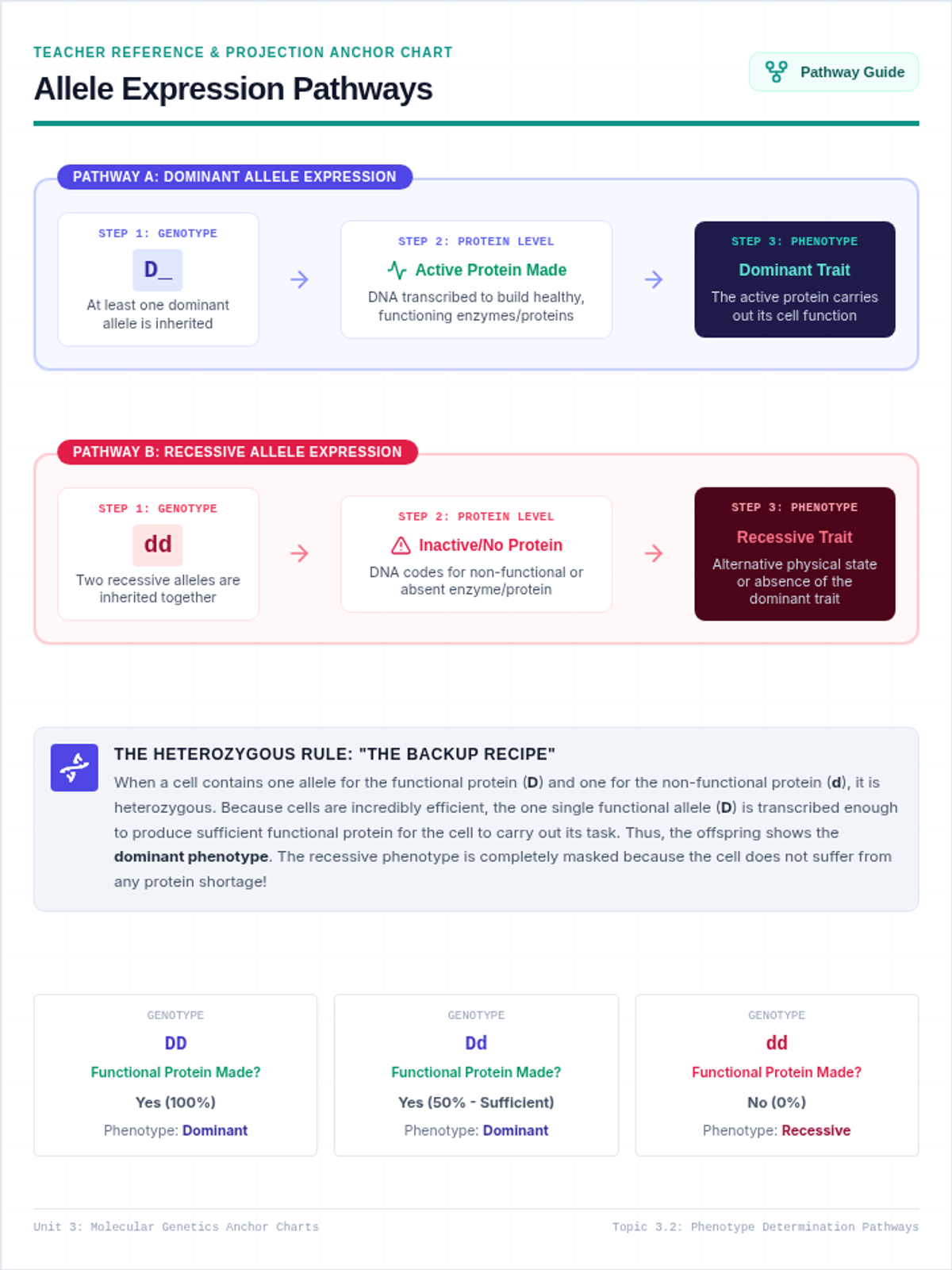
A teacher anchor chart or visual poster depicting the biological pathways of dominant versus recessive alleles, from DNA transcription to active or inactive protein synthesis and the resulting phenotypes.
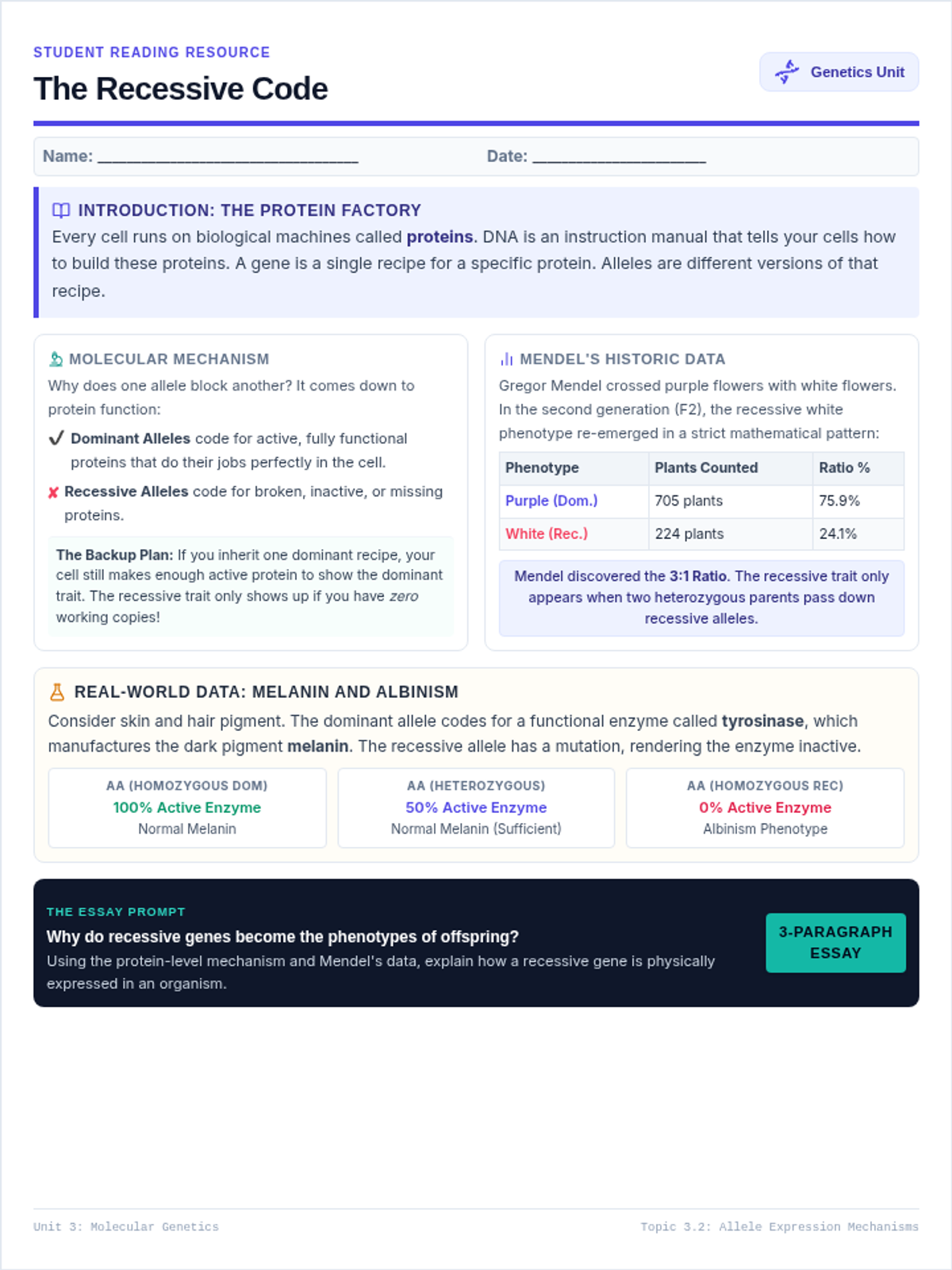
A simplified science reading passage that explains the molecular and protein-level mechanisms of dominant and recessive alleles, featuring Mendel's experimental data and high-interest modern examples.
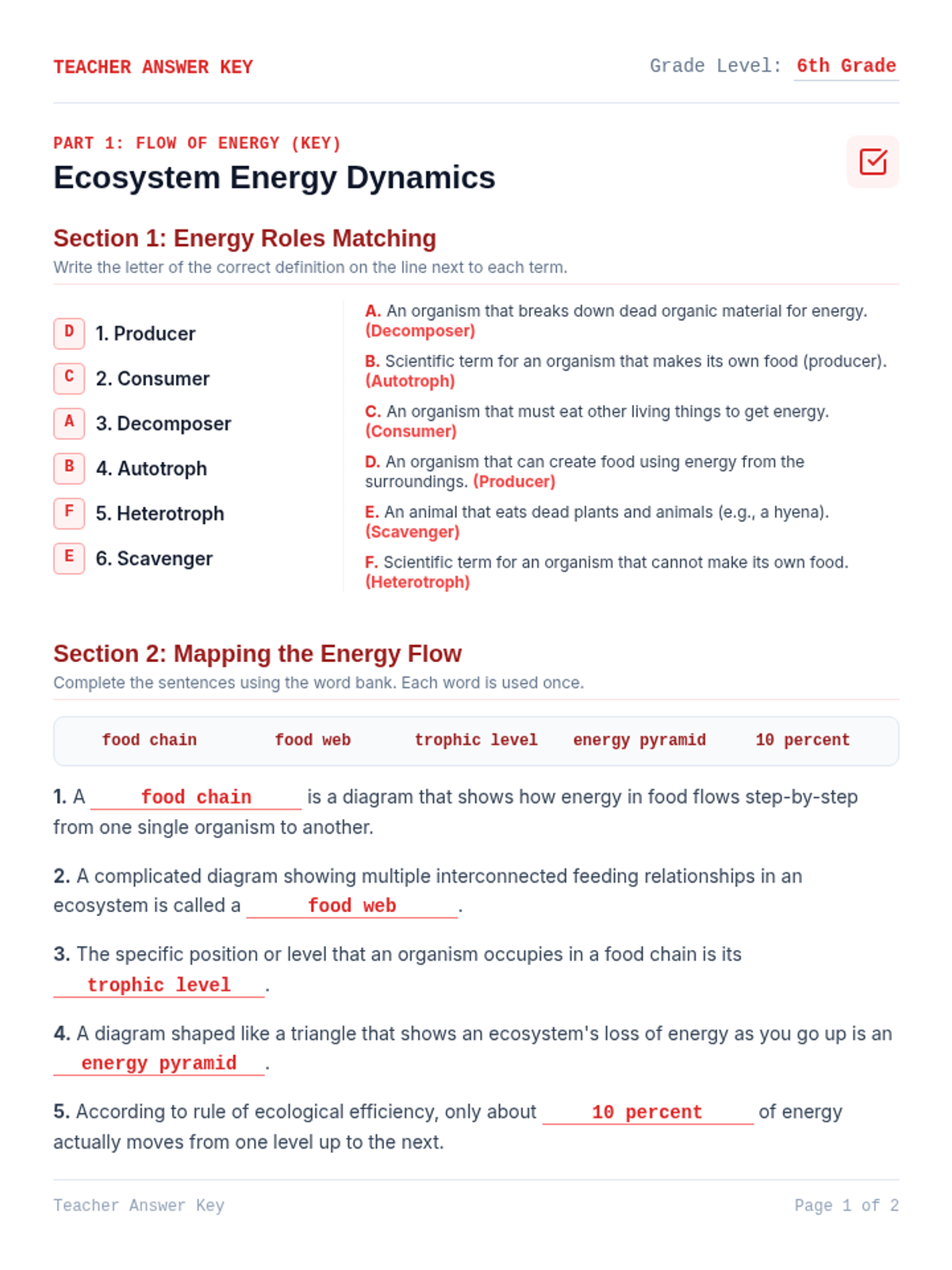
A corresponding 2-page print-ready teacher answer key with bold red solutions and sample responses for the SPED sentence frames.
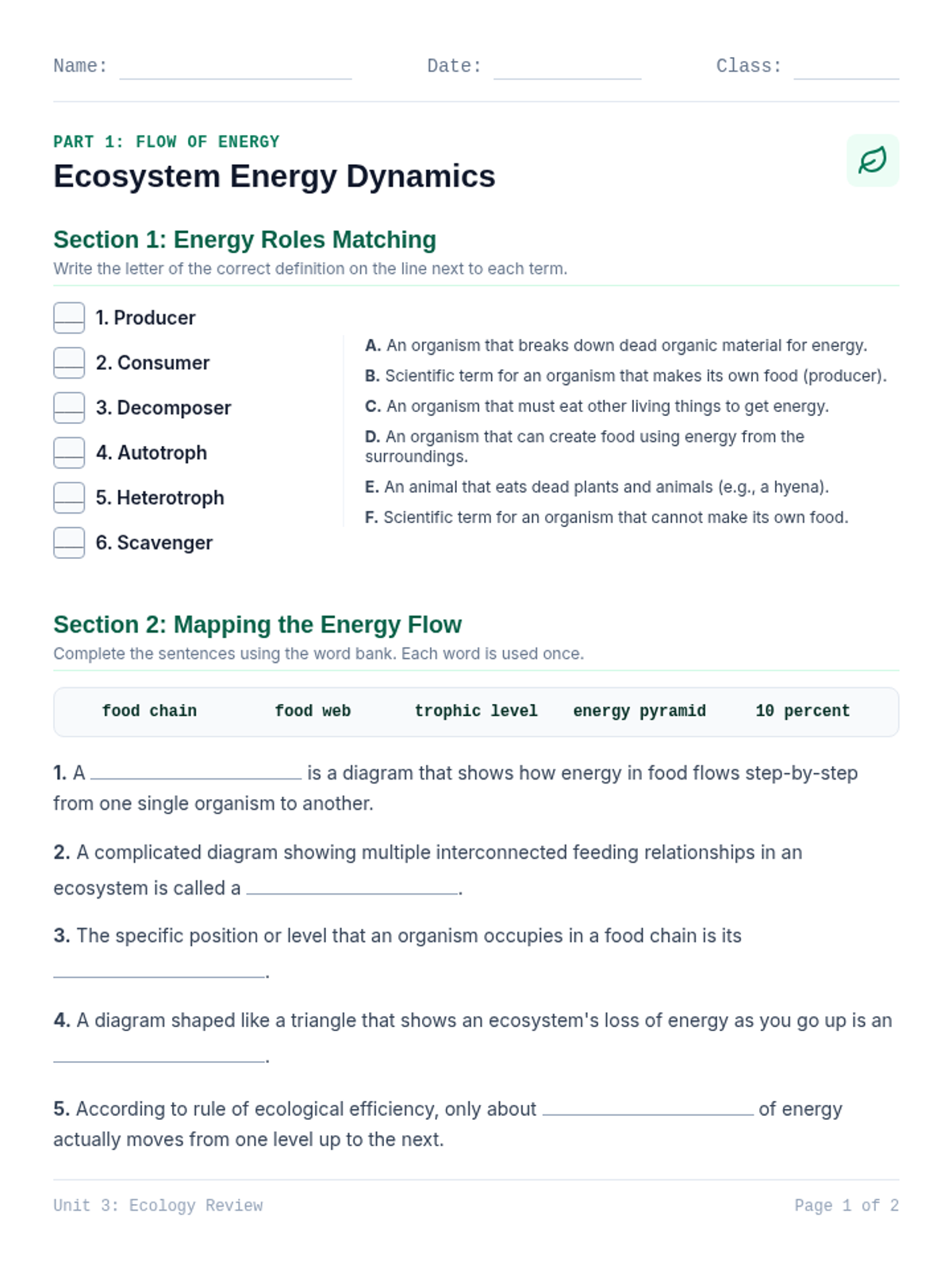
A clean, minimal 2-page print-ready review worksheet covering energy flow and relationships with matching, fill-in-the-blank, and SPED sentence frames.