A one-page student-facing guided notes worksheet designed to accompany the Mole History presentation. Features fill-in-the-blank sections covering the origin, legends, fusion, and cultural significance of mole. Polished for one-page printing.
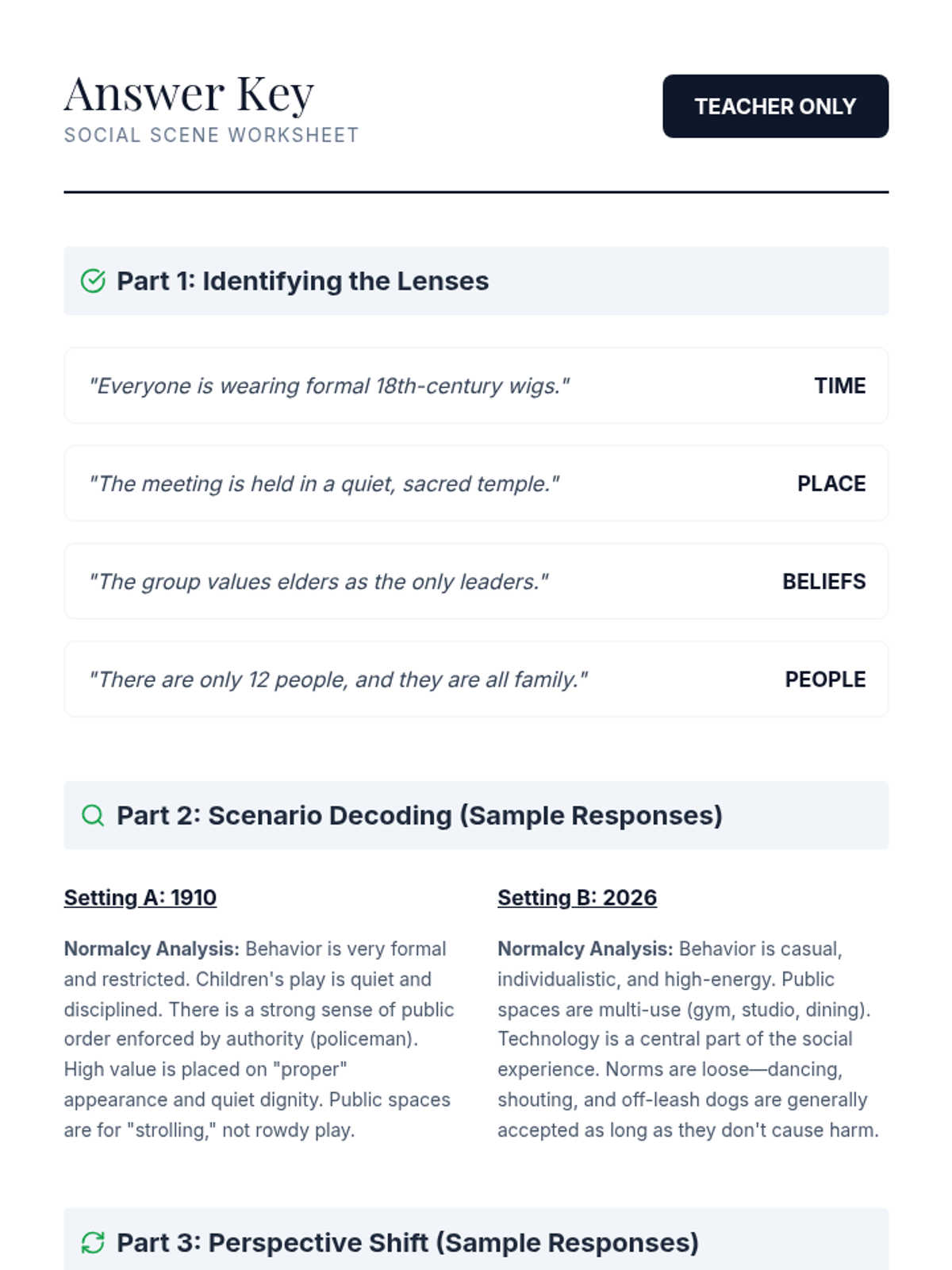
A teacher answer key for the Social Scene Worksheet. Revised for improved visual formatting of the scoring guide.
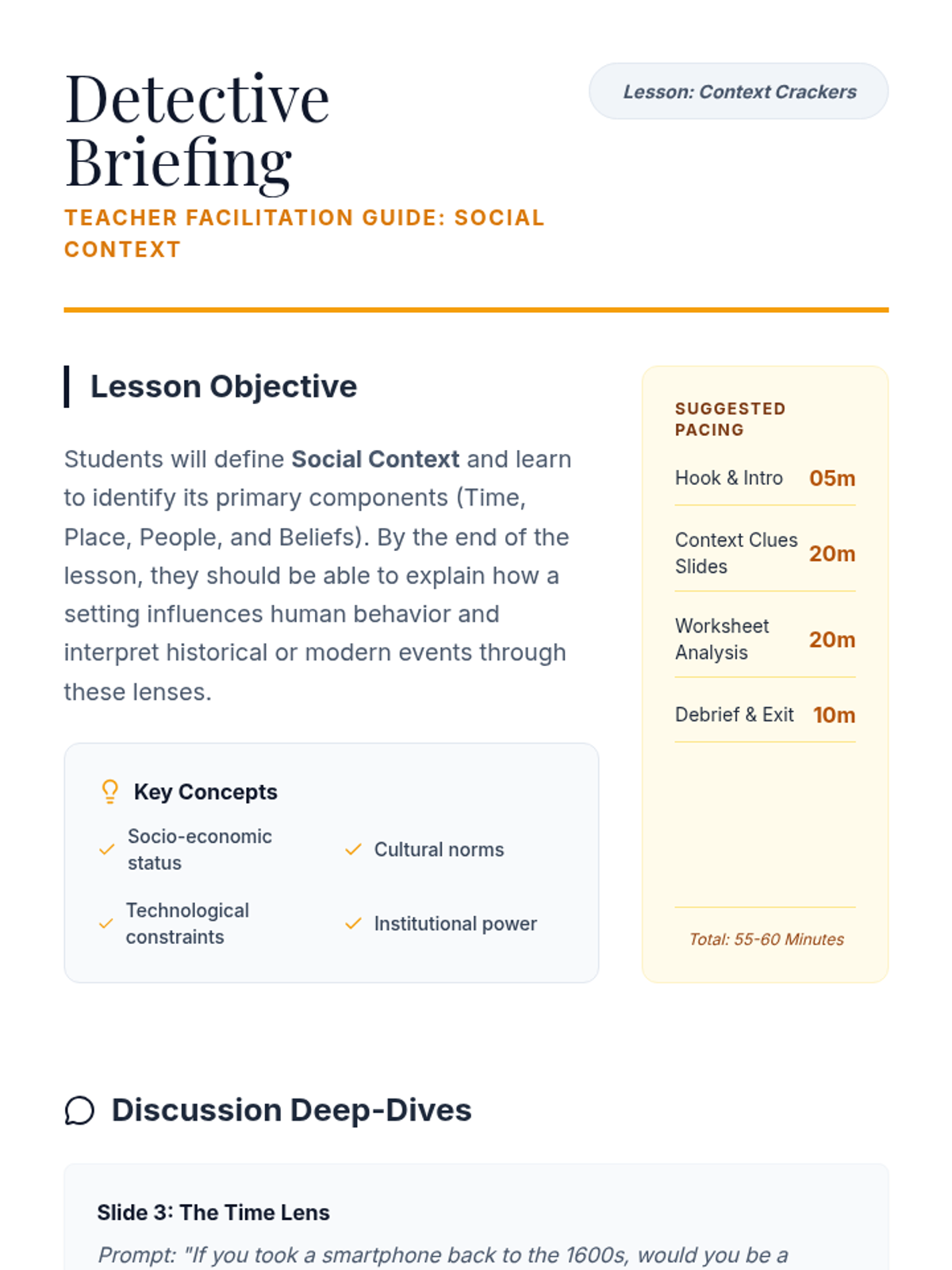
A comprehensive teacher guide for the 'Context Crackers' lesson. Revised for improved layout, text contrast, and reliable page break handling.
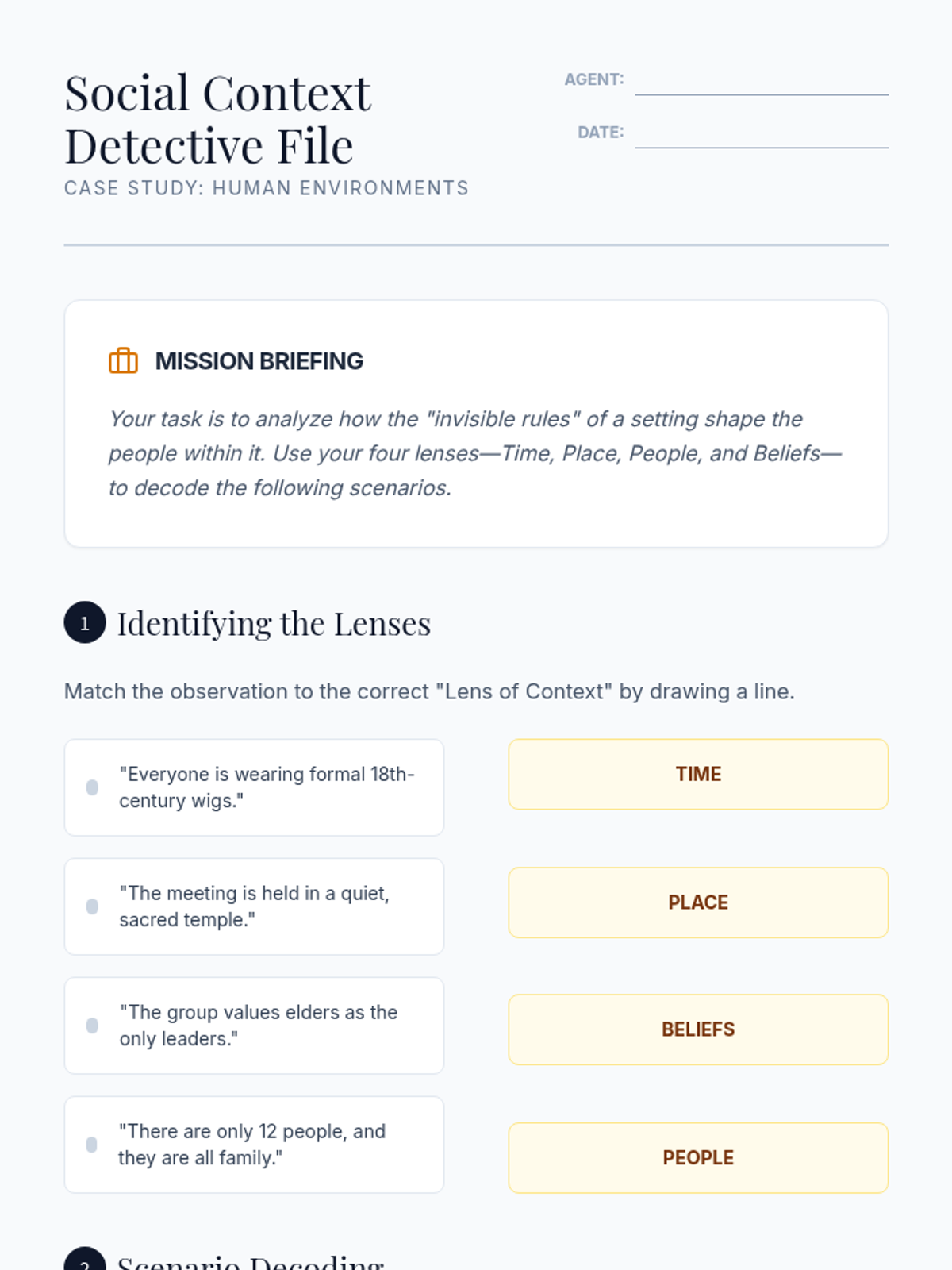
A student-facing worksheet designed as a 'detective file' for analyzing social context. Includes matching exercises for the four lenses and a comparative analysis between 1910 and 2026 park settings. Revised for improved writing space and layout.
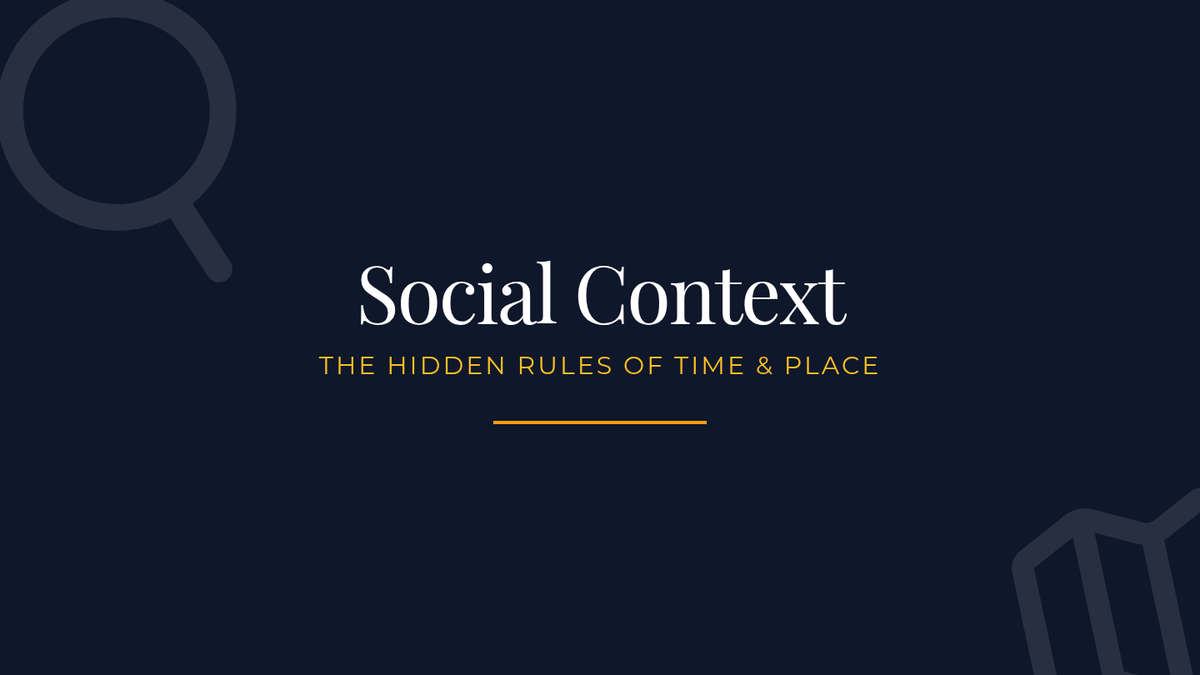
A visually engaging slide deck that introduces the concept of social context through a 'detective' lens. It covers the four pillars (People, Place, Time, Beliefs) and provides historical and modern case studies for student analysis.
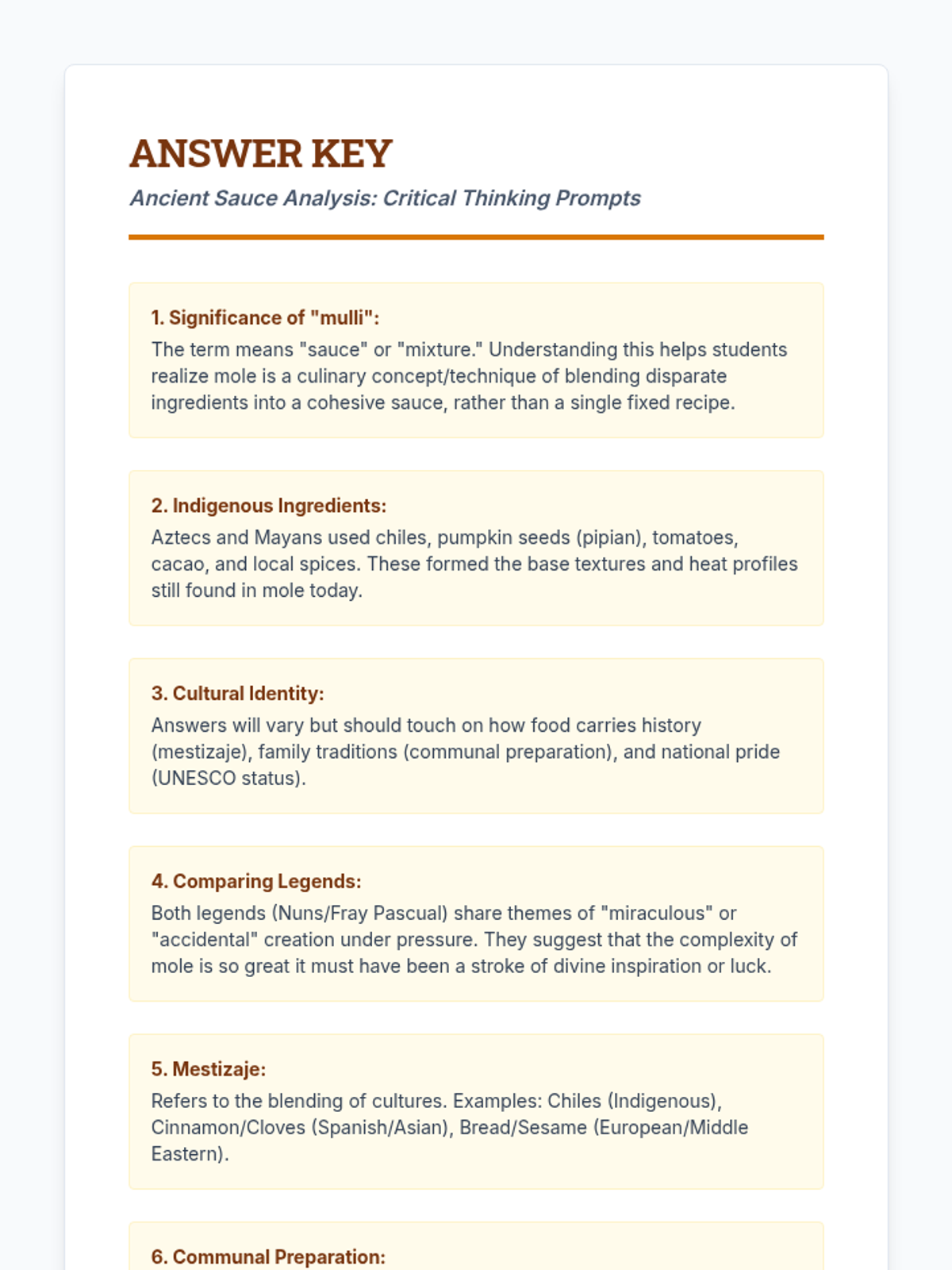
An answer key for the 'Ancient Sauce Analysis' writing prompts, providing suggested responses and key points for teachers to look for in student work.
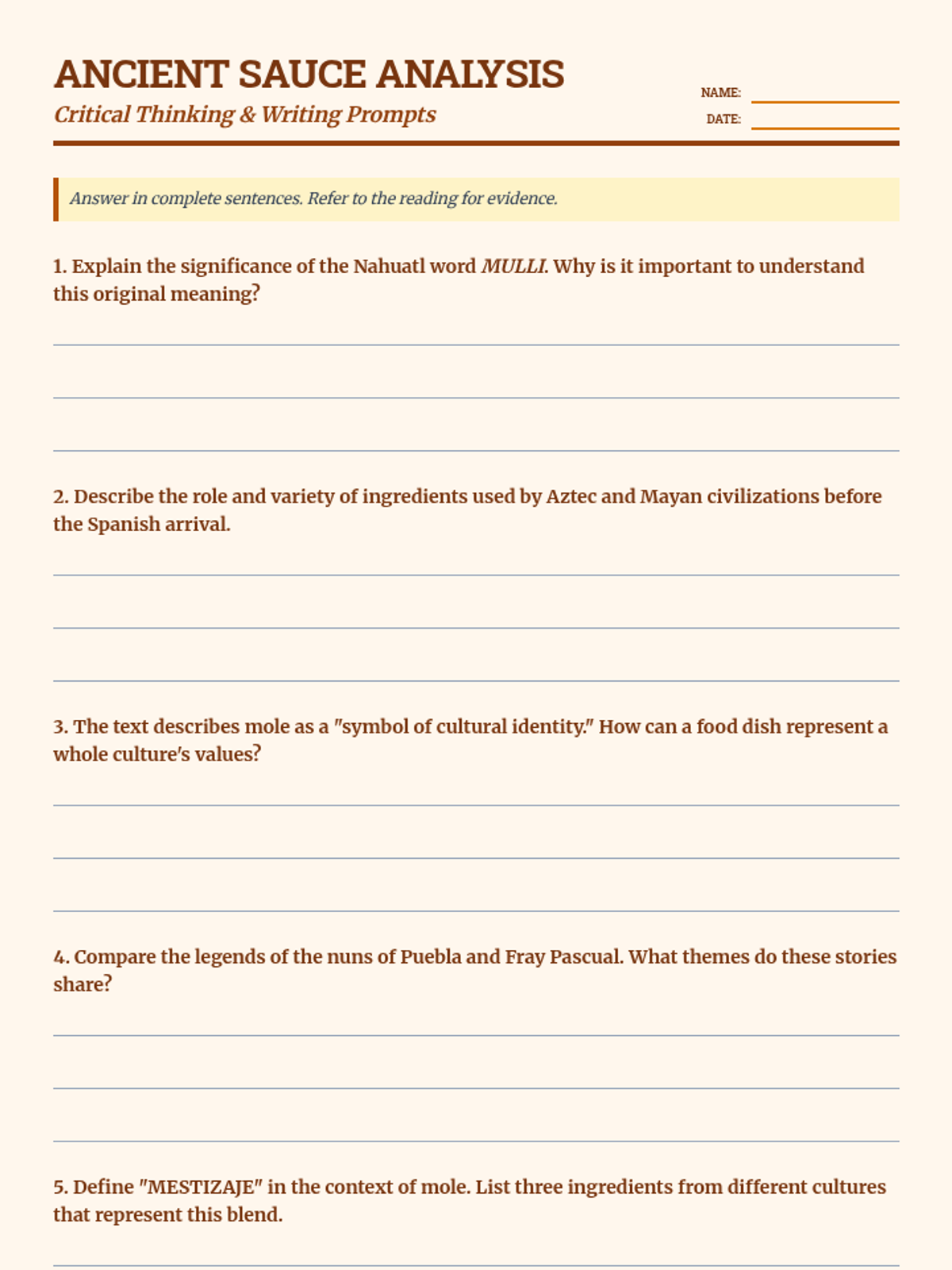
A two-page worksheet featuring 10 open-ended writing and critical thinking questions based on the 'Ancient Sauce Secret' reading passage. Provides expanded writing areas for detailed student responses and improved line contrast. Fixes pagination and footer orphans.
A visually stunning 10-slide presentation exploring the history of Mexican mole, from its indigenous Nahuatl roots to its modern status as a UNESCO World Heritage treasure. Includes specific detail on legends, ingredients, and cultural significance.
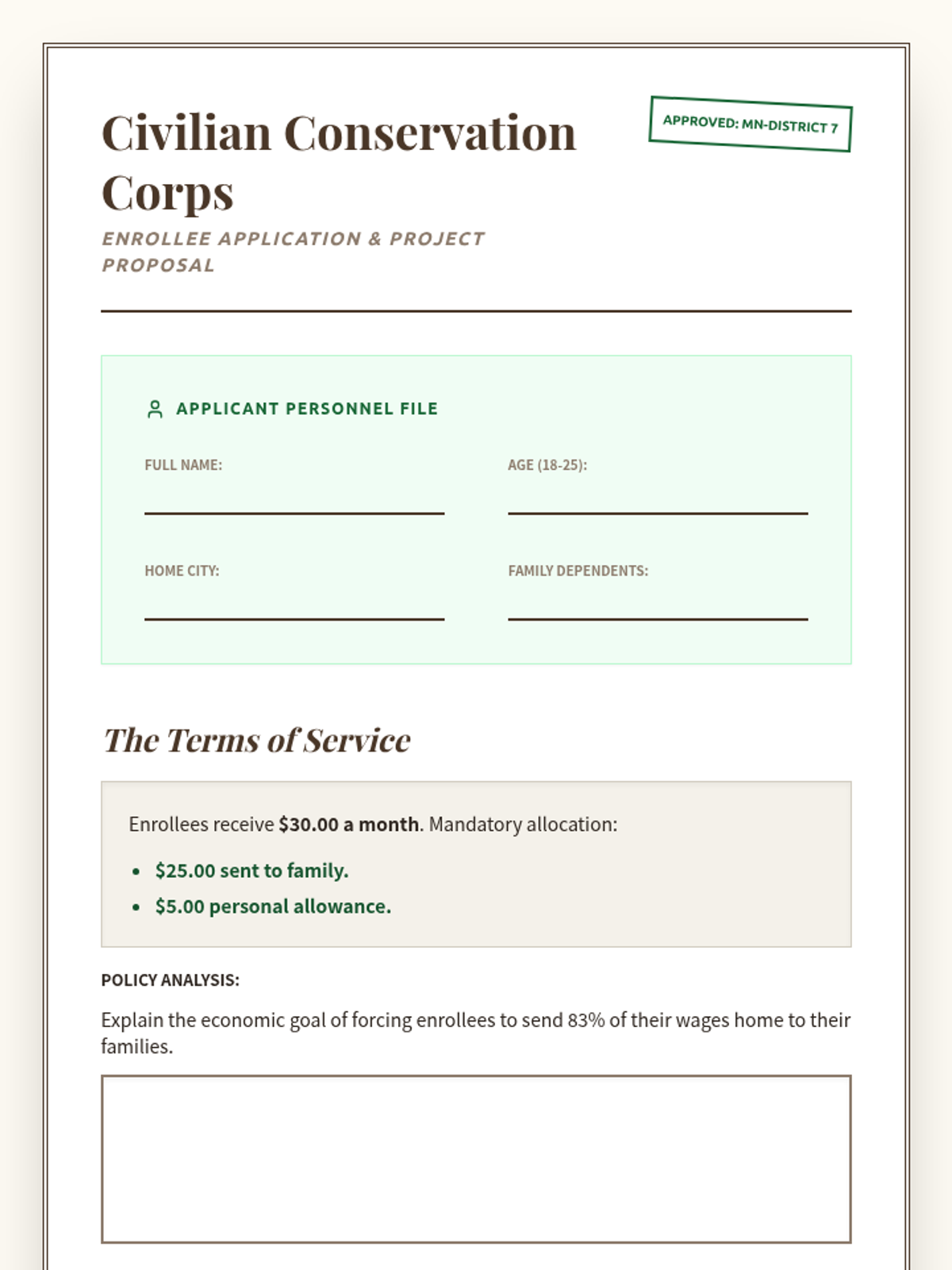
A New Deal-themed application and analysis worksheet for Day 4 focusing on the Civilian Conservation Corps (CCC) in Minnesota. Students simulate the application process, analyze the economic impact of sending wages home, and evaluate the environmental legacy of CCC projects in MN State Parks.
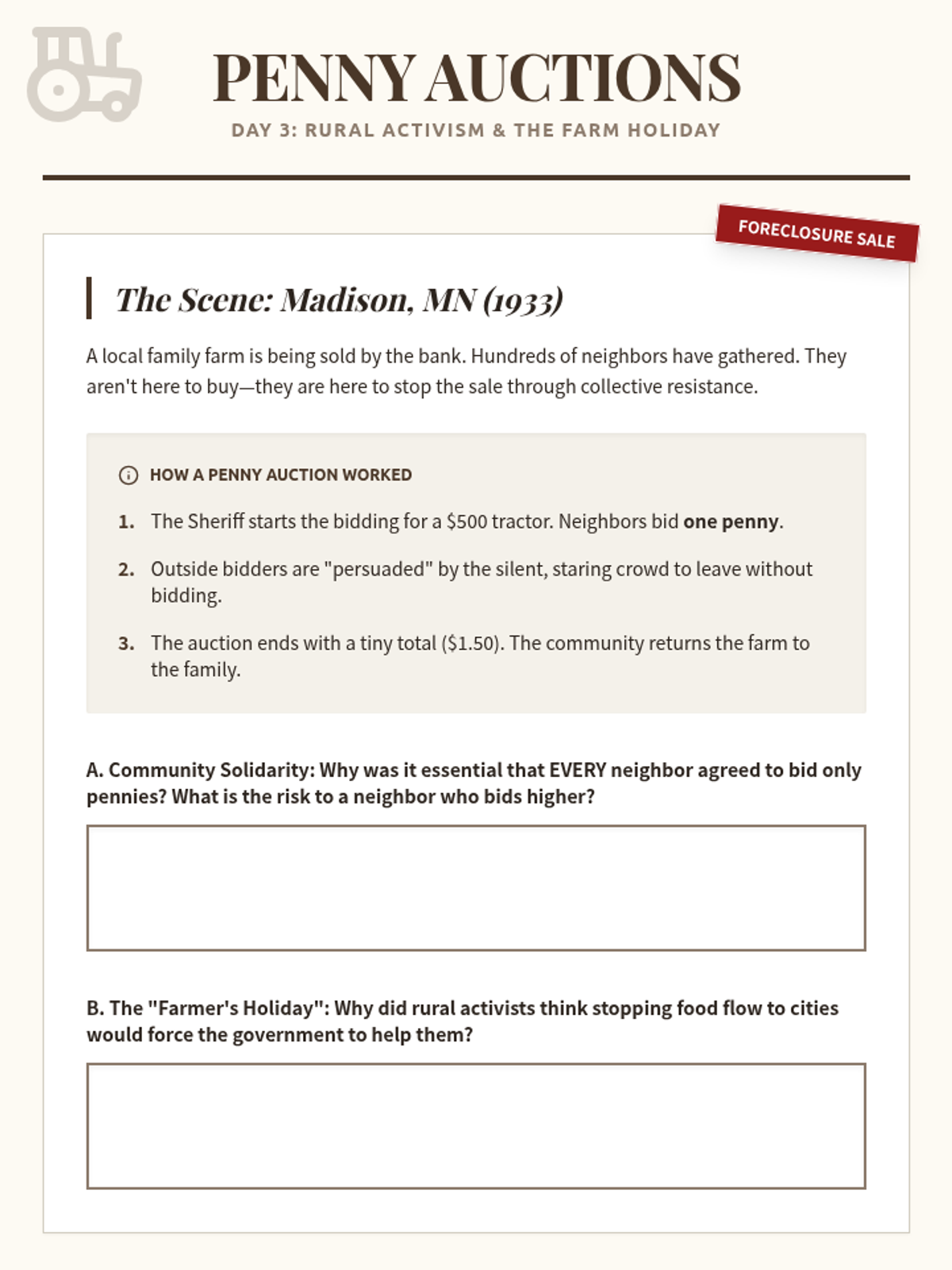
An investigative activity for Day 3 focusing on rural resilience and the Penny Auction movement in Minnesota. Students analyze the mechanics of farm protests, the Farmer's Holiday Association, and the ethical dilemmas of civil disobedience during the Great Depression.
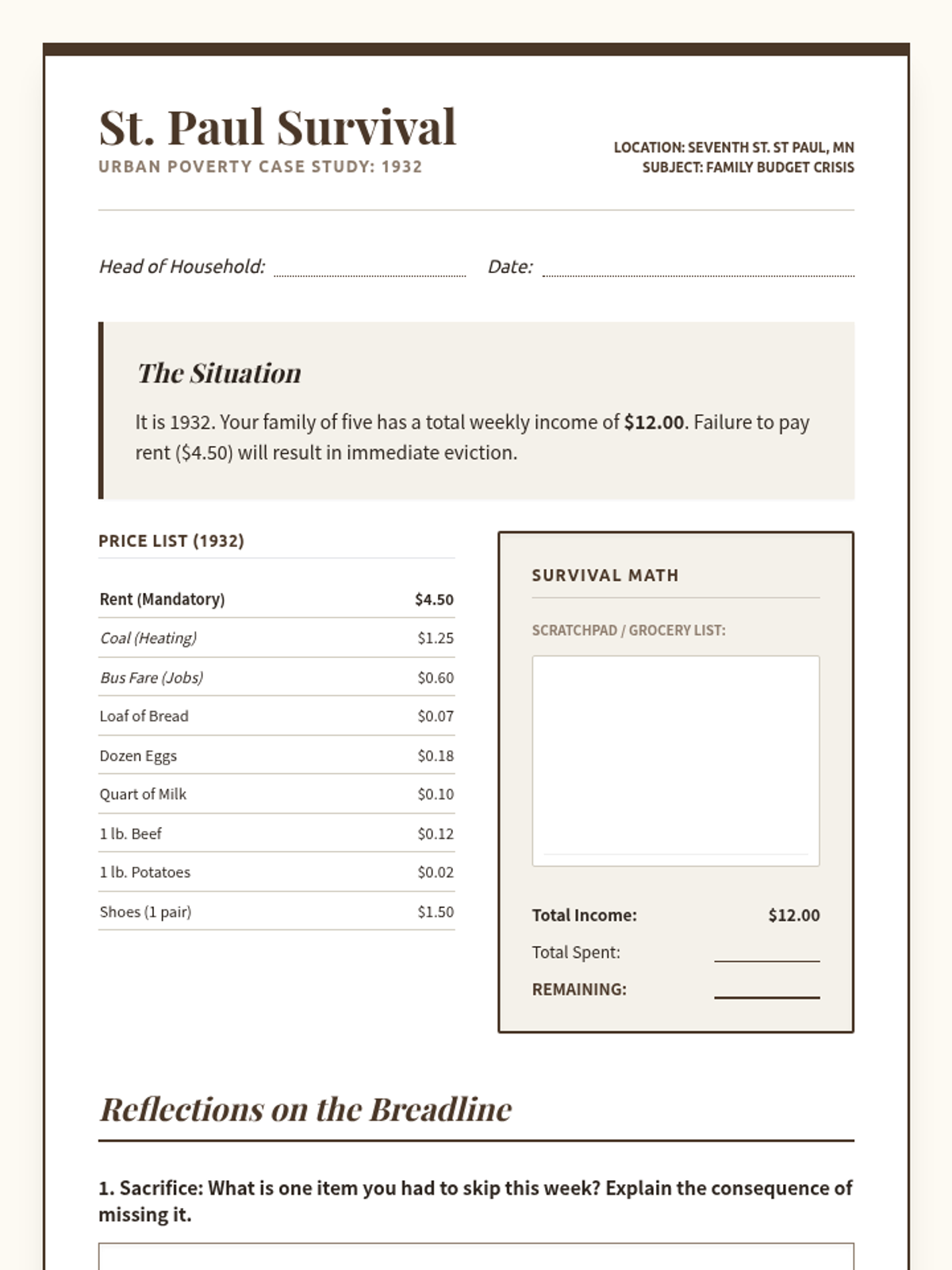
A math-integrated social studies worksheet for Day 2 focusing on urban survival in St. Paul during 1932. Students must manage a $12 weekly budget based on historical prices and reflect on the difficult choices and loss of dignity faced by families in poverty.
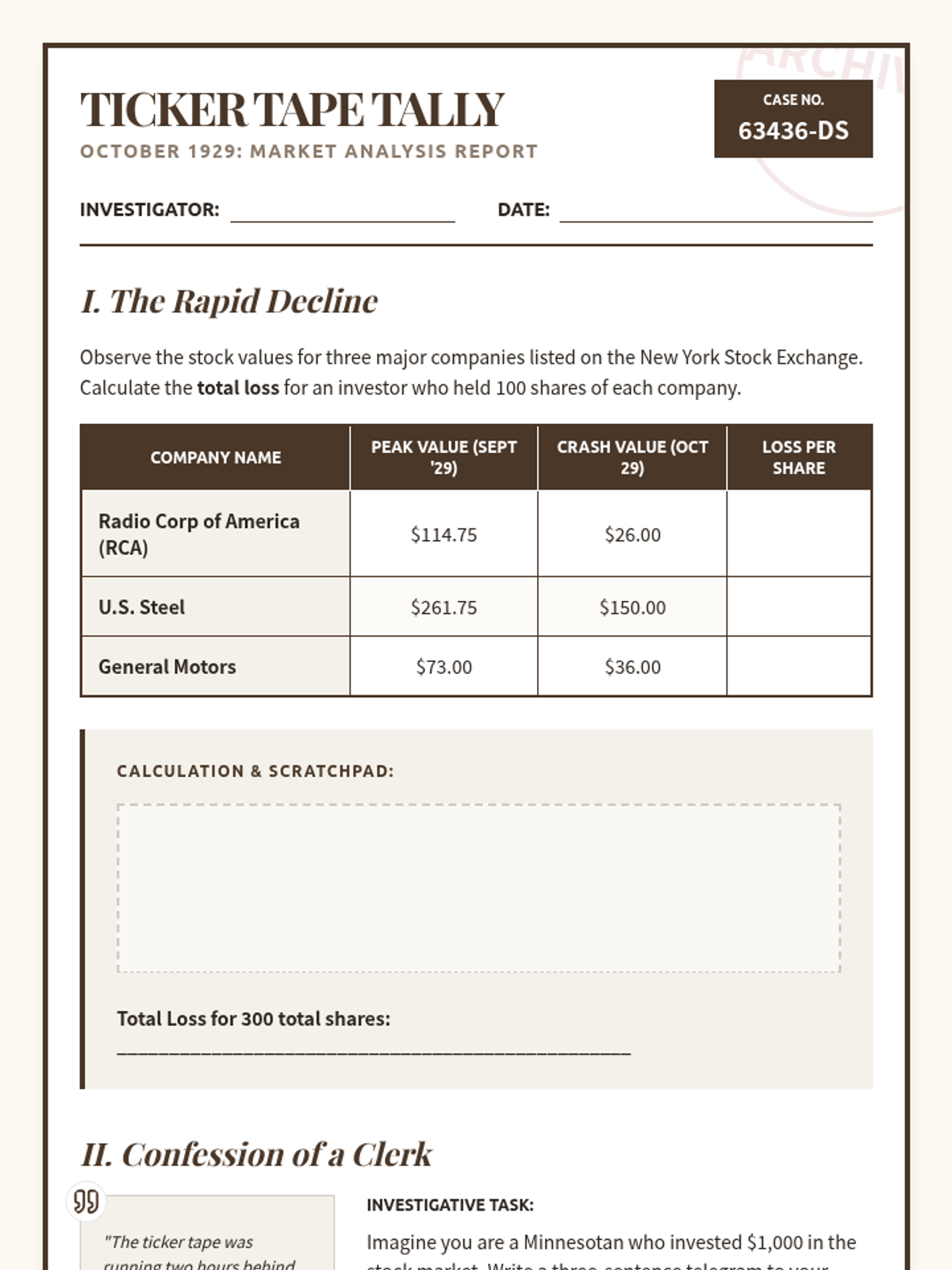
A primary source analysis worksheet for Day 1 focusing on the 1929 Stock Market Crash. Students calculate stock losses and analyze the emotional and economic ripple effects through a Wall Street clerk's testimony and a telegram-writing task.
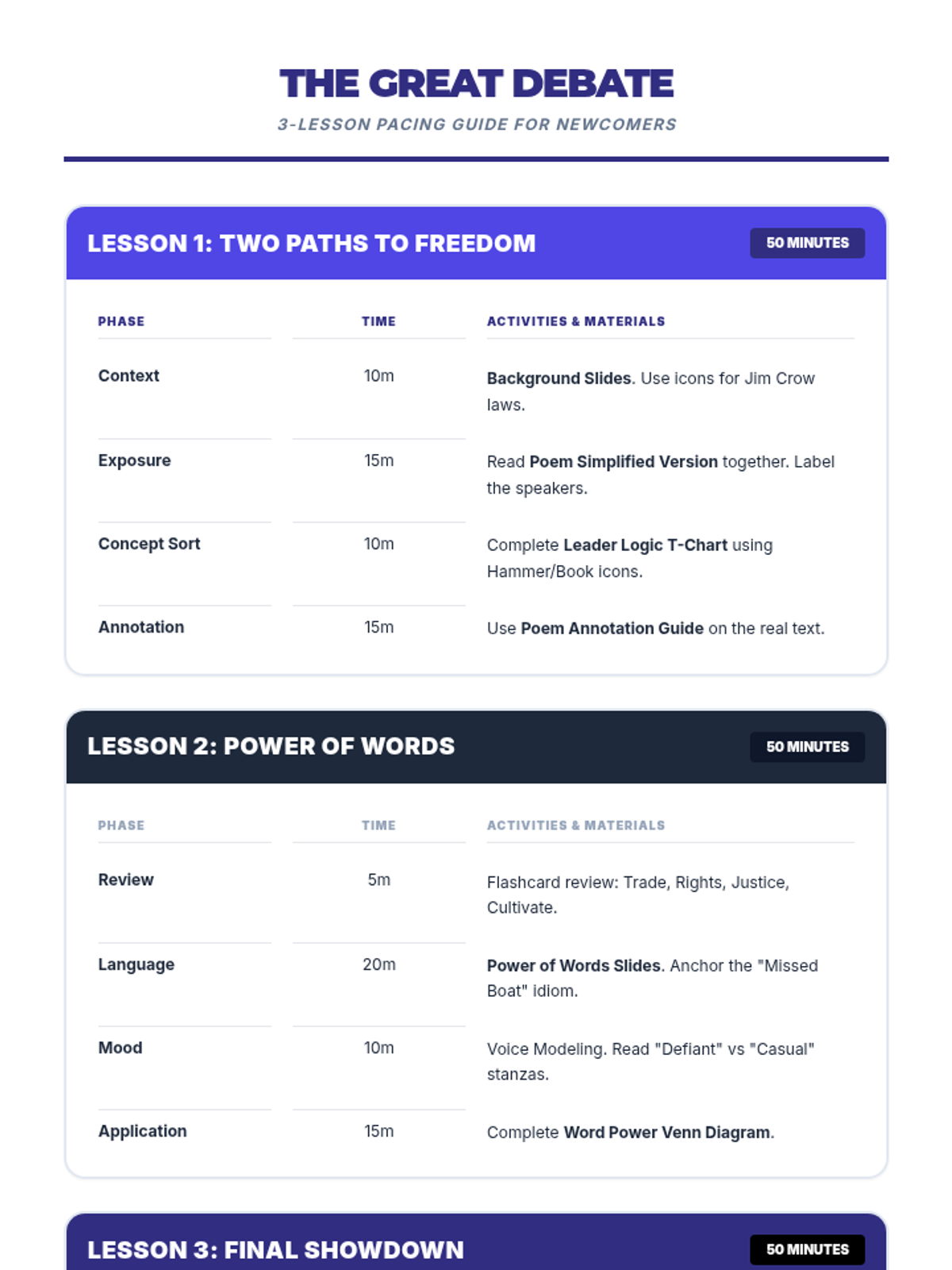
A structured pacing guide for teachers, updated to include the highly simplified poem version for ESL newcomers on Day 1.
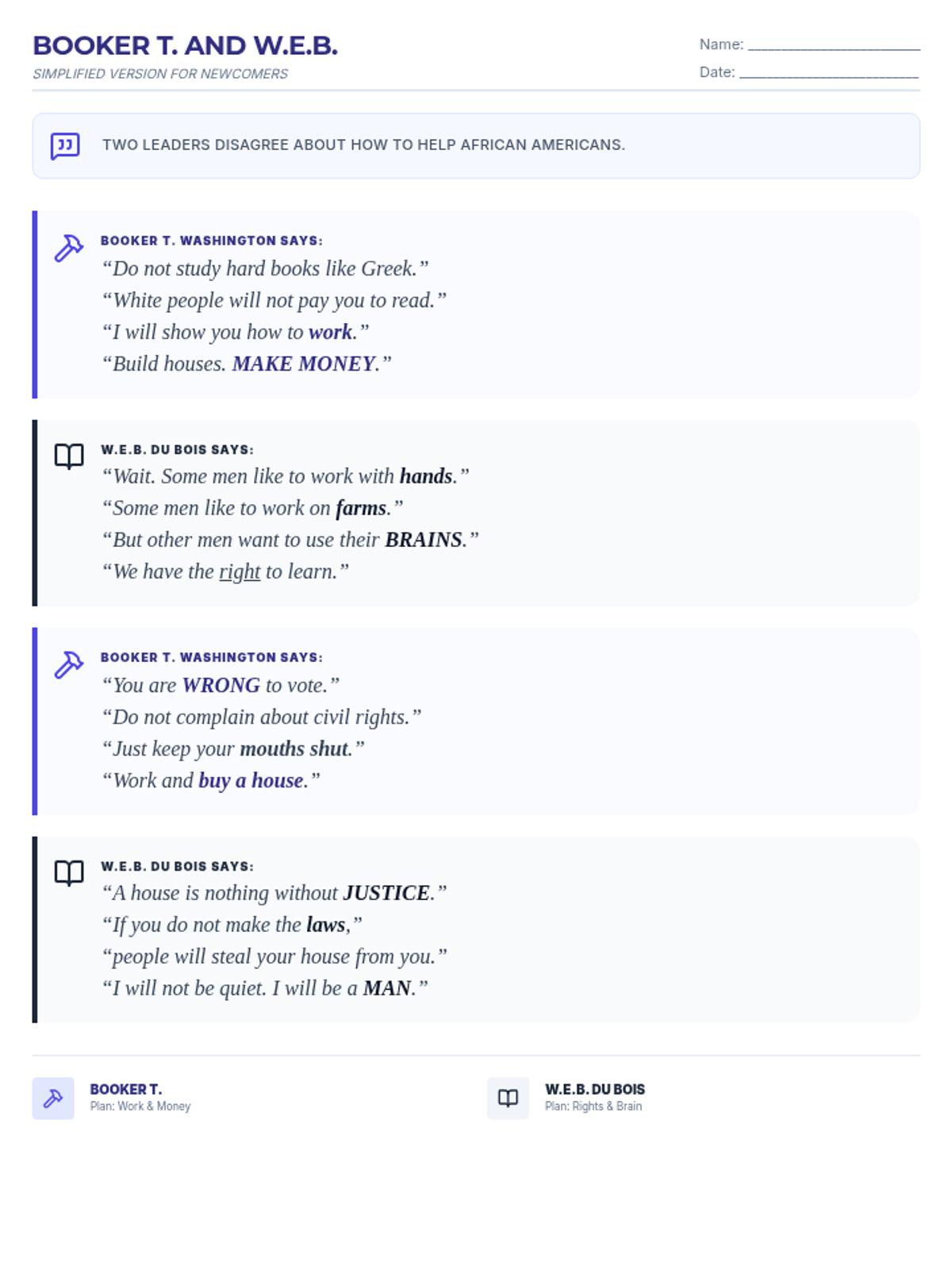
A highly simplified, newcomer-friendly adaptation of the poem "Booker T. and W.E.B." that uses basic English and visual anchors to convey the core debate.
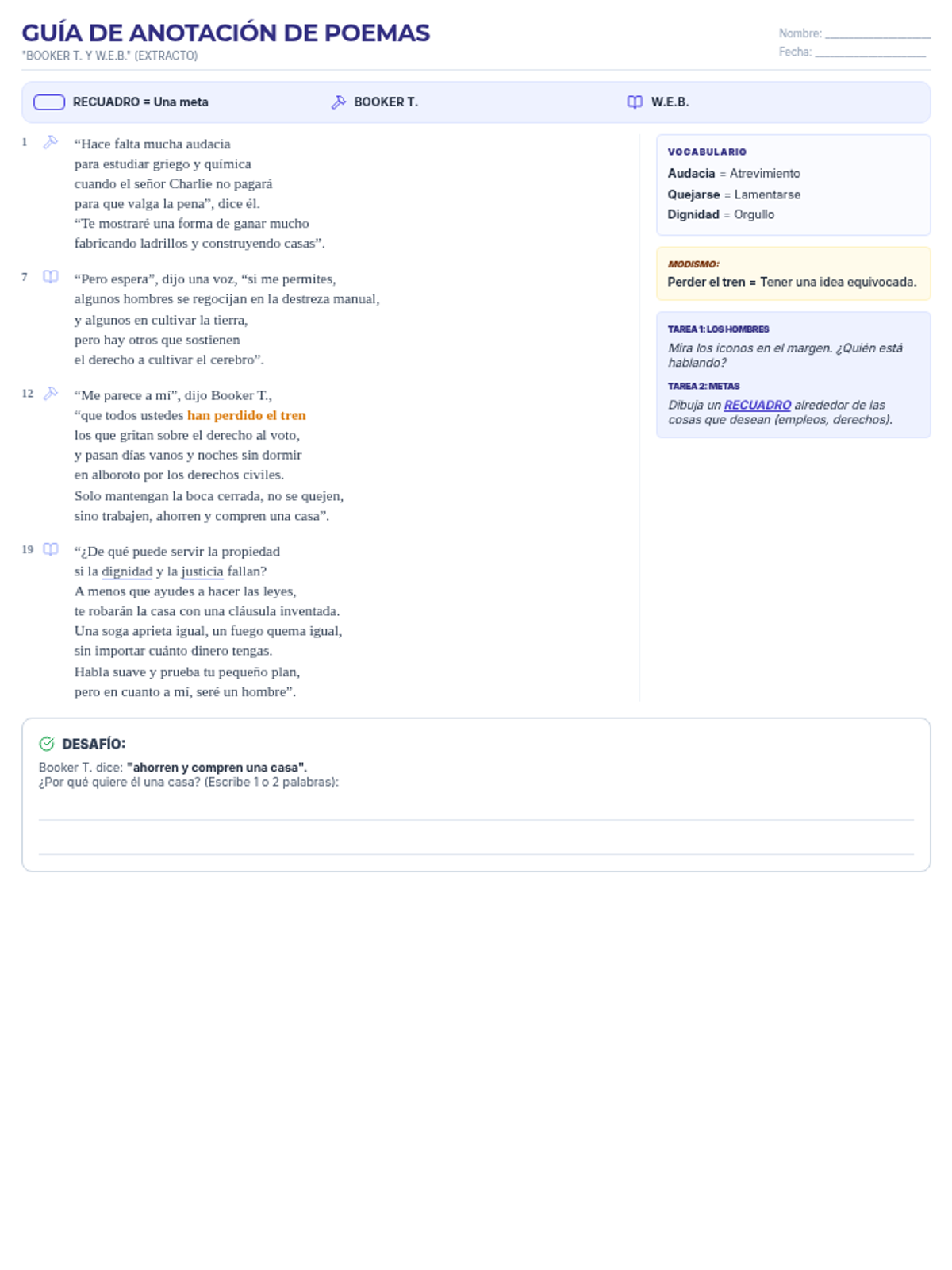
A simplified annotation guide for newcomer students to use with the poem, featuring visual symbols, vocabulary support, and specific annotation tasks.
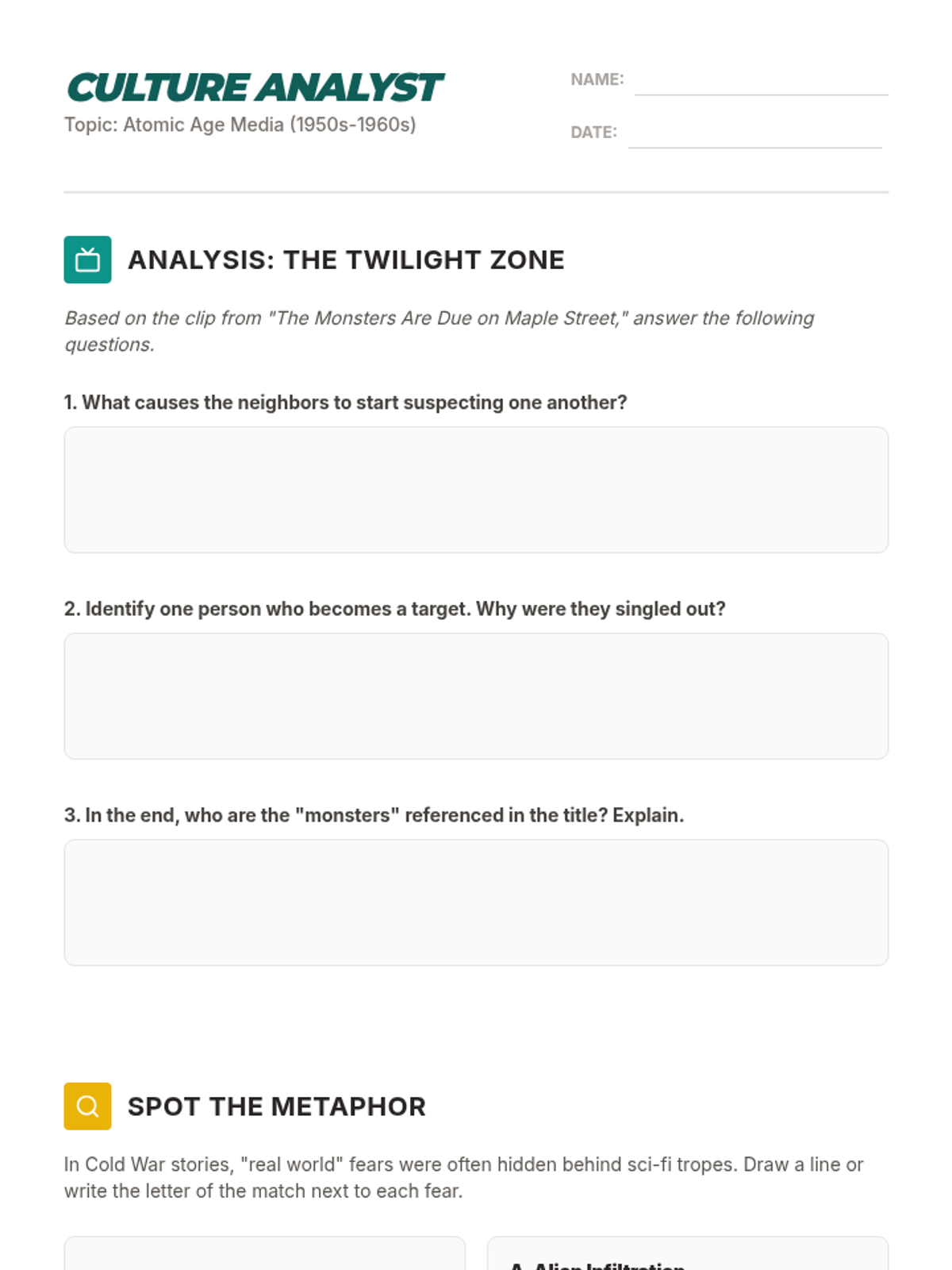
A student worksheet for analyzing Cold War culture, featuring questions on The Twilight Zone and a matching activity for media metaphors.
Visual slides for the Atomic Age Culture lesson, including a video embed of The Twilight Zone and sections on nuclear anxiety, sci-fi metaphors, and comic book censorship.