A simple, visually-driven lab report worksheet for Pre-K students to record their color mixing observations by coloring in results.
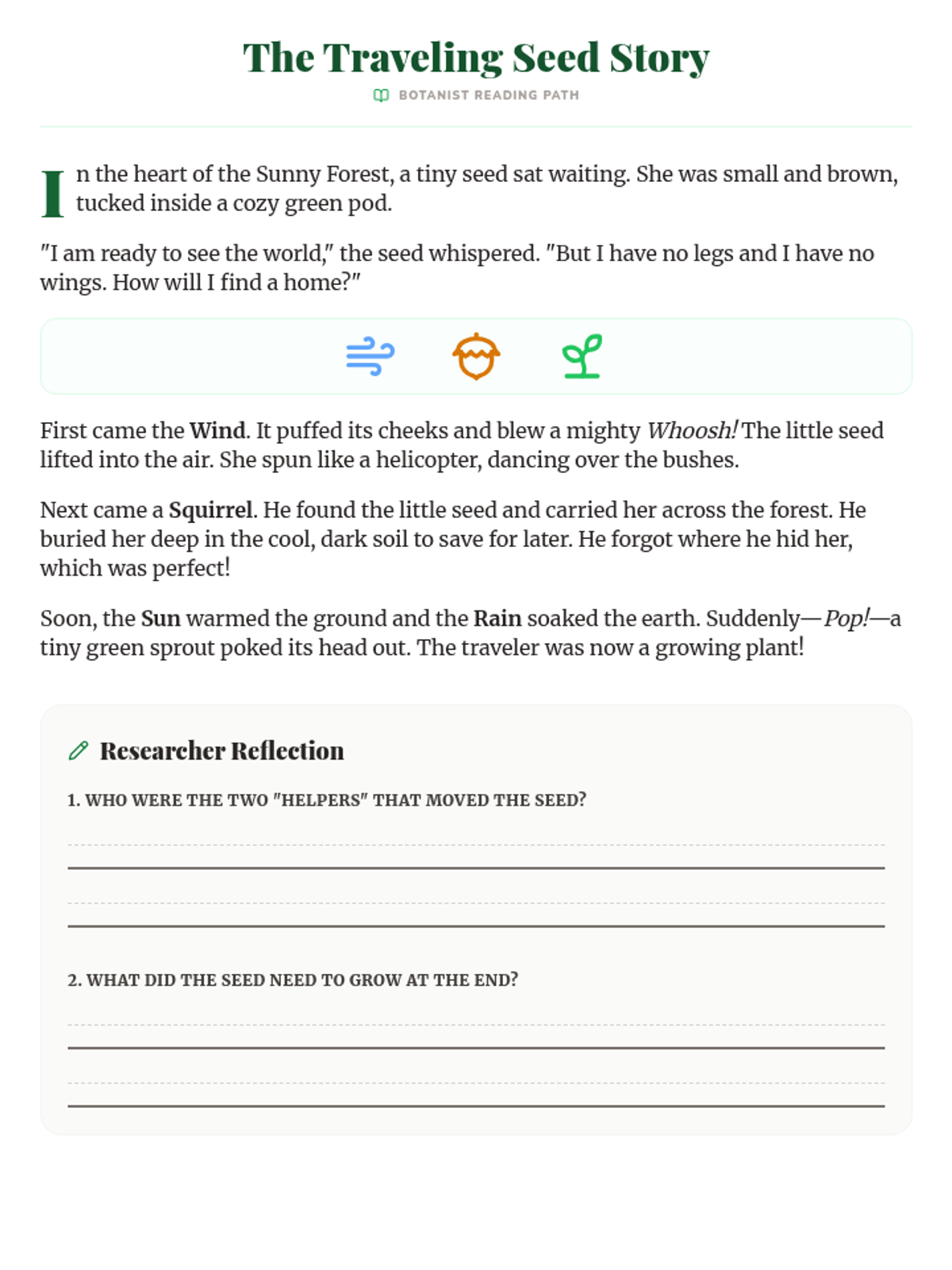
A reading passage about a seed's journey. Revised to fit a single page, provide massive handwriting spaces for young learners, and use clean Lucide icons.
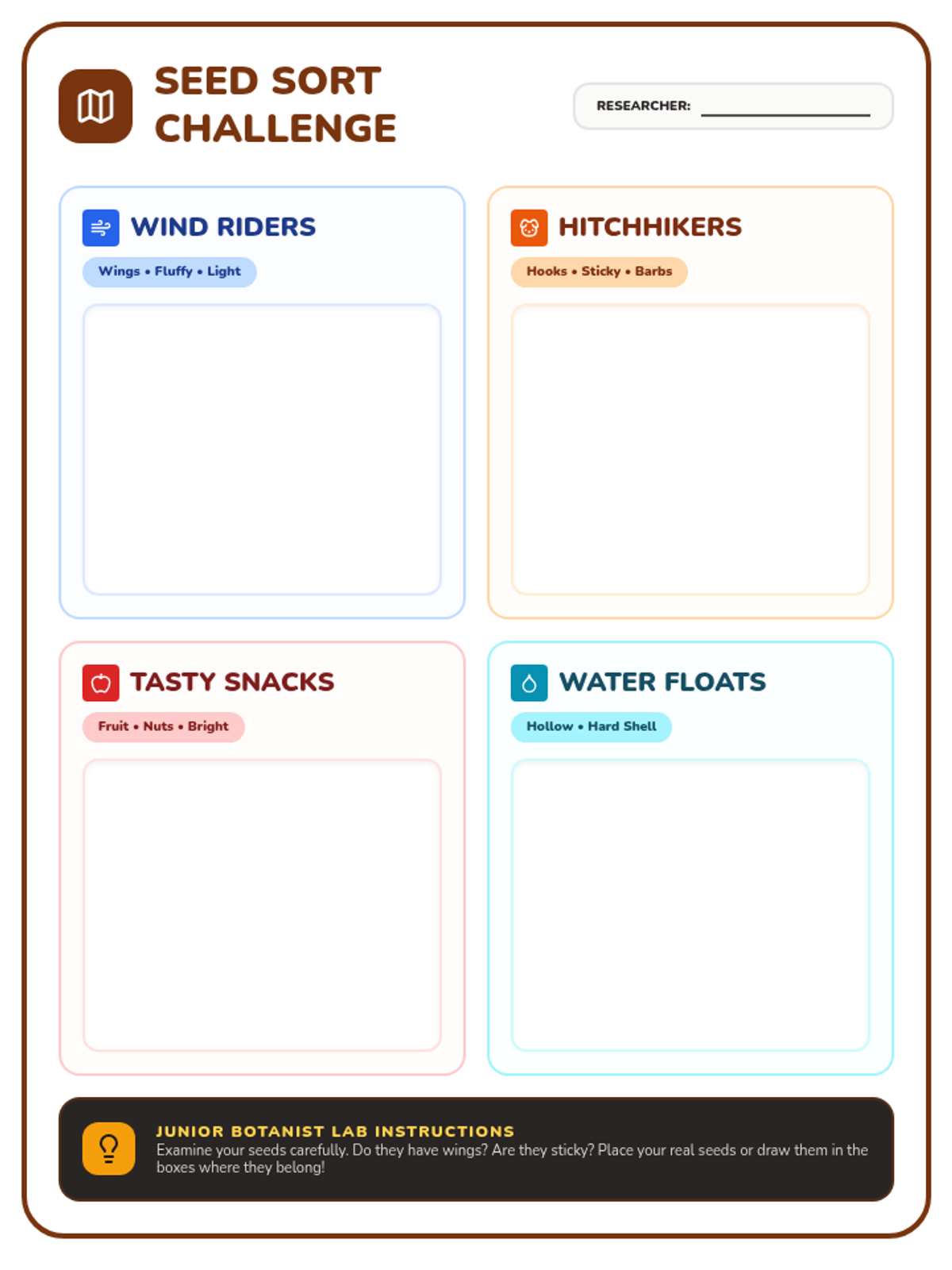
A hands-on sorting mat for students to categorize seeds. Revised for single-page print optimization, improved text contrast, and consistent work areas.
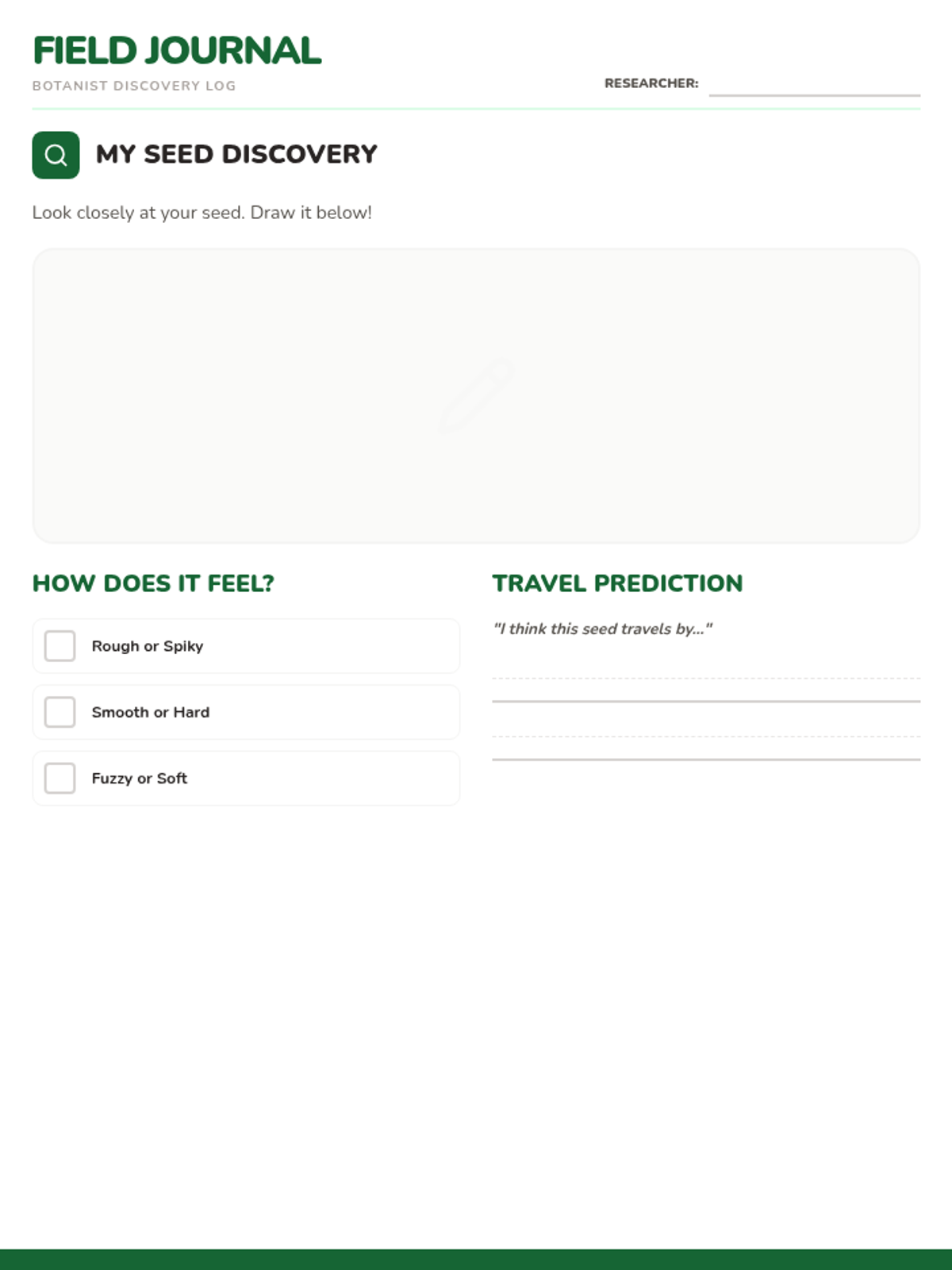
A student-facing field journal for recording seed observations and growth predictions. Revised with optimized printable layout, larger writing areas, and improved legibility for young students.
A visual presentation for students that explains the different ways seeds travel (wind, animals, snacks) and identifies the three essential conditions for plant growth (sun, water, soil). Revised with larger visuals and improved legibility.
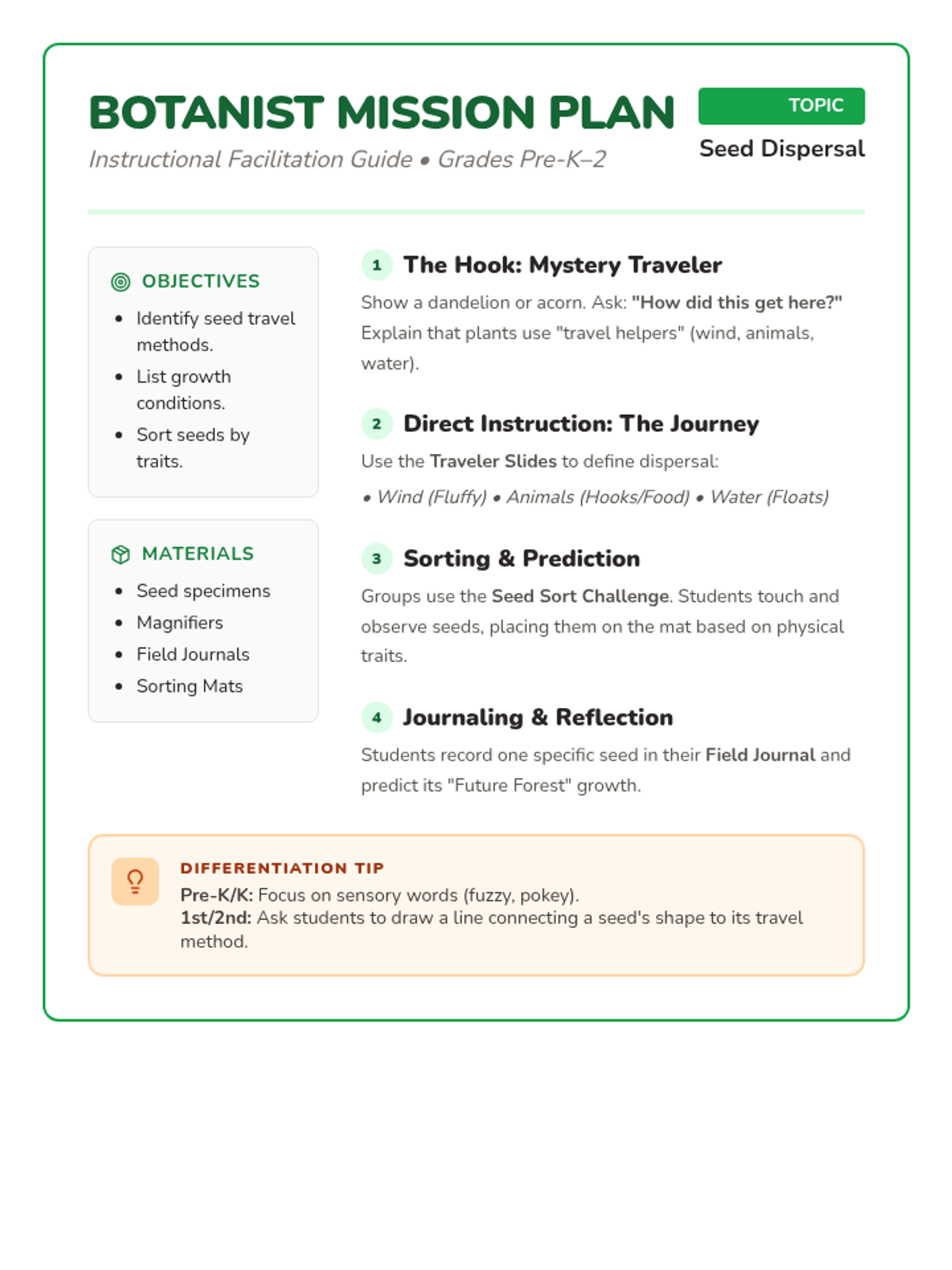
A comprehensive teacher's guide for 'The Great Seed Journey' lesson, including learning objectives, material lists, and a step-by-step instructional flow for exploring seed dispersal and plant growth. Revised for single-page layout.
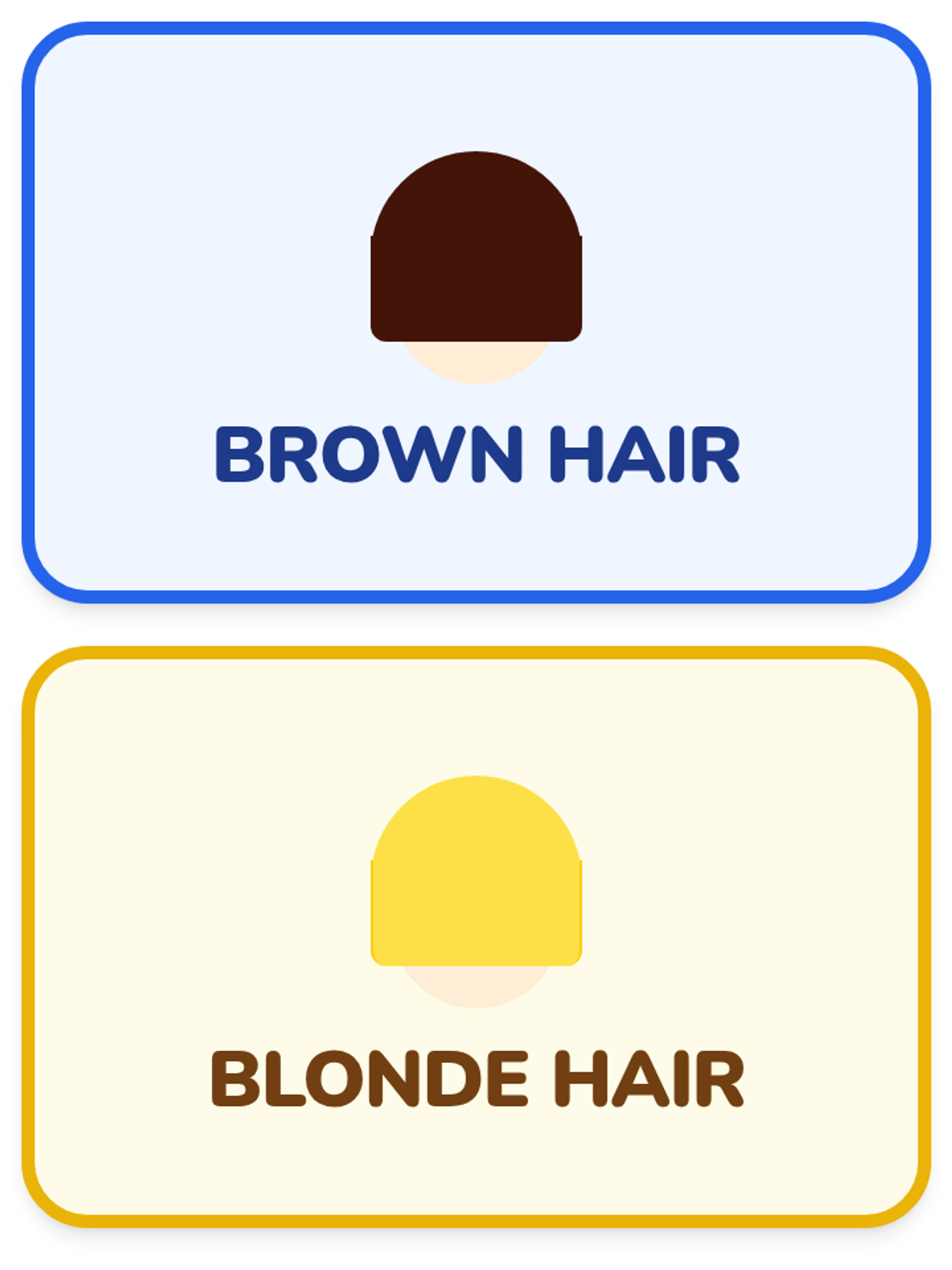
Large, printable visual aids for the teacher to use during circle time. These cards help preschoolers identify specific traits (hair colors, eye colors, clothing types) when looking for matches in the classroom.
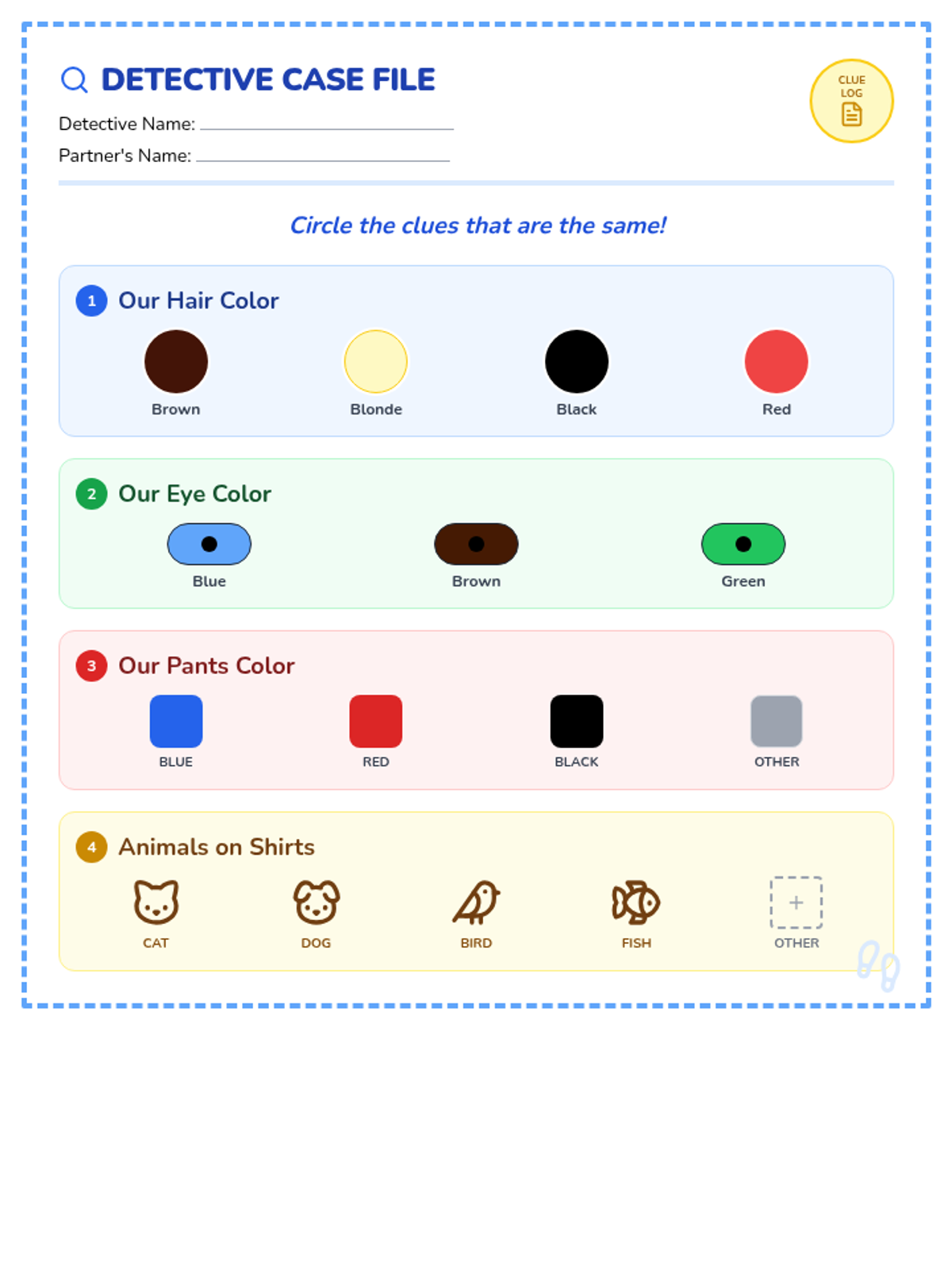
A student activity sheet designed for young preschoolers. It features large, clear icons and color-coded sections where students can circle matching physical and clothing traits they share with a partner.
A vibrant, highly visual slide deck used to introduce preschool students to the concept of physical traits. The presentation uses icons and simple color-coded examples to explain similarities in hair, eyes, and clothing.
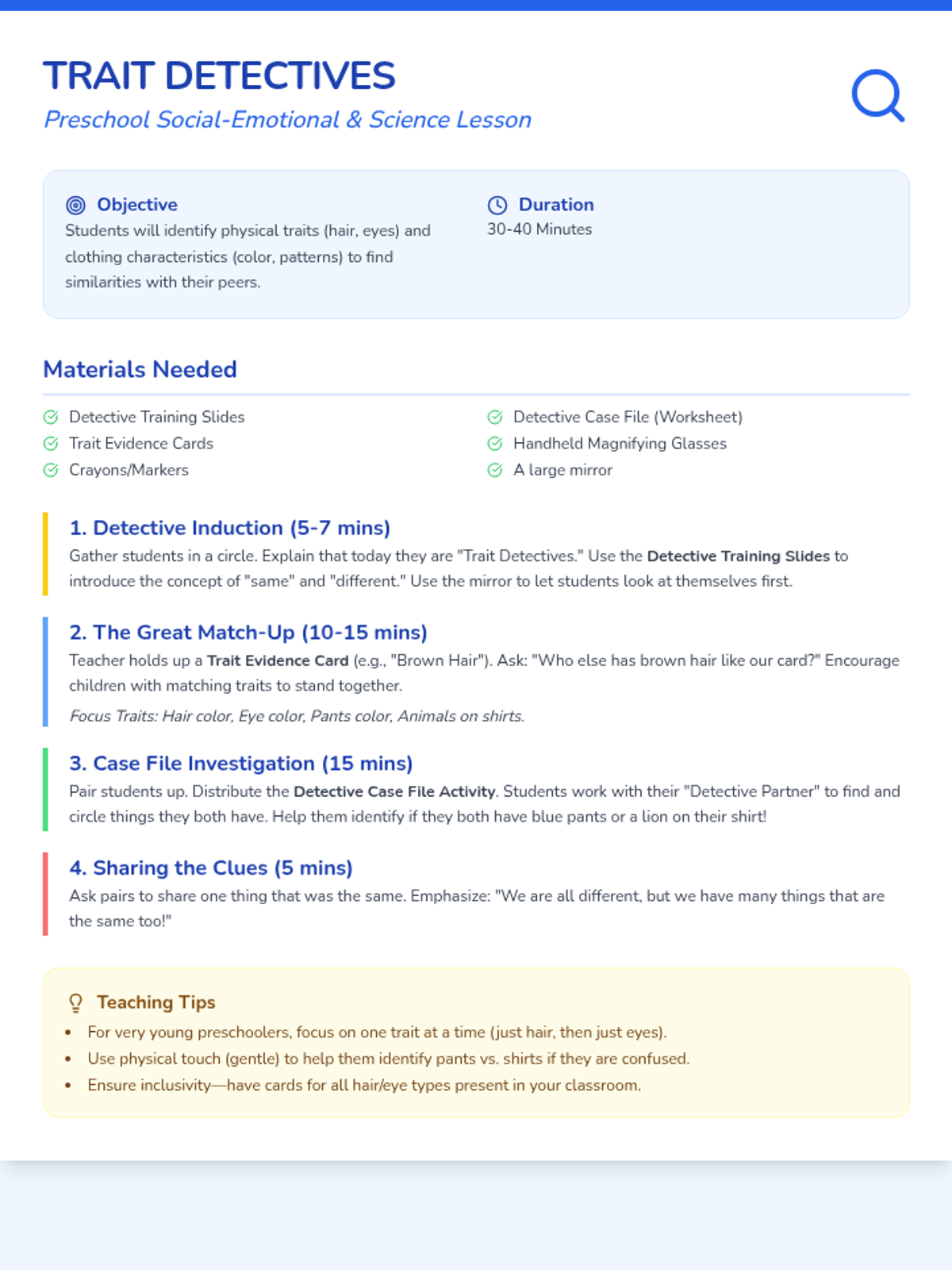
A detailed teacher's guide for the 'Trait Detectives' lesson, featuring learning objectives, a step-by-step instructional flow, and practical classroom management tips for young preschoolers.
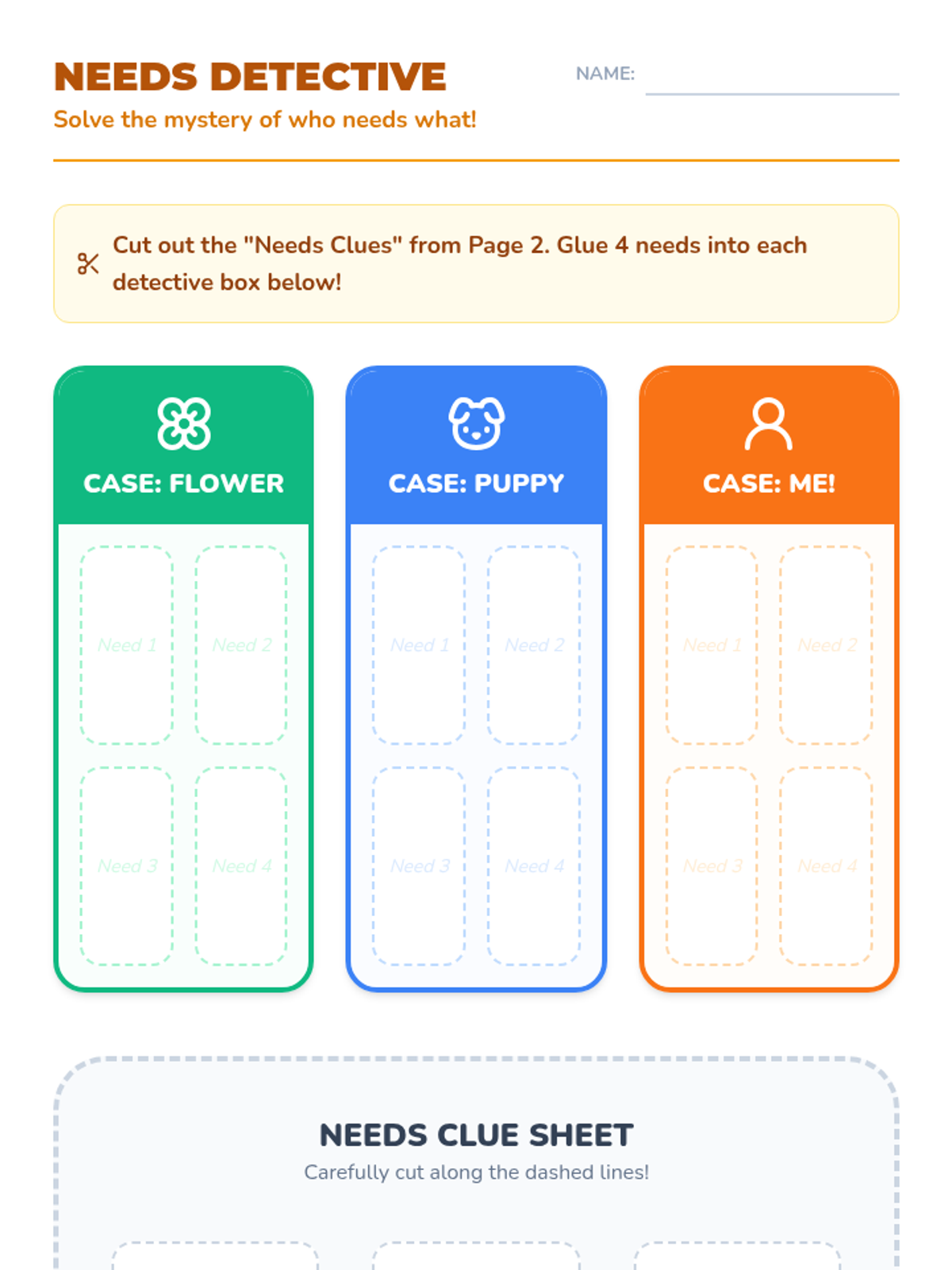
A sorting activity where students cut and paste different needs (sunlight, food, water, air, soil, and shelter) into categories for plants, animals, and humans.
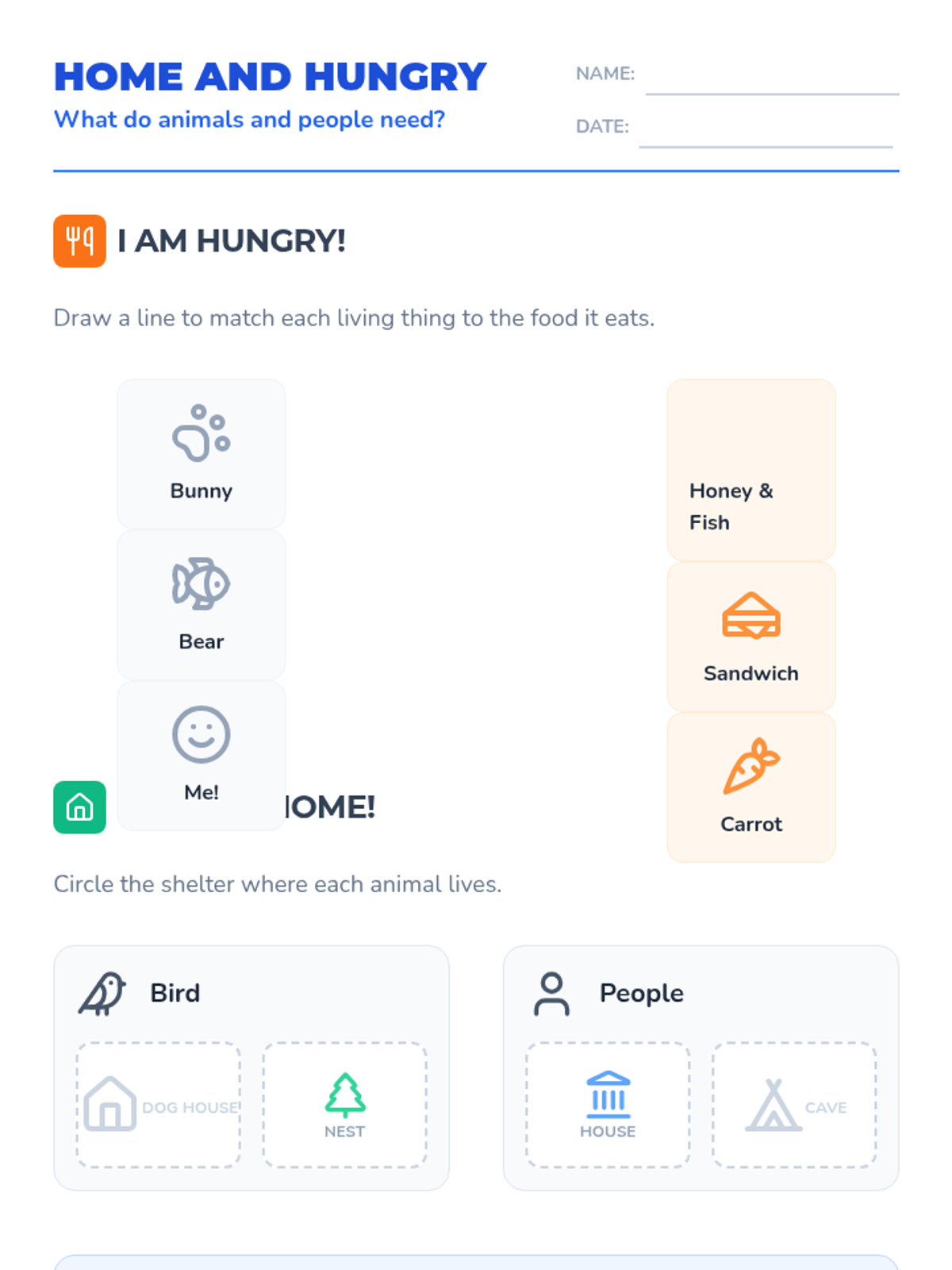
A matching and circling worksheet for Day 2 where students connect animals to their food sources and identify appropriate shelters for survival.
Visual slides for Day 2 exploring the survival requirements of animals and humans, including food, water, air, and shelter.
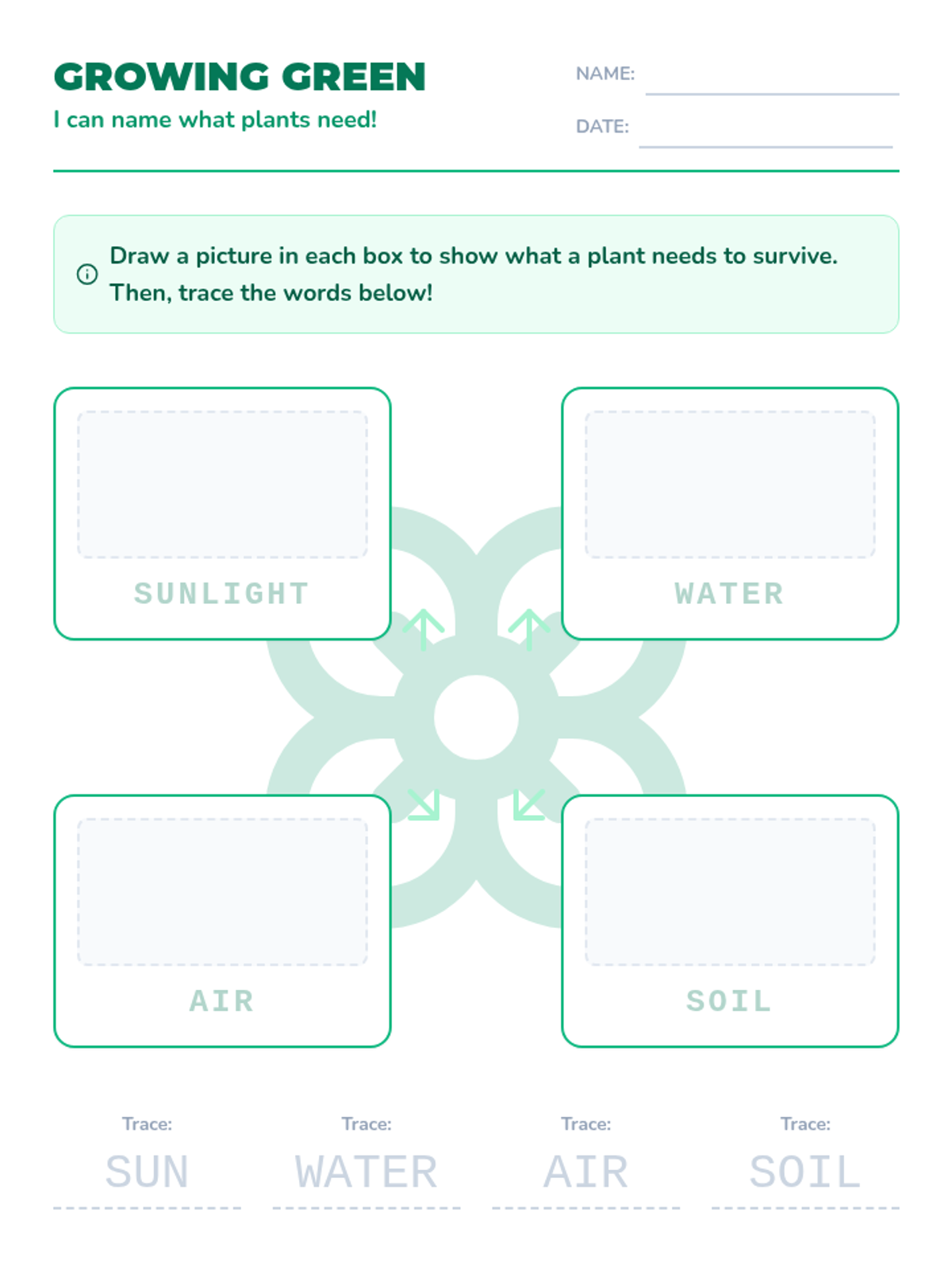
A student worksheet for Day 1 where students draw and identify the four essential needs of plants (sunlight, water, air, and soil) around a central flower image.
Visual slides for Day 1 introducing the four primary needs of plants (sunlight, water, air, and soil) with engaging icons and simple text.
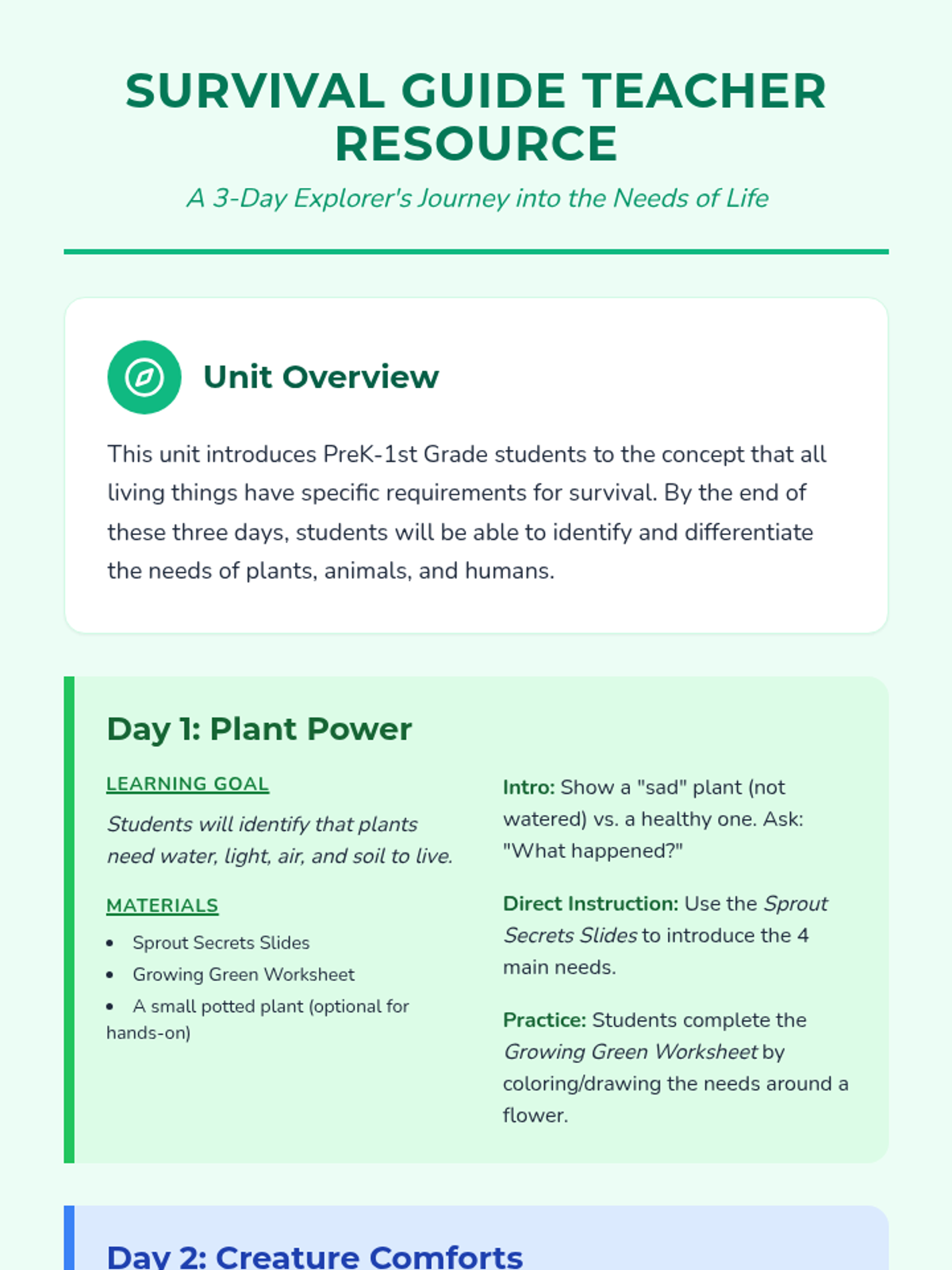
A sequence-wide guide for teachers, detailing the learning objectives, required materials, and daily instructional flow for the 3-day Life Essentials unit.
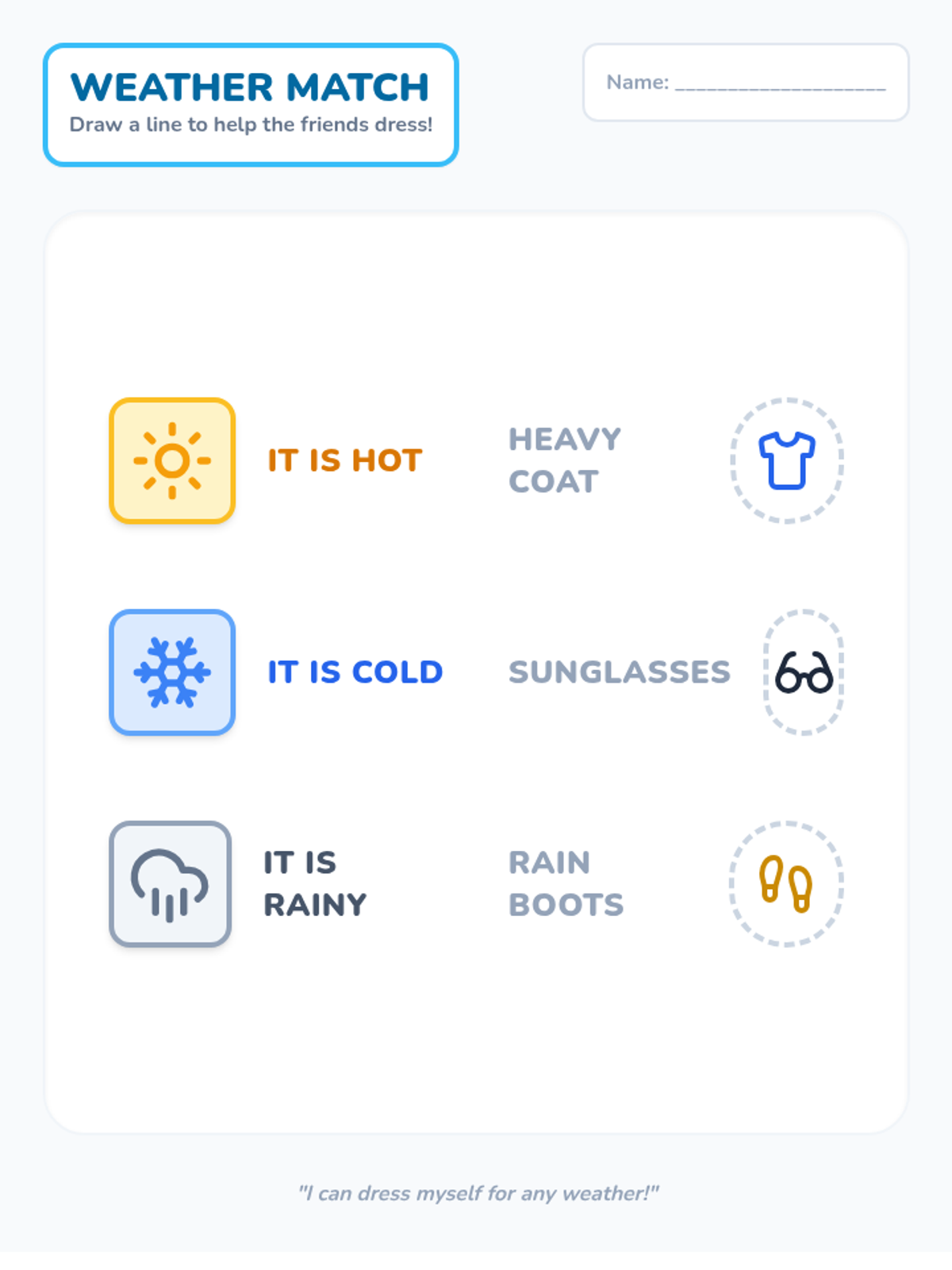
A matching worksheet for early learners to connect weather icons (Hot, Cold, Rainy) with the correct clothing items (Sunglasses, Coat, Boots).
A colorful visual presentation covering 4 days of weather types (Hot, Cold, Warm, Rainy) and the corresponding clothing choices. Features large icons and clear text for young learners.
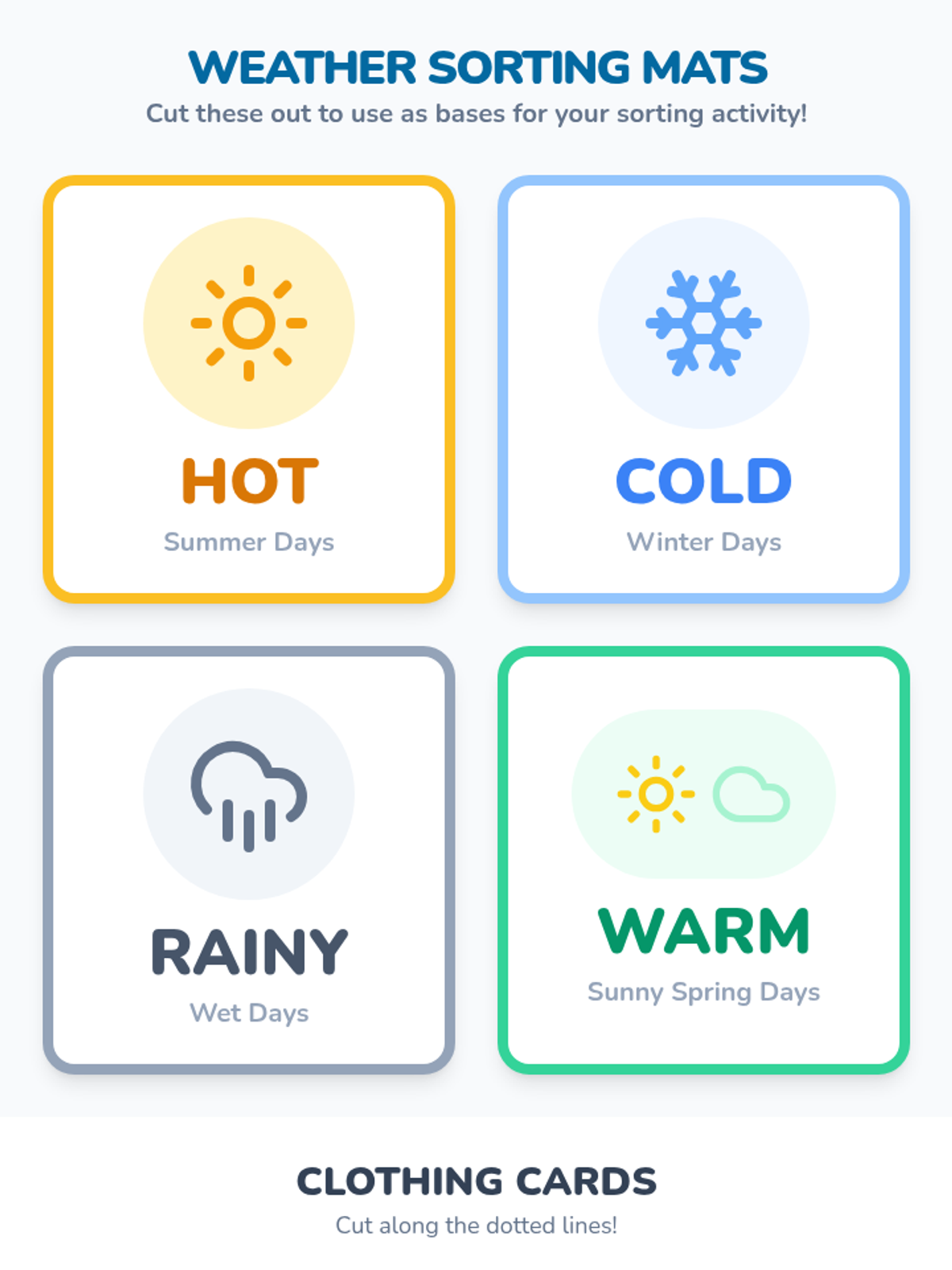
A set of printable weather mats (Hot, Cold, Rainy, Warm) and 12 individual clothing item cards for students to cut and sort as a hands-on learning activity.
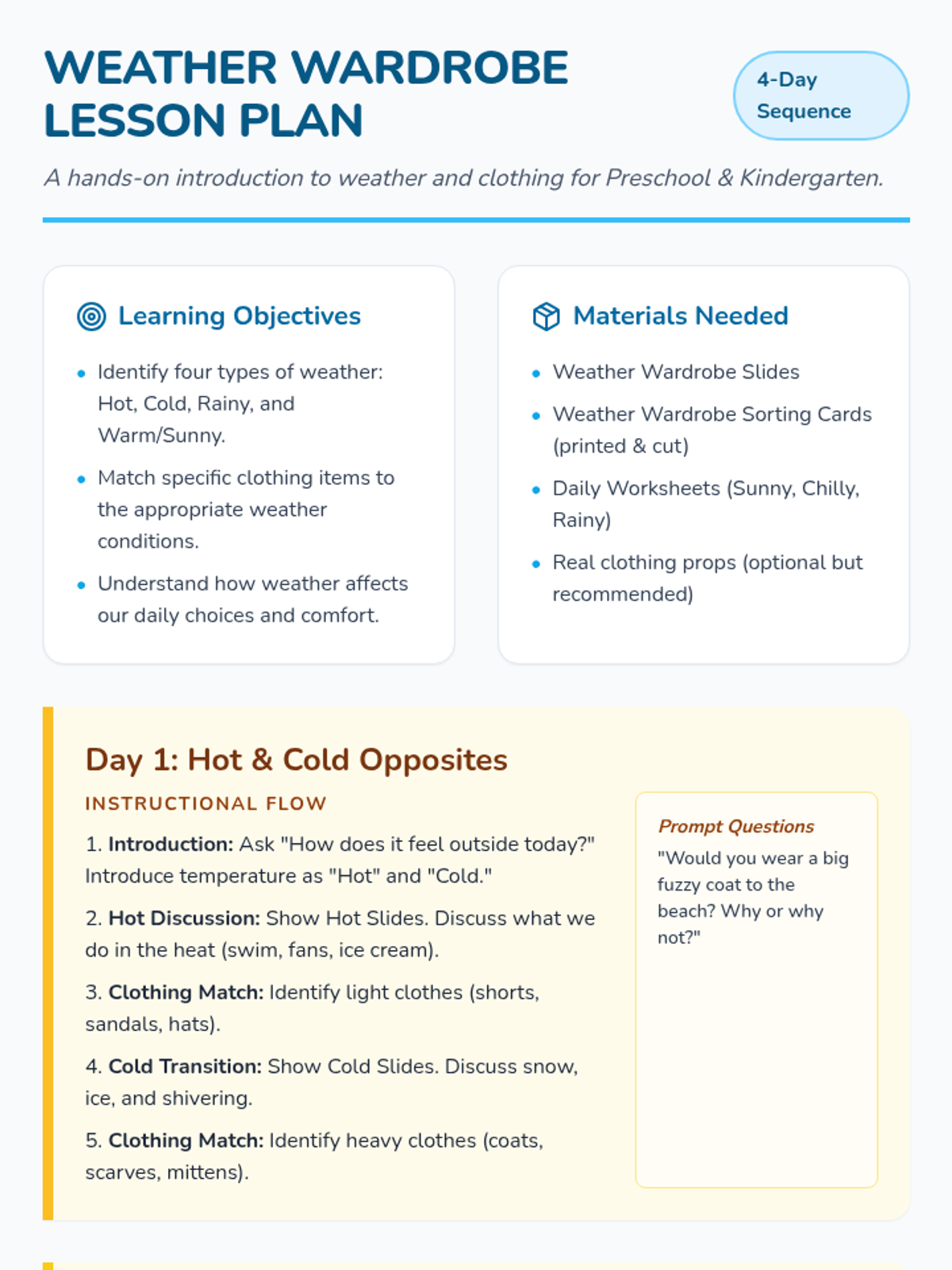
A comprehensive 4-day teacher's guide outlining instructional flows, discussion prompts, and activities for teaching weather-appropriate clothing to preschool and kindergarten students.
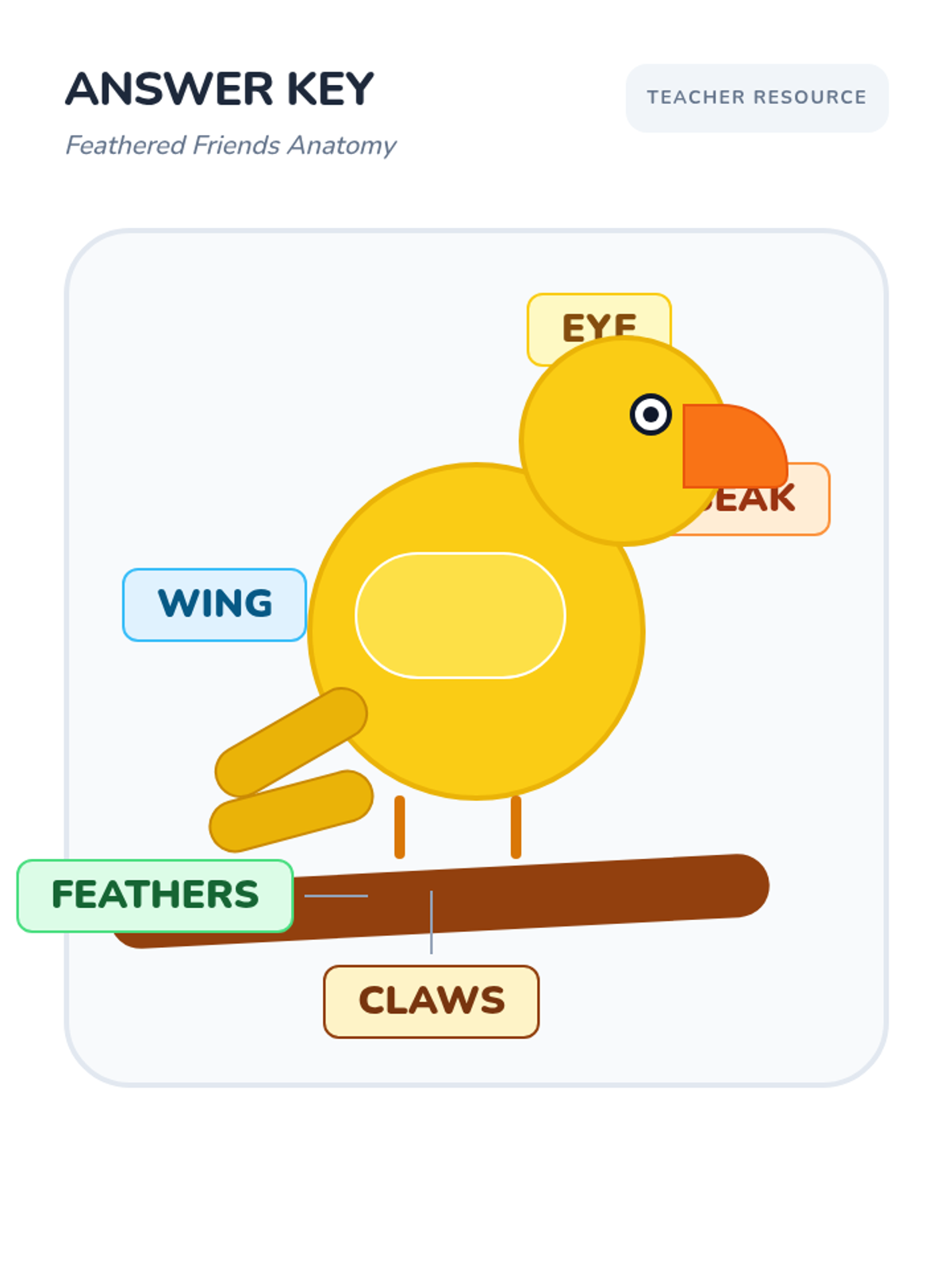
The teacher answer key for the bird anatomy labeling activities, showing the correct placement of all five body parts.
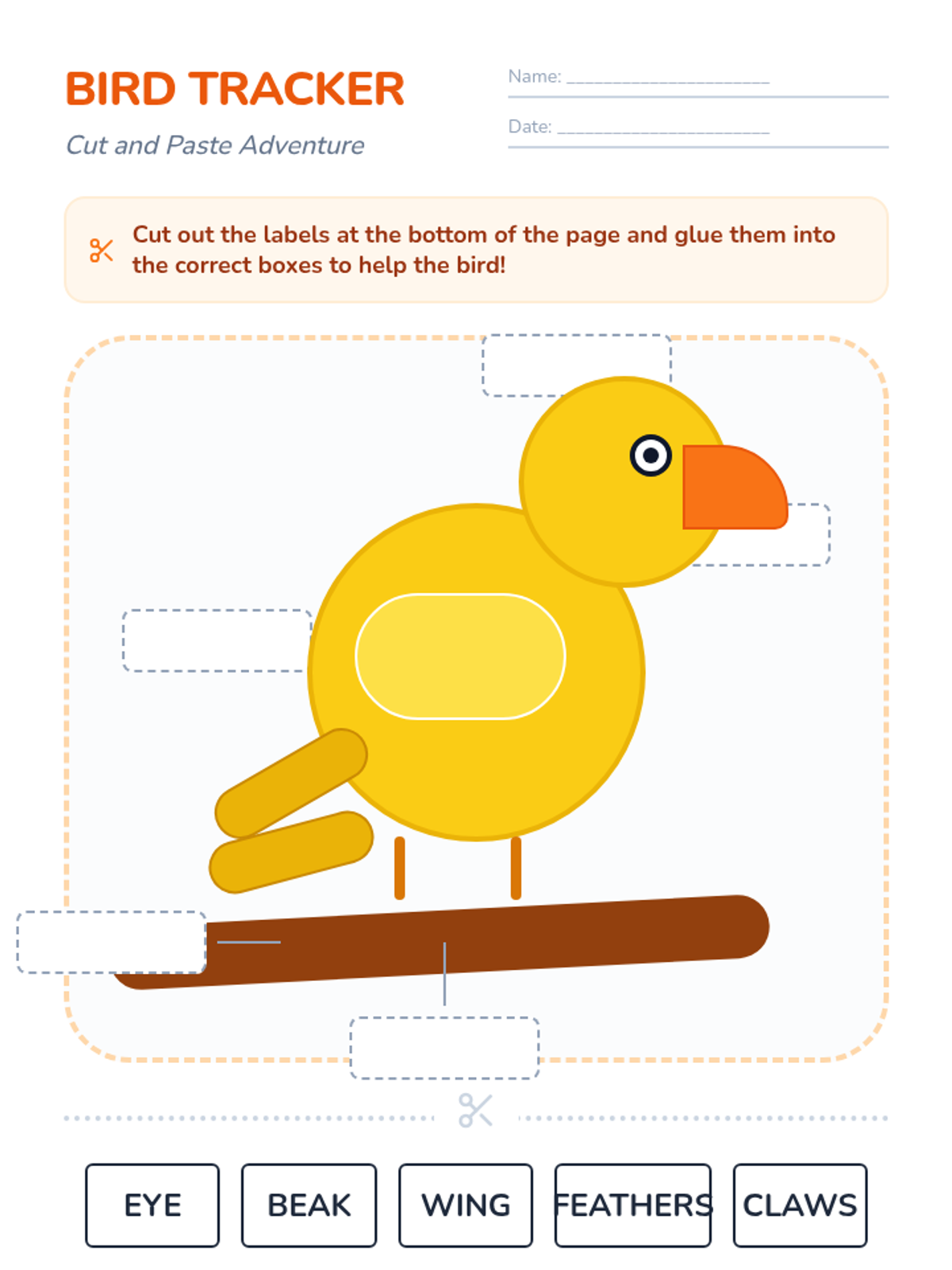
A cut-and-paste labeling activity where students cut out five body part names and glue them into the correct spots on a bird diagram.
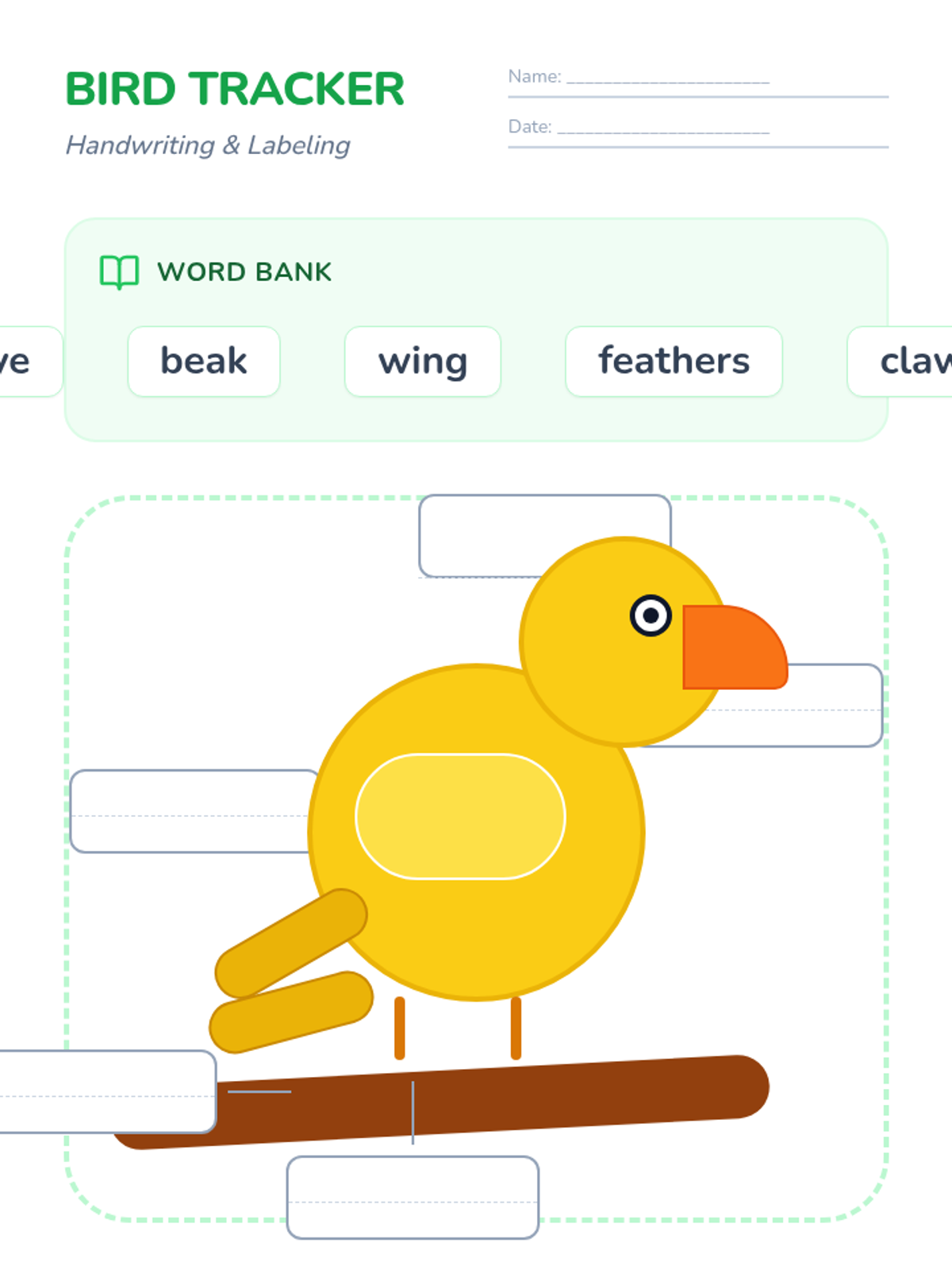
A handwriting worksheet where students use a word bank to label five bird body parts (eye, beak, wing, feathers, and claws) using primary writing lines.
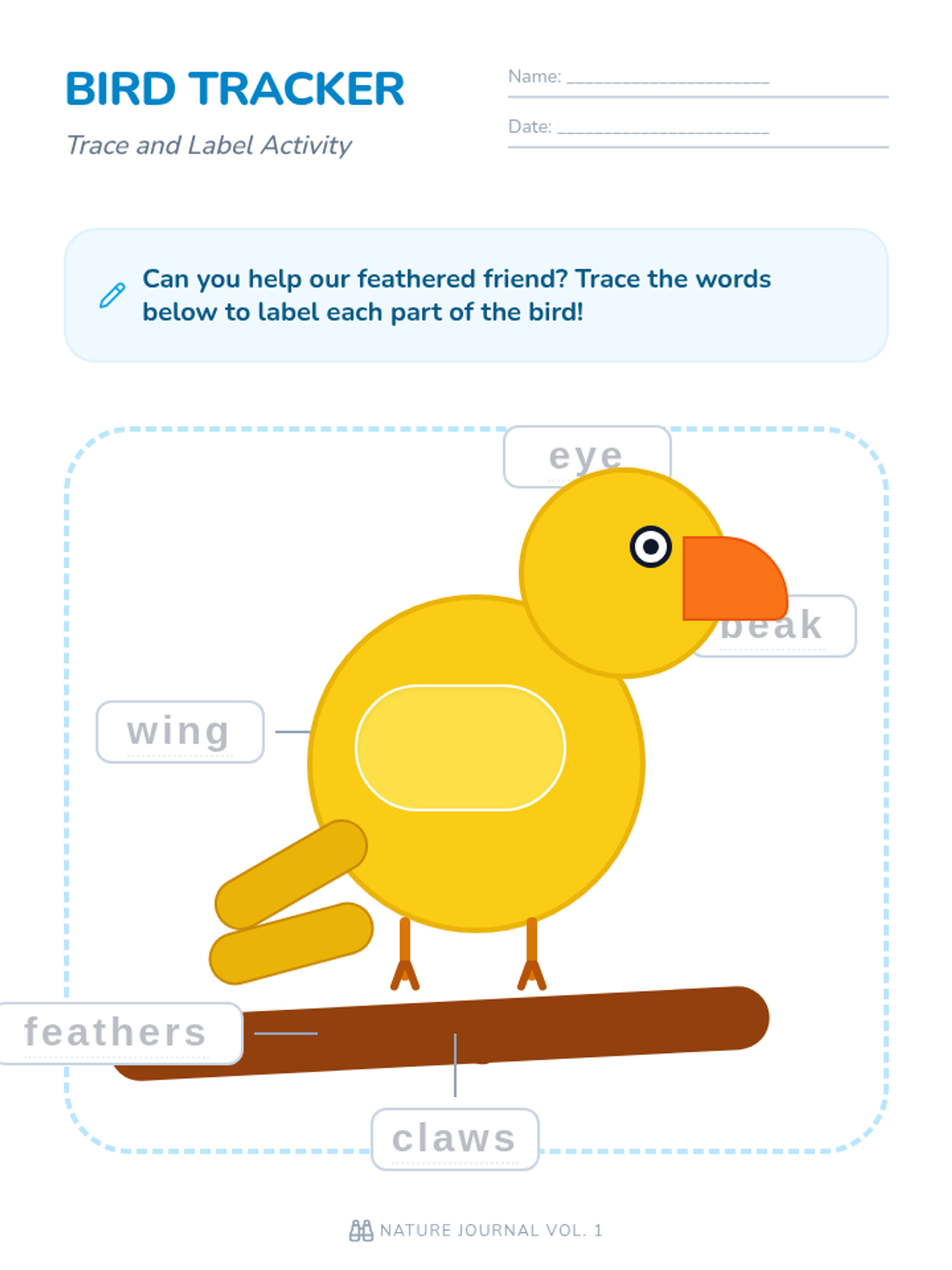
A traceable labeling worksheet where students trace the names of five bird body parts (eye, beak, wing, feathers, and claws) to complete a bird diagram.
A bright and engaging slide deck introducing students to five key bird body parts: eye, beak, wing, feathers, and claws, featuring large icons and fun facts.
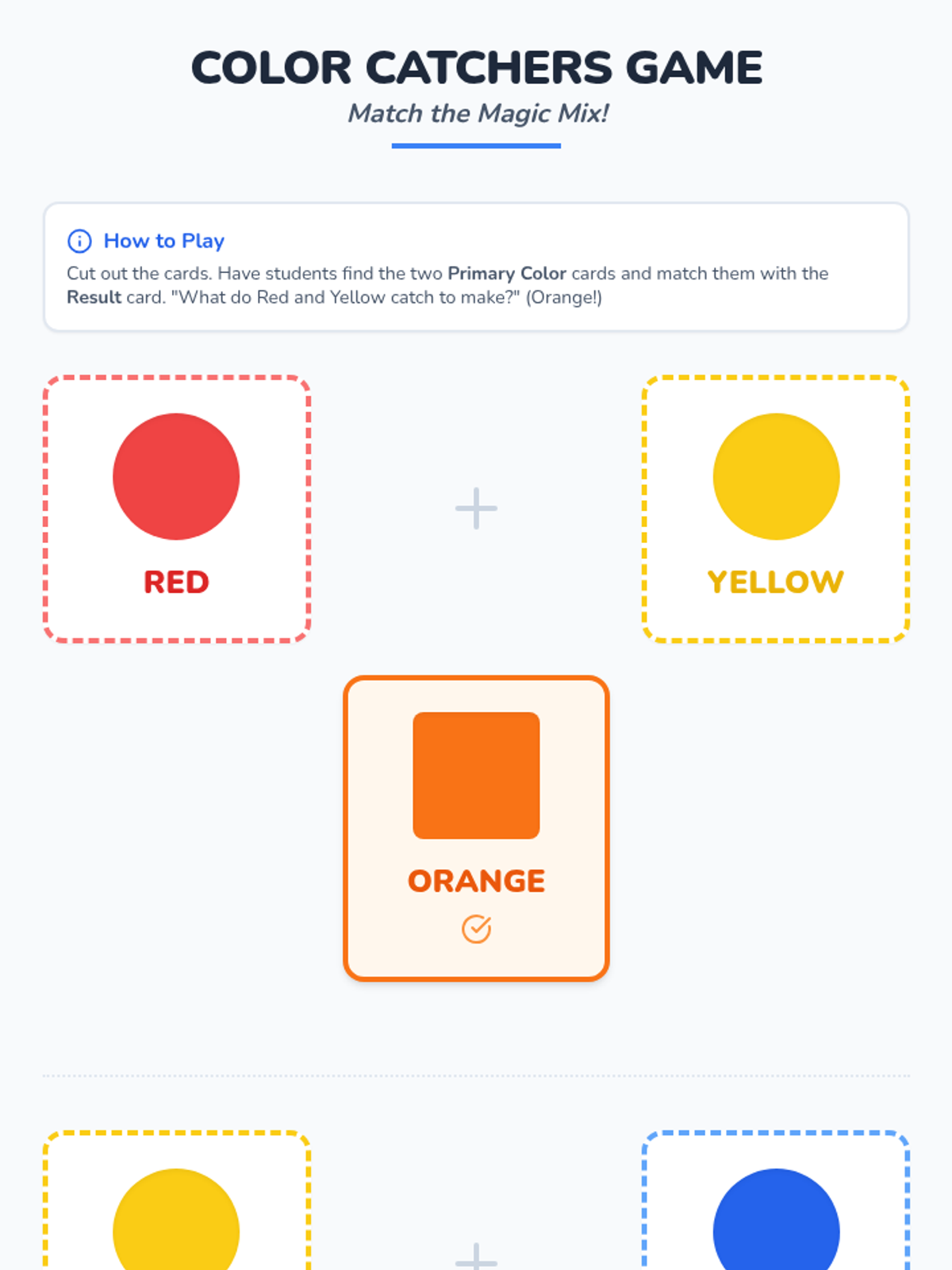
A set of vibrant matching cards for a hands-on color mixing game, helping Pre-K students visually connect primary color combinations with their secondary color results.
A vibrant, high-contrast slide deck designed for Pre-K instruction, introducing primary colors and the excitement of color mixing through engaging visuals.
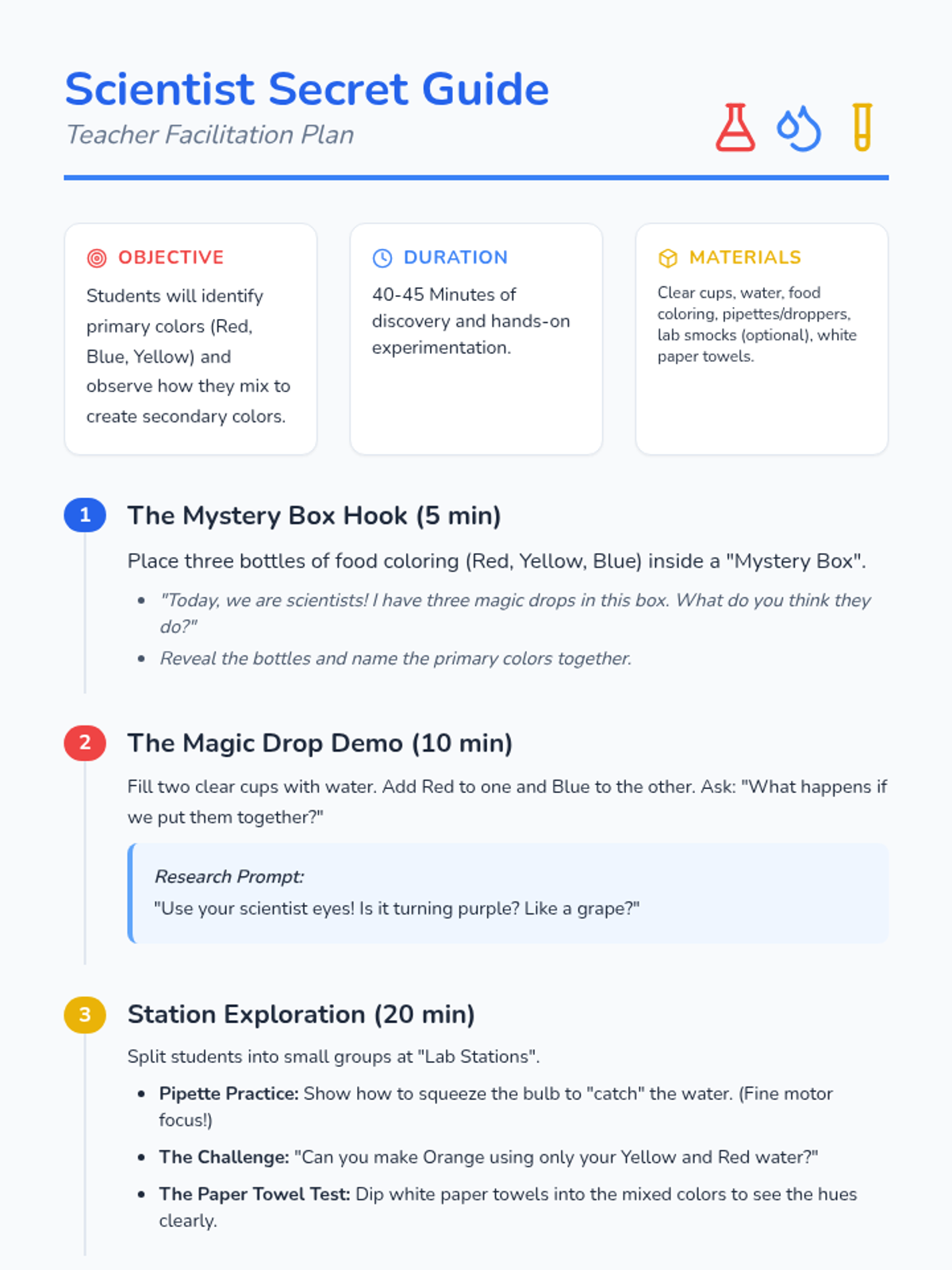
A comprehensive teacher guide for leading a Pre-K color mixing science lesson, featuring learning objectives, step-by-step procedures, and differentiation strategies.
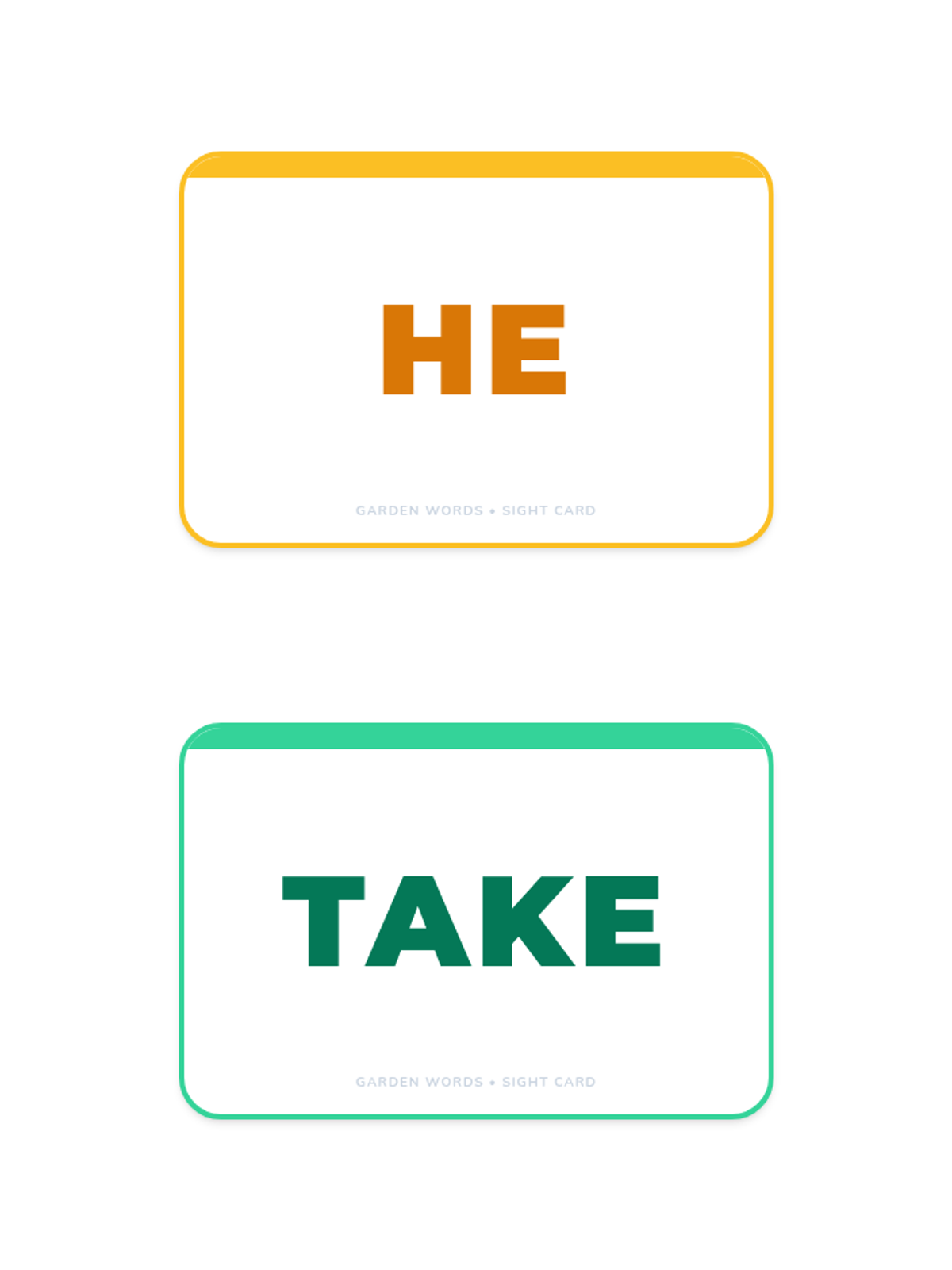
A set of 4x6 inch sight word flashcards featuring the words: he, take, red, into, and, will, small, grow, should, and green, with corresponding visual cards.
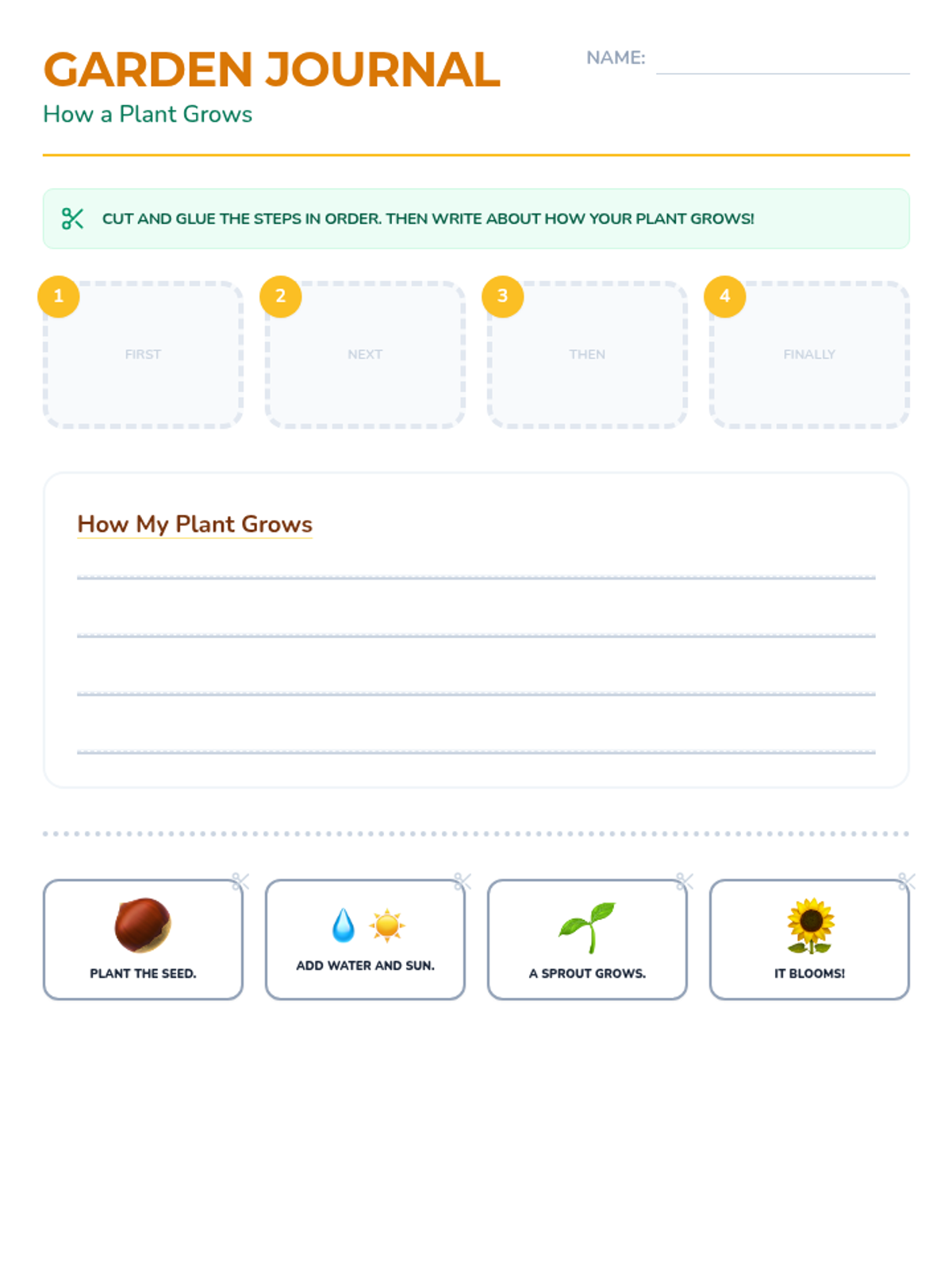
A sequencing and writing worksheet where students cut and paste the steps of plant growth in order before writing their own description of the process.
A version of the plant growth reflection worksheet that includes a pre-printed sentence starter to scaffold student writing.
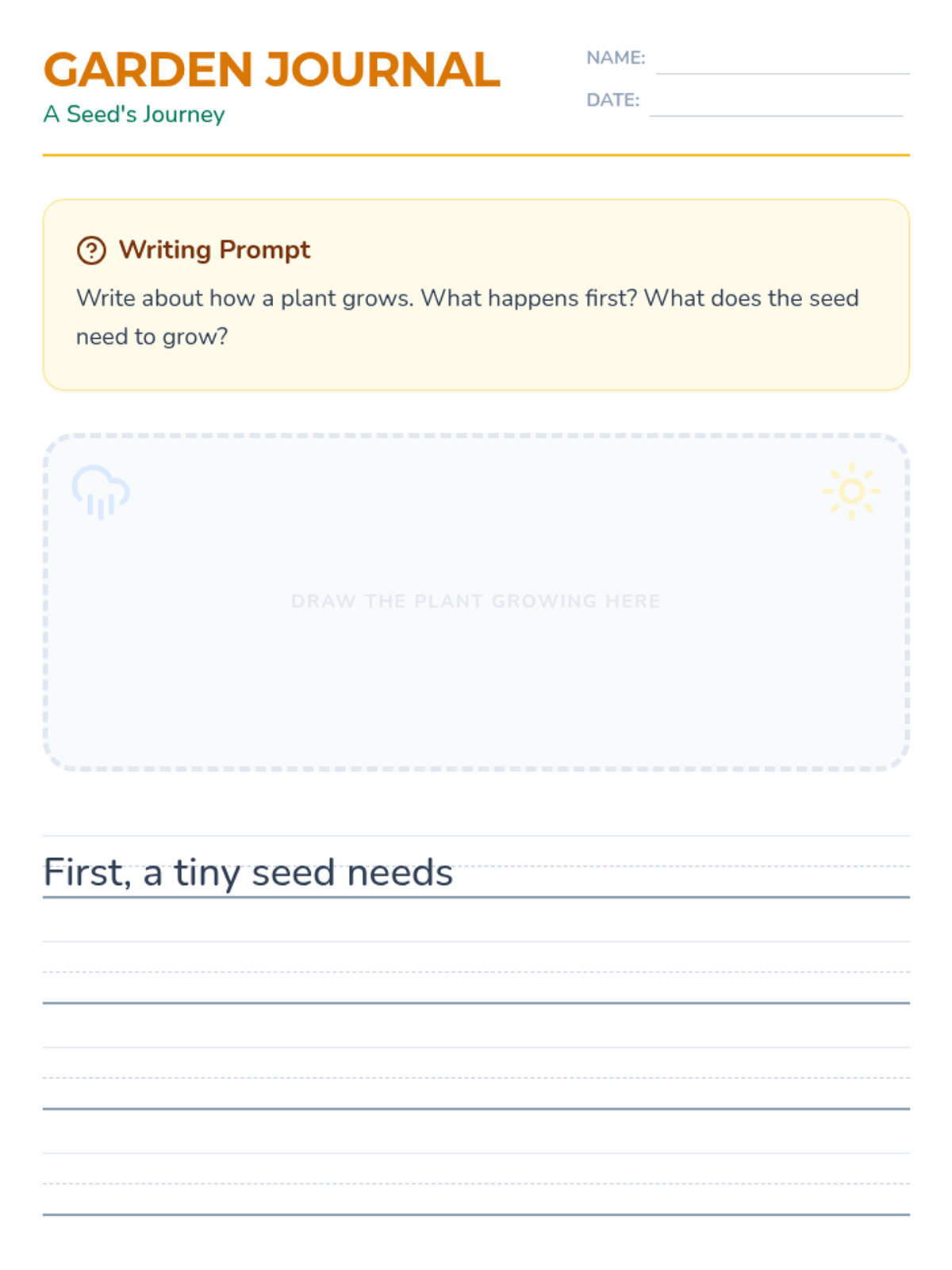
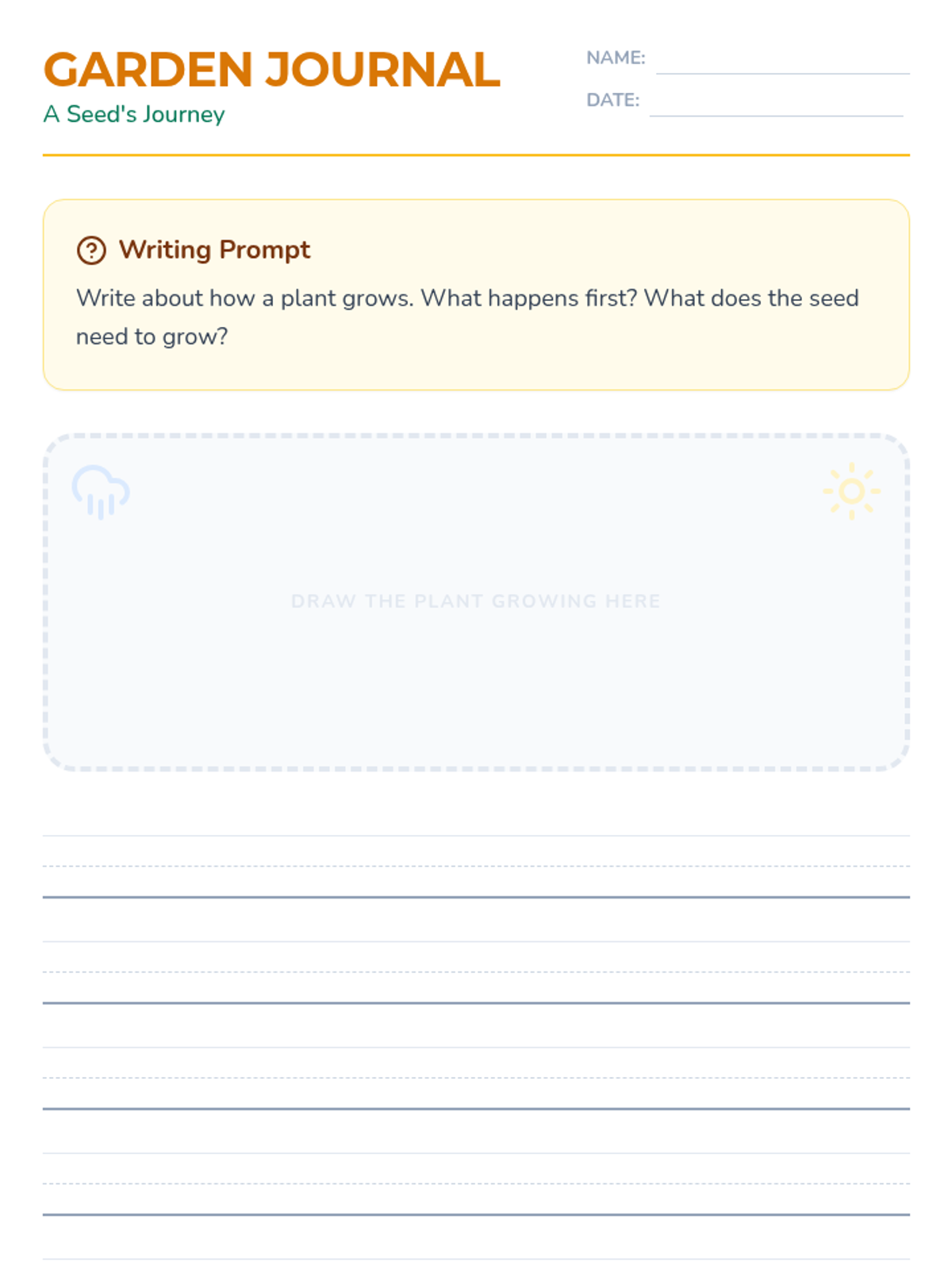
A writing activity where students describe the process of plant growth, including what happens first and what a seed needs to grow, with space for an illustration and a helpful word bank.
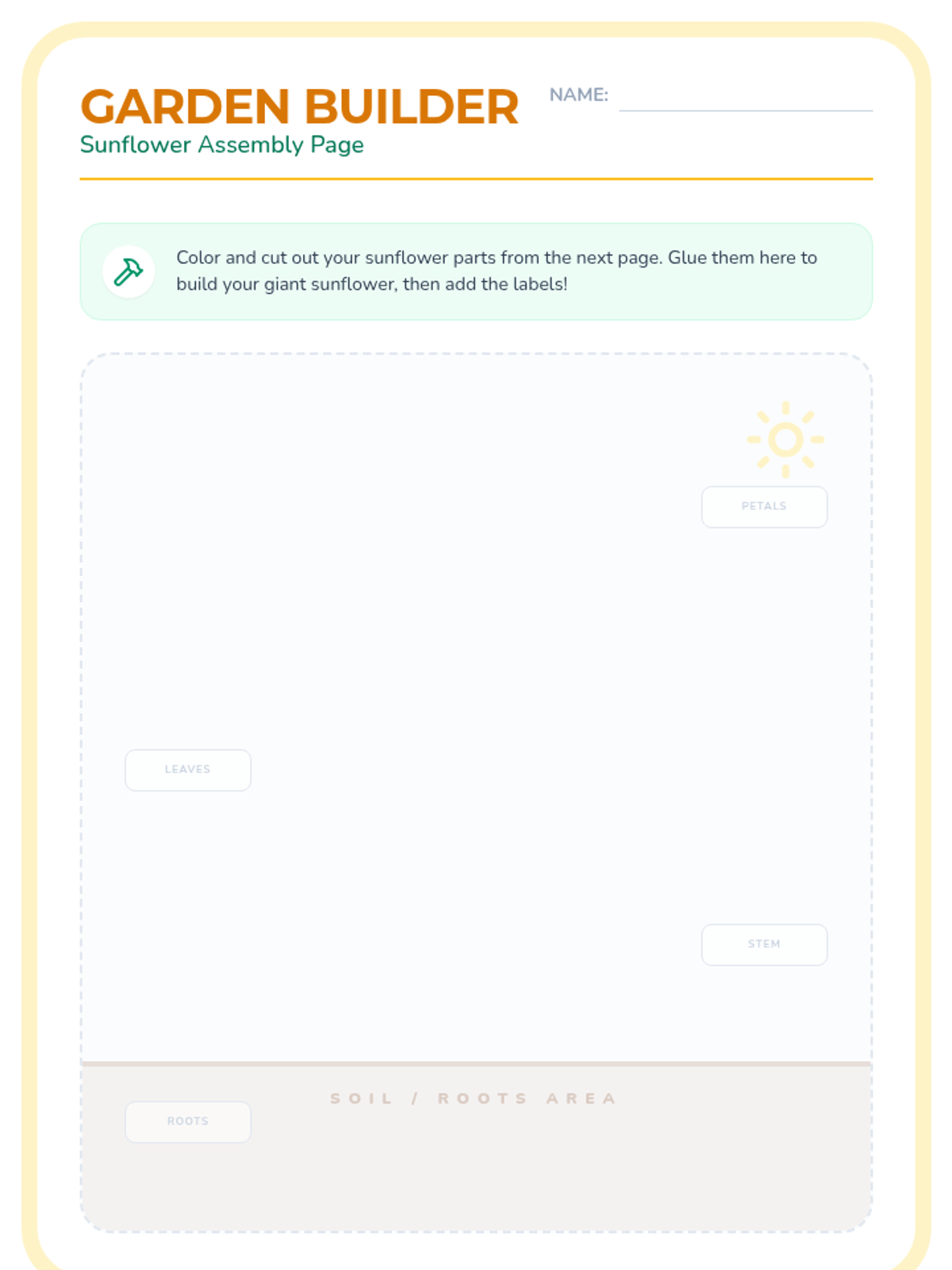
A build-your-own sunflower craft activity where students cut out and assemble a sunflower (petals, stem, leaves, roots) before applying labels to identify the different parts. The parts now feature detailed outlines perfect for coloring.
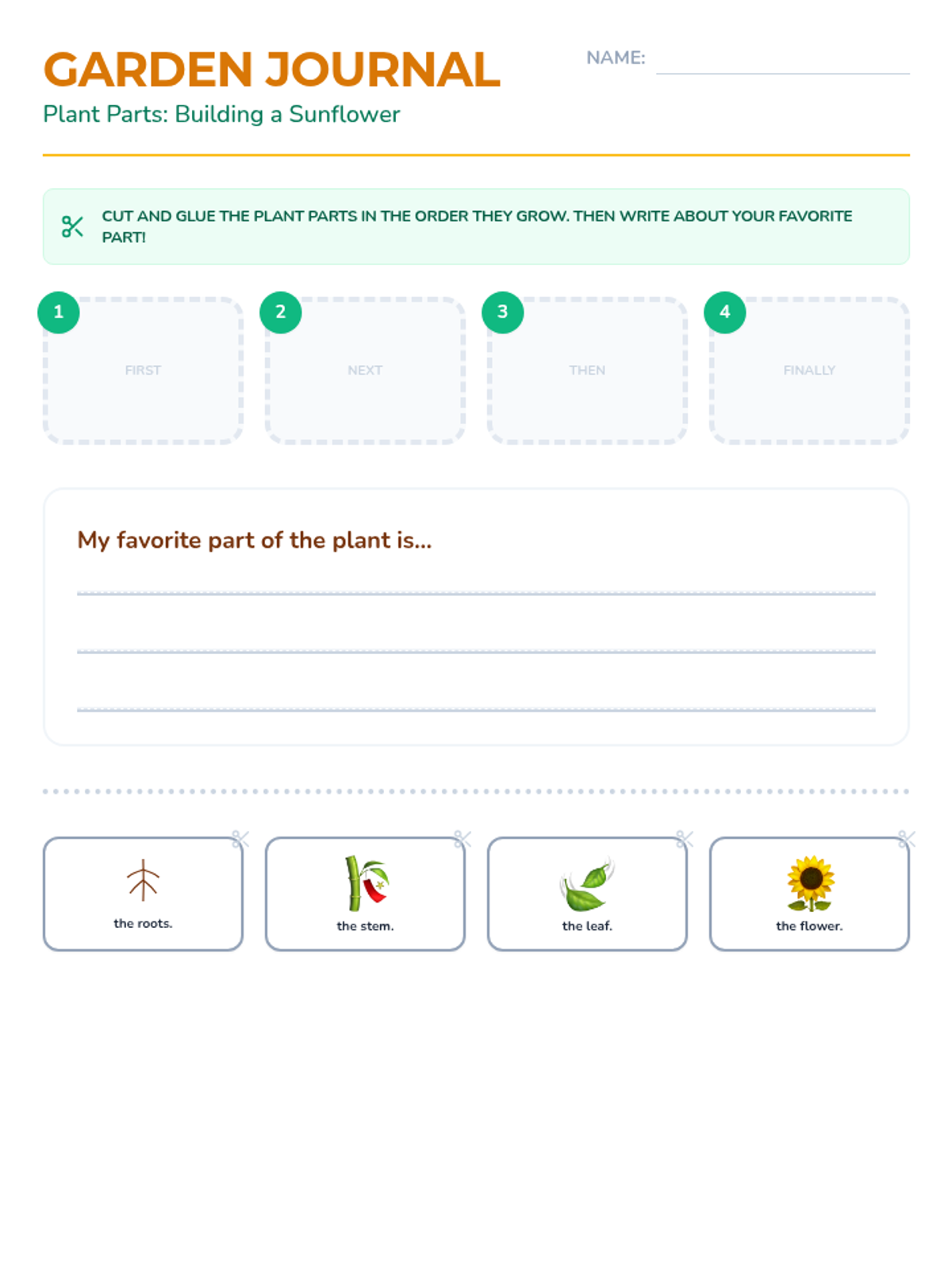
A sequencing and writing worksheet where students cut and paste plant parts in growth order before writing about their favorite plant part. Labels on the cut portion now include "the" and a period.
A version of the plant parts reflection worksheet that includes a pre-printed sentence starter to scaffold student writing.
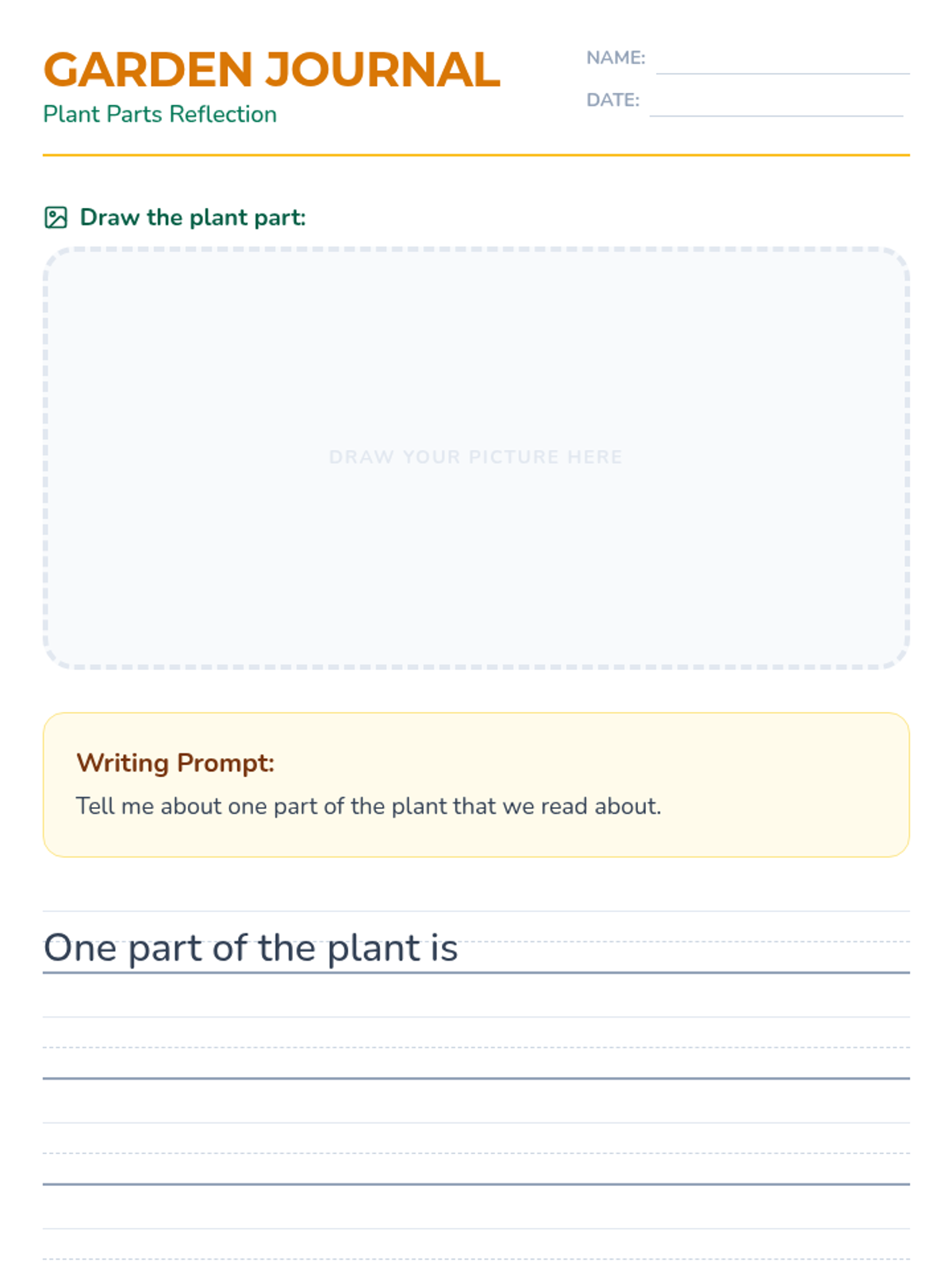
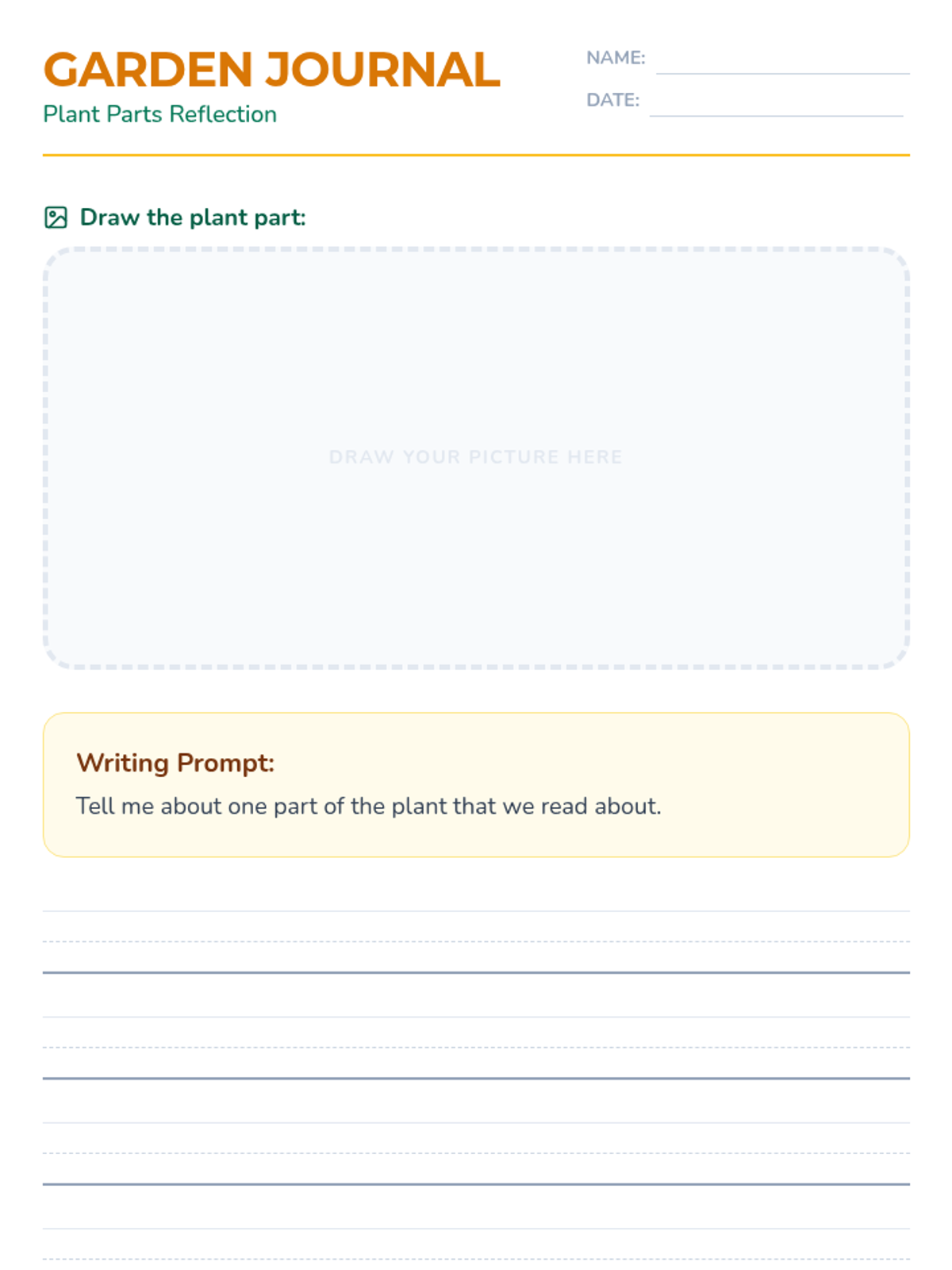
A writing reflection worksheet where students write about one specific part of a plant and provide an accompanying illustration.
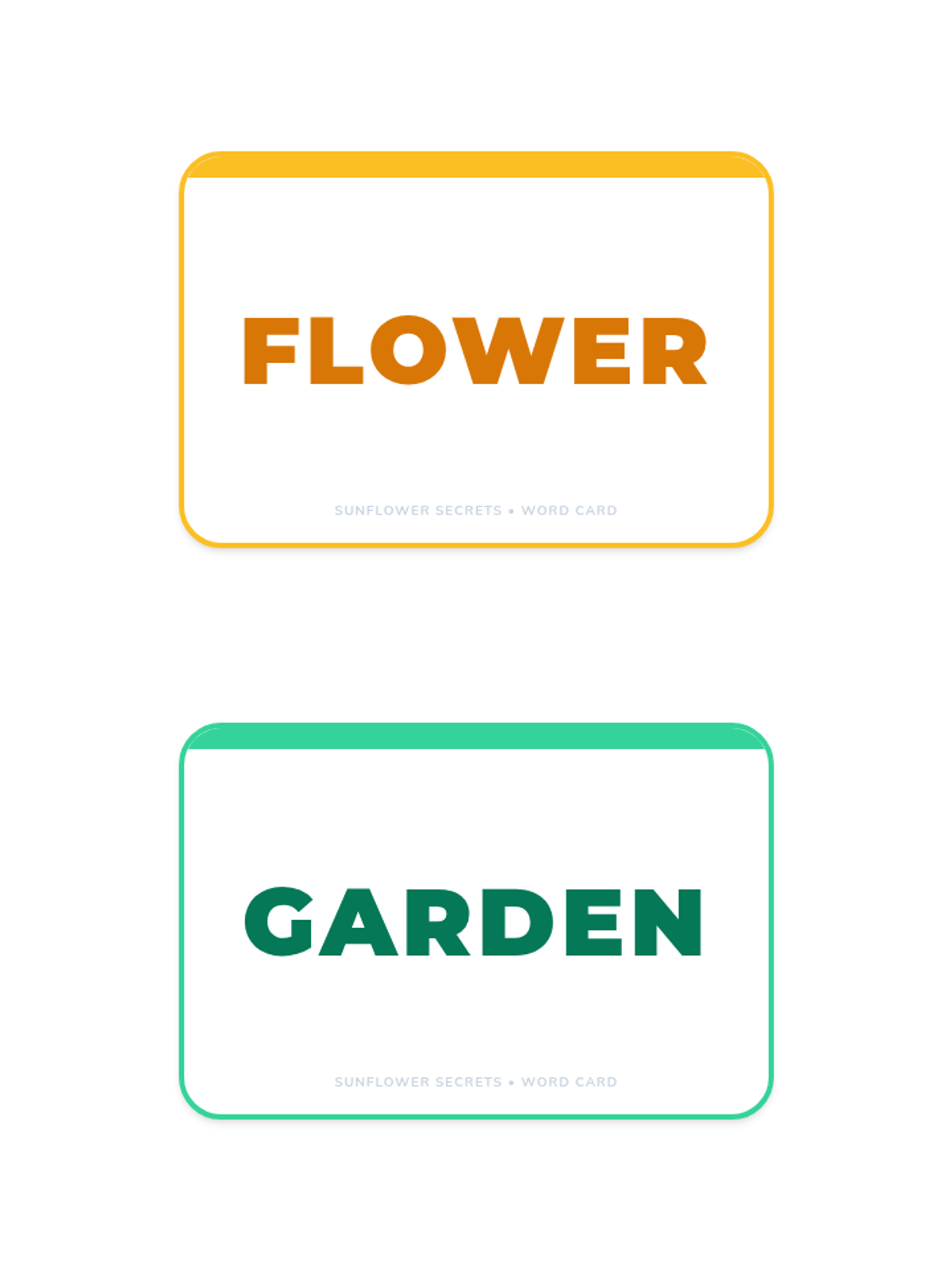
A set of 4x6 inch vocabulary cards featuring words and corresponding pictures for garden-themed vocabulary like flower, seed, and water.
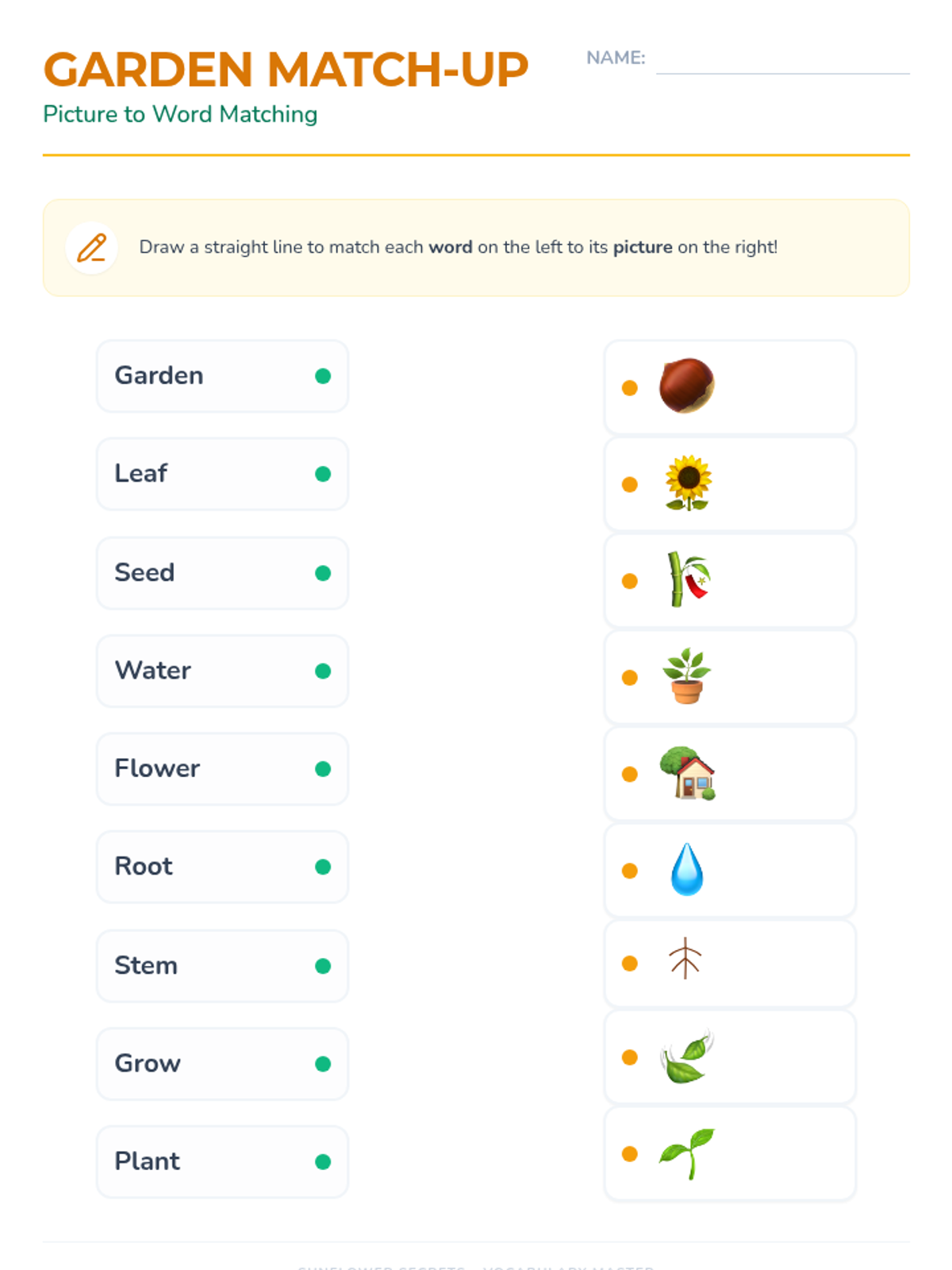
A matching worksheet where students draw lines to connect garden vocabulary words with their corresponding icons.
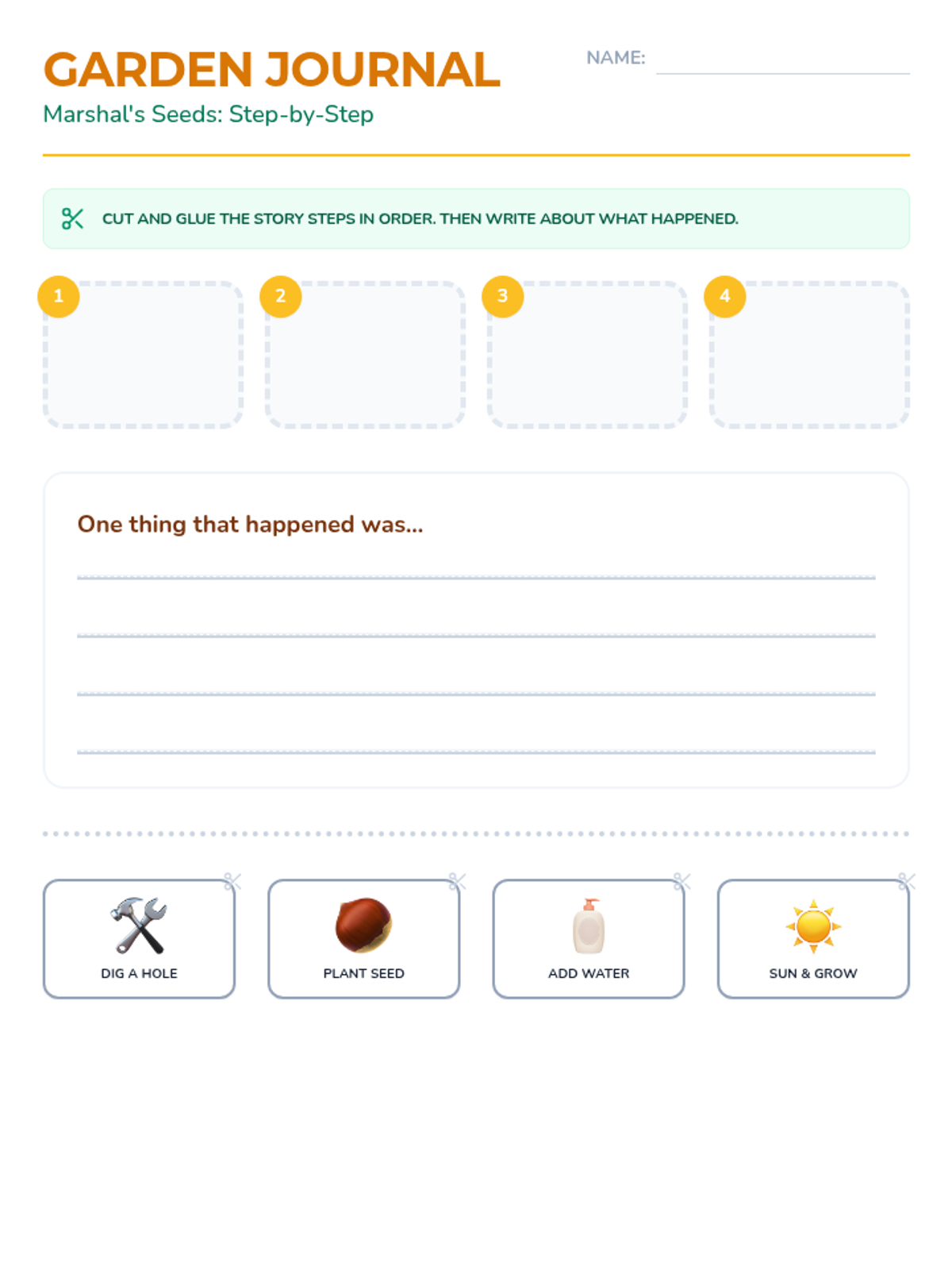
A sequencing and writing worksheet where students cut and paste story events in order before writing about what happened to Marshal's seeds.
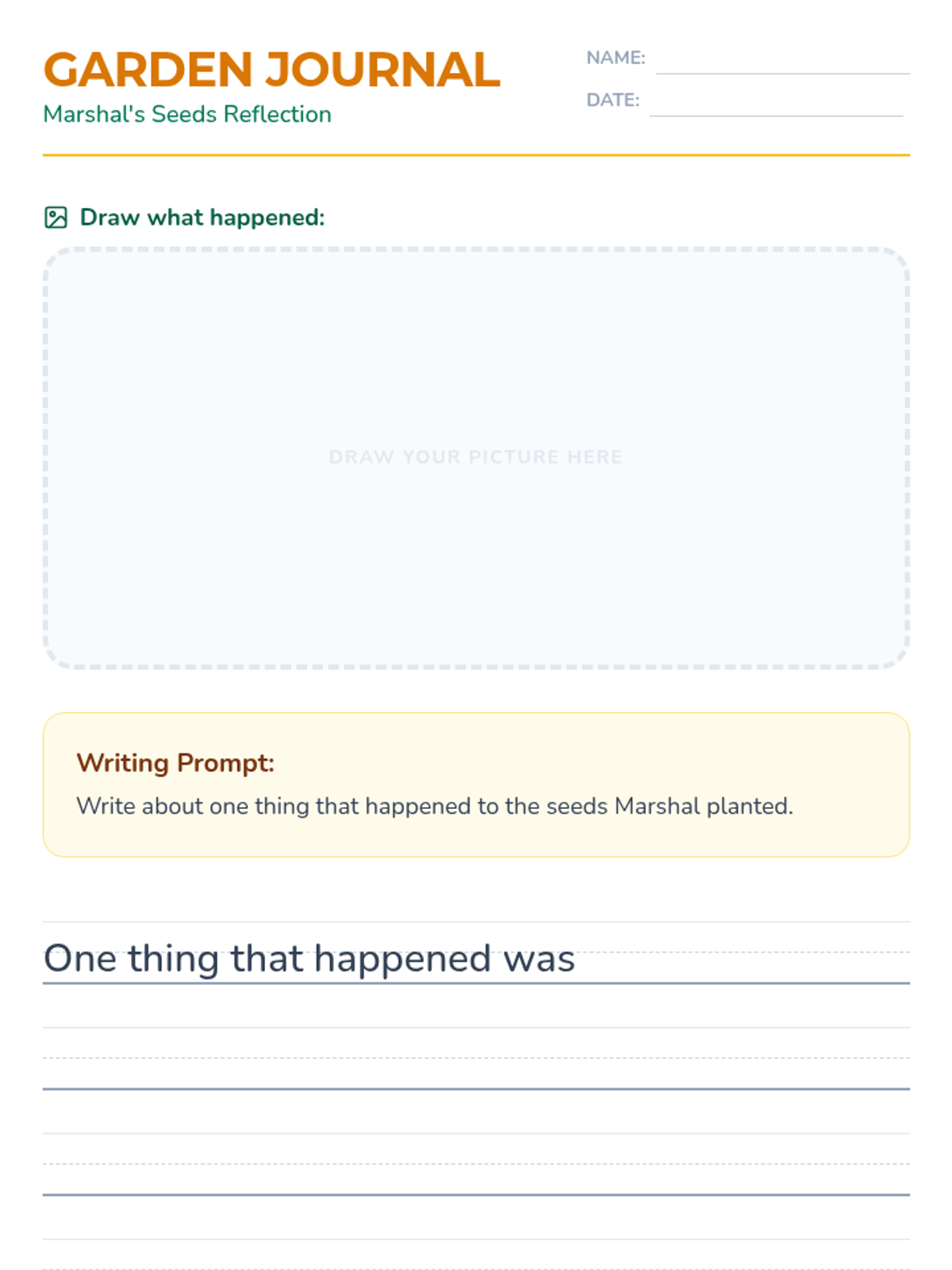
A version of the Marshal's seeds reflection worksheet that includes a pre-printed sentence starter to scaffold student writing.
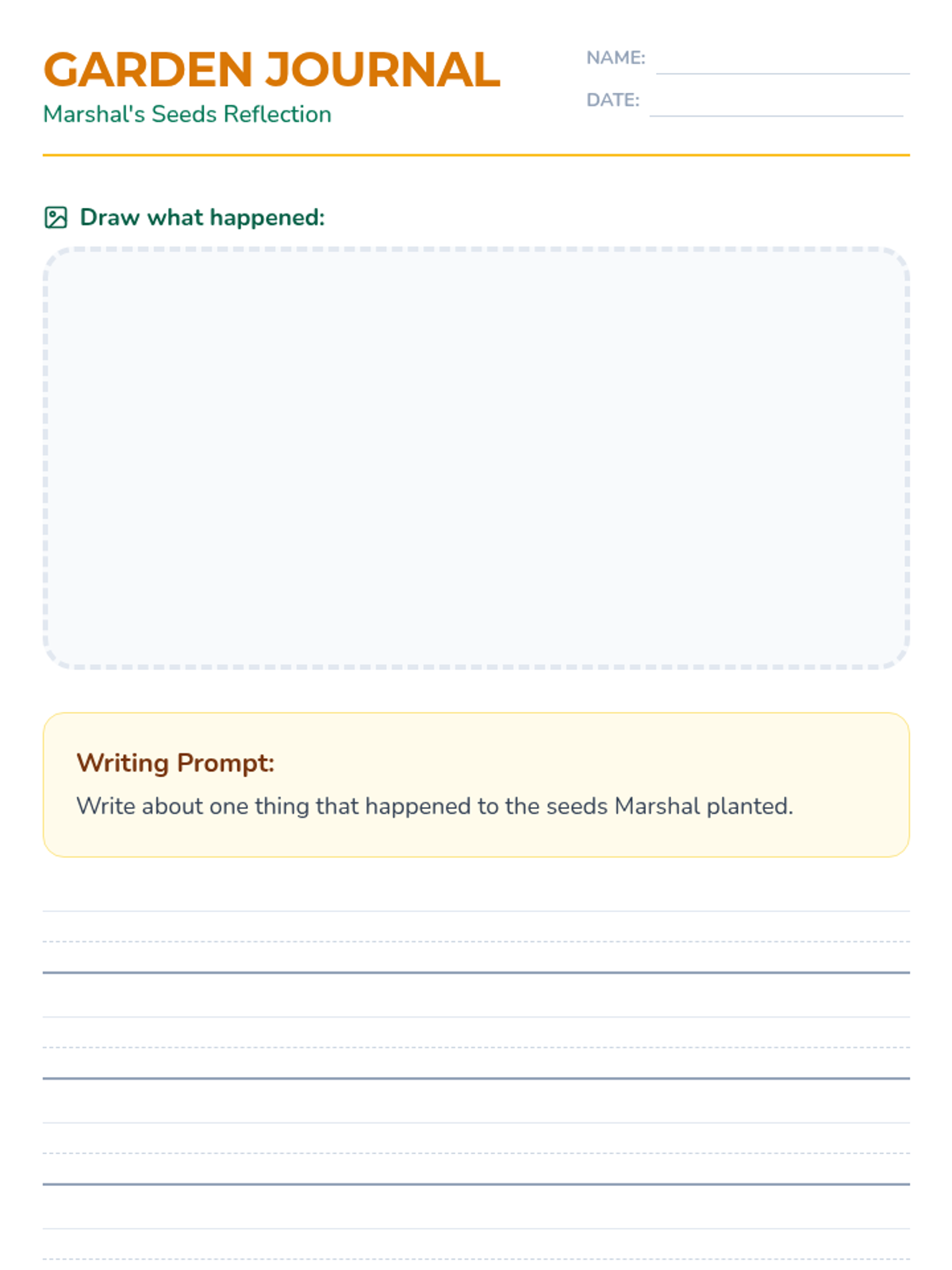
A writing reflection worksheet where students write about one event involving Marshal's seeds and provide an accompanying illustration.
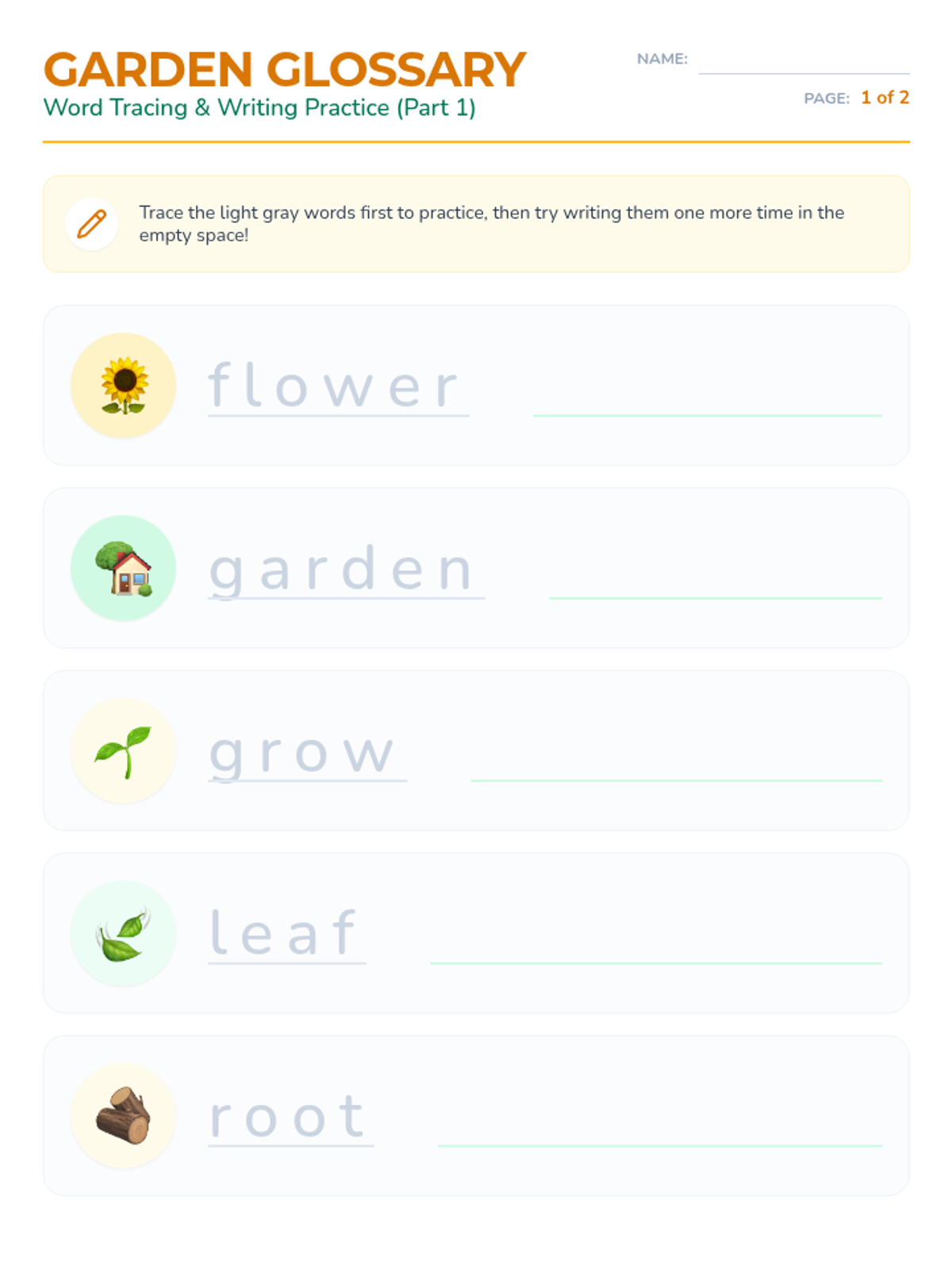
A two-page word tracing and writing activity featuring common garden vocabulary like flower, seed, water, and grow with expanded space for handwriting practice.
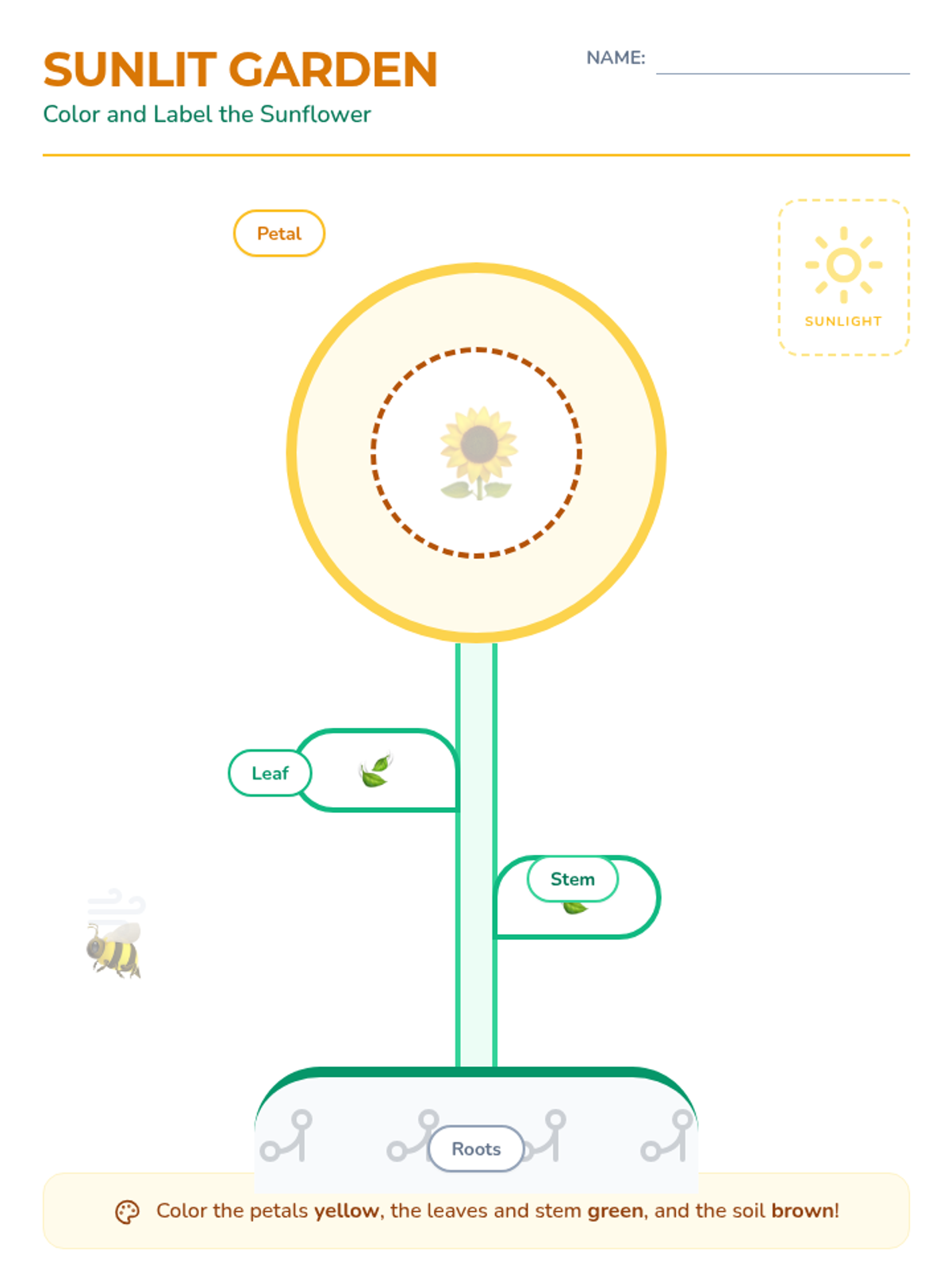
A sunflower coloring page where students can color the different parts of the plant and learn labels like petal, leaf, stem, and roots.
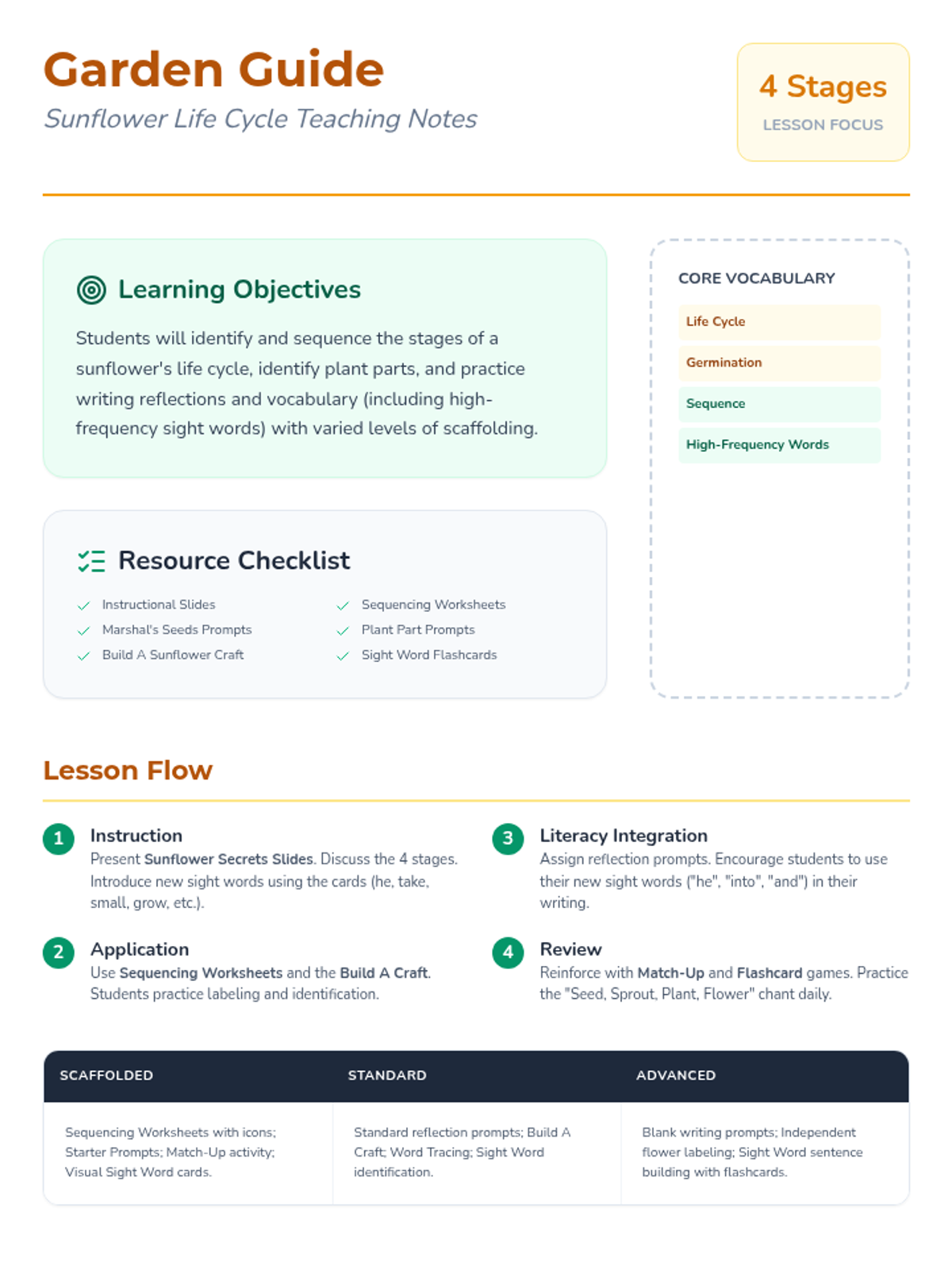
A facilitator guide for teachers including learning objectives, vocabulary, step-by-step instructions, and differentiation strategies for the sunflower life cycle lesson.
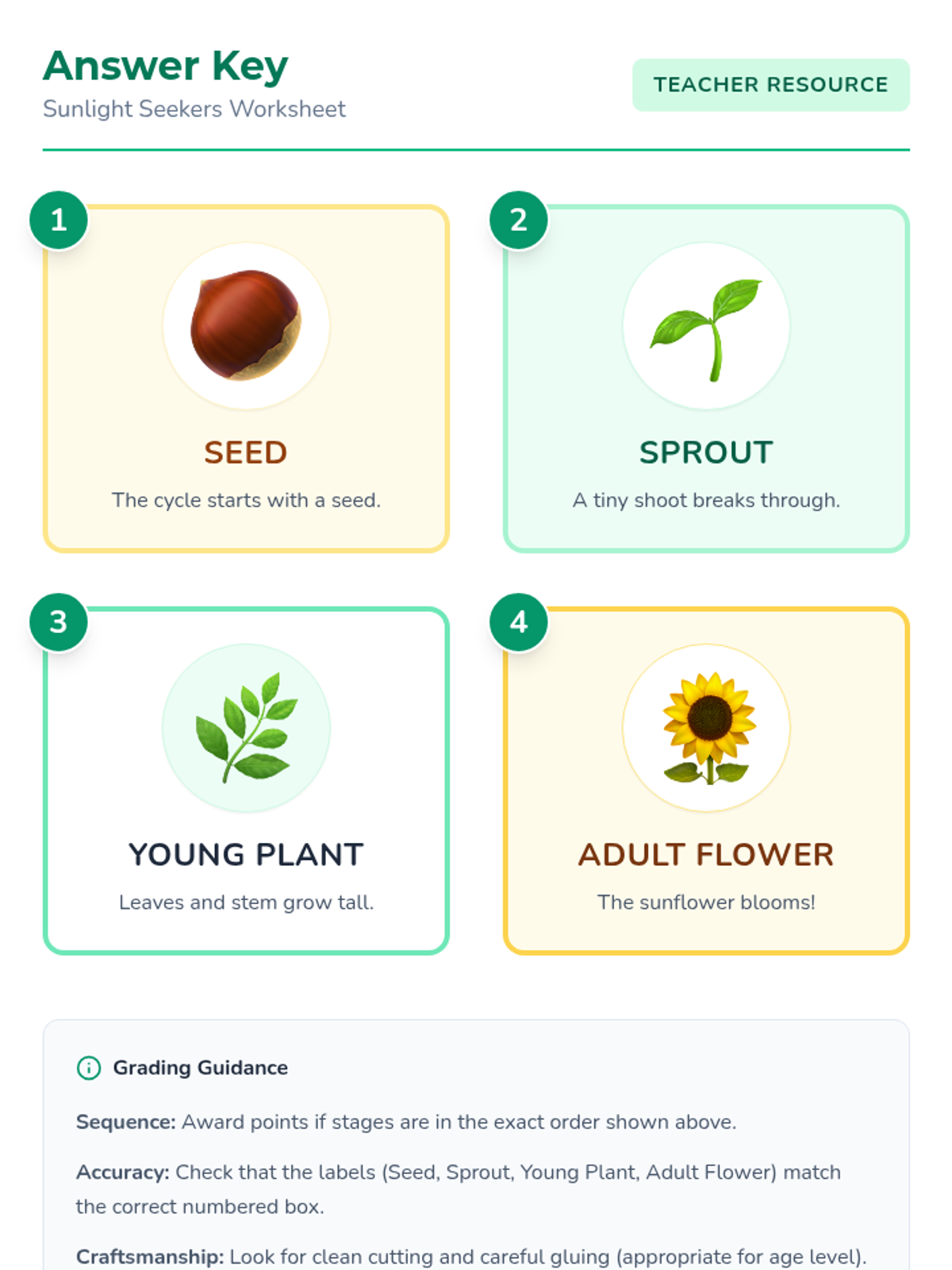
An answer key for the Sunlight Seekers worksheet, clearly showing the correct sequence of the sunflower life cycle.