A teacher facilitation guide for the Microscope Observations microscope lab. Includes lesson objectives, materials checklists, suggested specimen sets, an organelle identification guide, and safety tips.
A checklist teacher guide to align first-week classroom logistics, lab safety setups, and Indiana biochemistry integration milestones for General Biology.
A highly structured 36-week curriculum roadmap for General Biology, highlighting explicit unit-to-unit segues and negative and positive feedback mechanisms under the homeostasis lens.
A visual one-pager syllabus infographic integrating Indiana Biology standards (2024) B.1 through B.4 with foundational biochemistry concepts for each unit, featuring course policies and grading breakdown.
A set of four Larry Ainsworth RCD style unit unwrapping guides mapping Big Ideas, Essential Questions, Know/Do concepts, vocabulary, Indiana Biology Standards (2024) B.1 through B.4, explicit positive/negative feedback mechanisms, and unit-to-unit segues.
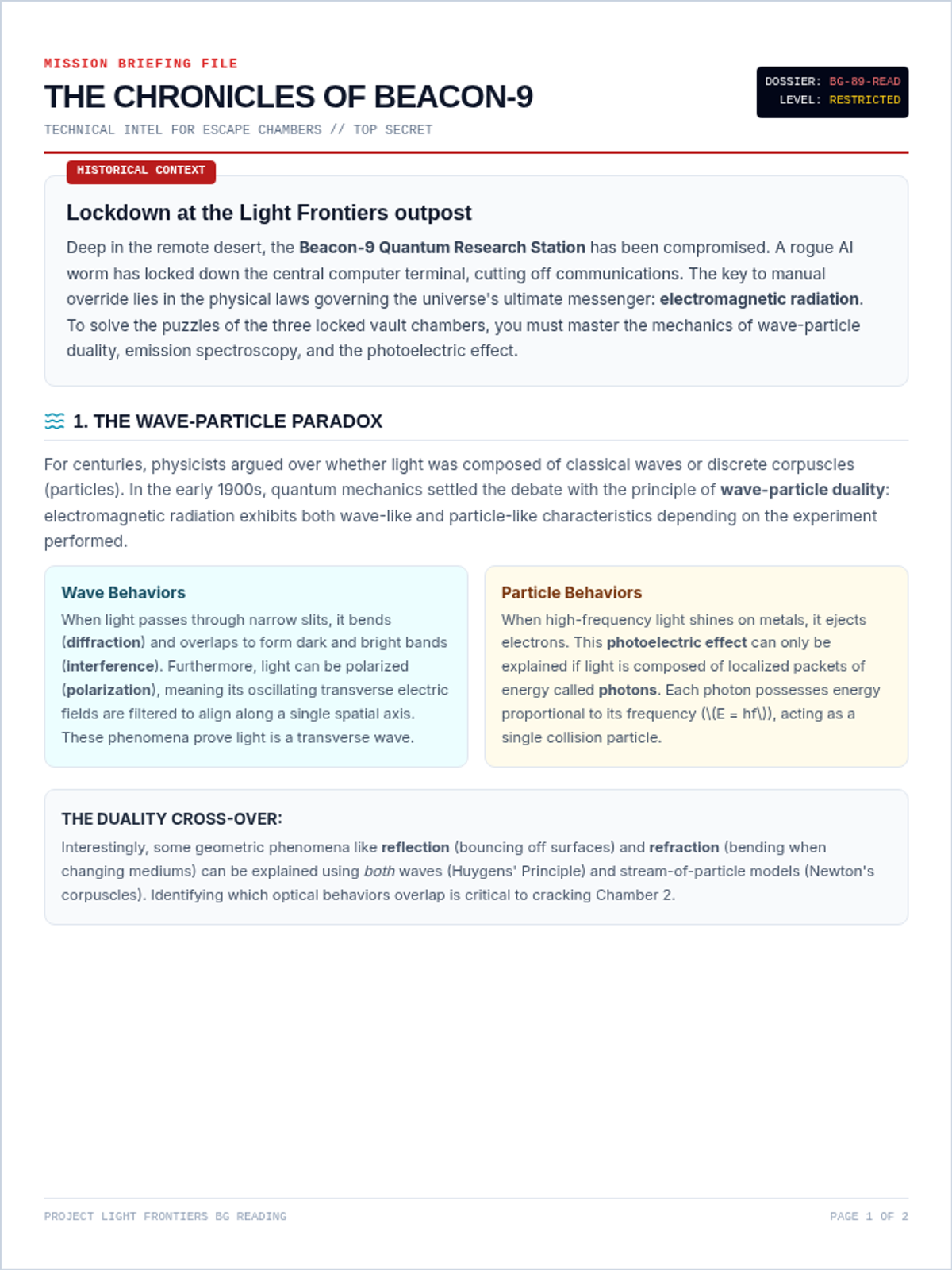
A thrilling, lore-rich background reading passage setting up the scientific concepts (spectroscopy, wave-particle duality, polarization, and the photoelectric effect) needed to solve the Quantum Escape Room.
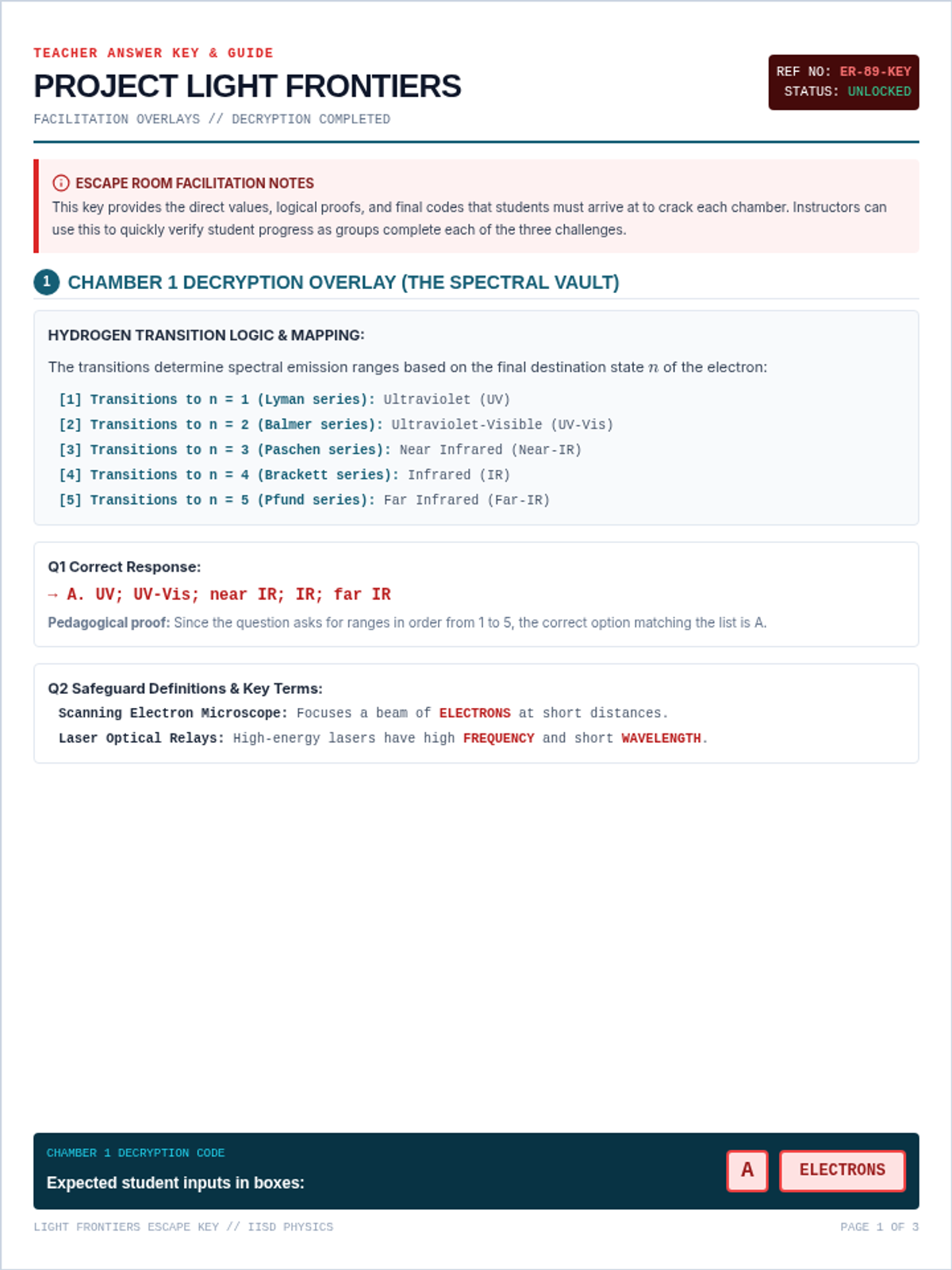
A detailed, comprehensive teacher key and guide for the Quantum Escape Room Worksheet, providing solutions, mathematical proofs, and step-by-step decoding explanations for each chamber.
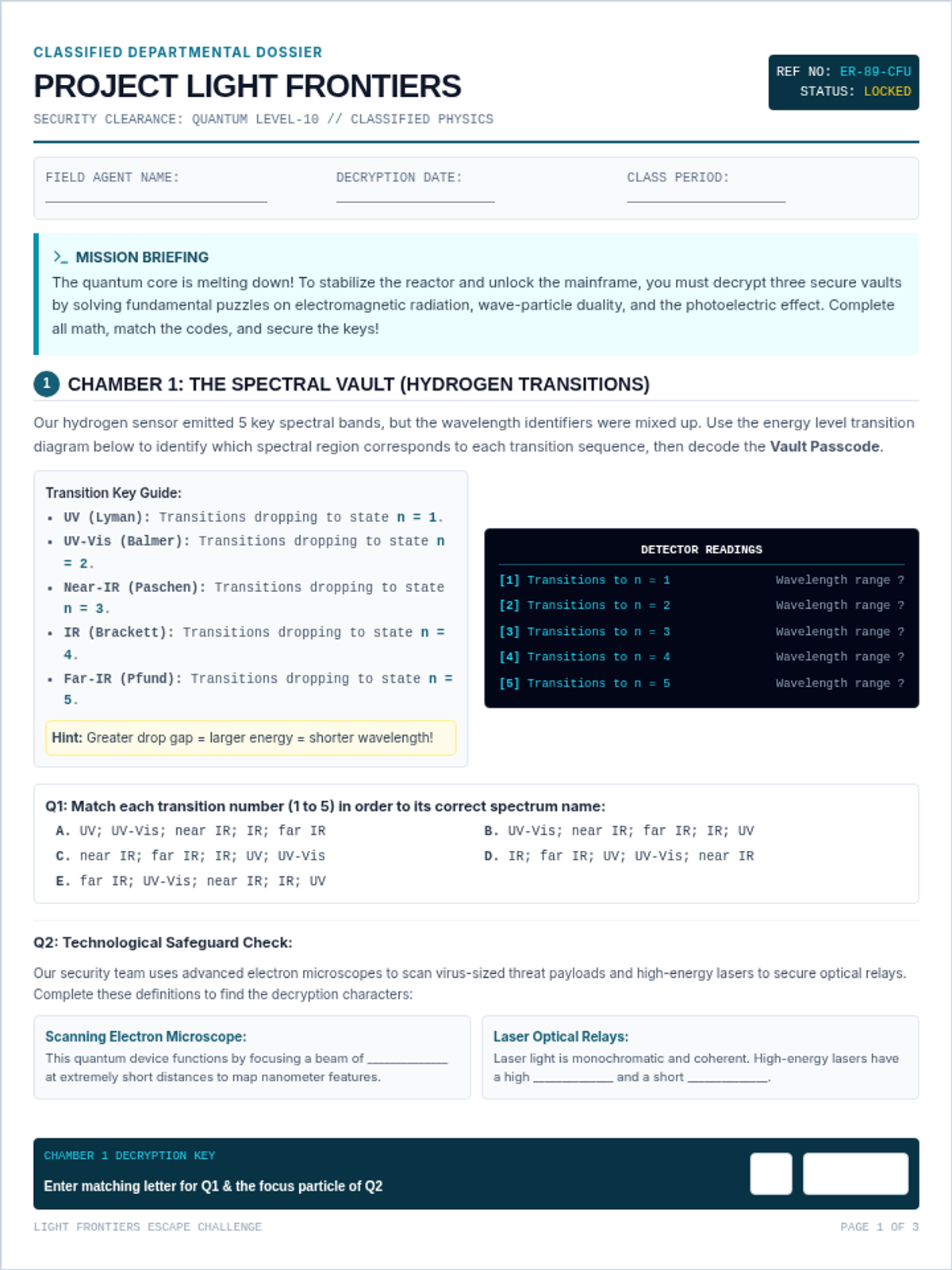
An engaging, highly structured physics escape room student activity consisting of three distinct vault-cracking challenges covering the electromagnetic spectrum, wave-particle duality, polarization, and the photoelectric effect.
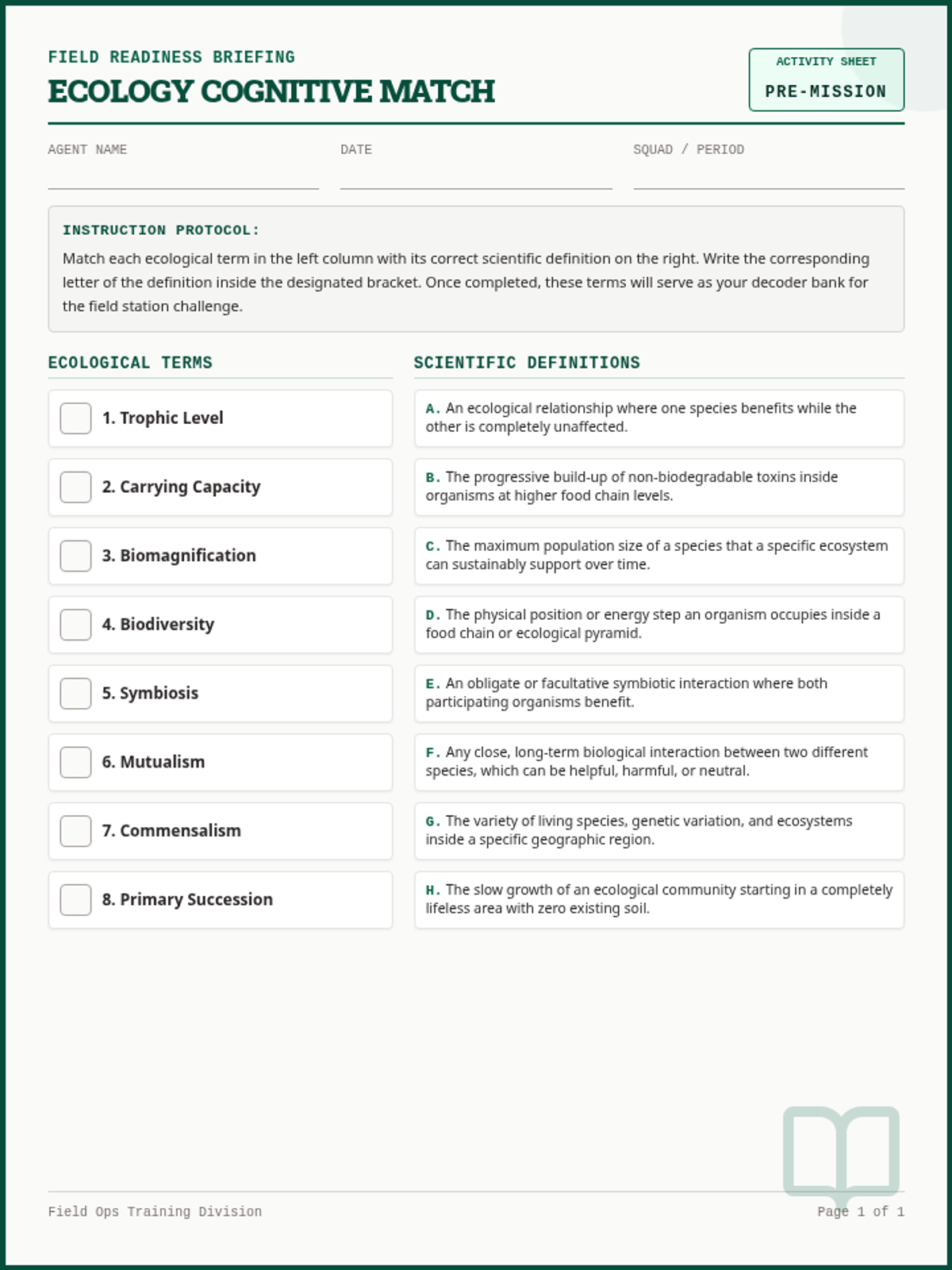
A 1-page vocabulary matching worksheet reviewing 12 critical ecological terms used in the scavenger hunt. It includes name/date fields and space for student definitions.
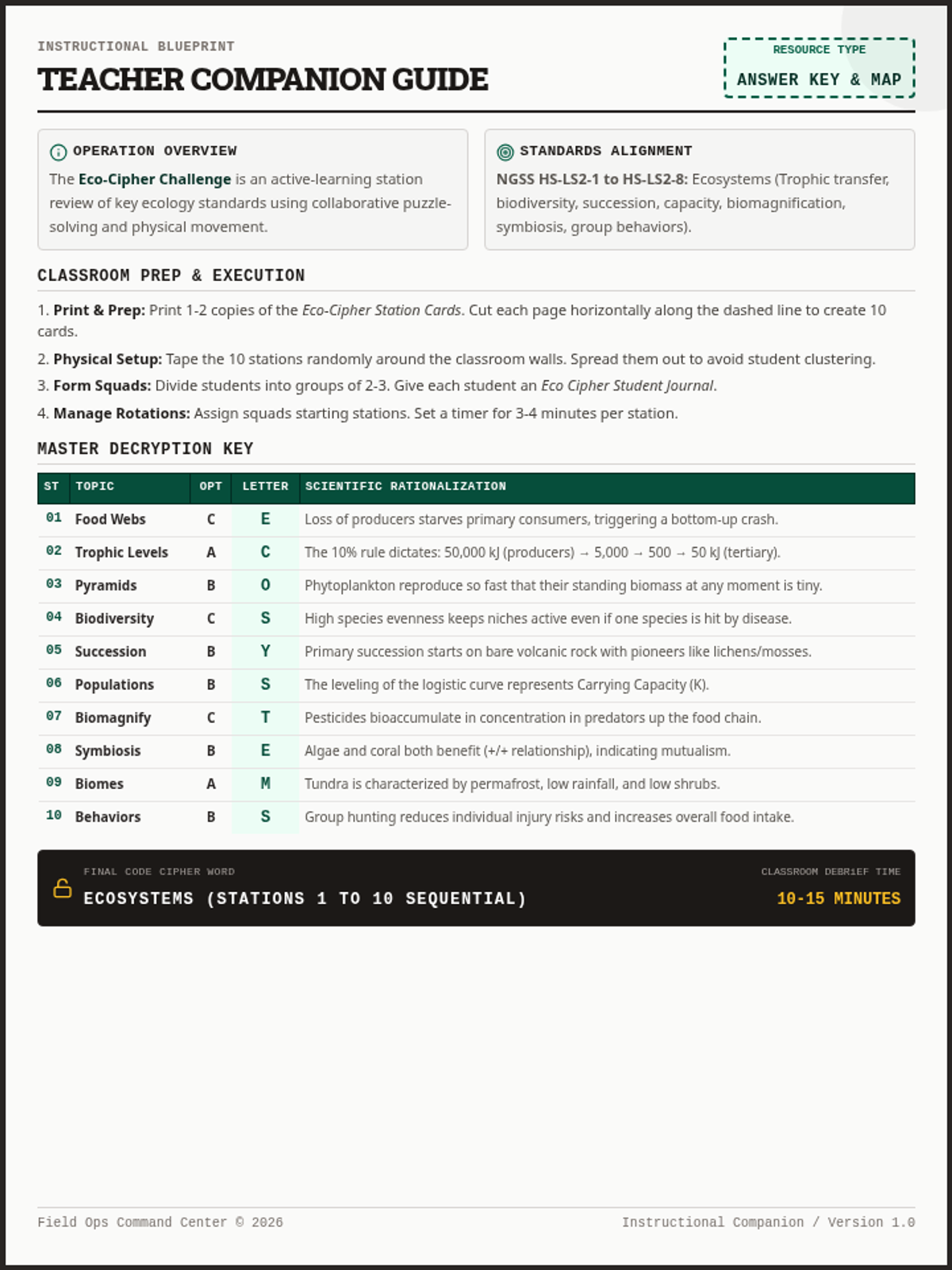
A 1-page instructional overview and implementation manual for teachers. It details standards alignment, physical classroom setup, pacing instructions, and a comprehensive master answer key for the 10 stations and final cipher.
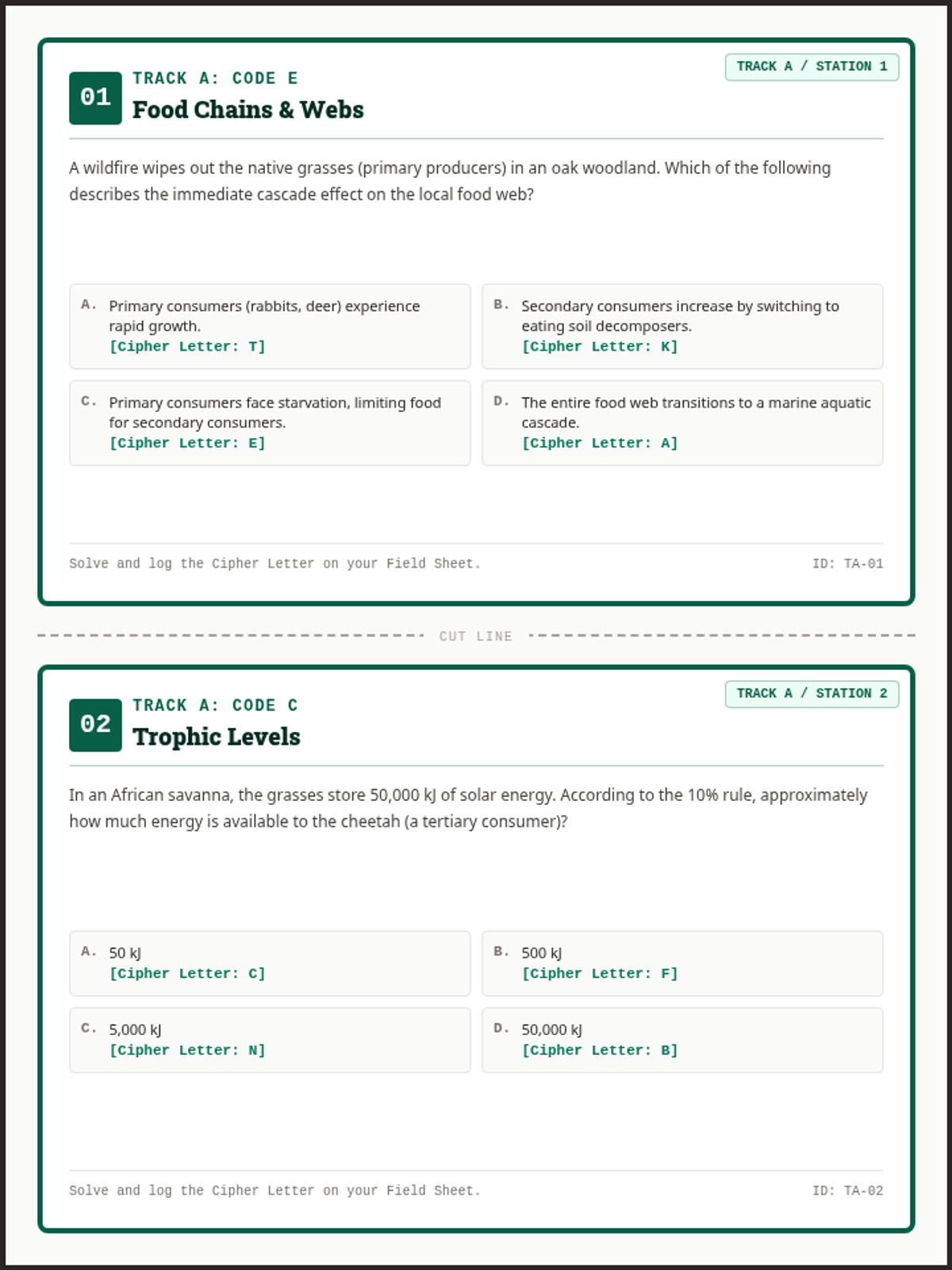
A complete set of 30 printable station cards (2 per page, 15 pages total) split into three distinct 10-station tracks: Track A ('ECOSYSTEMS'), Track B ('BIODIVERSE'), and Track C ('ADAPTATION') for flexible, differentiated, or multi-round review.
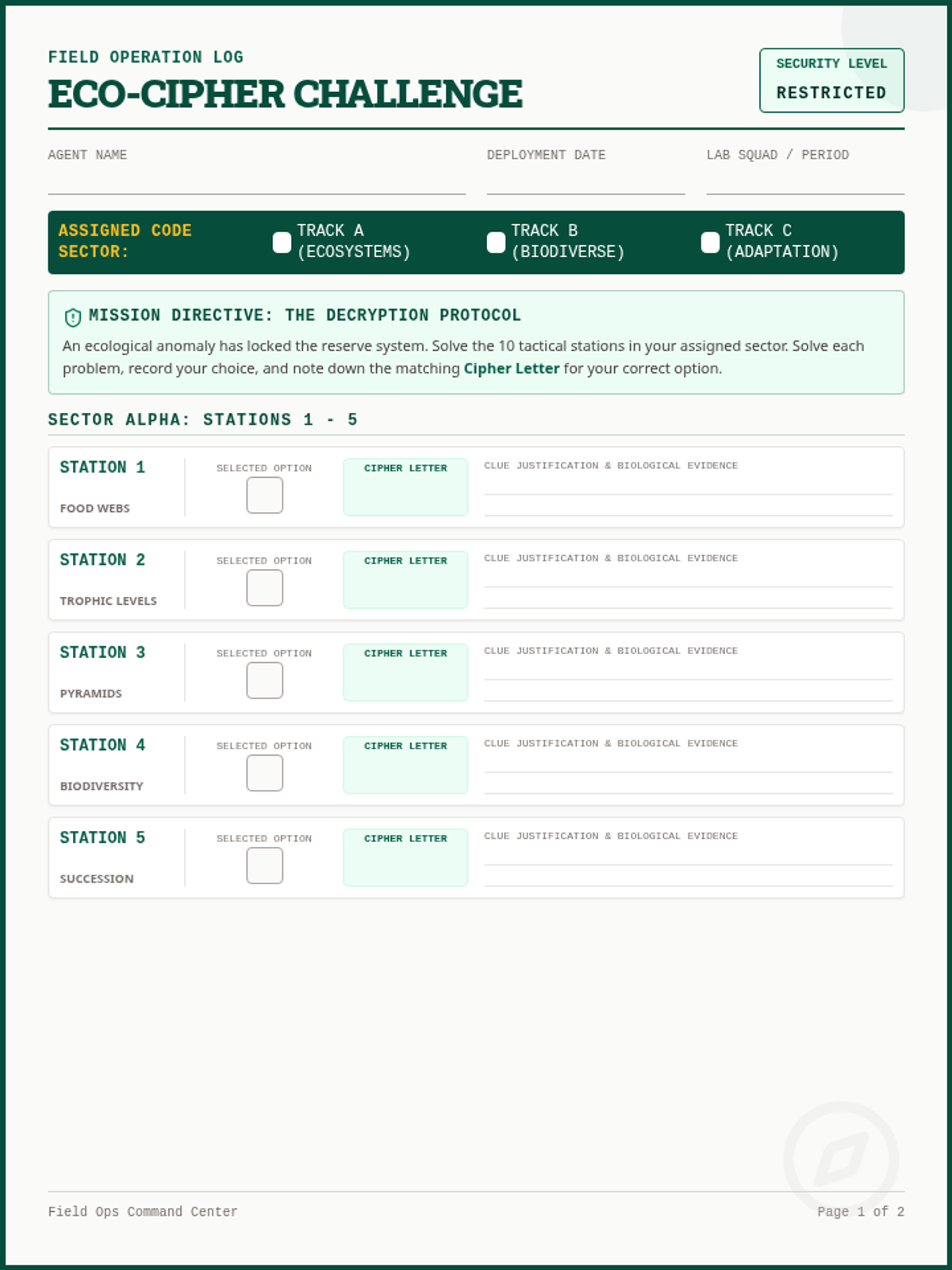
A print-ready student recording sheet and field log where students record their answers, write down evidence-based explanations for each station, and decode the final secret word.
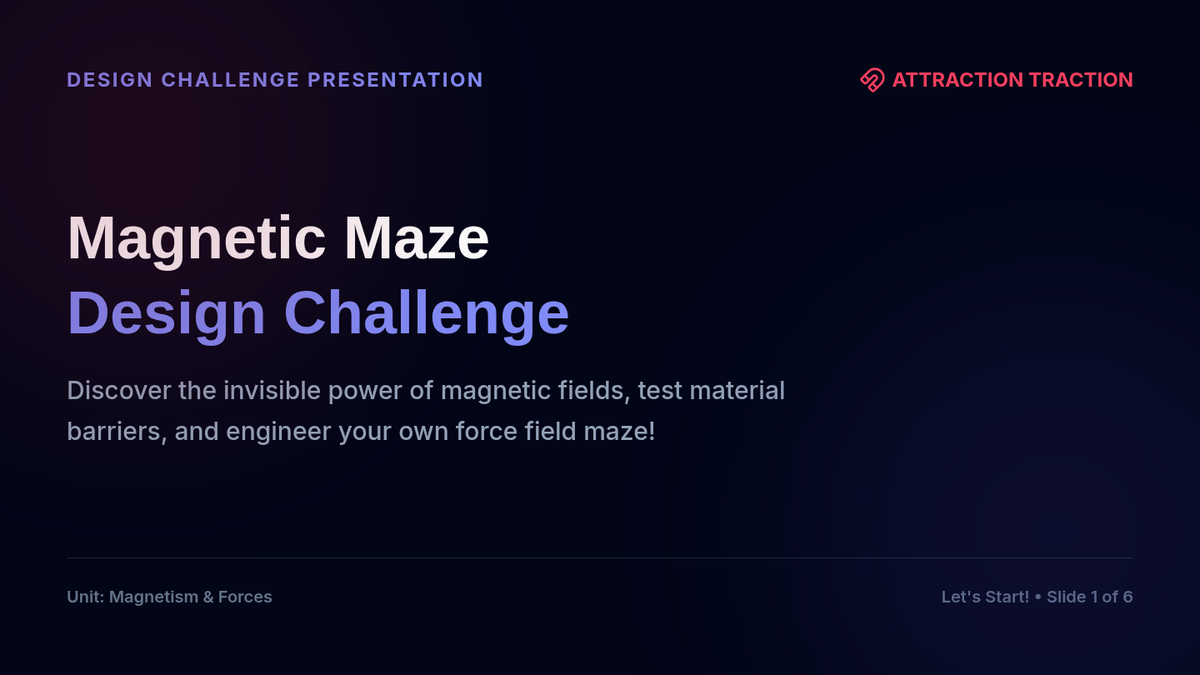
A 6-slide design challenge deck designed to guide students visually through the concepts of magnetism, non-contact forces, material testing, and iterative maze engineering.
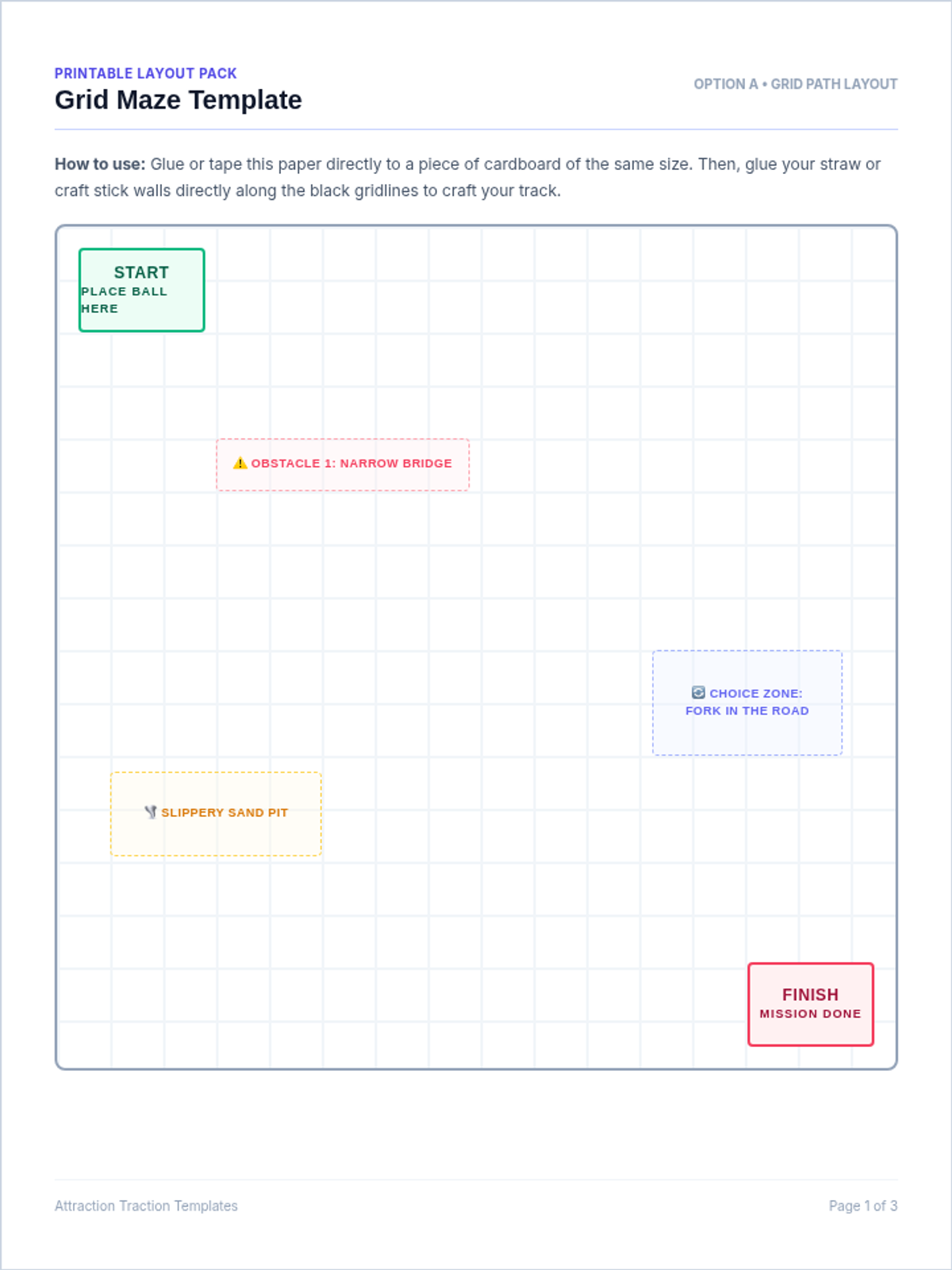
A 3-page printable pack featuring two complete pathing templates (orthogonal grid and concentric radial maze designs) and a hands-on material testing log sheet.
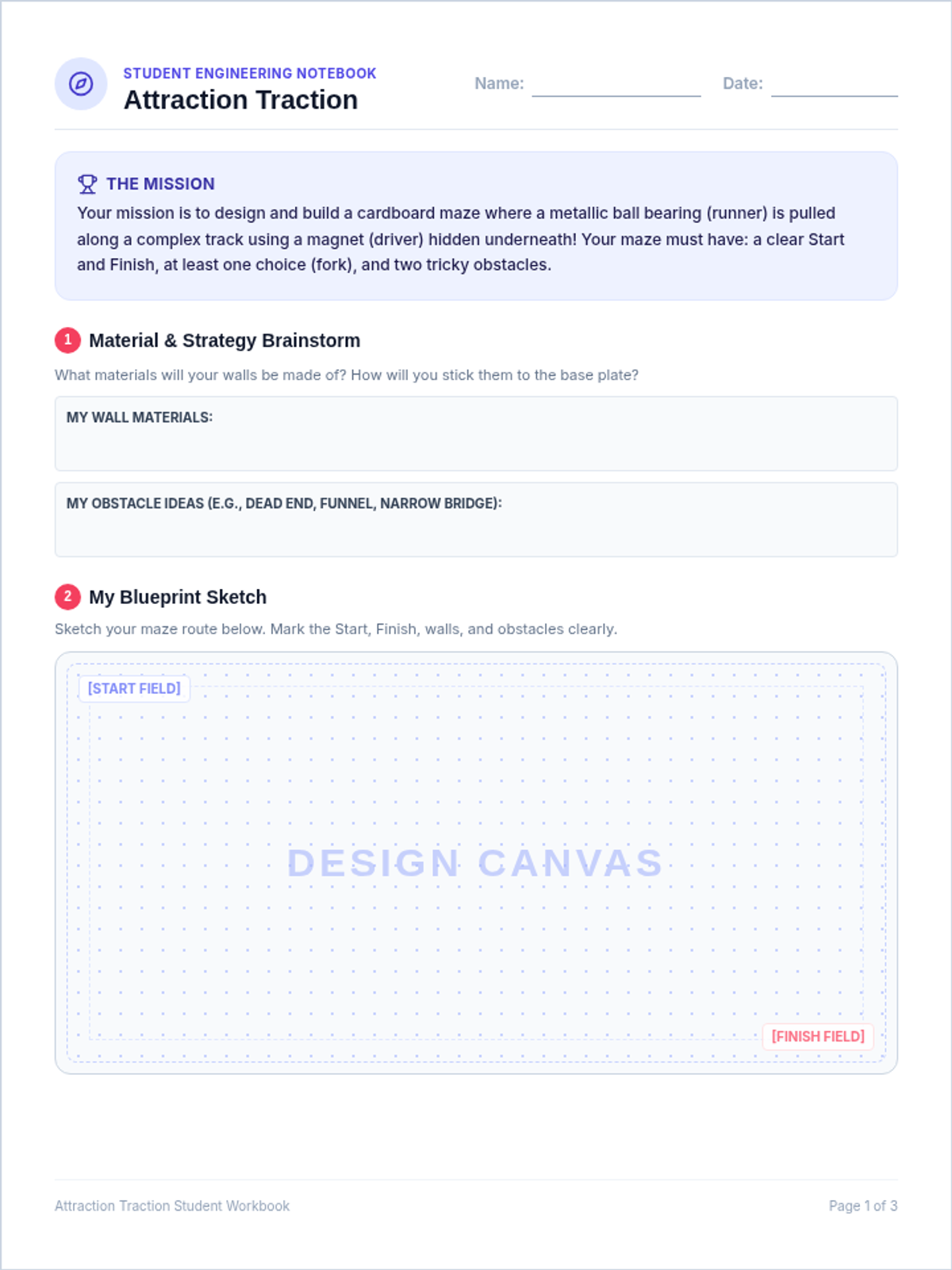
A 3-page student-facing STEM workbook containing a blueprint planning sheet, testing/iteration log, and a high-retention exit ticket with reflective writing prompts about magnetism and force vectors.
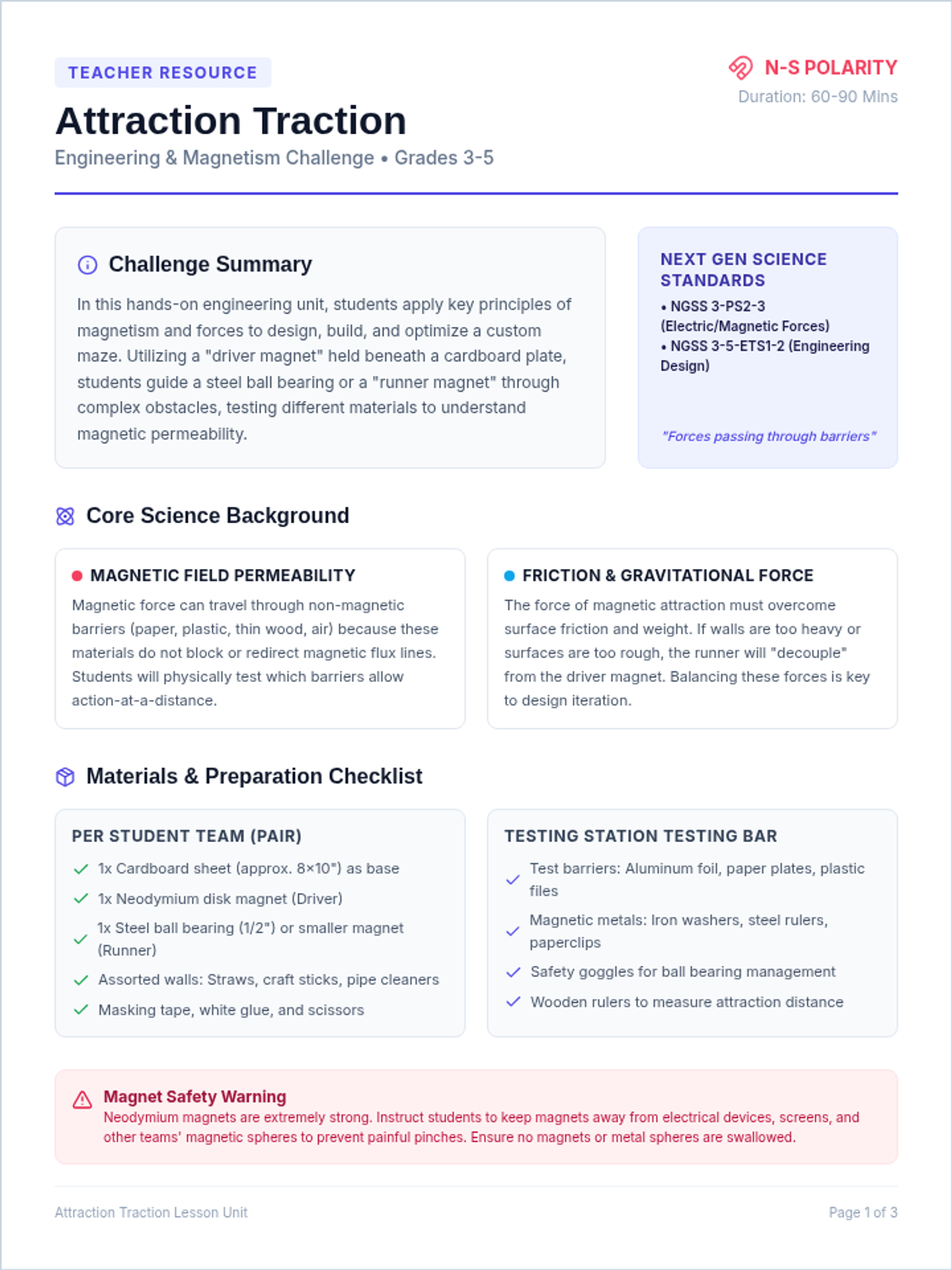
A 3-page printable guide for teachers featuring background science, step-by-step facilitation prompts, material checklists, lesson timeline, and a rubric for the Attraction Traction magnetic maze design challenge.
A 2-page print-ready teacher instructional plan and facilitation guide for running the Force Field Engineers magnet maze lab. Includes NGSS standards, a materials checklist, lesson pacing, inquiry prompts, a 3-tier grading rubric, and classroom troubleshooting tips.
A 2-page collection of printable layout templates, assembly components, and cutouts for building custom student magnet mazes. Includes a 1-inch printable grid board and a materials folding lab sheet.
A 2-page print-ready student lab handbook for the Magnet Maze engineering challenge. It includes a material testing matrix, maze blueprinting grid, testing logs, and reflective engineering prompts.
A 2-page teacher facilitation guide containing next-generation science standards (NGSS) alignments, a detailed 60-minute pacing guide, visual setup directions, a structured engineering design rubric, and a guide to solving common student misconceptions.
A 5-slide visual presentation for teachers to introduce non-contact forces, magnetic fields, attraction/repulsion, and the step-by-step engineering constraints of the Magnet Maze challenge.
A 3-page student activity guide and engineering worksheet for the magnet maze challenge. Includes design constraints, a layout sketching grid, material testing logs, and conceptual reflection questions on non-contact forces and poles.
A 1-page printable resource containing 2 identical high-impact exit tickets to easily print, cut, and distribute for quick formative assessment on Group 7 trends.
A 1-page printable resource featuring 4 distinct collaborative task cards covering shielding mechanisms, displacement equations, everyday uses, and state transitions.
A 2-page laboratory investigation guide detailing simulated halogen displacement reactions with clear procedures, observations grids, and a CER analysis framework.
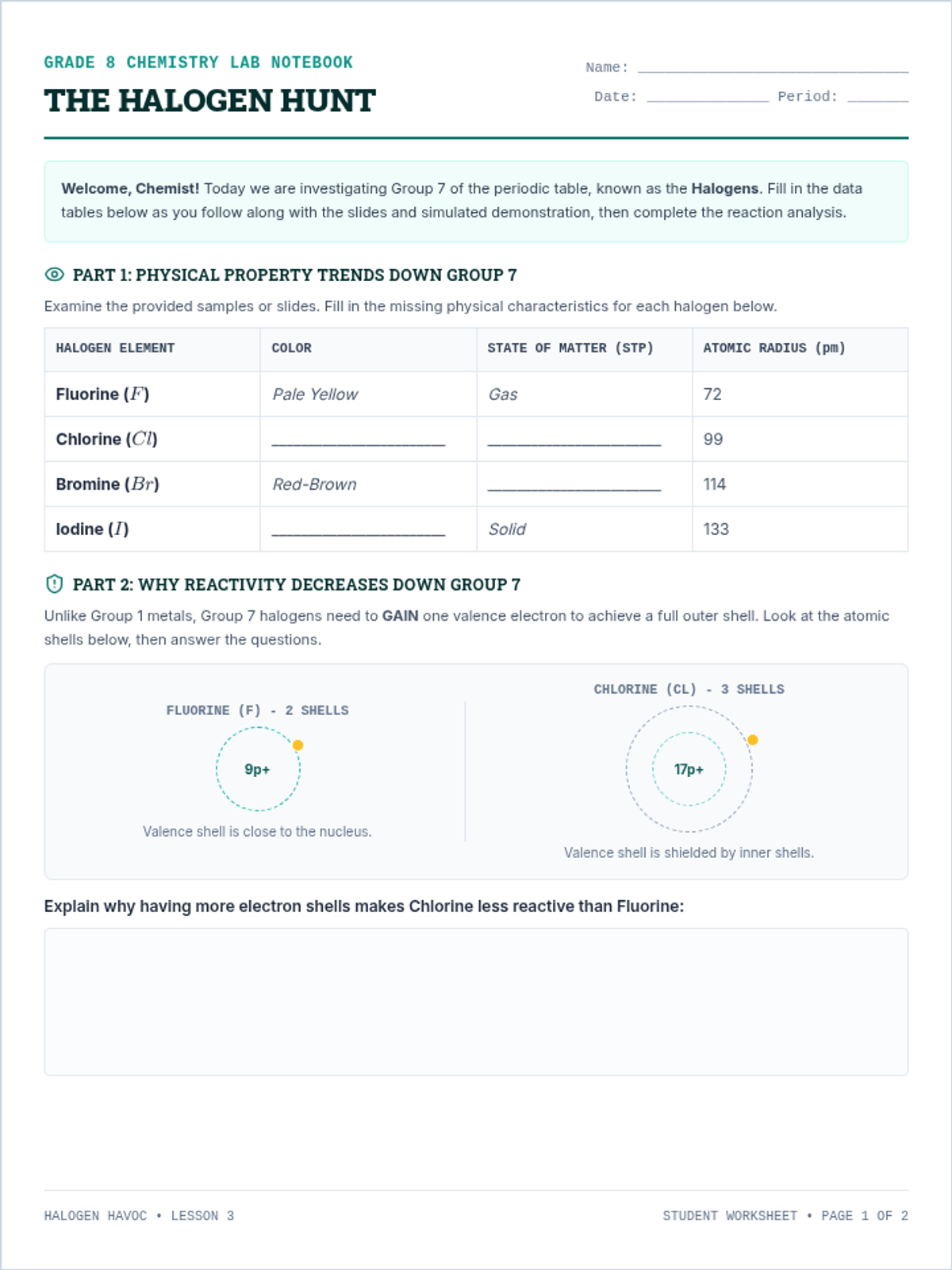
A 2-page print-ready guided worksheet with name/date fields, physical properties completion table, atomic shielding diagram questions, and displacement equation practice problems.
A high-impact, visual slide presentation covering Group 7 trends, color changes, subatomic shielding, and displacement rules. Optimized for 1440x810 layout.