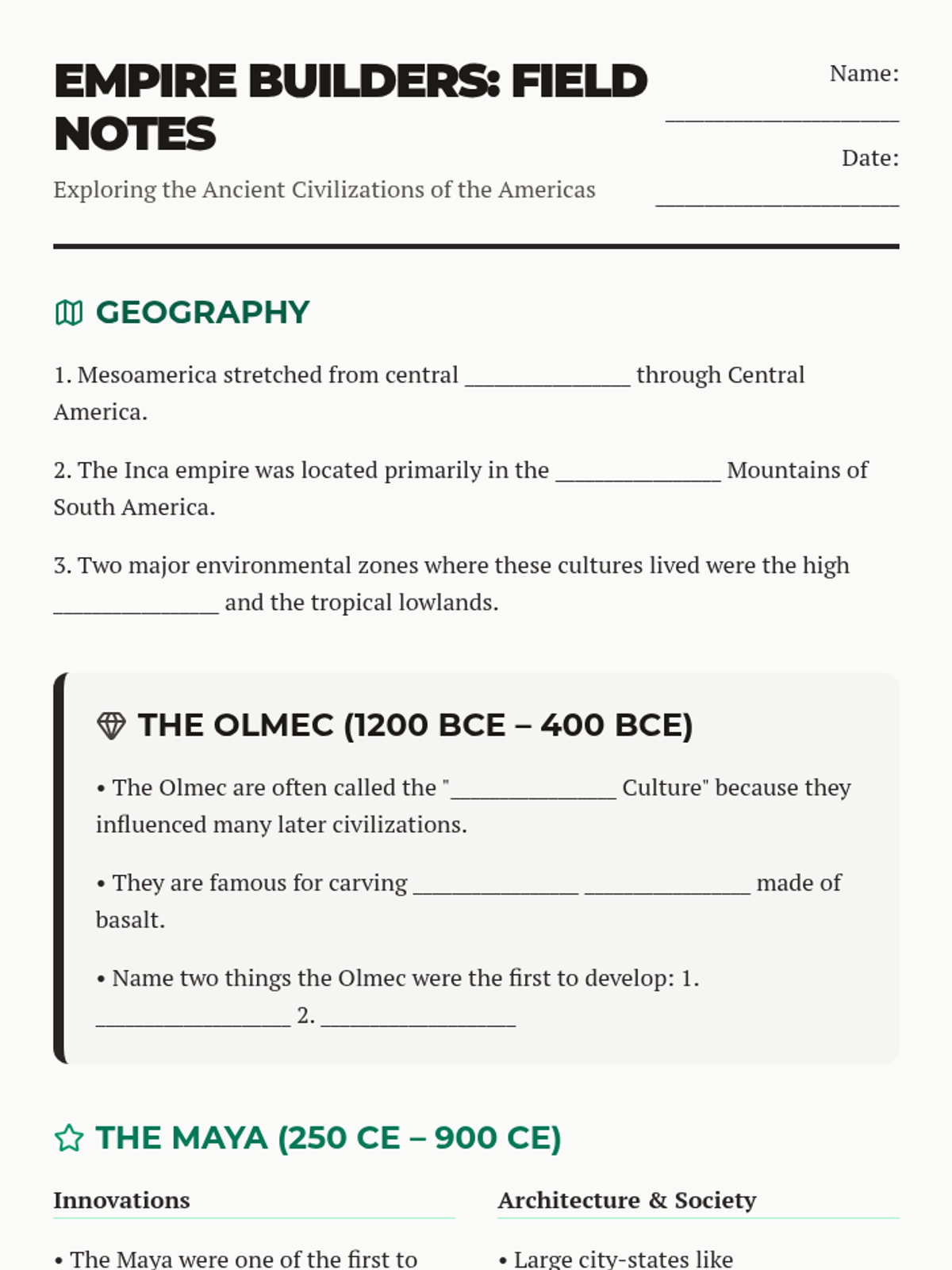
An immersive 13-slide presentation covering the major civilizations of Ancient Mesoamerica and the Andes, focusing on their unique innovations, social structures, and architectural achievements.
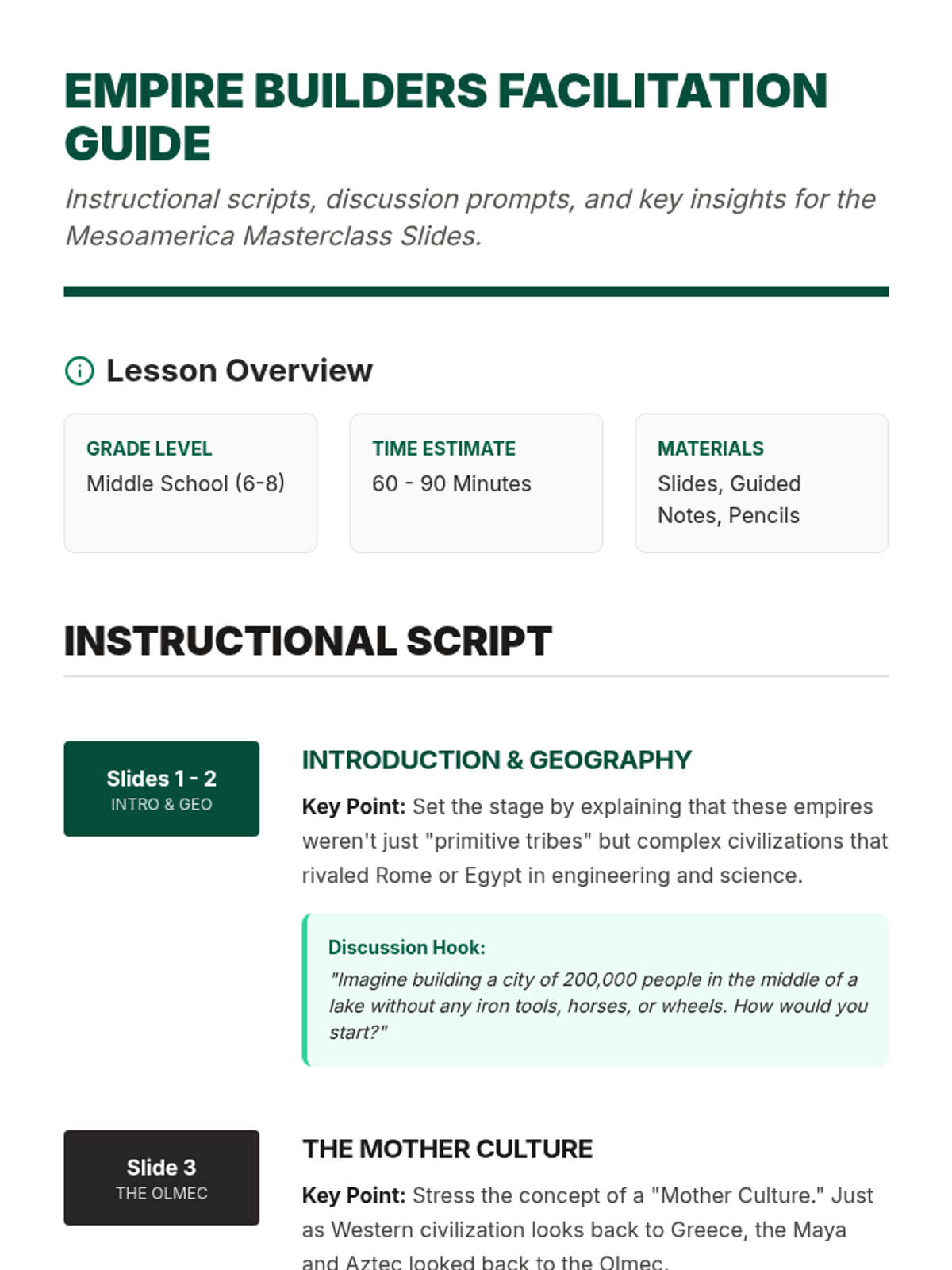
A comprehensive teacher guide for facilitating the Mesoamerica Masterclass lesson. Includes instructional scripts, discussion prompts, key insights, and extension activity ideas.
A structured guided notes worksheet for students to complete while following the Mesoamerica Masterclass Slides. Includes fill-in-the-blank sections for each major civilization and key vocabulary terms.
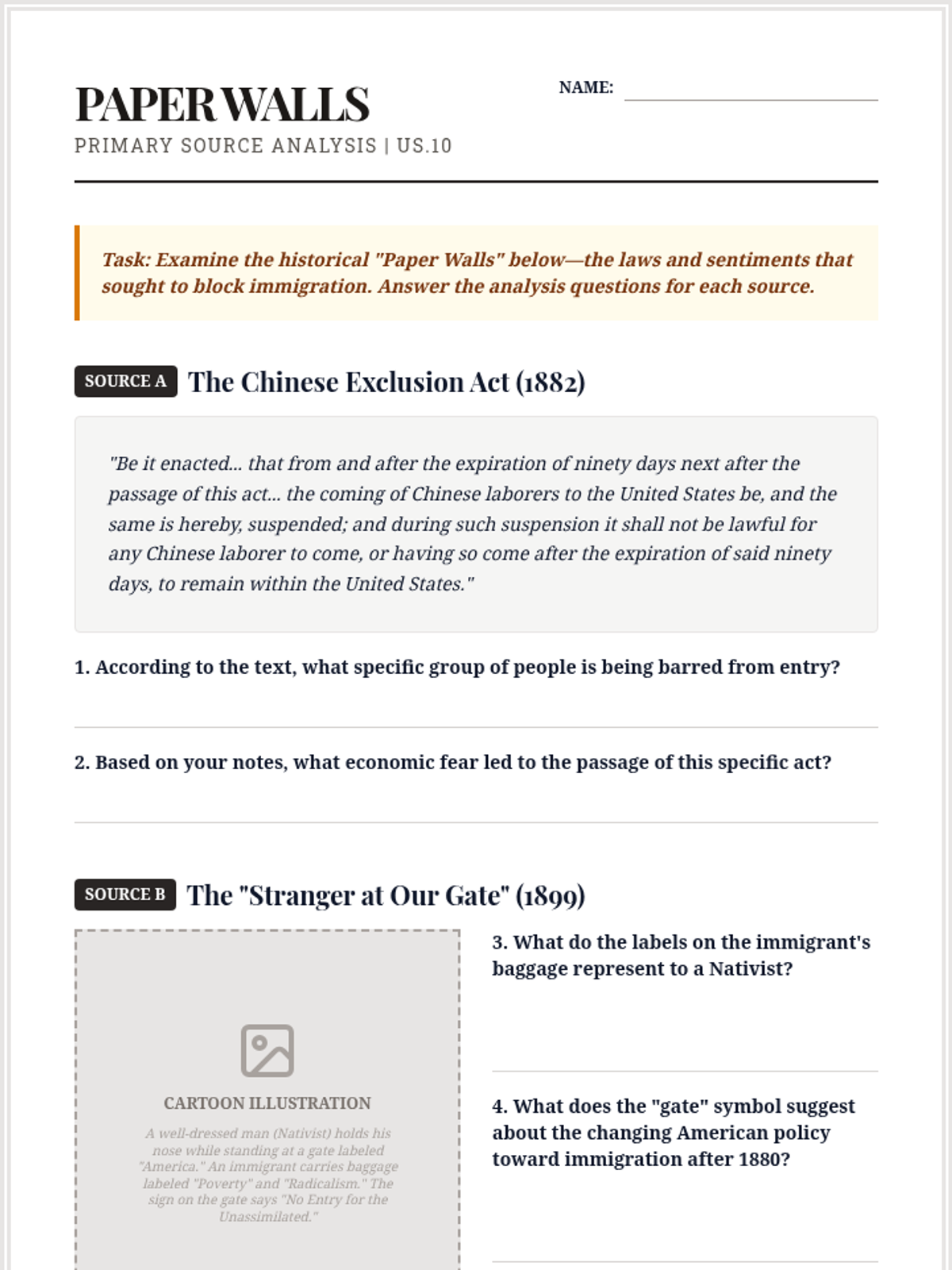
A primary source analysis worksheet where students examine an excerpt from the Chinese Exclusion Act and a description of a nativist political cartoon. Students identify key arguments and connect them to the lesson's core concepts.
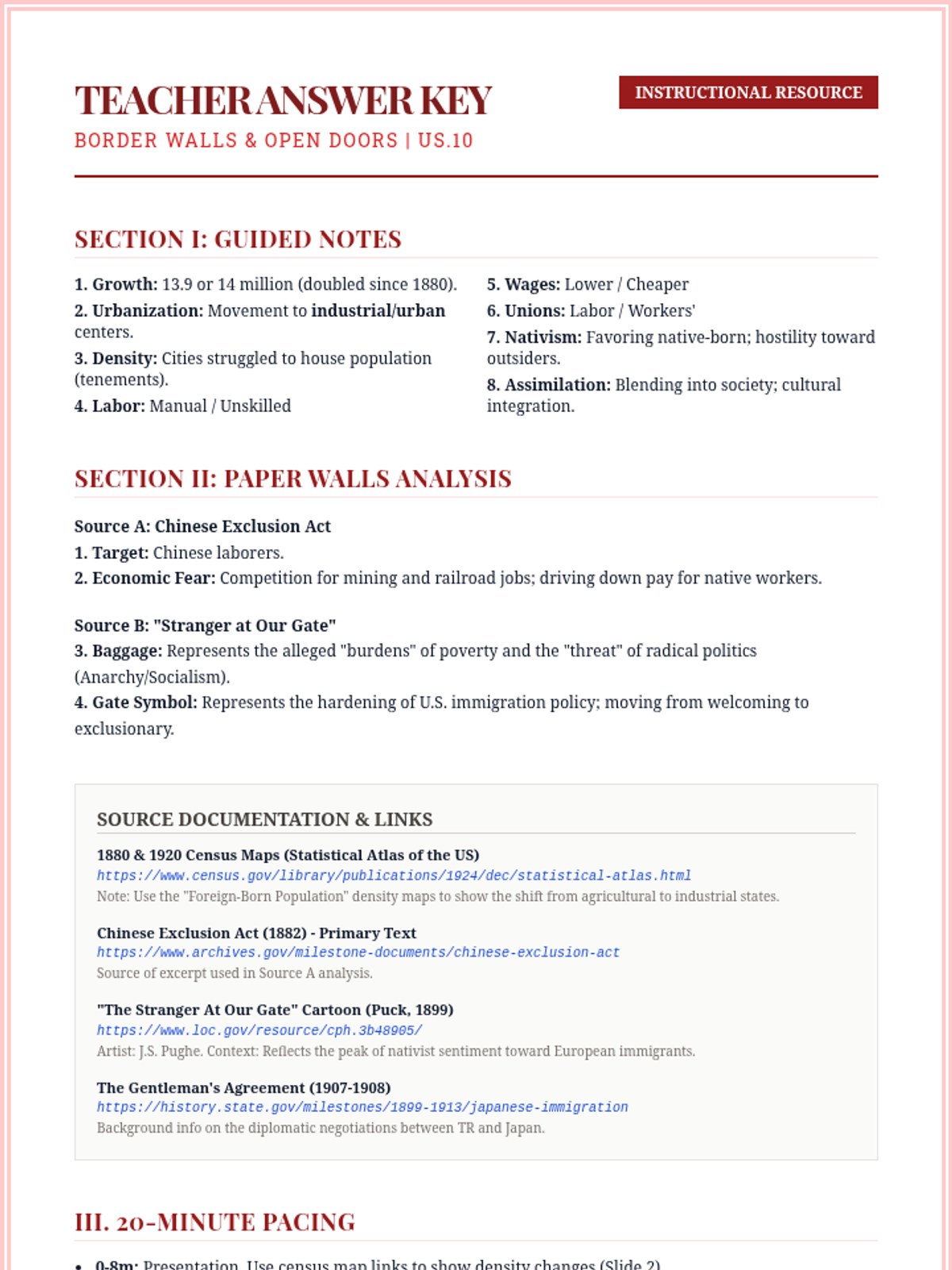
A comprehensive teacher answer key and instructional guide for the Border Walls lesson. Includes filled-in notes, activity analysis keys, a 20-minute pacing plan, and a detailed documentation section with verified historical source links.
A 6-slide presentation covering the social, economic, and political impacts of late 19th-century immigration. Updated Slide 2 with detailed "Map Focus" analysis points and critical guiding questions to support demographic comparison.
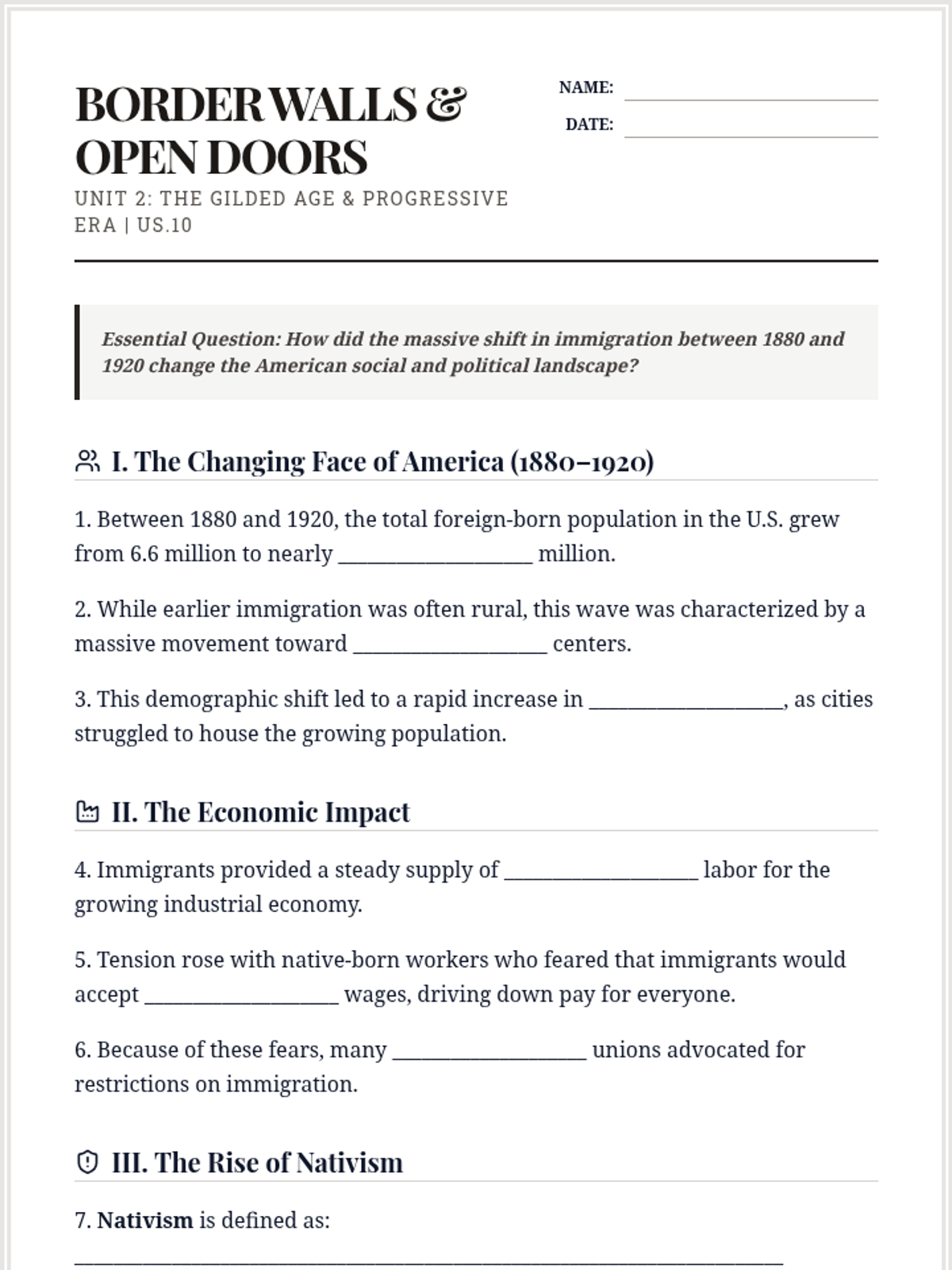
A guided notes worksheet for students to complete during the presentation on late 19th and early 20th-century immigration trends and policies. Updated to remove regional European labels and focus on overall population growth and urbanization.
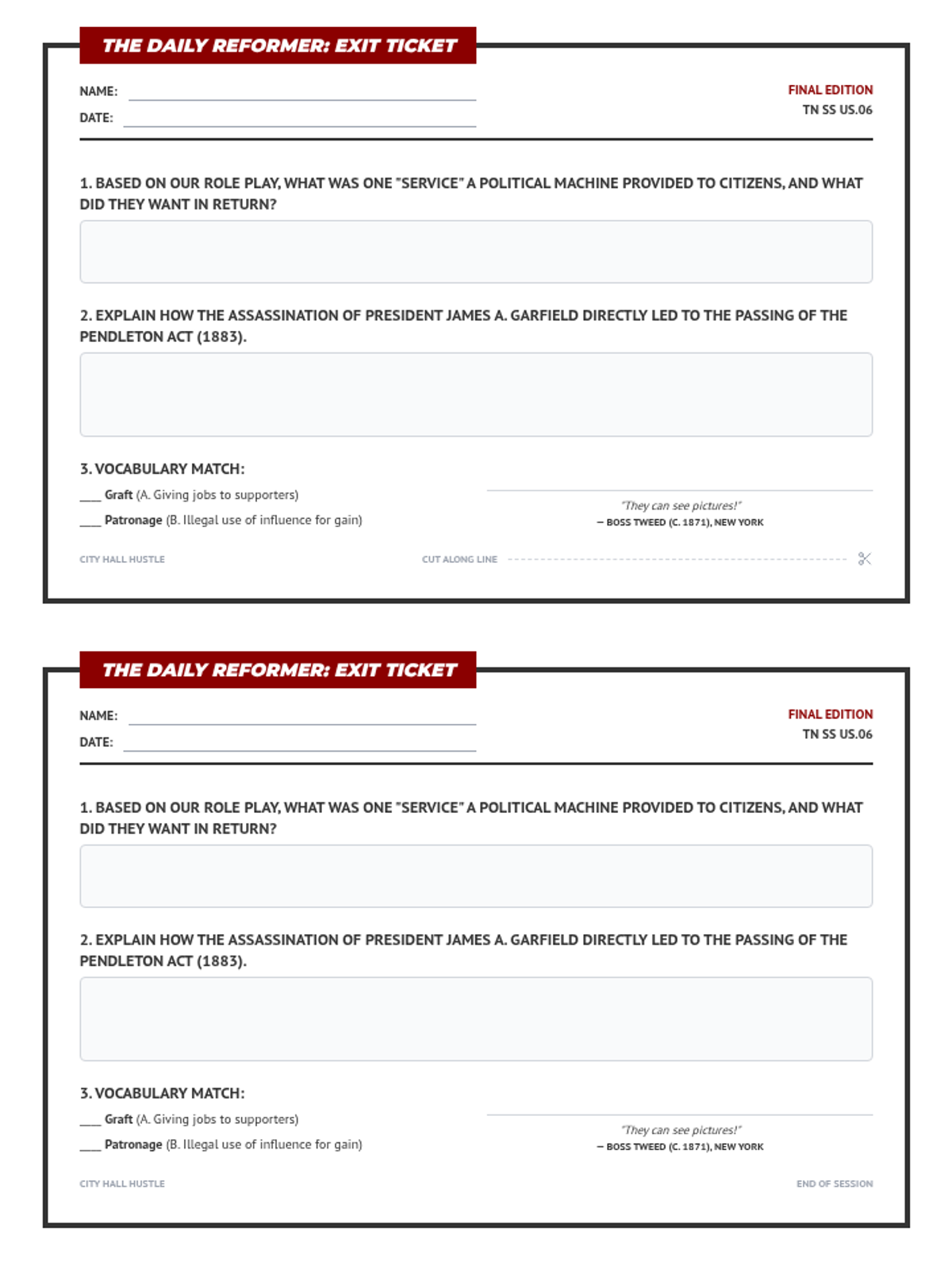
A 2-per-page exit ticket for the City Hall Hustle lesson, assessing student understanding of political machines, the Pendleton Act, and key Gilded Age vocabulary. Updated with primary source citations.
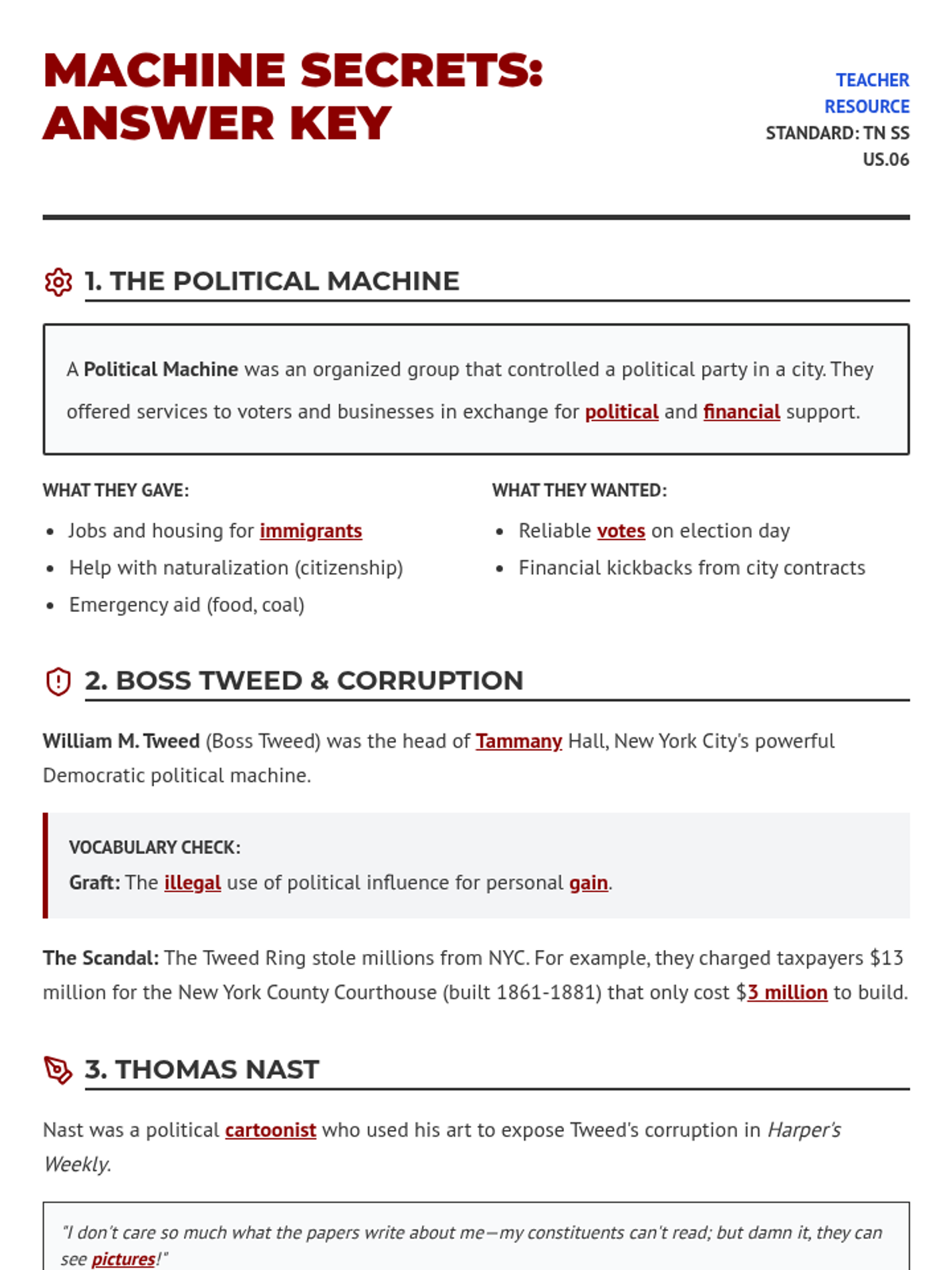
An answer key for the City Hall Guided Notes, providing correct answers for the lecture blanks.
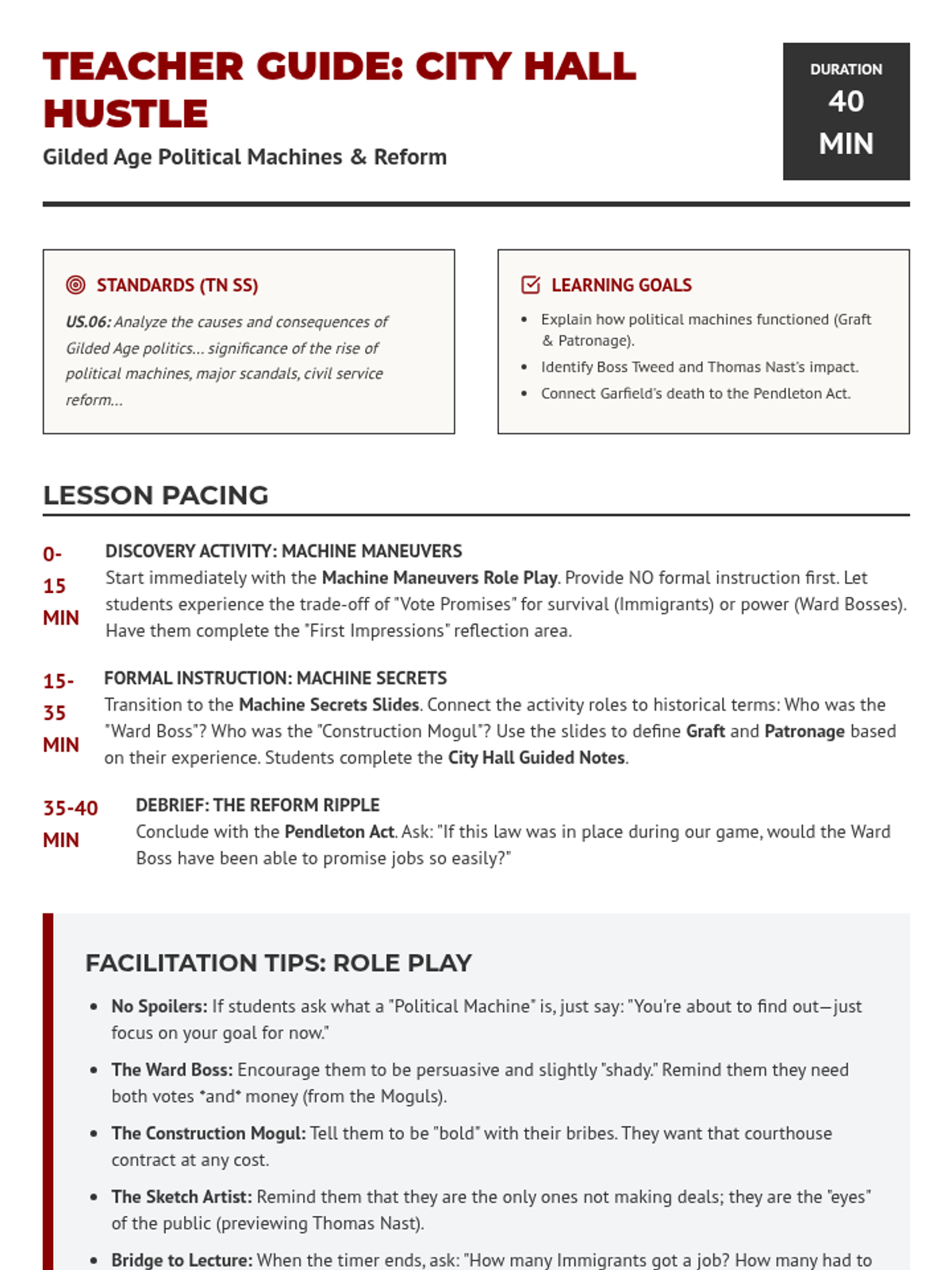
An updated teacher's guide for the City Hall Hustle lesson, aligning roles and pacing for a discovery-based introduction.
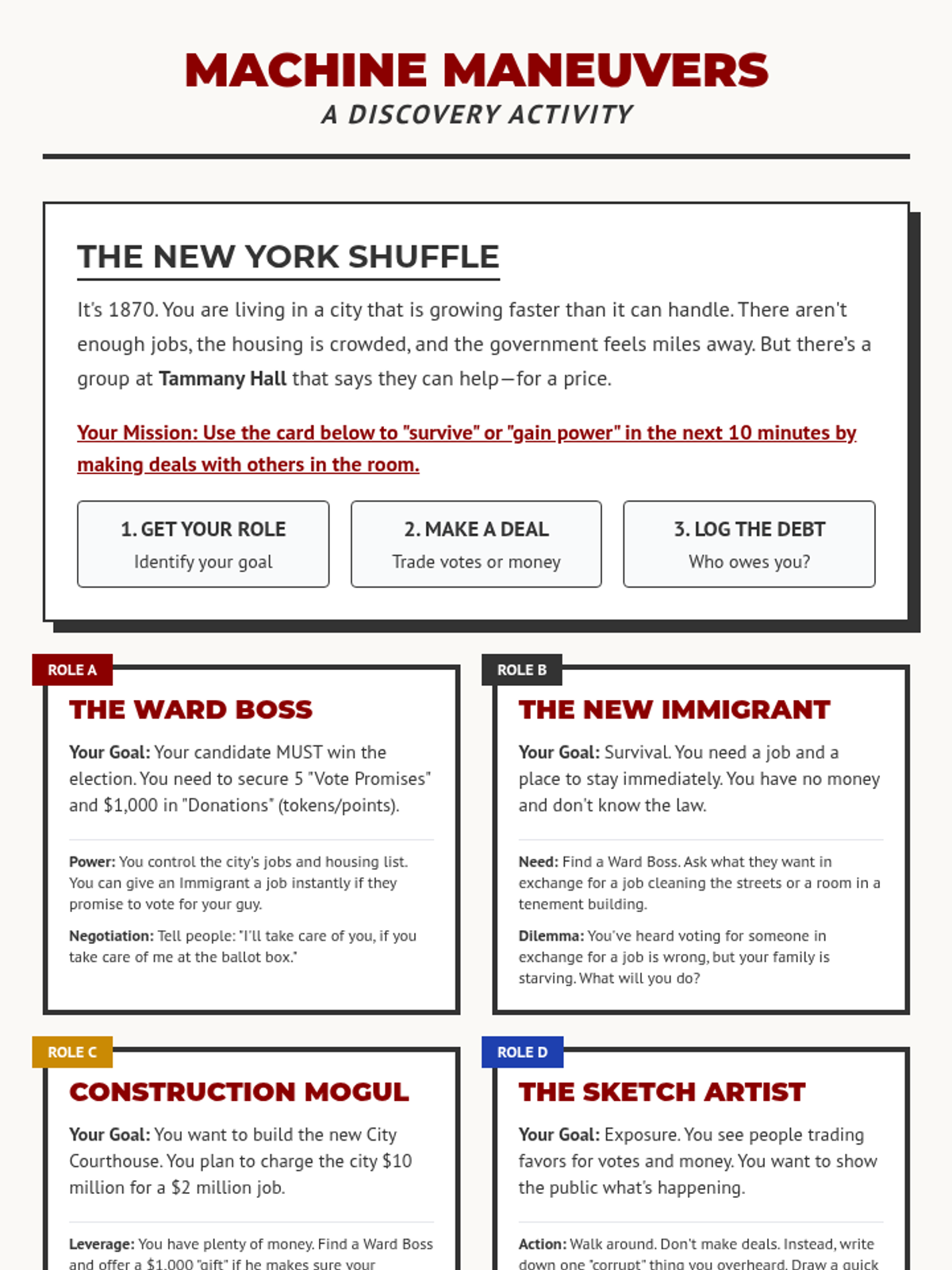
A discovery-based role-play activity designed to introduce the concepts of political machines through student interaction. Students experience the trade-offs of votes for services before receiving formal instruction.
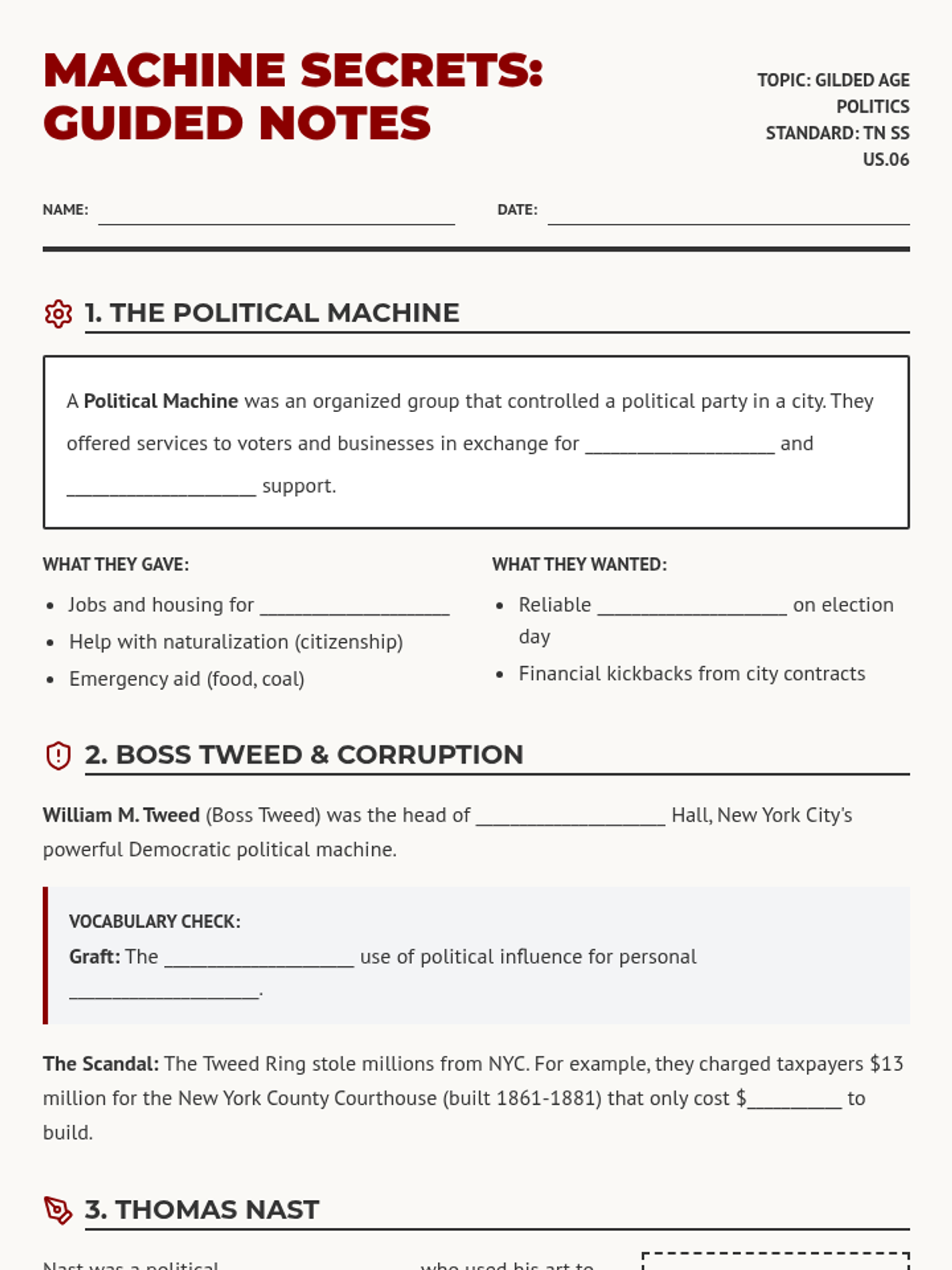
A guided notes sheet for students to fill out during the "Machine Secrets" slide presentation. Covers key vocabulary, major scandals, and legislative reforms. Updated with primary source citations.
A mini-slide deck for a Gilded Age history lesson focusing on political machines, Boss Tweed, the spoils system, and civil service reform. Features bold typography and a newspaper-inspired aesthetic. Updated with primary source names, dates, and origins.
Introductory slides for Day 3 covering Plato's Theory of Forms and his system of categorization. Teaches students to distinguish between 'Particulars' (physical objects) and 'Forms' (essential ideas) through three levels of logic.
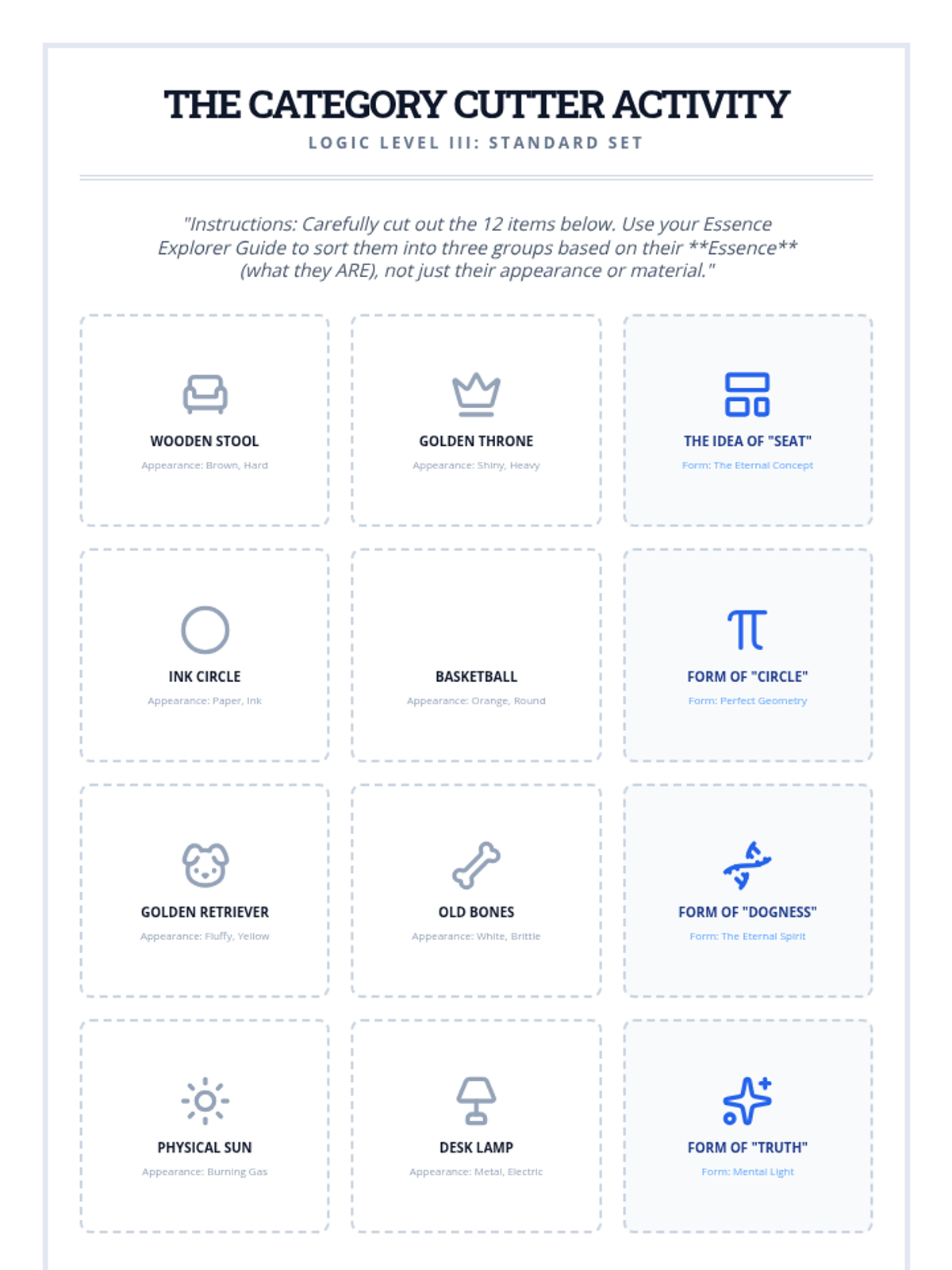
A 2-page sorting activity handout. Page 1 contains 12 standard items for categorization. Page 2, 'The Trick Deck', features 12 'edge case' items designed to challenge students' logical application of Plato's Theory of Forms.
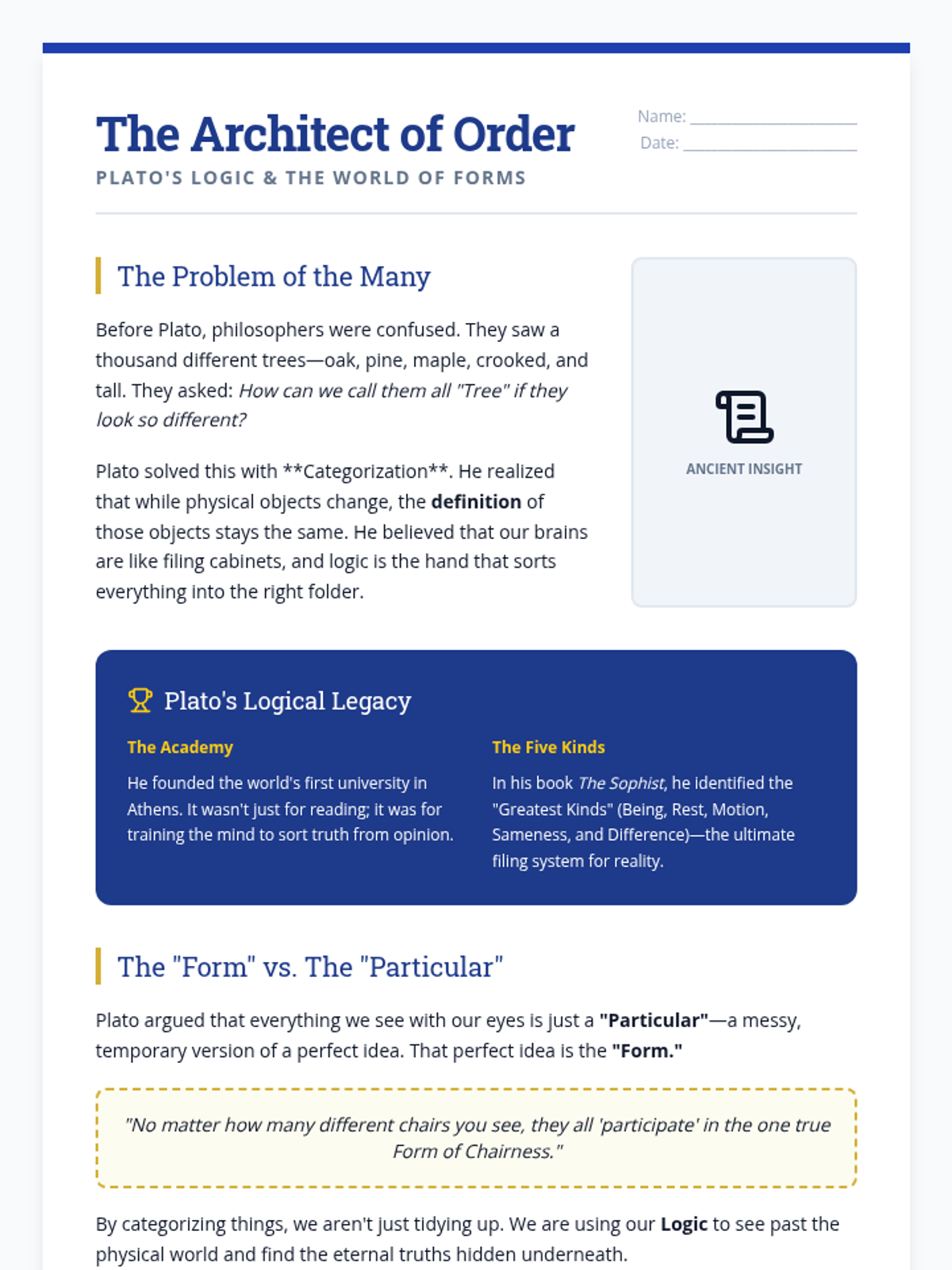
A 2-page student guide on Plato's logic and categorization. Page 1 covers the history of his Theory of Forms and his accomplishments at the Academy. Page 2 guides students through three levels of sorting (Appearance, Function, and Essence) to find the fundamental nature of things.
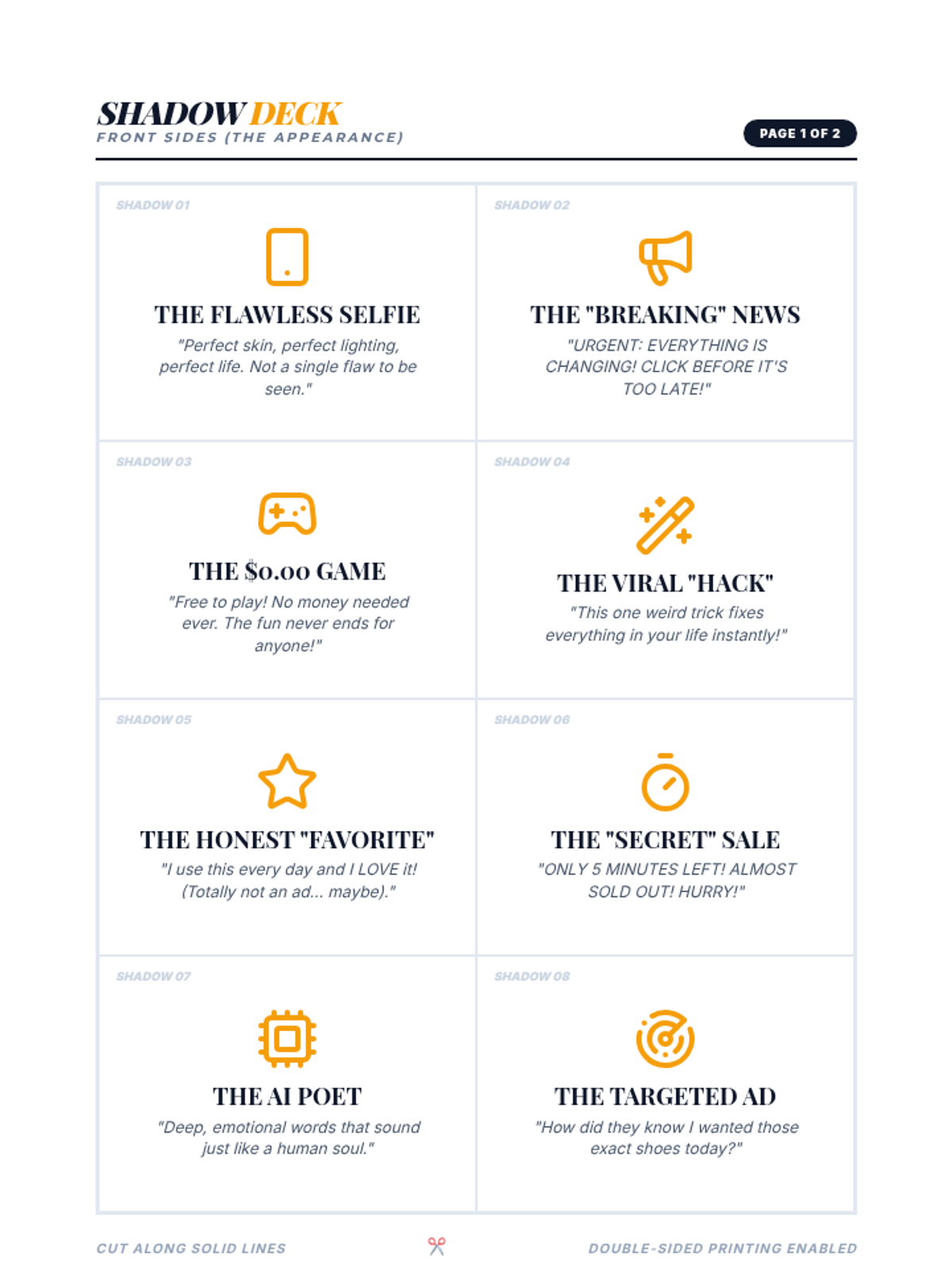
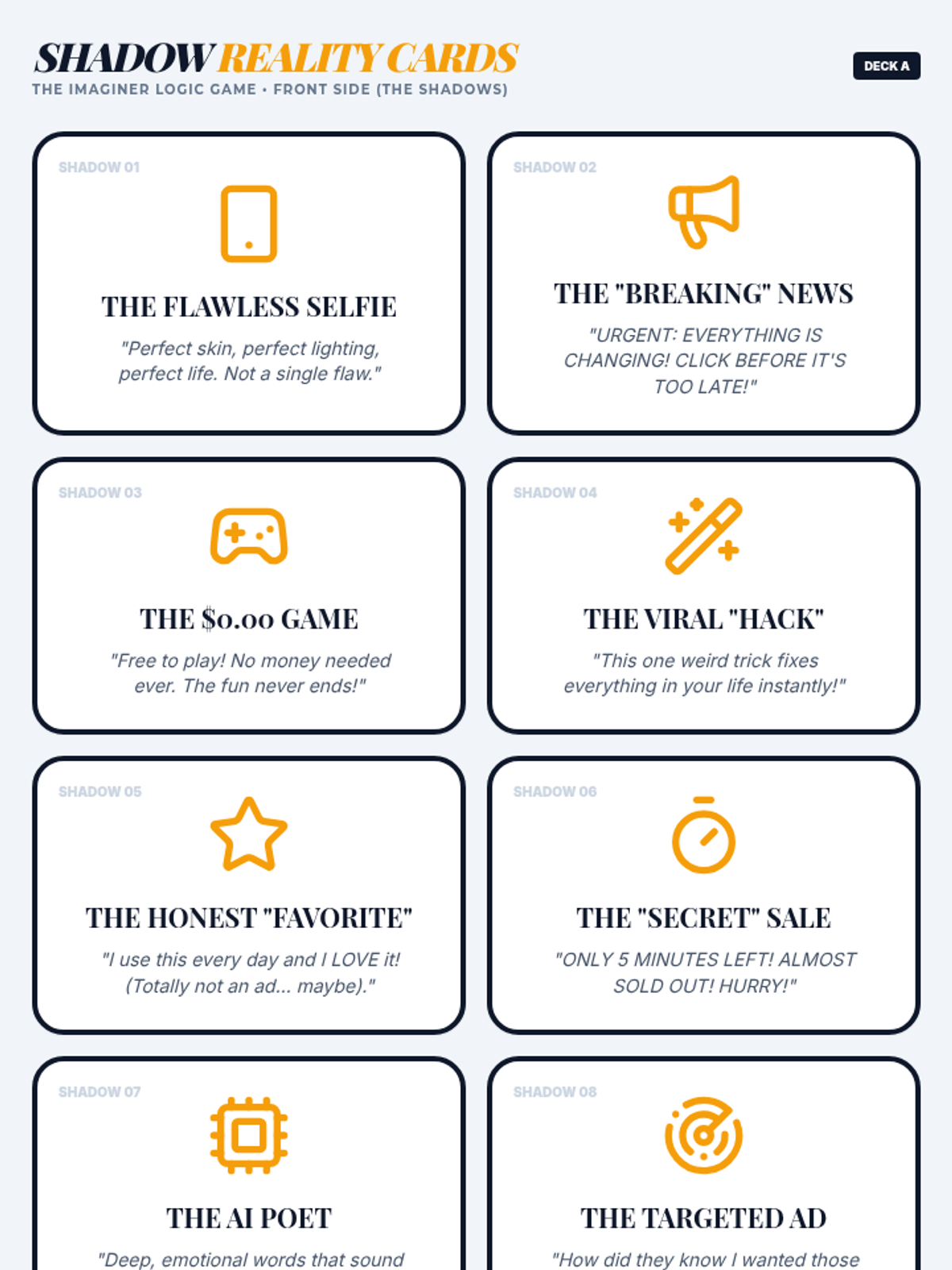
A 2-page printable card deck containing 8 'Shadow vs Reality' cards. Optimized for standard 8.5x11 inch paper, the material features 8 cards in a 2x4 grid on each page. Page 2 is horizontally mirrored to ensure perfect front-to-back alignment when printed double-sided. Includes crop marks and a higher-legibility layout for student use.
A set of 8 printable 'Shadow vs Reality' cards for the Day 4 game. Each card features a common modern 'shadow' (front) and its corresponding logical reality and puppeteer (back). Designed for high-contrast visibility and classroom use.
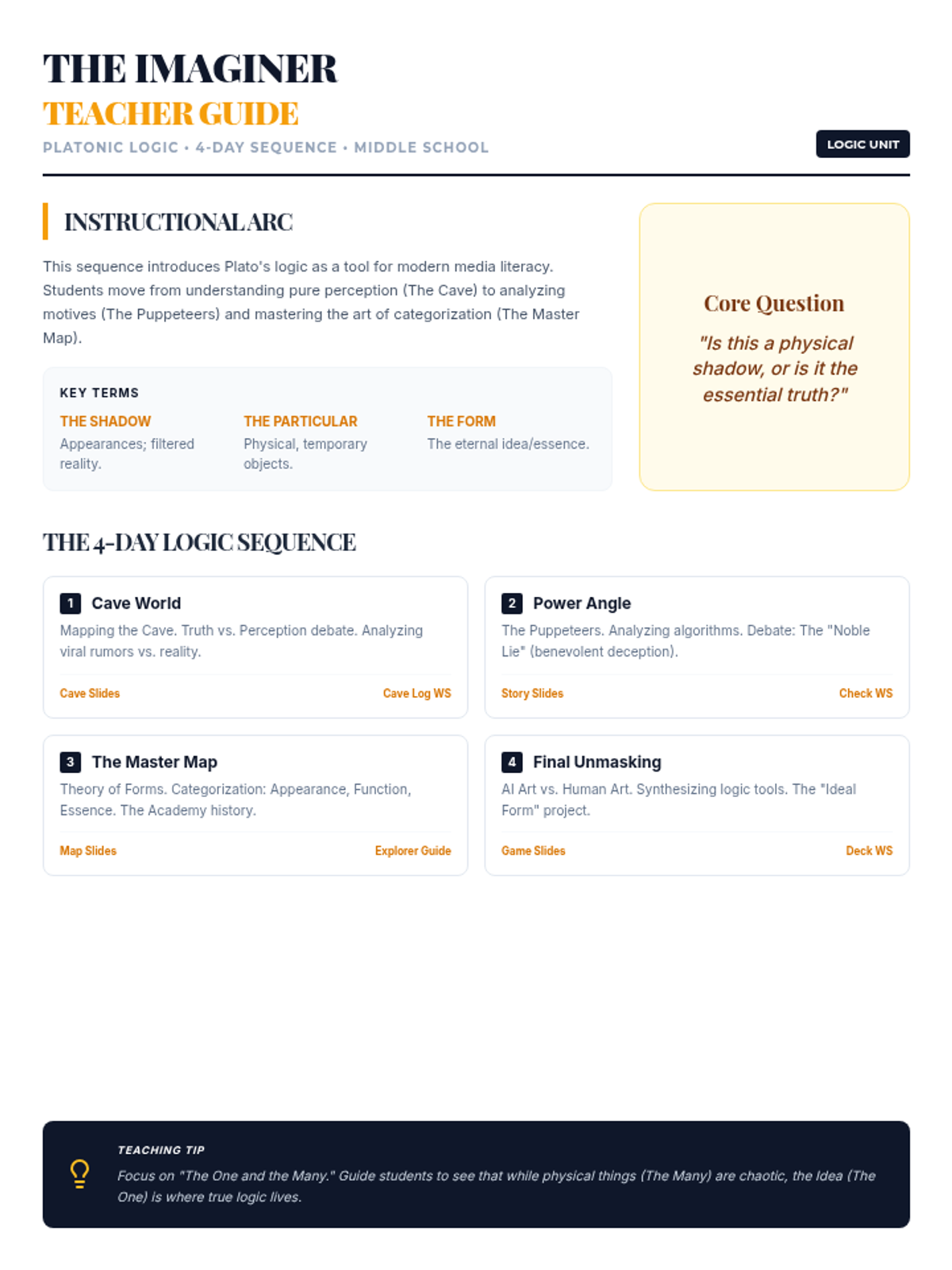
A highly condensed 2-page teacher guide optimized for front-and-back printing. Page 1 provides the 4-day instructional arc including the updated Day 3 focus on Plato's Categories. Page 2 contains a master answer key and discussion prompts.