A comprehensive bilingual assessment based on the Carmela story, featuring 20 multiple-choice questions, matching, and short-answer sections. Correct answers are uniform with distractors. Layout optimized for 2 pages.
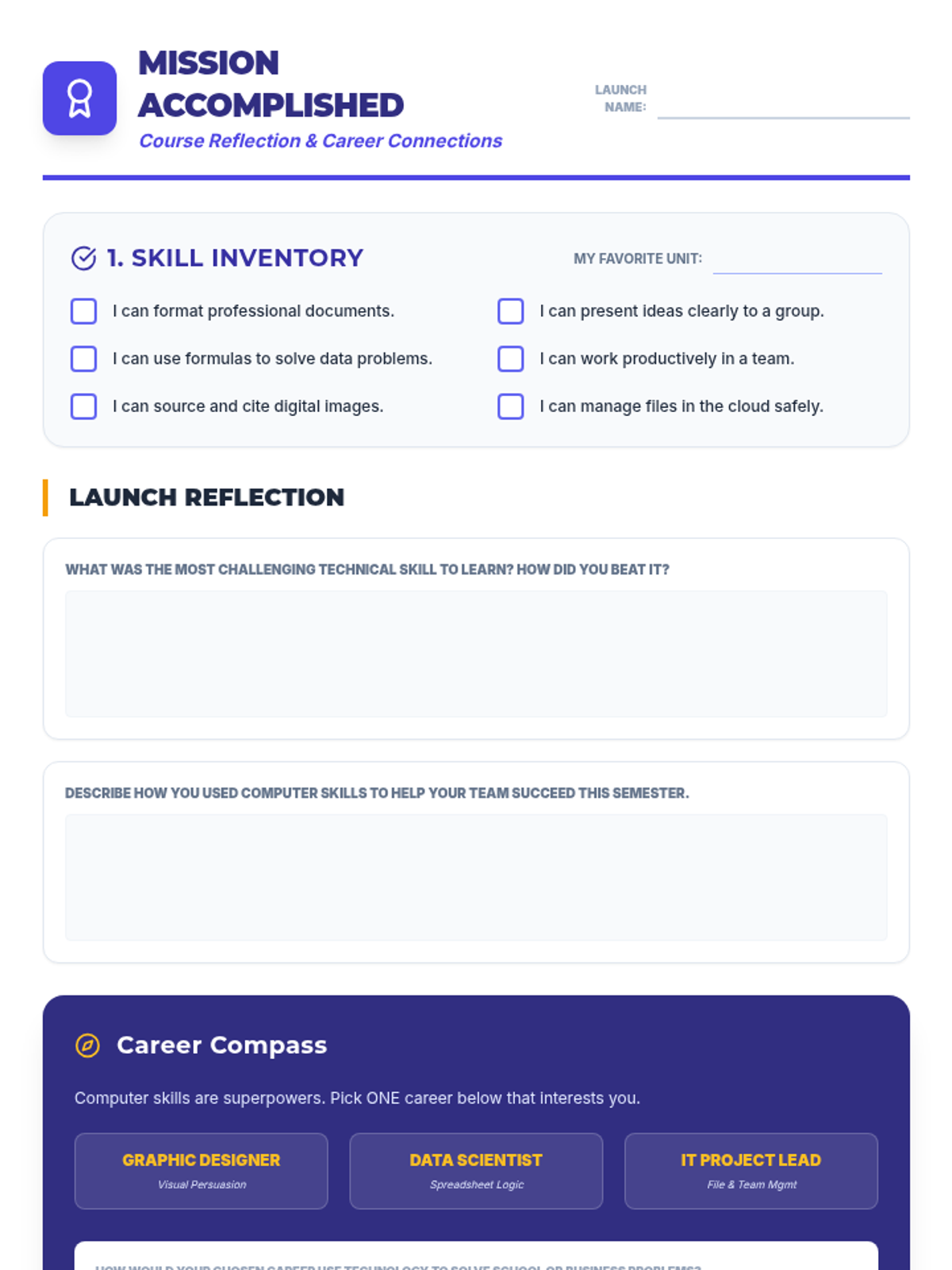
A final course reflection and career exploration worksheet for Lesson 40. Students review the skills mastered across all four units and connect them to real-world career paths like design, data analysis, and project management. Revised for single-page layout.
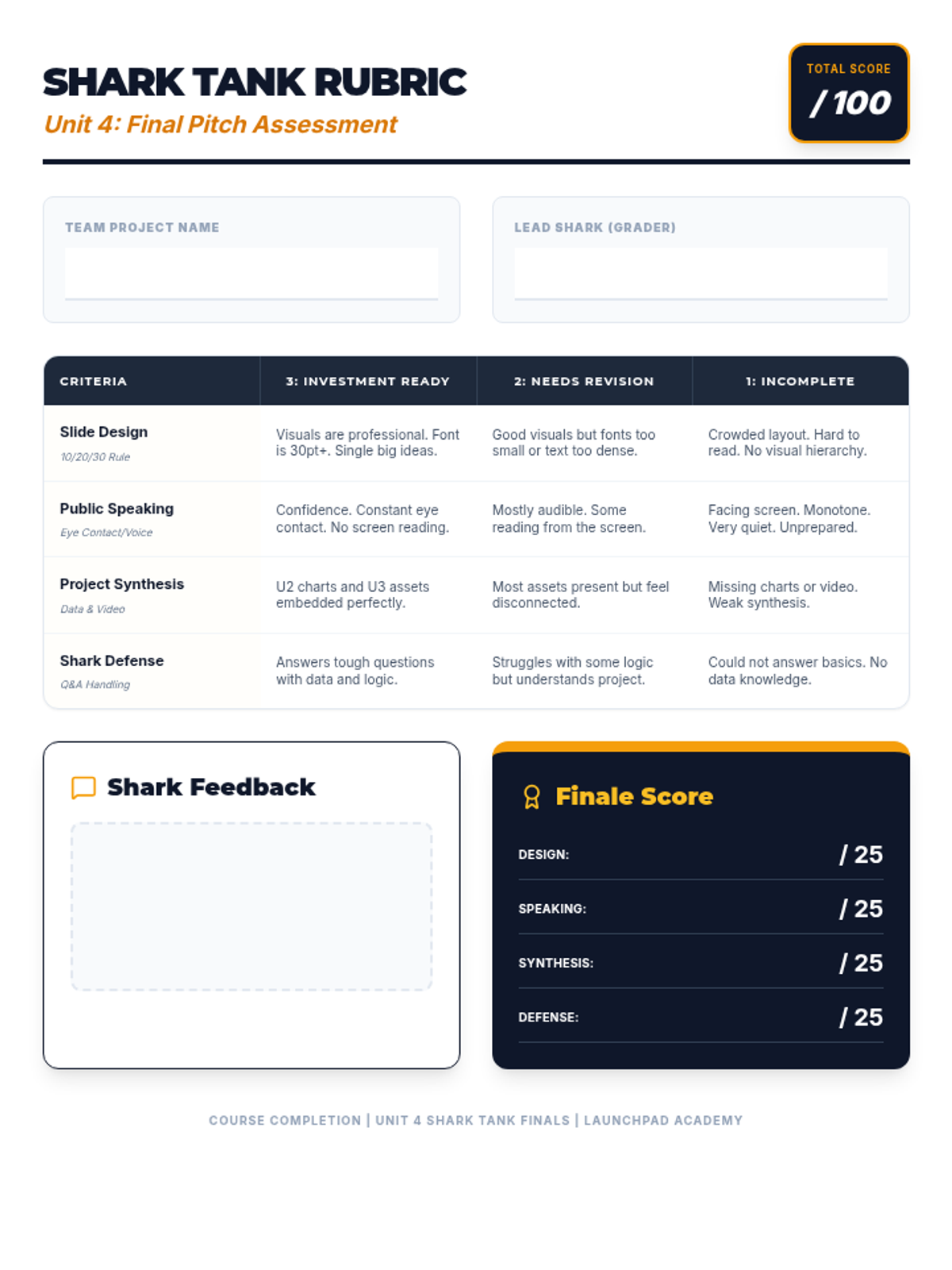
A professional assessment rubric for the final Shark Tank presentation. Evaluates slide design, public speaking, content synthesis (combining Units 1-3), and the team's ability to handle Q&A questions. Revised for single-page layout and improved handwriting contrast.
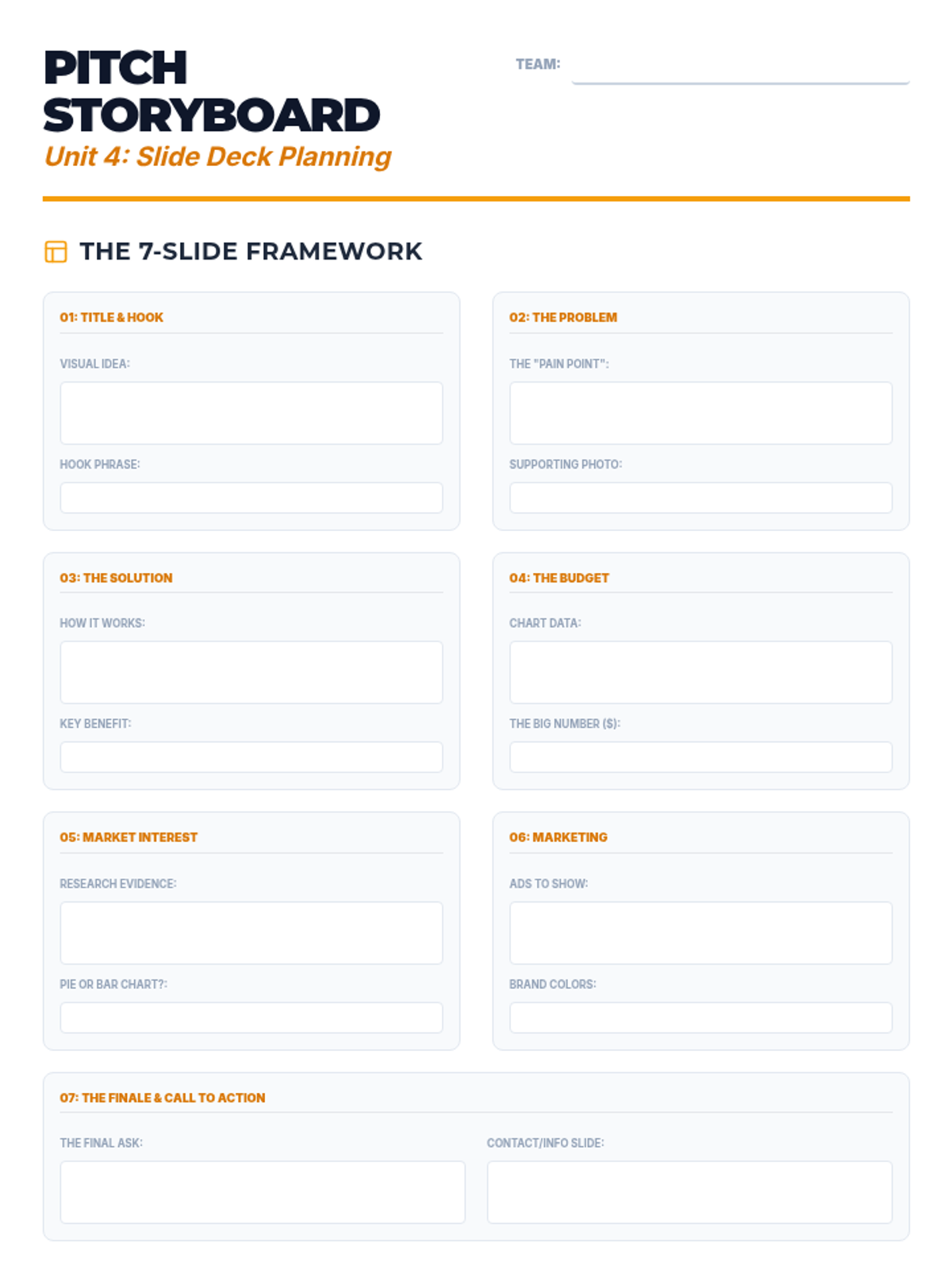
A storyboard and planning worksheet for Unit 4, helping student teams map out their 7-slide presentation, identify key visual assets (charts/videos), and draft their primary talking points. Revised to include all 7 slides and improved handwriting contrast.
A high-impact slide presentation for Unit 4, covering the 10/20/30 rule, public speaking non-verbals, media integration, and preparation for the Shark Tank final pitch. Designed with a dark, premium boardroom aesthetic. Revised for better icon visibility and slide 6 rendering.
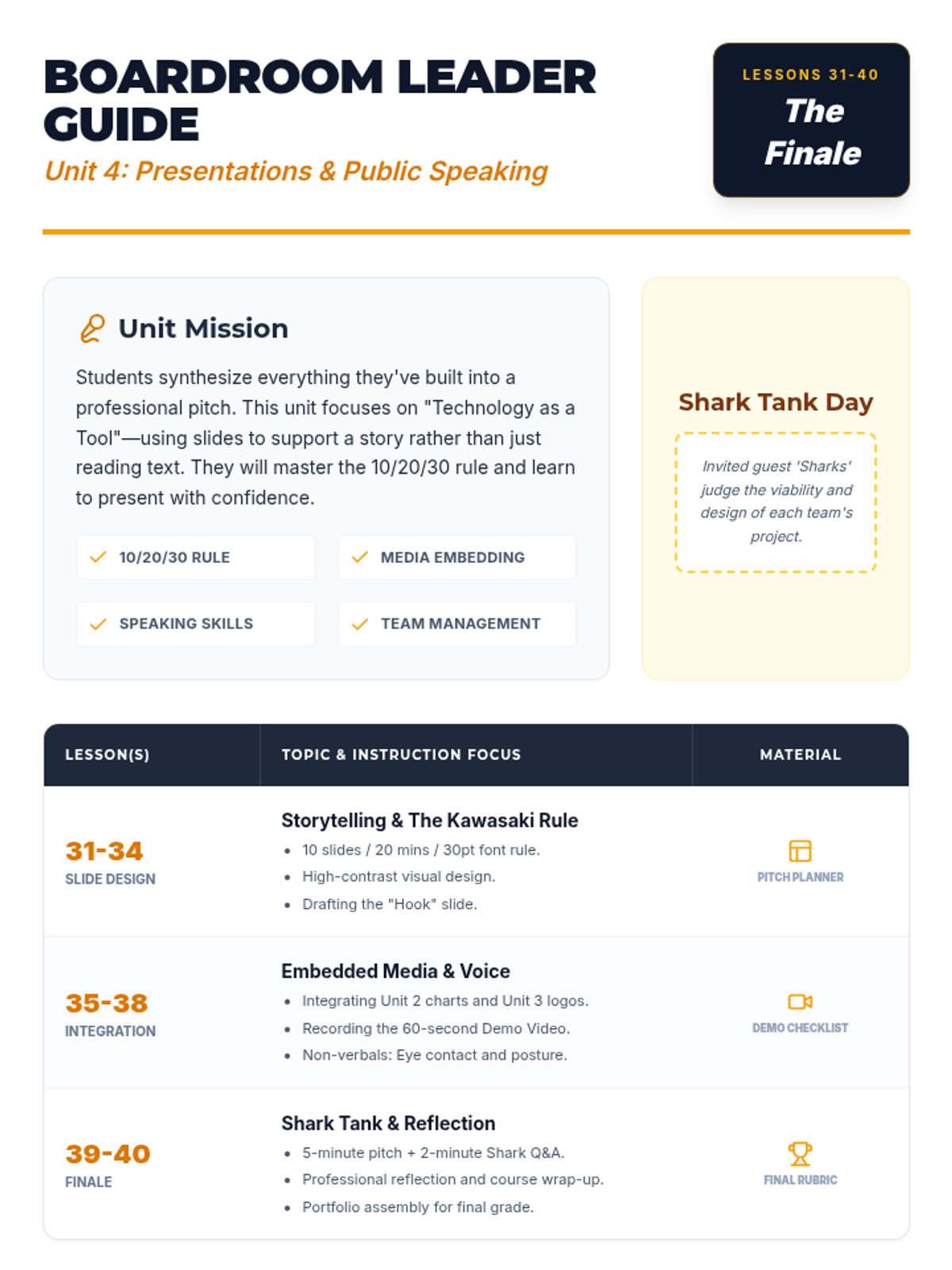
A comprehensive teacher guide for Unit 4, detailing the 'Shark Tank' final project, guest shark logistics, and instructional strategies for teaching public speaking and presentation design. Revised for improved page breaks and contrast.
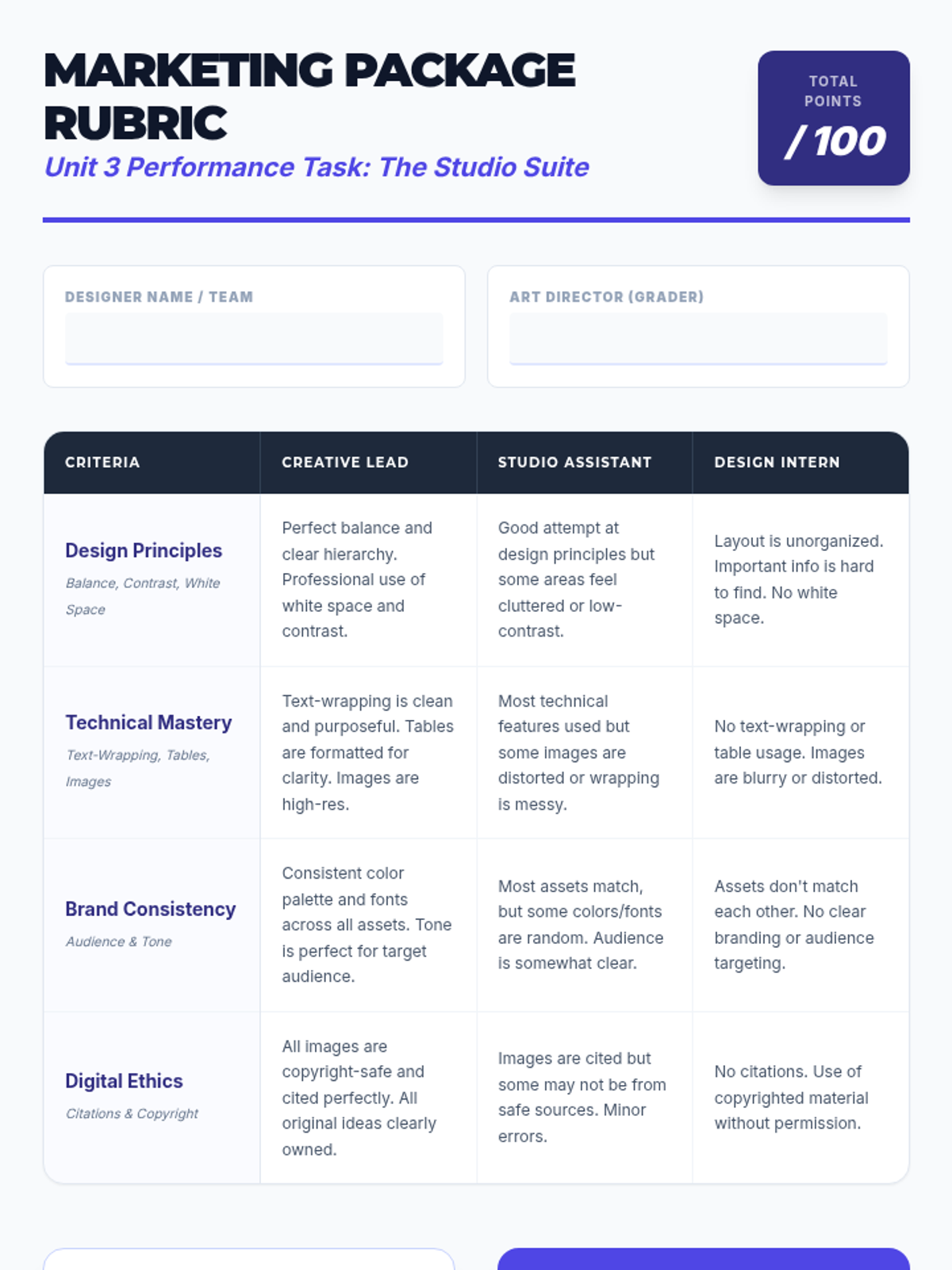
An assessment rubric for the Unit 3 final performance task (Marketing Package). Evaluates design principles, technical software mastery, branding consistency, and digital ethics on a 100-point scale.
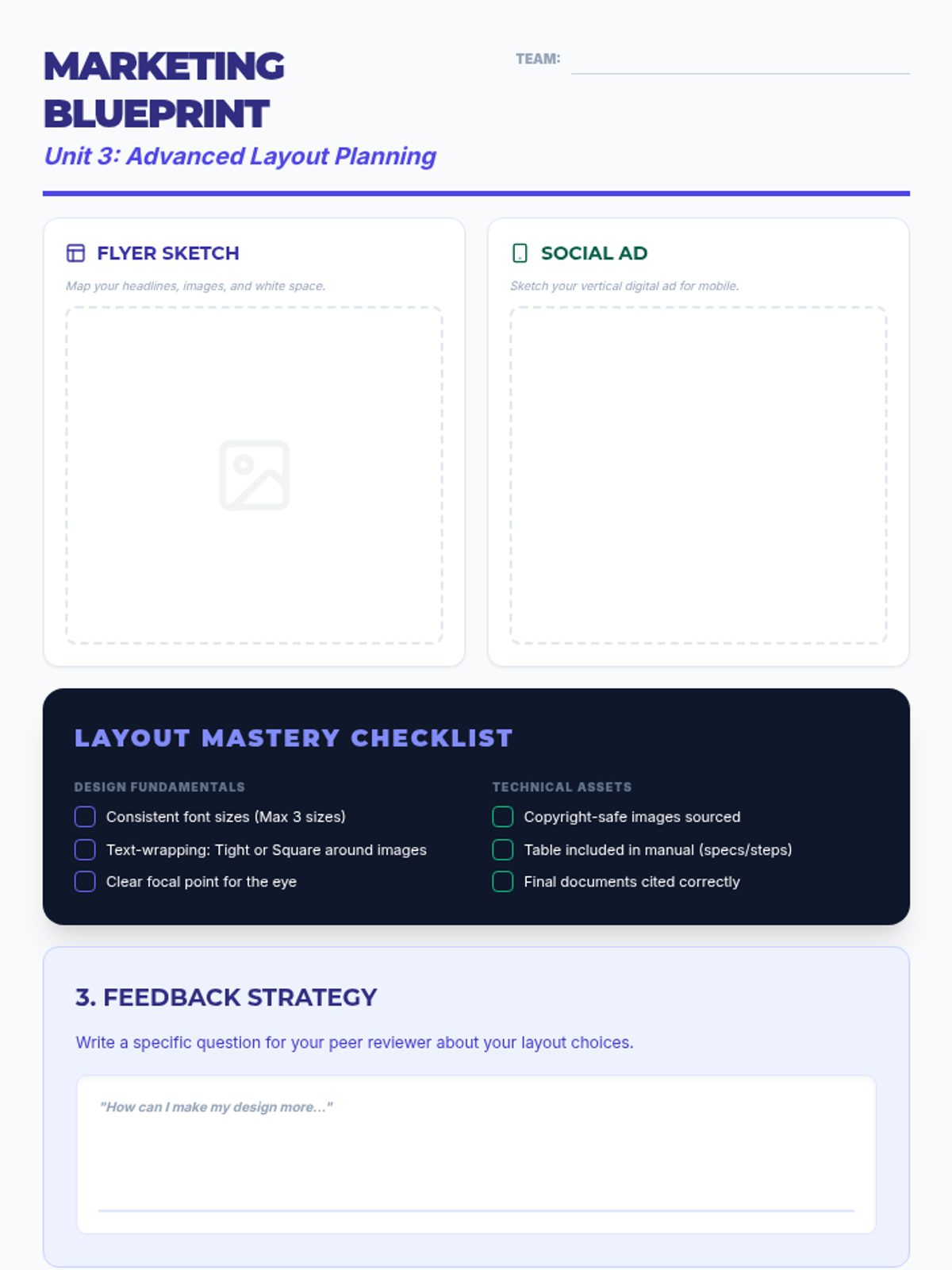
A planning worksheet for Unit 3 where students sketch their marketing layouts (flyer and social ad) and use a technical checklist to ensure advanced word processing features are applied correctly.
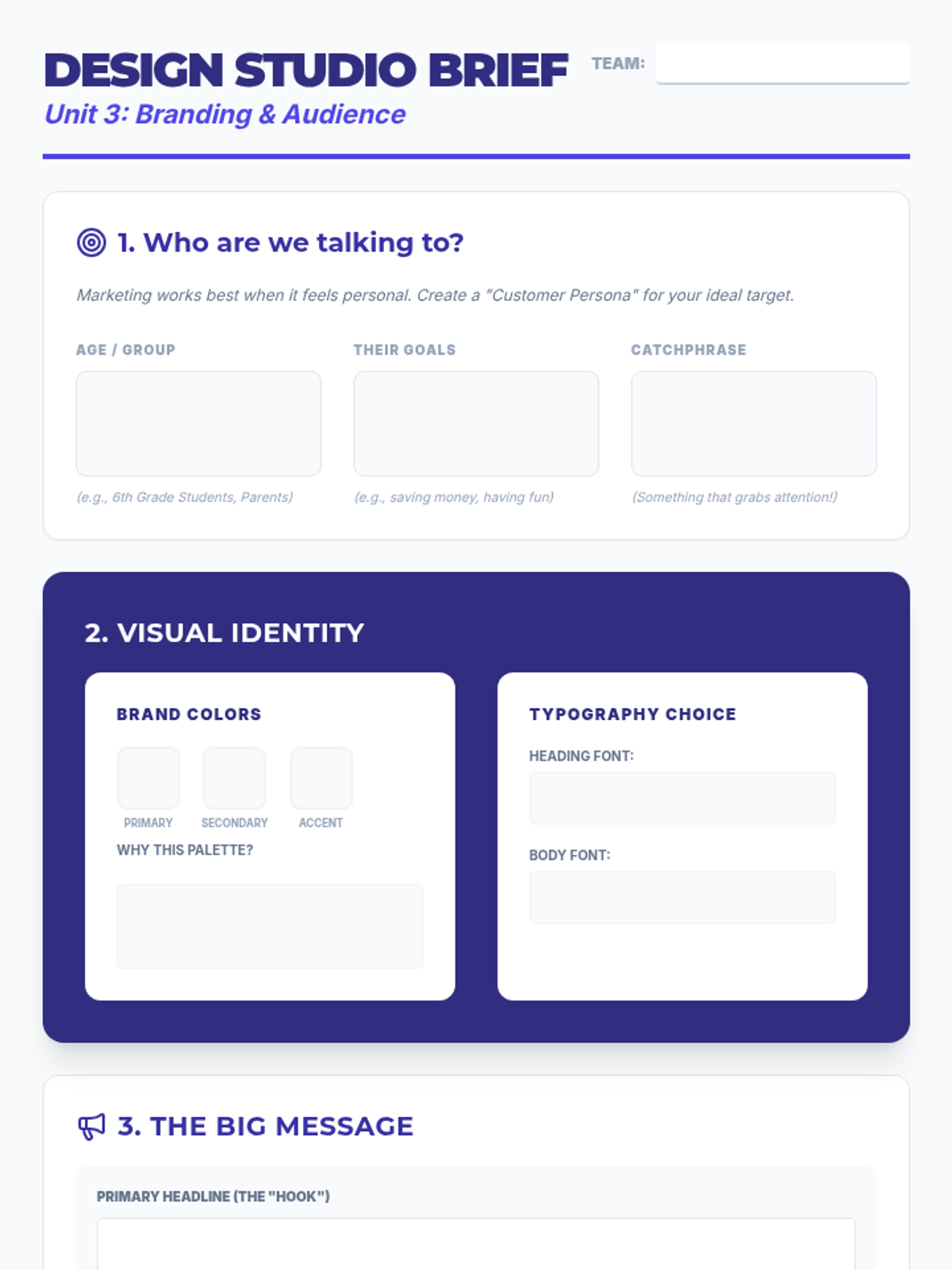
A branding worksheet where students define their target audience persona, select a team color palette, and draft their primary marketing headlines and call-to-action. Designed with visual sketching areas.
A presentation unit deck for Unit 3 covering digital marketing basics, design principles (balance, contrast, hierarchy), copyright-safe image sourcing, and collaborative feedback tools. Designed with a modern, high-contrast creative studio aesthetic.
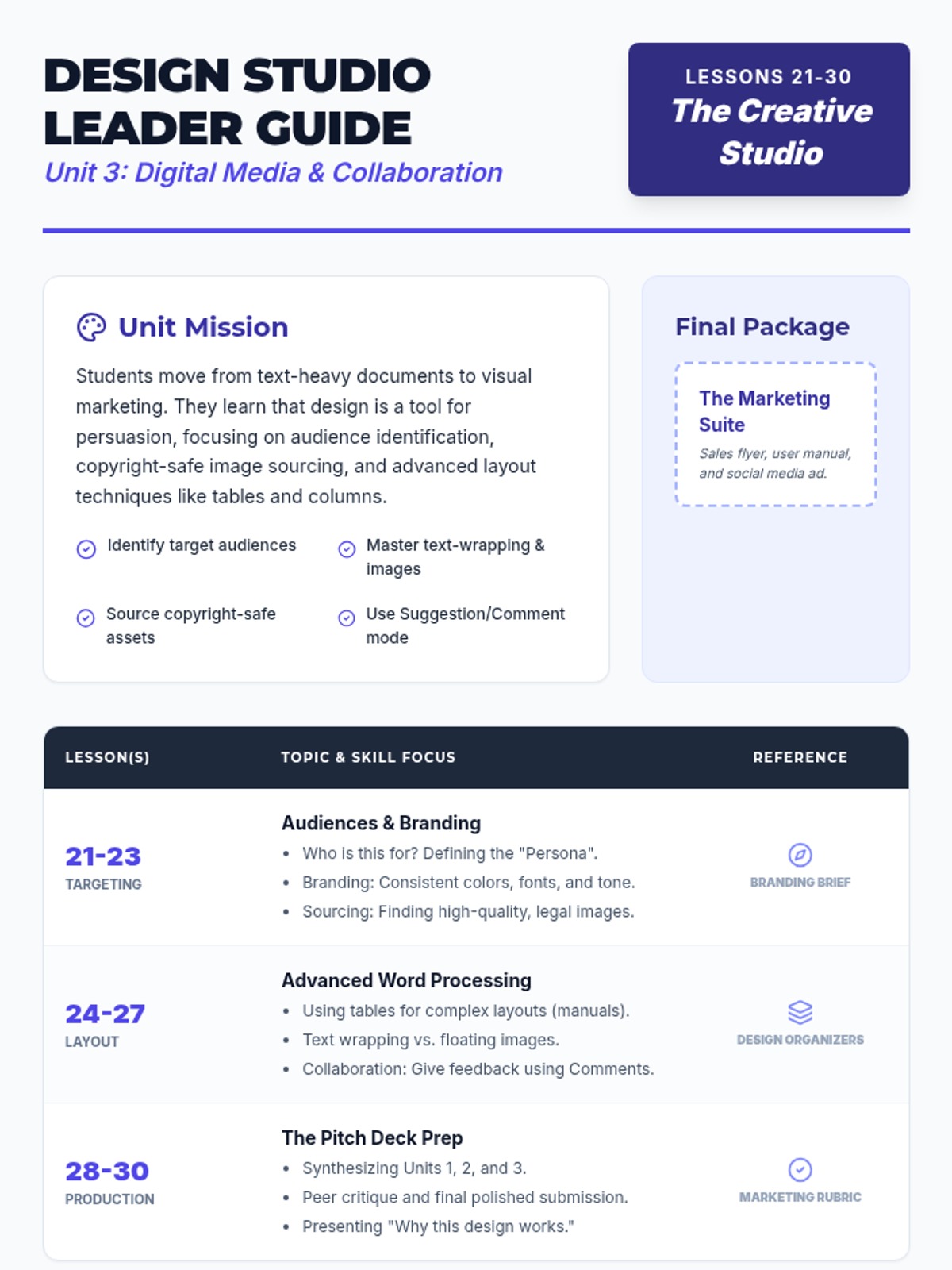
A unit guide for teachers covering lessons 21-30, focused on digital media, branding, and collaborative marketing. Includes instructional tips on copyright-safe sourcing, layout design, and using suggestion mode for peer feedback.
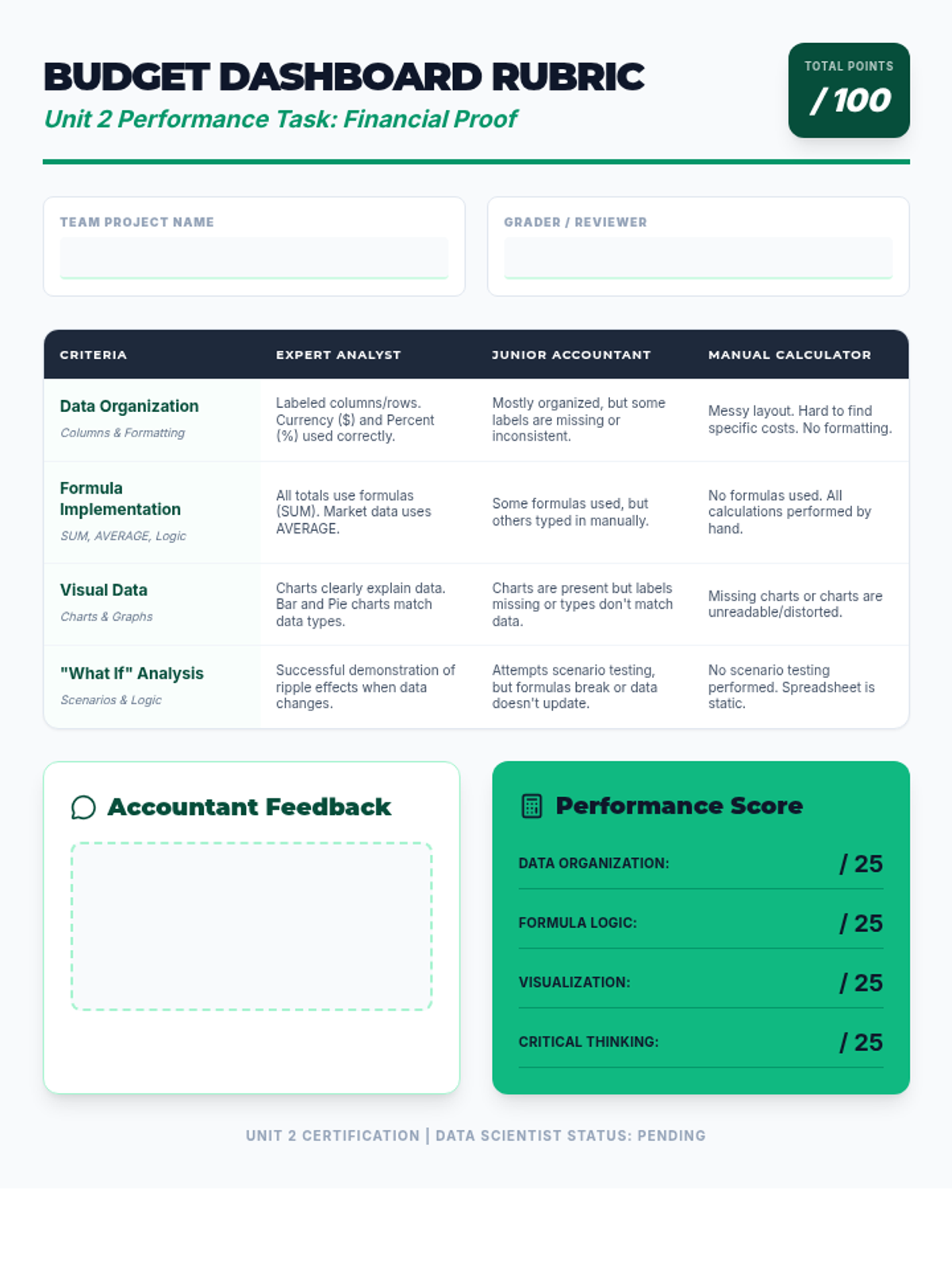
An assessment rubric for the Unit 2 final performance task (Budget Dashboard). Evaluates formula usage, data formatting, chart generation, and critical thinking scenarios on a 100-point scale.
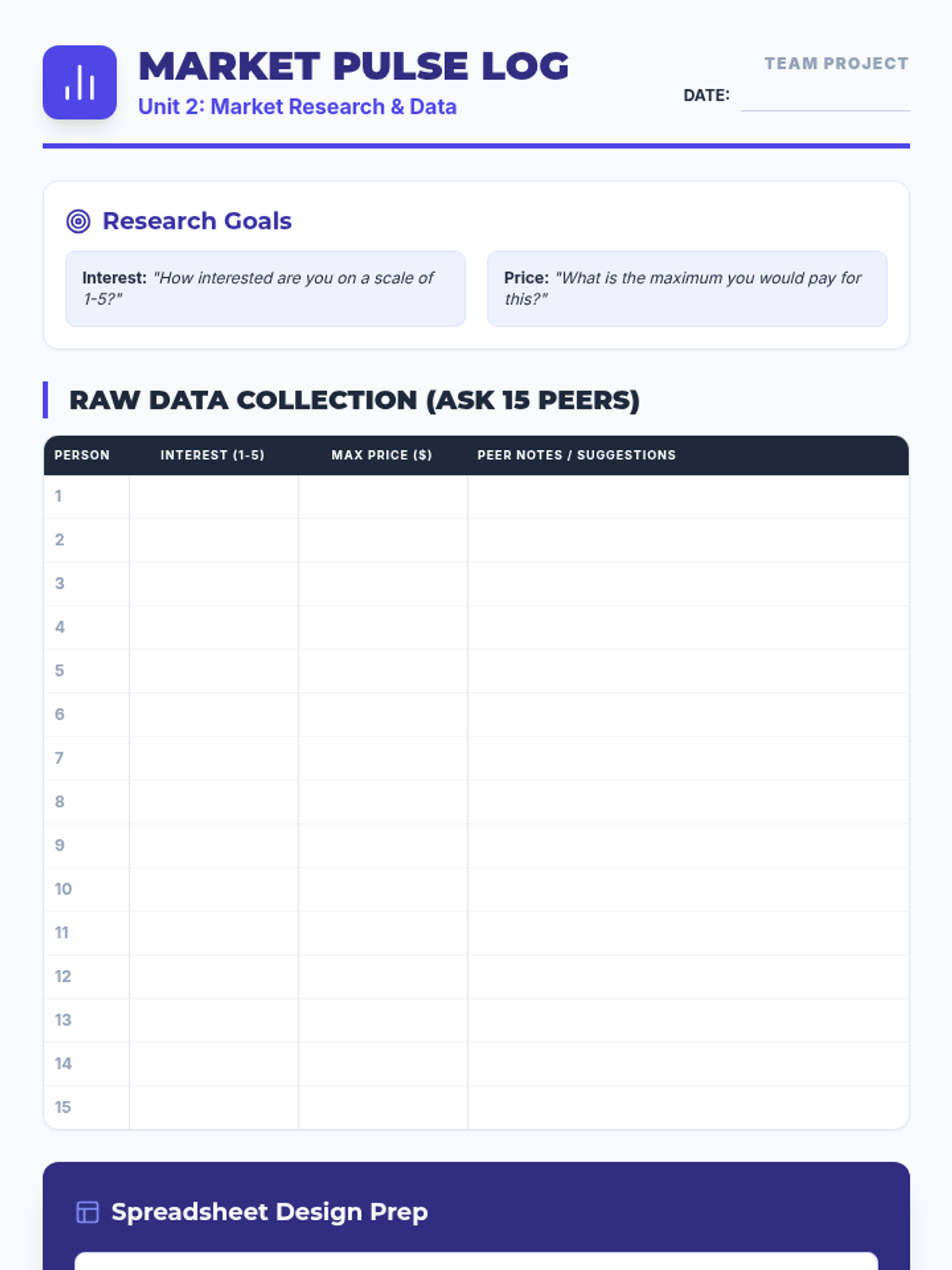
A market research worksheet where student teams collect survey data from peers regarding interest and pricing for their project. Includes tally areas and spreadsheet preparation fields.
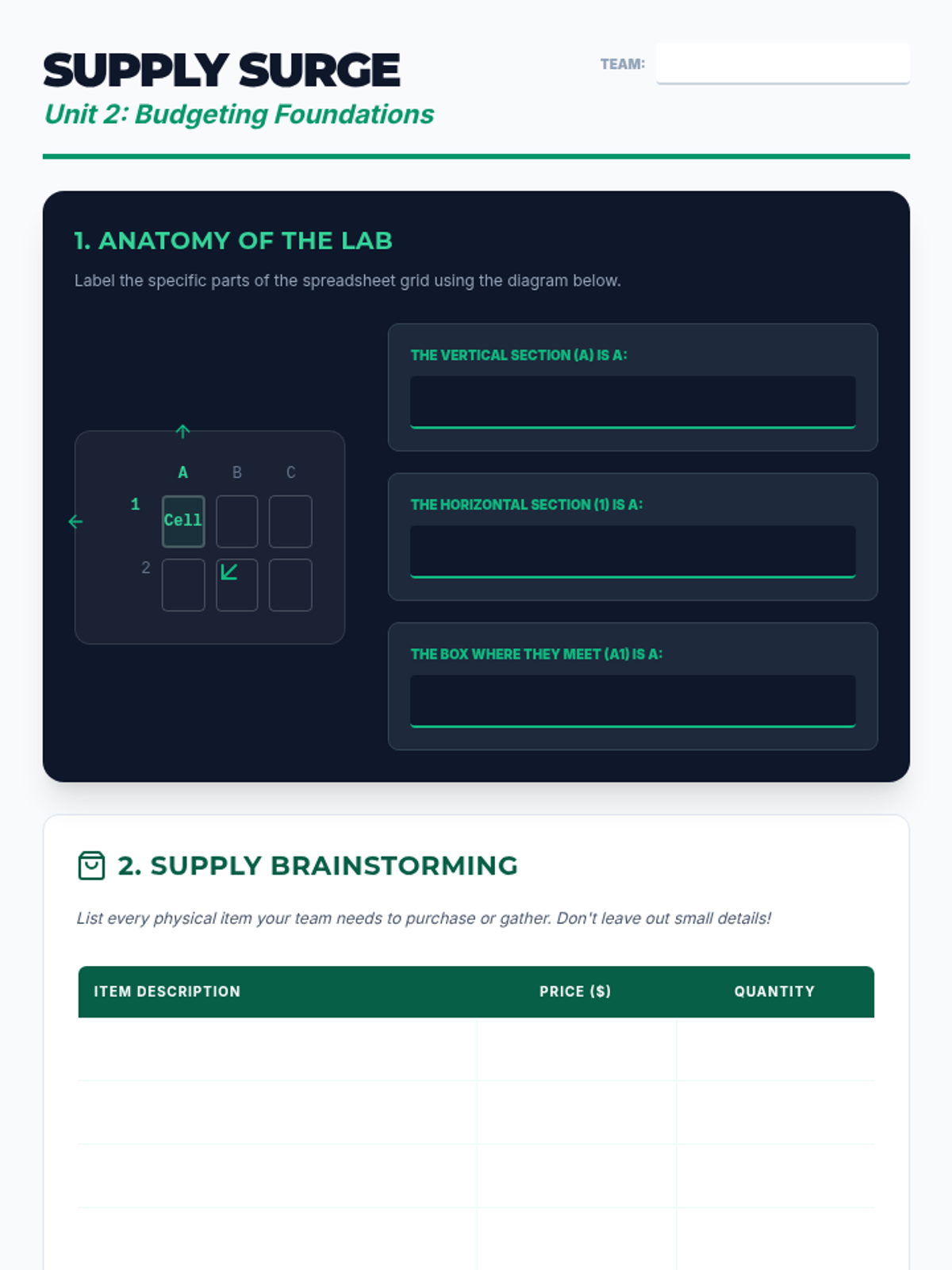
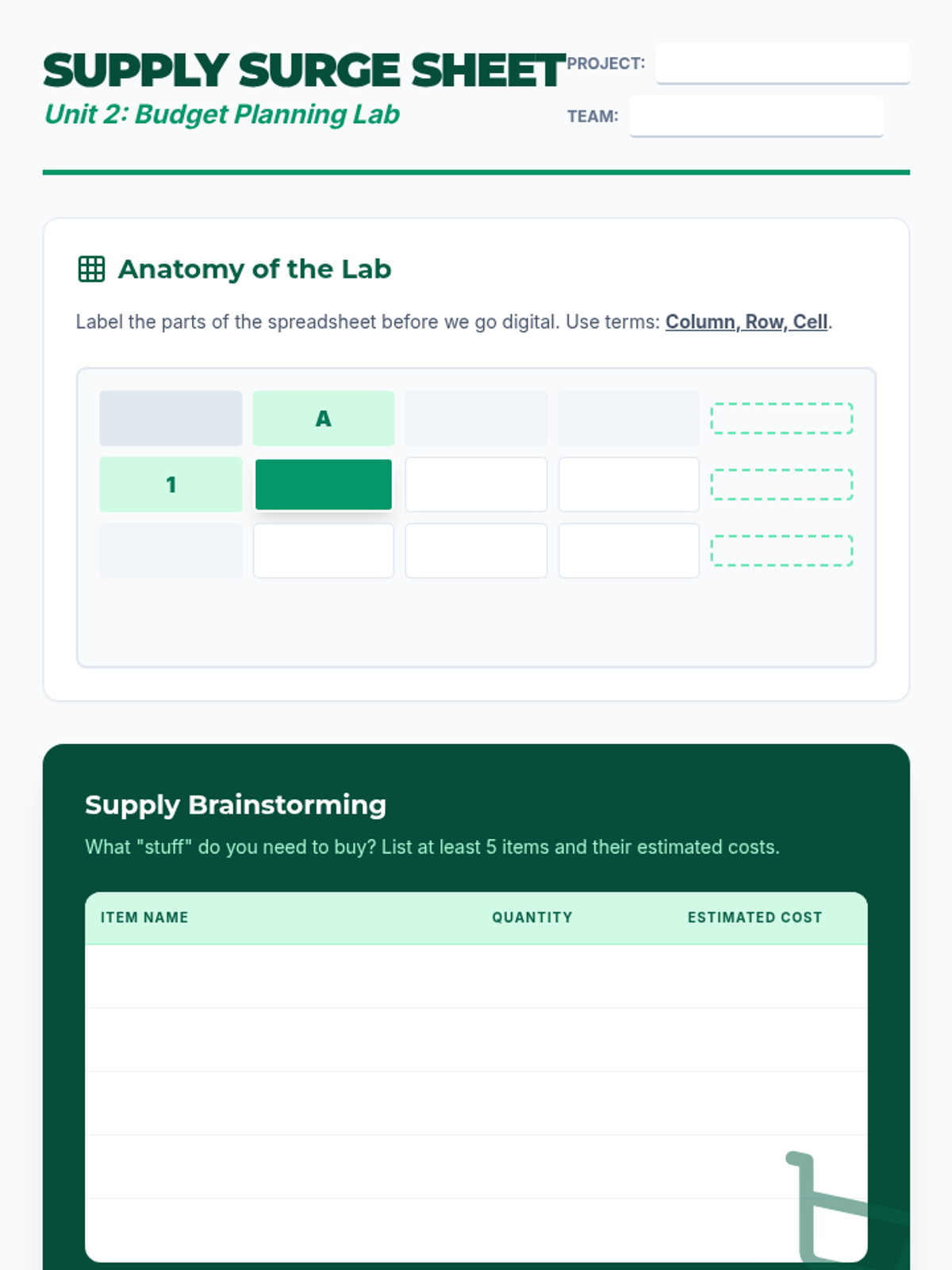
A budgeting preparation worksheet where student teams brainstorm supply costs, practice labeling spreadsheet components (rows, columns, cells), and calculate break-even points before building their digital budget.
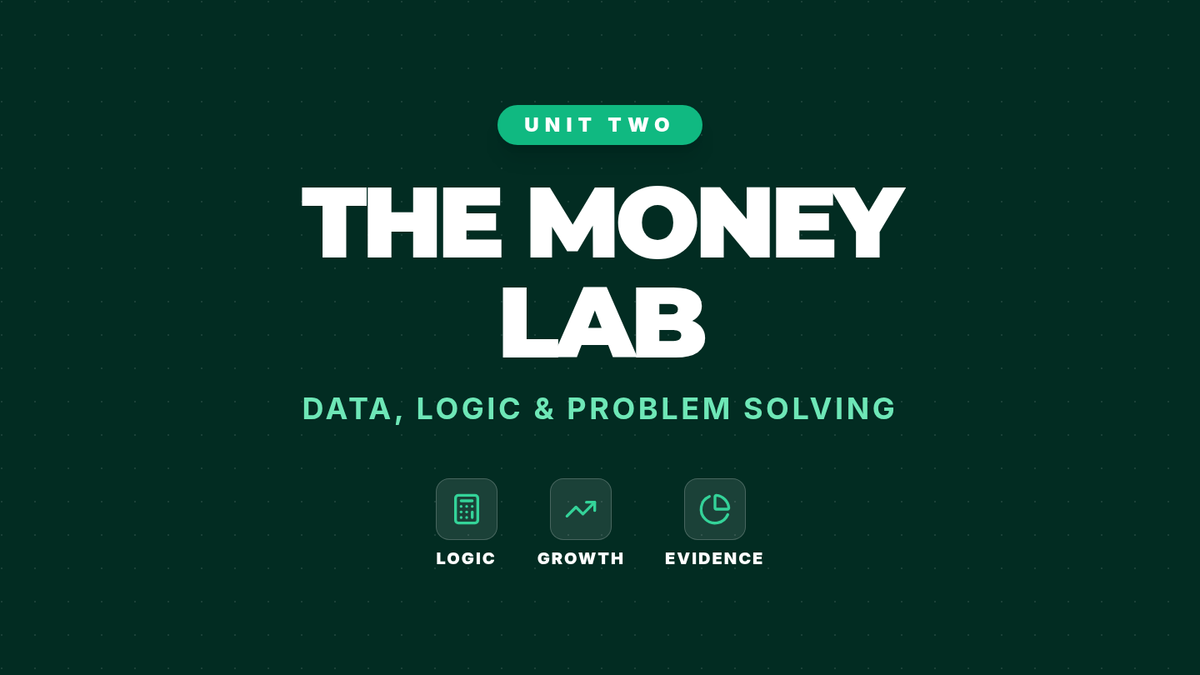
A presentation deck for Unit 2 covering spreadsheet anatomy, basic formulas (SUM, AVERAGE), market research charts, and 'What If' scenario thinking. Designed with a vibrant emerald and dark slate startup aesthetic.
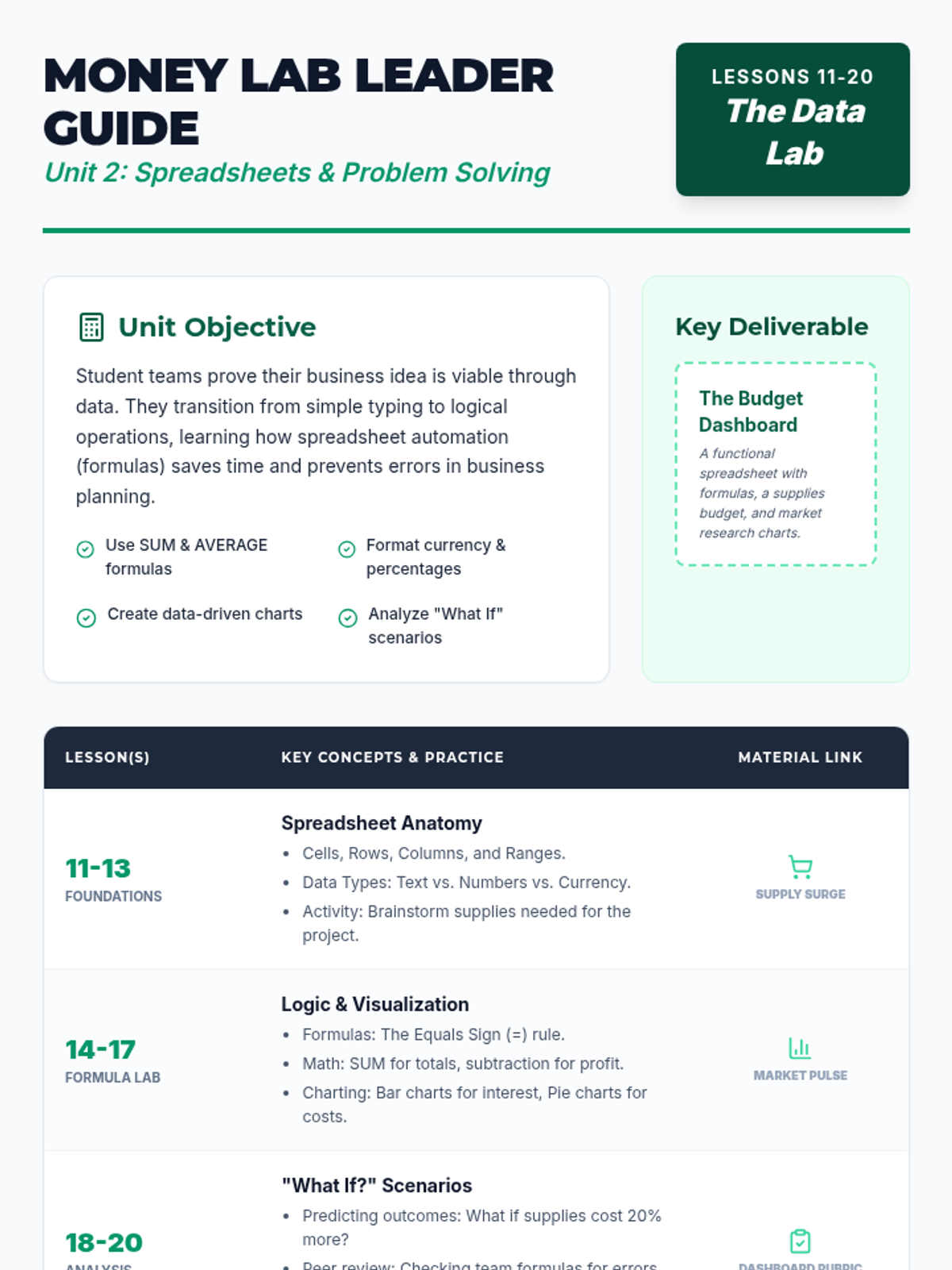
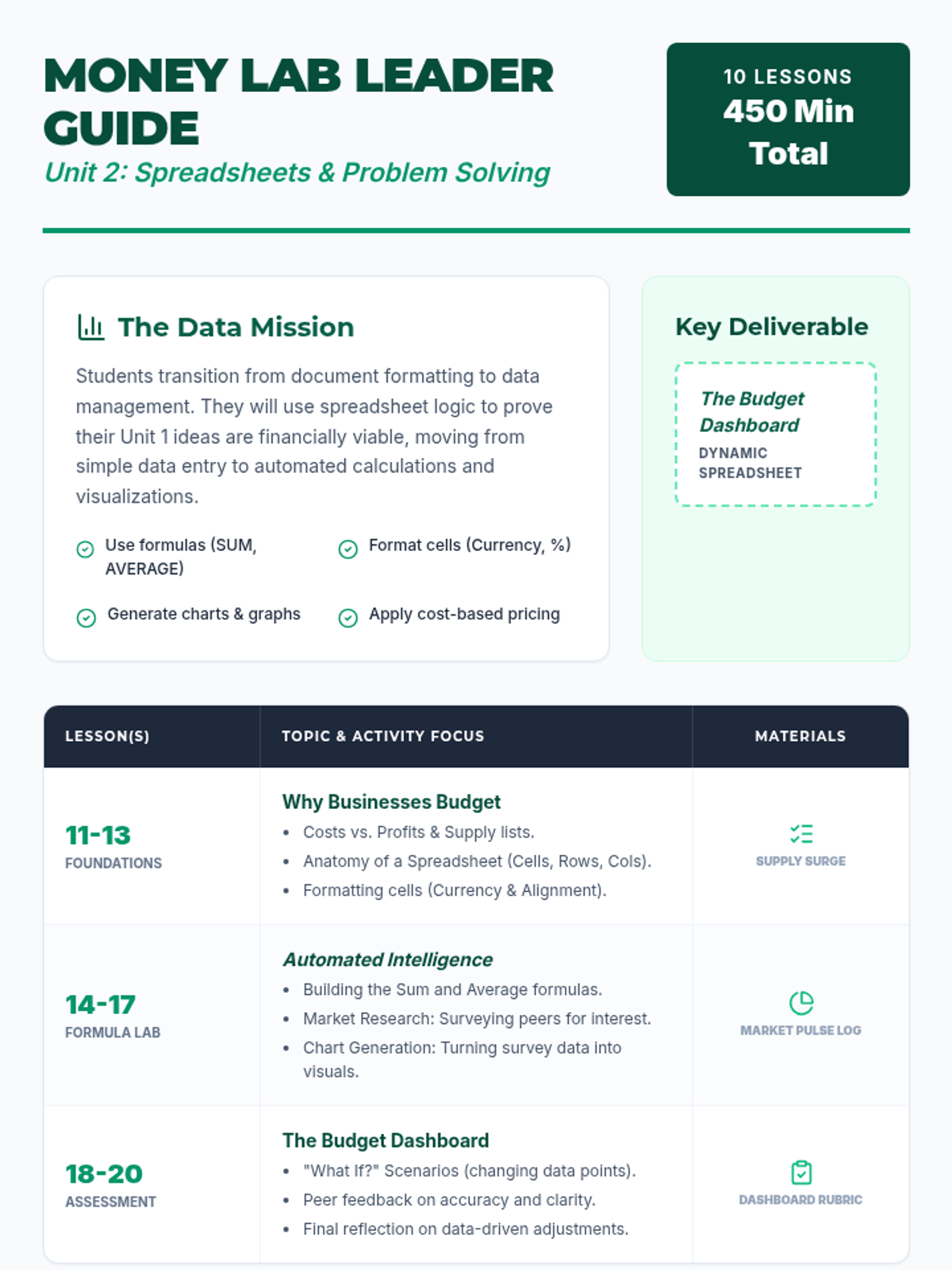
A unit guide for teachers covering lessons 11-20, focused on teaching spreadsheets through a business budgeting lens. Includes instructional tips on cell referencing, critical thinking 'What If?' scenarios, and math curriculum connections.
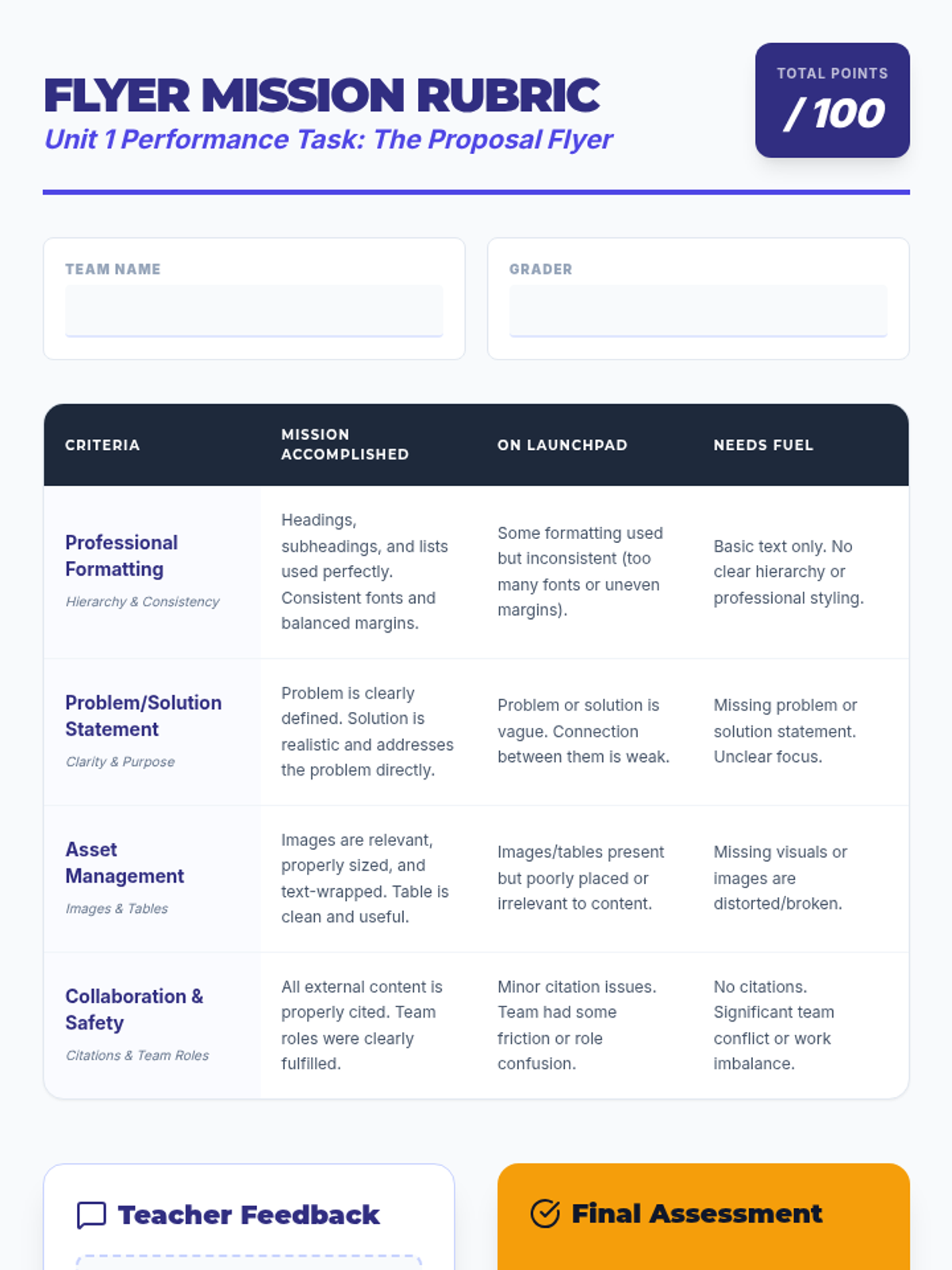
An assessment rubric for the Unit 1 final performance task (Proposal Flyer). Evaluates professional formatting, content clarity, asset management, and collaboration skills on a 100-point scale.
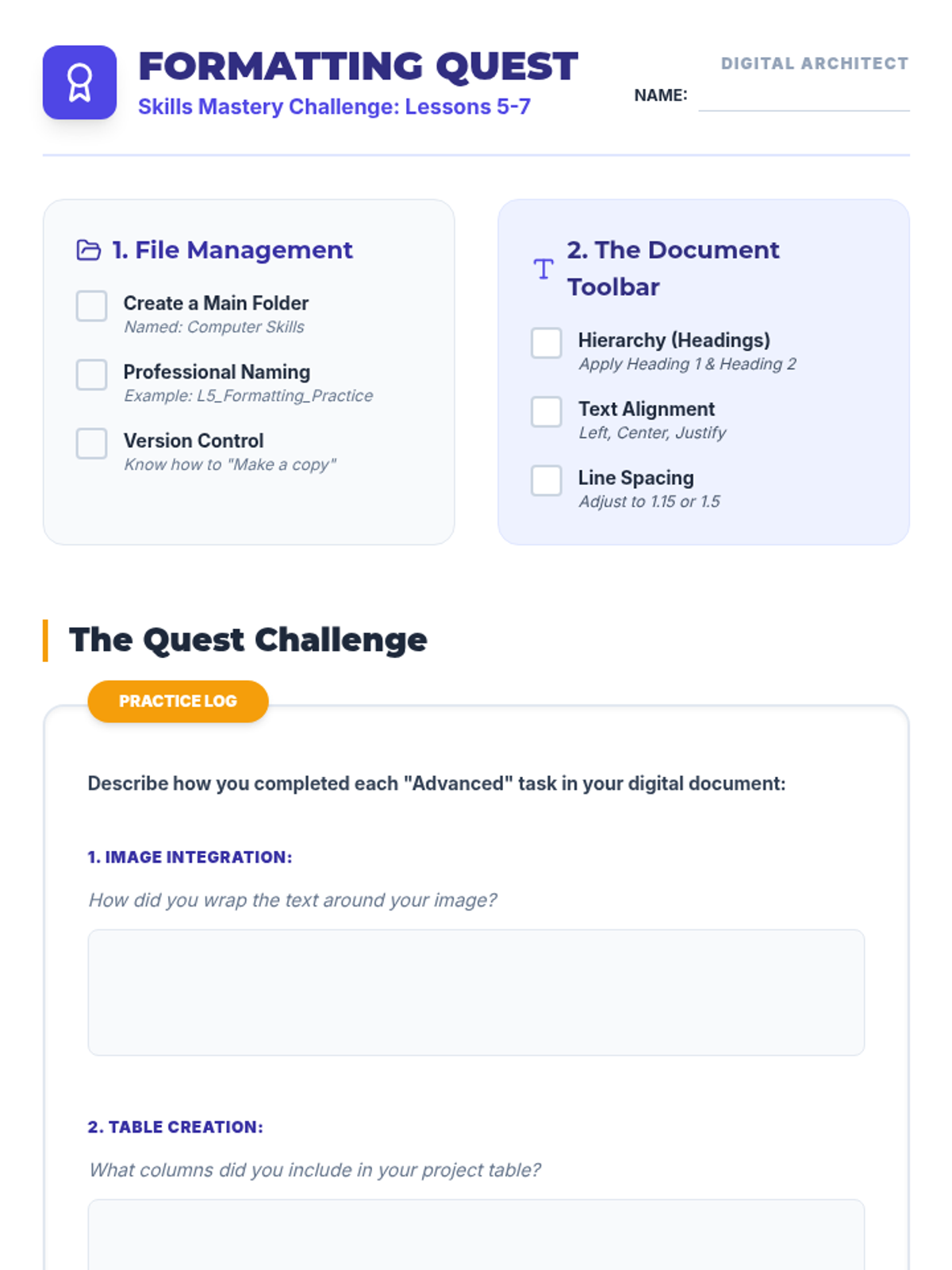
A skill-mastery worksheet for Lessons 5-7, where students track their progress in file management, word processing basics (headings, alignment, tables), and digital safety. Includes a checklist and reflection area.
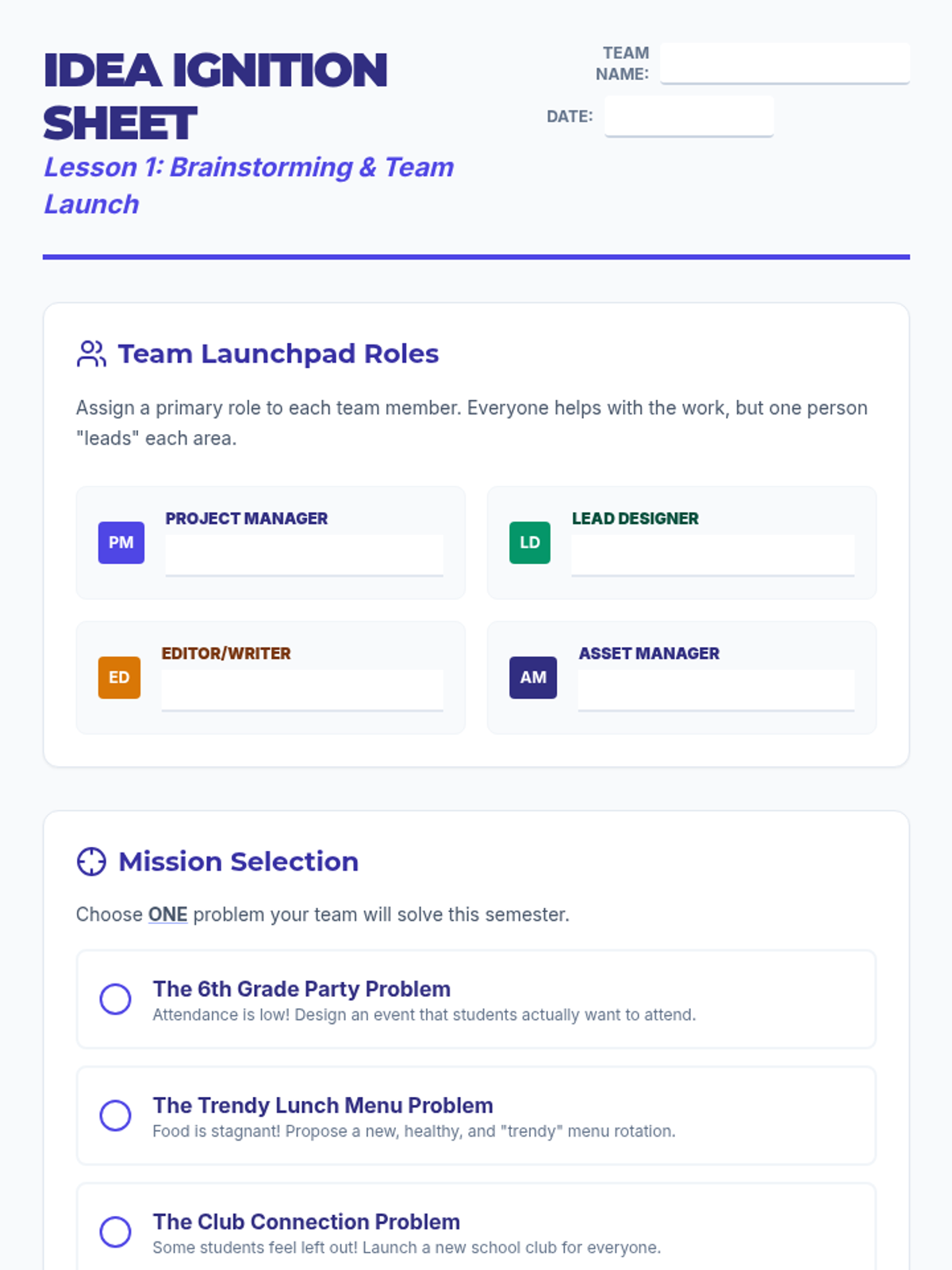
A brainstorming worksheet for the first lesson of Unit 1, where student teams select their project path (Party, Menu, or Club) and define their problem, solution, and roles. Designed with clear handwriting spaces and a startup-inspired theme.
A high-impact 7-slide presentation unit deck for teaching the first unit of the Digital Foundations course. Covers everything from brainstorming and keyboarding posture to document hierarchy and digital safety with a modern, startup-inspired aesthetic.
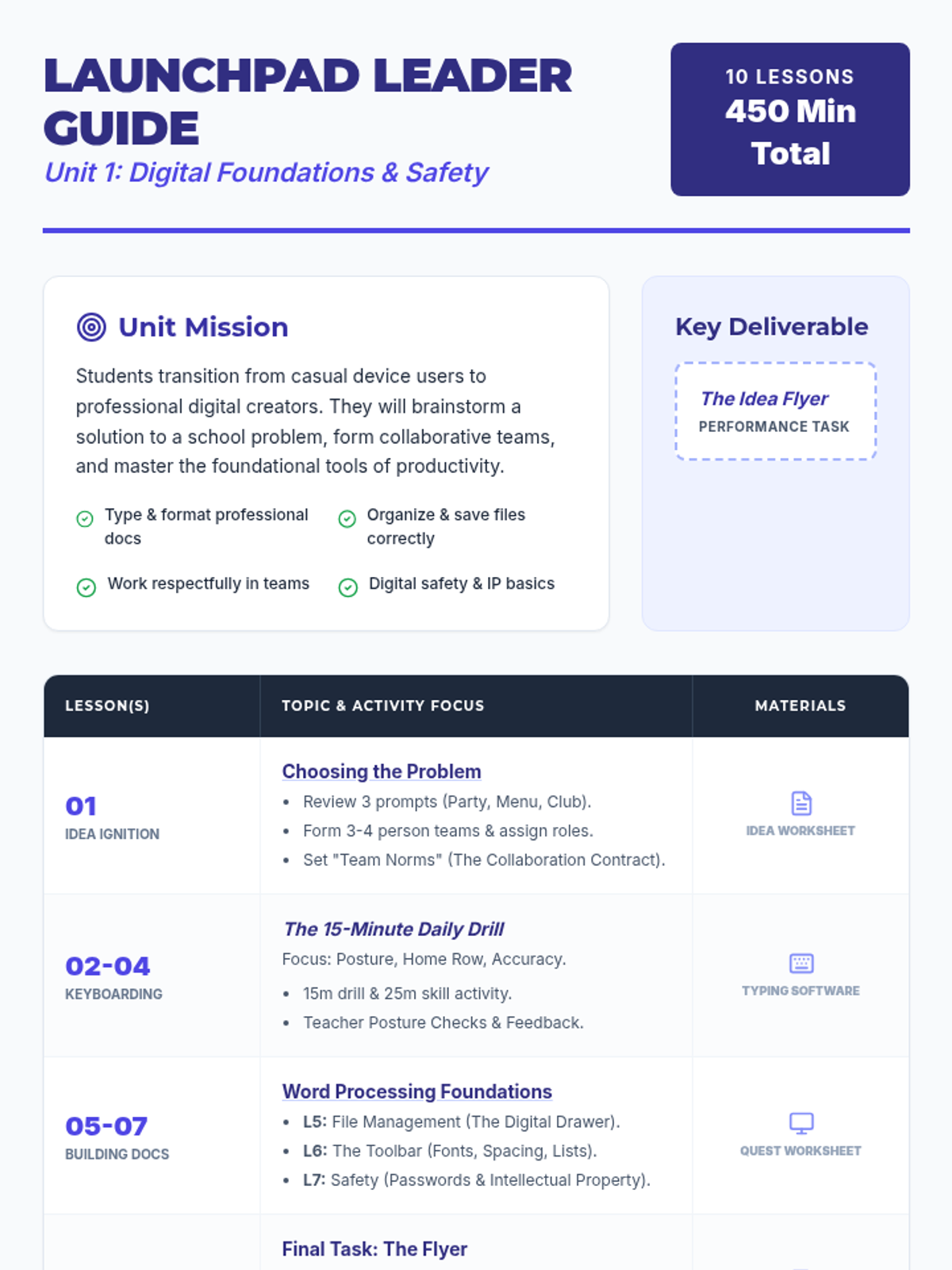
A comprehensive 10-lesson unit guide for teachers, detailing the pacing, lesson focuses, and instructional strategies for the Unit 1: Digital Foundations course. It includes tips for keyboarding routines and student collaboration roles.
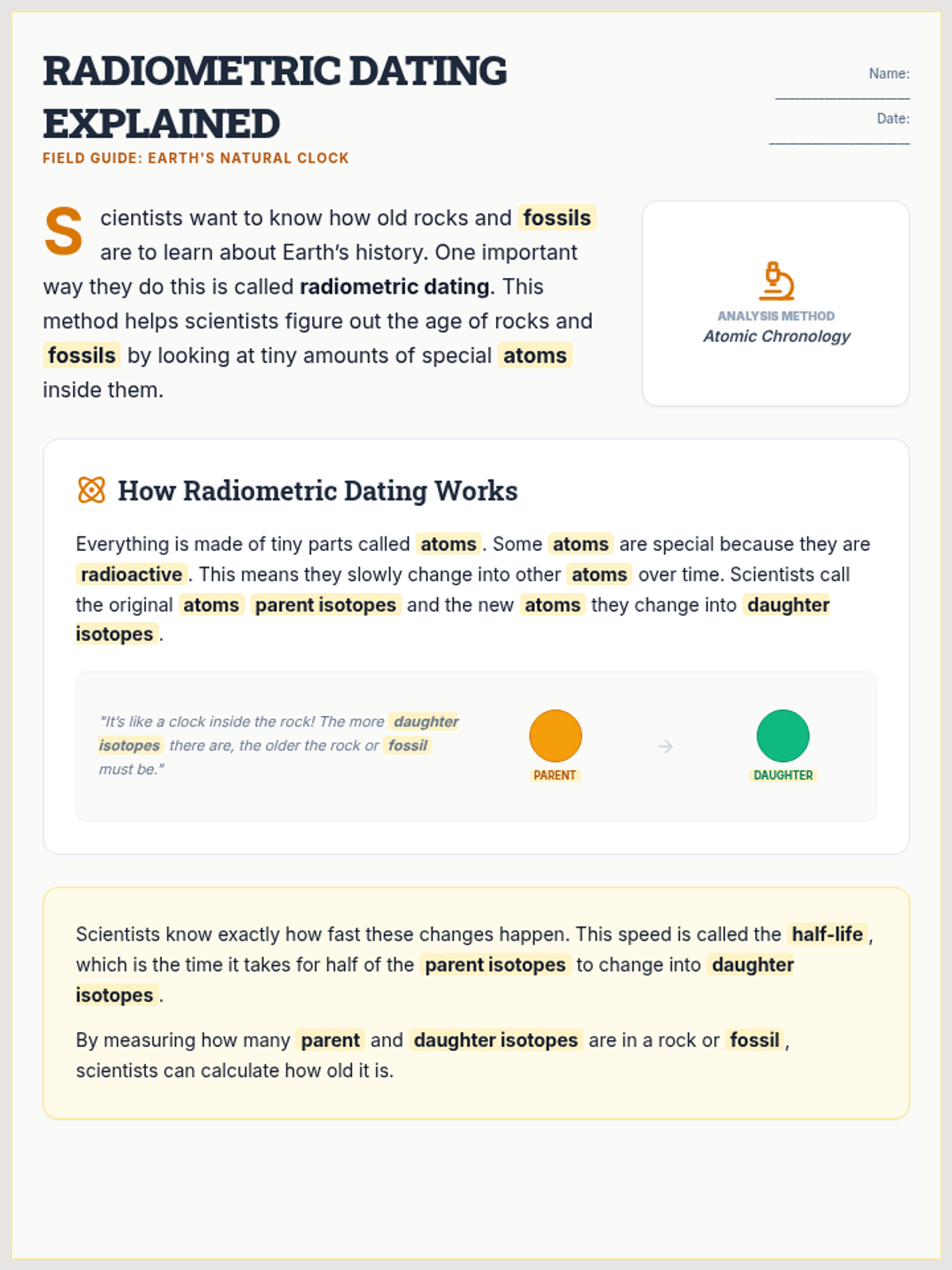
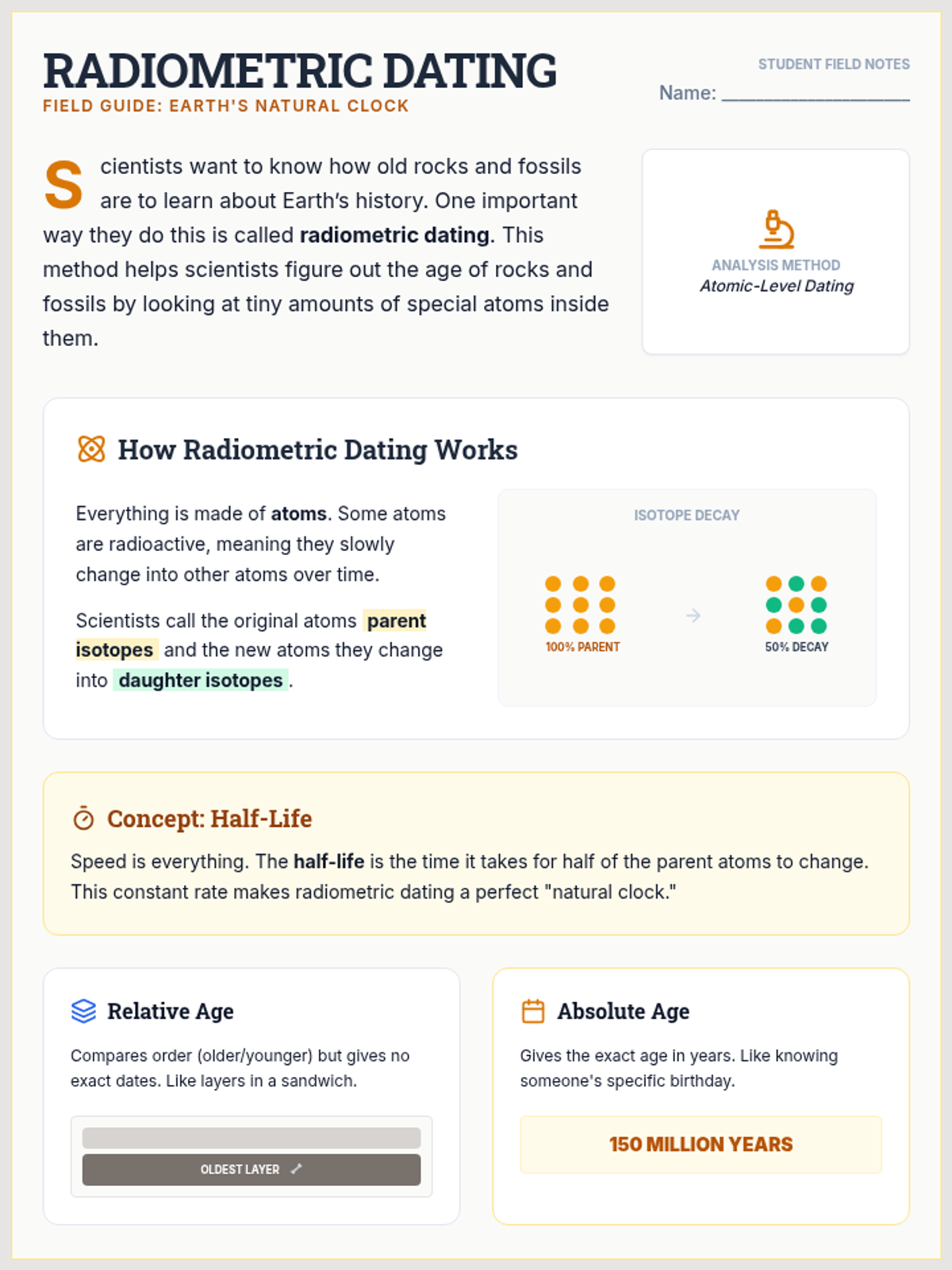
A complete, illustrated field-guide style article incorporating all text from the original PDF source. Explains radiometric dating, half-lives, and age comparisons with vocabulary terms highlighted throughout for easy reference.
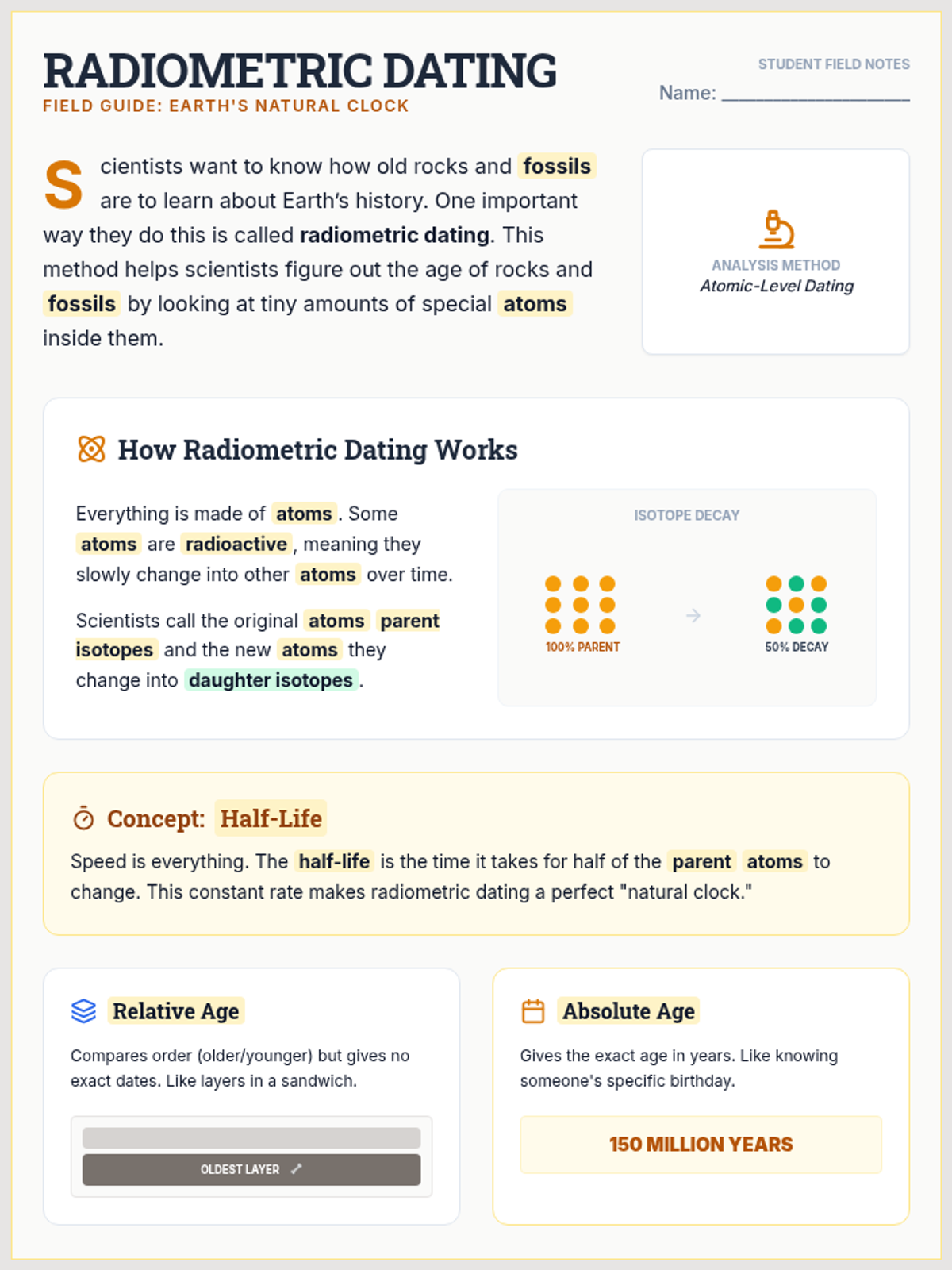
An illustrated, field-guide style article explaining the mechanics of radiometric dating, half-lives, and the difference between relative and absolute age, with vocabulary terms highlighted throughout.
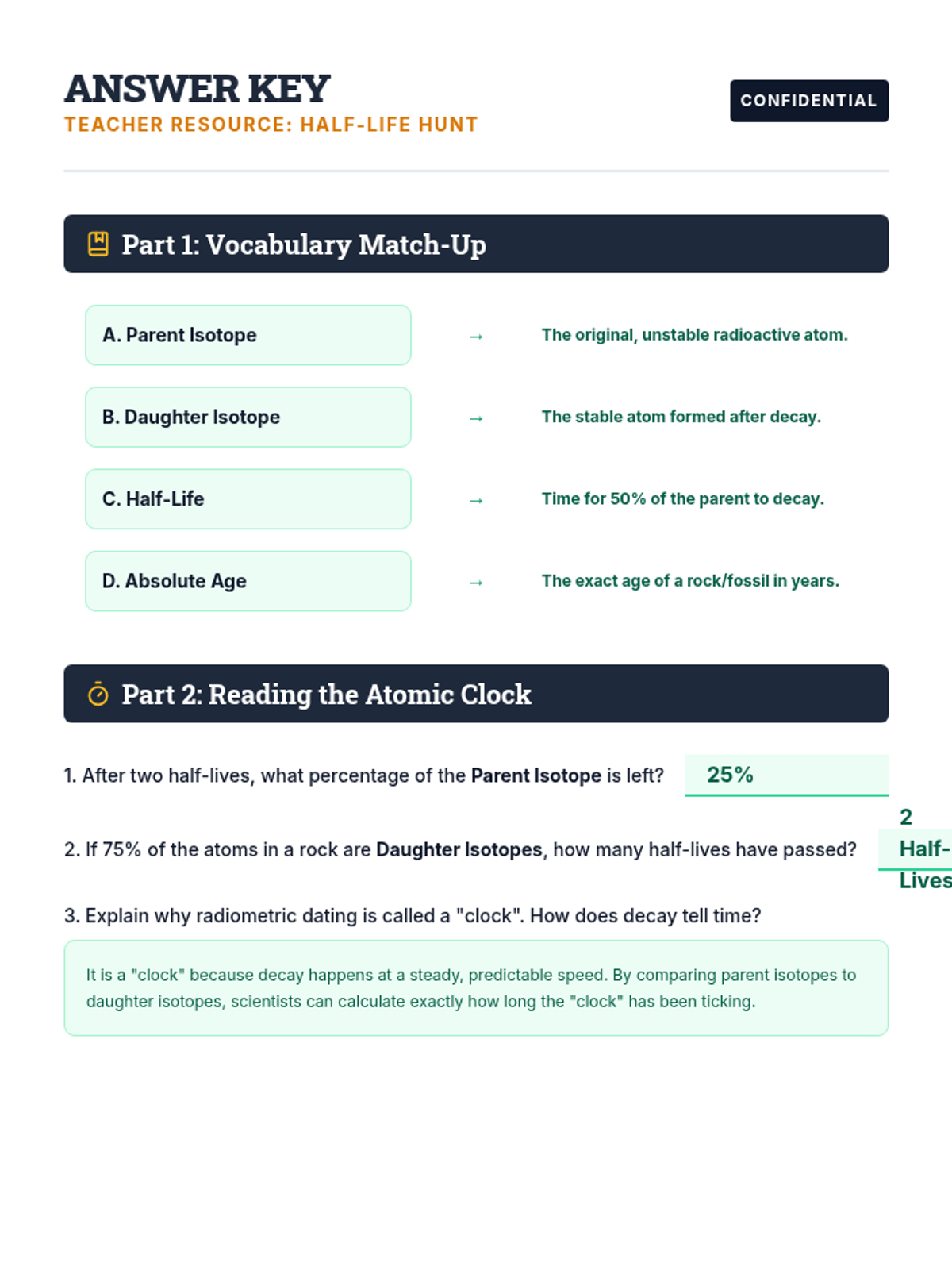
A teacher-facing answer key for the Half-Life Hunt worksheet, providing correct responses for all vocabulary, diagram, and word problems.
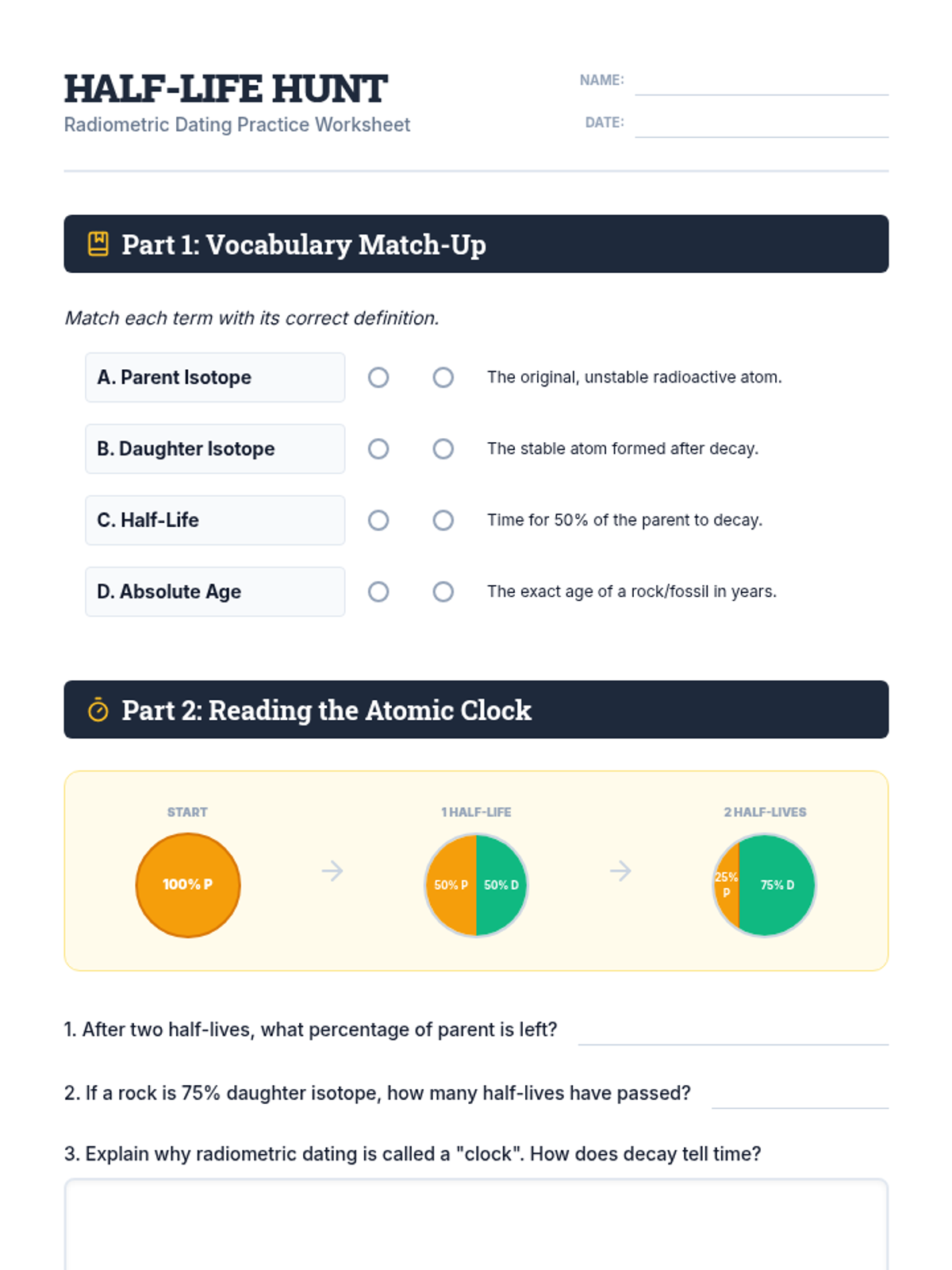
A student-facing worksheet for practicing vocabulary, interpreting decay diagrams, and solving half-life calculation word problems.
A visual presentation for introducing the concept of radiometric dating, isotopic decay, and the calculation of absolute age.
An illustrated, field-guide style article explaining the mechanics of radiometric dating, half-lives, and the difference between relative and absolute age.
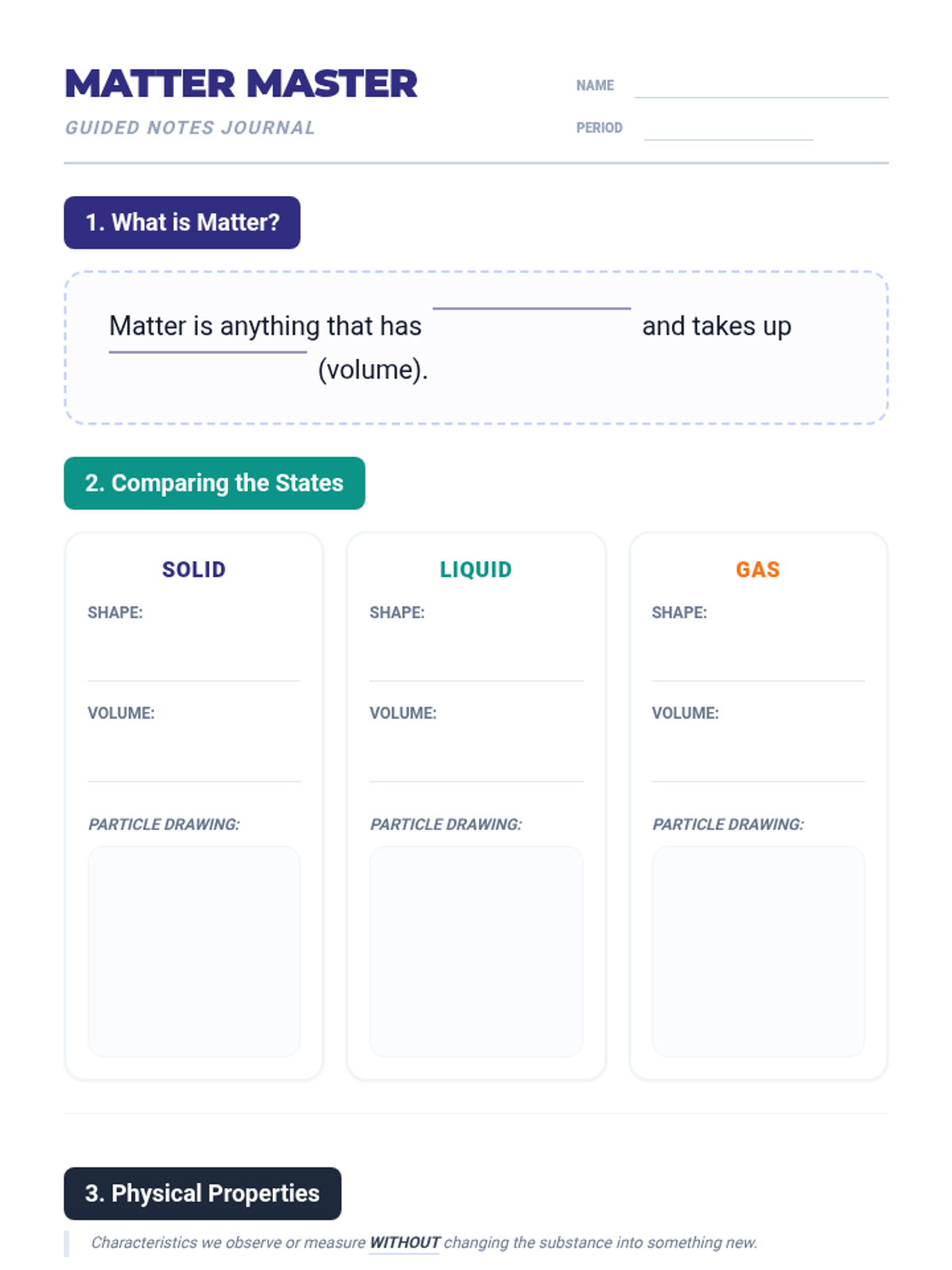
A condensed 2-page guided notes worksheet for students to complete during the Matter Master lecture. Optimized for front-and-back printing with efficient spacing, clear handwriting areas, and a consolidated layout. Fixed alignment and contrast issues.
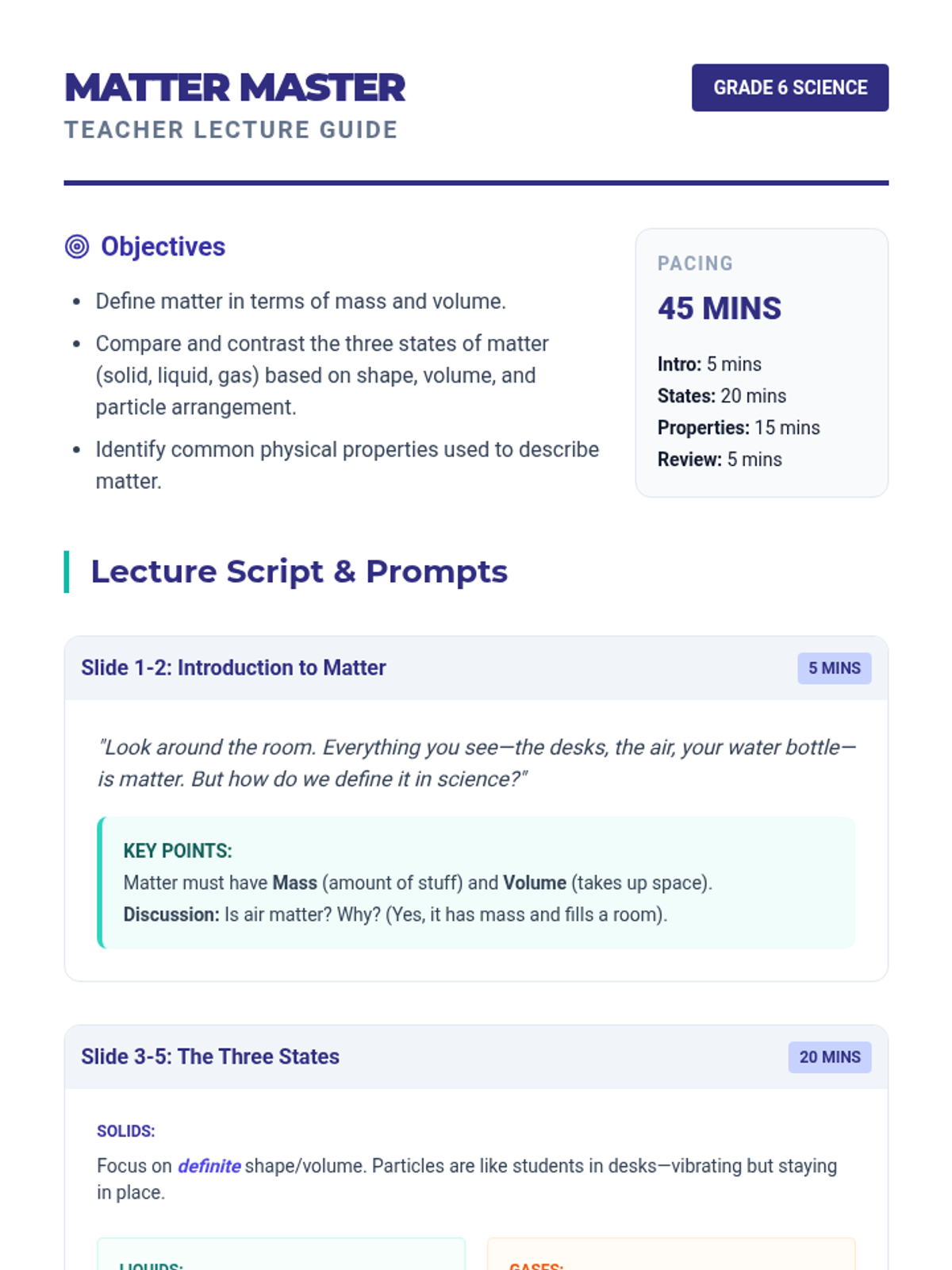
A detailed teacher's guide for a 6th-grade matter lecture. Revised with 'break-inside-avoid' for better print layouts and explicit icon sizing. Includes a new wrap-up section for classroom assessment.
A vibrant and engaging slide deck designed for 6th-grade science, covering the definitions of matter, the three primary states (solid, liquid, and gas) with molecular visualizations, and key physical properties. Expanded with detailed slides on measurable, behavioral, and appearance properties.