A high-impact slide deck for introducing physical properties of matter, including a digital anchor chart, scavenger hunt mission brief, and interactive notebook instructions.
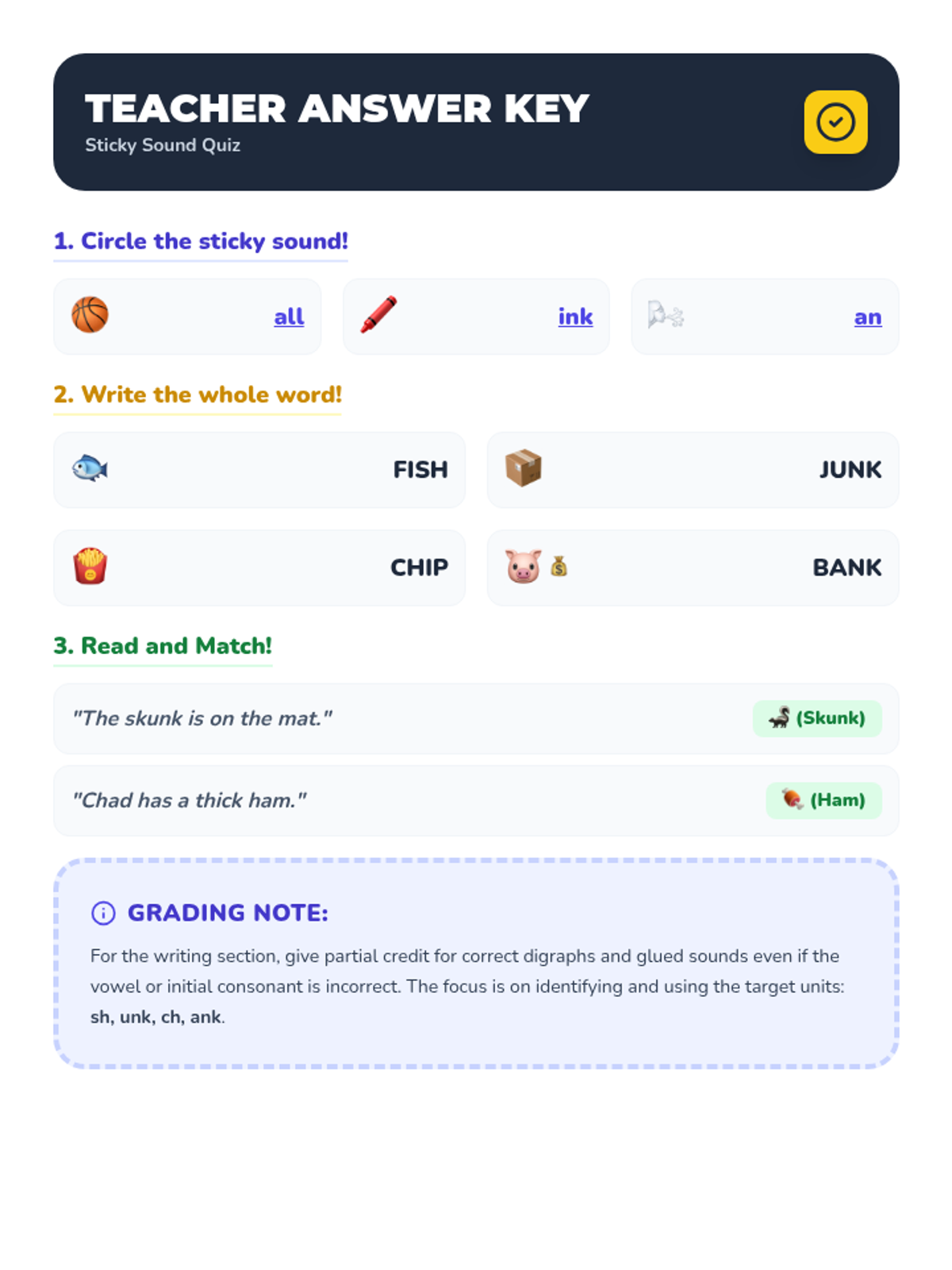
An answer key for the Sticky Sound Quiz, providing correct answers for sound identification, spelling, and matching sections, along with a grading note for teachers. Revised for better spacing and one-page layout.
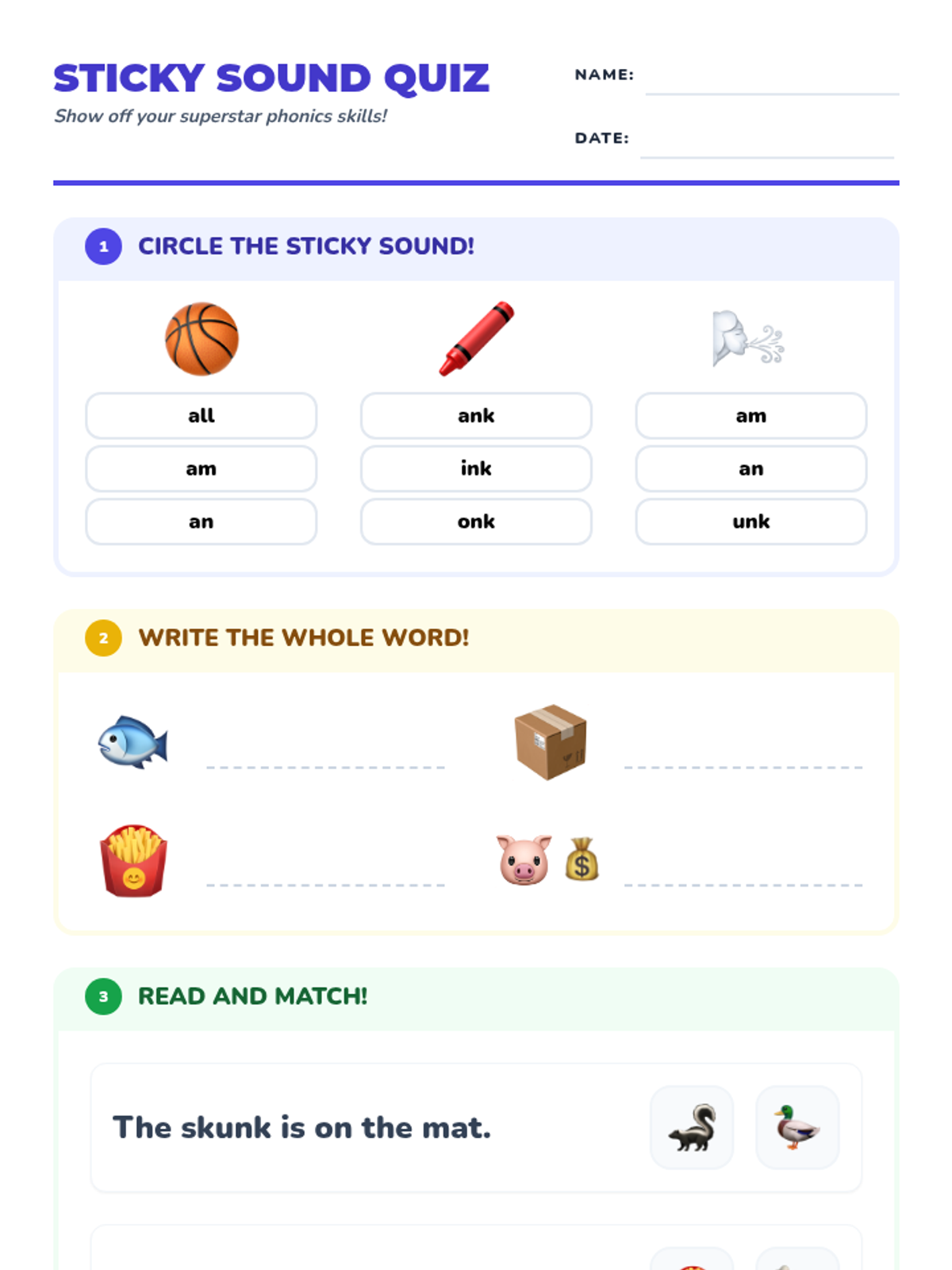
A summative quiz for first graders covering glued sounds (all, am, an, ank, ink, onk, unk) and digraphs (sh, ch, th, ck). Includes multiple choice sound identification, spelling words from pictures, and sentence-to-picture matching. Revised for better layout and clarity.
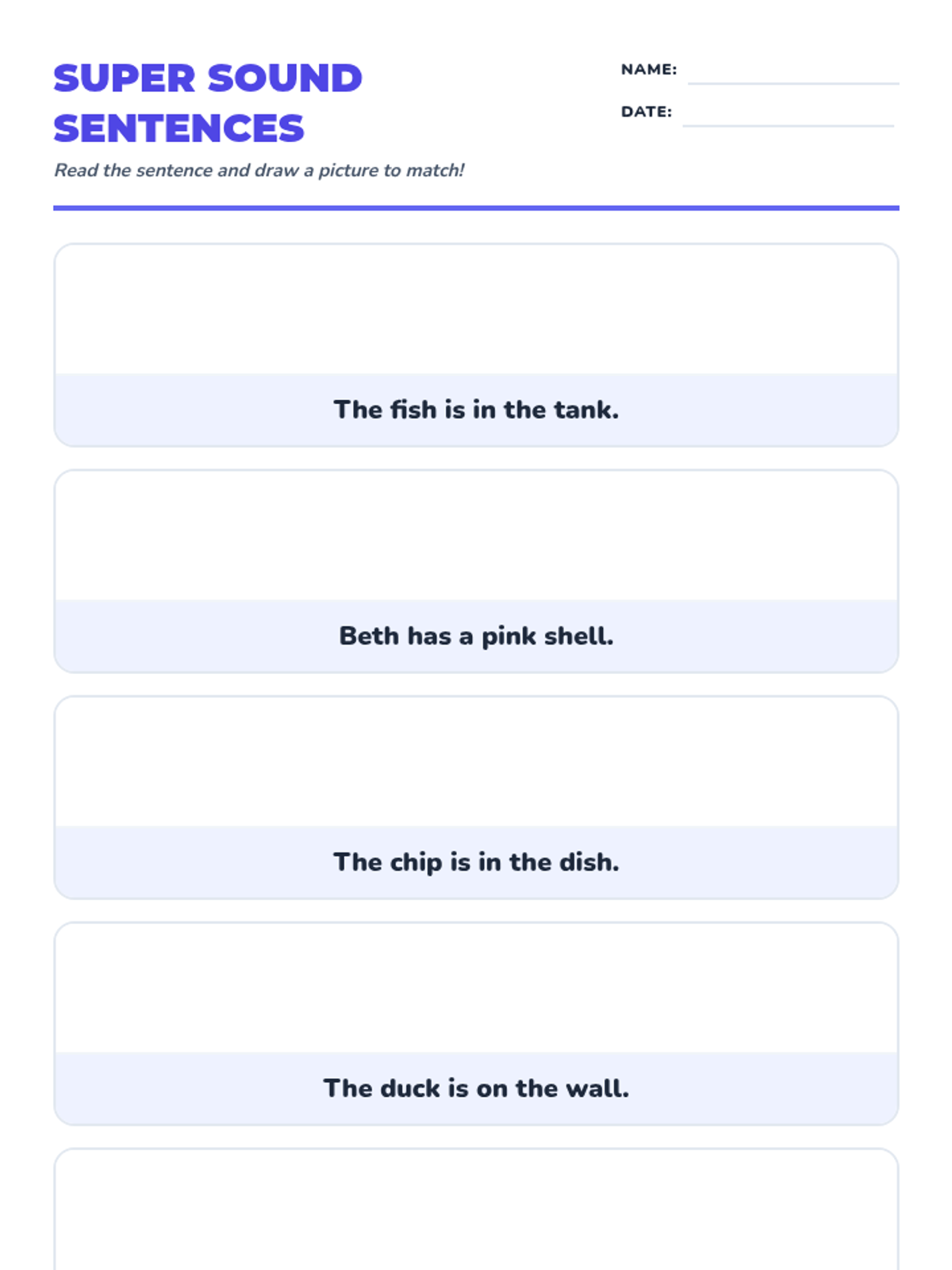
A reading comprehension worksheet for first graders featuring 10 sentences that combine glued sounds, digraphs, and CVC words. Students read each sentence and illustrate the meaning in the provided drawing boxes. Revised for a better stacked layout and consistent 2-page flow.
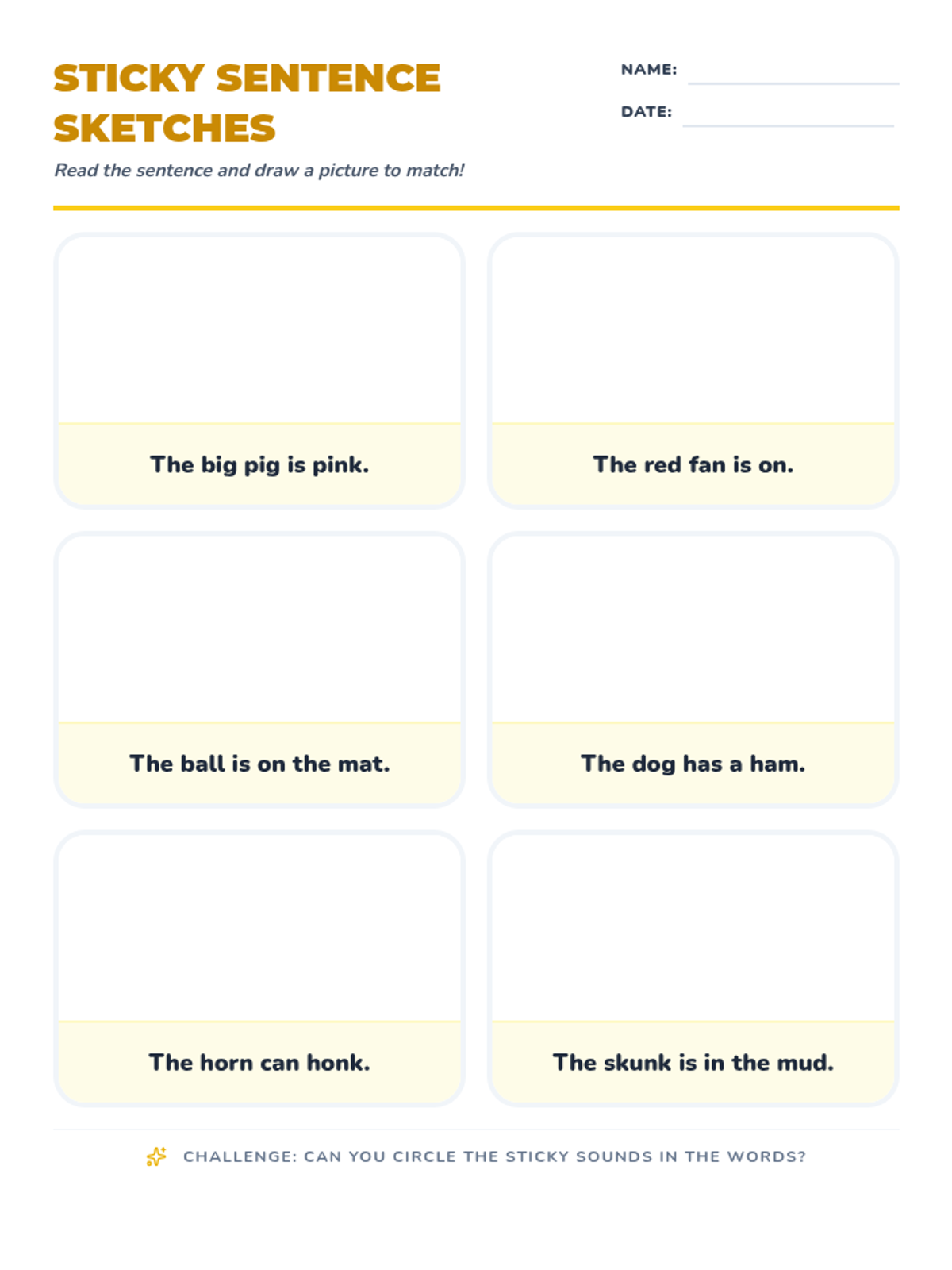
A read-and-draw worksheet for first graders featuring simple sentences with glued sounds, CVC words, and sight words. Students practice reading comprehension by illustrating the scenes described. Revised for better layout and to fit on a single page.
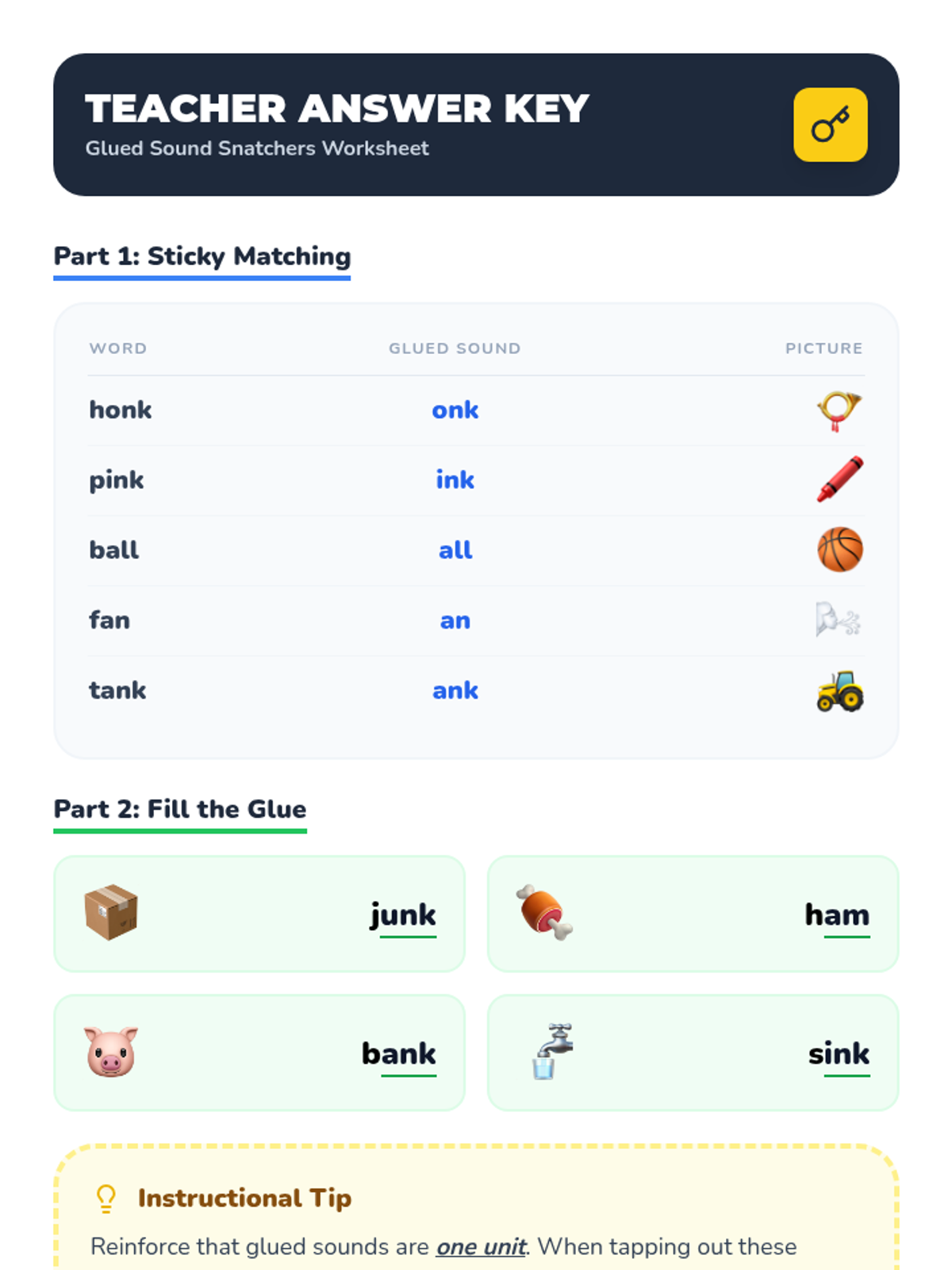
An answer key for the Glued Sound Match Worksheet, providing correct matches and completed words for teacher reference, along with instructional tips. Revised for consistency with the student worksheet.
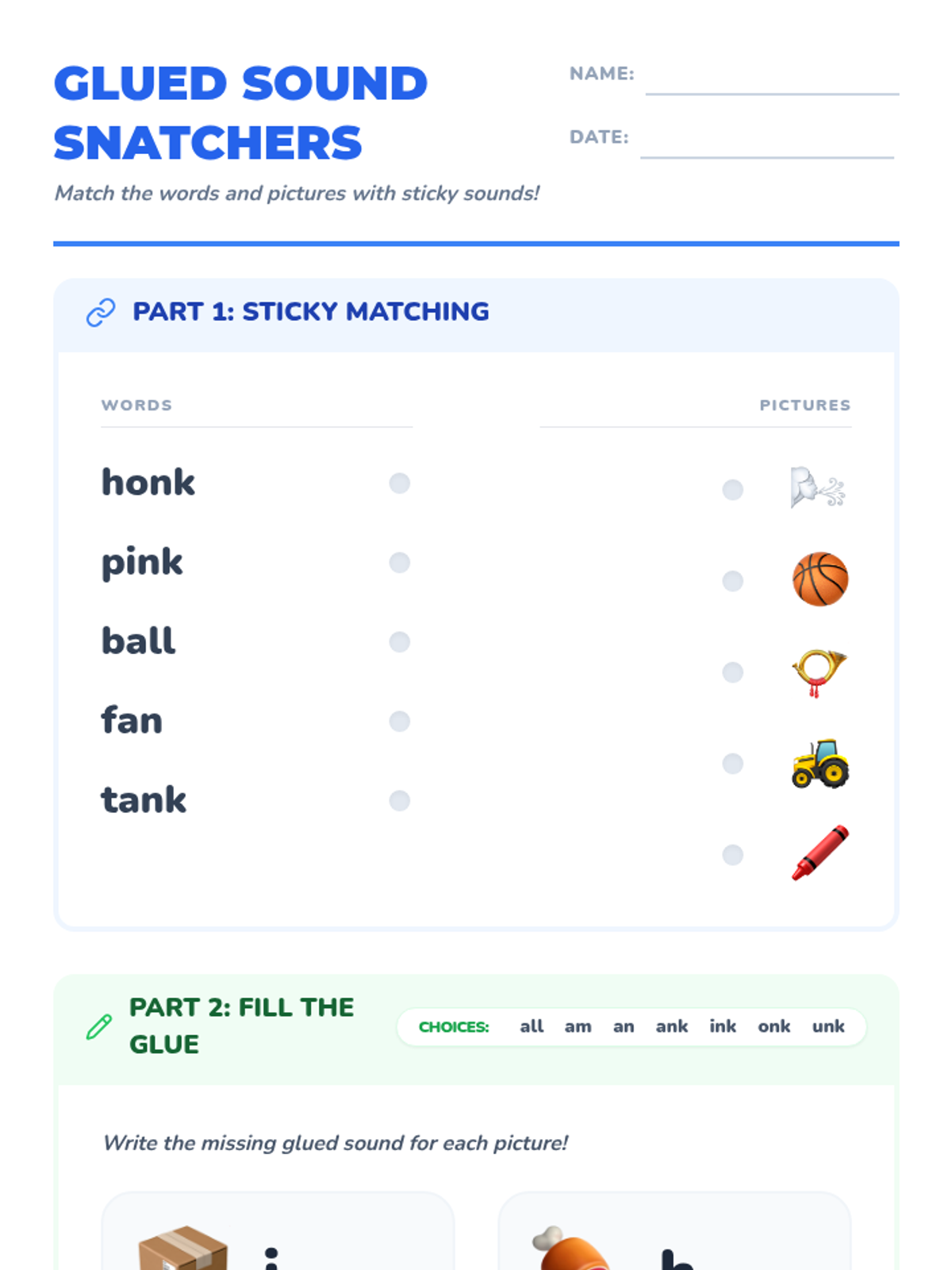
A first-grade worksheet for practicing glued sounds (all, am, an, ank, ink, onk, unk) through matching words to pictures and filling in missing sounds in words. Revised for better clarity and improved layout.
A visually engaging slide deck for first-grade students introducing glued sounds (all, am, an, ank, ink, onk, unk) with example words, pictures, and interactive challenge slides. Revised for better clarity and uniform answer choices.
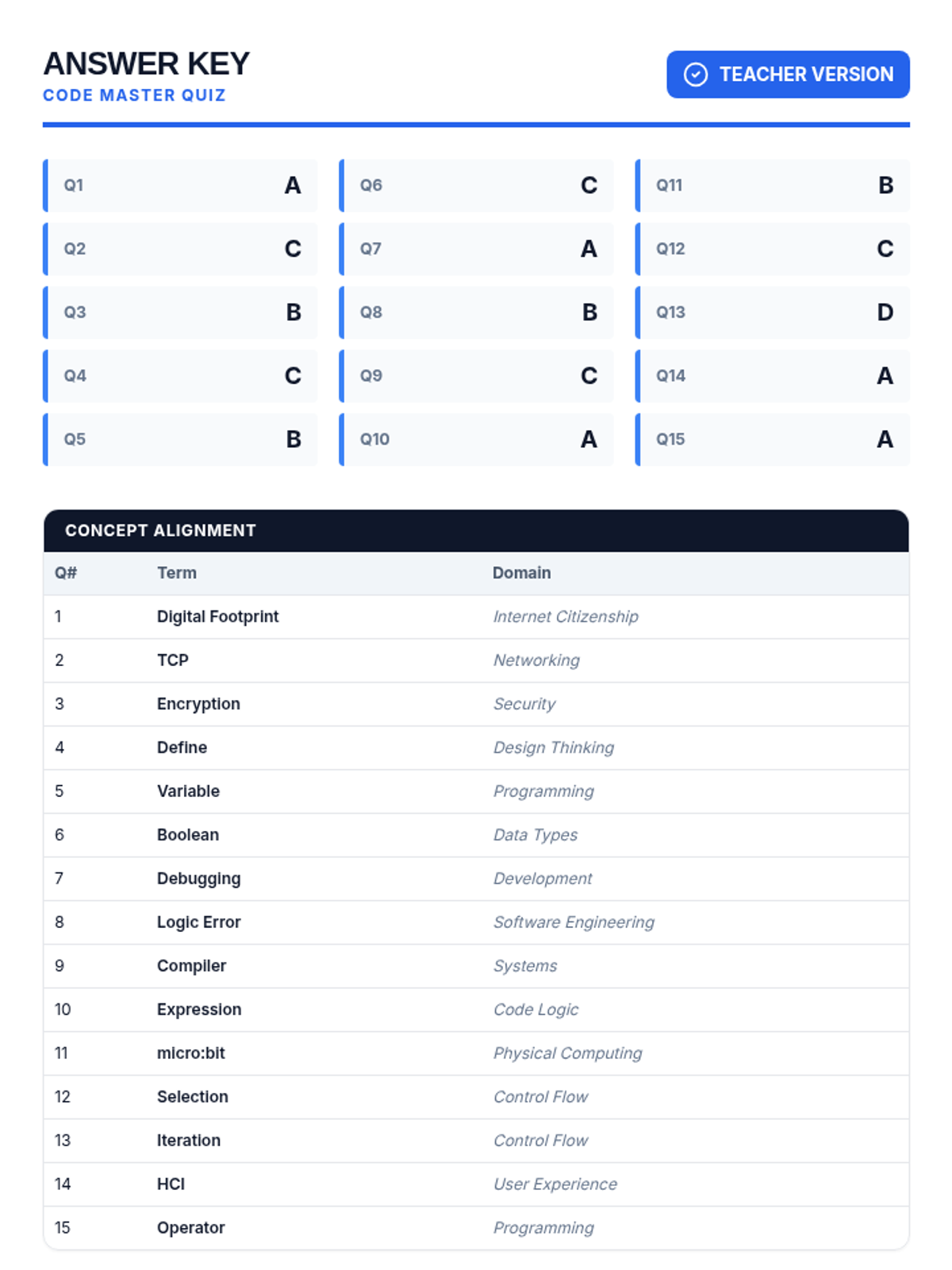
A teacher's answer key for the Code Master Quiz, featuring a quick-reference answer grid, a concept alignment table, and post-assessment review suggestions.
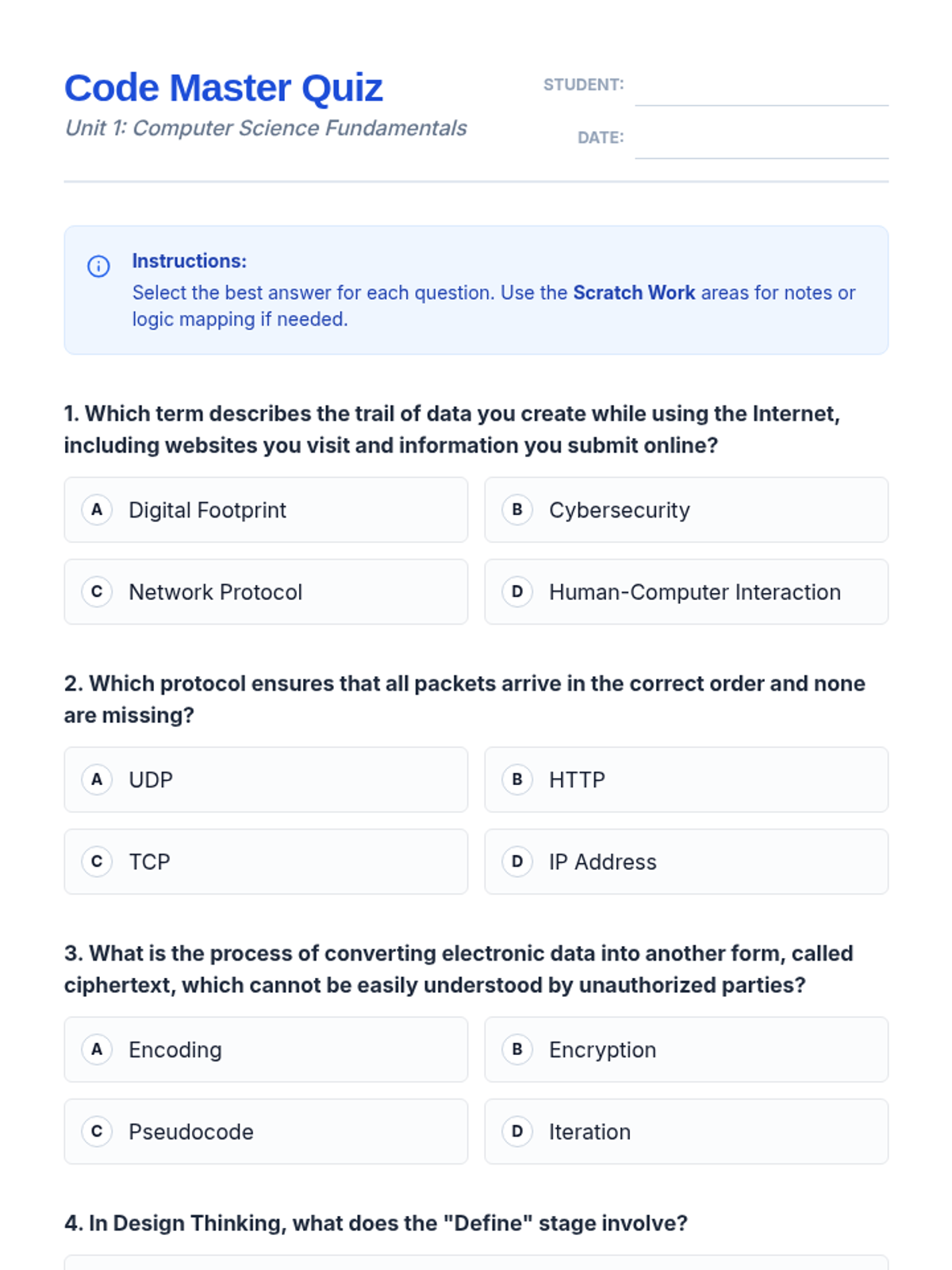
Revised Code Master Quiz Worksheet with standardized layout, 1-column answer choices for consistency, and improved name/date fields. Content tightened to reduce wasted space.
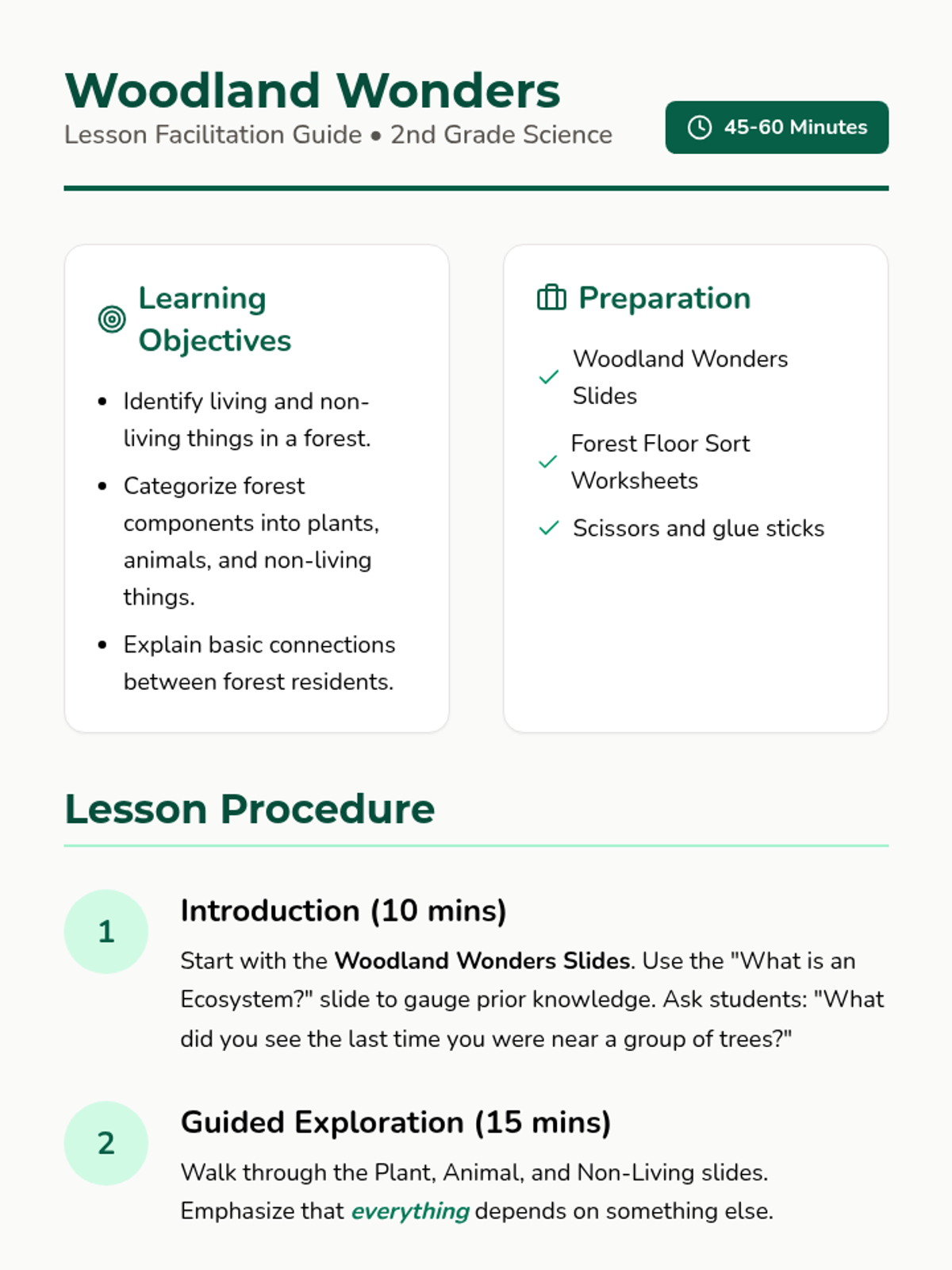
Comprehensive teacher guide for the Woodland Wonders lesson, including learning objectives, step-by-step procedures, and differentiation strategies for 2nd grade science.
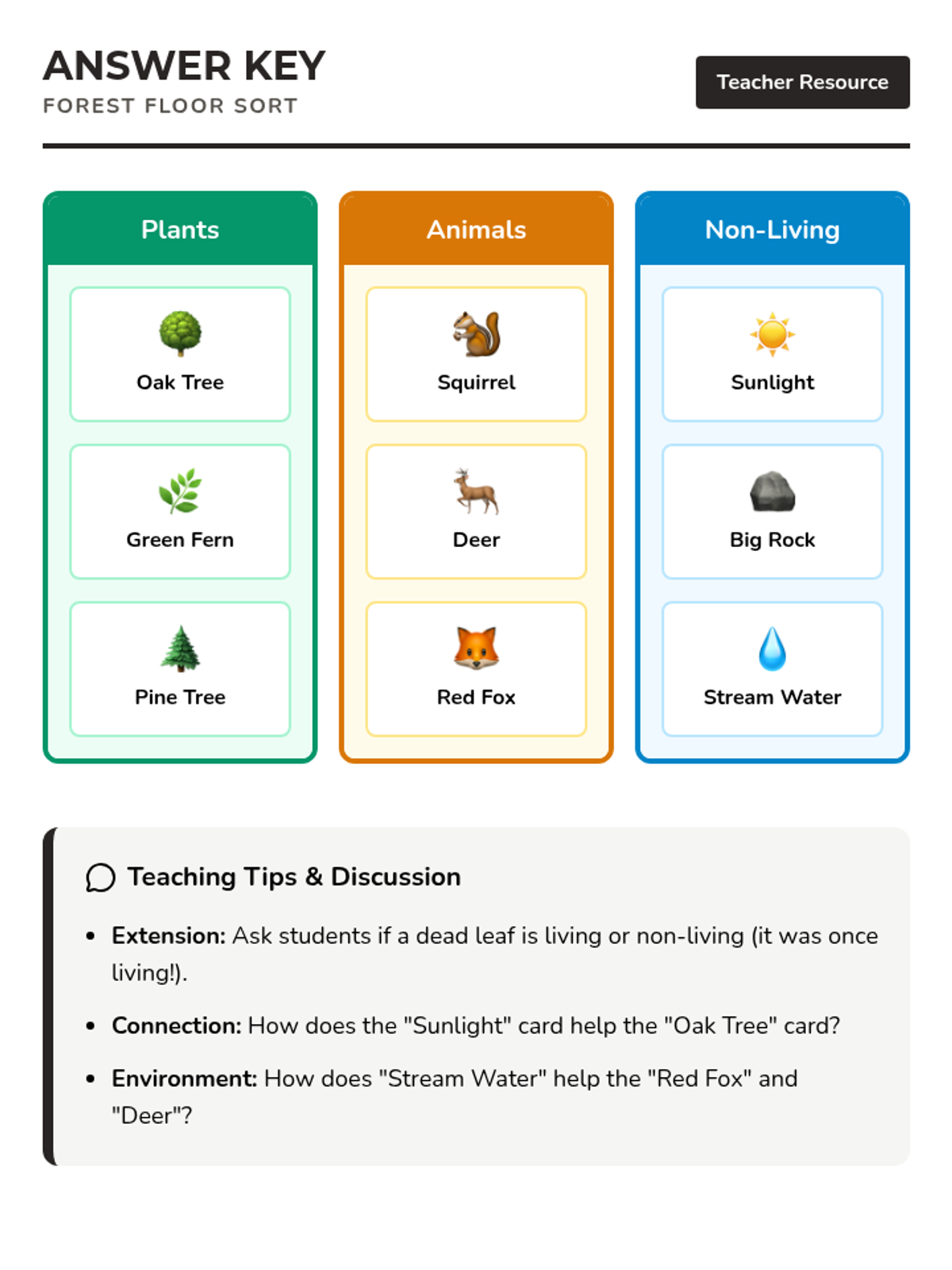
Teacher answer key for the Forest Floor Sort Activity, providing correctly categorized items and discussion prompts for class review.
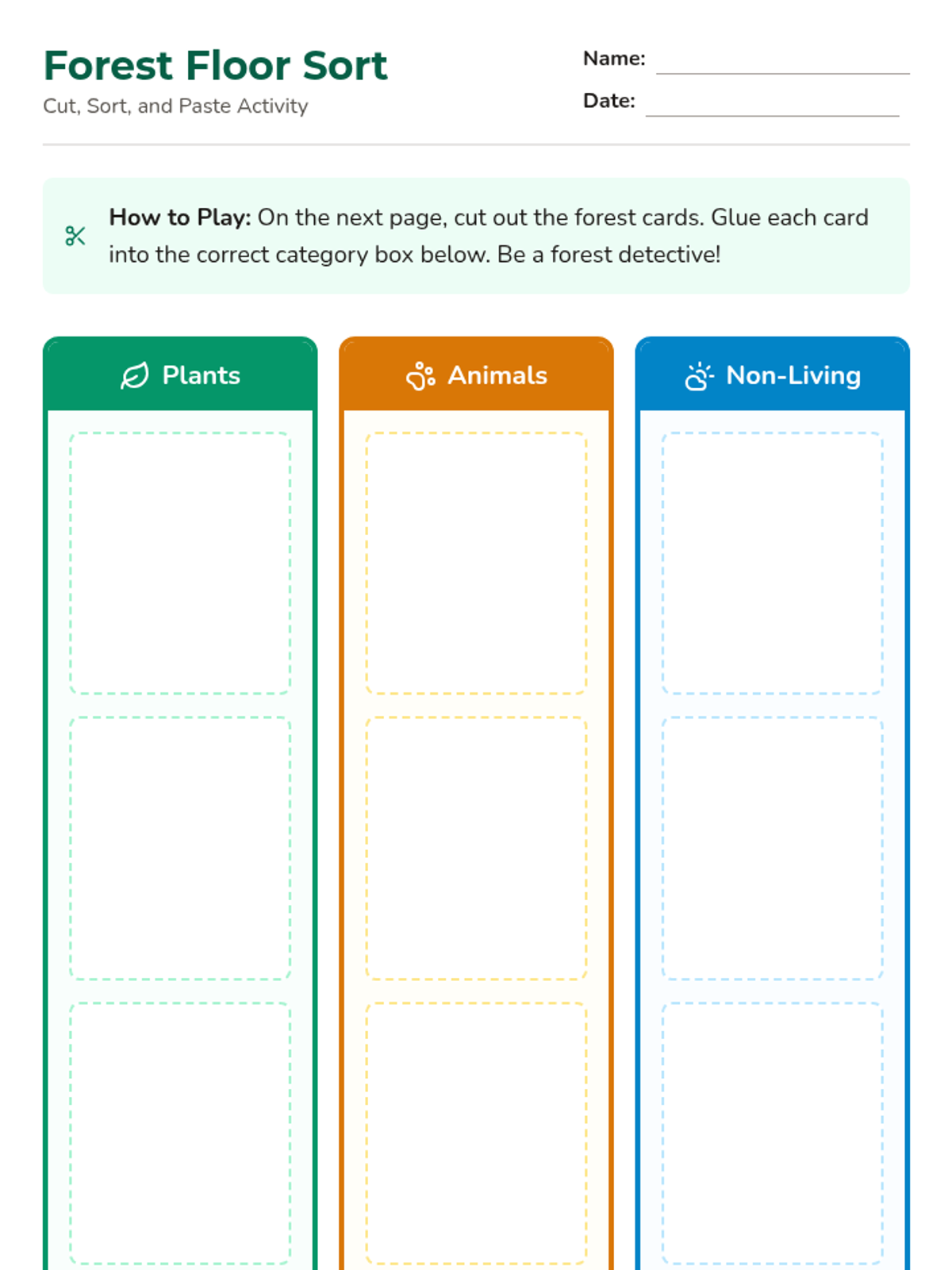
A 2-page cut-and-paste sorting activity for 2nd graders to categorize forest ecosystem components into plants, animals, and non-living things. Includes a sorting board and a cutout sheet.
A vibrant slide deck introducing second graders to the forest ecosystem, covering living things (plants and animals) and non-living components.
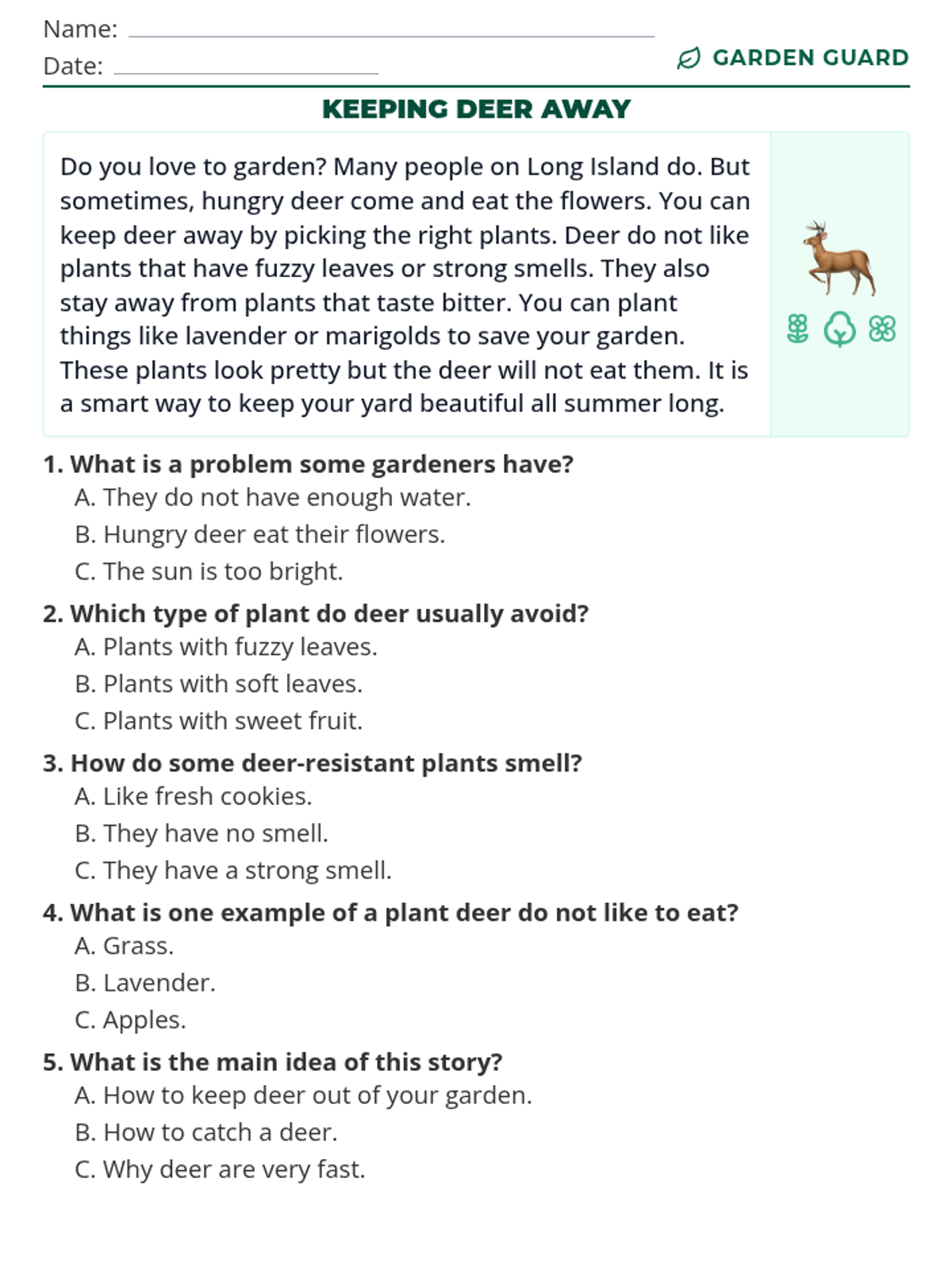
A one-page reading comprehension worksheet for third graders about deer-resistant plants, featuring a reading passage with a deer emoji and garden icons, followed by five multiple-choice questions.
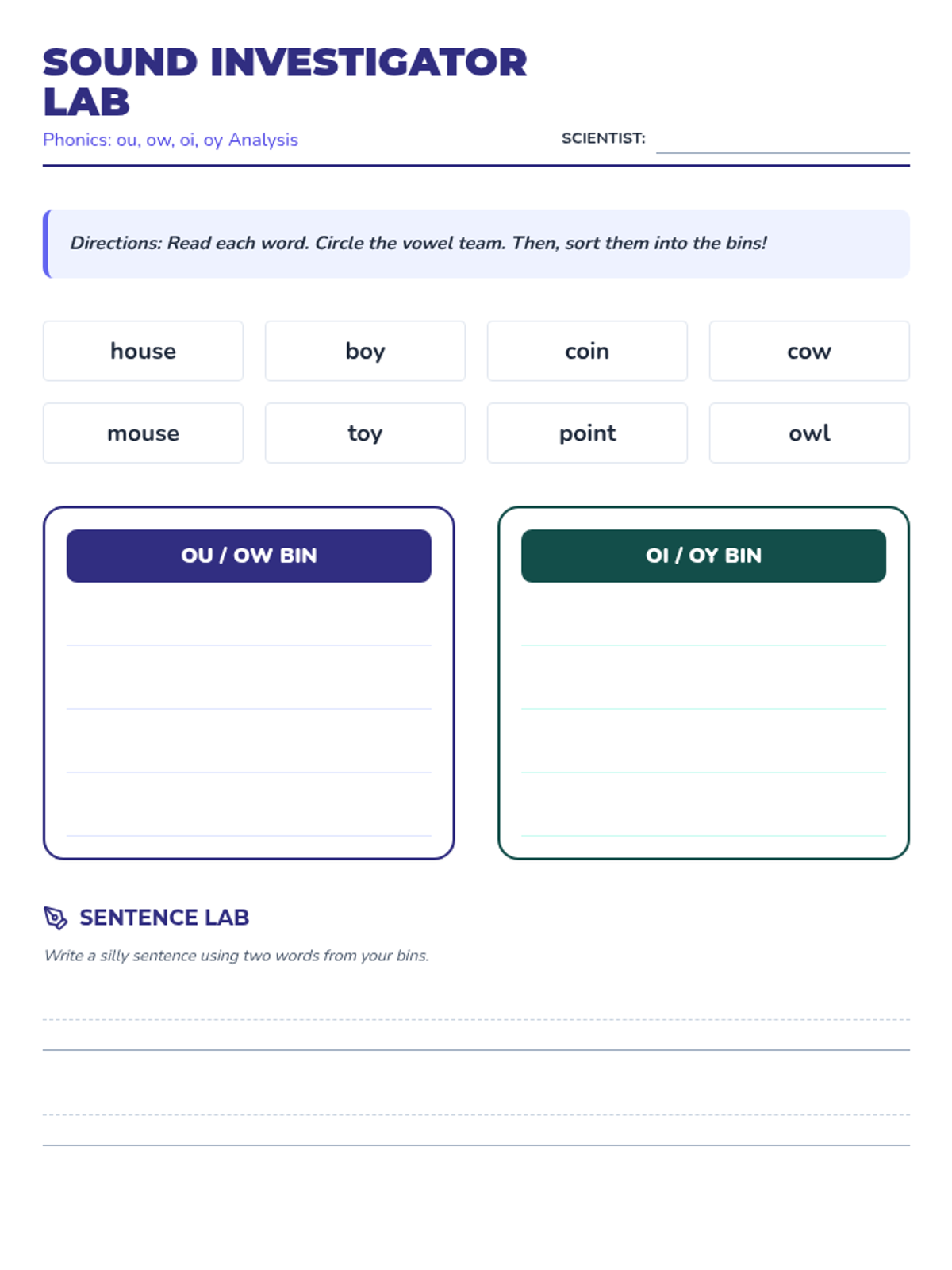
A 2nd-grade phonics worksheet for sorting and applying words with vowel teams ou, ow, oi, and oy.
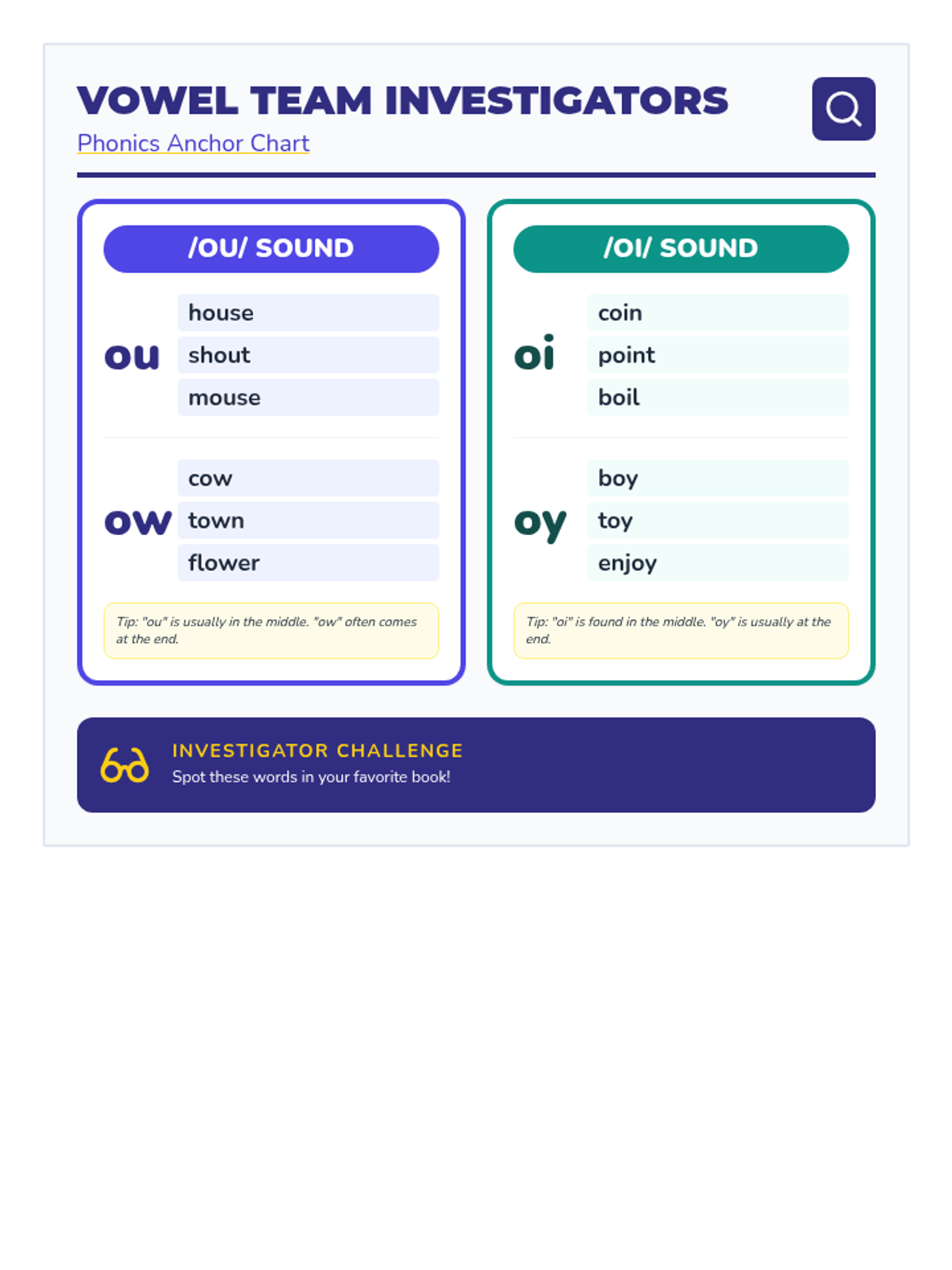
A visual anchor chart for 2nd-grade phonics focusing on the vowel teams ou, ow, oi, and oy.
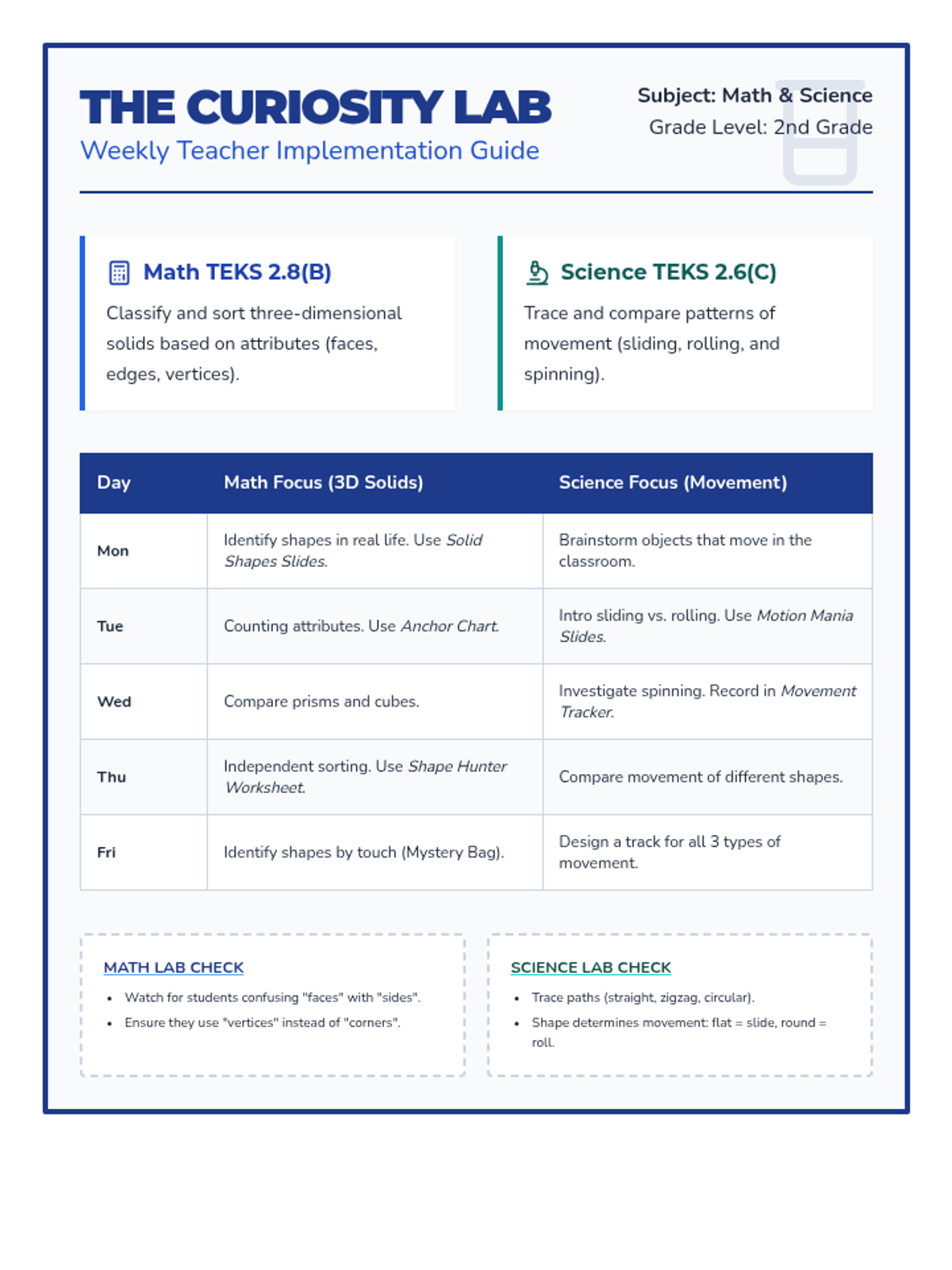
A comprehensive weekly guide for teachers outlining daily lessons and activities for 2nd-grade Math (3D solids) and Science (patterns of movement).
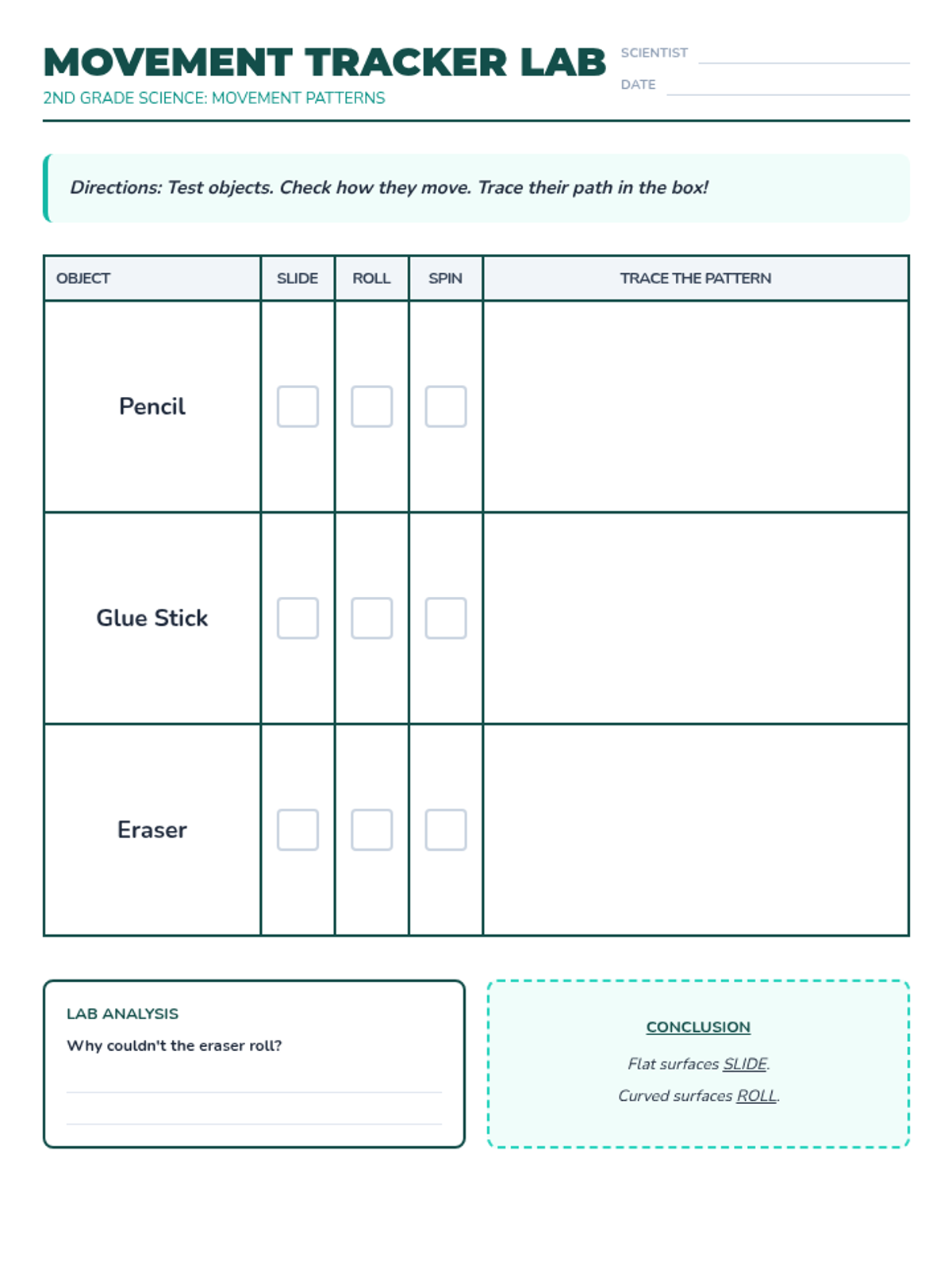
A student activity worksheet for tracking and tracing different patterns of movement observed during a classroom investigation.
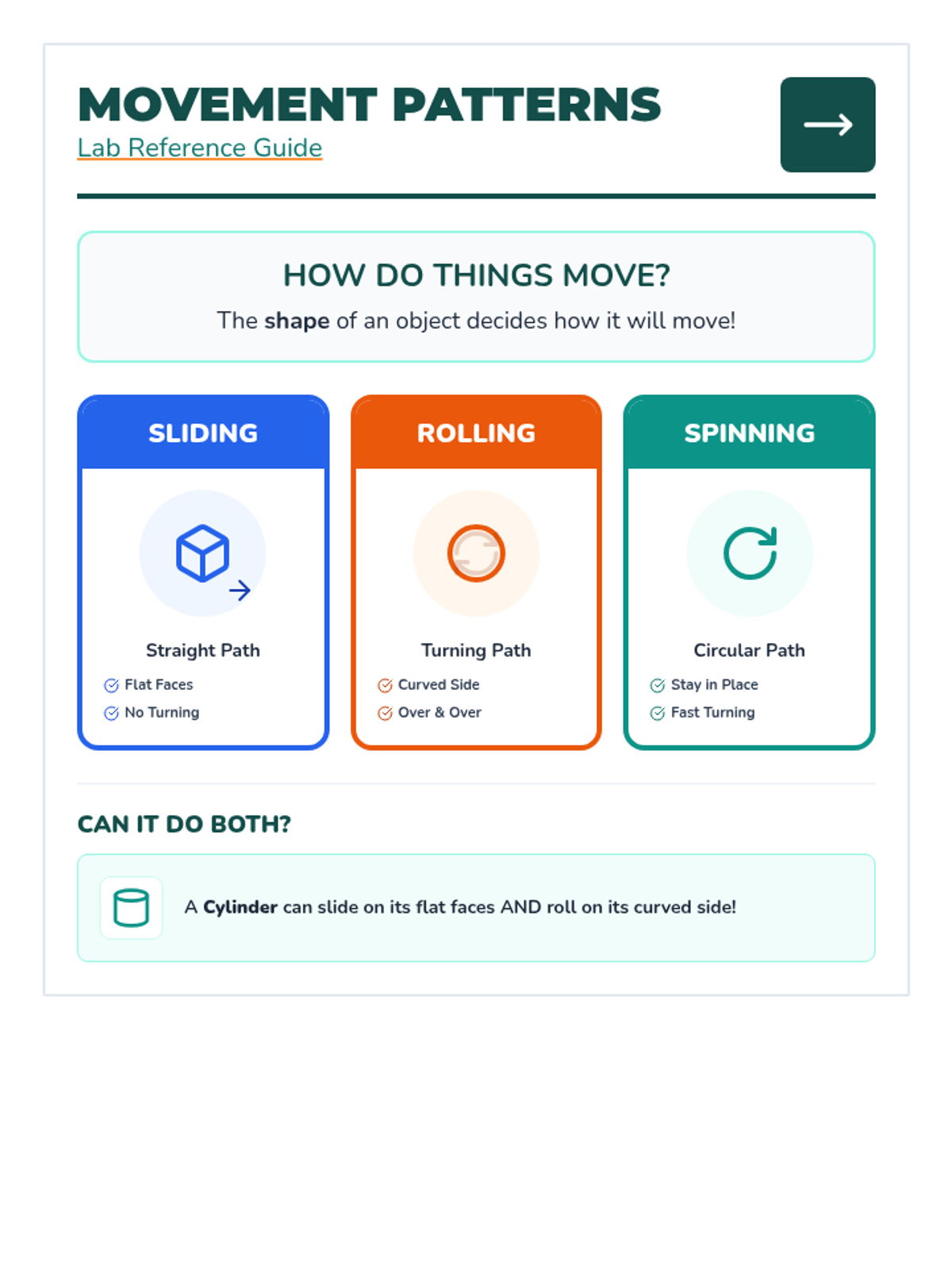
A visual anchor chart for science class, comparing and illustrating sliding, rolling, and spinning movement patterns.
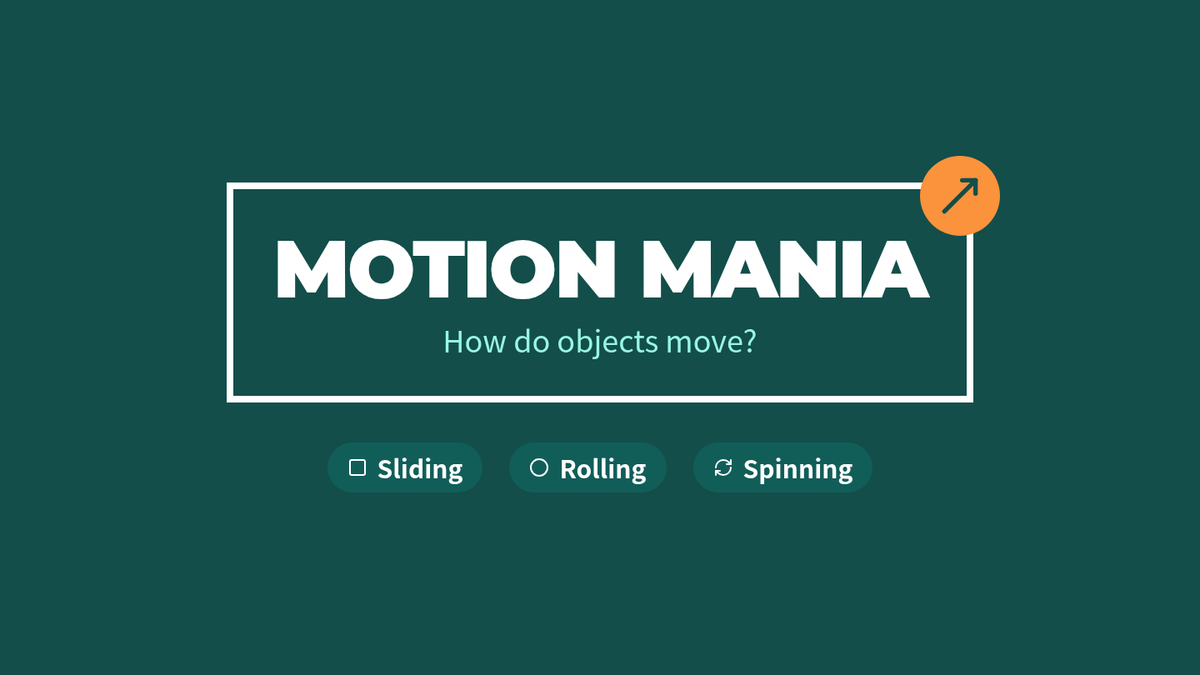
An engaging slide deck for 2nd-grade science exploring different patterns of movement: sliding, rolling, and spinning.
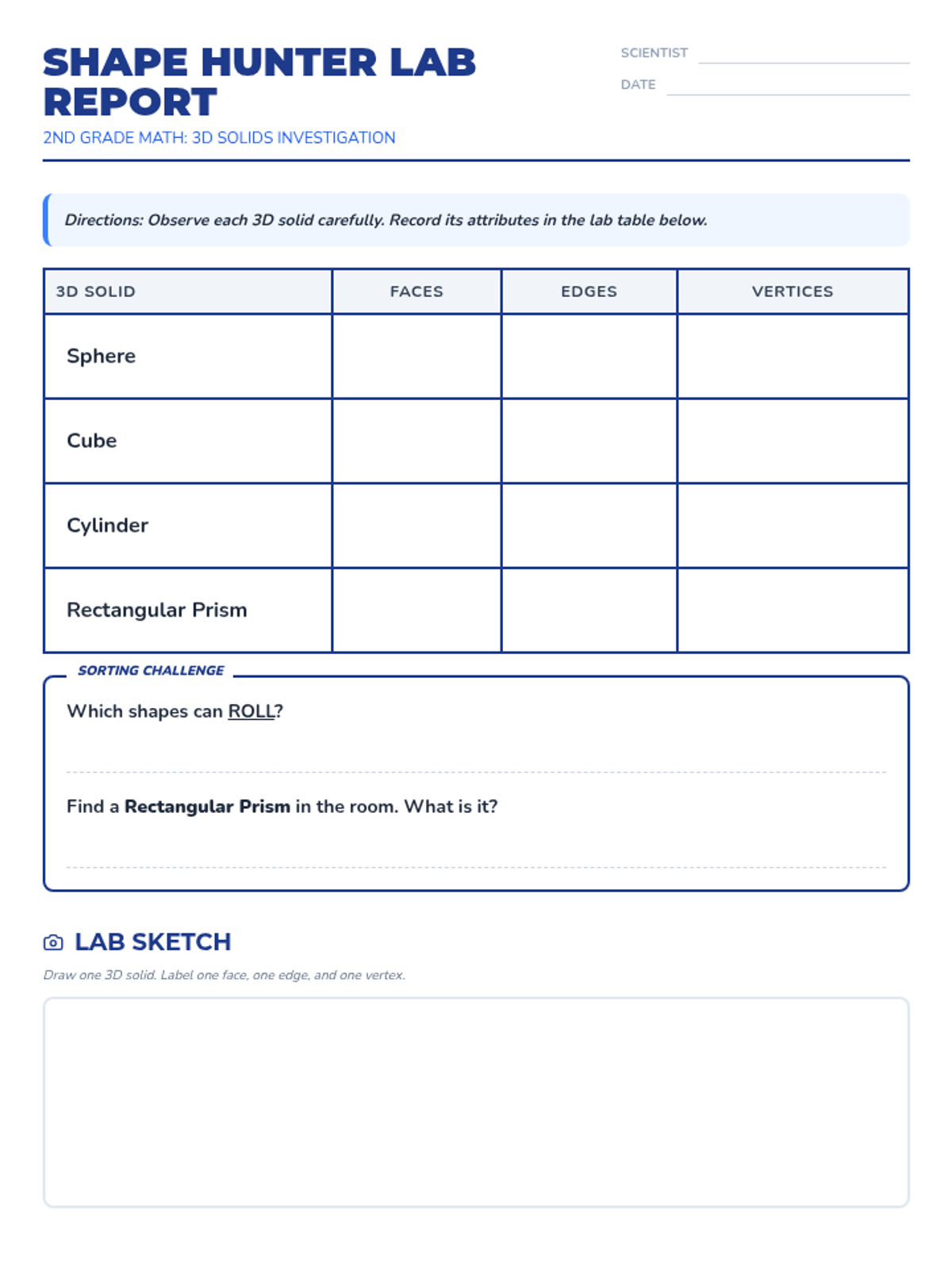
A student worksheet for recording attributes of 3D solids and identifying shapes in the classroom environment.
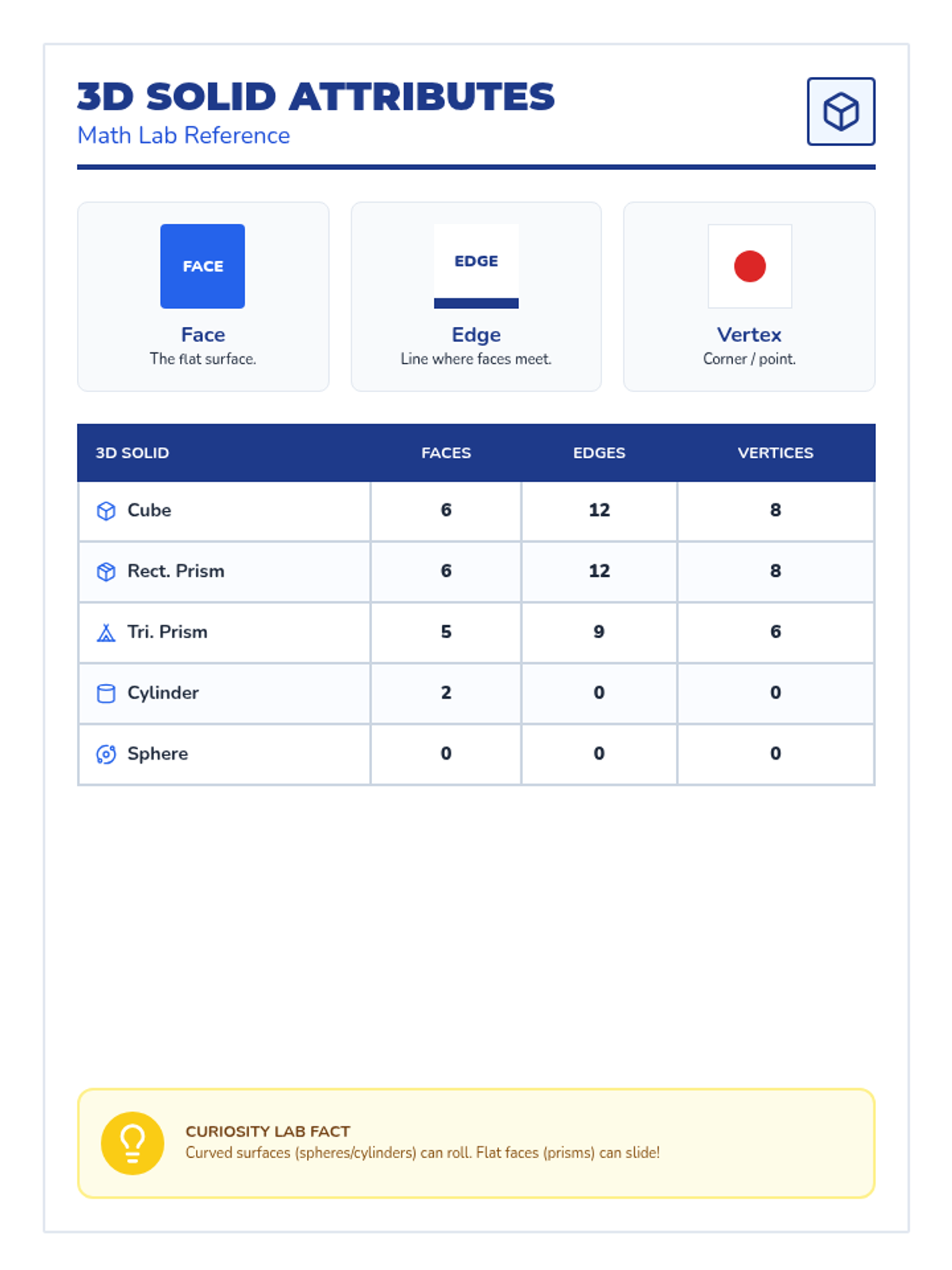
A visual reference anchor chart for students to identify 3D solids and their attributes (faces, edges, vertices).
A set of instructional slides for 2nd-grade math teaching 3D solids, focusing on attributes such as faces, edges, and vertices.
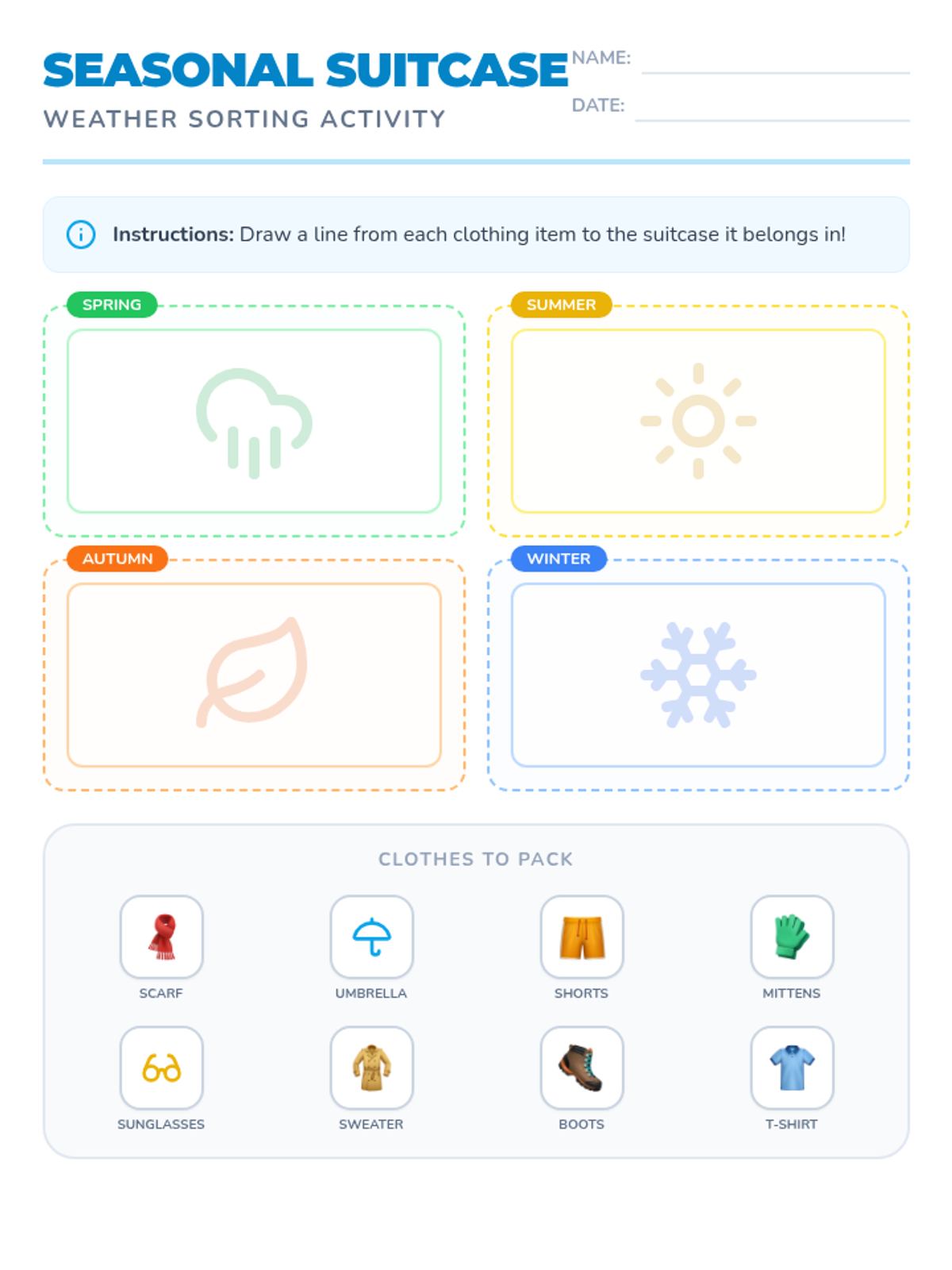
A student activity worksheet where students match various clothing items (e.g., scarf, sunglasses, shorts) to one of the four seasonal "suitcases" by drawing lines.
A visual slide deck presenting the four seasons (Spring, Summer, Autumn, Winter), their typical weather patterns, and the appropriate clothing items for each, designed for primary students.
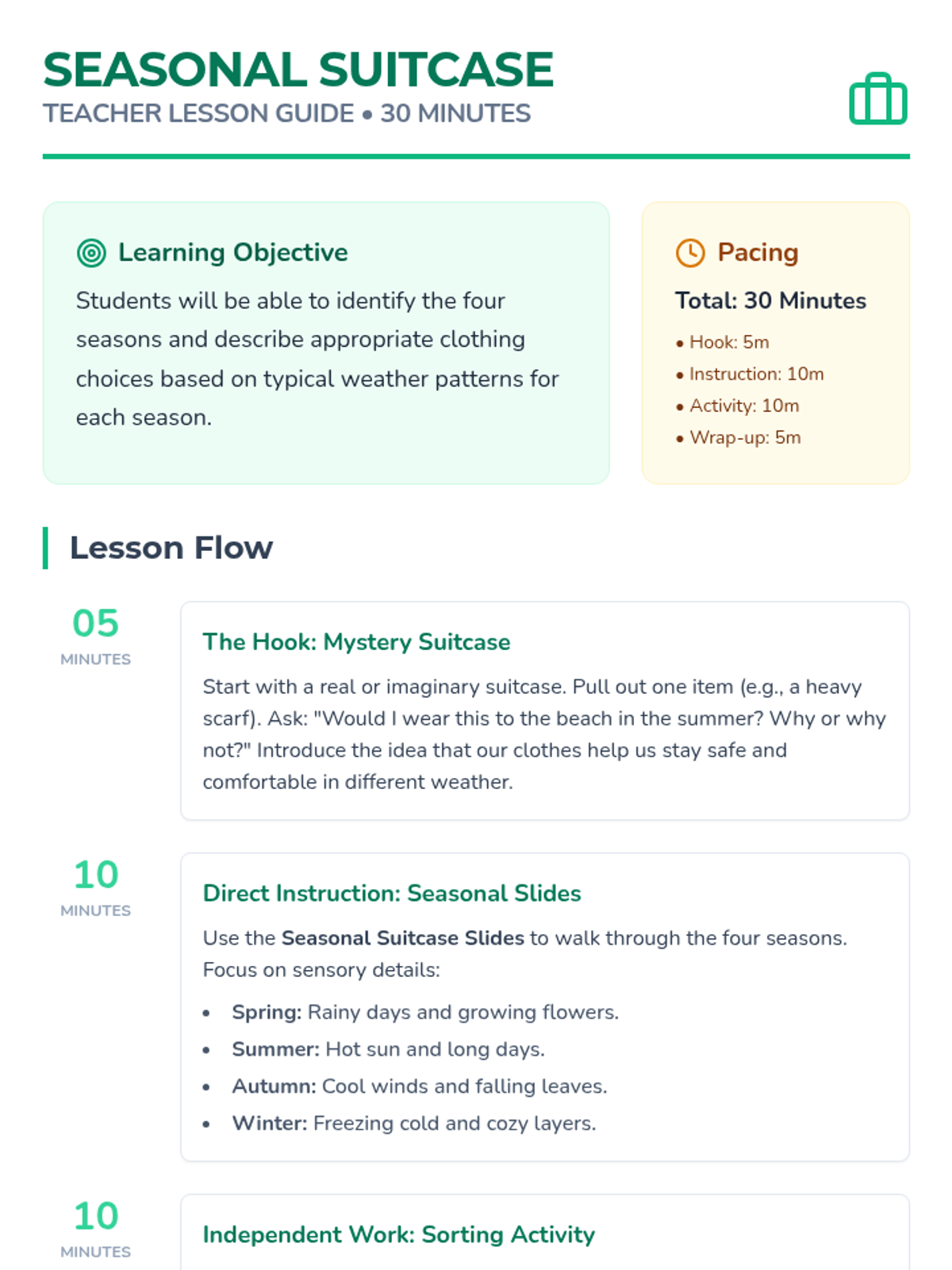
A teacher-facing lesson guide for a 30-minute science lesson on seasons and clothing, including learning objectives, a detailed pacing guide, and a preparation checklist.
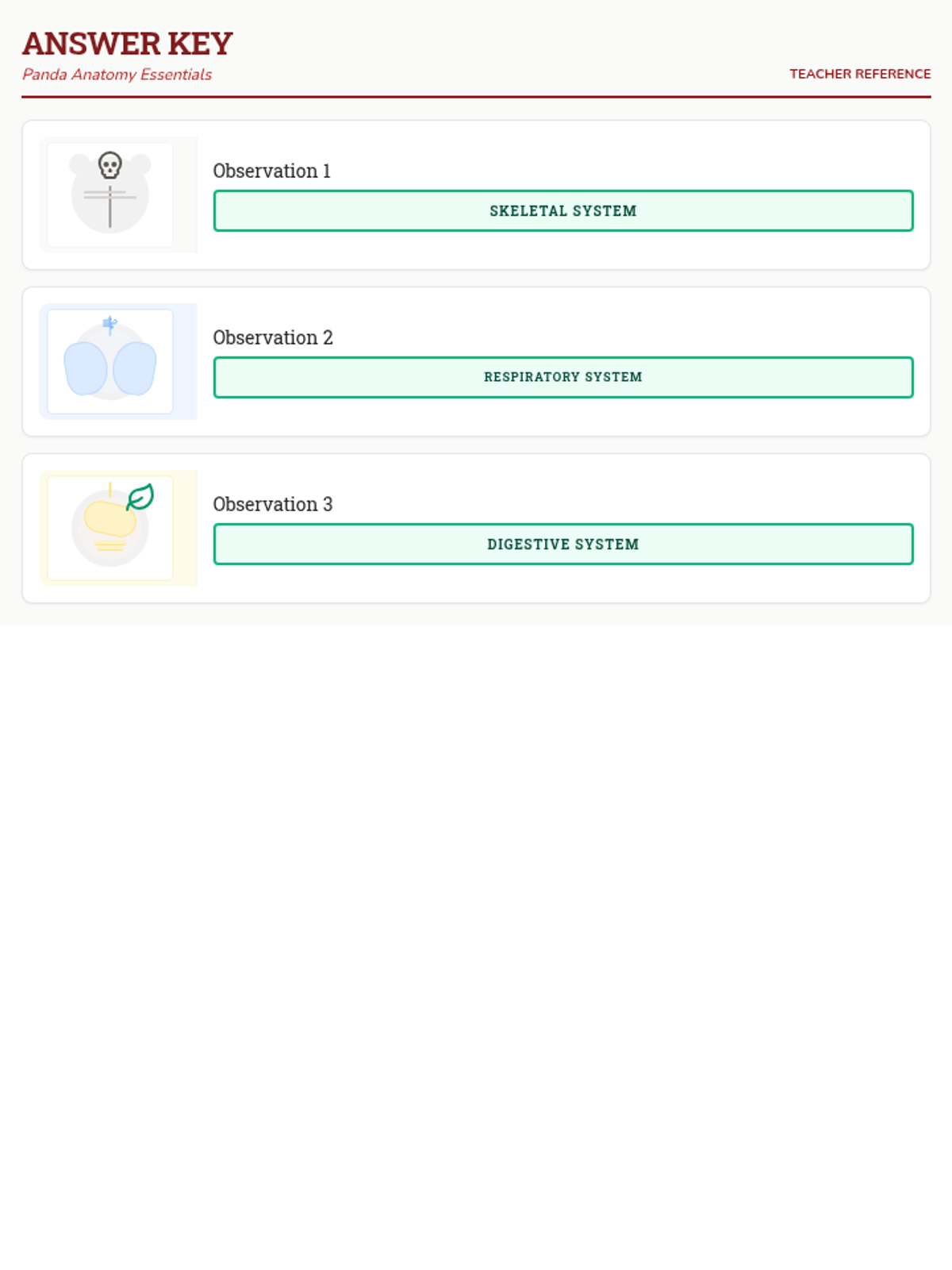
A completed version of the Panda Systems worksheet for teacher reference, showing the correct placement of all labels with matched visual diagrams.
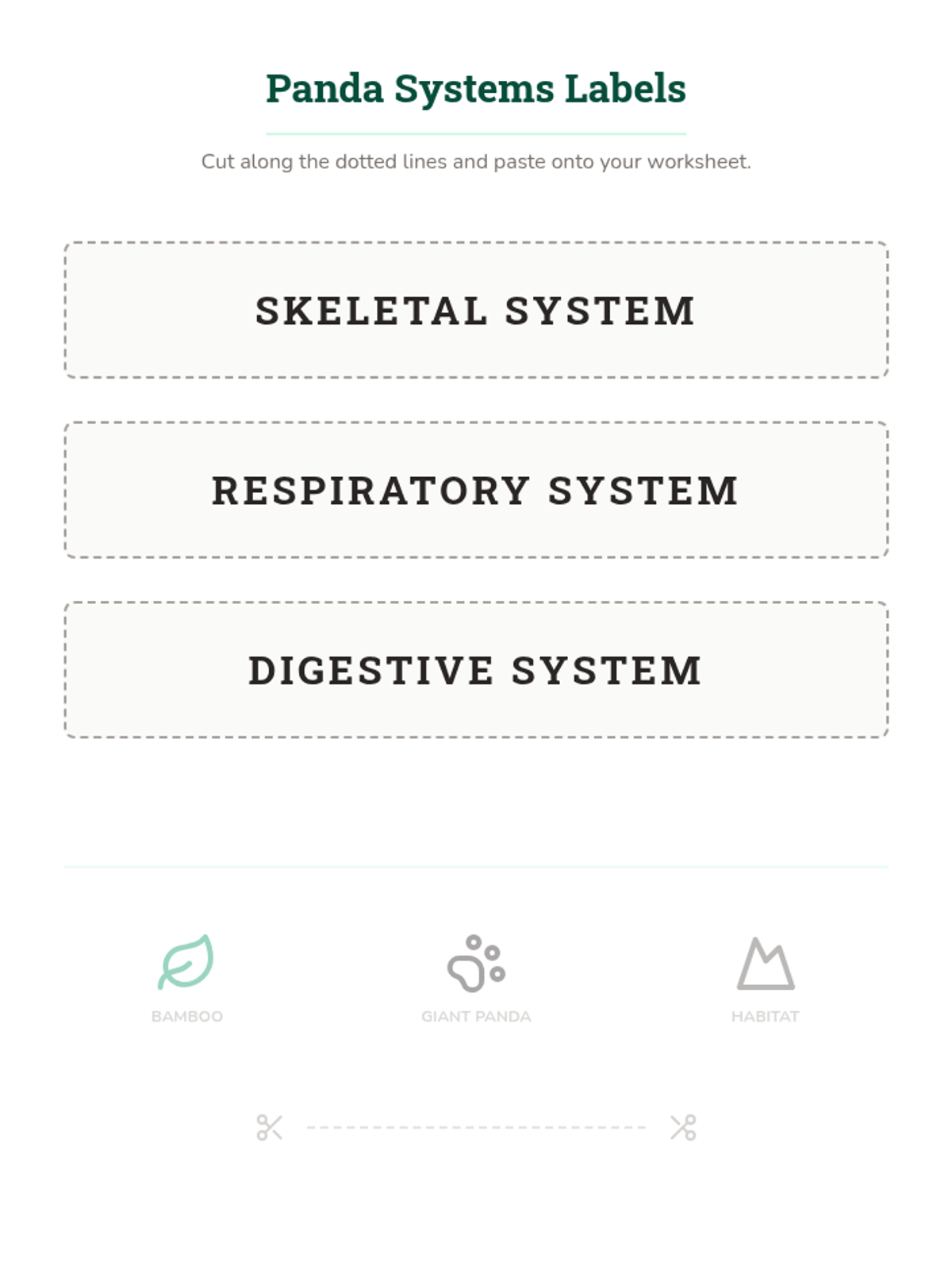
A set of large, clear labels for the skeletal, respiratory, and digestive systems designed for cutting and pasting onto the primary worksheet.
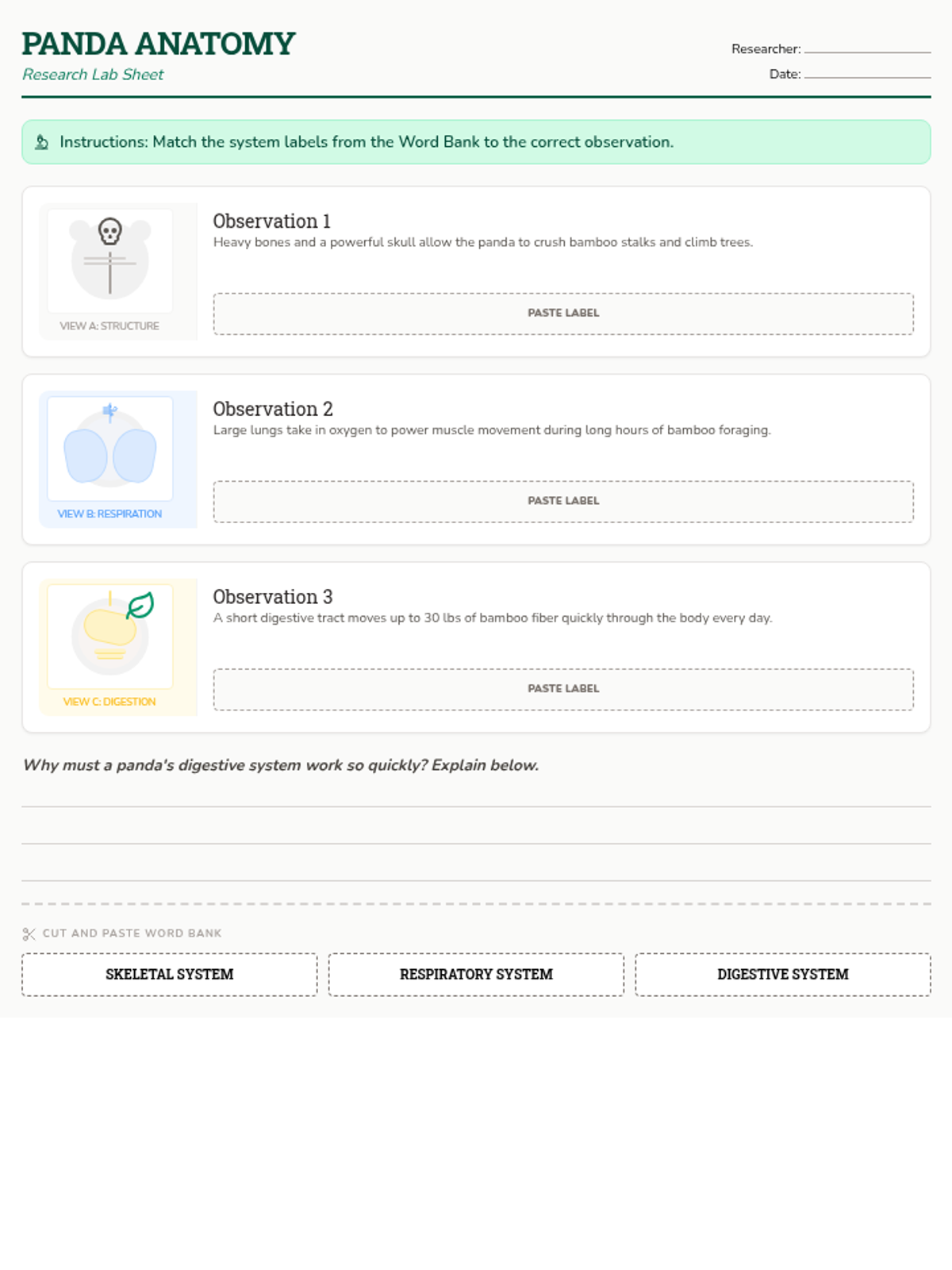
A field-research style worksheet where students identify and label the skeletal, respiratory, and digestive systems of a panda using descriptive clues and stylized internal diagrams, including a built-in cut-and-paste word bank.
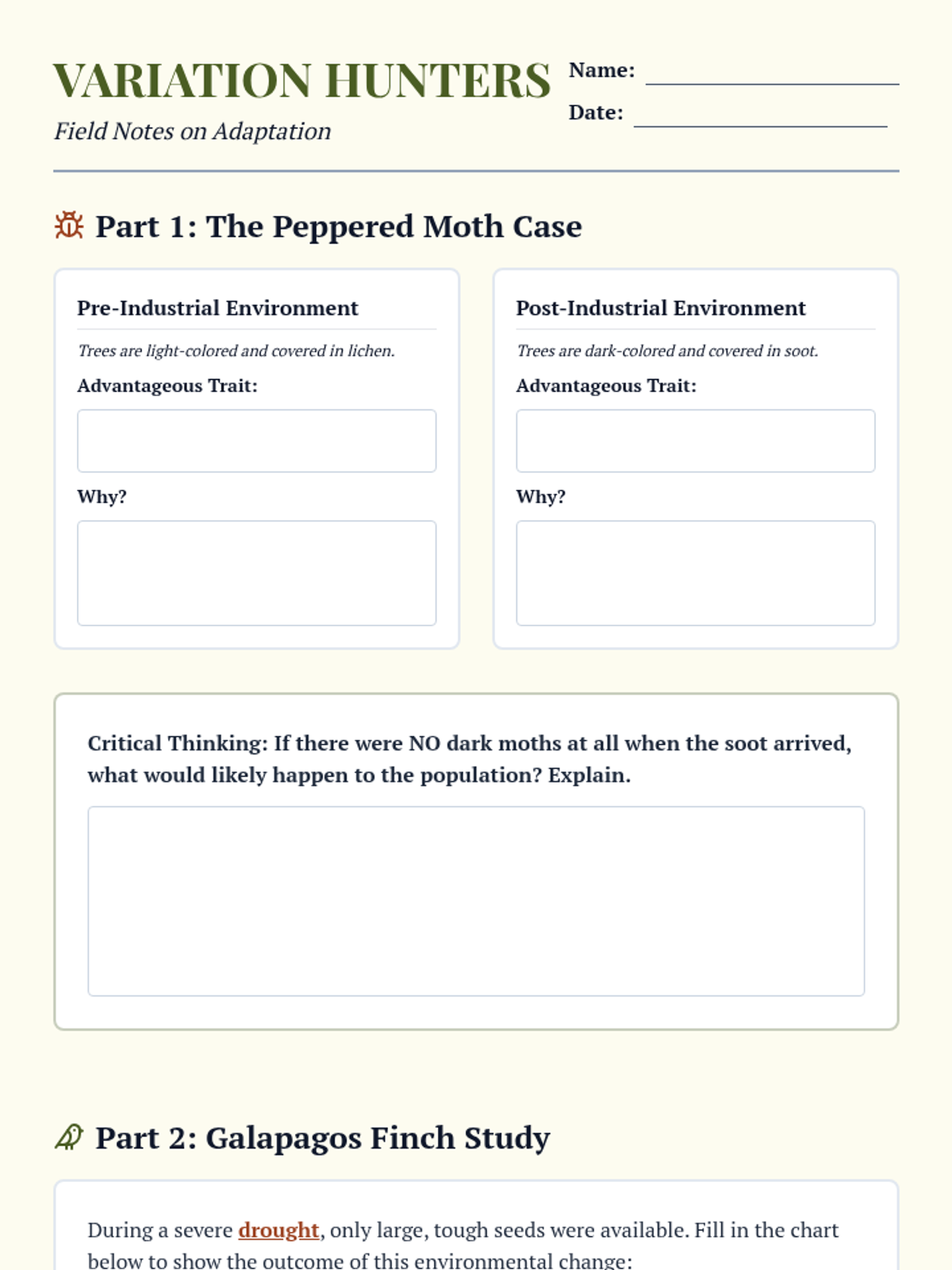
A student worksheet for tracking variations in peppered moths and Galapagos finches. Includes sections for recording advantageous traits and a long-form reflection on why variation prevents extinction.
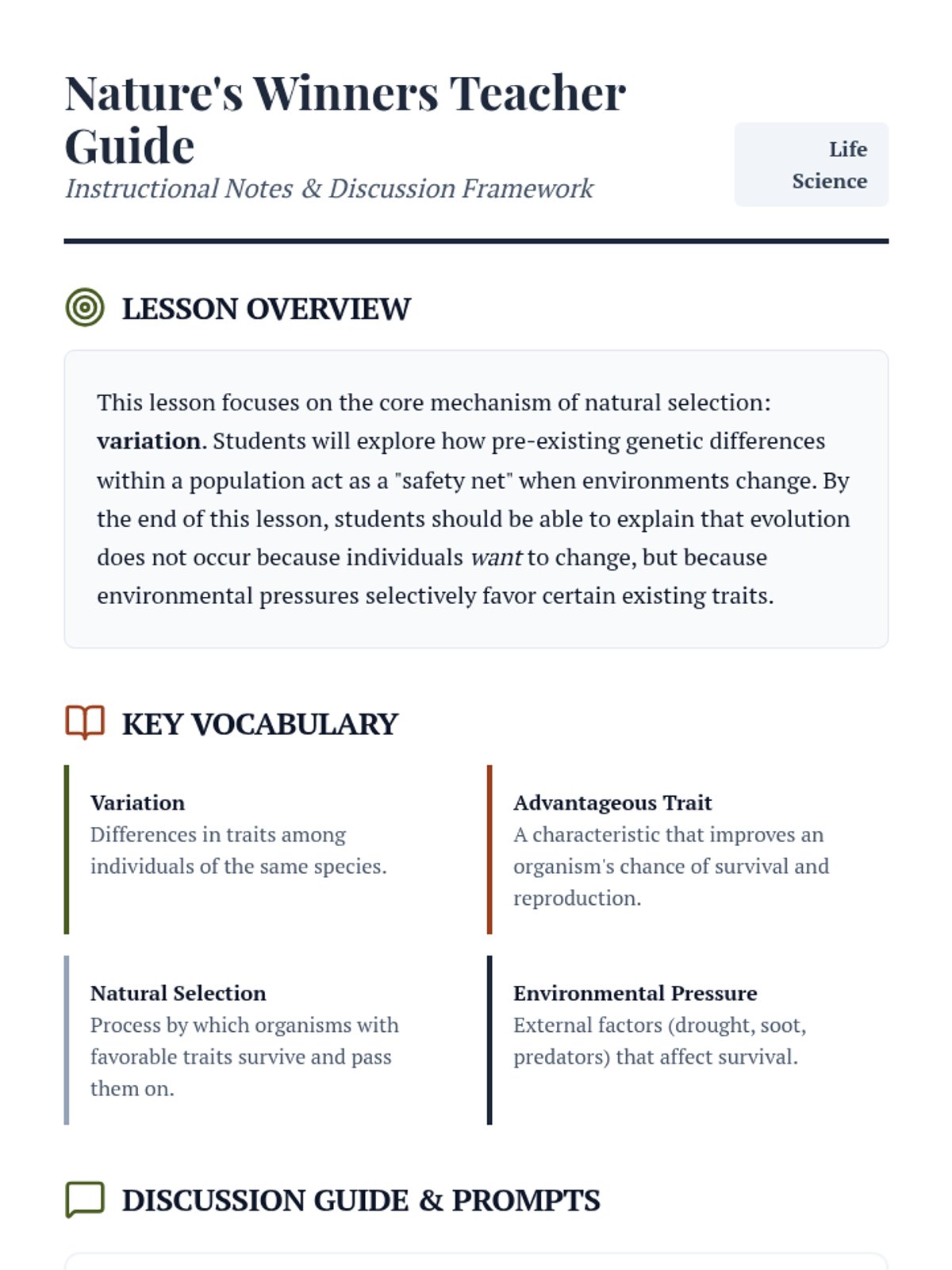
A comprehensive teacher guide for the 'Adapt or Fade' lesson, including instructional goals, discussion prompts for moth and finch case studies, clarification of common misconceptions, and an extension activity.
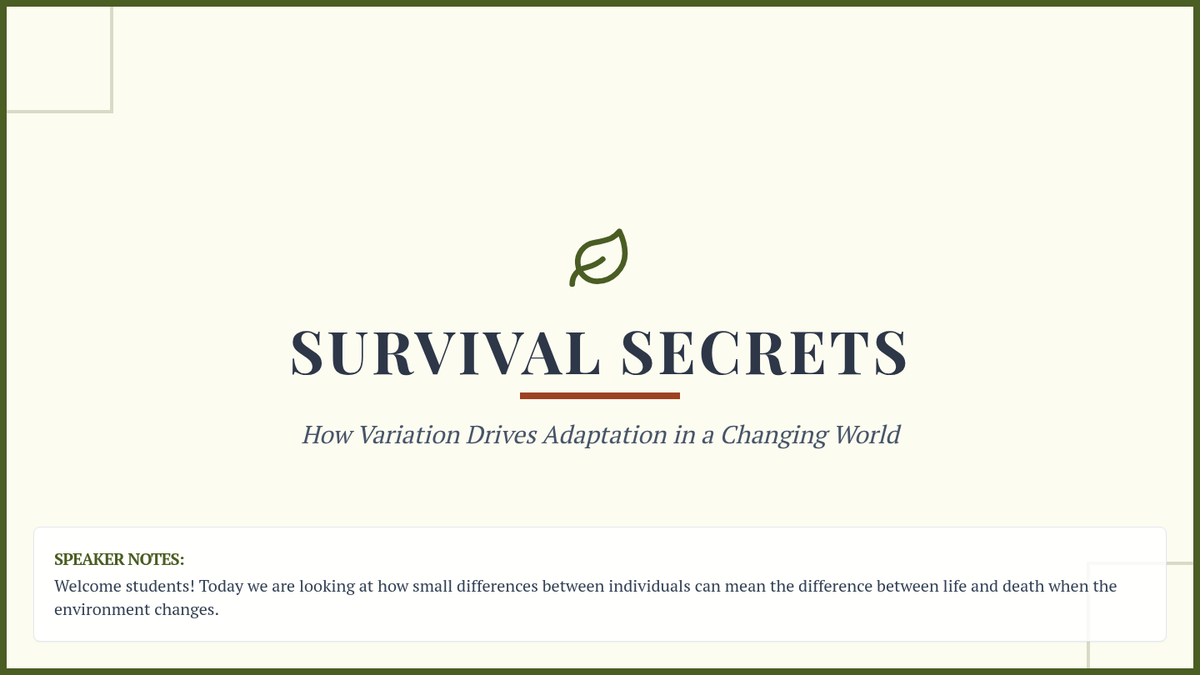
A 10-slide presentation exploring how genetic variation within a population provides advantages or disadvantages during environmental changes, featuring peppered moths and bird beak case studies. Includes speaker notes and an explorer's sketchbook aesthetic.
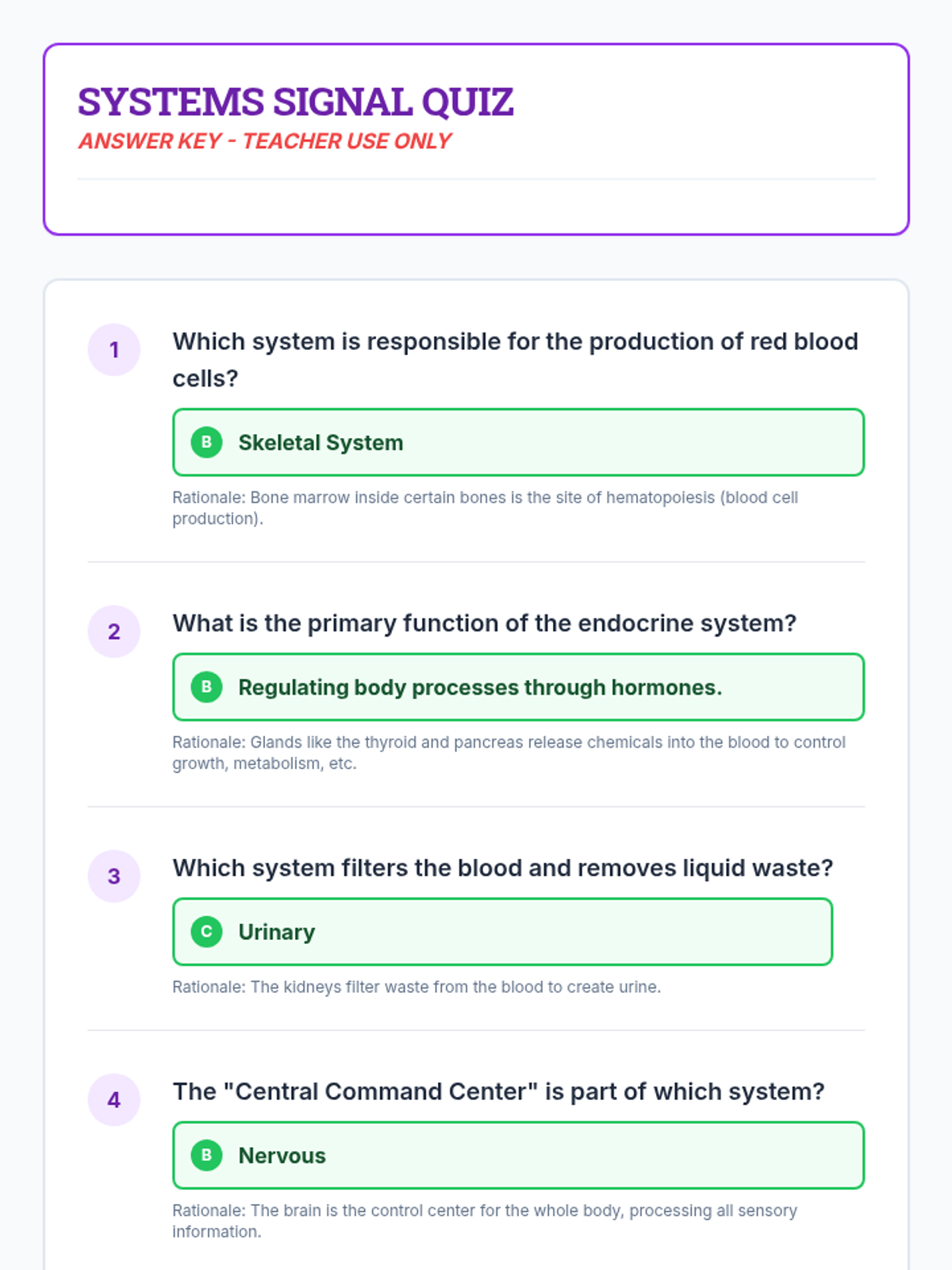
The answer key for the Systems Signal quiz, providing correct answers and rationales for all questions. Revised for consistent teacher guidance and better page flow.
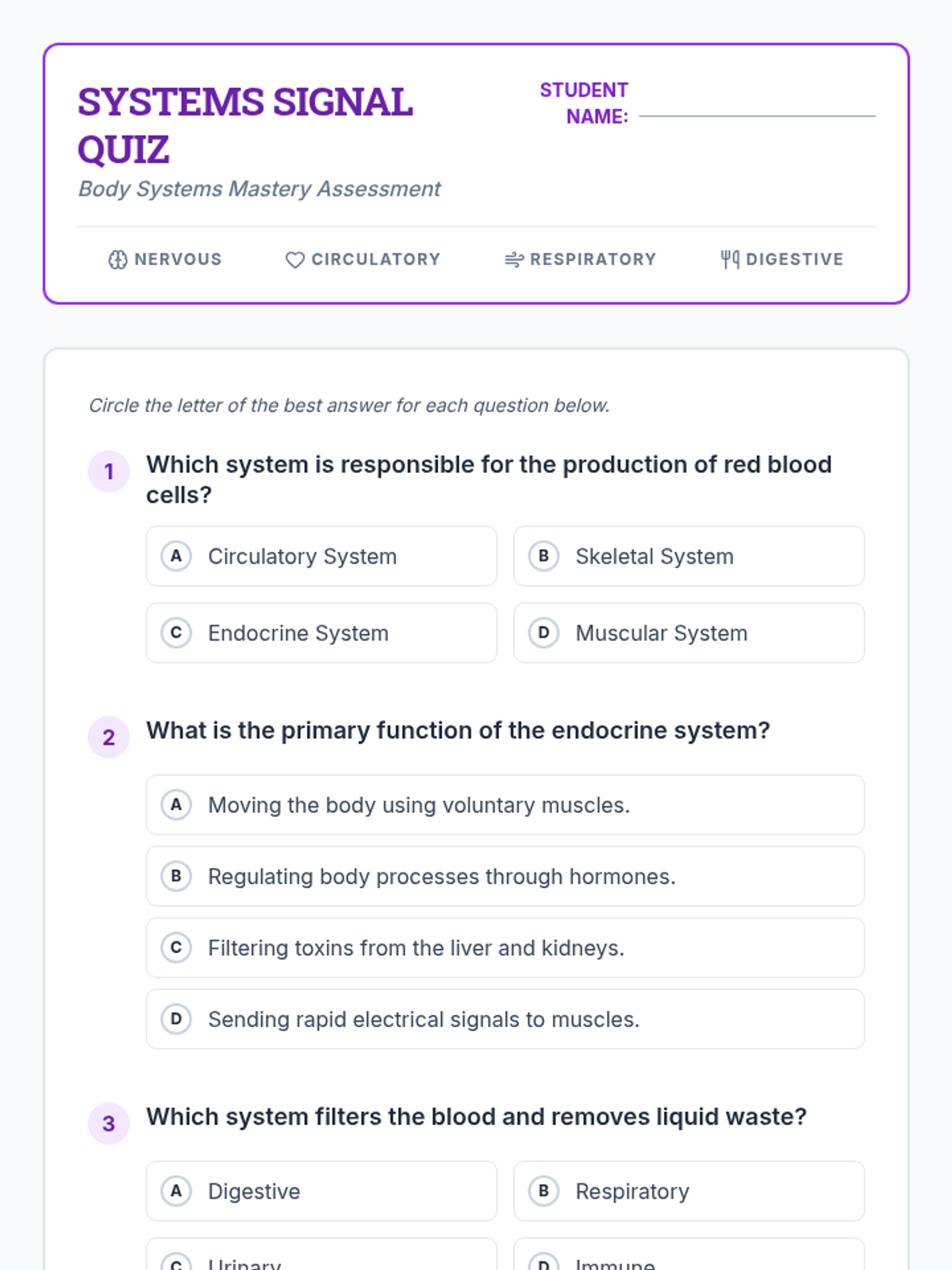
A multiple-choice quiz covering key concepts, organs, and system interactions within the human body. Revised for better page flow and work areas.

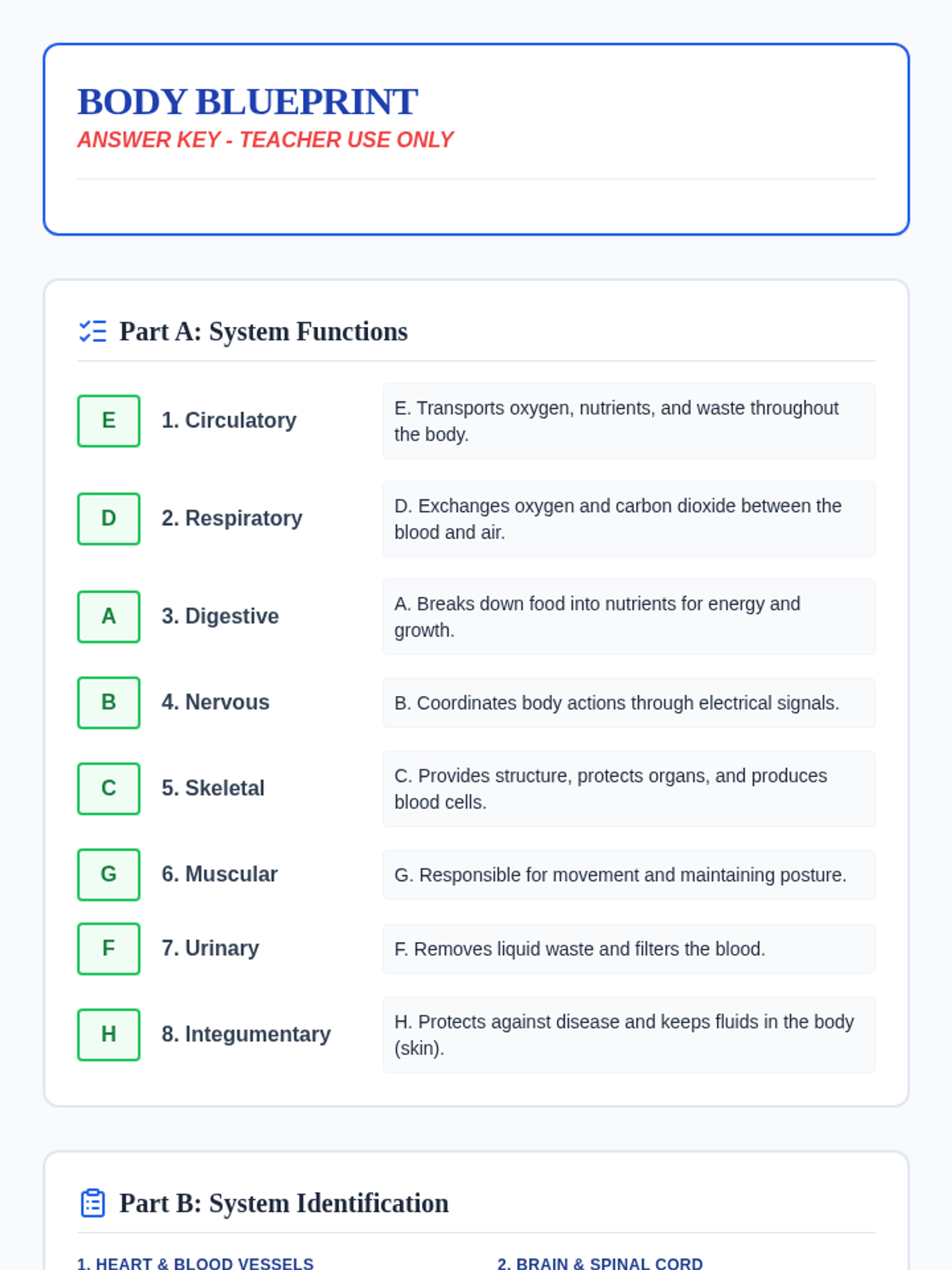
The answer key for the Body Blueprint worksheet, providing correct matches and identification for teacher use.
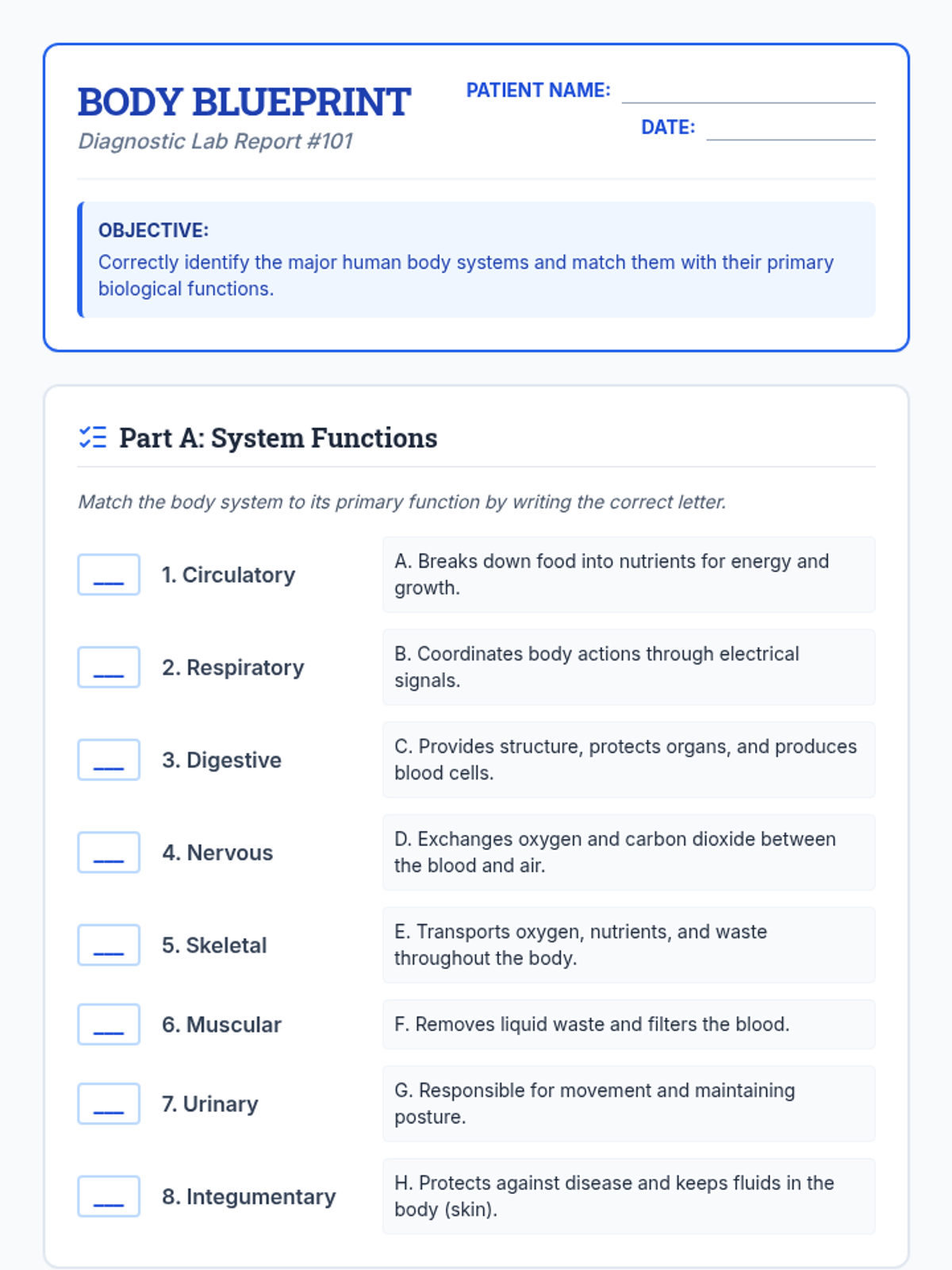
A labeling and matching worksheet for students to identify the functions and organs of major body systems. Revised for better page breaks and legible student work areas.
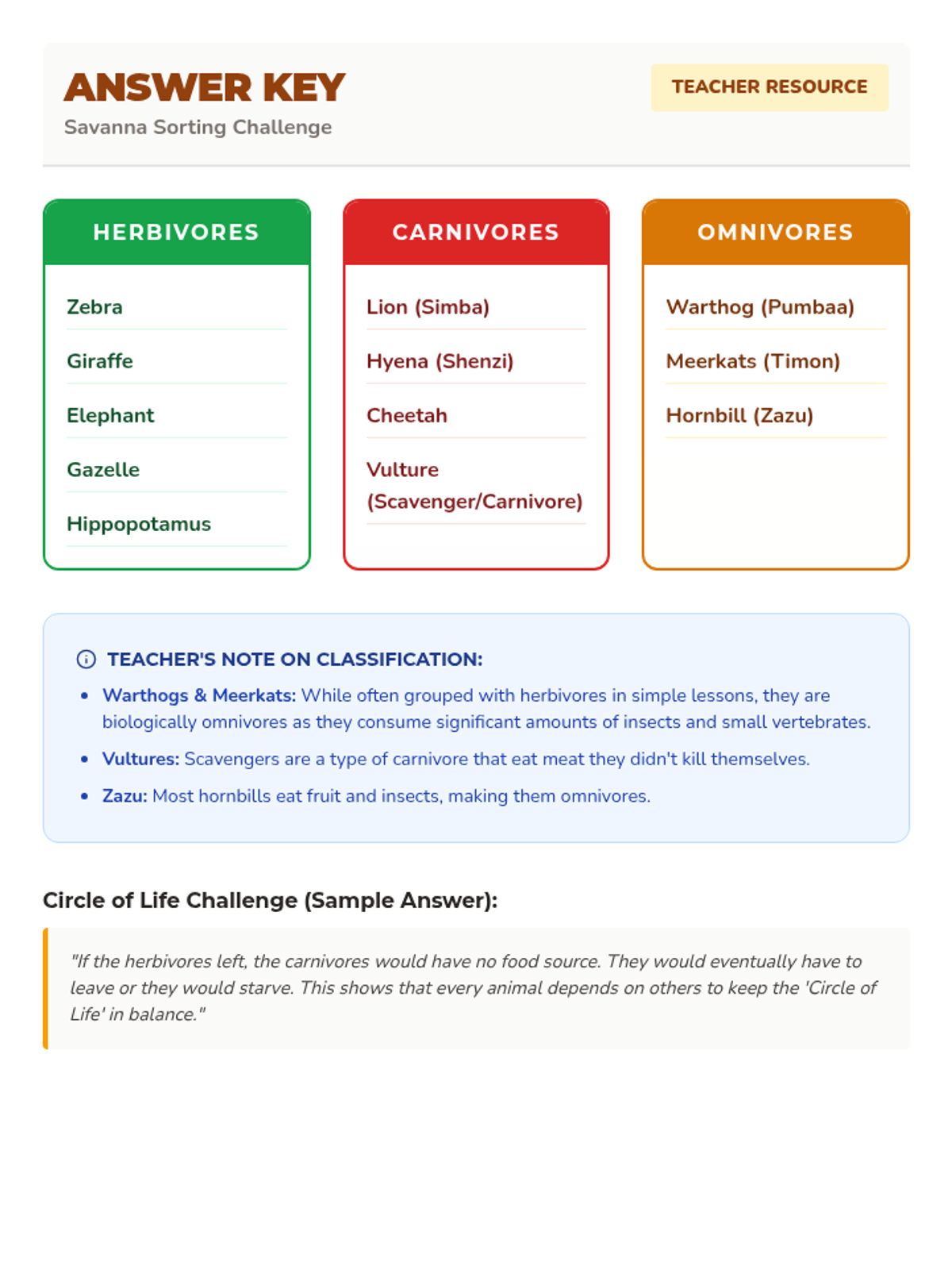
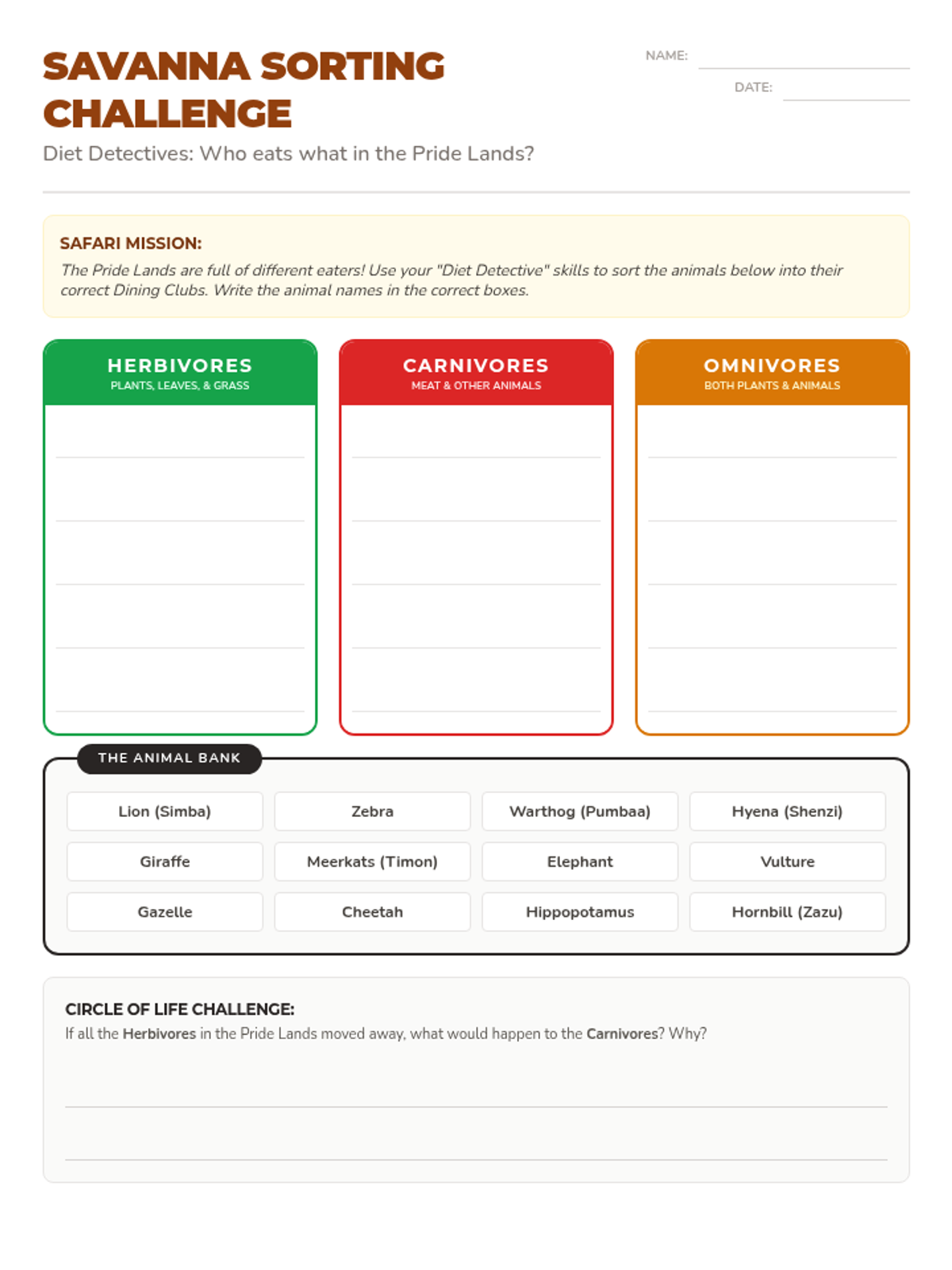
An answer key for the Savanna Sorting Worksheet, including biological notes for teachers regarding complex dietary classifications like omnivorous warthogs.
A polished 5-slide instructional presentation explaining animal diets and ecological balance with Lion King characters. Now features improved contrast, accurate icons, and a circular diagram of the Circle of Life.
A single-page sorting activity where students categorize characters and savanna animals by diet, featuring a clear animal bank and reflection section.
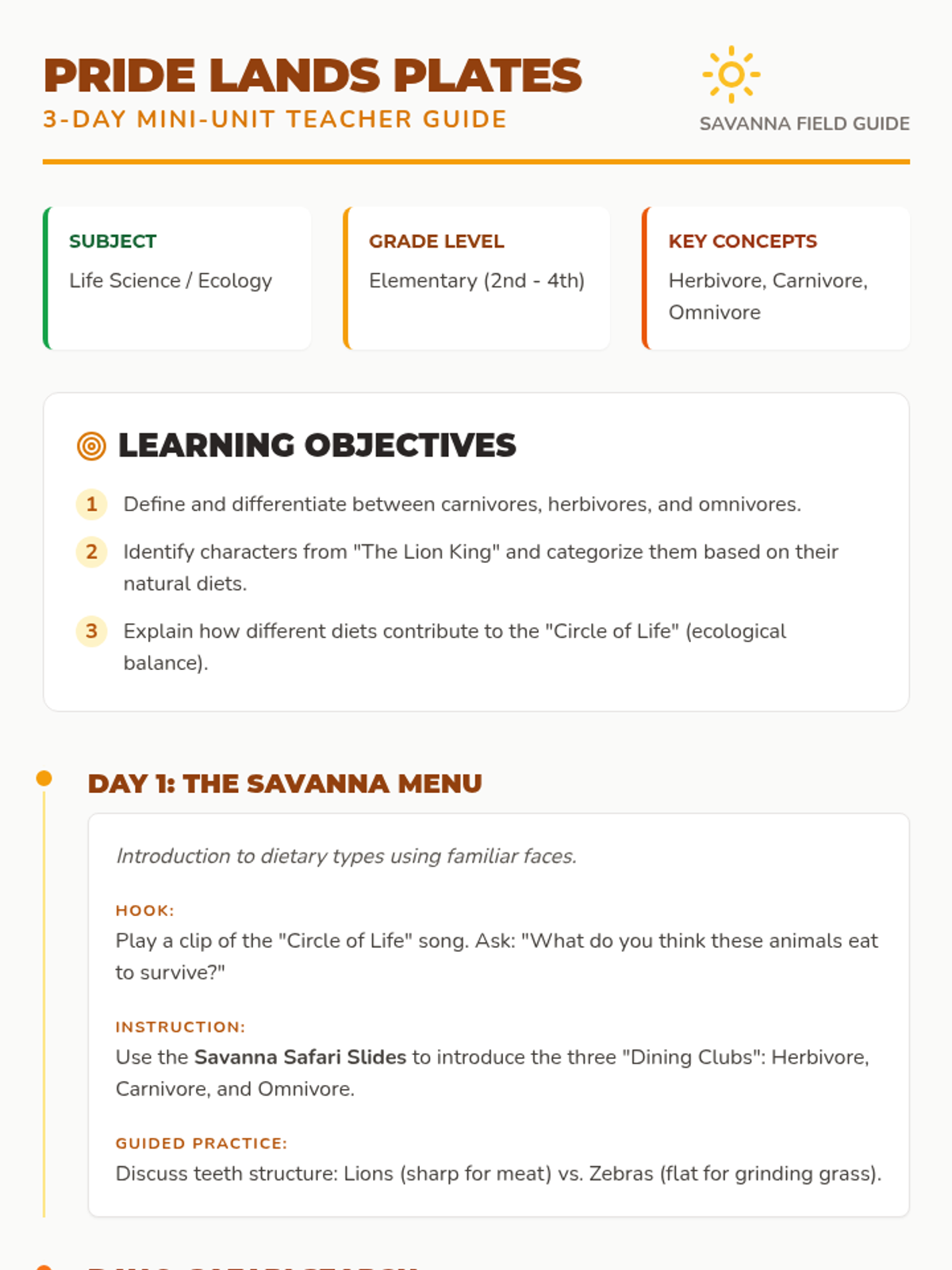
A comprehensive 3-day teacher guide for the Pride Lands Plates unit, including daily lesson breakdowns, learning objectives, and references to accompanying materials.
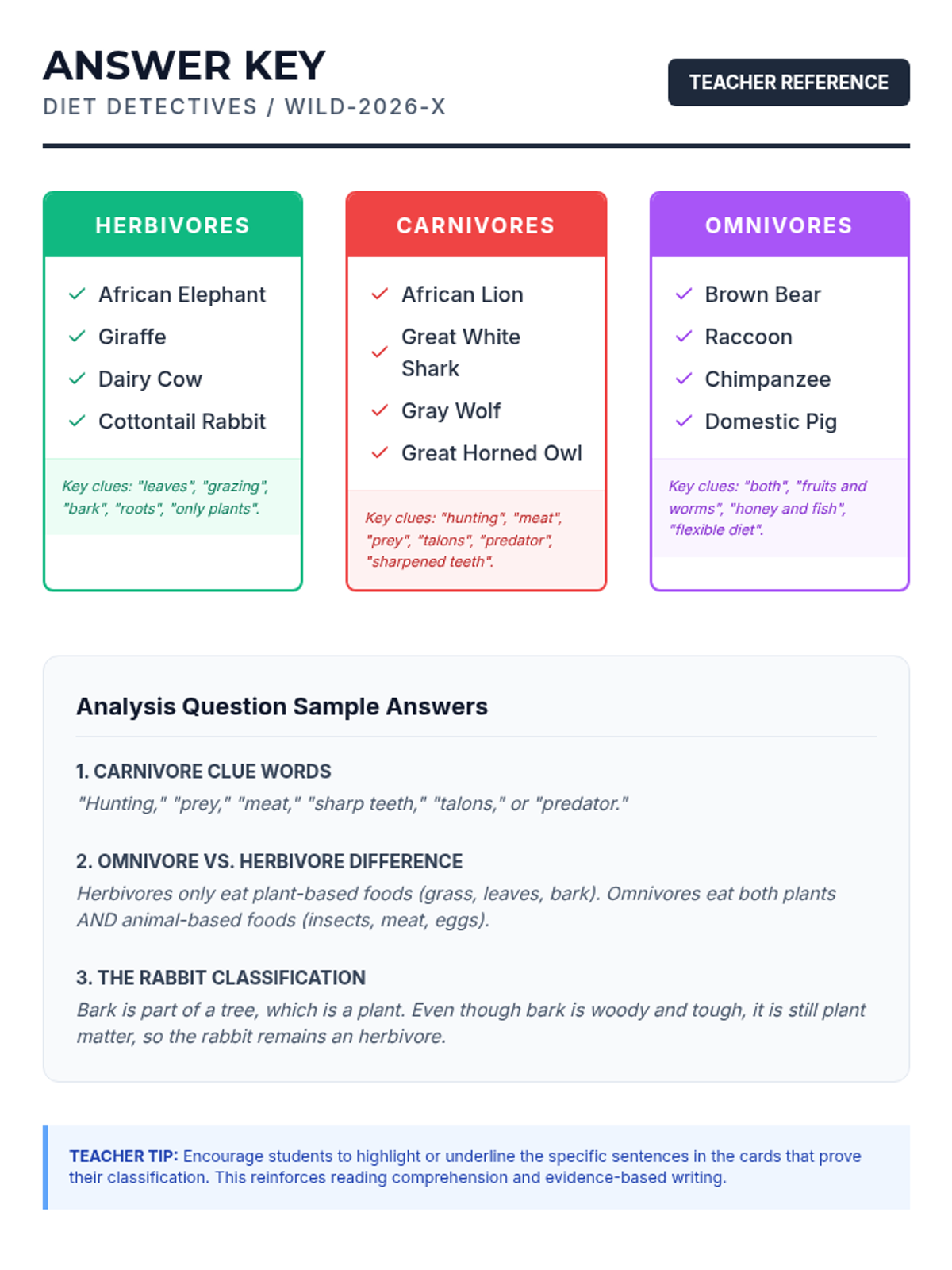
A teacher's answer key providing the correct classification for all 12 animals and sample responses for the analysis questions.