A student mastery lab journal for the Fraction Fast Track lesson. Includes work areas for the hook, the four video challenge problems with a scoring tracker, and a structured script template for the extension activity.
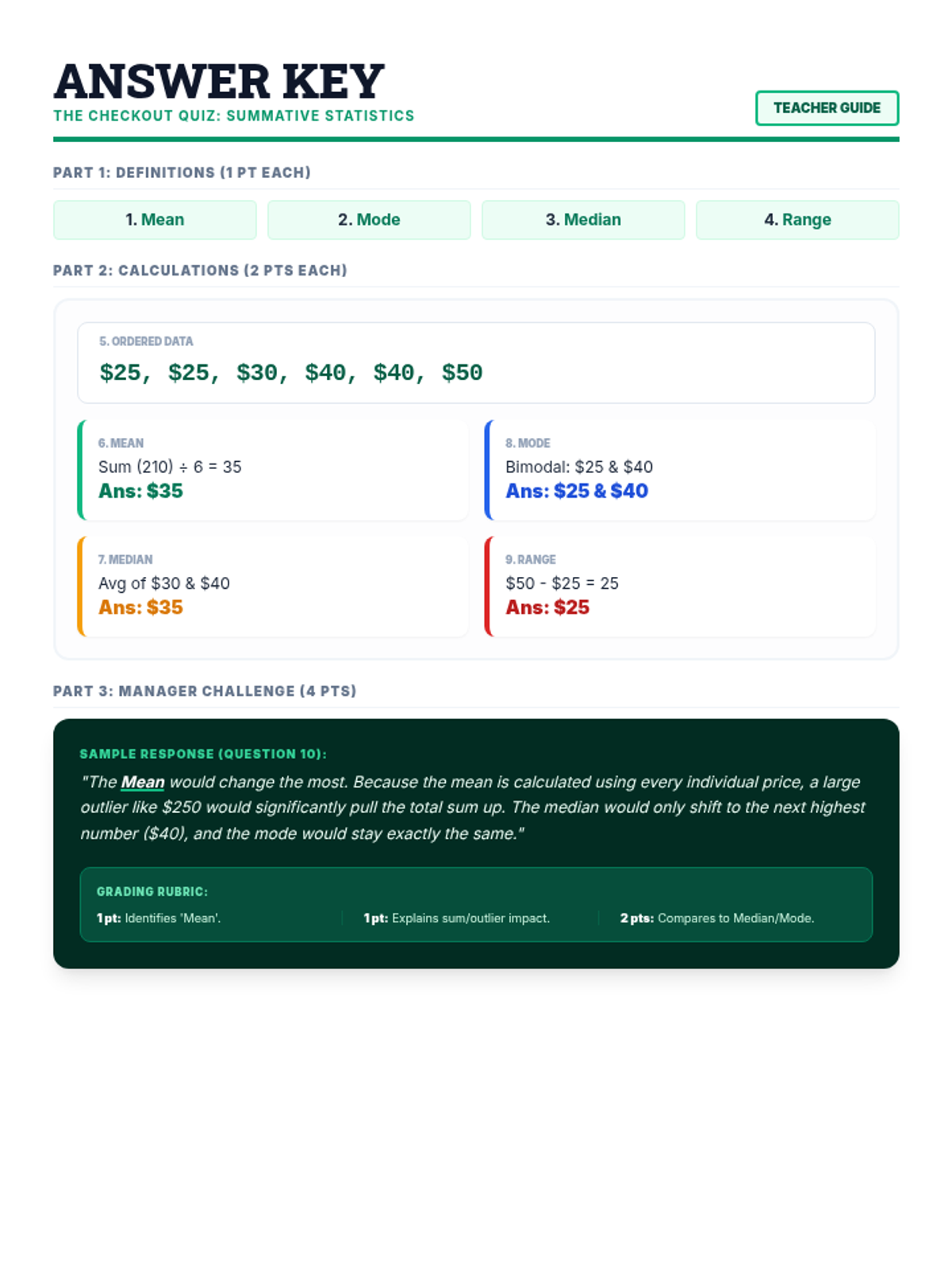
The teacher-facing answer key for the Checkout Quiz Assessment. Revised to fit onto a single page and improve clarity.
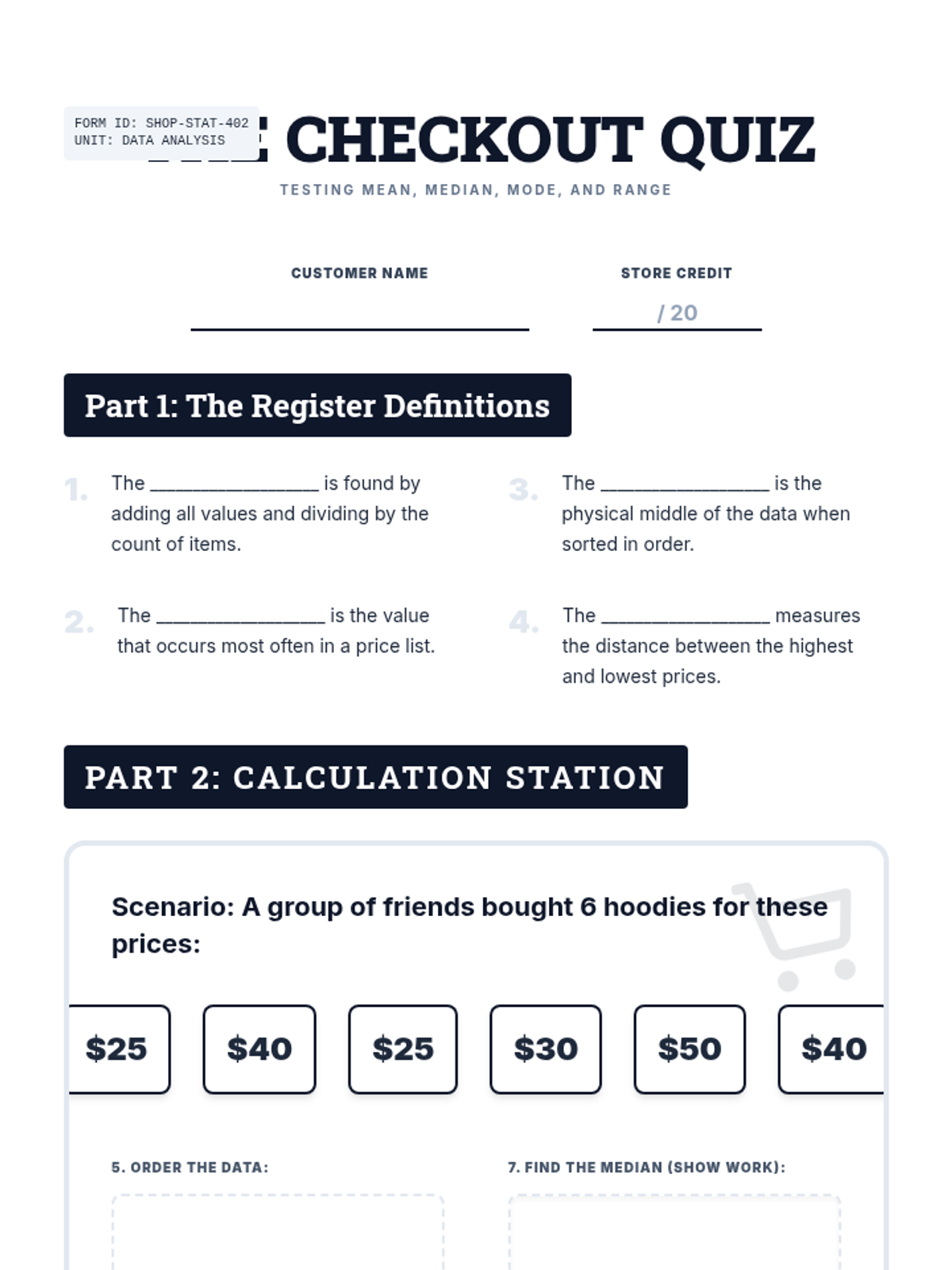
A formal summative assessment on Mean, Median, Mode, and Range. Revised to fix page breaks, improve contrast, and expand student work areas.
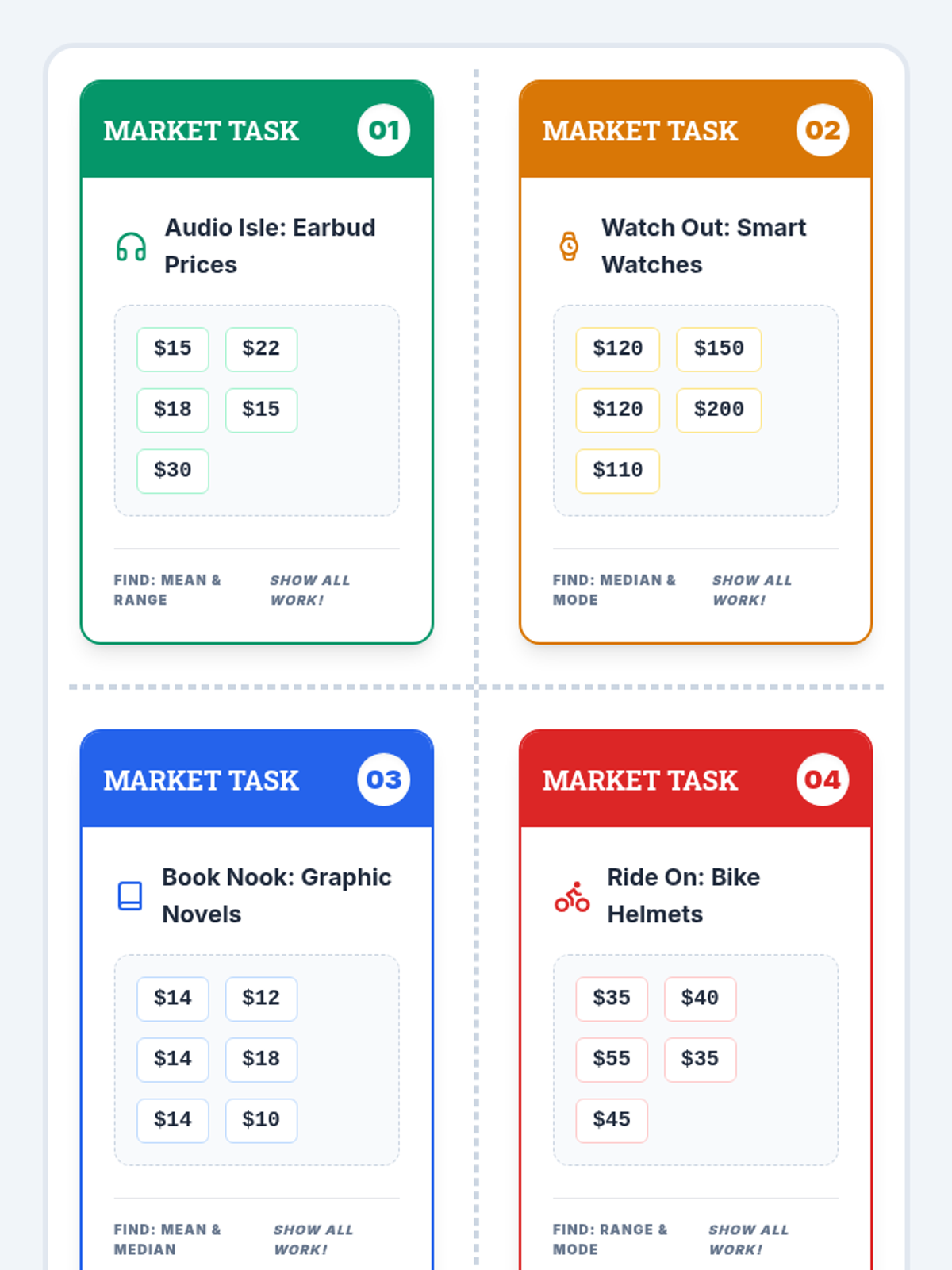
A set of 4 task cards for center activities, revised to include recording areas for all cards, cut lines, and improved legibility.
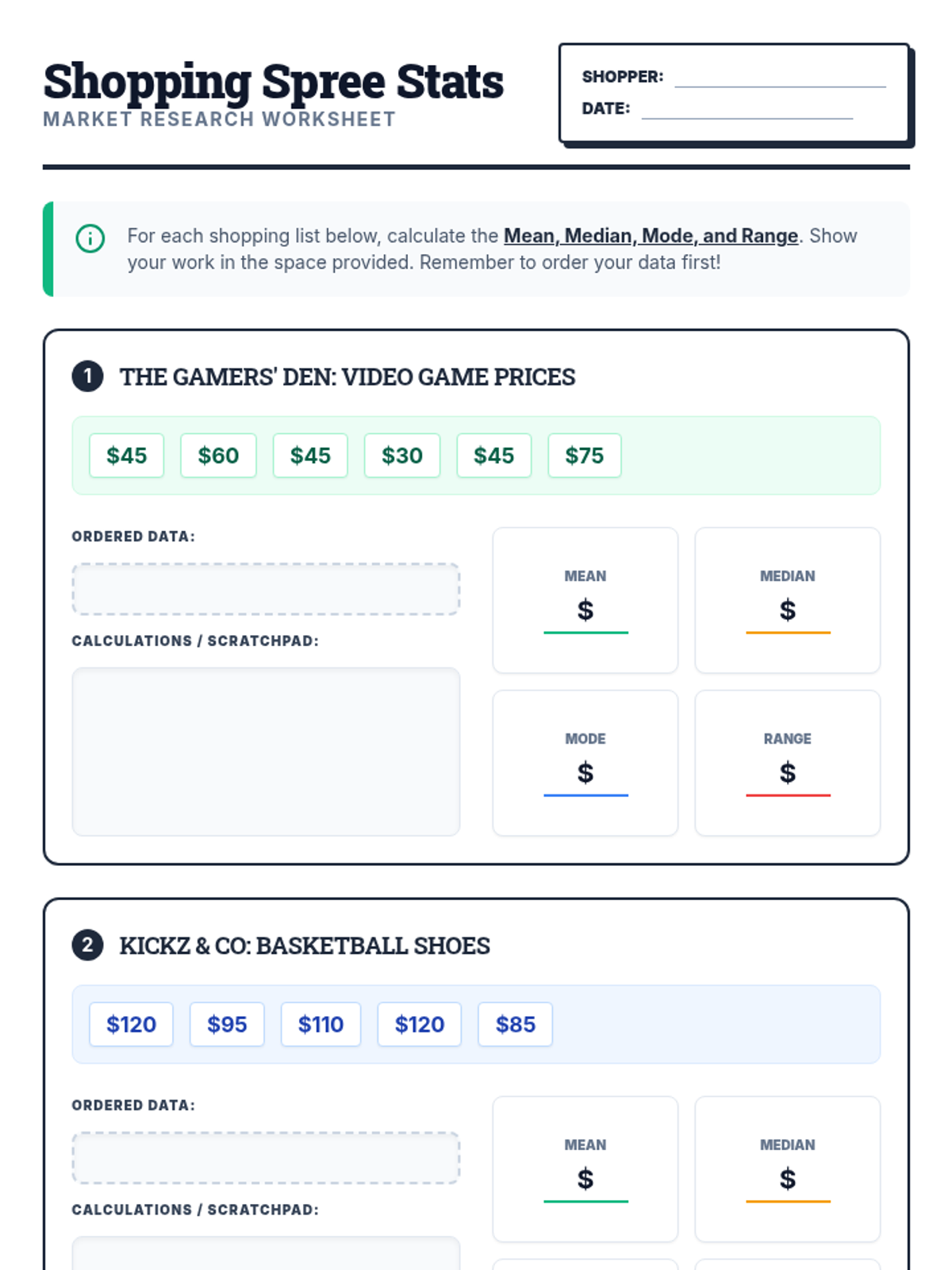
A student practice worksheet featuring three different shopping data sets (video games, sneakers, and smoothies). Revised to fix page breaks, increase work area sizes, and balance white space.
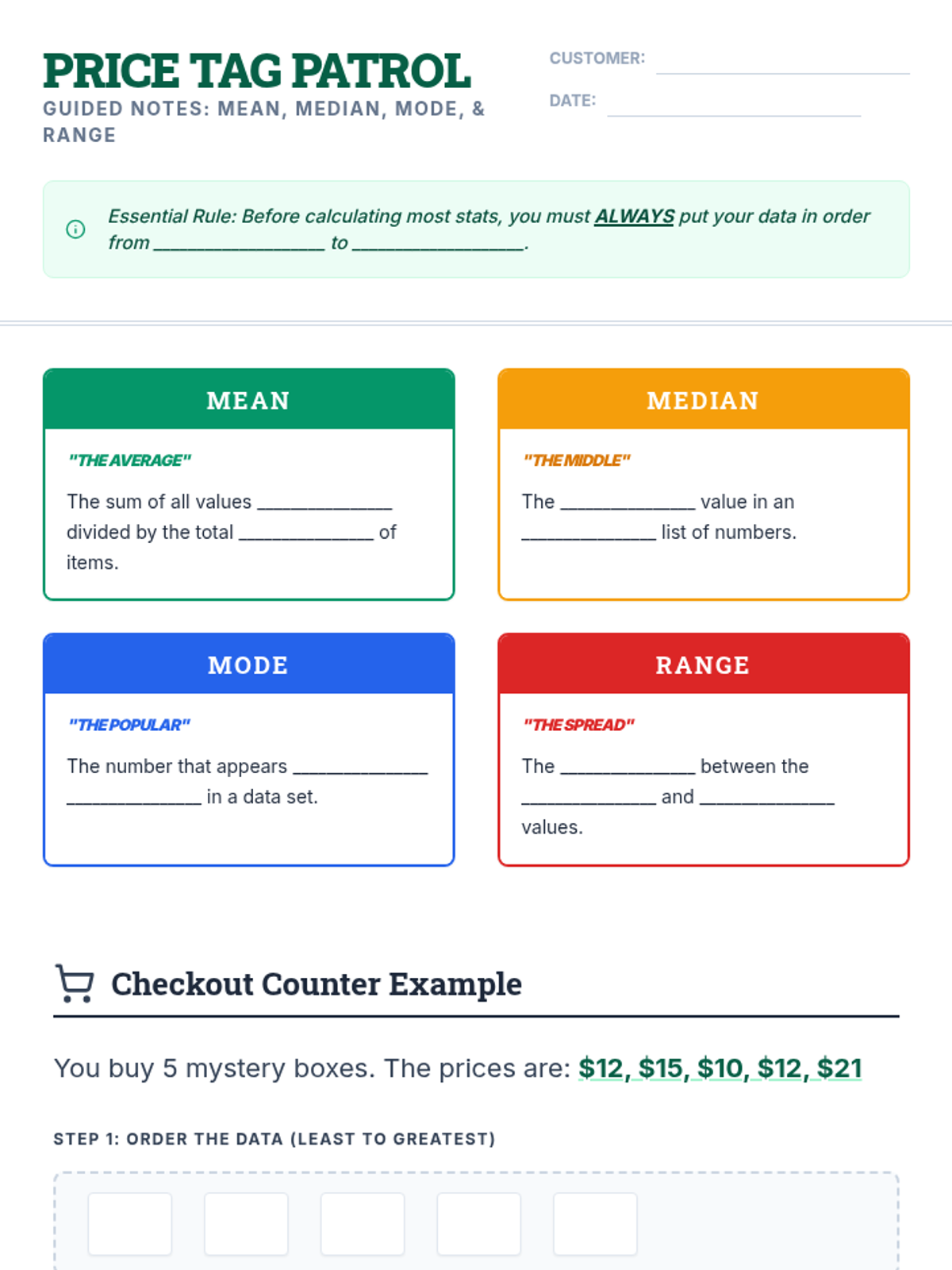
Guided notes for students to follow along with the Price Tag Patrol presentation. Revised to improve layout, page breaks, and student work areas.
A vibrant set of slides introducing Mean, Median, Mode, and Range using shopping-themed examples. Features clear definitions, step-by-step calculations, and a "Your Turn" practice scenario. Revised for layout and accessibility.
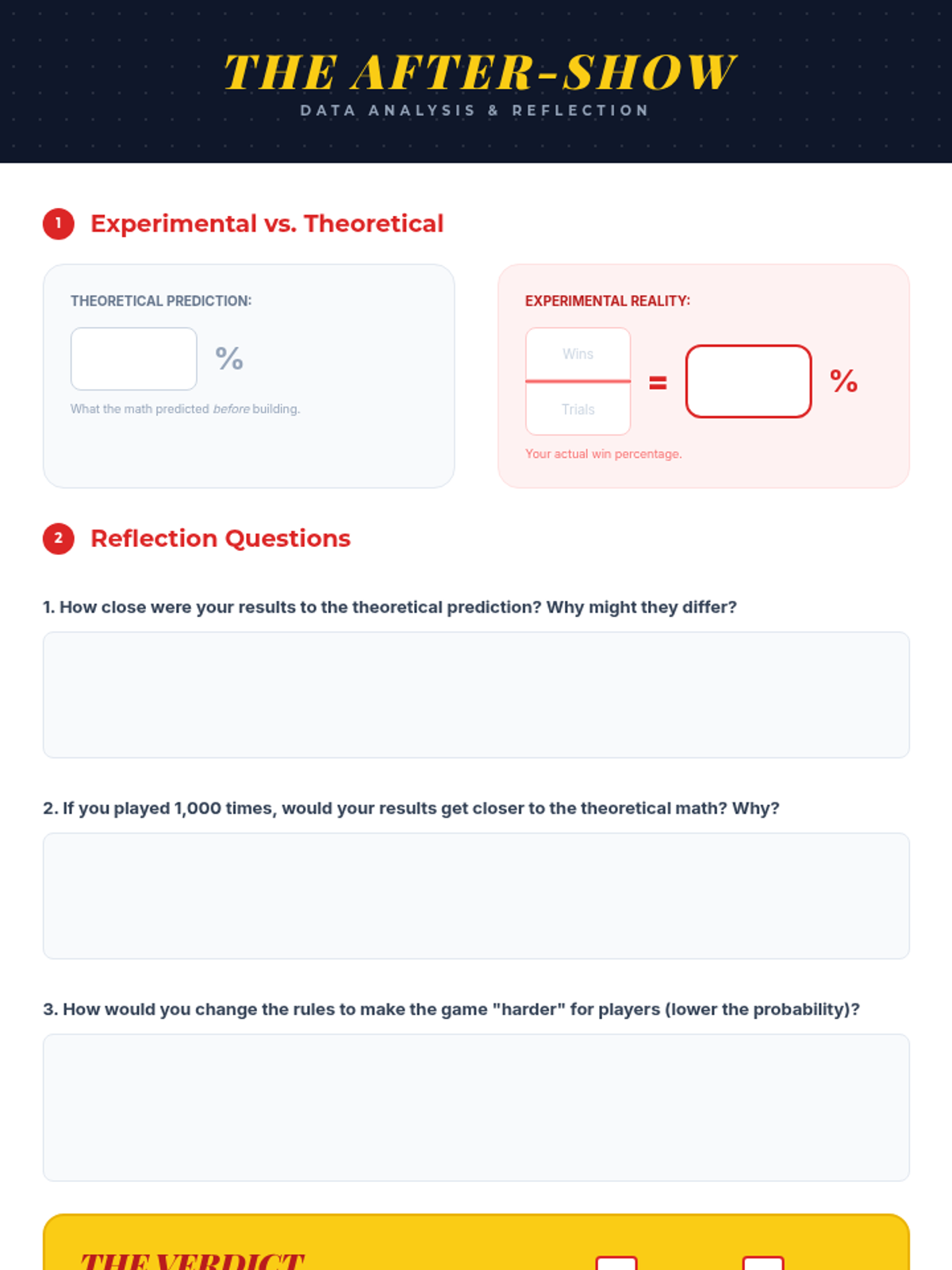
A final reflection activity where students compare their theoretical predictions to experimental results, analyze the difference, and reflect on the fairness of their carnival game.
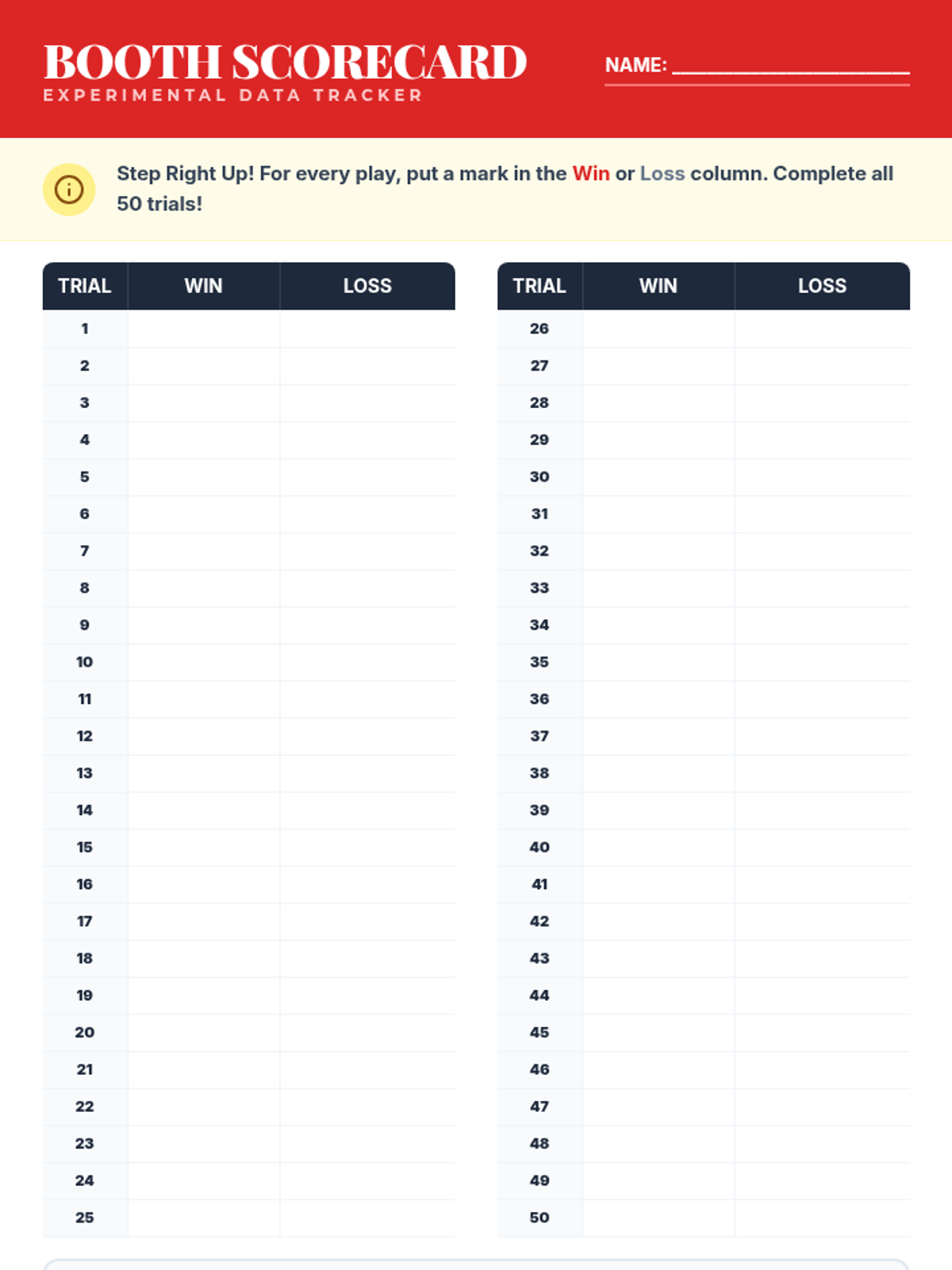
A scorecard worksheet for students to record outcomes (wins vs. losses) during their carnival gameplay, ensuring they collect enough experimental data for analysis.
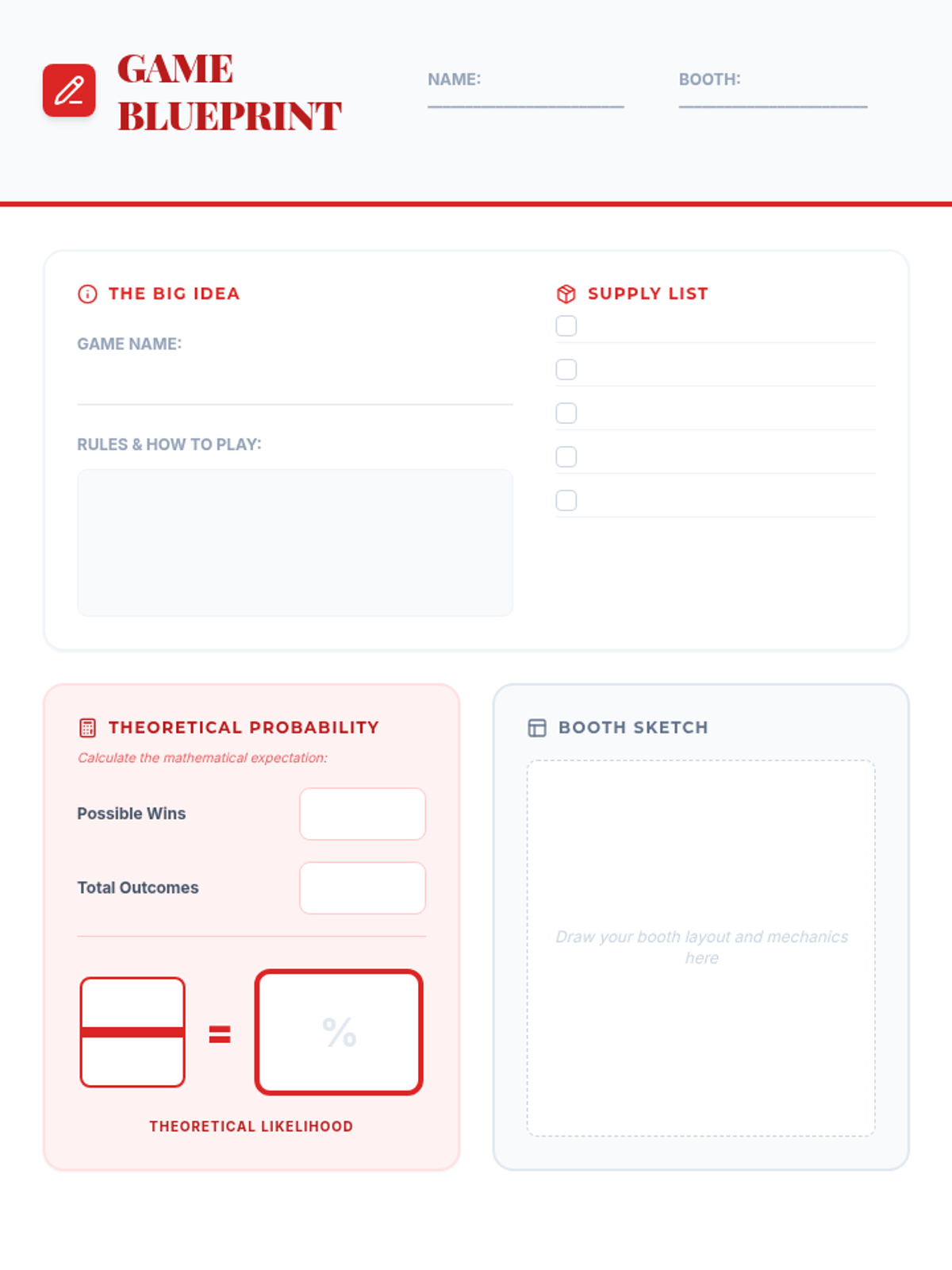
A design activity document where students plan their carnival game, list materials, and calculate the theoretical probability of winning before construction.
An engaging slide deck for 'The Chance Fair' introducing probability concepts, theoretical vs. experimental outcomes, and project rules.
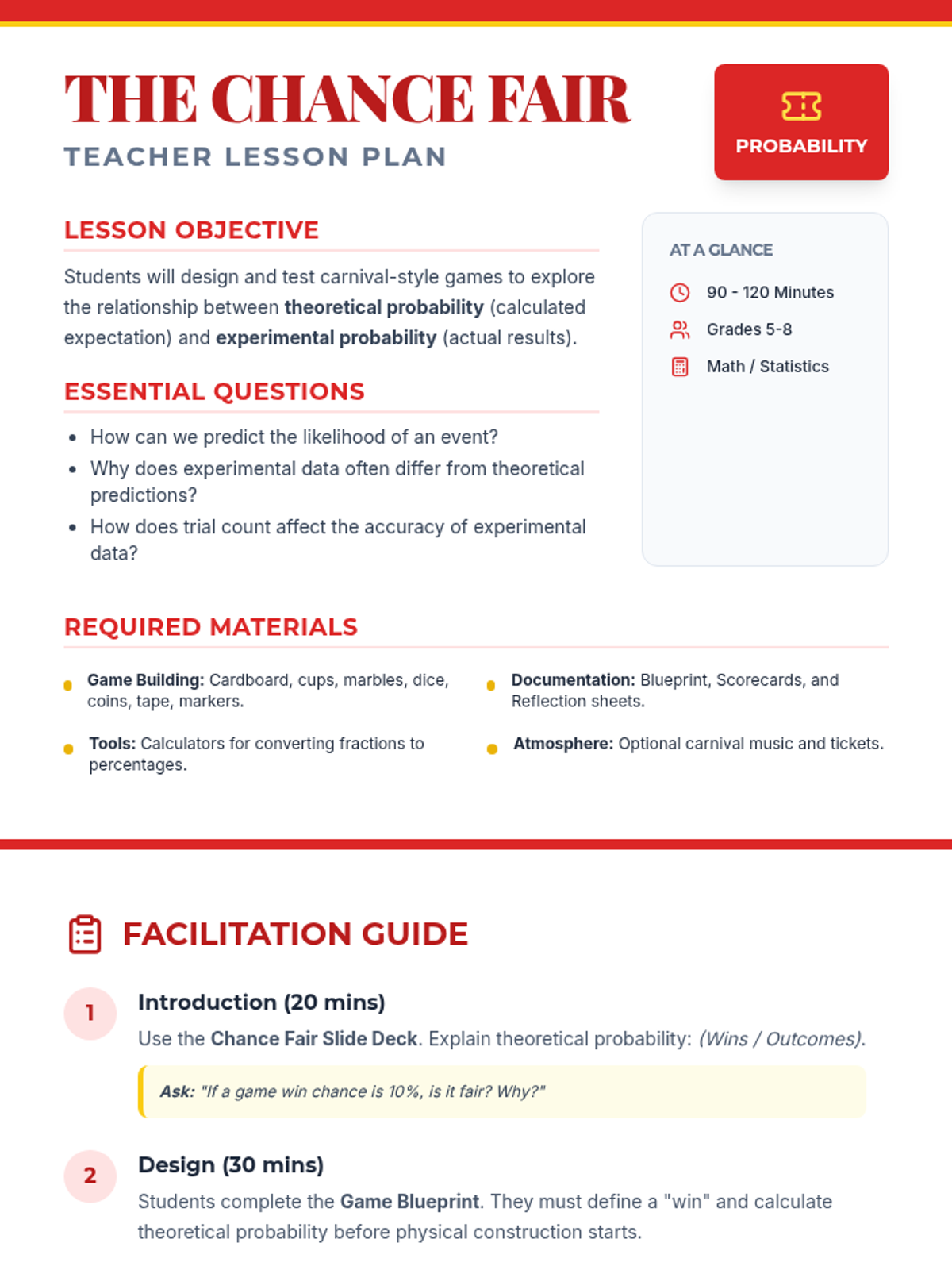
A comprehensive teacher lesson plan for 'The Chance Fair', including learning objectives, required materials, a step-by-step facilitation guide, and differentiation strategies.
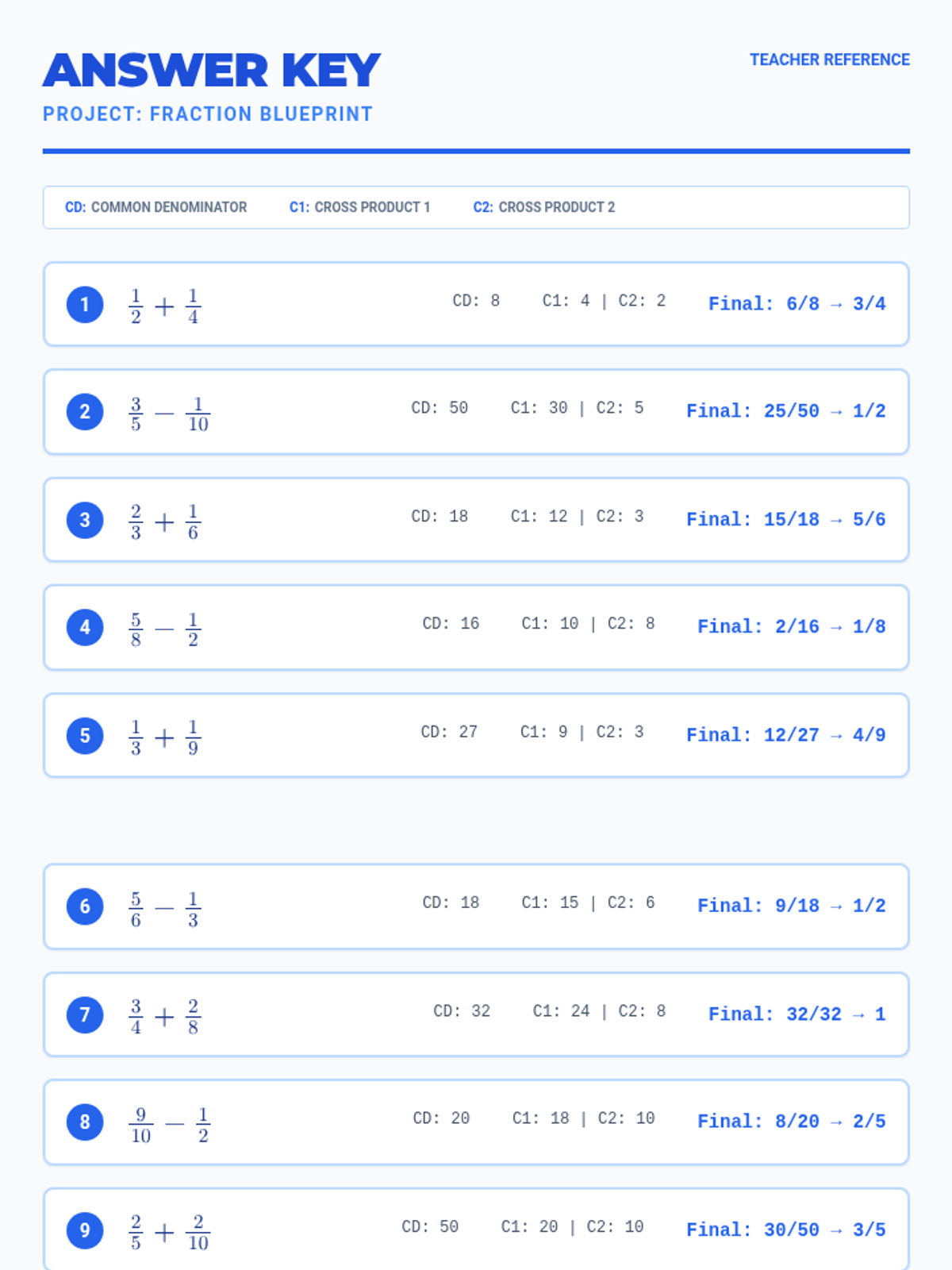
A revised answer key for the Fraction Blueprint Worksheet. Features explicit legend for notation, better space utilization, and page-break avoidance to keep problems intact.
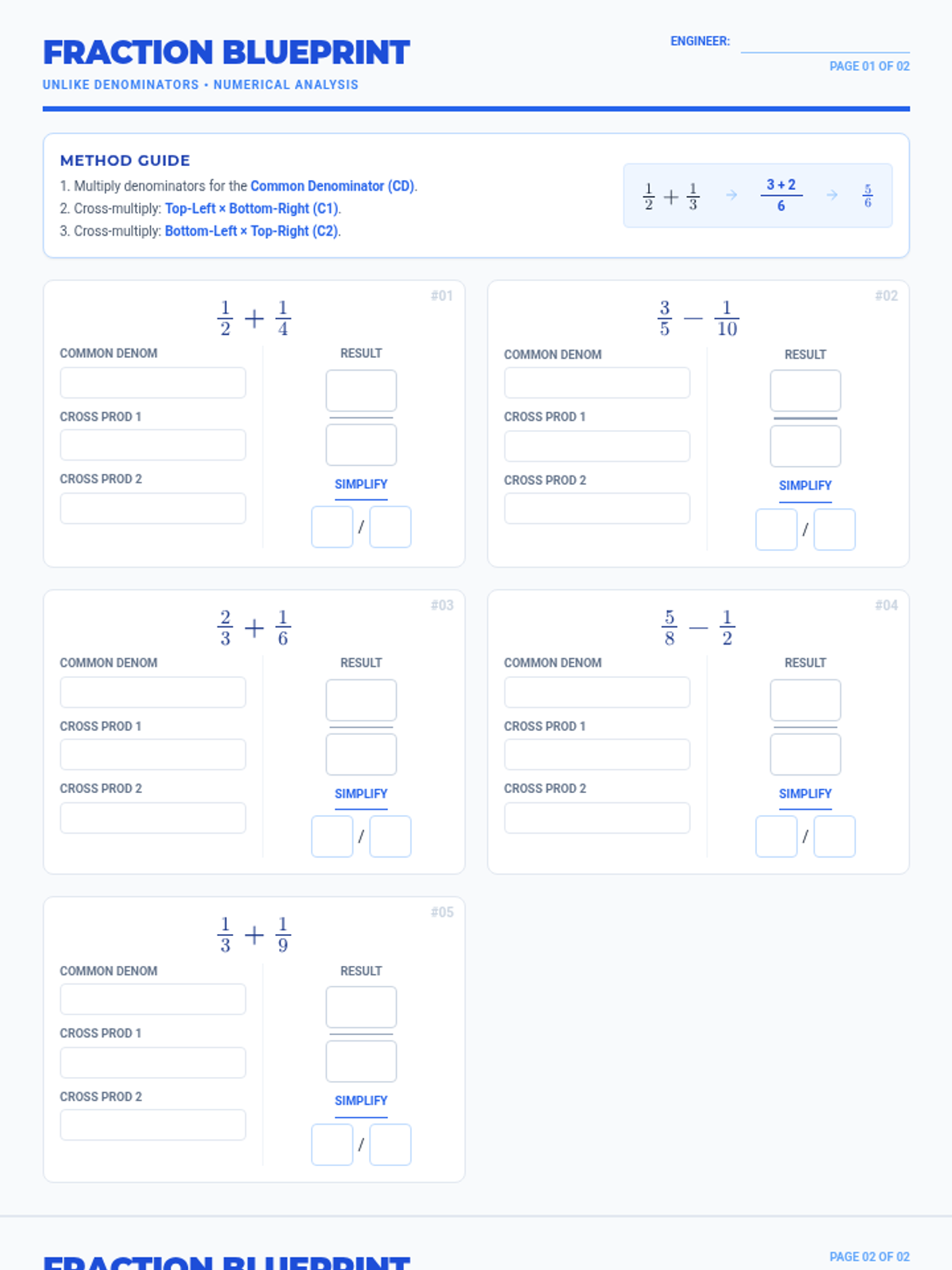
A revised structured worksheet for adding and subtracting fractions with unlike denominators. Improved layout with page-break avoidance, better problem distribution (5/5 split over 2 pages), and box-style student work areas for better organization and legibility.
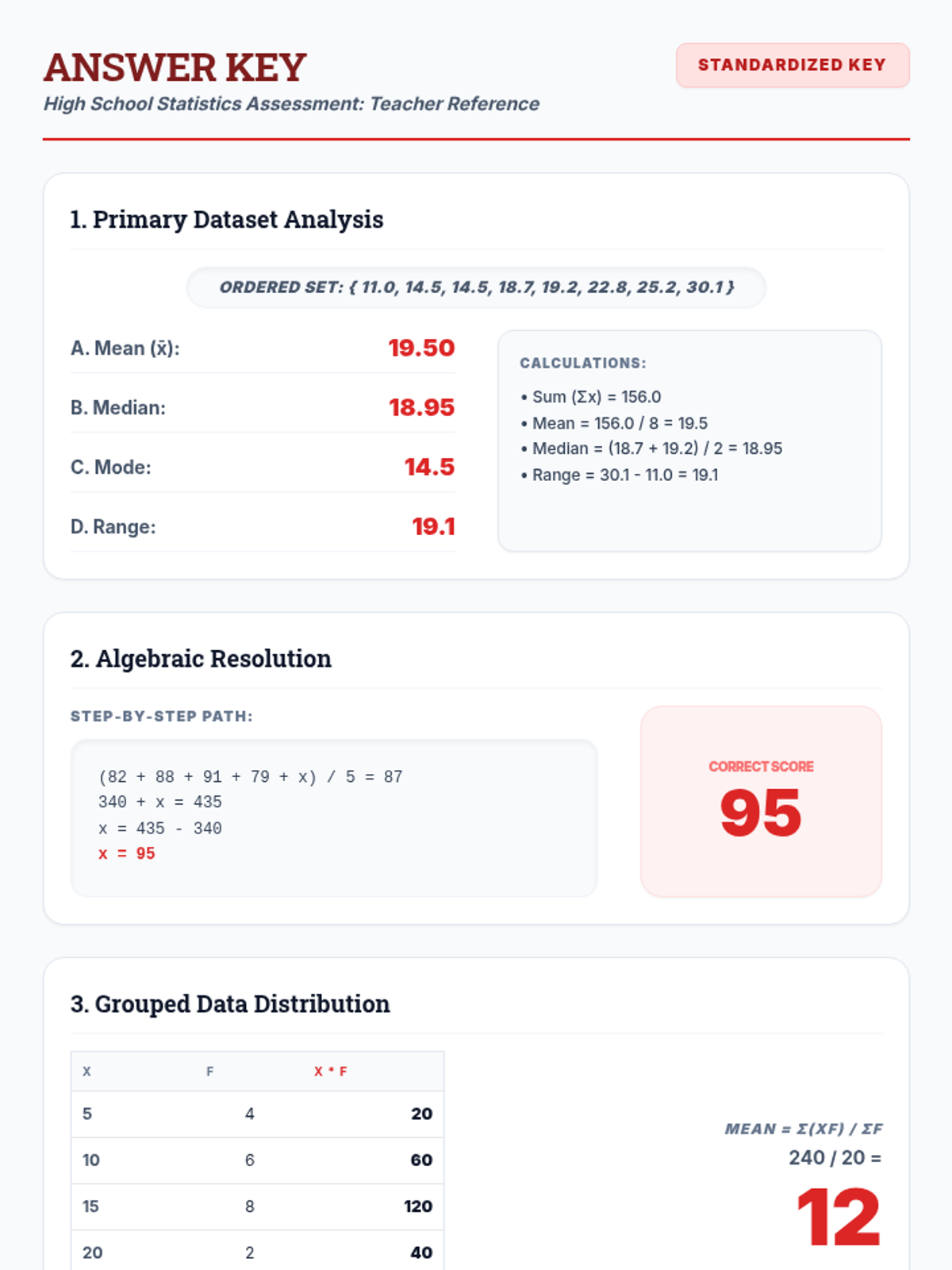
Answer key for the high-school statistics test, featuring detailed algebraic steps, frequency table summations, and conceptual justifications. Standardized layout for better teacher reference.
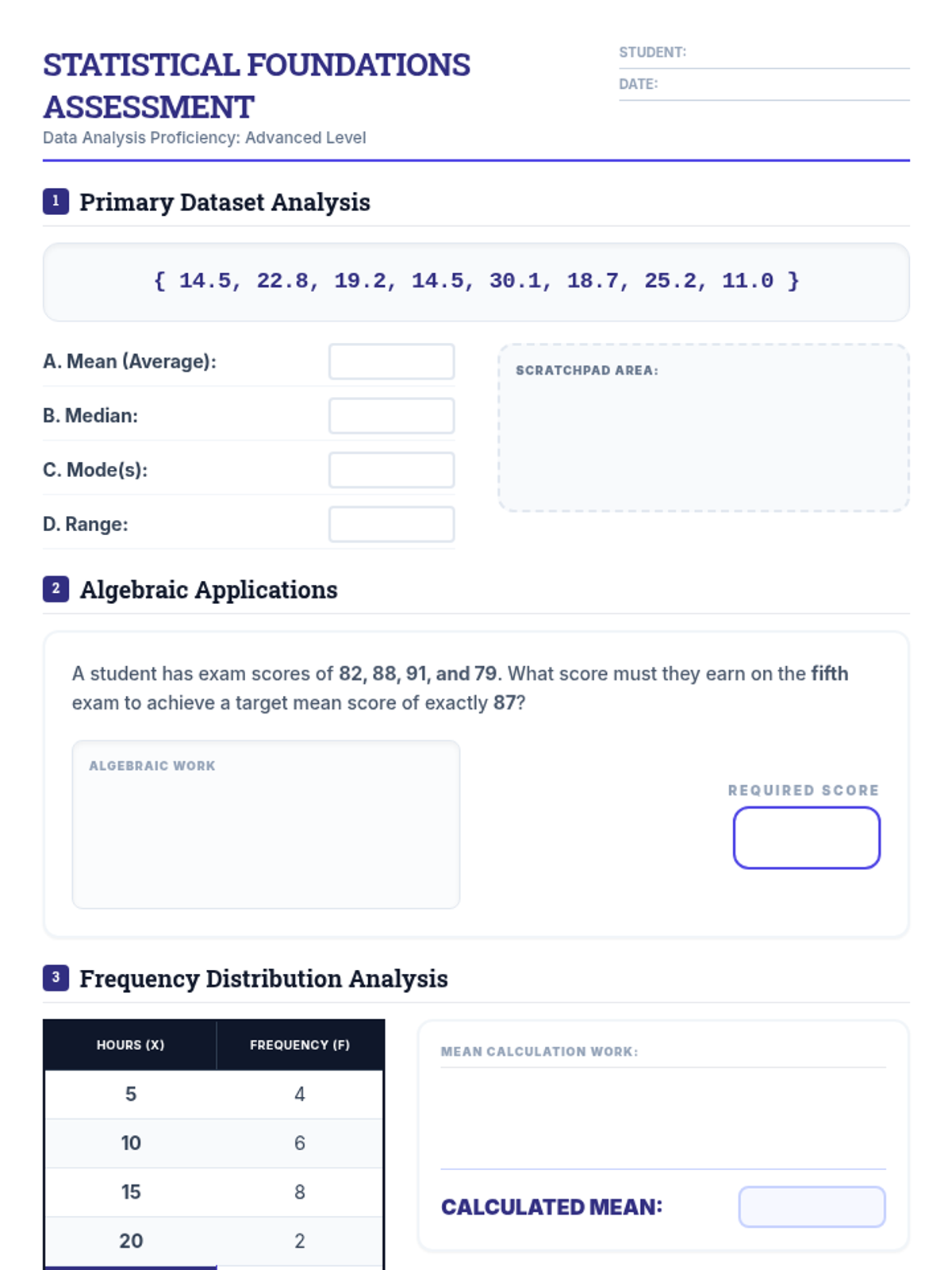
A comprehensive high-school level statistics assessment covering central tendency, algebraic solving, frequency tables, and outlier analysis with a professional academic aesthetic. Revised for improved layout and student writing space. Unicode mean symbol used for stability.
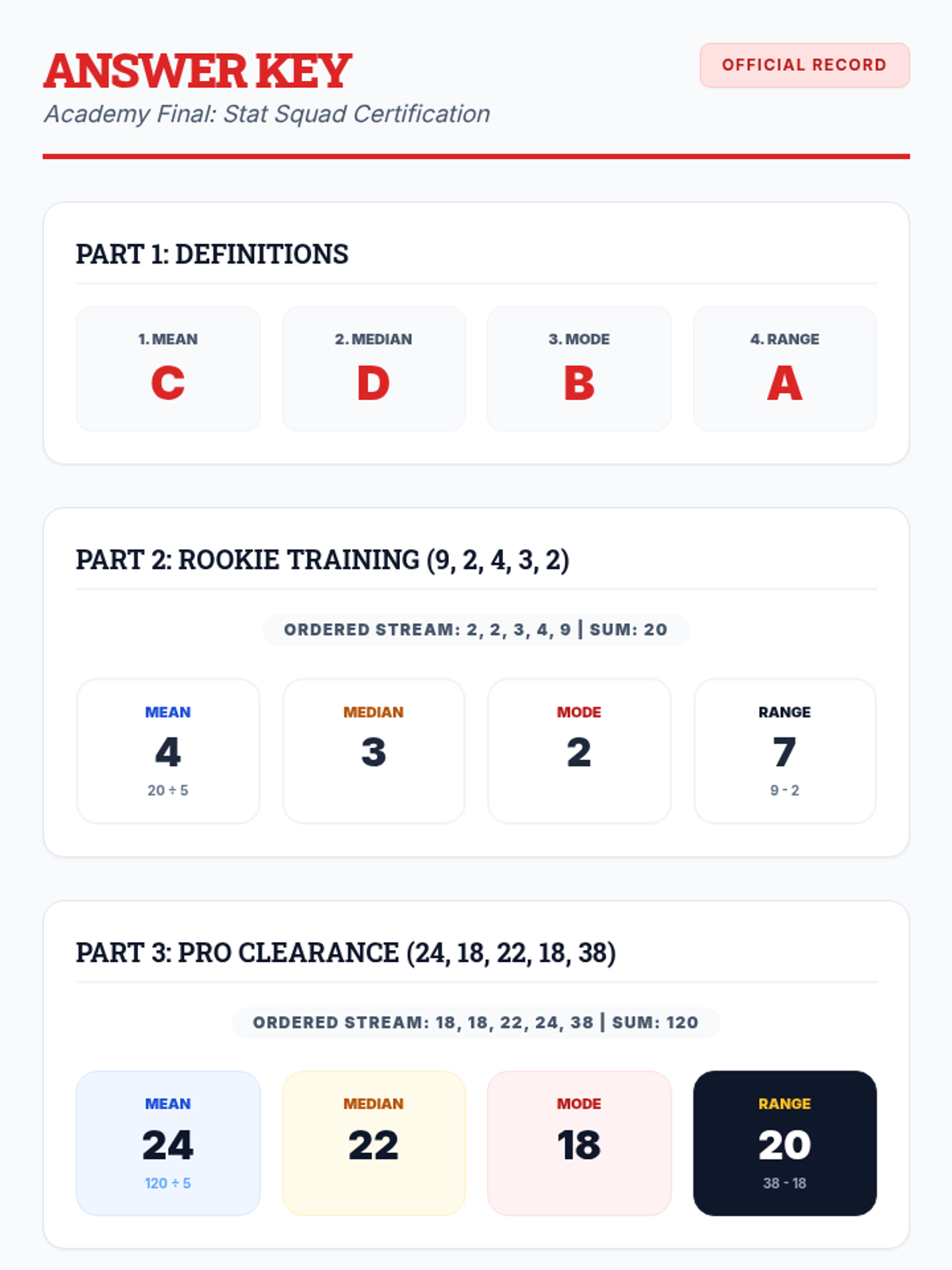
Answer key for the Academy Final Evaluation, featuring step-by-step solutions, correct extraction orders, and grading tips for the final assessment. Standardized layout for better teacher reference.
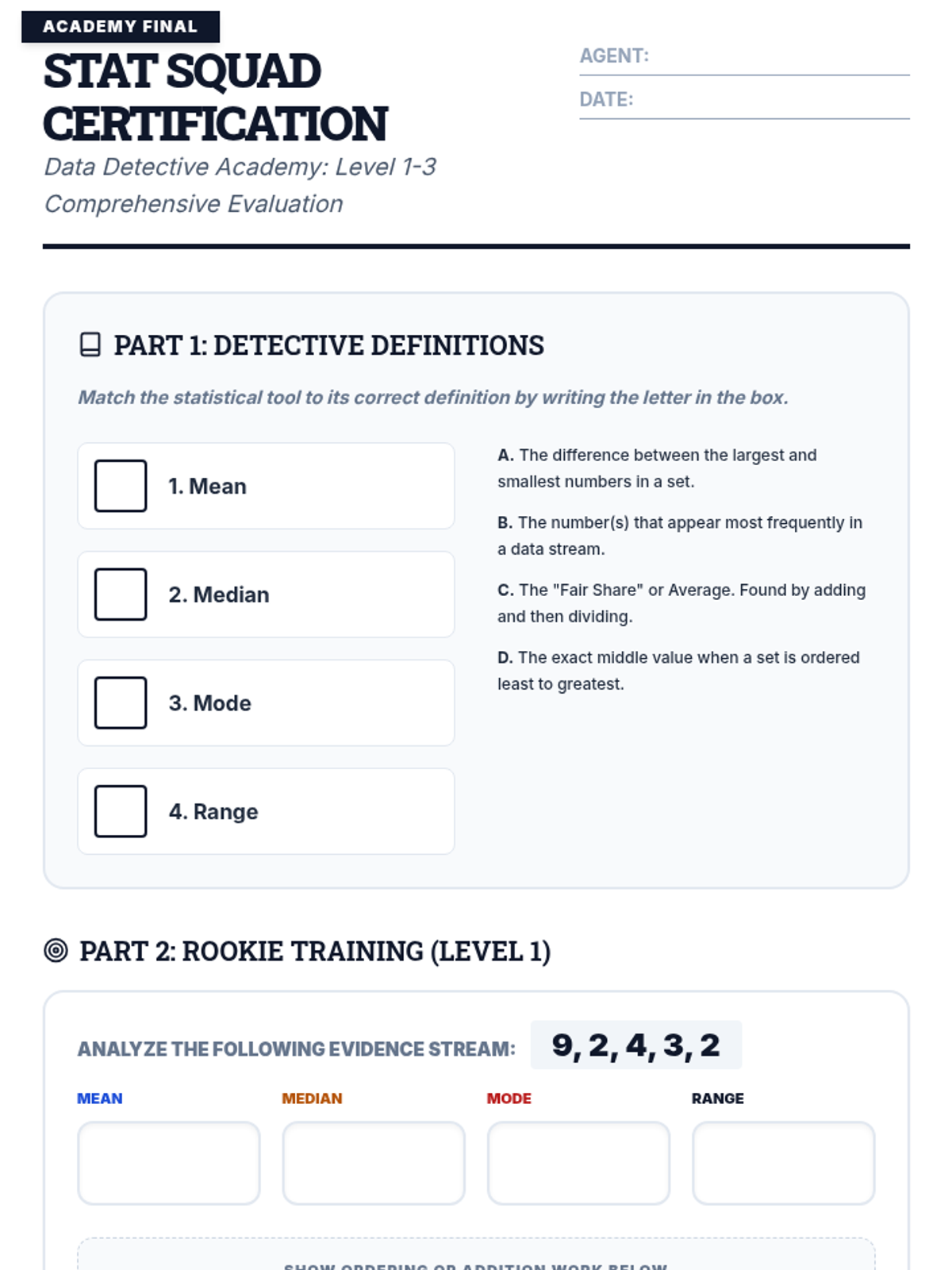
A comprehensive assessment covering Level 1, Level 2, and Level 3 data analysis, designed to evaluate mastery of mean, median, mode, and range in both numerical and narrative contexts. Improved layout for student handwriting.
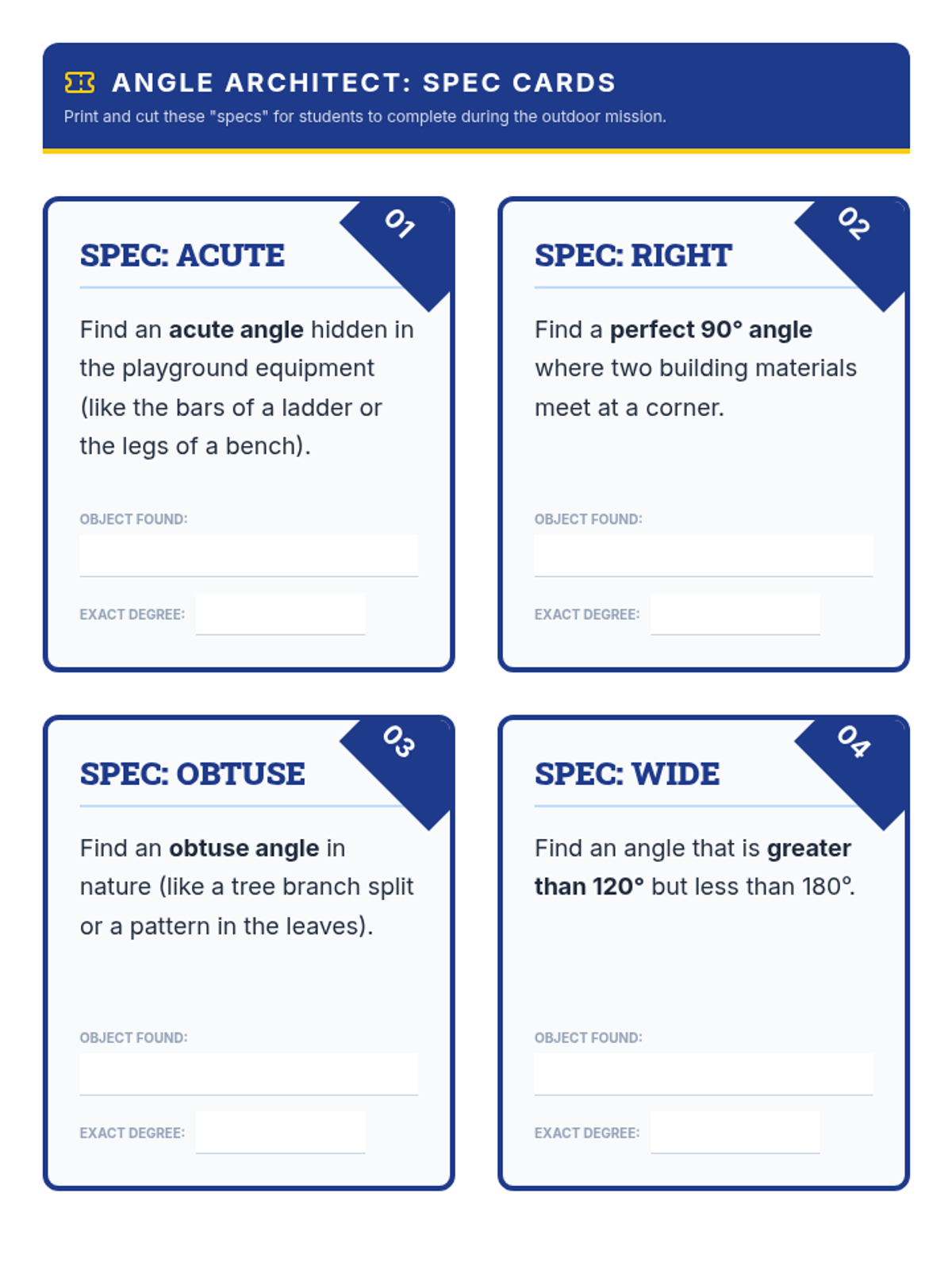
A set of printable "Spec Cards" for an angle scavenger hunt, challenging students to find and measure specific angle types in their environment.
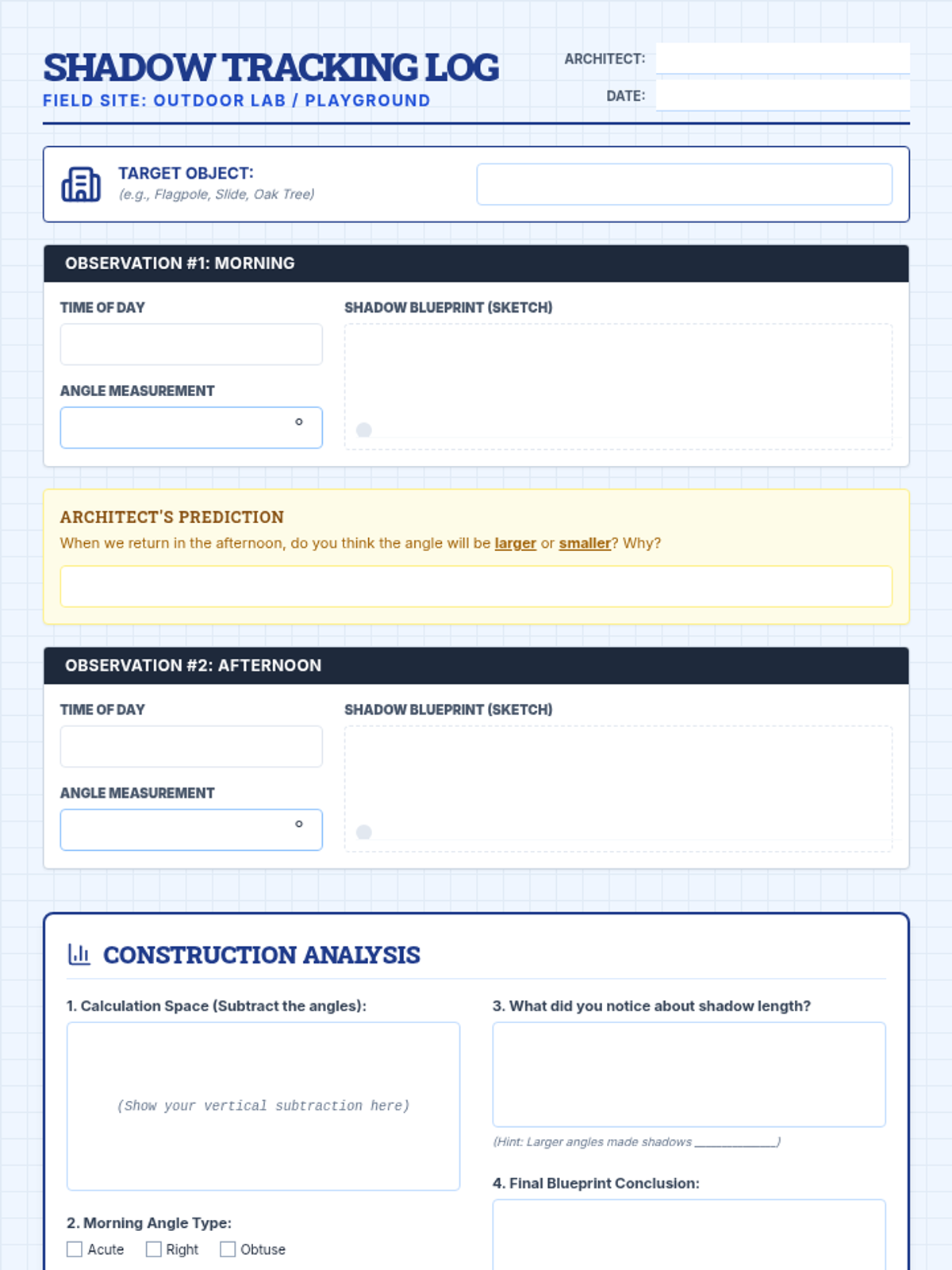
A student worksheet for recording shadow angle measurements at different times of day, including sketching areas and analysis questions.
An instructional slide deck for introducing angle measurement and the shadow investigation mission. Includes visual aids for protractor use and angle types.
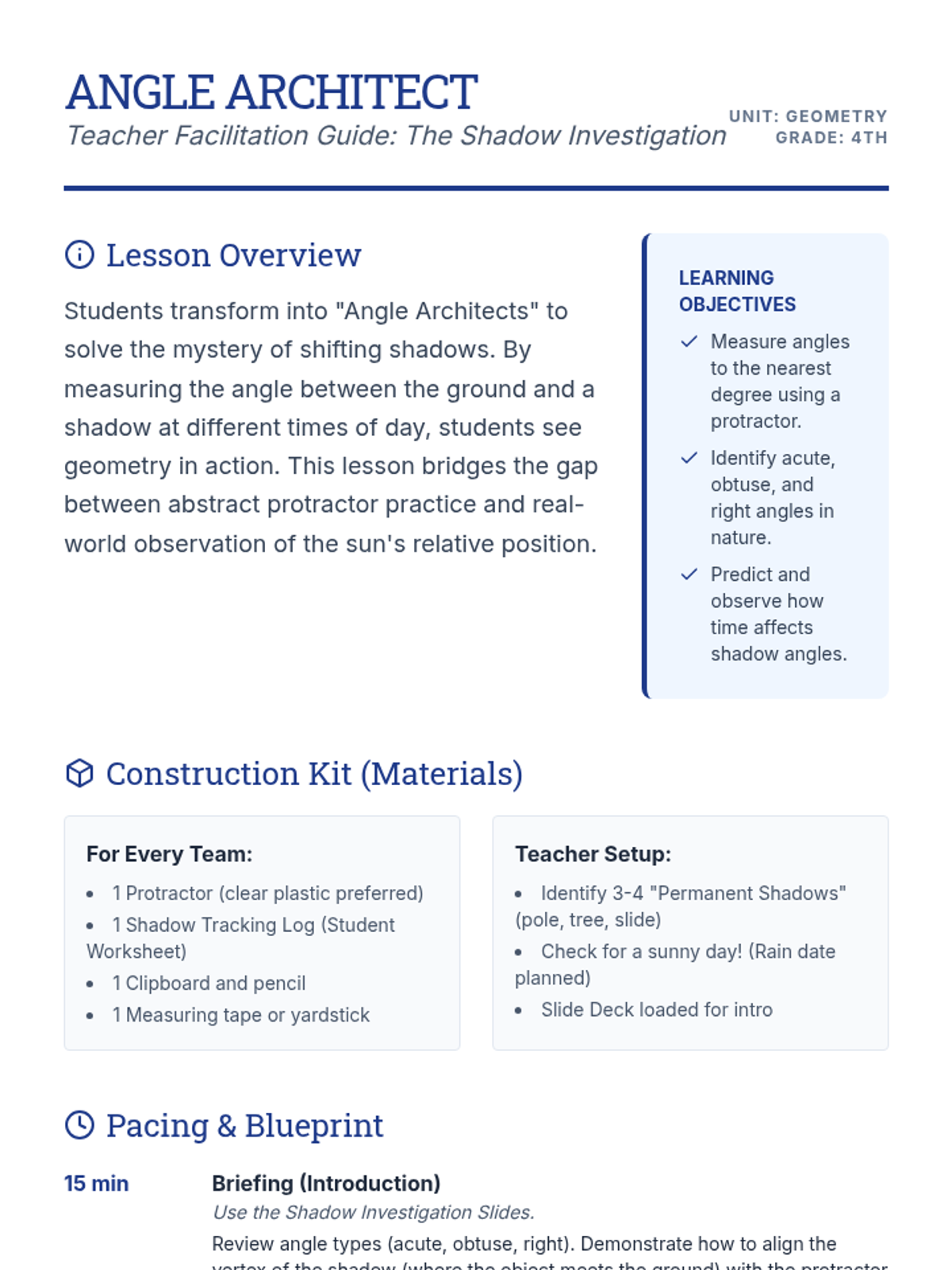
A comprehensive teacher facilitation guide for the 'Angle Architects' lesson, including pacing, materials, prep, and differentiation strategies.
Updated slide deck for SIFE students that moves beyond the 5/3 example to show halves (3/2), the concept of 'top = bottom' equaling one whole, and multiple number line examples. It maintains high-contrast visuals and minimal text.
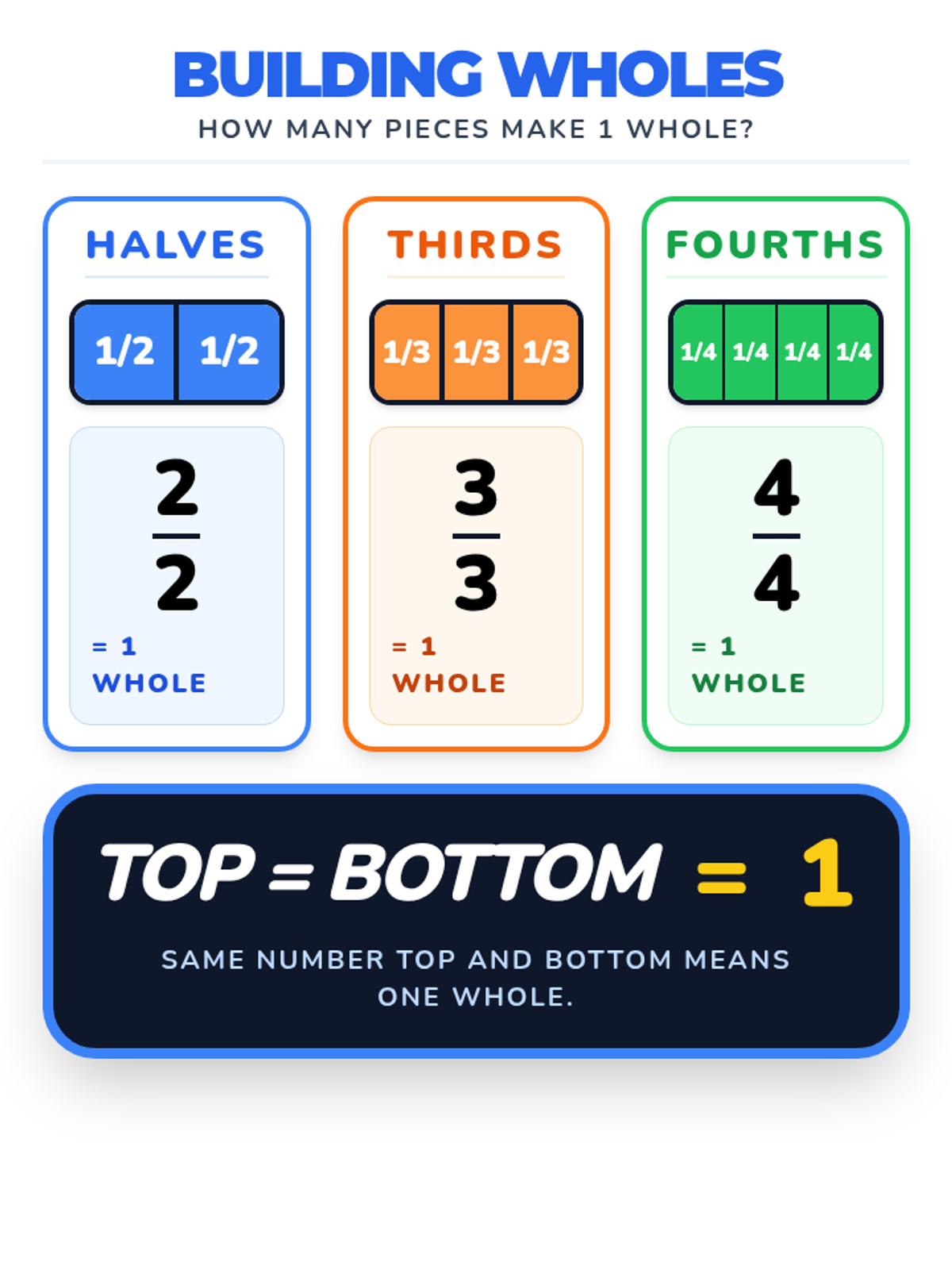
A visual anchor chart for SIFE students demonstrating that when the numerator and denominator are the same, the fraction equals one whole. It uses high-contrast models for halves, thirds, and fourths to show the pattern across different denominators.
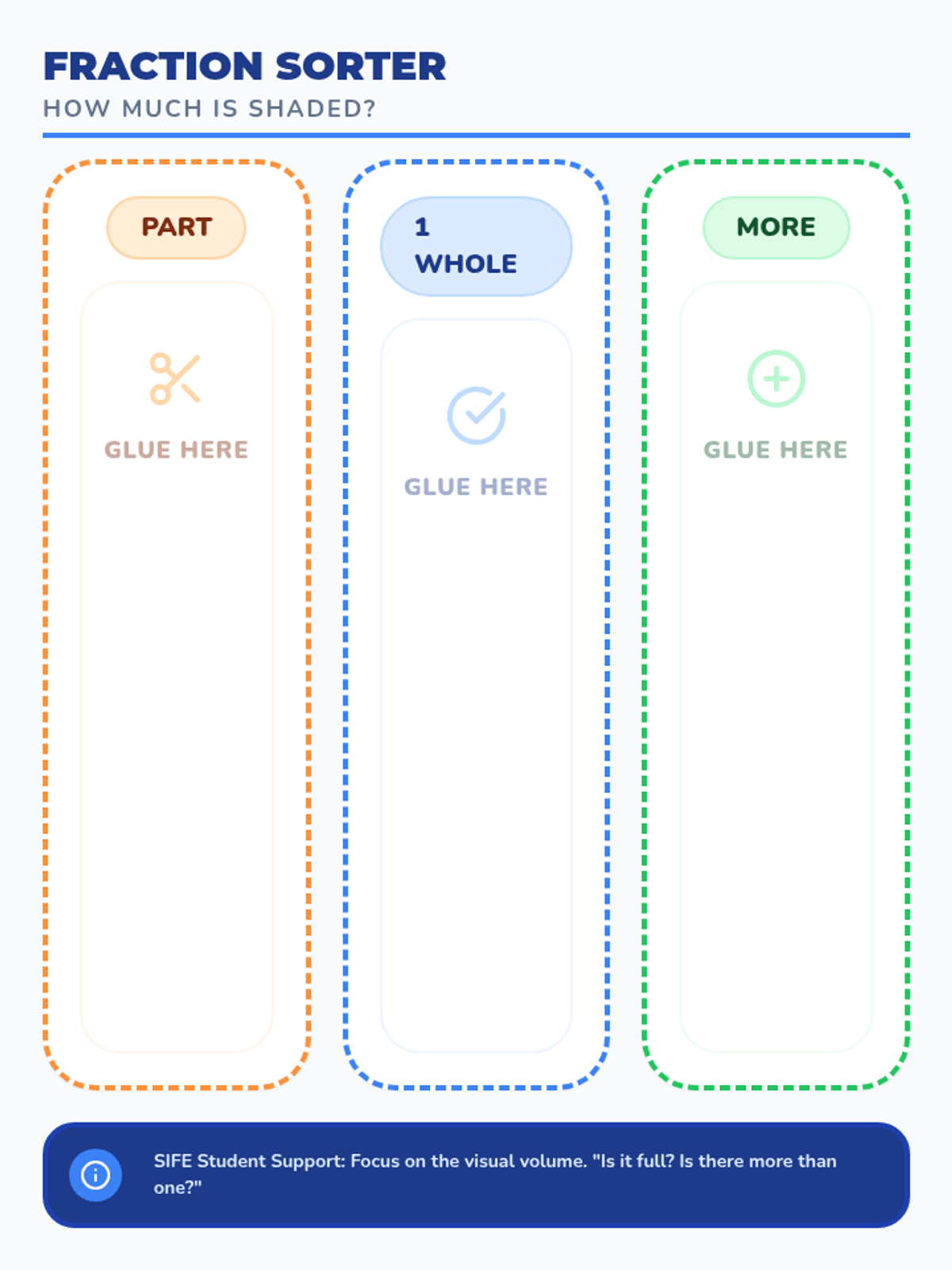
A visual sorting activity where SIFE students categorize visual fraction models into 'Part' (less than 1), '1 Whole' (exactly 1), and 'More' (greater than 1). The cards use variety in shapes (circles, strips, squares) and denominators (halves, thirds, fourths) to build conceptual understanding beyond a single example.
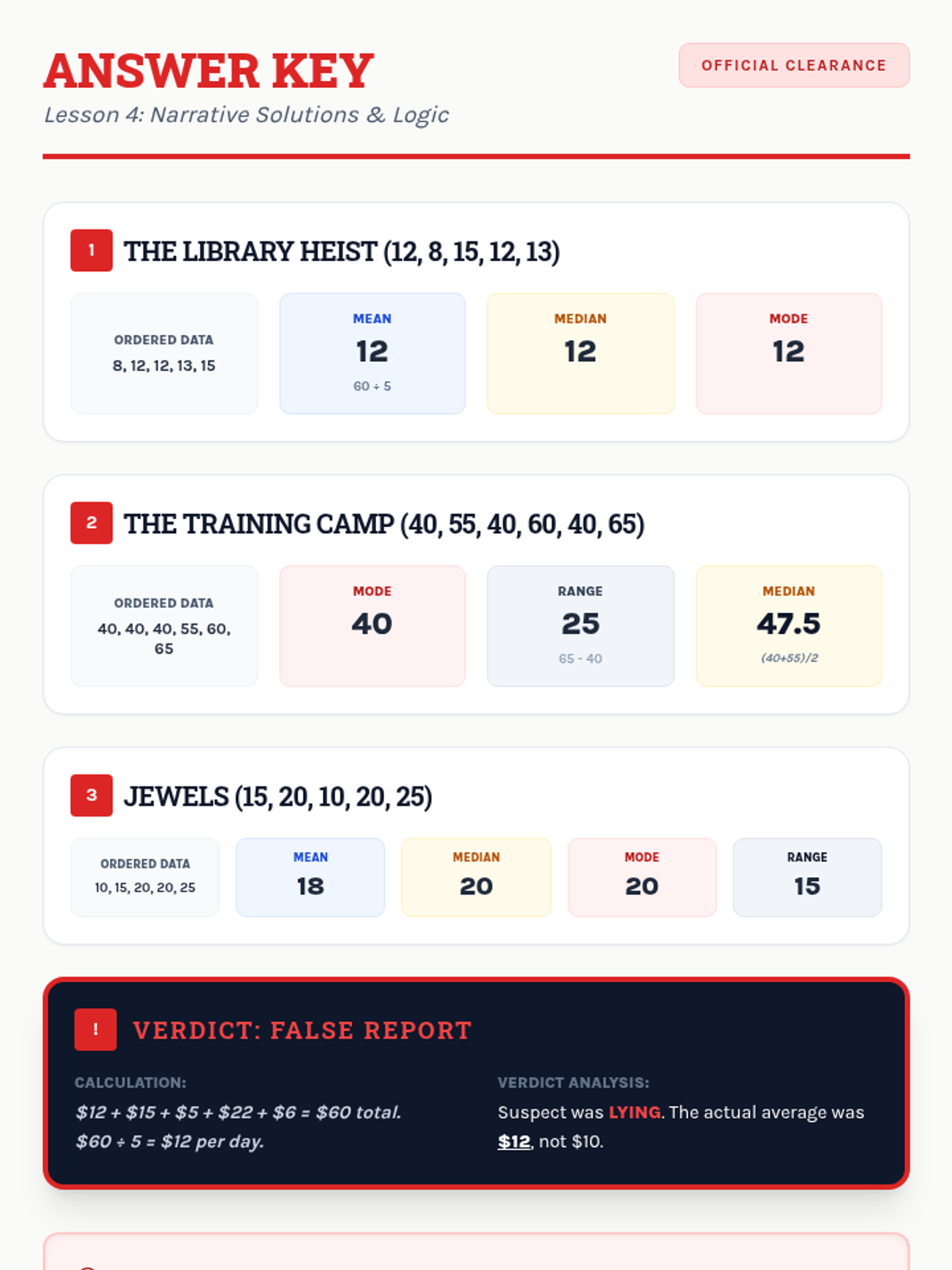
Answer key for the Mystery Logs worksheet, featuring step-by-step extraction logic, calculations, and analytical verdicts for the narrative problems. Standardized layout for better teacher reference.
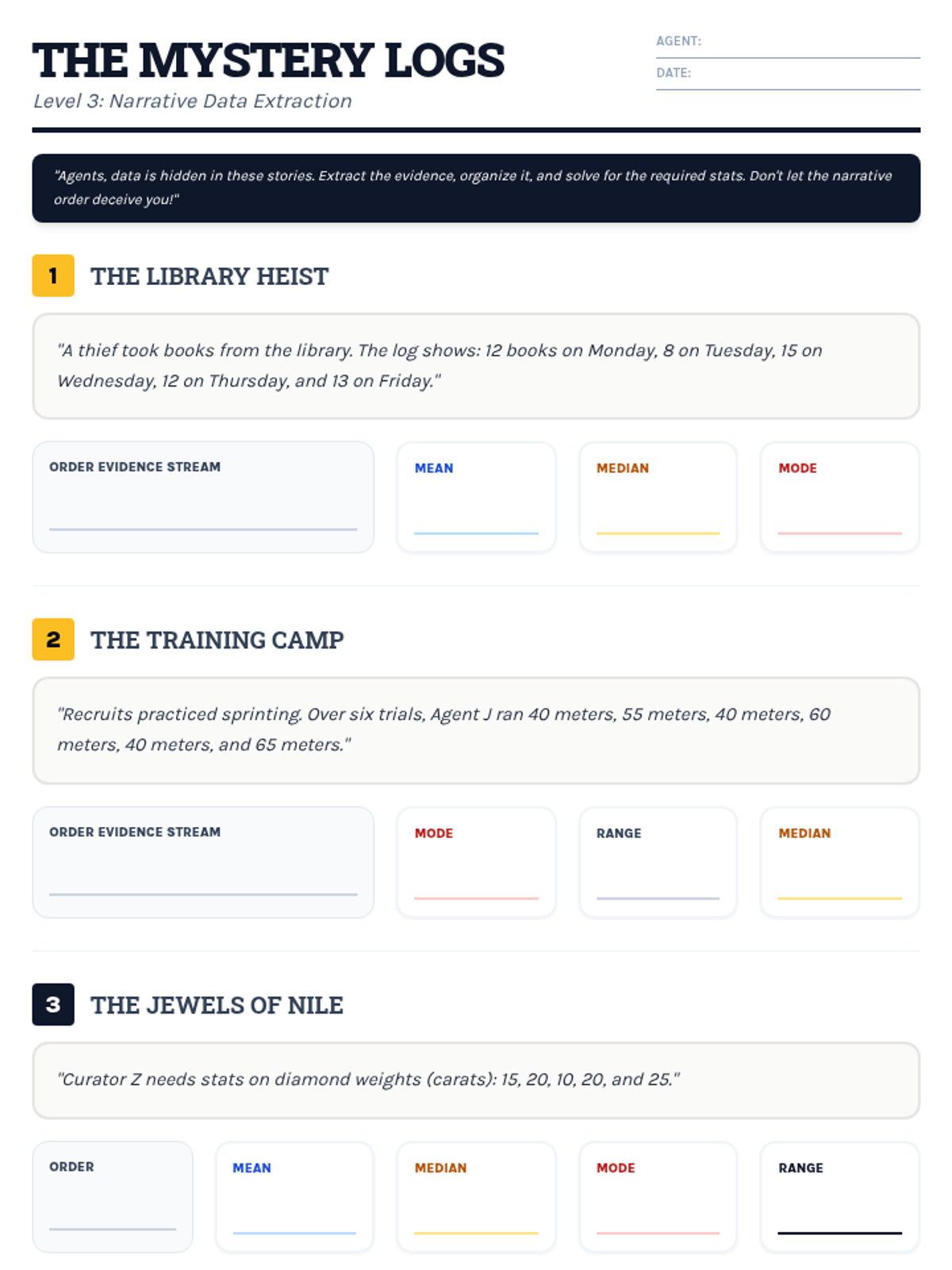
A series of narrative-based word problems themed as mystery investigations, requiring students to extract data sets from text and calculate central tendency and range. Standardized layout and improved work areas for better usability.