A visually engaging slide deck covering the calculus-based definition of magnetic flux, Faraday's Law components, and spatial integration for non-uniform fields with high-contrast visuals.
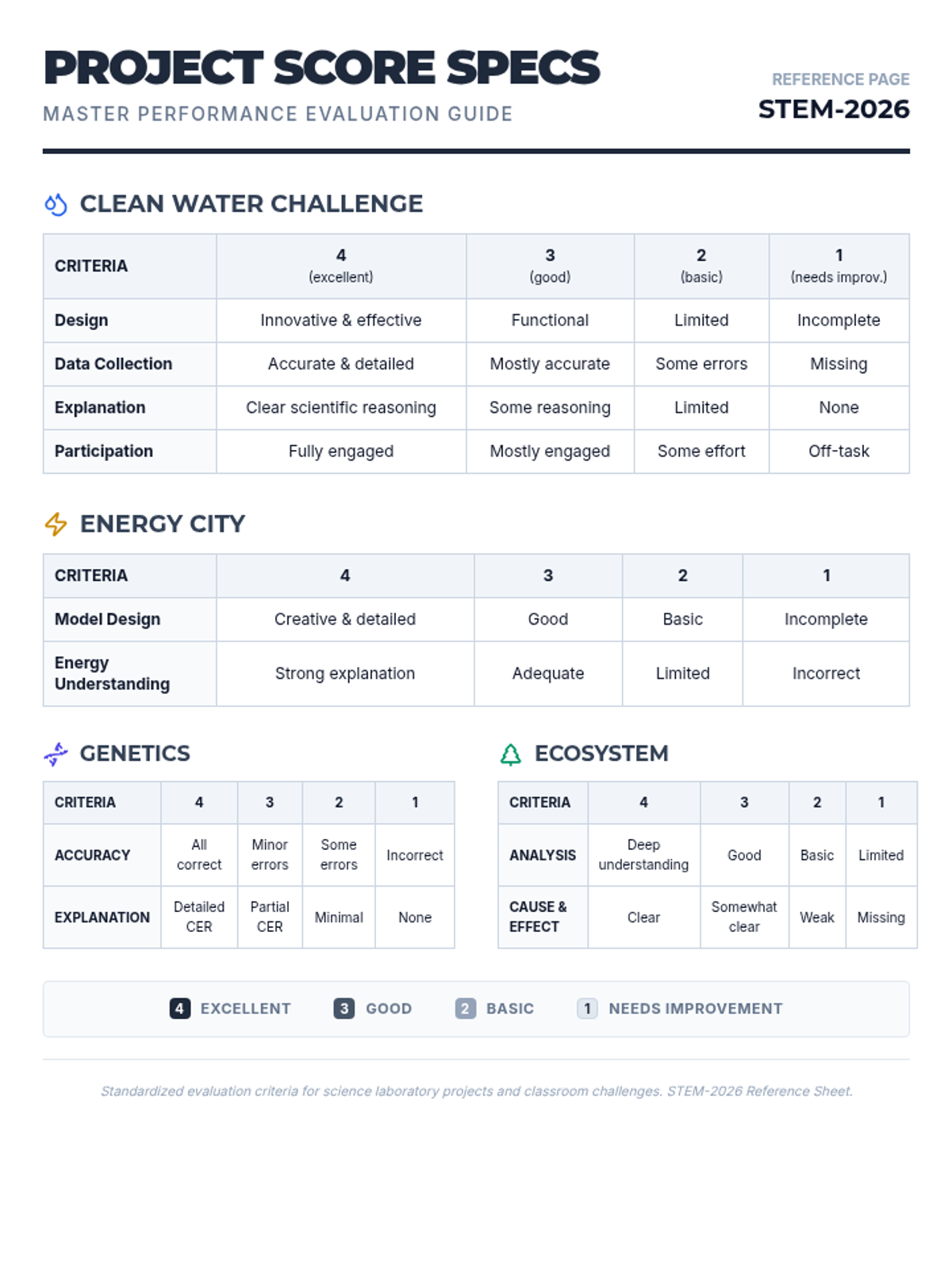
A professional single-page reference sheet containing four standardized science rubrics: Clean Water Challenge, Energy City, Genetics, and Ecosystem. Features a clean, tech-inspired layout with clear headers, icons, and structured tables for easy grading and student self-assessment.
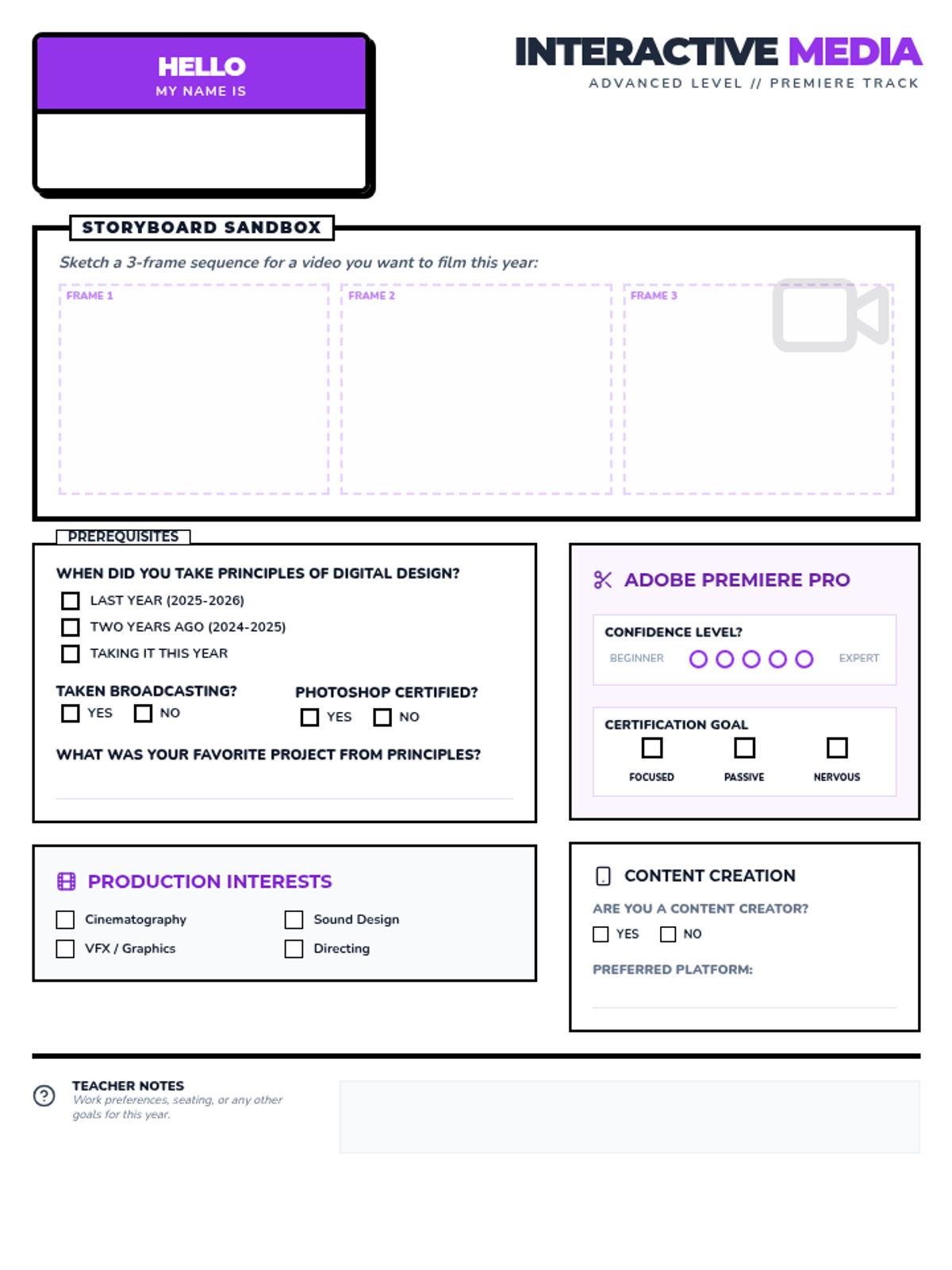
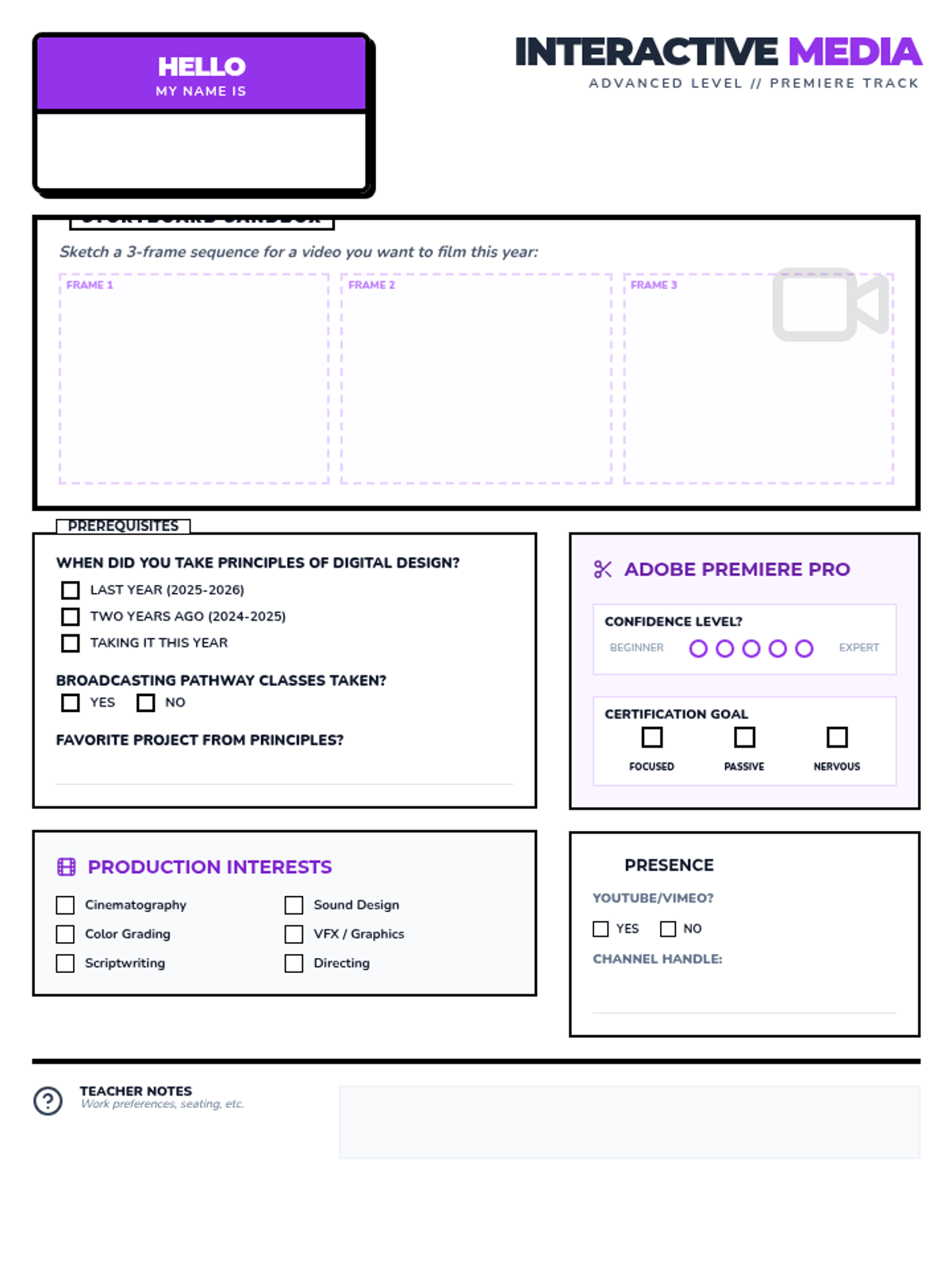
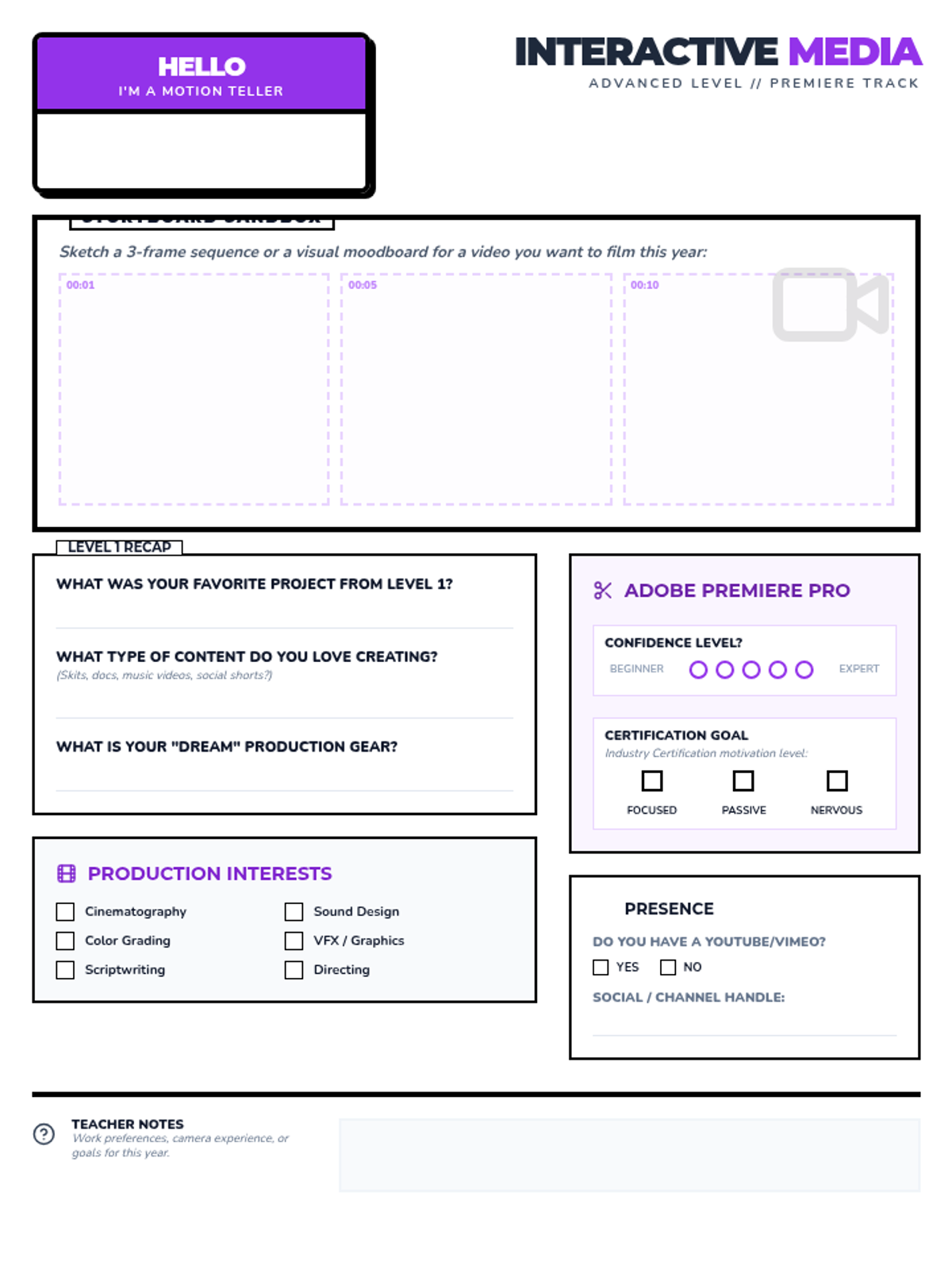
A specialized application worksheet for advanced Interactive Media students focusing on Adobe Premiere Pro certification. Includes questions about prerequisite certification, Broadcasting experience, and content creation preferences. Optimized for single-page printing.
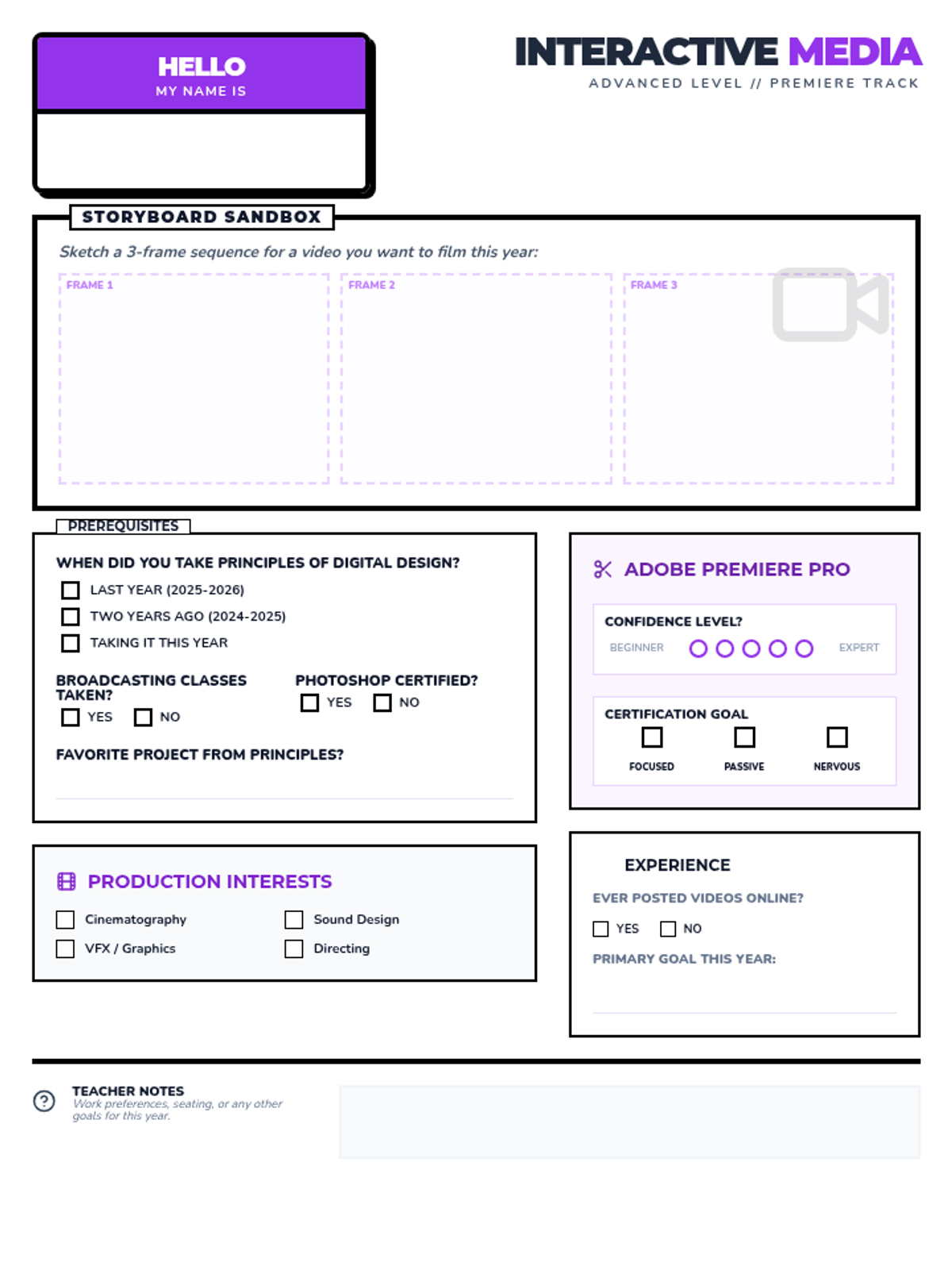
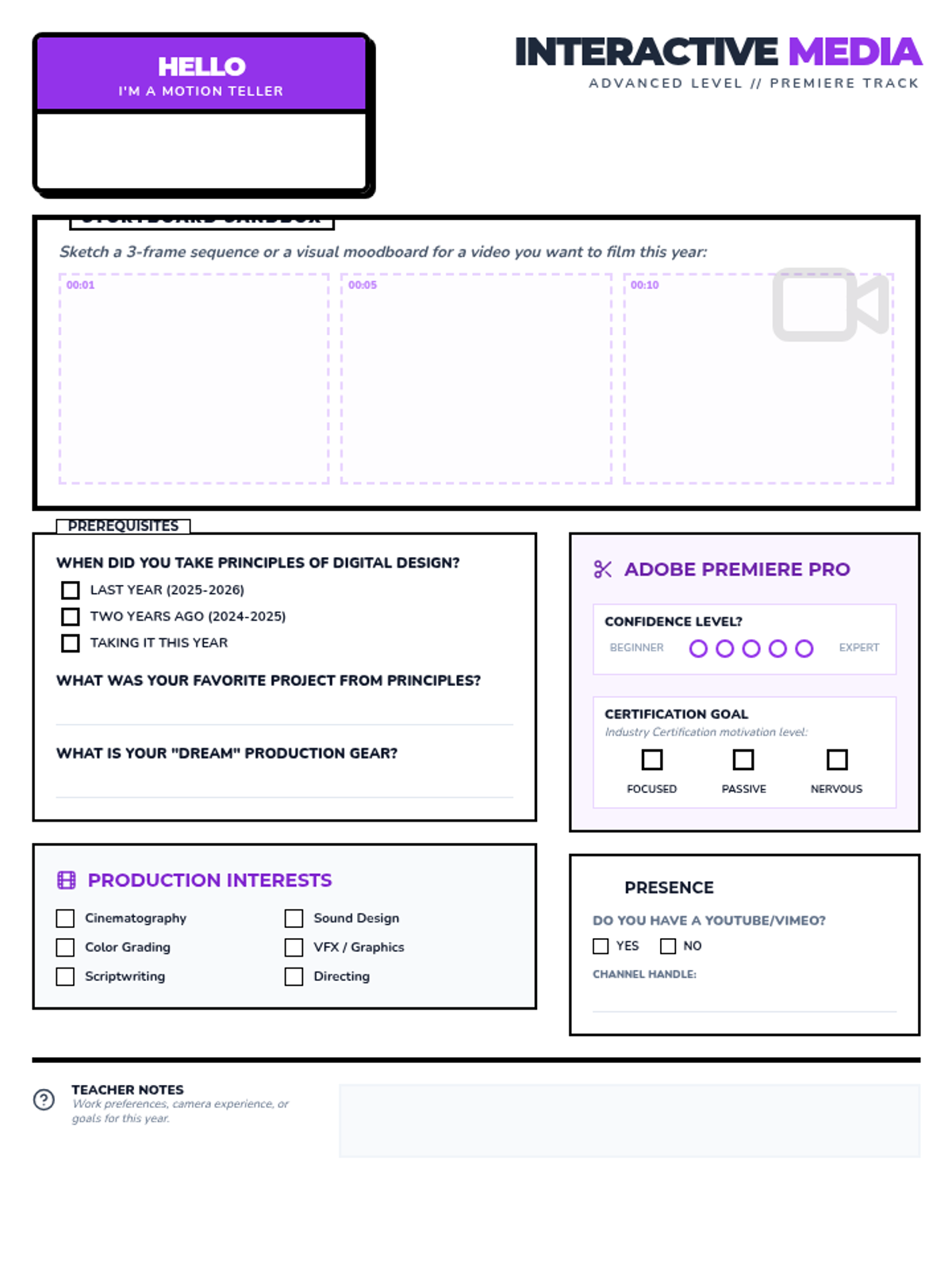
A specialized application worksheet for advanced Interactive Media students focusing on Adobe Premiere Pro certification. Includes questions about prerequisite certification, Broadcasting experience, and production interests. Optimized for single-page printing.
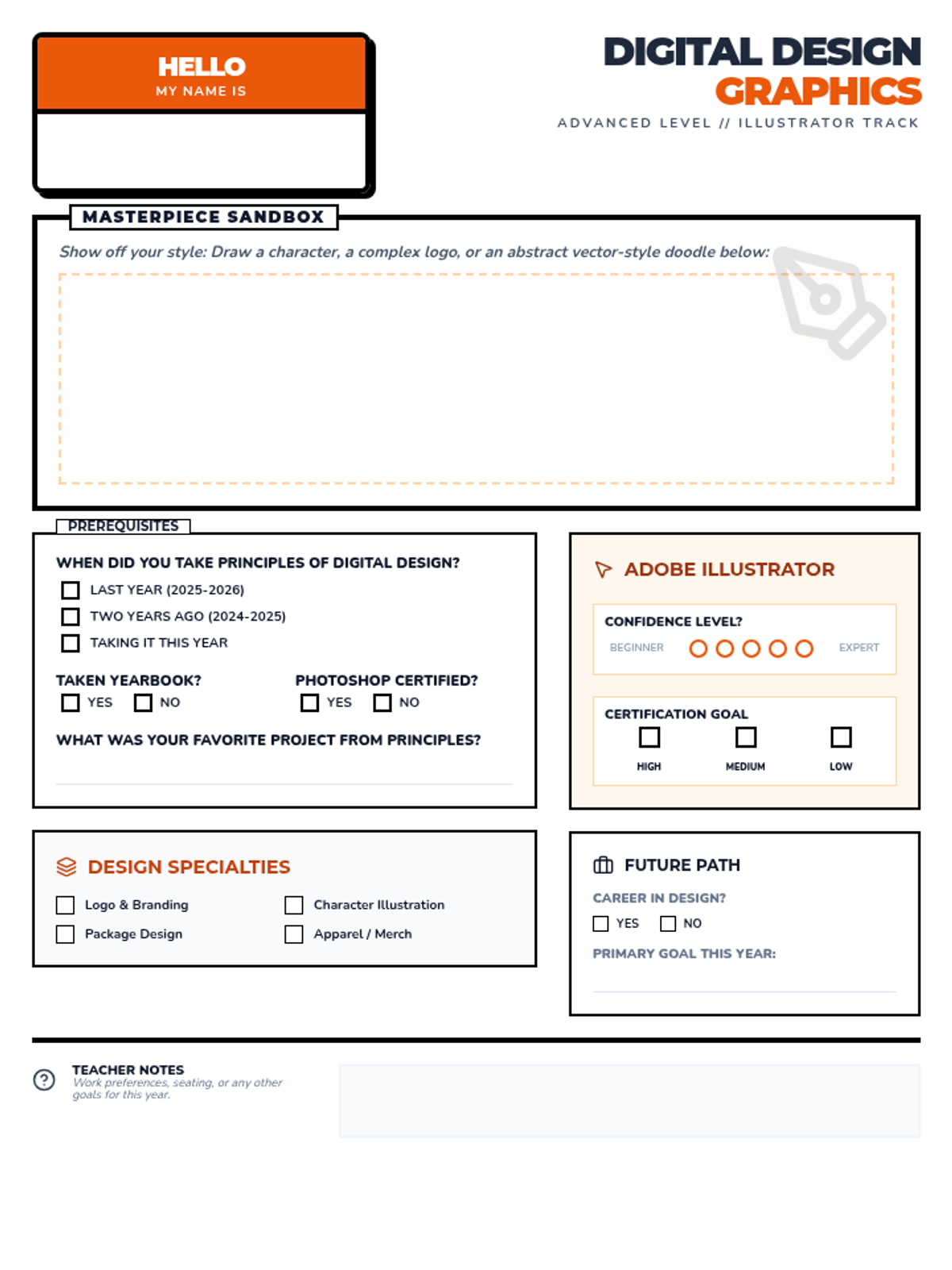
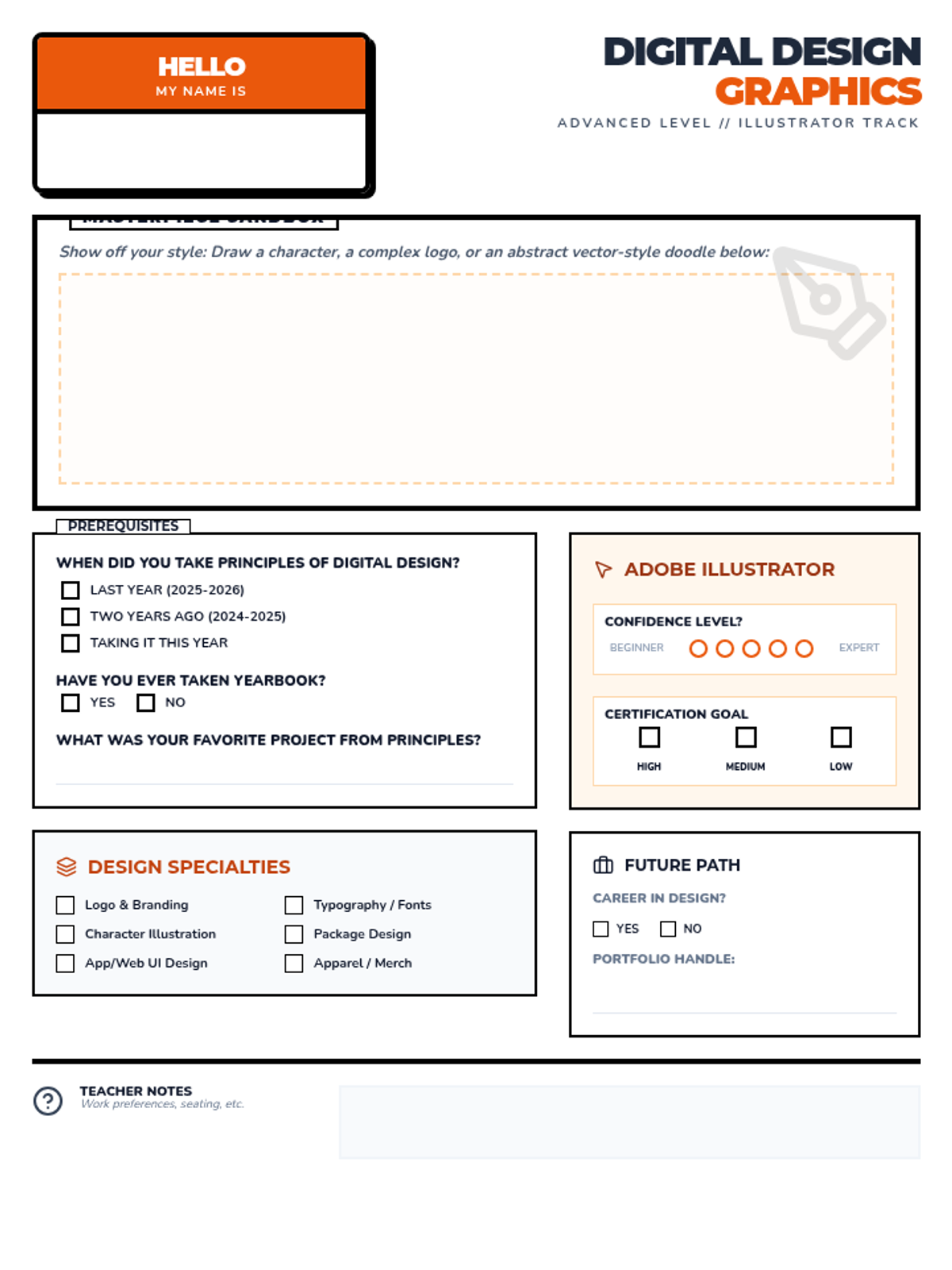
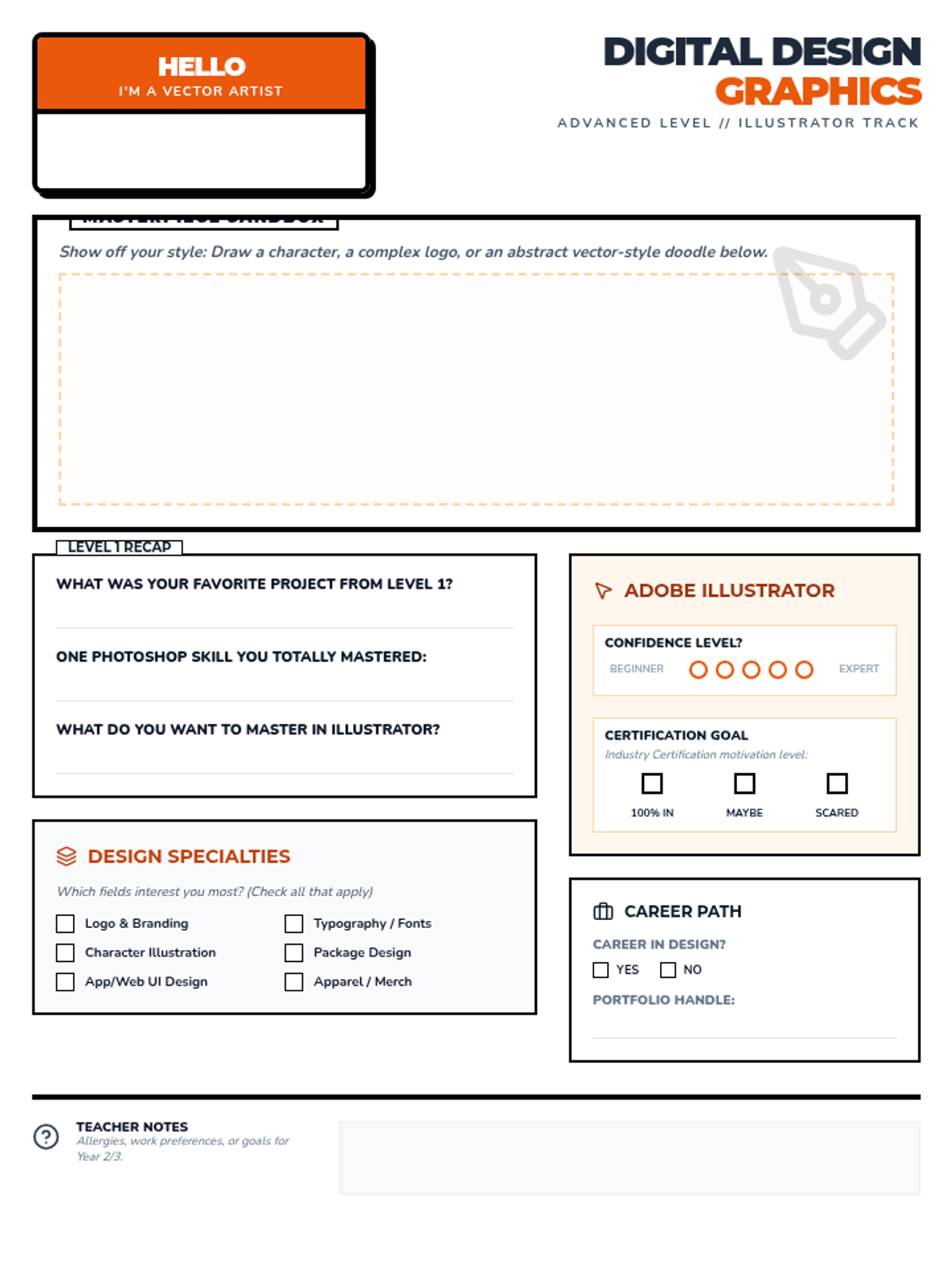
A specialized application worksheet for advanced Digital Design Graphics students focusing on Adobe Illustrator certification. Includes questions about prerequisite certification, Yearbook experience, and technical skill level. Optimized for single-page printing.
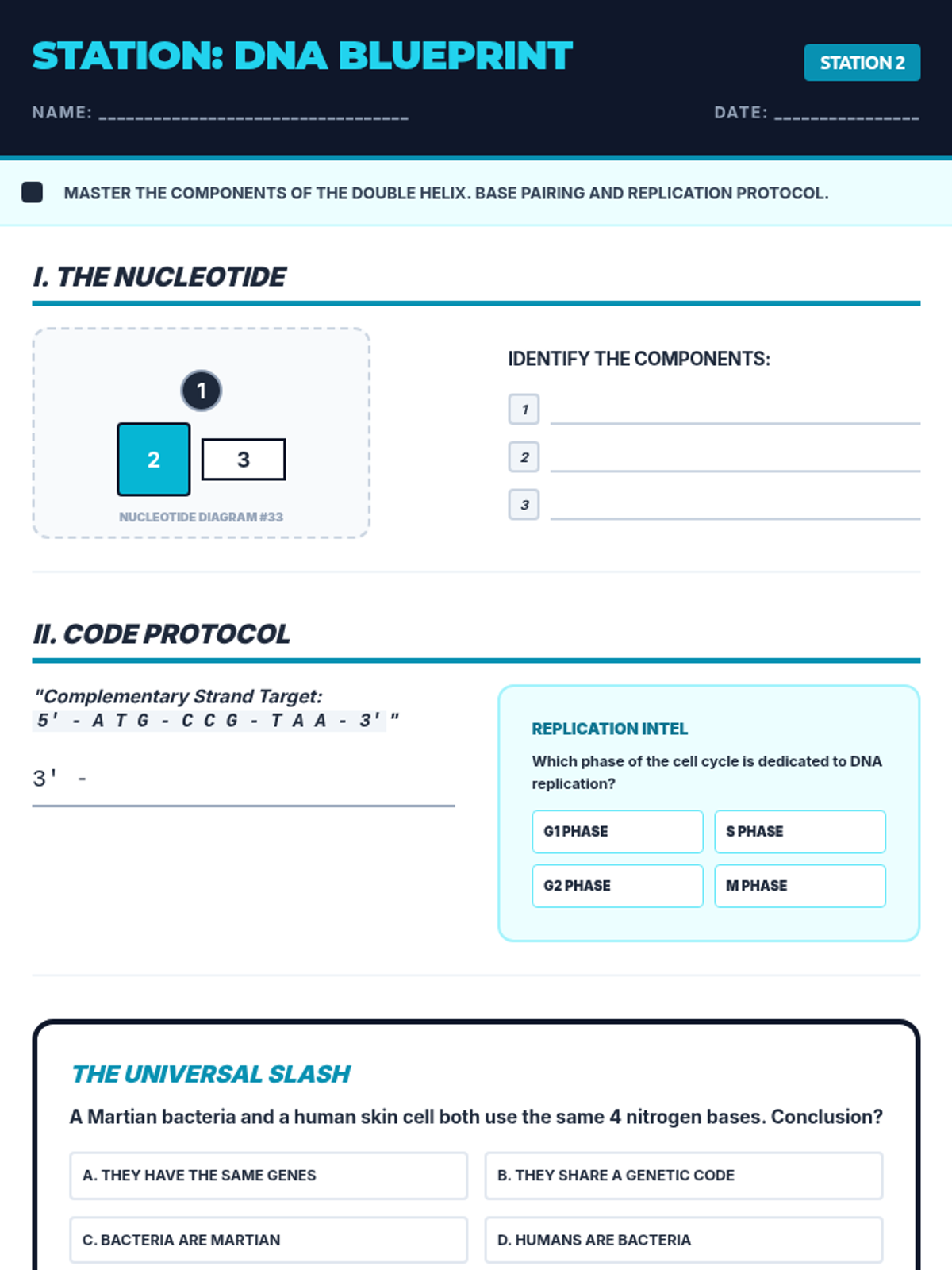
A station activity for Day 2 focused on DNA structure (nucleotides) and replication. Includes base-pairing practice, cell cycle phase identification, and the concept of the universal genetic code. Revised to fix answer choice styling and student work area visibility.
A specialized application worksheet for advanced Interactive Media students focusing on Adobe Premiere Pro certification. Includes a question about when they took the prerequisite 'Principles of Digital Design' course and if they have taken Broadcasting.
A specialized application worksheet for advanced Digital Design Graphics students focusing on Adobe Illustrator certification. Includes a question about when they took the prerequisite 'Principles of Digital Design' course and if they have taken Yearbook.
A specialized application worksheet for advanced Interactive Media students focusing on Adobe Premiere Pro certification. Includes a question about when they took the prerequisite 'Principles of Digital Design' course.
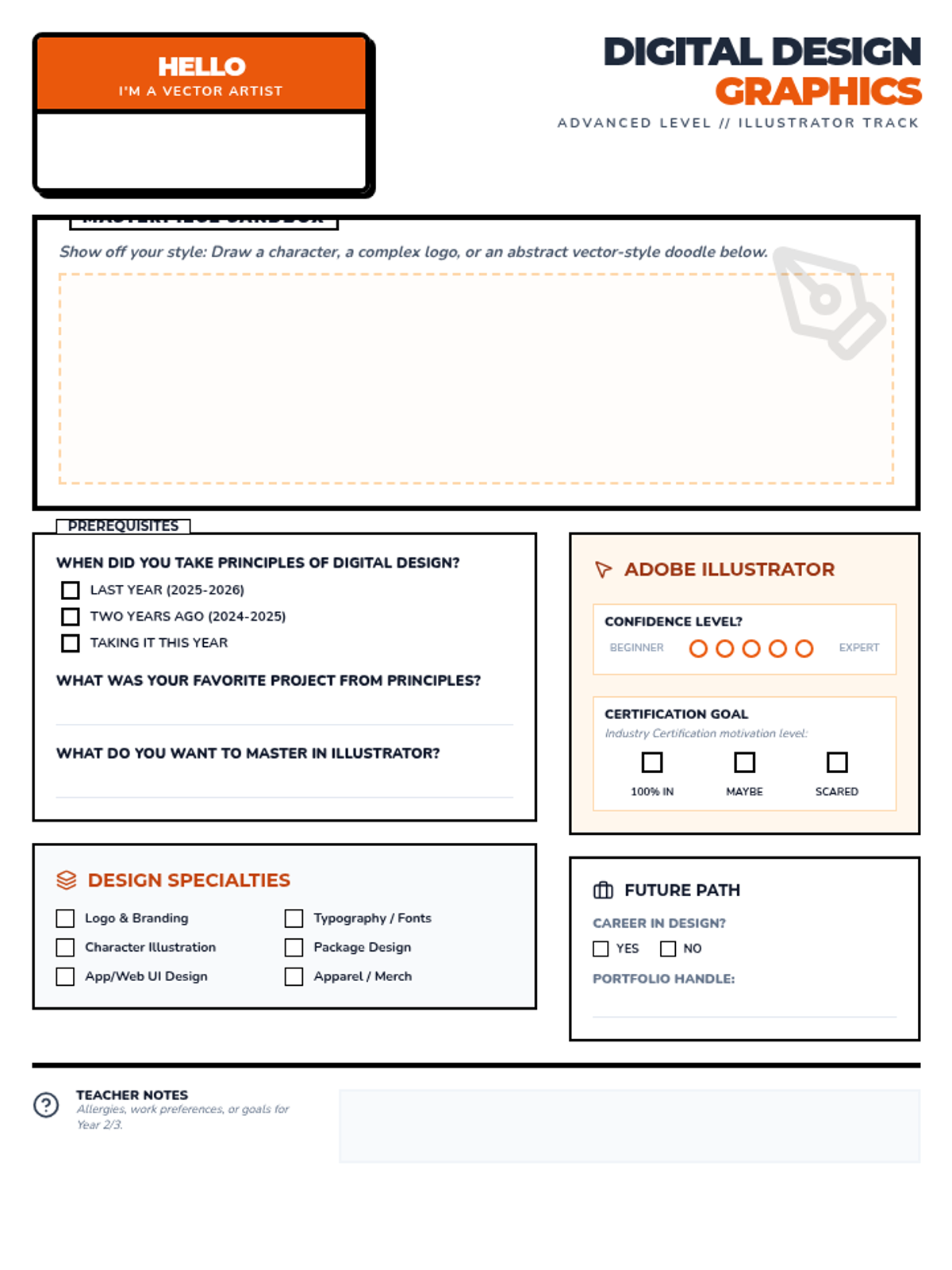
A specialized application worksheet for advanced Digital Design Graphics students focusing on Adobe Illustrator certification. Includes a question about when they took the prerequisite 'Principles of Digital Design' course.
A specialized application worksheet for advanced Interactive Media students focusing on Adobe Premiere Pro certification. Features timeline-themed visuals, storyboard panels, and production interest trackers.
A specialized application worksheet for advanced Digital Design Graphics students focusing on Adobe Illustrator certification. Features vector-themed visuals, skill trackers, and career interest sections.
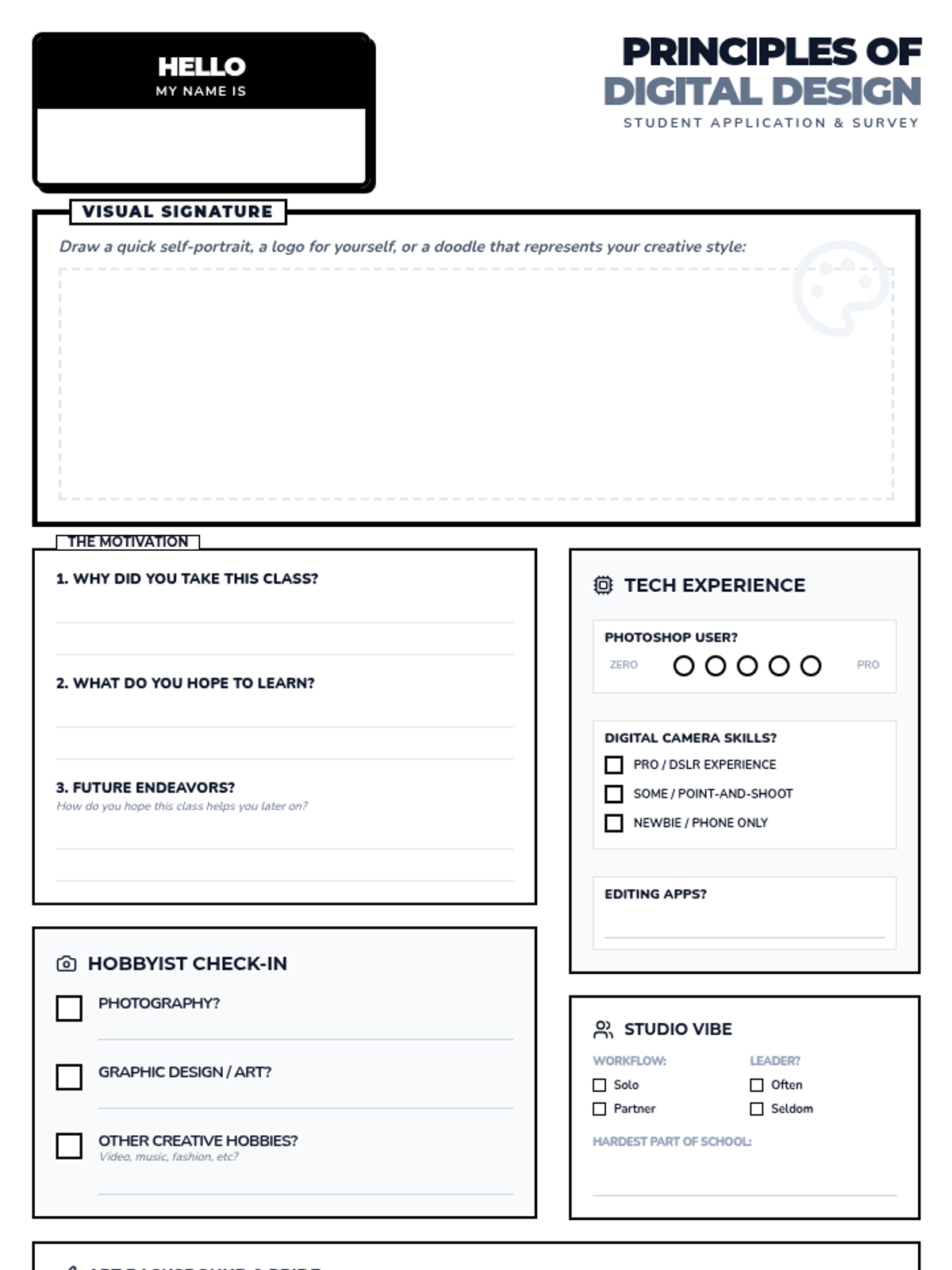
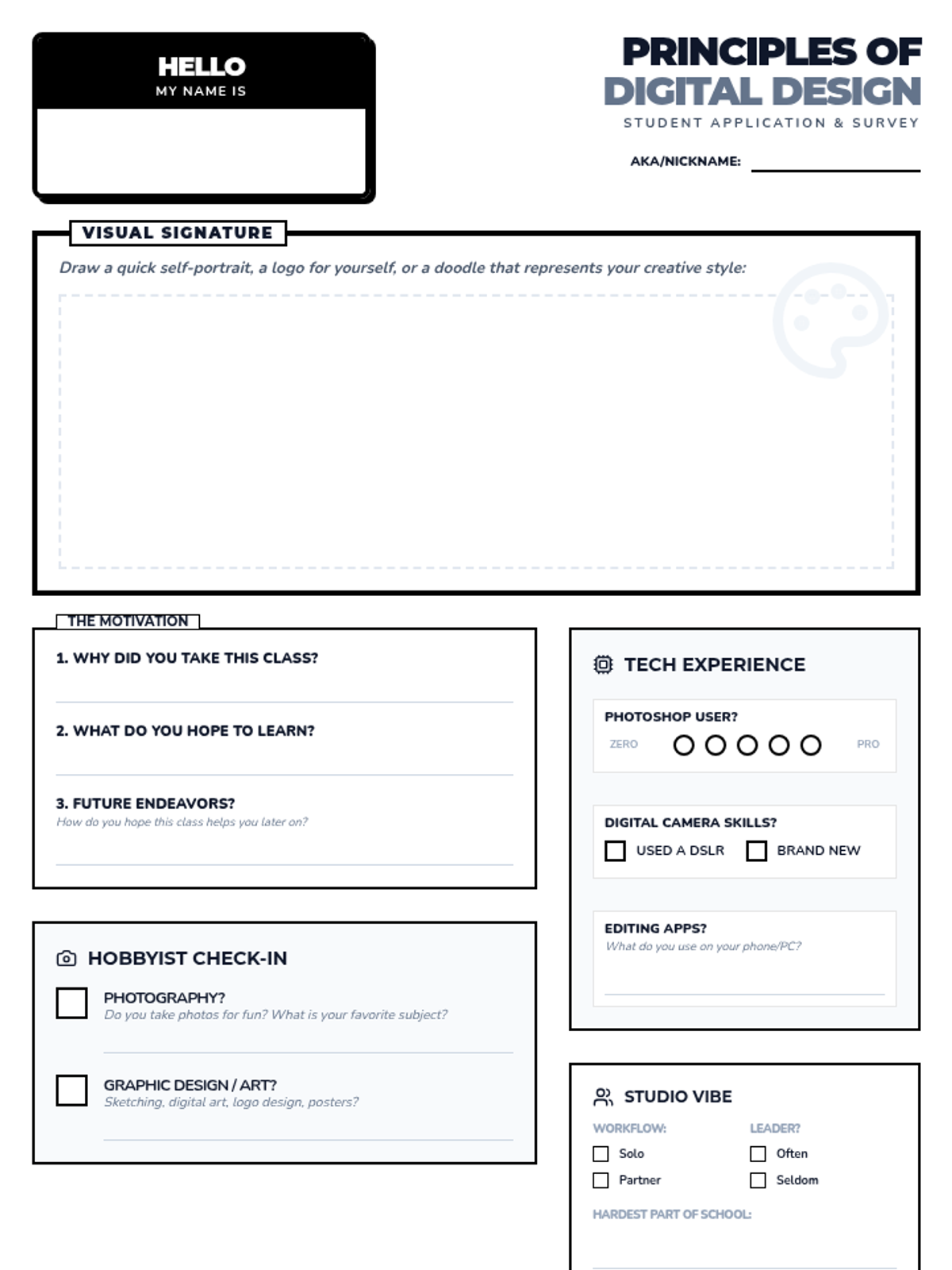
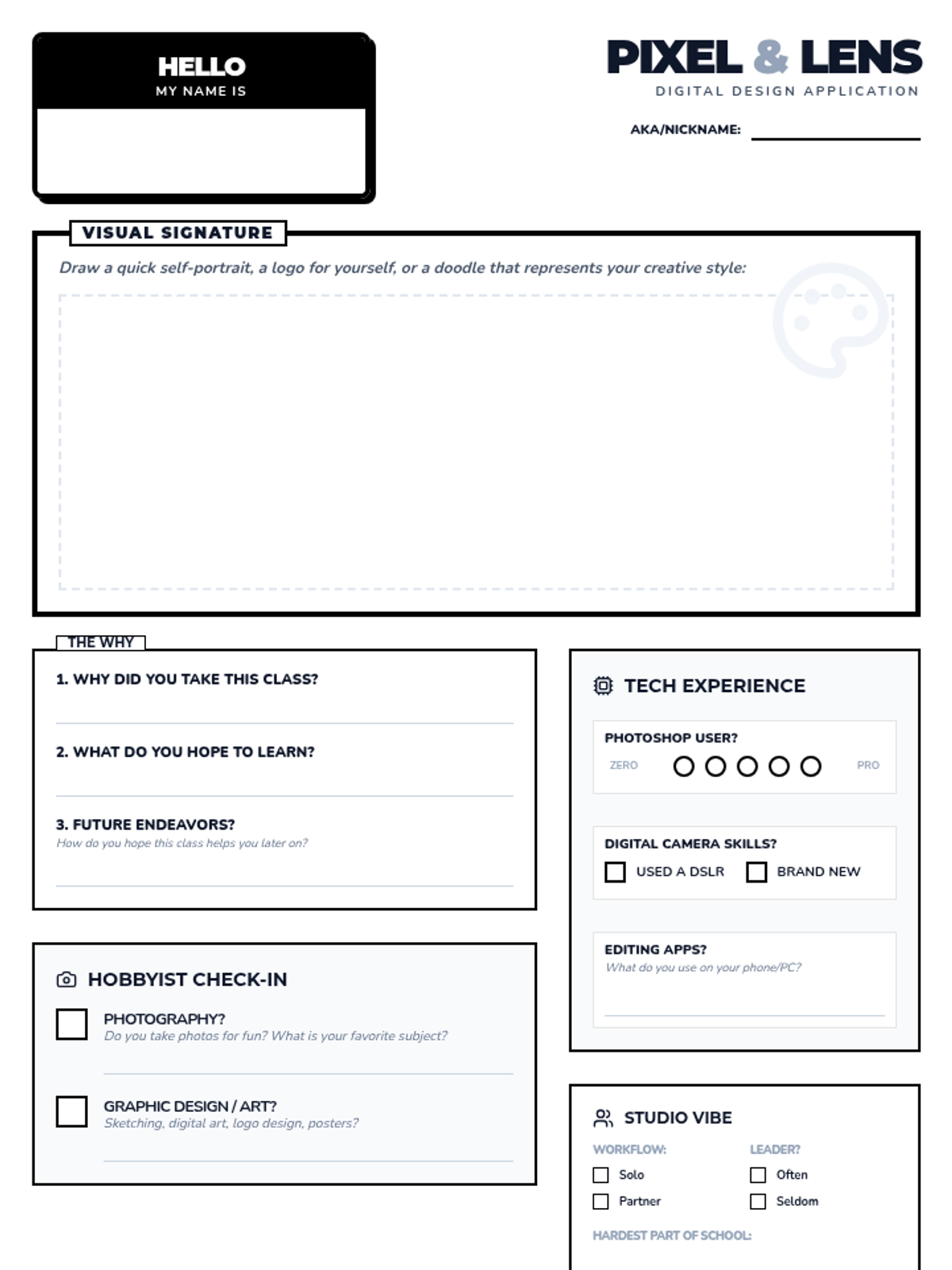
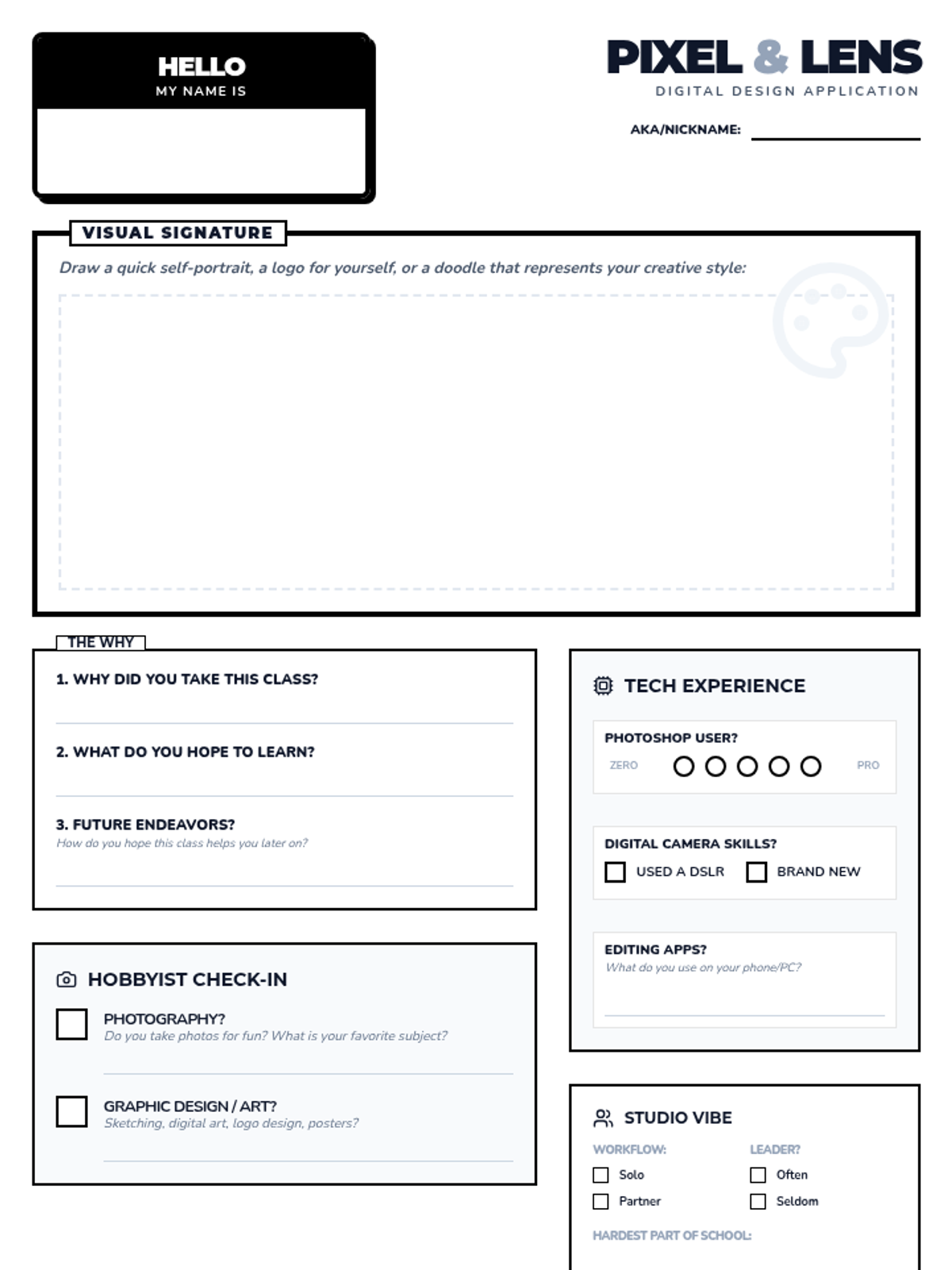
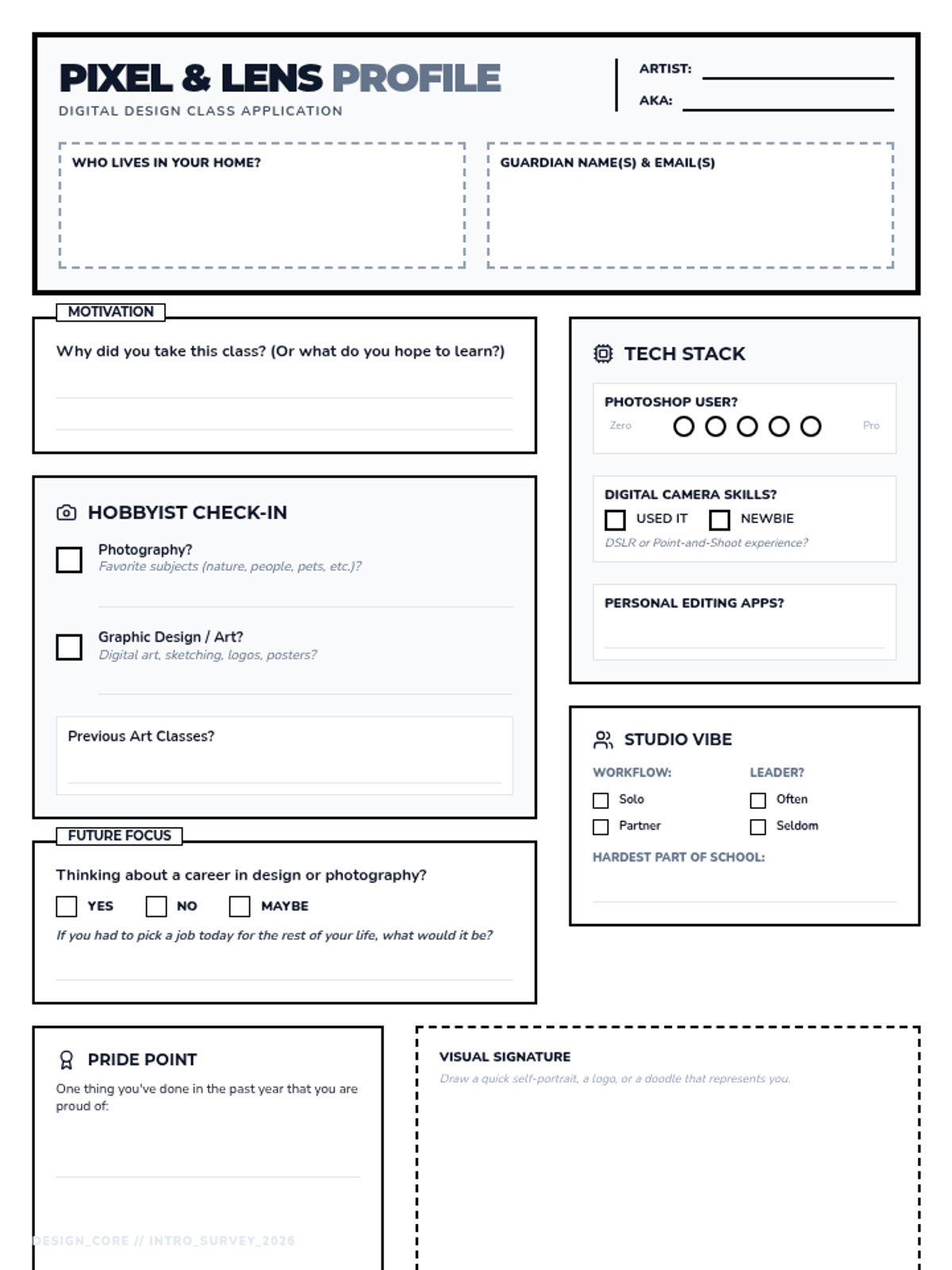
The final "Principles of Digital Design" student application worksheet. Features a sticker-style name tag, a large drawing area at the top, expanded motivation questions, and specific technical skill trackers. Optimized for single-page use.
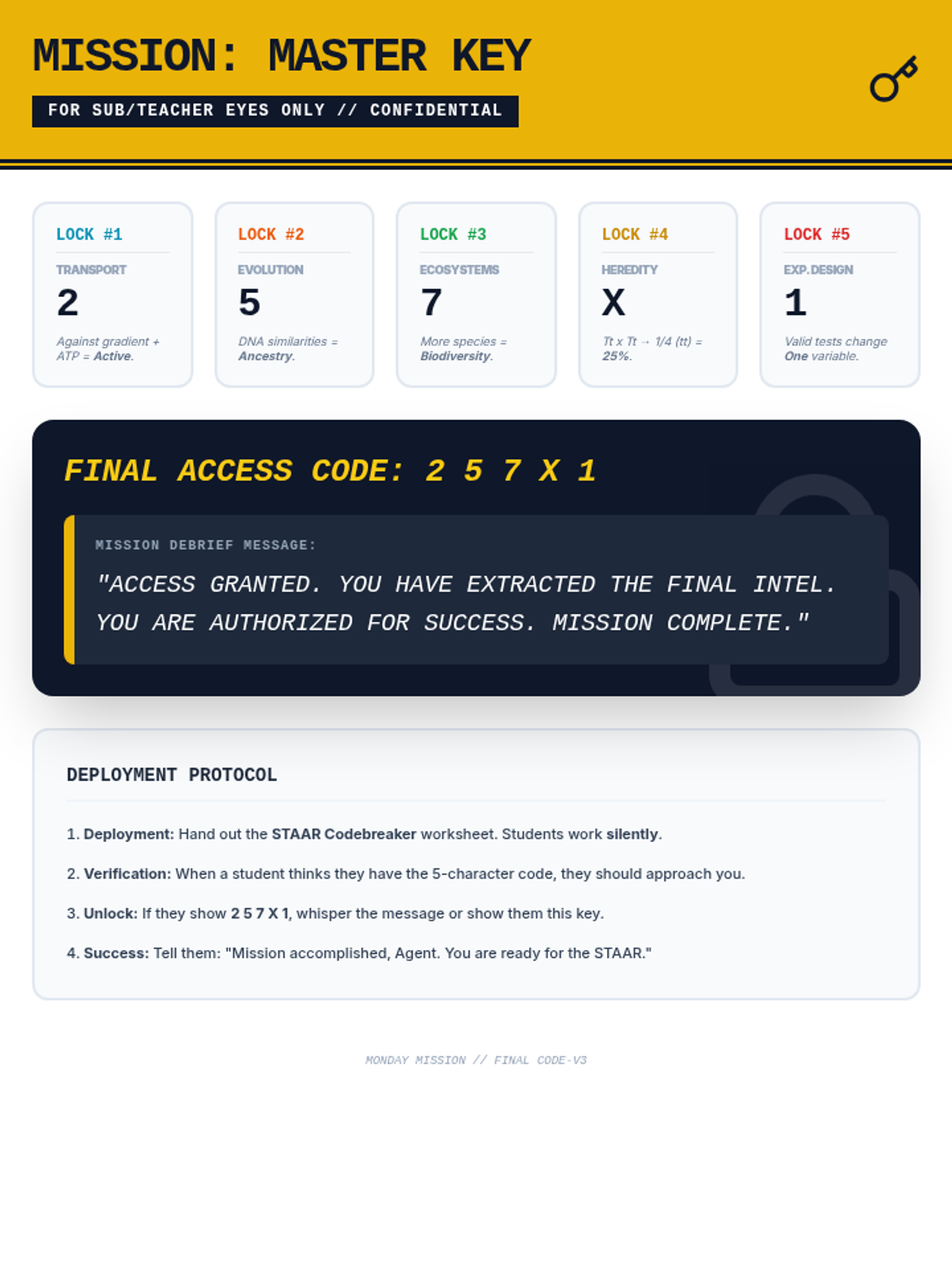
Answer key and substitute teacher instructions for the Monday STAAR Codebreaker mission. Revised to include new lock solutions, fix page breaks, and improve spacing.
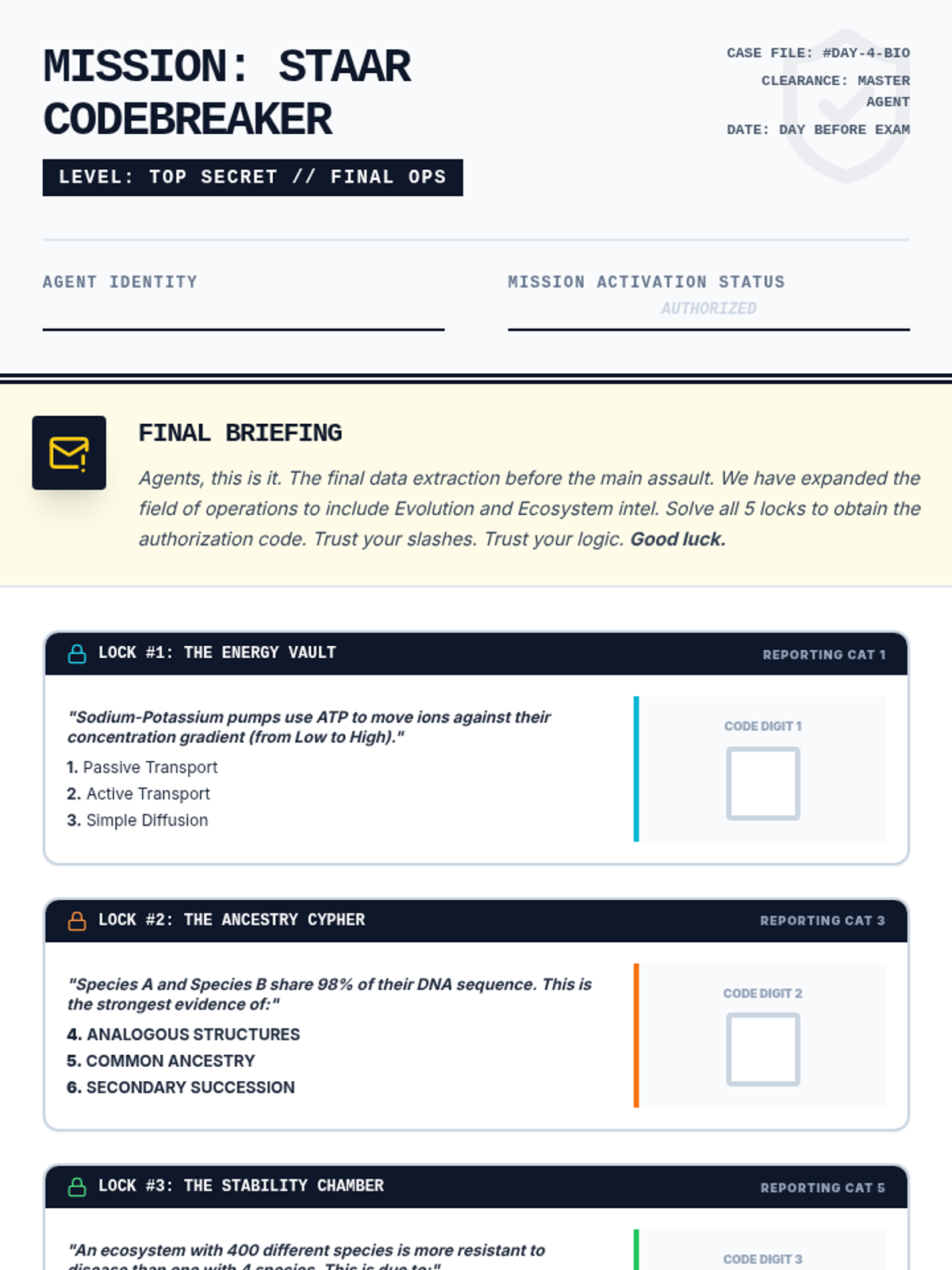
A robust, independent "Secret Agent" themed review worksheet for the day before the STAAR exam. Students solve five biology-based locks (transport, evolution, ecosystem stability, heredity, experimental design) to find a final 5-digit code. Revised to fix layout overlap and integrate new topics.
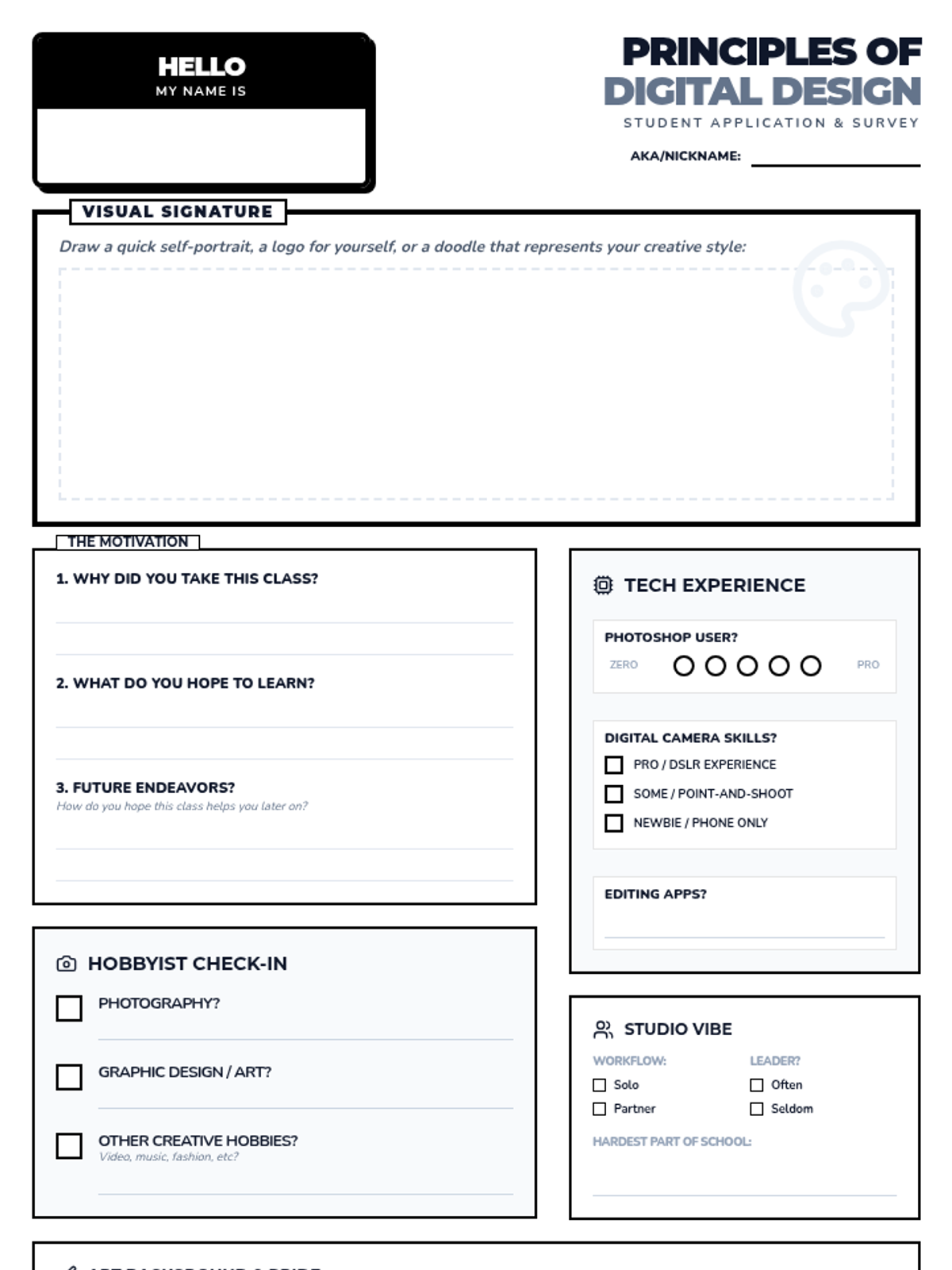
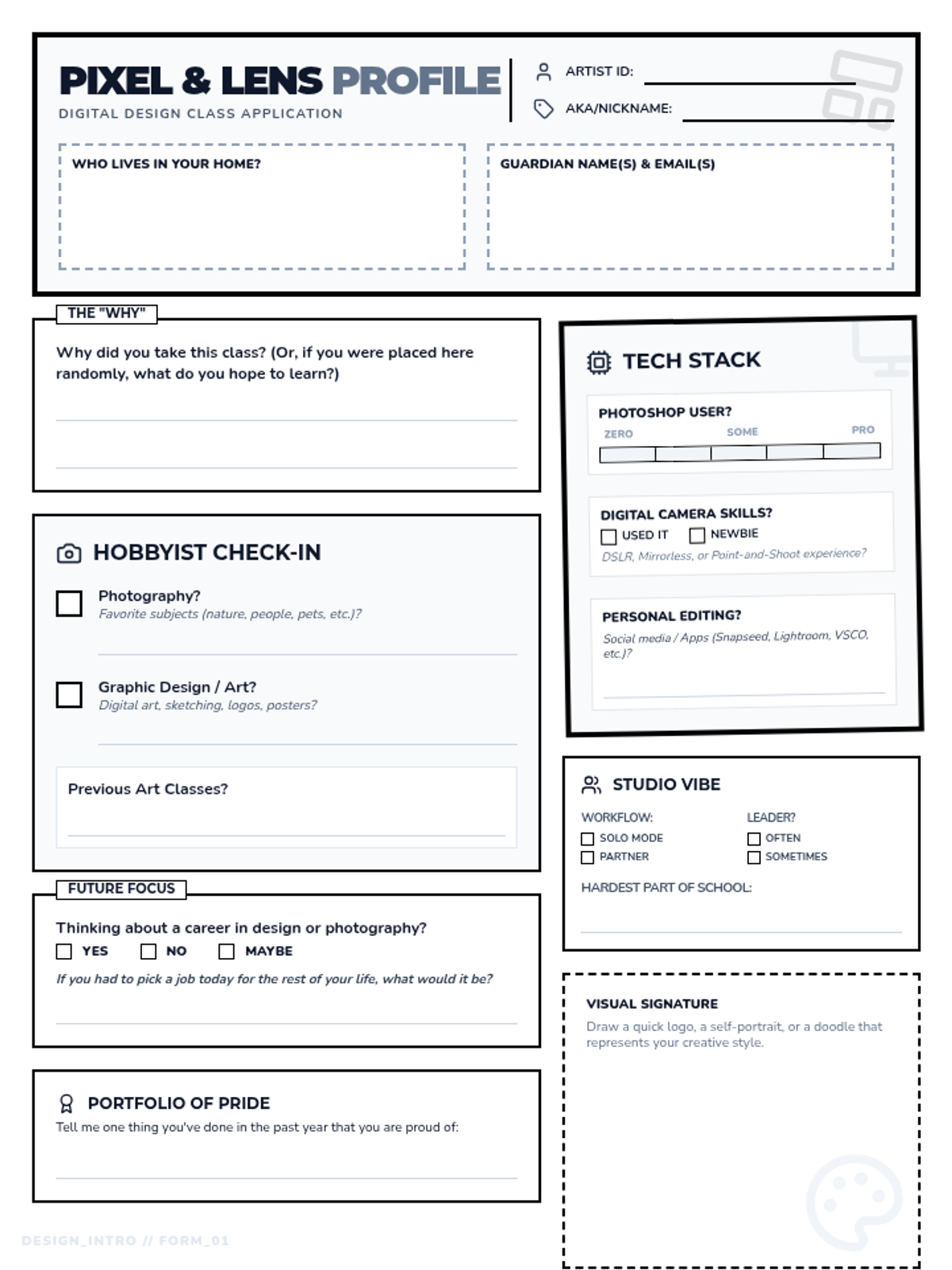
A refined student application worksheet for 'Principles of Digital Design'. Includes more writing space for motivation, three levels of camera experience, and a dedicated section for various creative hobbies, while maintaining the name tag header and visual signature area.
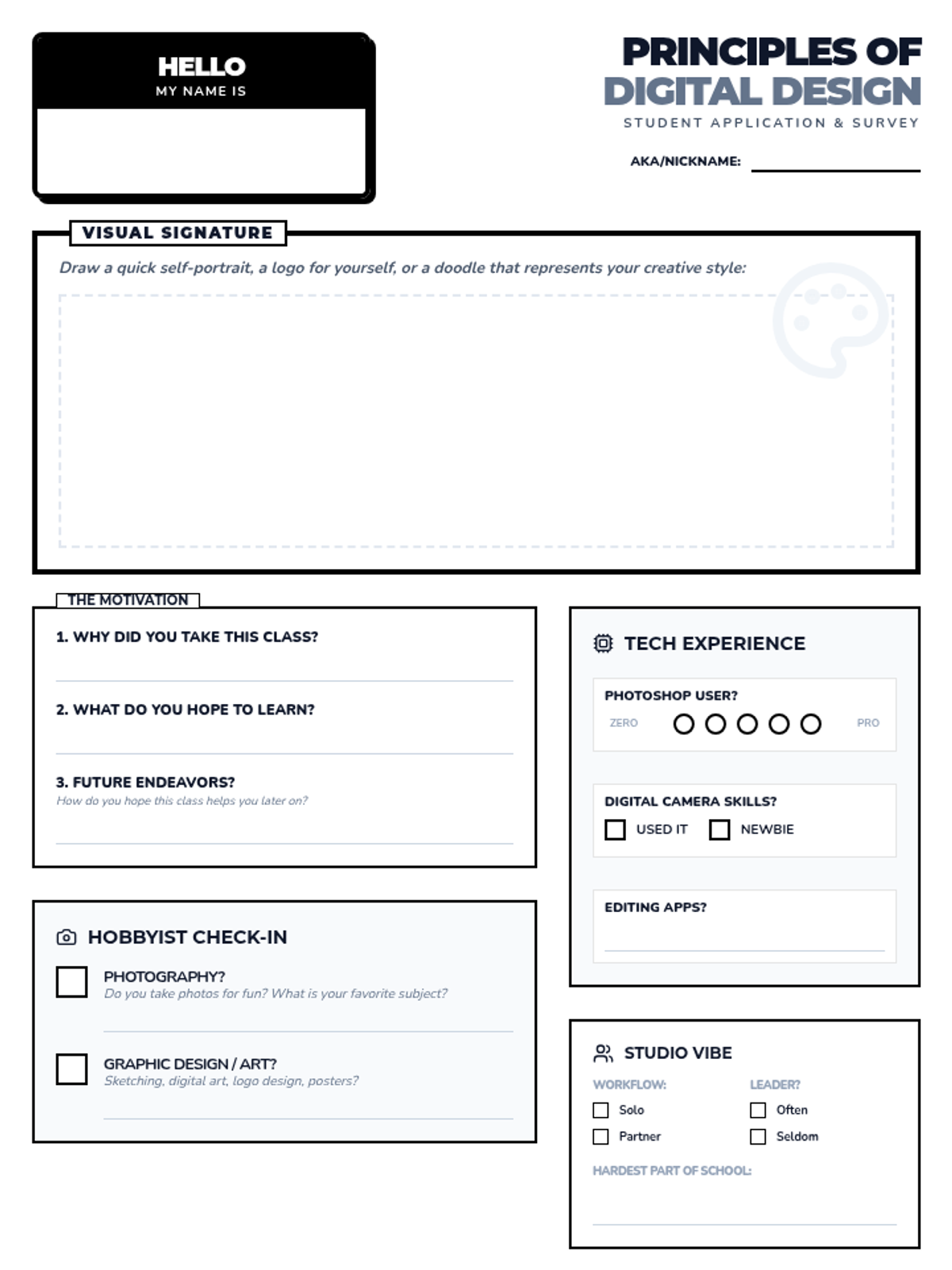
A student application worksheet for the 'Principles of Digital Design' course, featuring a sticker-style name tag, a large drawing area, and specific sections for motivation, technical experience, and work preferences.
A creative class application worksheet renamed to "Principles of Digital Design". It features a name tag header, a large drawing signature area, and targeted questions on motivation, tech skills, and learning preferences.
A redesigned Digital Design class application featuring a "Hello My Name Is" sticker header, a prominent drawing area at the top, and specific questions about student motivation and tech skills. Optimized for single-page printing without family/guardian fields.
An expansive 15-page textbook-style reading on magnetic flux and Faraday's Law for AP Physics C. It features deep conceptual explanations, rigorous calculus derivations, multi-page case studies (rotating coils, non-uniform wire fields), and advanced vector calculus synthesis. Consolidates content to ensure visual clarity and high technical contrast. Includes professional SVG diagrams and removes student work areas for a pure reading experience. Section A covers uniform fields and factors; Section B covers non-uniform fields and EMF production. Fixes formula under Section 4 and improves diagram clarity. Consolidation reduces excess white space. Section 6 formula fixed to show full calculus integral. Motional EMF diagram enhanced. 15-section goal achieved.
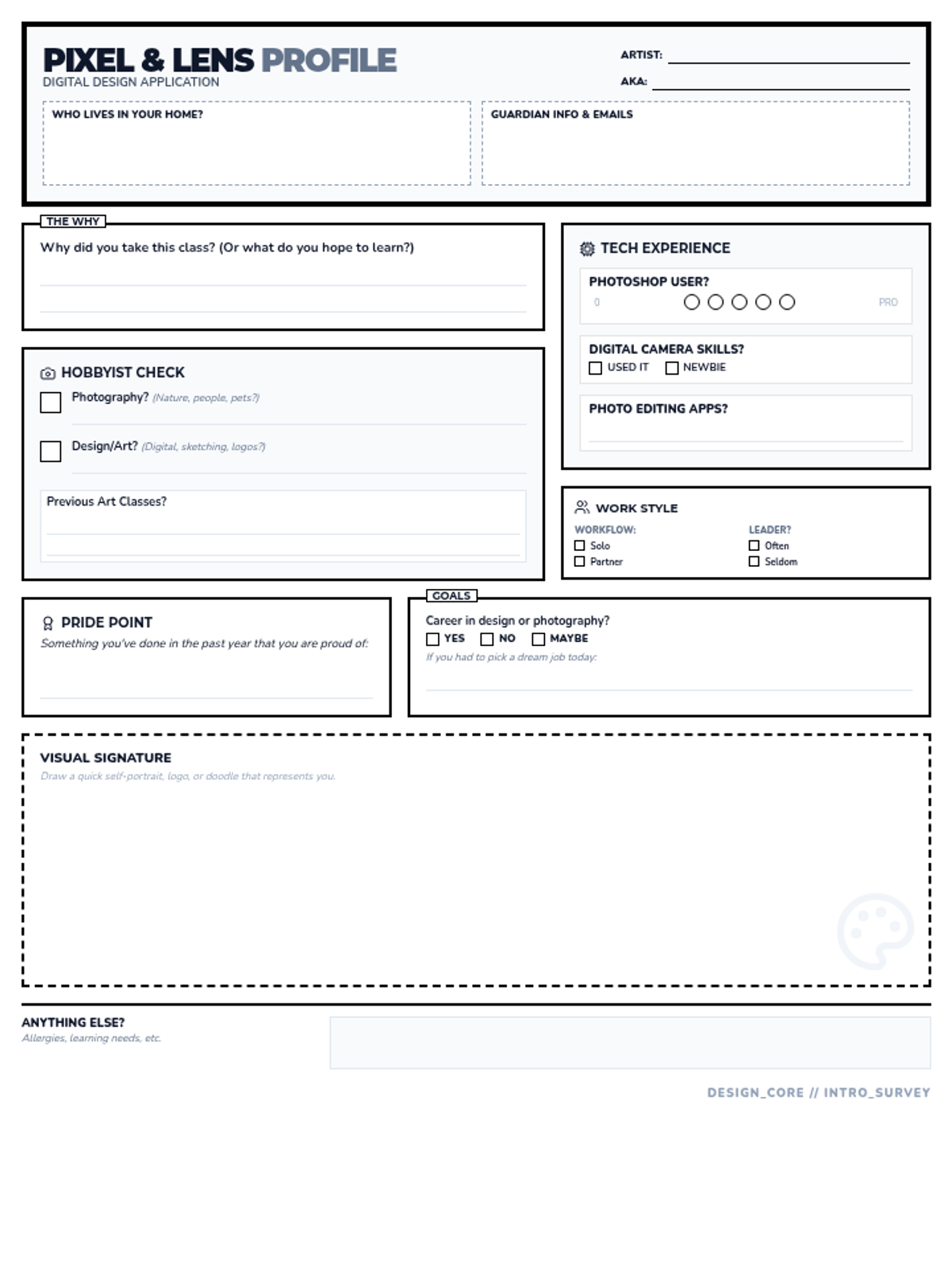
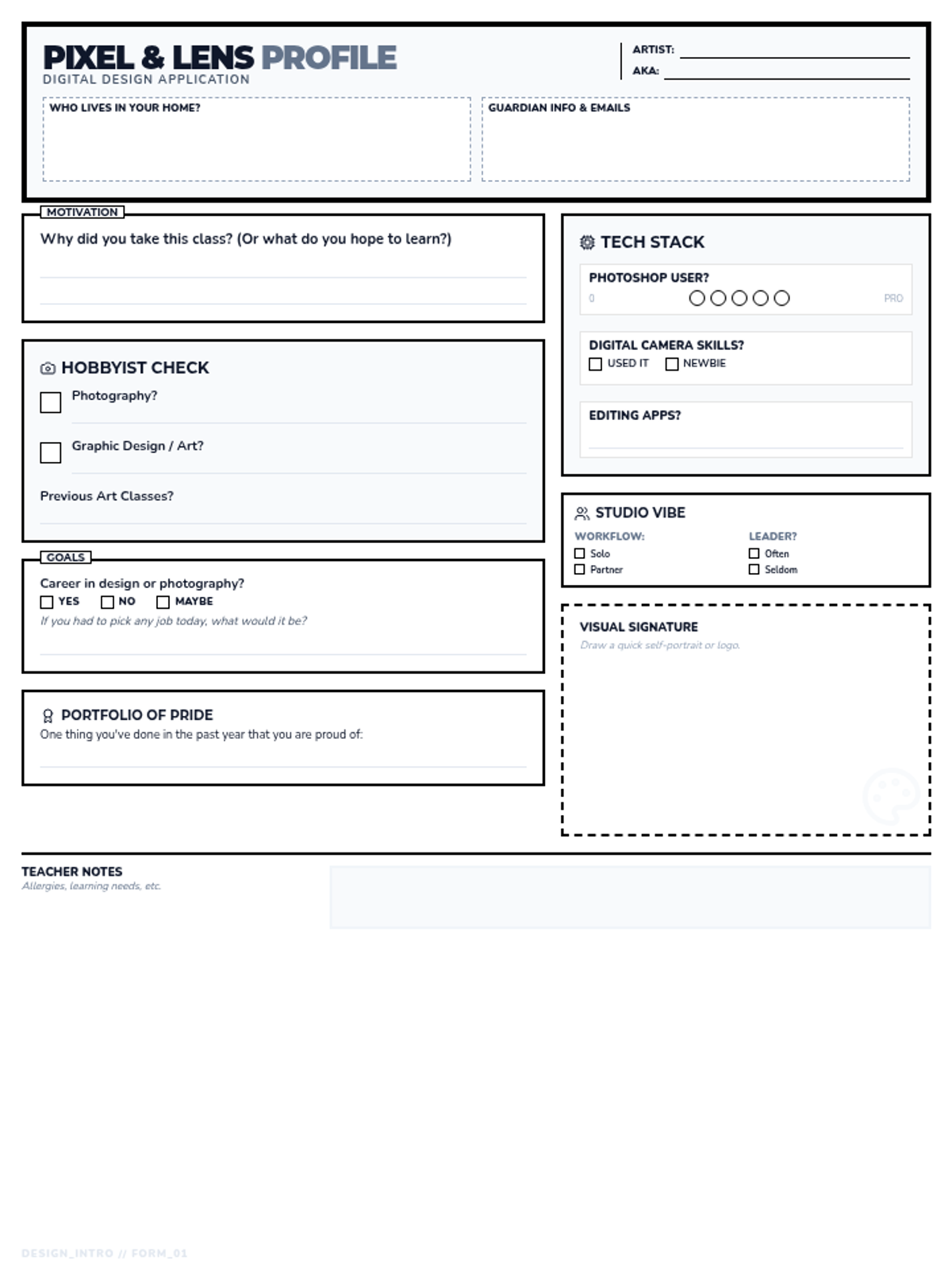
A professional yet creative doodle-style class application for Digital Design students. Features sections for personal background, technical skills (Photoshop/Camera), and a large drawing area for visual expression. Optimized for single-page printing.
A creative, doodle-style application worksheet specifically for high school Digital Design students, featuring technical skill ratings, artistic background queries, and a drawing space for personal expression. Revised for single-page fit and better writing space.
A 5-slide visual presentation reviewing the concepts of runoff and groundwater, with a focus on human impact and pollution pathways. It features clean typography and diagrams explaining infiltration and pollution sources.
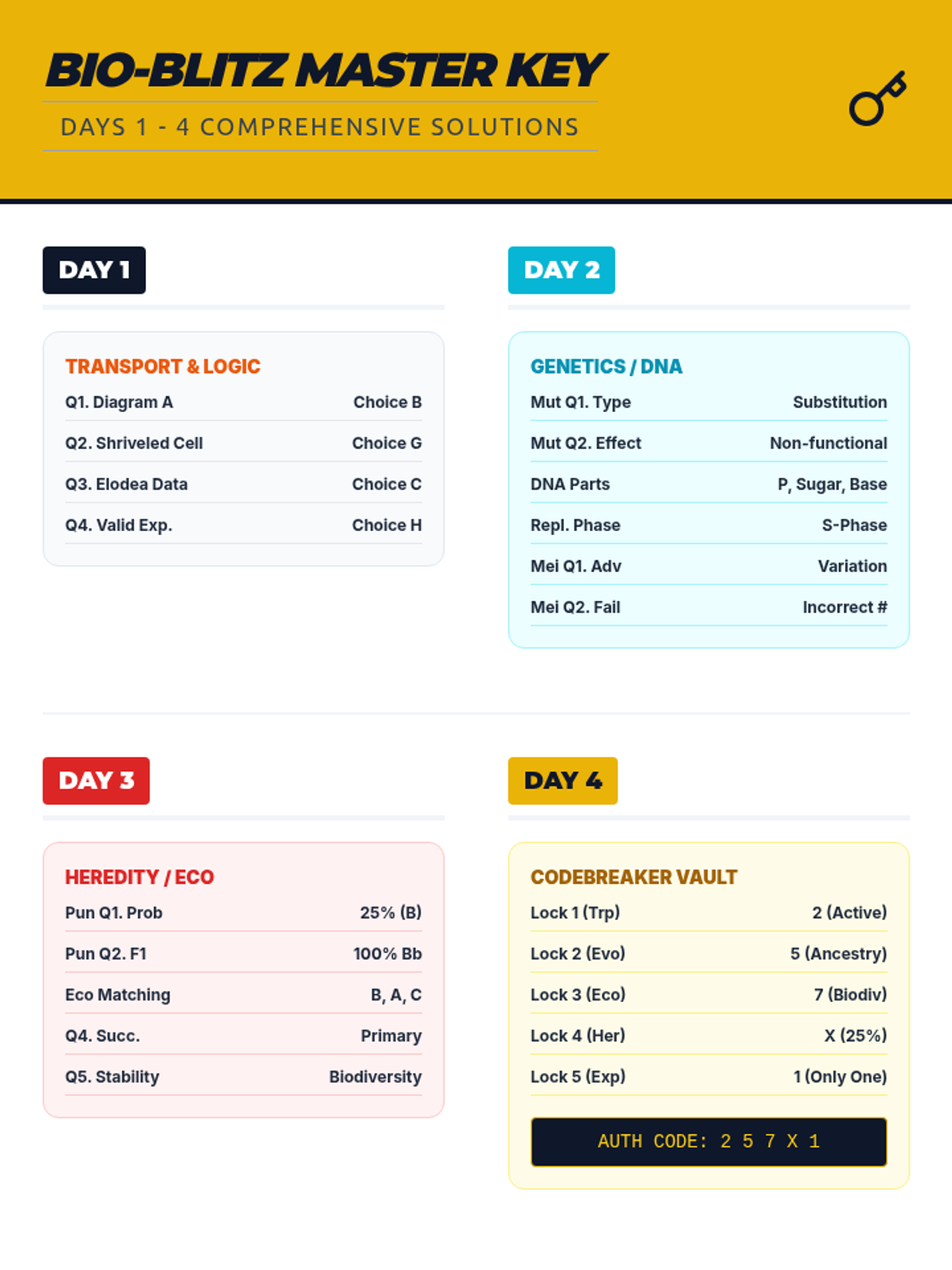
A comprehensive answer key for all station activities across the 4-day Bio-Blitz sequence. Revised to fix Day 1 numbering, increase Auth Code font size for better contrast, and improve section labeling.
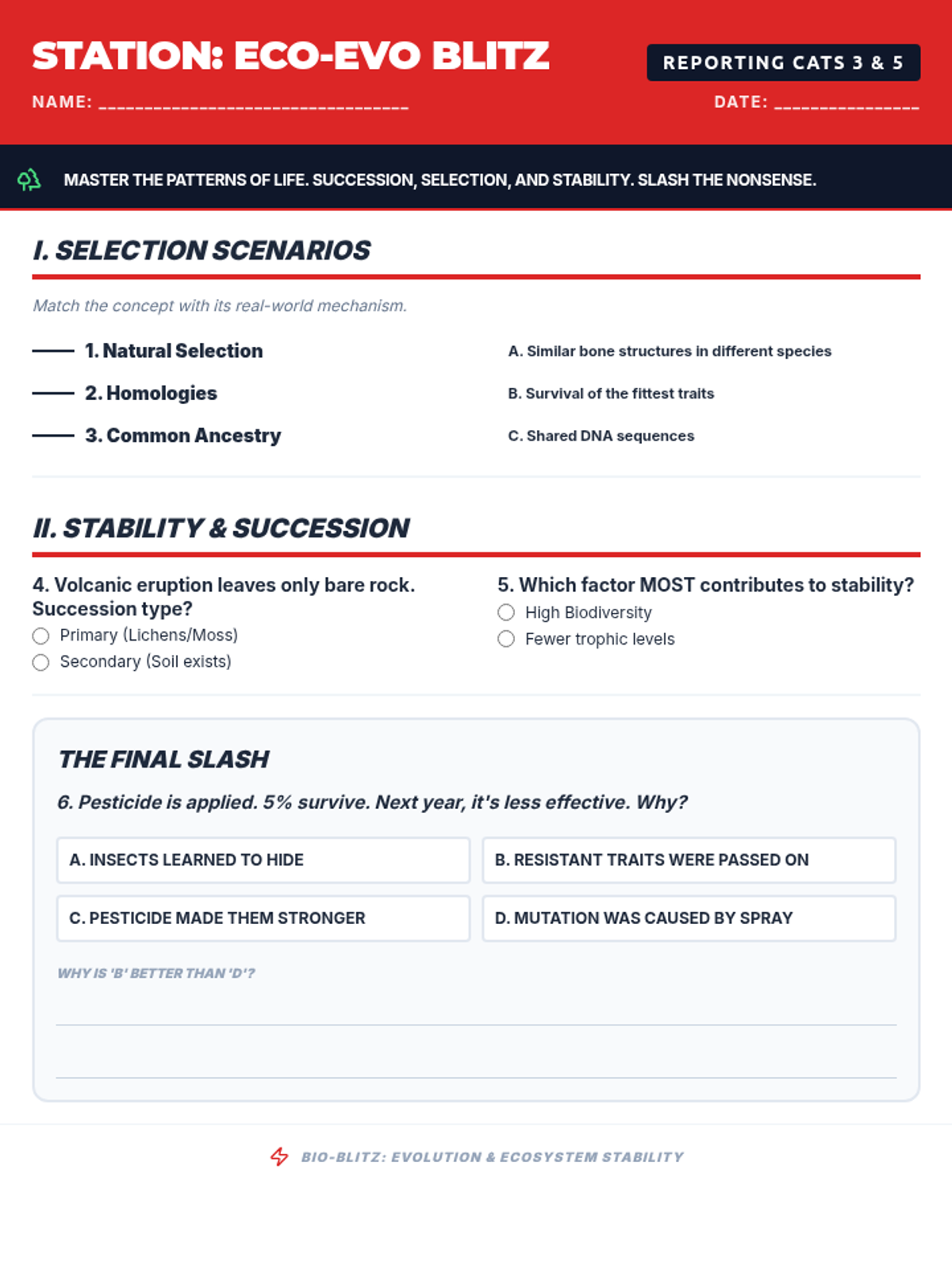
A station activity for Day 3 focused on Evolution and Ecosystem Stability. Includes Natural Selection scenarios, succession identification, and biodiversity logic. Revised to fit on one page and provide clearer writing areas.
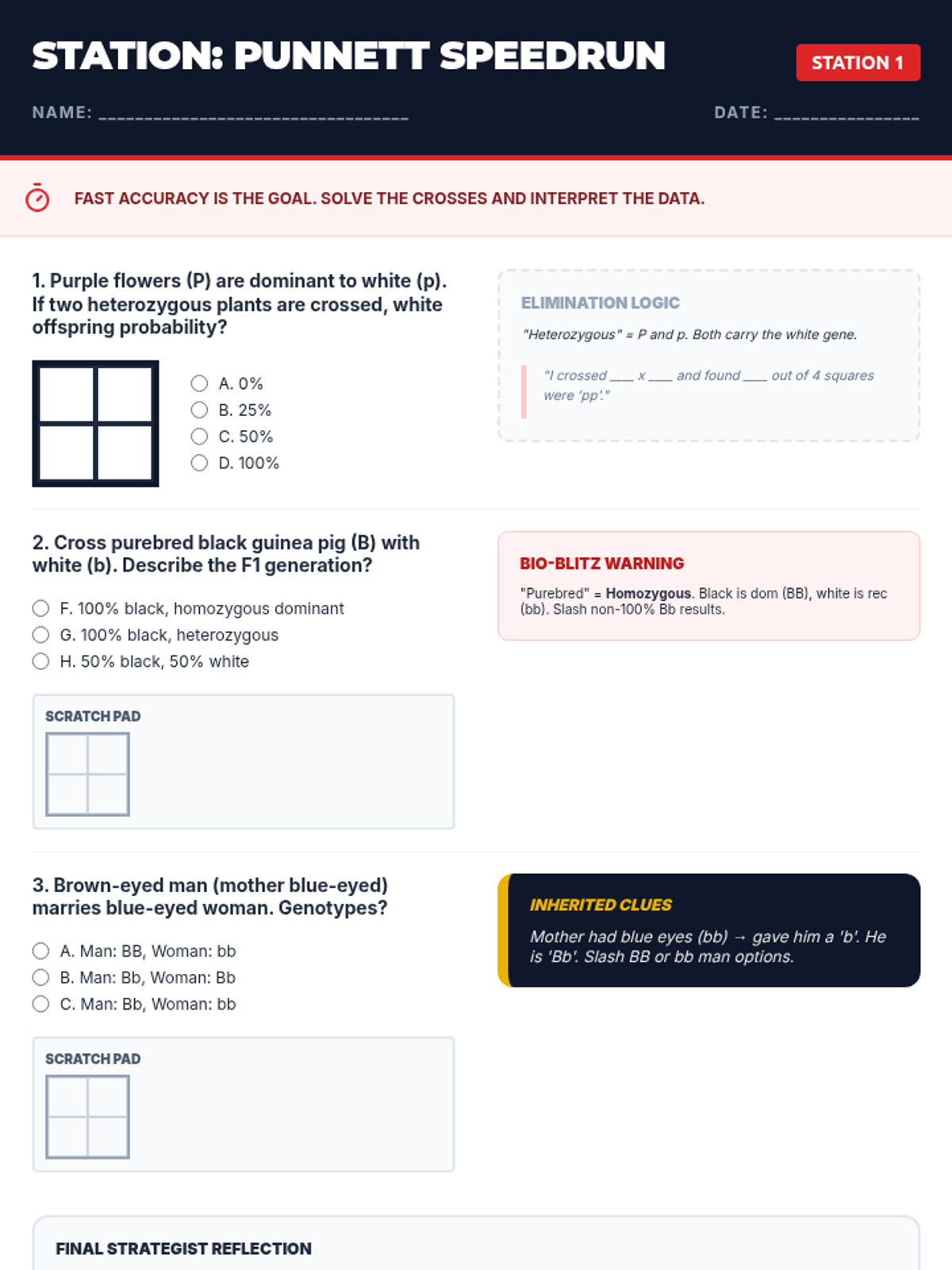
A student station worksheet for Day 3 focused on heredity. Revised to condense to one page, darken scratch pad lines/headers, add a reflection area, and fix footer page breaks.
Day 3 Slides for the Bio-Blitz review. Revised to fix text contrast, improve icon visibility on the vocab slide, and enhance emphasis words on the protocol slide.
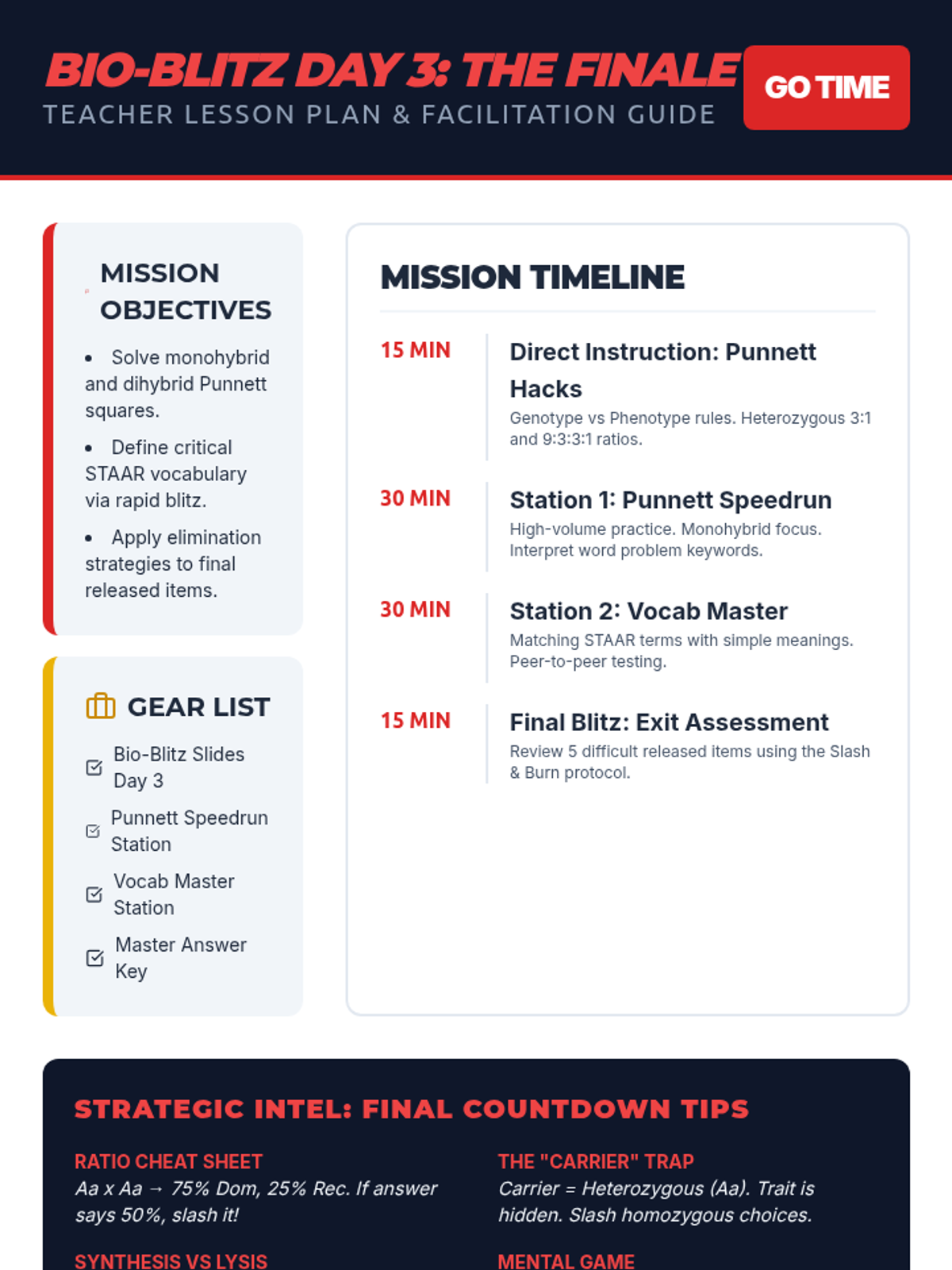
A detailed lesson plan for Day 3 of the Bio-Blitz review. Revised to fix timeline page breaks, improve content density, and remove minor visual artifacts.
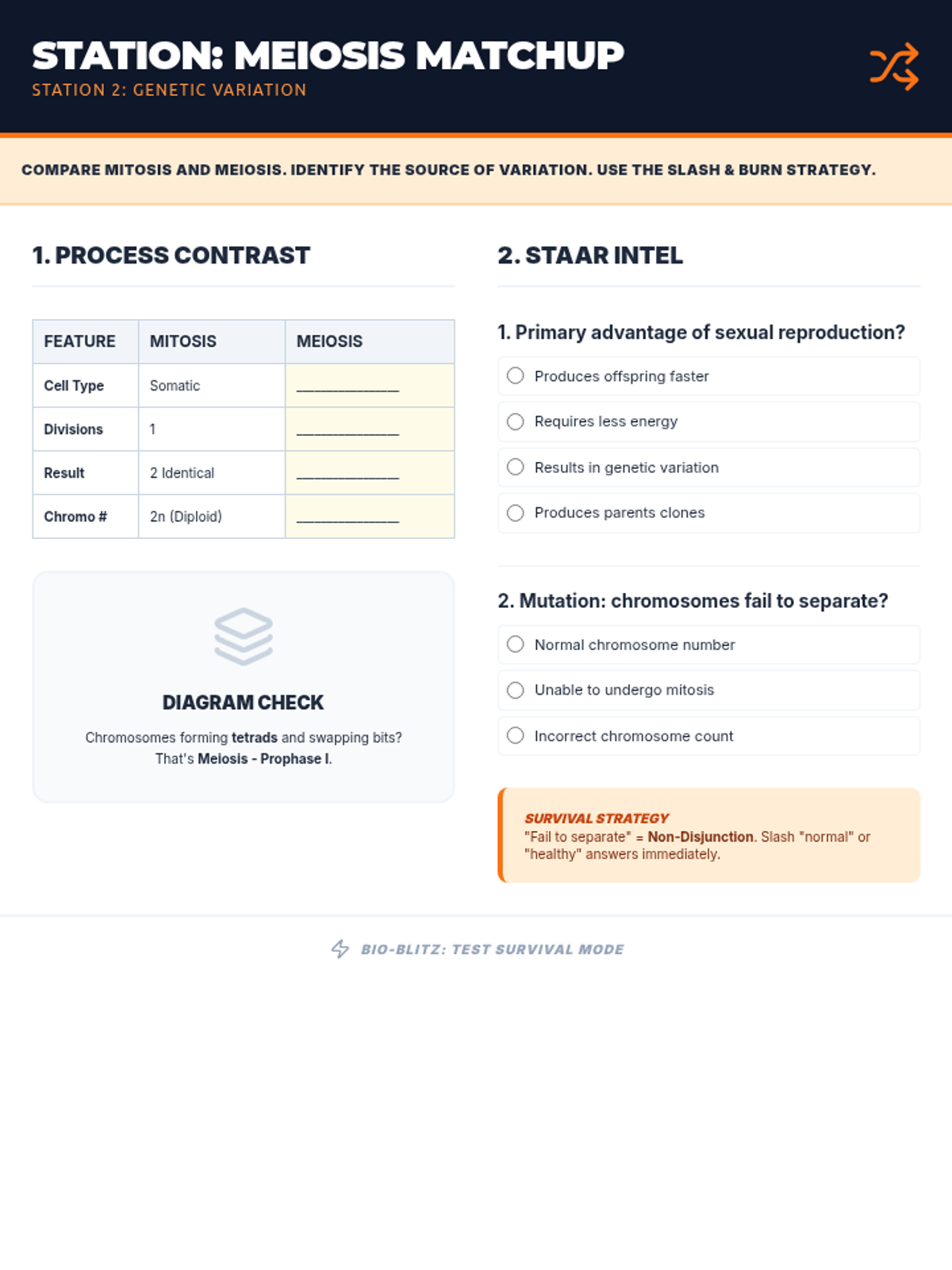
A station activity for Day 2 focused on meiosis. Revised to fix answer choice styling uniformity, resolve page breaks, increase handwriting space in the table, and improve text contrast in the header.
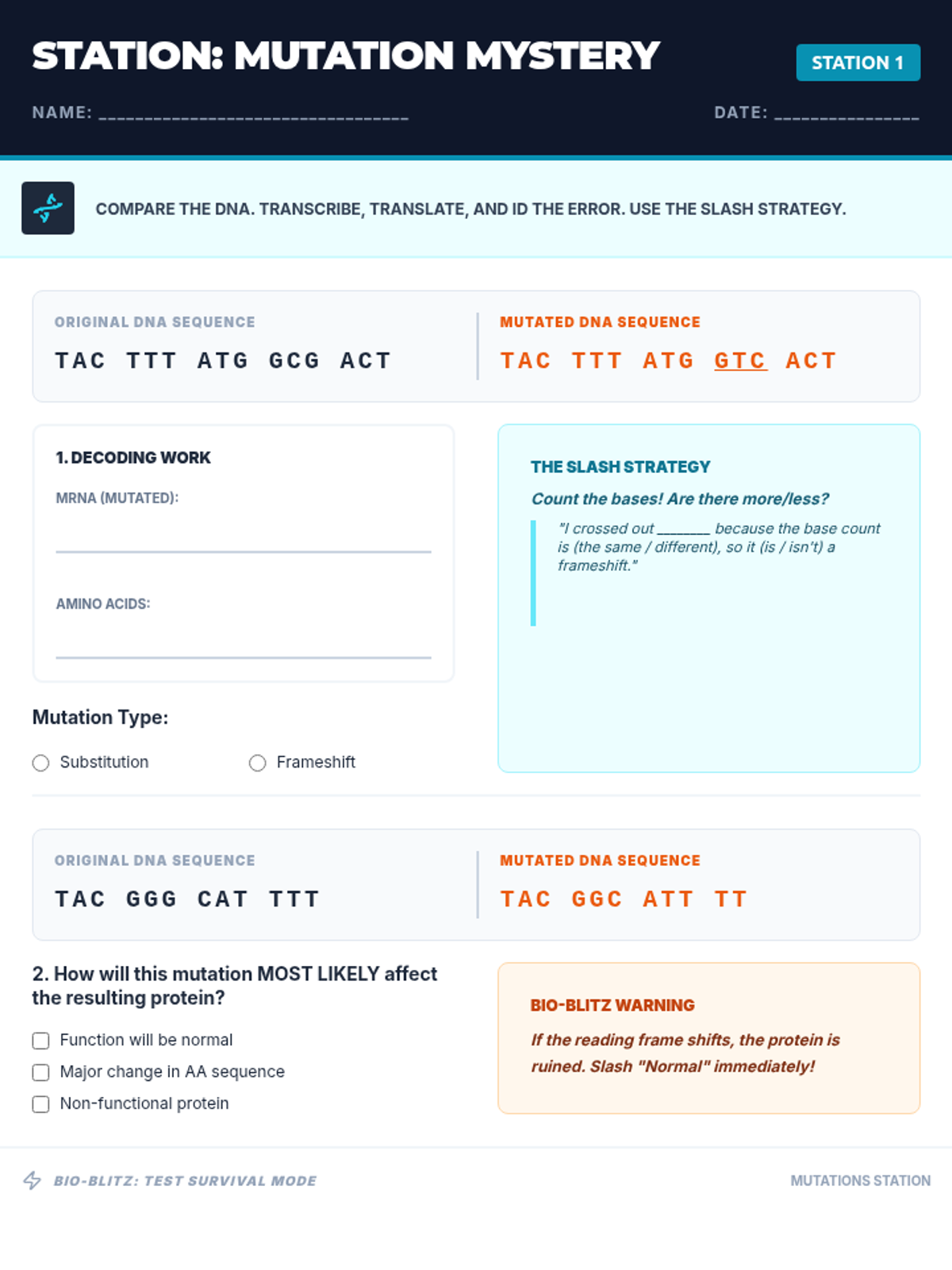
A student station worksheet for Day 2 focused on analyzing DNA mutations. Revised to fix page breaks, correct DNA sequences to match mutation types, vertically align sequences, and increase work area space.
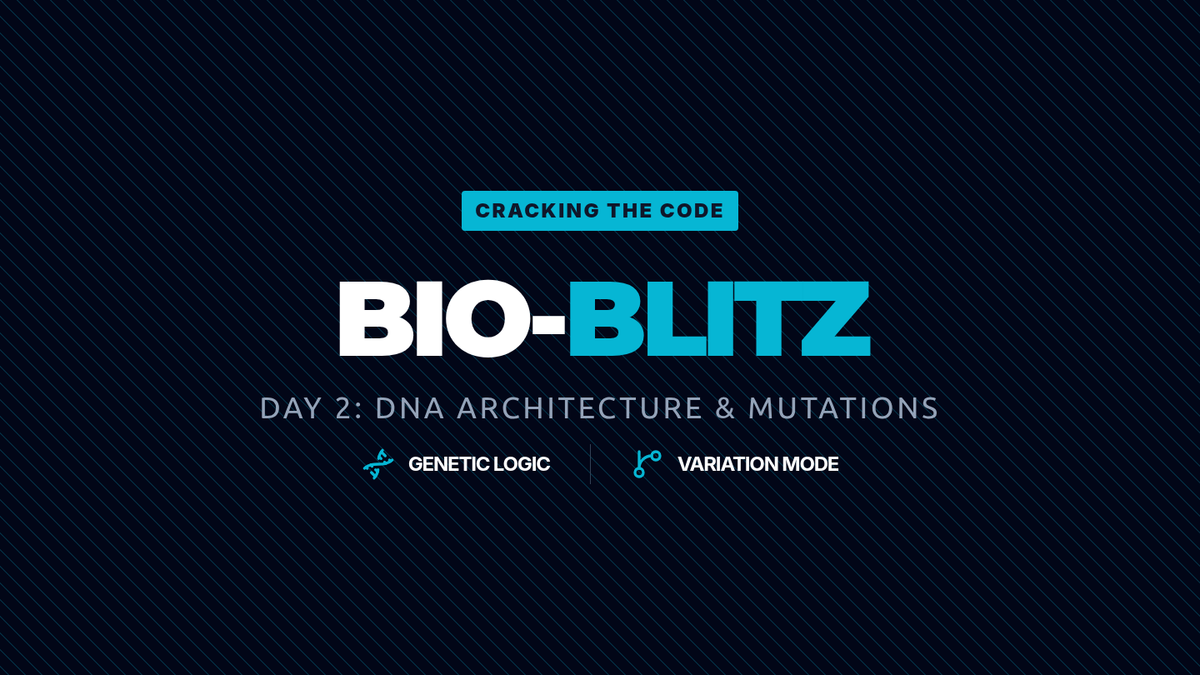
Day 2 Slides for the Bio-Blitz review. Revised to include DNA Architecture (nucleotides) and Replication (S-phase) slides.
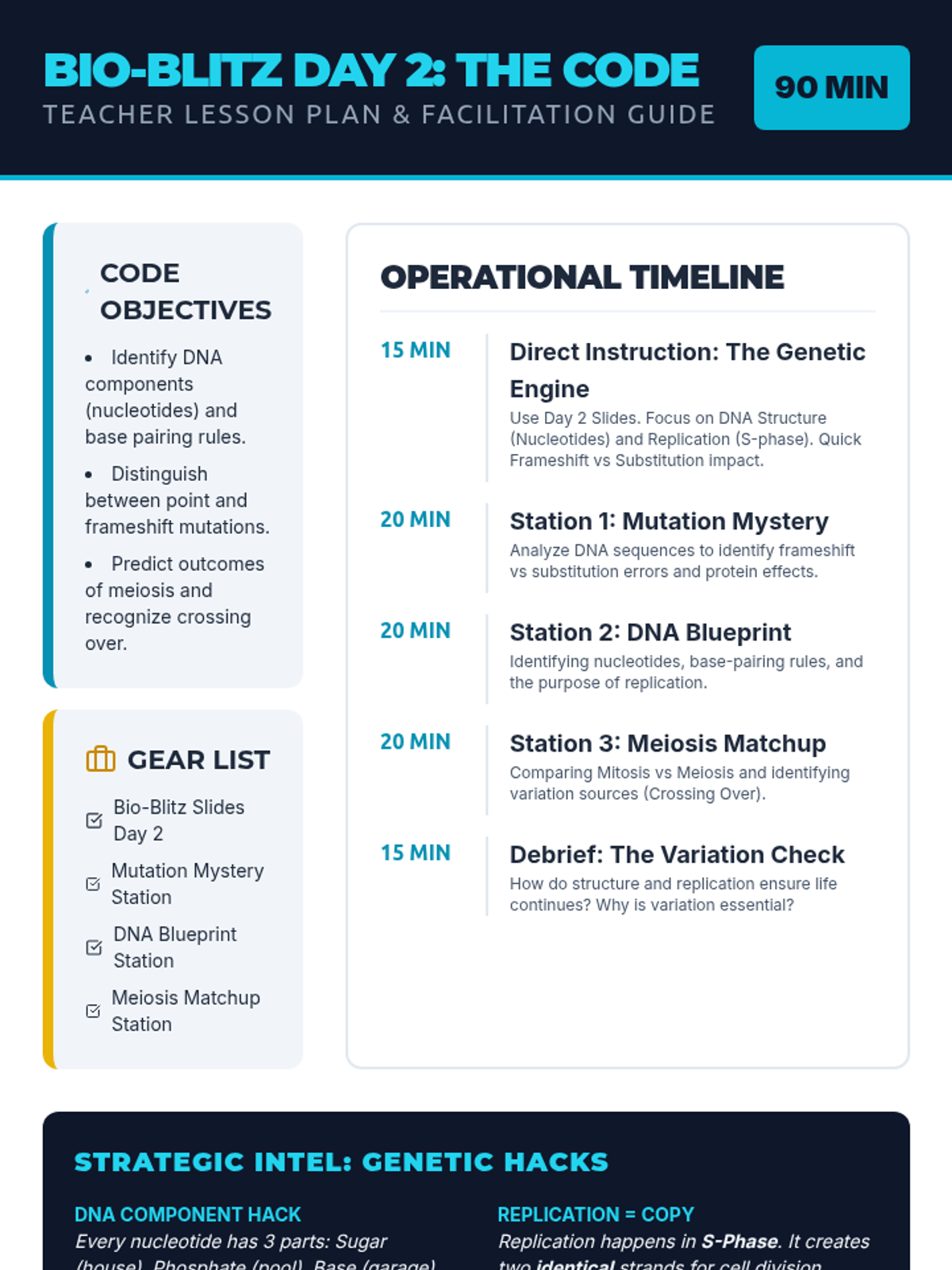
A detailed lesson plan for Day 2 of the Bio-Blitz review. Revised to include DNA Structure and Replication objectives and a 3-station rotation schedule.
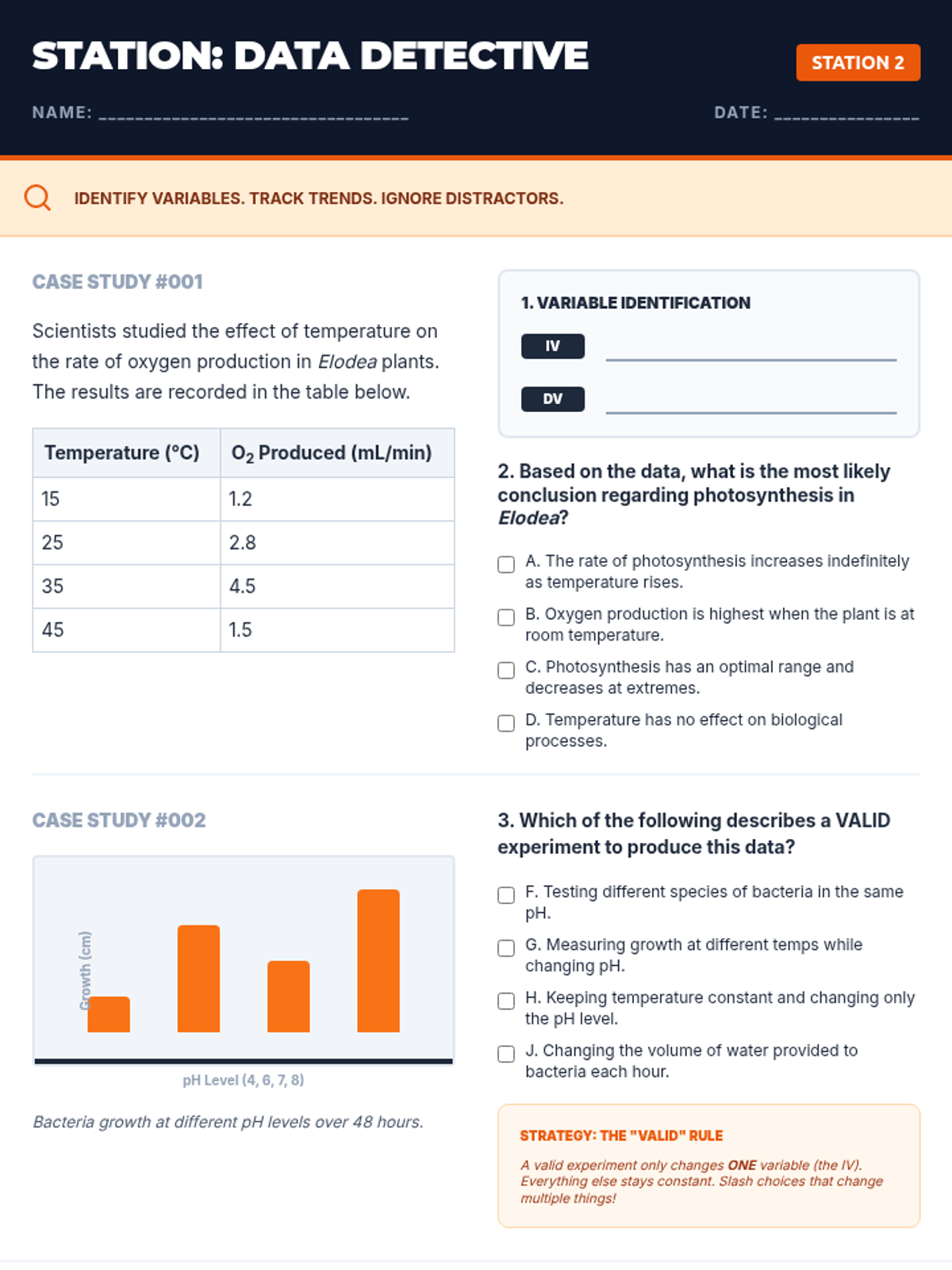
A station activity for Day 1 focused on data analysis. Revised to renumber questions correctly and condense to a single page for better usability.
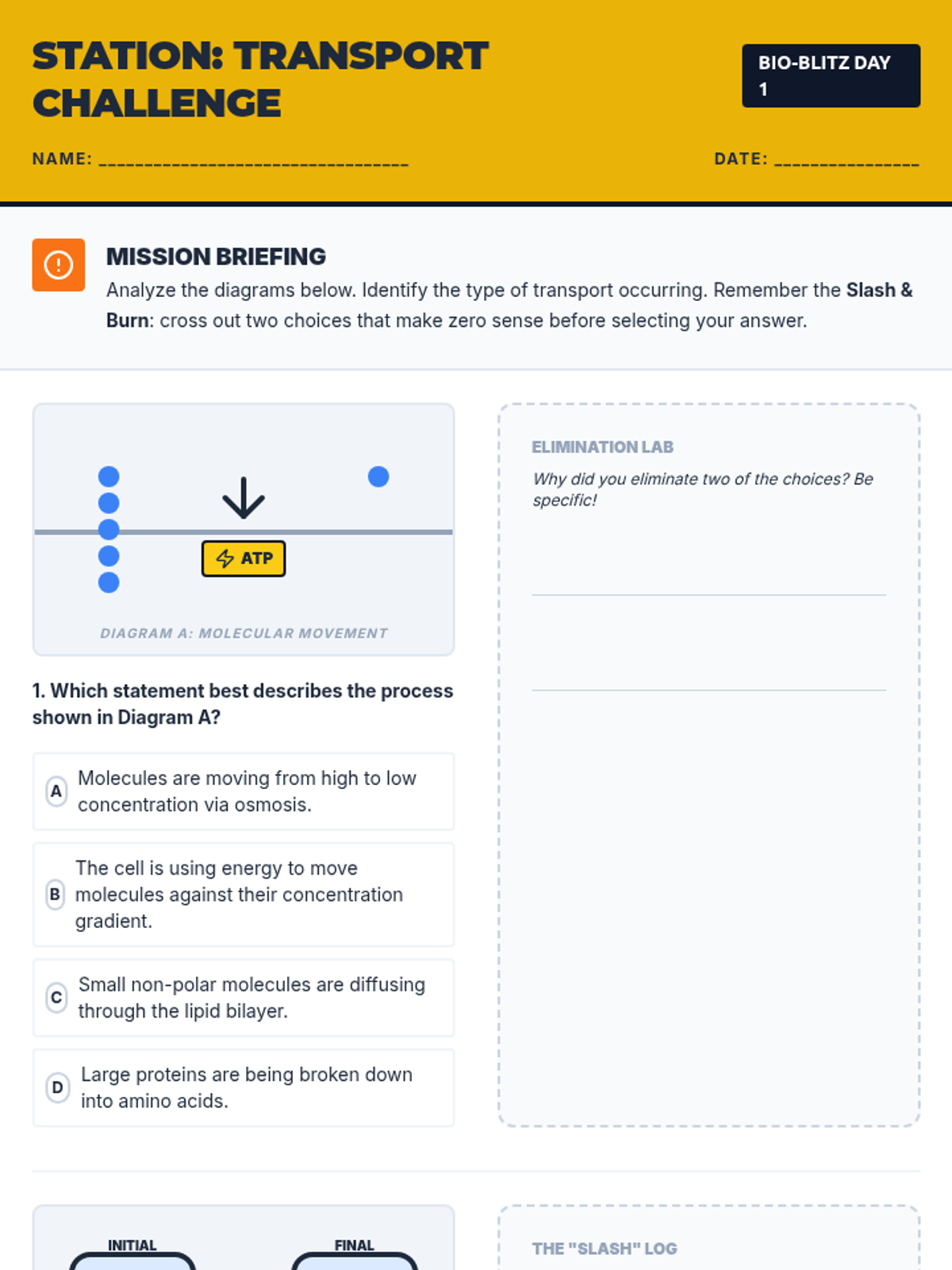
A station activity for Day 1 where students analyze cell transport diagrams. Revised to fix page breaks, improve diagram clarity, and provide more student work space.
Day 1 Slides for the Bio-Blitz review. Revised to include a practice question, fix text contrast on the DRY MIX slide, increase icon visibility, and ensure correct spacing.
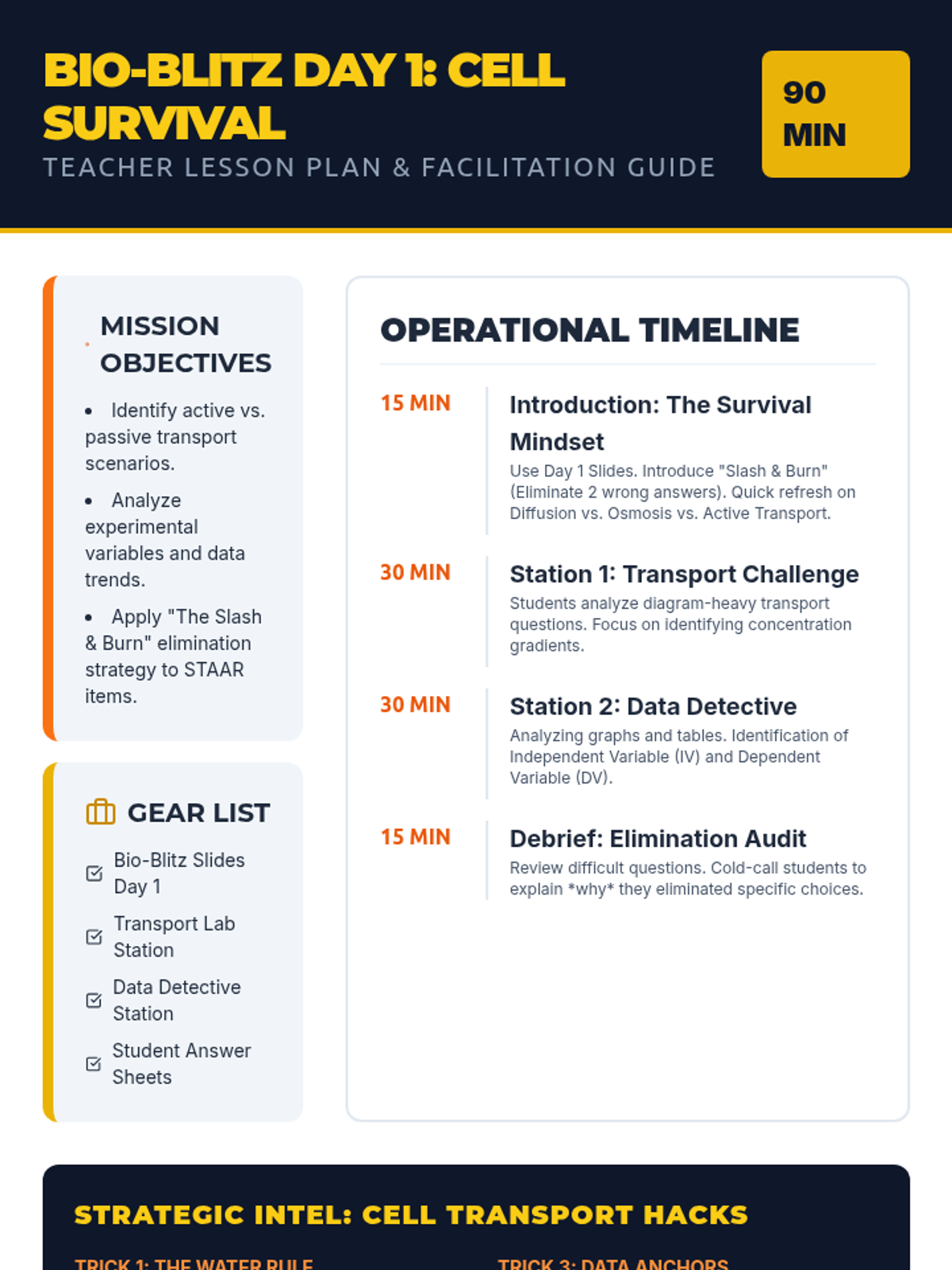
A detailed lesson plan for Day 1 of the Bio-Blitz review, focusing on cell transport and experimental design with timed segments and facilitation tips. Revised to fix page breaks, improve text contrast, and correct spacing in sub-headers.
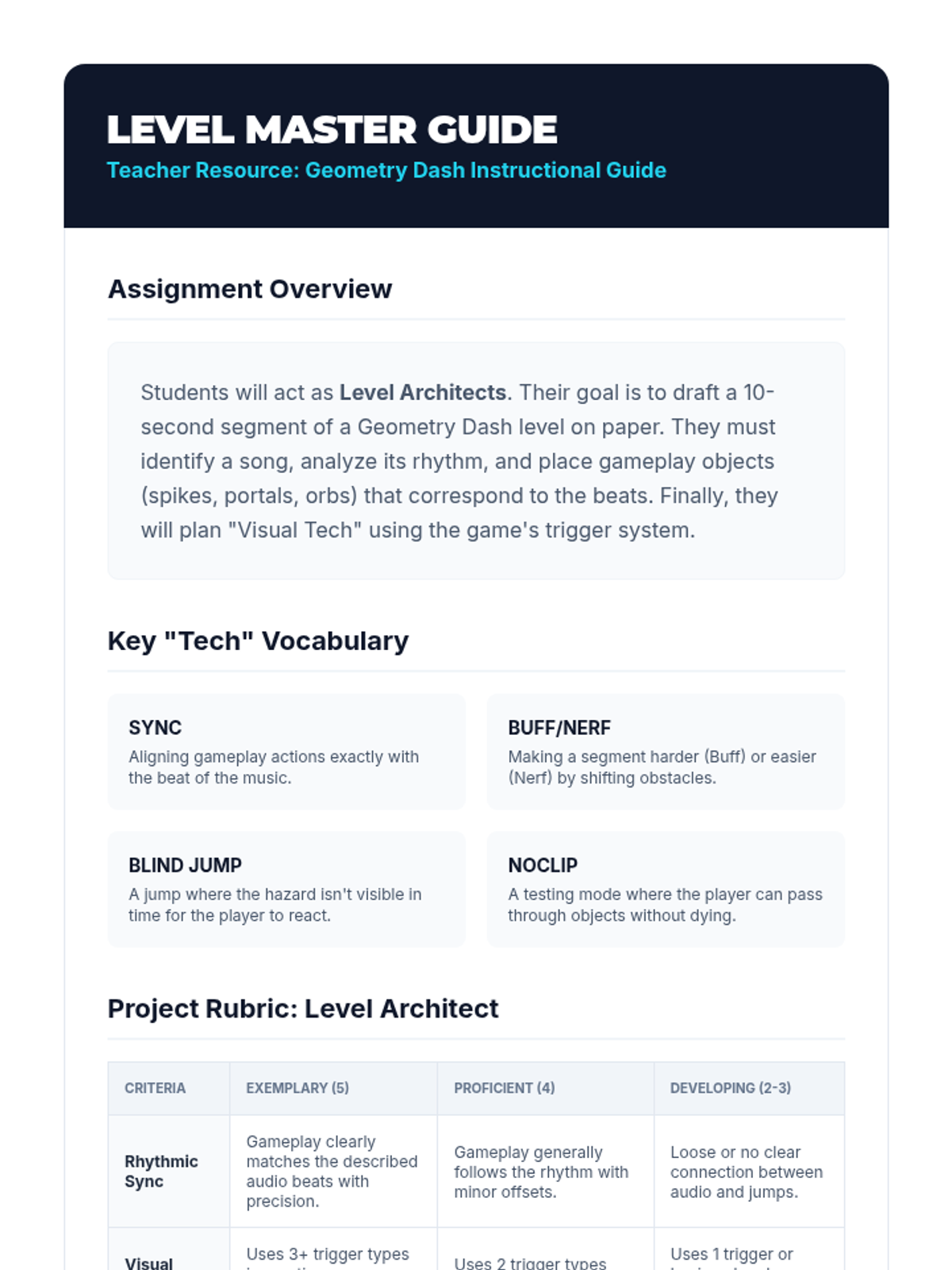
A teacher's guide for facilitating the Geometry Dash lesson, including vocabulary definitions, a project rubric, and discussion prompts.
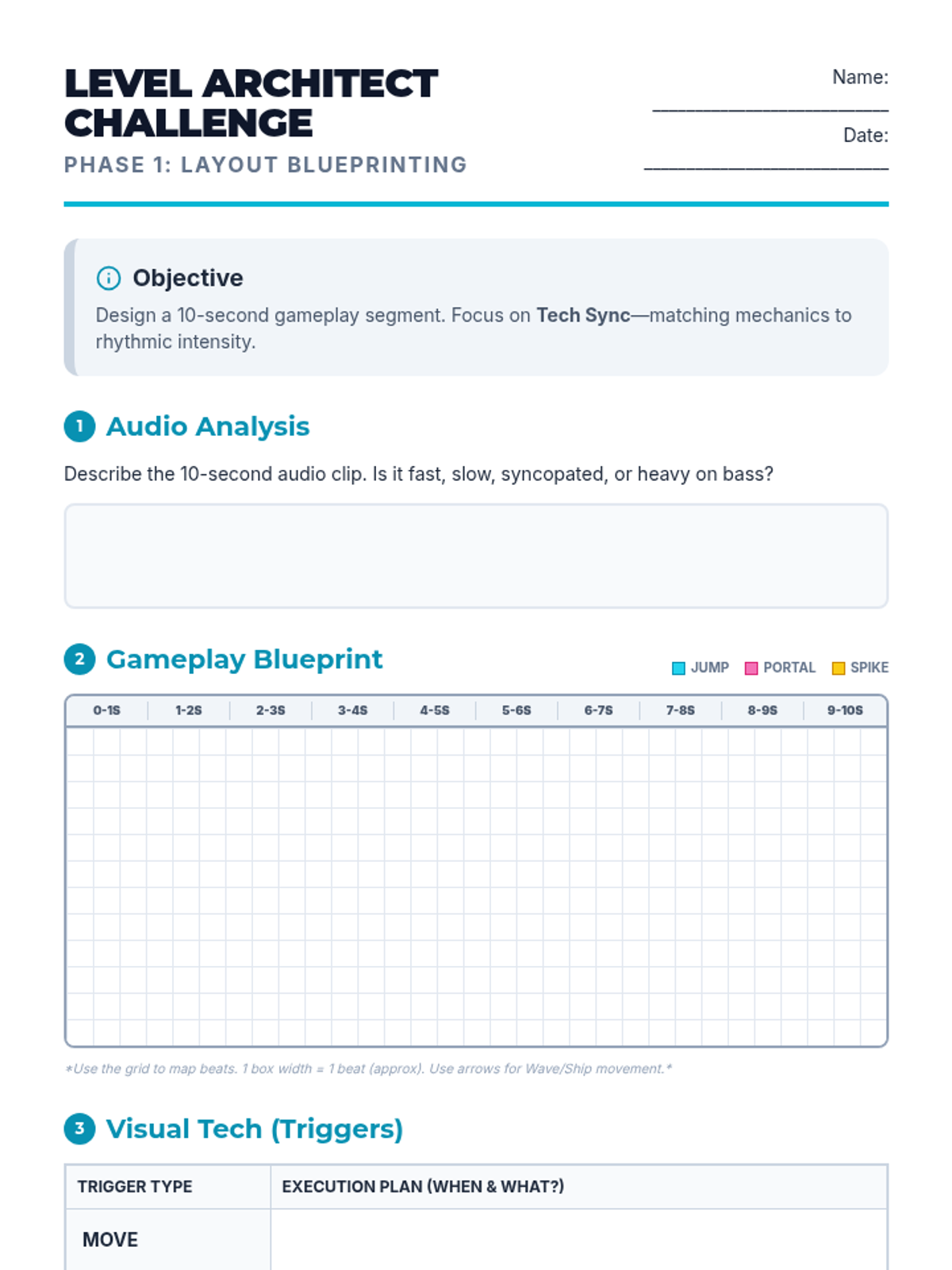
A level design project worksheet where students blueprint a 10-second segment of a Geometry Dash level, focusing on rhythm sync and trigger logic.
A high-energy presentation exploring the mechanics, physics, and level design triggers of Geometry Dash. Includes sections on hitboxes, frame rate impact, and rhythm-based design.