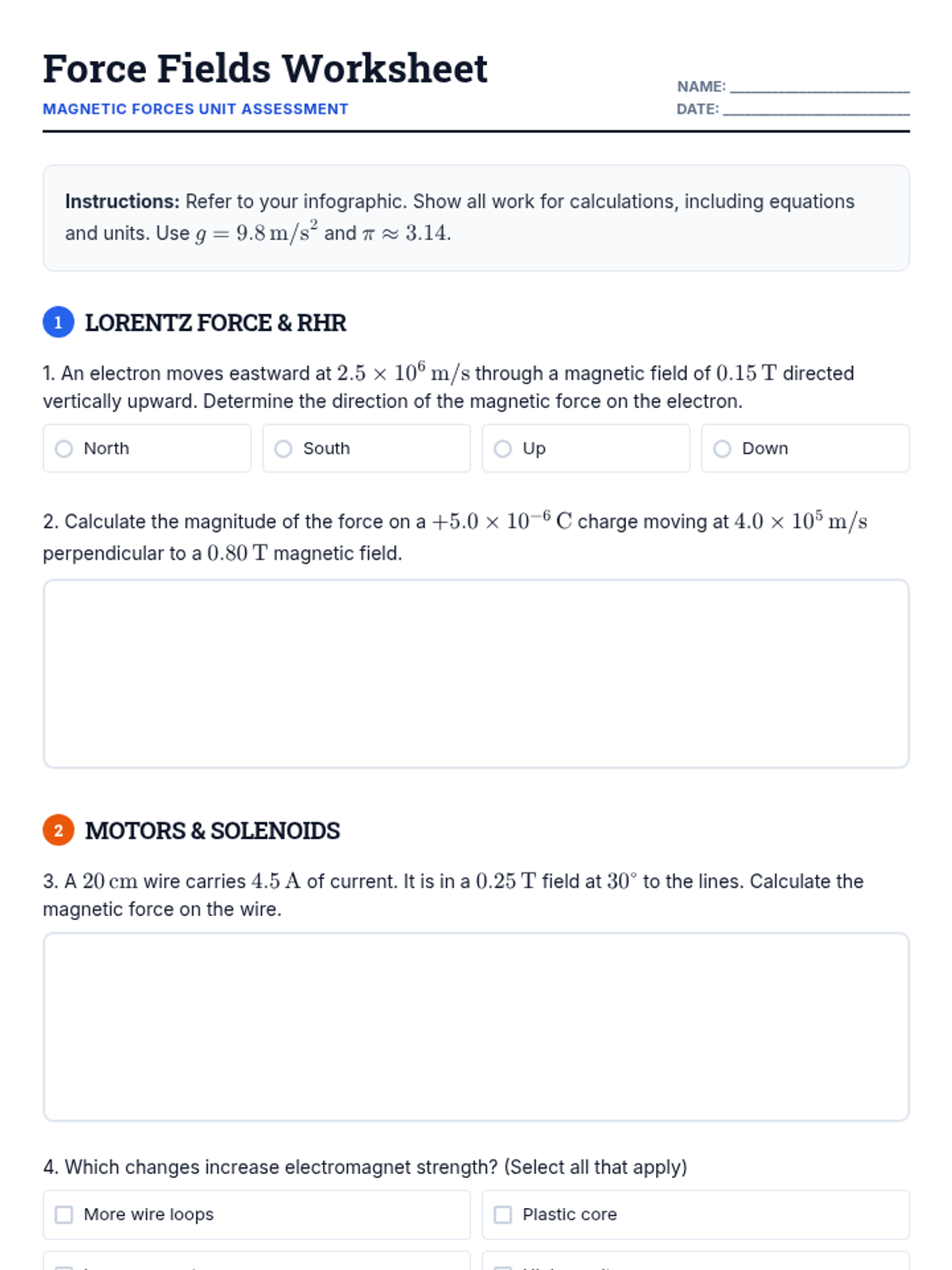
A high-impact, one-page infographic summary of magnetic forces, featuring sections on Lorentz force, field lines, motors, and electromagnetic induction. Designed as a study tool or reference sheet for unit assessments.
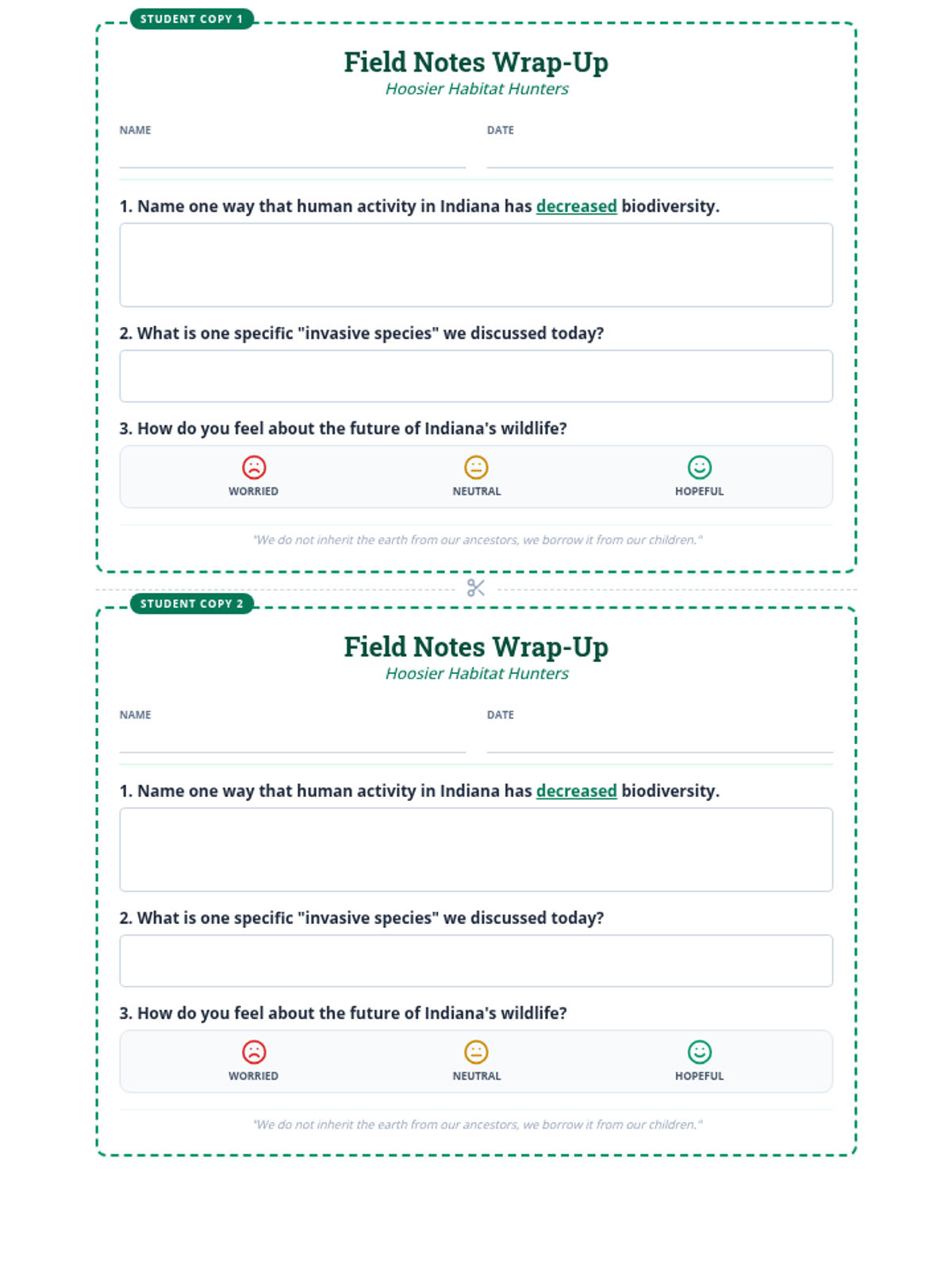
A concise exit ticket for the Indiana biodiversity lesson, featuring a mix of recall questions and a quick emotional check-in for students.
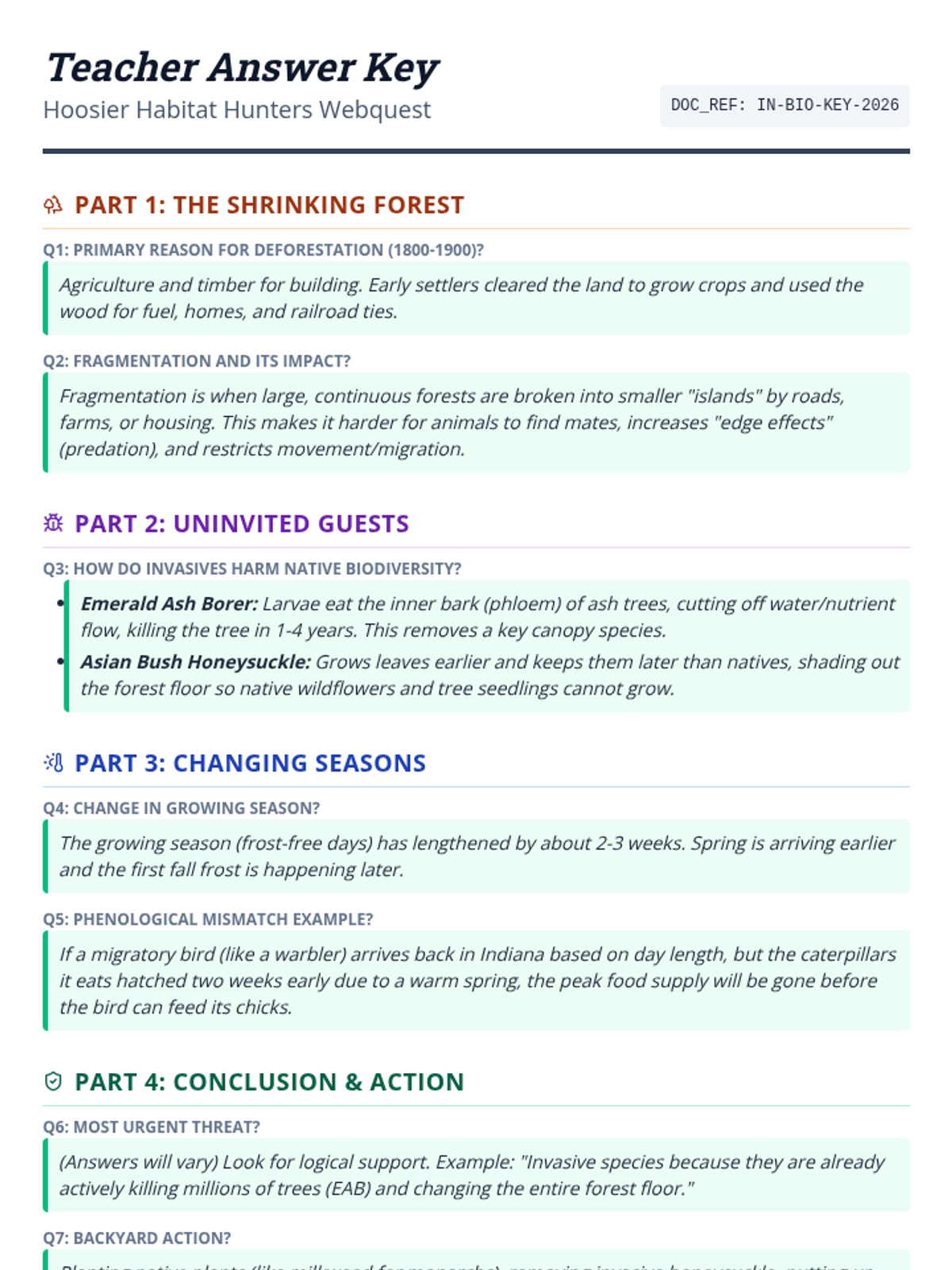
A teacher's answer key for the Indiana Biodiversity webquest, providing suggested responses and key facts for each section of the student worksheet.
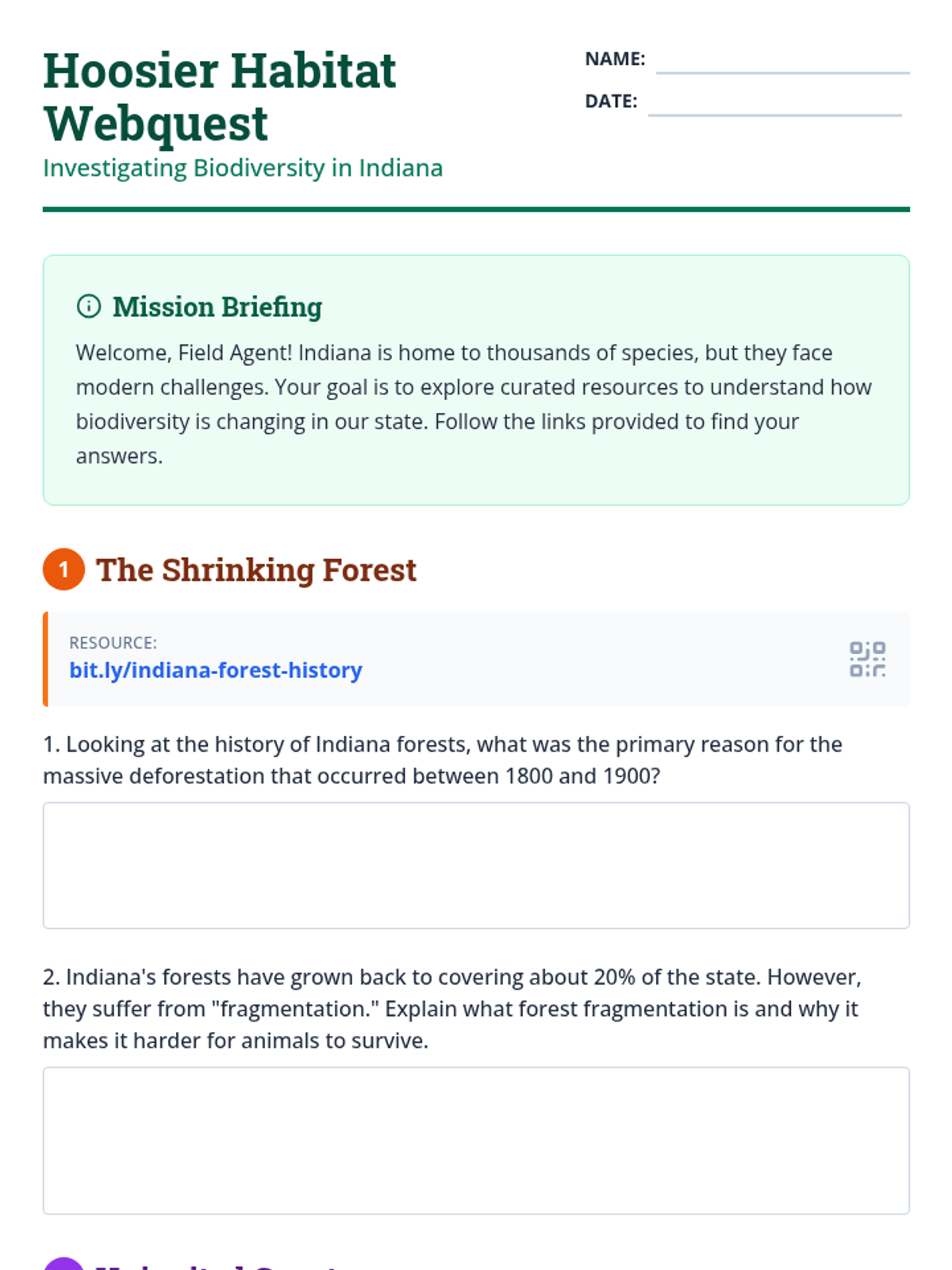
A student-facing webquest document for exploring Indiana's biodiversity threats. Includes specific links and structured questions on deforestation, invasive species, and climate change.
An introductory slide deck for the Indiana Biodiversity lesson, covering the definition of biodiversity and the three major threats: deforestation, invasive species, and climate change in a Hoosier context.
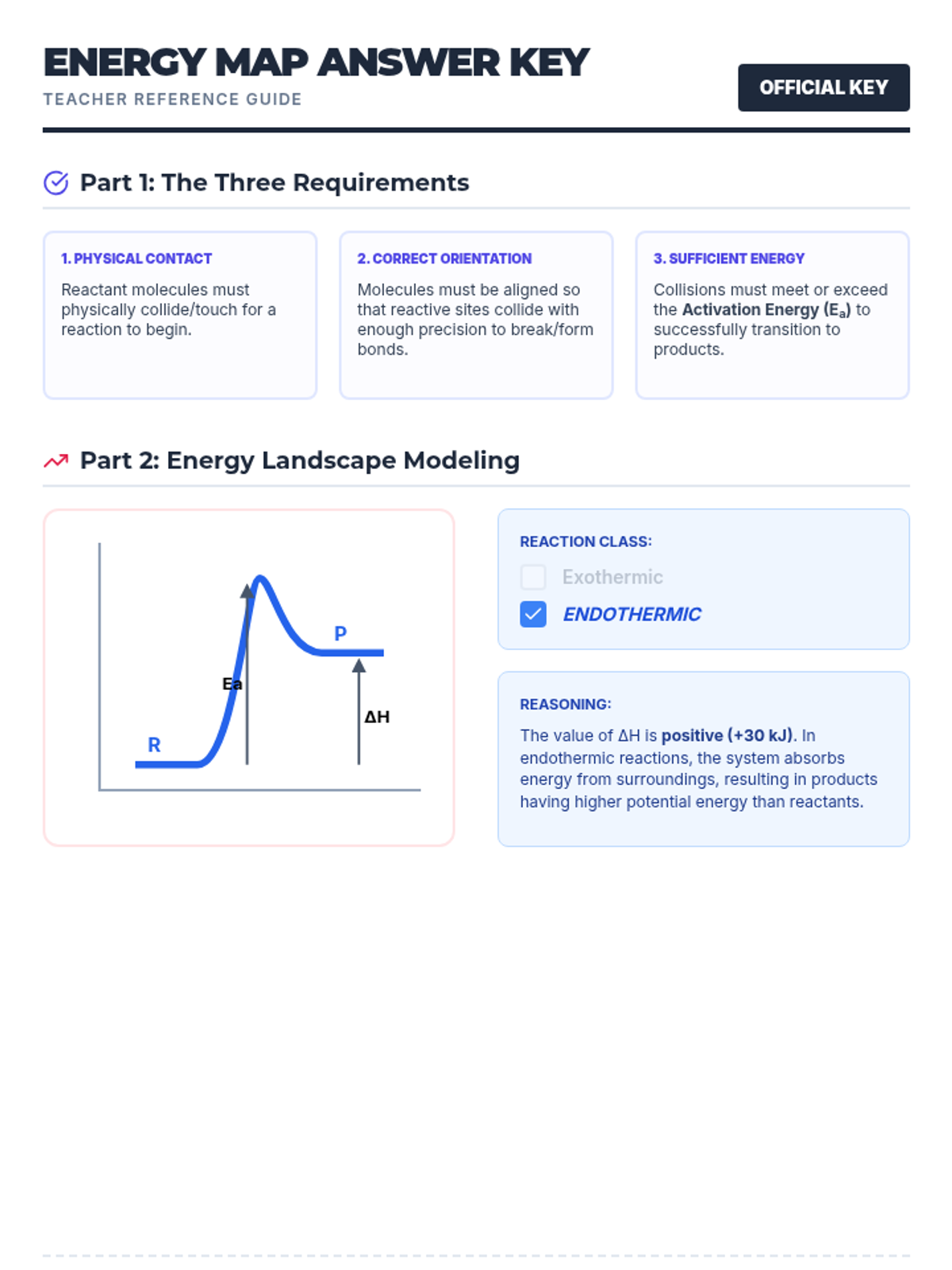
A teacher answer key for the Energy Map Worksheet. Provides model answers for Collision Theory requirements, a labeled endothermic enthalpy diagram sketch, formula selection for thermochemistry scenarios, and a detailed synthesis explanation of body heat. Optimized with corrected subscripts and math alignment.
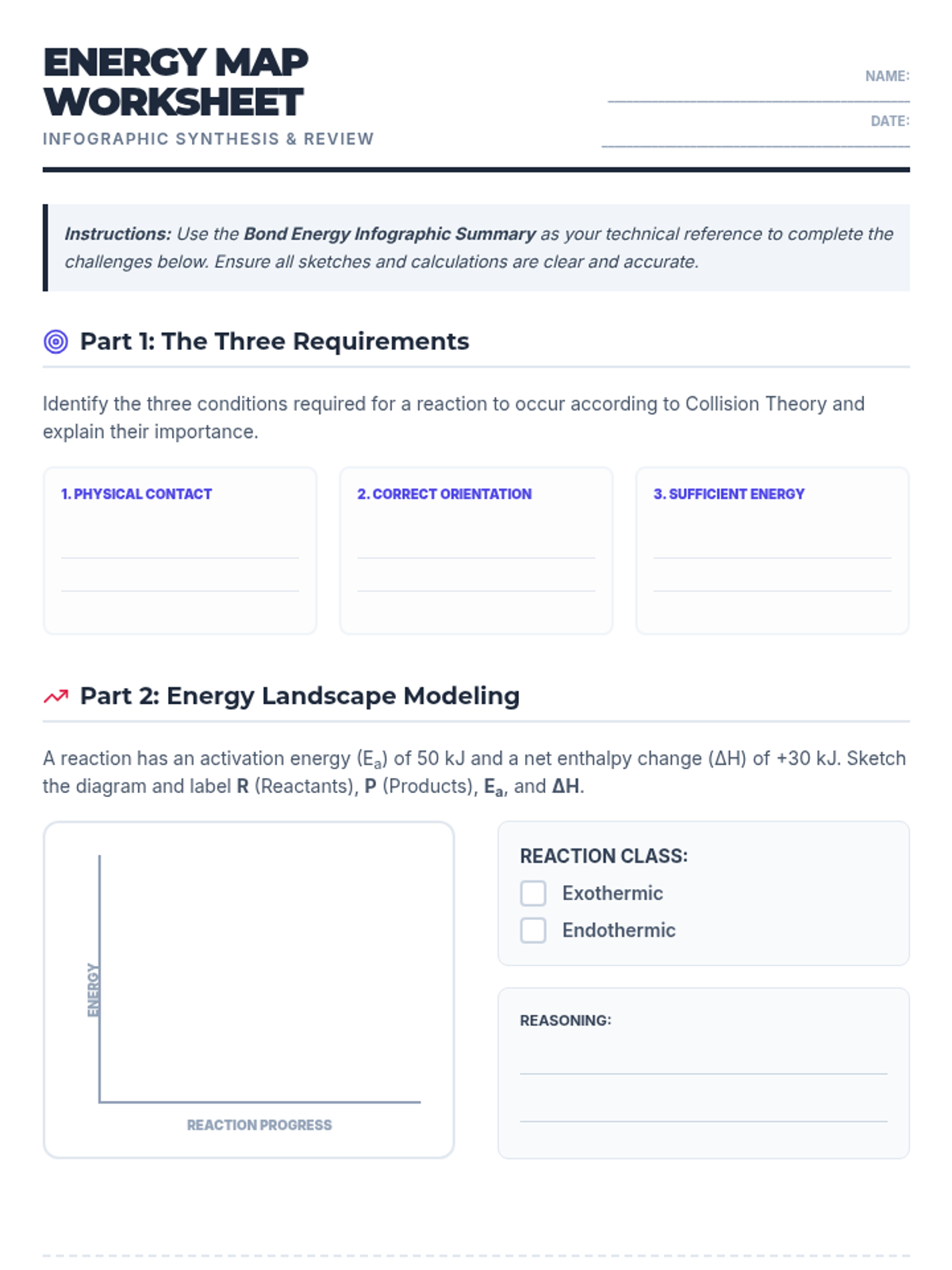
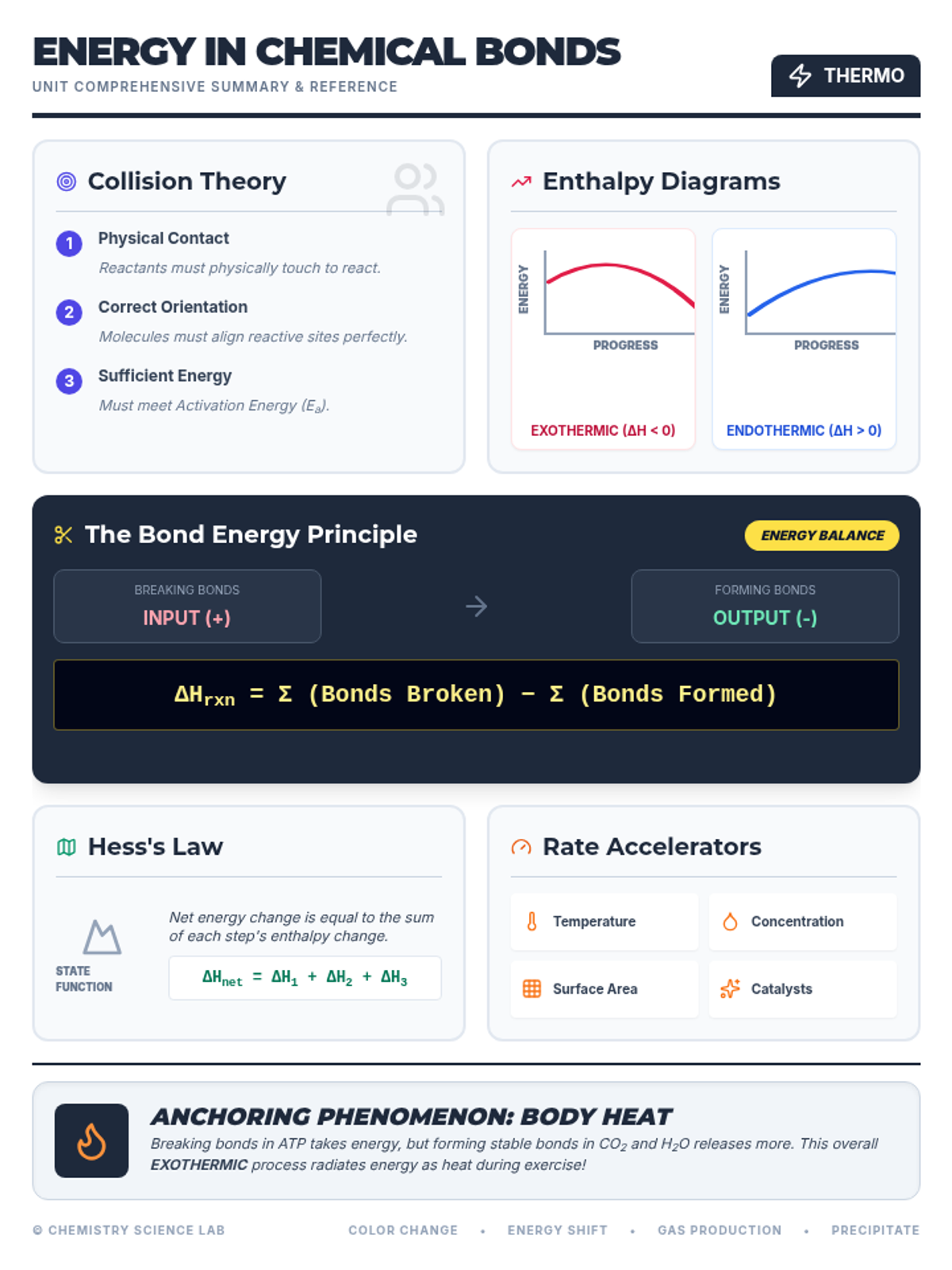
A two-page synthesis worksheet designed to accompany the Bond Energy Infographic. Students apply Collision Theory, model enthalpy diagrams for specific scenarios, select appropriate mathematical formulas for thermo problems, and explain the anchoring phenomenon of body heat. Optimized with improved work areas and page breaks.
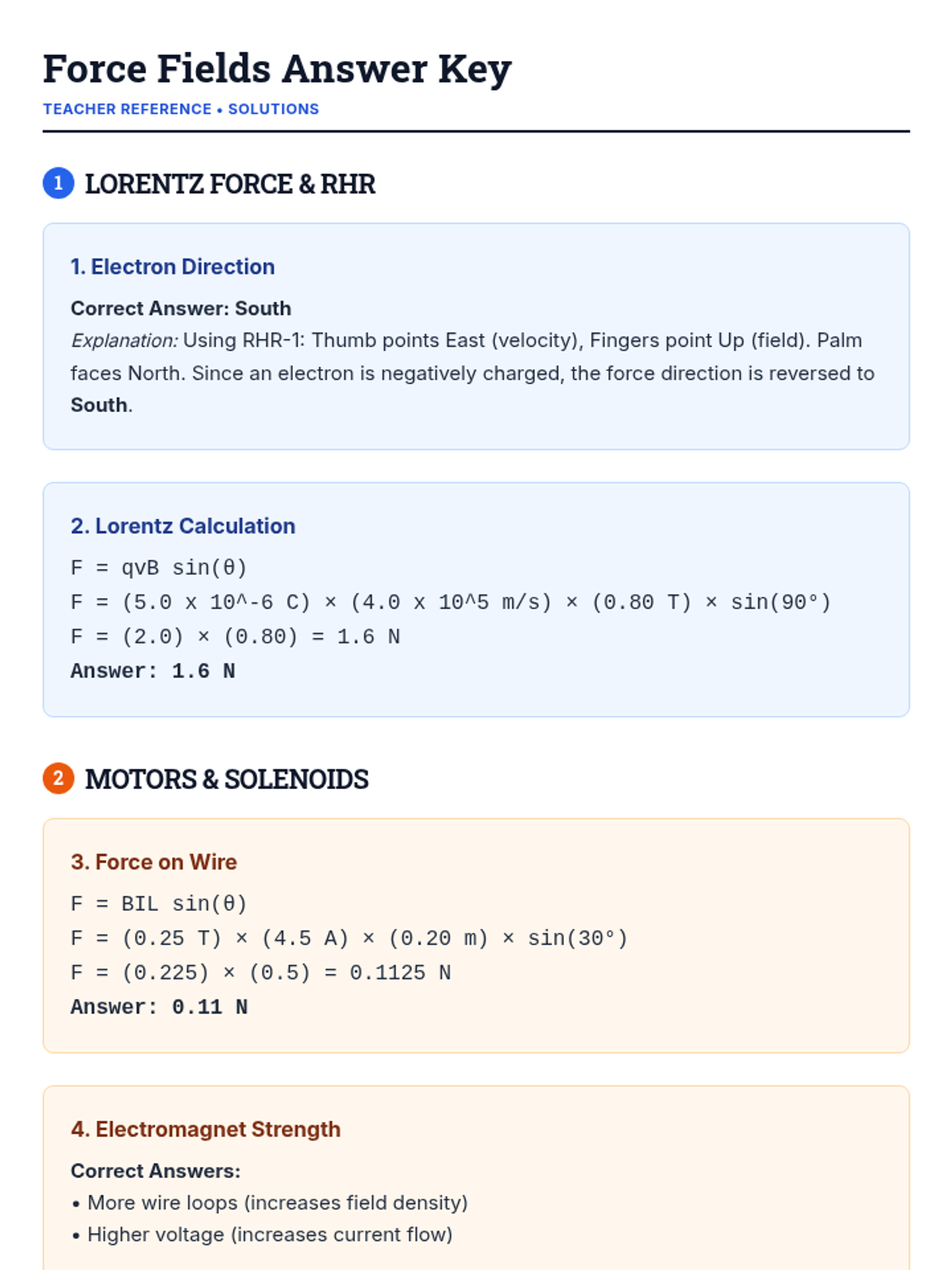
A teacher-facing answer key for the Magnetic Forces practice worksheet, providing step-by-step solutions and explanations for all problems.
A practice worksheet for students to apply concepts from the magnetic forces unit, including calculations for Lorentz force, current-carrying wires, and electromagnetic induction. includes space for showing work.
A high-impact infographic summary for the Energy in Chemical Bonds unit. It visualizes key concepts including Collision Theory, Enthalpy Diagrams with labeled humps (Ea and ΔH), Bond Energy mathematics, Hess's Law, Calorimetry, and reaction rate factors. Optimized for a single-page layout with robust HTML-based formulas and clear visuals.
An introductory slide deck for the Pluto Status Debate lesson, using high-contrast visuals and simplified analogies like the 'Bowling Ball vs. Marble' to explain planetary criteria to special education students.
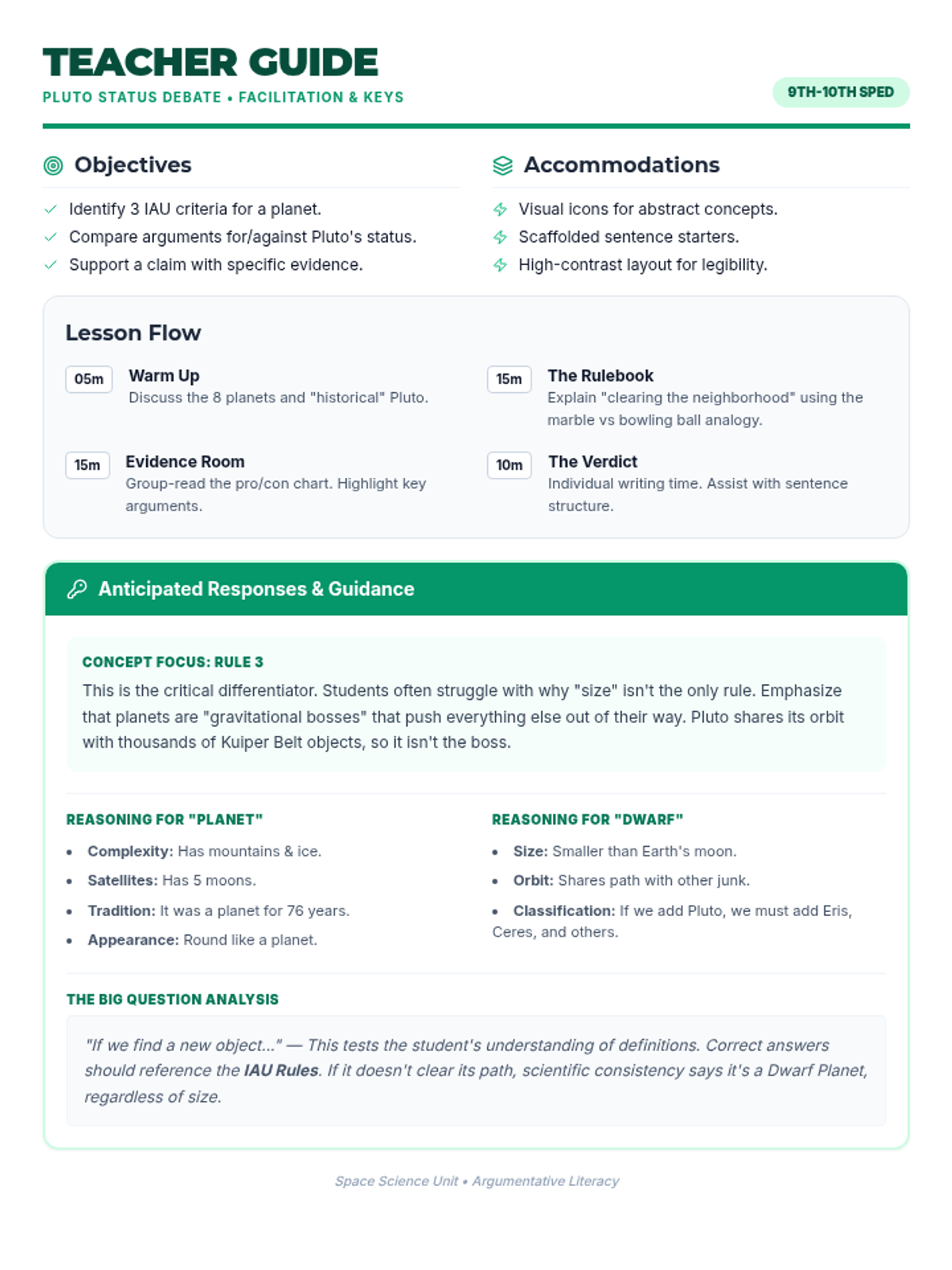
A teacher guide for the Pluto Status Debate lesson, including instructional goals, SpEd-specific accommodations, pacing suggestions, and an answer key for expected student responses.
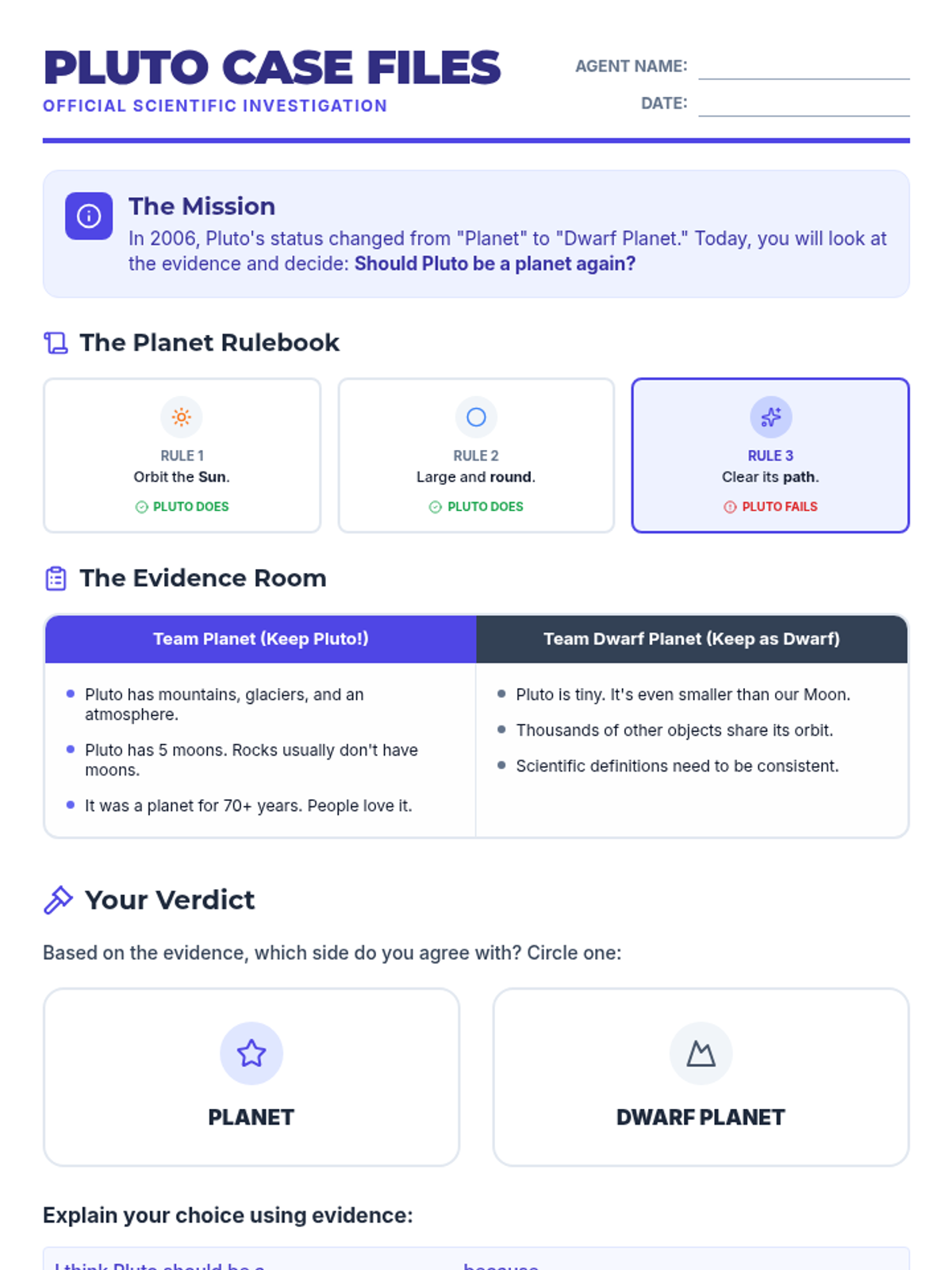
A structured worksheet for 9th-10th grade special education students exploring the scientific debate over Pluto's status as a planet, featuring simplified IAU definitions and pro/con arguments.
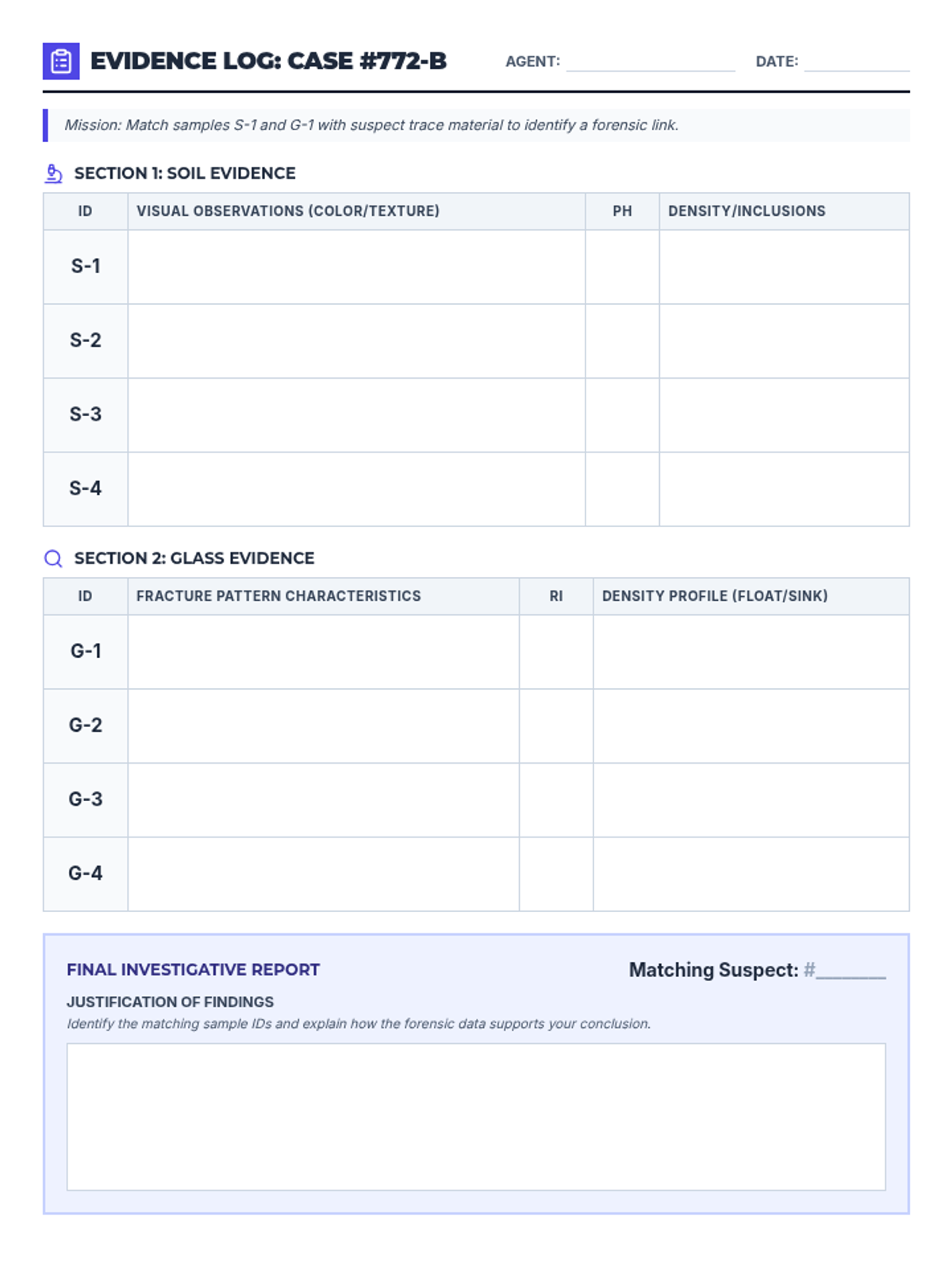
Student worksheet for the Trace Evidence Scavenger Hunt, providing organized tables for recording soil and glass data and a section for a final forensic conclusion. Compacted to a single page.
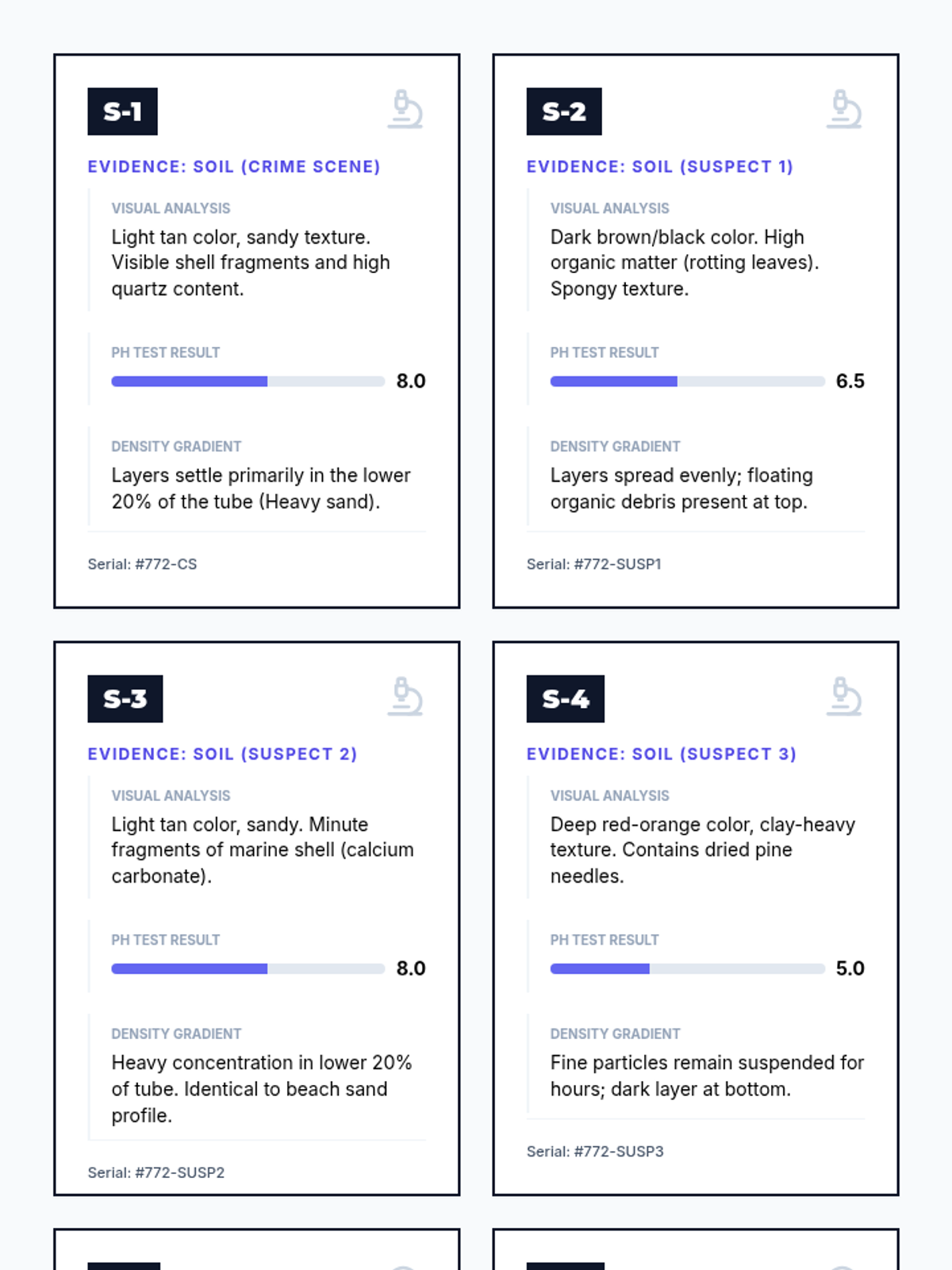
Set of 8 scavenger hunt station cards (4 soil samples, 4 glass samples) containing forensic data for students to analyze and compare. Standardized UI elements for neutrality.
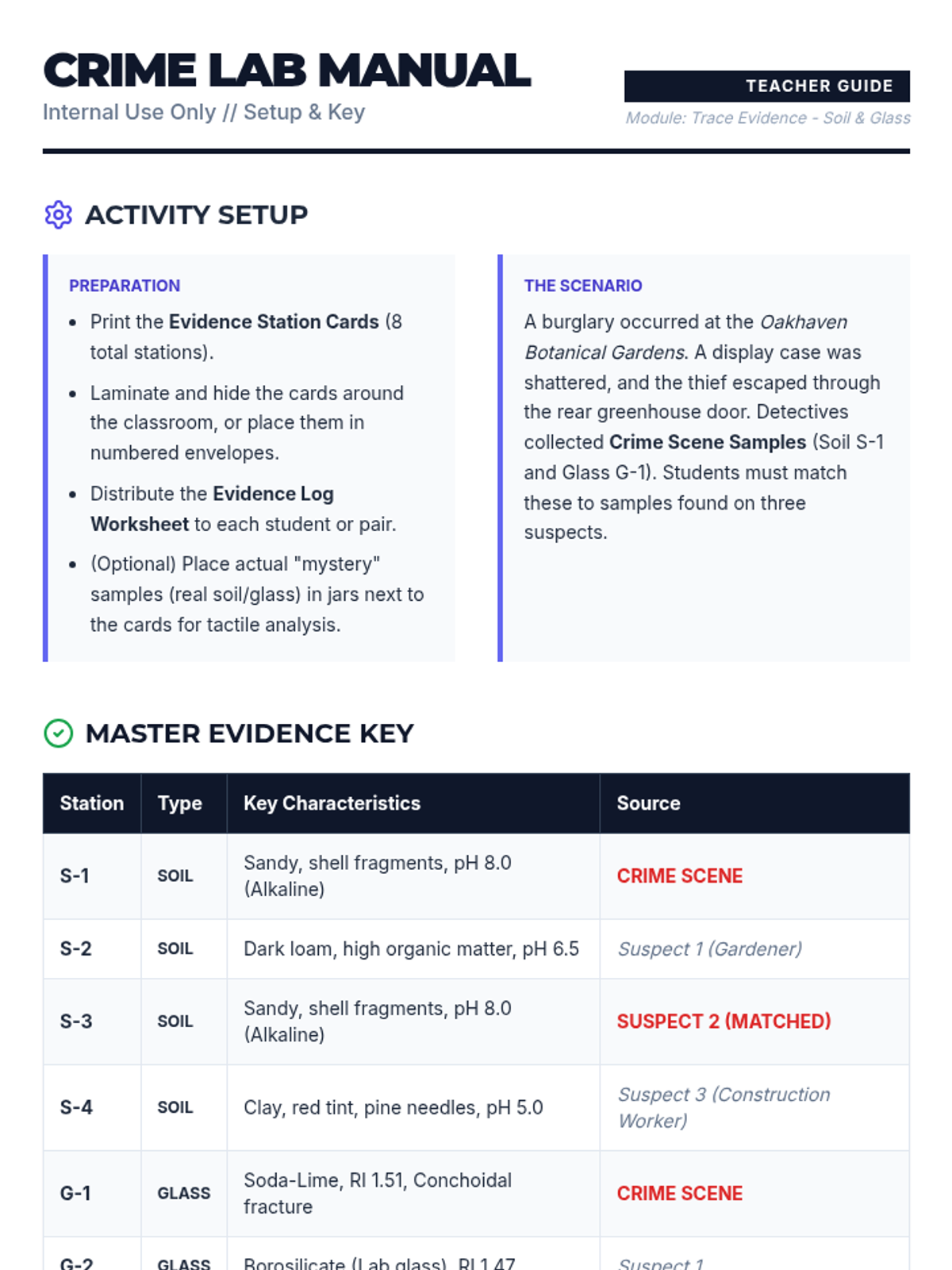
Teacher setup guide and answer key for the Trace Evidence Scavenger Hunt, detailing sample characteristics and the final solution to the forensic mystery.
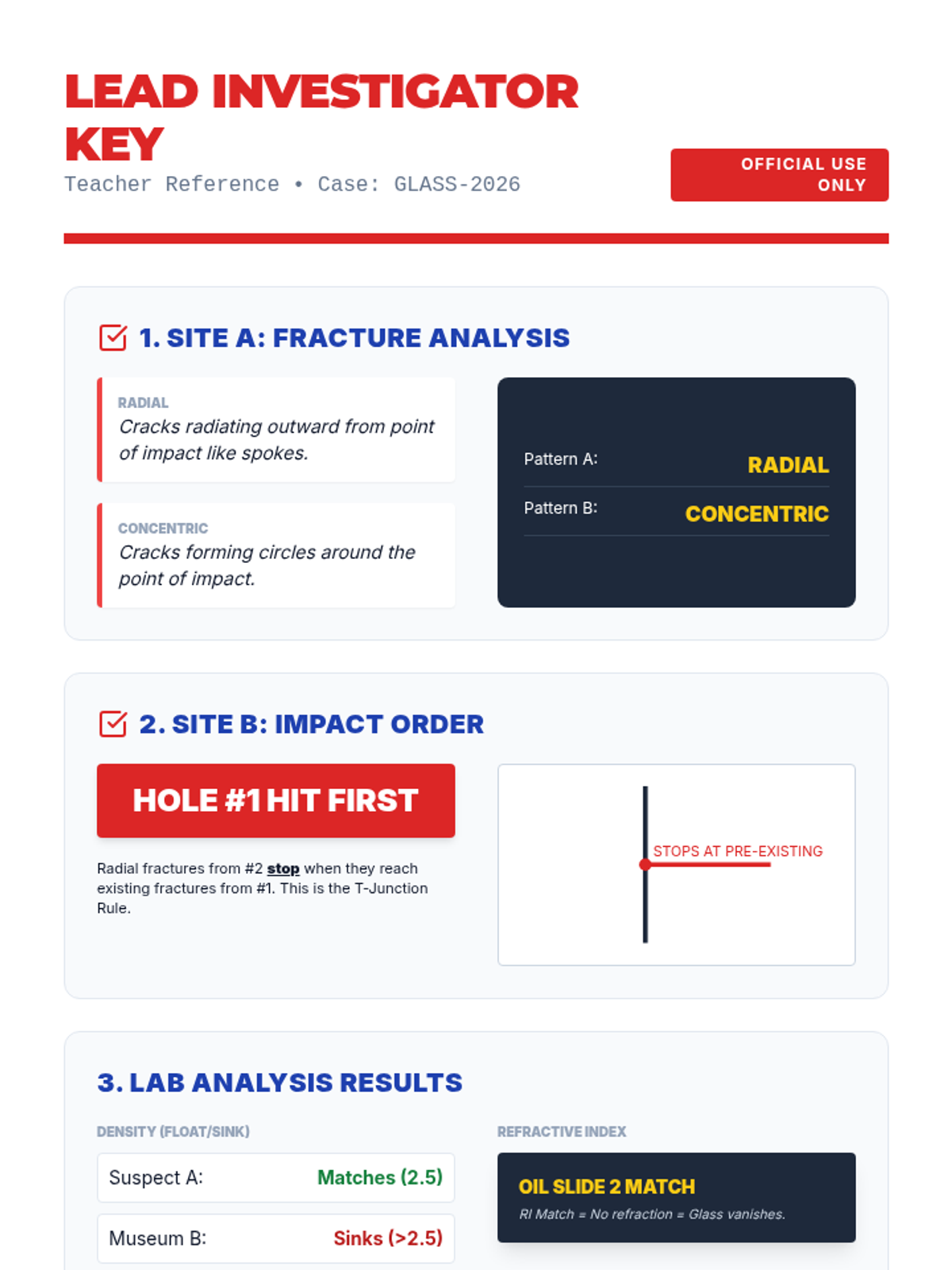
Comprehensive teacher guide and answer key for the Shattered Secrets glass evidence scavenger hunt. Revised to fix page breaks, clarify SVG labels, and ensure consistent layout. Content consolidated to fit 2 pages efficiently.
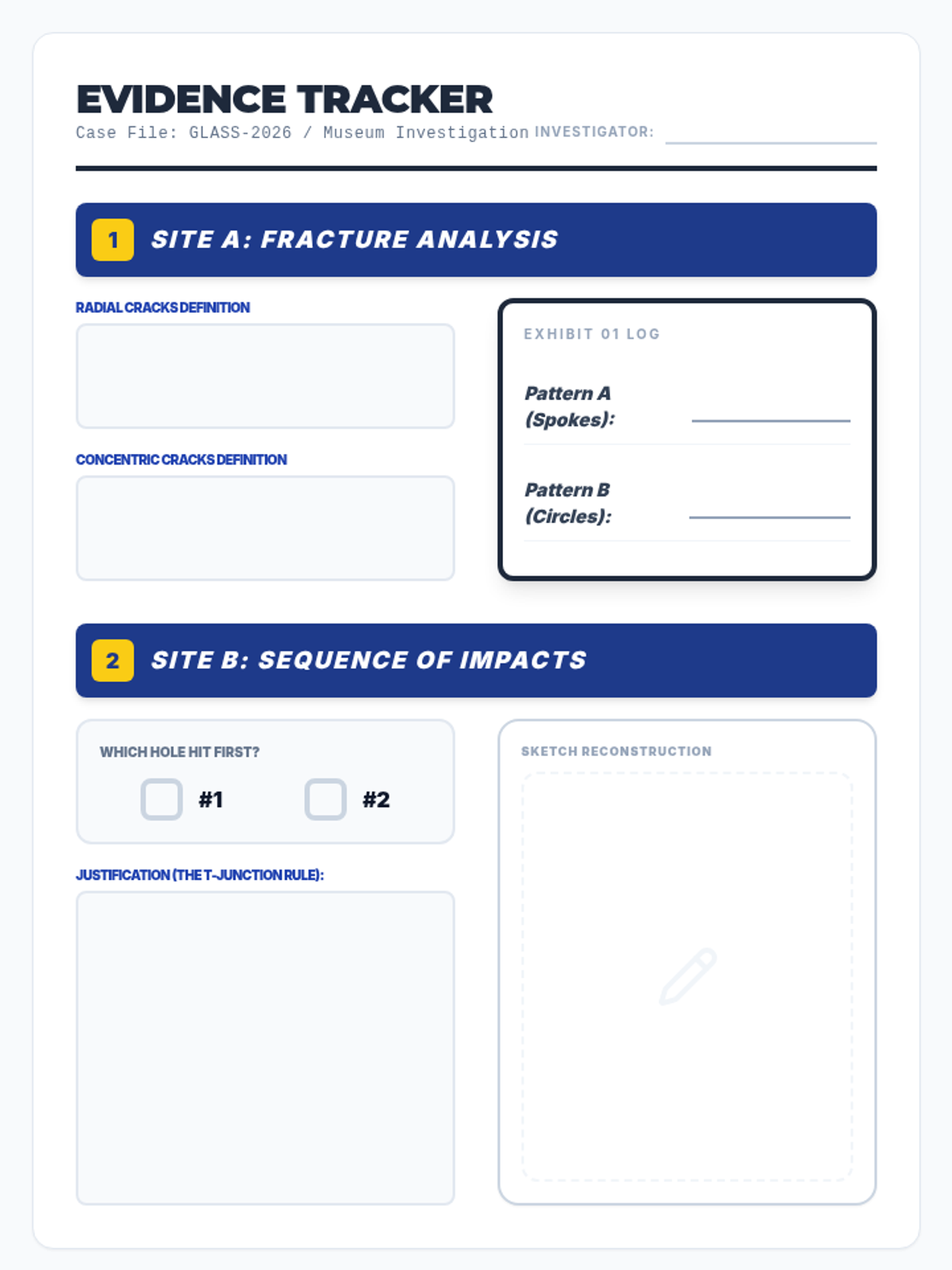
A professional forensic 'Evidence Tracker' worksheet for students to record findings from the digital scavenger hunt. Revised to fix page breaks, improve handwriting legibility in the verdict section, and optimize visual hierarchy. Now consolidated to a high-efficiency 2-page layout.
A dynamic, image-driven digital slide hunt for middle school forensic students, covering glass fracture patterns, density analysis, and refractive index through a museum heist narrative. Revised for improved readability and visual clarity on slide 5. Each slide has been carefully sized to fit within the 1440x810 viewport to prevent layout breaks.
A presentation slide deck to accompany the coastal seas documentary, including the embedded YouTube video and key discussion themes.
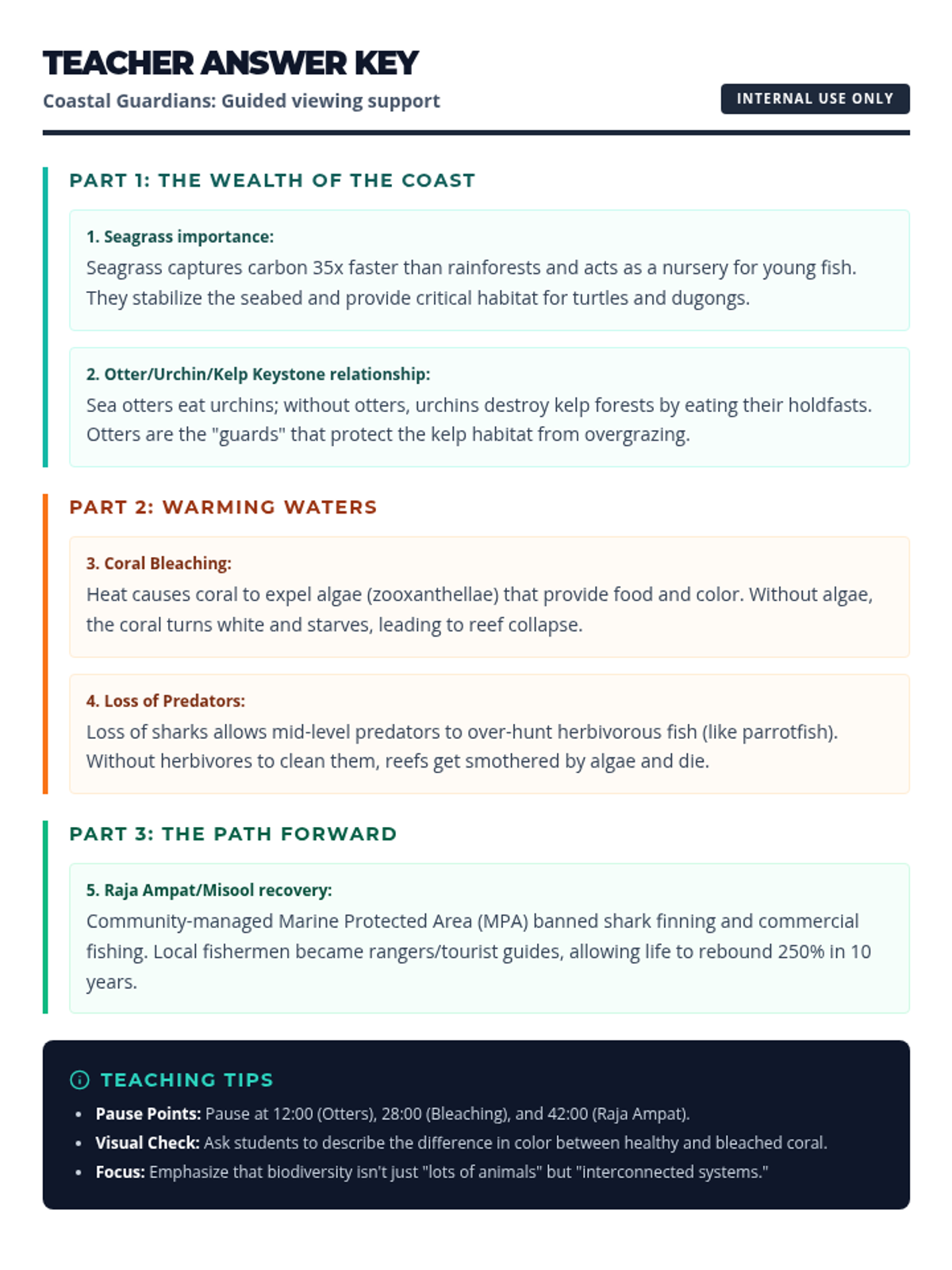
An answer key and teaching guide for the Coastal Guardians worksheet, providing detailed responses and instructional tips for educators.
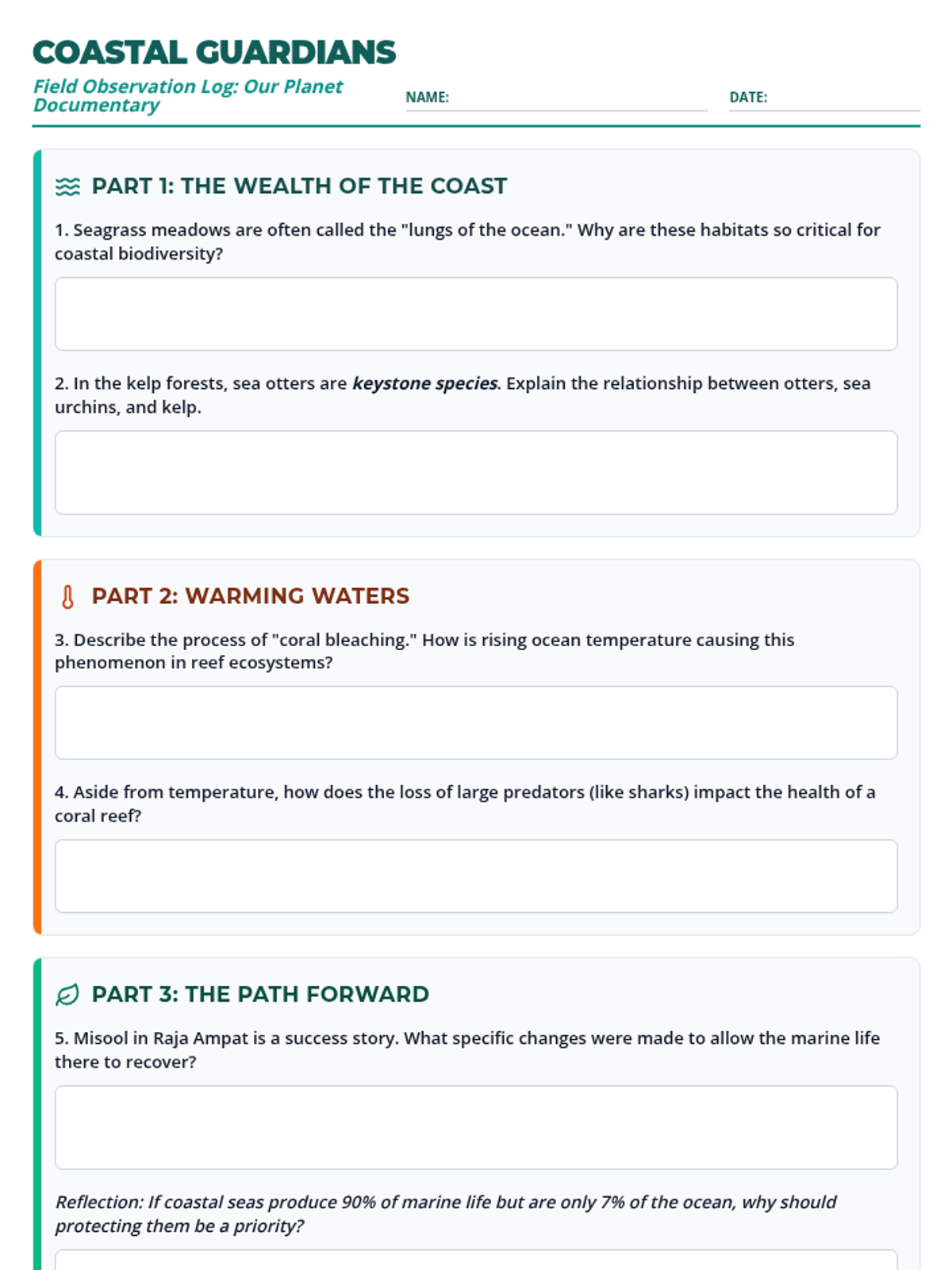
A guided viewing worksheet for the 'Our Planet: Coastal Seas' documentary, featuring sections on biodiversity, climate change, and marine recovery with spacious student work areas.
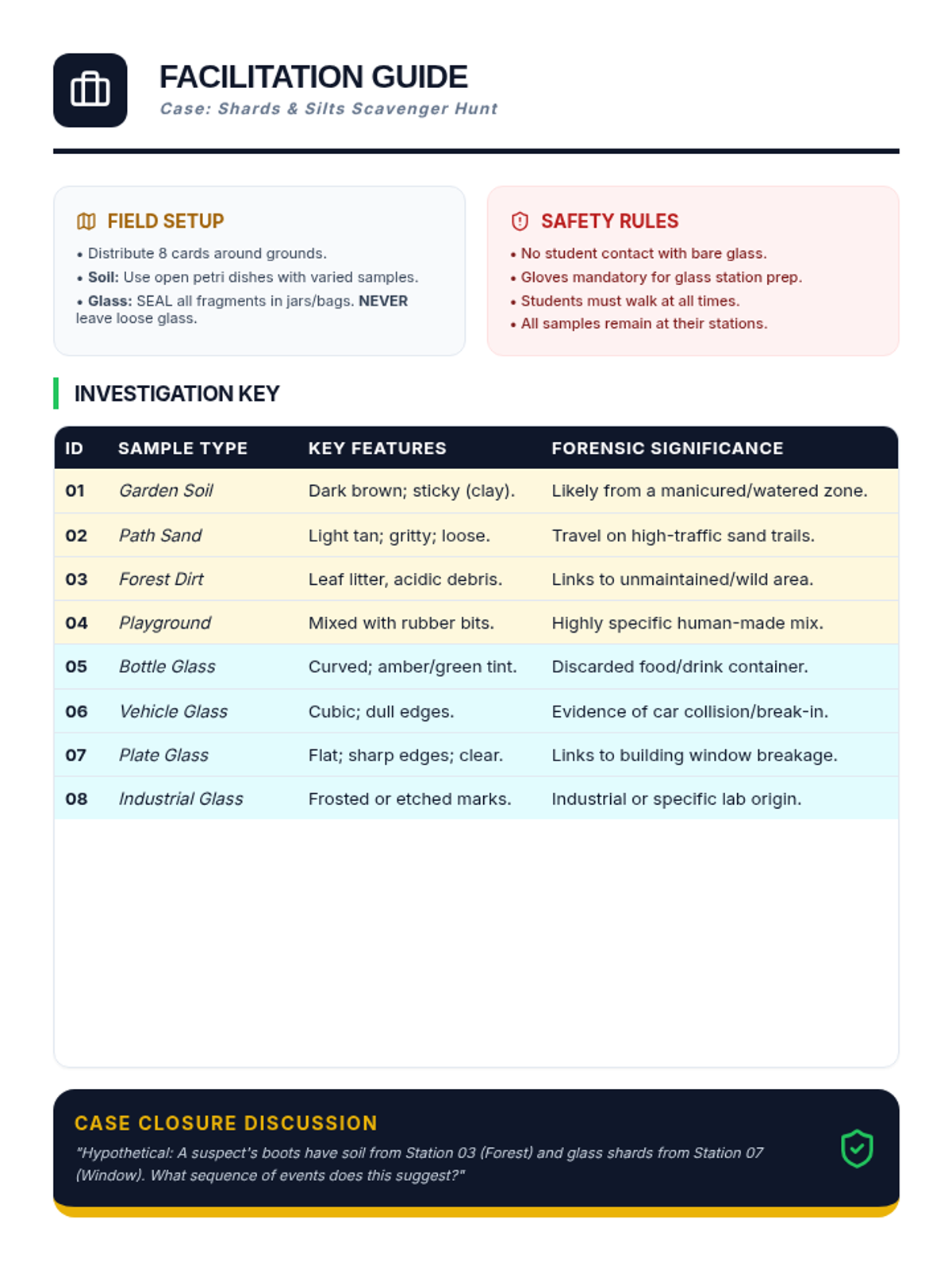
A facilitation guide for teachers to set up and manage the outdoor scavenger hunt. Includes station preparation details, material lists, safety protocols, and a consolidated answer key for all 8 evidence stations designed to fit on a single page.
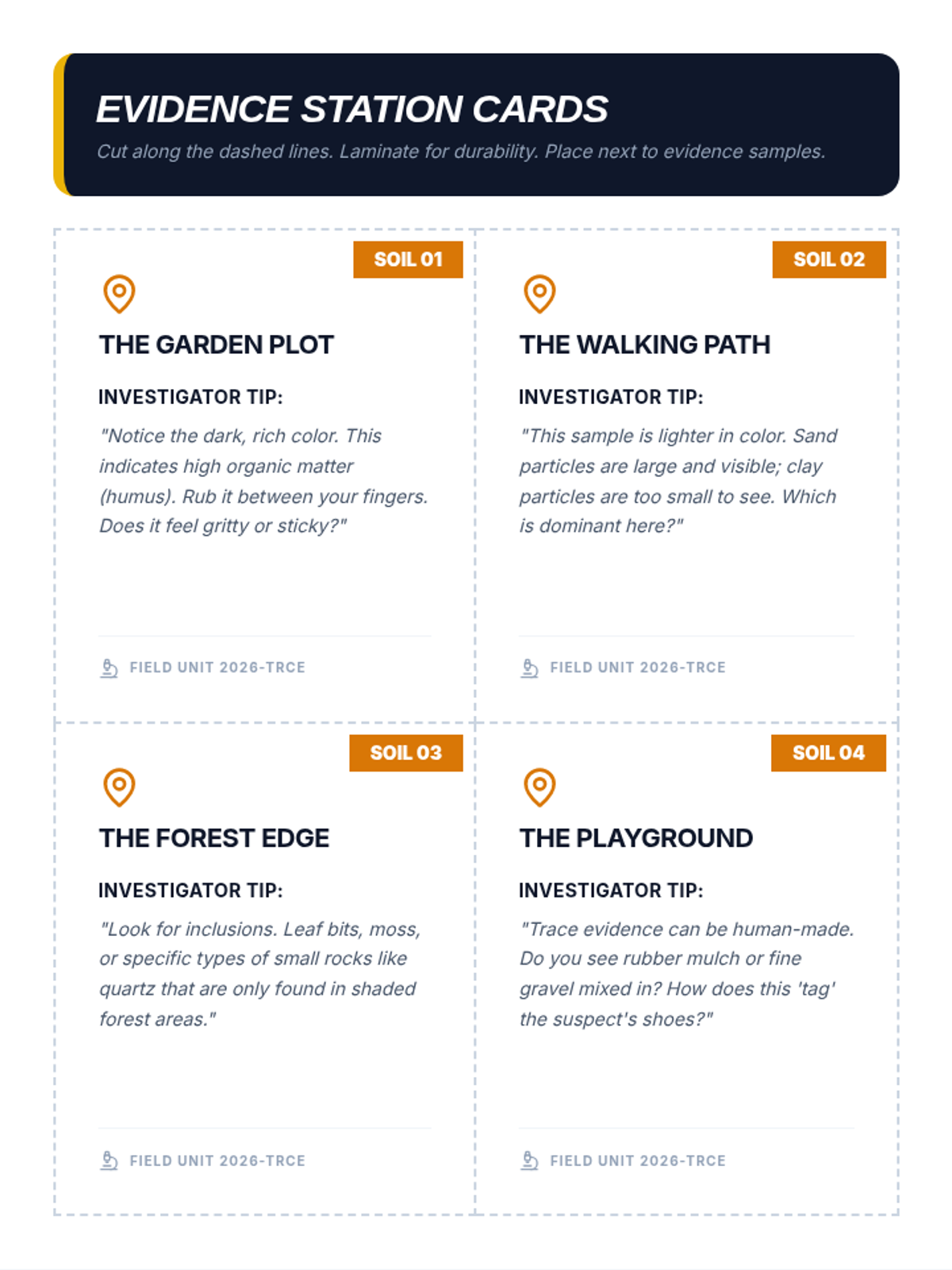
Physical cards to be printed and placed at outdoor locations for the scavenger hunt. Each card includes the station name, location, and professional 'Investigator Tips' to guide student observations. Includes dashed cut lines and integrated teacher instructions. Layout optimized for 2 pages.
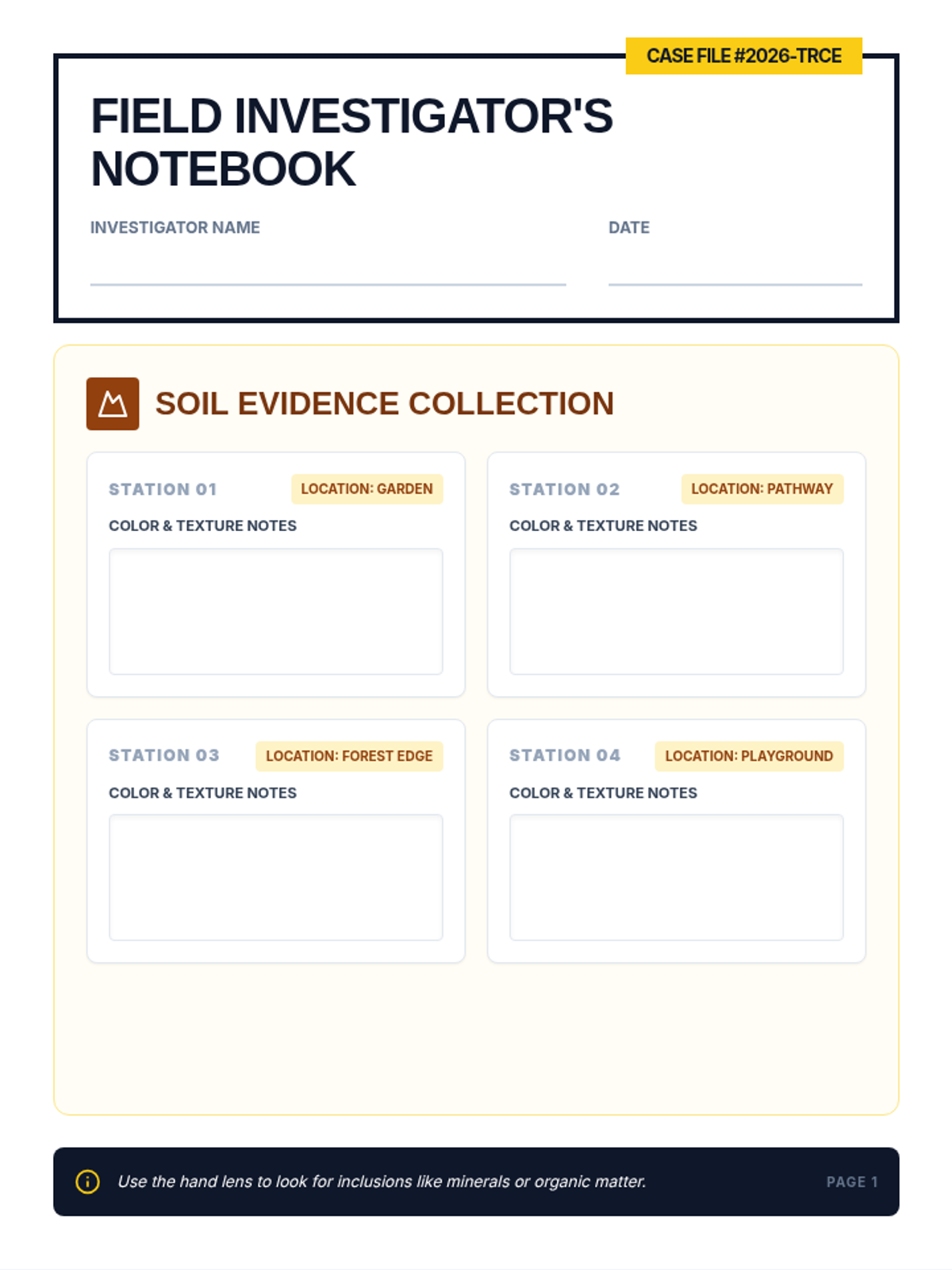
A two-page student field guide for recording observations during the trace evidence scavenger hunt. Includes dedicated sections for soil and glass analysis with specific location-based prompts and increased space for concluding analysis questions.
Instructional slides for the Trace Evidence lesson, covering Locard's Principle, soil composition, and glass analysis. Designed for middle school level with large text and clear visuals.
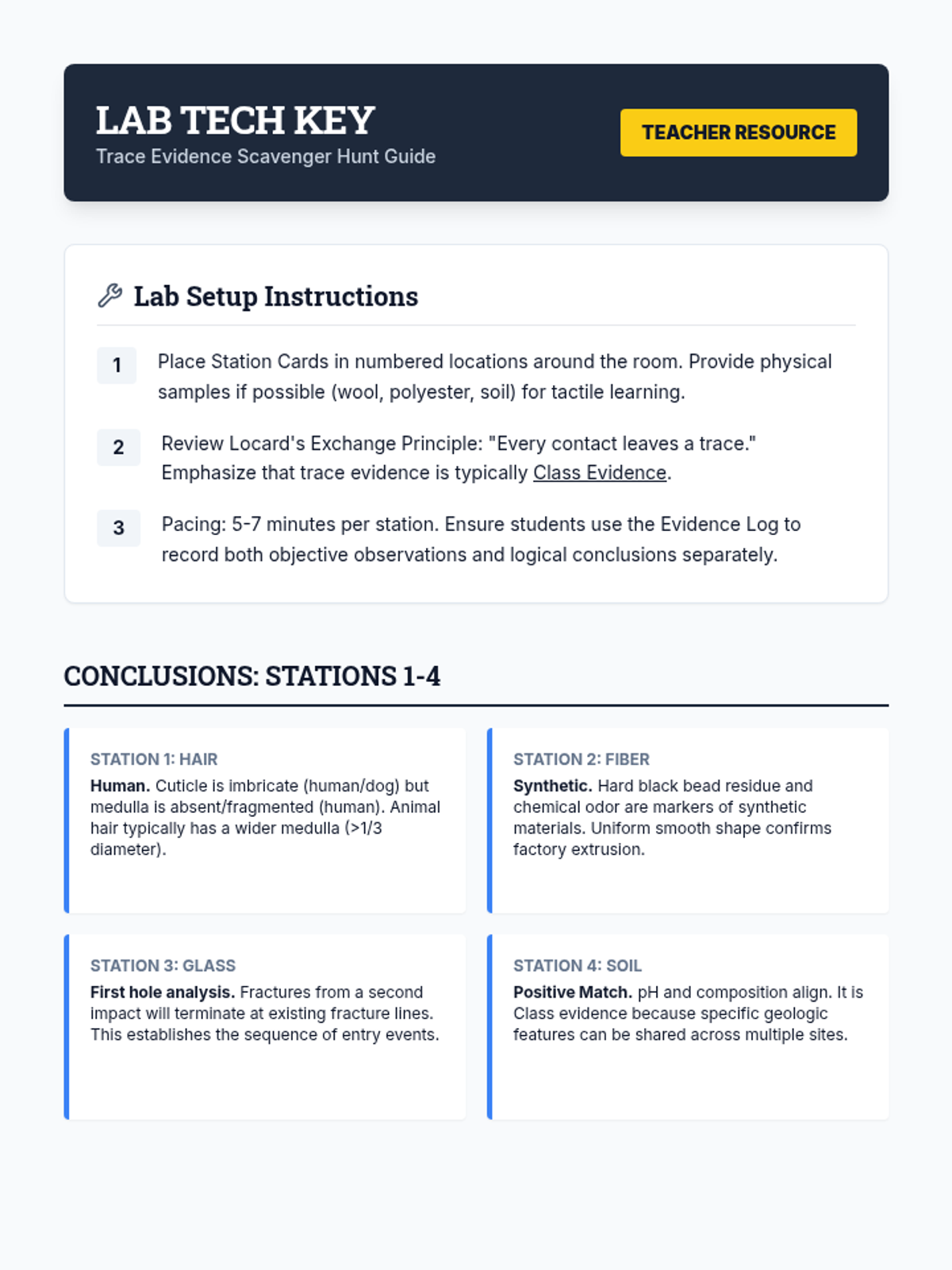
A comprehensive teacher answer key and setup guide for the Trace Evidence Scavenger Hunt. Revised to fix layout issues, improve text flow in setup instructions, and ensure clean page breaks between station conclusions.
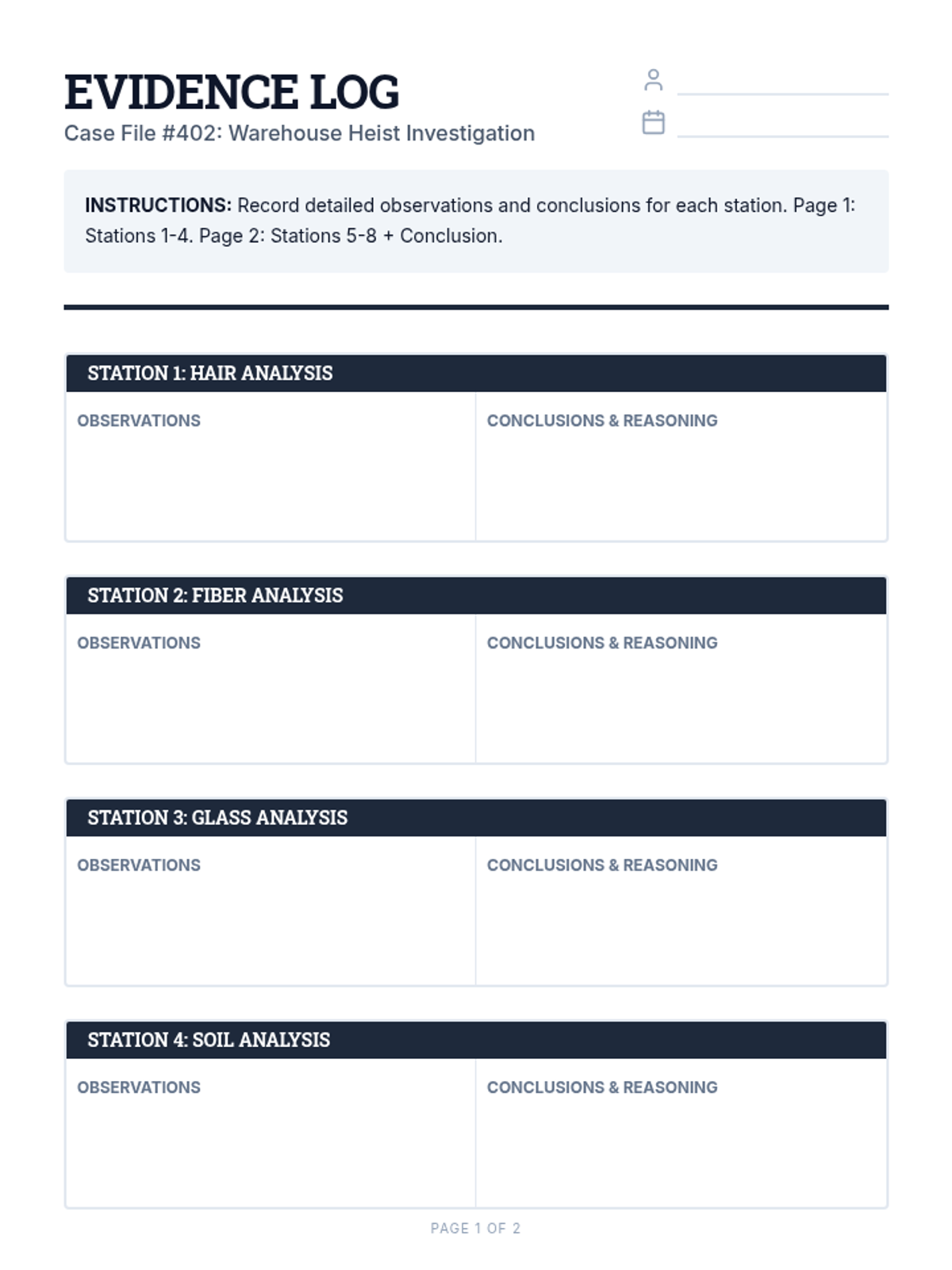
A structured evidence log worksheet for students to record observations and conclusions while rotating through trace evidence stations. Revised to a 2-page format for improved spacing and handwriting areas. sub-labels darkened and footer spacing adjusted.
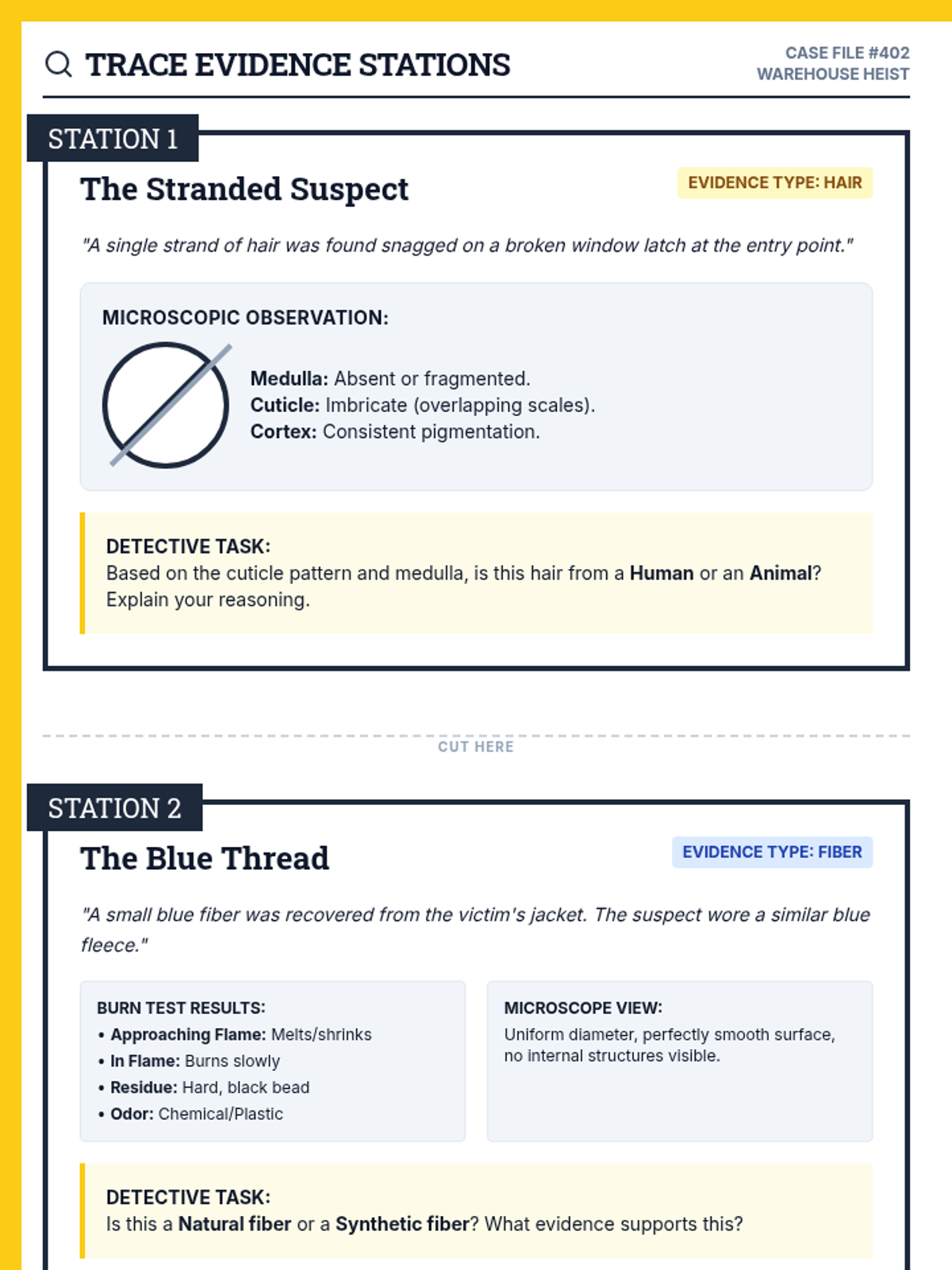
A set of 8 forensic station cards designed for a trace evidence scavenger hunt, featuring scenarios and tasks for hair, fiber, glass, soil, paint, pollen, metal, and dust analysis.