Grade 5 student worksheet for Lesson 8: The Zero Power. Focuses on the standard multiplication algorithm with placeholder zeros.
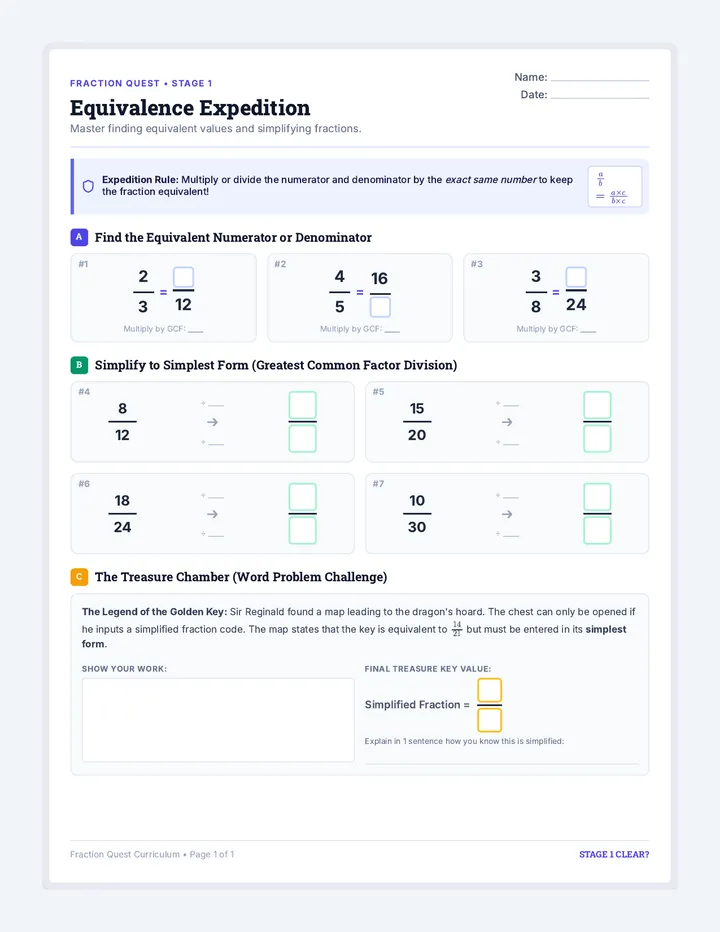
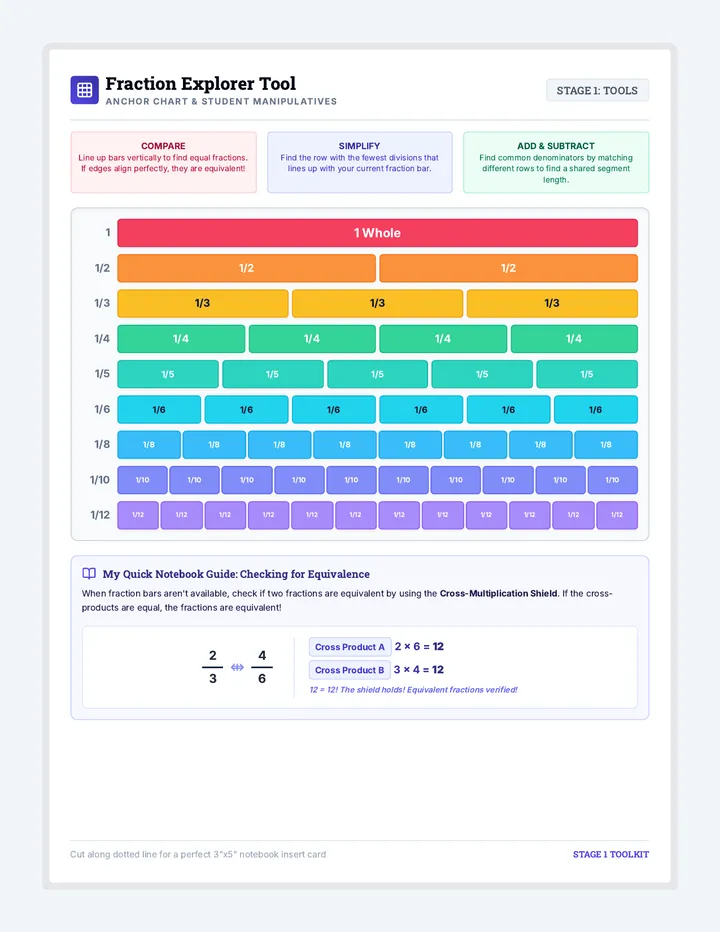
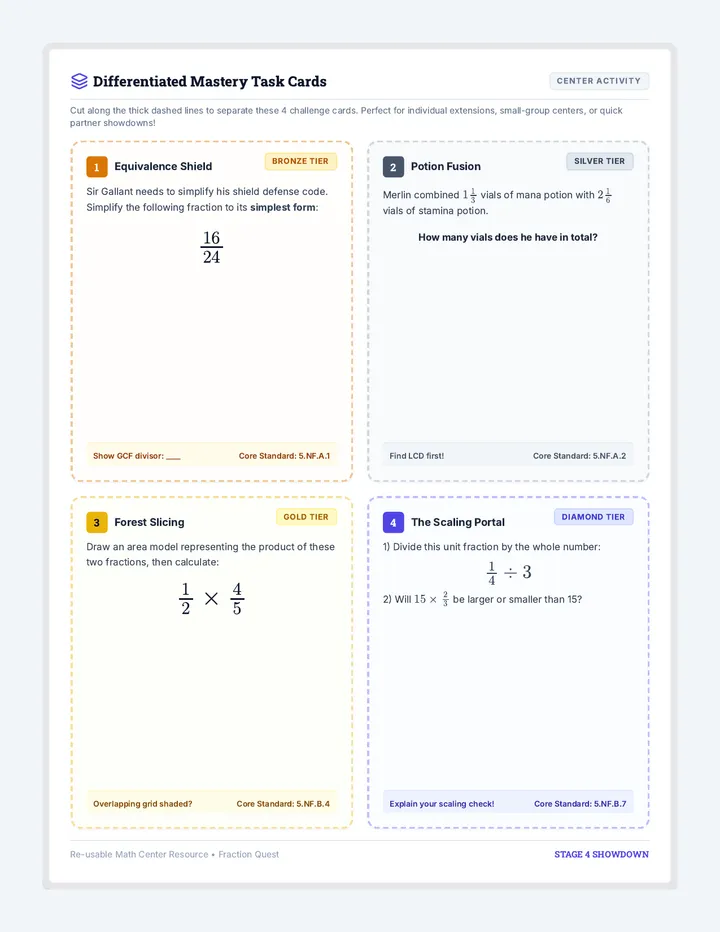
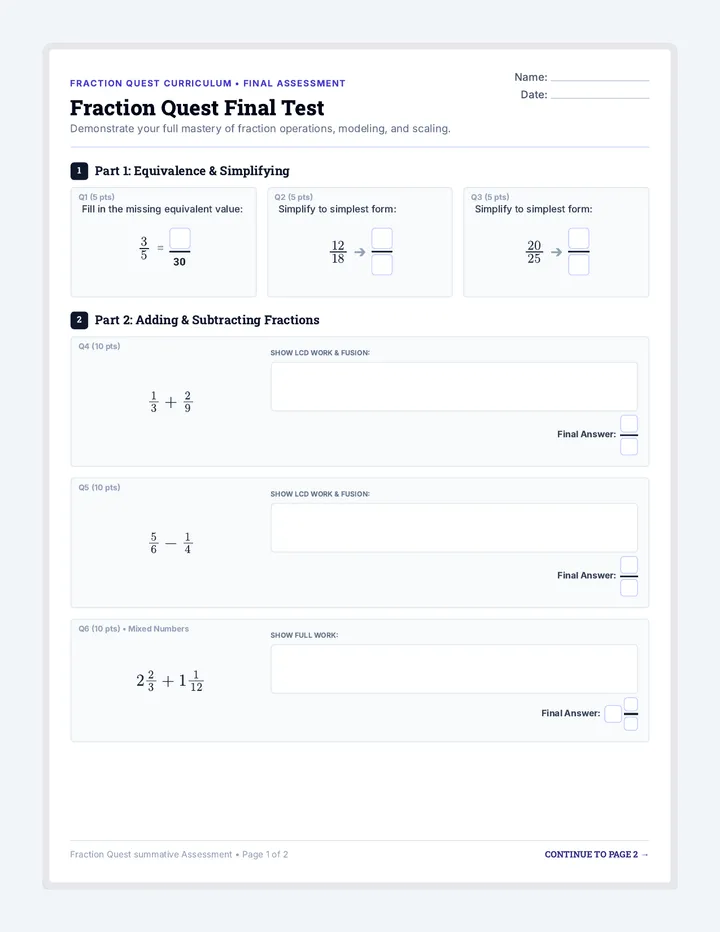
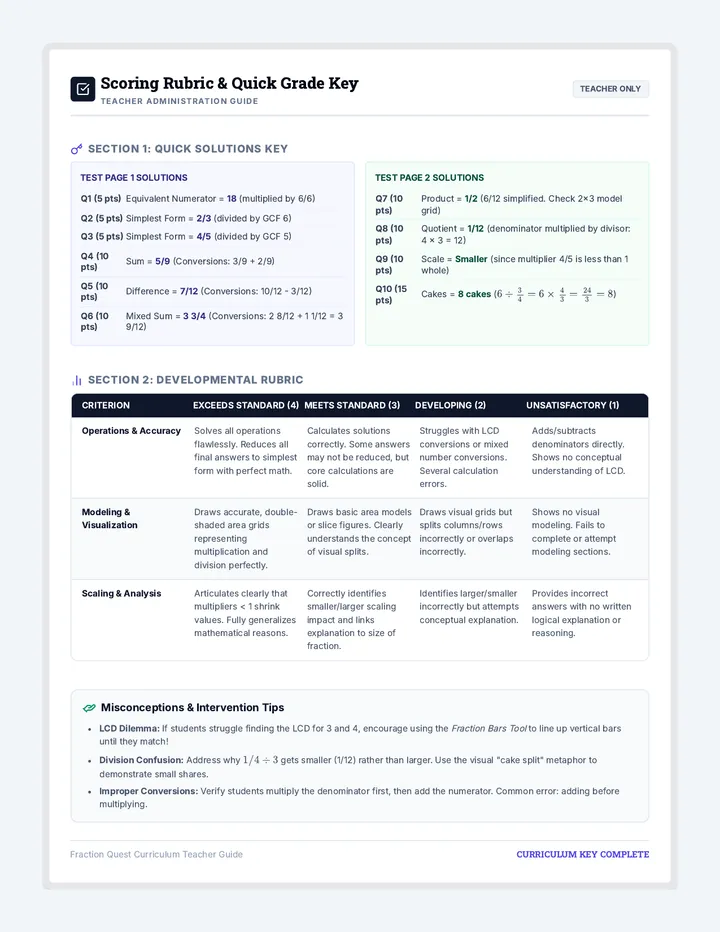
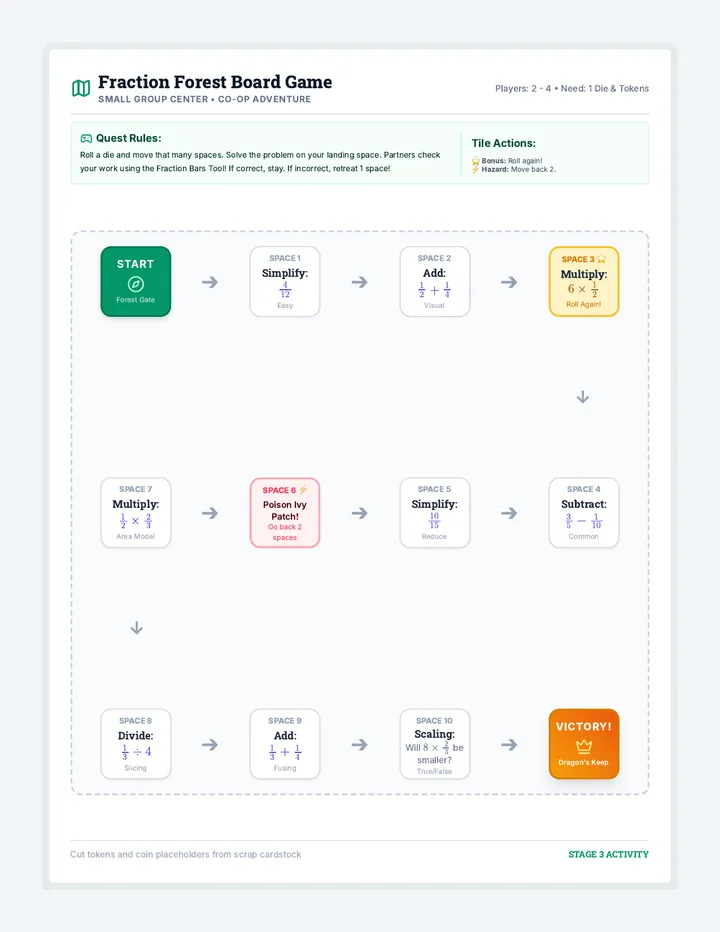
A comprehensive visual math curriculum sequence focusing on fraction equivalence, addition, subtraction, multiplication, division, and comprehensive multi-operation mastery. Includes visual lesson slides, independent practice worksheets, small-group centers, visual tools, and robust assessments.
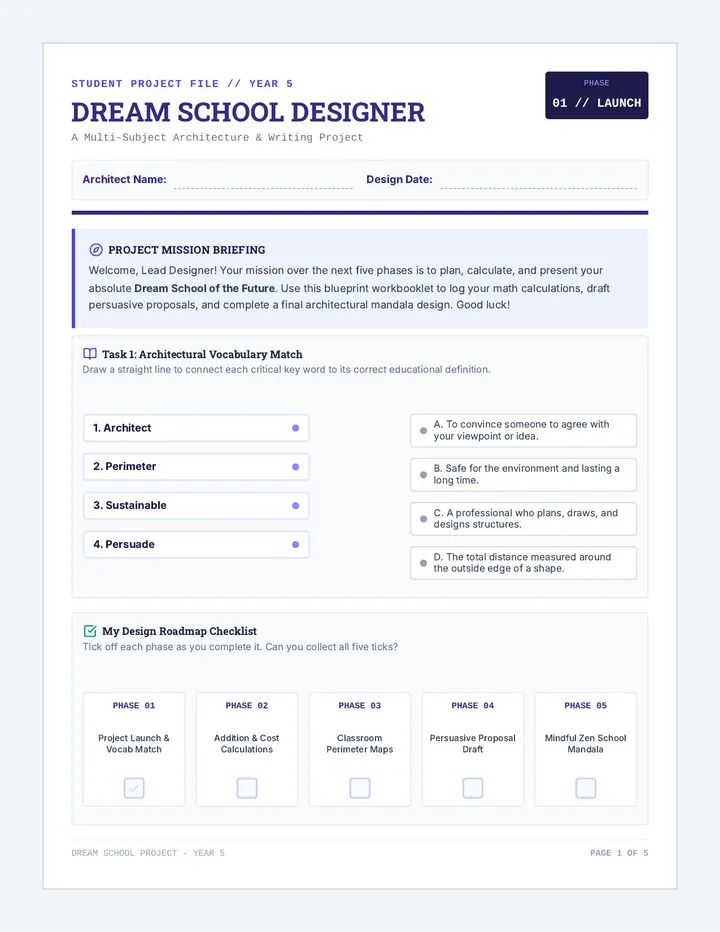
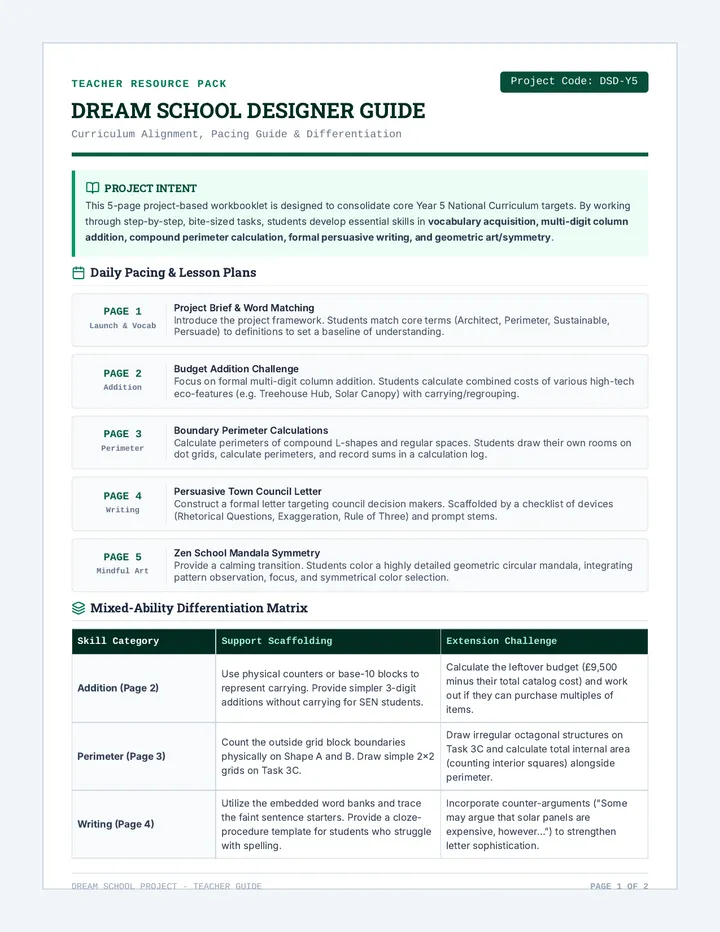
A project-based workbooklet and guide where Year 5 students design their ultimate future school. The project is broken down into structured, bite-sized daily steps integrating English, Maths, Science, Geography, and Art.
A 2-page teacher-facing lesson plan, differentiation matrix, and answer key designed to support educators in delivering the Dream School Designer project to Year 5 mixed-ability classes.
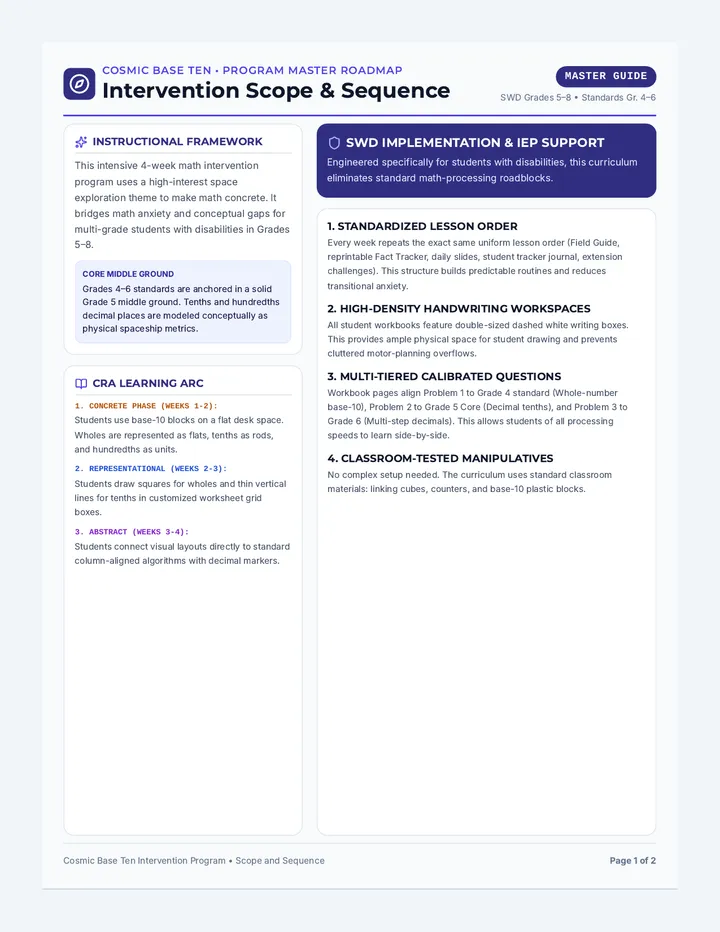
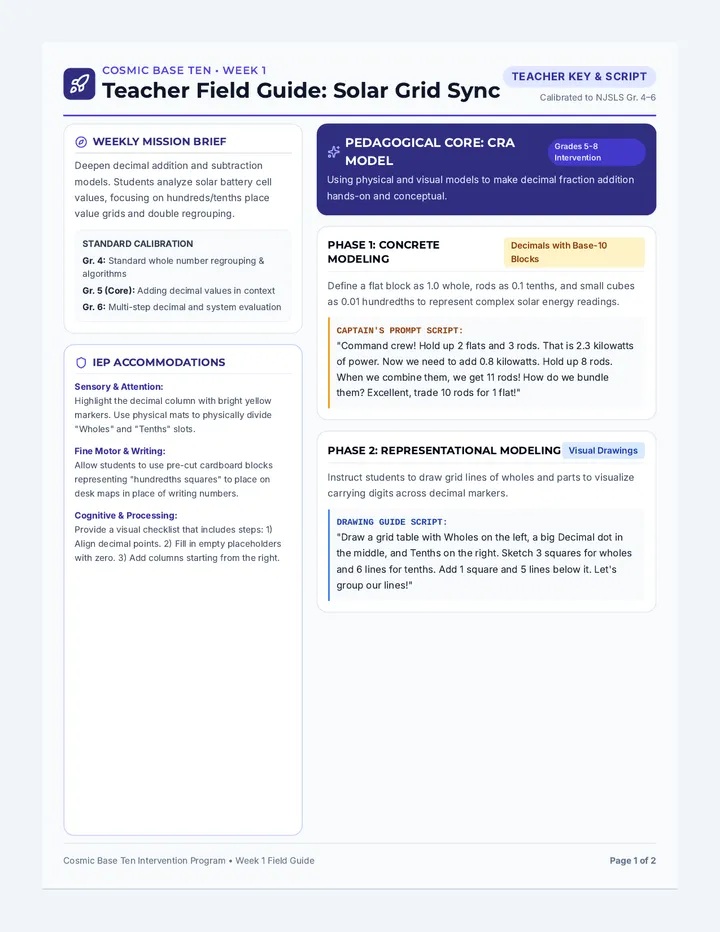
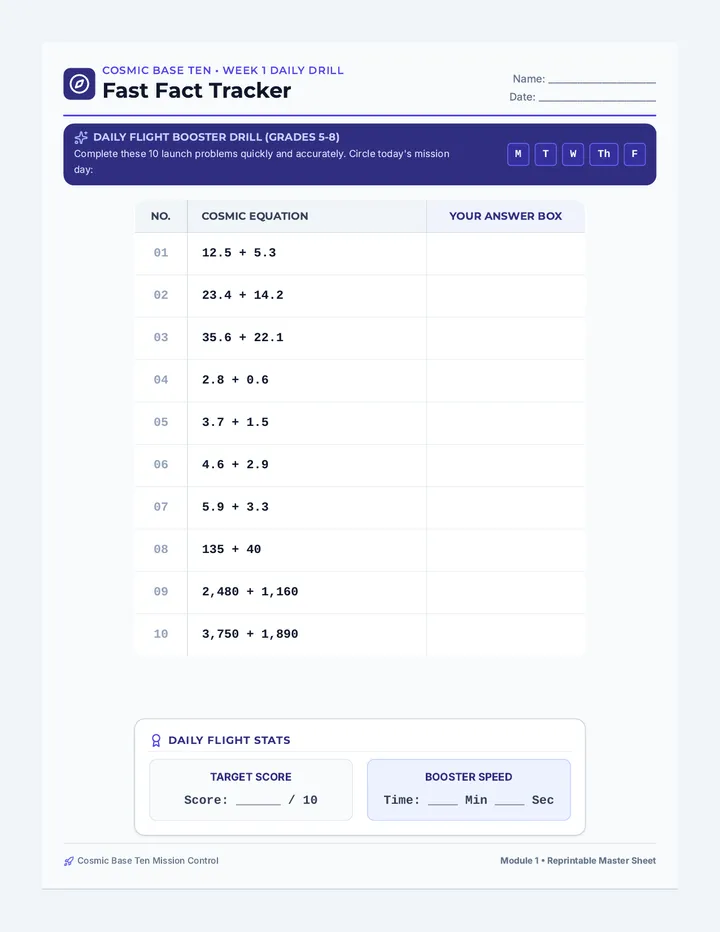
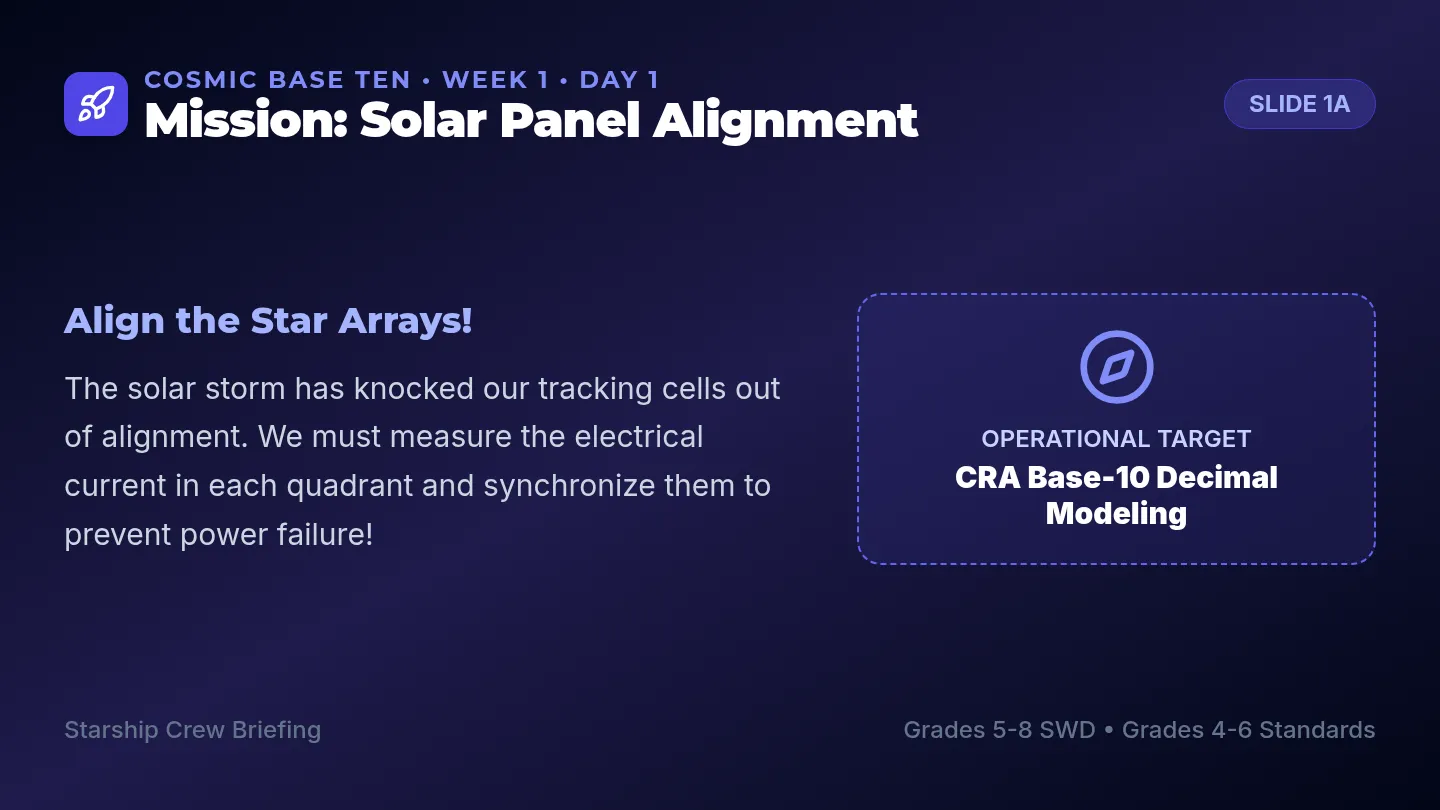
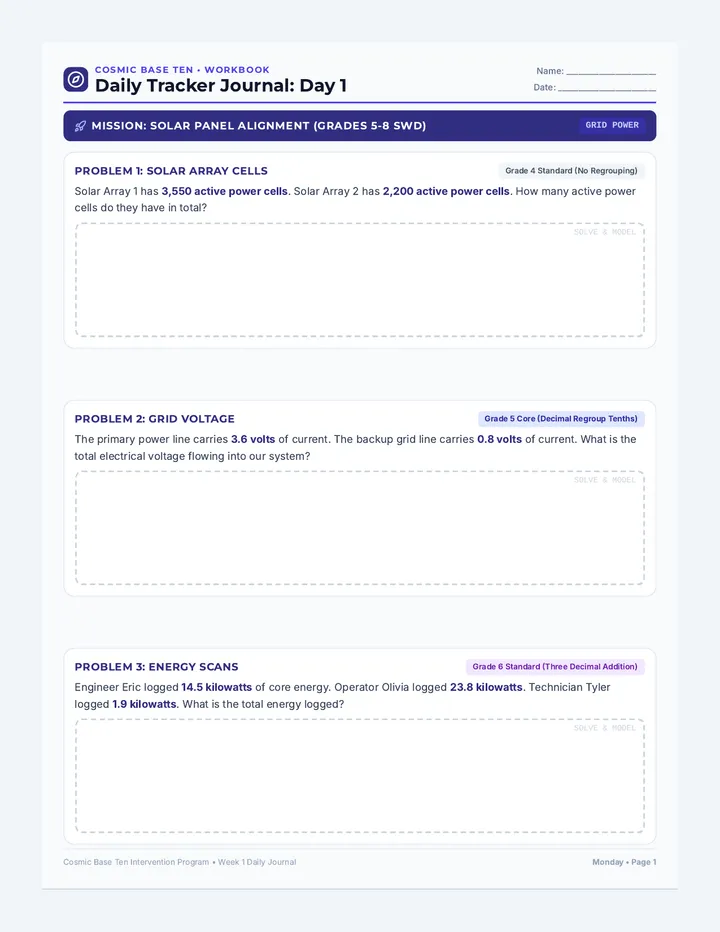
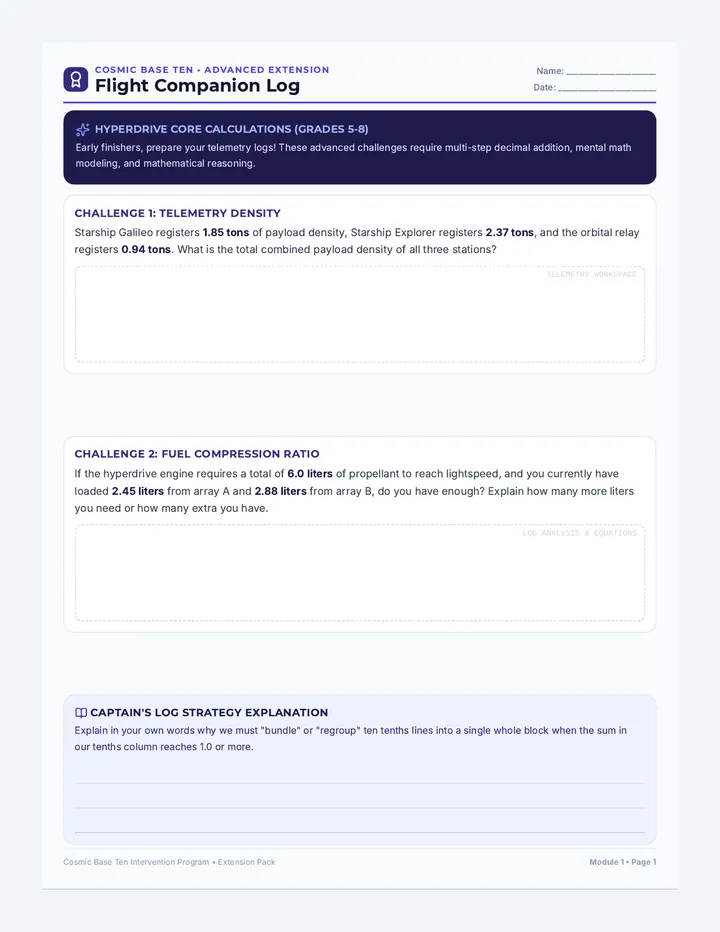
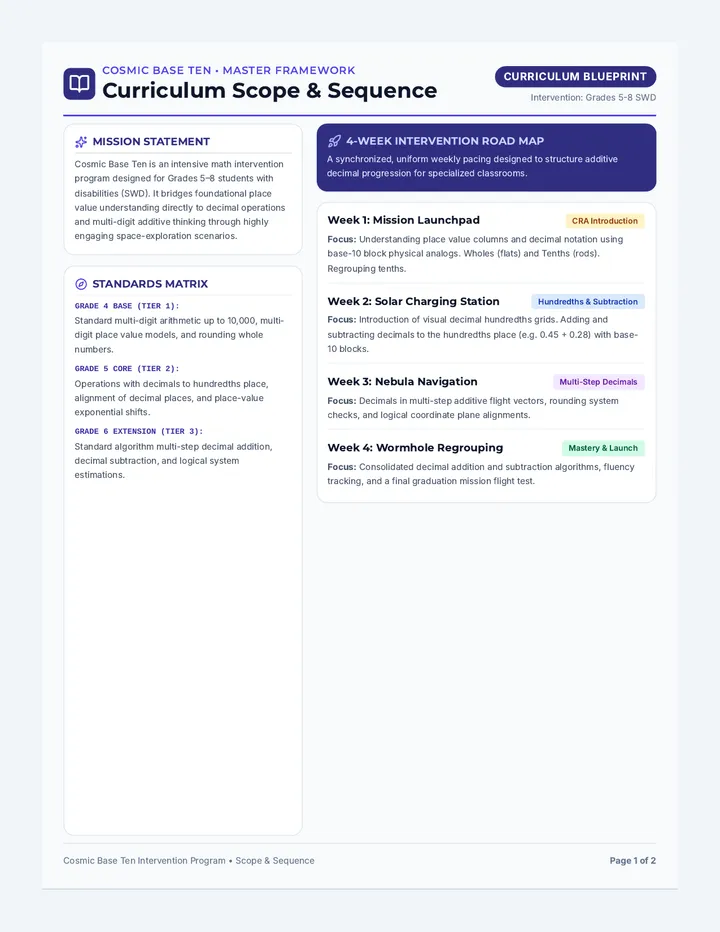
A 4-week intensive math intervention program set in a space exploration universe, designed for multi-grade students with disabilities in Grades 5–8. It covers additive thinking, place value, and decimal regrouping, anchored in Grades 4–6 standards with a Grade 5 core middle ground.
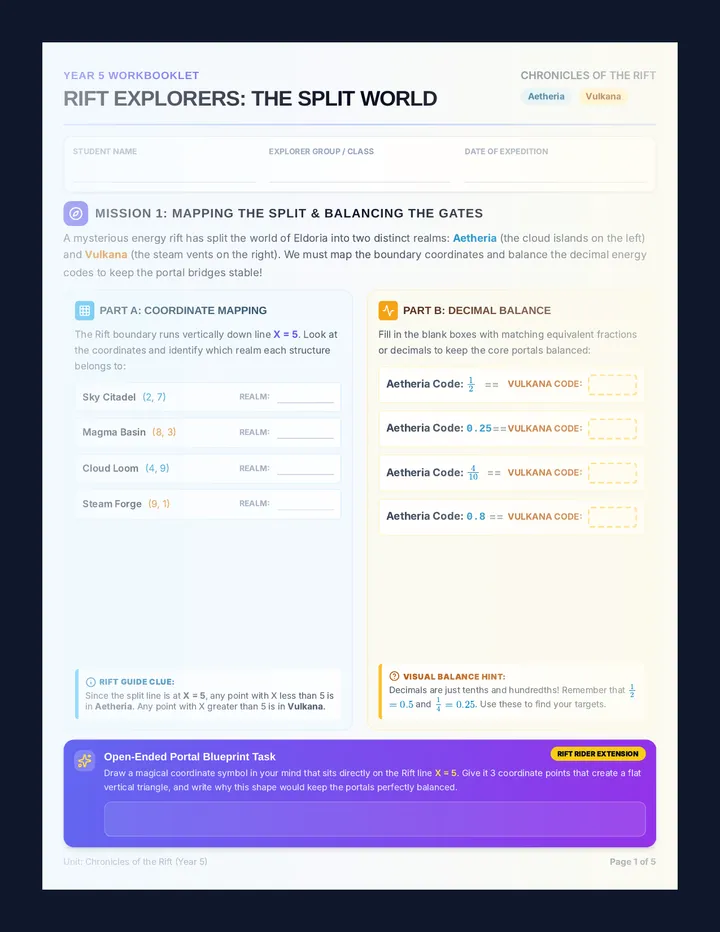
An immersive, five-part interdisciplinary workbook series where Year 5 students explore a world split in two. This booklet integrates mathematics, vocabulary, data handling, and science into a thrilling parallel-world narrative.
A redesigned, 5-page student workbooklet featuring a Launch Checklist and Vocab Match, two Maths pages on perimeter and multi-digit addition, a formal Persuasive Writing letter, and a highly detailed SVG mandala for mindful coloring.
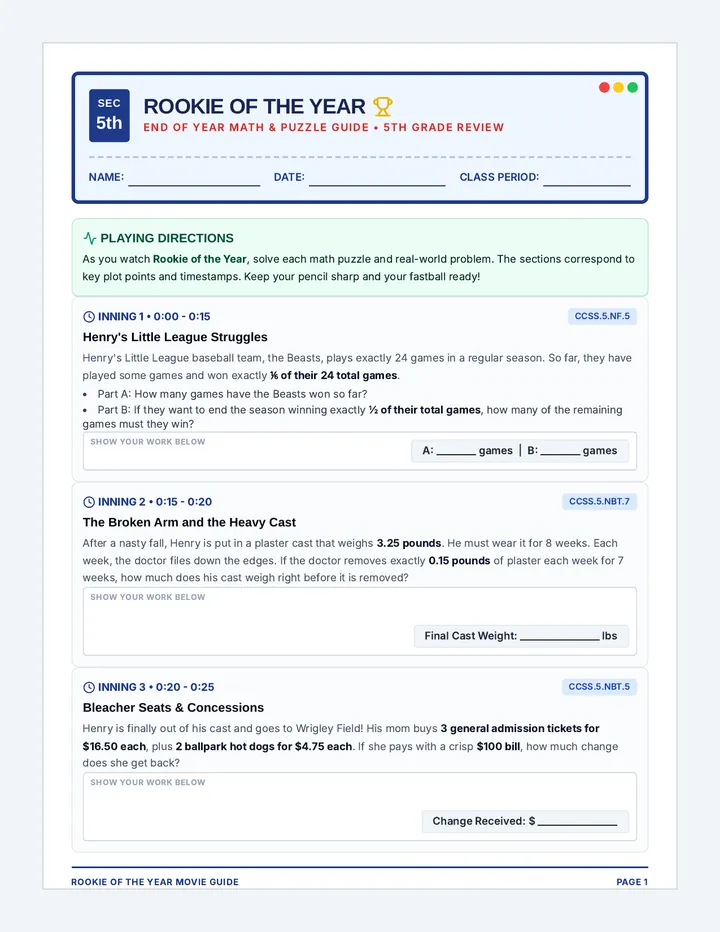
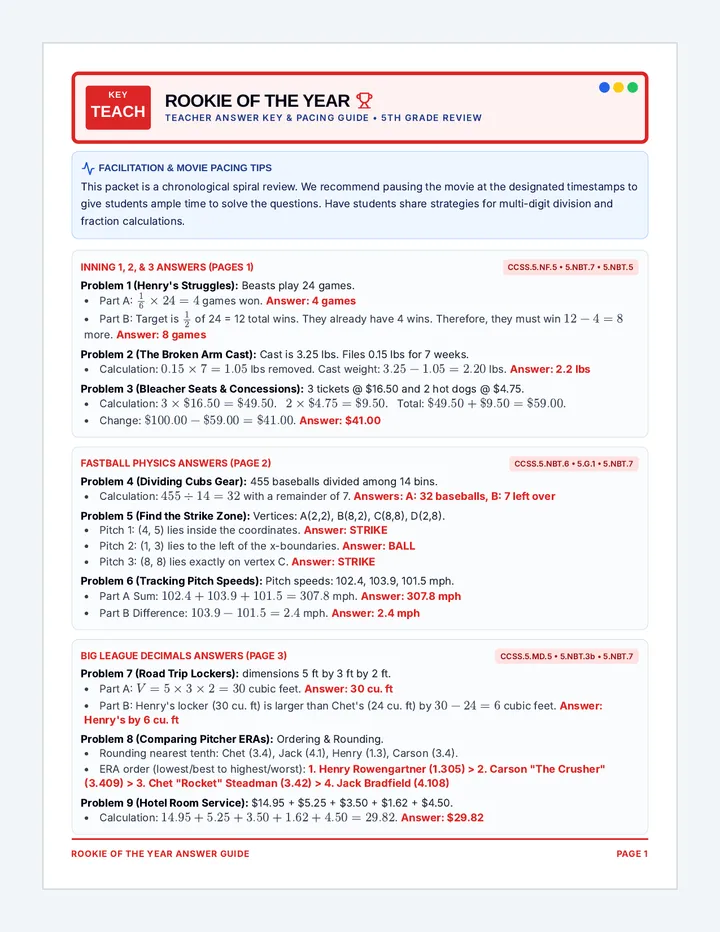
A collection of engaging, film-based math review lessons designed for the end of 5th grade. Students apply key mathematical concepts to movie plots, with tailored differentiation for diverse learning profiles.
A comprehensive review and assessment of all four fraction operations. Students demonstrate their mastery through an interactive review, final unit assessment, and student reflection.
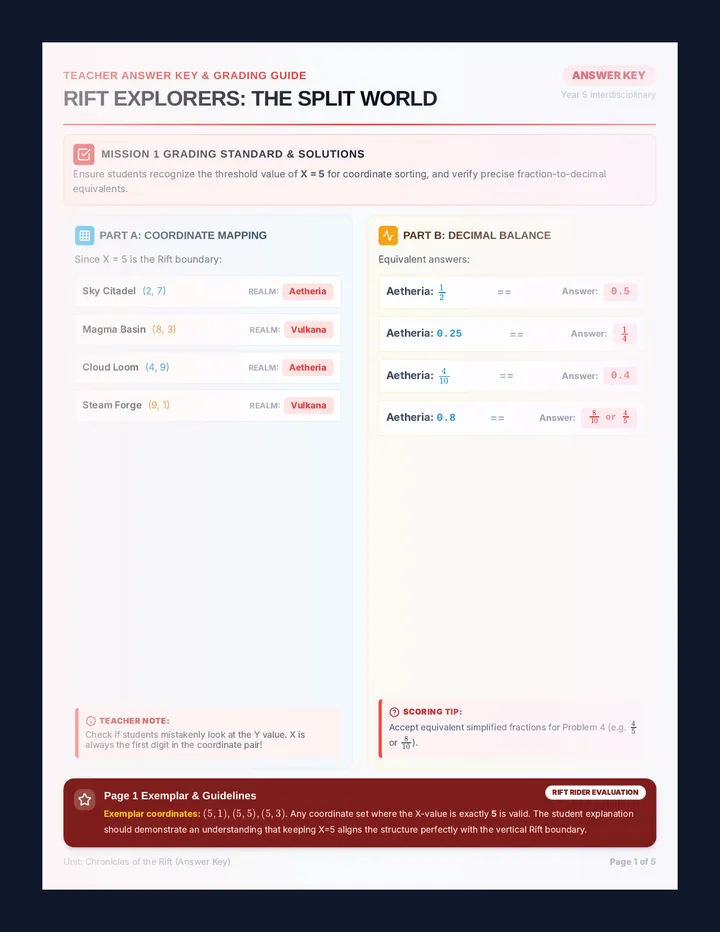
A comprehensive 5-page Teacher Answer Key matching the 'Rift Explorers Workbook'. It provides all correct mathematical solutions, completed vocabulary definitions, sorted science classifications, logical sequence keys, and exemplar student responses highlighted in clear pink/red text.
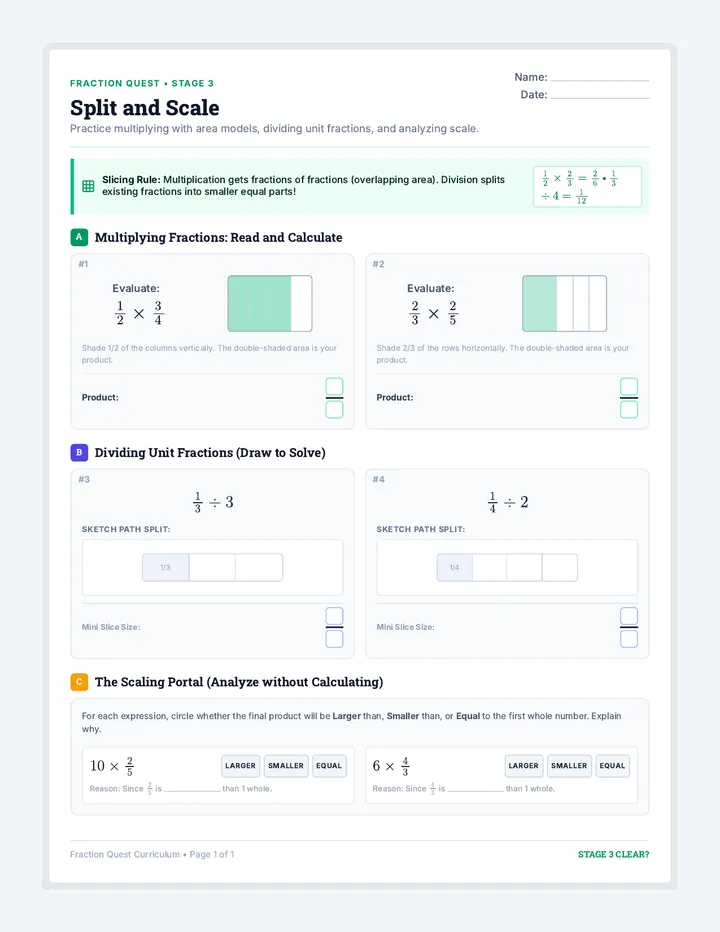
Multiplying and dividing fractions using area models, understanding scaling, and dividing unit fractions by whole numbers. Visual models help conceptualize these concepts.
A comprehensive, 5-page student workbooklet for Year 5 titled 'Rift Explorers Workbook'. It features a highly engaging 'Split World' theme with dual-realm columns (Aetheria and Vulkana), structured mathematics, vocabulary, data handling, and science activities, including visual scaffolds and open-ended extension challenges on every page.