A structured reading guide and worksheet for 'The Remains of the Day' that asks students to analyze the novel's themes through the lens of Stevens's motoring journey and the evolution of transportation.
A dynamic and visually consistent slide deck for teaching plot structure. It uses an architectural blueprint theme to guide students through the five stages of Freytag's Pyramid and their relationship with Beginning, Middle, and End.
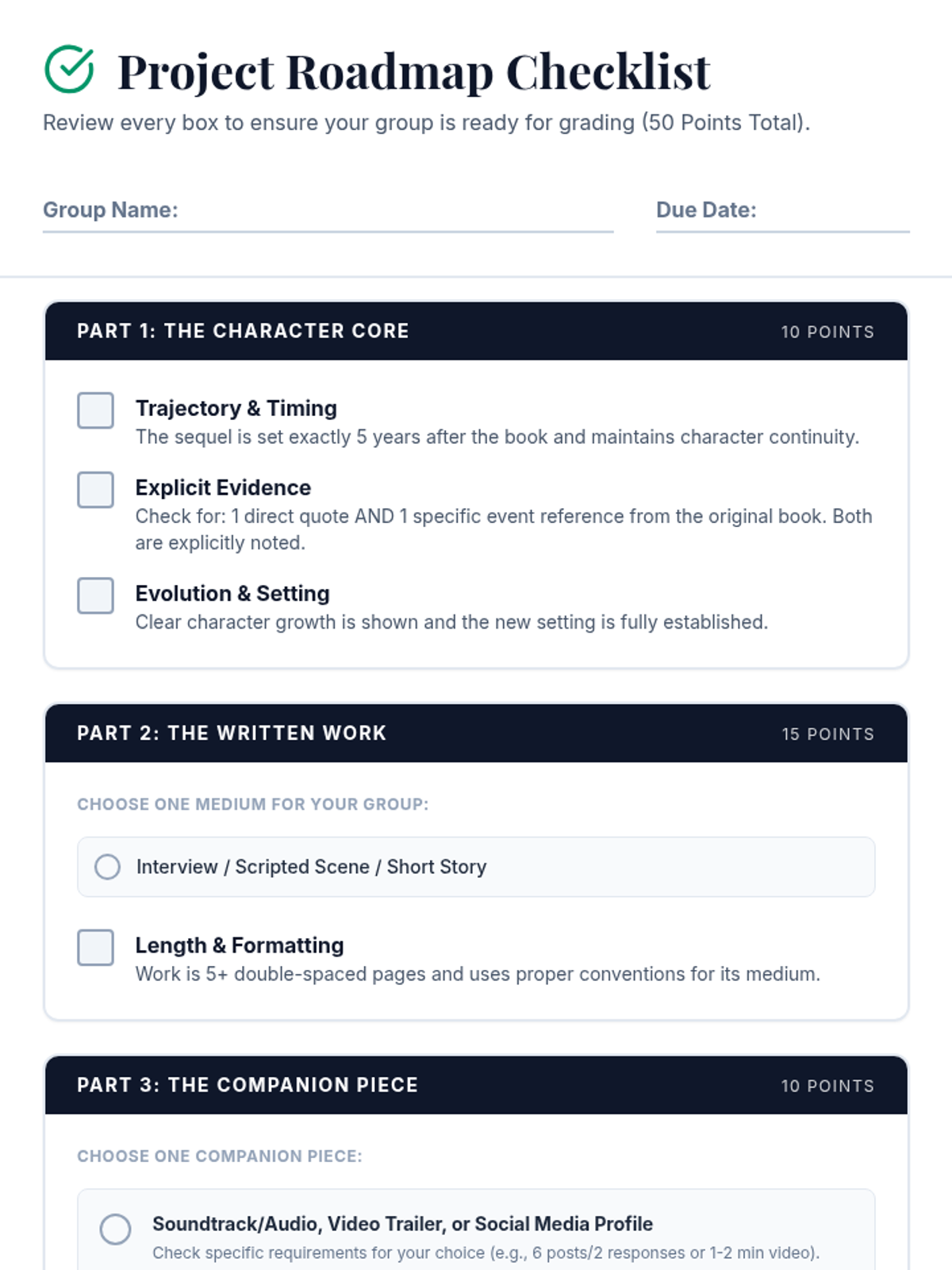
A student-facing checklist to help groups track their progress and ensure all requirements for 'The Sequel' project are met. Updated to include all 50 points and fixed layout issues.
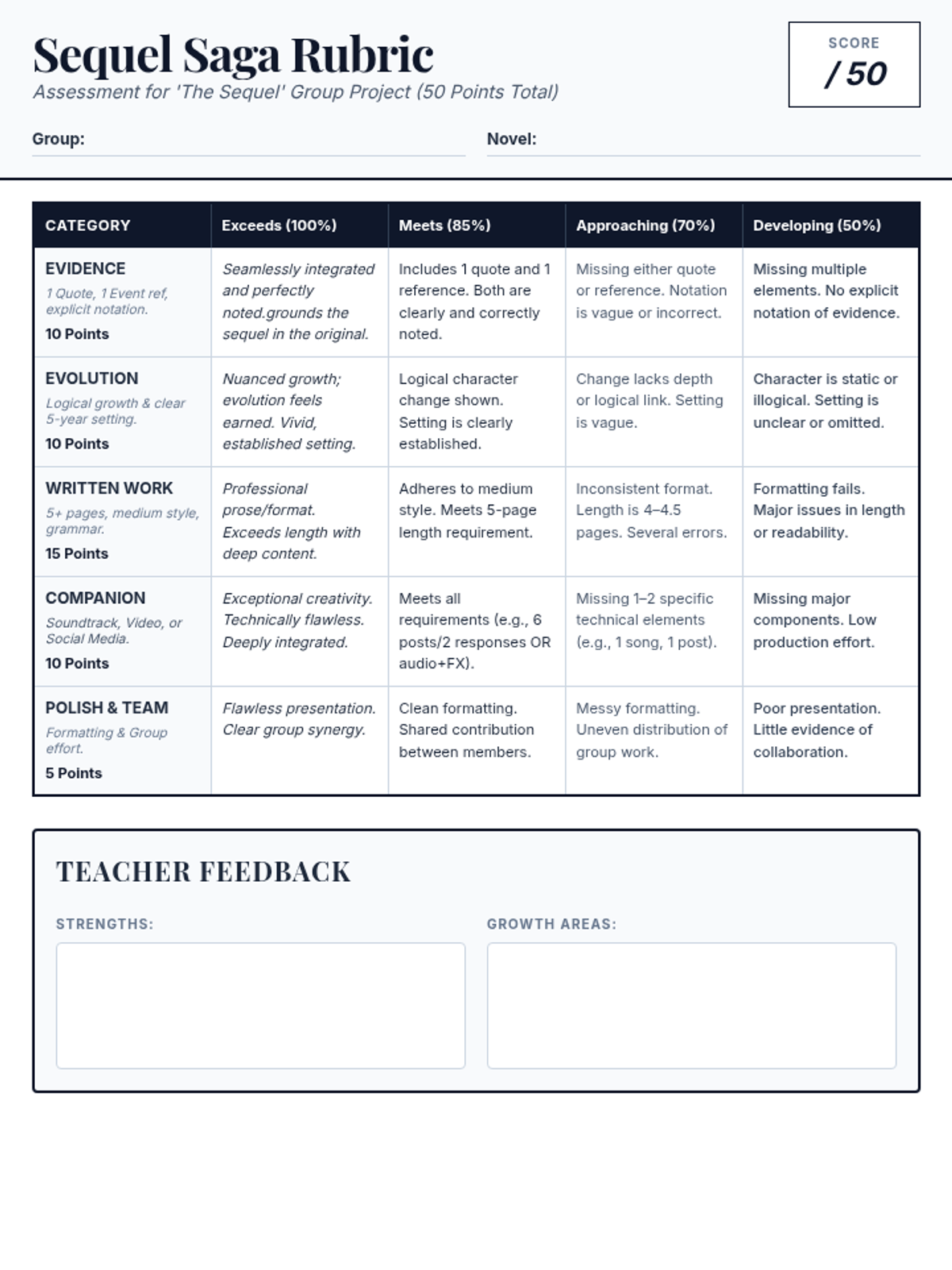
A compact, single-page 50-point rubric for 'The Sequel' project, covering evidence, character growth, written quality, and creative media.
An introductory slide deck explaining the scoring criteria for the 'Sequel' project, detailing evidence requirements, page length, and creative tips. Updated with clarified scoring and a dedicated companion piece slide.
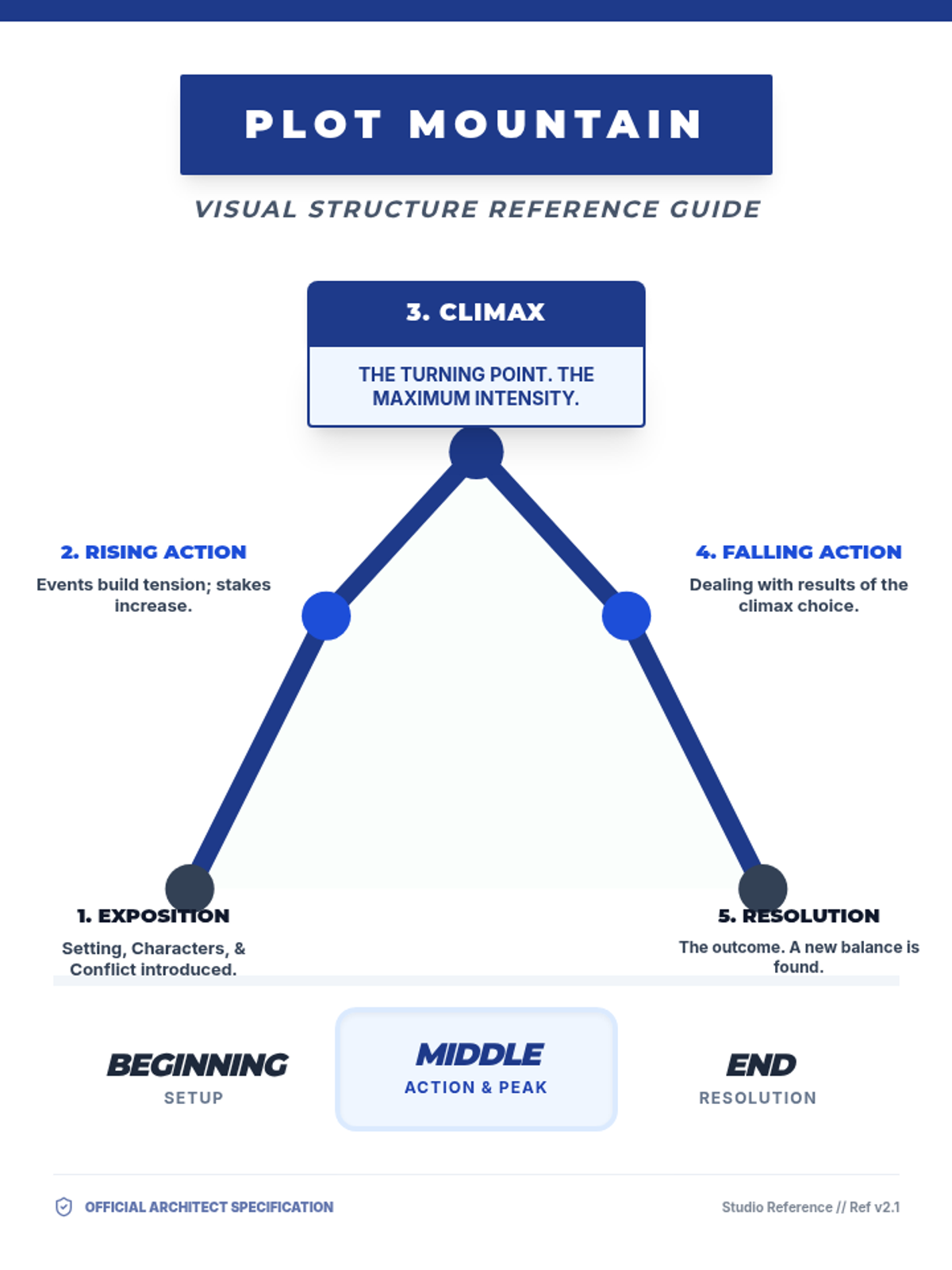
A comprehensive visual reference anchor chart for the classroom, clearly defining the five stages of a plot and how they align with the Beginning, Middle, and End structure.
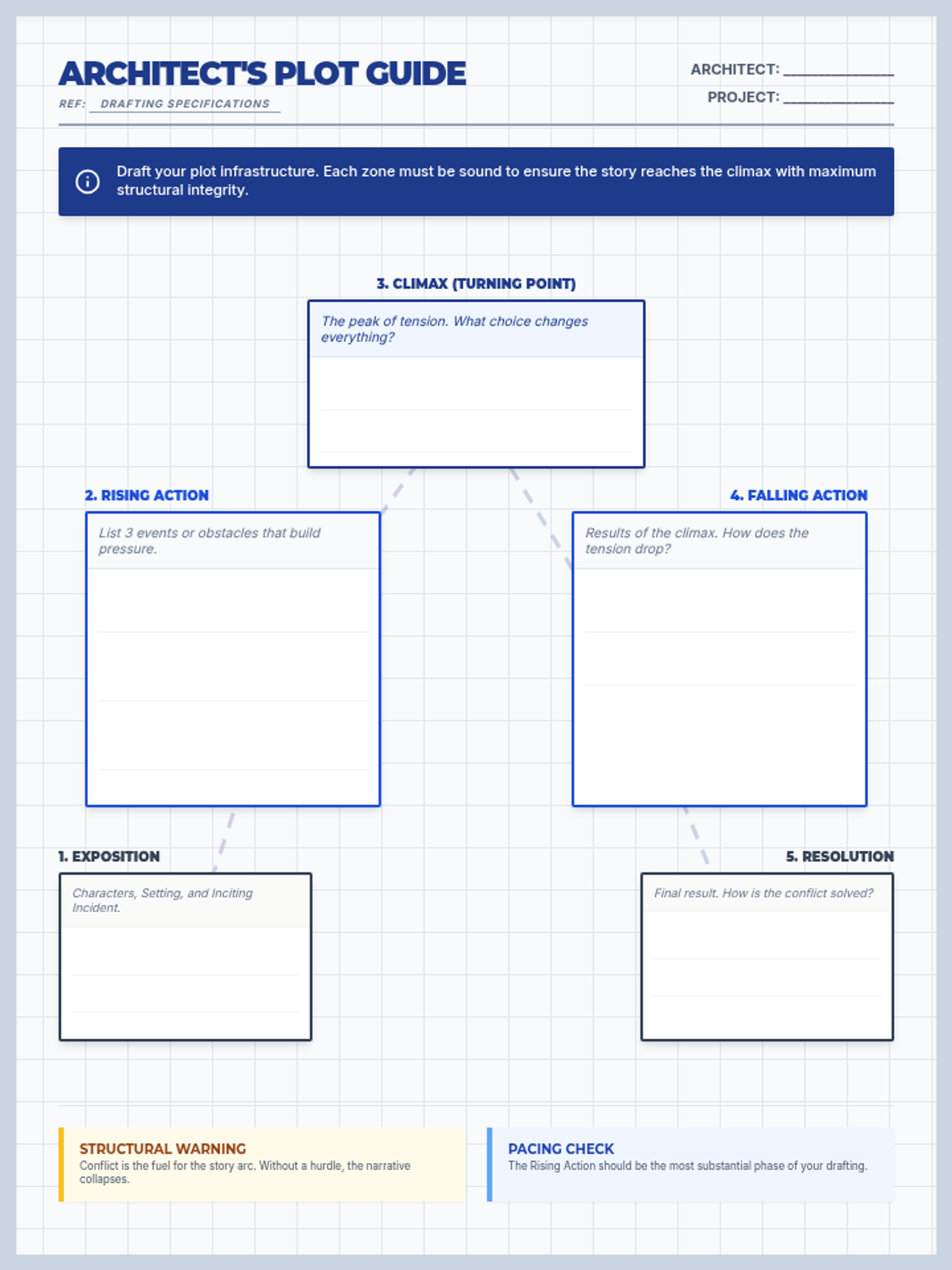
A guided version of the Plot Blueprint Organizer featuring specific prompts and questions for each stage of the plot to assist students in drafting their story structure.
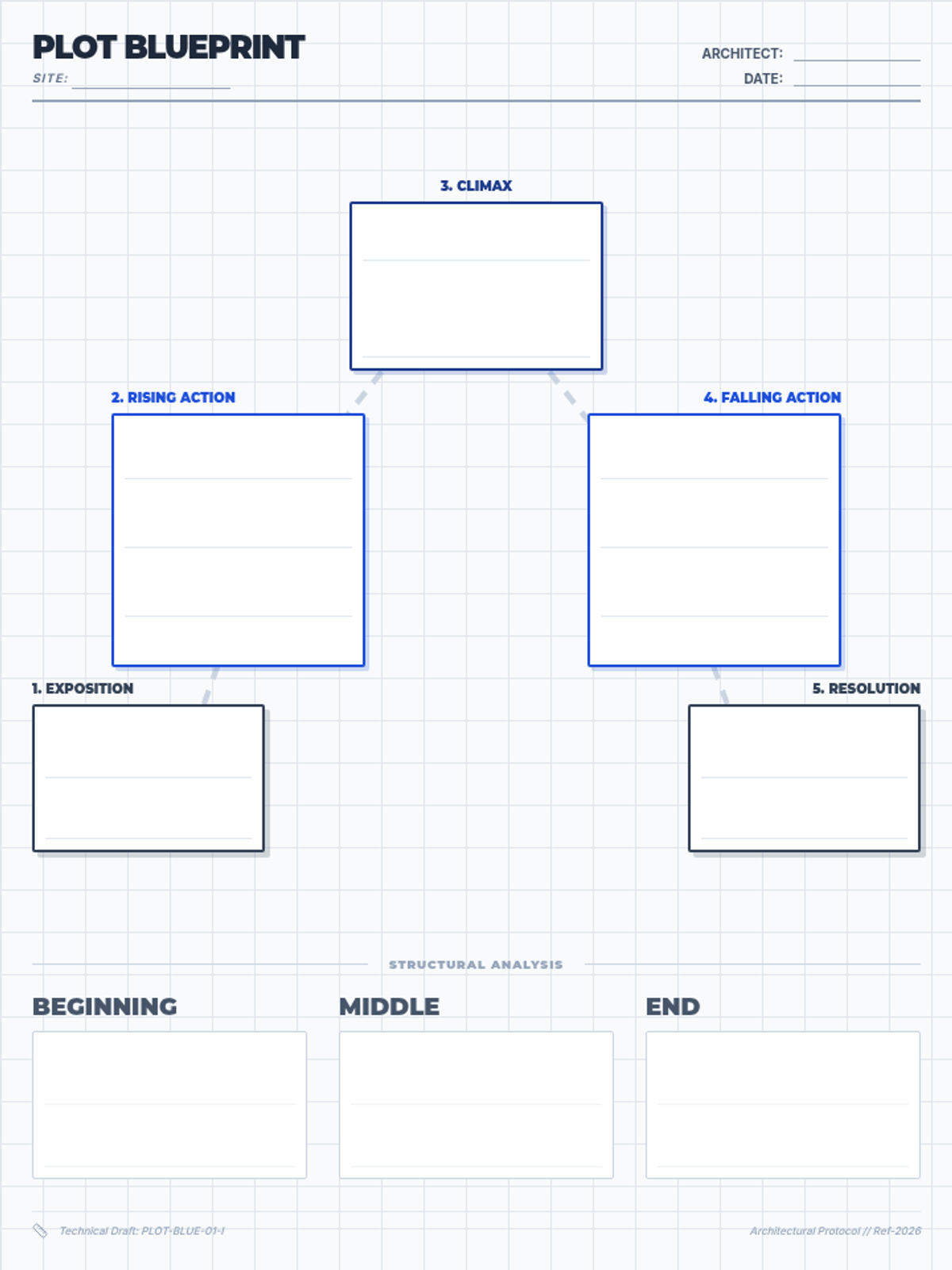
A blank blueprint-themed graphic organizer for students to map out the five stages of a plot (Exposition, Rising Action, Climax, Falling Action, Resolution) along with Beginning, Middle, and End phases.
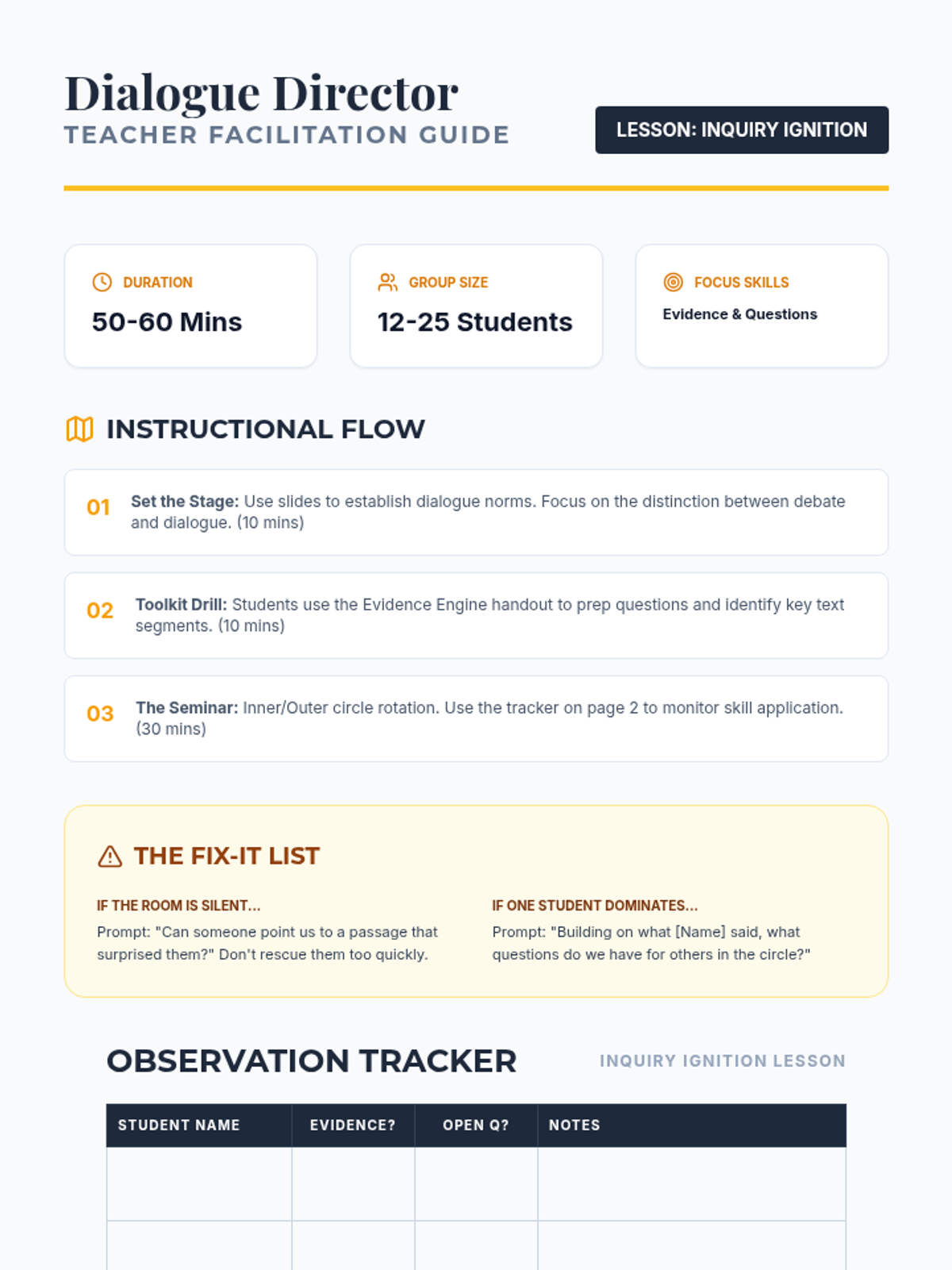
A comprehensive guide for teachers on facilitating the 'Inquiry Ignition' lesson. Includes a suggested instructional flow, troubleshooting tips for common seminar challenges, and an observation tracker to monitor student participation and skill application.
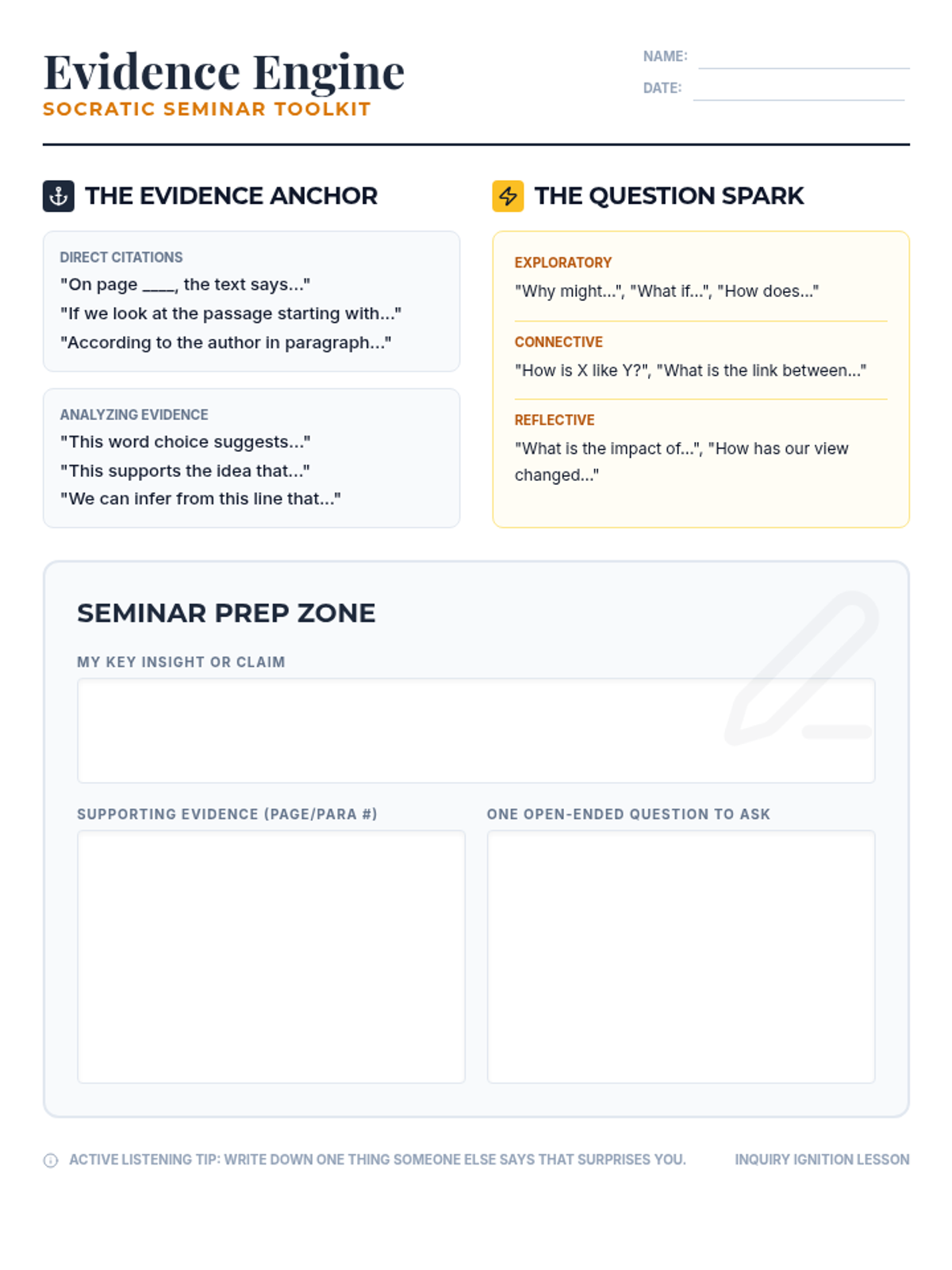
A student handout providing sentence starters for citing textual evidence and stems for crafting open-ended questions. Includes a 'Prep Zone' for students to gather their thoughts before the seminar begins.
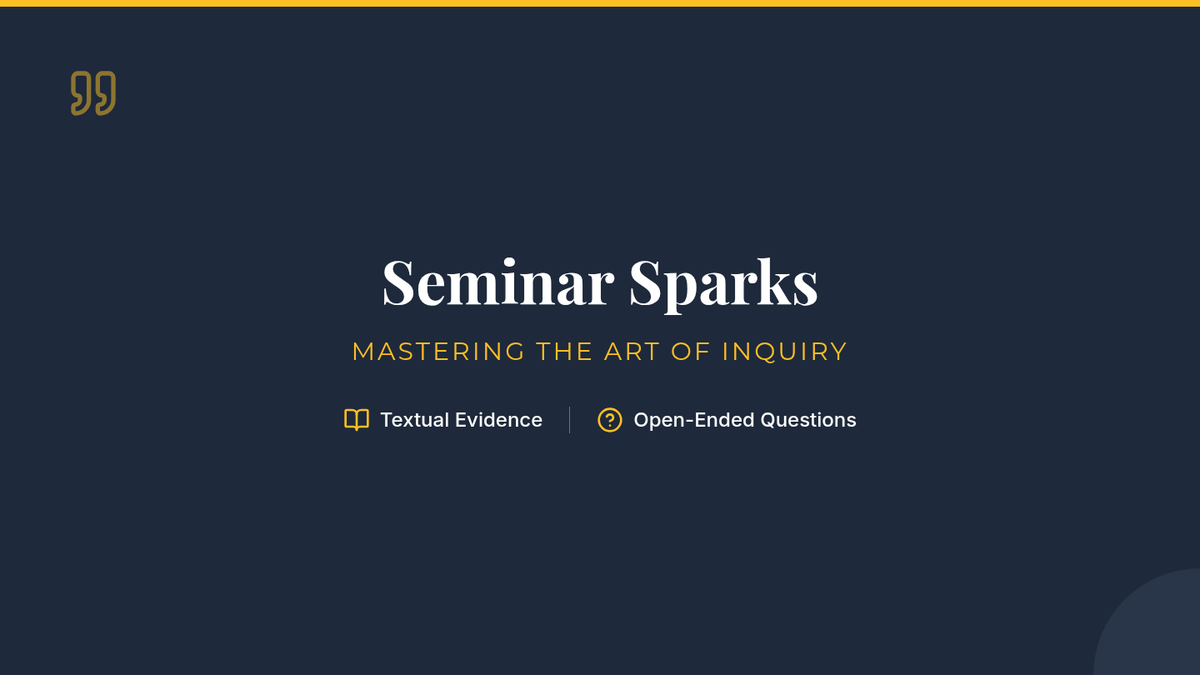
A 7-slide presentation designed to teach students the fundamentals of Socratic Seminars, focusing on the distinction between dialogue and debate, the importance of textual evidence, and the power of open-ended questions.