A visual reference map and guide showing the distribution of ions across the cell membrane, highlighting the combined chemical and electrical forces that create potential energy.
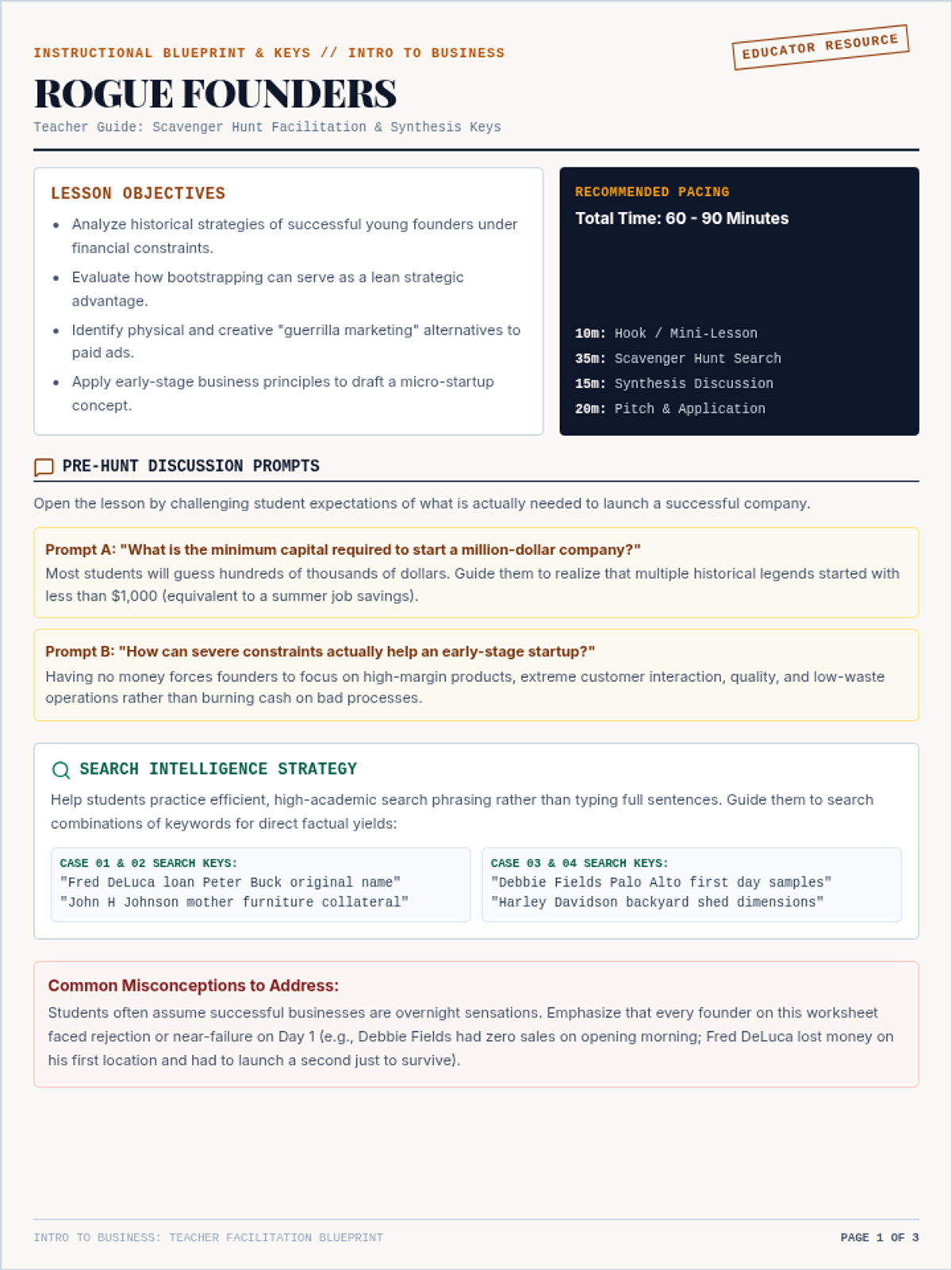
A highly comprehensive, 3-page teacher resource guide and key. It includes an instructional pacing guide, suggested search strategies, pre-lesson classroom discussion questions, a complete factual historical answer key for all five case files, and a classroom grading rubric for the student business pitch.
A beautifully designed, 4-page student scavenger hunt packet in an investigative dossier style. High school introduction to business students conduct online research to uncover the launch secrets, marketing triumphs, and bootstrapping strategies of five iconic historical young entrepreneurs.
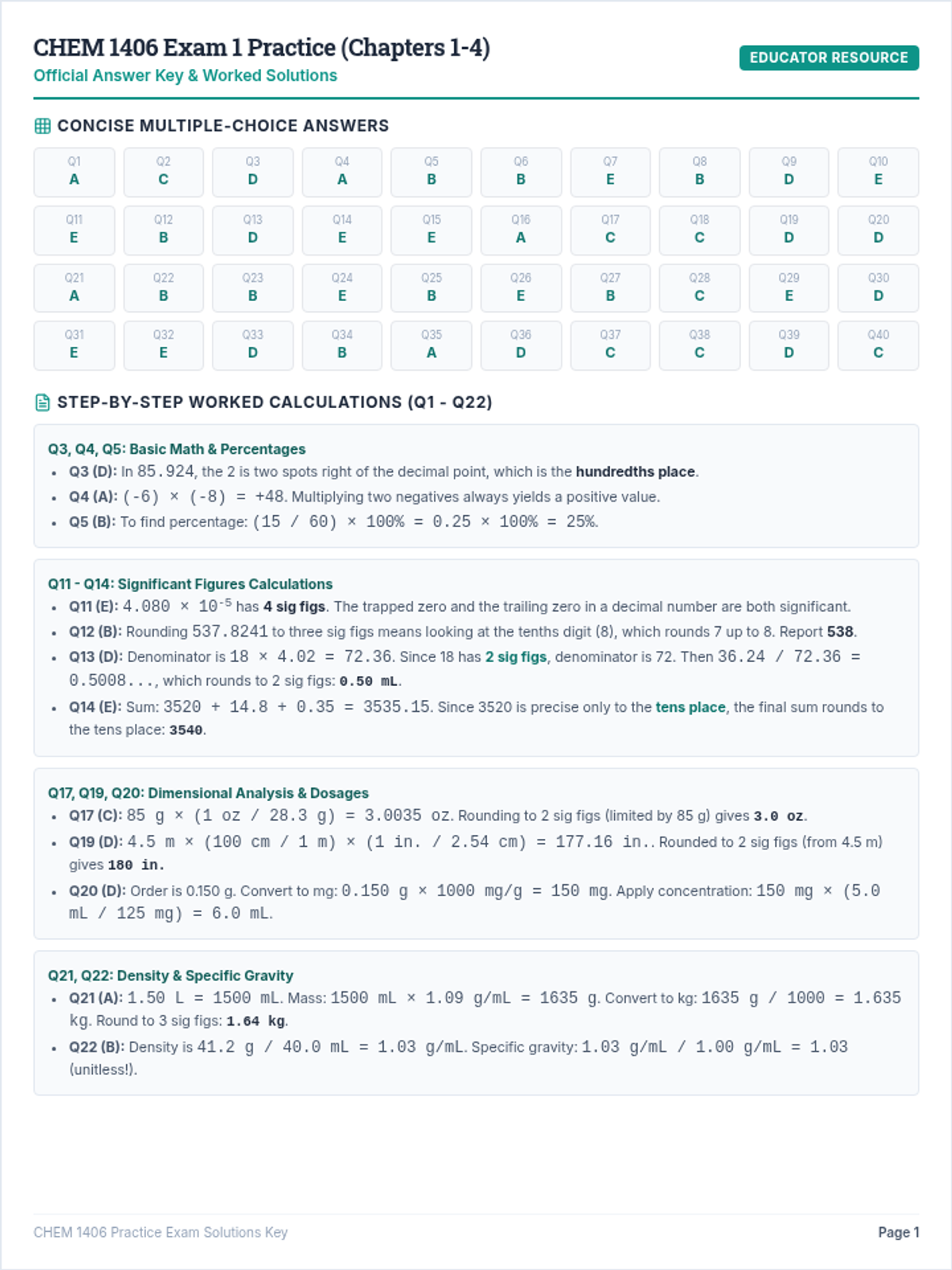
A comprehensive answer key and step-by-step worked solutions document for the Foundations Practice Exam (Version B), providing detailed explanations for all calculation-based questions to support educator grading and student self-correction.
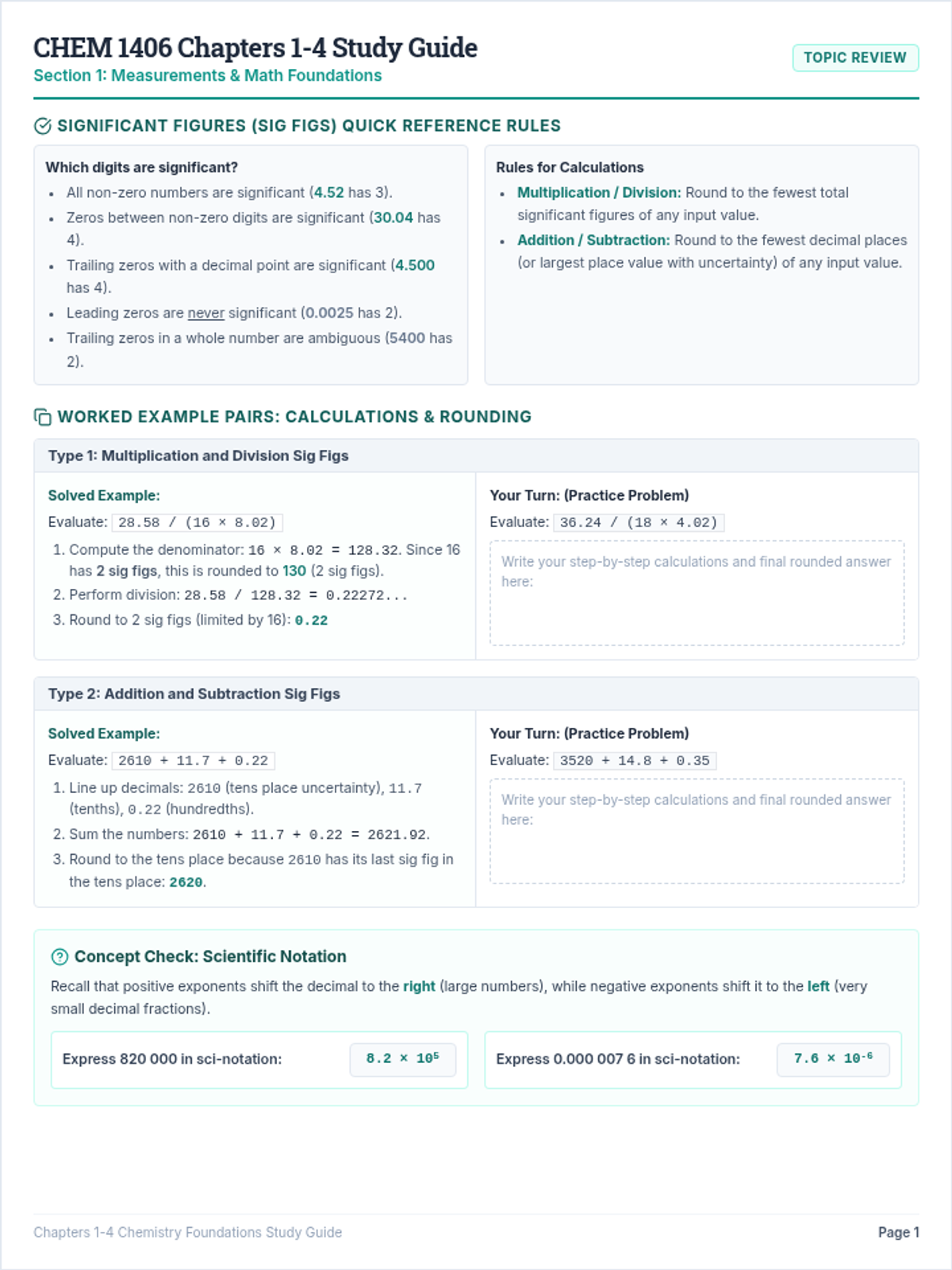
A highly structured student study guide featuring a metric organizer, rule summaries for sig figs and naming, and interactive worked example pairs mapping directly to Chapter 1-4 chemistry calculation types.
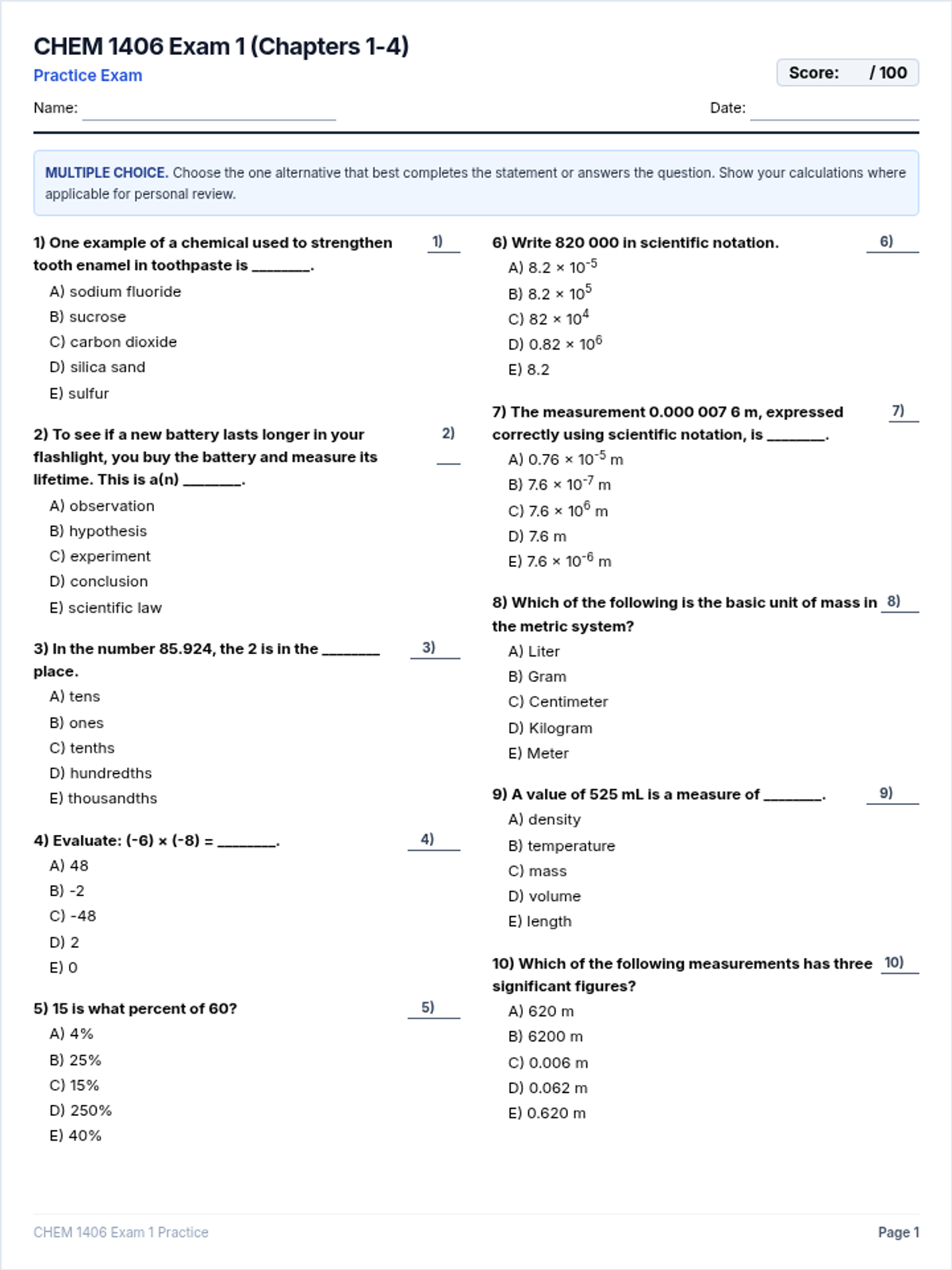
A parallel 40-question multiple-choice practice exam covering Chapters 1-4 of introductory chemistry (measurements, matter, energy, and atomic structure) with new numerical values and contexts that map perfectly to the original exam's answer key.
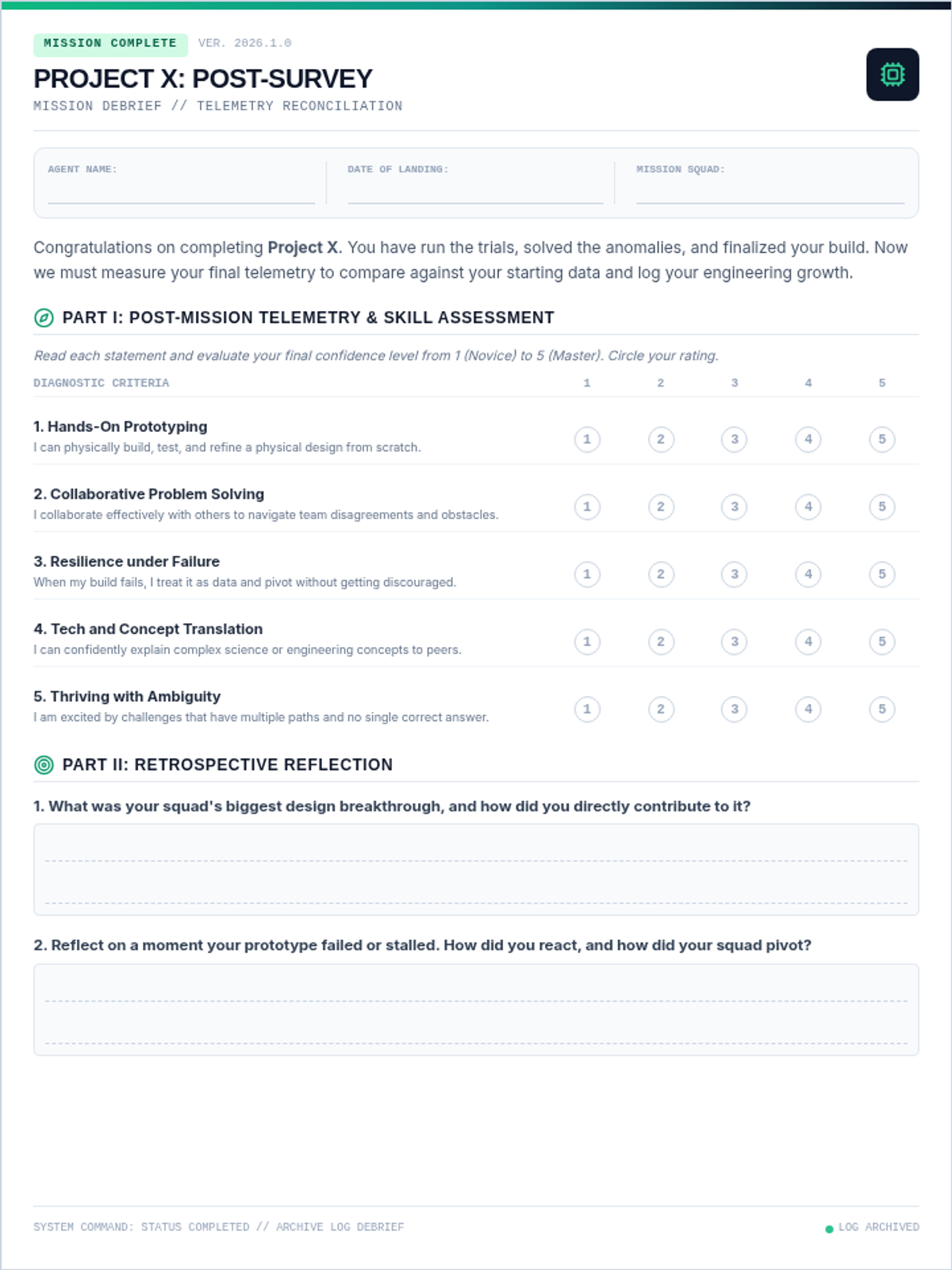
A high-tech post-mission debrief survey for students to evaluate their skill acquisition, teamwork dynamics, and problem-solving resilience after completing Project X 2026. Designed for direct pre/post comparison.
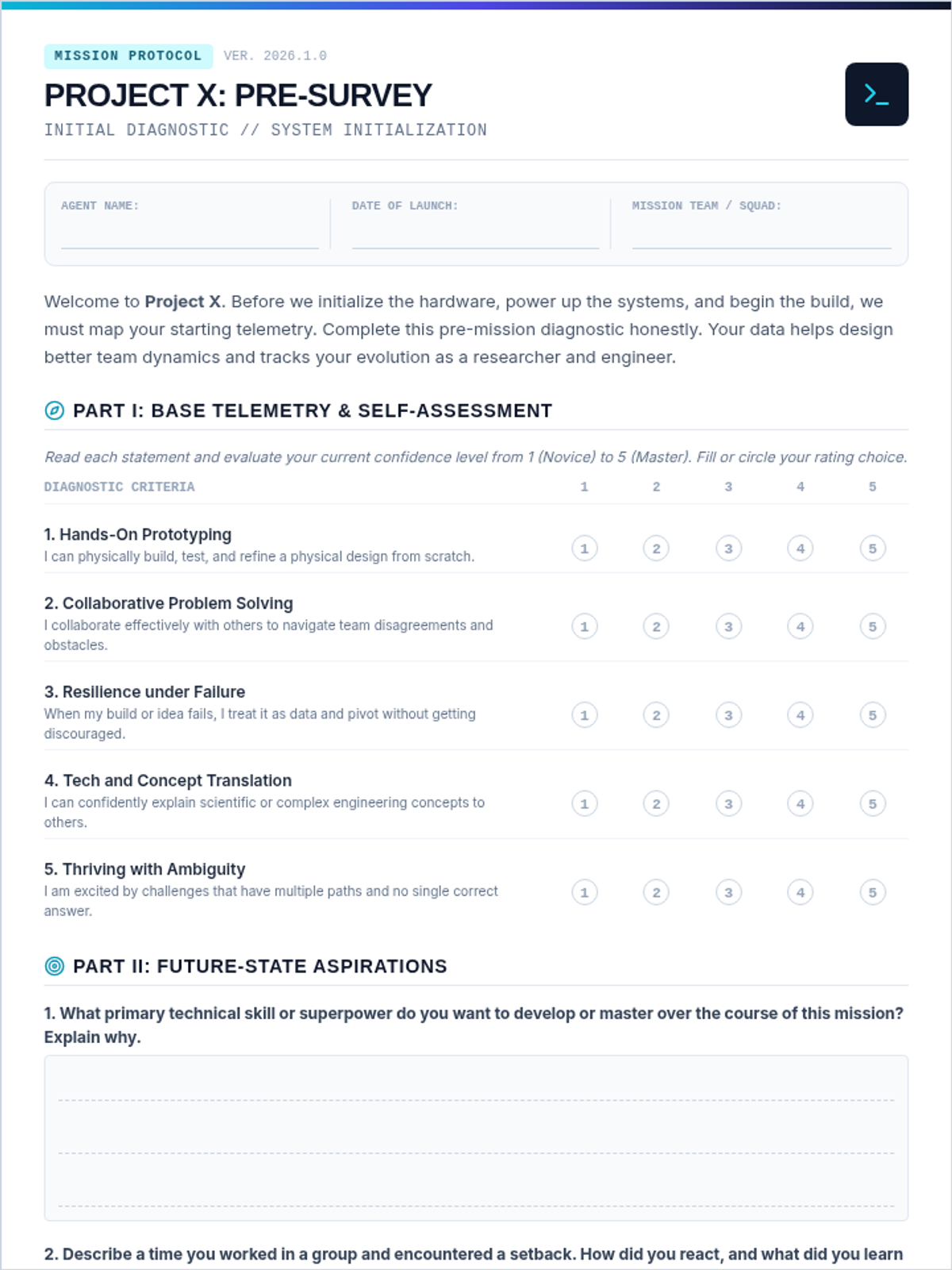
A high-tech pre-mission diagnostic survey for students to evaluate their starting confidence, technical skills, and collaboration readiness prior to beginning Project X 2026. Includes quantitative self-assessment scales and structured qualitative prompts.
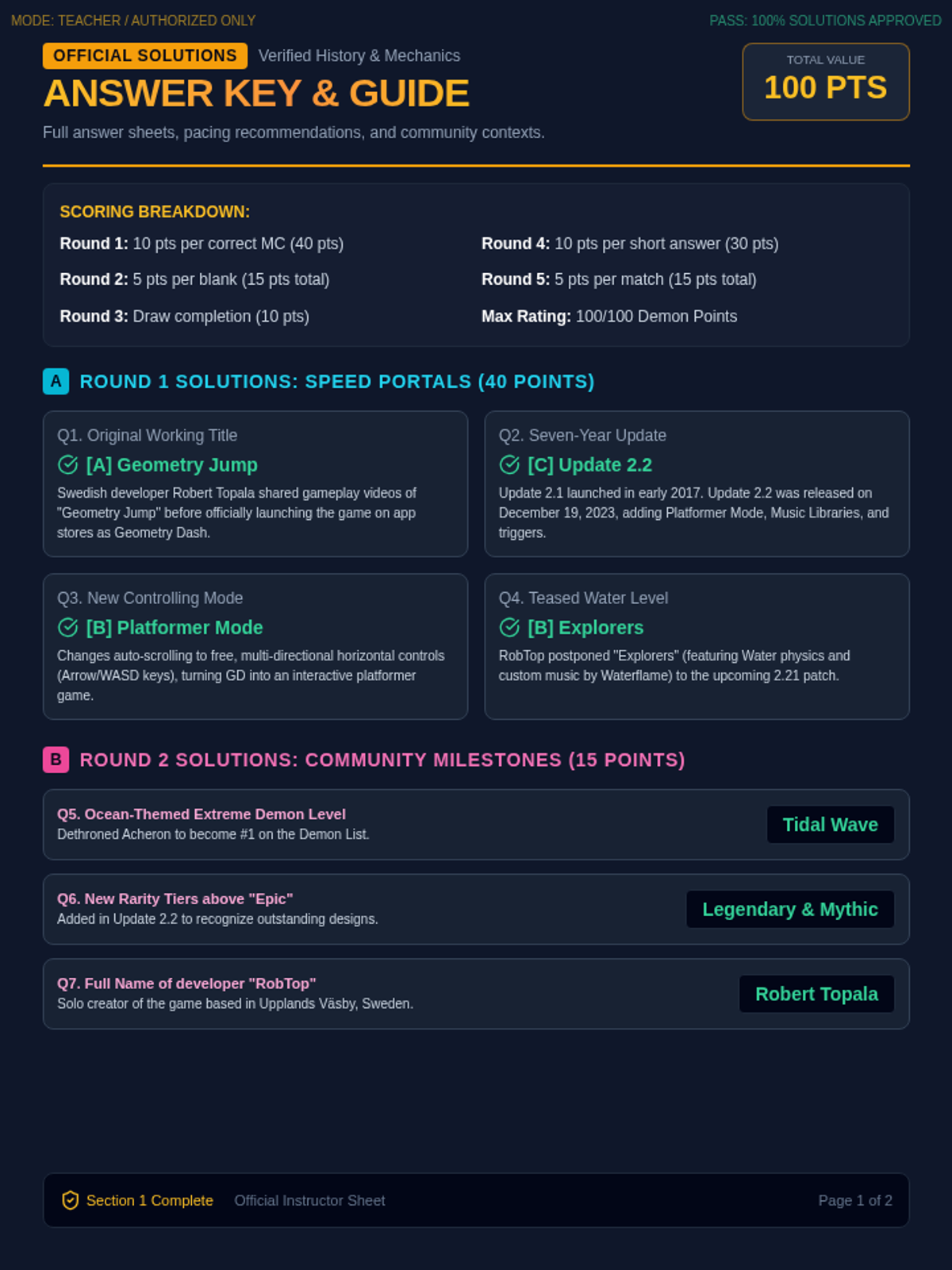
A detailed 2-page teacher answer key and grading guide for the Dash Masters Quiz. Provides clear solutions, historical background for each trivia point, and rubrics for the icon creator section.
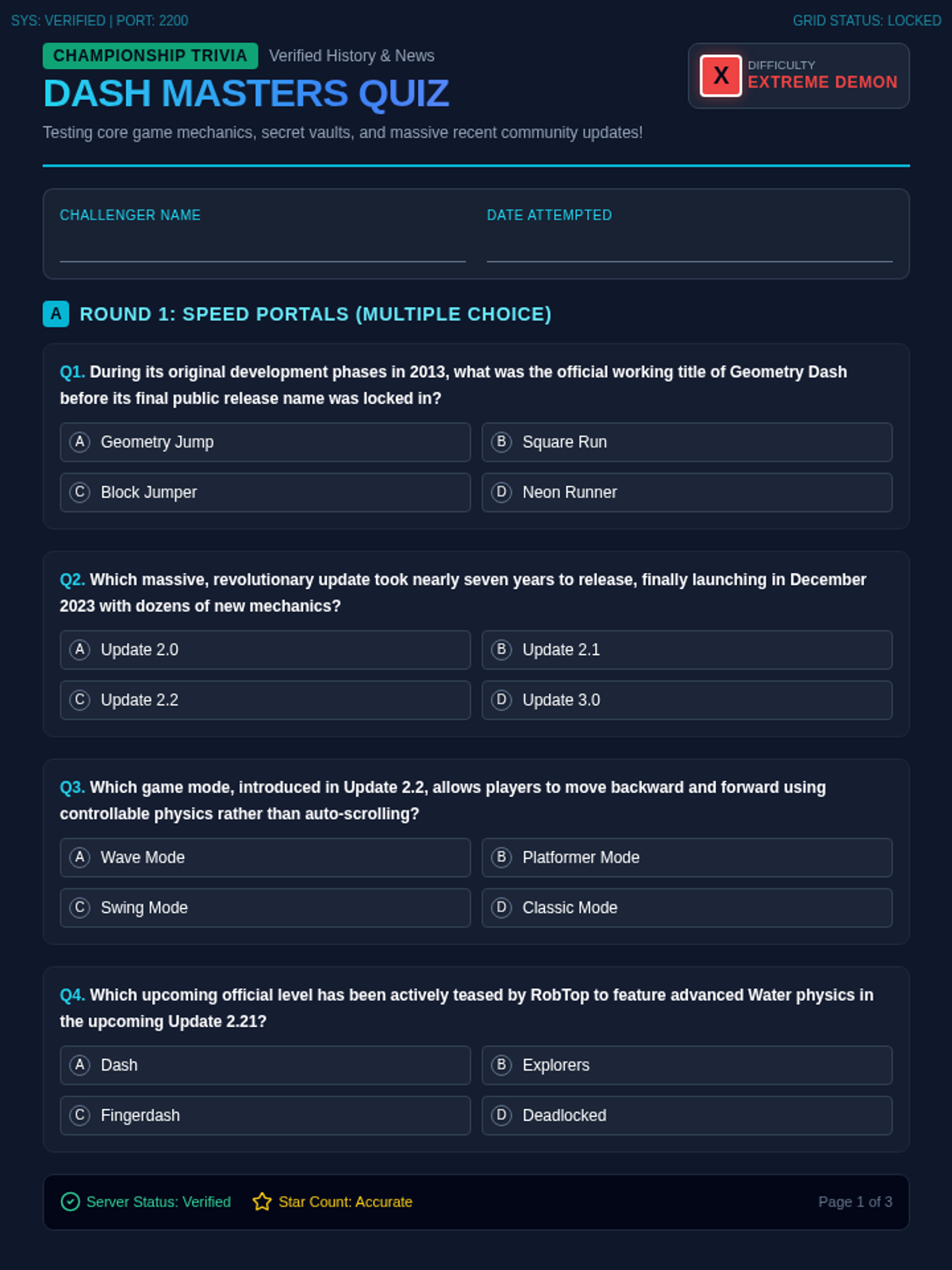
A revised 3-page printable Geometry Dash quiz highlighting highly accurate, well-known recent community news (Update 2.2, Tidal Wave, Legendary/Mythic ratings, Explorers teasers) and classic game trivia.
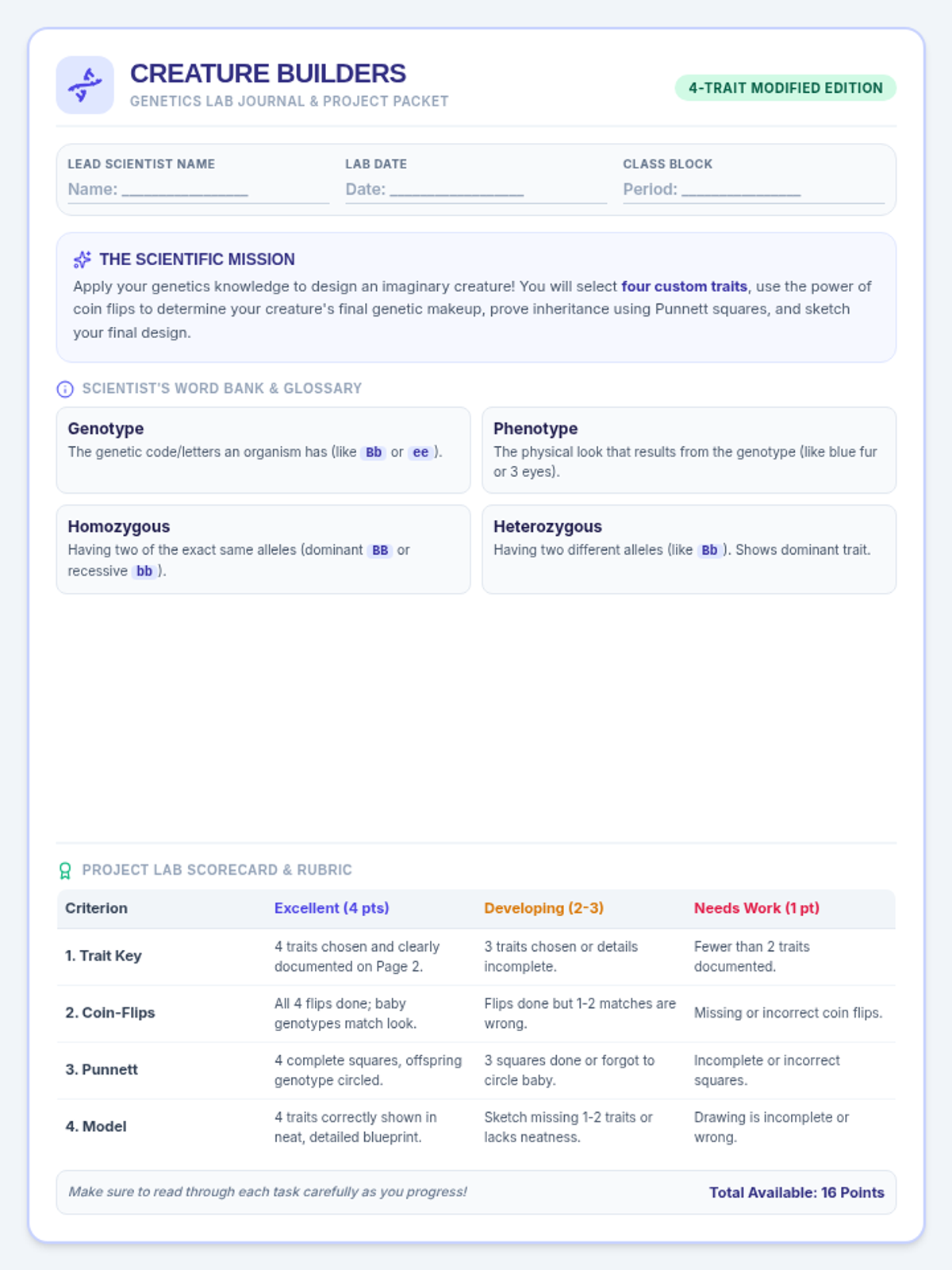
A highly scaffolded, 5-page genetics project packet where students choose exactly 4 traits to design an imaginary creature. It features a kid-friendly glossary, a visual trait catalog, a step-by-step coin-flip table, four Punnett squares, and a creative blueprint page.
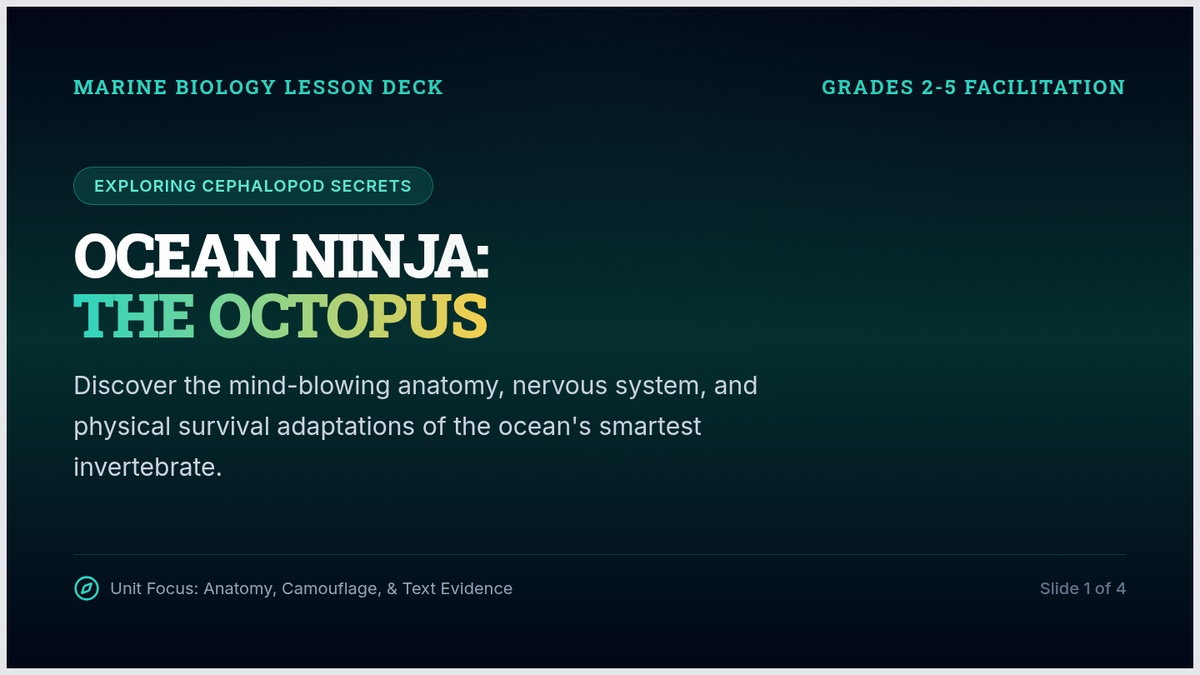
A highly engaging, deep-sea themed slide deck for classroom instruction, introducing students to the octopus's nine brains, camouflage abilities, and jet propulsion defense mechanism.
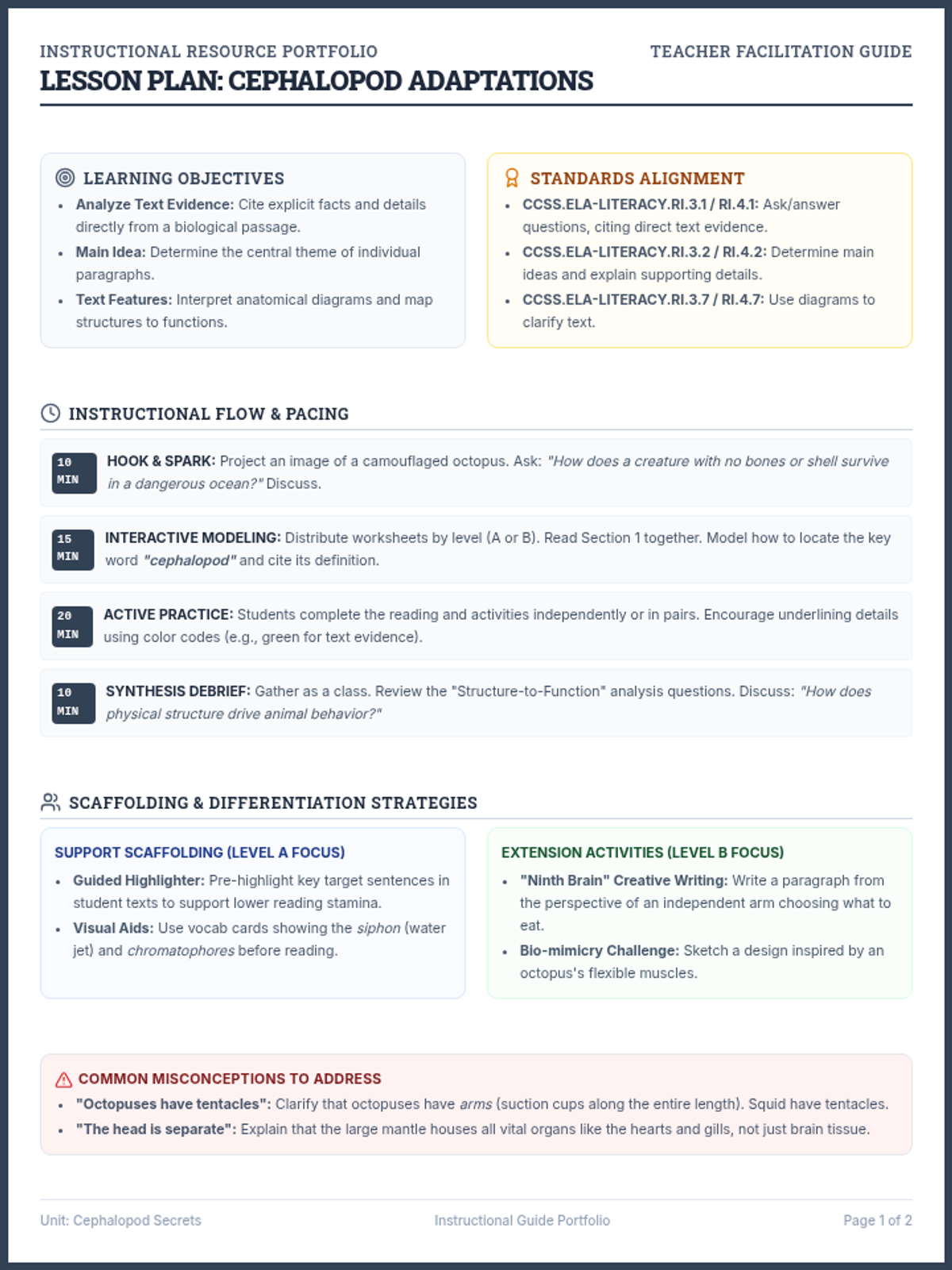
A professional lesson guide and answer key for teachers, including pacing suggestions, scaffolding techniques, and complete answer keys for both Level A and Level B student worksheets.
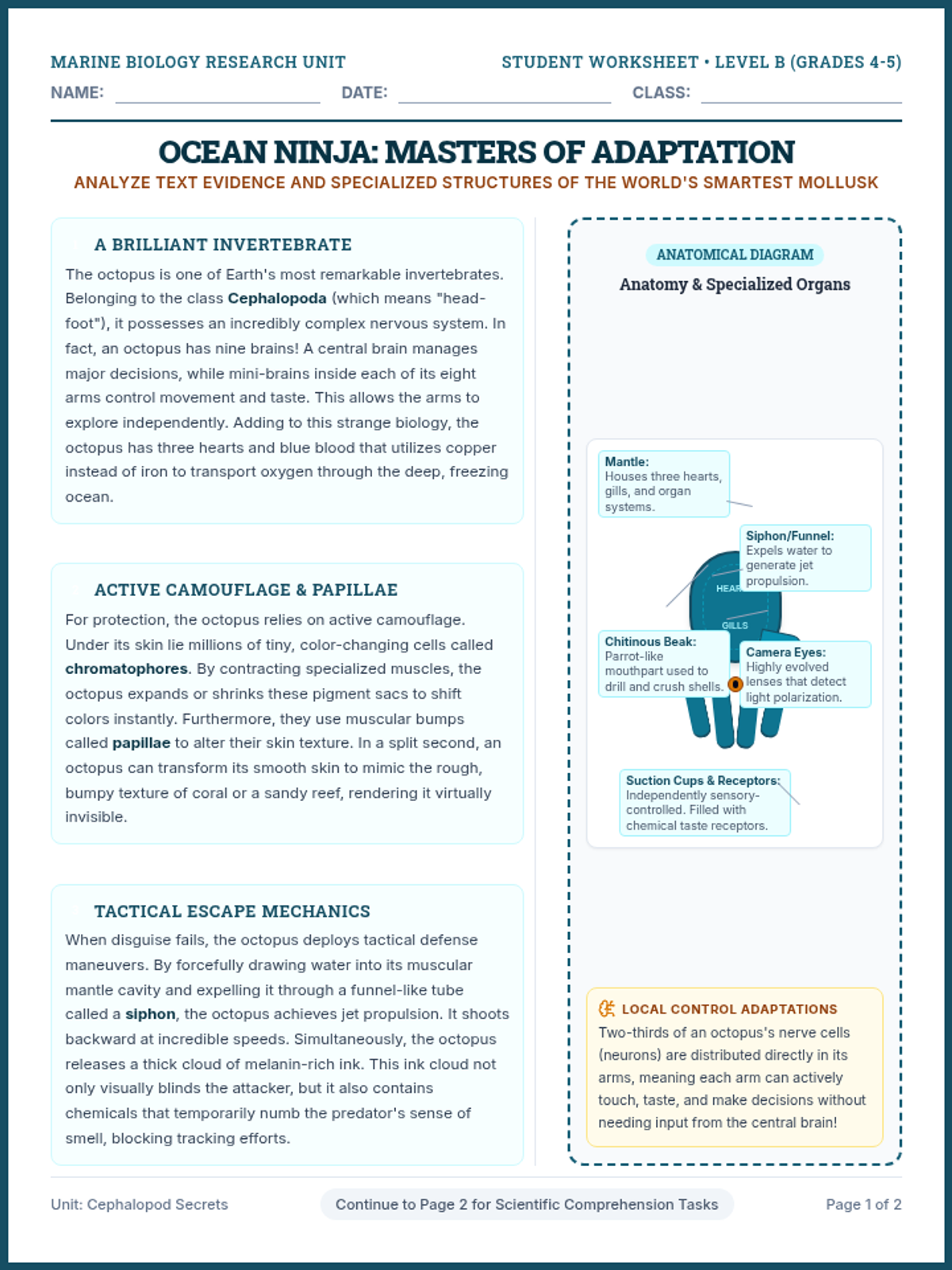
A Grade 4-5 reading passage with a specialized anatomical diagram, text-evidence matching, a main idea and supporting detail graphic organizer, and lined analysis questions.
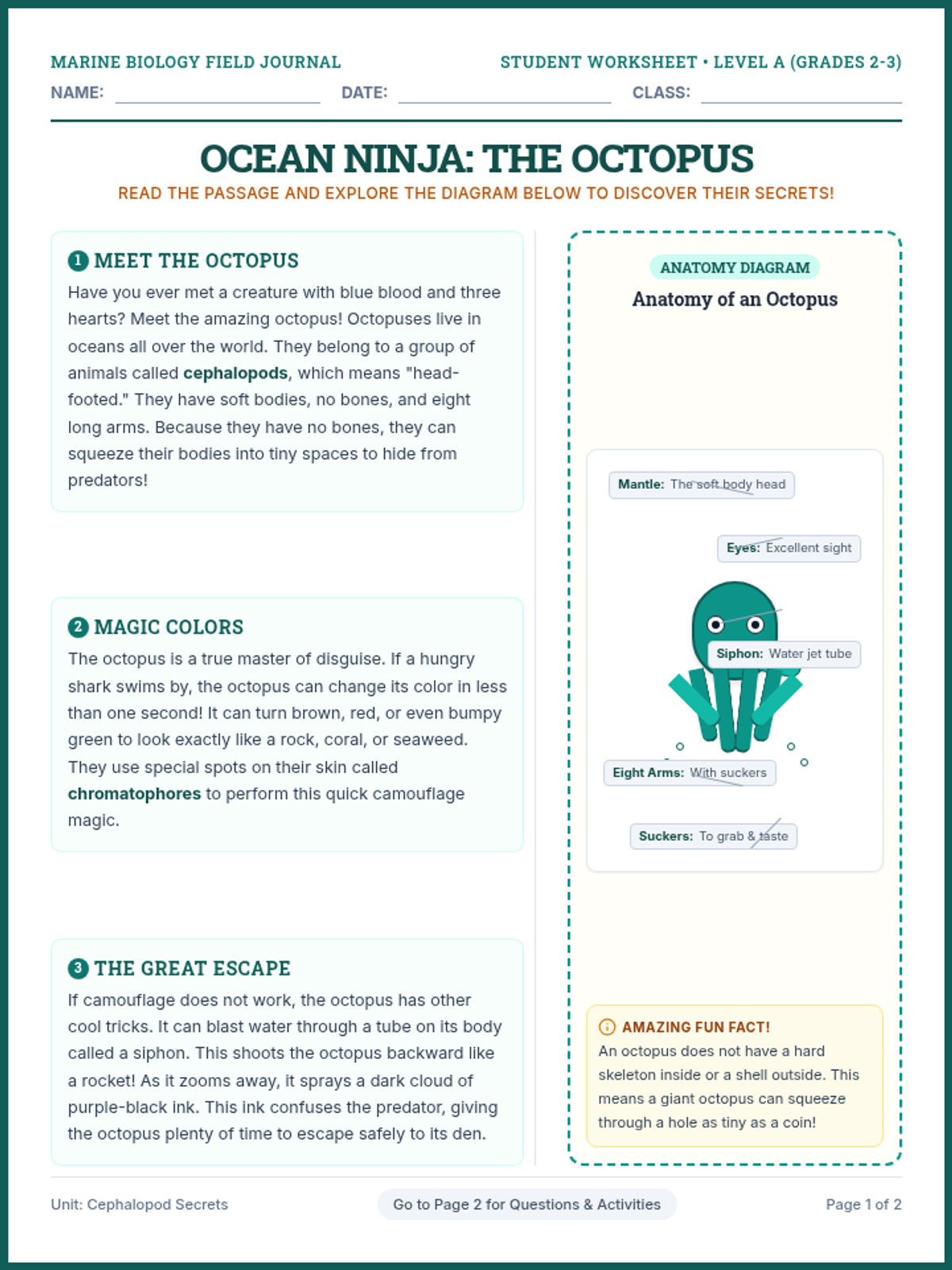
A Grade 2-3 reading passage with an integrated octopus anatomy diagram, text evidence comprehension questions, a main idea graphic organizer, and spacious short-answer writing lines.
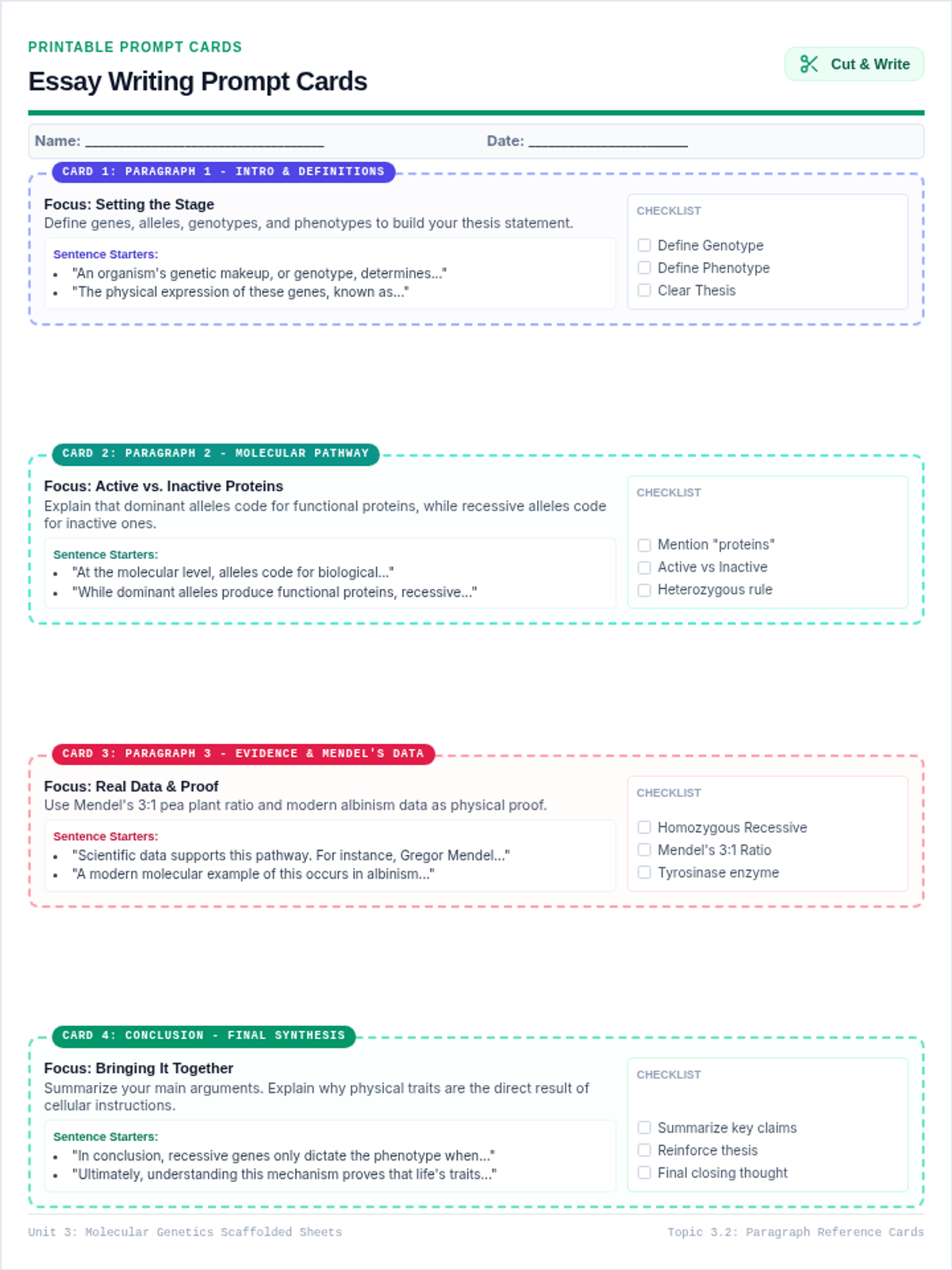
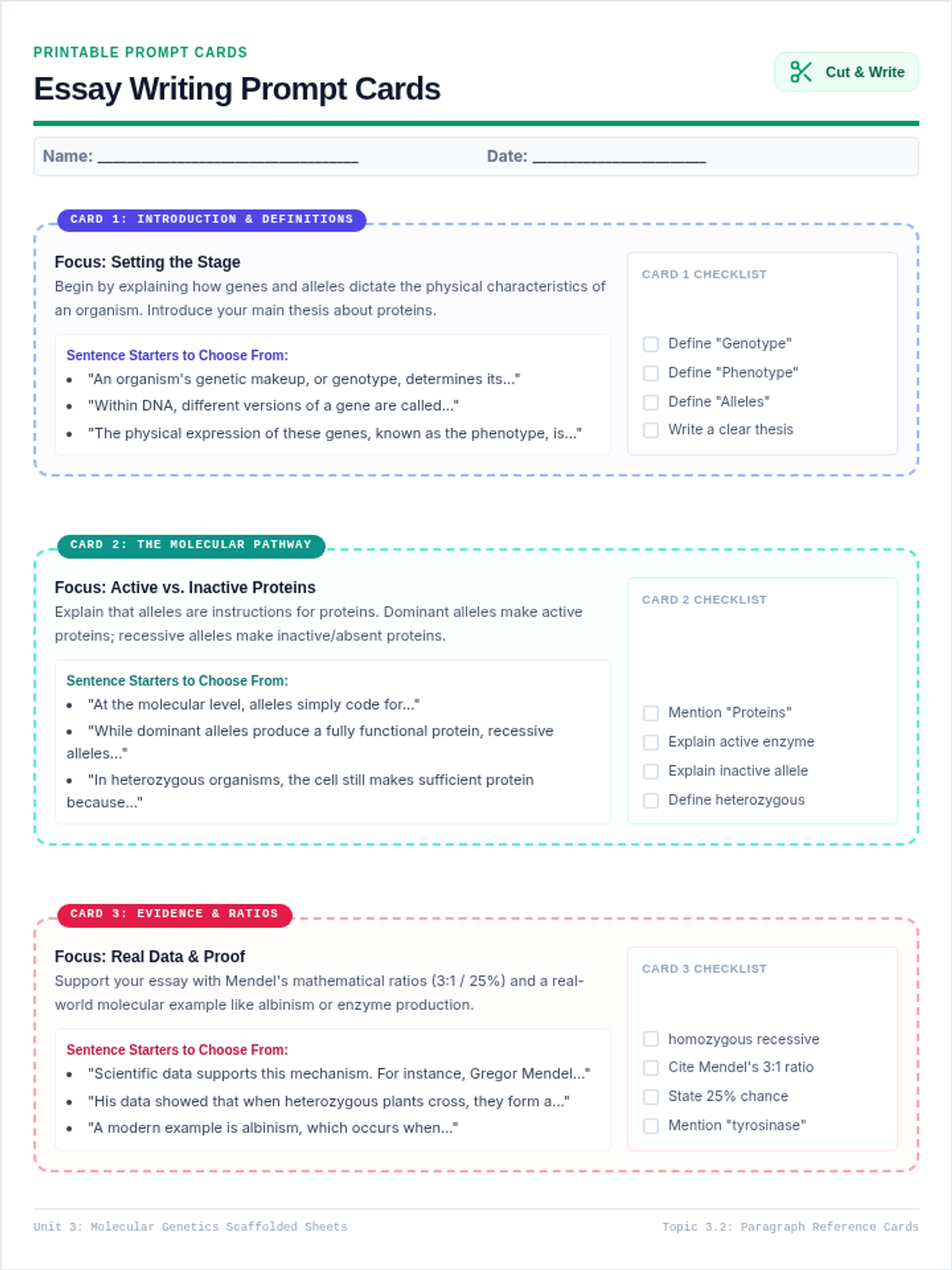
A step-by-step drafting guide with printable prompt cards, offering structured sentence starters and checkers for each paragraph of the genetic essay.
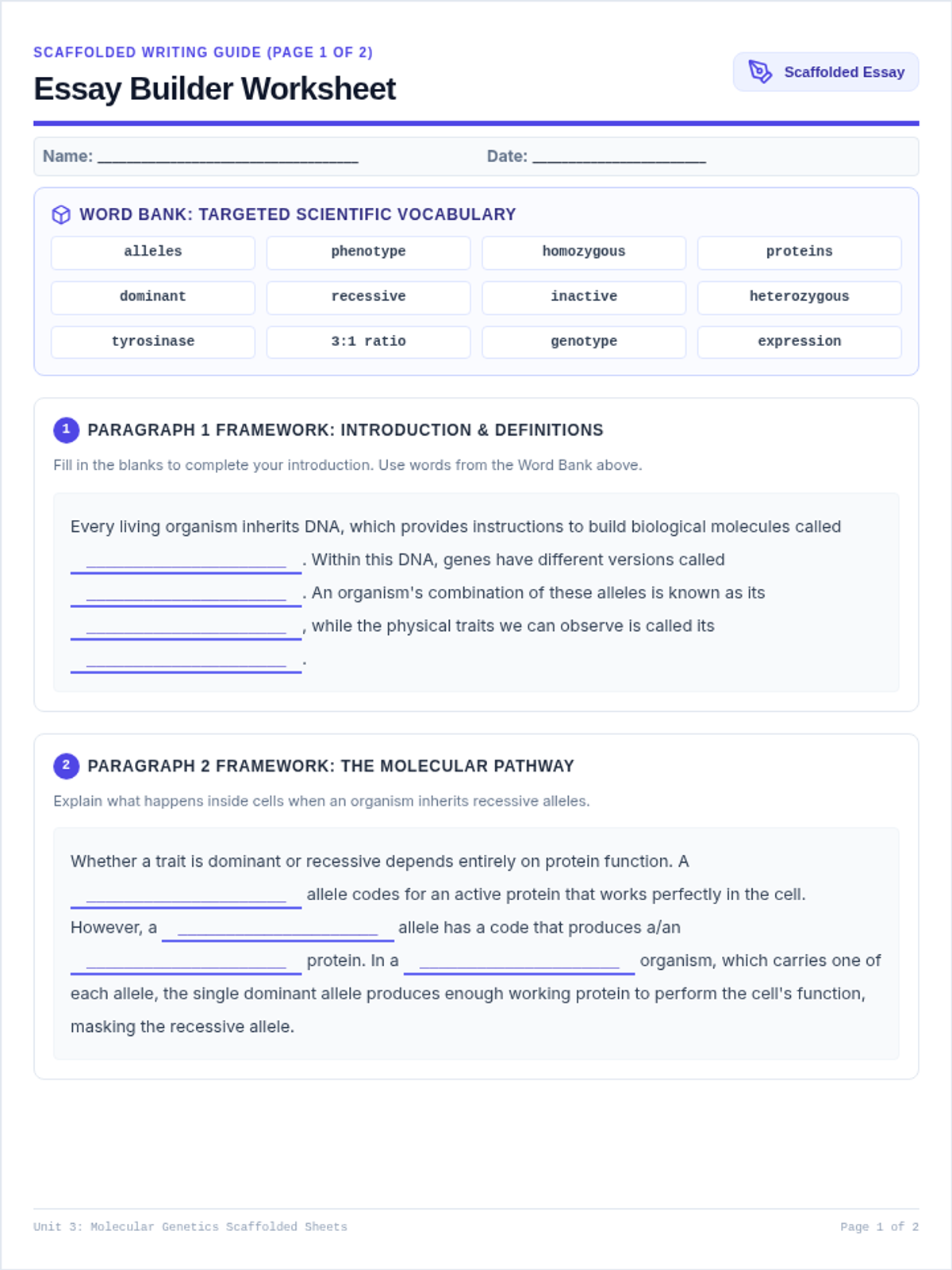
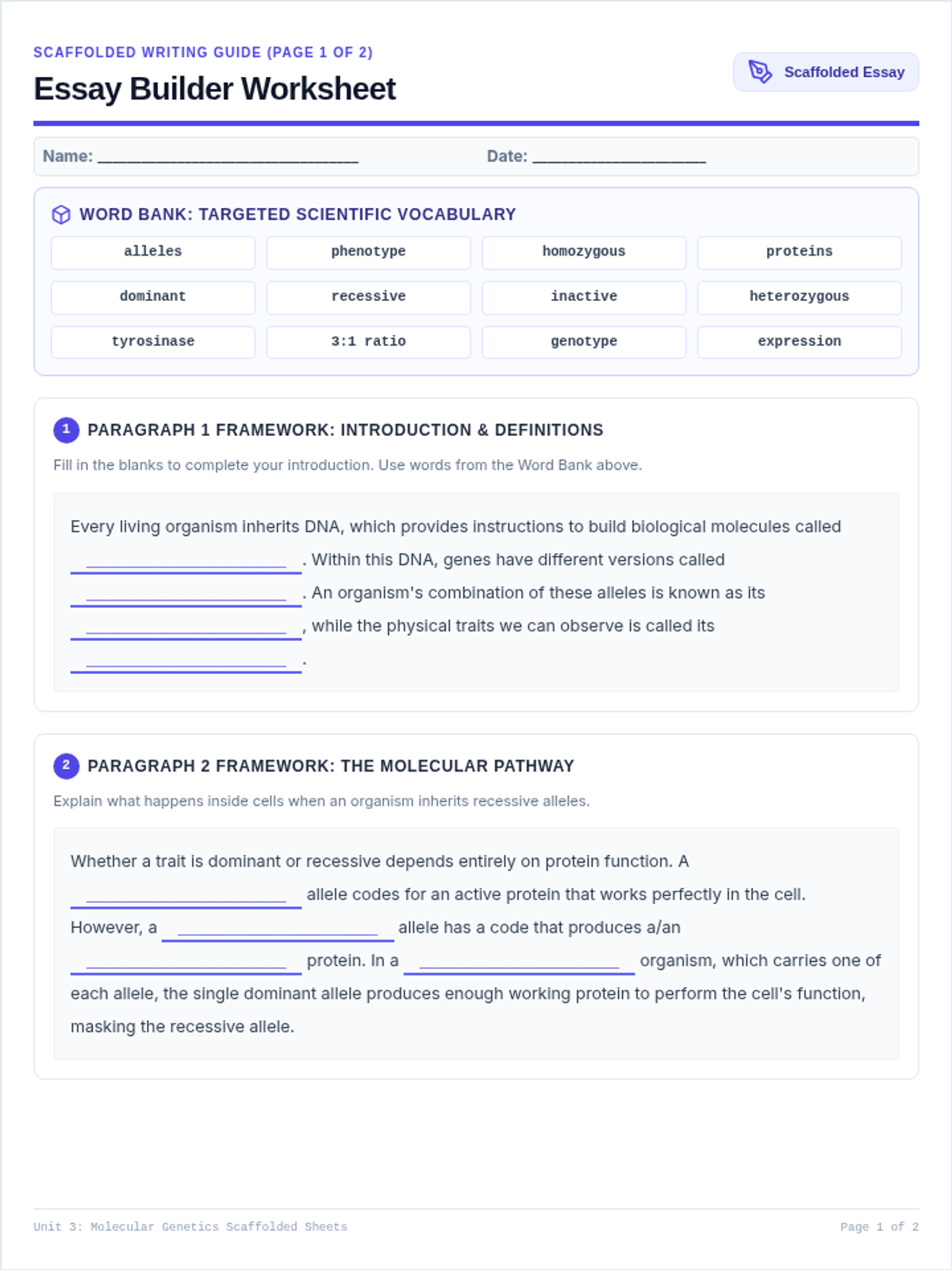
A highly structured scaffolded essay writing worksheet containing a targeted genetics word bank, sentence frames, and clear fill-in-the-blank organizers for Paragraph 1, Paragraph 2, Paragraph 3, and the final Conclusion.
A scaffolded essay writing worksheet containing a targeted genetics word bank, sentence frames, and fill-in-the-blank organizers for all three paragraphs.
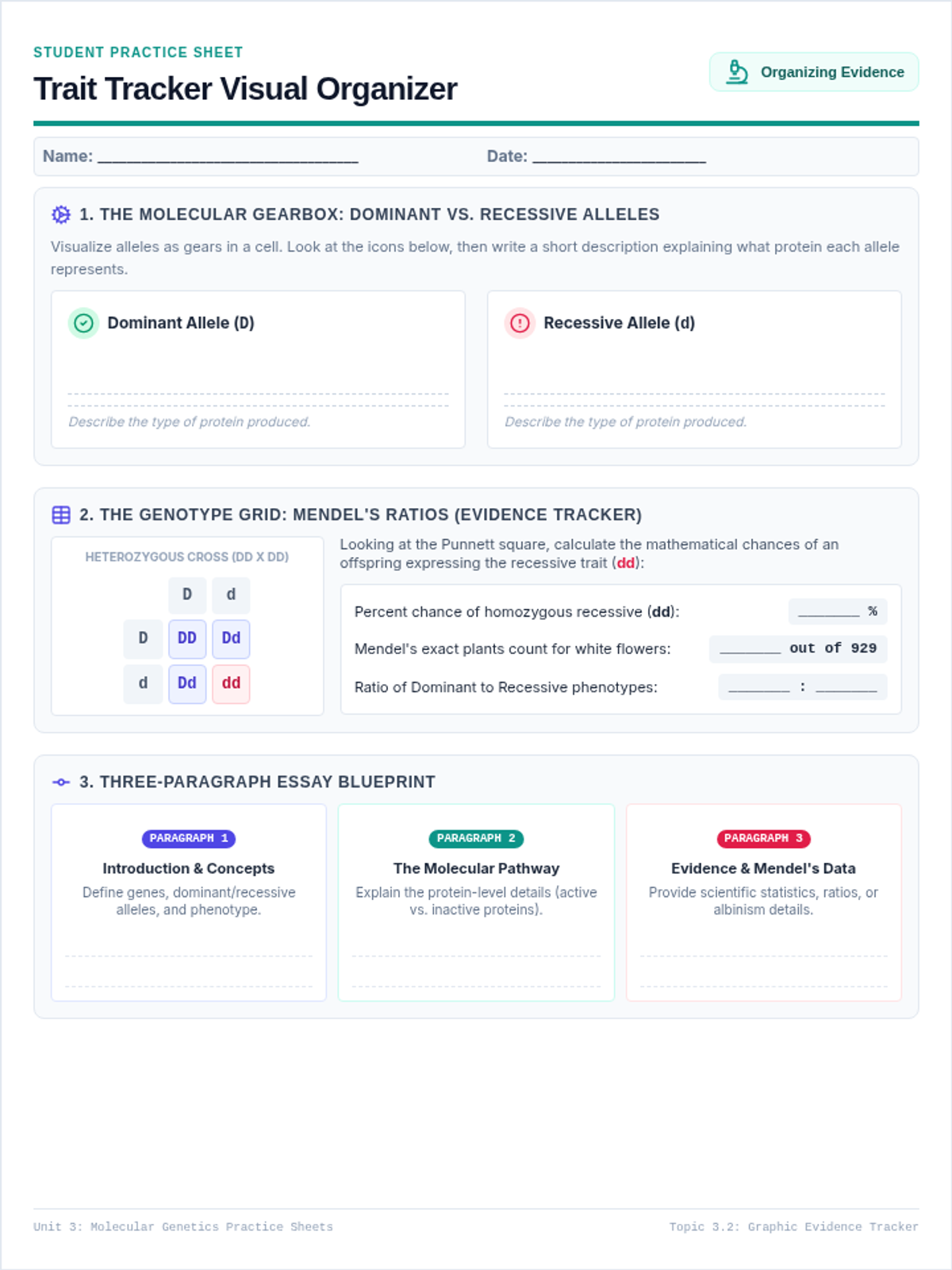
A student graphic organizer featuring visual prompts, icons, and diagrams to help students trace and organize genetic concepts before writing their essay.
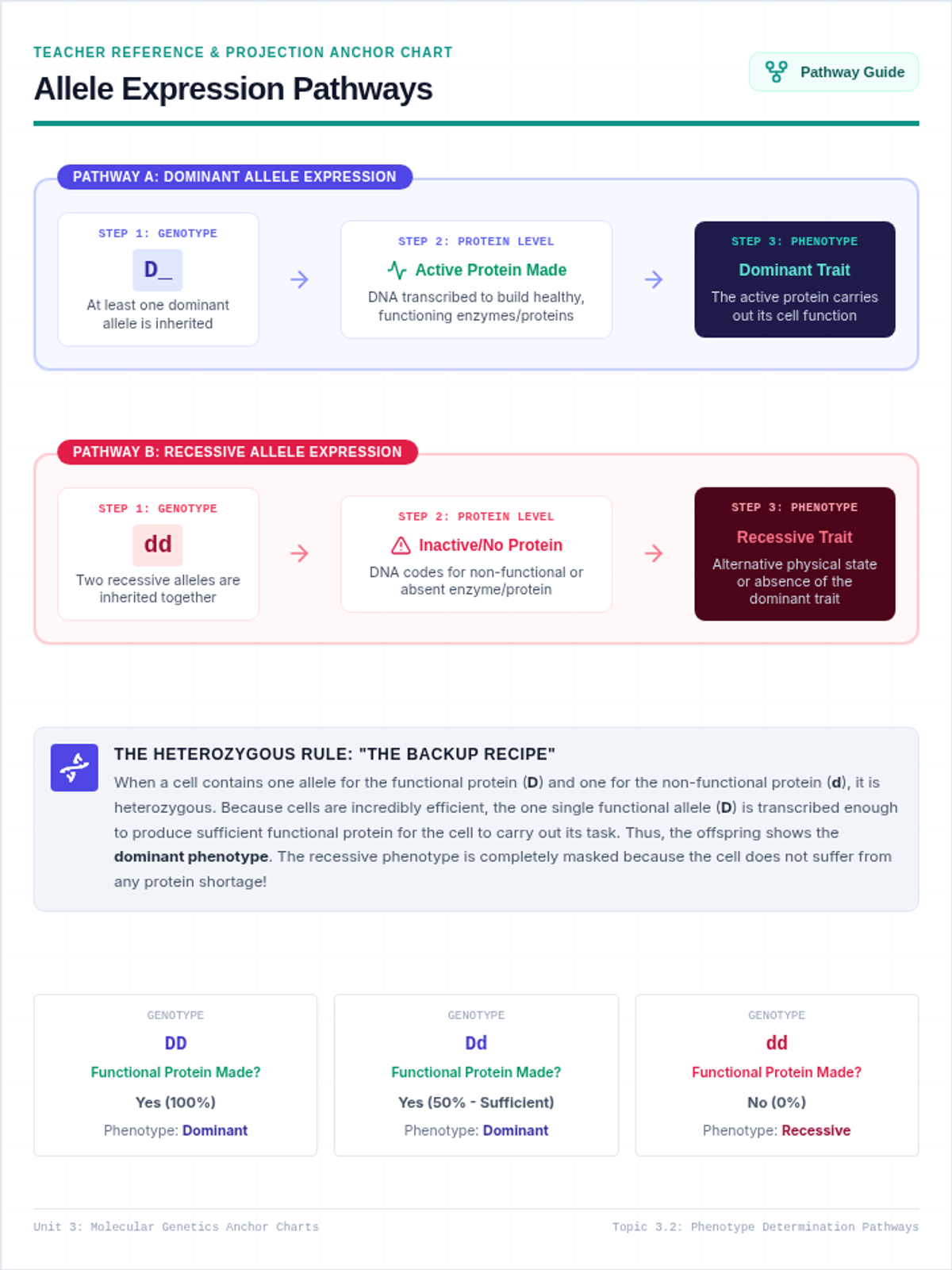
A teacher anchor chart or visual poster depicting the biological pathways of dominant versus recessive alleles, from DNA transcription to active or inactive protein synthesis and the resulting phenotypes.
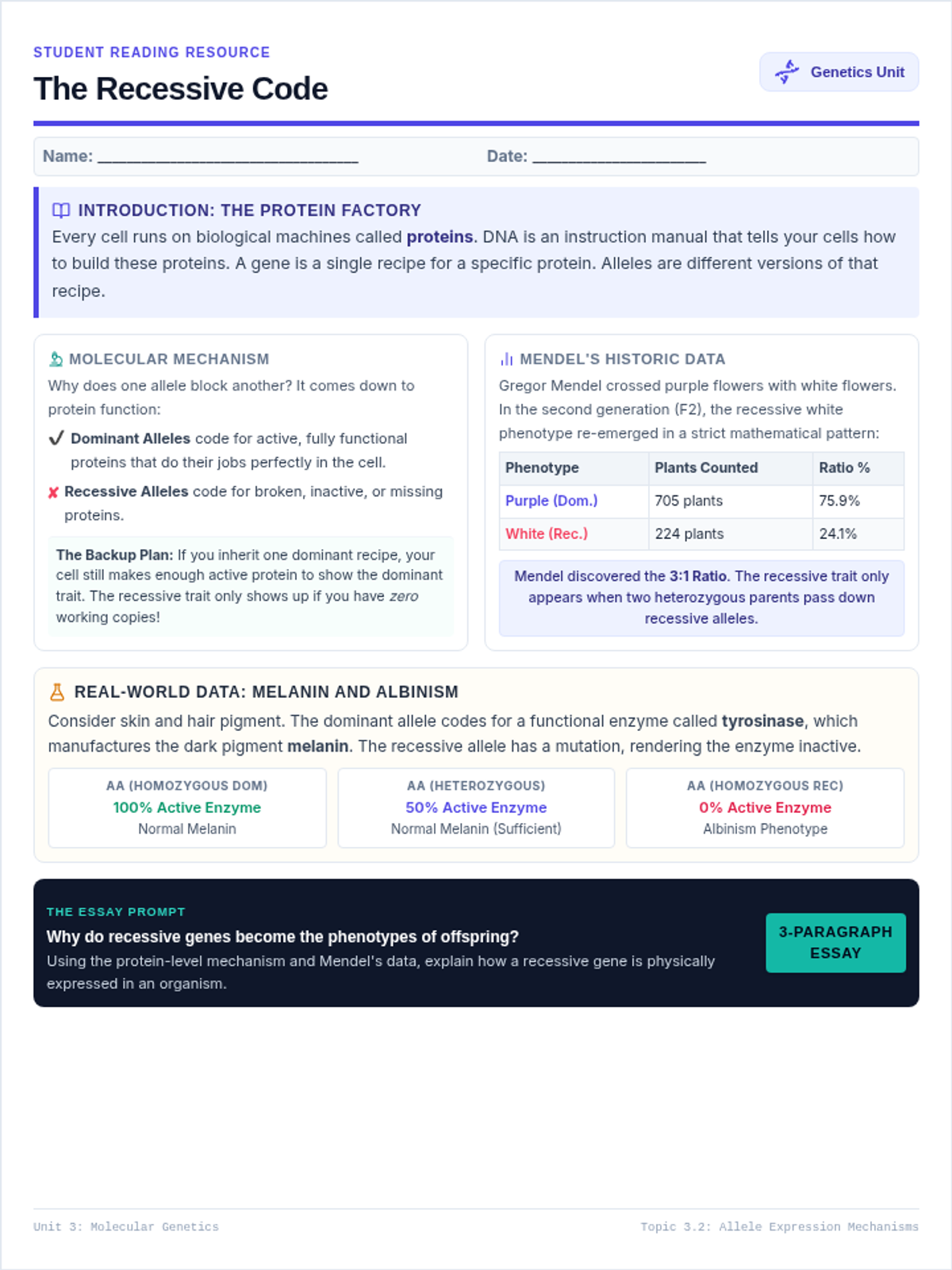
A simplified science reading passage that explains the molecular and protein-level mechanisms of dominant and recessive alleles, featuring Mendel's experimental data and high-interest modern examples.
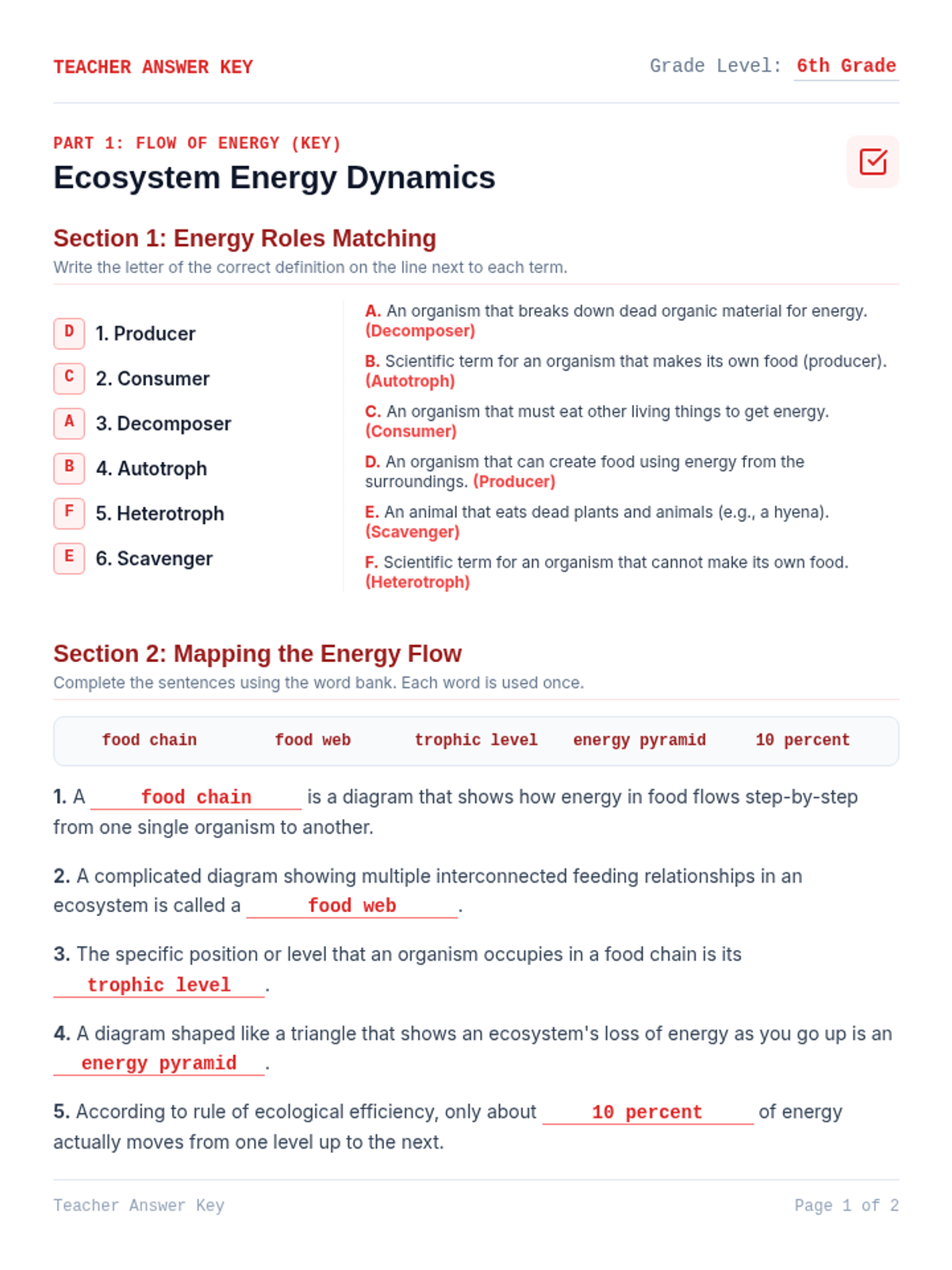
A corresponding 2-page print-ready teacher answer key with bold red solutions and sample responses for the SPED sentence frames.
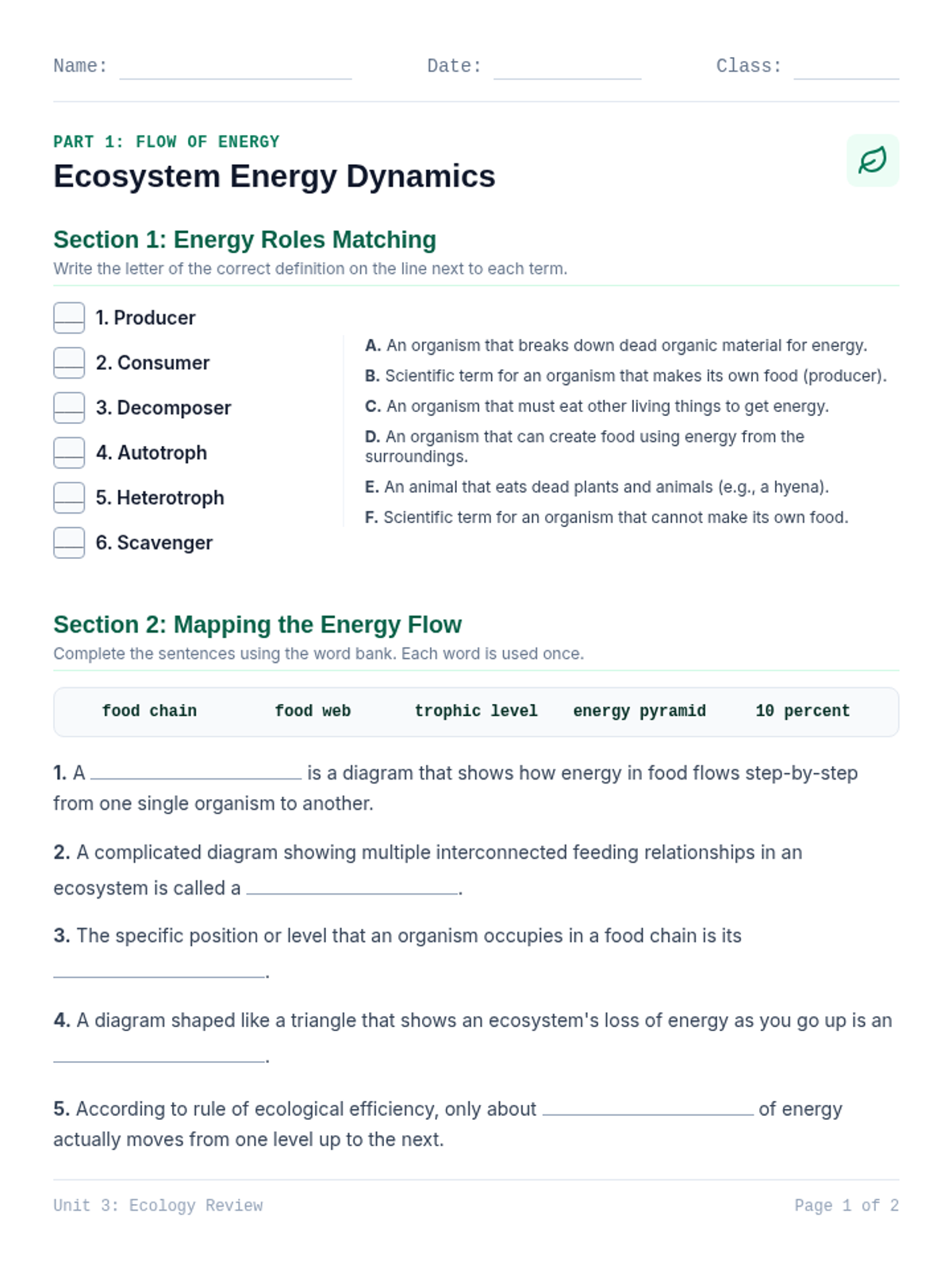
A clean, minimal 2-page print-ready review worksheet covering energy flow and relationships with matching, fill-in-the-blank, and SPED sentence frames.
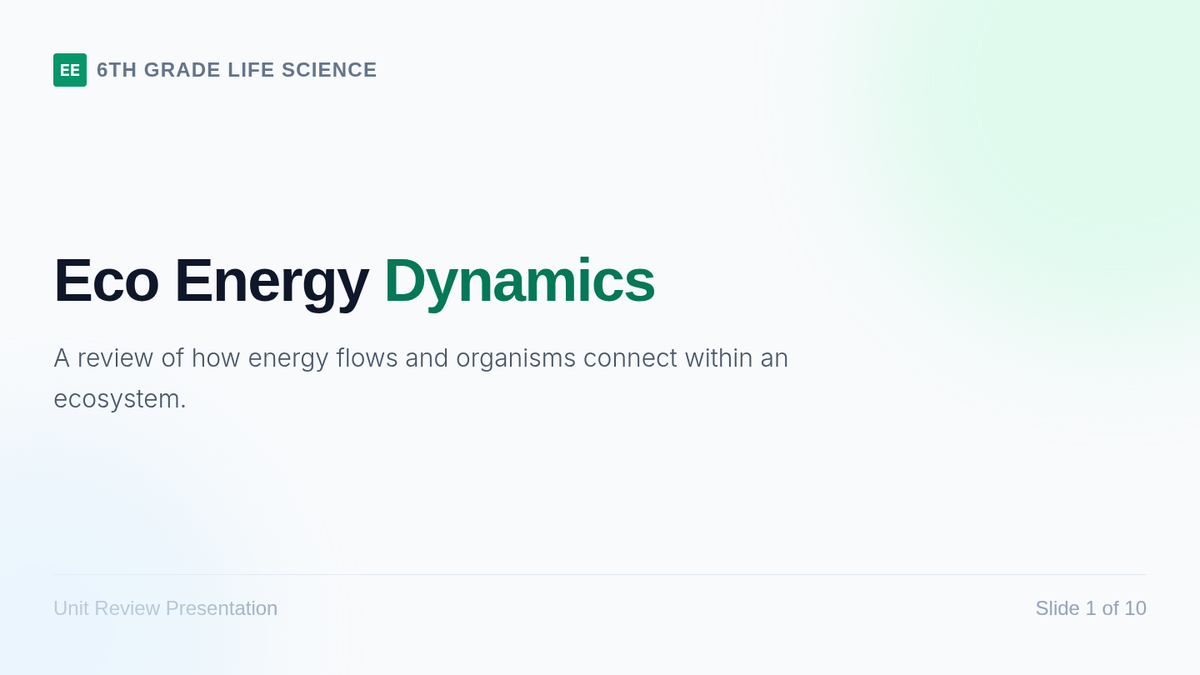
An upgraded, highly visual 10-slide review presentation featuring custom SVG and CSS illustrations representing photosynthesis, dietary consumers, linear food chains, food webs, and energy pyramids as requested.