A printer-friendly black and white version of the Osmosis Jones worksheet, designed for double-sided printing with 10 simplified questions. Focuses on immune system basics and homeostasis. Revised for 2-page fit.
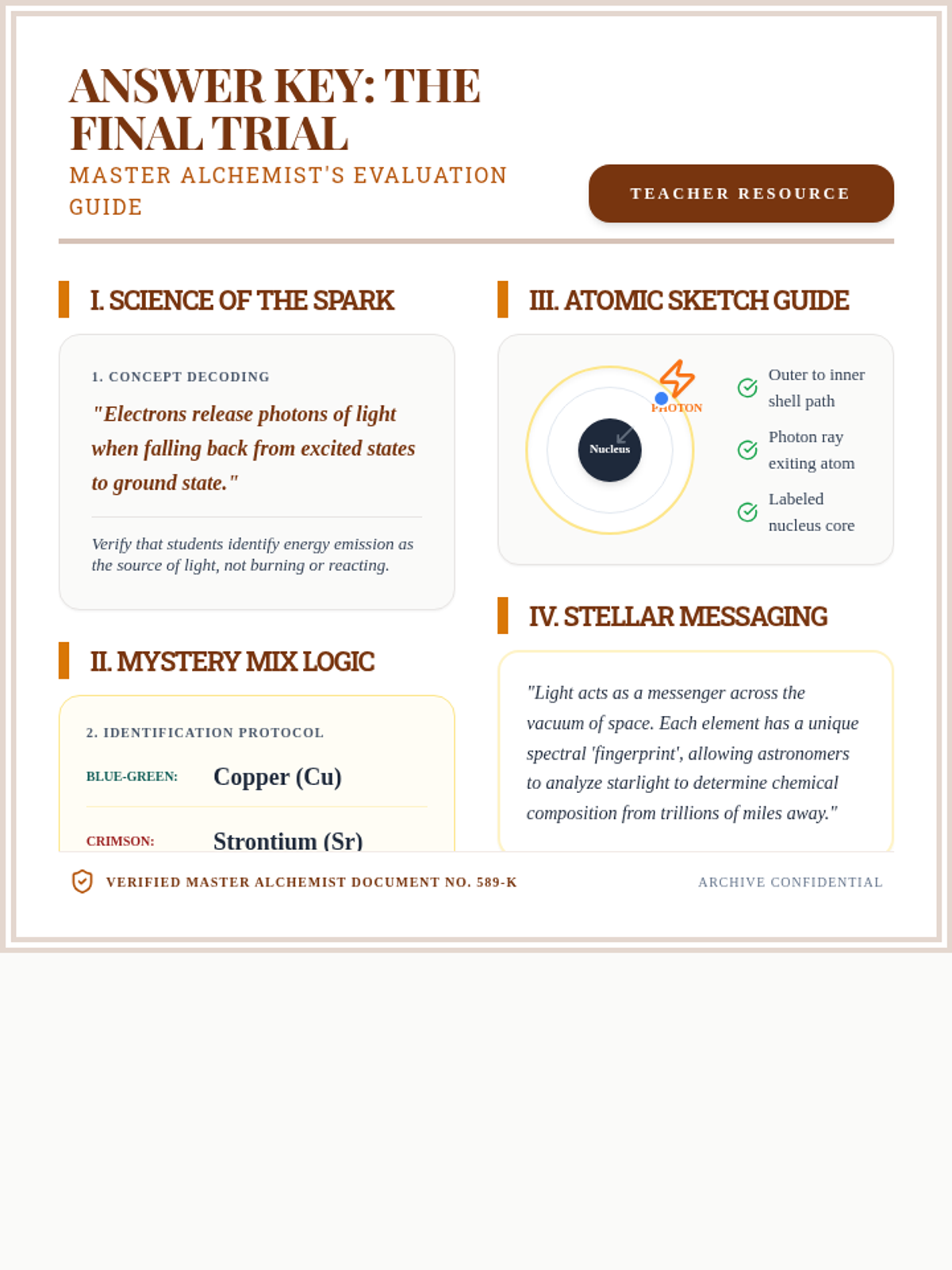
A comprehensive answer key for 'The Final Trial' assessment. It provides correct answers, diagram requirements, and pedagogical tips for the teacher. Optimized for 11x8 landscape print with high-visibility layout and fixed rendering artifacts. Small font sizes increased for better legibility.
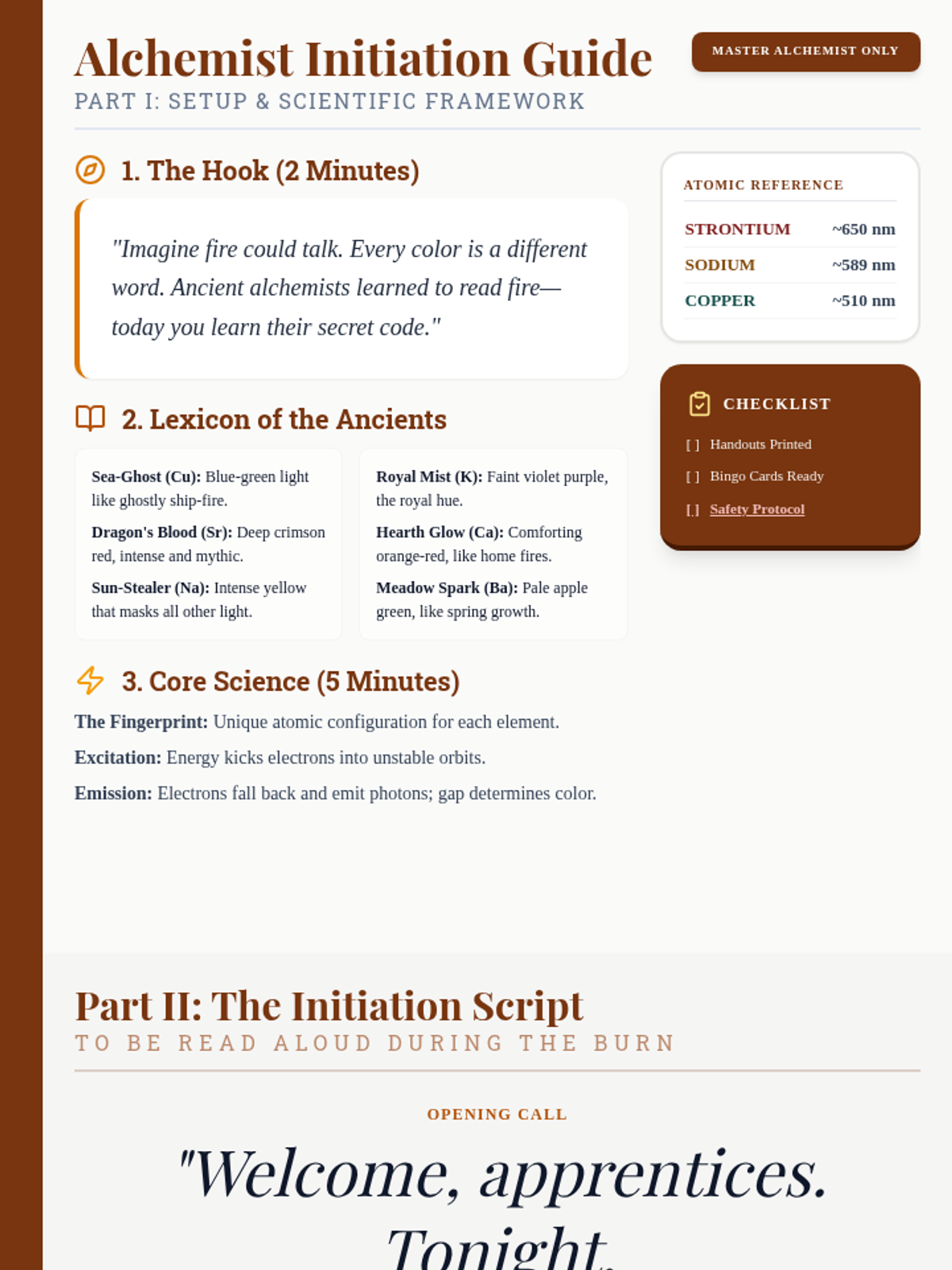
A teacher facilitation guide for the 'Mystery Mix' flame show. Includes a structured prep lesson plan, an atmospheric script for the demonstration, and a 'Lexicon of the Ancients' explaining the symbolic nicknames for each element. Optimized for 11x8 landscape print with reduced padding to avoid content cutoff.
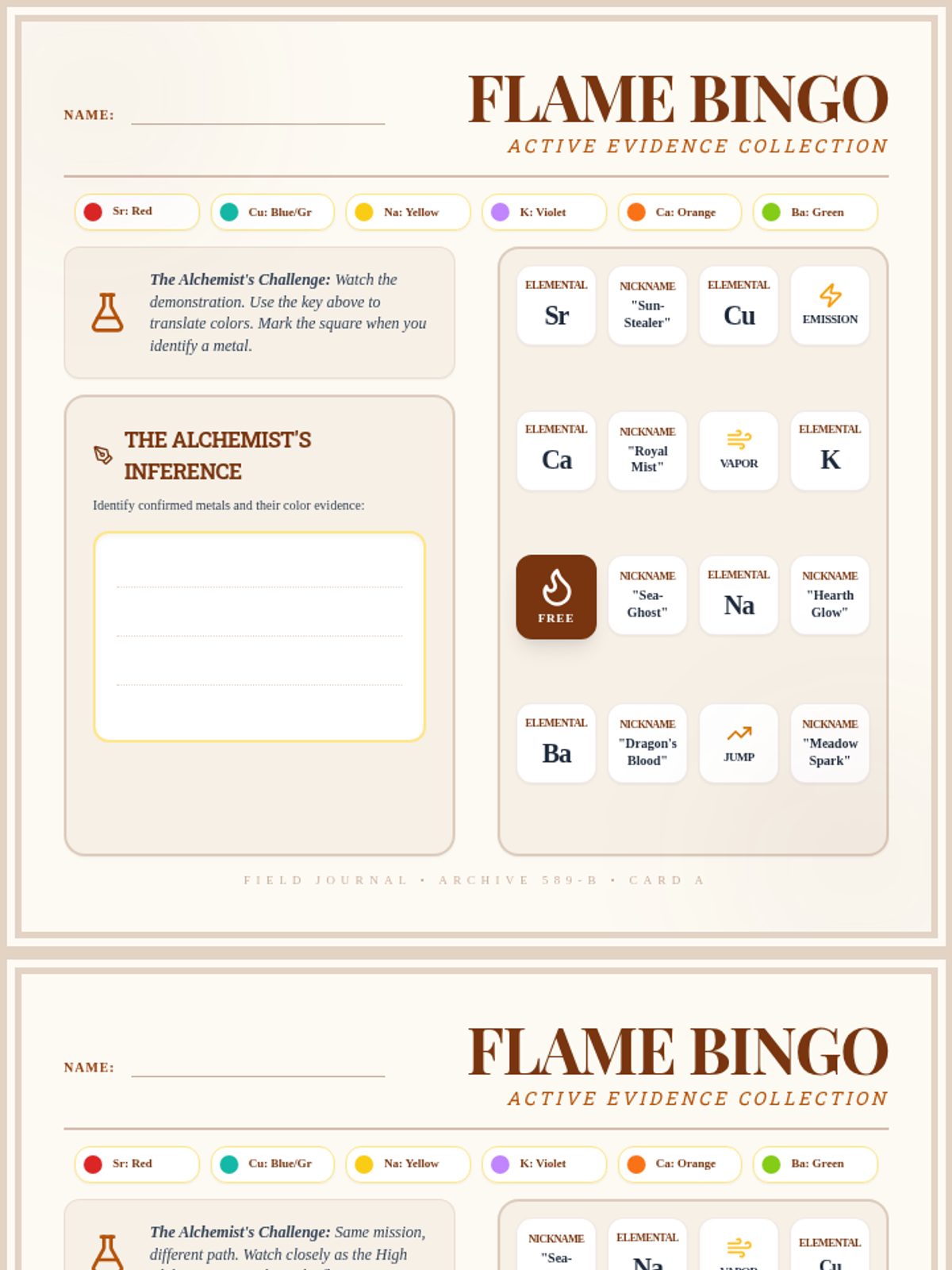
A three-page interactive activity document. Includes two different randomized versions of the Flame Bingo card and a formative recap assessment. Layout optimized for 11x8 landscape print with @page settings and nickname definitions. Features improved spacing to avoid content cutoff. Smaller name fields to maximize activity space. Darker footer for contrast.
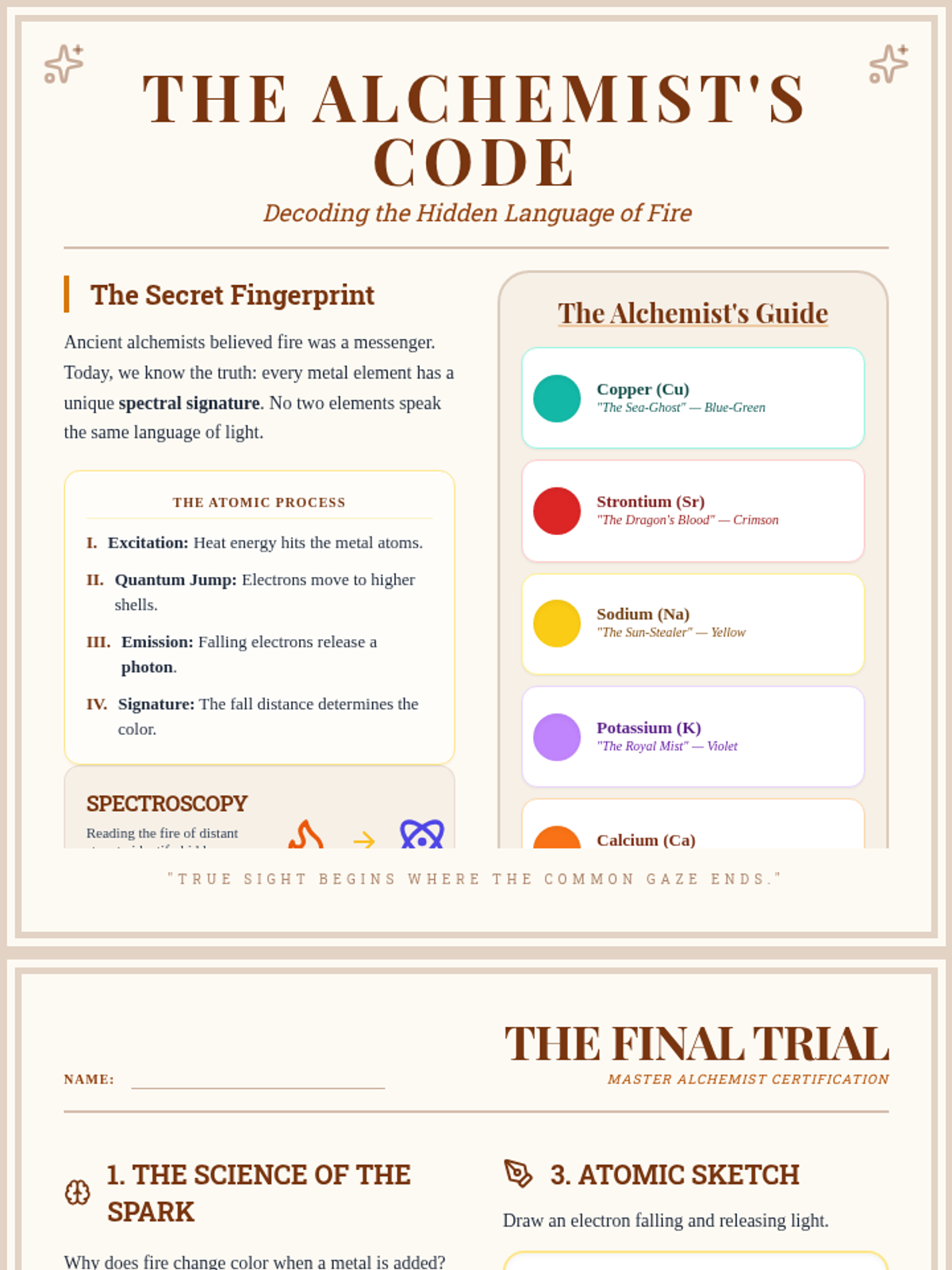
A two-page student handout for a flame test experiment. Page one provides a detailed alchemical color key and the science of spectroscopy. Page two features 'The Final Trial' assessment. Optimized for 11x8 landscape print with uniform answer choices and improved sketch area. Small name field to maximize space.
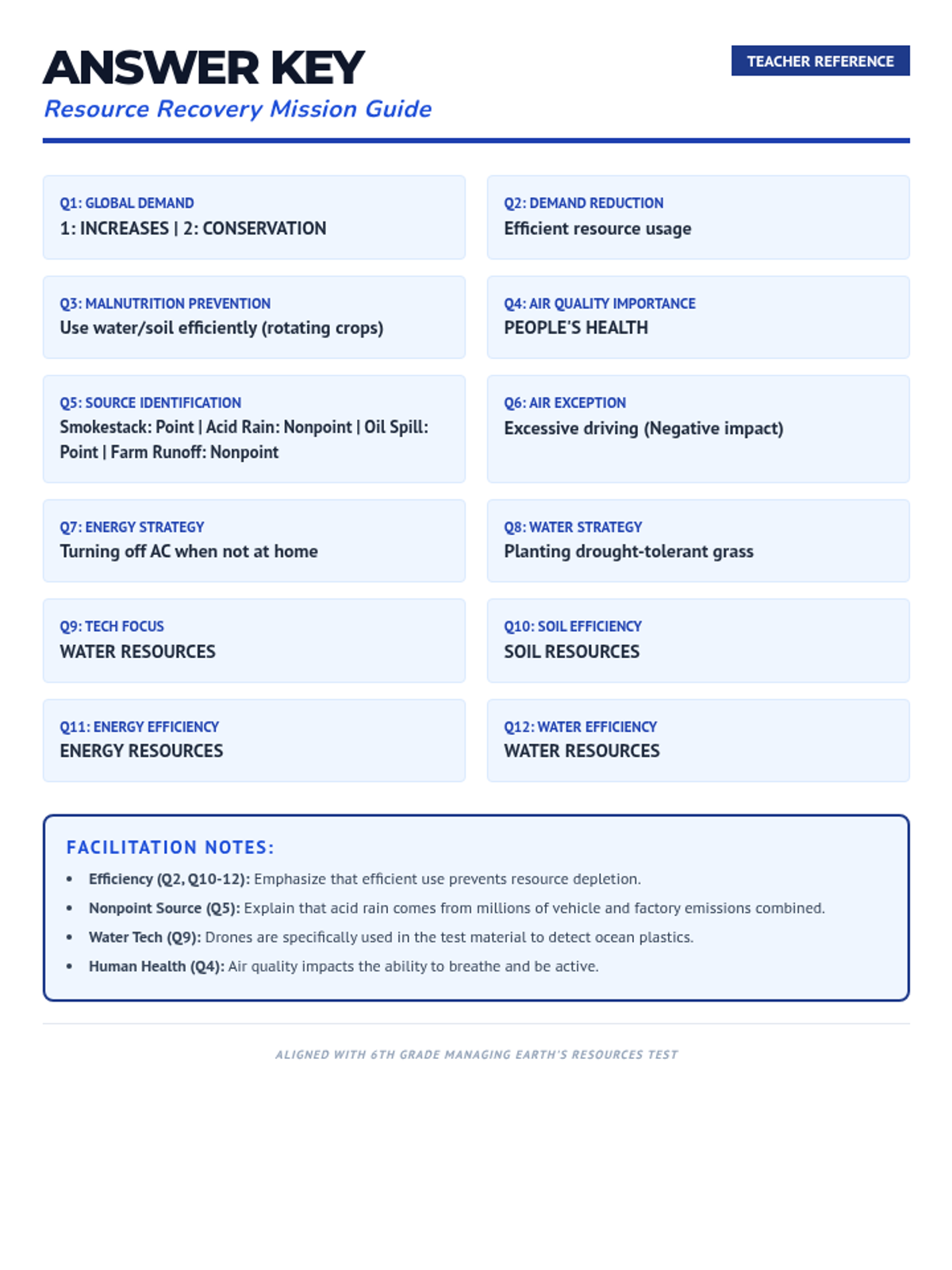
The answer key for the Resource Recovery Bio-Quest scavenger hunt. It provides correct answers for all 12 test-aligned questions and includes practical teaching tips for facilitating the activity outdoors with 6th graders.
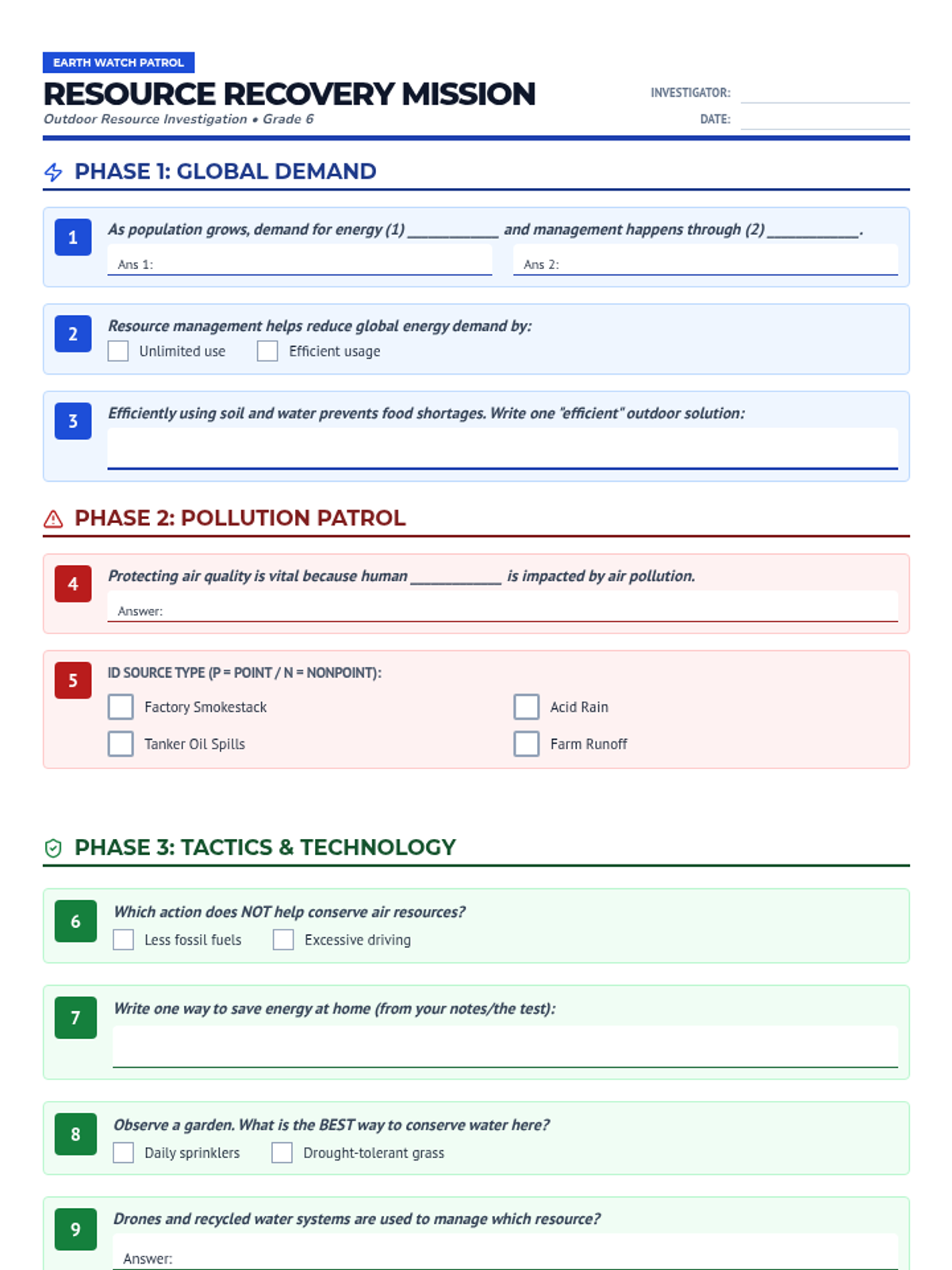
An outdoor Earth resources scavenger hunt activity for 6th graders. Students complete 12 test-aligned questions while observing their surroundings, covering energy demand, air quality, pollution types, and conservation strategies for water, soil, and energy. Revised for handwriting space.
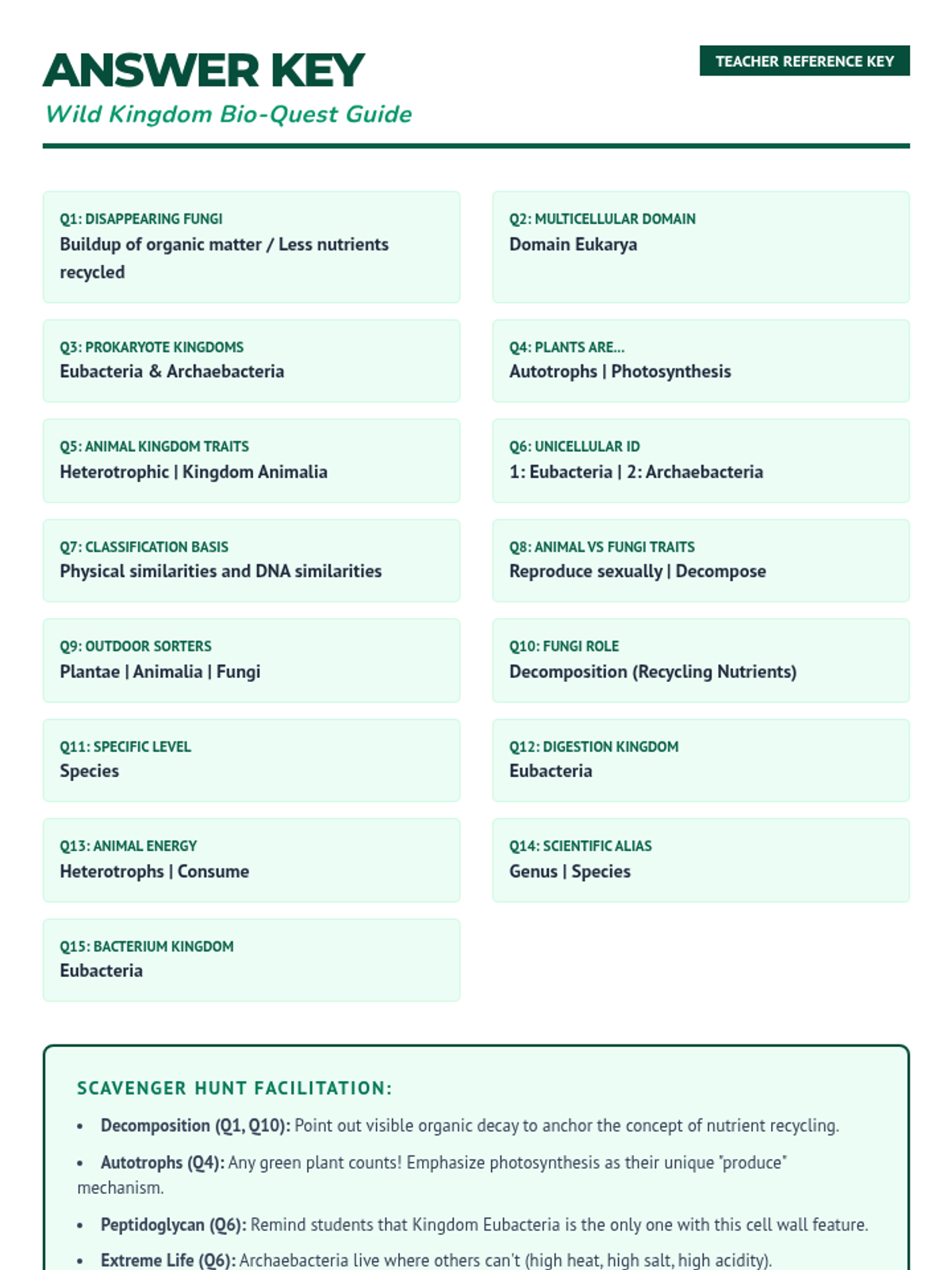
The answer key for the Wild Kingdom Bio-Quest scavenger hunt. It provides correct answers for all 15 test-aligned questions and includes practical teaching tips for facilitating the activity outdoors. Revised for better page flow and consistent text sizing.
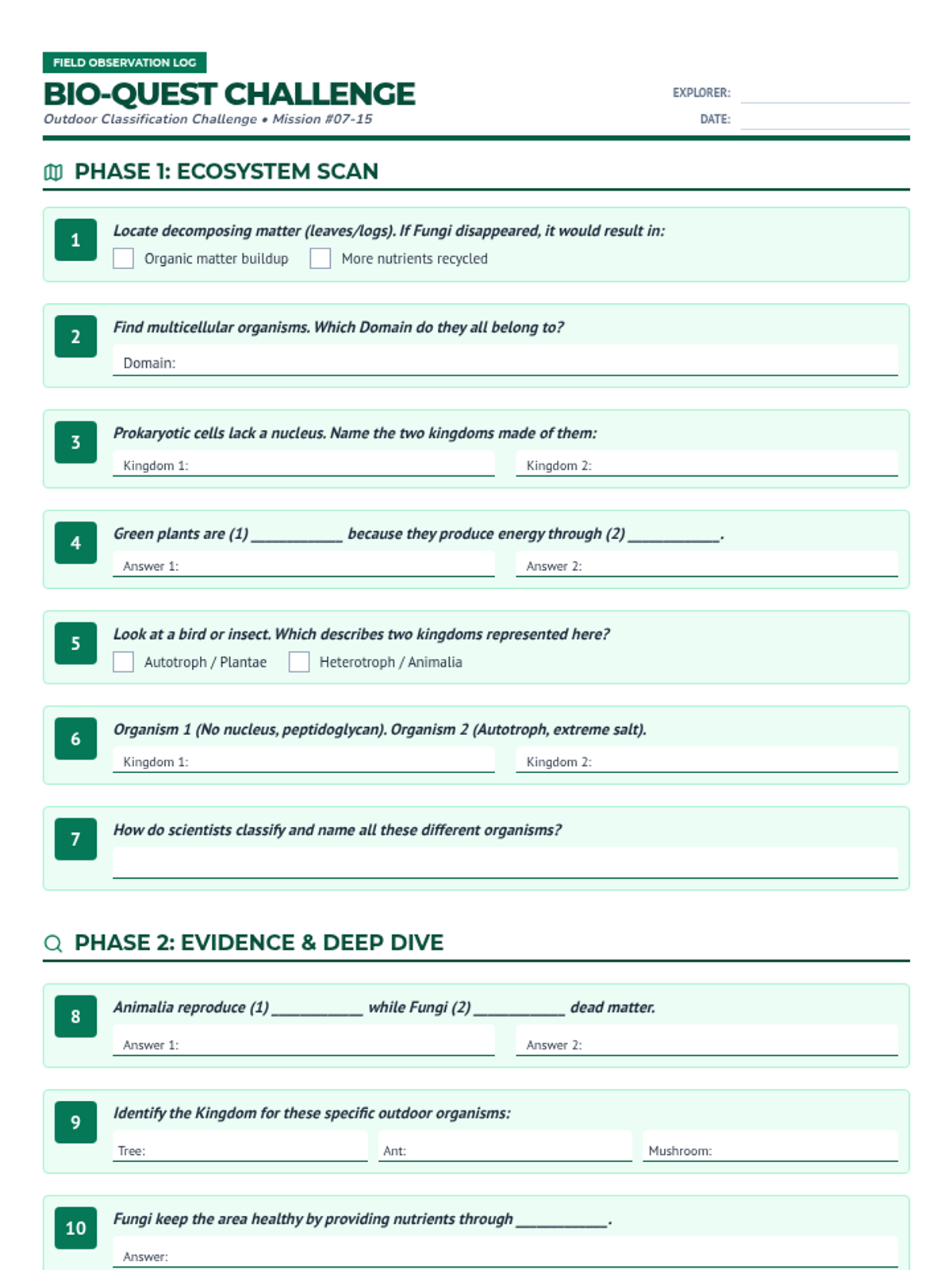
An outdoor taxonomy scavenger hunt activity for 7th graders. Students complete 15 test-aligned questions while observing their natural surroundings, covering kingdom characteristics, cell types, and the taxonomic hierarchy. Revised for consistent answer areas and improved layout.
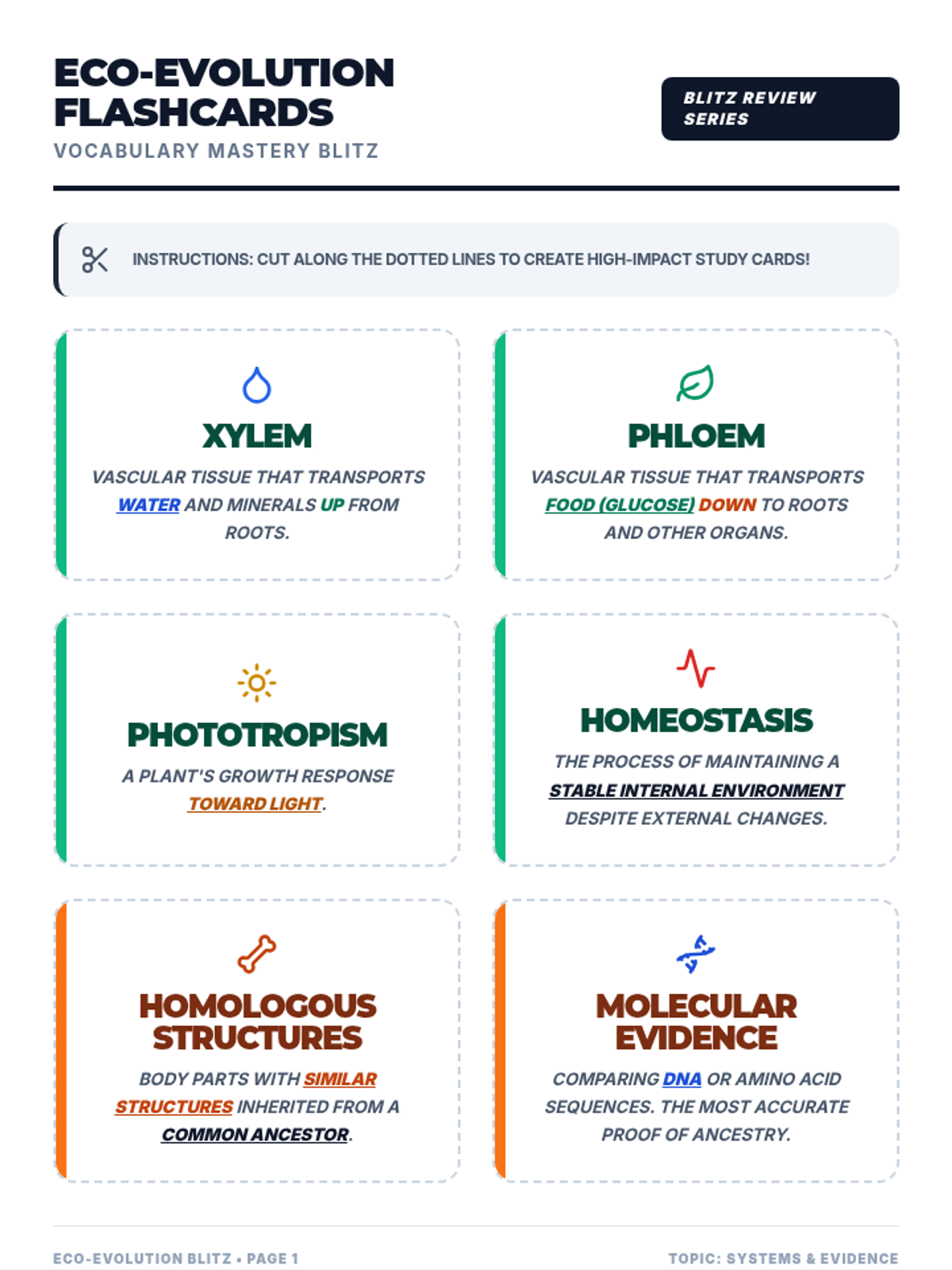
A set of foldable vocabulary cards for Eco-Evolution Blitz. Features a side-by-side layout with the term and icon on one side and the detailed definition on the other, designed to be cut and folded for student use. Includes 18 high-impact cards with thematic icons covering systems, evolution, and ecology. Fixed abbreviations and labels for better clarity and print contrast.
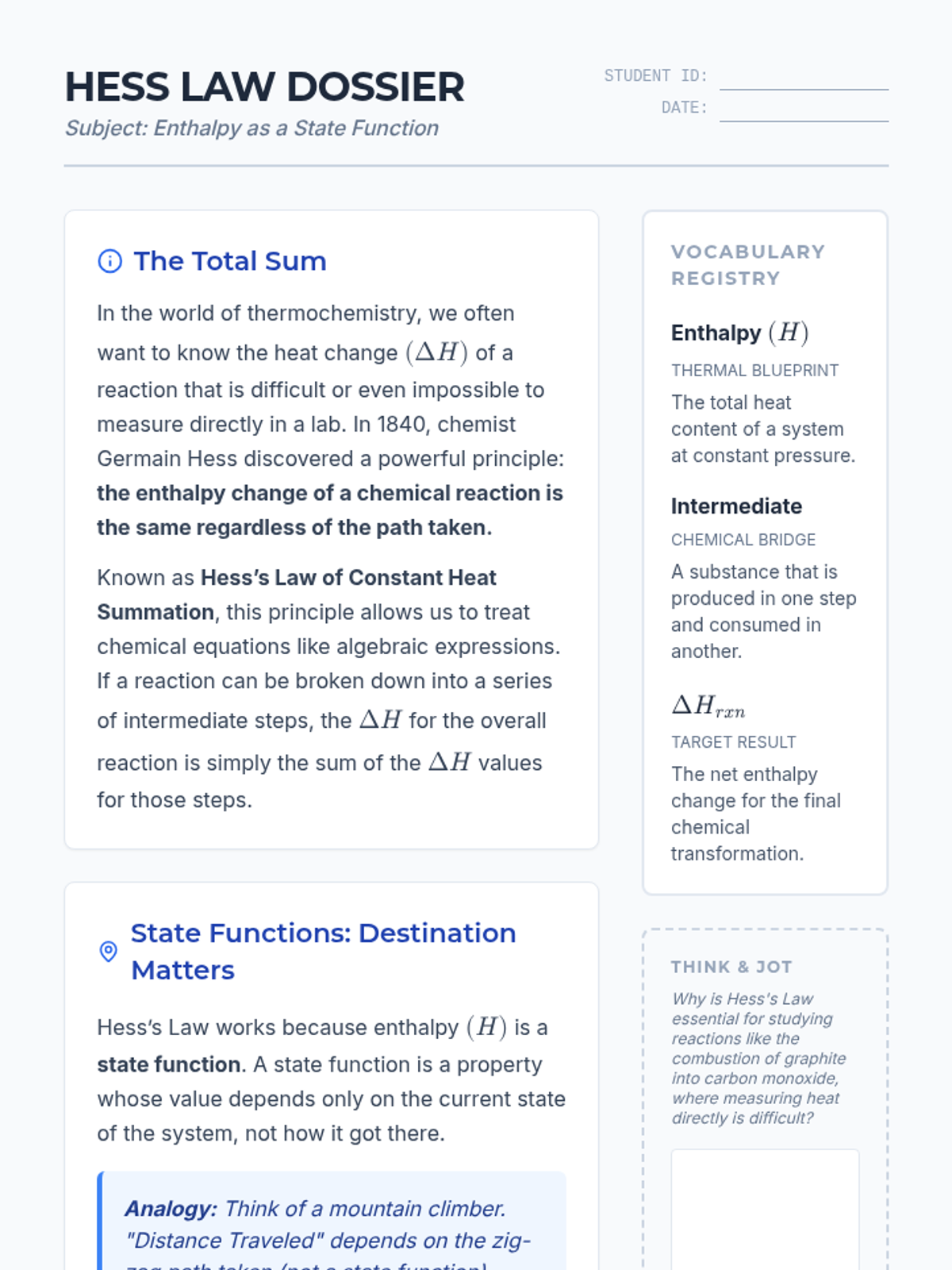
A technical reading passage that explains Hess's Law, state functions, and the mathematical rules for calculating enthalpy changes using intermediate reaction steps. Includes a vocabulary registry and a guided "Think & Jot" section for student reflection. Optimized for print with avoided breaks and increased work area size.
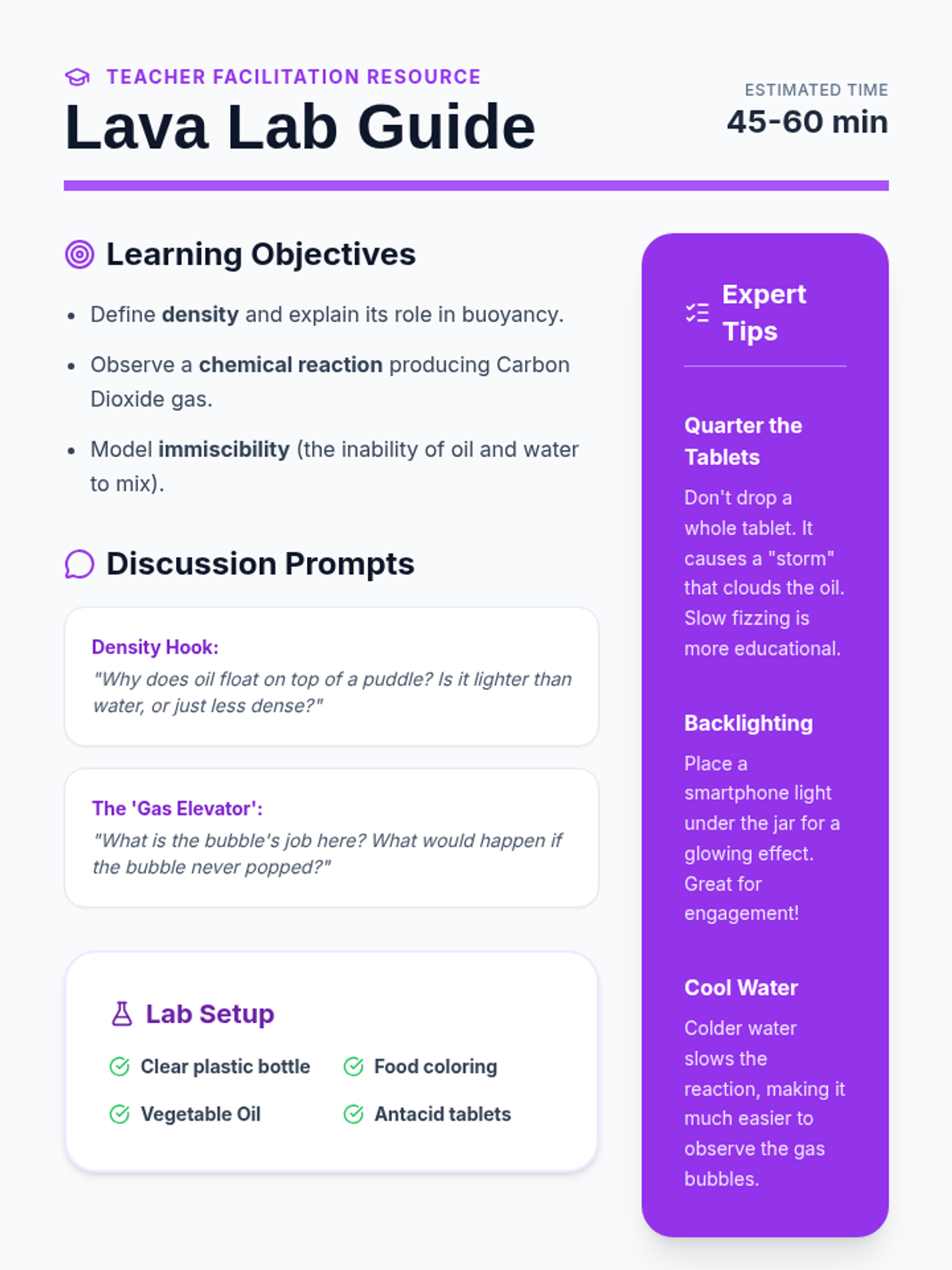
A comprehensive guide for teachers including learning objectives, discussion prompts, science troubleshooting tips, and pro-tips for facilitating the DIY lava lamp experiment.
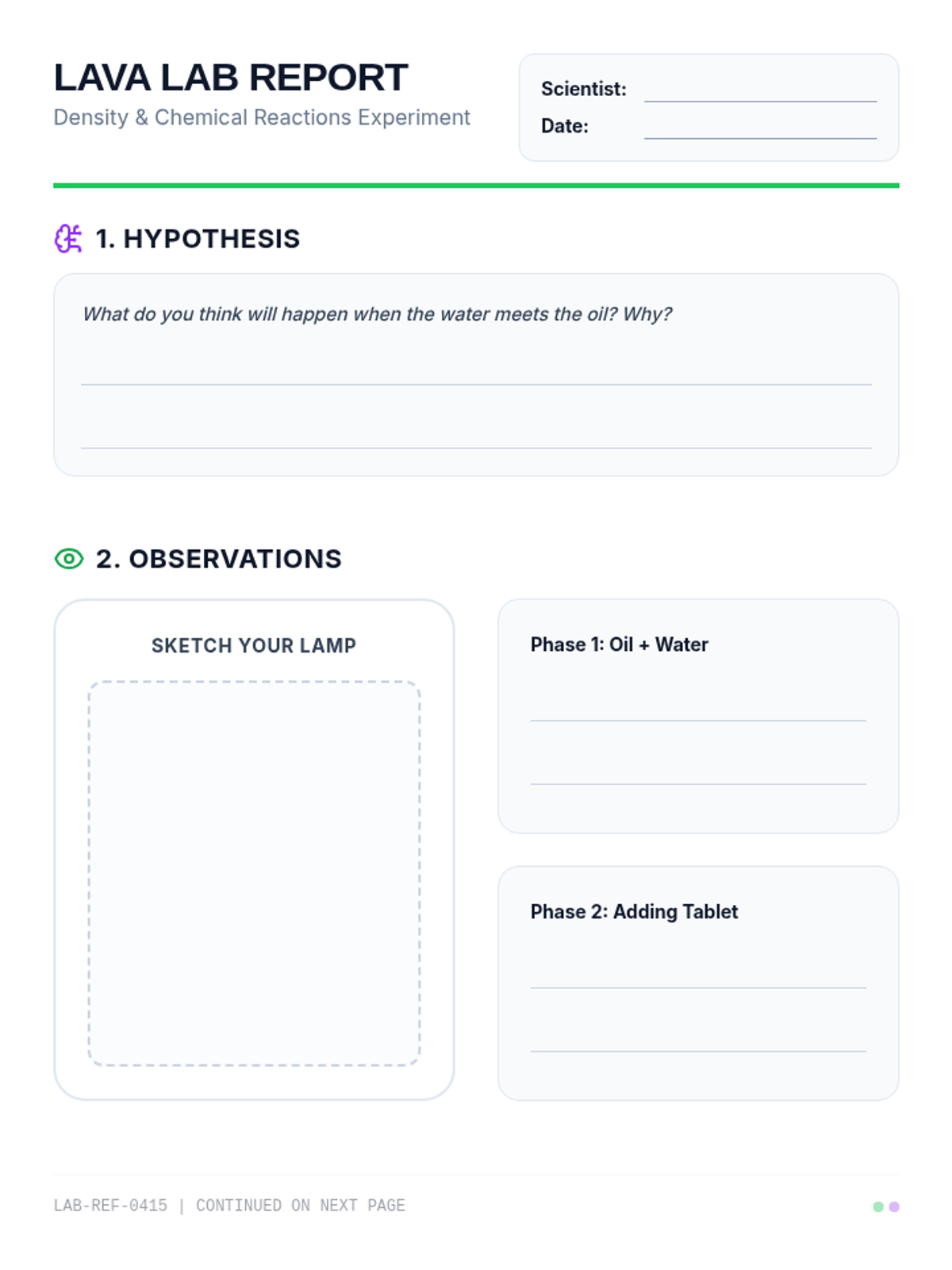
A structured lab report for students to record their hypothesis, observations with a sketch area, and analysis questions about density and the chemical reaction observed.
A visually engaging slide deck covering the concepts of density, intermolecular polarity (briefly), and step-by-step instructions for creating a DIY lava lamp experiment.
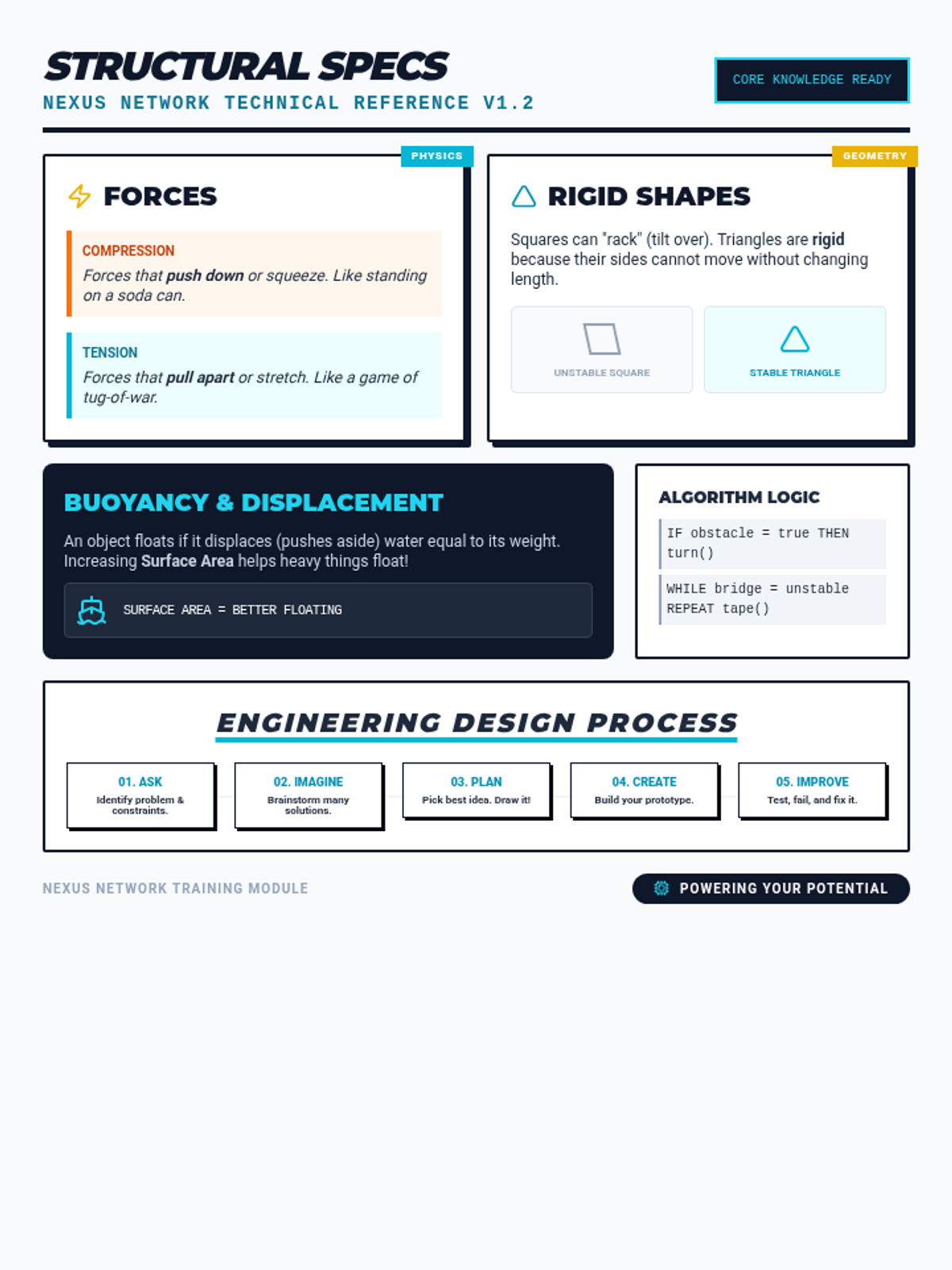
A technical reference sheet for students that explains core STEM concepts like compression, tension, structural shapes (triangles), buoyancy, and algorithms, as well as the Engineering Design Process.
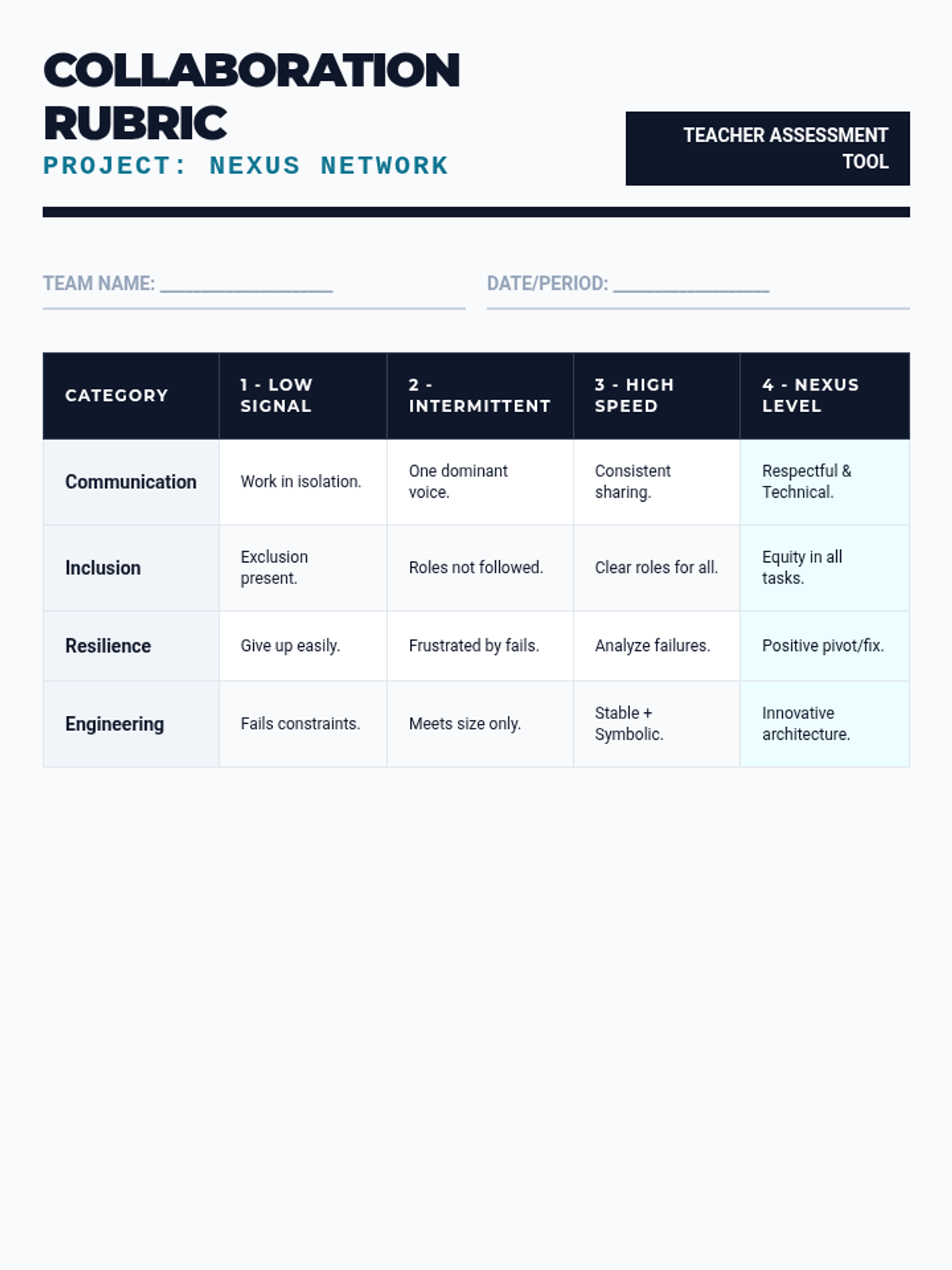
A teacher-facing assessment rubric for the Nexus Network lesson, evaluating teams on communication, inclusion, resilience, and engineering design on a 4-point scale.
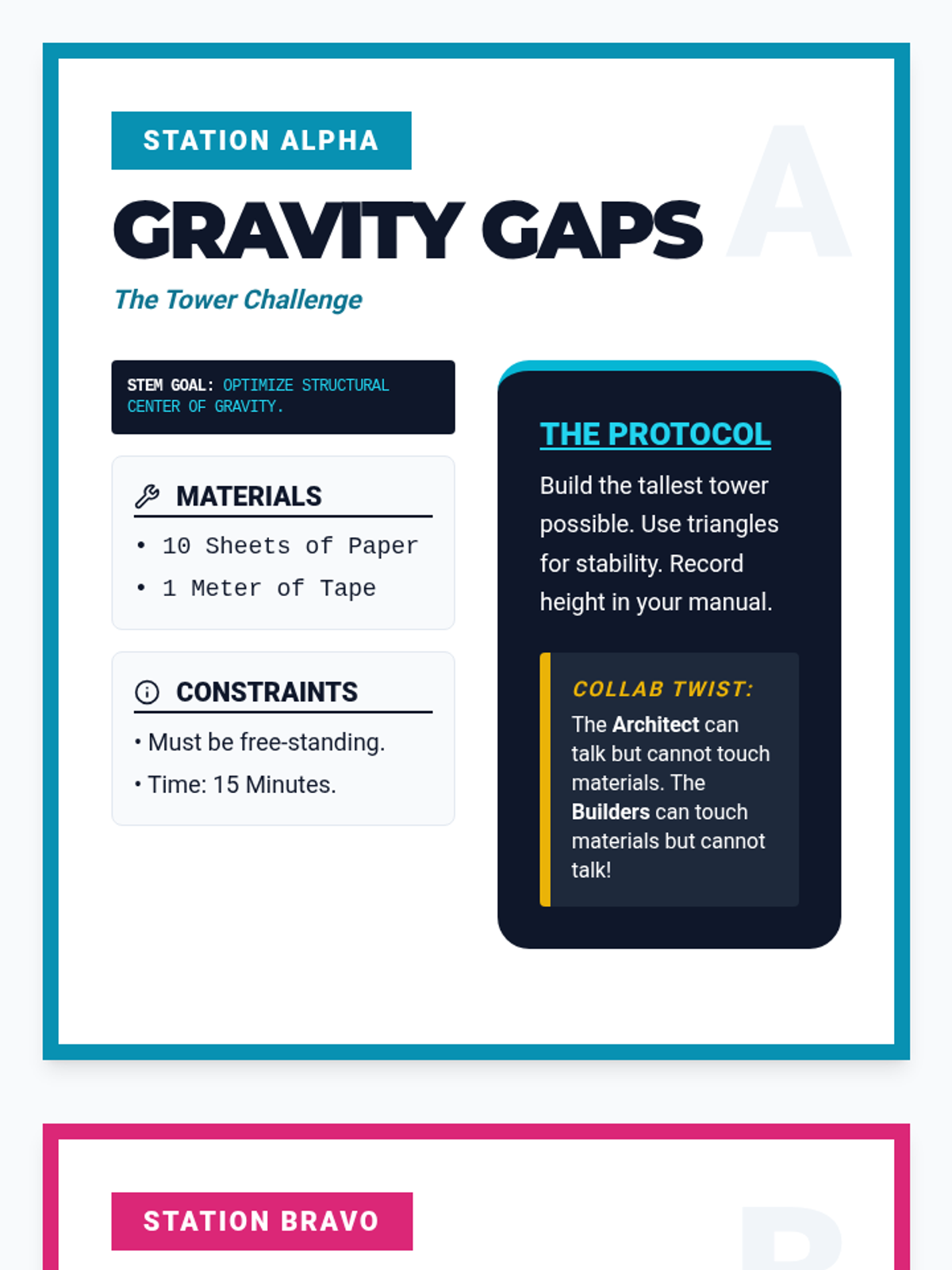
Printable station cards for the Nexus Network lesson, featuring large text and clear instructions for three collaborative STEM challenges with explicit STEM goals.
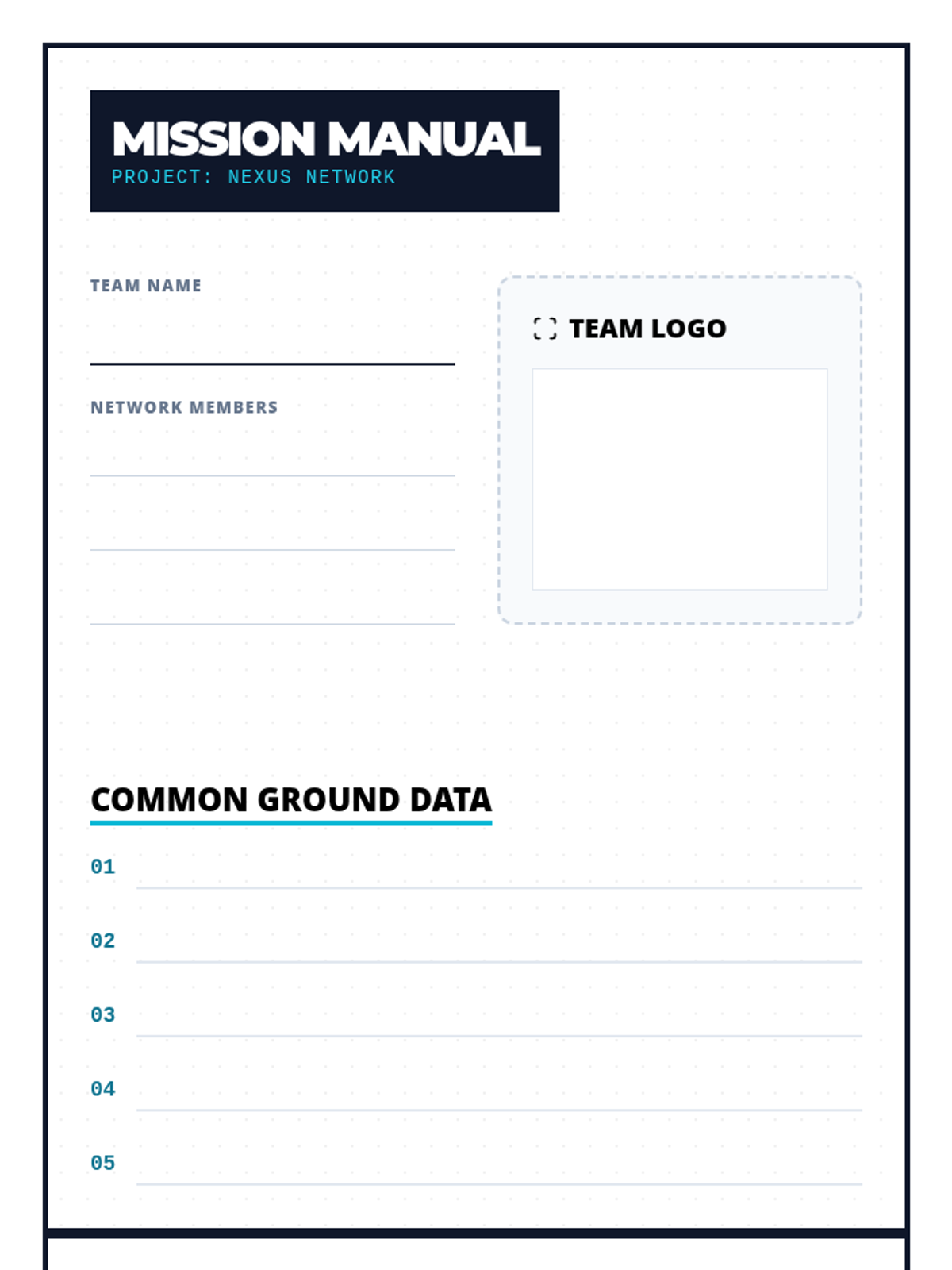
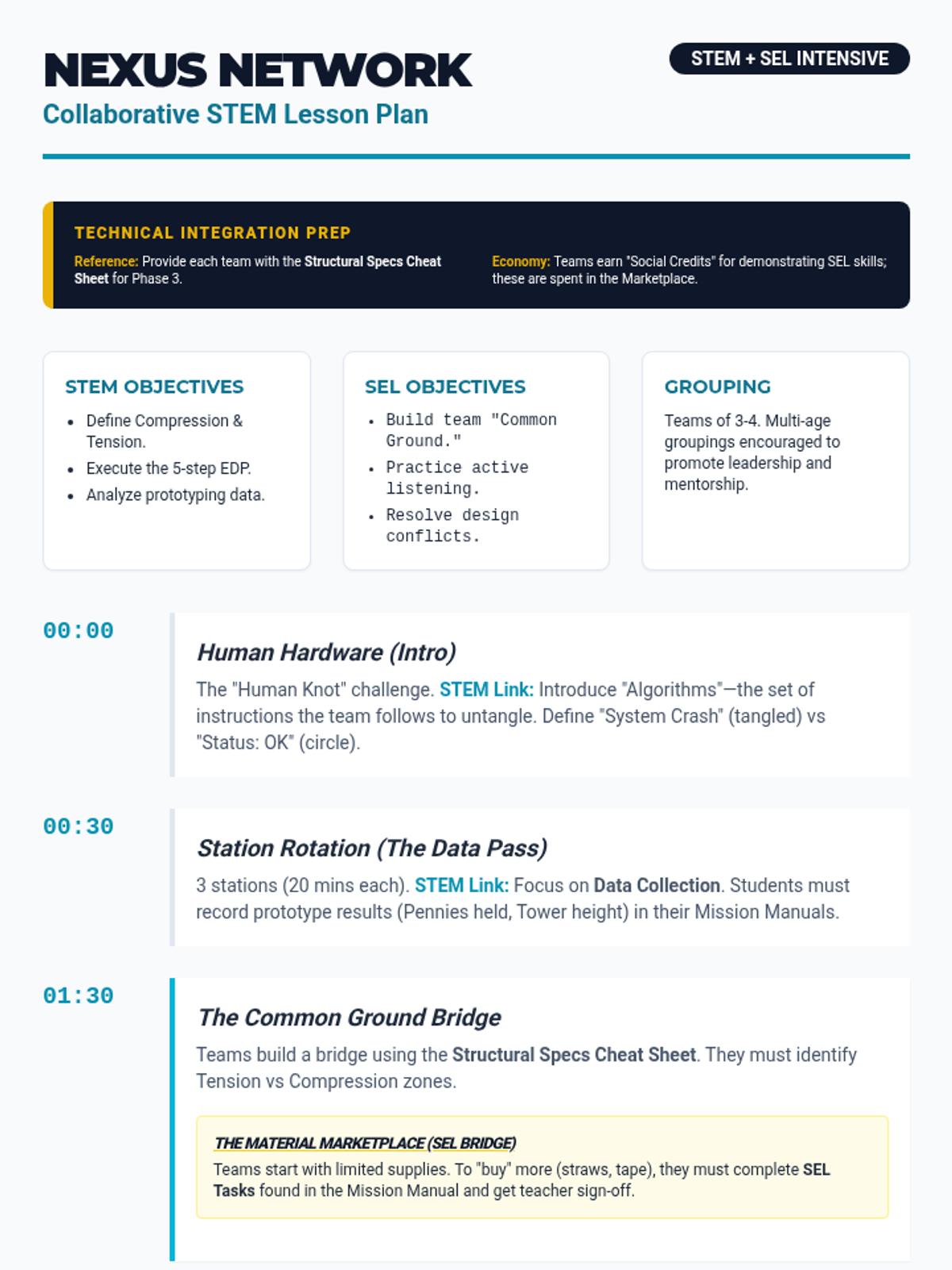
A student activity packet for the Nexus Network lesson, including team intake, station logs with data tables, bridge blueprinting space, a material marketplace for SEL credits, and a final reflection section.
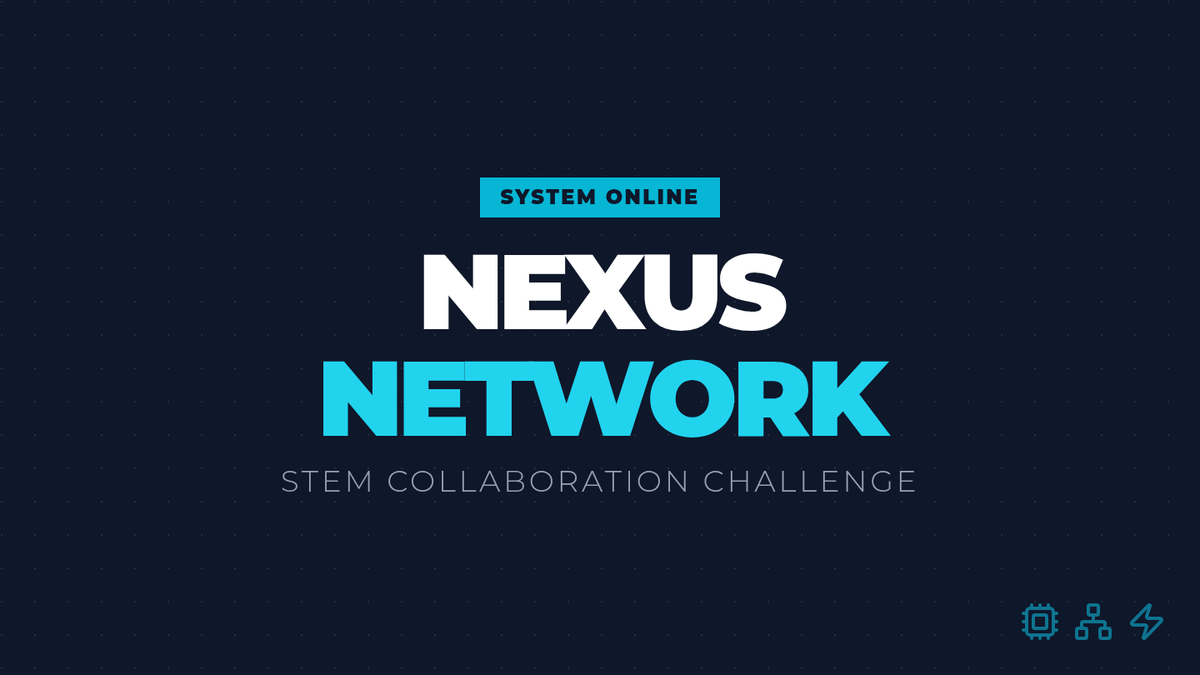
An interactive slide deck for the Nexus Network lesson, featuring big text, clear visual cues, and specific prompts for icebreakers, stations, and the main bridge challenge.
A comprehensive lesson plan for a 3-hour STEM collaboration event, featuring a detailed timeline, differentiation notes for elementary and middle school, and a structured engineering challenge with integrated SEL marketplace concepts.
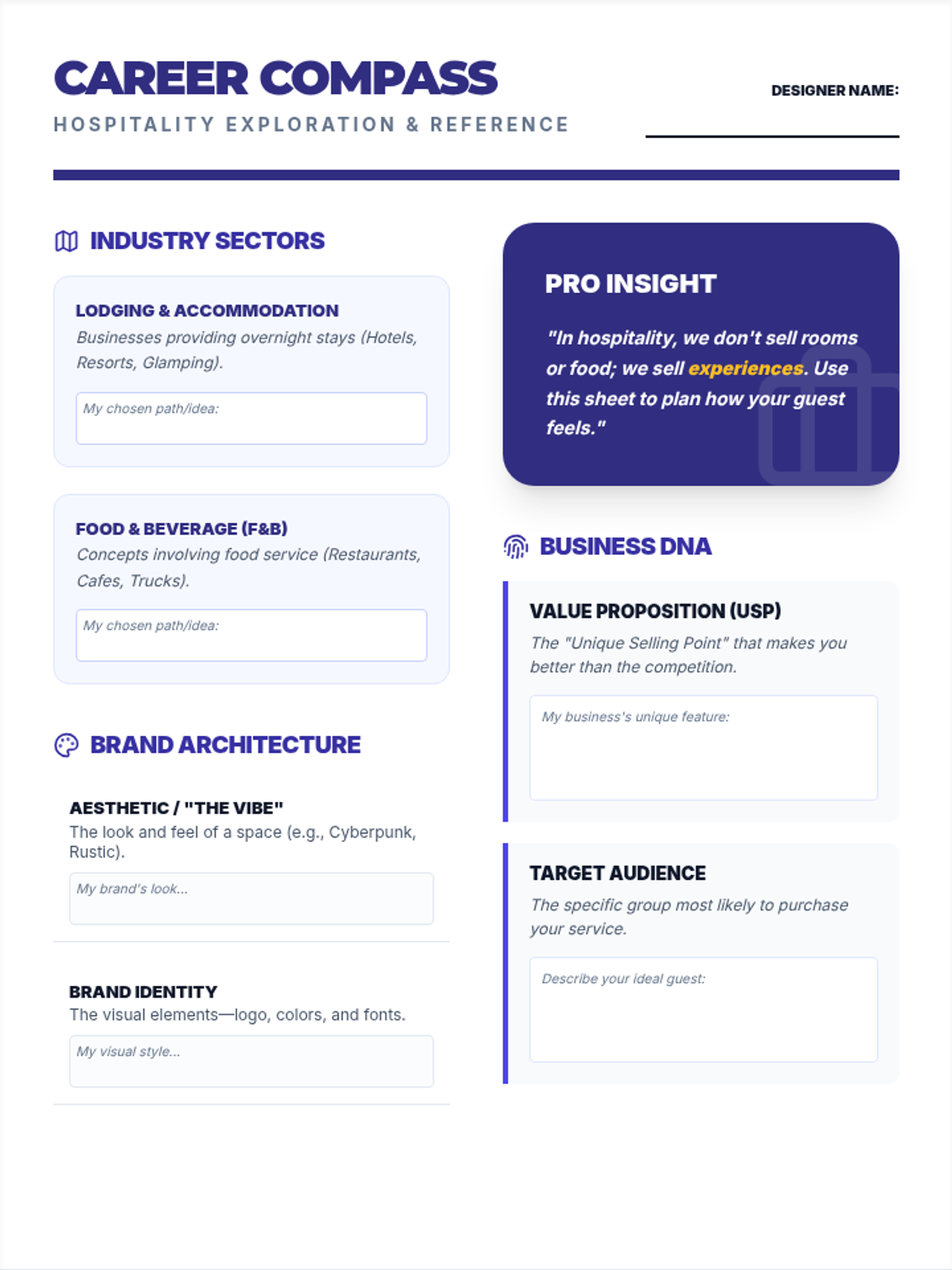
A two-page interactive reference sheet and application organizer for high school hospitality students. It defines key industry sectors, career roles, and operational terminology while providing fillable work areas for students to apply these concepts to their specific project designs.
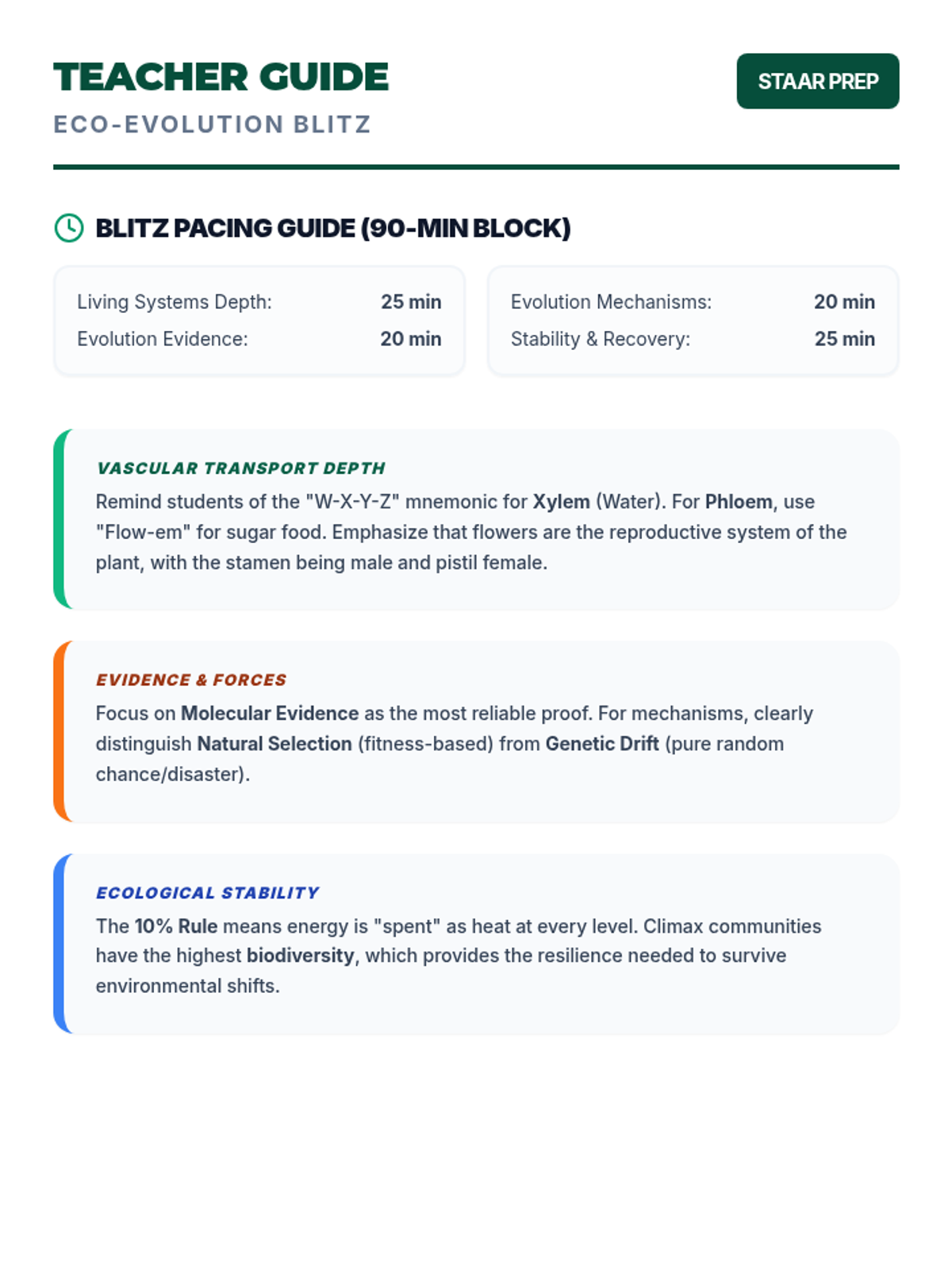
A comprehensive teacher guide for the Eco-Evolution Blitz review. Features pedagogical tips for teaching complex systems interactions, mechanisms of evolutionary change, and ecological stability. Includes a detailed pacing guide and full answer keys for the student roadmap. Revised for better alignment and text clarity.
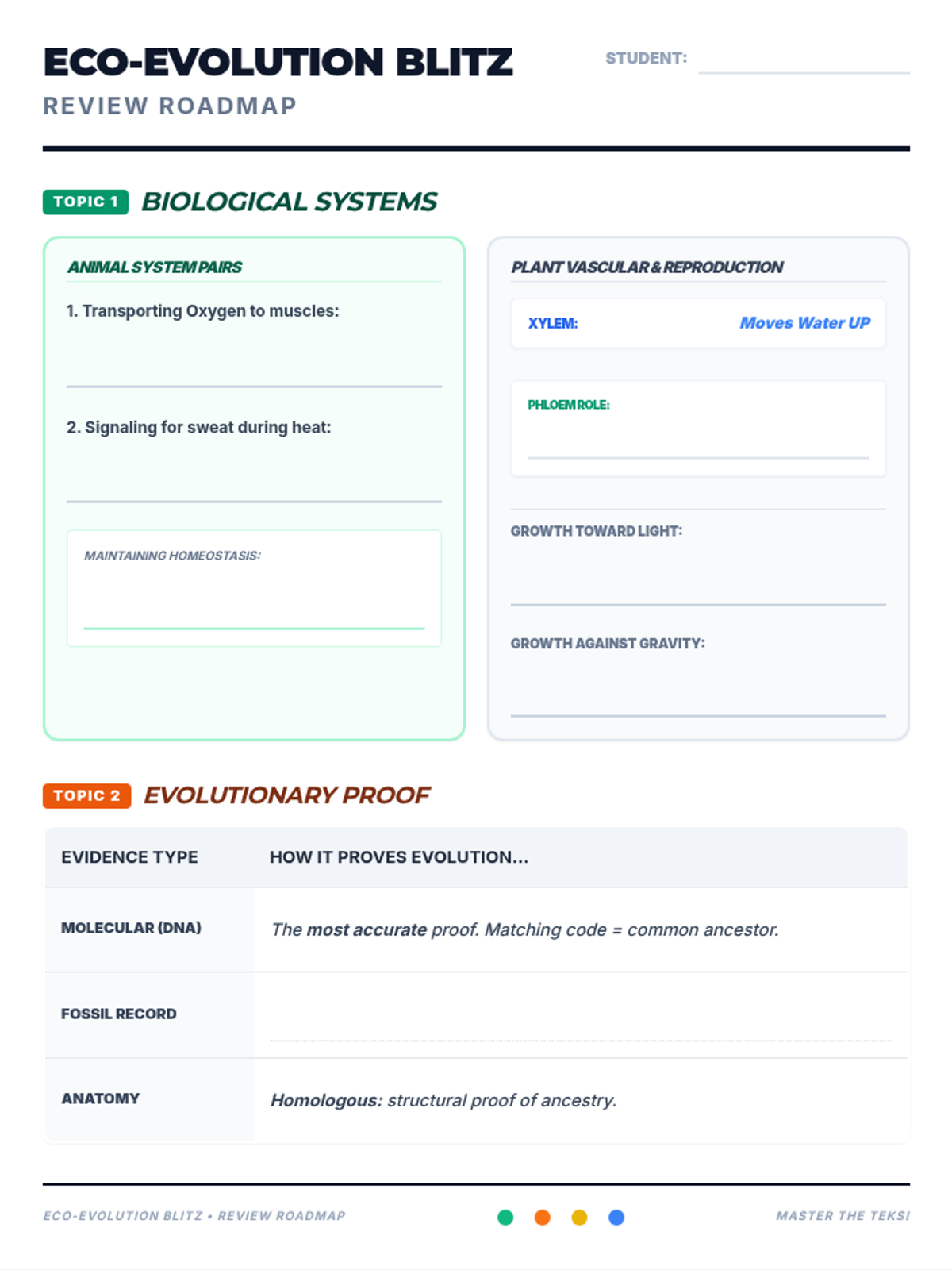
Detailed 2-page student roadmap for Eco-Evolution Blitz. Features sections for Animal/Plant systems depth, evolutionary evidence comparison, mechanisms of change (selection, flow, drift), and ecosystem stability/cycles. Revised with expanded student writing areas and increased font sizes for better classroom legibility. Standardized footers across both pages.