Visual slides for Lesson 2 on the Integral Test, showing the relationship between series and improper integrals through geometric interpretation and worked examples.
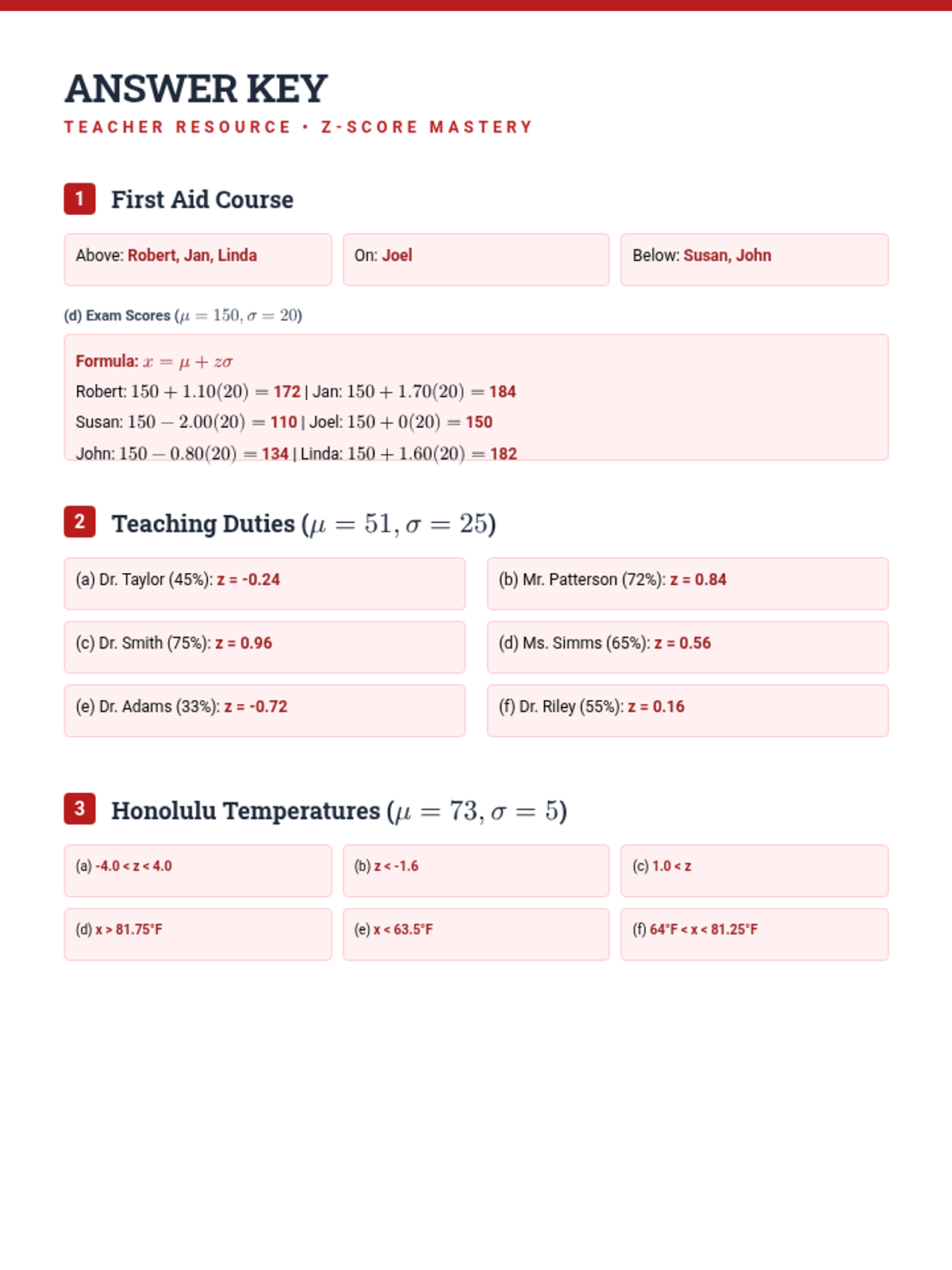
Teacher answer key for the Z-Score Mastery Worksheet, providing solutions and brief explanations for all calculation and conceptual problems.
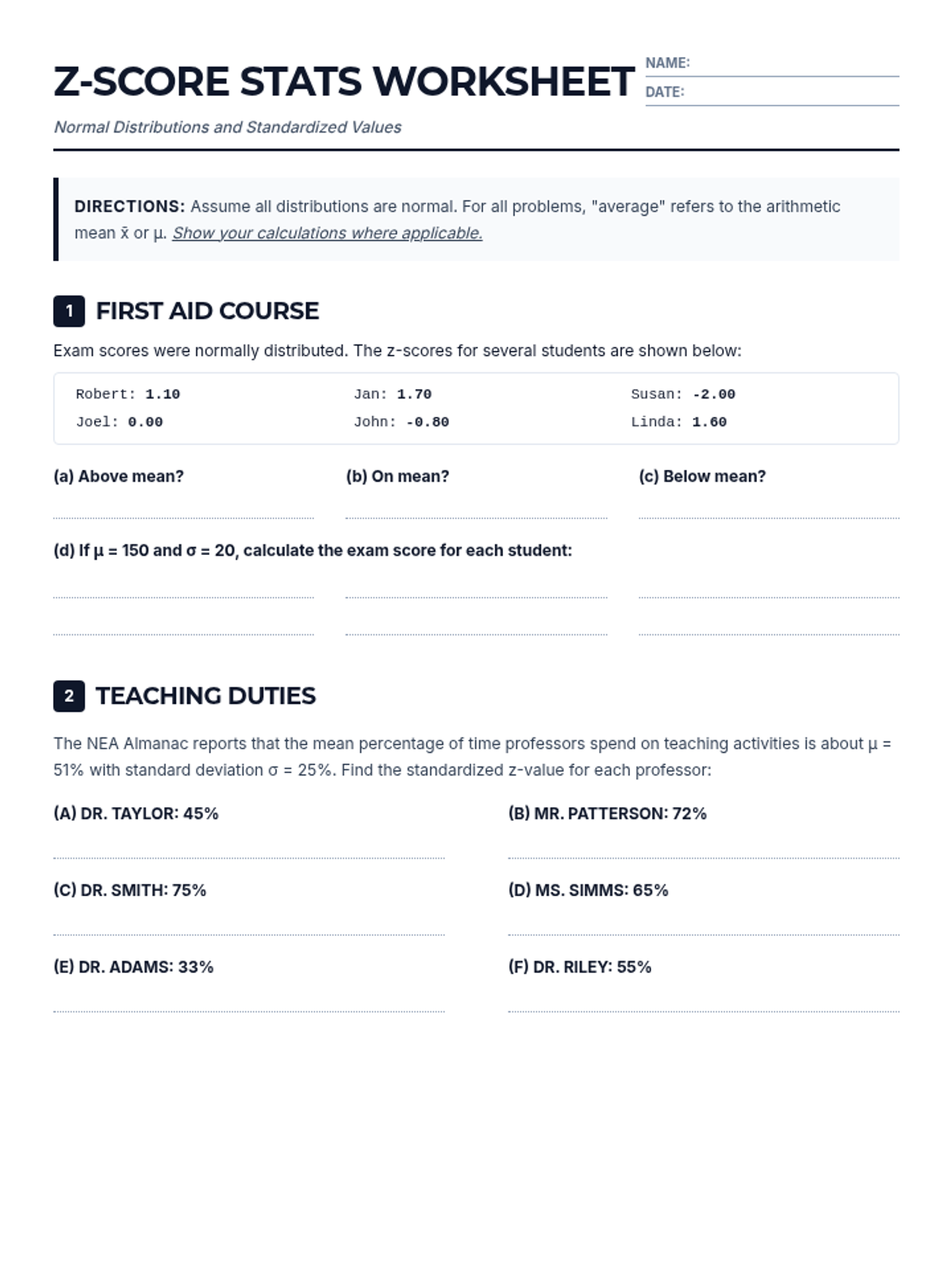
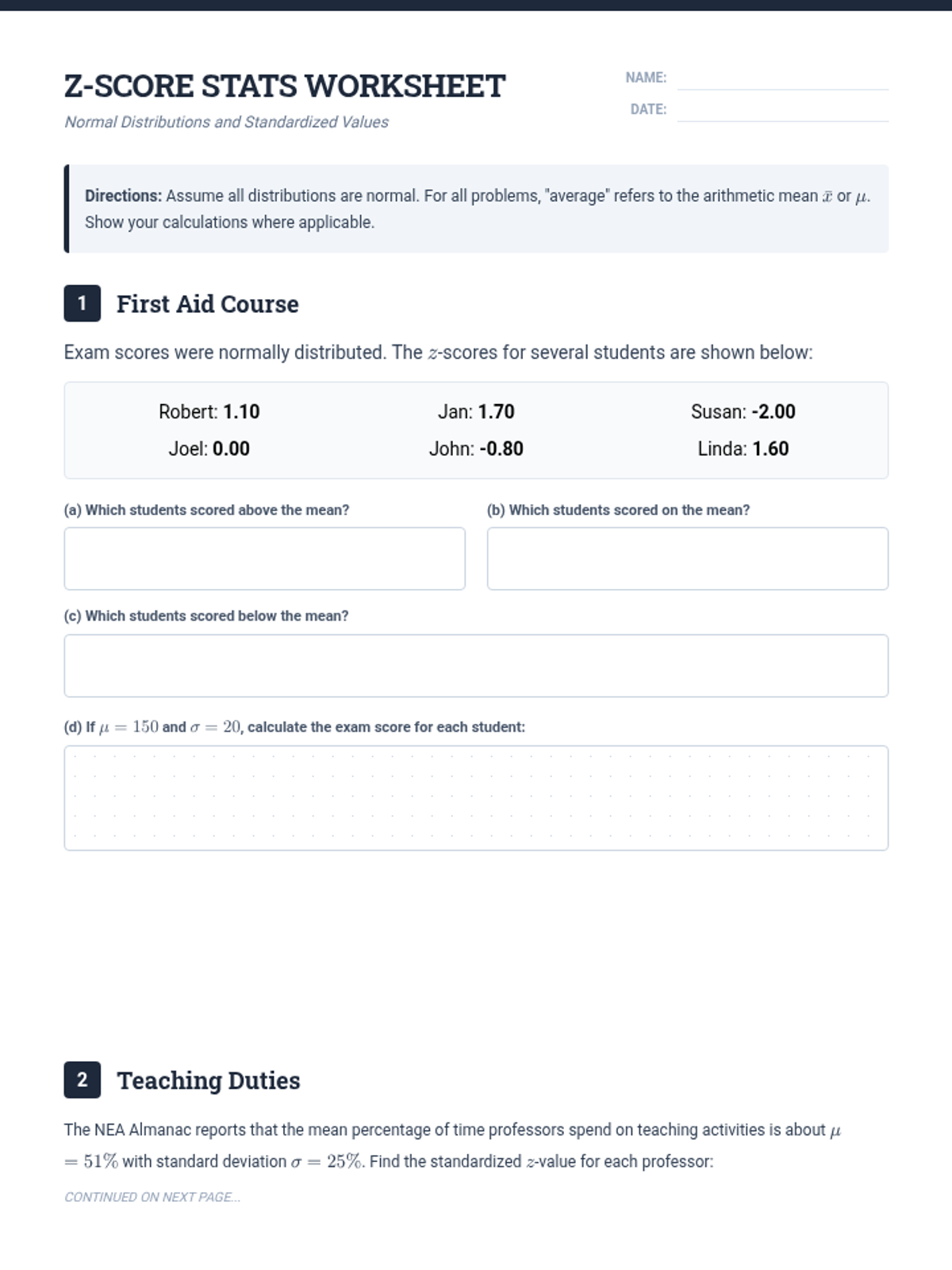
A precise 2-page Z-score worksheet that mirrors the original source material's questions exactly, featuring real-world problems on exam scores, teaching duties, temperatures, and wildlife populations.
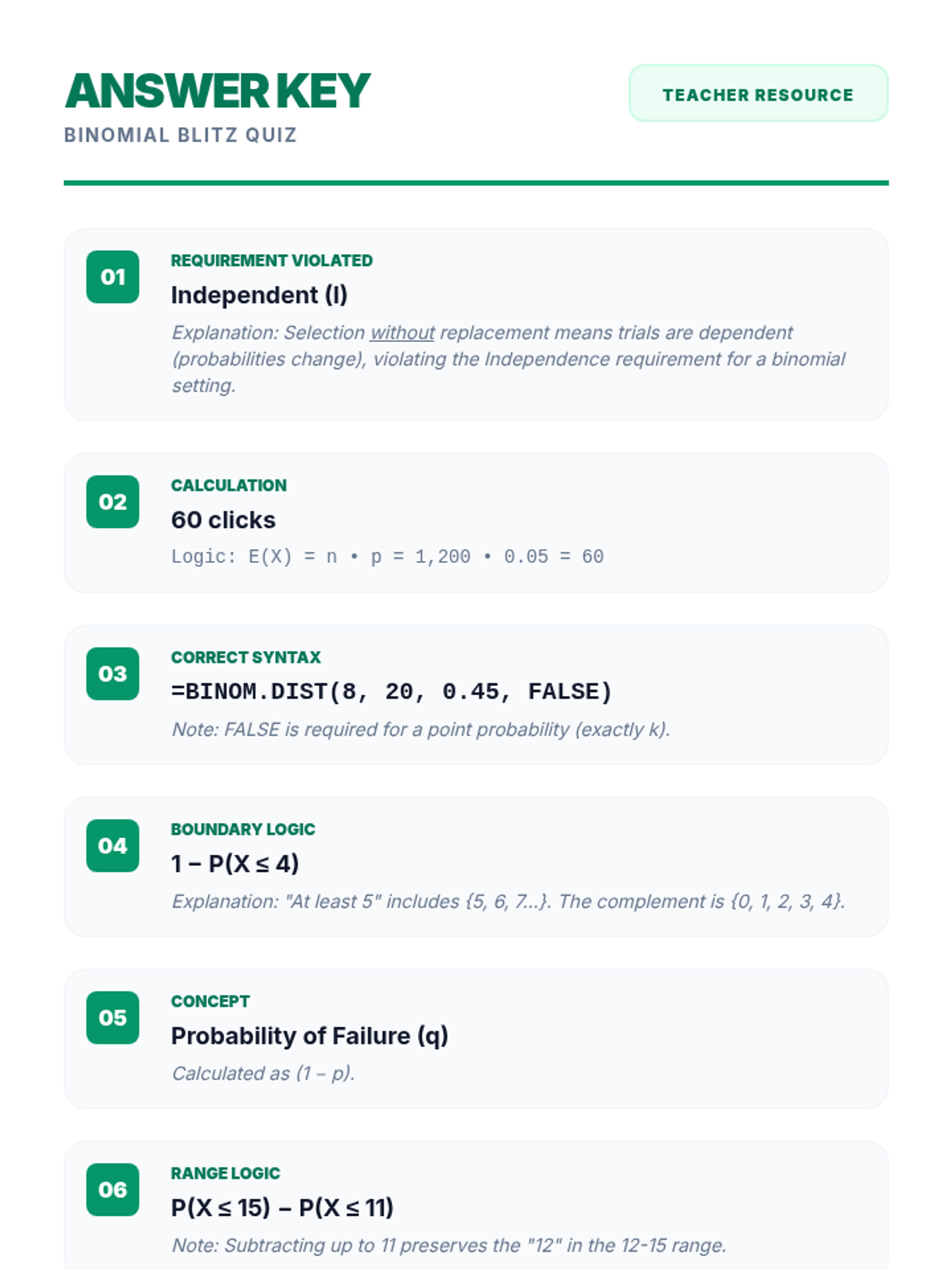
A comprehensive answer key for the Binomial Blitz Quiz, featuring detailed explanations, manual formula rendering, and logic breakthroughs for the assessment questions.
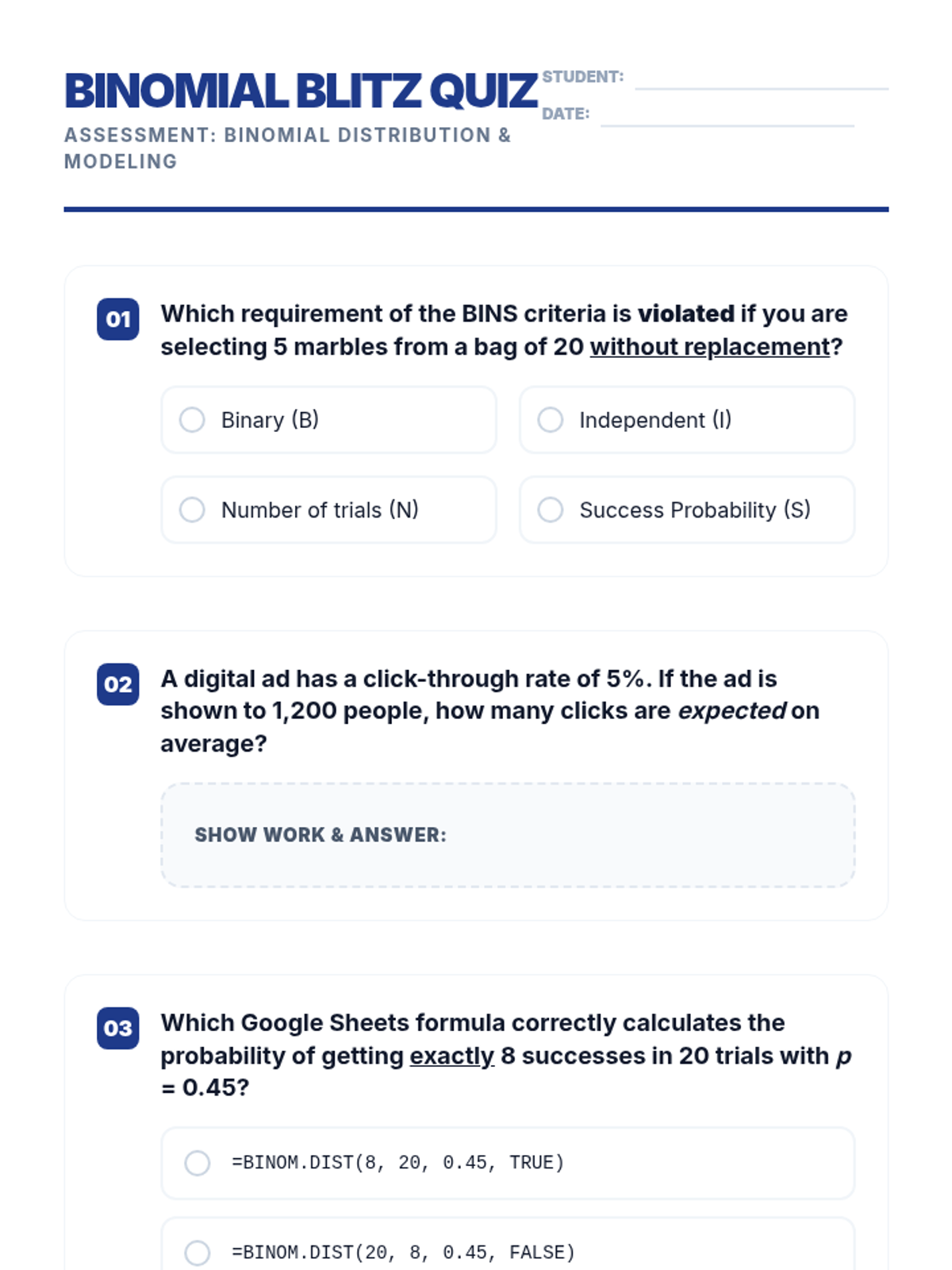
A 10-question assessment covering the BINS criteria, binomial parameters, spreadsheet formula syntax, hand-calculation theory, and expected value. Designed for 12th-grade statistics with high-quality visual formatting and clear student work areas. Updated with fixed math rendering and page break protections.
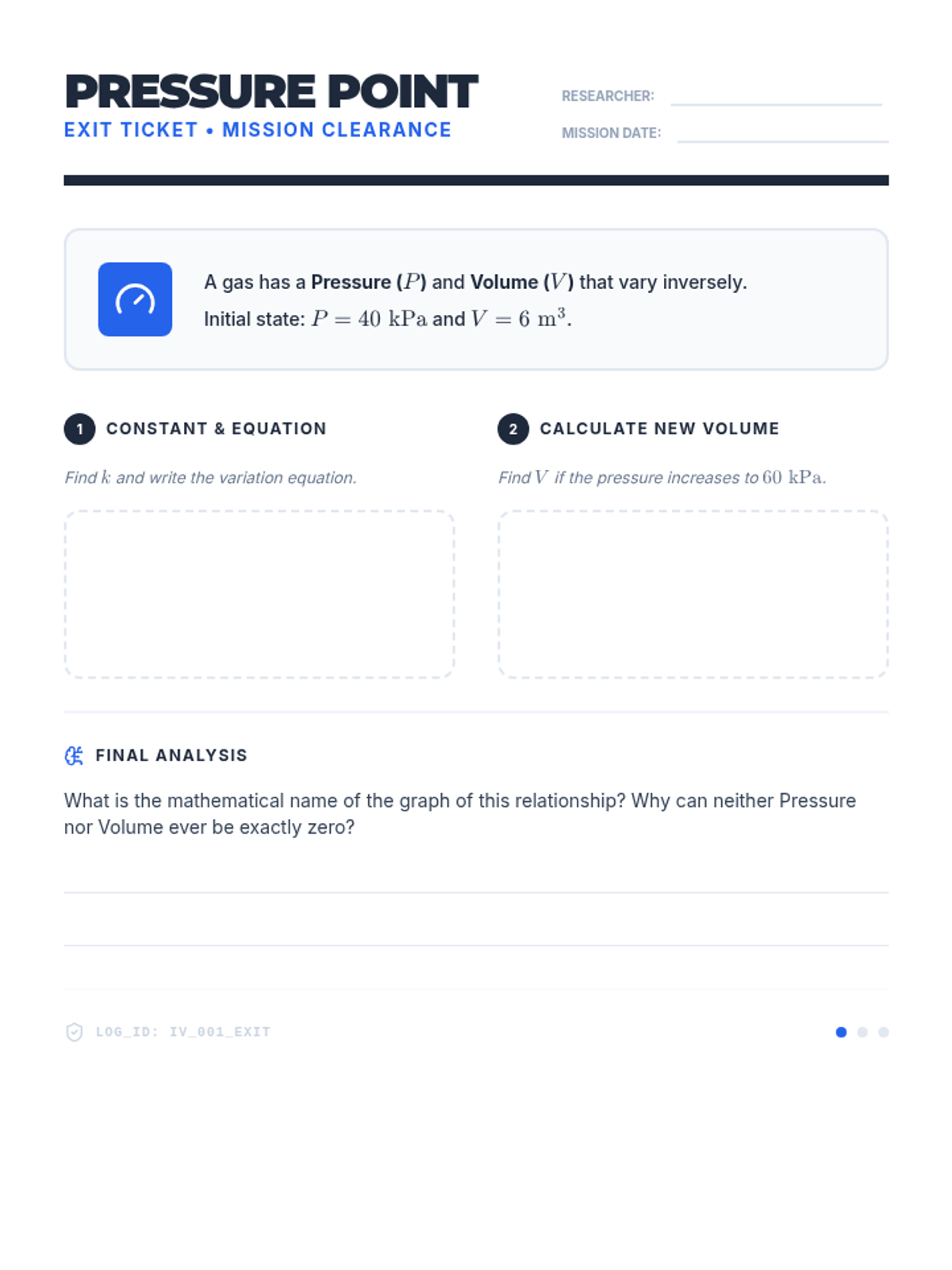
A formal exit ticket for inverse variation. Revised for single-page layout, better math rendering, and balanced work areas.
A sleek, high-contrast slide deck for inverse variation. Revised to fix math rendering, adjust viewport overflow, and correct the hyperbola graphic.
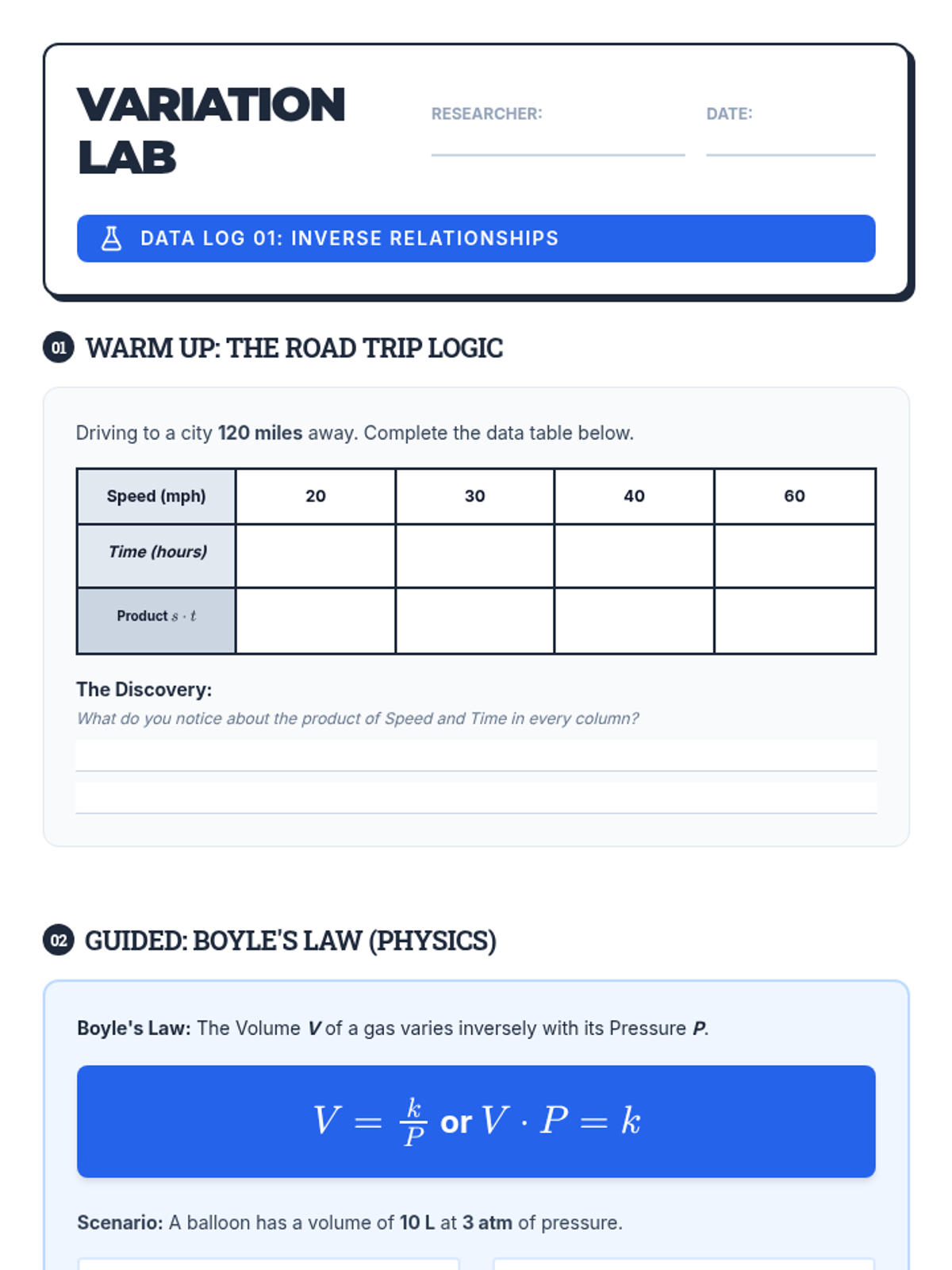
A student-facing handout containing the Warm Up, Guided Instruction, and Independent Practice for inverse variation. Revised for better page breaks, increased contrast, and added pedagogical scaffolding. Fixed math rendering and work areas.
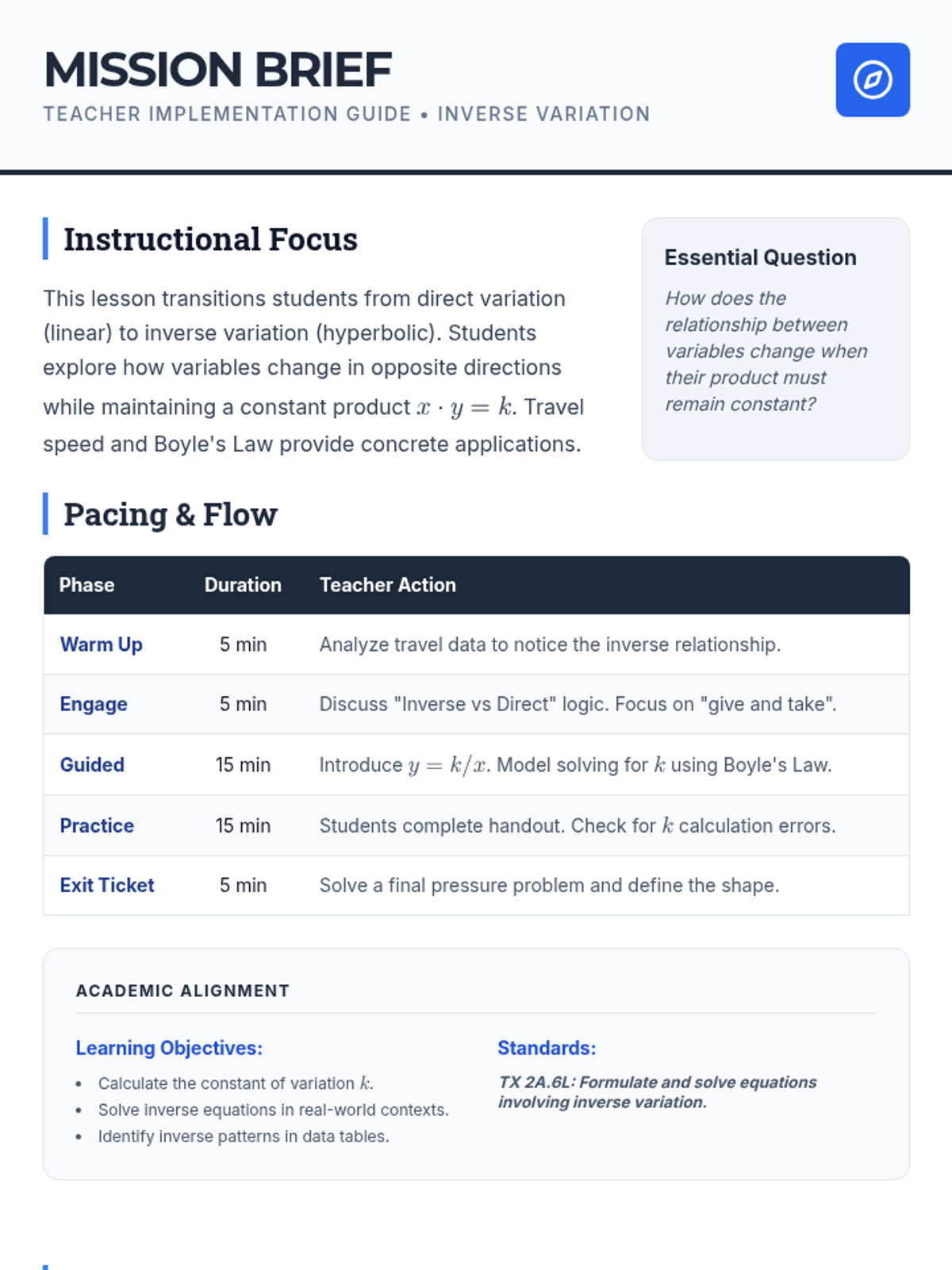
A comprehensive teacher implementation guide for the Inverse Investigators lesson, including pacing, standards alignment, answer keys, and pedagogical tips. Revised for better page breaks and math rendering.
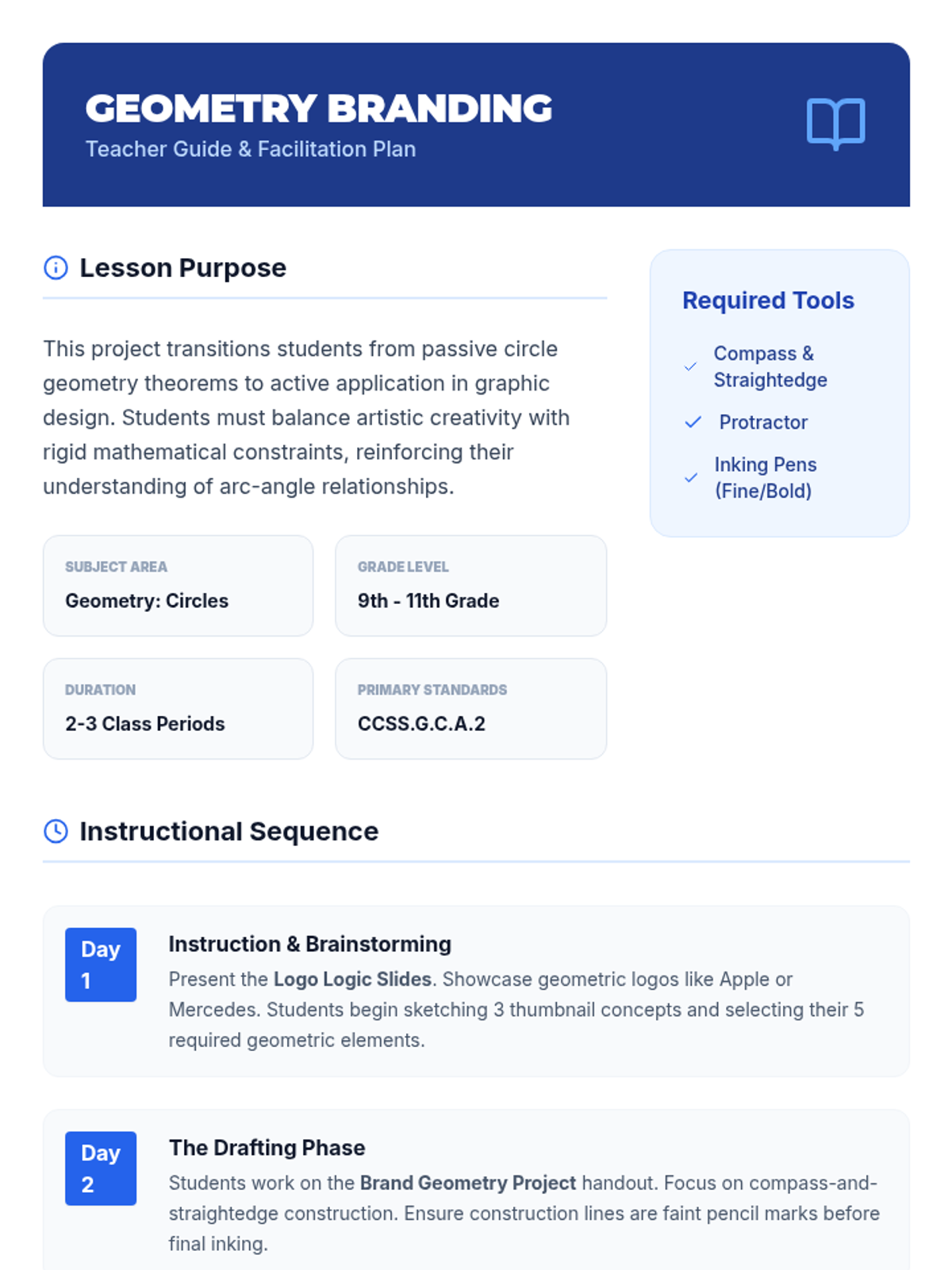
A comprehensive teacher guide for facilitating the Logo Logic project. Includes lesson pacing, a list of required materials, common student misconceptions to watch for, and strategies for differentiation.
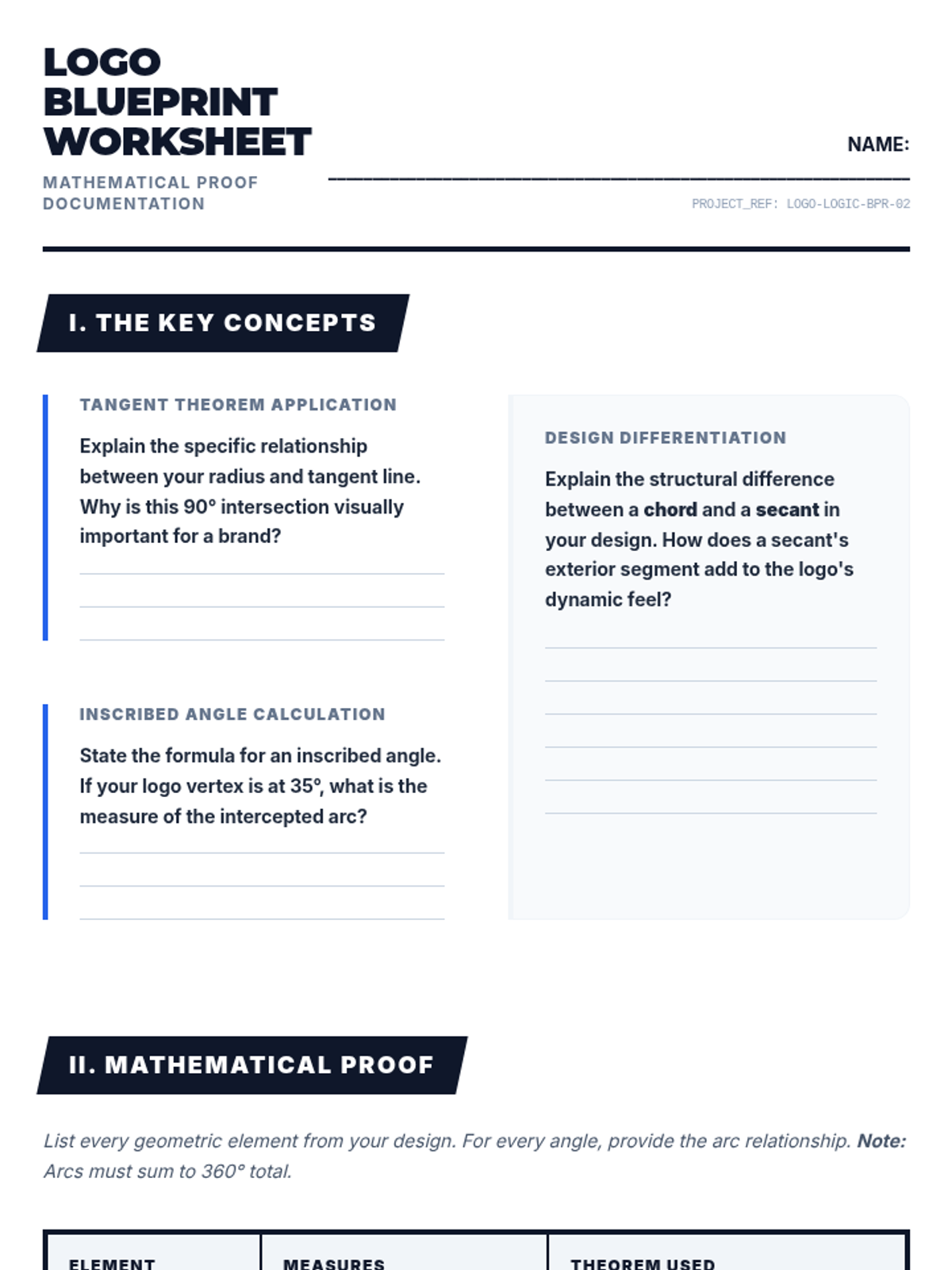
A structured worksheet for students to document the geometric proofs behind their logo design. It includes a table for recording measures of tangents, secants, and angles, plus reflection questions on the design process.
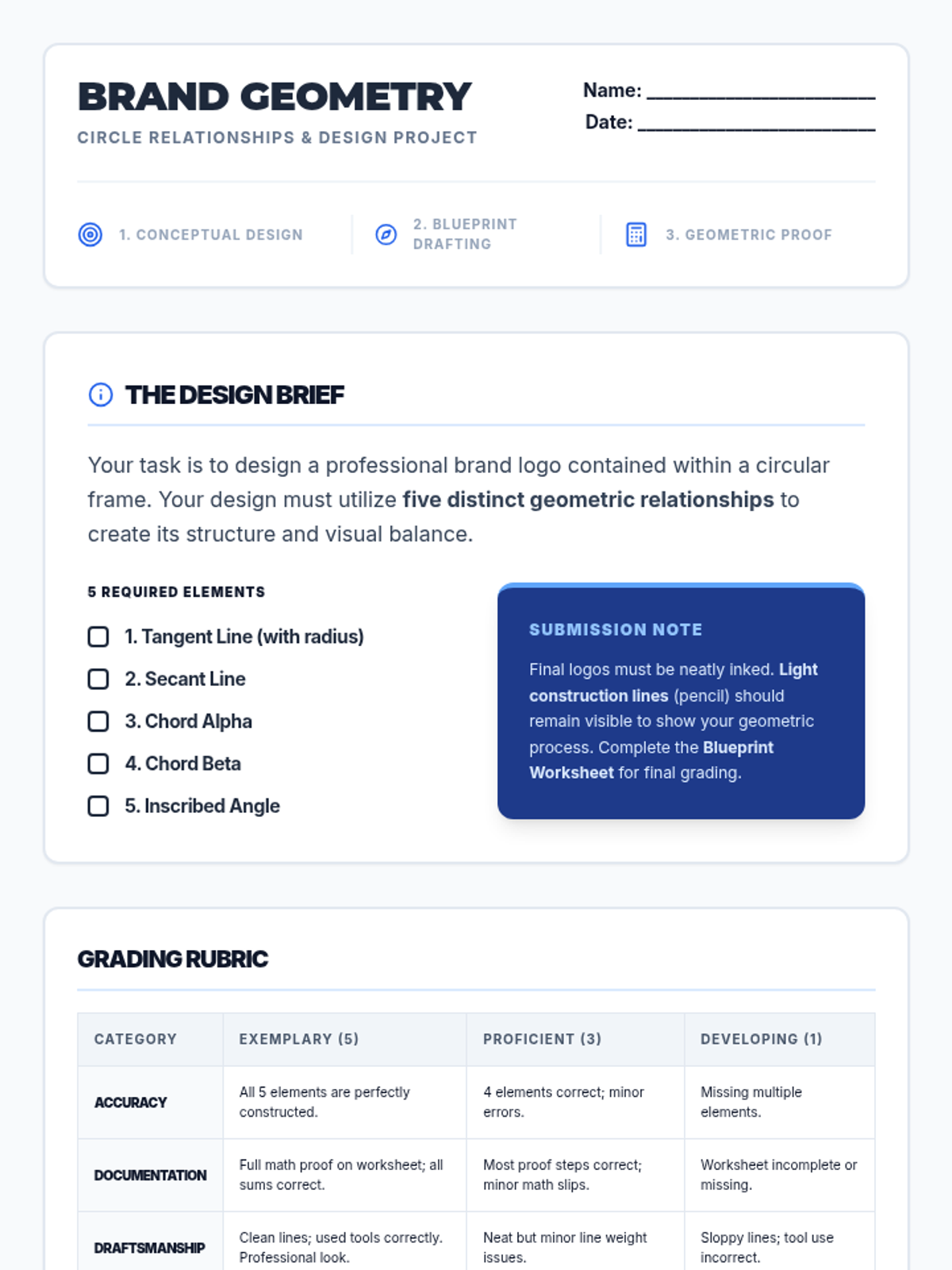
A comprehensive student project handout for the Brand Geometry project. Includes design constraints, a workspace for drafting, and a detailed grading rubric based on geometric accuracy and creative execution.
A visual presentation introducing circle geometry concepts (tangents, secants, chords, inscribed angles) through the lens of professional logo design. Includes architectural diagrams and project requirements.
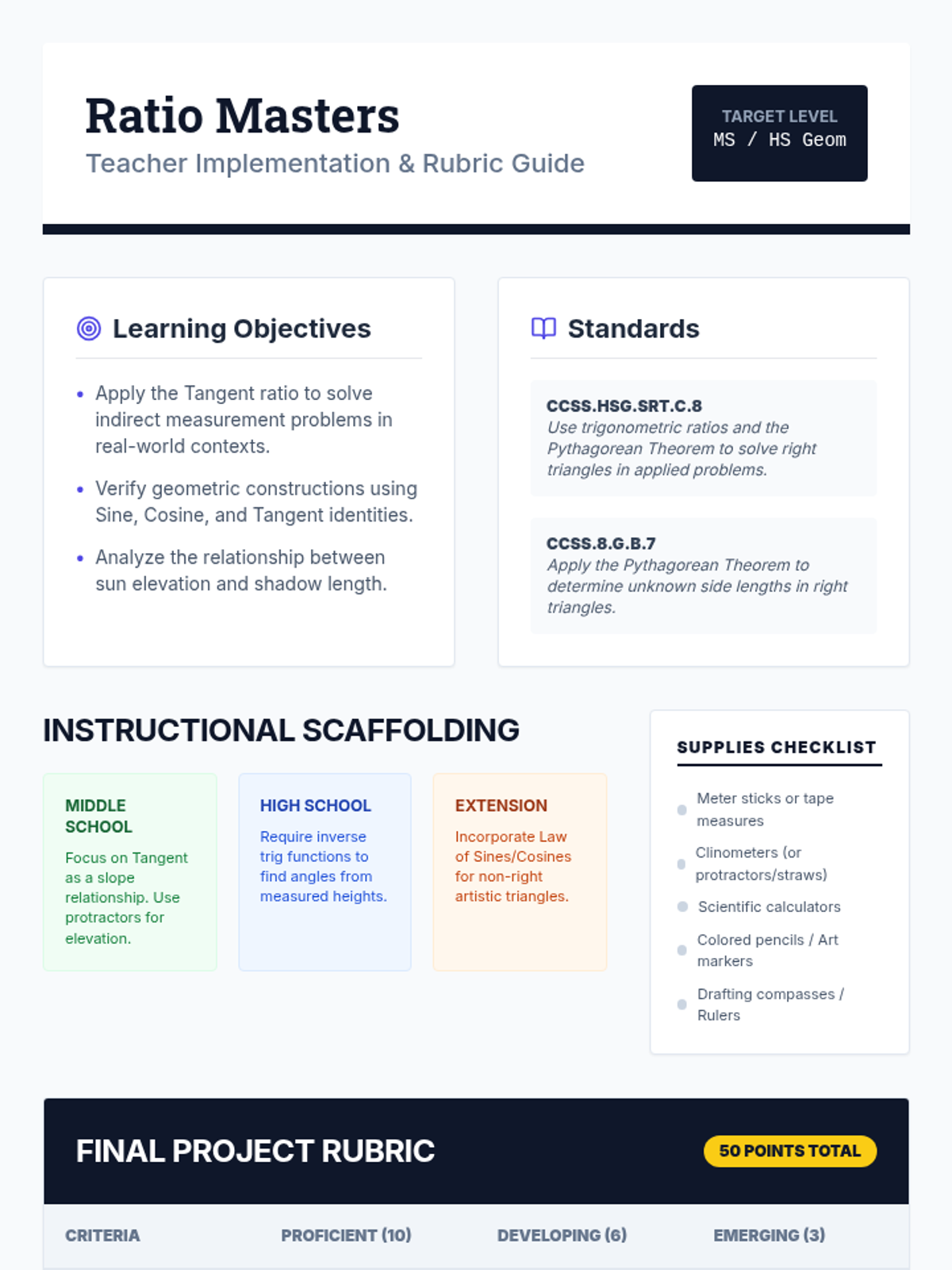
A teacher guide containing learning objectives, standards alignment, differentiation strategies for middle and high school, and a comprehensive grading rubric.
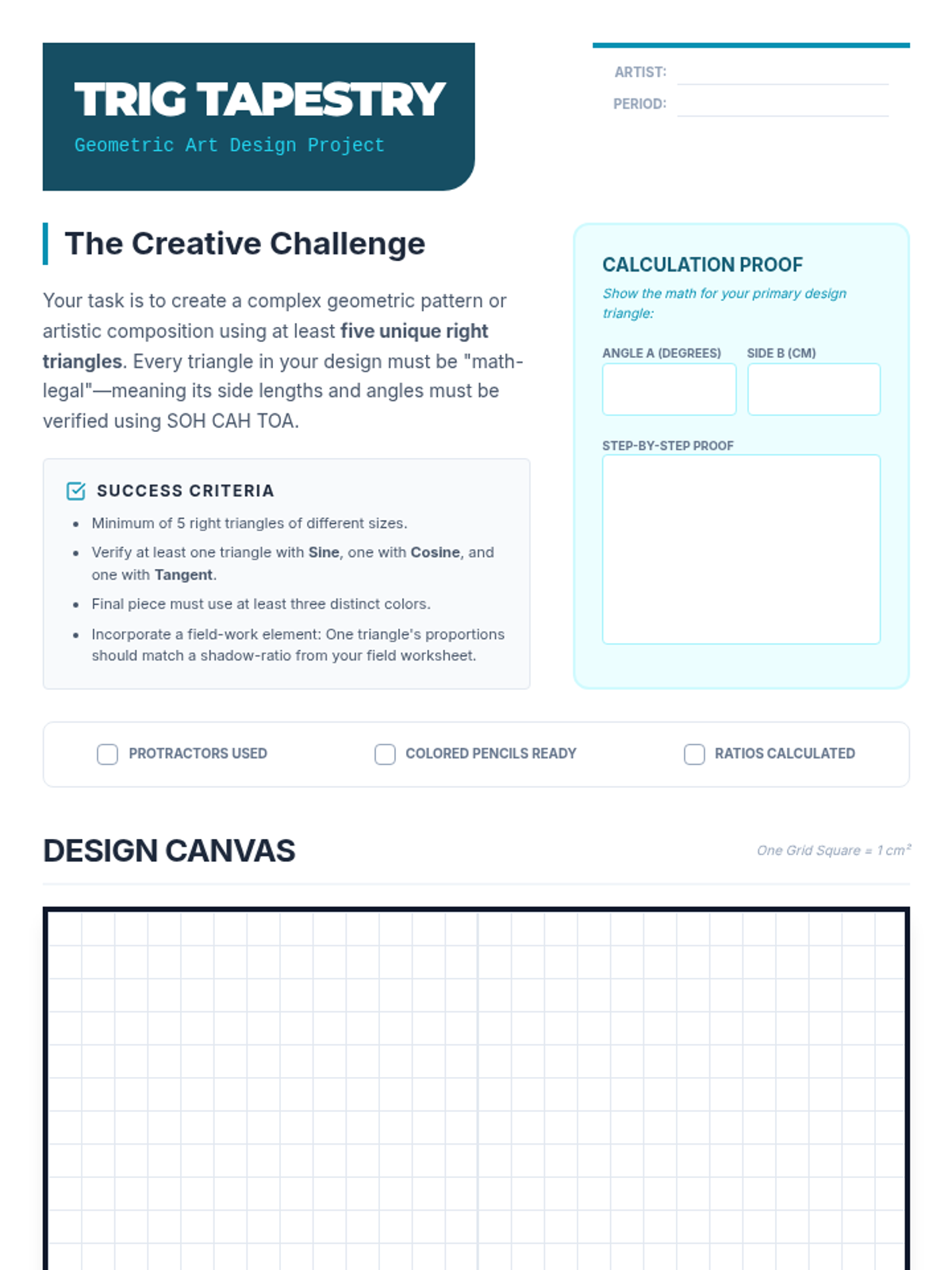
A project guide for the geometric art portion of the lesson. Students design a pattern using right triangles and prove their proportions using trigonometric ratios.
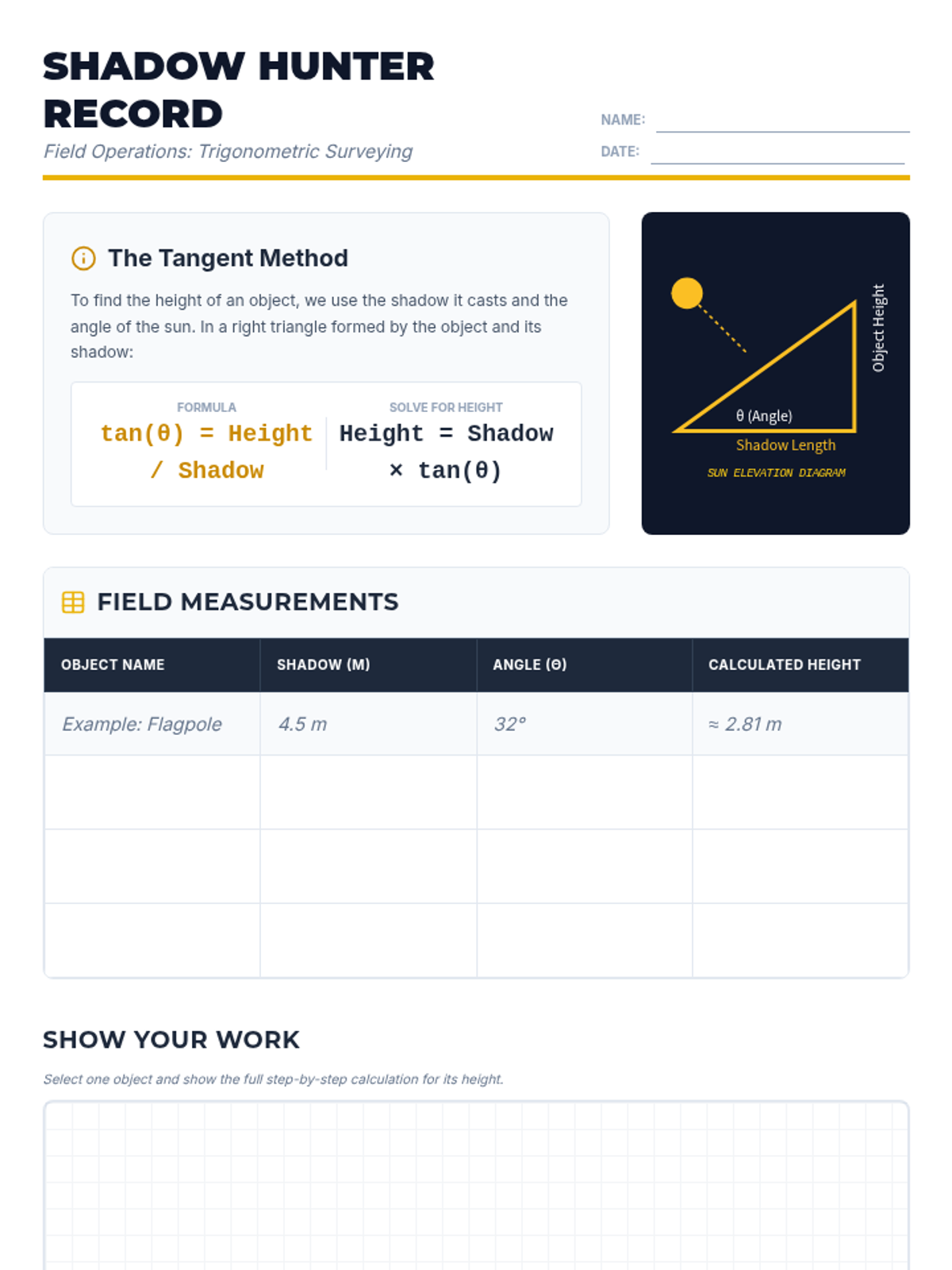
A field data collection sheet for students to record shadow lengths and calculate object heights using the tangent ratio. Includes space for work and reflection questions.
An introductory slide deck for the Shadows and Shapes project, covering trigonometric ratios, the two main project components (Shadow Hunters and Trig Tapestry), and the project timeline.
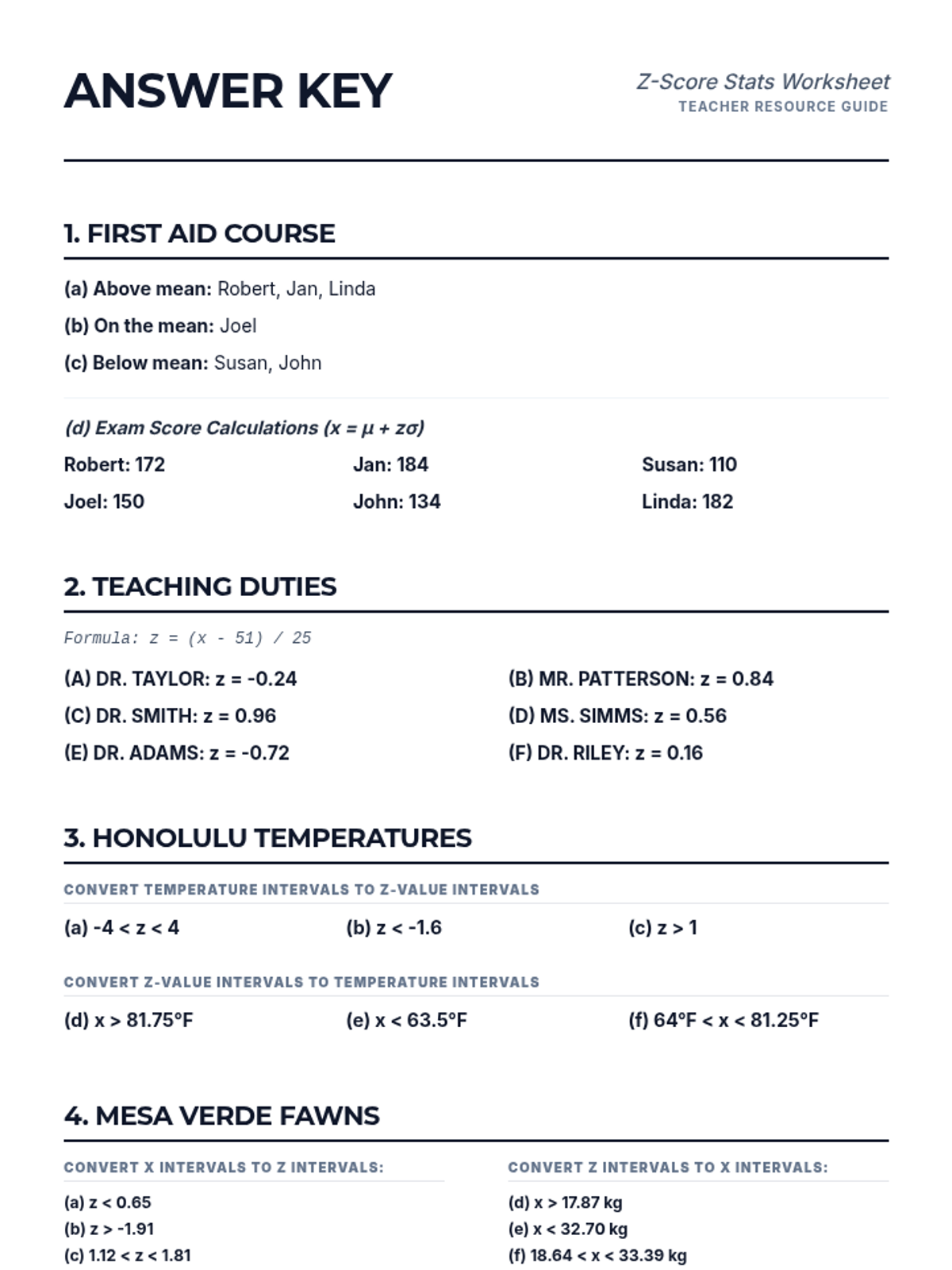
A comprehensive teacher's answer key for the Stat Sense Worksheet, including step-by-step calculation formulas and final results for z-scores, raw values, and distribution interpretations.
A 4-page statistics worksheet featuring five detailed word problems on z-scores and normal distributions. Includes sections on first aid exams, teaching hours, regional temperatures, and wildlife population data with ample space for calculations.
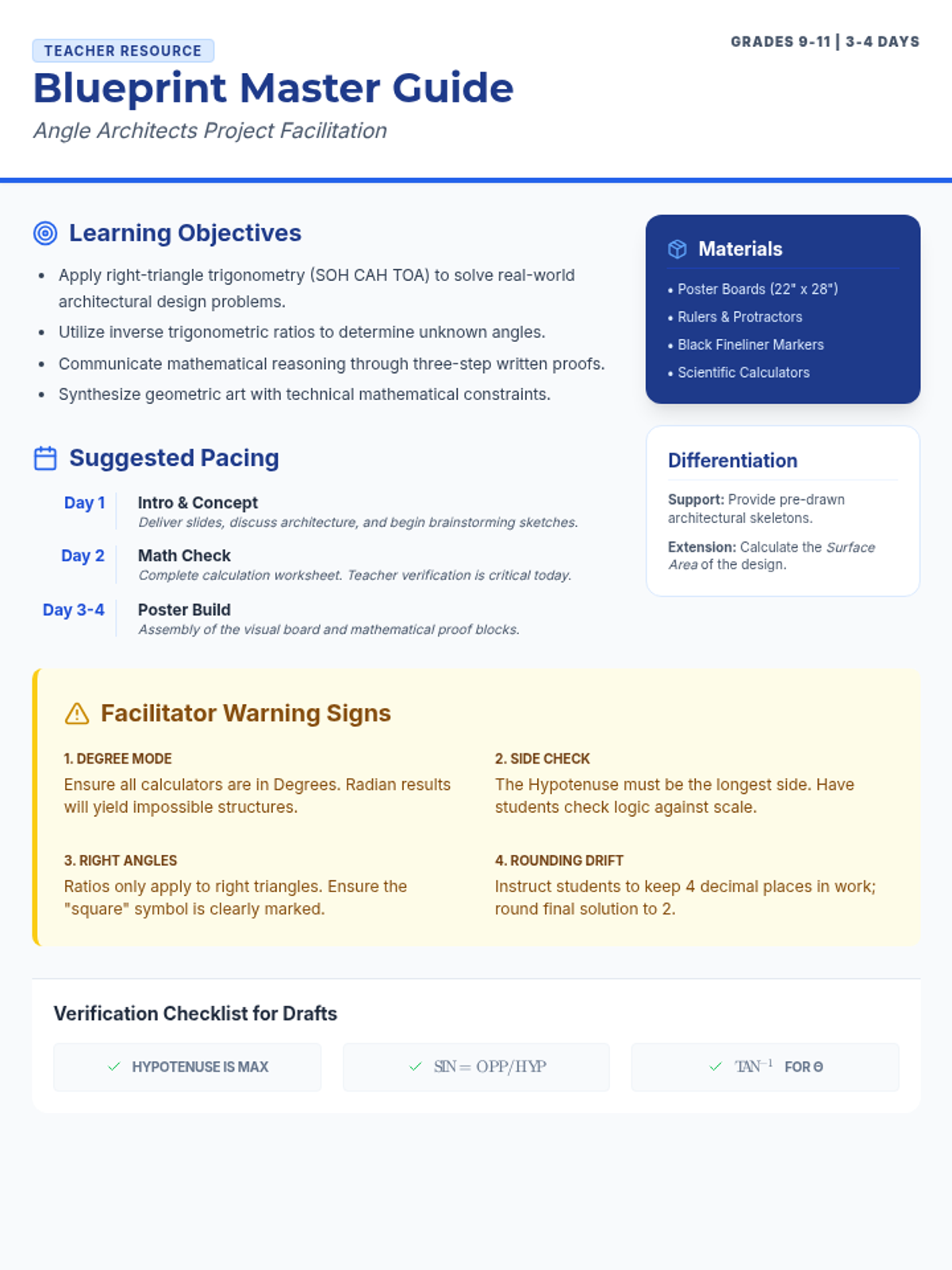
A comprehensive teacher's guide for the Angle Architects project, including pacing, materials, differentiation strategies, and common student misconceptions.
An introductory presentation for the Angle Architects project, covering real-world trig applications, SOH CAH TOA review, and project expectations.
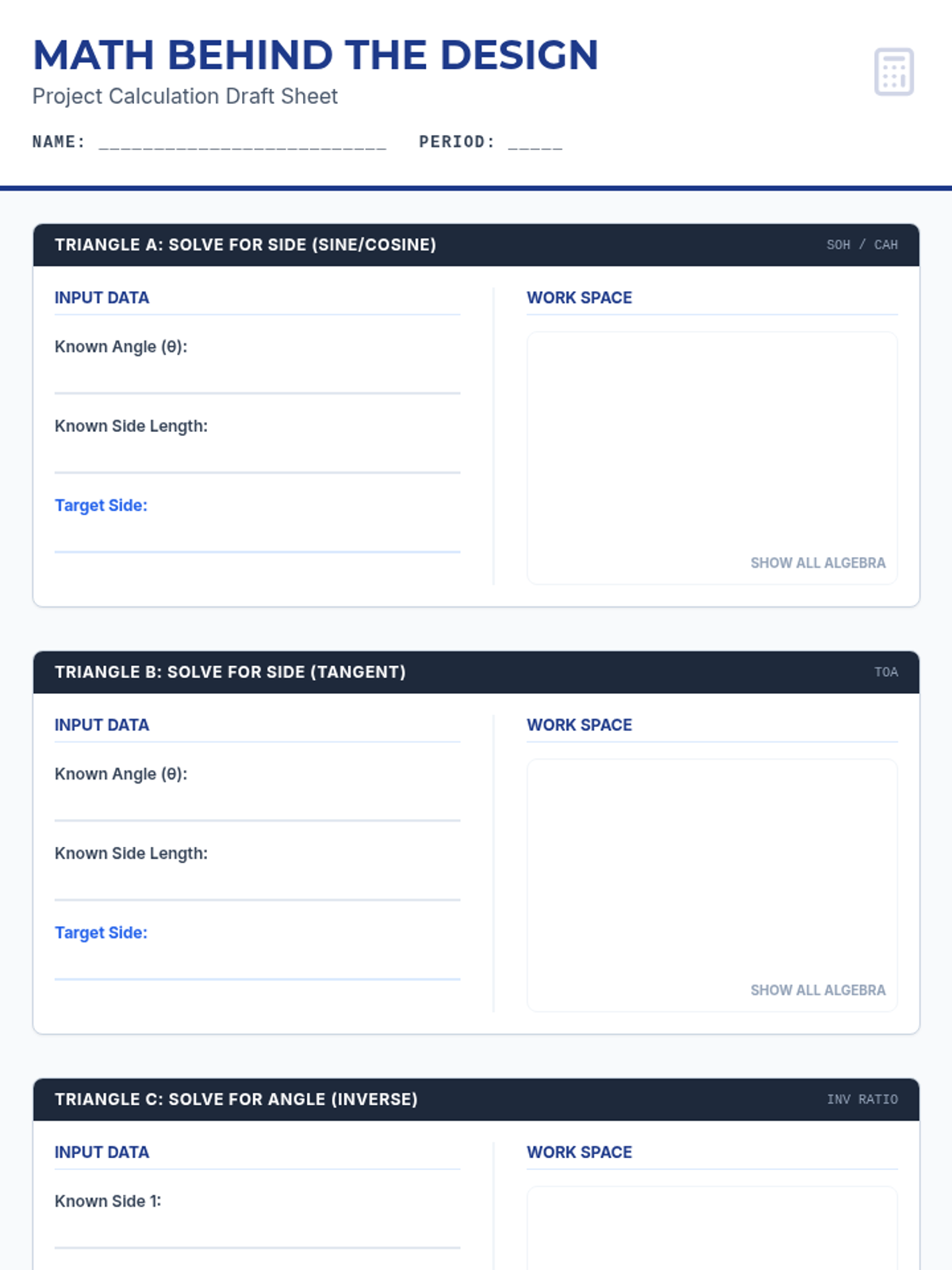
A structured worksheet for students to perform and check their step-by-step trigonometry calculations before transferring them to their final project poster.
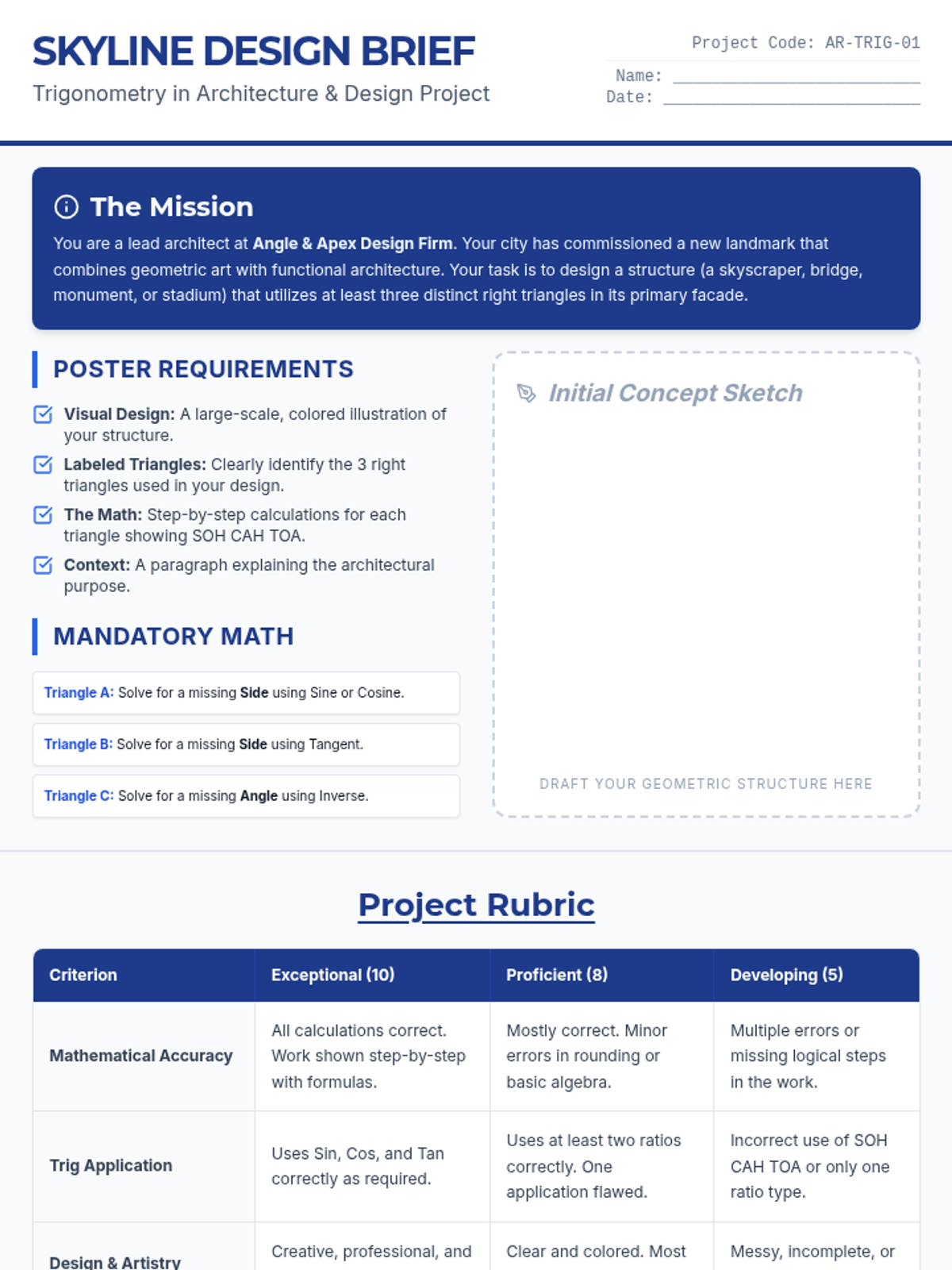
A student project brief for designing an architectural structure using trigonometry, including requirements, a sketch area, and a detailed grading rubric.
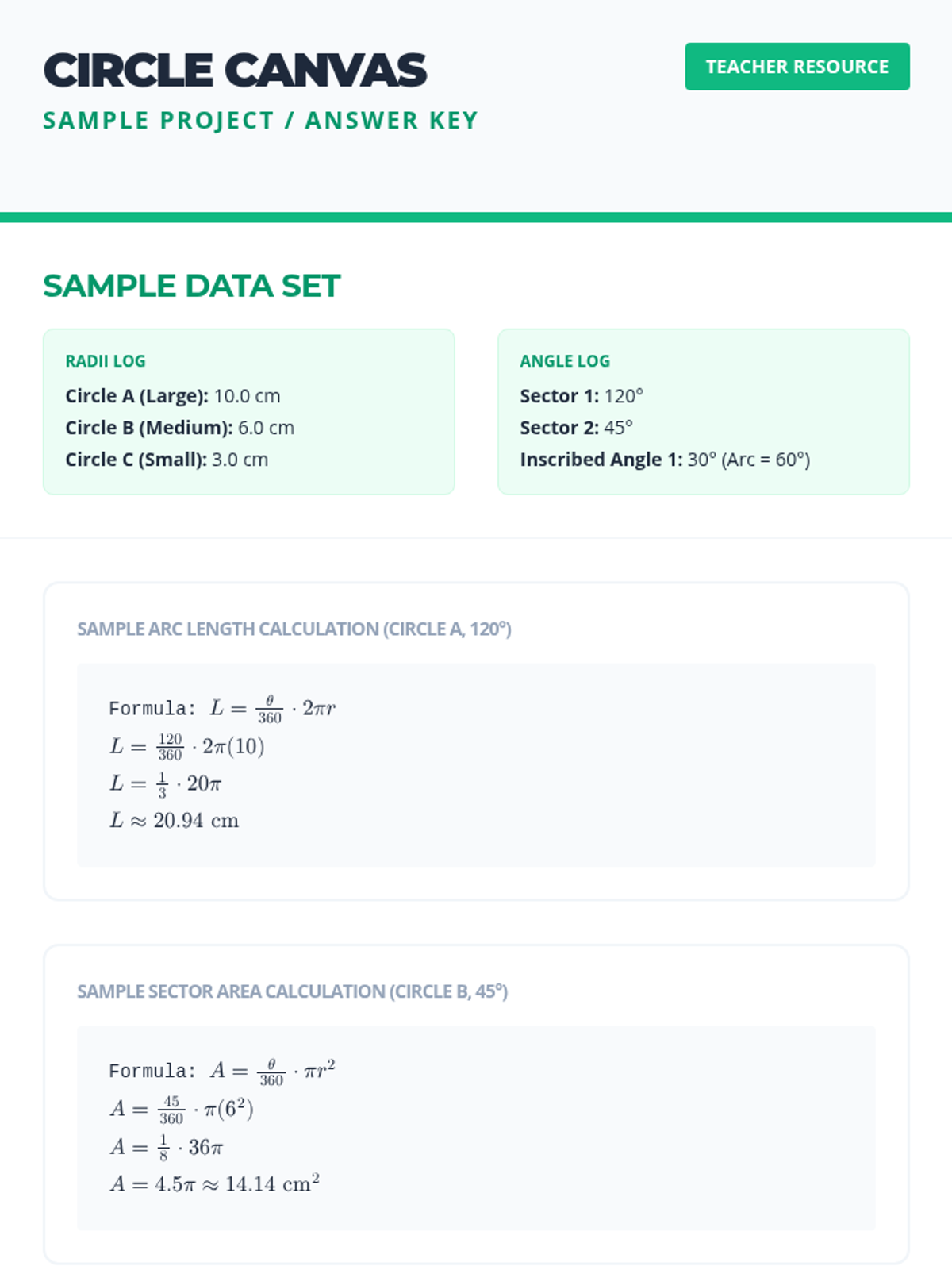
A sample project key showing completed calculations for arc length, sector area, and inscribed angles to provide teachers with a baseline for grading and feedback.
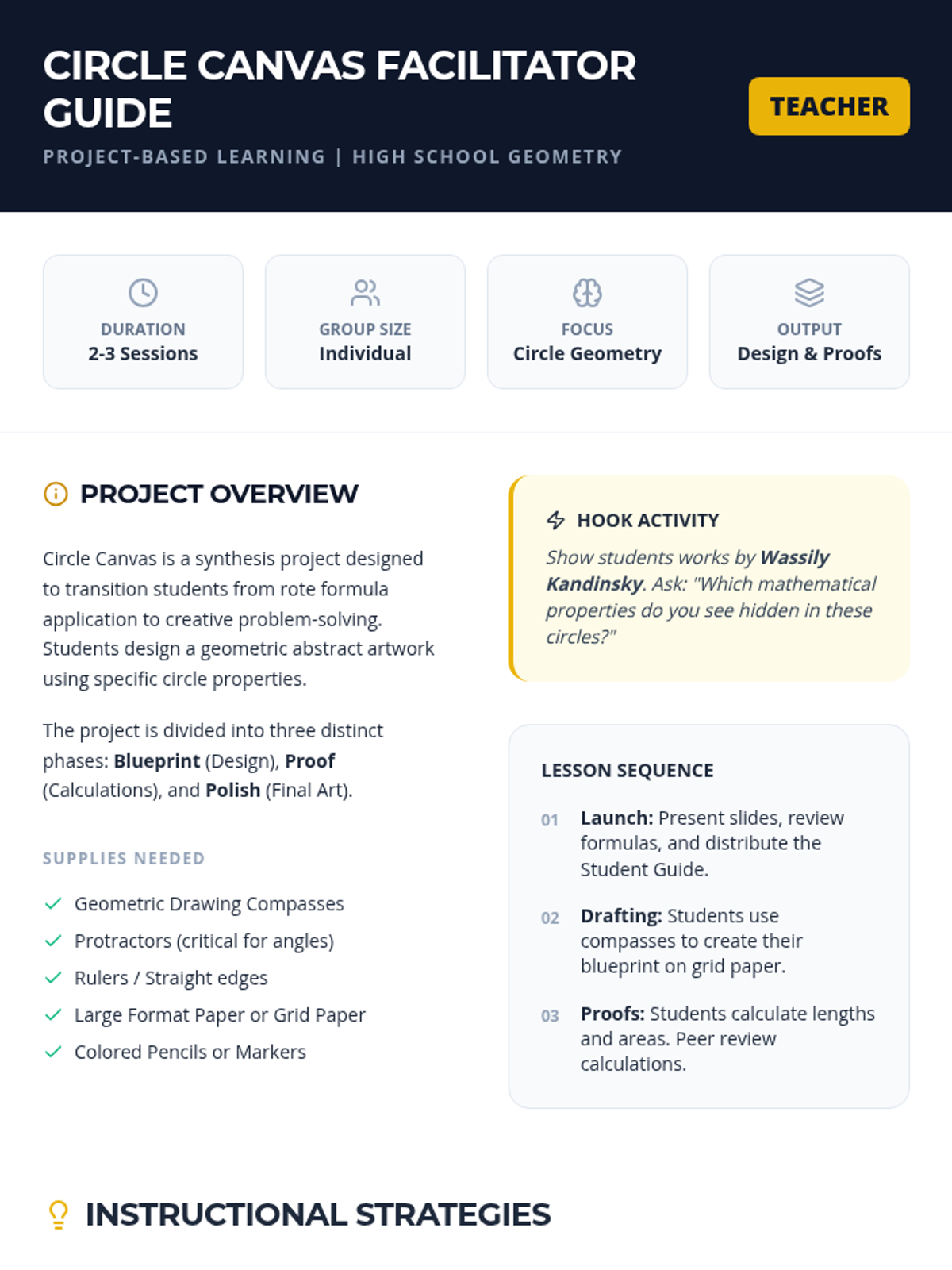
A teacher's facilitation guide for the Circle Canvas project, including lesson pacing, supply lists, common student misconceptions, and differentiation strategies.
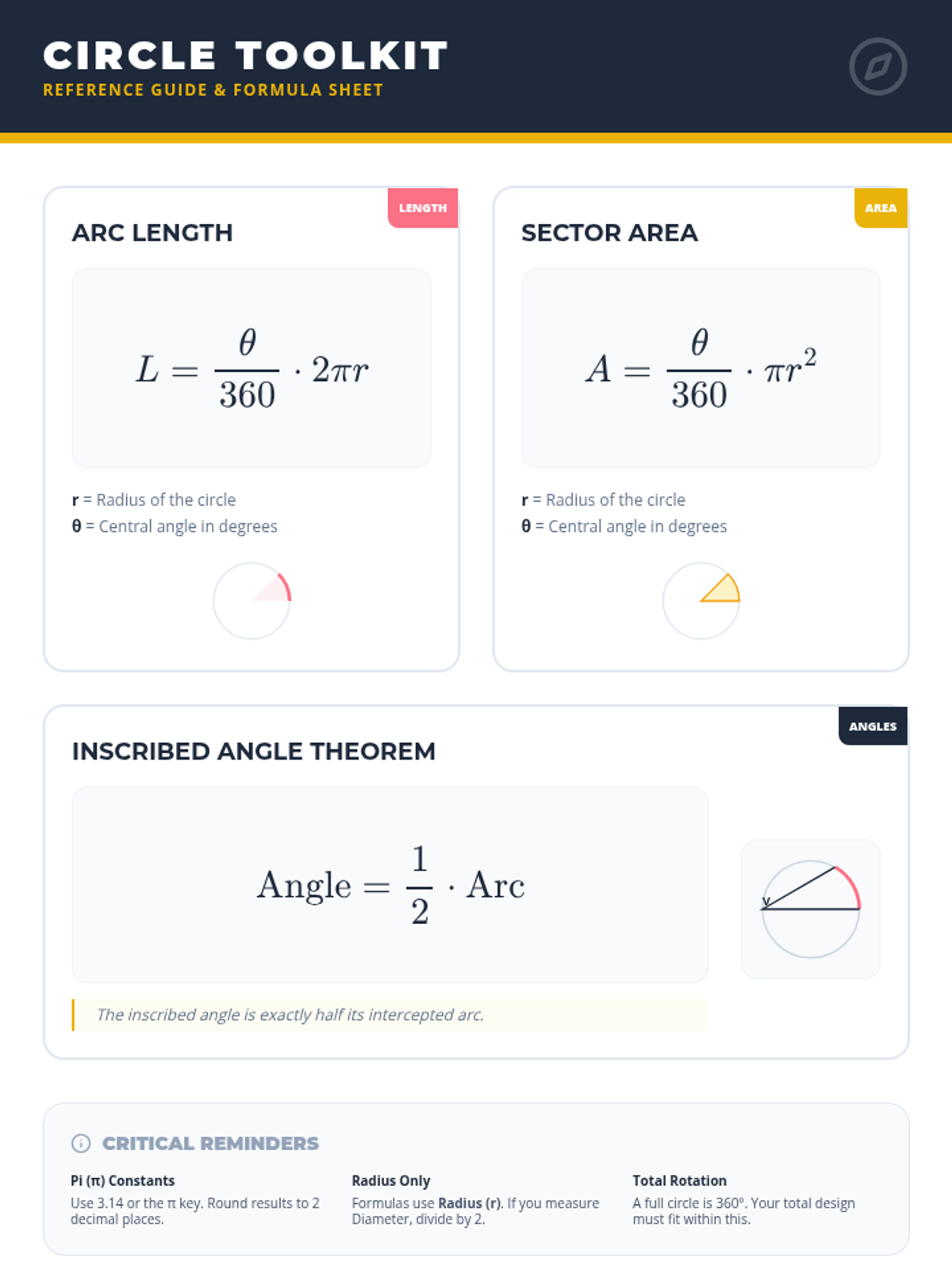
A concise one-page reference sheet containing formulas, diagrams, and reminders for arc length, sector area, and inscribed angle theorems to support students during the project.
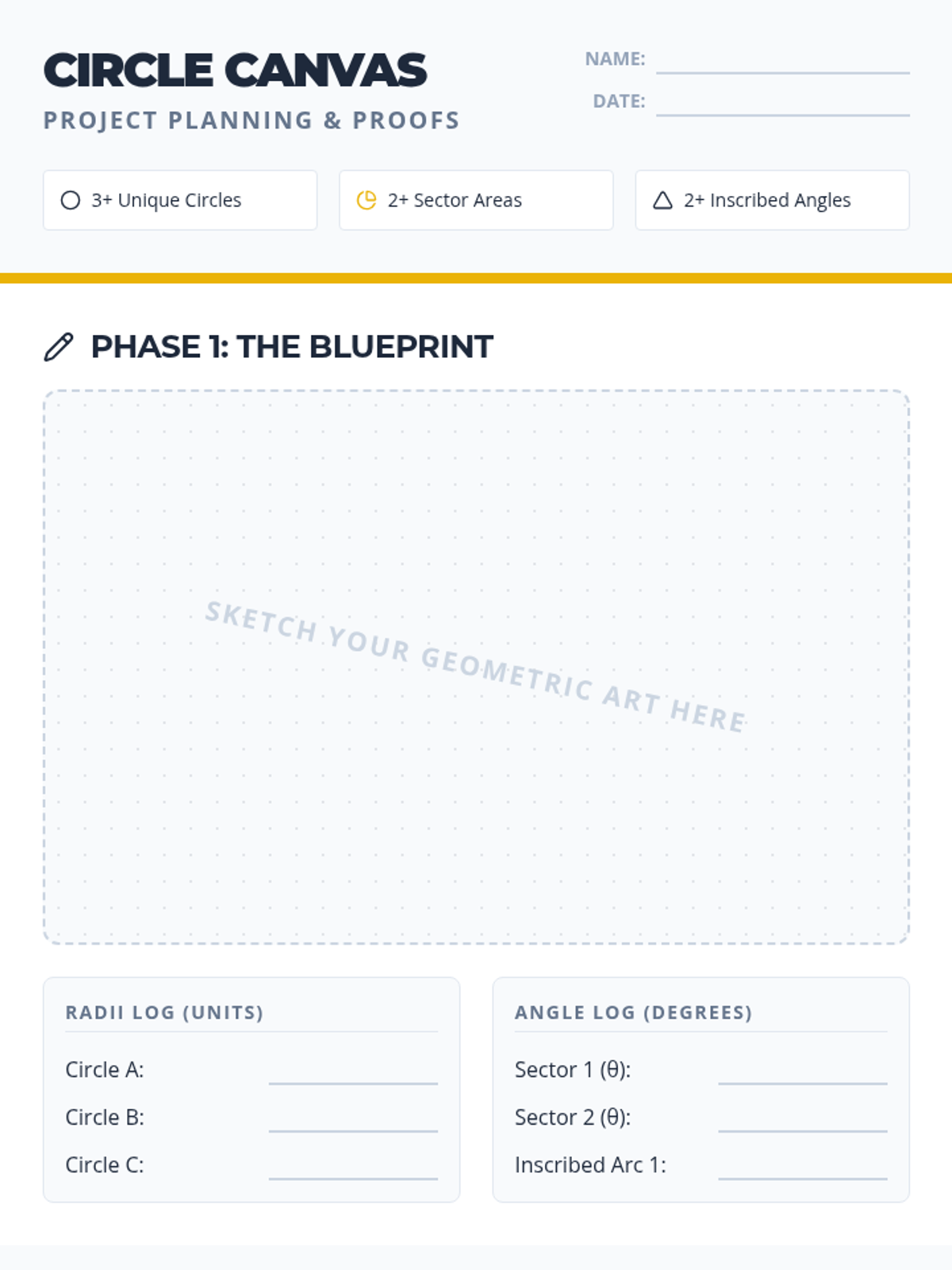
A multi-page planning and calculation guide for students to draft their geometric art, record circle dimensions, and prove their mathematical measurements.
An introductory presentation for the Circle Canvas project that hooks students with geometric art inspiration and reviews key circle properties: arc length, sector area, and inscribed angles.
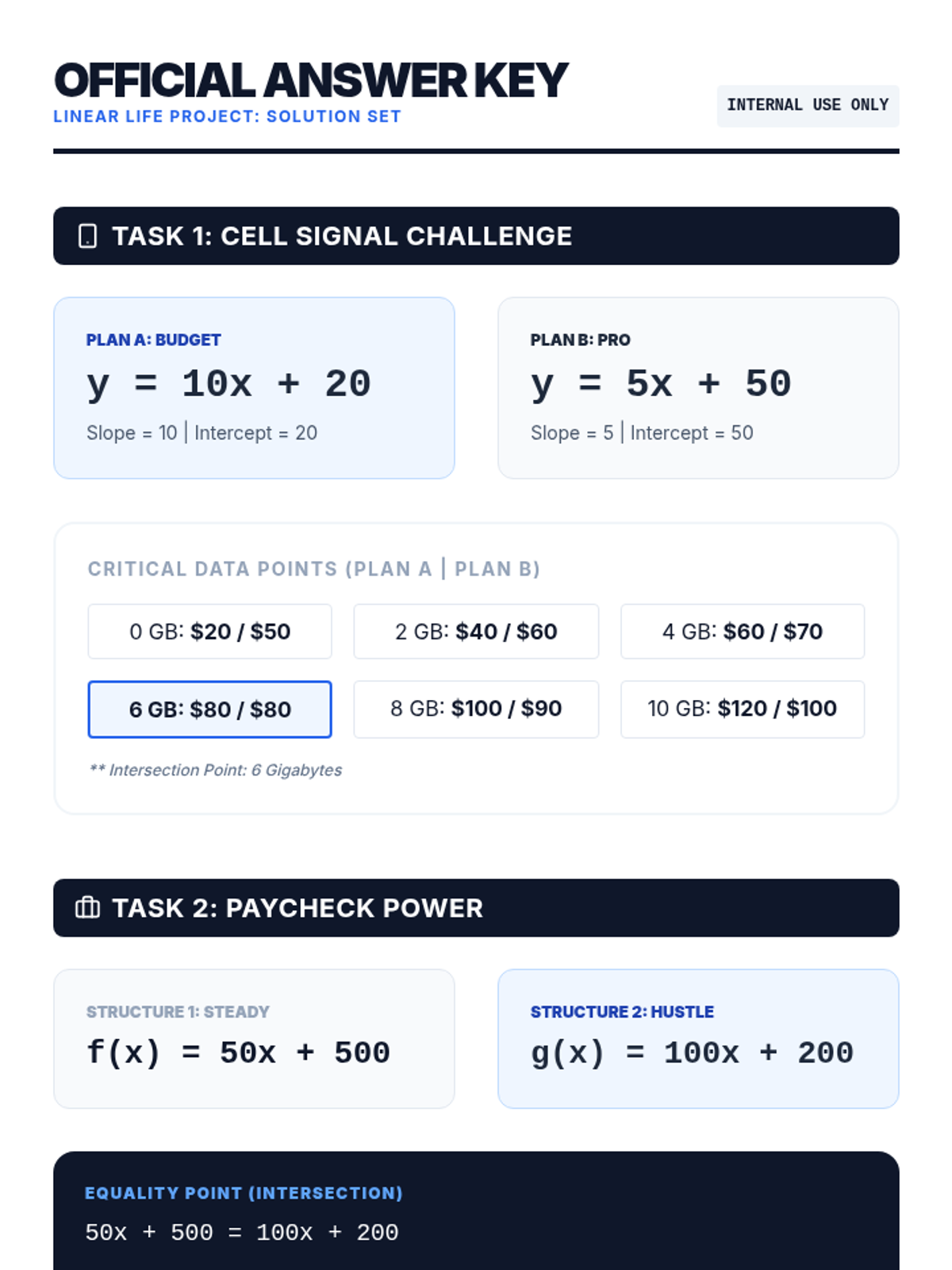
Revised answer key for the Linear Life project. Fixed mathematical notation, improved visual contrast, and ensured each task's solutions are contained on a single page for teacher ease of use.
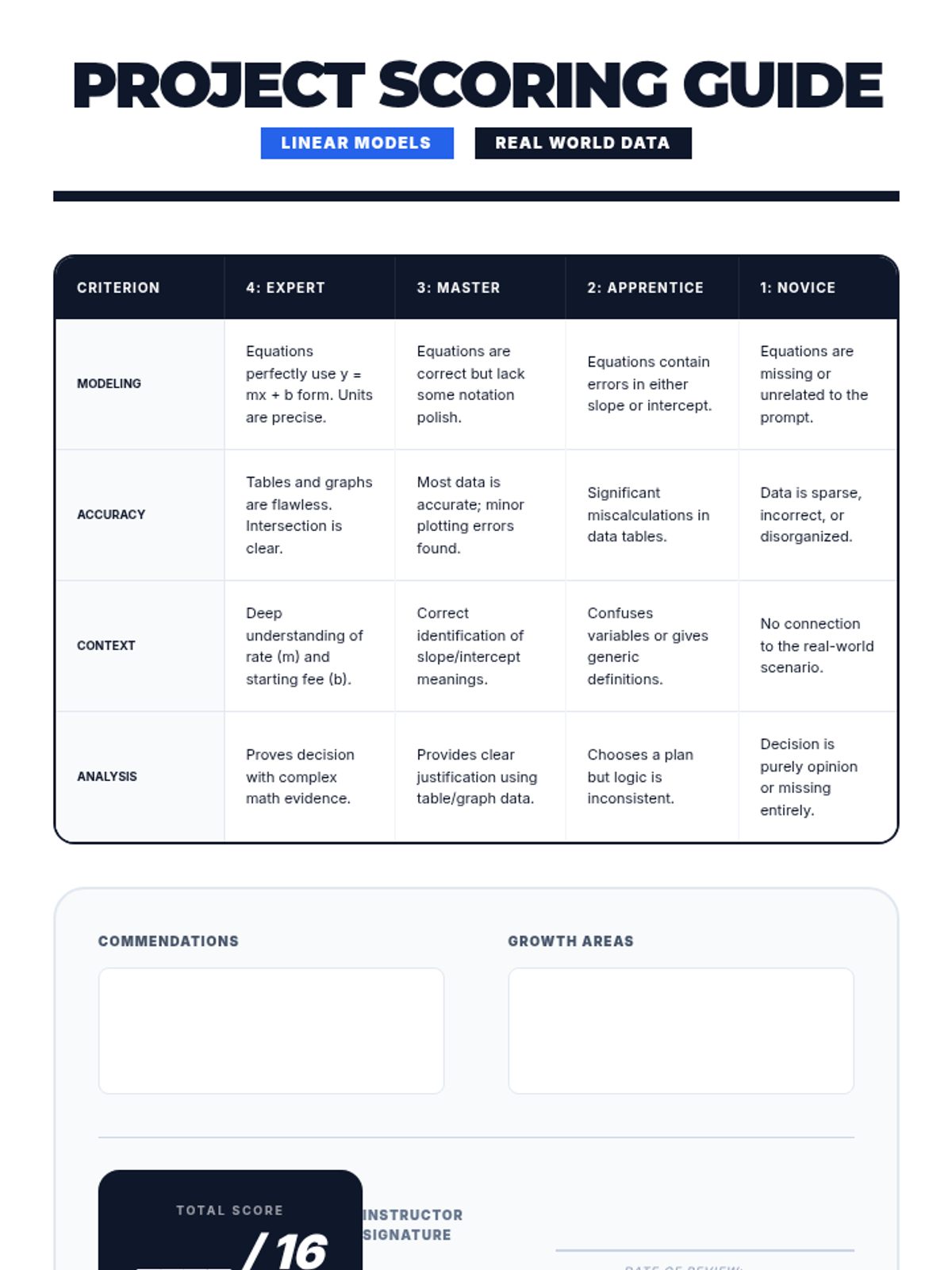
Revised grading rubric for the Linear Life project. Added Level 1 criteria, fixed math notation, and optimized layout to ensure the feedback section and grading block stay on one page.
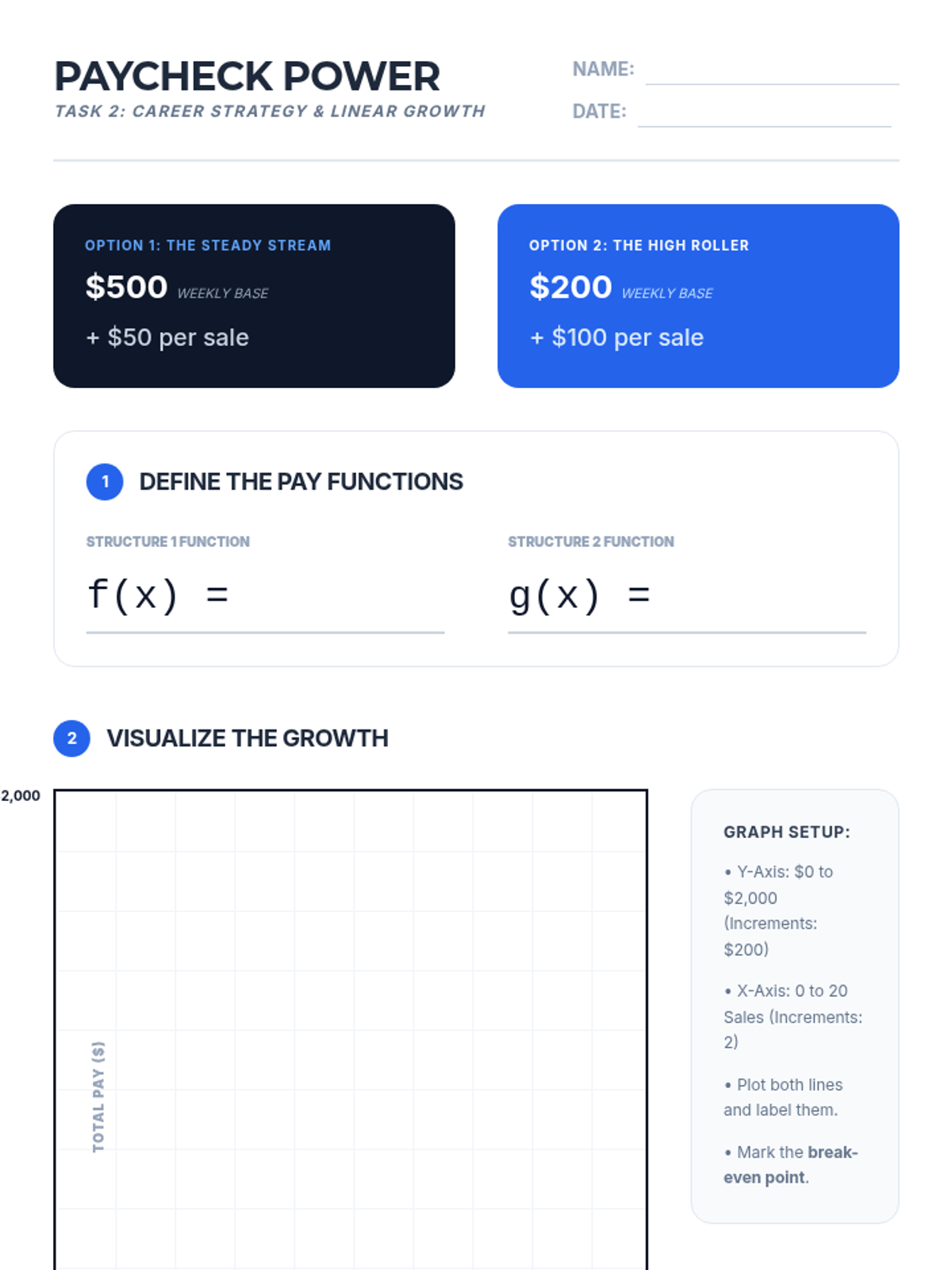
Revised student worksheet for Task 2. Improved graph rendering with a stable CSS grid, fixed page breaks, and optimized work areas for student handwriting.
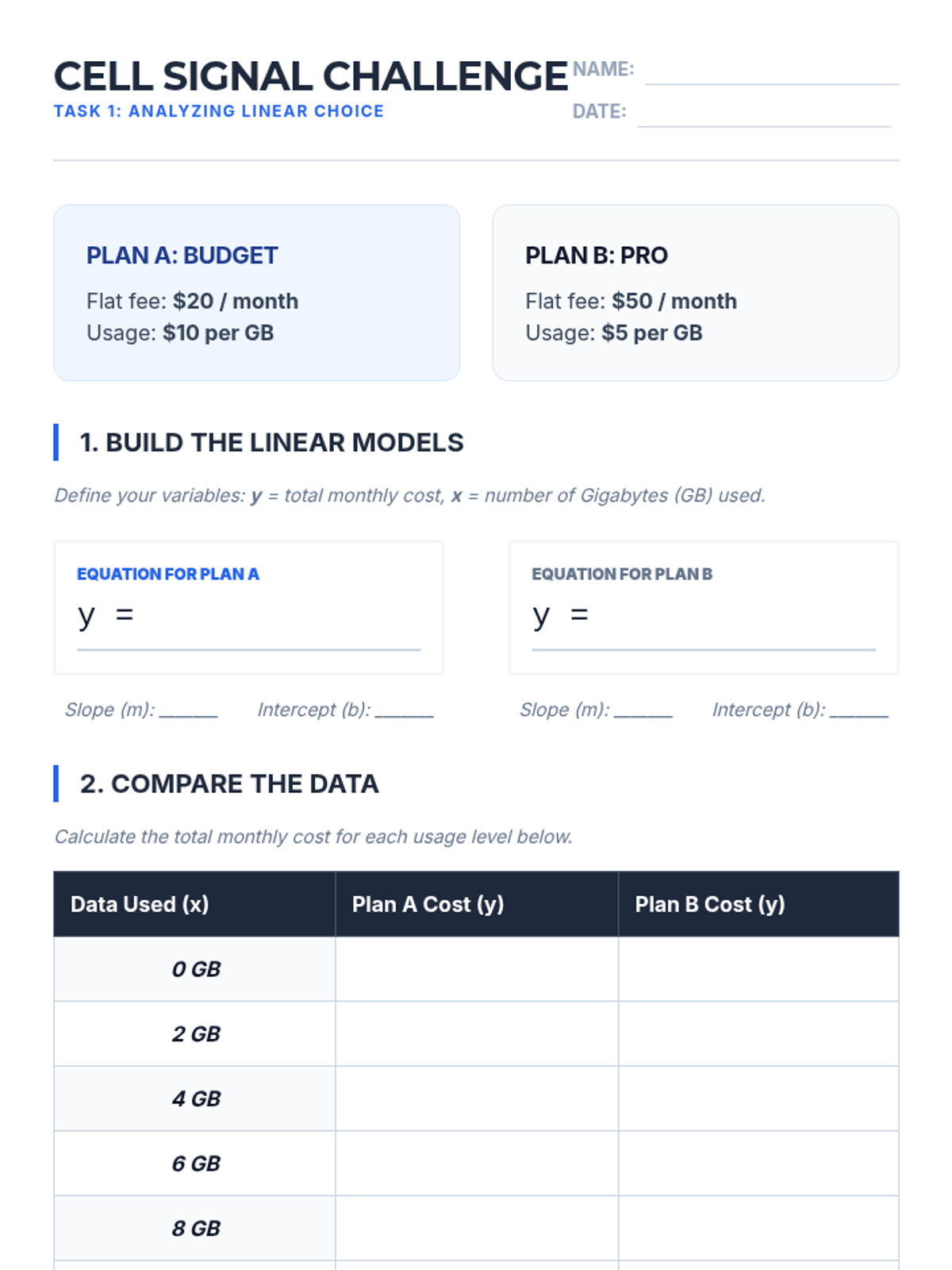
Revised student worksheet comparing two cell phone plans. Fixed page breaks, improved work areas, and clarified variable definitions.
Presentation slides for the Linear Life project, introducing slope and y-intercept in the context of cell phone plans and career commission structures. Revised with specific Task 2 data.
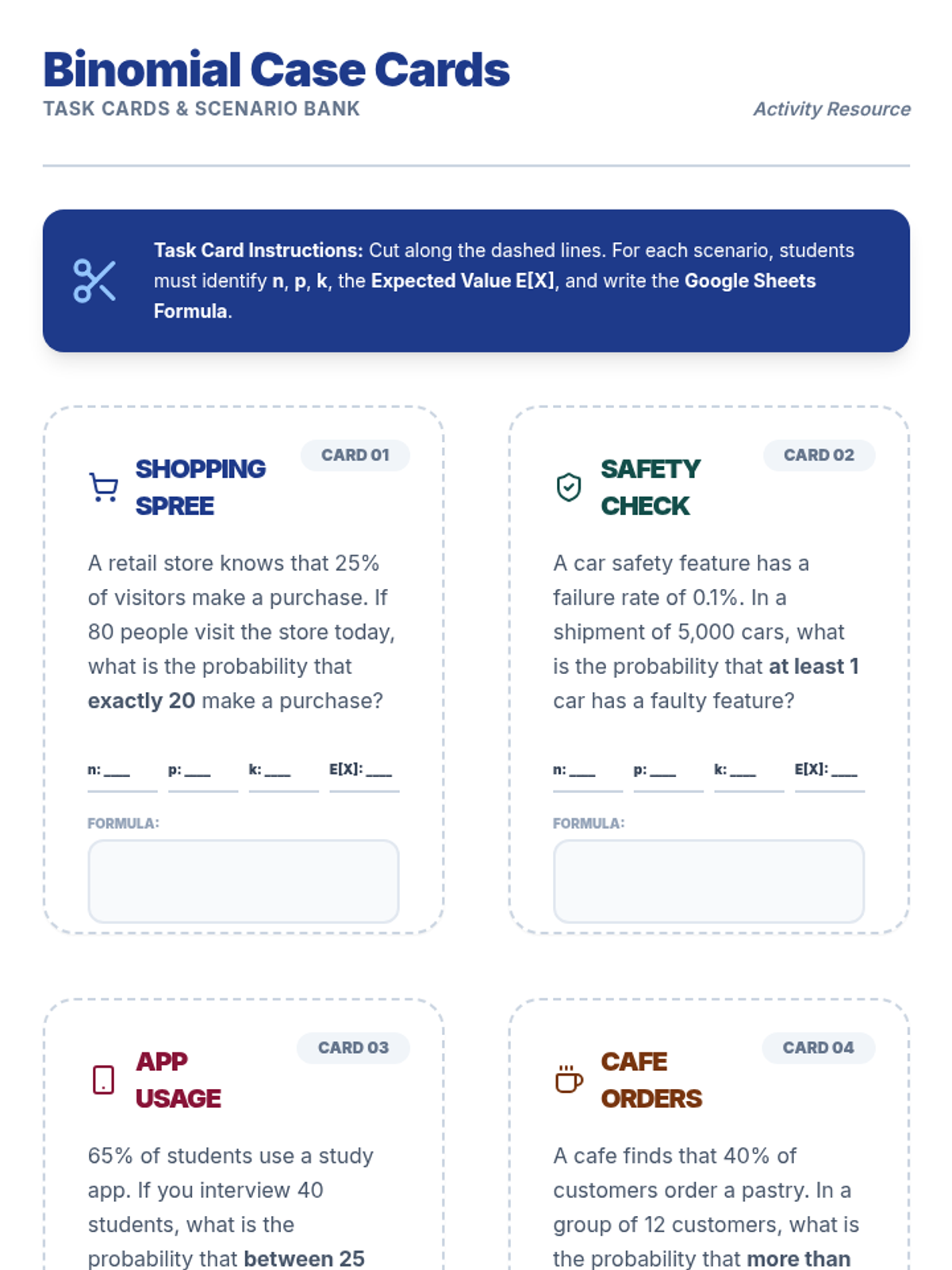
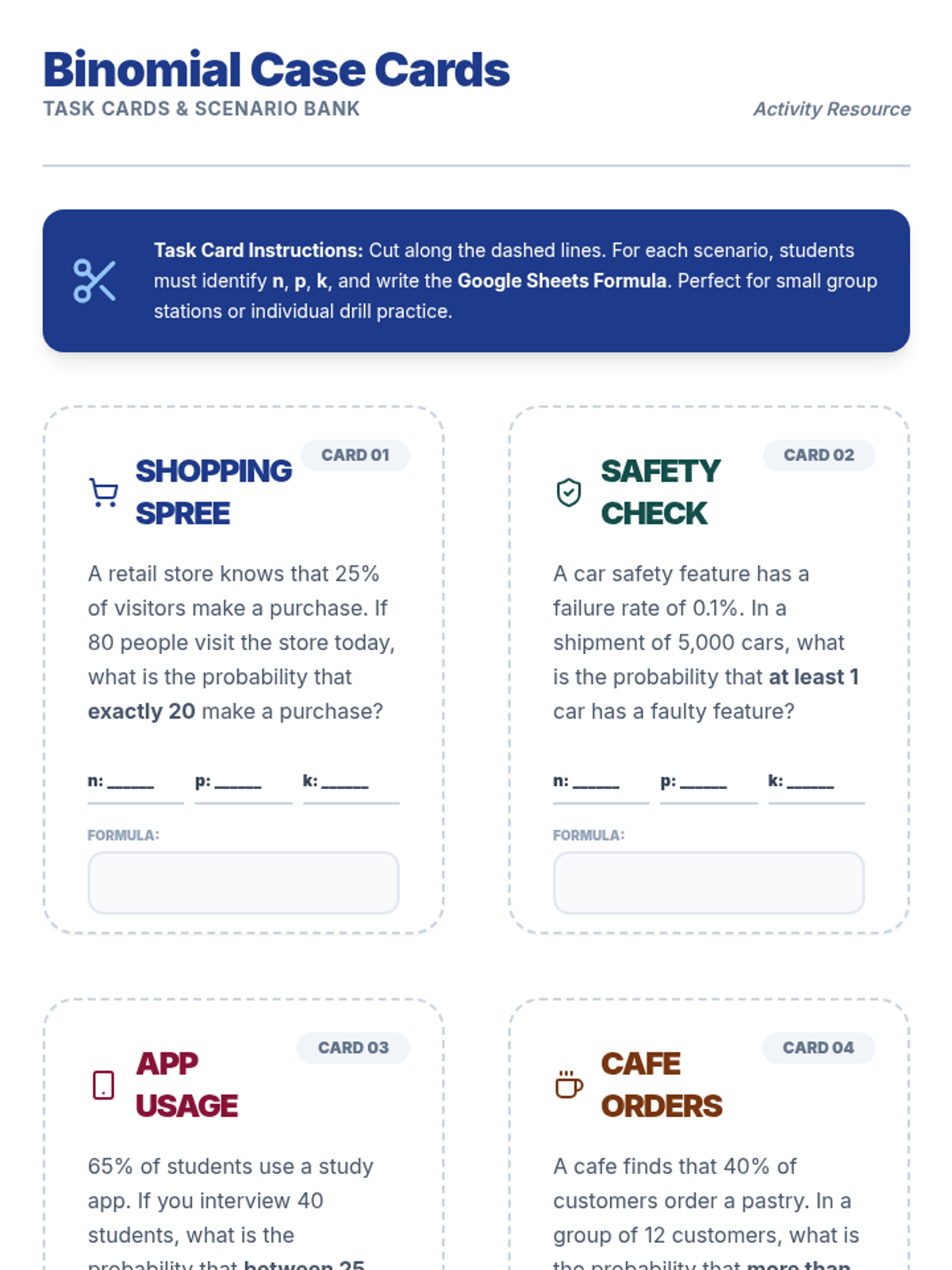
A set of 10 printable task cards featuring diverse binomial distribution scenarios. Perfect for station activities, group work, or extra practice bank. Includes integrated answer key. Now updated to include Expected Value (E[X]) calculations for every case.
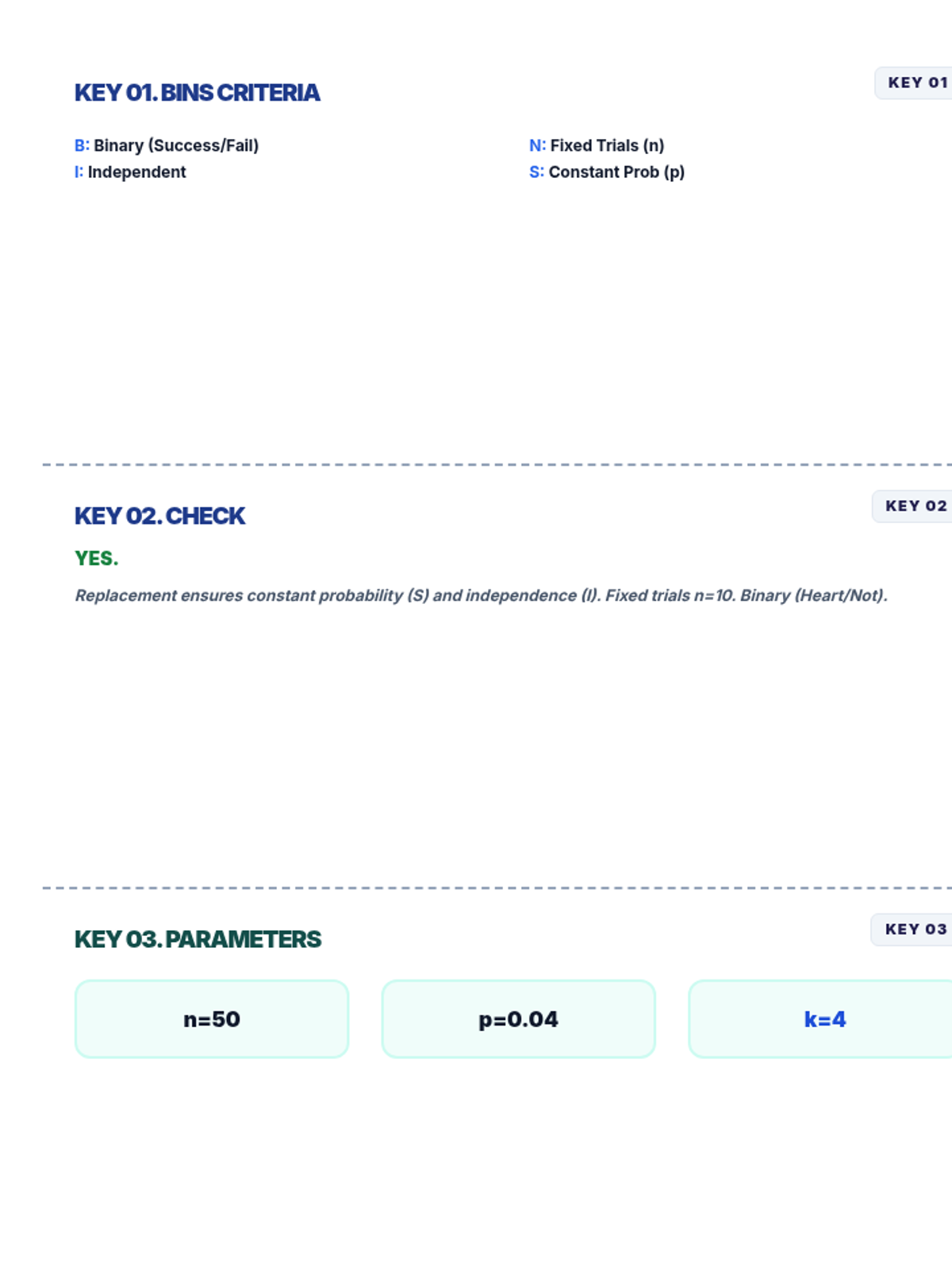
A comprehensive answer key for the task-card edition of the Binomial Breakdown Worksheet, reformatted into individual 1/3-page cards to facilitate separate distribution or physical cutting. Each card provides detailed logic, modern BINOM.DIST syntax, and correctly rendered manual formulas. Updated for density and usability.
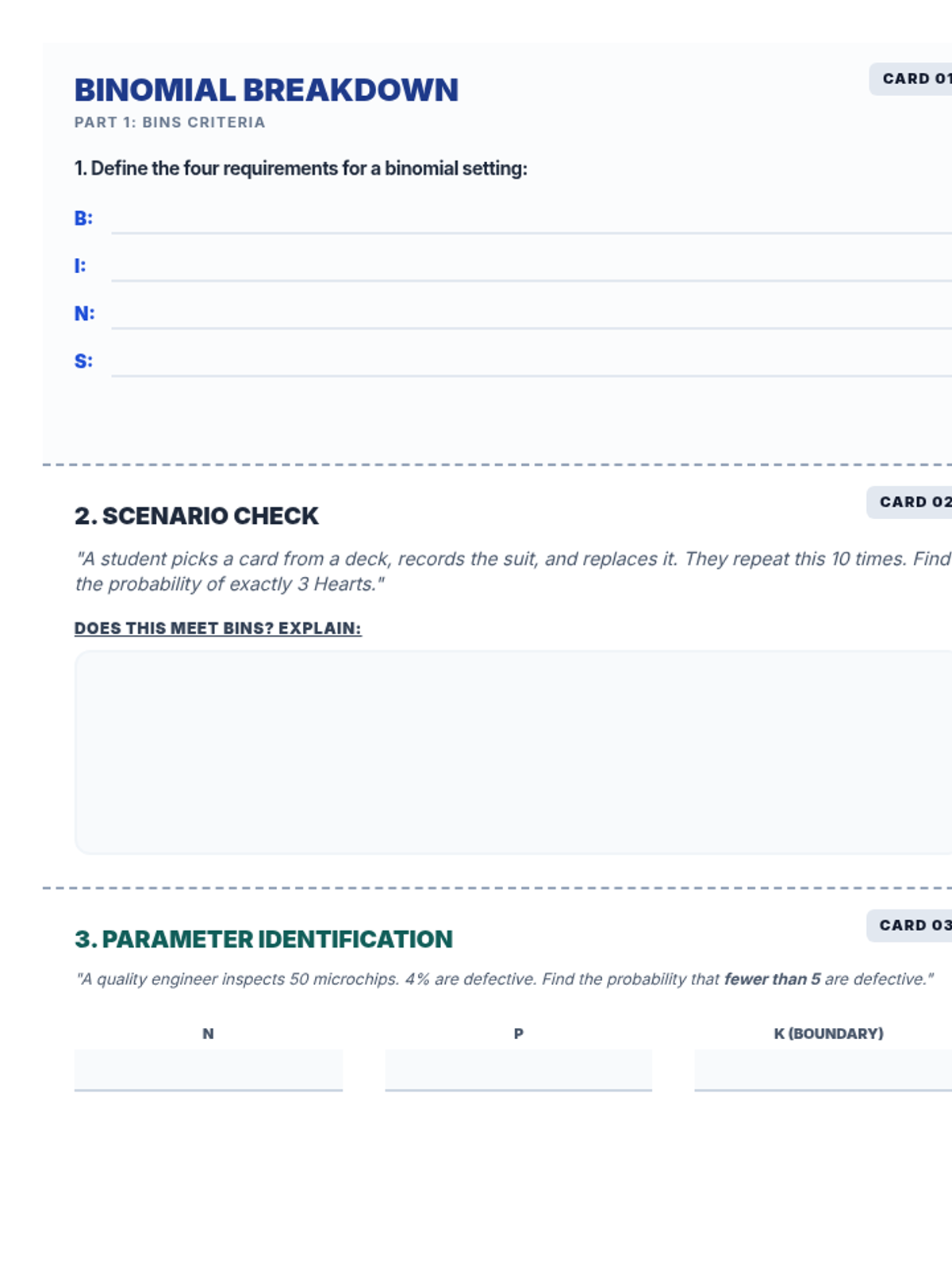
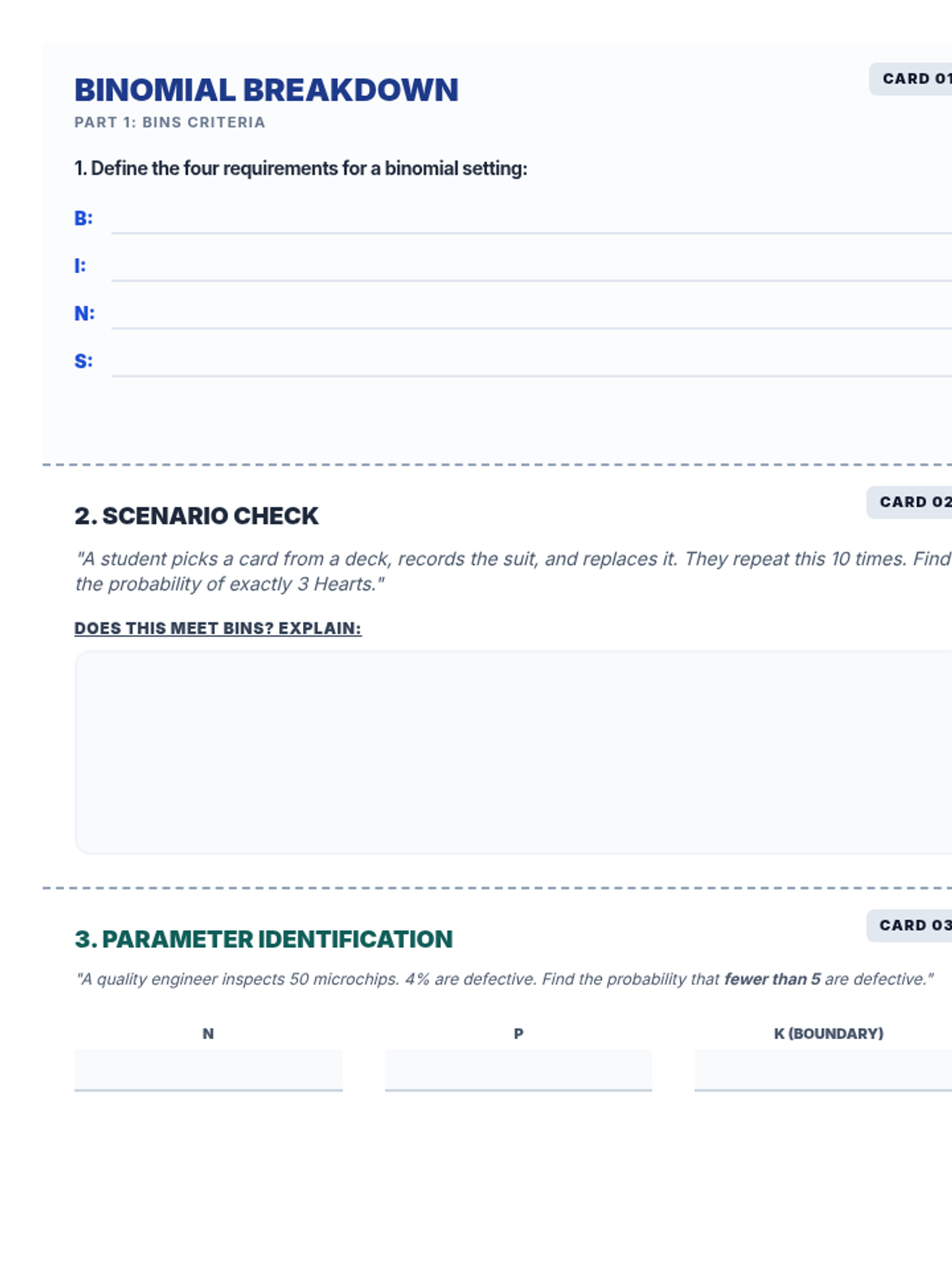
A 21-question practice worksheet for 12th-grade statistics, reformatted as a modular task-card bank. Designed with three horizontal cut-lines per page for easy physical division. Covers BINS criteria, spreadsheet formulas (BINOM.DIST), hand-calculation theory, and now includes questions on Expected Value (n*p). Card IDs and questions are aligned 1:1.
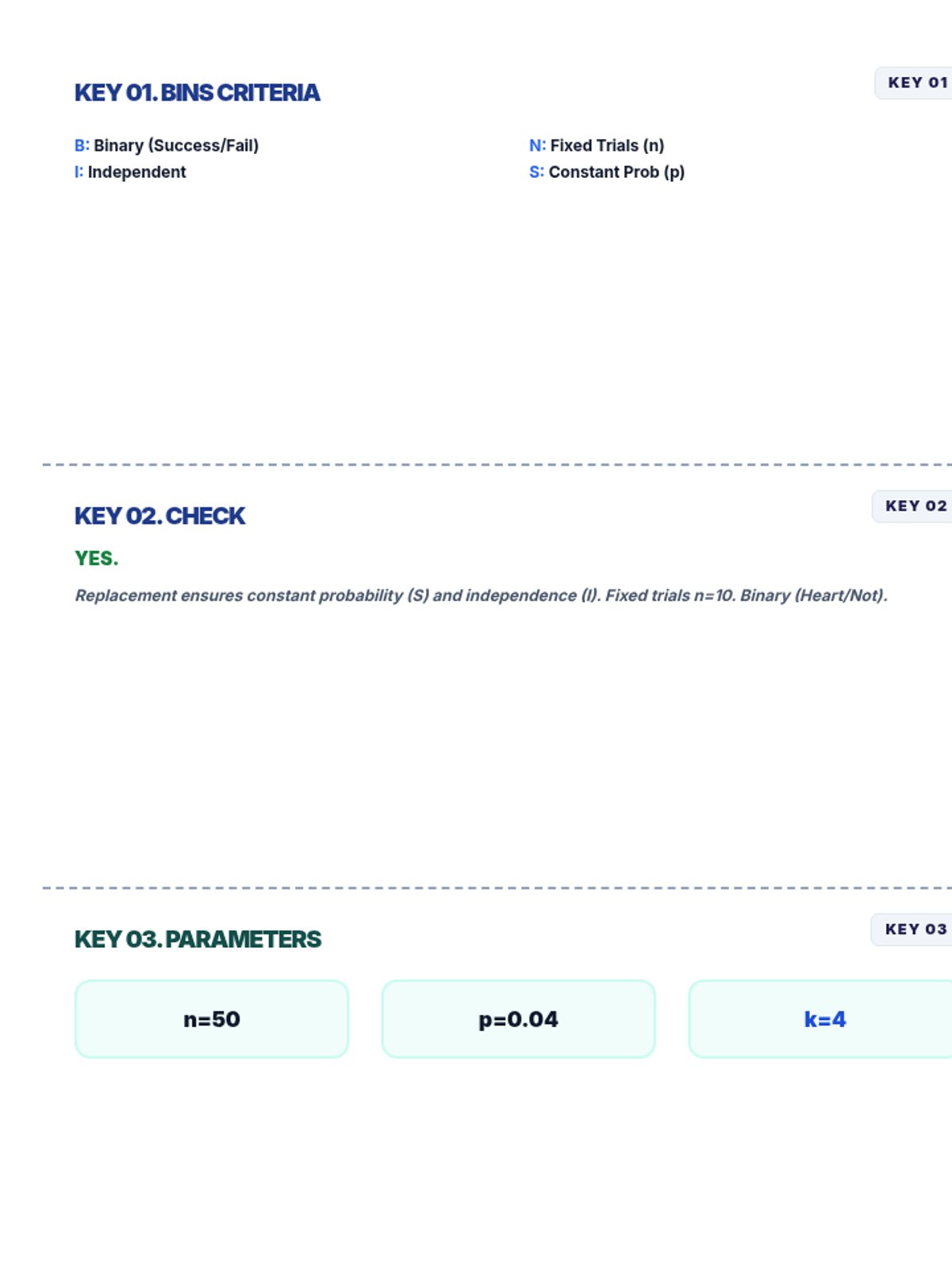
A visual presentation accompanying the Binomial Breakdown lesson. Covers BINS criteria, expected value (mean), spreadsheet formula syntax (BINOM.DIST), and the hand-calculation formula connection. Updated with a new slide for expected value (n*p) and improved summary visuals.
A set of 10 printable task cards featuring diverse binomial distribution scenarios. Perfect for station activities, group work, or extra practice bank. Includes integrated answer key.
A visual presentation accompanying the Binomial Breakdown lesson. Covers BINS criteria, spreadsheet formula syntax (BINOM.DIST), and the hand-calculation formula connection. Updated with reliable manual math rendering, corrected tracking, and improved layout stability. Includes a dedicated fill-in-the-blank practice slide.
A 17-question practice worksheet for 12th-grade statistics, reformatted as a modular task-card bank. Designed with three horizontal cut-lines per page for easy physical division. Covers BINS criteria, spreadsheet formulas (BINOM.DIST), and hand-calculation theory with fill-in-the-blank formula components. Updated with improved structured identification grids, reliable math rendering syntax, and integrated cuttable answer key. Card IDs and questions are now aligned 1:1.
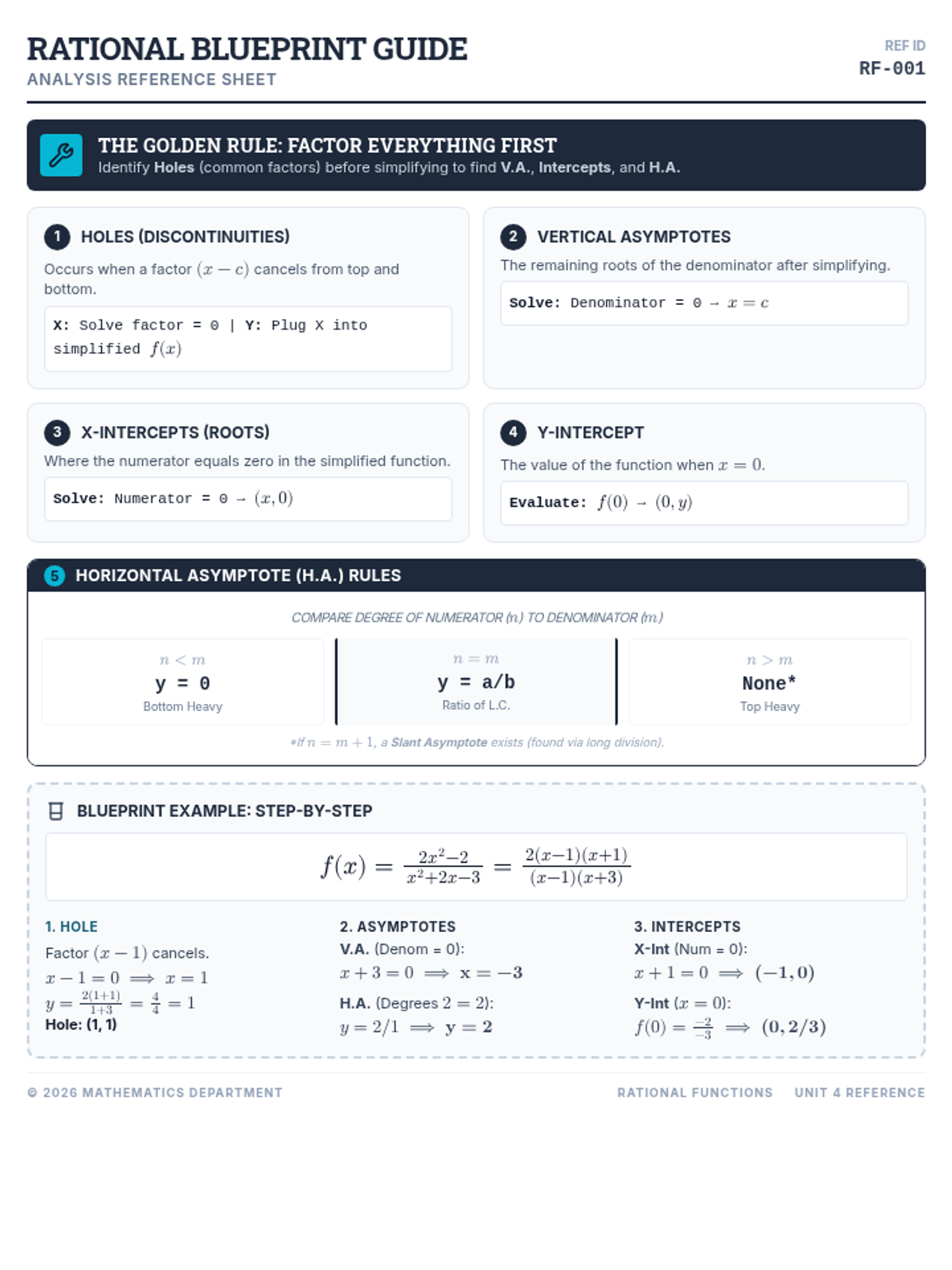
A high-density one-page reference sheet for rational functions. Includes essential steps for finding holes, asymptotes, and intercepts, plus a fully worked complex example.
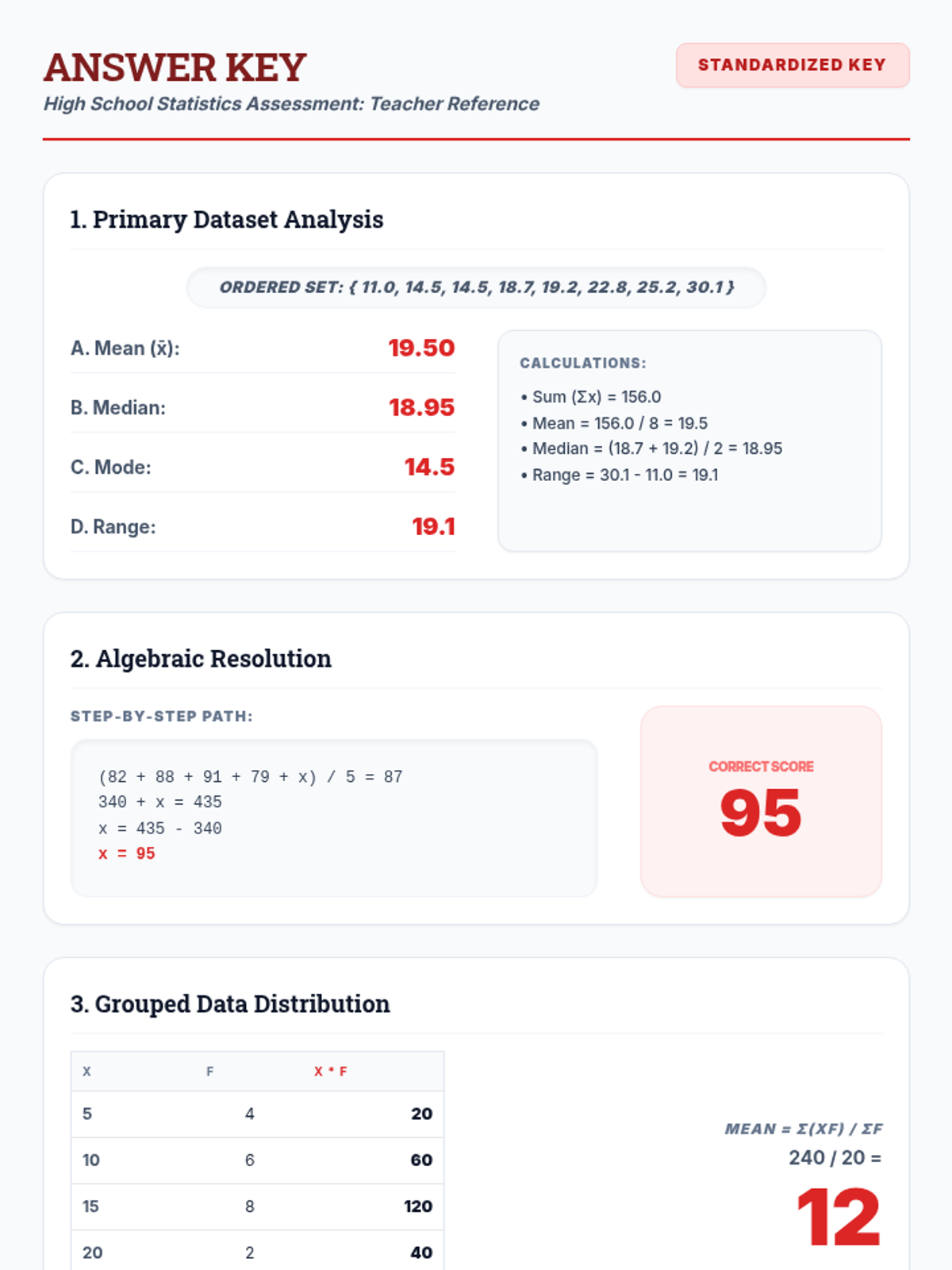
Answer key for the high-school statistics test, featuring detailed algebraic steps, frequency table summations, and conceptual justifications. Standardized layout for better teacher reference.
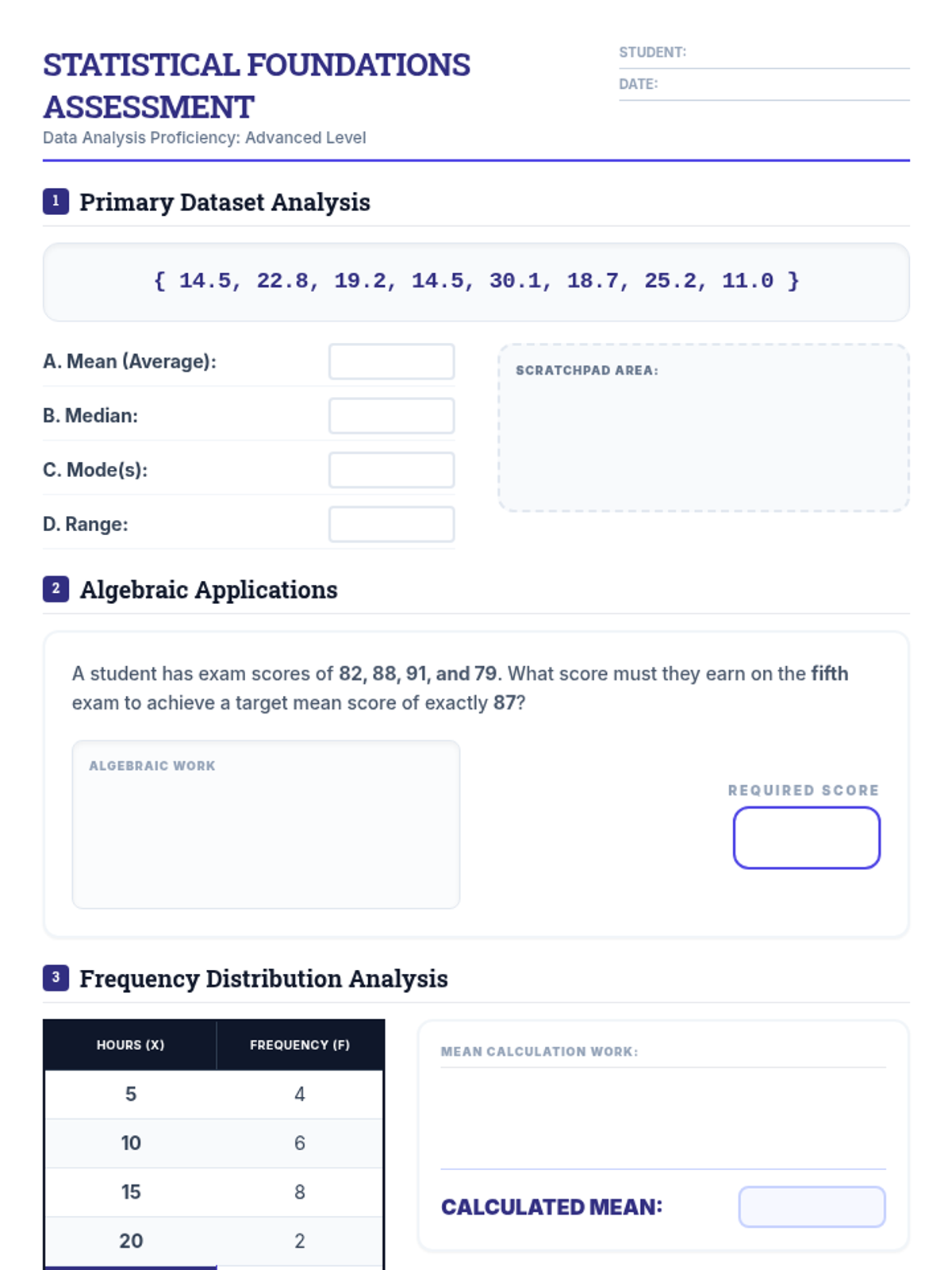
A comprehensive high-school level statistics assessment covering central tendency, algebraic solving, frequency tables, and outlier analysis with a professional academic aesthetic. Revised for improved layout and student writing space. Unicode mean symbol used for stability.
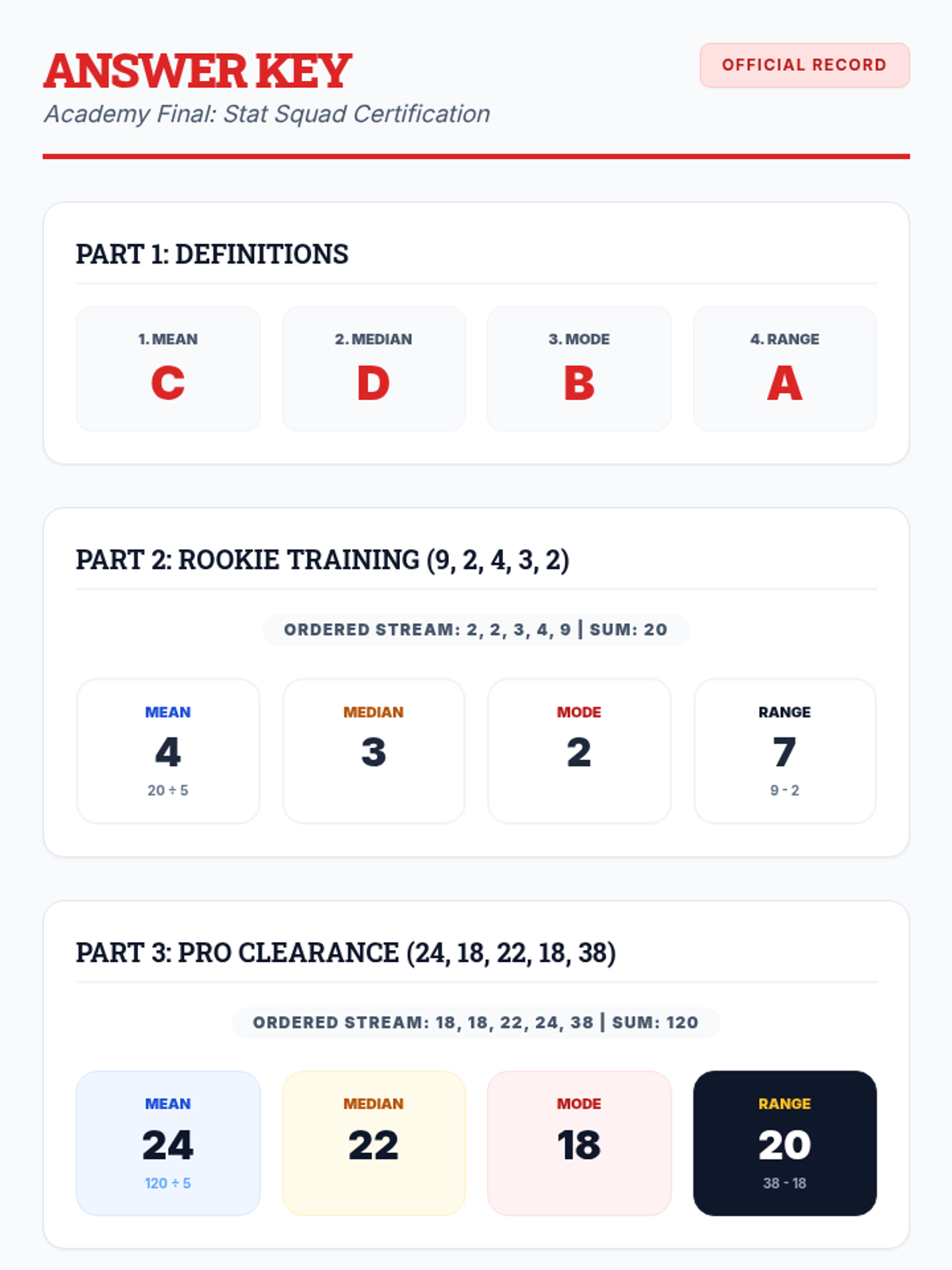
Answer key for the Academy Final Evaluation, featuring step-by-step solutions, correct extraction orders, and grading tips for the final assessment. Standardized layout for better teacher reference.
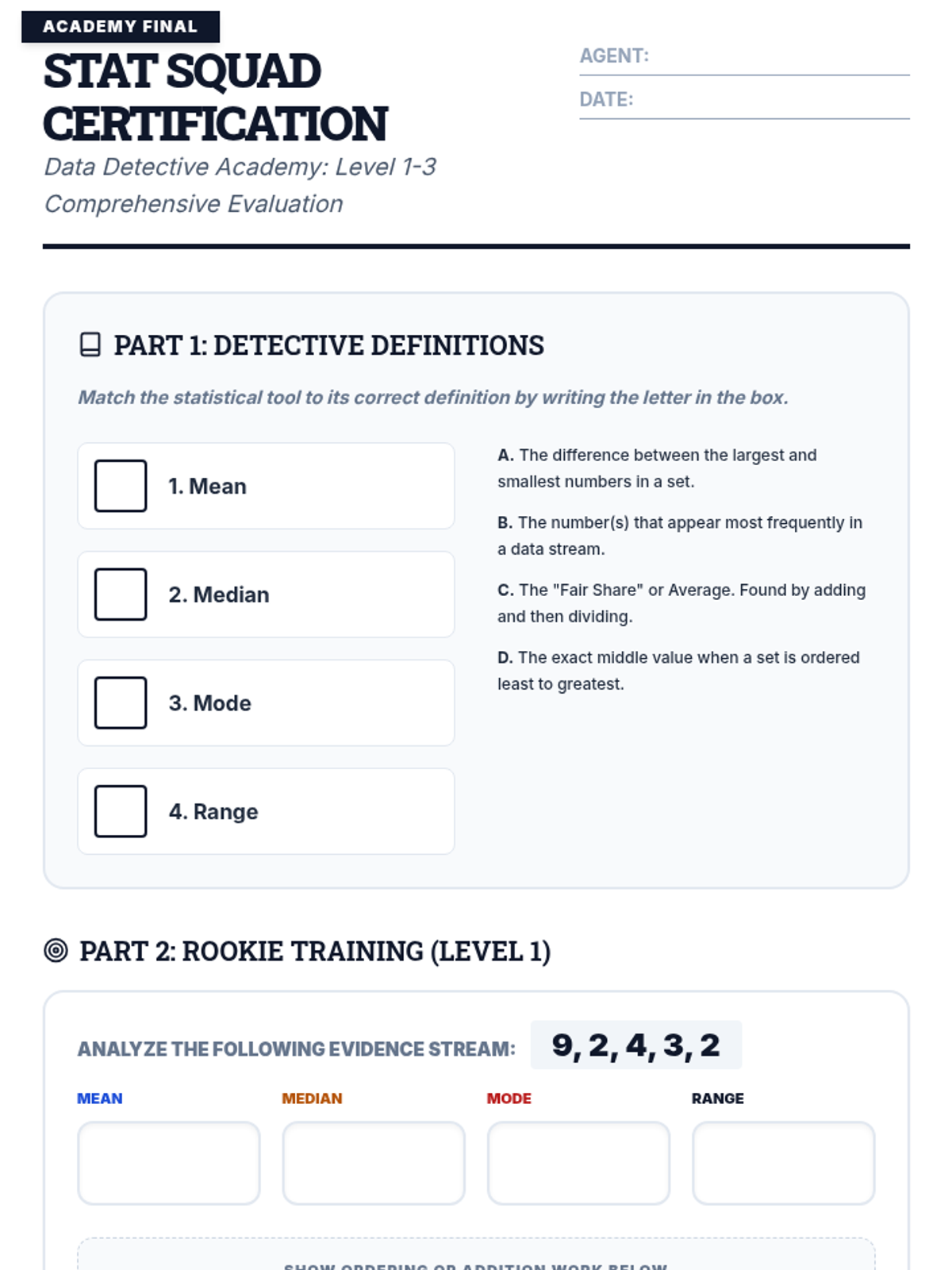
A comprehensive assessment covering Level 1, Level 2, and Level 3 data analysis, designed to evaluate mastery of mean, median, mode, and range in both numerical and narrative contexts. Improved layout for student handwriting.
Updated slide deck for SIFE students that moves beyond the 5/3 example to show halves (3/2), the concept of 'top = bottom' equaling one whole, and multiple number line examples. It maintains high-contrast visuals and minimal text.
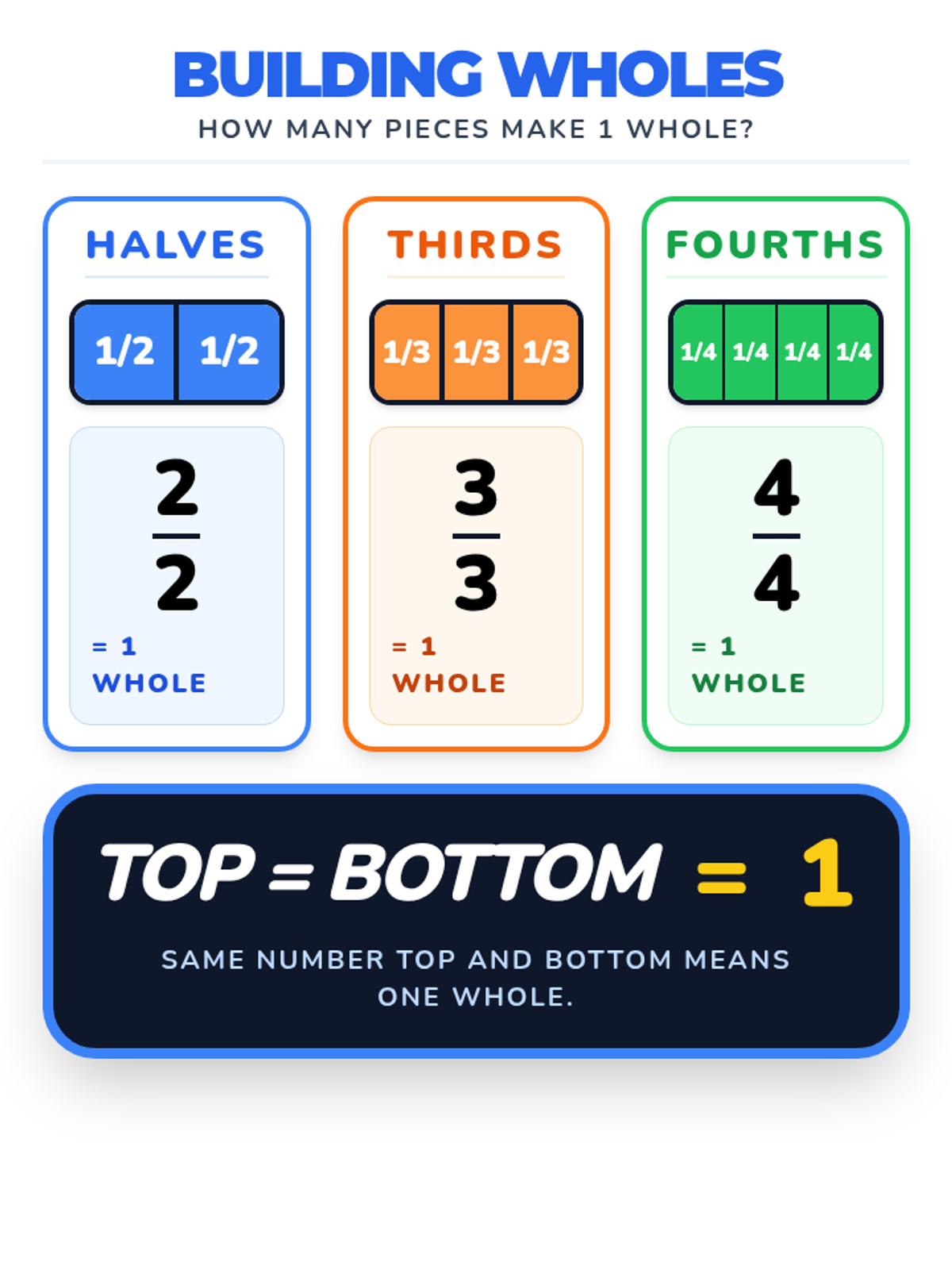
A visual anchor chart for SIFE students demonstrating that when the numerator and denominator are the same, the fraction equals one whole. It uses high-contrast models for halves, thirds, and fourths to show the pattern across different denominators.
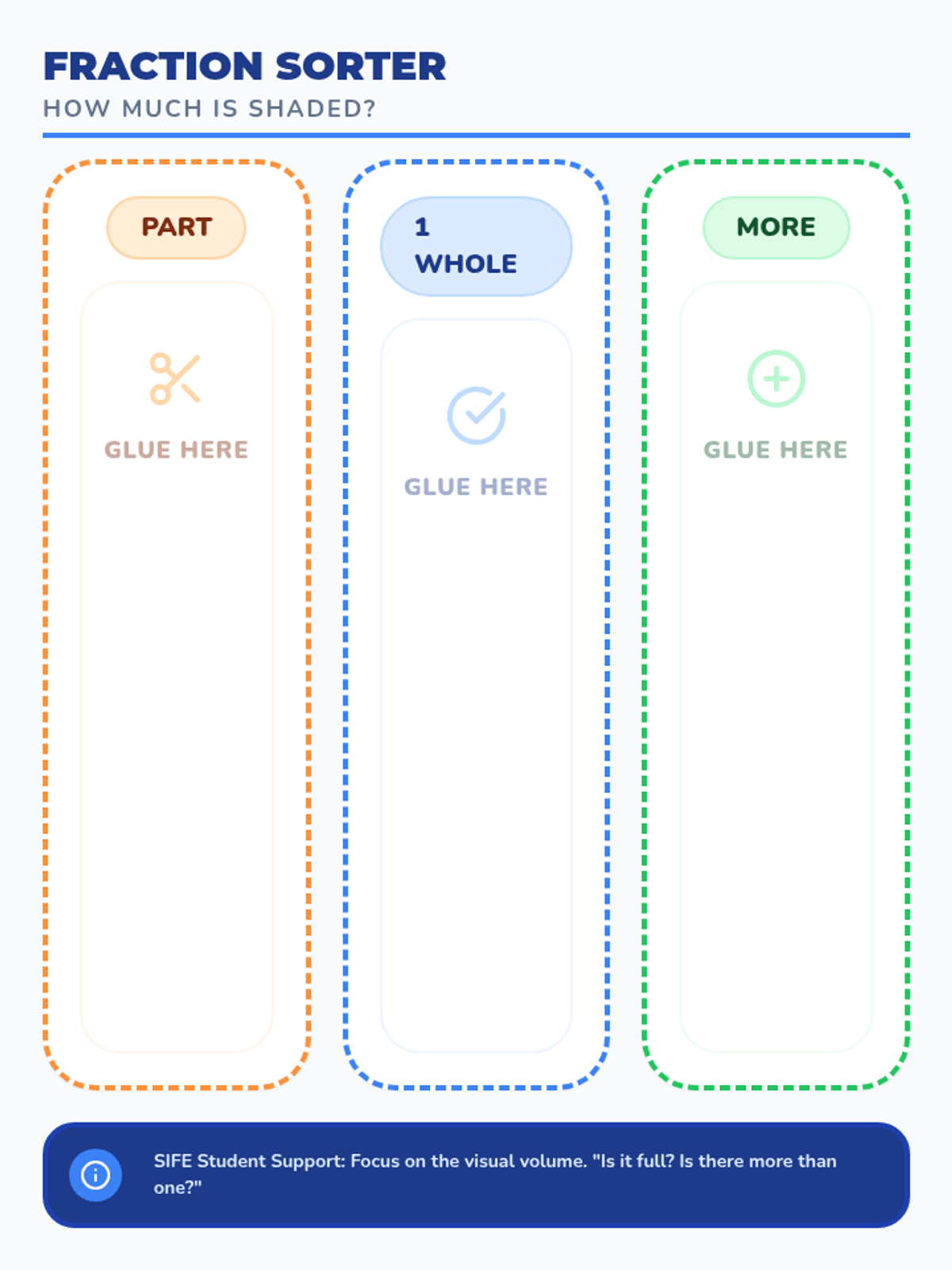
A visual sorting activity where SIFE students categorize visual fraction models into 'Part' (less than 1), '1 Whole' (exactly 1), and 'More' (greater than 1). The cards use variety in shapes (circles, strips, squares) and denominators (halves, thirds, fourths) to build conceptual understanding beyond a single example.
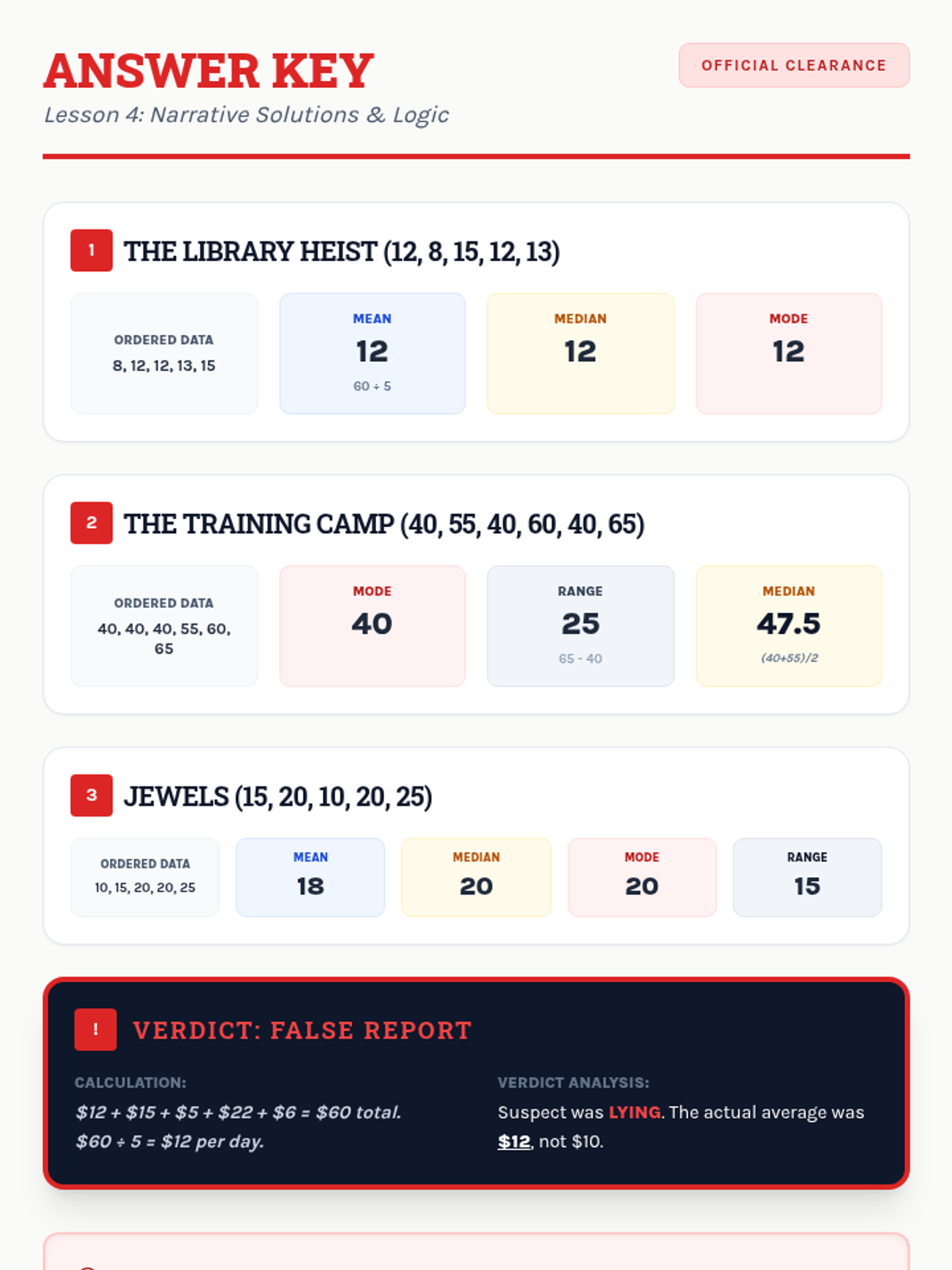
Answer key for the Mystery Logs worksheet, featuring step-by-step extraction logic, calculations, and analytical verdicts for the narrative problems. Standardized layout for better teacher reference.
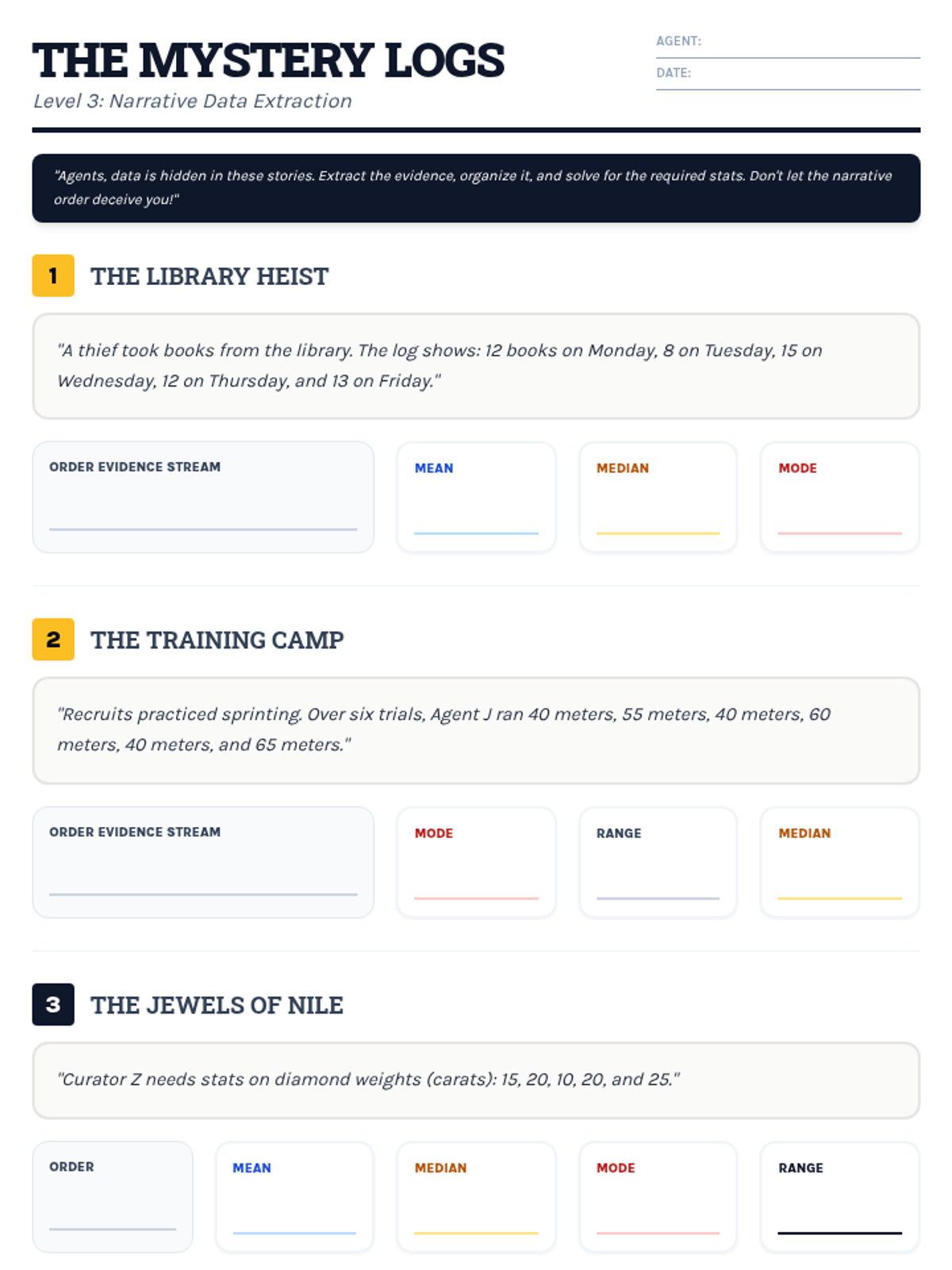
A series of narrative-based word problems themed as mystery investigations, requiring students to extract data sets from text and calculate central tendency and range. Standardized layout and improved work areas for better usability.