A hands-on activity sheet for Lesson 3 where students identify tessellating shapes, calculate the efficiency of hexagons versus squares, and design their own structural tiling patterns.
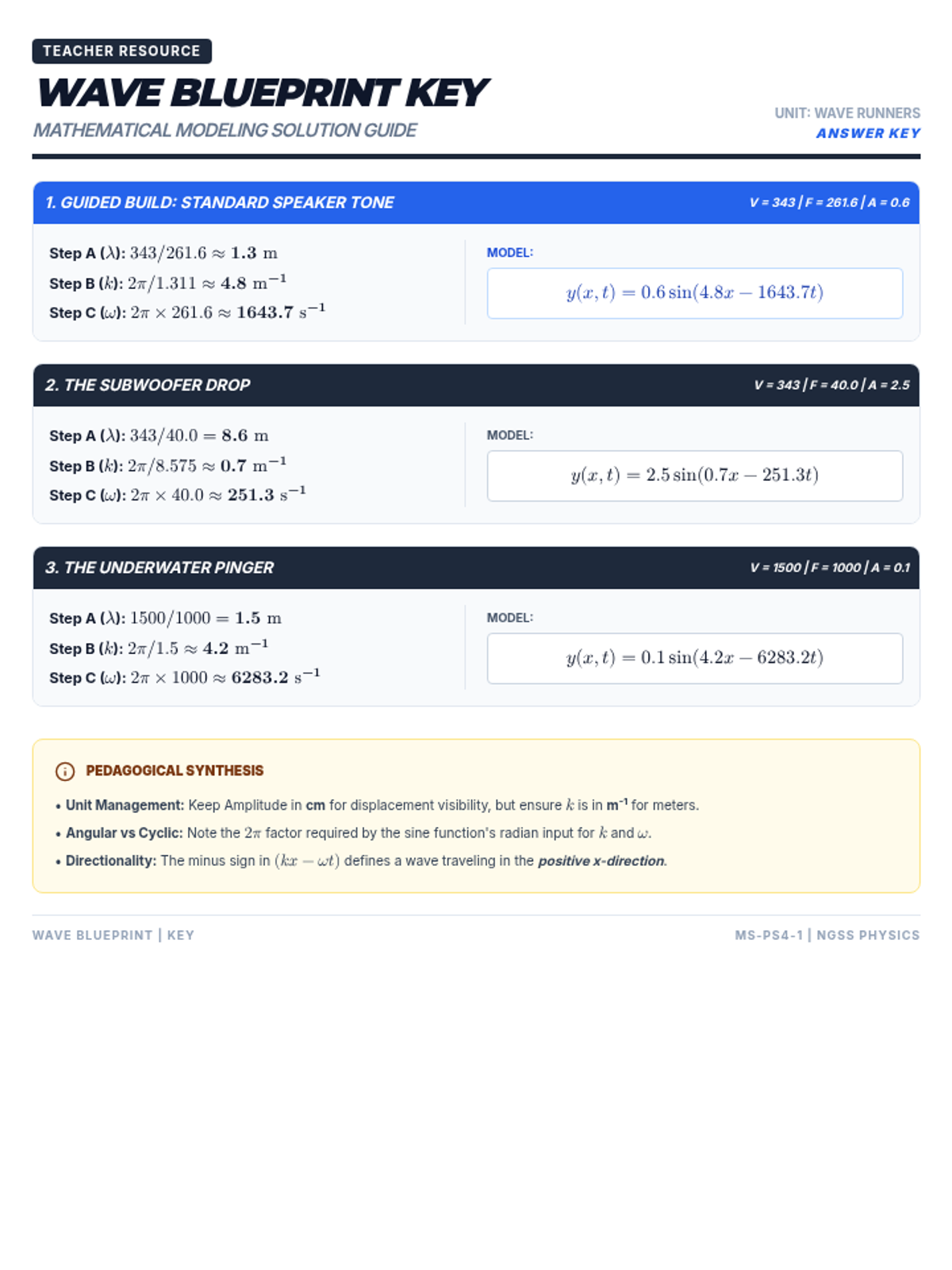
A comprehensive teacher answer key for the Wave Blueprint worksheet. Provides step-by-step calculations for wavelength, wave number, and angular frequency, along with the final mathematical wave functions for three different speaker scenarios. Revised for consistency and clarity.
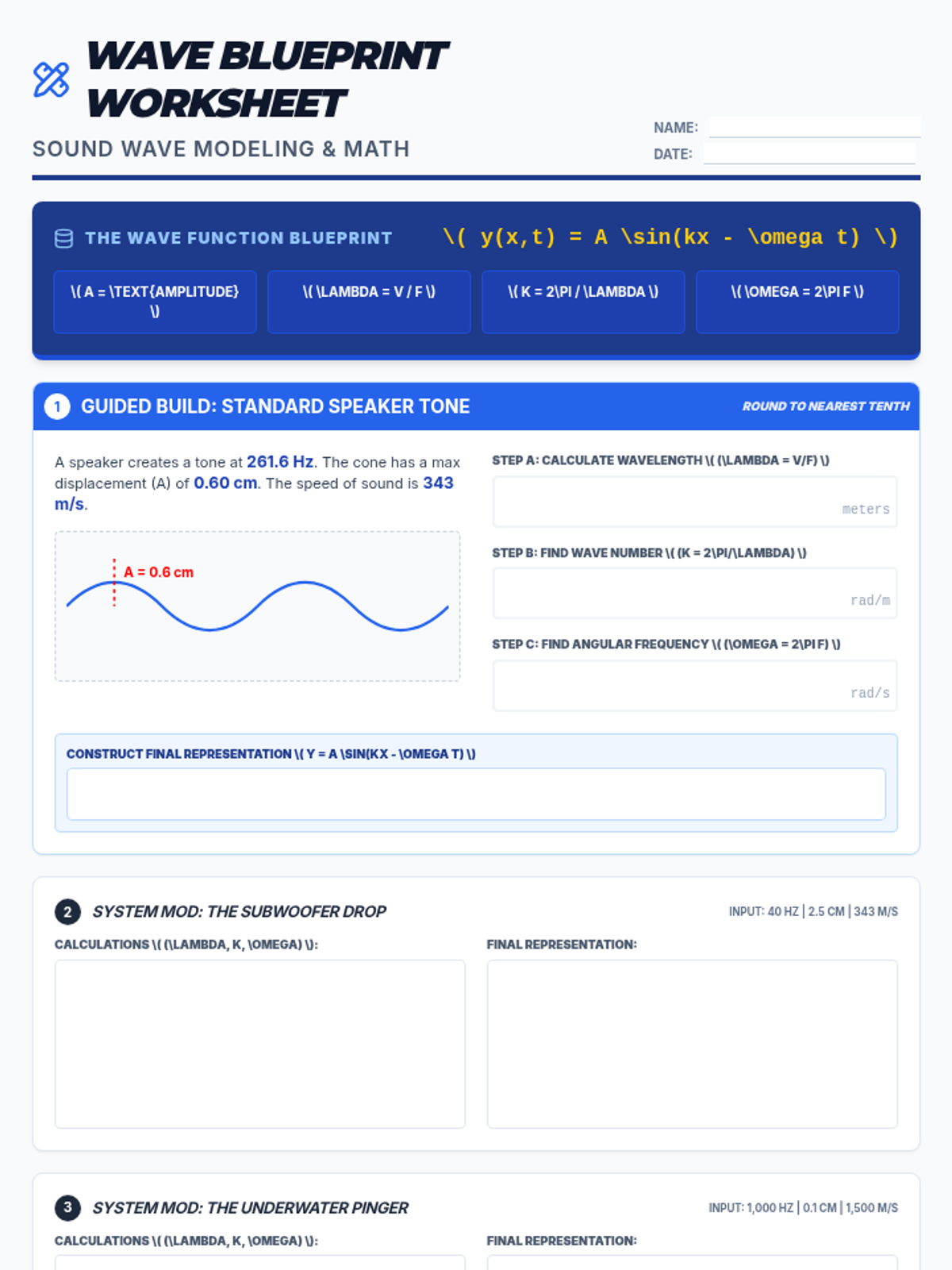
A worksheet designed to guide students through constructing mathematical representations (wave functions) of sound waves. Includes a guided problem using speaker frequency and amplitude, followed by independent practice problems in different scenarios like subwoofers and underwater pingers. Revised for better page flow, contrast, and formula rendering.
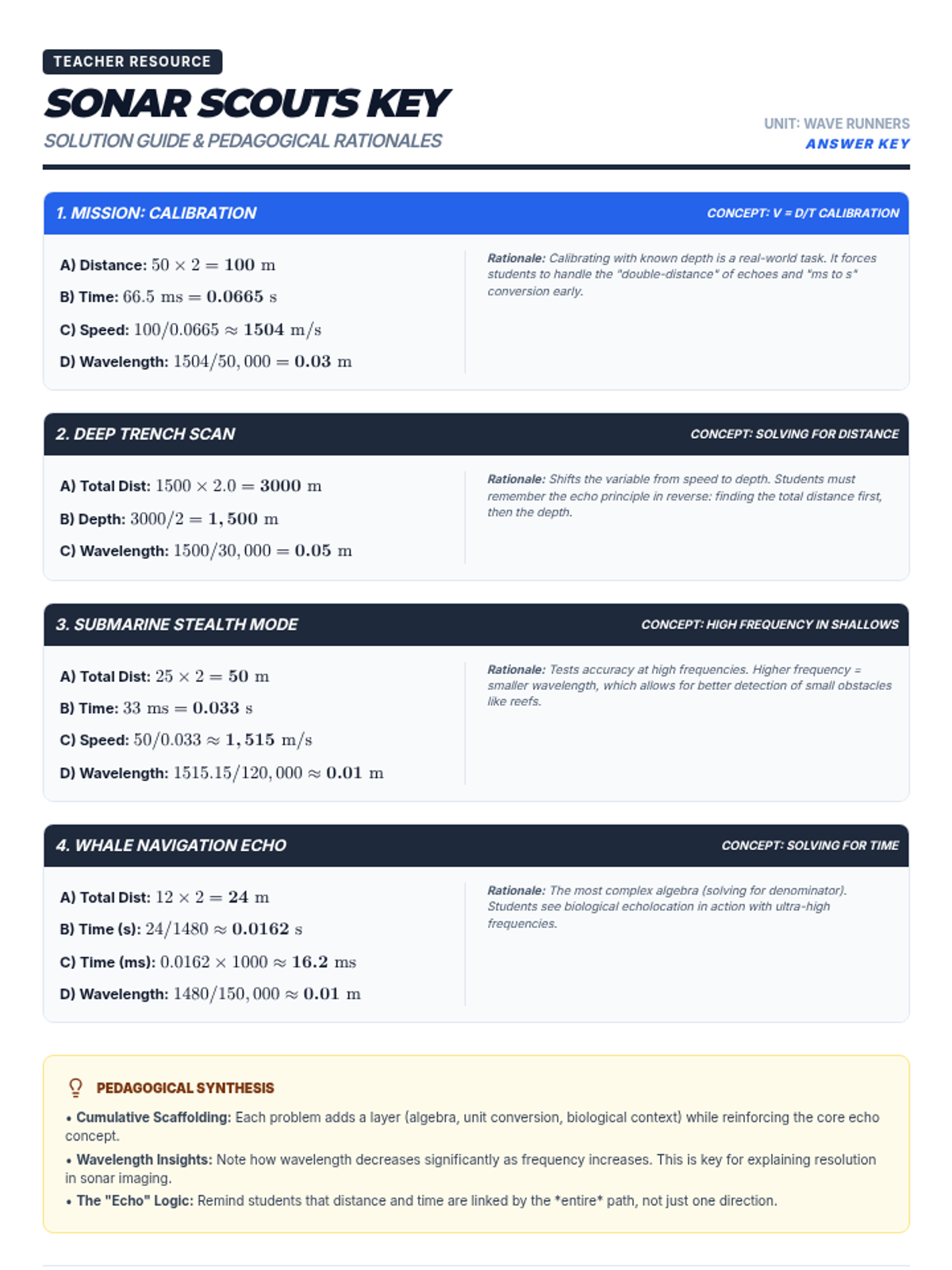
A comprehensive teacher answer key for the Sonar Scouts worksheet, including full step-by-step solutions for all four problems, unit conversion checks, and pedagogical tips for addressing common student errors. Now includes rationales for each problem. Revised for better page flow and detail.
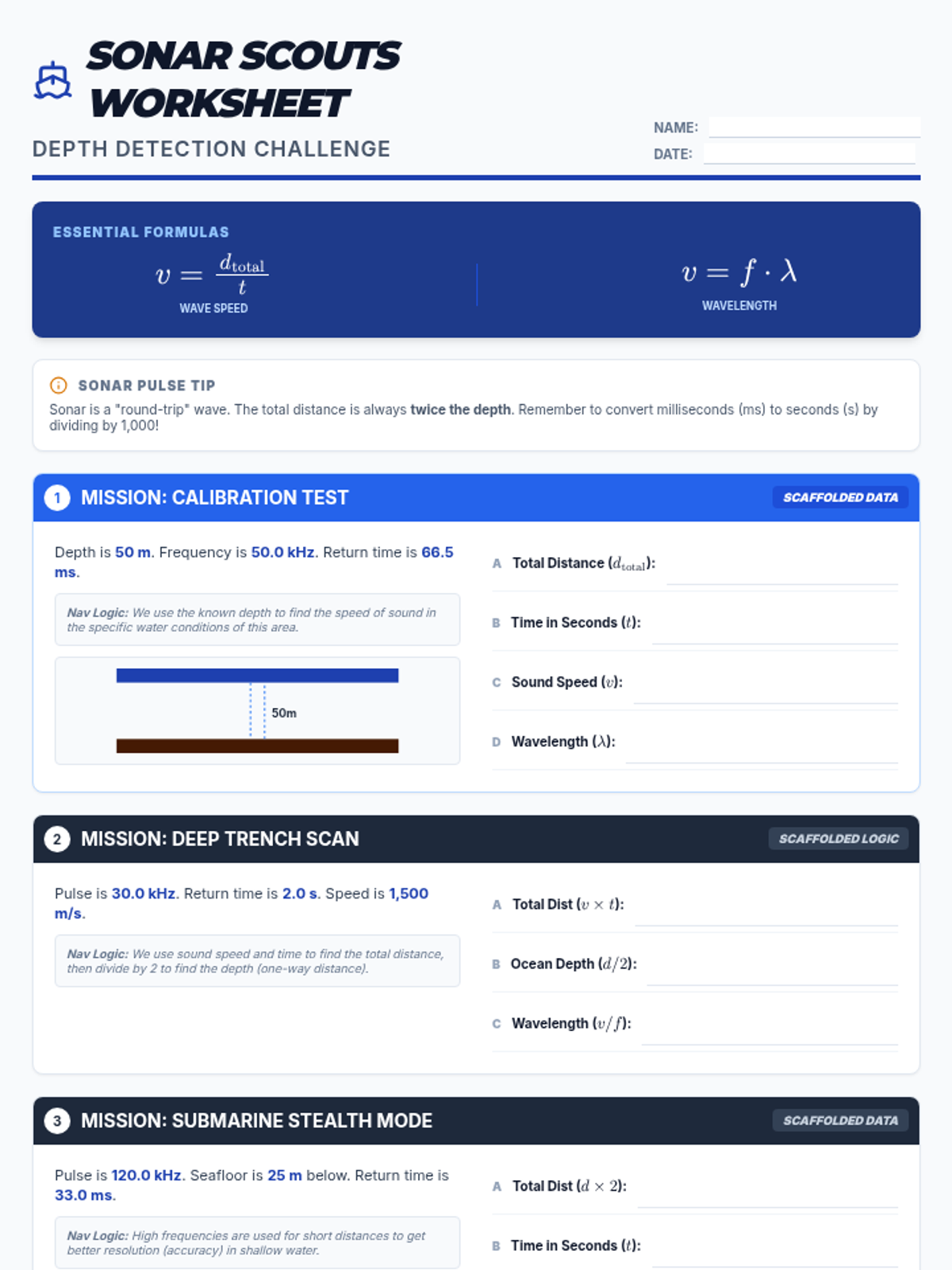
A scaffolded physics worksheet focused on sonar calculations. Every question is now broken down into logical steps with "Nav Logic" rationales explaining the scientific purpose of each calculation. Revised for better page flow.
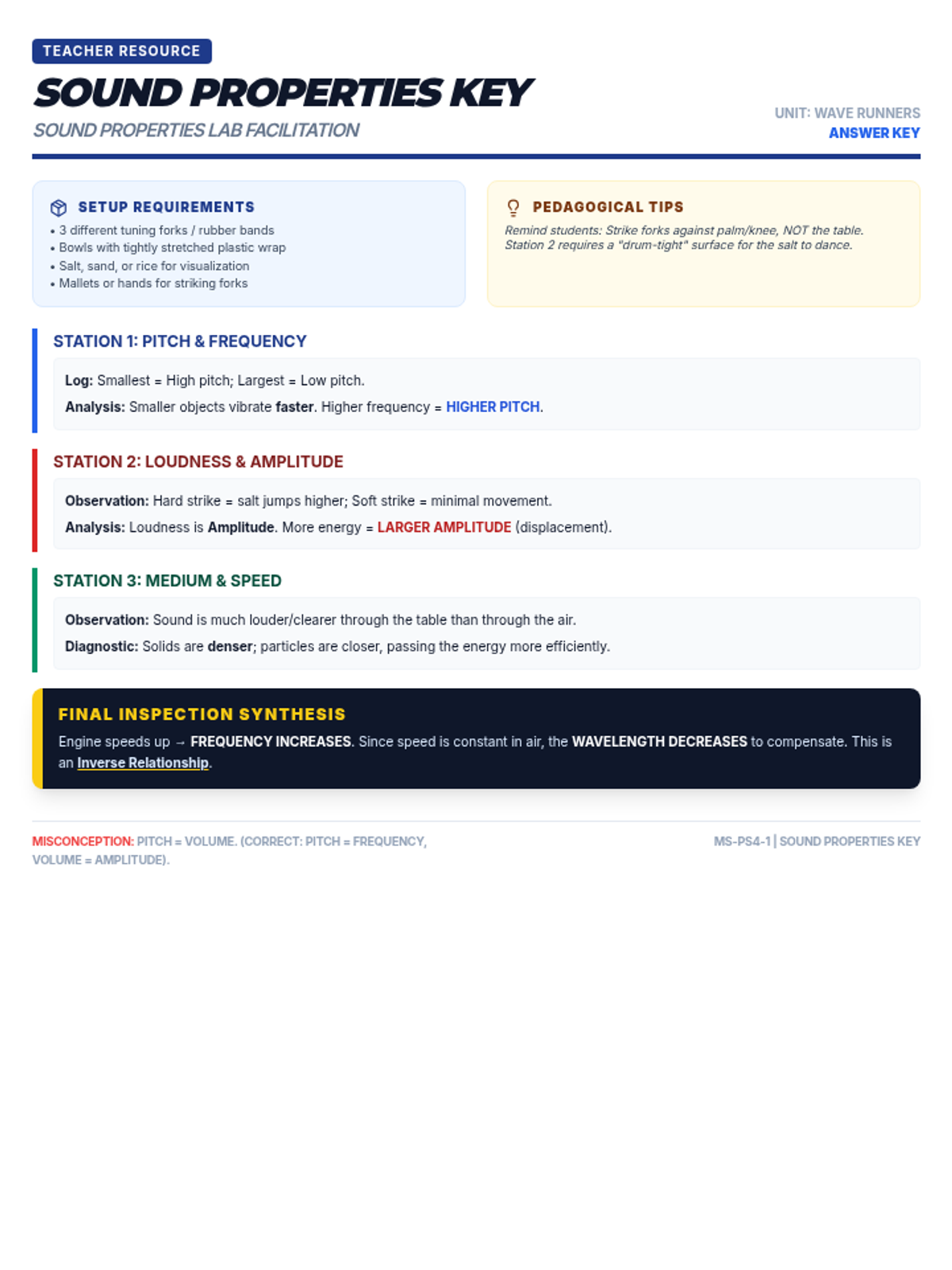
A teacher resource providing setup instructions, materials lists, and expected answers for the Sound Properties Lab. Includes pedagogical tips and explanations for sound wave properties. Revised with the new title.
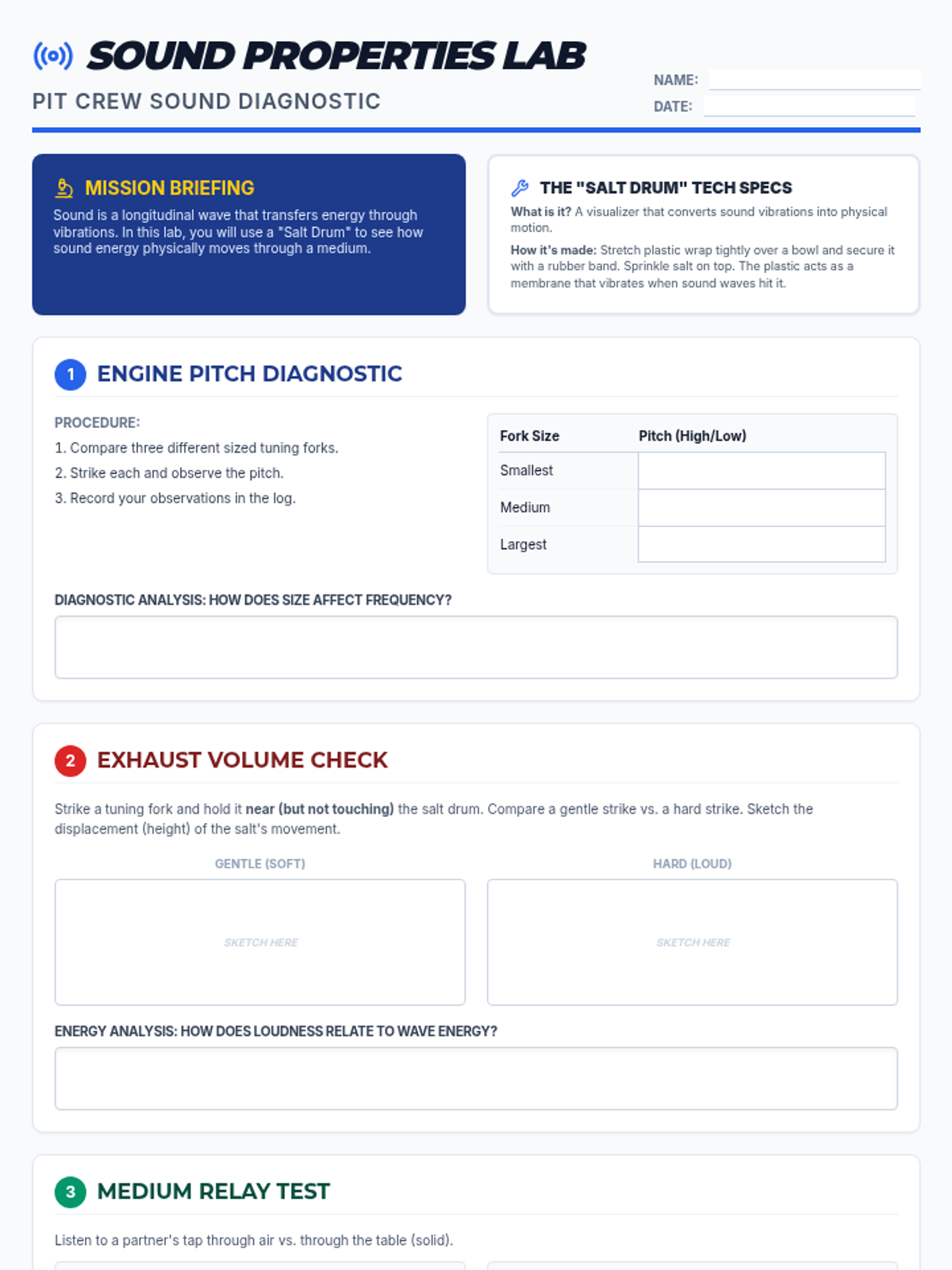
A student-facing lab activity document focused on investigating pitch, loudness, and medium of sound waves. Includes a new background section on the "Salt Drum" technology used in Station 2. Revised for better page flow and detail.
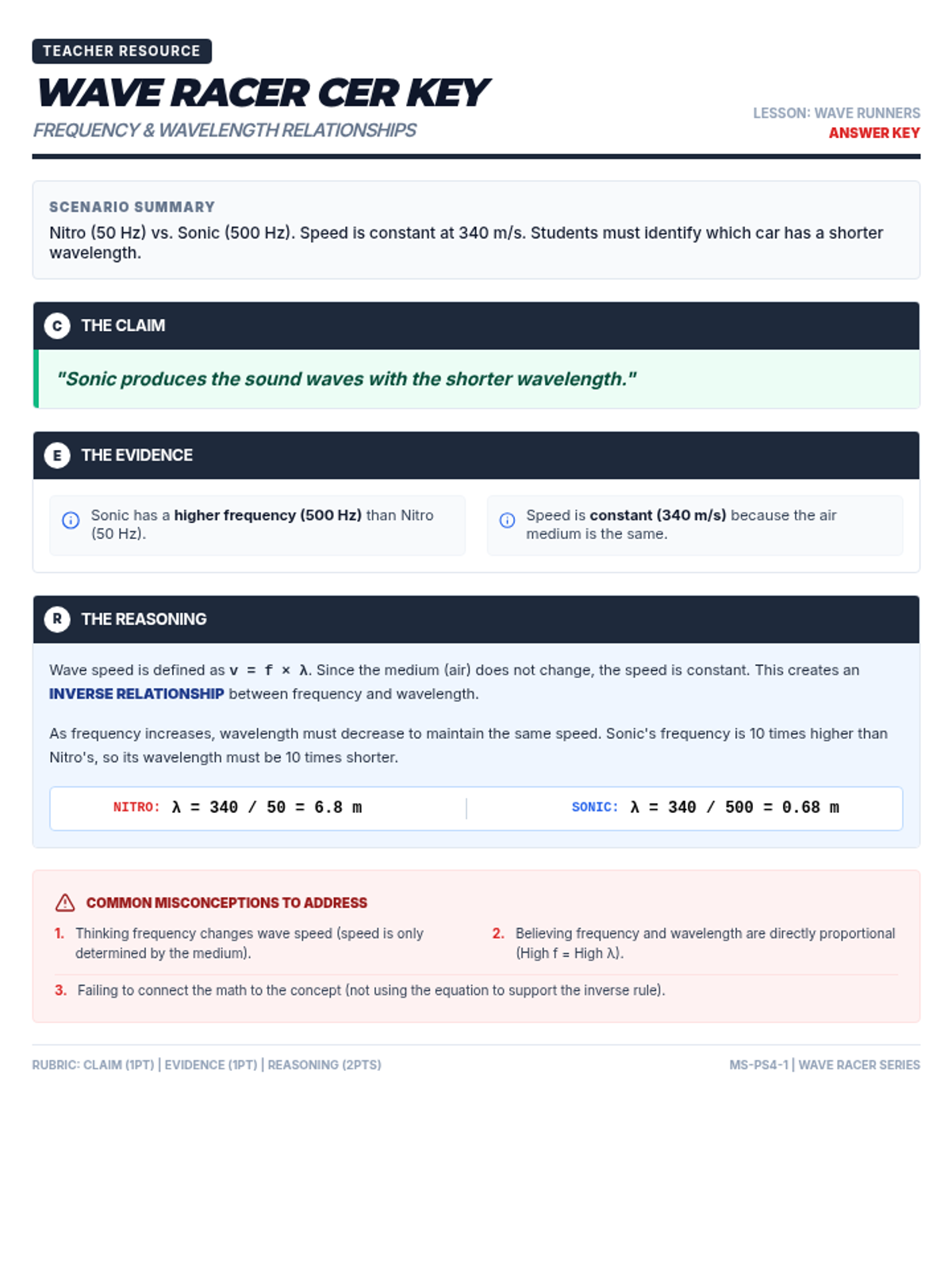
A comprehensive teacher answer key for the Wave Racer CER Bellringer. Includes the correct claim, supporting evidence from the scenario, and a mathematical and conceptual reasoning breakdown of the inverse relationship between frequency and wavelength. Revised for better contrast and single-page layout.
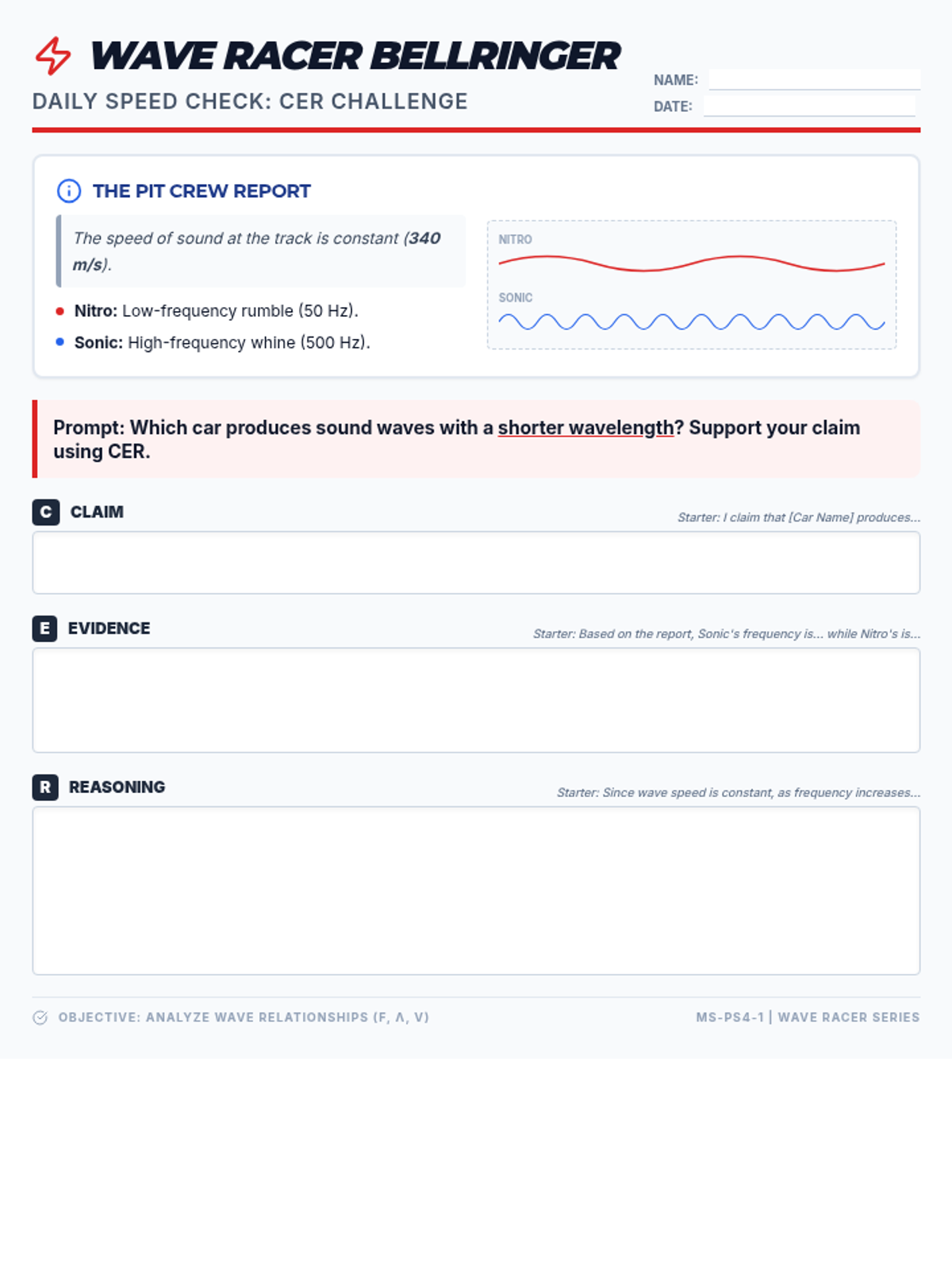
A CER (Claim, Evidence, Reasoning) bellringer activity focused on the relationship between frequency and wavelength. Includes sentence stems to support student writing and fits on a single page.
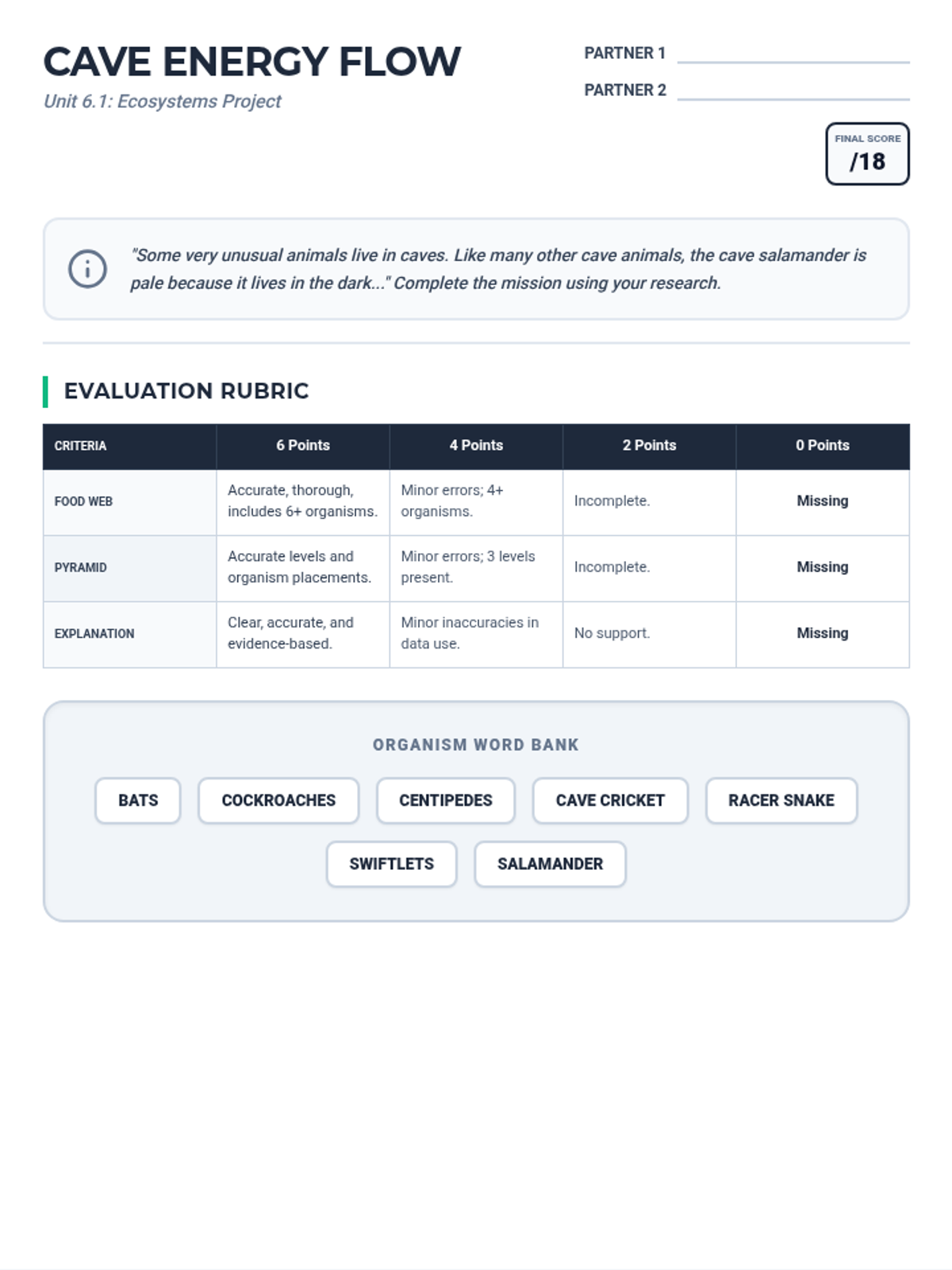
A 4-page STEM project worksheet for middle school students to model cave ecosystem energy flow. It includes a project rubric, a word bank integrated with a blank food web template (no arrows and no labels except for the energy source), an energy pyramid section with a dedicated word bank and blank tiers (including the energy source level), and a data analysis graph focusing on bat-centipede relationships.
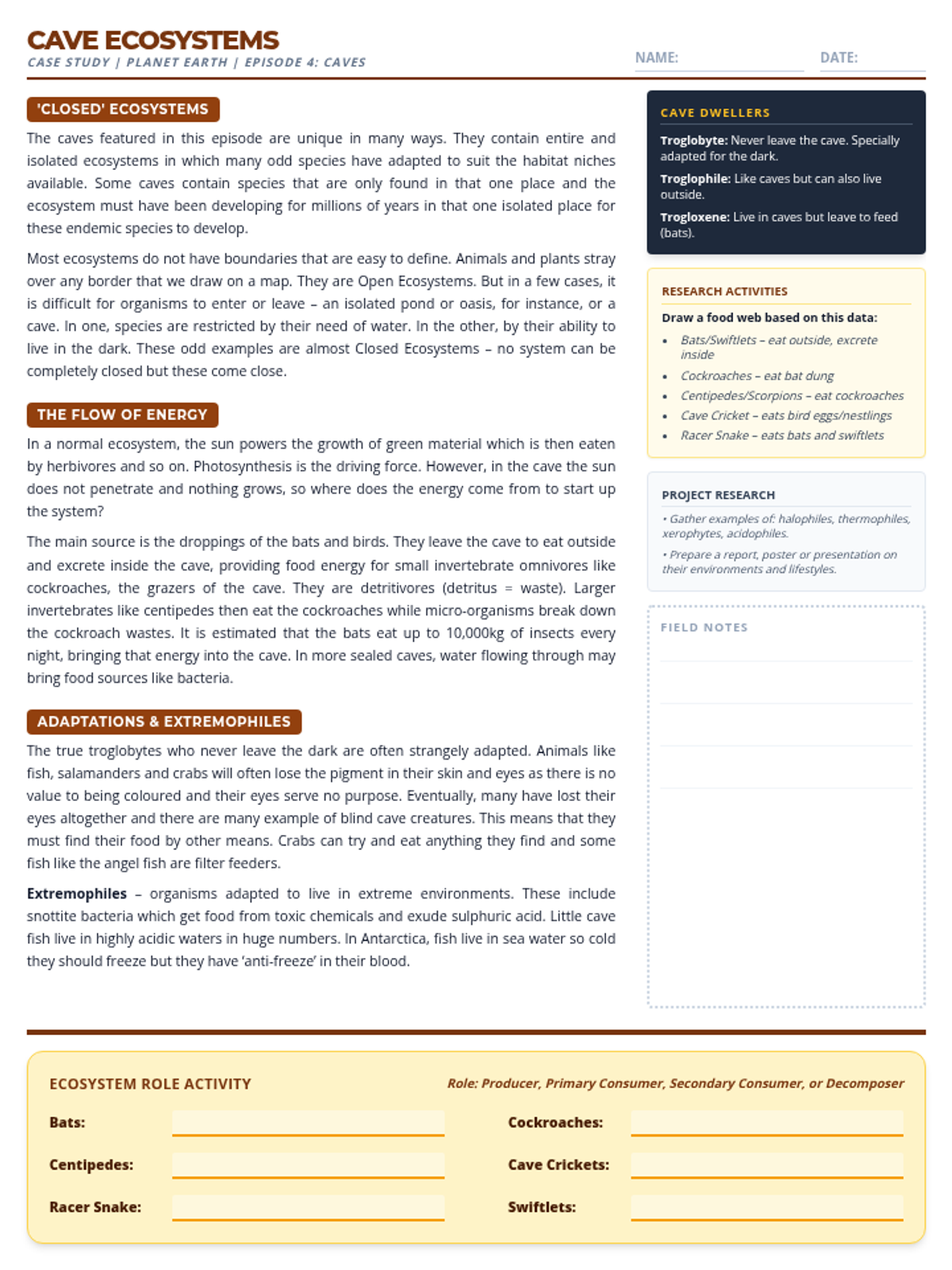
A comprehensive one-page student handout that includes all text from the cave ecosystem case study verbatim. It features the primary article text, the specific Research Activities data for food web construction, and a classification task for ecosystem roles.
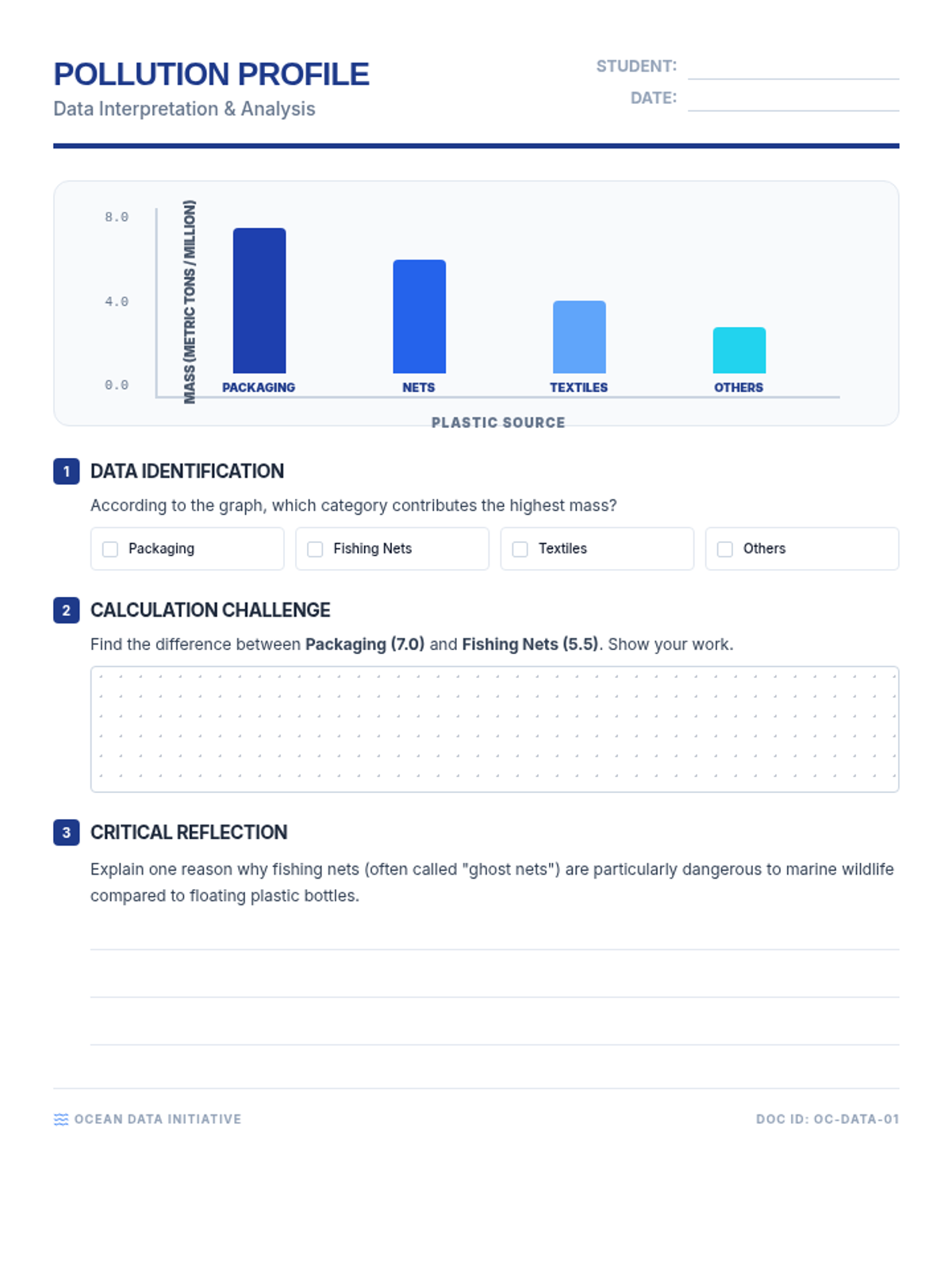
A data analysis worksheet for students to interpret the ocean plastics graph, featuring calculation problems and critical thinking questions.
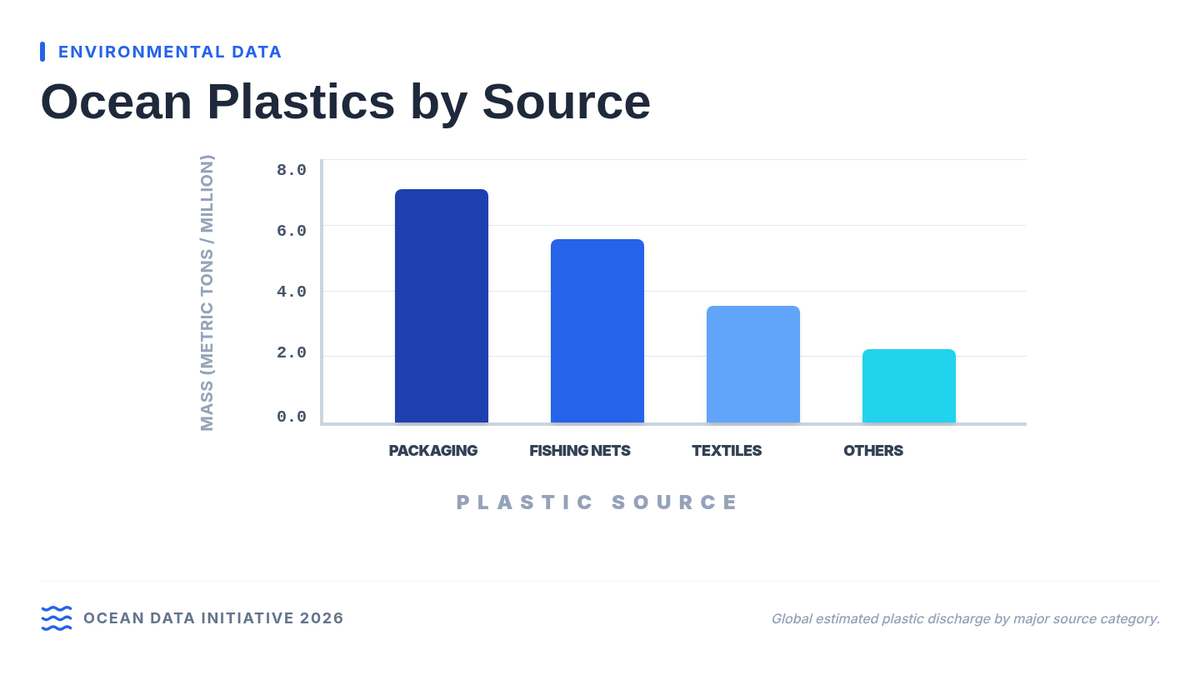
A professional slide featuring an improved bar chart detailing the primary sources of ocean plastic pollution with clearly labeled axes and no data labels above the bars for estimation practice.
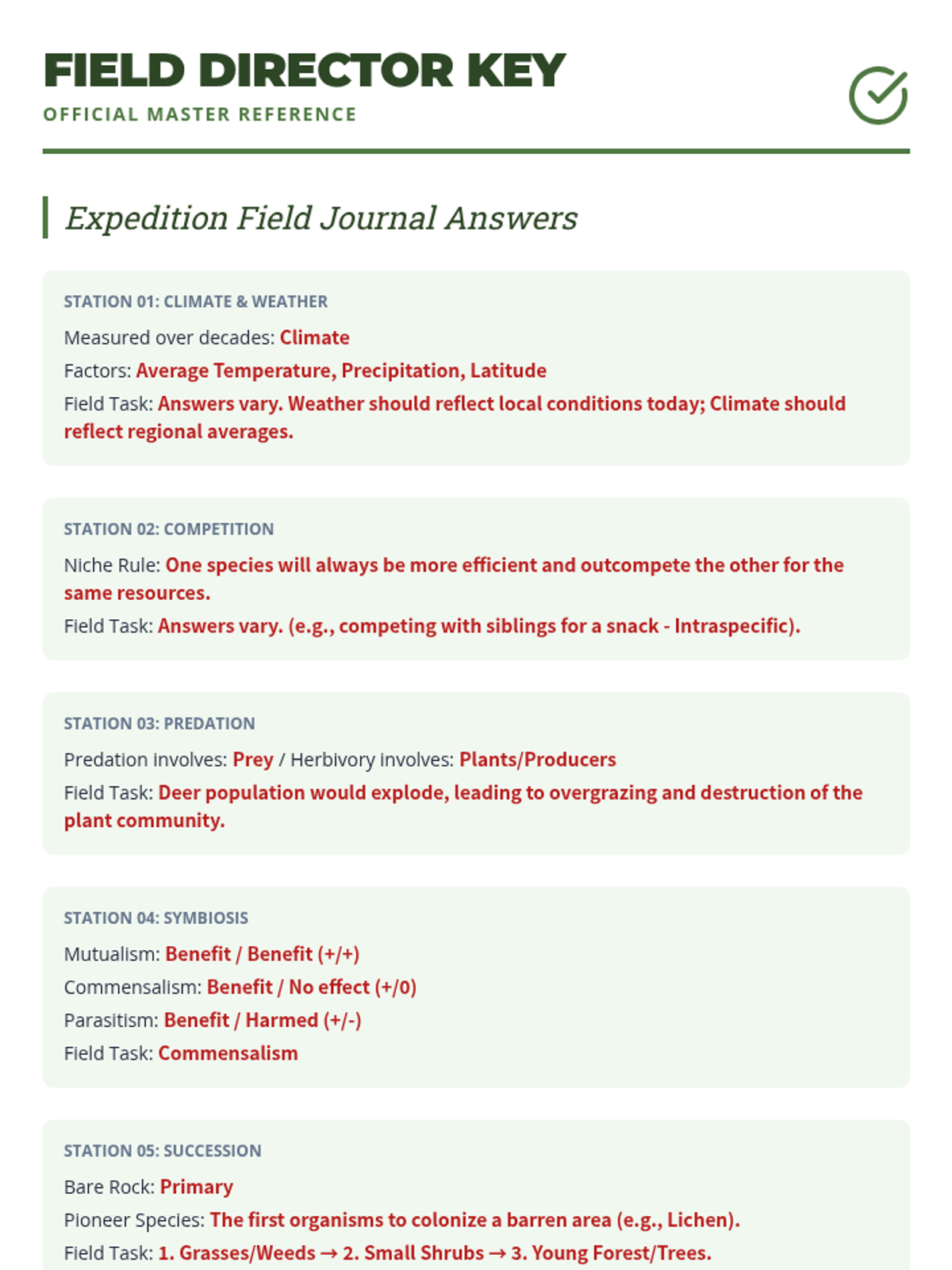
A comprehensive answer key for the 'Expedition Field Journal' and 'Relationship Rumble' activity cards.
A visual presentation for instruction and review, covering key concepts of climate, competition, predation, symbiosis, and succession with large text and clear diagrams.
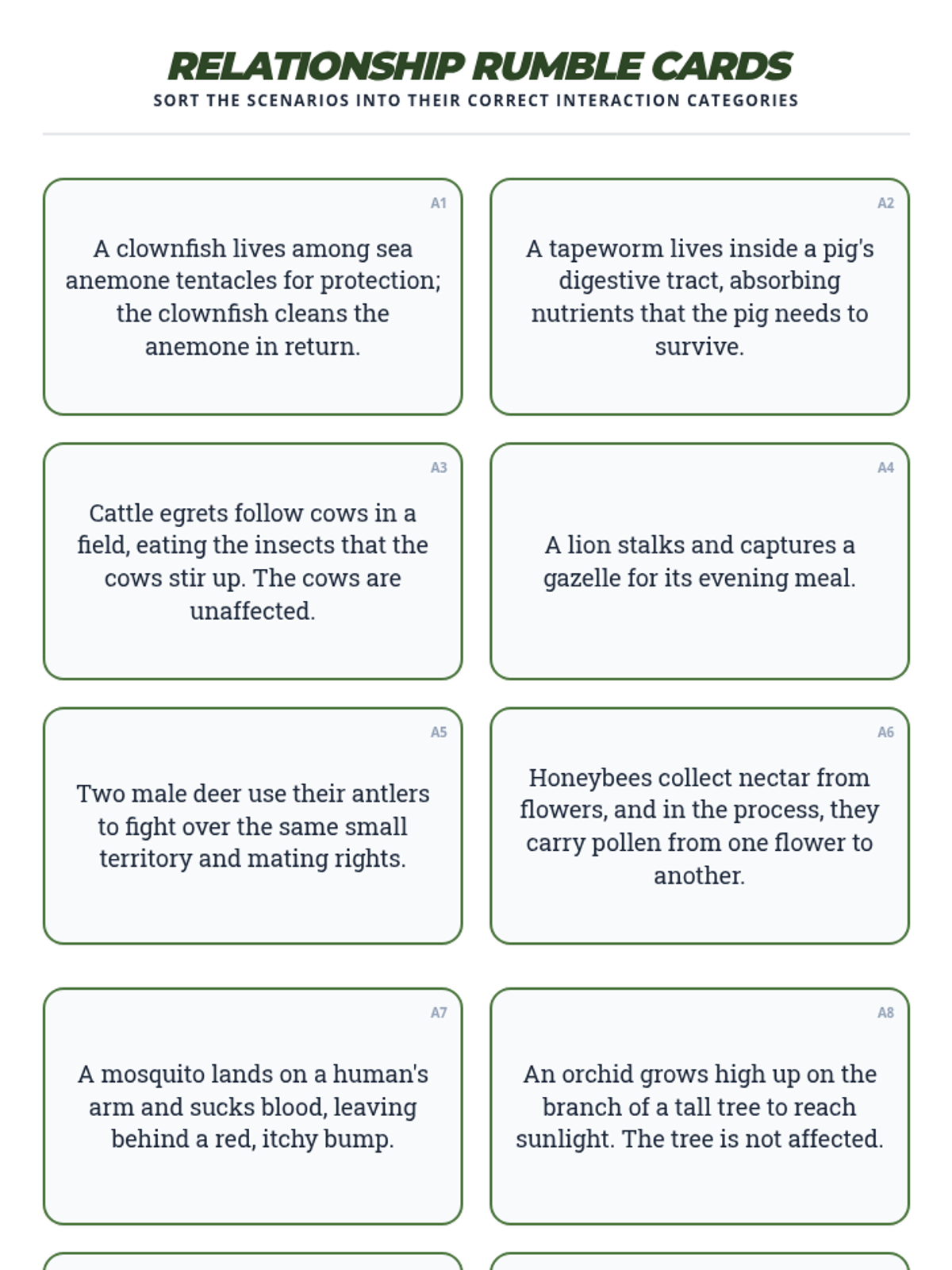
A set of 18 scenario cards for the 'Relationship Rumble' activity, featuring examples of biological interactions and ecological succession.
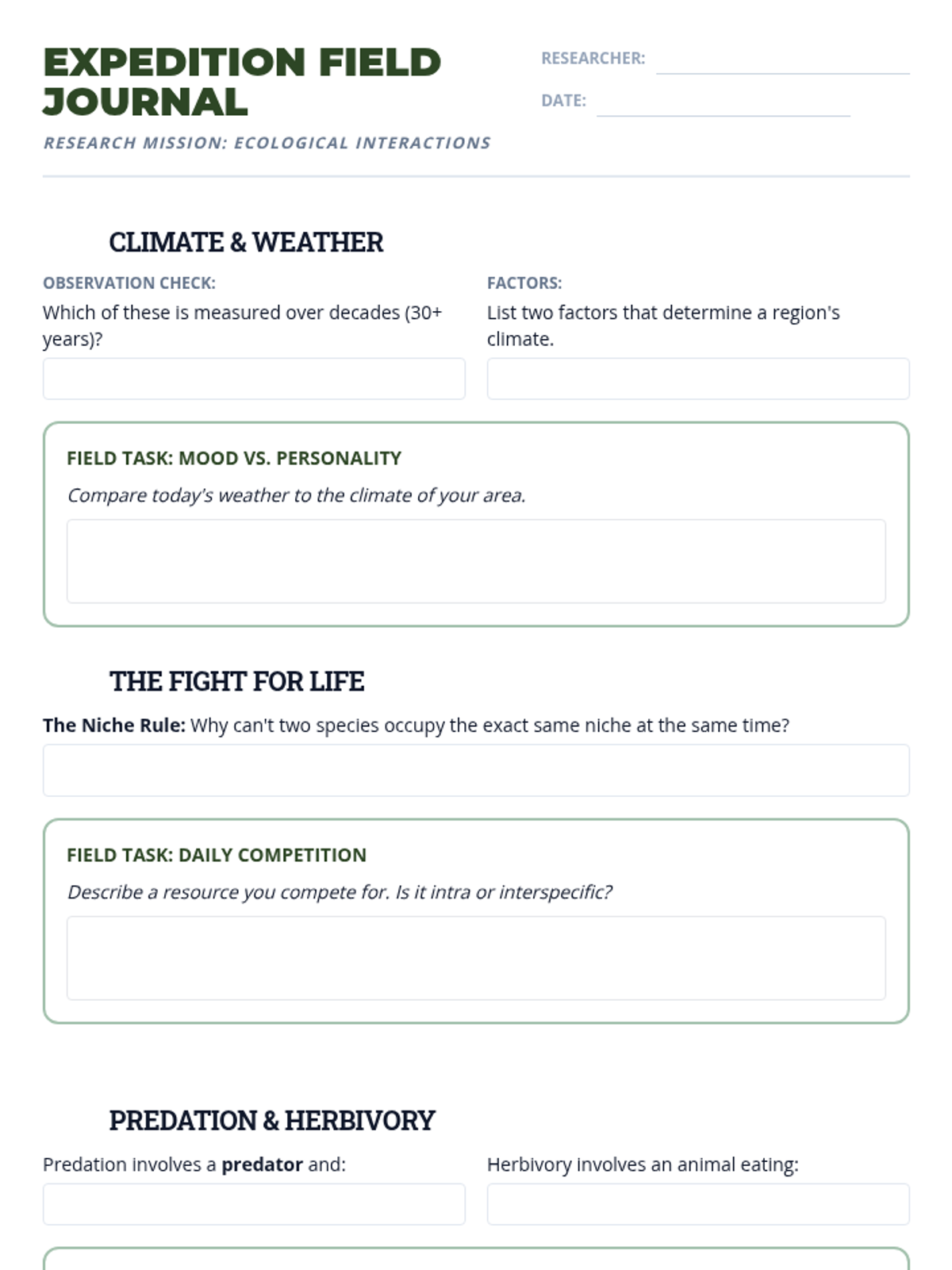
A structured recording sheet for students to use during the 'Ecosystem Expedition' Write the Room activity, with space for observations and field tasks.
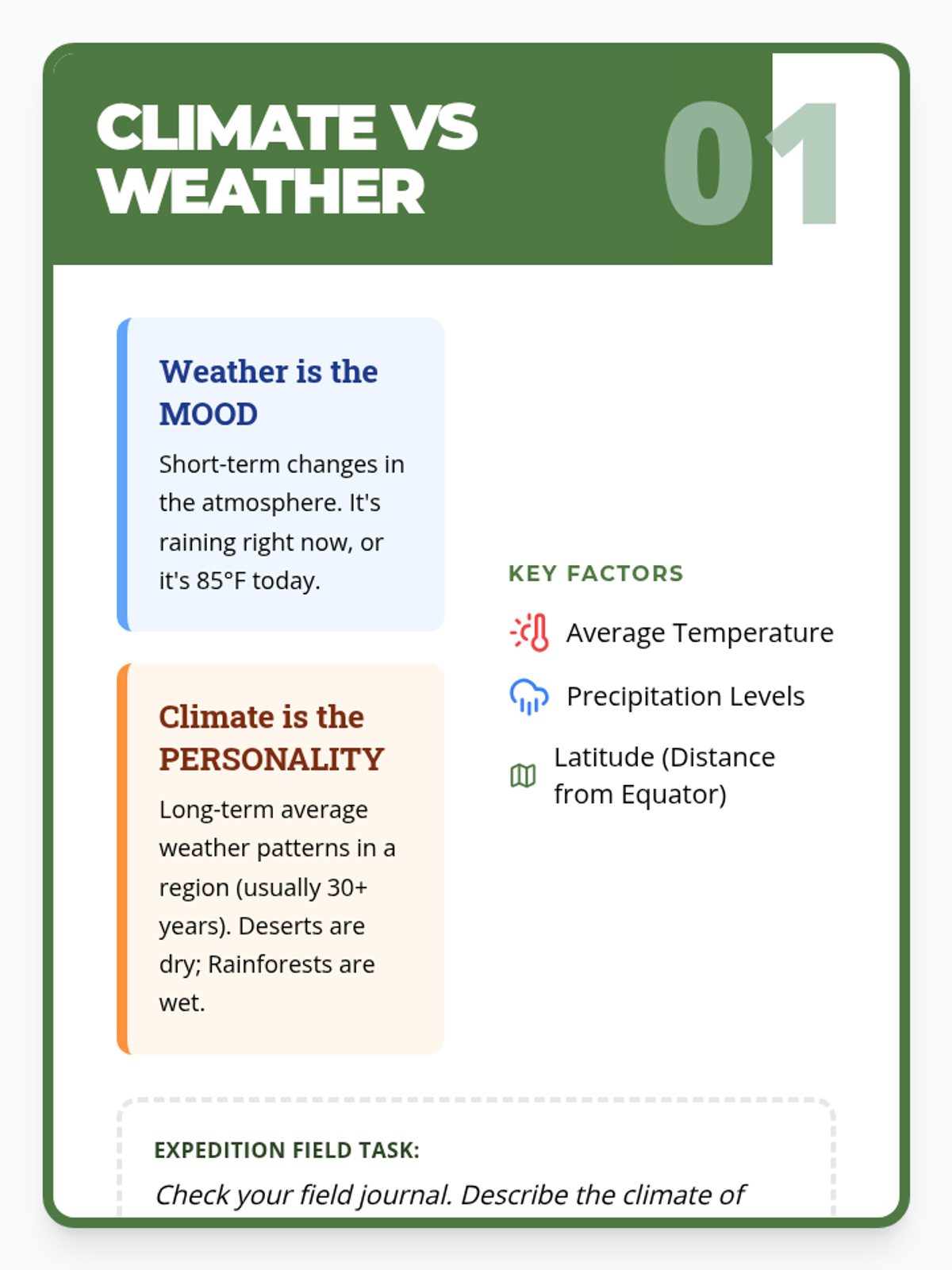
A set of 5 large information posters for a 'Write the Room' activity, covering climate, competition, predation, symbiosis, and succession.
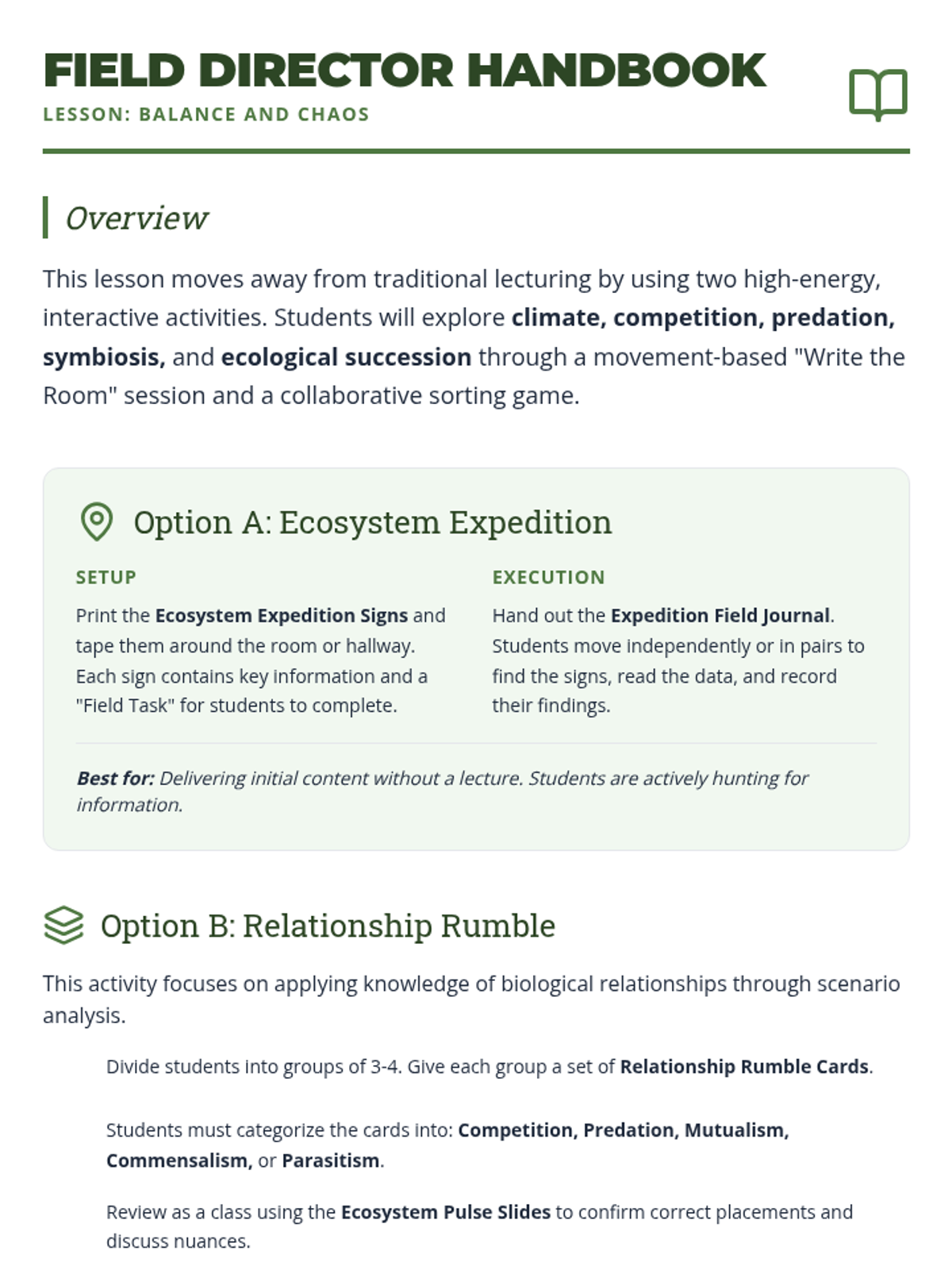
A comprehensive teacher guide for implementing the 'Ecosystem Expedition' (Write the Room) and 'Relationship Rumble' (Card Sort) activities, including setup instructions and discussion prompts.
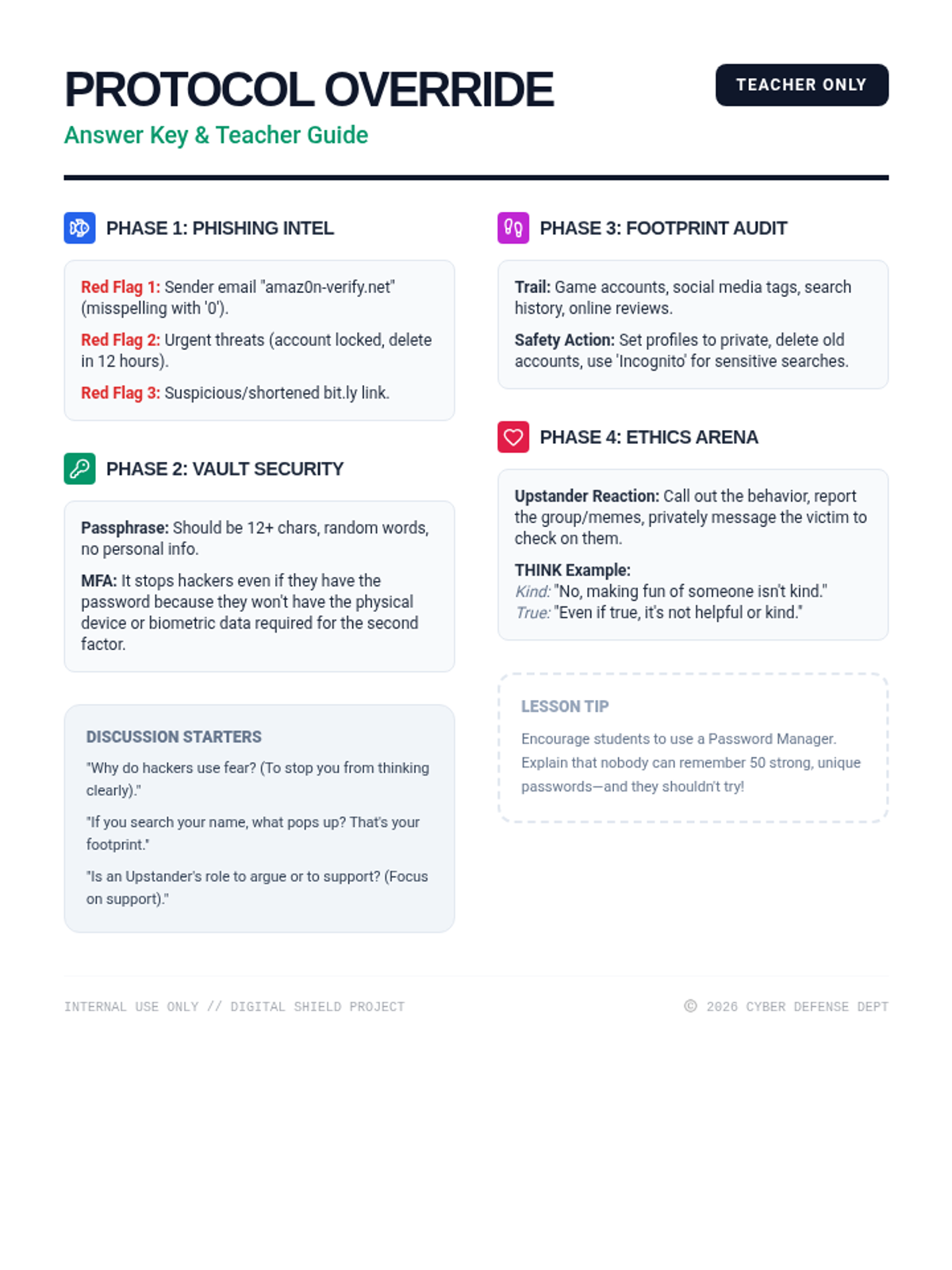
Teacher-facing answer key and facilitation guide for the Digital Shield lesson. Provides sample student responses, key points for discussion, and identified red flags for the phishing scenario.
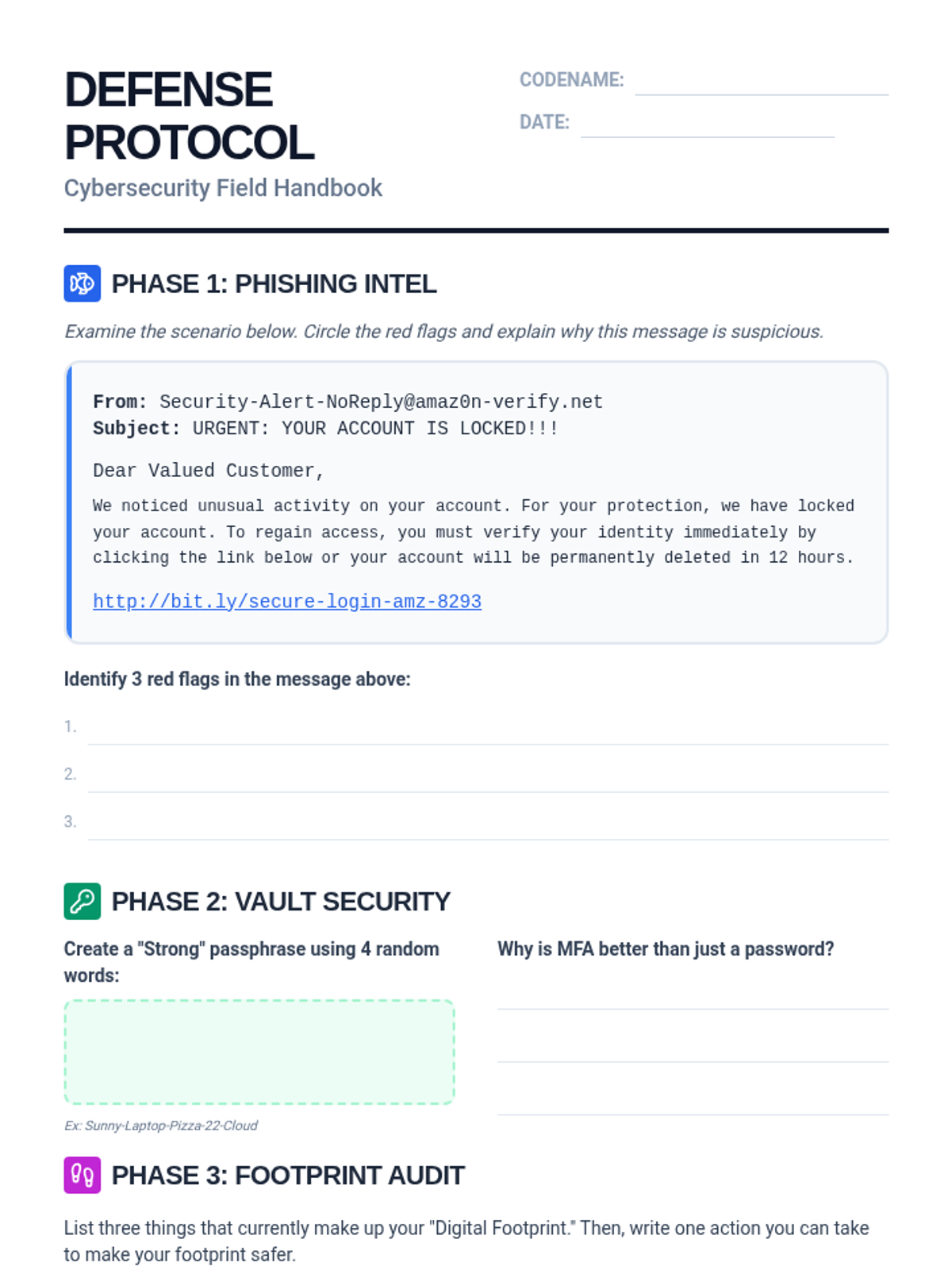
A companion worksheet for the Digital Shield lesson. It includes phishing scenario analysis, password creation practice, a digital footprint audit, and an ethics case study on cyberbullying.
A visual slide deck covering key cybersecurity concepts including phishing detection, password security, MFA, digital footprints, and online ethics. Designed for high school or middle school students with a modern, high-tech aesthetic.
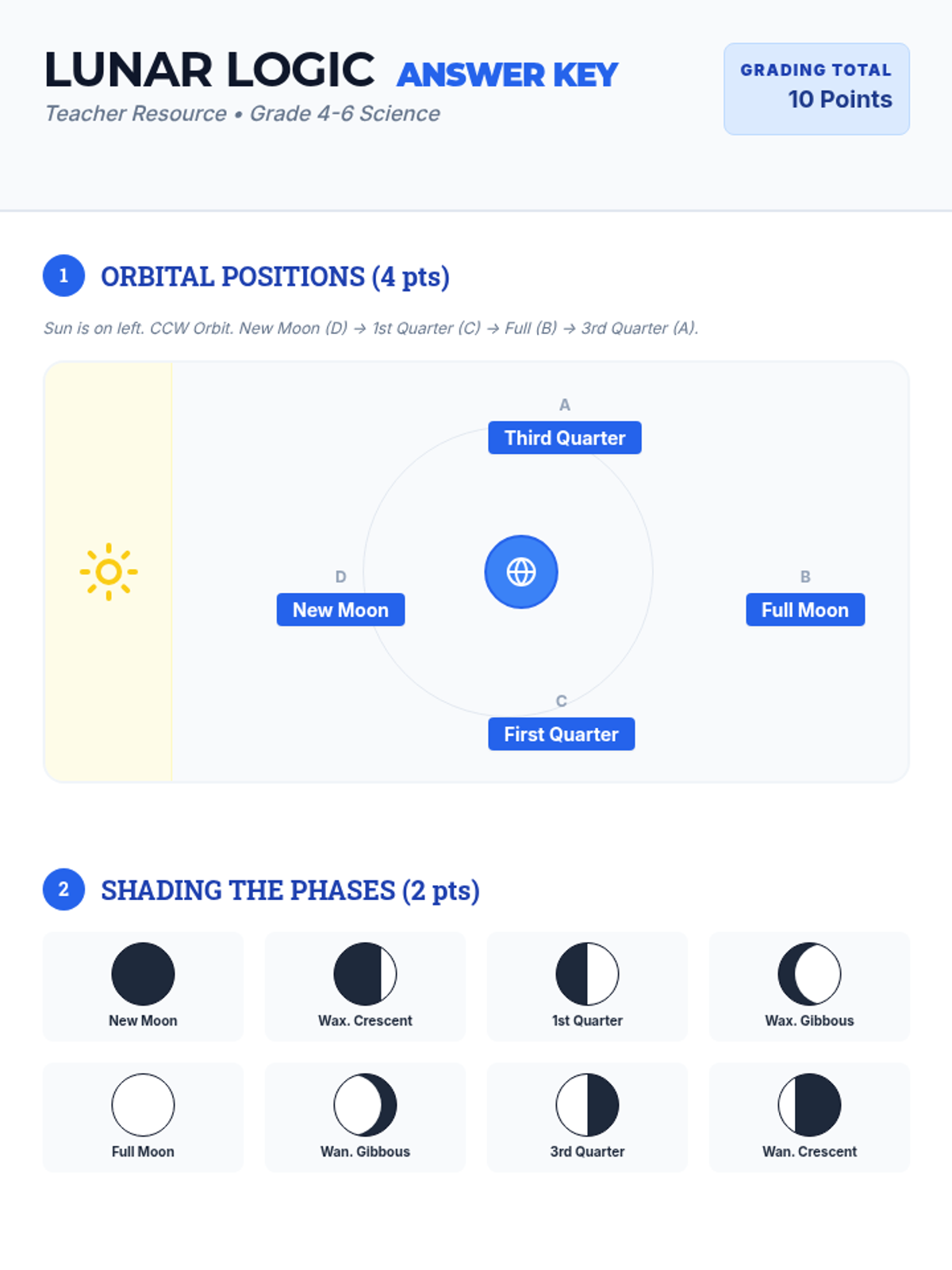
A comprehensive answer key for the Lunar Logic worksheet, providing correctly labeled diagrams, shaded lunar phases, matching solutions, and sample short-answer responses with scoring guidelines.
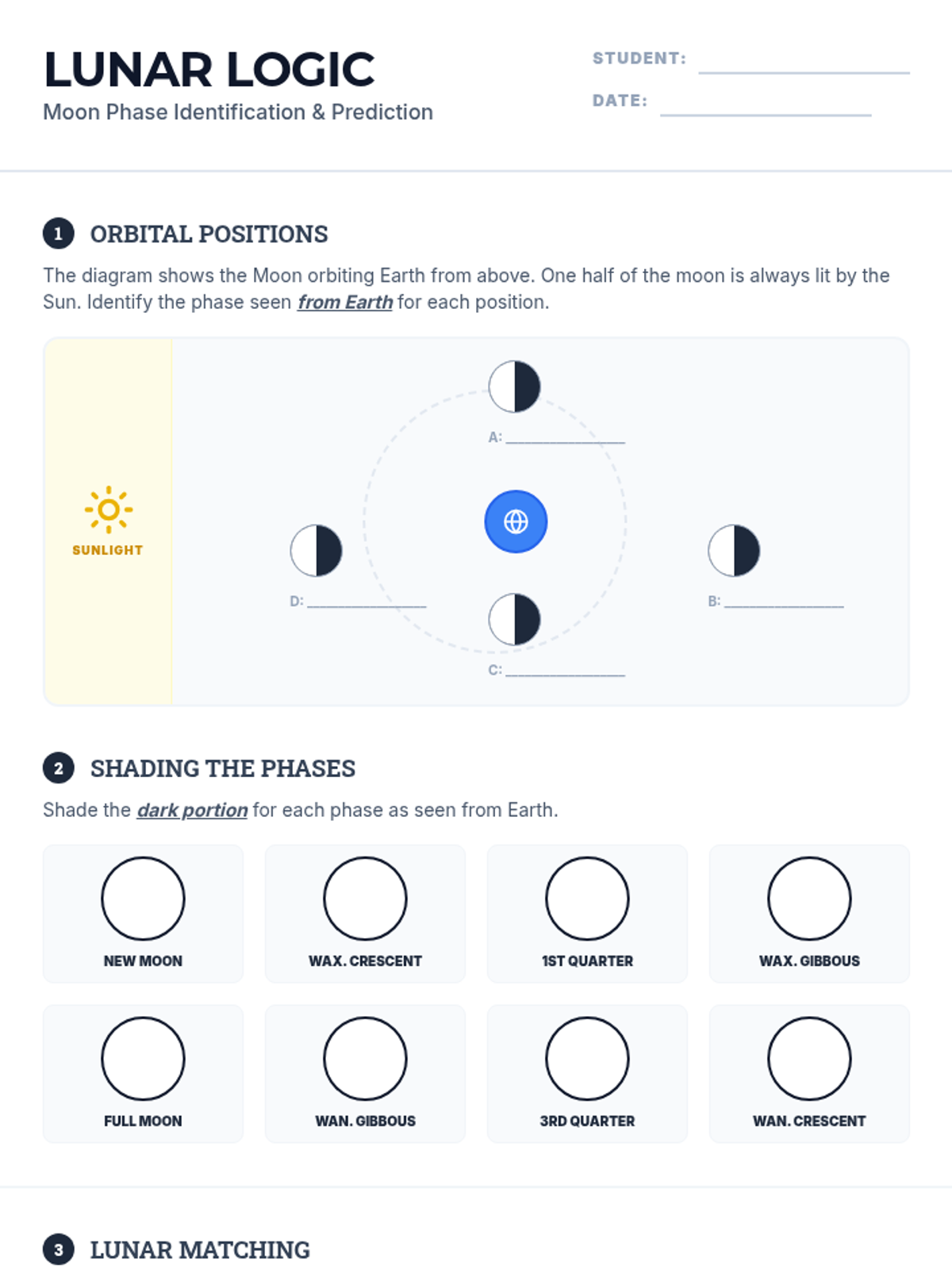
A student worksheet featuring diagram labeling of orbital positions, shading exercises for the eight lunar phases, term matching, and predictive short-answer questions.
A visual presentation explaining the moon phases, the concept of reflecting sunlight, the difference between waxing and waning, and the timing of the lunar cycle.
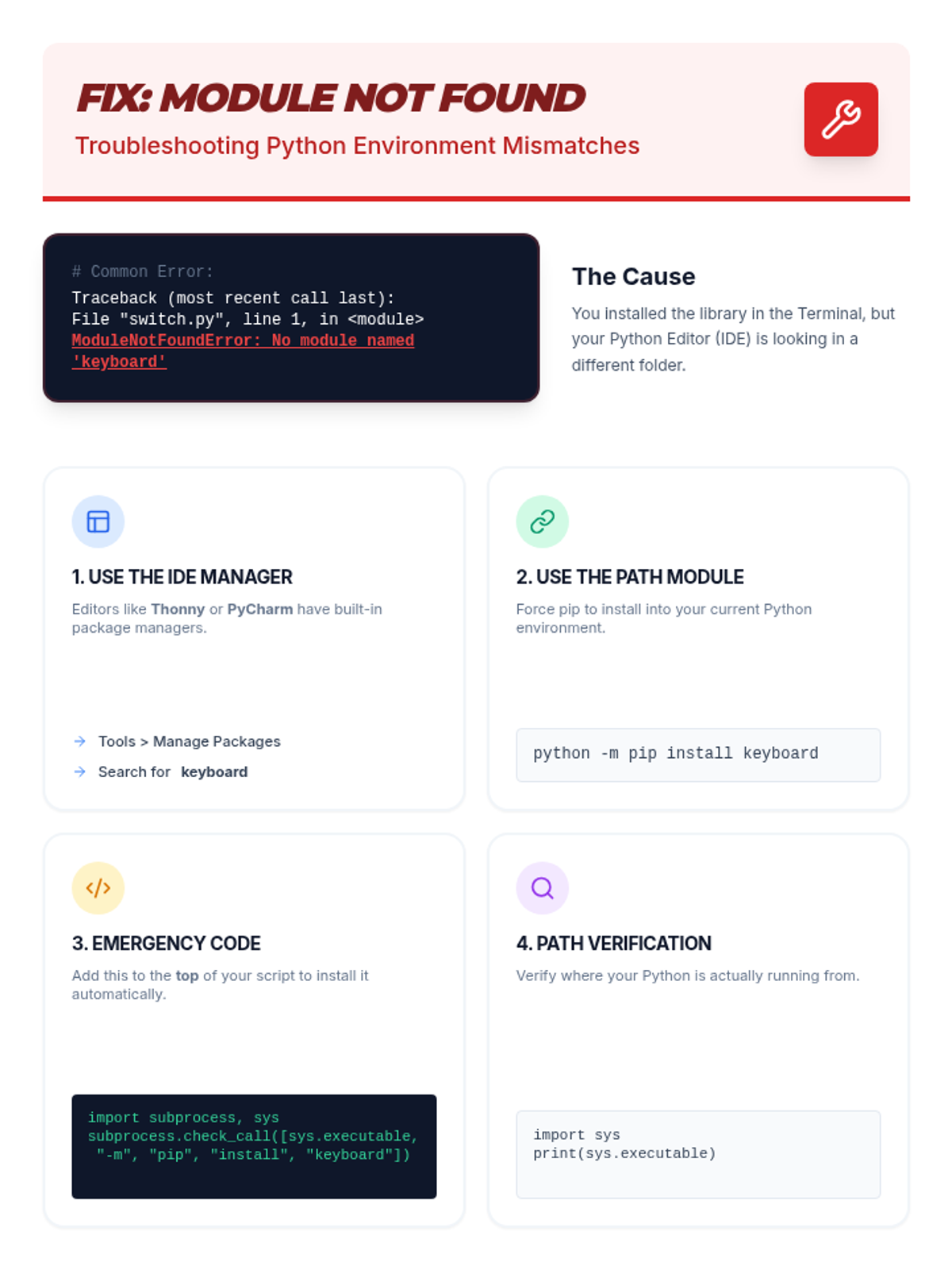
A technical troubleshooting guide specifically for resolving 'ModuleNotFoundError' issues when installing the keyboard library. Provides four concrete solutions including IDE package management, path matching, and emergency script-based installation.
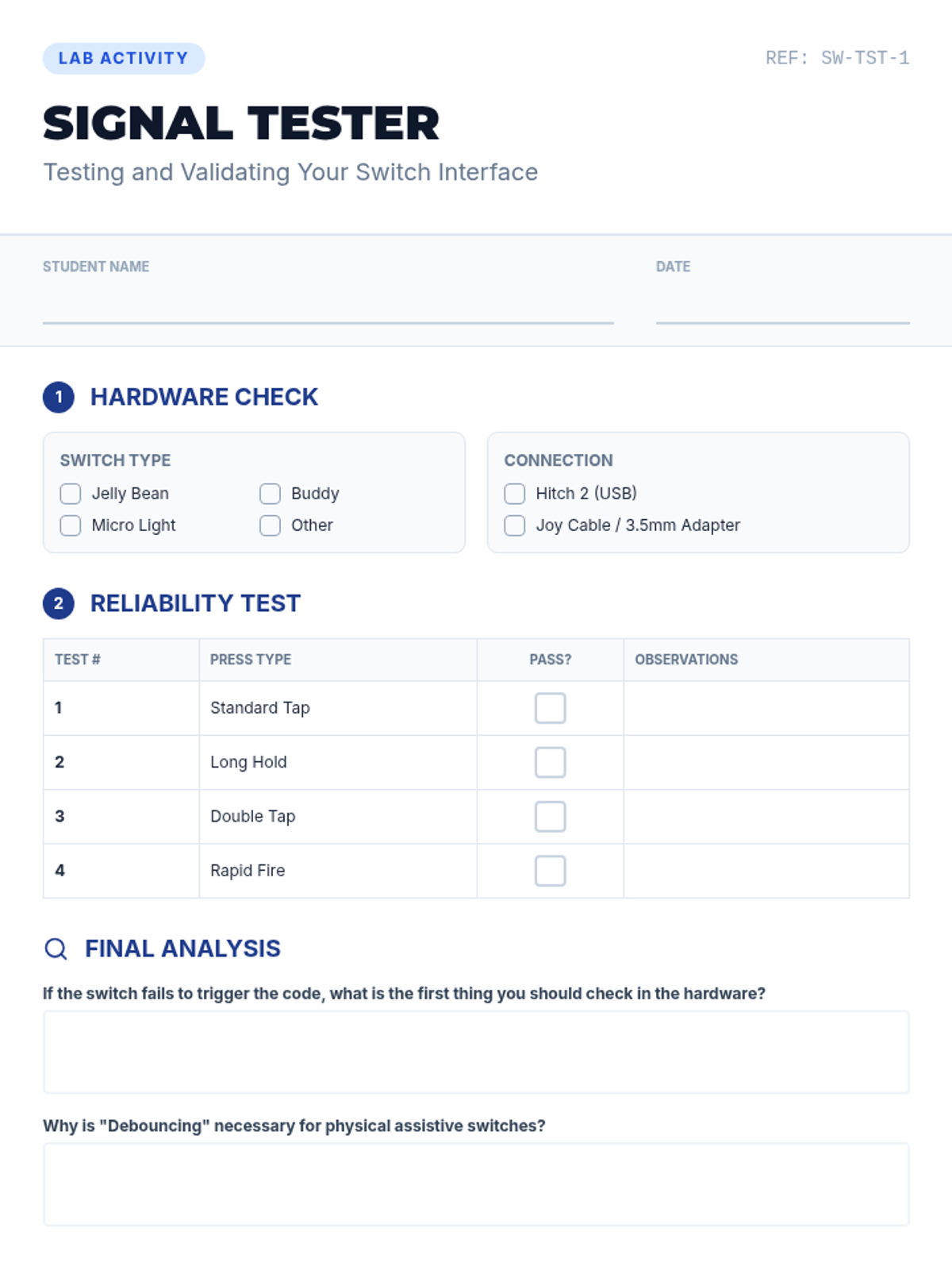
A student worksheet for testing and validating the Python switch interface. Includes hardware checks, a test log for verifying signal reliability, and troubleshooting questions to reinforce understanding of the hardware-software link.
An introductory presentation explaining the hardware and software logic of a digital switch interface. Focuses on the "Hitch 2" concept and how to program a Space Bar trigger in Python for assistive technology.