Slide deck for Lesson 6: Guess Best. Introduces two-digit divisors and the strategy of rounding divisors to friendly multiples to estimate the first partial quotient.
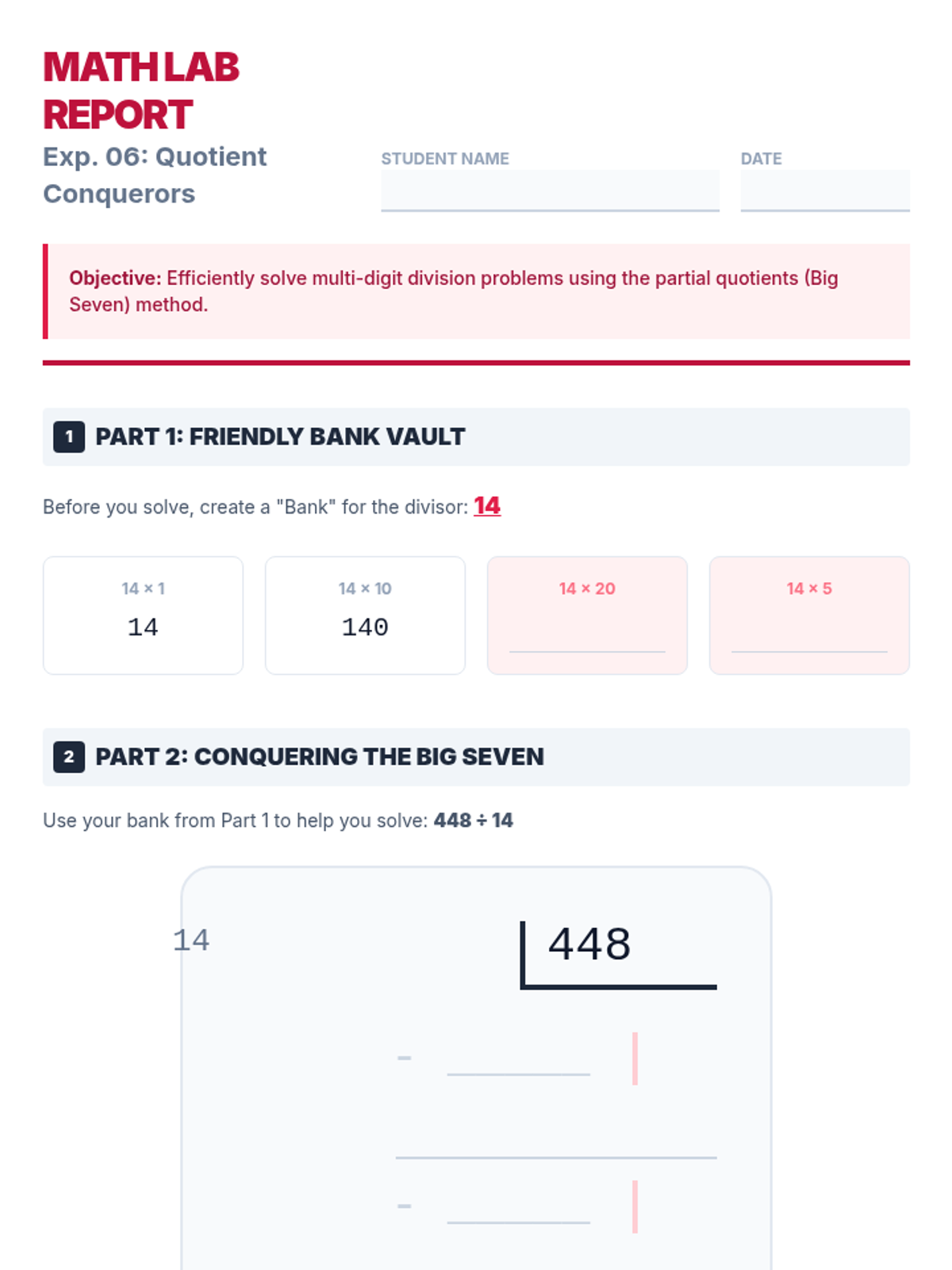
Student worksheet for Lesson 6: Partial Quotients Power. Includes a 'Friendly Bank' table and scaffolded 'Big Seven' division workspace for students to practice multi-digit division.
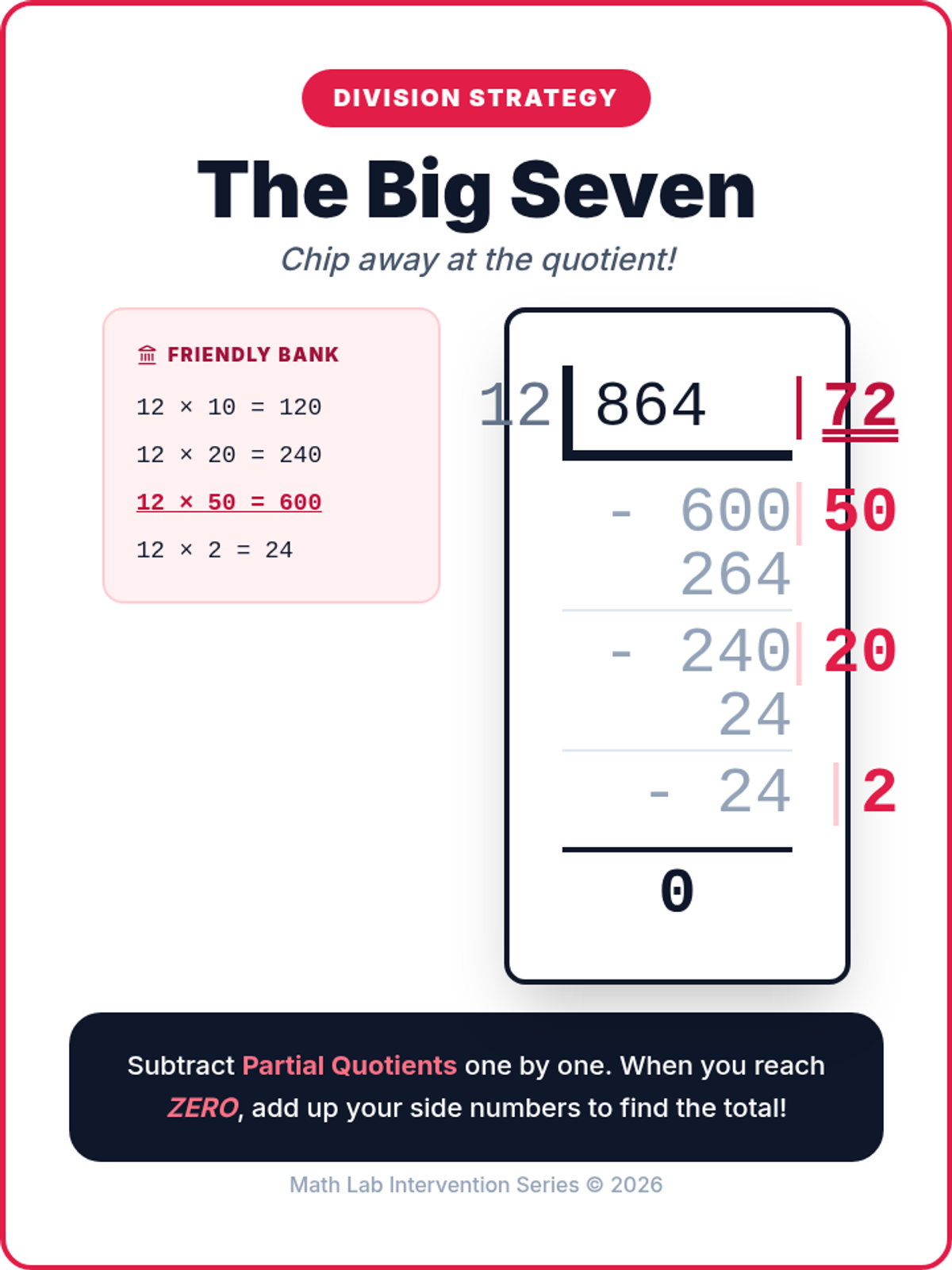
Visual anchor chart for Lesson 6: Partial Quotients Power. Shows the 'The Big Seven' method, using subtraction of friendly products to find the final quotient.
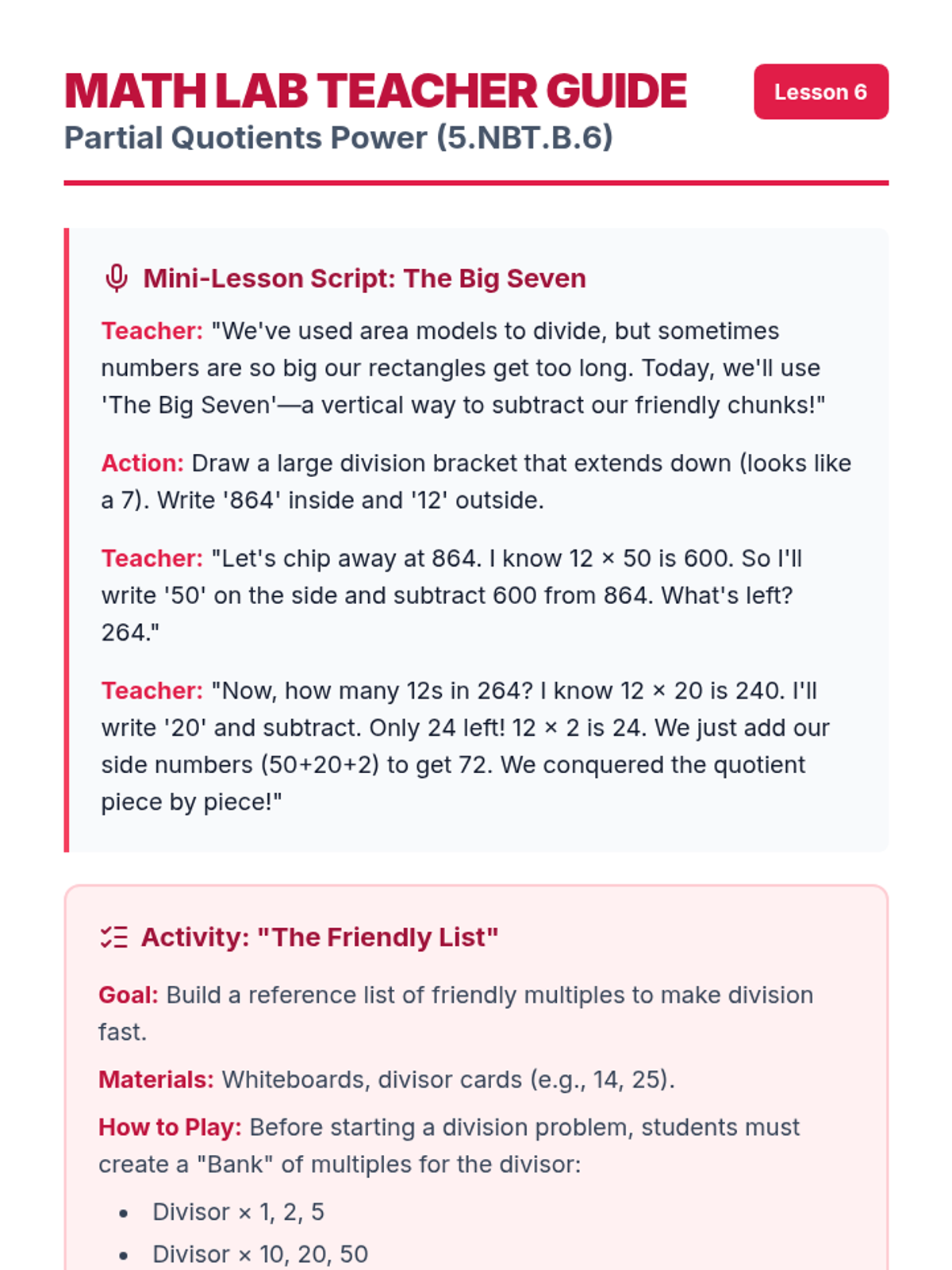
Teacher guide and activity cards for Lesson 6: Partial Quotients Power. Features a script for 'The Big Seven' method, the 'Friendly List' bank activity, and four challenge missions for division fluency.
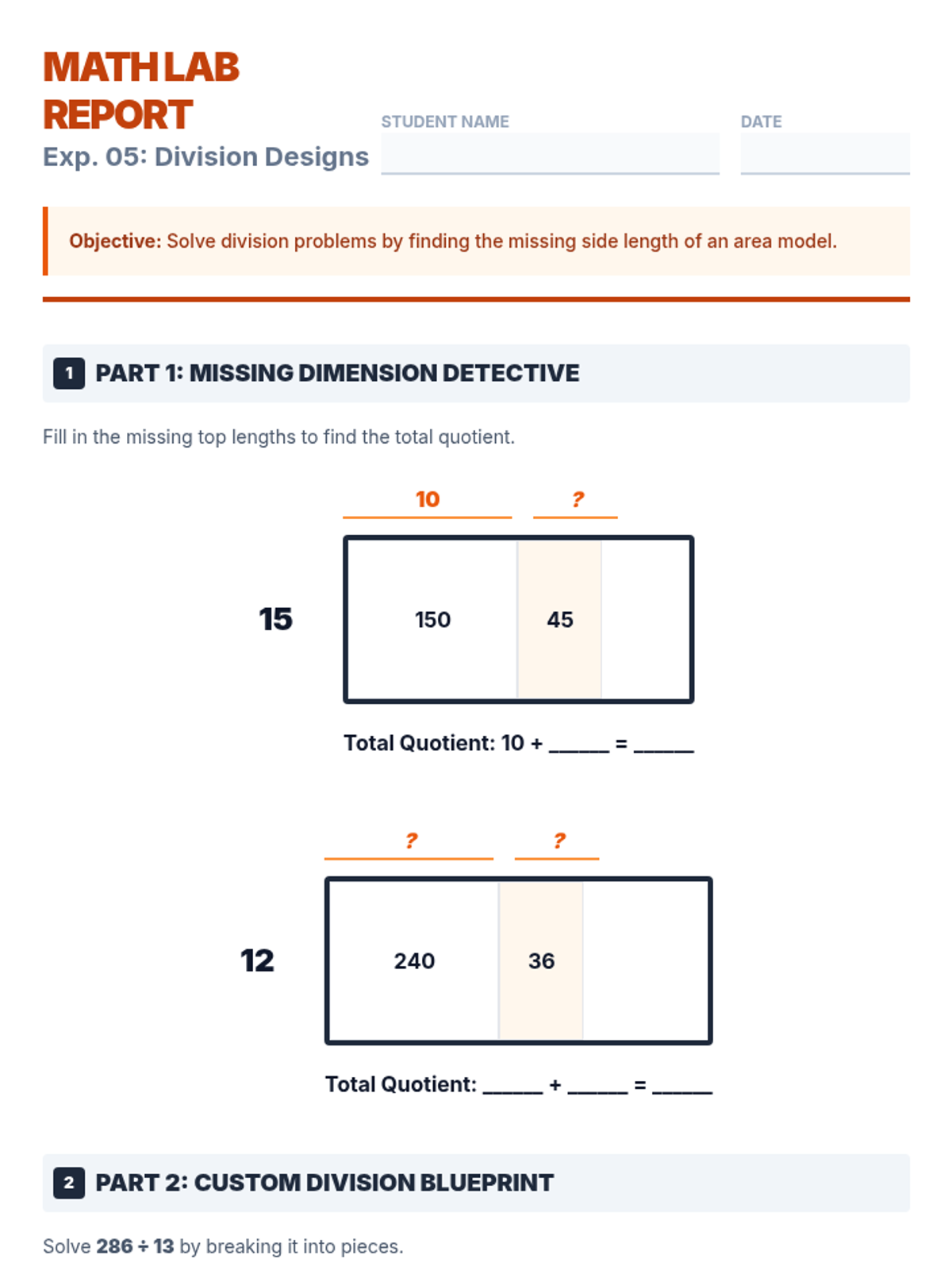
Student worksheet for Lesson 5: Area Models for Division. Includes scaffolded problems for finding missing side lengths and drawing division area models.
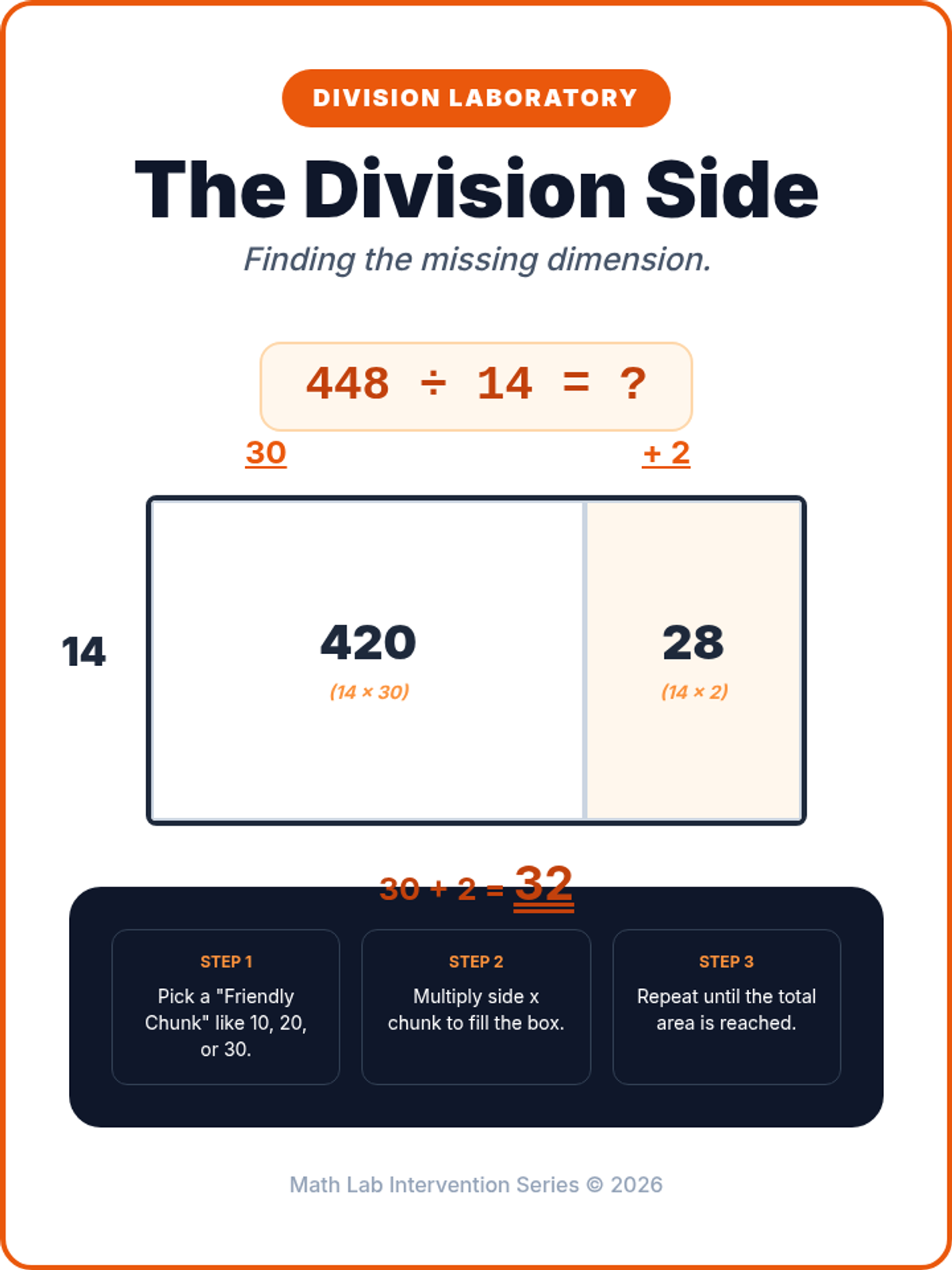
Visual anchor chart for Lesson 5: Area Models for Division. Shows how to break a large dividend into "friendly" rectangular chunks to find the total quotient.
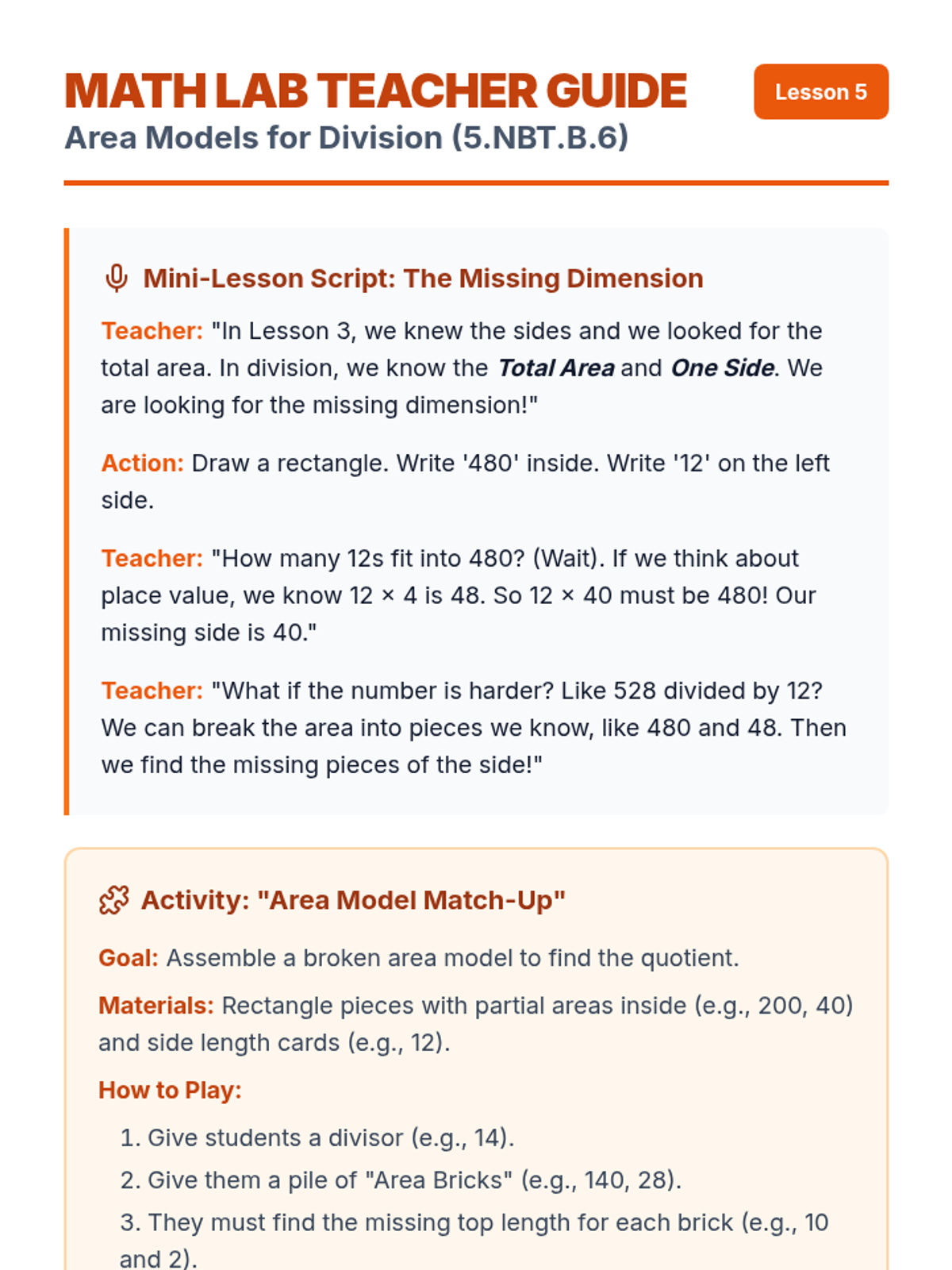
Teacher guide and activity cards for Lesson 5: Area Models for Division. Features a script about finding the missing dimension, the 'Area Model Match-Up' activity, and four lab drills for conceptualizing division.
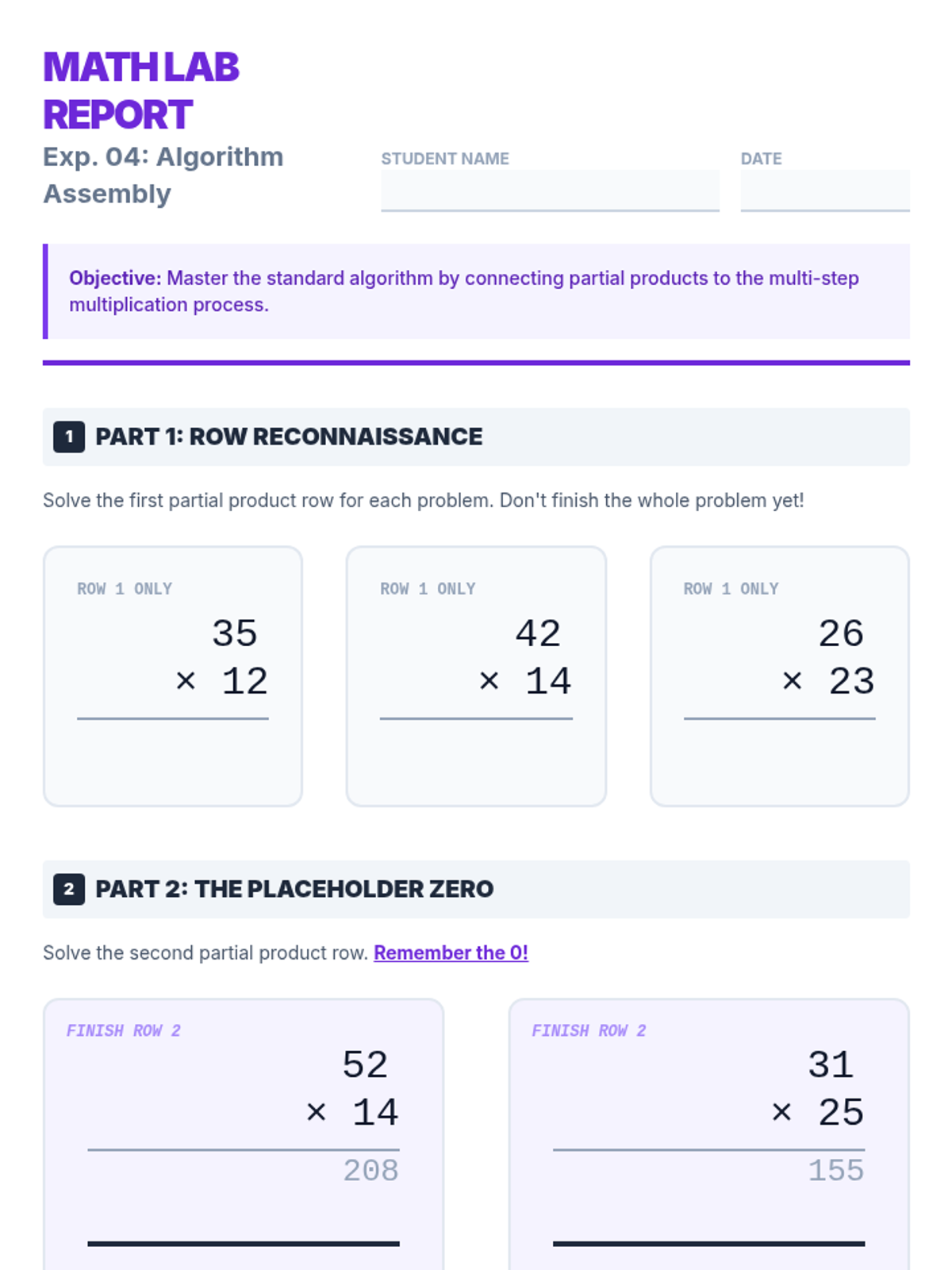
Student worksheet for Lesson 4: The Standard Algorithm Flow. Includes scaffolded problems focusing on individual algorithm rows, the placeholder zero, and full multi-digit multiplication.
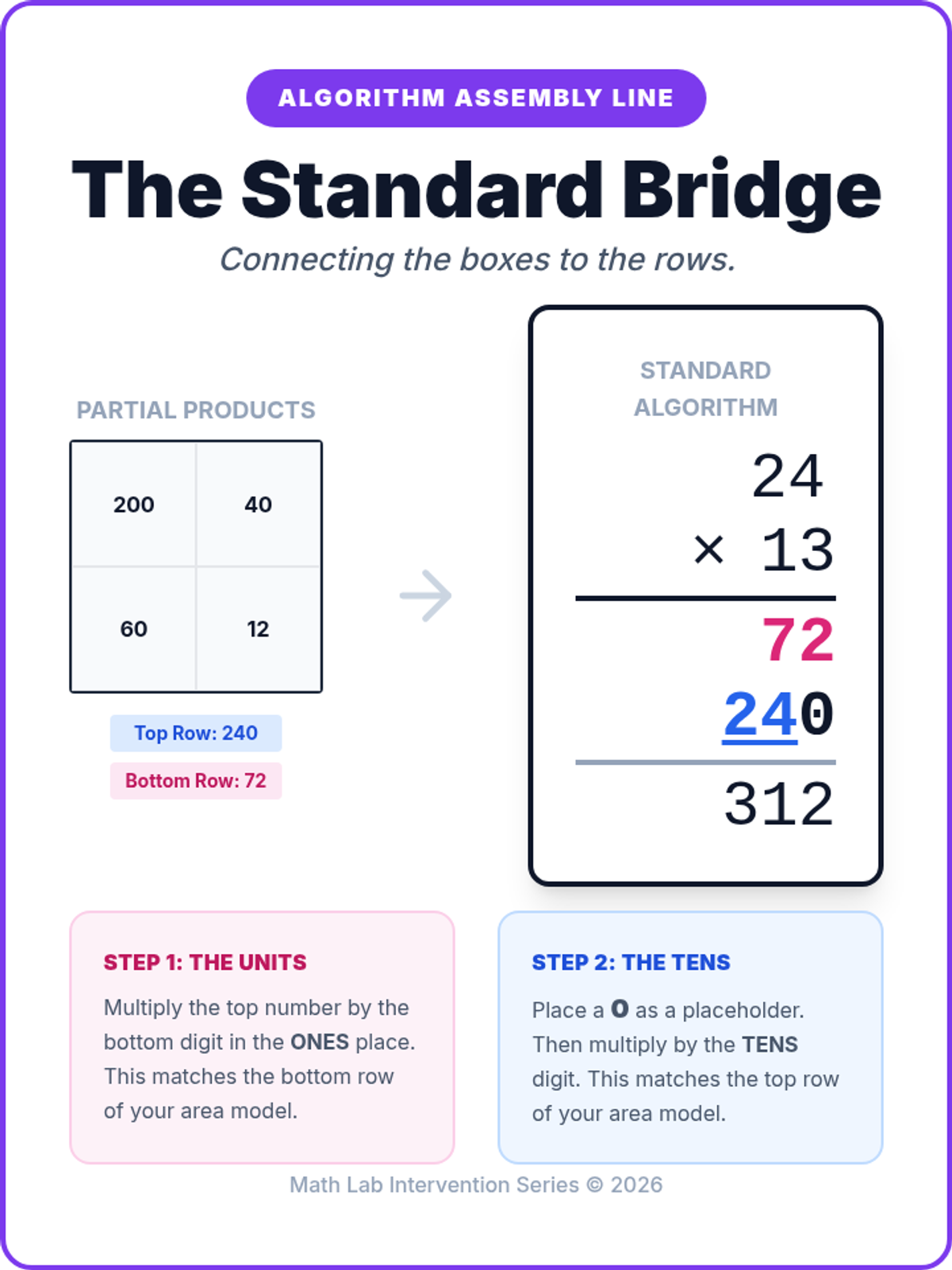
Visual anchor chart for Lesson 4: The Standard Algorithm Flow. Shows the explicit connection between area model rows and the rows of the standard multiplication algorithm.
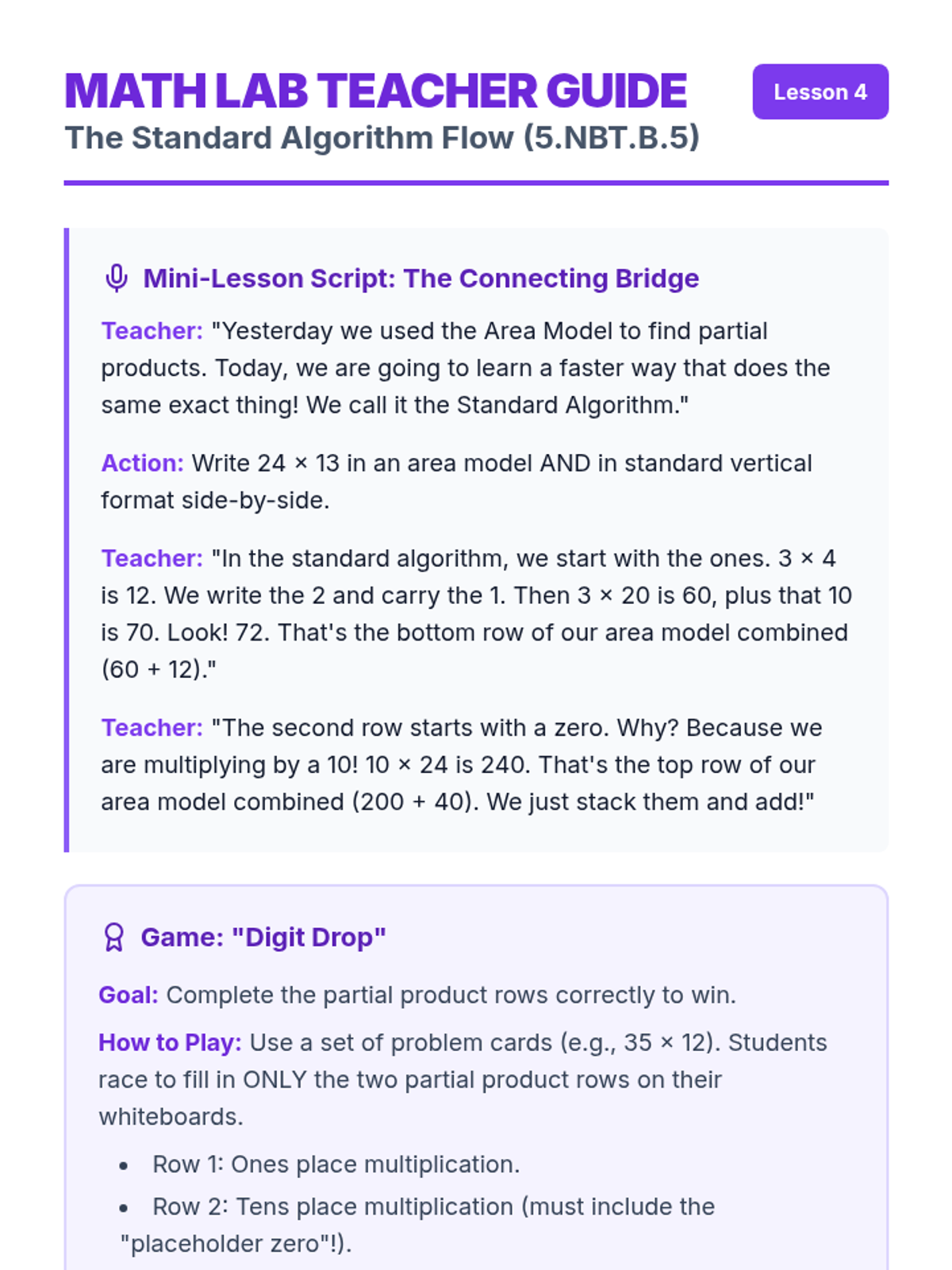
Teacher guide and activity cards for Lesson 4: The Standard Algorithm Flow. Features an instructional bridge between area models and vertical multiplication, plus the 'Digit Drop' game for small group fluency.
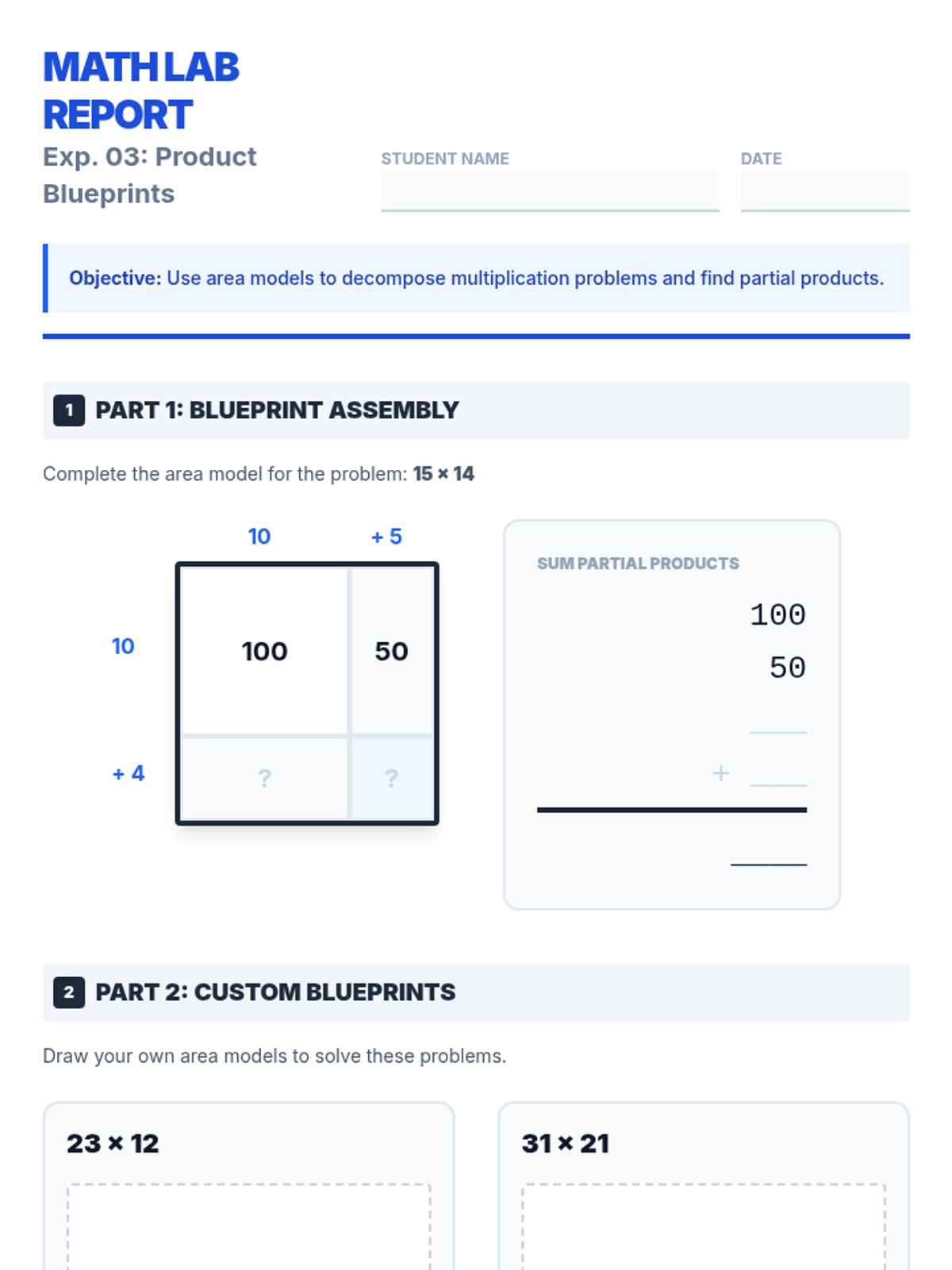
Student worksheet for Lesson 3: Area Model Multiplication. Includes scaffolded problems for drawing and solving multiplication problems using area models and summing partial products.