A visual presentation for AP Human Geography exploring cultural globalization, homogenization, and hybridization with embedded video and activity prompts.
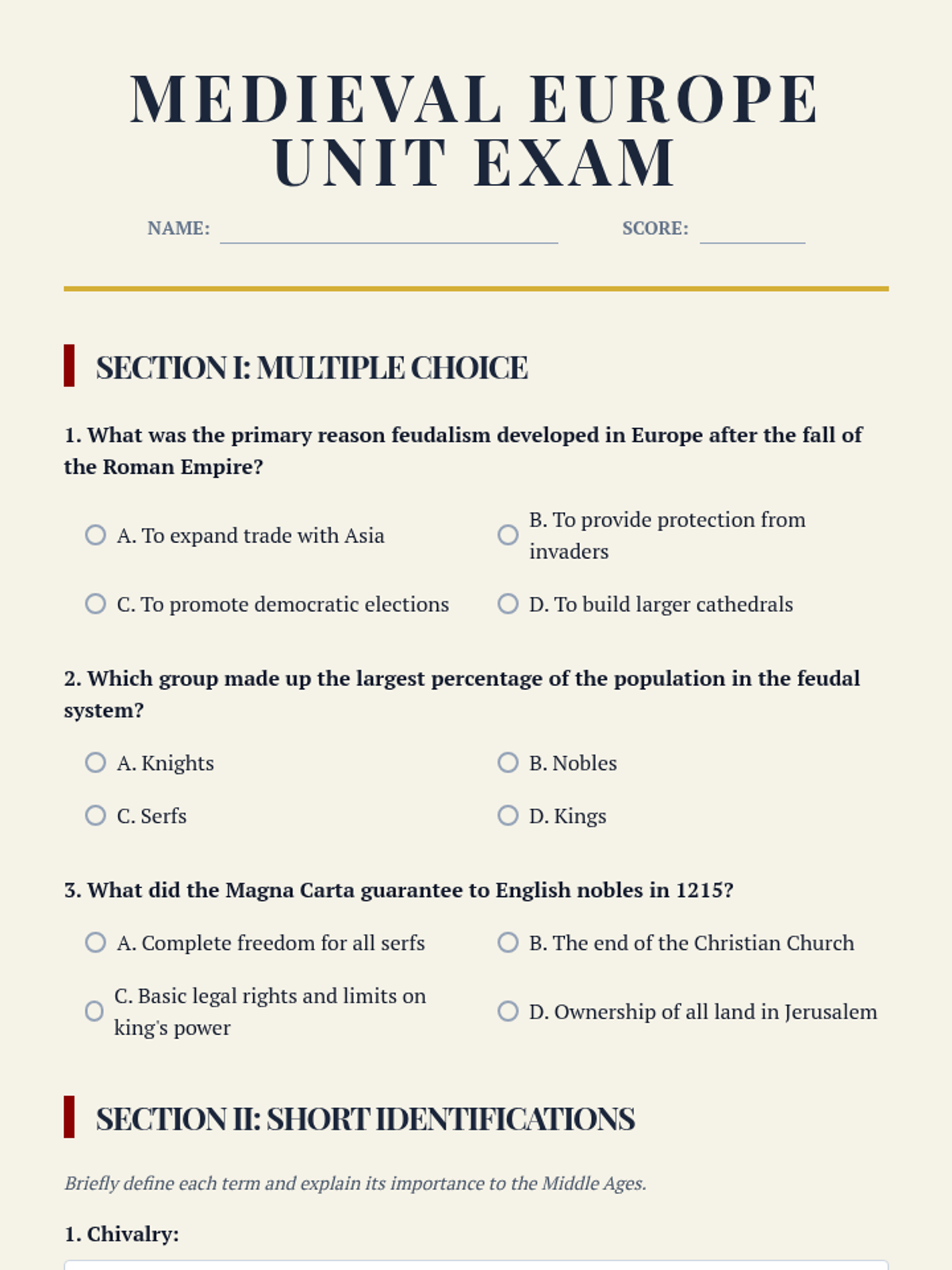
A comprehensive summative assessment for the Medieval Europe unit, including multiple-choice questions, key term identification, and a short essay on the impact of the Black Death.
Final set of instructional slides for Lesson 5, focusing on King John and the Magna Carta, the rise of the middle class and town life, and the eventual decline of the Middle Ages.
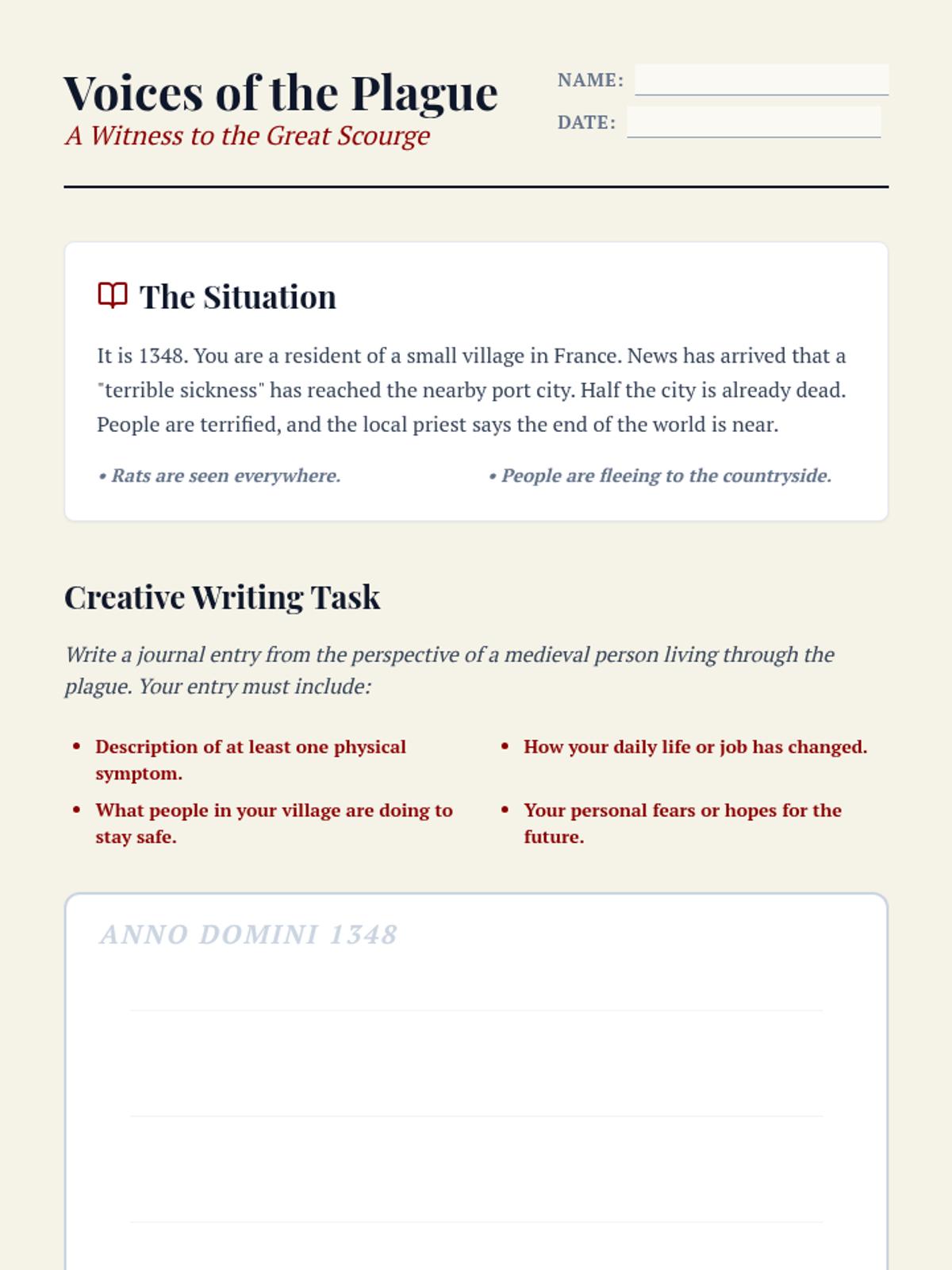
A creative writing and perspective-taking activity for Lesson 4 where students write a fictional journal entry from the viewpoint of a plague survivor to analyze the social and economic shifts of the era.
Educational slides for Lesson 4 covering the arrival of the Bubonic Plague, its physical symptoms, the devastating population loss, and its role in ending the feudal economic system.
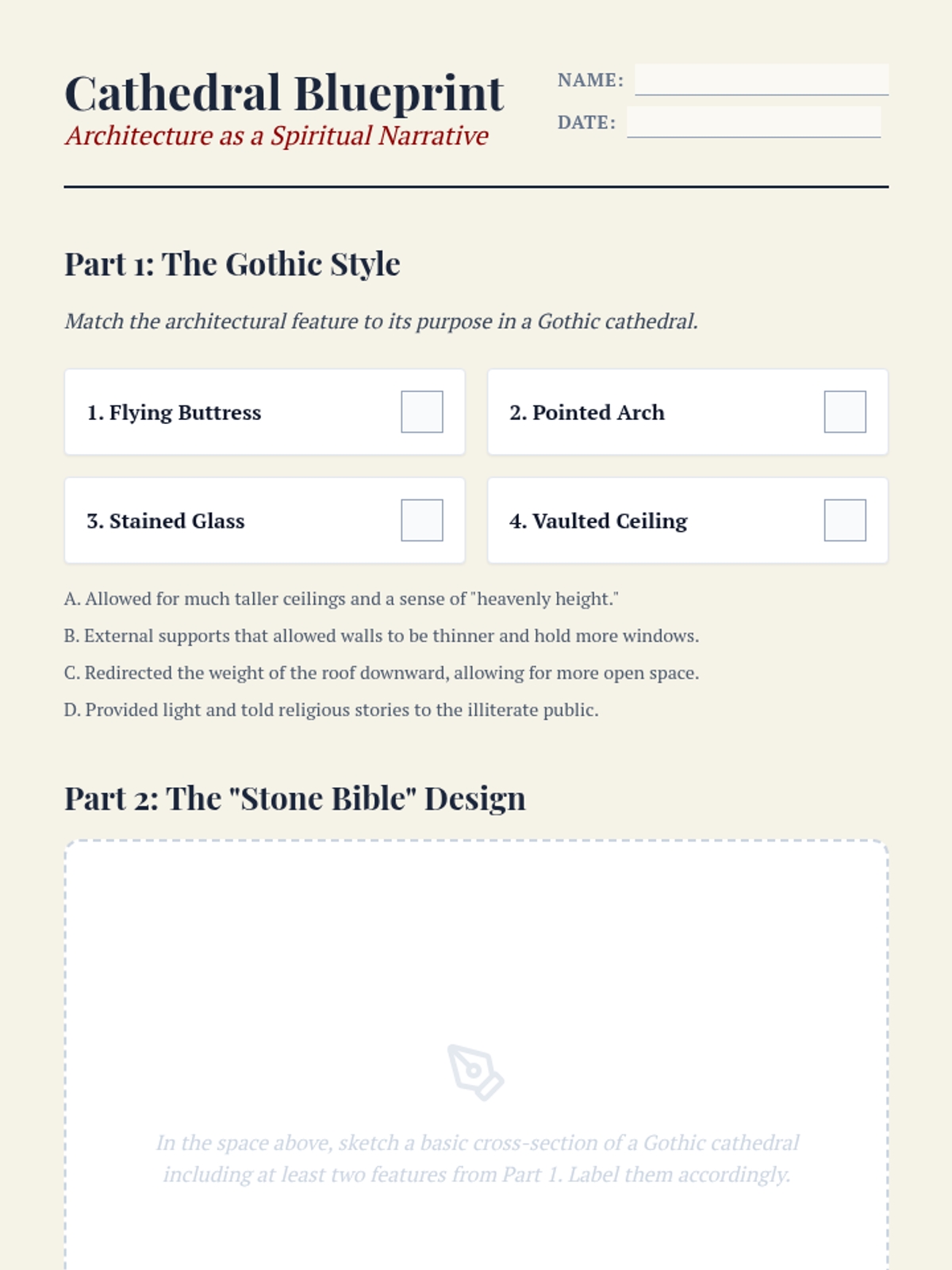
An activity for Lesson 3 where students identify Gothic architectural features and analyze how the design of cathedrals reinforced the power and teachings of the Church.
Presentation slides for Lesson 3 exploring the spiritual and political power of the Catholic Church, the conflict between kings and popes, and the architectural significance of Gothic cathedrals.
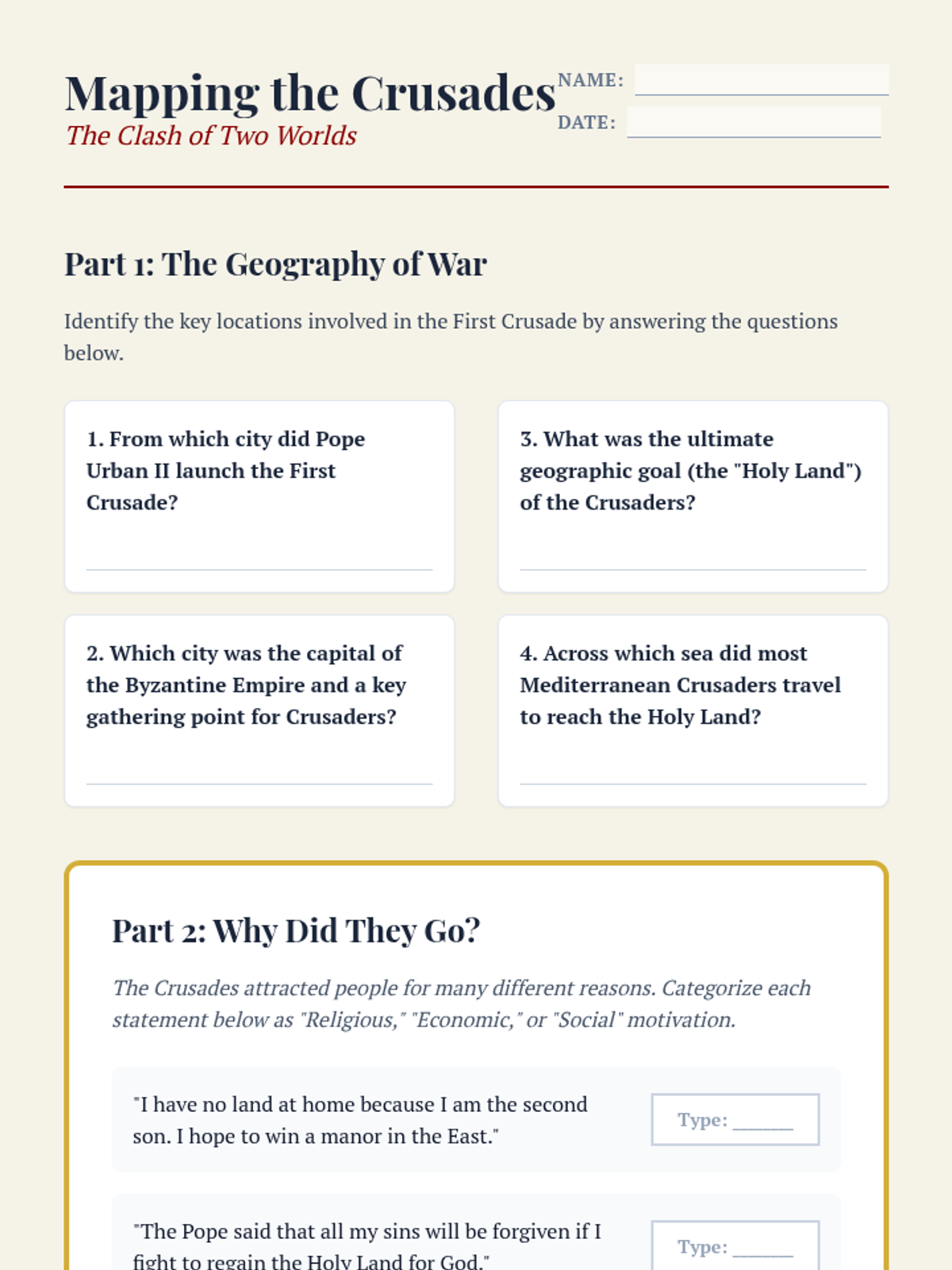
A mapping and analysis worksheet for Lesson 2 focusing on the geography of the Crusades, the diverse motivations of crusaders, and the long-term cultural impacts.
Instructional slides for Lesson 2, detailing the path to knighthood, the code of chivalry, and the historical causes and consequences of the Crusades.
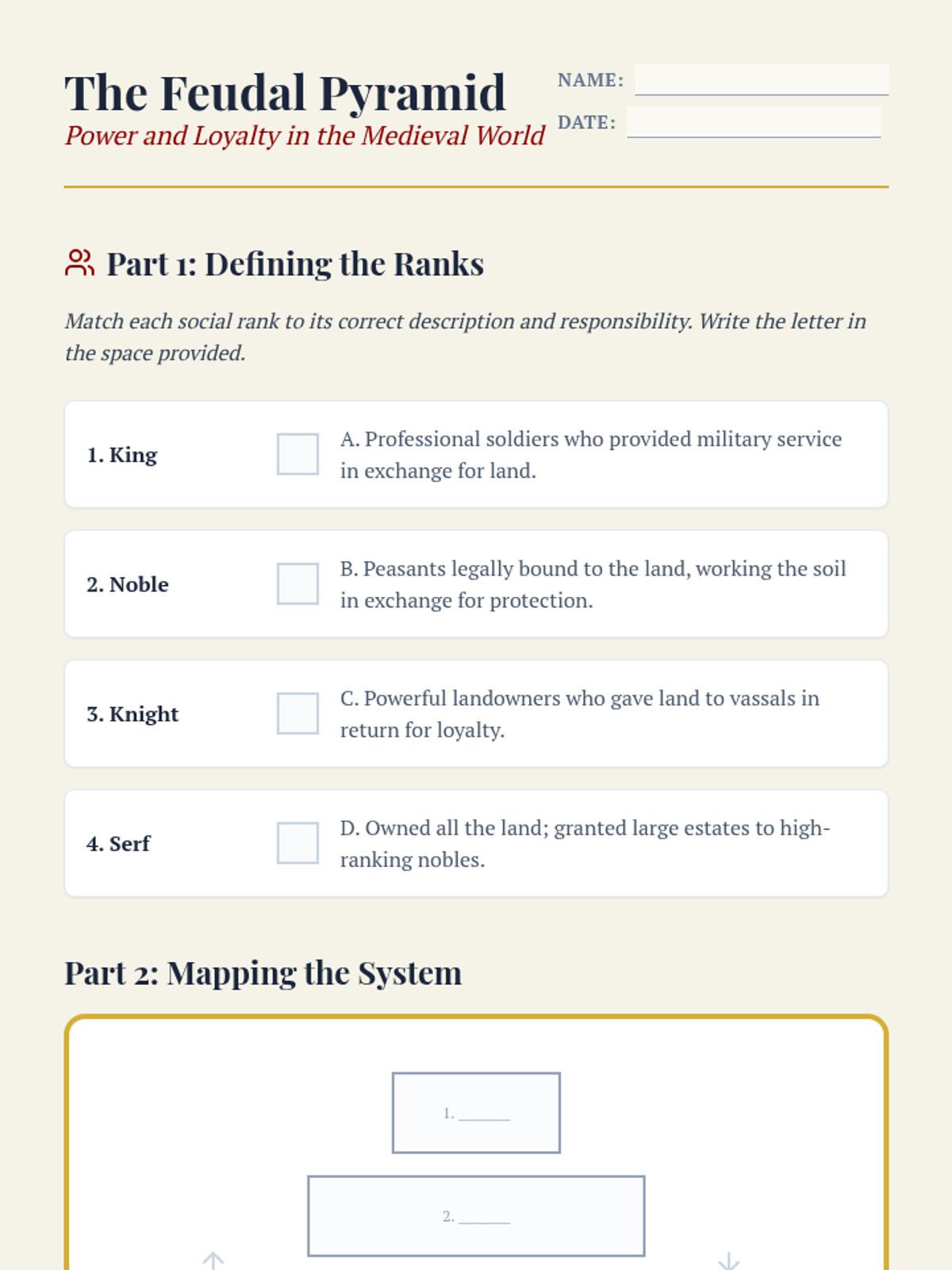
A student worksheet for Lesson 1 requiring students to define social roles, label the feudal pyramid, and analyze the benefits and drawbacks of serfdom.
A visual presentation for Lesson 1 covering the origins of feudalism, the social hierarchy, and the manorial system. It features high-contrast slides with medieval motifs and clear, readable text.
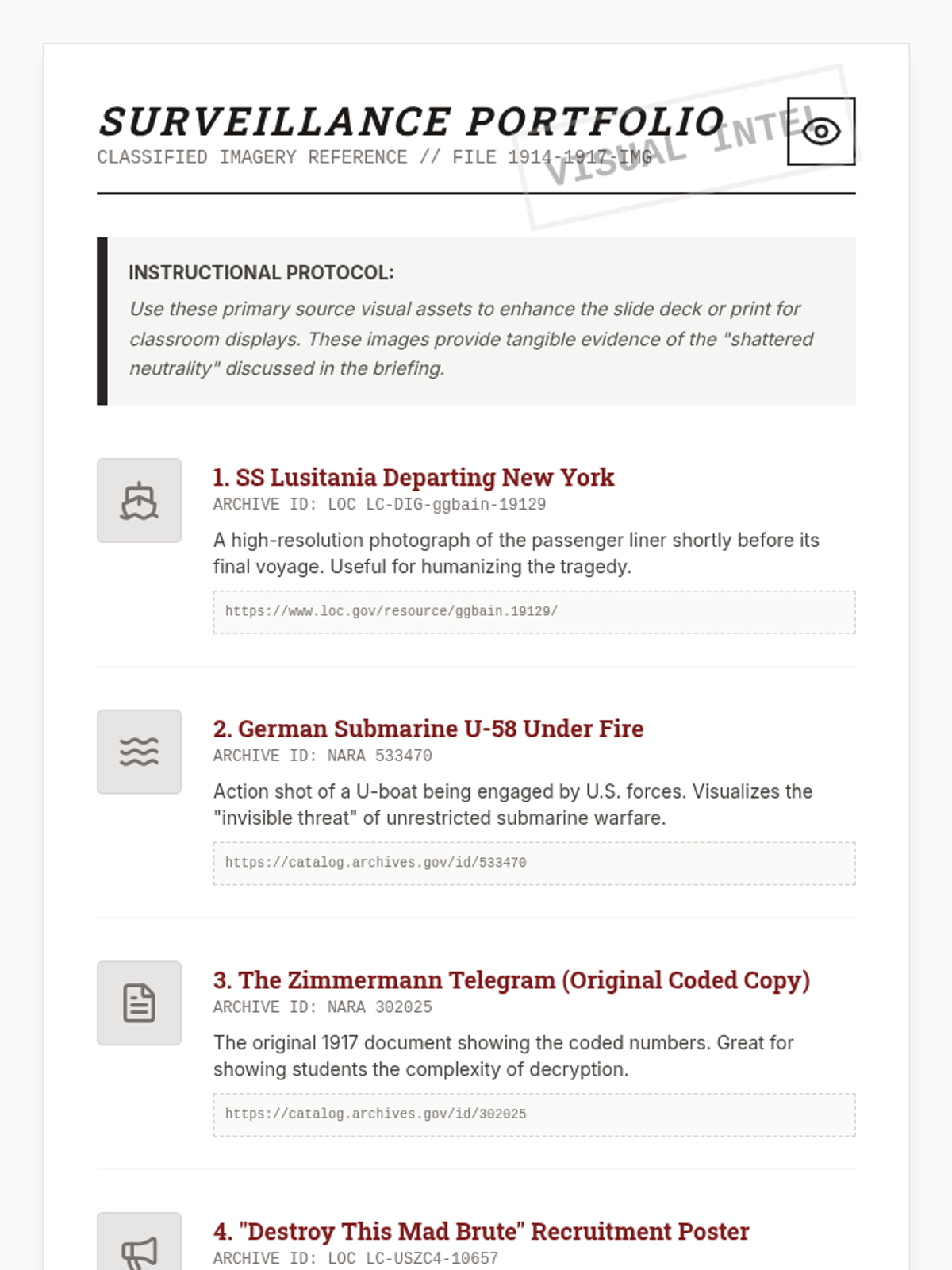
A visual evidence library document providing teacher and student resources for historical images, photographs, and posters related to U.S. entry into WWI, including direct archival links.
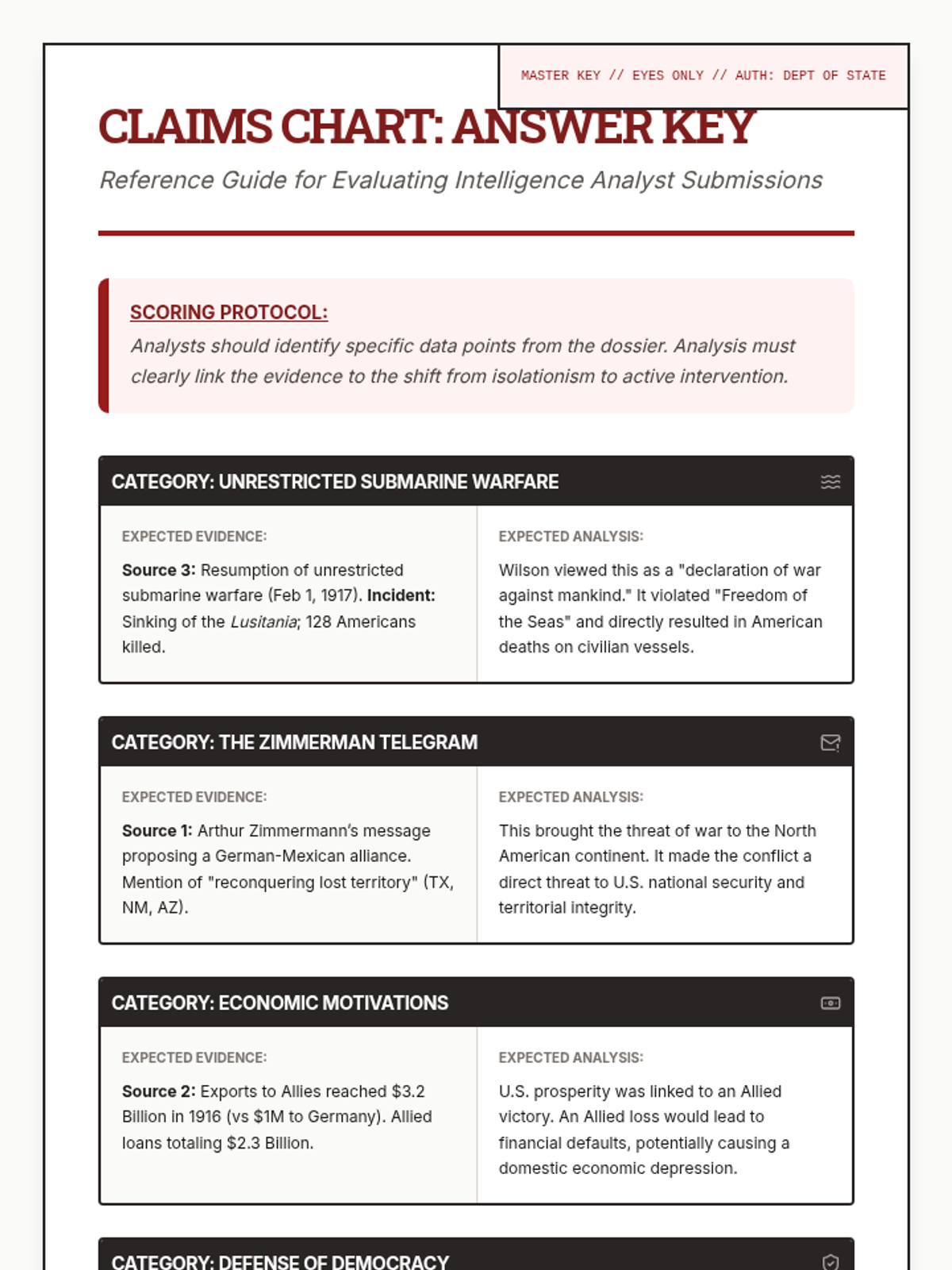
A teacher answer key for the Entry Claims Chart, providing expected evidence and analysis for all four categories of U.S. entry into WWI based on the primary source dossier.
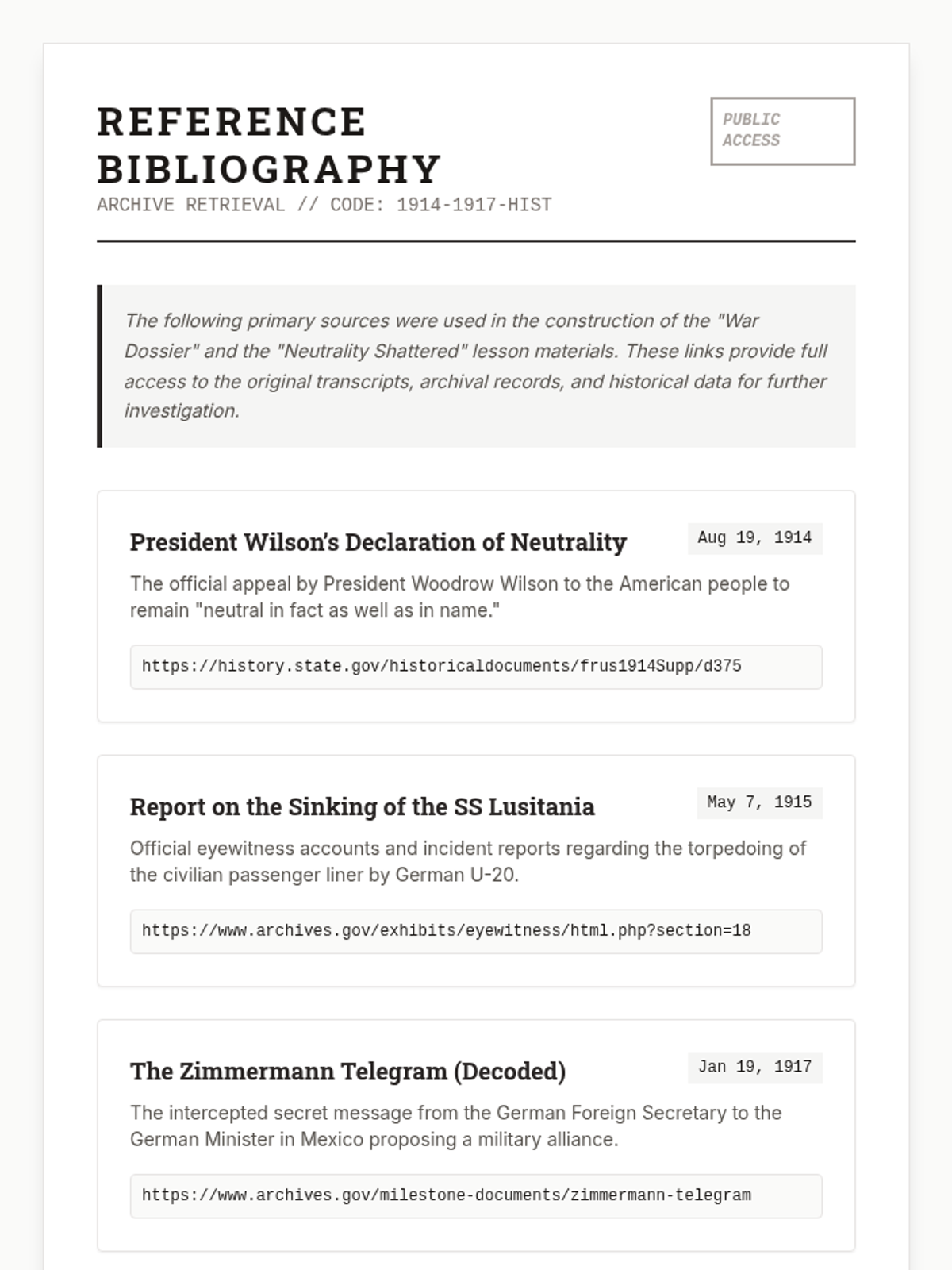
A comprehensive bibliography page for the teacher and students, listing all primary sources used in the lesson with their full names, dates, and original archival URLs.
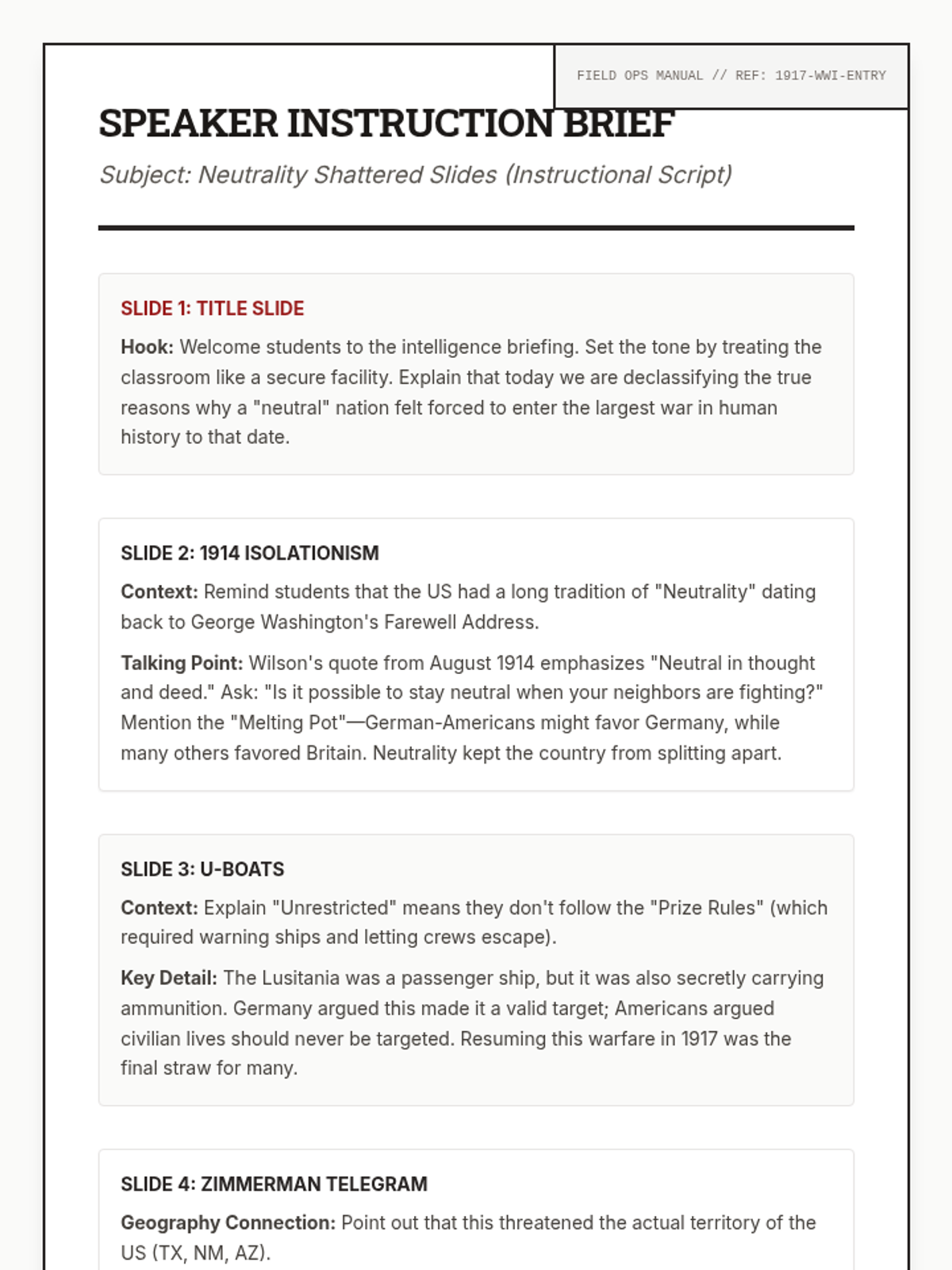
A detailed document providing talking points, historical context, and discussion prompts for each slide in the Neutrality Shattered presentation, styled as a teacher-facing field manual.
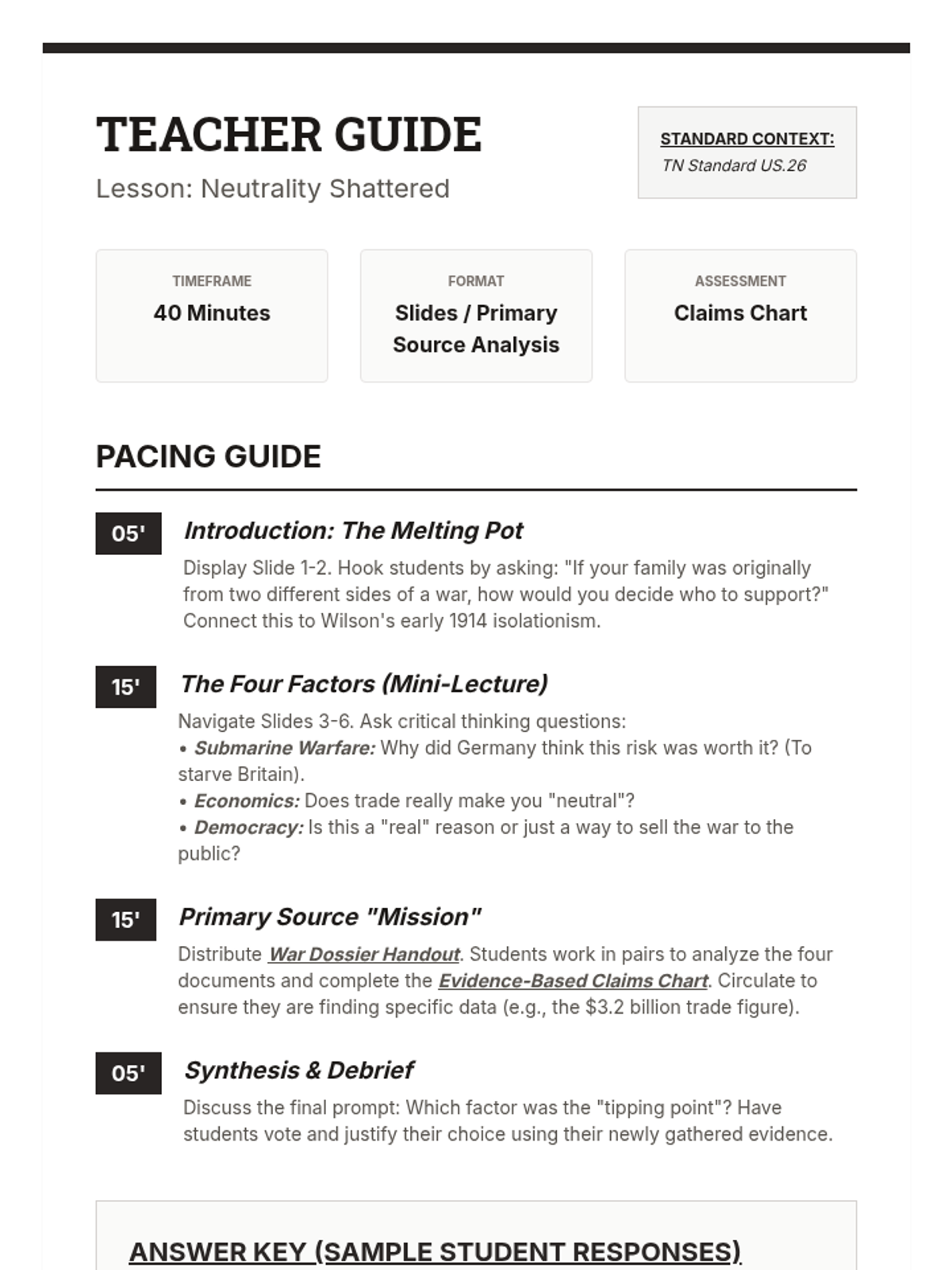
A comprehensive teacher guide for the Neutrality Shattered lesson, providing pacing, discussion prompts, differentiated instruction tips, and an answer key for the claims chart.
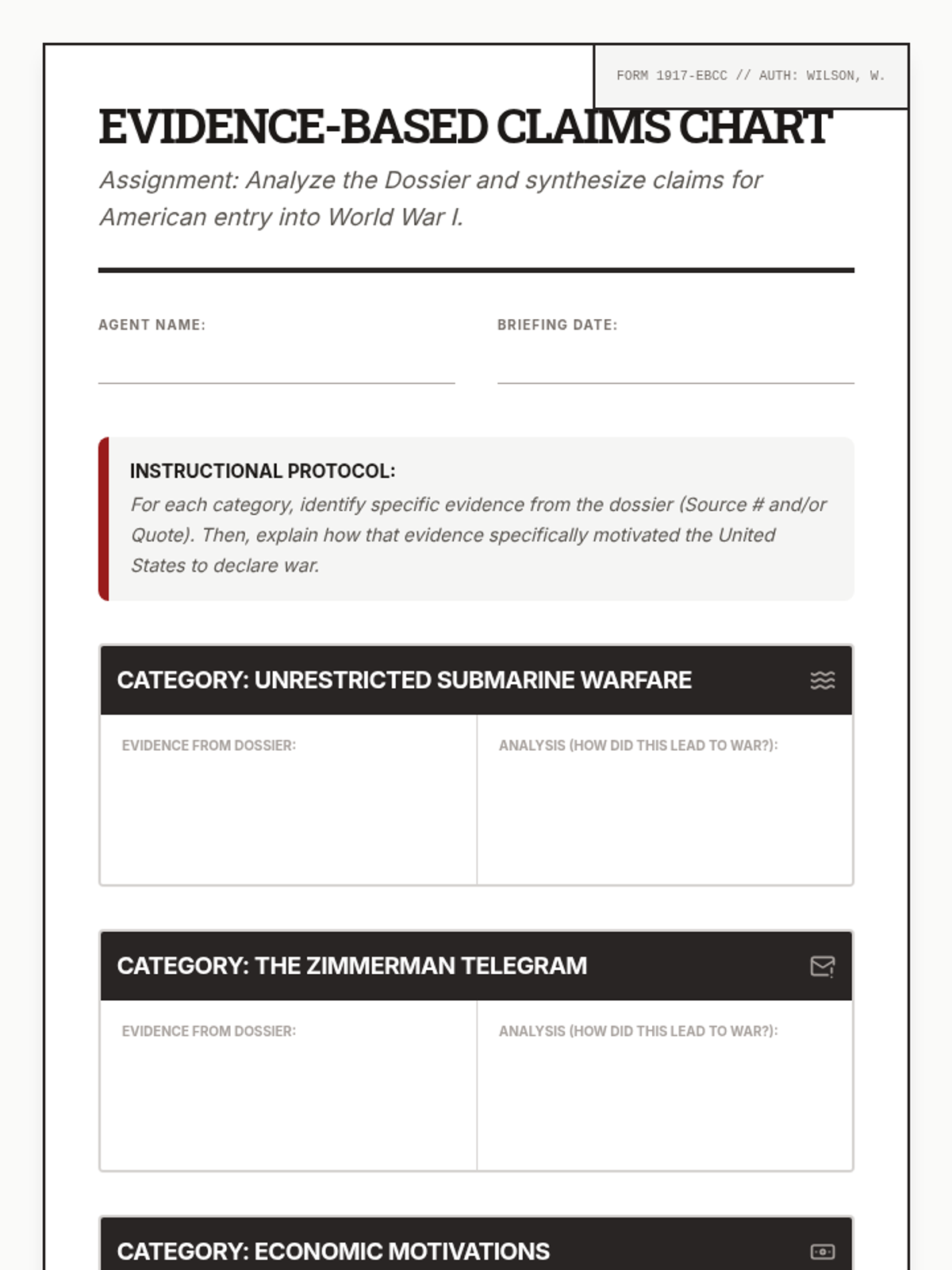
An evidence-based claims chart for students to analyze and categorize primary source evidence regarding U.S. entry into WWI, featuring four major categories and a synthesis prompt.
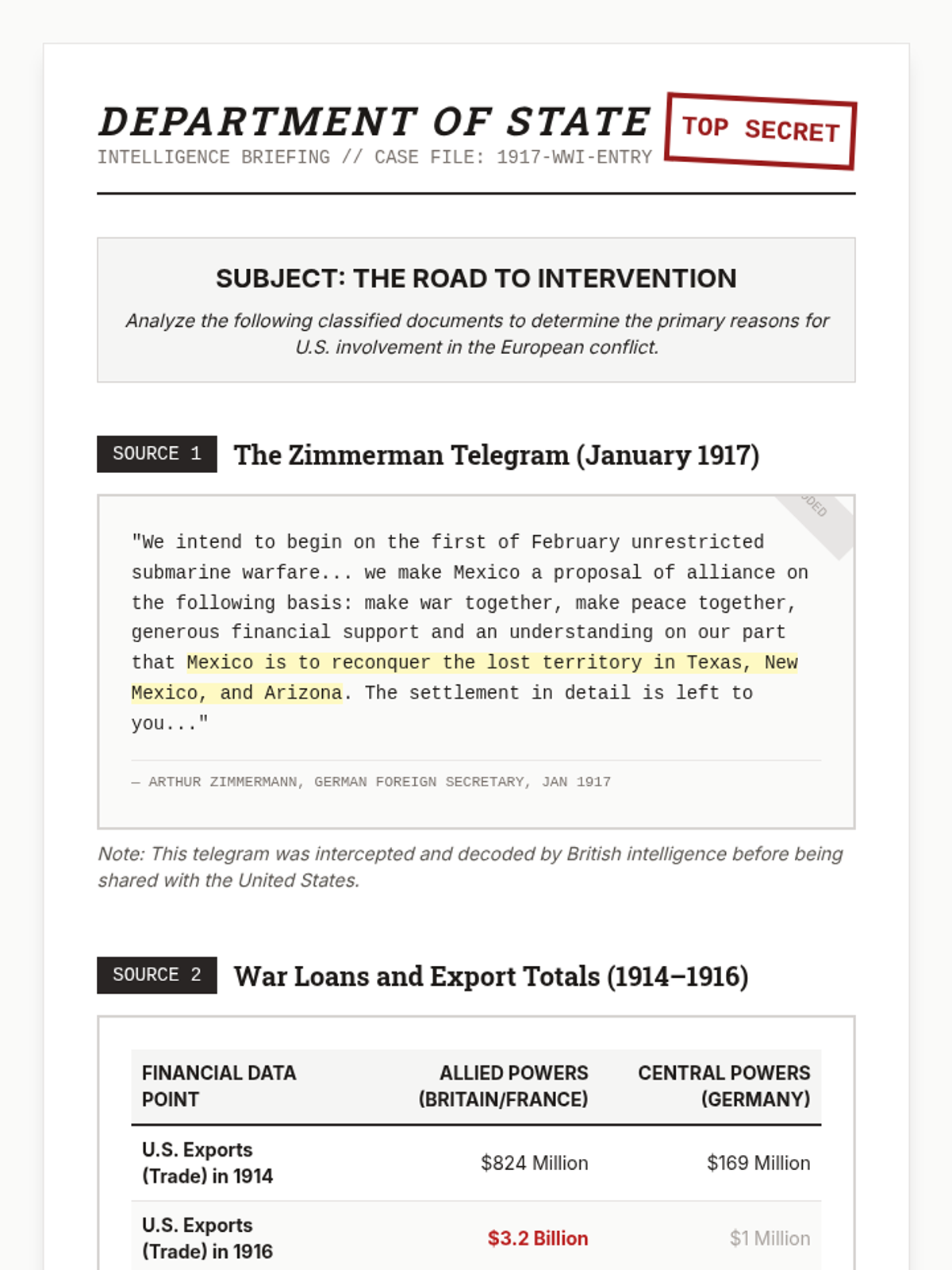
A 2-page primary source document set styled as a classified government dossier, featuring the Zimmerman Telegram, economic data, U-boat reports, and Wilson's "Safe for Democracy" speech. Now with improved attribution and dates.
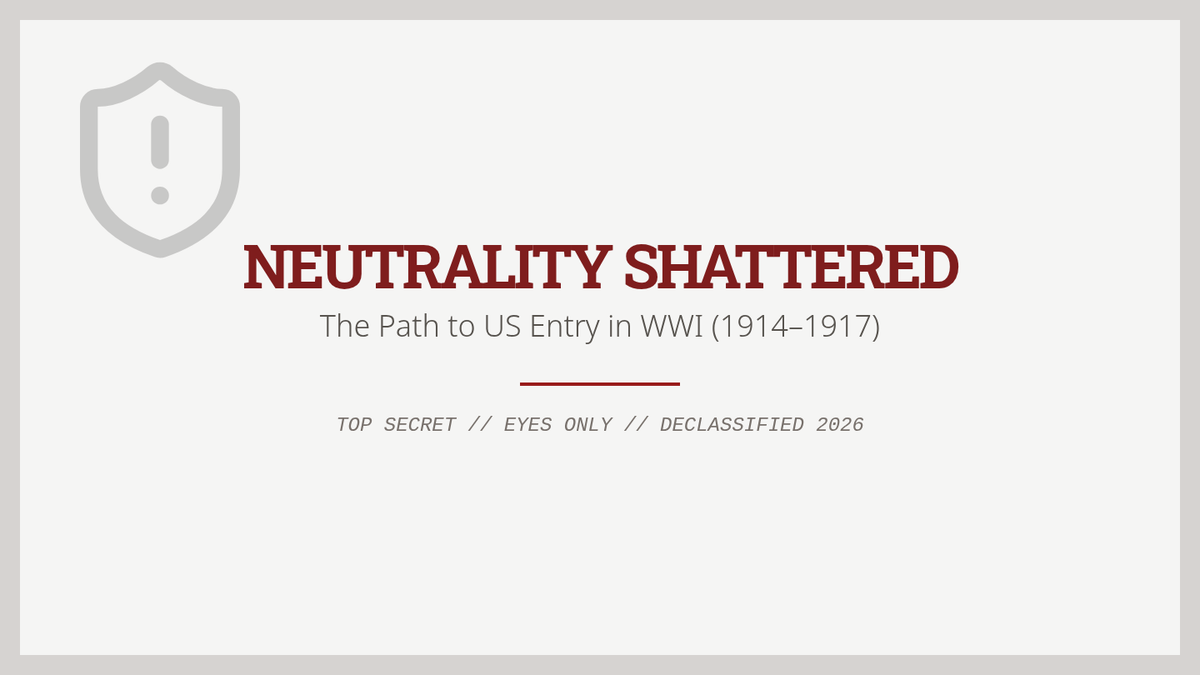
A 7-slide interactive presentation outlining the four main reasons for U.S. entry into World War I, featuring a "dossier" aesthetic and specific historical evidence. Now with dated and attributed quotes.
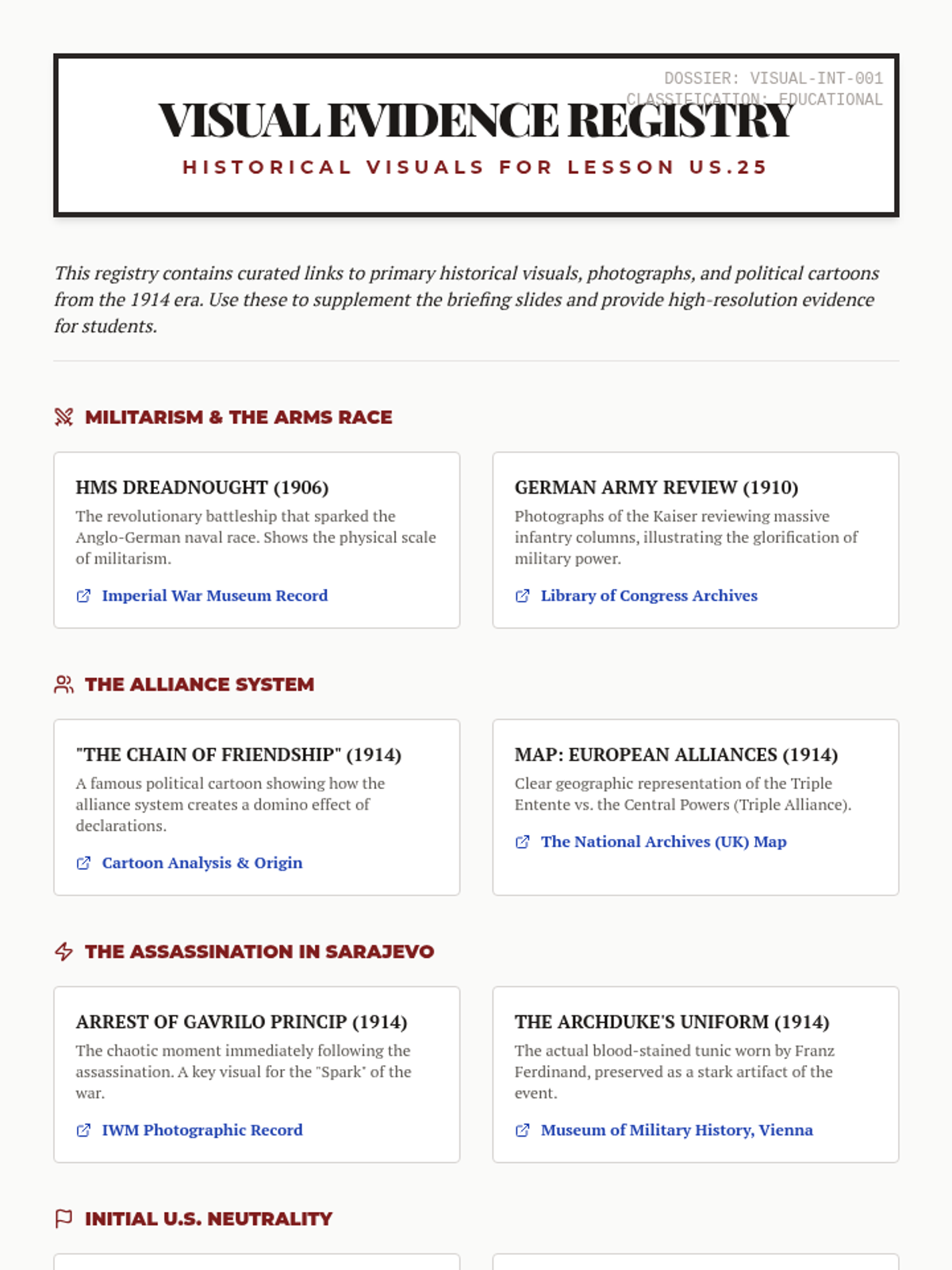
A curated collection of primary historical visuals, including photographs and political cartoons, with descriptions and links to official archives. Designed to support the visual instruction of WWI causes.
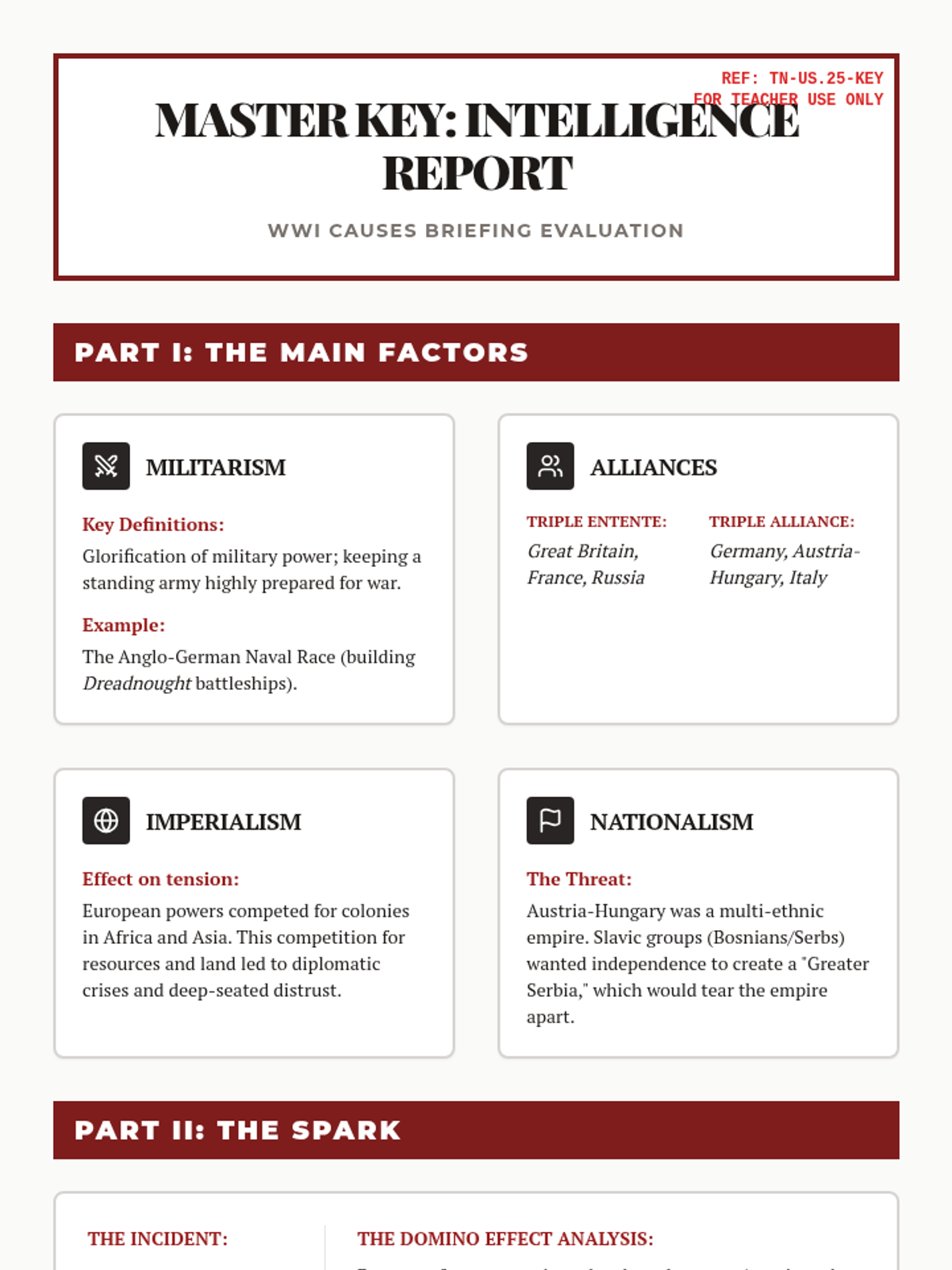
An answer key and teacher reference for the Intelligence Report Worksheet, providing specific historical facts and sample answers for each section.