A comprehensive teacher guide for Lesson 5, focusing on a sustainable city planning project. Includes a recap of the sequence, invention ideas, and instructional steps for the final presentation.
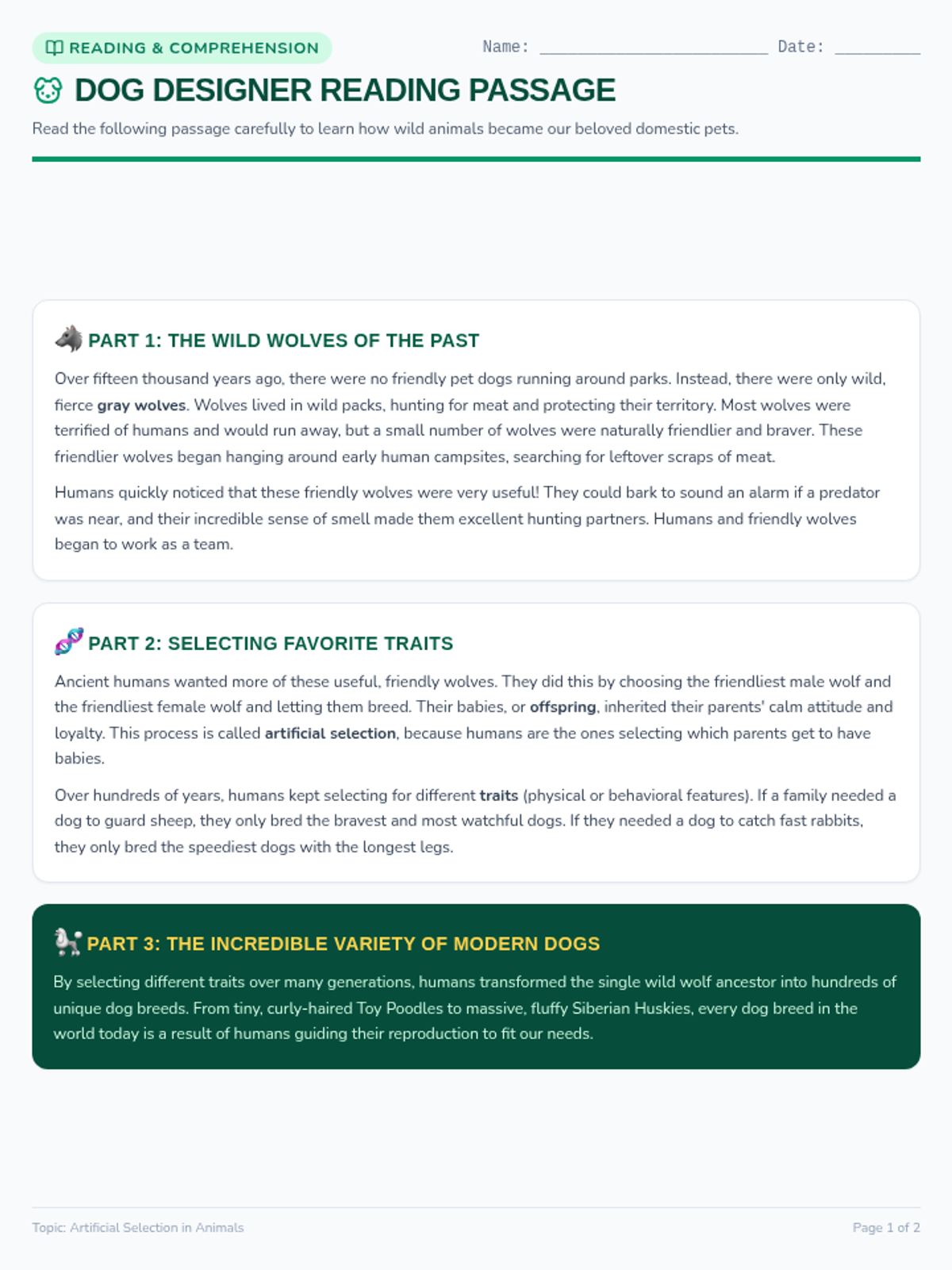
An expanded 2-page reading comprehension document. Page 1 contains a detailed, student-friendly reading passage comparing wild wolves to domesticated dogs, and Page 2 contains 5 structured, multiple-choice questions with identical answer styling.
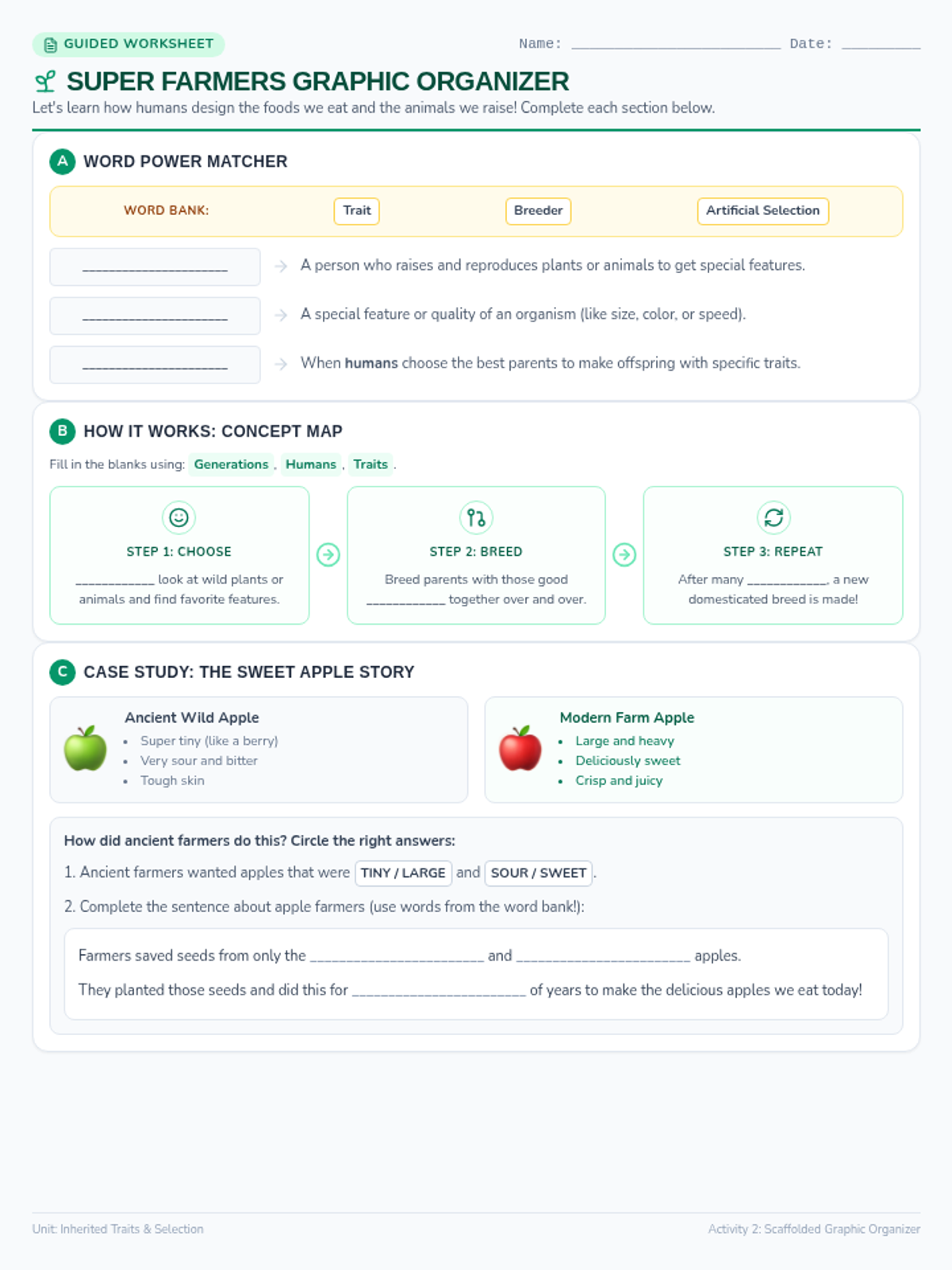
A highly visual, scaffolded graphic organizer worksheet. It features a simplified definition matcher, an illustrated flowchart of artificial selection, and a guided 'Sweet Apple' case study with trace-and-match elements and sentence starters.
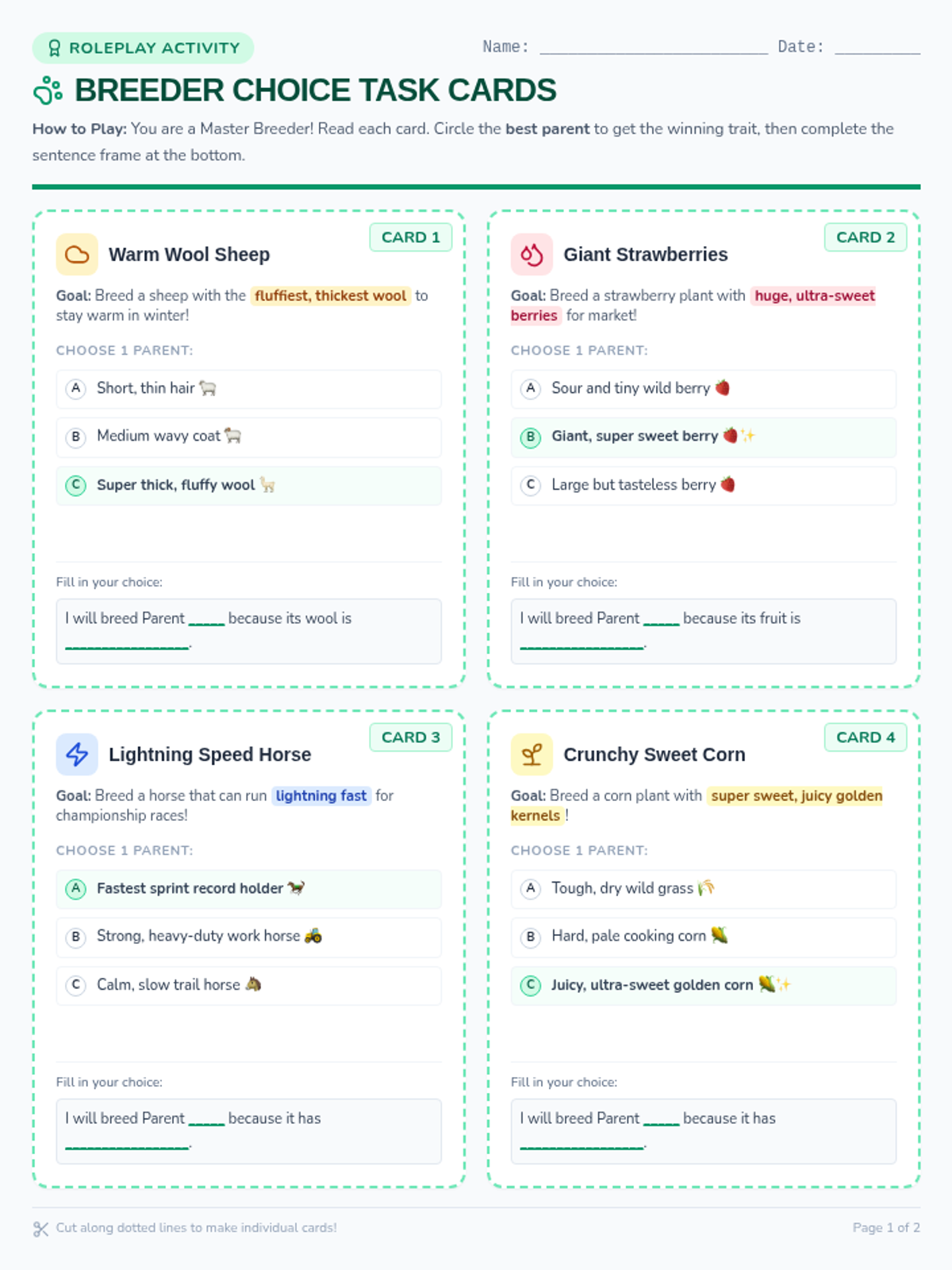
A 2-page printable set of 8 visual task cards where students roleplay as breeders. Students must select parent organisms with specific traits to produce offspring with desired characteristics, featuring structured sentence frames and simple text.
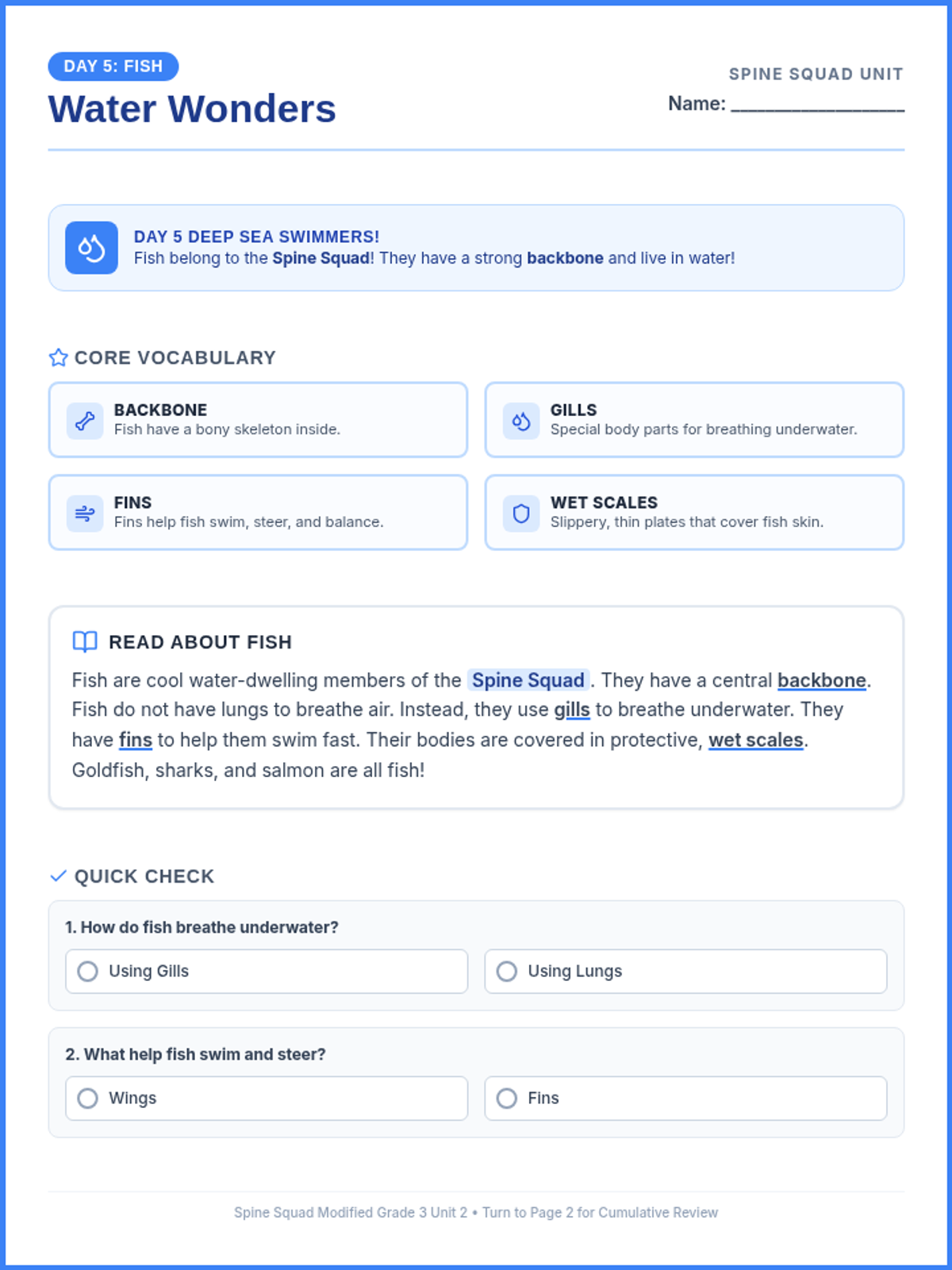
Student workbook for Day 5 of the Spine Squad unit. Features a highly visual reading passage about fish, core vocabulary with icon cards (gills, fins, wet scales, backbone), word-tracing exercises, and a five-group cumulative graduation review.
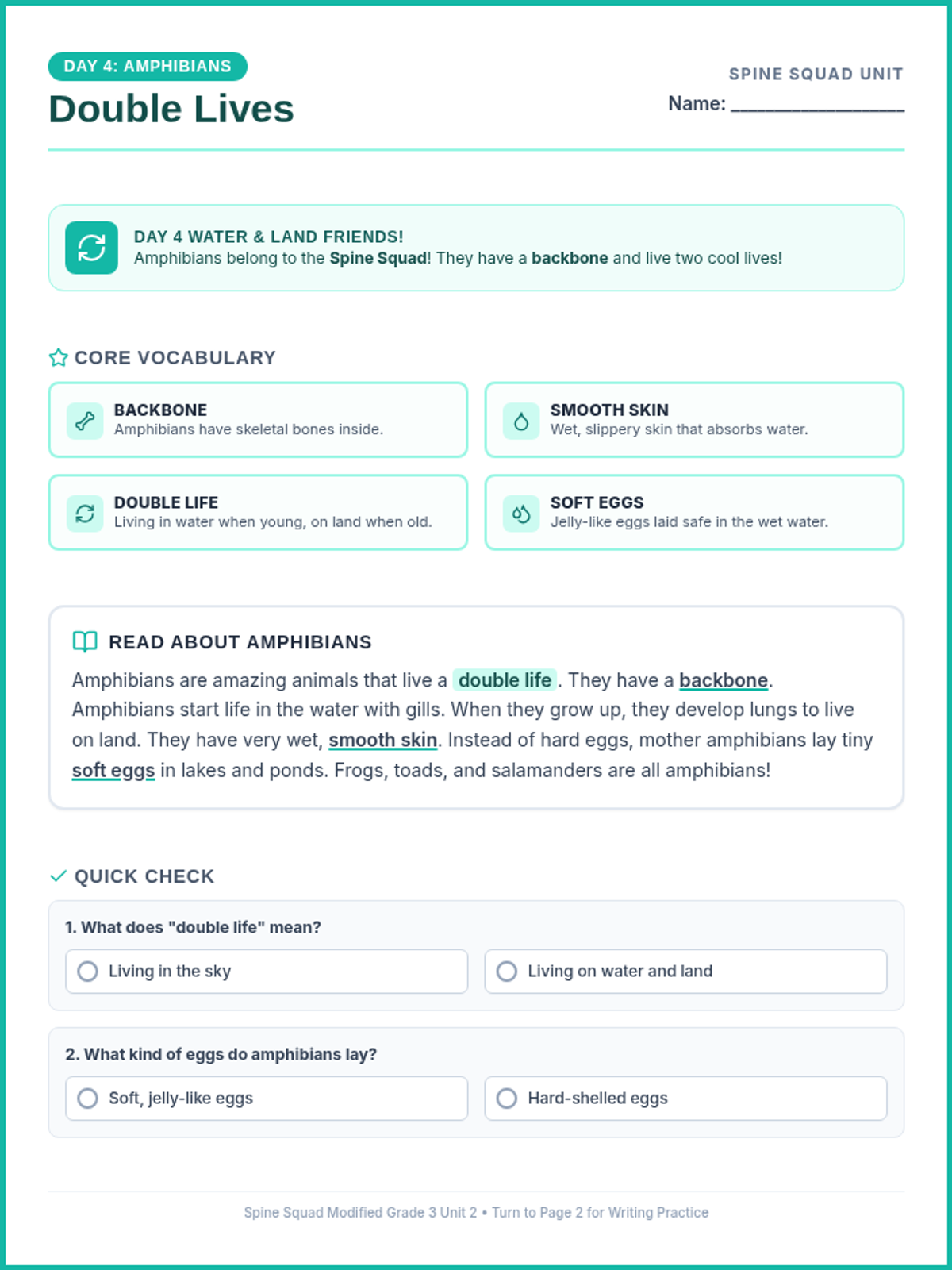
Student workbook for Day 4 of the Spine Squad unit. Features a highly visual reading passage about amphibians, core vocabulary with icon cards (double life, smooth skin, soft eggs, backbone), word-tracing exercises, and sentence-building frames.
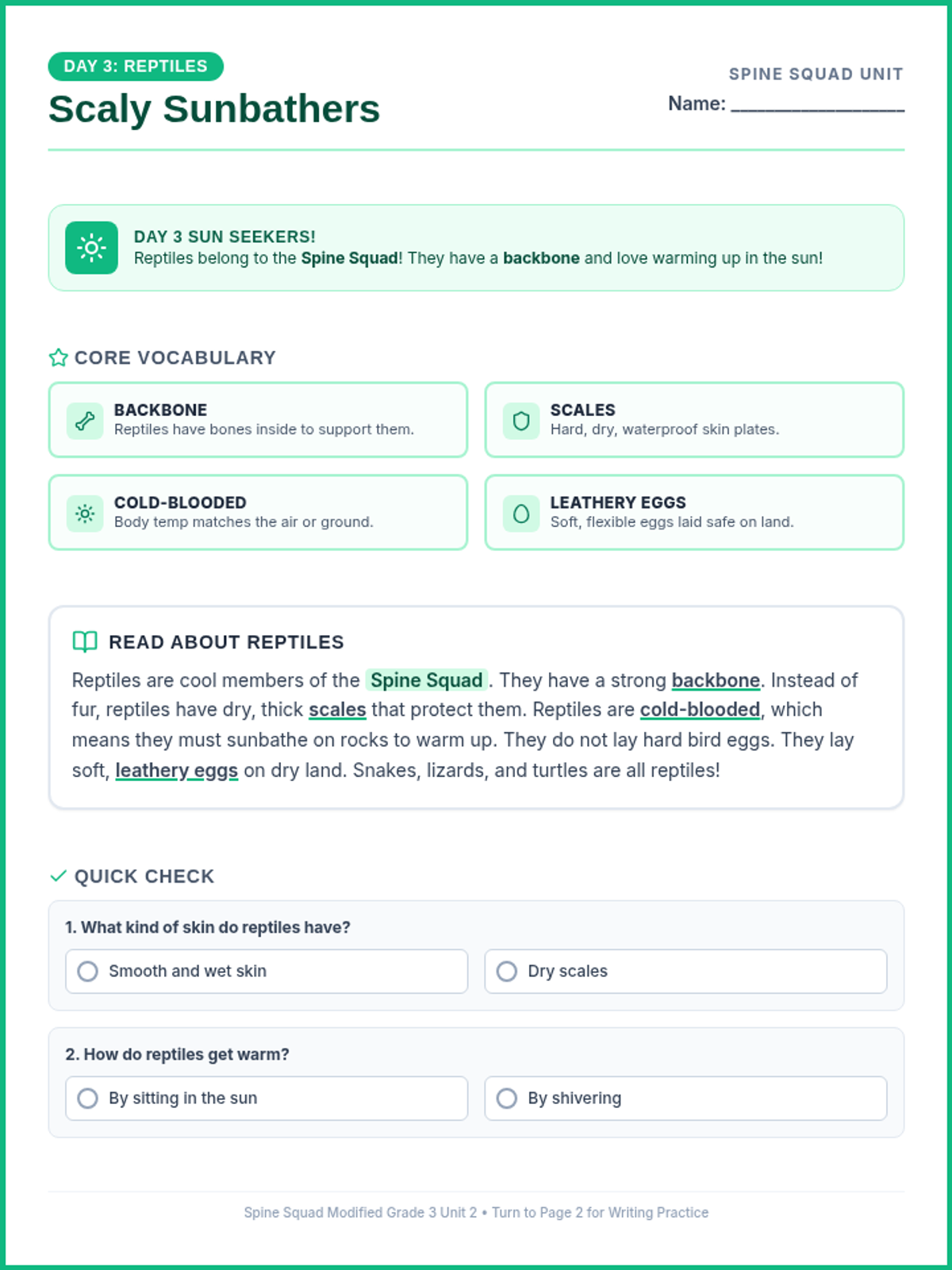
Student workbook for Day 3 of the Spine Squad unit. Features a highly visual reading passage about reptiles, core vocabulary with icon cards (scales, cold-blooded, leathery eggs, backbone), word-tracing exercises, and sentence-building frames.
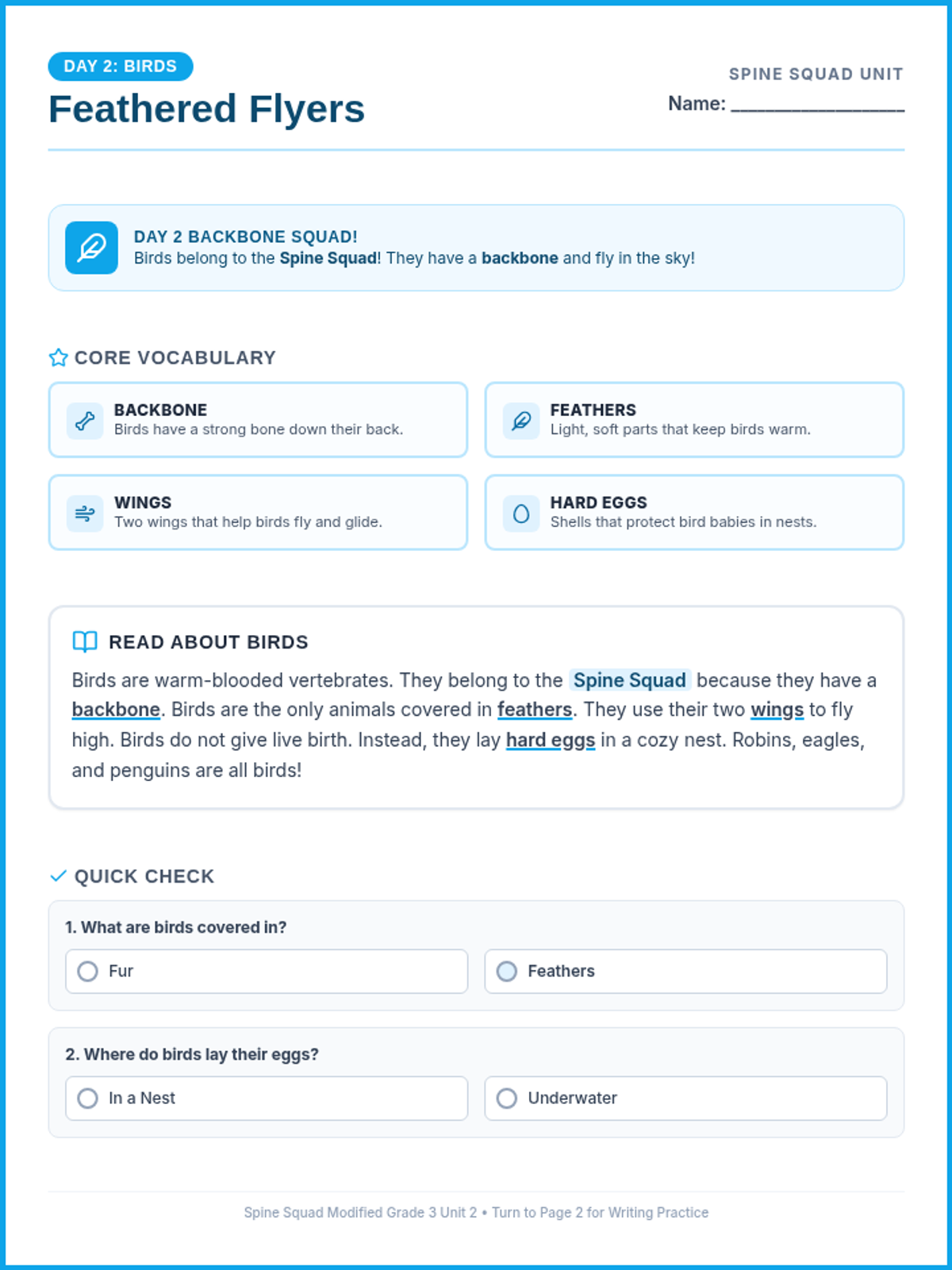
Student workbook for Day 2 of the Spine Squad unit. Features a highly visual reading passage about birds, core vocabulary with icon cards (feathers, wings, hard eggs, backbone), word-tracing exercises, and sentence-building frames.
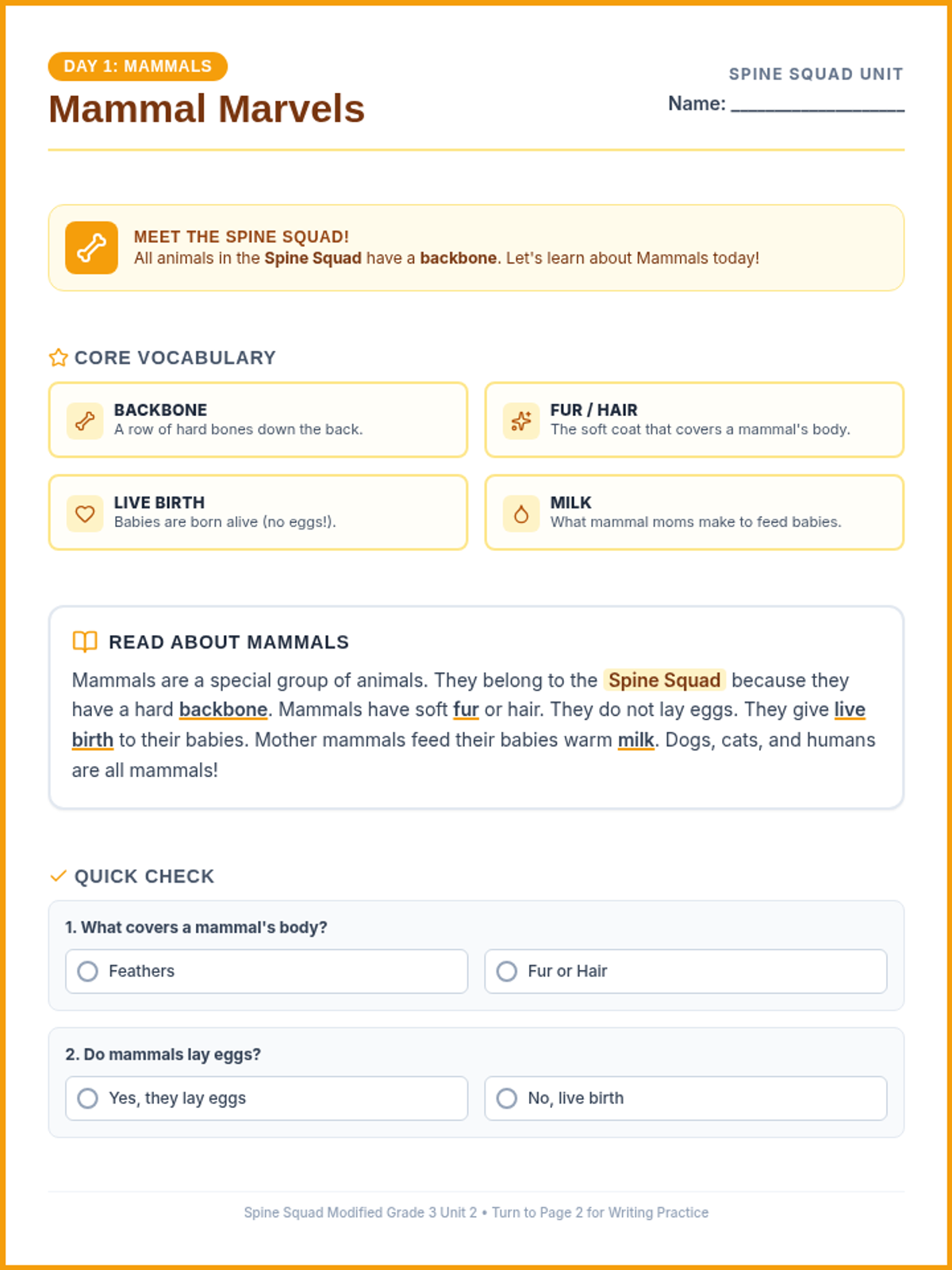
Student workbook for Day 1 of the Spine Squad unit. Features a highly visual reading passage about mammals, core vocabulary with icon cards, word-tracing exercises, and sentence frames with light-grey tracing guides.
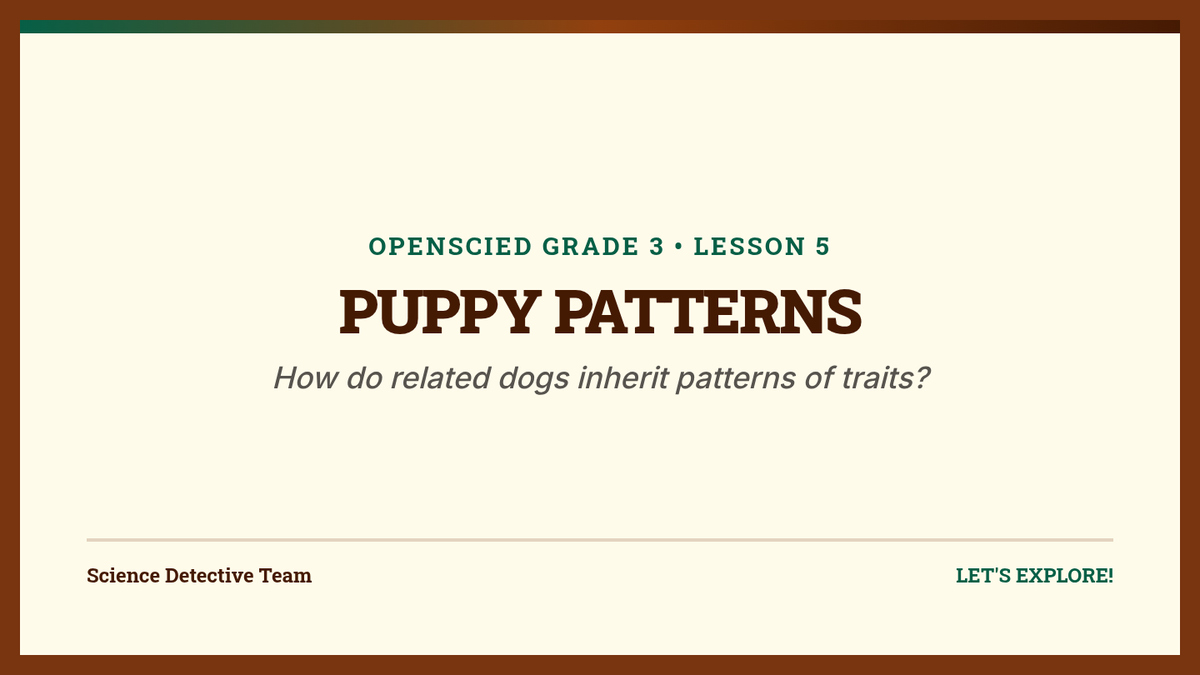
An interactive 7-slide presentation deck designed for OpenSciEd Grade 3 Lesson 5. Features high-visibility text (minimum 24px), clear diagrams, data walkthroughs, and teacher discussion prompts for inheritance.
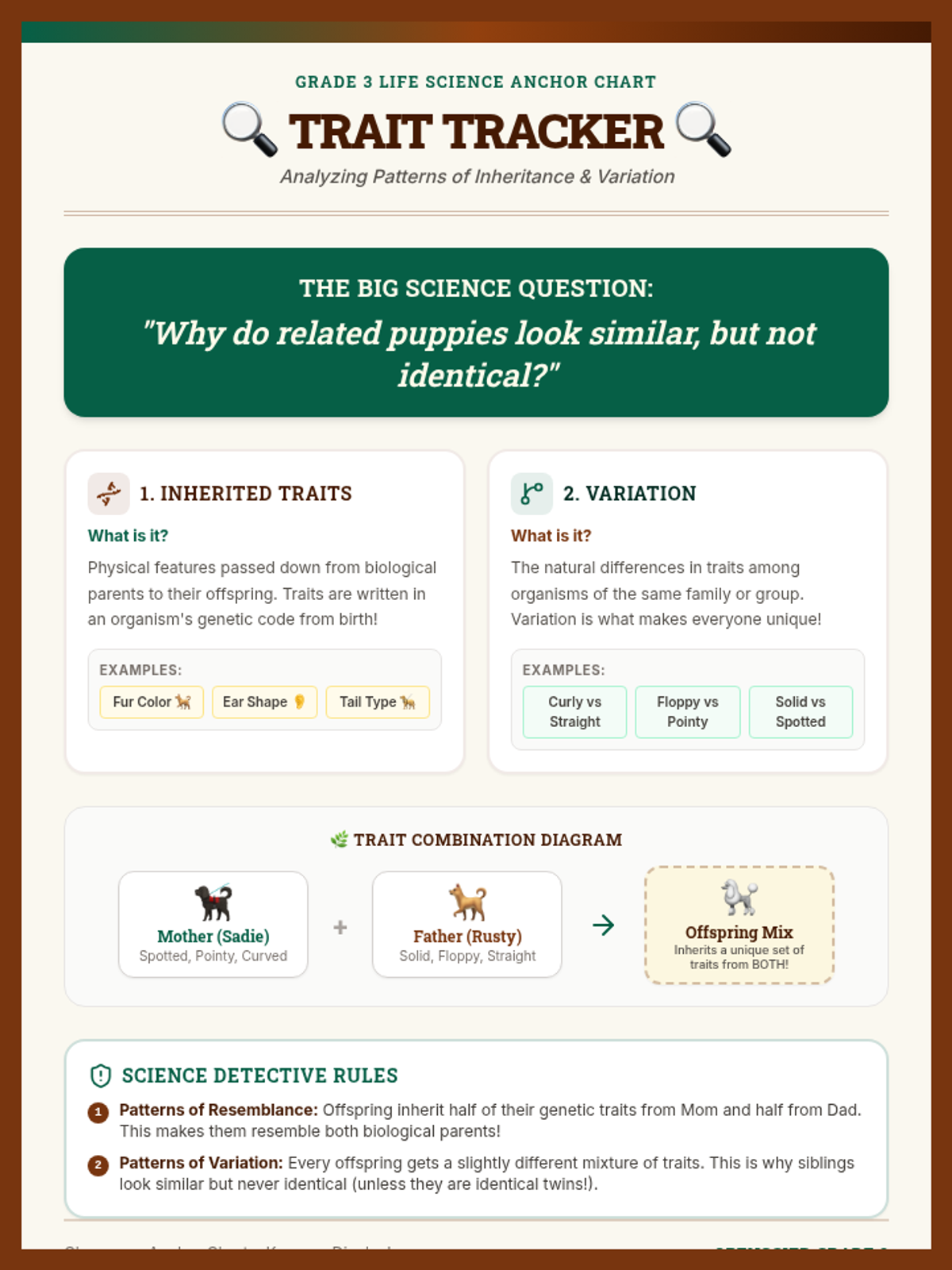
A print-ready science anchor chart summarizing trait inheritance patterns, resemblance, and variation. Designed with clear diagrams, simple child-friendly definitions, and "Science Detective Rules" for classroom display.
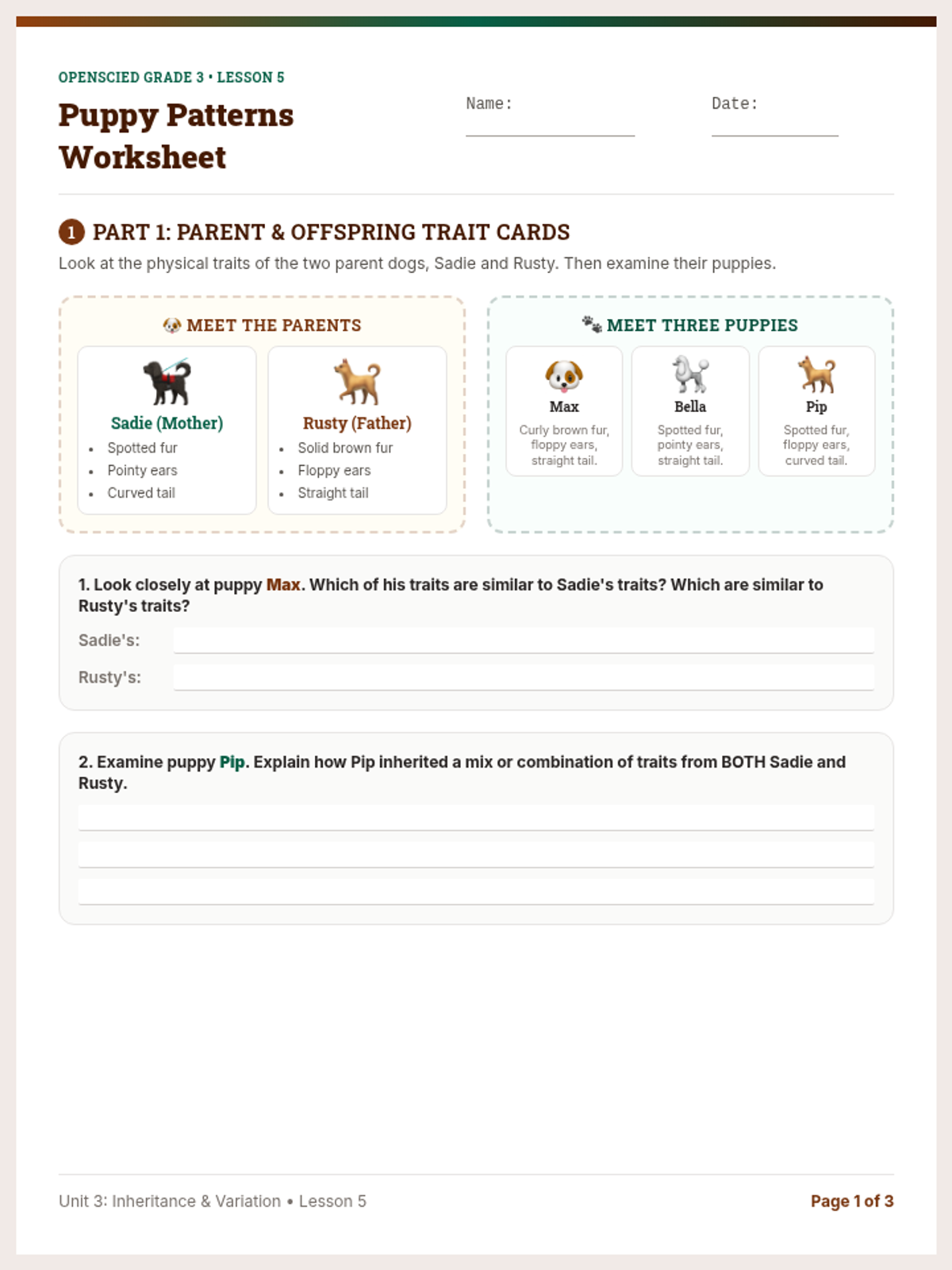
A 3-page, print-ready student data worksheet for OpenSciEd Grade 3 Lesson 5. Includes side-by-side parent and puppy trait cards, a visual trait checklist matrix, a tally chart, and a bar graphing activity.
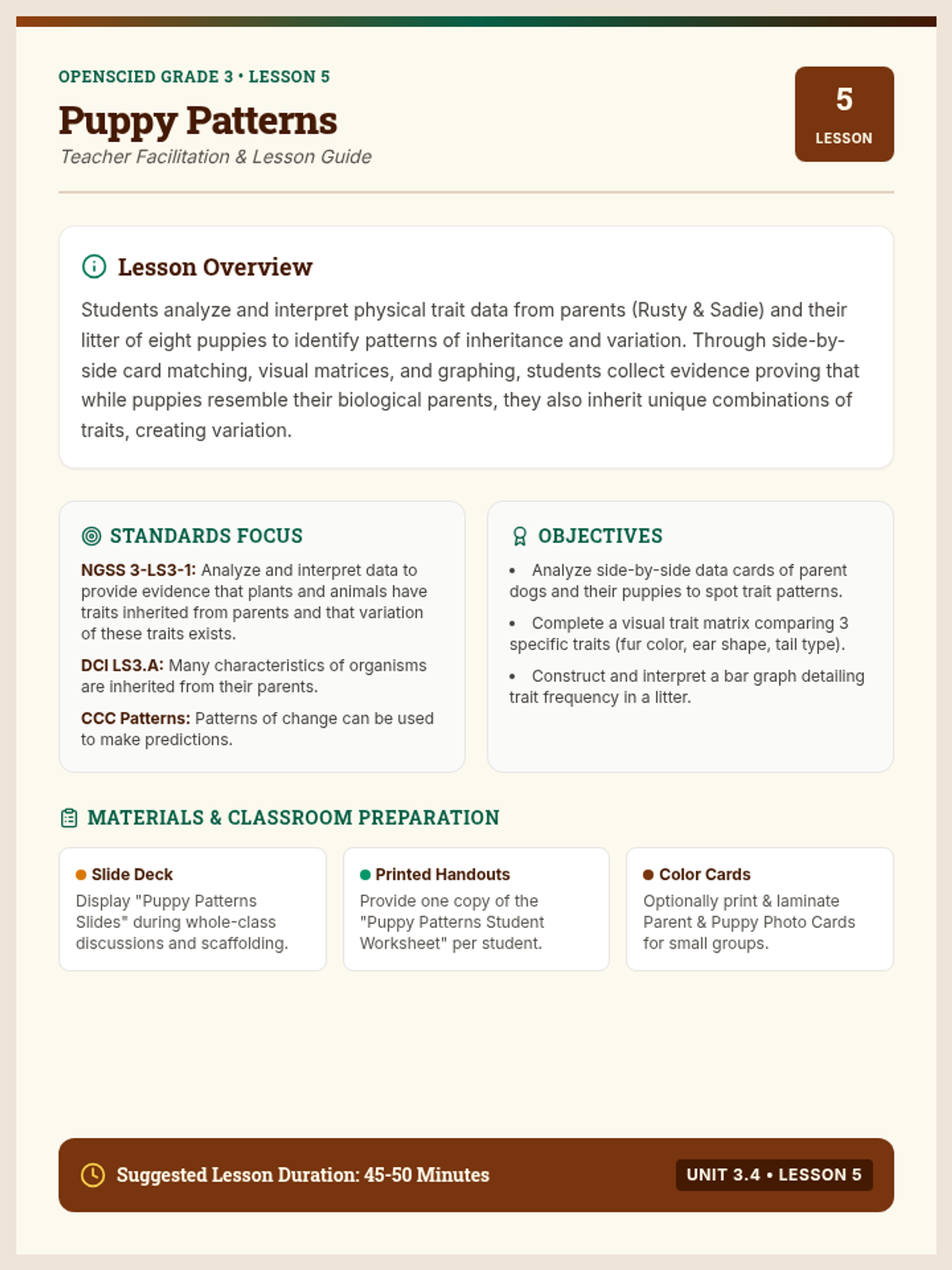
A comprehensive 2-page teacher facilitation guide for OpenSciEd Grade 3 Lesson 5. Includes lesson objectives, NGSS alignment, step-by-step facilitation instructions, discussion questions, common misconceptions, and an answer key.
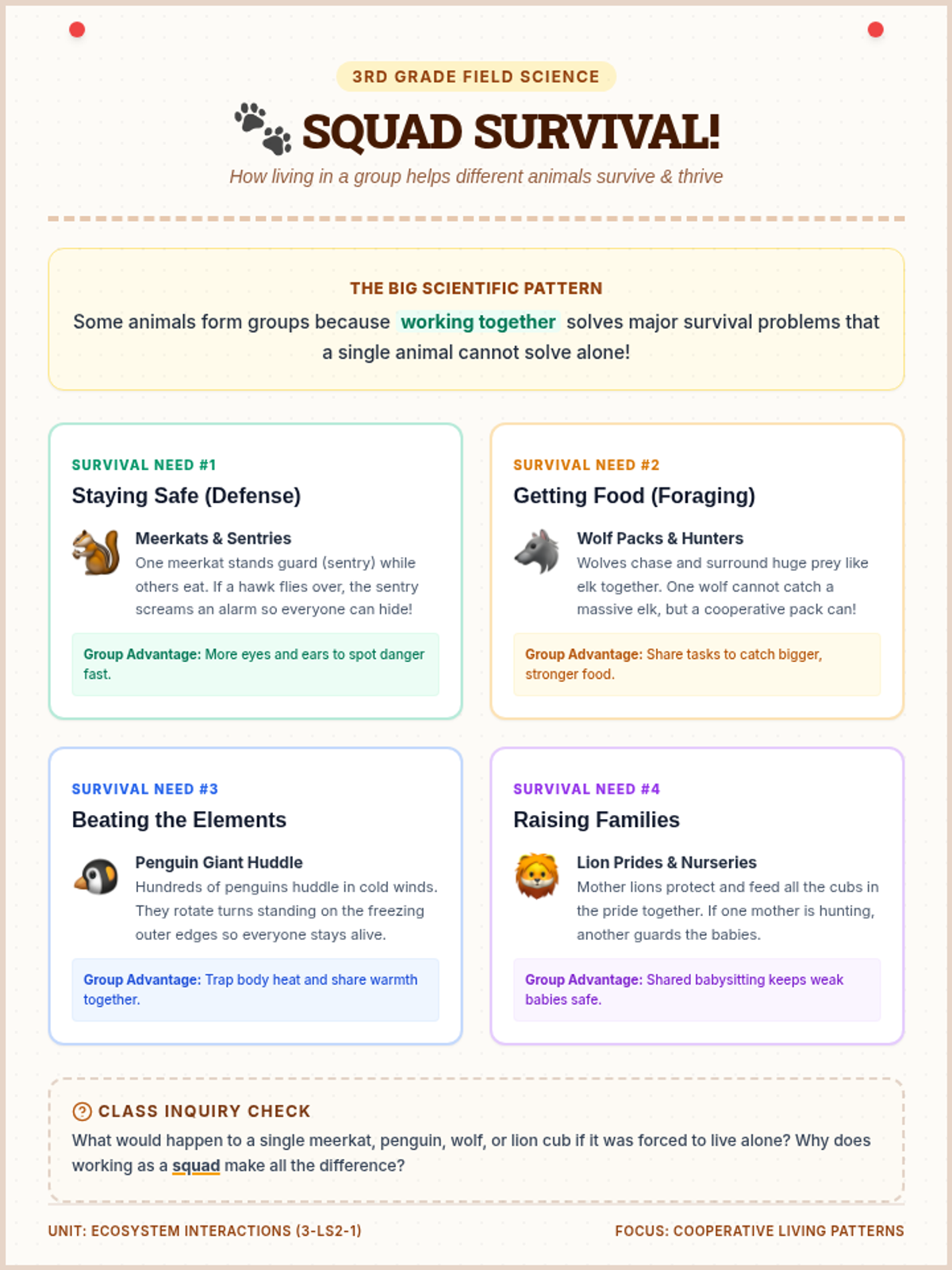
A high-impact 1-page visual classroom anchor chart summarizing the four major survival advantages of group living with memorable animal patterns.
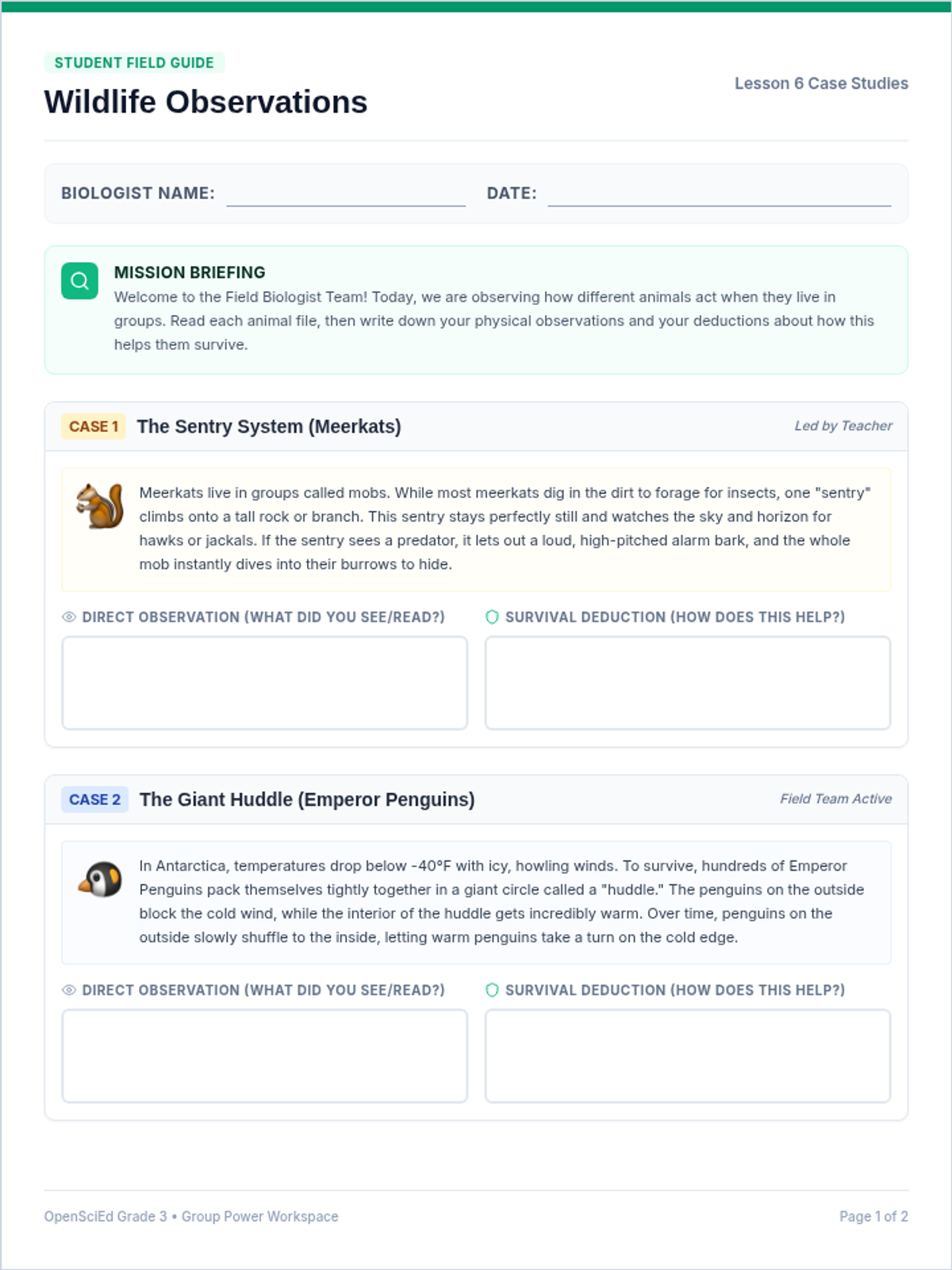
An interactive 2-page student observation worksheet where 3rd-grade field biologists record and synthesize observations of cooperative group behaviors across three animal case studies.
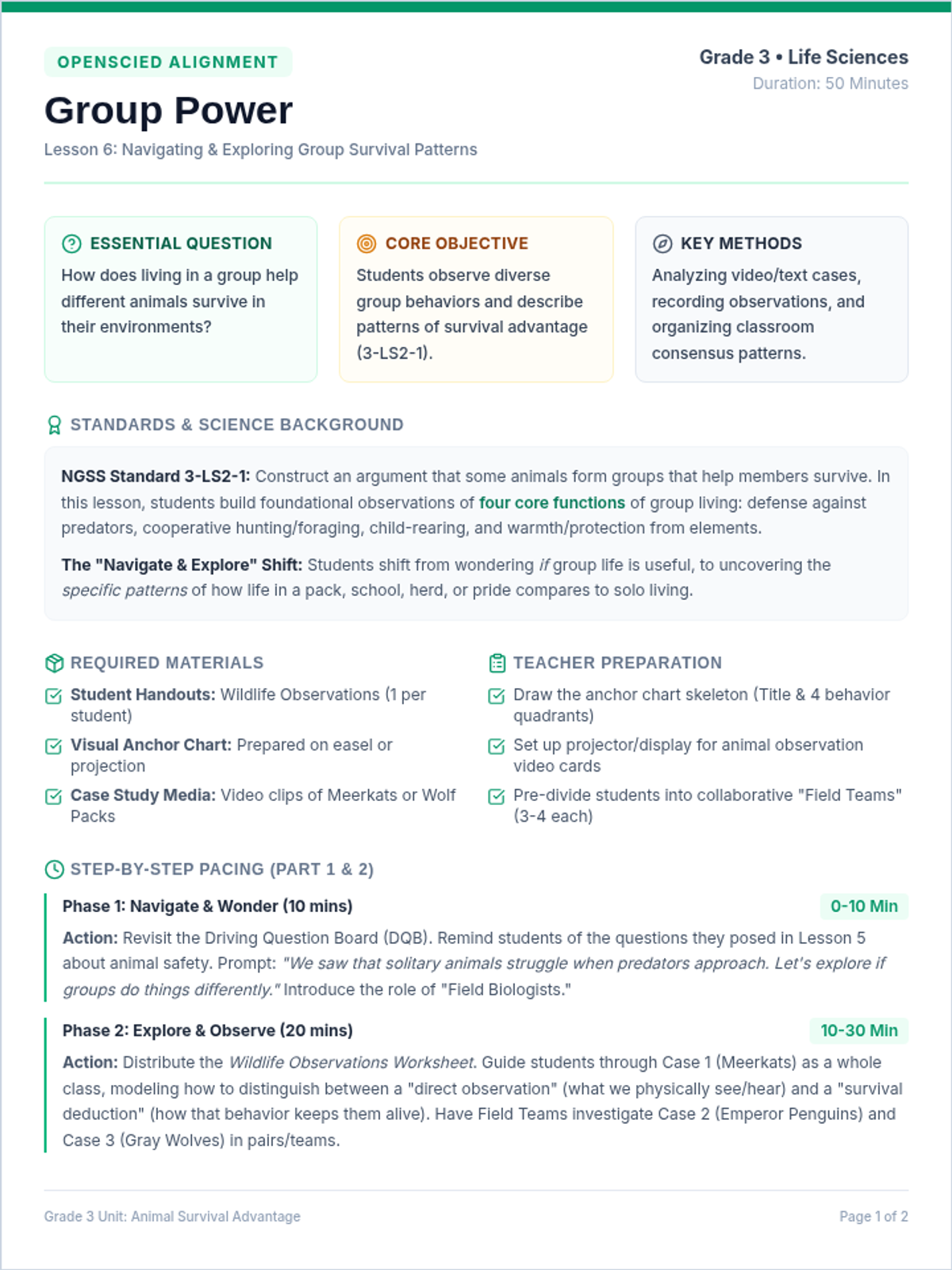
An OpenSciEd-aligned teacher guide for Lesson 6, containing detailed lesson plans, standards, facilitation prompts, and pedagogical strategies for teaching group animal behaviors.
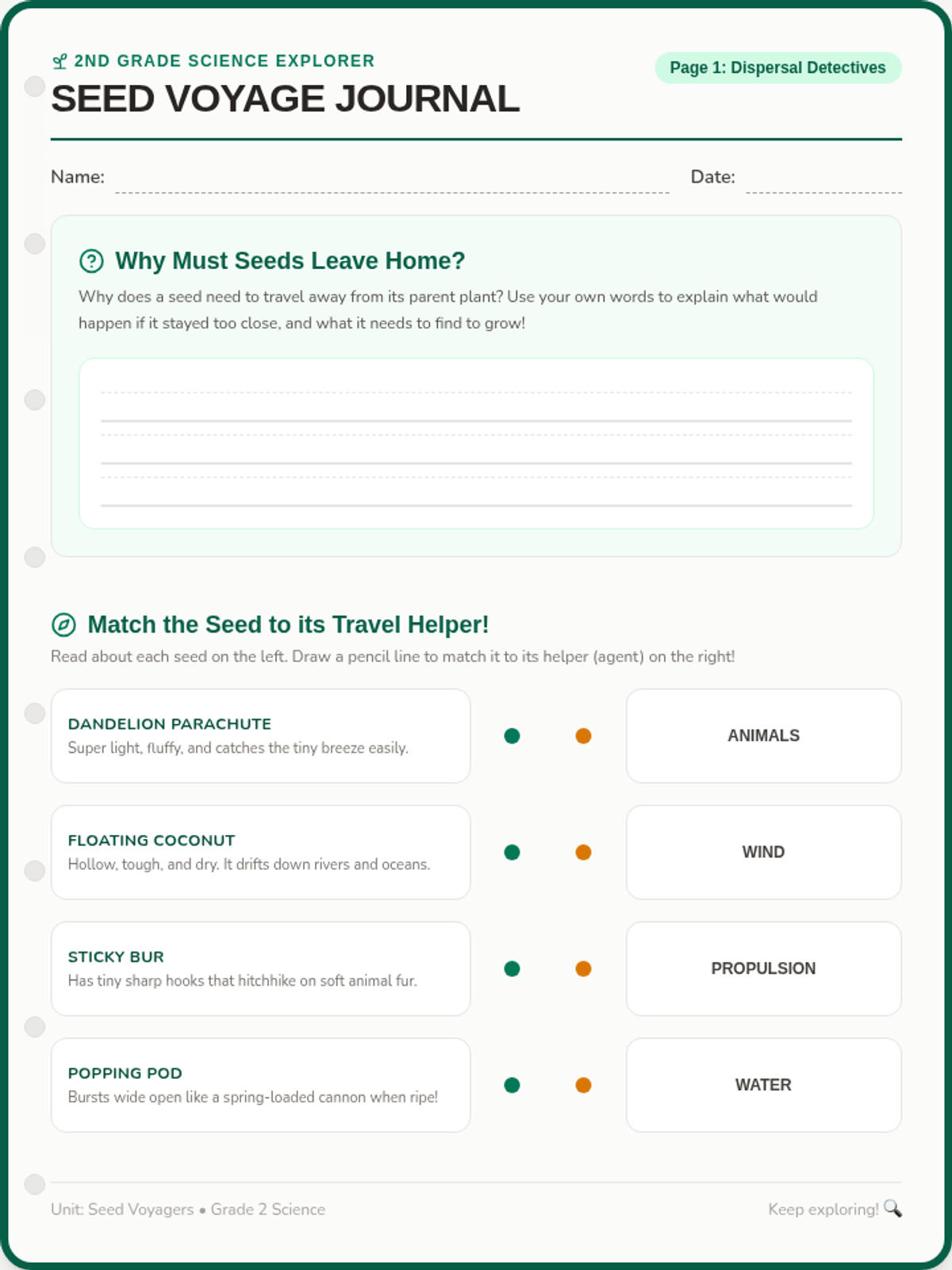
A two-page printable field journal for second-grade students to investigate and record seed dispersal. Features a conceptual writing prompt about parent plant competition, a text-based matching activity for four dispersal methods (wind, water, animals, and propulsion), a seed design drawing canvas, and dashed handwriting lines for a creative travel story.