A visual reference sheet for AP Physics C focusing on current reversal and the magnetic Lorentz force. Includes separate detailed sections for the force on a moving charge and the force on a wire segment with respective formulas and properties.
A clean, single-page standalone station card for Station 1 of the Partial Pressure Parade. Features clear sections for Dalton's Law concept, environment parameters, and two scaffolded calculation sandboxes for finding partial and total pressures.
A student rotation handout for the Partial Pressure Parade stations. Provides structured spaces for particle modeling, step-by-step SCUBA pressure calculations, mole fraction derivation discovery, and water vapor correction math. Includes explicit scaffolds for unit conversions and mathematical pathways with all code-style comments and pipes removed.
A teacher active monitoring checklist designed for the Pressure Parade chunked reading. Includes specific labels for "STOP AND JOT" and "THINK PAIR AND SHARE" look-fors, with a focus on student use of "SENTENCE STEMS" and conceptual accuracy.
A scaffolded reading passage exploring Dalton's Law of Partial Pressures. Features a chunked layout with prominent "STOP AND JOT" and "THINK PAIR AND SHARE" sections, including explicit "SENTENCE STEMS" for literacy support.
A 4-page set of large-format station cards for the Partial Pressure Parade. All coding-style identifiers (like Station ID codes or technical phase labels) and redundant highlighted "Sentence Stem" headers have been removed for a clean, professional student experience. Instructions are clear and direct.
A comprehensive 10-slide instructional slide deck for the Partial Pressure Parade lesson. Features a "Stop and Jot" bellringer, chunked reading guide slides with "Think Pair And Share" prompts and labeled "Sentence Stems," and a structured station rotation dashboard.
A comprehensive 10-slide instructional slide deck for the Partial Pressure Parade lesson, featuring a "Stop and Jot" bellringer, chunked reading guide slides with "Think Pair And Share" prompts and sentence stems, and a structured station rotation dashboard.
A teacher active monitoring checklist designed for the Pressure Parade reading passage. Includes specific look-fors for Dalton's Law, mole fractions, and vapor pressure corrections, with targeted scaffolding questions and misconception alerts.
A scaffolded reading passage exploring Dalton's Law of Partial Pressures. Features a chunked layout with prominent "STOP AND JOT" and "THINK PAIR AND SHARE" sections, with all coding-style labels and redundant headers removed for a cleaner student experience.
A teacher facilitation guide and monitoring checklist for the Ideal Identity Chunked Reading Passage. Includes specific look-fors for each reading chunk, scaffolding questions to address misconceptions, and a mastery checkpoint for formative assessment.
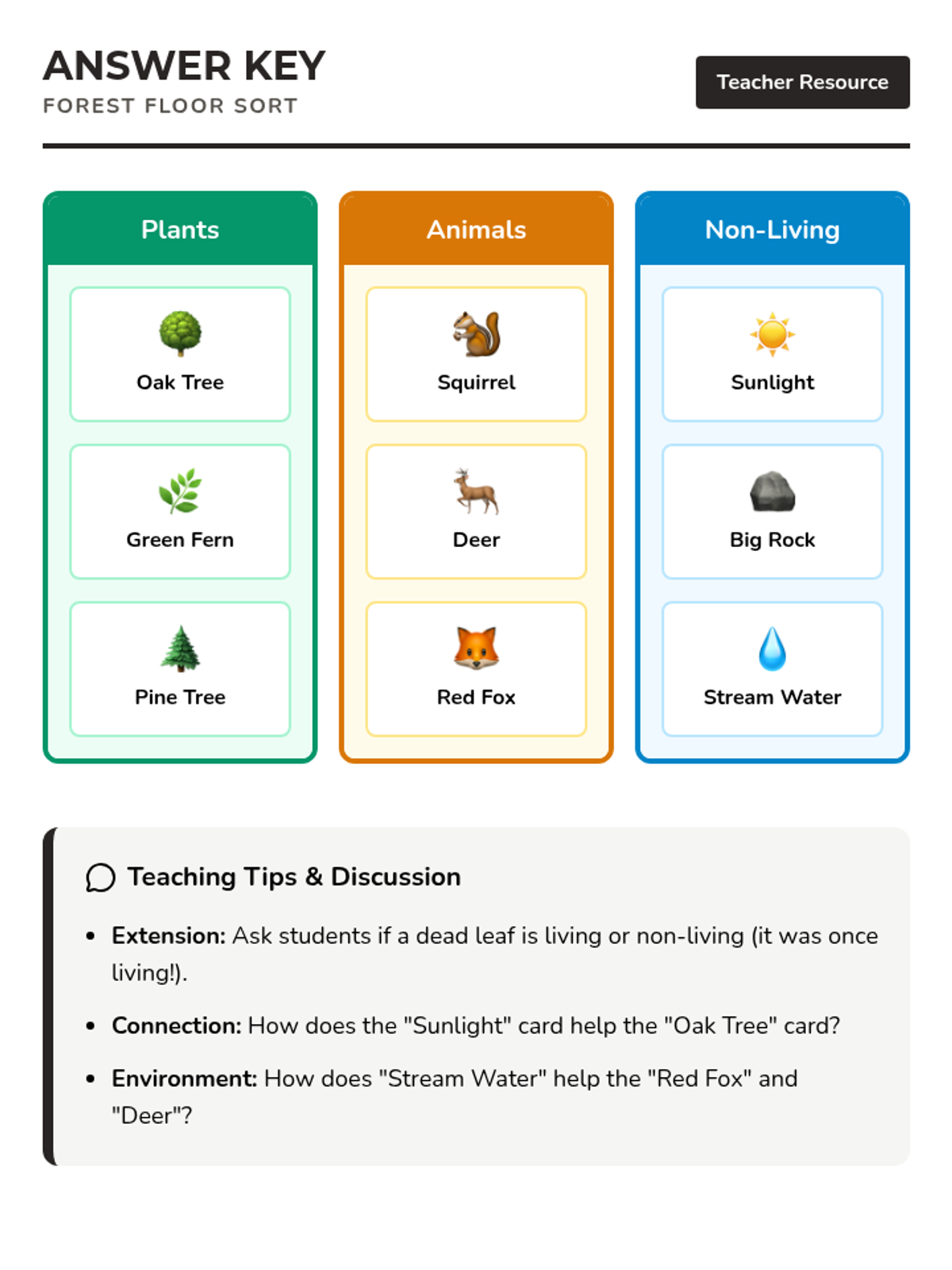
A teacher answer key for the Truffula Tragedy worksheet, providing correct responses, explanations, and a scoring guide for the short answer question.
A comprehensive video guide worksheet for high school environmental science students to complete while watching 'The Lorax', focusing on ecosystem services, biodiversity loss, and sustainability.
A comprehensive teacher professional development guide including essential AI concepts, facilitation strategies, and quick-reference prompt cheat sheets.
A high school activity sheet requiring students to apply the CO-STAR prompt engineering framework, map industry impacts, and draft ethical AI policies.
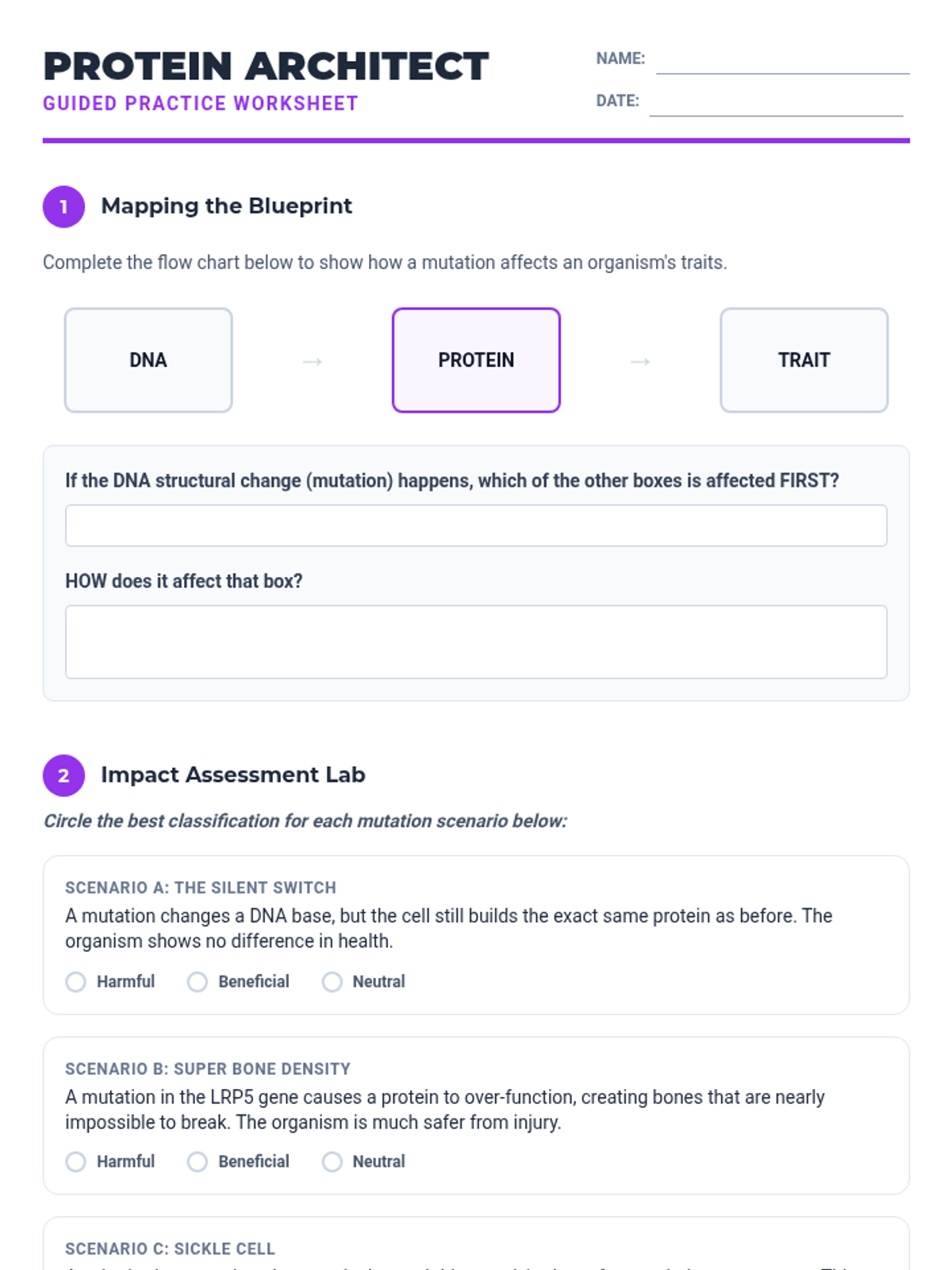
Advanced slide deck for high school students exploring generative AI paradigms, professional prompt engineering frameworks (CO-STAR), and the future of work.
A middle school activity sheet involving ethical analysis of recommendation engines, labeling neural network structures, and debating facial recognition bias.
A middle school slide deck focused on the technical basics of neural networks and the ethical challenges of recommendation engines and deepfakes.
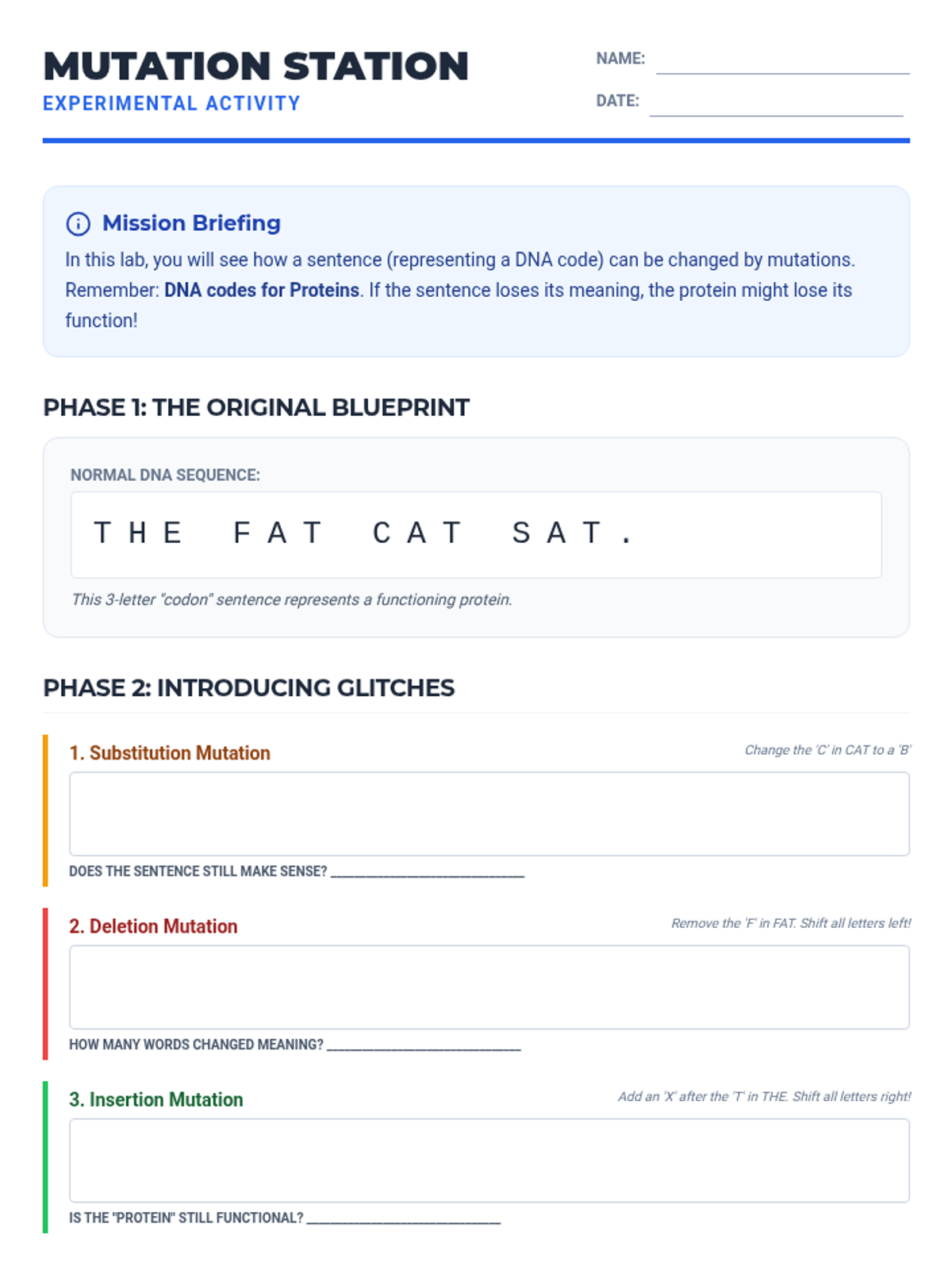
A grade 3-5 worksheet focusing on analyzing AI bias scenarios and practicing prompt engineering using a structured 'Role + Task + Detail' framework.
Instructional slides for grades 3-5, focusing on 'Pattern Detectives' - understanding data, spotting bias, and learning the basics of effective prompting.
An activity sheet for grades 1-2 focusing on distinguishing between traditional machines and AI, and designing an AI solution for a simple problem.
Instructional slides for grades 1-2 focused on 'Smart Helpers' - identifying AI in the world and understanding simple machine learning patterns.
A comprehensive teacher guide for the 'Robot Brains' lesson, including a script, instructional sequence, and differentiation tips for Kindergarten.
A simple, visual worksheet for Kindergarten students to practice identifying AI and 'training' a robot.
Introductory slide deck for Kindergarten students exploring the difference between human brains and computer 'brains'.
The comprehensive K-12 AI literacy curriculum scope and implementation guidelines for district-wide alignment.
A visual presentation slide deck designed for EOC Biology review, covering evolution, natural selection, ecological flow, and succession with clear diagrams and STAAR-specific testing tips.
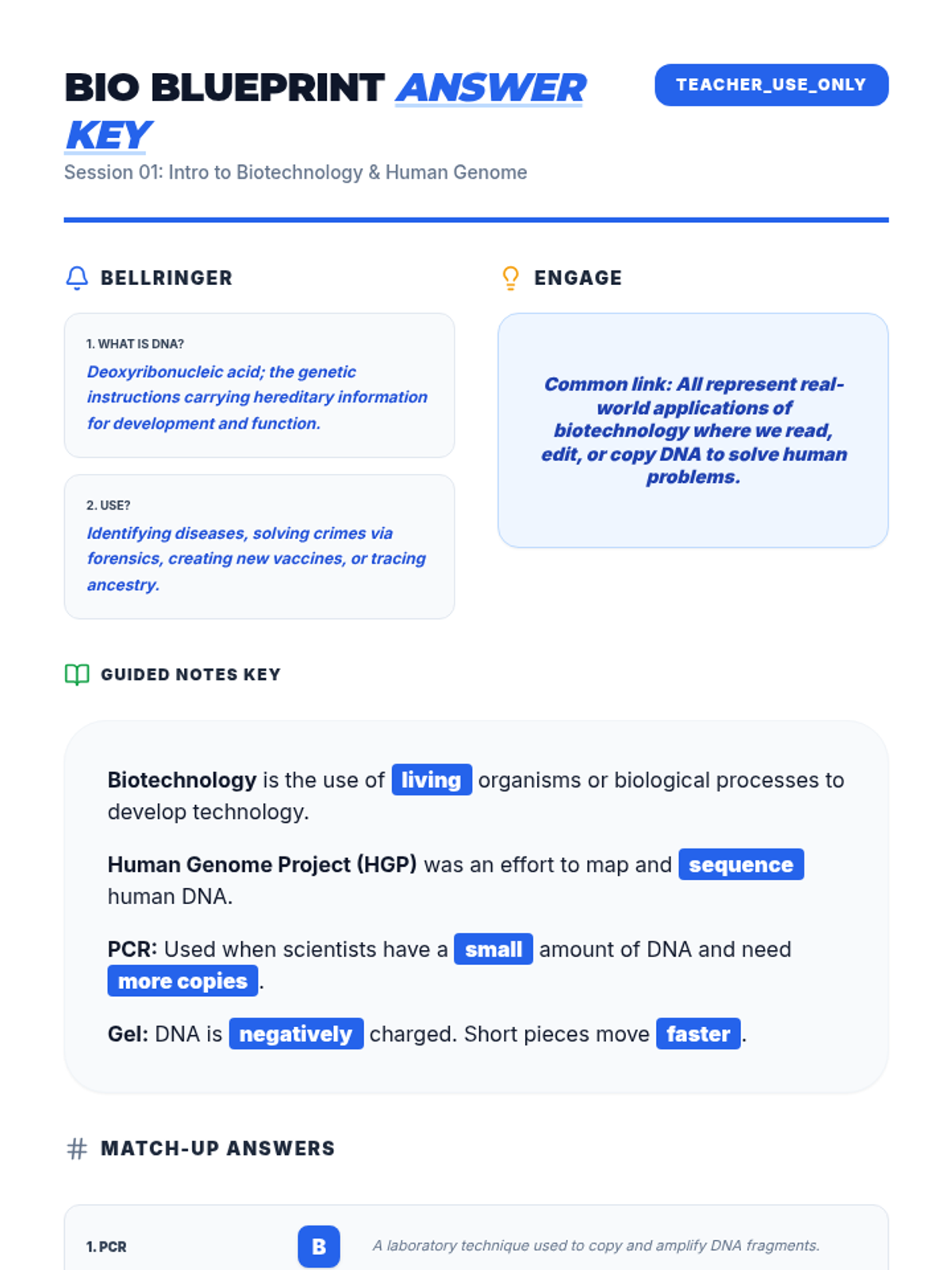
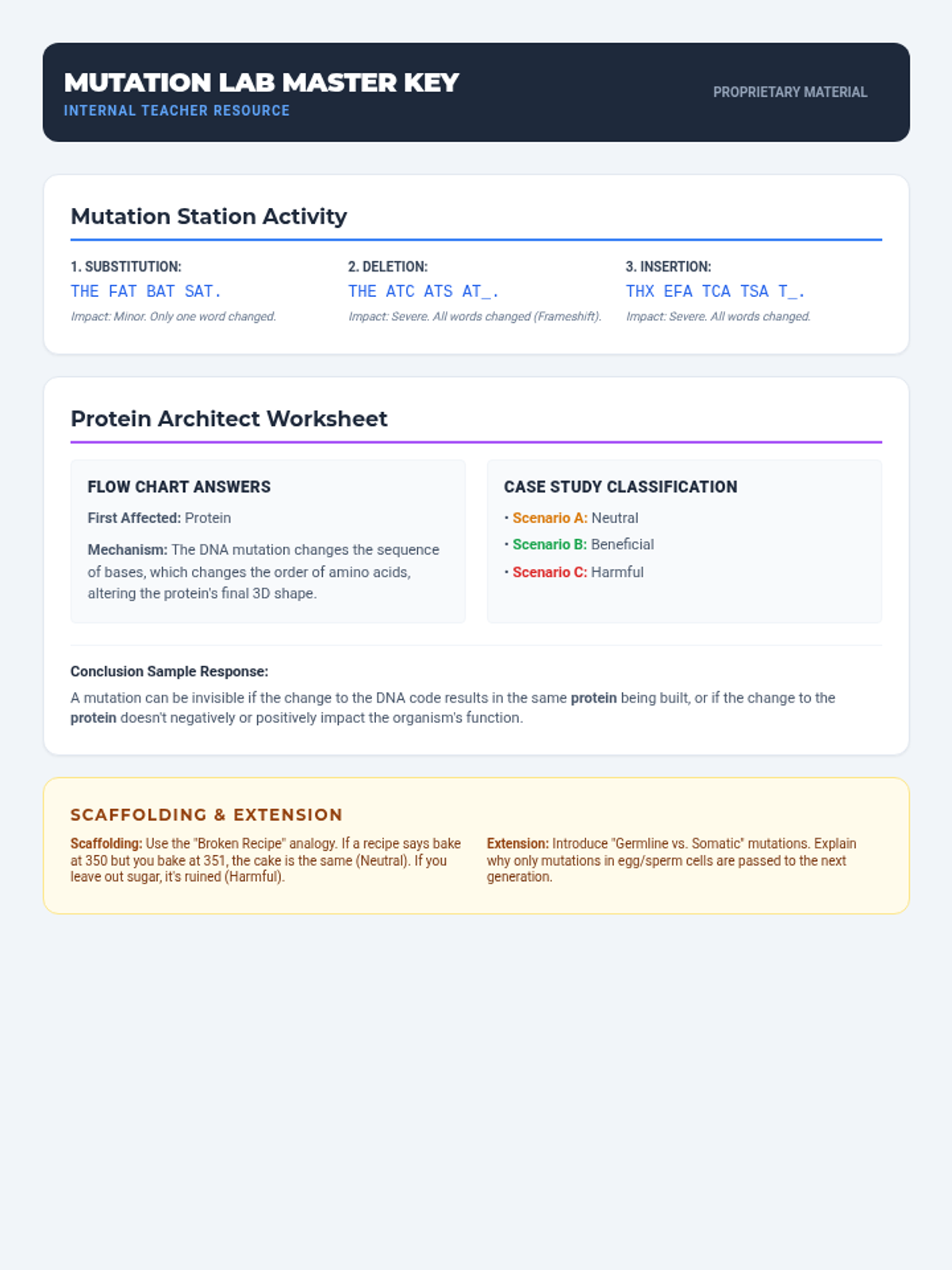
A comprehensive answer key for the Genetic Blueprint Mastery lesson. It provides solutions and explanations for the Division Decisions, Protein Factory, and Inheritance Impact worksheets, as well as the 10-question Genetics Mastery Quiz.
A comprehensive answer key for all student worksheets and the assessment quiz in the Survival Secrets lesson, including expected responses and common student misconceptions.
A 10-question multiple-choice assessment designed in the STAAR Biology EOC format, covering evolution, natural selection, taxonomy, and ecology. Includes diagrams and tables to mirror state testing standards.
A 10-question multiple-choice assessment modeled after the STAAR Biology EOC. It covers cell cycle regulation, DNA structure, protein synthesis, and Mendelian/non-Mendelian genetics, focusing on Reporting Categories 2 and 5.
A student worksheet focusing on Mendelian and non-Mendelian inheritance. It provides practice problems for monohybrid and dihybrid crosses, incomplete dominance, codominance, and sex-linked traits with dedicated spaces for Punnett squares and ratio analysis.
A set of 8 STAAR-format multiple-choice questions covering TEKS 8.5A-E, focusing on atomic structure, periodic table trends, chemical formulas, and the law of conservation of mass.
A student worksheet focusing on taxonomy, biological classification, dichotomous keys, and phylogenetic relationships within the context of the lizard case study.
A teacher reference material providing answer keys for the Matter Master STAAR Quiz and sample data/exemplar responses for the laboratory stations. Includes CER writing exemplars.
A student worksheet for protein synthesis. It includes exercises for labeling DNA nucleotides, mapping the central dogma flow (DNA to RNA to protein), and practicing transcription and translation with mutation analysis.
A visual presentation to introduce the Matter Master Labs lesson. Includes briefings for the CER framework, station objectives, and rotation procedures.