A student worksheet for planning a 3-slide genre pitch, featuring drawing areas for slide layouts and designated sections for definitions, characteristics, examples, and script notes.
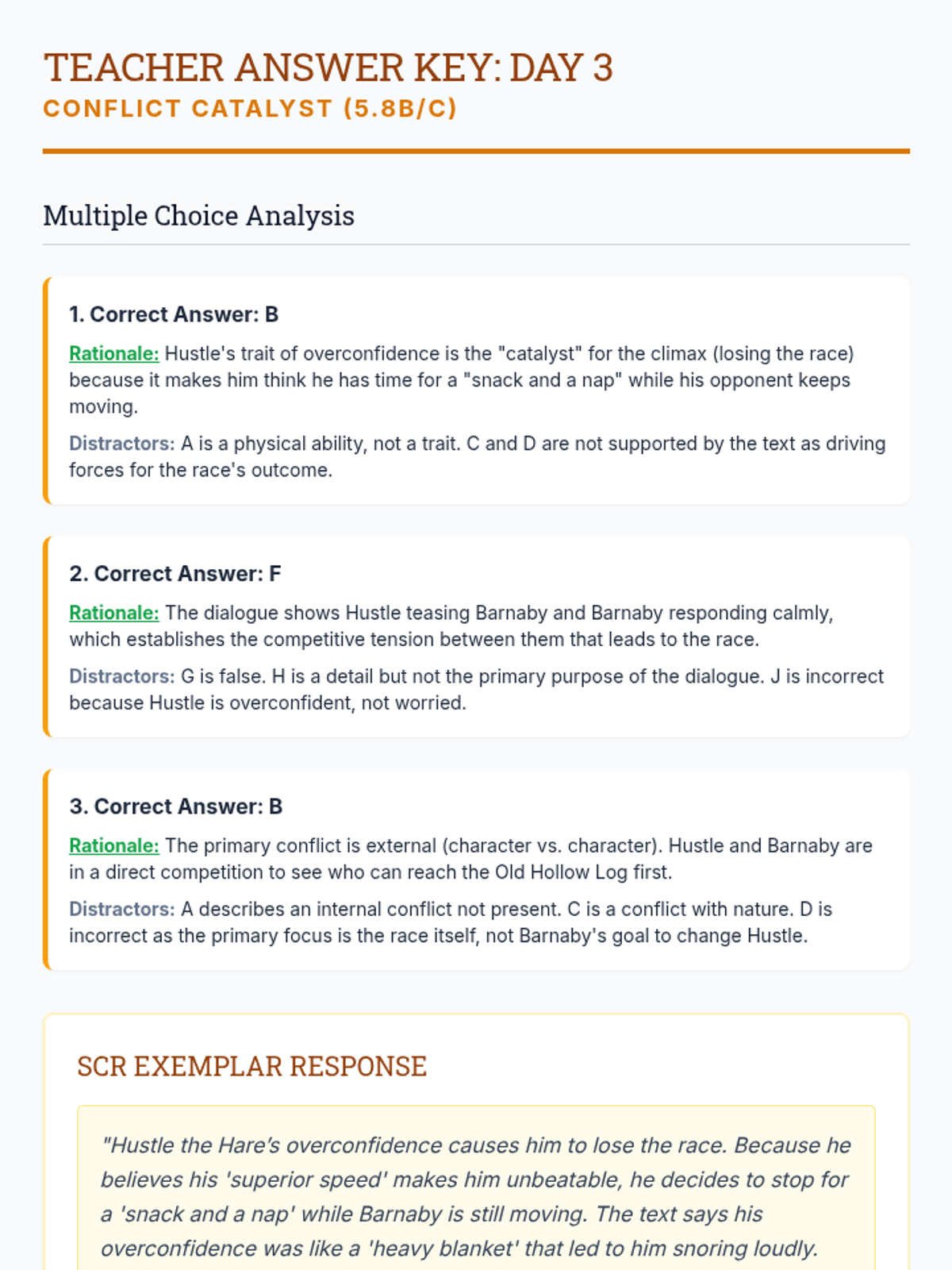
Updated Teacher Answer Key for Day 3. Rationale for Question 3 now aligns with the "primary conflict" stem on the student assessment page.
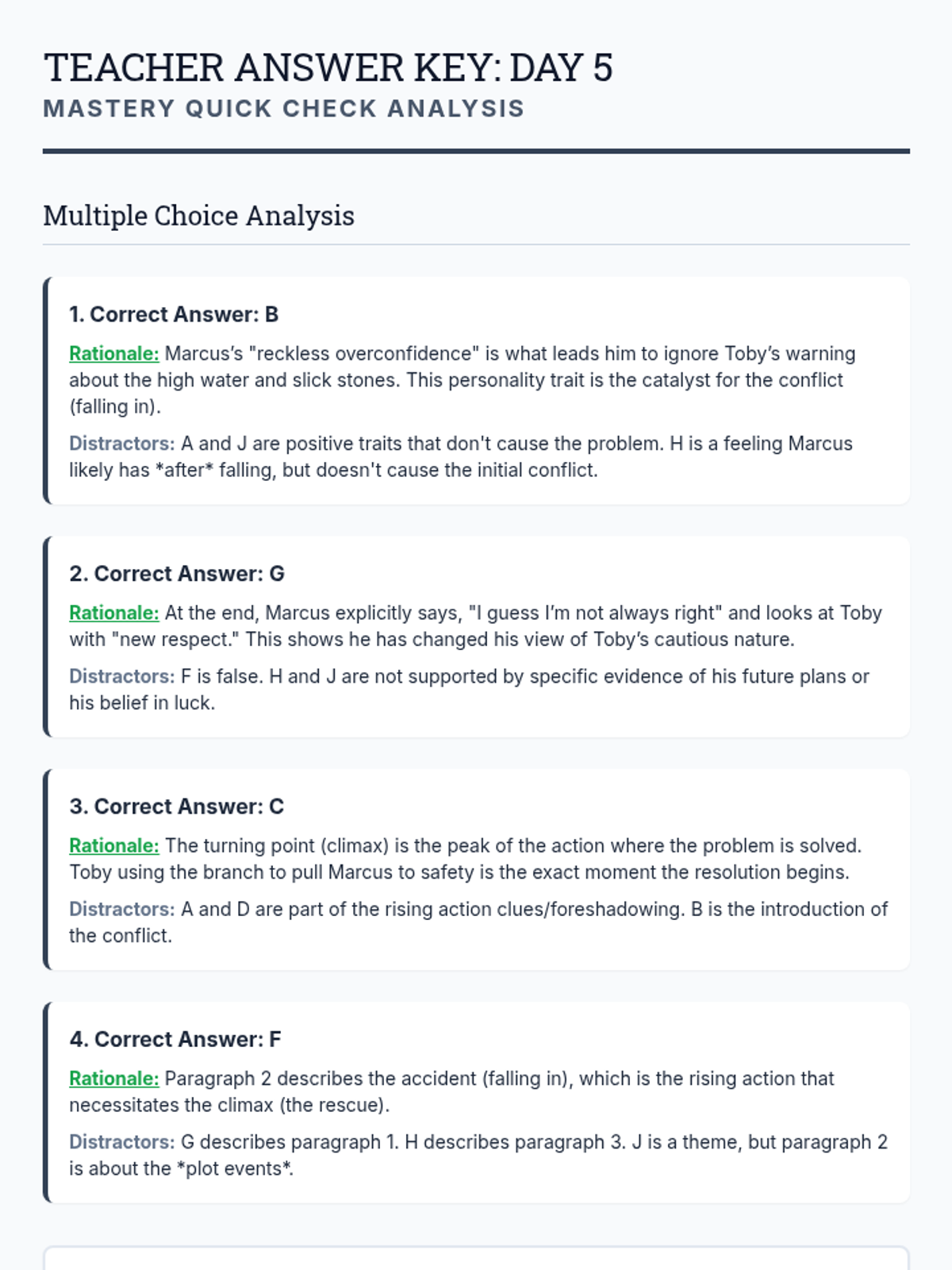
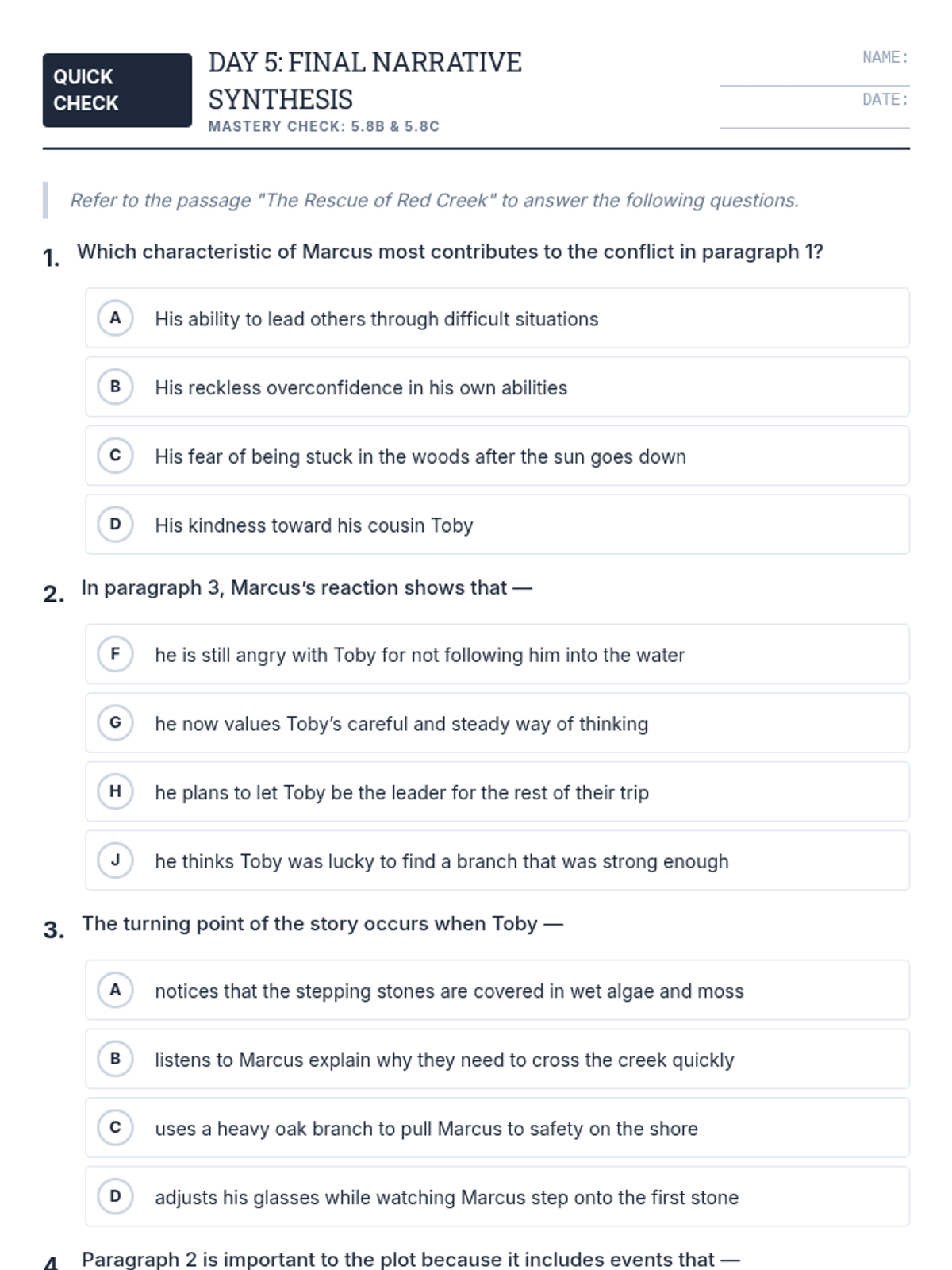
Final teacher answer key for the Day 5 Quick Check. Includes comprehensive rationales for all 4 MC questions and a detailed SCR exemplar that synthesizes character traits and plot resolution.
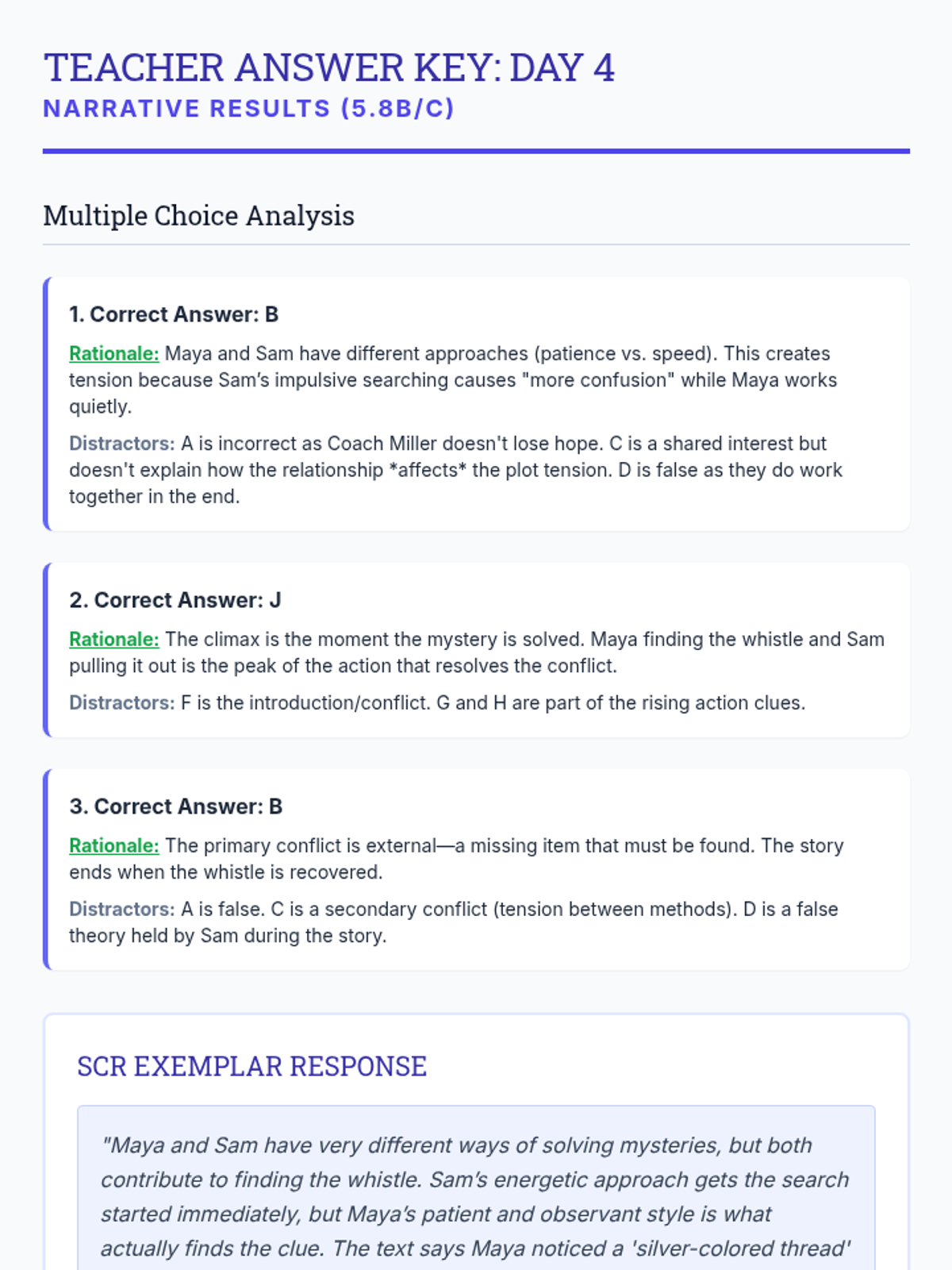
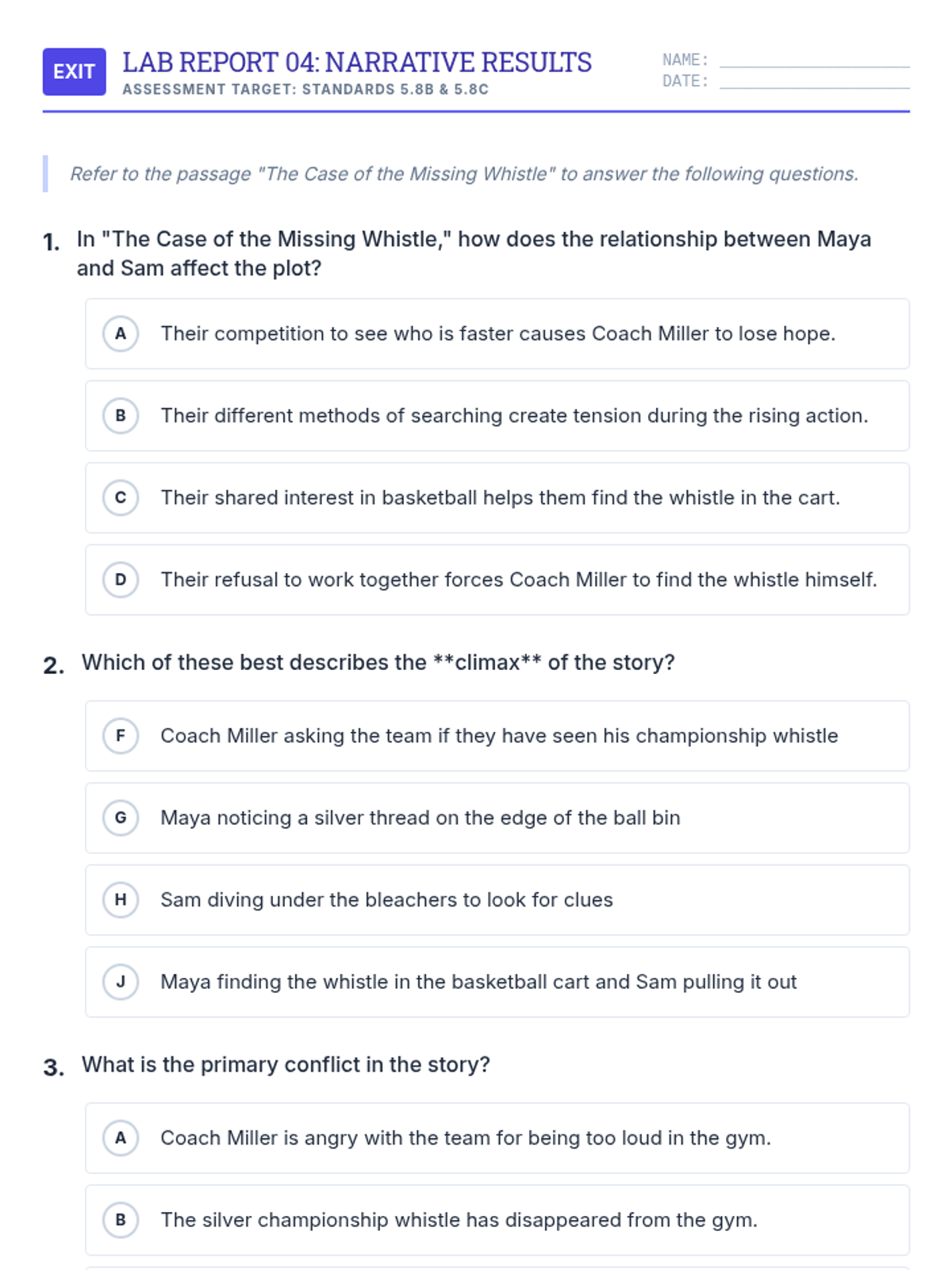
Teacher answer key for Day 4 Exit Ticket. Includes correct answers, rationale for MC choices, and an SCR exemplar synthesizing character interaction and plot resolution.
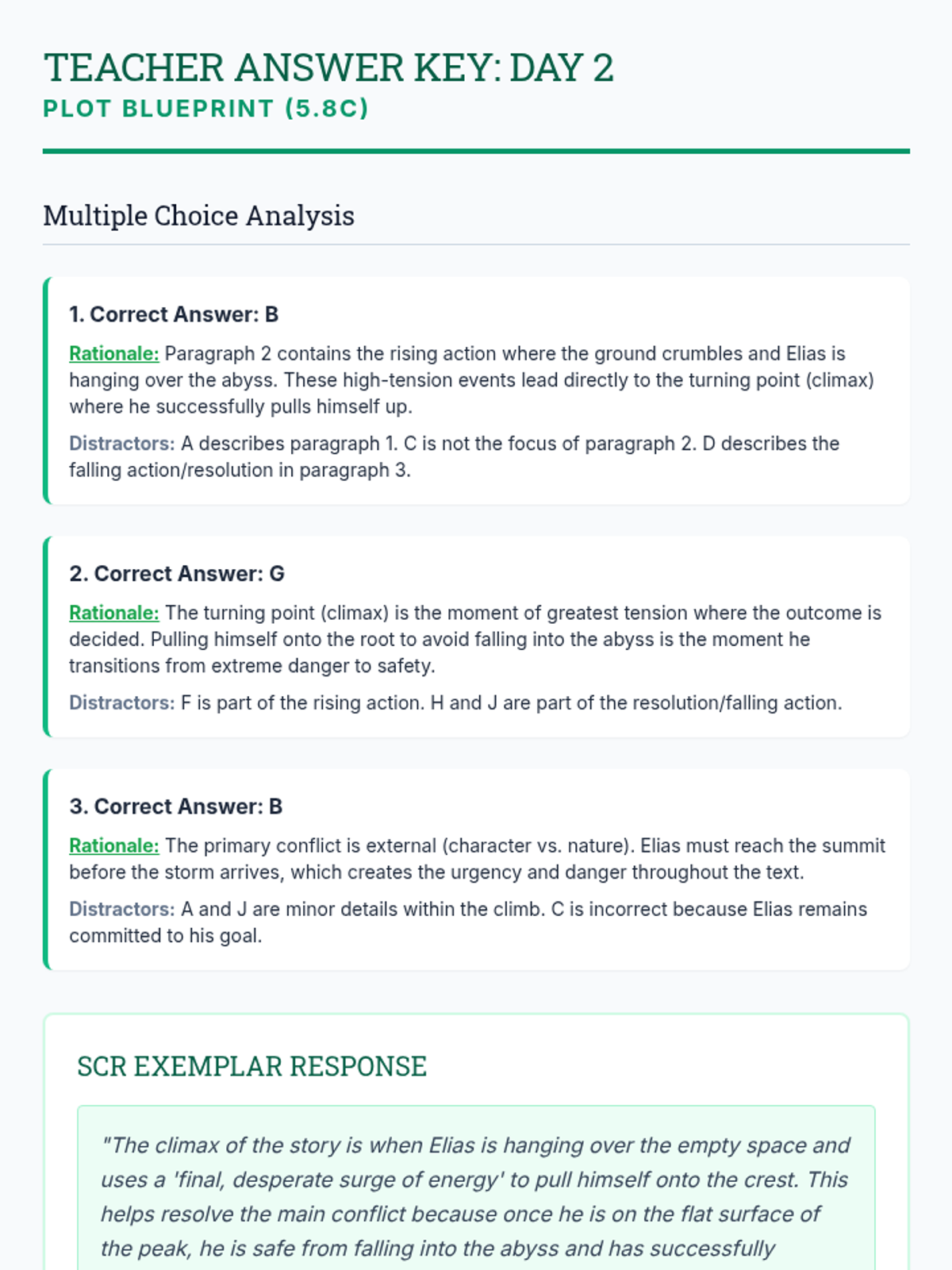
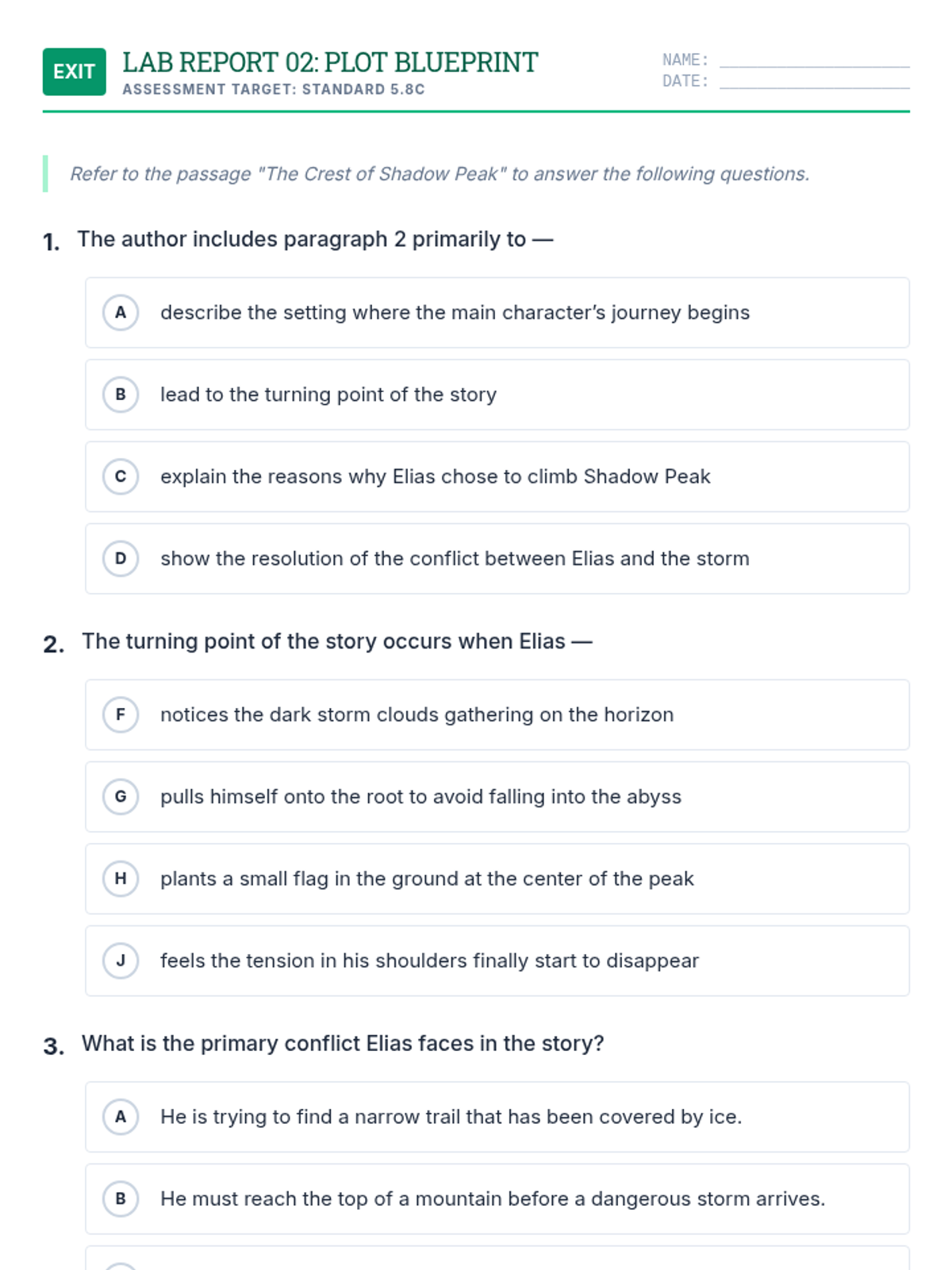
Updated Teacher Answer Key for Day 2 Exit Ticket. Corrected question labels and rationales to align perfectly with the 3 multiple-choice questions on the student page.
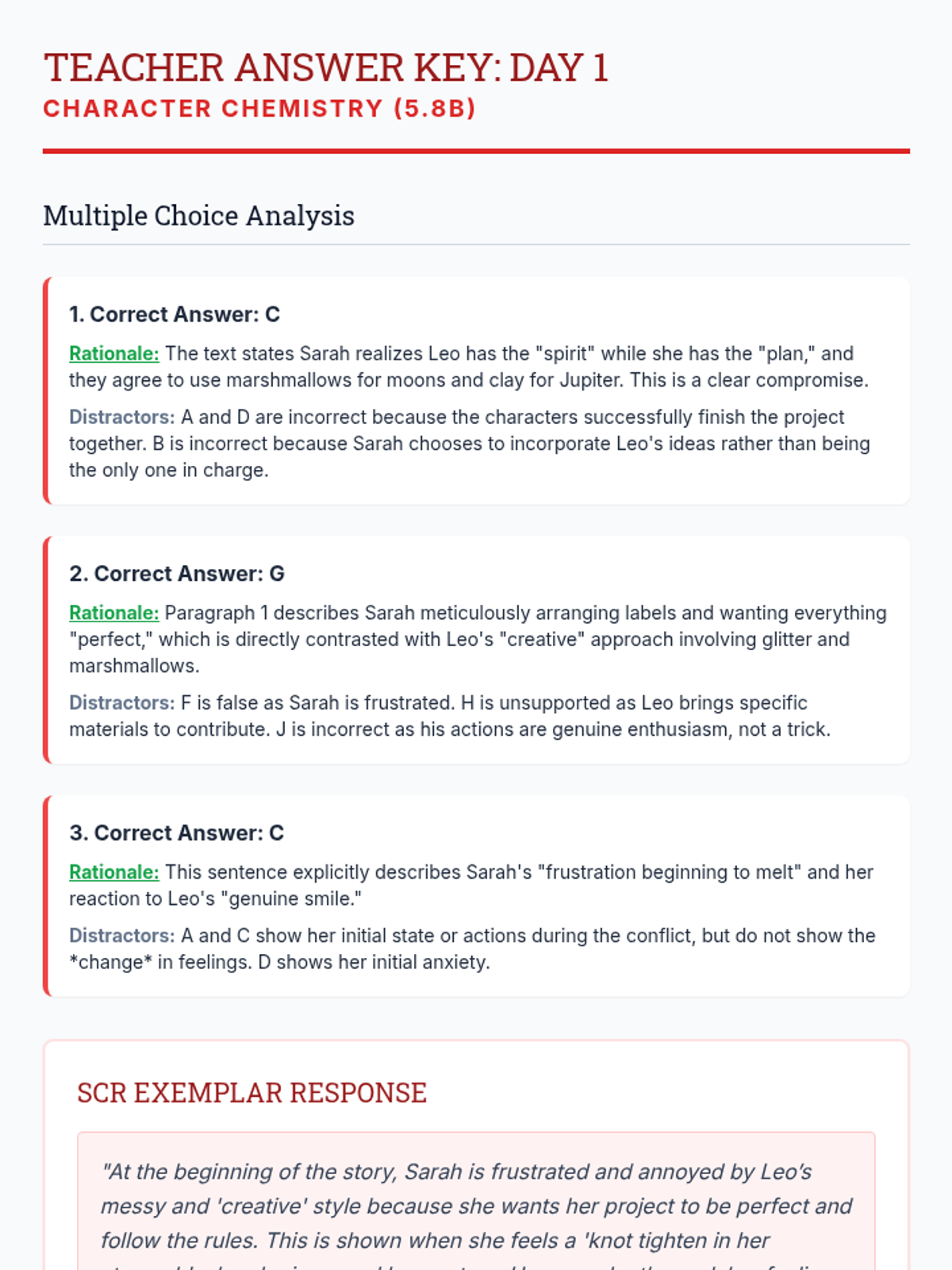
Teacher answer key for Day 1 Exit Ticket. Includes correct answers, rationales for multiple-choice questions, and a high-quality exemplar response for the SCR.
Updated Day 5 Quick Check with explicit page-break-inside: avoid rules. Each question block (and the SCR section) is grouped to ensure they do not split across multiple pages during printing.
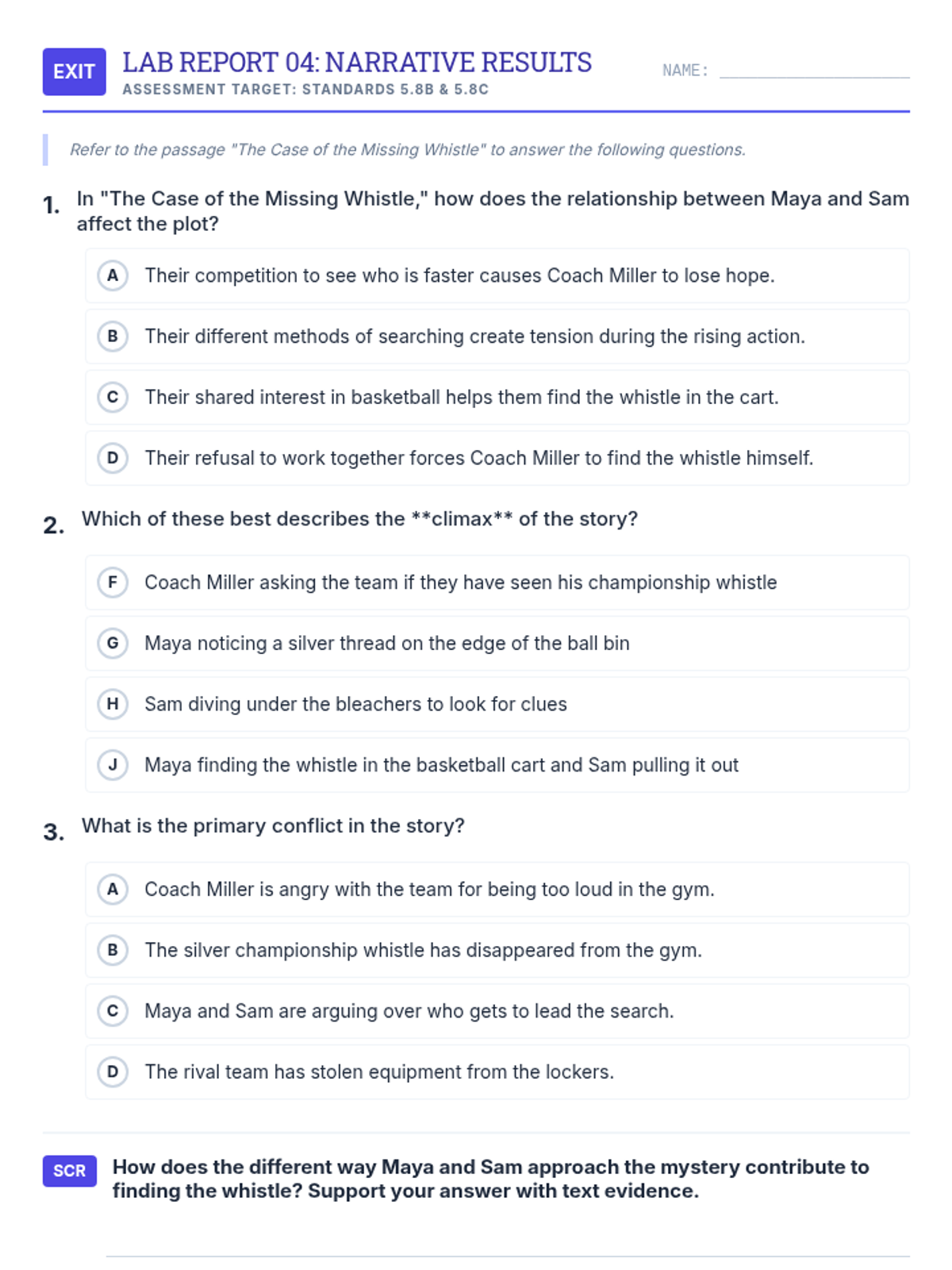
Updated Day 4 Exit Ticket with explicit page-break-inside: avoid rules. Question blocks are grouped to prevent splitting MC choices across multiple pages during printing.
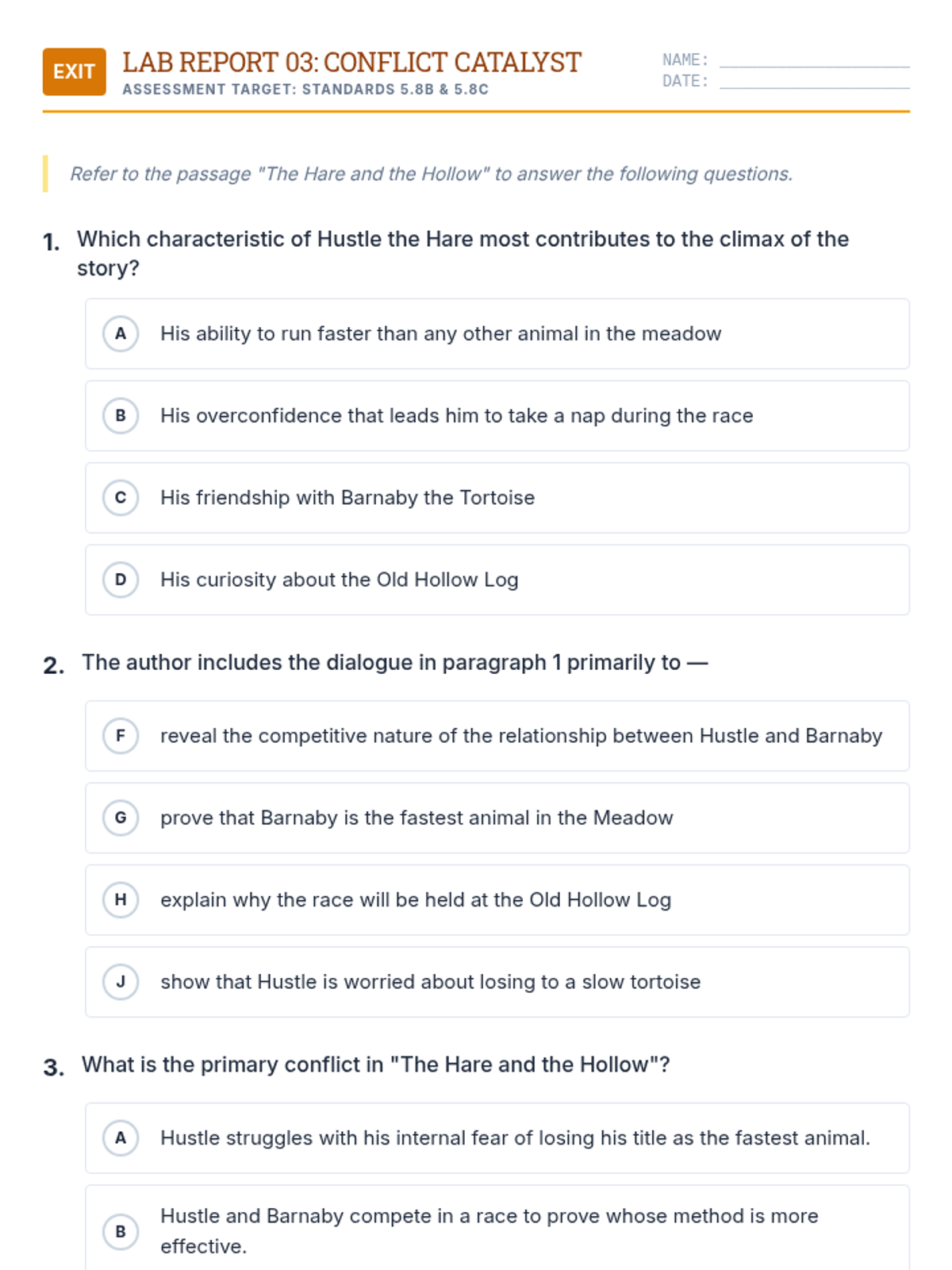
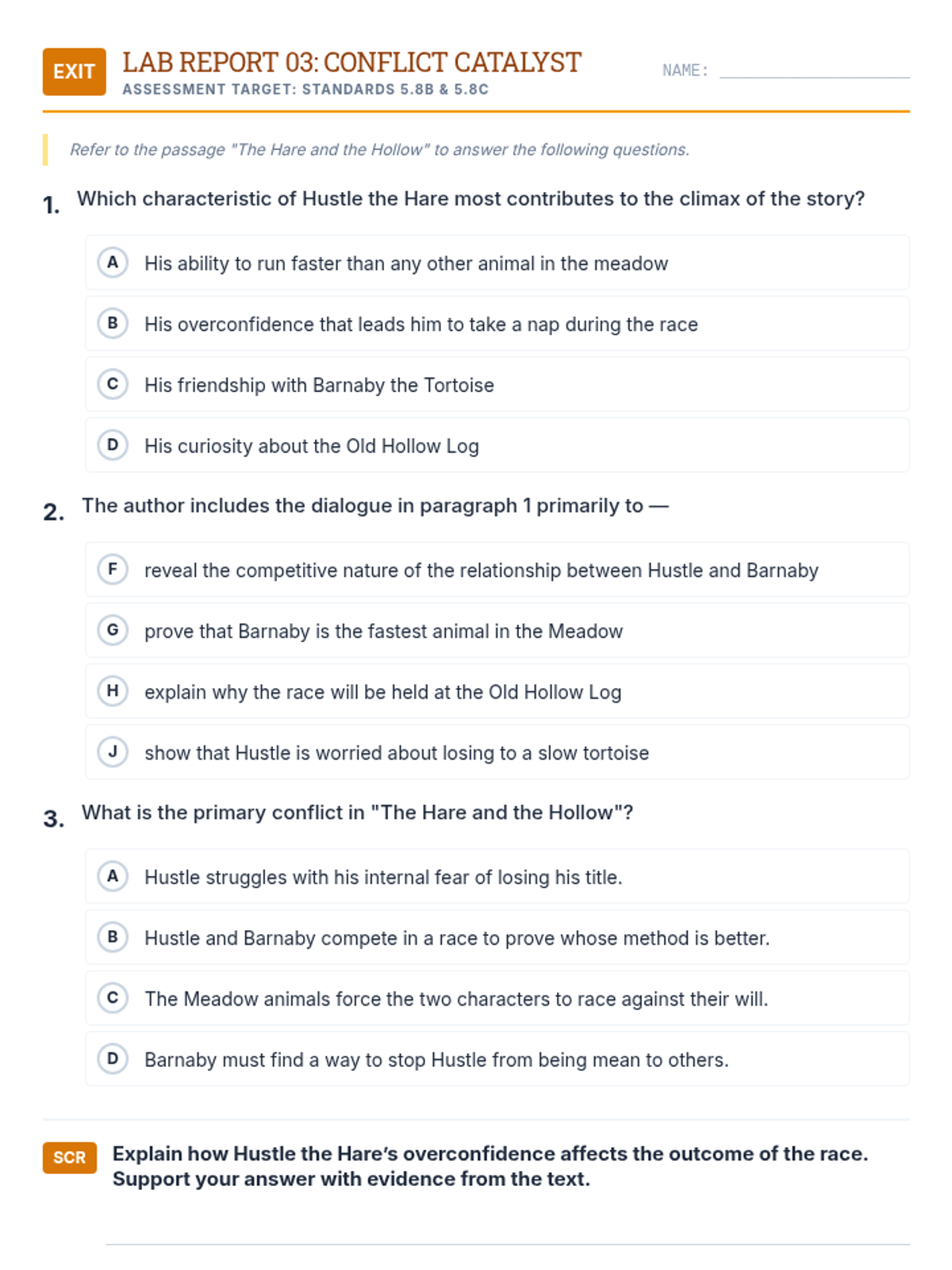
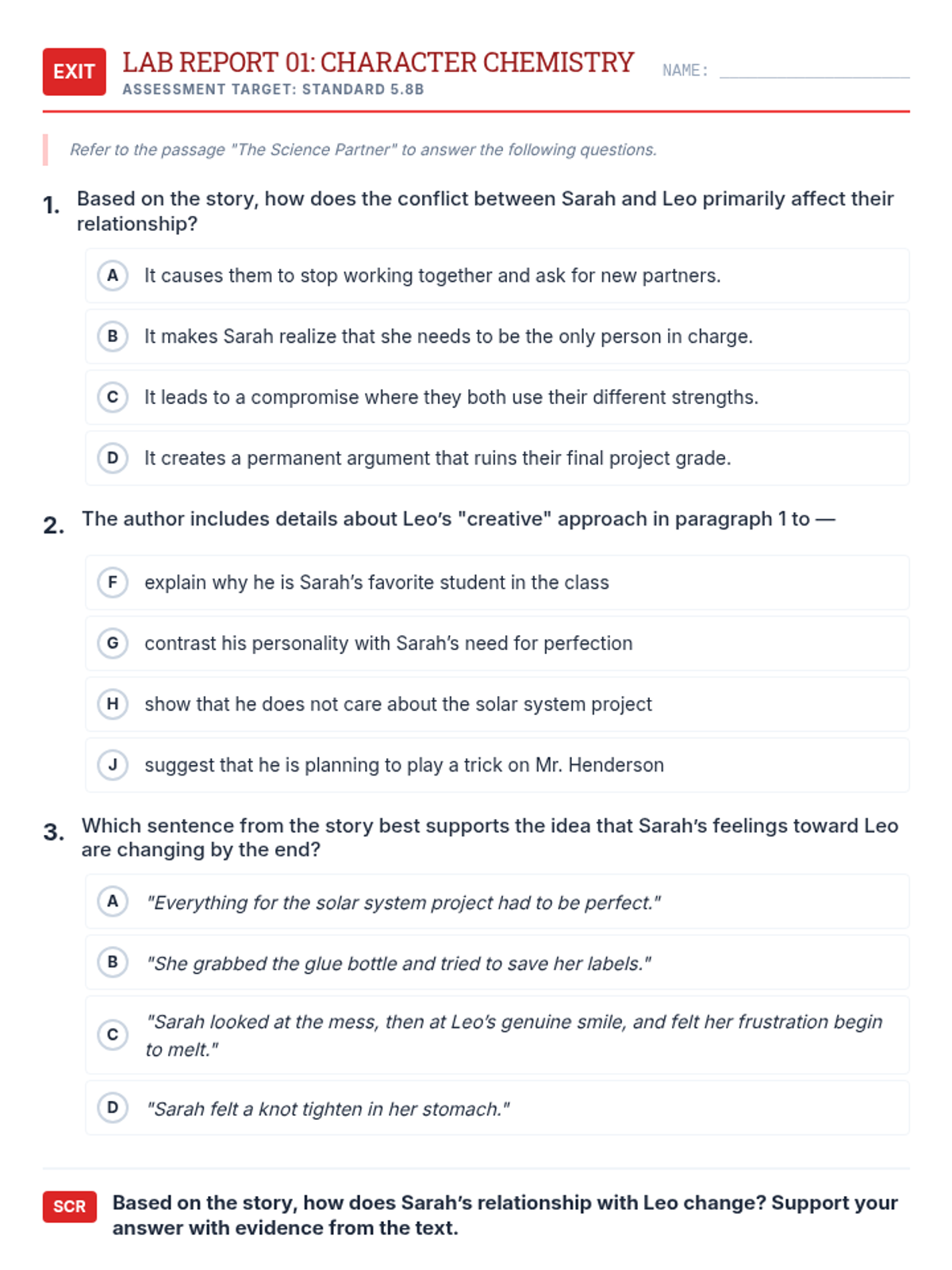
Updated Day 3 Exit Ticket with explicit page-break-inside: avoid rules on each question block. MC and SCR sections now stay grouped together for clean printing.
Updated Day 2 Exit Ticket with explicit page-break-inside: avoid rules on each question block to ensure clean printing. All questions and answer choices now stay grouped together.
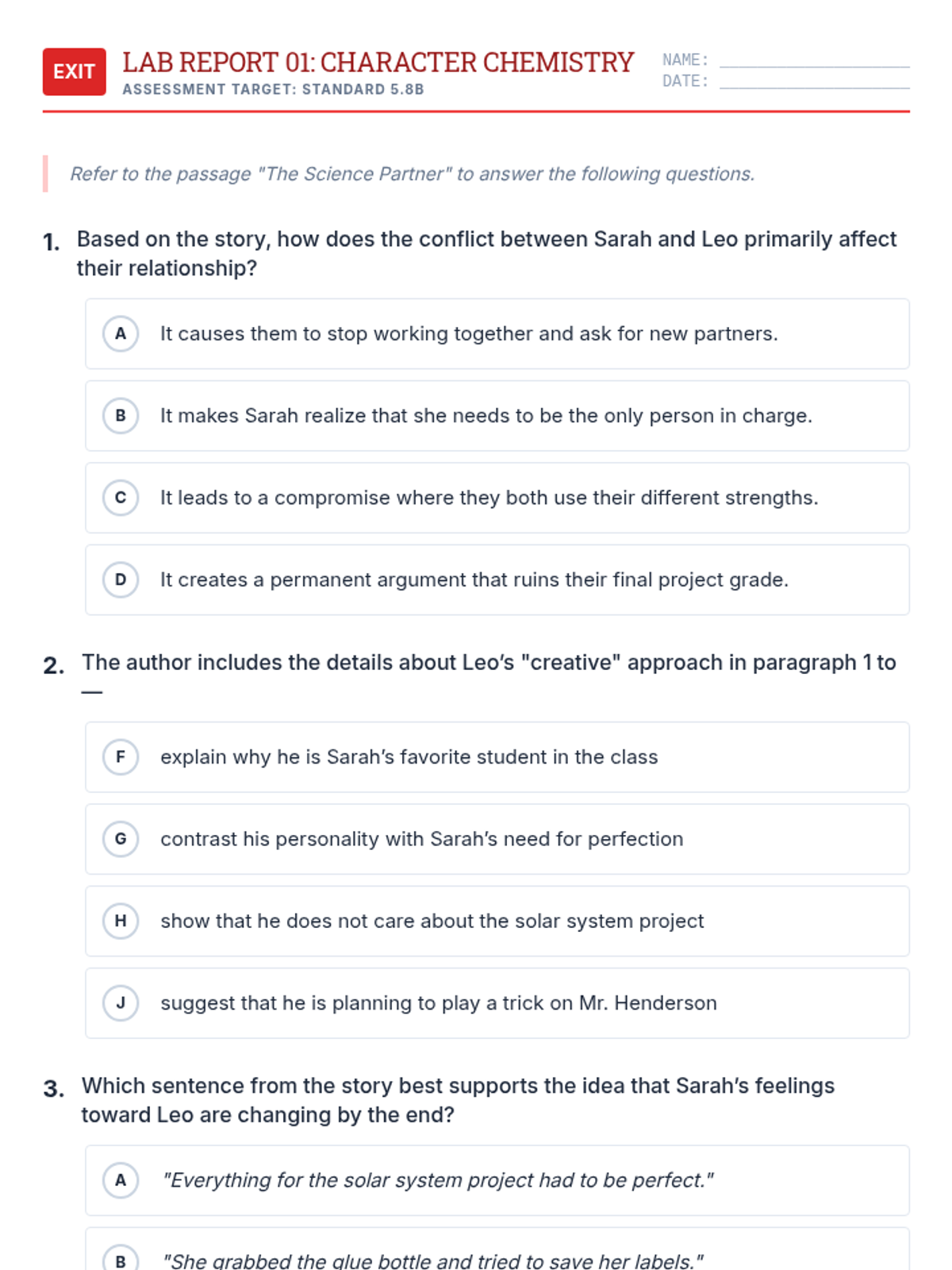
Updated Day 1 Exit Ticket with explicit page-break-inside: avoid rules on each question block to ensure clean printing. MC and SCR sections now stay grouped together if the document spans multiple pages.
Updated Day 4 Exit Ticket with tightened spacing to ensure optimal one-page printing while maintaining 3 MC questions and an SCR section.
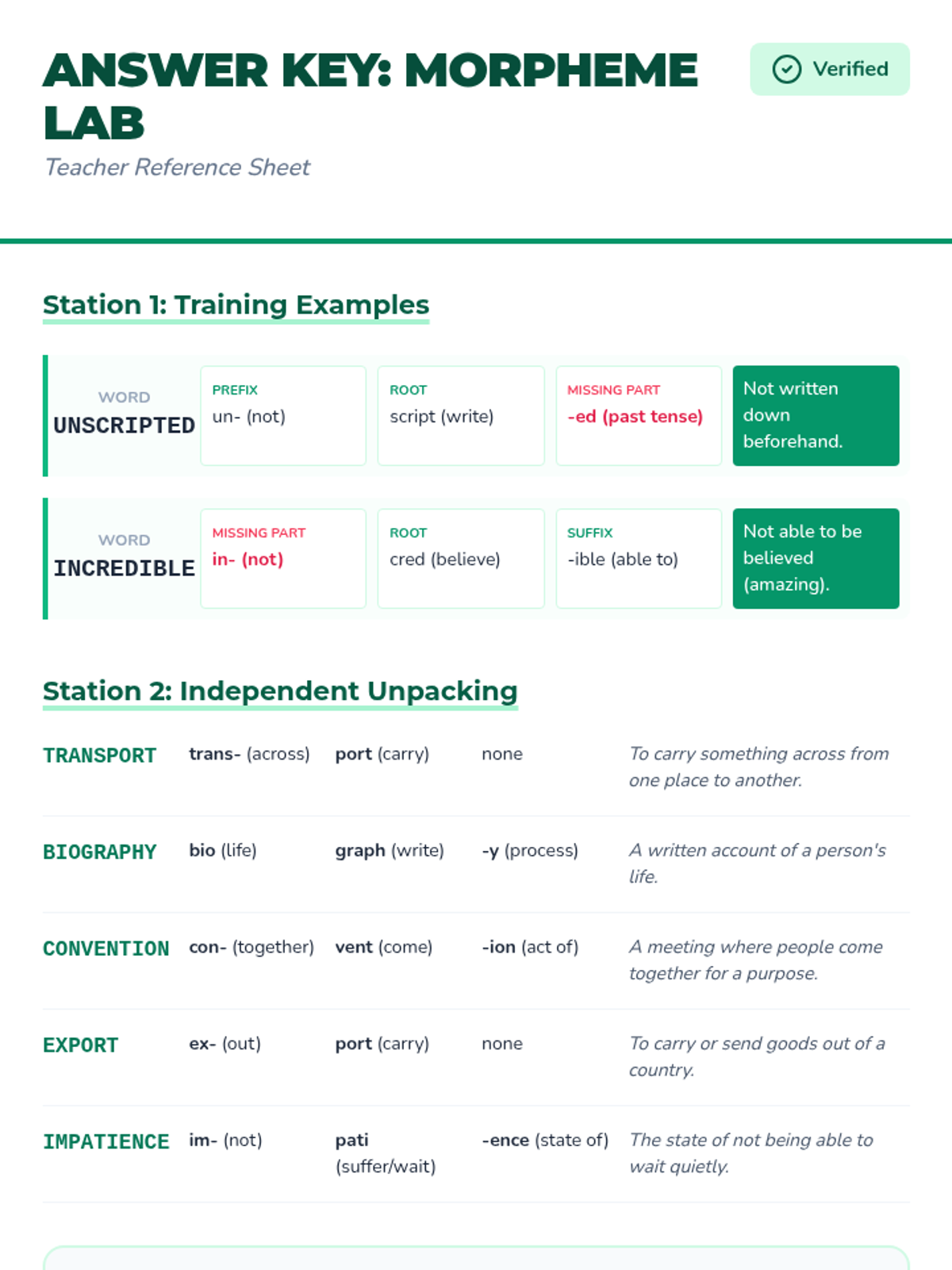
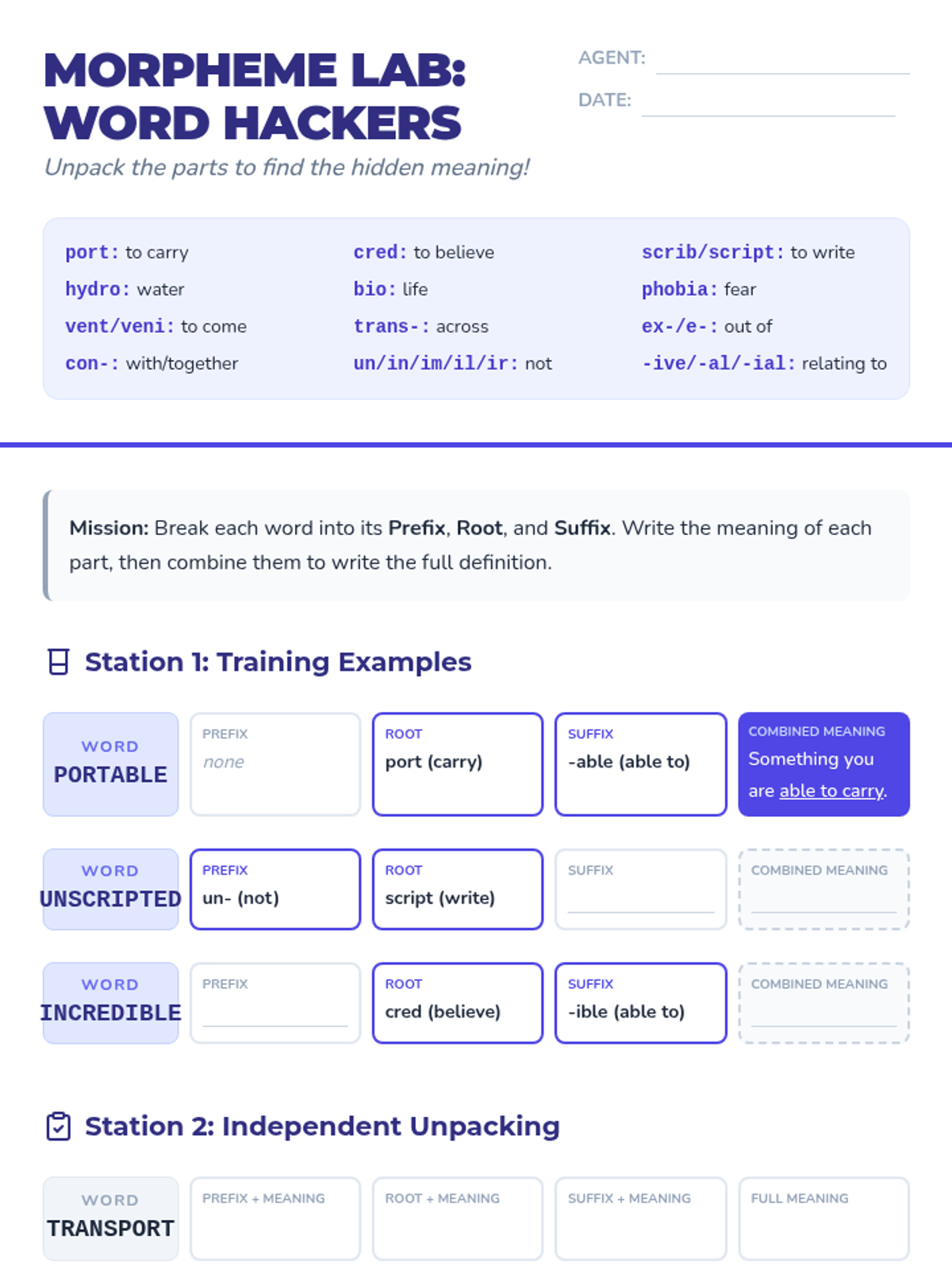
An answer key for the Morpheme Lab activities, providing teachers with the correct morphological breakdowns and definitions for all practice problems and training examples.
Updated Day 3 Exit Ticket with tightened spacing to ensure optimal one-page printing while maintaining 3 MC questions and an SCR section.
Updated Day 1 Exit Ticket with tightened spacing to ensure optimal one-page printing while maintaining 3 MC questions and an SCR section.
A structured worksheet where students practice 'unpacking' words into prefixes, roots, and suffixes. It features three training examples (partially completed) and five independent practice problems, with a final creative challenge to build a new word.
A vibrant slide deck designed for a 4th-grade audience to introduce the concept of 'unpacking' words into their morphological components (prefixes, roots, and suffixes). It includes clear visual examples of the process and a review of key root words.
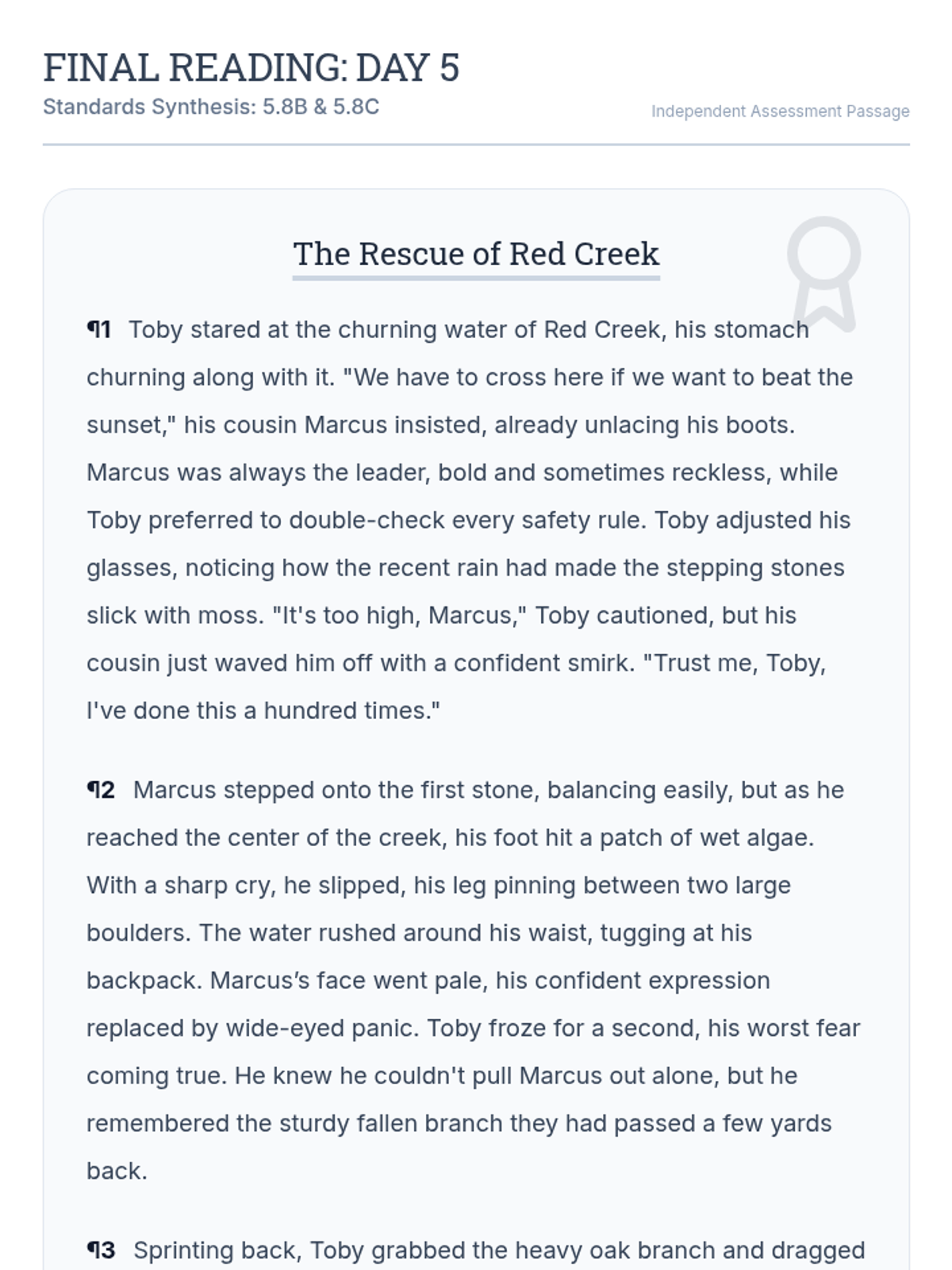
Final student reading passage for Day 5 featuring "The Rescue of Red Creek." Includes paragraph numbering and scratch-paper prompts for synthesizing character and plot analysis.
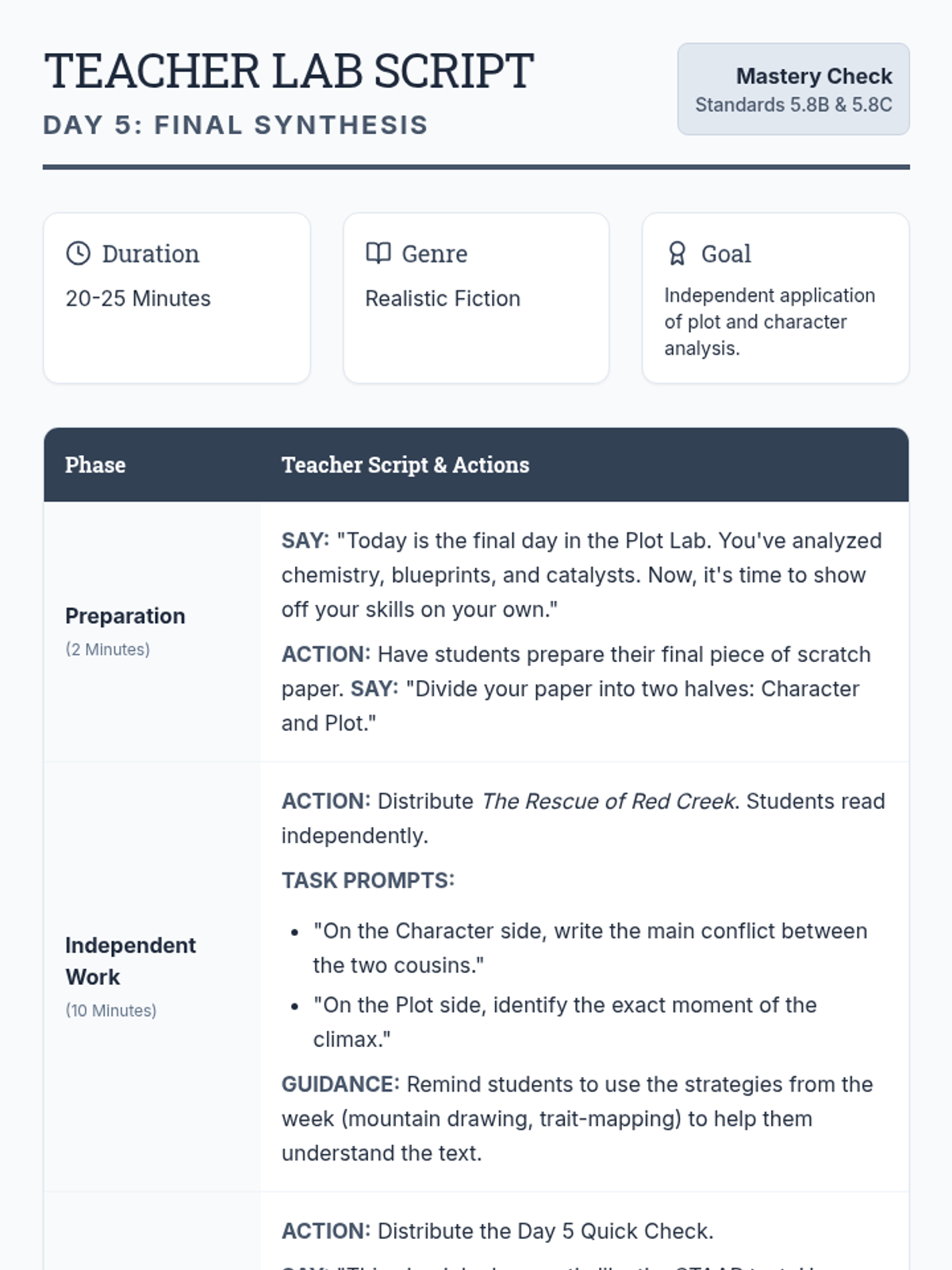
Final teacher script for Day 5 focusing on independent application and synthesis of character analysis (5.8B) and plot elements (5.8C) using the "screen to scratch" method.
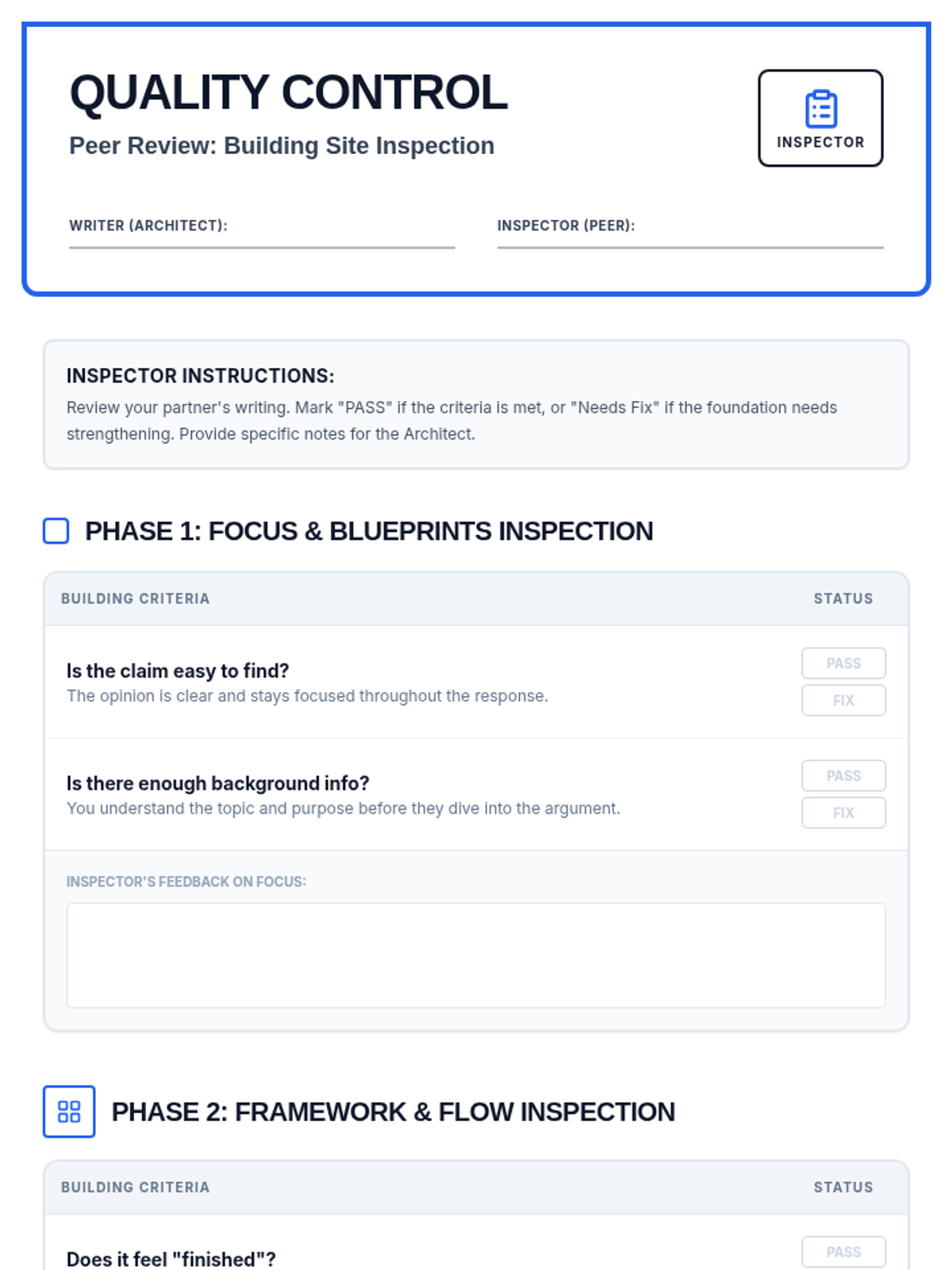
Condensed 1-page peer review version of the Argument Architect checklist. Printer-friendly 'Inspector' theme with a single inspection table and combined feedback area for efficiency. Squashed ruling section for efficiency.
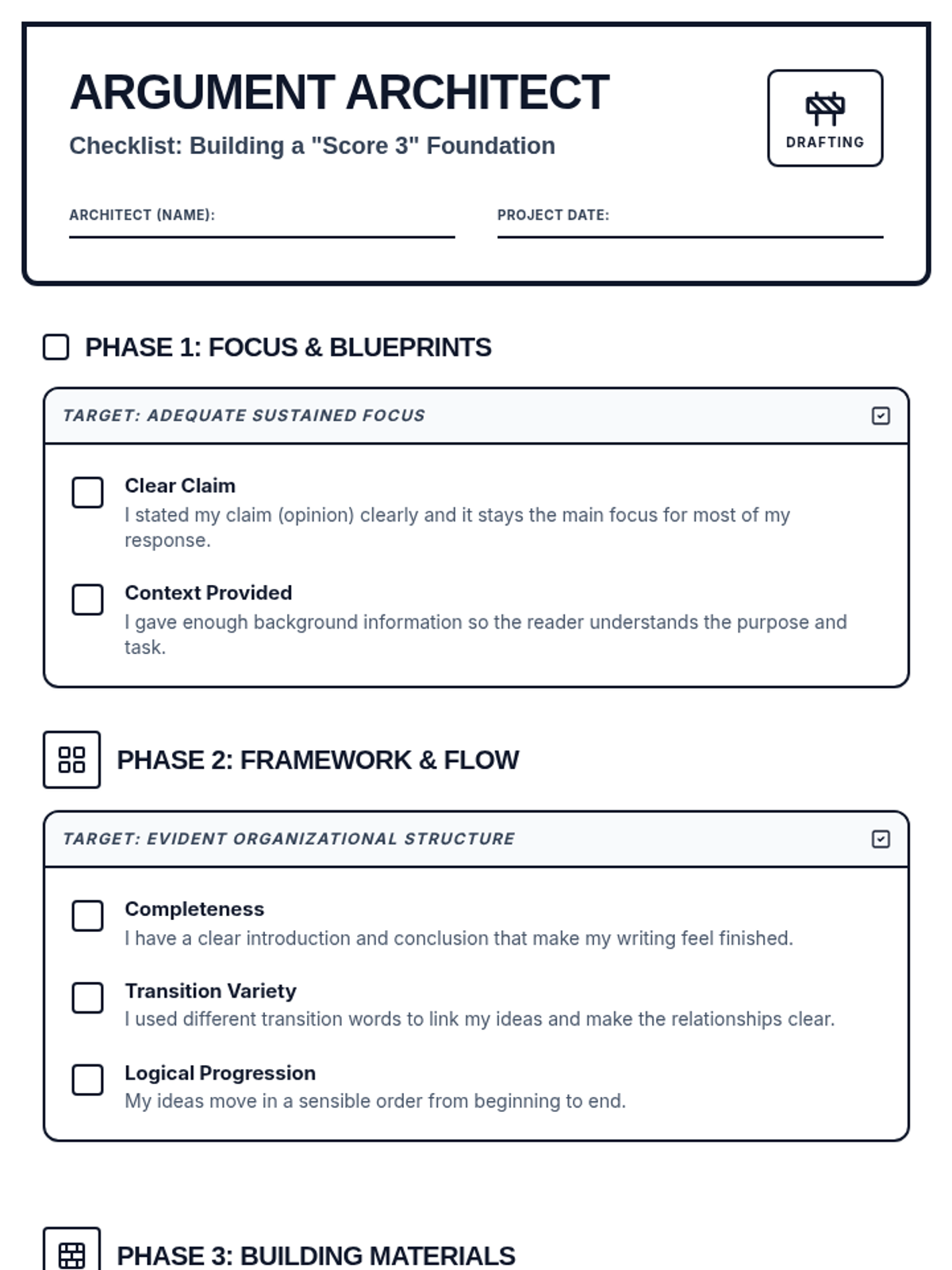
Condensed 1-page student-friendly checklist using the 'Score 3' criteria and 'Architect' theme. Efficient grid layout provides all essential checks and reflection space on a single sheet. Squashed report section for efficiency.
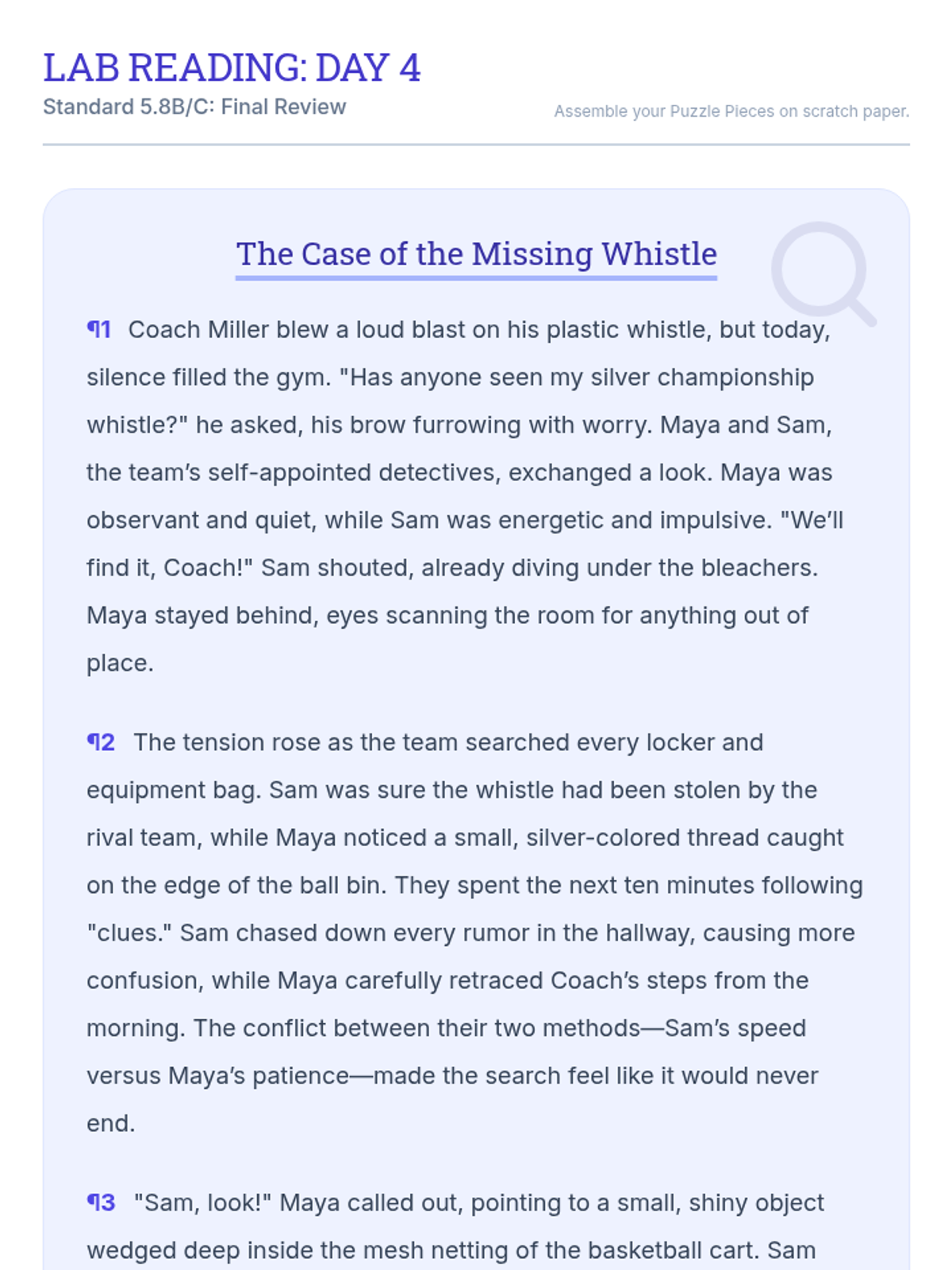
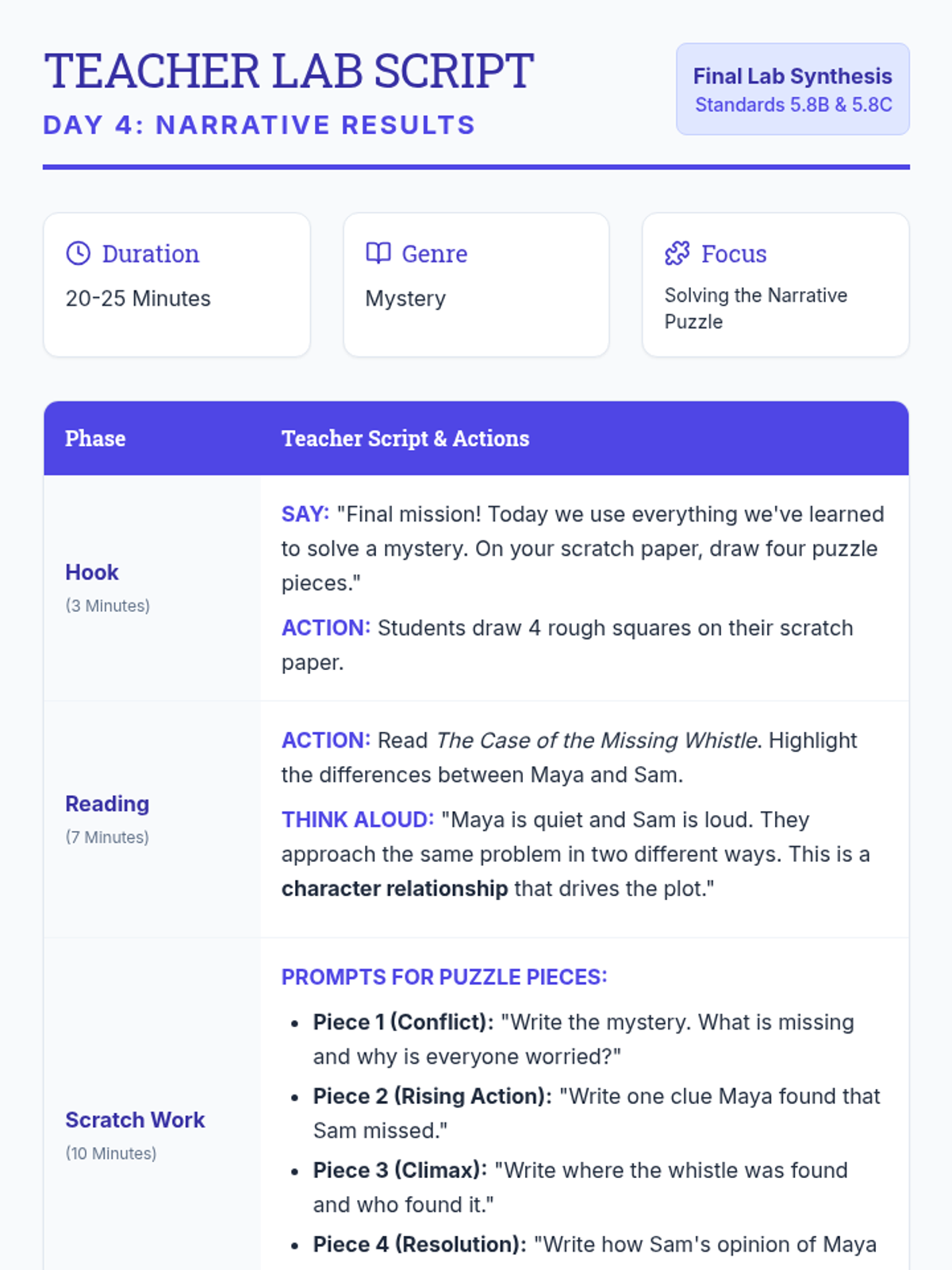
Updated student reading passage for Day 4 with a "screen to scratch" design. Features paragraph numbering and explicit prompts for final synthesis on separate paper.
Updated teacher script for Day 4 incorporating the "screen to scratch" method. Guides students to synthesize mystery elements into "puzzle pieces" on their own paper.