A hands-on word sort activity featuring 'Book Lab' and 'Moon Lab' sorting mats and 12 evidence cards for students to categorize short and long 'oo' words.
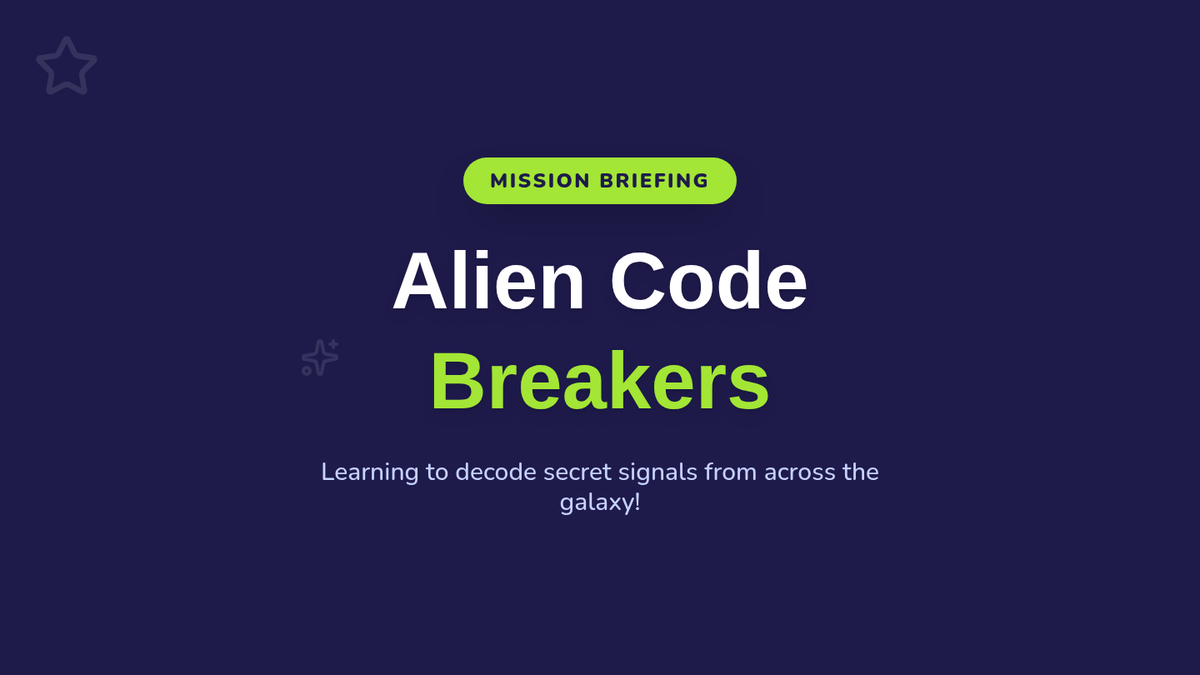
An introductory presentation for teachers to explain the purpose of nonsense words and model the decoding process (Look, Tap, Blend) with the class. Includes practice slides for CVC and initial blends.
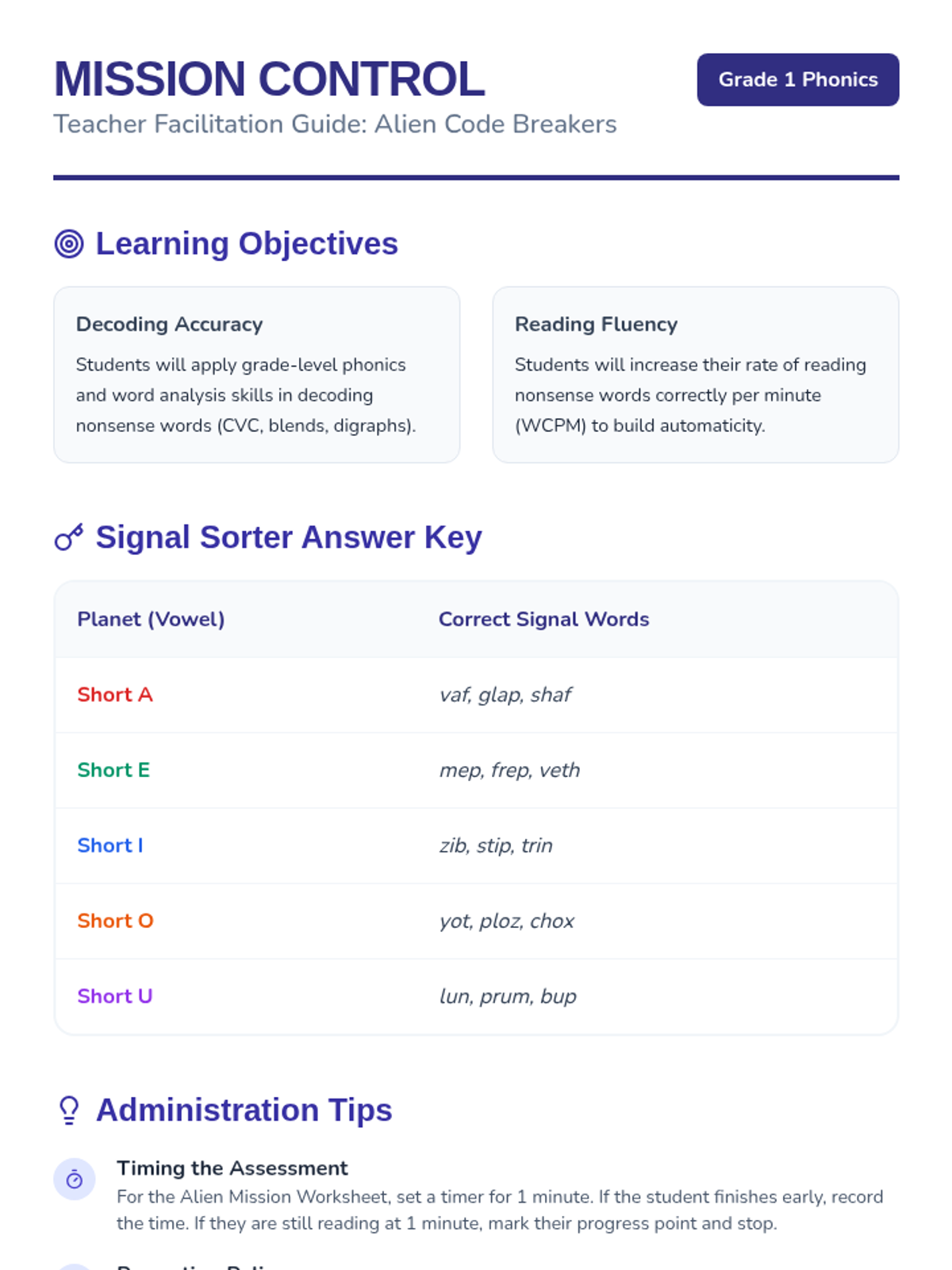
A teacher resource providing the answer key for the sorting activity, instructional objectives, and tips for administering the nonsense word assessments and drills.
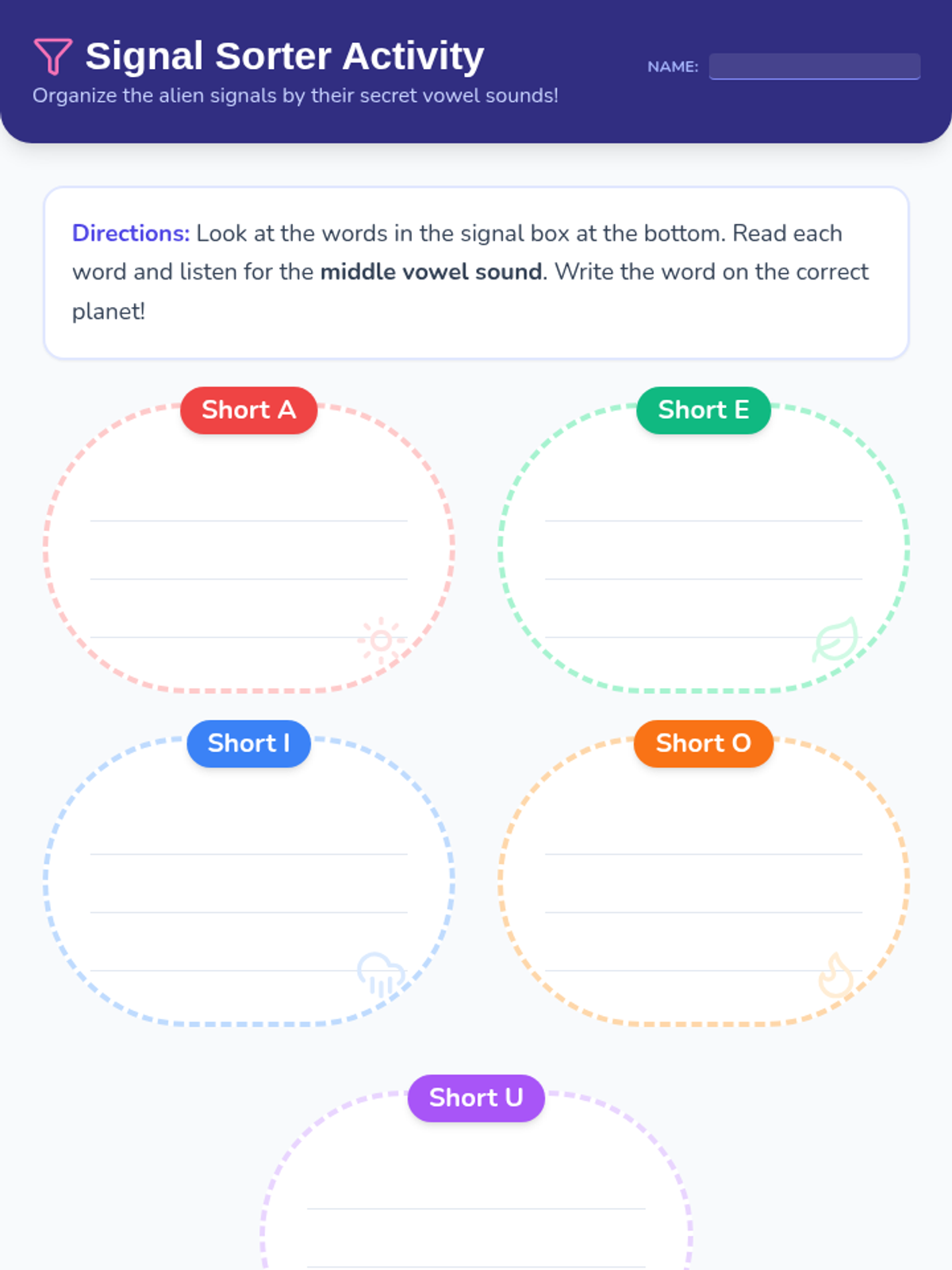
An independent work activity where students sort nonsense words into different planetary categories based on their short vowel sounds. Includes 15 words across all five short vowels.
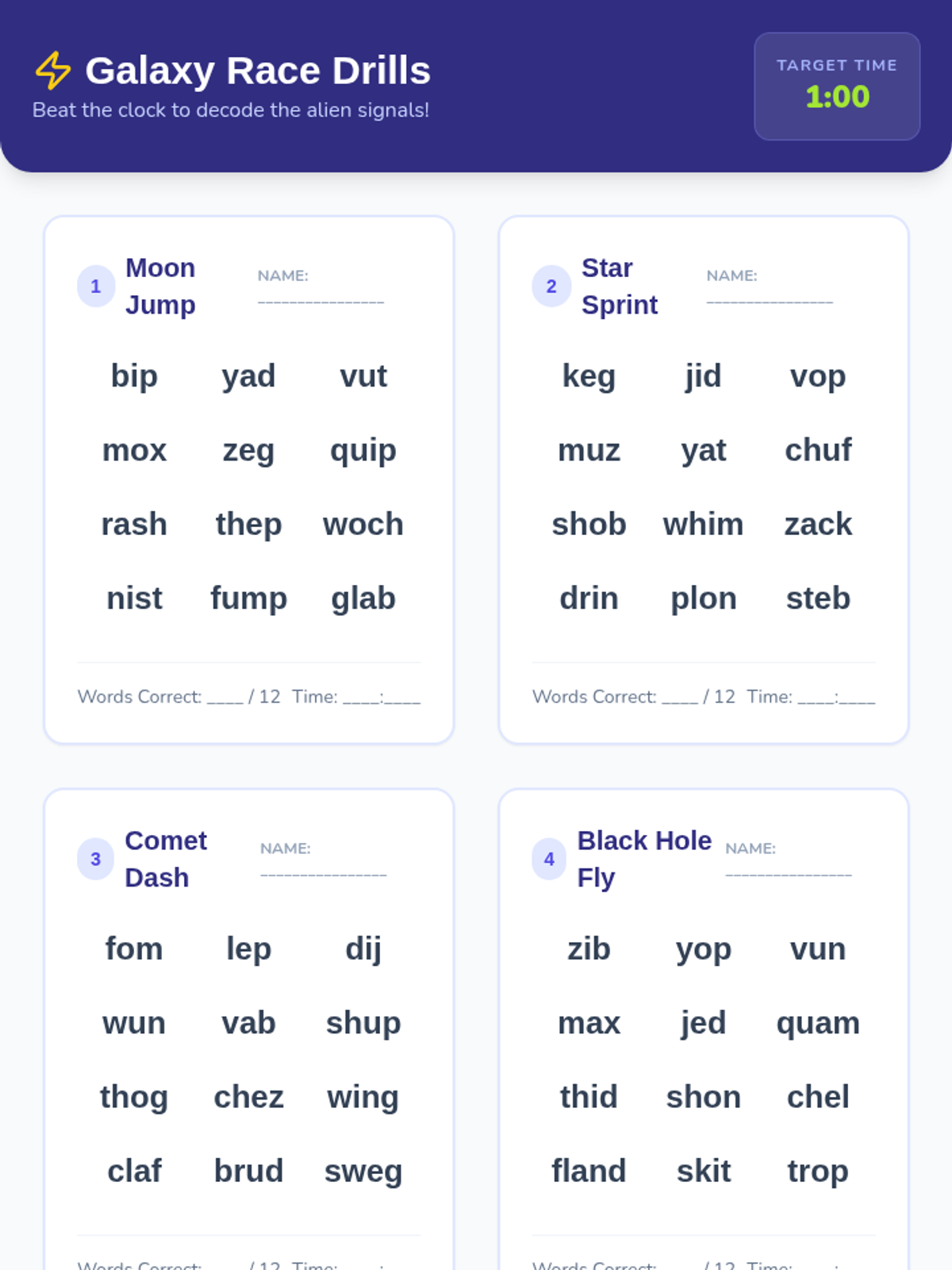
A set of four timed nonsense word reading drills (12 words each) for students to practice decoding fluency and speed. Includes a simple progress tracking log at the bottom.
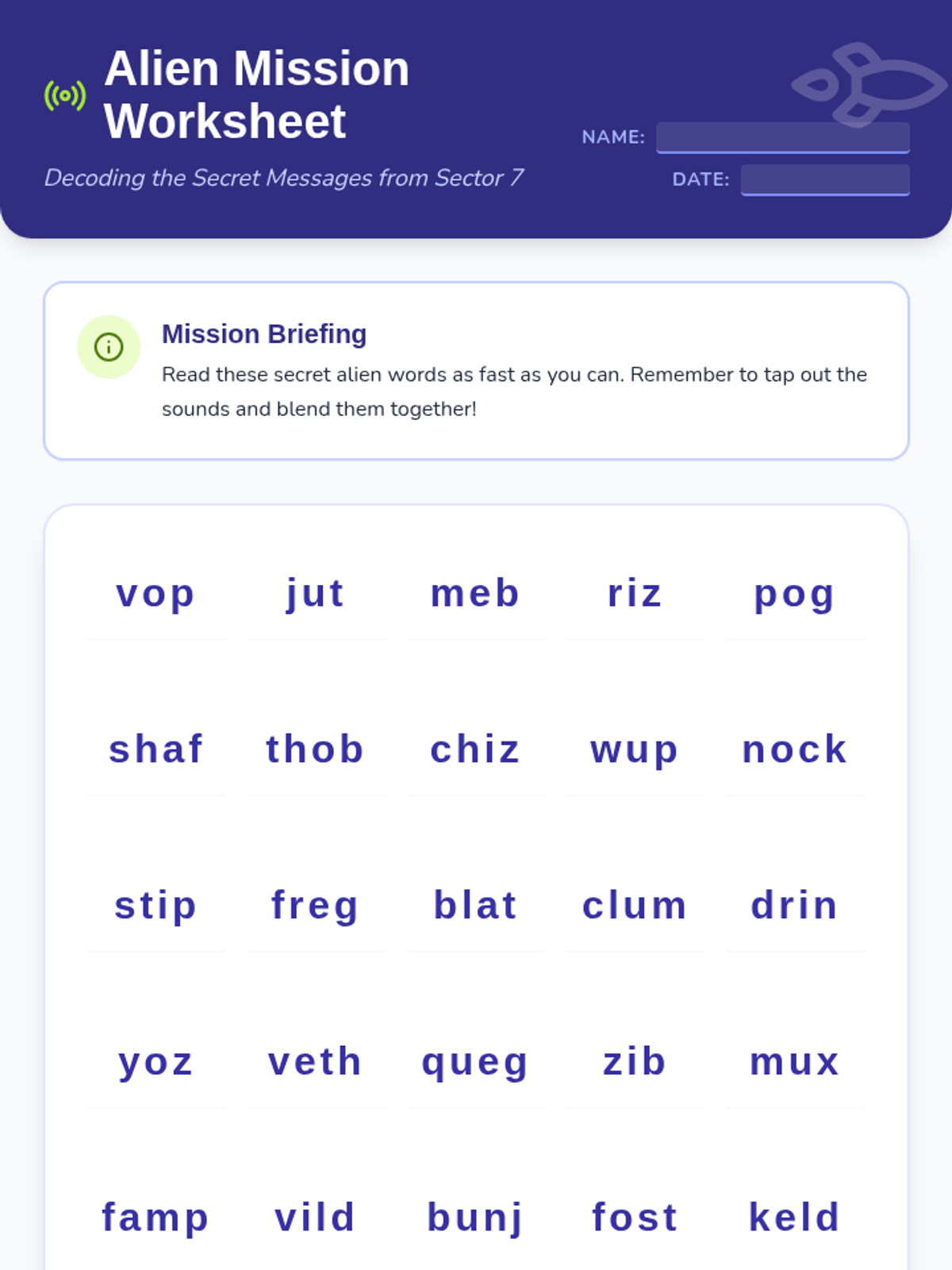
A student-facing nonsense word reading assessment with a space theme, featuring 25 words ranging from CVC to blends and digraphs. Includes a teacher scoring section.
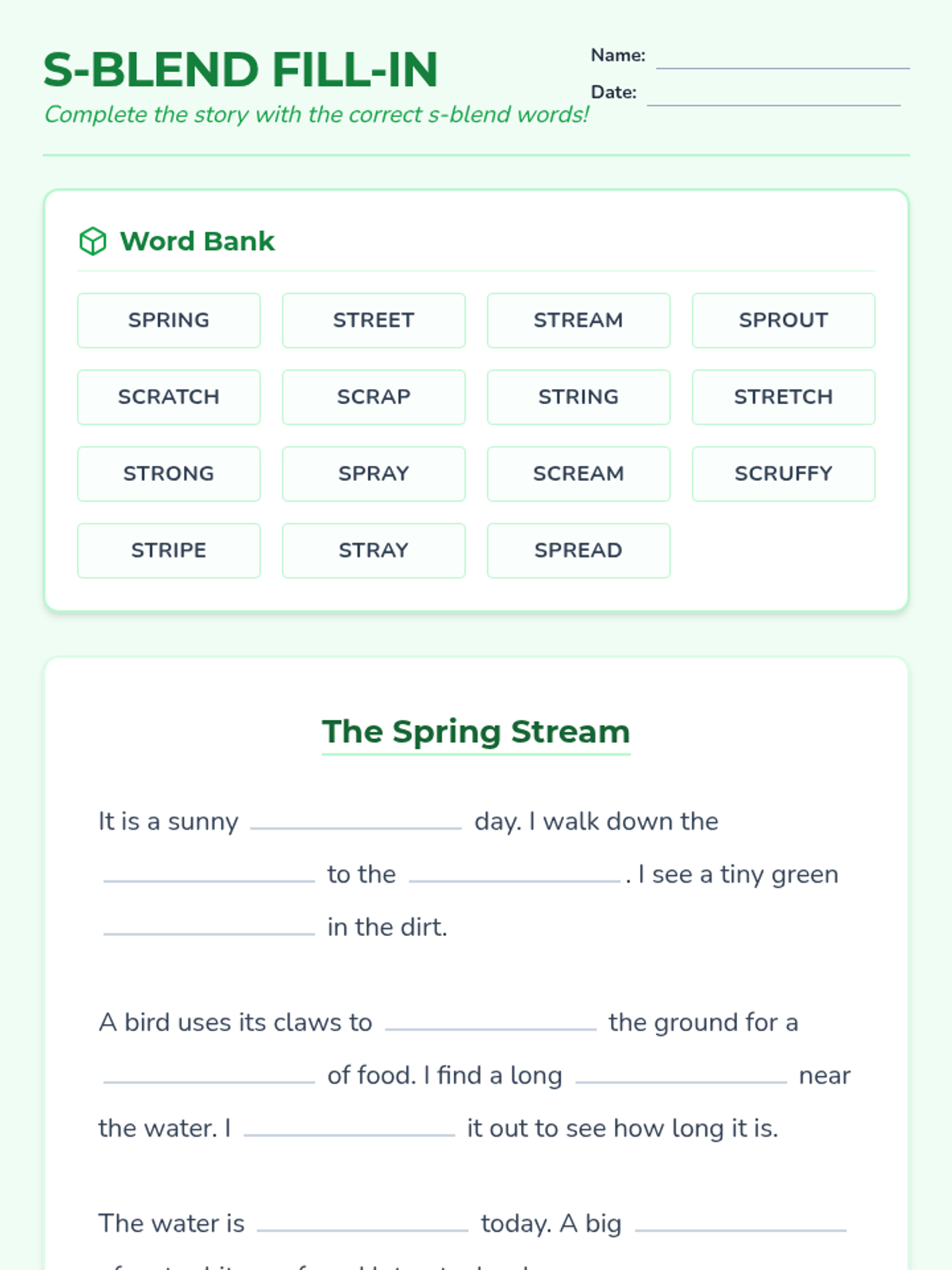
A fill-in-the-blank worksheet where students complete the "Spring Stream" story using the correct str, spr, and scr words.
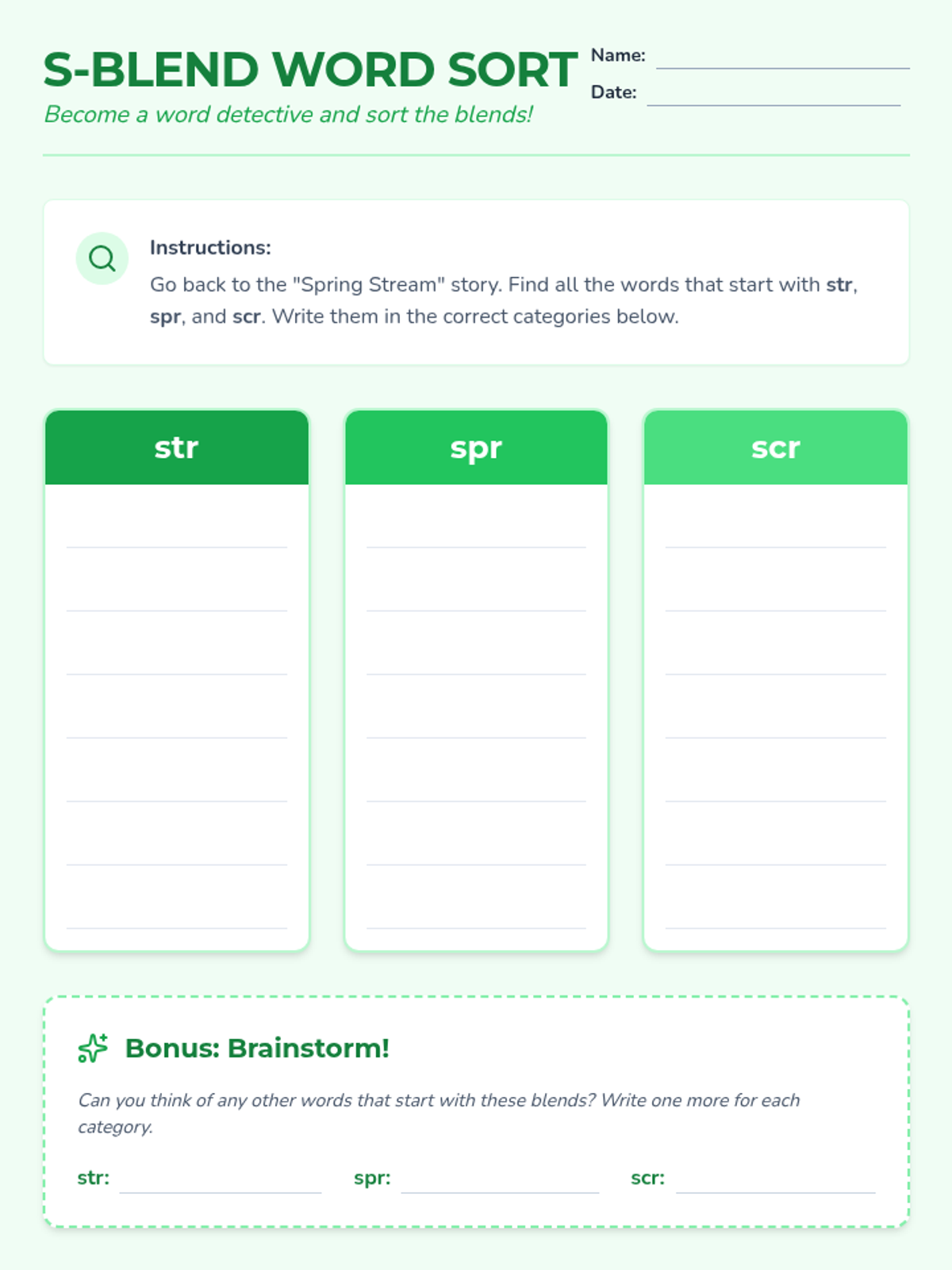
A word-sorting worksheet where students identify and categorize str, spr, and scr words found in the "Spring Stream" passage.
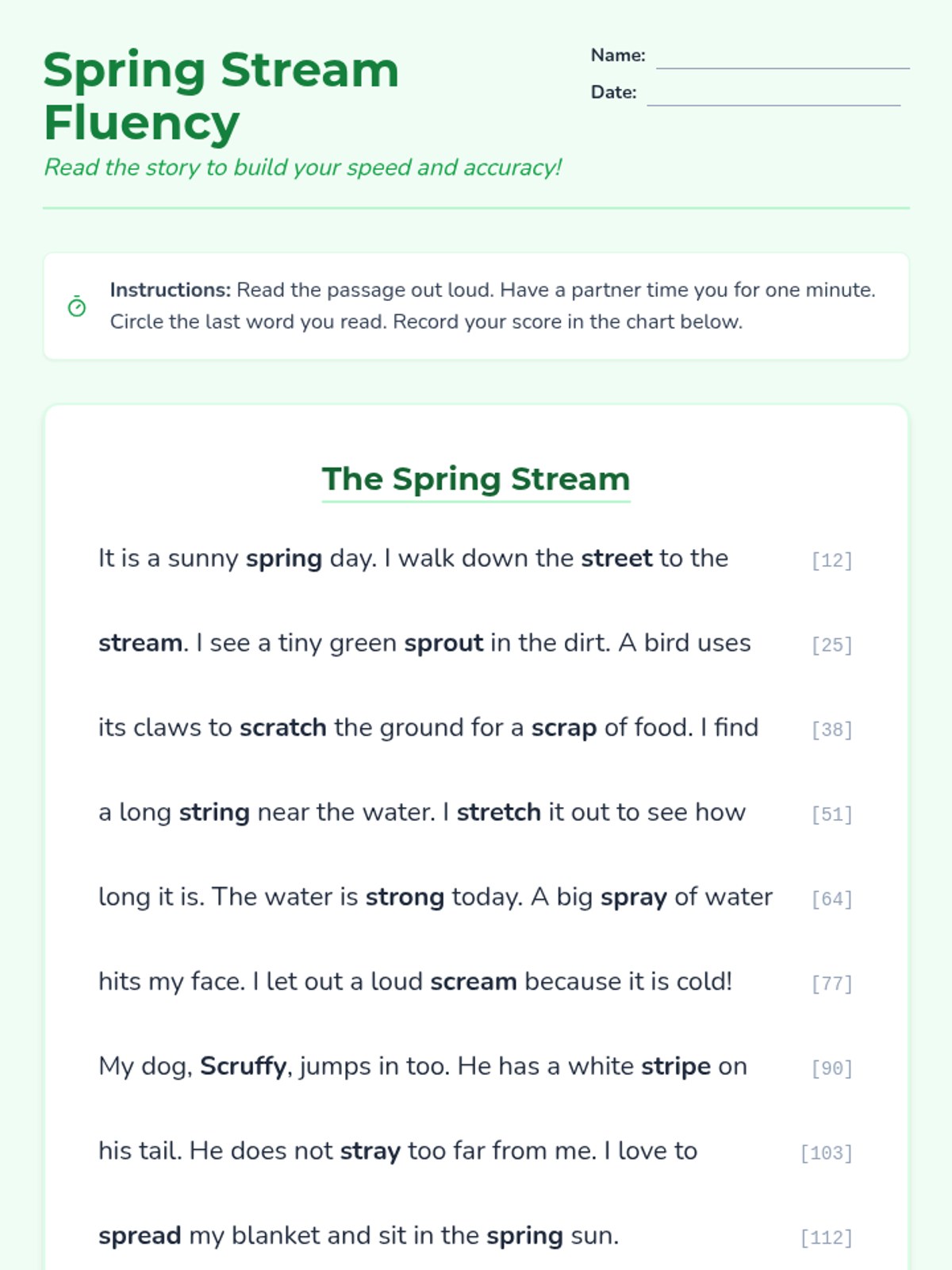
A fluency passage focused on str, spr, and scr blends with word counts and a progress tracker for students.
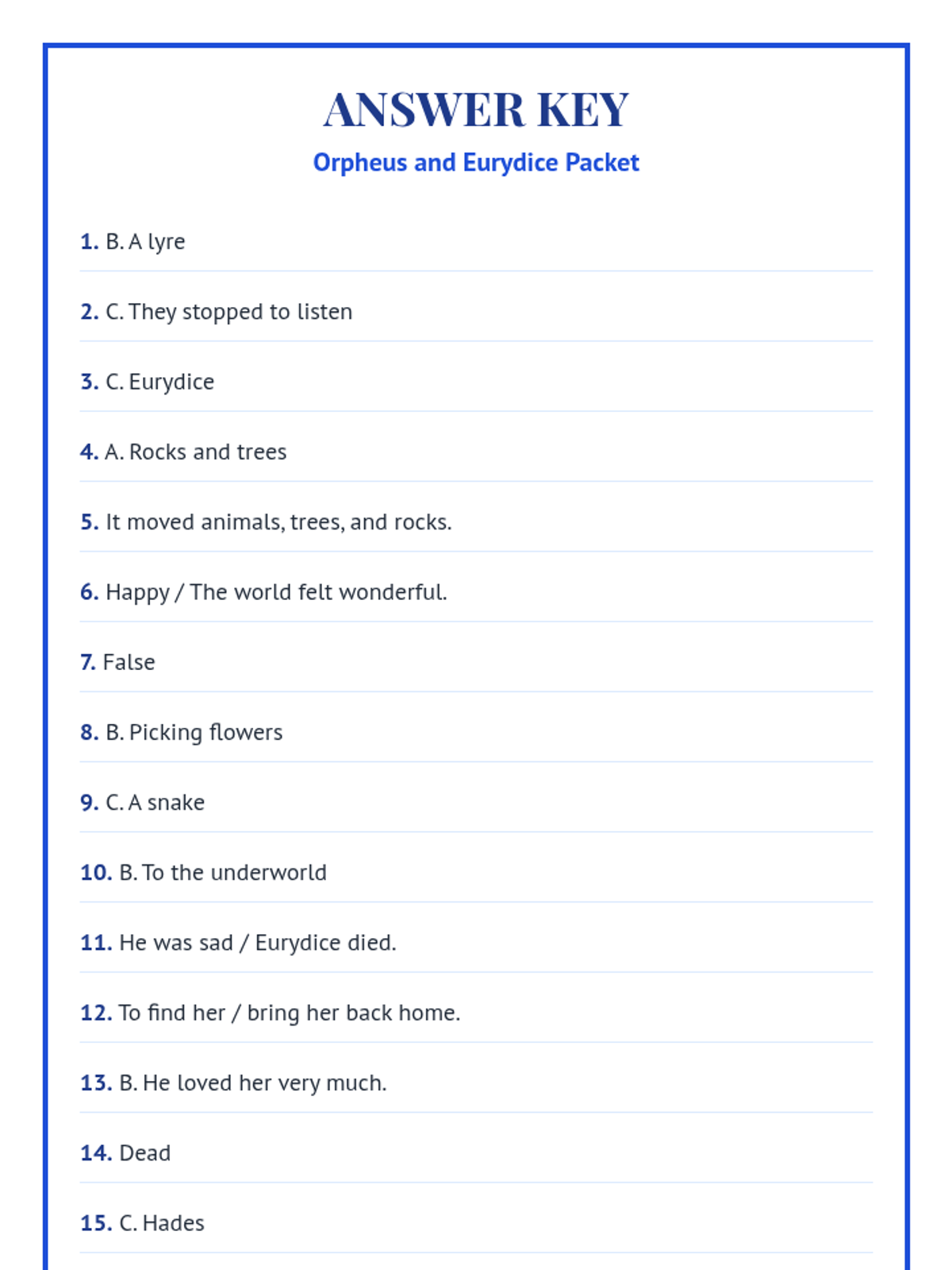
A concise answer key for the Orpheus and Eurydice Packet, providing correct answers for all 30 questions, including sample responses for the long-answer planning and writing sections.
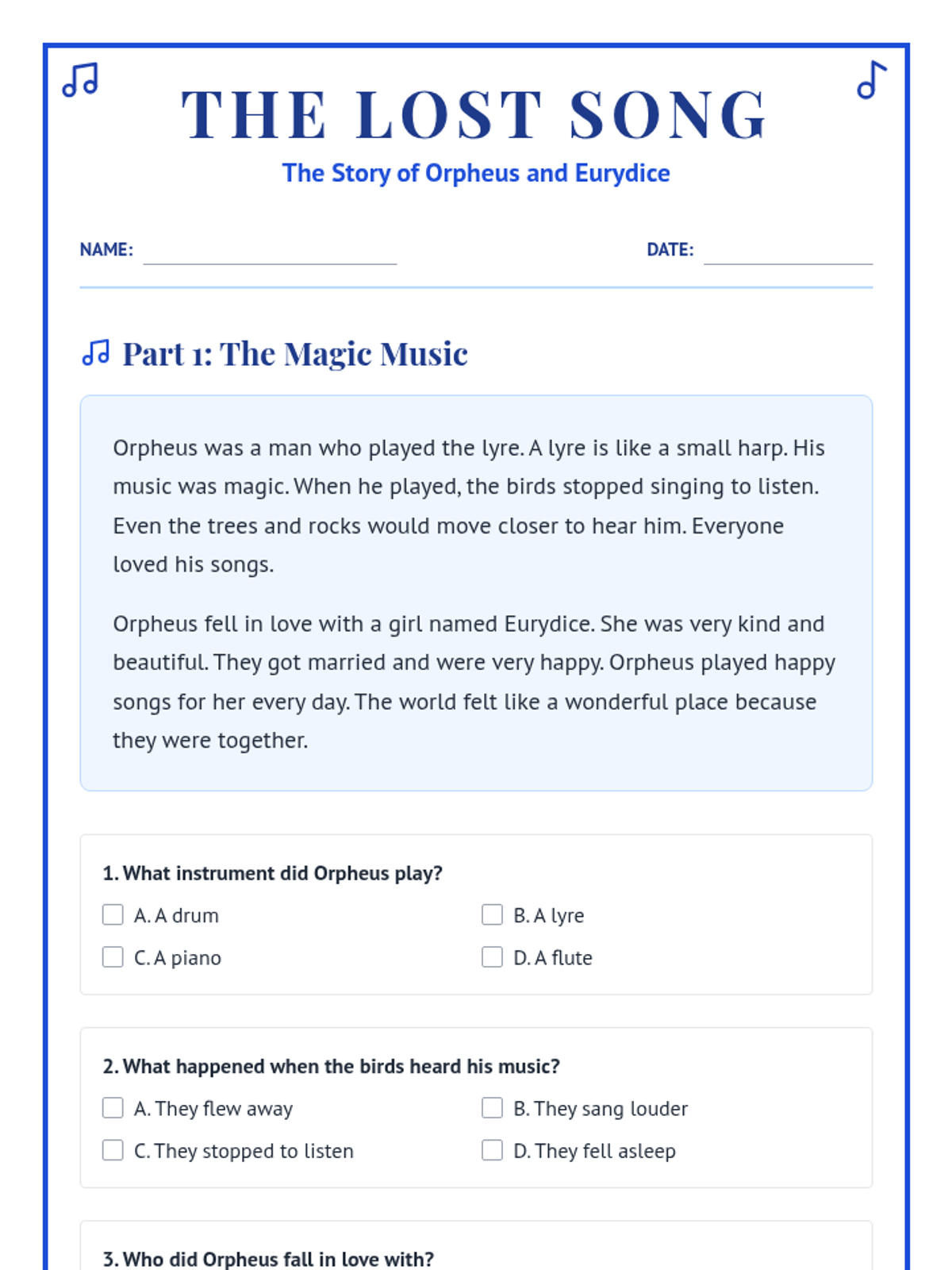
A six-page independent work packet about Orpheus and Eurydice, featuring four simplified texts, 30 comprehension questions (multiple choice and short answer), and a multi-step long answer planning and writing section. The layout uses blue, Greek-inspired visual elements and a 2nd-grade reading level to ensure accessibility.
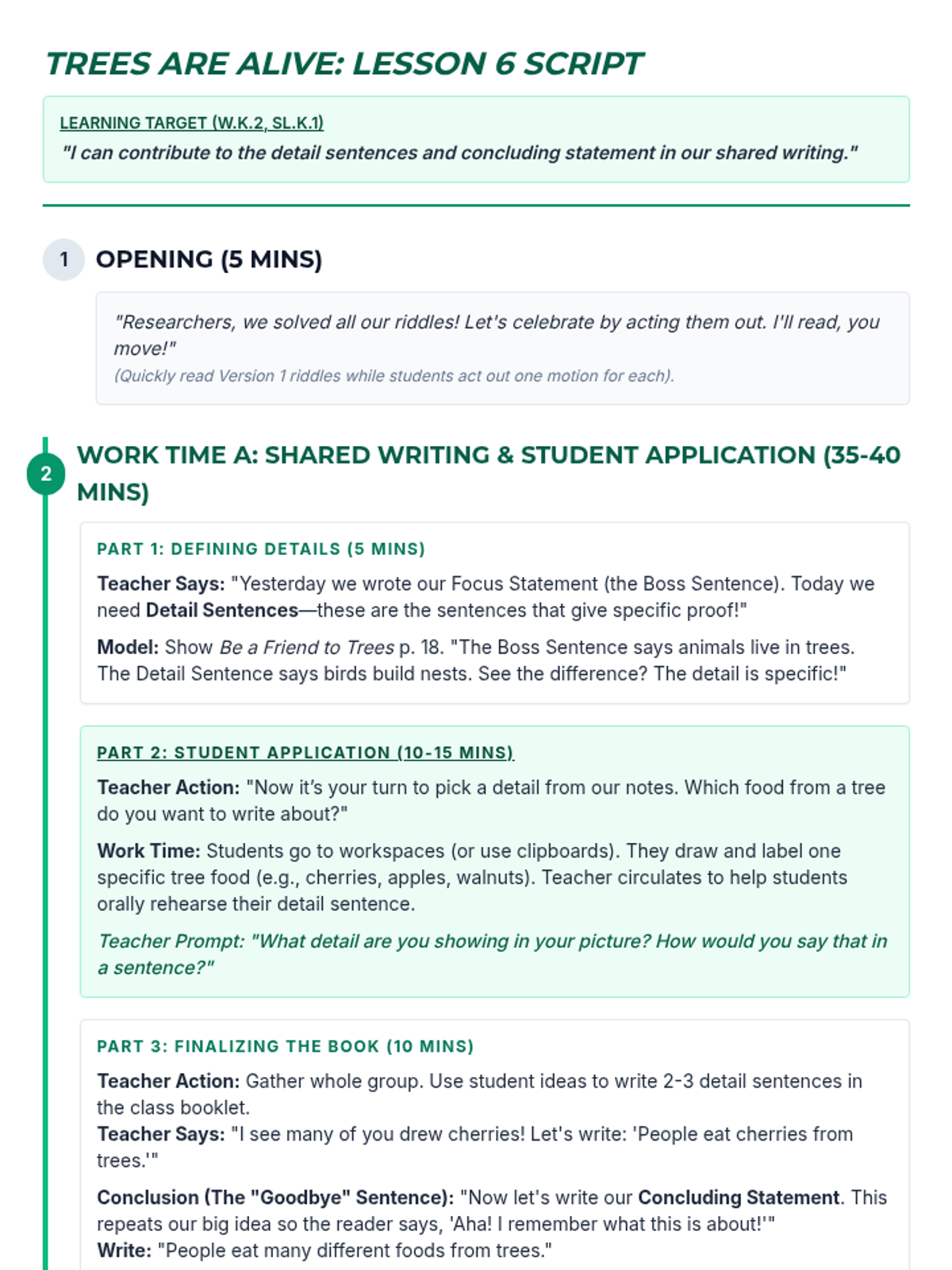
A revised instructional script for Lesson 6 that explicitly includes the 10-15 minute student application phase where they draw and label specific details from their notes before contributing to the shared writing.
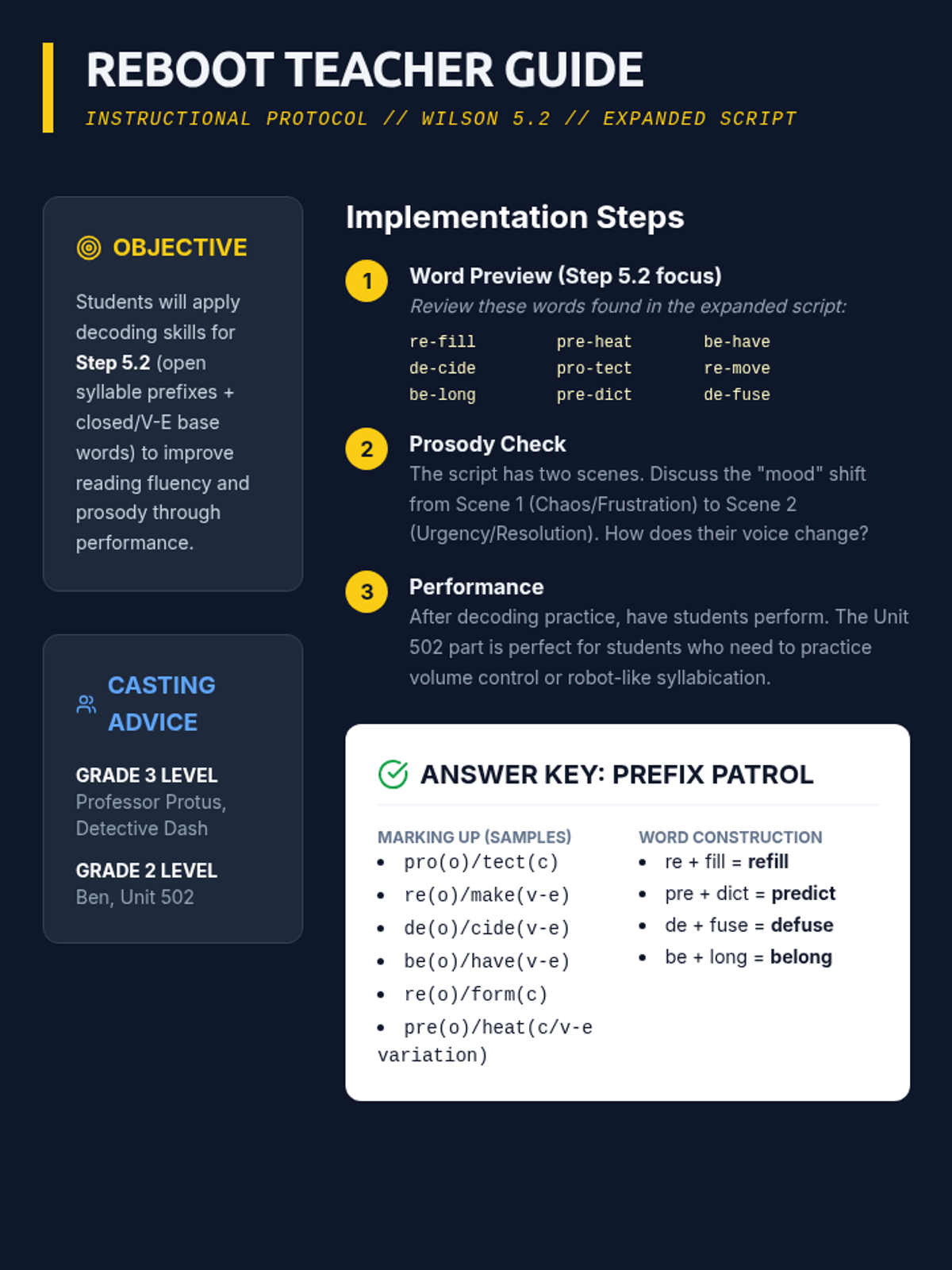
A teacher guide for the Robot Reboot lesson. It includes instructional objectives, casting advice for different reading levels, step-by-step implementation notes, and an answer key for the Prefix Patrol worksheet.
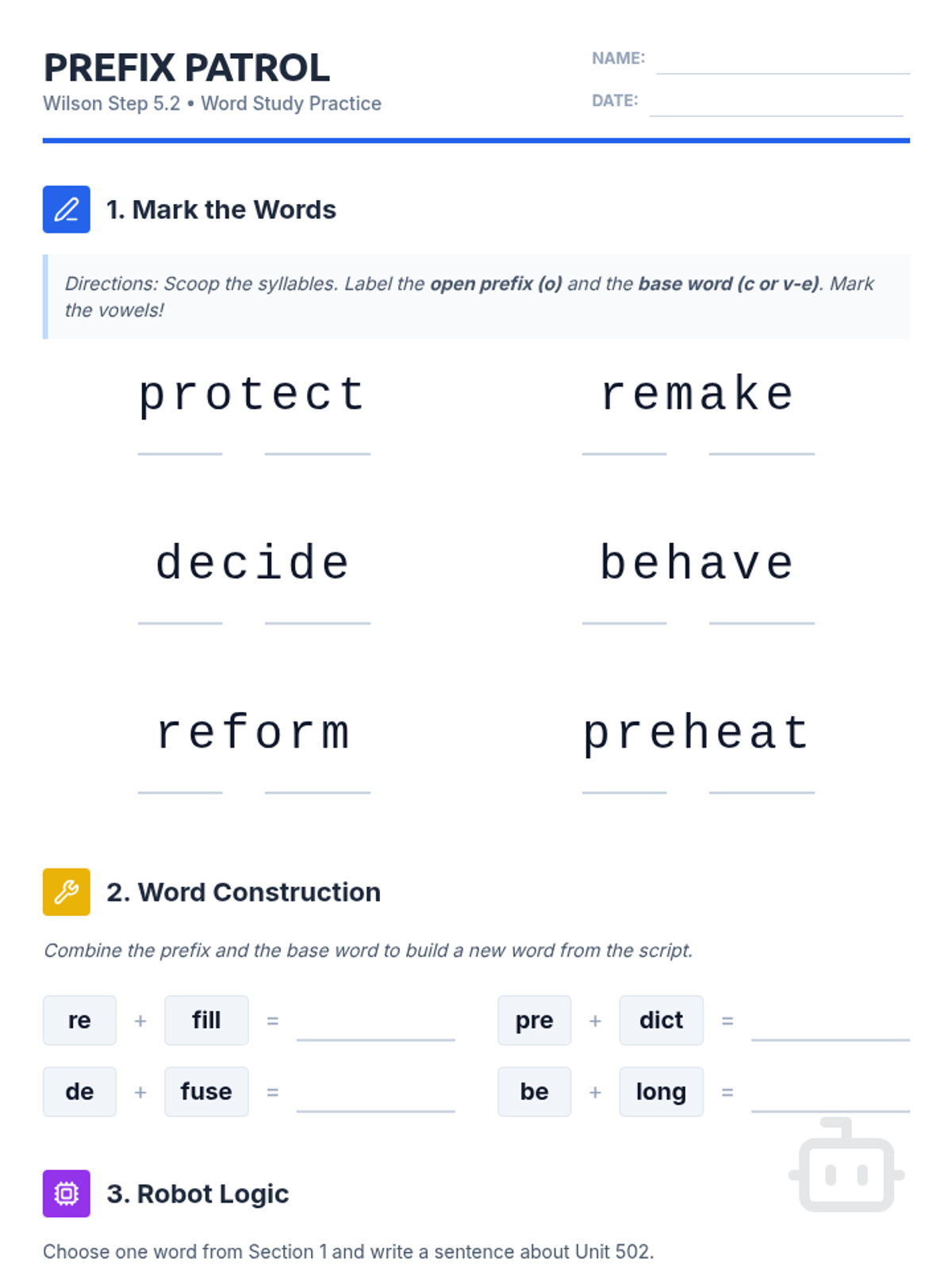
An expanded student worksheet to accompany the longer Robot Reboot script. It provides practice with Wilson Step 5.2 concepts, including marking up words with open syllable prefixes, word construction, and sentence writing.
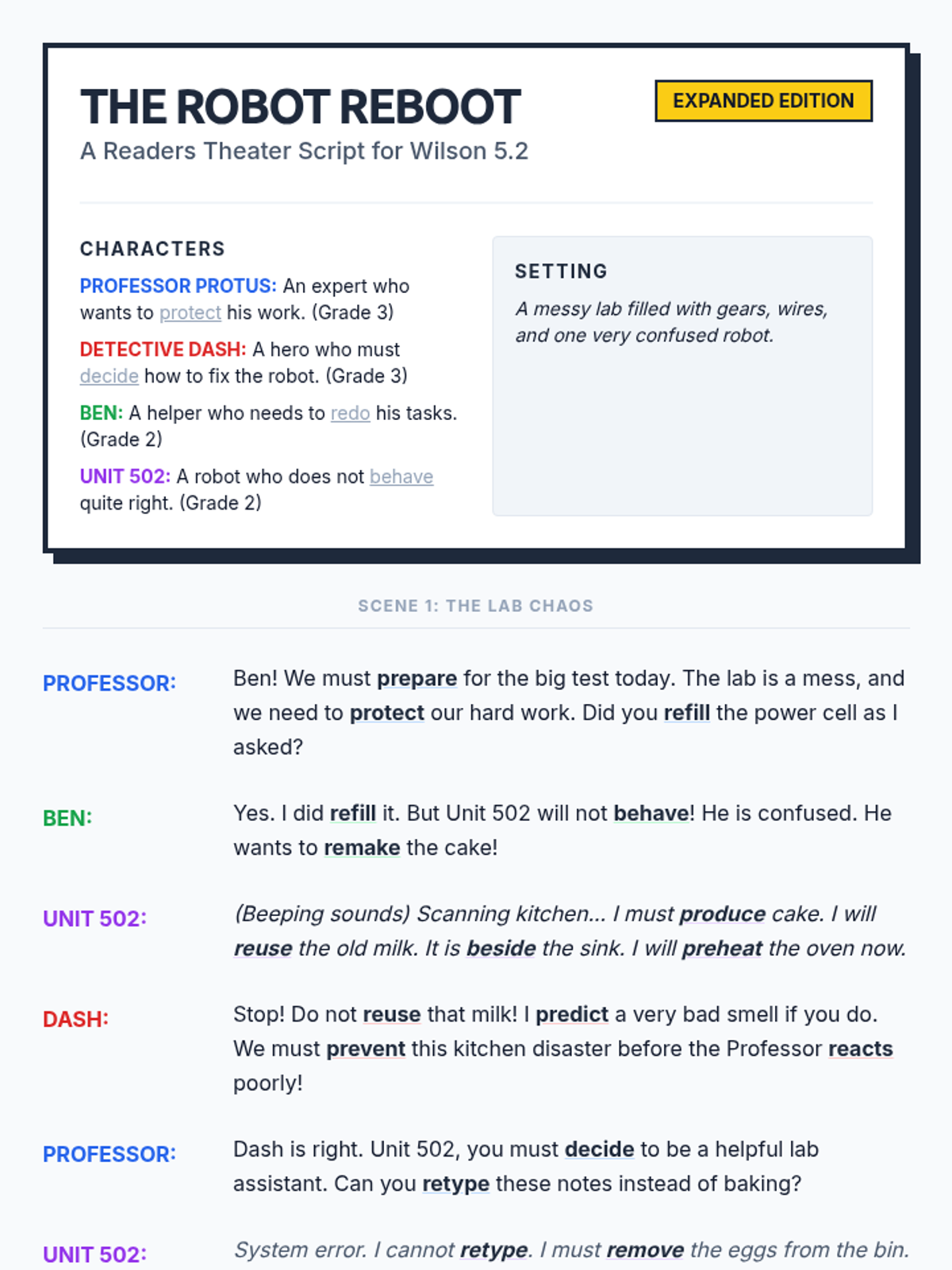
An expanded 4-character Readers Theater script for Wilson Reading Step 5.2. It features two Grade 2 parts and two Grade 3 parts, significantly lengthened with more dialogue and a wider range of open syllable prefix words (re-, de-, pro-, pre-, be-).
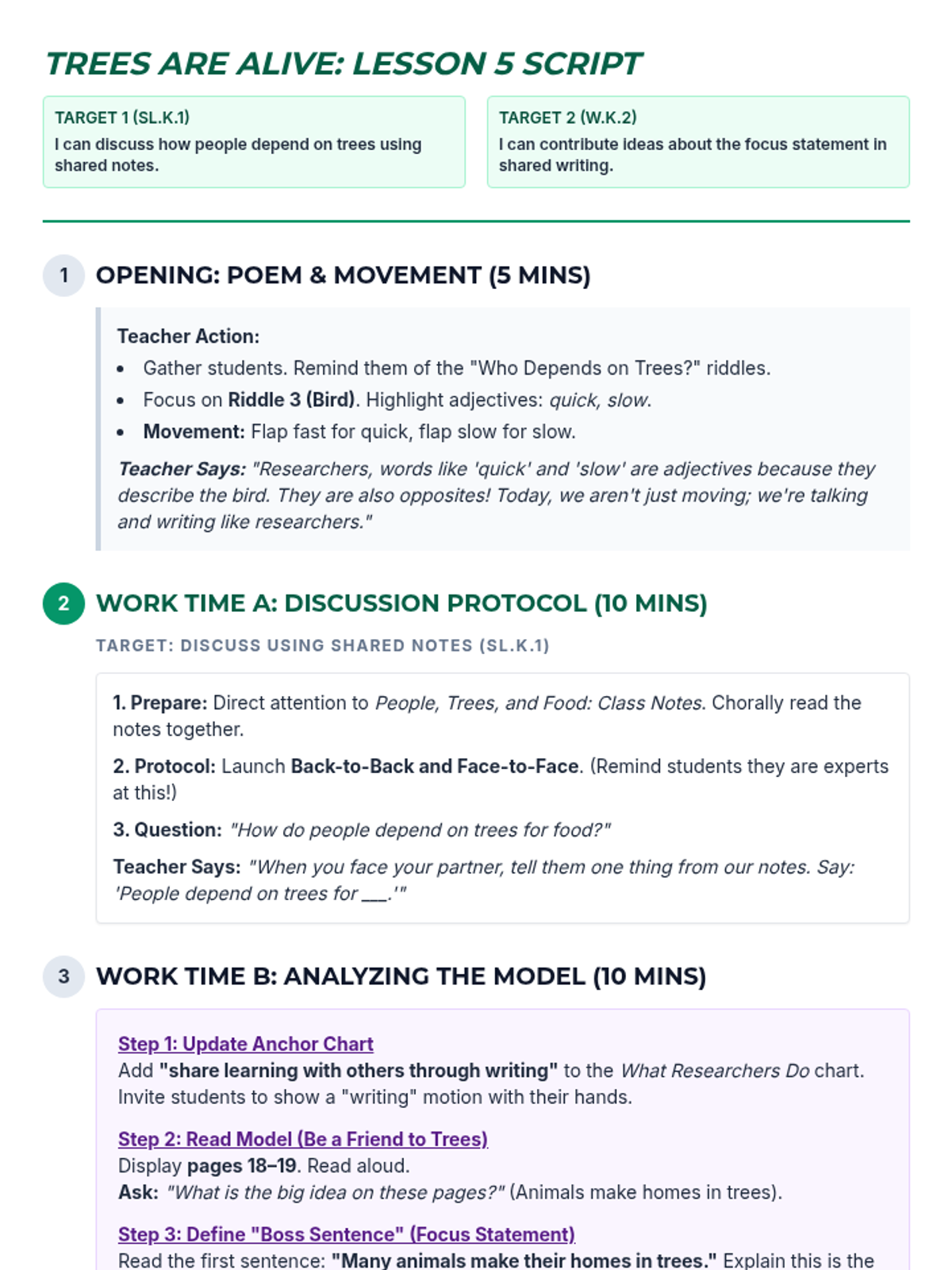
A comprehensive, teacher-facing instructional script that includes explicit "Teacher Actions," reading prompts for model texts, and procedural steps for discussion and writing, all tailored for Kindergarten.
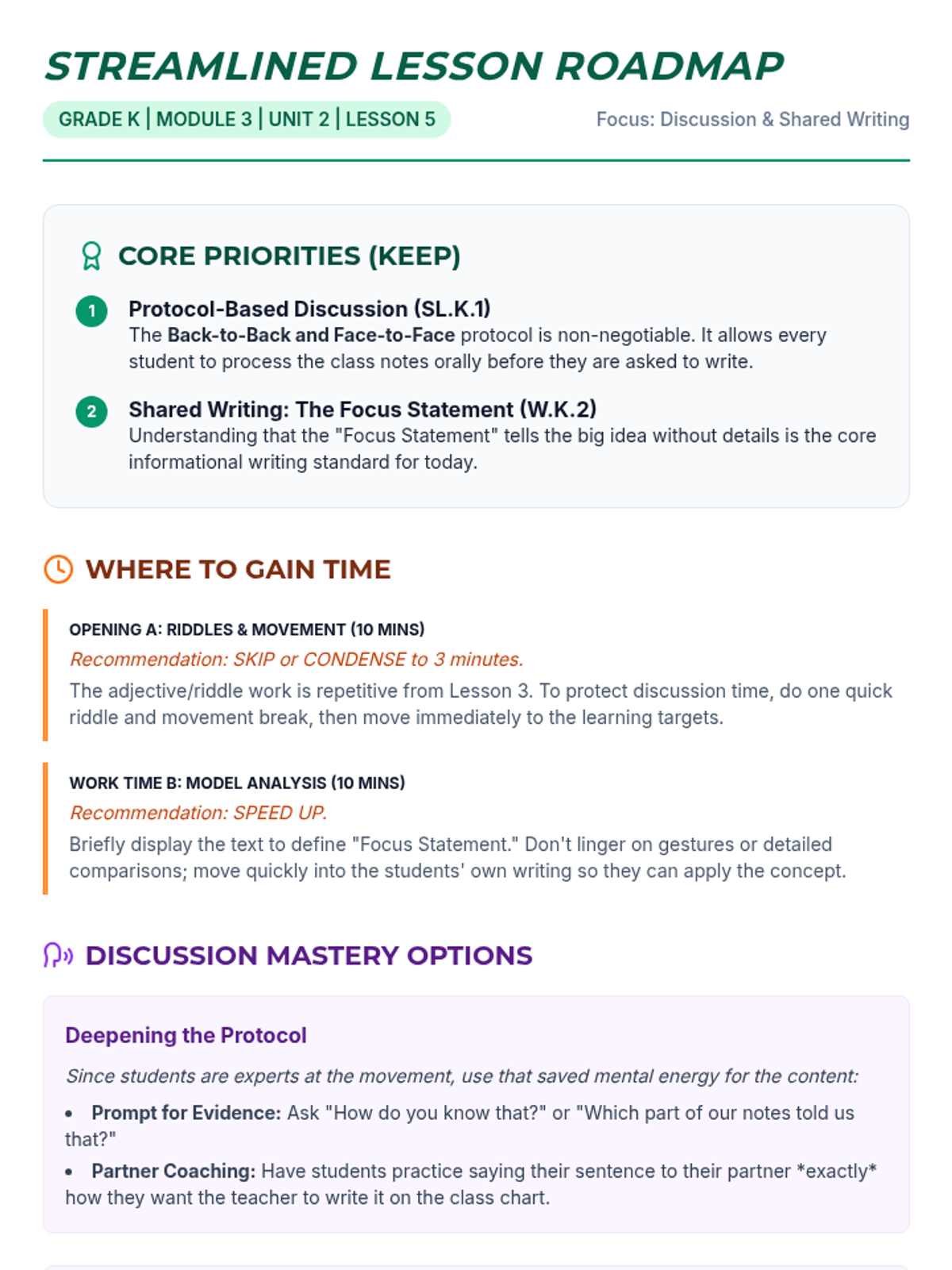
A revised teacher roadmap that prioritizes discussion protocols and oral language while streamlining opening activities and transitions to save time for collaborative writing.
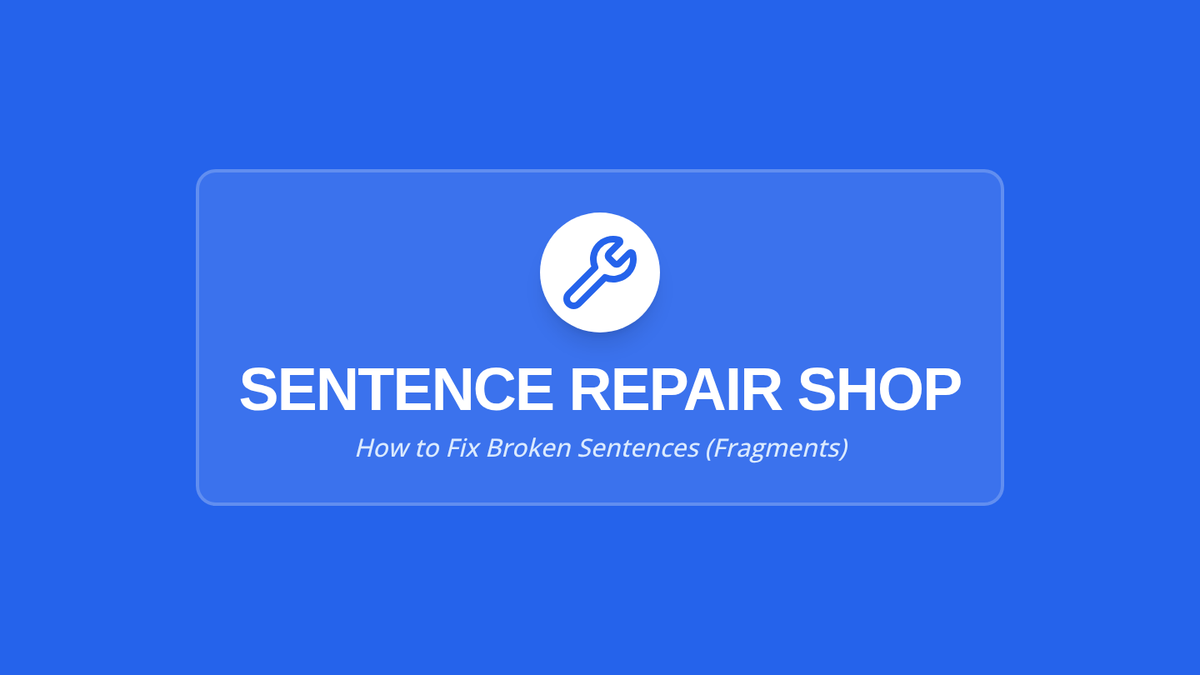
A visual presentation introducing the 'Sentence Repair Shop' metaphor, explaining the two parts of a sentence (Subject and Verb), and demonstrating how to fix fragments.
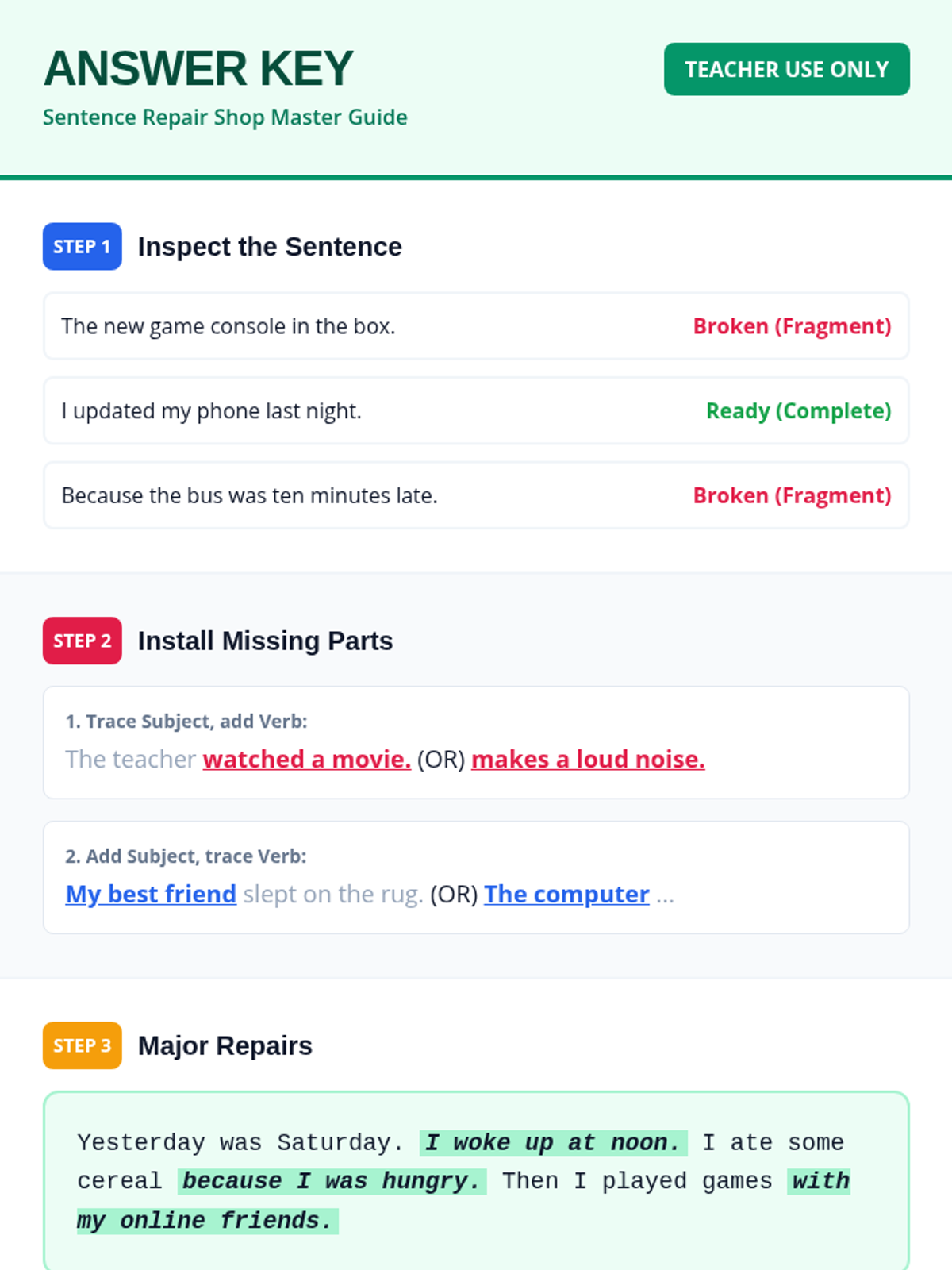
A teacher's answer key for the Sentence Repair Worksheet, showing correct identification, suggested completions, and a fixed version of the paragraph.
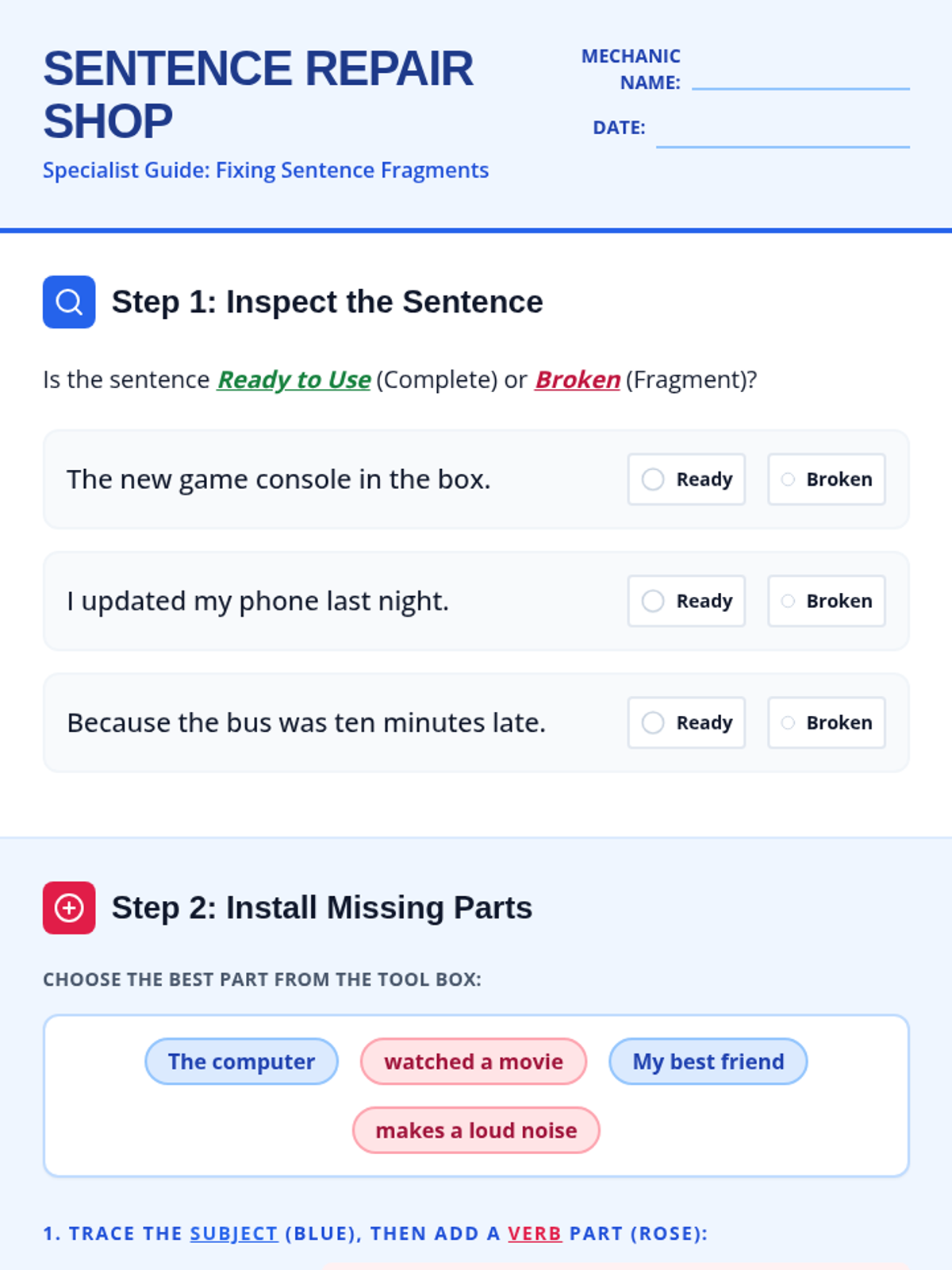
A revised grammar worksheet with improved contrast for tracing, blank answer boxes for student completion, and more generous spacing for handwriting.
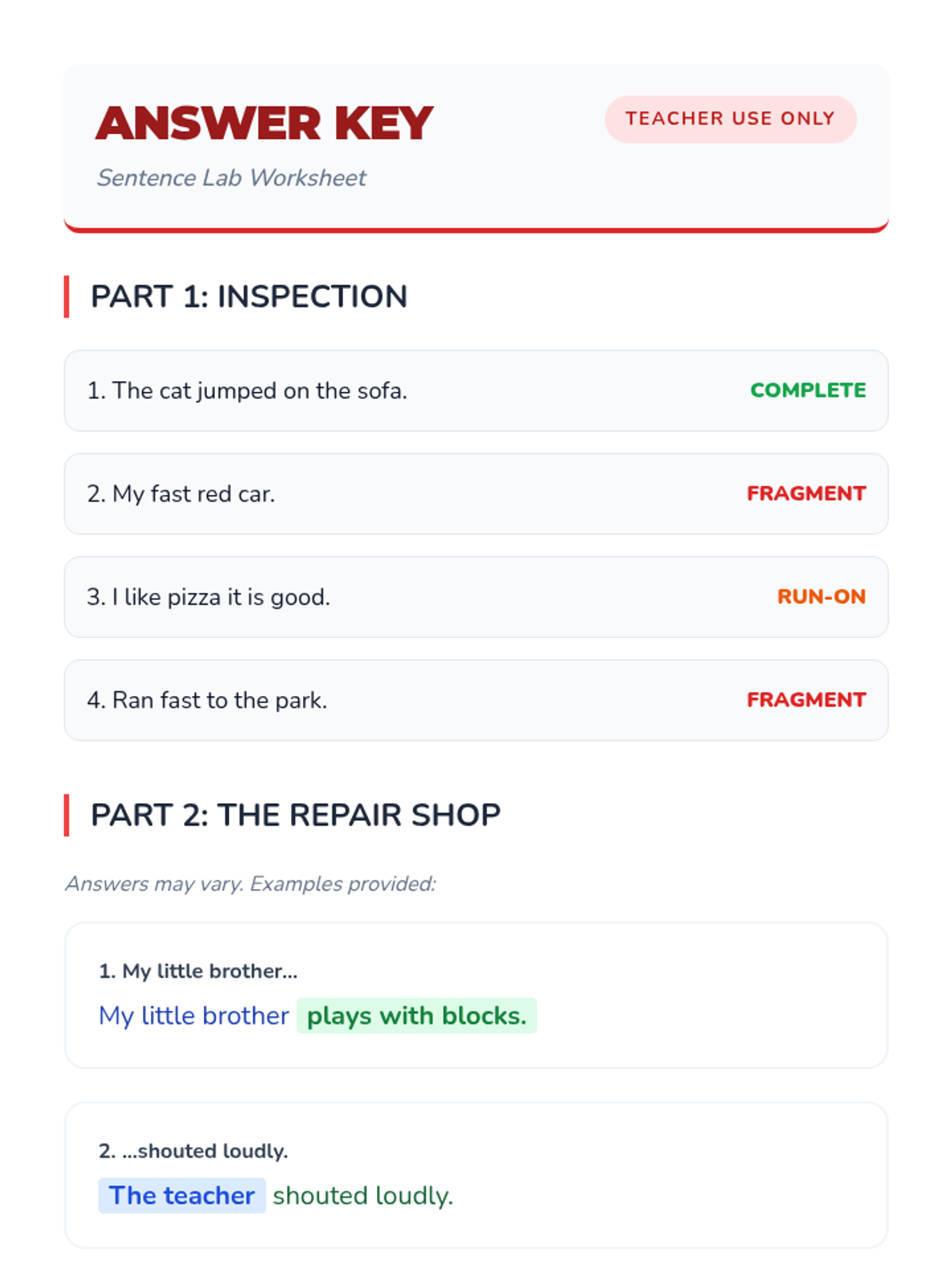
An answer key for the Sentence Lab Worksheet, providing correct classifications and example repairs for grammar exercises.
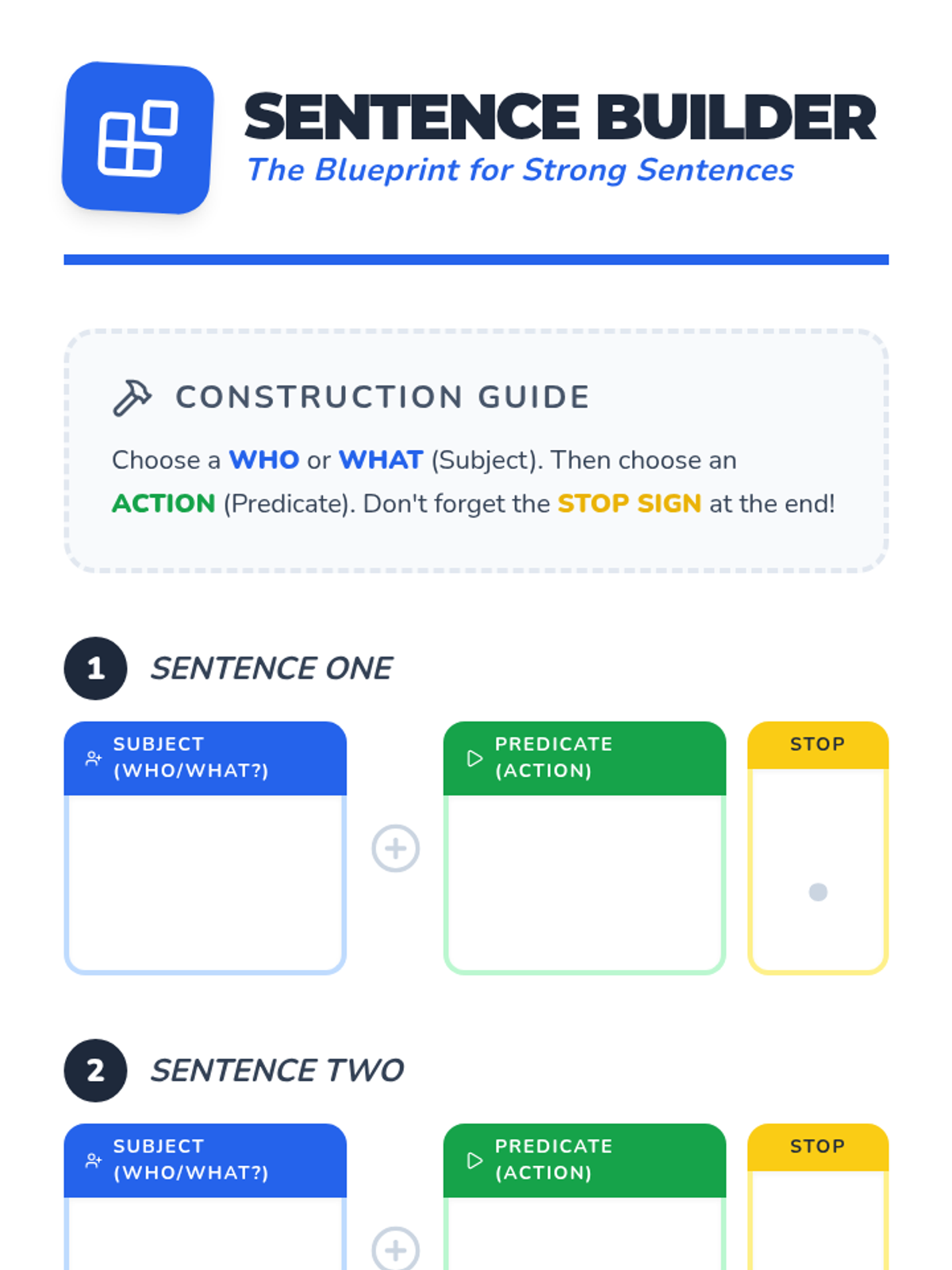
A visual graphic organizer designed to help students build complete sentences by connecting subjects and predicates in a color-coded "construction" layout.
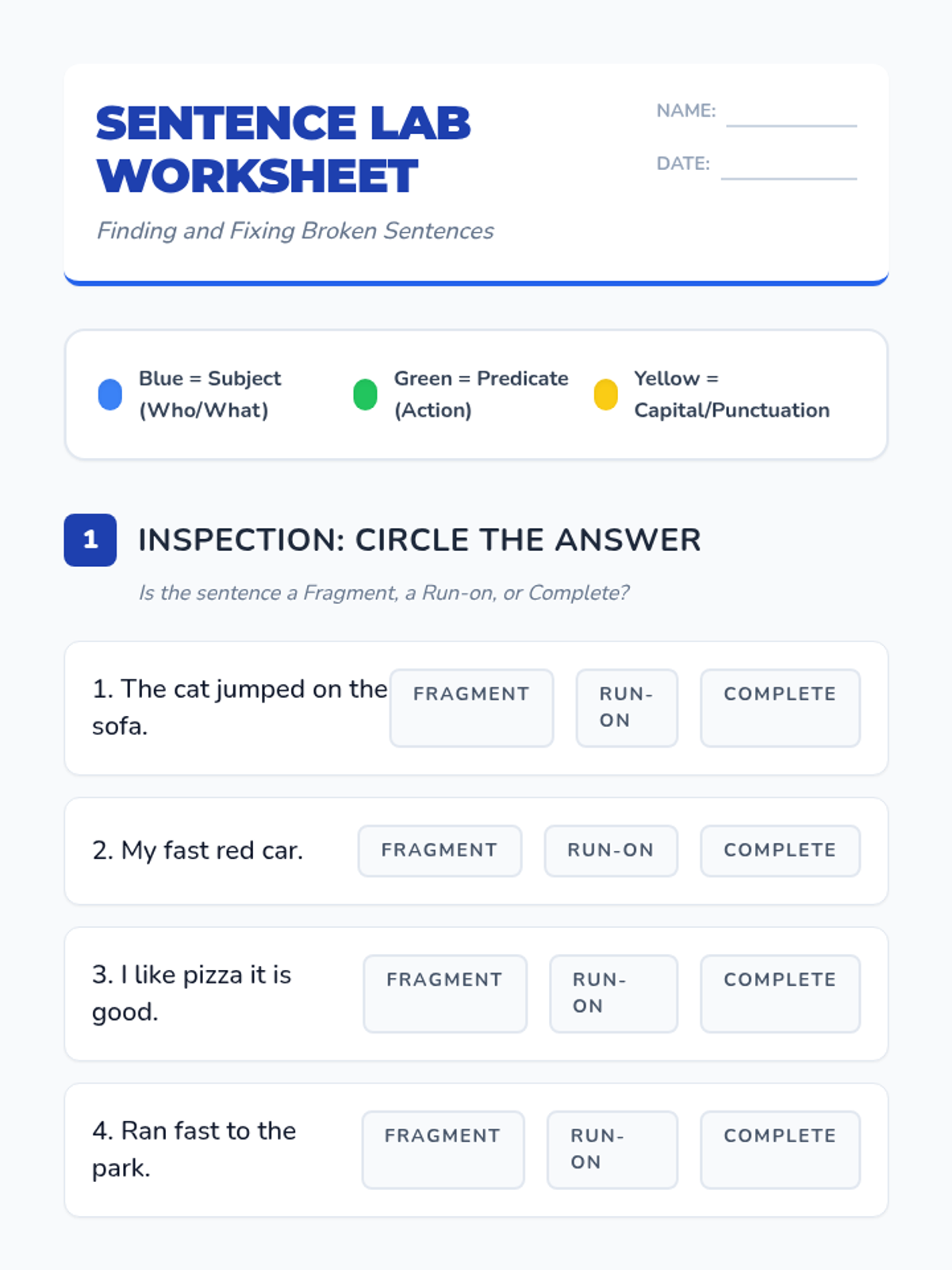
A structured worksheet for identifying and fixing sentence fragments and run-ons using visual scaffolds and color-coding for subjects and predicates.
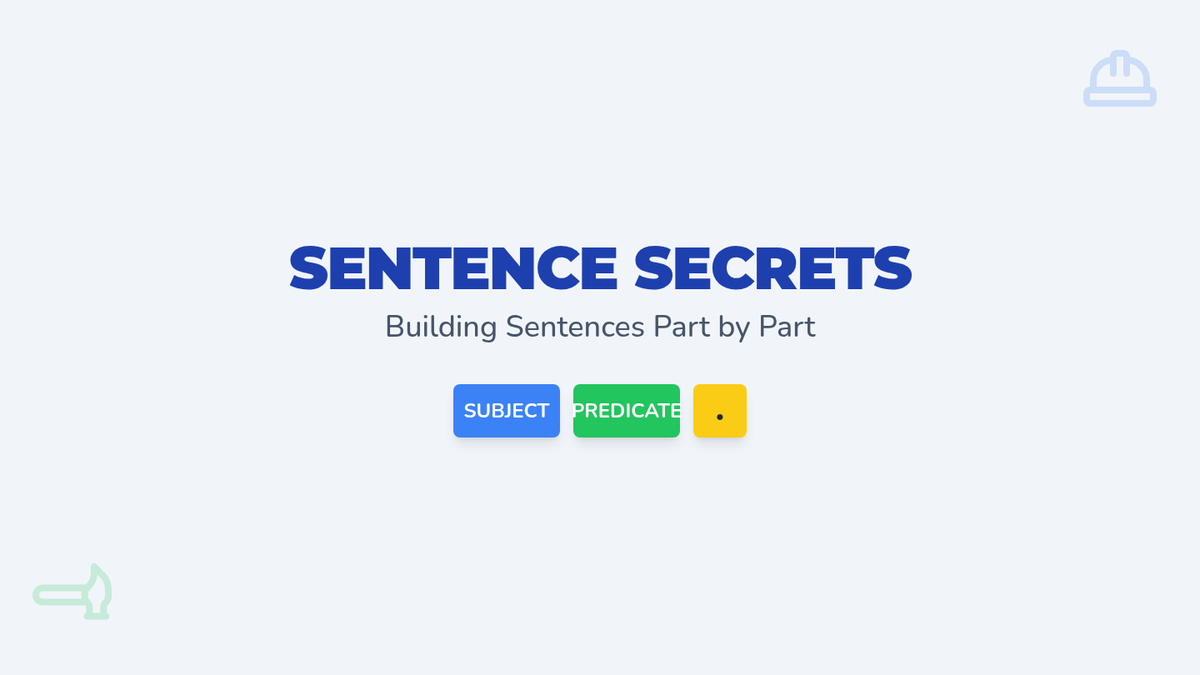
Instructional slides with a construction theme that define fragments, complete sentences, and run-ons using color-coded visual scaffolds.
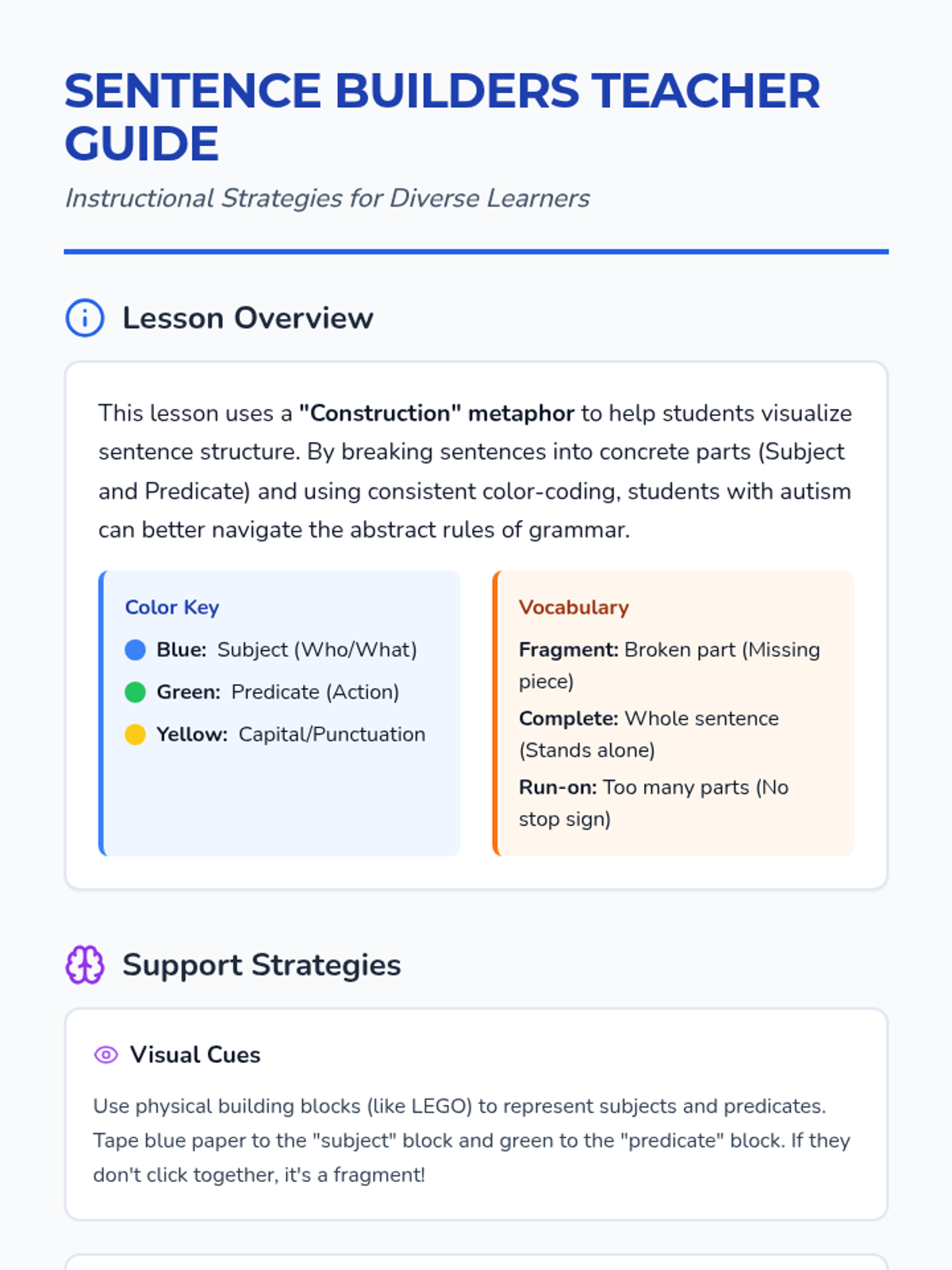
A professional teacher guide for the Sentence Builders lesson, featuring color-coded keys, instructional strategies for autistic students, and a step-by-step delivery plan.
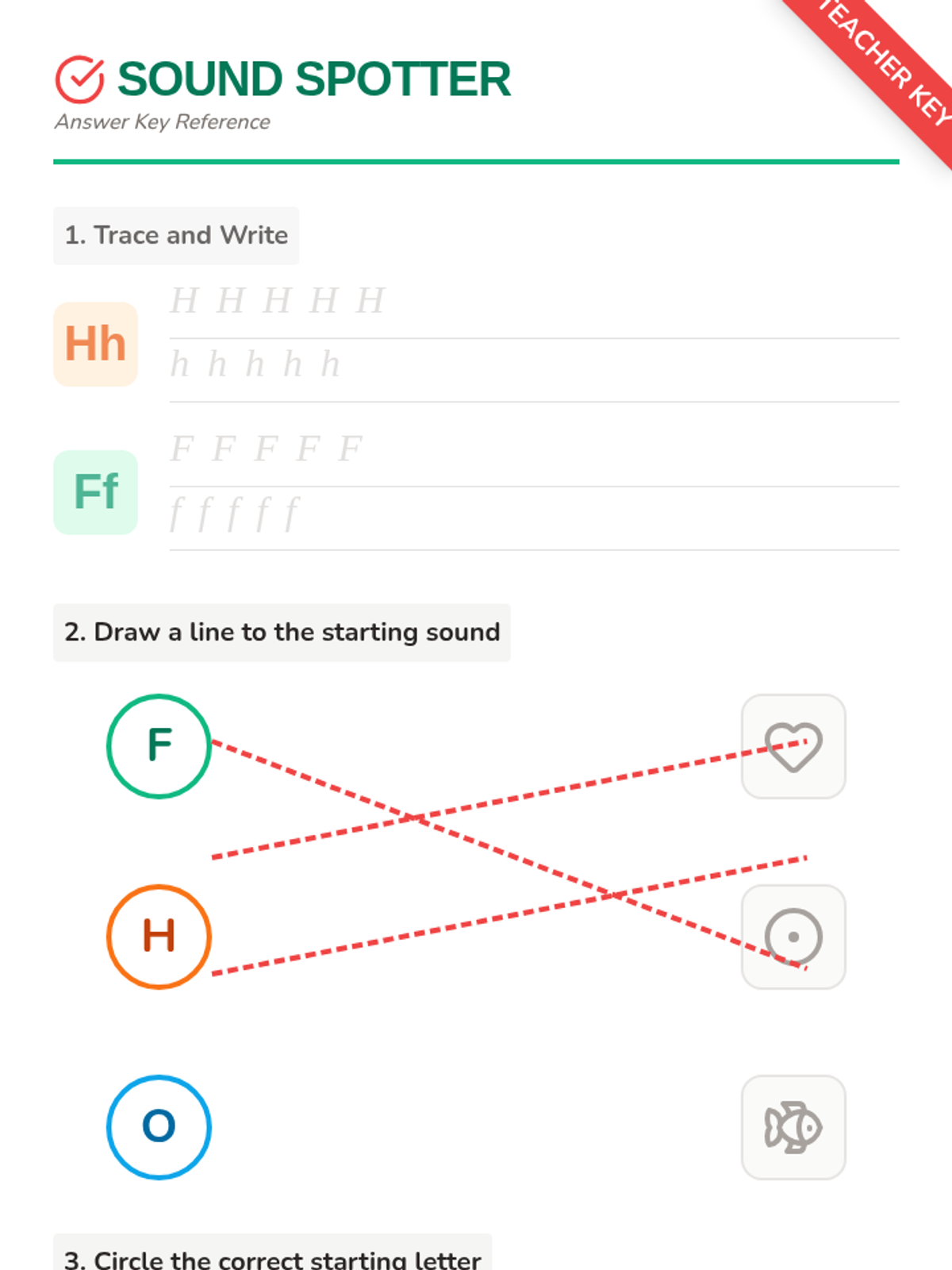
A teacher reference version of the Sound Spotter Worksheet with all correct answers clearly marked for easy grading.
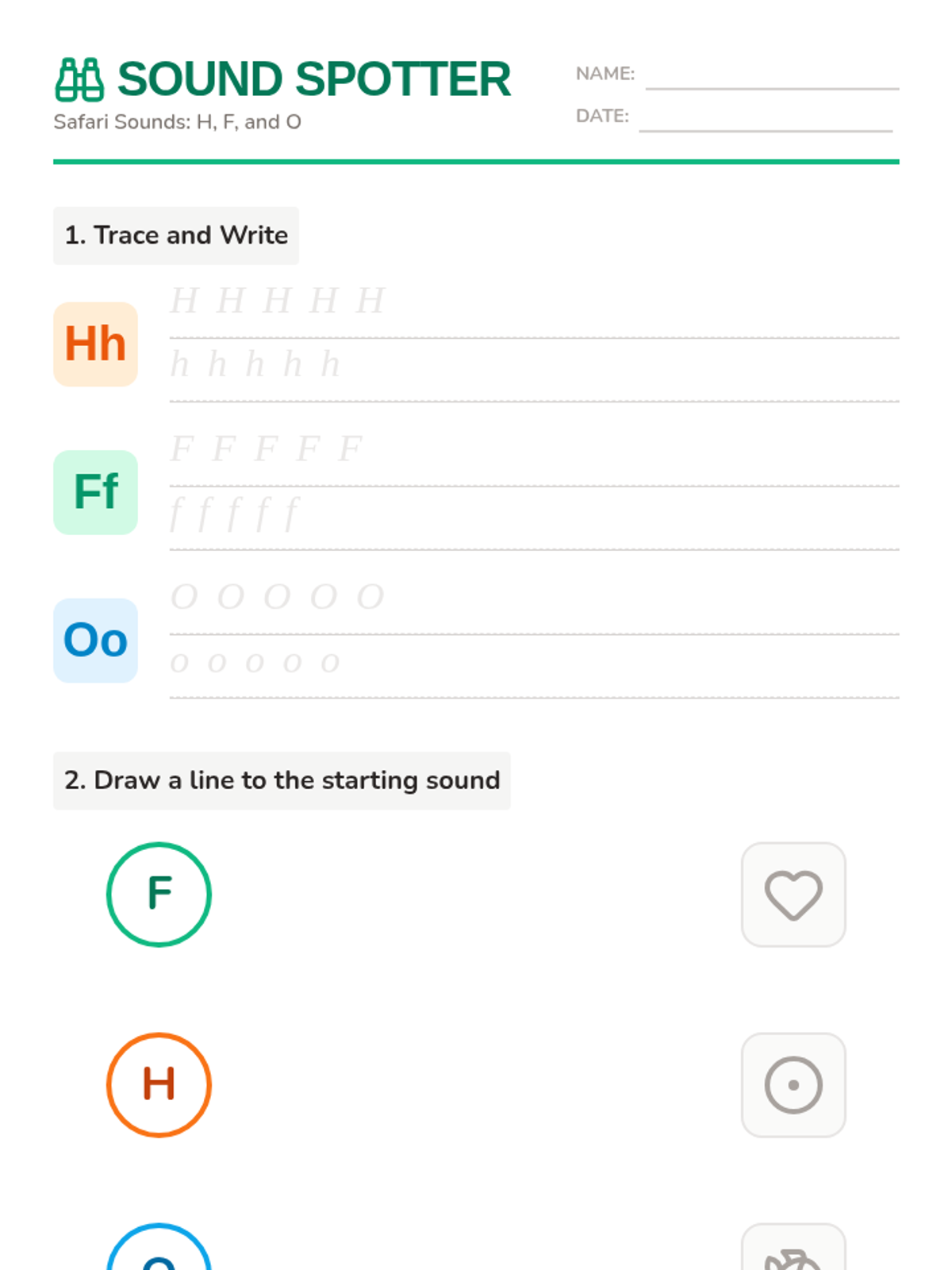
A kindergarten-appropriate worksheet for practicing the letters H, F, and O, featuring tracing, writing, matching pictures to sounds, and initial letter identification.
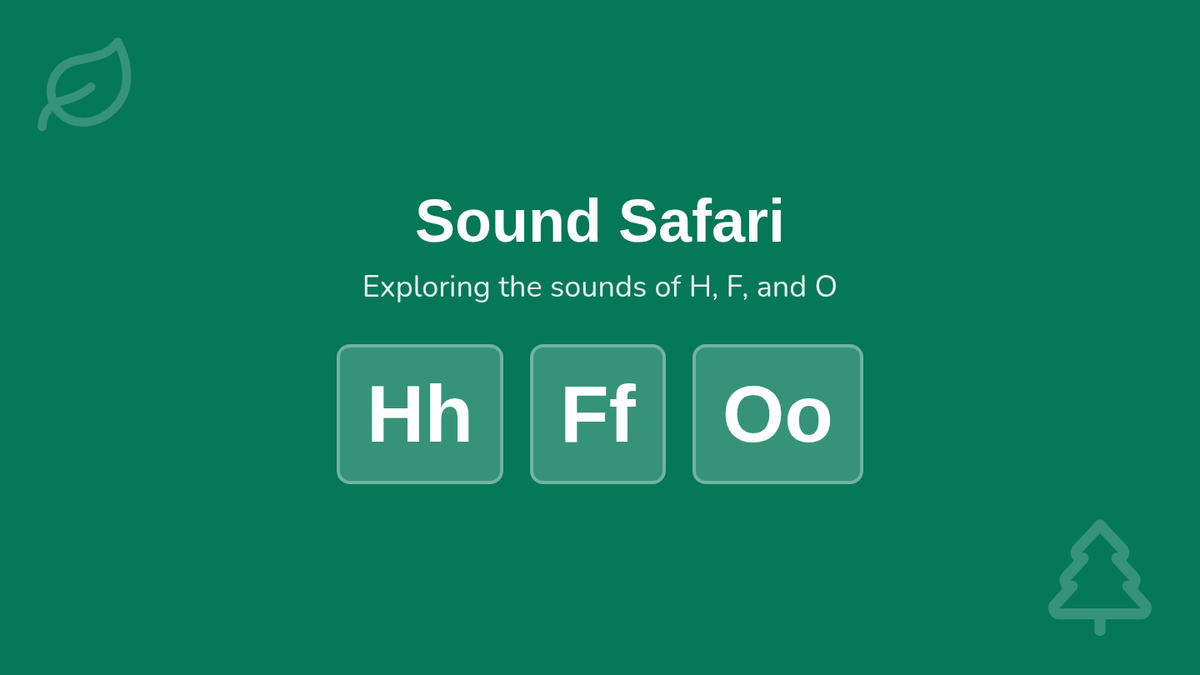
A visually engaging slide deck introducing the letters H, F, and O, featuring their sounds, example words with icons, and a quick interactive quiz.
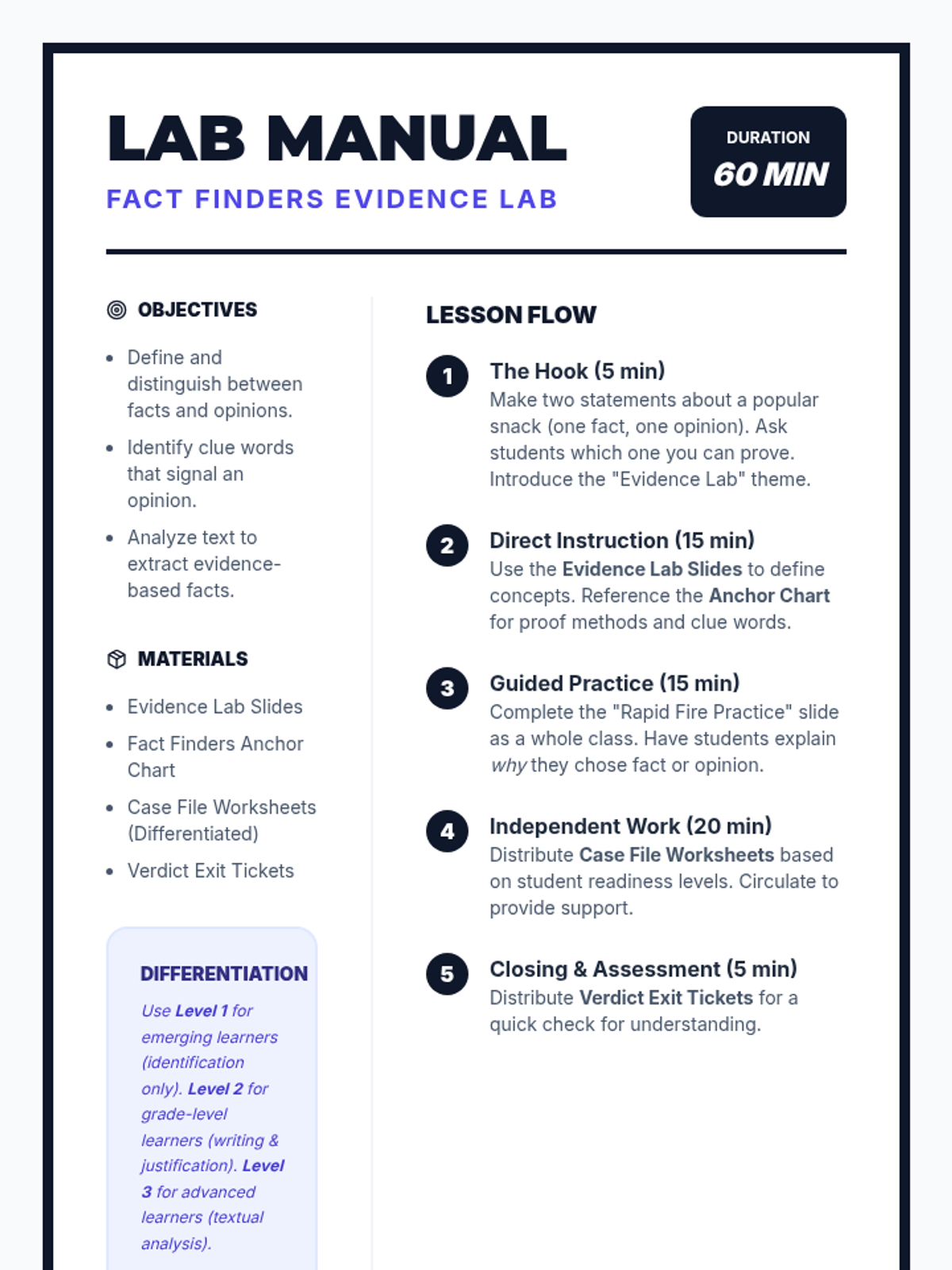
A comprehensive lesson plan and answer key for the Fact Finders Evidence Lab lesson. Includes learning objectives, materials list, a detailed 60-minute lesson flow, and answer keys for all student-facing materials.
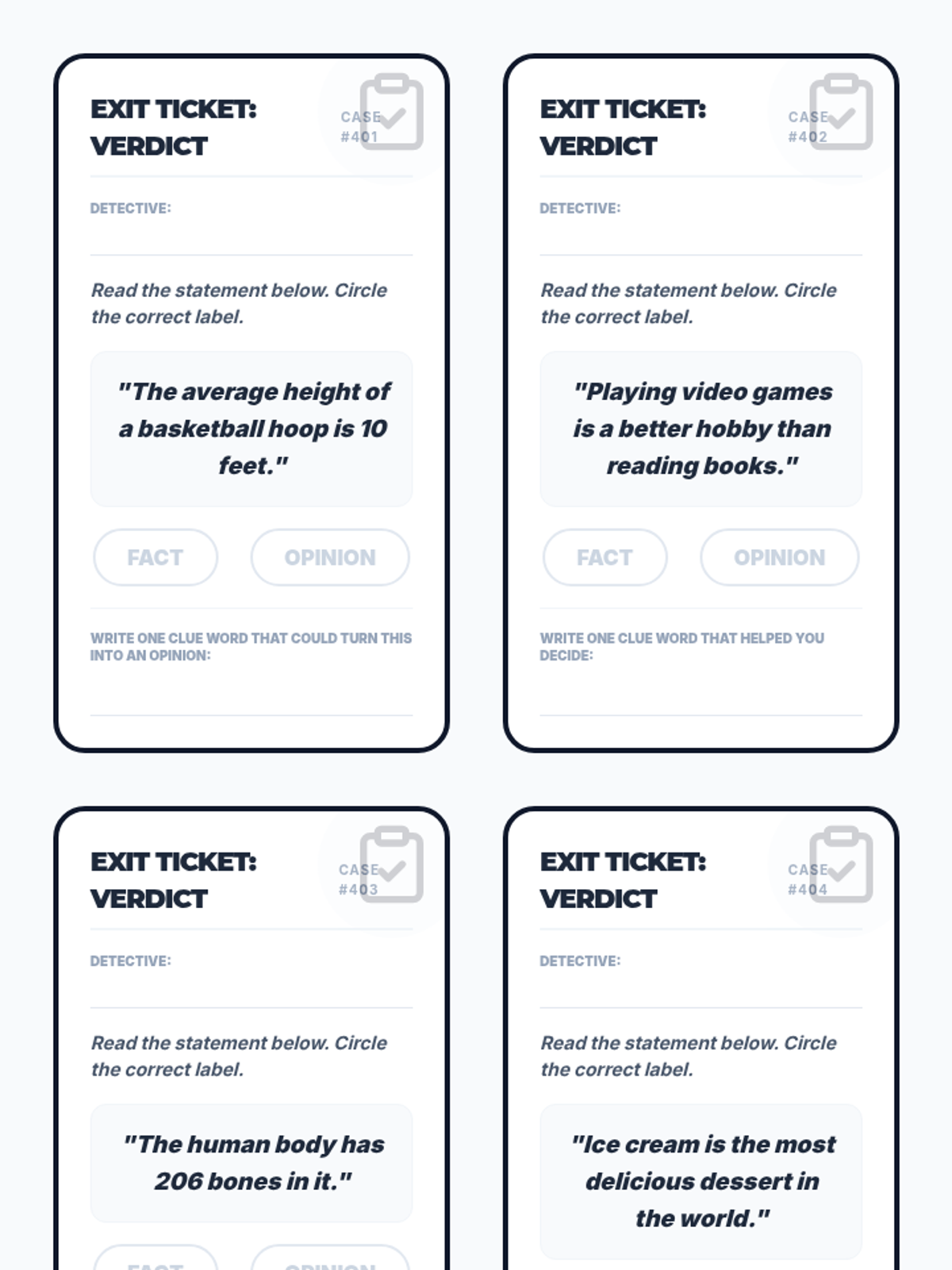
A set of four quick-check exit tickets on a single page, featuring different fact/opinion identification challenges and follow-up clue word identification.
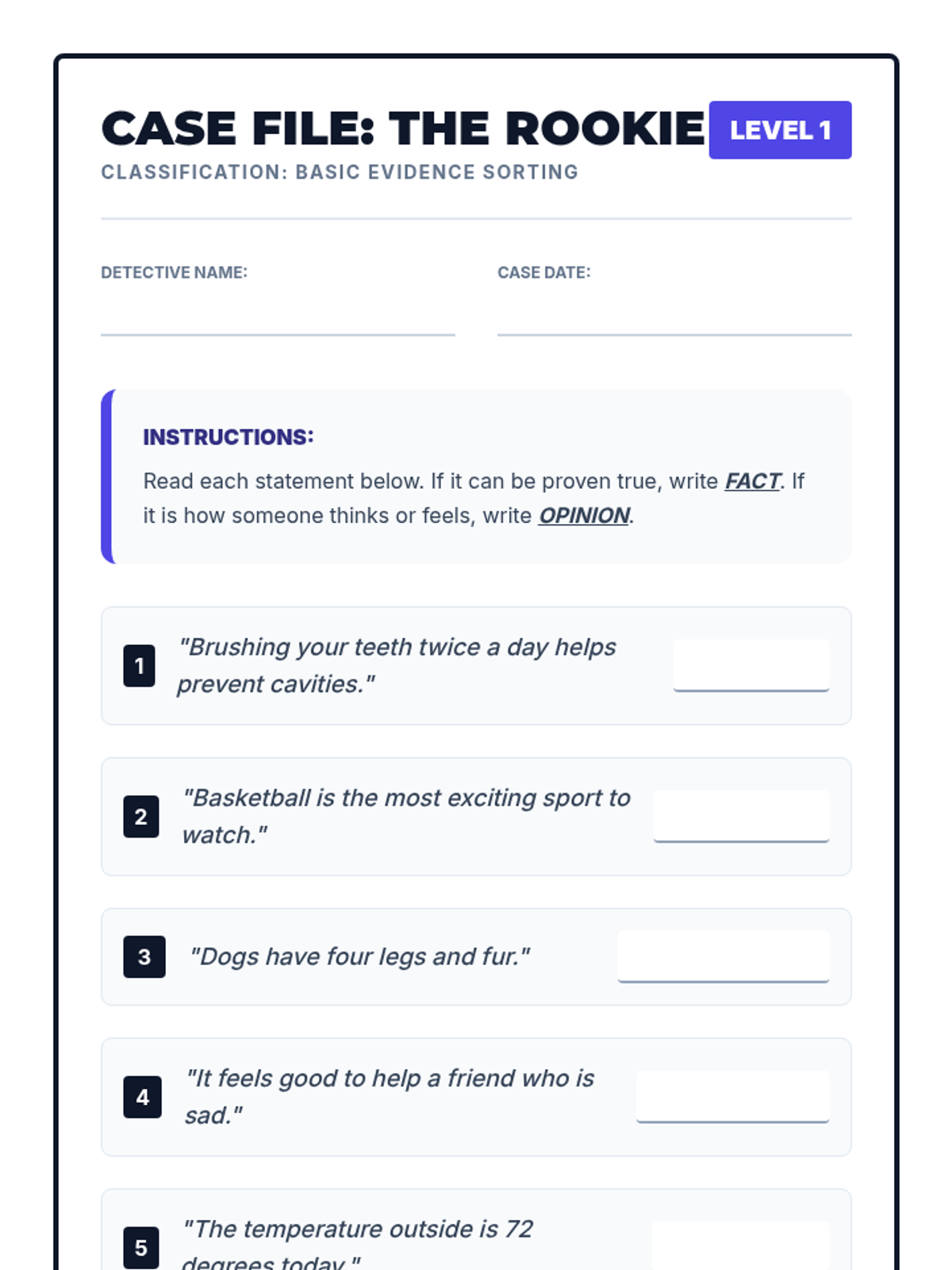
A set of three differentiated worksheets (Level 1, 2, and 3) that increase in complexity. Students move from basic identification to writing their own evidence and finally analyzing a text passage to distinguish between facts and opinions.
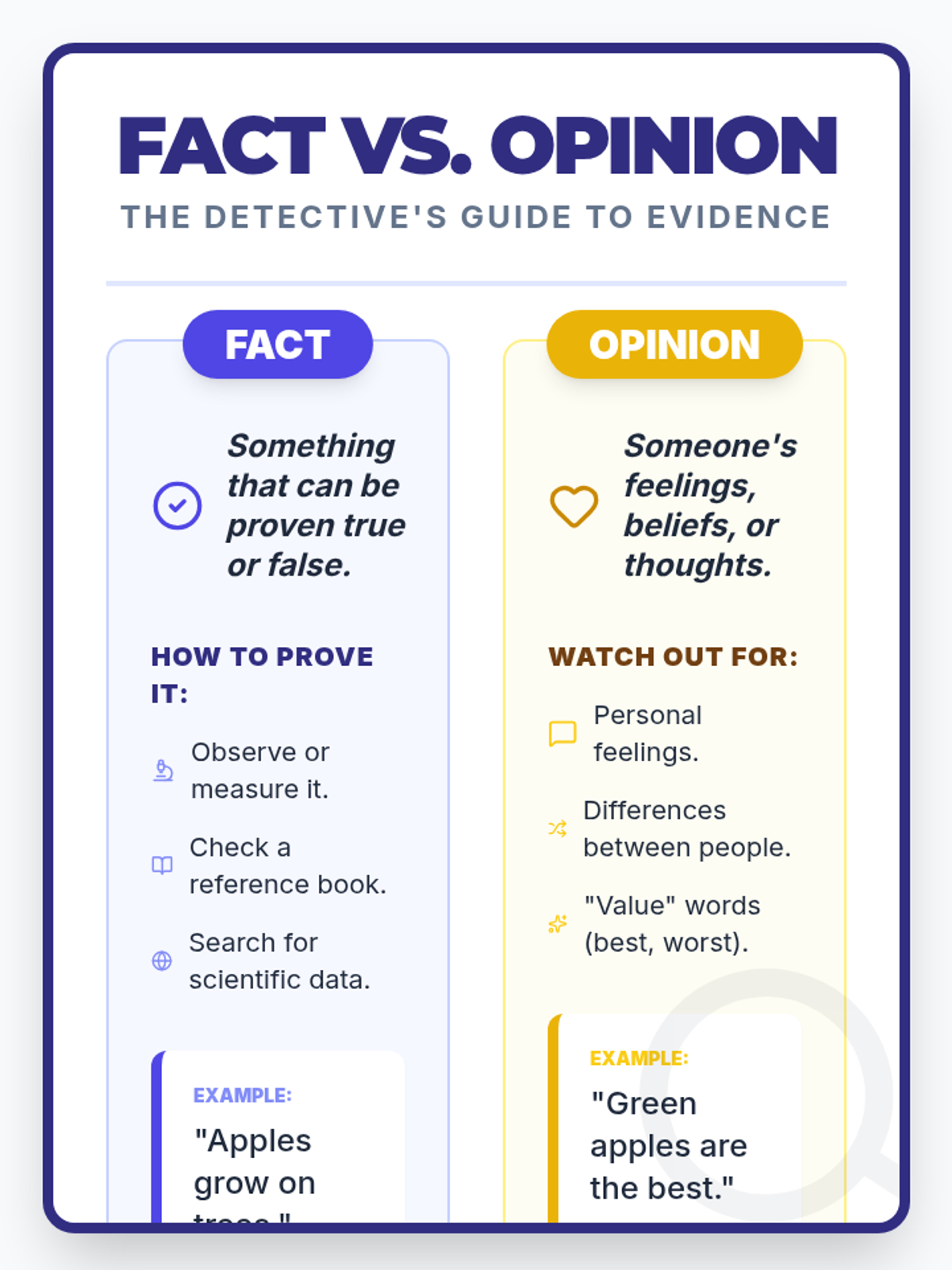
A visually engaging anchor chart for classroom display that clearly defines fact and opinion with evidence-based strategies, examples, and clue words. Features high-contrast columns and detective-themed icons.