A 2-page detective-themed worksheet where students analyze three non-fiction snippets. They must identify specific text clues and combine them with prior knowledge to draw a logical conclusion for each case.
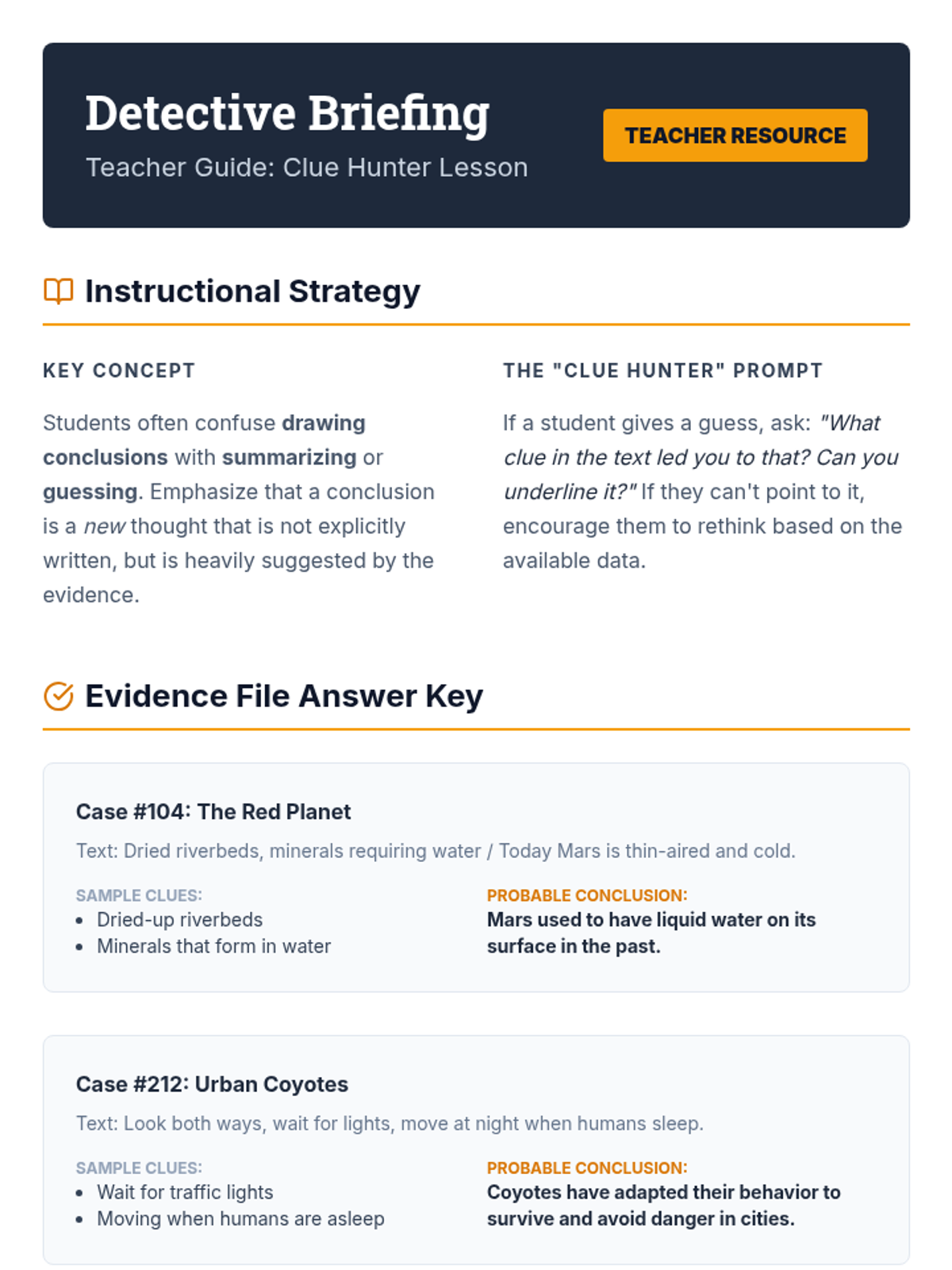
A teacher's guide and answer key for the Clue Hunter lesson. It includes instructional strategies, sample student responses for the worksheet, and discussion prompts to deepen understanding of non-fiction inference.
A 6-slide presentation for a mini-lesson on drawing conclusions from non-fiction. It introduces a detective-themed framework, a simple equation for inference, and provides two guided case studies for class discussion.
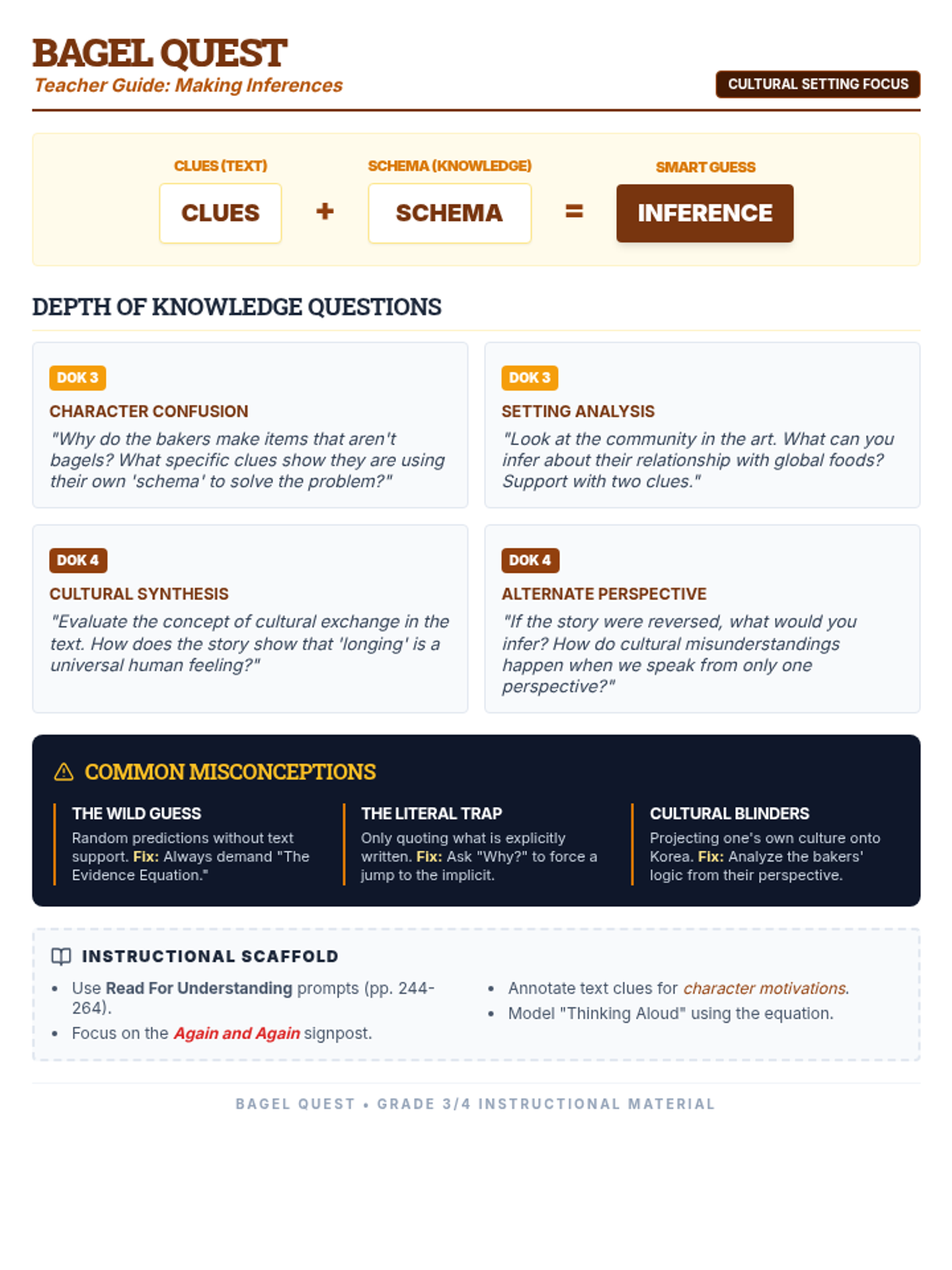
A teacher reference guide for 'Where on Earth Is My Bagel?' featuring DOK level 3 and 4 questions and a breakdown of common student misconceptions regarding making inferences in cultural settings.
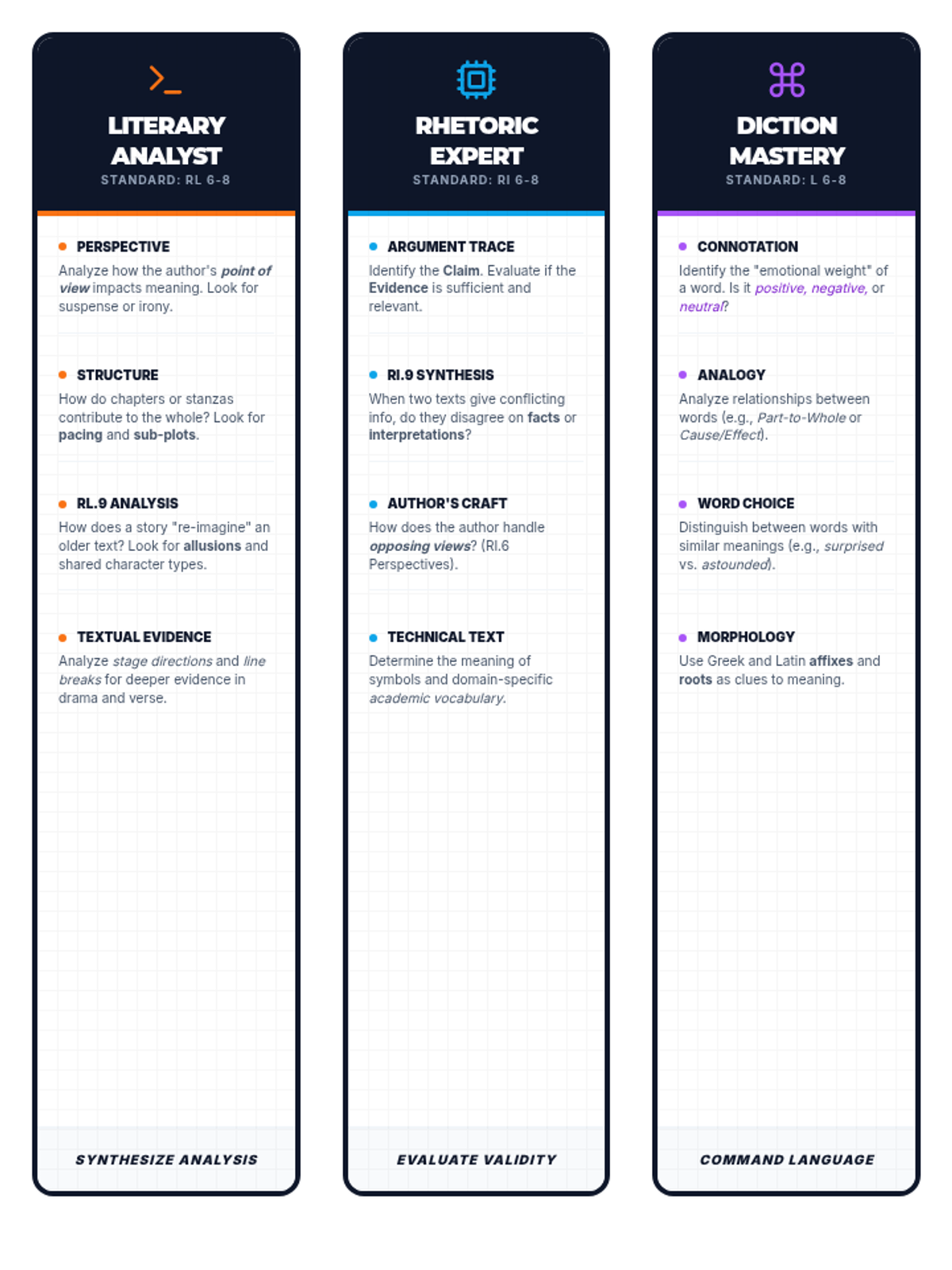
A sophisticated set of three printable bookmarks for middle school students (Grades 6-8), featuring advanced strategies for Literary analysis, Rhetorical evaluation, and Language standards. Includes specific focus on RI.9 cross-text synthesis.
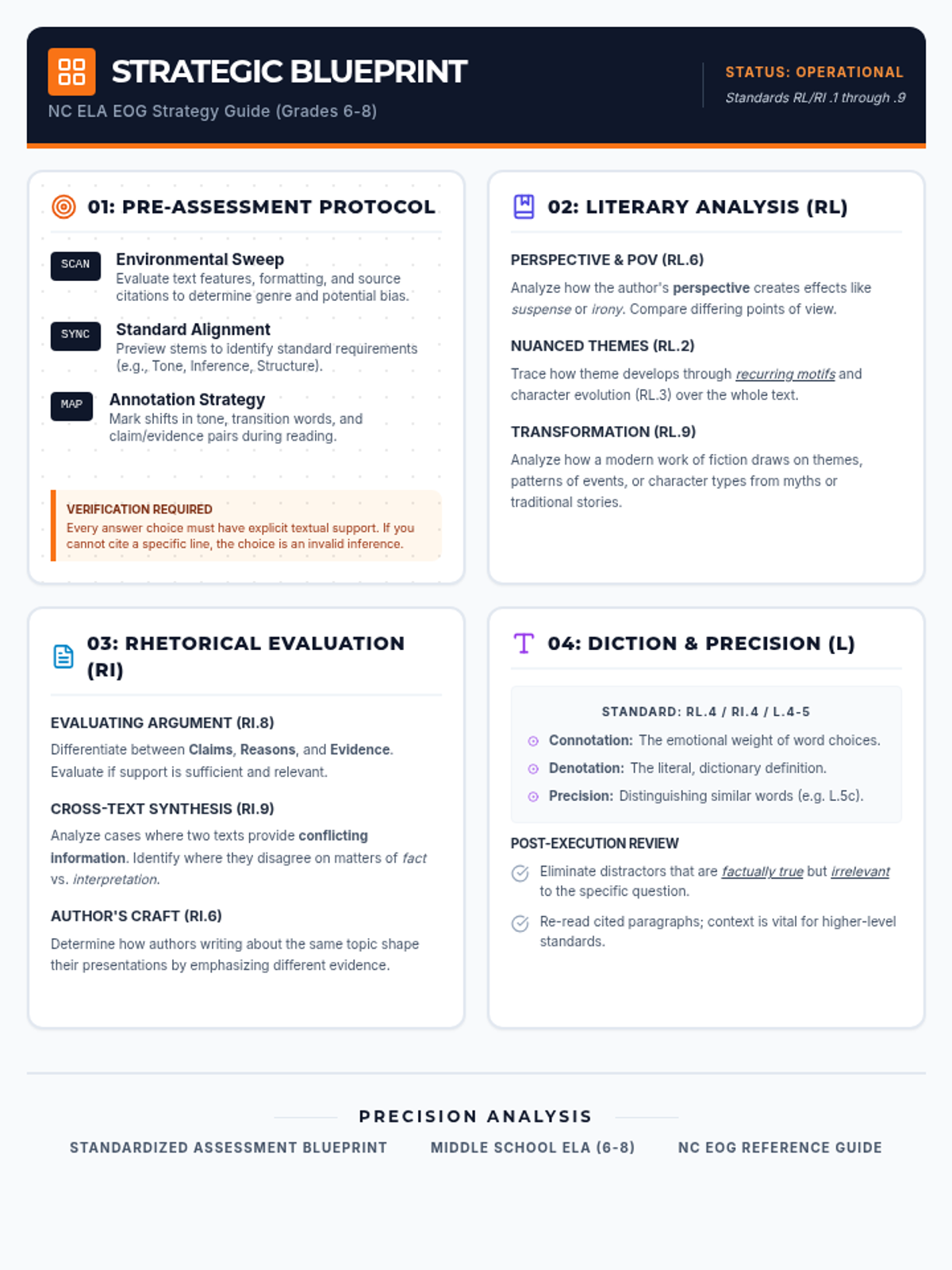
A sophisticated "Strategic Blueprint" themed cheat sheet for middle school students (Grades 6-8), focusing on advanced NC ELA EOG standards including argumentative evaluation and nuanced theme development. Expanded focus on RI.9 cross-text synthesis.
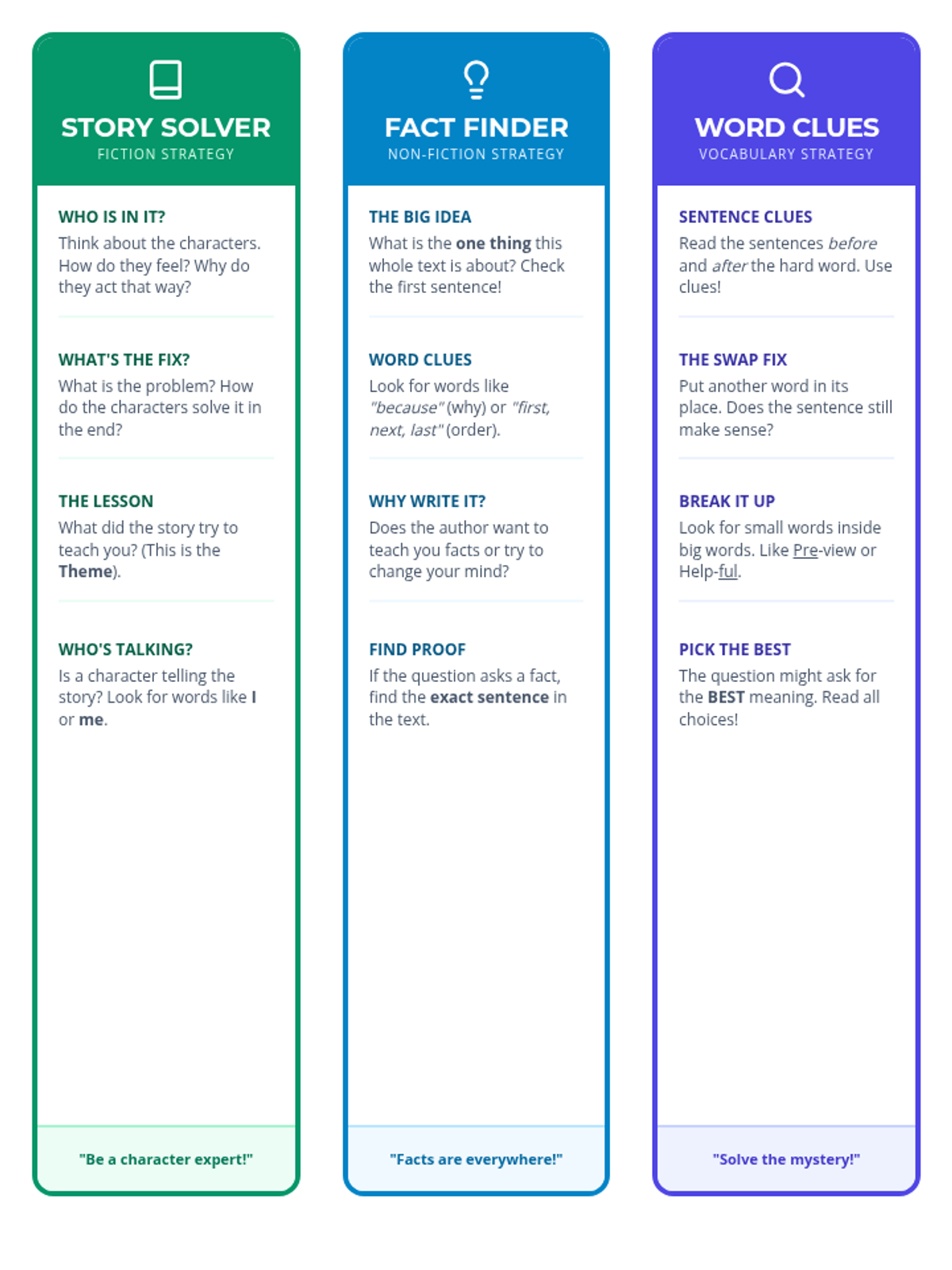
A simplified set of three printable bookmarks for elementary students, focusing on Fiction, Non-Fiction, and Vocabulary strategies. Language is simplified for better comprehension and RI.7 is excluded. Naming changed to avoid wrap.
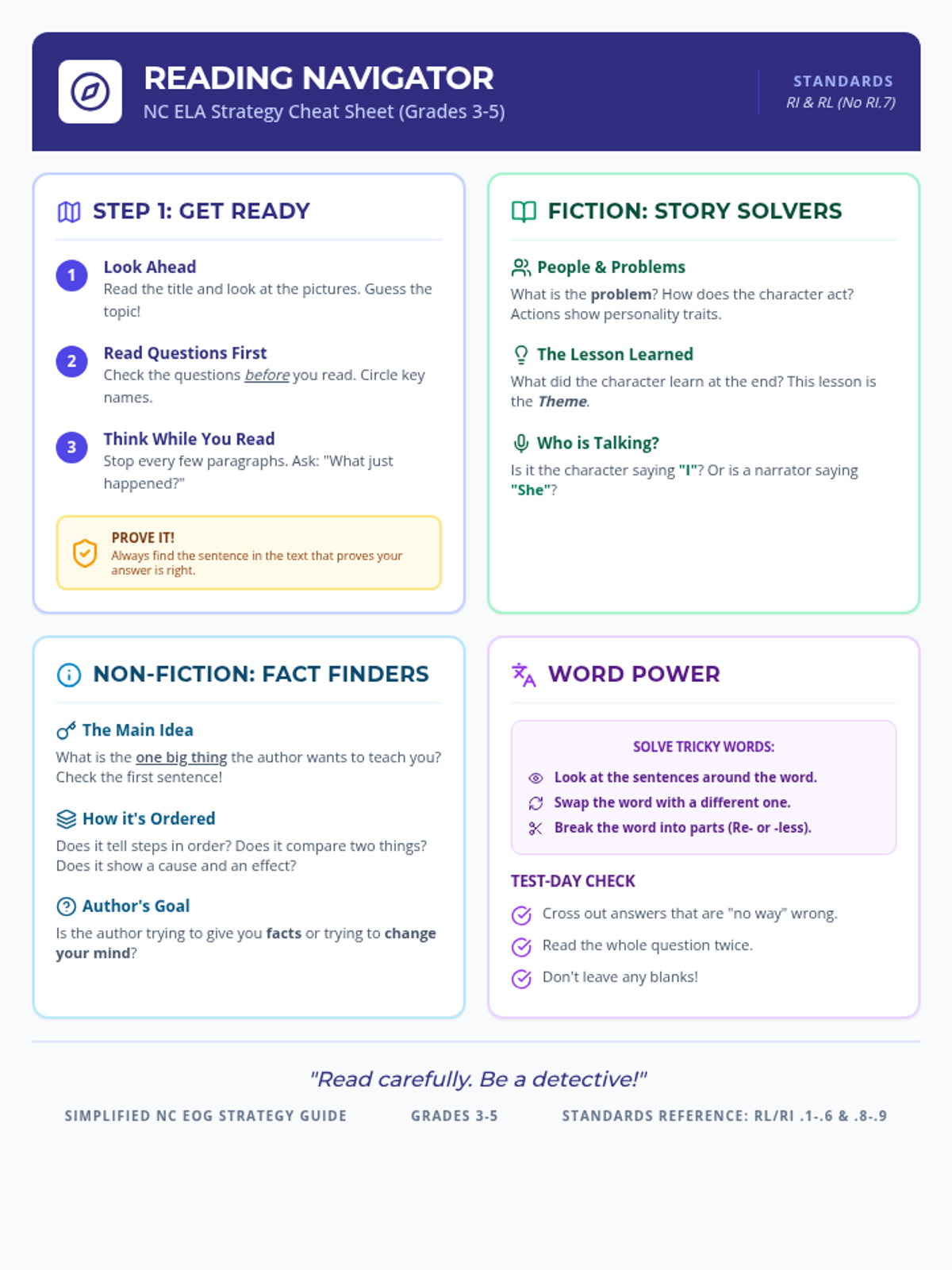
A simplified one-page cheat sheet for elementary students (Grades 3-5), featuring kid-friendly language and removing RI.7 standards. Covers core strategies for fiction, non-fiction, and vocabulary. Revised for single-page fit.
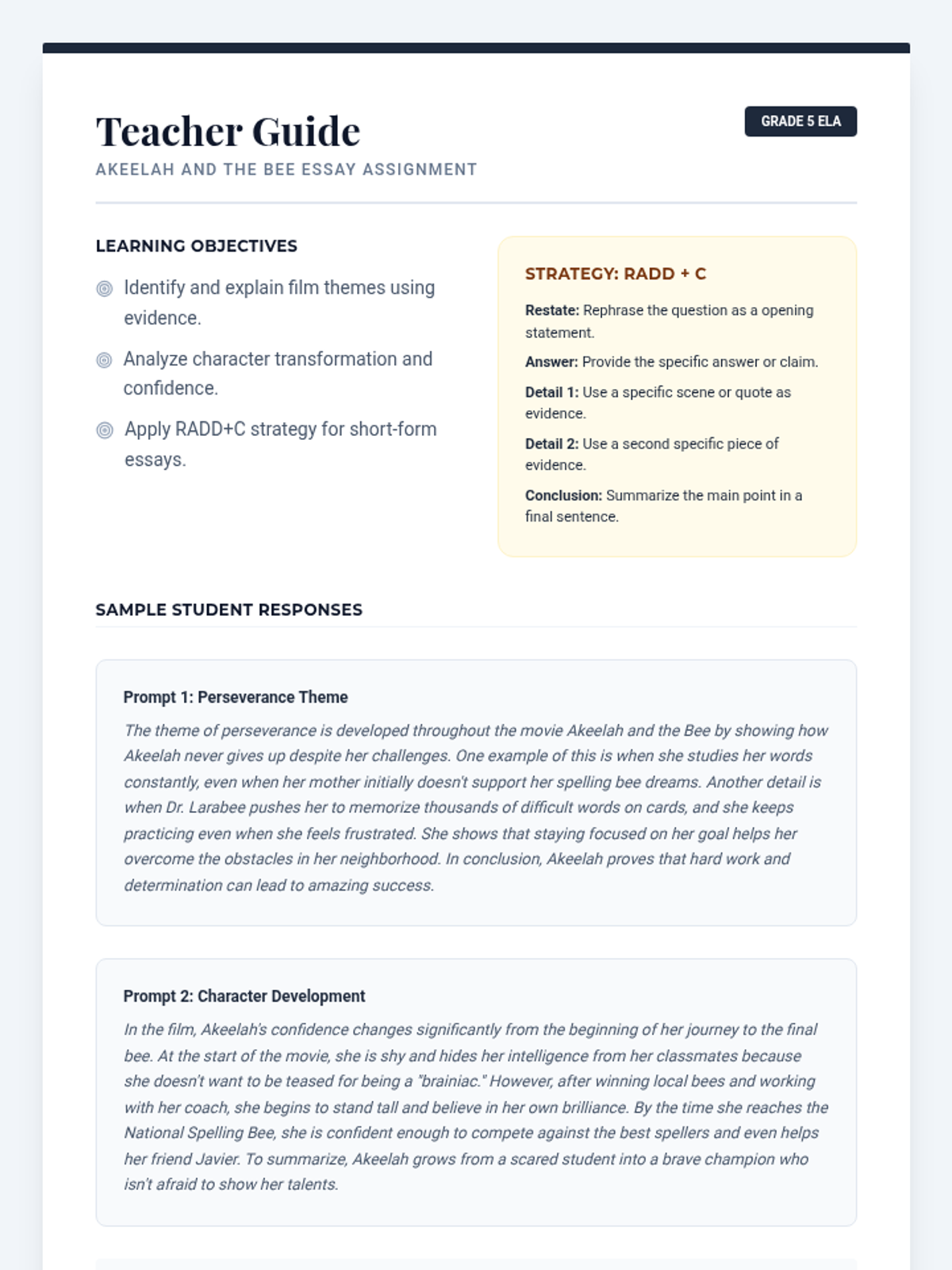
A teacher guide for the Akeelah and the Bee essay assignment. It features learning objectives, a detailed RADD strategy breakdown, sample student responses for both prompts, and a grading rubric.
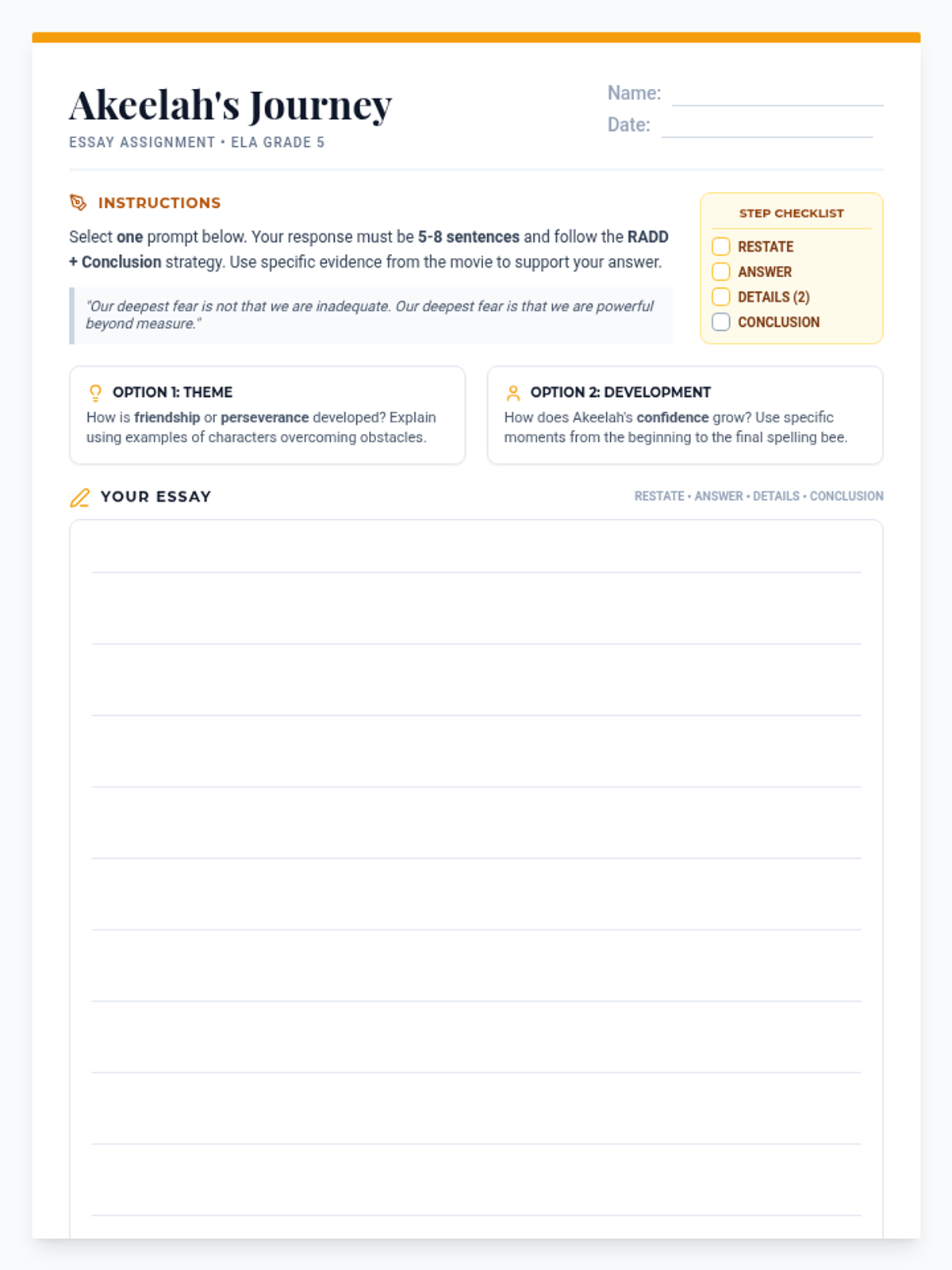
A student essay worksheet for Akeelah and the Bee using the RADD writing strategy. It includes two prompt options (theme or character development) and a guided writing area for a 5-8 sentence response.
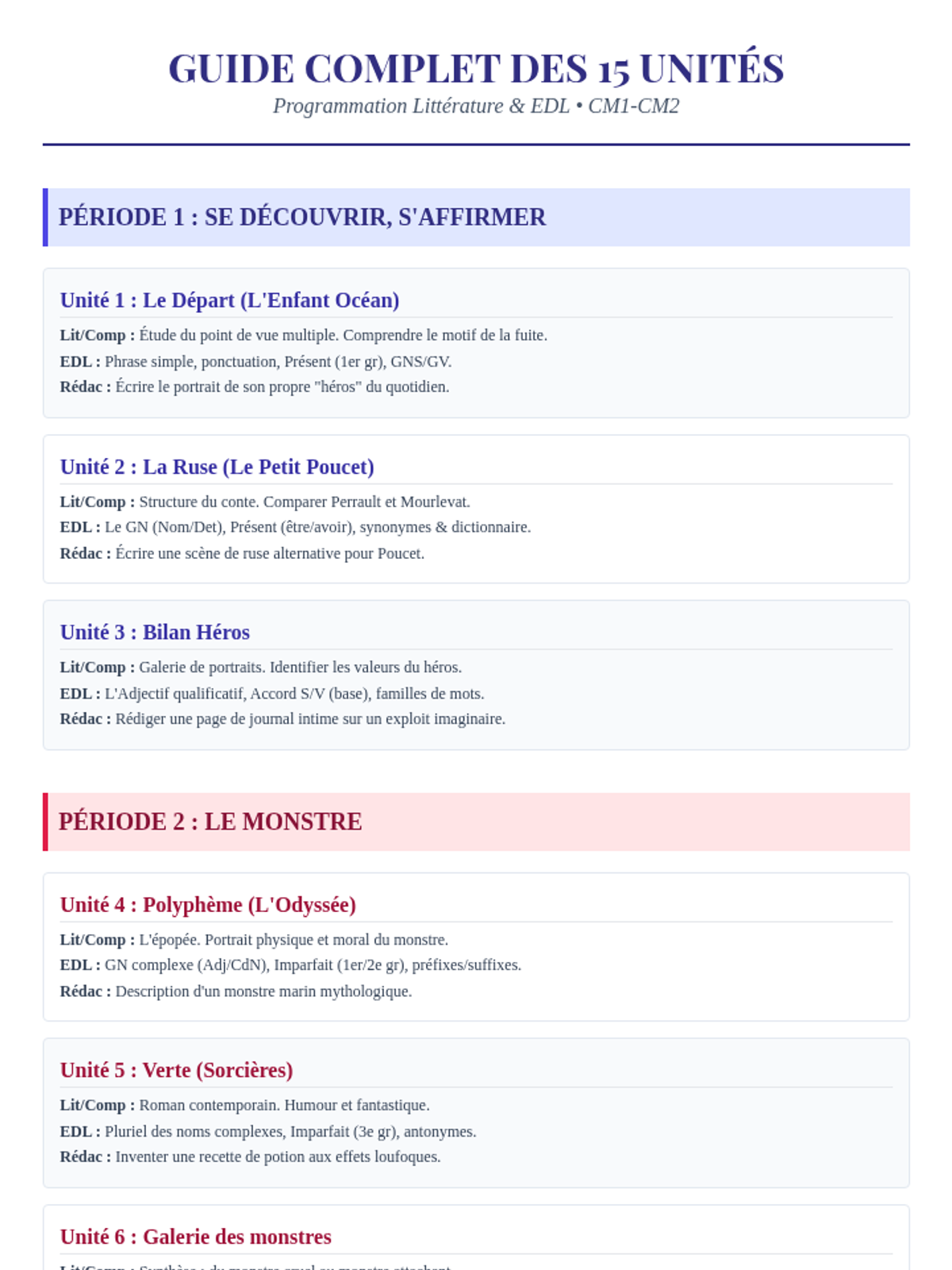
Le guide pédagogique exhaustif détaillant les 15 unités d'apprentissage de l'année (3 par période), avec une répartition précise des objectifs en littérature, étude de la langue et rédaction, optimisé pour une pagination cohérente.
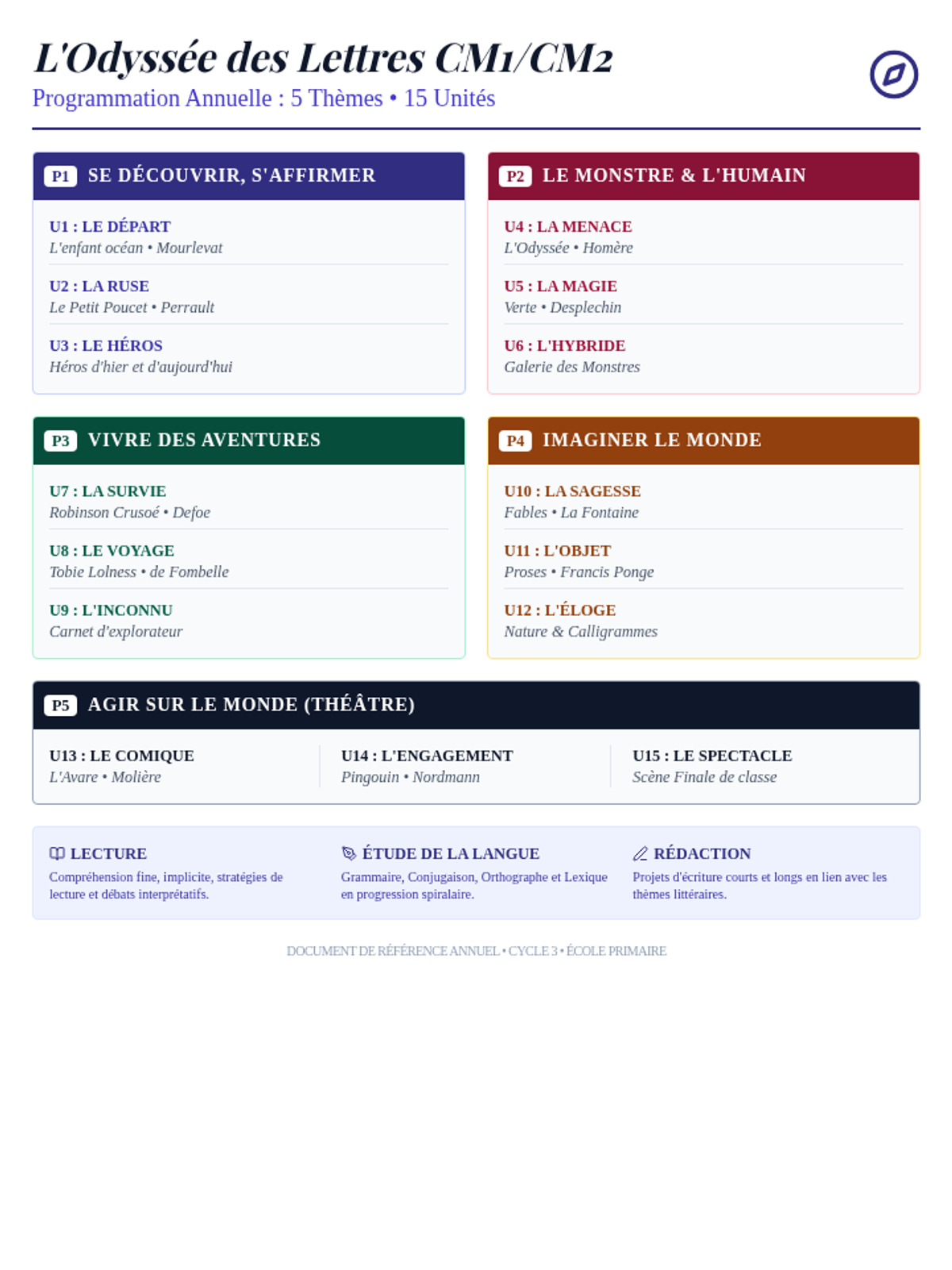
Une affiche récapitulative compacte de la programmation annuelle présentant les 5 thèmes, déclinés en 15 unités distinctes avec les œuvres de référence, optimisée pour un affichage sur une seule page.