An engaging slide deck introducing food webs, energy pyramids, and the roles of producers and consumers across four distinct ecosystems (Forest, Ocean, Desert, and Pond). Includes visual diagrams and clear definitions for 4th-grade students.
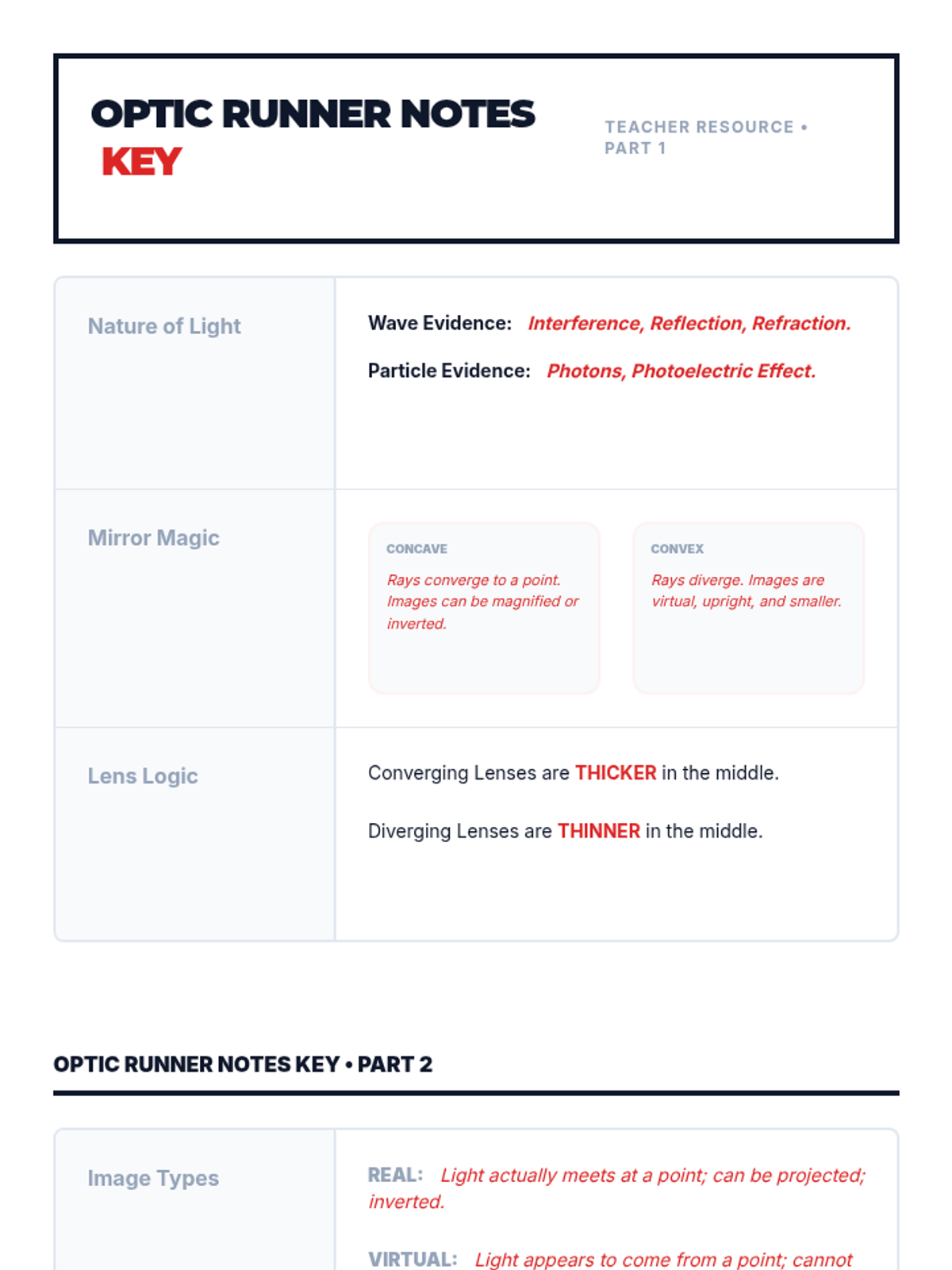
Teacher answer key for the Optic Runner Cornell Notes. Provides model definitions for wave-particle duality, mirror/lens comparisons, ray tracing rules, Snell's Law, and biological vision mechanics. Revised for 3-page layout alignment.
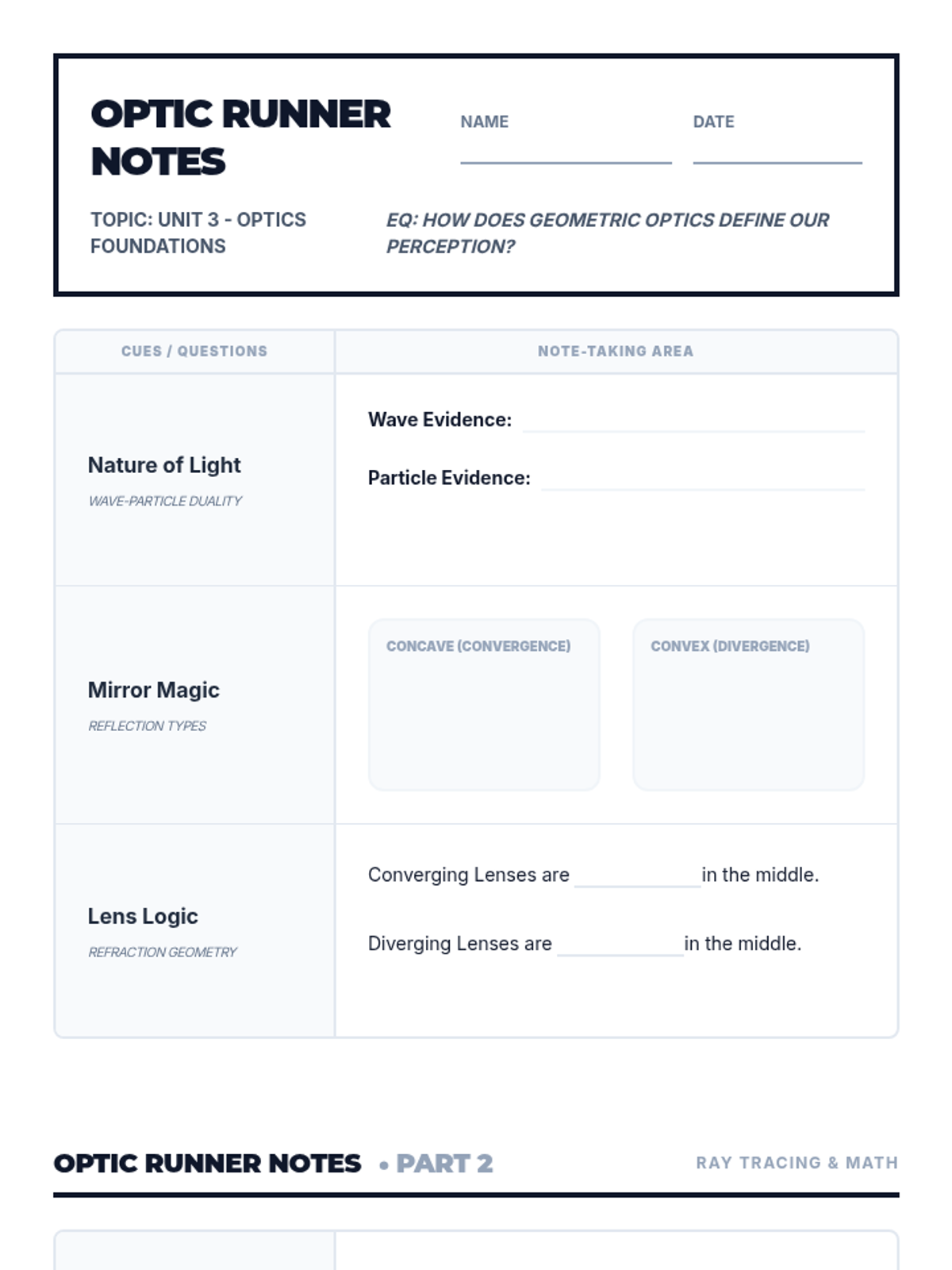
A structured Cornell note-taking template designed to accompany the Optic Runner slide deck. Includes pre-defined cue categories and scaffolded note areas covering the nature of light, lens and mirror geometry, Snell's Law, biological optics, and wave behavior. features a high-contrast technical aesthetic. Revised to include the updated Lexicon sections for mirrors, lenses, and image types.
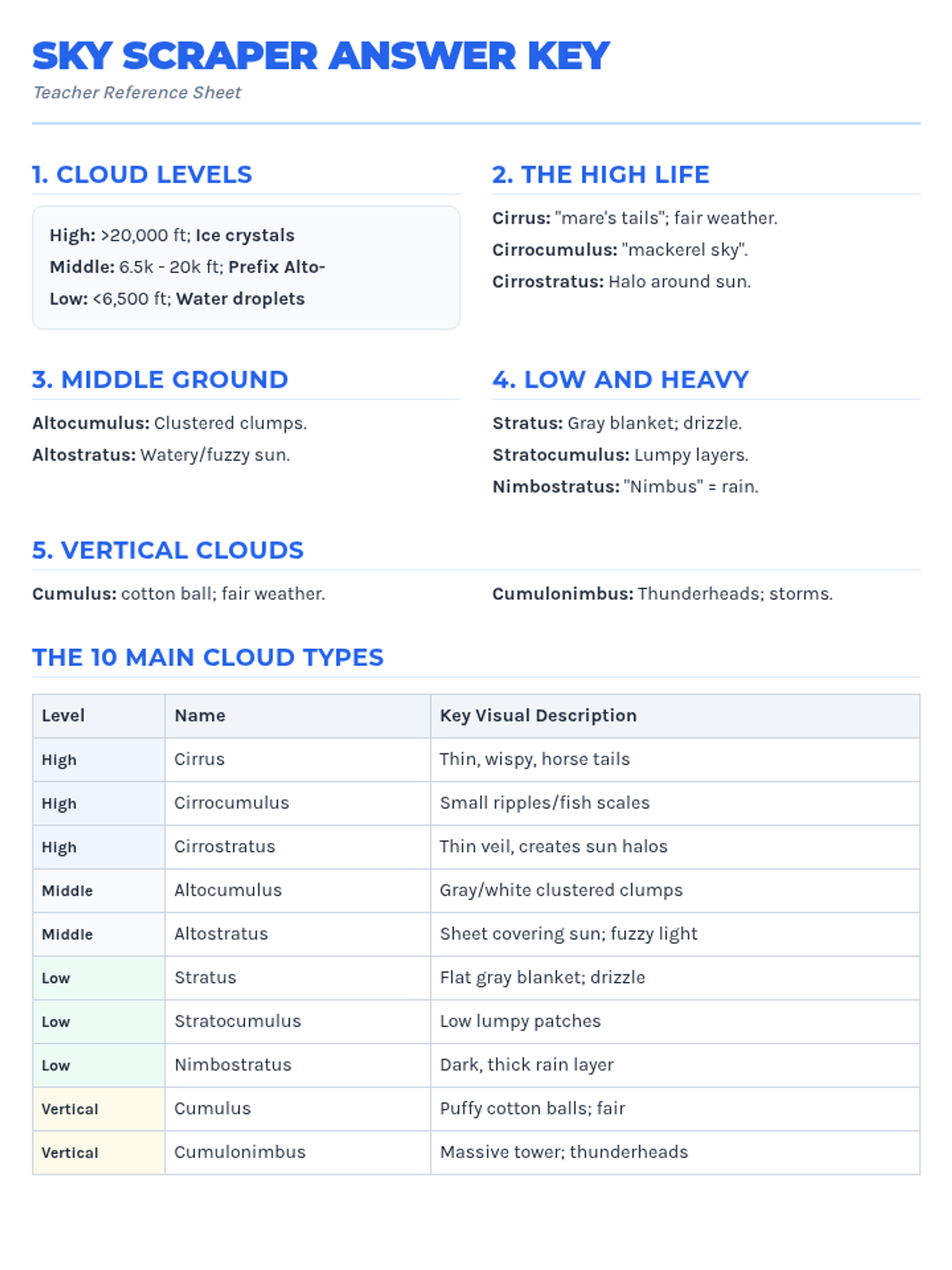
Completed version of the Sky Scraper Notes to serve as a reference for teachers. Revised to include all 10 standard cloud types and optimized layout for a single-page reference.
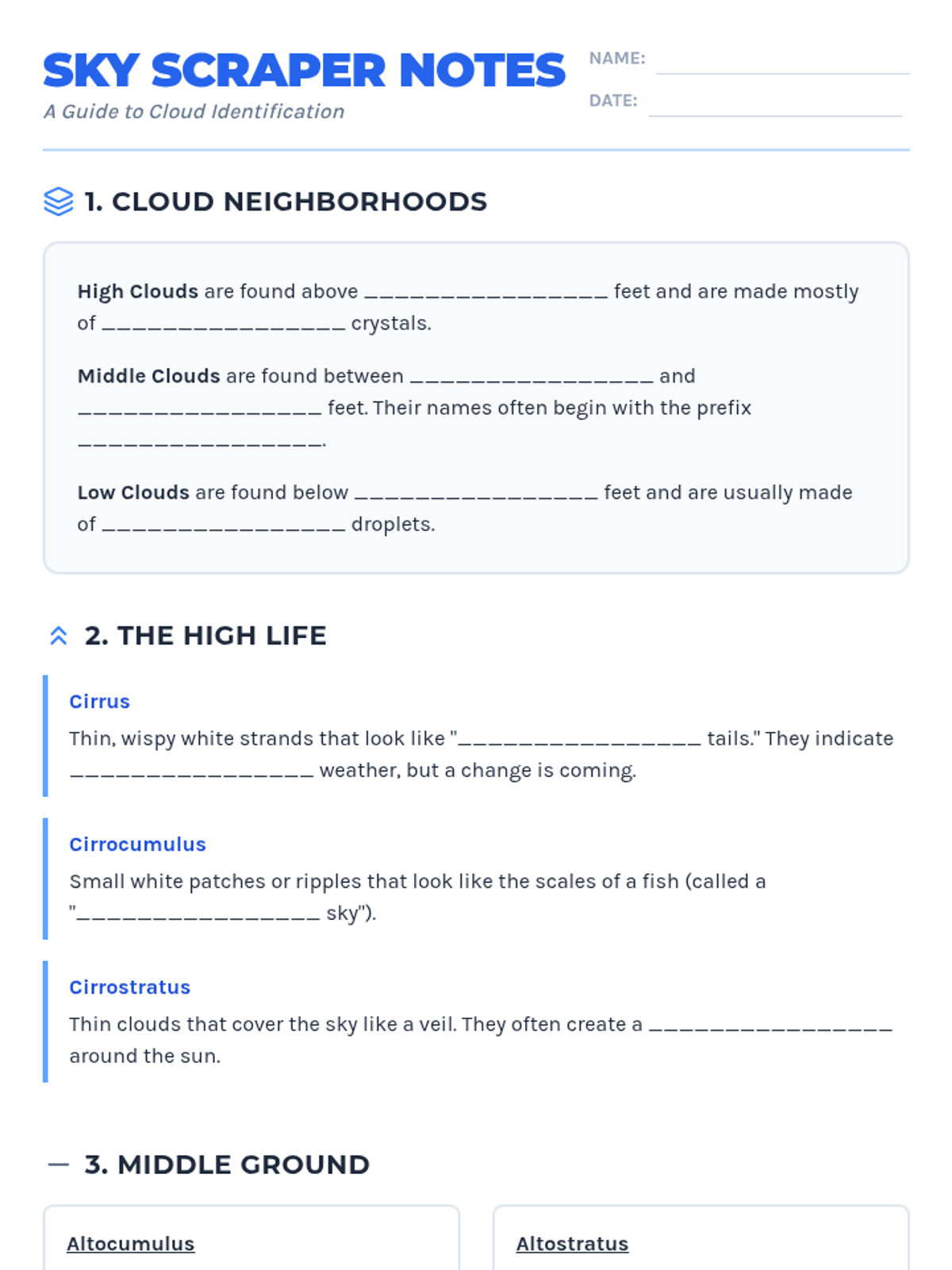
A fill-in-the-blank guided notes document designed to be completed alongside the Sky Scraper presentation. Revised for improved page breaks, student work area legibility, and layout consistency.
A visual presentation covering the 10 main cloud types, their altitudes, and characteristics, with special focus slides for Cirrus, Stratus, and Cumulus clouds. Revised for improved padding and alignment on Slide 6.
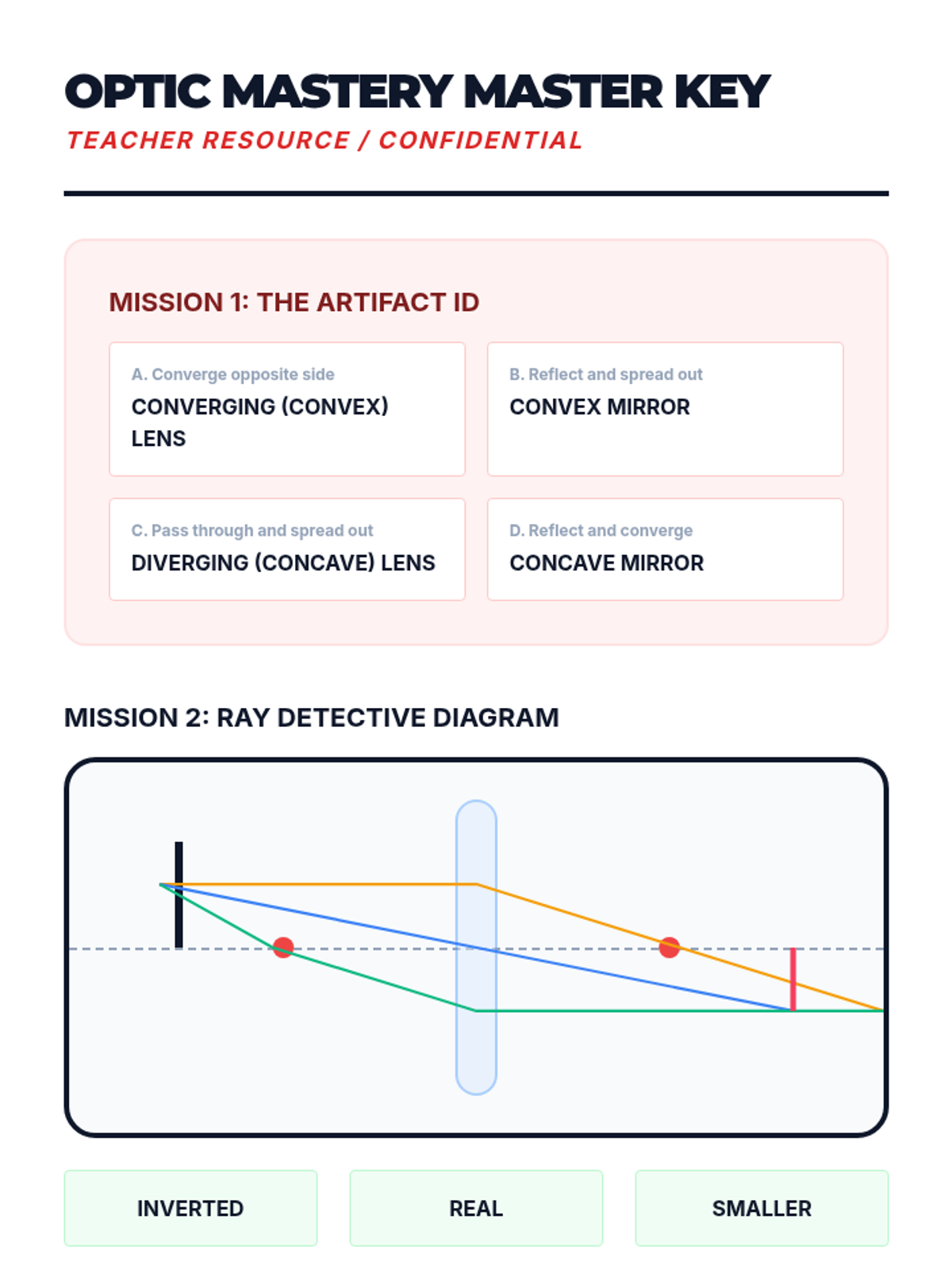
A comprehensive teacher answer key for the Optic Mastery Challenge. Includes step-by-step mathematical solutions for Snell's Law, completed ray diagrams with color-coded paths, and detailed biological explanations for vision correction. Designed for classroom grading and instructional review. Revised for improved page flow and symbol rendering.
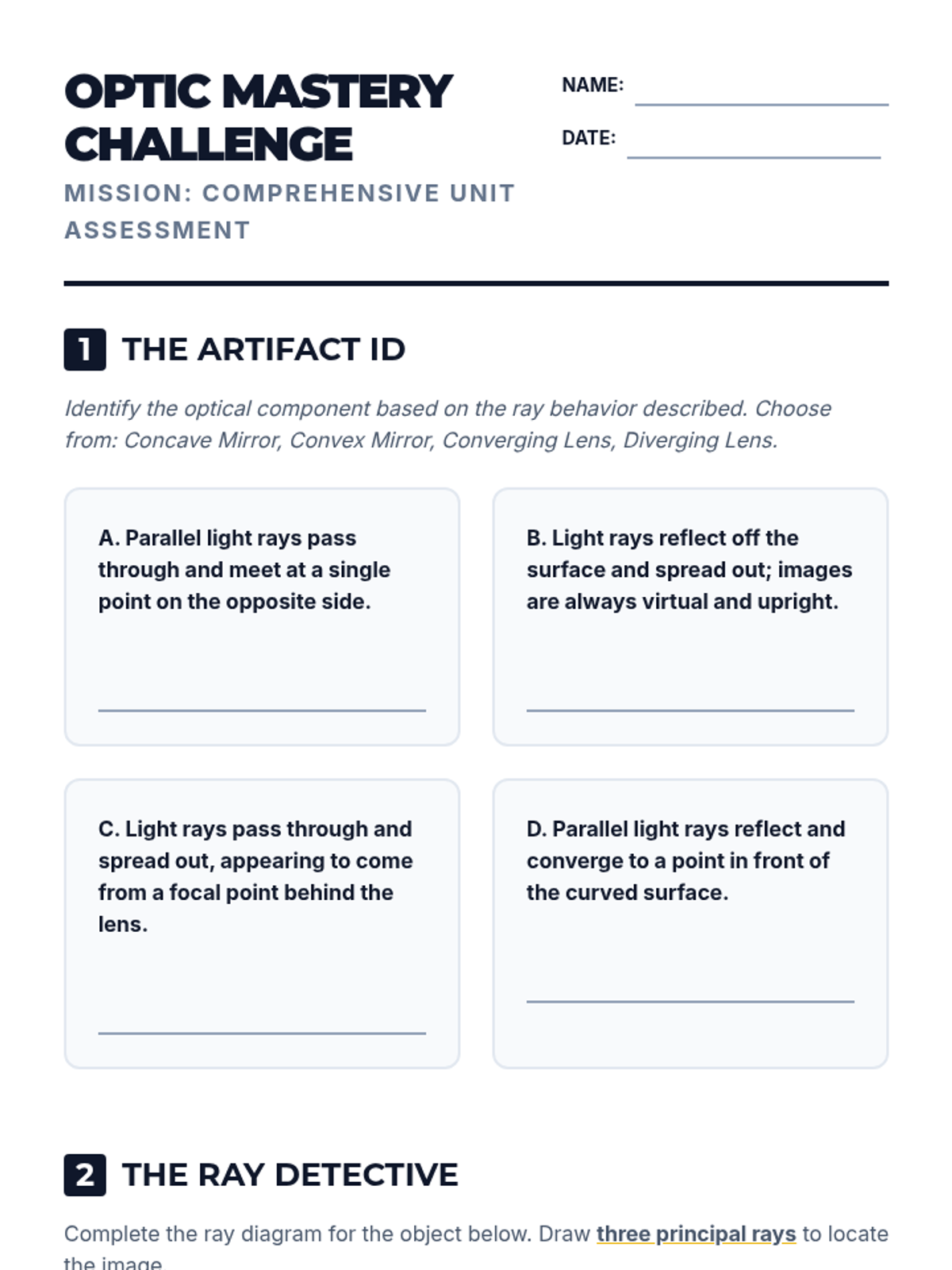
A comprehensive student worksheet designed to assess understanding of the Optic Runner slide deck. Includes identification tasks for optical artifacts, a ray-tracing detective challenge, Snell's Law calculations, and a deep-dive into the biological optics of the human eye. Revised to include a vocabulary matching section (Lexicon).
A visual slide presentation guiding students through the setup of a forensic evidence board to solve the mystery of the missing fossils. Includes suspect introductions, layout templates, and success criteria.
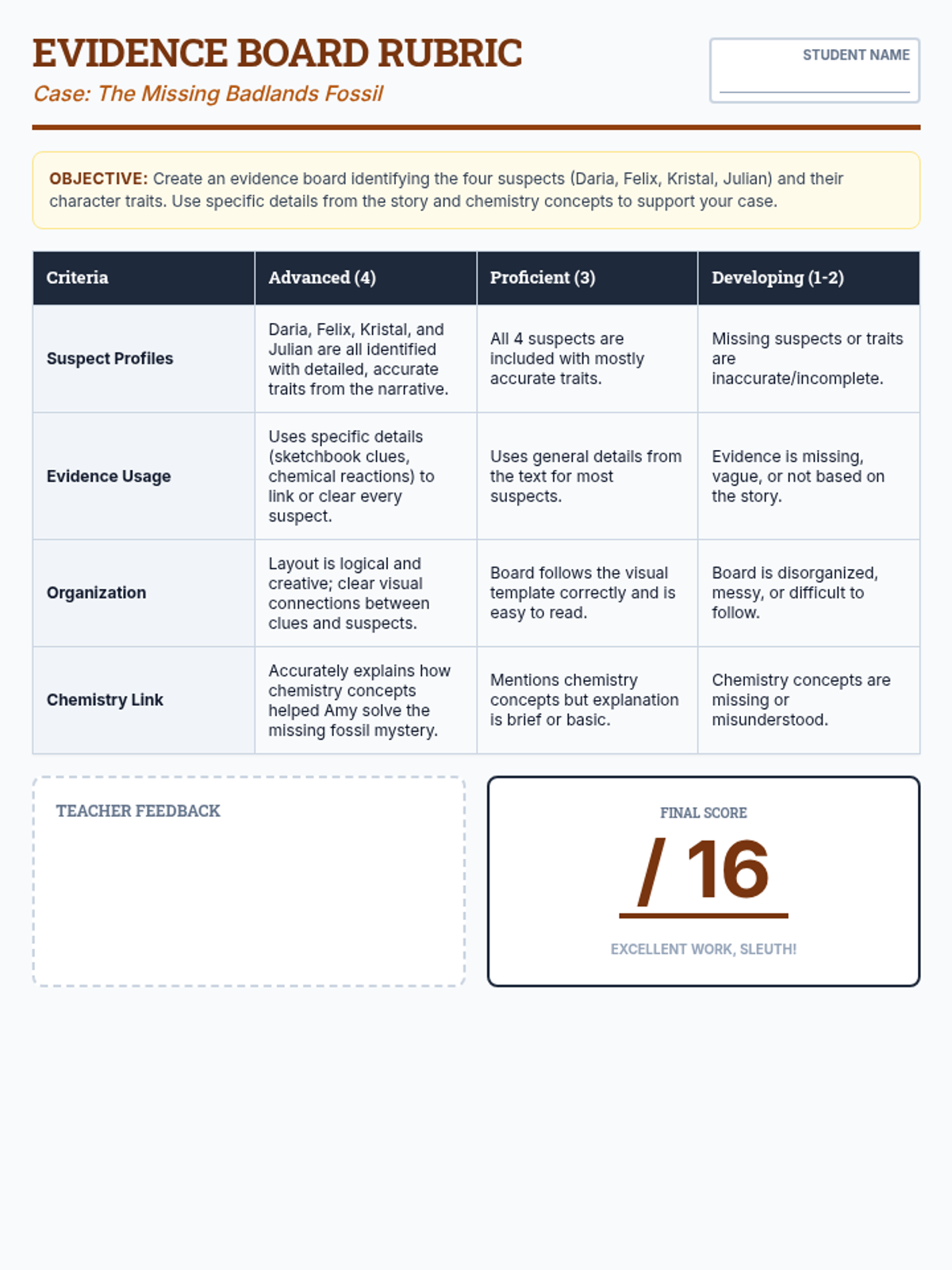
A comprehensive grading rubric for the Badlands Sleuth evidence board project, focusing on suspect profiling, evidence accuracy, chemistry integration, and organization.
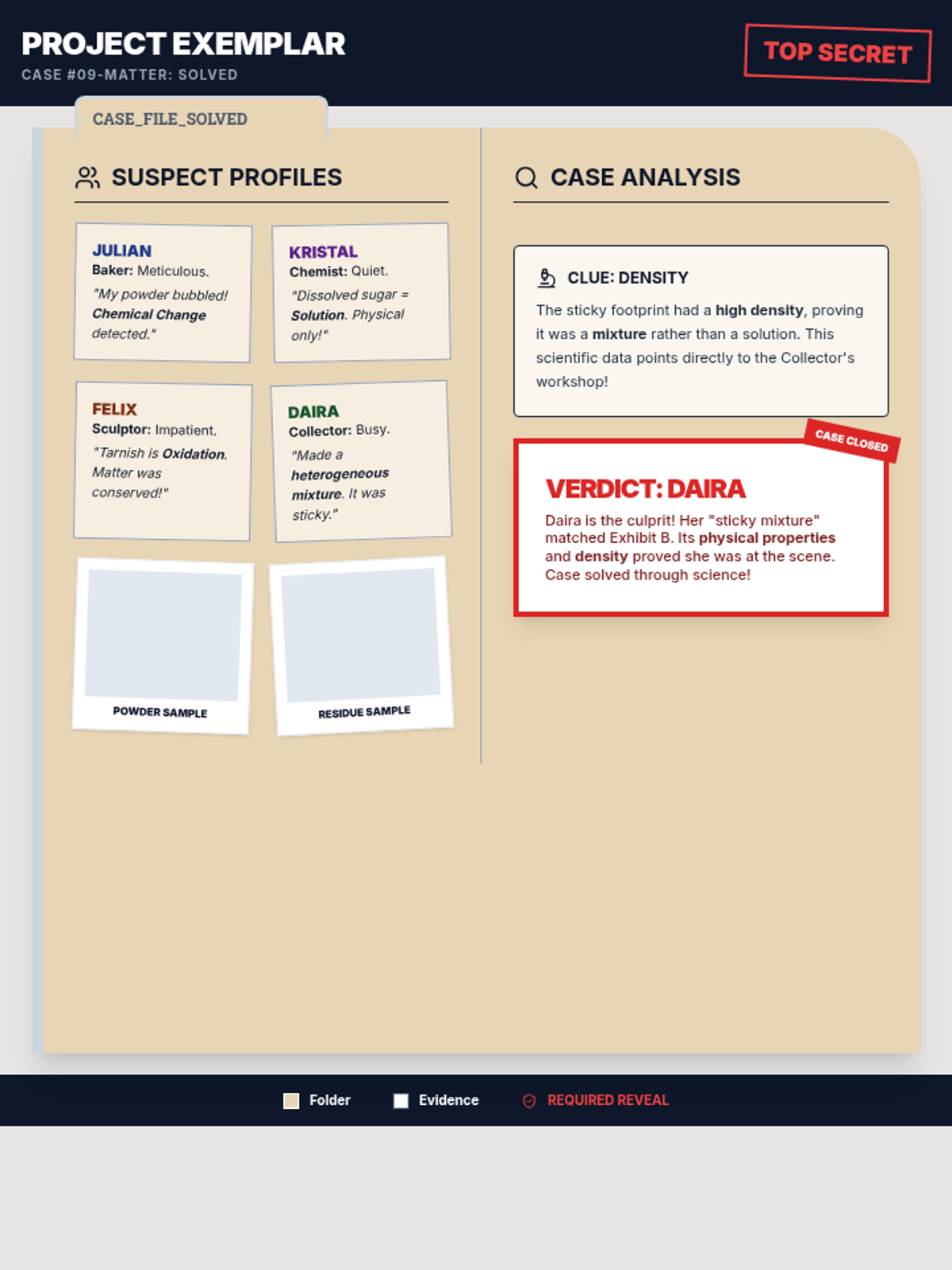
A visual exemplar showcasing a completed Fossil Fiasco evidence board. It serves as a teacher-facing reference or a student-facing visual guide to demonstrate expectations for layout, suspect profiles, and scientific evidence analysis. Font sizes and layout corrected.
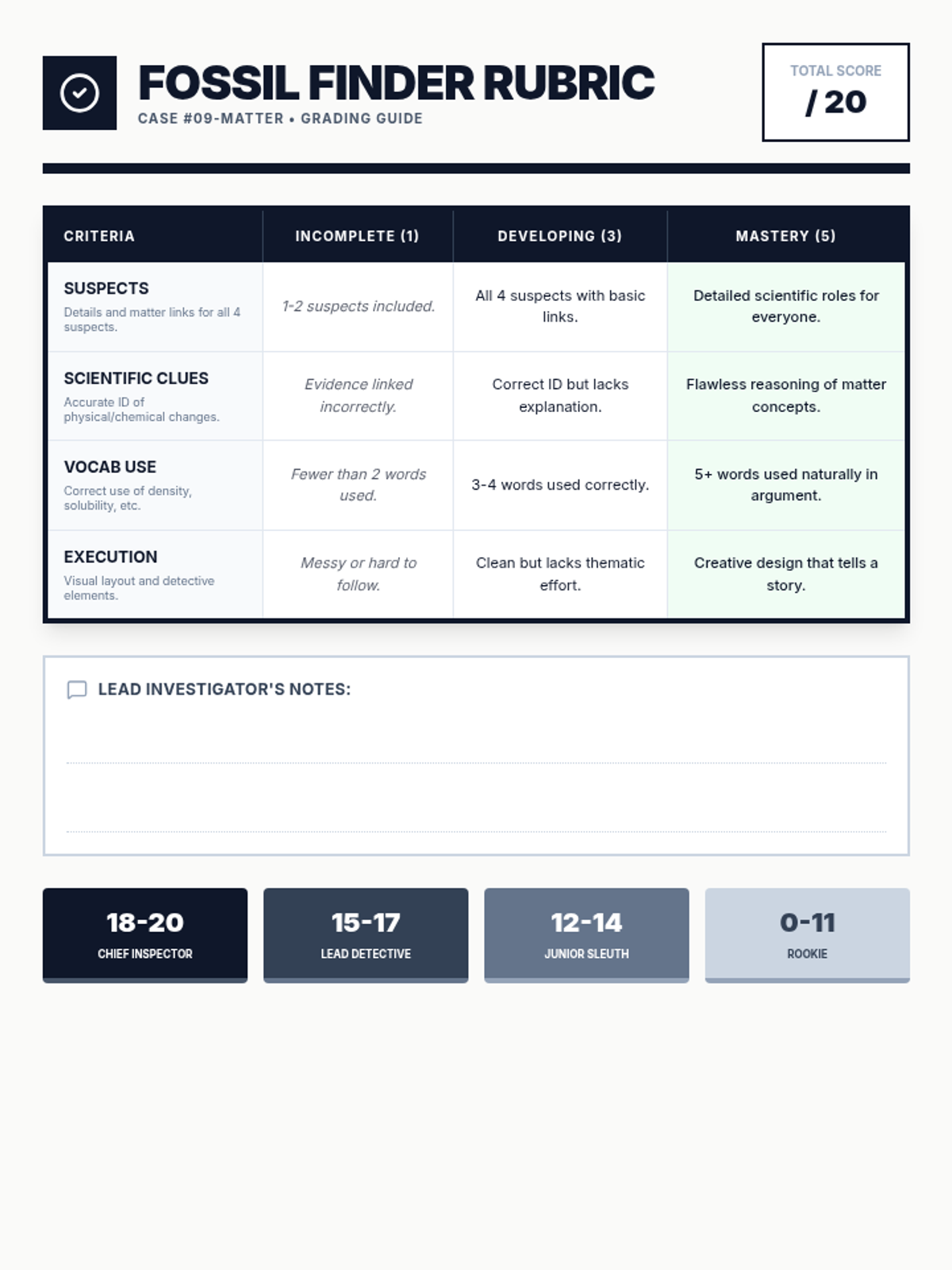
A detailed 20-point rubric for grading the Fossil Fiasco evidence board project, with criteria for suspect profiles, scientific evidence, vocabulary use, and overall presentation. Fit to one page.
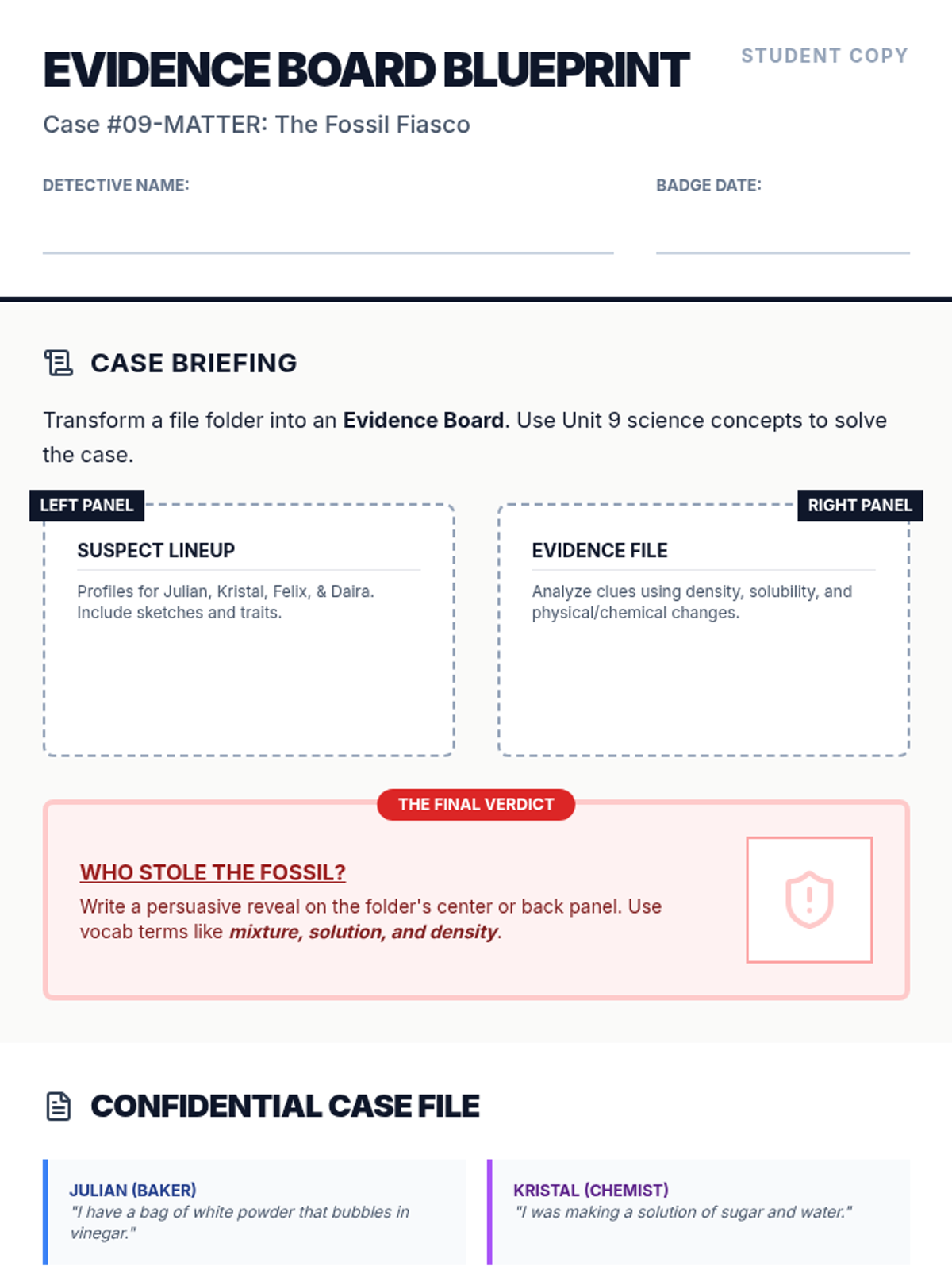
A comprehensive student guide and template for the Fossil Fiasco project, featuring folder layout diagrams, project instructions, and a planning worksheet for analyzing clues and suspects. Now includes specific suspect data for student analysis. Layout improved for handwriting.
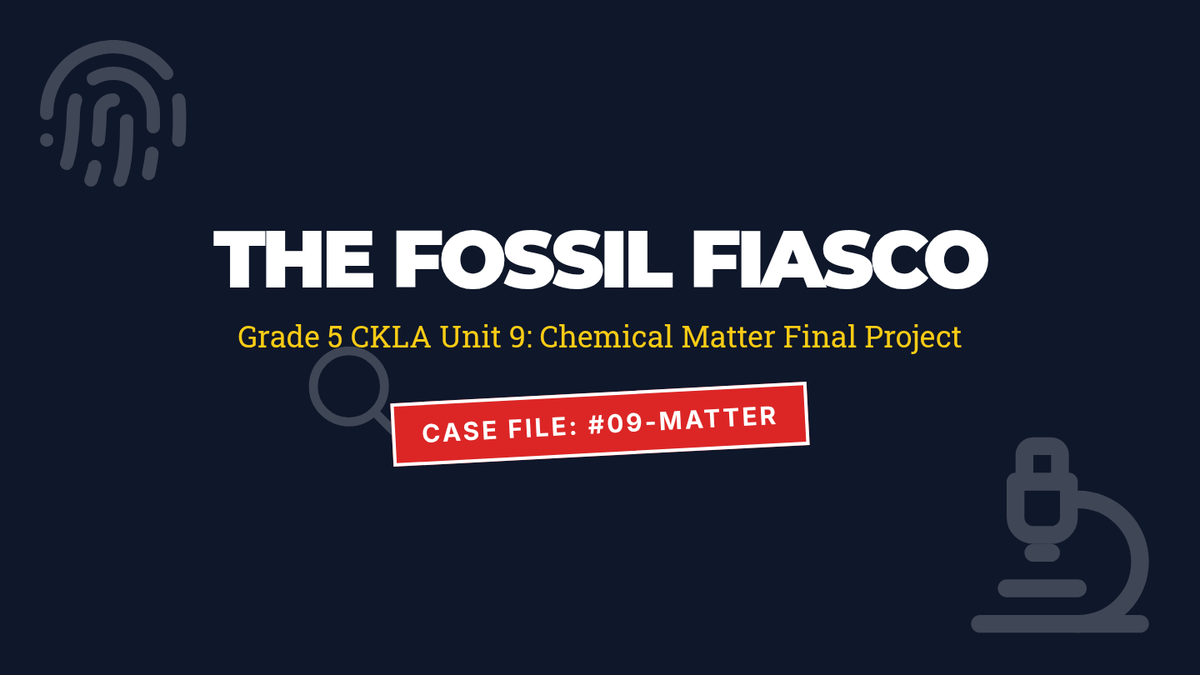
A visual introduction to the Fossil Fiasco final project, outlining the mystery scenario, introducing the four suspects (Julian, Kristal, Felix, and Daira), and explaining the requirements for the Evidence Board file folder project. Now includes a teacher solution slide and folder layout preview.
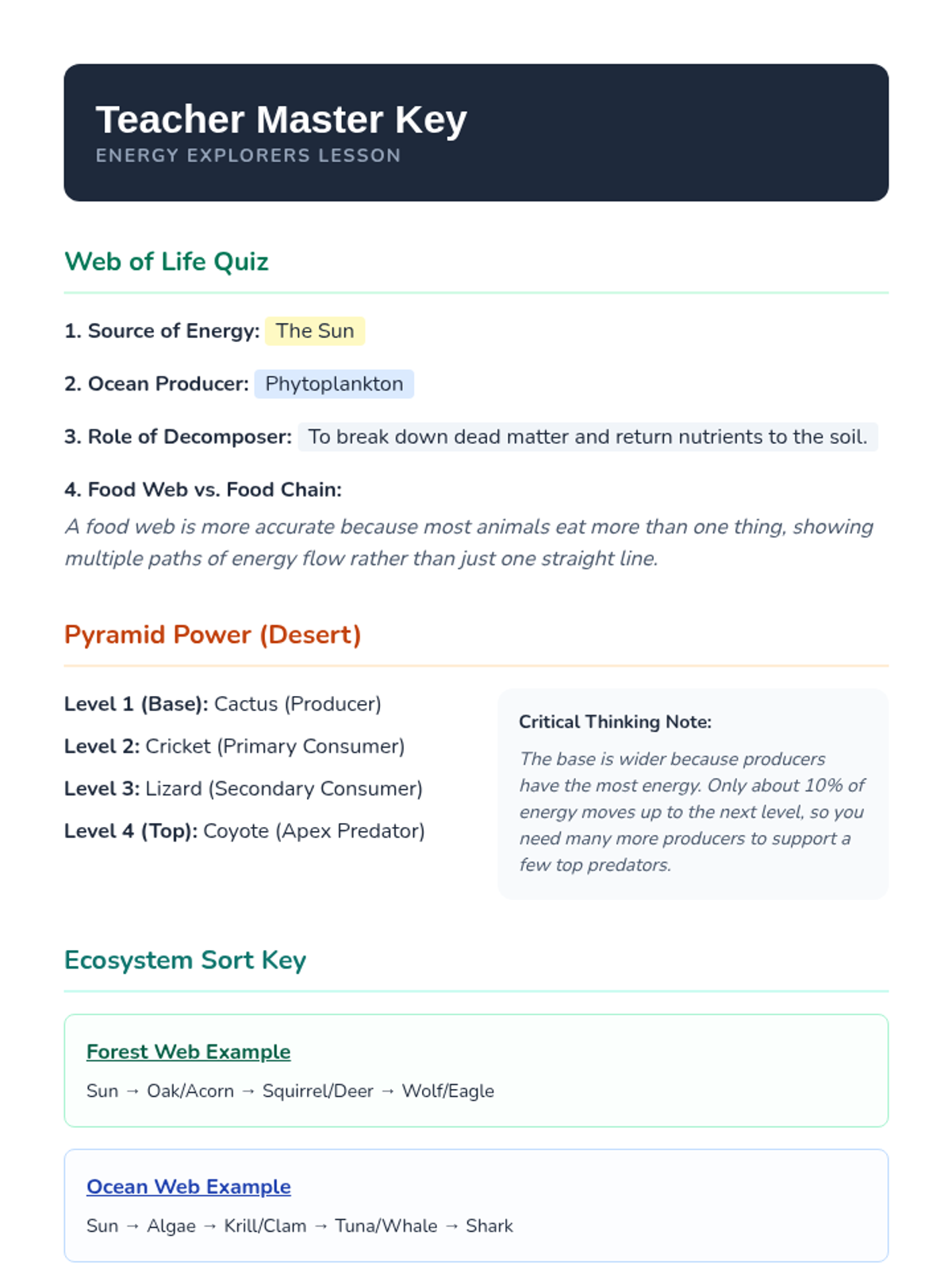
A comprehensive answer key and teacher facilitation guide for the Energy Explorers lesson. Includes quiz answers, pyramid placement solutions, and sorting activity results.
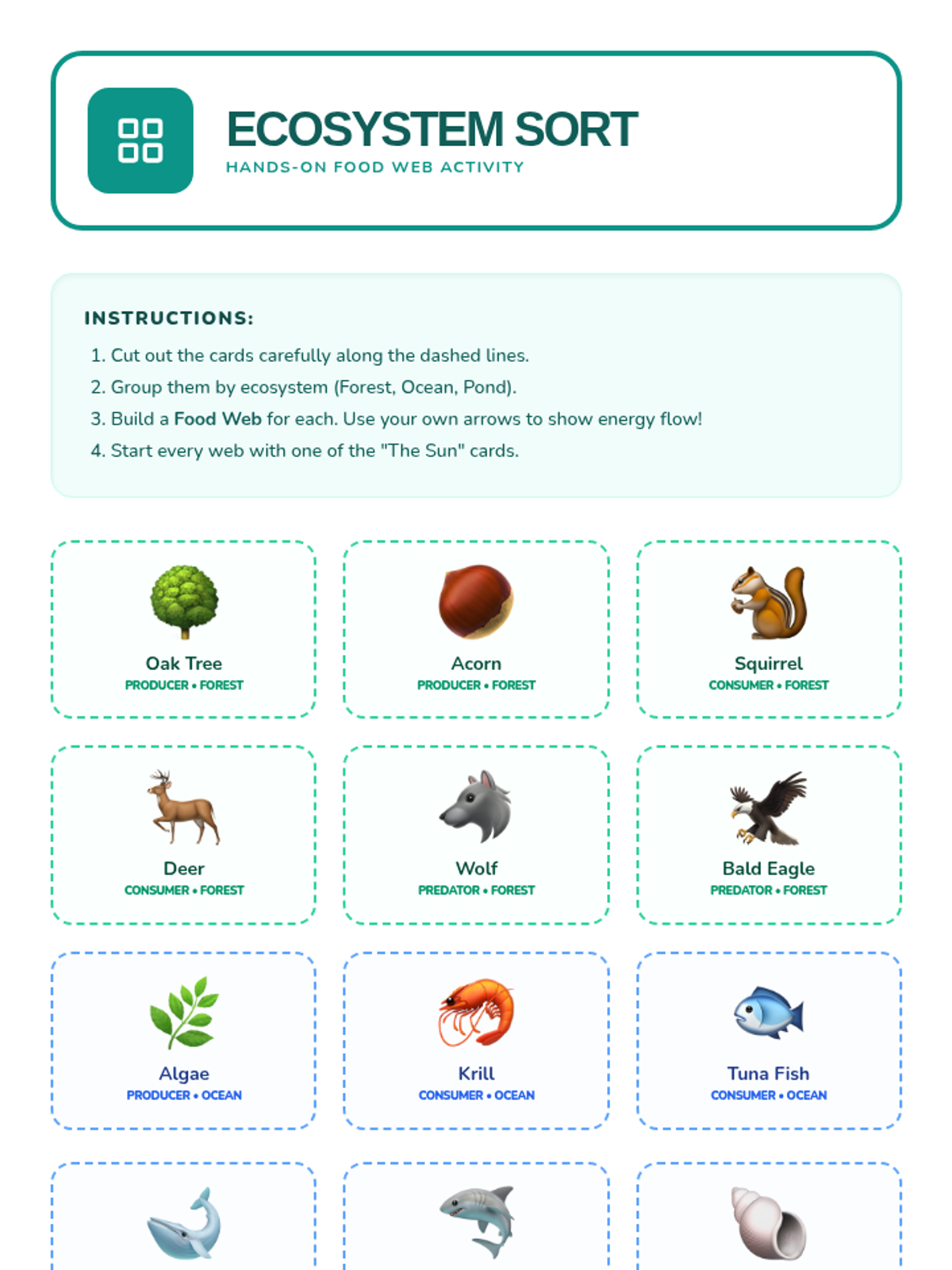
A collection of 23 printable organism cards from Forest, Ocean, and Pond ecosystems for building complex food webs. Each card includes a role (Producer, Consumer, Predator, Decomposer) and ecosystem label. Includes 3 Sun cards for multi-web creation.
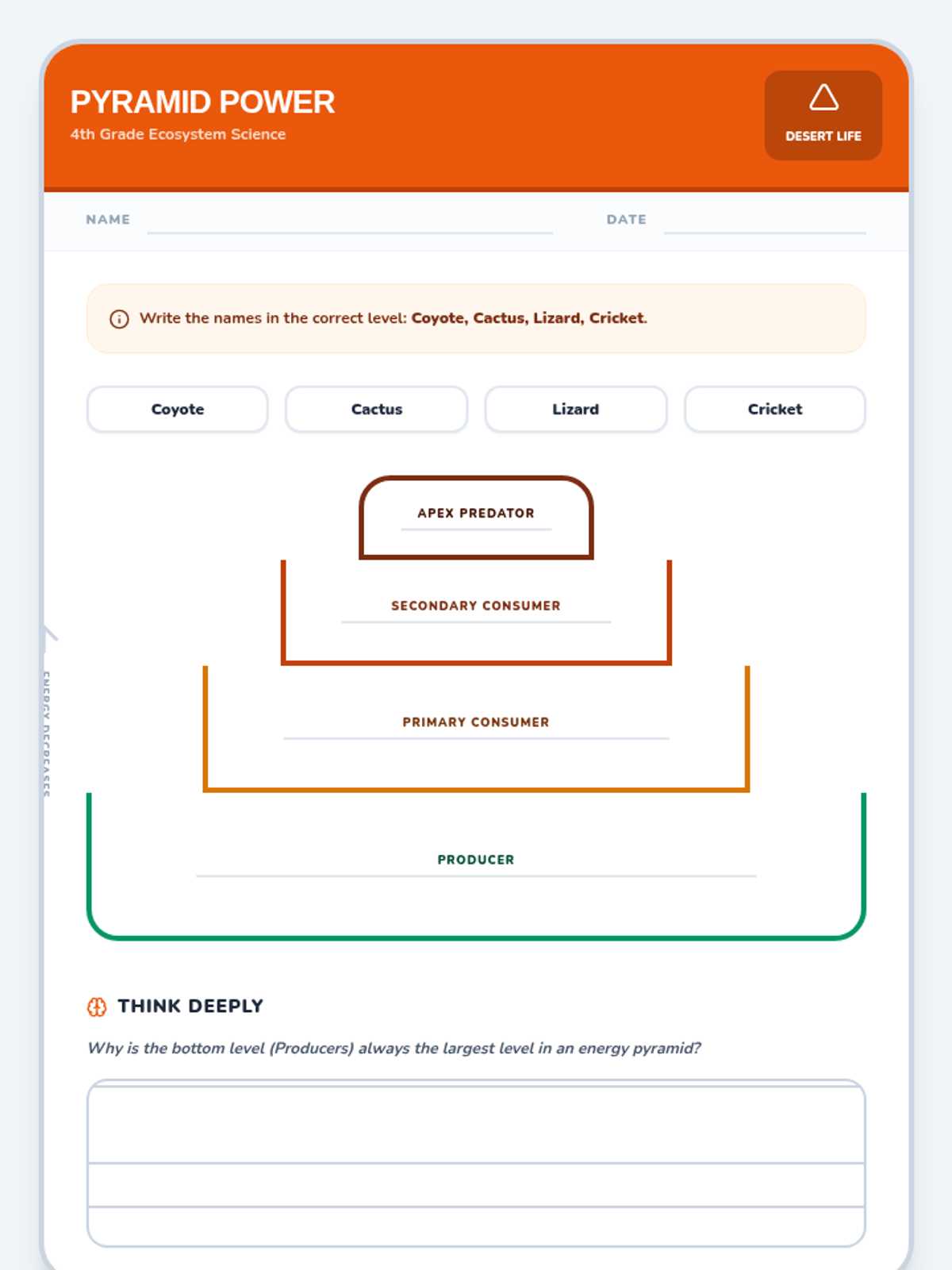
An energy pyramid worksheet focused on a desert ecosystem. Students must categorize organisms (coyote, cactus, lizard, cricket) into the correct trophic levels and explain the energy loss between levels.