An engaging slide deck for teaching character emotion inference, featuring 'Case Files' for guided practice, visual breakdowns of the inference formula, and clear detective-themed visuals.
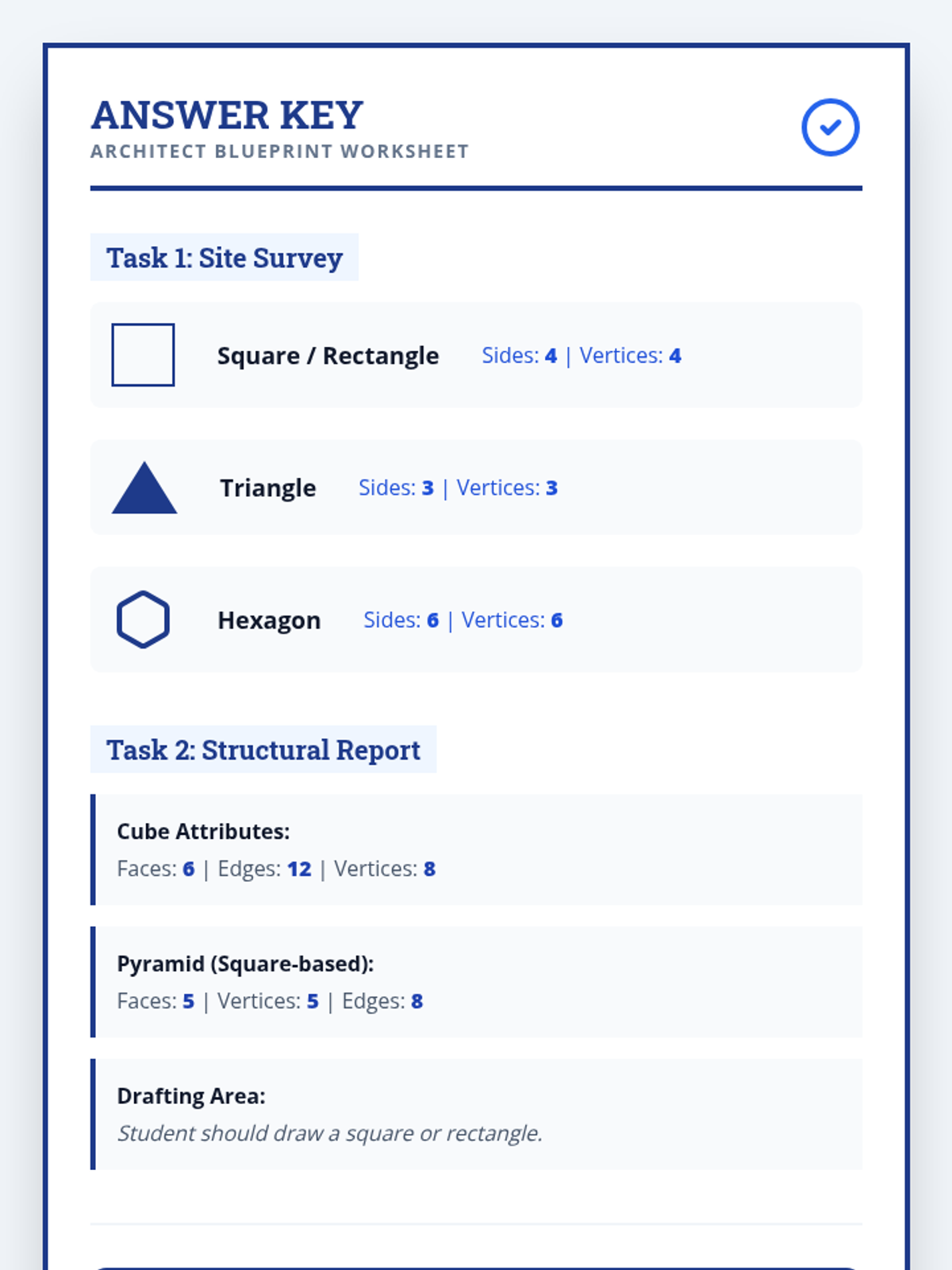
An answer key for the Architect Blueprint Worksheet, providing correct classification of polygons and 3-D solid attributes, along with grading notes for the creative design portion.
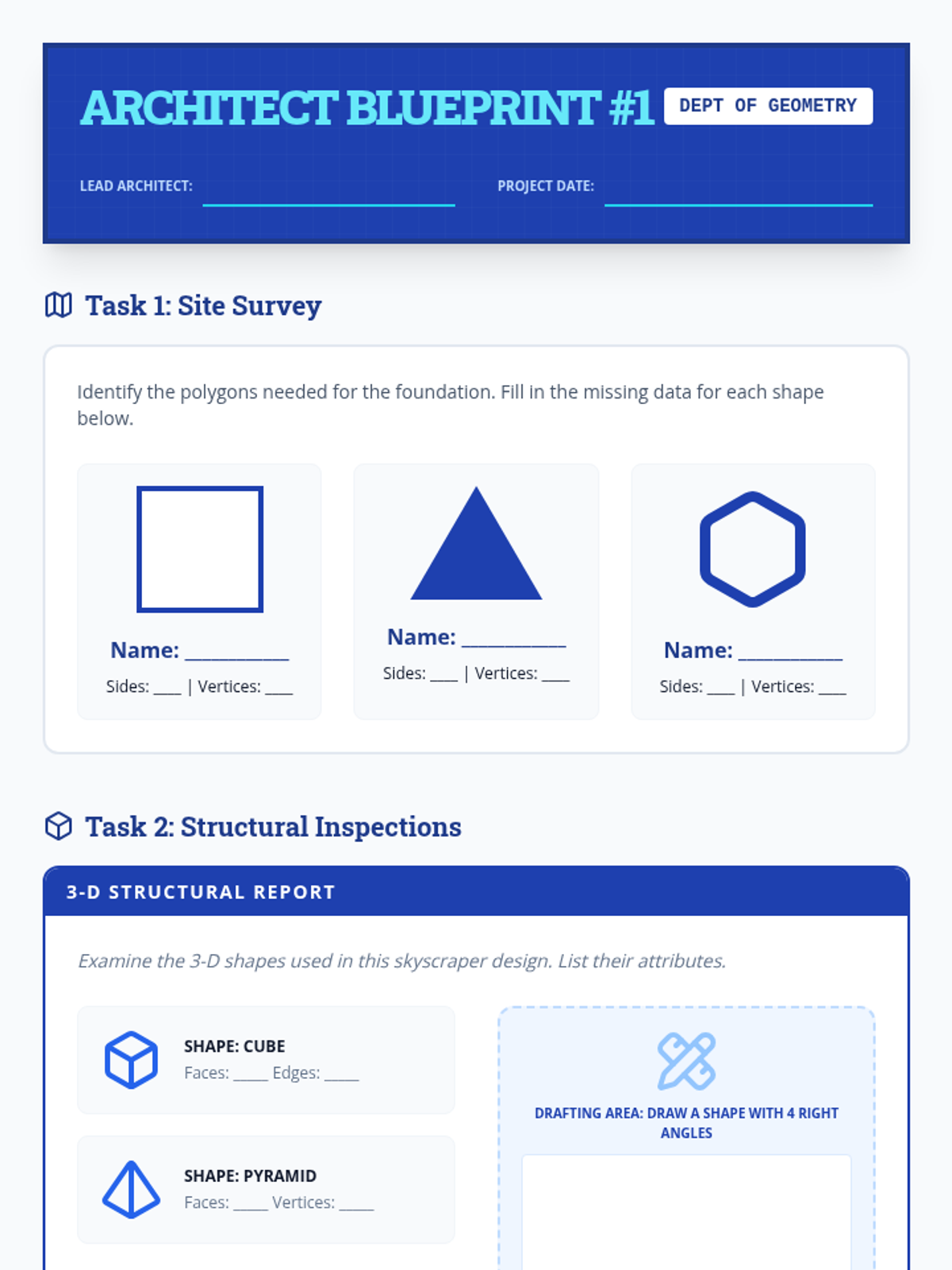
An architect-themed geometry worksheet where students identify 2-D polygons and their attributes, analyze 3-D solids, and design their own structure using geometric shapes.
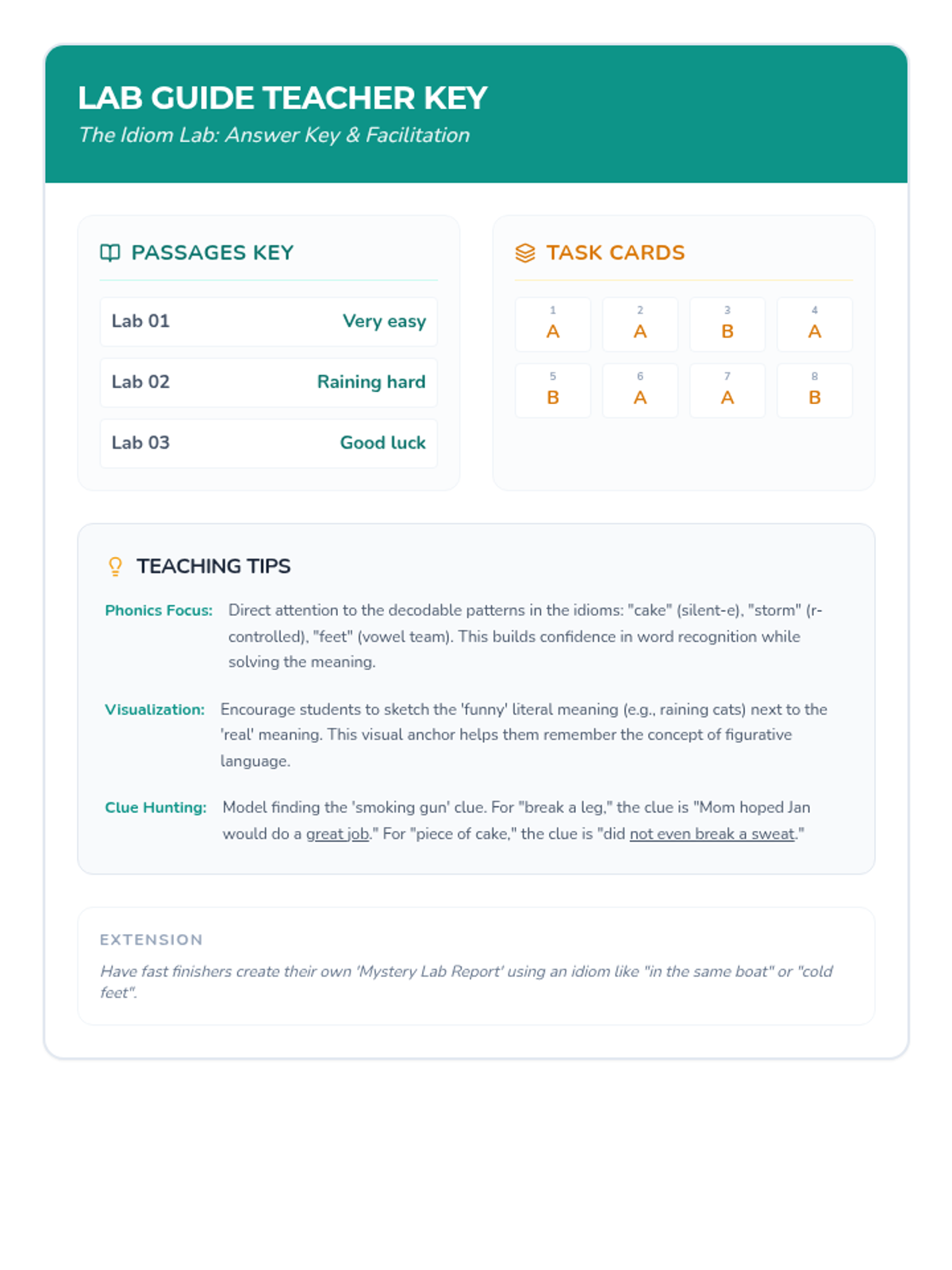
A comprehensive teacher resource containing the answer keys for the reading passages and task cards, along with instructional tips for supporting struggling readers.
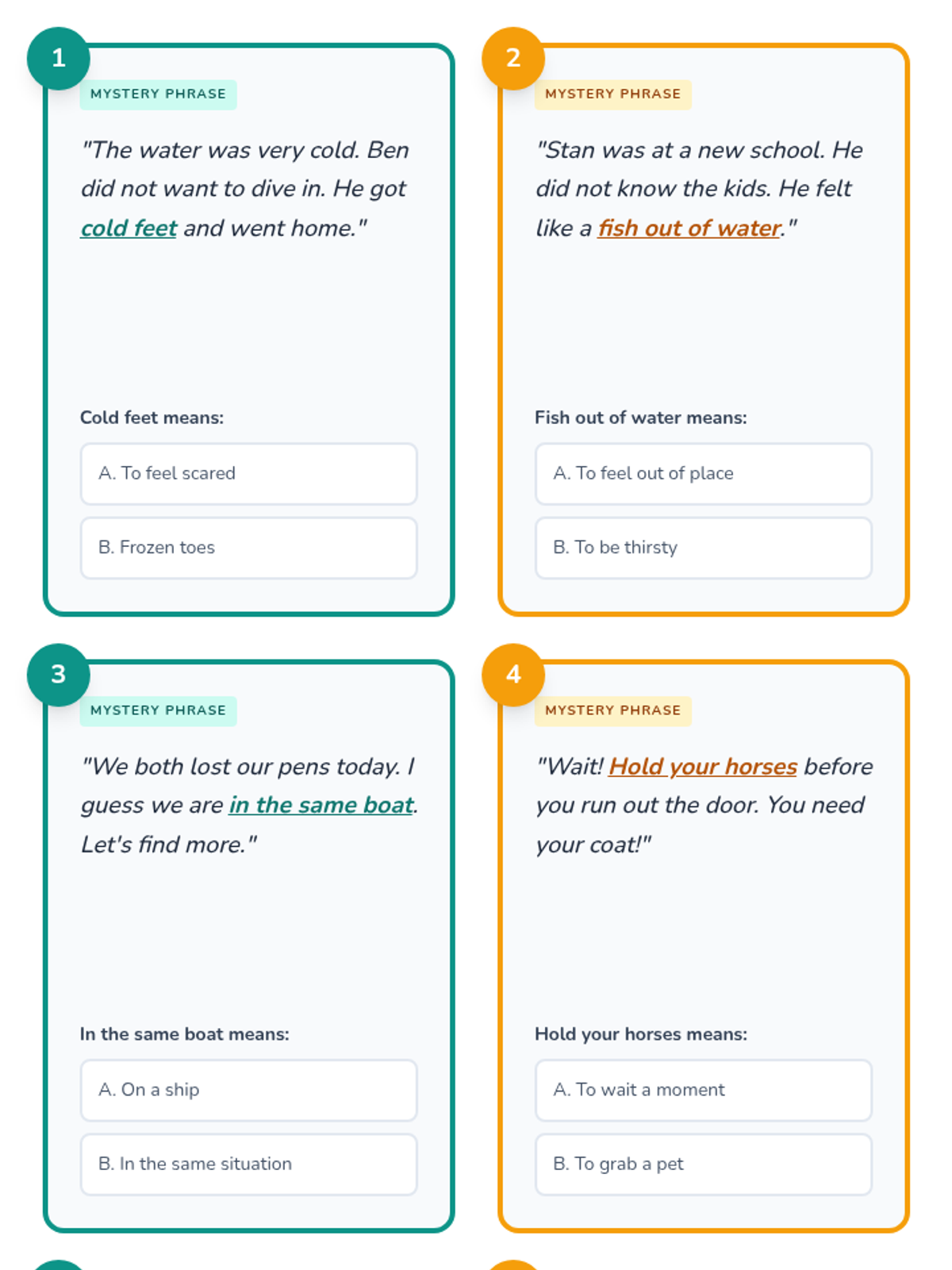
A set of eight decodable task cards designed for struggling readers to practice identifying the meaning of idioms using context clues. Each card features a short scenario and a two-choice multiple-choice question.
An architectural-themed slide deck for teaching geometry. Introduces polygons, vertices, edges, and 3-D solids with clear visual examples and a cohesive 'blueprint' aesthetic.
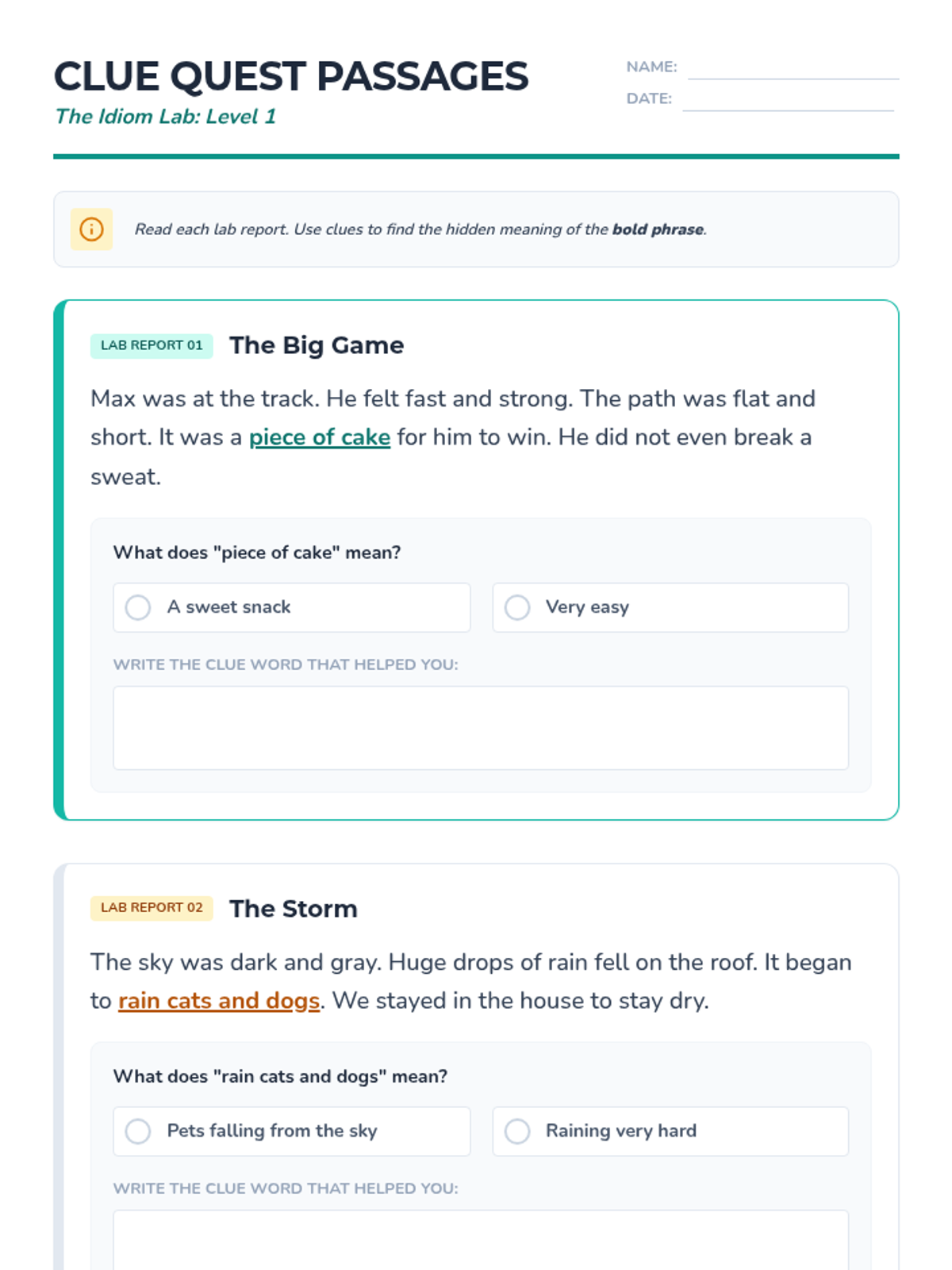
A set of three short reading passages with decodable text focused on idioms. Each passage includes a multiple-choice question and a space for students to cite evidence from the text.
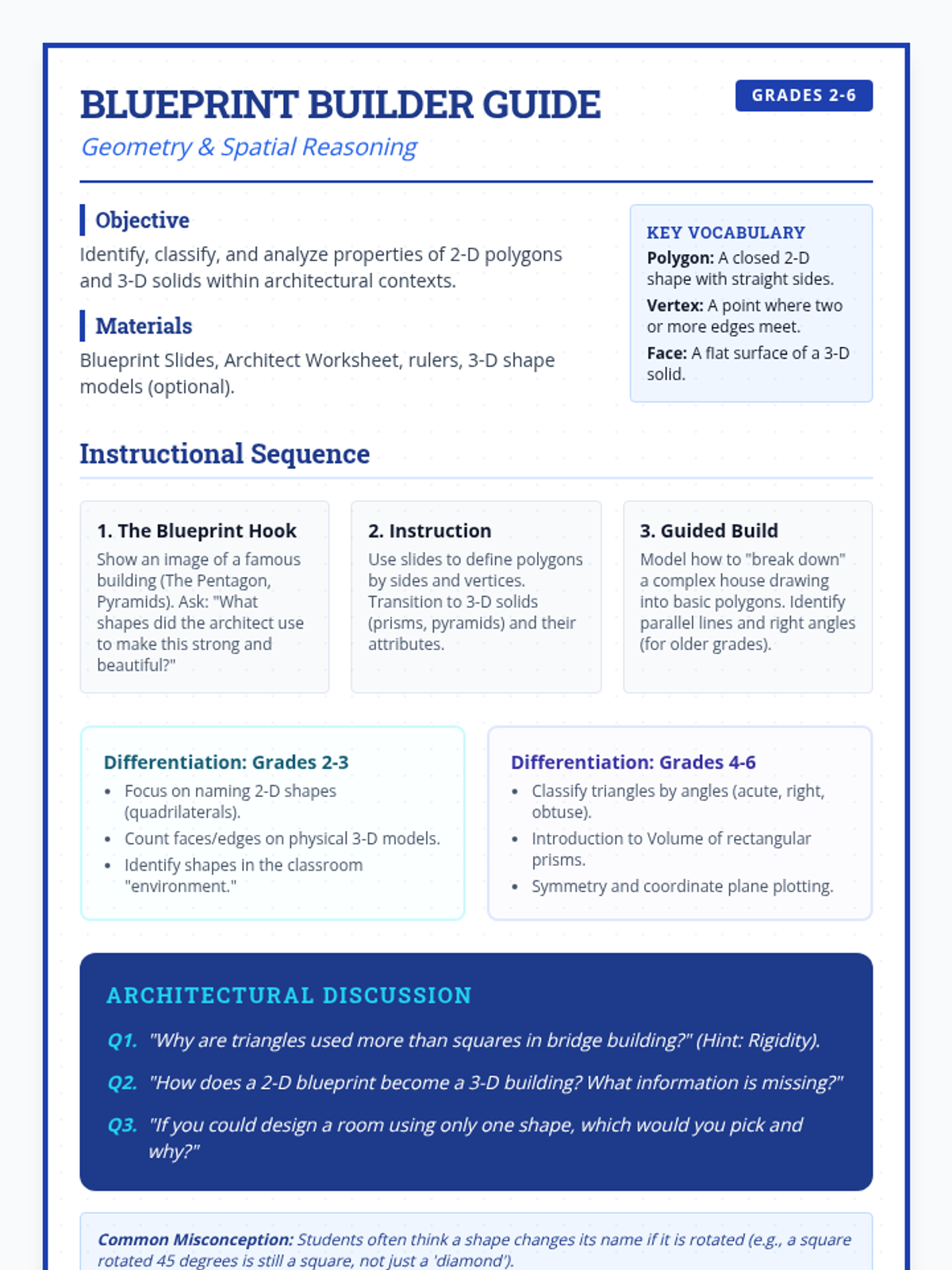
A comprehensive facilitation guide for a geometry lesson themed around architecture. Provides step-by-step instructions, grade-specific differentiation for grades 2-6, and key discussion prompts about 2-D and 3-D shapes.
An introductory slide deck for the 'Idiom Lab' lesson, featuring a consistent visual theme and clear instructional content on literal vs. figurative language for struggling readers.
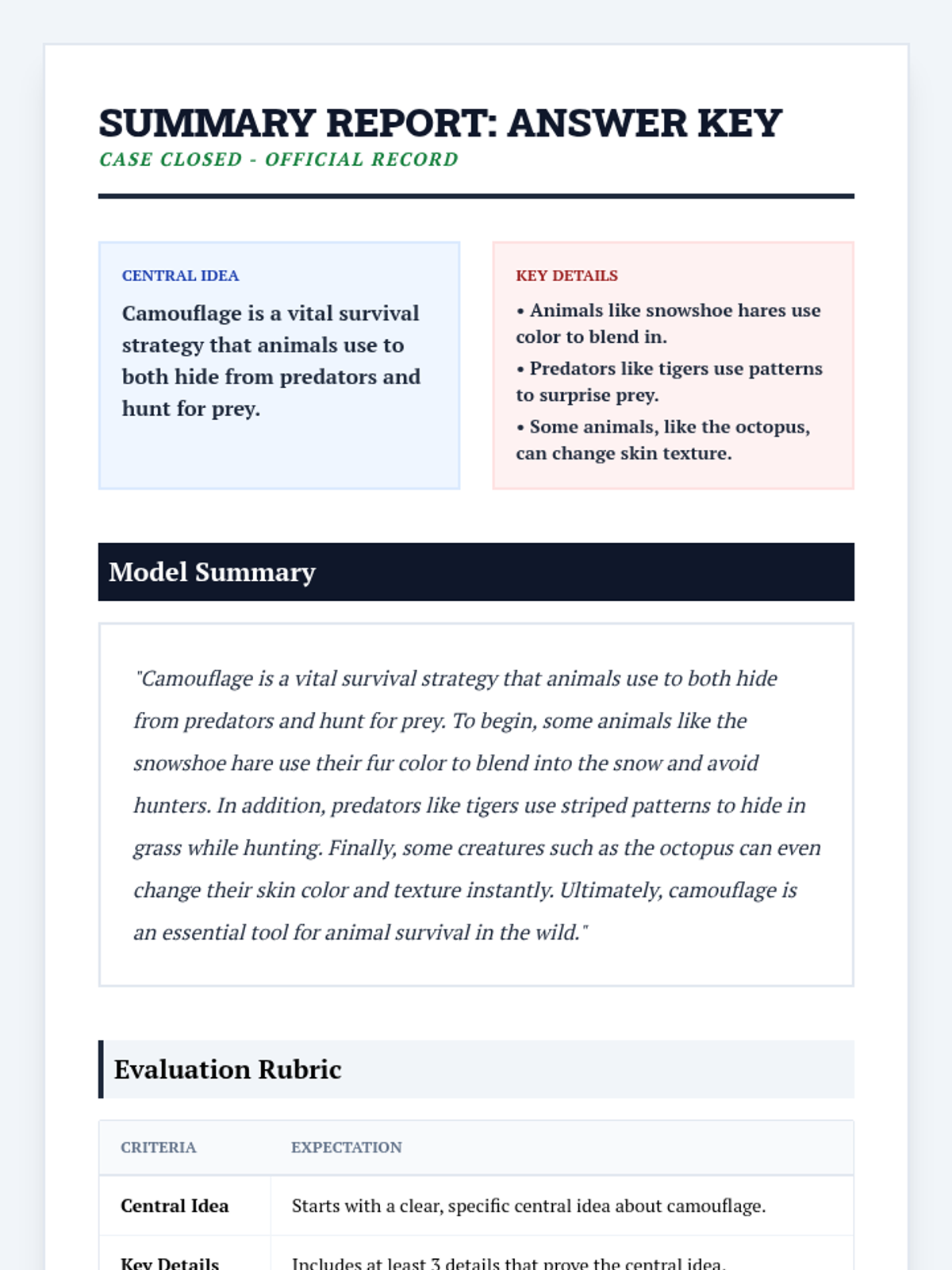
Answer key for the Summary Report Worksheet, featuring a model summary, breakdown of central idea and key details, and a quick evaluation rubric.
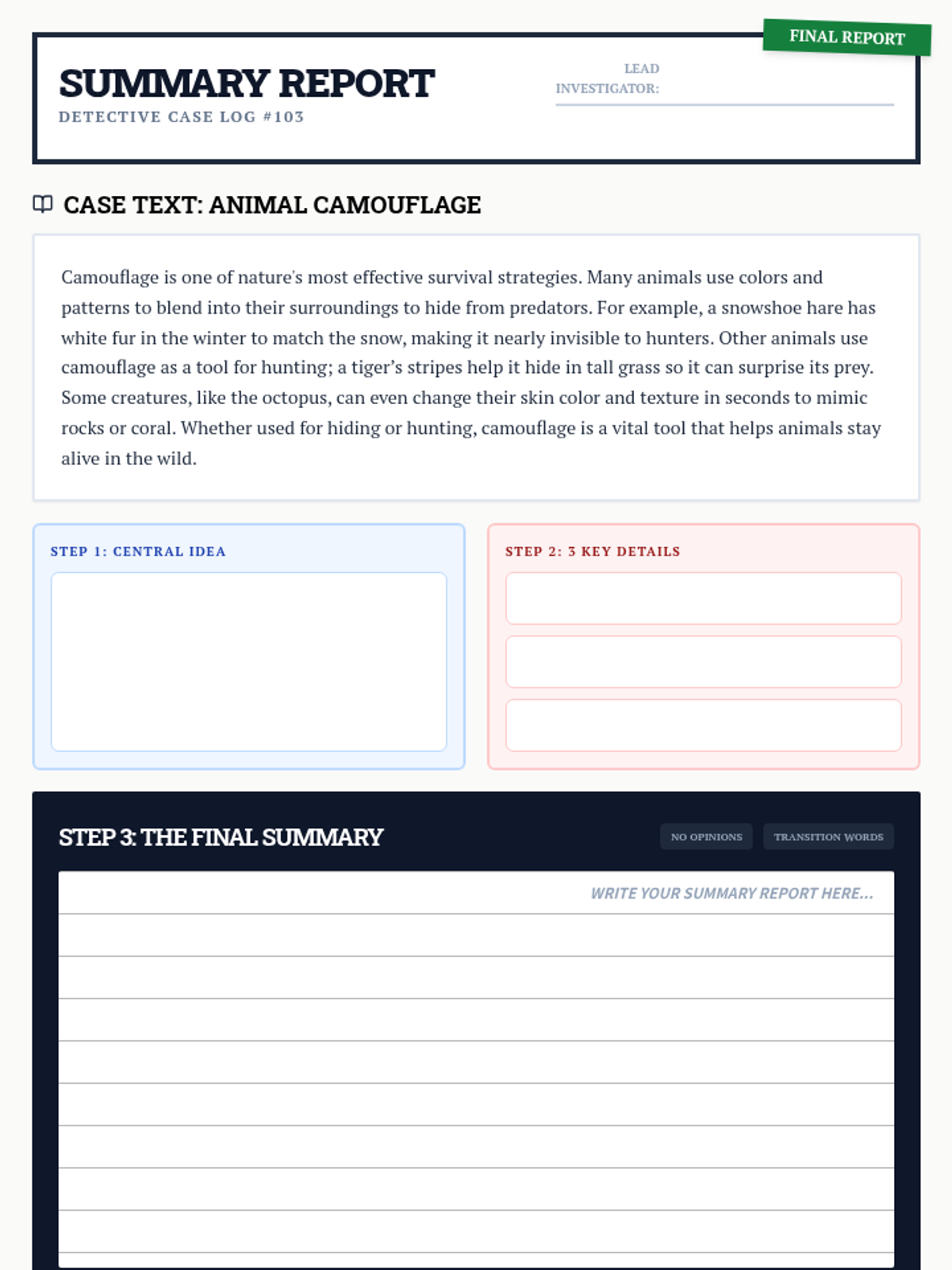
The final assessment worksheet for the summary sequence. Students gather the central idea and key details from a text about camouflage and combine them into a formal summary report.
A slide deck focused on the final step of the non-fiction summary process: synthesizing central ideas and key details into an objective summary.
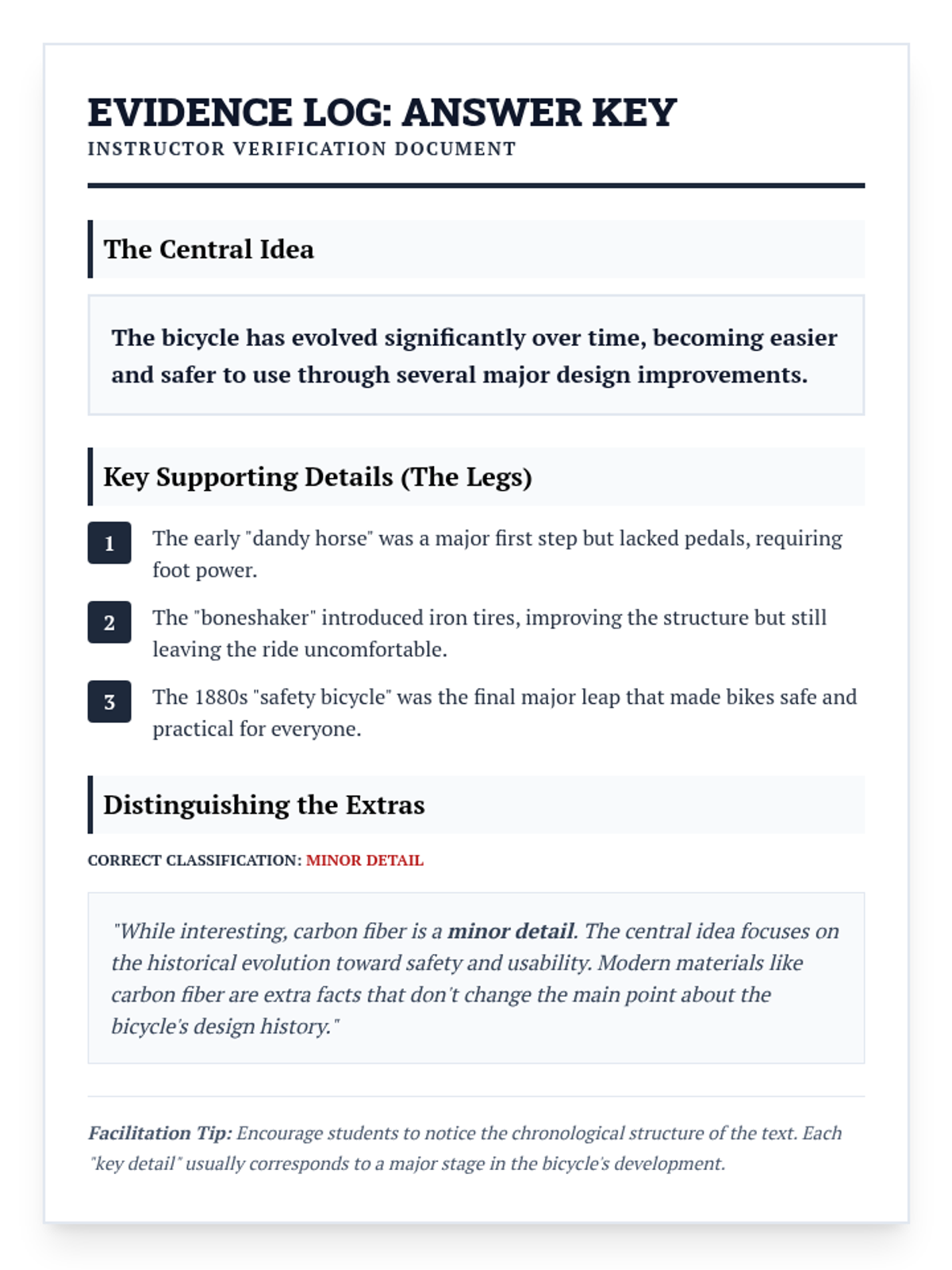
Answer key for the Evidence Log Worksheet, including model responses for central idea and key details, plus an explanation for minor details.
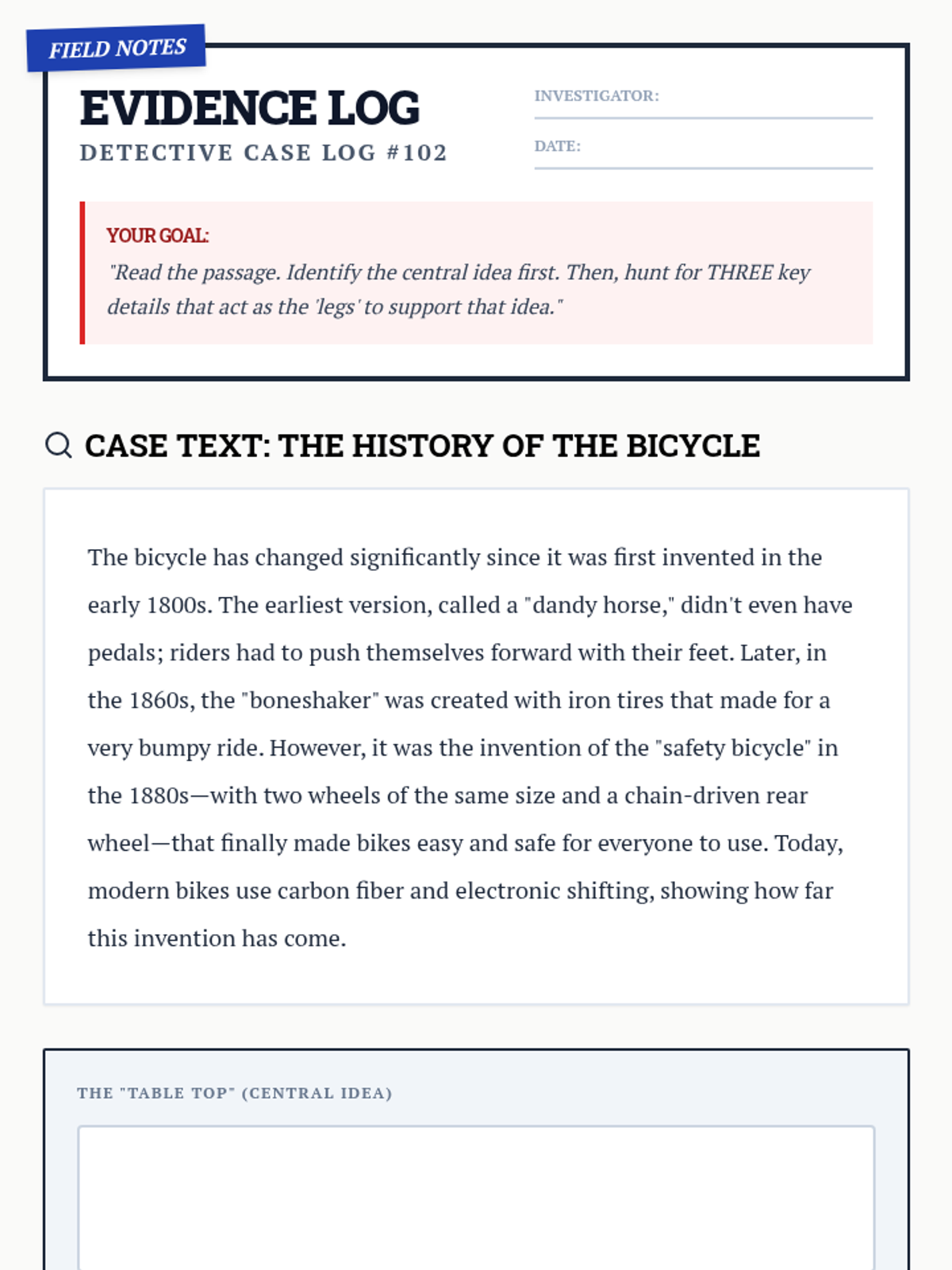
An 'Evidence Log' worksheet for finding supporting details. Students identify the central idea as the 'table top' and then find three 'legs' (key details) to support it.
A slide deck that teaches students how to identify key supporting details in a non-fiction text using the 'table' analogy and the 'So What?' test.
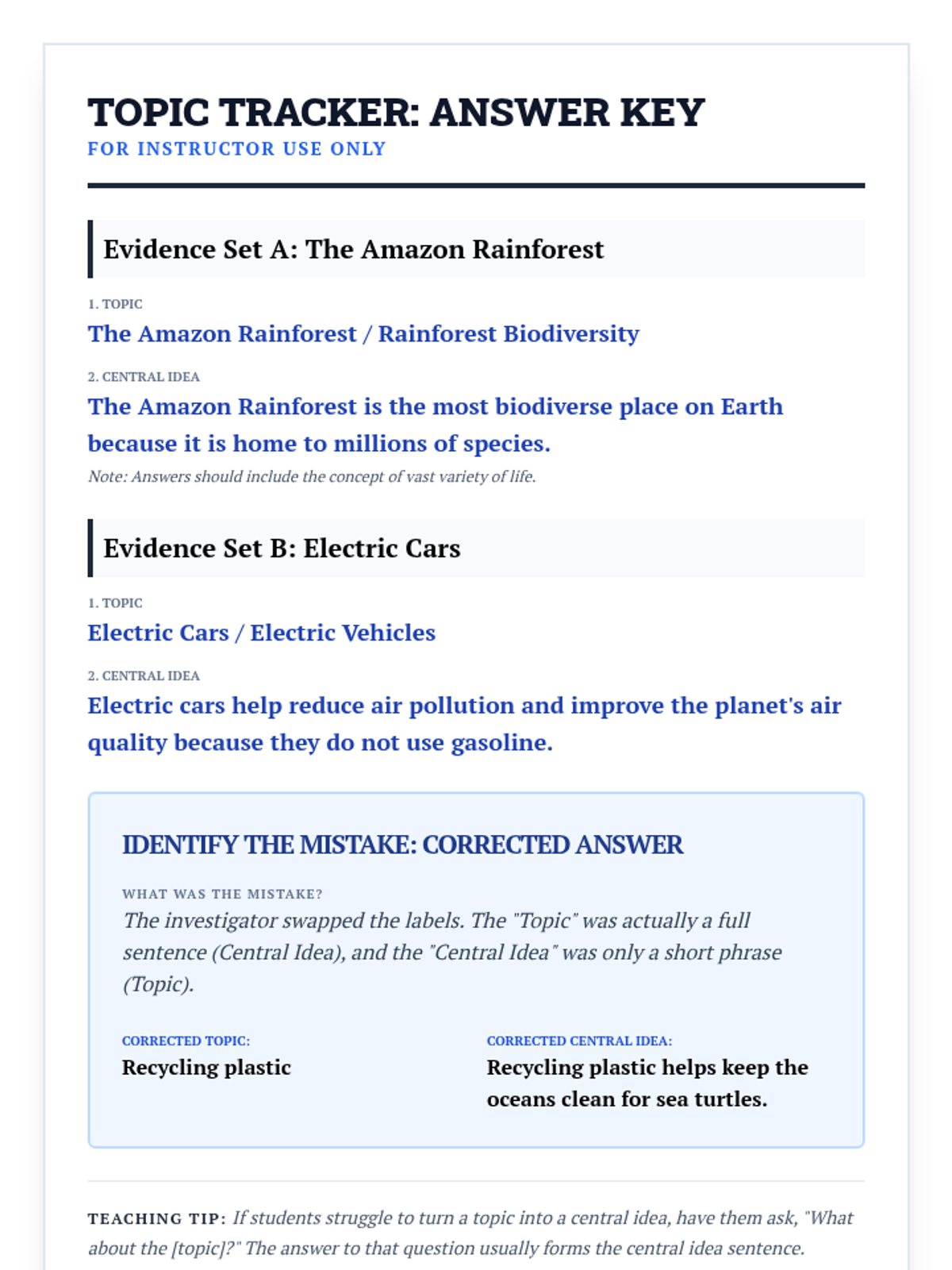
Answer key for the Topic Tracker Worksheet, providing model responses and teaching tips for identifying topic vs. central idea.
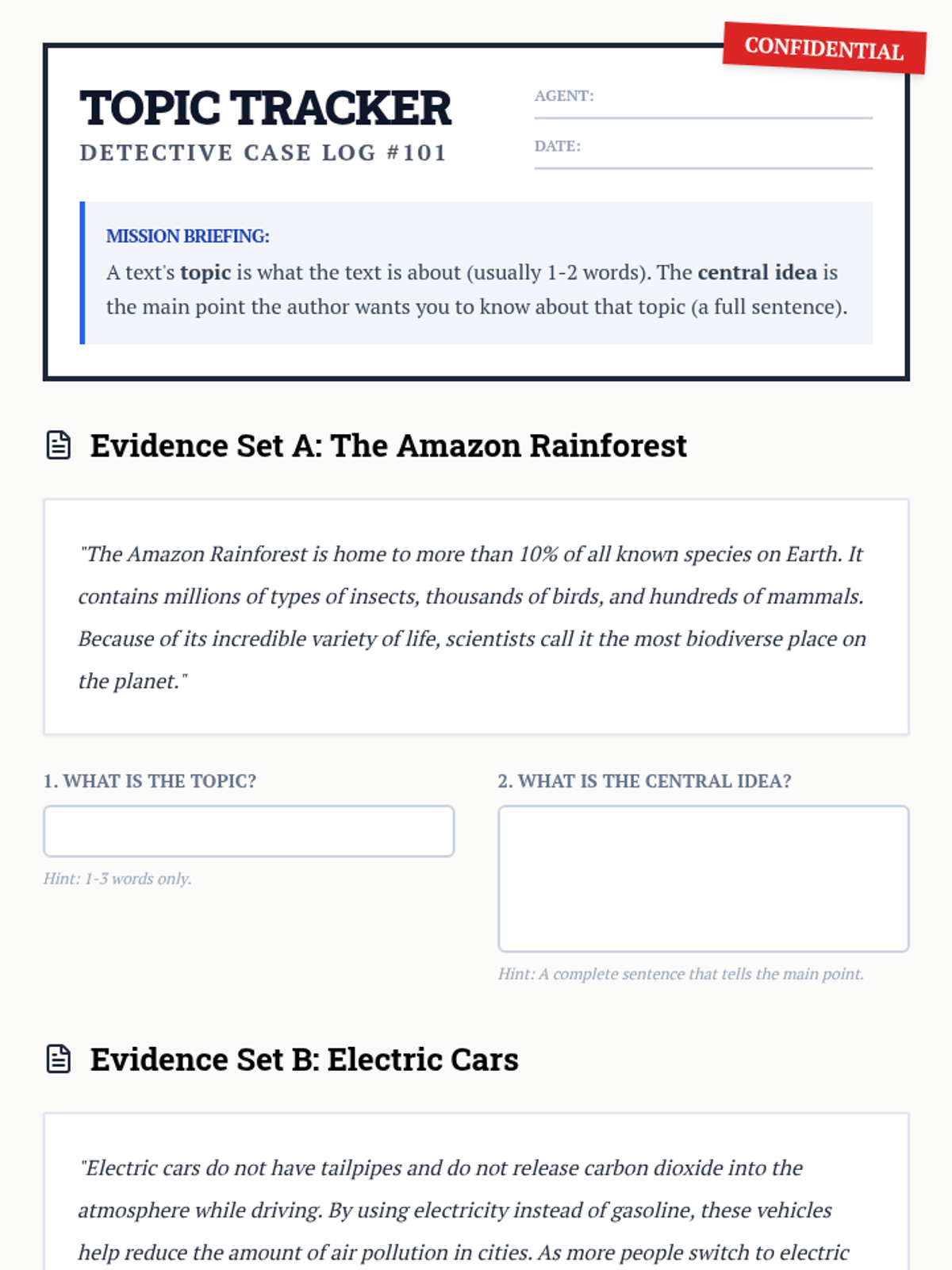
A detective-themed practice worksheet where students analyze non-fiction passages to identify the topic and central idea, including a corrective sorting activity.
An introductory presentation slide deck teaching students to differentiate between a non-fiction topic and its central idea using a detective theme.
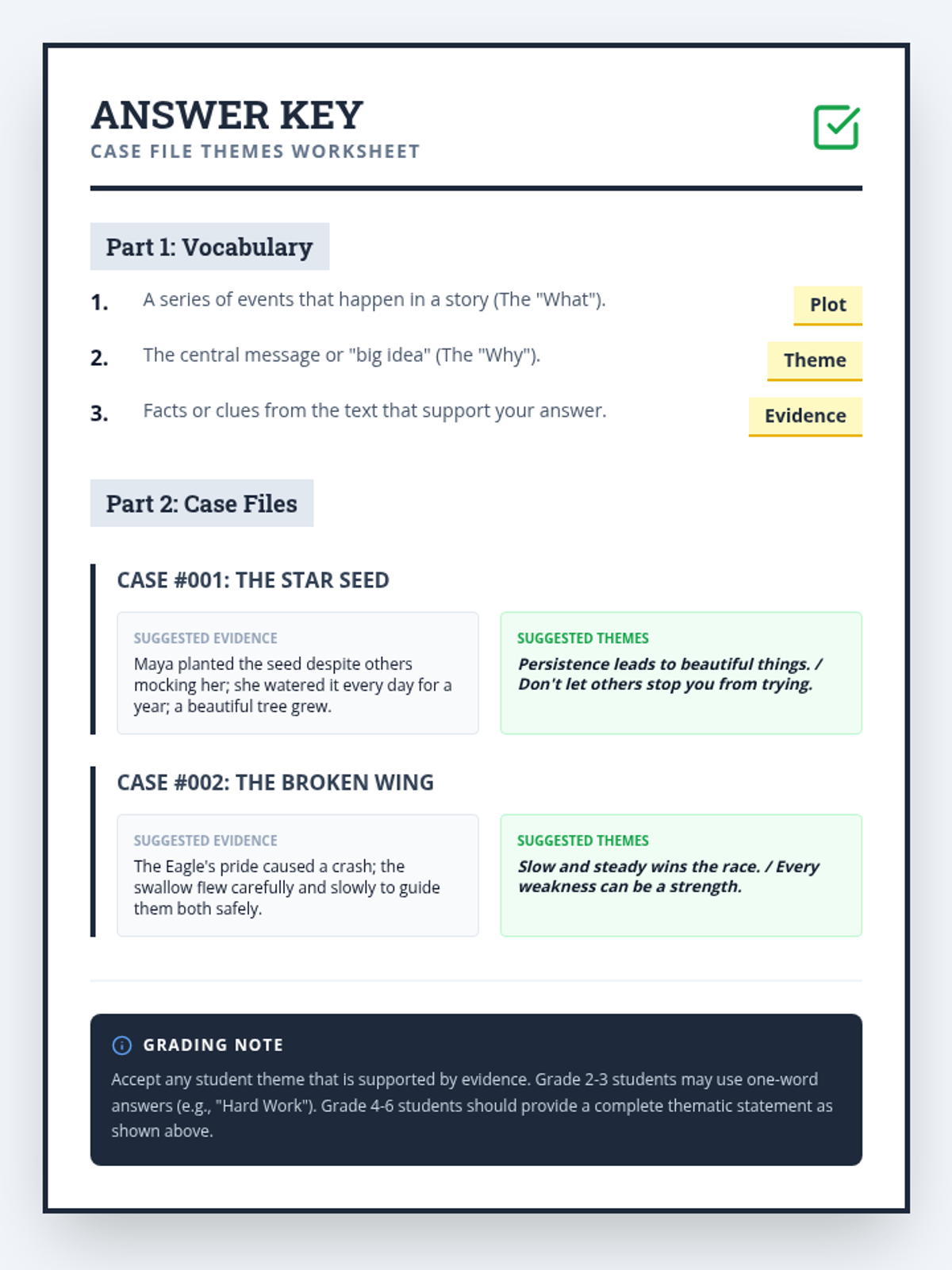
An answer key for the Case File Themes Worksheet, providing suggested answers for vocabulary definitions and multiple possible theme interpretations for each practice case. Includes teaching notes on evaluating student responses.
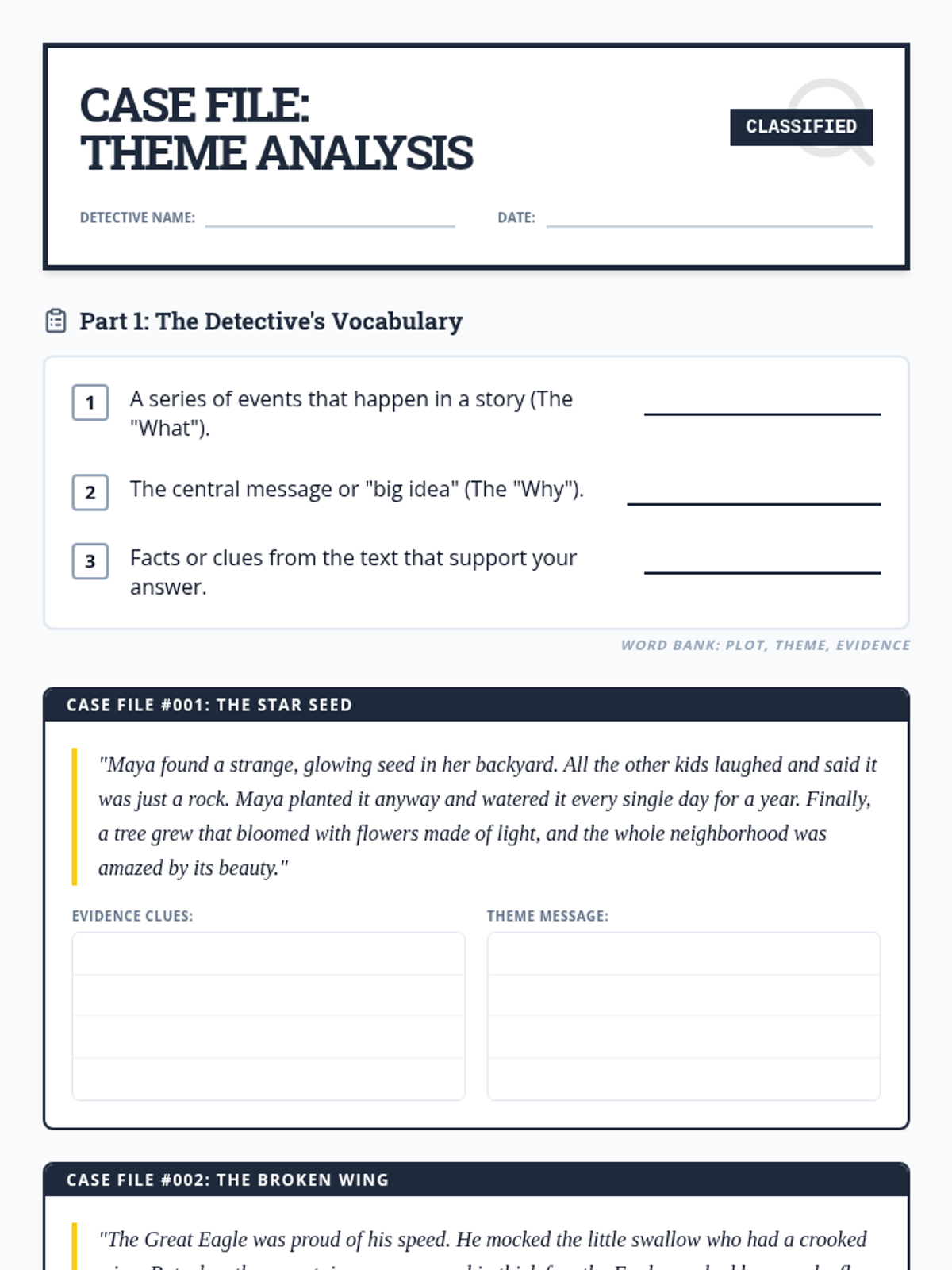
A student worksheet designed as a detective 'case file'. It includes vocabulary practice, short story analysis 'cases' where students identify evidence and themes, and a final reflection section for students to apply the concept to their favorite stories.