A printable 8.5 x 11 inch reference sheet that compiles the vocabulary and core concepts from the Earth Power Words lesson into a single document.
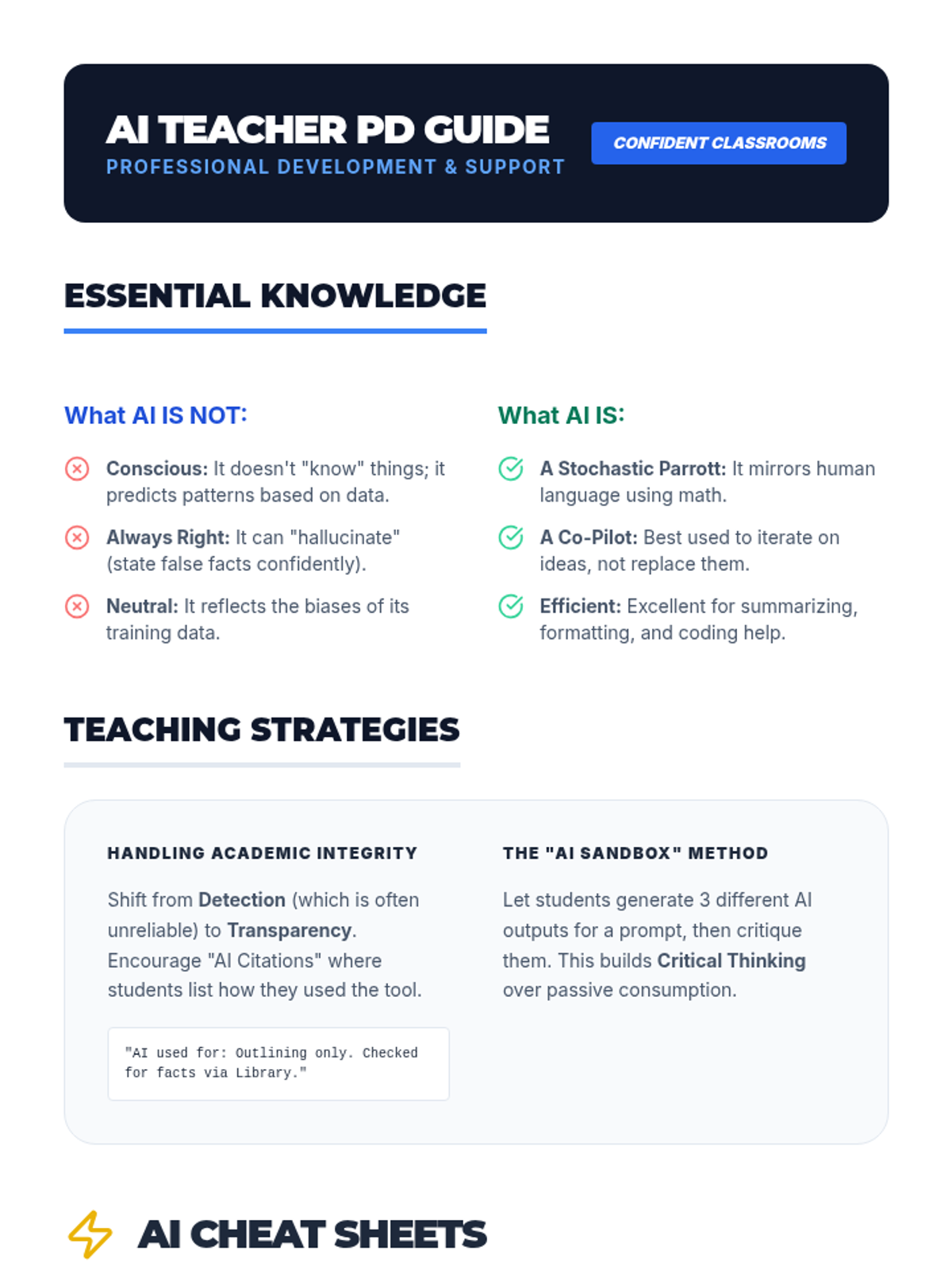
A comprehensive teacher professional development guide including essential AI concepts, facilitation strategies, and quick-reference prompt cheat sheets.
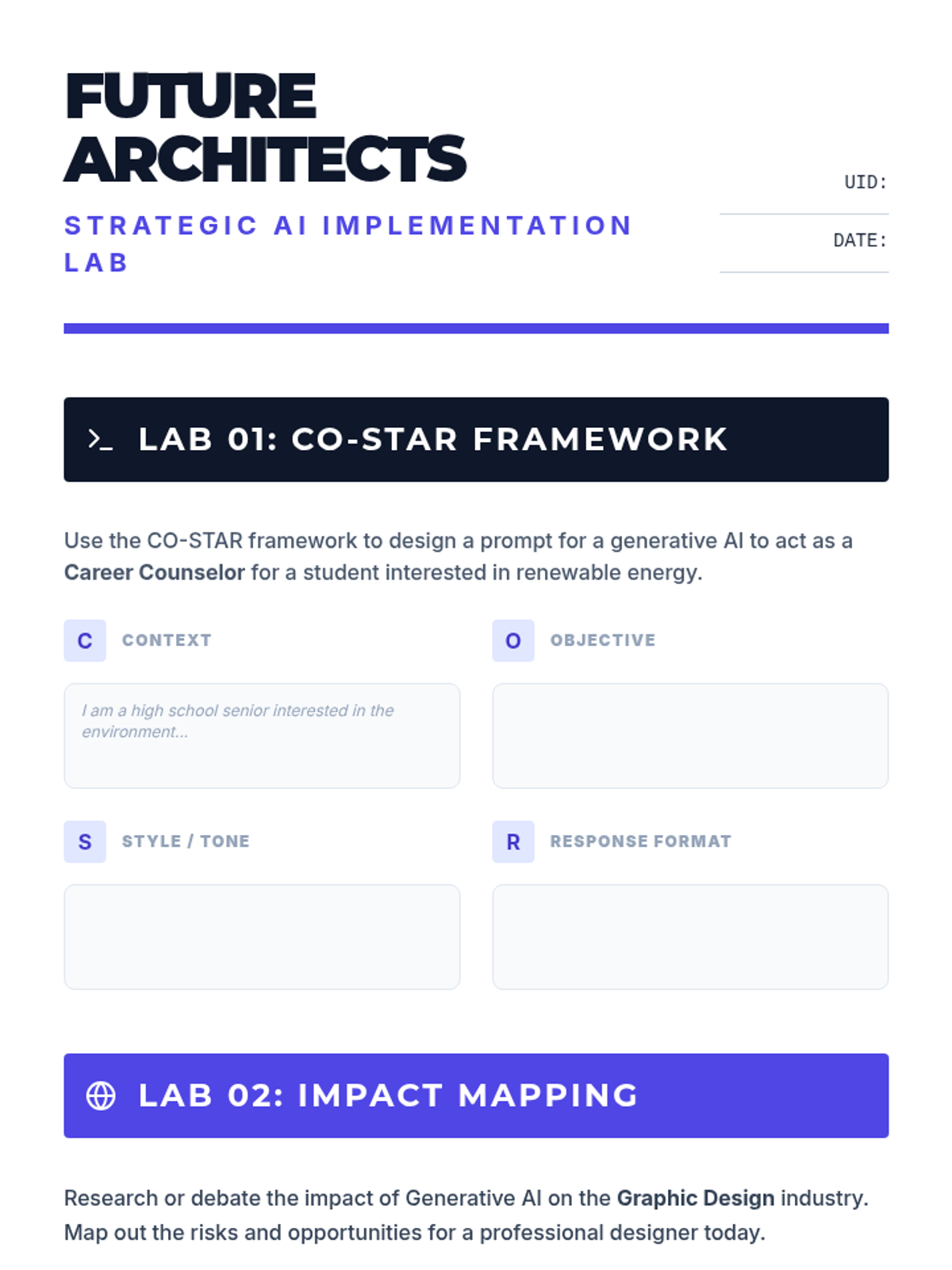
A high school activity sheet requiring students to apply the CO-STAR prompt engineering framework, map industry impacts, and draft ethical AI policies.
Advanced slide deck for high school students exploring generative AI paradigms, professional prompt engineering frameworks (CO-STAR), and the future of work.
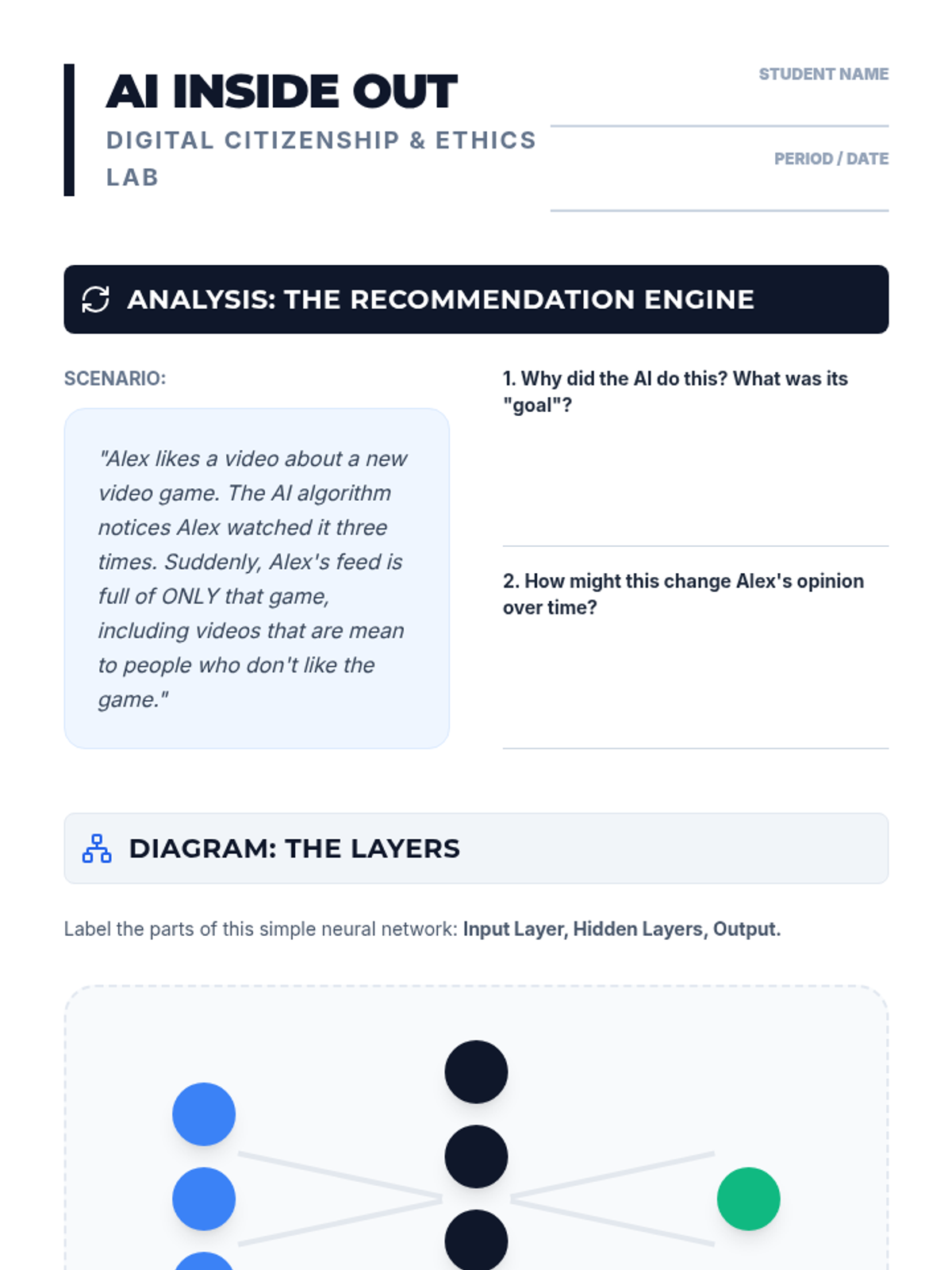
A middle school activity sheet involving ethical analysis of recommendation engines, labeling neural network structures, and debating facial recognition bias.
A middle school slide deck focused on the technical basics of neural networks and the ethical challenges of recommendation engines and deepfakes.
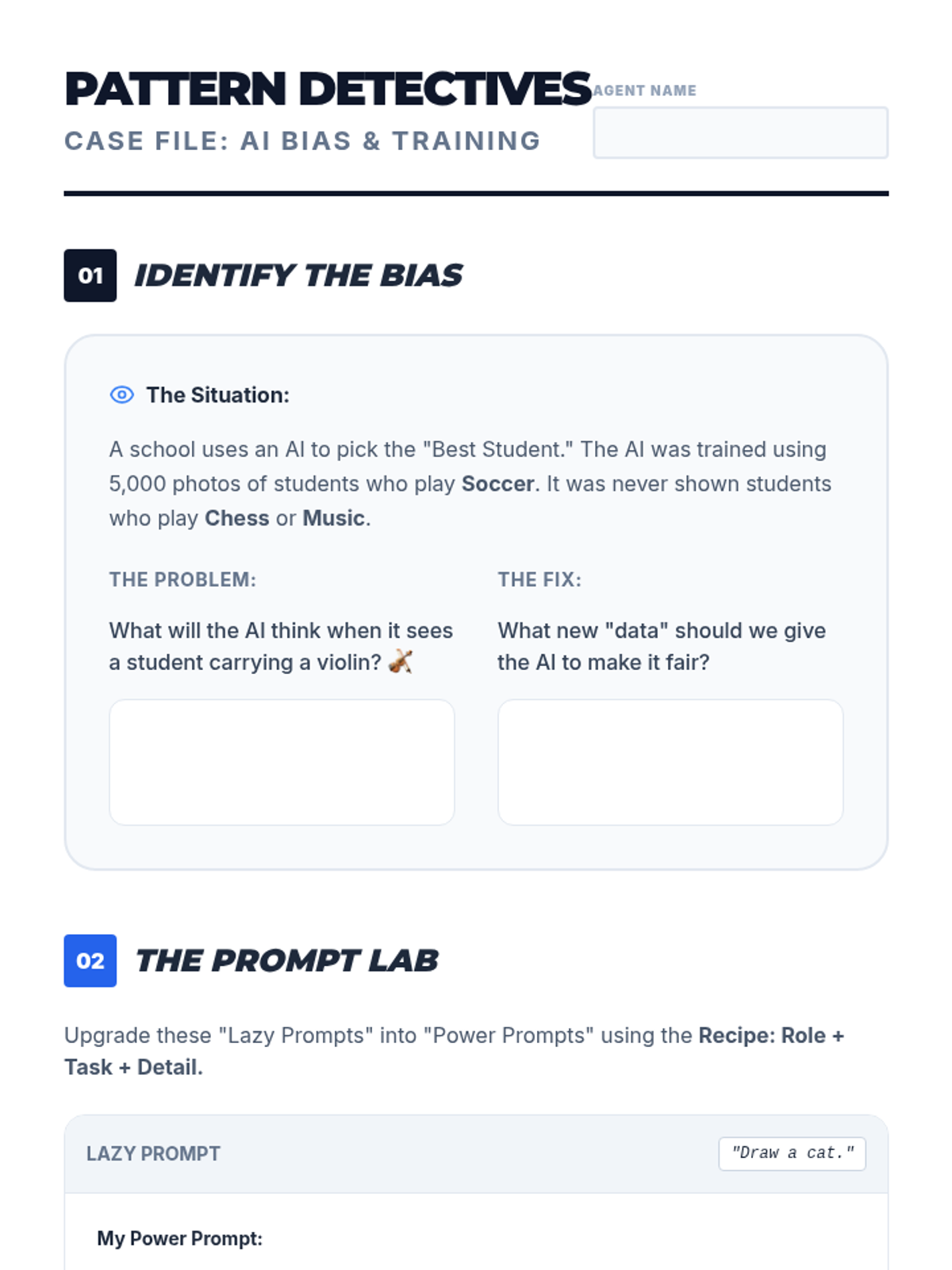
A grade 3-5 worksheet focusing on analyzing AI bias scenarios and practicing prompt engineering using a structured 'Role + Task + Detail' framework.
Instructional slides for grades 3-5, focusing on 'Pattern Detectives' - understanding data, spotting bias, and learning the basics of effective prompting.
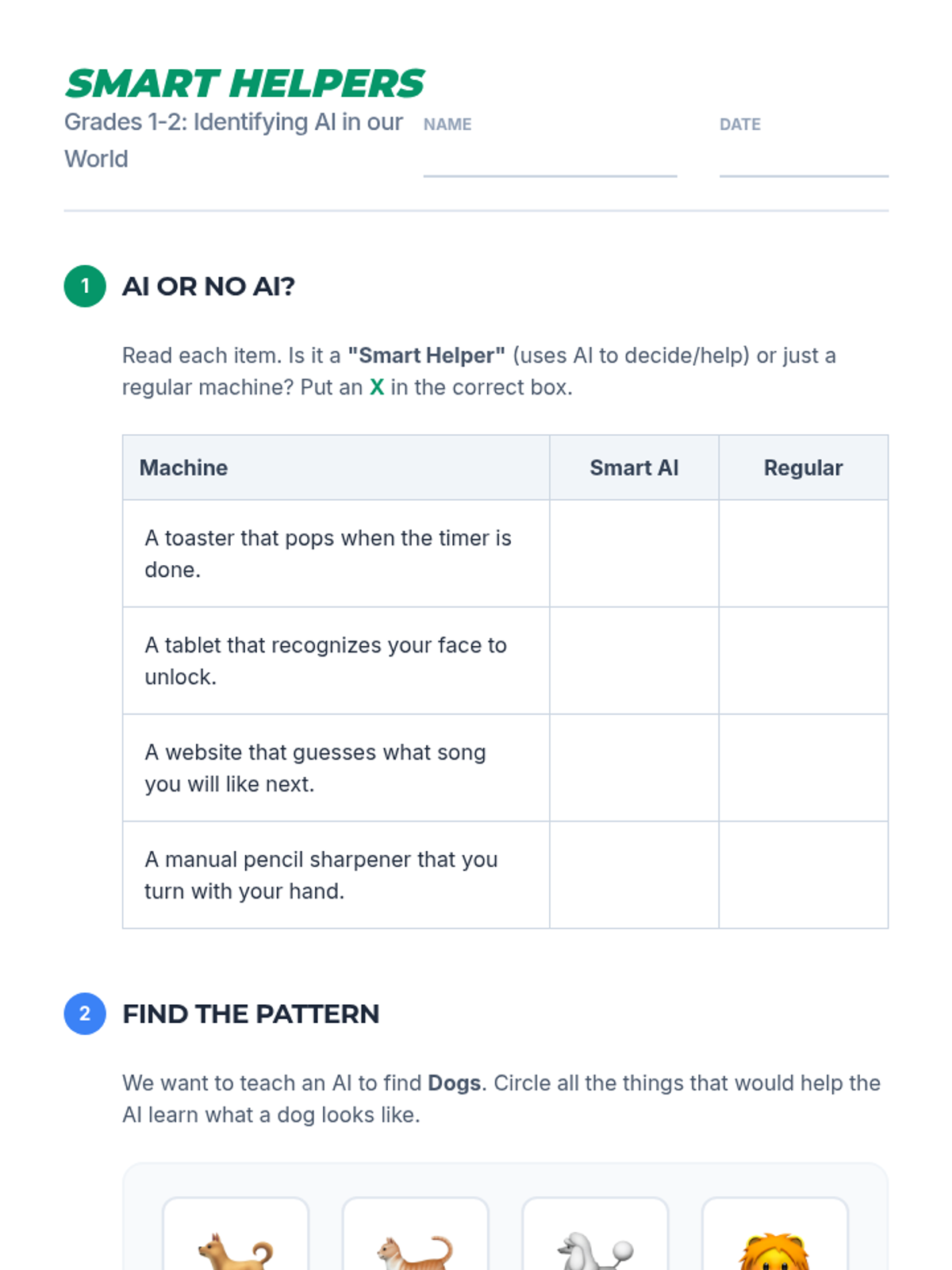
An activity sheet for grades 1-2 focusing on distinguishing between traditional machines and AI, and designing an AI solution for a simple problem.
Instructional slides for grades 1-2 focused on 'Smart Helpers' - identifying AI in the world and understanding simple machine learning patterns.
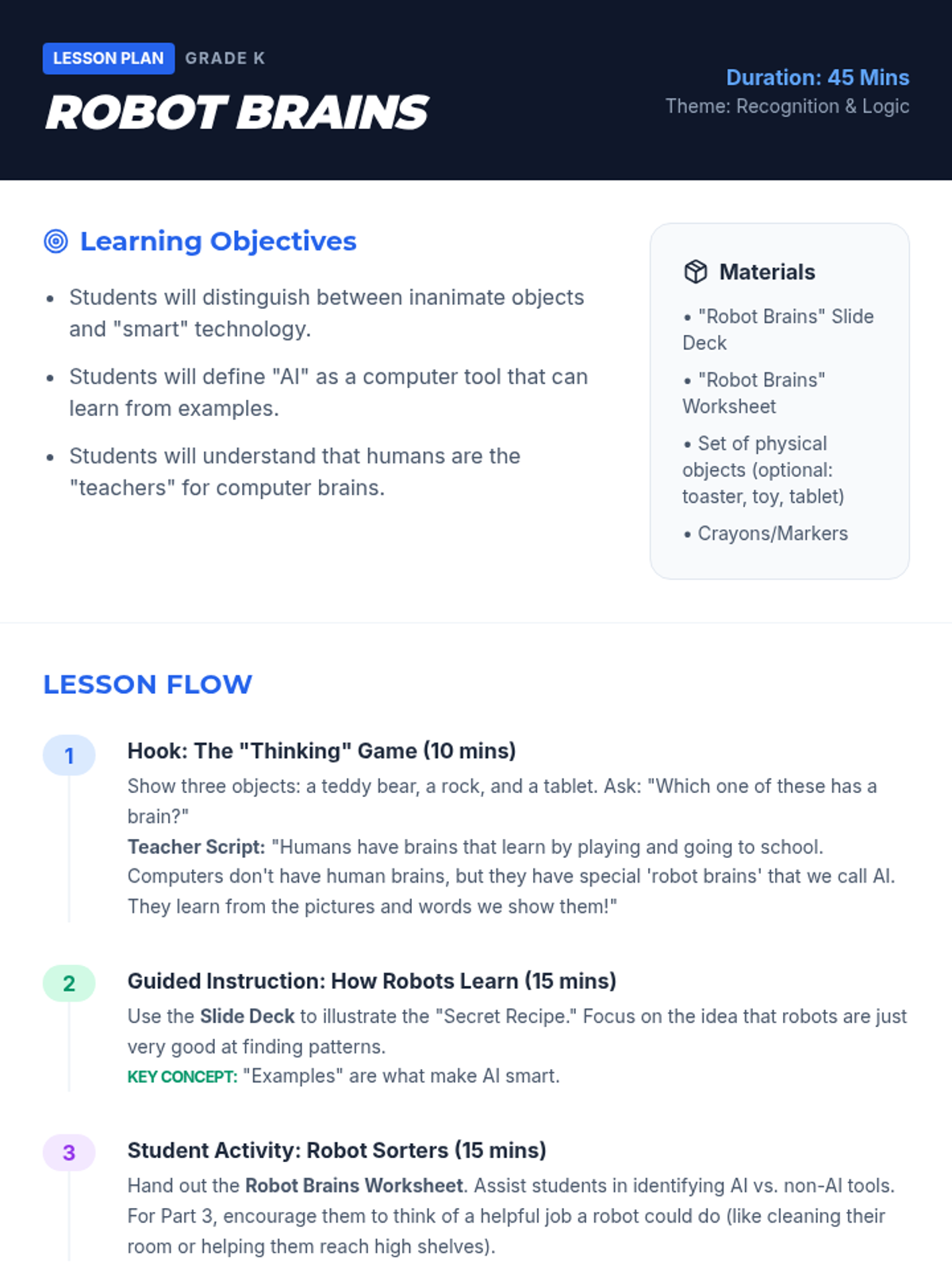
A comprehensive teacher guide for the 'Robot Brains' lesson, including a script, instructional sequence, and differentiation tips for Kindergarten.
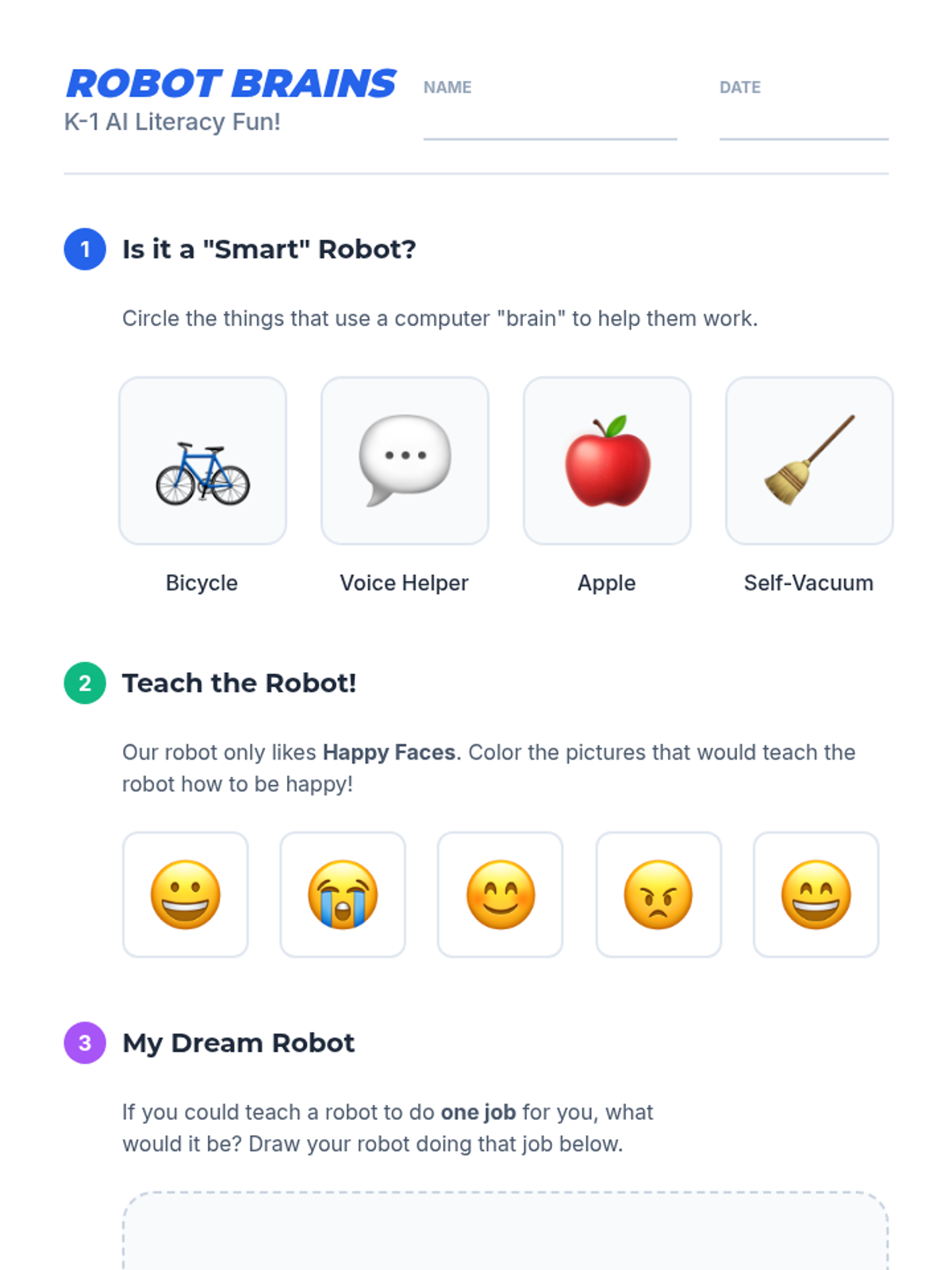
A simple, visual worksheet for Kindergarten students to practice identifying AI and 'training' a robot.
Introductory slide deck for Kindergarten students exploring the difference between human brains and computer 'brains'.
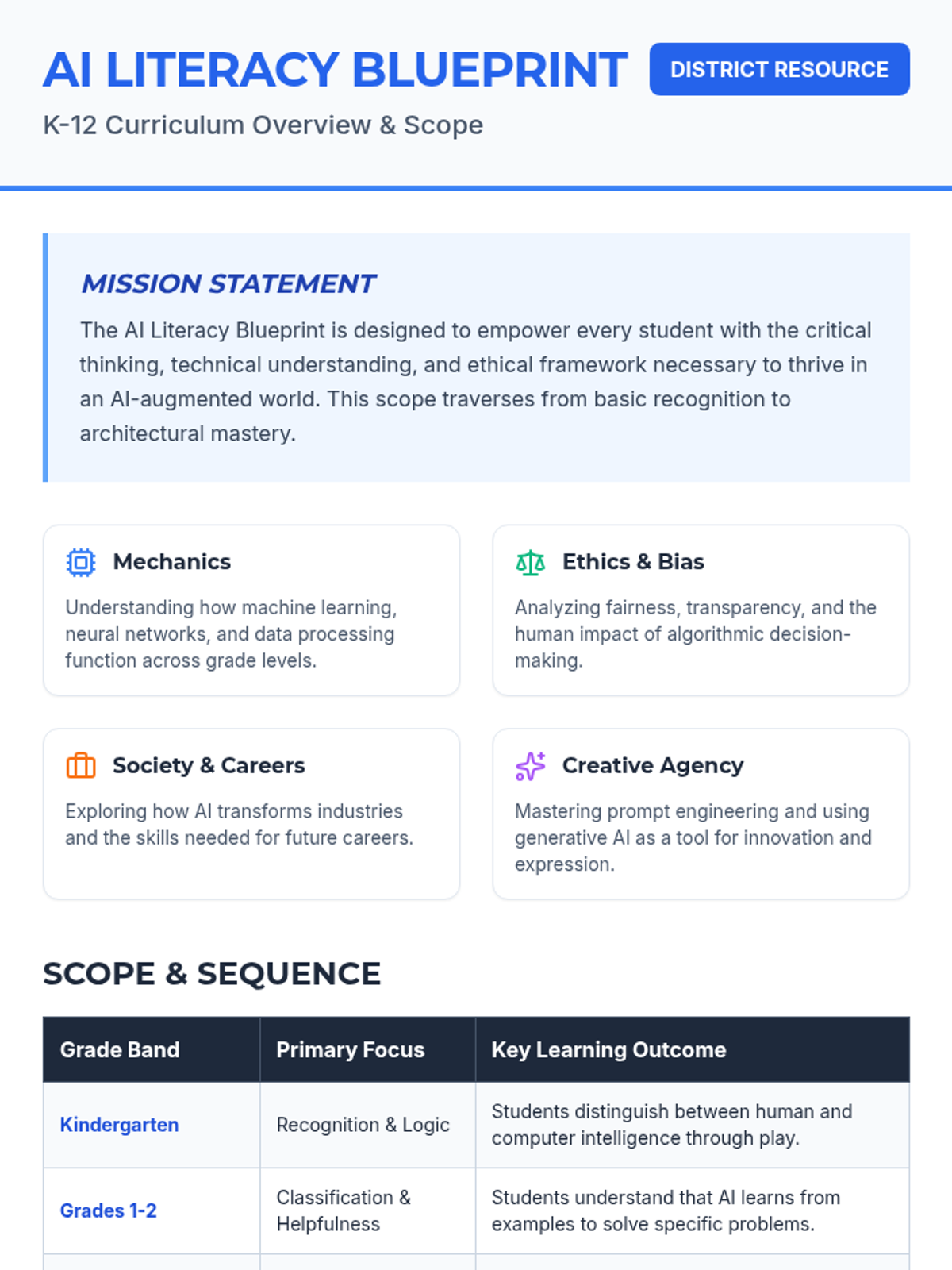
The comprehensive K-12 AI literacy curriculum scope and implementation guidelines for district-wide alignment.
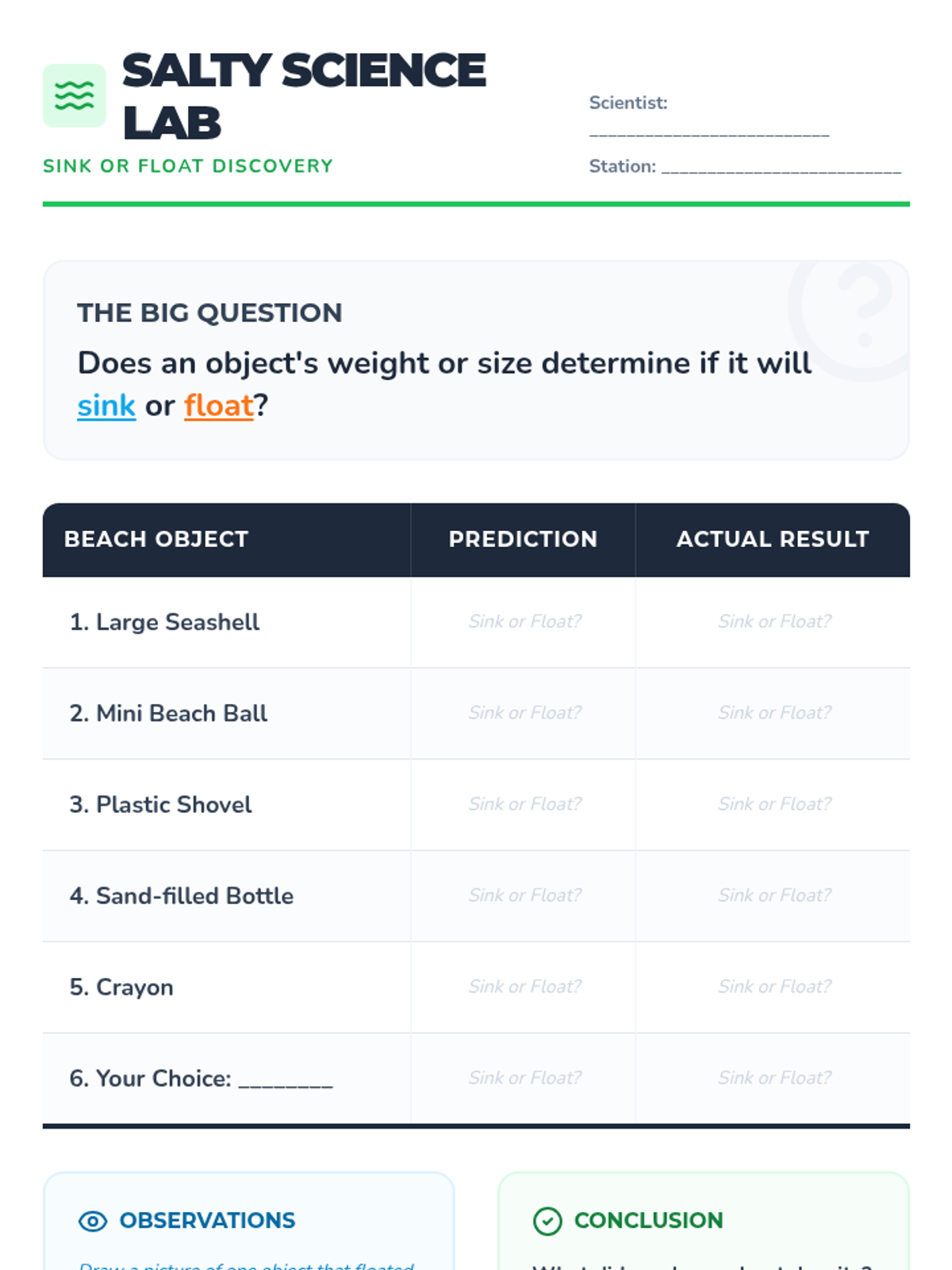
A hands-on science lab sheet for a sink-or-float experiment. Students make predictions, record results for beach-themed objects, and draw conclusions about buoyancy.
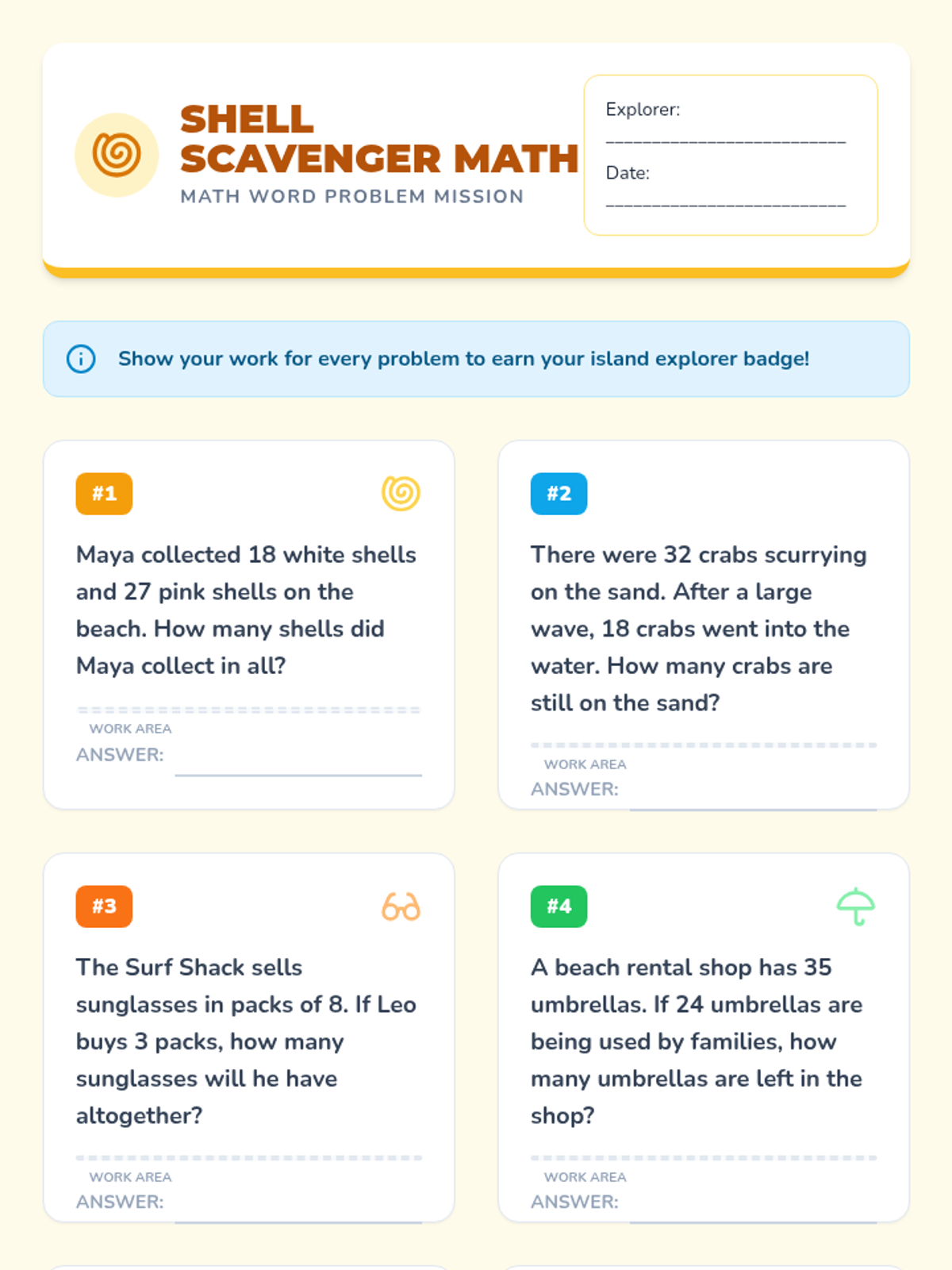
A series of 3rd-grade math word problems focused on addition, subtraction, and multiplication, all with a fun beach theme. Includes space for students to show their work.
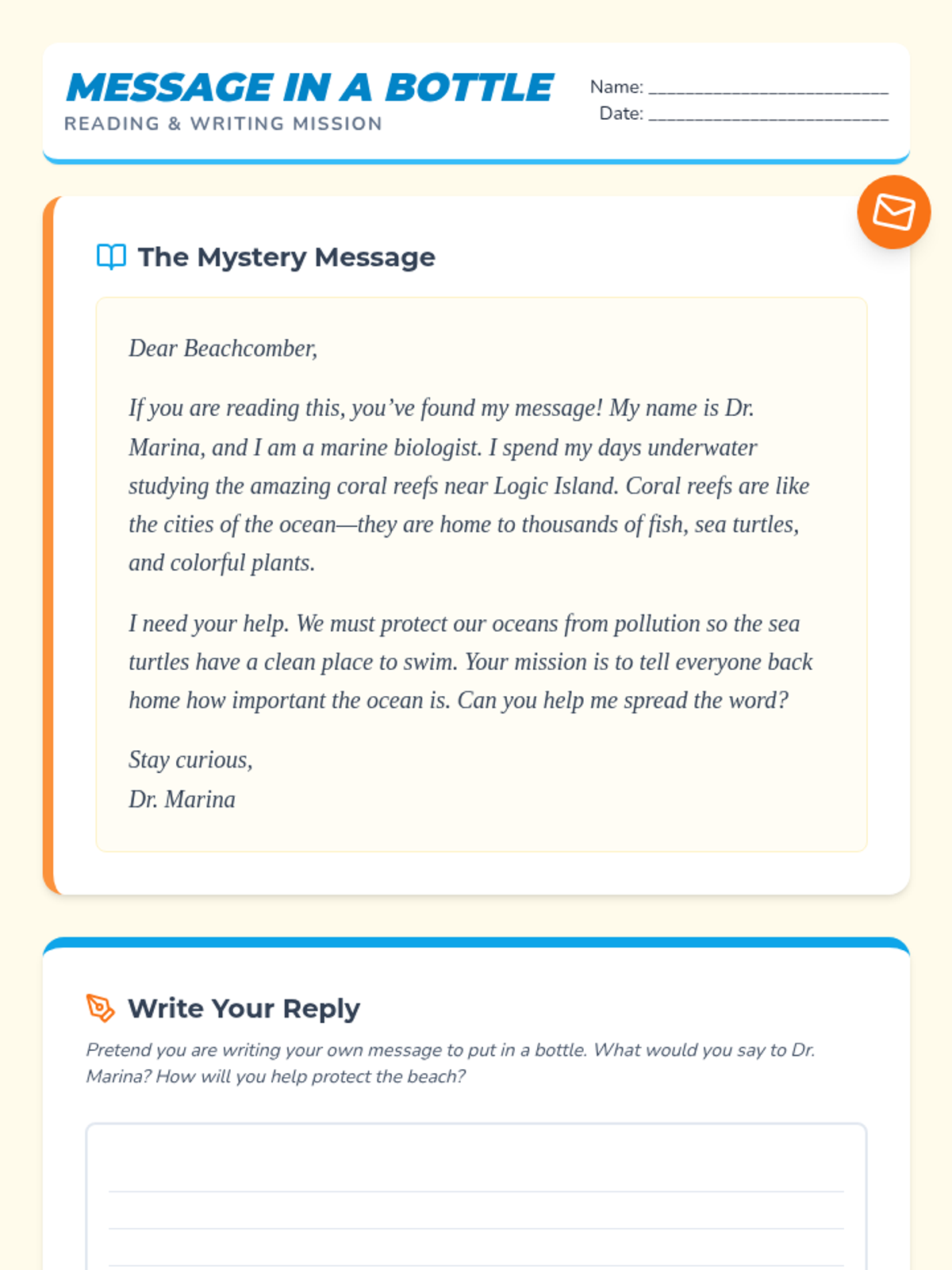
A reading comprehension and creative writing activity where students read a letter from a marine biologist and write their own message to put in a bottle.
Visual presentation slides to guide students through the beach-themed room transformation, including a narrative hook and clear mission objectives for reading, math, and science.
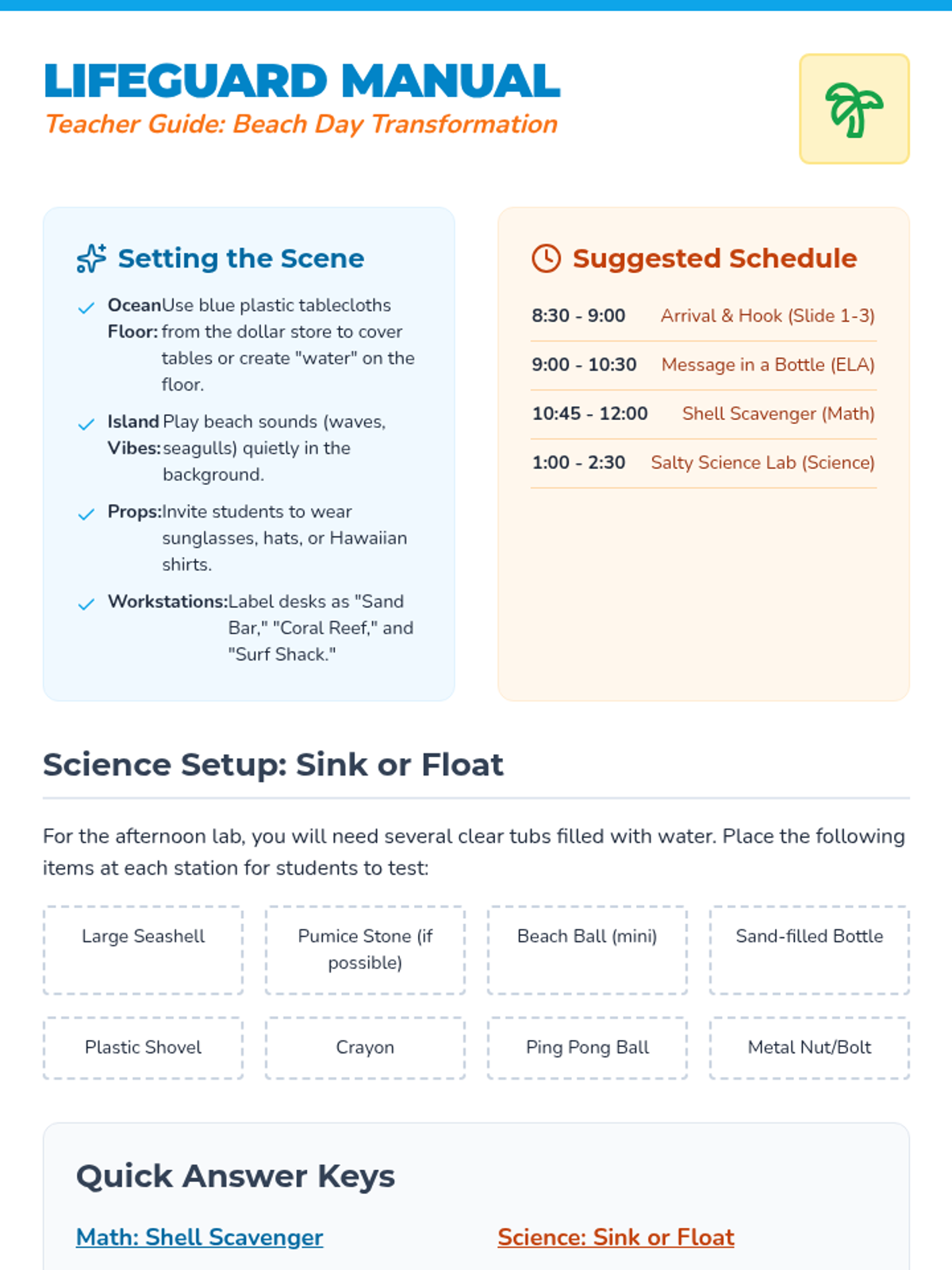
A detailed teacher guide for a 3rd-grade beach room transformation, including classroom setup ideas, a daily schedule, differentiation strategies, and answer keys for all activities.
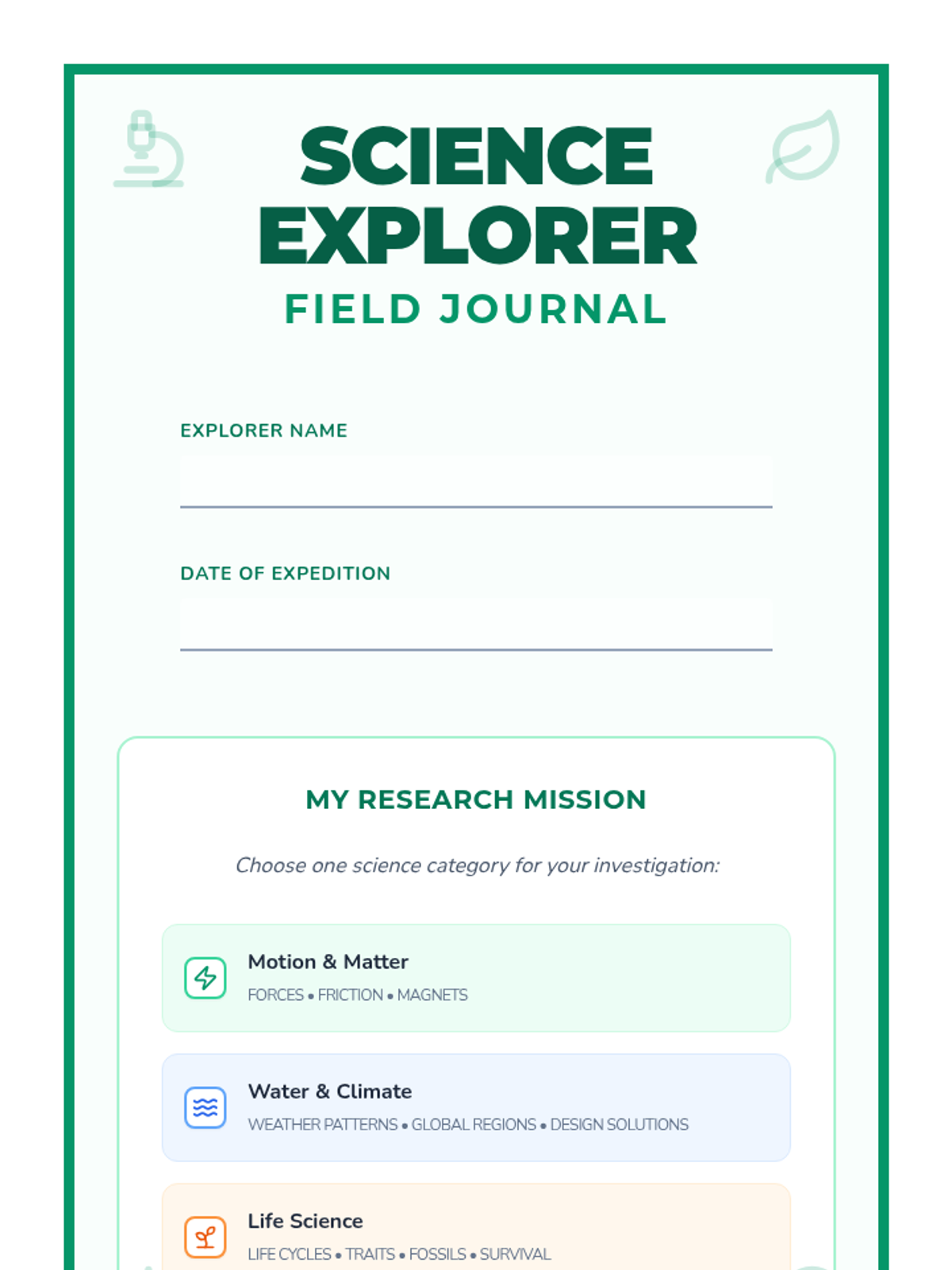
A refined 6-page guided research packet for 3rd-grade science projects. It features a standards-aligned topic menu, dedicated sections for scientific explanation with evidence, real-world connections, model planning, and a final mission checklist.
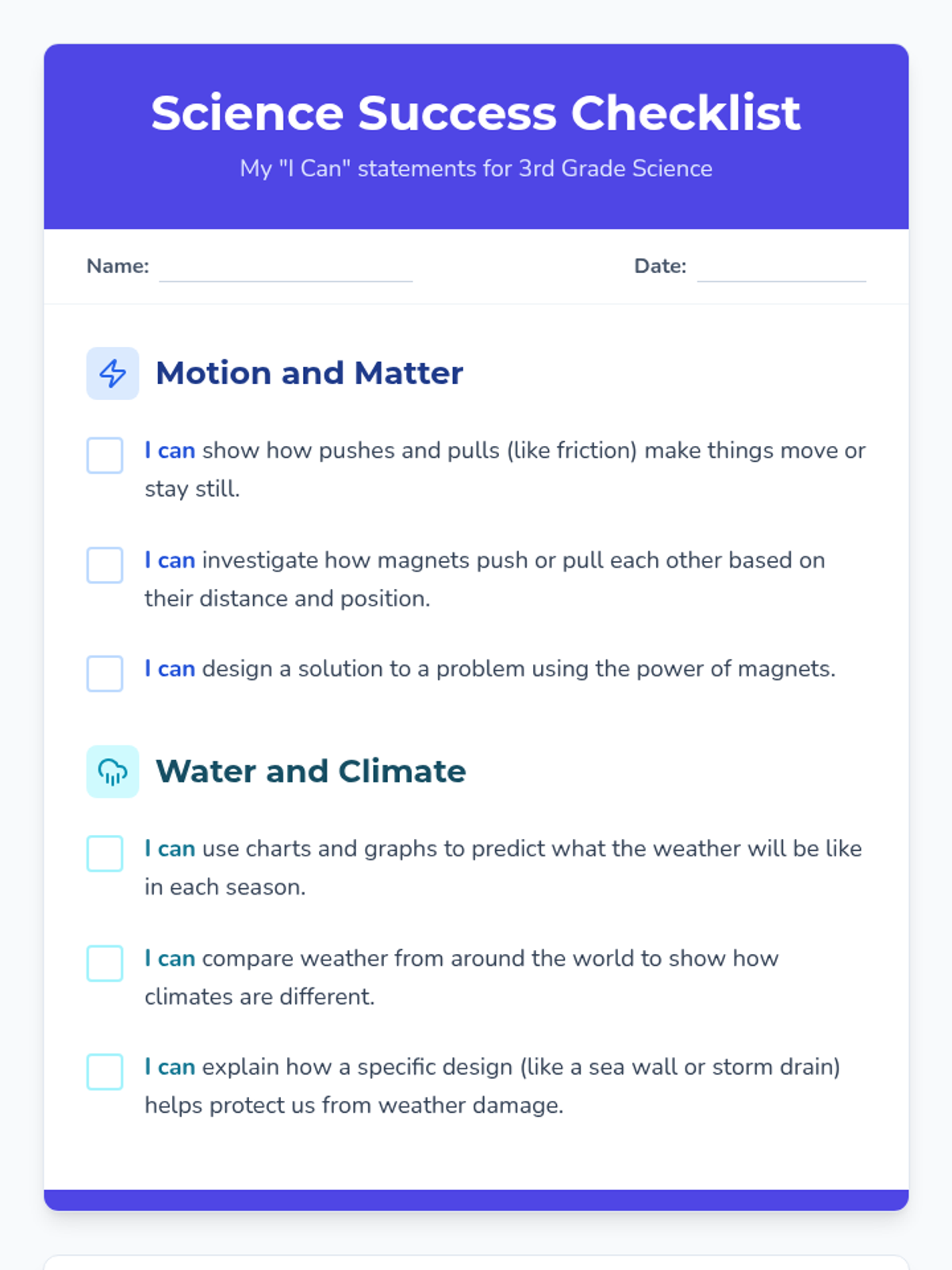
A student-friendly checklist of science standards rewritten as "I Can" statements for 3rd-grade topics including Motion and Matter, Water and Climate, and Life Science.
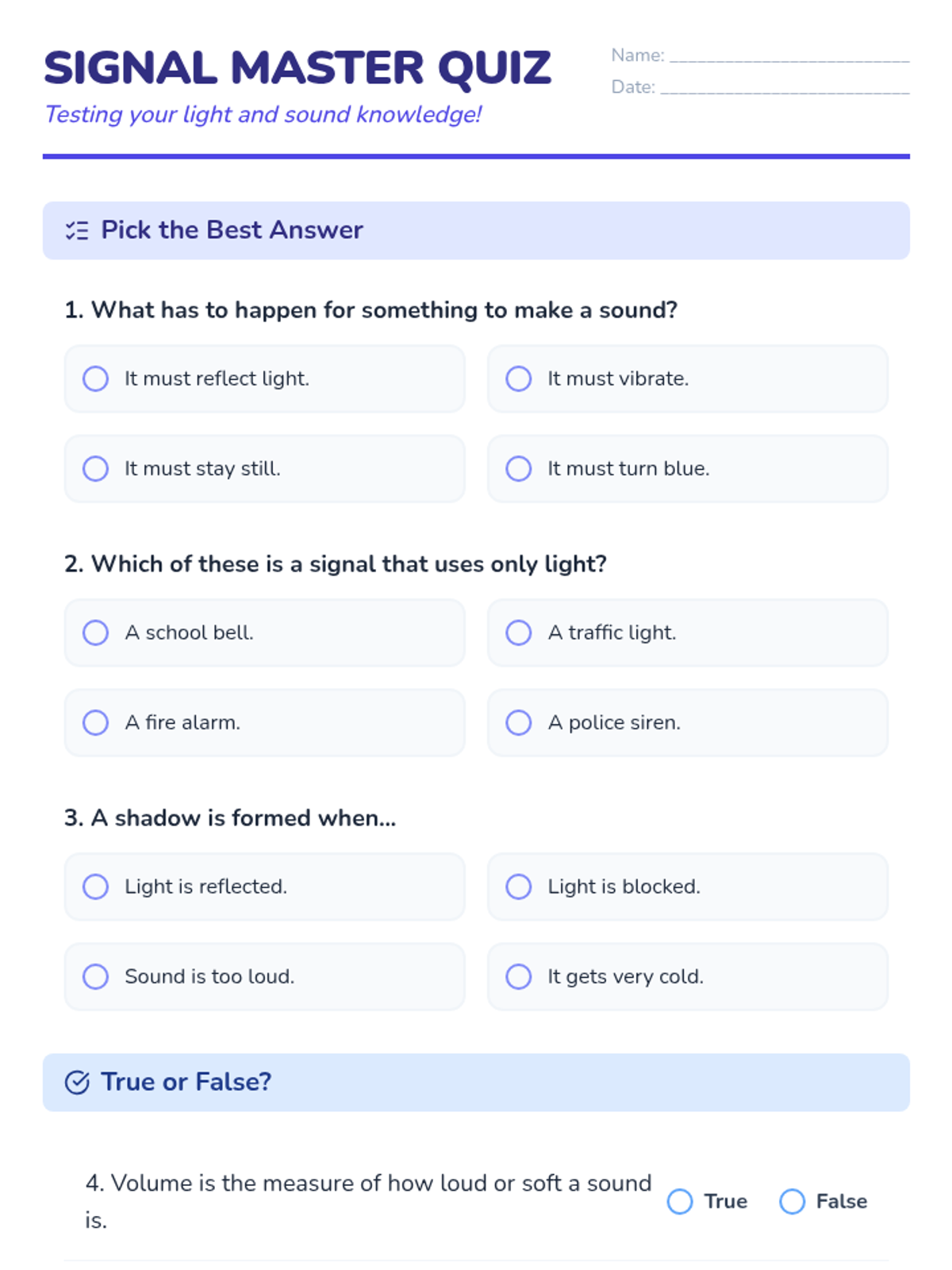
A summative assessment for the Signal Seekers lesson, featuring multiple choice, true/false, and a drawing section to evaluate student understanding of light and sound.
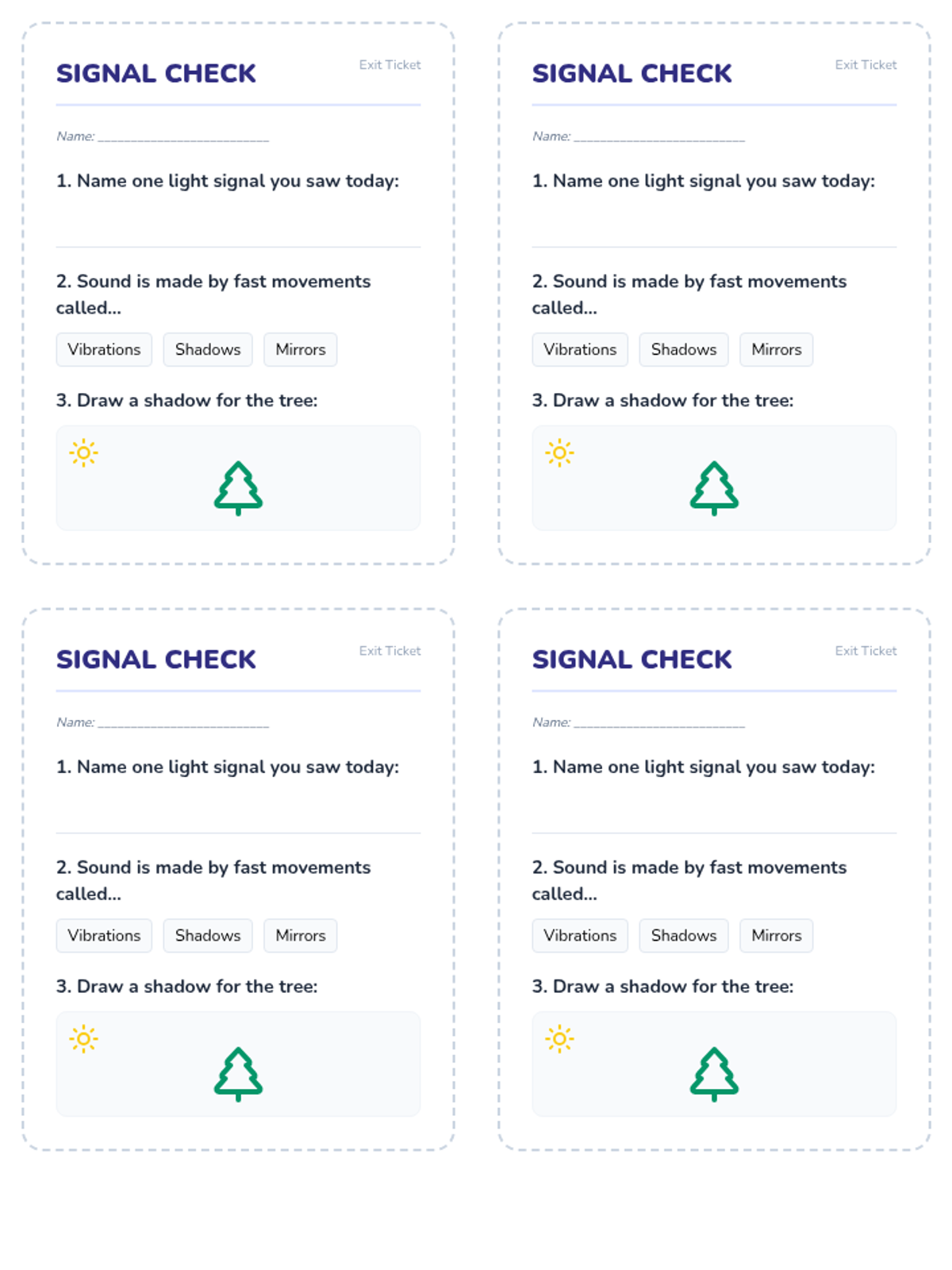
A quick assessment tool with four tickets per page, evaluating student understanding of light signals, vibrations, and shadows.
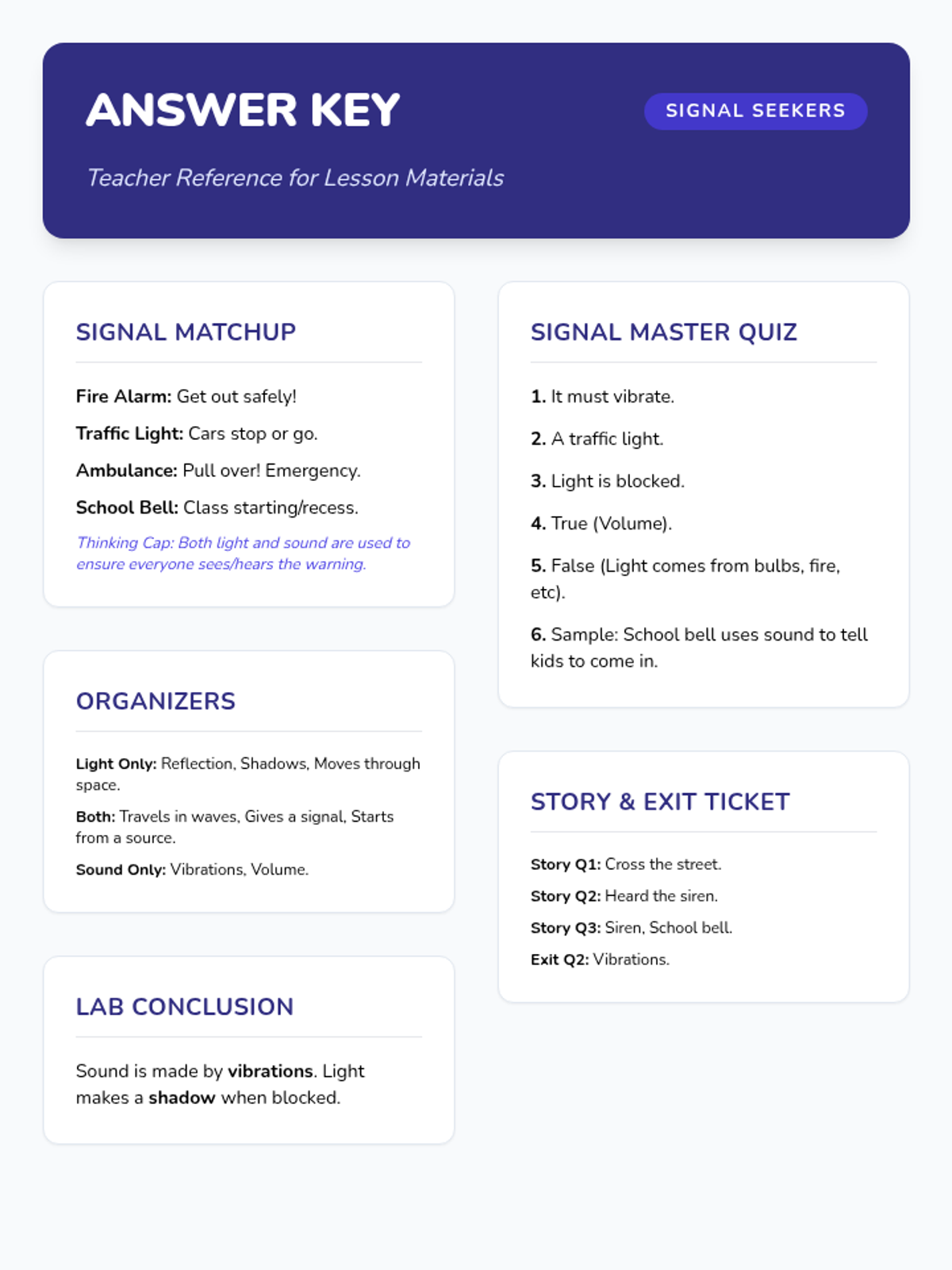
A comprehensive answer key for the Signal Seekers lesson, covering the matchup worksheet, graphic organizers, lab activity, social story, quiz, and exit ticket.
A 10-slide visual presentation covering community light and sound signals, the science of vibrations and shadows, and a preview of the lab activity.
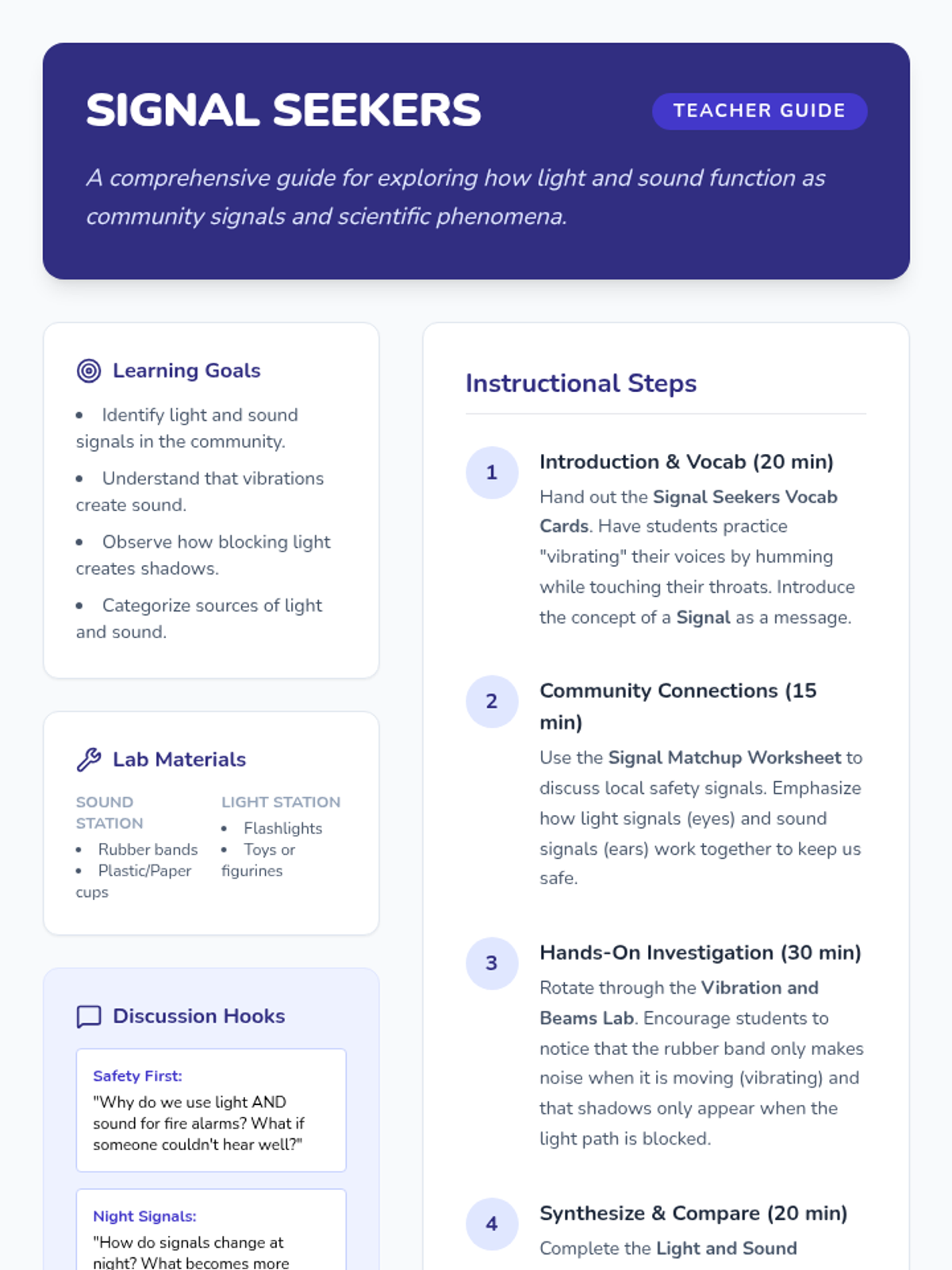
A comprehensive teacher guide for the Signal Seekers lesson, featuring learning objectives, material lists, discussion prompts, and a step-by-step instructional flow.
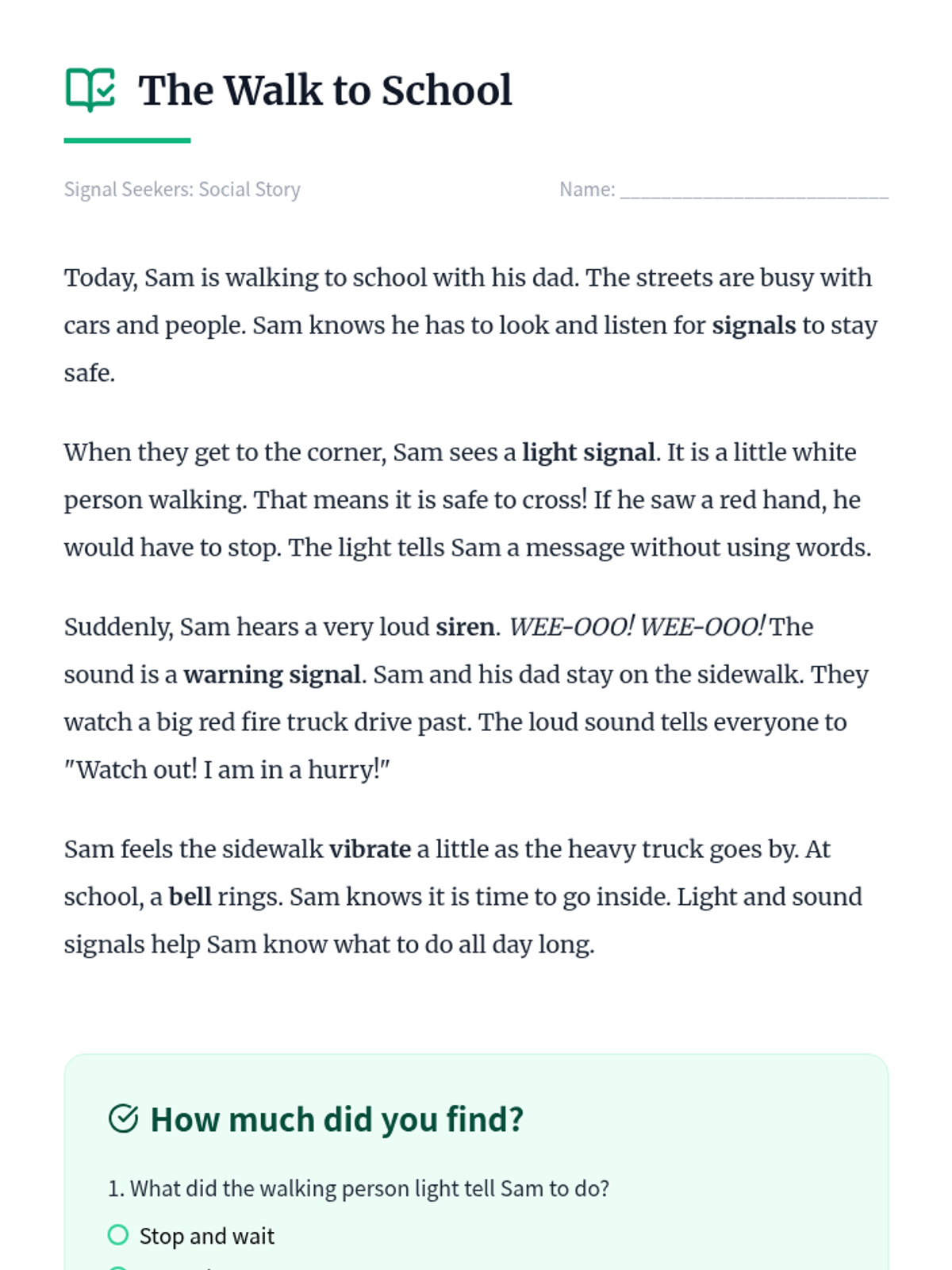
An adapted text about a character noticing light and sound signals (crosswalk light, siren, school bell) during their walk to school, followed by comprehension questions.
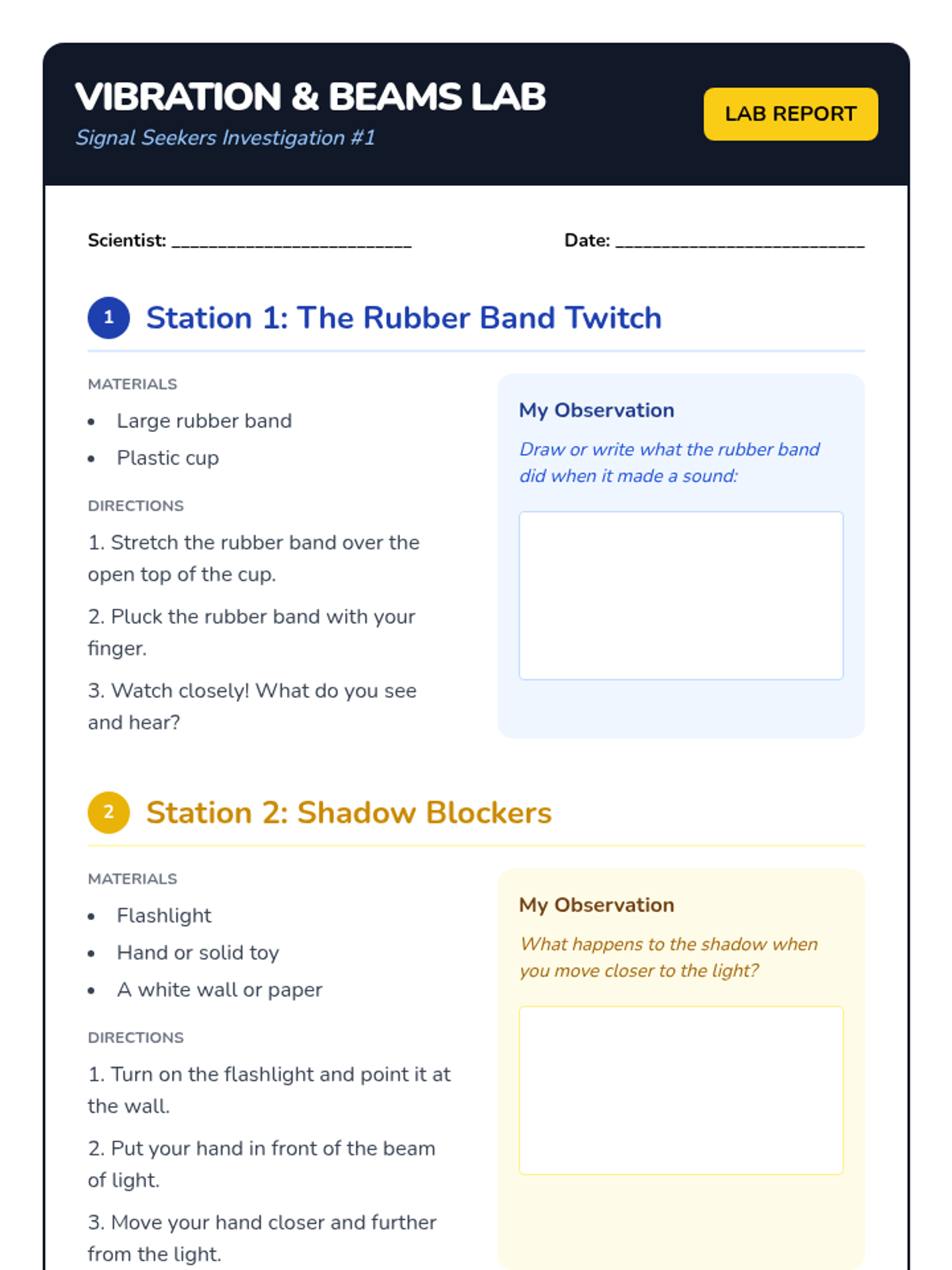
A step-by-step lab activity for investigating sound vibrations with rubber bands and light/shadows with flashlights.
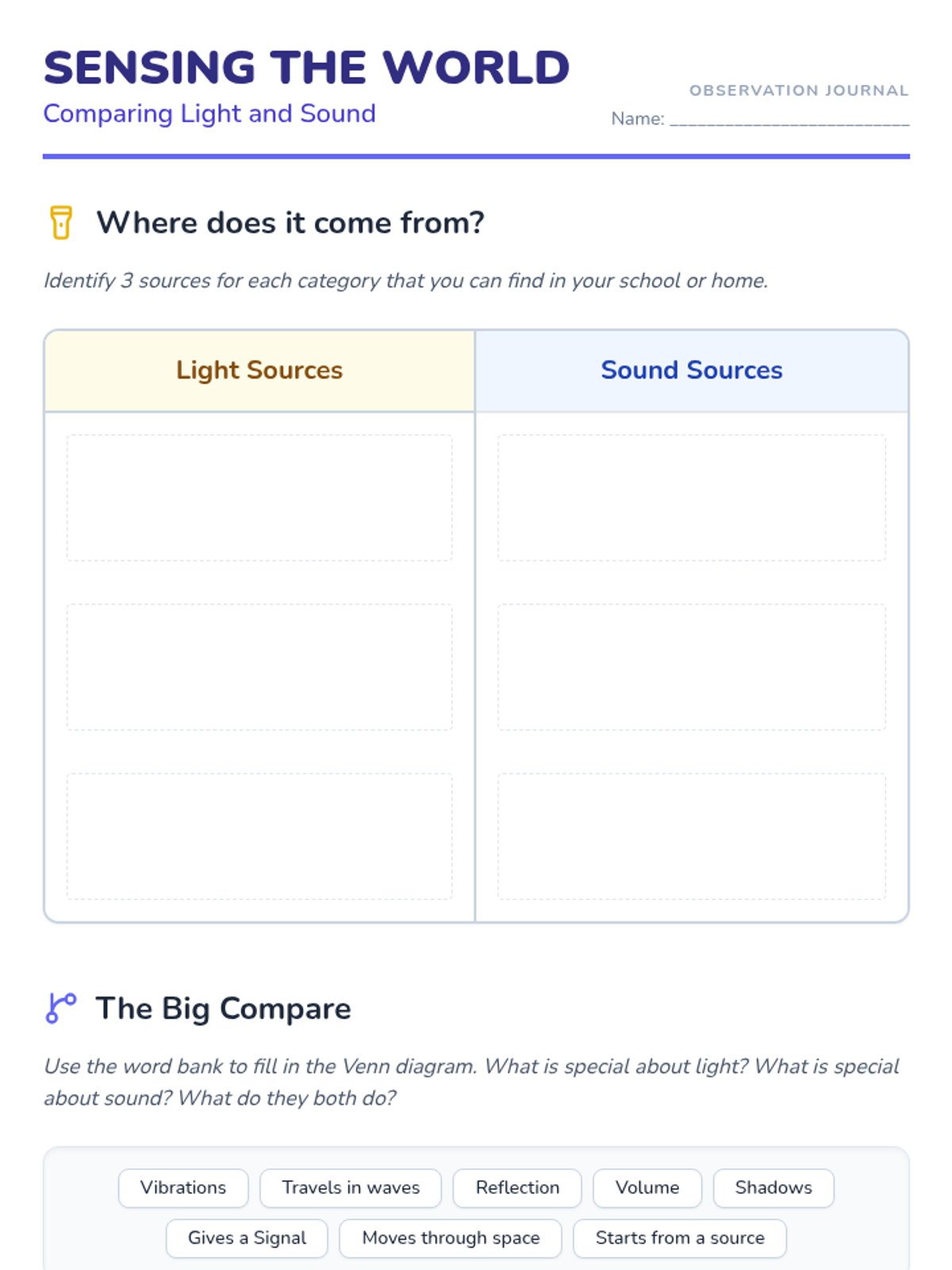
Graphic organizers including a T-chart for identifying light and sound sources and a Venn diagram with a word bank for comparing their properties.
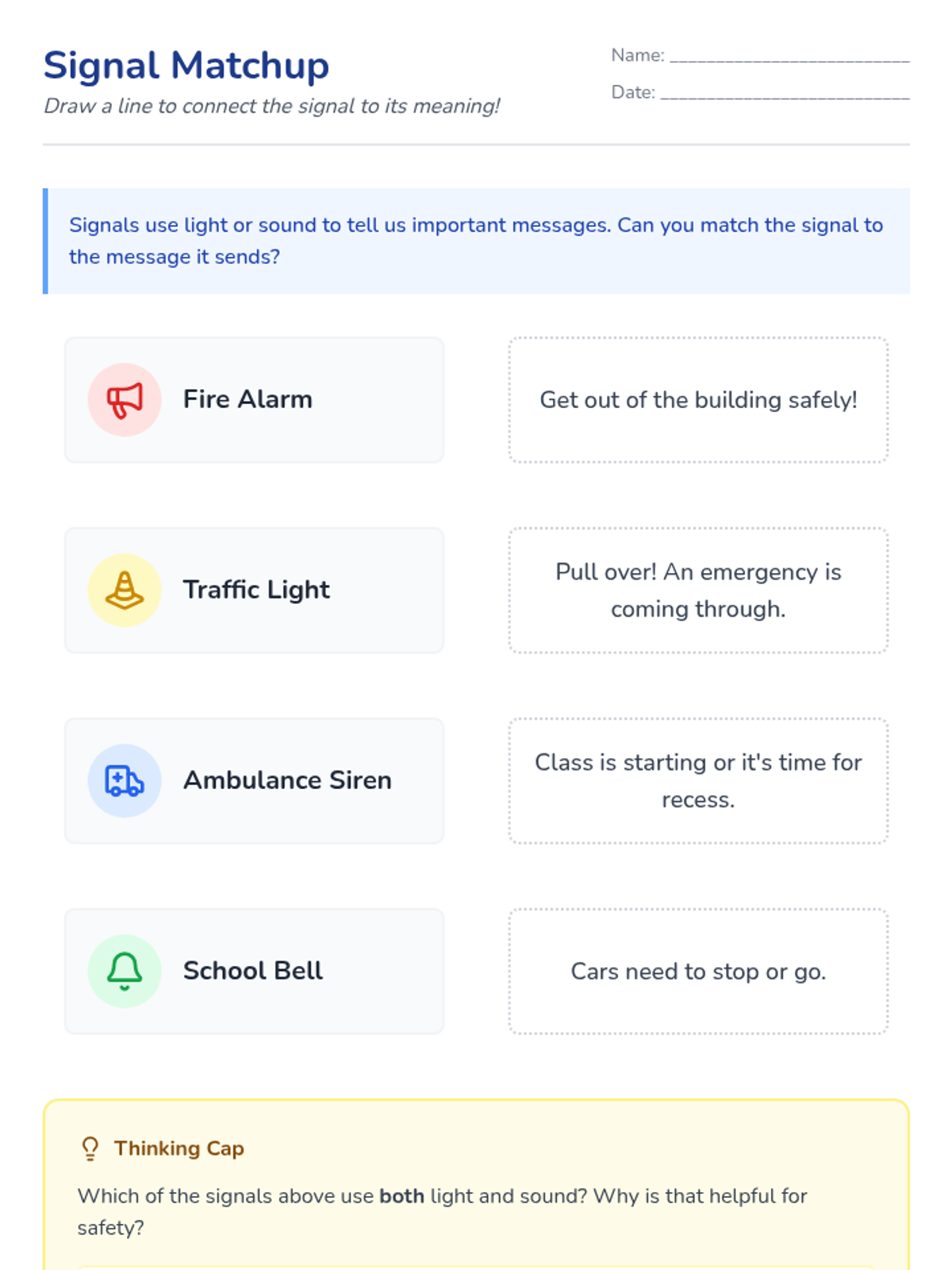
A matching activity where students connect community signals (fire alarm, traffic light, siren) to their meanings, plus a critical thinking question.
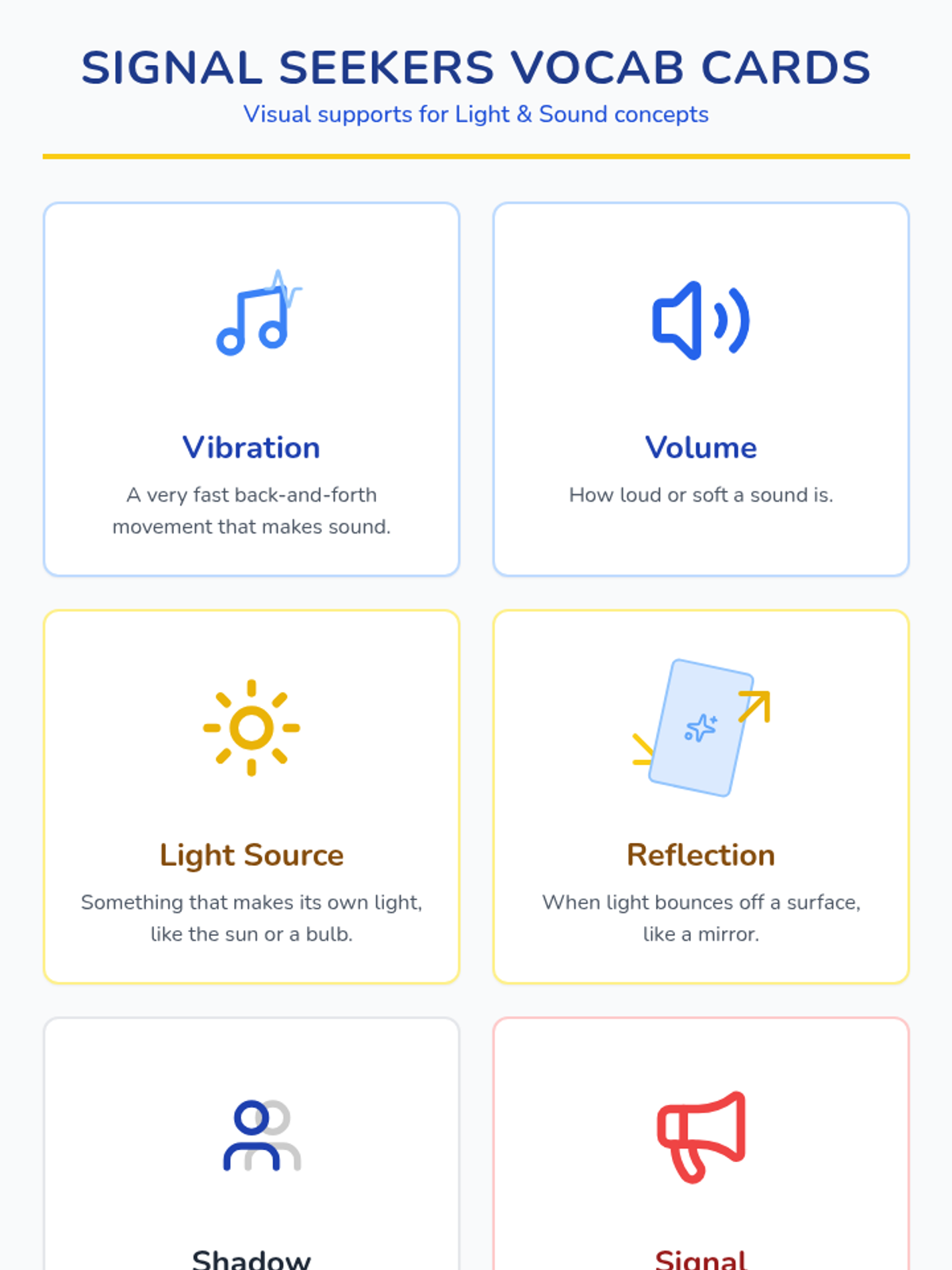
A set of 6 visual vocabulary cards with definitions and icons covering key light and sound concepts like vibration, reflection, and signals.
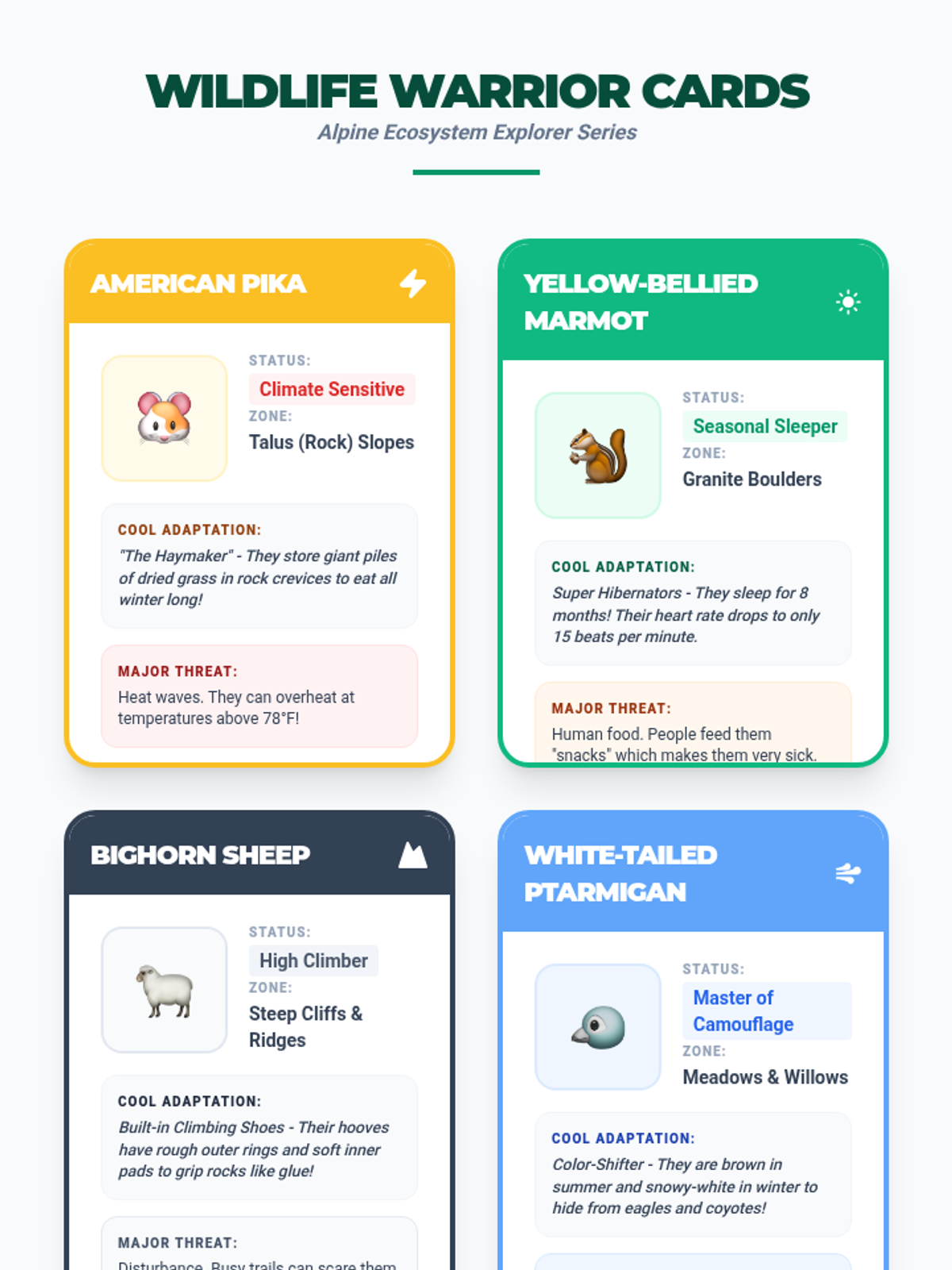
Student reference cards featuring Colorado alpine wildlife, including adaptations, habitat zones, and specific environmental threats.
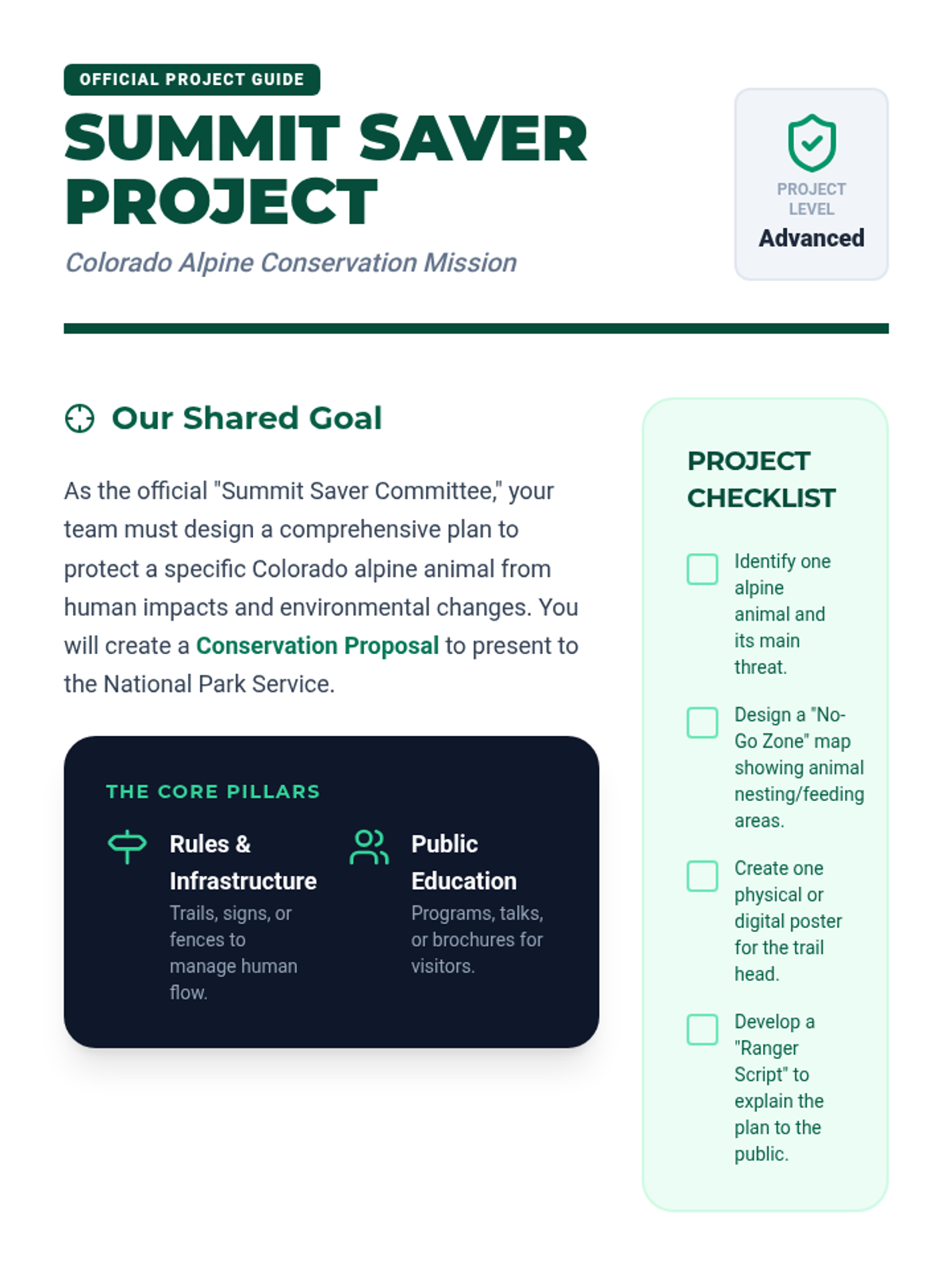
A project guide for students to design and present conservation strategies for protecting Colorado alpine wildlife, featuring a brainstorm area and scoring rubric.
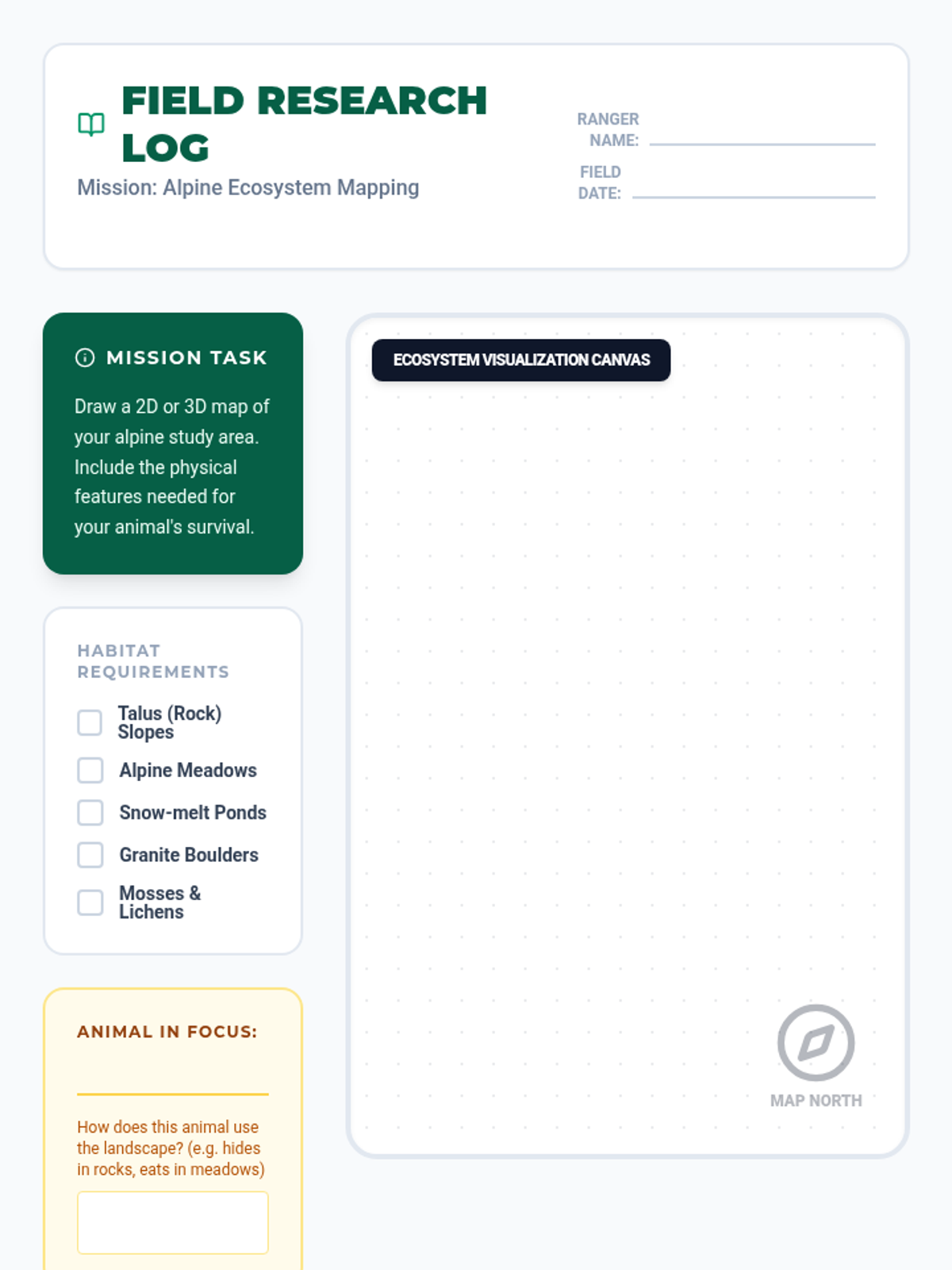
A student worksheet for mapping alpine tundra ecosystems, including habitat checklists and threat identification sections.
A visual presentation guide for introducing alpine tundra ecosystems, featuring Colorado wildlife adaptations and human impact discussion points.
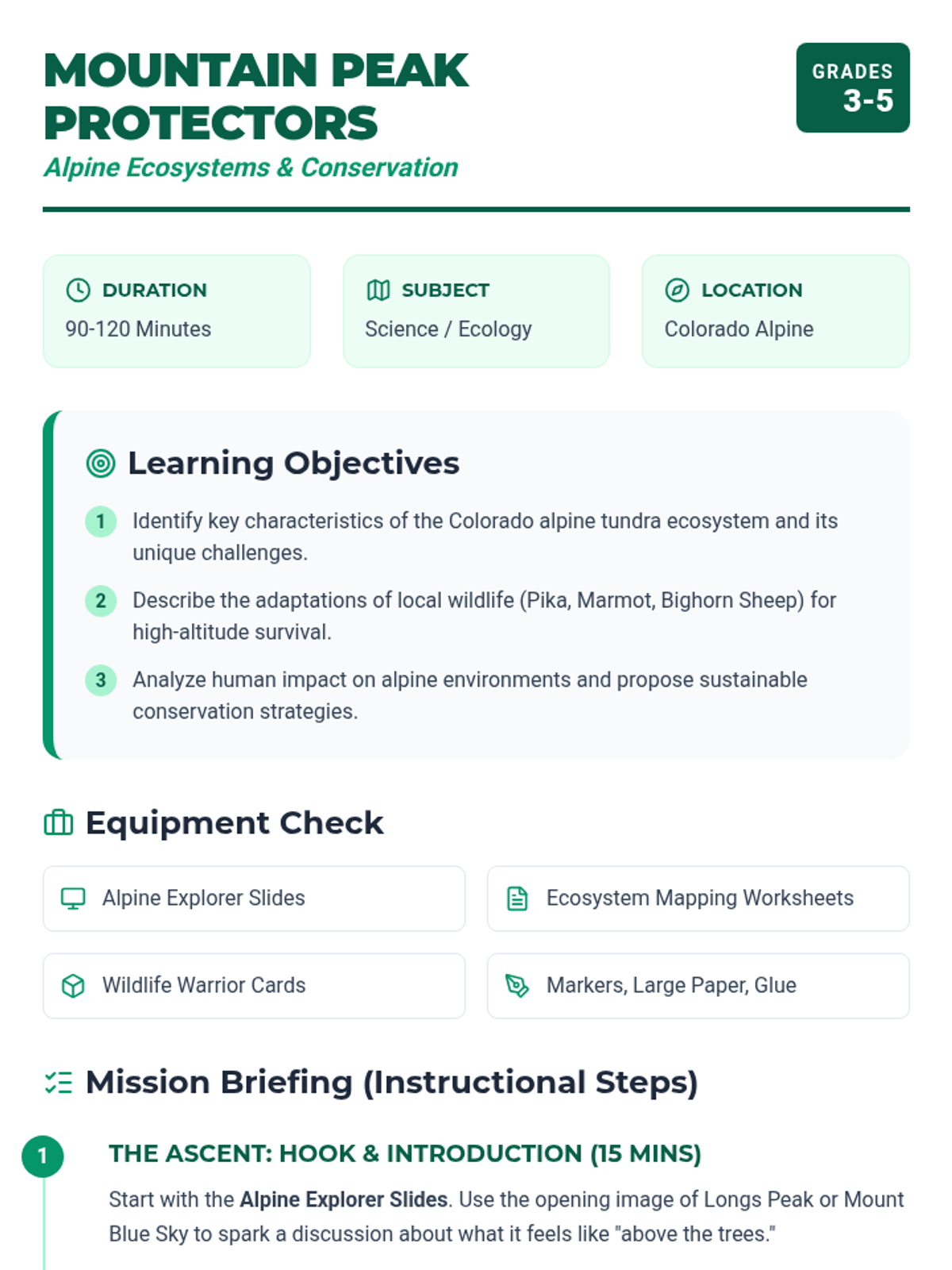
A comprehensive lesson plan for the Mountain Peak Protectors unit, detailing instructional steps, learning objectives, and assessment strategies for exploring Colorado alpine ecosystems.
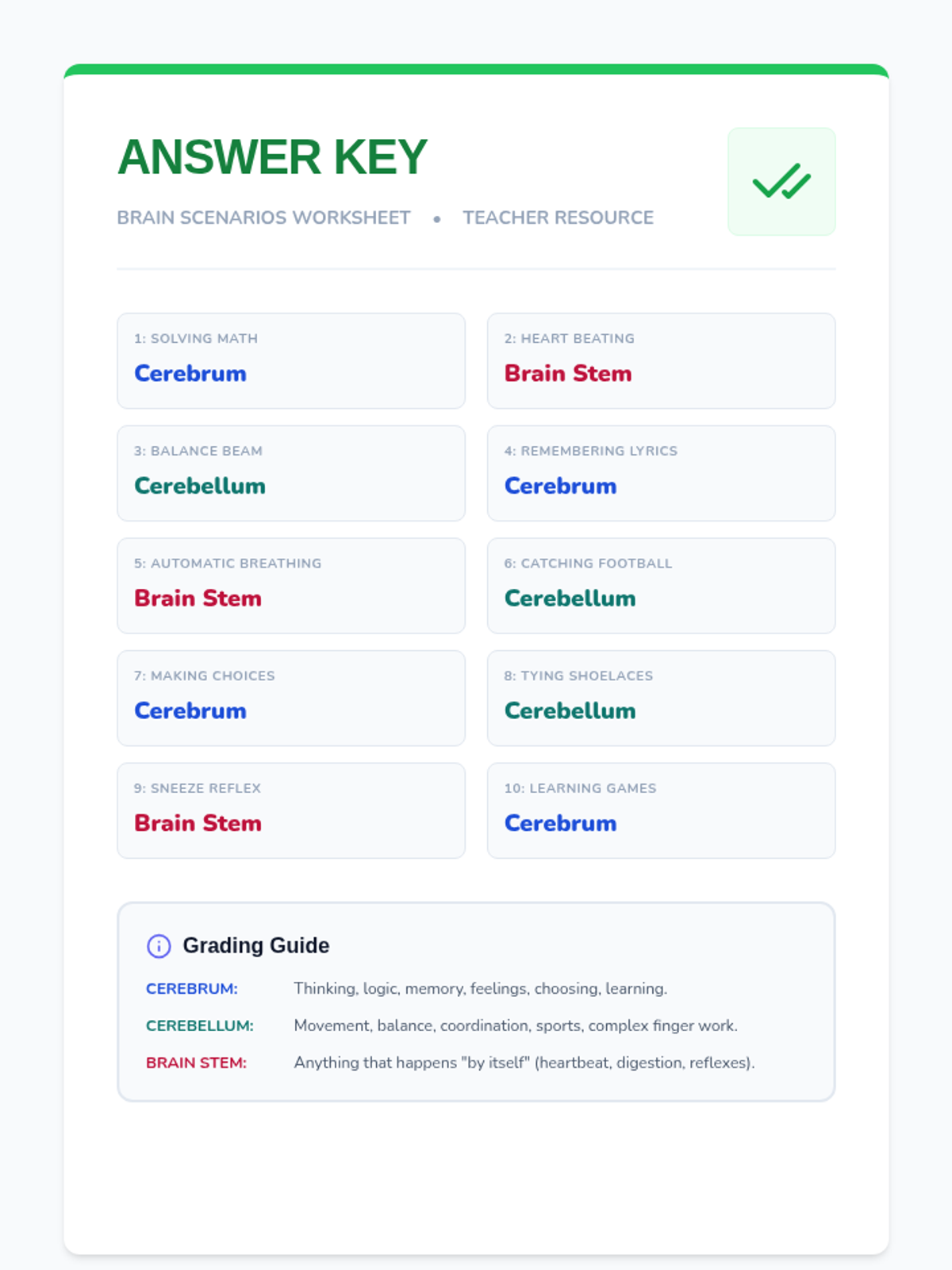
The answer key for the Brain Scenarios Worksheet, providing the correct brain part for each of the ten scenarios.
Visual instructional slides for teaching 3rd graders about the cerebrum, cerebellum, and brain stem with clear icons and kid-friendly analogies.
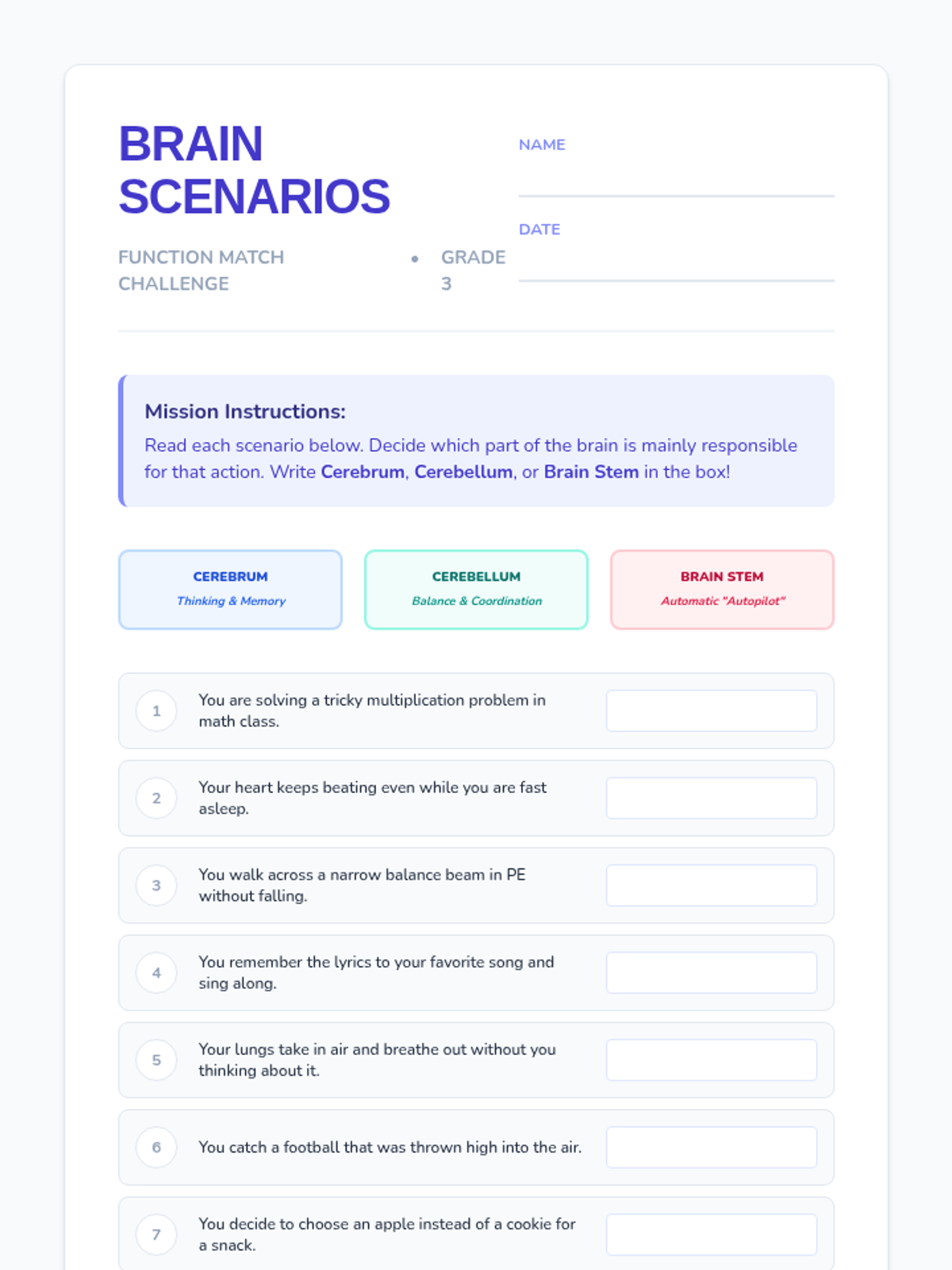
A student worksheet featuring ten scenarios where students must identify which part of the brain (cerebrum, cerebellum, or brain stem) is primarily responsible.
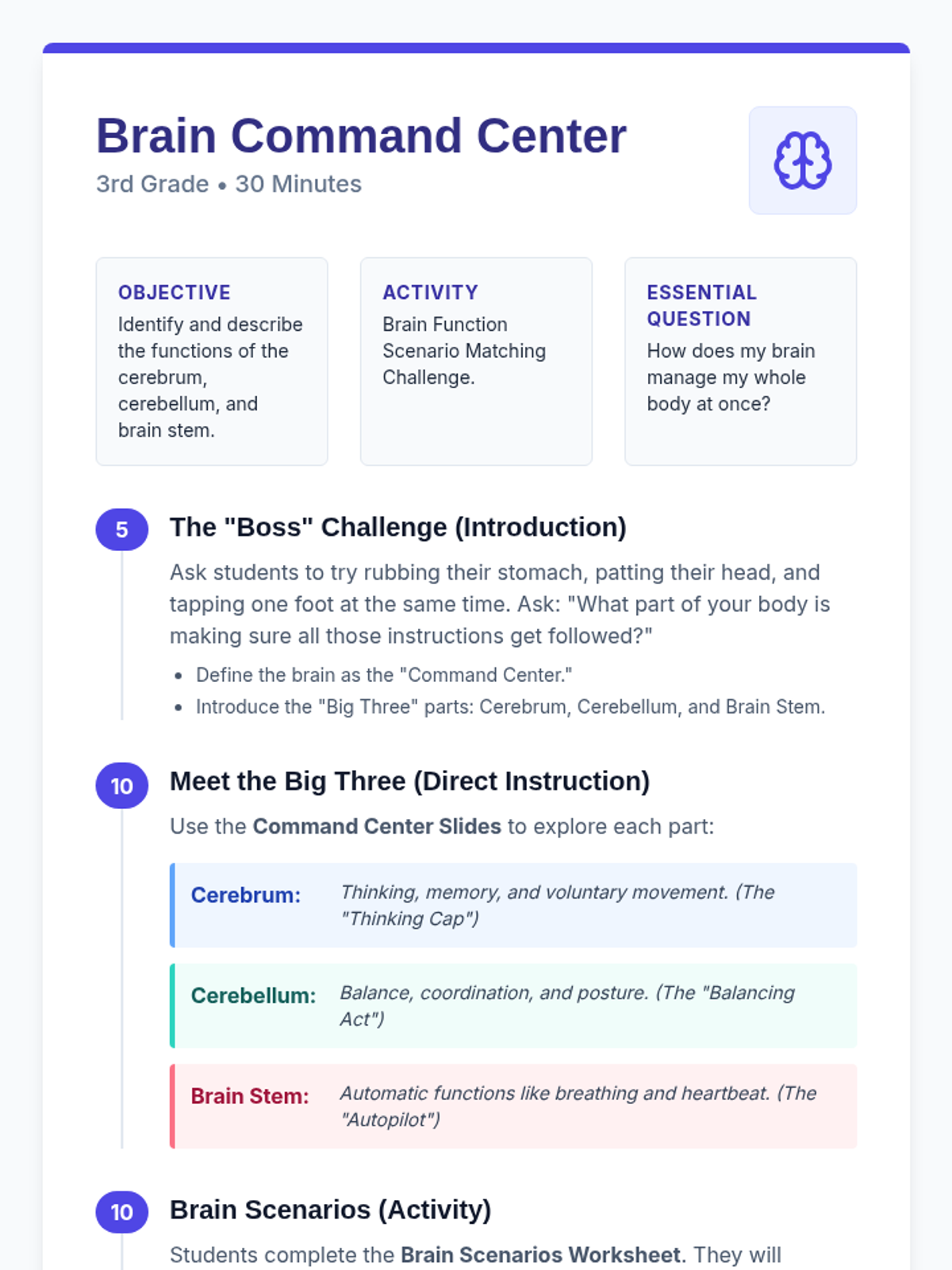
A detailed teacher guide for a 30-minute lesson on the brain's primary structures, updated with a scenario matching activity.