Visual introduction to modeling landscape evolution, covering key variables like rainfall, vegetation, and tectonic uplift. Sets the stage for the simulation project.
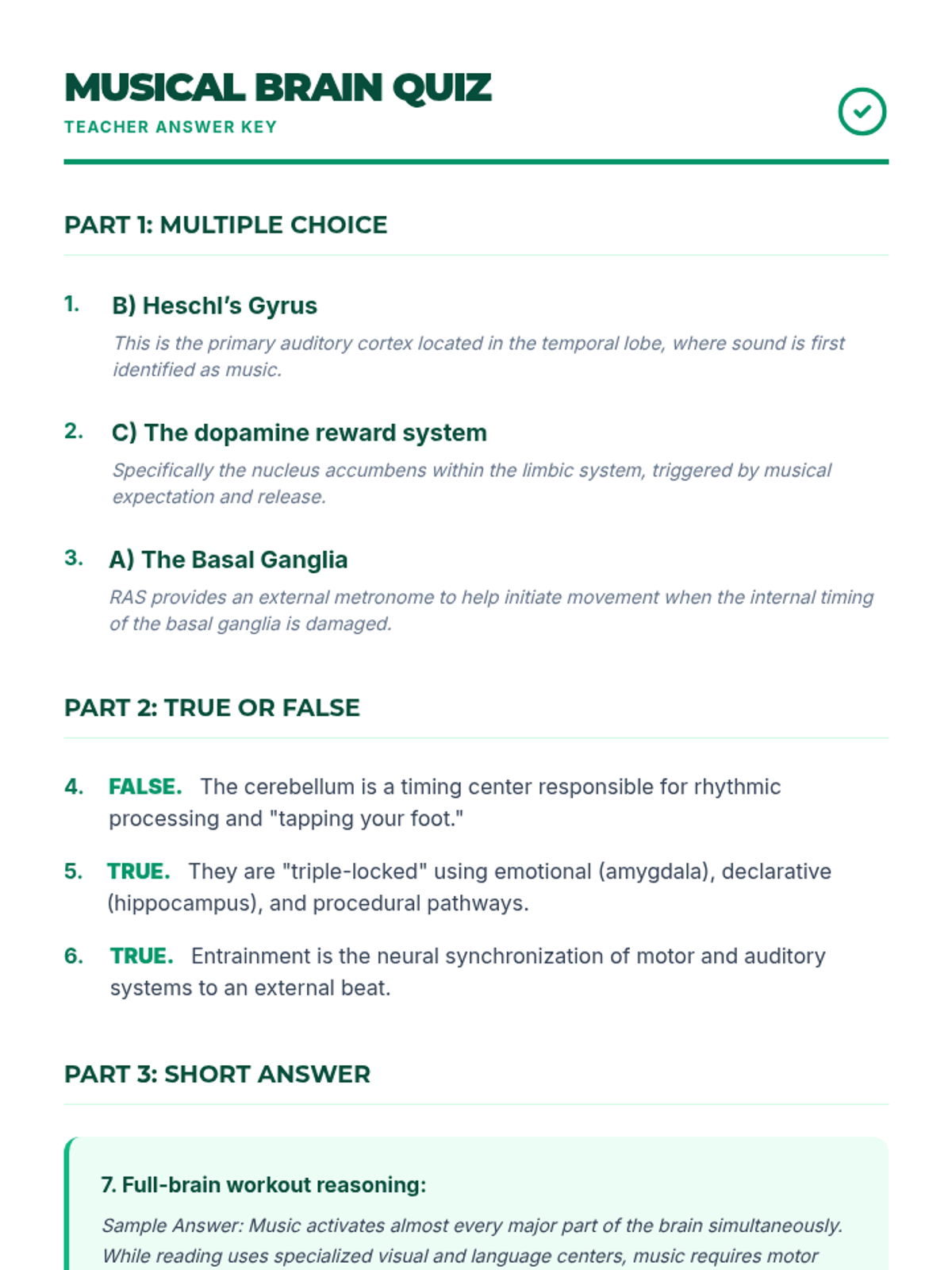
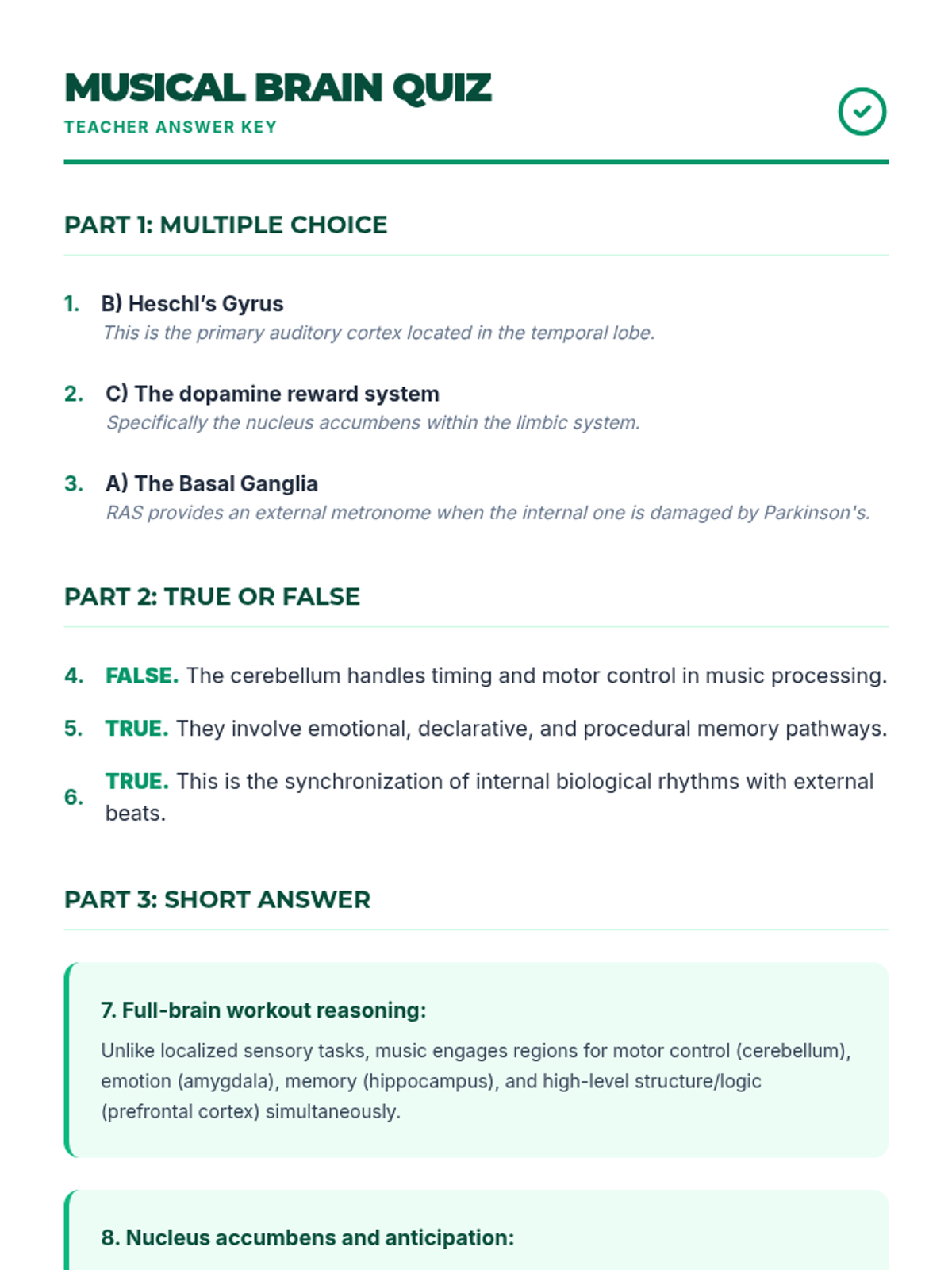
The teacher answer key for the Musical Brain Quiz, including explanations for neural mechanisms and sample short-answer responses.
A visually striking slide deck for presenting the core concepts of musical neuroscience, featuring an embedded introductory video on the second slide, and slides on auditory pathways, rhythm processing, and the emotional power of 'frisson.'
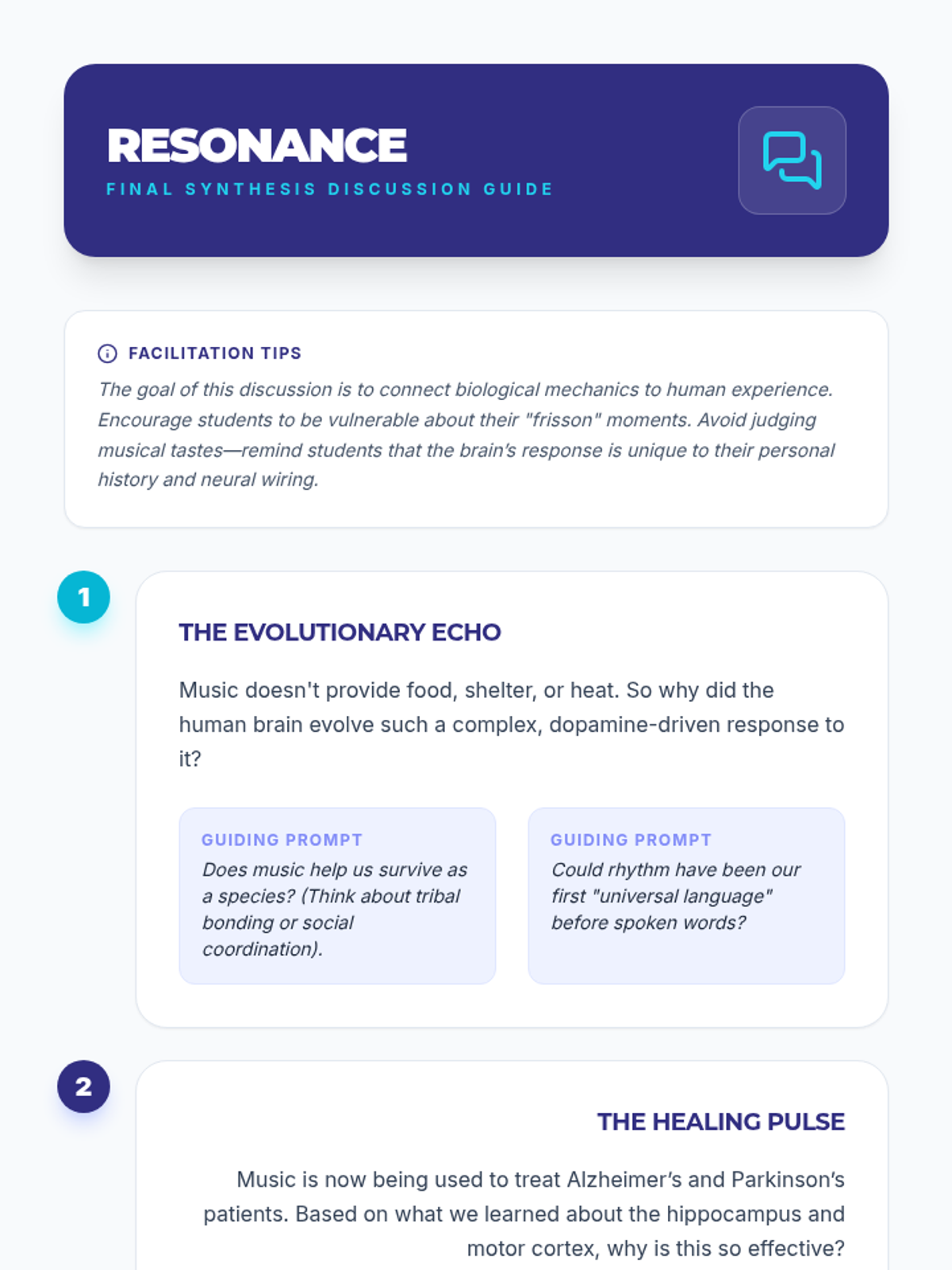
A teacher resource with guided questions and facilitation tips for a class discussion on the evolution, medical application, and ethics of music and neuroscience.
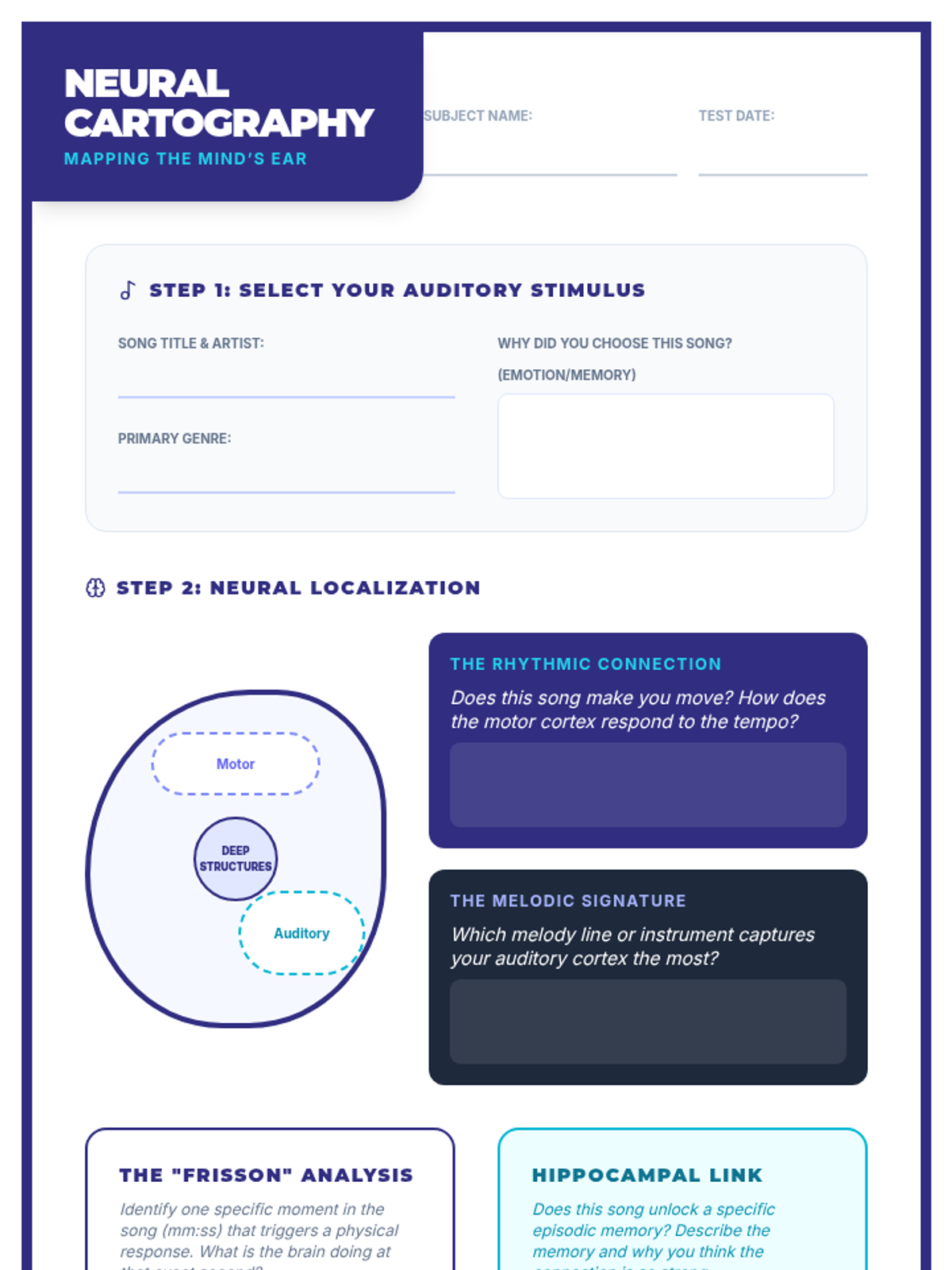
A hands-on activity where students choose a personal song and map its rhythmic, melodic, and emotional components to specific brain regions.
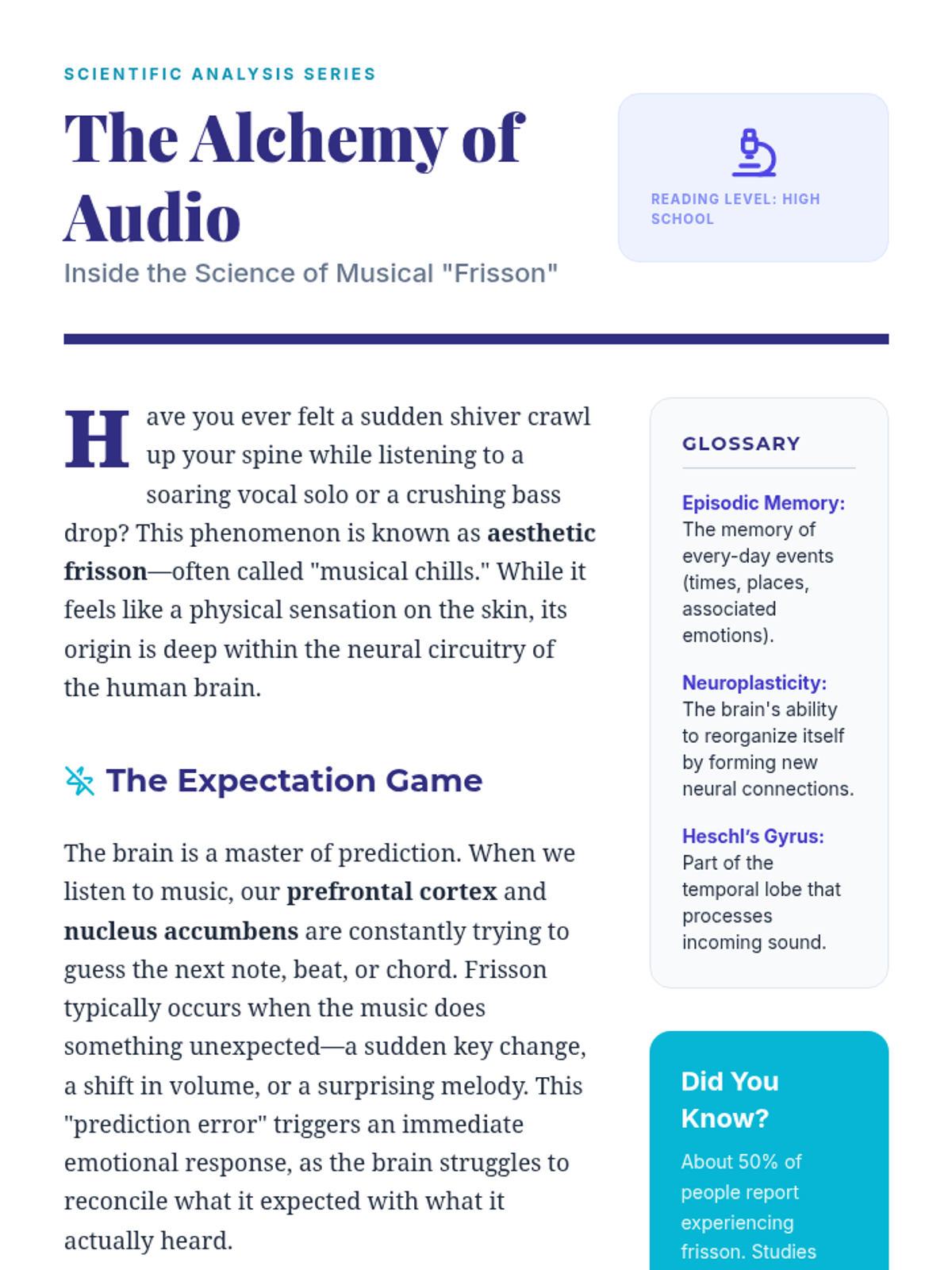
An engaging reading passage for high school students exploring the neurochemistry of "frisson" (musical chills), dopamine release, and the role of the nucleus accumbens.
An 8-slide presentation exploring the brain's reaction to music, from auditory processing to the emotional and physical impact of rhythm and melody.
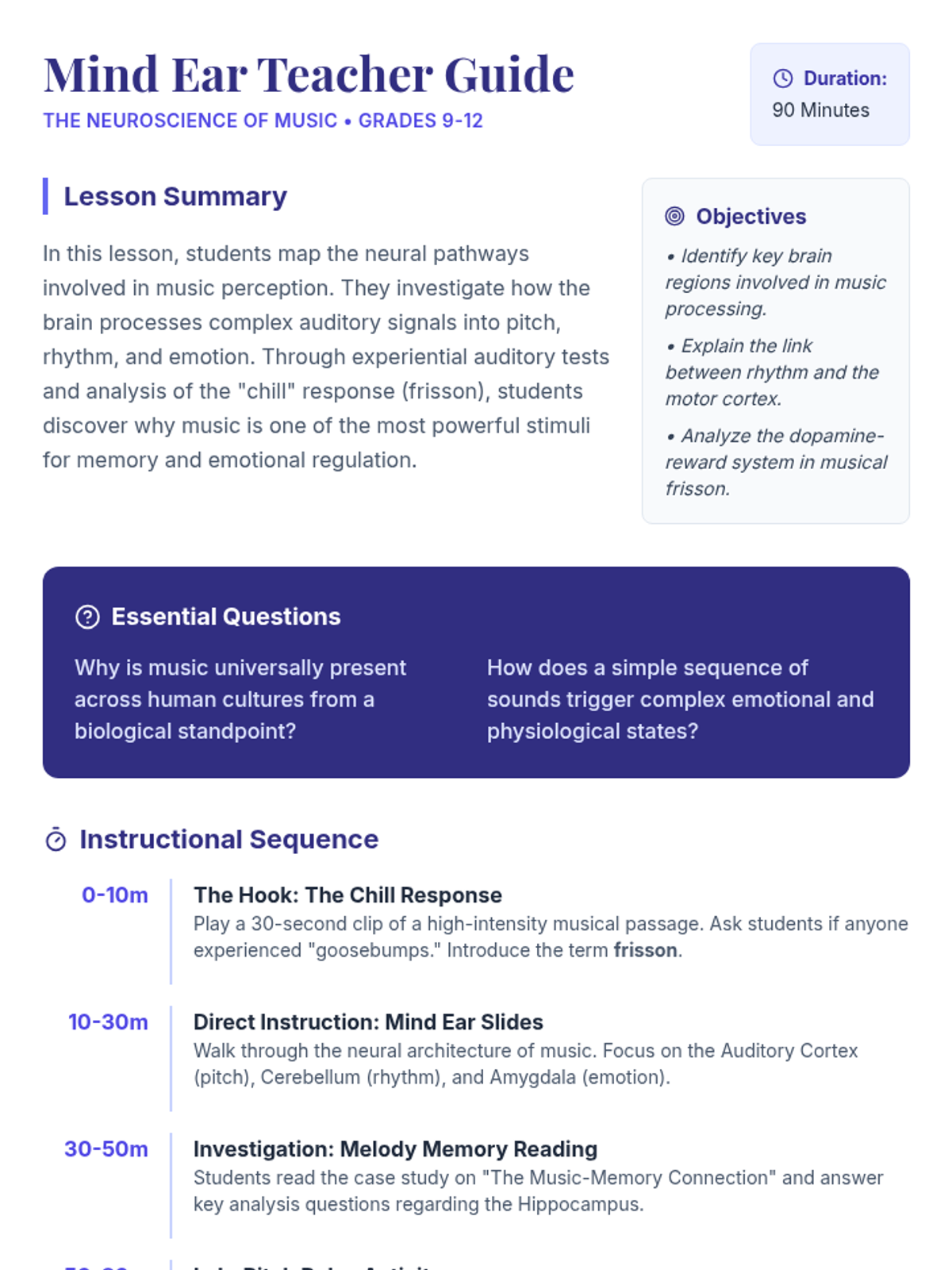
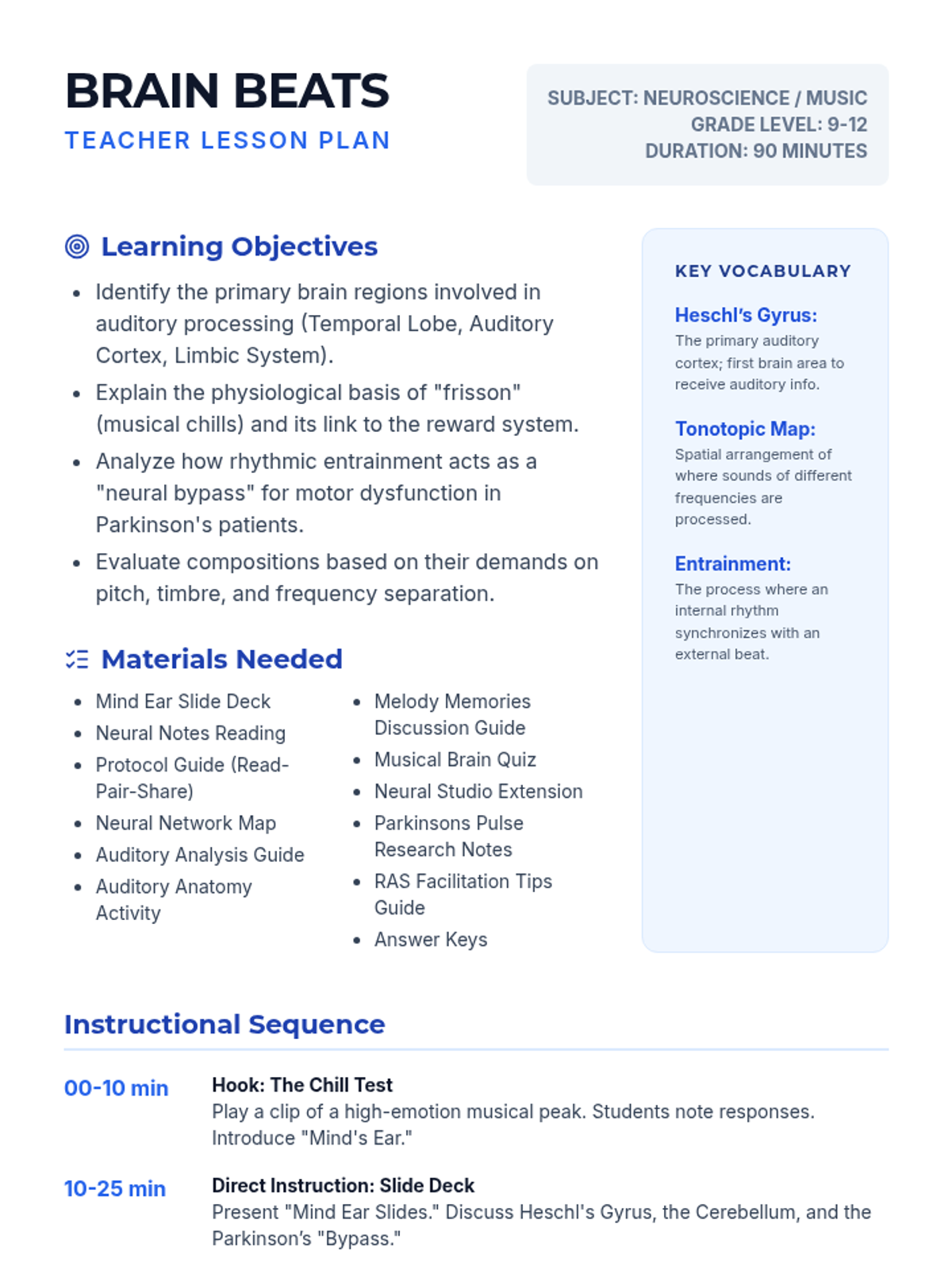
A comprehensive teacher guide for high school students exploring the neuroscience of music, including learning objectives, a 90-minute pacing guide, and a materials checklist.

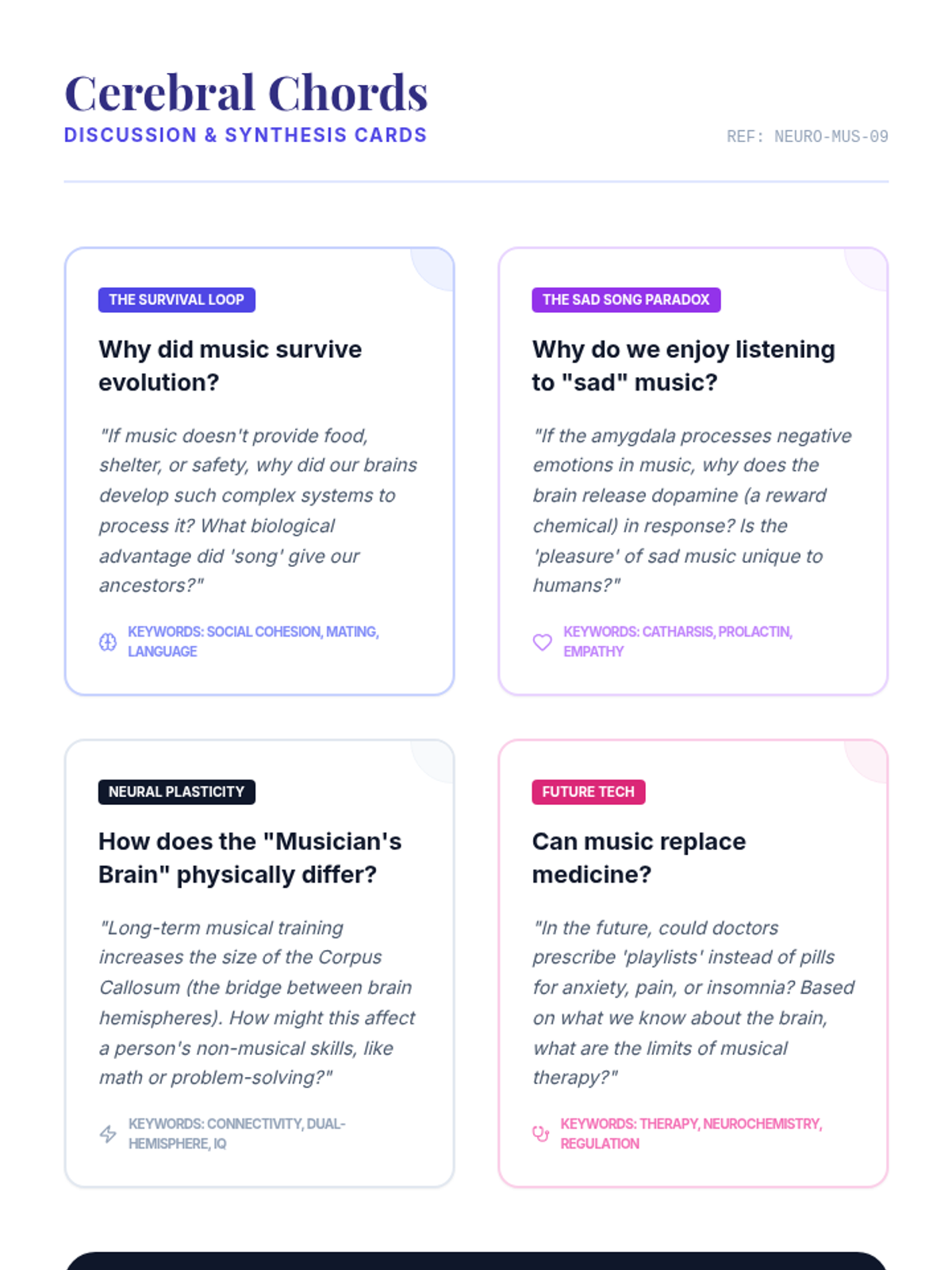
A set of structured discussion cards and a facilitation guide to help students synthesize the neuroscience of music during a Socratic seminar.
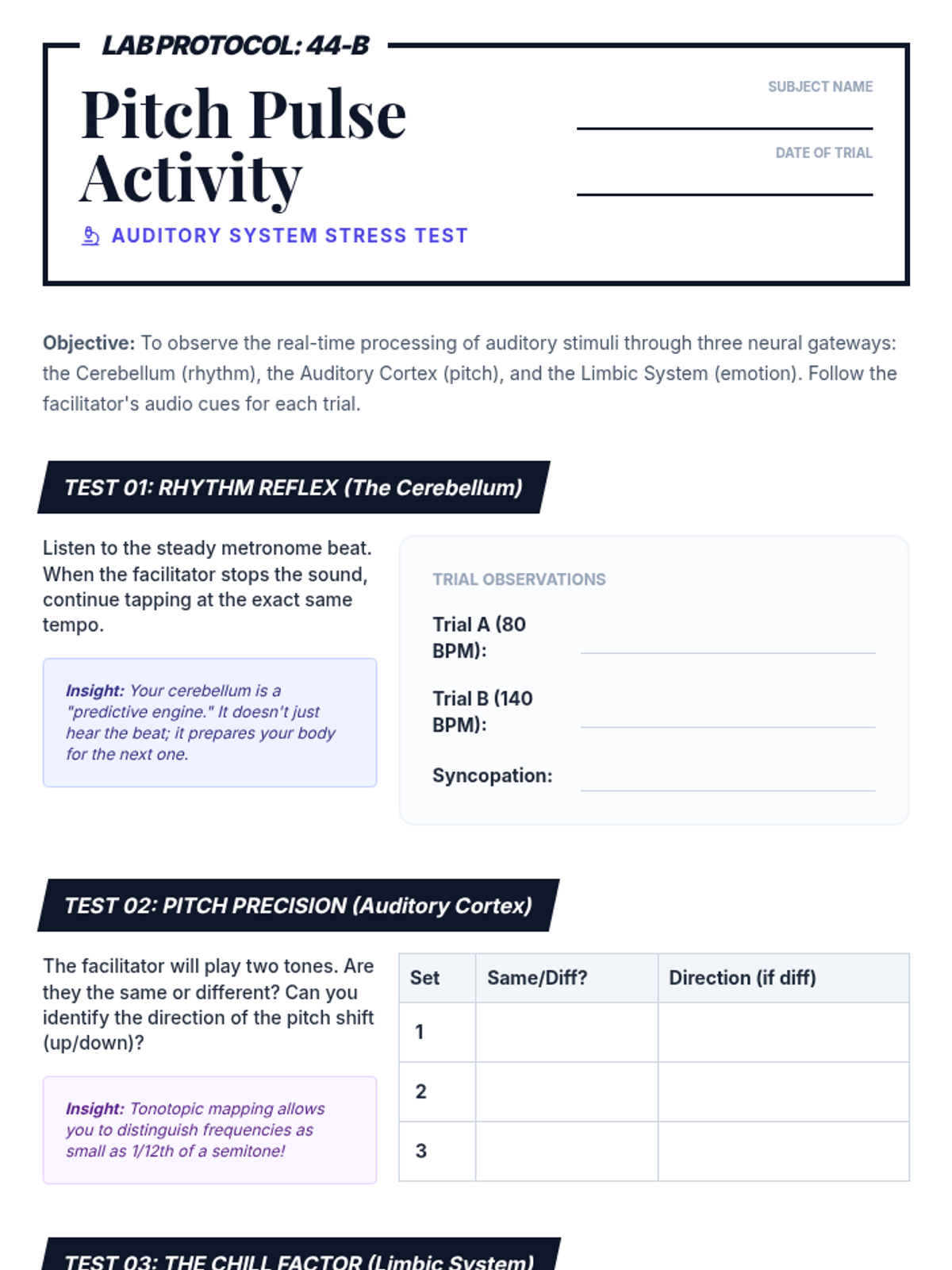
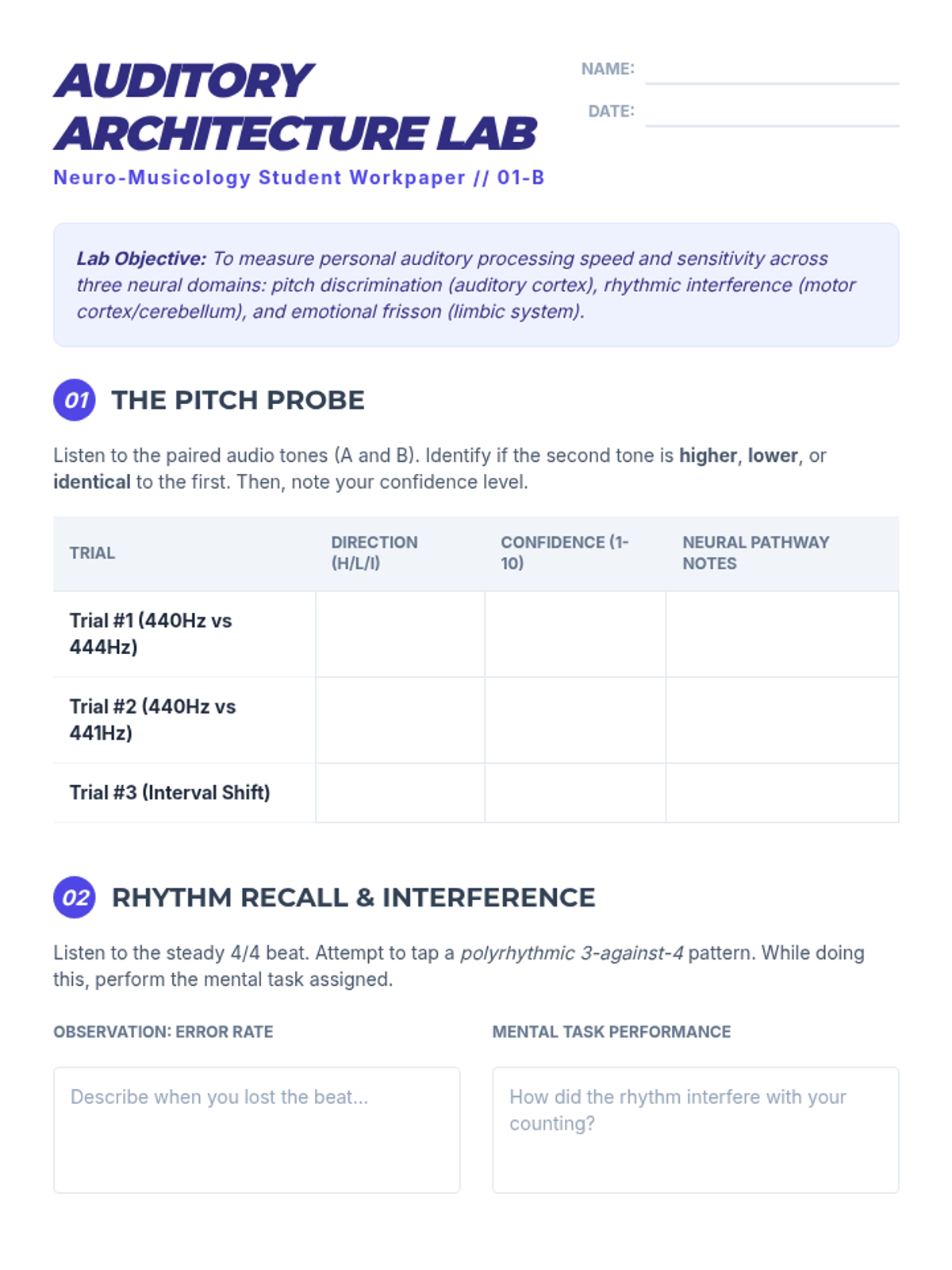
A hands-on auditory lab sheet for students to test their rhythm synchronization, pitch discrimination, and emotional frisson responses during the lesson.
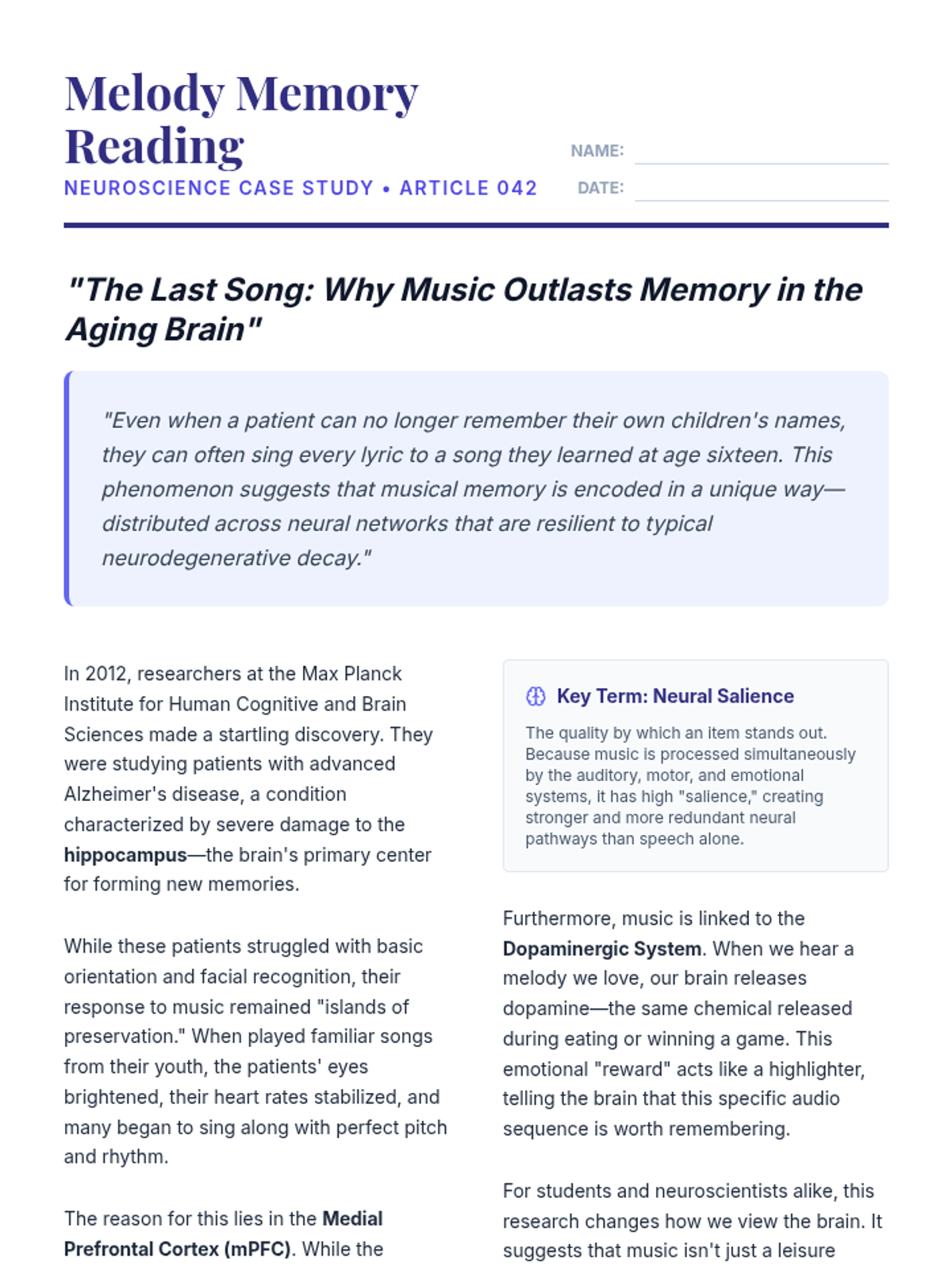
A reading passage and case study for students exploring why musical memory survives neurodegenerative diseases like Alzheimer's, featuring analysis questions.
A visually engaging slide deck for high school students exploring the neural pathways of music, from the auditory cortex to the emotional limbicsystem.
A comprehensive teacher's guide for a 90-minute lesson on the neuroscience of music, including learning objectives, a detailed pacing guide, common misconceptions, and differentiation strategies.
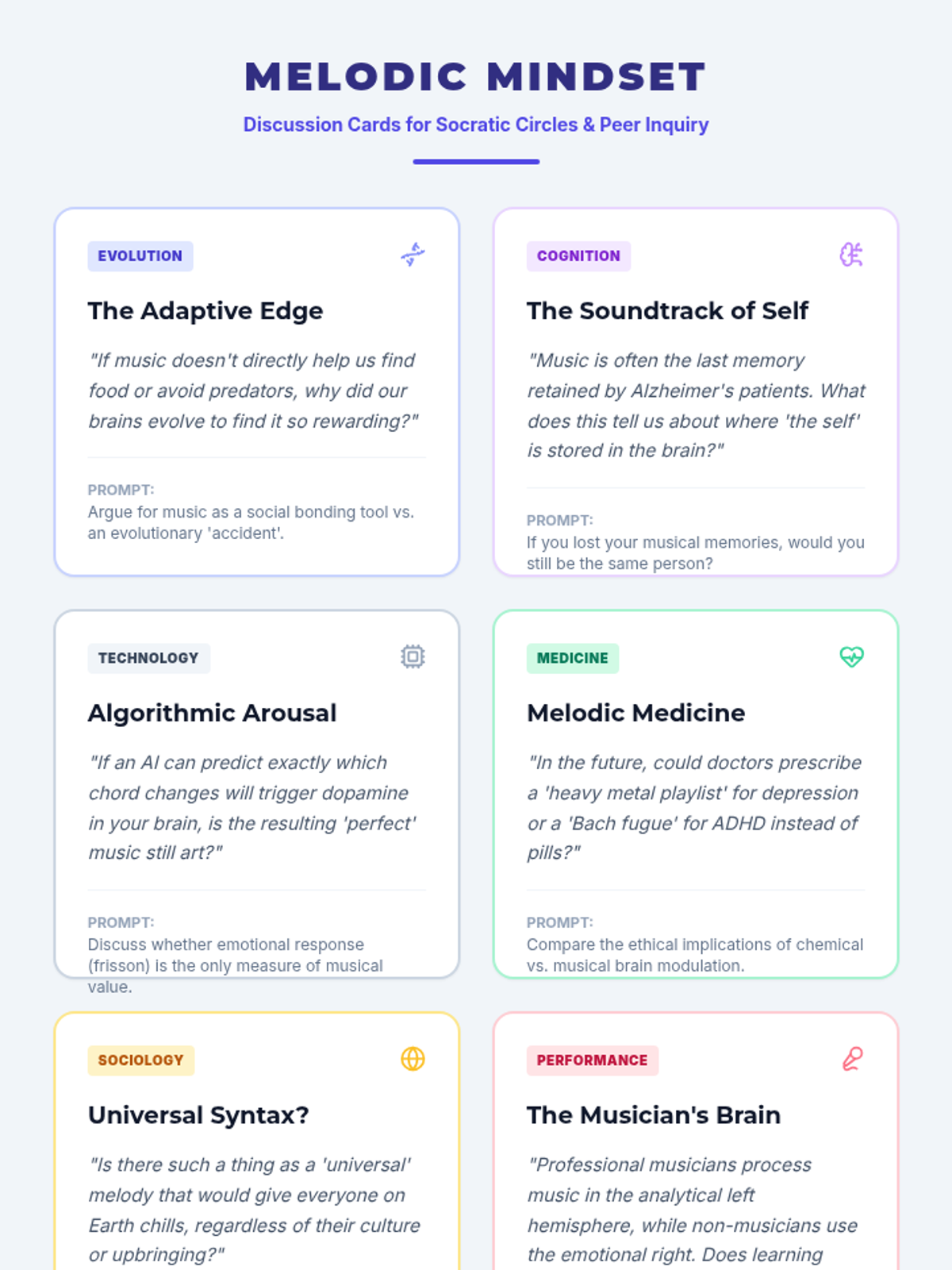
A set of six creative discussion cards for 'The Musical Brain' lesson, featuring thought-provoking prompts on evolution, technology, medicine, and culture, designed for high school Socratic seminars.
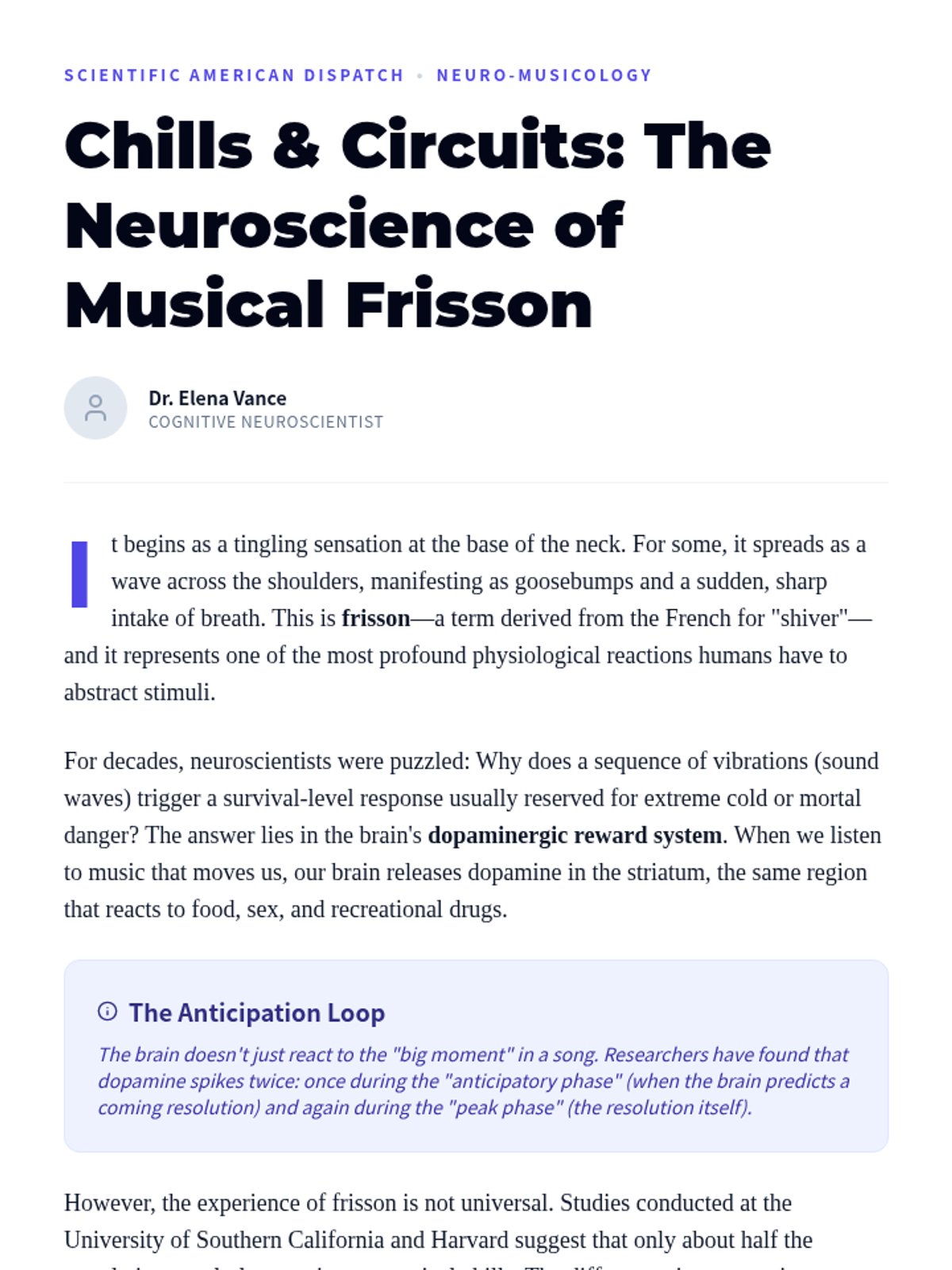
A sophisticated reading passage for high school students exploring the 'frisson' effect, the dopaminergic reward system, and the white matter pathways connecting the auditory cortex to the emotional brain.
A student-facing lab worksheet designed for grades 9-12. It includes structured sections for pitch discrimination tests, rhythmic interference experiments, and an emotional frisson log, followed by scientific analysis questions.
A visually striking slide deck for 'The Musical Brain' lesson. It covers neuroanatomy, the 'frisson' effect, the difference between pitch and rhythm processing, and the link between music and memory, designed with a sophisticated dark neural theme.
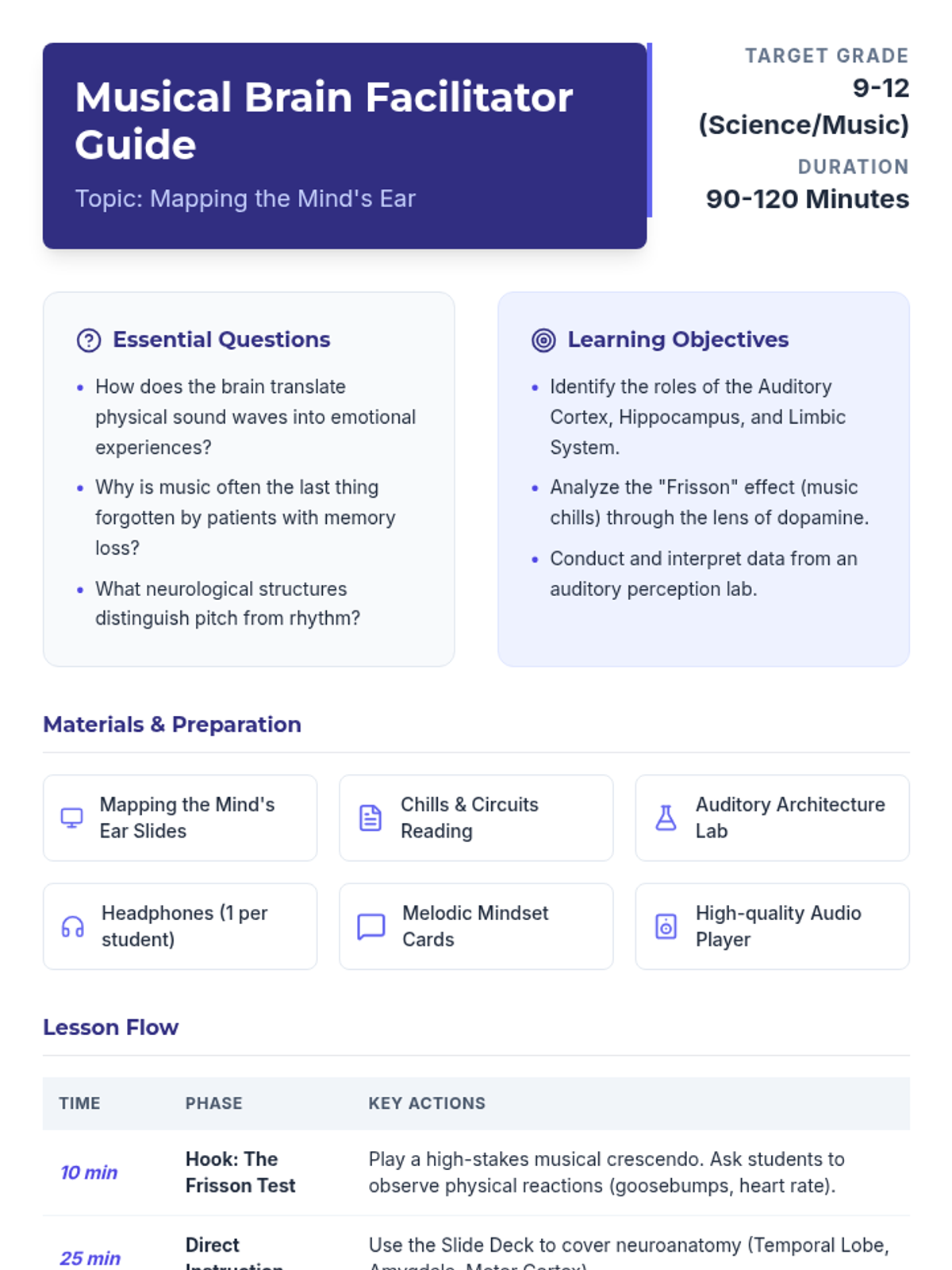
A comprehensive facilitator guide for high school teachers, providing a detailed roadmap for 'The Musical Brain' lesson. It includes essential questions, learning objectives, a timed lesson flow, and specific instructional tips for neuro-musicology instruction.
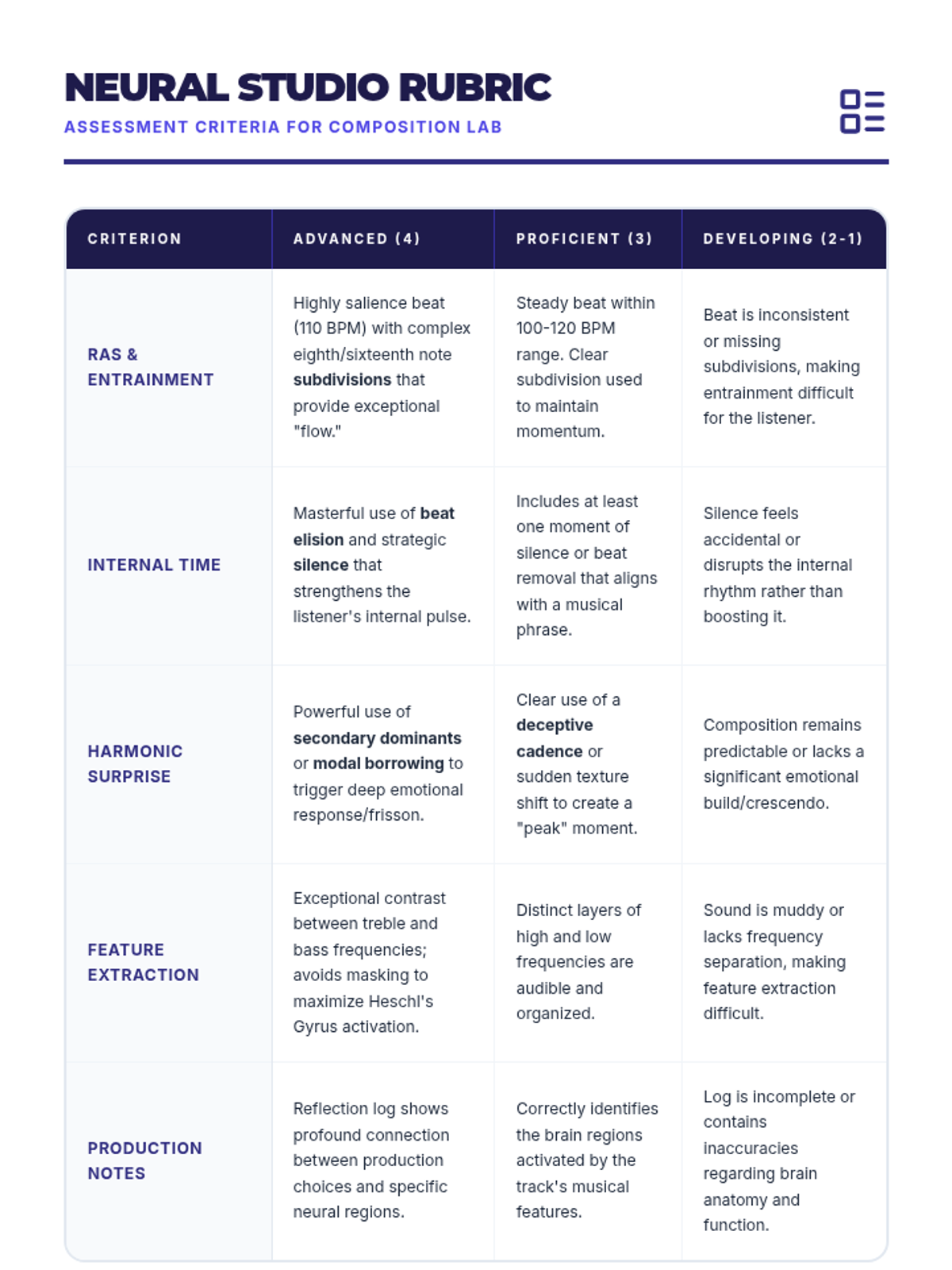
A teacher-facing rubric for assessing the Neural Studio Soundtrap project, covering criteria such as rhythmic entrainment, harmonic surprise, and scientific reflection.
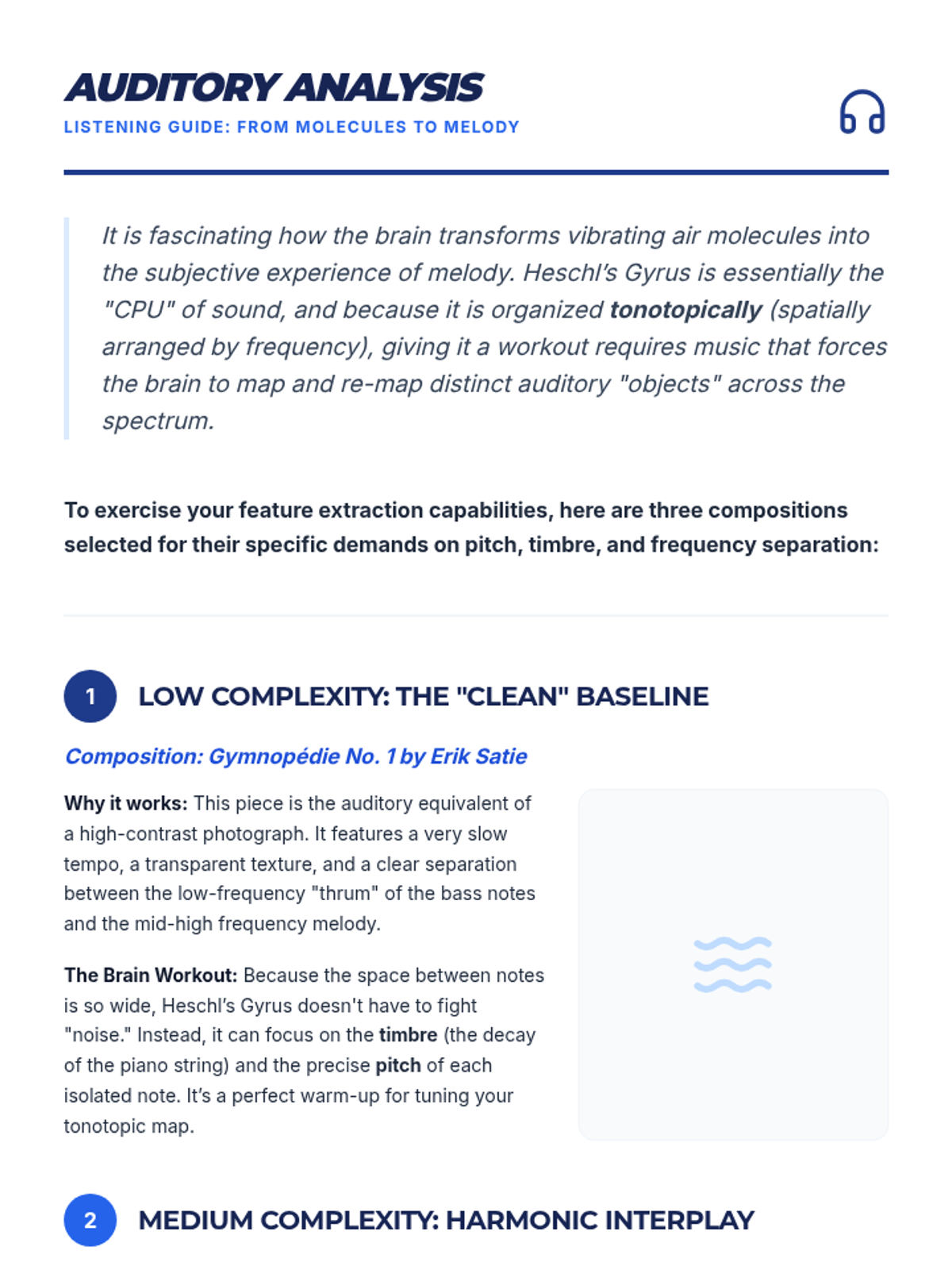
A detailed listening guide for students that analyzes three specific musical compositions (Satie, Bach, and Stravinsky) through the lens of auditory neuroscience and feature extraction.
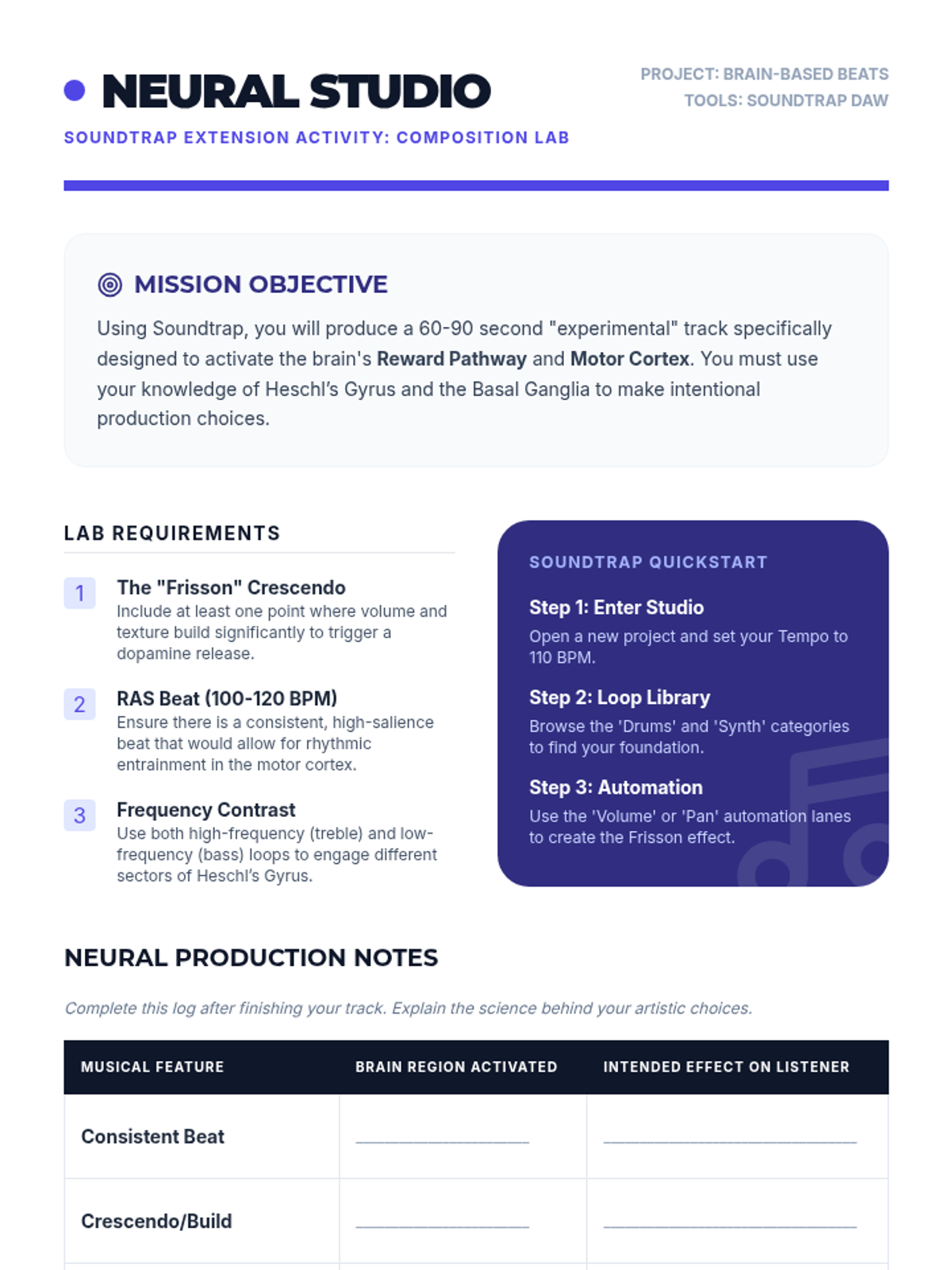
A student-facing extension activity for composing an experimental song in Soundtrap, requiring students to apply neuroscience concepts like entrainment and frisson to their musical production.
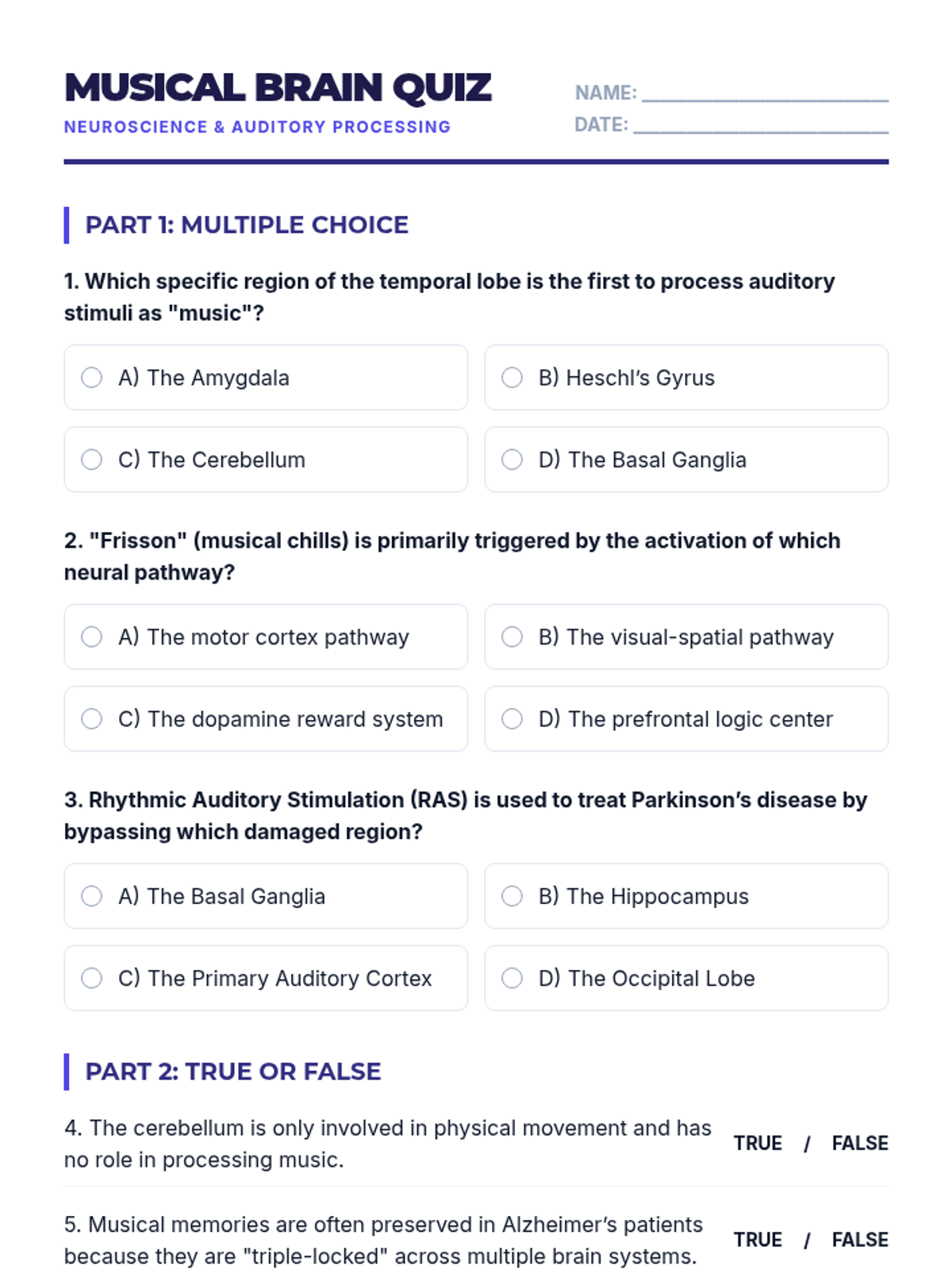
A student quiz covering the key neural regions and concepts from the "Musical Brain" lesson, including auditory processing, frisson, and clinical applications.
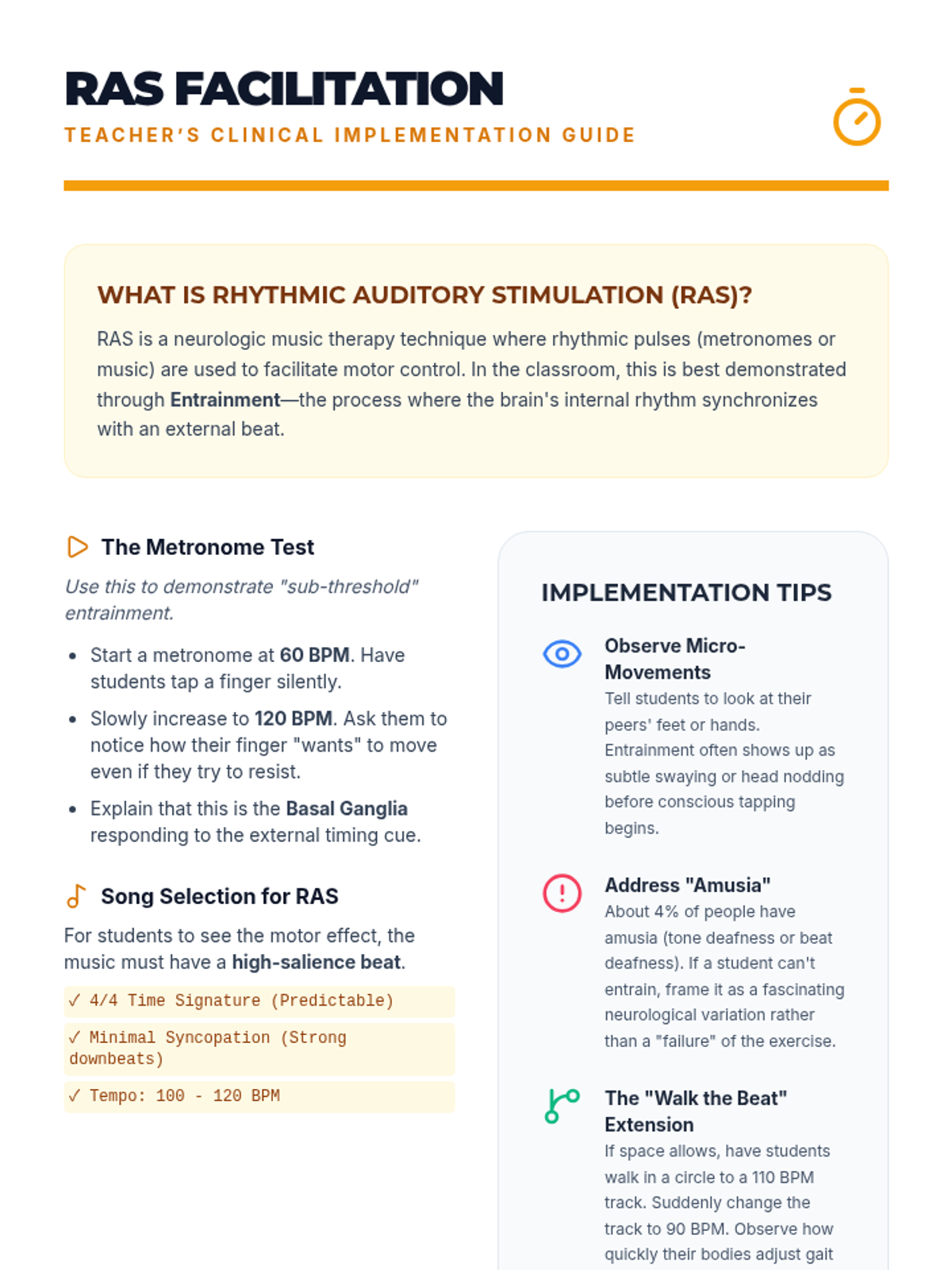
A teacher-facing implementation guide providing practical tips and activities for demonstrating Rhythmic Auditory Stimulation (RAS) and entrainment in the classroom.
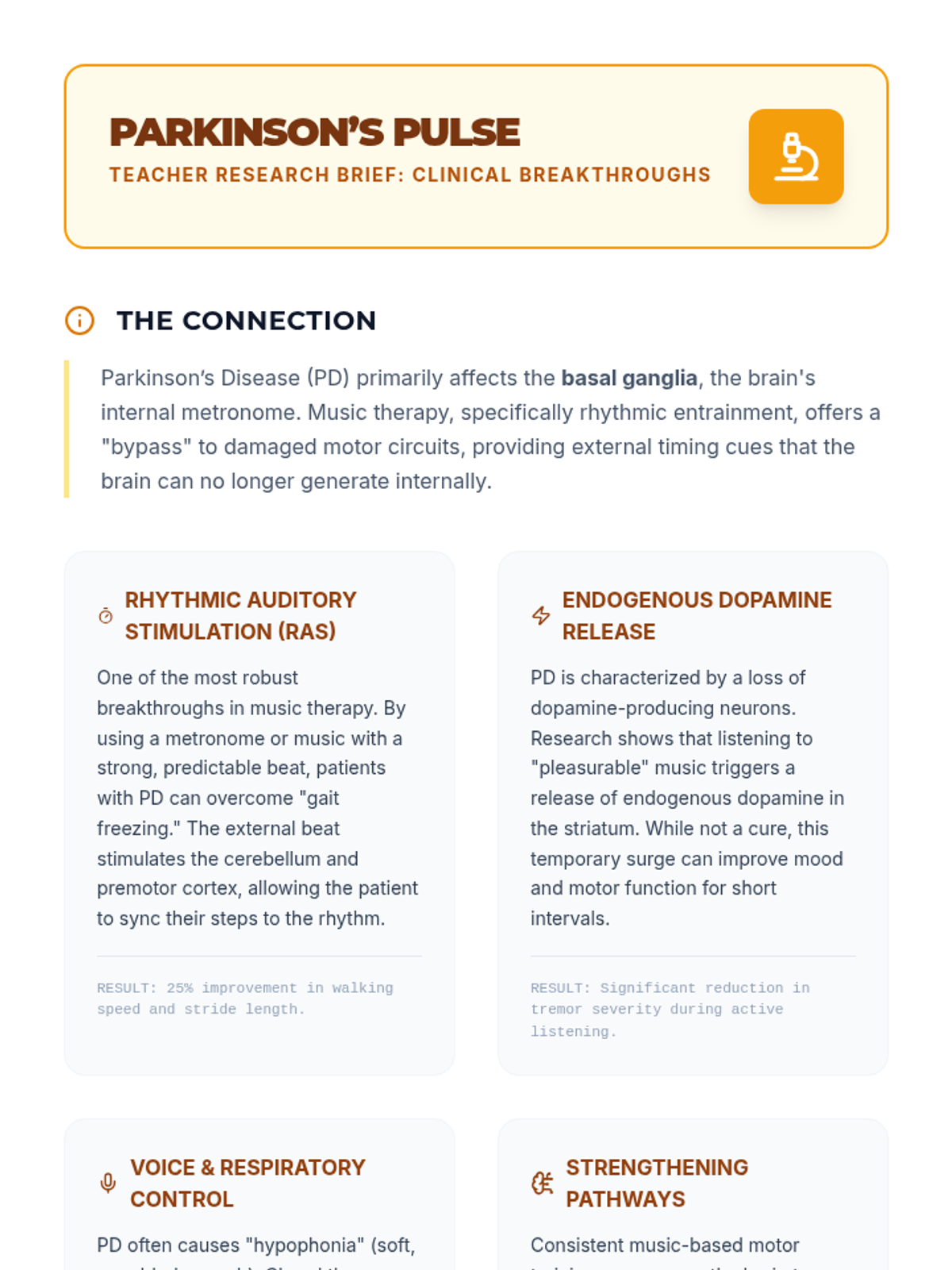
A teacher-facing research brief detailing breakthroughs in music therapy for Parkinson's disease, focusing on Rhythmic Auditory Stimulation (RAS) and neuroplasticity.
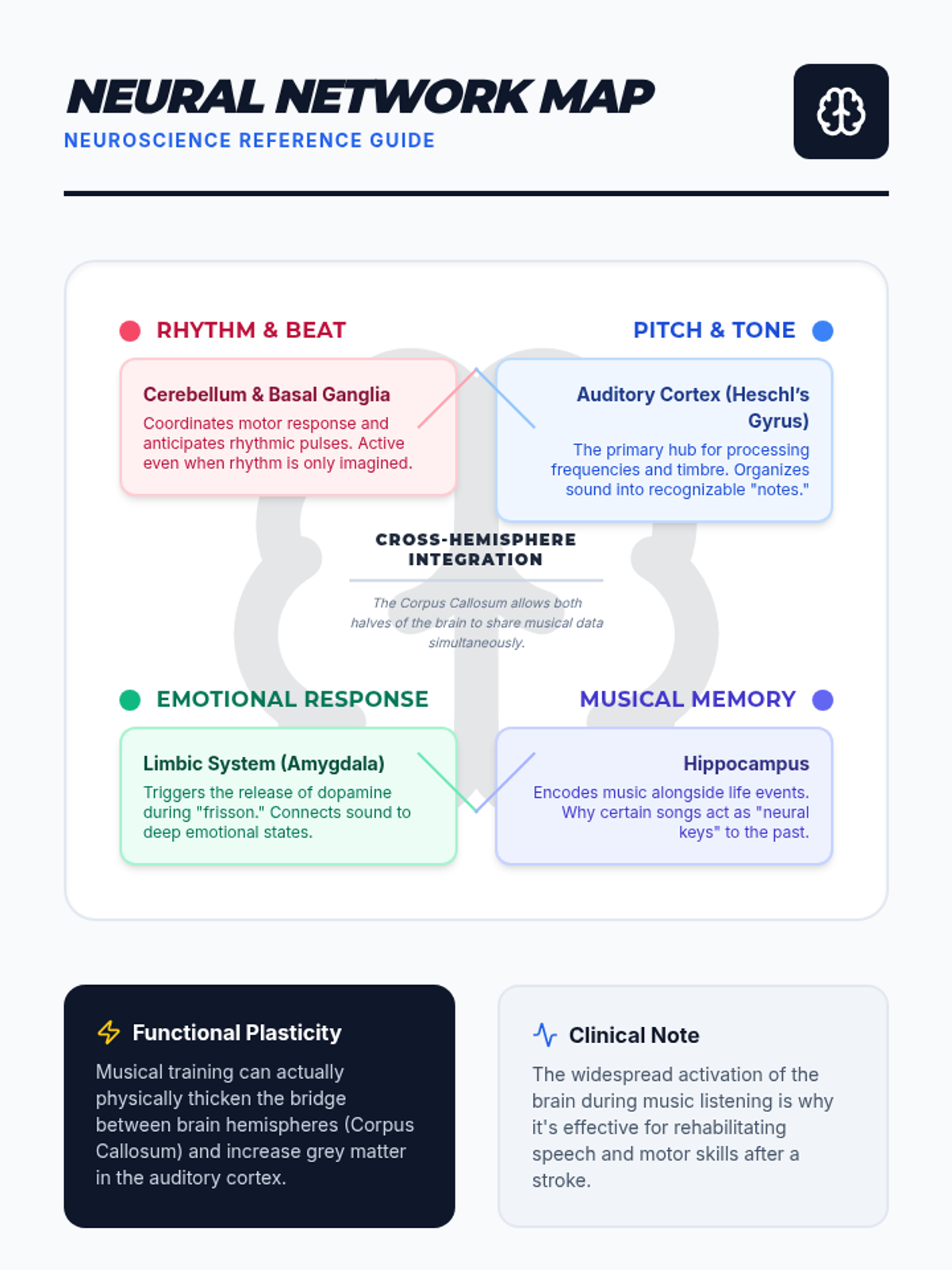
A color-coded reference diagram for students to identify the brain regions involved in processing rhythm, pitch, and emotion.
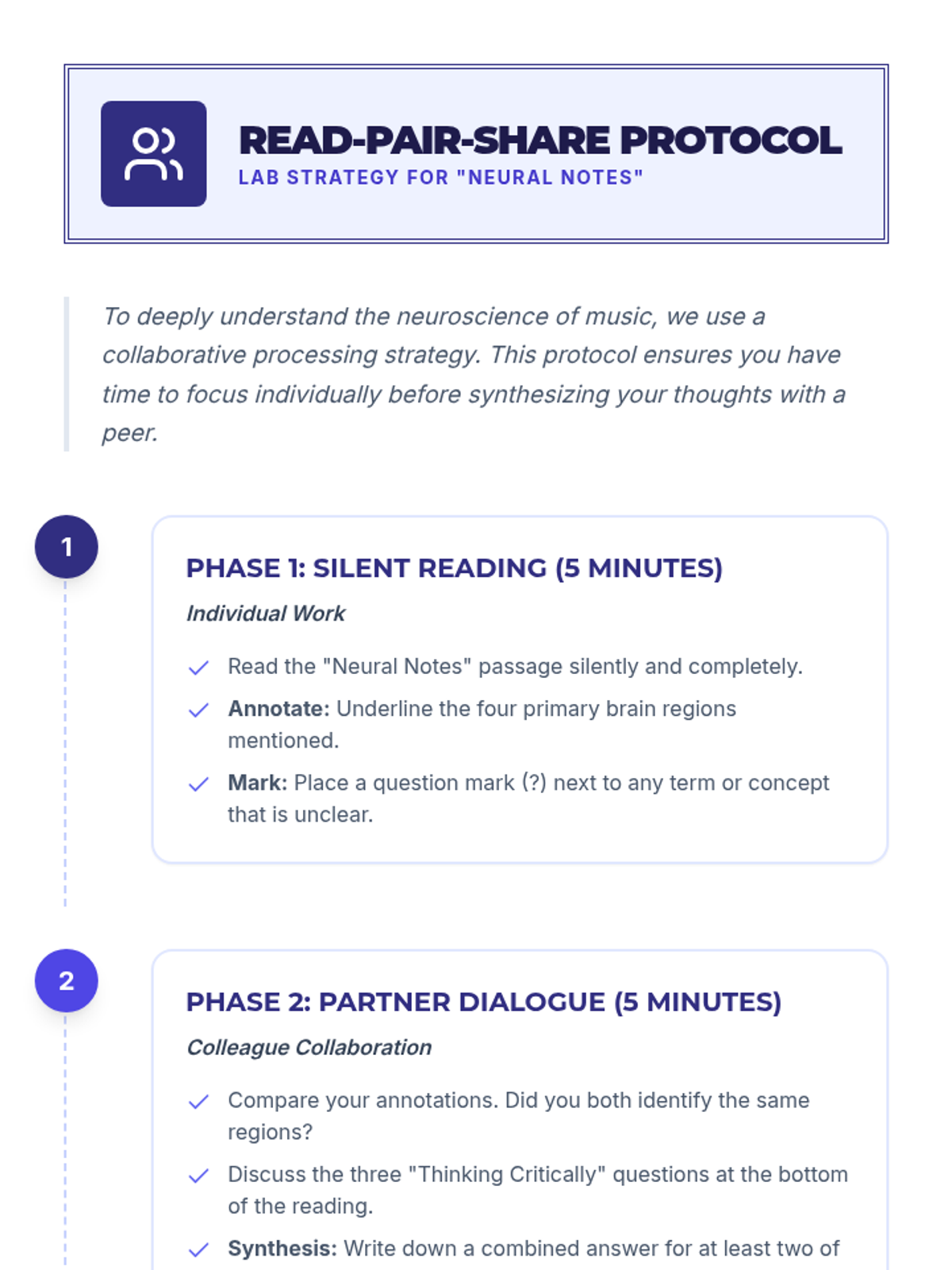
A step-by-step guide for students to use during the reading portion of the lesson, detailing the Read-Pair-Share collaborative learning strategy.
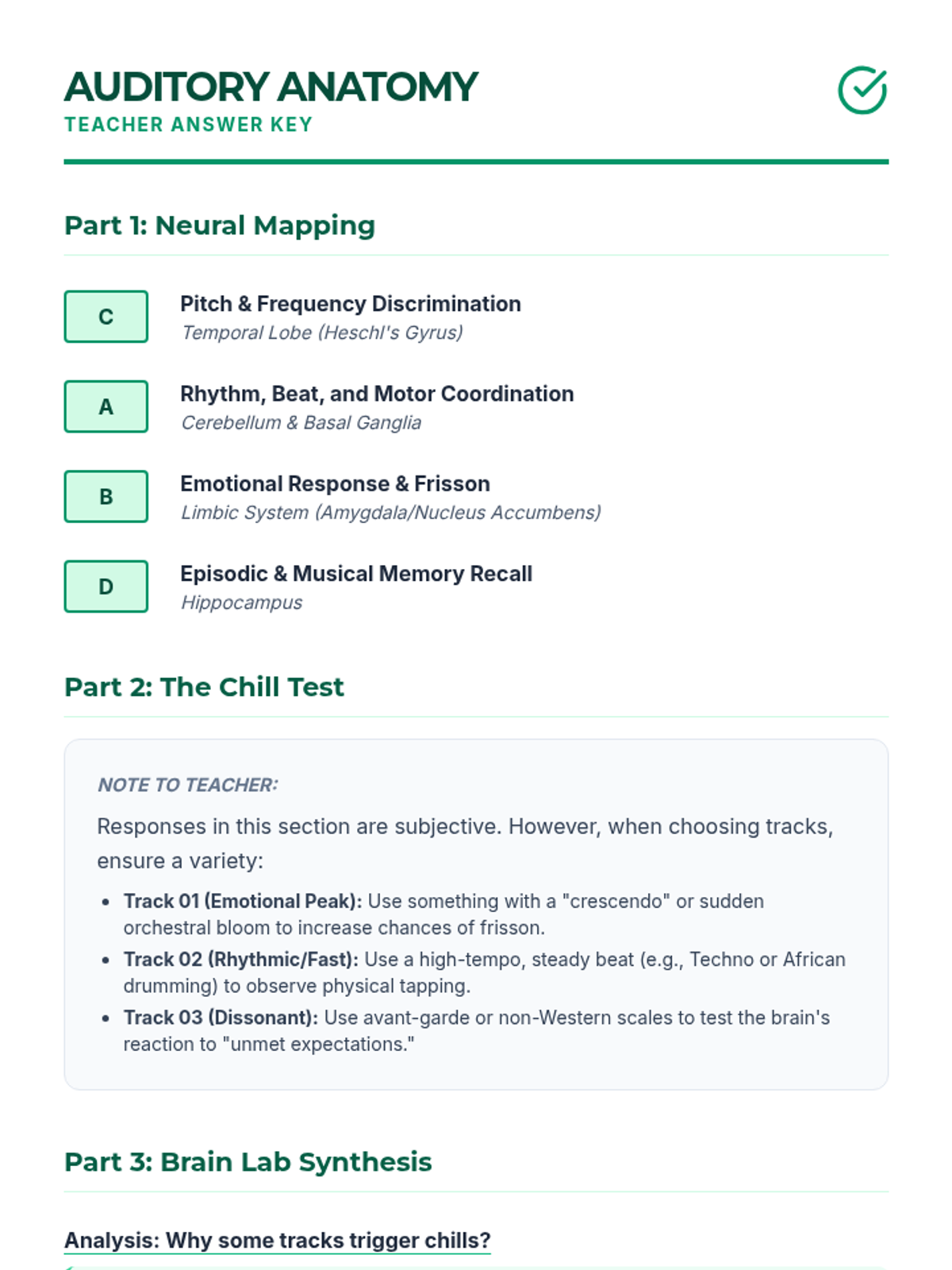
An answer key for the Auditory Anatomy activity sheet, providing correct neural mappings and guided sample responses for teacher reference.
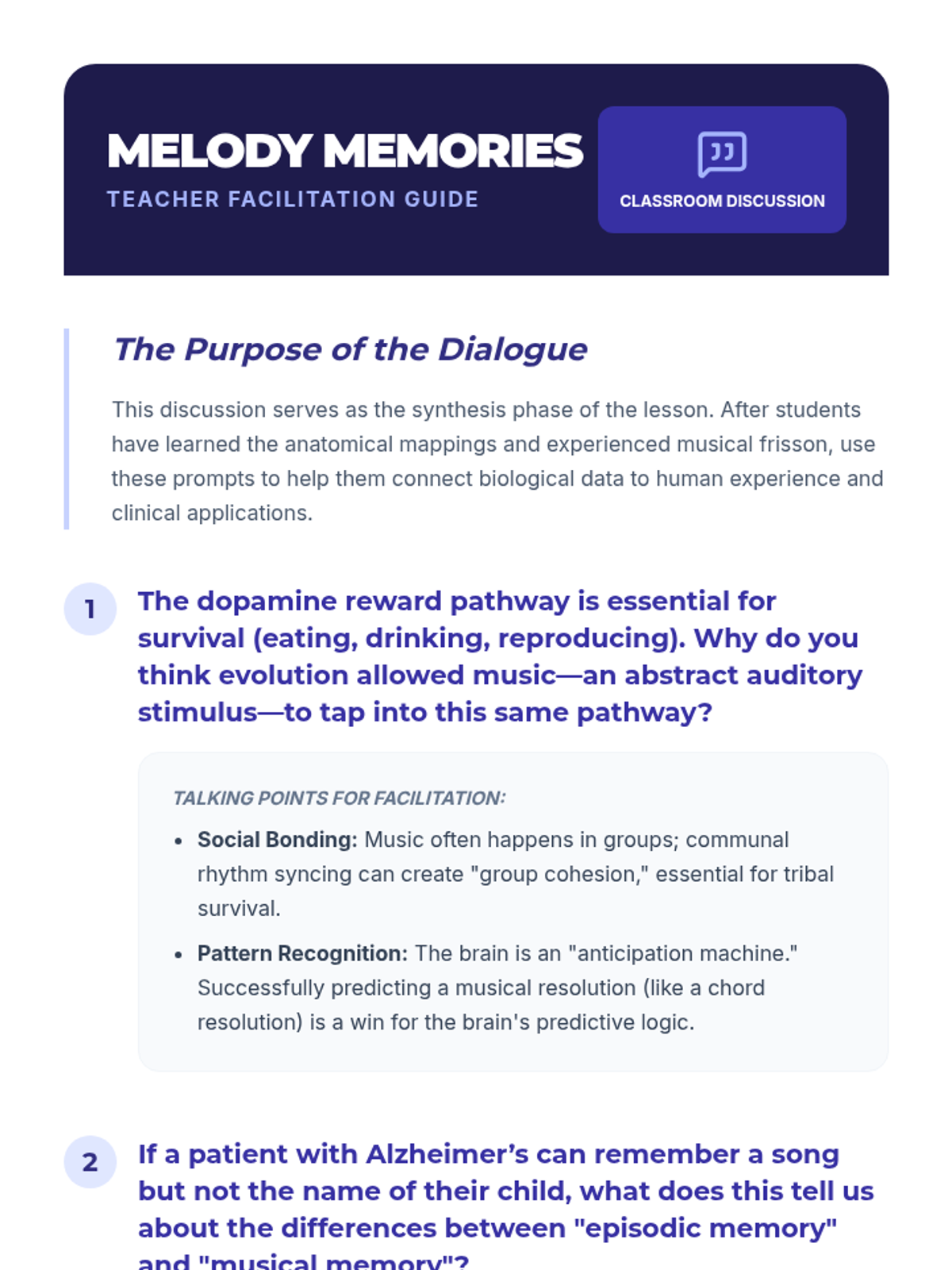
A teacher-facing resource for facilitating deep classroom discussion on the evolution of musical response and its clinical applications in memory care.
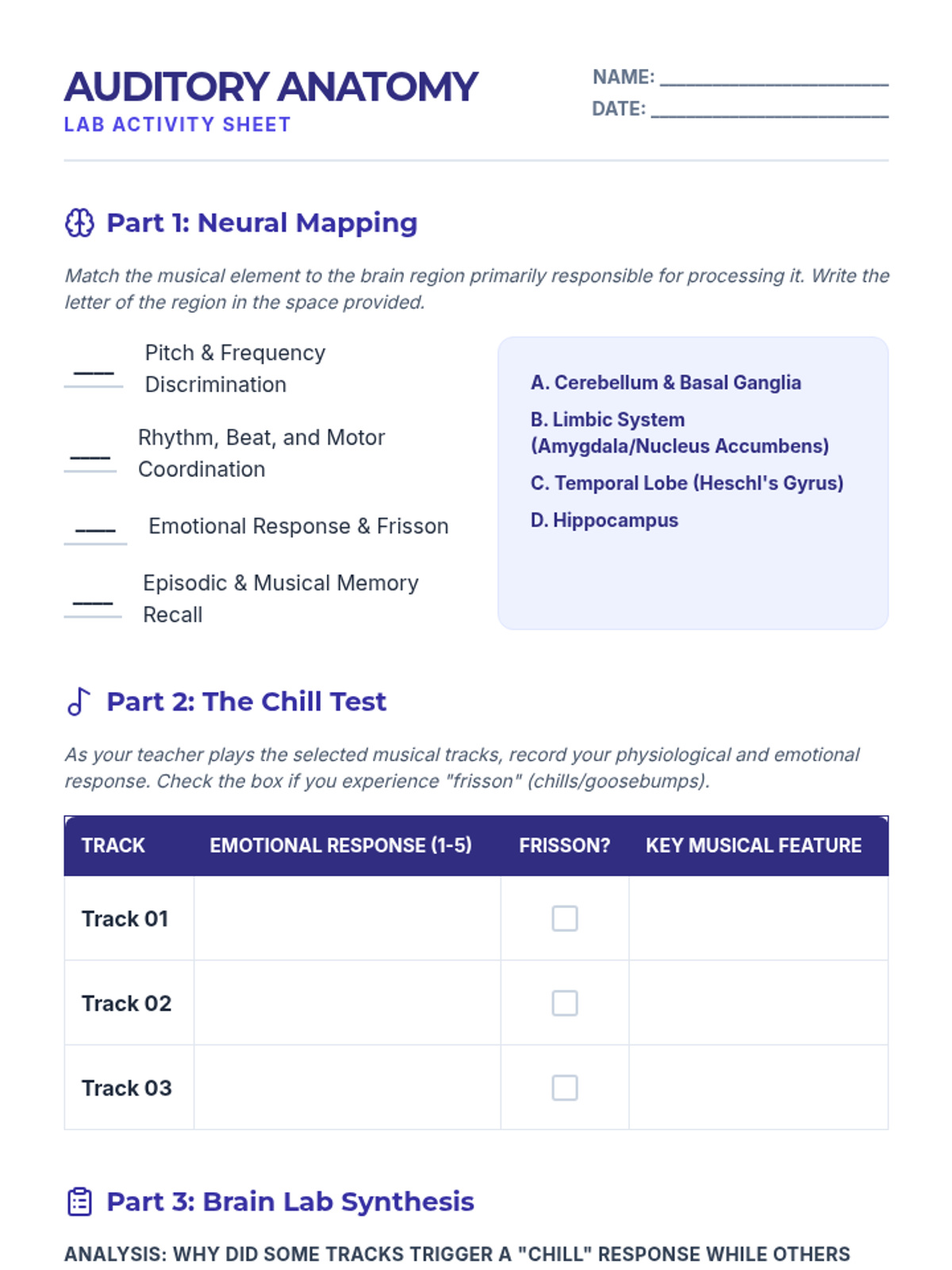
A hands-on student activity sheet for mapping brain regions to musical elements and recording physiological responses to auditory stimuli.
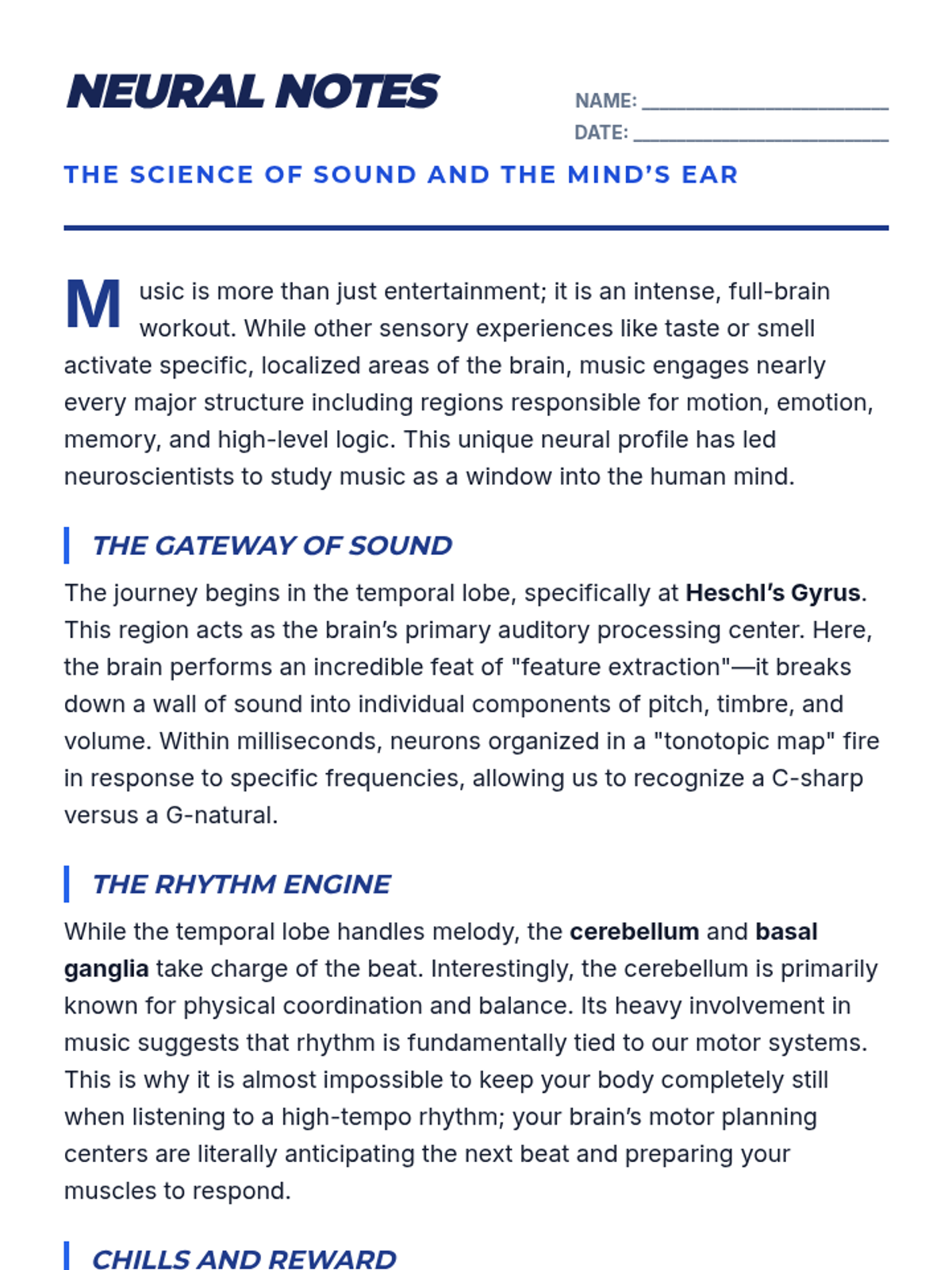
A scientific reading passage for high school students explaining the neural pathways involved in auditory processing, rhythm, emotion, and memory.
A visually striking slide deck for presenting the core concepts of musical neuroscience, featuring slides on auditory pathways, rhythm processing, and the emotional power of "frisson."
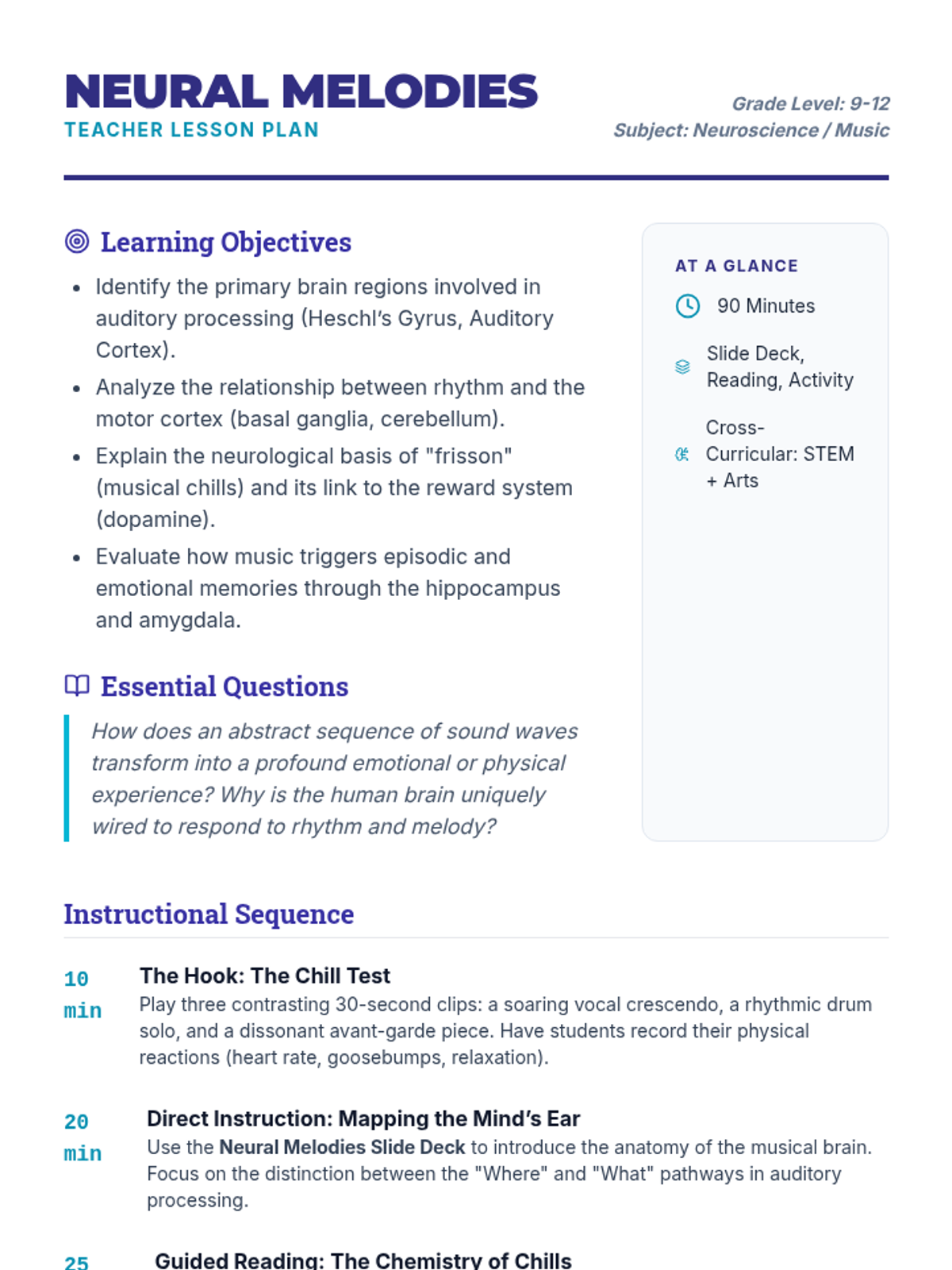
A comprehensive teacher lesson plan for a 90-minute session on the neuroscience of music, including learning objectives, a detailed pacing guide, and differentiation strategies.
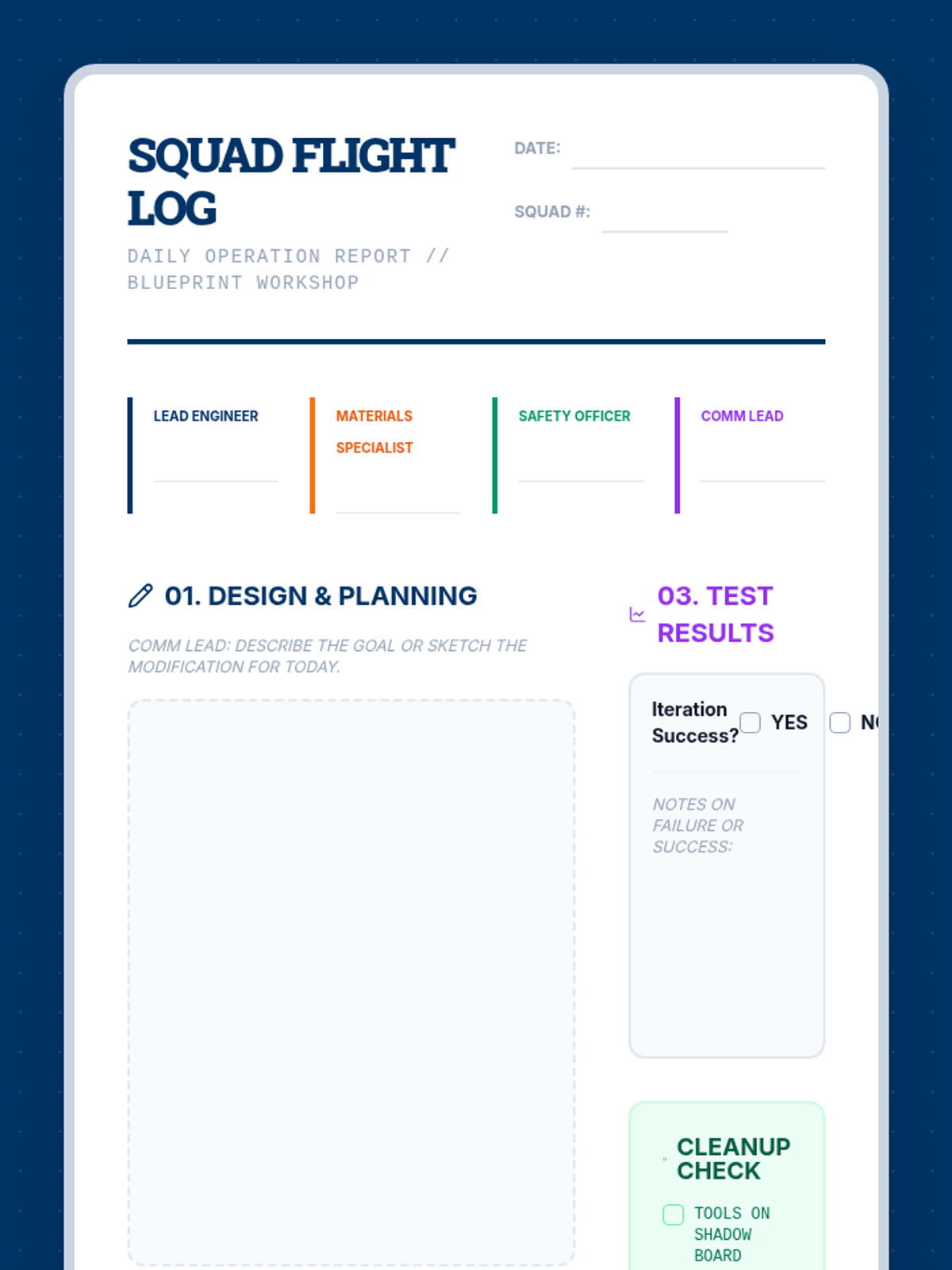
A daily operation report for engineering squads to track their design progress, material usage, and cleanup compliance.
A formal safety contract for students to sign, establishing clear expectations for tool use, lab safety, and professional conduct in the makerspace.
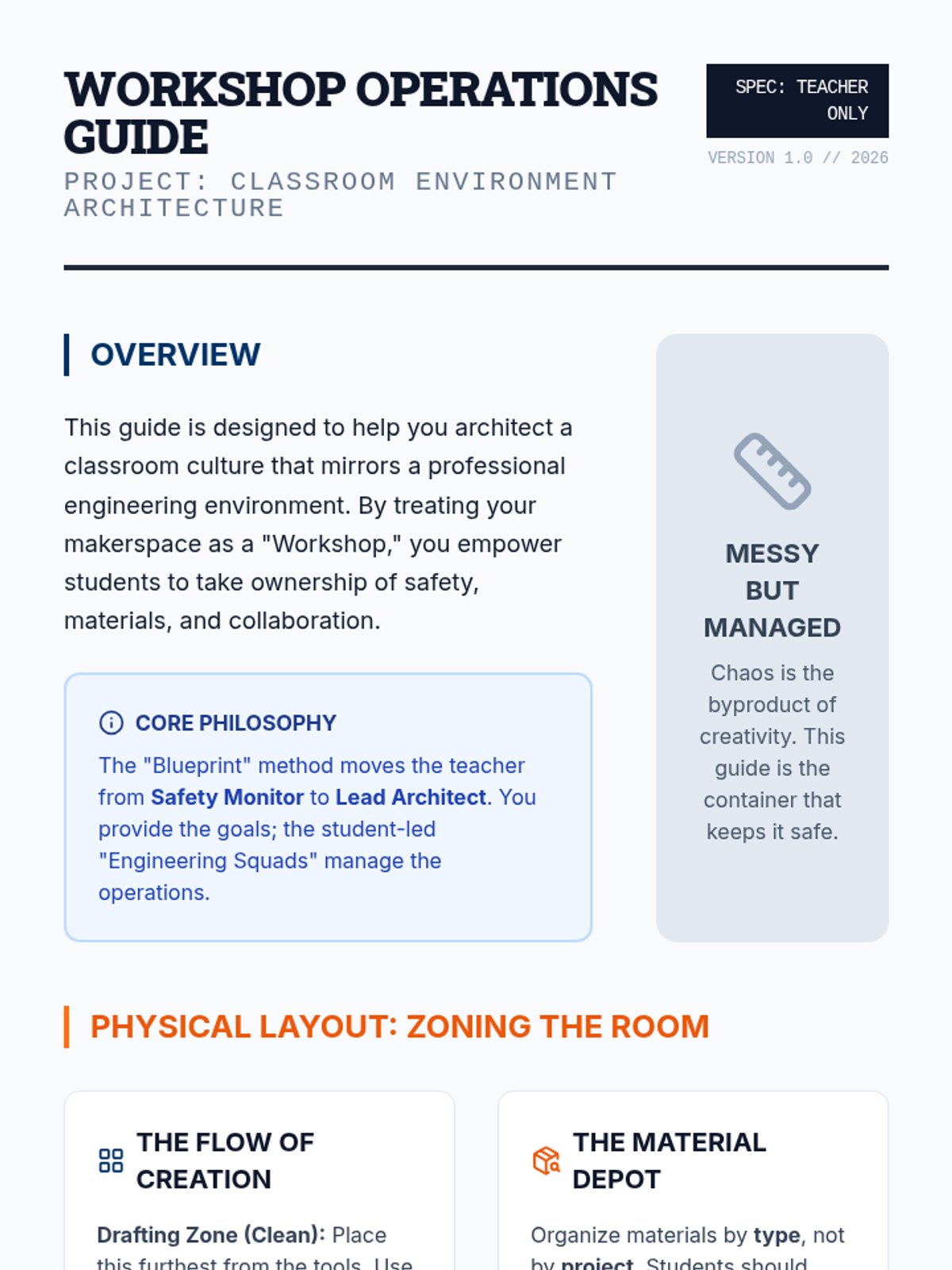
A comprehensive facilitation guide for teachers on how to implement the engineering roles, layout the classroom, and manage daily routines.
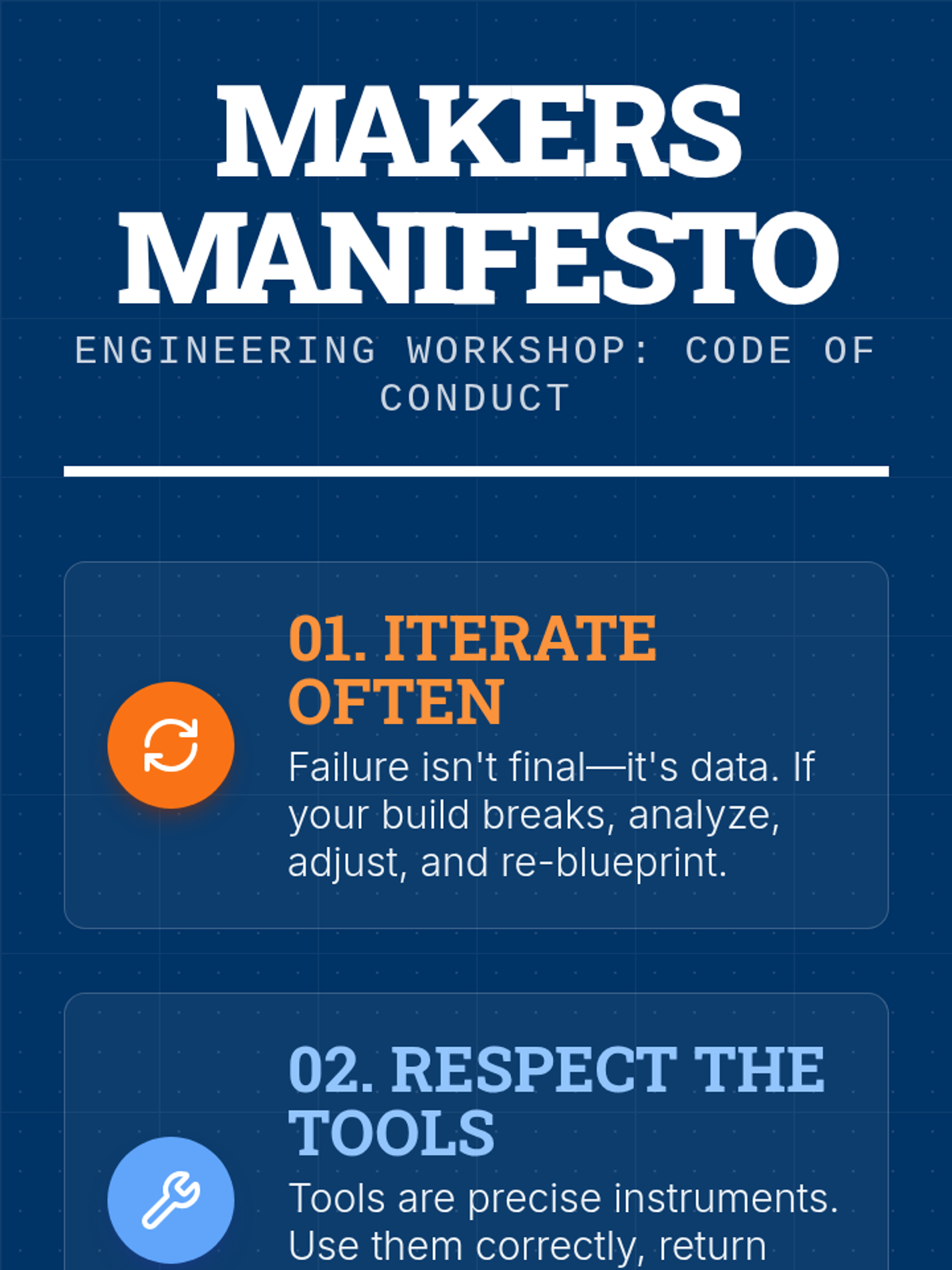
A high-impact classroom poster outlining the fundamental norms and cultural expectations for a collaborative engineering makerspace.
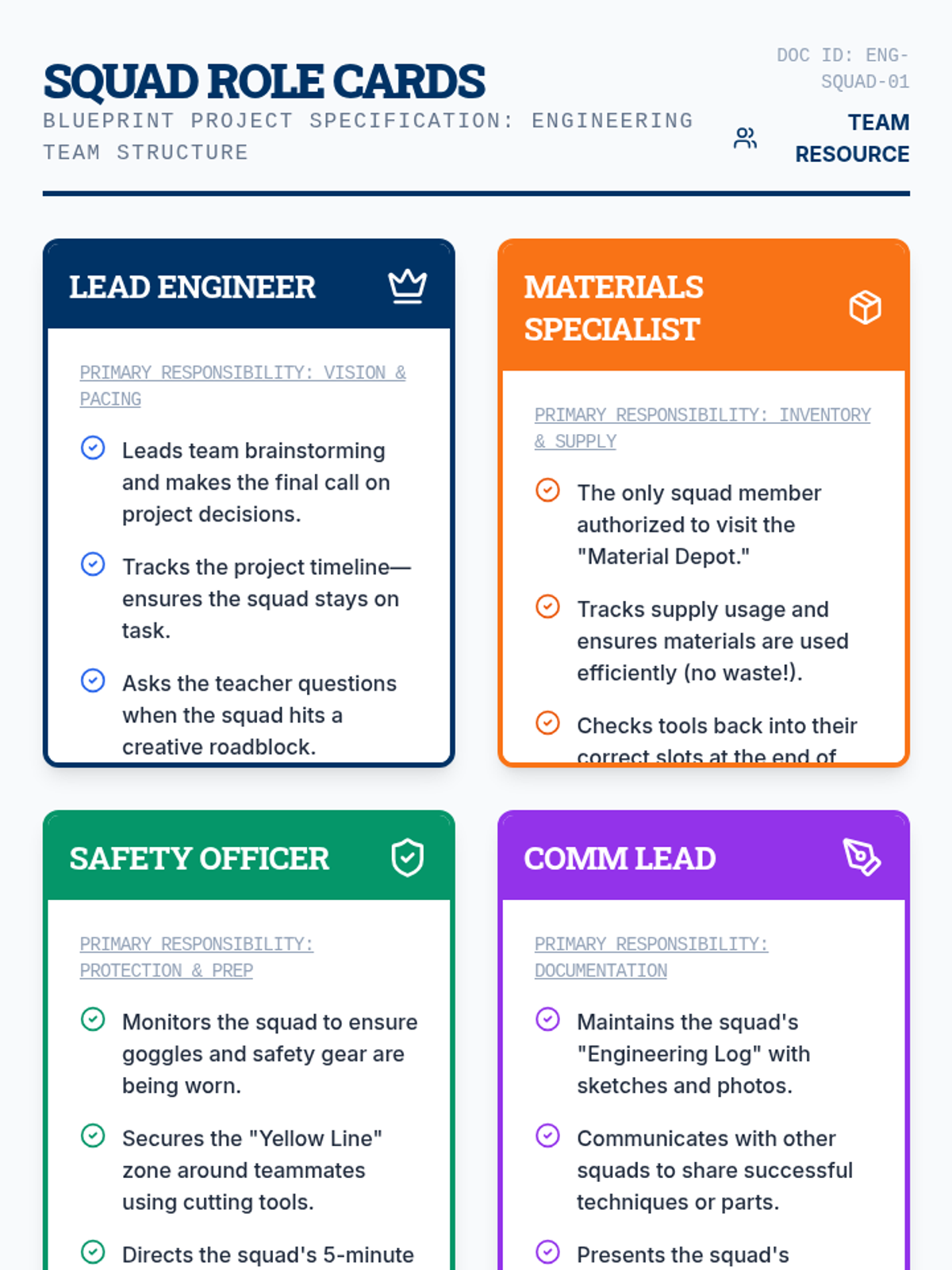
Handy role cards for engineering squads, defining the specific responsibilities for Lead Engineer, Materials Specialist, Safety Officer, and Communications Lead.
A visual slide deck outlining the physical layout, safety zones, and cleanup routines for an engineering makerspace.
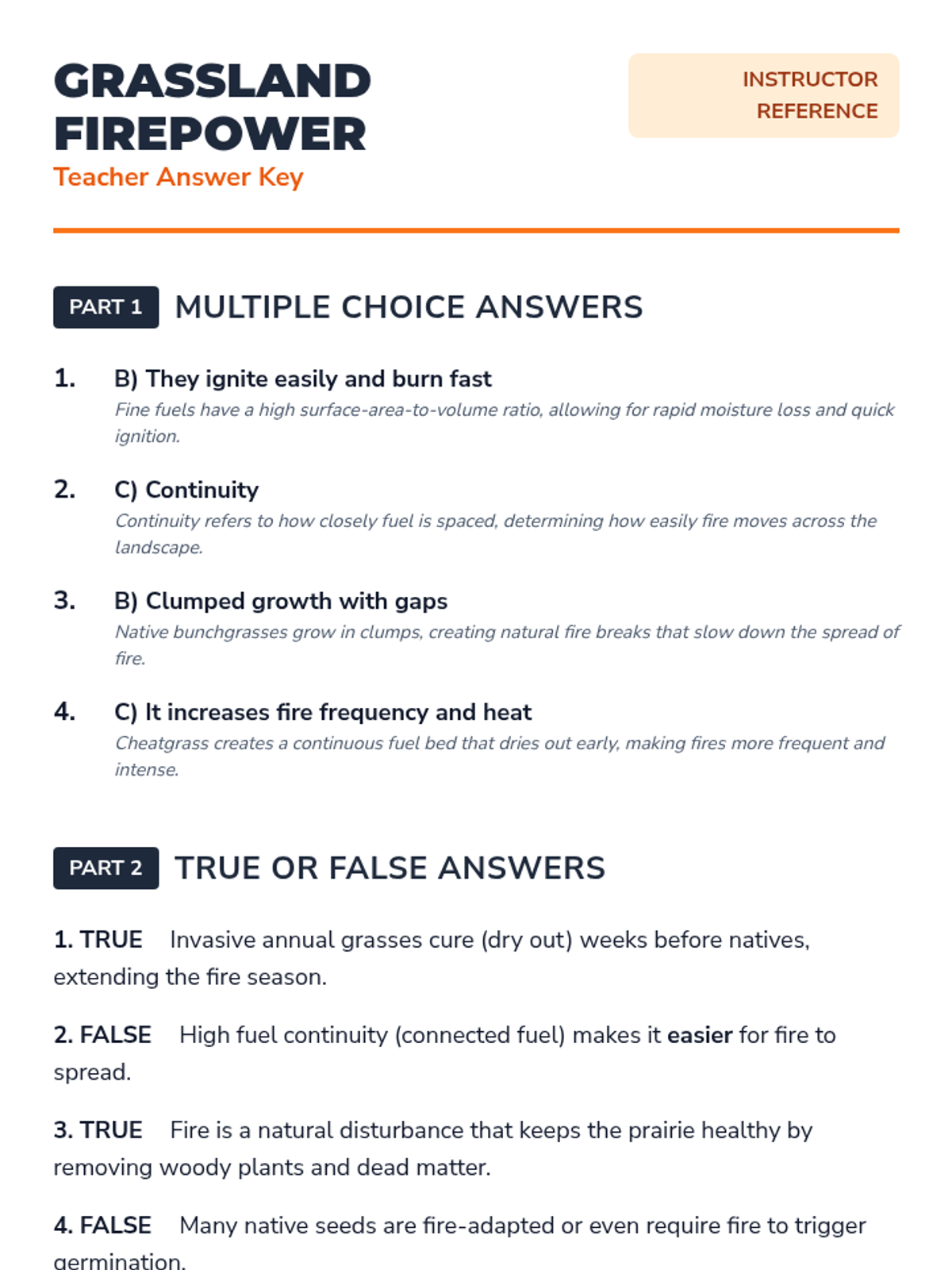
An answer key for the Grassland Firepower Assessment, including detailed explanations for multiple choice and true/false questions, and the completed comparison table.
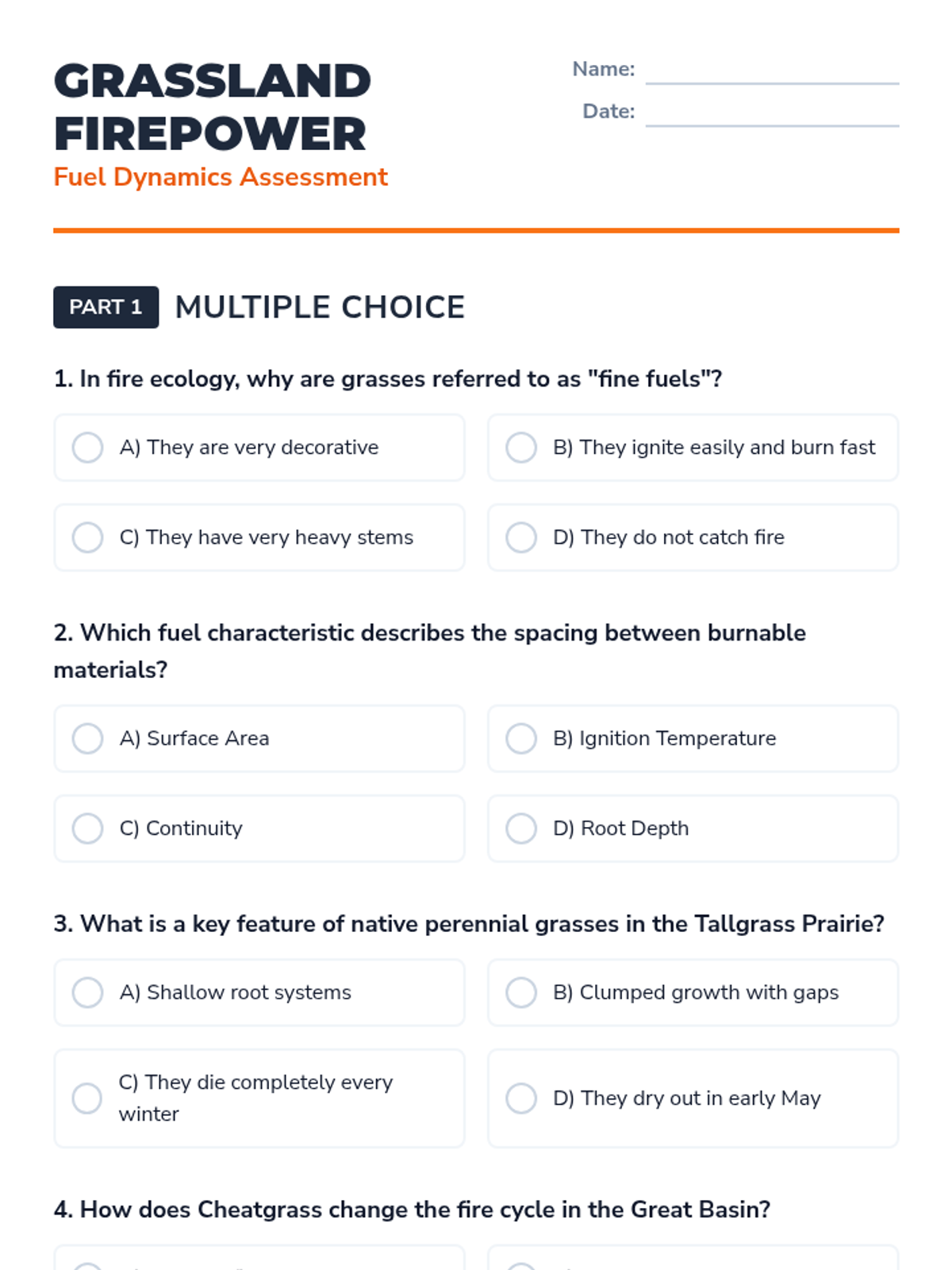
A student assessment covering fuel dynamics, fire behavior, and two case studies. Includes multiple choice, true/false questions, and a comparative table to check understanding of native versus invasive fuel types.
A set of instructional slides exploring the differences in fire behavior between native and invasive grasses, including two case studies: the Tallgrass Prairie and the Great Basin. The slides feature high-contrast visuals, comparative data tables, and key fire ecology terminology.
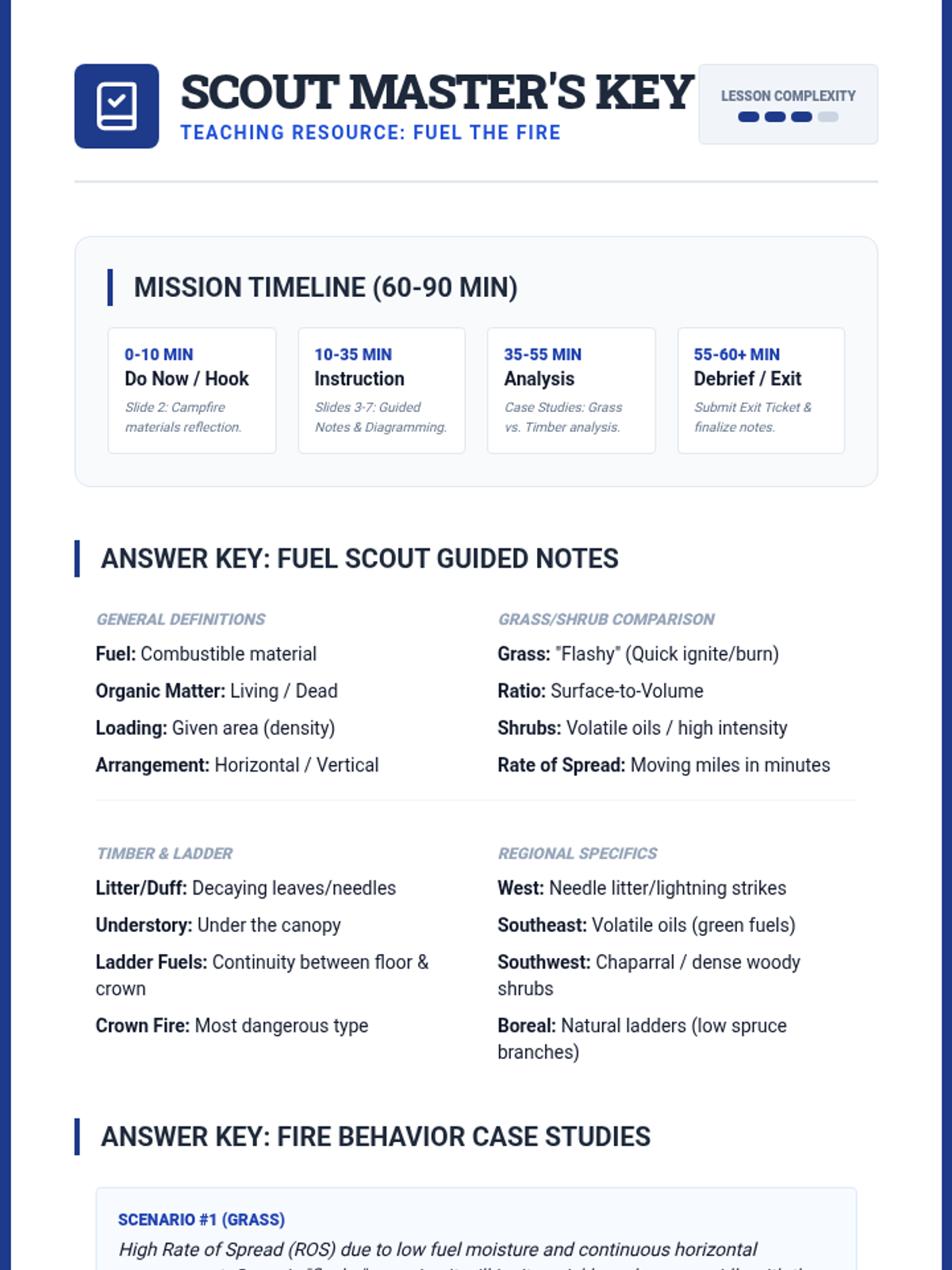
A comprehensive facilitator's guide for the wildland fuels lesson, including pacing, detailed answer keys for all student materials, and teaching tips for addressing common misconceptions.
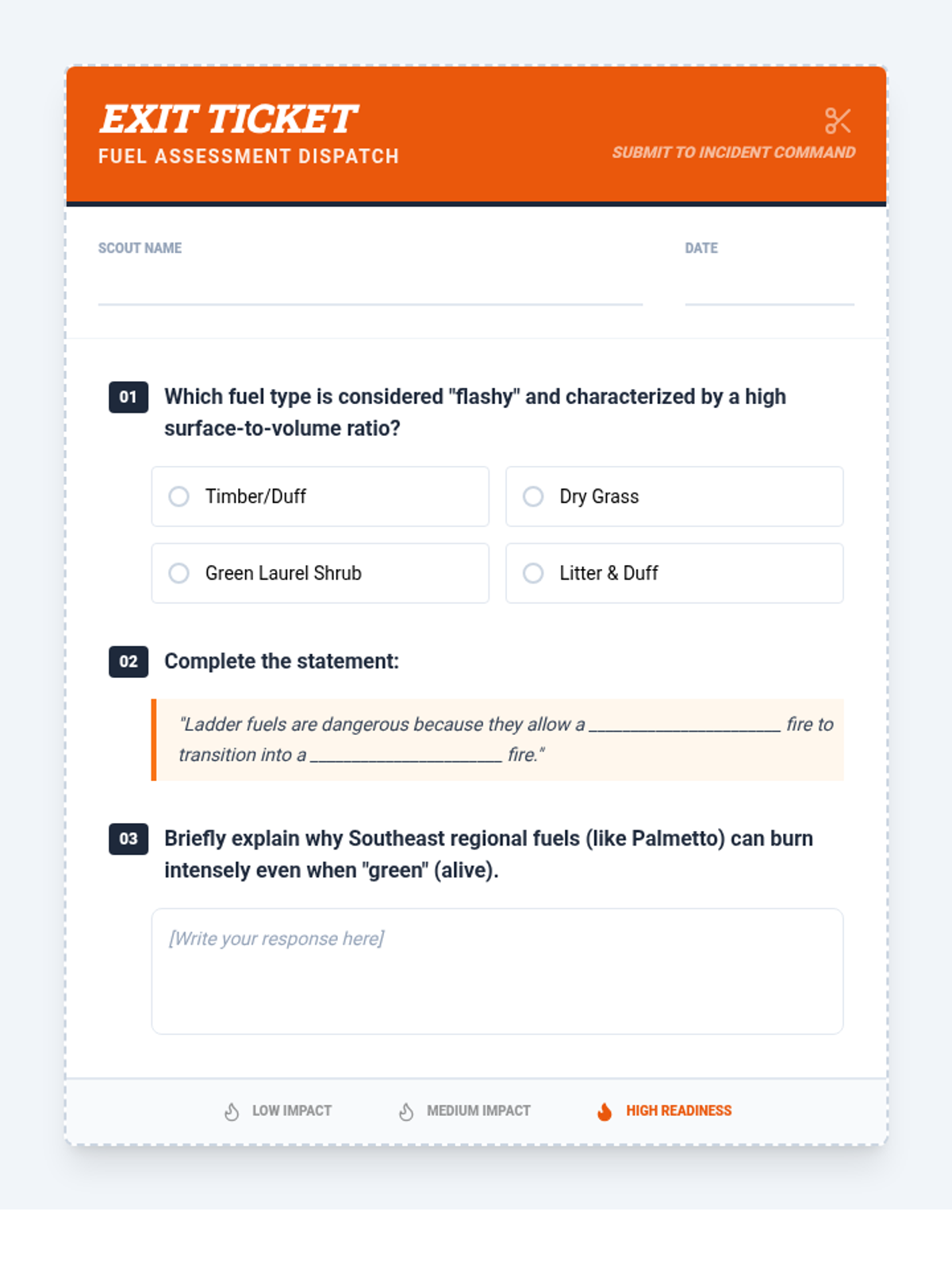
A final formative assessment for the wildland fuels lesson, featuring multiple choice and short response questions in a field-voucher style format.
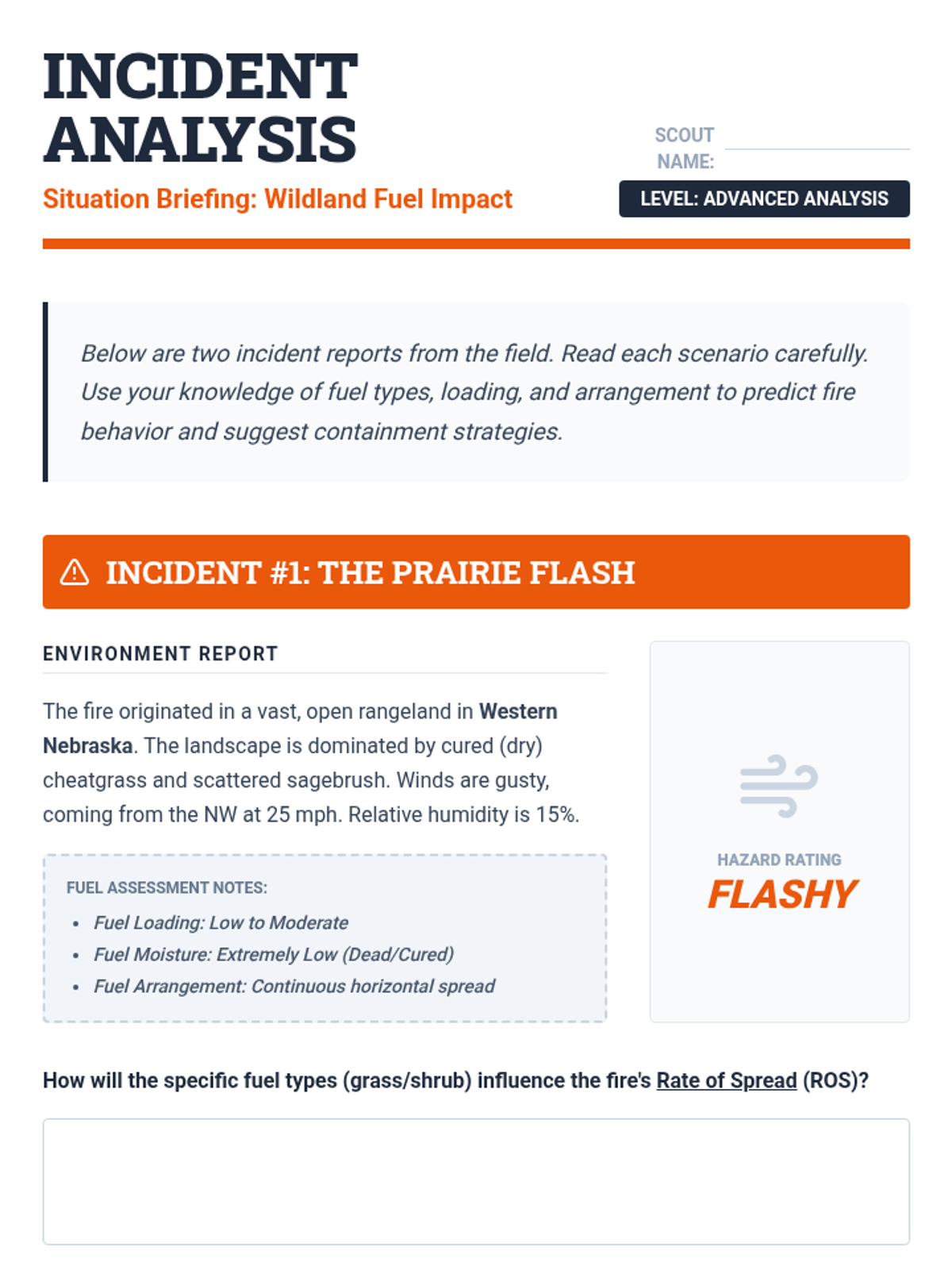
Real-world fire behavior scenarios requiring students to analyze incident reports based on fuel types, loading, and arrangement. Includes open-ended response sections for predicting rate of spread and ladder fuel risks.
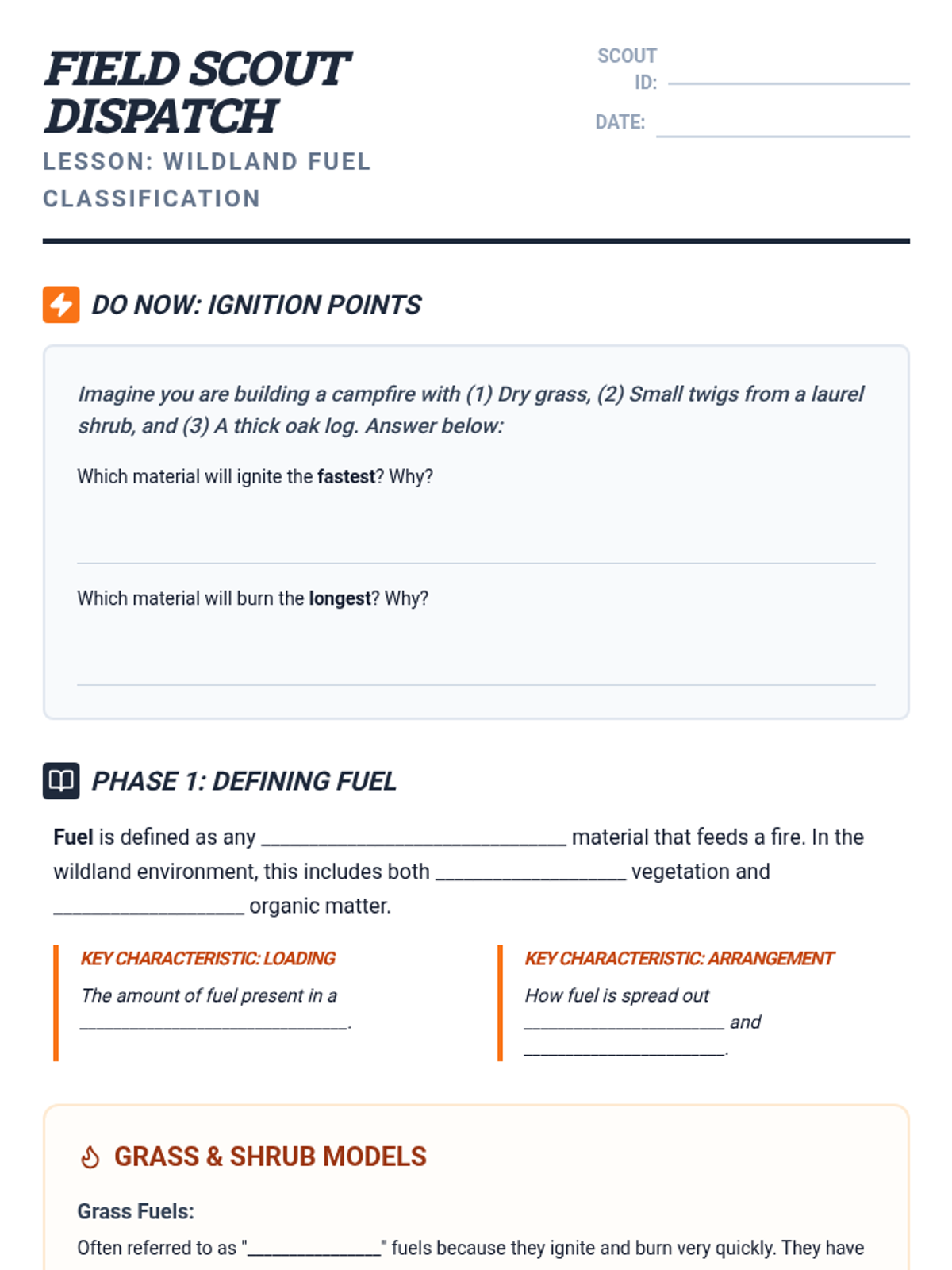
A field guide-themed guided notes worksheet for students to complete during instruction. Includes a Do Now, fill-in-the-blank conceptual notes, and a ladder fuel diagramming activity.
Visual slide deck for a wildland fire behavior lesson, covering fuel classification, grass/shrub dynamics, timber/understory layers, ladder fuels, and regional variations.
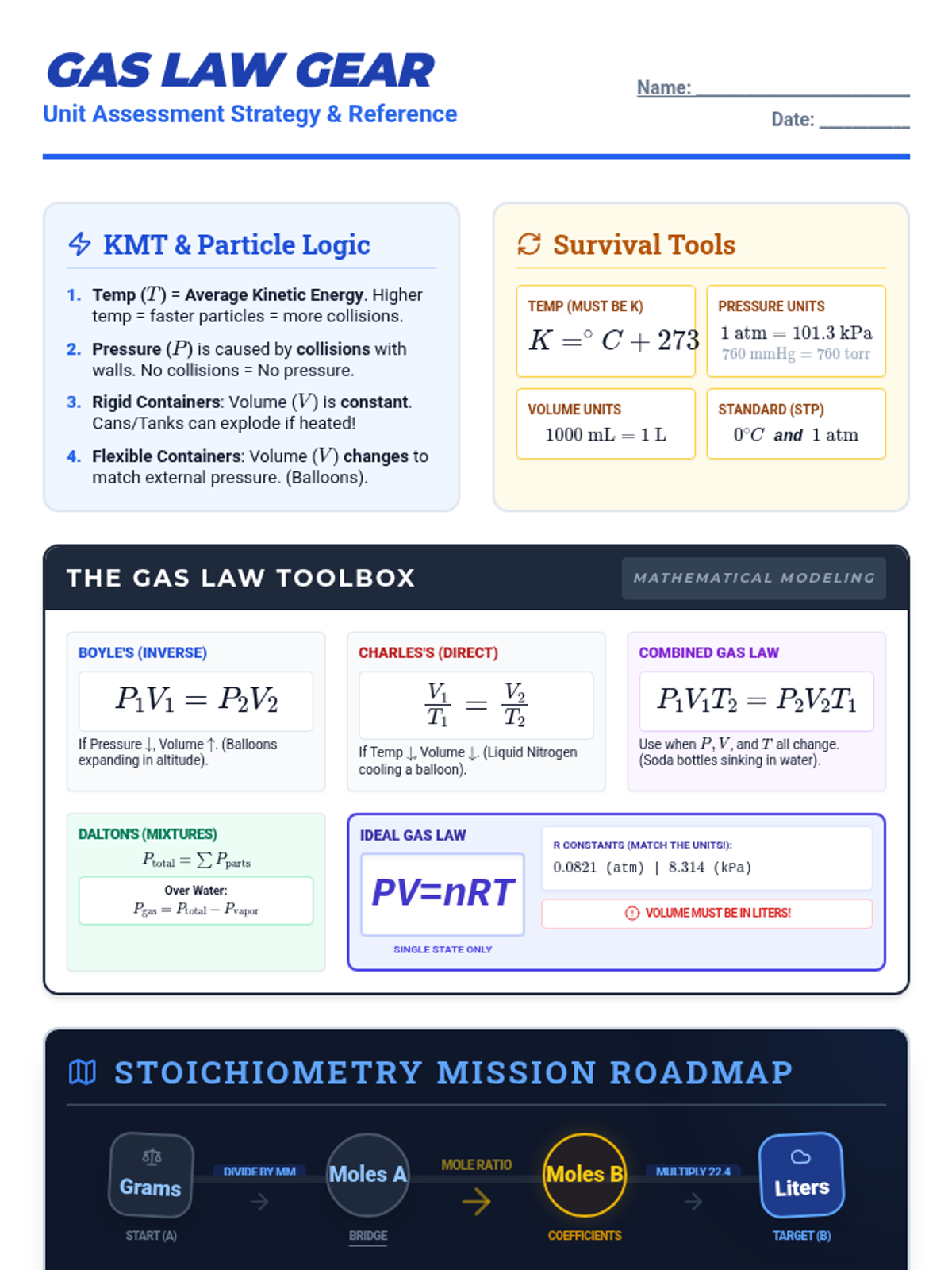
An extensively polished one-page "cheat sheet" reference for gas laws, specifically tailored to help students succeed on their unit assessment. Features high-impact visual sections for KMT behavior, formula modeling, and an expanded "Mission Stoichiometry" section with a circular roadmap and detailed railroad-track set-up guide.
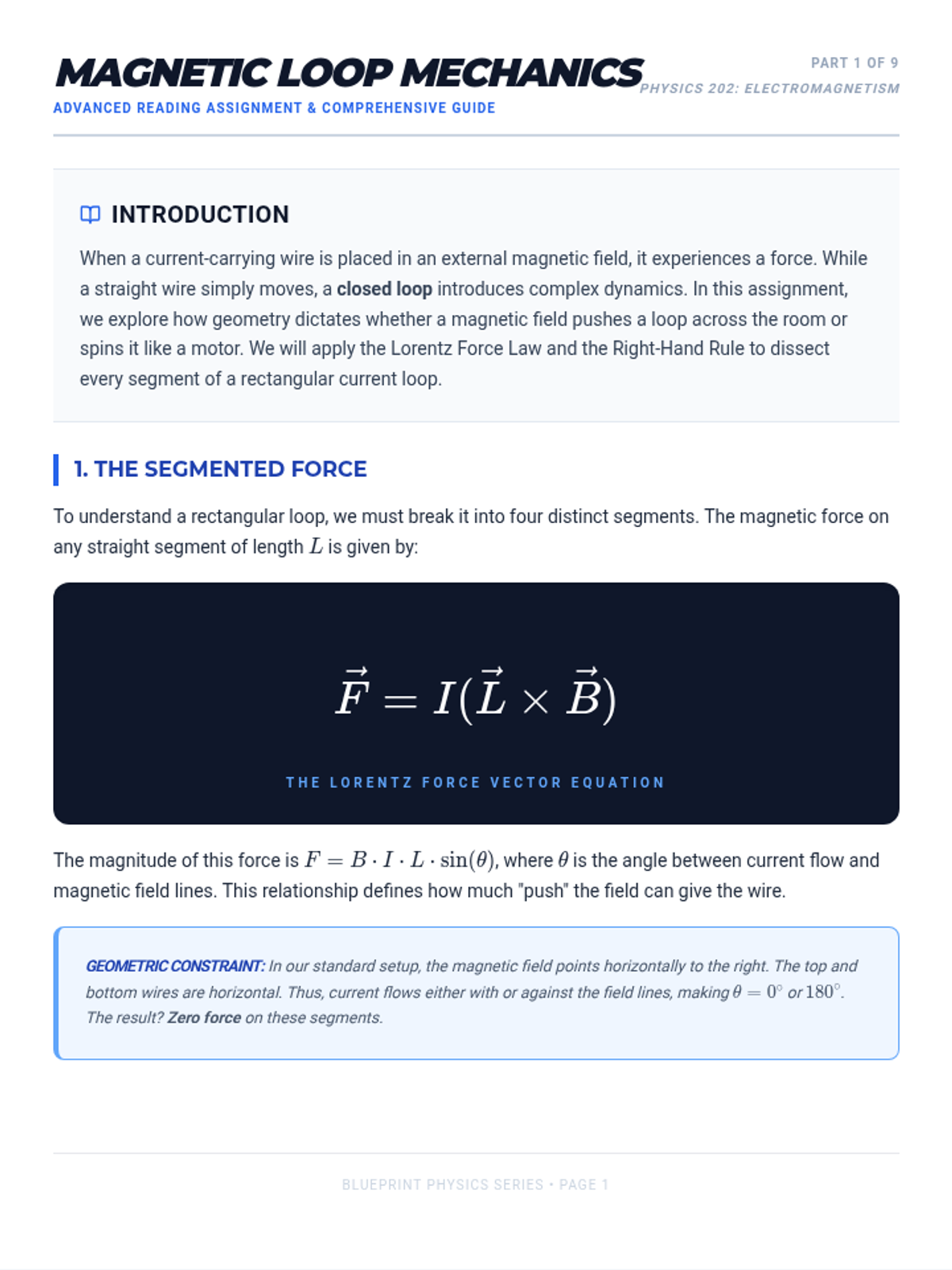
A comprehensive 9-page reading assignment detailing magnetic forces on rectangular loops. The layout has been optimized to prevent section overlap, with a clear 3D perspective diagram on Page 2 and derivations using physical intuition rather than unit vectors.
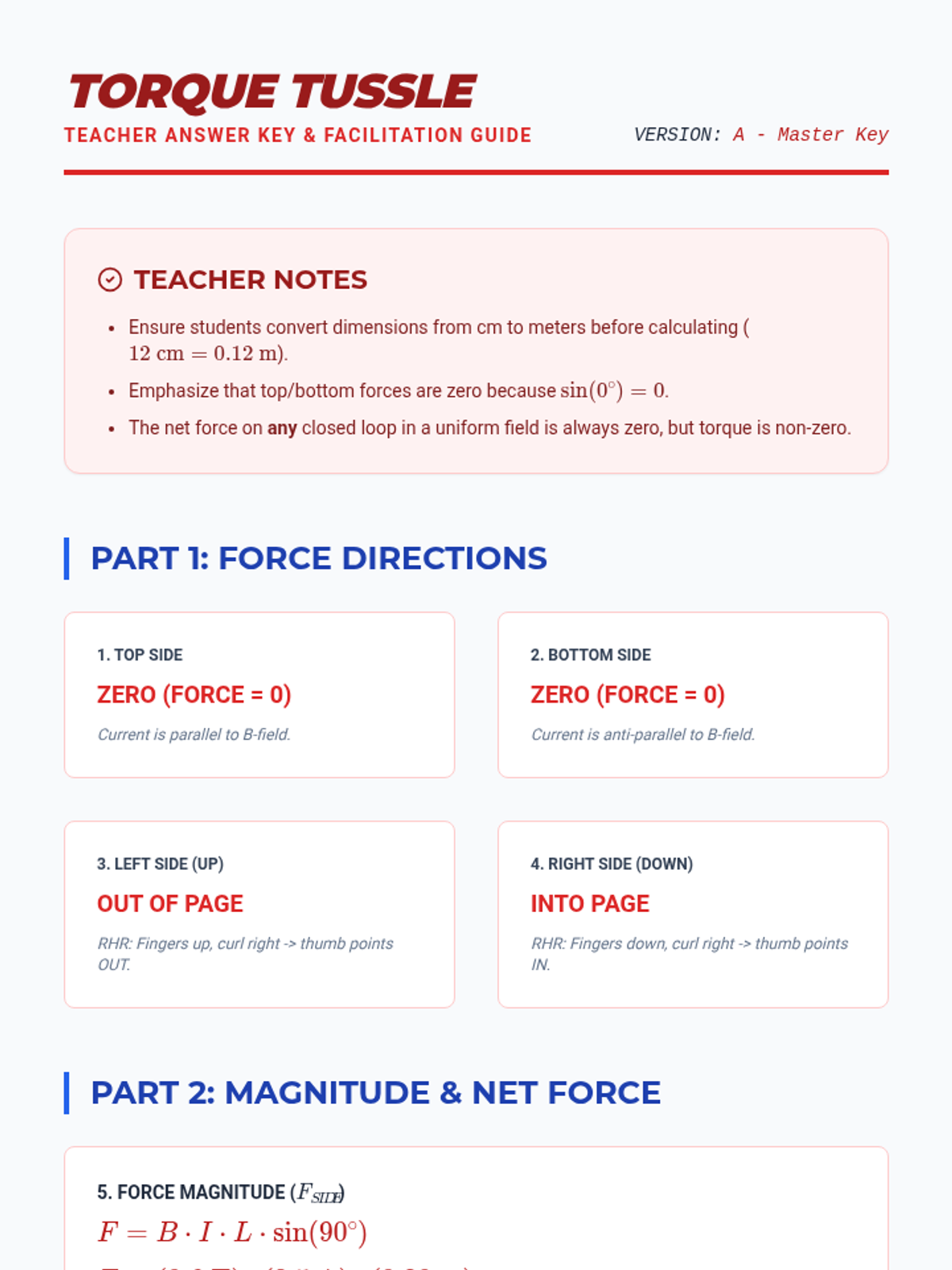
A teacher answer key for the Torque Tussle Worksheet with full solutions and instructional notes.
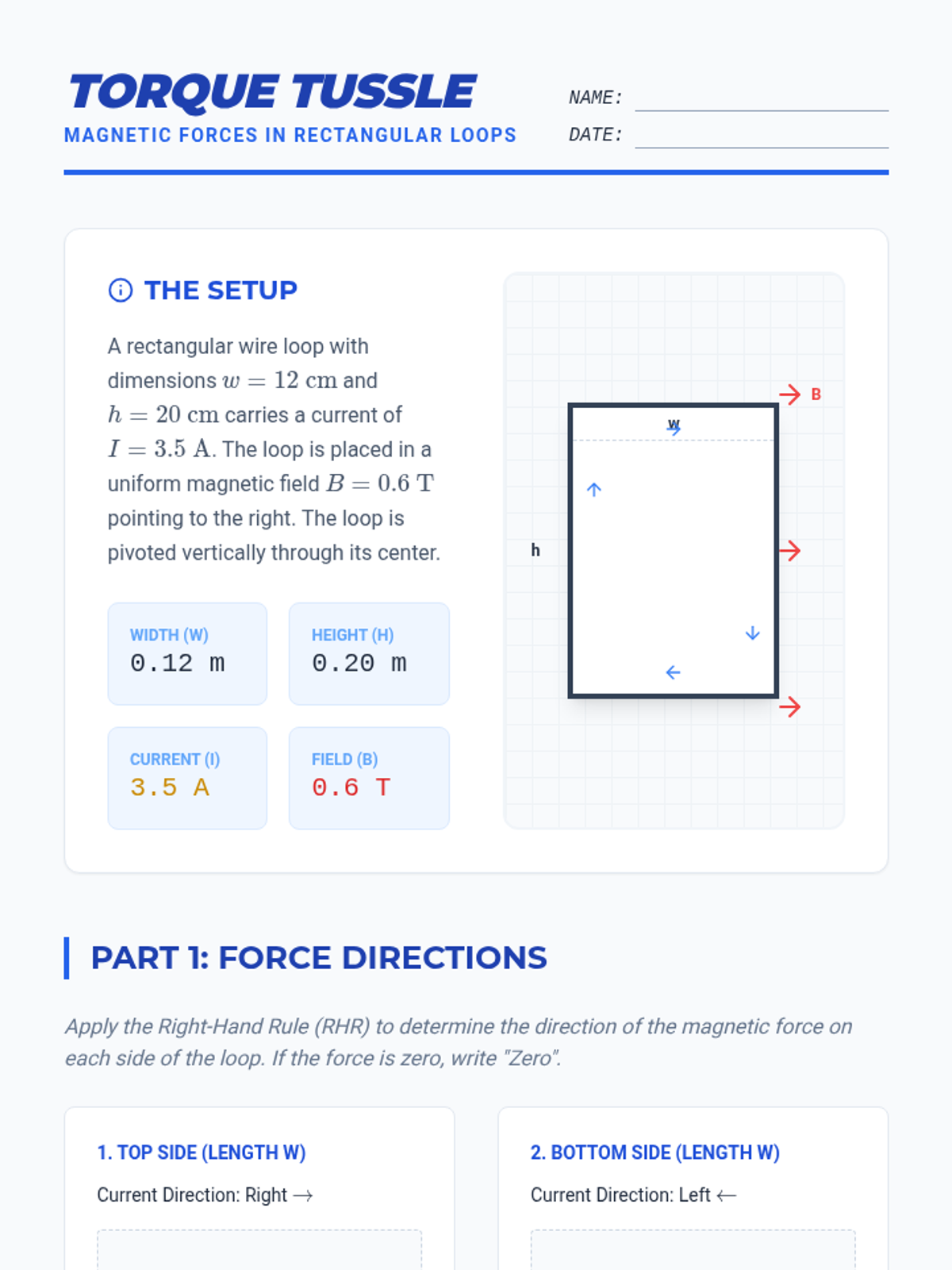
A practice worksheet for students to calculate magnetic forces on various segments of a loop and derive the net force and torque, emphasizing RHR application.