A student practice worksheet for converting percentages to decimals. Features segmented sections for standard, single-digit, large, and decimal percentages, plus a 'Boss Challenge' problem.
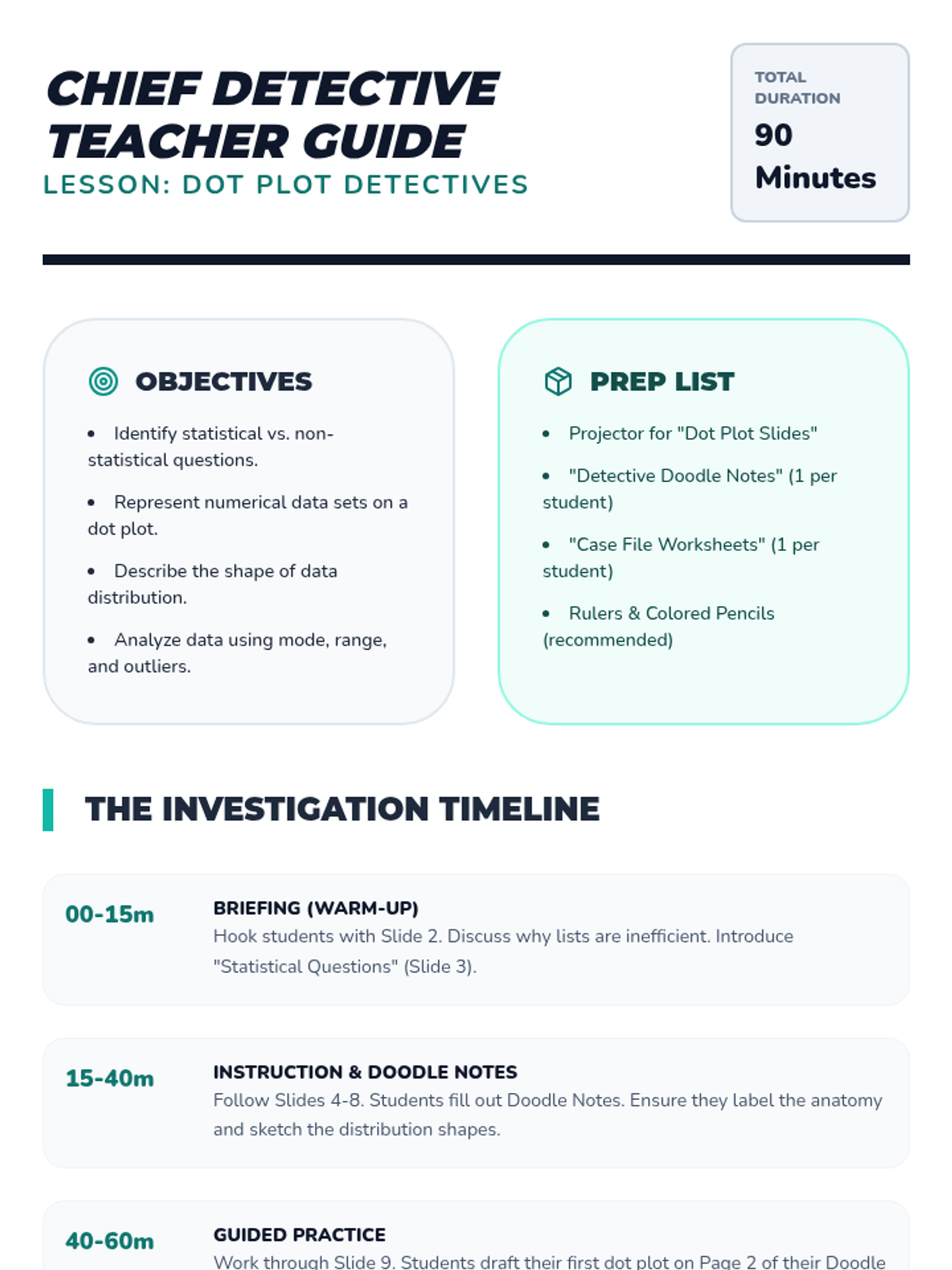
A comprehensive teacher resource including lesson pacing, learning objectives, common misconceptions, and a full answer key for the Case File Worksheets.
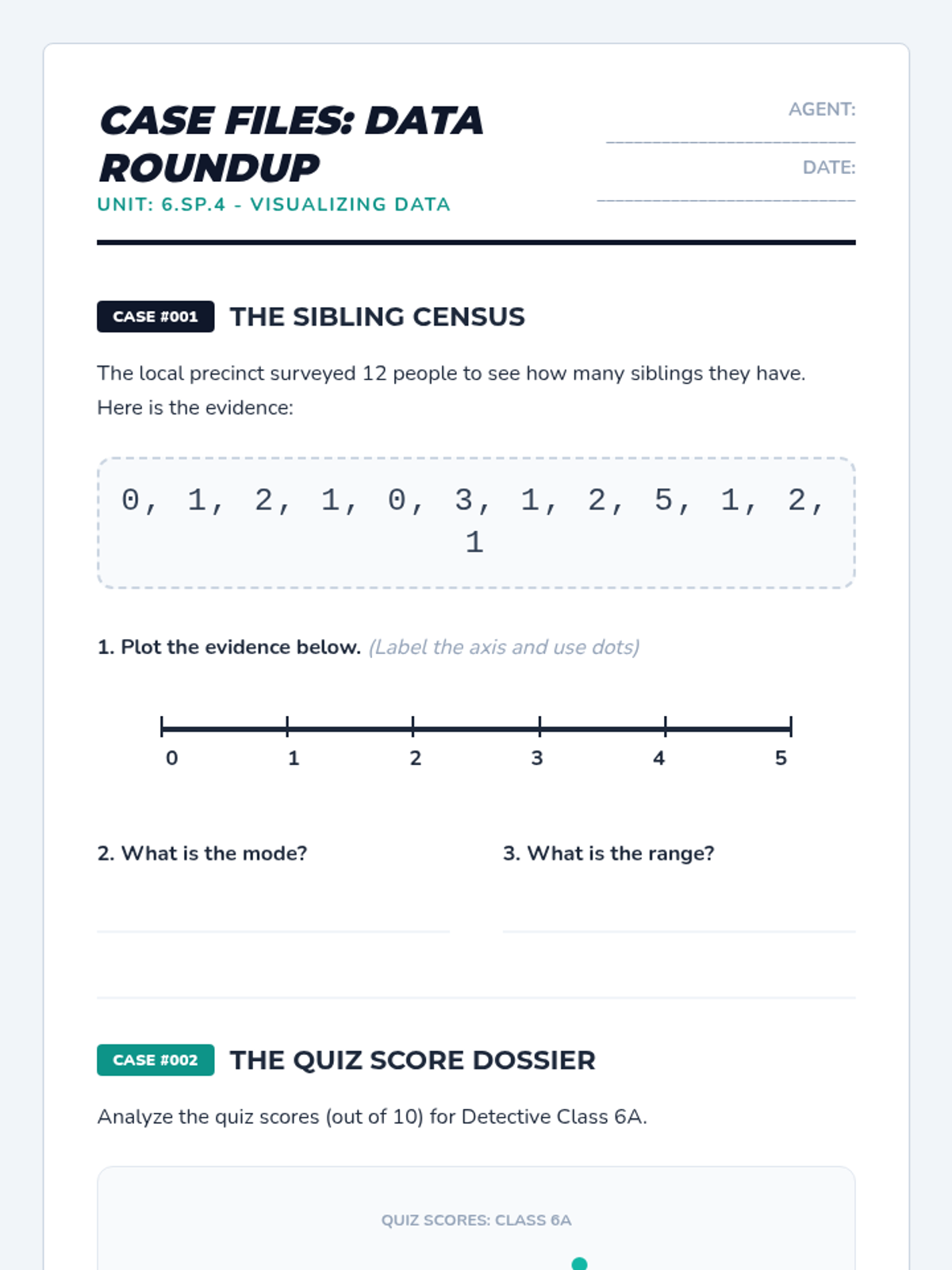
A two-page student worksheet featuring four "investigations" that practice creating dot plots, identifying statistical questions, and analyzing data distributions and outliers.
An engaging, visual slide deck for teaching 6th graders how to create and analyze dot plots, featuring detective-themed graphics and vocabulary guides.
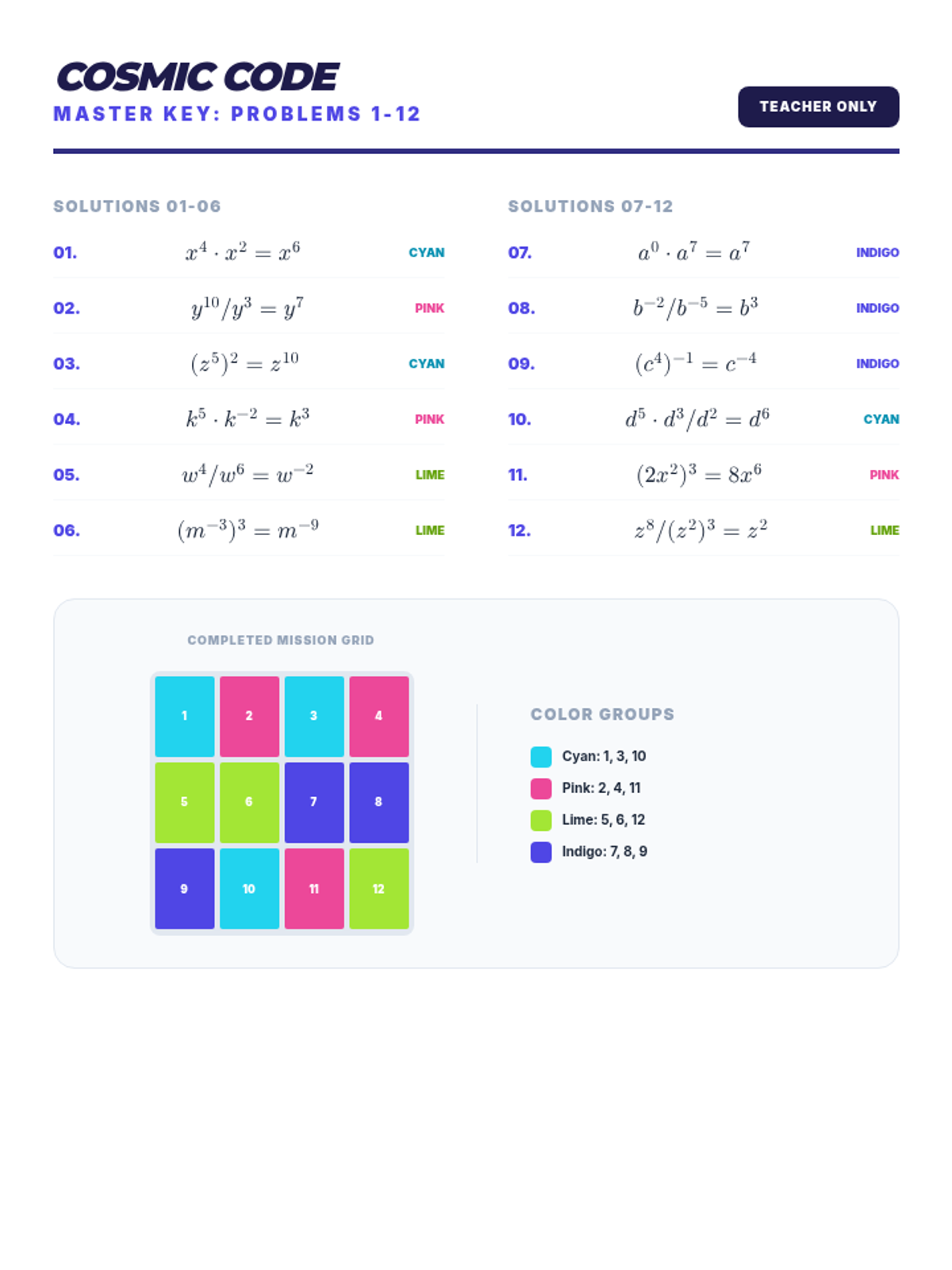
An answer key for the Cosmic Code worksheet, providing simplified results for all 12 problems and a visual guide for the completed color-by-number mosaic.
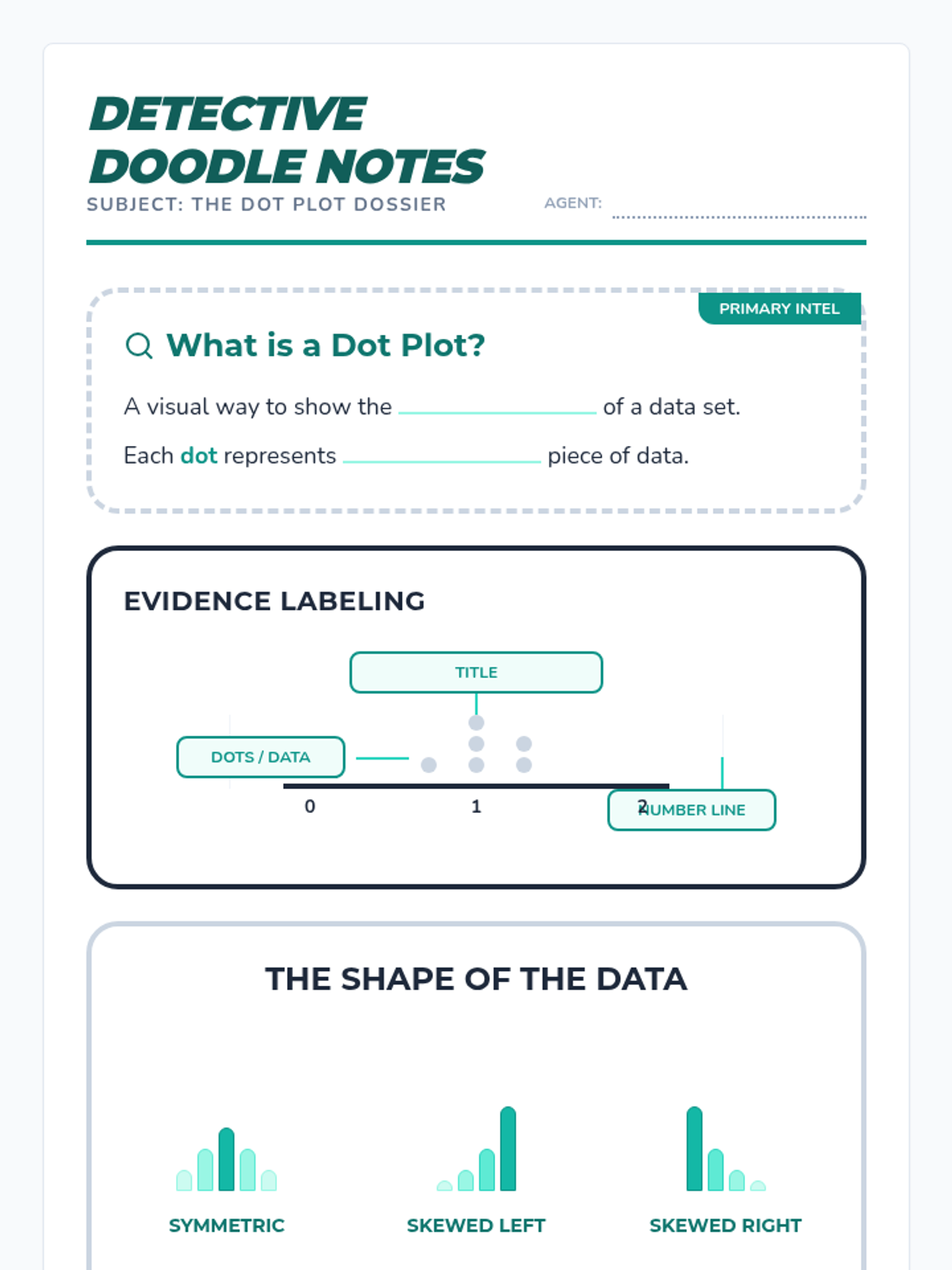
A visual note-taking document for 6th-grade students to record key concepts about dot plots, including vocabulary, anatomy of the plot, and distribution shapes.
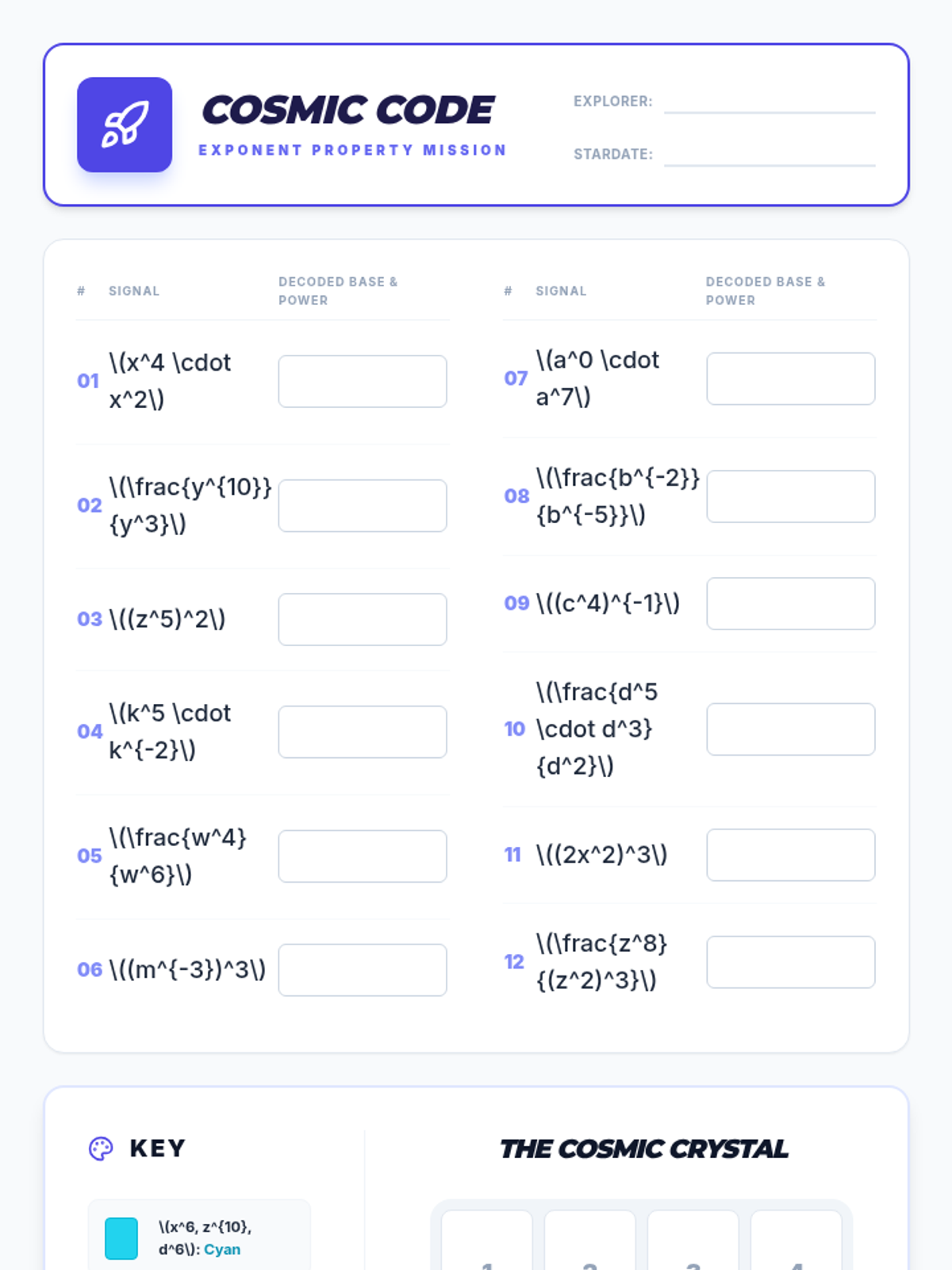
A student worksheet titled "Cosmic Code" where students solve 12 exponent problems and use the simplified answers to determine which colors to use in a mosaic coloring grid.
A visually engaging presentation using a Cosmic Arcade theme to teach exponent rules, including interactive warm-ups, rule definitions with examples, and mixed practice problems.
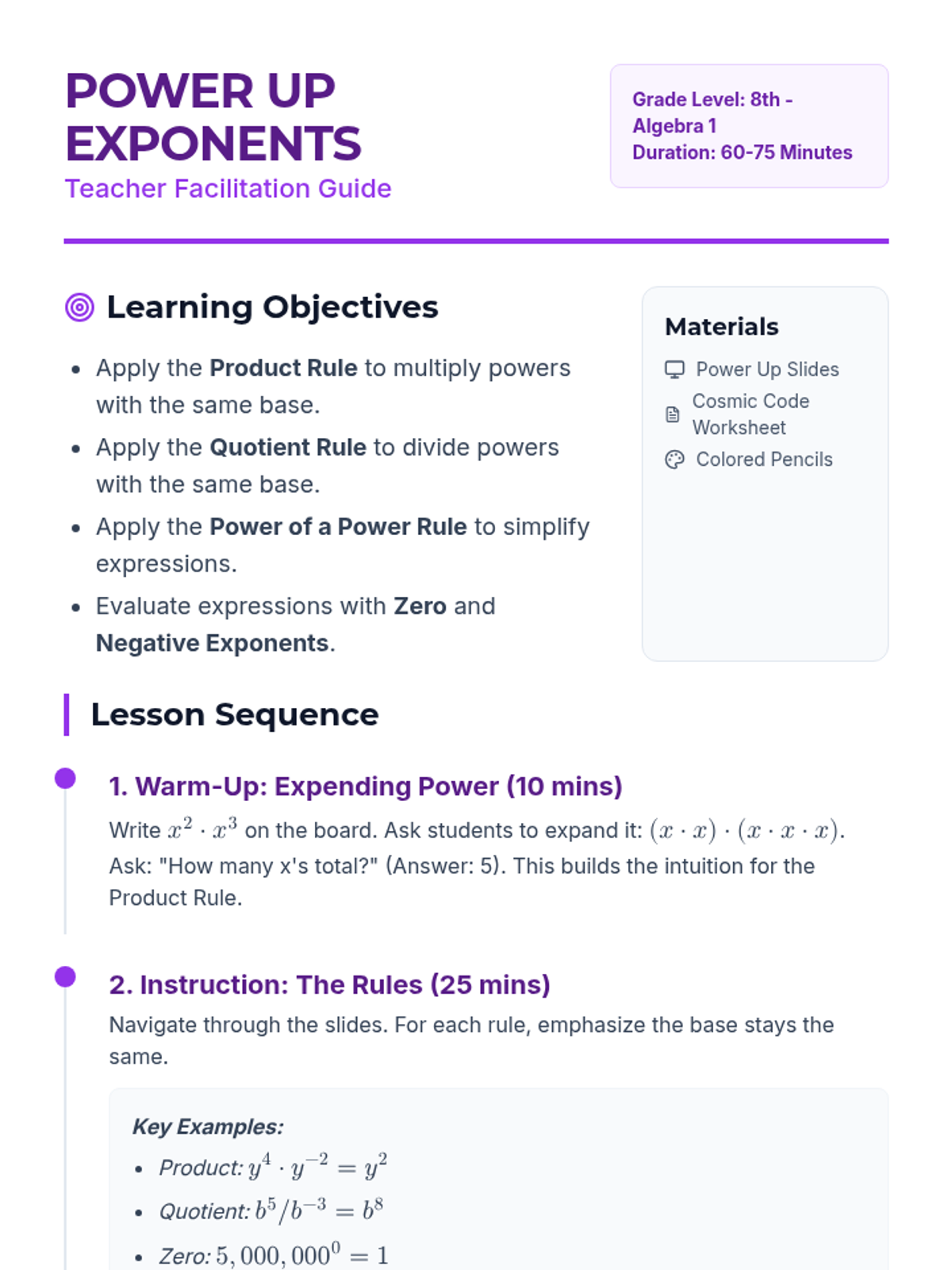
A teacher-facing lesson plan for the Power Up Exponents lesson, including learning objectives, a detailed sequence, and tips for addressing common student misconceptions.
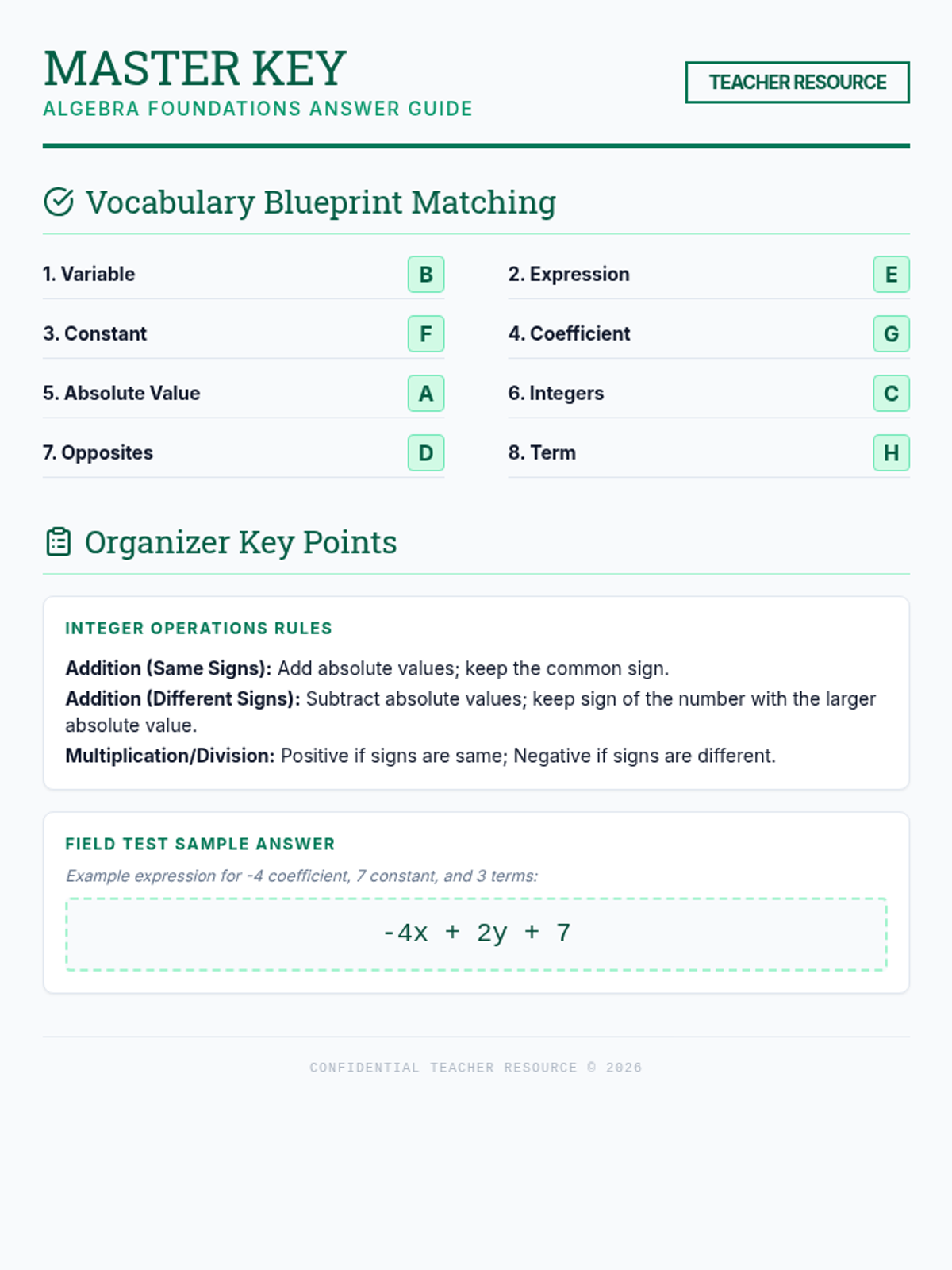
A comprehensive answer key for the Algebra foundations vocabulary matching and graphic organizer materials.
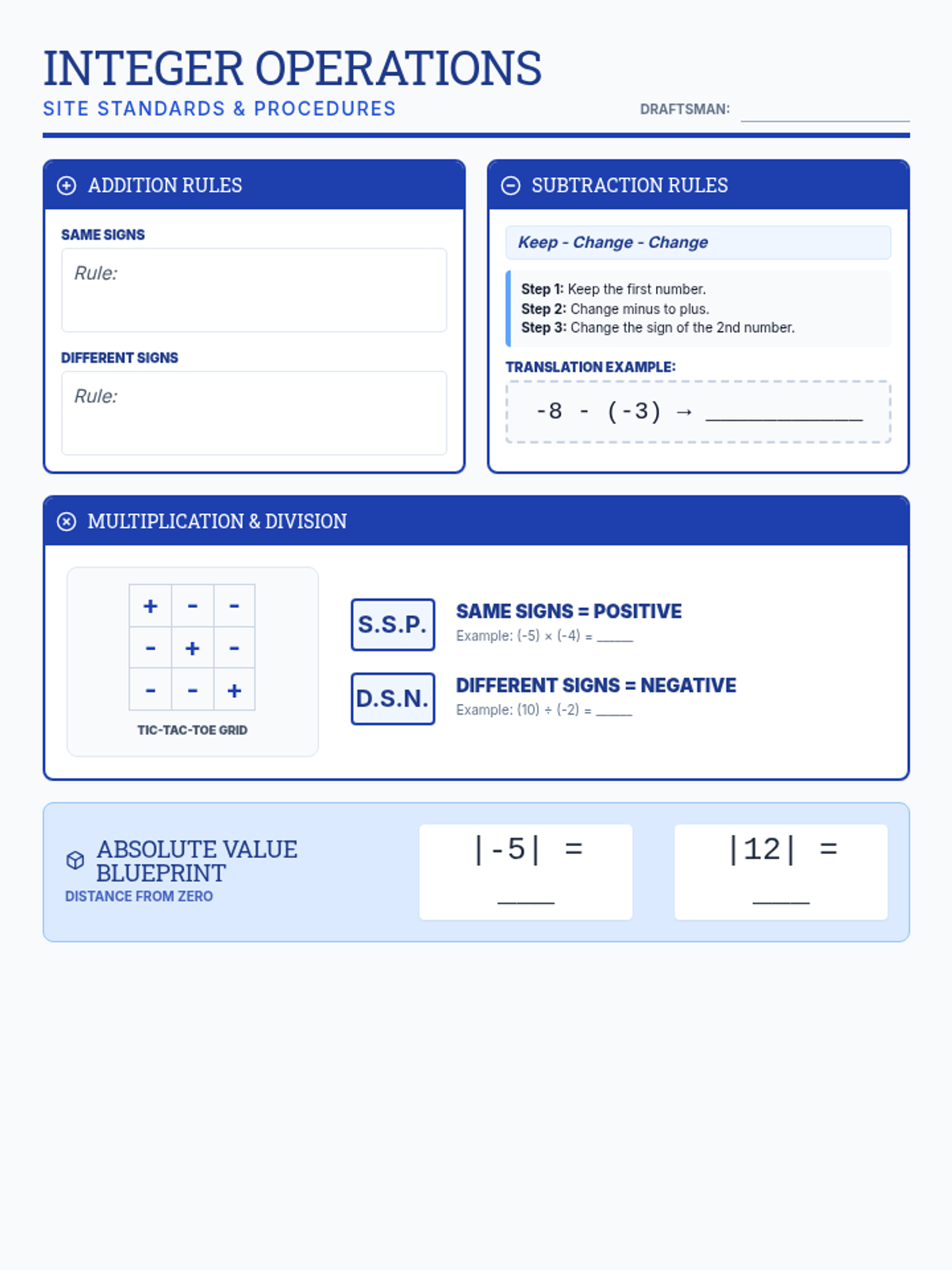
A comprehensive graphic organizer for integer operations, featuring sections for addition, subtraction, multiplication, and division rules with visual memory aids.
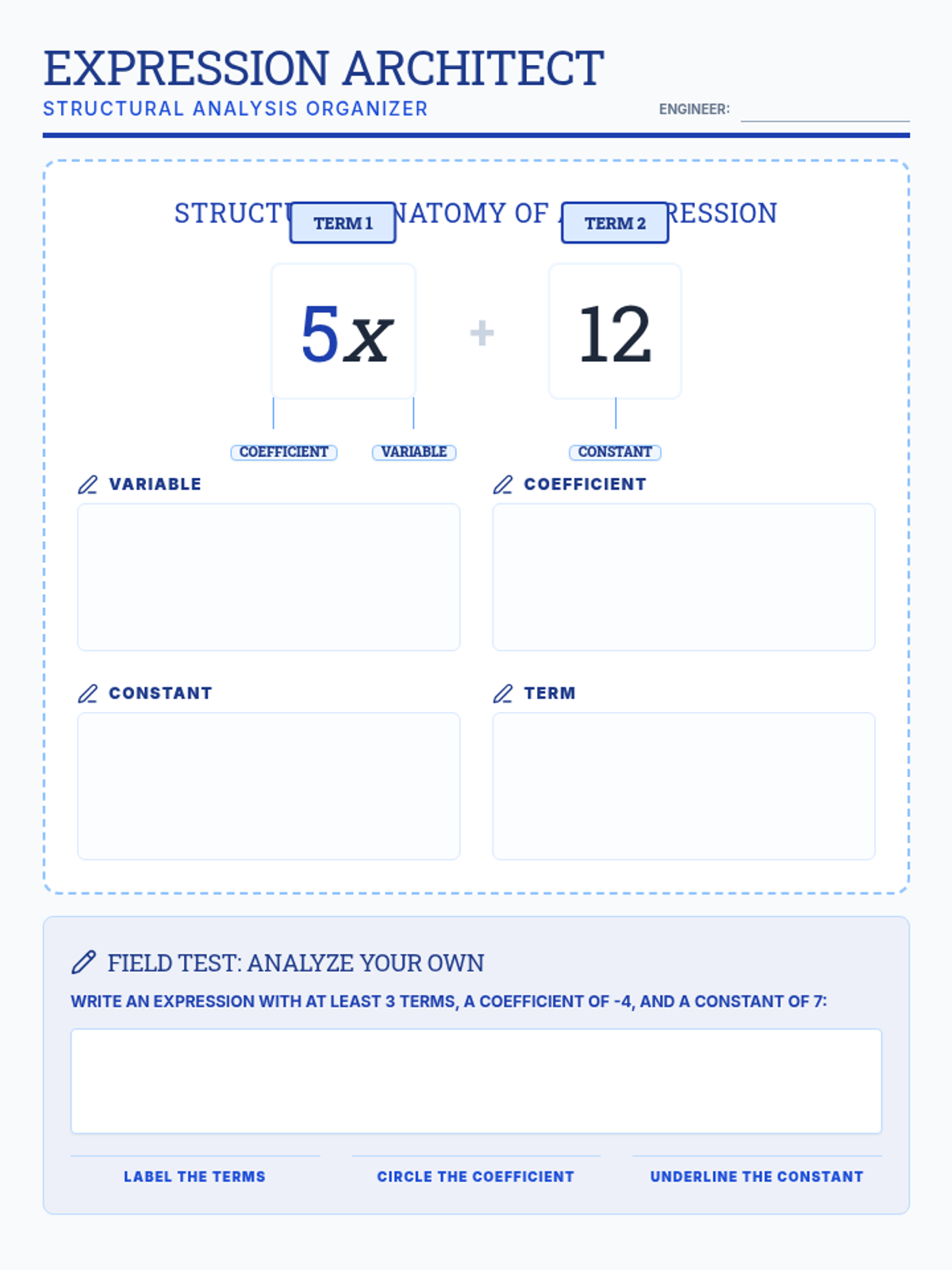
A visual graphic organizer that breaks down the structural components of an algebraic expression, providing space for students to define and label parts.
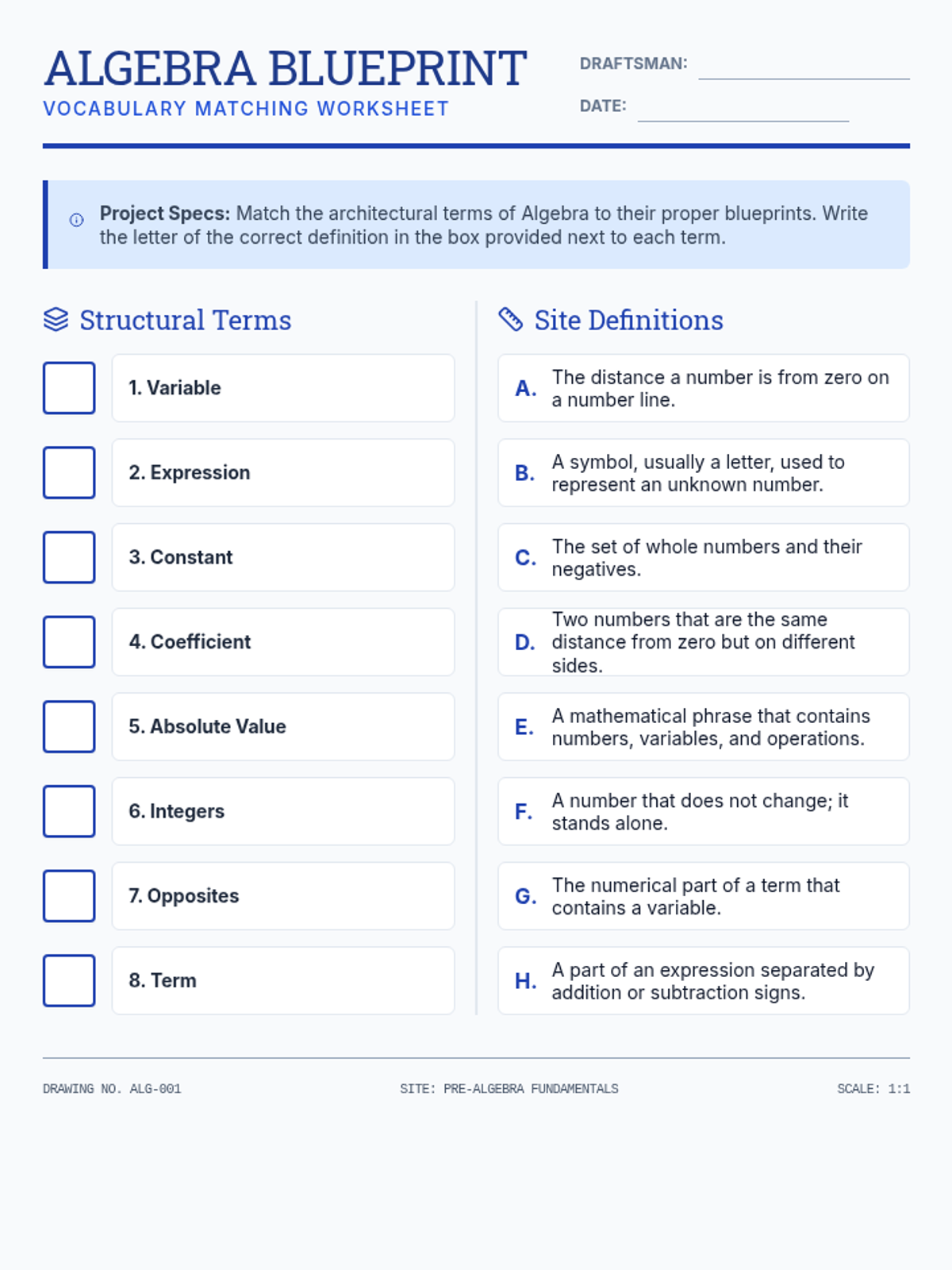
A blueprint-themed matching worksheet for key Pre-Algebra vocabulary terms including variables, expressions, and integer operations.
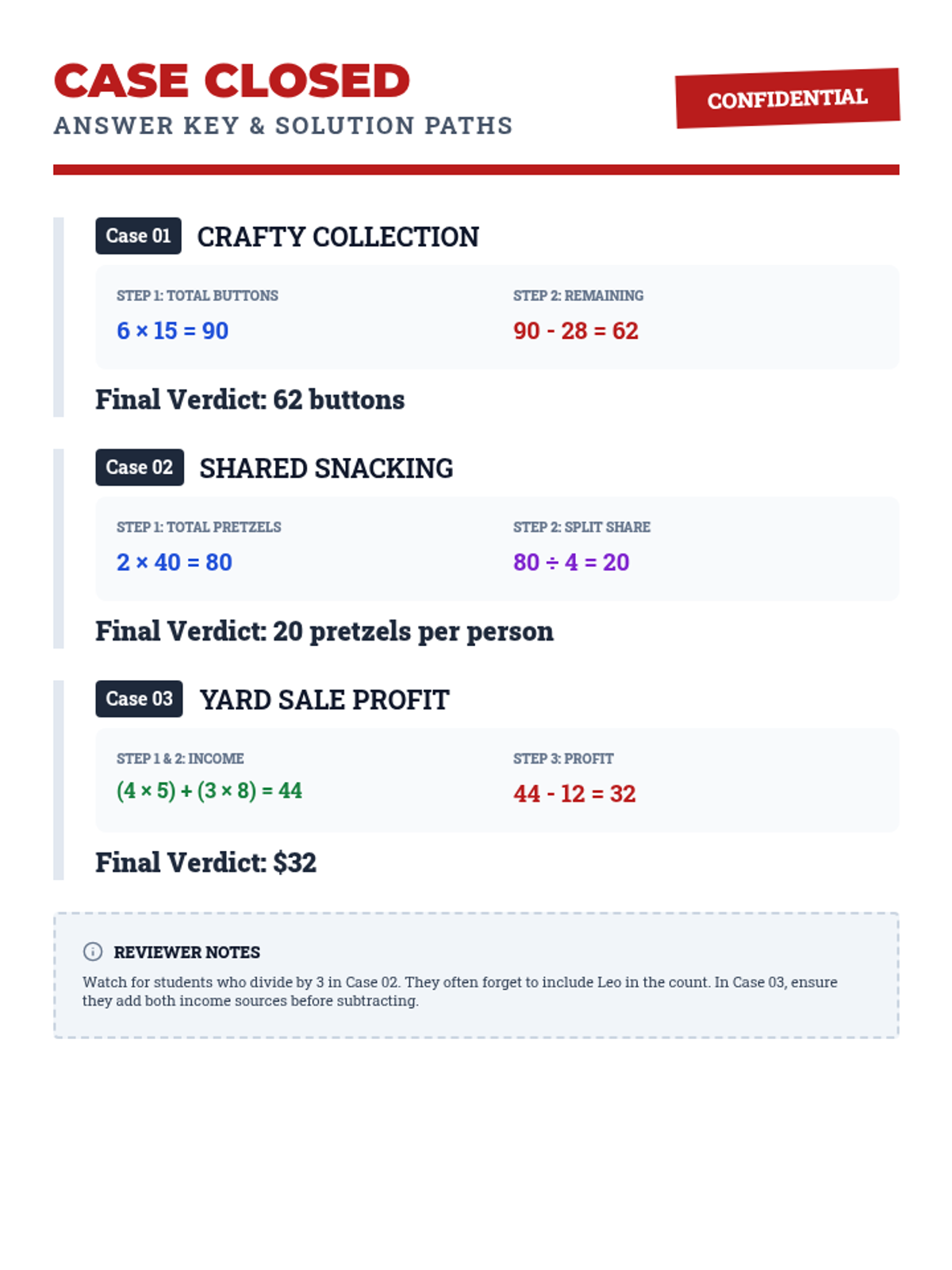
A clear answer key for the 'Evidence Log Worksheet', detailing the calculation steps and logic for each case. Consolidated onto a single page for ease of use.
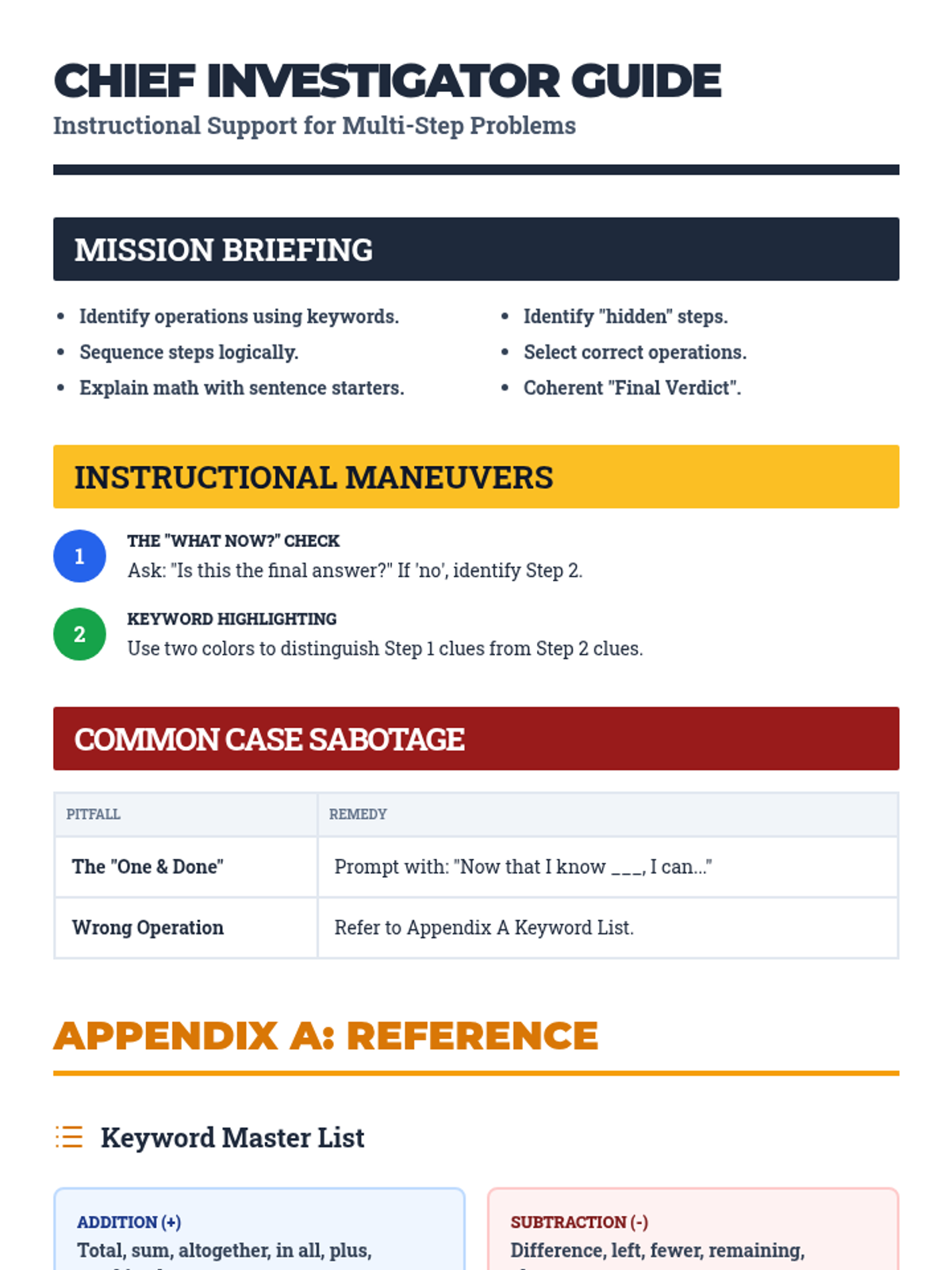
A comprehensive teacher guide for multi-step word problems. Includes pacing, objectives, common misconceptions, and an appendix with keyword tables and a printable graphic organizer template.
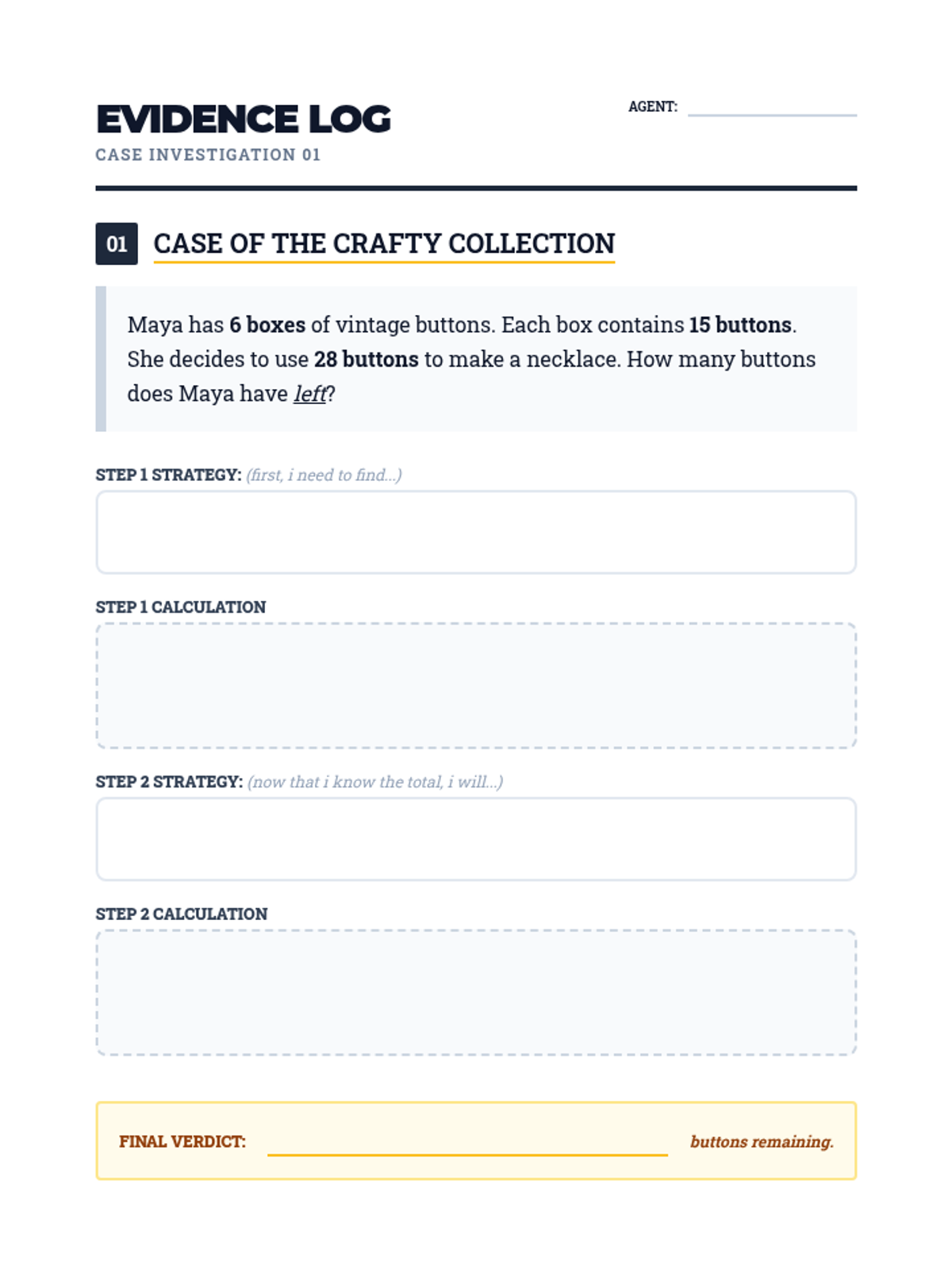
A structured multi-step word problem worksheet with a 'Math Detective' theme. Each problem is on its own page to provide maximum space for planning, calculations, and sentence starters. High-contrast student work areas with light backgrounds.
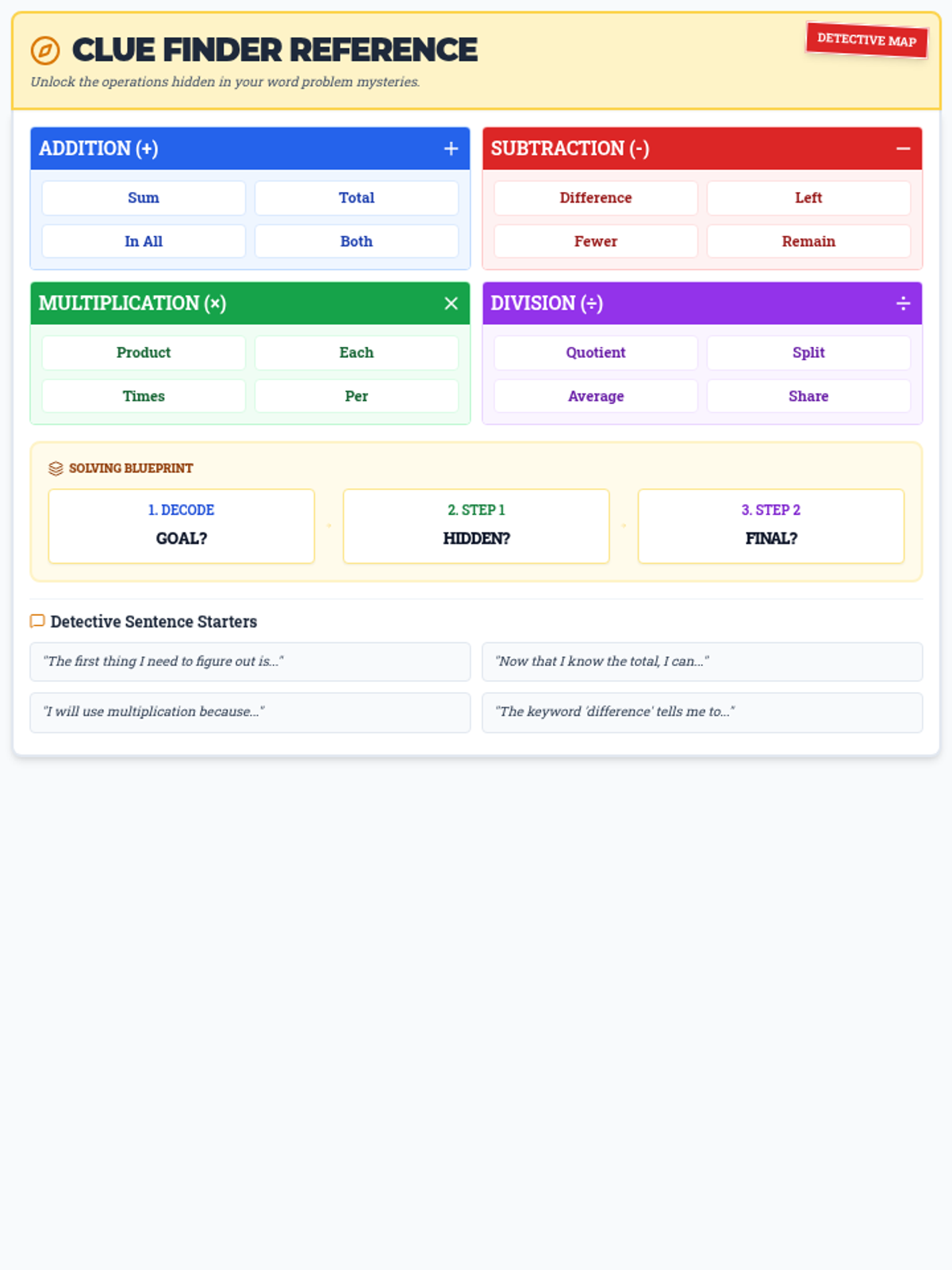
A handy reference poster for students featuring keywords and signal words for all four mathematical operations. It includes 'Detective Sentence Starters' and a mini graphic organizer. Optimized for single-page printing.
A visual slide deck that introduces the 'Problem Solving Blueprint' for multi-step word problems. It covers identifying keywords, using graphic organizers, and working through a sample case involving multiplication and subtraction.
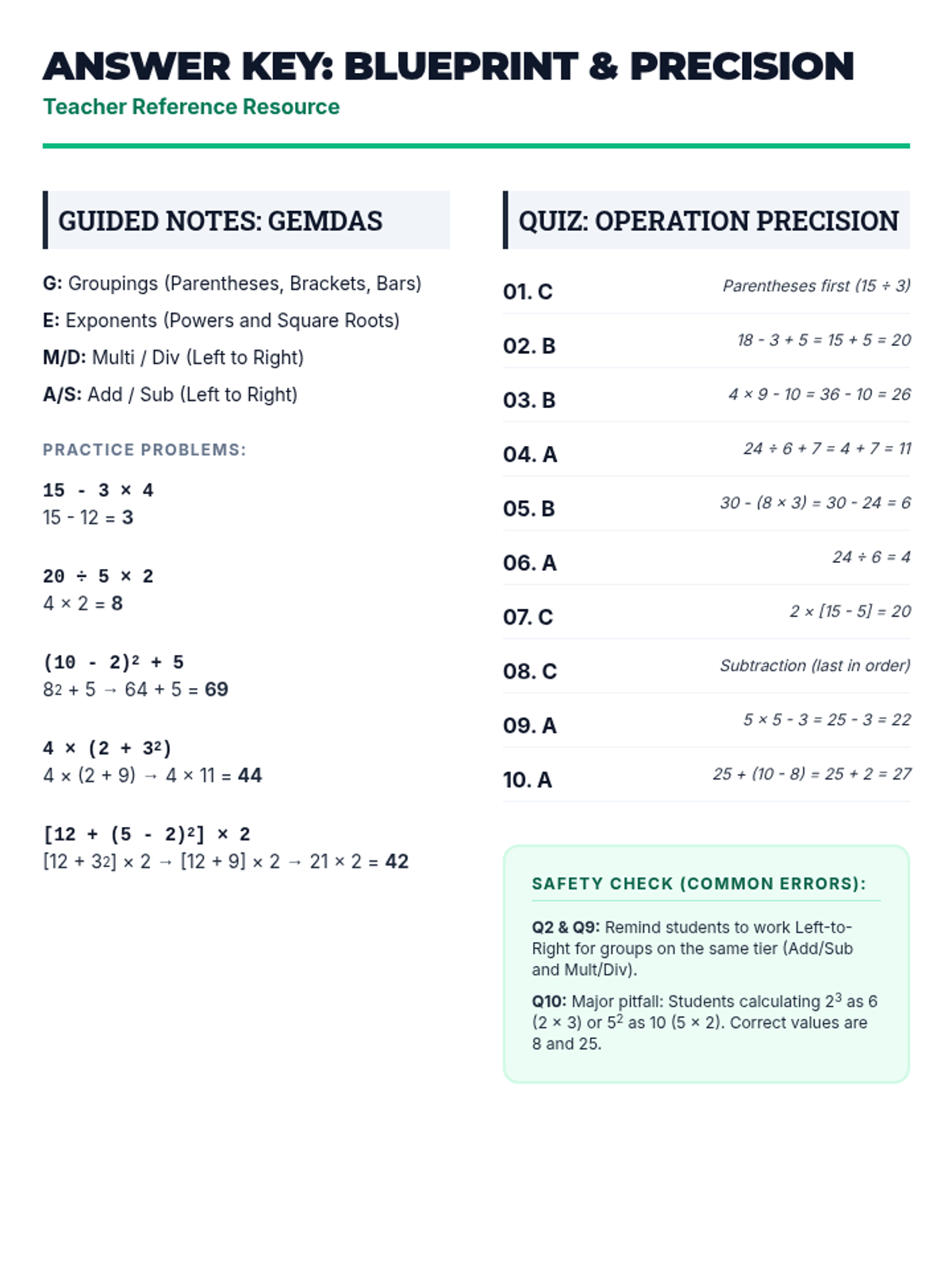
Complete answer keys for both the Order of Operations Guided Notes and the Operation Precision Quiz, including step-by-step solutions and common error callouts for teachers. Exponents are explicitly rendered for clarity.
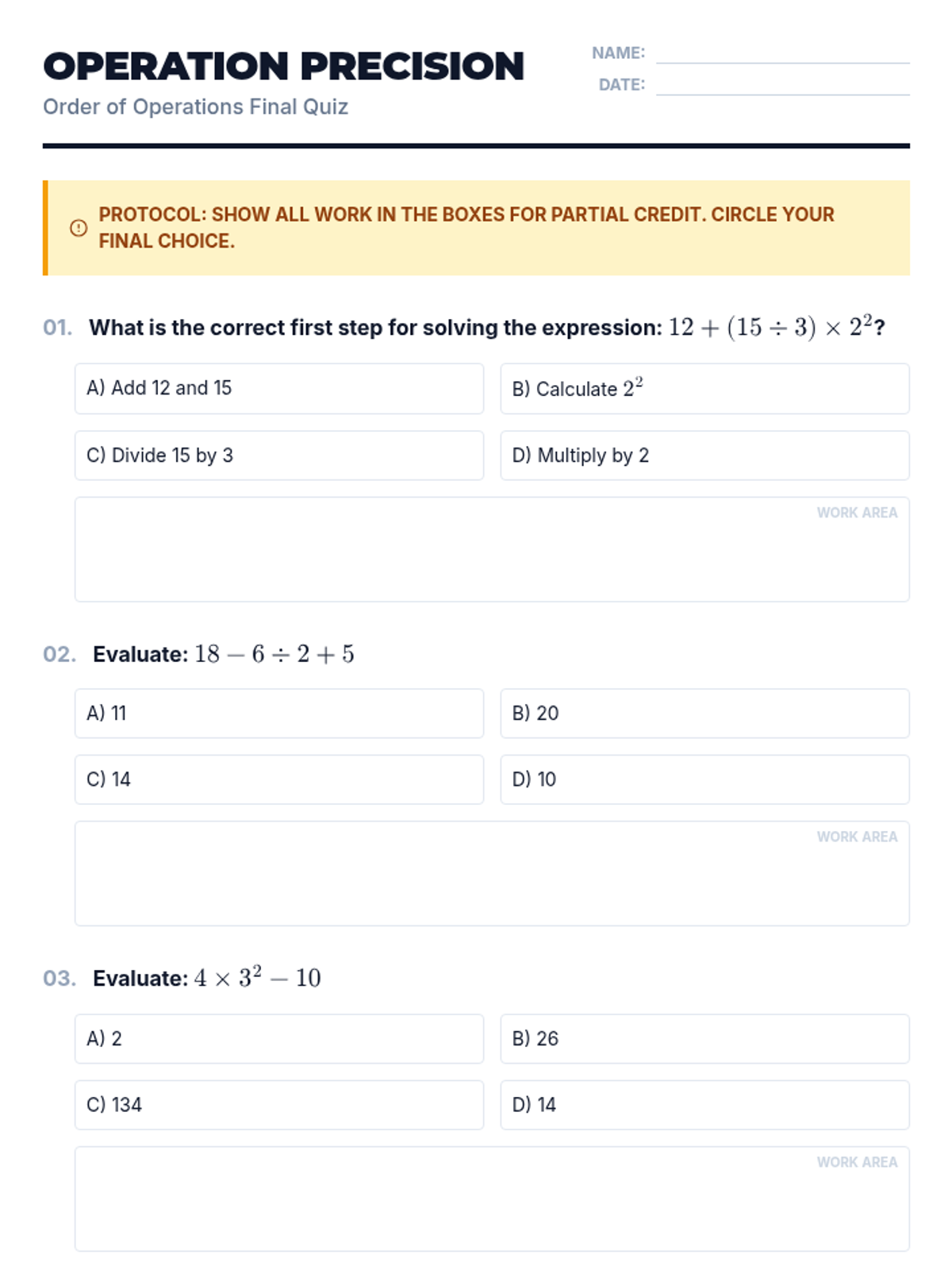
A 10-question multiple-choice quiz assessing students' mastery of the order of operations, including exponents, grouping symbols, and fraction bars. Includes individual work areas for each problem to allow students to show their calculation process.
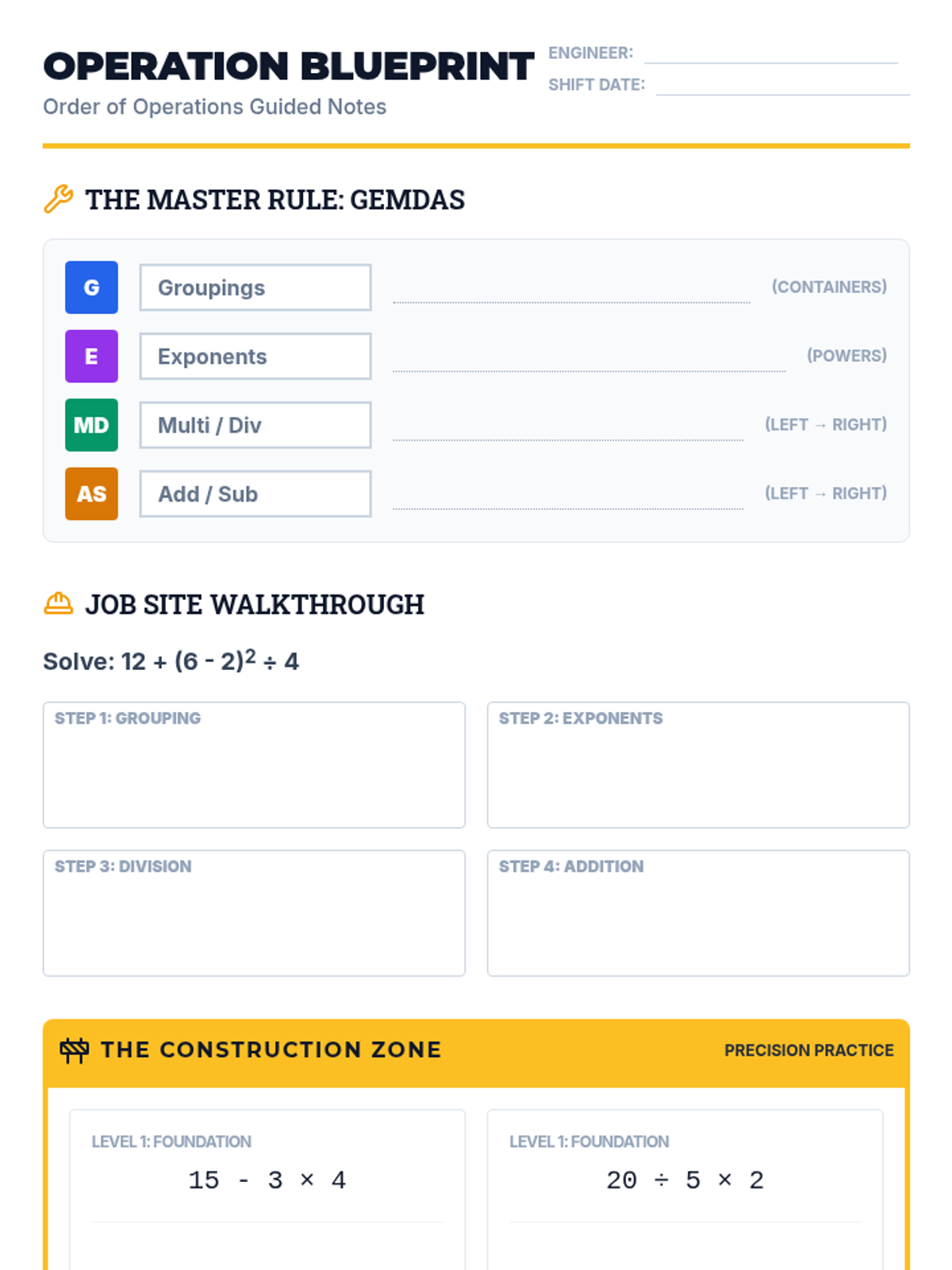
Guided notes for student completion during the order of operations lesson, featuring fill-in-the-blank rules, a guided walkthrough, and categorized practice problems from foundation to master levels. Corrected for page breaks and math rendering.
A visually engaging slide deck that uses a construction/blueprint theme to teach the GEMDAS order of operations with clear examples and safety checks for common errors. Includes explicit superscript styling for math reliability.
Lesson 10 slides for the final review of numbers 1-20. Expanded to include all 3 parts of the drill (Visual, Writing, Sequence) with a comprehensive set of review items and celebratory victory slide.
Lesson 9 slides focusing on the 10-20 range. Designed to solidify teen number identification and sequential order.
Lesson 8 slides featuring a comprehensive shuffle of numbers 1-15. Challenges students to recognize numbers in non-consecutive order.
Lesson 7 slides targeting the most commonly confused teen numbers (11-15). Provides extra practice in recognition and sequential order.
Lesson 6 slides completing the sequence up to 20. Targets identification of numbers 17-20 and their relative positions.
Lesson 5 slides focusing on numbers 14, 15, and 16. Includes drills for recognition and placement within the teen sequence.