A student worksheet for the final day's creative mission debrief and gadget design tasks, spread across two pages for ample workspace. Structure updated for better structural consistency. Includes two coloring pages at the end.
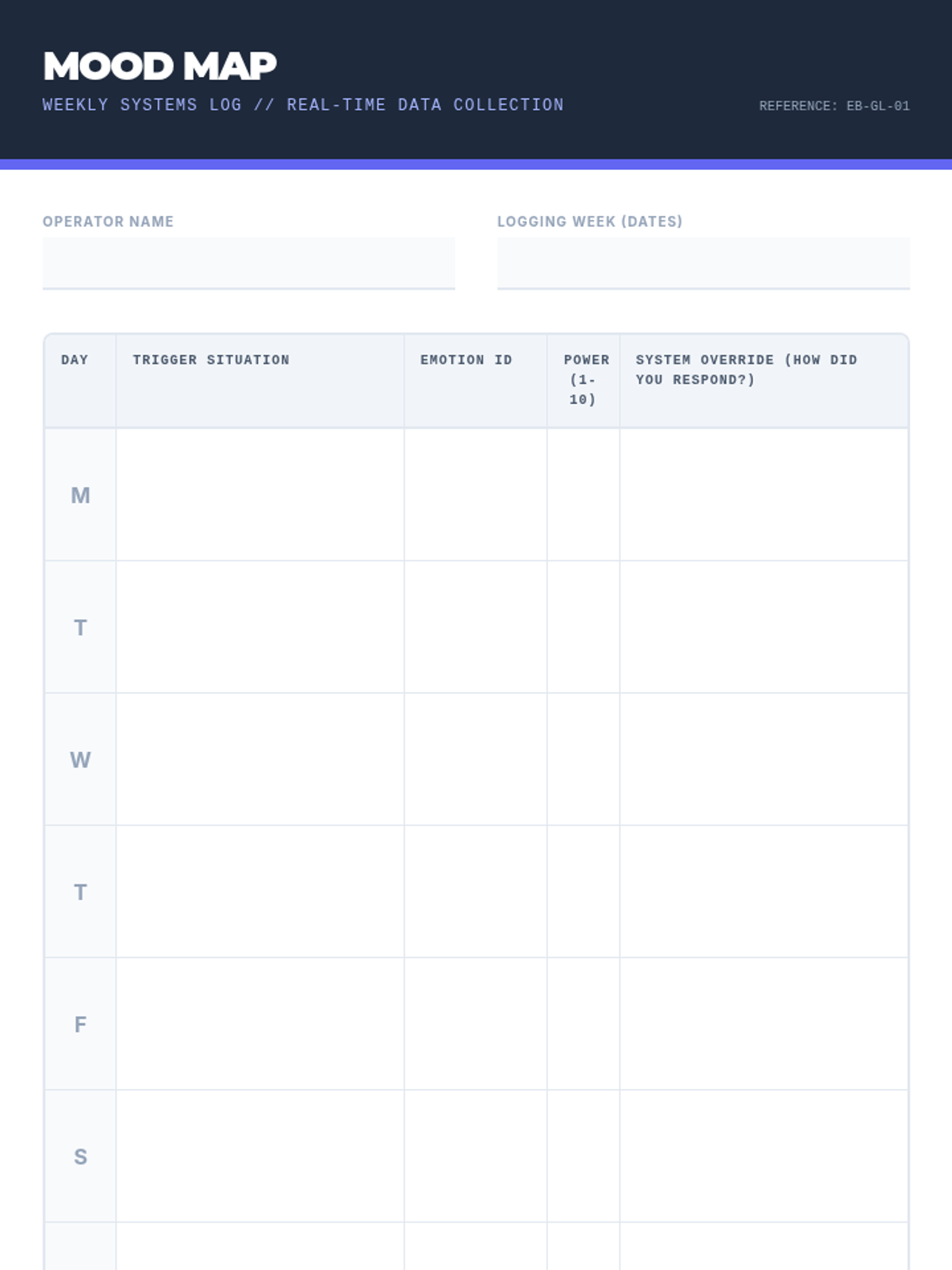
A weekly mood tracking graphic organizer designed as a 'Systems Log' for students to record emotional triggers, intensity levels, and their responses.
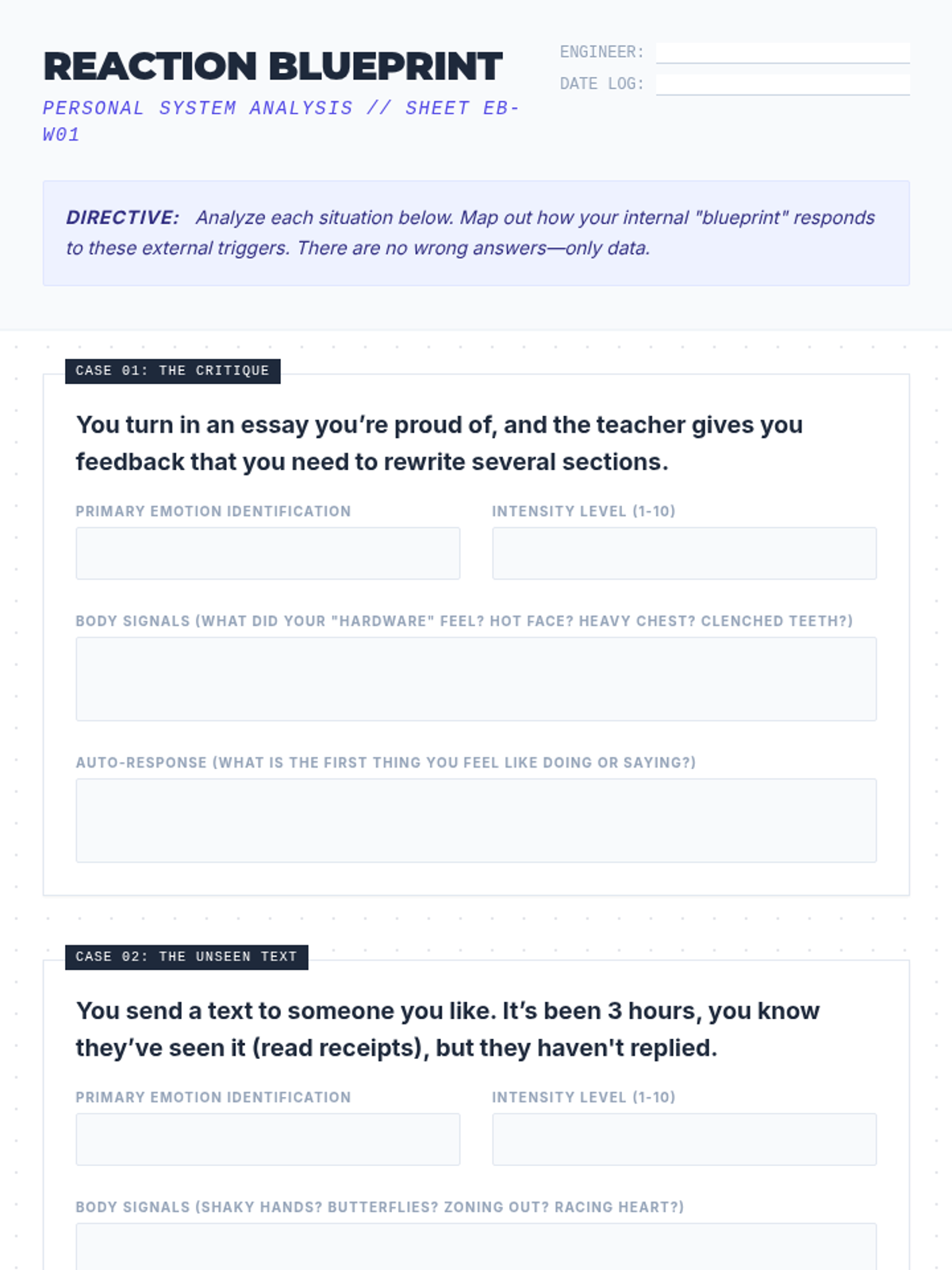
A student worksheet featuring 3 relatable scenarios (critique, social rejection, and success) with fill-in-the-blank sections for identifying emotions, physical sensations, and automatic responses.
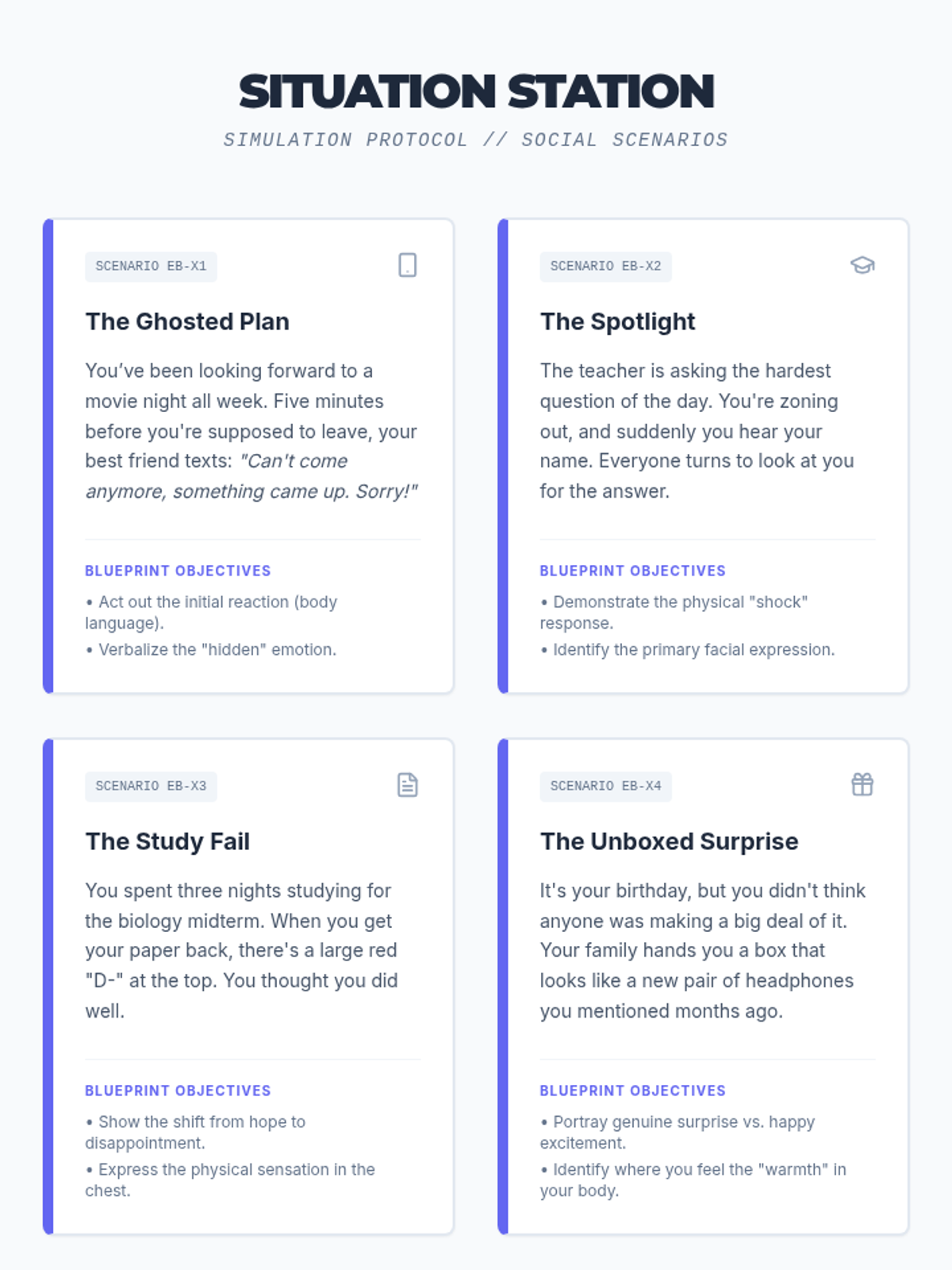
A set of 6 roleplay scenario cards for teenagers, focusing on relatable situations like school grades, social media exclusion, and group projects, designed to help students identify and express their emotional blueprints.
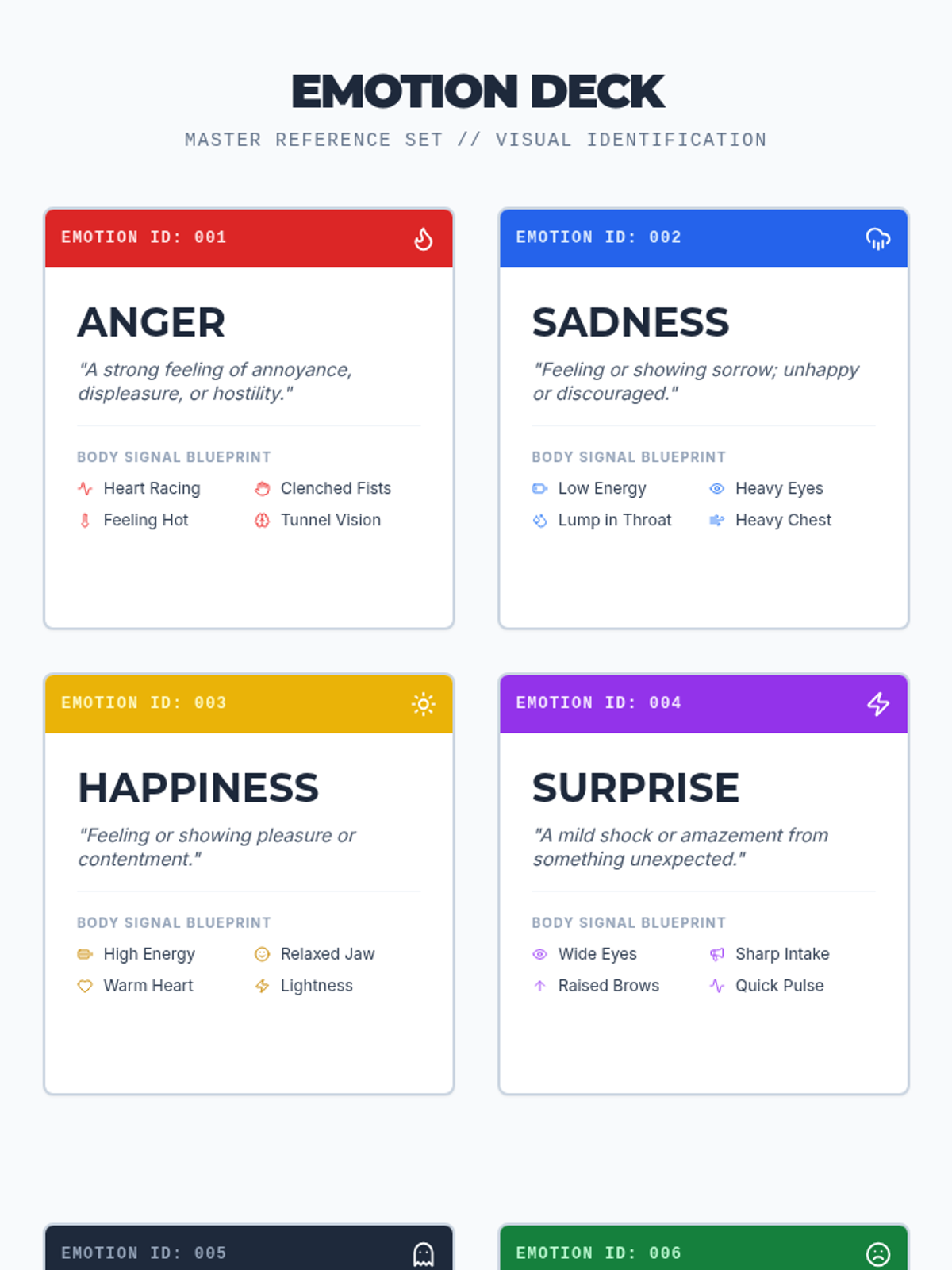
Visual reference cards for 7 core emotions (Anger, Sadness, Happiness, Surprise, Fear, Disgust, Frustration), including definitions and physical sensation 'blueprints' to help teens identify feelings in their bodies.
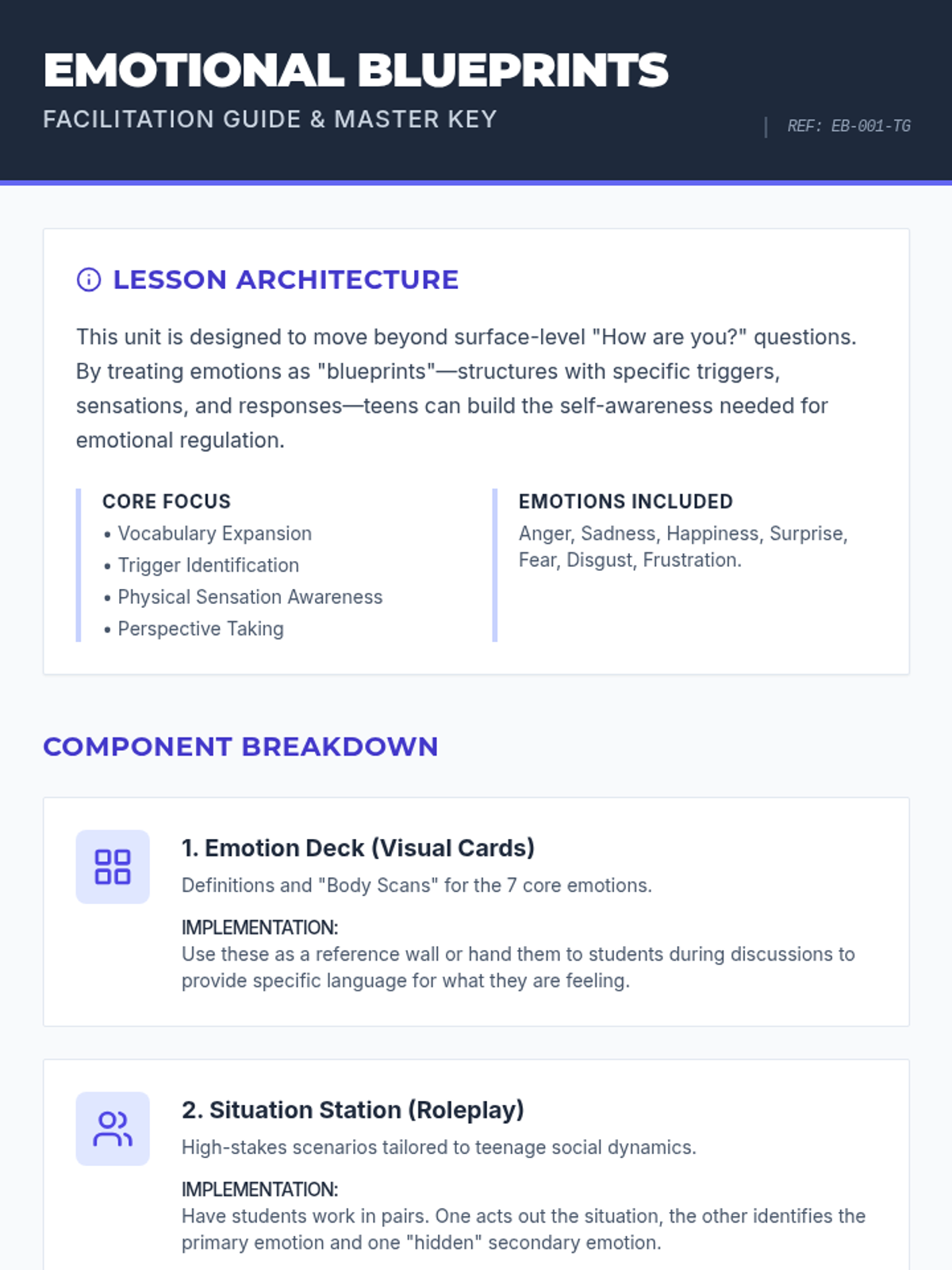
A teacher facilitation guide for the 'Emotional Blueprints' lesson, providing an overview of the curriculum components, implementation strategies for each material, and guiding questions for classroom discussion.
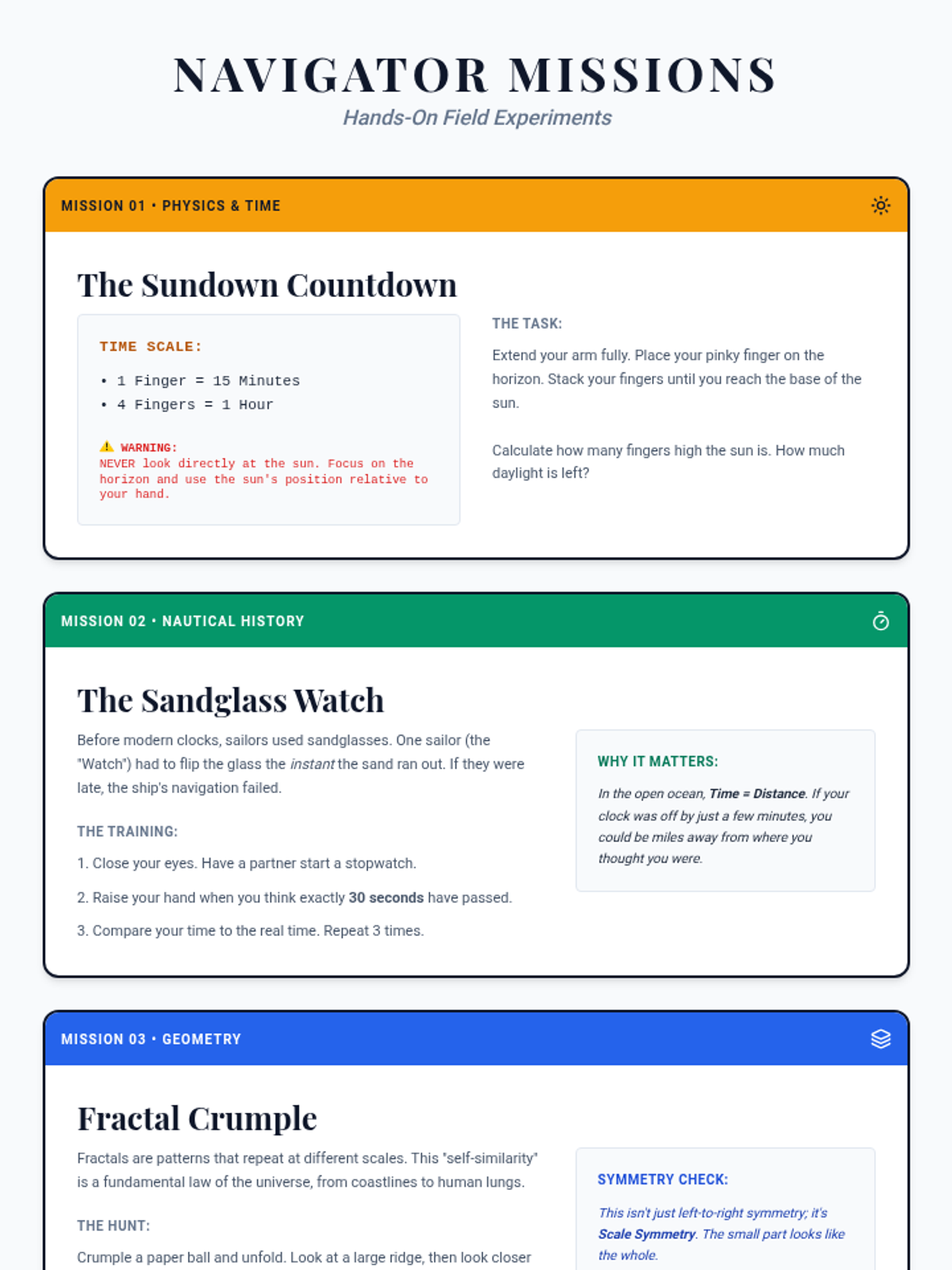
A set of four hands-on field missions for students to experiment with daylight estimation, historical nautical timekeeping, fractal scaling, and sun-based coordinate mapping. All missions now feature consistent, professional layouts with scientific sidebars.
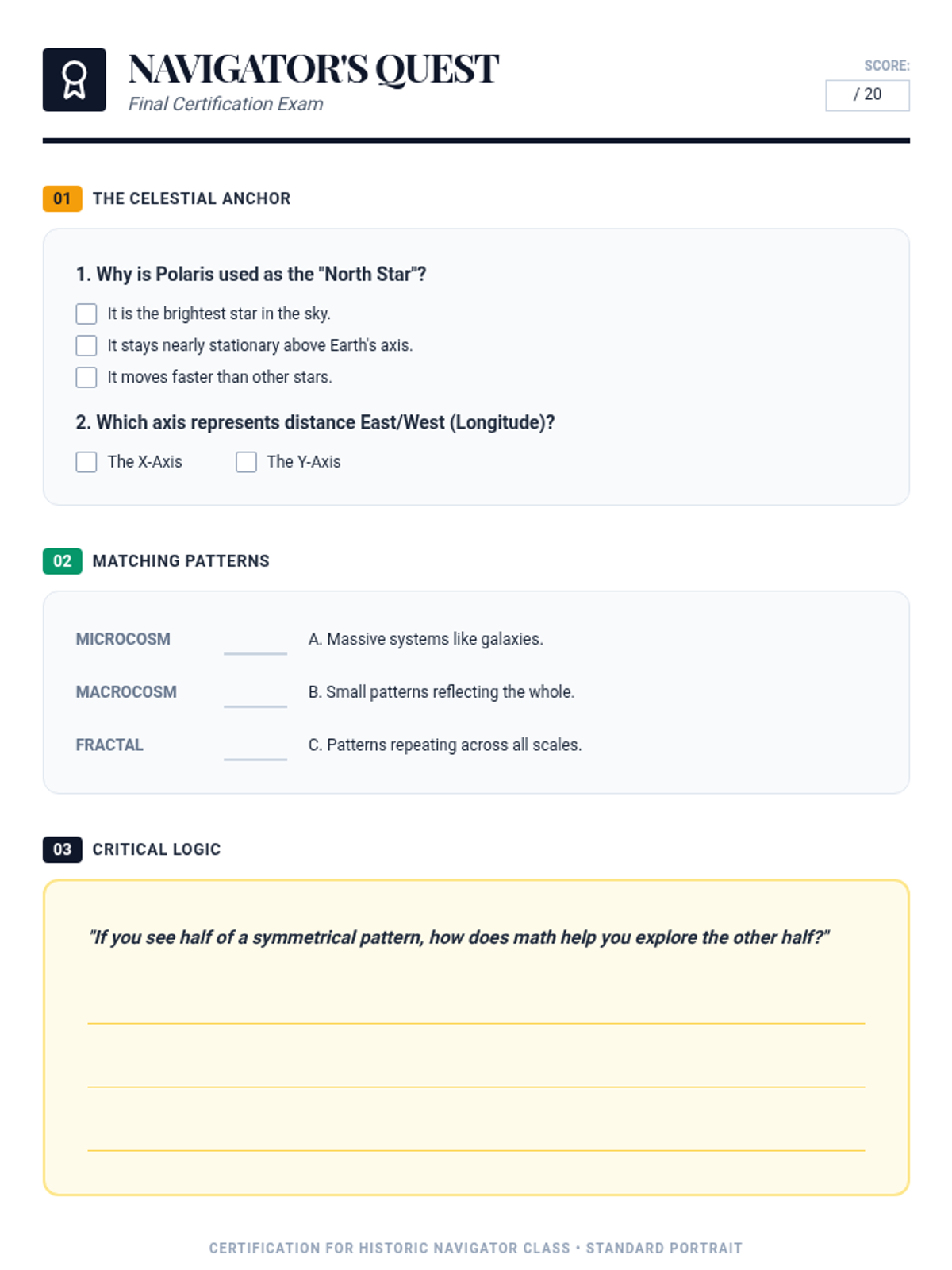
A comprehensive quiz covering fixed-point navigation, coordinate axes, microcosms vs macrocosms, and different types of symmetry. Refactored for standard portrait format.
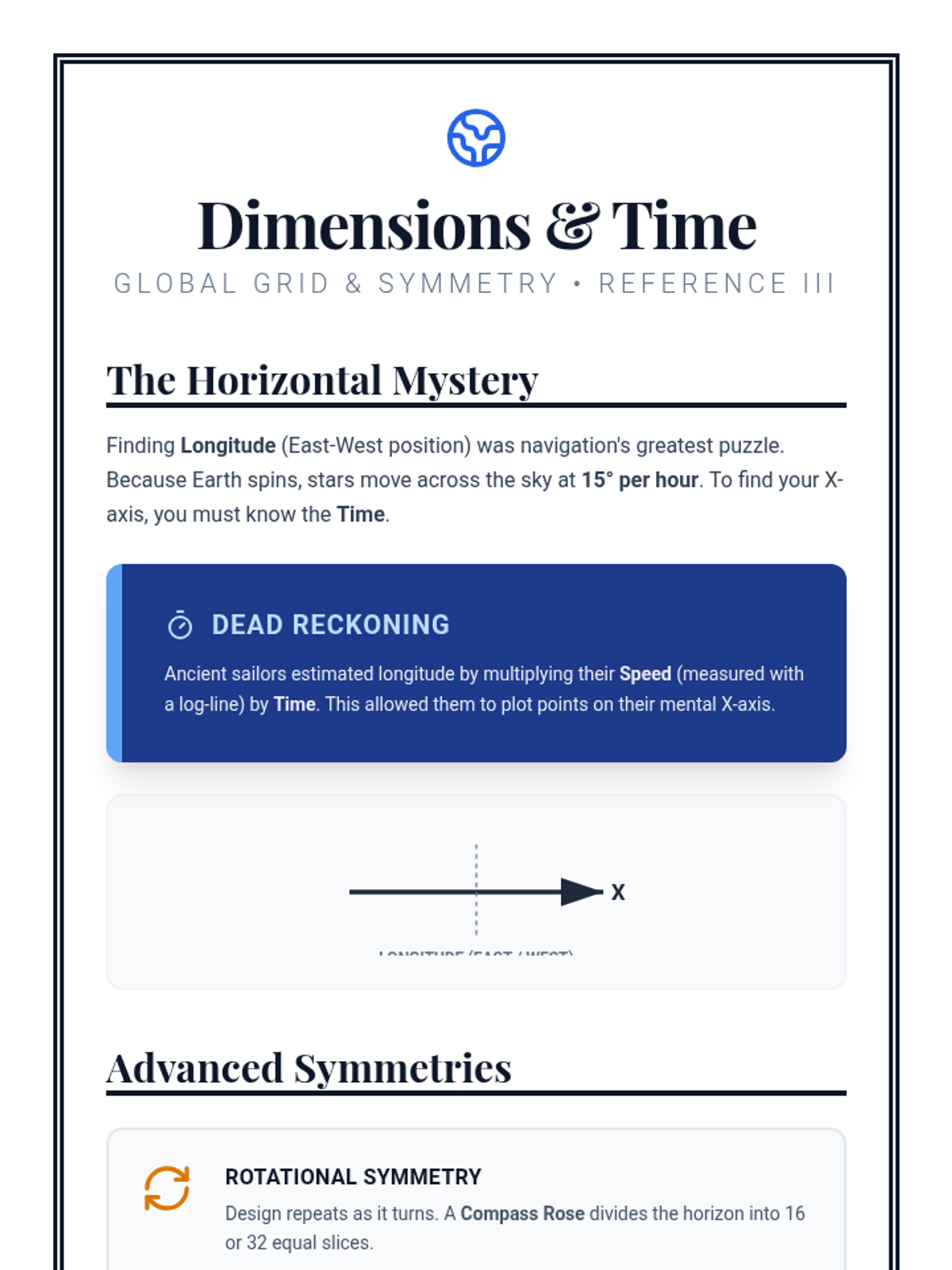
A reference page explaining Longitude as the X-axis of navigation, along with advanced symmetry concepts like Rotational and Logarithmic Spirals. Updated for scientific accuracy regarding the difficulty of longitude and spiral patterns. Standard portrait format.
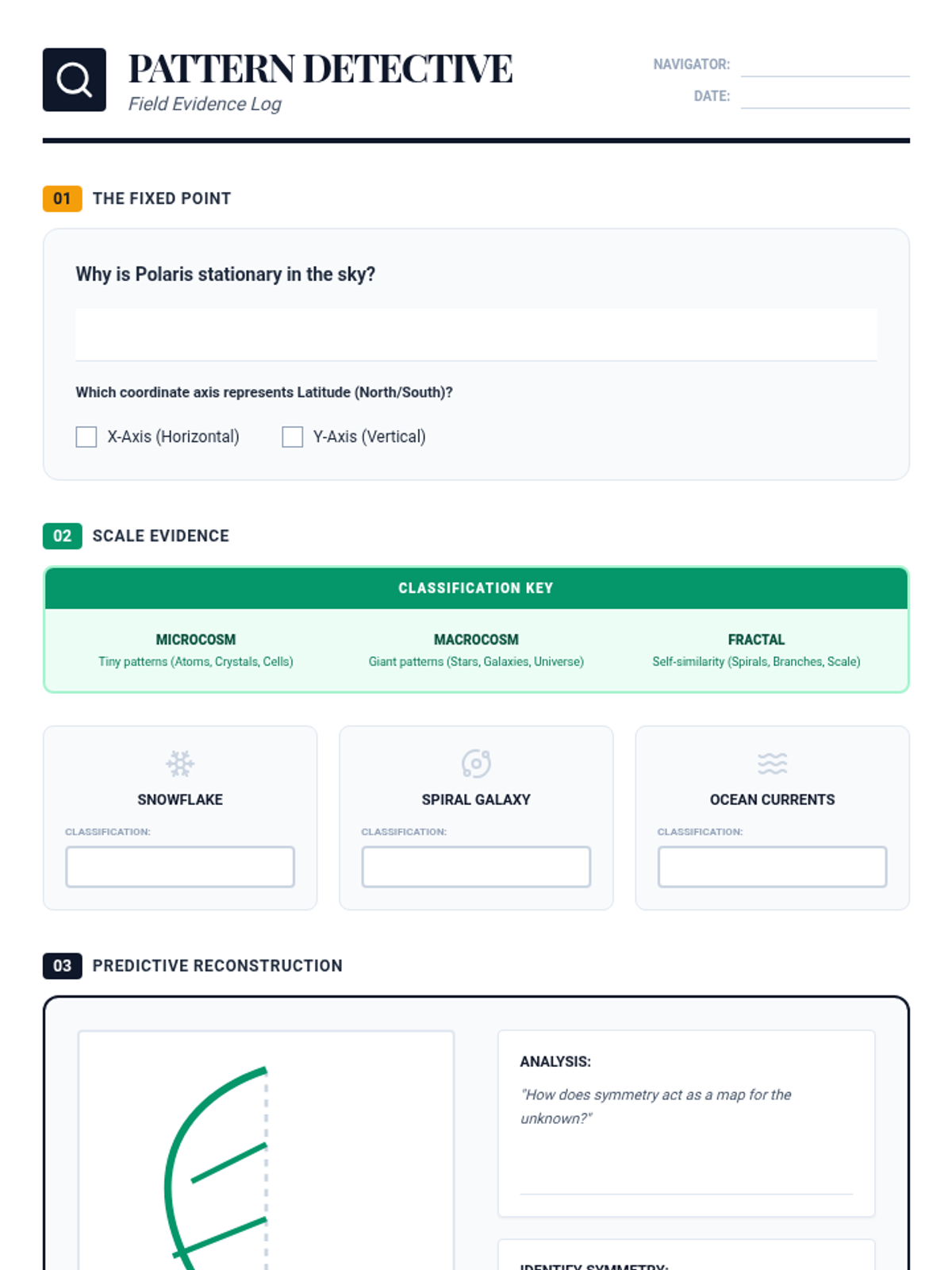
A conceptual worksheet for students to identify patterns of symmetry and scale in nature. Updated with 'Mission Break' callouts after Section 1 and Section 2 to guide students to specific field activities.
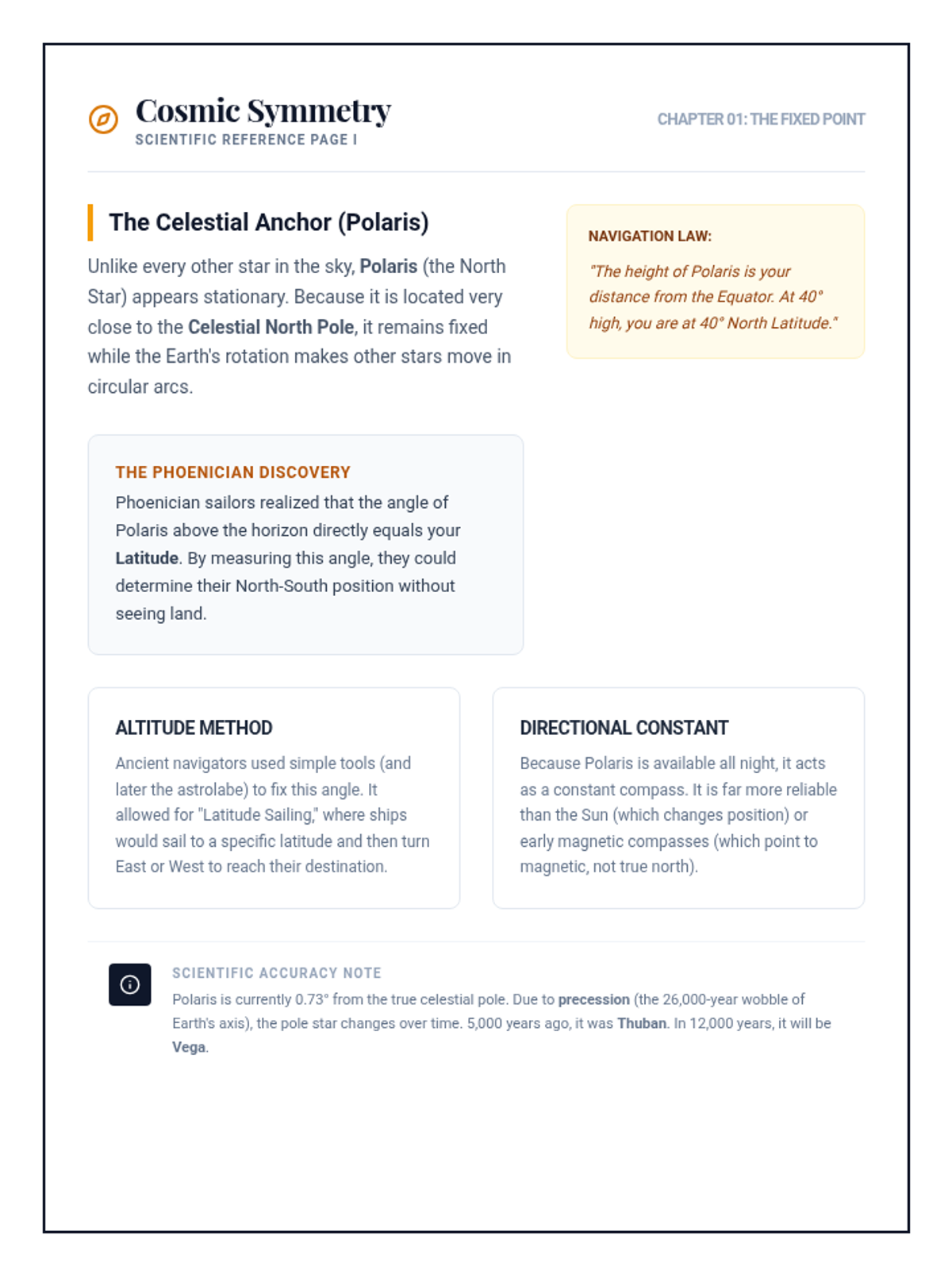
A two-page reference sheet covering the North Star (Polaris) as a navigation tool on page one, and the concepts of symmetry and scale (Microcosm/Macrocosm) in nature on page two. Updated for scientific accuracy and refactored for standard portrait format with small, professional font sizes.
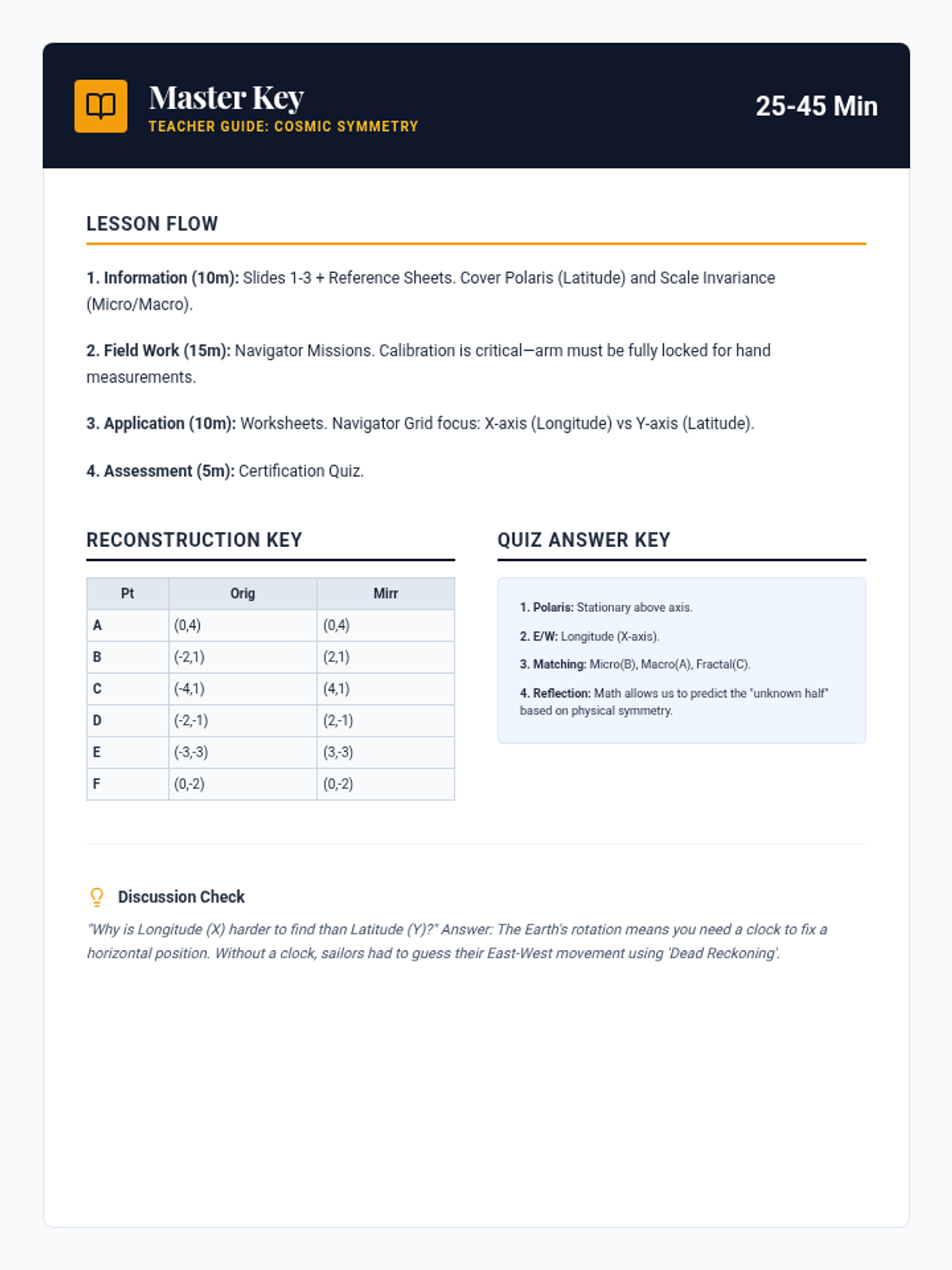
A teacher guide providing a 15-minute pacing plan, discussion script, and answer key for the Cosmic Symmetry lesson. Updated for scientific accuracy regarding precession and terminology. Standard portrait format.