Comprehensive answer key and instructional guide for teachers. Includes solutions for all worksheets and passages, along with quick classroom activities and tips.
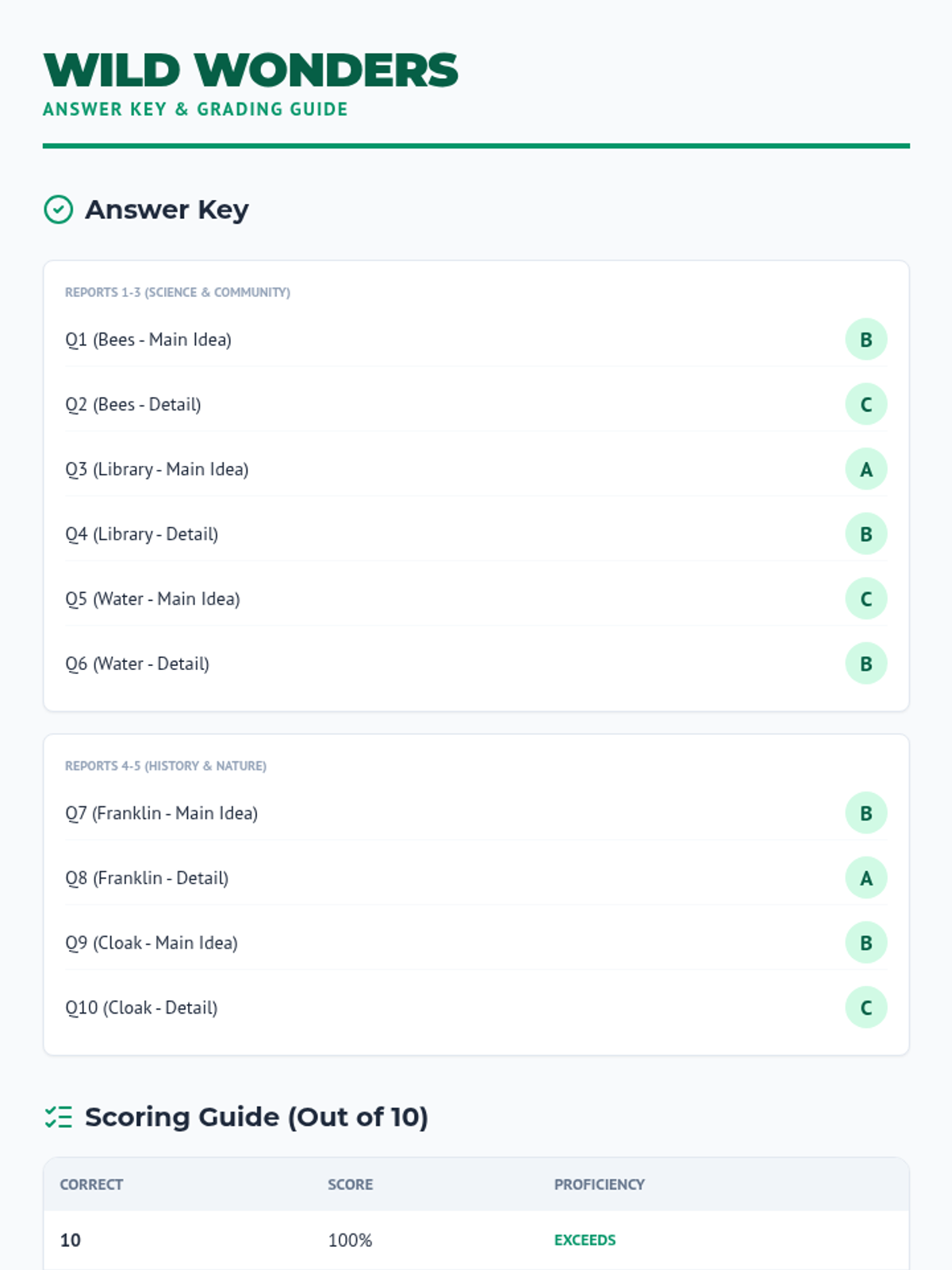
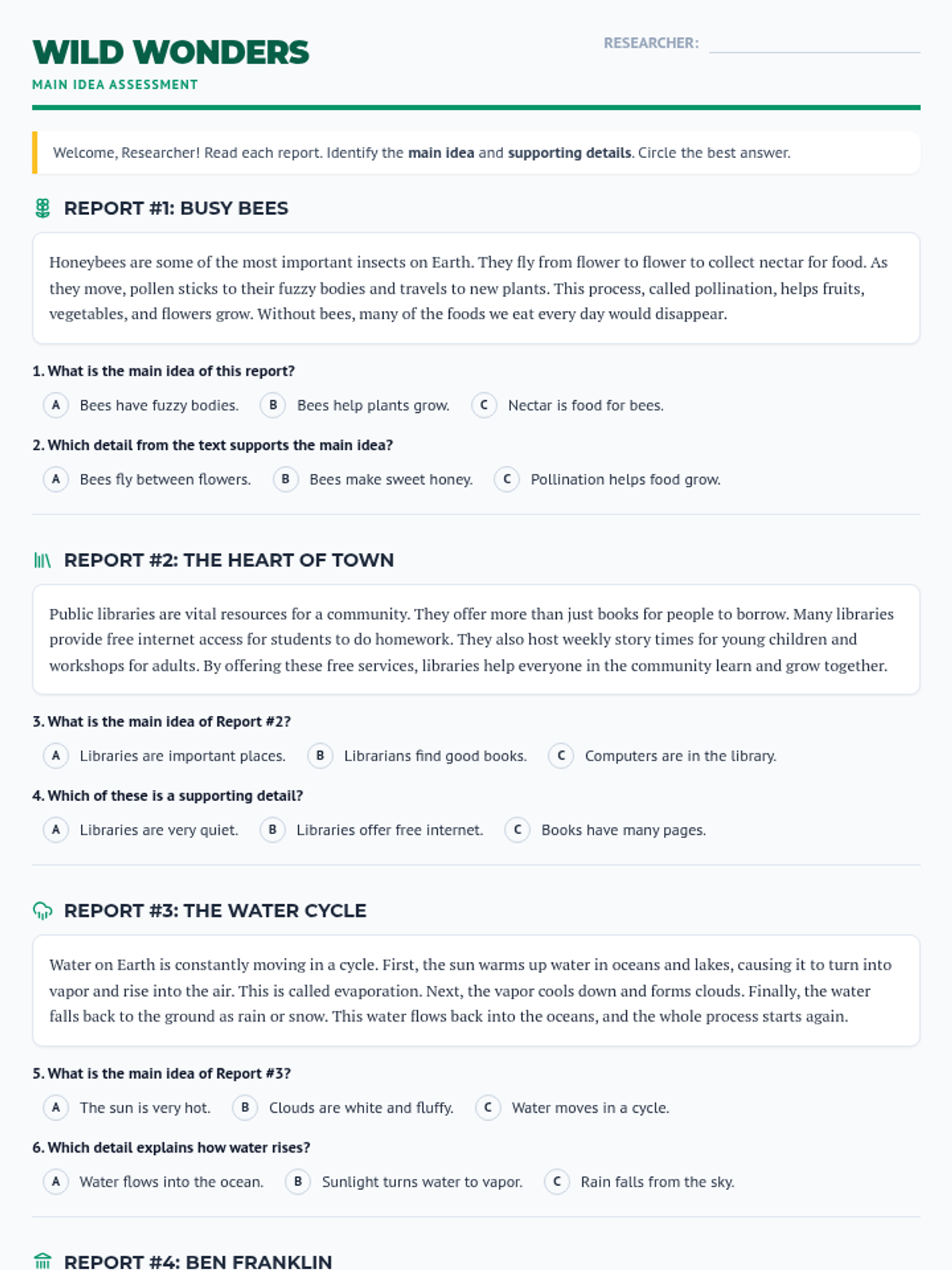
An answer key and teacher grading guide for the 10-question Wild Wonders Assessment, including scoring for the new animal camouflage passage.
A 3rd-grade assessment on main idea and supporting details, featuring five themed non-fiction passages covering science and social studies topics with 10 multiple-choice questions.
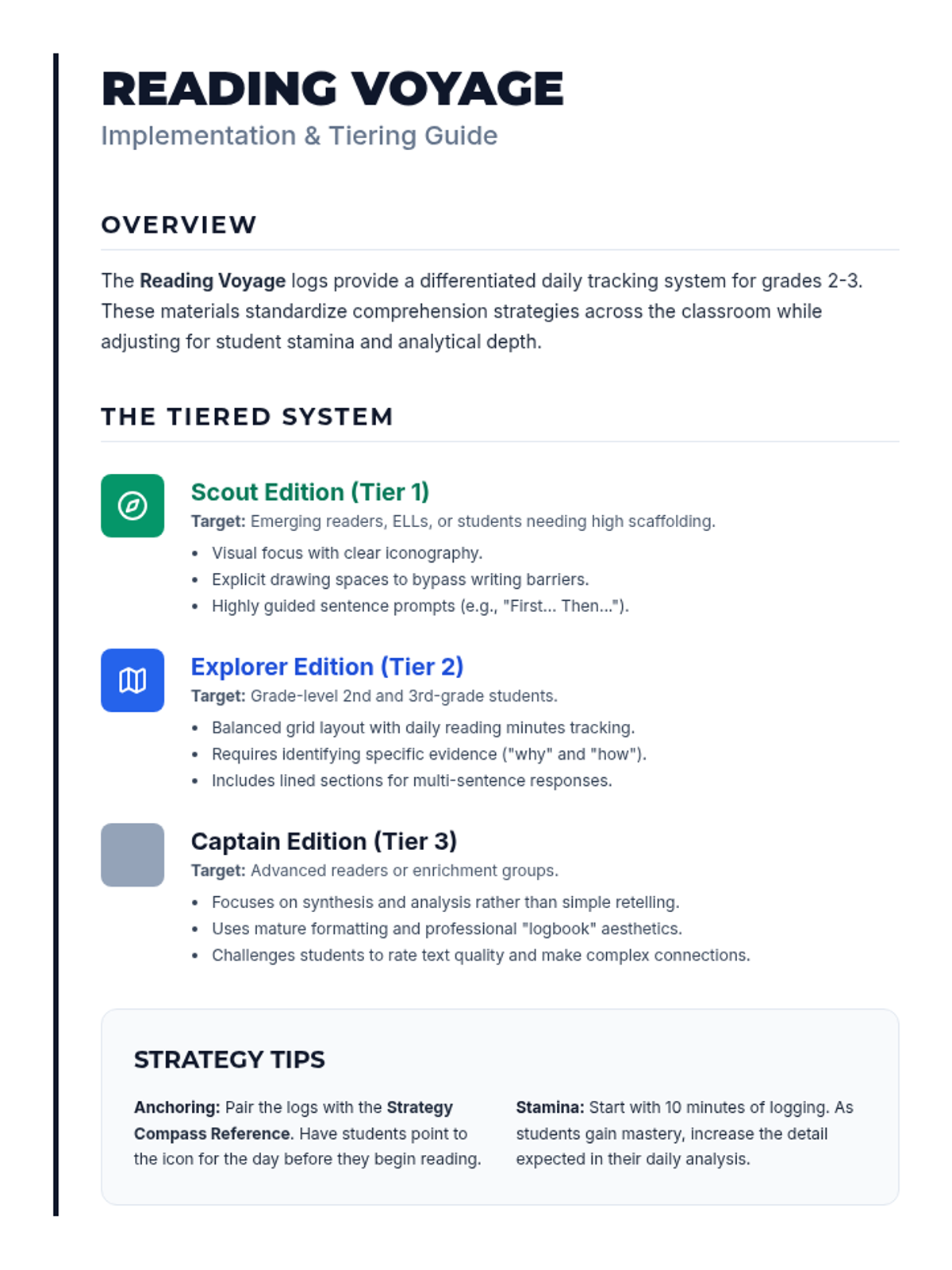
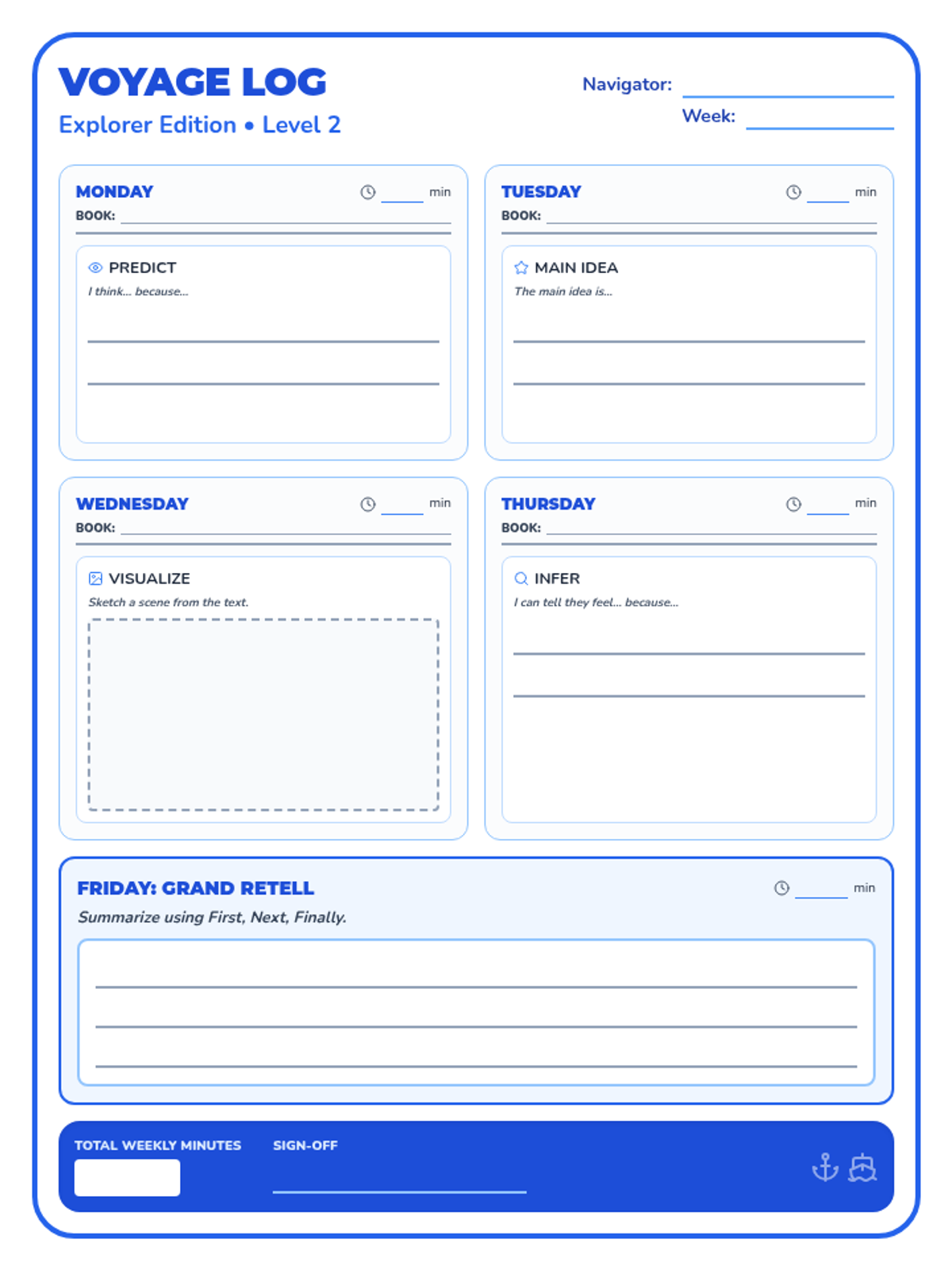
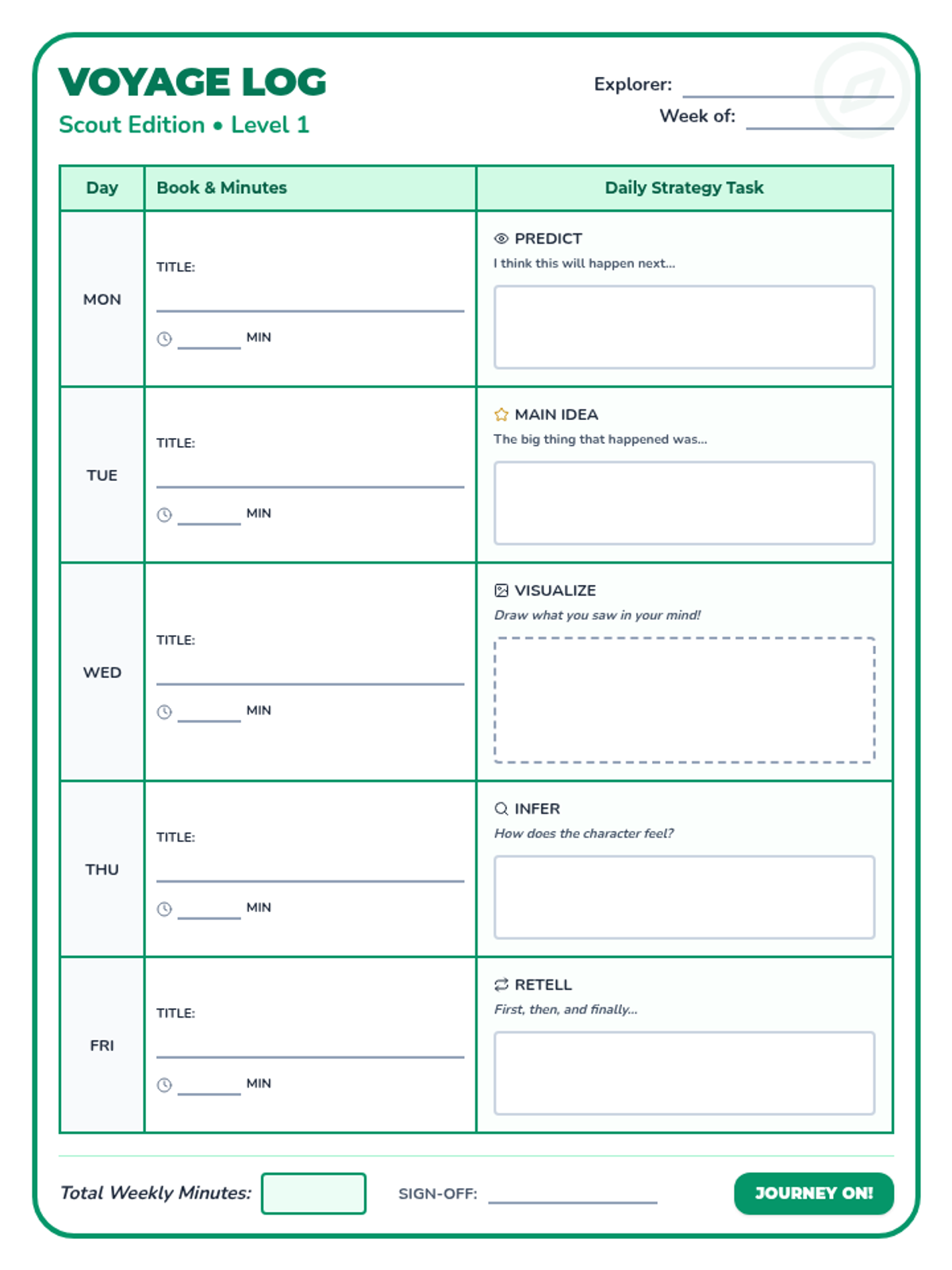
A teacher facilitation guide for the Reading Voyage tiered reading logs. It explains the differences between the Tier 1, 2, and 3 versions and provides implementation tips for the classroom.
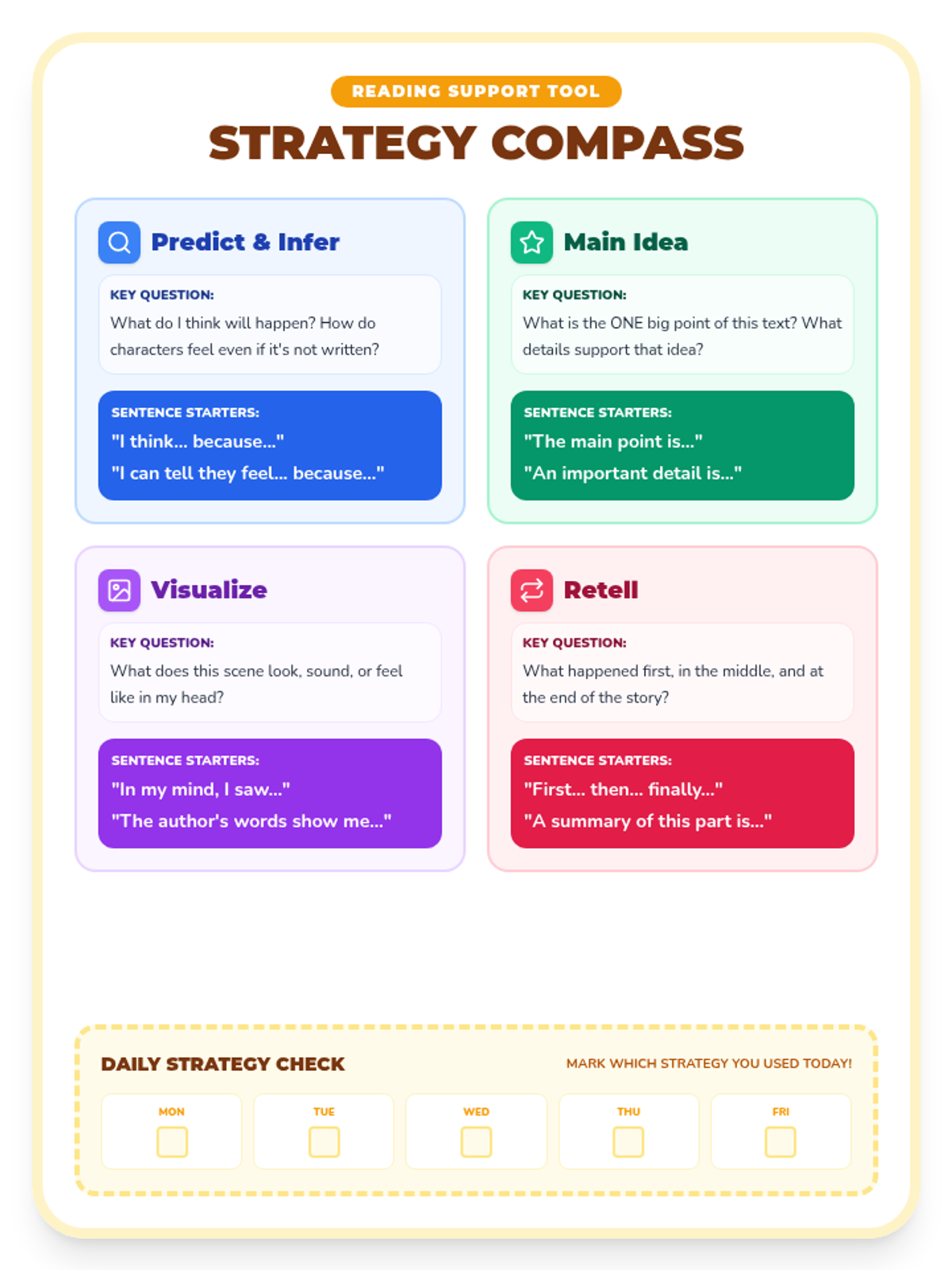
A colorful visual reference sheet for 2nd-3rd grade students explaining four key reading strategies: Predicting/Inferring, Main Idea, Visualizing, and Retelling. It includes definitions, prompts, and sentence starters.
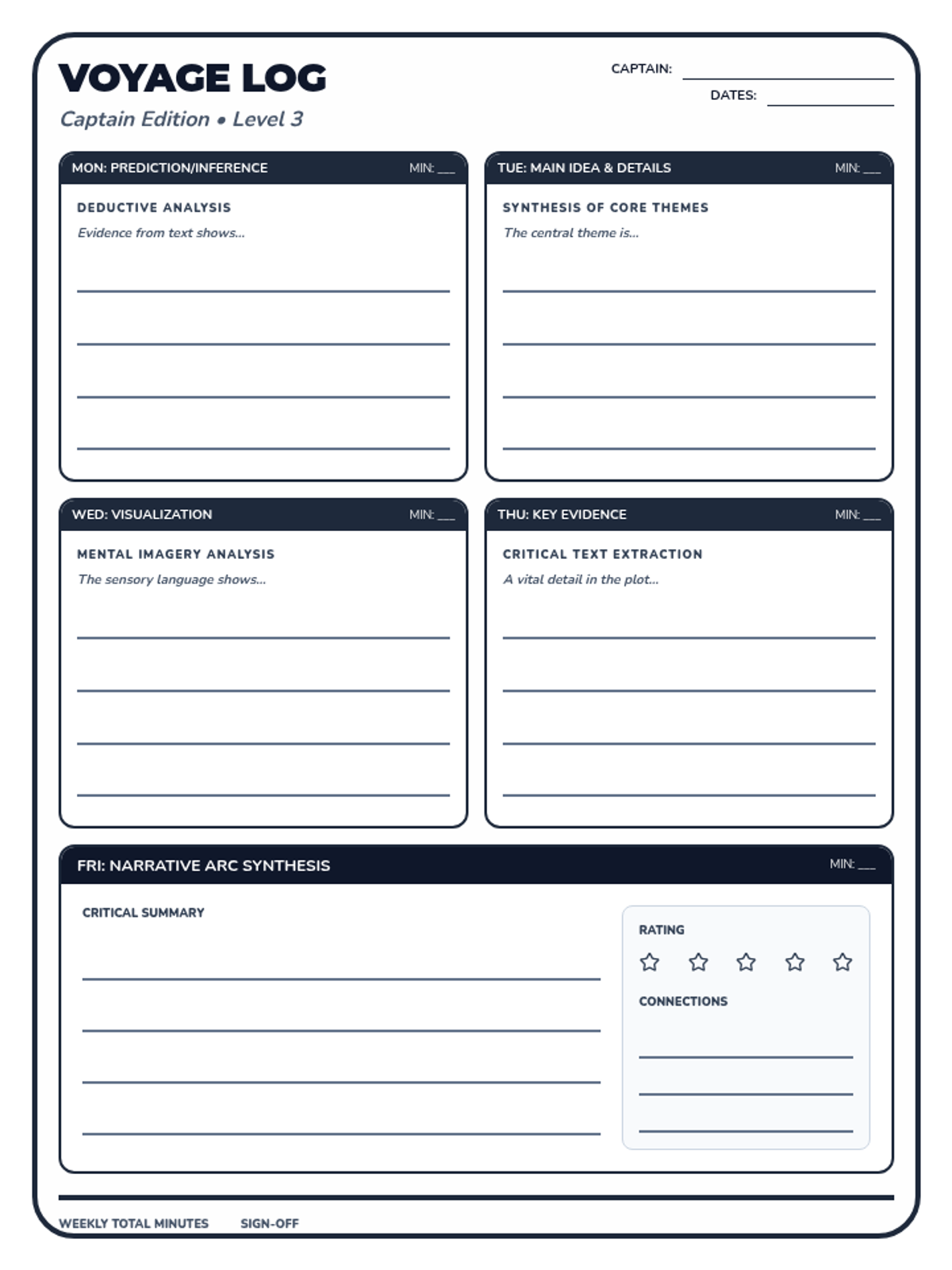
A Tier 3 enrichment reading log for 2nd-3rd grade students. It focuses on sophisticated analysis, evidence-based inferencing, and structural synthesis. The layout is professional and "Captain" themed to challenge advanced readers.
A Tier 2 grade-level reading log for 2nd-3rd grade students. It uses a balanced grid layout with specific strategy prompts for each day, requiring more written evidence and higher-order thinking than the Scout edition.
A scaffolded Tier 1 reading log for grade 2nd-3rd grade students. It uses simple prompts, drawing spaces, and clear icons to support emerging readers in applying strategies like predicting and retelling.
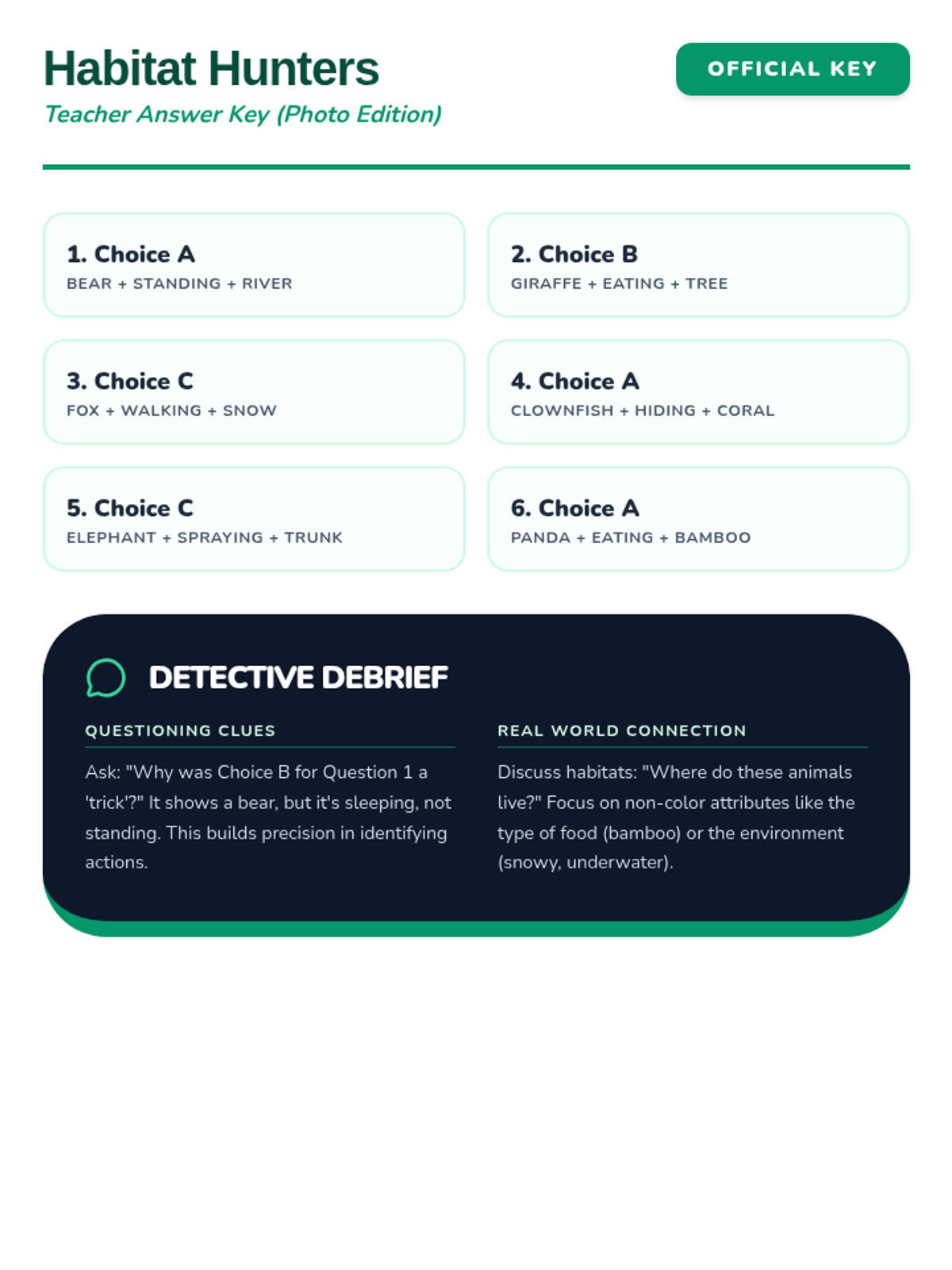
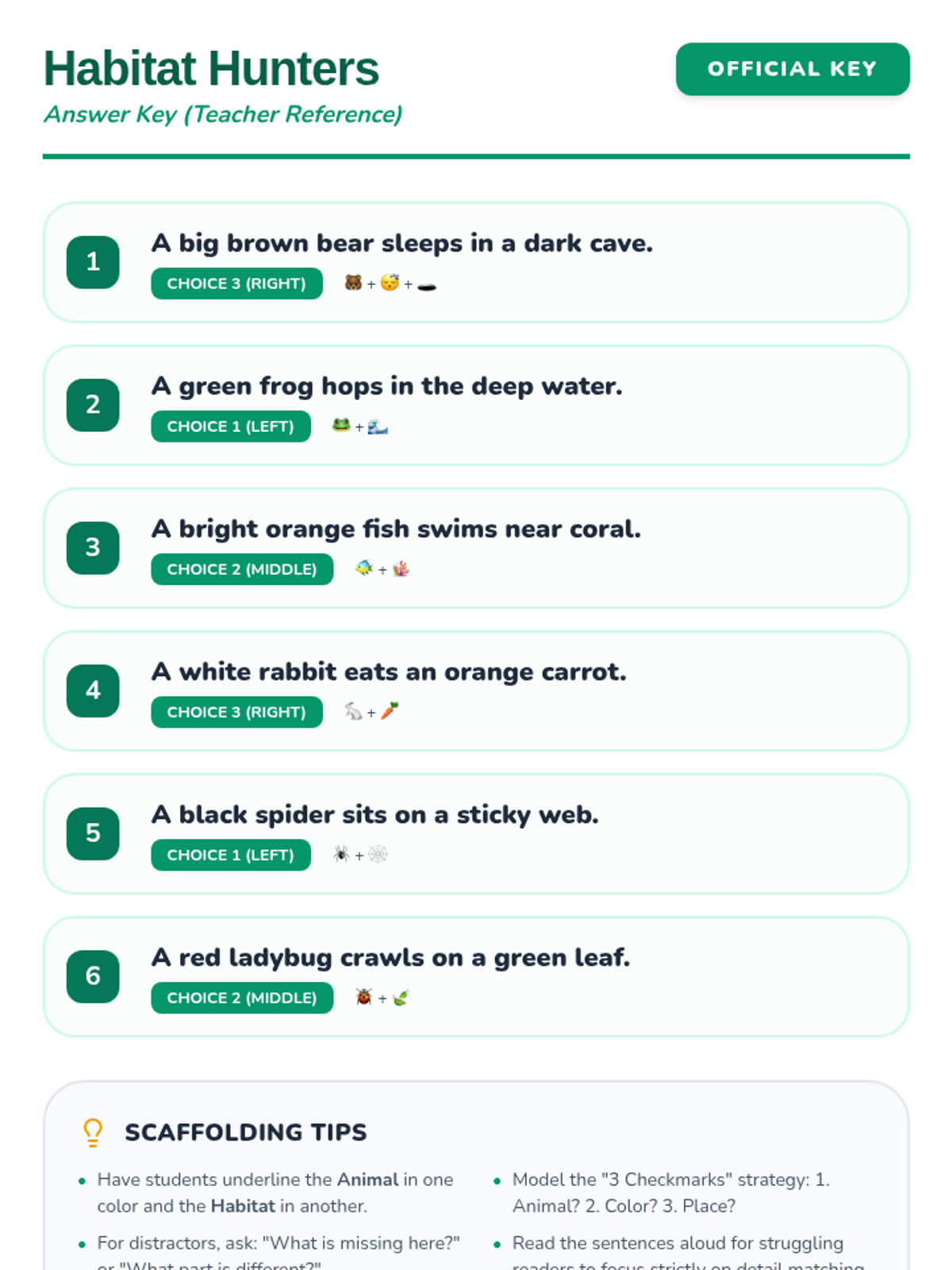
An answer key for the Habitat Hunters Photo Worksheet, updated to exclude color-based details and focus on action, size, and habitat. Fixed layout and contrast issues.
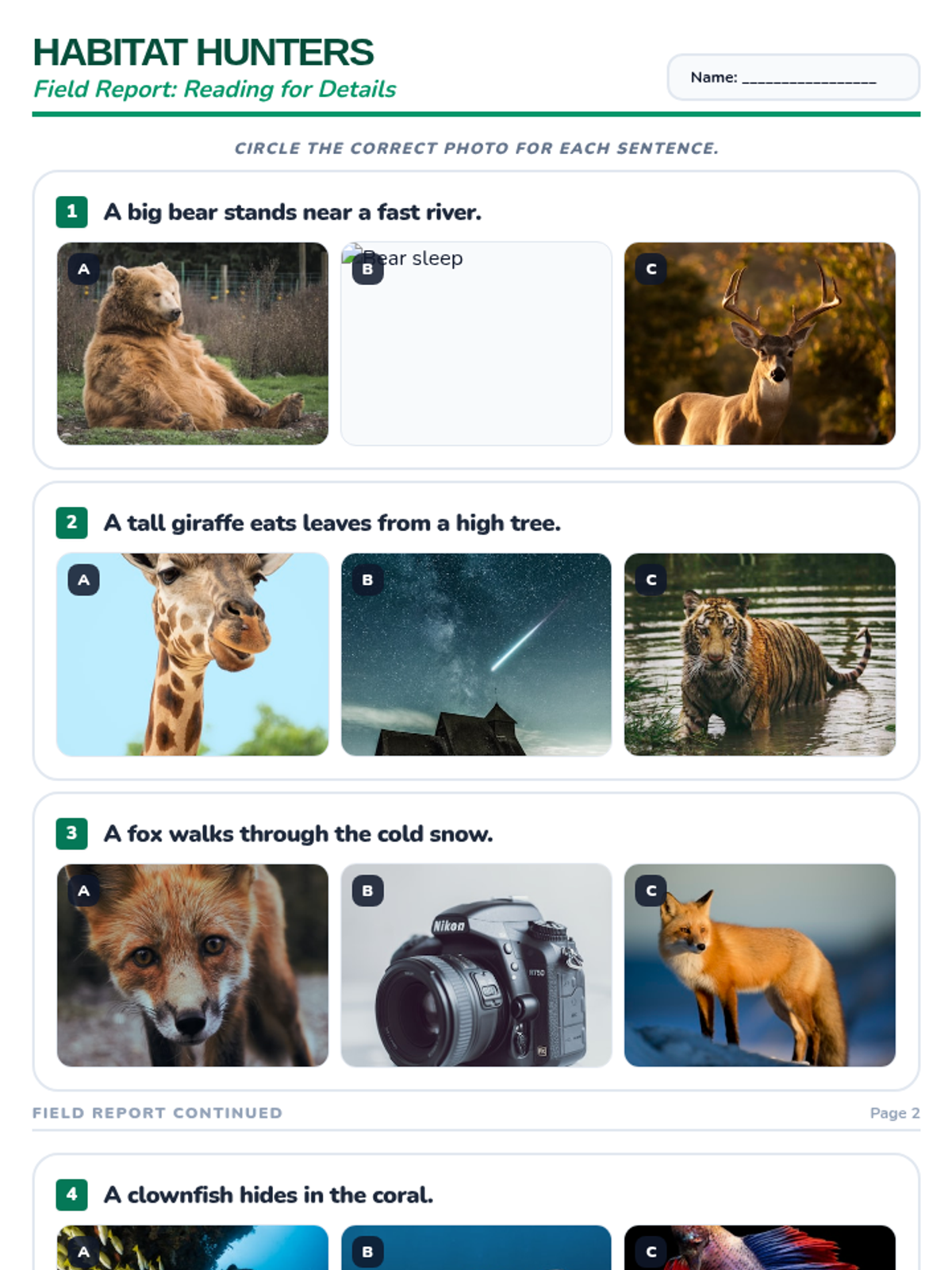
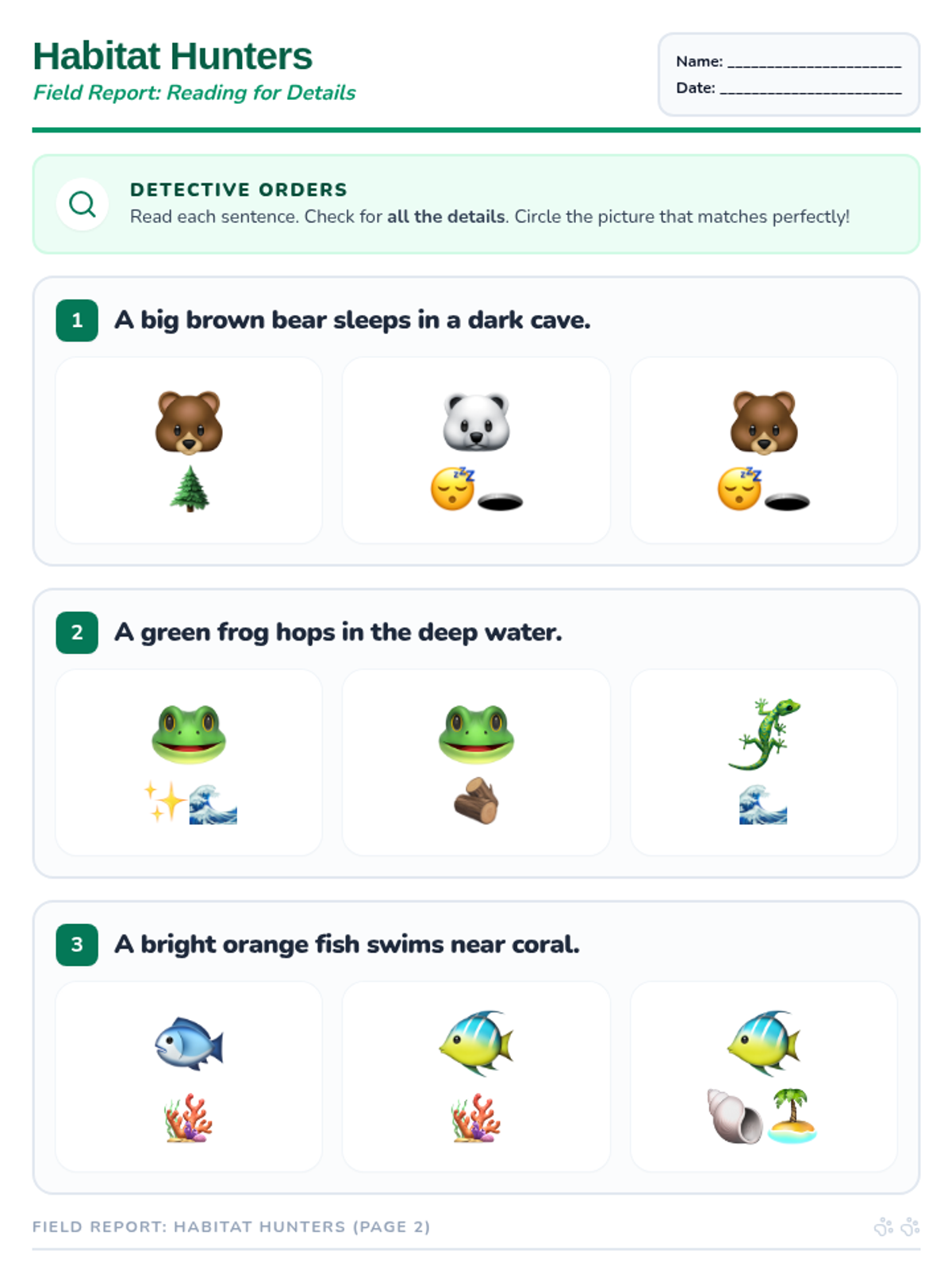
A 1st-grade reading comprehension worksheet using real-life animal photographs. This version excludes color words and fixes broken image links while adding selection instructions. Now with increased spacing and reliable image sources.
Presentation slides for 1st grade that teach how to identify multiple details in animal descriptions and match them to real-life photographs. This version excludes color-based clues and fixes image selection. Now with fixed spacing and header contrast.
An answer key for the Habitat Hunters worksheet, providing correct answers and identifying the specific details students should look for in each problem. Includes teaching tips. Now updated with grammatical fixes.
A two-page worksheet for first graders where they read animal sentences and select the matching picture from three options, requiring them to identify 2-3 specific details. Each question remains on a single page. Now formatted for exactly two pages.
Interactive slides that introduce the 'Detail Detectives' concept, teaching students how to identify multiple descriptive details in a sentence and match them to the correct visual representation. Uses a green frog and brown log example.
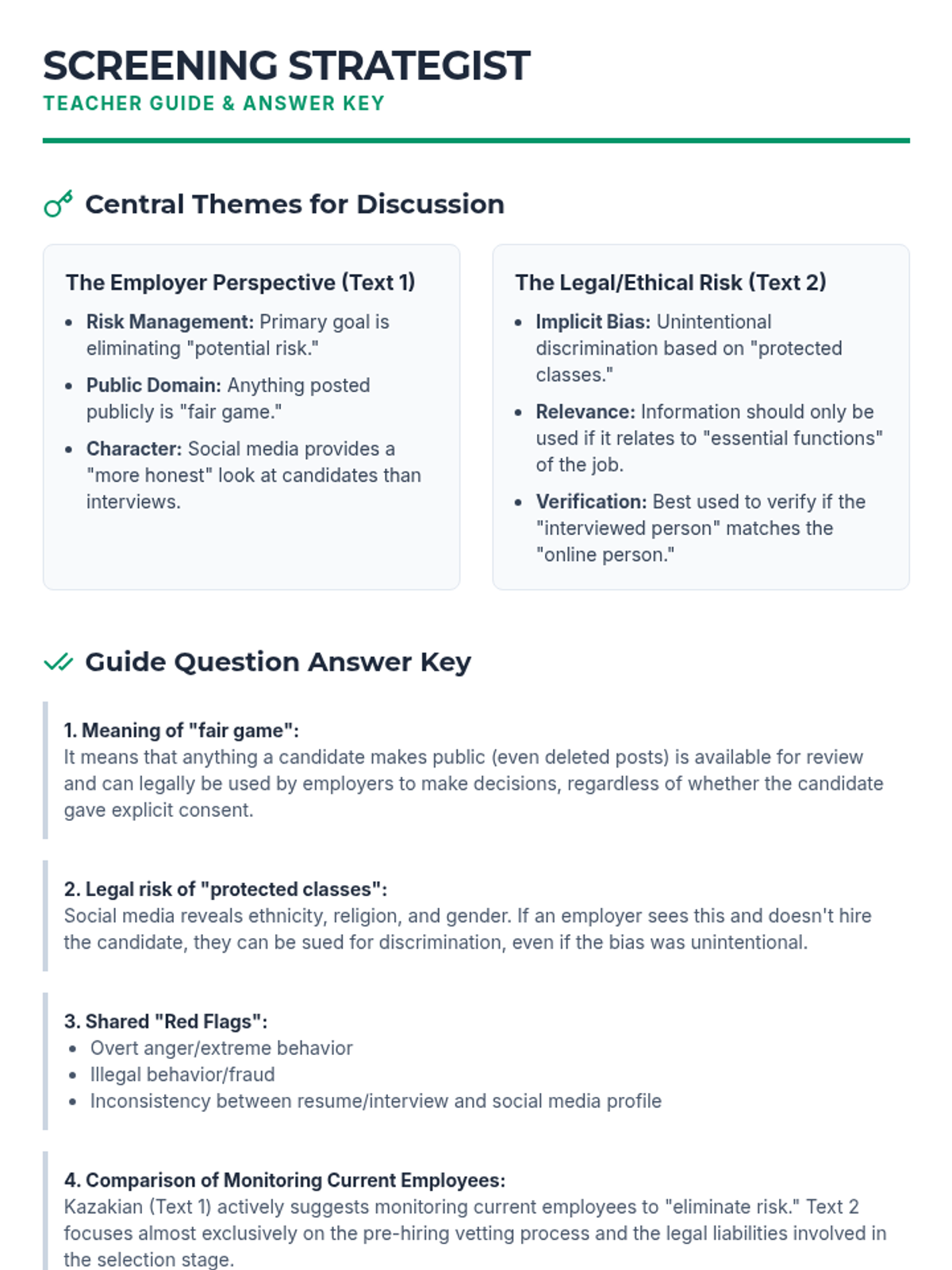
A teacher-facing resource providing an answer key for the guide questions and instructional tips for facilitating the argument essay. It highlights central themes and common student pitfalls.
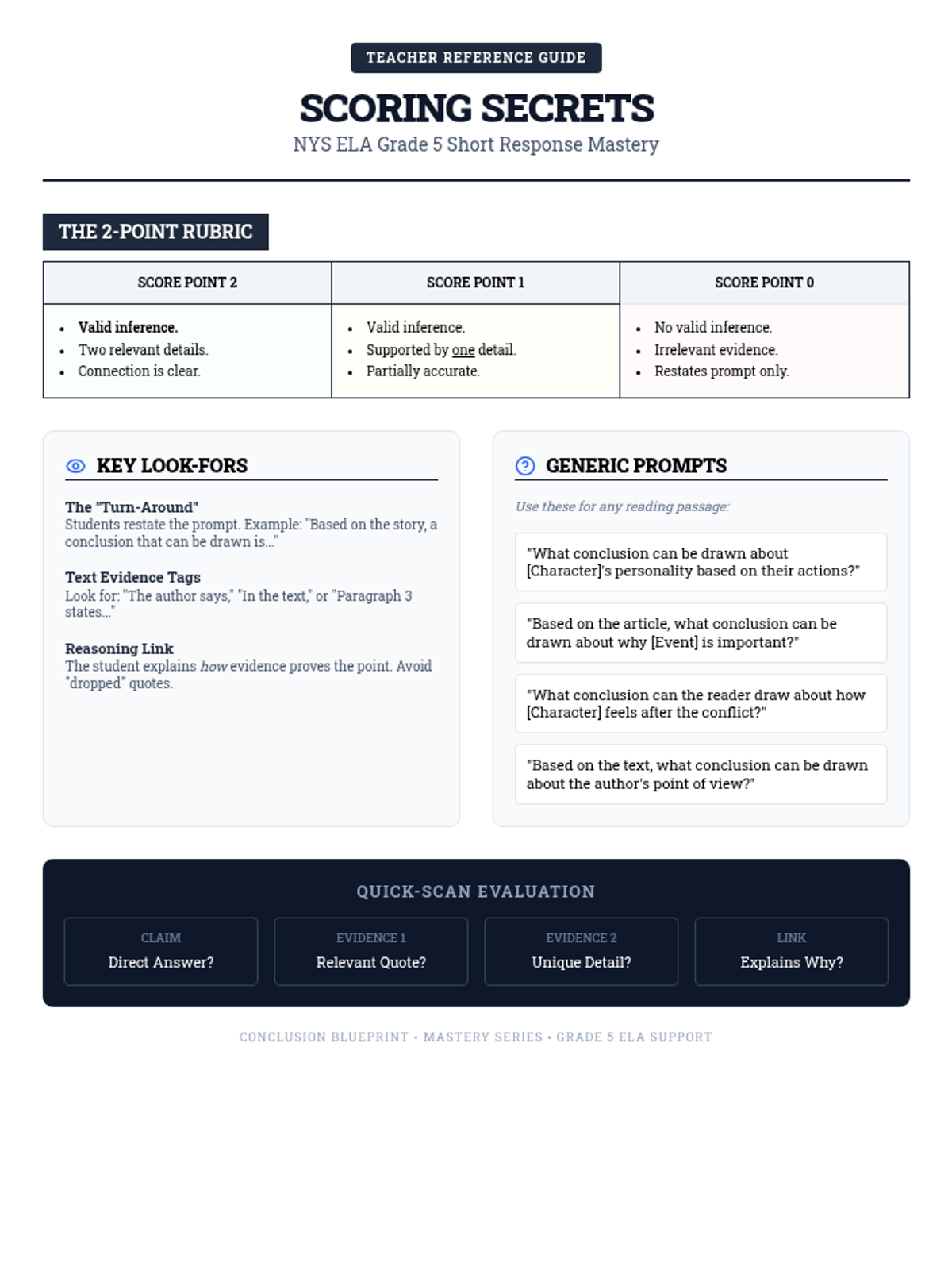
A teacher-facing guide for scoring 5th grade NYS ELA short response questions, including a breakdown of the 2-point rubric and generic question stems.
A visual graphic organizer designed to help students brainstorm and structure their argumentative essay. It includes sections for a thesis statement, a pro/con evidence T-chart, and a counterargument planner.
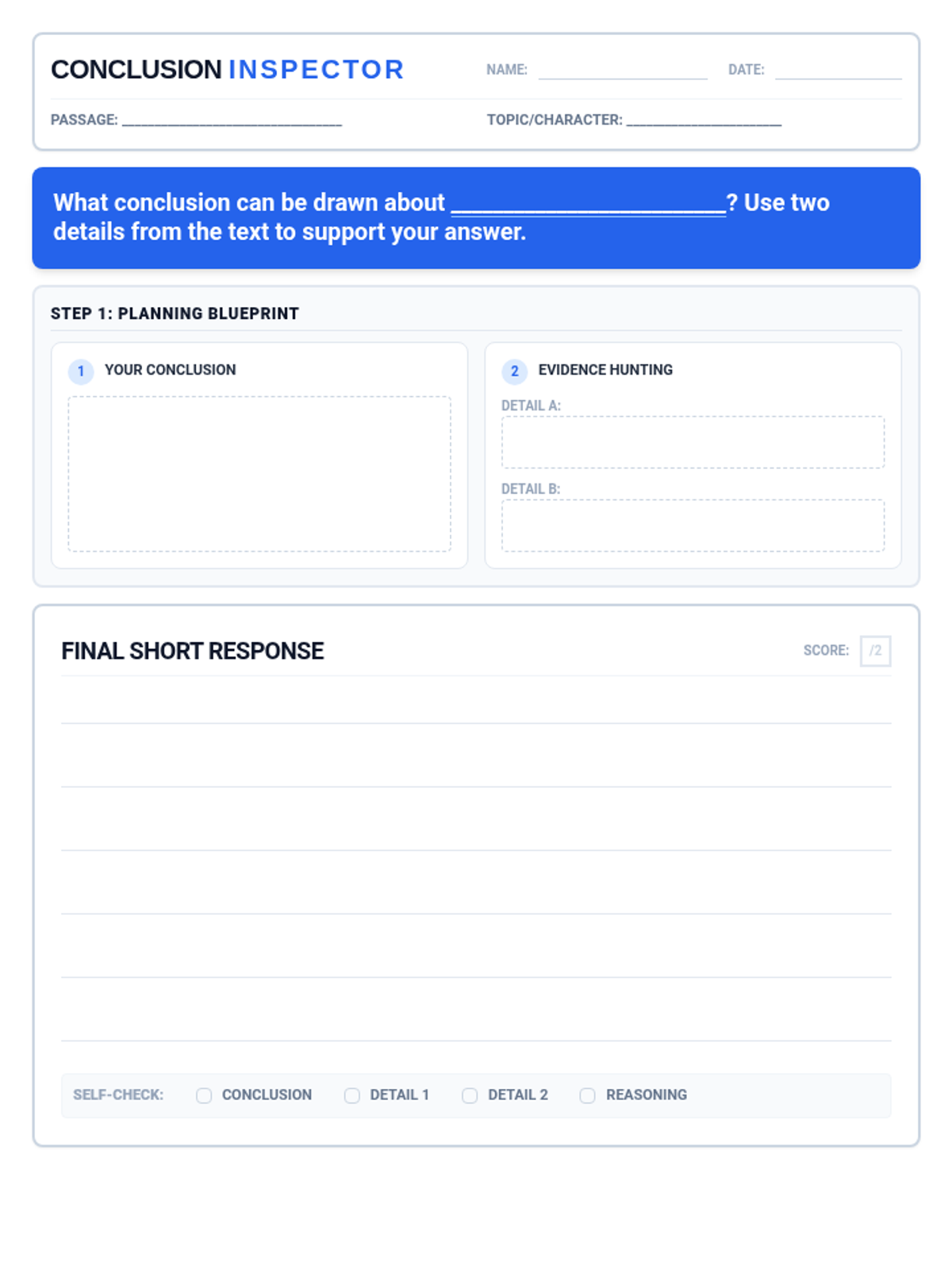
A practice worksheet for 5th grade students to practice drawing conclusions with text evidence, following the NYS ELA short response format.
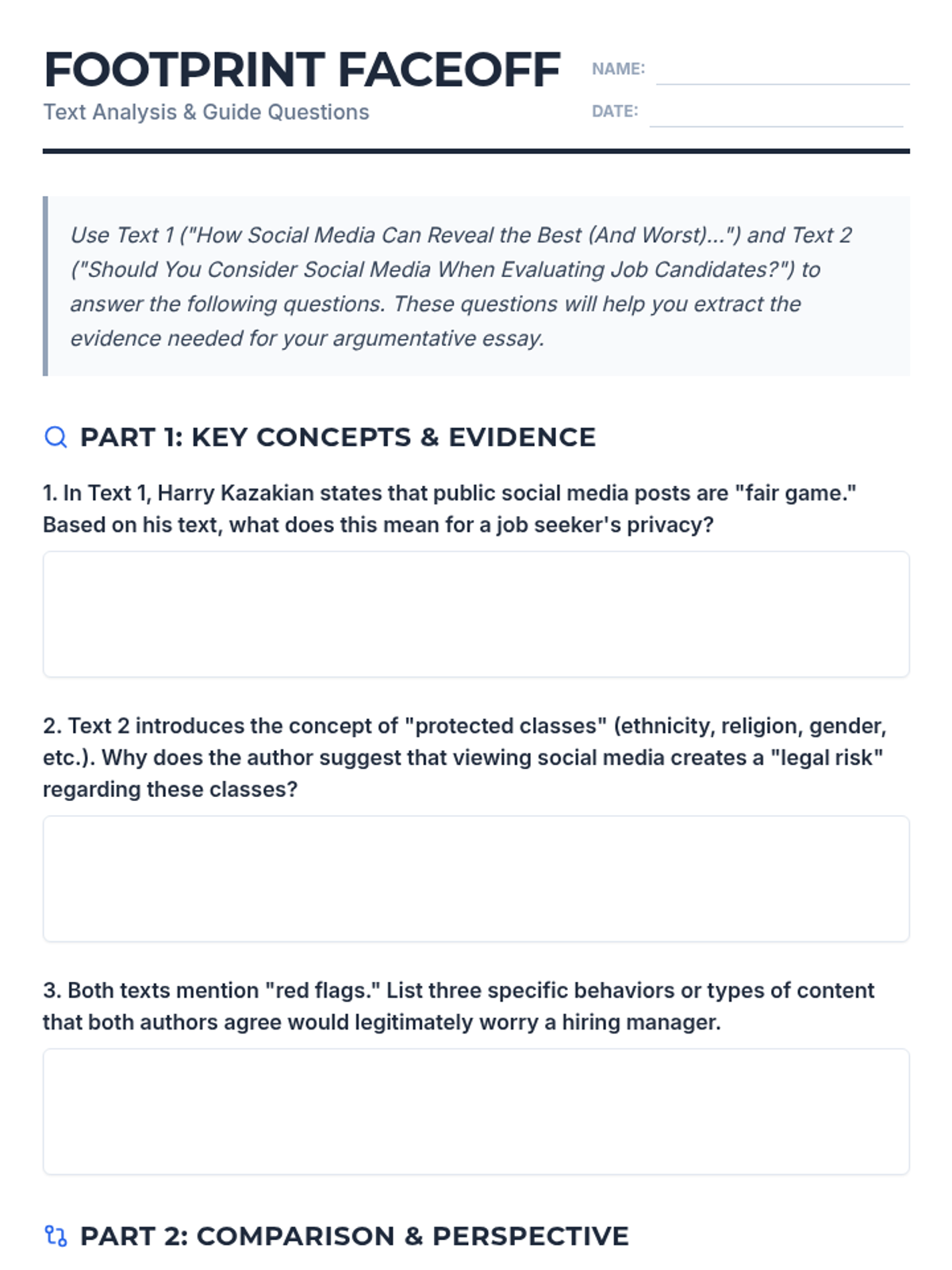
A document containing comprehensive analysis questions based on two texts about social media screening in the hiring process. This helps students extract evidence and understand the perspectives of different authors.
Instructional slides teaching the 'Conclusion Blueprint' for 5th grade NYS ELA, focusing on the 2-point short response format with text evidence.
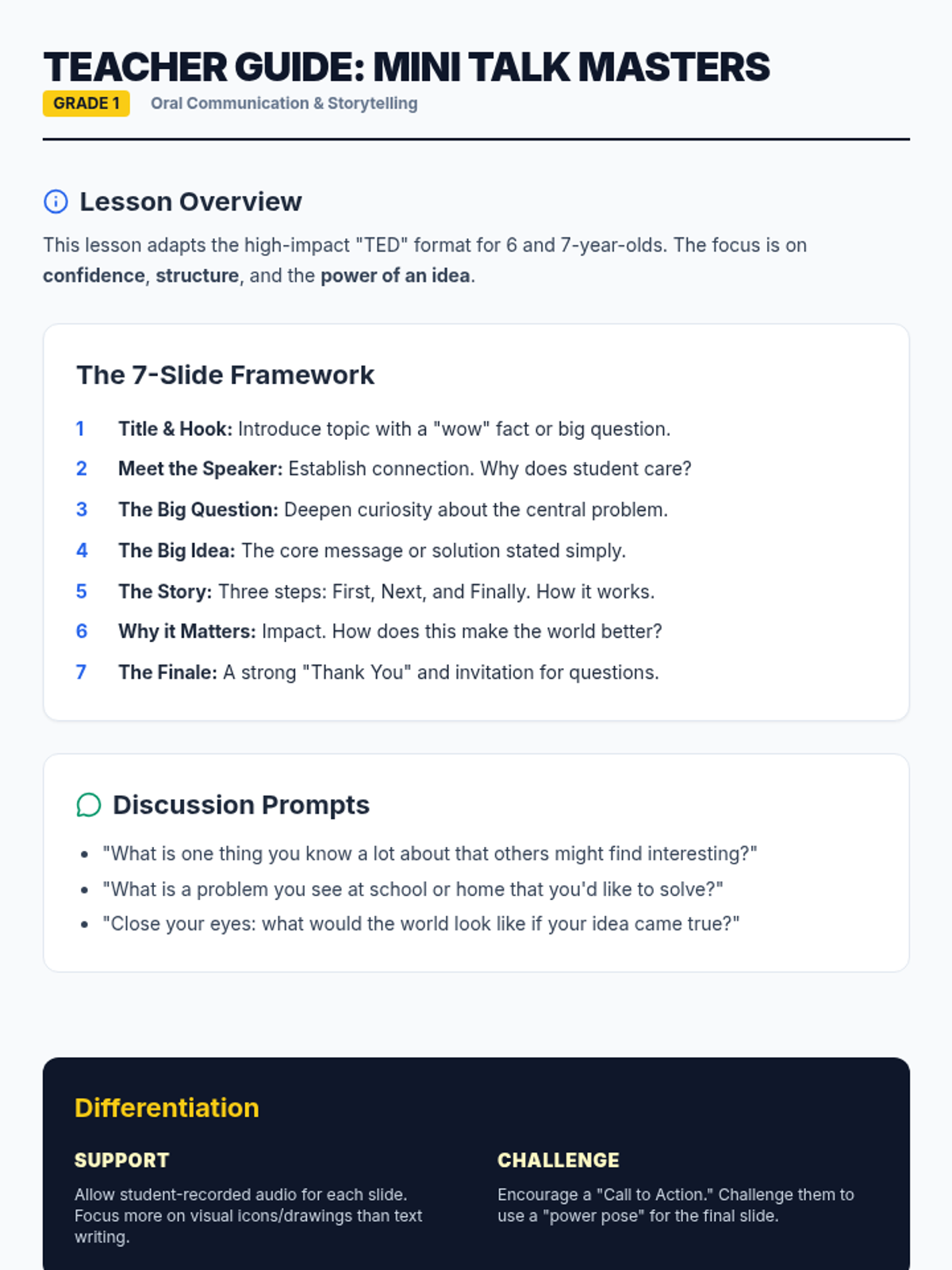
A comprehensive guide for teachers on how to facilitate the Mini Talk Masters lesson, including pacing, differentiation strategies, and the structural logic of the 7-slide framework.