A visual slide deck introducing the Longitude Problem and the mechanical physics of maritime timekeeping, featuring the math of rotation and pendulum physics. Updated for slide visibility requirements.
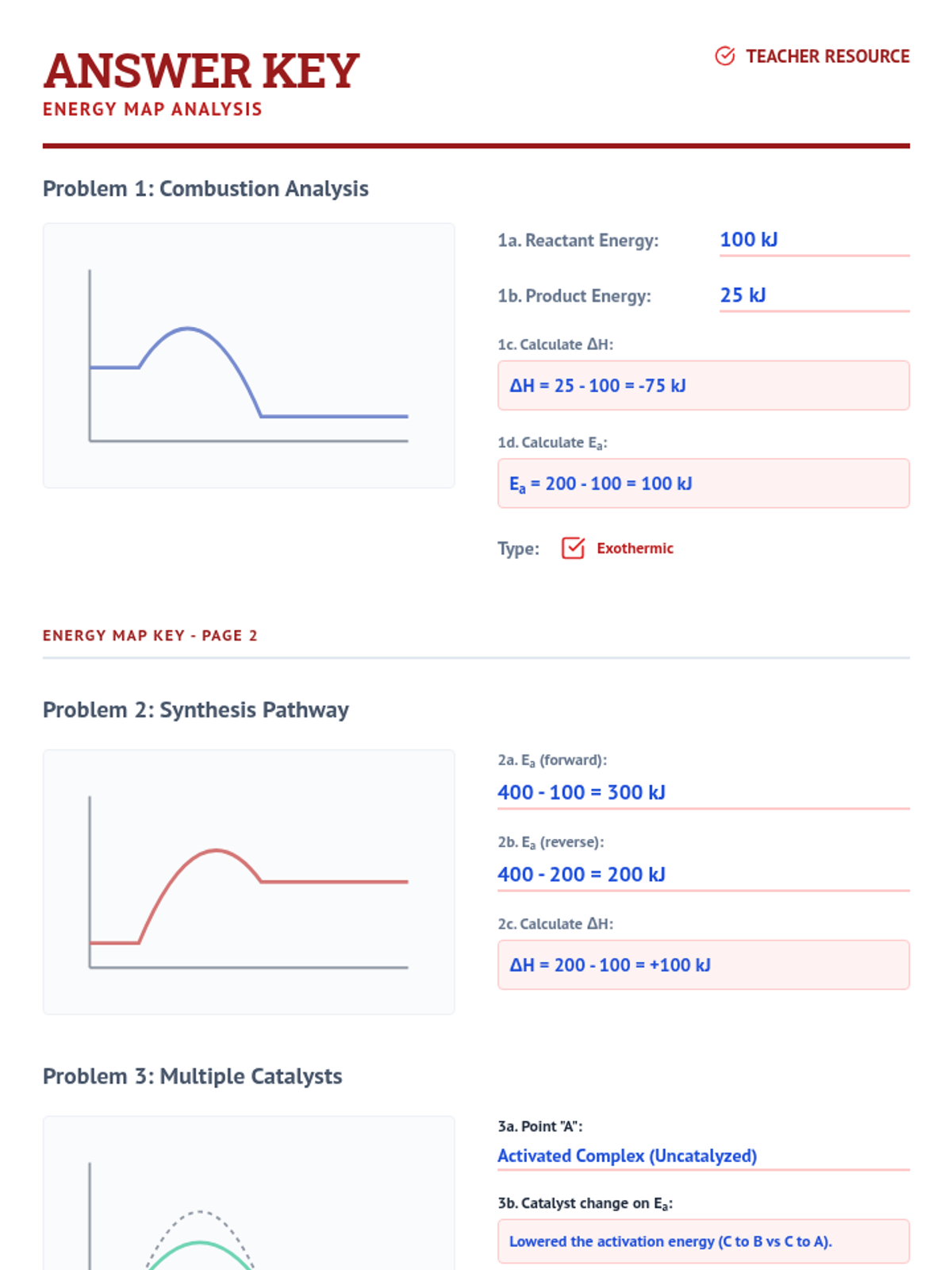
A detailed answer key for the Energy Map Worksheet, featuring solved diagrams and completed summary tables. Revised to match the worksheet layout and fixes.
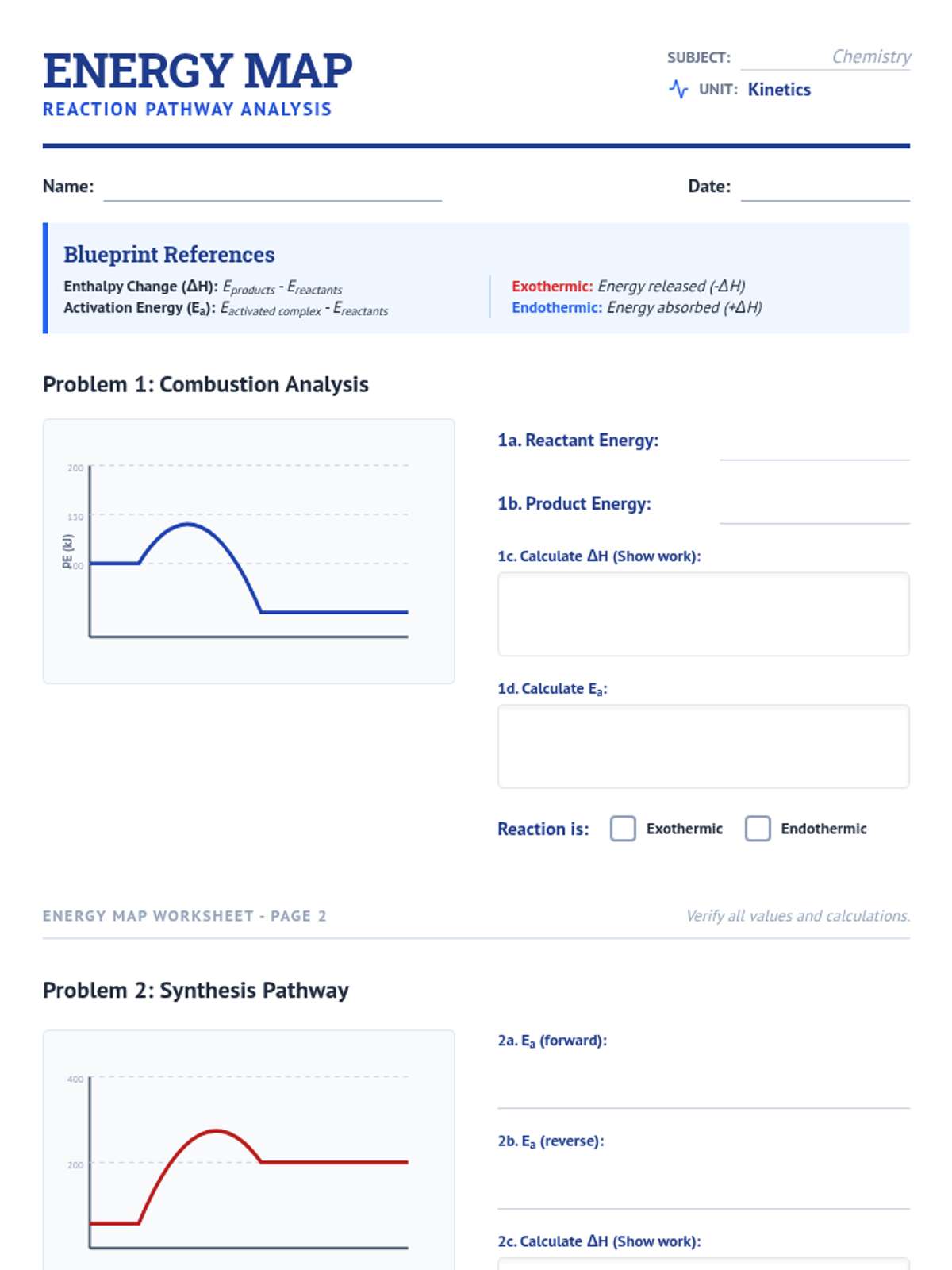
A 2-page worksheet for calculating activation energy and enthalpy from potential energy diagrams. Includes visual problems, catalyst analysis, and conceptual checks. Revised for better page breaks and larger work areas.
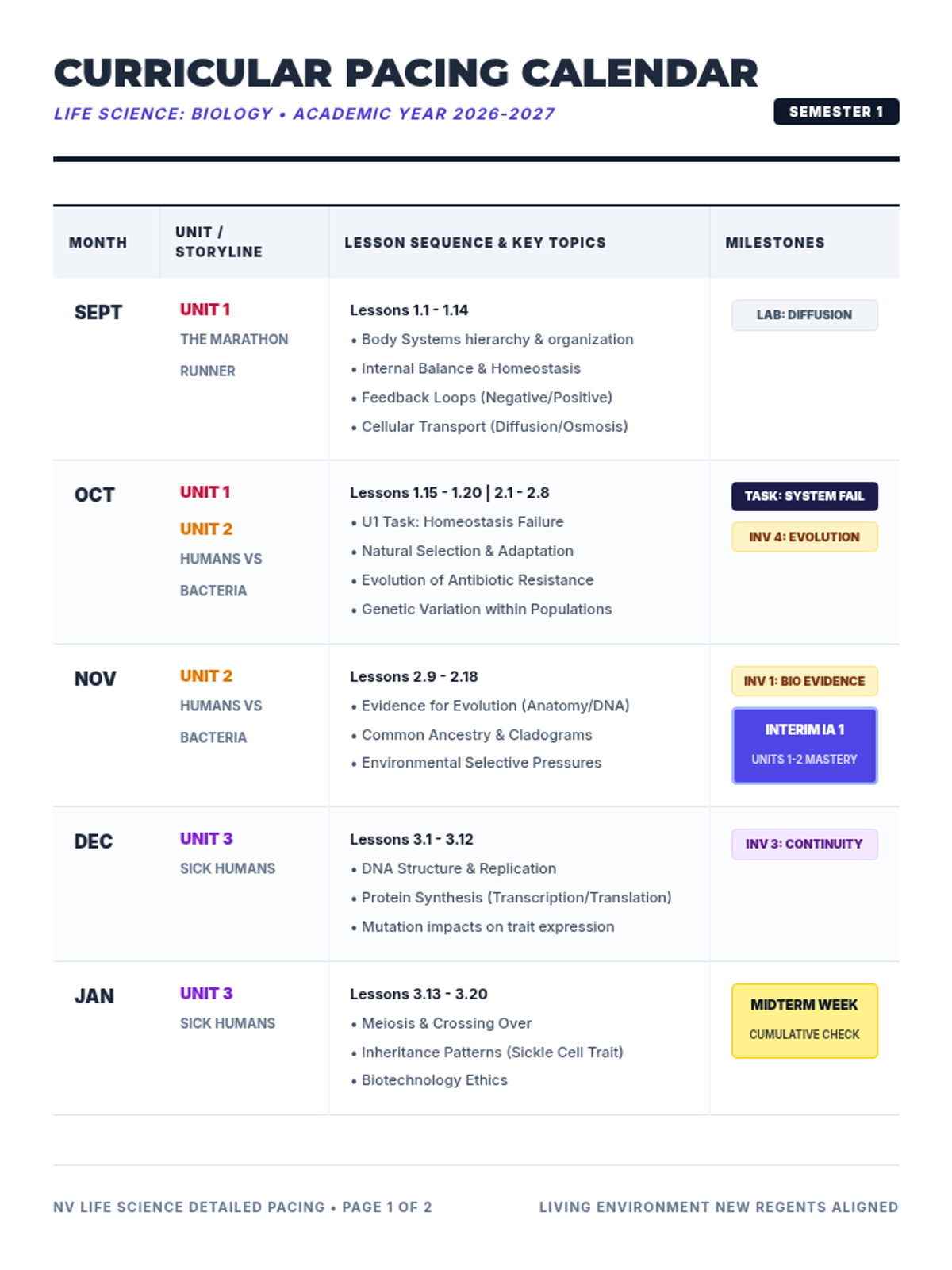
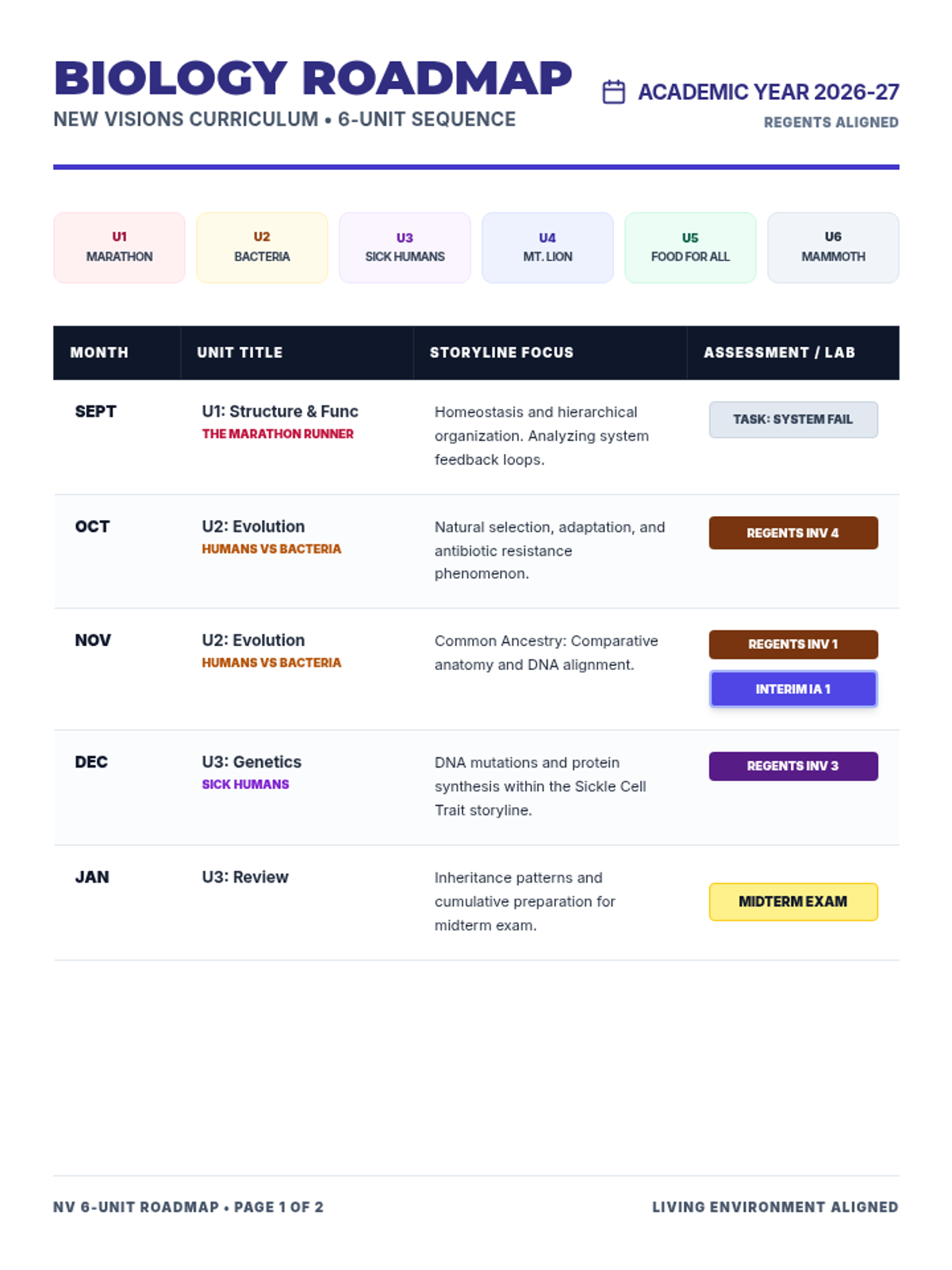
A comprehensive detailed pacing guide for the 26-27 school year, providing a month-by-month breakdown of unit coverage, lesson numbering, and specific milestones including labs, performance tasks, and the three Interim Assessments.
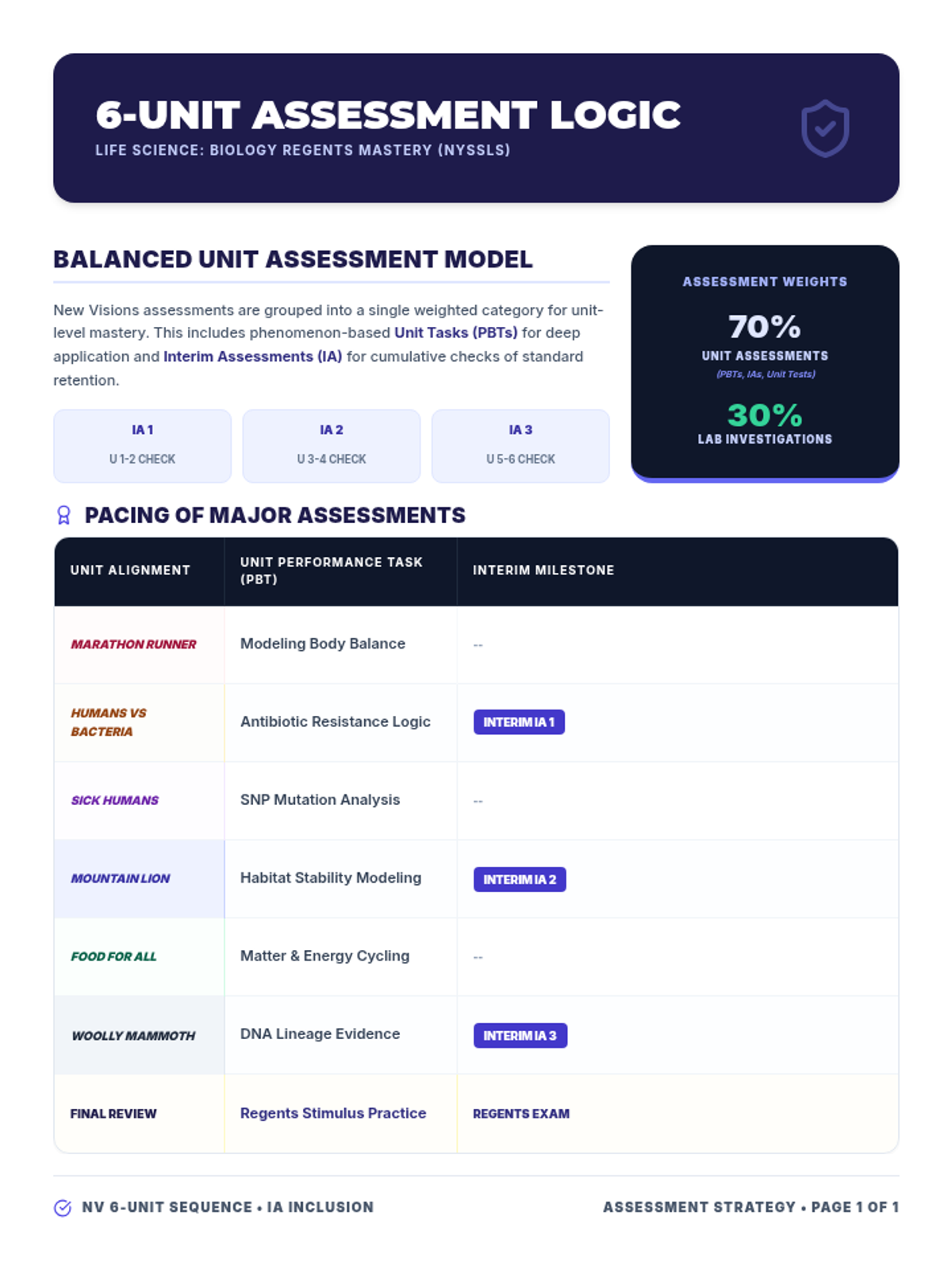
A condensed single-page guide to assessment strategy within the New Visions Life Science: Biology framework. Updated to move Interim Assessments into the general "Unit Assessments" weighting category (70% total with PBTs) and to reflect that IA 3 is a Units 5-6 check.
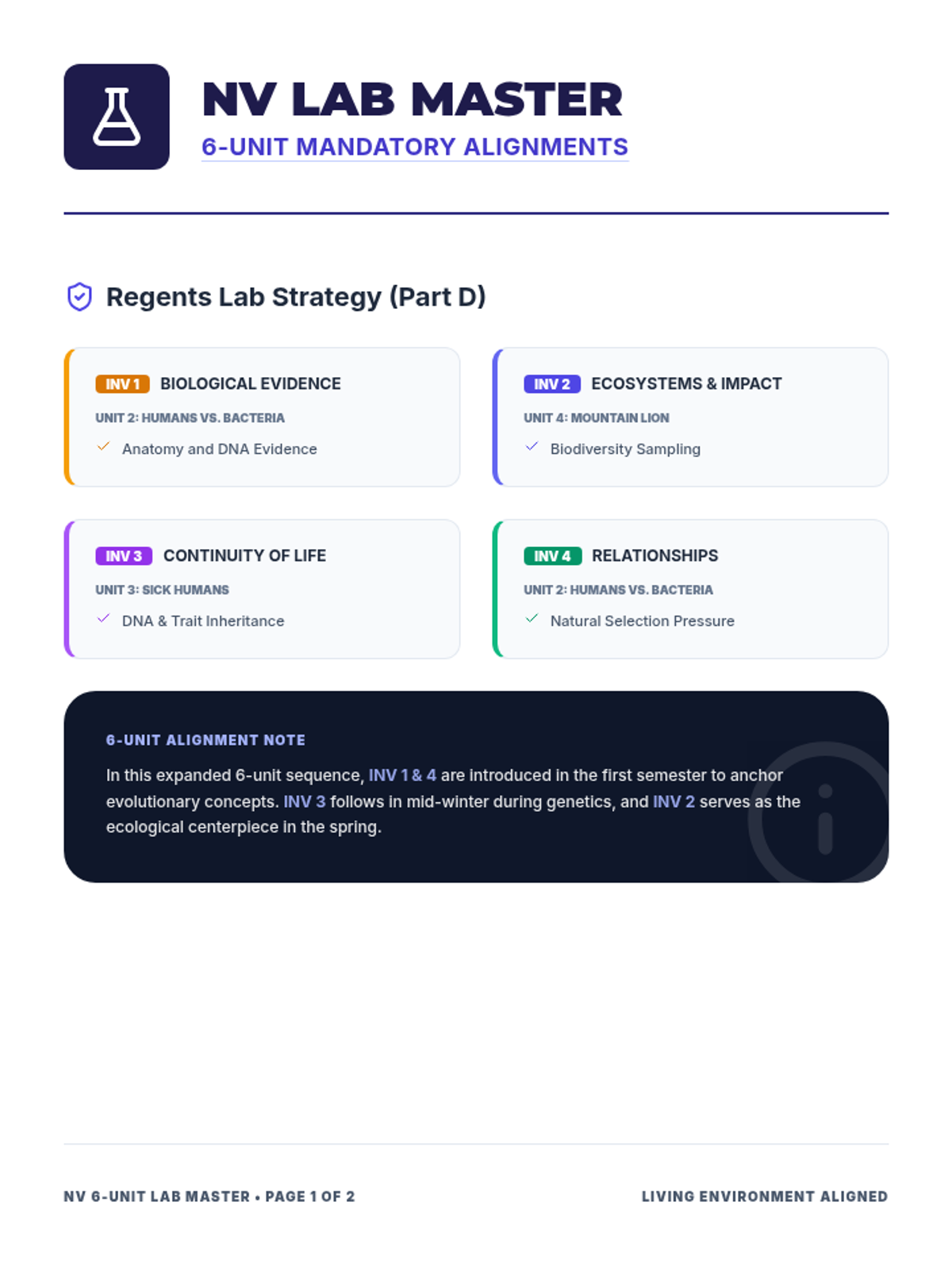
A logistics resource for managing New Visions Life Science: Biology labs. Updated to align the 4 Mandatory Investigations across the 6-unit sequence (Unit 1: Marathon, Unit 2: Bacteria/Inv 1&4, Unit 3: Sick Humans/Inv 3, Unit 4: Mountain Lion/Inv 2, Unit 5: Food for All, Unit 6: Mammoth).
A high-level pacing guide for a 6-unit year-long high school Life Science: Biology course. Revised to reflect that IA 3 is a check for Units 5-6 and to update terminology for interim assessment integration.
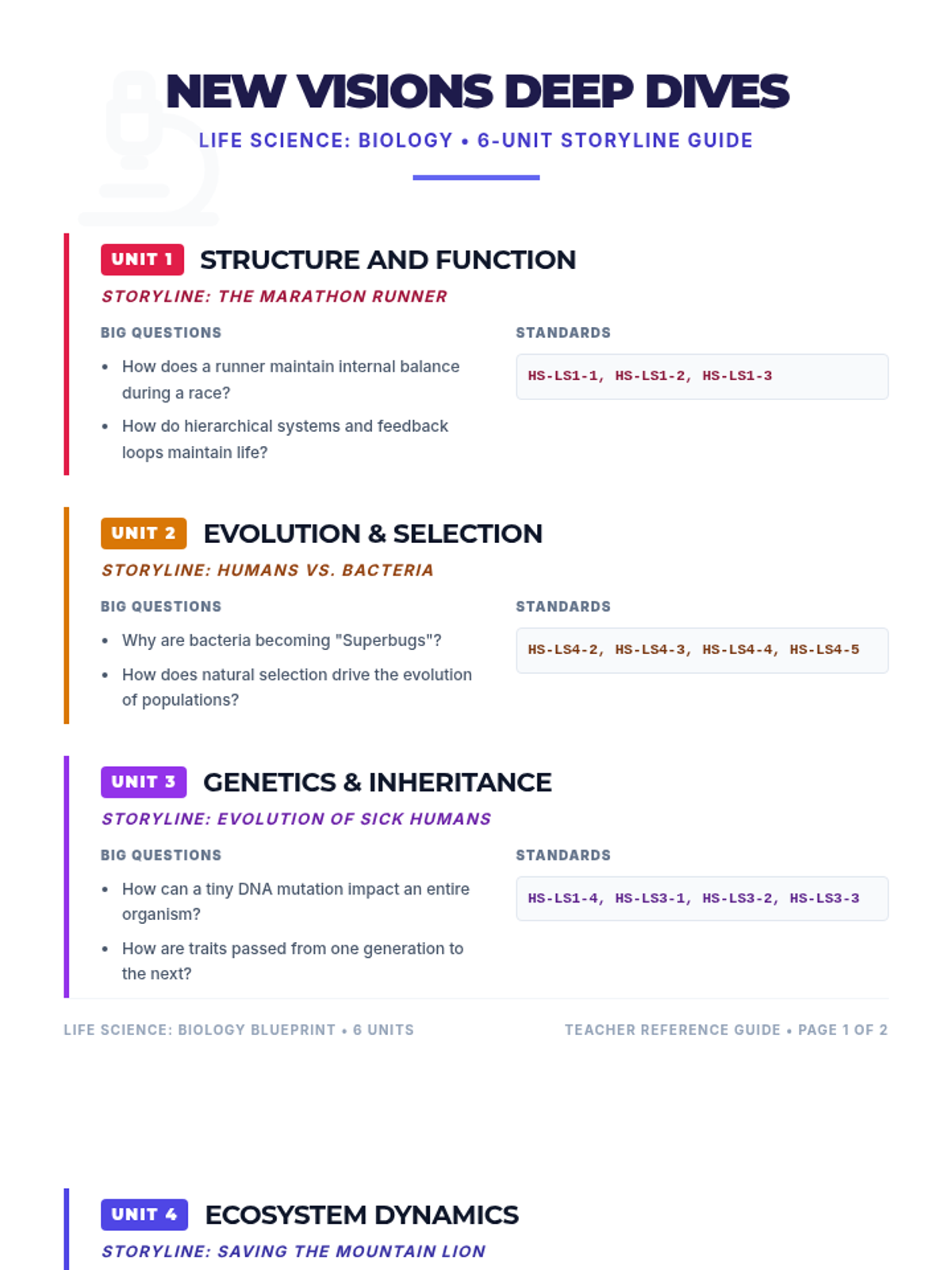
A revised teacher-facing guide providing deep-dive details for the 6-unit New Visions Life Science: Biology curriculum. Standardized font sizes, improved contrast, and balanced layout across two pages. Includes storylines: Marathon Runner, Humans vs. Bacteria, Evolution of Sick Humans, Saving the Mountain Lion, Food for All, and Woolly Mammoth.
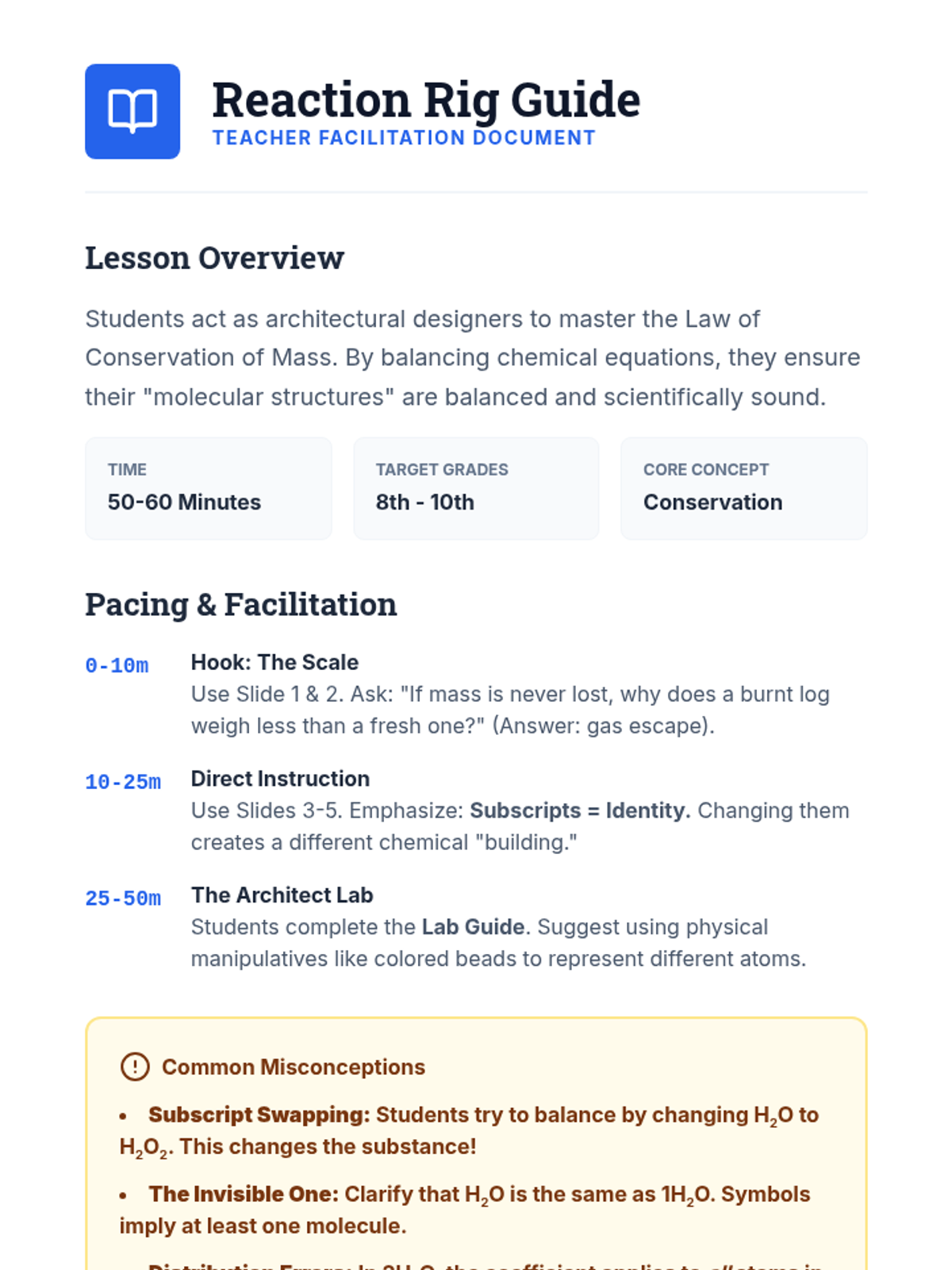
Instructional guide for teachers with pacing, common misconceptions, and discussion prompts to support the Atomic Equilibrium lesson.
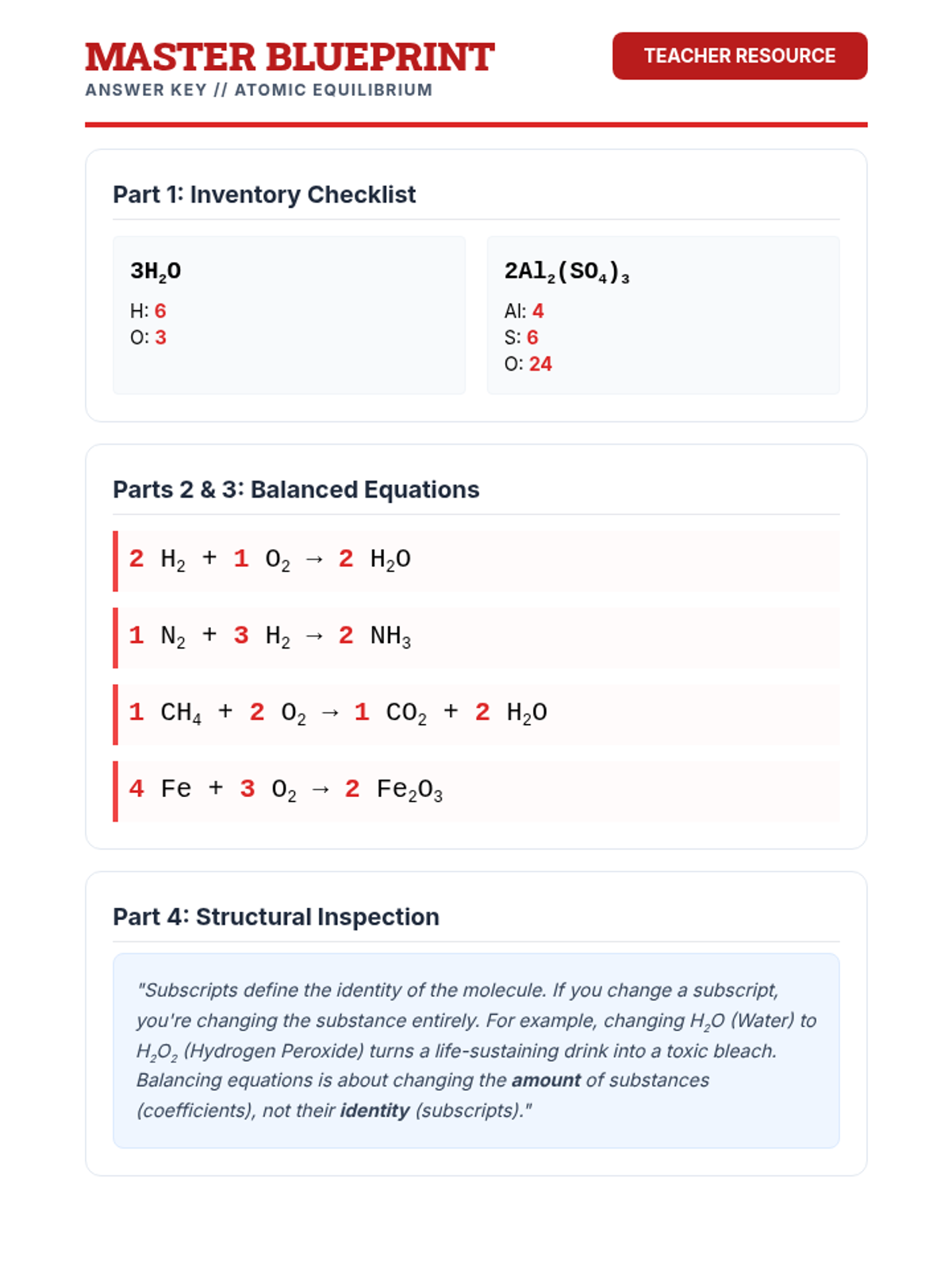
Complete answer key for the Equation Architect Lab Guide, featuring worked-out atom counts and balanced chemical equations for teacher use.
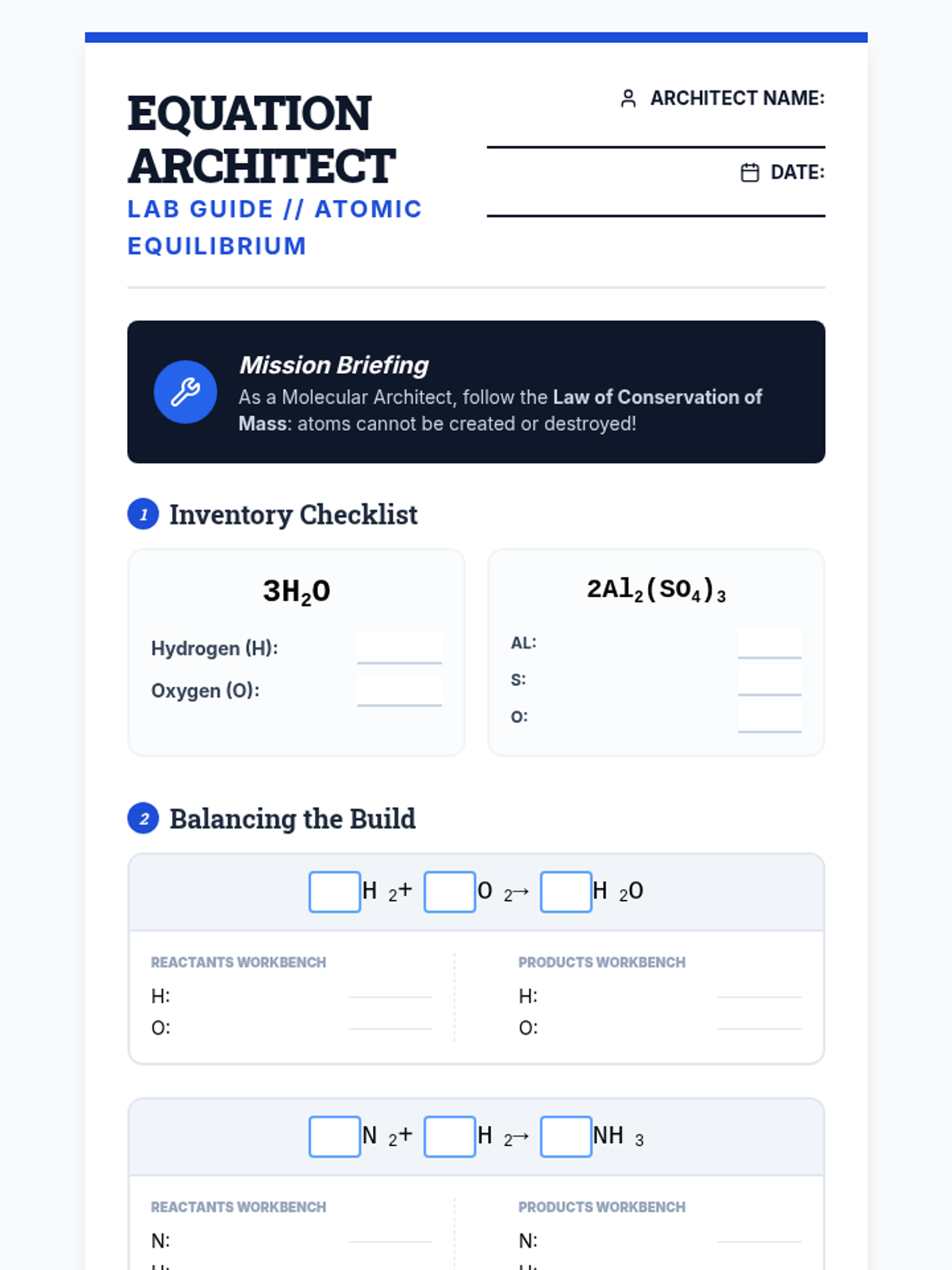
Student worksheet structured as an 'Architect's Lab' where students practice counting atoms and balancing equations through progressively difficult challenges.
Visual presentation for teaching the fundamentals of balancing chemical equations, featuring the Law of Conservation of Mass and a guided practice example.
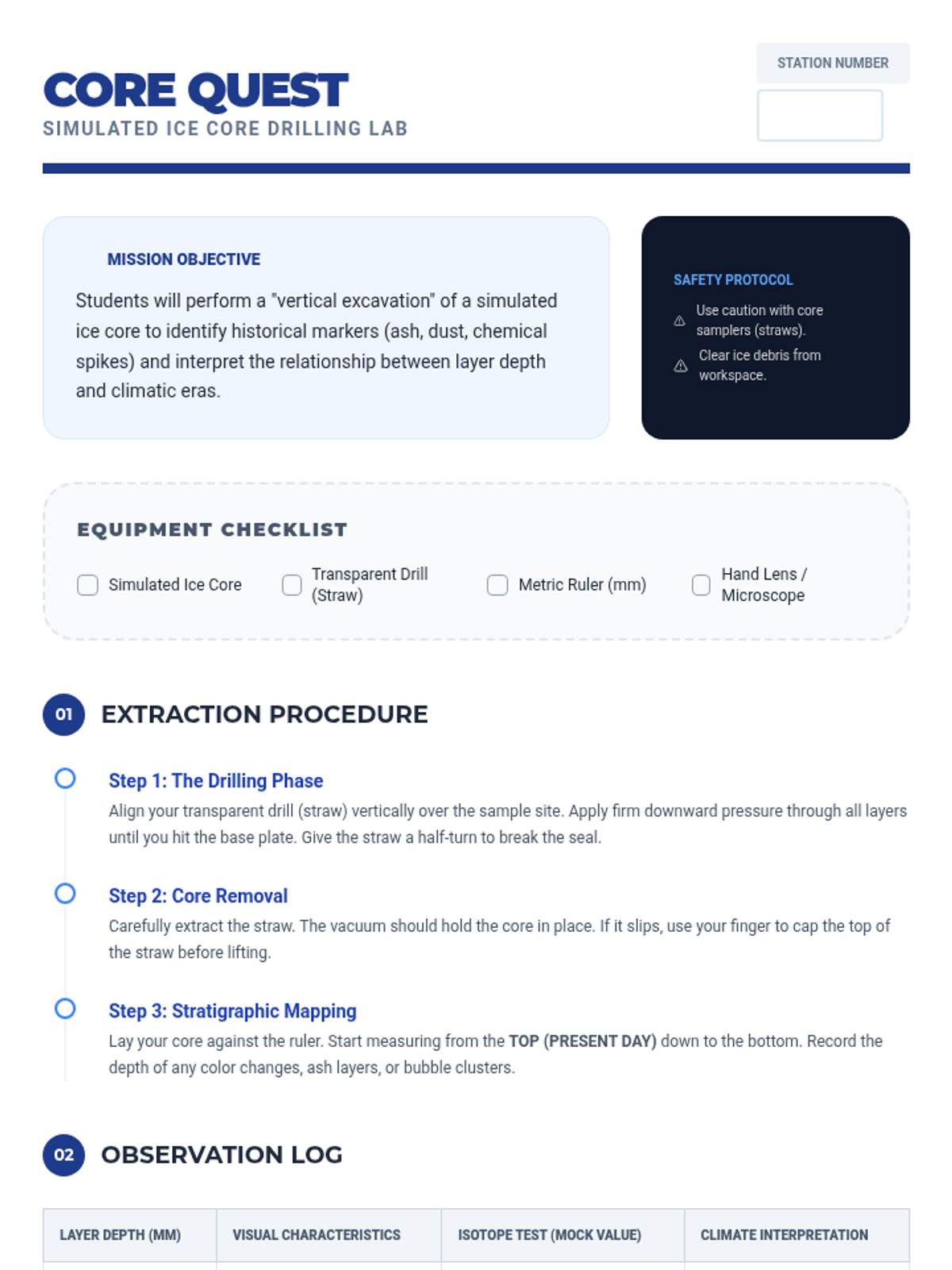
A step-by-step laboratory guide for students to conduct a simulated ice core drilling experiment, featuring stratigraphic mapping instructions, data collection tables, and synthesis questions.
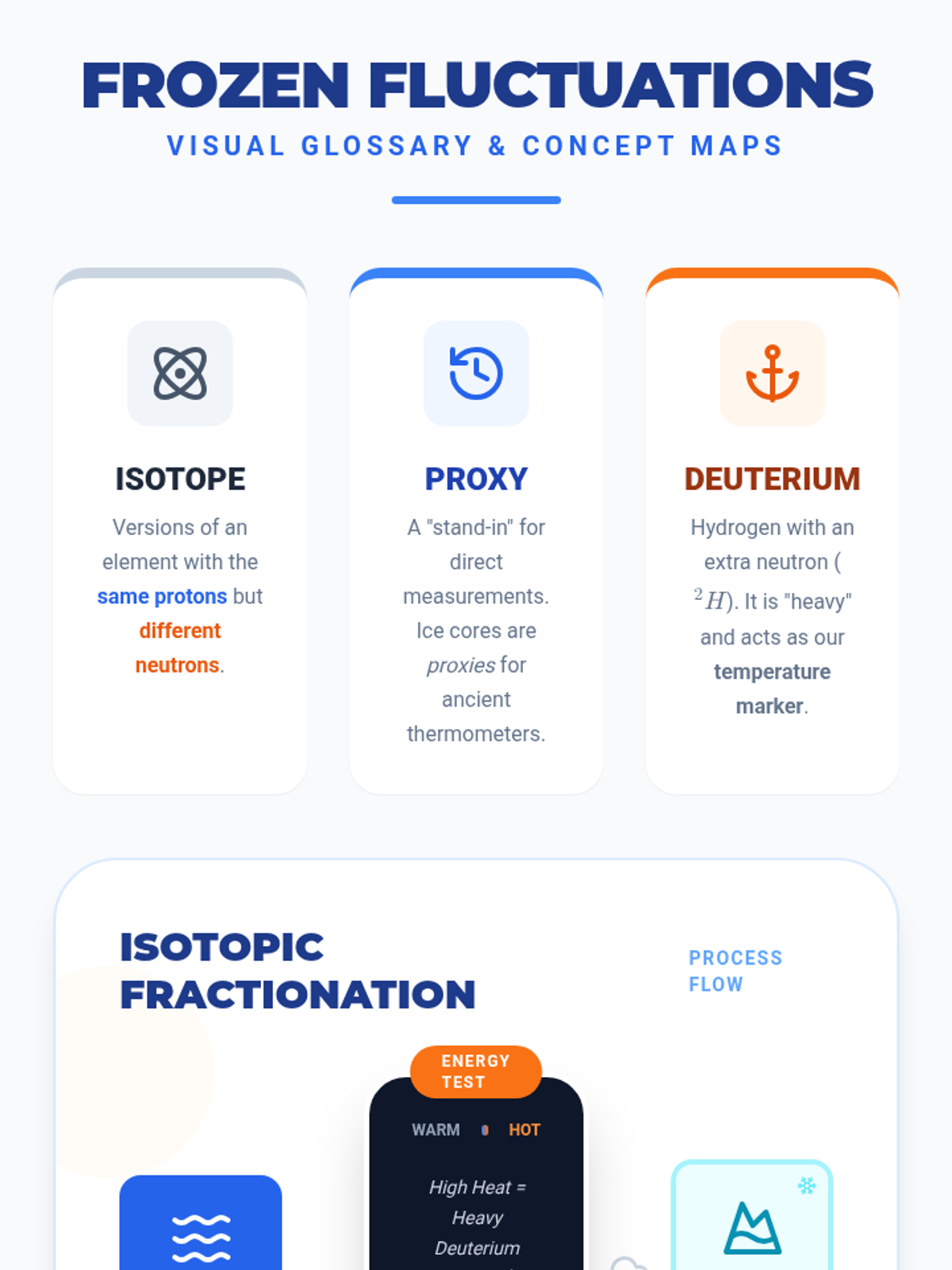
A high-contrast visual aid and reference sheet defining key vocabulary like 'isotope', 'proxy', and 'deuterium', accompanied by a detailed conceptual flowchart illustrating isotopic fractionation.
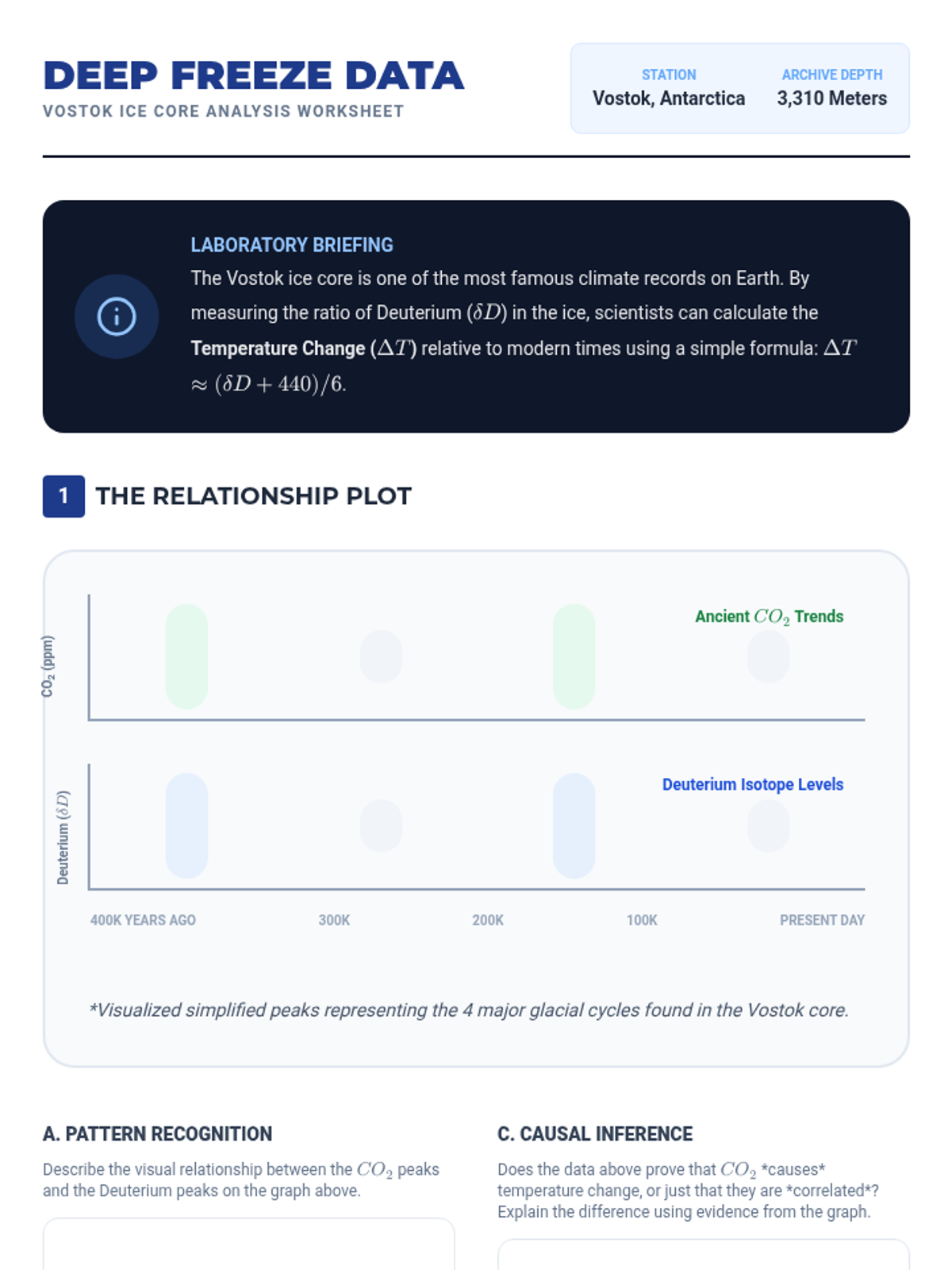
A data-heavy worksheet where students interpret simplified Vostok ice core plots, perform temperature calculations using isotopic formulas, and analyze the correlation between greenhouse gases and deuterium levels.
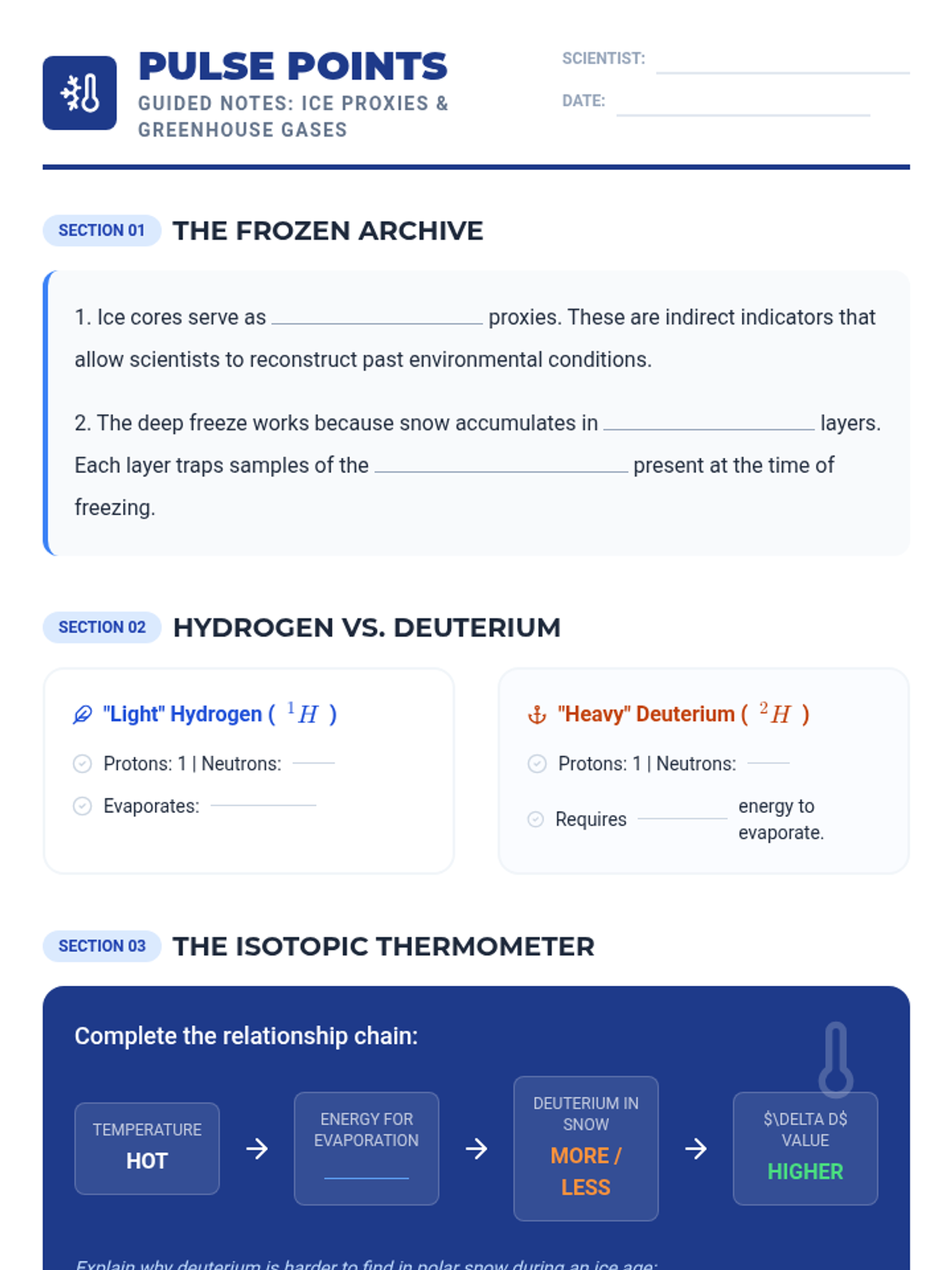
Guided notes designed for student use alongside the Ice Pulse presentation, featuring structured fill-in-the-blanks, logic chains, and sketch areas to reinforce isotope chemistry and greenhouse gas concepts.
A high-impact slide deck for high school students introducing ice core proxies, the chemical behavior of deuterium isotopes, and the historical correlation between temperature and greenhouse gases.
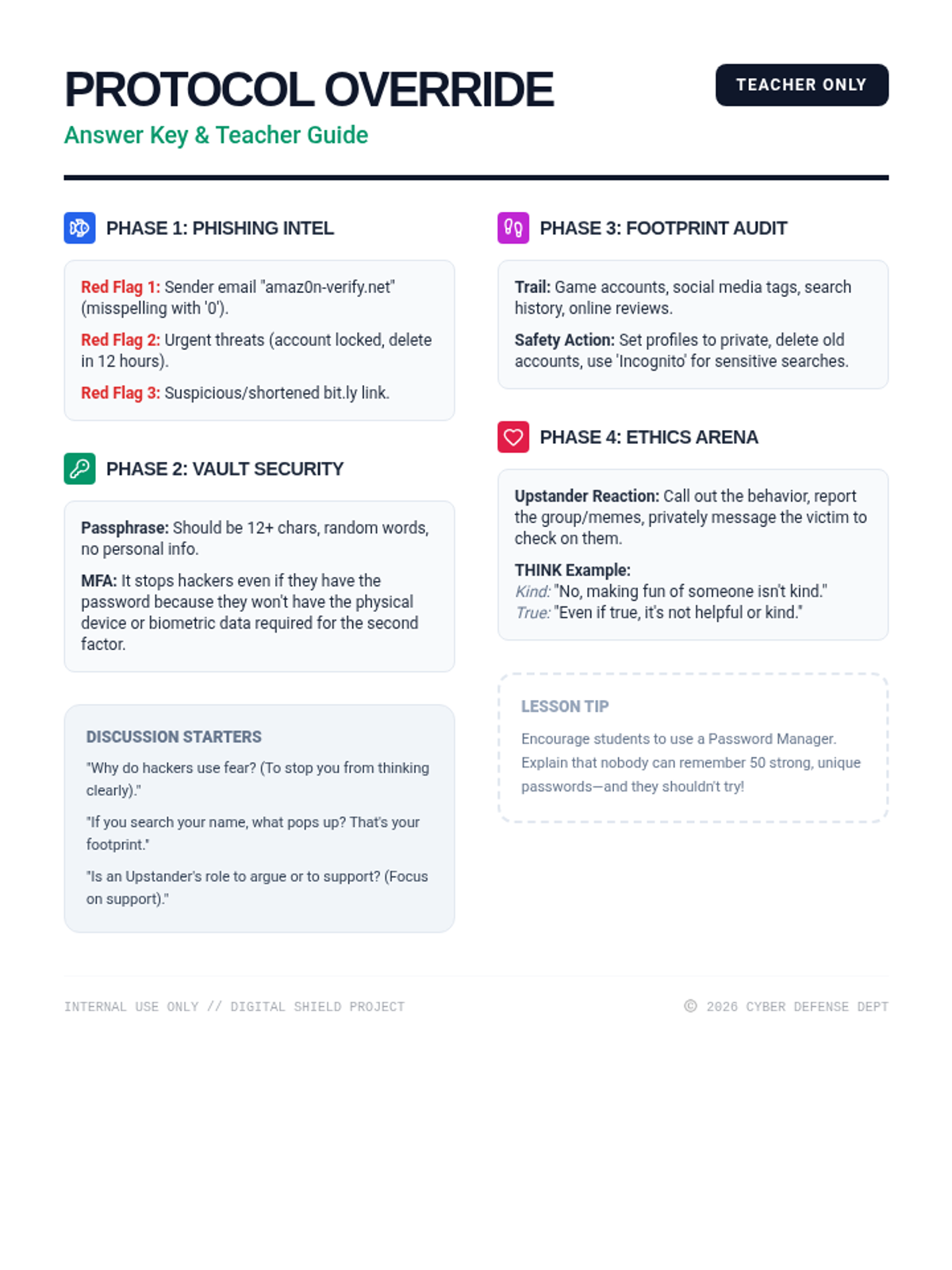
Teacher-facing answer key and facilitation guide for the Digital Shield lesson. Provides sample student responses, key points for discussion, and identified red flags for the phishing scenario.
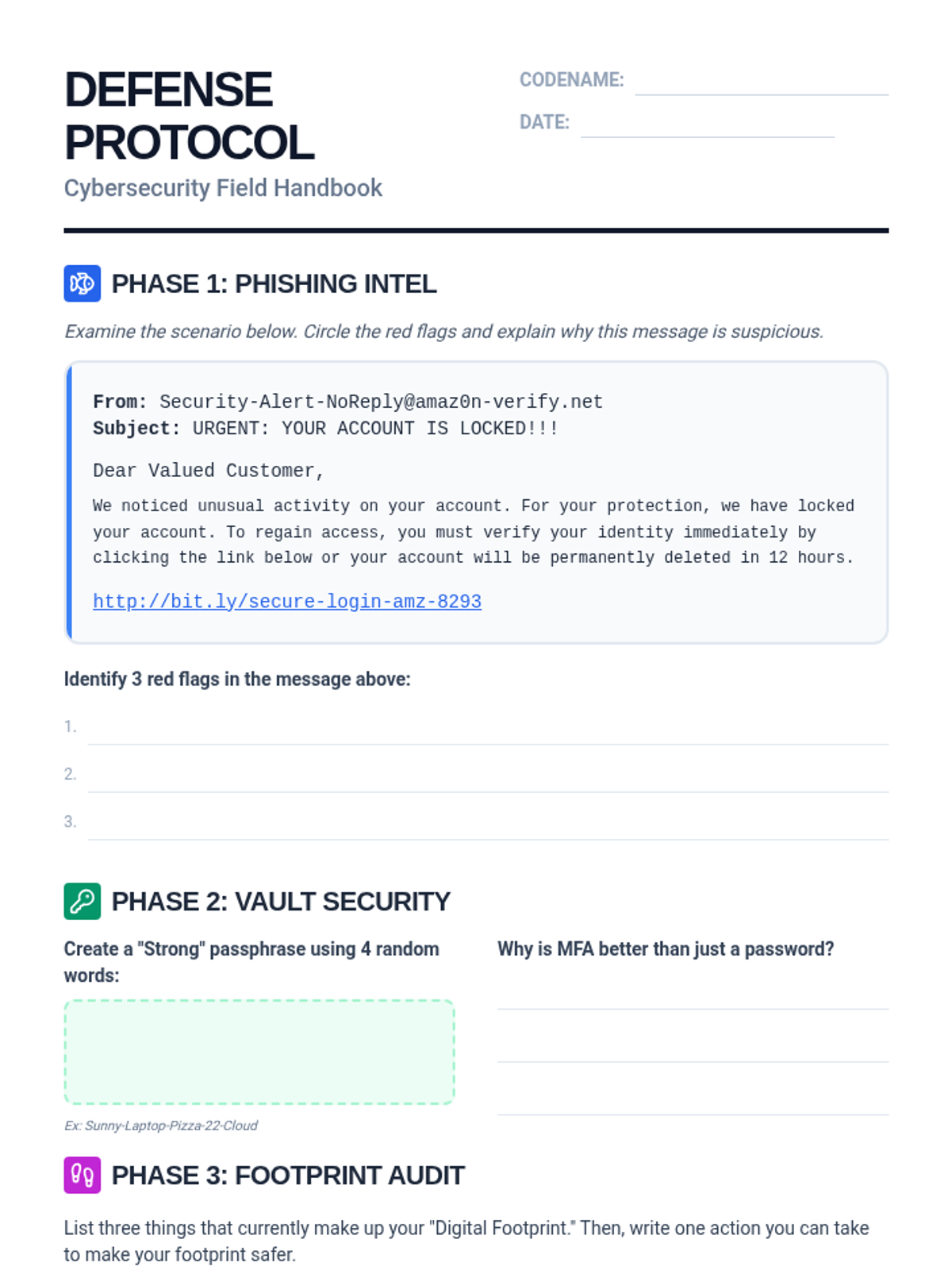
A companion worksheet for the Digital Shield lesson. It includes phishing scenario analysis, password creation practice, a digital footprint audit, and an ethics case study on cyberbullying.
A visual slide deck covering key cybersecurity concepts including phishing detection, password security, MFA, digital footprints, and online ethics. Designed for high school or middle school students with a modern, high-tech aesthetic.
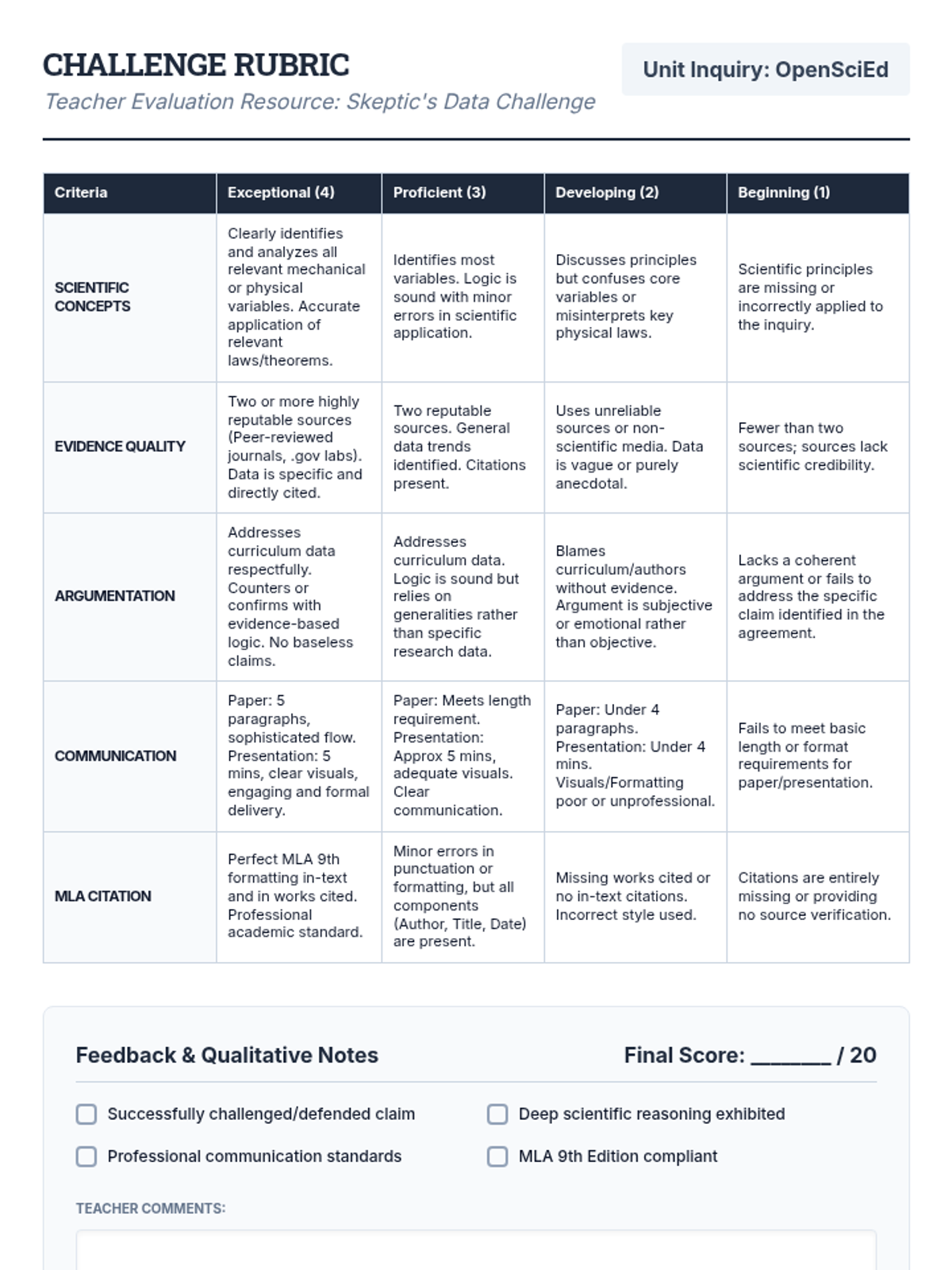
A grading rubric for teachers to evaluate the research project, focusing on physics accuracy, evidence quality, formal argumentation, and MLA 9th Edition citation compliance.
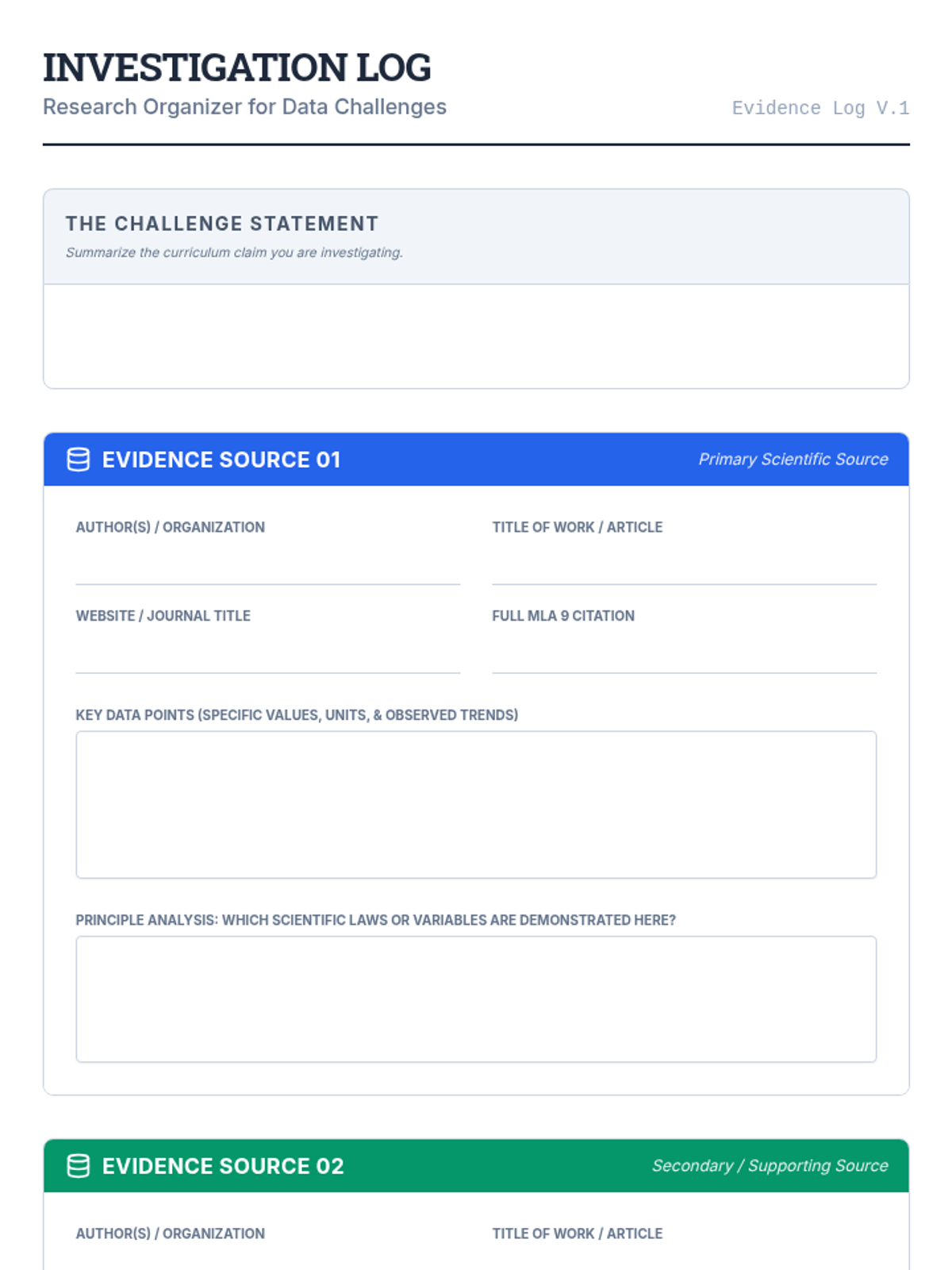
A research organizer for students to record and analyze data from two reputable sources, specifically focusing on the connection between their findings and the physics variables of braking and friction.
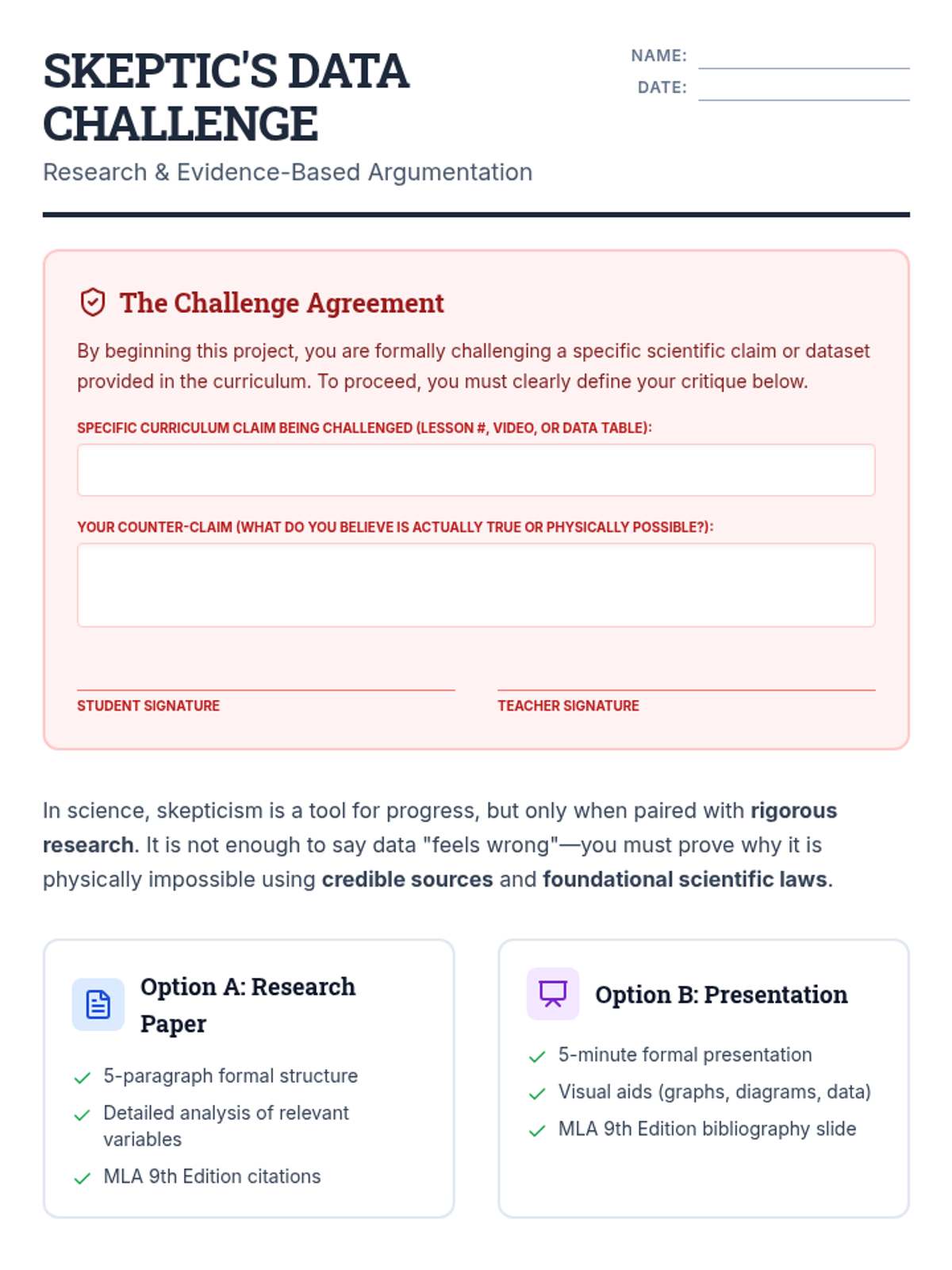
A generalized student project guide for the Data Validation Challenge, including a formal Validation Agreement to define the research scope, a guided checklist, and an MLA 9th Edition quick citation guide.