Introductory presentation for Grade 5 students on physical and chemical changes, featuring visual examples, definitions, and "clues" for identification. (Revised for contrast and page breaks)
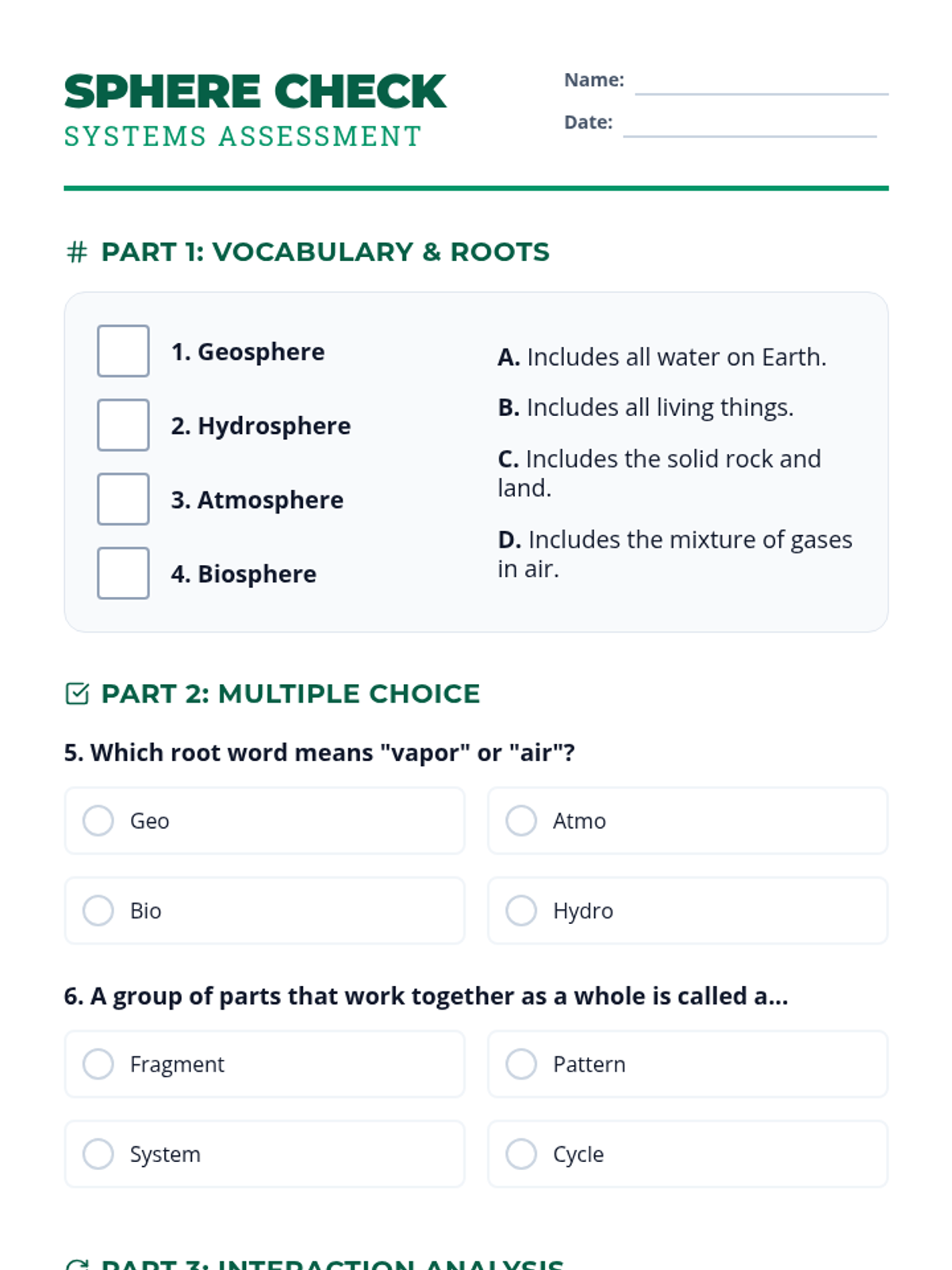
A formal assessment for the Sphere Systems lesson, featuring matching, multiple choice, and interaction analysis questions. Includes a bonus critical thinking prompt about transpiration and sphere interdependency.
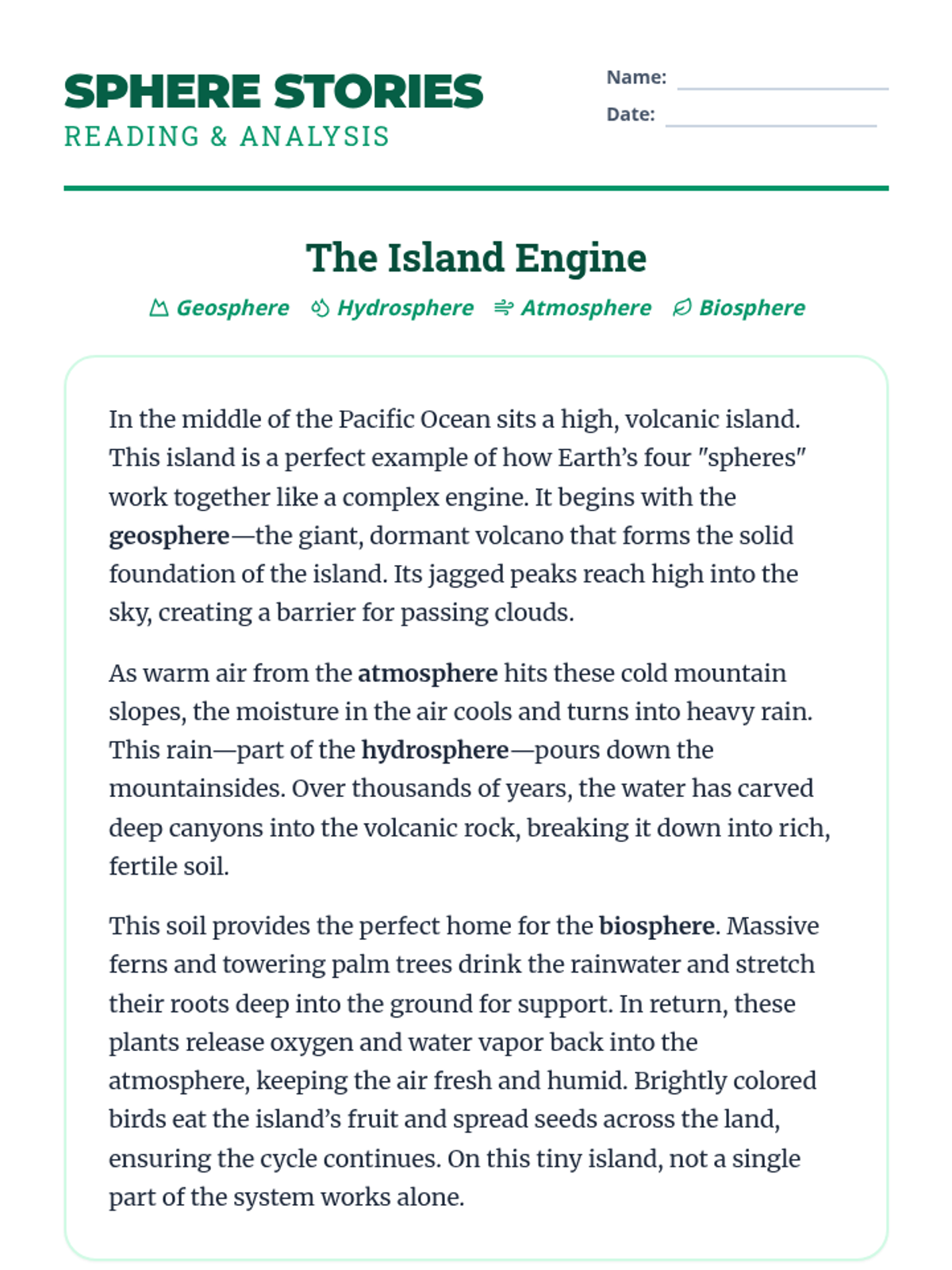
A reading comprehension worksheet featuring 'The Island Engine,' a passage describing the complex interactions between Earth's four spheres on a volcanic island. Includes identification tables and critical thinking questions focused on system interdependencies.
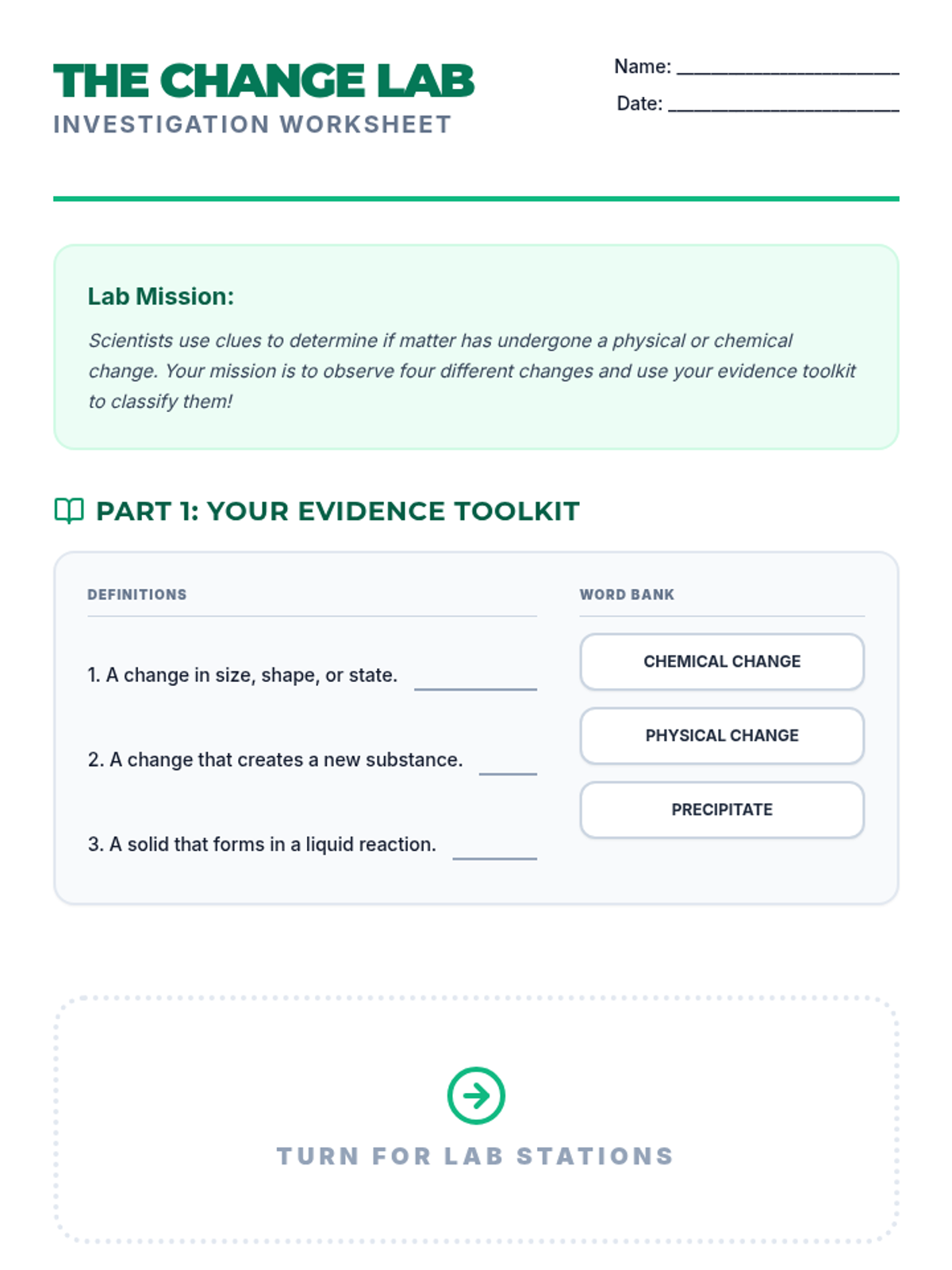
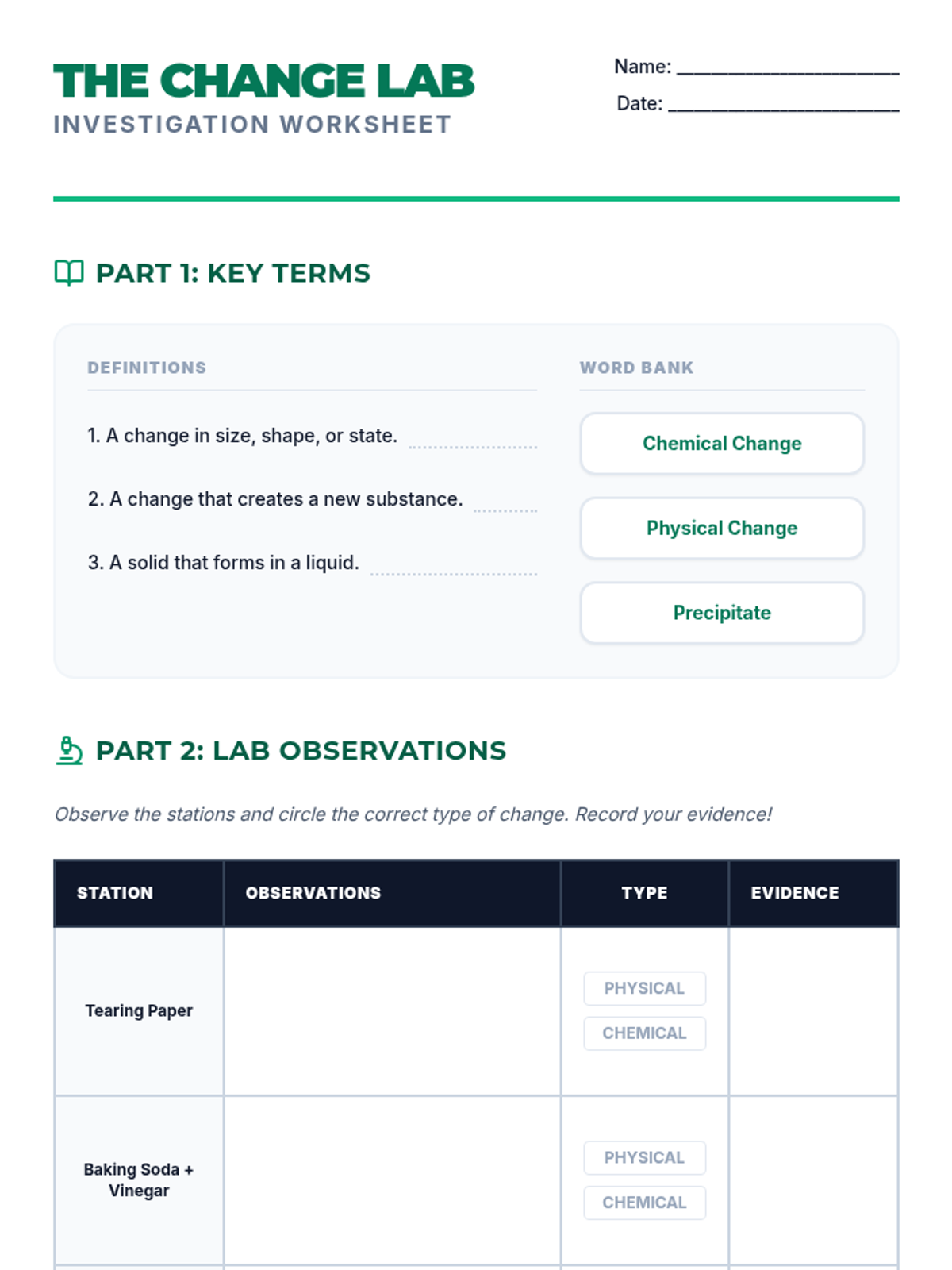
Final revised student investigation worksheet for the Change Lab lesson, optimized for a clean three-page layout with ample student work space and professional alignment.
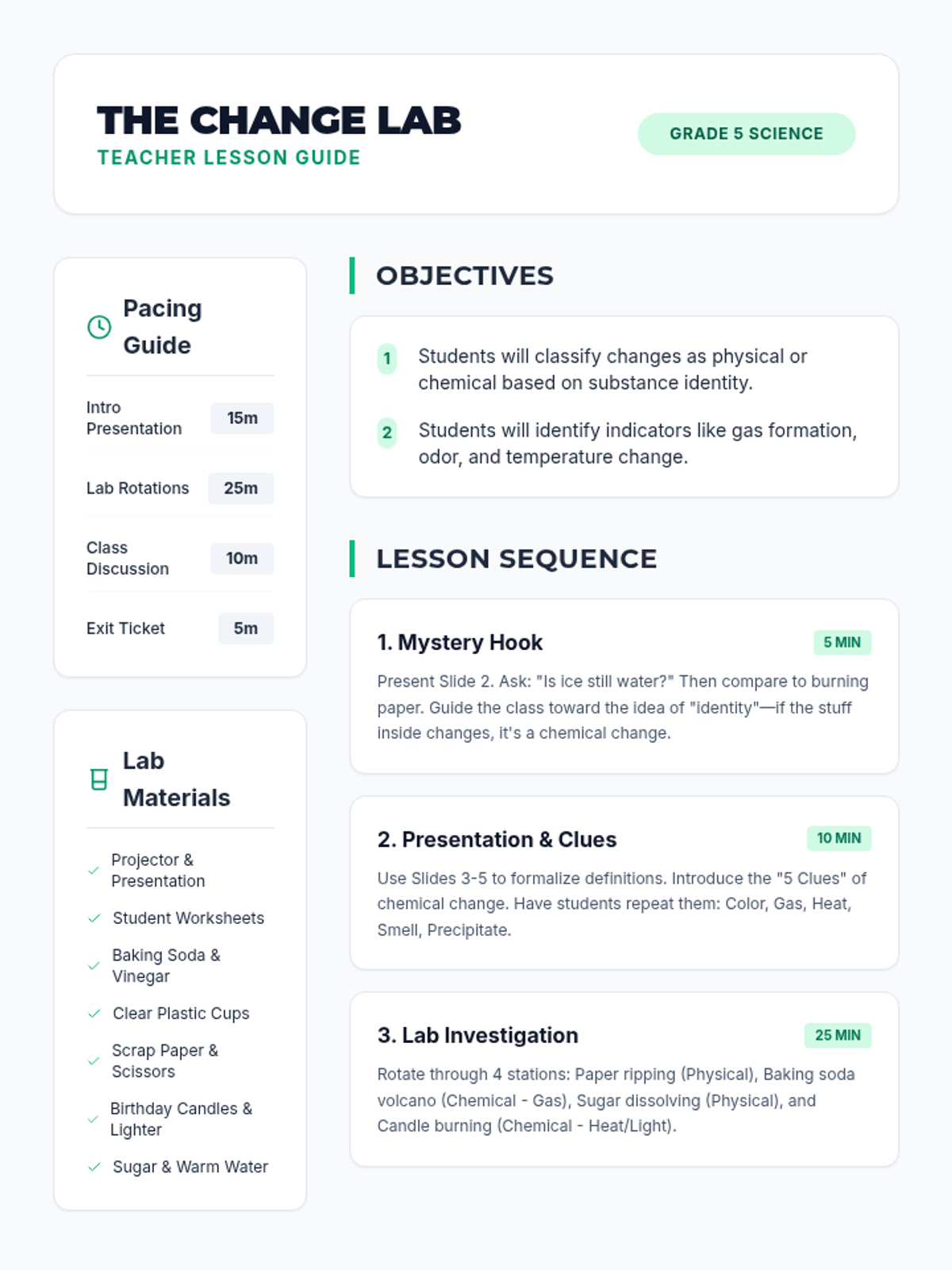
A teacher's guide for the Change Lab lesson, revised with additional instructional steps for discussion and closure, and improved page layout.
A student investigation worksheet to accompany the Change Lab lesson, revised with improved page breaking and better alignment.
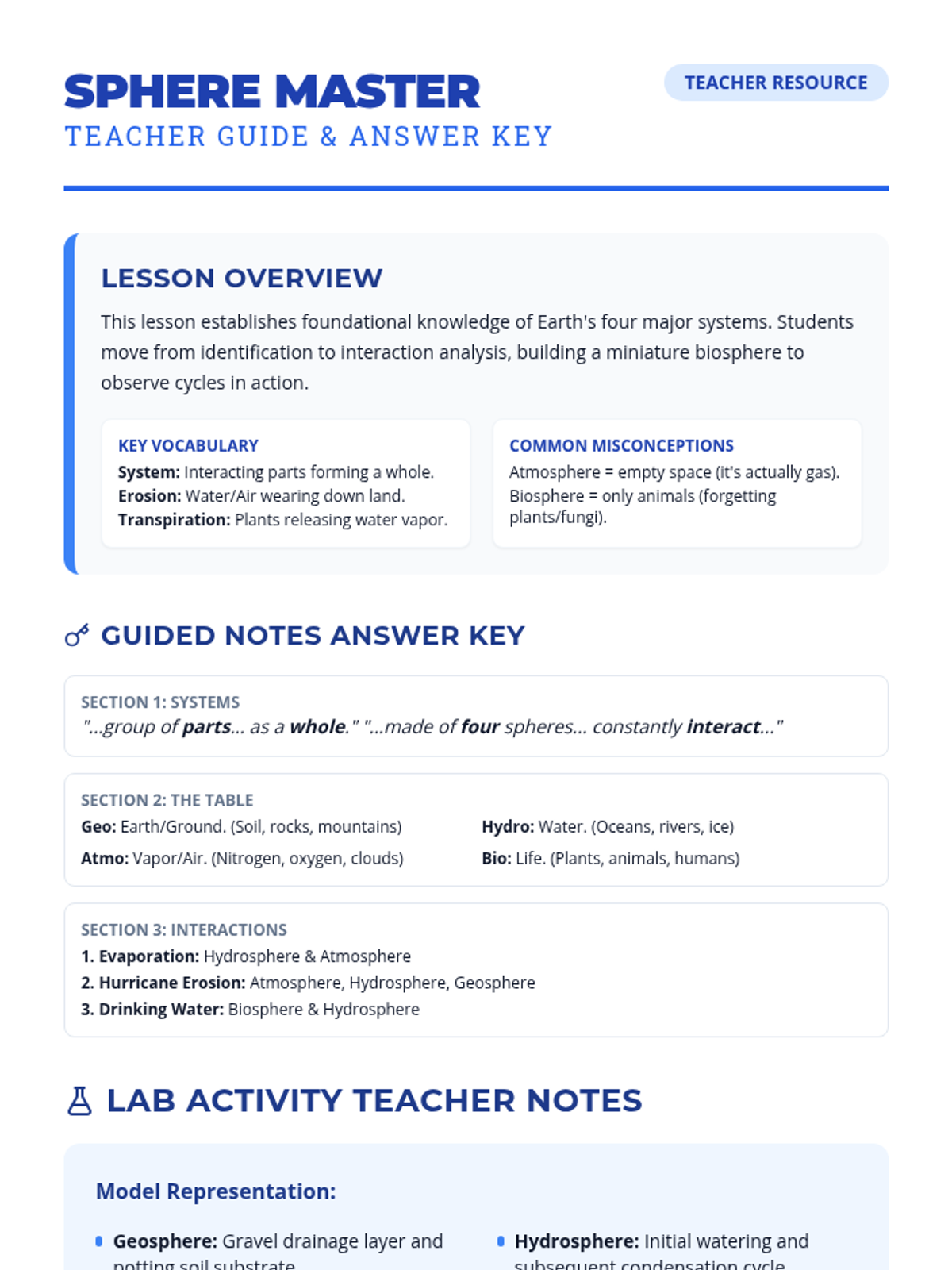
A comprehensive teacher resource containing background information, common misconceptions, and complete answer keys for the Sphere Scouts Guided Notes and the Mini Sphere Lab Activity. Includes facilitation tips for the hands-on lab to ensure successful student outcomes.
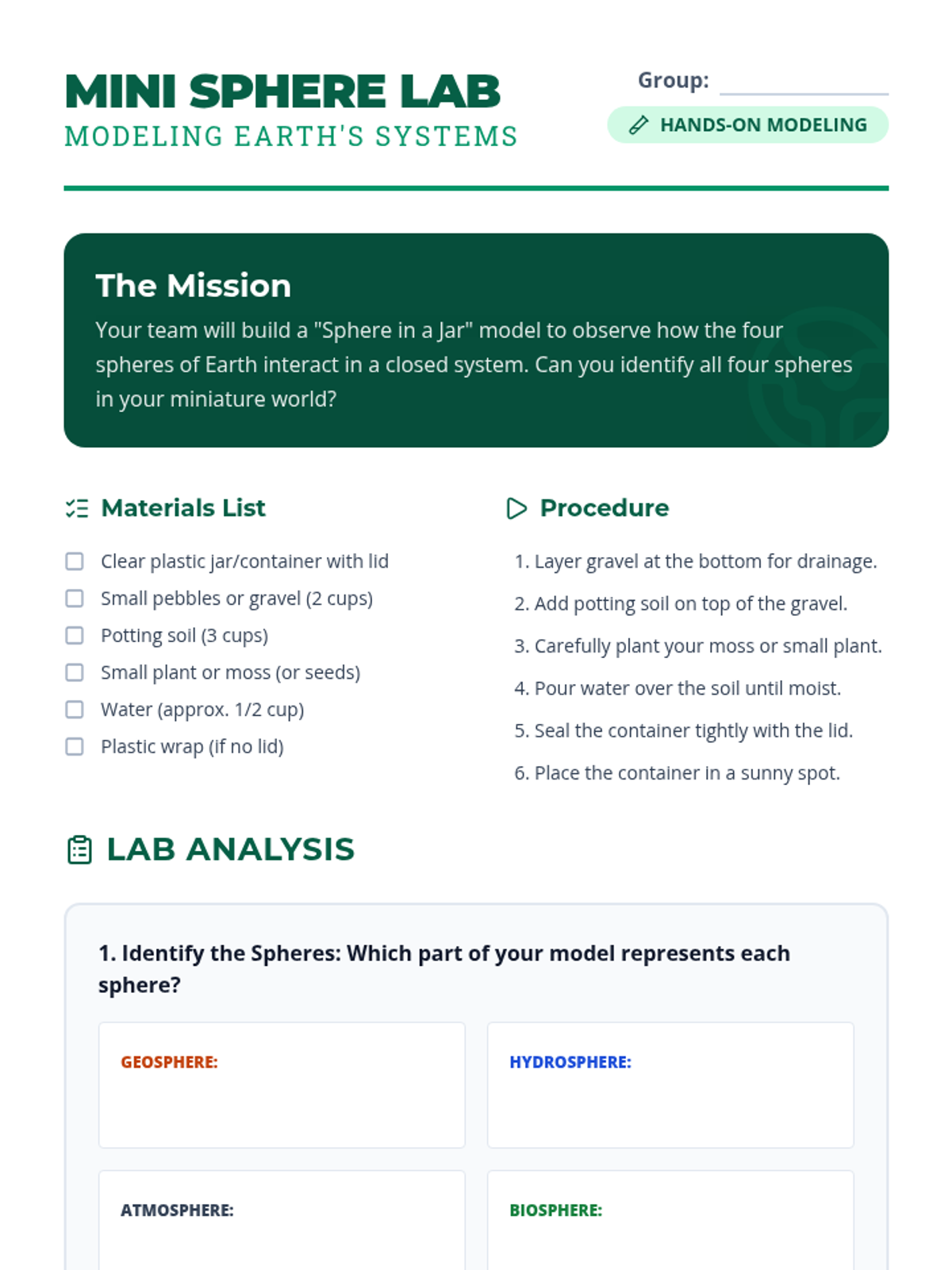
A hands-on laboratory guide where students build a closed-system "Mini Sphere" in a jar. The material includes a clear materials list, step-by-step assembly instructions, and an observation section for identifying modeled spheres and predicting their interactions.
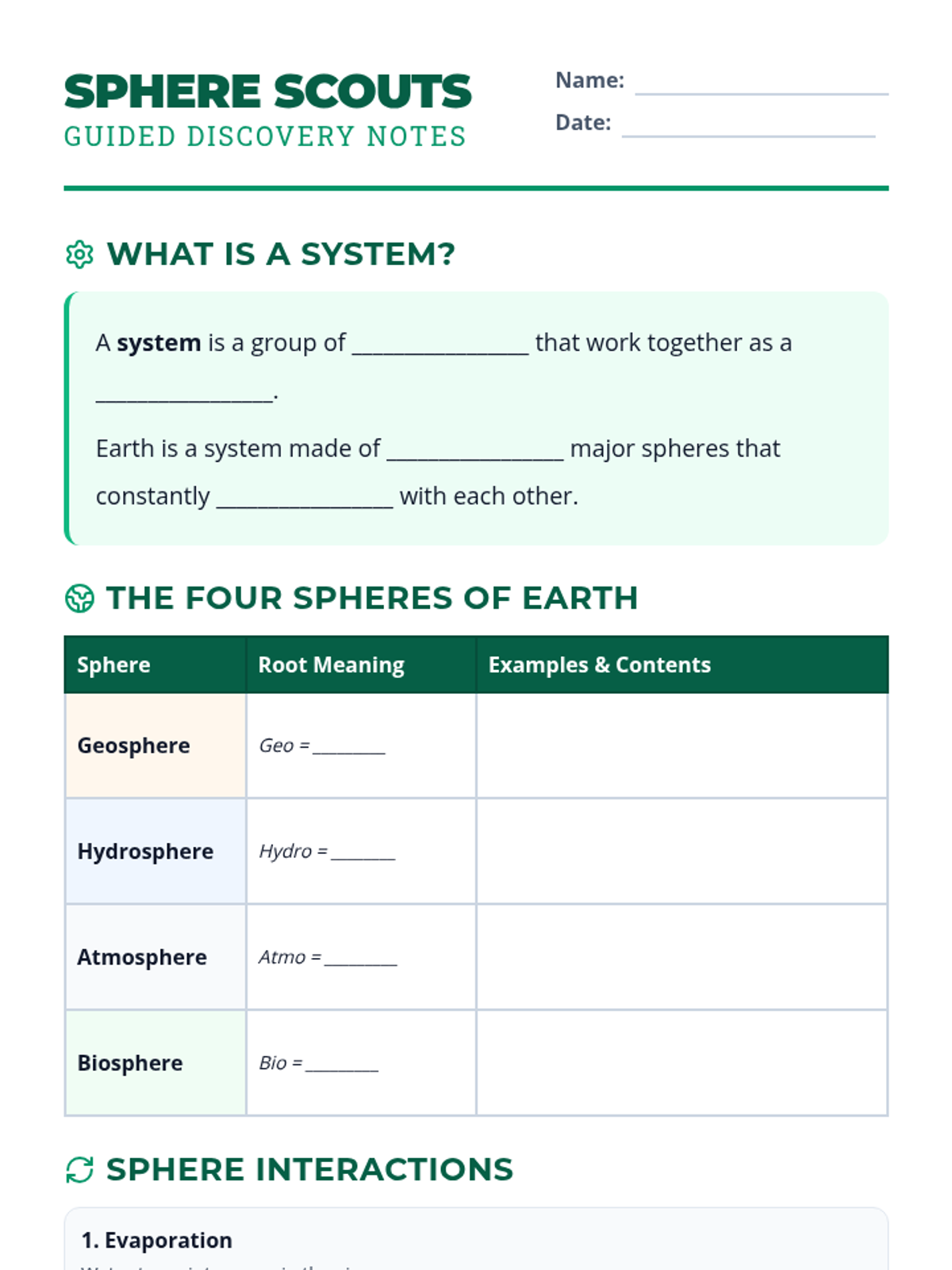
A scaffolded note-taking document designed to accompany the Sphere Systems presentation. It features fill-in-the-blank definitions, a root-word analysis table for the four spheres, interaction analysis prompts, and a creative field sketch area for personal observation.
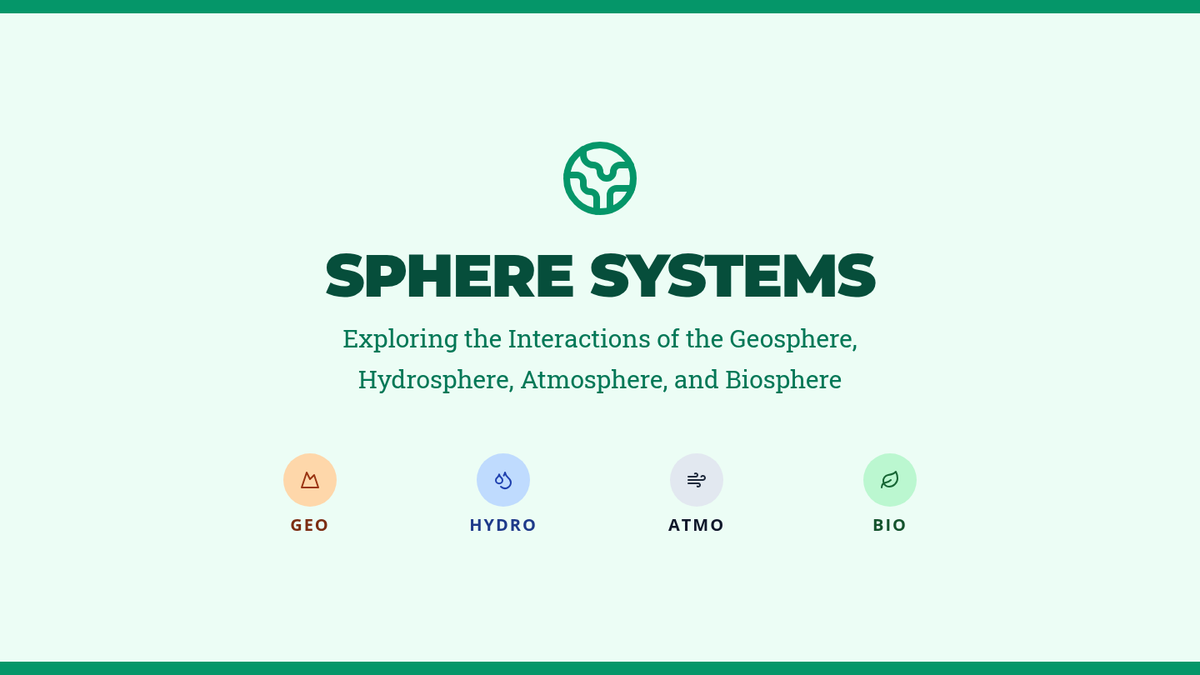
A visual presentation introducing Earth's four spheres (geosphere, hydrosphere, atmosphere, and biosphere) with clear definitions, etymology, and specific examples of complex interactions. Includes interactive discussion prompts and high-contrast layouts for classroom instruction.
A visually striking slide deck for a substitute teacher to introduce Machine Learning. Fixed layout issues on slides 4 and 5, increased text contrast, and ensured all text meets minimum size requirements.
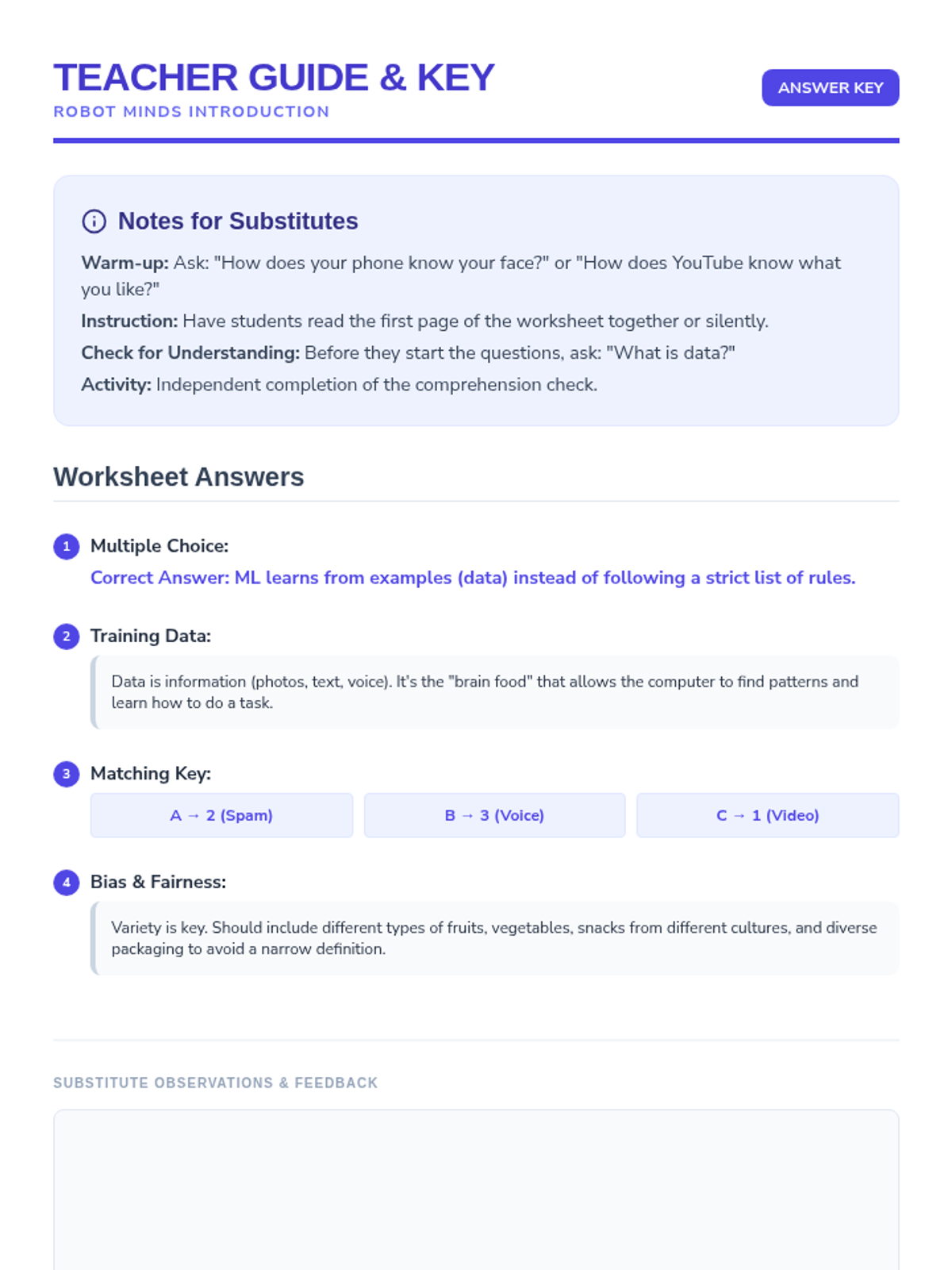
A comprehensive teacher guide and answer key for the Machine Learning lesson. Updated to keep matching items together and added observation space for the substitute. Fixed container height issues for 1-page printing.
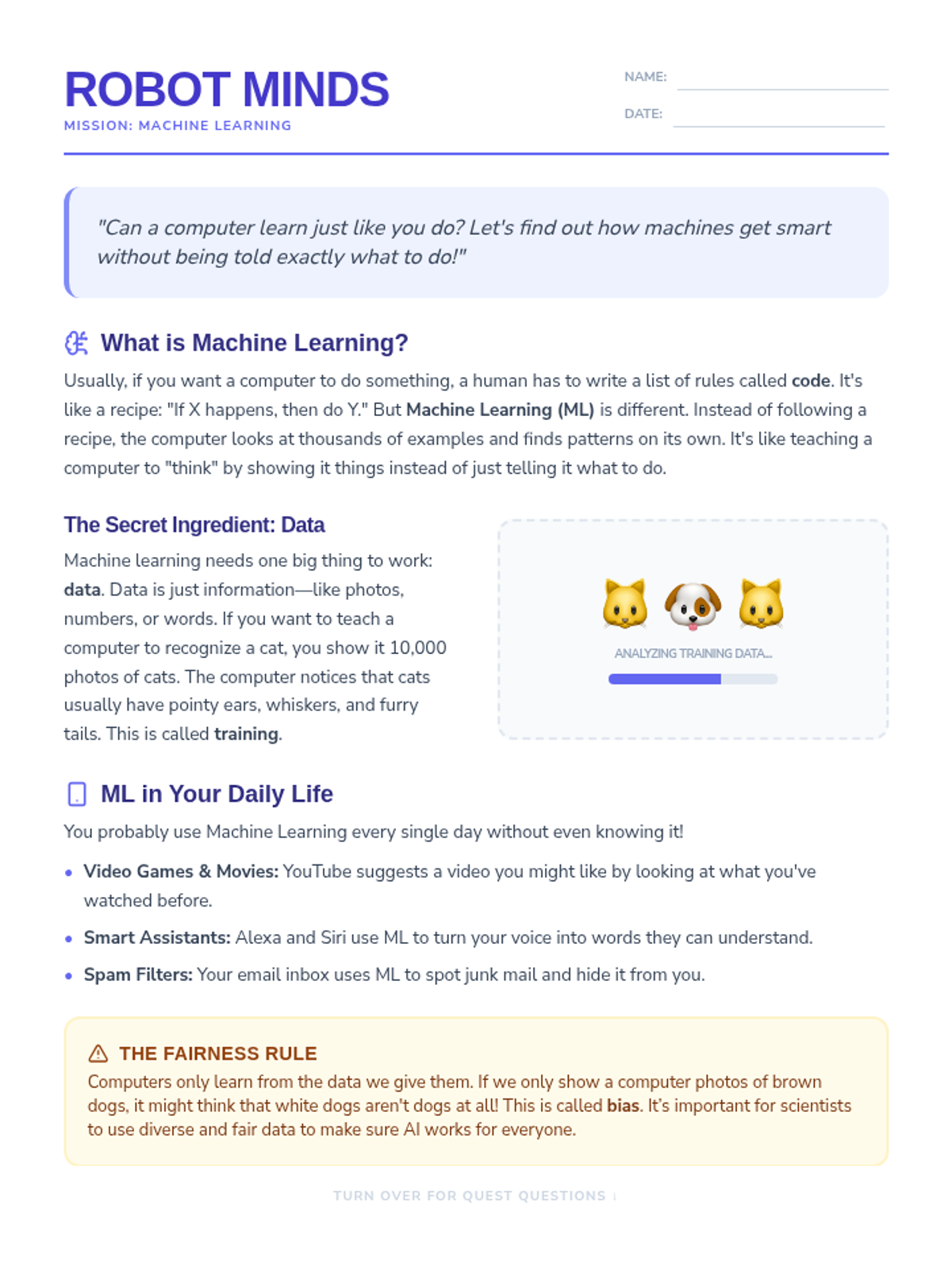
An engaging reading passage and comprehension worksheet introducing 4th-5th graders to Machine Learning, data training, and algorithmic bias. Corrected layout and spacing for perfect 2-page printing.
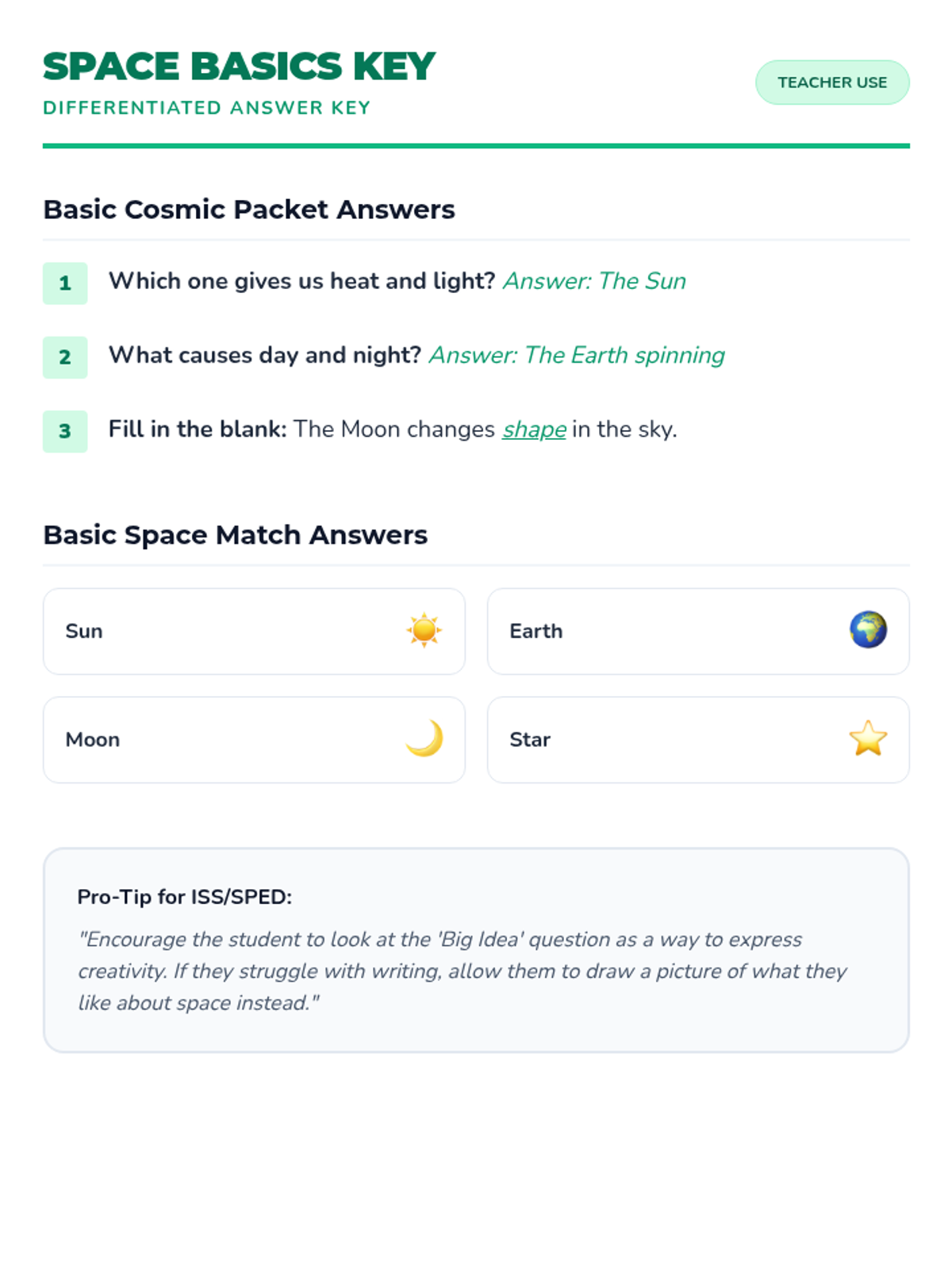
Teacher answer key for the basic/differentiated Earth, Moon, and Sun materials, including tips for supporting students in ISS.
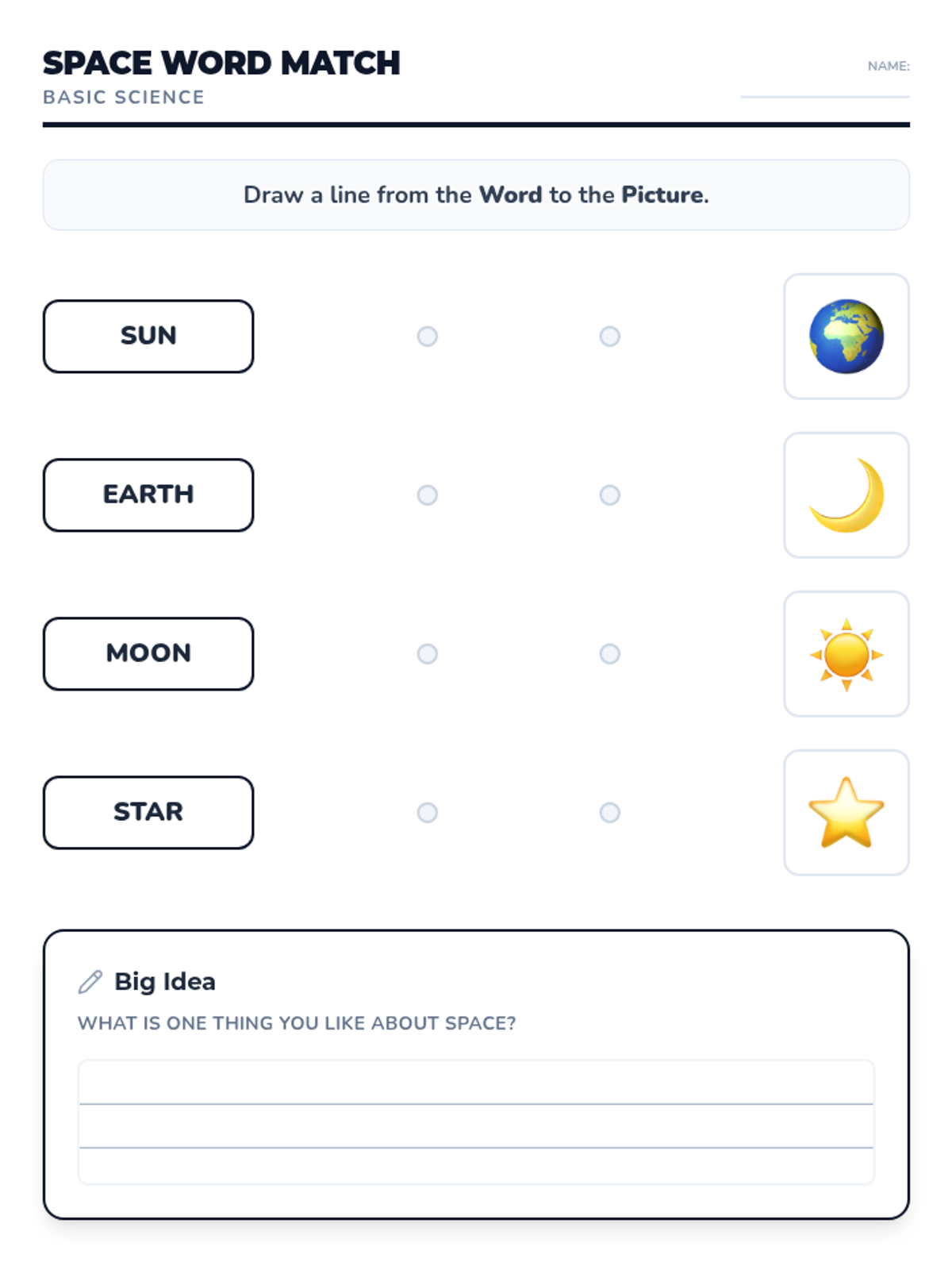
A basic vocabulary matching worksheet for SPED students, matching primary space terms (Sun, Earth, Moon, Star) to simple icons. Optimized for 1-page print.
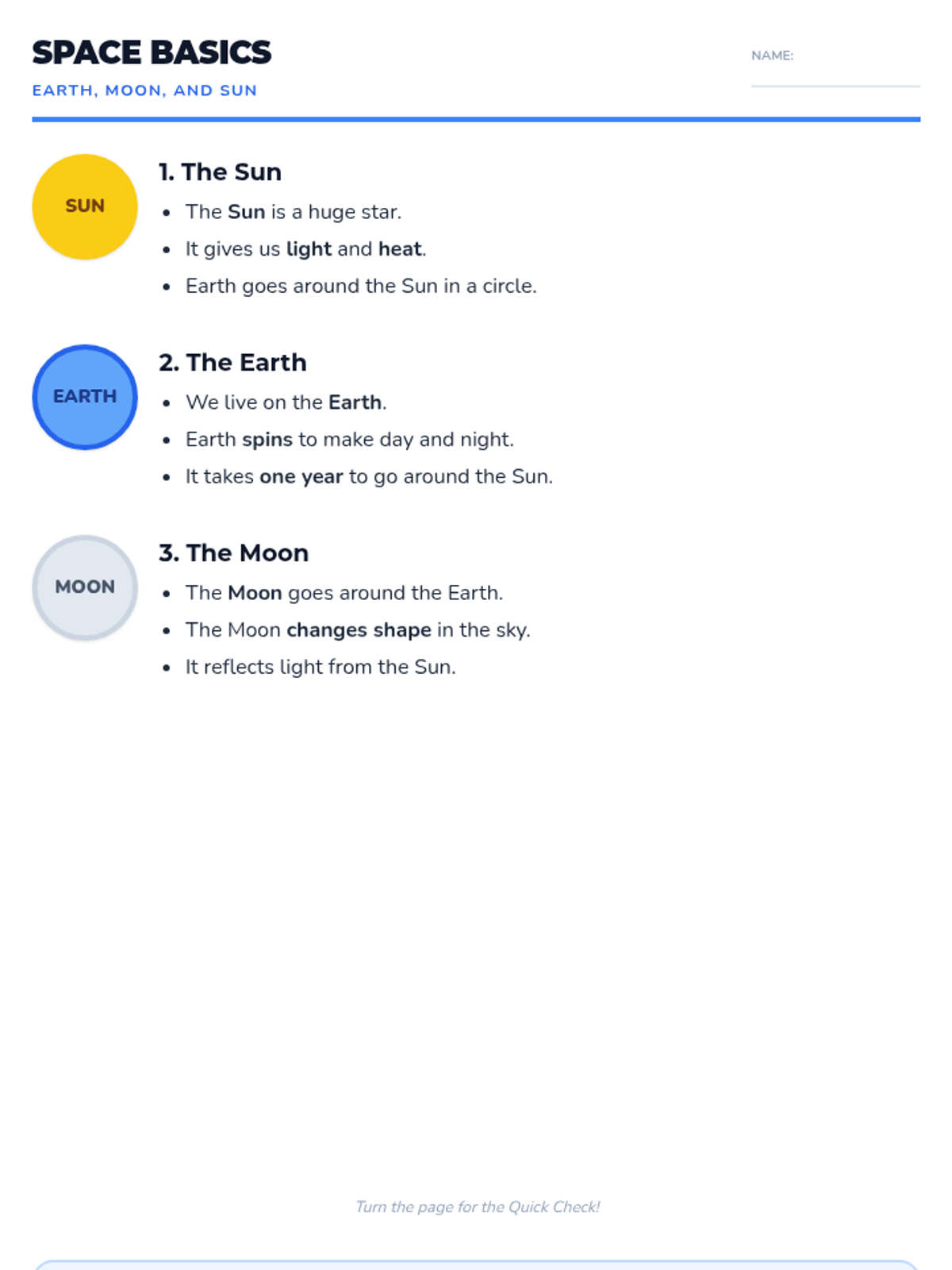
A simplified science packet for Earth, Moon, and Sun, featuring larger text, bulleted information, and visual multiple-choice questions for students with IEPs. Optimized for 2-page print.
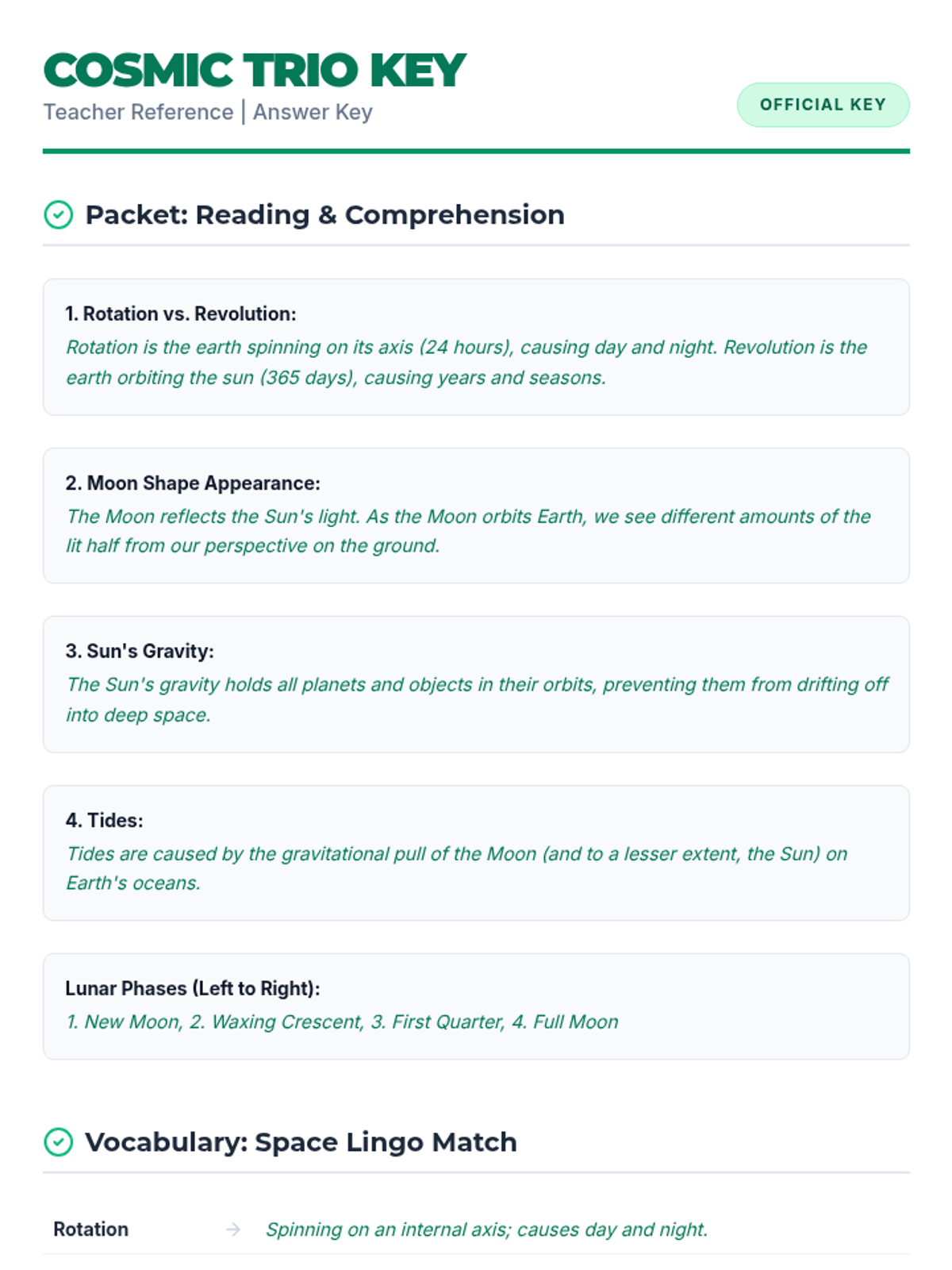
Teacher answer key for the Cosmic Trio Packet and Space Lingo Match activity, including explanations for comprehension questions and critical thinking prompts.
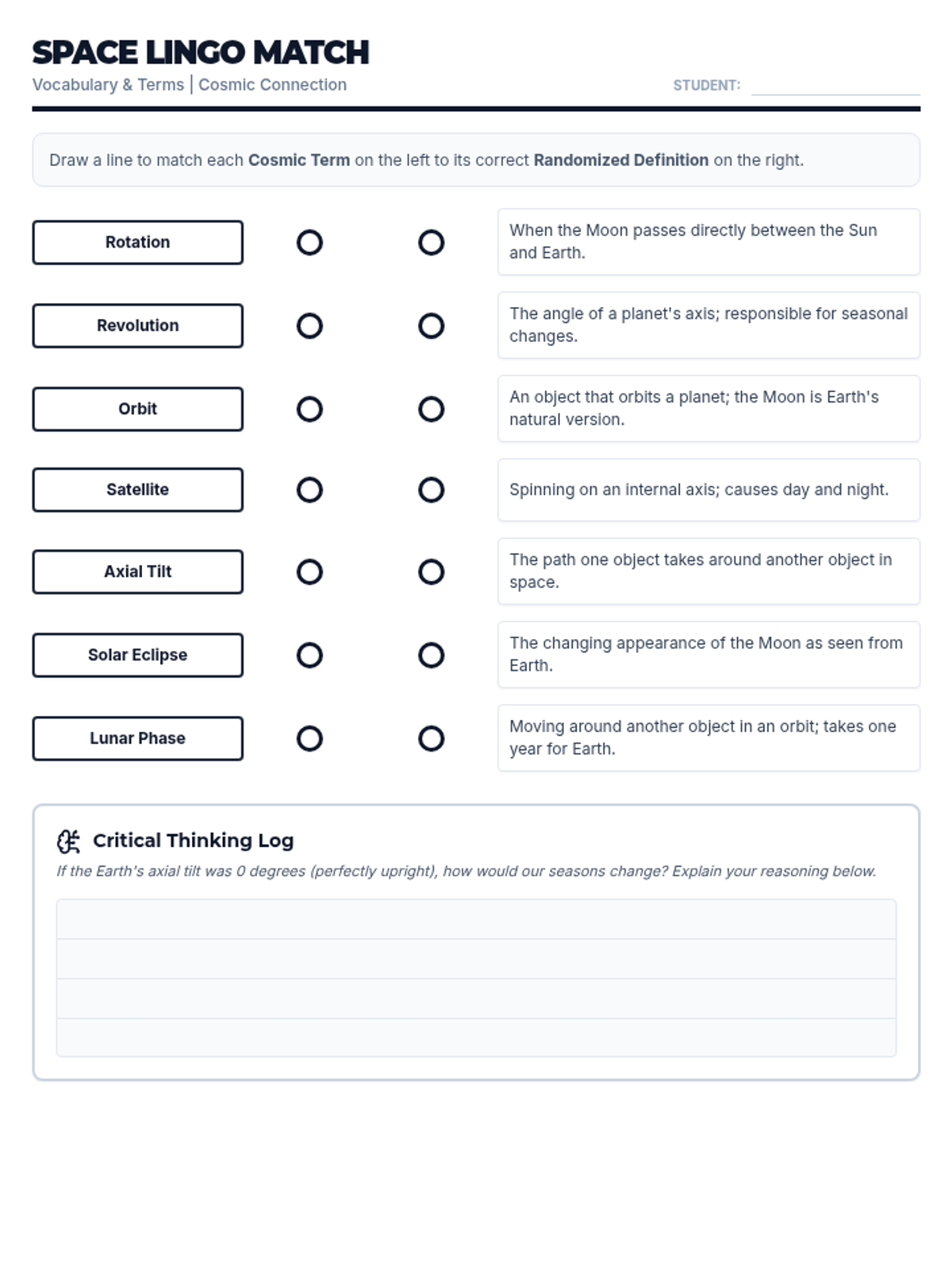
A vocabulary matching worksheet focused on key astronomical terms. Improved layout to ensure one-page fit and better alignment for student work.
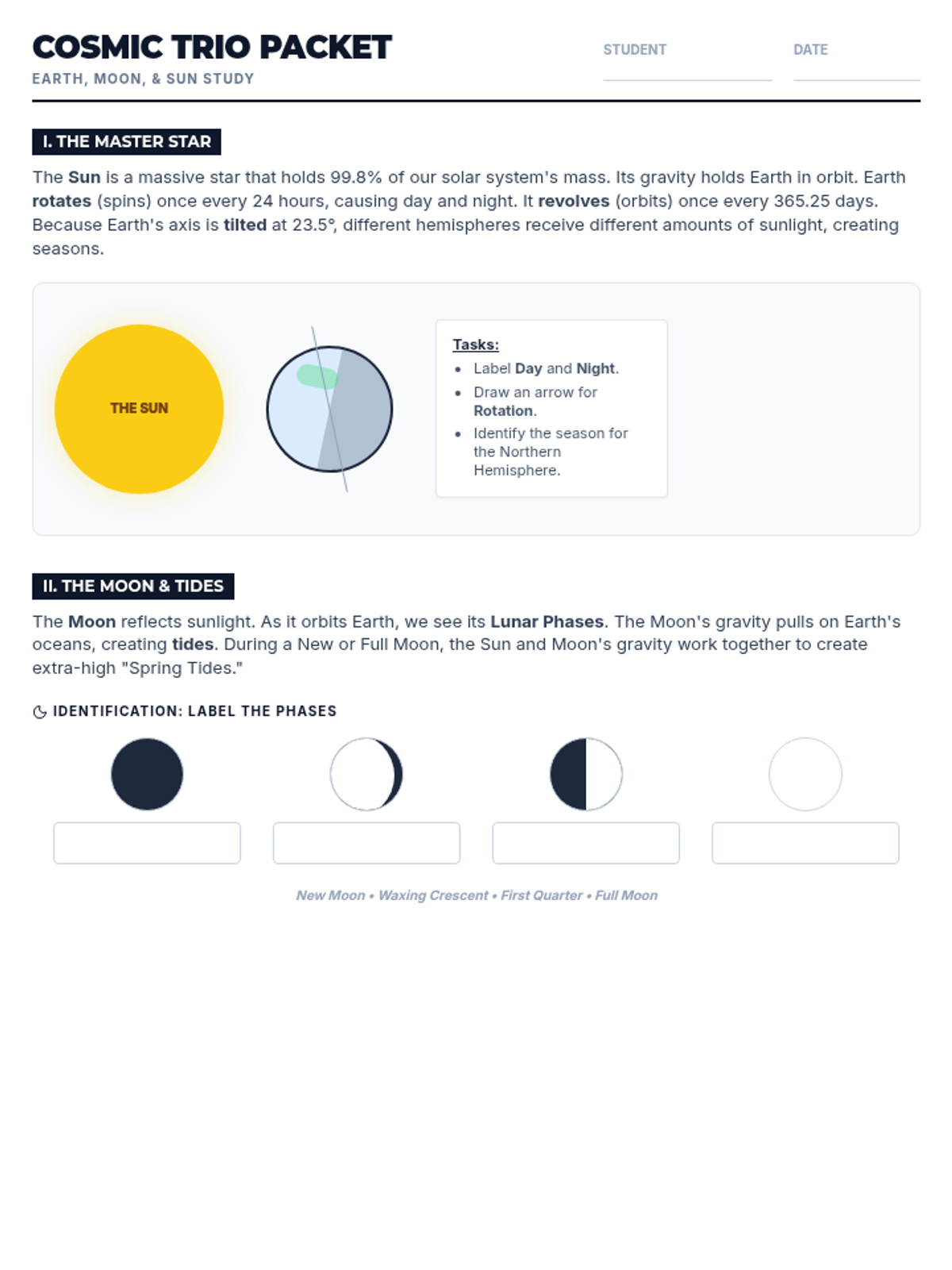
A comprehensive science study packet containing reading passages about the Earth, Moon, and Sun, along with diagram labeling activities and comprehension questions. Re-designed to fit on two pages.
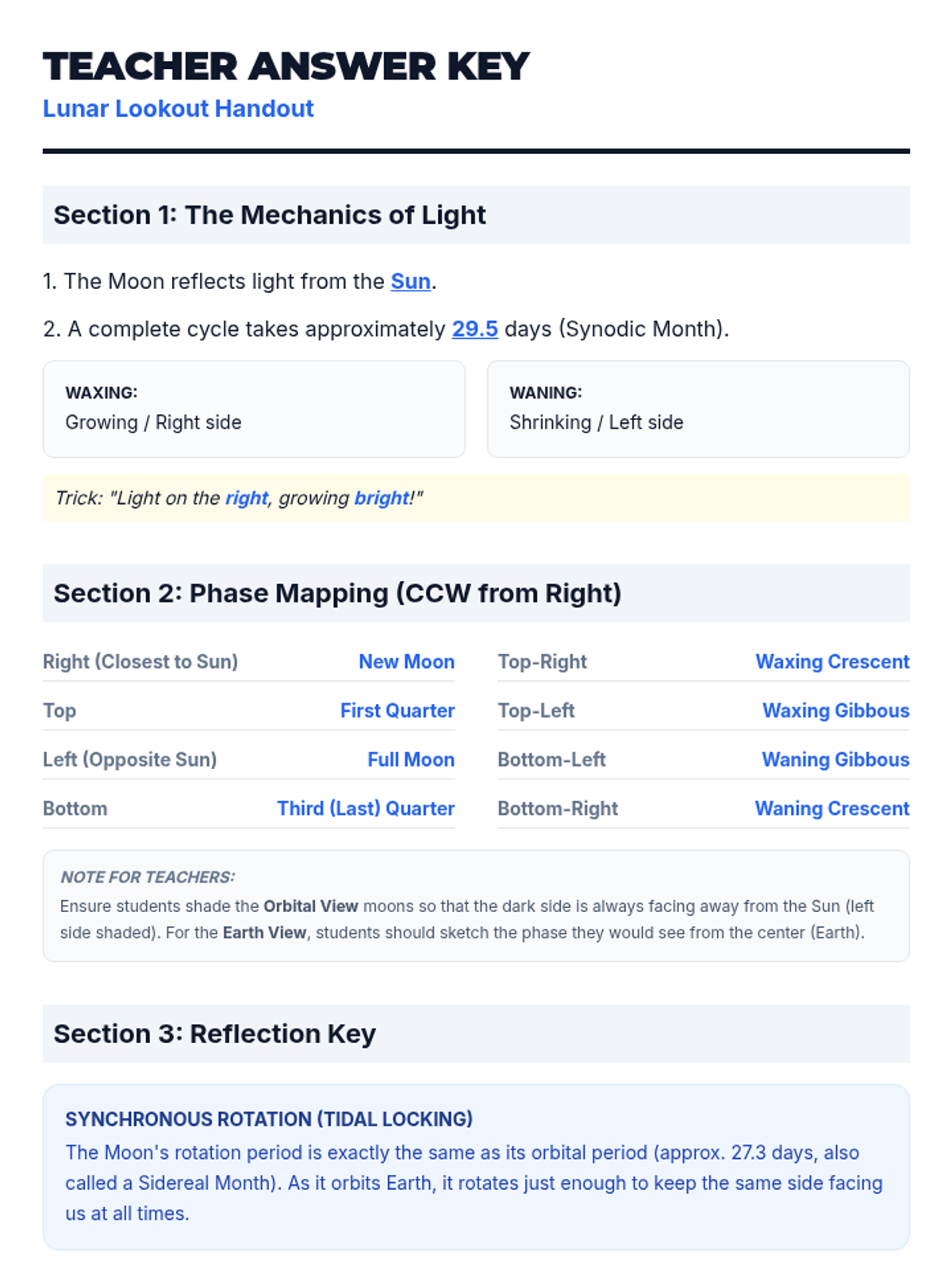
A condensed teacher answer key for the Moon Phases handout, featuring identification for both orbital and visual views.
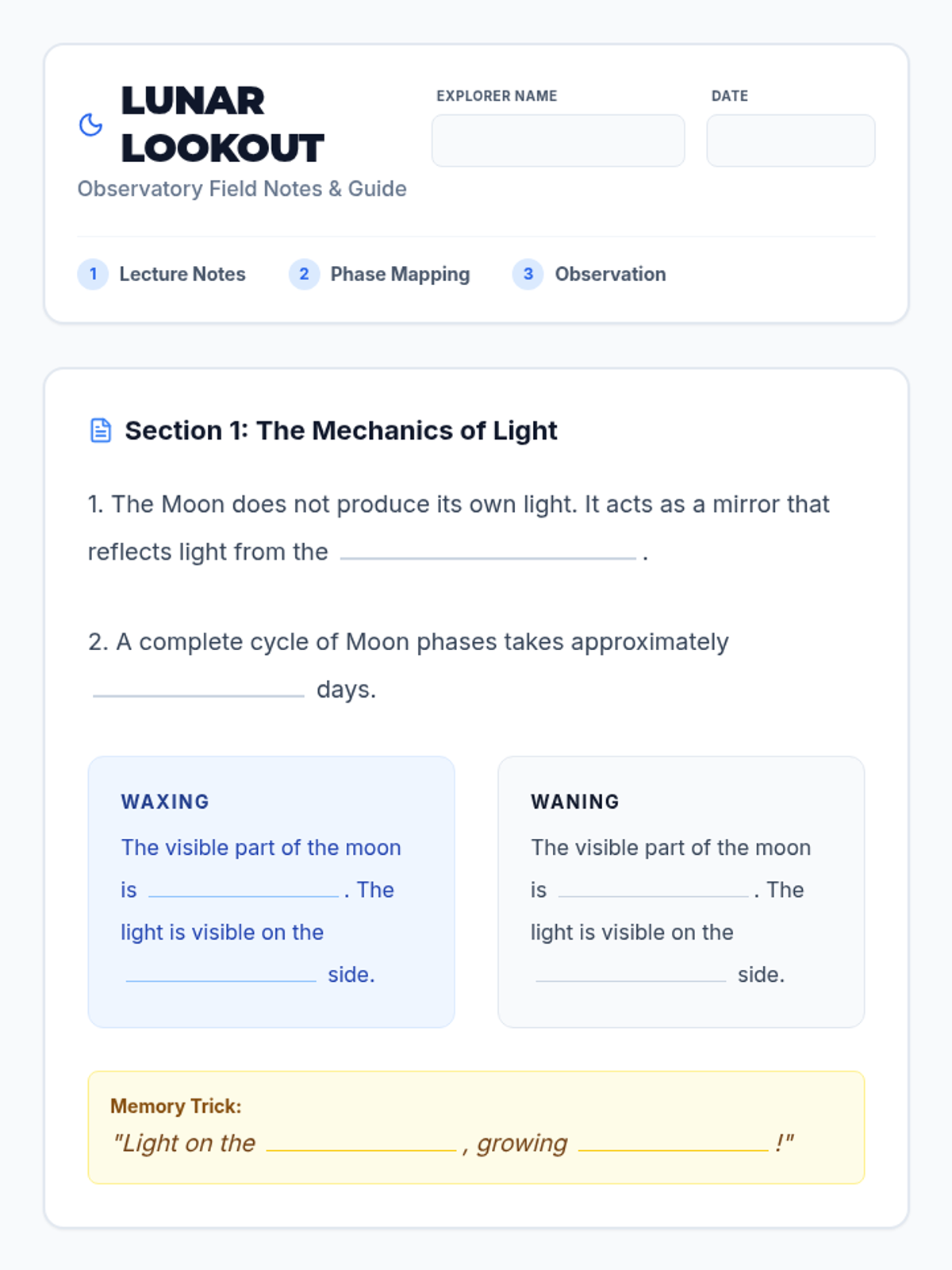
A student worksheet with fill-in-the-blank notes and a detailed phase mapping diagram featuring both orbital and appearance views.
A visual presentation covering the 8 phases of the lunar cycle, now featuring 4 detailed slides to help students complete the phase mapping diagram in their handout.
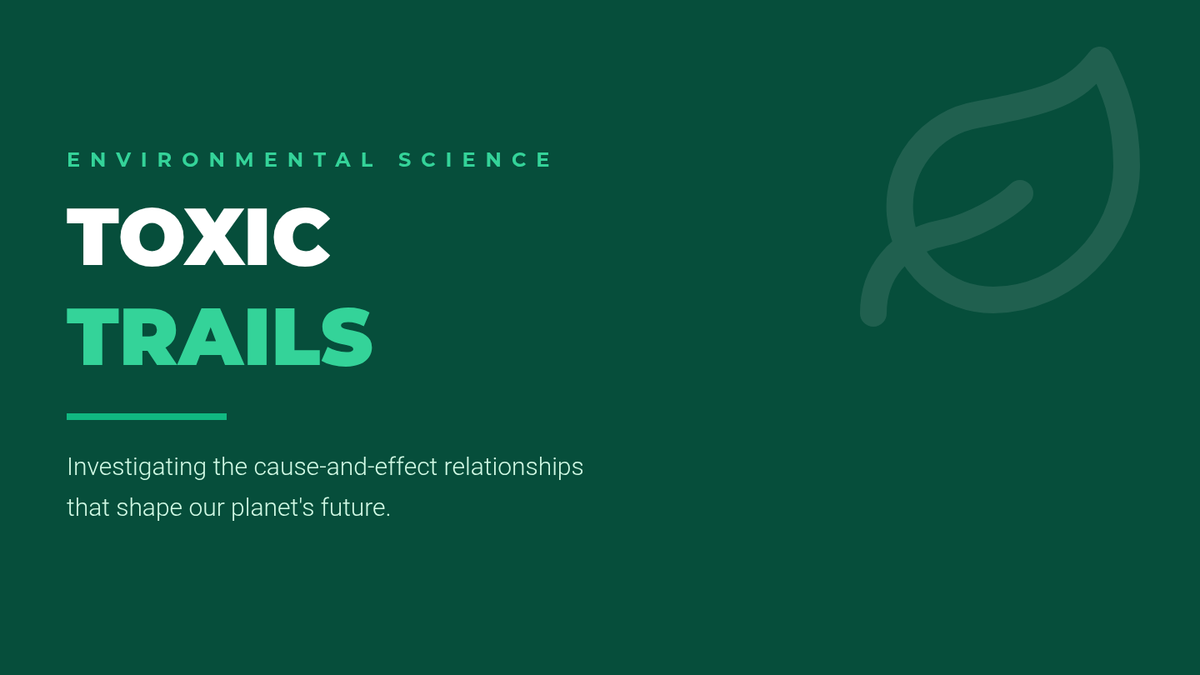
A visual presentation explaining the cause-and-effect relationship in environmental pollution, using water and air pollution case studies to illustrate complex ecological impacts.
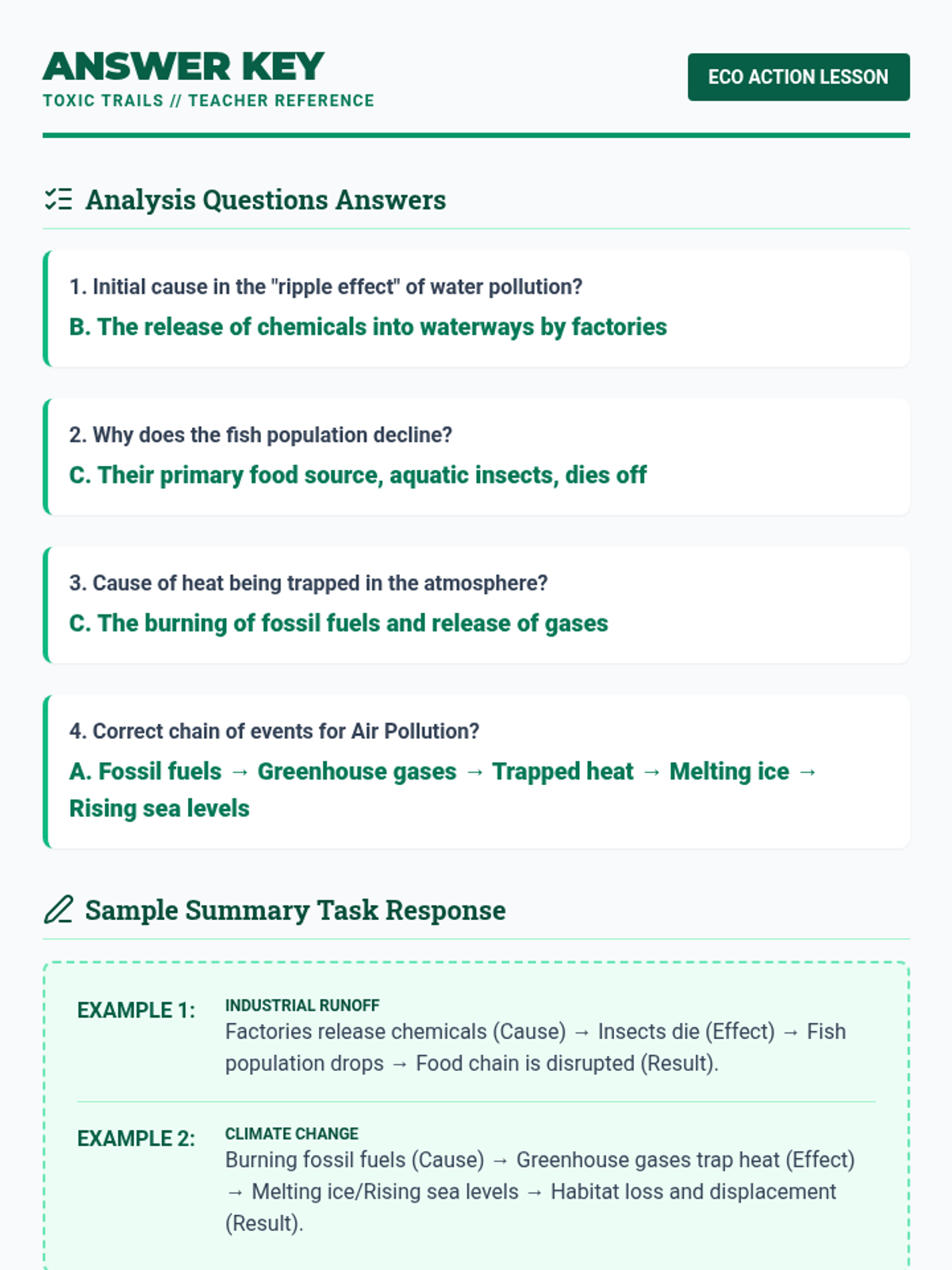
Teacher answer key for the Toxic Trails worksheet, providing correct responses for multiple-choice questions and sample summaries for student work evaluation.
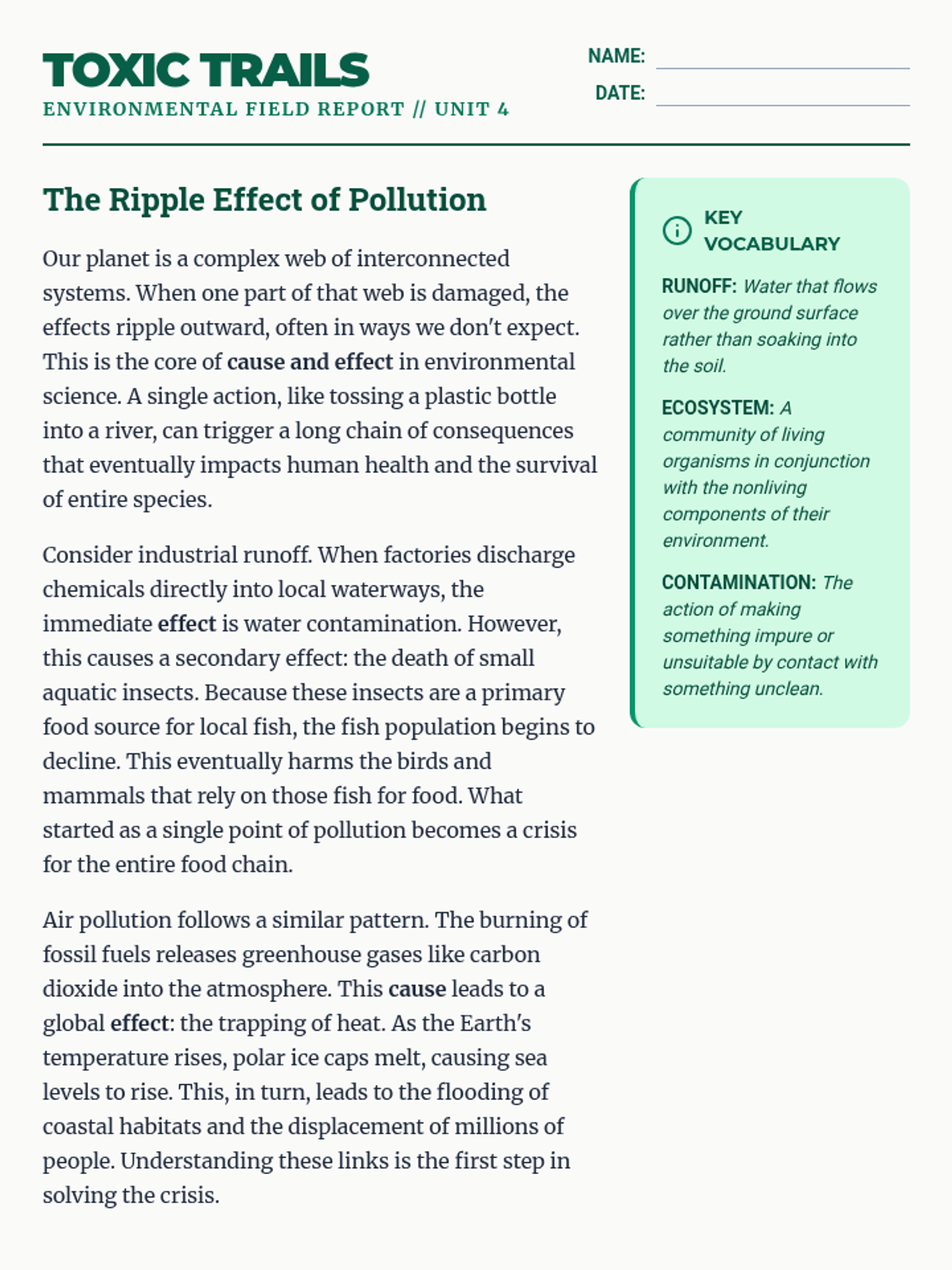
An investigative reading worksheet focusing on the cause-and-effect relationships of pollution, featuring a detailed passage and analysis questions for middle-grade students.
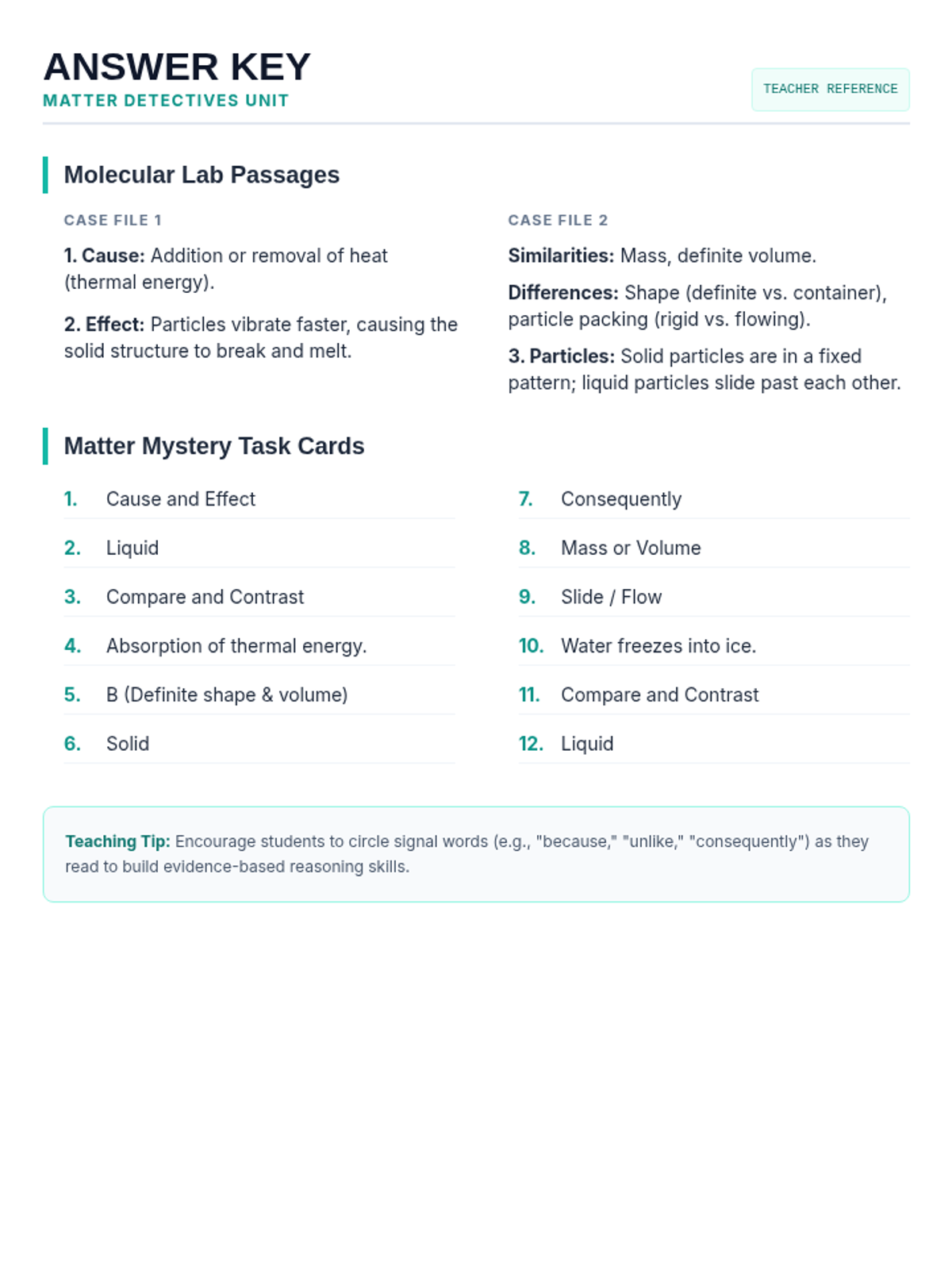
Teacher answer key for the Molecular Lab Passages and Matter Mystery Task Cards. Revised to fit on a single page and improve layout consistency.
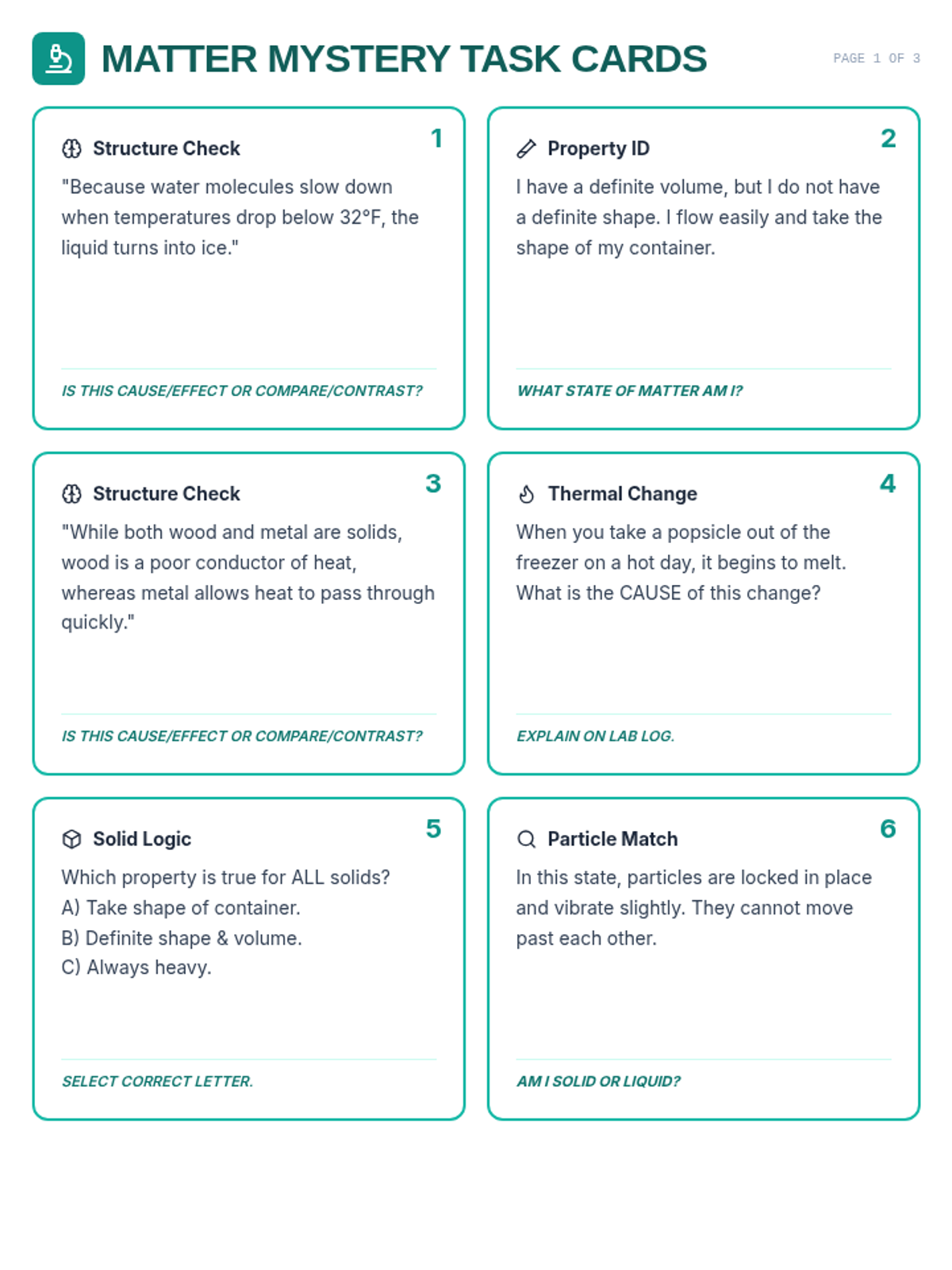
A set of 12 task cards for literacy centers with a matching Agent Lab Log for recording student answers. Revised to fix layout, page breaks, and content completeness.
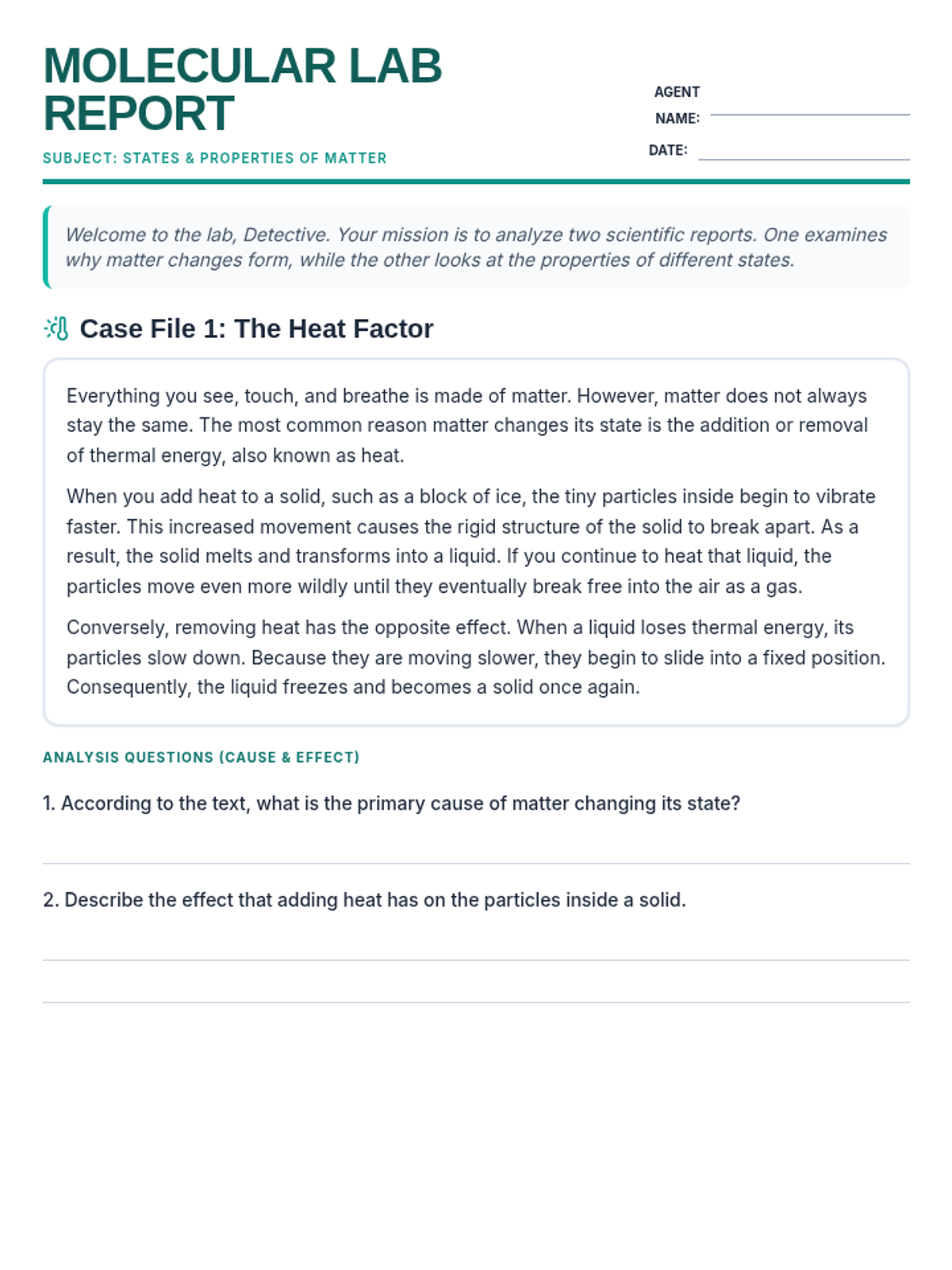
Two reading passages on matter (Case File 1: Cause & Effect of state changes; Case File 2: Compare & Contrast of solids vs liquids) with analysis questions. Revised to fix page breaks and header alignment.
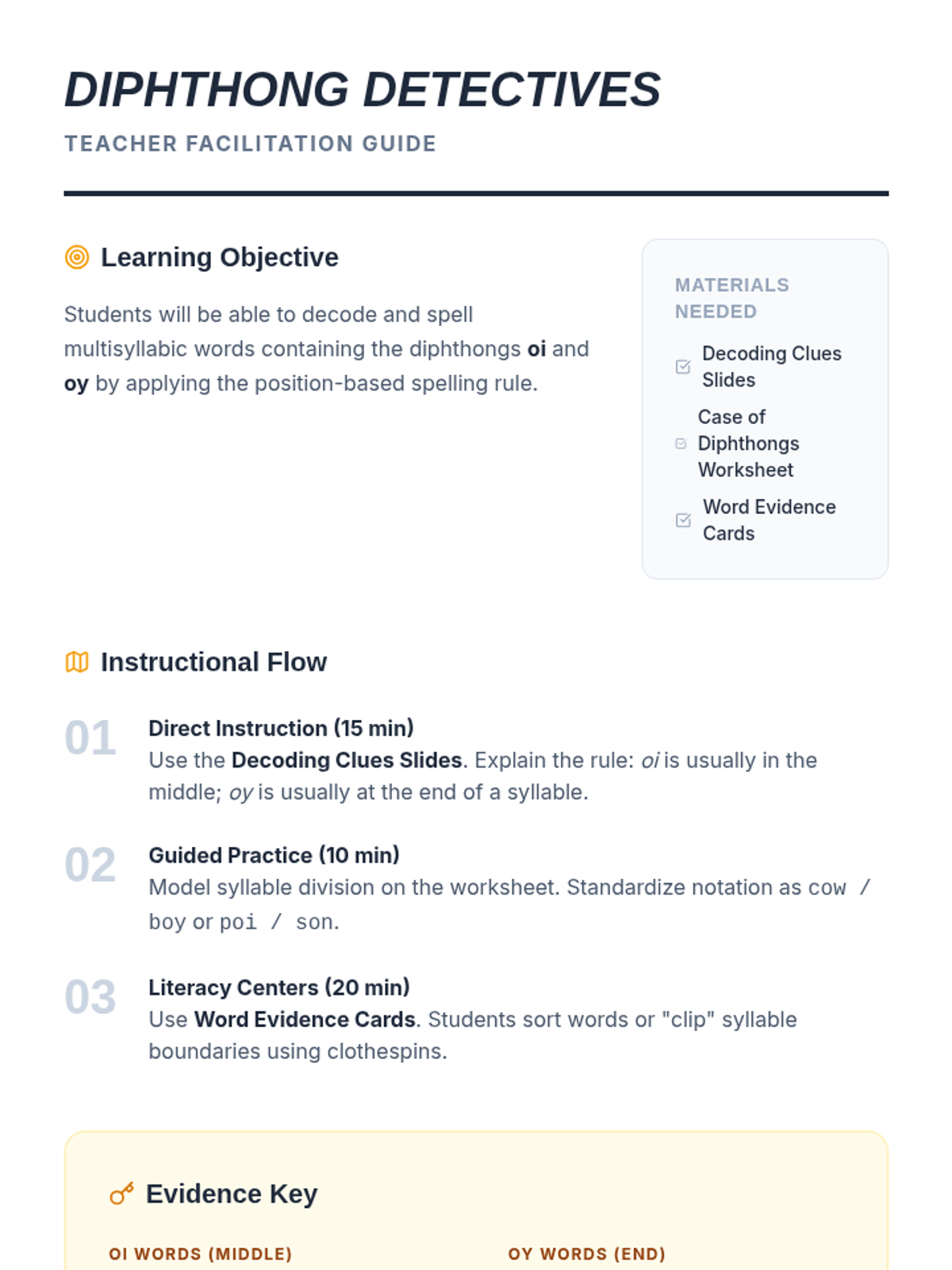
A comprehensive teacher guide for the 'Diphthong Detectives' lesson. Fixed layout issues, improved rule clarity, and ensured a cohesive flow across pages.
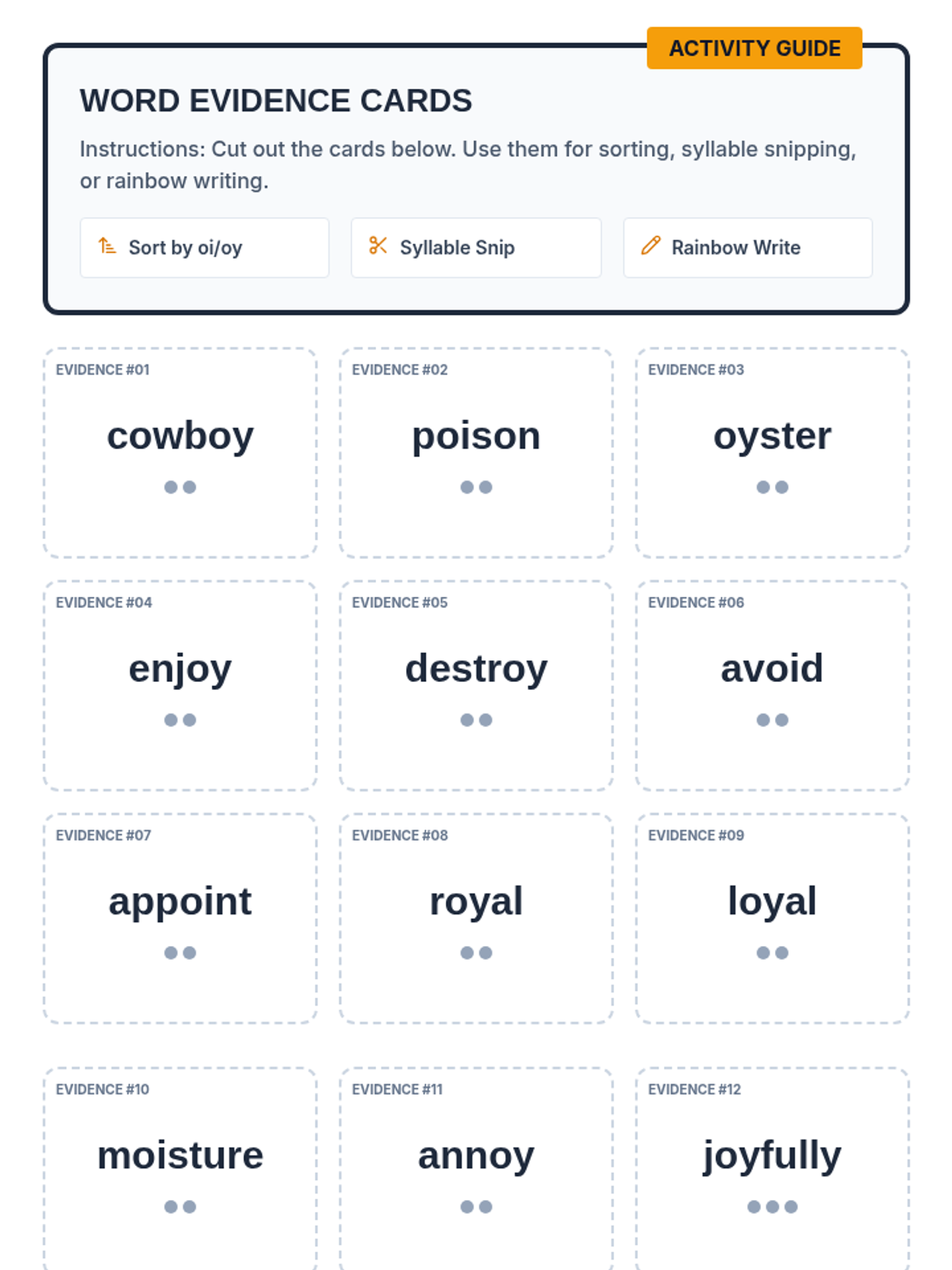
A collection of printable word cards for multisyllabic 'oi' and 'oy' words. Optimized grid layout and contrast to ensure cards remain intact across page breaks.
A visual slide deck introducing the 'oi' and 'oy' diphthongs. Fixed typos, re-formatted decoding examples, and cleaned up excessive italics for better legibility.
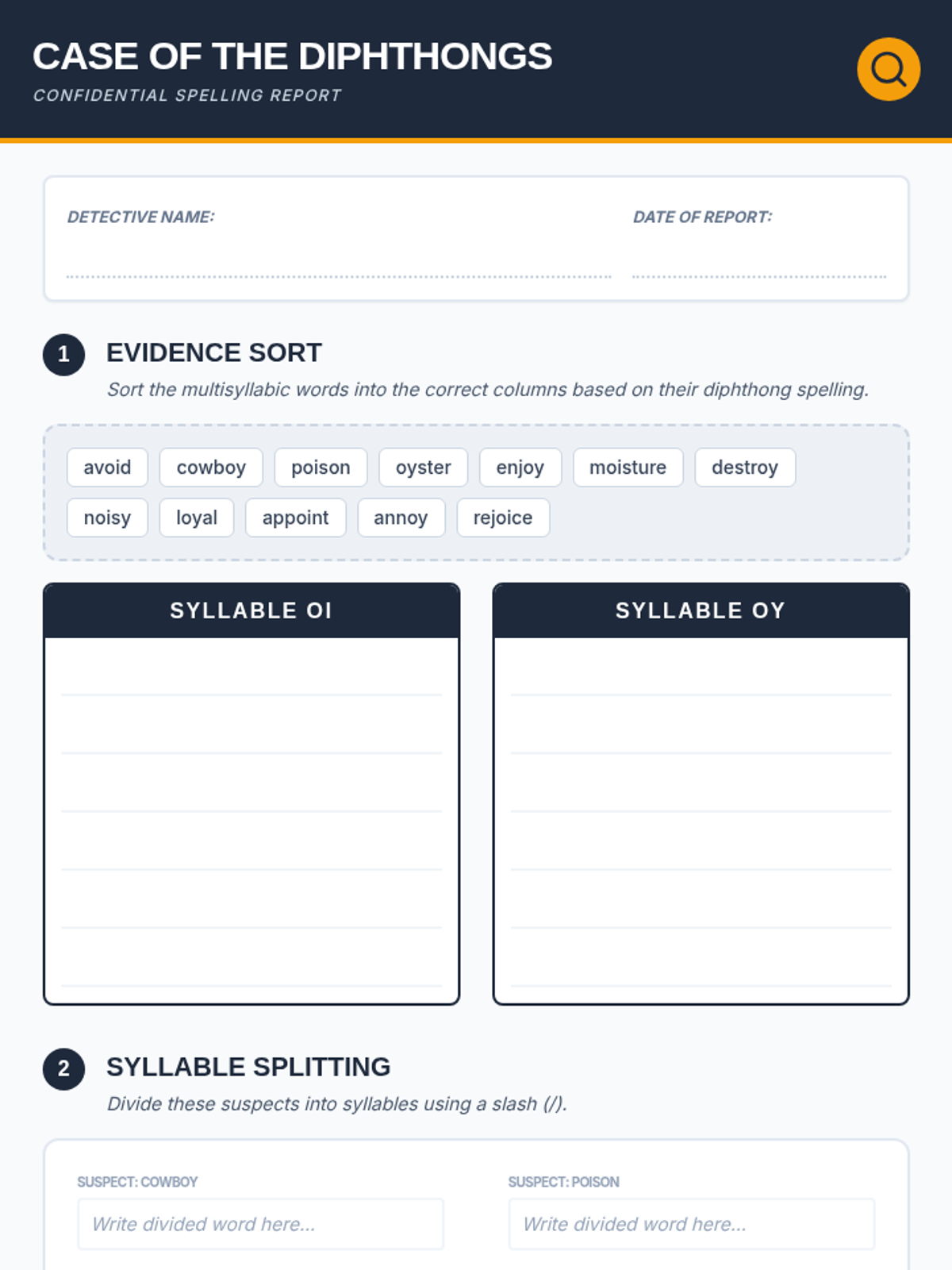
A detective-themed worksheet for practicing multisyllabic 'oi' and 'oy' words, including sorting activities and syllable division exercises. Optimized for better flow and student guidance.
An expanded presentation covering animal group behaviors with a much wider variety of animal examples including dolphins, ants, elephants, and jaguars, plus the trade-offs of social living.
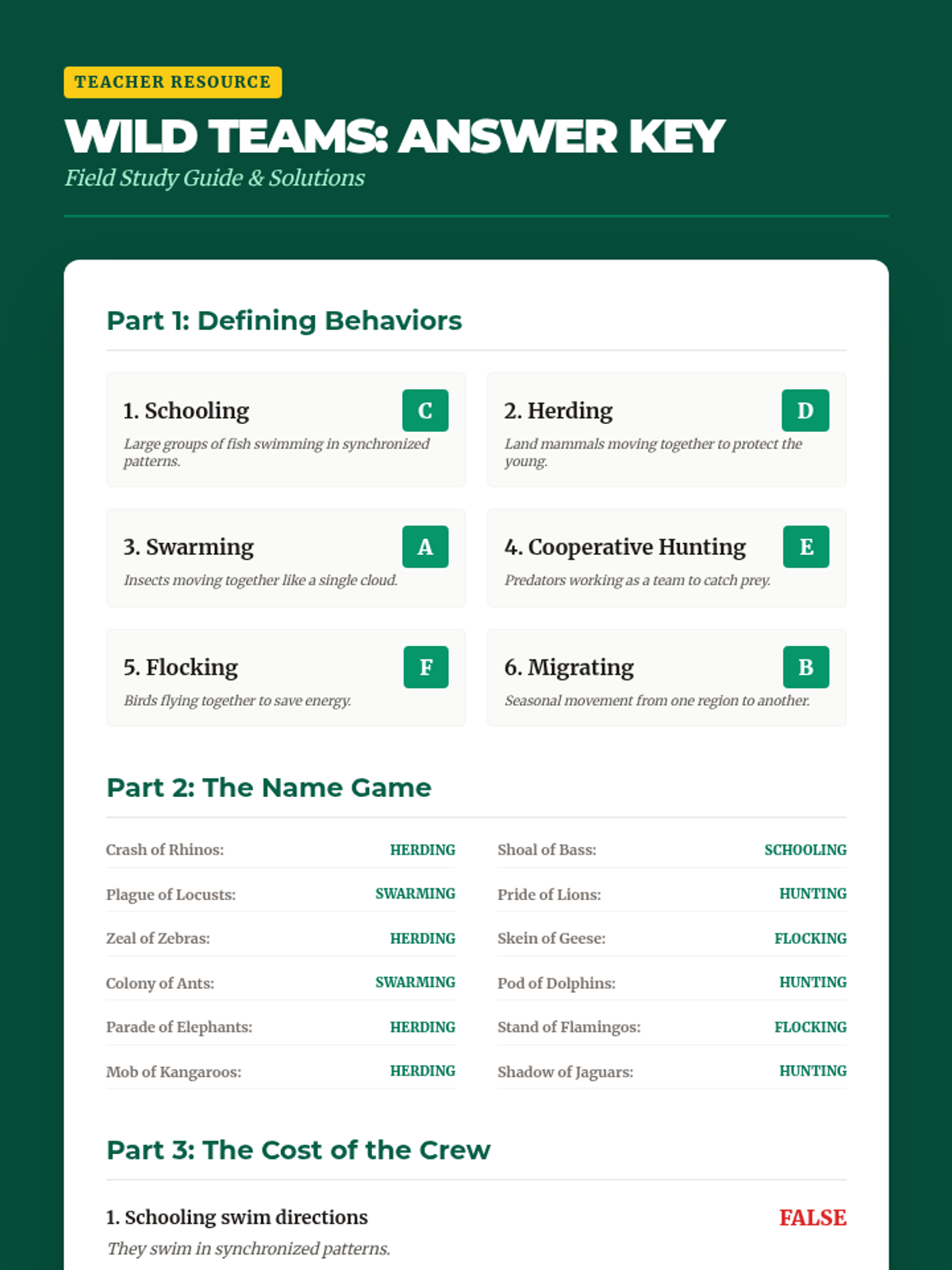
An updated answer key for the Wild Teams Worksheet expansion, providing correct answers for the expanded matching and identification sections with clarified True/False statements.
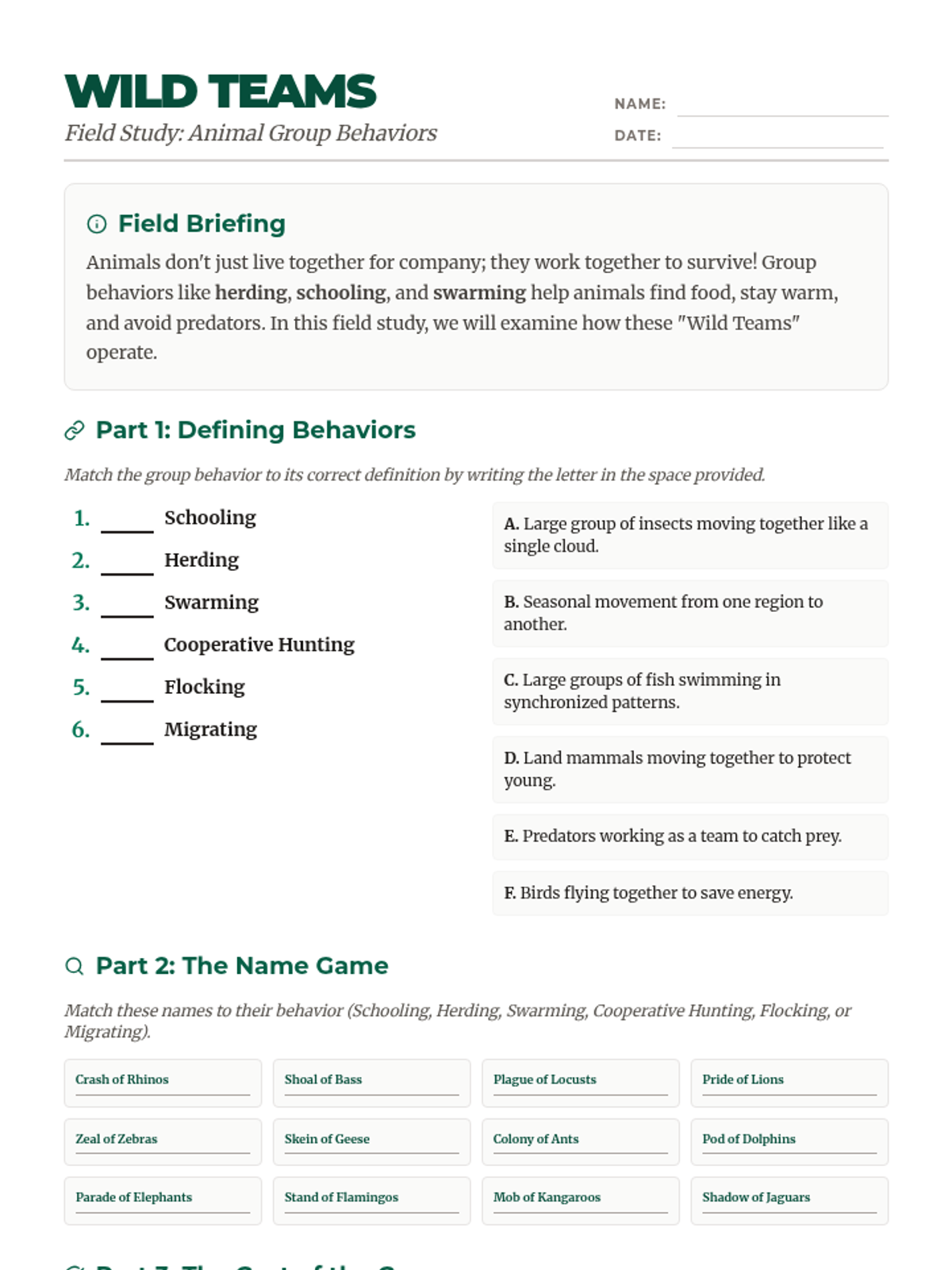
A student worksheet focusing on the six key animal group behaviors (schooling, herding, swarming, cooperative hunting, migrating, and flocking) with expanded animal examples, matching, true/false, and collective noun identification sections. All content is now consolidated onto two pages.
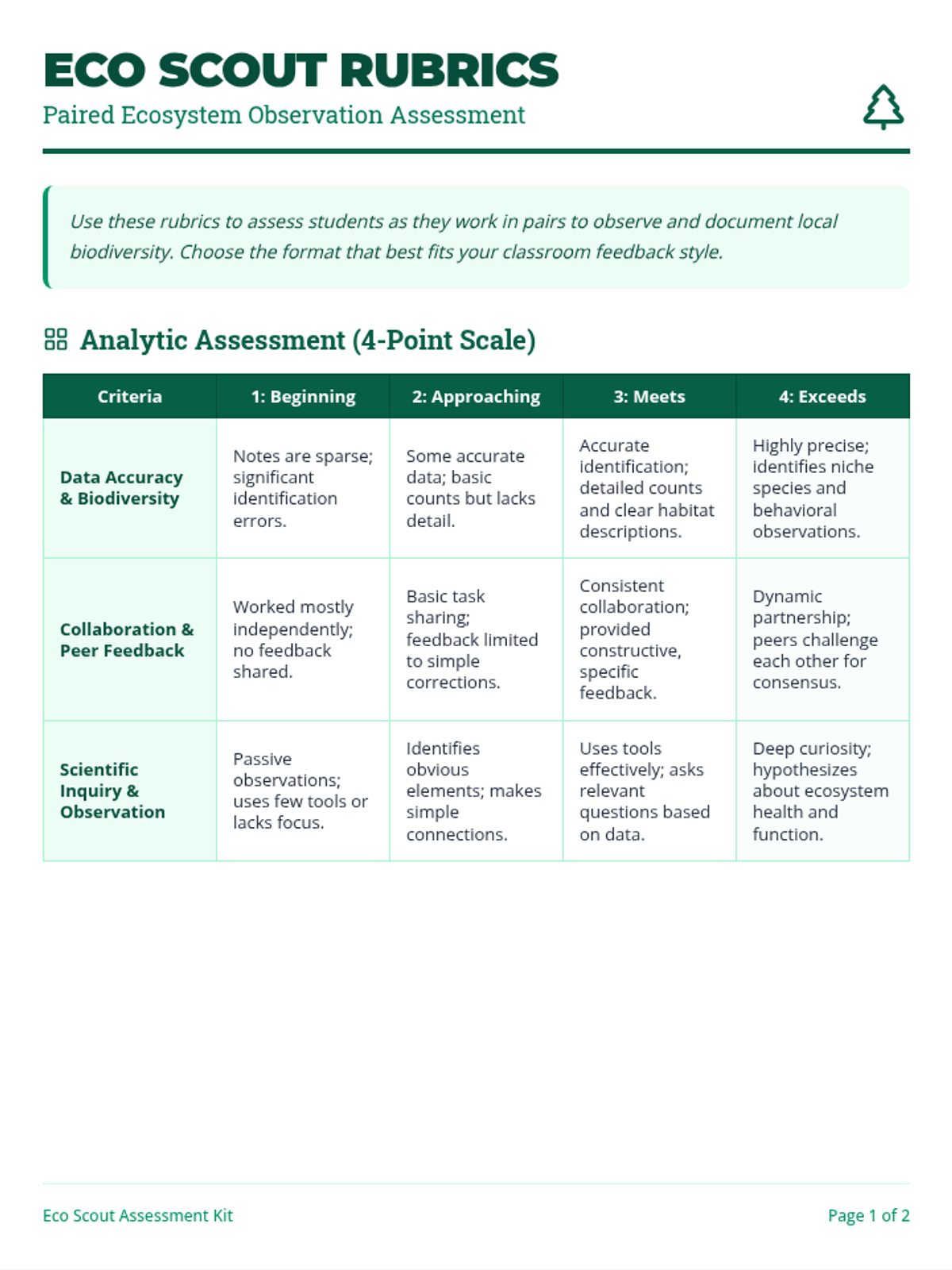
A set of three distinct rubric formats (analytic, holistic, and single-point) for evaluating local ecosystem observation activities, with a focus on biodiversity data, collaboration, and scientific inquiry.
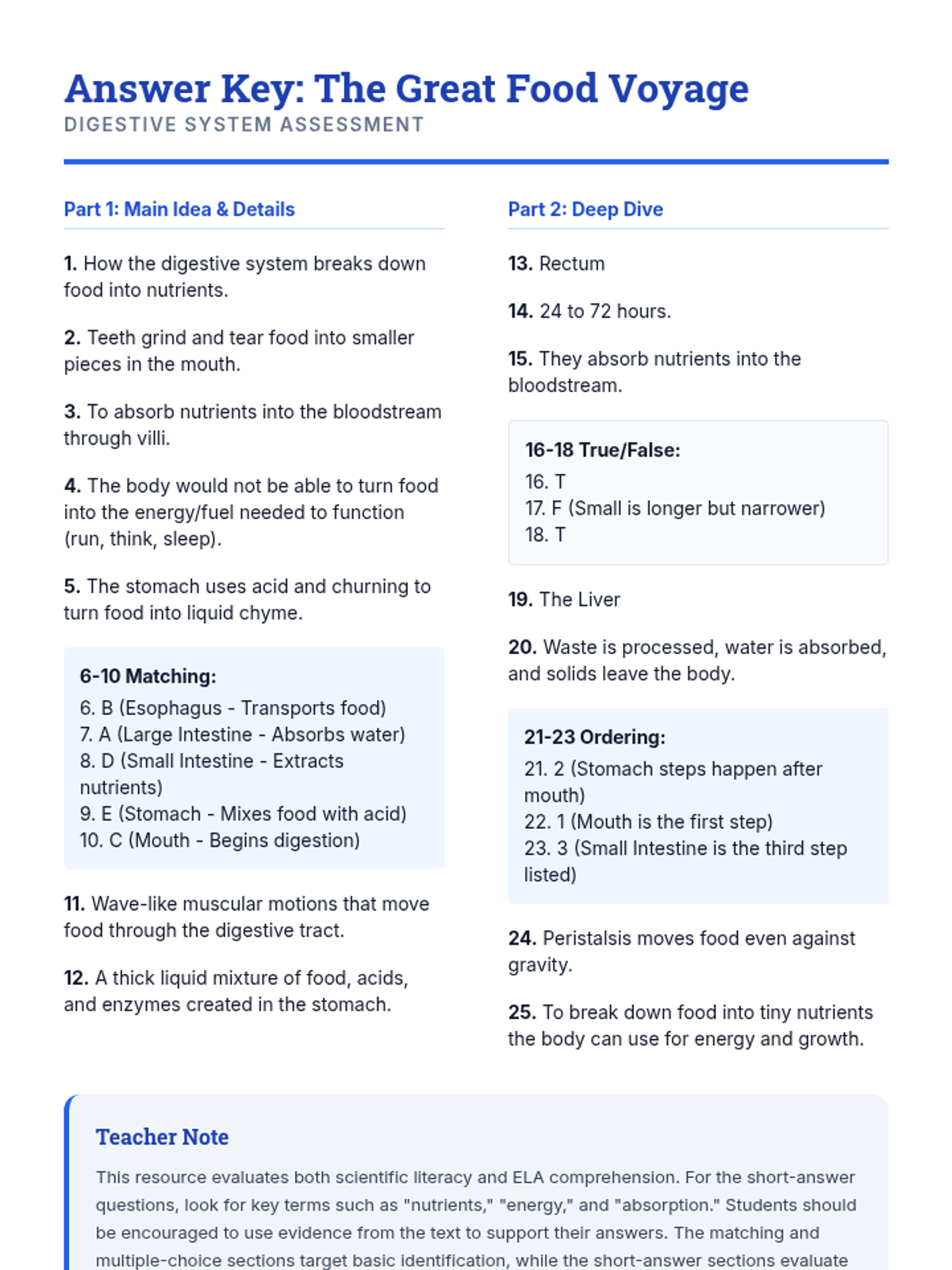
Answer key for the Digestive Journey Worksheet, providing correct responses for all 25 questions. Revised for better layout and sorting.
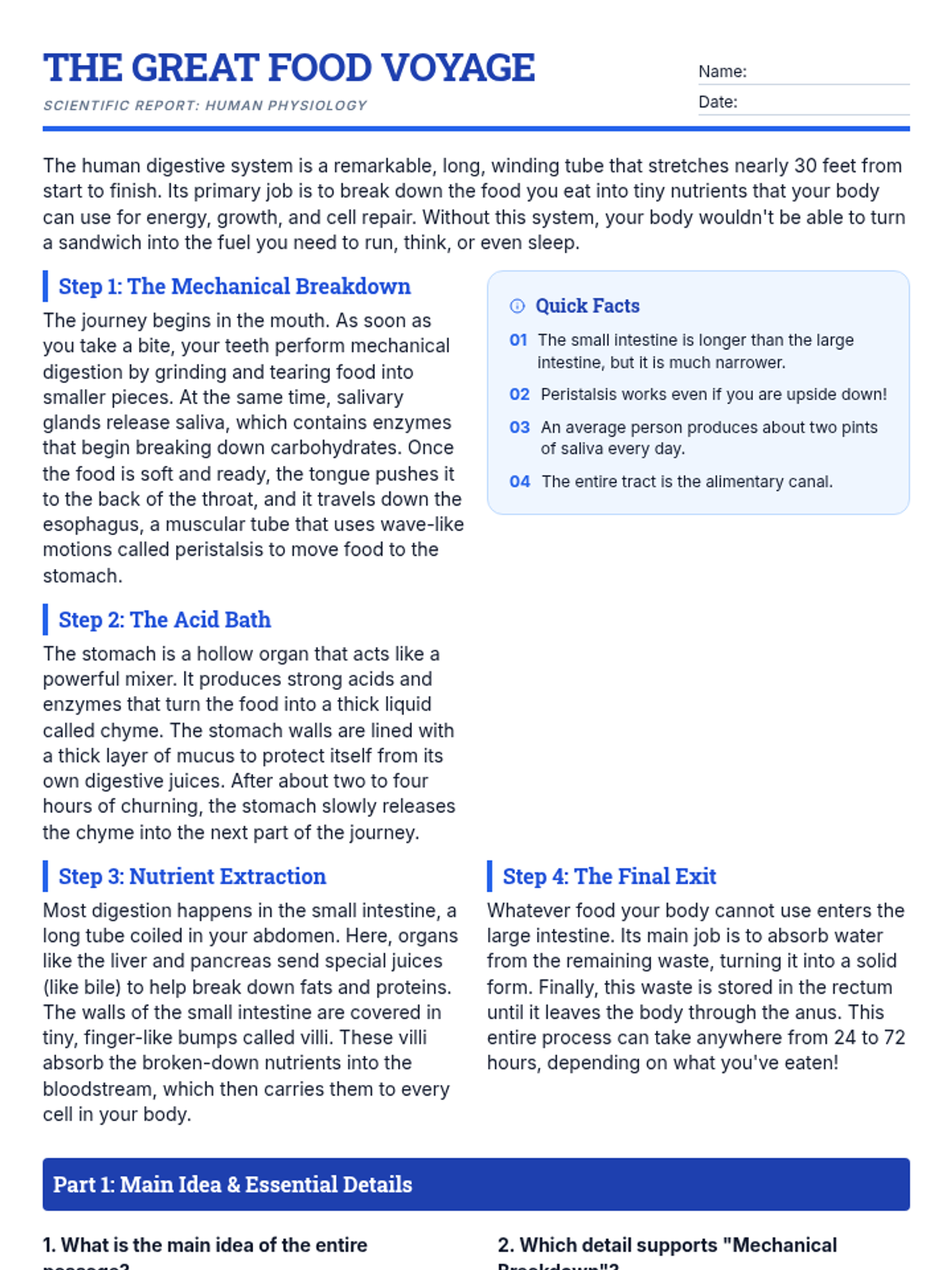
A reading passage about the human digestive system accompanied by 25 questions focusing on main idea and key details. Includes multiple choice, matching, and short answer questions. Revised for better page breaks and formatting.
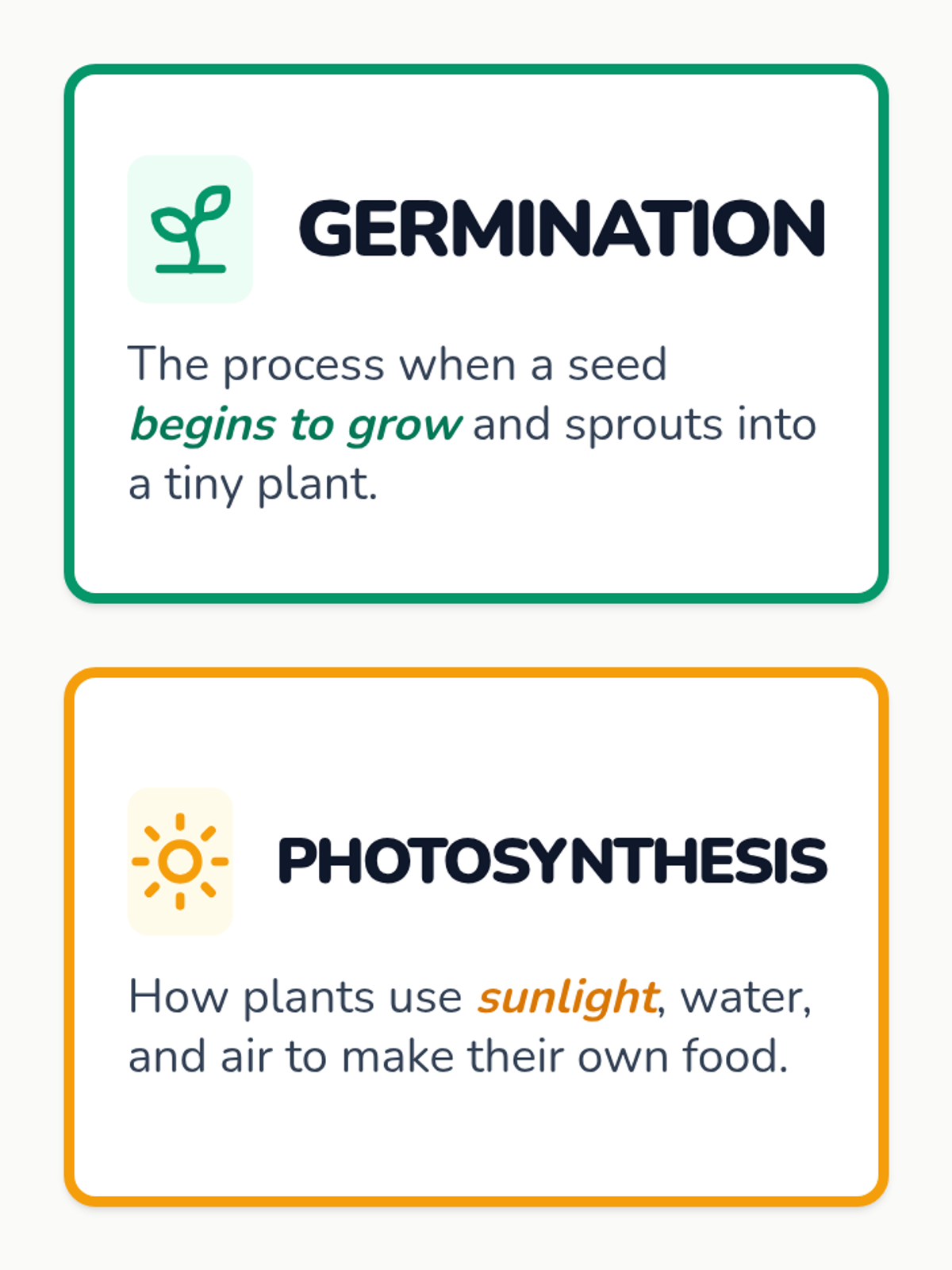
A set of six large vocabulary cards designed for a classroom word wall, featuring key plant science terms with clear definitions and icons.
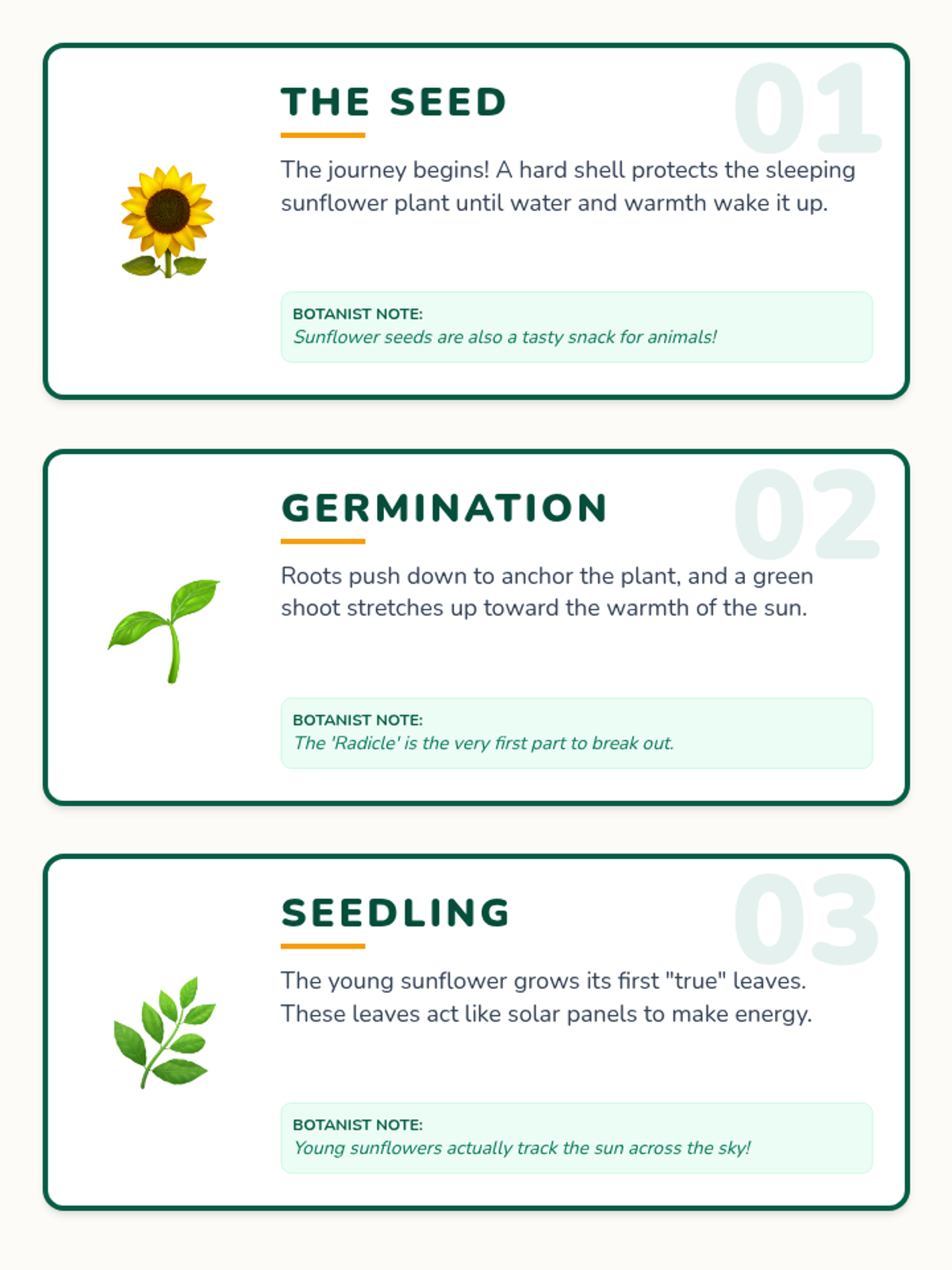
A set of six visual instruction cards depicting the life cycle of a plant, from seed to dispersal, with botanist notes and key facts.
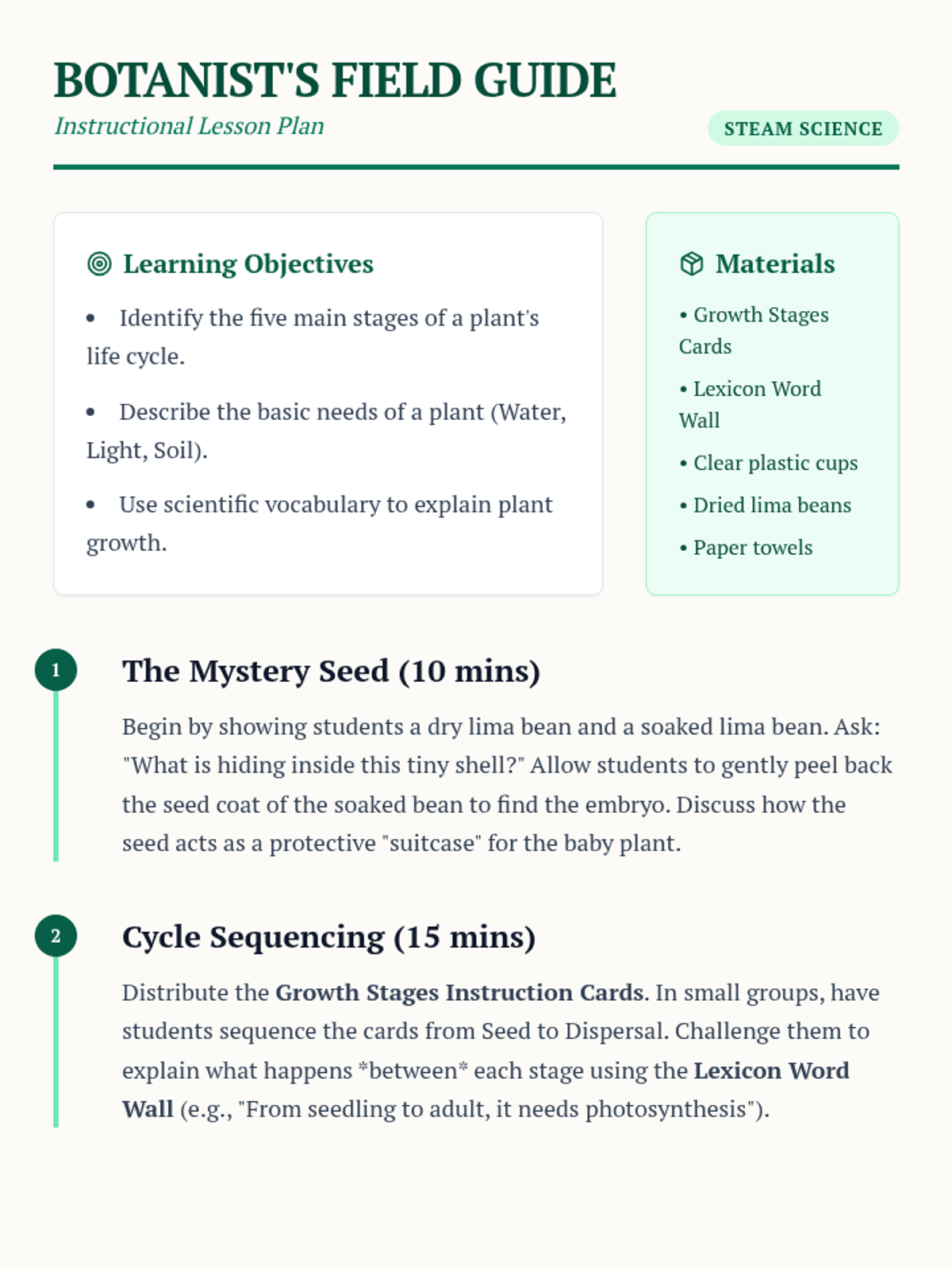
A detailed instructional guide for teachers to lead a STEAM lesson on plant life cycles, including hands-on activities and assessment strategies.
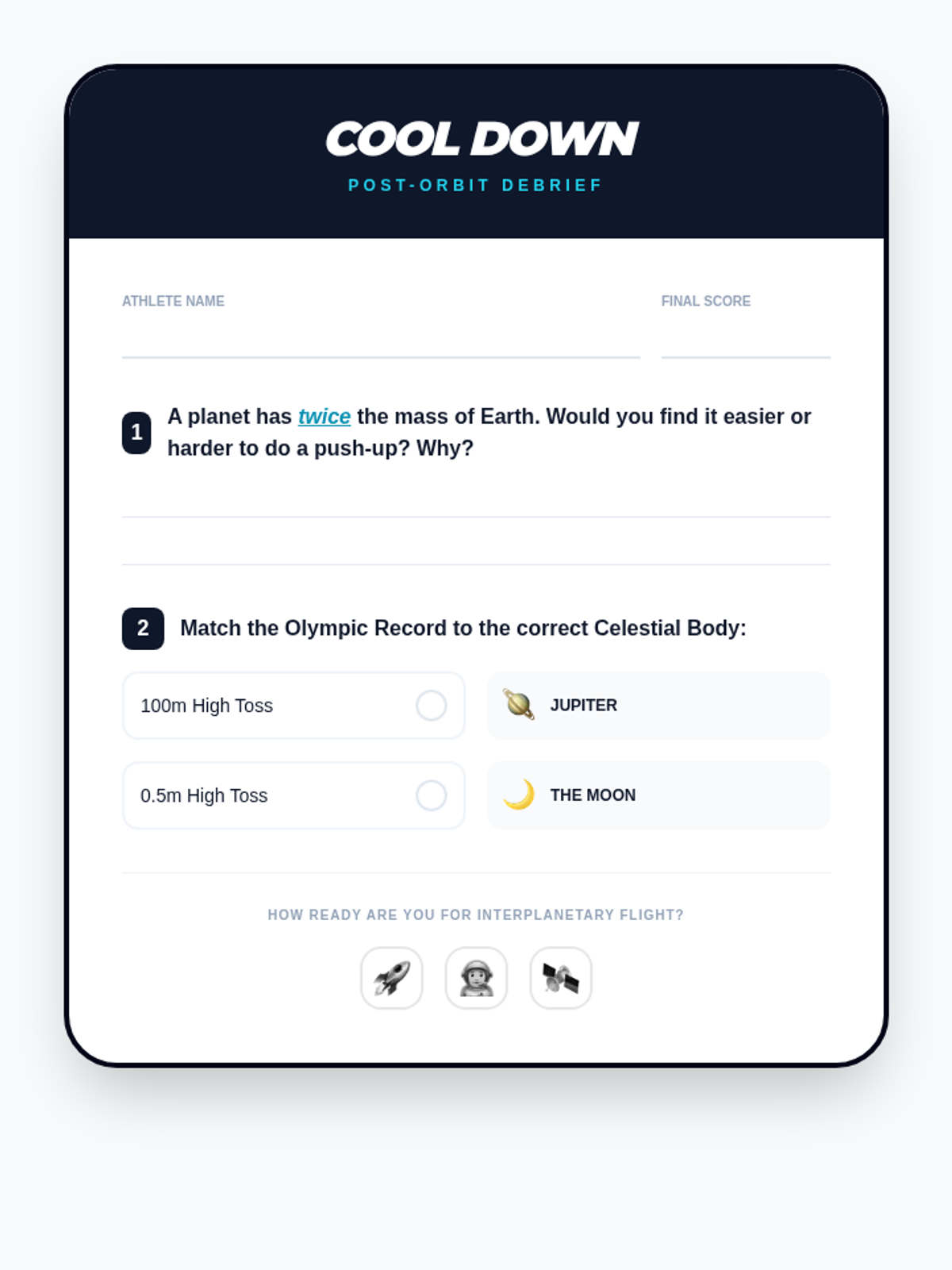
A "Post-Orbit Debrief" exit ticket that assesses student understanding of the relationship between planetary mass and gravitational pull through conceptual questions and matching.