A visually striking 9-slide presentation for a 12th-grade English lecture on cause and effect, featuring architectural design elements, logical fallacy analysis, and structural mapping models.
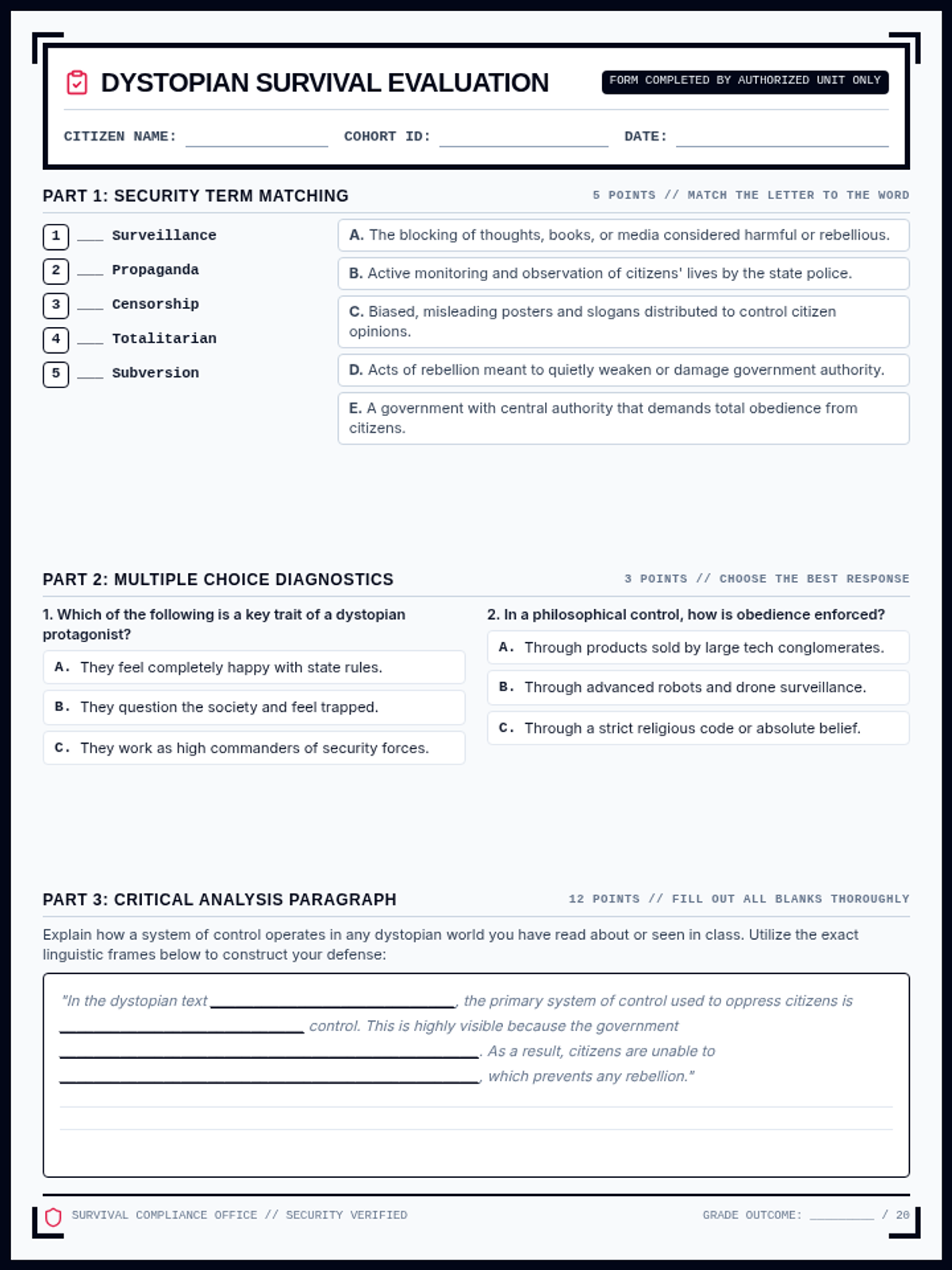
A highly structured and modified vocabulary matching assessment and short answer quiz featuring comprehensive sentence frame writing supports.
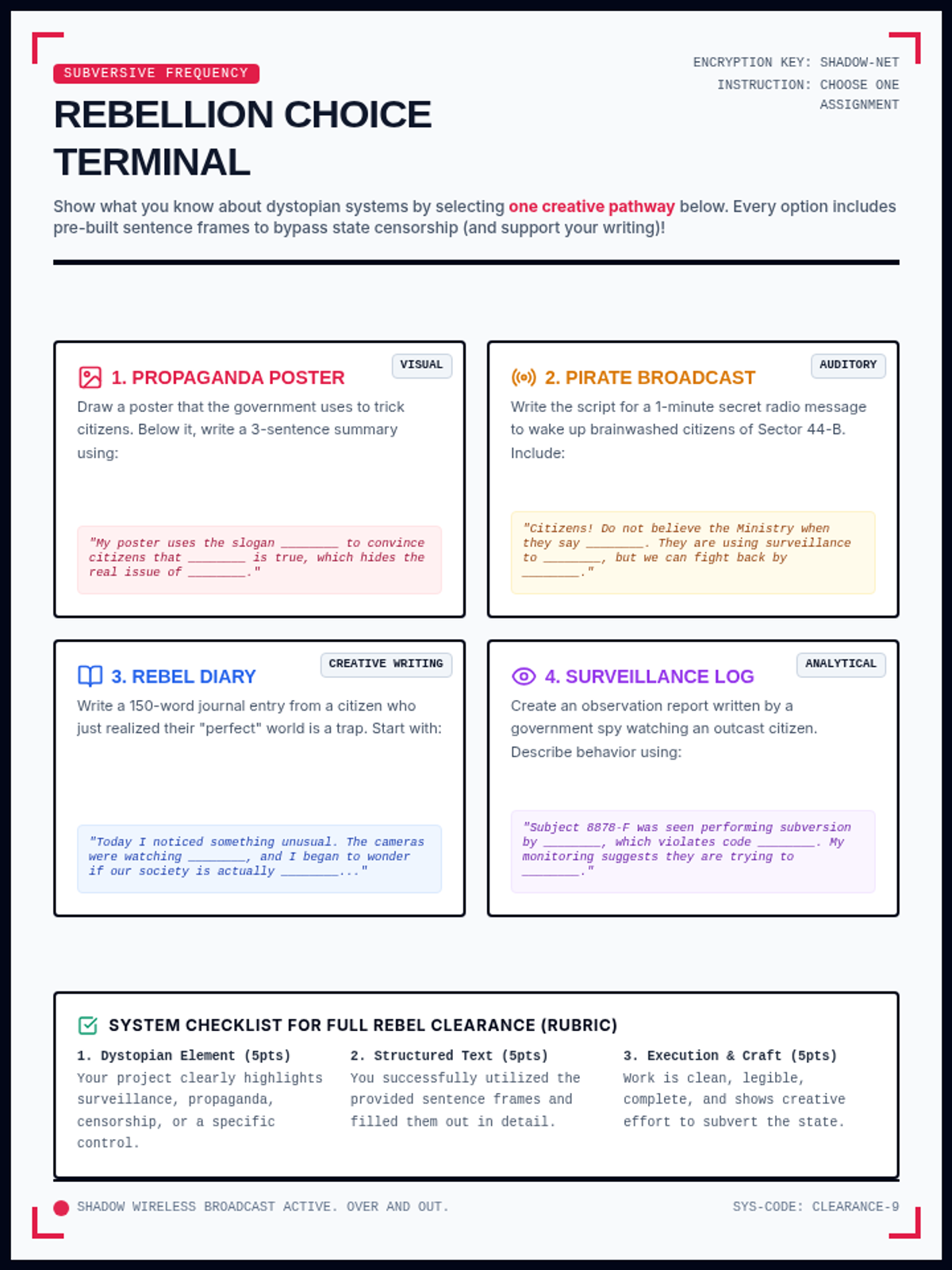
A multi-modal creative project choice board styled as a resistance terminal interface, presenting 6 diverse task cards with embedded support and grading guidelines.
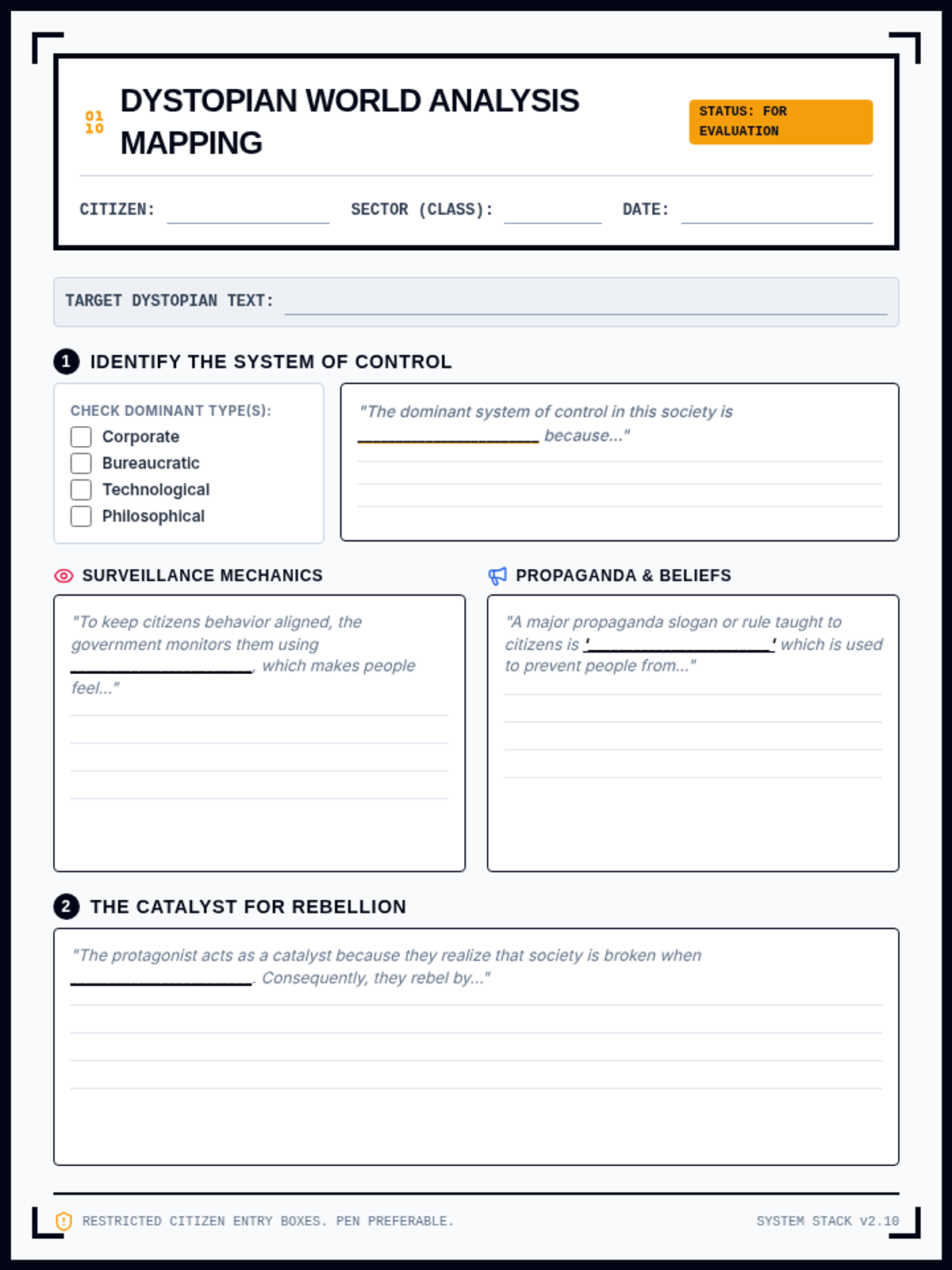
A structured analysis graphic organizer for mapping dystopian systems of control, incorporating extensive sentence starters and handwriting support.
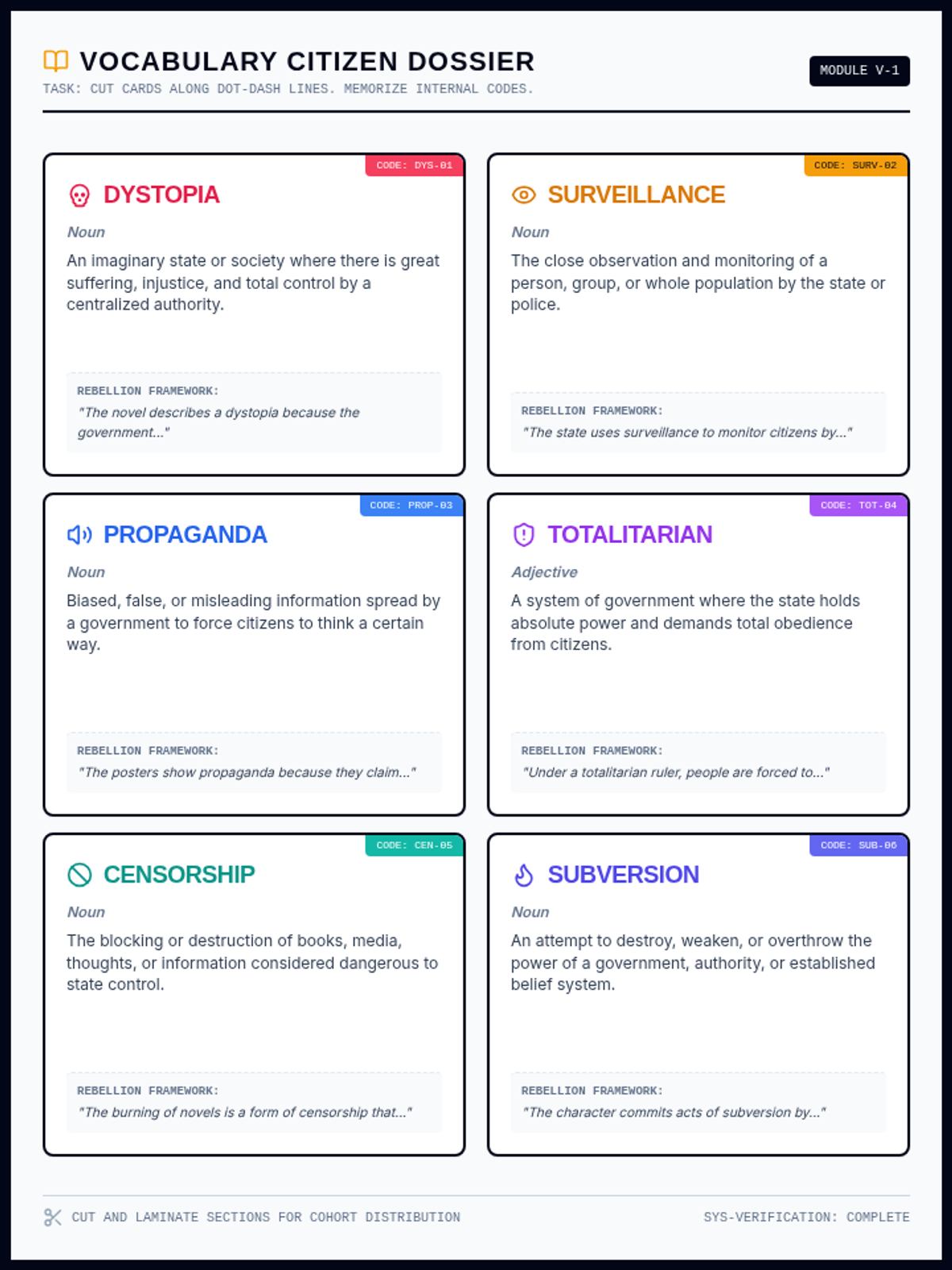
Printable, high-contrast, bureaucratic-styled vocabulary flashcards containing crucial terms, definitions, and sentence starters for easy cut-out.
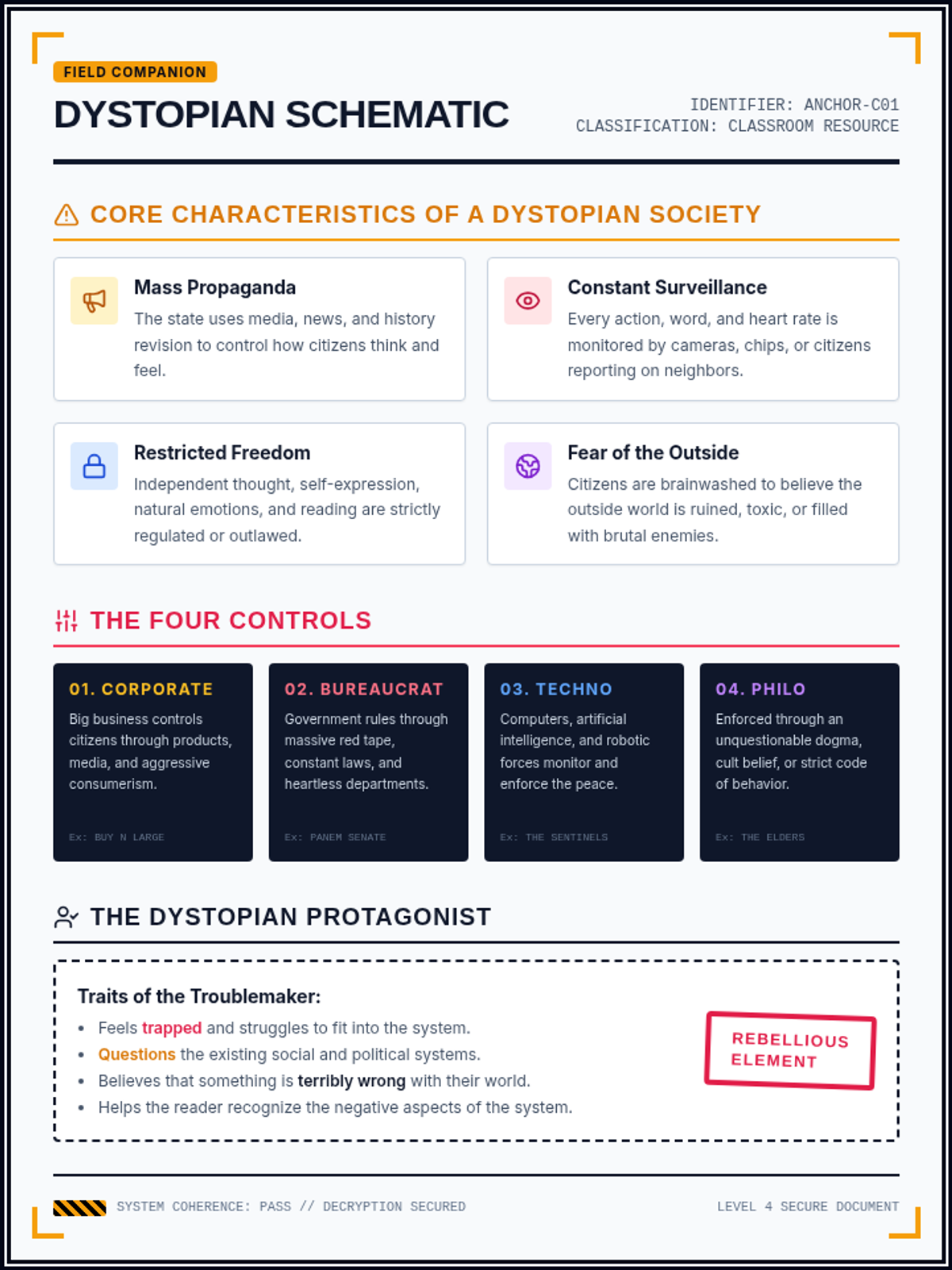
A highly visual, retro-bureaucratic classroom anchor chart detailing dystopian traits, control methods, and protagonist behaviors.
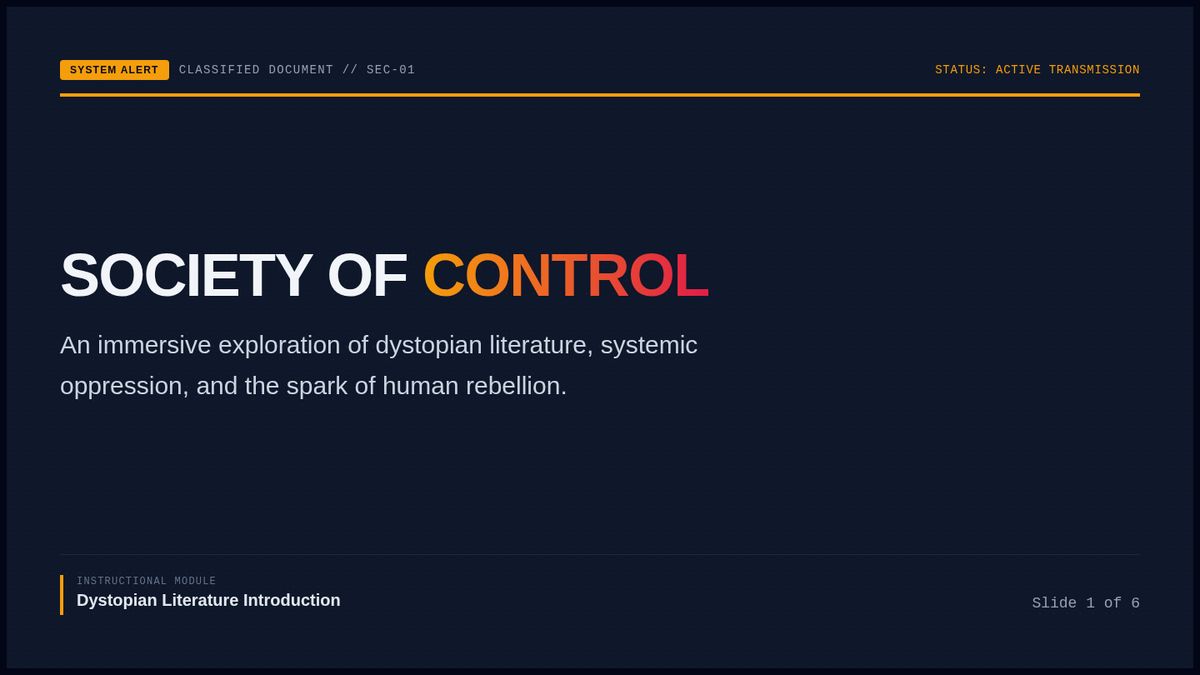
An immersive 16:9 presentation slide deck introducing students to the core concepts of dystopian literature, including systems of control, common tropes, and guided practice.
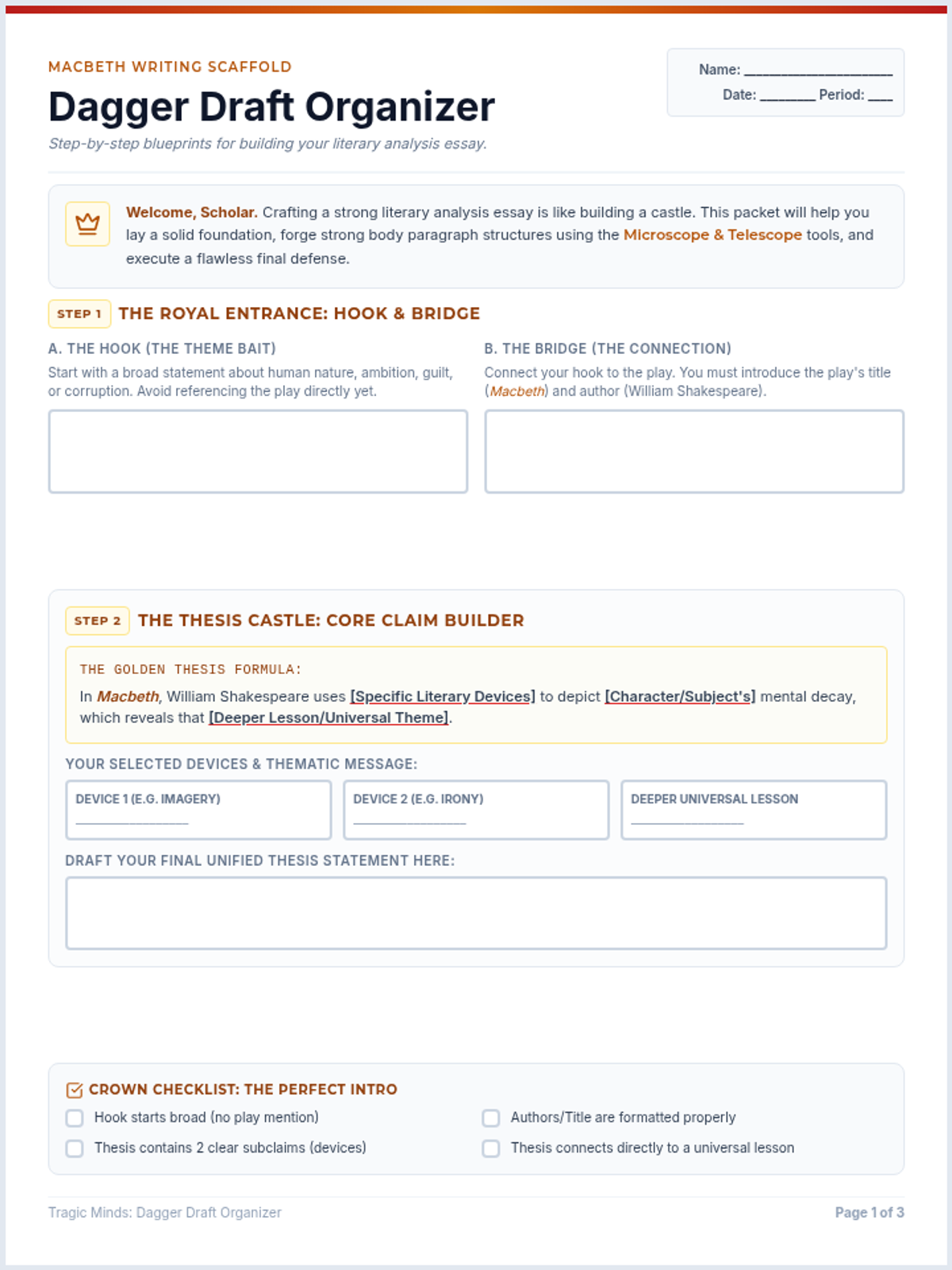
A highly scaffolded, 3-page student planning packet for the Macbeth literary analysis essay. Aligning perfectly with the Crown and Dagger Rubric, it walks students step-by-step through crafting a sophisticated thesis statement, structuring body paragraphs with the 'Microscope' (zoom-in) and 'Telescope' (zoom-out) methods, and building a powerful conclusion. Fully printer-friendly with high-contrast layouts.
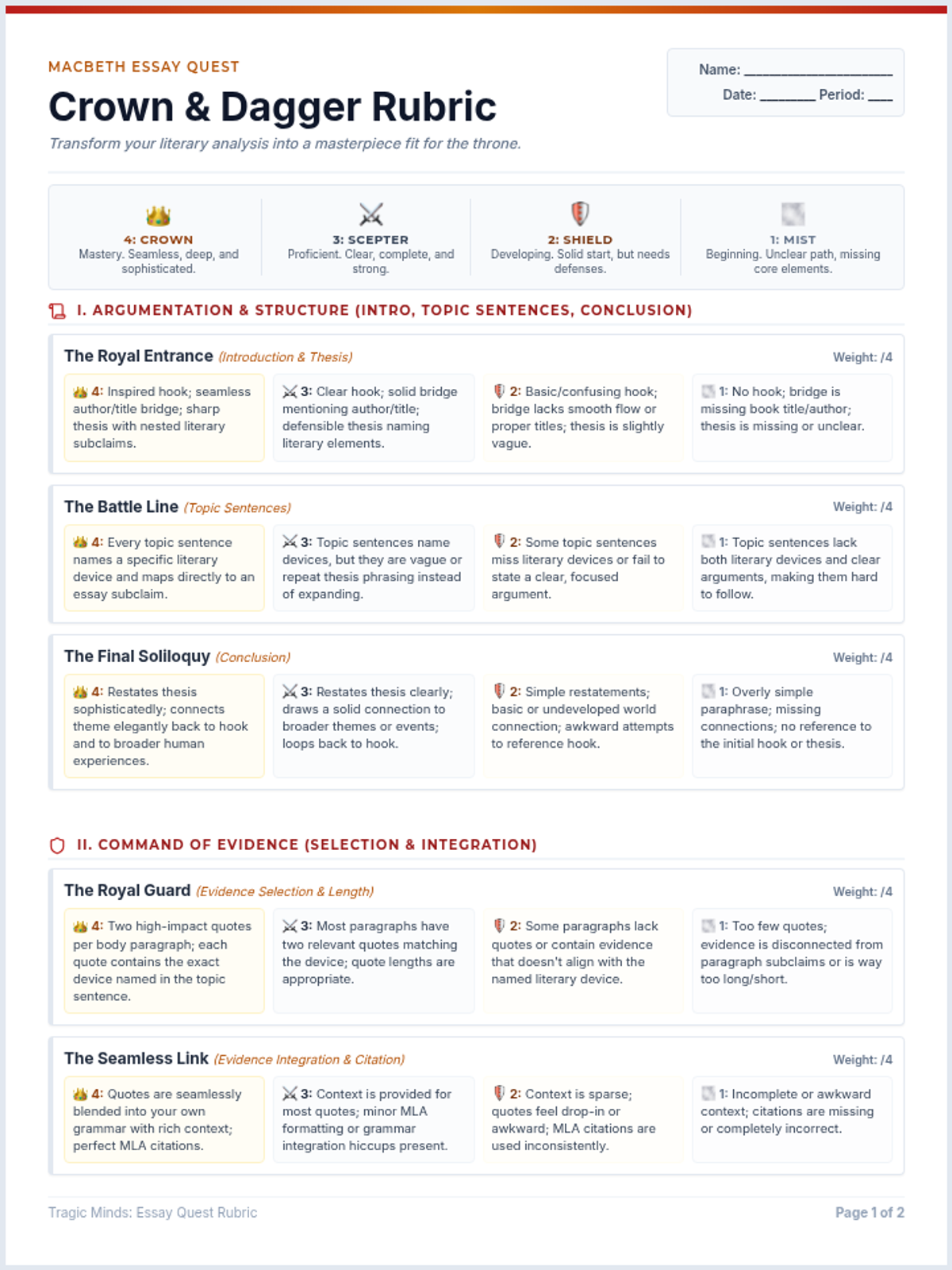
A student-friendly literary analysis rubric styled after Shakespeare's Macbeth. Framed as the 'Crown and Dagger' writing quest, this 2-page rubric is fully printer-friendly, translating complex academic criteria into thematic levels of mastery (Crown, Scepter, Shield, Mist) with clear student-facing checklists and a grade translation table.
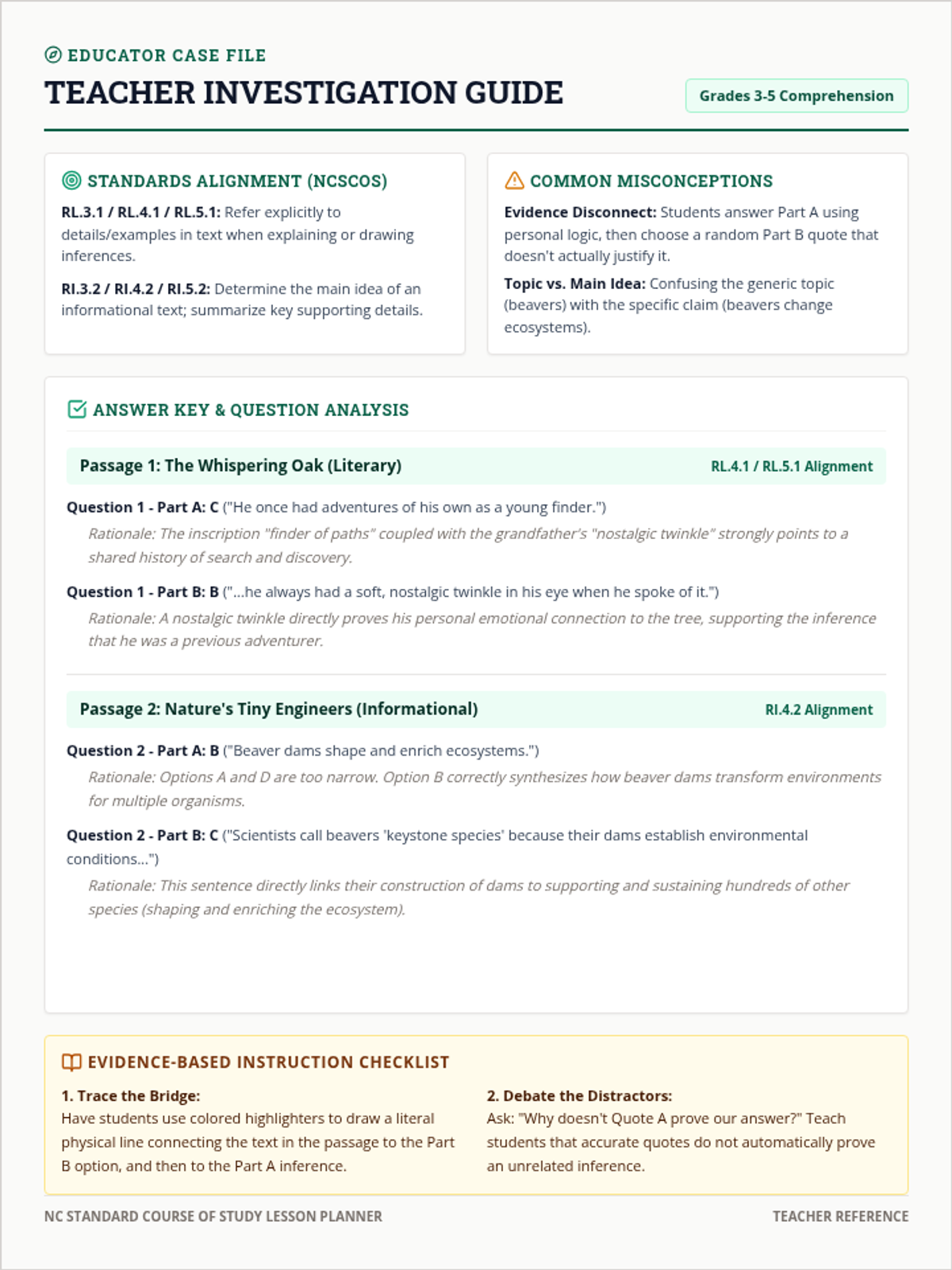
A 1-page teacher reference guide containing the answer key, detailed pedagogical strategies, and standards alignment mapping to the North Carolina Standard Course of Study (NCSCOS) for Grades 3-5.
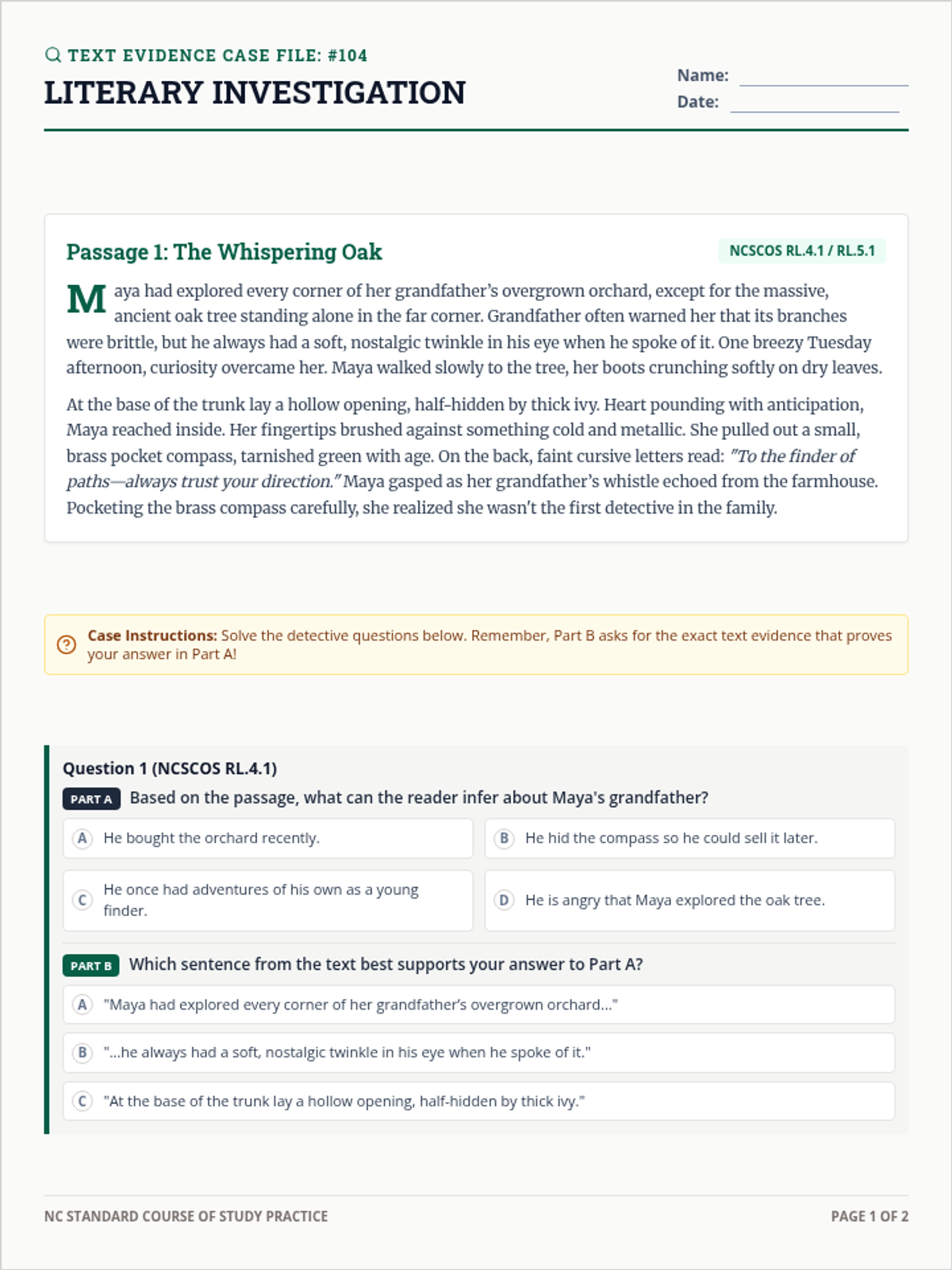
A 2-page student worksheet containing one literary passage and one informational passage, each paired with Grade 3-5 standard-aligned Part A/Part B reading comprehension questions focusing on drawing inferences and identifying text evidence.
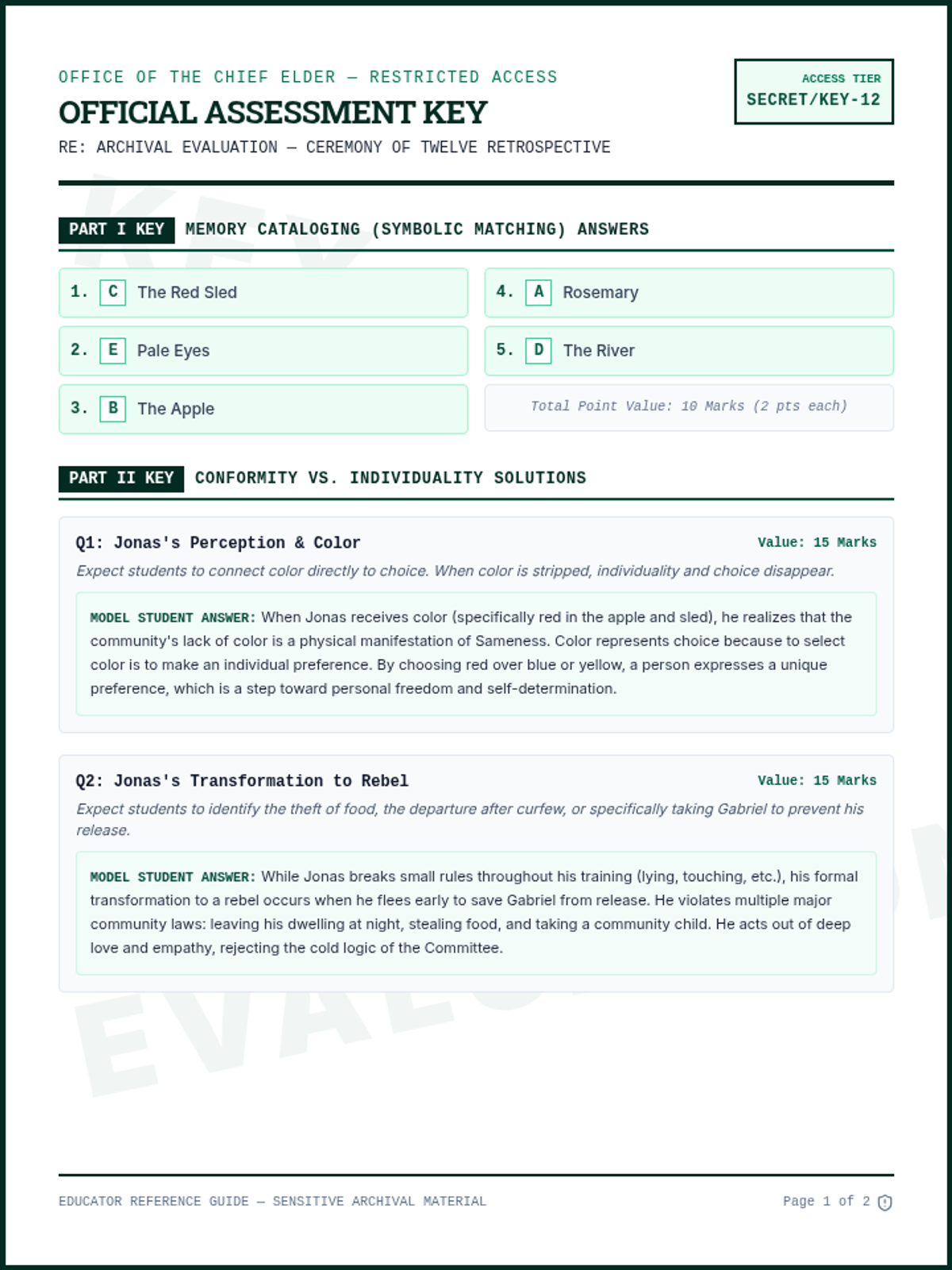
A comprehensive 2-page answer key and grading rubric for the 'Memory and Sameness Exam'. Includes precise criteria, sample responses for the textual analysis and essay prompts, and a 4-point holistic rubric to guide educators.
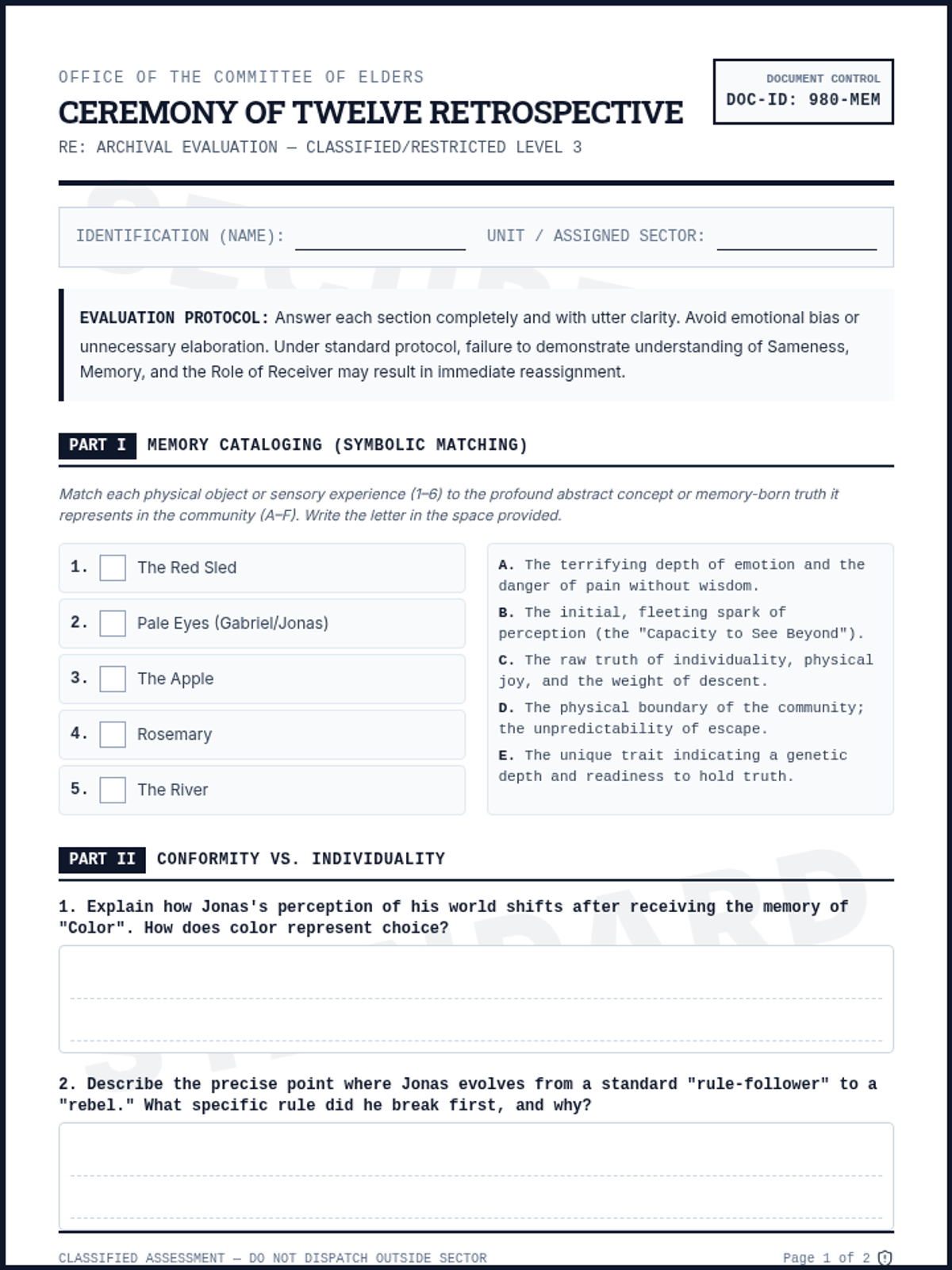
A printable, high-stakes 2-page student exam themed as an official bureaucratic dossier from the Community's Committee of Elders. It includes matching, short answer questions, and a detailed textual analysis section focusing on Sameness, memories, and Jonas's rebellion.
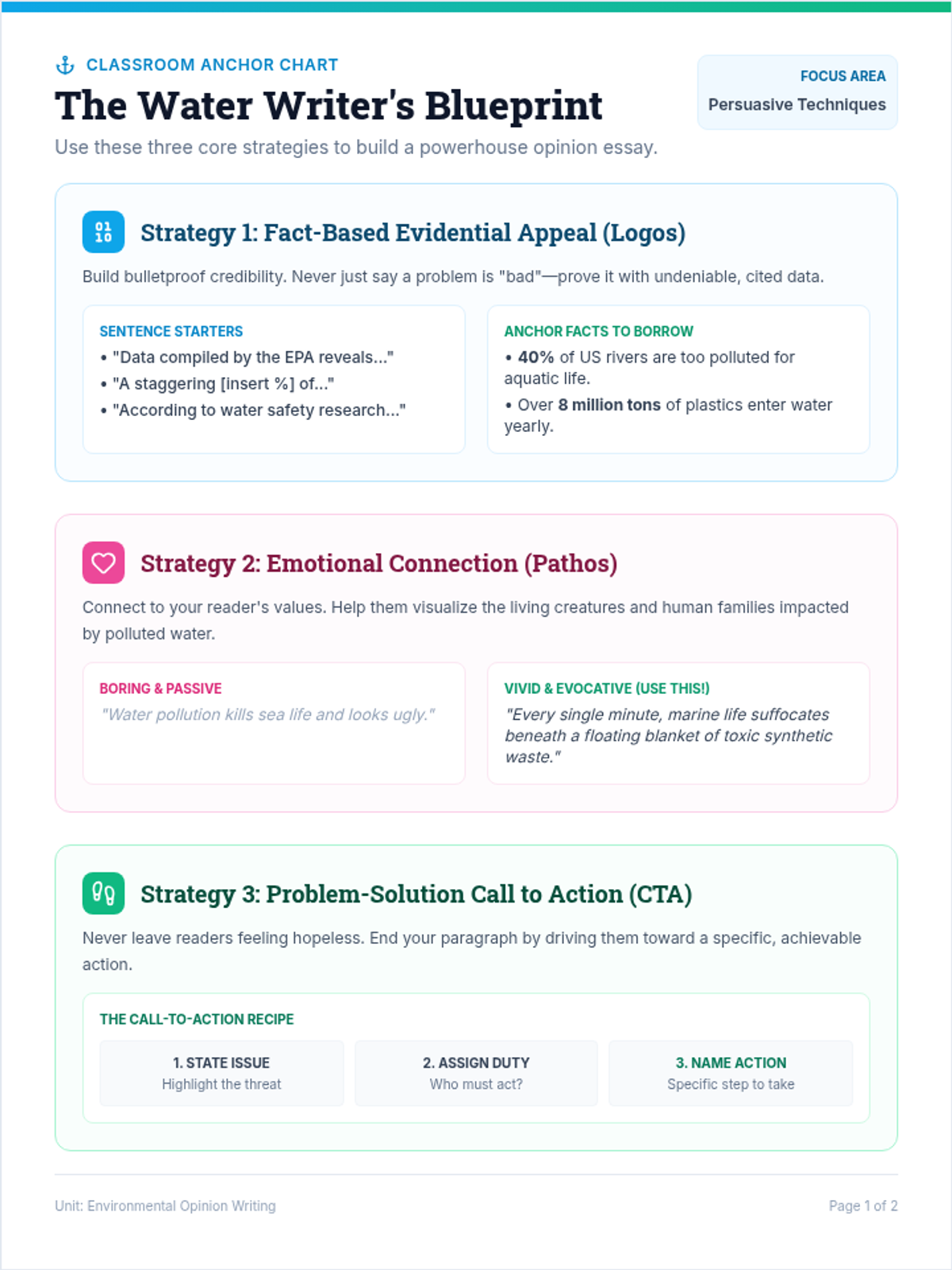
Printable, classroom-ready anchor charts and mentor text exemplars outlining the three pillars of environmental persuasion with concrete examples and sentence starters.
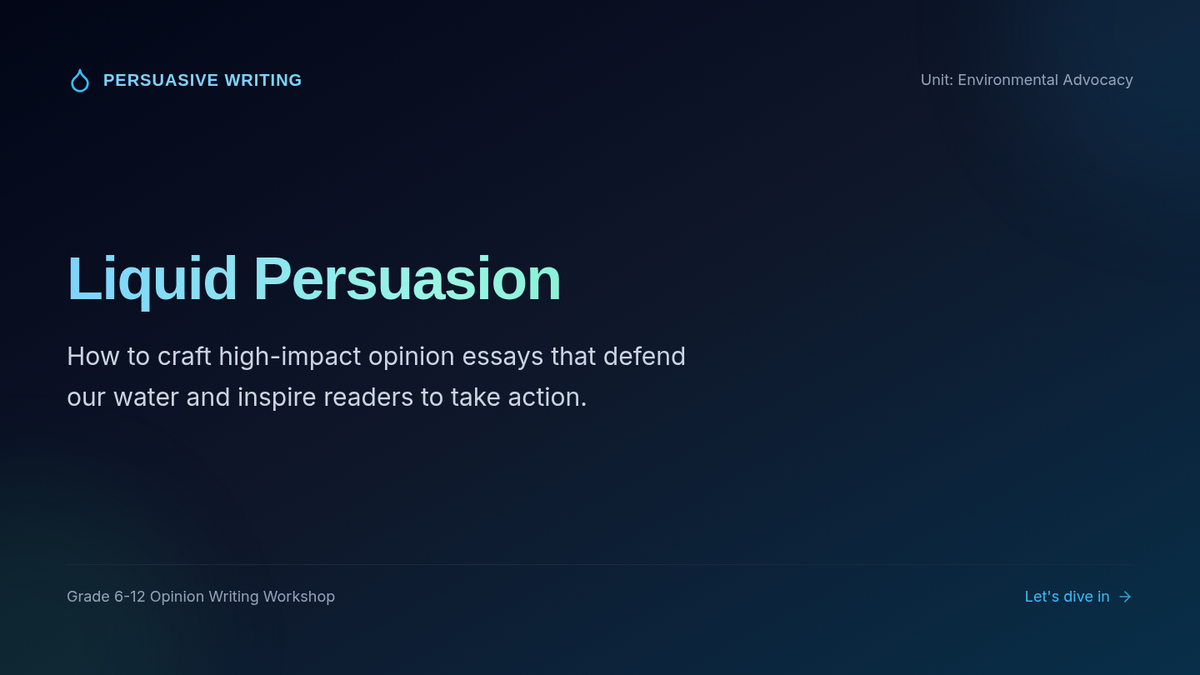
A highly visual, 16:9 interactive slide deck designed to teach the three pillars of environmental persuasion: fact-based evidential appeals, emotional connections, and structured problem-solution calls to action.
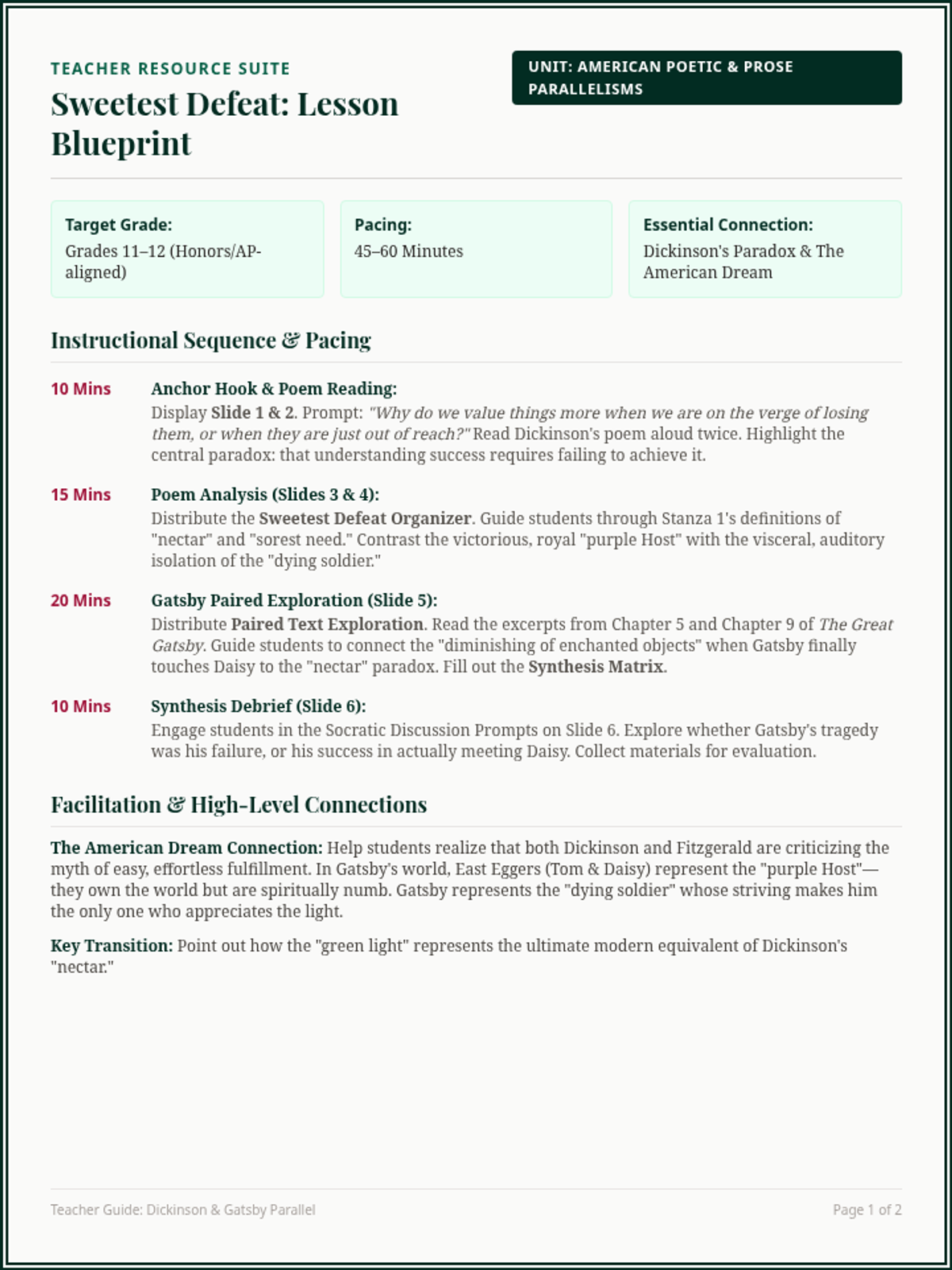
A comprehensive teacher guide and answer key for 'Sweetest Defeat', containing lesson plans, facilitation prompts, and complete exemplary student answers.
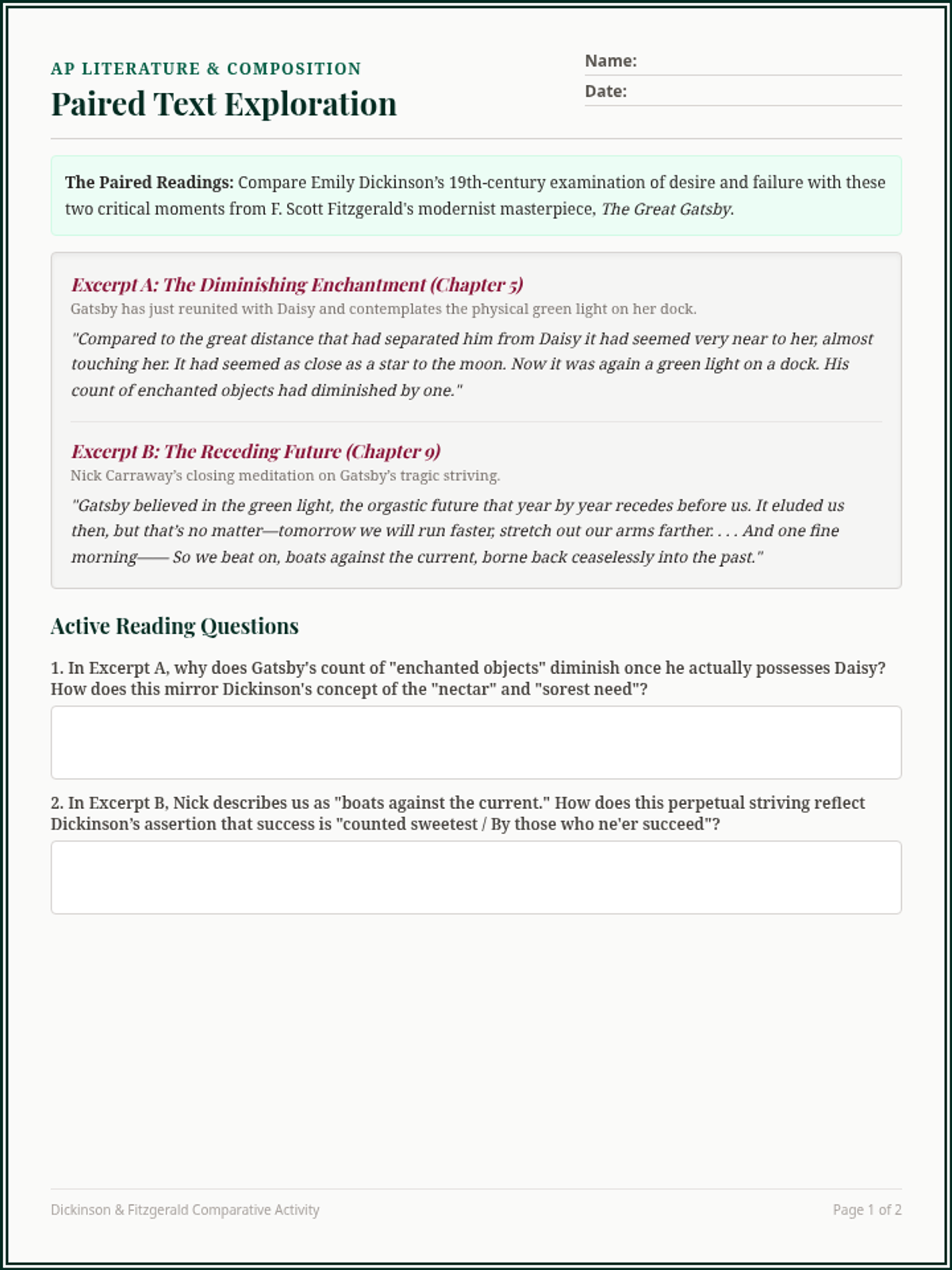
A paired text activity document introducing a modern reflective piece on the 'Silver Medal Paradox' and guiding students through comparative analysis with Dickinson's poem.
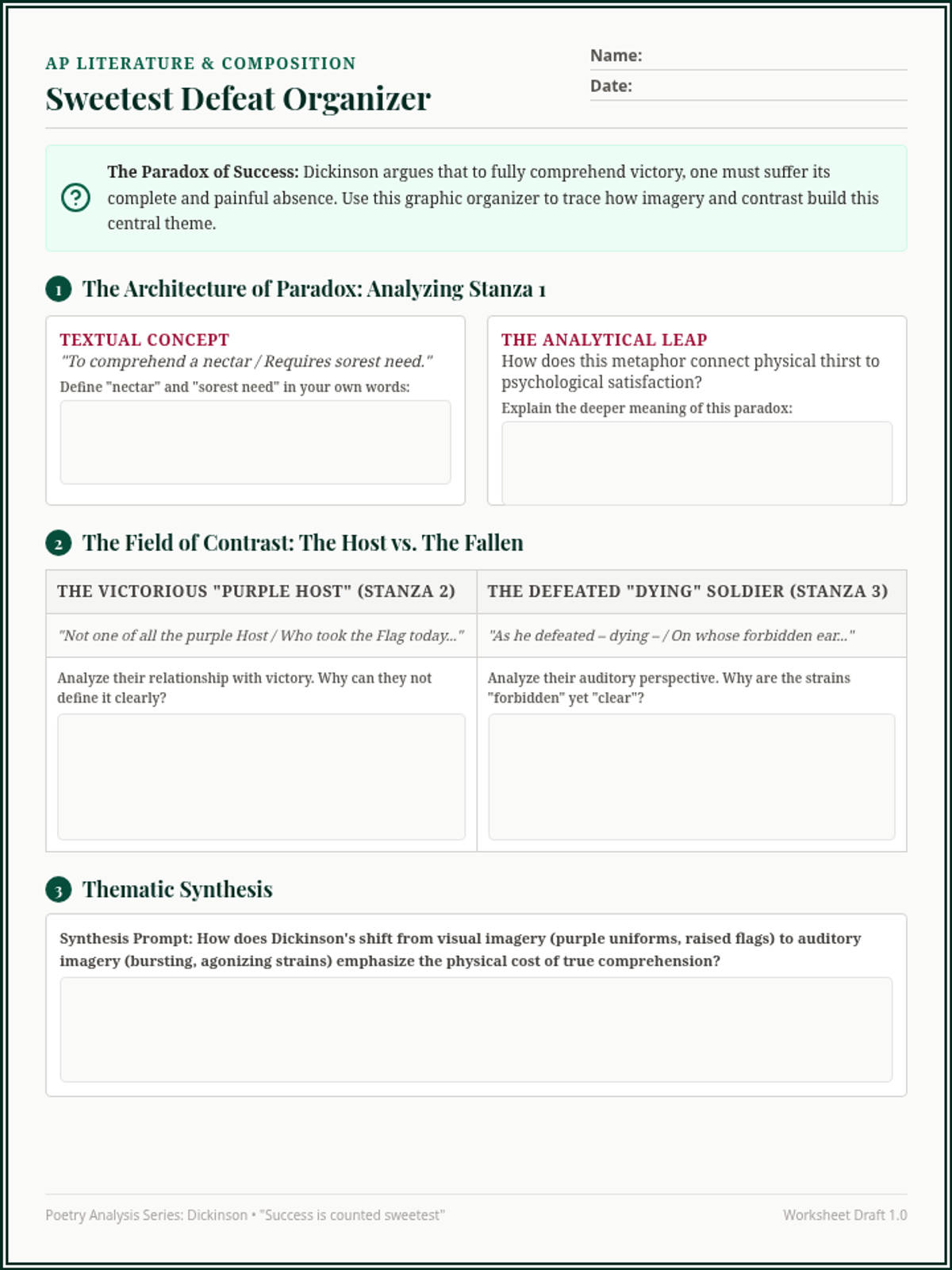
A self-contained reading and analysis handout featuring the full text of Dickinson's poem alongside targeted questions exploring its central paradox and the perspective of the fallen soldier.