A visually engaging slide deck introducing enzymes as biological catalysts. It covers activation energy, the lock-and-key model, the real-world example of lactase, and denaturation due to heat and pH.
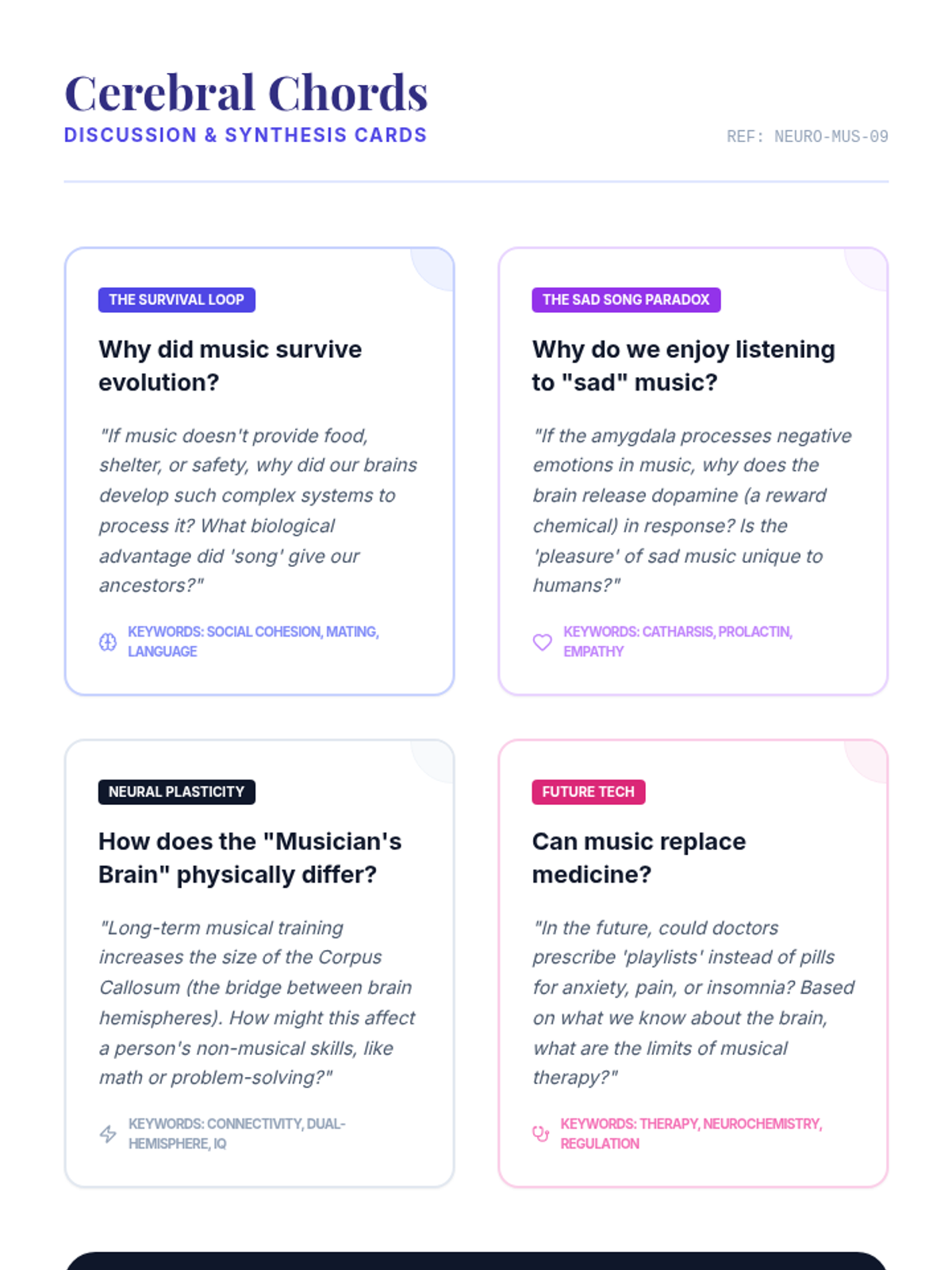
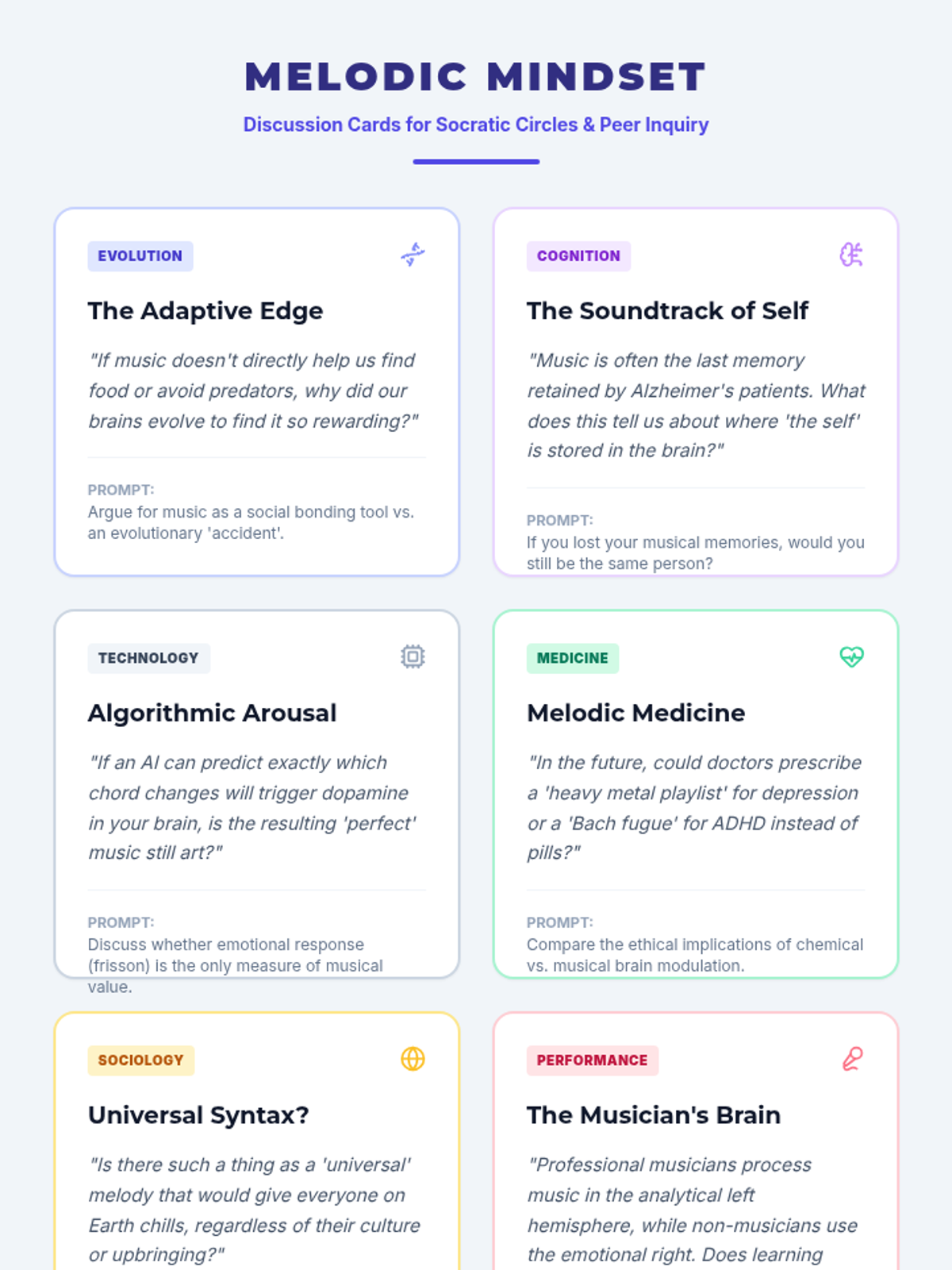
A set of structured discussion cards and a facilitation guide to help students synthesize the neuroscience of music during a Socratic seminar.
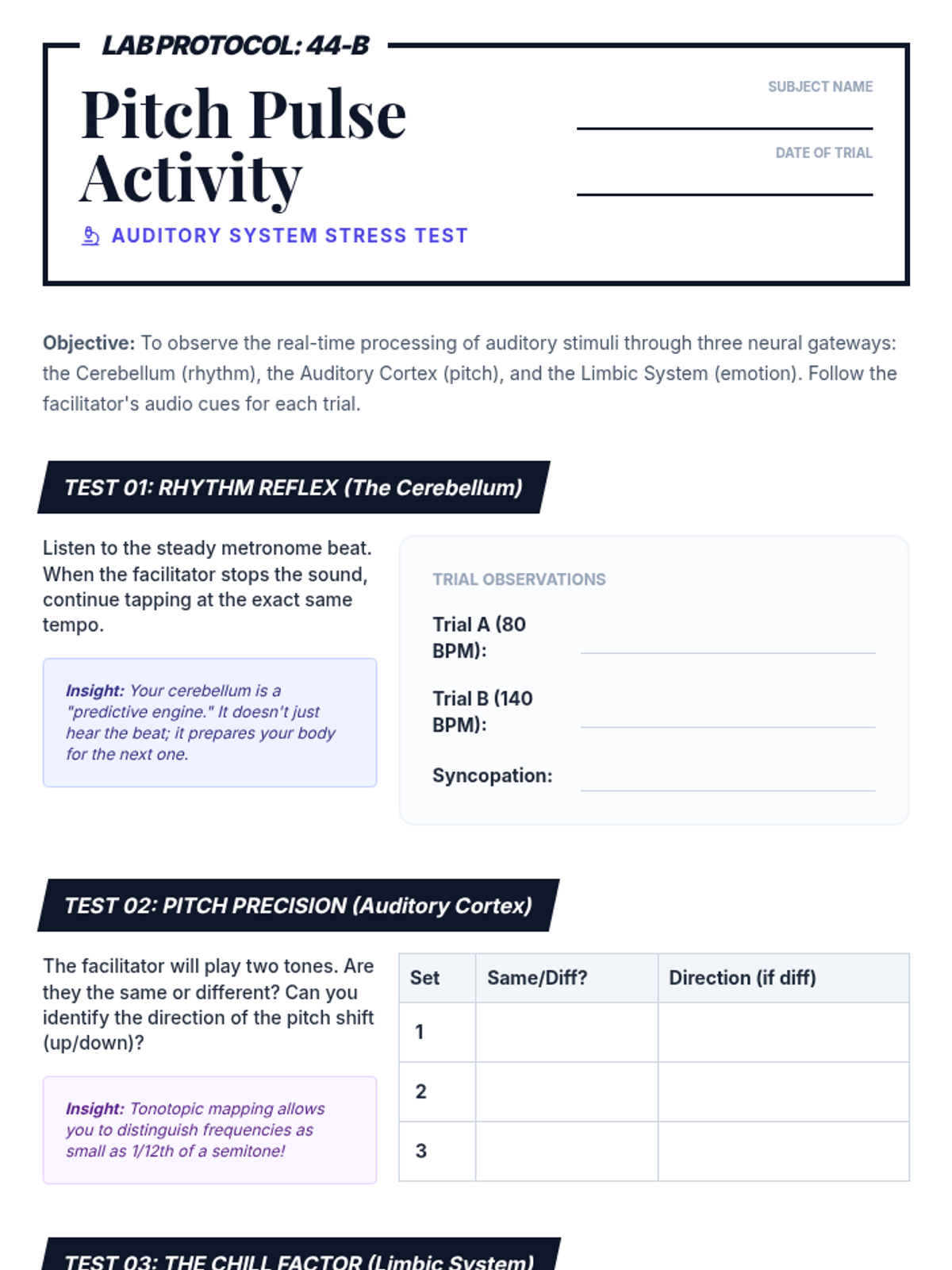
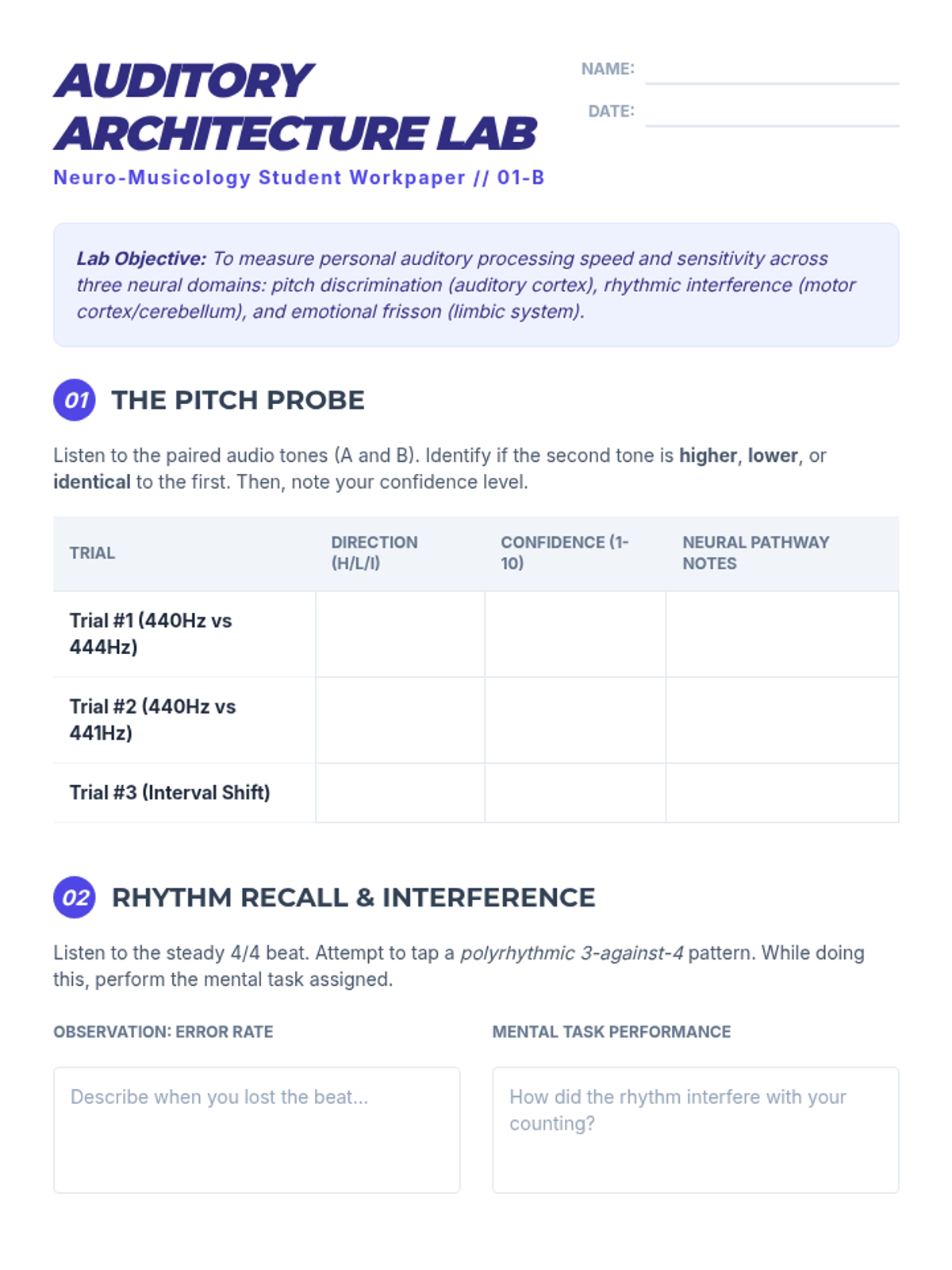
A hands-on auditory lab sheet for students to test their rhythm synchronization, pitch discrimination, and emotional frisson responses during the lesson.
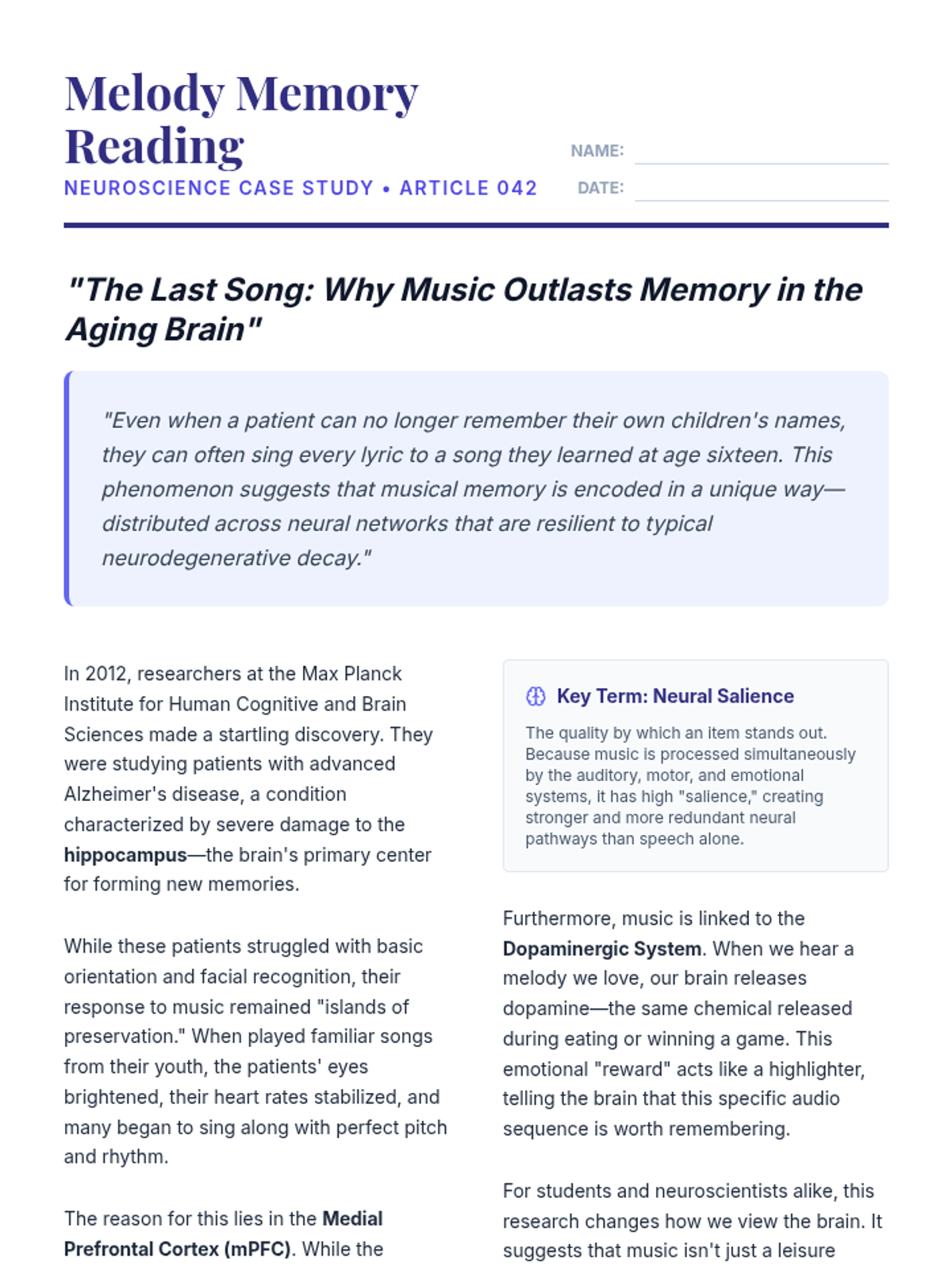
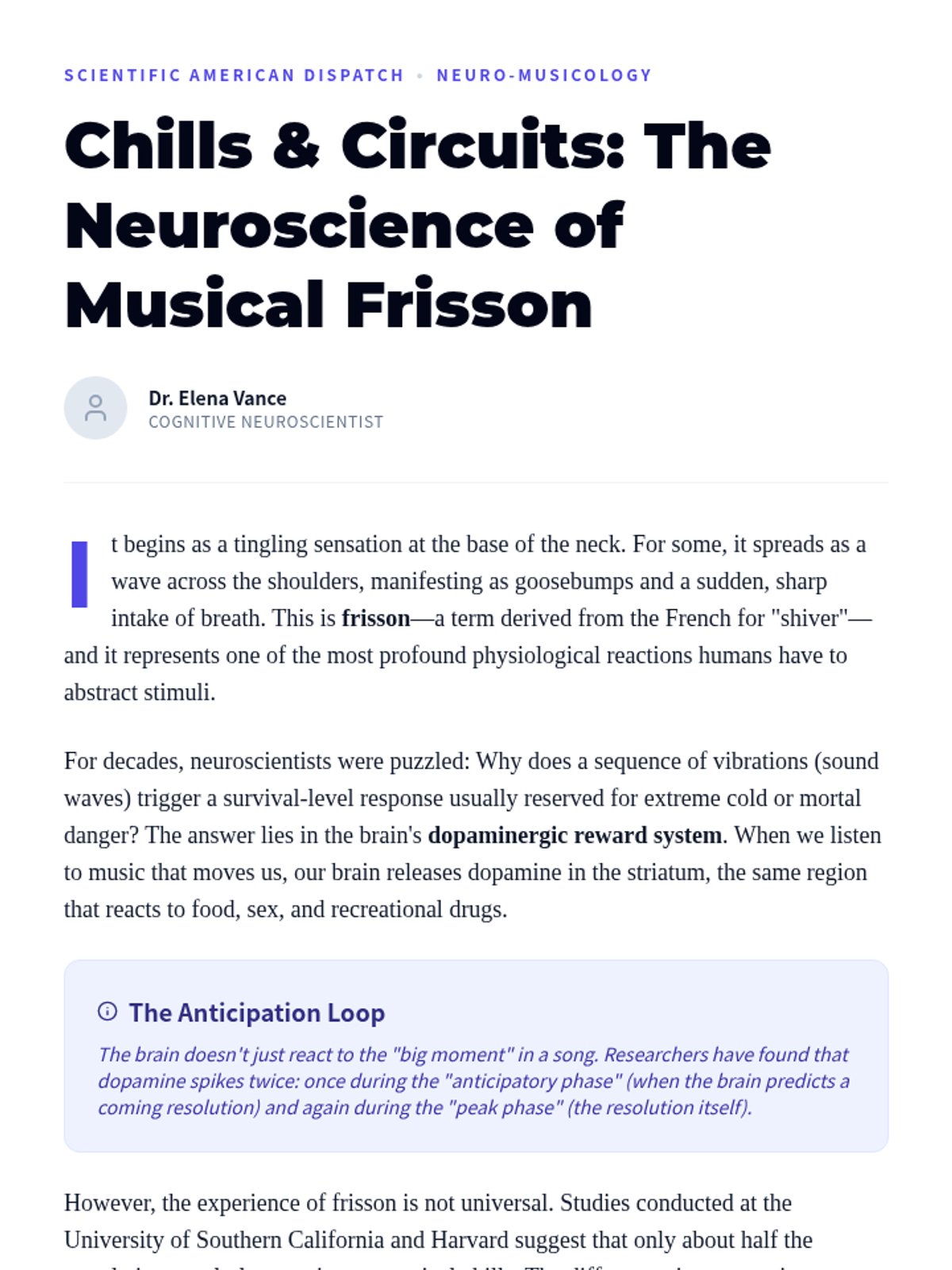
A reading passage and case study for students exploring why musical memory survives neurodegenerative diseases like Alzheimer's, featuring analysis questions.
A visually engaging slide deck for high school students exploring the neural pathways of music, from the auditory cortex to the emotional limbicsystem.
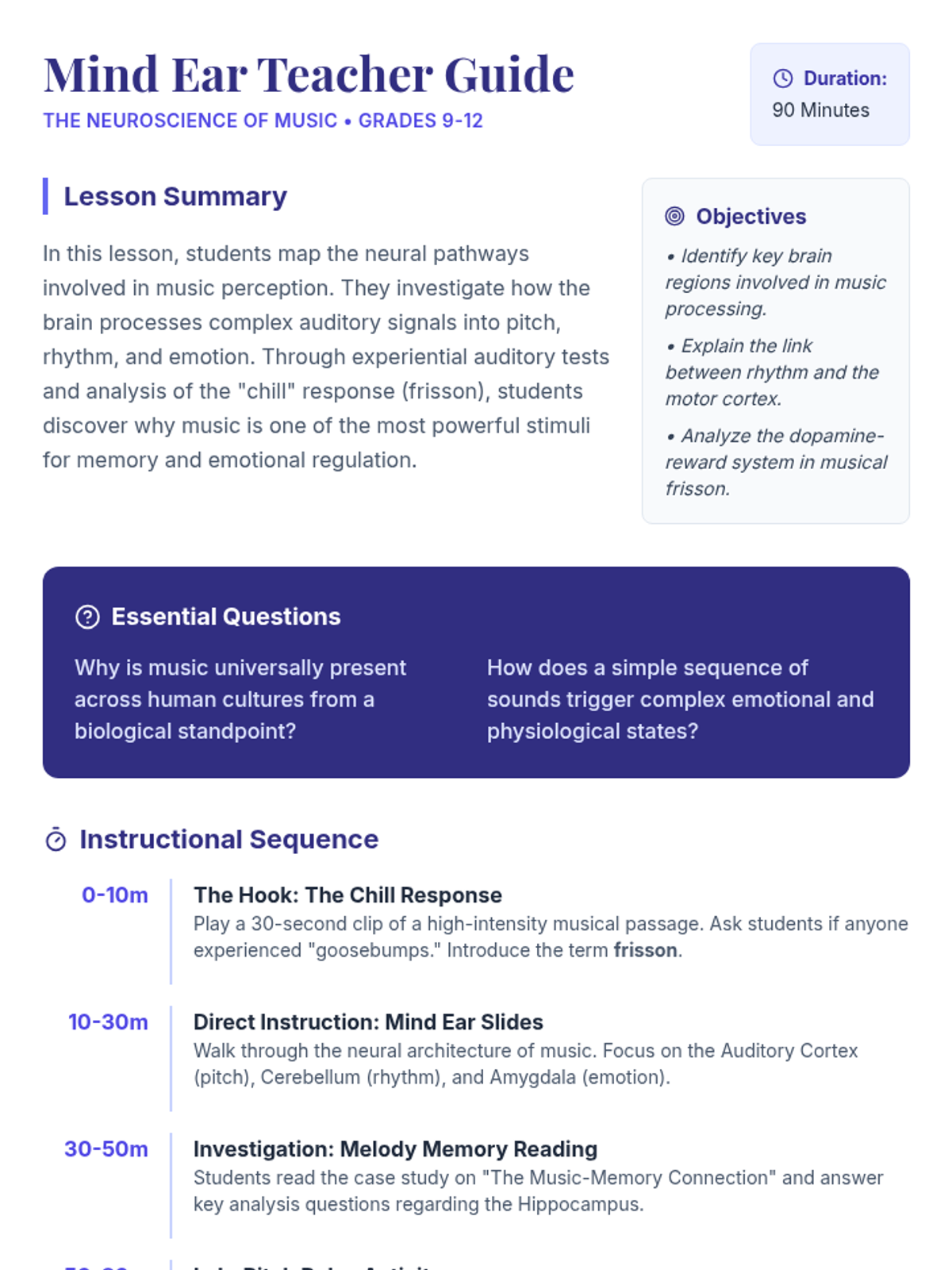
A comprehensive teacher's guide for a 90-minute lesson on the neuroscience of music, including learning objectives, a detailed pacing guide, common misconceptions, and differentiation strategies.
A set of six creative discussion cards for 'The Musical Brain' lesson, featuring thought-provoking prompts on evolution, technology, medicine, and culture, designed for high school Socratic seminars.
A sophisticated reading passage for high school students exploring the 'frisson' effect, the dopaminergic reward system, and the white matter pathways connecting the auditory cortex to the emotional brain.
A student-facing lab worksheet designed for grades 9-12. It includes structured sections for pitch discrimination tests, rhythmic interference experiments, and an emotional frisson log, followed by scientific analysis questions.
A visually striking slide deck for 'The Musical Brain' lesson. It covers neuroanatomy, the 'frisson' effect, the difference between pitch and rhythm processing, and the link between music and memory, designed with a sophisticated dark neural theme.
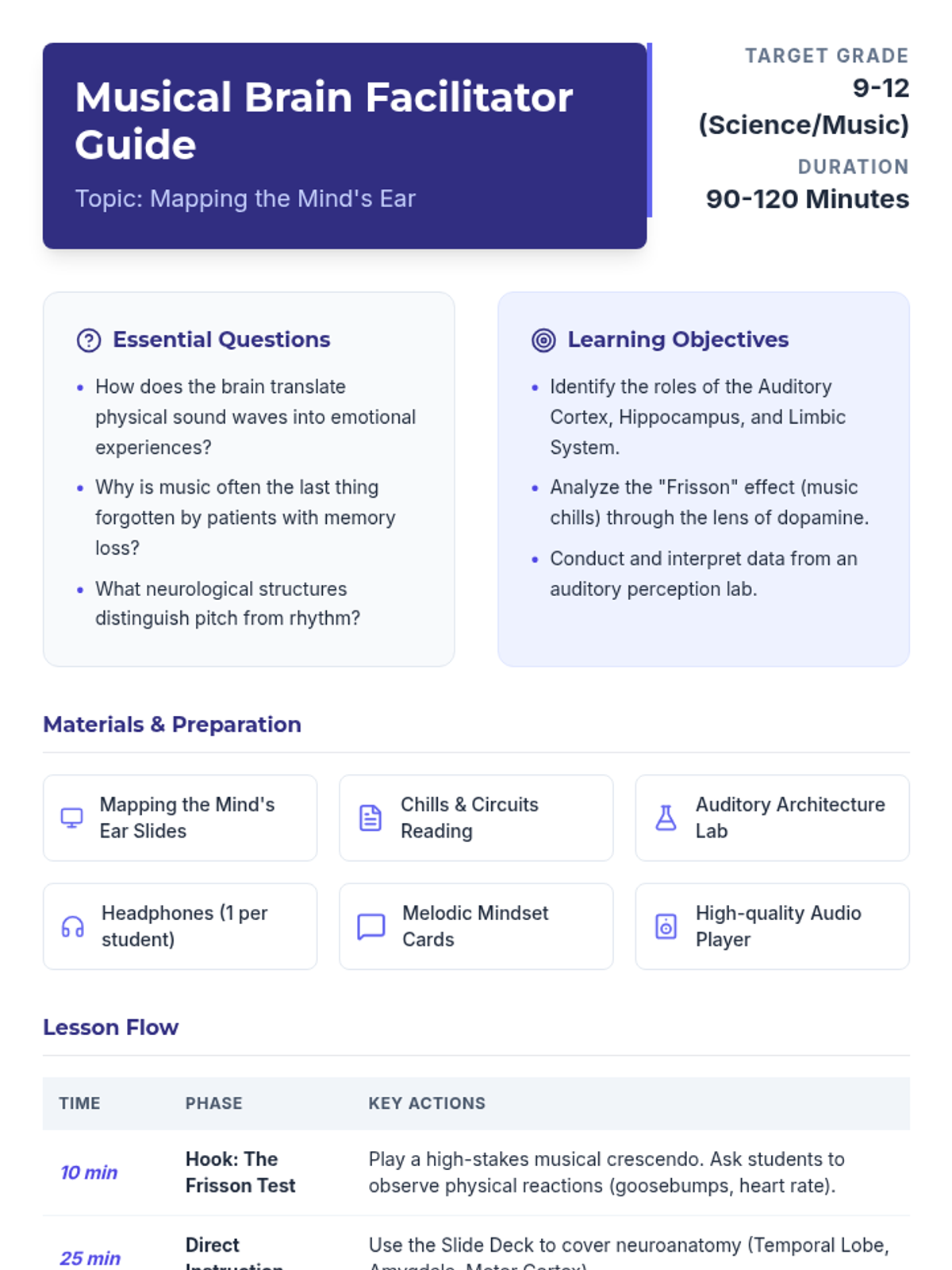
A comprehensive facilitator guide for high school teachers, providing a detailed roadmap for 'The Musical Brain' lesson. It includes essential questions, learning objectives, a timed lesson flow, and specific instructional tips for neuro-musicology instruction.
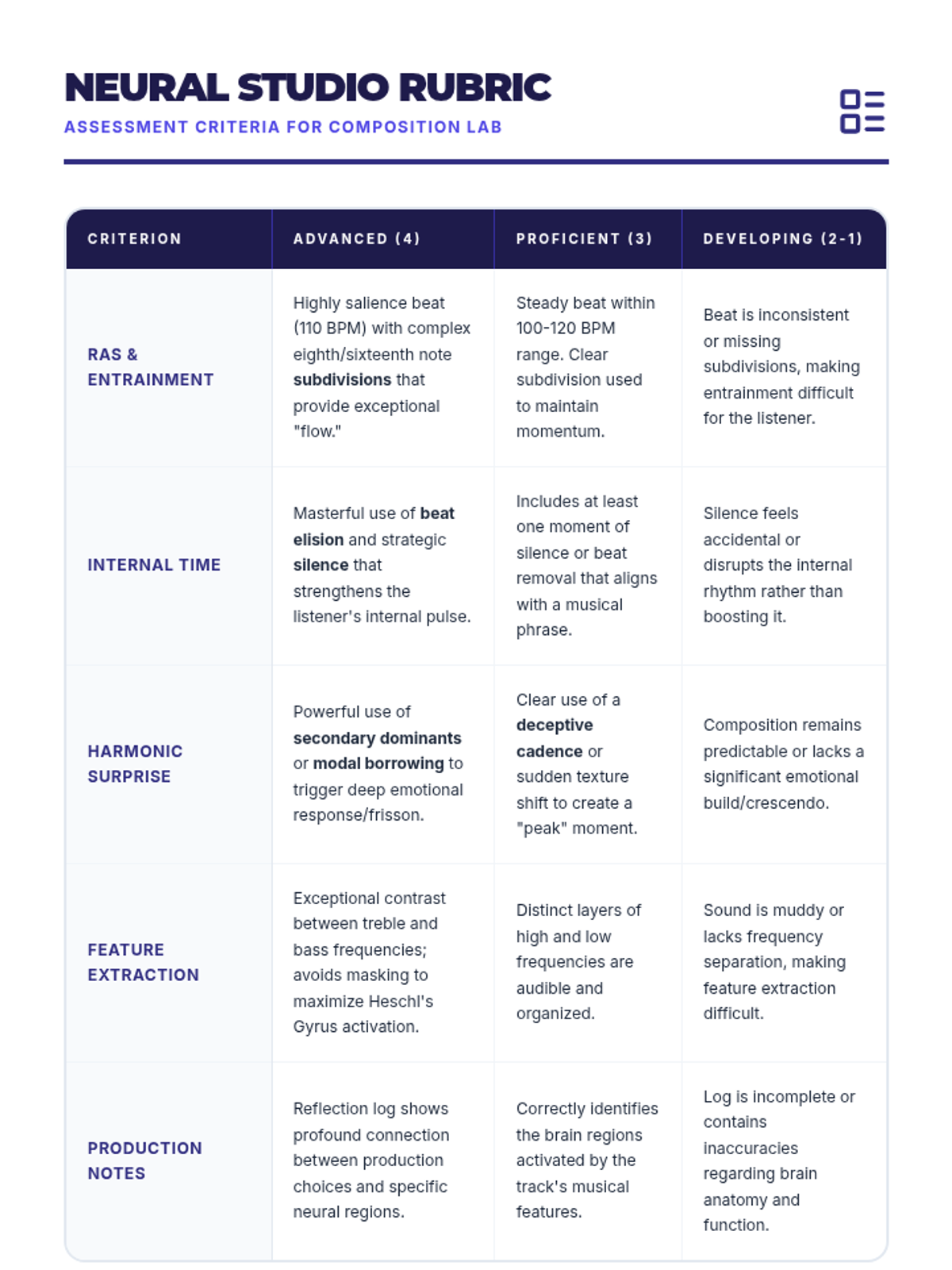
A teacher-facing rubric for assessing the Neural Studio Soundtrap project, covering criteria such as rhythmic entrainment, harmonic surprise, and scientific reflection.
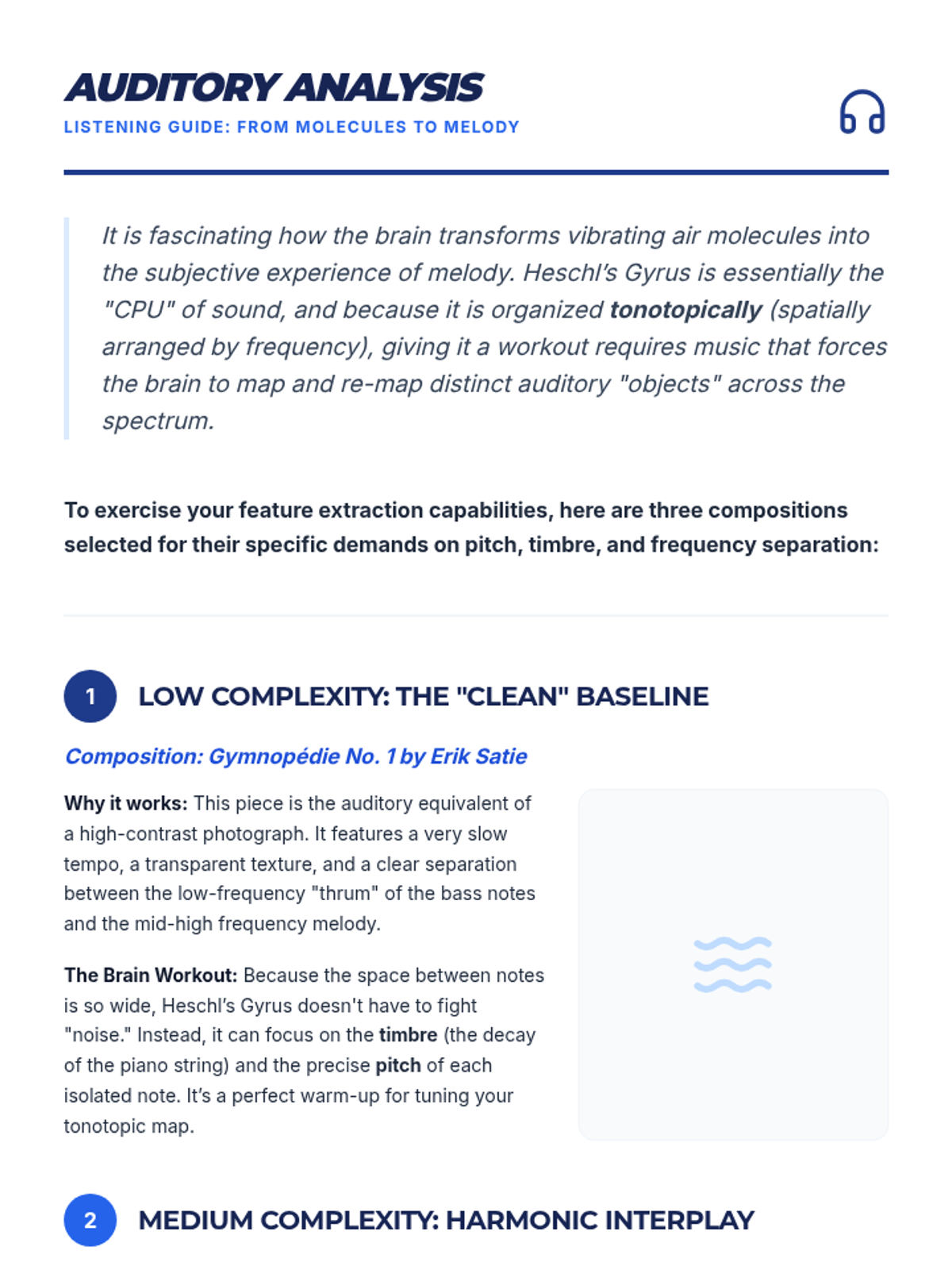
A detailed listening guide for students that analyzes three specific musical compositions (Satie, Bach, and Stravinsky) through the lens of auditory neuroscience and feature extraction.