The capstone project guide for the 'Bot Blueprint' lesson. Students design their own helper bot, listing hardware materials, sketching a physical blueprint, and writing functional pseudo-code with loops.
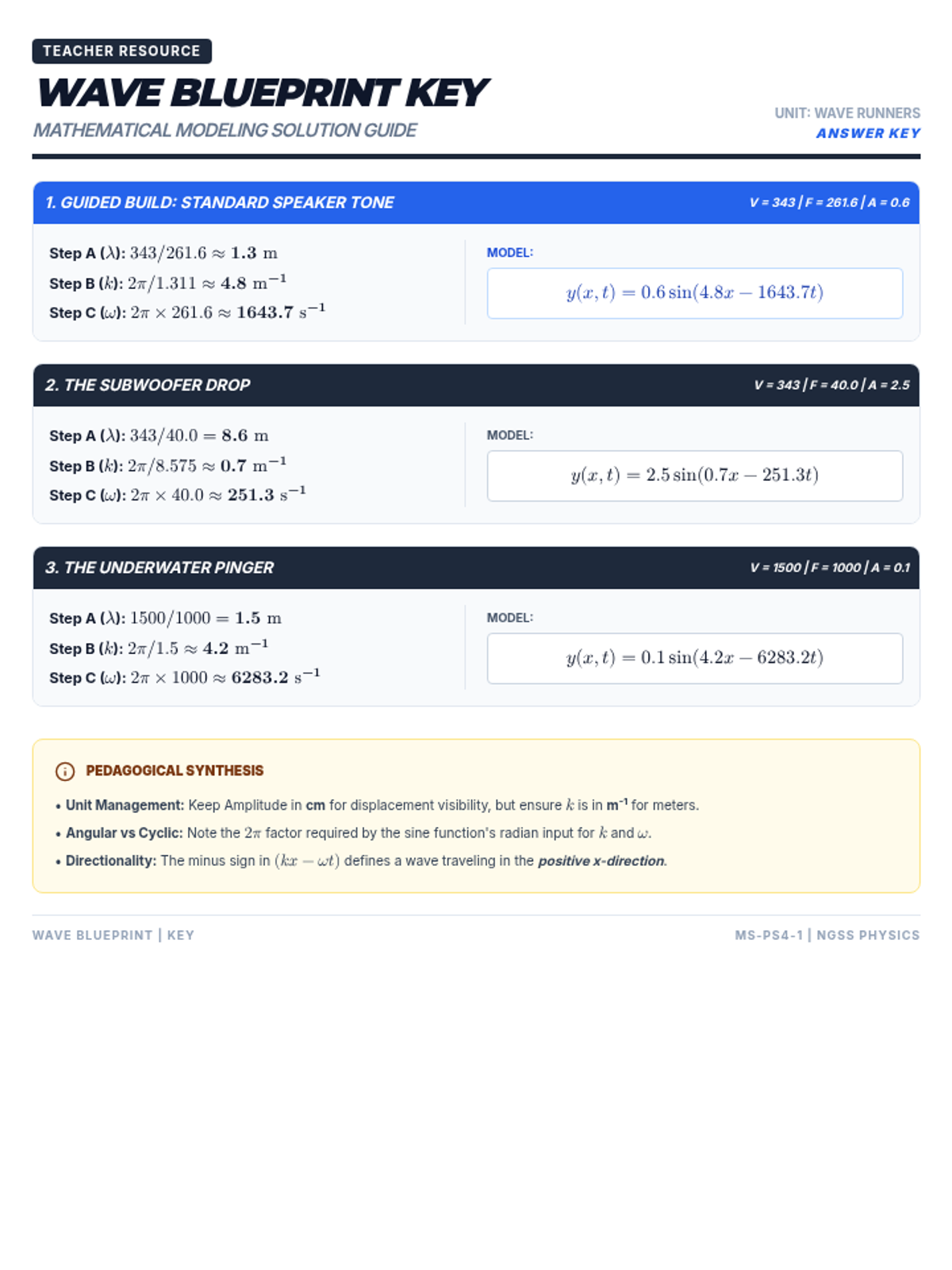
A comprehensive teacher answer key for the Wave Blueprint worksheet. Provides step-by-step calculations for wavelength, wave number, and angular frequency, along with the final mathematical wave functions for three different speaker scenarios. Revised for consistency and clarity.
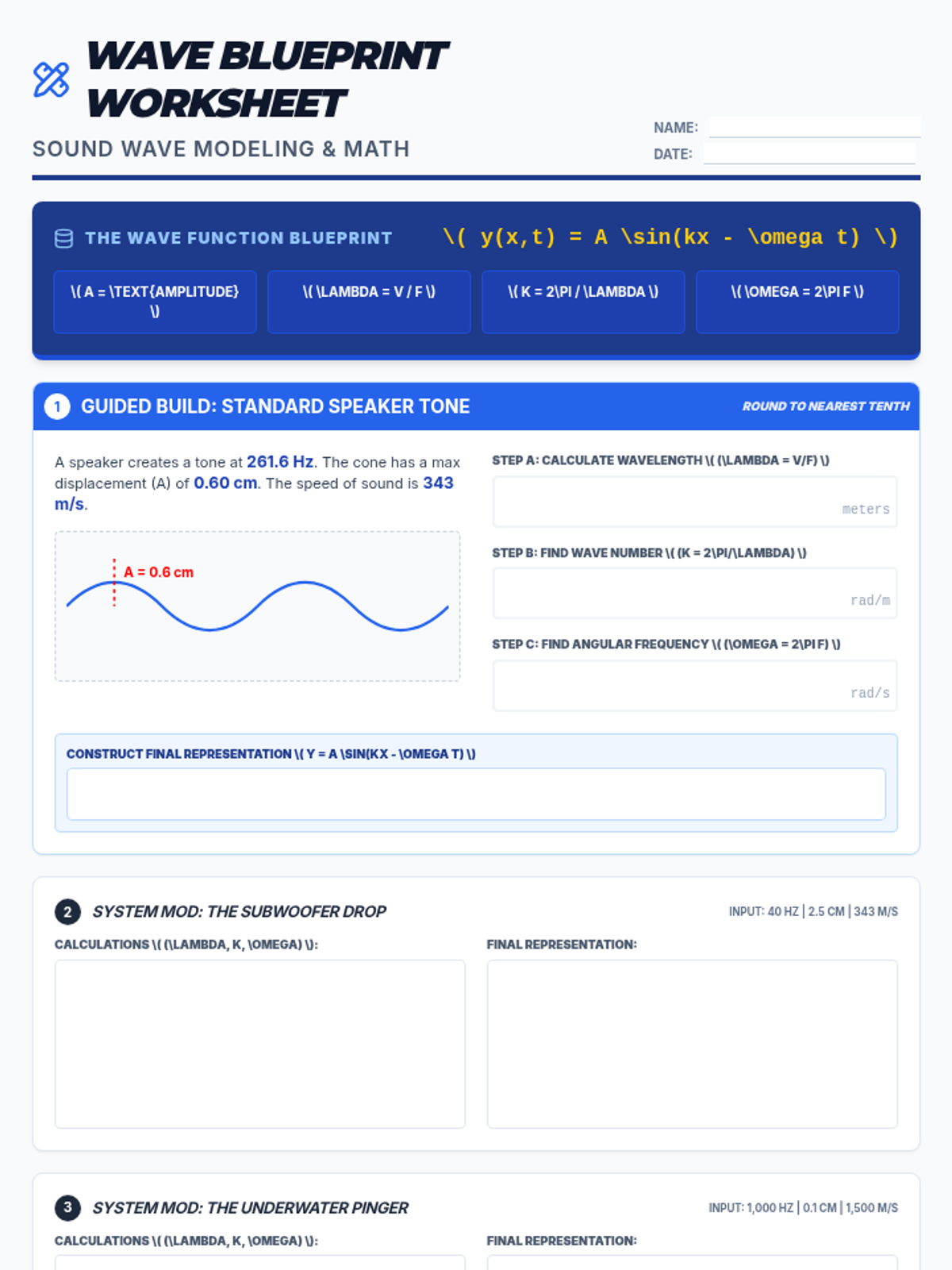
A worksheet designed to guide students through constructing mathematical representations (wave functions) of sound waves. Includes a guided problem using speaker frequency and amplitude, followed by independent practice problems in different scenarios like subwoofers and underwater pingers. Revised for better page flow, contrast, and formula rendering.
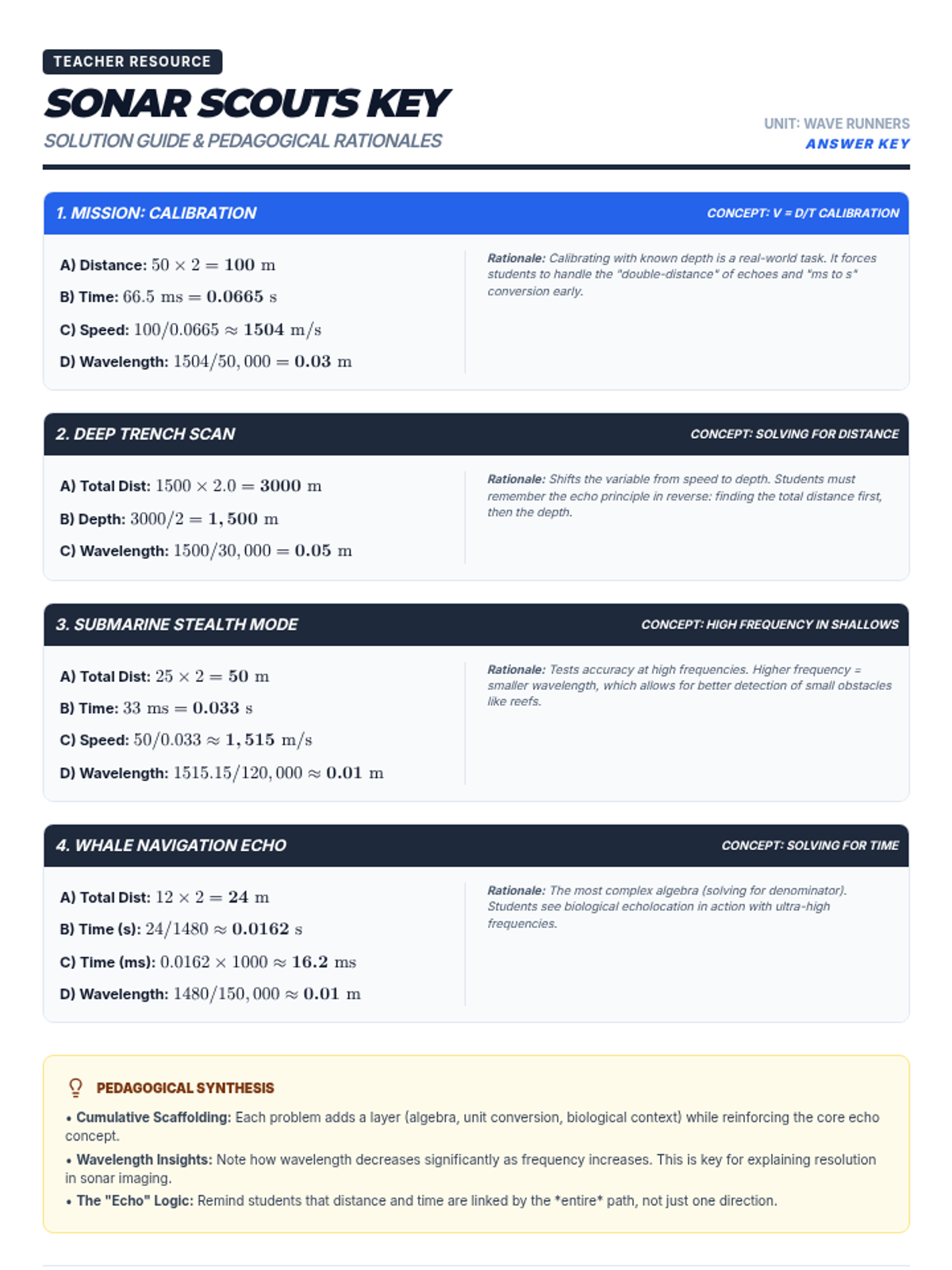
A comprehensive teacher answer key for the Sonar Scouts worksheet, including full step-by-step solutions for all four problems, unit conversion checks, and pedagogical tips for addressing common student errors. Now includes rationales for each problem. Revised for better page flow and detail.
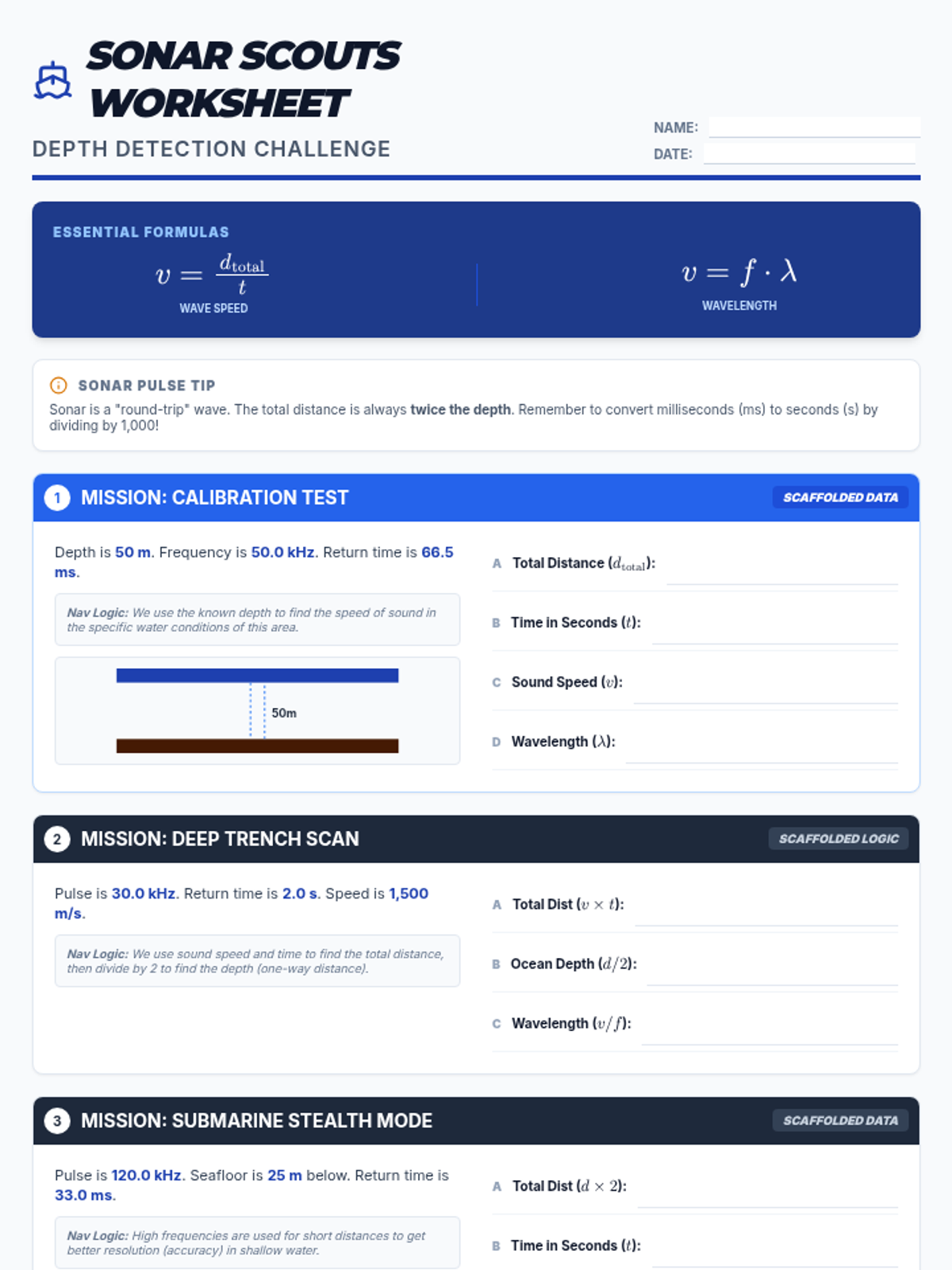
A scaffolded physics worksheet focused on sonar calculations. Every question is now broken down into logical steps with "Nav Logic" rationales explaining the scientific purpose of each calculation. Revised for better page flow.
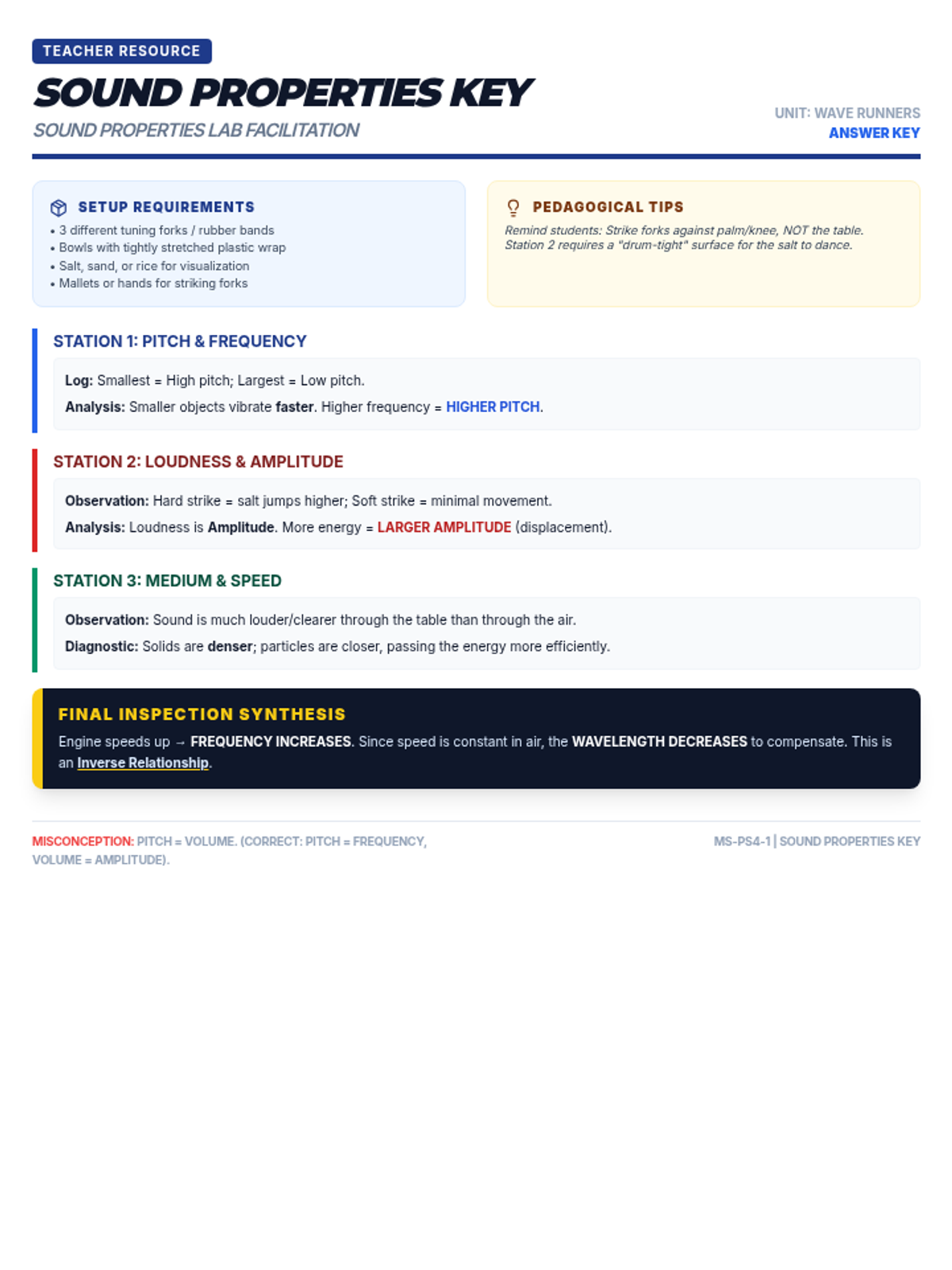
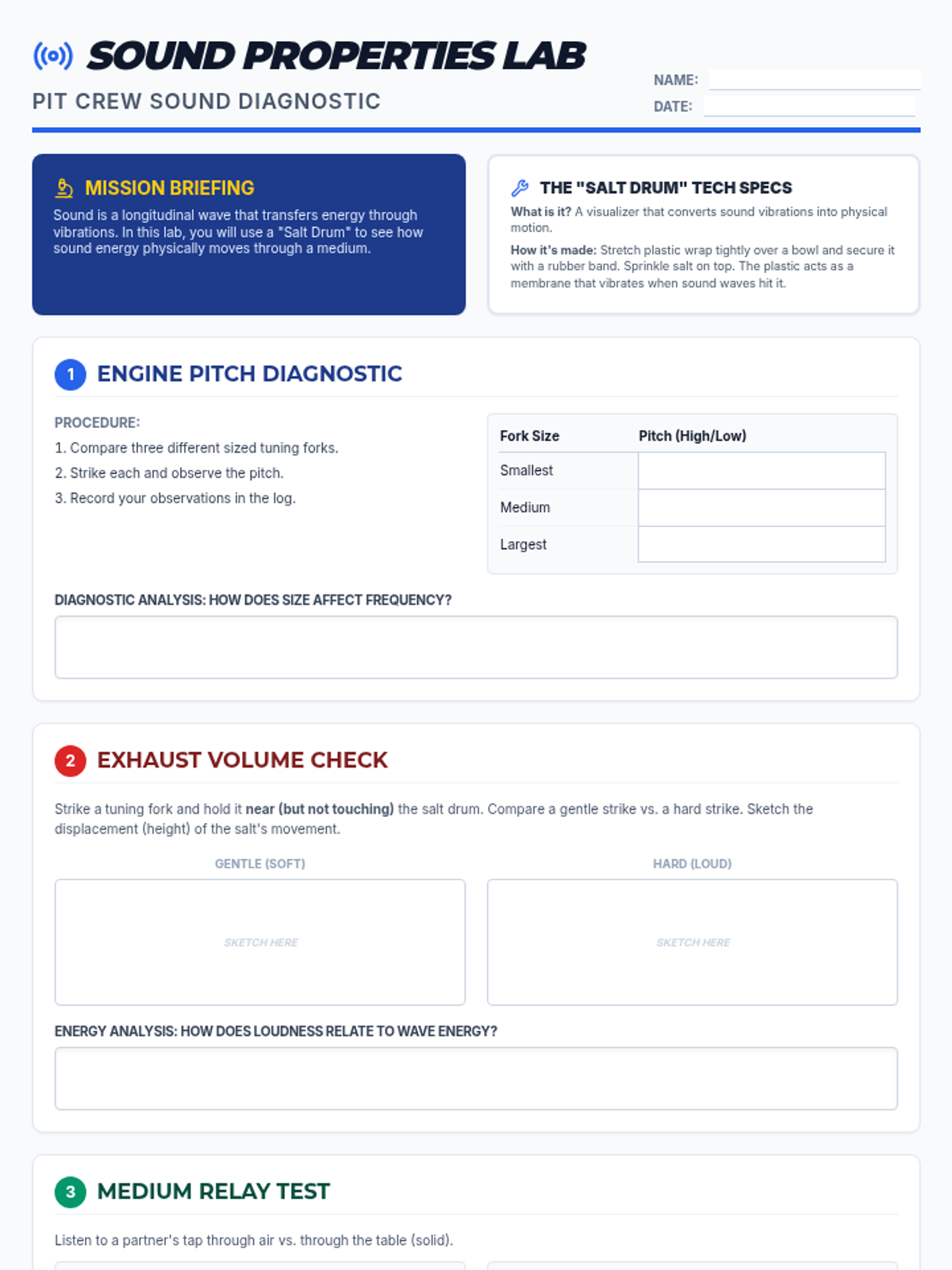
A teacher resource providing setup instructions, materials lists, and expected answers for the Sound Properties Lab. Includes pedagogical tips and explanations for sound wave properties. Revised with the new title.
A student-facing lab activity document focused on investigating pitch, loudness, and medium of sound waves. Includes a new background section on the "Salt Drum" technology used in Station 2. Revised for better page flow and detail.
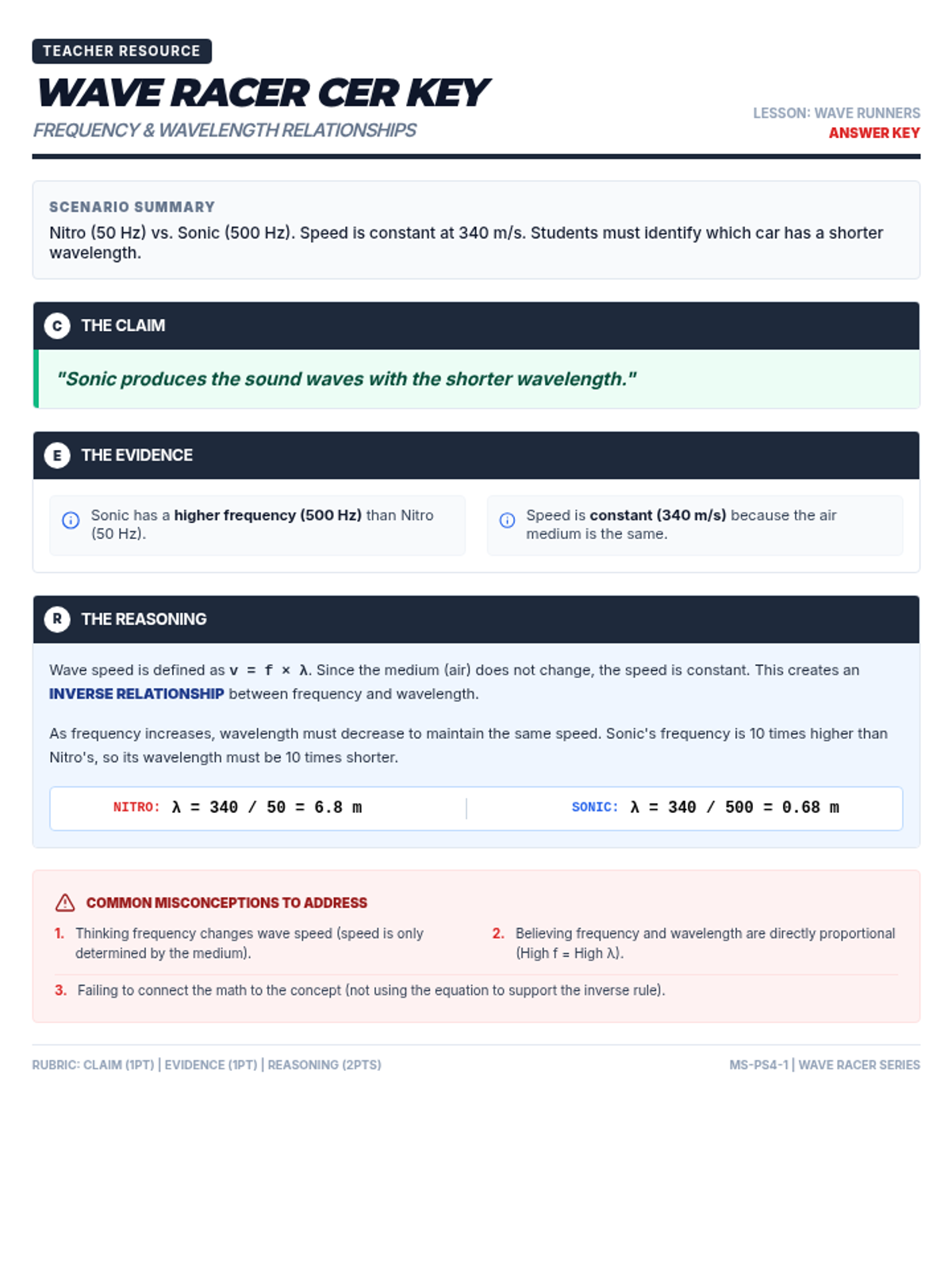
A comprehensive teacher answer key for the Wave Racer CER Bellringer. Includes the correct claim, supporting evidence from the scenario, and a mathematical and conceptual reasoning breakdown of the inverse relationship between frequency and wavelength. Revised for better contrast and single-page layout.
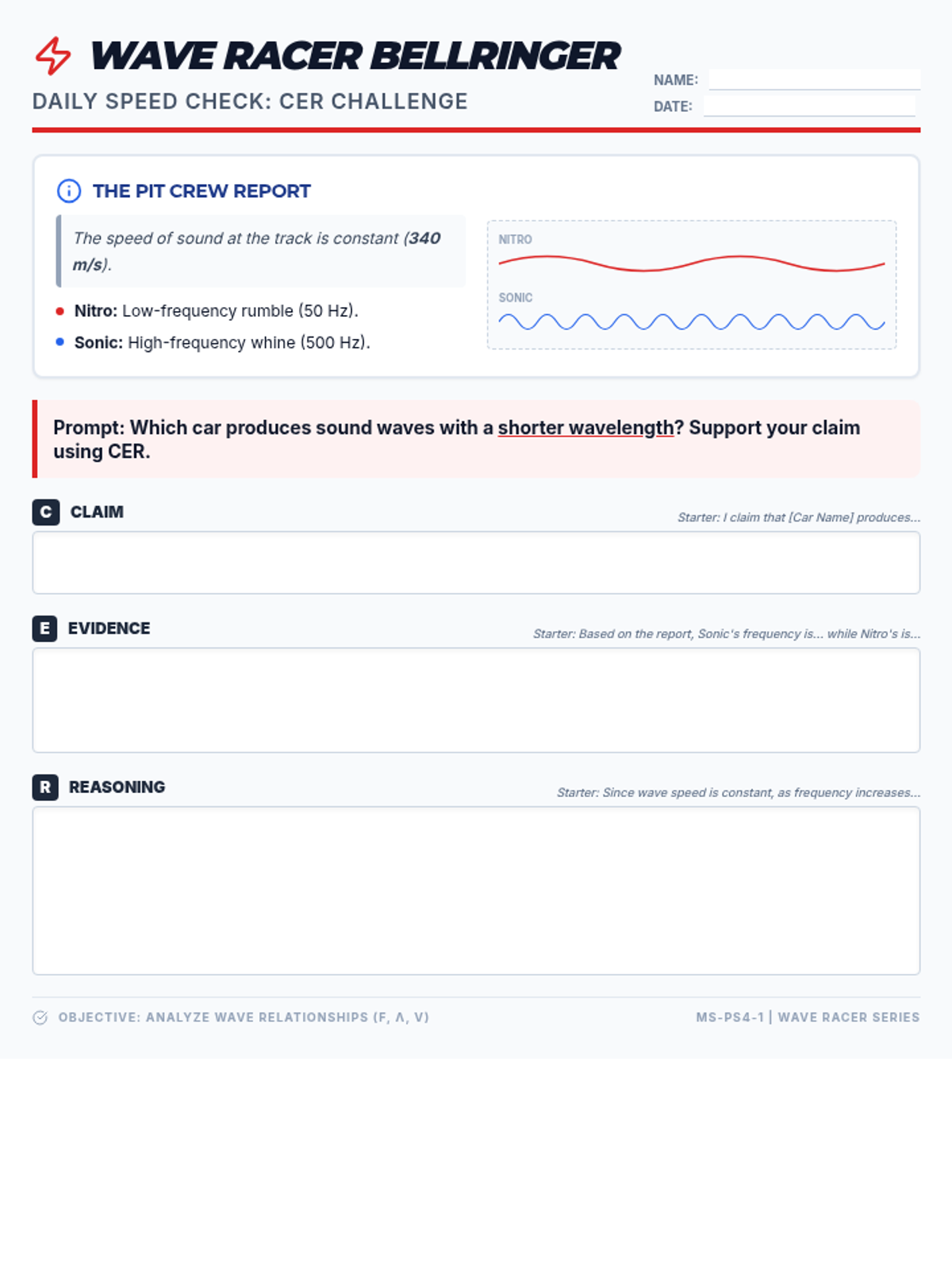
A CER (Claim, Evidence, Reasoning) bellringer activity focused on the relationship between frequency and wavelength. Includes sentence stems to support student writing and fits on a single page.
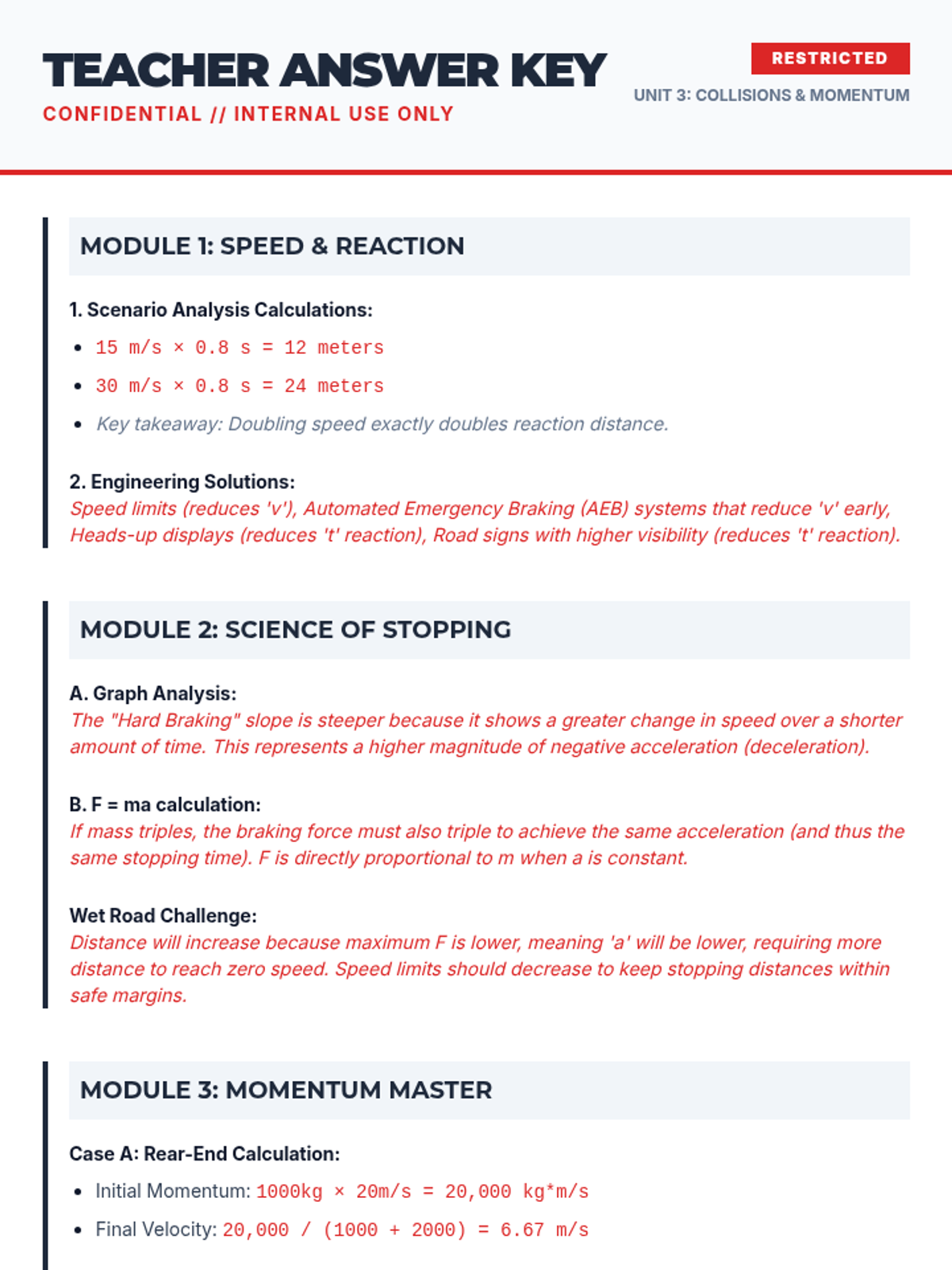
Teacher's answer key for the Crash Forensics Packet, providing mathematical solutions, conceptual explanations, and sample student responses for all four modules.
A comprehensive 4-module independent packet for students to work through mathematical modeling, graph analysis, and momentum conservation in the context of vehicle safety. Uses standard text for formulas to ensure PDF rendering.
A presentation briefing to set the stage for the Impact Investigation Lab, connecting distracted driving to collision physics and lab protocols. Clarifies that sliding distance is the dependent variable.
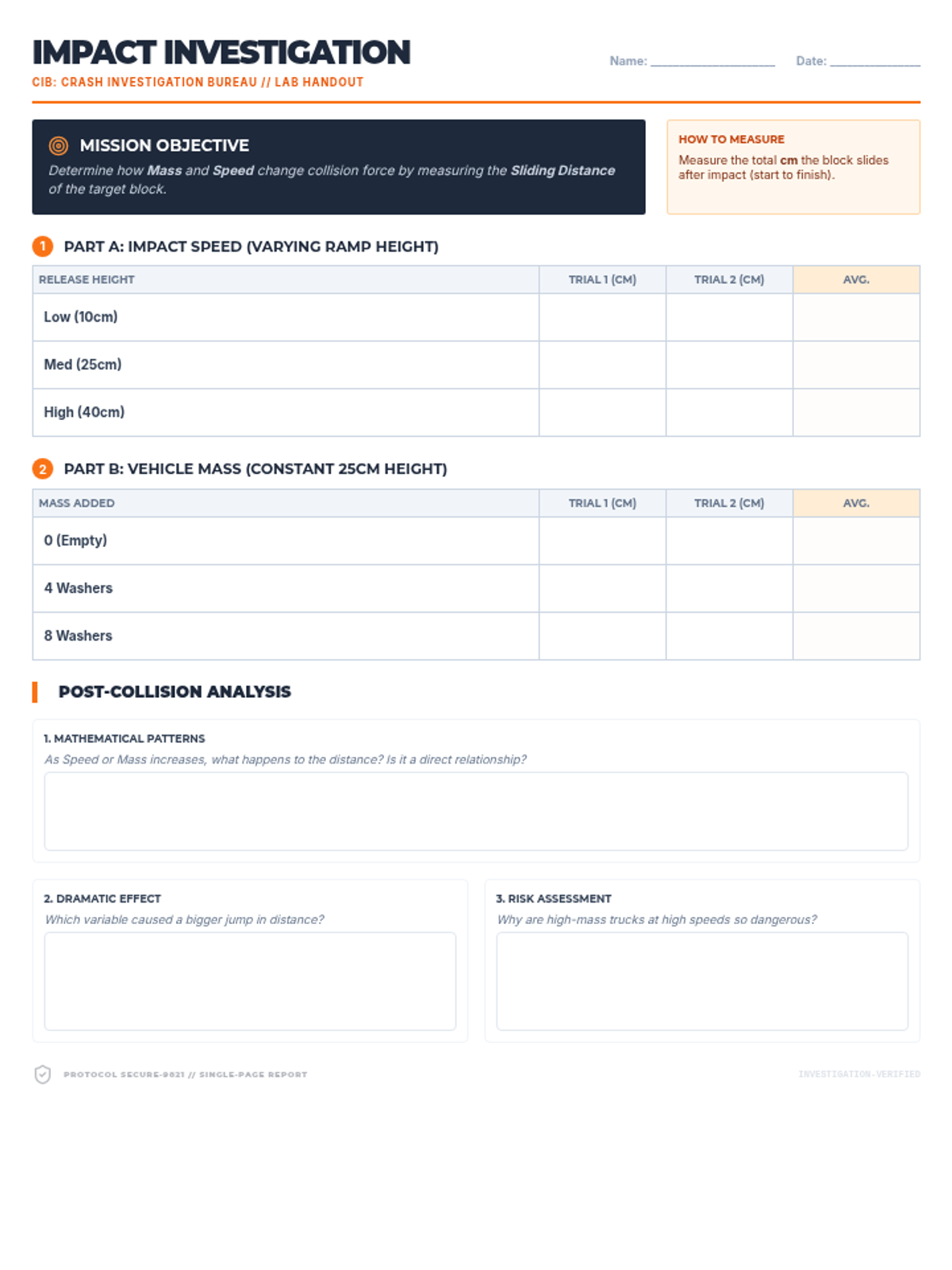
A hands-on lab handout for investigating how mass and speed affect impact force. Students release carts from varying heights onto a sliding target and measure the resulting displacement (sliding distance) as a proxy for impact energy. Includes columns for multiple trials.
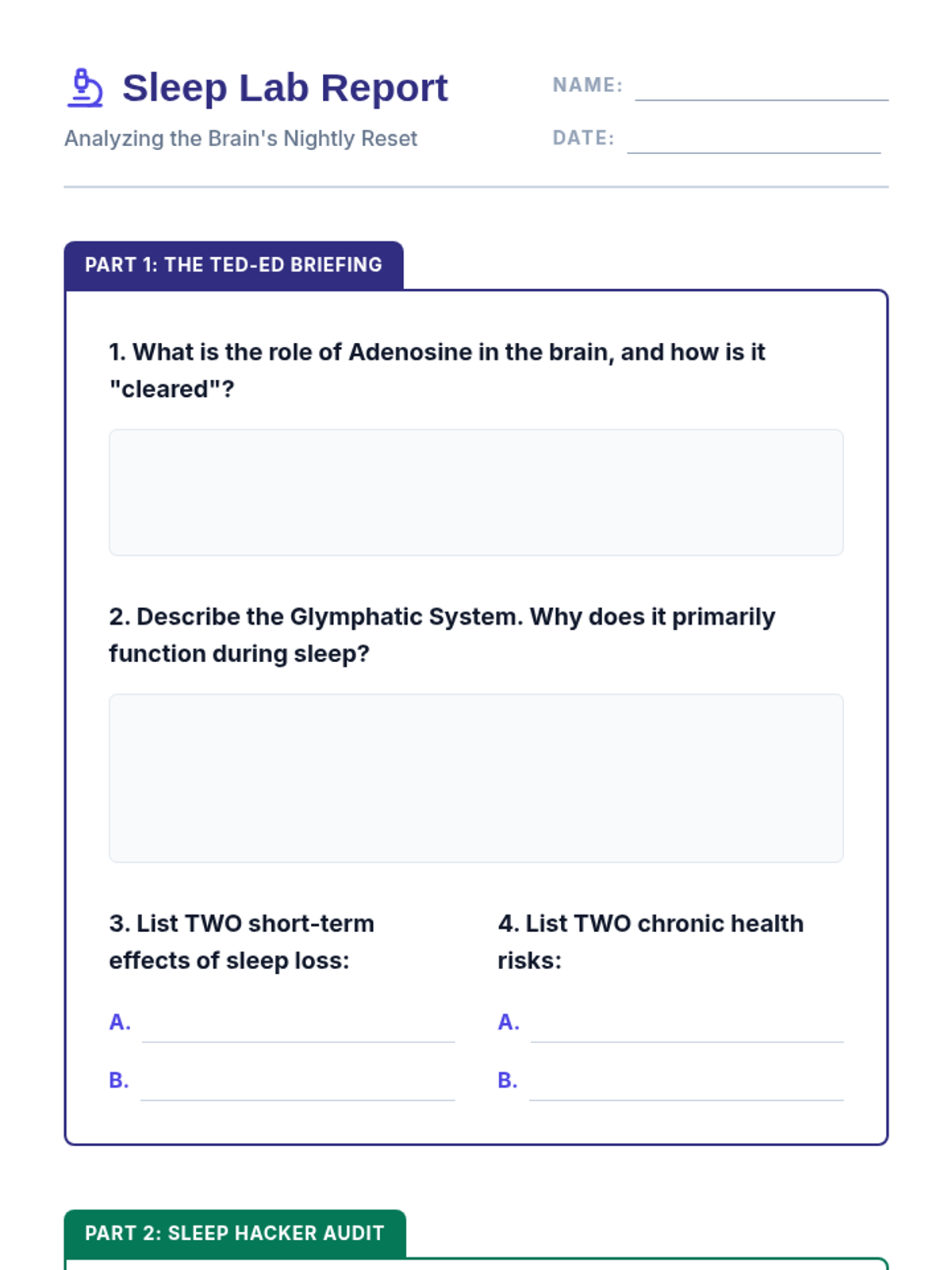
A student worksheet designed for use during and after the slide presentation, featuring video analysis questions and a personal sleep habit audit.
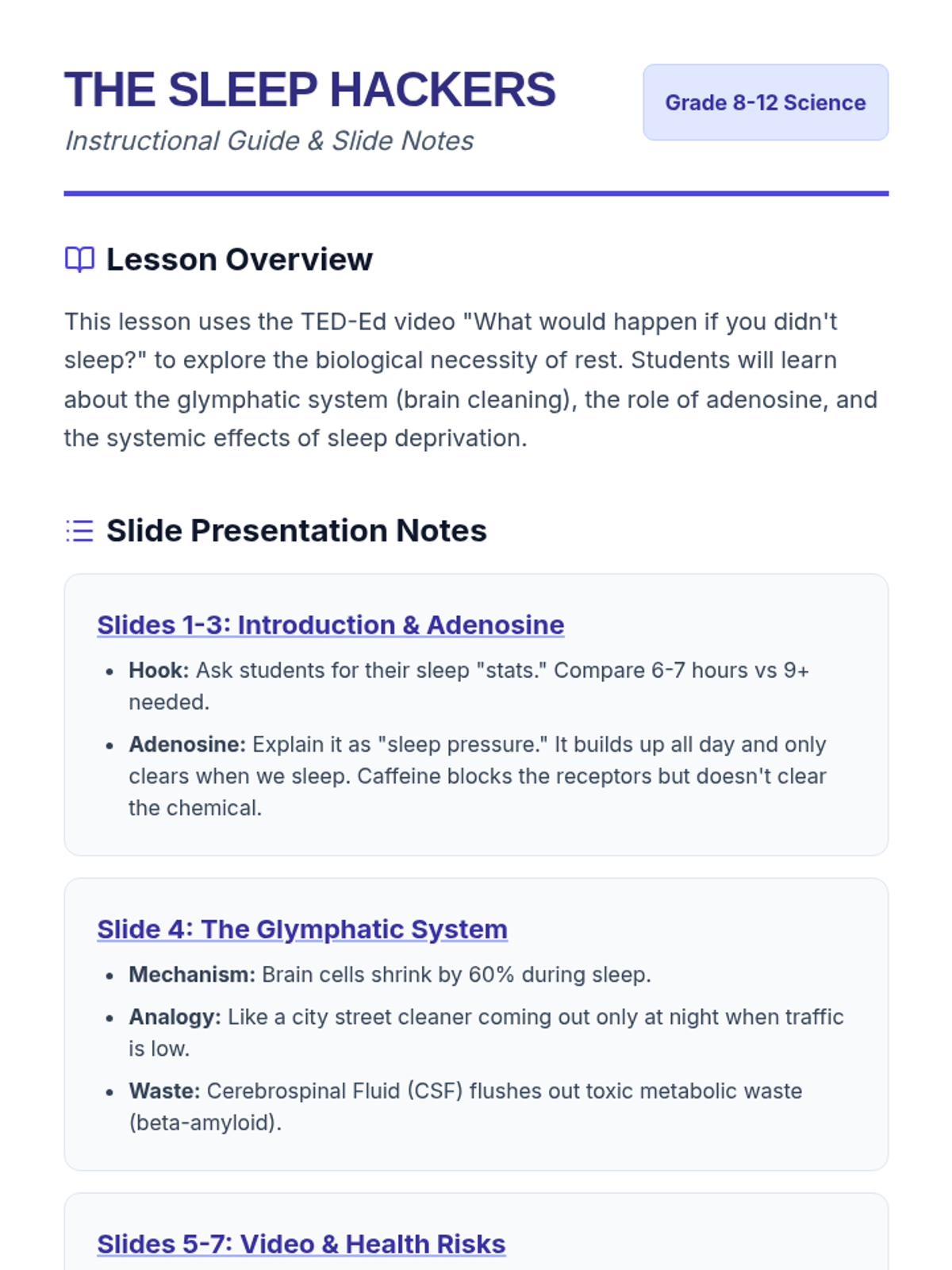
Comprehensive teacher notes and a slide-by-slide facilitation guide for "The Sleep Hackers" lesson, including discussion prompts and scientific background on the glymphatic system.