A student worksheet focused on analyzing evolutionary evidence. Includes tasks on homologous structures, identifying fossil layers using superposition, and interpreting data from a case study on finch beak adaptations.
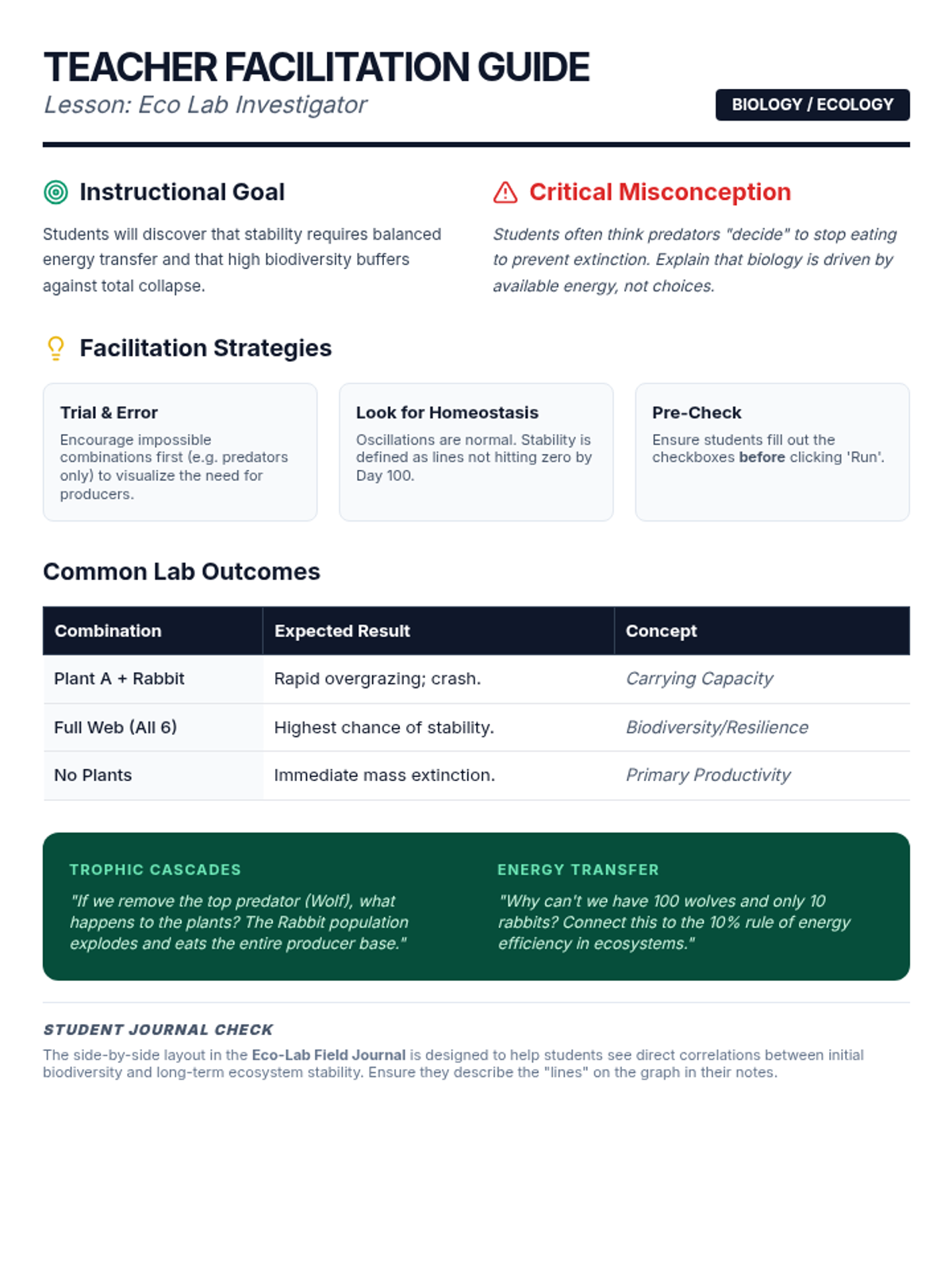
A comprehensive guide for teachers to facilitate the Eco Lab lesson. Includes instructional goals, facilitation tips, expected results for various organism combinations, and discussion prompts.
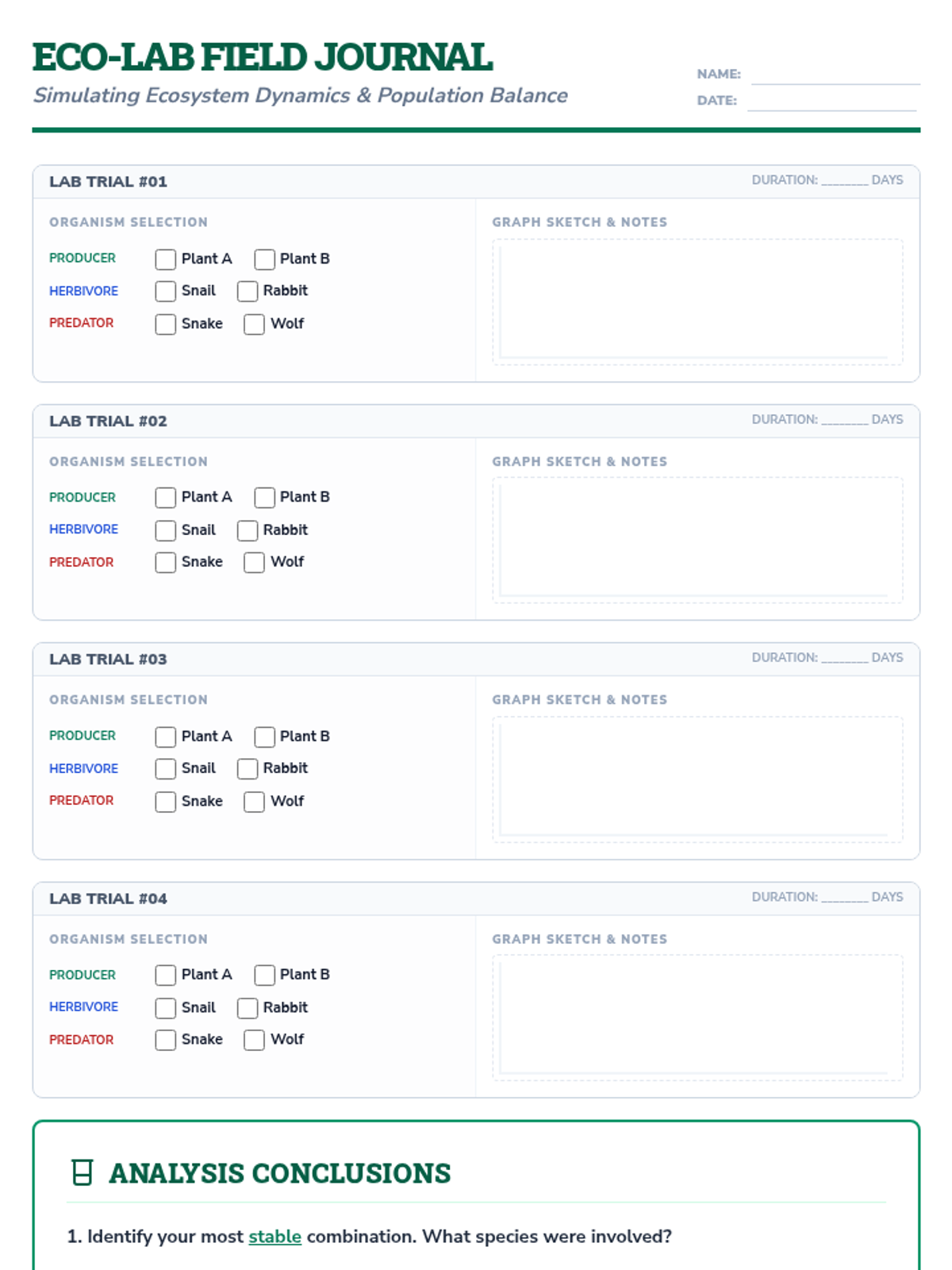
A two-page printable field journal for students to record multiple trials of the ecology simulator. Features side-by-side selection checkboxes and observation areas for recording population dynamics.
A visual presentation introducing students to the Learner.org Ecology Lab simulator, covering the organism types and step-by-step instructions for conducting trials.
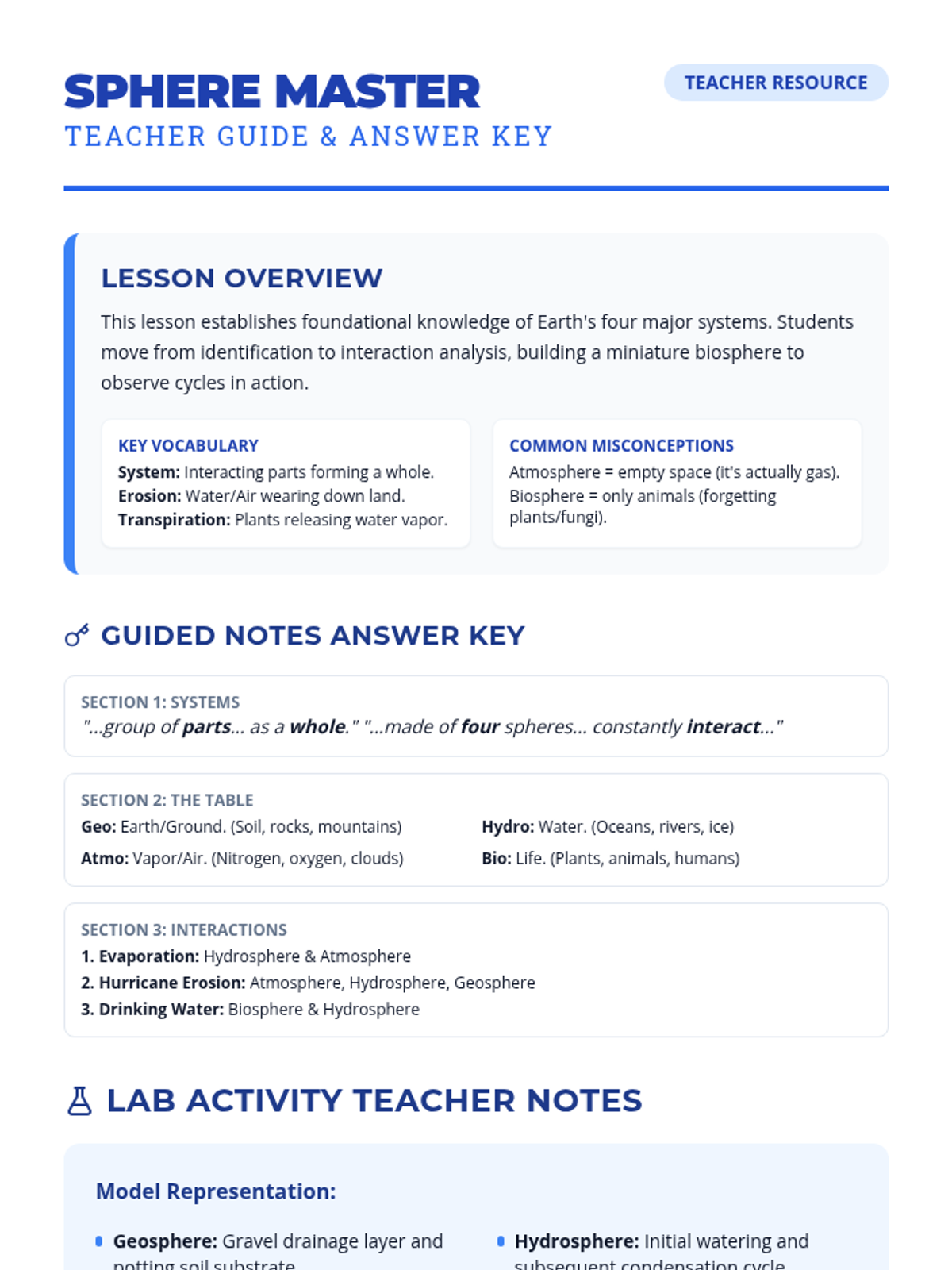
A comprehensive teacher resource containing background information, common misconceptions, and complete answer keys for the Sphere Scouts Guided Notes and the Mini Sphere Lab Activity. Includes facilitation tips for the hands-on lab to ensure successful student outcomes.
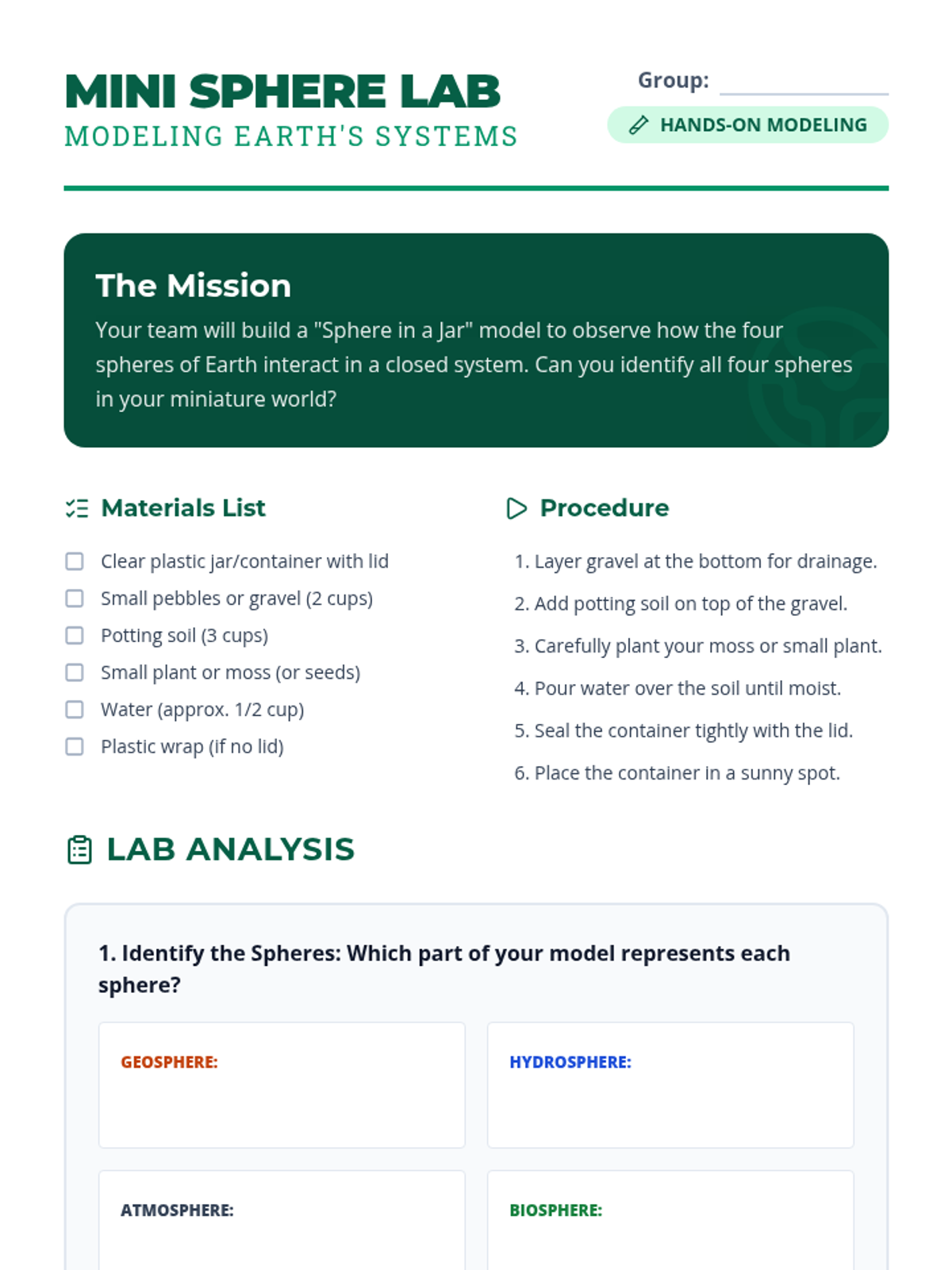
A hands-on laboratory guide where students build a closed-system "Mini Sphere" in a jar. The material includes a clear materials list, step-by-step assembly instructions, and an observation section for identifying modeled spheres and predicting their interactions.
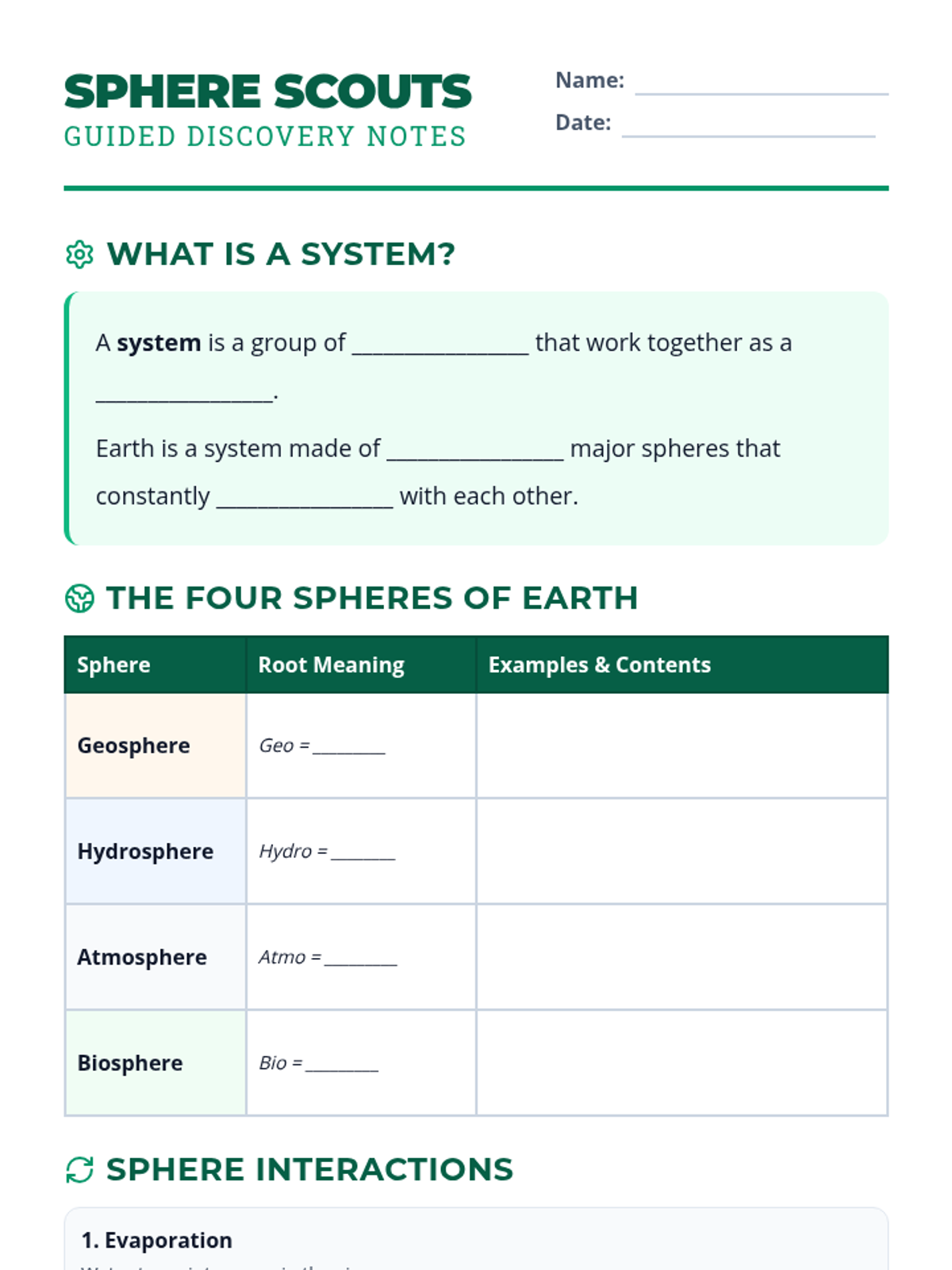
A scaffolded note-taking document designed to accompany the Sphere Systems presentation. It features fill-in-the-blank definitions, a root-word analysis table for the four spheres, interaction analysis prompts, and a creative field sketch area for personal observation.
A visual presentation introducing Earth's four spheres (geosphere, hydrosphere, atmosphere, and biosphere) with clear definitions, etymology, and specific examples of complex interactions. Includes interactive discussion prompts and high-contrast layouts for classroom instruction.
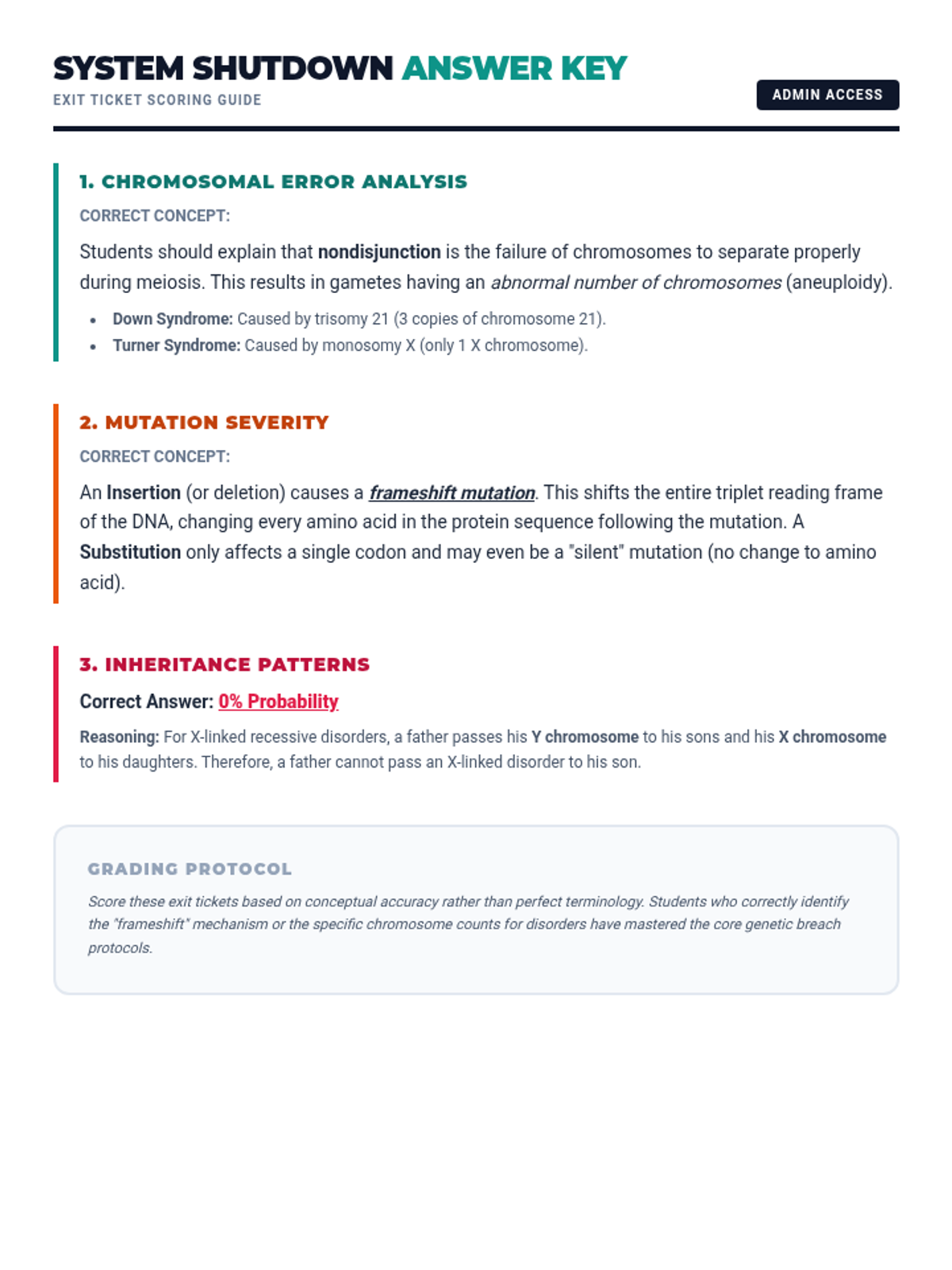
A teacher-facing answer key for the System Shutdown Exit Ticket, providing detailed explanations for chromosomal errors, mutation impacts, and X-linked inheritance.
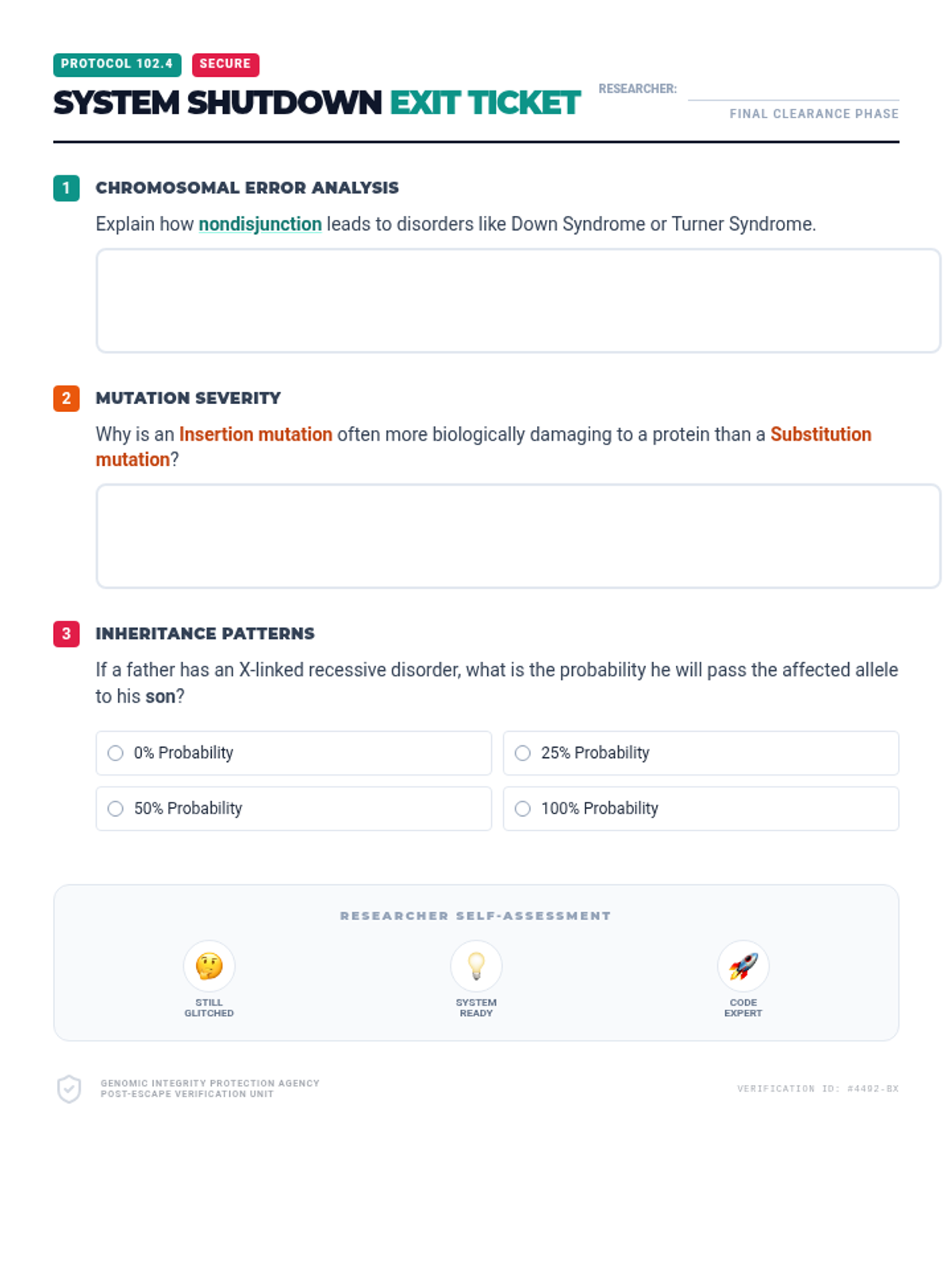
A conceptual exit ticket to assess student understanding of nondisjunction, mutation severity, and X-linked inheritance patterns following the escape room activity. Now optimized for a single-page layout.
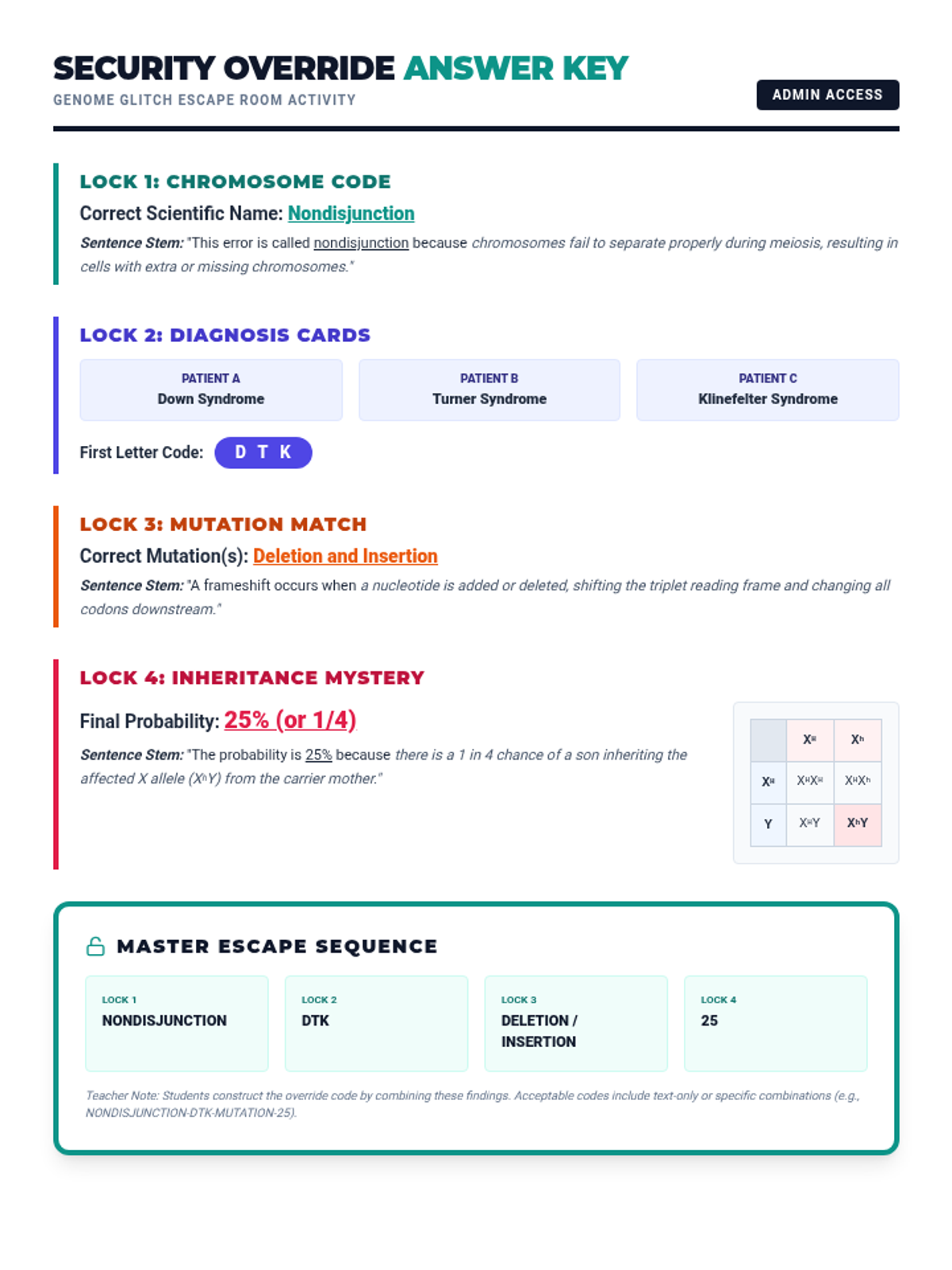
A comprehensive teacher answer key for the Genome Glitch Escape Room, providing full answers, sentence stem completions, and the final override code in a clean, legible format.
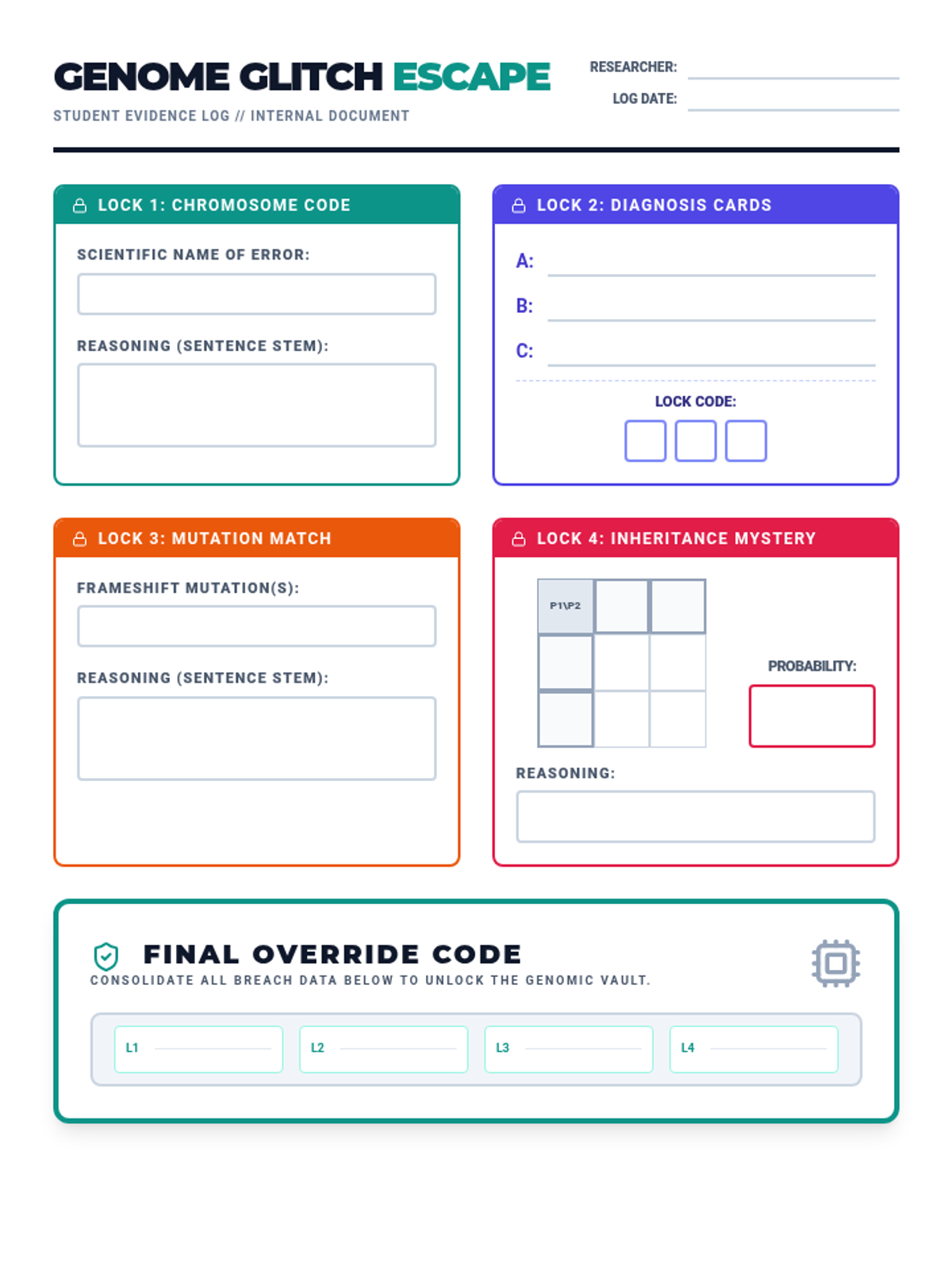
A structured recording sheet for students to document their findings from the Genetics Escape Room, featuring clear white workspaces for each lock and the final code entry section.
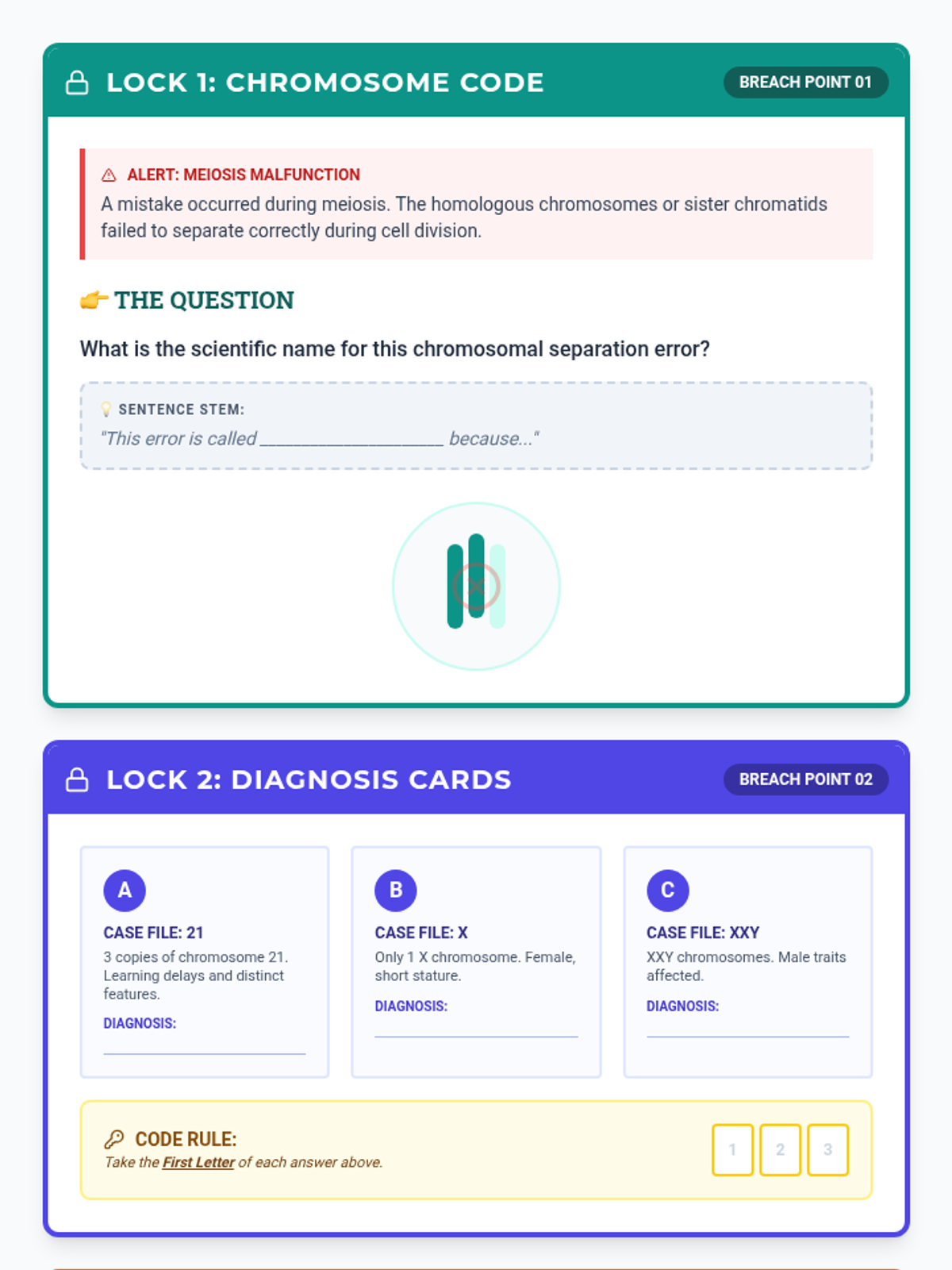
Four visually engaging station cards for a genetics escape room, covering non-disjunction, chromosomal disorders, mutations, and X-linked inheritance probabilities.
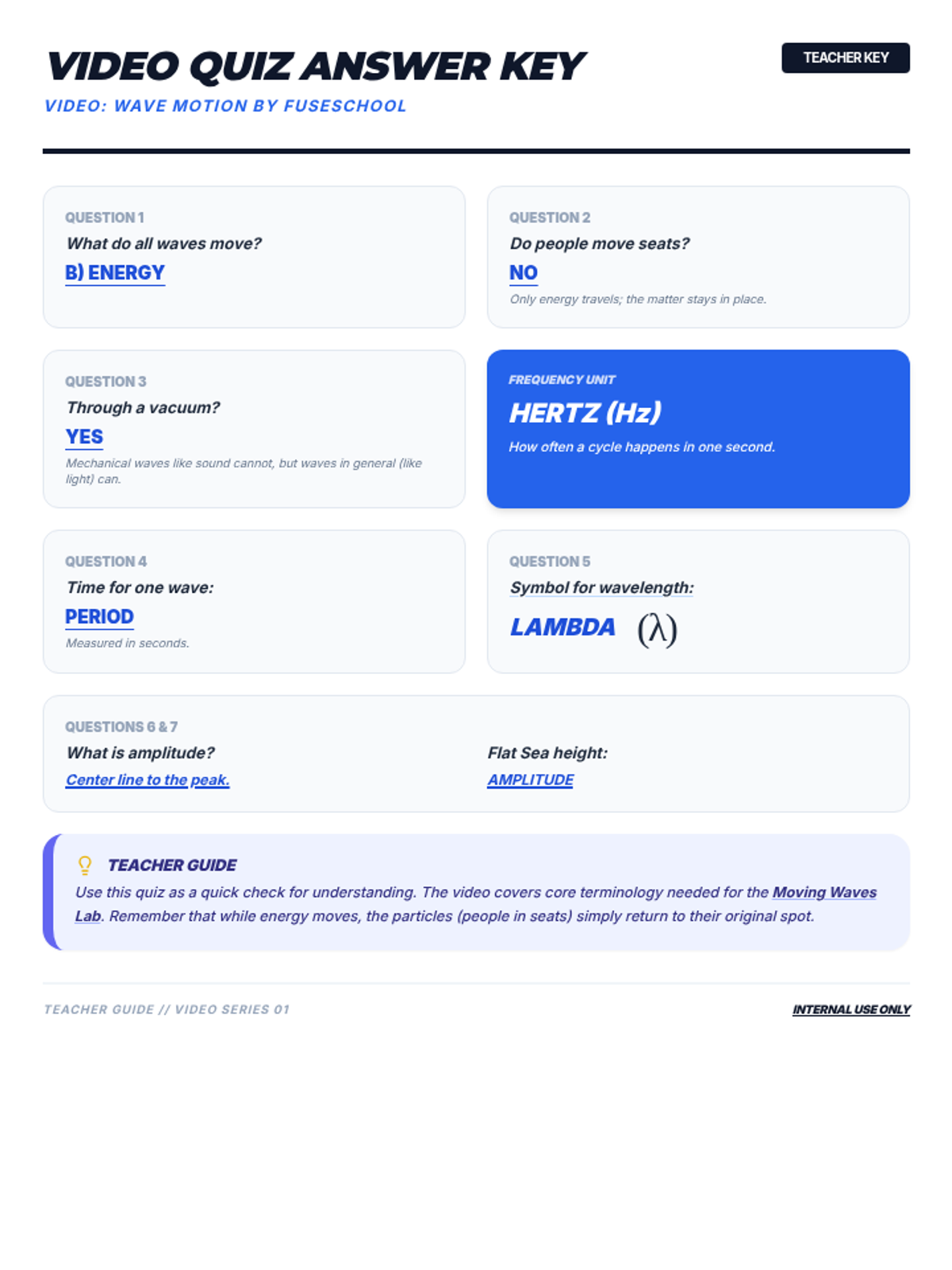
A comprehensive teacher answer key for the FuseSchool 'Wave Motion' video quiz. Includes clearly labeled solutions and pedagogical notes for student review.
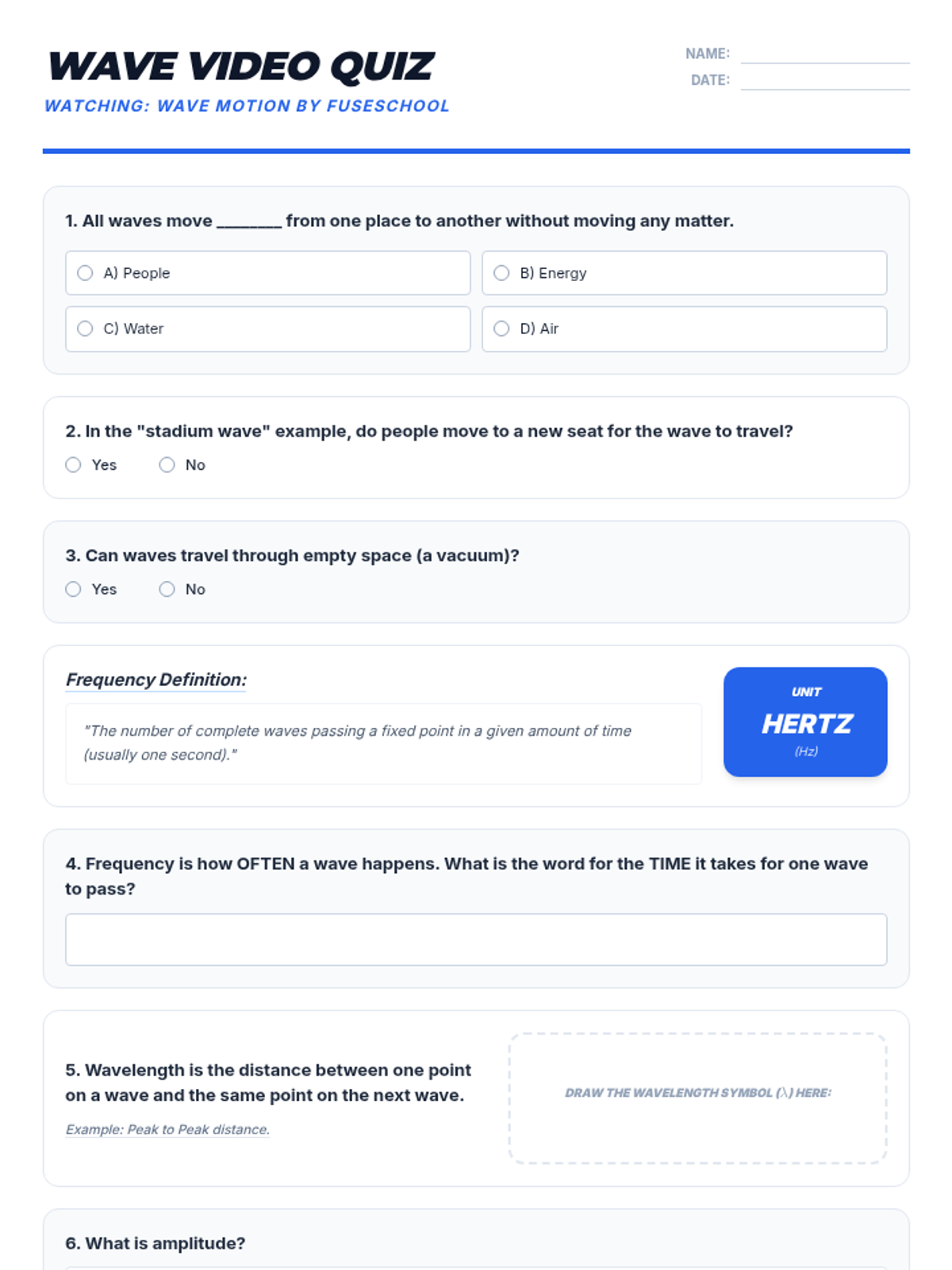
A student video quiz based on the FuseSchool 'Wave Motion' YouTube video. Covers fundamental wave properties like energy transfer, frequency, period, wavelength, and amplitude using simple English.
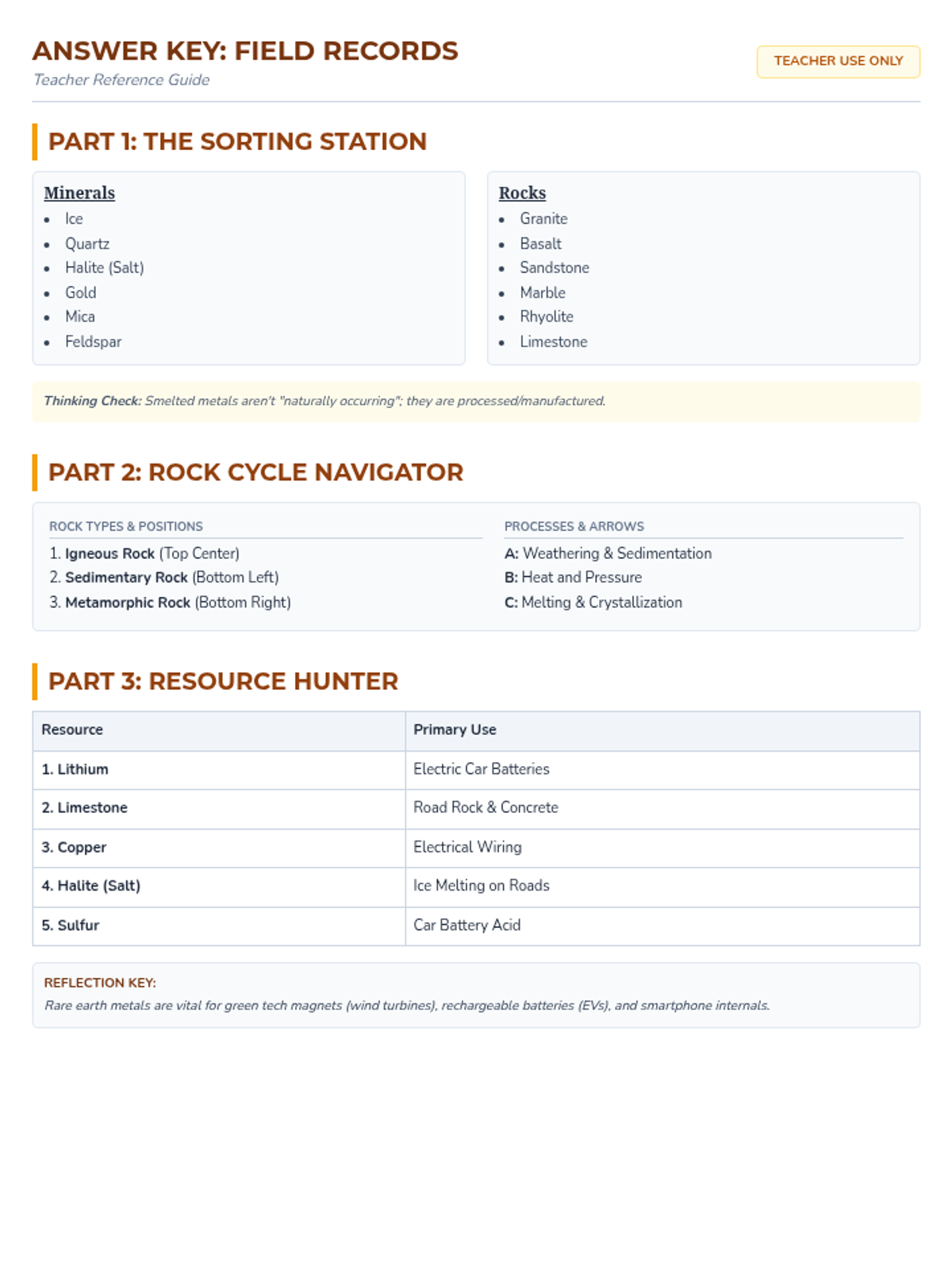
A teacher answer key for the Field Records Worksheet, providing correct categorizations for minerals and rocks, rock cycle processes, and resource matching.
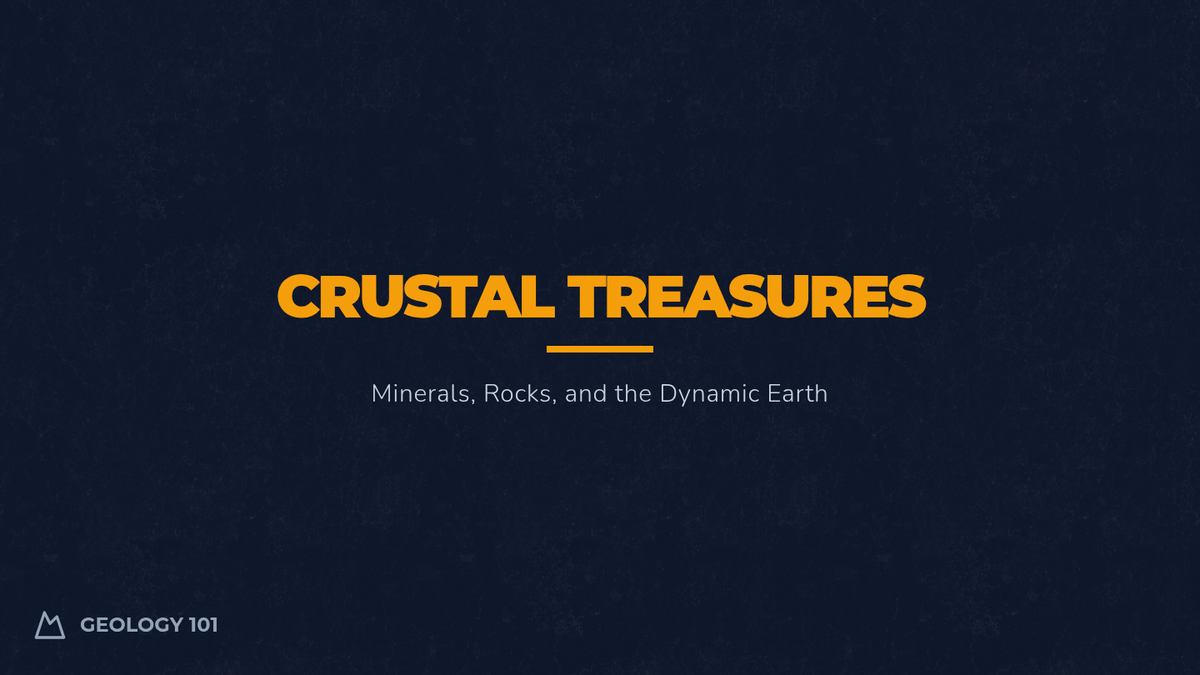
An instructional slide deck covering the differences between minerals and rocks, the mechanics of the rock cycle, weathering processes, and the environmental implications of economic geology.
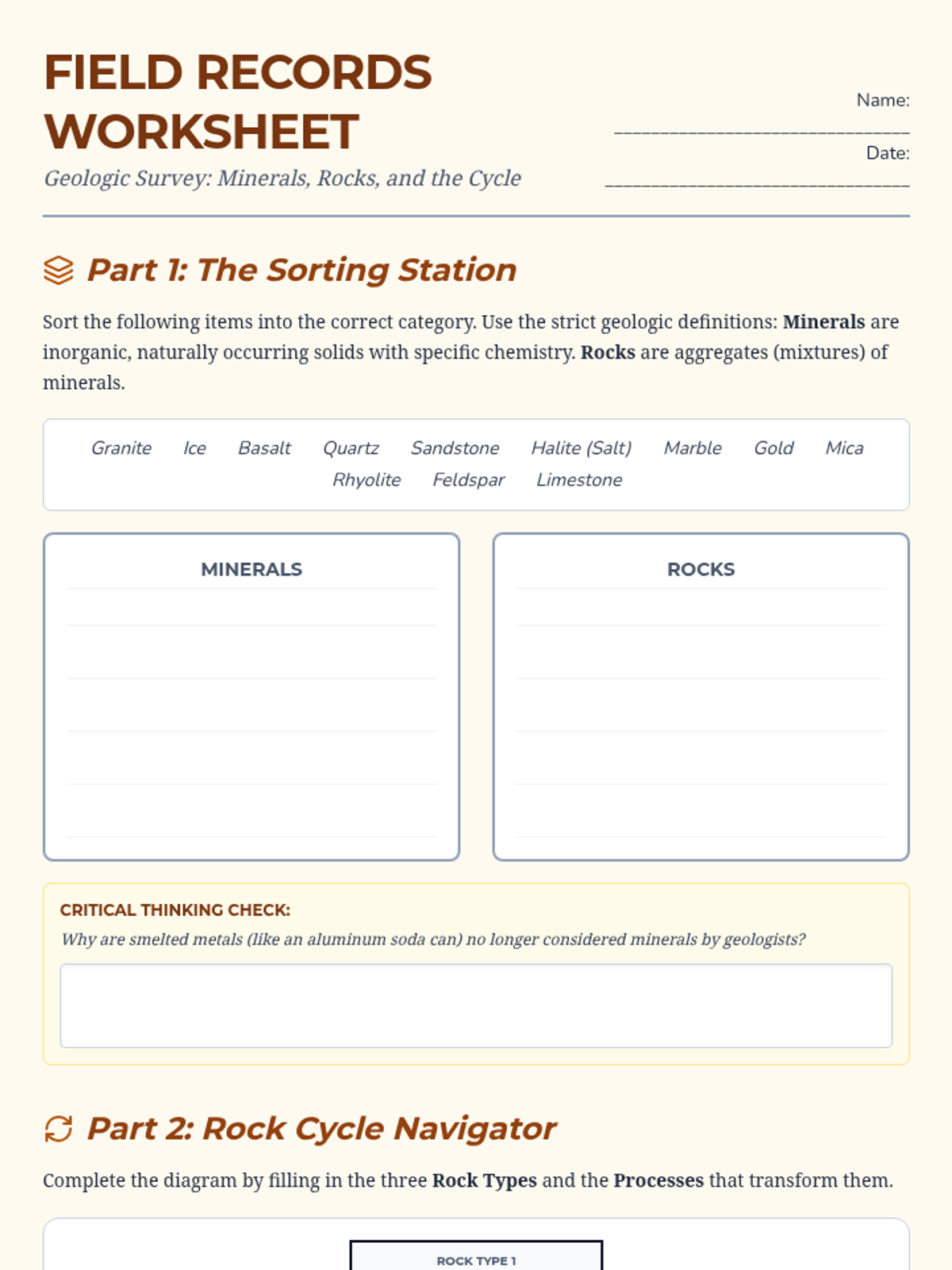
A comprehensive student worksheet featuring a mineral vs. rock sorting activity, a rock cycle graphic organizer, and a matching exercise on economic geology resources.
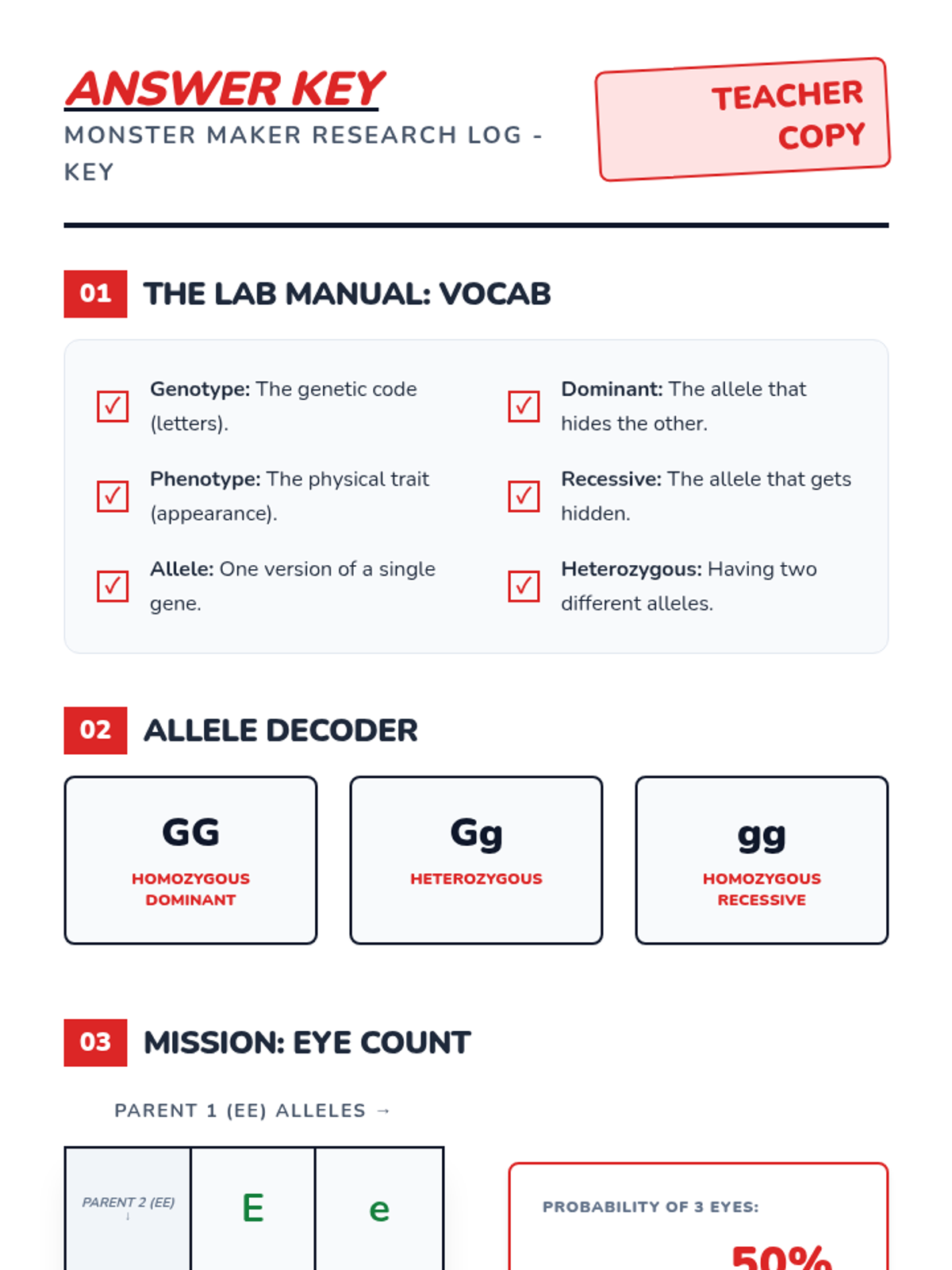
An answer key for the Monster Maker Study Guide, providing correct vocabulary matches, completed Punnett squares, and model analysis responses for teacher use.
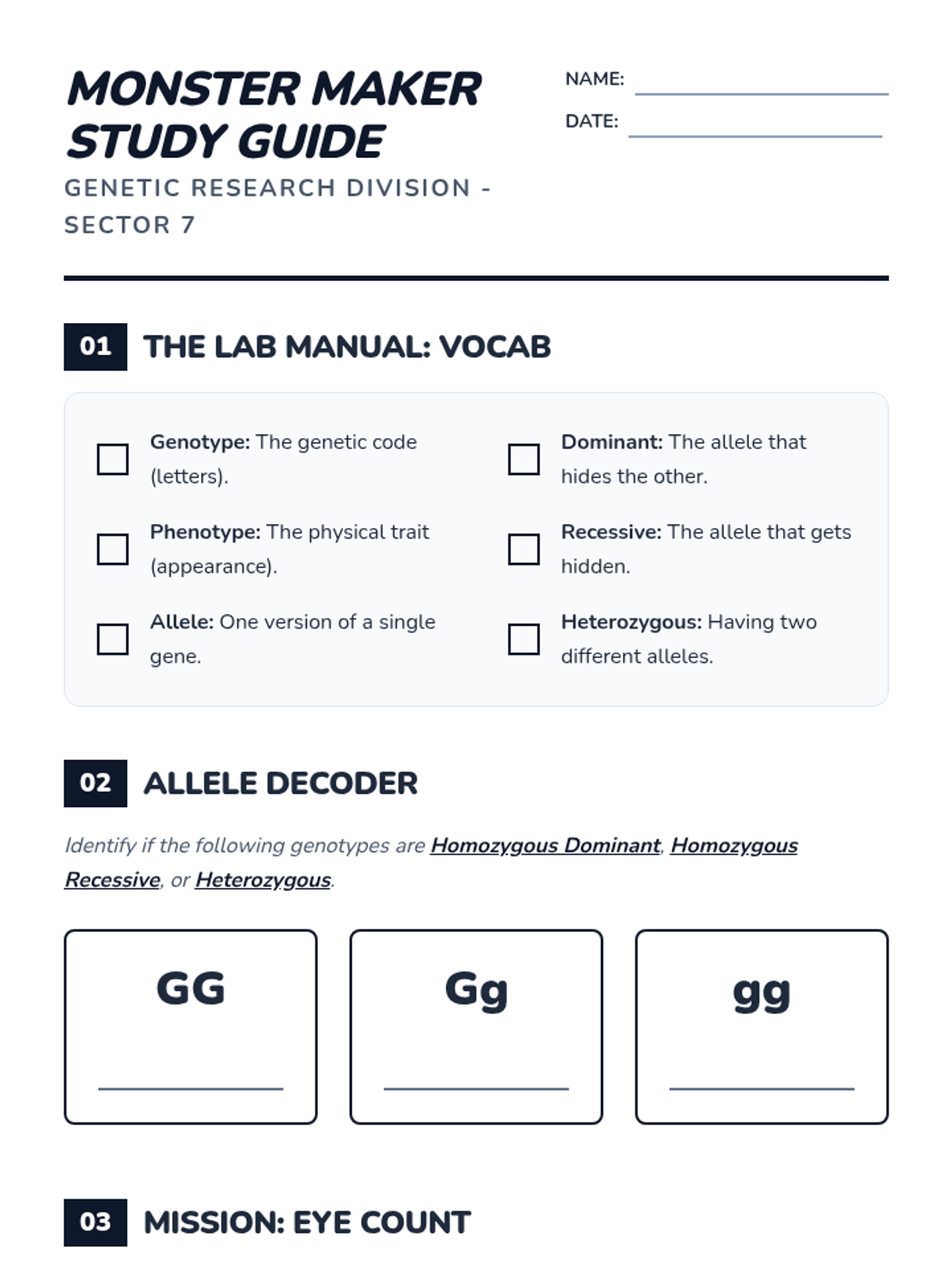
A printable study guide for student completion, featuring a vocabulary match-up, allele decoder table, Punnett square mission for alien eye traits, and scaffolded analysis questions with sentence starters.
A 16:9 slideshow for teaching alien genetics, featuring color-coded alleles, visual Punnett square examples, and sentence starters for data analysis. Includes high-contrast visuals and large text for classroom presentations.
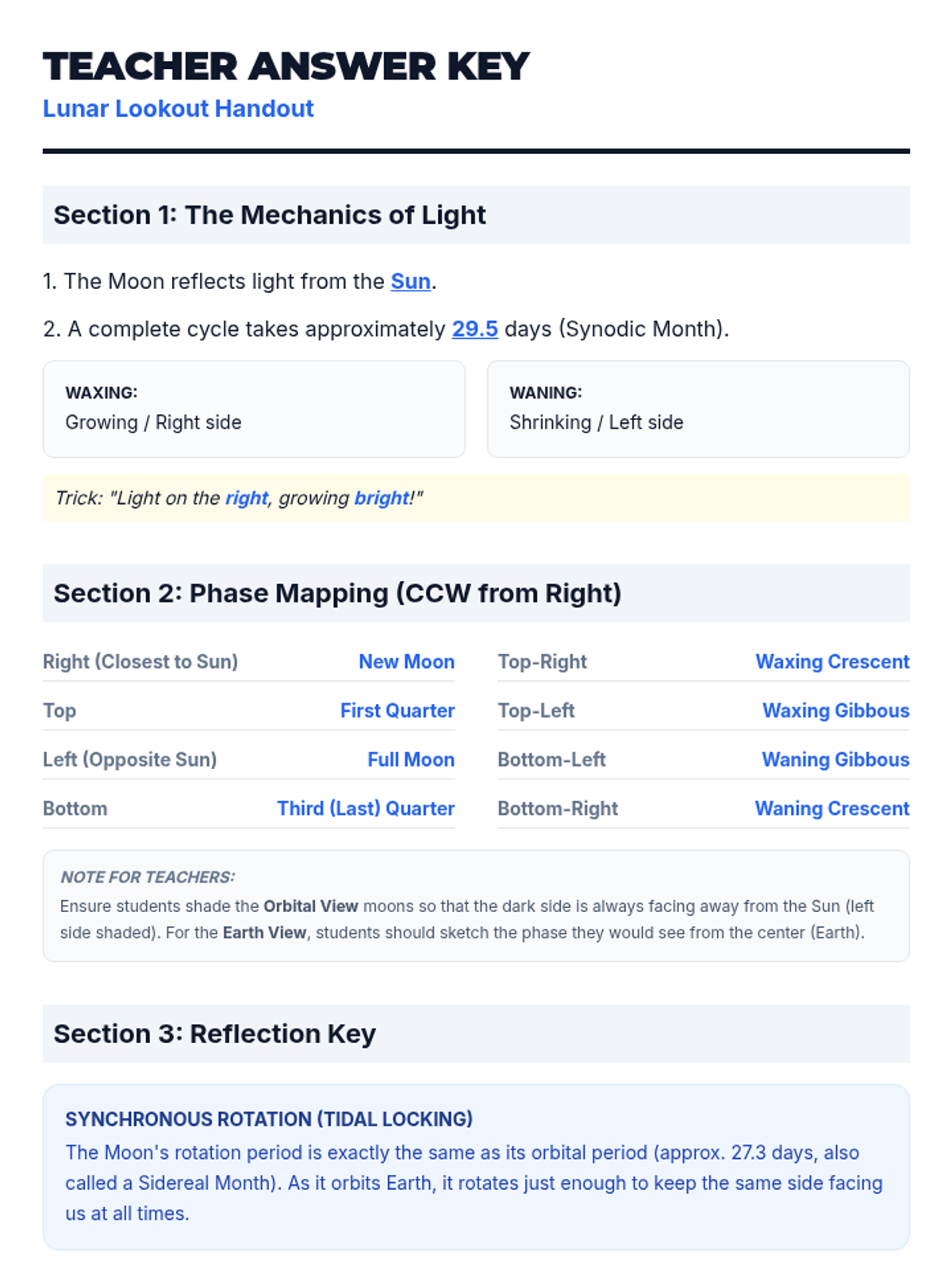
A condensed teacher answer key for the Moon Phases handout, featuring identification for both orbital and visual views.
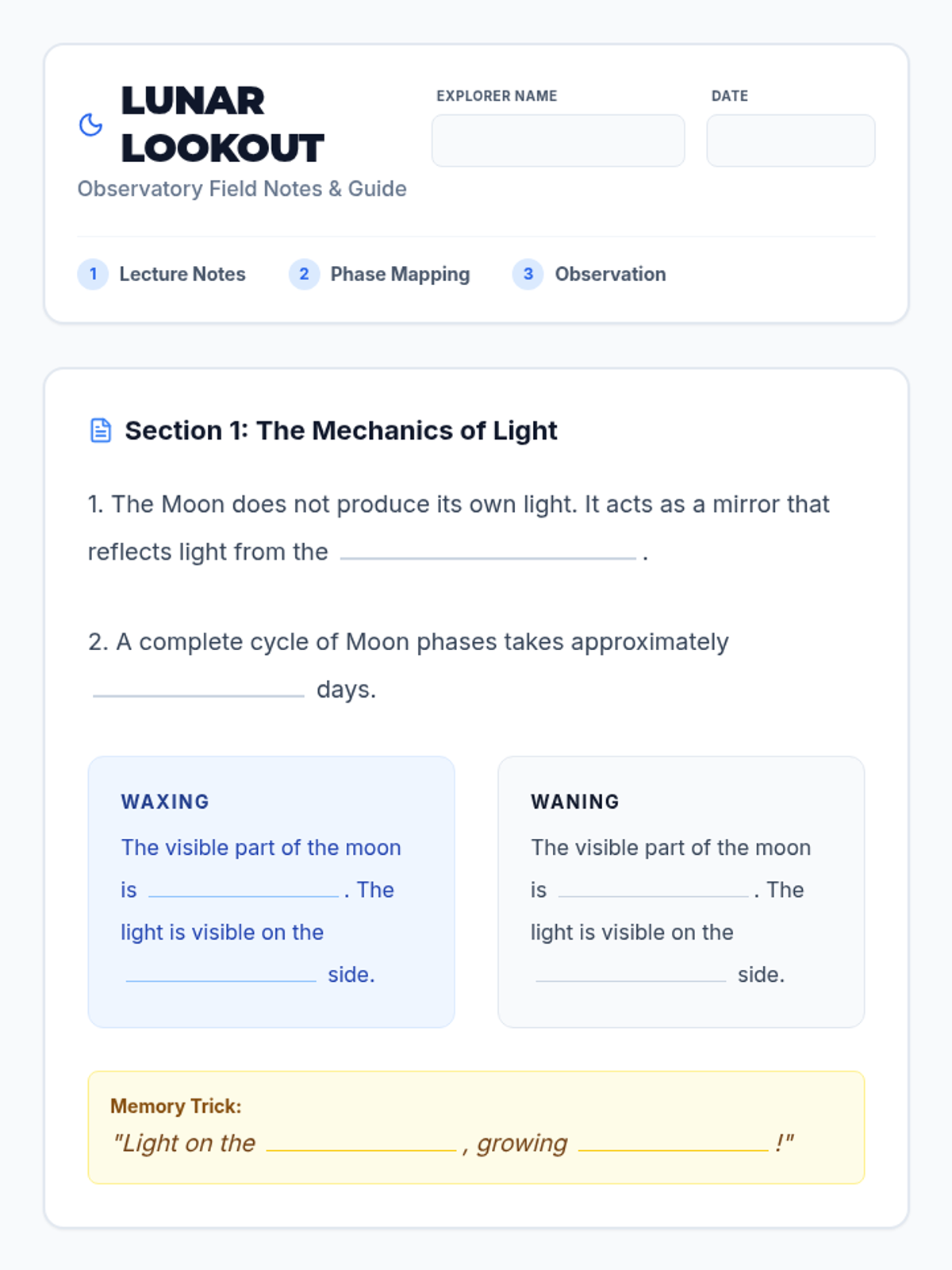
A student worksheet with fill-in-the-blank notes and a detailed phase mapping diagram featuring both orbital and appearance views.