A visual presentation for a classroom read-along about bird anatomy, habitats, and different bird species, designed with high contrast and large text for accessibility.
A visually engaging reference sheet for 5th grade students. Spacing and padding have been significantly reduced to ensure the 'Property Checklist' and other content fit comfortably on a single page without being cut off.
A 4-page teacher's answer key for the Molecular Mashup Booklet, providing correct answers, sample student explanations, and grading guidance. Formatted with explicit page breaks to match the student booklet perfectly.
A 4-page student activity booklet featuring four 'Lab Zones'. Layout adjusted to be more compact on Page 4 to prevent printing cut-offs. Explicit page breaks remain for clean output.
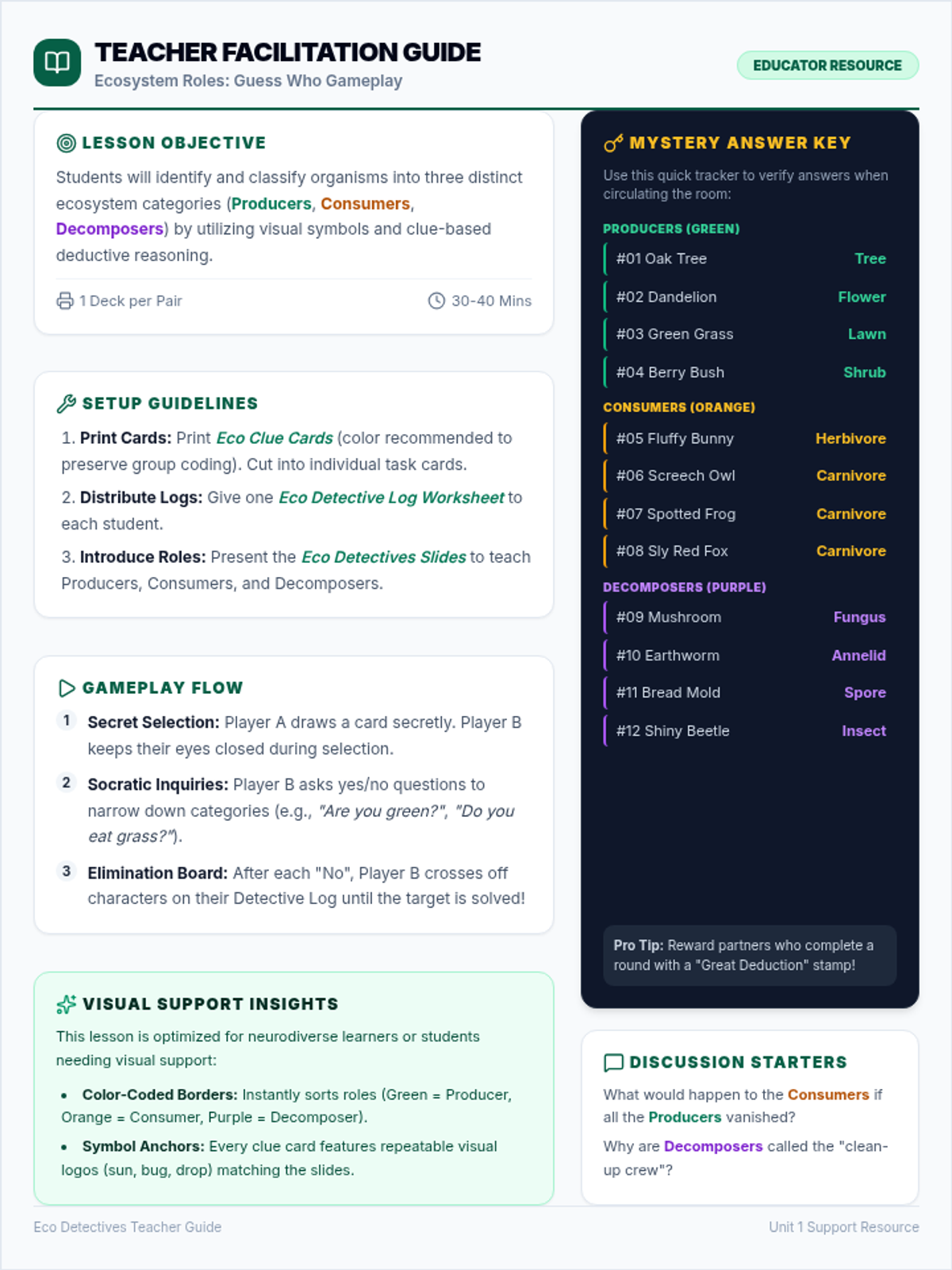
A teacher facilitation guide for the 'Spring Sprouts' lesson, featuring learning objectives, slide-by-slide discussion prompts, a hands-on 'Cup Garden' activity guide, and an answer key for the student worksheet.
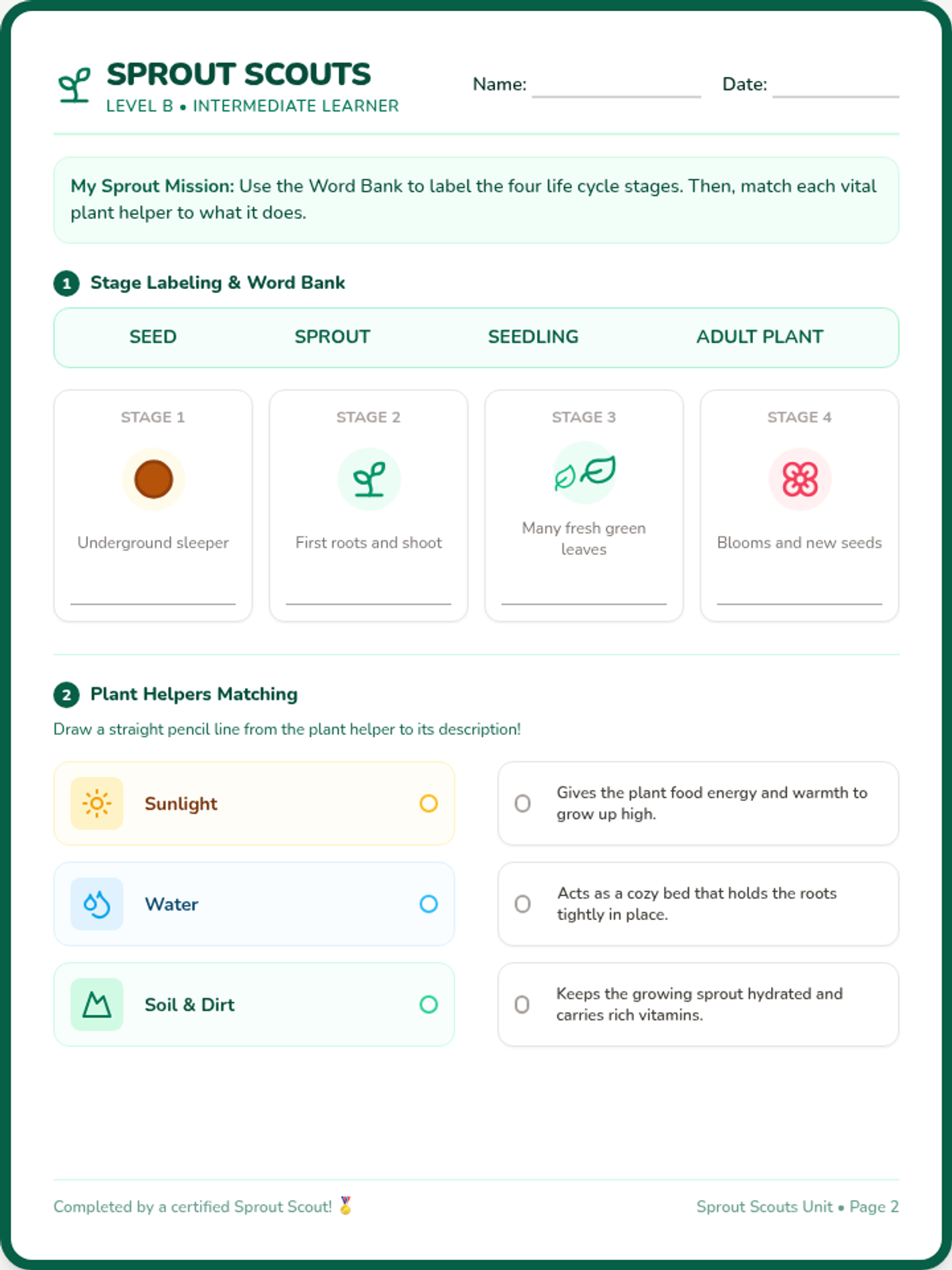
A student activity sheet featuring a plant life cycle sequencing task, a 'recipe' ingredient identification section for photosynthesis, and a creative drawing area for a spring garden.
A vibrant and engaging 7-slide presentation for early elementary students introducing spring weather, the plant life cycle, and the basic concept of photosynthesis using simple 'chef' analogies and clear diagrams.
A teacher resource guide for setting up and managing a Scratch Jr. coding center, including troubleshooting tips, pacing suggestions, and differentiation strategies.
A visual reference guide for students explaining the function of each color-coded block category in Scratch Jr. to support independent problem-solving.
A student reflection and progress tracking sheet where learners can check off completed Scratch Jr. adventure cards and draw/write about their favorite project.
A set of 8 colorful task cards for Scratch Jr. creative coding projects, featuring engaging challenges like dance parties, space races, and magic shows. Each card includes a primary goal, specific block suggestions, and a bonus challenge.
The teacher answer key for the bird anatomy labeling activities, showing the correct placement of all five body parts.
A cut-and-paste labeling activity where students cut out five body part names and glue them into the correct spots on a bird diagram.
A handwriting worksheet where students use a word bank to label five bird body parts (eye, beak, wing, feathers, and claws) using primary writing lines.
A traceable labeling worksheet where students trace the names of five bird body parts (eye, beak, wing, feathers, and claws) to complete a bird diagram.
A bright and engaging slide deck introducing students to five key bird body parts: eye, beak, wing, feathers, and claws, featuring large icons and fun facts.