A 15-question multiple-choice retest for 9th-grade biology covering viruses, plant systems, and body system interactions. The questions focus on high-level application and analysis rather than simple recall.
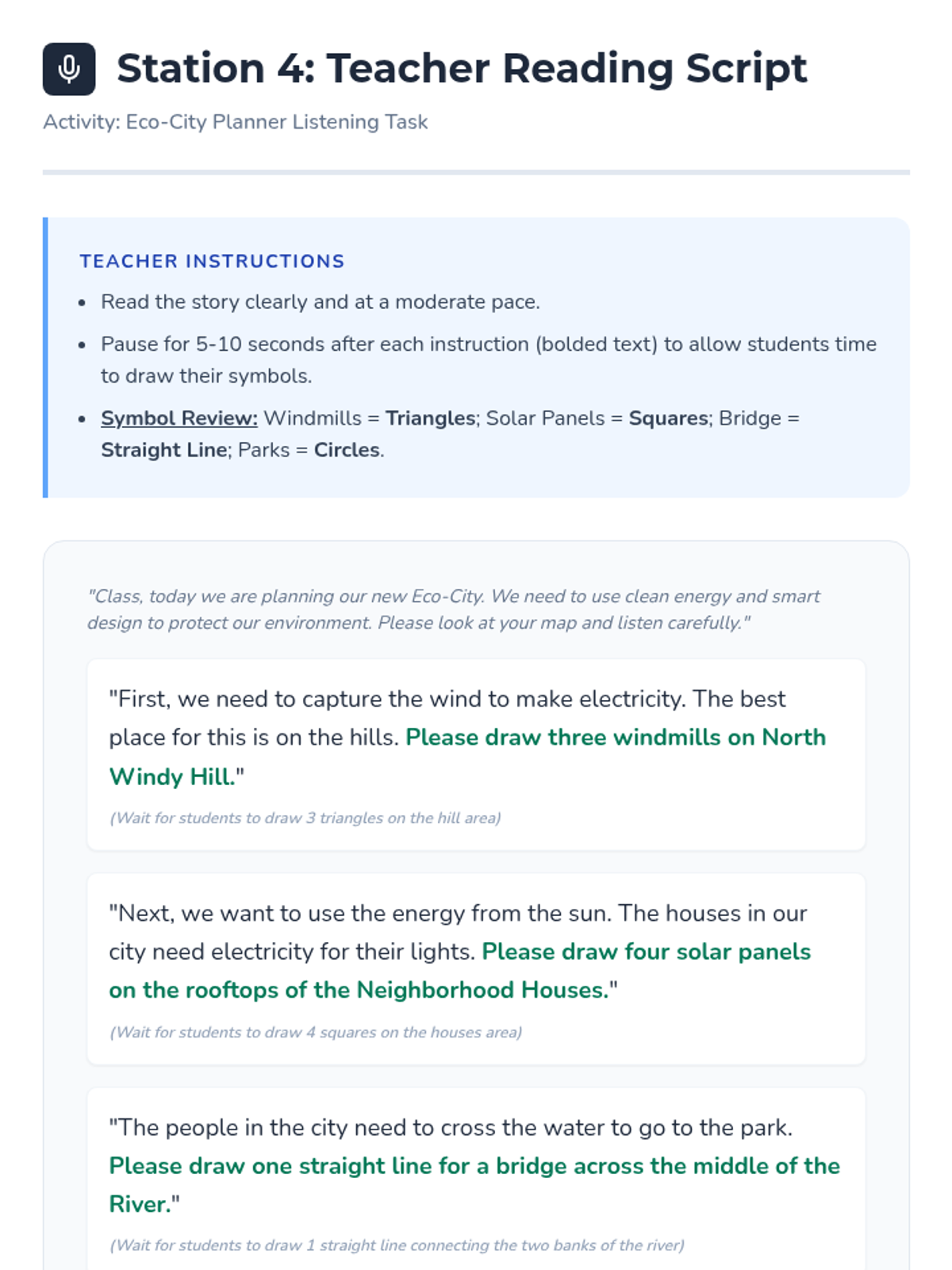
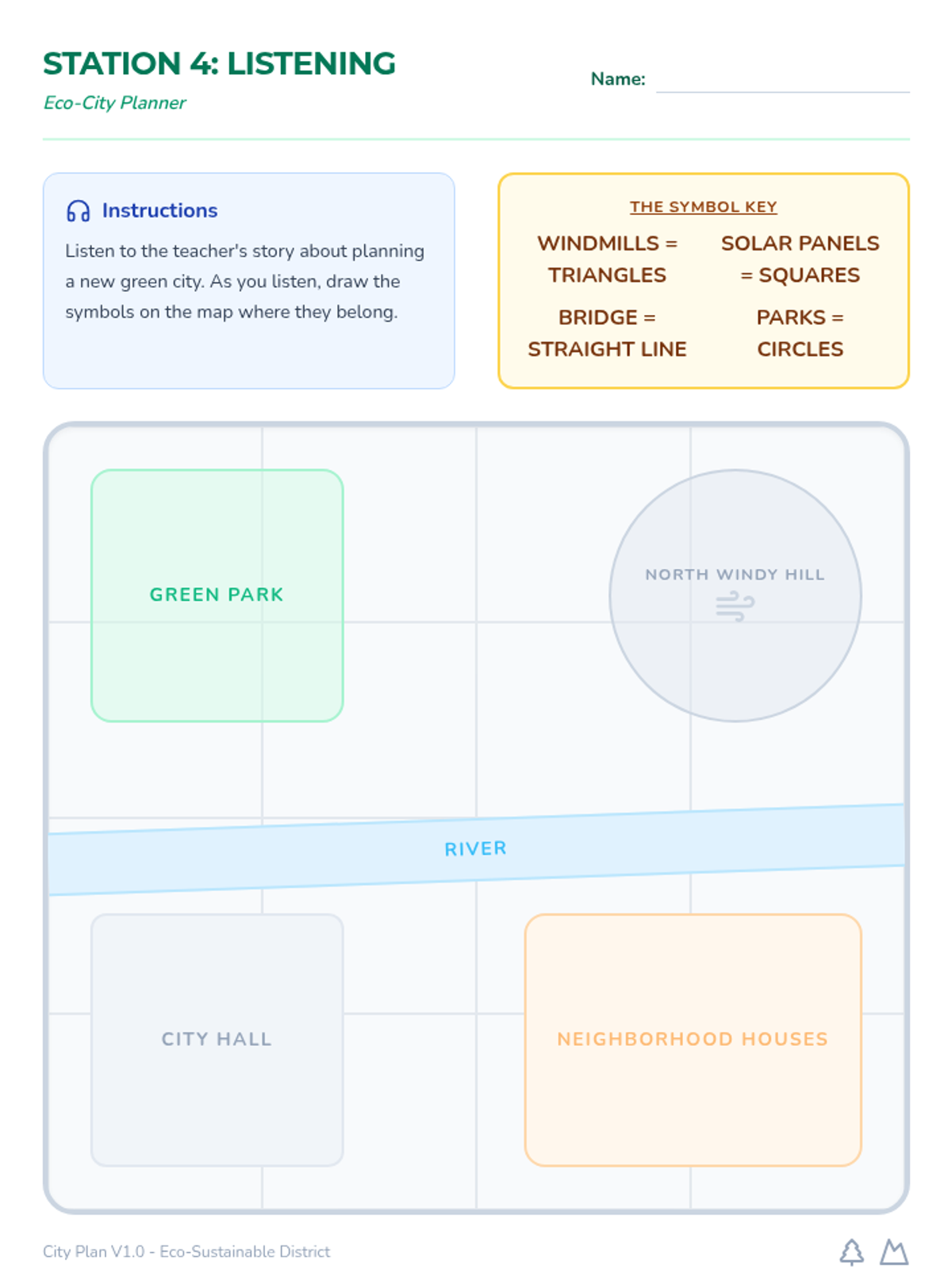
Updated teacher reading script for the Station 4 Listening activity, now including instructions for placing a bridge (straight line) and parks (circles).
Station 4 Listening activity where students draw symbols (triangles, squares, straight lines, circles) on a city map based on a teacher-read story.
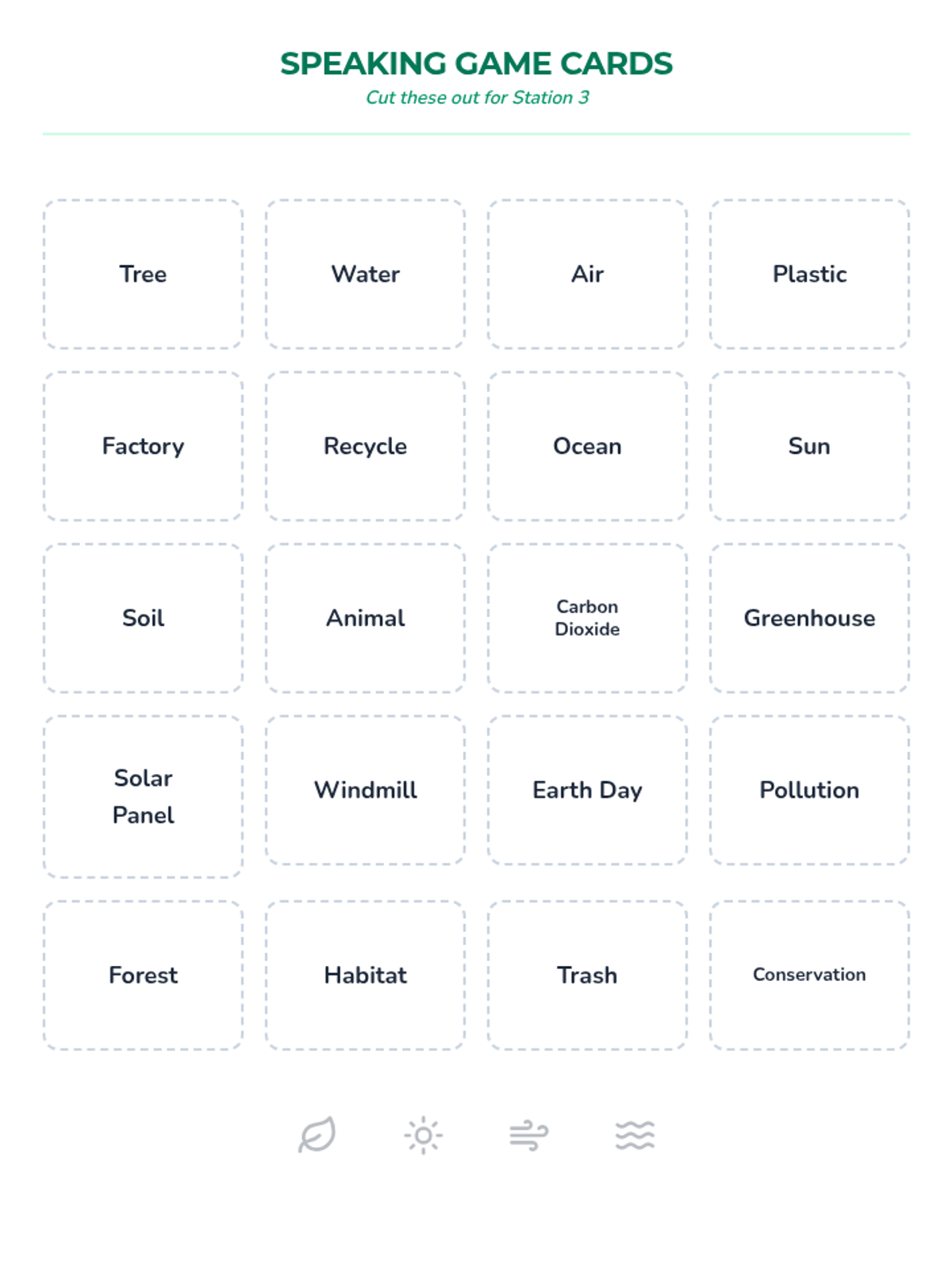
A set of 20 game cards featuring environmental vocabulary for the Station 3 "Who Am I?" speaking game.
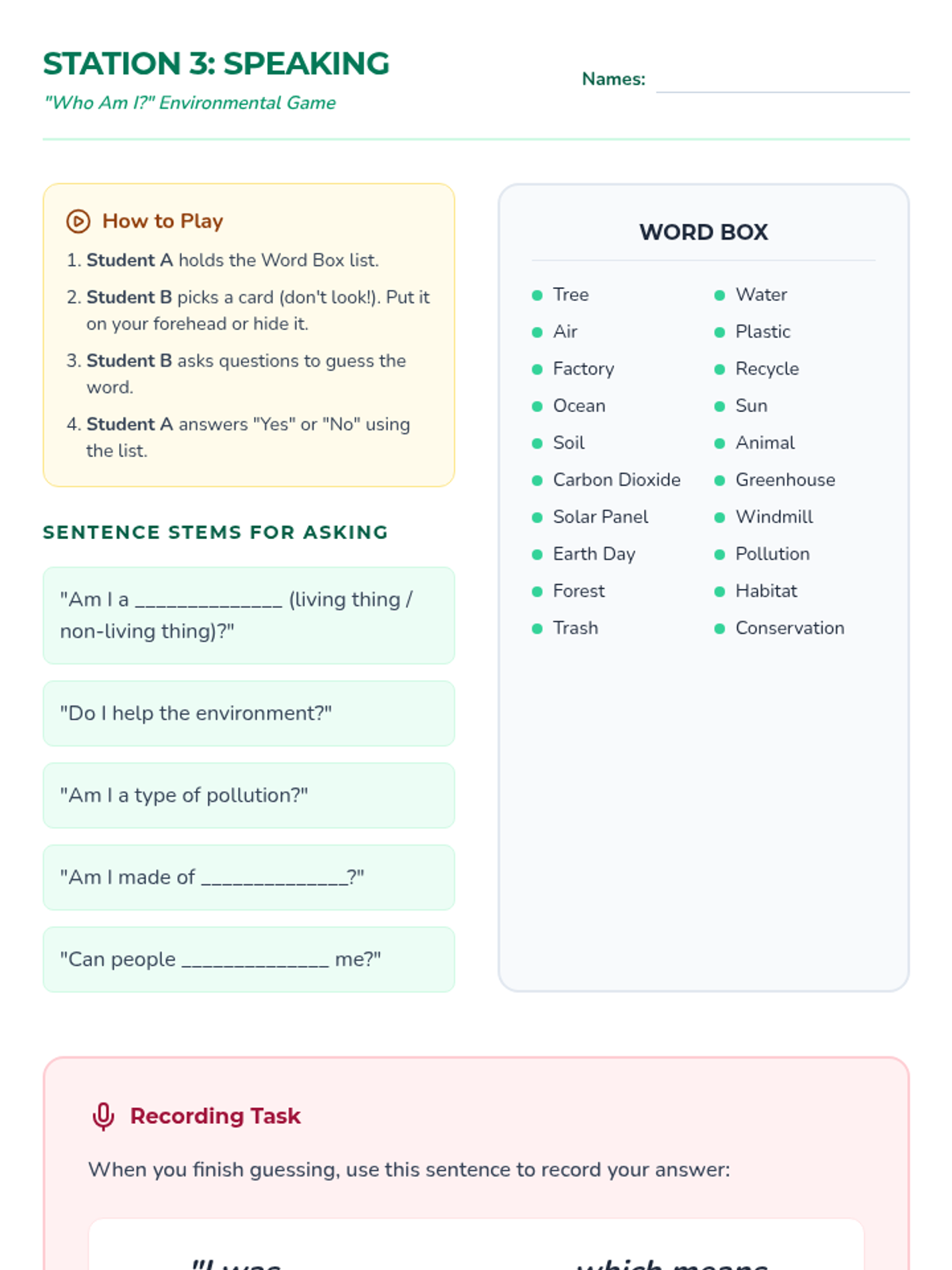
Station 3 Speaking Guide including game instructions, 20-word reference list for environmental terms, sentence stems for asking questions, and a recording prompt.
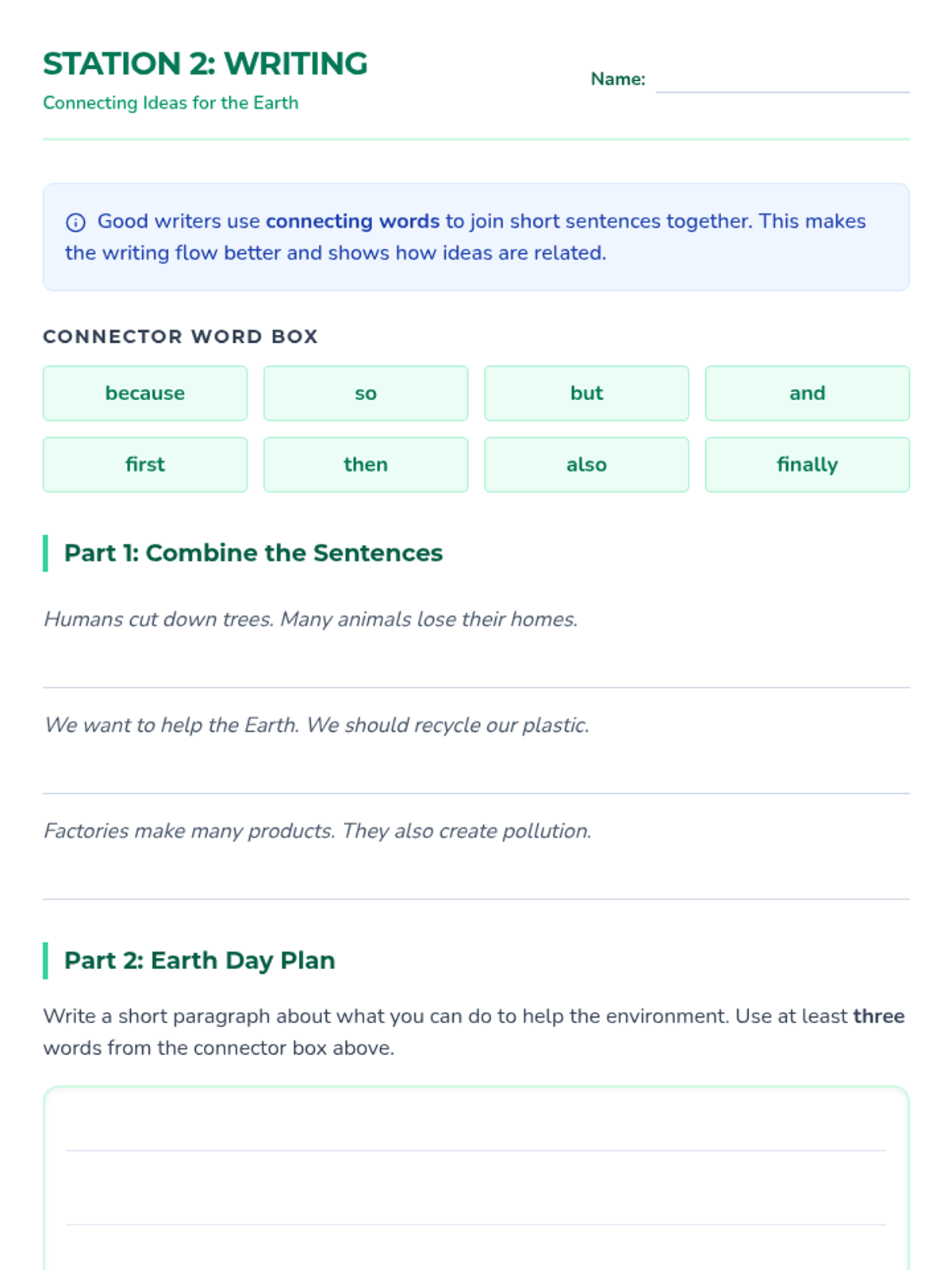
Station 2 Writing activity focused on combining sentences using transition and connector words, with a paragraph writing section on Earth Day plans.
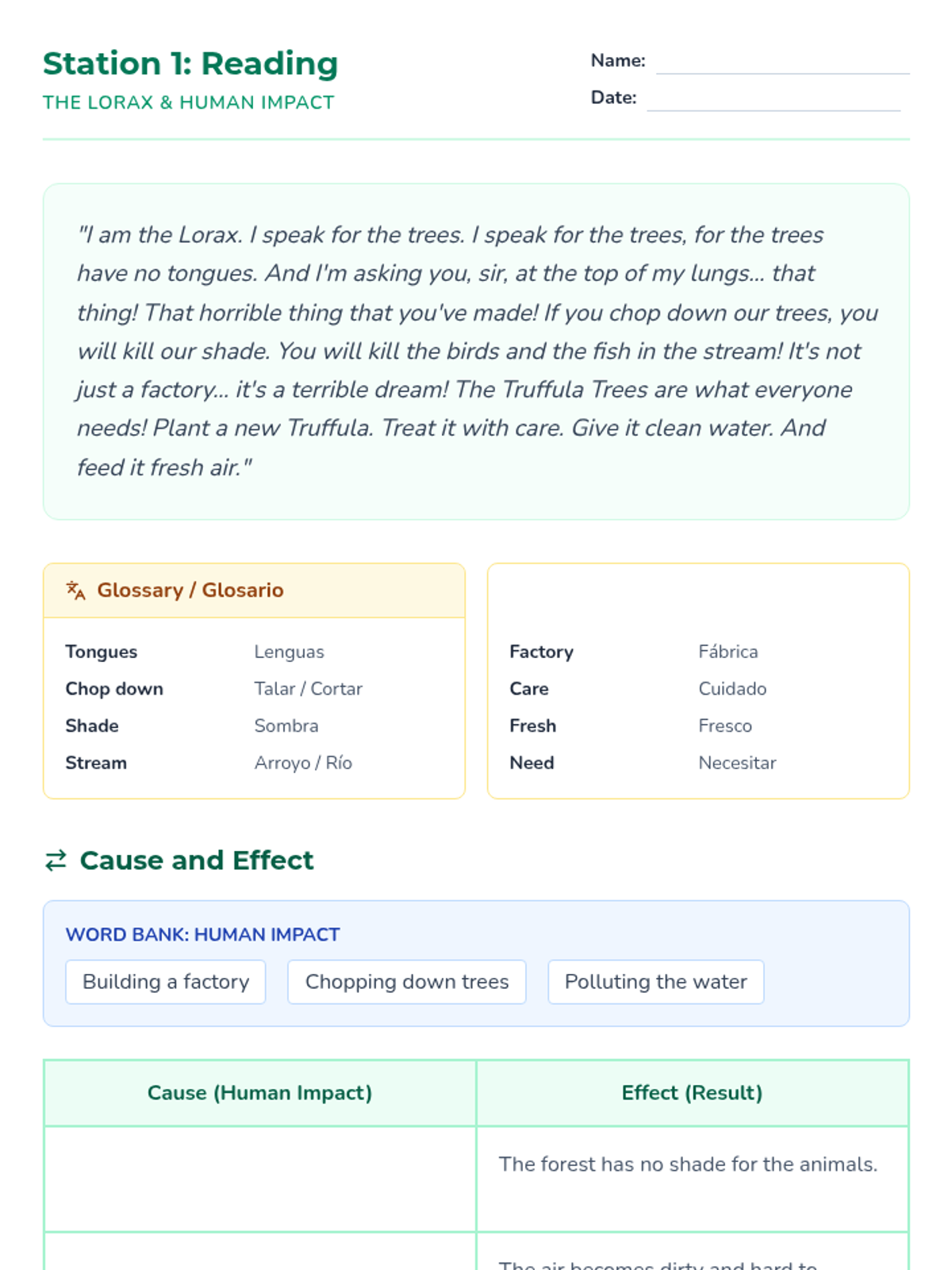
Station 1 Reading activity featuring an excerpt from The Lorax, a bilingual glossary, a cause-and-effect table focusing on human impact, and a critical thinking prompt for advanced learners.
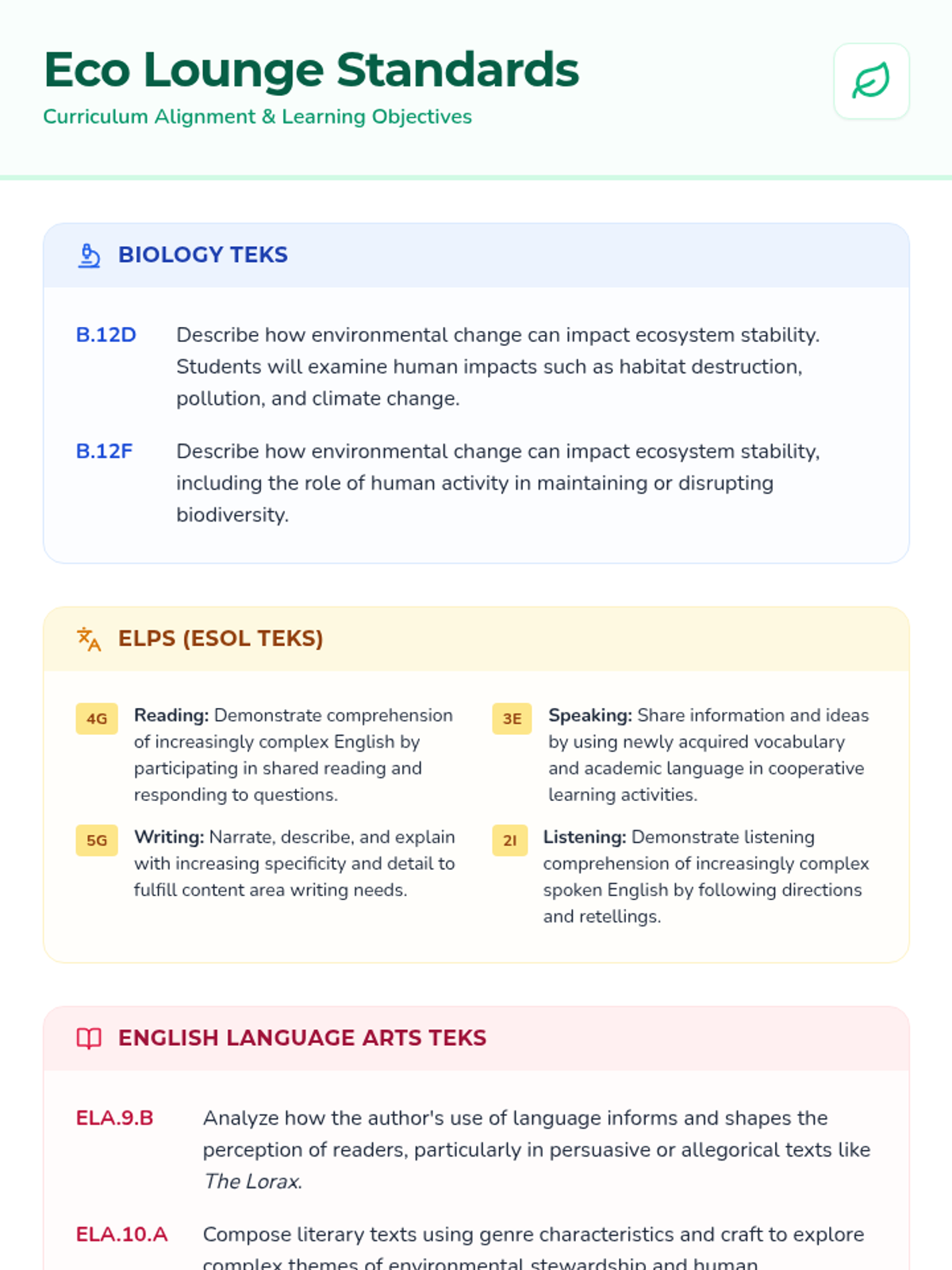
A standards alignment document for the Eco Lounge stations, detailing Biology TEKS, ELPS (ESOL) standards, and English Language Arts TEKS covered in the activities.
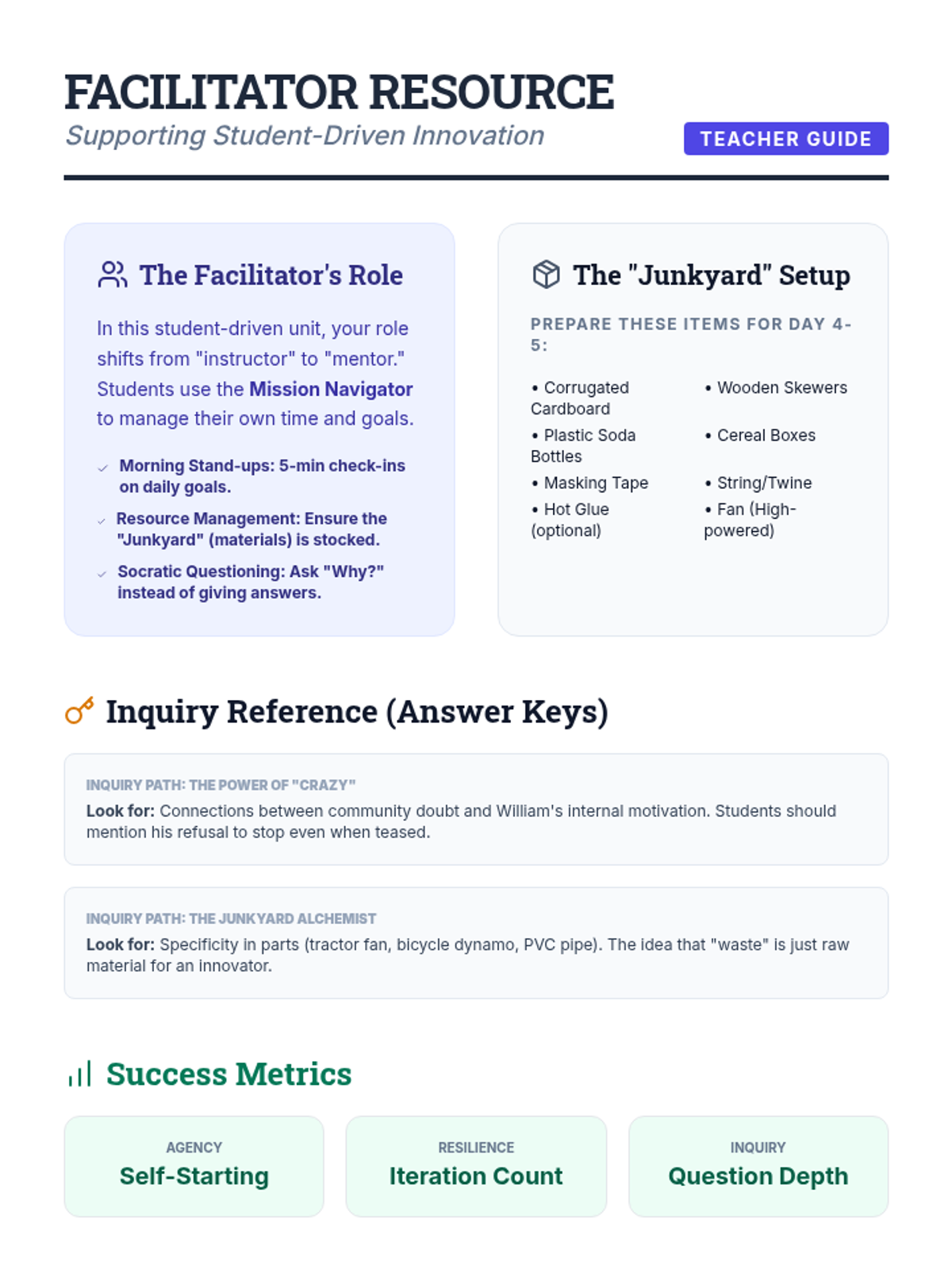
A comprehensive teacher resource containing a 5-day independent study pacing guide, reading comprehension answer keys, and detailed rubrics for writing and STEM assessments.
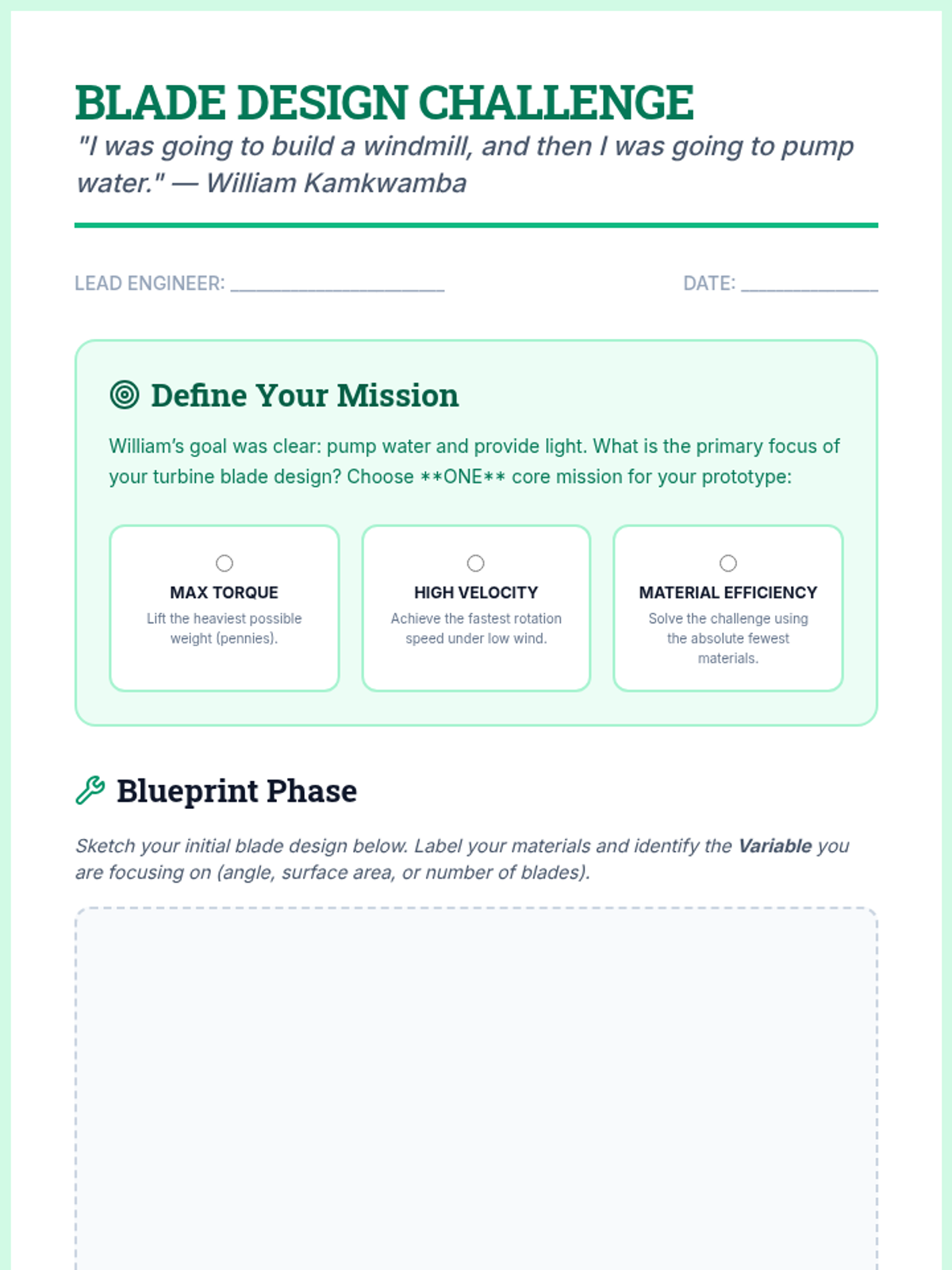
A two-page STEM engineering guide for designing, testing, and iterating wind turbine blades using recycled materials.
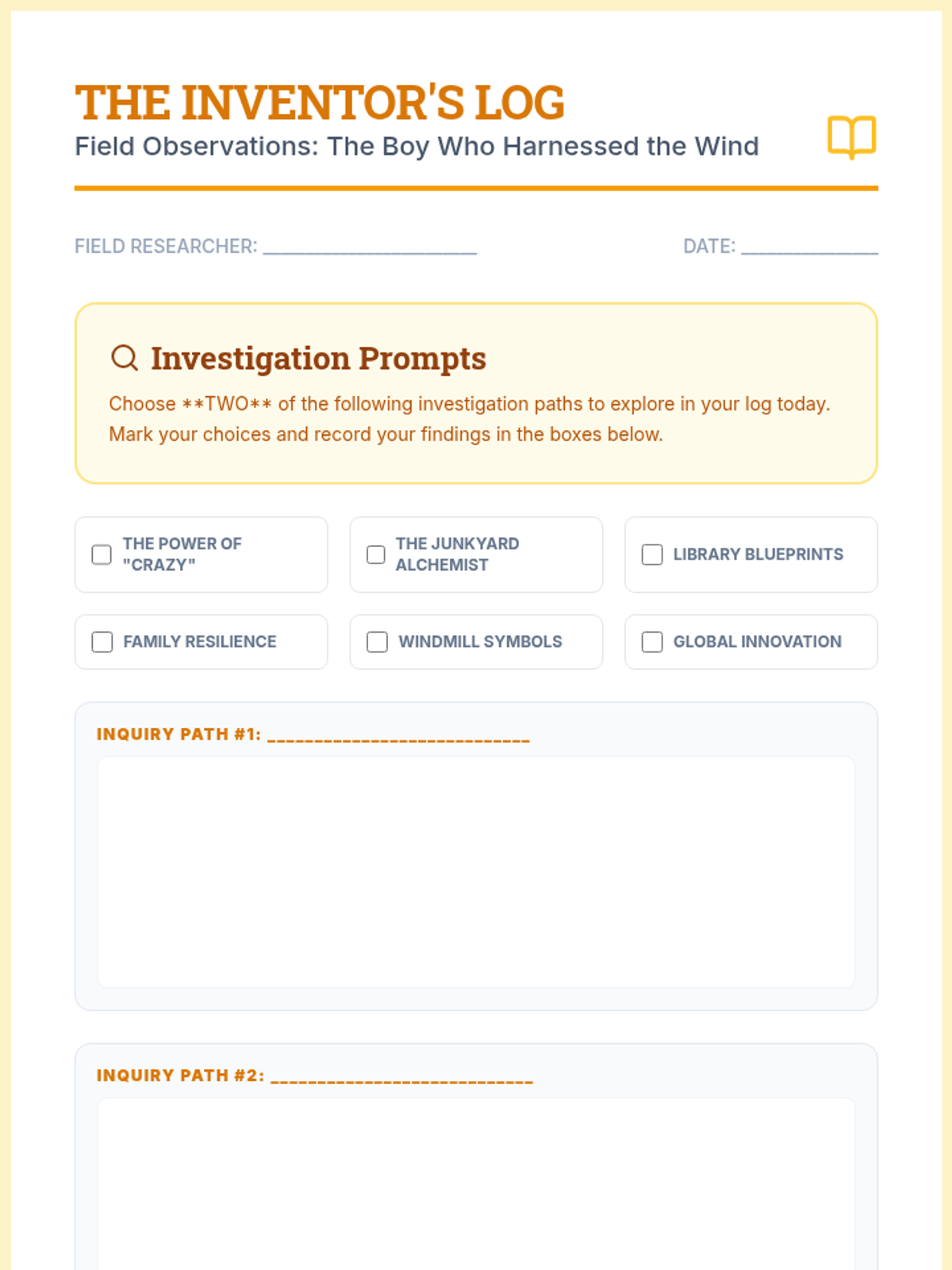
A three-page student journal containing reading comprehension questions, a creative writing prompt, and a renewable energy research guide based on 'The Boy Who Harnessed the Wind'.
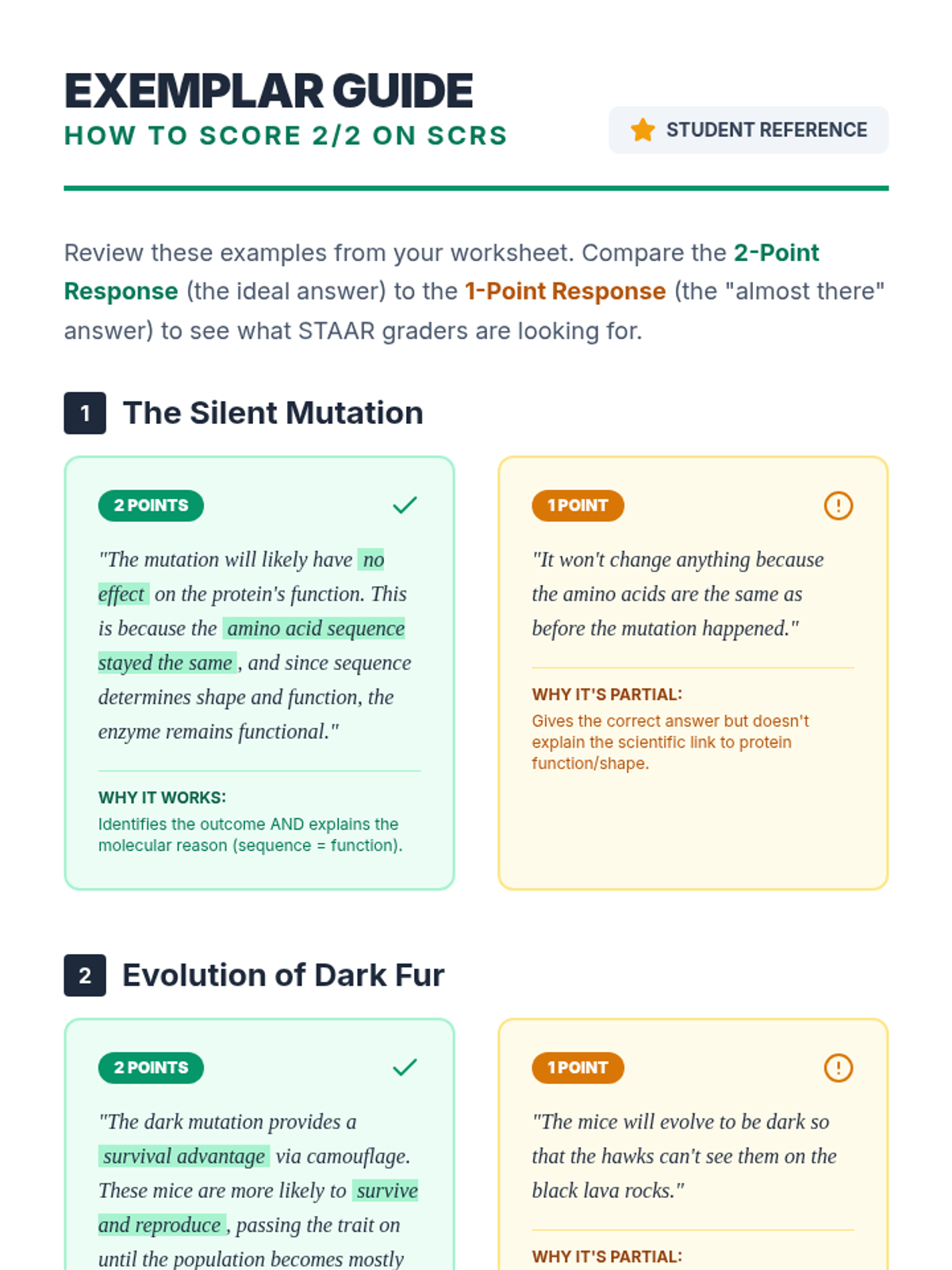
A student reference sheet showing high-scoring and partial-scoring examples for mutation and evolution SCR questions.
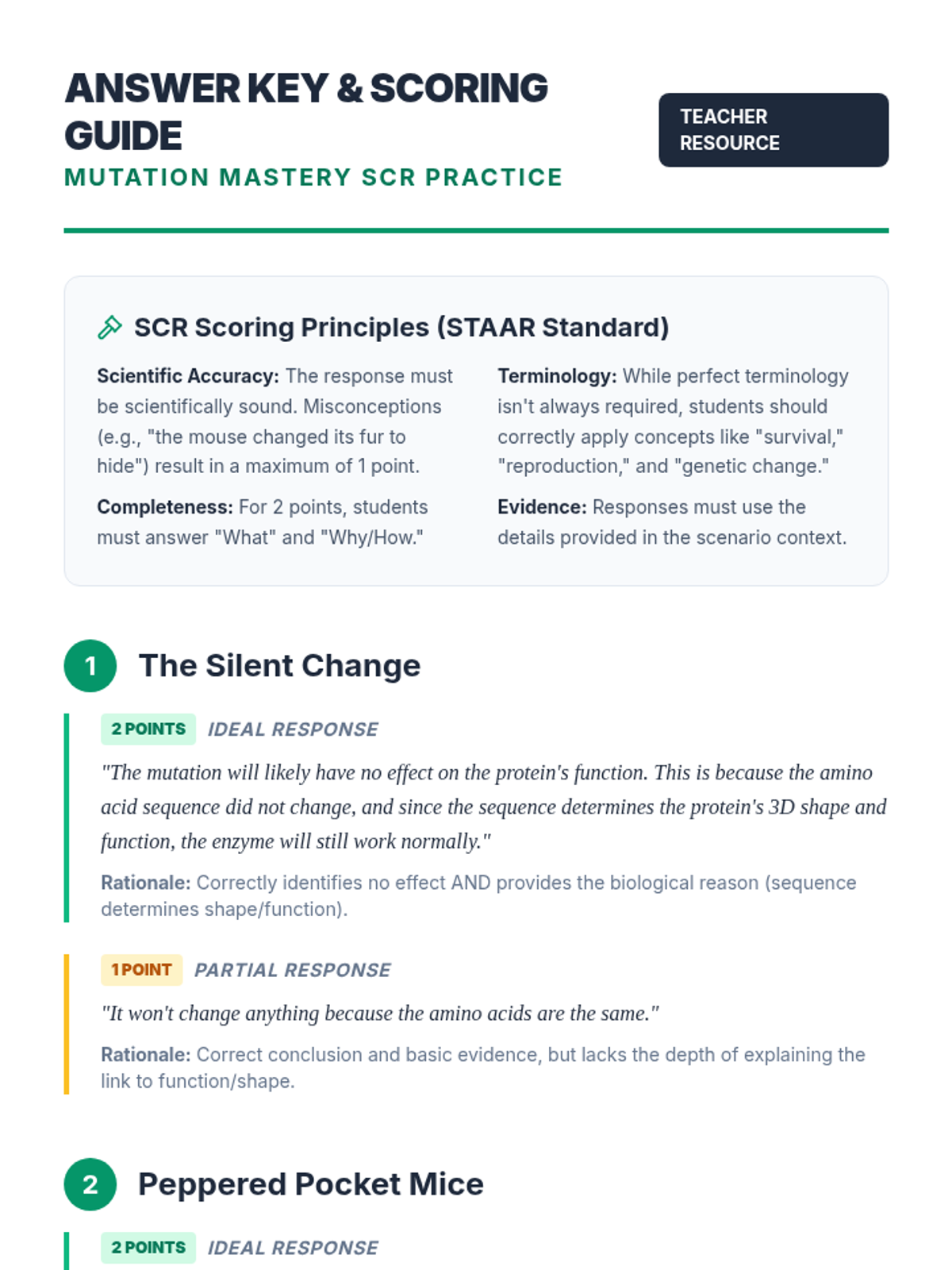
A comprehensive teacher scoring guide for the Mutation Scenarios Worksheet, providing example responses and rationales for 2-point, 1-point, and 0-point scores.
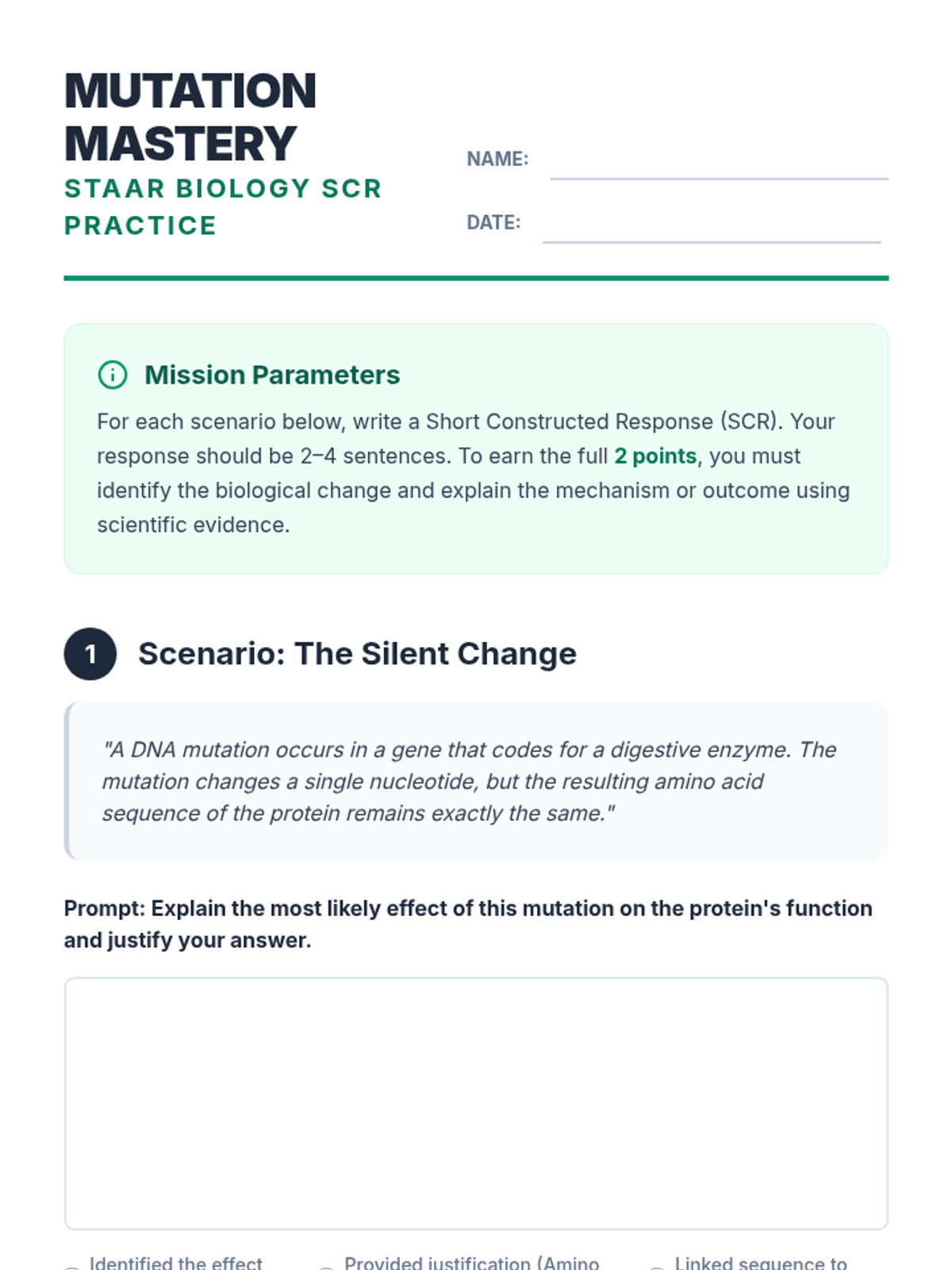
A student worksheet with two Short Constructed Response (SCR) practice scenarios focused on mutation effects and evolutionary mechanisms.