A slide deck for graduate students examining the technology of brain-computer interfaces (BCI), from signal acquisition to the ethical implications of agency and privacy.
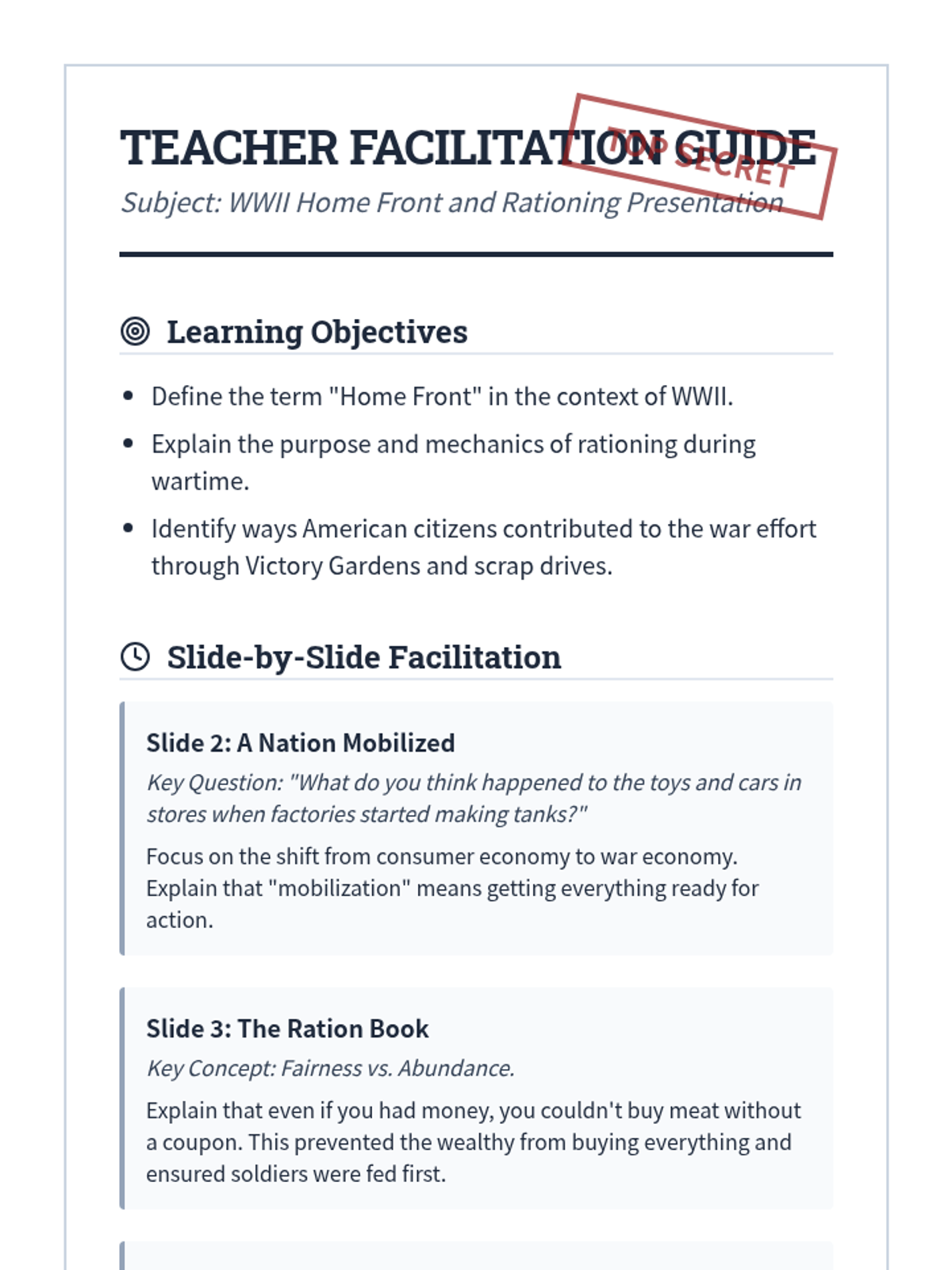
A teacher facilitation guide for the WWII Home Front slides, providing pacing notes, discussion prompts, and historical background information on rationing and mobilization.
A slide presentation layout for WWII Home Front and Rationing, featuring a vintage newspaper aesthetic, key concepts of mobilization, rationing mechanics, and community efforts like Victory Gardens.
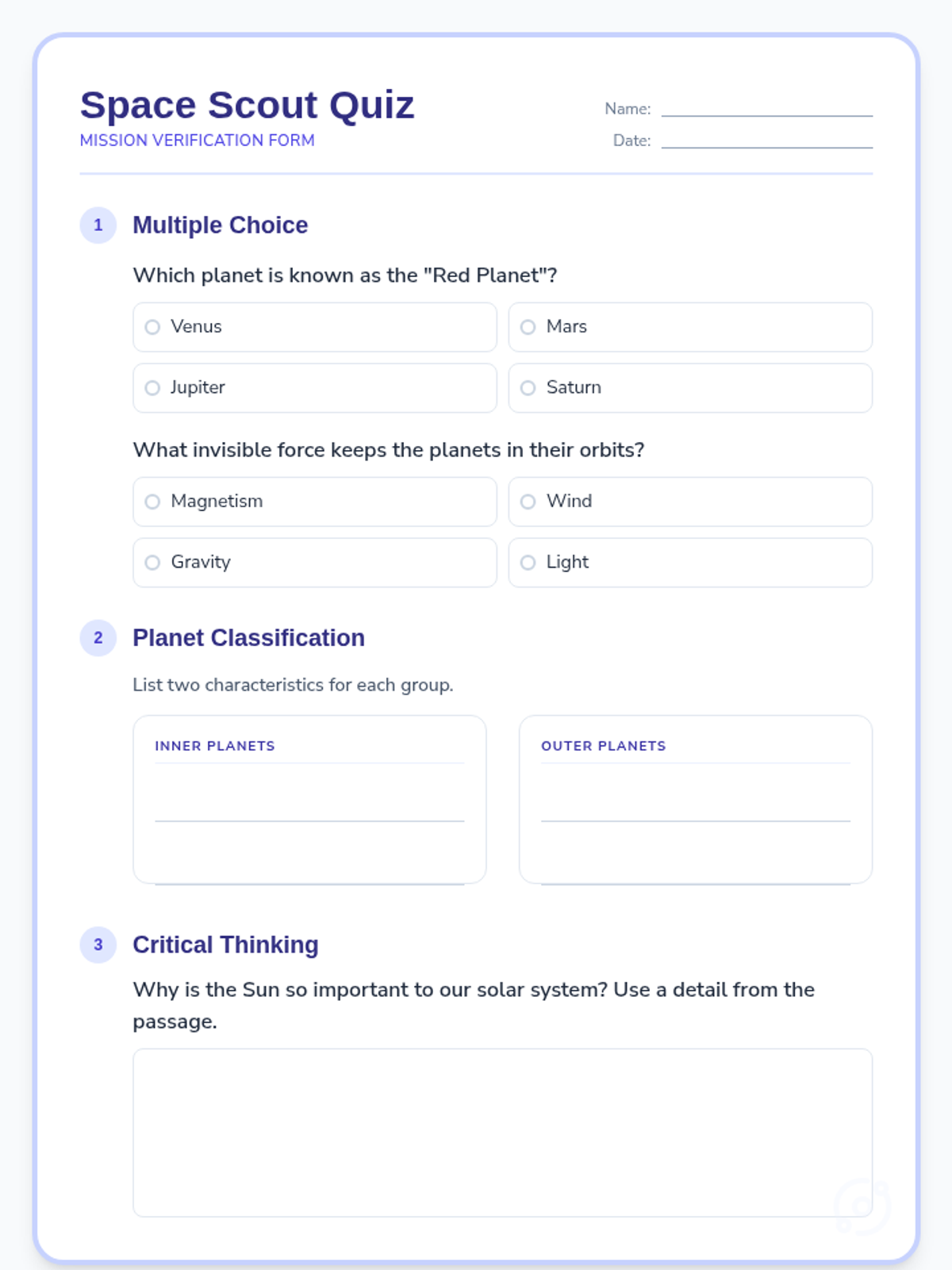
A comprehension worksheet for the Planet Scout passage, including multiple-choice questions, a comparison grid for inner and outer planets, and a short-answer reflection.
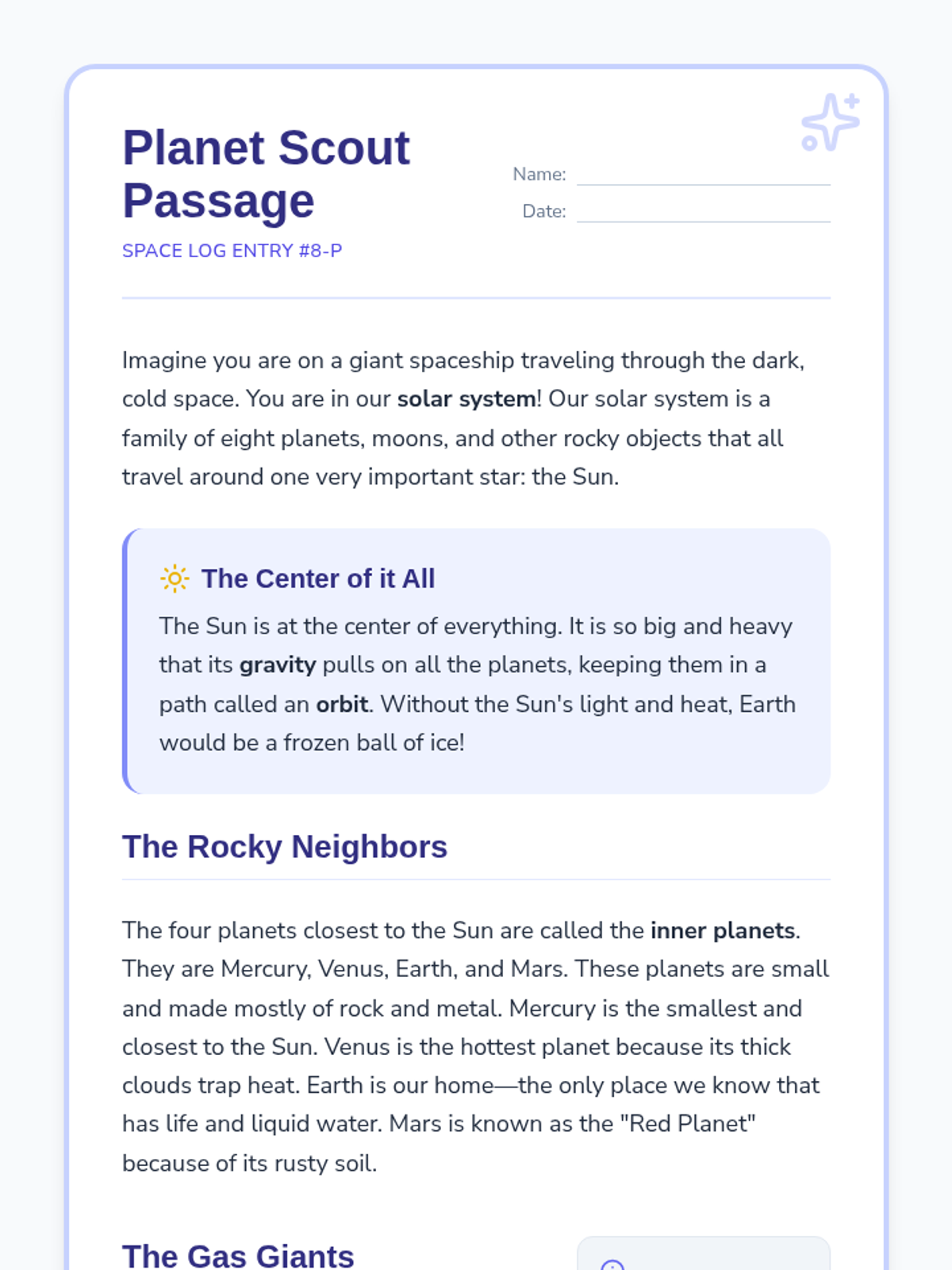
A 3rd-grade reading passage introducing the solar system, featuring descriptions of the Sun, inner rocky planets, and outer gas giants with a clean, space-themed design.
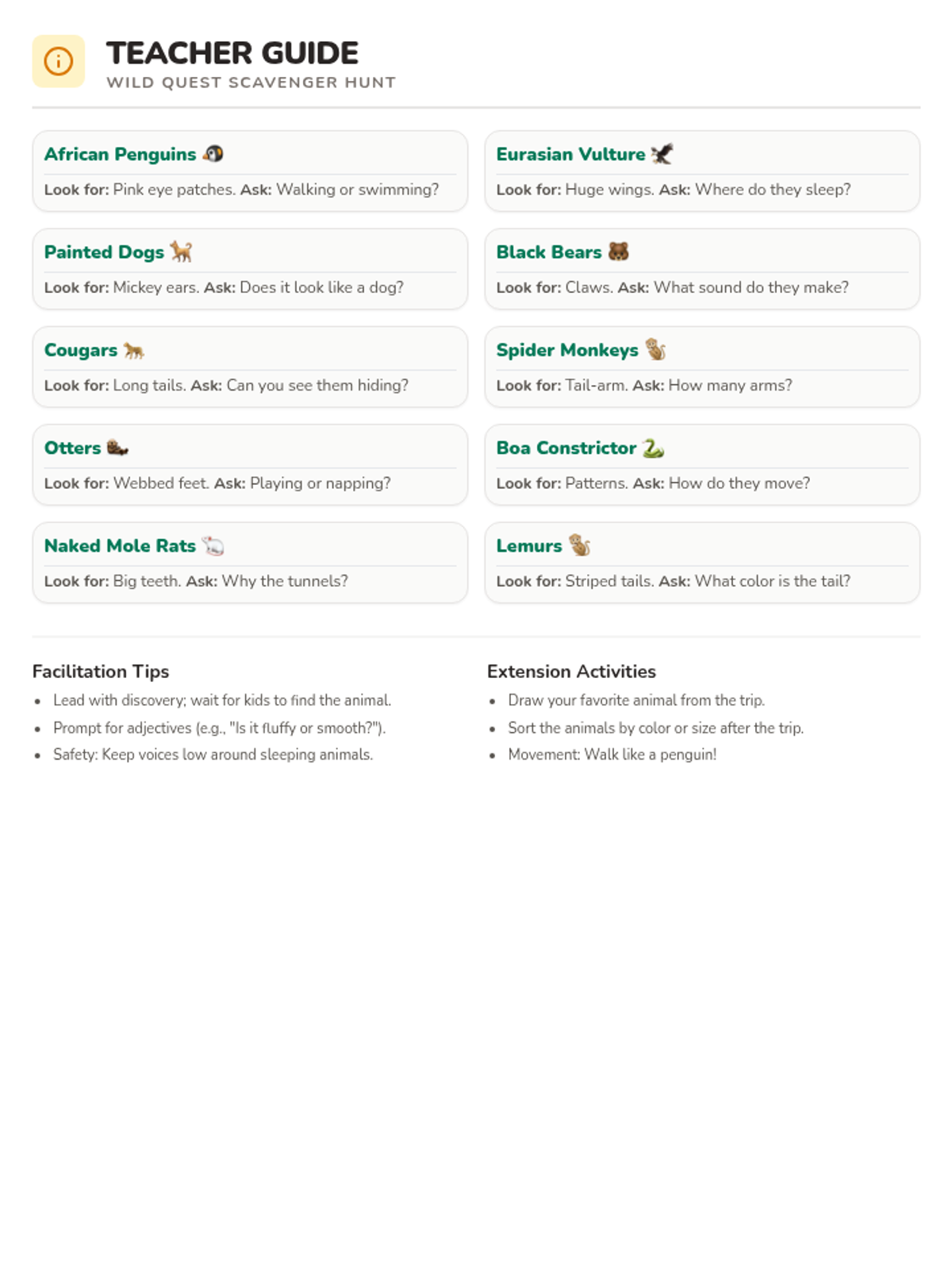
A teacher and chaperone guide for the Wild Quest scavenger hunt, featuring observation prompts and discussion questions for each of the ten animals to enrich the Pre-K learning experience.
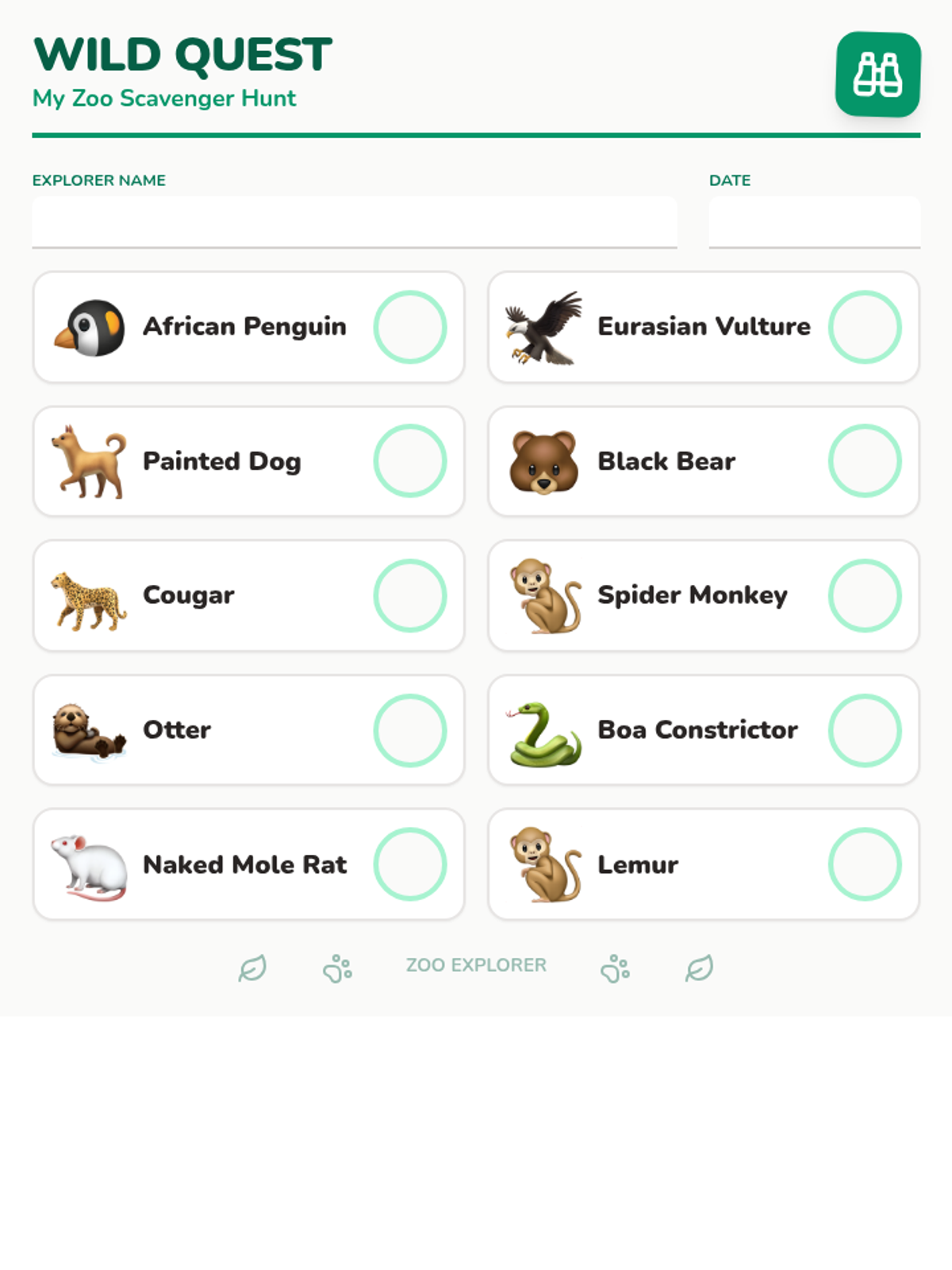
A highly visual, one-page checklist for Pre-K students to identify ten specific animals at the zoo. Each animal entry features a large emoji and a clear check box for little hands.
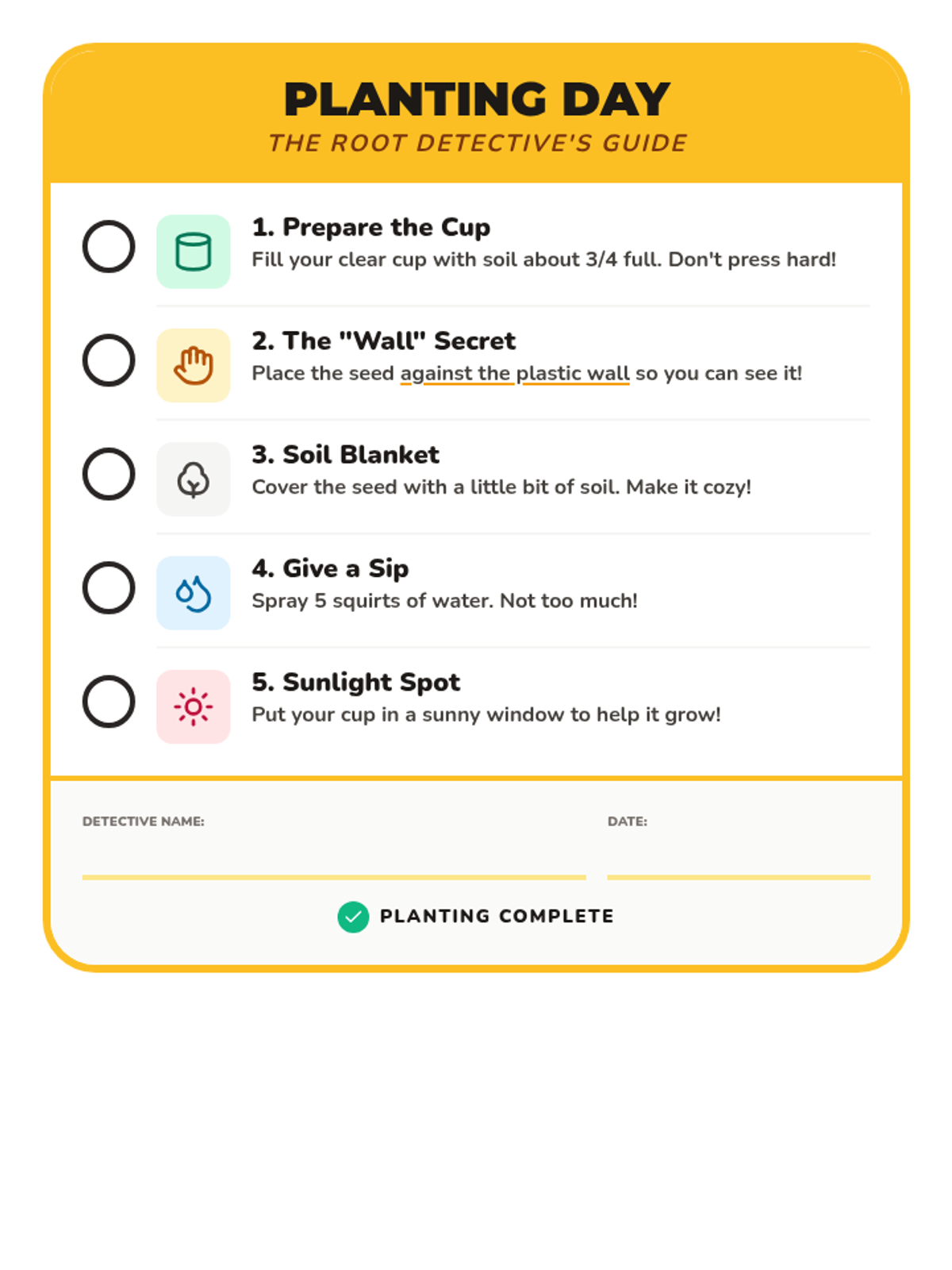
Revised Planting Day Checklist for Pre-K students, featuring a single-page layout, interactive check-circles for each step, and high-contrast text for better readability.
Revised student journal for Pre-K with larger writing fields for names and dates, and darker, high-contrast borders for observation and measurement areas to ensure clarity when printed.
Revised visual slides for the Root Detectives lesson, featuring increased font sizes for Pre-K visibility and a corrected layout for the root anatomy slide.
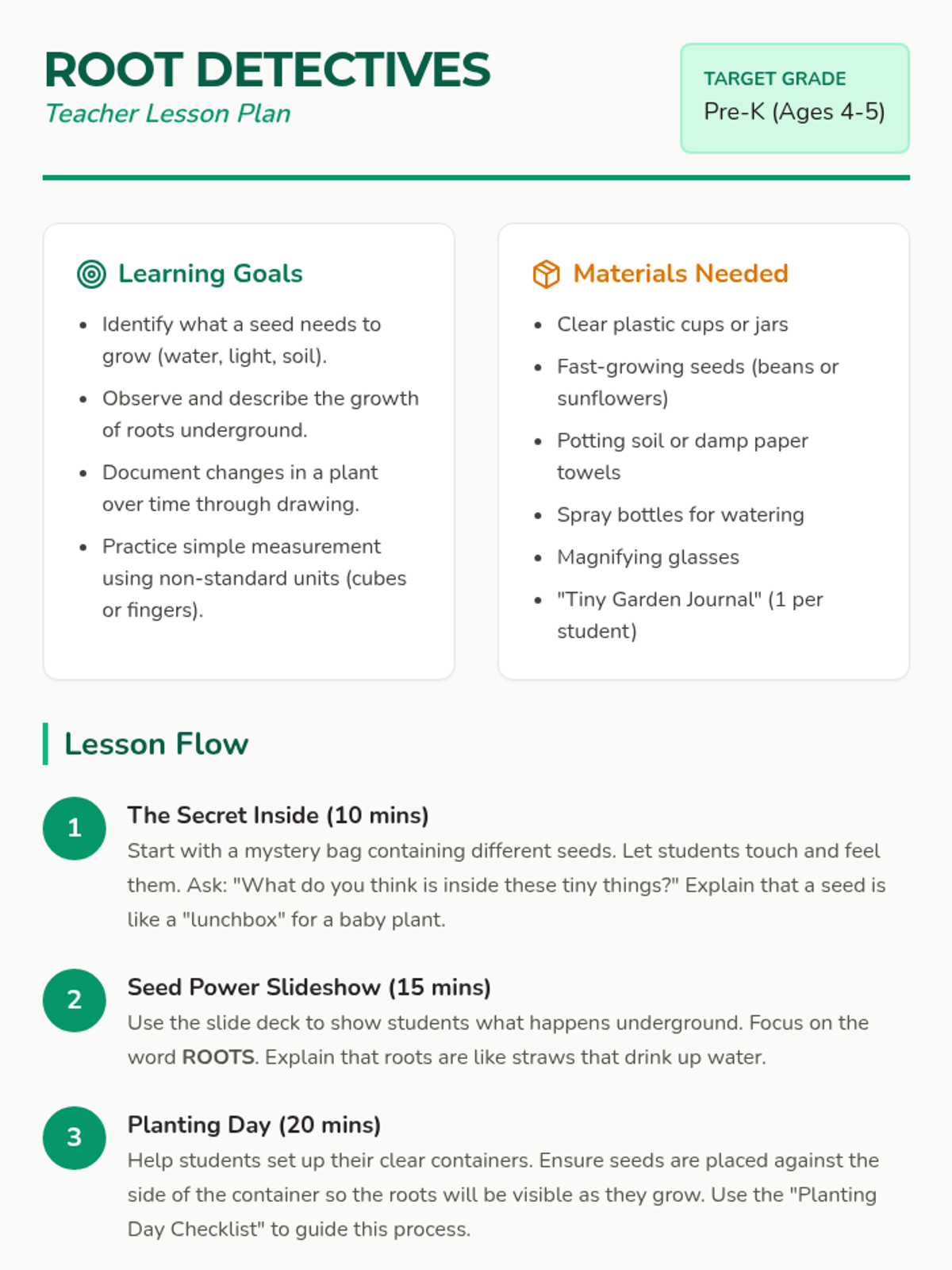
A comprehensive teacher's lesson plan for Pre-K, detailing learning objectives, materials, and a step-by-step instructional flow for the Root Detectives botany unit.
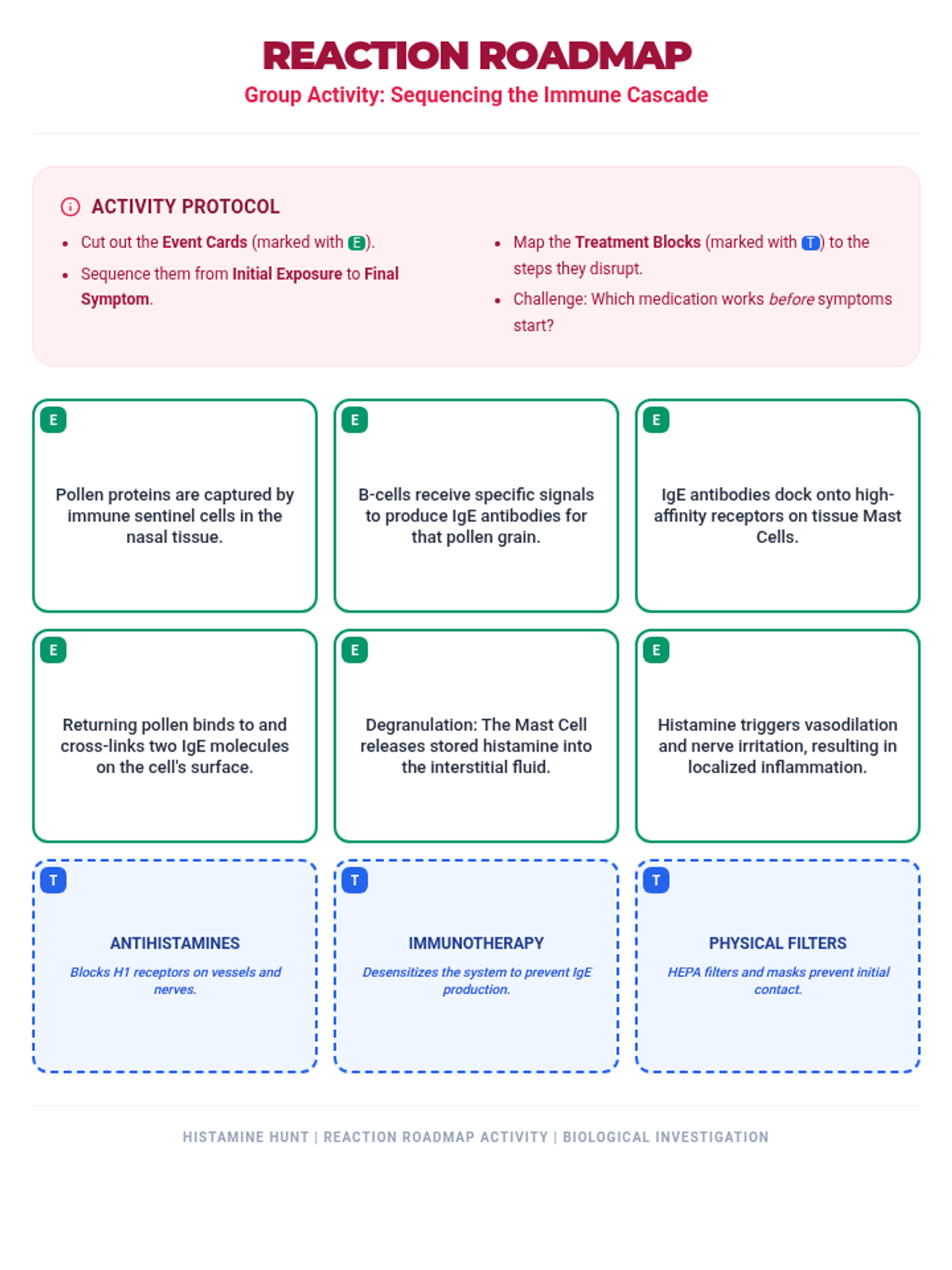
An interactive card-sorting activity where students sequence the stages of an allergic reaction and apply pharmacological treatments. Revised to fit on a single page with improved badge alignment and text wrapping.
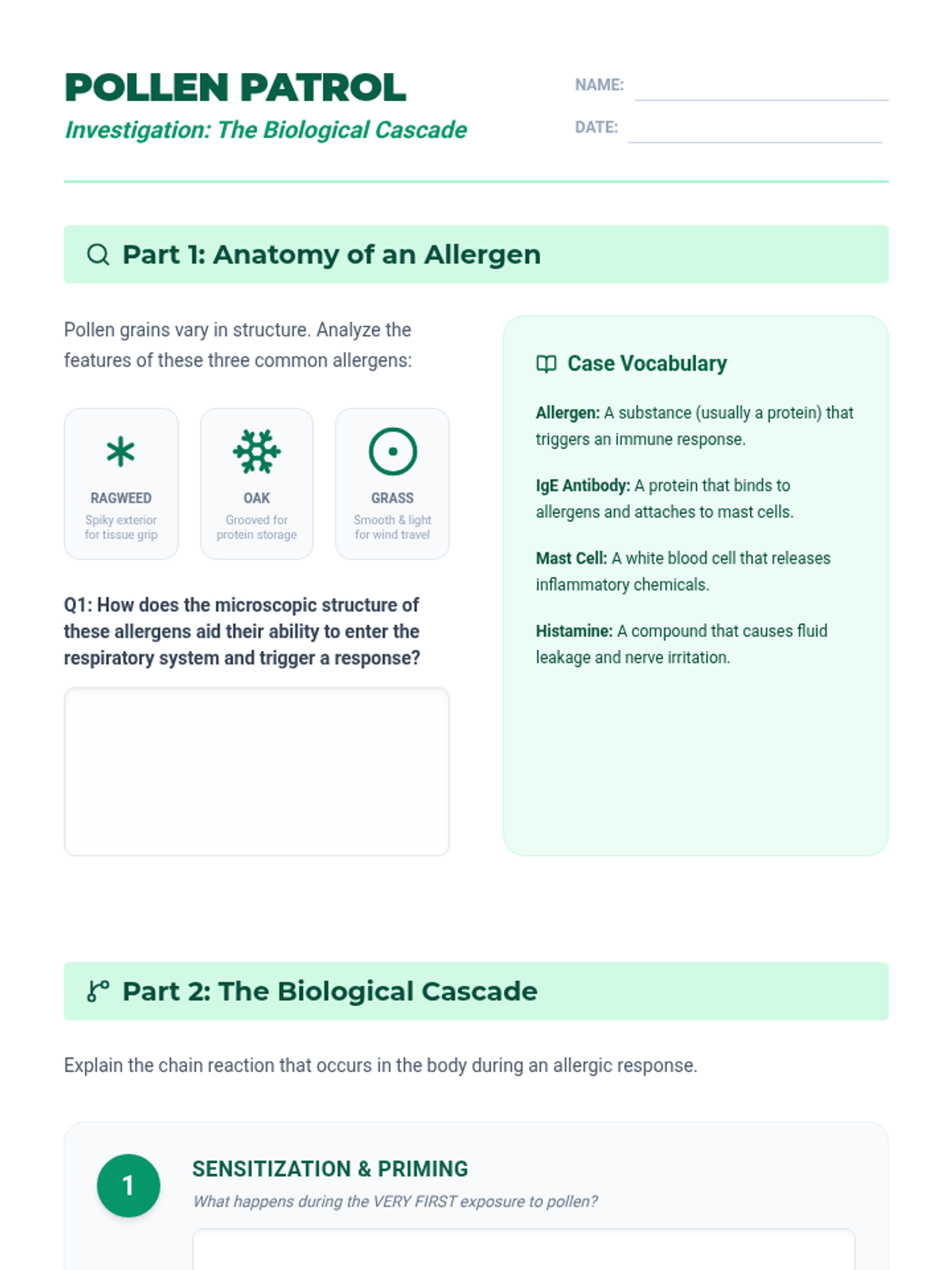
A student worksheet focusing on the anatomical structure of pollen, the flowchart of the allergic response, and the physiological mechanisms of histamine. Revised for better page breaks and larger work areas.
A high-impact slide deck for classroom instruction, covering the stages of an allergic reaction from sensitization to degranulation and management strategies. Revised with improved visuals and slide balance.
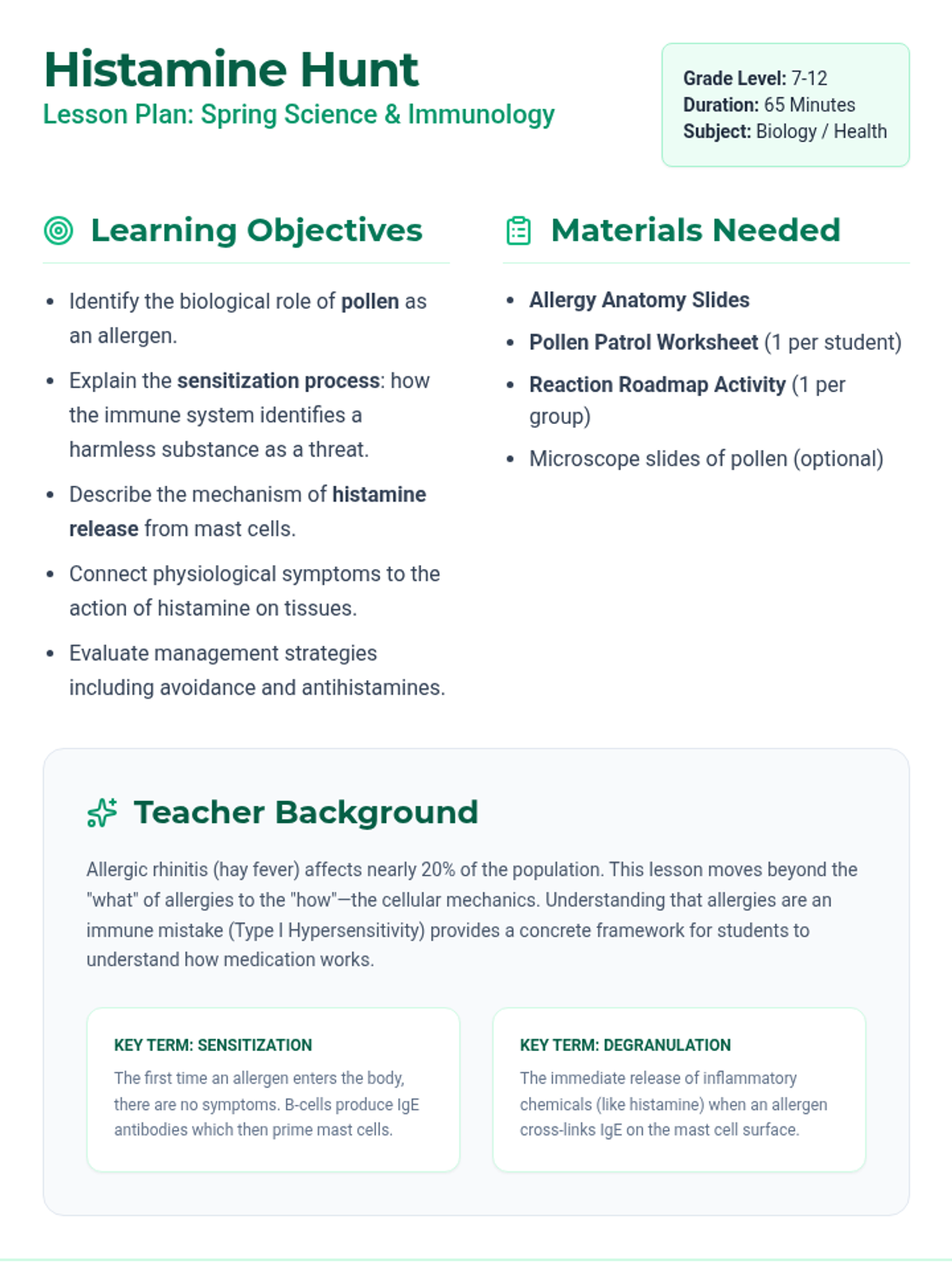
A detailed lesson plan for teachers, outlining the instructional sequence, learning objectives, and common student misconceptions regarding the biology of allergies. Revised for improved layout and content flow.
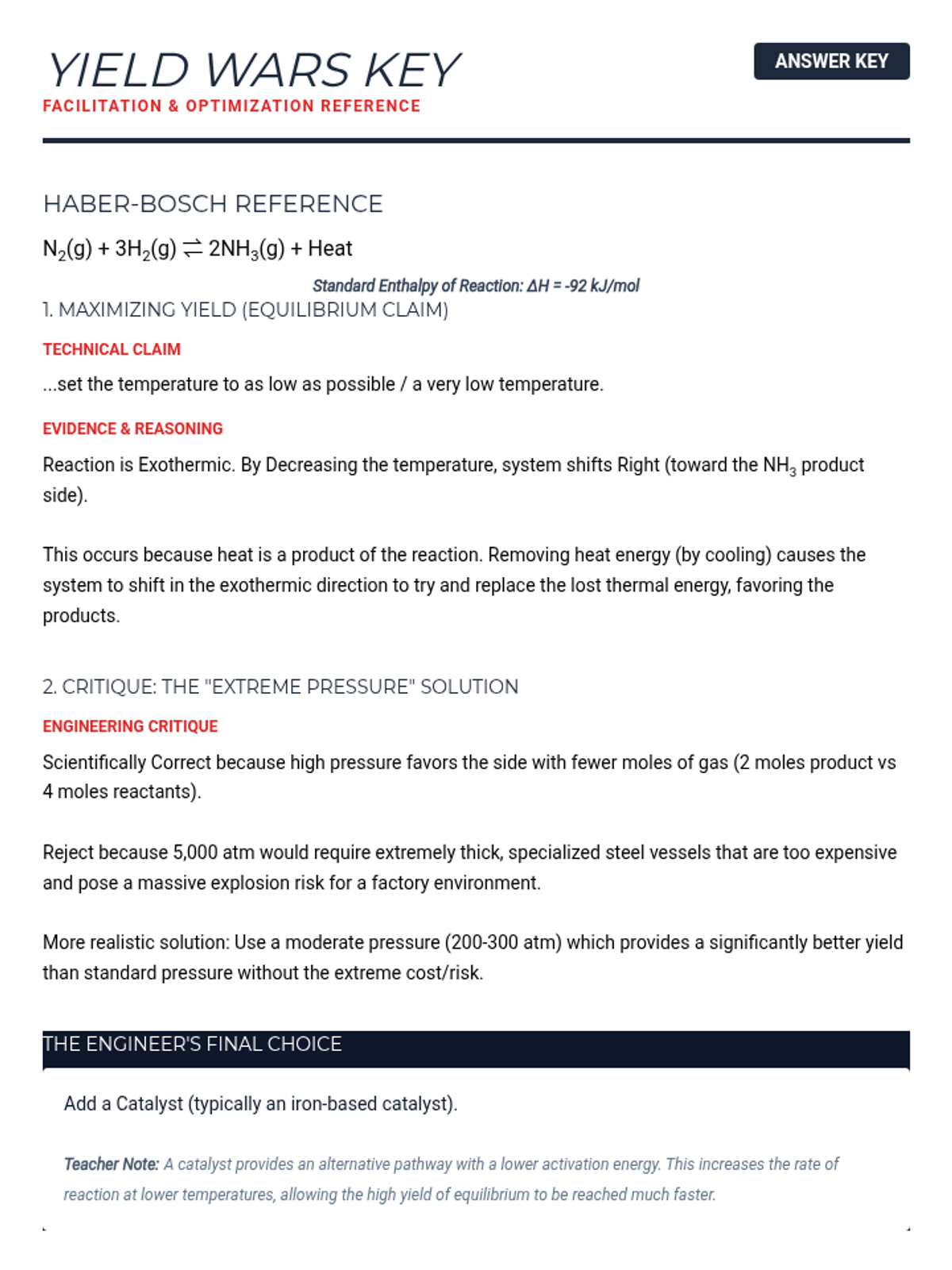
A teacher answer key and facilitation guide for the Yield Wars Worksheet. It provides the expected chemical reasoning for ammonia synthesis optimization, highlights the kinetic vs. thermodynamic trade-off, and suggests instructional focus points.
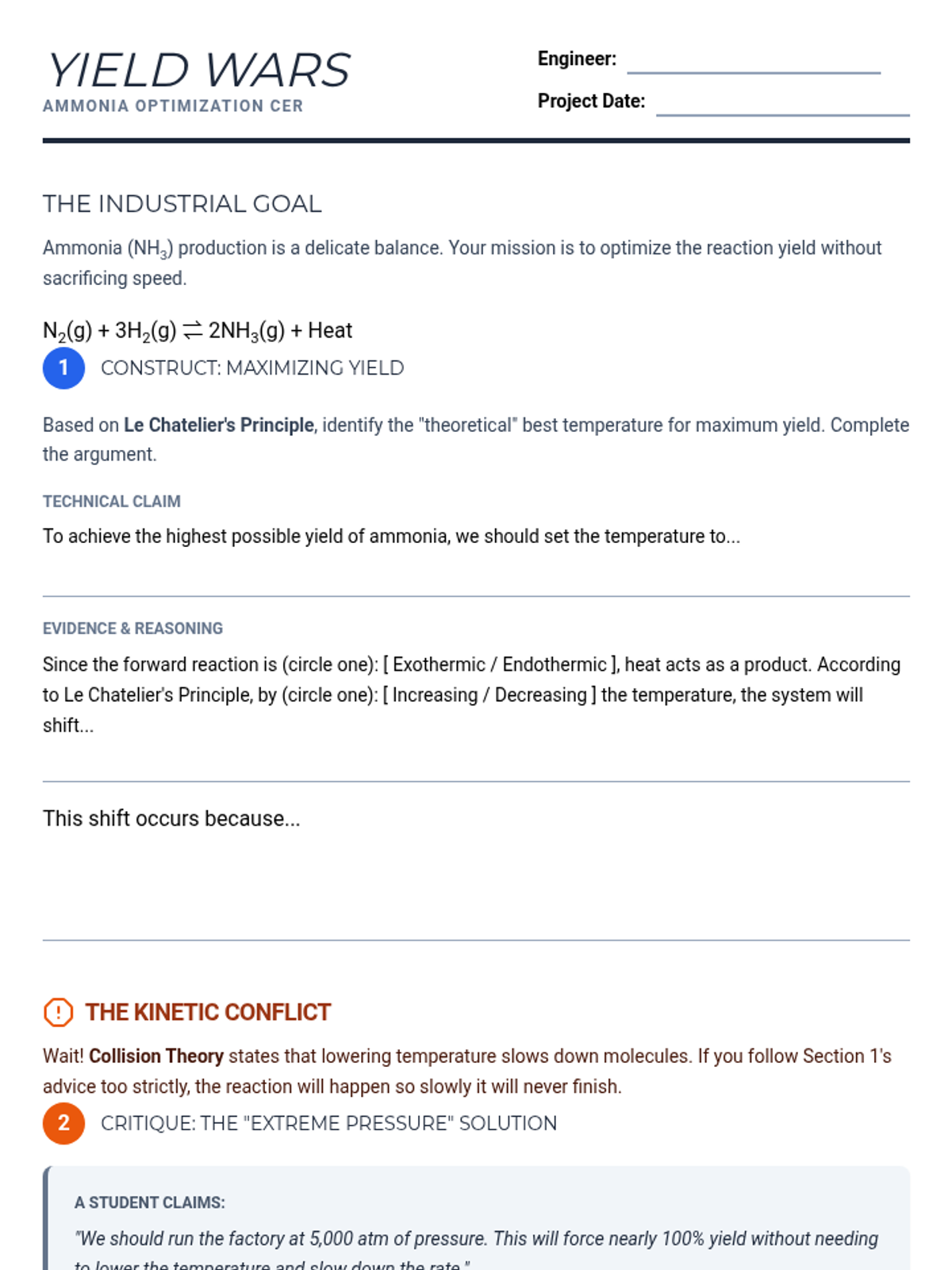
A scaffolded CER worksheet focusing on the optimization of ammonia synthesis. It guides students through the conflict between thermodynamics (yield) and kinetics (rate), using sentence stems to support trade-off analysis.
A 5-slide visual presentation introducing energy categories and the science behind solar and wind power, featuring a summary slide and improved contrast.
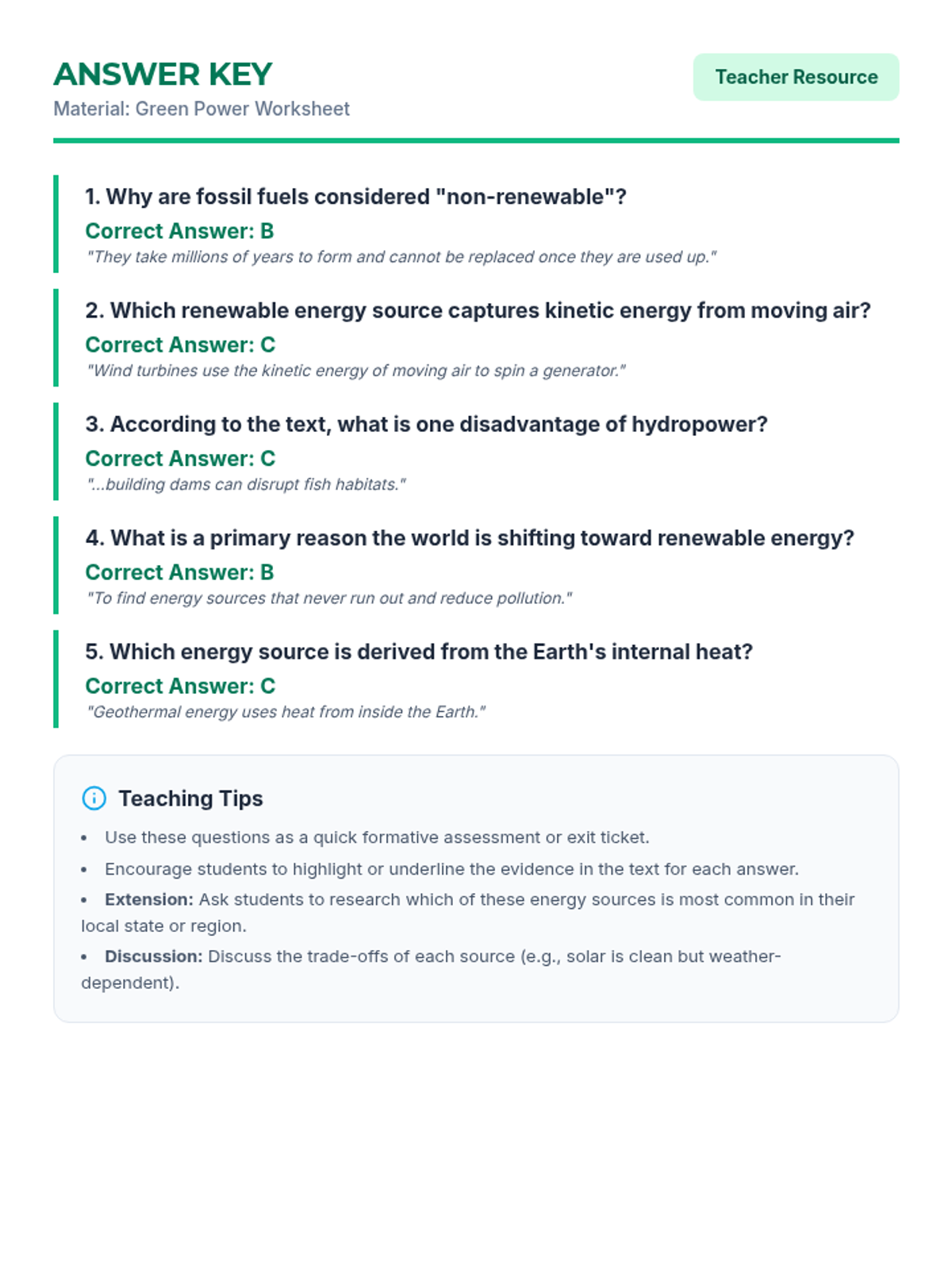
Teacher answer key for the Green Power Worksheet, updated to include letter choices and improved layout consistency.
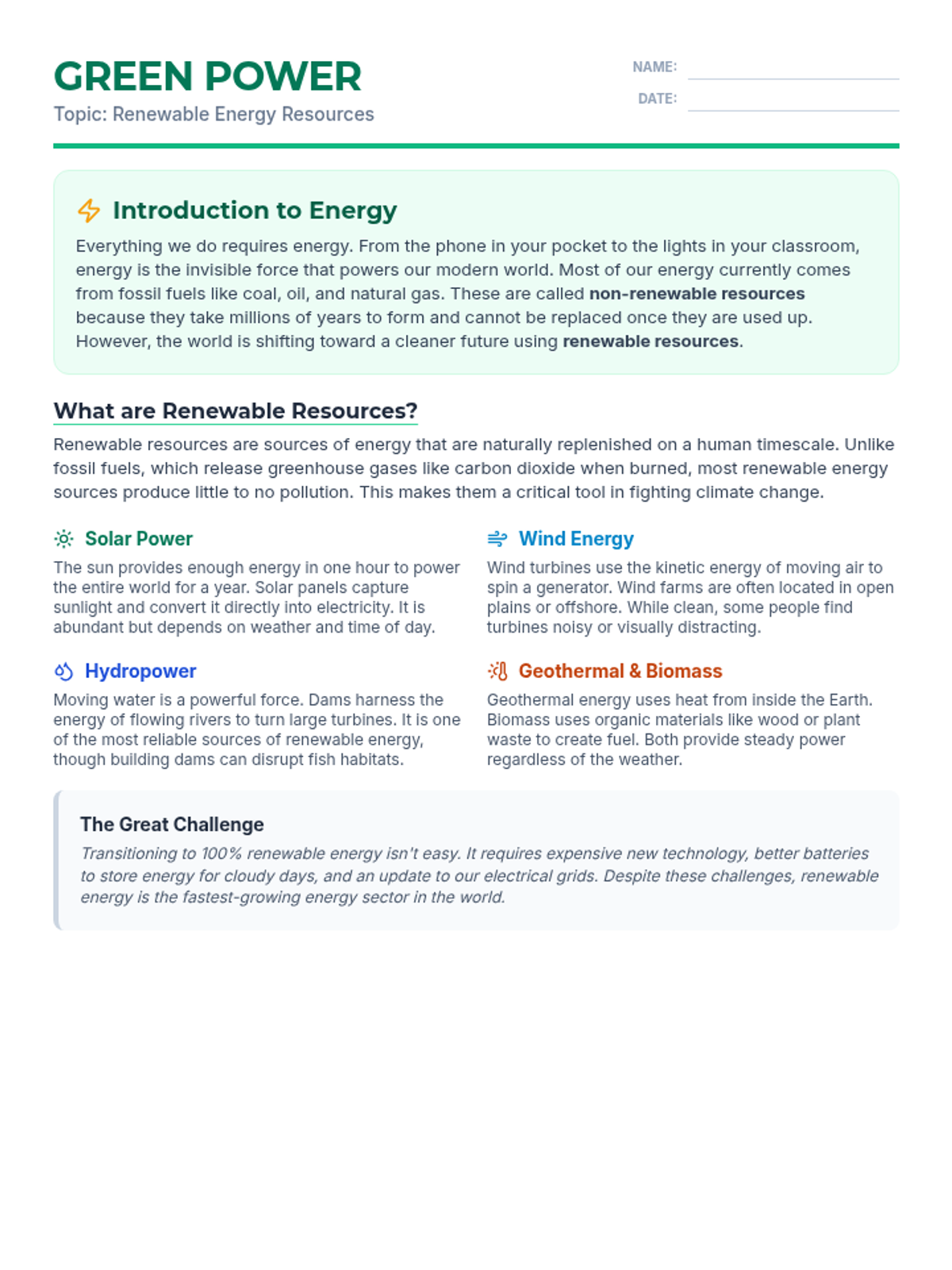
A two-page reading comprehension worksheet for 7th-grade students introducing renewable and non-renewable energy sources with multiple-choice assessment. Tightened layout to prevent orphaned text.
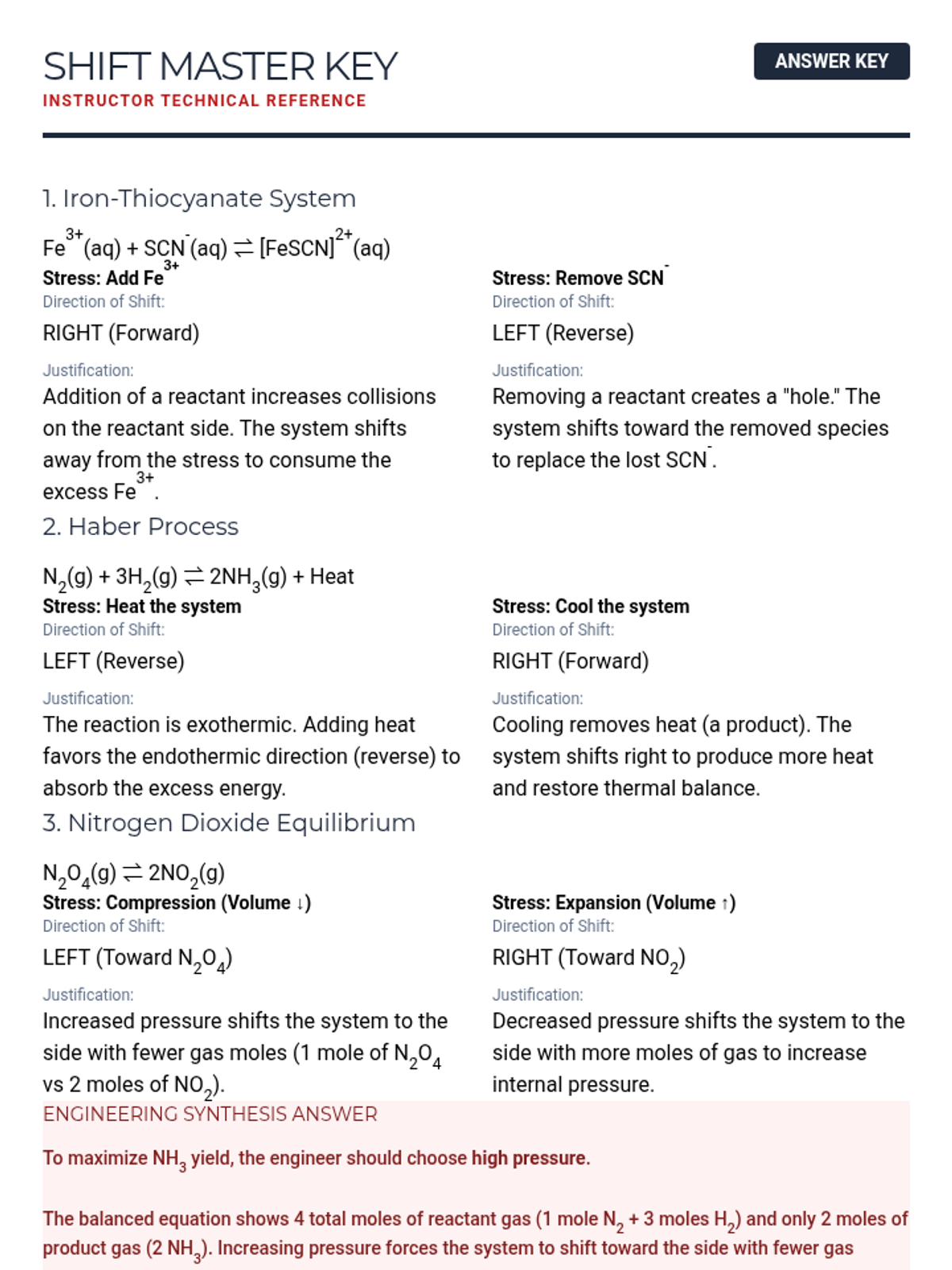
A detailed teacher answer key for the Shift Master Worksheet, featuring predicted directions and justifications based on Le Chatelier's Principle for various chemical stresses.