The teacher's answer key for the Basket Blooms Worksheet, featuring the correct planting sequence and care check answers. Revised for consistent styling and formatting across all sections.
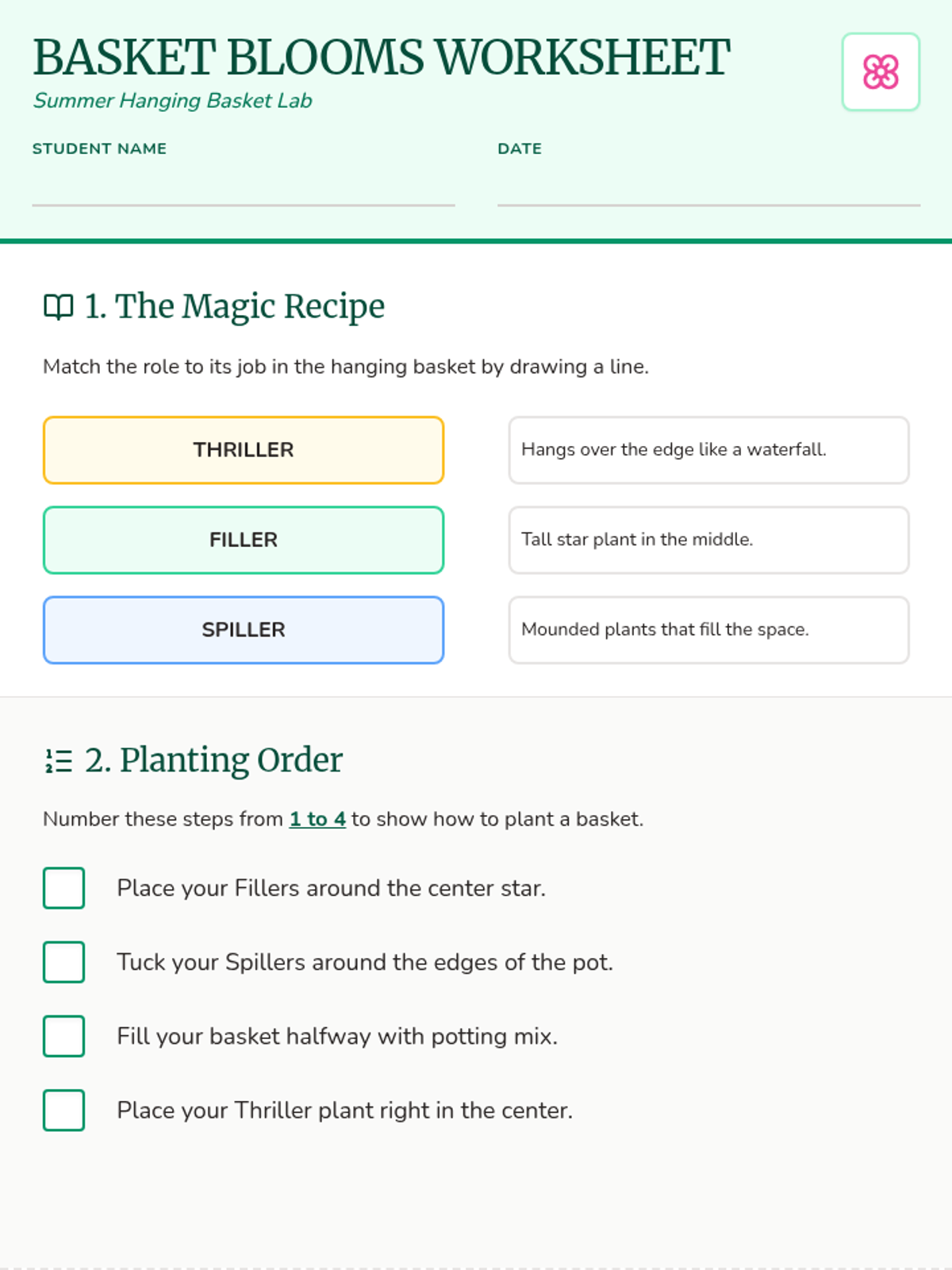
A student-facing worksheet for elementary students to practice the 'Thriller, Filler, Spiller' method, including sequencing planting steps and designing their own basket. Revised to 2 pages with improved contrast and compact layout.
A vibrant slide deck for elementary students explaining the 'Thriller, Filler, Spiller' method for creating summer hanging baskets, including planting steps and care tips.
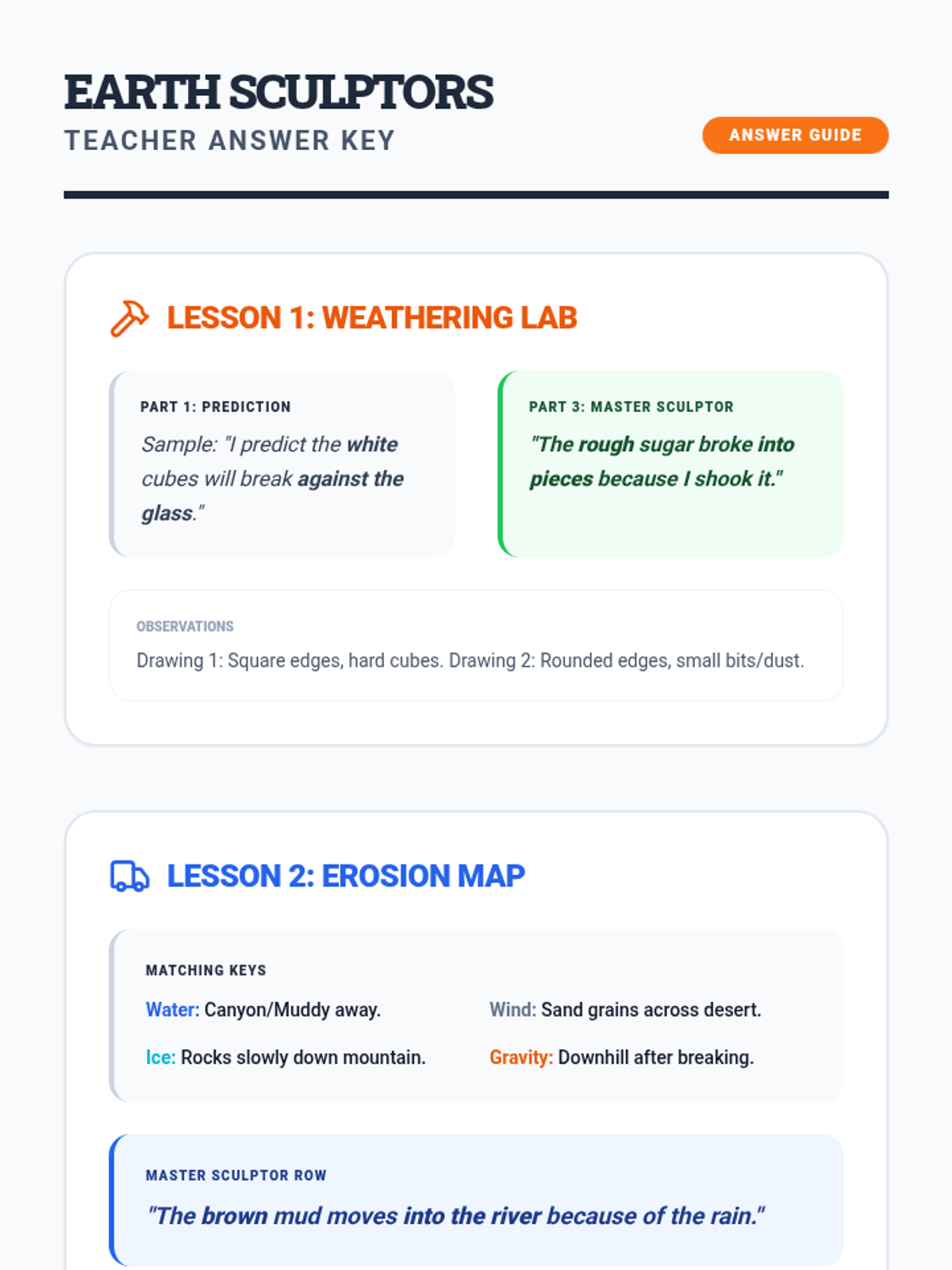
A teacher answer key for the Earth Sculptors unit. Revised to improve rubric print quality by inverting colors, preventing awkward page breaks between headers and content, and condensing Lesson 1 and 2 keys.
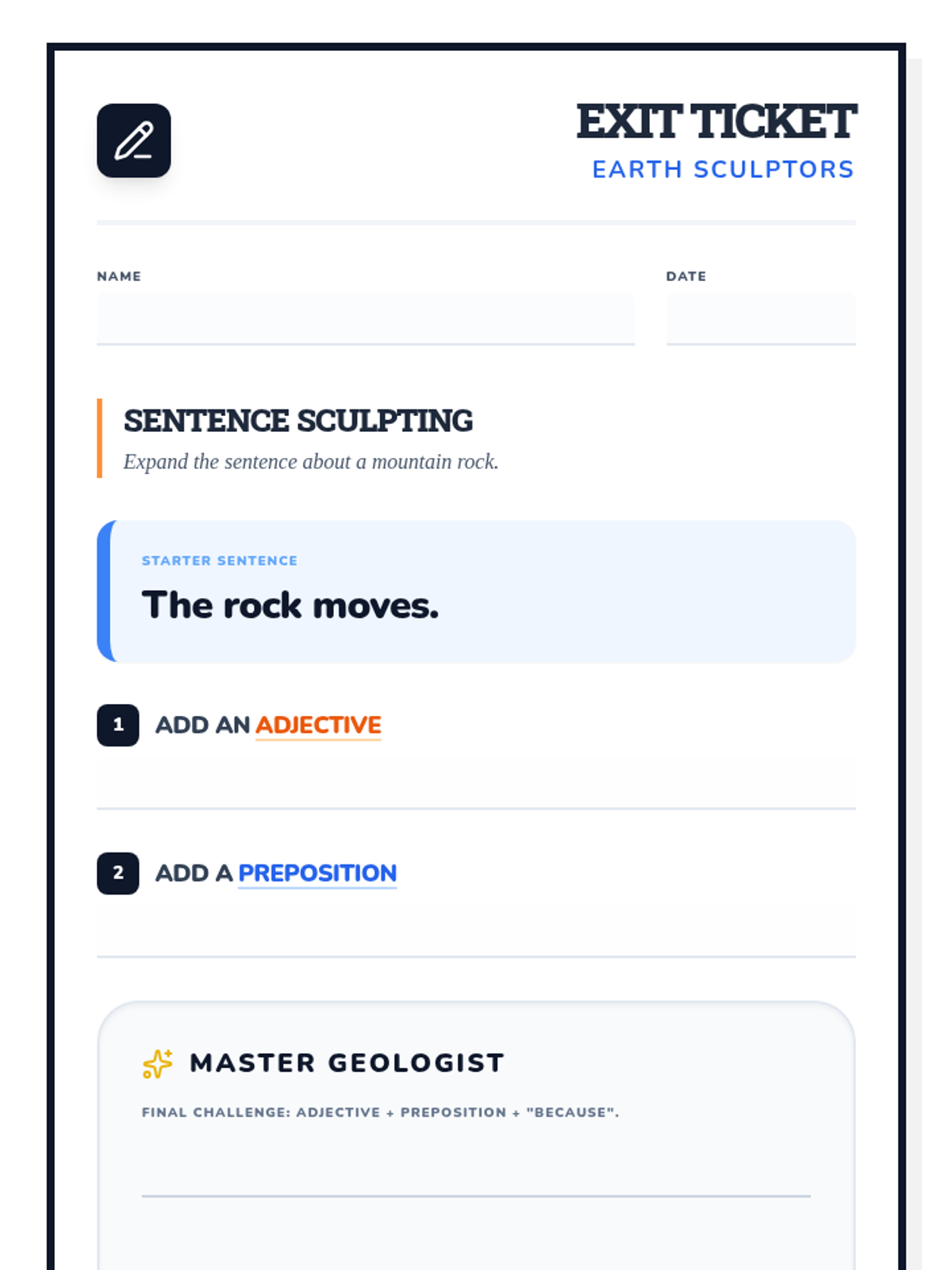
An exit ticket for assessing sentence expansion in science. Revised to condense the layout to a single page, switch the final writing area to a light background for legibility, and increase contrast for footer elements.
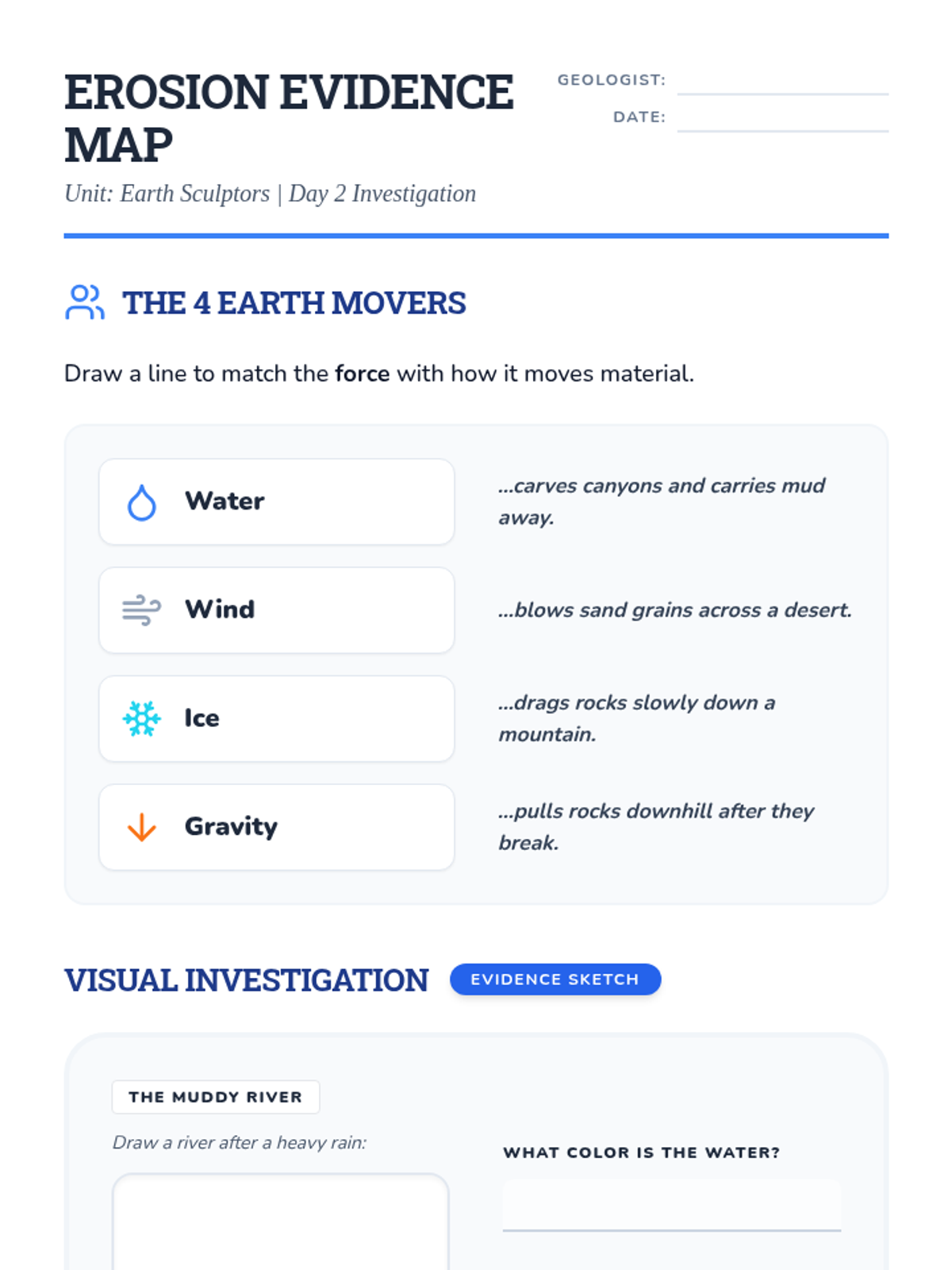
A student investigation worksheet for erosion. Revised to correct logical matching errors in the Agents section, condense the layout onto fewer pages, improve text contrast, and lighten highlight colors in sentence frames.
Day 2 instructional slides for English Learners focusing on the definition of erosion, the four main agents of erosion, and advanced sentence expansion using 'because' and descriptive details.
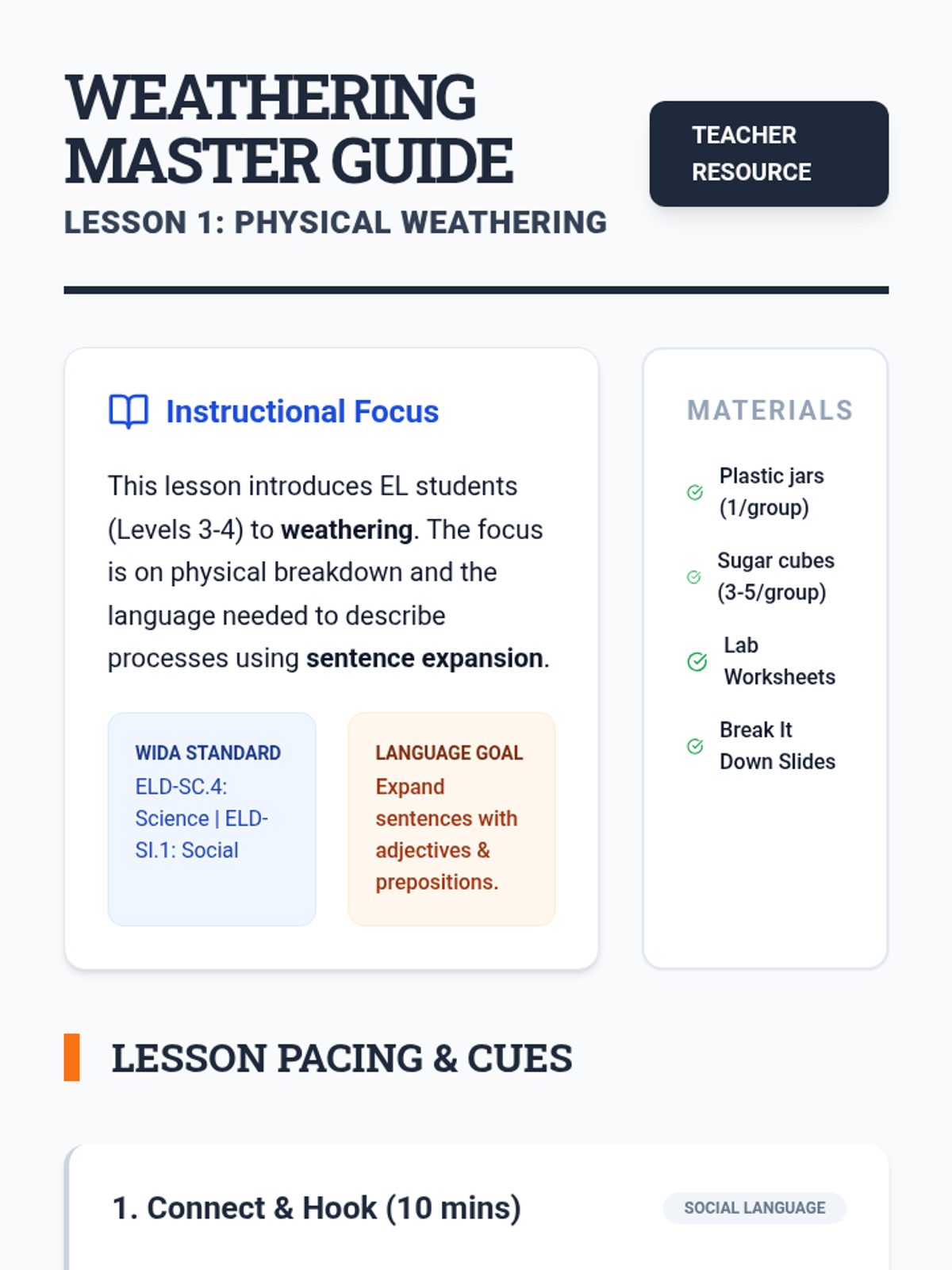
A teacher facilitation guide for Lesson 1, providing instructional scripts, pacing cues, and EL-specific differentiation strategies. Revised to fix page breaks, improve subtitle contrast, and remove visible markdown.
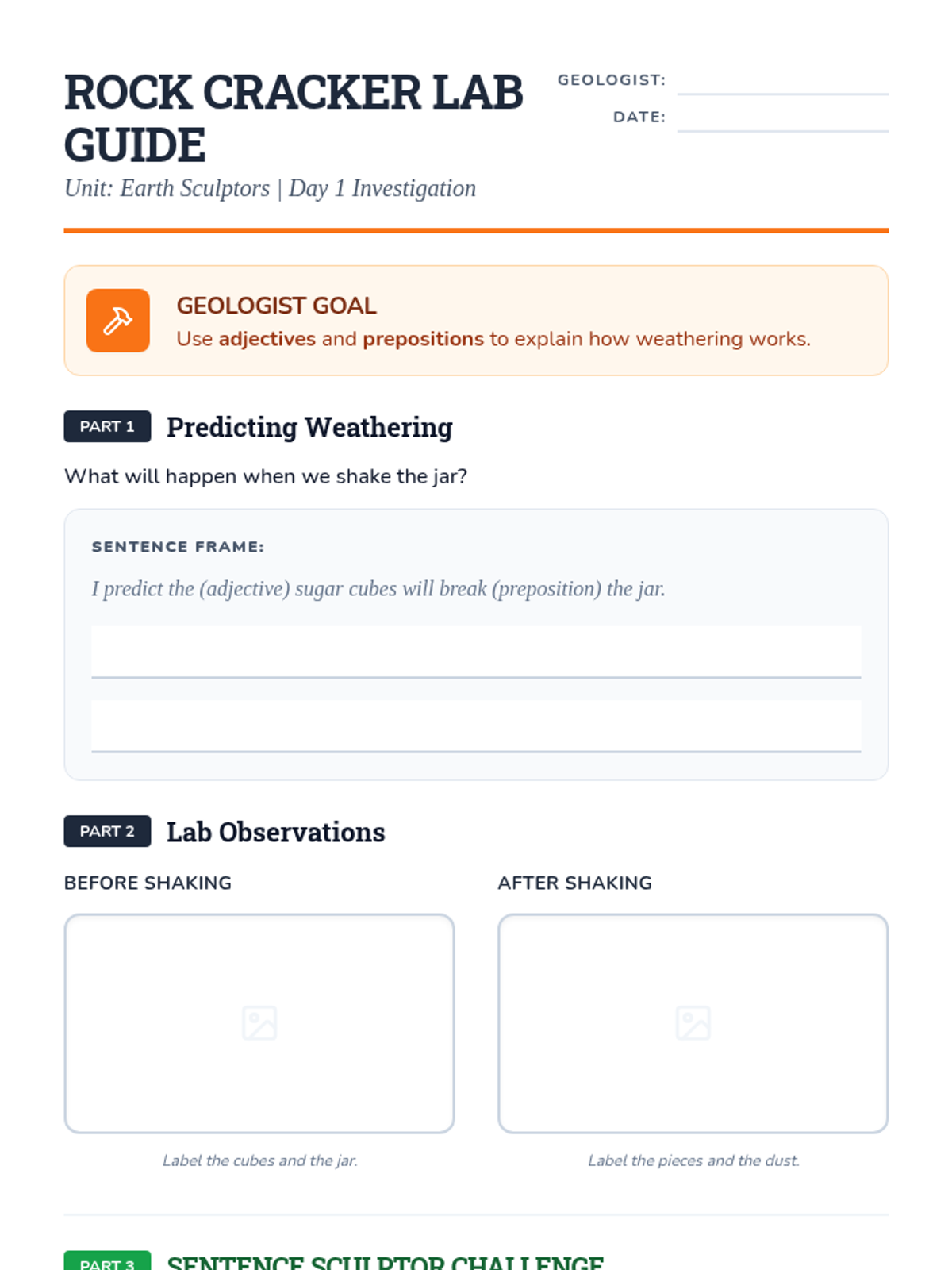
A student lab worksheet for modeling weathering using sugar cubes. Revised to condense the layout to fit on fewer pages, increase handwriting space for predictions, and improve the visual labeling of student work areas.
Day 1 instructional slides for English Learners focusing on the definition of weathering and sentence expansion techniques using adjectives and prepositions. Includes lab instructions and vocabulary building. Revised to ensure uniform answer choice styling.
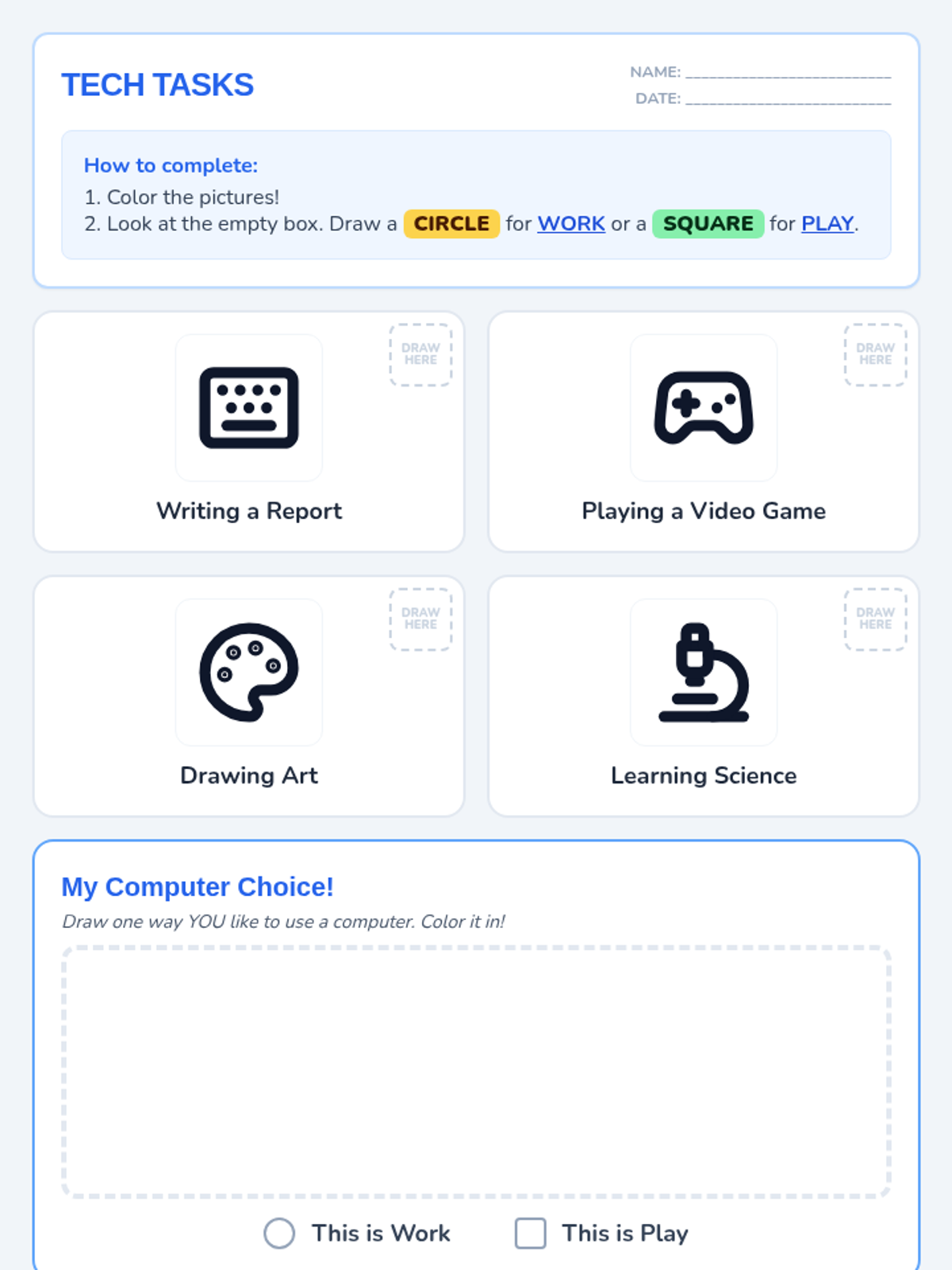
A student worksheet where K-1 students categorize computer activities into 'work' or 'play' and draw their own favorite way to use a computer. Revised for better page layout, bolder icons for coloring, and dedicated response areas.
A colorful and engaging slide deck for K-1 students that defines what a computer is and illustrates the difference between using computers for work and play through examples and a guessing game.
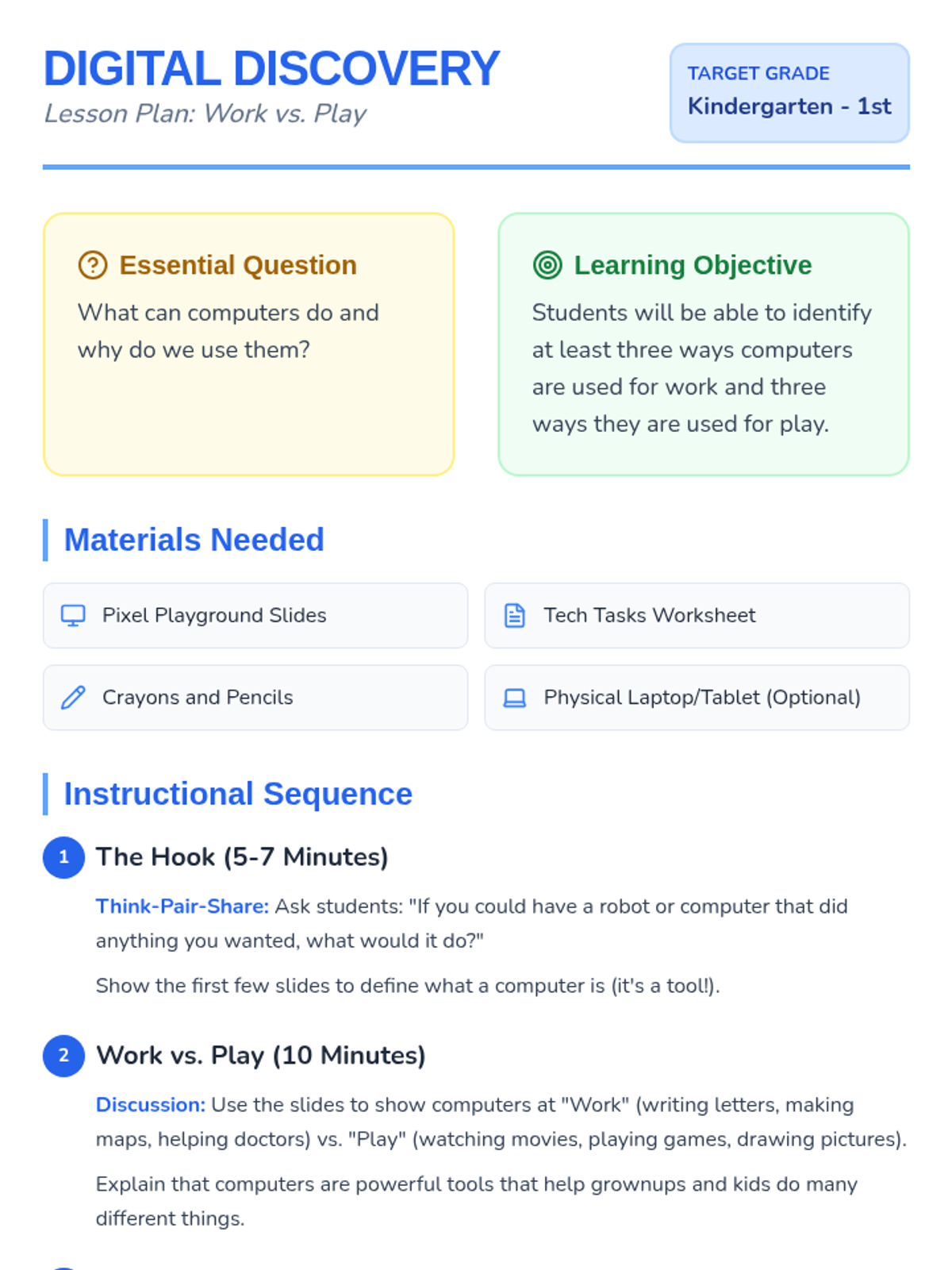
A comprehensive teacher guide for teaching K-1 students about how computers are used for work and play, including a hook, sequence, and differentiation strategies.
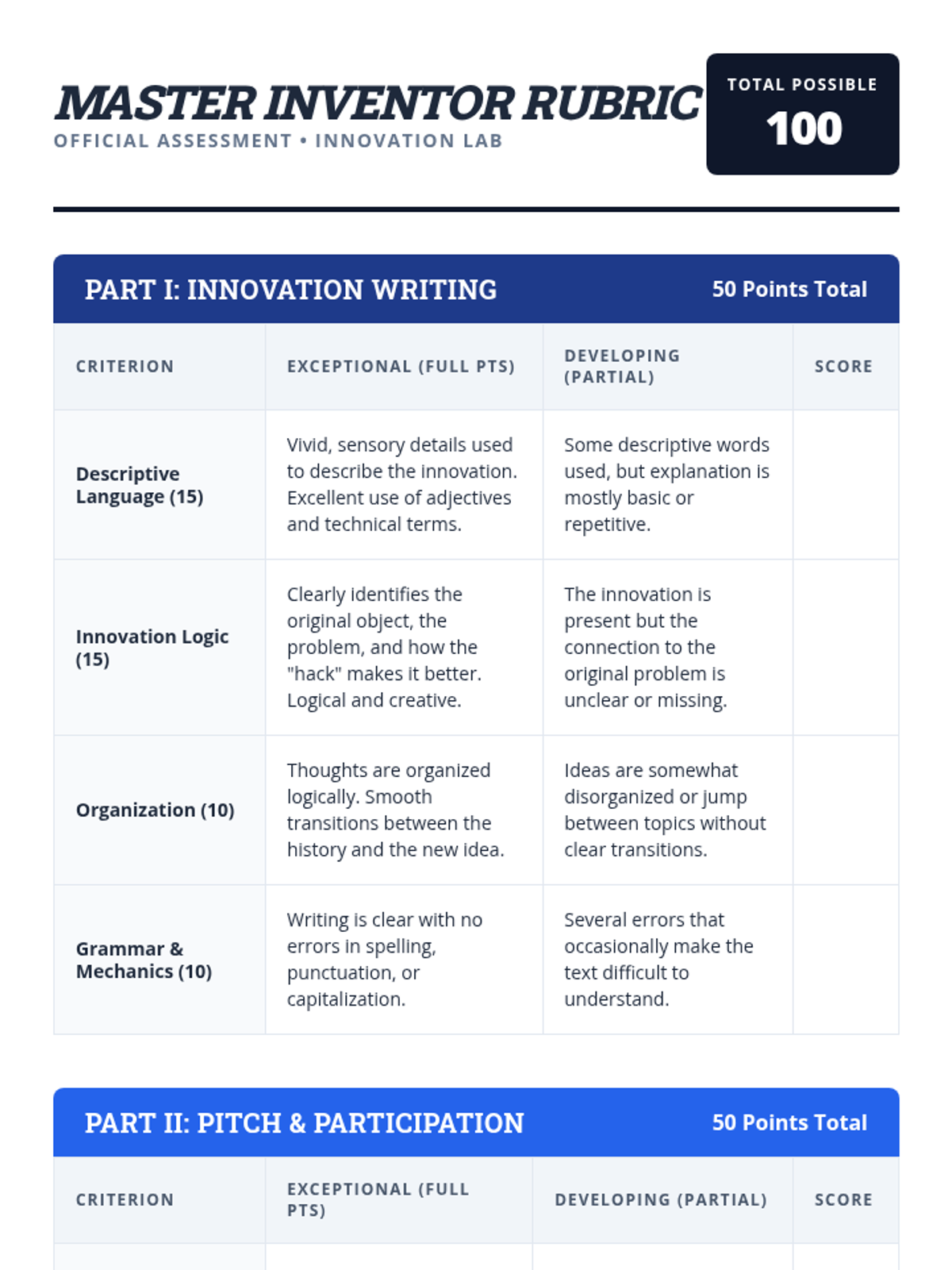
A comprehensive assessment rubric for the Innovation Lab project, worth 100 points and divided into categories for writing and presentation/participation skills.
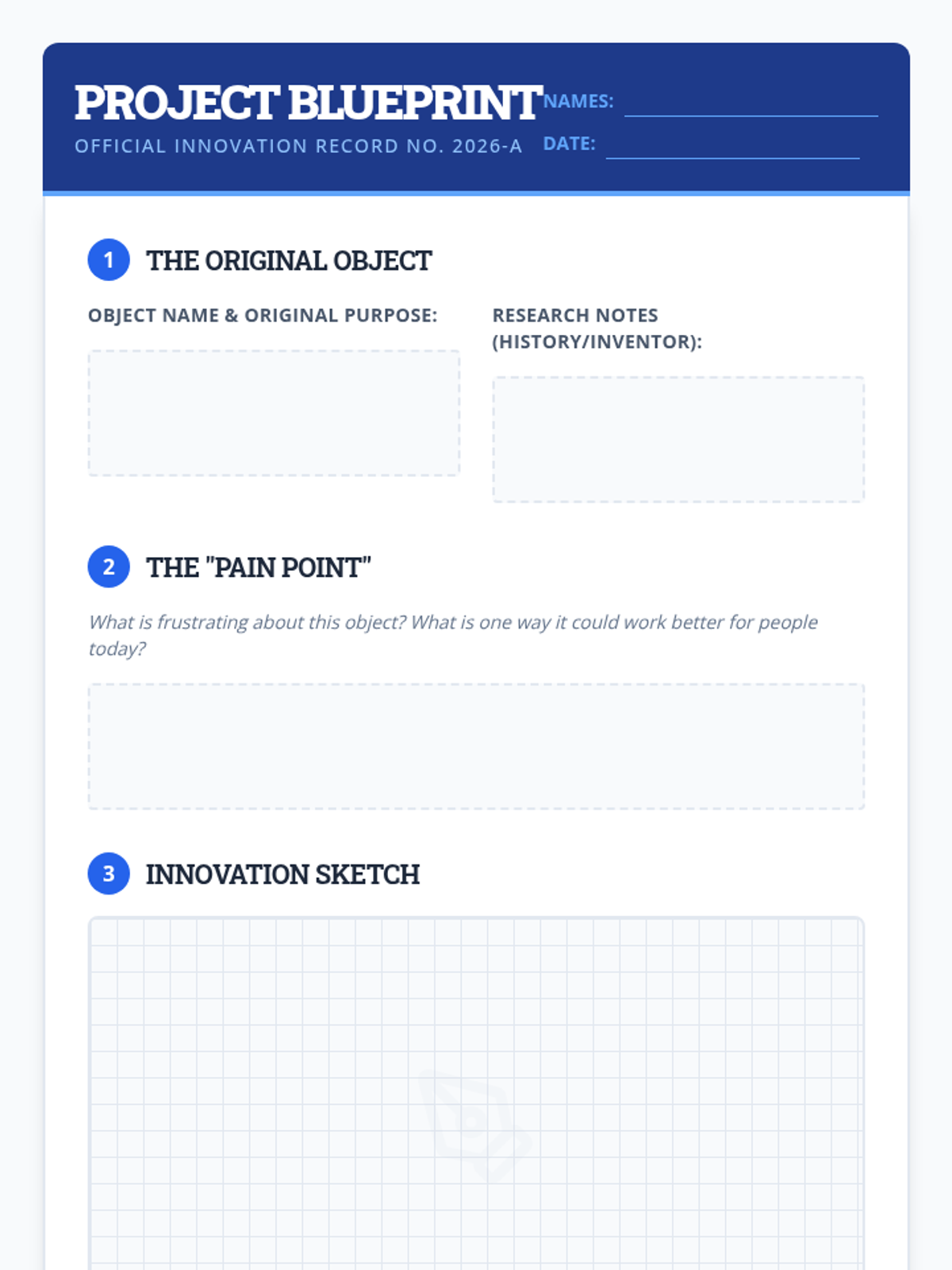
A student-facing planning worksheet for researching a household object and designing an innovation, including space for sketching and a descriptive writing pitch.
A slide deck for the Innovation Lab, defining innovation, showing historical examples, and detailing the project challenge for Day 1 and Day 2.
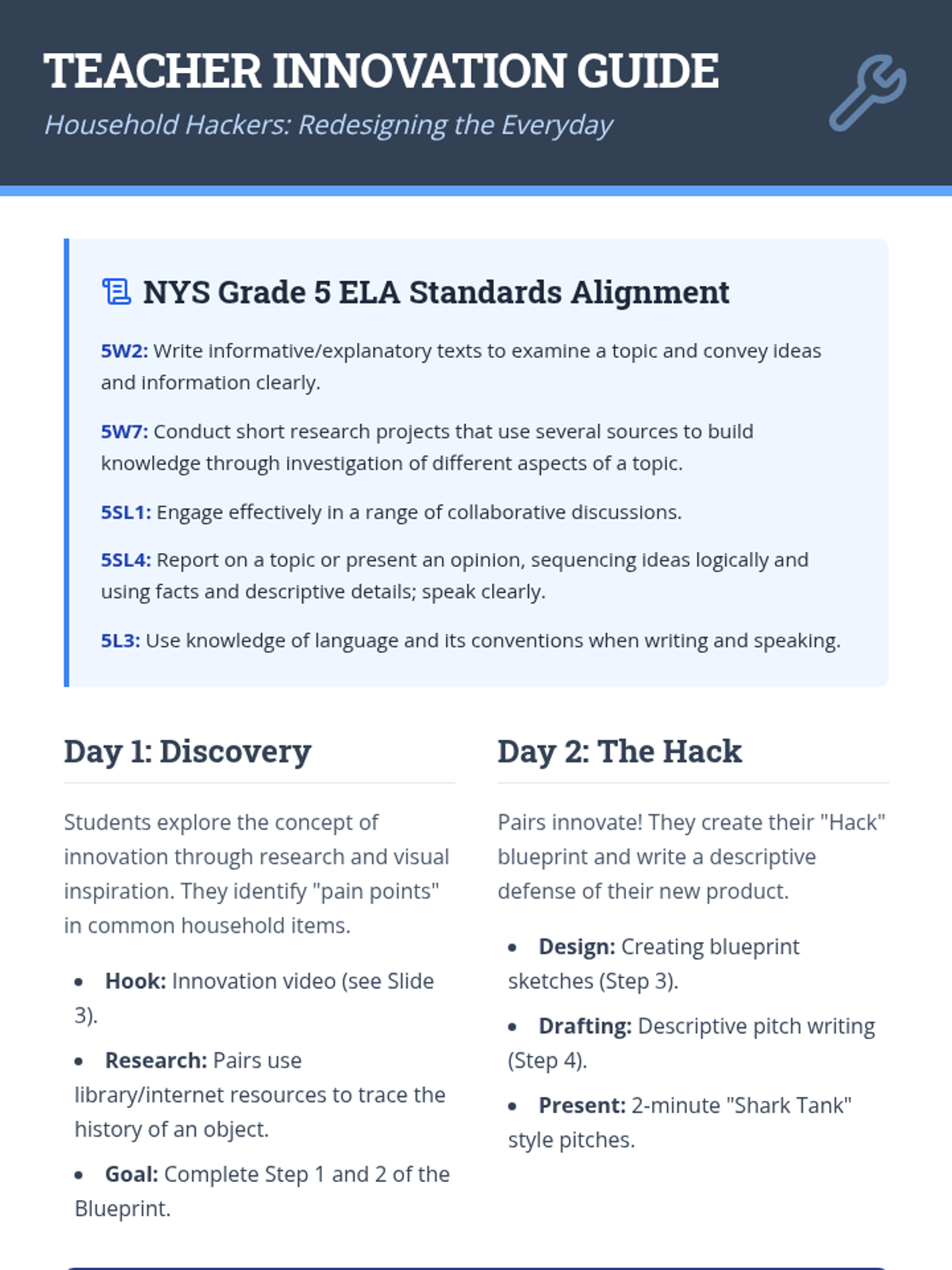
A teacher facilitation guide for the Innovation Lab lesson, including NYS ELA standards alignment, daily pacing, and instructional strategies for teaching household innovation.
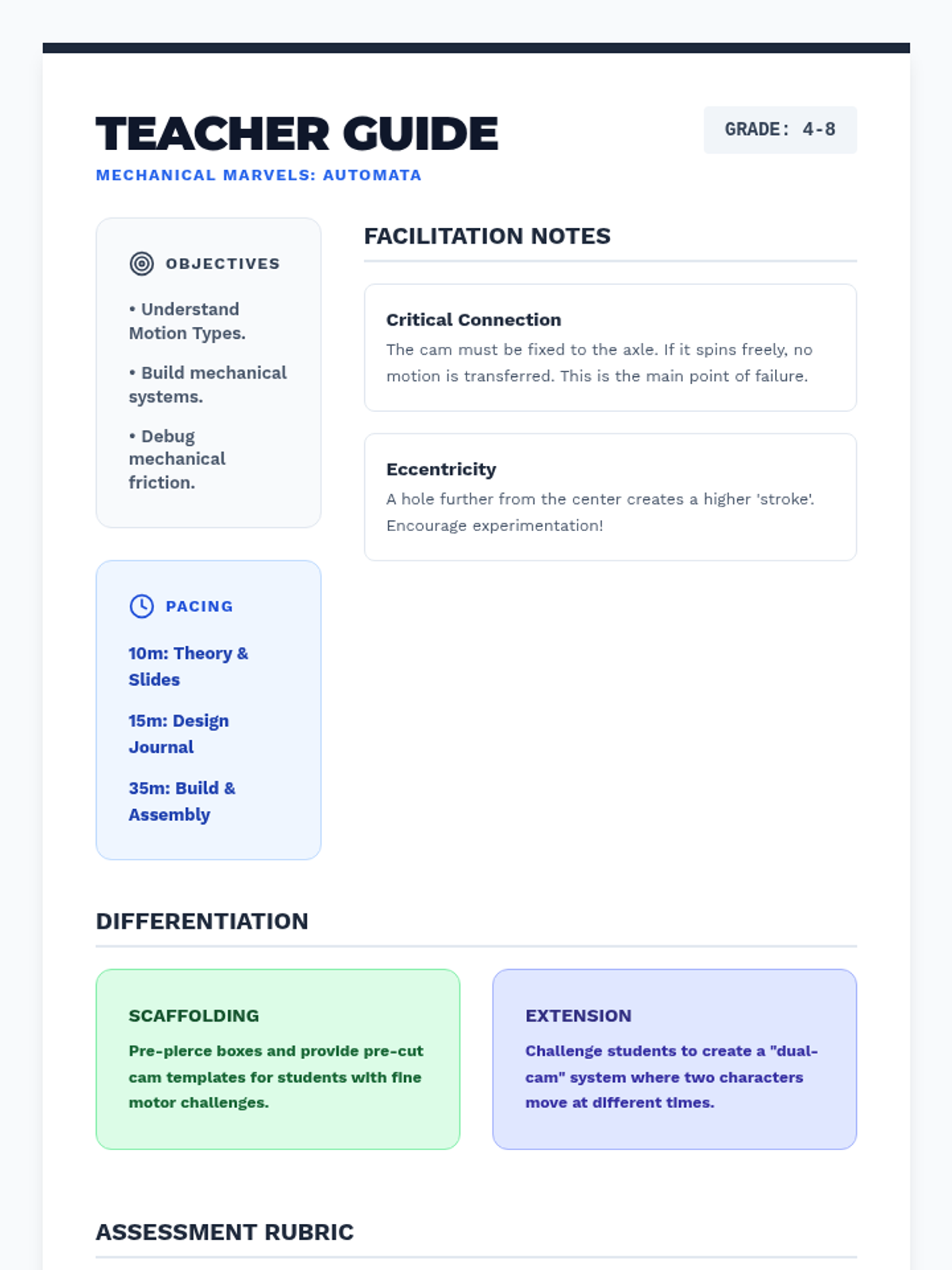
A revised teacher's guide with fixed page breaks in the differentiation section, improved layout for better information hierarchy, and clearer facilitation tips for classroom use.
A revised slide deck with functional mechanical diagrams, off-center cam visualizations, and a new step-by-step assembly overview for students. High-contrast design optimized for visibility.
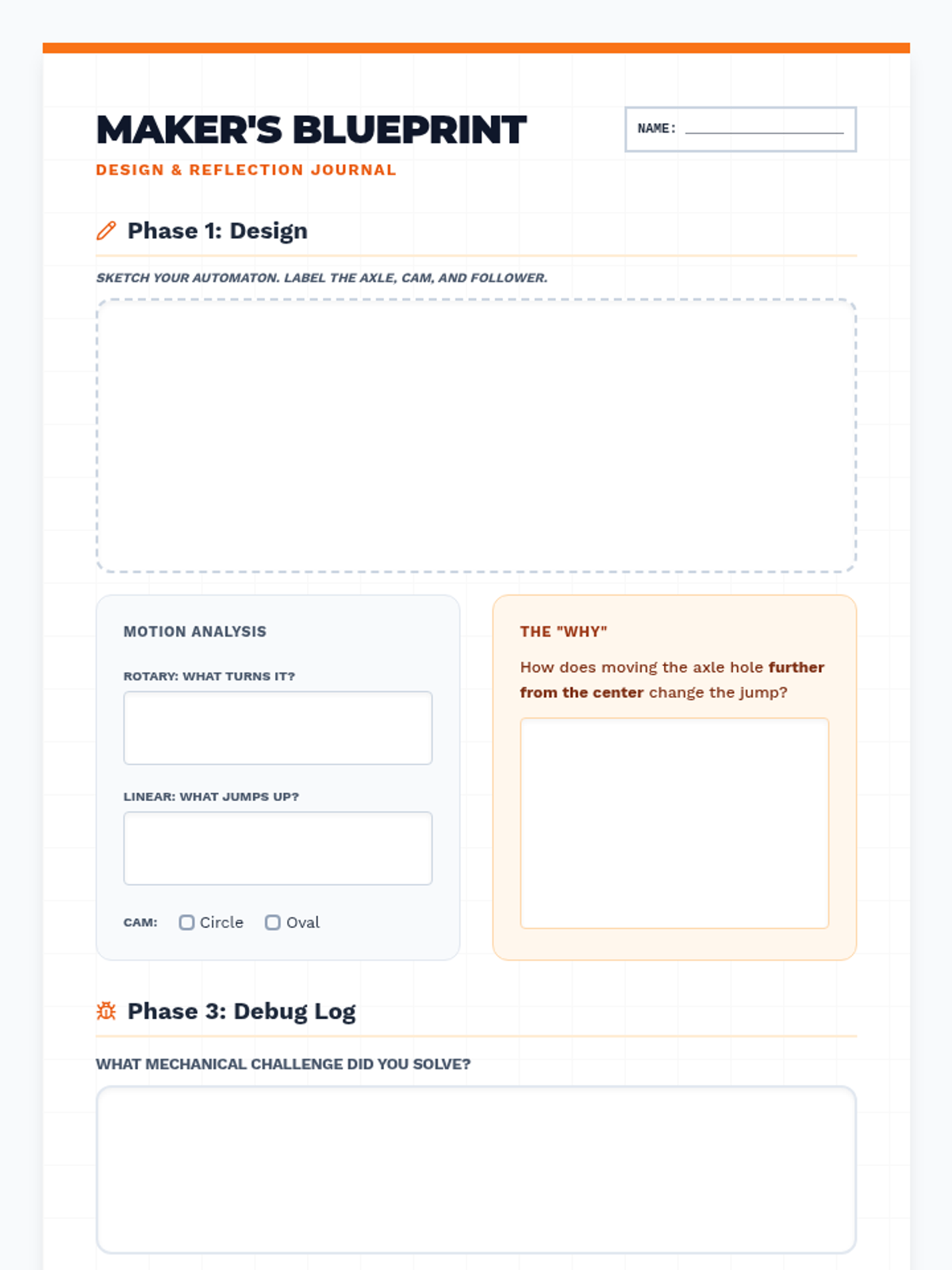
A revised design and reflection worksheet for students. Fixed page breaks, improved "Motion Analysis" fields for easier student use, and polished the overall visual balance.
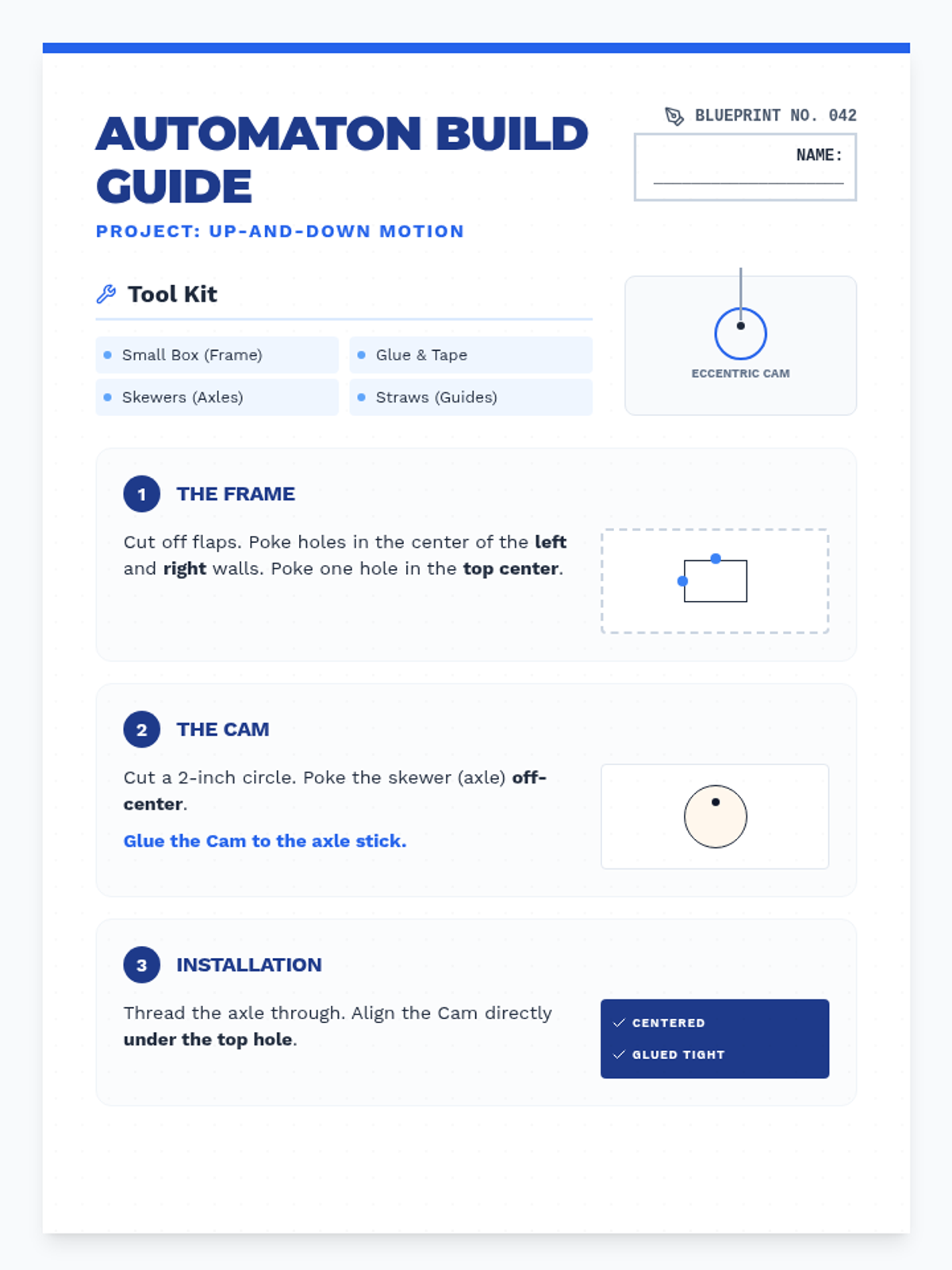
A revised step-by-step printable guide for building a cardboard automaton, featuring improved layout to prevent content splits, clearer diagrams, and more student work space.
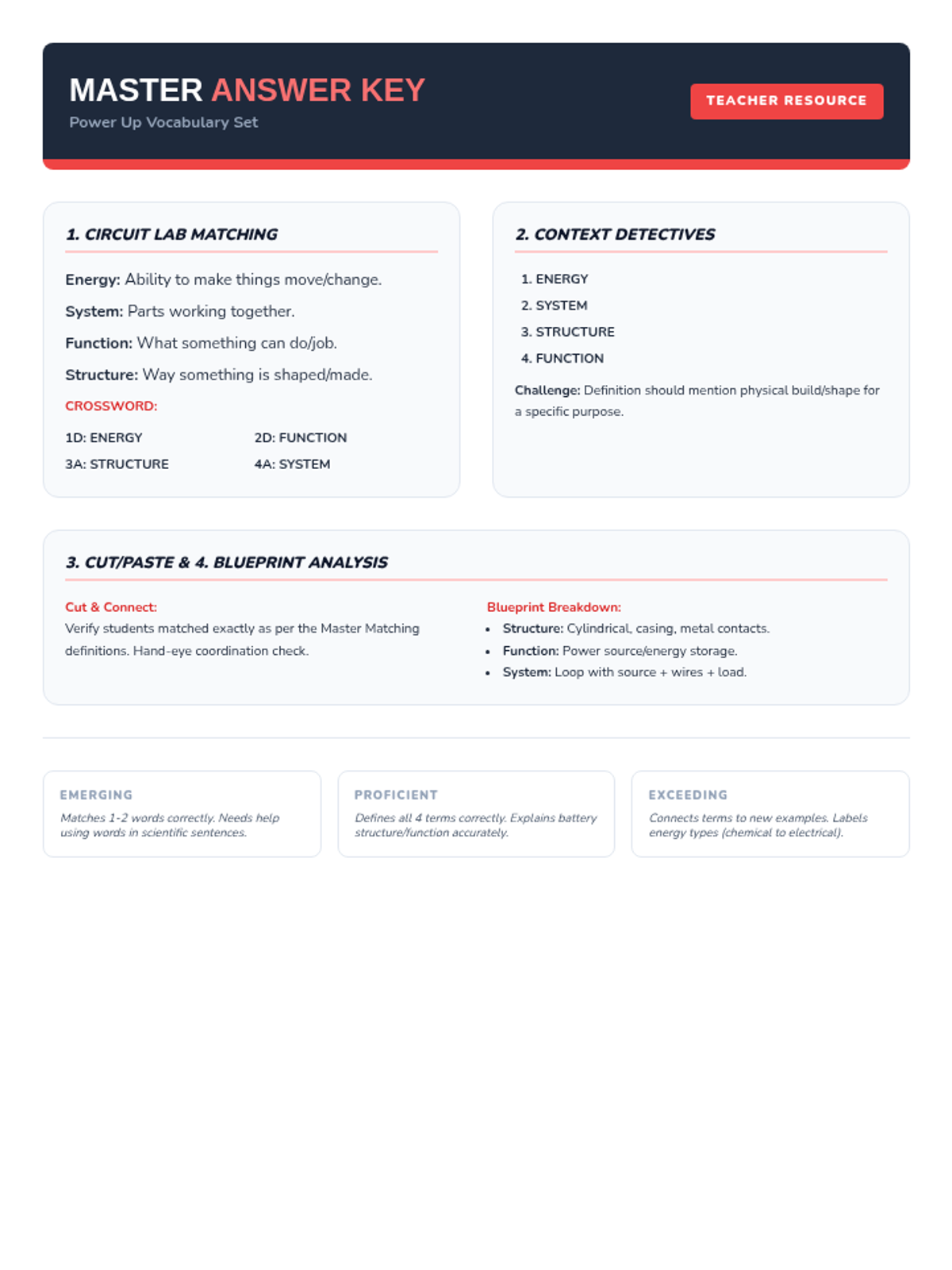
A master answer key and teacher resource for the "Power Up Vocabulary" worksheet set.
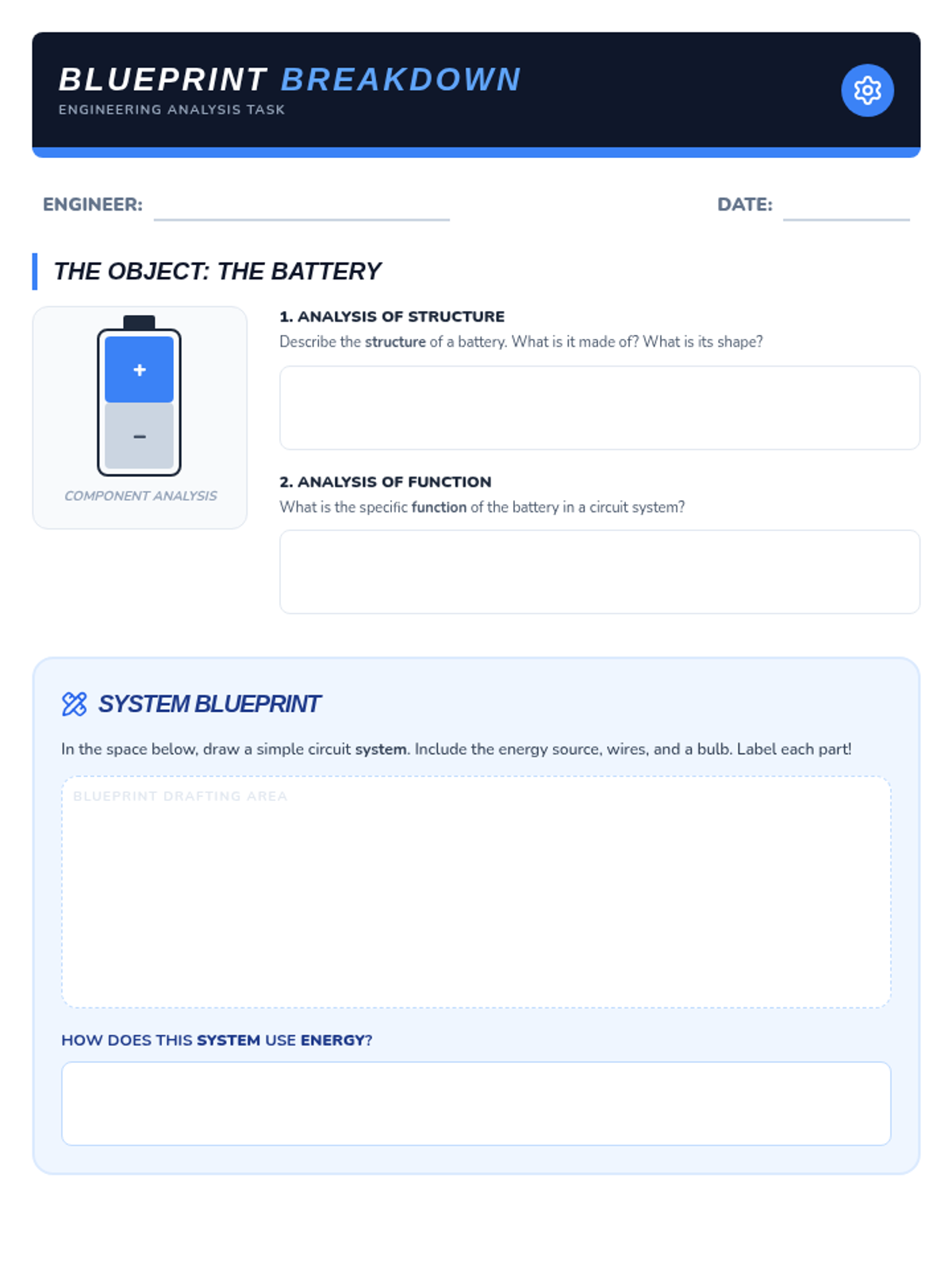
An engineering-themed analysis activity where students describe the structure and function of a battery and draft a circuit system blueprint.
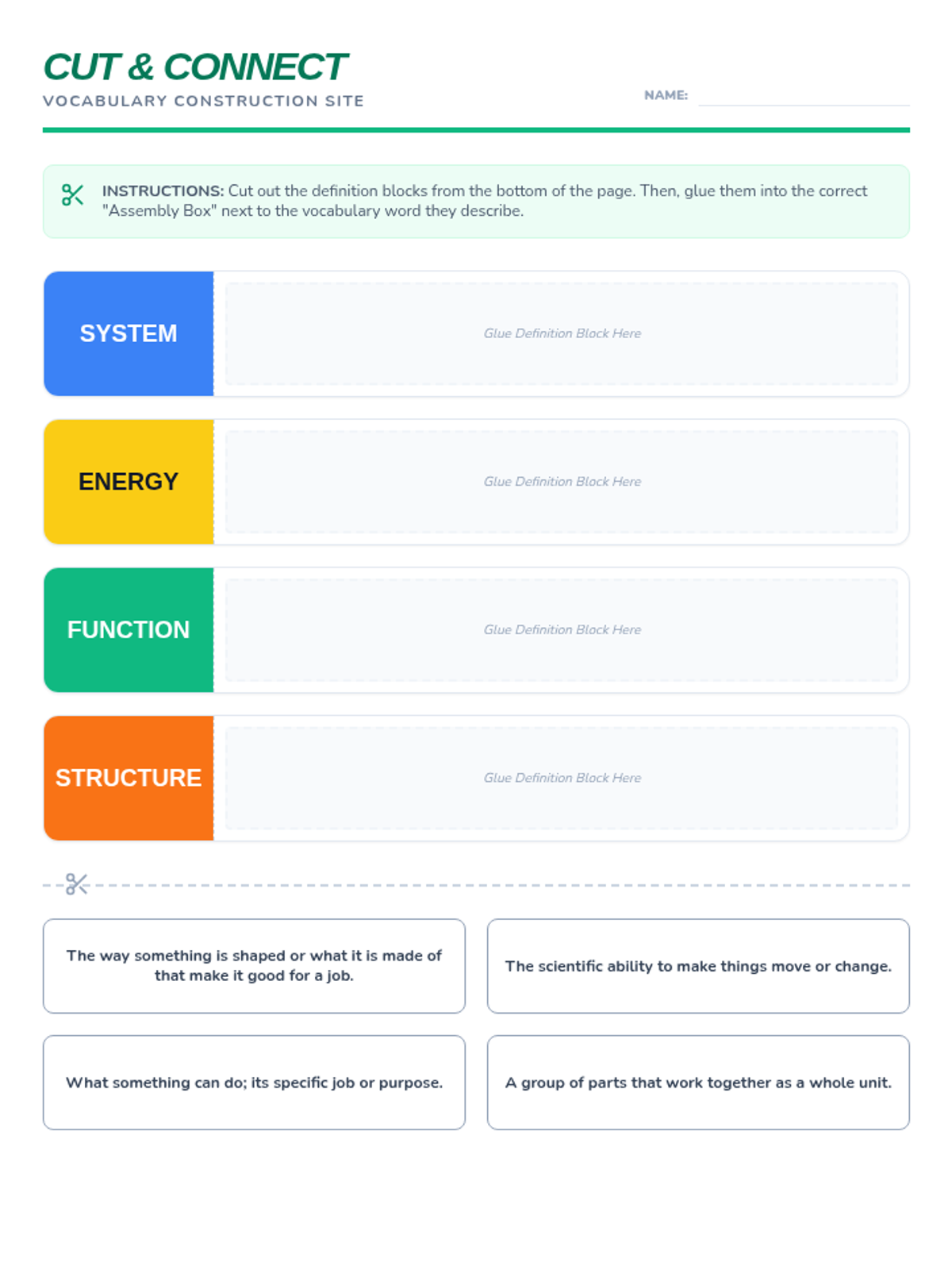
A tactile cut-and-paste vocabulary activity for 4th graders to match definitions to science terms like system, energy, function, and structure.
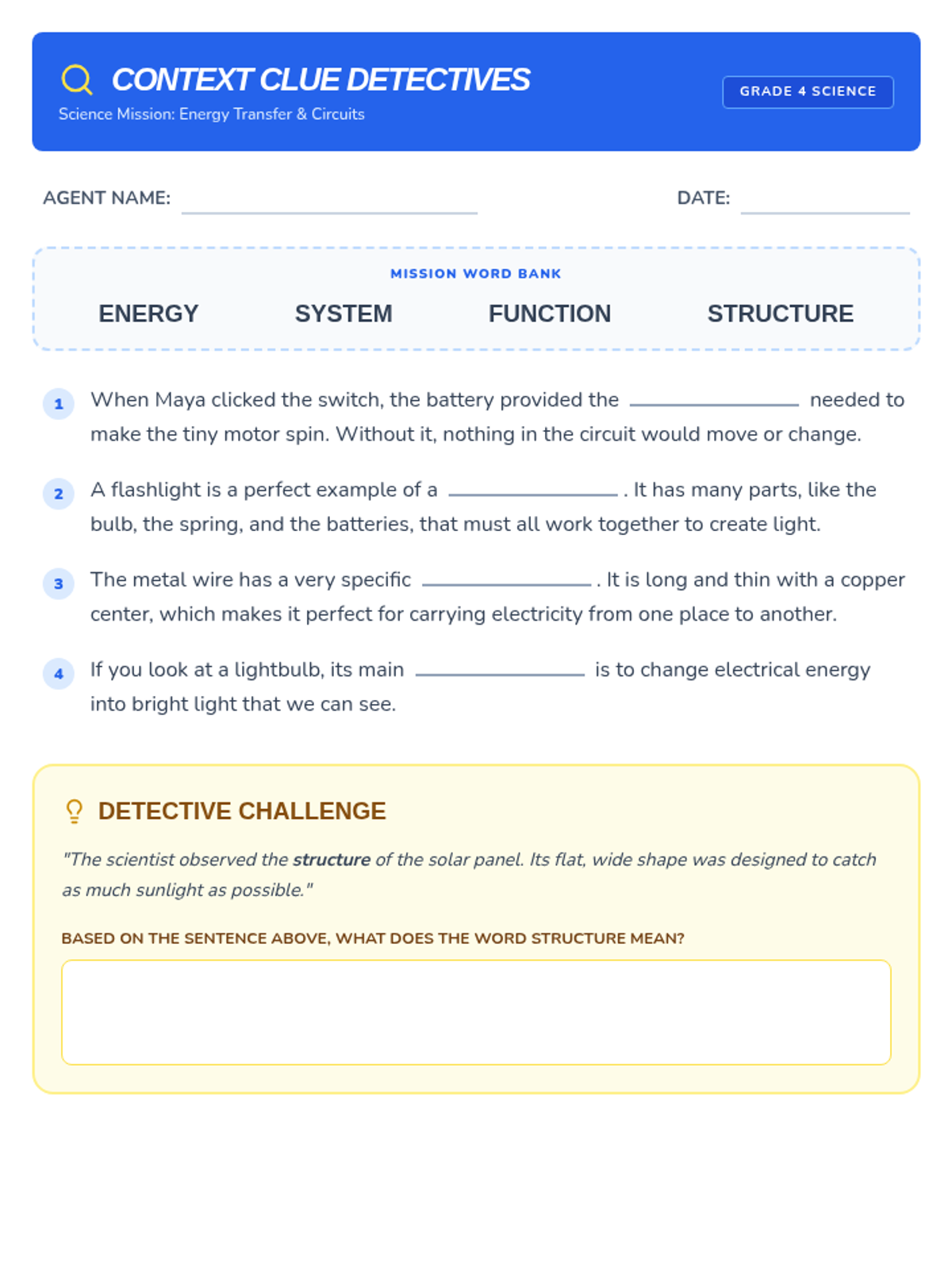
A sentence completion and context clues worksheet for 4th-grade students to practice using science vocabulary in the context of energy transfer and circuits.
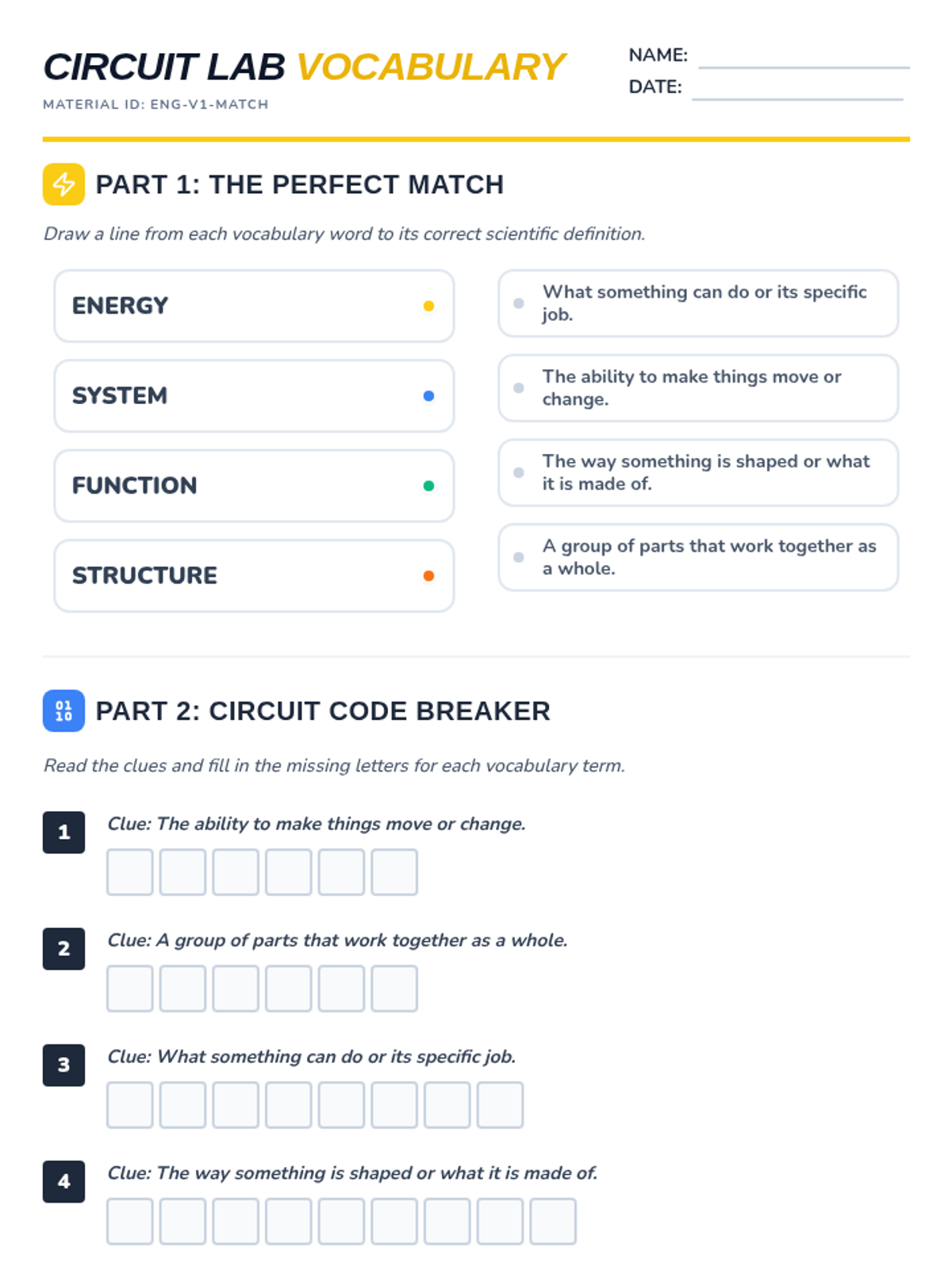
A vocabulary worksheet for 4th graders featuring matching and word box exercises focused on energy, system, function, and structure.
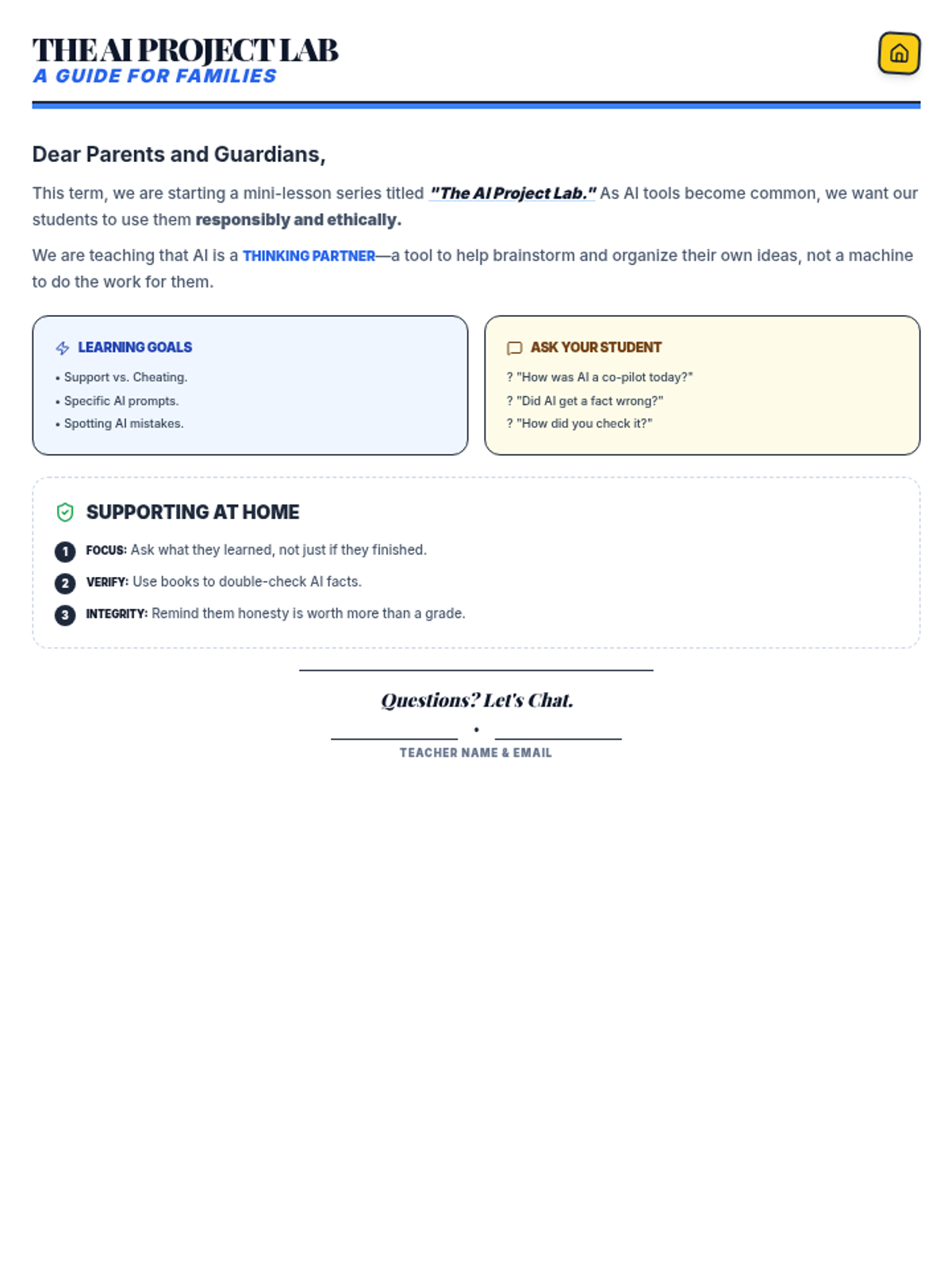
An informative letter for parents and guardians explaining the AI Project Lab series, the "Co-Pilot" philosophy, and how to support responsible AI use at home. Updated for single-page printing.
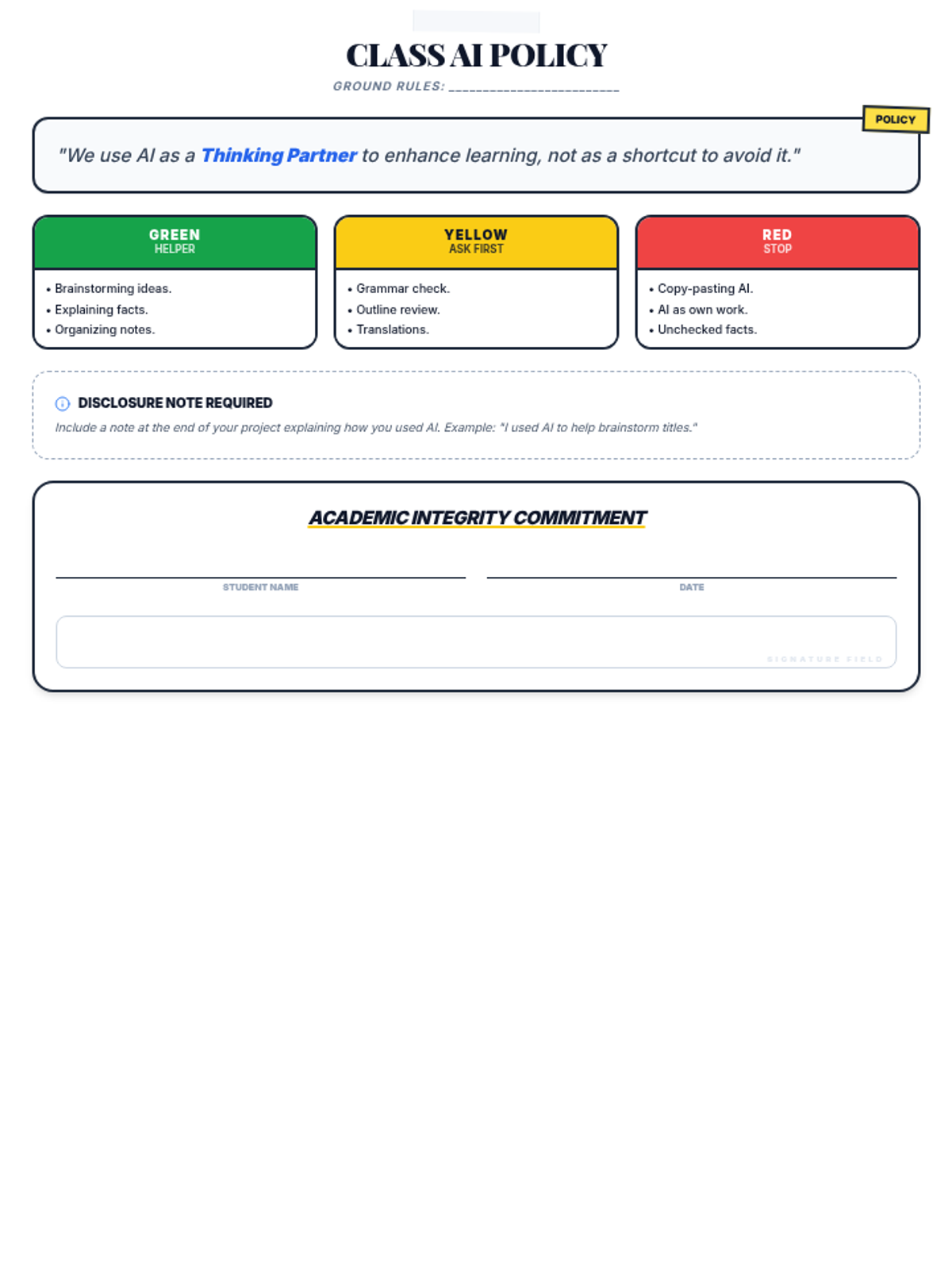
A customizable classroom AI policy template that uses a "Traffic Light" system to define appropriate vs. inappropriate AI use for students. Consolidated to a single page.
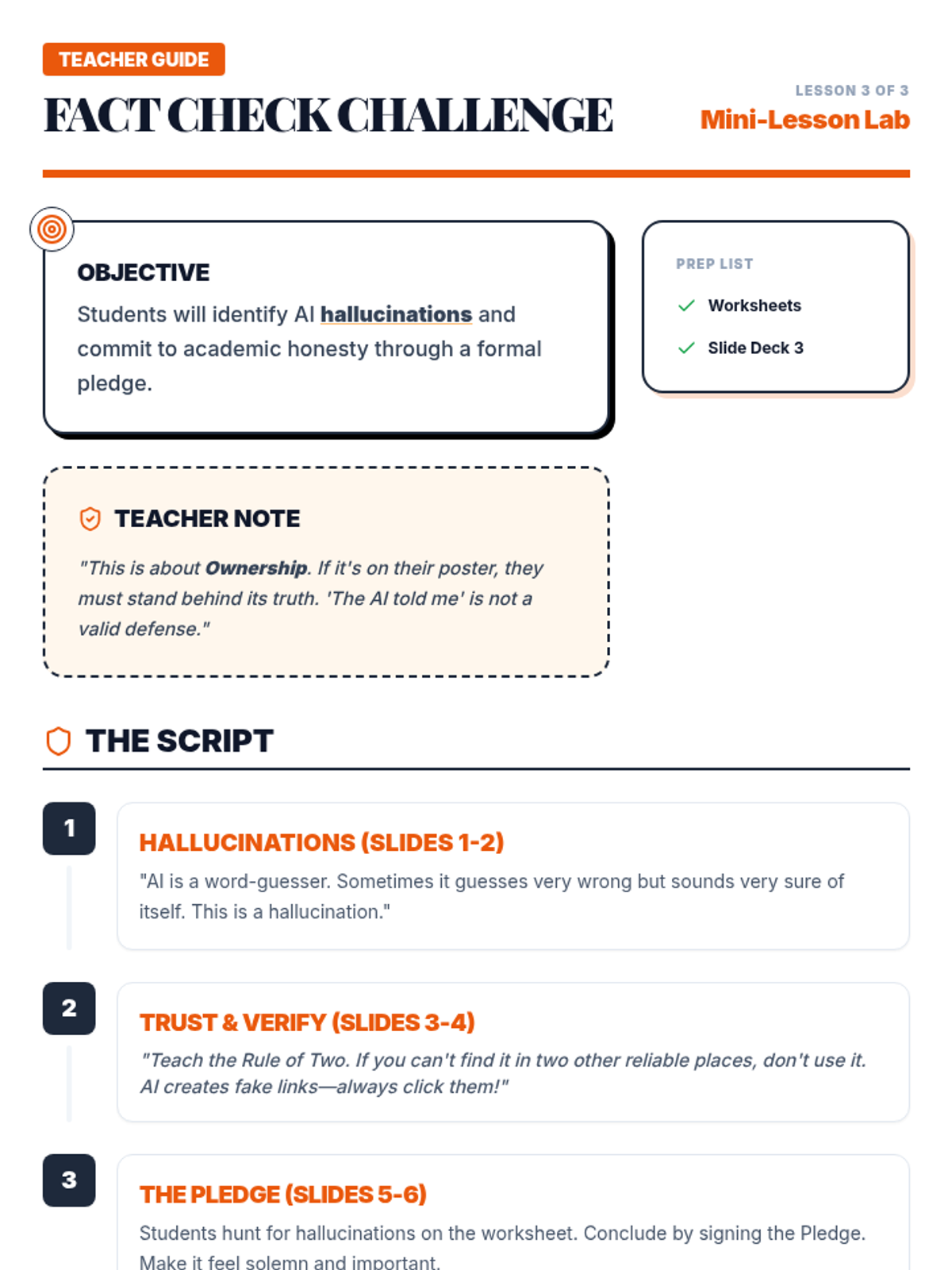
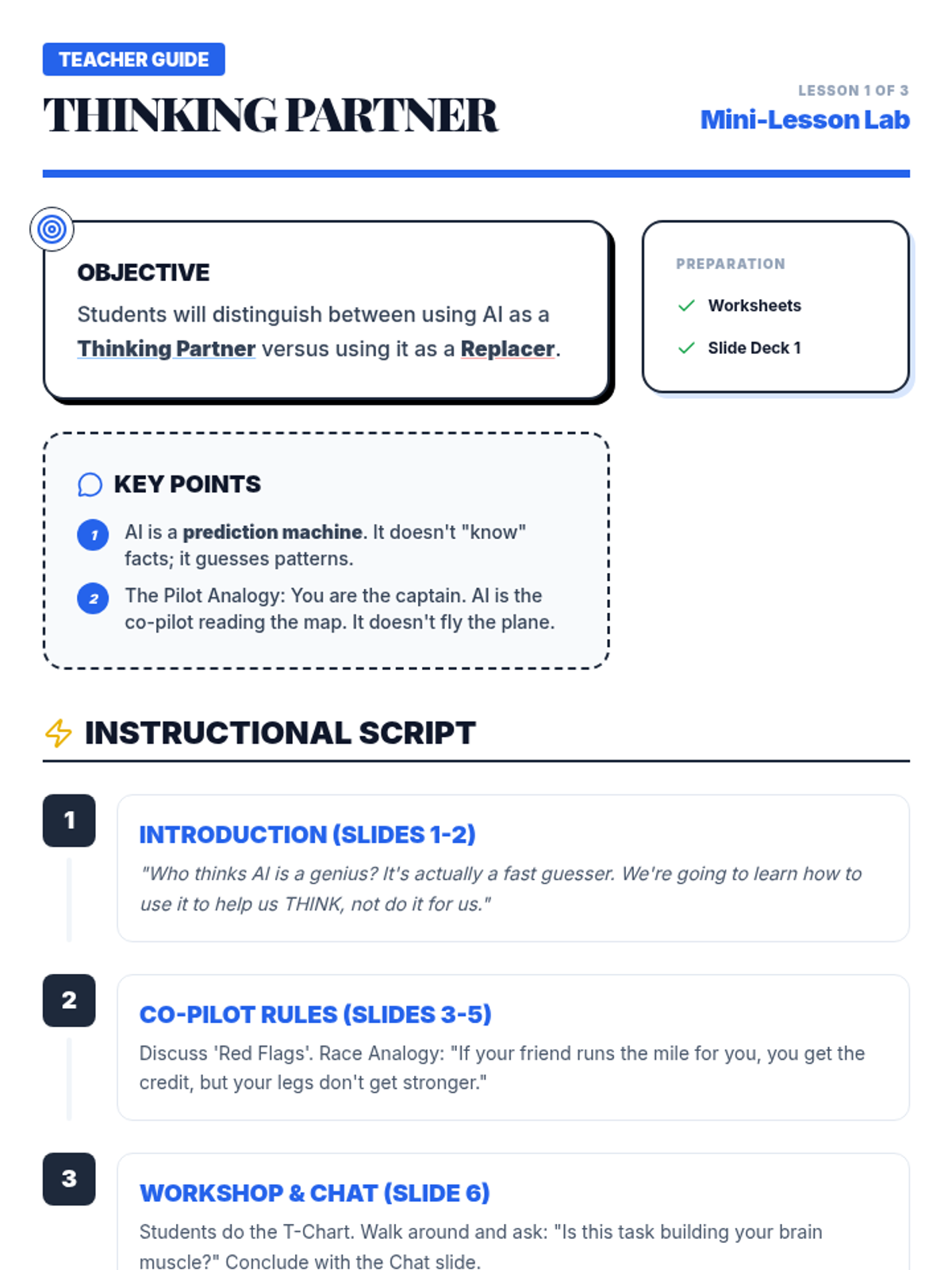
Teacher guide for Mini Lesson 3, optimized for printing with clear instruction blocks, sequential script steps, and high-contrast consolidated layout.
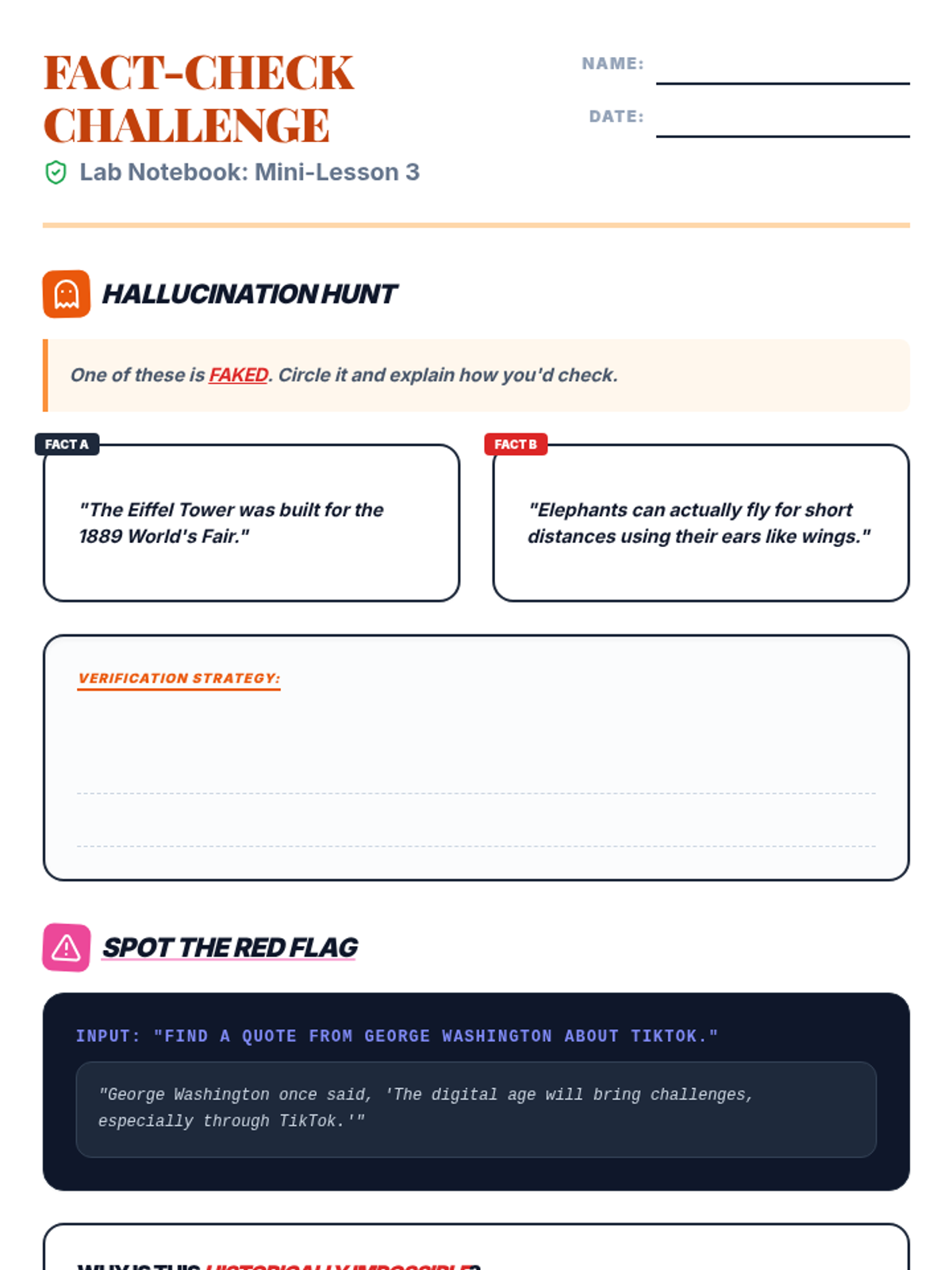
A student worksheet for Mini Lesson 3. Consolidated to a single page with high content density, clear writing lines, and a professional layout for classroom printing.
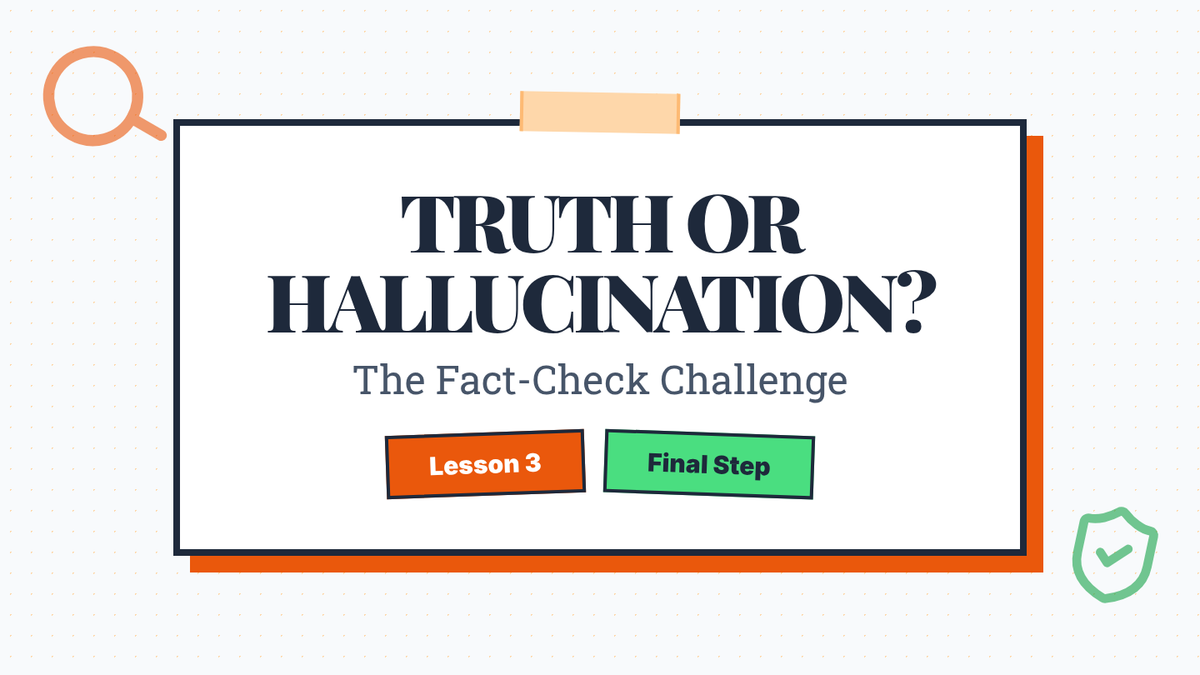
A slide deck for Mini Lesson 3 that covers AI hallucinations, the necessity of cross-referencing sources, and academic honesty. Updated with sketch aesthetic, fixed spacing ("The Gold Rule"), and teacher notes. (Final font size adjustment)
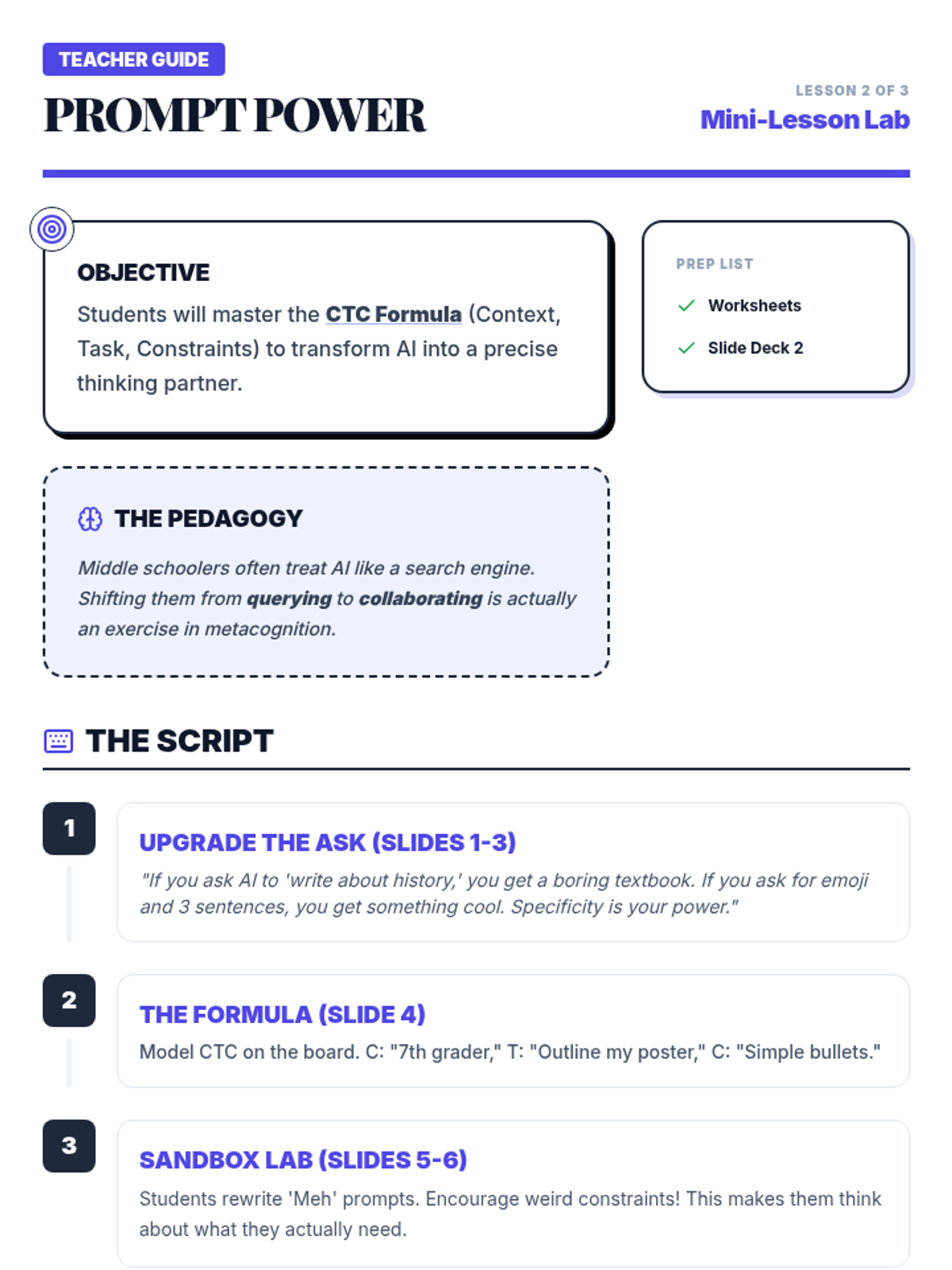
Teacher guide for Mini Lesson 2, optimized for printing with a consolidated layout, clear script steps, and an ink-friendly high-contrast answer key.
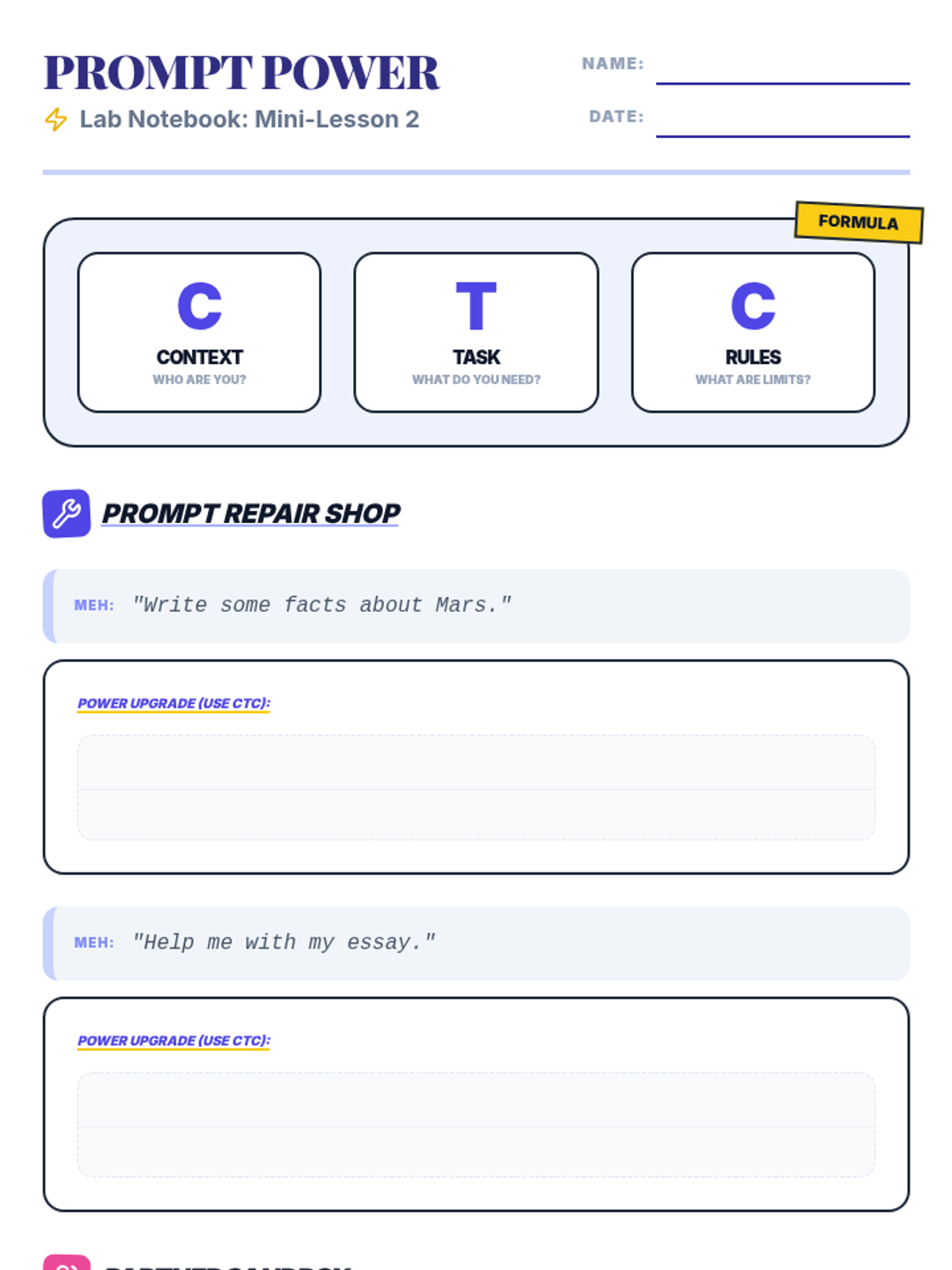
A student worksheet for Mini Lesson 2. Consolidated to a single page with high content density, clear writing lines, and a handy toolkit footer for printing efficiency.
A slide deck for Mini Lesson 2 that teaches students how to write specific, context-heavy AI prompts to get better support for their projects. Updated with sketch aesthetic, CTC formula clarity, and teacher notes. (Final font size adjustment)
Teacher guide for Mini Lesson 1, optimized for printing with clear instruction blocks, page-break prevention, and consolidated layout.
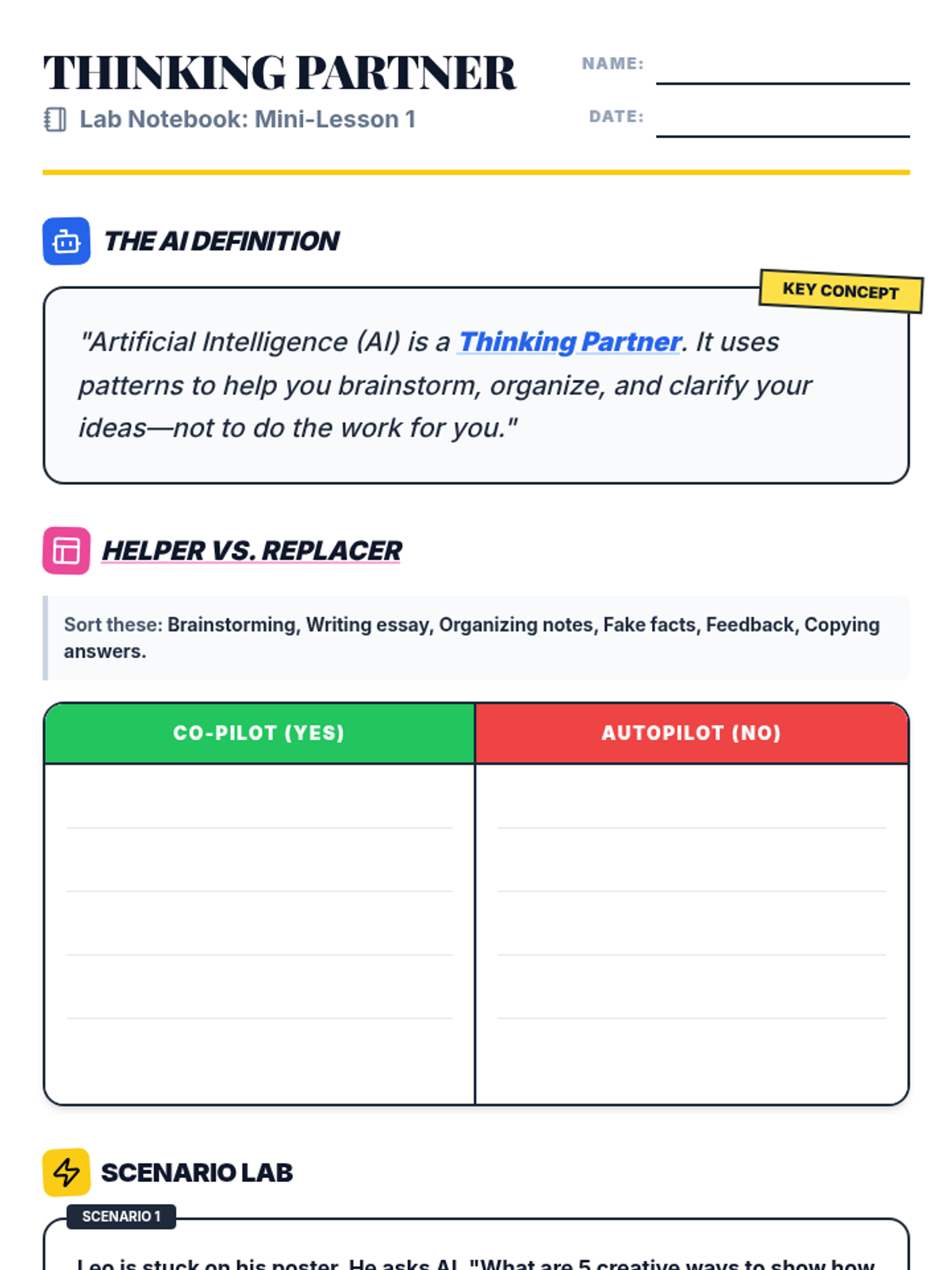
A student worksheet for Mini Lesson 1. Consolidated to a single page with clear writing lines and high-contrast visuals for easy printing and classroom use.
A slide deck for Mini Lesson 1 that introduces AI as a co-pilot for projects, emphasizing the difference between using AI to support thinking versus replacing thinking. Now with teacher notes and sketch aesthetic. (Final font size adjustment)
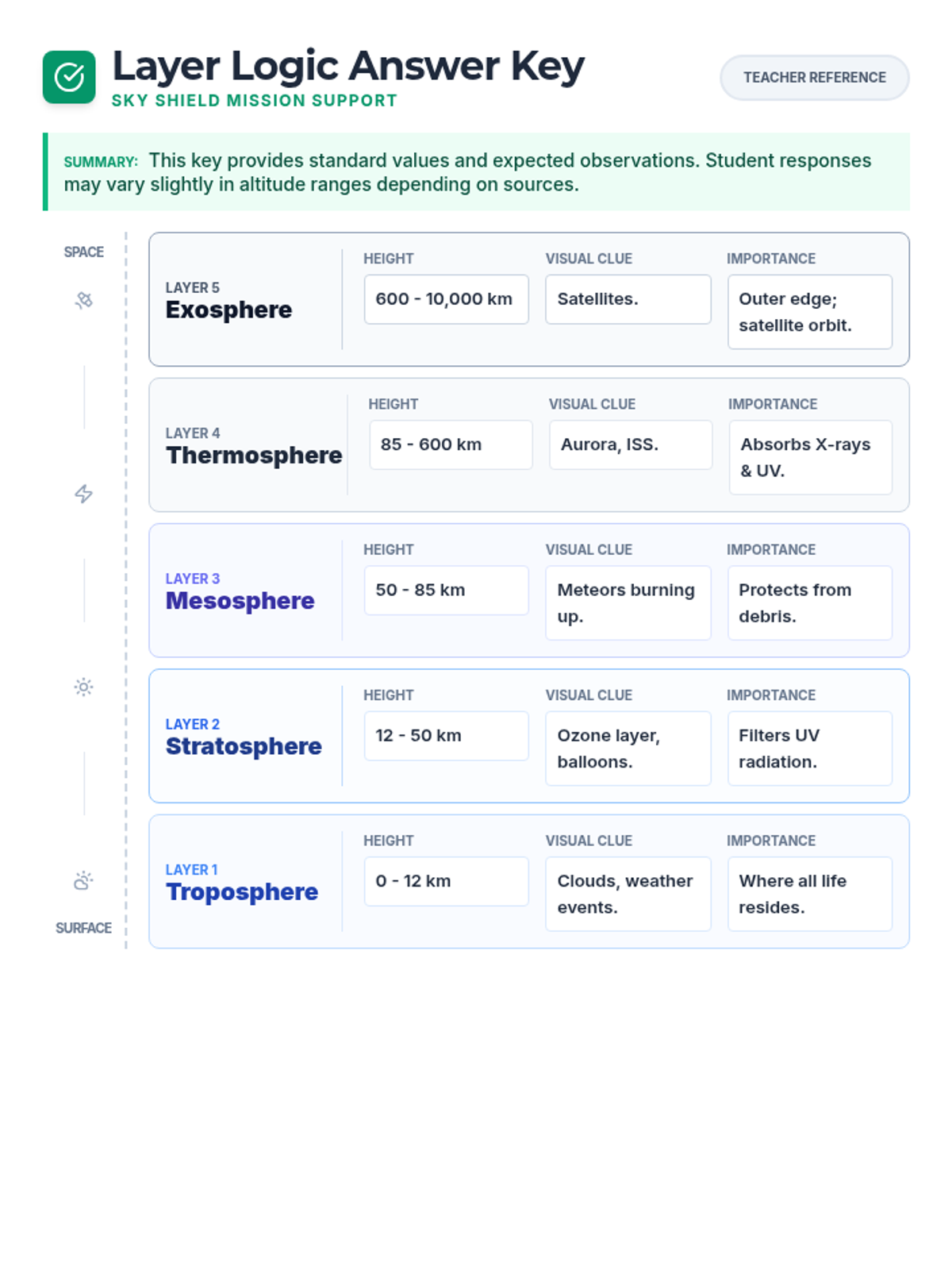
A detailed teacher answer key for the Layer Logic Organizer, providing altitude ranges, visual characteristics, and the biological or scientific significance of each atmospheric layer. Revised to ensure single-page layout and improved visual clarity.
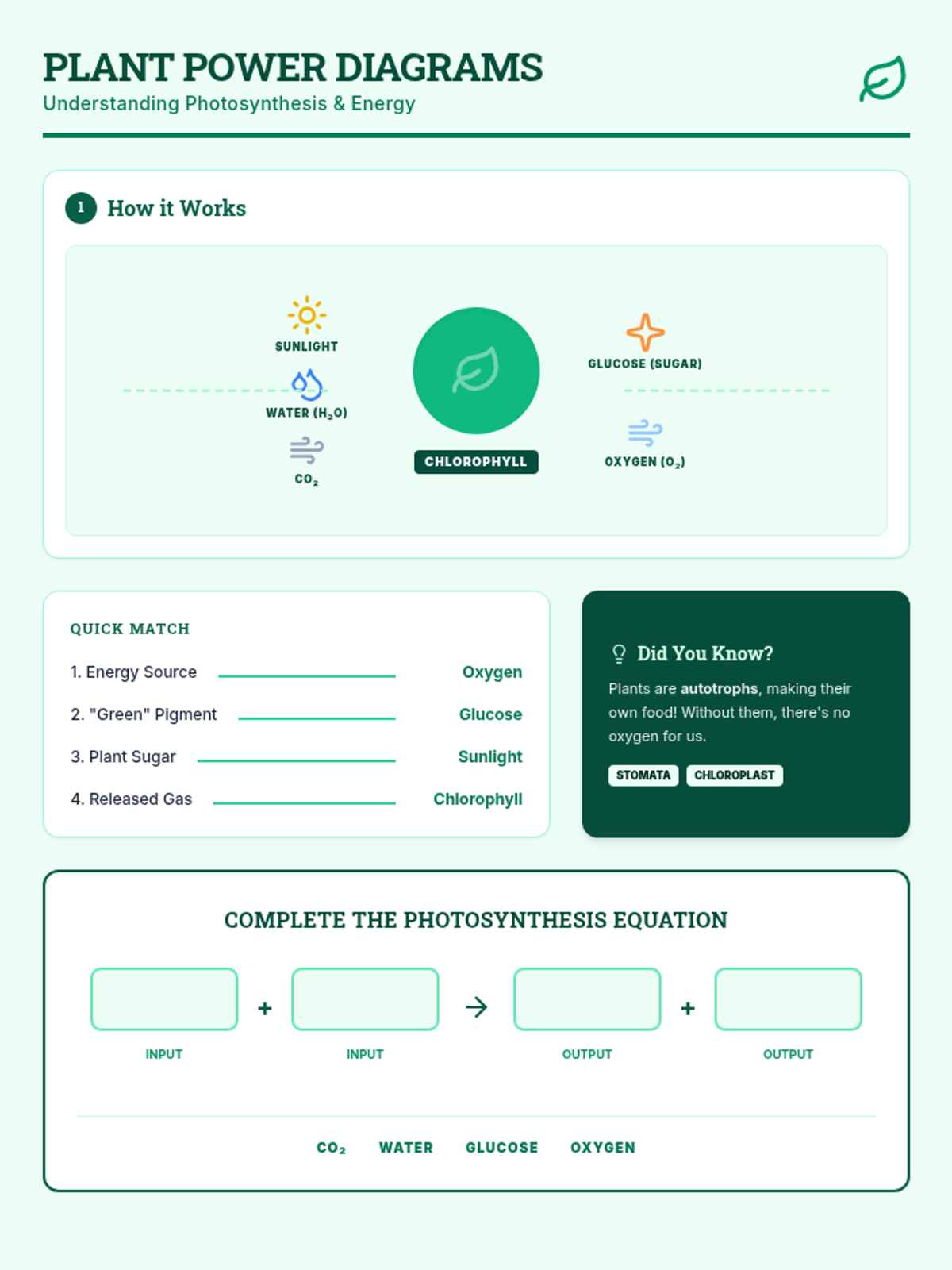
A visual aid and worksheet for 5th-grade students to learn the process of photosynthesis, including diagrams of inputs/outputs and a labeling activity. Revised to use proper subscripts and fit on a single page.
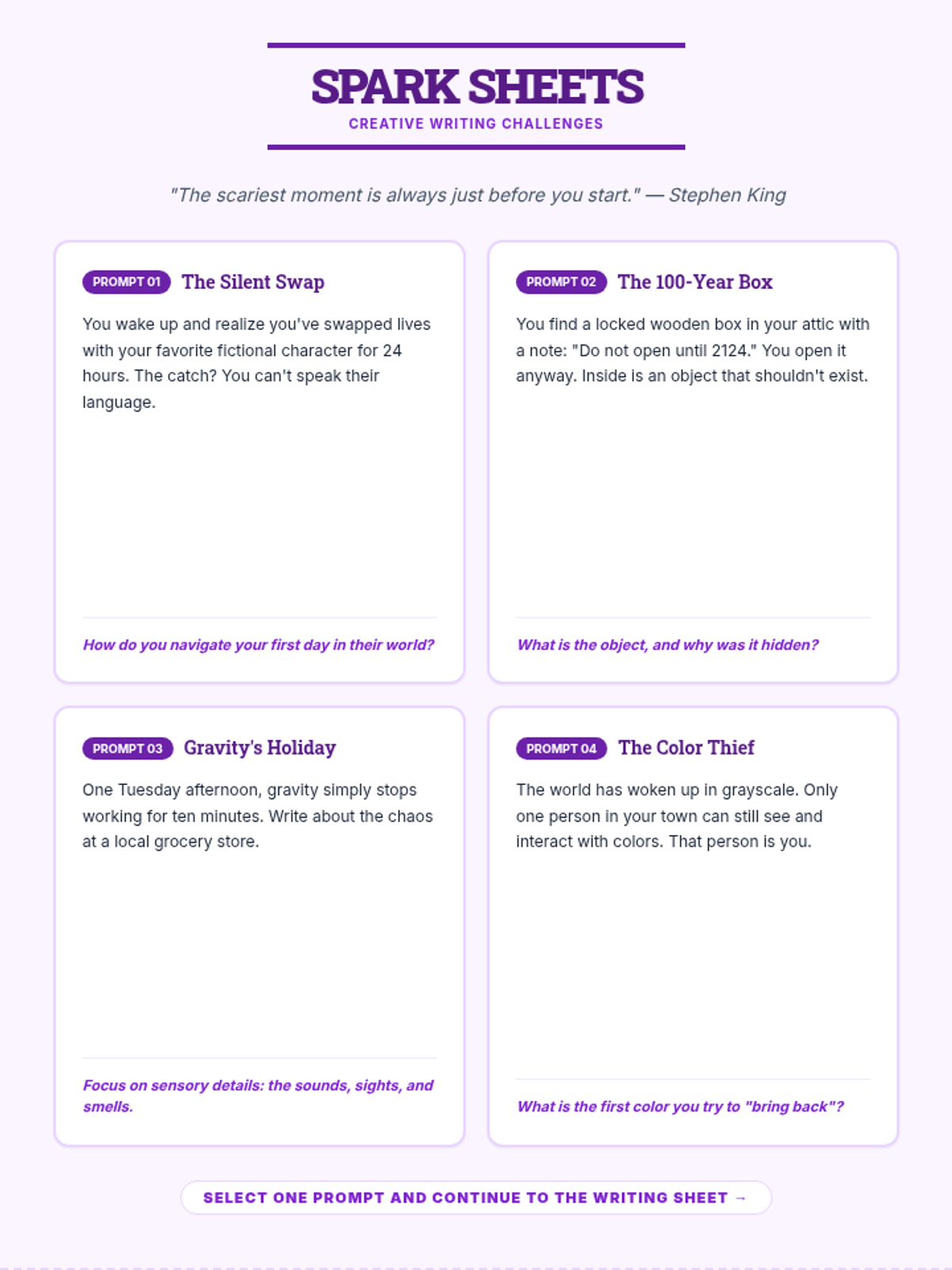
A collection of engaging creative writing prompts for middle school students, featuring a mix of sci-fi, fantasy, and realism with a large, dedicated student writing area on a separate page. Revised for improved contrast and layout.
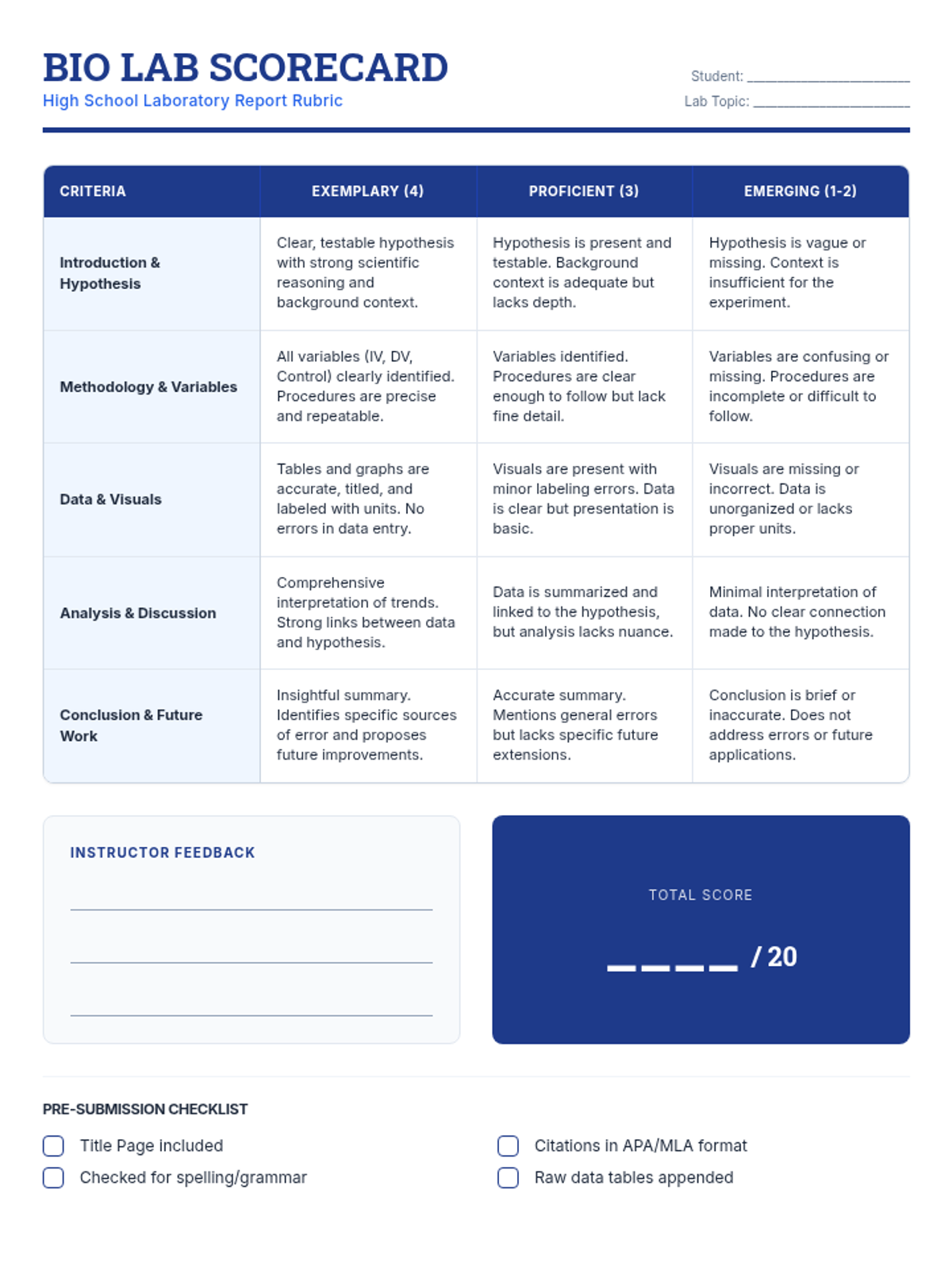
A professional grading rubric for high school biology lab reports, featuring clear criteria, point values, and a pre-submission checklist. Revised to fit on a single page with improved feedback line contrast.