A set of printable matching cards featuring -at family words and corresponding pictures, designed for lamination and repetitive use. Fits on one page.
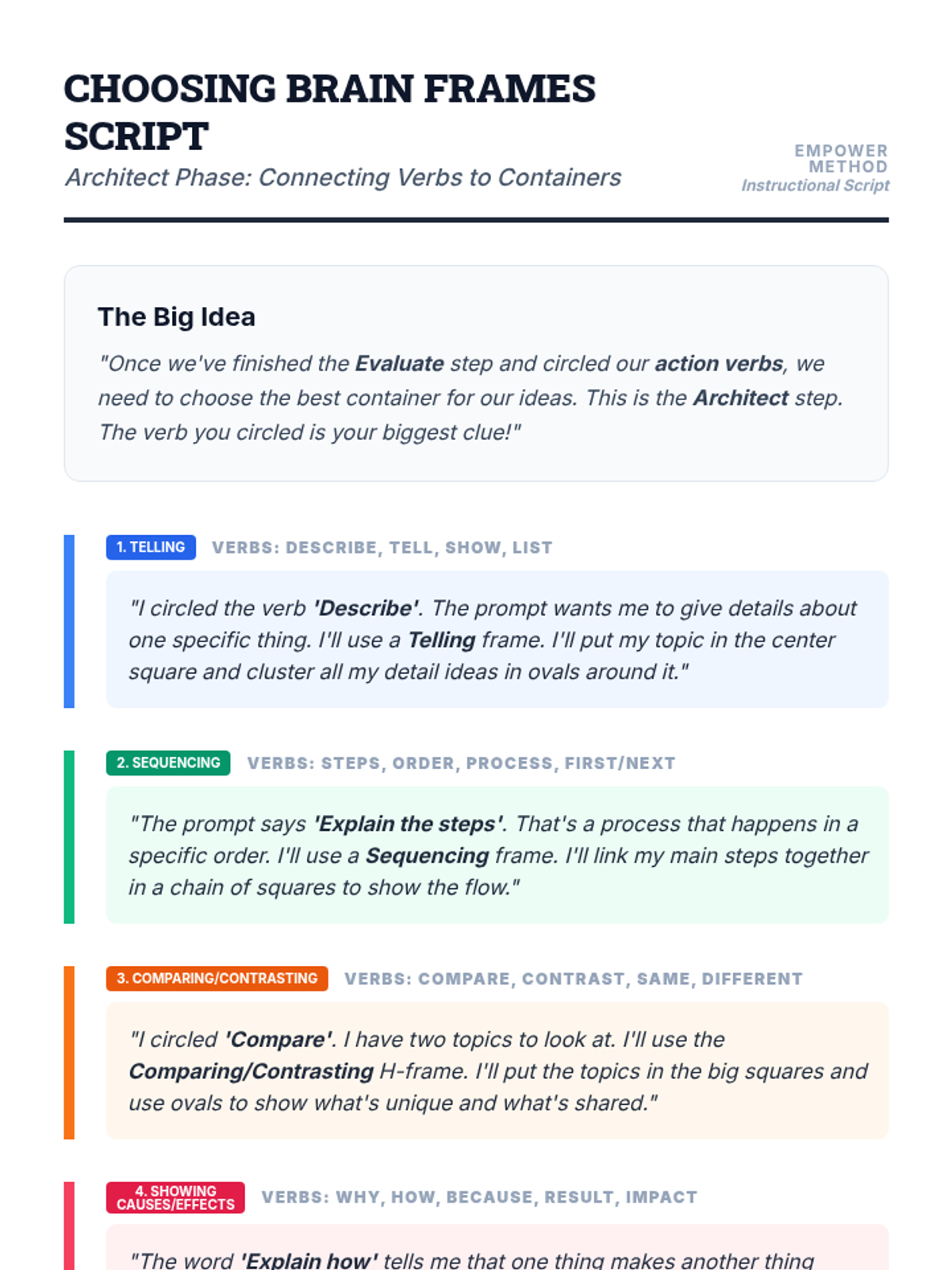
A teacher's think-aloud script for selecting the correct Brain Frame based on the action verbs identified during the Evaluate step of the EmPOWER writing method.
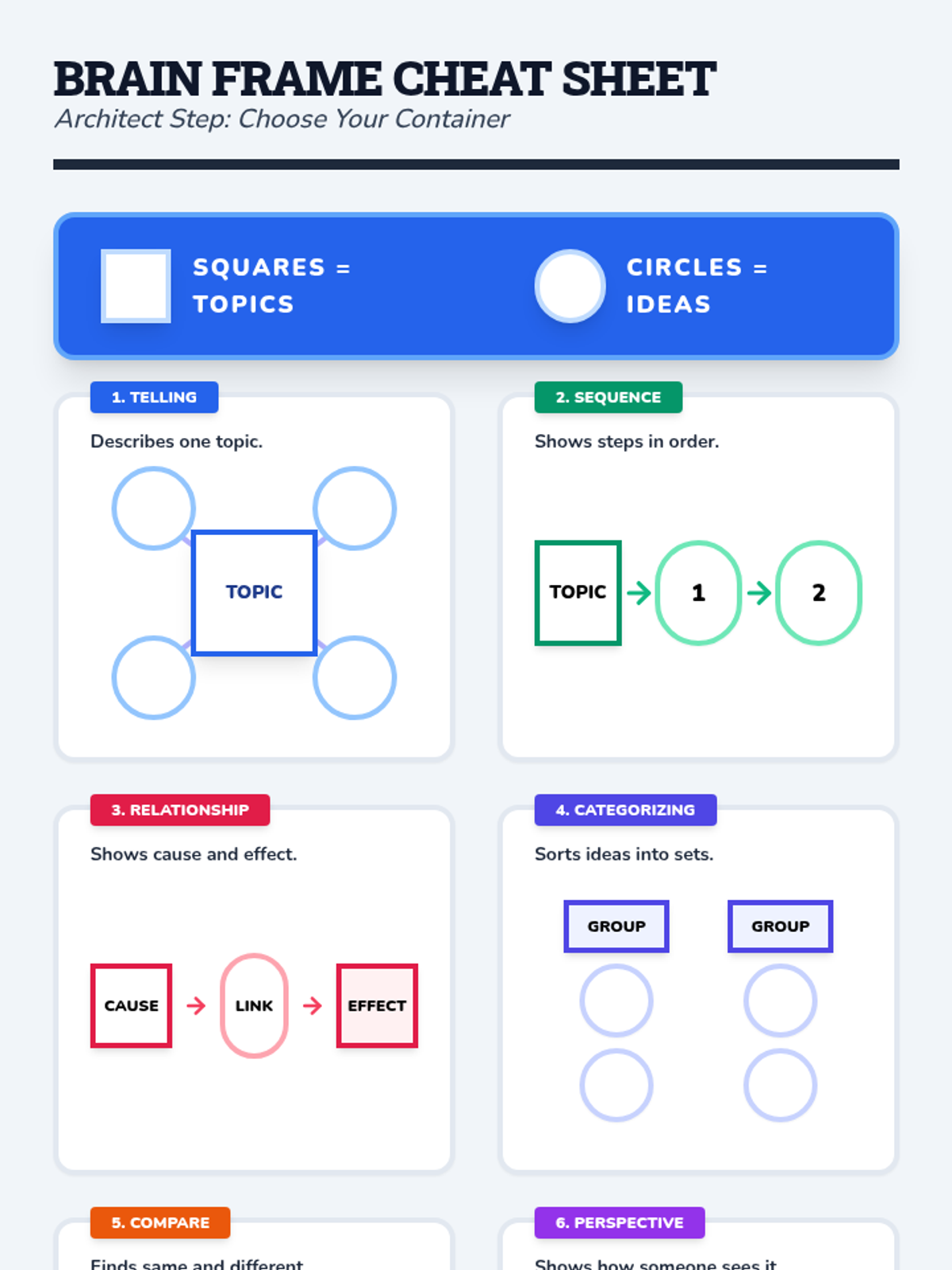
A comprehensive one-page reference guide showing all 6 EmPOWER Brain Frames with the correct visual coding (topics in squares, ideas in ovals) based on the provided reference image. Updated with specific action verbs for each frame.
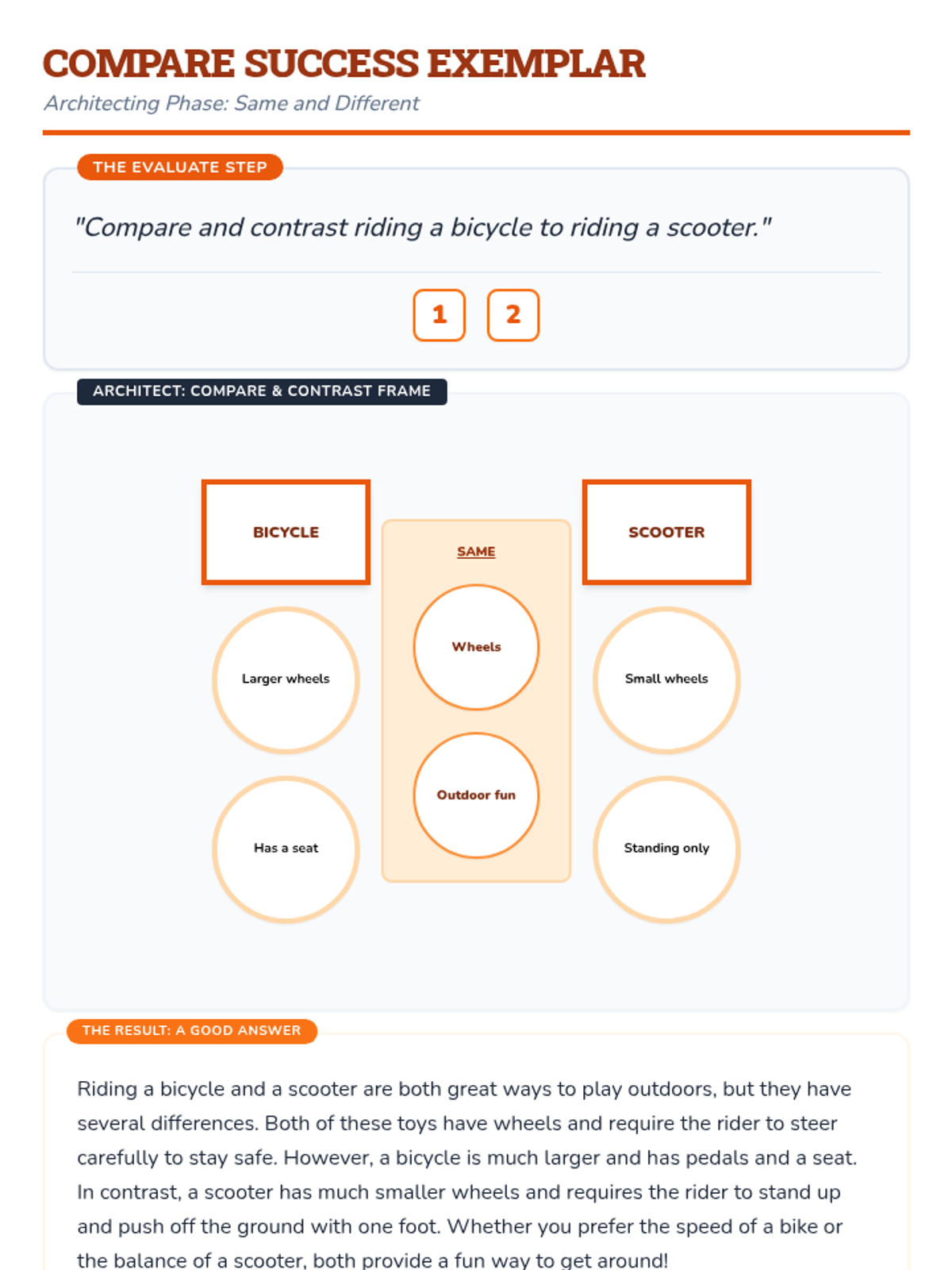
A success exemplar for the Comparing/Contrasting Brain Frame, showing how to evaluate a comparison prompt, architect the plan using the correct visual structure (H-frame with ovals), and write the final balanced paragraph.
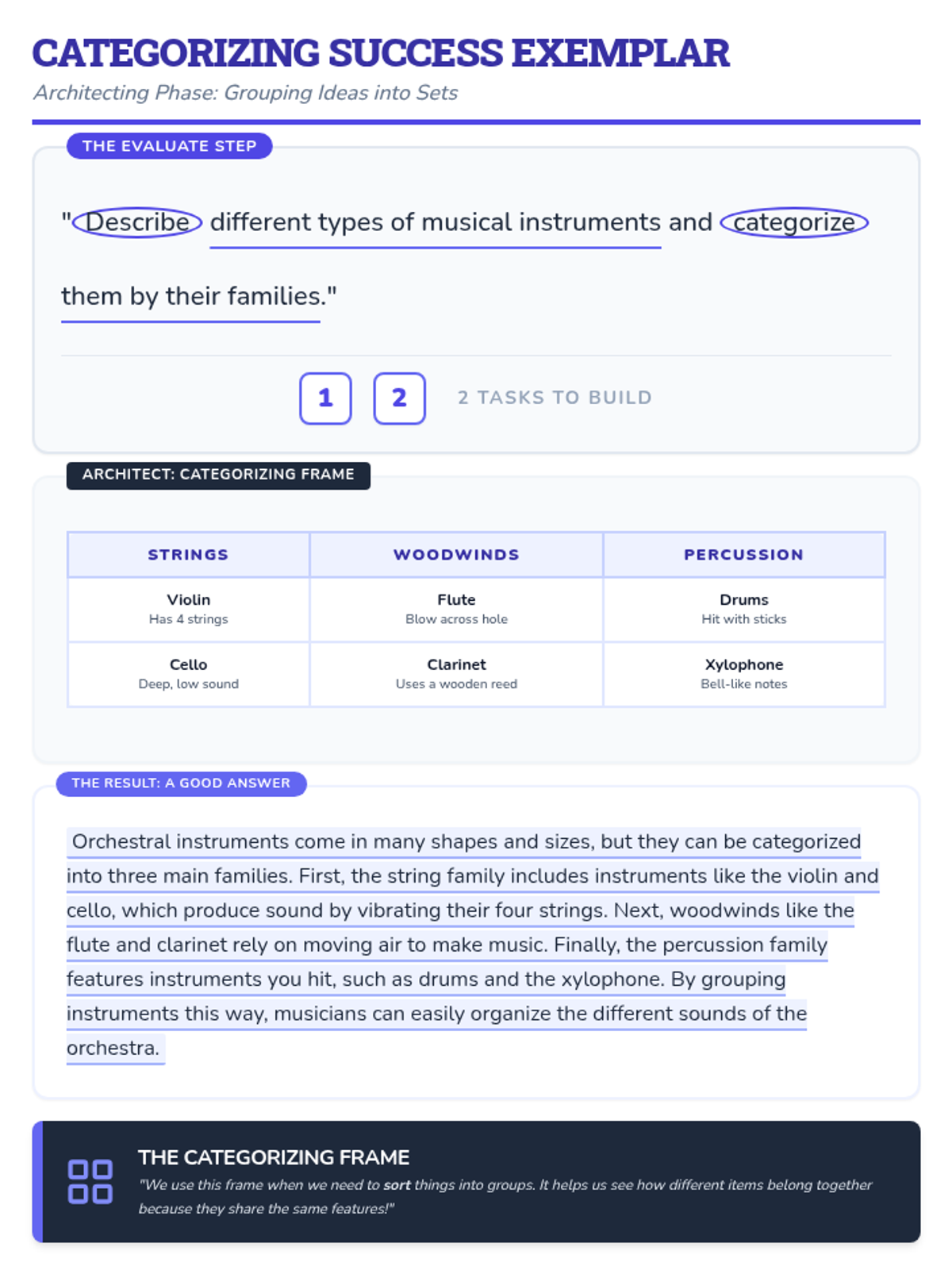
A success exemplar for the Categorizing Brain Frame, showing how to evaluate a sorting prompt, architect the plan using a categorical tree structure with lines for details, and write the final paragraph.
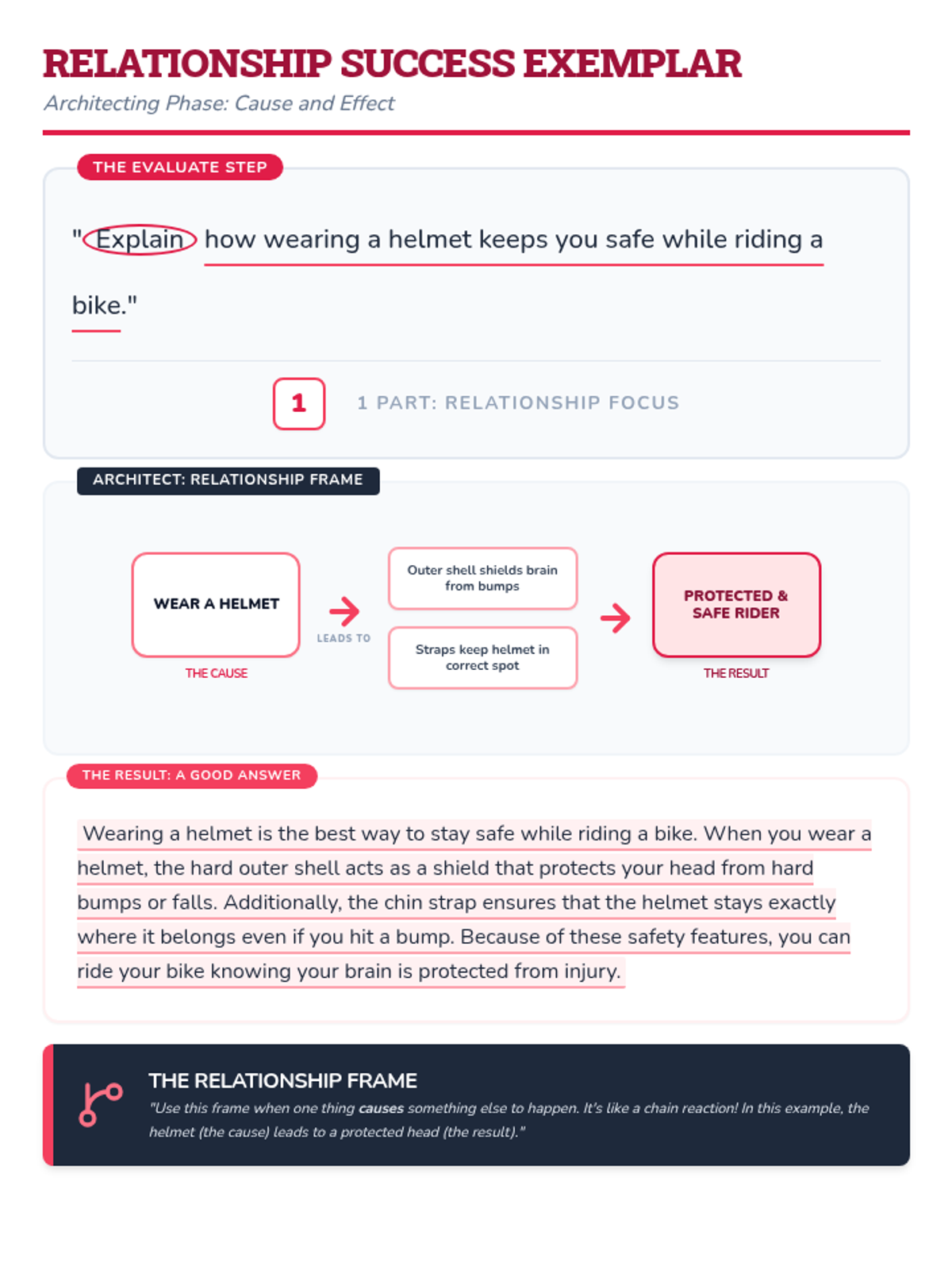
A success exemplar for the Showing Causes/Effects Brain Frame, showing how to evaluate a cause-and-effect prompt, architect the plan using the correct visual structure, and write the final paragraph.
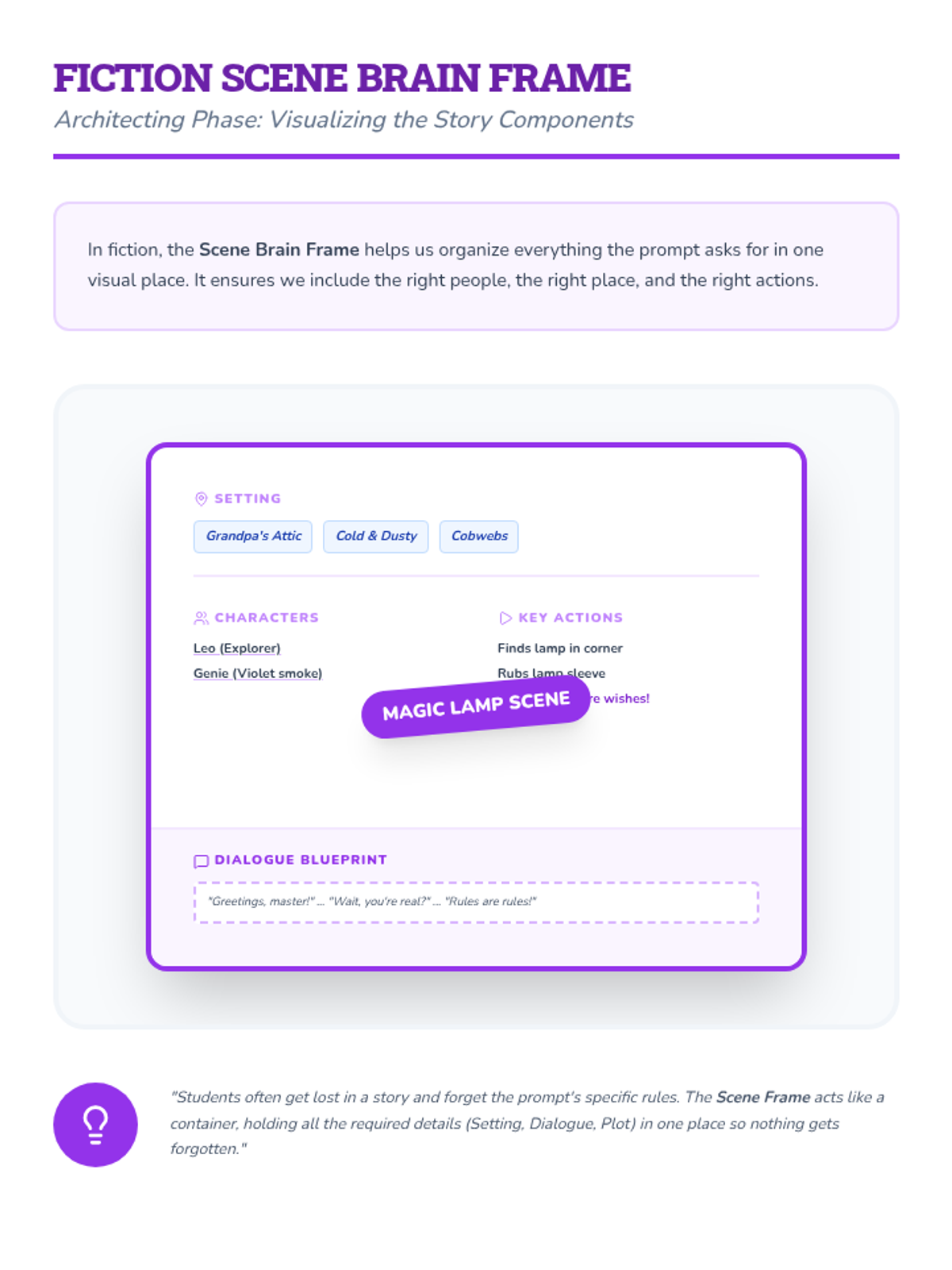
A student exemplar showing a combination of Sequencing and Telling Brain Frames for a fiction prompt, demonstrating how to use standard frames for narrative planning. Revised for connector alignment and strict shape coding.
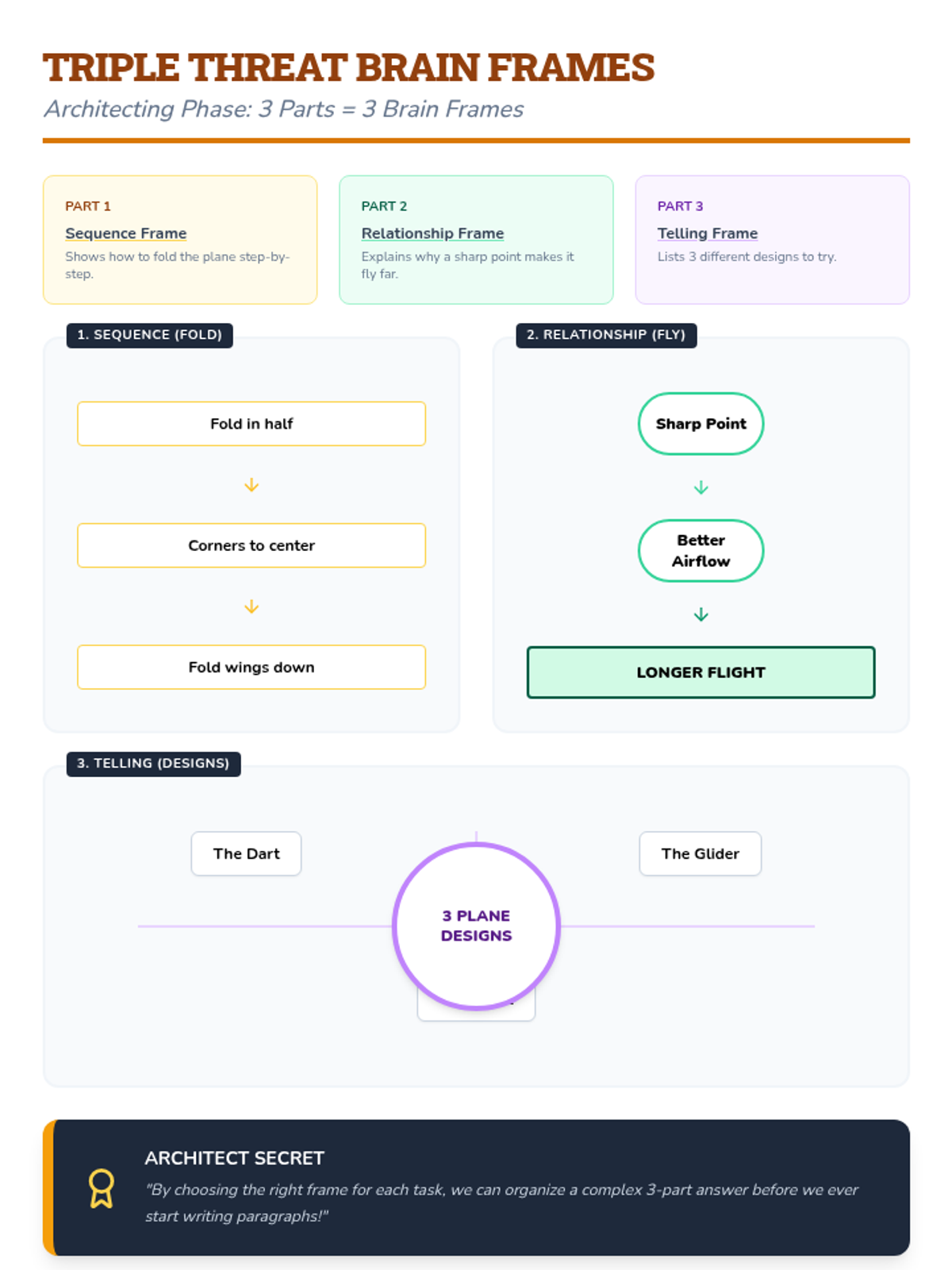
A student exemplar showing the three distinct Brain Frames chosen for the complex 'Paper Airplane' prompt, illustrating how to organize multi-part responses. Revised for horizontal sequencing and strict visual structure.
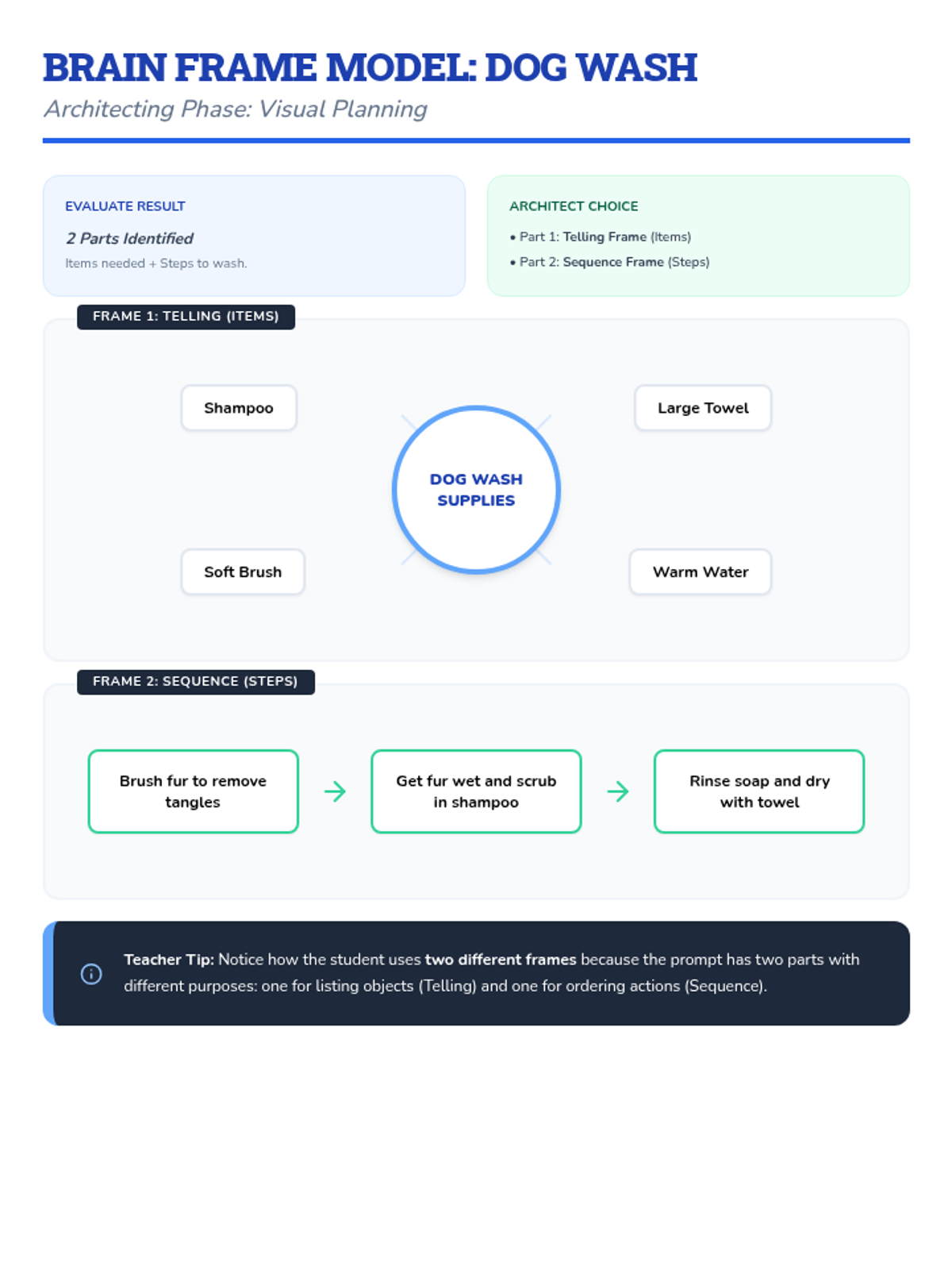
A student exemplar showing the chosen Brain Frames (Telling and Sequencing) for the 'Dog Wash' prompt, demonstrating the Architect step of EmPOWER with strict adherence to the visual coding. Revised for distinct visual structure.
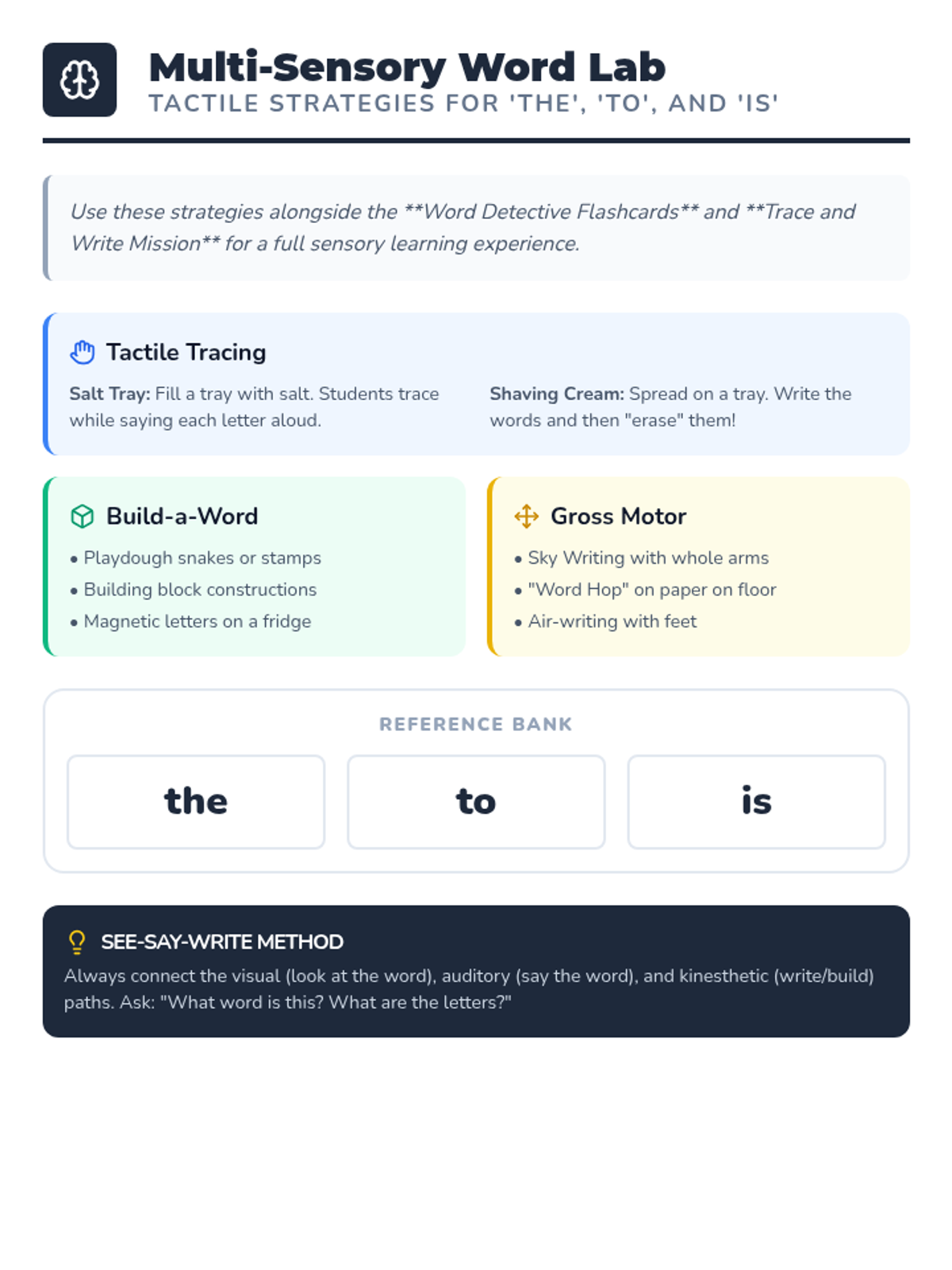
A condensed teacher guide for multi-sensory sight word instruction. Includes specific tactile strategies, a printable word bank reference, and pedagogical tips.
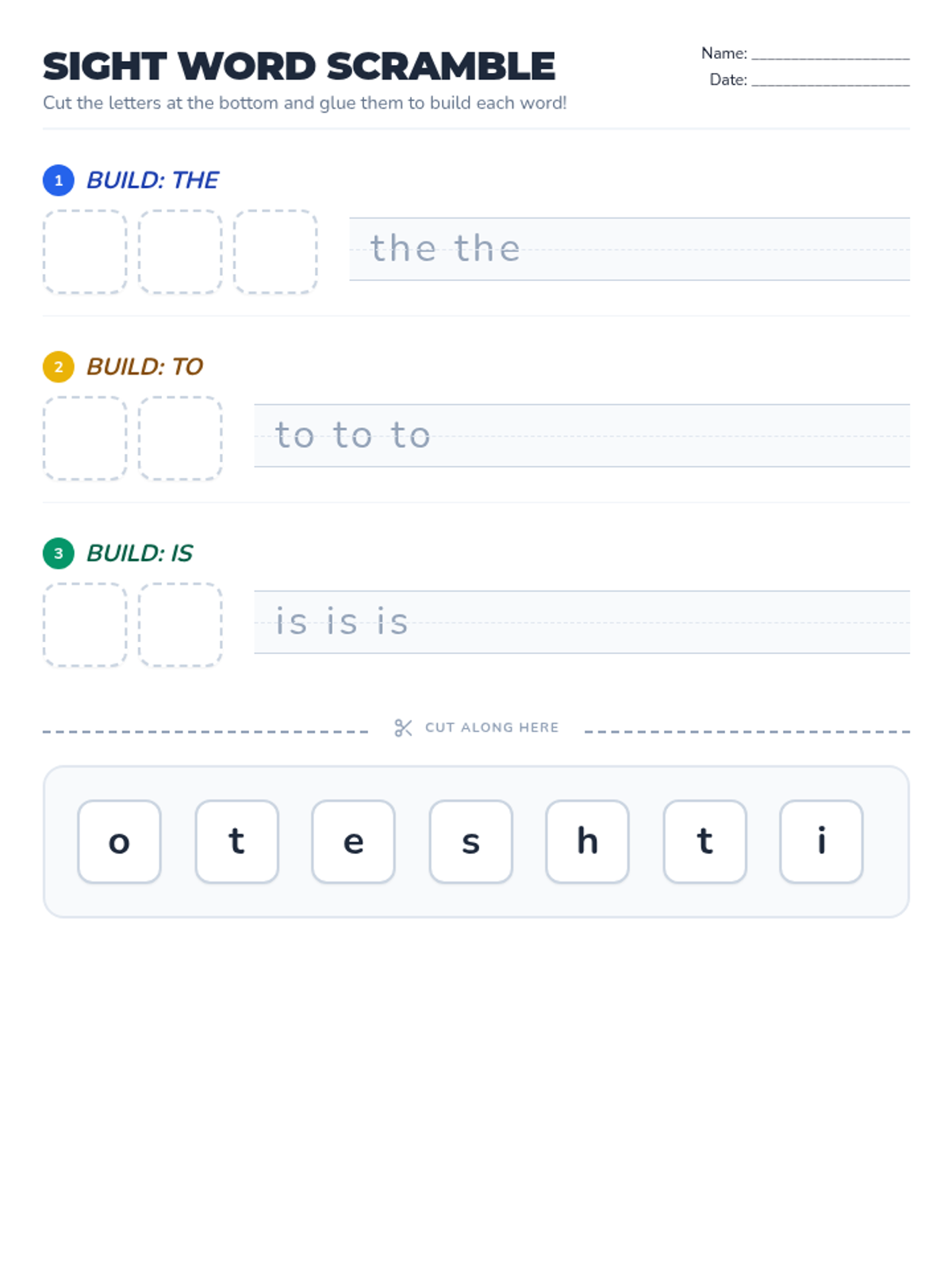
A single-page cut-and-paste activity where students build sight words using scrambled letter tiles. Designed for efficient layout on standard paper.
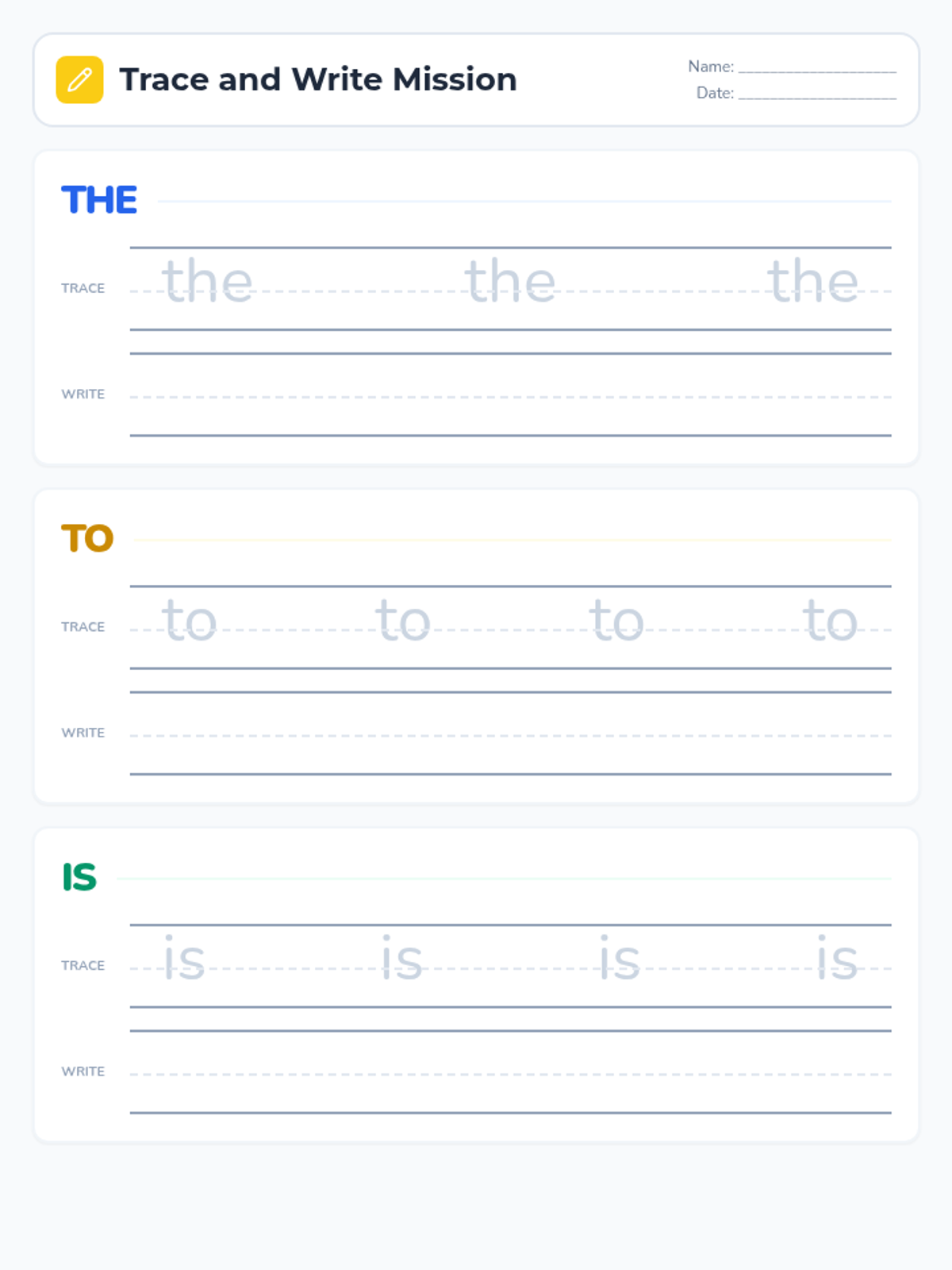
A high-contrast tracing and writing worksheet for sight words 'the', 'to', and 'is'. Features primary writing lines with dashed mid-lines for proper letter formation guidance.
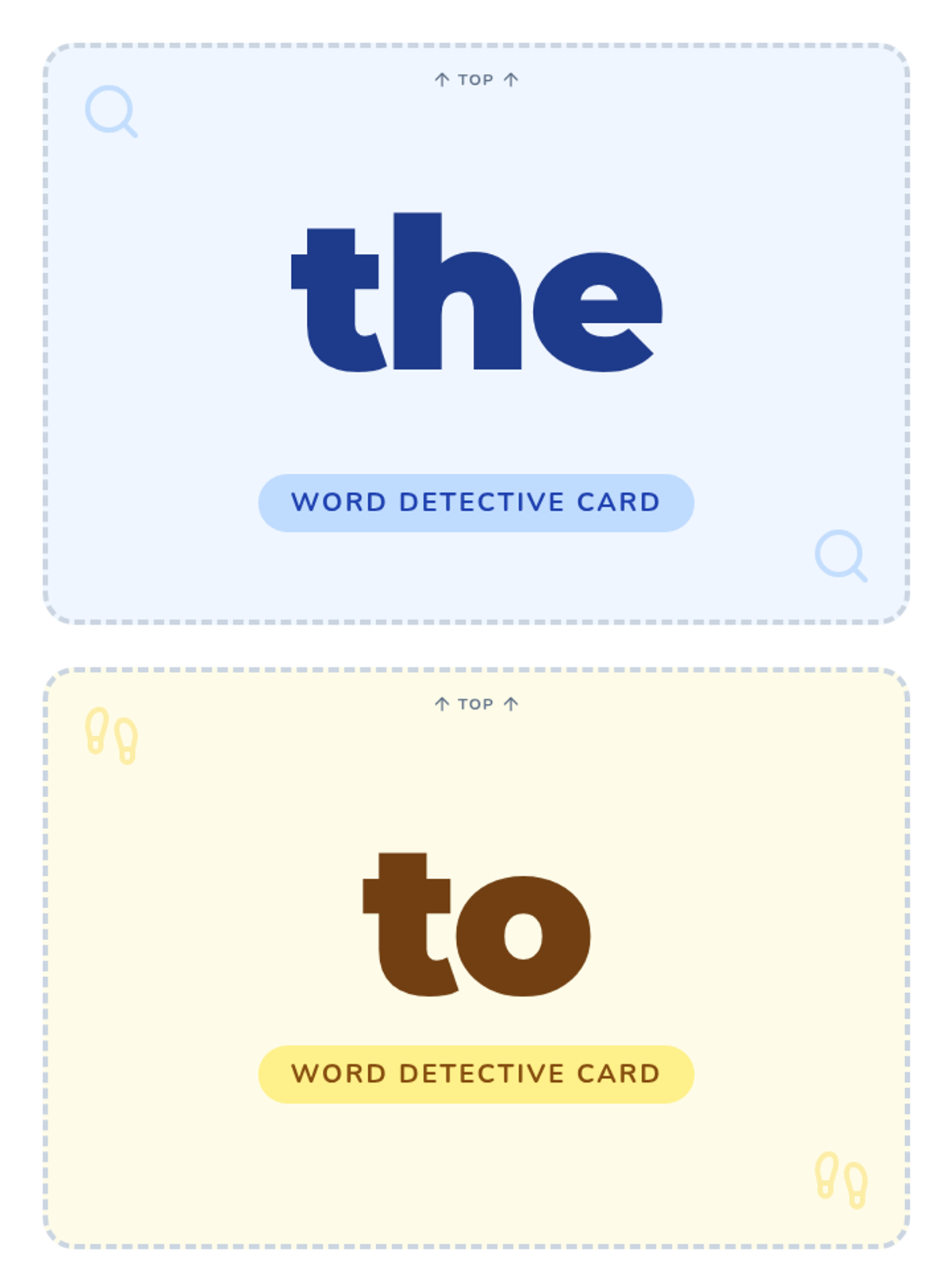
Large-format sight word flashcards for 'the', 'to', and 'is' featuring a Word Detective theme with bold fonts and orientation cues. Includes a blank template card.
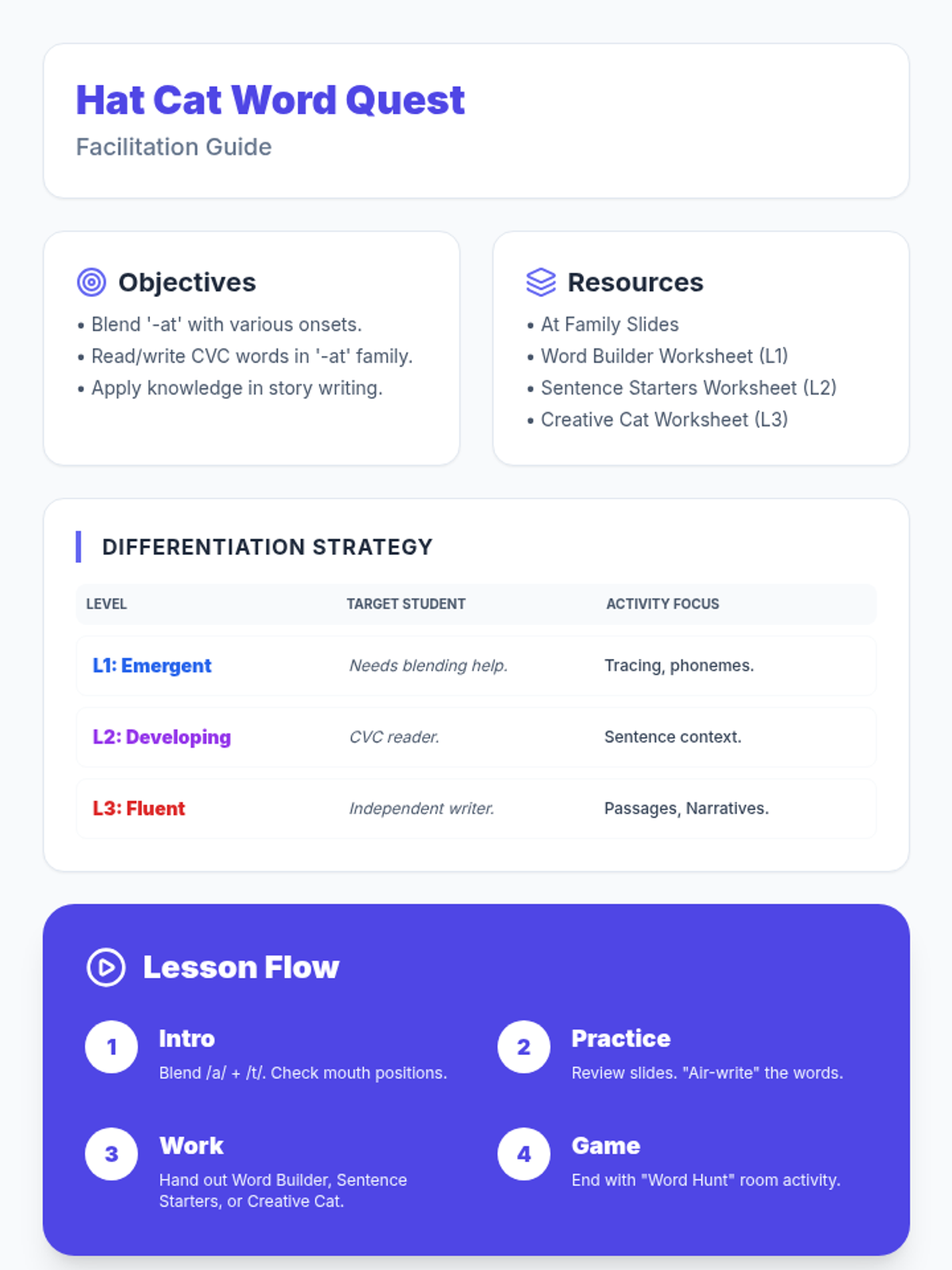
A comprehensive teacher guide for the '-at' word family lesson. Includes learning objectives, a detailed differentiation matrix, and an instructional sequence. Updated with improved contrast and layout stability.
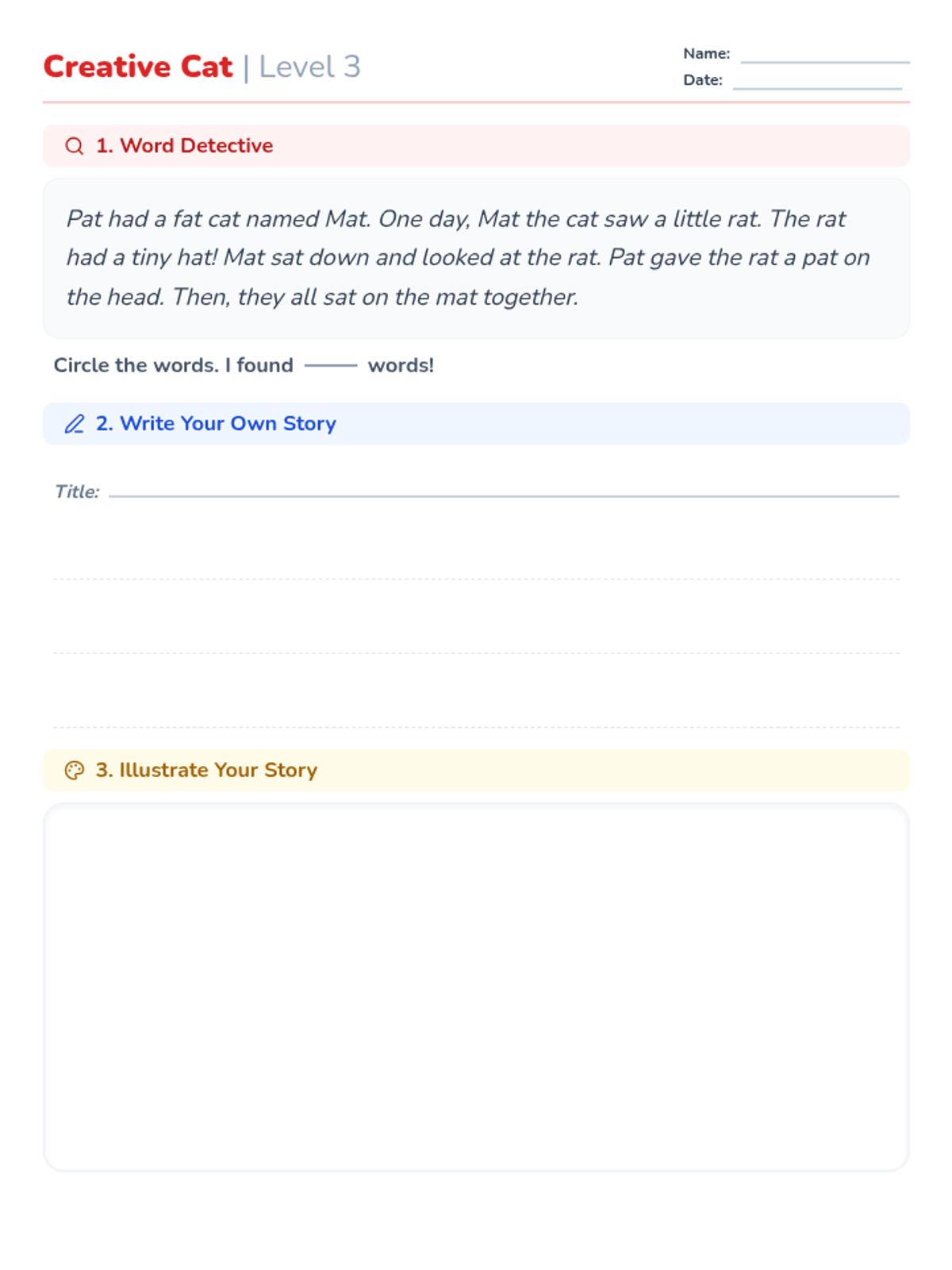
A Level 3 (Advanced) worksheet for the '-at' word family. Includes a reading passage, creative writing prompt, and illustration box. Updated to fit on one page and remove pre-highlighted answers.
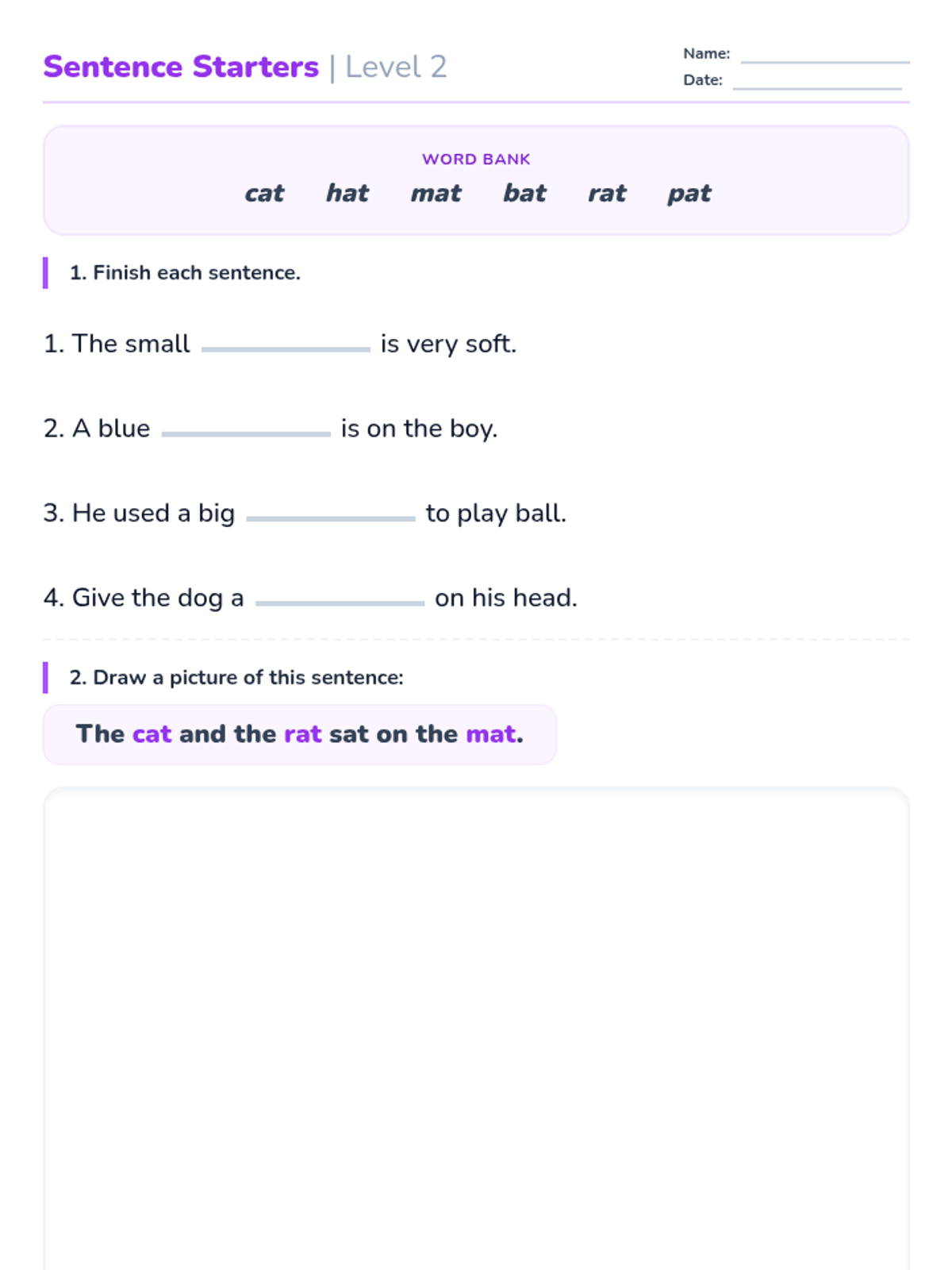
A Level 2 (Intermediate) worksheet for the '-at' word family. Students use a word bank to complete sentences and illustrate a sentence. Updated to fix word bank conflicts, improve pedagogical scaffolding, and ensure layout stability.
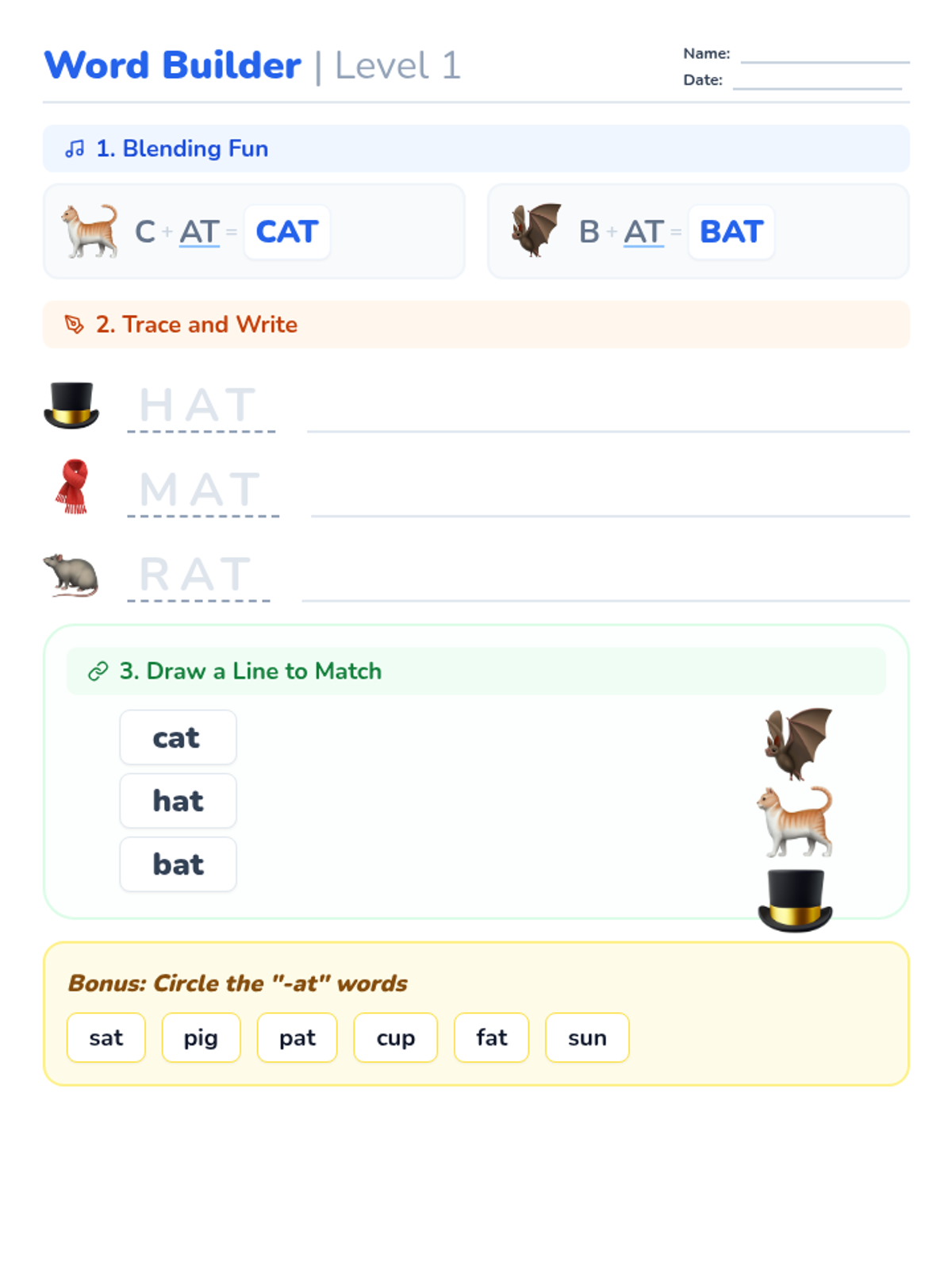
A Level 1 (Beginner) worksheet focusing on the '-at' word family. Includes phonemic blending, word tracing with improved visibility, visual matching, and a simple identification challenge. Layout optimized to prevent page-break issues.
A vibrant, engaging slide presentation designed to introduce the '-at' word family. Features word-building animations (conceptualized), visual associations with emojis, and simple reading practice sentences suitable for early learners. Updated with clearer visuals and improved contrast.
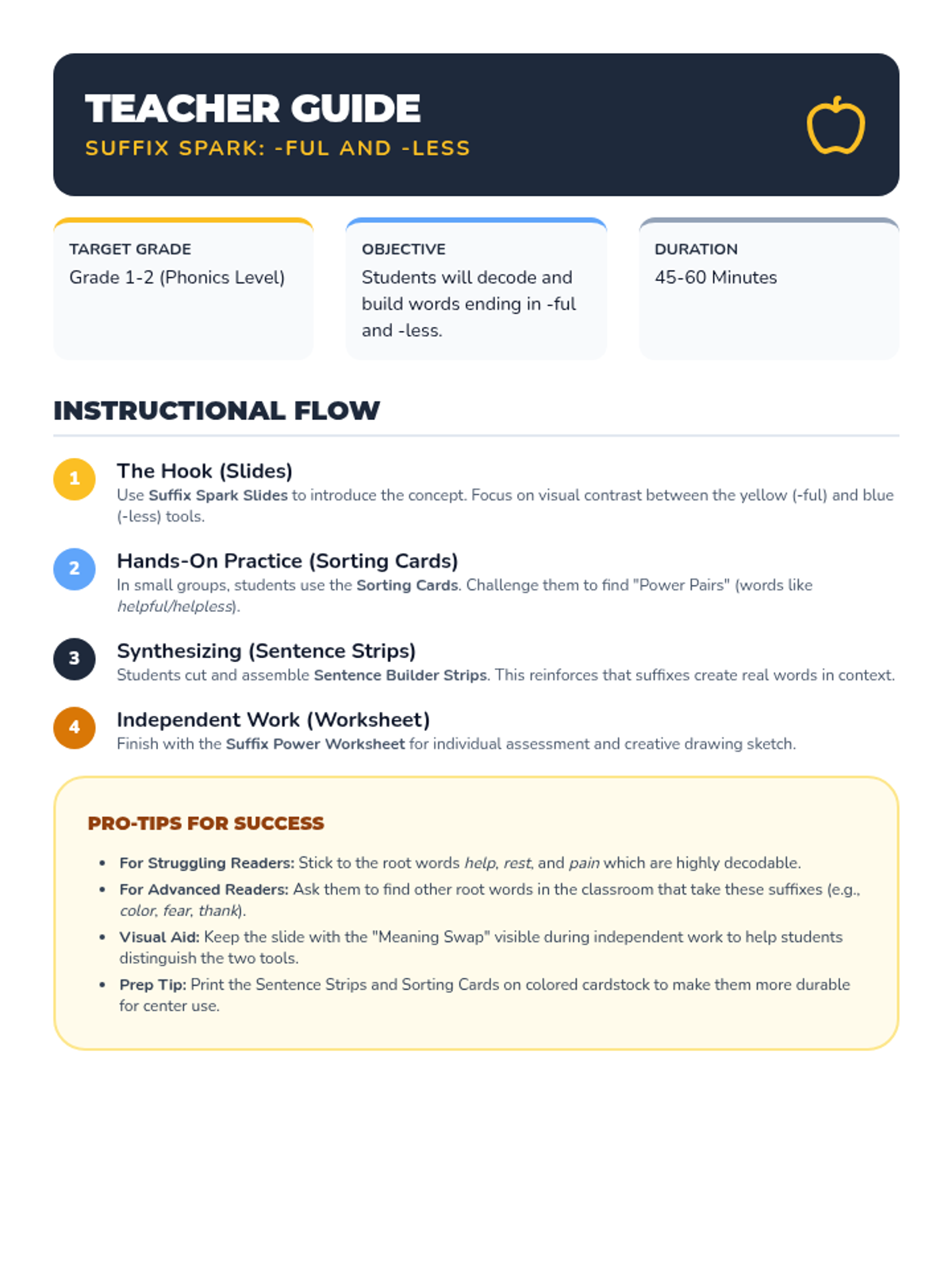
A comprehensive teacher guide for the Suffix Spark lesson, providing instructional flow, differentiation strategies, and tips for using the slide deck, cards, strips, and worksheet.
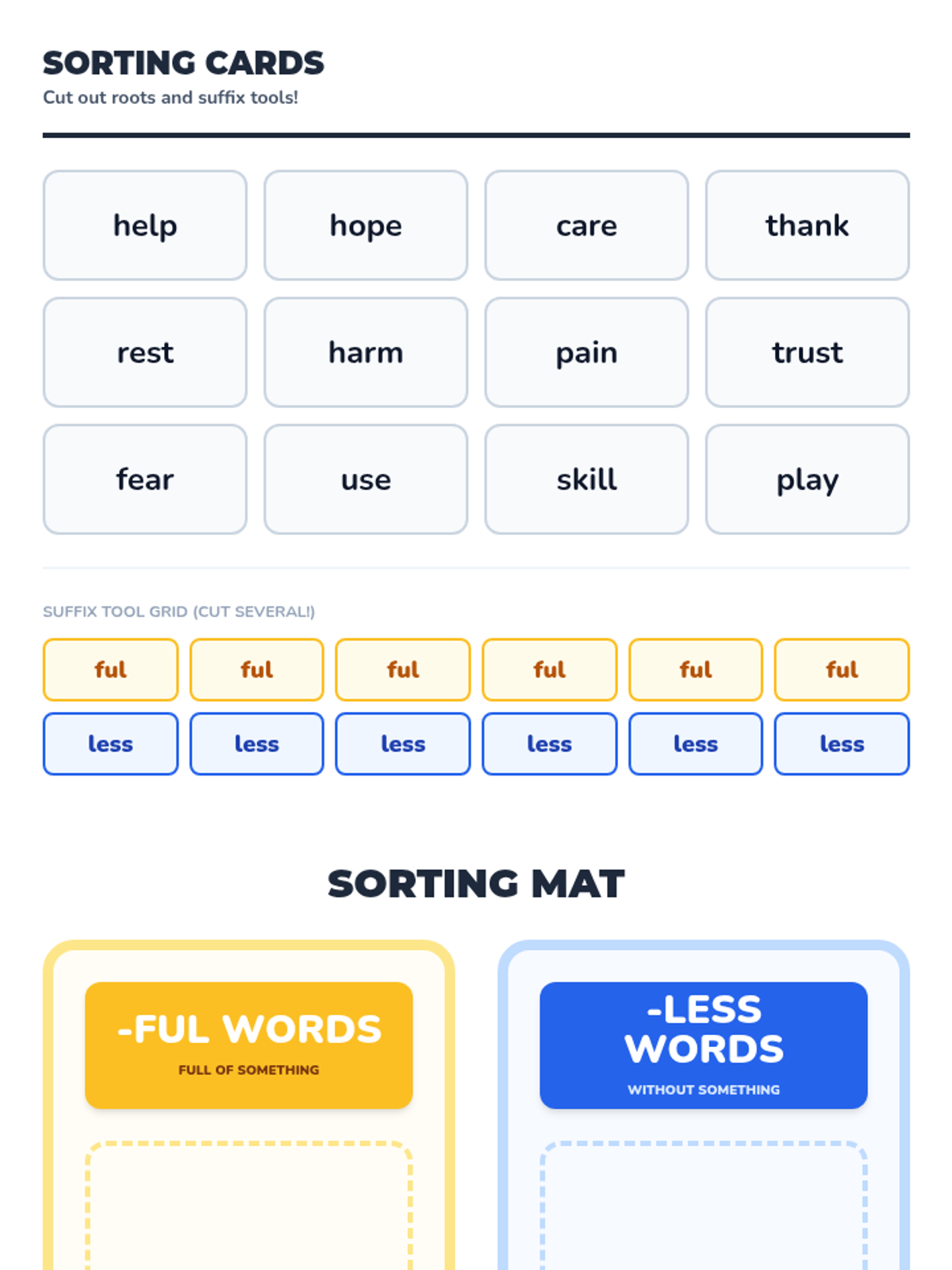
A set of printable vocabulary sorting cards featuring root words and suffix 'tools'. Includes a sorting mat with category headers to help students distinguish between words that take -ful and -less.
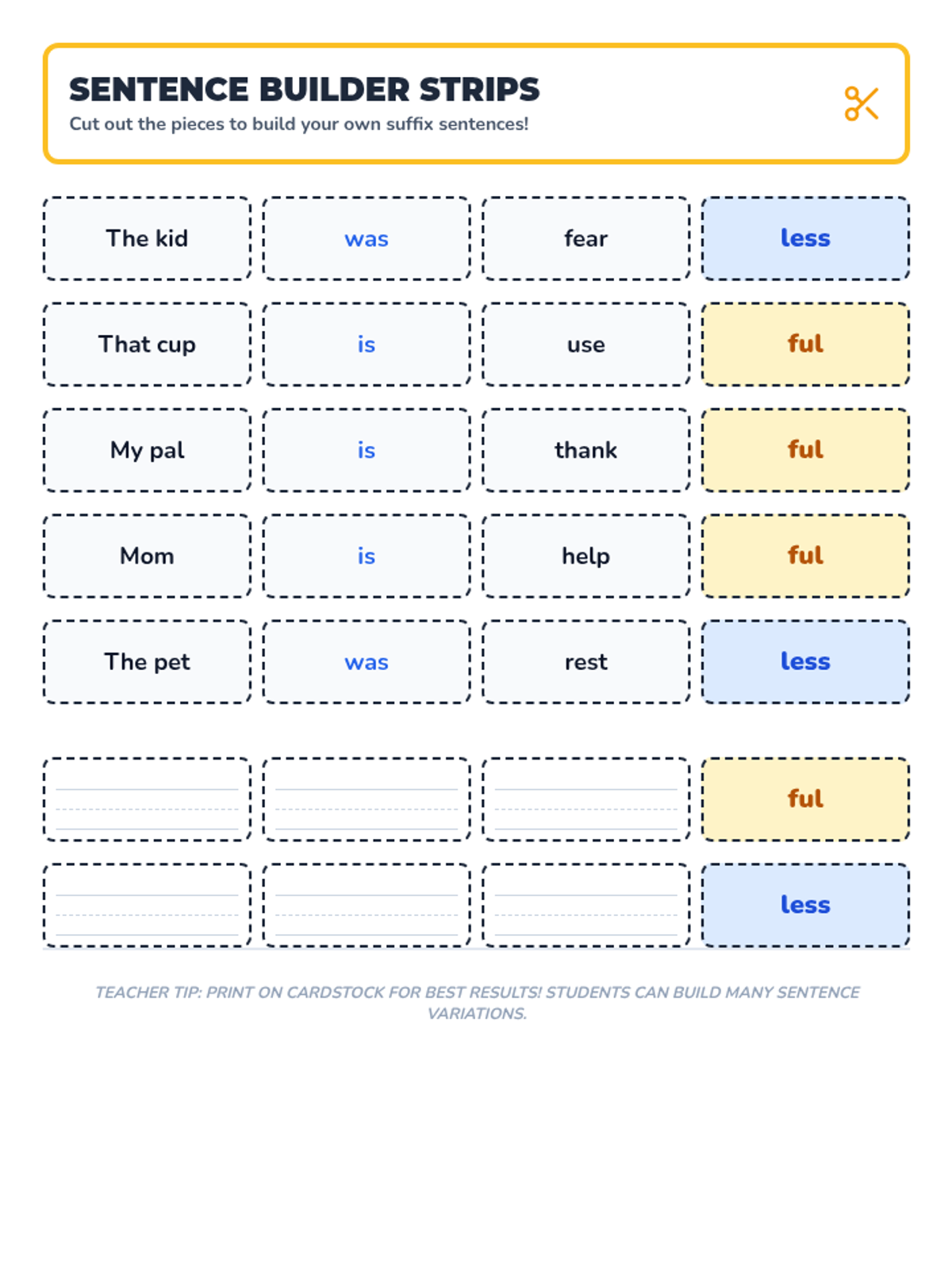
Printable sentence builder strips that allow students to physically assemble sentences using subjects, verbs, root words, and suffixes. Includes blank templates with primary writing lines for student-created sentences.