Teacher's guide for Lesson 4 where students connect area to arrays by organizing square tiles into rows and columns.
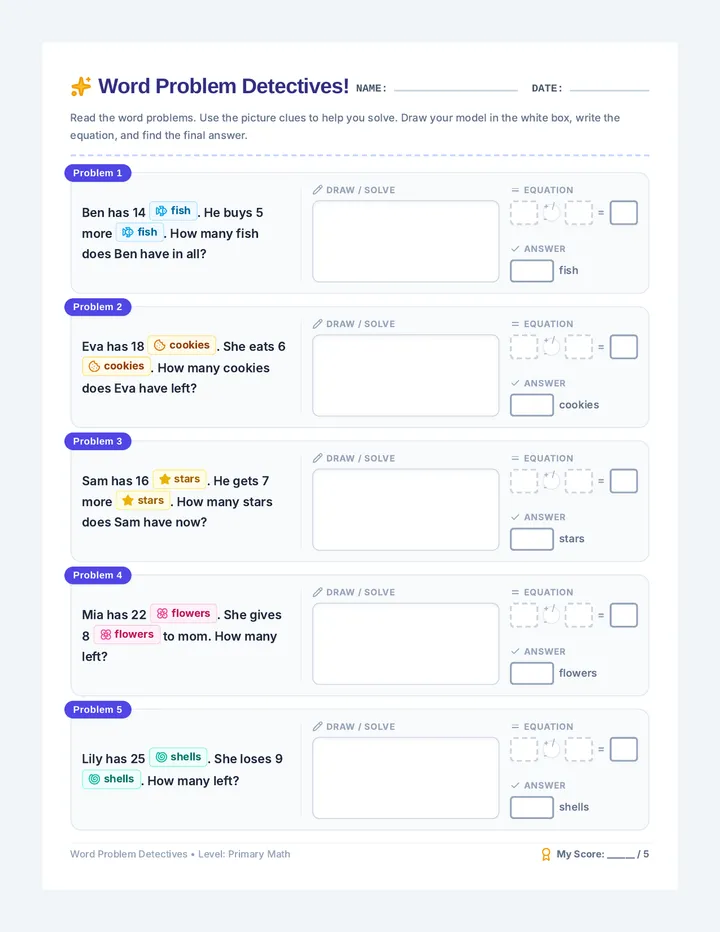
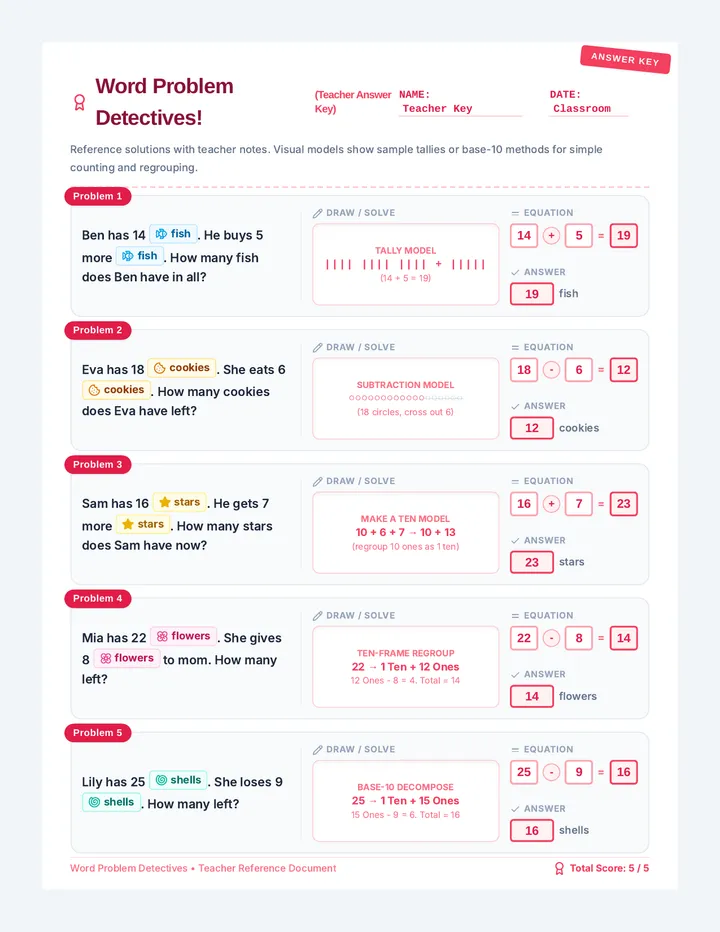
A primary math unit designed to build confidence in solving one-step addition and subtraction word problems. The sequence combines engaging visual cues, scaffolded modeling spaces, and explicit transition strategies between concrete and abstract math representation.
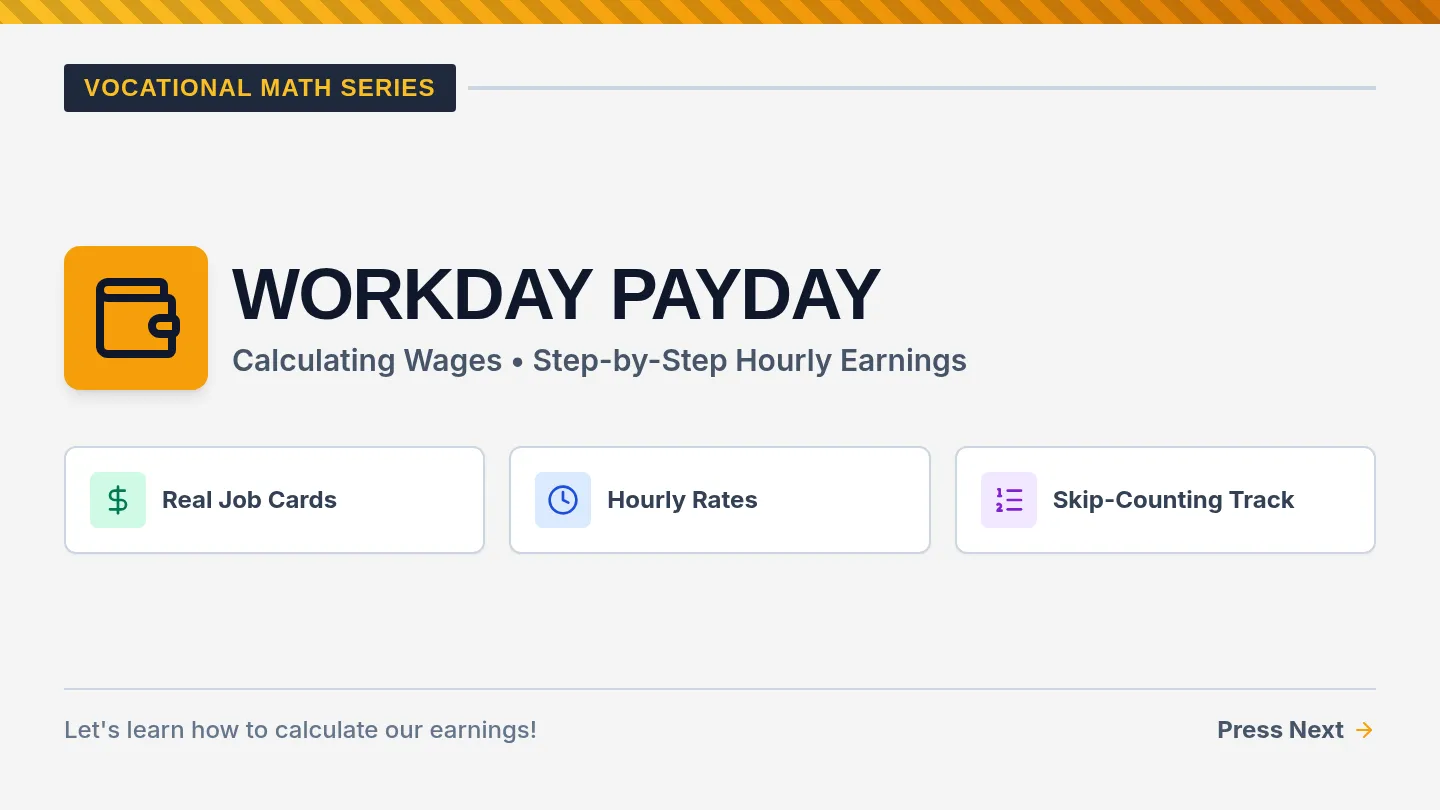
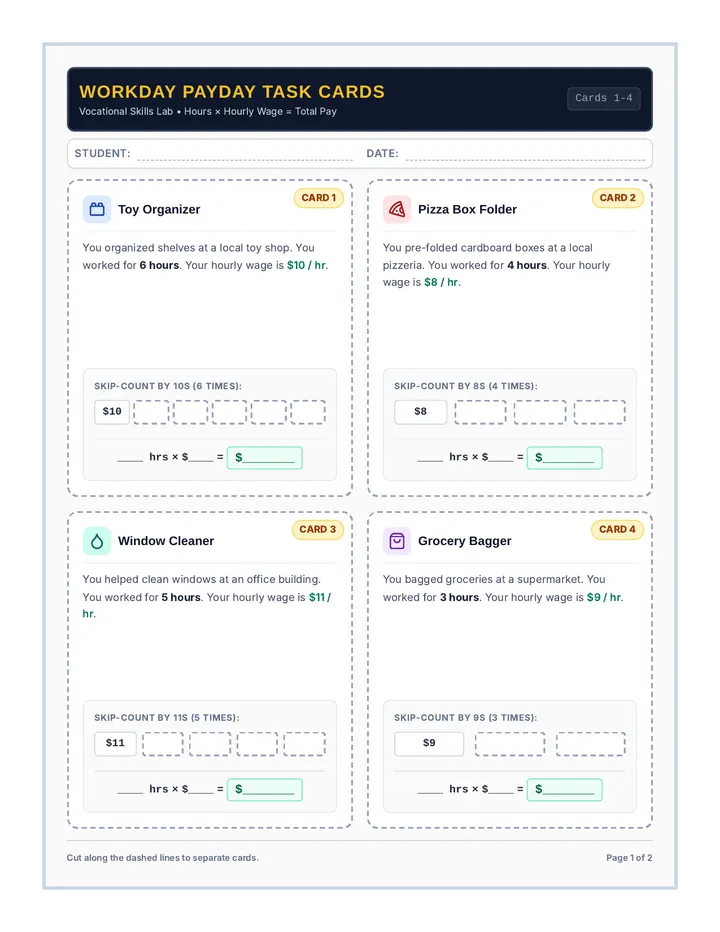
A practical vocational math lesson where students learn to calculate daily earnings by multiplying hours worked by hourly wages. Designed with real-world job-card contexts and supported by structured visual skip-counting.
A printable set of 8 vocational job-card task cards for student stations. Each card presents a distinct workplace scenario with clear numbers and visual guides to support independent double-digit skip-counting and wage calculations.
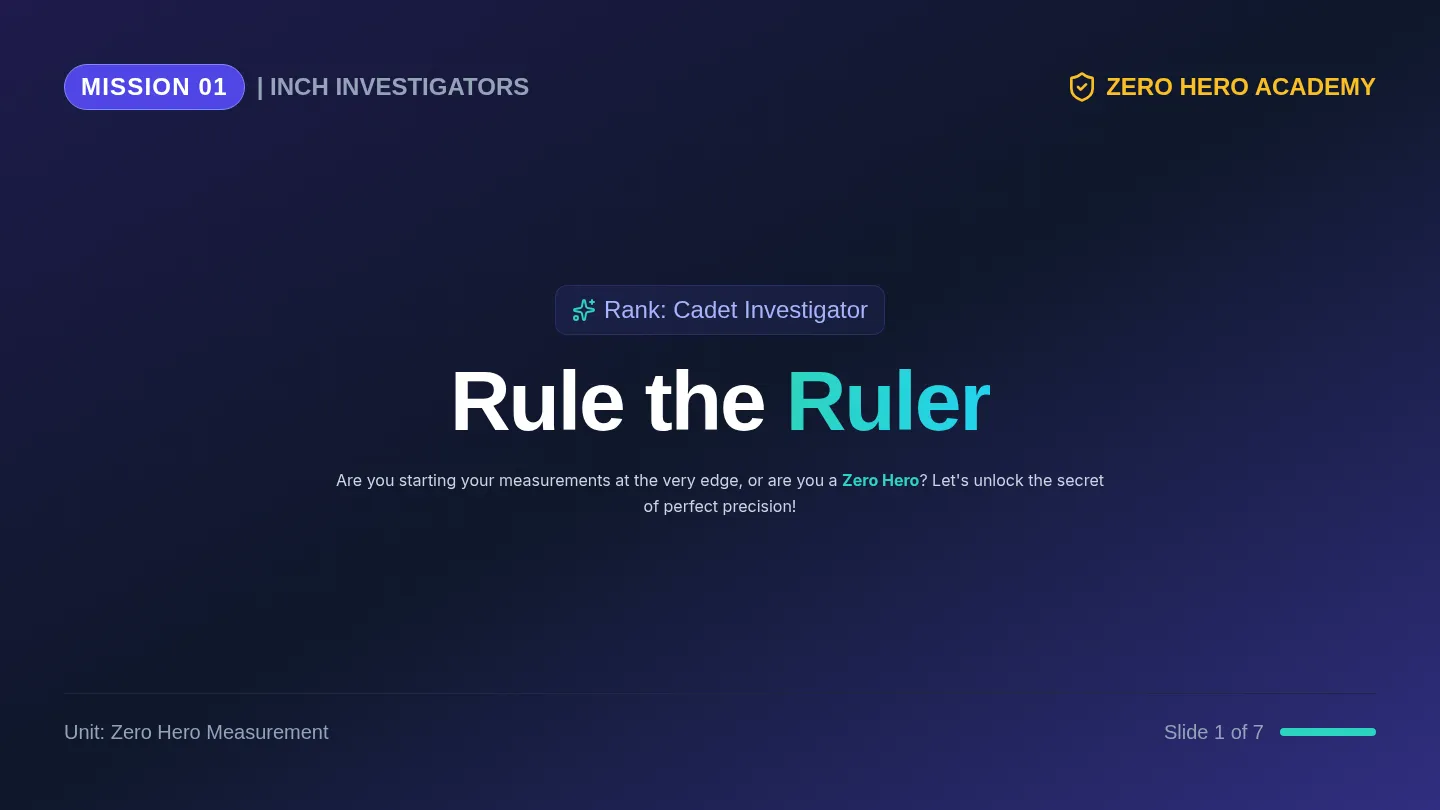
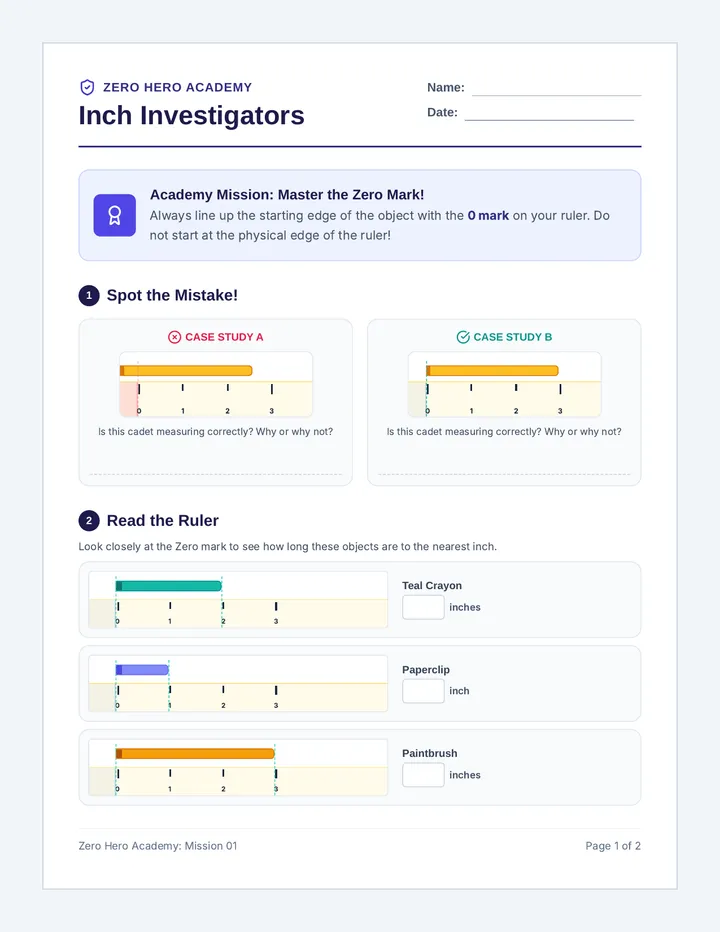
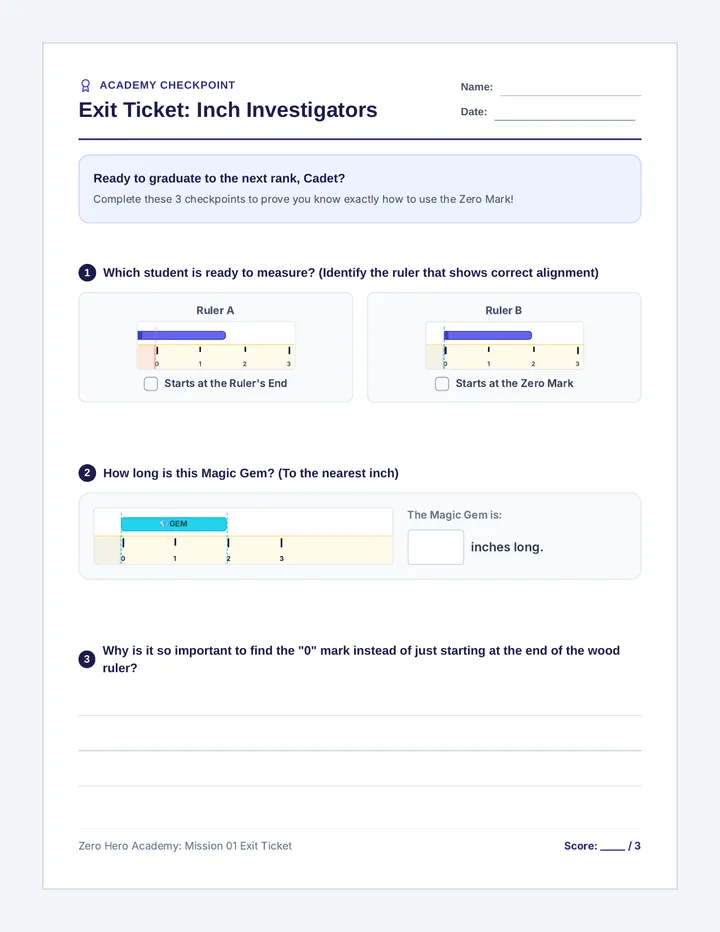
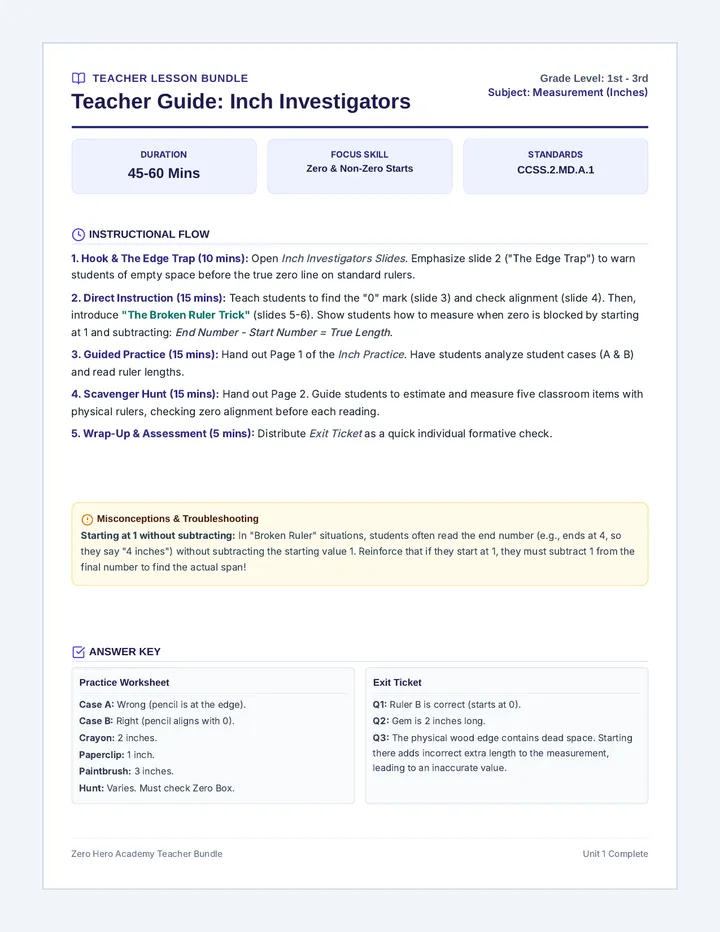
A two-part measuring adventure where students join the Zero Hero Academy to master measuring in inches and centimeters, with a strong focus on aligning the start of objects with the ruler's zero mark.
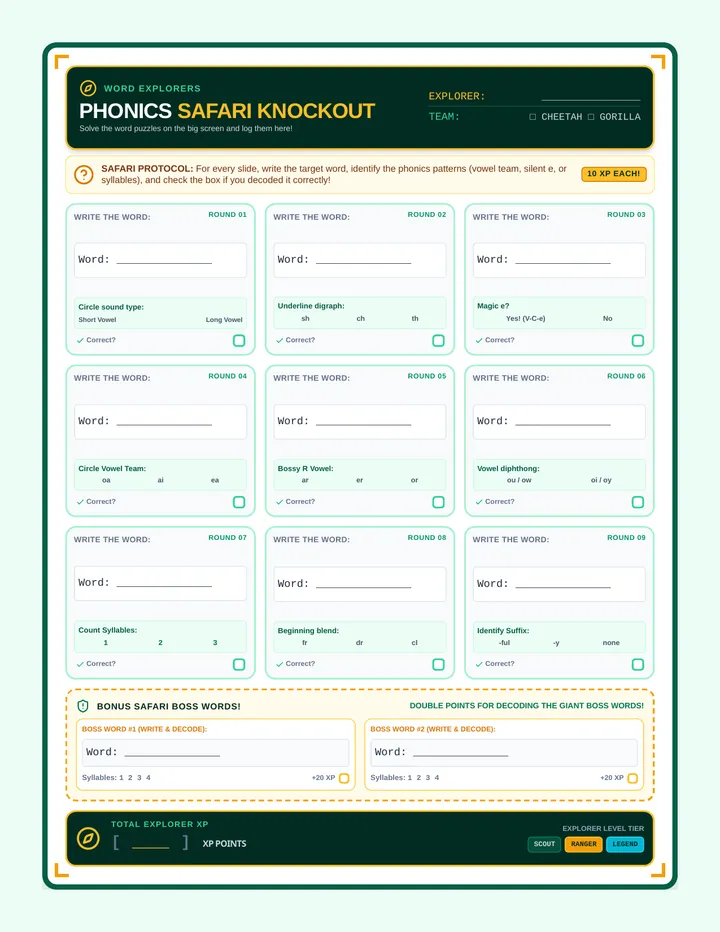
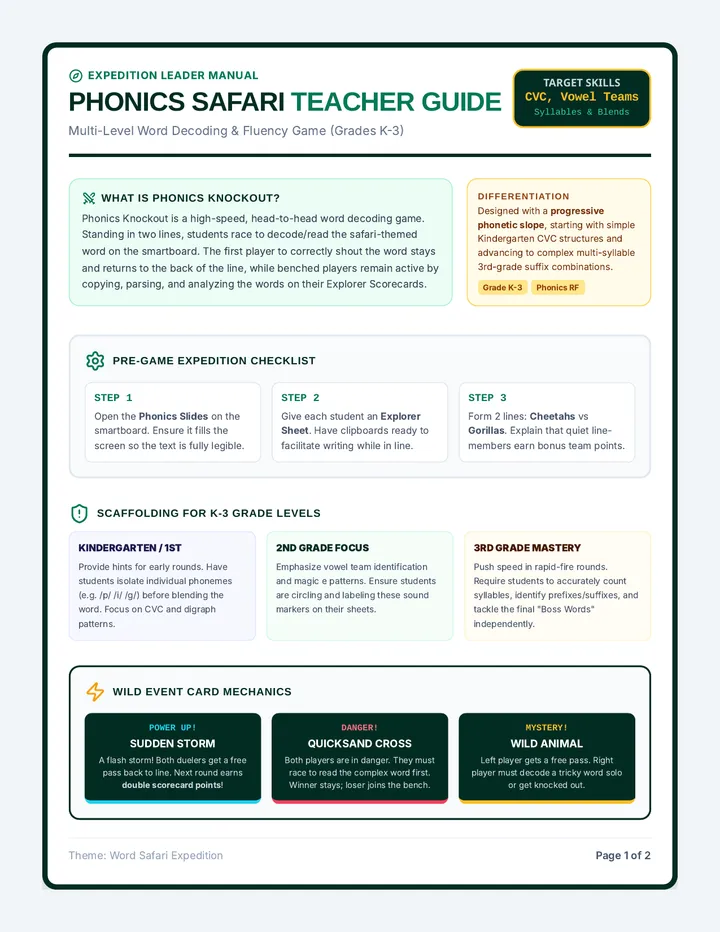
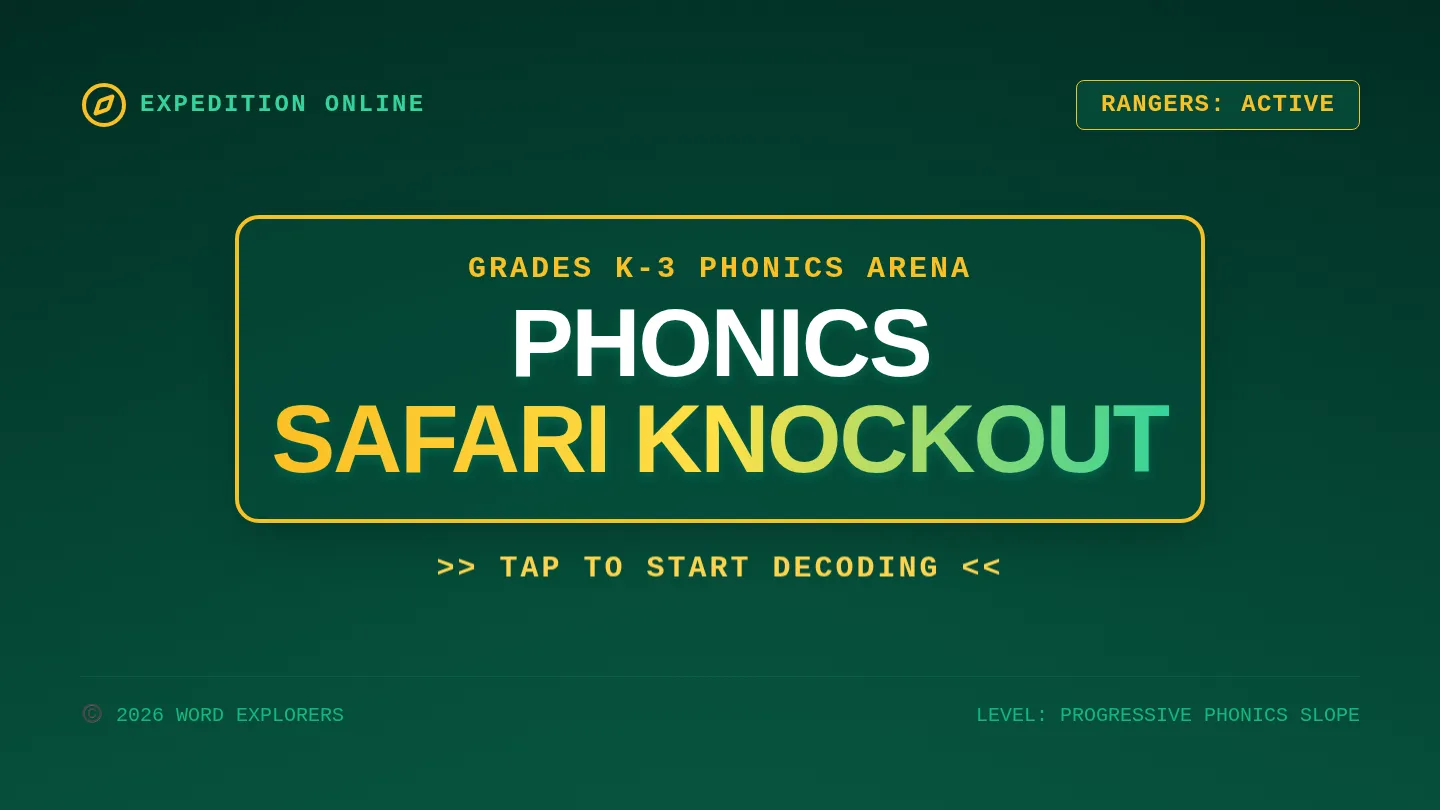
A high-energy, wild safari-themed classroom game for K-3 students focusing on key phonics skills including CVC words, silent 'e', vowel teams, and multi-syllable decoding. This lesson includes a widescreen smartboard presentation, a teacher facilitation guide with word keys, and an active-participation student tracker sheet.
A comprehensive 7-slide presentation that introduces hourly wage calculations using real-world vocational scenarios. Designed with a retro industrial clipboard theme, featuring bold graphics, clear icons, and visual skip-counting tracks. All slide text elements are strictly 24px or larger.
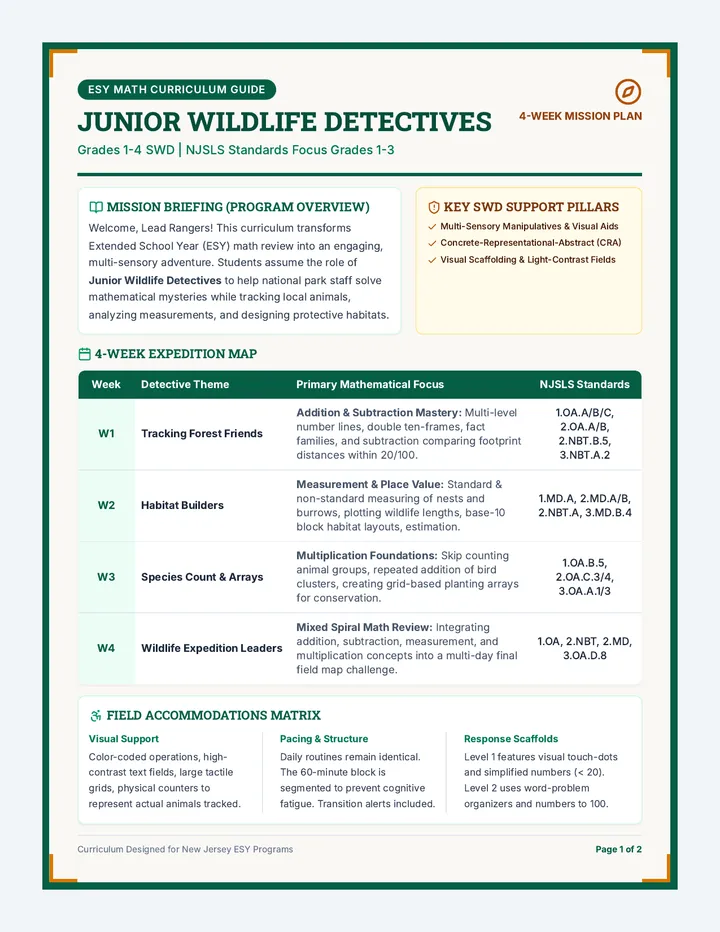
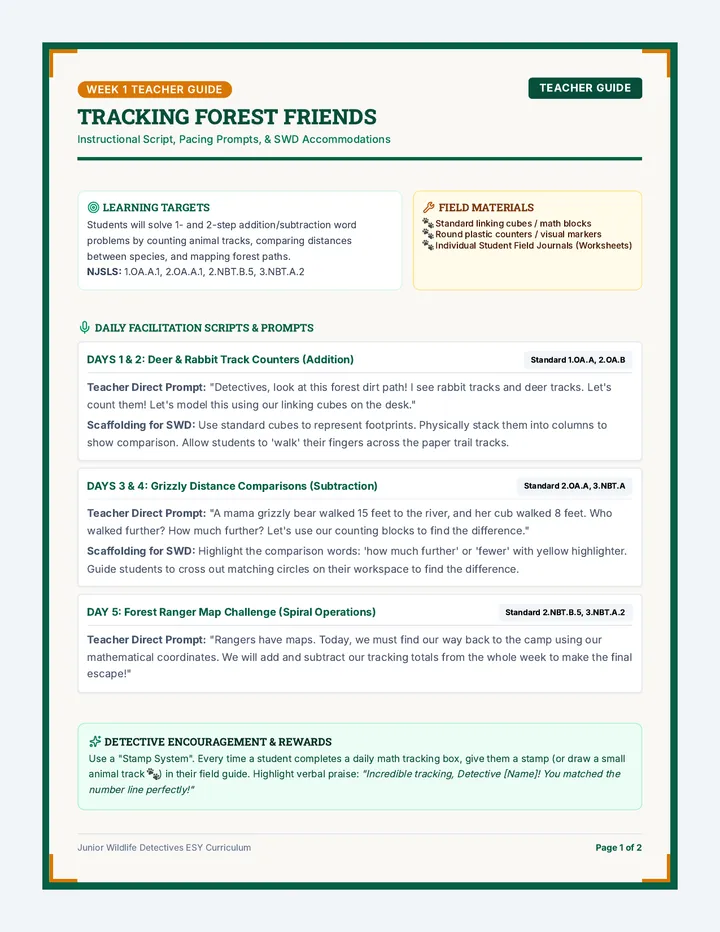
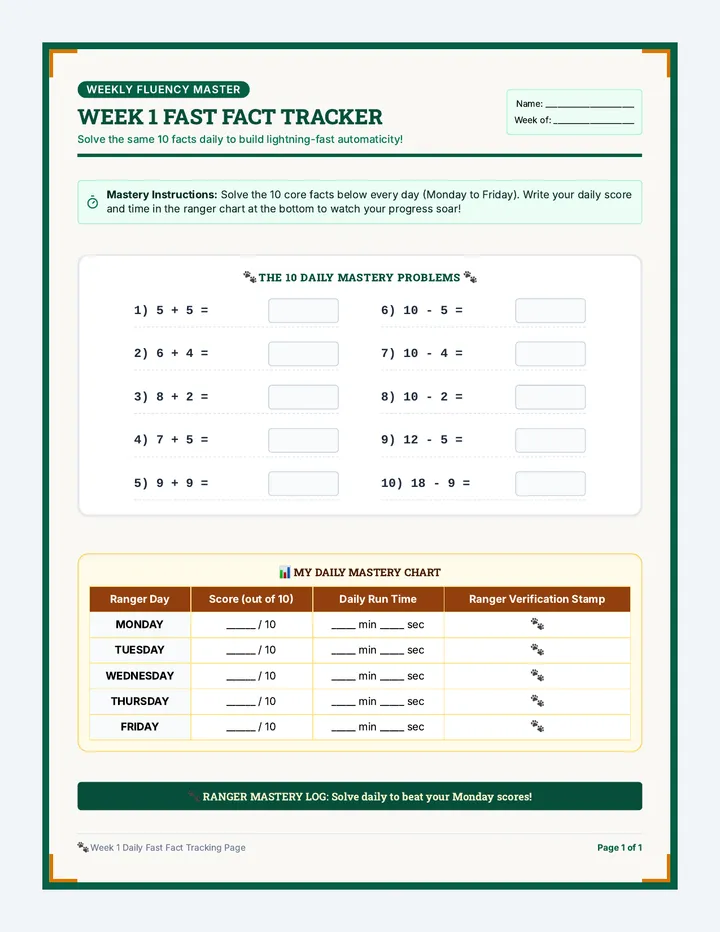
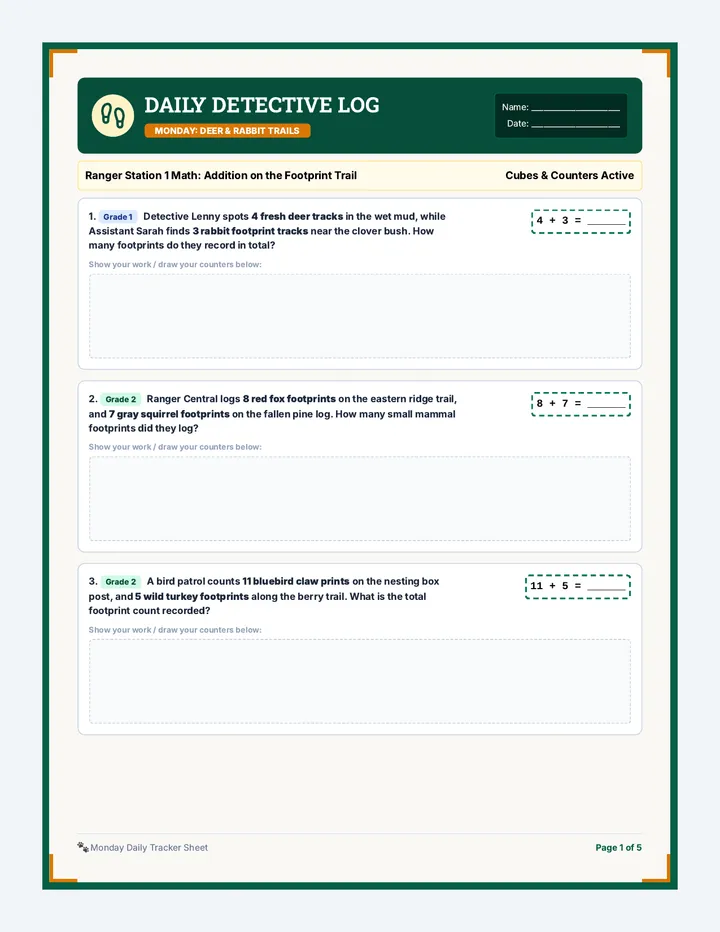
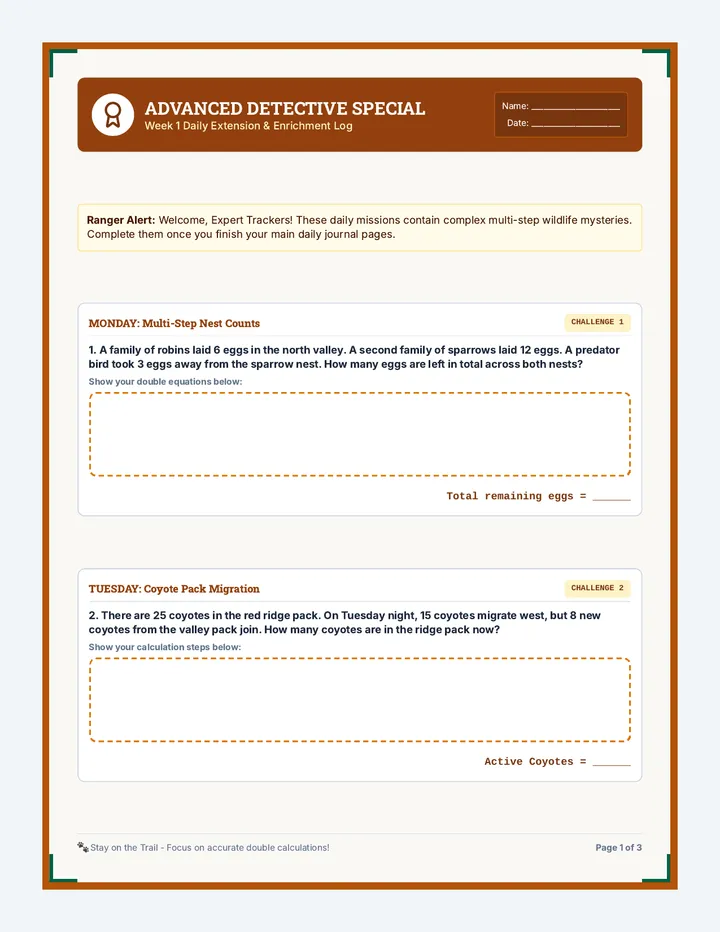
A 4-week Extended School Year (ESY) Math curriculum for Students with Disabilities (SWD) in grades 1-4. Using an engaging 'Junior Wildlife Detectives' theme, students track animals, measure habitats, and categorize species while mastering addition, subtraction, place value, and multiplication foundations aligned with NJ Student Learning Standards (NJSLS) for grades 1-3.
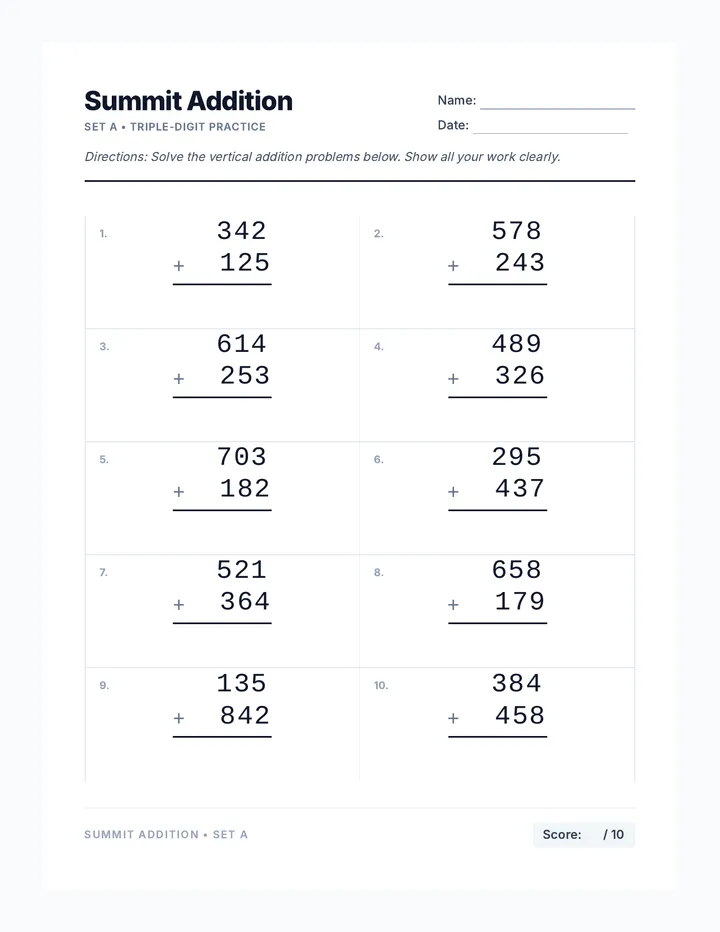
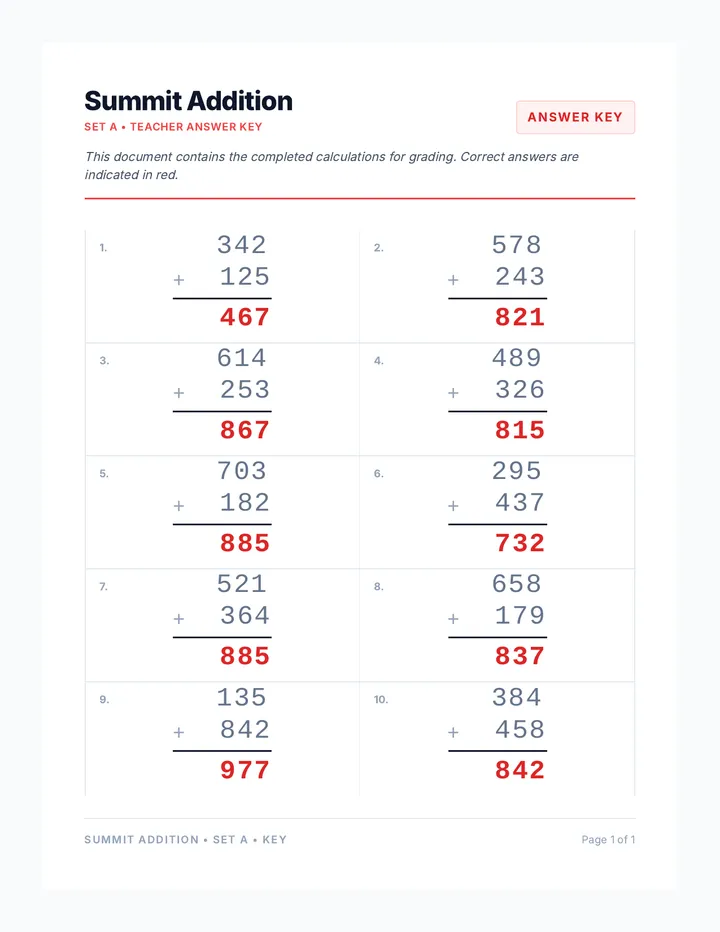
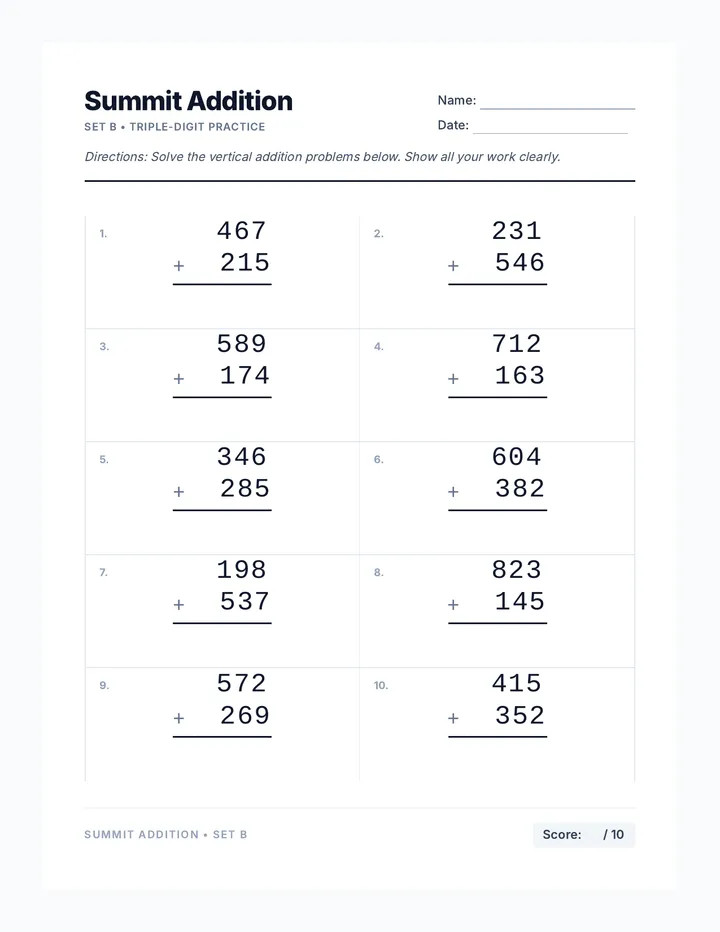
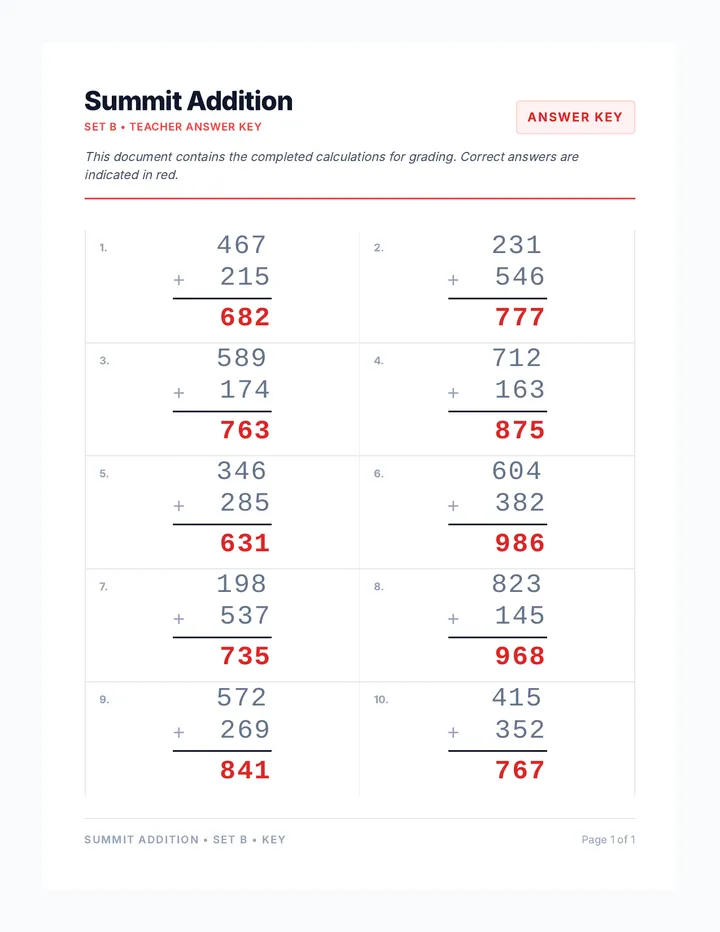
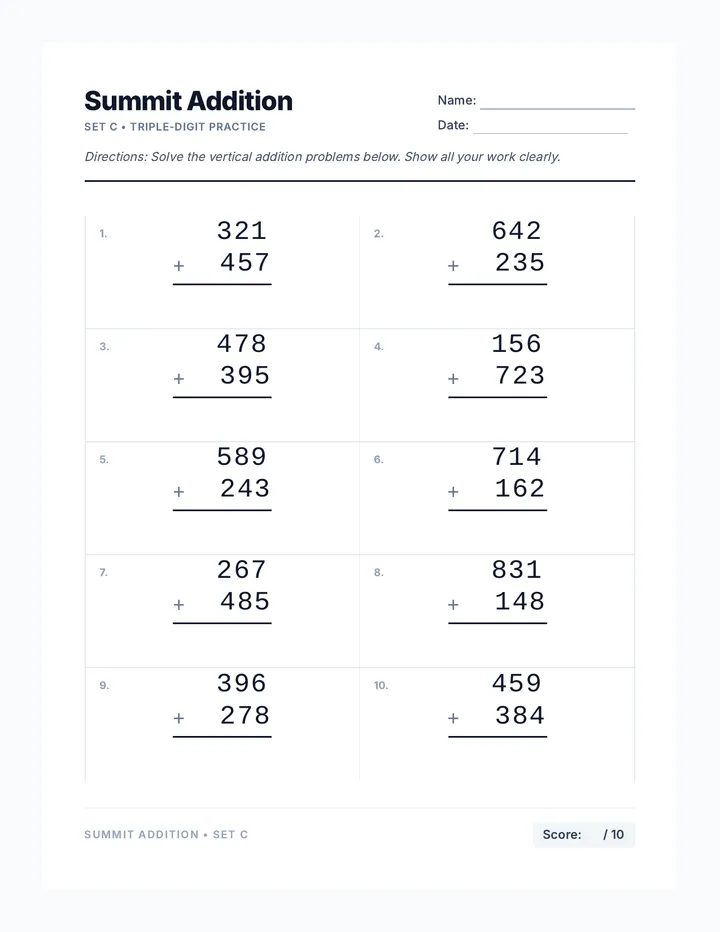
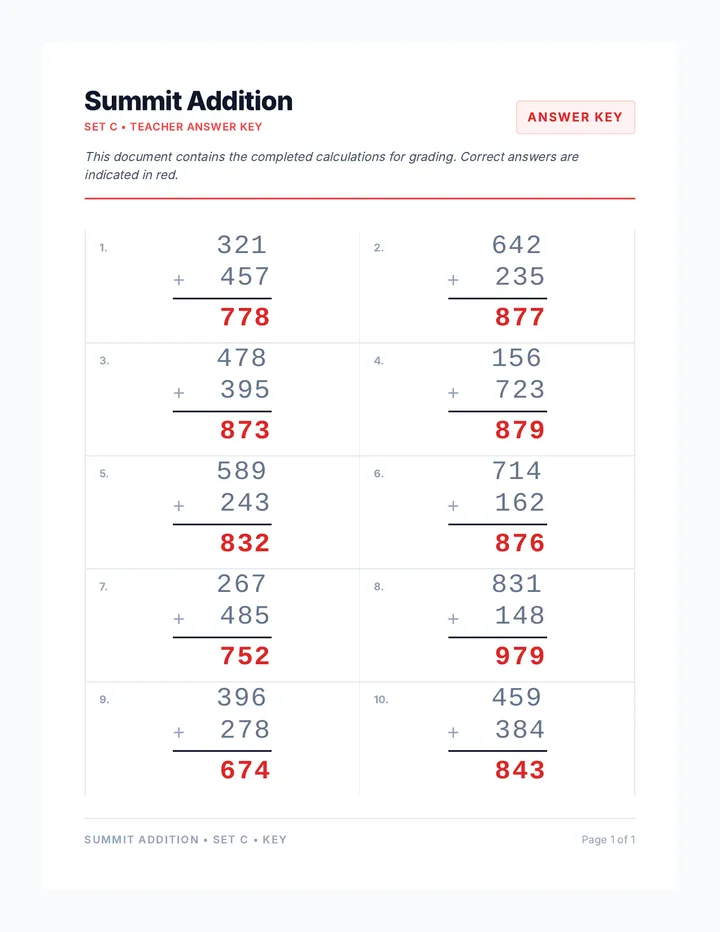
A cohesive series of distraction-free multi-digit calculation worksheets. Features addition and subtraction sets with balanced, mixed regrouping problems and corresponding answer keys.
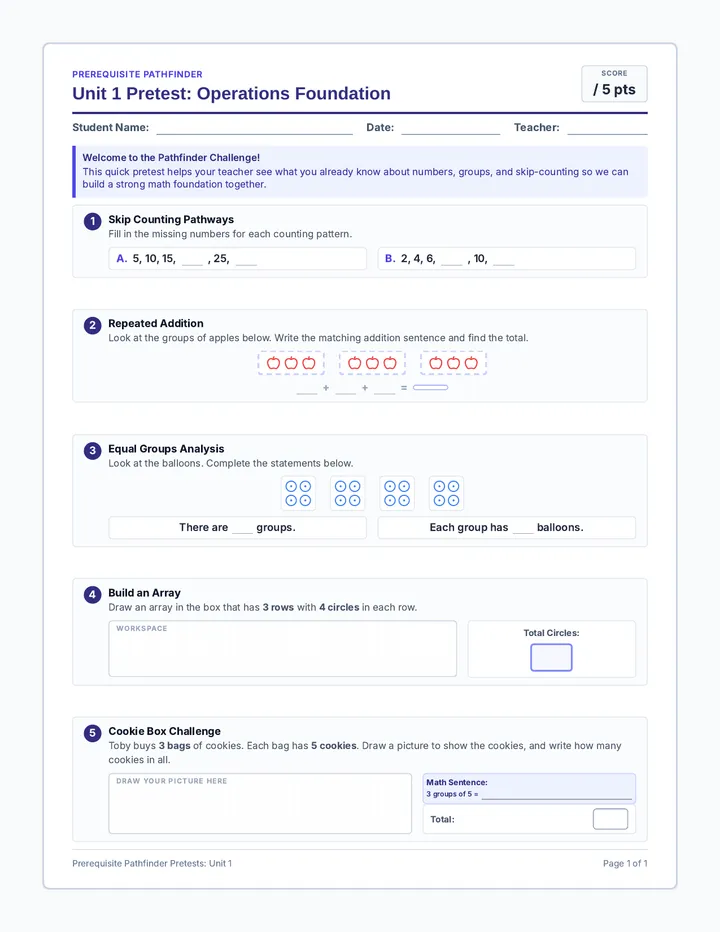
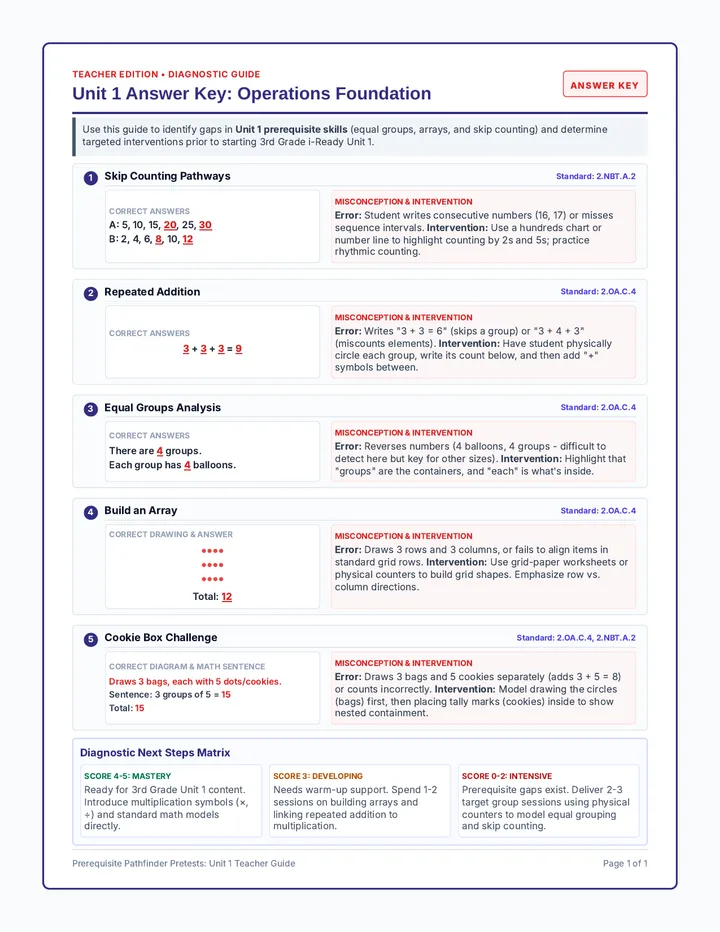
A diagnostic assessment pack designed to diagnose prerequisite skill gaps for 3rd-grade i-Ready Math units. Includes 5 distinct student-facing pretests and 5 teacher answer keys with diagnostic insights and recommended intervention actions.