A graphic organizer for 11th-grade students to visually map the line of reasoning in a literary argument. It features a hierarchical flowchart structure for claims and a thesis, plus a section for identifying logical gaps or fallacies.
A teacher resource providing the answer key for multiple-choice questions, a sample short constructed response exemplar, scoring criteria, and instructional facilitation tips for the paired passage lesson.
A visual presentation for English 1 EOC preparation, guiding students through the analysis of paired texts, a Think-Pair-Share activity, and strategies for writing a short constructed response.
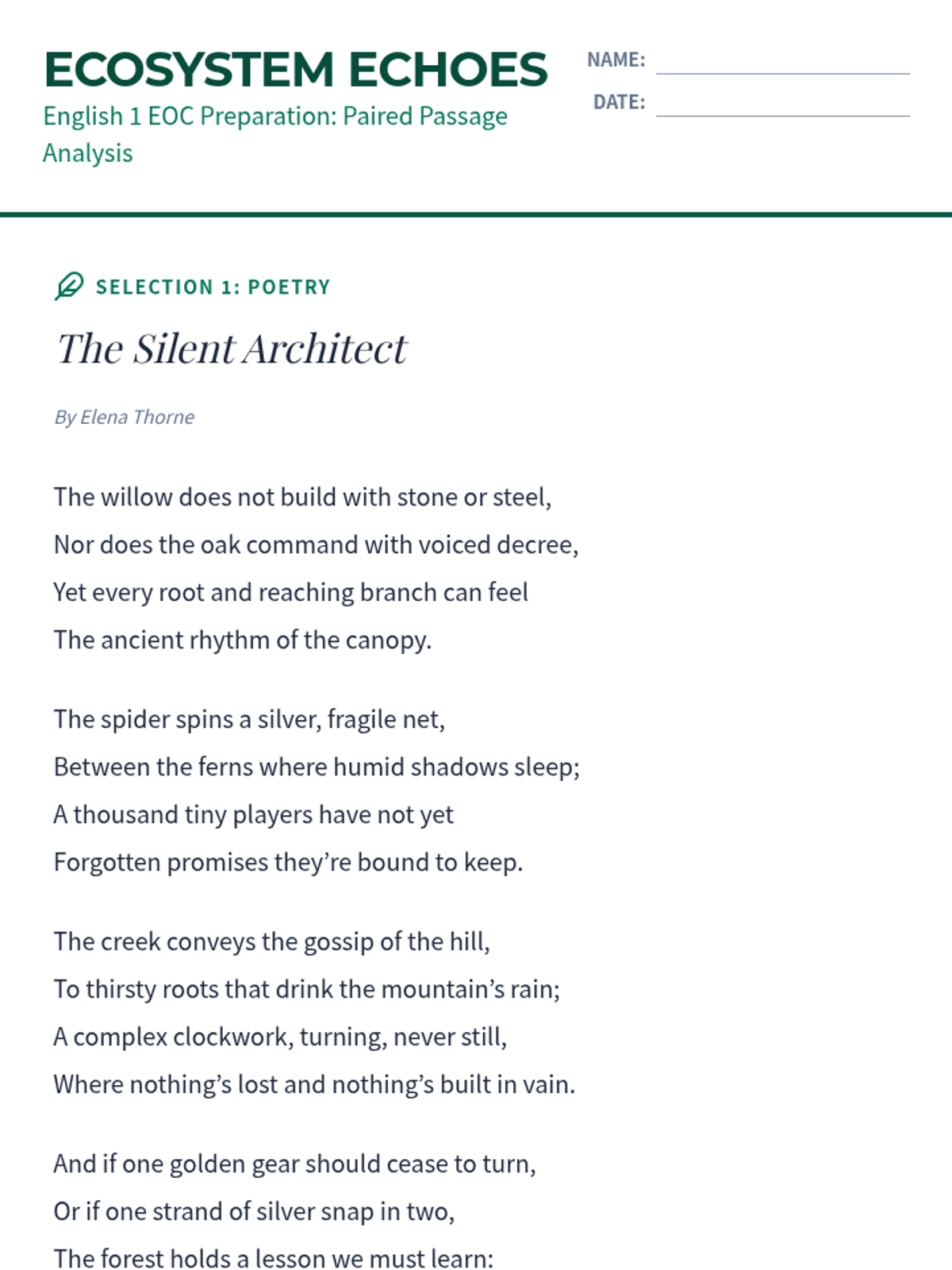
A student reading packet for English 1 EOC preparation featuring a poem and an informational text about ecosystems. It includes multiple-choice questions and a short constructed response prompt with a lined writing area.
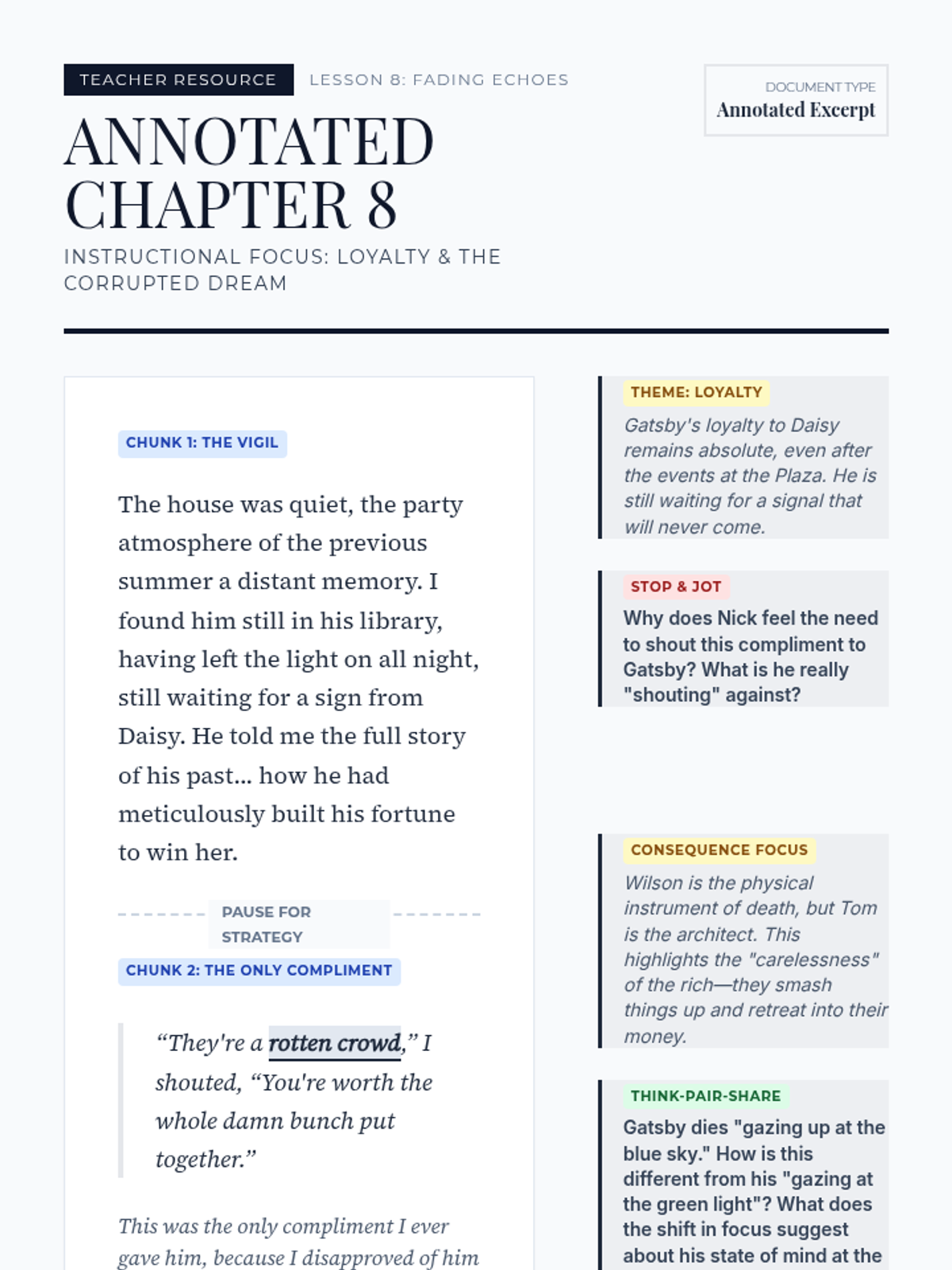
An annotated teacher copy of the Chapter 8 excerpt for Lesson 8, focusing on themes of loyalty, consequence, and the disillusioned American Dream. Includes chunking, Stop and Jot, and Think-Pair-Share strategies centered on Gatsby's tragic death and Nick's final compliment.
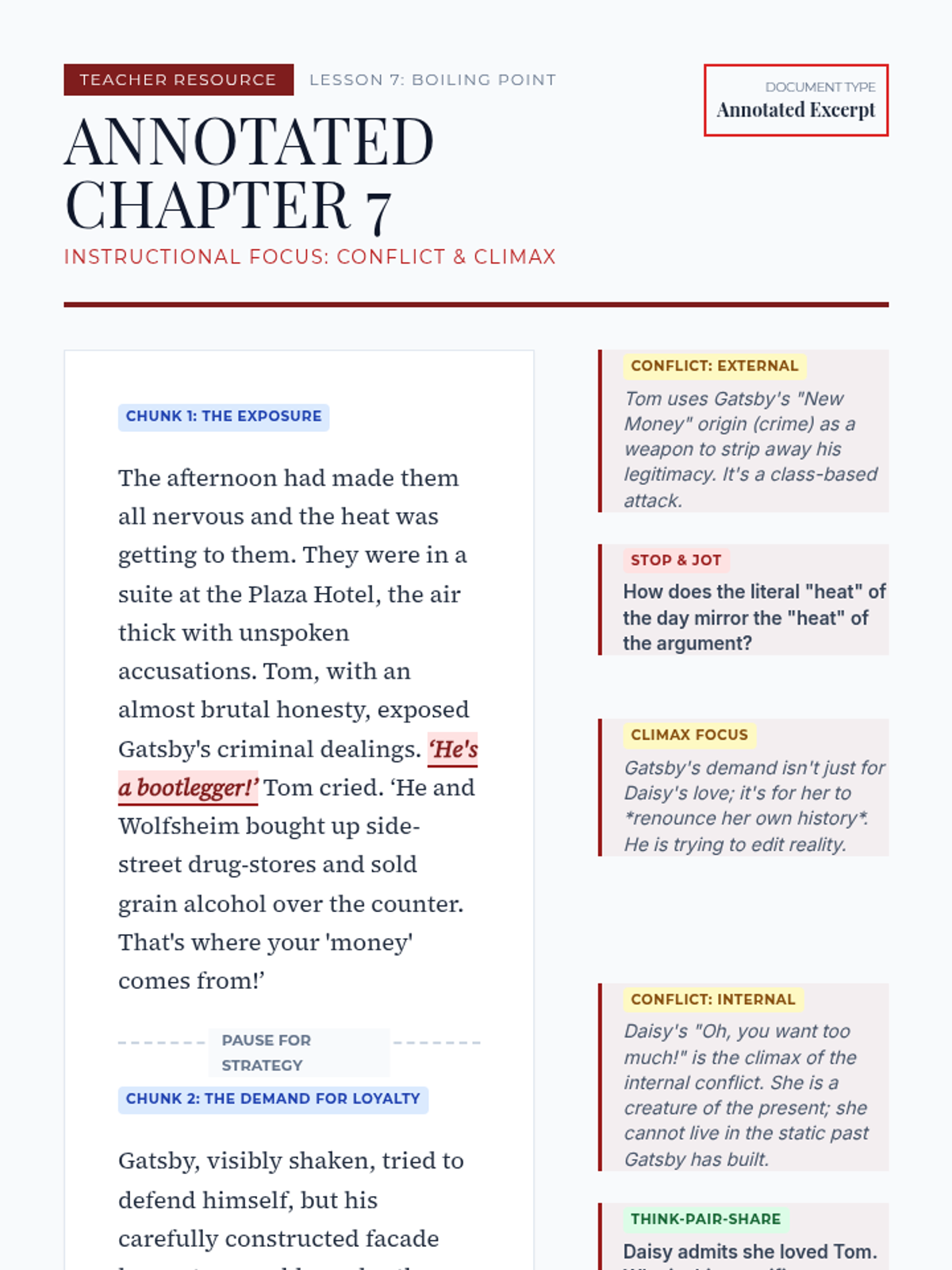
An annotated teacher copy of the Chapter 7 excerpt for Lesson 7, focusing on the narrative climax in the Plaza Hotel confrontation. Includes chunking, Stop and Jot, and Think-Pair-Share strategies centered on the conflict between Tom, Gatsby, and Daisy.
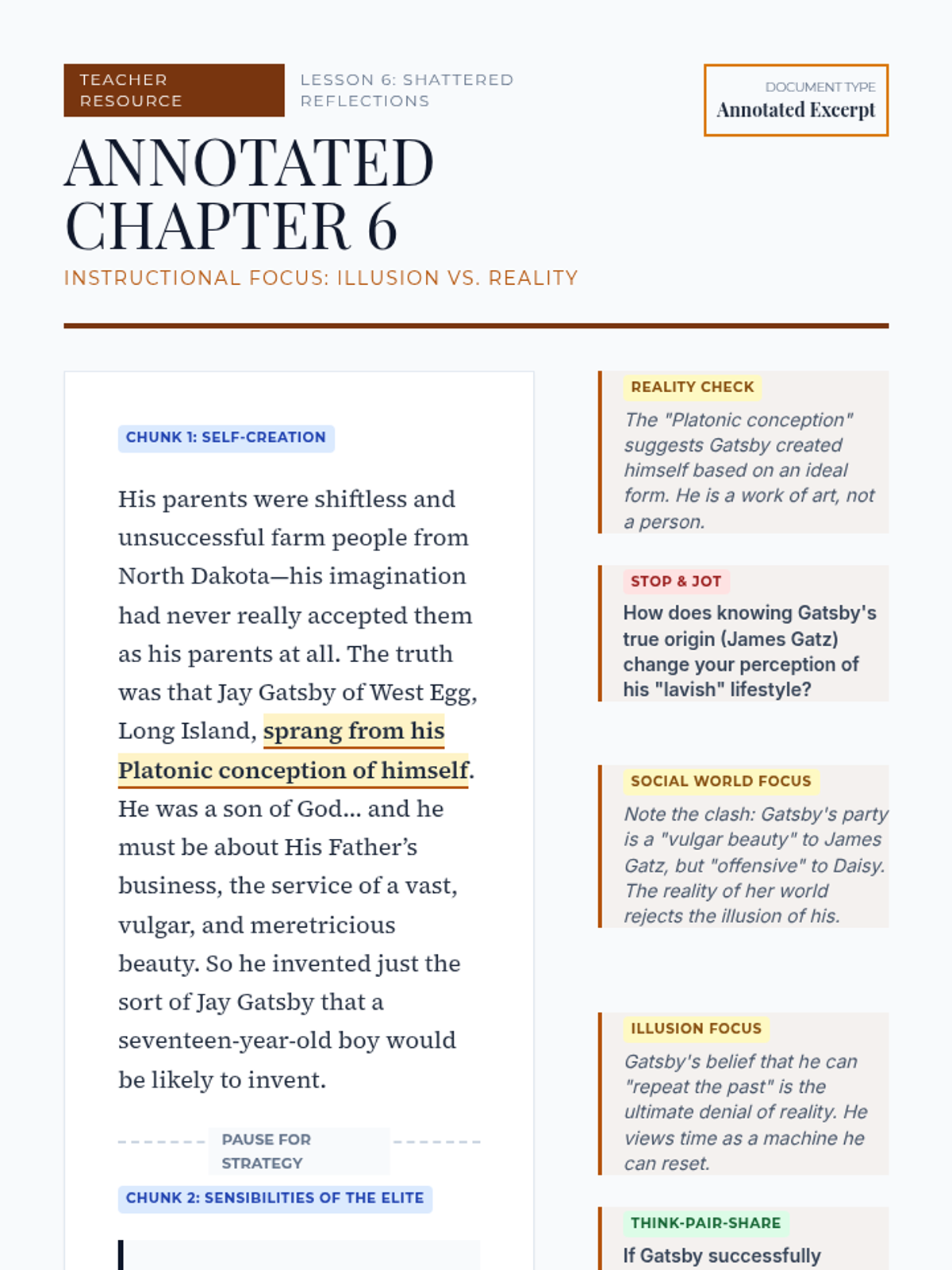
An annotated teacher copy of the Chapter 6 excerpt for Lesson 6, focusing on the theme of illusion versus reality. Includes chunking, Stop and Jot, and Think-Pair-Share strategies centered on Gatsby's self-invention and his defiance of time.
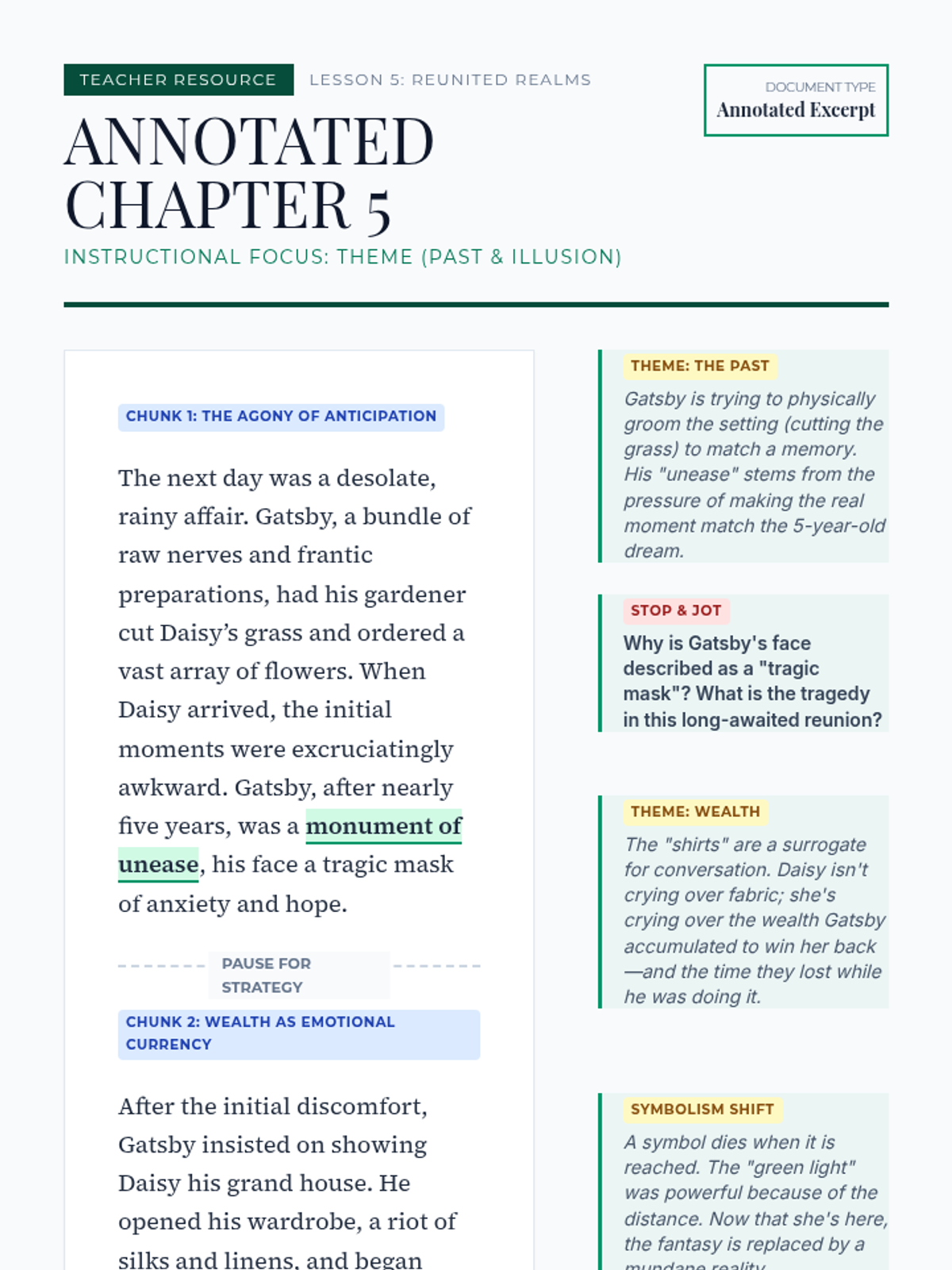
An annotated teacher copy of the Chapter 5 excerpt for Lesson 5, focusing on themes of the past and illusion. Includes chunking, Stop and Jot, and Think-Pair-Share strategies centered on the symbolic "shirts" and the "green light".
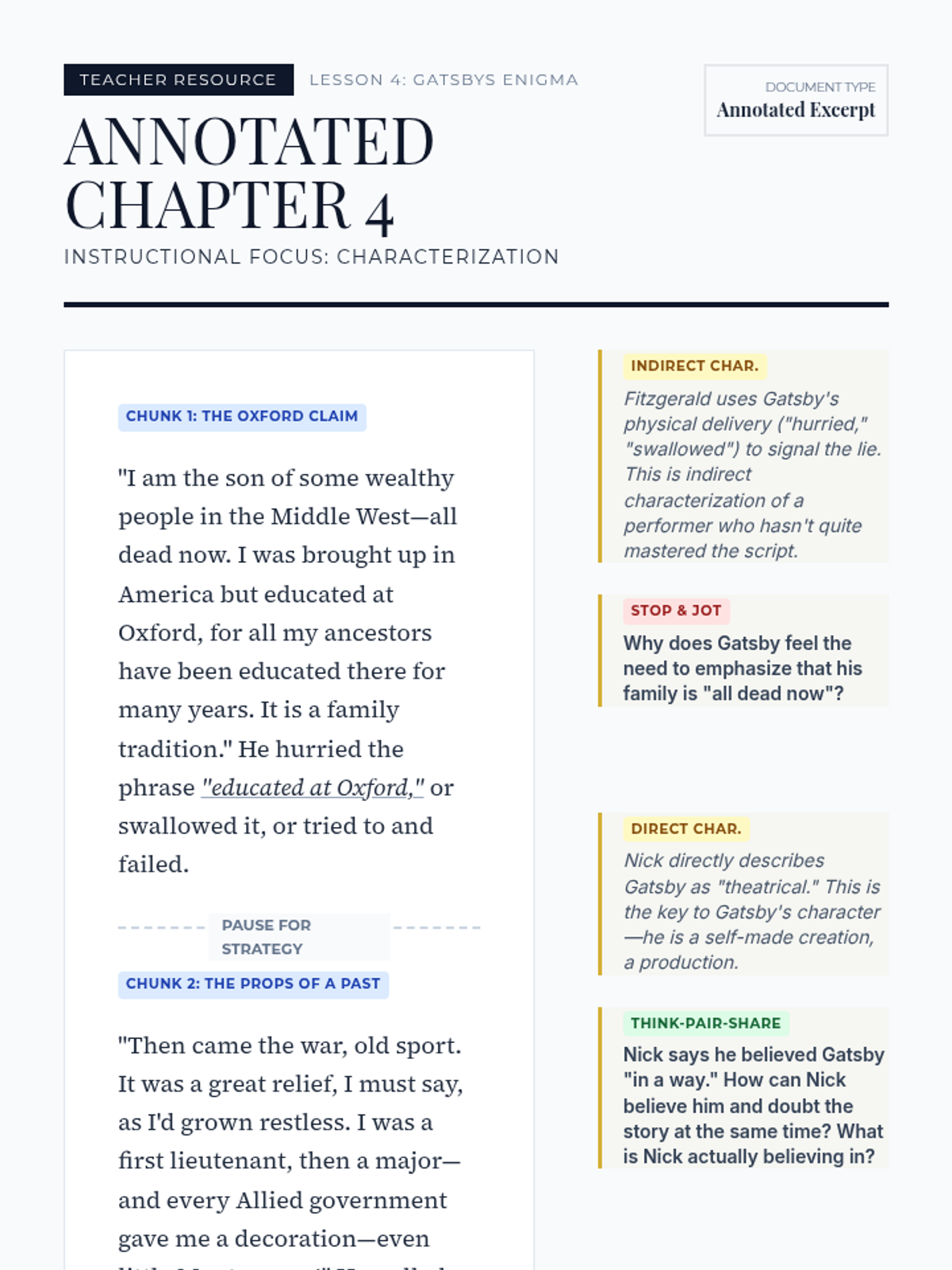
An annotated teacher copy of the Chapter 4 excerpt for Lesson 4, focusing on Jay Gatsby's character development. Includes chunking, Stop and Jot, and Think-Pair-Share strategies centered on direct and indirect characterization.
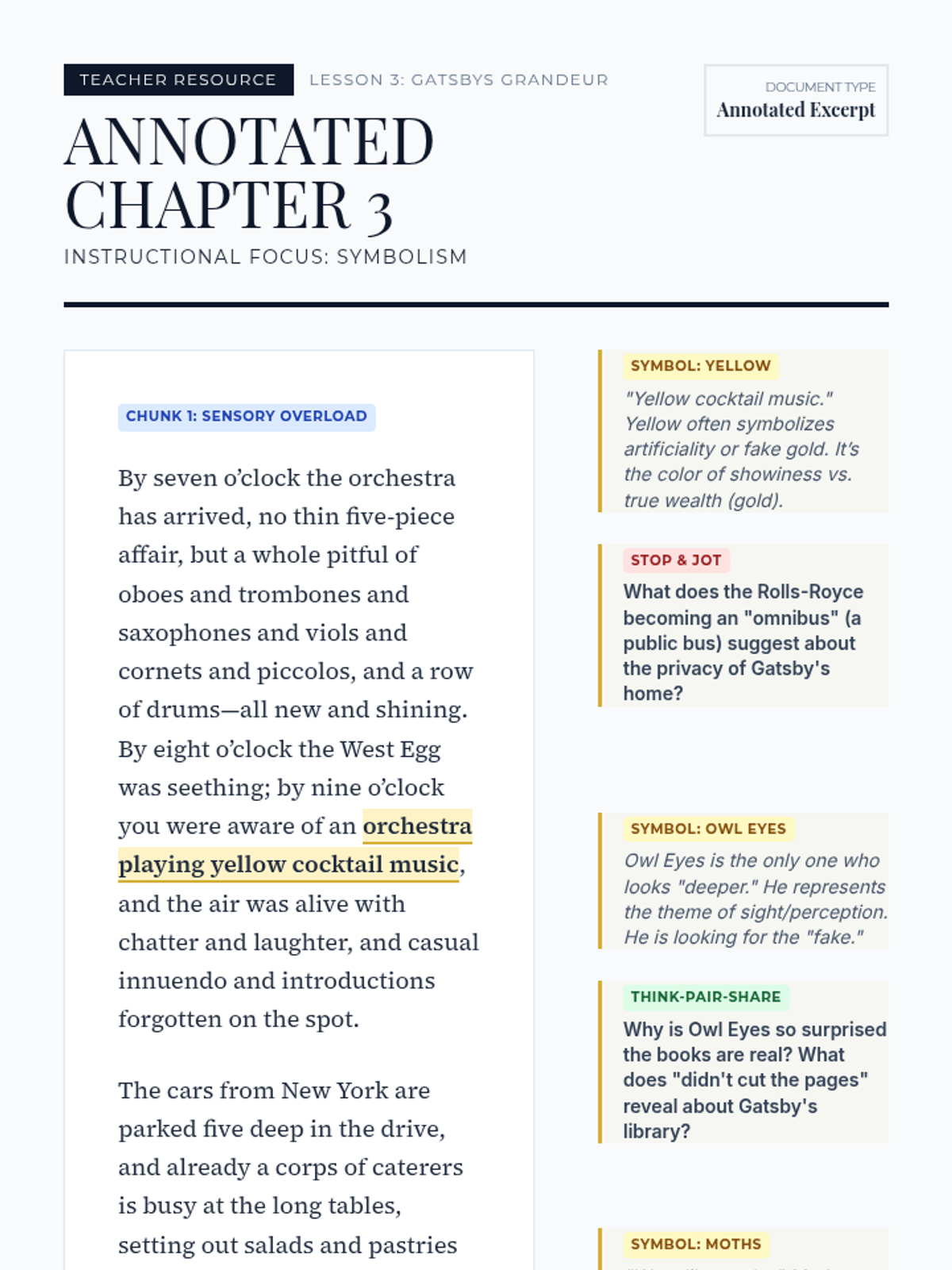
An annotated teacher copy of the Chapter 3 excerpt for Lesson 3, focusing on symbolism. Features chunking, Stop and Jot, and Think-Pair-Share strategies centered on the symbolic weight of the party and the library.
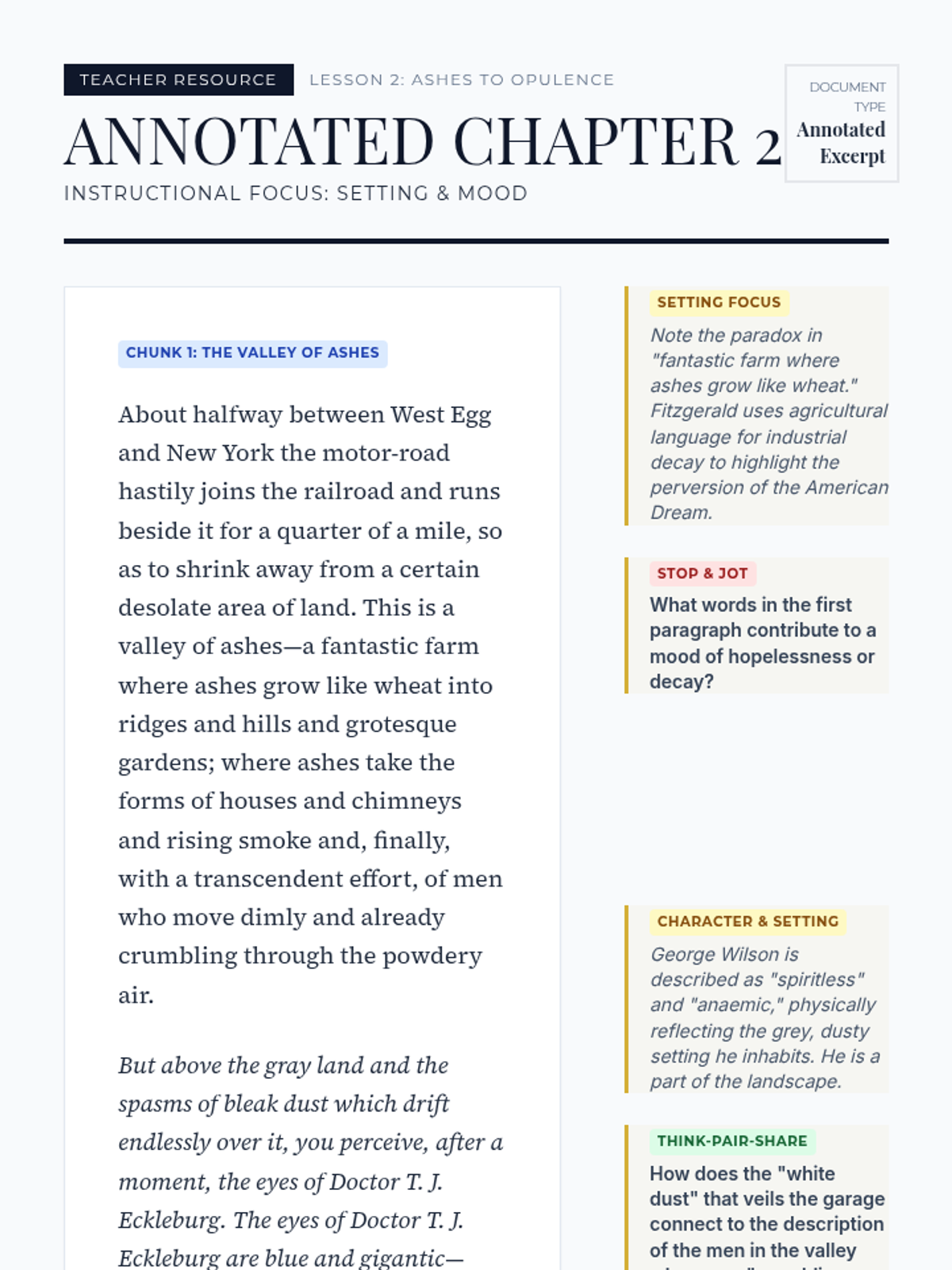
An annotated teacher copy of the Chapter 2 excerpt for Lesson 2, focusing on setting and mood. Includes chunking, Stop and Jot, and Think-Pair-Share strategies centered on the contrast between the Valley of Ashes and Myrtle's apartment.
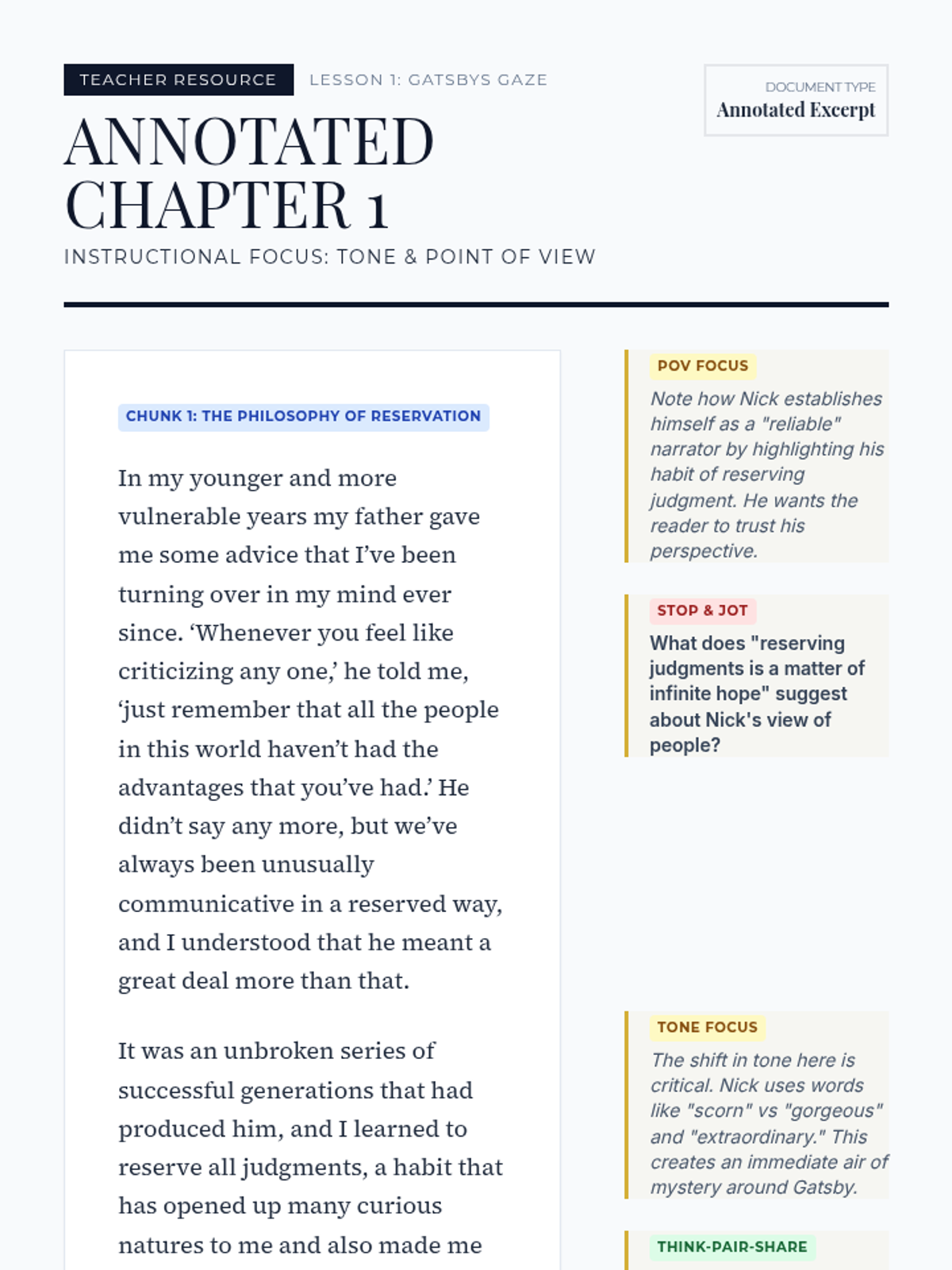
An annotated teacher copy of the Chapter 1 excerpt for Lesson 1, focusing on tone and point of view. It features instructional annotations, chunking, and integrated teaching strategies like Stop and Jot and Think-Pair-Share.
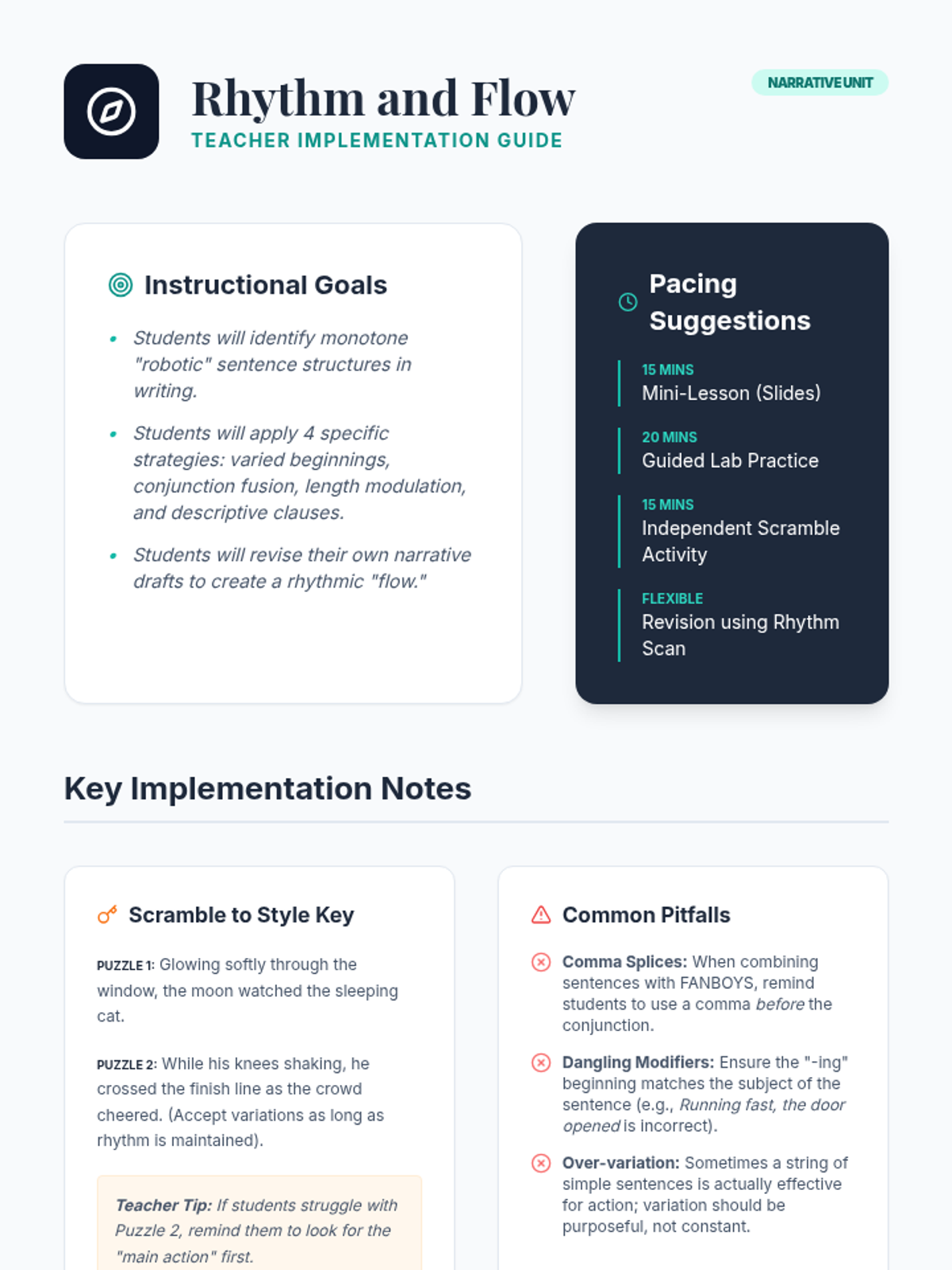
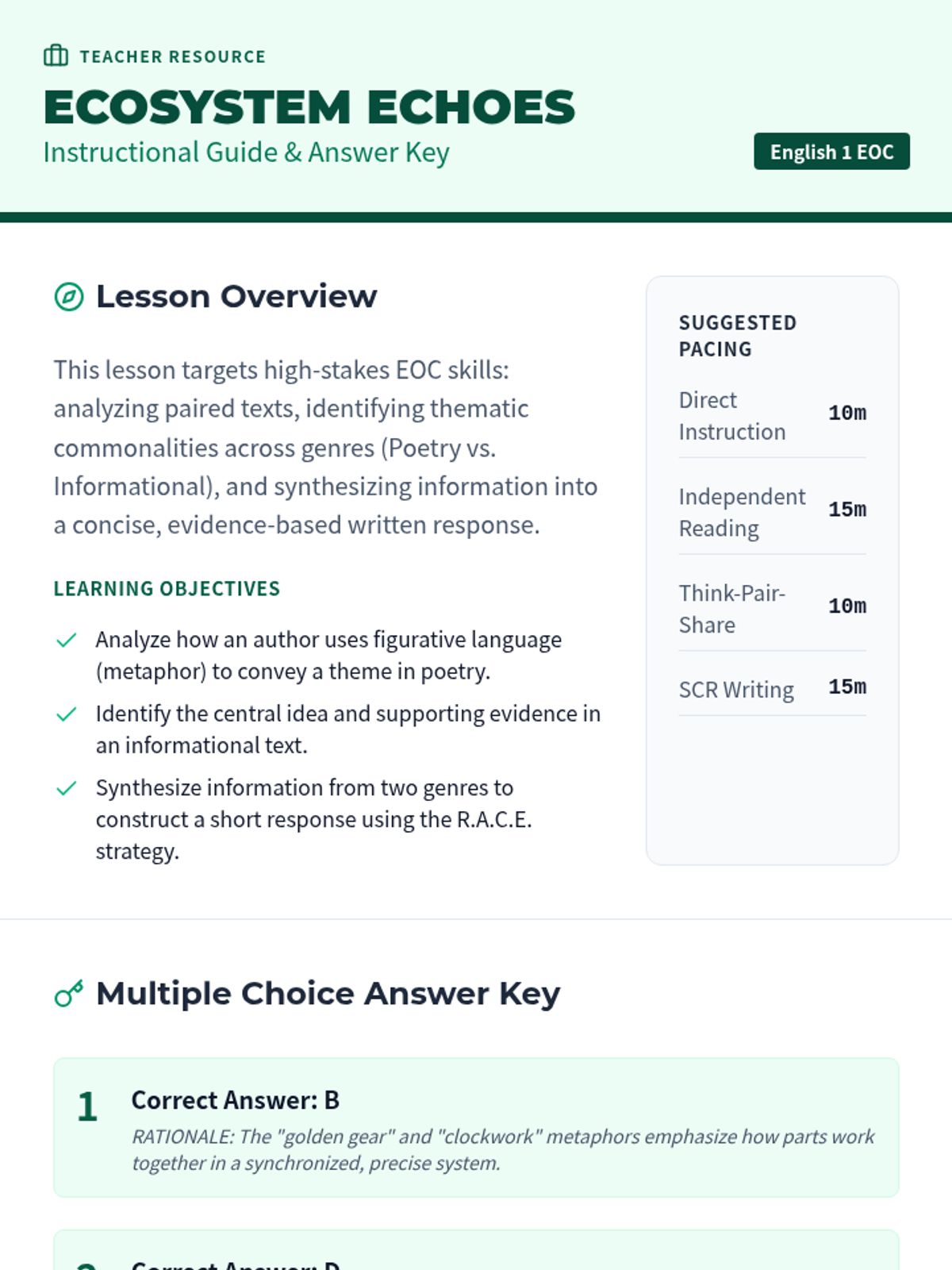
A professional instructional guide for teachers, including lesson objectives, pacing suggestions, answer keys for student activities, and differentiation strategies.
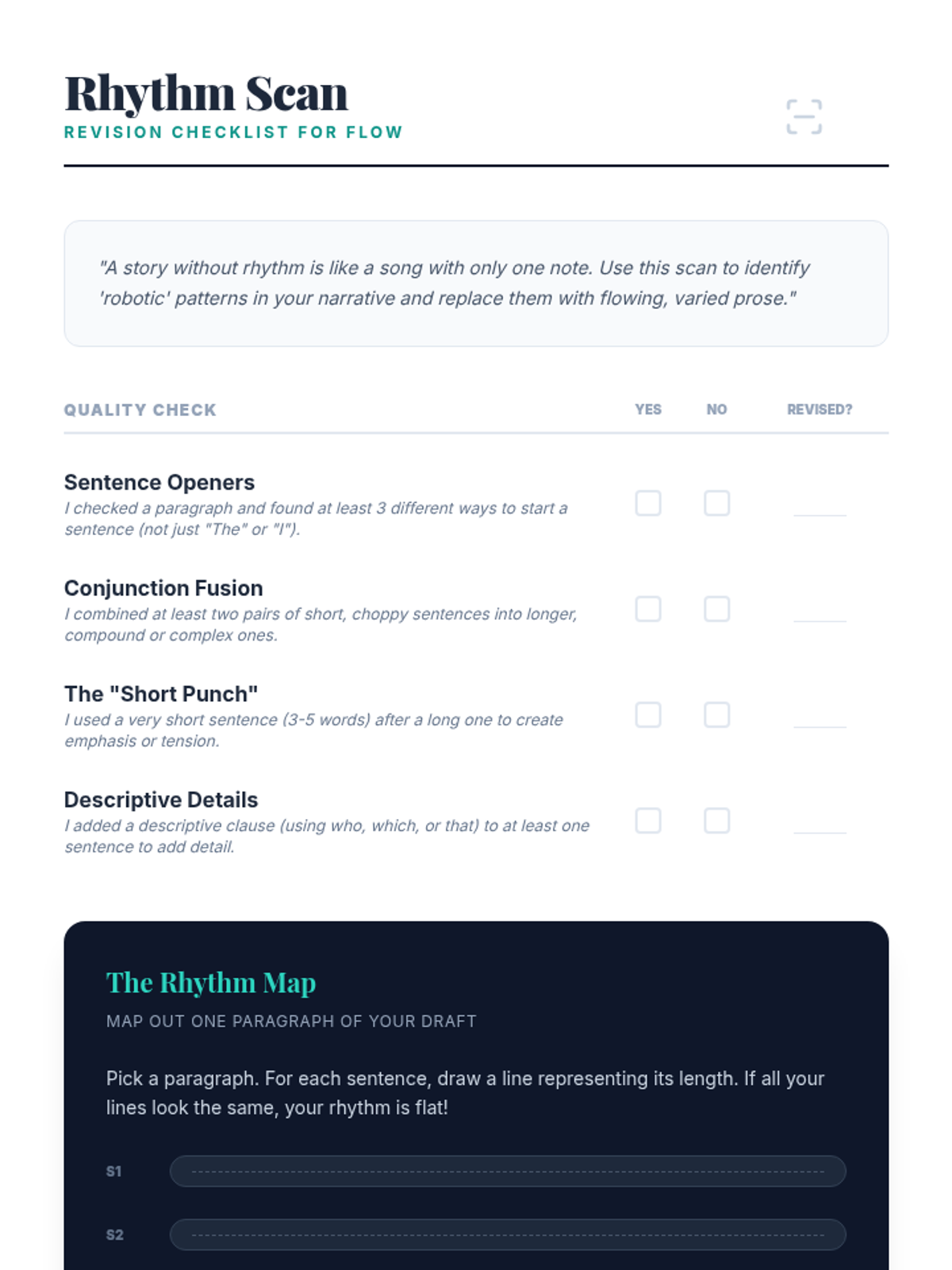
A revision checklist and visual mapping tool to help students analyze and improve the sentence rhythm and variation in their own narrative writing drafts.
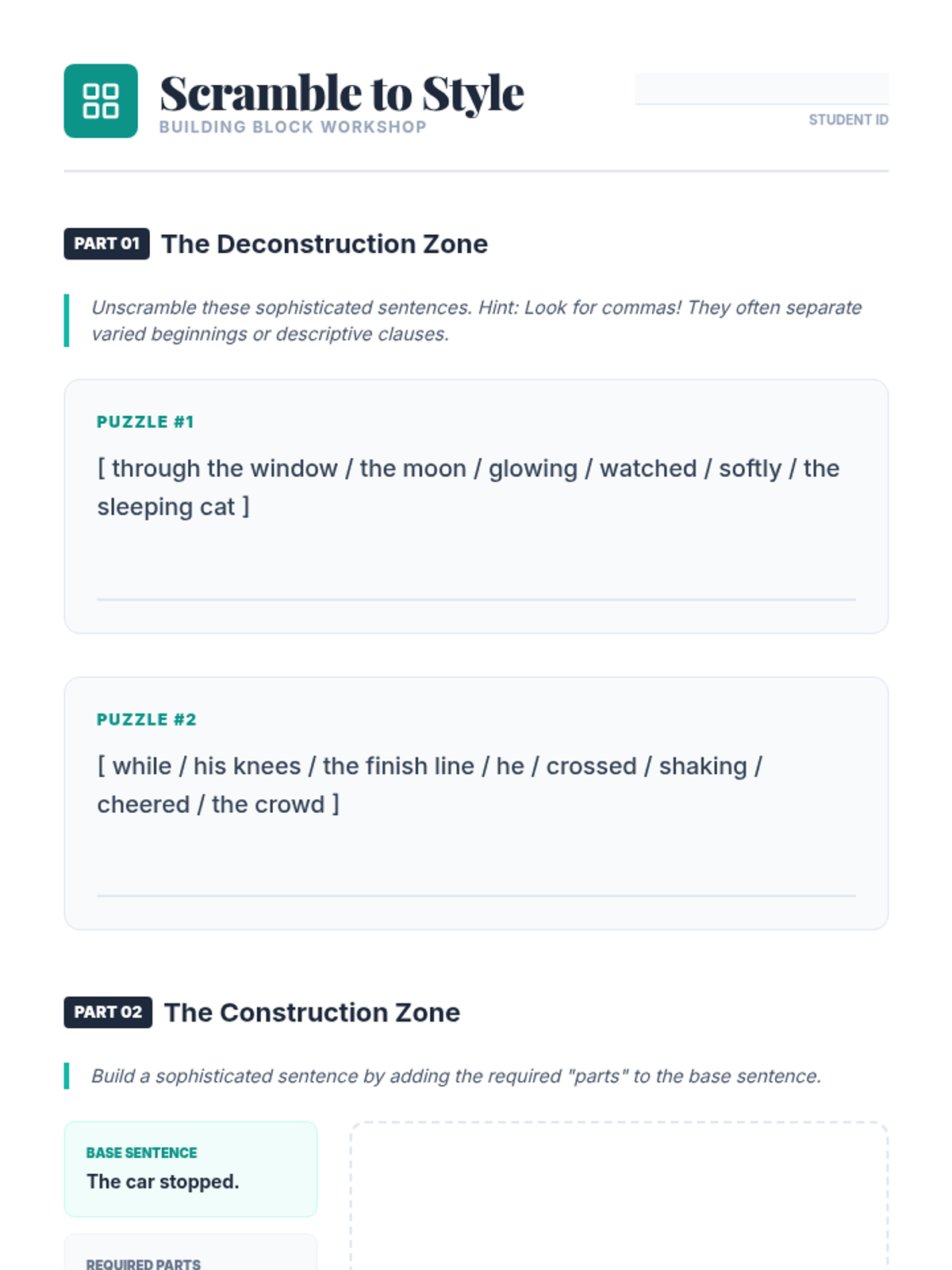
A sentence-building worksheet where students unscramble sophisticated examples and construct their own varied sentences using specific structural requirements.
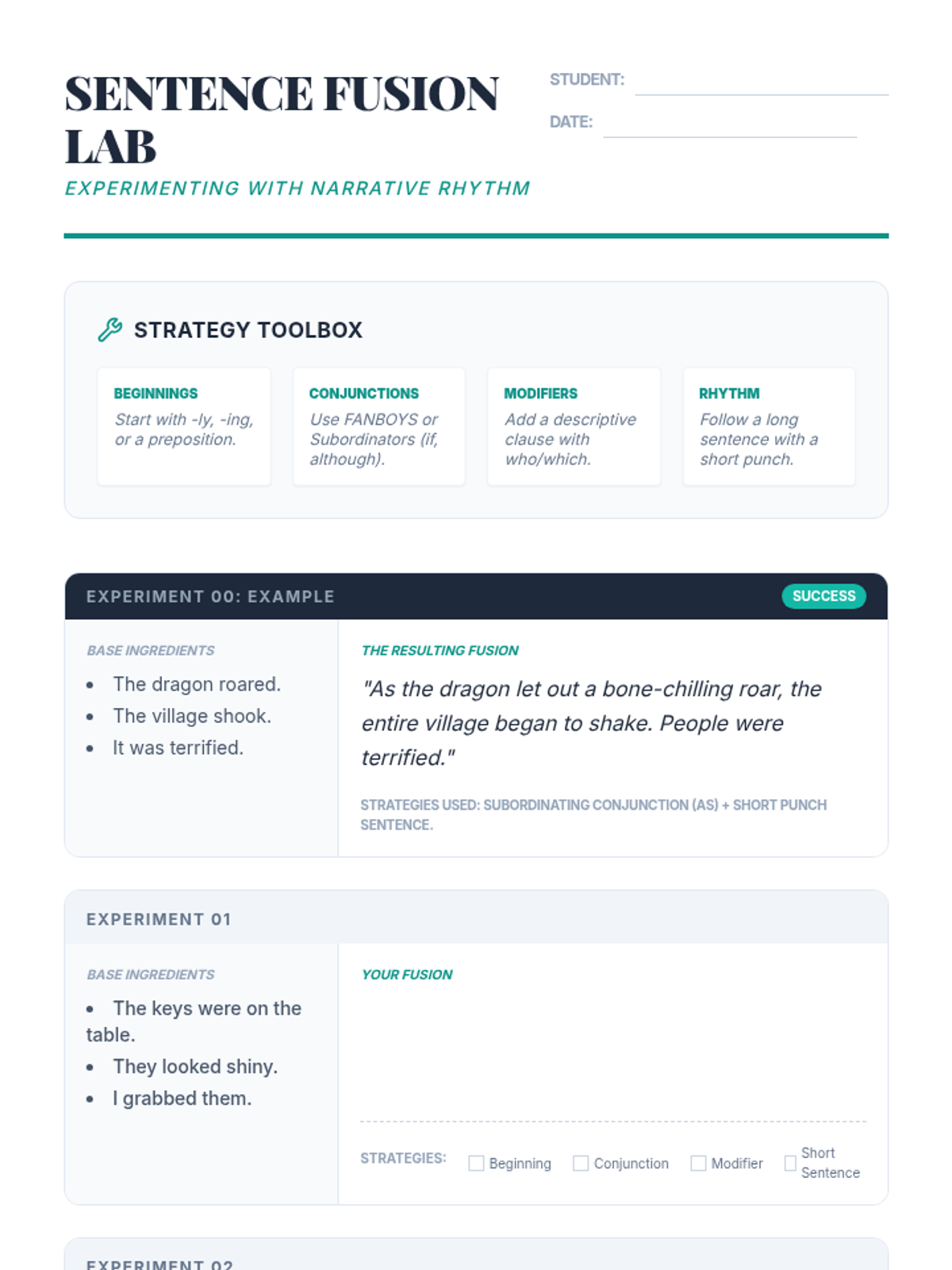
A graphic organizer for sentence combining practice, structured as a "lab" where students fuse basic sentences into complex, rhythmic prose using specific strategies.
A vibrant 7-slide presentation introducing the "Robot Problem" (monotone writing) and offering four specific strategies for sentence variation: varied beginnings, conjunction usage, length modulation, and descriptive clauses.
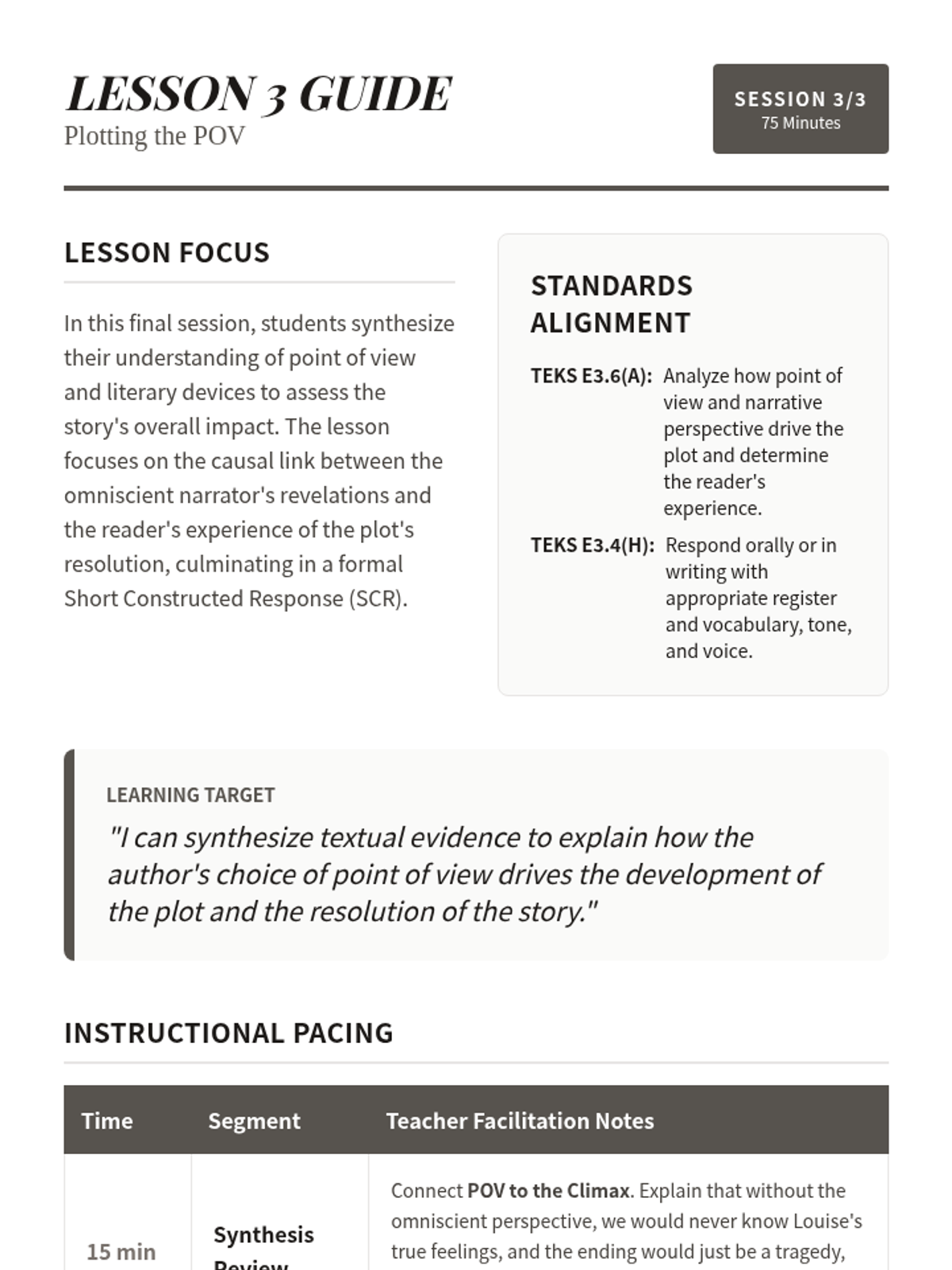
A dedicated teacher pacing and facilitation guide for Lesson 3, focusing on synthesizing point of view and plot in 'The Story of an Hour'.