A pair of matching exit tickets (printed two-to-a-page) designed to assess student ability to write analytical reasoning connecting evidence to a claim, using a structural integrity theme.
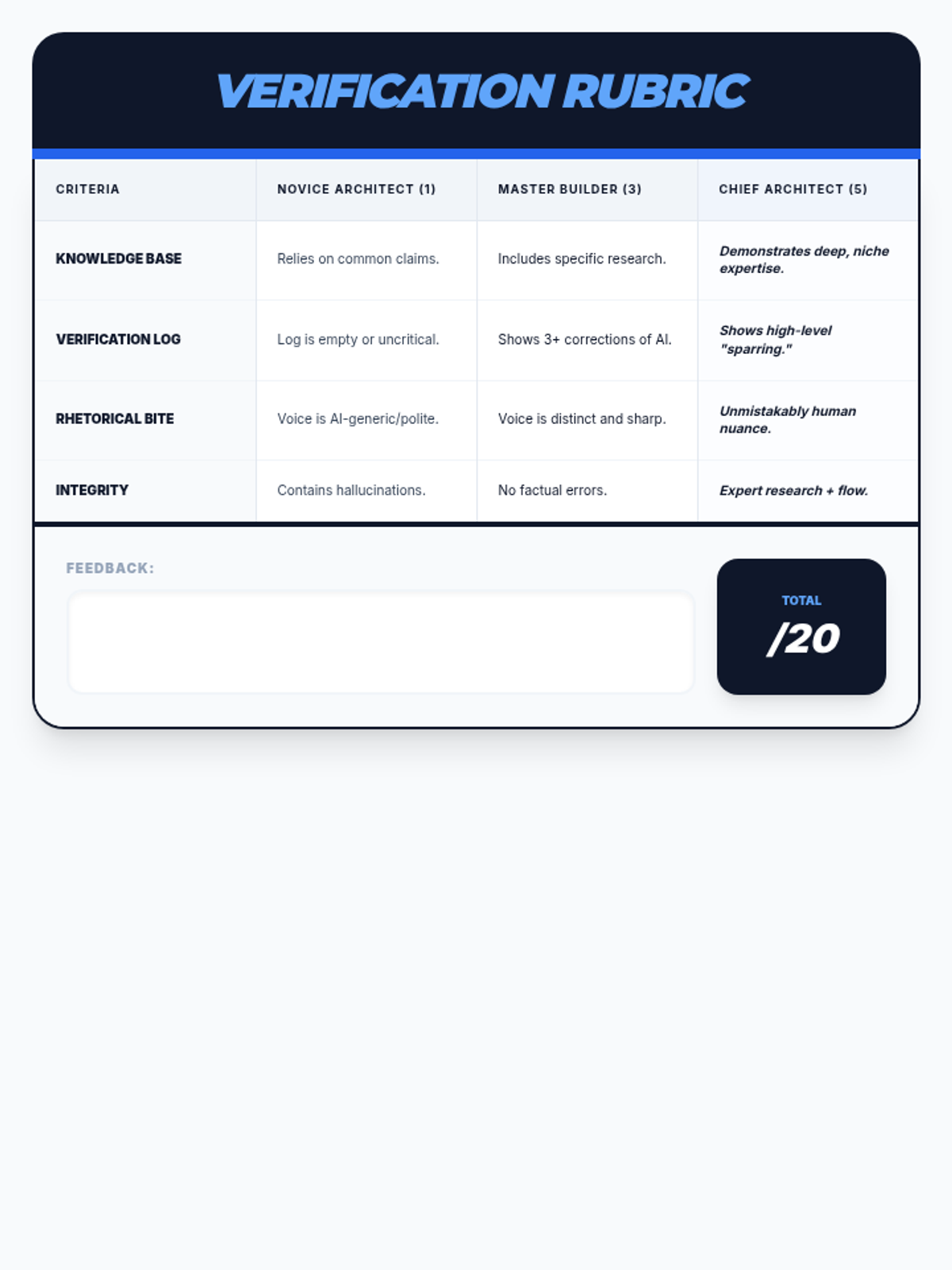
The grading rubric for the Echo Logic project. Evaluates students on their research-backed knowledge base, their active verification/rejection of AI suggestions, and their ability to produce a sharp 'human' voice.
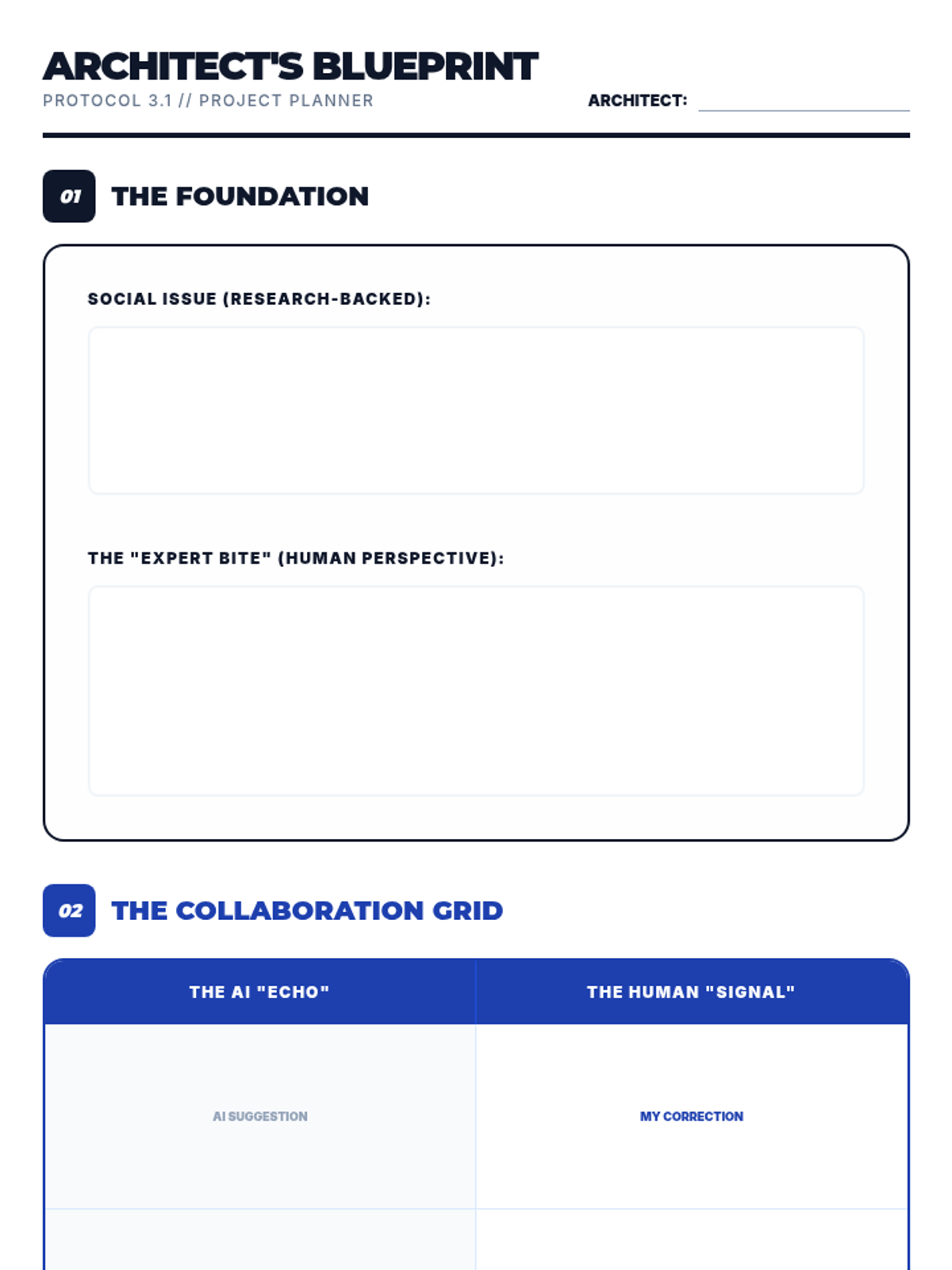
The project planner for the final social commentary piece. Includes a 'Collaboration Grid' where students must record and justify their rejection of generic AI suggestions, reinforcing the priority of human expertise.
Final project introduction slides. Outlines the 'Architect' methodology, emphasizing the shift from AI-as-answer-generator to AI-as-structural-tool, and introduces the 'Verification Log' requirement.
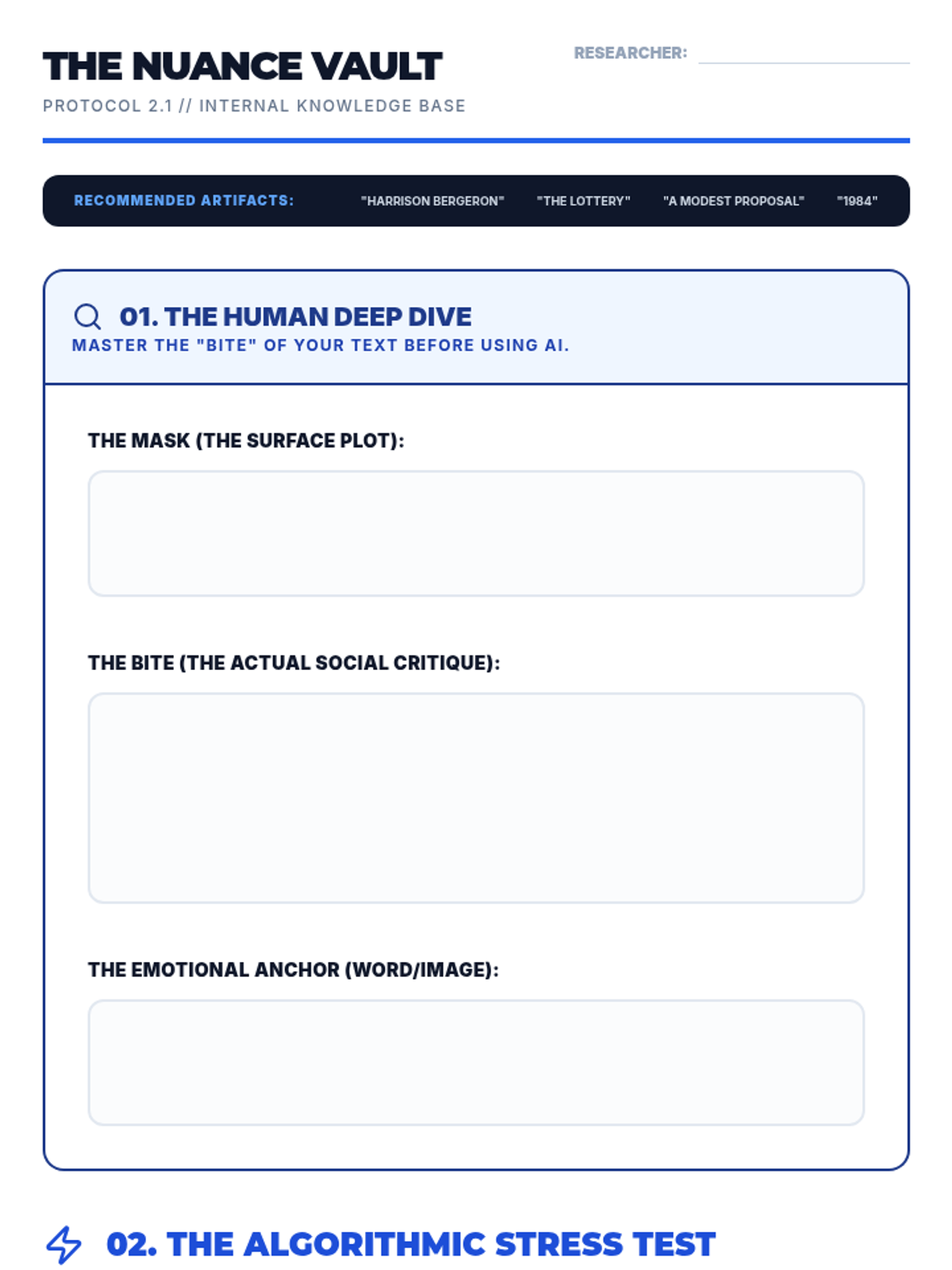
A graphic organizer for building an 'Internal Library' of social commentary knowledge. Students analyze a primary text and use their findings to 'stress test' and correct an AI summary.
Slide deck for Lesson 2. Explores the 'Flatness' problem in AI analysis and teaches students how to find the 'moral weight' and 'bite' in social commentary that algorithms often miss.
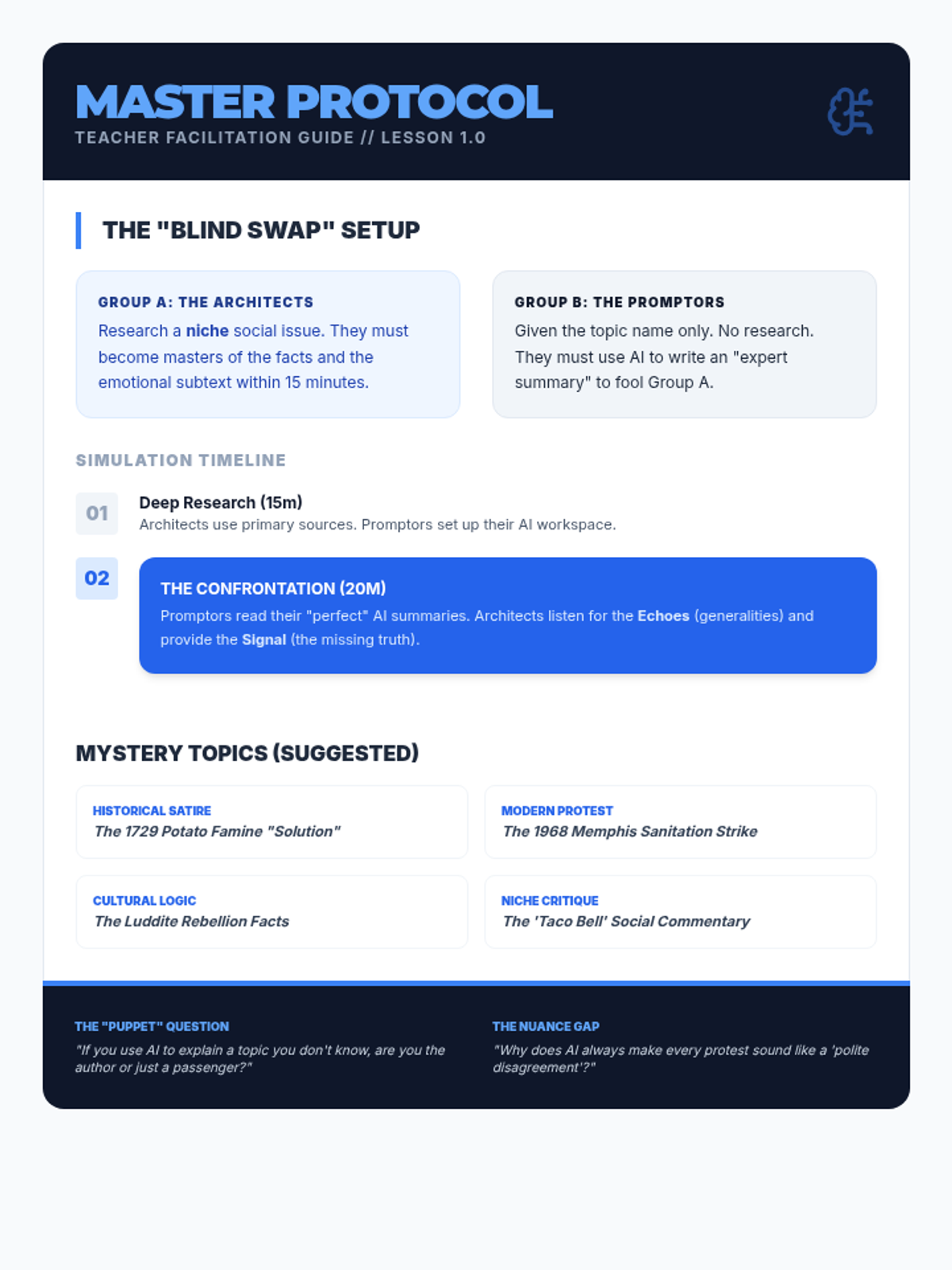
Facilitation guide for teachers to run the 'Echo Swap' simulation. Explains the 'Asymmetry of Knowledge' setup and the pedagogical importance of the 'Aha!' moment.
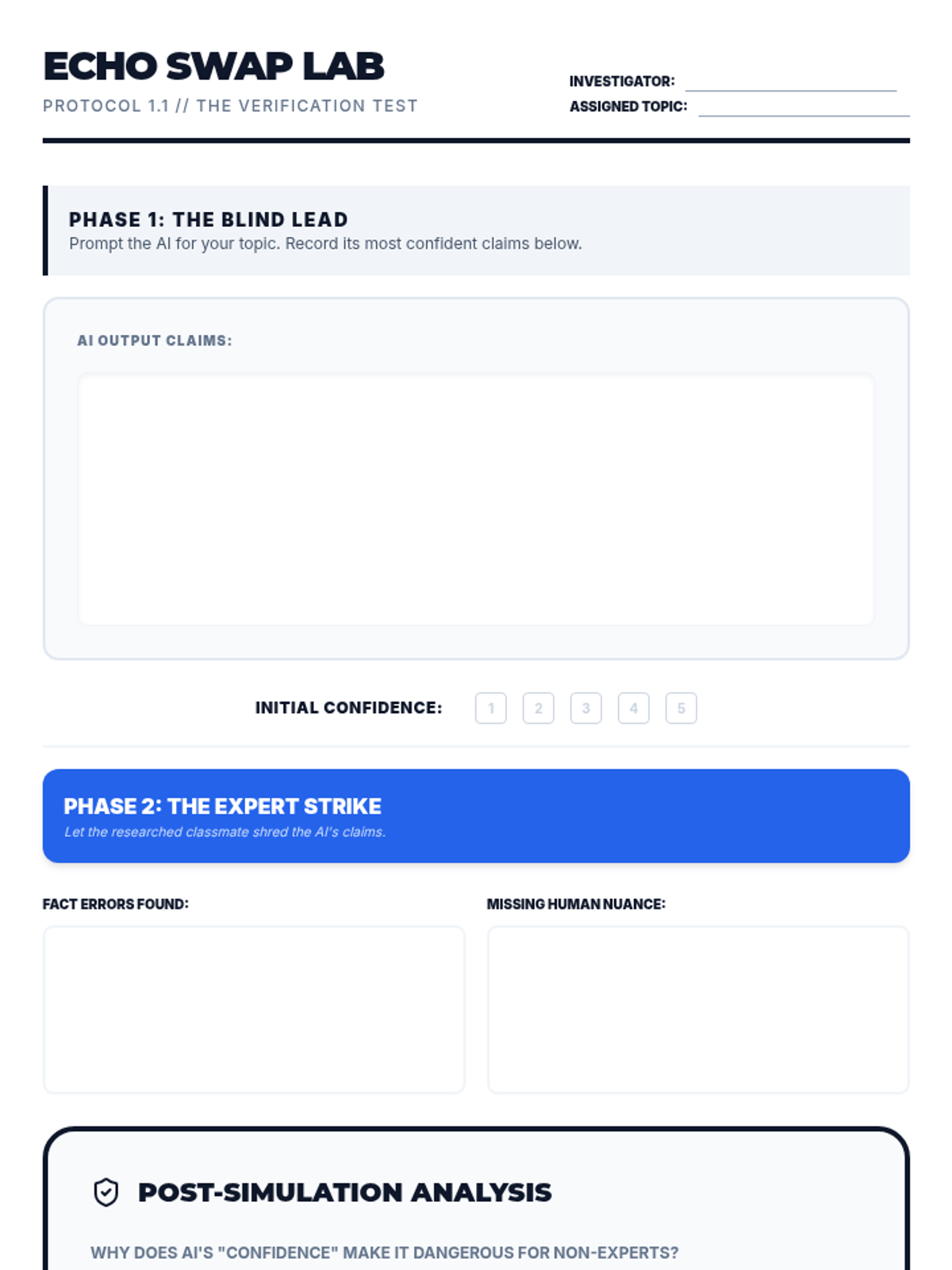
A laboratory worksheet for the 'Echo Swap' experiment. Students record AI claims on a mystery topic, then work with an expert classmate to identify hallucinations and errors.